Tag Archives: “Birds

A January Big Day

luke-at-sunrise_edited-1

Yesterday, (Monday, January 10, 2017), Luke Seitz and I partook in a semi-serious Big Day, attempting to see as many species as we could in one day. Winter Big Days are tough because the days are short, rarities are usually relatively few, wintering birds tend to move around a lot more than territorial songsters, and it’s often firggin’ cold.

And it was certainly cold to start – 11 degrees to be exact as we greeted the sunrise seawatching at Dyer Point. Heat shimmer and sea smoke impacted our tally, but much worse was finding our second stop, Grondin Pond, completely frozen! Just 2 days ago it had at least three “good birds:” American Coot, Lesser Scaup, and Ring-necked Duck!
grondin_edited-1

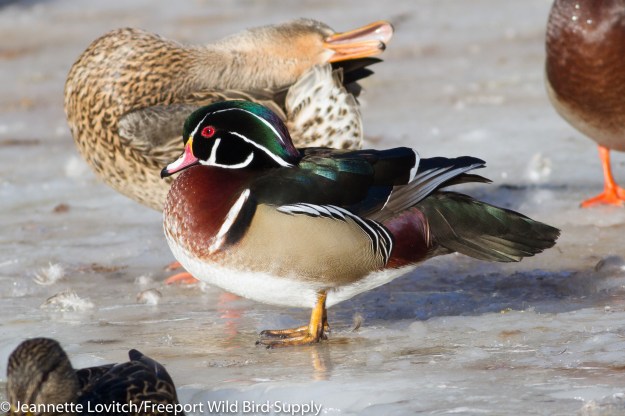
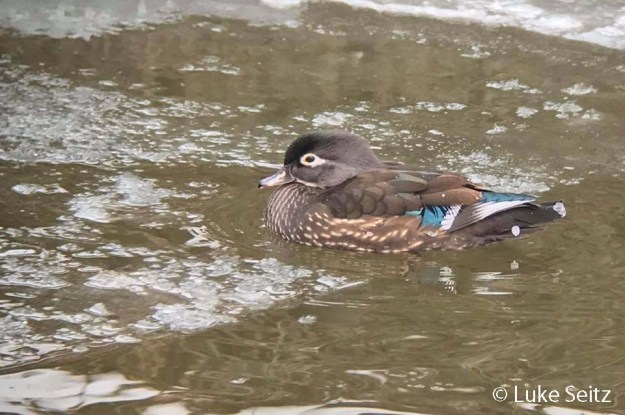
We then dipped on the long-staying Orange-crowned Warbler at Pond Cove, but the unexpected fly-over Northern Harrier plus Northern Mockingbird, Red-throated Loon, and Golden-crowned Kinglet put us back in the game. We then found a female Wood Duck at Mill Creek Cove in South Portland – our 50th species of the day, and it was only 9:53.
wood-duckmill-creek-park_edited-1
Phone-binned by Luke

Hmmm…maybe we should start taking this a little more seriously.

We started to clean up with a slew of successful twitches of very good birds: Green-winged Teal and Northern Pintail in South Portland, King Eider in Portland Harbor, Barrow’s Goldeneye in Cumberland, Great Blue Herons in Yarmouth, and Ruddy Turnstones and Dunlin at Winslow Park.

We even celebrated our good fortunes with a fueling, hot breakfast sandwich from Maple’s Organics in Yarmouth.
breakfast-sandwich_edited-1

Unfortunately, we then hit a cold stretch, striking out on Purple Finch and Hermit Thrush in my yard, and Evening Grosbeaks at a Pownal feeder. Snowy Owl and Snow Bunting at Brunswick Landing was followed by a strategic error – the absolute slowest service in history at the Five Guys in Brunswick!

Like I said, we were only so serious about this Big Day, as exemplified by stopping for food…twice! But a to-go order of some fries, a veggie sandwich, and a milkshake should not have taken so long. First, our sandwiches were left on the counter as they forgot to bag them with fries. Then they had to wait for more fries to cook, and then it turned out someone had accidentally switched off the milkshake machine.
veggie-sandwich_edited-1

Although that whole event really only wasted about 10 minutes, it was 10 minutes further behind schedule…our Pownal swing was a time suck, and the walk at Winslow took much longer than planned. And the days are short this time of year!

A Gadwall in Damariscotta was a nice pick-up, and we added a few en route twitches, but we got to Rockland with way too little time. We failed in our search of the harbor for the Pink-footed Geese and Snow Goose (they weren’t on the school fields due to the recent snow cover), and dithered on our decision to head to Camden, picking up a nearly-drive-by Bonaparte’s Gull on the way.

We didn’t run into any Bohemian Waxwings or Pine Grosbeaks on our drive, and we arrived way too late in the day to be graced with a visit from the Bullock’s Oriole. The thickening clouds ahead of the approaching storm was rapidly bringing the birding day to an early end. Quick-thinking rewarded us with the female Greater Scaup which we relocated in the Megunticook River after not seeing her in the harbor, and in very last light we somehow picked up American Wigeon in Rockport Harbor (not one as had been reported, but three, plus another Green-winged Teal), our 73rd and final species of the day.

We had hoped for a Barred Owl on the drive home; surprised that we didn’t run into one during the day, but the arrival of a mix of ice pellets, sleet, and dreezing rain didn’t help matters. However, with almost no scouting, no owling, and only about 9 hours of daylight, we agreed that this day was really an extraordinary success. 22 species of waterfowl in the middle of winter is pretty darn good, and we saw some great birds over the course of the day.

It’s almost certainly a record – if only because we don’t think anyone has done a January Big Day before (or submitted to the ABA as such!), even if it fell short of our goal of 75. And with quite a few misses and birds “left on the table,” we can’t help but wonder what a little planning, more discipline, and a packed lunch could have resulted in? (Or, having run it a couple of days earlier when Grondin was open!)

Finally, here’s an annotated checklist of the species we encountered, with notes on the rarities, single-sightings, or species seen only at one location.

Canada Goose
Wood Duck: female at Mill Creek park, South Portland
Gadwall: 1 drake, Oyster Creek, Damariscotta
American Wigeon: 1 male and 2 females, Rockport Harbor
American Black Duck
Mallard
Northern Pintail: male behind Bay Harbor Car Wash, South Portland
Green-winged Teal: male behind Bay Harbor Car Wash, South Portland and female at Rockport Harbor
Greater Scaup: female, Megunticook River from Mechanic Street, Camden
King Eider: female, Portland Harbor from Fish Pier
Common Eider
Harlequin Duck: Dyer Point, Cape Elizabeth
Surf Scoter
White-winged Scoter
Black Scoter
Long-tailed Duck
Bufflehead
Common Goldeneye
Barrow’s Goldeneye: male, Cumberland Town Landing
Hooded Merganser
Common Merganser
Red-breasted Merganser
Wild Turkey
Red-throated Loon
Common Loon
Horned Grebe
Red-necked Grebe
Great Cormorant: 1, Dyer Point, Cape Elizabeth.
Great Blue Heron: 2, Lower Falls Landing, Yarmouth
Northern Harrier: male, flying over Pond Cove, Cape Elizabeth
Bald Eagle
Red-tailed Hawk
Ruddy Turnstone: 3, Winslow Park, Freeport
Dunlin: 30+, Winslow Park, Freeport
Purple Sandpiper
Razorbill: several, Dyer Point, Cape Elizabeth
Black Guillemot
Bonaparte’s Gull: 1, Glen Cove, Rockland
Ring-billed Gull
Herring Gull
Iceland Gull
Great Black-backed Gull
Rock Pigeon
Mourning Dove
Snowy Owl: 1 Brunswick Landing
Red-bellied Woodpecker: at least 8-9 over the course of the day!
Downy Woodpecker
Hairy Woodpecker
Pileated Woodpecker
Peregrine Falcon: 1, Portland Harbor
Blue Jay
American Crow
Common Raven
Black-capped Chickadee
Tufted Titmouse
Red-breasted Nuthatch
White-breasted Nuthatch
Brown Creeper: 2, Winslow Park, Freeport
Golden-crowned Kinglet
Eastern Bluebird
American Robin
Northern Mockingbird
European Starling
Cedar Waxwing
Snow Bunting: 20+, Brunswick Landing
American Tree Sparrow
Dark-eyed Junco
White-throated Sparrow
Song Sparrow
Northern Cardinal
House Finch
American Goldfinch
House Sparrow

Total=73

Misses: Pink-footed Geese and Snow Goose in Rockland; American Coot, Lesser Scaup, Ring-necked Duck, and Northern Shoveler at Grondin Pond; Black-legged Kittiwake; Barred Owl; Cooper’s Hawk; Sharp-shinned Hawk; Rough-legged Hawk, Northern Shrike; Hermit Thrush (1); Bohemian Waxwing; Orange-crowned Warbler (1); Bullock’s Oriole (1), Purple Finch, Pine Grosbeak; Evening Grosbeak.

(Also,we posted a little play-by-play in a thread on the store’s Facebook page during the day. Check it out…we added commentary in the comments section, culminating with a video of me doing what it takes to get those wigeon at last light!)

The 2017 Maine Bird Predictions Blog

24-l1050633_attw_male1nesowadnahunkrd-7-19-16_edited-1

Yup, it’s that time of year again. Not just time to celebrate the end of 2016 (is anyone really upset to see this year end?) and ring in the new, but reset the ol’ Year List (if you keep such a thing) and look forward to the avian wonders of 2017.

That means it’s time for my annual Predictions Blog, where I view into my crystal binoculars and attempt to forecast some of the “new” birds to grace the State of Maine, and my own personal state list, in the coming year.

But first, let us check in with my 2016 Predictions post, and see how I did.

Two birds were added to the cumulative Maine list in 2016. Incredibly, both were on Seal Island! A Great Knot on July 23rd followed an Ancient Murrelet in May that was later seen (presumably the same bird) at Petit Manan Island and then Machias Seal Island. While Ancient Murrelet was on my radar, and was part of my lengthy honorable mention list, Great Knot most definitely was not! In fact, this was one of the most amazing vagrant records in the state in some time.
My predictions for the next 25 species to be found in the state therefore has not changed too much. The new list is now:

1) Neotropical Cormorant
2) Graylag Goose
3) California Gull
4) Roseate Spoonbill
5) Spotted Towhee
6) Hammond’s Flycatcher
7) Bermuda Petrel
8) Black-chinned Hummingbird
9) Common Shelduck – with a recent spate of records in Eastern Canada, including three birds in New Brunswick in December,a pattern of vagrancy is definitely emerging. Provenance will always be a question however, as this species is kept in captivity. However, we used to dismiss every Barnacle Goose – for example – as simply an “escapee,” but its clear many are of natural vagrancy. Increases in the species in Iceland are a good sign that some of these recent records are of wild birds.
10) Fieldfare
11) Audubon’s Shearwater – on “hypothetical” list, but I think the record is good.
12) Little Stint
13) Anna’s Hummingbird
14) “Western” Flycatcher (Pacific-slope/Cordilleran)
15) Vermillion Flycatcher
16) Common Ground-Dove
17) Allen’s Hummingbird
18) Redwing – one in New Hampshire in March was a “near-miss!”
19) Western Wood-Pewee
20) Spotted Redshank
21) Zone-tailed Hawk
22) Gray Flycatcher
23) Ross’s Gull
24) Black-tailed Gull
25) Common Scoter

Meanwhile, I was very pleased to add six species to my own Maine list this fall. First up was the Black-throated Sparrow in Winter Harbor, which I visited on January 17th. Because it was discovered before I posted my Predictions Blog last year, I can’t count that as a prediction! But you can be sure I was happy to put this stunning southwestern sparrow on my state list anyway.
l1040396_btsp1winter_harbor1-17-15_edited-1

My only self-found addition was my 6th ranked species: Western Grebe. I found one at Simpson’s Point in Brunswick on April 17th. It’s always much, much sweeter to find, rather than chase, a new state bird!

Adding American Three-toed Woodpecker to my list was just a matter of finding the time and putting in the effort. In Mid-July, Evan Obercian and I used it as an excuse to spend a weekend around Baxter State Park, which eventually yielded a pair of American Three-toed Woodpeckers along Telos Road.

A long-staying King Rail near Moody Point in the Webhannet Marsh was my 4th addition of the year. It was very high on my honorable mention list, but I left it off the ranking this year.

My Washington County Tour in August once again produced a Sabine’s Gull, and once again it was in Canadian waters, despite our best efforts to follow it across the border. Therefore, I was elated when one was discovered at Sabattus Pond on October 29th. This was my only “drop what I was doing and rush out the door” twitch of the year. It was worth it. I really like Sabine’s Gulls.

And certainly last but not least was the Bullock’s Oriole in Camden that Luke Seitz and I drove up to see on November 25th. Another bird high on my Honorable Mention list, but it too was not on the official Top 25.

Great Skuas were again seen with regularity off of Bar Harbor, but I missed them on my paltry few trips offshore again this year. The nemesis continues! There was also a one-afternoon wonder Harris’s Sparrow in Belgrade in November.

But with my #1, #6, and #13 “next species” checked off, my updated list for my own next 25 species in Maine now reads:

1) Great Skua
2) Eurasian Collared-Dove
3) Graylag Goose
4) Say’s Phoebe
5) American White Pelican
6) Neotropic Cormorant
7) Fork-tailed Flycatcher
8) Tundra Swan
9) California Gull
10) Franklin’s Gull
11) Black-bellied Whistling-Duck
12) Slaty-backed Gull
13) Yellow Rail
14) Boreal Owl
15) Calliope Hummingbird
16) Cerulean Warbler
17) White Ibis
18) Gull-billed Tern
19) Hammond’s Flycatcher
20) Loggerhead Shrike
21) Ivory Gull
22) Roseate Spoonbill
23) Spotted Towhee
24) Virginia’s Warbler
25) Common Shelduck

l1080679_buor1camden11-25-16-edited
Bullock’s Oriole on 11/25 in Camden

Birds on Tap – Roadtrip: Farms and Fermentation, 12/11/16

Our seventh and final “Birds on Tap – Roadtrip!” of 2016, entitled “Farms and Fermentation” traveled inland on Sunday. Unlike most of our itineraries, Farms and Fermentation has a very flexible birding route, affording us the opportunity to take advantage of seasonal highlights and variables including weather, northern bird irruptions, and local food supplies.

The theme of the tour is the connection between agricultural lands and birds, but we also spent plenty of time checking out the region’s most significant bodies of water as recent cold weather has slowly frozen small ponds and lakes, pushing waterfowl to the open waters of the deep Lake Auburn and the fast-flowing Androscoggin River.

It was a frigid day, but with temperatures rapidly rising through the 20’s and virtually no wind at most of our stops, we enjoyed a very pleasant and productive morning of birding. Our first stop was a large, open agricultural field in Gray and New Gloucester, where we immediately found 16 Horned Larks within about 30 yards of the road. No Snow Buntings, as I had hoped for, but the views of the four larks that stayed with us were hard to beat.
hola3durham3-12-16_edited-1

bus-at-mayall-road_edited-1

Letting the temperatures climb a bit, we hit the road for a longer stretch to arrive on the north shore of Lake Auburn. Unfortunately, the ducks were elsewhere today – perhaps flushed by an eagle or two  – but we did view two Horned Grebes (rare inland in Maine except for here and Sebago Lake and a rather late date for them away from the coast). One distant Common Loon was also spotted.
lake-auburn1_edited-1lake-auburn2_edited-1

A short hop to North River Road sampled the birds of early successional forest, undoubtedly the first step in reforestation of an abandoned farm. American Tree Sparrows, quite a few Northern Cardinals, and a number of House Finches were present, while a Bald Eagle soared over the river beyond the cornfields across the road (still no Snow Buntings). The highlight, however, was a Red-tailed Hawk that circled up and then glided low over our heads, with the reflection of the thin coating of snow on the ground acting as a spotlight to really light up its pale plumage.

Three punk-rock Hooded Mergansers were at the nearby boat launch, and we finished up with some more waterfowl along the Auburn Riverwalk. Nearly 200 Mallards were present, affording us the chance to study individual variation and hybridization, as well as taking a moment to savor a truly beautiful critter.
img_1205_edited-2
Hooded Mergansers

As for this individual, I am not sure how to interpret its odd plumage: a very old female taking on male characteristics, a hybrid with something domesticated, or perhaps a male that for some reason is unable to fully attain an adult plumage. Whatever it is, it was a perfect example of how much there is to be learned from looking at our most common birds!
l1080790_odd_mallard1_edited-1

l1080797_odd_mall_withmallpair_edited-1

Four American Black Ducks and some odd Domestic things were present, but I was hoping for an unusual dabbler or two to have joined the masses with the recent freezing. However, we did have two more Hooded Mergansers, and downriver, two spiffy drake Common Mergansers. A Common Loon was a little out of place on the river, likely a bird that woke up to encroaching ice on a lake this morning!
loon_from_riverwalk_edited-1

auburn-riverwalk_edited-1

Don then took over as layers were shed for good, as we crossed the bridge into Lewiston on our way to Bear Bones Beer. Don was giving us some of the history of this new brewery, but I interrupted to have him pull into a parking lot. We quickly disembarked to temporarily resume our birding with scope views of the local male Peregrine Falcon eating lunch atop of the steeple of the Franco-American Heritage Center, as per our tradition during “Birds on Tap – Roadtrips” to Lewiston!

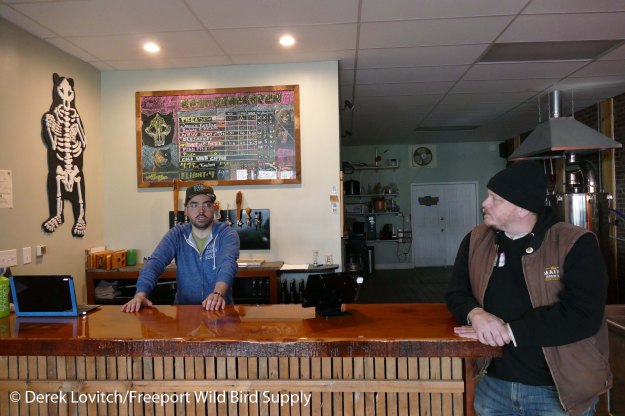
Arriving at Bear Bones Beer, a nanobrewery with a focus on sustainable production and ingredients, co-founder Eban Dingman welcomed us into the comfortable space in a renovated portion of a former department store in the heart of downtown.

bear_bones2bear_bones3_edited-1

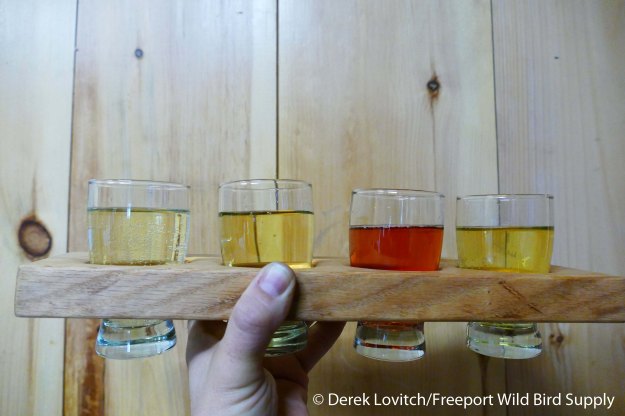
We began our tasting with their 2X C.R.E.A.M, a smooth cream ale that featured a very nice balance, avoiding overdoing it with the hops. Dry-hopped with fruity Mosaic hops, Robot Bear Porter finished with a fruit flavor not typical of porters, putting a nice twist on a good winter stand-by. Picea, a dry stout brewed with spruce tips added to the whirlpool process, featured a subtle hint of spruce/resin, especially on the back end.

After sampling some of their applewood smoked barley malt, we tasted it in action. I went with the New Dead Smoked IPA, with just the hint of the smoky flavor and a more subtle hop kick than most IPAs these days. The “over-hopping” bandwagon had definitely not arrived – thankfully, if you ask me – here on Lisbon Street.
winston
Winston provided additional entertainment

Trekking back across country, keeping an eye out for Northern Shrikes (we did spot two Northern Mockingbirds today however, much rarer in winter in interior Maine than shrikes!) as we returned to New Gloucester for a special visit to Norumbega Cidery. Open to the public only for the occasional special event, this was a real treat to learn about Noah Fralich’s family farm and his four-year-old cidery. Discussing his plans for the property, including the cultivation of a wide variety of heirloom and specialty apples, we also discussed the value of orchards to birding: in fact, if Pine Grosbeaks or Bohemian Waxwings had made it this far south by now, we likely would have visited an orchard or two on today’s tour – and wondered if in a few years, we might see these species right here at Norumbega.
bus-at-norumbega_edited-1

I’m not a big cider guy, as I usually don’t like sweet drinks in general. Many of the most popular hard ciders today (at least from the national brands) are loaded with sugar, and are more akin to soda. Dry ciders, however, are closer to wine, and the white wine yeasts that Noah uses produce a very crisp, very dry, and very delicious product that retains aromatics and subtle flavors.

We began with the clean and crisp Classic, with just a hint of tartness followed by the Berry Medley with a sweet and bitter contrast from the tannins and sugars found in four varieties of berries. Sweeter than the others, but still finishing very smooth and crisp, the Honey (technically, a ceyser because of the use of honey) was next up, featuring its very subtle honey notes and nose. And finally, we tried the Spice – my new favorite cider that I left with four bottles of – with a really complex taste profile and depth of flavor produced by only three added spices: cinnamon, nutmeg, and cloves (admittedly, I also tend to love anything with nutmeg) that made me think of an unsweetened apple pie.
norumbega_pours1_edited-1norumbega_pours2_edited-1

Taking the back roads back to Freeport, we slammed on the breaks when a Barred Owl was spotted, and quickly unloaded. Unfortunately, the Barred Owl was less excited and melted away into the woods, bringing our birding day, and our successful “Farms and Fermentation” tour to a close.

With ten tours on the schedule for 2017, including some really exciting new itineraries, we look forward to having your on board soon. All of the tours are posted on the “Tours, Events, and Workshops” page of our website, with direct links for online reservations.

2016 Rarity Season Part I

In my last blog, I predicted some great birding was in store for us here in Maine. Our entry into “Rarity Season” coupled with an active weather pattern was undoubtedly going to make for some exciting birding in the near future. It certainly started off with a bang!

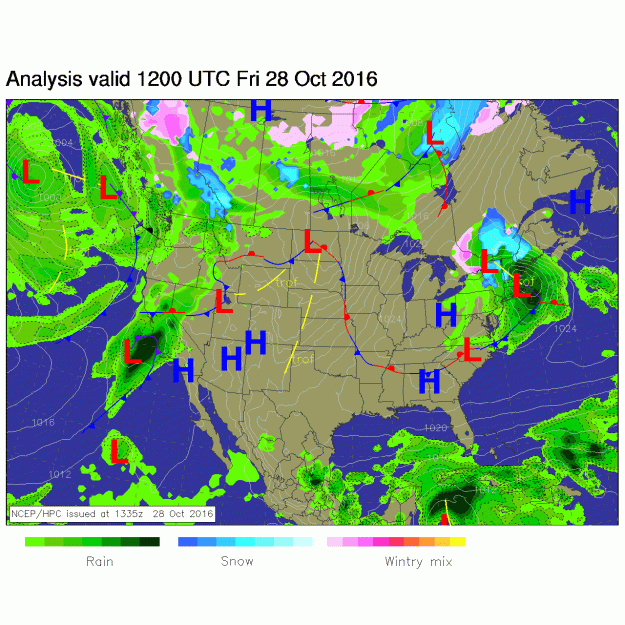
Immediately following the Nor’Easter that drenched us on Friday, October 28th…
surface-map-10-28-16

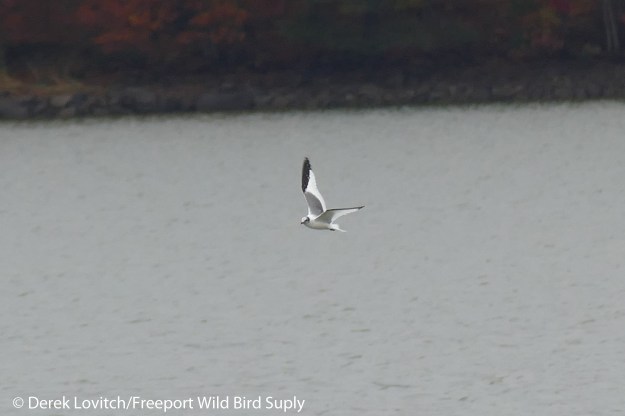
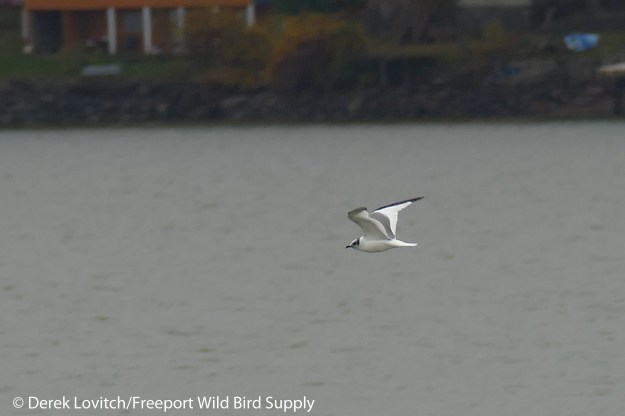
…a Sabine’s Gull was discovered on Sabattus Pond.
l1080338_sagu1_edited-1l1080346_sagu2_edited-1
l1080280_sagu3_edited-1

This gorgeous gull was my 373rd species in Maine, and while I knew I was going to see one sooner than later, I expected to finally get one in Maine waters during my Washington County Weekend tour (we were close!), and not well inland on a small lake!

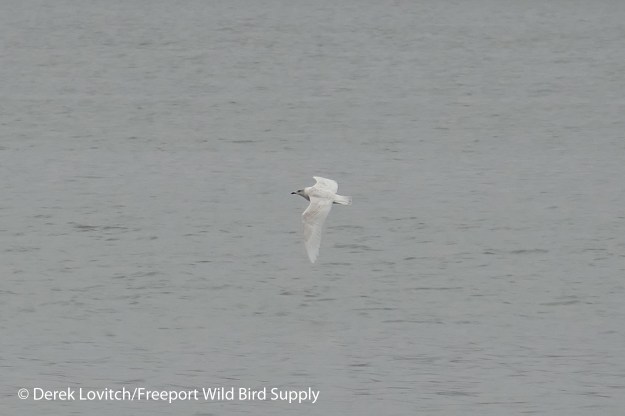
Whether blown inland by the strong winds or “grounded” as it cross-cut over land, this pelagic is not what one expects while scanning the ducks at Sabattus.  An early 1st Winter Iceland Gull (later, two), and a rare-inland sweep of all three species of scoters (9 Surf, 4 Black, and 1 White-winged) were all related to the weather as well.
l1080288_icgusabattus10-29-16_edited-1

Similarly, an adult Black-legged Kittiwake out of place in a pond at Fortune’s Rocks Beach on Sunday was likely storm-related. Although regular to downright common offshore, this is not a bird we usually see onshore in southern Maine.
l1080409_blkifortunesrocksbeach10-30-16_edited-1

One can only imagine what else was on the 2,600+ lakes in the state of Maine during and immediately after the storm! Jeannette and I did check a few spots around Sebago Lake on Halloween, but it was surely too long after the storm, and the only birds of some note we turned up were single Dunlin and Black-bellied Plover (fairly rare inland, especially this late) at Raymond Town Beach.

I bird hard this time of year, doing my best to finish projects and keep my schedule as clear as possible to afford as much time in the field during these fruitful weeks. While I skipped birding in Portland, I did cover a lot of ground, and searched for odd birds in odd places, as well as focusing on the seasonal “migrant trap” hotspots.

In doing so, I found a few good birds, including this Lark Sparrow (always a treat away from Monhegan) at Pott’s Point in Harpswell on 11/10:
lasp1pottspoint11-10-16-edited

As for wayward vagrants seen around the state by others, there were quite a few from the south: a Blue Grosbeak in Portland on 10/31, a couple more Yellow-breasted Chats were found here and there, and most surprisingly, a Blue-winged Warbler in Saxl Park in Bangor on November 7th – this early migrant simply has to be a reverse-migrant or 180-degree misoriented migrant from points south; right? And the headlines, from the southwest, as a Cave Swallow reported from Cape Elizabeth on the 12th.

From the west (and/or mid-west) came a Clay-colored Sparrow at Two Lights State Park on 11/6 and a few scattered Dickcissels around the state (but where are the Western Kingbirds this year?). A Cattle Egret in South Thomaston on 11/6 and another in Pittston on the 13th could have come from either direction.

But it’s not just rarities that make this time of year so much fun. There are all of the regular migrants that are still “lingering.” Some of the late birds that I have seen in the past weeks included a Red-eyed Vireo along the Saco Riverwalk and 1 Semipalmated Sandpiper at Biddeford Pool Beach on 10/30, a Red-eyed Vireo at Sandy Point on 11/1, a Pine Warbler and a late-ish Winter Wren on Bailey Island in Harpswell on 11/4, a slightly tardy Yellow-bellied Sapsucker with Jeannette at Beaver Park in Lisbon on 11/8, a Turkey Vulture over Falmouth on 11/11, two Winter Wrens on Peak’s Island on 11/14, and a smattering of Hermit Thrushes.

Other birders also reported the usual slew of truant migrants, such as a smattering of Baltimore Orioles, a couple of Scarlet Tanagers, and a decent variety of late warblers here and there. There’s still a Marbled Godwit, 4 American Oystercatchers, and 2 Red Knots at Hill’s Beach in Biddeford Pool; I enjoyed them on the 30th, but they continued to be reported through at least 11/2 with the godwit still being reported as of 11/12!  A few Long-billed Dowitchers were reported, with the one at Sabattus Pond on 11/5 being at the most unexpected location.

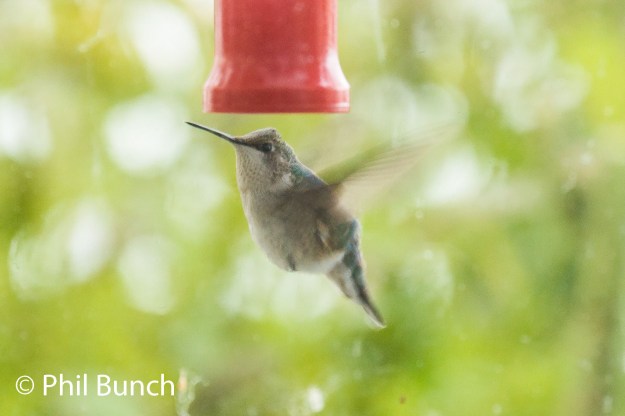
The winner, however, is the immature female Ruby-throated Hummingbird that appeared at a feeder on Cousin’s Island in Yarmouth on November 10th! I viewed it the next morning and it continues through today, the 14th. Although the photos taken by the homeowner looked good for “just” a Ruby-throat, I hoped I was missing something from the still images. Any lingering questions/hopes I had were dashed however.

That being said, it’s still a great record. Through our store we have been promoting keeping up hummingbird feeders into November for over a decade, and our database of observations after early October is growing. When I first got a call yesterday, I was sure this was going to be “a good one.” It was Nov 10th after all!

Amazingly, this is the same house that hosted a Selasphorus hummingbird last fall! In other words, it sure does pay to keep those feeders out, even if it’s “just” a Ruby-throat!
rthu_cousins_island11-10-16phil_bunch_edited-1

Other, more seasonal, highlights for me over these two weeks included the following. Jeannette and I had 100 Horned Larks along Mayall Road in Gray/New Gloucester on 10/31; 18 Snow Buntings and 13 Horned Larks flew over Bailey Island on 11/4; a Lapland Longspur with 6 Horned Larks were at Stover’s Point Preserve in Harpswell on 11/10; two Ruddy Turnstones were at Winslow Park in Freeport on 11/12 with the Saturday Morning Birdwalk group – one of only two or three places in the state we regularly see them during the winter.

l1080470_badobaileyisland11-4-16_edited-1
This Barred Owl on Bailey Island on 11/4 was a treat. Any day with an owl is a good day!

Meanwhile, the new arrivals – including many species that will be spending the winter with us – continue to arrive, my “first of seasons” this week included 2 Common Goldeneyes at Sabattus Pond on the 29th, 2 “Ipswich” Savannah Sparrows at Timber Point in Biddeford on 10/30…
l1080390_ipsp1timberpoint10-30-16_edited-1

…lots of Horned Grebes arriving all over, 2 Harlequin Ducks at East Point in Biddeford Pool and 3 Purple Sandpipers at Hill’s Beach on 10/30.

l1080426_sand_and_dunl1biddpoolbeach10-30-16_edited-1
There were also plenty of Dunlin and Sanderlings around this week, such as this one Dunlin nestled amongst the Sanderlings on Biddeford Pool Beach on the 30th.

Waterfowl migration is in full effect, and not just at Sabattus Pond (although that is certainly one of the top spots in the state). Scoters, Long-tailed Ducks, Red-breasted Mergansers are all piling in, and dabblers are also on the go, such as the single drake Northern Pintail and American Wigeon at Great Pond in Biddeford on 10/30. Common Mergansers are also now arriving; I saw my first migrants at Sebago Lake on 10/31.

Jeannette and I visited Sabattus on a gorgeous, warm day on the 8th, with glass-calm conditions allowing for careful combing through the masses: 649 Ruddy Ducks, 510 Mallards, 176 Lesser and 119 Greater Scaup, 104 American Black Ducks, 73 Buffleheads, 69 Hooded Mergansers, 40 Common Mergansers, 13 Northern Pintails,11 Common Goldeneye, 8 Green-winged Teal, 5 White-winged and 1 Surf Scoter, 4 American Wigeons, 4 Common Loons, and a very-rare-inland Red-necked Grebe.

On 11/13, I returned with a Birds on Tap – Roadtrip! tour with our partners at the Maine Brew Bus. Although I didn’t count everything as carefully as I do when on my own, “Fall Ducks and Draughts” did record 600+ Ruddy Ducks, 3 Gadwalls, AND 2 White-winged Scoters amongst the 14 species of waterfowl present.

The “Greater Yarmouth Goose Fields” have been slow this year so far, likely also due to the mild weather and lack of early snowfalls to our north. In fact, the only “good” goose so far has been a “Blue” Snow Goose that showed up during the week of October 17th continuing through at least 11/11.  Canada Geese numbers remain rather low however; I have still not surpassed even 600 total birds this season.

There’s still some passerine migration a’happening, as well. For example, my last two days at Sandy Point for the season yielded 221 birds on 10/31 (led by 123 American Robins and 18 American Crows) and 131 on 11/1 (led by 59 Dark-eyed Juncos and 44 American Robins). Common Grackles and a smattering of Red-winged Blackbirds are still heading south, although their numbers are greatly reduced over the past week.

Sparrows also continue to move through, with lots of Dark-eyed Juncos and White-throated Sparrows on the move, and my first American Tree Sparrow arriving at the Yarmouth Town Landing on 11/5 during our Saturday Morning Birdwalk, followed by more as the weeks progressed. A White-crowned Sparrow at Biddeford Pool on 10/30 was getting late, but there are still scattered Chipping Sparrows here and there as usual, including one still here at the store’s feeders.
cistmontanus_type_dejuyard11-6-16cistmontanus_type_deju_yard211-6-16

This junco on our back porch on November 6th appears to be of the inter-mountain subspecies/hybrid swarm often labeled as “cistmontanus.”  It’s definitely not a pure “Oregon” Dark-eyed Junco, and the curved hood with buff of the sides traveling up to below the fold of the wing, however, suggest that this is not a pure “Slate-colored” Junco either.

And speaking of feeder birds, a recent spate of Evening Grosbeak reports (I have heard or seen several 1’s and 2’s recently, but 6 were at Old Town House Park on 11/3), along with an uptick in Purple Finches and Pine Siskins are suggestive of a decent winter around here for at least some of the finches. I also had a few single Red Crossbills fly over in a handful of locations recently. And the first Northern Shrike reports have started trickling in.

But overall, we’re off to a fairly slow start to the November Rarity Season. My guess is the lack of cold fronts early in the fall ushered fewer birds east (e.g. Western Kingbird) but also it remains fairly mild. I’m just not sure birds have begun concentrating yet in places that birders find them (like coastal migrant traps, city parks, etc). But as temperatures continue to drop, this might change. Afterall, after a very slow November last year (also very mild), December was simply incredible.

As the shorter days get colder (maybe), I would expect more birds to begin turning up, especially at feeders and along the immediate coast. The coming weeks always produce something remarkable.

wind-map-11-11-16
A blast of cold, Canadian air finally arrived this past weekend, as evidenced by the wind map of 11/11.

However, it might be hard to top the incredible and unprecedented White Wagtail that showed up in Rye, New Hampshire on 11/2 through early the next. You know I’ll be trying though!

Cat Wars Book “Review”

Cat Wars: The Devastating Consequences of a Cuddly Killer by Peter P. Marra and Chris Santella

Every now and then I find a book that I really want to bring attention to. This is one of those books.

cat-wars-cover

My plan was to do a book review here, but as I read through it, engrossed by its pages and the sound, scientific, and reasonable arguments being made – even though yes, it’s most definitely preaching to the choir here – I struggled to find a way to synthesize this into a standard book review. There’s just too much stuff that’s too important.

This book needs to be read from cover to cover, by anyone and everyone who cares about birds…and yes, truly cares about cats as well. So I failed, really, at a comprehensive analysis. I am left to simply urge – no, implore you – to read this book, from cover to cover. It gives a history of the cultural ties between humans and cats, and the problems that have arisen from cat domestication.

One particular passage really stuck out to me though:
“A majority of ecologists, ornithologists, and millions of bird aficionados see outdoor cats, whether owned or unowned, as killing machines. Many biologists are convinced that predation by this invasive species is indeed contributing to the catastrophic downward spiral of many bird and mammal populations. The tens of thousands of well-meaning people who nurture unowned cats, and the millions of domestic-cat owners who let their cats outdoors, all value these animals as sentient beings. They view them as part of the landscape, as much an element of the natural order as trees and clouds. Some in the cat advocacy world say, “We are a nation of animal lovers. We are not a nation of cat people or bird people.” Yet there is a conflict between cat advocates and bird advocates – a war, quite literally to the death in the animals’ case, whether or not the cat lovers or bird lovers will admit it.”

So yeah, did I mention I think you need to read this book?

(Plenty of copies are now in stock here at Freeport Wild Bird Supply)

Protect Monhegan!

pm-final-color

Today, I wanted to update you on some developments regarding the fight against the misguided and misplaced wind turbines off Monhegan Island.

I’ve written about the issue here on several occasions. I encourage you to check out these posts, and the links contained within, for some background if you need it:

1) Our Letter in Opposition of the Monhegan Wind Project & Press Coverage of the Story.  December 12, 2013.

2) Yup, We’re Still Against Industrial Wind Development near Monhegan Island. December 21, 2015.

3)  Taking Action to Save the Birds of Monhegan Island. July 6, 2016.

The latest news come from the new group “Protect Monhegan,” formed by a group of island residents to fight the placement of the project. In order to keep this in their own words – and not mine – I will simply offer their recent press release below. It includes more background as well as contact information.

In the meantime, I urge you to stay abreast of the ongoing struggle. I’ll do my best to inform via this blog and our store’s Facebook page, but please “like” and follow the new Protect Monhegan Facebook page. That’s your best source for up to date information.

**********************************************************************

For immediate release

November 1, 2016

Contact: Travis Dow
(207) 594-2527
tgdow@hotmail.com

MONHEGAN RESIDENTS SAY WIND TURBINES ARE TOO CLOSE TO ISLAND

New group calls on Maine Aqua Ventus partners to re-locate the project.

MONHEGAN, Maine – A group of residents from Monhegan Island are calling on the partners in the Maine Aqua Ventus offshore wind project to move their massive turbines further away from the island, saying the proposed project will do “irreparable harm” to their community 10 miles off the Maine coast.

In a letter sent last month to the project partners, Travis Dow of the newly formed group, Protect Monhegan, said: “Monhegan is Maine’s most iconic offshore island and a place of major historical significance and natural beauty. The location of massive wind turbines less than three miles from Monhegan’s shores threatens the beauty and tranquility that has made Monhegan such a special place for so many for generations.”

The letter was sent to the leaders of the Aqua Ventus partnership: Emera, Inc., Cianbro Corporation, and the University of Maine and its Advanced Structures & Composites Center. Dow, a Monhegan resident, town official, and small businessperson, said that he has yet to receive a response.
According to Dow, what began several years ago as a proposal for a 1/8 scale wind turbine to be located off Monhegan for only two five-month periods, has now become a full-scale wind energy project, with two massive wind turbines (approximately 600 feet tall) to be located just two and a-half miles off Monhegan for the next 20 years or more.

Dow said Monhegan residents were not aware of the implications of the legislation that allowed this project to go forward on a fast track. There are no height restrictions in the legislation, and UMaine spoke only of an 85’ model being in the test site. Dow also said that the community was not represented in the negotiation of the subsequent term sheet between the Maine Public Utilities Commission and the Aqua Ventus partners, which was signed prior to Monhegan hiring a lawyer.

“The whole process has been littered with misinformation and closed door meetings,” Dow said.

The Protect Monhegan letter reminds the AquaVentus project partners of Monhegan’s history, noting that it was used as a fishing camp by Native Americans, was visited by European explorers even before the Plymouth Colony was established and has been home to generations of fishing families. Monhegan also has been an inspiration to many of America’s foremost artists, and is visited by thousands of tourists and summer residents each year.

“Monhegan’s special character can never be replaced, but your wind turbines can – and must – be moved out of the island’s sightlines,” the letter states. “Simply put, Monhegan is no place to experiment with wind turbines or to establish a commercial wind farm, any more than it would be to place these massive turbines this close to Acadia National Park or Mt. Katahdin. Surely there must be other locations in the vast Gulf of Maine that would serve your purposes without forever marring Monhegan’s unrivalled 360-degree view of the ocean and incredible night skies,”

Dow also noted the importance of Monhegan from an ecological standpoint. The island is arguably the most important landfall in Maine for migrating birds along the North Atlantic Flyway. Monhegan was designated a National Natural Landmark by the National Park Service in 1966, and the waters around Monhegan were designated a Lobster Conservation Area by the State of Maine in 1997.

Members of Protect Monhegan support the further exploration and development of offshore wind, but their letter makes it clear that they are adamant in their belief that putting wind turbines so close to Monhegan will do “irreparable harm to our beloved island.”

Protect Monhegan (facebook.com/ProtectMonhegan) is made up of island year-round residents, summer residents and friends of Monhegan. The group has been formed to fight the proposed location of the Maine Aqua Ventus wind turbines and to create a thoughtful, comprehensive, realistic vision for the island for the next 50 to 100 years.

In addition to Dow, who serves as president, other officers are Candis Cousins, vice president, Paul Hitchcox, treasurer, and Kathie Iannicelli, secretary. Protect Monhegan can be found online at facebook.com/ProtectMonhegan and can be reached by email at protectmonhegan@gmail.com or by phone at 207-691-1399.

# # #

NOTE: Travis Dow can be interviewed by Skype from Monhegan. Please contact him at (207) 594-2527 to arrange a Skype video conference or an interview on the mainland.

Additional media contact:

Ted O’Meara | Corporate Communications & Public Affairs

207-653-2392

pm-final-color

Rarity Season is Upon Us!

I do like a good storm system. Especially as Rarity Season is now upon us! So besides our desperately-needed rain, I was anxious for this weekend’s weathah in the hopes it will set up some action for my favorite time in the birding year.

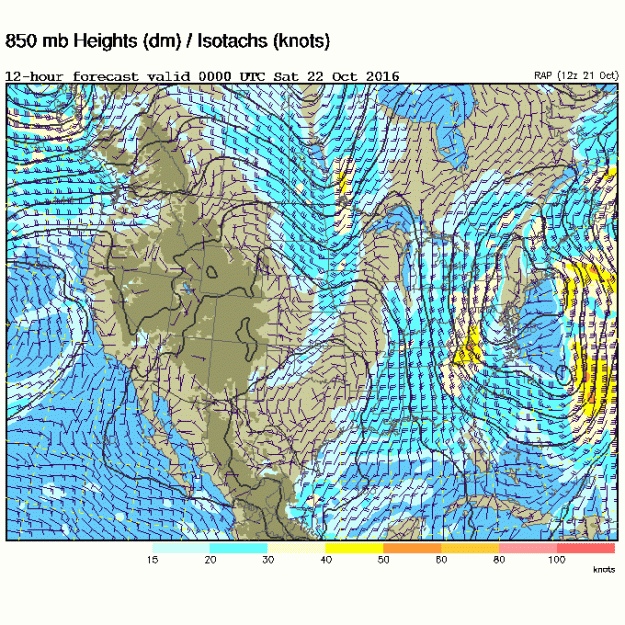
The winds turned east on Thursday (10/20), and strengthening easterly winds, scattered showers, and developing fog minimized the migration overnight into Friday morning. It was hard to tell from the radar is there was some limited, low movement, which would be indicative of the sparrows that move this time of year. Florida Lake Park was slow in the morning, though, and nothing new was under our feeders at home or at the store, however.

During the day on Friday, a shortwave moved out of the Ohio Valley, and overrunning precipitation fell during the day. By dark, however, that low was deepening and strengthening, and overnight, it tapped tropical moisture, leading to torrential rains, isolated thunderstorm, and by far our best soaker in at least 6 months: 3-6 inches of rain fell over the area! Southeasterly winds turned back to the east before going calm with thickening fog by morning.
wind-map-10-21-16

Fog and a little drizzle on Saturday morning was all that our Saturday Morning Birdwalk had to contend with on our outing to Wolfe’s Neck Farm; it does seem like there are more Laughing Gulls around later this year than I can ever remember (just the warm weather or are these related to Hurricane Mathew?).

The low slowly moved into the Canada, with an onshore flow (I had hoped for more southwesterlies) throughout the day. On the backside of the system, winds shifted to the west overnight while more rain and showers continued from the afternoon through the first half of the night. Winds were howling west by the morning, and the air definitely felt seasonable for a change.
wind-map-10-22-16

With the storm system pulling away to the north…
wind-map-10-23-16

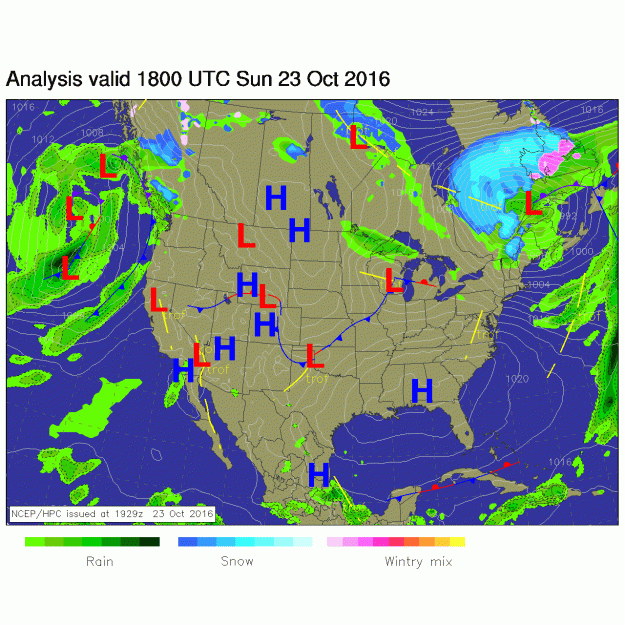
…and the temperatures falling (and even some snowfall was seen in the mountains!) it’s time to really go birding!
surface-map-10-23-16

On Sunday, Phil McCormack and I headed over Peak’s Island, a place I really want to spend more time searching in the fall. Afterall, it’s a mere 15-minute ferry ride, there are a variety of interesting habitats, and the maritime climate tempers the onset of the seasons a little more. In other words, it looks good for rarities! (And you know I need to seek them somewhere other than Portland now!)

And with my Rarity Fever stoked, a productive morning of scouring the southern 1/3rd of the island yielded the seasonal rare-but-regular stuff that makes one keep coming back: A Clay-colored Sparrow, a Yellow-breasted Chat, and an Orange-crowned Warbler (my second of the season). Add to that single Nashville and Palm Warblers among a total of 6 species of warblers, a fly-by flock of 57 Brant, 8 lingering Red-winged Blackbirds, a good Northern Gannet flight, a Merlin, and recently arrived Red-necked Grebe and 9 Red-breasted Mergansers and you can see why I will be birding here more and more (my once a fall needs to become at least 3-4 visits each season, me thinks).
ccsp_peaksisland10-23-16
Not the best photo of a Clay-colored Sparrow (can you find it?) that I have taken!

battery_steele1peaksisland10-23-16_edited-1battery_steele2peaksisland10-23-16_edited-1
peaks_shoreline10-23-16_edited-1

There wasn’t any migration visible on the radar overnight, but there were southwesterly winds – the direction that can help facilitate the arrival of vagrants to the Northeast. But with winds once again rapidly increasing during the day on Monday, the detection of birds was limited. However, Jeannette and I enjoyed a visit to a particularly productive patch of private property in Cape Elizabeth, where a Blue Grosbeak and a Clay-colored Sparrow that I found last week continued. Dark-eyed Juncos increased to 100+ and White-throated Sparrows were up to 50. Other sparrows had decreased, as expected, but there were still 75 or so Song Sparrows, 6 Chipping, and 2 White-crowned, along with about ten each of Swamp and Savannah. Singleton Indigo Bunting and Common Yellowthroats were both getting late.

With the low pressure system still spinning over the Maritimes, and another shortwave disturbance rotating through, winds remained gusty through the night. Despite the preferred northwest wind (slowly becoming west through the night) there were just not a lot of migrants willing to deal with the winds and likely resultant turbulence overnight. And the winds were gusty and increasing by dawn once again.

I was in Harpswell for the morning, leading a birdwalk for the Curtis Library as part of their fall reading series. Mitchell Field, a true hotspot at this time of year, was our destination, but it was anything but hot from a temperature perspective! However, there were a bunch of Yellow-rumped Warblers and a few flocks of migrant Common Grackles easily eclipsed 1,000 – a sign that it wasn’t just the birders who were thinking that it’s finally starting to feel like winter is approachintg! Migrant Turkey Vultures (10), Sharp-shinned Hawks (4), and a trickle of Northern Flickers were also winging it south.

Despite the wind, I poked around a couple of other spots on the peninsula since I was down there, with Stover’s Point yielding a 3 Horned Larks, a “Yellow” Palm Warbler, and 9 Black-bellied Plovers among others. But it was windy!
stoverscove10-25-16

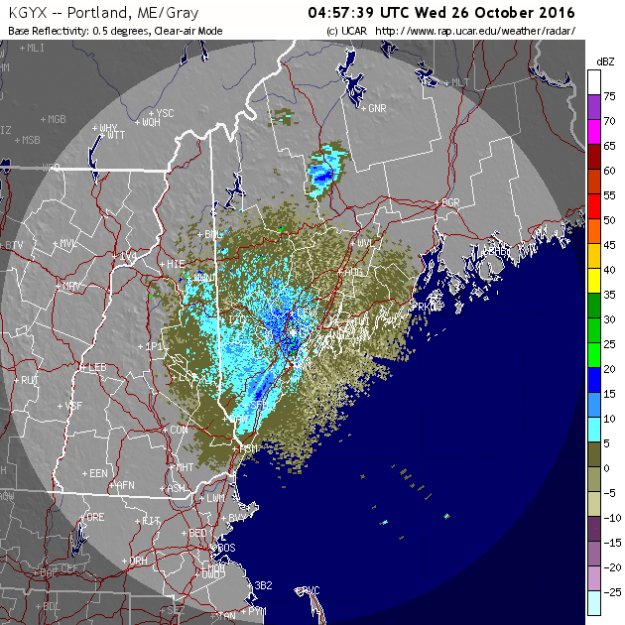
Winds died down a little overnight, finally, and with it, some birds took to the air. For the first time in seven days, there was at least a moderate flight underway. Here’s the 10pm radar image for example, which shows a strong flight underway:
10pm-radar10-25-16

But by 1:00am, the flight was already rather light, suggestive of the short-distance migrants of the season making a little bit of progress, but for the most part, more birds departing than arriving:
1am-radar10-25-16

And therefore, Sandy Point wasn’t as great as I had hoped for on Wednesday morning. However, I still enjoyed a respectable morning flight for this time of year. A total of 444 individuals of 22 species were led by 262 American Robins and 82 Common Grackles, but also included my first Fox Sparrow of fall, my 3rd Orange-crowned Warbler of the season (and only the 6th Sandy Point record), and this very tardy (or perhaps, “reverse” or 180-misoriented) migrant Prairie Warbler.
prawsandypoint10-26-16_edited-1

Strong northwest to northerly winds continued through the day, but they are finally expected to lighten up overnight. The current forecast looks good for a big flight tonight, and, if the winds stay more northwest – or at least north – than northeast by morning, I might get a “big one” at Sandy Point.
10-27_wind_forecast
wind-map-10-26-16

I sure hope so, as I haven’t had a lot of great mornings there this year, between all of my time on Monhegan, our recent quick trip to Cape May, and the overall lack of cold fronts this entire fall. The good news is that it seems to be changing now, and at the very least, a more active weather pattern should not only bring some more rainfall, but some good winds for producing good birding. While weather doesn’t necessarily cause vagrancy of fall migrants, winds certainly facilitate their arrival in far-off places.

Hopefully, the onset of cooler weather and more north and northwesterly winds will usher them to the coast and concentrate them in those seasonal hotspots that I will be hitting hard in the coming weeks. Also, this series of strong low pressure systems could in fact displace some birds, or at least get birds that are still on the move a littler further northeast (I am of course, drastically over-simplifying the mechanisms of vagrancy here). At the very least, the little bit of snow to our north and west, colder nights, and the end of our growing season – and resultant greatly diminished numbers of insects and other food sources – should help those patches that get better when the weather turns towards winter.

You know I’ll be out looking! So stay tuned to our store’s Facebook feed and other resources, all of which are available at our website, for the latest news. And go birding! Rarity Season is upon us!

I am so over birding in Portland.

Walking around various former hotspots and seasonal patches of significance in and around the Portland peninsula recently (including a few yesterday), I have come to one conclusion: I am so over birding in Portland during migration!

It used to be all I did – come late fall, head to the big city, especially the peninsula, and poke around the Eastern Promenade, weedy gardens, wooded hillsides, and scrubby patches. I’ve found lots of really good birds this way, from a Yellow-throated Warbler in a small grove of pines in front of the old Scotia Prince ferry terminal to annual Yellow-breasted Chats and regular Orange-crowned Warblers and Dickcissels.

But I give up.

I’ve chronicled the destruction to the uplands at Capisic Pond Park – after having once been a shining example of urban landscaping for wildlife and users, and a great way of showing what good can come of people, politicians, and professionals working together. And then it was gone. And that’s before the pond-dredging-skating-rink-creation-project-mess started.

The lack of oversight resulted in a road being built through some of the best woods behind Evergreen Cemetery – and that was even after the same city officials and engineers working on the same (necessary) sewer repair project supposedly learned their lessons with the Capisic Pond Park section. And then there’s the road the University of New England built through the other side of the woods, spreading invasive plants deeper into the forest and destroying some of the best scrub habitat in the park for migrants. Oh yeah, and natural and unnatural sedimentation in the ponds, along with the diminishing shoreline vegetation (erosion, overuse, etc) has greatly reduced the volume of migrant birds that find food and shelter around what was once one of the best spring migrant traps in the entire state. While the cemetery is still pretty good for birding – especially in spring, after “fallouts” – the degraded habitat just doesn’t hold birds like it used to.

Next, although the area known to birders as “Dragon Field” has long since lost its bird appeal due to mismanagement that allowed for the rapid overtake of invasive plants, there won’t be much of a chance of recovering it anymore. Of course, distributed solar is the way of the future, and this is truly a great project…I just wish it was atop a warehouse roof or over a parking lot instead of one of the city’s greenspaces. But it’s mostly going to be covering Japanese Knotweed and Stinging Nettles now anyway.

Do you see a theme yet?

Urban areas present all sorts of challenges, and it takes very knowledgeable and talented land managers to balance all of the issues, environmentally, socially, and economically. But we also know how important greenspaces are to urban areas, environmentally, socially, and economically.

While I do not expect that the number one priority of any city will be “migratory bird habitat and birding opportunities,” it is clear that Portland does not prioritize at all the health of its greenspaces and the welfare of the wildlife, especially migratory birds, that call these places home for some period of time and various parts of the year.

Today, I want to focus on how much the City of Portland has destroyed the green spaces on the Portland peninsula. Surrounded by water and dense, urban development, city parks and gardens provide critical cover for migratory birds. When certain weather conditions result in migrants being deposited within the urban jungle, they are forced to seek shelter and food wherever they can.

Personally, I love urban birding: immersing myself in fallouts, finding vagrants in the oddest places – like that aforementioned Yellow-throated Warbler – and seeing so-called “late” migrants eking out an existence in seemingly inhospitable corners.

But I am running out of places to bird in the city of Portland!  Especially now, in the fall through early winter, when “lingering,” “pioneering,” and vagrant birds seek the warmer microclimates of urban parks, or become “stuck” in low-quality habitat, unable to accumulate the fuel reserves needed to move further. However marginal urban habitats are, they are absolutely critical for these birds to have a chance. Healthy migrants will simply wait out the day and take off under the cover of darkness, while others will find the resources (such as weed seed in the case of many of our native sparrows) necessary for a full recovery.

But such places are becoming impossible to find in Portland.

The once-productive trees and scrub along the Commercial Street Extension is mostly gone – developed or simply clear-cut to hell. Replacing a fairly healthy canopy is little more than regenerating knotweed, bittersweet, and buckthorn.
west-commercial-st

Many small lots have been developed, and several years ago, the trees and brush throughout the Fore River Parkway Trail was clear cut. Not much for birds left there anymore.

Mercy Pond remains a miniscule oasis – although the edge is far to narrow to hold songbirds for very long.
mercy-pond

Unfortunately, it doesn’t seem likely much of this will remain if hospital expansion plans go through. Which seems incredible to me, as this little pond regularly hosts (are they even breeding?) State Endangered Black-crowned Night-Herons!

But I think the most egregious example of poor management and devastation of bird habitat and birding potential is along the Eastern Promenade. A favorite patch of mine since I moved here, I have seen a whopping 176 species along it, including some really “good” birds over the years. With a cumulative list of 208 species as of this year, a lot of people have enjoyed a lot of good birding in this urban greenspace.

Unfortunately, mismanagement and misguided “maintenance” continues to greatly degrade it. Native plants are significantly reduced, and invasive plants have taken over and continue to proliferate. Despite the efforts of the Friends of the Eastern Promenade (who I have worked closely with over the years), it always seems that for every step forward, there’s three or more taken back. In fact, it’s about as bad as ever now, following yet more devastating clearing in late fall of 2015.
2015-12015-22015-32015-4

Continued slashing of what’s left of the native vegetation continues.  On 9/9, I noticed yet more hacked swaths like this.
2016-22016-3

Unfortunately, this is so incredibly counter-productive on multiple levels, as all it does is allow dense and ornithologically-useless invasive plants, especially Japanese Knotweed to proliferate even more.
2016
knotweed

And makes it easier for Asiatic Bittersweet to take over everything else.
bittersweet-2bittersweet

Meanwhile, valuable native plants like this Gray-Stemmed Dogwood is hacked to hell.
gray-stemmed-dogwood

And it’s great at accelerating erosion.
bare-ground

The “Mid-Slope” Trail, which is often the most productive in late fall, has been destroyed…
mid-slope

…And the weedy slopes full of goldenrods, late-blooming primrose, and other great birdfood was mowed too early this year. Sparrows will be wanting for sustenance, and those late-lingering warblers – especially Orange-crowned – will be hard pressed to find food and cover. Additionally, it seems that it was mowed in perfect time to destroy any chance Monarchs would have had to breed successfully there this year. This is particularly unnecessary and unjustified mismanagement.
non-meadow

Based on the overall size of the greenspace and it’s placement along the shoreline at the northern terminus of the peninsula, there’s little doubt there will still be some birds along the Prom this fall, and perhaps even a rarity or two. But as for regular migrants and vagrants that are seeking shelter and sustenance, there will be little reason to stay very long.

Fallouts will occur because of weather events and the disorientation of migratory birds in city lights (especially in fog) and those birds will still descend on the Prom. However, most will likely leave as soon as they can, winging it inland in “morning redetermined migration,” hopefully not hitting windows or being hit by cars as they do.  It also likely means birding opportunities will be greatly reduced as these birds depart immediately in search of better habitat. Get there early!

But the exceptional days of fall birding, such as thousands of White-throated Sparrows scratching in the undergrowth or several Orange-crowned Warblers working the meadows, are unlikely to occur anymore. Birders lose. Birds lose more.

And what does any of this accomplish? It looks like crap. Thickets grow back denser, and people move back in – they’re just harder to see now. And then you clear-cut once again. And in between, tired and hungry migrant birds find little. And birders go elsewhere. Great solution.

As for me, with “Rarity Season” approaching and weather getting cooler, birds seek out warmer microclimates, like sunny hillsides, urban lots, and so on, where moderated temperatures can extend the availability of food resources, even insects.  This is the time of year – through the “Christmas Count Season” – where I usually would spend an increased amount of time birding all of the nooks and crannies throughout the peninsula, looking for late migrants and hoping for rarities.

Unfortunately, with so few opportunities left in Portland, I’m forced to look elsewhere. That means fewer eyes covering what’s left of the habitats, and fewer lunches I’ll be eating in town and fewer cash-burning errands.

But much more importantly, there are just fewer places that tired and desperate birds can go to find safety and refuel. That means even more birds hitting windows, being hit by cars, and being killed by cats. All of the trials and tribulations of a bird finding itself in an urban environment are exacerbated when there’s no good habitat left.

And all of the reasons there’s less habitat left in an urban environment are exacerbated when open space is managed as poorly as it is in the City of Portland. For a city that loves to bill and market itself as being “green,” it really does a terrible job in its greenspaces. While cities who honestly attempt to make themselves greener encourage or even mandate “bird safe” building guidelines to reduce collisions with glass surfaces (Portland on the other hand, promotes new developments with glass predominating), and work on “Lights Out!” campaigns to reduce the disorientation of birds from light pollution.

Taking things even further, 24 cities (Baltimore was the most recent) have signed onto the US Fish & Wildlife Service’s “Urban Bird Treaty City Program” which works to:

  • Protect, restore, and enhance urban/suburban habitats for birds
  • Reduce hazards to birds
  • Educate and engage citizens in monitoring, caring about, and advocating for birds and their conservation
  • Foster youth environmental education with a focus on birds
  • Manage invasive species to benefit and protect birds
  • Increase awareness of the value of migratory birds and their habitats, especially for their intrinsic, ecological, recreational, and economic significance

Now that’s what a “Green” Portland should be doing. Instead, all it does is fire up the brush-hogs and chain saws.

I’ll be birding elsewhere this Rarity Season. I just hope the birds find somewhere better to go as well.

Birds on Tap – Roadtrip: Migrants and Malts, 10/9/2016

fort-foster-1

The forecast called for light showers ending in the early morning, and the sun coming out. With rain developing overnight with the passage of a cold front, dreams of a fallout danced in our head as we headed south on the Maine Turnpike on Sunday for our latest installment of the “Birds on Tap (sm)– Roadtrip!” series.

Fort Foster in Kittery was our destination, and there are few other places I’d rather be in Maine if a fallout was going to occur. But had the winds shifted early enough? Did birds take to the air before the rain arrived? Would the rain stop in time for sun to shine on the hottest corners of the park?

With anticipation – and quite a bit of apprehension because most of us were dressed for a few brief light showers – we stepped off the bus at the entrance to Fort Foster in a light, but steady rain. I was watching a plume of moisture offshore; moisture that was being sucked up from Hurricane Matthew.  It was supposed to remain offshore.

It didn’t.

It kept raining. And then it rained some more. We got soaked to the bone, and suffice to say, there was no fallout. (And for the record, the “showers ending in the early morning” continued to fall, moderate at times, through about 11pm that night!).
fort-foster-sign

But luckily it was fairly warm, we were mostly in shelter from the wind, and we found a few good pockets of birds.  Our first bird of the day was a low and close Blackpoll Warbler along the entrance road, which stoked the fallout hopes briefly. But other than a couple of pockets of White-throated Sparrows, the woods were rather slow.

We spent some time with plant ecology, and talked about the importance of the shrub-scrub habitat in the park. We played in the wrack line on the beach to observe Springtails and Seaweed Flies.  A large male Gray Seal on offshore rocks dwarfed the Harbor Seals around it.  A Great Cormorant posed for us to compare it to the plethora of Double-crested Cormorants nearby, and Common Eiders and a couple of Common Loons, joined by 8 newly-arrived Surf Scoters, plied the waters.
fort-foster-2fort-foster-3

A couple of cooperative Least Sandpipers were on the beach, while a single mixed-species foraging flock that contained a truant Wilson’s Warbler, a Blue-headed Vireo, and a couple of Yellow-rumped Warblers amongst a band of Black-capped Chickadees hinted at the migrant potential of the place, as did a low and close late American Redstart a little earlier.
fort-foster-4
i_hear_something

Four Semipalmated Sandpipers were studied at exceptionally close range at nearby Seapoint Beach, which also hosted 6 Semipalmated Plovers. Unfortunately, Legion Pond only contained a handful of Mallards today.

These were all new locations for everyone on the tour, so the value of exploring new areas (to return to on a sunny day!) was recognized, even if the birding was on the lackluster side of things. As was the weather.

So with our rather damp birding time coming to a close, Don Littlefield took over and delivered us to Kittery’s Tributary Brewing Company.

After working at several breweries throughout his career, New England brewing legend Tod Mott – the creator of the Harpoon IPA that is often credited with beginning the American IPA revolution – and his wife, Galen, opened their own brewery in September of 2014. With a focus on “traditional, well-balanced, full-bodied beers” and locally-sourced ingredients, Tributary has rapidly become a favorite tasting room destination for many aficionados.
tributary_tasting_room_edited-1

And it just happened to be down the road from Fort Foster – which, when it’s not pouring rain – is one of Maine’s premier birding destinations and therefore was a natural fit for a Birds on Tap (sm) – Roadtrip! destination.  One half of the Ian and Ian tag-team duo of brewers, Ian Goering, came into work early to open the doors to welcome us out of the elements.
tributary_entrance_edited-1

We began our tasting with an American Mild brewed with an experimental hops that offered an essence of strawberry. Downplaying malts in order to showcase the hops, it was a little bitter by design, with a less sweet finish.

Next up was the Oktoberfest – which turned out to be the favorite beer of the day for many –a fuller bodied lager, heavier in malts, yet with a crisp finish.
tributary_oktoberfest_edited-1
tributary_oktoberfest_glass_edited-1

As we sipped it, Ian gave us a tour of their ultra-clean and efficient brew house.

Next up was their Blueberry Ale which – unlike many blueberry beers that add artificial flavors or blueberry syrup – added real blueberries into the kettle to allow the sugars of the fruit to be fermented by the brewing yeasts. The result was a decidedly un-sweet pale ale that had just the essence of blueberries.

Last but not least, we enjoyed a taste of their smoky and very chocolate-y – while still being nice and hoppy – Black IPA.
tributary_brewhouse_2_edited-1
tributary_fans_edited-1
New fans of Tributary. Well, and/or just cold and needing another layer?

We were able to dry out further as Don filled us in on some of Maine’s brewing facts and history as we headed up the road to Hidden Cove Brewing Company in Wells.

Formerly a restaurant with a small house brewery, the building has been creatively re-purposed into a growing brewing operation.  A “tale of two breweries,” as Don put it, with “traditional offerings alongside more creative barrel-aged” options, Hidden Cove offers a wide array of options in their tasting room.
hidden_cove_tasting_edited-1

Today, we sampled five diverse offerings, beginning with their Patroon IPA – their best selling, flagship beer which was rich in juicy hops.

Next up was the Compadre Pale Ale, “the sidekick to the flagship IPA and is a classic West Coast IPA that utilizes a single hop, Belma.”  The tropical fruit flavors really came through for me, with a very crisp and clean finish.

Rich with the flavor of Meyer Lemon peel, the refreshing Summer Ale brought us back to warmer days. Bitter (remember, that is not always meant as a negative when tasting beer!) and yet quite bready from the yeast, the hop-forward Belgian IPA was the last planned sample.
hidden_cove_brewhouse

However, Don wanted to show off the creative brews that are coming out of their aging barrels, so we were treated to a sample of the very complex Mo-Lay, a sour pumpkin with chili, chocolate (mole), and finished in bourbon barrels with Brettanomyces and Lactobacillus. Like a lot of complicated beers, some people loved it, some didn’t, but everyone enjoyed the opportunity to see what people are doing with beer these days.

Afterall, part of the goal of the Birds on Tap (sm) – Roadtrip! series is to introduce folks to new breweries and new birding sites, new beers and new birds, and broaden horizons and open eyes wider to each!

Speaking of, our next Birds on Tap – Roadtrip! tour is coming up. On November 13th, join us for our second annual “Fall Ducks and Draughts” when we venture north to the waterfowl hotspot of Sabattus Pond, followed by stops at Baxter Brewing and Maine Beer Company!

group_photo_edited-1

2016 Fall MonhegZen Migration Weekend

from_terez_edited-1

Our annual “MonhegZen” Fall Birding Weekend visited Monhegan Island over the weekend. I arrived on Thursday afternoon to find nearly as few birds as when I departed four days prior, as my week on the island with my WINGS tour concluded. However, there was a noticeable increase in Yellow-rumped Warblers, both Ruby- and Golden-crowned Kinglets, and Swamp and White-throated Sparrows; clearly, the transition to October had been underway. No rarities to catch up with or track down for my tour group, either. So I enjoyed some time with friends, and that evening’s sunset (here, from the Island Inn) more than made it worth the early arrival.
island_inn_sunset2

Thanks to a strong flight overnight on a light to moderate northeasterly wind, there were, however, a lot of birds to kick off the tour as I met the group of nine at the dock at 8:00am. Yellow-rumped Warblers (over 90% of the flight, apparently), were swirling overhead and we ran into large groups and scattered small, reorienting flocks all morning. It was nice and birdy through lunch, even if almost everything was a Yellow-rump! However, the homogeny was punctuated by good looks at things like a cooperative Northern Waterthrush at the Ice Pond.

l1070767

…and a couple of Lincoln’s Sparrows in gardens.
l1070800

We had a fun day, with a nice diversity of birds, including one Dickcissel, several Cory’s Shearwaters, lots of Northern Gannets, and a respectable 11 species of warblers.
l1070712

We awoke to light showers and continuing northeasterly winds on Saturday morning, with the radar indicating merely a light flight overnight. There was virtually no morning flight over the Trailing Yew after sunrise, and it was exceptionally slow after breakfast. Five species of sparrows on one of my seed piles was decent, and again we had a single Dickcissel.

thrasher_worship_fromsteveb_edited-2
Some thought I was worshiping this Brown Thrasher, perhaps praying to the bird gods for more migrants. But really, I was just conducting an experiment on how many mealworms a thrasher can eat. For the record: 9, with one taken to go.

But it was hard to sugar-coat things, especially for the three new arrivals that came mid-morning! This was as slow as Monhegan gets, but I can say this: the weather was much better than expected. We only had a little spitting rain after the early morning showers, and light east winds. Expecting a possible wash-out, I would take it, and I would definitely take the results of our afternoon seawatching from Whitehead: 30+ Cory’s Shearwaters (just a few years ago, they were genuinely rare here), 50+ Northern Gannets, a Pomarine Jaeger, and 6 newly-arrived Surf Scoters landing with hundreds of Common Eiders.
seawatching_from_steveb_edited-2

And on our way back into town, we hit a couple of nice birdy spots which helped to end on a high note, including the Clay-colored Sparrow that we had been trying to catch up with.
l1070805
Several Monarch butterfly chrysalises were noted behind the Trailing Yew. They better hurry!

Northeasterly winds continued for a 4th or 5th straight night, and a little light rain was once again falling at sunrise. With virtually no visible migration on the radar with diminishing northeasterly winds and scattered showers after midnight, there was yet another nearly-bird-less morning flight over the Yew at dawn. Well, there were the TWO Yellow-rumped Warblers to be exact!

It was another wicked slow morning – I found myself apologizing profusely to those members of the group who were new to the island; I swear this is not what Monhegan is usually about! But at least the rain ended by the time we were done with breakfast, and with the ceiling lifting, we finished strong with birds coming out into the open. There was the Clay-colored Sparrow once again in the Peace Garden by the church comparing itself perfectly to nearby Chipping Sparrows…
l1070885

…the two Dickcissels together in town (here’s one of them)…
l1070893

And several really good looks at Cape May Warblers, including this male.
l1070942

Blue-headed Vireos seemed to have arrived overnight, as did a smashing drake Wood Duck that was feeding in the bushes at the Ice Pond’s wide muddy edge. In fact, the 61 species we recorded on the day (with a 4:30 departure) was our best total of the three days.
l1070773

Most of the group departed, and those who took the late boat back to Port Clyde with me saw a Razorbill and a few more Cory’s Shearwaters, including one rather close to the boat. The two couples that stayed on the island dreamed of sunshine and a fallout for the next morning (sunshine and more birds, but no fallout, alas).

l1070892
“Yellow” Palm Warbler catching flies emerging from a compost bin

So while “tour guide spin” suggests I should just talk about the Clay-colored Sparrow, Dickcissels, Cape May Warblers, and all of the Cory’s Shearwaters, it’s hard to not see through that. It was slow…and weekends like this happen in the fall. Unlike my week-long WINGS tour that saw multiple changes in the weather, we were stuck in a dreary, northeasterly pattern that doesn’t produce a whole lot of birds for Monhegan. And, as true of the entire fall, up and down the Eastern Seaboard, the continued lack of cold fronts continues to minimize numbers and concentrations along the coast and offshore. A mere 71 species were recorded in our three days together; our average for the weekend is 99 species (with an average of 20 species of warblers)! Or should I say, was.

trap_day2

So now comes the “spin:” If I would have to spend a weekend anywhere else in a “slow” fall, it sure has heck would be Monhegan! The best pizza in the state and other great meals, fantastic beer, good company, and the unique and truly special sense of place that Monhegan offers (including Trap Day, which we enjoyed from afar on Saturday). And yeah, Dickcissels, Clay-colored Sparrows, Cory’s Shearwaters, and 11 species of warblers in three days in early October really isn’t too shabby.
l1070954l1070969
Of course, there are always things like Fringed Gentian to look at as well!

We’ll just make up for it in spring!

l1070989
The daily lists:
Species: Fri 9/30, Sat 10/1, Sun 10/2.

Canada Goose: 0,5,0
Wood Duck: 0,0,1
American Black Duck: 1.5,1.5,1.5
Mallard: 8,12,12
Common Eider: x,x,x
Surf Scoter: 0,6,0
Common Loon: 3,1,0
CORY’S SHEARWATER: 5,30,5
Northern Gannet: 100,50,20
Double-crested Cormorant: x,x,x
Great Cormorant: 6,10,10
Great Blue Heron: 1,1,1
Bald Eagle: 2,1,0
Sharp-shinned Hawk: 4,4,2
American Kestrel: 1,1,1
Merlin: 6,5,3
Peregrine Falcon: 1,2,2
POMARINE JAEGER: 0,1,0
Laughing Gull: 0,1,0
Ring-billed Gull: 0,0,1
Herring Gull: x,x,x
Great Black-backed Gull: x,x,x
Black Guillemot: 6,2,4
Mourning Dove: 4,4,8
Yellow-bellied Sapsucker: 4,5,6
Downy Woodpecker: 3,3,2
Northern Flicker: 30,10,4
Eastern Phoebe: 3,3,1
Blue-headed Vireo: 0,0,2
Red-eyed Vireo: 6,4,3
Blue Jay: 28,24,16
American Crow: x,x,x
Common Raven: 1,3,2
Black-capped Chickadee: x,x,x
Red-breasted Nuthatch: 30,20,10
White-breasted Nuthatch: 2,2,2
Brown Creeper: 2,6,1
Golden-crowned Kinglet: 25,25,20
Ruby-crowned Kinglet: 5,4,3
American Robin: 4,1,0
Gray Catbird: 6,6,4
Brown Thrasher: 1,1,1
European Starling: 11,11,11
Cedar Waxwing: 75,50,40
Yellow Warbler: 1,0,1
Cape May Warbler: 1,2,2
Black-throated Blue Warbler: 1,2,0
Yellow-rumped Warbler: 200,30,30
Black-throated Green Warbler: 1,0,0
Palm Warbler: 20,6,4
Blackpoll Warbler: 15,4,1
Black-and-white Warbler: 1,0,0
American Redstart: 1,0,0
Northern Waterthrush: 1,0,0
Common Yellowthroat: 10,4,2
Chipping Sparrow: 4,6,4
CLAY-COLORED SPARROW: 0,1,1
Savannah Sparrow: 6,5,8
Song Sparrow: 20,20,20
Lincoln’s Sparrow: 2,2,1
Swamp Sparrow: 3,0,2
White-throated Sparrow: 10,10,25
White-crowned Sparrow: 5,6,6
Dark-eyed Junco: 0,1,1
Northern Cardinal: 4,12,10
Rusty Blackbird: 1,0,0
Common Grackle: 2,2,2
Brown-headed Cowbird: 0,0,2
DICKCISSEL: 1,1,2
Purple Finch: 1,0,1
American Goldfinch: 4,4,2\

l1070822
White-throated Sparrow