Tag Archives: “Birds

Birds on Tap – Roadtrip, 10/8/17: Migrants and Malts.

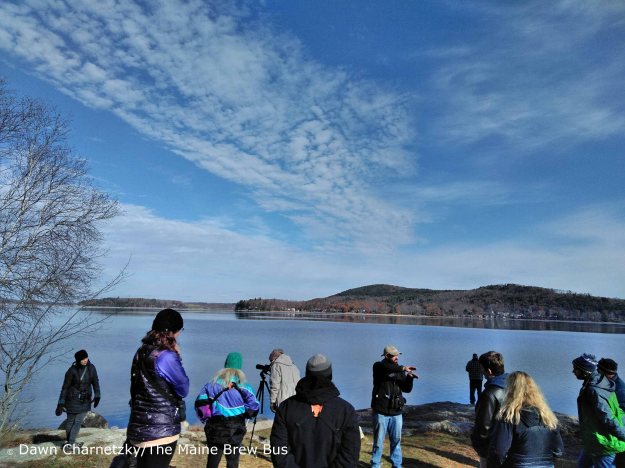
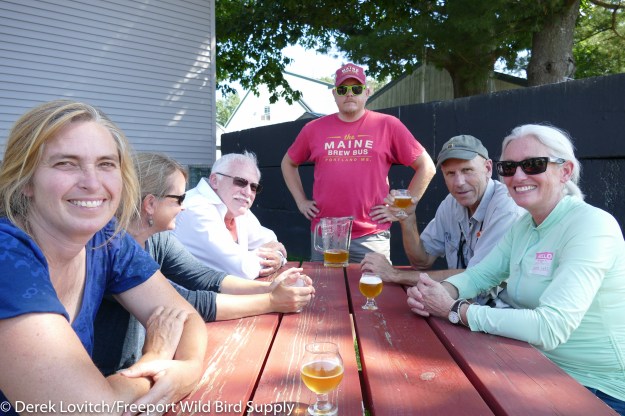
Our 8th tour of the year with our partners, The Maine Brew Bus, ventured to Maine’s deep south and toured around the village of Kittery.

October in Maine can produce all sorts of surprises, and Fort Foster is a great place to find the unexpected. We started off with this BLACK-BILLED CUCKOO, a very late individual, that unlike most members of its species paused for photographs and long, satisfying views.

Another treat was an “Ipswich” Savannah Sparrow on the beach and a nice little wave of Yellow-rumped Warblers among the residents in the woods, but then our biggest surprise of the morning – a wide band of steady rain! The rain impacted our visit (for the second year in a row!) to Seapoint Beach, but a small pocket of activity on the seaweed included at least 5 Northern Mockingbirds (one burst into song, despite the rain), 6 Yellow-rumped Warblers, and 2 Eastern Phoebes. Several adult Northern Gannets were just offshore, which was another highlight.

“Ipswich” Savannah Sparrow that breeds exclusively on Sable Island, Nova Scotia.

With rain still falling, I skipped the walk at the beach, and instead made a couple of short stops where we were able to hang by the bus. 20+ Bonaparte’s Gulls were off the Kittery Town Landing, and by the time we arrived at Legion Pond to enjoy 3 spiffy Wood Ducks among the masses of Mallards, the rain not only stopped but the sun began to return.

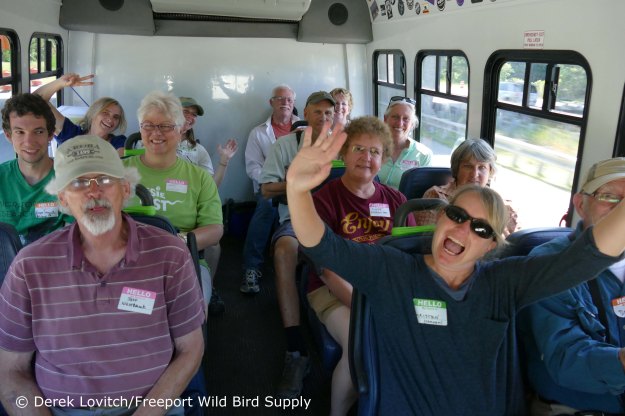
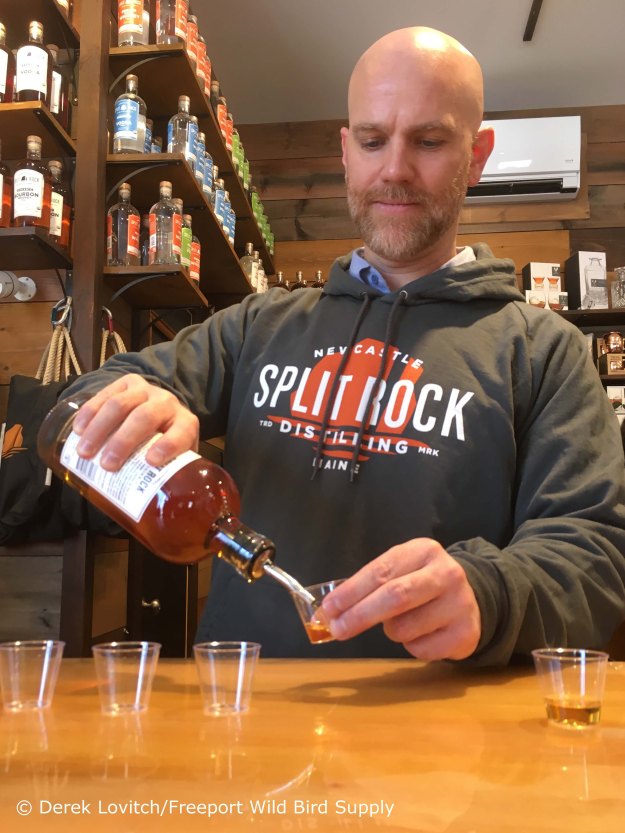
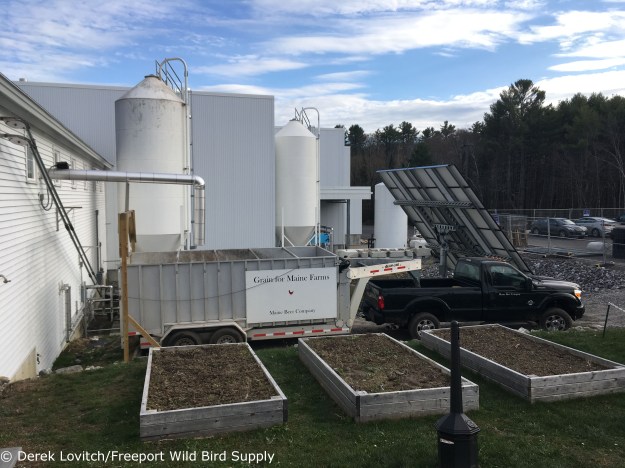
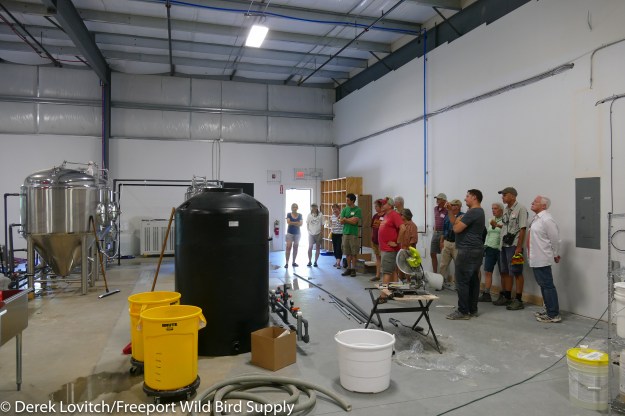
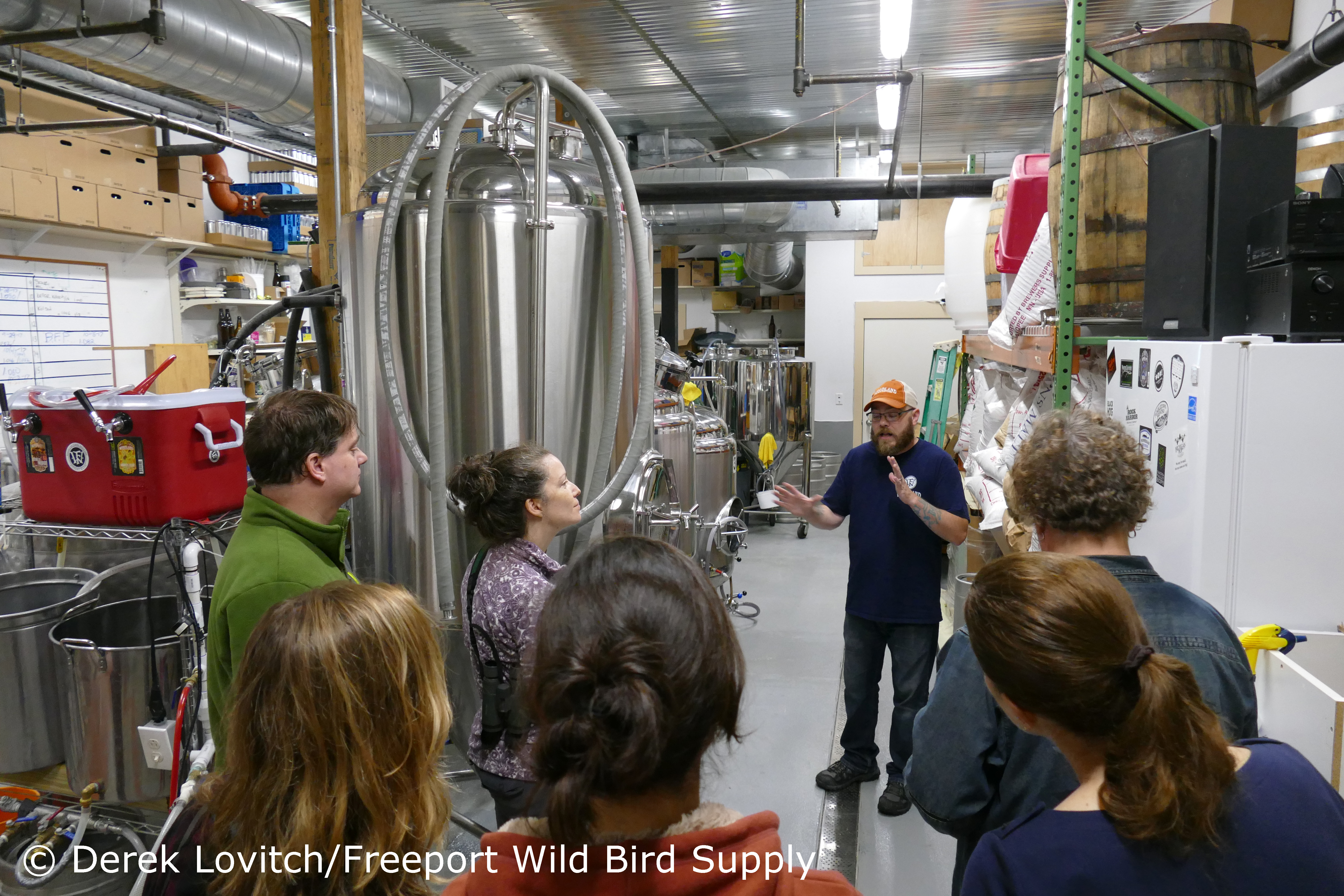
The first stop on the brewery tour was Woodland Farms Brewery, which opened only this February – but from the looks of things, had already gained quite a following! There, we sampled four brews from this lager-centric brewery. Very traditional and well-executed styles included Wolf Haven Extra Special Bitter (ESB) with a nice depth of flavor to balance the bitterness, and the Rowanbrau, a Dortmunder-style golden lager with a super-crisp-finish. We started with their light Cervaza Medico, a Mexican lager with a subtle sweetness from corn, and finished with a hop-forward Backyard Scientist IPL. A lot can be done with a lager, far beyond the basic American mass-produced swill, so it was a good lesson for us in the range of the technique.

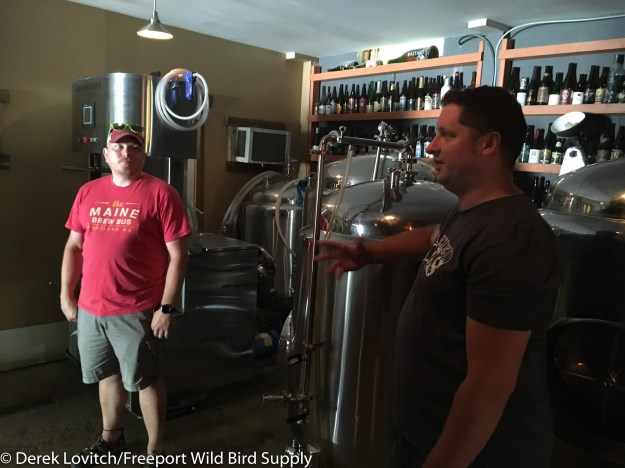
We learned about the benefits and limitations of focusing on lagers, and the methods that produce this style of beer, which we then contrasted with ales on our second stop, Tributary Brewing Company, where a wide range of traditional and modern styles were sampled. Starting with Oktoberfest, a perfectly-simple and clean version of the traditional German-style marzen, we finished with their Oyster Stout (anything but traditional), with subtle notes of minerality.  In between, we tasted their Blueberry to find out what a beer with blueberries in the mash can really taste like (subtle, not in your face, and not overtly sweet at all) and their Pale Ale, their basic, but delectable flagship. In all cases, flavors were meant to be simple and subtle, complement the “basic” beer flavors and not overpowering them.

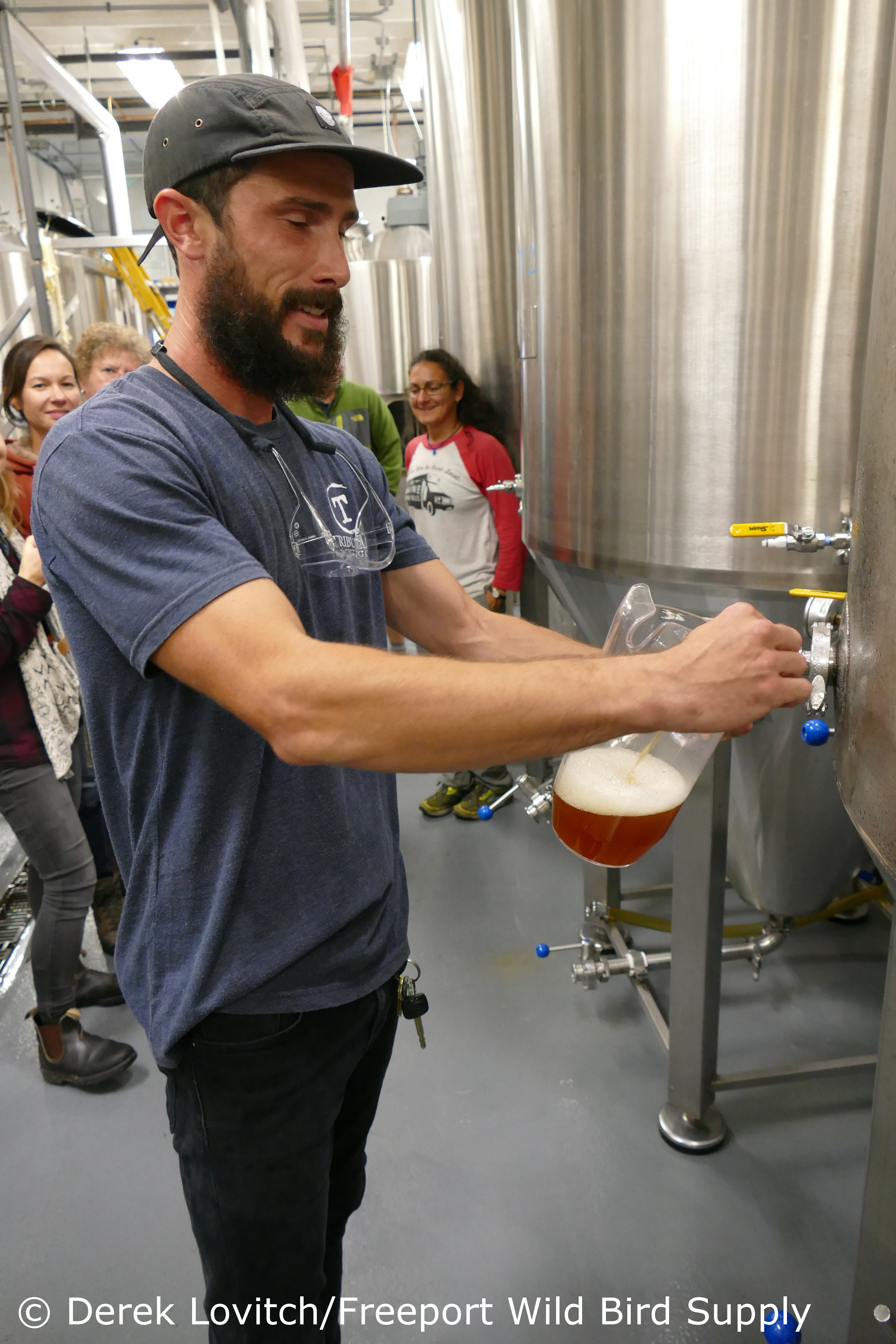
While comparing and contrasting this subtle, delicate use of flavors, it was not surprising that a discussion of “pumpkin/pumpkin spice” beers came up, and so Ian tapped the unfinished Pumpkin for us to sample – even though it was still weeks away from being ready and was un-carbonated. We were duly impressed, as the subtle flavors were quite apparent, and it offered insight into the brewing process as well, which is something we work hard on offering during these special tours.

With temperatures in the low 70’s, the rain was merely a nuisance, and it definitely impacted the middle part of our birding adventure. Regardless, a birding tour that begins with crippling views of a Black-billed Cuckoo and ends with stunning Wood Ducks is still a real winner! And if not, there was some great beer to enjoy and learn about!
A Record-Shattering 5 Days at Sandy Point!

NOPA
Northern Parulas were certainly the “bird of the week” at Sandy Point.

It was a special five-day run at Sandy Point Beach on Cousin’s Island in Yarmouth. It was a record-shattering run in fact, in which I tallied nearly 18,000 migrants engaging in the “Morning Flight,” or “morning re-determined migration” when nocturnally-migrating passerines relocate (to drastically oversimplify things) come sunrise.
SandyPoint_sunrise,9-13-17

(To learn more about Sandy Point, check out the site entry in Birdwatching in Maine: A Site Guide, and for more on nocturnal migration, interpreting the radar, and the “morning flight” phenomena, check out Chapter 5 in my first book, How to Be a Better Birder. Whaddya mean you don’t have these two books!?)

I’ve had a handful of four-day runs, but I cannot think of a time when conditions were favorable – and I was actually present, and not leading tours on Monhegan for example – for five straight days. But I have most certainly never had five days like this!

I recorded 72 species “deemed migrating” through here, not including migrants that were in the bushes, such as the Gray Catbirds and Song Sparrows that are so abundant in the brush here. It does not include species like Osprey, in which some of the many I saw this week were likely southbound, but impossible to separate from the still-locals. And this tally did not include all of the waterbirds, from Common Eiders to herds of dabbling American Black Ducks, and from Bald Eagles to hunting Great Blue Herons, as well as resident species.

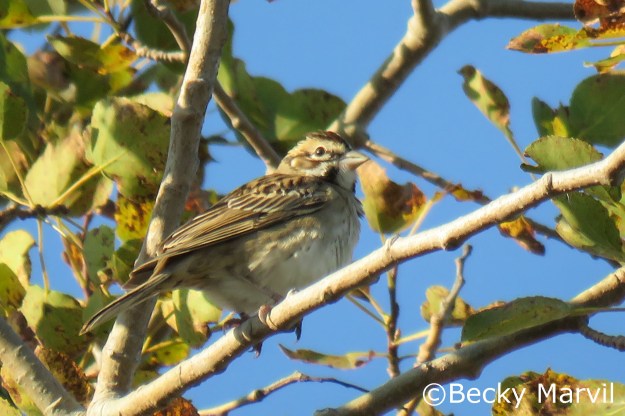
I tallied 25 species of warblers, including a single Connecticut Warbler, one of the most sought-after parulids in Maine. A Northern Mockingbird was only my 5th ever noted here, and two passing Dickcissels are always a treat. But certainly the icing on the cake of this great week was the Lark Sparrow found by the group in the parking lot on the relatively quiet morning of 9/13. This was a first record for Sandy Point, and my personal 184th species here.
LASP, Becky

But it was the morning of the 11th that will go down in Sandy Point history!  8,185 migrants was not only a new record, but almost doubled the previous record (4,346 on Sept 21, 2010). It was incredible. More on that epic morning later.

A number of records for high counts for individual species were set, and I am sure even more would have been shattered if I had a higher rate of identification during the onslaught of the 11th.   Other trends, typical of the season, were evident, such as the slow but steady change in the composition of the flight. The early migrants like Magnolia Warblers were giving way to a growing percentage of Yellow-rumped Warbles and Blackpoll Warblers for example. But it sure seems like we’re not yet running our of Yellow Warblers and American Restarts, however!
AMRE
immature male American Redstart

YWAR
Yellow Warbler, adult male

So first, here’s the numbers (bold font indicates a new daily record).

 9/9 9/10 9/11 9/12 9/13
Blue-winged Teal 3 0 0 0 0
Unidentified teal 0 0 4 0 0
Surf Scoter 3 0 0 0 0
Common Loon 4 0 0 3 0
Northern Harrier 0 1 0 0 0
Killdeer 0 1 0 0 0
Lesser Yellowlegs 0 0 0 1 0
Mourning Dove 0 1 0 1 1
Ruby-throated Hummingbird 2 0 0 1 1
Hairy Woodpecker 0 1 0 0 0
Northern Flicker 1 256 68 26 12
Pileated Woodpecker 0 1 0 1 0
American Kestrel 0 0 3 0 1
Merlin 1 1 0 1 2
Eastern Wood-Pewee 3 4 0 0 0
Yellow-bellied Flycatcher 1 0 0 0 0
“Traill’s” Flycatcher 2 0 0 0 0
Least Flycatcher 9 11 3 2 0
Unidentified Empidonax 5 0 0 1 0
Eastern Phoebe 1 3 2 2 2
Eastern Kingbird 2 1 0 0 0
Unidentified flycatcher 6 1 1 0 0
Blue-headed Vireo 1 3 1 2 0
Philadelphia Vireo 3 4 2 1 0
Red-eyed Vireo 42 49 30 9 4
Unidentified vireo 1 2 0 0 0
Blue Jay 0 0 0 2 5
Barn Swallow 1 0 0 0 0
Red-breasted Nuthatch 1 1 2 1 0
Golden-crowned Kinglet 0 0 0 1 0
Ruby-crowned Kinglet 2 1 5 4 0
Swainson’s Thrush 10 0 0 2 0
American Robin 4 3 1 2 0
Unidentified thrush 0 1 0 0 0
Northern Mockingbird 0 1 0 0 0
Cedar Waxwing 21 265 377 54 0
Ovenbird 0 0 0 0 1
Northern Waterthrush 0 0 0 1 0
Black-and-white Warbler 33 59 41 32 5
Tennessee Warbler 4 2 2 8 0
Nashville Warbler 8 8 10 4 0
CONNECTICUT WARBLER 1 0 0 0 0
Mourning Warbler 0 1 0 0 0
Common Yellowthroat 2 1 5 5 2
American Redstart 602 550 844 119 16
Cape May Warbler 18 5 8 5 0
Northern Parula 705 630 692 612 205
Magnolia Warbler 66 117 32 23 2
Bay-breasted Warbler 5 3 1 1 0
Blackburnian Warbler 7 6 1 0 0
Yellow Warbler 19 52 38 67 8
Chestnut-sided Warbler 5 2 0 2 0
Blackpoll Warbler 9 3 27 25 35
Black-throated Blue Warbler 8 7 4 4 0
Palm Warbler 0 0 0 1 0
“Western” Palm Warbler 1 0 0 0 0
Pine Warbler 0 0 0 1 0
Yellow-rumped Warbler 3 6 3 19 11
Prairie Warbler 1 2 1 1 0
Black-throated Green Warbler 118 63 73 57 26
Canada Warbler 6 0 1 0 0
Wilson’s Warbler 12 17 7 4 0
Chipping Sparrow 2 0 1 3 1
LARK SPARROW 0 0 0 0 1
White-throated Sparrow 1 0 0 0 0
Savannah Sparrow 2 0 0 0 0
Scarlet Tanager 1 1 4 1 0
Rose-breasted Grosbeak 3 1 0 0 0
Indigo Bunting 0 0 1 1 0
DICKCISSEL 0 0 1 0 1
Bobolink 1 2 0 0 0
Red-winged Blackbird 1 2 0 0 0
Rusty Blackbird 0 1 0 0 0
Baltimore Oriole 2 1 1 1 1
House Finch 0 0 0 1 1
Purple Finch 0 0 0 8 0
American Goldfinch 5 12 3 6 4
Unidentified 1915 1887 5893 737 192
TOTAL 3705 4057 8185 1866 540


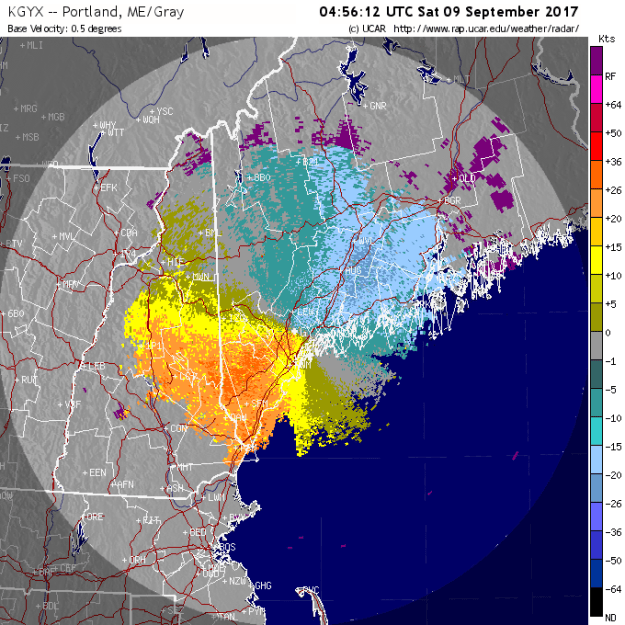
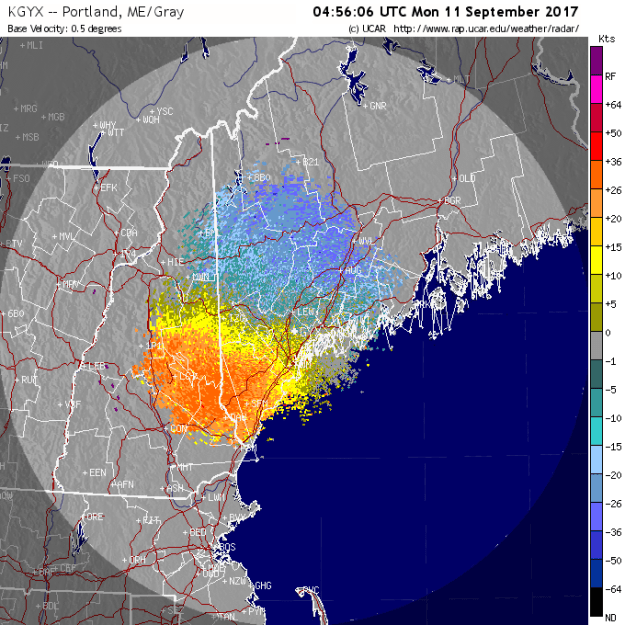
Now, let’s take a look at the radar. Here are the density and velocity images from 1am (as a sample) on 9/9 and 9/10. That’s a ton of birds on the radar.
1amRadar,9-09-17
1amVelocity,9-09-17

1amRadar,9-10-17
1amVelocity,9-10-17

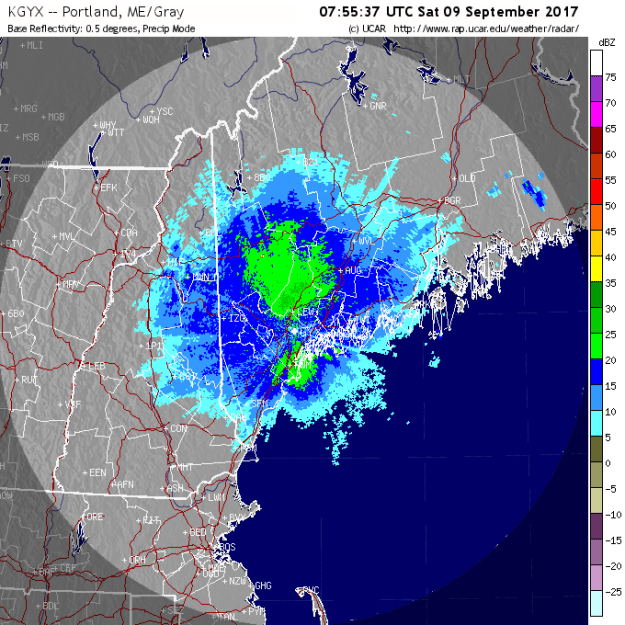
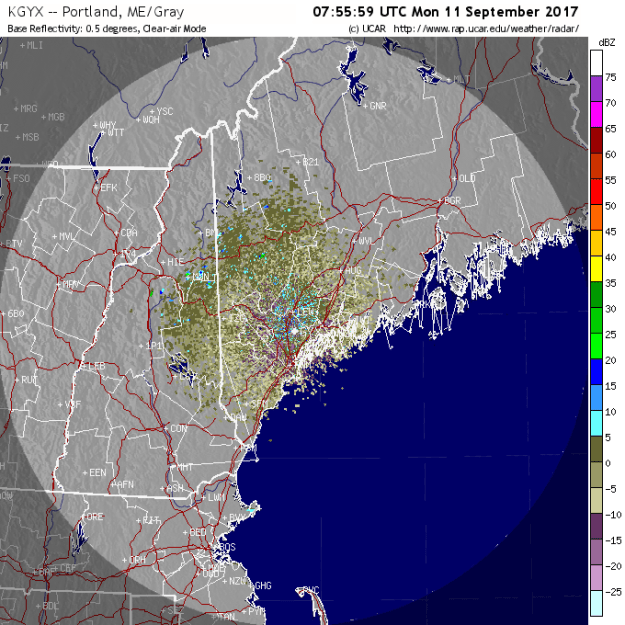
And even as late as 4:00am on each day, a lot of birds were visible, and a lot of birds were offshore.
4amRadar,9-09-17
4amRadar,9-10-17

The night of 9/8 through 9/9 featured light westerly winds, shifting to northwest by sunrise. And on the next night, light north winds became northwest overnight. Both, as expected, produced great flights over and through Sandy Point some dawn.

Weather patterns, especially at this time of year, rarely produce three great nights for migrants in a row. And when they do, it often results in fewer birds overnight (and therefore at Sandy Point) come sunrise; essentially, the well temporarily runs dry.

And as you can see by the 1:00am radar image from September 11th, the density was nowhere near the previous two nights, despite mostly light westerly winds overnight.
1amRadar,9-11-17
1amVelocity,9-11-17

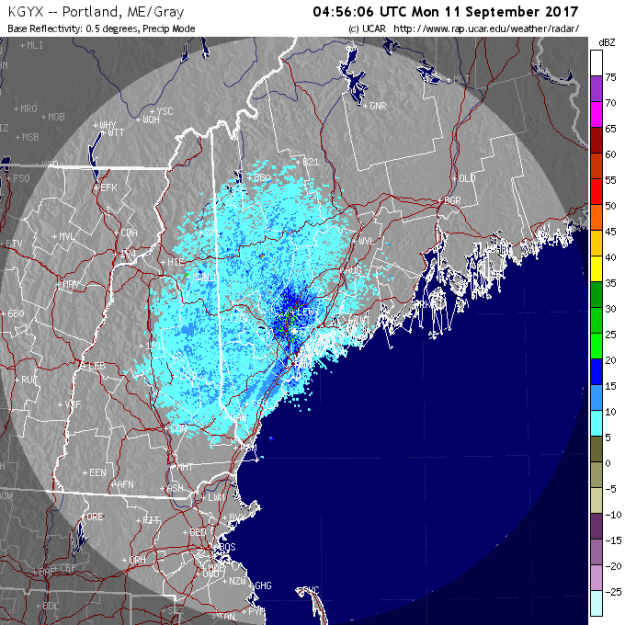
And by 4:00am, it was rather quiet.
4amRadar,9-11-17

Light northwesterly winds in the evening slowly gave way to light north, before becoming light and variable. After midnight, they became west but didn’t really increase until after 2:00am. Coupled with a lackluster radar return, this was not a recipe for a huge flight.

Nonetheless with a light westerly wind at sunrise, I was heading to Sandy Point anyway. If only because it was a day off, and I won’t have many more chances to visit “my office” this month. A milky sunrise further clouded (sorry) my optimism for a big flight, but there were plenty of birds in the air.
Sunrise_on_big_day_atSP,9-11-17

And then all hell broke loose.

It was incredible. It was frustrating. It was beautiful. It was painful. It was amazing. It was indeed overwhelming, and at times, my only hopes at quantifying the flood was to skip attempting identification and just click my unidentified clicker as fast as I could.

And I really can’t explain it. It “shouldn’t” have been this amazing.

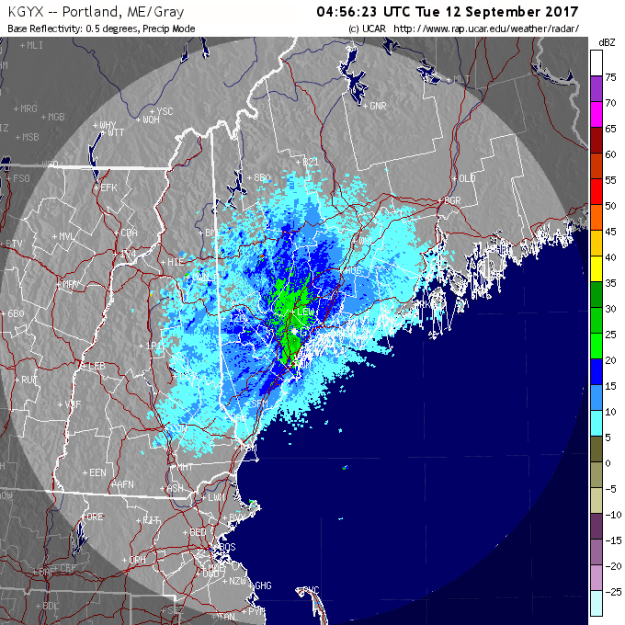
Come nightfall, with high pressure remaining in control, and with light westerly winds and clear skies once again, a moderate to strong flight occurred overnight. Here are the 1:00am and 4:00am radar images from the wee hours of 9/12:
1amRadar,9-12-17
1amVelocity,9-12-17

4amRadar,9-12-17

With light westerly winds come dawn, I was once again stationed at the bridge, and what was – prior to three days ago! – considered a very good flight passed over and through. It was even downright relaxing – and manageable – after the chaos of the previous morning. I had fun.

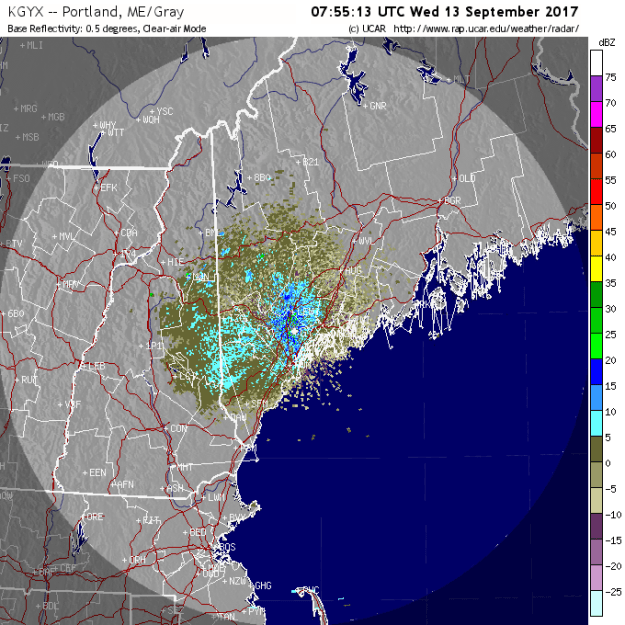
Not surprisingly, after four consecutive nights, the flight was much lighter overnight on the 12th into the 13th, as evidenced once again by the 1:00am and 4:00am images.
1amRadar,9-13-17
1amVelocity,9-13-17

4amRadar,9-13-17

And despite very light westerly winds in the morning, and clear skies, only a light flight was to pass through the point. Of course, that Lark Sparrow more than made up for it. It was also nice to enjoy a slower flight – and identify many more birds than not!
So almost every morning made sense: radar plus weather conditions correctly predicted the intensity of the flight. Except for one. The Big One. And I can’t explain it. But, I am OK (mostly) with that – it’s one of the fascinating and flabbergasting aspects of documenting the morning redetermined migration!

Winds turned to the south during the day on the 13th, and continued light and southerly overnight, bringing the streak of five great nights of migration to an end. Come morning, I also slept in – relatively speaking – and then went for a massage. As my therapist began to work on my aching neck, she simply uttered, “Wow” and got to work. I felt the same on Monday morning when the greatest flight I have ever recorded passed through Sandy Point.

IMG_6455-edited-edited
Species, such as this Swainson’s Thrush, that can be rather secretive in migration, are sometimes seen really well at Sandy Point!

The Fall Shorebird Spectacle of the Bay of Fundy, New Brunswick.

shorebirds1-A

Jeannette and I spent our summer vacation in the neighboring Province of New Brunswick. For far too long, we have been saying we needed to get to the head of the Bay of Fundy in August, so this year we finally made it happen.

It’s a beautiful area, and August is a great time of year to visit the Maritimes. However, our primary motivation wasn’t the scenery, the weather, or even the poutine. We were here to see one of the great natural spectacles of the entire region: the fall migration of the Semipalmated Sandpiper.
monument

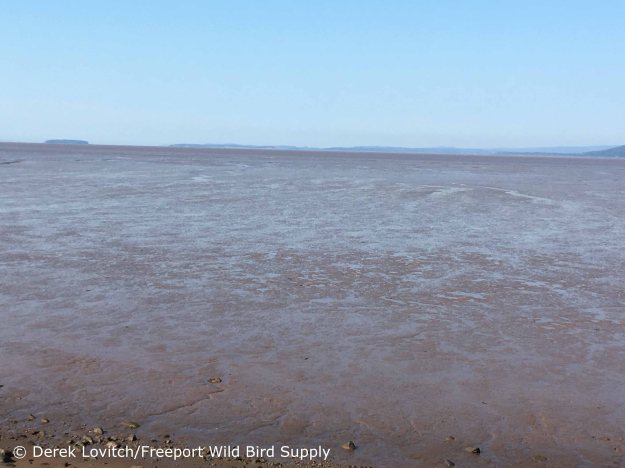
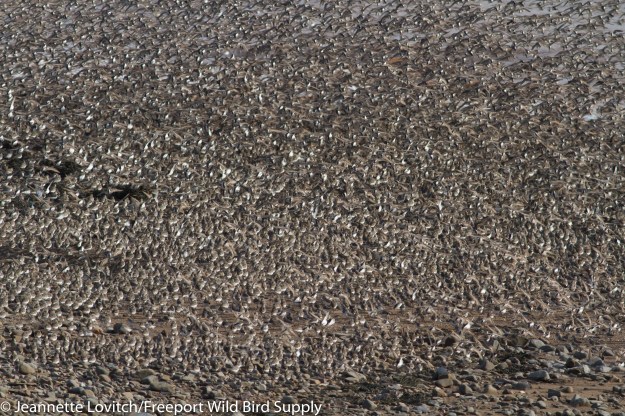
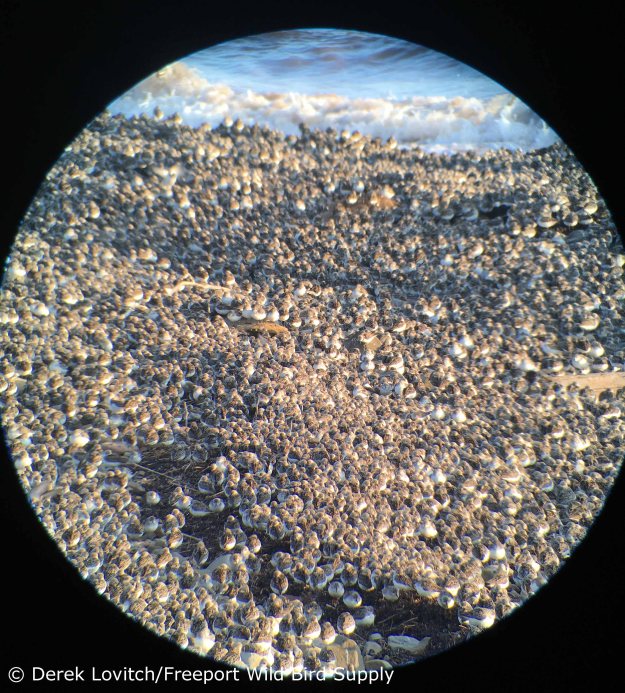
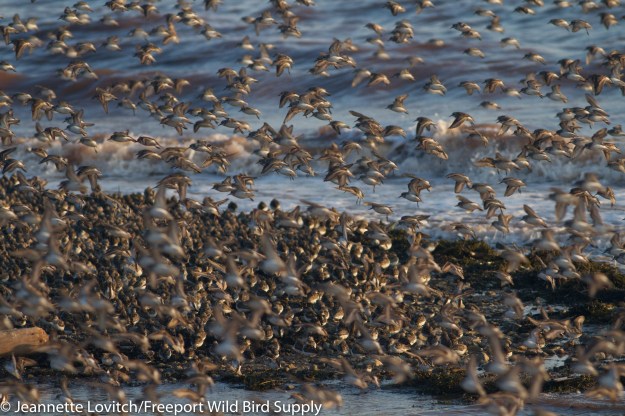
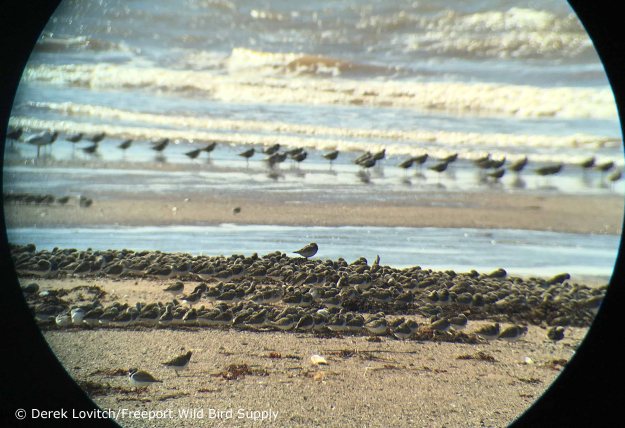
Up to 75% of the world’s population of this small shorebird (“peep”) passes through the Bay of Fundy each fall, stopping to feed and fuel up on the region’s immense mudflats, with recent estimates of several hundred thousand birds. With that Bay’s 40-foot tides and mudflats of over a mile wide, “Semi-Sands” find a lot of foraging habitat, and a lot of food. In particular, a species of mudshrimp that can be found in incredible densities of 60,000 per square meter!  Along with a nutrient-rich biofilm on the mudflats’ surface, Semi-Sands can put on enough fat reserves to fuel a three-day non-stop flight to their wintering areas in Northern South America. (For more information about the region, including a map and components of the food chain, I highly recommend the Bay of Fundy Mudflats website).
mudflats

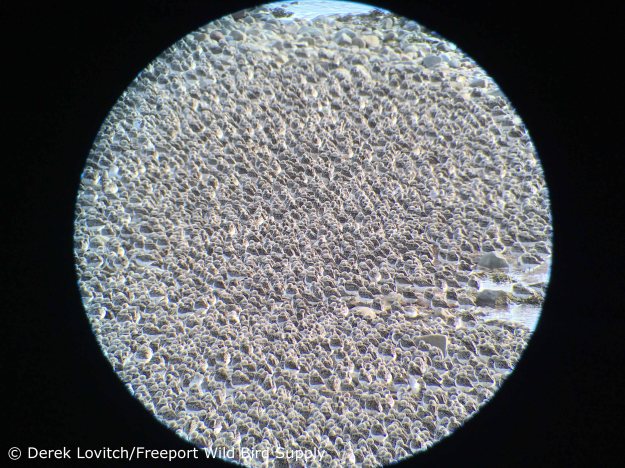
While “flocks of over 100,000” are rare these days, flocks of 50,000 or more can be encountered, ebbing and flowing with each change in the wind and arrival and departure of flocks. This wonder of the avian world, a mere day’s drive away, is something we needed to do. And with the continued decline of Semipalmated Sandpipers – and sadly, most other shorebirds – we could not wait any longer.

We based our stay of three days in Sackville, a charming little town with surprisingly great restaurants and a remarkable downtown nature preserve. From our motel here, we drove the short distance to Johnson’s Mills twice each of our two full days of birding here – once each on the morning high to outgoing tide, and once each on the incoming to high tide in the evening.

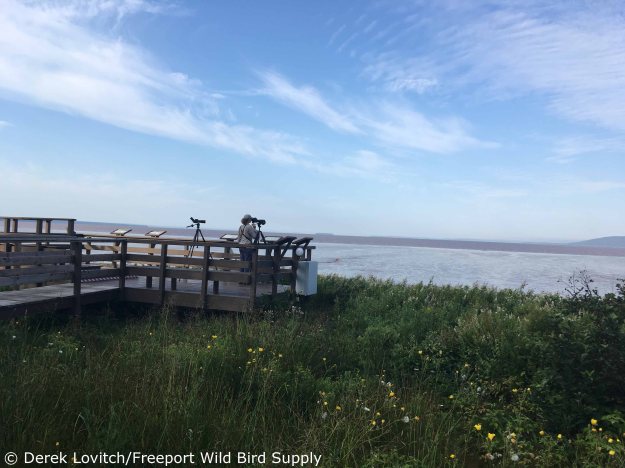
Nature Conservancy Canada has an Interpretive Center on the shores of their reserve, a great place for viewing shorebirds or receiving information about the best current location of observation. Mostly, we spent our time nearby, usually by walking just a short distance south of the center.
viewingPlatform_edited-1

And it was truly incredible. I am to come up with the words to describe it. It was, literally, awesome. And there is no way photos can do it justice, either. I did post a few phone-scoped videos on our store’s Facebook page that might help capture the scene a little, but I’ll just let these photos tell as much of the story here as they can.
Shorebirds-1

Shorebirds-1B

shorebirds2

shorebirds3

Shorebirds3-a

shorebirds3-b

shorebirds4

shorebirds5

shorebirds6

shorebirds7

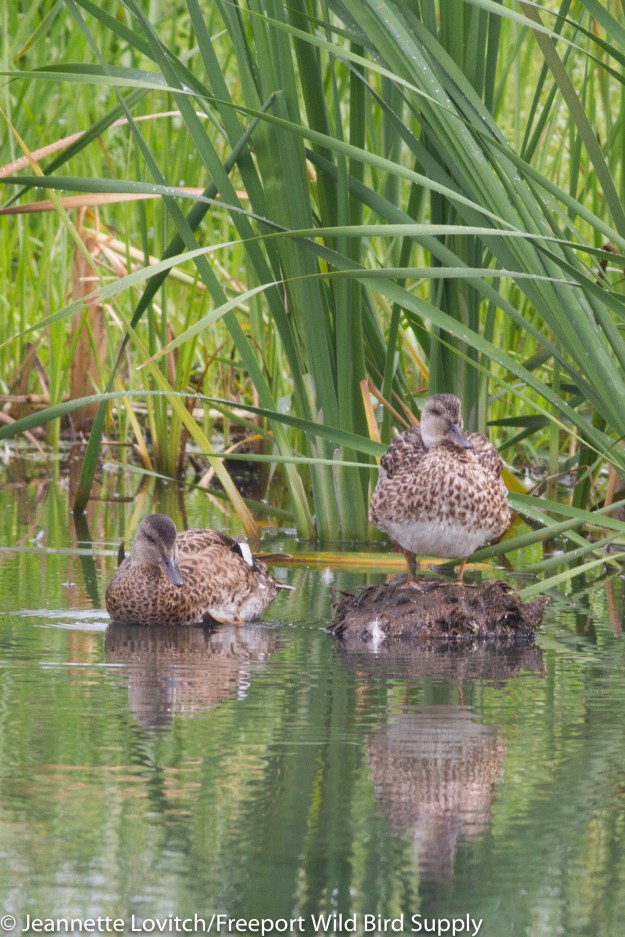
Both days, we then visited the Sackville Waterfowl Park. This wonderful little gem, with entrances all around downtown, features managed wetlands that was chock full of birds. We had mixed-species foraging flocks of migrant warblers at the edge, roosting Greater and Lesser Yellowlegs wherever they could find some open mud, and lots of ducks – including at least 6 family groups of regionally-very-uncommon Gadwall.
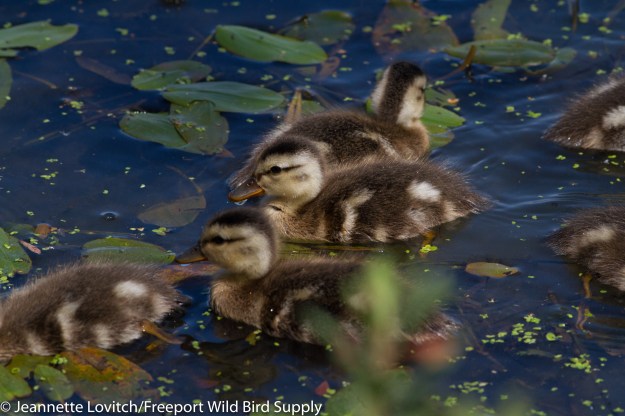
GADWGadwall_chicks

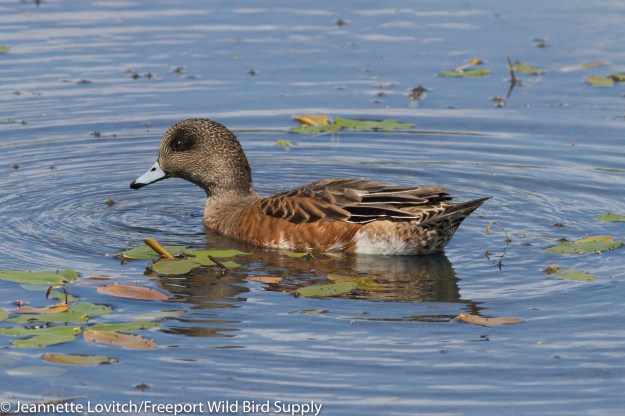
AMWI
And lots of other ducks, like American Wigeon.

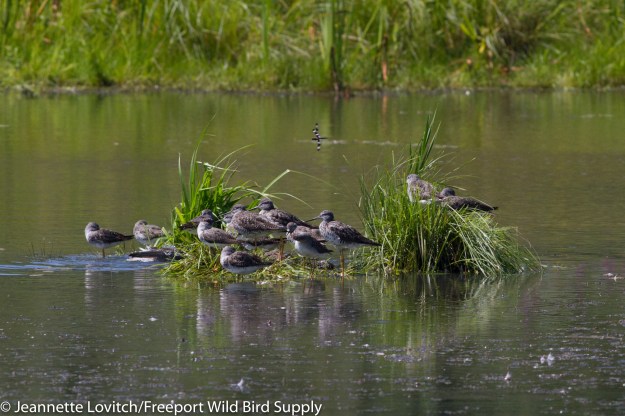
yellowlegs
Roosting Greater and Lesser Yellowlegs.

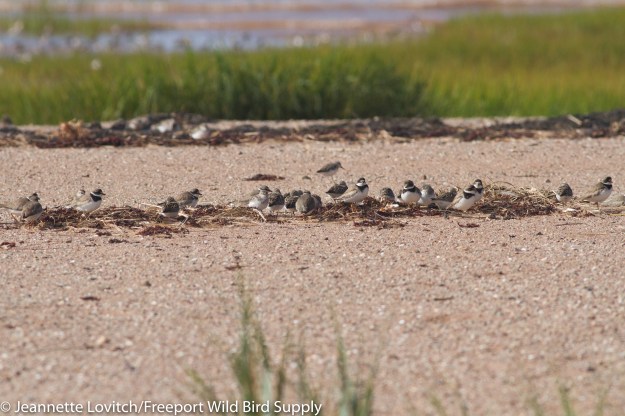
On our fourth day, we spent the high tide at Mary’s Point, on the other side of the bay, for a different perspective. A “mere” 8,000-10,000 Semipalmated Sandpipers were present here this morning, but likely due to the sandy beach, there were more plovers: both Black-bellied and Semipalmated.
Marys_Point1MarysPoint-2
A White-rumped Sandpiper stands watch over all.

We then enjoyed hiking and casual birding in Fundy National Park, before slowly making our way back to Maine via ferries and island-hopping to Campobello Island.
FundyNP

Seawatching from East Quoddy Head (Great and Sooty Shearwaters, etc), a Baird’s Sandpiper on the Lubec Bar, and two wandering Great Egrets at the Baring Unit of the Moosehorn National Wildlife were among the avian highlights of our first day and a half in the area.

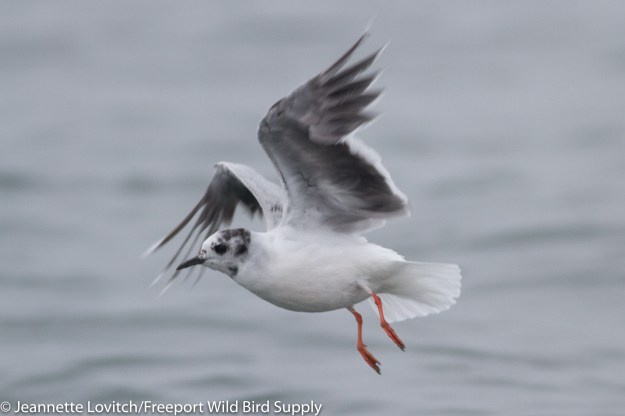
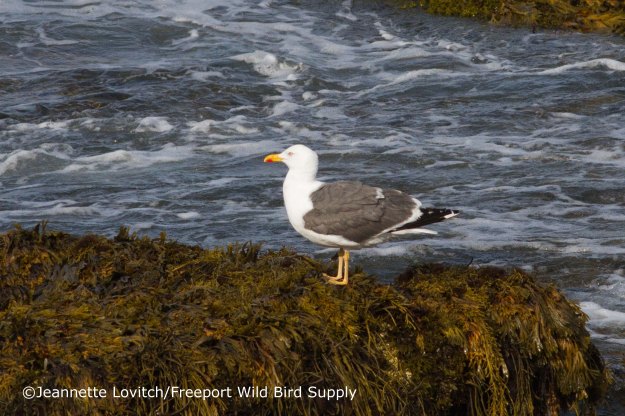
Thwarted by dense fog, the last morning of our vacation featured just enough clearing to allow us to get out on the water with our friend Chris from Eastport. The swirling mass of gulls feeding on the swirling waters in and around the Old Sow Whirlpool is another sight that should not be missed – luckily, this is one we enjoy almost every year. In just a couple of hours on the water, before the fog once again closed in, we saw 2000-3000 Bonaparte’s Gulls, 40 or so Red-necked Phalaropes, 4-5 Lesser Black-backed Gulls, over 100 Black-legged Kittiwakes, a lost Atlantic Puffin way up the straight, a couple of Razorbills, and this lovely adult Little Gull.
LIGU

ARTE
Arctic Terns

BLKI
Black-legged Kittiwake

Lubec

So if you haven’t gone to the head of the Bay of Fundy in August, I cannot recommend it enough. Lubec-Eastport is pretty fine this time of year as well (hence my biennial August van tour.) And yeah, we had some good poutine, too.
Poutine_edited-1

Northeast Canyons and Seamounts Marine National Monument Needs Your Support!

IMG_1889_edited-2

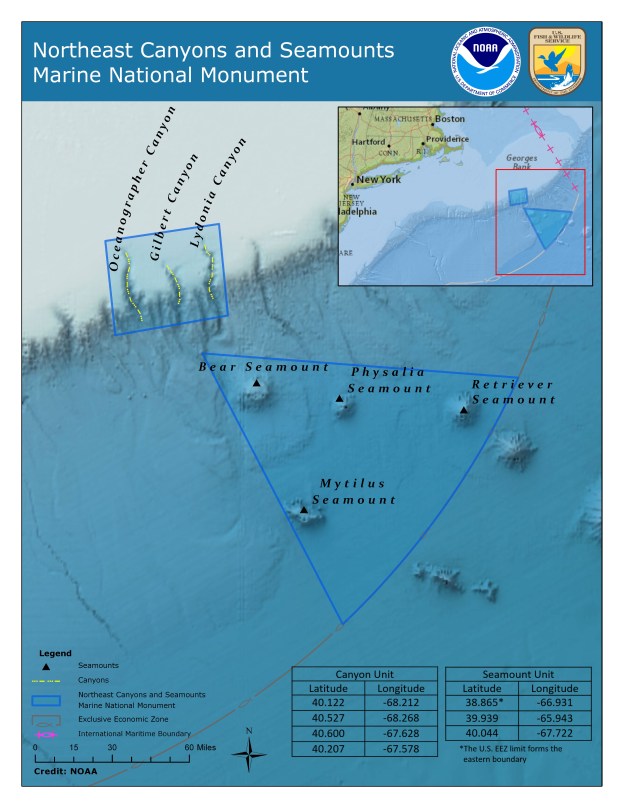
The Northeast Canyons and Seamounts Marine National Monument was designated by President Barack Obama in September of 2016. It was the first such marine monument designated in the Atlantic Ocean, lying roughly 130 miles southeast of Cape Cod. The designation protects 4,913 square miles from energy exploration, undersea mining, and most commercial fishing (with exceptions) in order to protect fish populations and a variety of endangered species, especially Sperm, Fin, and Sei Whales.

Of particular interest and consequence to birders, it has recently been discovered that Atlantic Puffins winter in the area, perhaps even a goodly portion of “our” birds. What would happen if a Deepwater Horizon-like disaster happened out here? Would decades of puffin restoration on Maine’s islands be for nothing? What about the tourism, jobs, and pure enjoyment that puffin tours along the Maine coast create? What about the future of an iconic species that already has to face to challenges of drastic Climate Change and severe overfishing?

The designation of this Marine National Monument was a very good thing for Atlantic Puffins, and therefore, a very good thing for birding in Maine! But it is now under threat.

Canyons Map

In April, “President Donald Trump signed two executive orders – the first calls for a ‘review’ of 27 large-scale monuments on land and in the ocean, and the second takes direct aim at marine monuments and National Marine Sanctuarues. The Northeast Canyons and Seamounts Marine National Monument is a target of both orders.” That link, to the Center for American Progress, has a good overview of what’s at stake, and the likely beneficiary of an overturning of this designation (Big Oil).  Be sure to also check out the maps in that report, including the perceived distribution of wintering Atlantic Puffins and the overall offshore seabird abundance estimates (and then compare those maps to the fishing effort map!) Basically, the claims of impacts on fishing grounds is mostly a red herring (sorry, I couldn’t resist).

Here in Maine, it has been the review by Secretary of the Interior, Ryan Zinke, of the designation of the Katahdin Woods and Waters National Monument that has (rightly) received a lot of attention. His visit to Maine was thoroughly covered as he met with local communities, politicians, and business organizations. Press coverage has been widespread and thorough of the debate, such as this recent article in The Boston Globe.

I certainly support that monument designation, and I look forward to visiting it for the first time later this fall, but I will save that blog for another day.

But the review of Northeast Canyons and Seamounts Marine National Monument has received much less attention, especially here in Maine, despite its importance to our puffins. I believe birders therefore need to lead the charge in speaking out in support of the monument, which I believe is at greater risk in the Zinke era than Katahdin Woods and Waters. In no small part because not enough people are paying attention.

Personally, I think this whole “review” process is a dog and pony show – another weapon of mass distraction – from an administration hell-bent on gutting environmental laws. While we argue over the validity and value of each monument, Zinke and company are paving the way for more resource extraction at cut-rate prices on our PUBLIC land, even in National Parks. And attacking Endangered Species protections. Say good-bye to the Greater Sage-Grouse, for example, if this corruption continues.

But that doesn’t mean we shouldn’t keep fighting for each of them, and I believe Northeast Canyons and Seamounts is worth fighting for. For whales, puffins, and the future of fisheries in the Gulf of Maine.

Therefore, to start, please take a moment – if you have not done so already – to submit a comment in support of the monument’s designation. We only have until August 15th to do so. Simply click the “Comment Now” button on the upper right of the federal website linked above, and be sure to specifically mention Northeast Canyons and Seamounts Marine National Monument (and all of the other monuments that are important to you).Secretary Zinke is expected to issue his report on the review of all of the monuments on August 24th. We’ll learn more then about exactly what this process has been all about, and how far this administration is going to attempt to go to overturn anything accomplished during the Obama presidency. There will be plenty of lawsuits from all directions, so none of these fights are over yet.

So please, don’t be distracted by tweets, rhetoric, or grandstanding. The real damage is being done right in front of our eyes, through little directives, department policy initiatives, and countless other ways to undermine the economy, environment, and citizens of this country in order to line the pockets of the fortunate few.

I for one am not going go down without a fight. A fight that includes a fight for puffins!

A couple of additional references:

Northeast Canyons and Seamounts Marine National Monument on Wikipedia.

Pew Charitable Trust applaudes monument’s creation.


Birds on Tap – Roadtrip! “Beach and Brews,” 7/16/17

_MG_7629_edited-2

The third new Birds on Tap – Roadtrip! itinerary of 2017 with our partners, the Maine Brew Bus, was a resounding success on Sunday, July 16th. The working title had been “Beach and Brews,” but I think “Terns and Taps” might be the new title. Whatever it ends up getting called, expect to see this outing return next year. It’s a winner!

Timing our visit to Hill’s Beach for the incoming tide, we thanked our friends at Buffleheads restaurant for giving us permission to park the bus in their lot. Nearby, we crossed over to the beach and began our birding adventure.
1. at Buffleheads

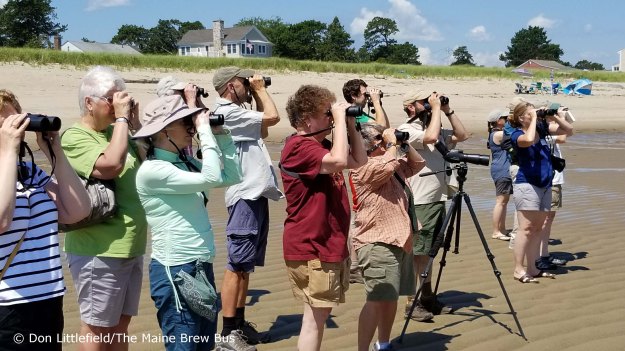
Shorebirds and birders had to share the sand with many other beachgoers, but at Hill’s, there’s room enough for most everyone. Gulls had assembled along the western end of the beach, so we started with a quick gull identification workshop, sorting out tiny Bonaparte’s Gulls from massive Great Black-backed Gulls, and separating Herring from Ring-billed Gulls in between.
2. Group on beach 1

Scattered shorebirds were here and there, but the action really started, as usual, as we crested the Basket Island Sandbar and scanned the rapidly-inundating flats to its east.  A growing number of shorebirds – already heading south (yup, it’s fall in the shorebird world!) included at least 50 total Short-billed Dowitchers and about 20 Semipalmated Sandpipers.
3. Group on beach 2

We quickly learned how to pick out Endangered Roseate Terns from the ubiquitous Common Terns – one of the target species of the trip. With practice, we learned it’s not as hard as some field guides suggest to separate these species, using a combination of size, relative tail length, wingbeats, and overall color. Hint: Roseates are the white ones. (Photo from a here on a different day above).

A growing contingent of gulls at this end eventually included a spiffy adult Lesser Black-backed Gull; an unexpected treat in mid-summer, and a nice way to cap our introduction to the gull identification lesson.
_MG_0085_edited-2
(Photo from another time and place)

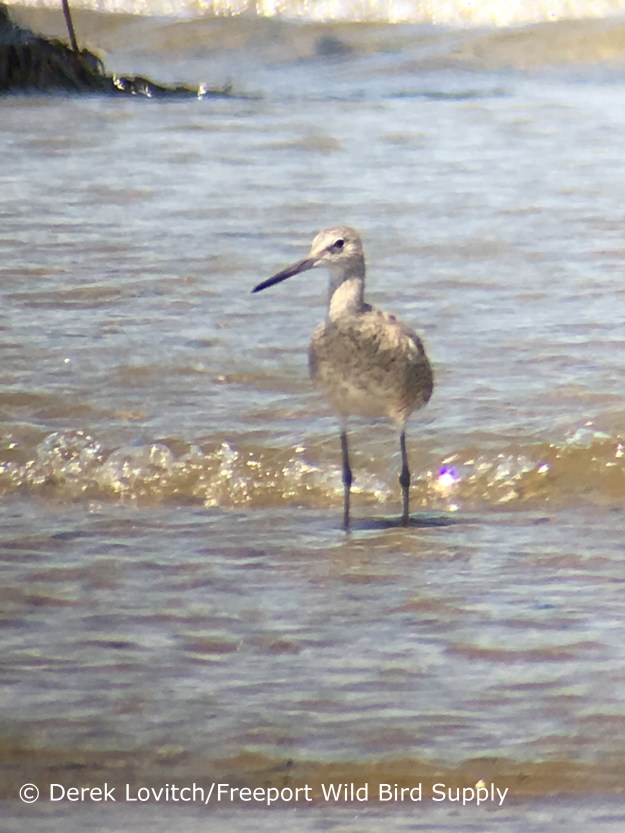
All too soon, however, it was time to depart, but as we turned around I spottan interesting bird. One lone Willet, a tall but hefty shorebird, was standing on the flats. It struck my eye as very godwit-like, which got my heart racing at first. Tall, lanky, and very long-billed, a godwit-like gestalt is typical of the “Western” Willet, a subspecies that is rare but regular in Maine in fall, but very rare here in mid-summer.

Out of expected season, I was very careful in sorting through the salient features, and I admit to waffling a little about its identification at first. As we got closer, however, details became more apparent, such as the very long and thinner bill that suggested a hint of an upturn. It flew across the sandbar, landing close by, and in much better light, showing the overall grayer plumage, and paler undersides with considerably less markings than the browner and heavily-marked “Eastern” subspecies which breeds around here. It also began to wade in the water to feed, a behavior very typical of “Westerns.”
4. WWILL1,HillsBeach,7-16-17_edited-15. WWILL2,HillsBeach,7-16-17_edited-1

Although our Birds on Tap – Roadtrip! series is not necessarily focused on the challenging aspects of serious birding, like nuanced subspecific identification, the group admitted they enjoyed the process (and admittedly, enjoyed seeing me perplexed for a bit!). Having had our fill of the unexpected unseasonable rarity, we crossed the peninsula to the Park in the Pines to view the muddier flats of The Pool. There, at least a hundred “Eastern” Willets were present in their preferred habitat, but unfortunately, they weren’t close enough to really compare plumage details.

Scanning across the flats, we were able to sort through the masses, even though few shorebirds were very close here today, including a few Black-bellied Plovers and a stately Whimbrel – it’s disproportionally long, downcurved bill always nice to see.

And there’s no better way to celebrate a rare bird (or two today, the “Western” Willet and the Lesser Black-backed Gull) than with a beer or two. There’s also no better way to relax after a long walk on the beach on a sultry summer day than with a beer.

Good thing it was time for Don to take over, and guide us to Barreled Souls, our first brewery stop on the day’s itinerary. And they could not have started us off with a better first sample, the salty and refreshing Space Gose – perfect after a hot day on the beach.

Co-owner and operator Matt Mills was a gracious host, and shared with us their operation, methodology, and brewing philosophy. Fermenting 100% of their beer in barrels via a Burton-Union system and also ageing everything in barrels makes for some very unique and interesting flavors (I recommend checking out the “About Us” page of their website, linked here, for more information). They wanted to be different and stand out from an every-growing, crowded field, making big, malty, and high-alcohol beers but now including offerings of almost every variety.
6. Barreled Souls 1 - tour

As we learned about the brewing process, Kristi kept us hydrated with additional samples, including the MEmosa, a take on a “beer mimosa” featuring lots of orange zest in a light blonde ale with a lemony hop profile. Next up was Transformer, a new pale ale that features rotating hops (this incarnation used Amarillo and Idaho 7).
7. Barreled Souls 2 - samples

Fun (and for some, games)…
8. Barreled Souls 3 - games

..were had by all, especially after changing things up with Dark Matter, a big and bold 10.1% sweet dark ale, similar to a stout or porter, but much sweeter. Their description was simply a quote from NASA: “We are much more certain what dark matter isn’t than what it is.”  But what it definitely was today was a favorite for most of the group.

Don and I love to offer special opportunities on our Roadtrips, and today was no different. Just a half-mile away, we were the first tour group to visit the new production facility for Barreled Souls. In a mere three years they have so far outgrown their current space that they are increasing their production space from a mere 700 square feet to an incredible 7800 square feet!
9. Barreled Souls 4 - new facility

Including a custom-built, climate-controlled “cellar” to house their Burton-Union system.
10. Barreled Souls 5 - new facility

Back on the bus, we discussed our favorite beers, and Don introduced our next brewery, South Portland’s Fore River Brewing Company – a real neighborhood brewery nestled into the Ligonia section of town.
12. Fore River 1

Don took us on a tour of their brewhouse, as we sampled their Spring Point, a Belgian whit, smooth and lemony, with a distinct biscuit finish.
13. Fore River 2

Next up was their Timberhitch Irish Red, another favorite on the day for this group. It was sweet, with just the right amount of hoppiness, and with a sweet and malty finish. Last but certainly not least was the Lygonia IPA, a clear and crisp IPA with pleasant notes of tropical fruits. This round was enjoyed out on the “patio,” a lush lawn full with picnic tables reclaimed from the site of a former salt barn.
14. Fore River 3 - group

But as we know, all good tours must come to an end, so it was time to say goodbye, celebrate our life birds and life beers, and make the short jaunt north to our Portland and then Freeport drop-off sites.
11. bus ride

Endangered terns and migrant shorebirds with a couple of rarities mixed in. The only 100% Burton-Union brewery in the country making some really unique brews and a fun and successful neighborhood brewery featuring some of the area’s most popular styles. I think it’s safe to say that we will see you aboard for this tour in 2018!

(By the way, as of the writing of this, we still have one space left for our next Birds on Tap Roadtrip! “Shorebirds and Beer” on Sunday, August 13th.

2017 “Bicknell’s Thrushes of the White Mountains” Trip report

11.

Three weeks ago (OK, so maybe I am a little behind in my blogging and trip reports this summer due to an extremely busy tour and guiding schedule!) I conducted our annual “Bicknell’s Thrushes of the White Mountains” van tour to New Hampshire. This favorite outing features multiple opportunities to see one of the most sought-after, range-restricted, and enigmatic of North American breeders: the Bicknell’s Thrush.

For the only time this whole, busy, month, the weather could not have been better for the entire weekend! In fact, we began the tour close to home at Old Town House Park. Not for any “target birds,” but simply just to take a walk at a birdy place – full of Eastern birds our five visitors (of the eight on the tour) from California would appreciate – and enjoy such a beautiful morning. It was just that nice out.
1.2.
Bobolink.

We then worked our way around the Falmouth-Portland waterfront hoping to rediscover the Little Egret of the past two years(quite possibly oversummering in Delaware this year), still enjoying the morning, but also enjoying hearing a calling Virginia Rail at the end of Providence Avenue in Falmouth among other locally common species.

But then it was time to head for the hills. We picked up sandwiches, picnicked and sight-seed at Glen Ellis Falls, and paid a visit to the Pinkham Notch Visitor’s Center.
3.

After scoring a Philadelphia Vireo at my “secret spot,”
4.

…I began to stress about the evening’s outing up Mount Washington, the success of which is completely weather-dependent.
5.

We then checked into our hotel, had a short rest, and then thoroughly enjoyed our usual early dinner at the Saalt Pub in Gorham, once again keeping an eye to the sky (and some people come back on this tour a second time just to eat here!).
6.7.8.

But the timing of the weather could not have been any better. As we arrived at the base of Mount Washington to meet our Mount Washington Stage Company van and driver, the skies began to part.
9.

And as we climbed Mount Washington, we could not have dreamed about better weather in one of the windiest places on Earth.
Up at the “cow pasture” even the American Pipits were basking in the rare calm winds and sunshine. In fact, this one bird perched on a rock, preening for several minutes, was about as good as a look as I have ever had from the Auto Road on an evening tour.
10.

It was hard not to enjoy the privilege of being on the mountain after-hours, and the privilege of being atop the mountain on a truly exquisite evening!
10a.12.12a.

But then it was time to get to work. We were in the realm of the thrush – the only bird that mattered for the weekend! – and once again, the calm winds were incredible. If anything, the clearing skies made for a little too much light, and the birds remained in the shadows, and when the sun finally did set, it got dark quickly.

Some folks saw one particular bird very well, and everyone at least glimpsed a bird as it darted between openings. Incredibly though, we heard at least 15 birds, as the benign conditions and flexible driver (thanks, Wink!) permitted us to walk a good portion of the length of the road that passes through the birds’ narrow band of habitat. It was by far the best vocal performance I have experienced here in a very long time.
13.

Day Two of the tour began with a stroll at Trudeau Road, where Yellow-bellied Flycatchers and other boreal-transition species were vocal and often visible.
14.

Then, we took the aerial tram up Cannon Mountain, where once again we had incredible conditions. In fact, if anything, it was a little too warm with summit temperatures already a balmy 72!
15.

Although it was fairly quiet overall with increasing temperatures and increasing winds, we did get a good look at a Blackpoll Warbler, among other summit denizens. Most importantly of course, we saw another Bicknell’s Thrush (and heard at least three more), and this one was seen quite well by just about everyone!

Despite being high noon and a scorching 82-degrees, we easily found the Mourning Warbler along Base Road, and then moseyed our way into North Conway for our traditional late lunch at Moat Mountain Brewery to celebrate another successful Bicknell’s Thrush experience!

We’ll announce dates for the 2018 outing this fall, but be sure to keep an eye on the “Tours, Events, and Workshops” page of our website – this perennial favorite fills up quickly!

The “Coastal Quick Hit” Van Tour report

I think it is safe to say that the inaugural “Coastal Quick Hit” van tour was a resounding success! We not only found all of the target species that we were after, but also a few surprises, and we saw all of our target species incredibly well! And we really lucked out with the weather, as the only rain we encountered was a brief downpour while we were driving. I have “no” doubt that all future tours will be this successful.

We receive numerous requests for guiding for several local breeding species that can be hard, if not impossible, to see elsewhere. While Bicknell’s Thrush is my number one request, there are a number of coastal species that are also sought. Folks travel from far and wide for our annual “Bicknell’s Thrushes of the White Mountains” van trip, and often I get requests for private guiding for many of the other species before and after that tour. Therefore, for efficiency and economy, we introduced the “Coastal Quick Hit” tour.

We had four visitors from California on board who were here to take part in the weekend’s thrush tour, plus three local birders out for the day. The eight of us met here at the store on Friday morning, and worked our way south.

Beginning in Scarborough Marsh, we had the opportunity to study Saltmarsh and Nelson’s Sparrows side-by-side, and ponder over some hybrids as well. We compared their songs and subtleties of identification – and learned how to simply leave many, likely hybrids and intergrades, as unidentified. Meanwhile, “Eastern” Willets and many other marsh denizens were numerous, and several sparrows and Willets posed for photos.
WILL

Walking the Eastern Road Trail, a Fish Crow was unexpected, and we enjoyed Little Blue Herons, Great and Snowy Egrets, and more. We then found this wading bird, which immediately brought to mind one of the ultra-rare Tricolored Heron x Snowy Egret (and now, possible a backcross there of) that calls Scarborough Marsh home.
LBHE,Marion_Sprague,6-9-17_edited-1

However, it soon became clear that this was a “pure” Little Blue Heron – nothing about its shape, size, structure, or behavior (a regular adult was nearby, and sometimes in the same field of view) was suggestive of anything else (or partly anything else), and so I hypothesized about a leucistic Little Blue Heron. Immature (1st through 2nd summer) little blues are piebald, but this was much, much paler than what I usually see, with more of a uniform “wash” of the purple-blue on the body and wings. What threw me off a bit were the essentially fully-developed head and back plumes (the “aigrettes”) that I did not think were present on a bird who’s plumage was this early in development. A little research showed those plumes were just fine for a 1st-summer bird, even one in which so little adult-like plumage had been obtained. Therefore, unless this bird looks exactly the same come fall, I think it’s just a paler-than-average 1st summer Little Blue Heron. Nevertheless, it was a fun bird to study and ponder – offering a lesson in comparing shape, structure, and behavior in two birds that didn’t look the same.

Also off Eastern Road, we noted Glossy Ibis, American Black Ducks, and a White-rumped Sandpiper in spiffy breeding plumage – a treat for folks from the West Coast, and not a bird we see many of in spring here in the Northeast. It was hanging out with 4 tardy Semipalmated Sandpipers.
GADW,MS
A drake Gadwall at the Pelreco marsh was a nice sight as well.

Four unseasonable Brant greeted us at Pine Point, where we soon spotted one of our most sought-after species, Roseate Tern. At least 8, and likely many times that, as birds were coming and going, were quickly picked out from the crowds of Common Terns, with plenty of Least Terns zipping around.
COTE,MS
Common Tern

LETE,MS
Least Tern

This tour was designed to have at least two chances at all of our target species, but we “cleaned up” in Scarborough, so we elected to brake up our upcoming drive with a stop in Webhannet Marsh near Moody Point for a visit with the King Rail that, for the second summer in a row, has occupied a small corner of the marsh. While waiting for it, we spotted more Willets, and had another great view of a Saltmarsh Sparrow or too.

The rail never called, but about 2/3rds of the group, myself NOT included, were able to spot the rail as it crossed two successive small openings in the marsh grass. The rest of us were just a little too far up the road, and it never made it to the third clearing we were stationed at. But still, a King Rail in the middle of the afternoon! A loafing Surf Scoter with Common Eiders offshore was also unexpected.

A delicious lunch fueled the rest of our drive south and the timing of the rainfall could not have been better. Traffic was relatively minimal as we fought our way through the outskirts of Boston, arriving at Revere Beach just as a thunderstorm passed to our south.
Revere_Beach2

While this is not exactly the most aesthetically-pleasing stop of the tour…
Revere_Beach1

…it was incredibly rewarding, as in short order, we picked up our last two target species, Piping Plover…
PIPL,MS

…and, believe it or not, Manx Shearwater…
MASH1,MS

MASH2,MS

…from land, in a city, and not very far offshore!

This incredible phenomena (they are clearly nesting locally, but where!? One of the Boston Harbor Islands?) was the icing on the cake to a most-successful trip. Based on these results, you can expect to see the “Coastal Quick Hit” van tour again in 2018 and beyond. Stay tuned to the Tours, Events, and Workshops Page of www.freeportwildbirdsupply.com for more information about this and all of our tours.

Monhegan Spring Migration Weekend, 5/26-30/2017

OCWA_day5
Our group found a singing male Orange-crowned Warbler, one of the best birds of the weekend.

For the 7th year spring a row (fall tours since for over a decade), I spent my Memorial Day Weekend with a tour group visiting the magical and magnificent Monhegan Island. Exactly 100 species (including birds seen offshore during the ferry crossing) later – including 18 species of warblers – I was forced to depart, already counting down the days to my two fall tours (and perhaps making some plans for a summer visit…just because).

But the usually stress-free tour (compared to the logistics of much of the rest of my summer slate) got off to a rocky start (pun intended) with the early boat from New Harbor cancelling their morning trip late in the evening on Thursday. We made plans to head up to Port Clyde instead, and early in the morning, we received confirmation that all was well with the 10:30 am departure and we were reserved on it. Phew!

The whole group rendezvoused in Port Clyde, where based on the ride, well, let’s just say we were glad we were taking a big, heavy boat with a route that is sheltered for the first half. Because once we cleared the islands, well, things got a ‘rollin! But as always, the captain of the Monhegan Boat adeptly chose the route, and we basically tacked our way to Monhegan to avoid taking the swells on broadside. It was breezy enough that we were able to avoid the rain but remain in the fresh air outside on the stern (without diesel fumes), and we even spotted two Atlantic Puffins on the trip! But as for that small gull that was wheeling off in the distance just as we hit a trough and I hit John in my scramble for a view…well, we’ll never know.

Not surprisingly, the trip took longer than usual, but it allowed us to miss the rain! We arrived shortly after noon, with just a little lingering drizzle and mist. With diminishing northeast winds, we were prepared for worse, so we were fine with merely cool, only damp, and rather slow birding. Sure was better than steady rain and wind! And there were a few good birds to track down, led by the three Cattle Egrets that had been frequenting the island – my 206th species on the island, and a state bird for most of the group, at least. They were not hard to find, and were in fact pretty hard to miss for the better part of the next two and a half days. Really, until Jeannette arrived on Sunday, but that’s a story for a different day.
CAEG

Good looks at Philadelphia Vireo, a very vociferous Sora, and a dusk vigil which resulted in very close encounters with Common Nighthawks rounded out a productive first day.
EAKI
Eastern Kingbirds spent most of the weekend foraging low along the shoreline.

5/27: Day 2.
Well, that was a cold night in the rooms! Clearly the buildings of the island didn’t have a whole lot of ambient warmth built up, and extra blankets were at a premium. And with light northeast winds overnight, little to no migration was visible on the radar or in the dawn flight, but it was our first morning on the island, so we had a lot of birding to do.

A few pockets of migrants here and there slowly built up the checklist, with occasionally goodies including the Cattle Egrets, an immature male Orchard Oriole, a good look for most of a singing Mourning Warbler, and a fleeting White-eyed Vireo. We finally caught up with a female Summer Tanager (a bona fide one, not the female Scarlet with some missing feathers near the base of her bill), and we once again finished the day with feeding nighthawks, the incessantly calling Sora, and last but not least, a displaying American Woodcock.
female_SUTA
Female Summer Tanager

BAOR
Immature male Baltimore Oriole.

BLPW
Male Blackpoll Warbler

In between, we feasted on delicious pizza at The Novelty, fueled ourselves with coffee at the Black Duck, and relaxed in the late afternoon with a beer at Monhegan Brewing (including ginger beer and root beer, too). Yeah, a slow day of birding on Monhegan is better than most days most anywhere else!
Yew_Sunset, 5-27-17_edited-1

5/28: Day 3
With some people departing on Saturday, and others joining us for Sunday, we started Day 3 with a great find: A singing Orange-crowned Warbler right outside the Trailing Yew. Well, OK, it found us, and I’ll admit to taking way too long to identify it by sound with my pre-coffee and poor-night’s-sleep foggy state. Eventually, we had great looks at it, and those who were not yet with us were able to catch up with it later in the day or early Monday morning. This is a great bird in Maine in spring. In fact, it may have been my first in Maine in this season.
OCWA

Clearing skies and calm winds overnight allowed for an impressive migration, and the Orange-crowned was just the start of a great day of birding. The first half of the day was very birdy, with lots of new arrivals and new species. It was one of those mornings that were hard to break for breakfasts…but those breakfasts are all so damn good!

We found a second White-eyed Vireo, had unusually good looks at several Swainson’s Thrushes and Yellow-bellied Flycatchers, and slowly built up our triplist. It was a very good day, featuring a goodly total of 70 species.
MAWA
Magnolia Warbler
RBGR
Rose-breasted Grosbeak
WIWA
Wilson’s Warbler
YWAR
Yellow Warbler

5/29: Day 4
Light southerly winds at dusk had me optimistic as birds took to the air en masse come sunset. However, overnight, the winds shifted more easterly, shunting the flight inland, and overall, many more birds departed than arrived. With dense fog and a little mist come morning, my hopes for fallout conditions were dashed by the light to moderate easterly.

And accordingly, birding was very slow. I had a private tour for the first 2/3rds of the day, and we clawed our way through scattered small migrant flocks to find the goodies. There were definitely more Yellow-bellied Flycatchers around – including several unusually well out in the open. But the skies cleared up as the fog lifted, and we had a decent morning, a good part of which was simply spent exploring the woodlands of the interior of the island.
YBFL
Yellow-bellied Flycatcher
Smooth_Green_Snake
A photo session with a Smooth Green Snake was a nice treat, however.

Zippy_GreenSnake,5-28-17_edited-1

In the afternoon, Jeannette and I joined with several friends for some casual birding and conversation. Of course, once “off the clock,” my luck returned. After two of our friends had spent the weekend desperate for a good look at the Mourning Warbler, I walk by Donna’s lawn and calmly proclaim “umm, the Mourning Warbler is in Donna’s lawn.” We received permission to enter her yard, and followed it around the house for a while as it foraged around the foundation. This is not where I usually expect to see a Mourning Warbler, but we’ll take it. Unfortunately, all of Jeannette’s photos of it are of its butt.

Although it remained very slow overall, we had some really great looks at several birds we never did see on the tour, like a male Indigo Bunting, a Northern Waterthrush, and two very cooperative Olive-sided Flycatchers. We also caught up with the immature male Summer Tanager that was hanging out with the female and at least three Scarlet Tanagers – an impressive swatch of color and splendor, let alone offering good studies and comparisons.
INBU

OSFL

RedBelliedSnake2,5-29-17_edited-1
Undersides of a Red-bellied Snake
Male_SCTA
Male Scarlet Tanager
Male_SUTA
Immature male Summer Tanager

And in the afternoon, after everyone else departed, Jeannette and I happened upon a female Bay-breasted Warbler at Fish Beach that needed some help. Several mealworms later (a new species for my fed-mealworms list!) she hopped off into cover to digest. And I am happy to report that by the next morning, she didn’t need any handouts as she was actively foraging on her own.
female_BBWAfemale_BBWA_withMealworms

Jeannette and I enjoyed dinner at the Island Inn as our 24-hour vacation got underway, with Common Nighthawk, Sora, and American Woodcock serenading us on the way home.
IMG_4562-edited-edited
Willets spotted earlier in the day by Jeannette and several others as they briefly alighted on the island.

Day 5: 5/30.
It was just Jeannette and I today, and with no visible migration on the radar and expansive fog, our main plans were to sleep in for a change – and for the last time for me until July! So we did not expect to be woken up by sun shining into our windows.

Not surprisingly, I popped up and outside, and began birding with another great look at the continuing Orange-crowned Warbler. There were not a lot of new birds around, not surprisingly, but with sun shining, birds were out at edges and easy to see. The female Bay-breasted Warbler was busy catching seaweed flies at Fish Beach, joined by a companion male Blackburnian Warbler and later, a young male American Redstart.
BBWA_day5
BLBW-FishBeach
AMRE-FishBeach

We finally saw a Bald Eagle after five days on the island, and 4-7 Great Blue Herons dropped in for a visit. It was extremely quiet after breakfast, but again birds were just pleasantly visible in the sun, especially in blooming apple trees. Things like the Eastern Kingbirds, which spent most of the weekend feeding in and around patches of seaweed on the beaches were up and about, flycatching “normally” from treetops. We also slowly padded the triplist, with a Yellow-bellied Sapsucker (incredibly, the first woodpecker of my five days here – how did I miss the resident Downies?) and great look at a Yellow-billed Cuckoo (my first of the year, and later, a very good look at a Black-billed as well). The male Summer Tanager, at least, continued to frequent a feeding station, and a Garter Snake was my third snake of the weekend (Smooth Green on a couple of occasions, and a single Red-bellied on Monday morning).
GBHE

FISP
Field Sparrow

A little wave of presumed migrant swallows increased the number of Barn and Tree Swallows by 2-3 each, but also including 3 Bank and 1 Cliff Swallow, the final two new species of our stay.

The afternoon was quite slow otherwise, but admittedly, we spent a decent portion of the last couple of hours of the afternoon involved in conversation at the brewery, and about everywhere in between.
brewery_bins,5-30-17_edited-1

horn_hill,5-30-17_edited-1

But alas, it was time to go, on the late boat back to Port Clyde. We said our goodbyes, for now, wondering if we’ll be back next spring (depending on if that misguided wind project gets underway), but also how soon we can get back this summer!
departure,5-30-17_edited-1

While we didn’t have any puffins – or any other seabirds – on our smooth ride back, we did have a couple of Roseate Terns as we approached Port Clyde. And then it was time for the drive home, and back into entry into the real world!

Here’s the five day daily checklist:
Mallard 16-16-10-12-10
Common Eider x-x-x-x-x
Ring-necked Pheasant 0-0-1-1-1
Common Loon 0-0-2-1-3
Northern Gannet 10-0-1-3-3
Double-crested Cormorant x-x-x-x-x
Great Cormorant 0-0-2-2-1
CATTLE EGRET 3-3-2-0-0
Great Blue Heron 0-0-0-0-4
Green Heron 0-2-0-0-0
Osprey 0-0-1-0-1
Bald Eagle 0-0-0-0-1
Merlin 0-1-1-1-1
Peregrine Falcon 0-1-0-0-0
Sora 1-1-1-1-1
Greater Yellowlegs 1-0-0-0-0
Spotted Sandpiper 0-1-0-0-0
American Woodcock 0-1-0-0-0
Laughing Gull (8)-0-2-2-11
Herring Gull x-x-x-x-x
Great Black-backed Gull x-x-x-x-x
Common Tern (x)-0-0-0-0
Roseate Tern 0-0-0-0-(2)
Black Guillemot x-x-x-x-x
ATLANTIC PUFFIN (2)-0-0-0-0
Mourning Dove 4-8-6-6-4
Black-billed Cuckoo 0-1-0-0-1
YELLOW-BILLED CUCKOO 0-0-0-0-1
Common Nighthawk 2-2-0-1-0
Ruby-throated Hummingbird 2-3-3-2-3
Yellow-bellied Sapsucker 0-0-0-0-1
Belted Kingfisher 0-0-1-1-0
Olive-sided Flycatcher 0-0-0-2-0
Eastern Wood-Pewee 2-1-2-2-1
Yellow-bellied Flycatcher 0-0-3-6-0
Alder Flycatcher 0-0-1-1-0
Willow Flycatcher 0-3-3-2-1
“Traill’s” Flycatcher 1-2-0-0-0
Least Flycatcher 0-3-4-0-2
Eastern Kingbird 5-4-3-2-2
WHITE-EYED VIREO 0-1-1-0-0
Blue-headed Vireo 0-1-0-0-0
Philadelphia Vireo 1-3-4-3-2
Red-eyed Vireo 3-6-15-6-4
Blue Jay 6-8-6-6-6
American Crow 4-x-x-x-x
Common Raven 0-0-0-1-0
Northern Rough-winged Swallow 0-0-1-0-0
Tree Swallow 0-2-2-2-2
Bank Swallow 0-0-0-0-03
Barn Swallow 0-3-3-0-4
Cliff Swallow 0-0-0-0-1
Black-capped Chickadee x-x-x-x-x
Red-breasted Nuthatch 4-4-8-8-4
House Wren 0-1-0-0-0
Winter Wren 0-0-2-2-1
Golden-crowned Kinglet 0-0-6-10-4
Veery 1-0-1-0-0
Swainson’s Thrush 0-0-4-1-1
American Robin 8-10-10-12-15
Gray Catbird 20-x-x-x-x
Brown Thrasher 0-1-0-1-0
European Starling 4-6-6-10-10
Cedar Waxwing 40-40-40-30-50
Tennessee Warbler 0-0-2-0-0
ORANGE-CROWNED WARBLER 0-0-1-1-1
Northern Parula 3-6-8-8-8
Yellow Warbler 15-20-15-12-20
Chestnut-sided Warbler 0-4-10-8-6
Magnolia Warbler 1-3-20-10-15
Yellow-rumped Warbler 0-0-0-2-0
Black-throated Green Warbler 2-3-8-8-4
Blackburnian Warbler 0-1-6-6-8
Bay-breasted Warbler 0-1-0-1-1
Blackpoll Warbler 4-10-20-10-15
Black-and-white Warbler 0-2-2-2-1
American Redstart 6-15-40-20-10
Northern Waterthrush 0-0-0-1-0
MOURNING WARBLER 0-1-0-1-0
Common Yellowthroat 12-20-x-x-x
Wilson’s Warbler 1-0-4-1-2
Canada Warbler 0-1-2-0-1
SUMMER TANAGER 0-1-0-2-2
Scarlet Tanager 1-4-3-3-3
Chipping Sparrow 0-4-2-4-2
Field Sparrow 0-1-0-1-1
Savannah Sparrow 0-2-2-2-1
Song Sparrow x-x-x-x-x
White-throated Sparrow 0-1-1-0-1
Northern Cardinal x-8-8-8-6
Rose-breasted Grosbeak 1-3-3-3-4
Indigo Bunting 0-0-1-2-1
Bobolink 0-1-2-1-0
Red-winged Blackbird 15-14-x-x-x
Common Grackle x-x-x-x-x
ORCHARD ORIOLE 0-1-0-0-0
Baltimore Oriole 4-3-5-3-3
Purple Finch 2-3-2-2-1
Pine Siskin 0-0-1-0-0
American Goldfinch 10-12-10-10-8

so_many_birders2,Monhegan,5-17-17_edited-1
Just a typical Memorial Day Weekend full of birders on Monhegan!

Birds on Tap – Roadtrip: Warblers and Wort.

Whether from a guide’s perspective or a participant, one of the great benefits of the Birds on Tap – Roadtrip! series of tours with The Maine Brew Bus is that no matter what the weather, no matter what the season, the breweries WILL be there. The same, obviously, cannot always be said for the birds, especially when rain and wind is forecast. Well, they will be there, but whether or not we get to see them is an entirely different thing.

And the forecast for Mother’s Day was not good. One of the local forecaster’s simply called it a “complete wash-out.” But rescheduling these events, outside of winter, is a real challenge, and like I said, we can at least guarantee that the breweries will be dry and open! Certainly, the radar, as we departed Portland, did not offer much in the way of optimism.
Radar

But despite the forecast, the May 14th “Warblers and Wort” Roadtrip was anything but a washout. In fact, half of the birding was done without a drop of rain and even a little filtered sun. But yeah, the first stop was rather damp.

We began at the Waterboro Barrens Preserve in Shapleigh, where we enjoyed numerous and conspicuous Eastern Towhees. Several people commented that they had never seen so many towhees, and seen them so well. But with light rainfall falling steadily, the birding was rather slow. We only heard one Prairie Warbler, did not locate a single Field Sparrow, but we were quite pleased to have a singing Red Crossbill fly over. We did get to see a rather rare habitat for Maine – managed Pitch Pine-Scrub Oak barrens – and we compared the forest composition within the reserve to the degraded woods outside the property. We didn’t see all of the denizens of this specialized habitat, but plans were made for return visits on drier days.
Waterboro Habitat
RECR
CHSP
Female Red Crossbill and a Chipping Sparrow, from a different time and place.

Our second stop conveniently took place in the midst of a break in the precipitation. Unfortunately, wet, winding roads slowed down our transit, I spent a few more minutes than I should have at Waterboro, and a little communication error led to us falling well behind schedule. Therefore, we were on a mission as we marched into the Jagolinzer Preserve in Limington.
Group at Jagolinzer

This beautiful little spot, which was one of my favorite discoveries while writing my new book, Birdwatching in Maine: A Site Guide is home to several territories of the localized Louisiana Waterthrush – a bird that today’s group was really hoping to see. As soon as we reached the river, we heard one singing, and then, in my favorite viewing spot, got one to immediately pop out of cover and provide unusually long and unimpeded views as he was clearly challenging the bird singing across the river.
LOWA

Meanwhile, a rather confiding Veery competed for our attention. We would have worked harder for more of the breeding warblers here – this was “Warblers and Wort” afterall – but we celebrated our Louie success – the primary “target” of this visit.

The mixed woodlands here, and the deciduous-dominated riparian corridor on the banks of the Saco River were in marked contrast to the rather homogeneous pine barrens. A larger sample of the birdlife would show some significant differences in resultant avian species composition.
Jagolinzer Habitat
If “Louisiana Waterthrush Habitat” was listed in the dictionary, this picture would be it definition.

All too soon Andy, our driver and beer guide for the day, had to crack the whip and get us on our way. Back in the bus, we shed layers, and Andy took over on the microphone as we weaved our way back around Sawyer Mountain and over to Limerick’s Gneiss Brewing Company, fueled by our kale and feta hand pies for lunch.

Not only had they opened just for us, they fired up the woodstove, and we rapidly dried out the remnants of that rain in Waterboro. Concentrating on classic German styles, we learned about Gneiss’s brewing philosophy and operation. Having produced 400 barrels last year, plans are in the works for future expansion and canning. We glimpsed a Wild Turkey strutting through the backyard as we toured the facility and sampled four of their beers.
Gneiss 1Gneiss 2
GNEISS 5

Beginning with their flagship Gneiss Weiss, a full-bodied wheat beer with low bitterness and a subtle hint of banana, we moved on to Sonnenschein, a crisp and well-balanced Kolsch. I really liked this beer; crisp, clean, and easy-drinking but with really good balance and flavor. Next up was Obsius, a stout brewed with roasted wheat and fermented with their house hefeweizen yeast, making for a subtle banana note to go along with the traditional roasty and nutty stout flavors.
Gneiss 3

Last but not least, we were offered a sample of any one of their ten beers on tap at the moment, and on recommendation, I sampled Pyroclast, a collaboration with Orono Brewing Company. Starting with a potent golden ale, it was aged for 13 months in various barrels, including those of both red and white wines, with several rounds of various wild yeasts. The result was an ultra-complex brew with lots of fruity and tart flavors. And, with the Brettanomyces, just a little bit of funk.
Gneiss 4

The second brewery on today’s itinerary was the production facility of Sebago Brewing Company in Gorham. It was fascinating to compare the size of the facility and equipment, and learning how craft beer is scaled up to accommodate growing demand. Ahead of the curve, opening their first brewpub way back (in the world of modern craft brewing, downright ancient) in 1998, Sebago now operates four brewpubs, and supplies cans and bottles around New England.
Sebago 1
SEBAGO 4

A generous helping of seven samples of a wide range of their offerings helped guide us through the tour and the discussion, starting with Yellow on Friday, their Czech Pilsner. Light in body, crisp, and mellow, this was a rare lager from Sebago. Next up was the Red X, a pale ale recipe using red malt. This one-time brew was surprising – the palette is expecting a sweet amber from the color, but this is an illusion – it was light and dry like a typical pale. It was definitely unique, and I quite liked it.
Sebago 2

A single hopped pale ale featuring a new New Zealand hop variety offered some tangerine and bitter blood orange flavor, before we relaxed with a new stand-by, the light and refreshing session, Simmer Down. One of their new top-sellers, this was already the fourth release this year of what will likely be a new summer go-to, featuring lots of tropical fruit notes and low alcohol.
SEBAGO 3

Sebago’s number one seller is their Frye’s Leap IPA, which may be up to 60% of what they produce in a month these days. Citrus and a touch of pine are featured in this classic IPA. Next up was one of my favorites from Sebago, the Whistlepunk DIPA, which has lots of citrus and other hop flavors, and although it’s a goodly 8% is not boozy to me. We then finished up with their Hop Yard Porter, with local hops, and a fairly light body for a porter.

Needless to say, we had all fully warmed up by now! The short trip to Portland and then on to Freeport, discussion revolved around the wide variety of beers that were sampled, and for many, life birds – especially the Louisiana Waterthrush – that were spotted. And the fact that it wasn’t even raining for the whole day; that is most definitely a win!