The photo of the week was this cute and cuddly Porcupine from Stud Mill Road on 3/6.
It was another busy week of birding for me! And it was another great week of birding, with the vanguard of spring migration coupled with lots of winter specialties still around – and a lot more finches! Turkey Vulture, Red-winged Blackbird, and Common Grackle numbers were slowly increasing by week’s end. Scattered Pine Siskins are now reaching the coastal plain (from the north, west, or south?). My observations of note over the past seven days were as follows:
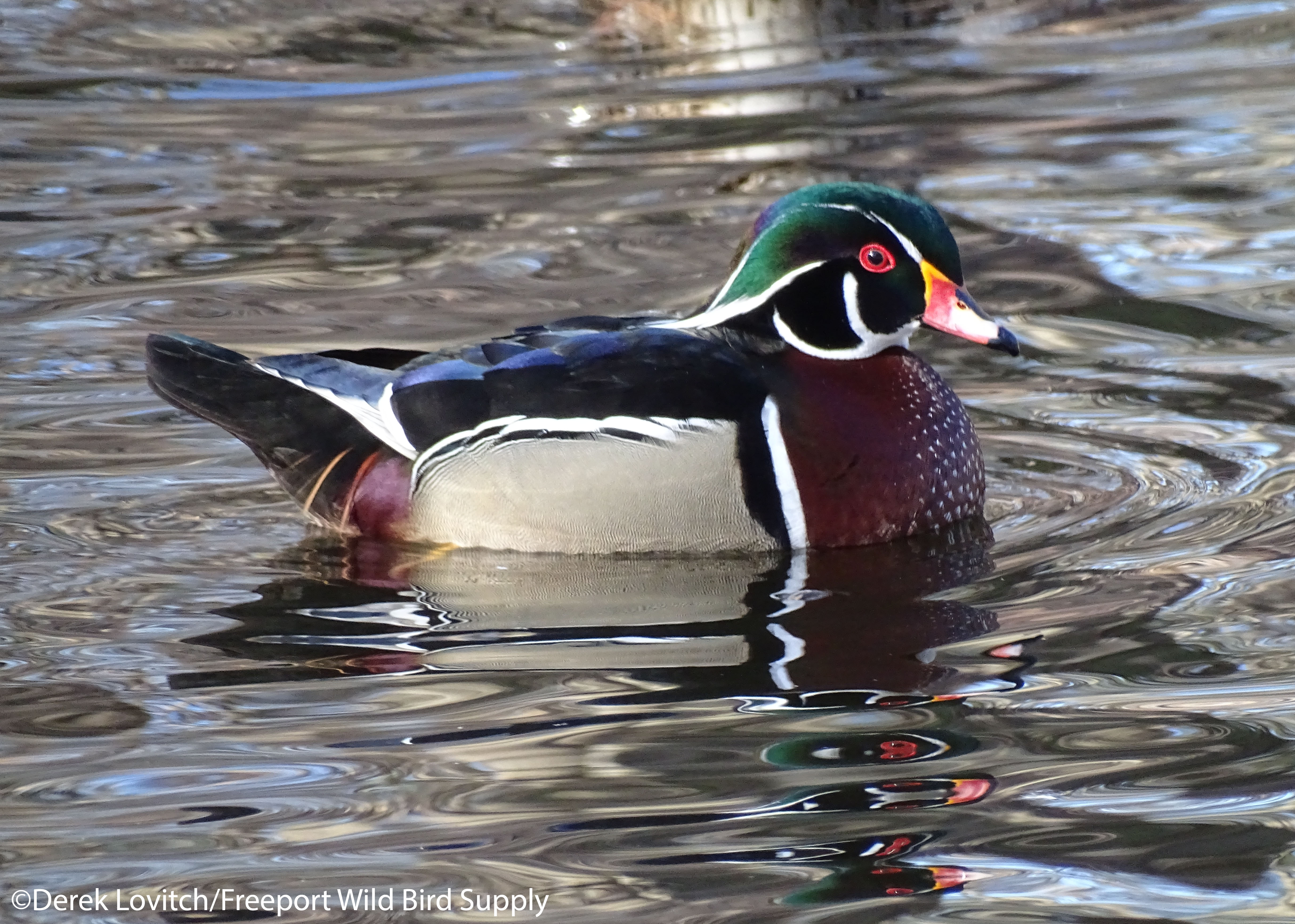
There are few better places to photograph Wood Ducks in Maine than Abbott’s Pond (aka the “York Duck Pond”) in York. A quick stop here on Friday with clients visiting from Texas afforded some great photo ops!
It was a busy – and exceptionally productive – birding week for me! The extensive list of highlights – including two full days of private guiding which cleaned up on most of our regular wintering species in southern Maine – were as follows:
7 BARROW’S GOLDENEYES, Winslow Park, Freeport, 2/26 (with Saturday Morning Birdwalk Group). Two days later, on 2/28, Allison Anholt, Cameron Cox, Jeannette, and I had an incredible EIGHT birds (4 pairs). This is my highest count here (or anywhere else in southern Maine) in nearly a decade. At least 6 were still present on 3/3 (with clients from Texas).
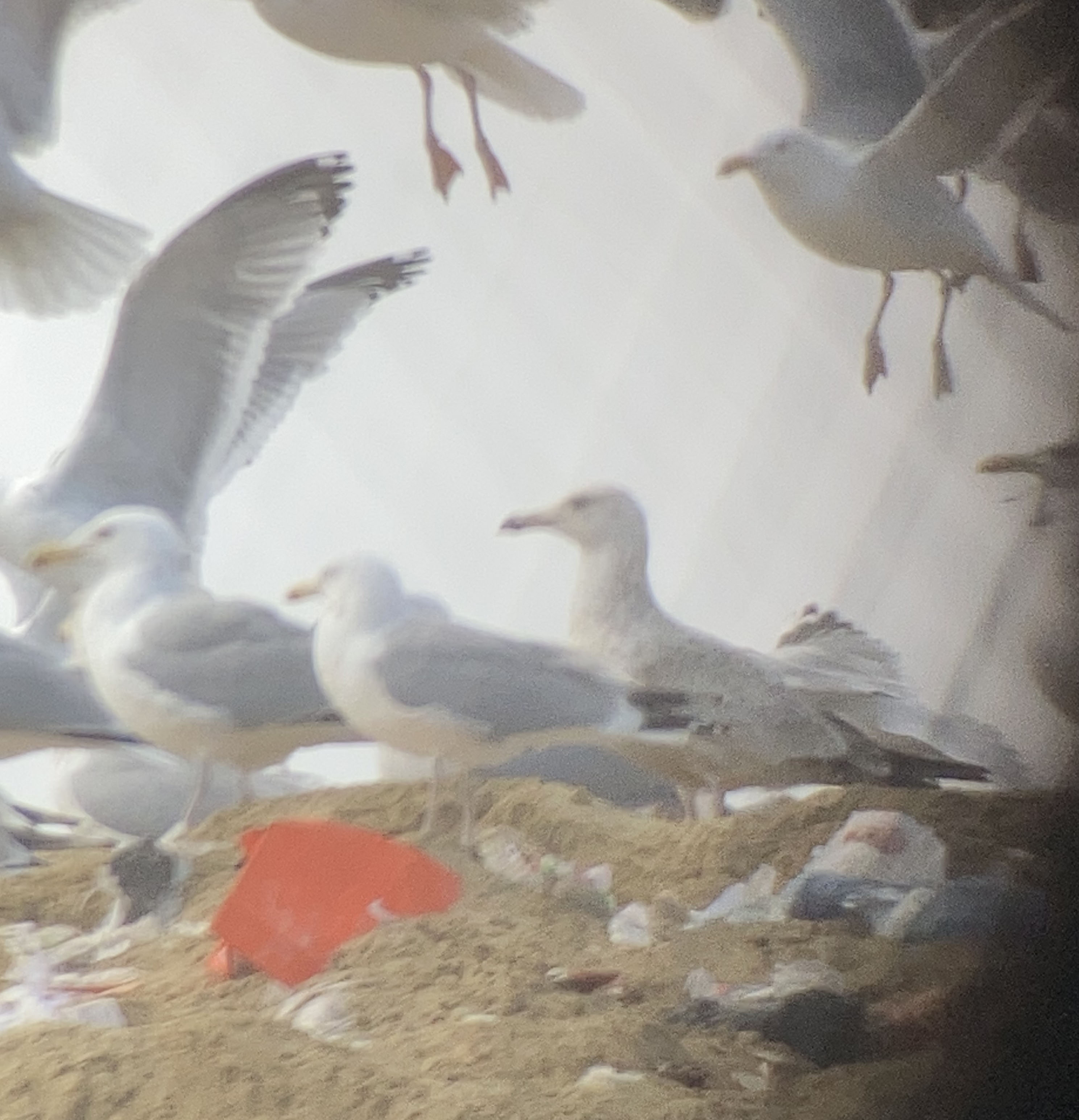
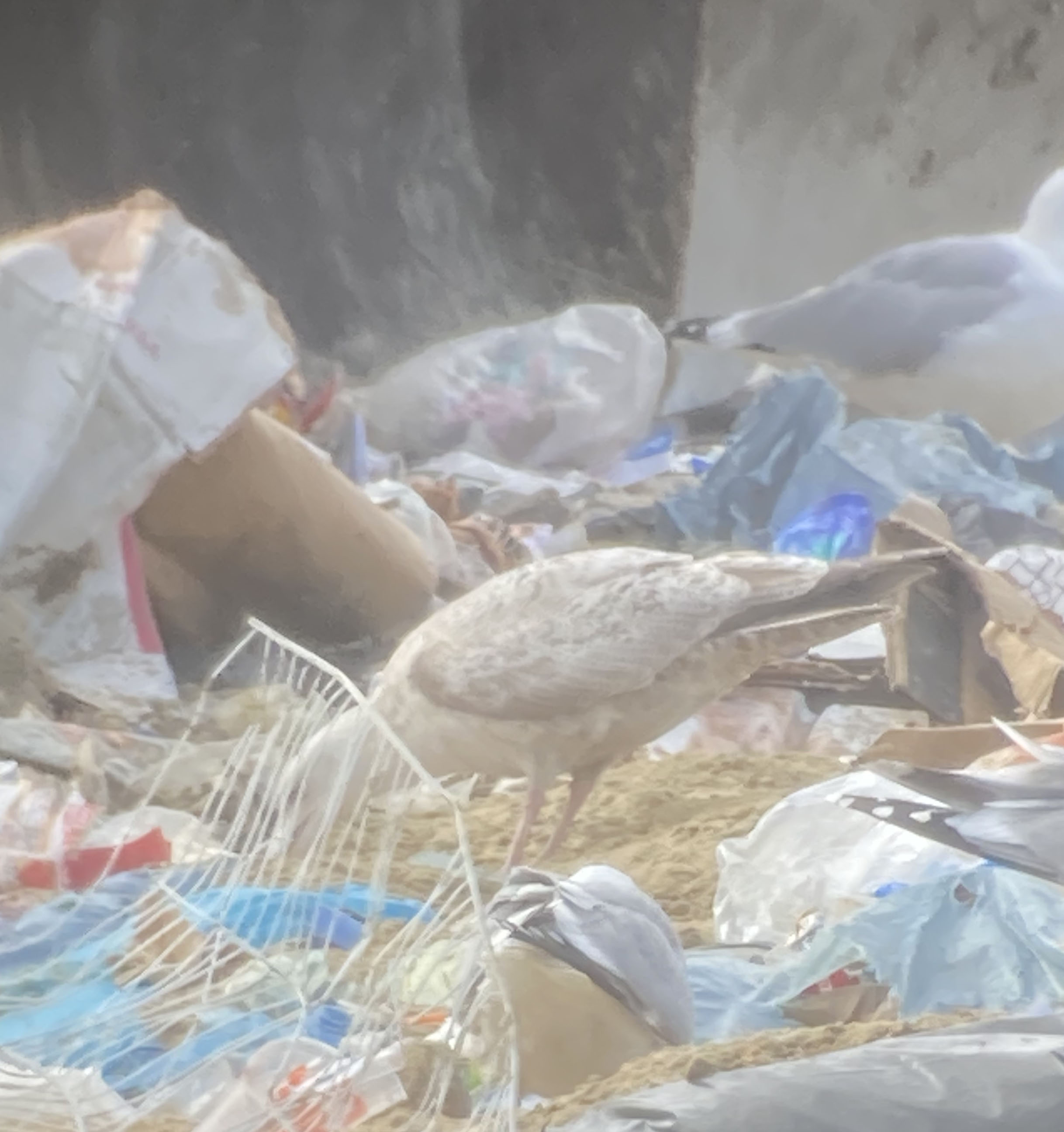
1 interesting, likely hybrid GLAUCOUS GULL X HERRING GULL, Bath Landfill, 3/1 (with Jeannette). Showing characteristics consistent of this fairly-regular hybrid pair, the much darker primaries suggest the possibility of a second-generation hybrid – perhaps a backcross with a Herring Gull. Discussion on this bird continues but this is the current consensus. Unfortunately, the phone-scoped photos were further challenged by photographing through the debris netting.
1 drake Northern Pintail, Falmouth Town Landing, 3/2.
1 2nd winter Iceland Gull, Mill Creek Cove, South Portland, 3/3 (with clients from Texas).
1 Killdeer (FOY), Fort Williams Park, Cape Elizabeth, 3/3 (with clients from Texas).
This ultra-confiding Harlequin Duck wowed the crowd at Sohier Park (the Nubble) in York during my Winter Waterbird Workshop for Down East Magazine’s Down East Adventures tour group on the 20th.
A handful of observations of note over the past seven days included both signs of spring and winter specialties.
This spiffy adult Black-headed Gull surprised me at Wharton Point on the 17th. The bird was so pink on the breast that I nearly had a heart-attack when this is the first thing that caught my eye.
Returning from vacation late on Tuesday night, it was right back to work. But a limited time out and about on Thursday morning followed by a full-day of private guiding on Friday produced several highlights:
1 adult BLACK-HEADED GULL, Wharton Point, Brunswick, 2/17 (photo above).
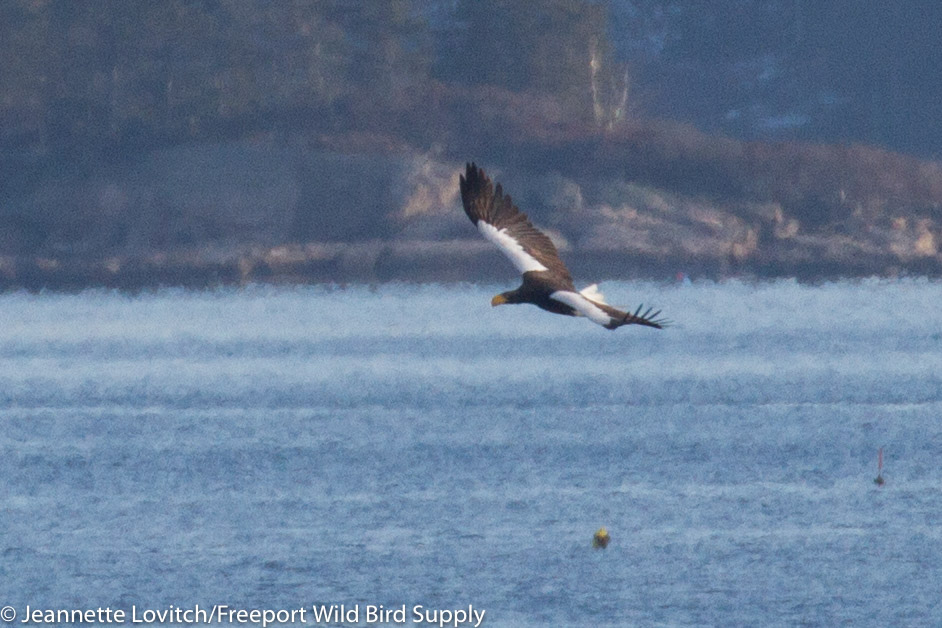
THE STELLER’S SEA-EAGLE, Rte 127 bridge between Arrowsic and Georgetown, 2/18, 10:45 to 12:30pm (with clients from Delaware). While searching for it earlier – as well as while watching it and birding elsewhere thereafter – the number of Bald Eagles in the air today was impressive. We had at least 25 over the course of the day. But many were pairs in courtship flight. It made we wonder if the recent unpredictable movements of the Steller’s was related to increased territoriality in our local, abundant Bald Eagles. Here’s a distantly-phone-scoped-with-wind-driven-scope-shake-and-cold-hands for what it’s worth.
1 drake and 2 hen BARROW’S GOLDENEYES, Doughty Cove, Brunswick/Harpswell, 2/18 (with clients from Delaware).
3 Turkey Vultures, over downtown Bath, 2/18 (with clients from Delaware).
3 Turkey Vultures, over the store here in Freeport, 2/18.
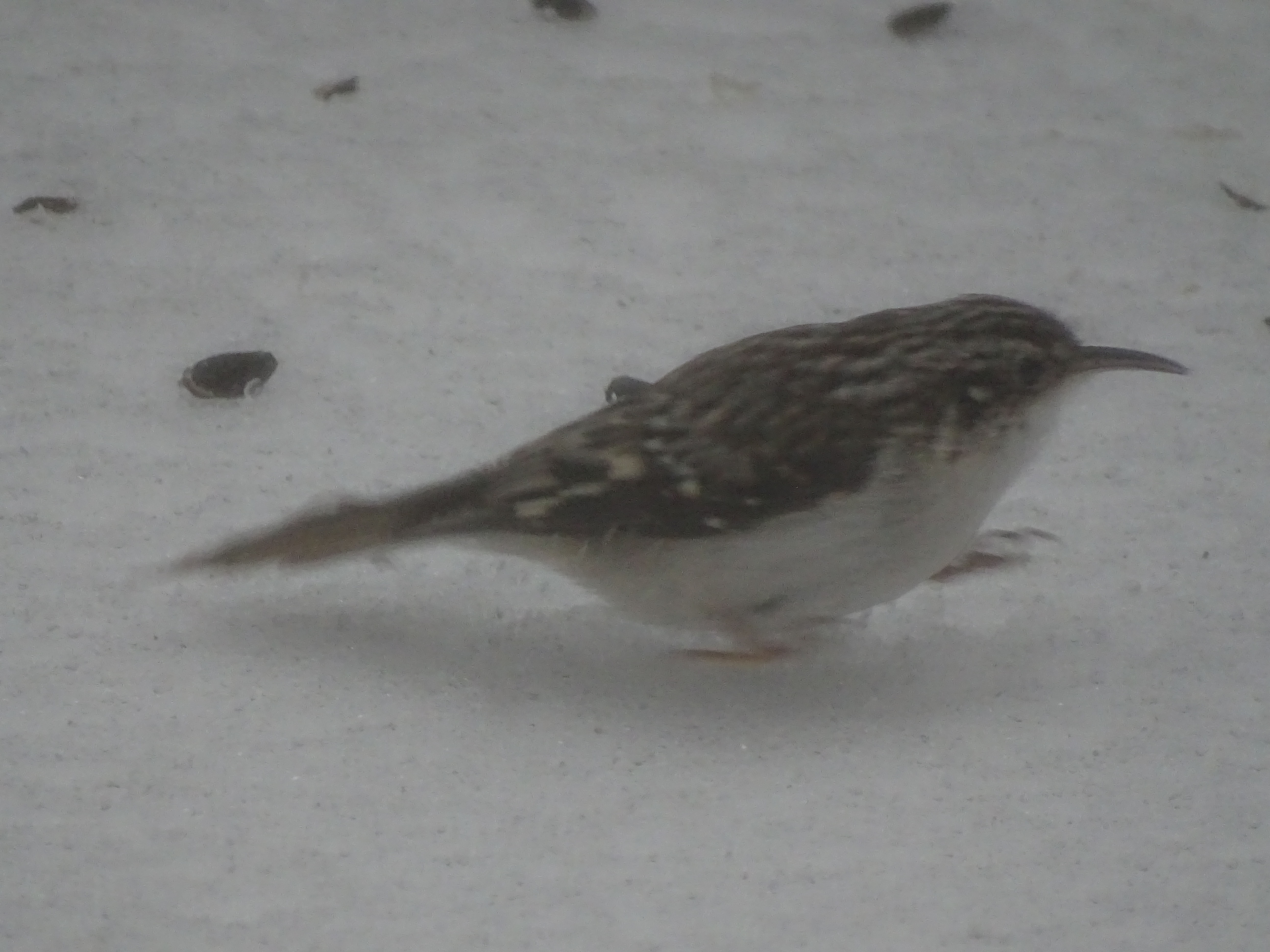
While not the rarest bird this week, I have been thoroughly entertained by this Brown Creeper who has taken to picking up bits of seed from under a feeder at our home in Pownal. The horizontal position makes the bird look so different! Sorry for the lousy photos though…they were taken through a screen during the ice/snow storm on 2/4.
The Blizzard of 2022 provided some great opportunities for cross-country skiing and snowshoeing locally for the first time this winter, so I took full advantage of that, even if it did further limit my dedicated birding during this busy week plus. Interestingly, my most “serious” birding was a half day (post-snowblowing and shoveling) on Sunday searching Portland through Cape Elizabeth for storm-related birds, but that effort turned up nothing at all of note! Here are my observations of note over the past 9 days:
5 WHITE-WINGED CROSSBILLS, 2 COMMON REDPOLLS (FOY), 6 Pine Siskins (FOY), and 1 Purple Finch, Long Falls Dam Road area of Carrying Place Township, 1/31 (with Jeannette).
The Androscoggin River between the downtowns of Lewiston and Auburn remain a surprisingly productive mid-winter hotspot. On 2/1, Jeannette and I discovered an incredible (especially for the interior of Maine) five species of dabblers from the Auburn Riverwalk! Amongst the Mallards and a couple of American Black Ducks, there were single female GREEN-WINGED TEAL, AMERICAN WIGEON, and NORTHERN PINTAIL. Making this even more interesting is the fact that it’s usually the drakes that we find overwintering in Maine. Additionally, the drake RING-NECKED DUCK continues, and we had a single 1st-winter Iceland Gull. Two Bufflehead and 5 Hooded Mergansers joined the usual Common Goldeneyes and Common Mergansers for a goodly inland total of 10 species of waterfowl. A unusually conspicuous Beaver continues to amuse here as well.
3 drake and 1 hen BARROW’S GOLDENEYES and 8 Dunlin (FOW here), Winslow Park, Freeport, 2/13.
My article – a 13-page photo salon – on the Hybrid Herons of Scarborough Marsh (Patches!) has finally been published in the most recent issue of North American Birds. In it, I lay out the theory that at least 5 different individuals have been seen in Scarborough Marsh since I first found an odd juvenile heron in July of 2012 that we now believe is a hybrid between a Snowy Egret and a Tricolored Heron.
I made the case that the two current birds are backcrosses, one with a Snowy Egret (SNEG X TRHE X SNEG) and the other with a Little Egret (SNEG X TRHE X LIEG). I’ll be watching them carefully for the potential of a developing hybrid swarm.
Unfortunately, at this time, the journal is only available online to members of the ABA. However, digital e-memberships (with access to all of the ABA publications) are only $30 a year, and you can purchase issues of the magazine directly from the ABA by emailing info@aba.org. Also, if you wanted to take a peek at the article, I do have a couple of extra copies here at the store for you to peruse.
Believe it or not, a hybrid heron is much rarer than a Steller’s Sea-Eagle, at least from a world perspective…in fact, it’s possible these birds are one of a kind!
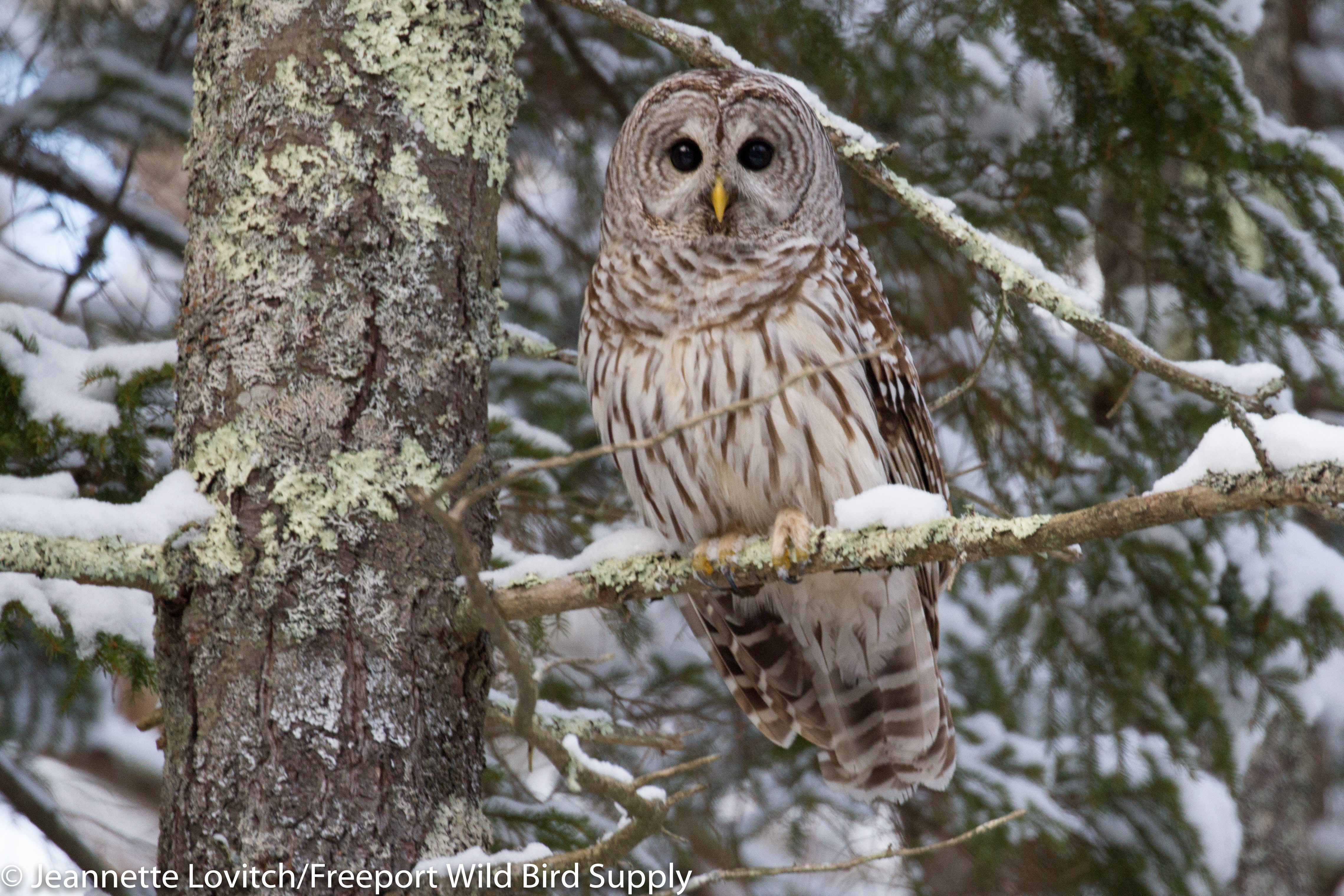
While we didn’t see the Steller’s Sea-Eagle in two full days of searching this week, we did enjoy some great birds and photo ops during our search. I spotted this Barred Owl alongside a road on Southport Island as it emerged from a roosting cavity in the late afternoon on the 25th and Jeannette got some photos out the car window.
It was another great week of winter birding for me! Unfortunately, we had friends visiting for three days and the Steller’s Sea-Eagle was not seen on any of them. In fact, it has not been seen since Monday morning, 1/24 in the Boothbay area. I joined them for two days of searching, and we did have several birds of note as we scoured the area thoroughly. Meanwhile, with the deep freeze continuing, river ice is building up and so it was a great week to see Barrow’s Goldeneyes – one of my favorite winter birds in Maine.
6 (!) BARROW’S GOLDENEYES, Winslow Park, Freeport, 1/22 (with Saturday Morning Birdwalk group). This is my highest count in at least 4-5 years here.
1 adult Peregrine Falcon, Upper Street, Turner, 1/23 – I rarely see them away from downtown L-A in Androscoggin County, especially in winter. I would have assumed this was one of those Lewiston birds but I had just left the pair looking content in downtown. Not that I drive faster than a Peregrine, mind you.
1 Turkey Vulture, Drake’s Island, Wells, 1/24 (with Jeannette).
1 Horned Lark, Parson’s Beach, Kennebunk, 1/24 (with Jeannette).
18+ Razorbills, Spruce Point Inn, Boothbay, 1/25 (with Tom Reed, Emily Wilmoth, and Jeannette).
1 pair BARROW’S GOLDENEYES, Doughty Cove, Harpswell, 1/27 (with Tom Reed, Emily Wilmoth, and Jeannette).
1 SNOWY OWL, Land’s End, Bailey Island, Harpswell, 1/27 (with Tom Reed). This was a really incredible and memorable sighting. In the desperate searching for the Steller’s Sea-Eagle, I was following a very distant eagle (it was a Bald) out over the bay to our east when I called out “I think I have an owl!” Materializing out of the distance and heat shimmer, it took a while for us to identify it as a Snowy Owl. We followed it for several minutes as it finally came closer and passed by, landing on the backside of Jaquish Island. This was only my second-ever Snowy Owl observed in apparent “visible migration,” or at the very least, making a long diurnal water crossing.
1 drake BARROW’S GOLDENEYE and 1-2 Yellow-rumped Warblers, Bailey Island, 1/27 (with Tom Reed and Emily Wilmoth).
21 Sanderlings, Reid State Park, 1/27 (with Tom Reed and Emily Wilmoth).
NOTES: Due to the posting of a blizzard warning for tomorrow, we are canceling the Saturday Morning Birdwalk and we expect to be closed for the day. Stay tuned to our store’s Facebook page for any updates.
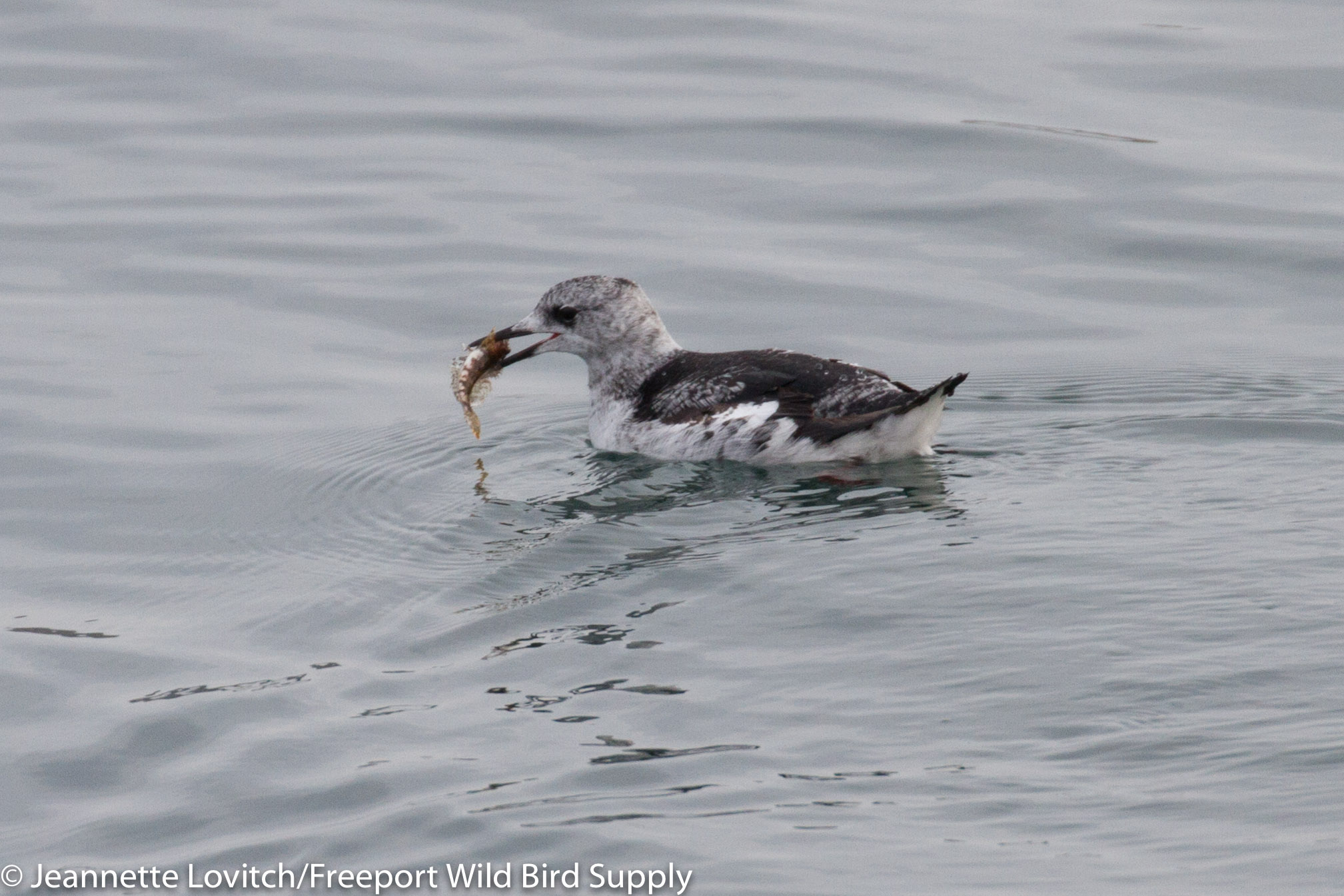
Another good photo op while not seeing a sea-eagle was this cooperative Black Guillemot having lunch off the Maine State Aquarium on 1/25. Can anyone identify the fish?
Barrow’s Goldeneyes are one of my favorite visitors to Maine in winter. The hens provide a nice challenge to pick out, too. This was one of two distinctive Barrow’s visible from the Bernard Lown Peace Bridge in Auburn/Lewiston on the 13th.
Especially in November – and often again with the first cold snap in December – I talk about “rarity fever,” when there is that additional motivation and encouragement to go birding thanks to the expectation of the unexpected. And usually we in Maine talk about the “winter doldrums” in an non-irruption year. And this year, there are virtually zero irruptives in the southern half of Maine – other than Snowy Owls. But with the Steller’s Sea-Eagle (as you may have heard!), a Bullock’s Oriole at a feeder in Damariscotta Mills, a Townsend’s Warbler in Cape Elizabeth (I missed it twice this week with a limited amount of effort), and a Barnacle Goose in Rockland, there is no doubt I – and many other birders – are experiencing a little mid-winter Rarity Fever! And that has helped motivate me to get out birding as often as I can. The to-do list can wait until February, right?
With the fairly sudden arrival to a bitter “real winter” cold, once again “pioneering” waterfowl made up most of my highlights this week, as I spent most of my birding time searching for the next big deal. My observations of note over the past seven days include the following:
1 Northern Flicker, Village Crossings/Cape Elizabeth Greenbelt Trail, 1/16 (with John Lorenc).
At least 2 hen BARROW’S GOLDENEYES. A third hen is suggestive of an odd Barrow’s or a Common x Barrow’s hybrid (see photo captions), Bernard Lown Peace Bridge, Auburn/Lewiston, 1/20.
Fun to hear two Carolina Wrens counter-singing across the Androscoggin River – one in Lewiston and one in Auburn – from Little Andy Park, Auburn, 1/20.
In addition to a bright-orange-billed classic Barrow’s, and the perfectly good smudgy-billed individual above (and here, on the left), there was a third bird that I am pondering. It’s either a third female Barrow’s (a great tally, especially for Androscoggin County) or perhaps a hybrid between Barrow’s x Common – the males of which do occur in Maine and are fairly straightforward to identify.
And finally, we have commissioned these incredible hand-painted, limited-edition Steller’s Sea-Eagle commemorative ornaments. Check them out here, on our website.
My observations of note over the past seven days are as follows. With the first real cold spell of the winter, it’s not surprising that many of the noteworthy observations this week were of “lingering” or “pioneering” individuals that were moving around or seeking more tolerable locales. Of course, my two (almost) full days of birding this week were focused on the Boothbay area.
1 GADWALL, unexpected fly-by at the Maine State Aquarium, Boothbay, 1/14.
After not seeing it on Monday, I went back to the Boothbay area today, 1/14 to see the Steller’s Sea-Eagle again, because, well, there’s a Steller’s-friggin-Sea-Eagle in Maine. Luckily, I was rewarded with a 20-25 minute observation of it perched and in flight from Spruce Point. The more I see this bird, the more I want to see this bird!
Unfortunately, I did not get any photos of it – it was too far, and I was just enjoying it in the scope. But I got a new camera, and I did take it out to play for the first time! This Common Loon made for an excellent subject for a test-drive.
No Zoom.Camera-only Zoom. Not additional cropping. My first impression is that it’s much slower than my previous camera, and the resultant image is not as crisp. But, the zoom is stronger, and the maximum optical + digital zoom produces a better image, at least for “documentation.”
This dapper drake American Wigeon at Brunswick’s historic Swinging Bridge on the 4th very well could have been the same bird that I found upriver in Durham three days prior, as the river was finally beginning to freeze over.
Happy New Year (List) everyone! My sightings of note over the past seven days were as follows. Unfortunately, they did not include the Steller’s Sea-Eagle on Saturday or Sunday (but last week, on Friday…wow, just wow. Still can’t really believe that happened!) but did include a few goodies while searching for where it may have ended up (before its re-discovery in Boothbay on Thursday).
1 drake American Wigeon, Rte 136, Durham, 1/1.
18 Greater Scaup, Simpson’s Point, Brunswick, 1/3 (with Jeannette).
1 adult GREAT BLACK-BACKED X HERRING GULL HYBRID, Bath Landfill, 1/4 (with Jeannette)
1 drake BARROW’S GOLDENEYE, Thorne Head Preserve, Bath, 1/4.
1 drake American Wigeon, Swinging Bridge, Brunswick, 1/4.
44 Greater Scaup, 38 distant unidentified scaup, 625+ American Black Ducks, 130+ Surf and White-winged Scoters, etc, Maquoit Bay Conservation Land, Brunswick, 1/6.
Here is our “West Freeport” territory tally from Sunday’s Freeport-Brunswick CBC:
– 5 American Black Ducks
– 30 Mallards
– 1 Hooded Merganser (2nd sector record)
– 1 Red-tailed Hawk
– 1 Ruffed Grouse
– 30 Wild Turkeys
– 12 Herring Gulls
– 26 Mourning Doves
– 4 Red-bellied Woodpeckers
– 28 Downy Woodpeckers
– 15 Hairy Woodpeckers
– 6 Pileated Woodpeckers (sector high count)
– 1 Northern Flicker (2nd sector record)
– 40 Blue Jays
– 104 American Crows
– 1 Common Raven
– 413 Black-capped Chickadees (2nd highest count)
– 90 Tufted Titmice (sector high count; old record of 44)
– 16 Red-breasted Nuthatches
– 45 White-breasted Nuthatches
– 1 Brown Creeper
– 11 Golden-crowned Kinglets
– 1 Carolina Wren
– 26 Eastern Bluebirds
– 1 American Robin
– 73 European Starlings (sector high count)
– 10 American Tree Sparrows
– 2 Song Sparrows
– 1 White-throated Sparrow
– 18 Dark-eyed Juncos
– 20 Northern Cardinals
– 20 House Finches
– 204 American Goldfinches (2nd highest count)
33 species (2nd highest for territory thanks to extensive open water this year).
8.5 hours: 22.4 miles by car; 18.5 miles by foot.
At the very least, it confirmed some of our preconceived notions: sparrows and frugivores are in short supply; winter finches and other irruptives are not around at all – but a huge pulse of goldfinches arrived late last week; and local resident breeding birds seemed to have done quite well this year.
And finally today, here is my annual blog prognosticating the Next 25 species to appear in Maine, and on my own list. Spoiler alert: I did not predict a Steller’s Sea-Eagle.
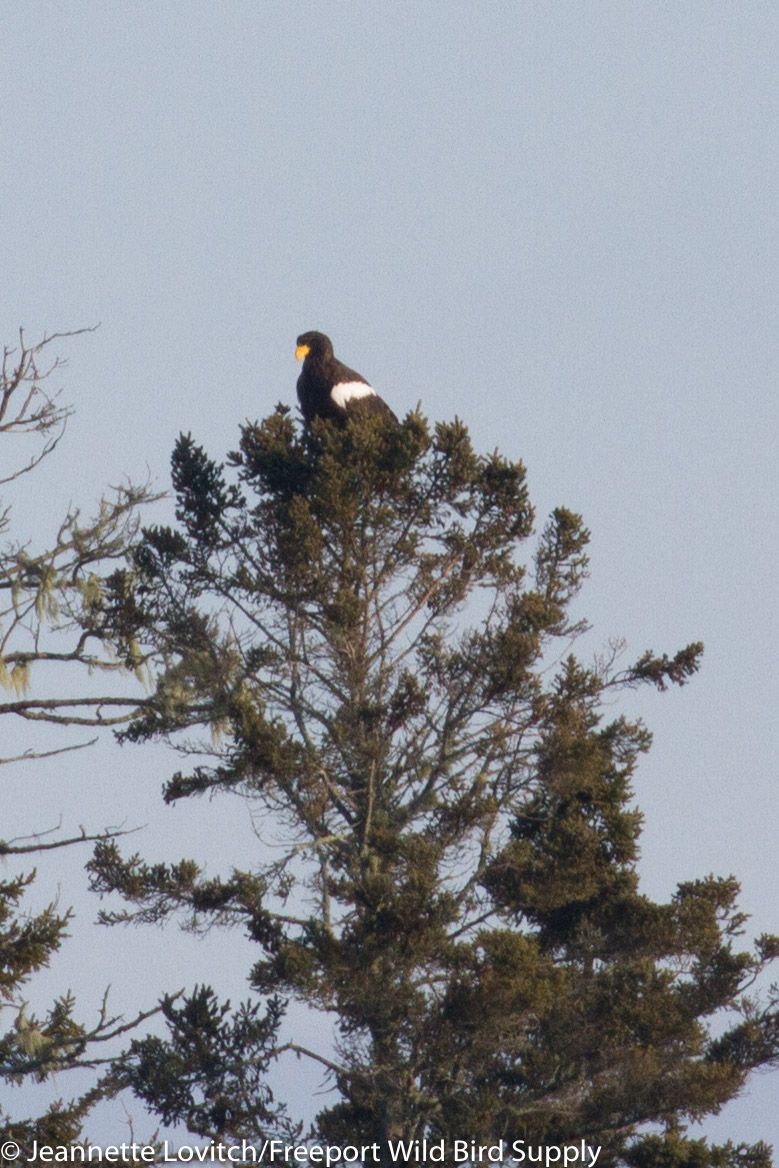
No one could have predicted the bird of the year, err..century..err, ever. This magnificent Steller’s Sea-Eagle spent four days in Georgetown right around the New Year.
It’s once again time for my annual Predictions Blog, where I view into my crystal binoculars and attempt to forecast some of the “new” birds to grace the State of Maine – and then my own personal state list – in the coming year.
I feel like I could have just recycled my blog from 2021. “…Worst Year Ever.” Ha. 2021 replied, “hold my beer!” That all being said, a complete summary would show the full picture, with all its ups and downs (and there were a lot of downs), but undoubtably with many happy moments contained within. That’s all beyond the scope of this blog. I’ll just stick to the birds.
Of course, nothing compares – or perhaps, ever will compare! – to the headliner of 2021: The Steller’s Sea-Eagle. No, this was not on my predictions list – or anyone else’s at the start of the year. That being said, following reports this summer in New Brunswick, November in Nova Scotia, and then December in Massachusetts, there is no doubt it would have been optimistically added to the list for 2022…had it not shown up in Georgetown on December 30th (or perhaps earlier). This mega-of-megas, one of the world’s most extraordinary birds, might render almost any other first state record pedestrian, or at least anticlimactic.
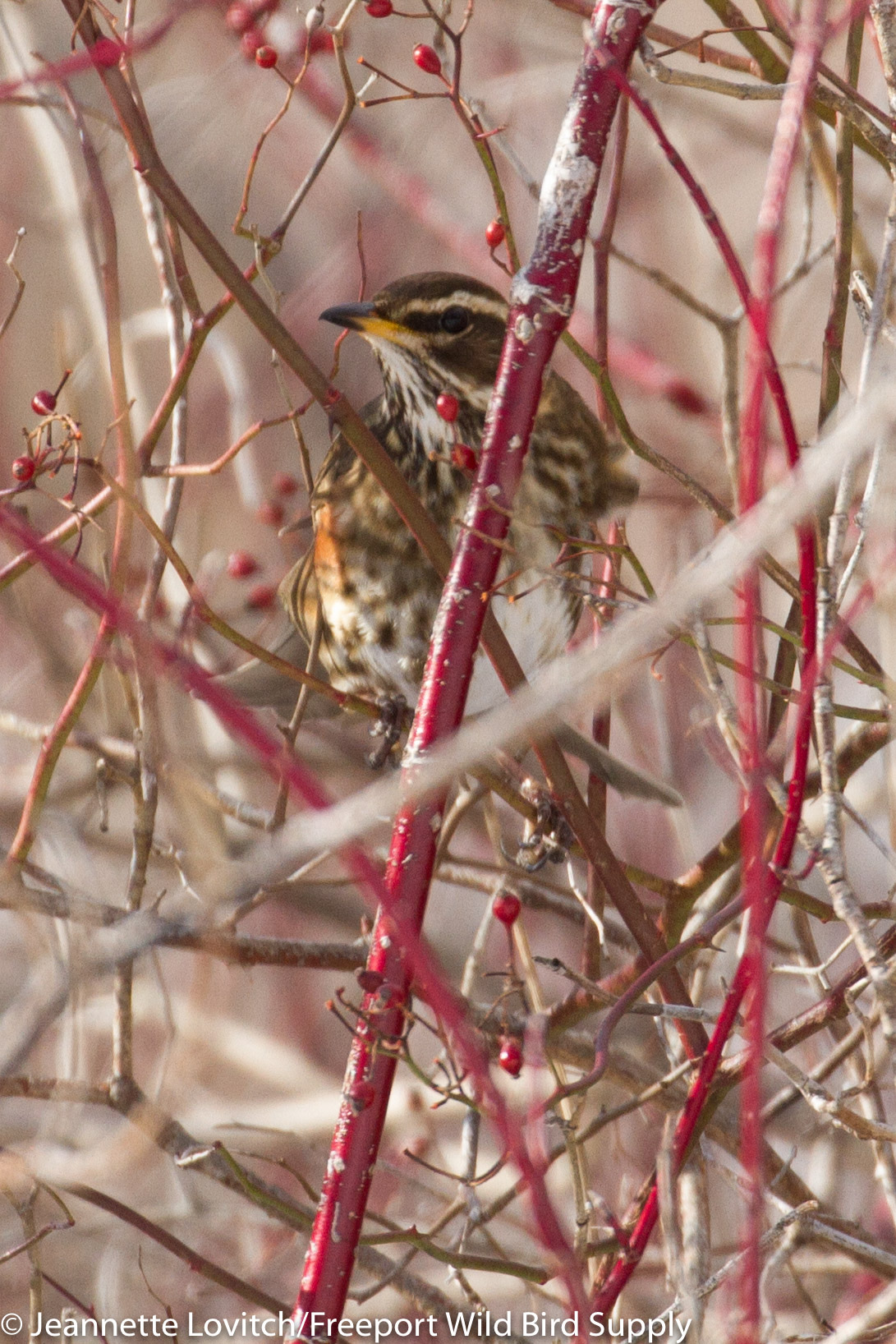
At the very least, it does overshadow the only other chaseable first Maine record for this year: Redwing, a European thrush. What was the “bird of the year” until three days remaining on the calendar, this bird delighted many hundreds of birders at Capisic Pond Park in Portland at the end of January 2021 – which seems like eons ago! The first state record, however, actually came earlier in the month, when a Redwing – perhaps the very same individual – was a one-day wonder on private property in Steuben. Lucky for all, the next one/sighting of it showed up on public property and stayed around for about three weeks. Redwing was #16 on my “Next 25 Species for Maine” list.
And finally, a Masked Booby surprised observers on Mount Desert Rock on August 9th. With increasing observations of tropical seabirds north of the Gulf Stream, this is less shocking than it would have been a few years ago.
Three first state records in one year is pretty good, and the quality of this year’s roster is impressive. How will 2022 compare?
Therefore, my list of next 25 species to occur in Maine receives just a few tweaks.
***EDIT, 3/31 – When a Trumpeter Swan arrived in Scarborough Marsh, it was noted as the 2nd State Record. I realized that the 2011 bird from Fortune’s Rock Beach in Biddeford was indeed added to the “official” state list. I had counted it on my own list (so no change below), but I never followed up on its status, apparently. With the rapidly expanding introduced populations in the Northeast, along with increasing amount of states “declaring” the bird “established,” I’m shocked it’s taken this long to get a second one. The predictions list has been updated accordingly.***
Personally, I was fortunate to add two birds to my own state list this year. And they were good ones!
The aforementioned Redwing got things started. It was not on my Top 25 list because I expected it to be a one-day wonder in some far-off place, never to be seen again. It was. But then it, or another bird – there were several Redwings in the Northeast part of the continent last winter – debuted at Capisic. That was fun.
Did I mention there was a Steller’s Sea-Eagle? That was my 391st species in Maine!
So neither of my state birds were on my Predictions list. I’ll be OK though, all things considered.
And, as usual, there were also a handful of potential state birds for me that I did not see. Franklin’s Gull appears to be on its way to becoming my nemesis, with another one this year: a one-day wonder at the Sanford Lagoons on 9/9. It was #3 on my list.
A Sandwich Tern at Mount Desert Rock on 7/6 was on my Honorable Mention list, as was Brown Booby, which has started to become regular north of Cape Cod. There was one off of Biddeford Pool on 7/8 ahead of Tropical Storm Elsa, followed by one on Mount Desert Rock August 2nd through 9th (not an easy place to chase!).
So a few tweaks to my list for my next additions to my personal state list are as follows:
1) American White Pelican
2) Neotropic Cormorant
3) Franklin’s Gull
4) Brown Pelican
5) Graylag Goose
6) California Gull
7) Black-bellied Whistling-Duck
8) Brown Booby
9) Slaty-backed Gull
10) Boreal Owl
11) Calliope Hummingbird
12) Common Ringed Plover
13) Cerulean Warbler
14) White Ibis
15) Gull-billed Tern
16) Hammond’s Flycatcher
17) Spotted Towhee
18) Pacific Golden-Plover
19) Wood Stork
20) Ross’s Gull
21) Black-chinned Hummingbird
22) Brewer’s Blackbird
23) Yellow Rail
24) Virginia’s Warbler
25) Common Shelduck
So let’s see what 2021 (edited: 2022) brings to the Maine birding world. A return to a sense of normalcy would be a nice start, however.
I am overdue to luck into an American White Pelican in the state!













 Maine Birding Field Notes