Tag Archives: Wharton Point

This Week’s Highlights 9/8 – 9/14/2025.

To “count it” or “not to count it,” that is the question. Regardless, what’s more iconic about birding on Monhegan Island than a Ring-necked Pheasant?

My observations of note over the last seven days included my first two Morning Flights of the season at Sandy Point and 3 days on Monhegan included the following:

  • A light flight over and through Sandy Point Beach, Cousin’s Island, Yarmouth on 9/8:

6:12 to 8:00am.

50F, mostly clear, calm.

  • 57 Northern Parulas
  • 31 American Redstarts
  • 17 unidentified
  • 8 Cedar Waxwings
  • 6 Magnolia Warblers
  • 5 Black-throated Green Warblers
  • 4 Red-breasted Nuthatches
  • 3 Yellow Warblers
  • 3 American Goldfinches
  • 2 Swainson’s Thrushes
  • 2 Bobolinks
  • 1 Black-and-white Warbler
  • 1 Purple Finch
  • 1 Cooper’s Hawk
  • 1 Bay-breasted Warbler
  • 1 Yellow-rumped Warbler
  • 1 Northern Flicker
  • 1 Black-throated Blue Warbler
  • 1 Osprey
  • 1 Rose-breasted Grosbeak

Total = 147 

  • 1 DICKCISSEL, Wharton Point, Brunswick, 9/9.
  • 2-3 Red Knots, Wharton Point, Brunswick, 9/10.
  • A very good flight over and through Sandy Point Beach, Cousin’s Island, Yarmouth on 9/11 featured over 1,000 migrants and 16 species of warblers.

6:13-10:20

46F, mostly clear. NW 1.8-2.8 increasing to 6.1-8.8mph.

  • 312 Northern Parulas
  • 272 American Redstarts
  • 144 unidentified
  • 81 Cedar Waxwings
  • 34 Red-eyed Vireos
  • 25 Red-breasted Nuthatches
  • 25 Black-throated Green Warblers
  • 24 Magnolia Warblers
  • 23 Yellow Warblers
  • 16 Blue Jays
  • 11 American Goldfinches
  • 10 Black-throated Blue Warblers
  • 9 Canada Geese
  • 8 Swainson’s Thrushes
  • 7 Northern Flickers
  • 7 American Kestrels
  • 7 Black-and-white Warblers
  • 5 Yellow-rumped Warblers
  • 4 Eastern Wood-Pewees
  • 4 Purple Finches
  • 4 Ospreys
  • 3 Bay-breasted Warblers
  • 3 Wilson’s Warblers
  • 3 Blackpoll Warblers
  • 3 Mourning Doves
  • 2 Blackburnian Warblers
  • 2 Common Loons
  • 2 Bay-breasted/Blackpoll Warblers
  • 2 Blue-headed Vireos
  • 2 Philadelphia Vireos
  • 1 Palm Warbler
  • 1 Pileated Woodpecker
  • 1 Savannah Sparrow
  • 1 Tennessee Warbler
  • 1 “Traill’s” Flycatcher
  • 1 House Finch
  • 1 Hairy Woodpecker (6 “false starts”)
  • 1 Sharp-shinned Hawk
  • 1 Pine Warbler
  • 1 Ruby-throated Hummingbird
  • 1 unidentified Empid
  • 1 unidentified flycatcher
  • 1 Turkey Vulture
  • 1 unidentified vireo
  • 1 Merlin
  • 1 Cape May Warbler
  • 1 White-throated Sparrow

Total = 1,069

  • Monarch 1
  • Green Darner 2
  • Monhegan Island 9/12-14 (with Down East Adventures tour group):

Very slow by Monhegan standards, only Merlins and especially Red-breasted Nuthatches and Ruby-throated Hummingbirds were above average (significantly so for the hummingbird) for the date. Island notable species for us were limited to 2 DICKCISSELS all three days; 1 ORCHARD ORIOLE, 2 adult Lesser Black-backed Gulls, and 1 Marsh Wren on 9/13; and 1 Mourning Warbler on 9/14. Great insect-watching though.

Upcoming Tours:

  • Birds on Tap – The Boat Trip! Migrant Birds and Island Exploration

September 21, 2025; 9:00am to 2:00pm

These unique, relaxed birding and beer-ing adventures that you have come to love combine great local birding at seasonal hotspots with visits to sample the delicious creations of some of our favorite local breweries. These tours are a perfect introduction to birding and/or craft beer, and a great opportunity to travel with significant others, friends, and family that have interest in one topic, while your interest is primarily in the other (for now!). But this time we’re leaving the van in the garage and hitting the water! That’s right, we’re taking a cruise, and we’re returning to the private House Island in Porland Harbor twice in 2025. 

Building on that success of last year’s tours, we’re visiting the private House Island in Portland Harbor twice in 2025! Once again, we’ve been granted special permission to come ashore and scour the island here in the peak of fall migration. We’ll follow well-maintained trails through the island’s mosaic of open habitats, scrub, and young woods. These are great habitats to search for a variety of migrants, and perhaps even a rarity!  

https://www.freeportwildbirdsupply.com/birds-on-tap

2025 Next Maine Birds Predictions Blog

Although there was a previous state record, few if any of us were expecting to have the chance to see a Willow Ptarmigan ever again in Maine. Fewer of us expected to see one taking refuge on a lawn chair, as this one did in the Small Point area of Phippsburg in late August.

It’s once again time for my annual Predictions Blog, where I view into my crystal binoculars and attempt to forecast some of the “new” birds to grace the State of Maine – and then my own personal state list – in the coming year.

I was busy this year. Lots of birding tours here in New England, vacations to the Dominican Republic and the Gaspe of Quebec, a scouting trip through the Gulf of Maine, an even further diminished interest in “chasing” when I am actually home, and a lot more time spent casually birdwatching on our property – more and more my time is spent observing whatever is in front of me, instead of searching for rarities. I didn’t even spend much time at Sandy Point this fall, although weather had a lot to do with that.

There are several reasons for this change of motivation, but that’s a blog for another day. I did put in some concerted effort during a wild fall “rarity season,” but for the most part, my yard list in Durham was the only real priority. A Yellow-throated Vireo on the intriguing date of 7/21 was our 153rd species here since we purchased the property a little more than 4 years ago. Not a bad start! A Gray Catbird that showed up today, January 2nd, as I wrote this, is our first winter record (of course), and a good sign for productive yard birding in the new year!

But back to the rarities. Let us start as usual with a look at last year’s prognostications and see how I did. I also did a little more reflecting on my own evolving birding, as well as.

Two species were added to Maine’s list this year, a Ferruginous Hawk at the Auburn Airport on July 14th and an Anhinga in Somerville for 6 days in July. I saw neither. Both times we were in Quebec. I think it’s a sign.

While Ferruginous Hawk was only marginally on my radar, Anhinga had been relegated to the Honorable Mentions list as northern reports have really dried up for a spell. I was wrong.

So, neither of the first state records were on my list, but I will do a little reshuffling to add two recent splits to the list: Scopoli’s Shearwater and European Herring Gull. 

Scopoli’s Shearwater – recently split by most authorities from Cory’s Shearwater – likely has already occurred here. I saw at least one set of photos from this past summer that looked good to me, but the identification is a challenge, and we’re only learning how to identify them semi-reliably in the field (study up!). But I have little doubt that if we looked at every past photo of Cory’s Shearwater that has been taken in Maine, coupled with renewed scrutiny of the pattern on the underwing of the outer primaries of recent and future birds, that this will soon be confirmed in Maine.

Likewise, “American Herring Gull” (that’s our bird) and “European Herring Gull” are now separate species. European Herring Gull is another cryptic species that has also likely already occurred here, but it is another challenging, cutting-edge identification made more challenging by the extensive variation exhibited by our bird. Add to this Vega Gull from Asia, hybrids, and well…my Gull ID Workshop is open for registration (although I will not yet dive down the rabbit hole of American vs European Herring Gull…we’ll spend more time with Herring Gull vs “damn seagull.”

So here’s my list of the Next 25 Species to be found in Maine:

  1. Scopoli’s Shearwater
  2. Neotropical Cormorant
  3. European Herring Gull
  4. Black-chinned Hummingbird
  5. California Gull
  6. Limpkin
  7. Gray Heron
  8. Bermuda Petrel
  9. Graylag Goose
  10. Little Stint
  11. Audubon’s Shearwater
  12. Common Shelduck
  13. Anna’s Hummingbird
  14. Heerman’s Gull
  15. Common Ground-Dove
  16. Allen’s Hummingbird
  17. Spotted Redshank
  18. Lewis’s Woodpecker
  19. Ross’s Gull
  20. Black-capped Petrel
  21. Lesser Nighthawk
  22. Dusky Flycatcher
  23. Painted Redstart
  24. Hooded Oriole
  25. White Wagtail

As for me in 2024, I did add four species to my personal State List: Willow Ptarmigan (not on list), Tropical Kingbird (Honorable Mention), American White Pelican (#2), and Common Gull (#24).

The most surprising was the second state record of Willow Ptarmigan that Jeannette and I were lucky enough to catch up with in a private backyard in Phippsburg on August 28th. After being seen on Cliff Island in early May, it miraculously appeared in Phippsburg in a yard of a home that the friend of a birder was house sitting for! Then it showed up in a nearby yard where limited access was granted. Jeannette and I were in the right place at the right time when news broke, and were among the first to try out the arrangements and see then bird. Unfortunately, a couple of days later, the ptarmigan likely fell victim to an owl.

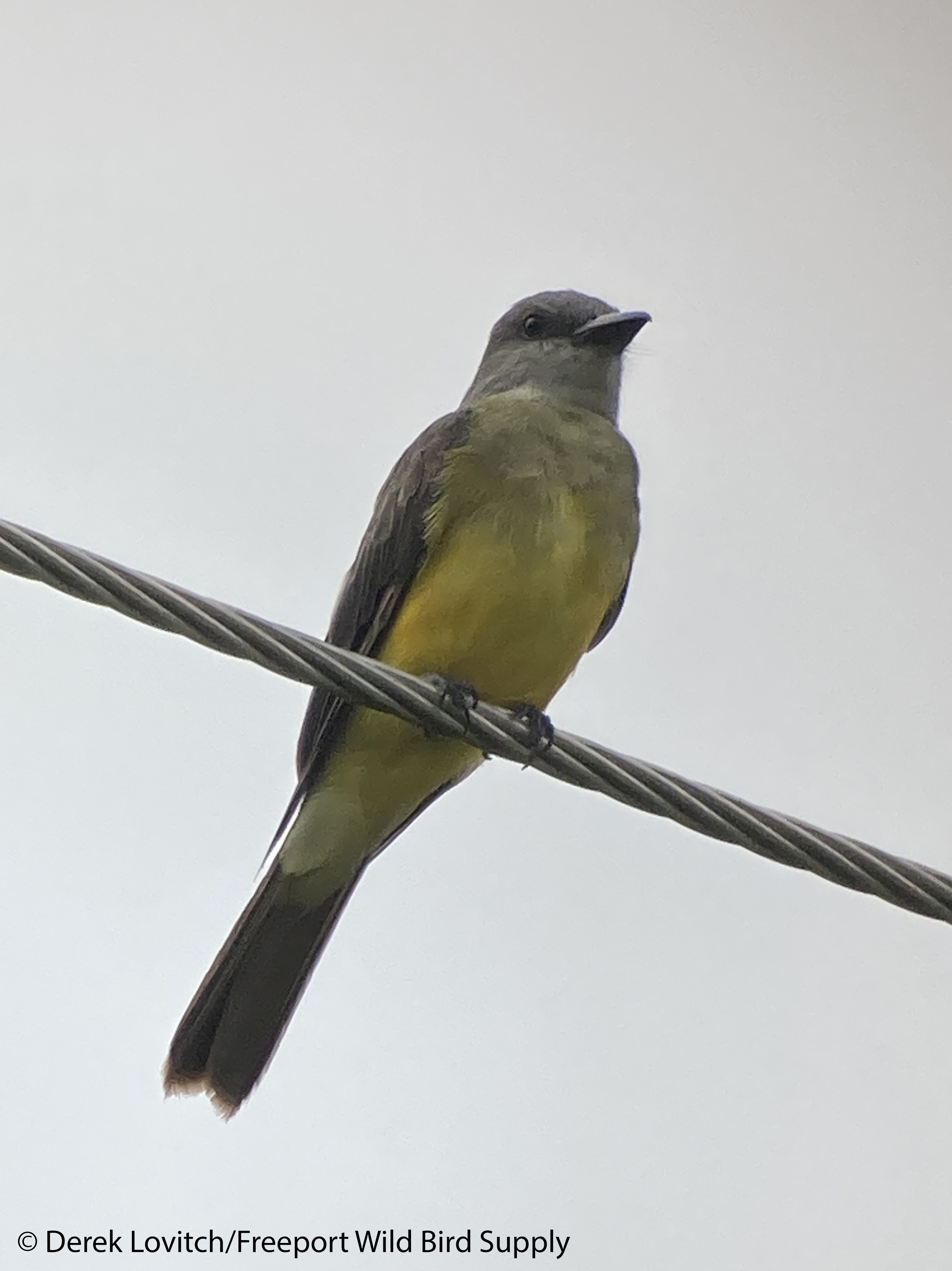
A Tropical Kingbird at the Skelton Dam Boat Launch in Dayton was found by a dog-walker and birdwatcher at the end of June, but news finally made it to the birding community in the middle of July, and I raced down to see it on the 18th. It has been on and off the Top 25 list for many years, but I’ve left it off for the last few. No complaints though, as the second modern, and third overall, state record was chaseable this time.

Later in the year, the birding community lost a great one with the passing of Davis Finch. Years ago, I would see Davis and Denny Abbott at a rarity, and they would be among the first people I would call when I found one (yup, we used to only call people to alert them to rarities!). Davis and I had a tradition where my final words as we were departing was always “See you at the ____” and pick a rarity. In fact, that might have even been the inspiration for this annual blog. This tradition became even more meaningful when I once left with “See you at the Ash-throated Flycatcher!”  And a short time later, I found an Ash-throated Flycatcher (at the Saco Riverwalk, the second state record in November of 2006). Davis and Denny were the first to know, and I’ll never forget Davis saying “why the heck were you birding this dump?” as he offered congratulations on the find – a state bird for all (it has been cleaned up a lot since then and it has become a significant birding hotpsot). While there were plenty of other birds mentioned in between, for the last few years, it was always “see you at the Tropical Kingbird!”  I heard someone say he was driven to Dayton to see the kingbird. I hope this is true…he really wanted that bird!

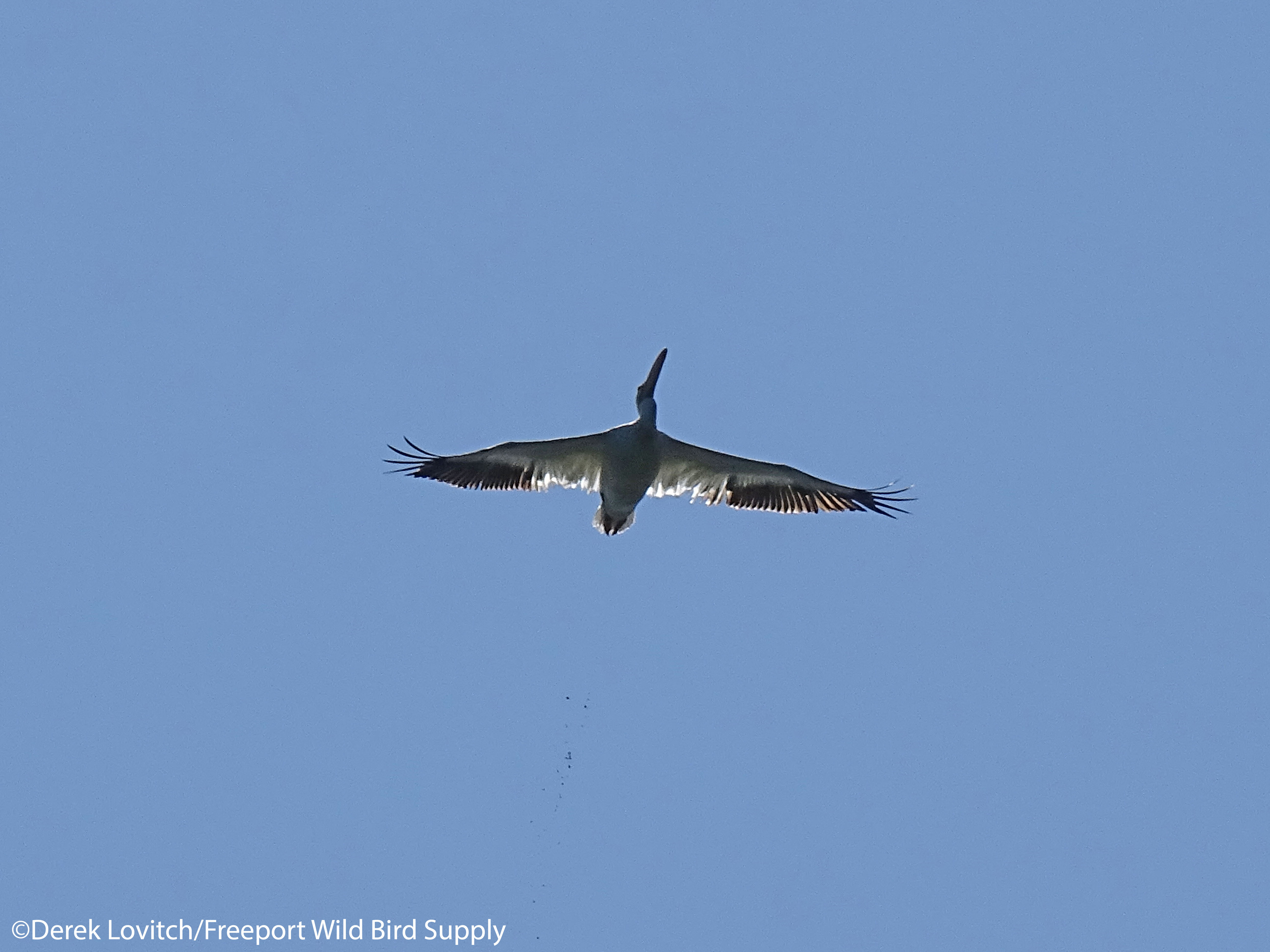
Moving on, I finally caught up with an American White Pelican on 8/26, conveniently close to home/work. Following a Saturday Morning Birdwalk, Kevin Harding and Brandon Baldwin stopped by Wharton Point in Brunswick on their respective ways home and found the pelican. They called the store (yup, phone calls still work), and I dropped what I was doing to head over. The bird was really far by the time I arrived, so Brandon and I walked down the Maquoit Bay Conservation Land trail for a closer look. A little while later, as other arrived, the pelican flew right over our heads for an incredible view!

And finally, after Common Gulls were found in Eastport in February and on Matinicus Rock in September, Evan Obercian found one much more conveniently located at the Samoset Resort in Rockland on Halloween. I was finally able to sneak away four long days later, getting to enjoy the bird on November 3rd.

Of course, I missed more than I saw, both with travel and a lessening interest in chasing. I missed a total of four Franklin’s Gulls (#1): Seapoint Beach in Kittery on 6/30, Hill’s Beach in Biddeford on 7/22, Sewall Beach on MDI on 9/14, and one in Wells on 9/15. I’ll catch up with these notorious one-day/hour wonders some day in Maine!

The aforementioned Anhinga and Ferruginous Hawks were not on my Top 25 list, nor was the Mountain Bluebird that was on Monhegan in early May – before twice-daily ferry service had begun. I did take a day trip with a friend for the heckuva it six days after it was last seen. There was also a Brown Booby (#6) that wasn’t chaseable on Seal Island in August, but had we not been in Quebec twice, it would have been a truly incredible birding year for me in Maine. Oh well, a weekend with friends and 100,000 Northern Gannets more than made up for it.

So with those hits and misses, my updated list of the Top 25 Next State Birds for Me is now:

  1. Franklin’s Gull (will this finally be the year?)
  2. Neotropic Cormorant
  3. Brown Pelican
  4. California Gull
  5. Brown Booby
  6. Crested Caracara
  7. Slaty-backed Gull
  8. Boreal Owl
  9. Calliope Hummingbird
  10. Graylag Goose
  11. Cerulean Warbler
  12. Gull-billed Tern
  13. Pacific Golden-Plover
  14. Limpkin
  15. Wood Stork
  16. Black-chinned Hummingbird
  17. Brewer’s Blackbird
  18. Yellow Rail
  19. Scopoli’s Shearwater (undoubtably after further review of photos!)
  20. Virginia’s Warbler
  21. Western Wood-Pewee
  22. Red-necked Stint
  23. European Herring Gull
  24. Gray Heron
  25. Heerman’s Gull

Well there ya have it, let’s see what 2025 brings, at least when it comes to rare birds in Maine.

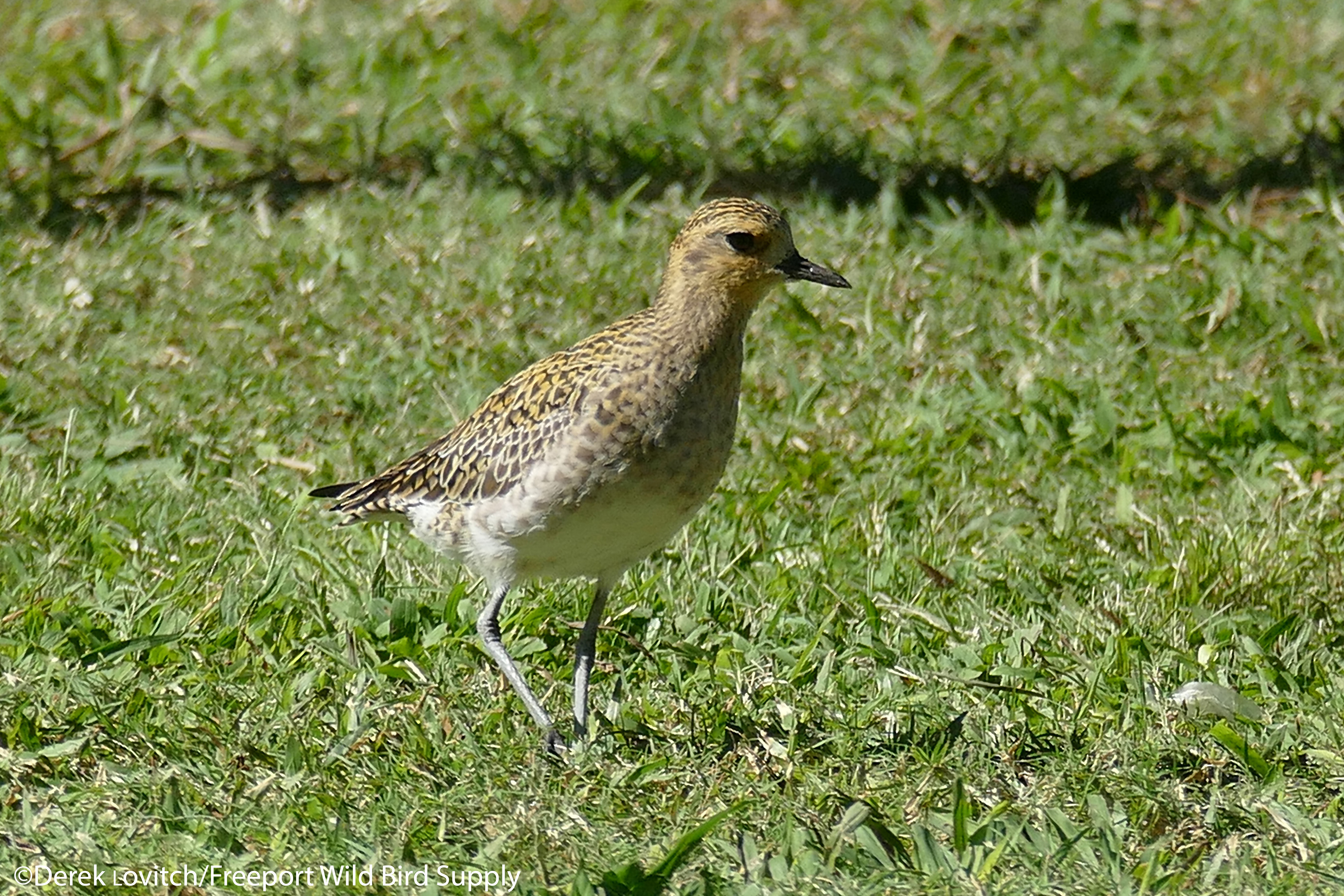
I think it’s about time for another Pacific Golden-Plover to show up here in Maine.
This juvenile was photographed in Hawai’i.

This Week’s Highlights, 11/9 – 11/15/2024

It might be Rarity Season, but never forget to take your time to enjoy and appreciate our common resident birds! This Red-breasted Nuthatch was on our feeders in Durham on the 15th. There are a lot more in the area this fall than last winter, perhaps due to the lack of Eastern White Pine cones, especially to our north.

Rarity Season continues to be hot. Some dedicated rarity-searching plus some casual birding, yielded the following observations of note over the past 7 days. Swinging for the fences, however, I felt like Aaron Judge in the MLB post-season: lots of strikeouts and no home runs, but at least I went down swinging.

  • 1 continuing MARBLED GODWIT, 8 Black-bellied Plovers, etc, Wharton Point, Brunswick, 11/9 (with Saturday Morning Birdwalk group).
  • 1 Gray Catbird, Topsham Riverwalk, 11/9 (with Saturday Morning Birdwalk group).
  • 1-2 WHITE-WINGED CROSSBILLS, 1 Gray Catbird, 1 Ruby-crowned Kinglet, 1 Yellow-bellied Sapsucker, etc, Peak’s Island, 11/10.
  • 1 Fox Sparrow (first of season), our Durham property, 11/12-13.
  • 1 RED-THROATED LOON, 137 Ruddy Ducks, 22 Green-winged Teak, 17 Lesser Scaup, 3 Greater Scaup, etc, Sabattus Pond, Sabattus, 11/14.
  • 20 Horned Larks, Rte 136, Durham, 11/15.
  • 1 Evening Grosbeak, Cedar Pond Road, Durham, 11/15.
  • Not surprisingly given the mild weather to date, there are a lot of half-hardies around, such as Hermit Thrushes and Swamp Sparrows which I encountered in a number of places this week. Scattered Red-winged Blackbirds and small flocks of Common Grackles continue as well as is now usual in mid-November.

Recent Highlights, 8/26 – 9/2/24

Jeannette and I spotted these four Red-necked Phalaropes from the Casco Bay Ferry Mailboat run with visiting family on the 26th.

It was a very busy week for me, but when I did get out, birding was productive – especially in the backyard which hosted at least 15 species of warblers this week. Meanwhile, shorebirding continues to be hot. My observations of note over the past 8 days included the following

  • 1 Black Scoter, 2 White-winged Scoters, and 2 Blue-winged Teal with Common Eiders, Reid State Park, Georgetown, 8/27. As scoters begin to increase in September, I’ll forgo reporting the “oversummering” groups from now on.
  • 1 TRICOLORED HERON, Mill River Park, Thomaston, 8/29 (with Jeannette).
  • 2 SANDHILL CRANES, Mayall Road, Gray/New Gloucester, 8/30.
  • 1 Northern Pintail (first of fall) and 1 juv, Little Blue Heron, etc, Eastern Road Trail, Scarborough Marsh, 8/30.
  • 3 adult Lesser Black-backed Gulls, Seawall Beach, Phippsburg, 9/2 (with Ed Hess).

My shorebird high counts for 18 species this week were solid considering I didn’t make it to Biddeford Pool (or Pine Point) during this period. Focusing on mostly lesser-visited hotspots, I found several goodies and had a few decent high counts.

  • Black-bellied Plover: 67, Wharton Point, Brunswick, 9/2 (with Ed Hess).
  • Killdeer: 43, Colonial Acres Sod Farm, Gorham, 8/30.
  • Semipalmated Plover: 100+, Thomaston Public Landing, 8/29 (with Jeannette).
  • HUDSONIAN GODWIT: 2 adults, Wharton Point, 9/2 (with Ed Hess)
  • Ruddy Turnstone: 1, Reid State Park, Georgetown, 8/27.
  • RED KNOT: 1 juv, Wharton Point, 9/2 (with Ed Hess).
  • Sanderling: 82, Seawall Beach, Phippsburg, 9/2 (with Ed Hess).
  • BAIRD’S SANDPIPER: 1 juv, Seawall Beach, 9/2 (with Ed Hess).
  • Least Sandpiper: 92, Eastern Road Trail, Scarborough Marsh, 8/30.
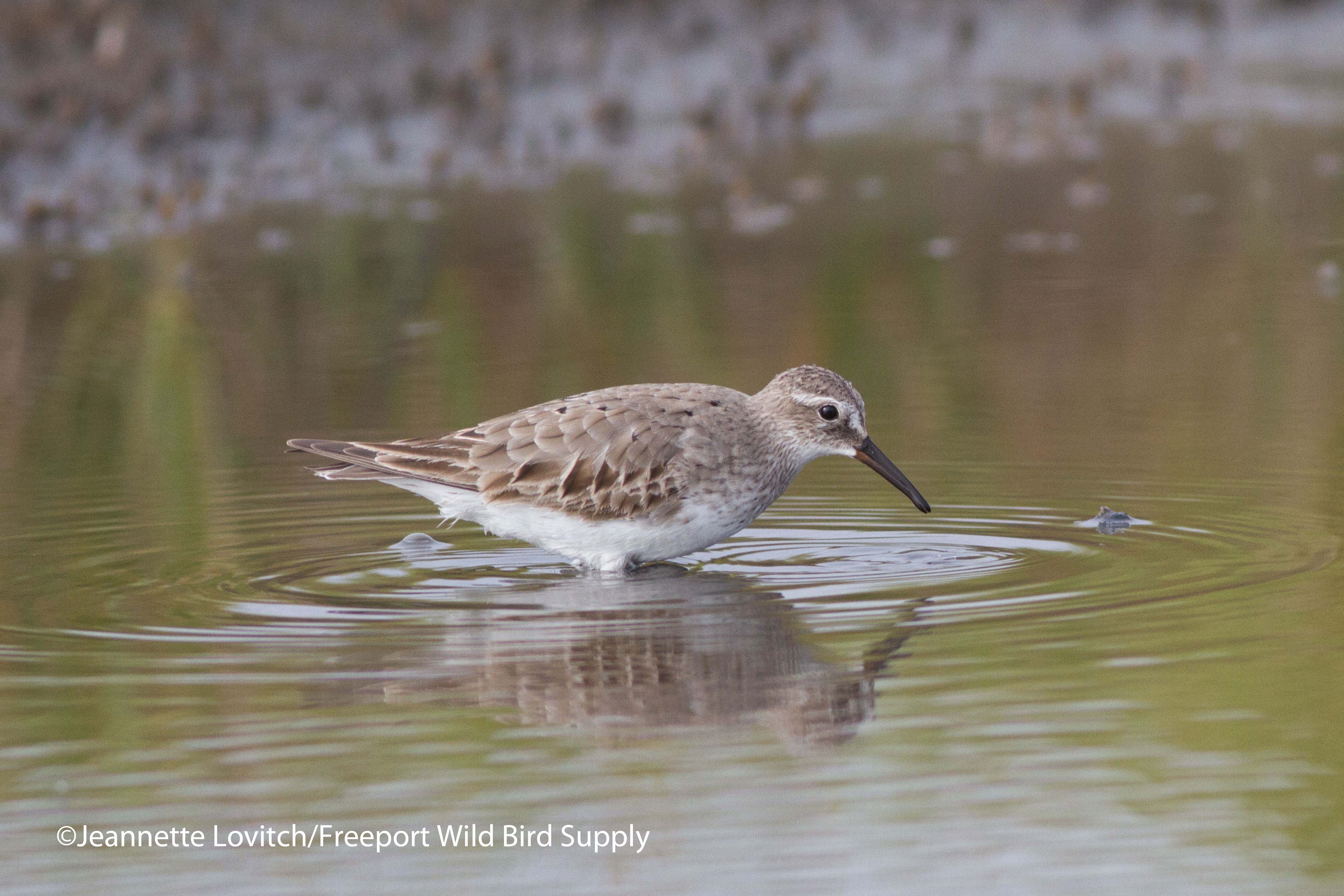
  • White-rumped Sandpiper: 3, Eastern Road Trail, Scarborough Marsh, 8/30.
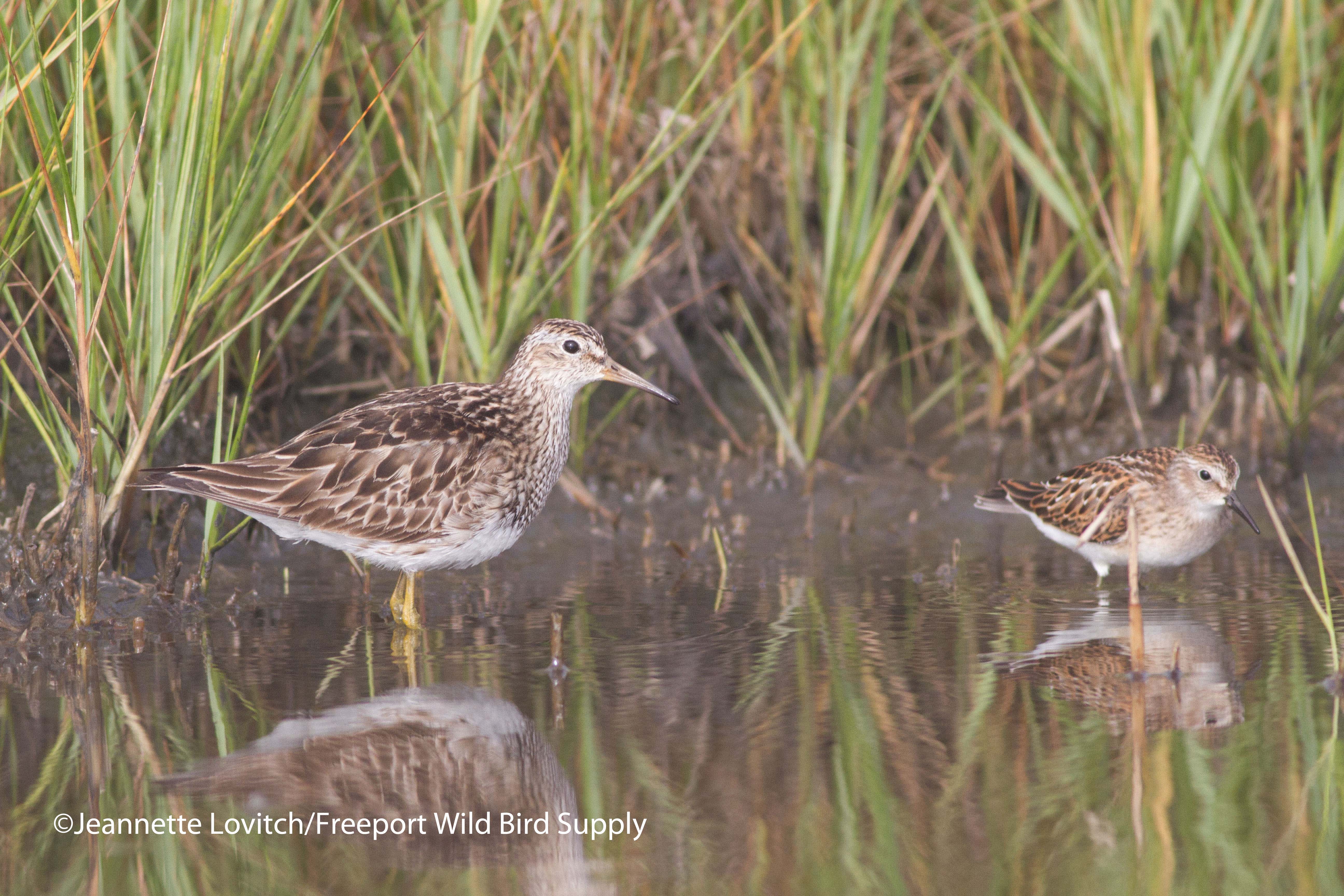
  • Pectoral Sandpiper: 3, Eastern Road Trail, Scarborough Marsh, 8/30.
  • Semipalmated Sandpiper: 1500, Thomaston Public Landing, 8/29 (with Jeannette).
  • Short-billed Dowitcher: 16, Walsh Preserve, Freeport, 8/31 (with Saturday Morning Birdwalk group).
  • Spotted Sandpiper: 5, Reid State Park, Georgetown, 8/27.
  • Solitary Sandpiper: 1, several locations this week.
  • Lesser Yellowlegs: 45, Walsh Preserve, Freeport, 8/31 (with Saturday Morning Birdwalk group).
  • Greater Yellowlegs: 24, Walsh Preserve, 8/31 (with Saturday Morning Birdwalk group).
  • RED-NECKED PHALAROPE: 4, Casco Bay between Little Chebeague and Cow Islands from the Casco Bay Lines Mailboat run, 8/26 (with Jeannette).

Recent Highlights, 8/19 – 8/25/2024

Brandon Baldwin and Kevin Harding found this American White Pelican off Wharton Point in Brunswick on the 24th. My “lunchbreak chase” ended up taking a few extra hours, but it was more than worth it when a small group of us were treated to the bird flying right over our heads at the end of the Maquoit Bay Conservation Land trail. Luckily, it wasn’t any closer when it decided to lighten the load, as caught in action here.

It was an exceptional week of late summer birding. Once again motivated by shorebirds, I ran into quite a few other species of note while working the usual hotspots. My non-shorebird observations of note over the past 7 days included:

  • Common Nighthawks were on the move this week, while some other widespread migrants and frequent visitors to our Durham property included American Redstart and Yellow, Black-and-white, Magnolia, Tennessee and Cape May Warblers.
  • 1 adult Little Blue Heron and 2+ Surf Scoters, Wharton Point, Brunswick, 8/21 (with Anniversary Day Birdwalk group).
  • 2 FORSTER’S TERNS, 2 CASPIAN TERNS, and 1 adult Lesser Black-backed Gull, Hill’s Beach, Biddeford, 8/23 (with Noah Gibb).
  • 1 female LONG-TAILED DUCK and 2 Surf Scoters, Biddeford Pool Beach, Biddeford, 8/23 (with Noah Gibb).
  • 2 continuing adult RED-NECKED GREBES, Ocean Avenue, Biddeford Pool, 8/23 (with Noah Gibb).
  • 1 Blue-gray Gnatcatcher, 2 Cape May Warblers, etc, Old Town House Park, North Yarmouth, 8/24 (with Saturday Morning Birdwalk group).
  • 1 AMERICAN WHITE PELICAN, Wharton Point, Brunswick, 8/24. A State Bird for me, it was found about an hour earlier by Kevin Harding and Brandon Baldwin. After it was displaced by a passing airboat, I arrived at about 12:30 and relocated it on the rocky ledge at the southern end of the bay. Brandon and I cut the distance in more than half by walking out to the end of the Maquoit Bay Conservation Land trail. Although closer, the light was brutal, but a small group of us waiting until the tide had inundated the ledge. Then the pelican took off. First it started heading south, but circled back, passed directly overhead (see photo above) and then gained altitude high over Wharton Point before disappearing off to the north.
  • 26 Surf Scoters, Maquoit Bay Conservation Land Trail, 8/24 (with Brandon Baldwin).

Meanwhile, fueled by a successful 19-species “shorebird mini-Big Day on 8/23 with Noah Gibb, my shorebird high counts for a total of 20 species this week were as follows:

  • AMERICAN OYSTERCATCHER: 2, Little Whaleboat Ledges, Casco Bay, 8/25 (with Birds of Casco Bay Boat Trip tour group).
  • Black-bellied Plover: 150+, The Pool, Biddeford Pool, 8/23 (with Noah Gibb).
  • Killdeer: 26, Crystal Spring Farm, Brunswick, 8/21 (with Anniversary Day Birdwalk grpup).
  • Semipalmated Plover: 400, The Pool, 8/23 (with Noah Gibb).
  • Piping Plover: 1, Hill’s Beach, Biddeford, 8/23 (with Noah Gibb).
  • Ruddy Turnstone: 30, Biddeford Pool Beach, Biddeford, 8/23 (with Noah Gibb).
  • RED KNOT: 1 ad and 1 juv, The Pool, 8/23 (with Noah Gibb).
  • STILT SANDPIPER: 1 continuing adult, Walsh Preserve, Freeport, 8/19 (with Jeannette) and 8/23 (with Noah Gibb).
  • Sanderling: 17, Hill’s Beach, 8/23 (with Noah Gibb).
  • DUNLIN: 1 fresh juvenile (FOY), Biddeford Pool Beach, 8/23 (with Noah Gibb).
  • Least Sandpiper: 100+, The Pool, 8/23 (with Noah Gibb).
  • White-rumped Sandpiper: 6, Biddeford Pool Beach, 8/23 (with Noah Gibb).
  • Semipalmated Sandpiper: 1250, Biddeford Pool Beach, 8/23 (with Noah Gibb).
  • Short-billed Dowitcher: 16, The Pool, 8/23 (with Noah Gibb).
  • LONG-BILLED DOWITCHER: 1 adult, Walsh Preserve, 8/19 (with Jeannette). Photo below.
  • Spotted Sandpiper: 3, Ocean Avenue, 8/23 (with Noah Gibb).
  • Solitary Sandpiper: 2, multiple locations and dates this week.
  • Lesser Yellowlegs: 54, Walsh Preserve, 8/19 (with Jeannette).
  • “Eastern” Willet: 3, The Pool, 8/23 (with Noah Gibb).
  • Greater Yellowlegs: 8, Royal River flats, 8/25 (with Birds of Casco Bay Boat Trip tour group).

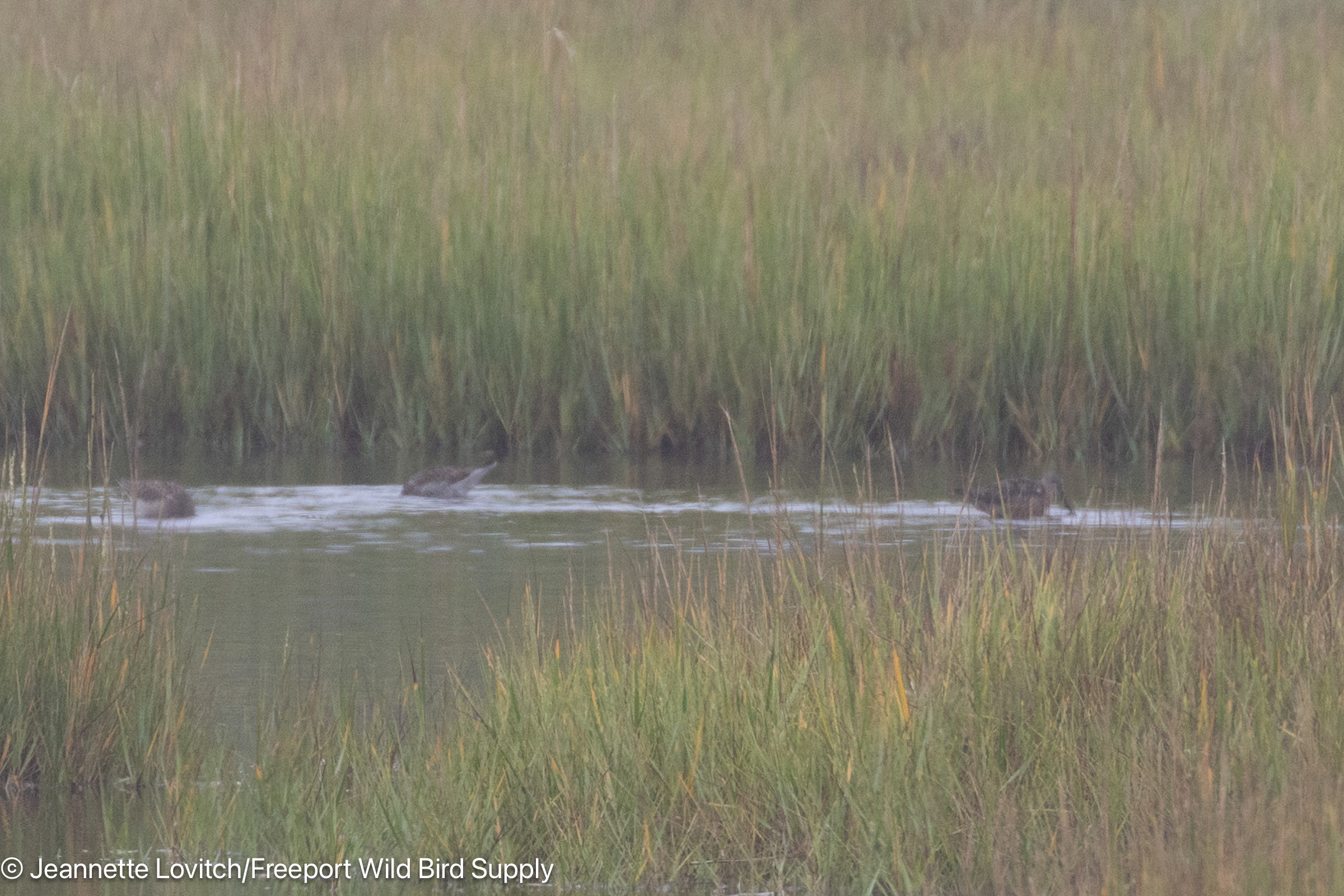
An adult LONG-BILLED DOWITCHER was a fun find for Jeannette and I this week at the Walsh Preserve in Freeport. It could have been closer, but this photo shows some of the pertinent identification features in the bird to the right including the larger size and very round shape, hunched back, and uniformly reddish tone throughout much of the undersides.

This Week’s Highlights, April 2-8, 2022.

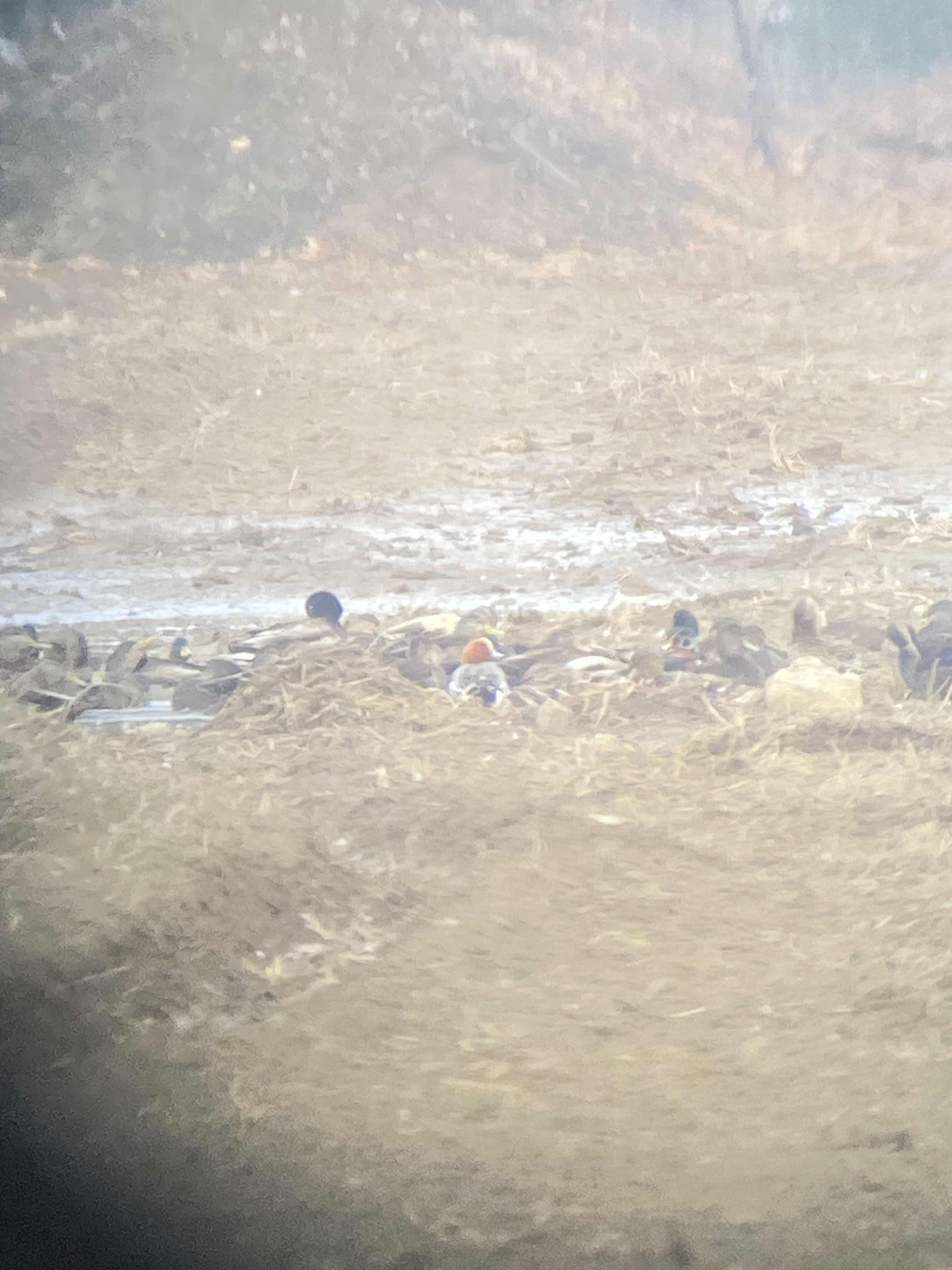
A distantly-phone-scoped photo of a drake Eurasian Wigeon does not do this spiffy bird justice!

A few “good” ducks, an increasing roster of new arrivals, and a successful tour were my sightings of note over the past seven days:

  • 12 NORTHERN SHOVELERS (one of my highest Maine counts), Maquoit Bay Conservation Land, Brunswick, 4/2 (with Saturday Morning Birdwalk group).
  • 1 continuing drake EURASIAN WIGEON, Route 136, Durham, 4/7 (photo above). Originally found by N. Gibb on 4/3.

New Arrivals this week:

  • 2 Pied-billed Grebes (FOY), Florida Lake Park, Freeport, 4/3 (with Levi Burford and Katrina Fenton).
  • 5 Tree Swallows (FOY), Morgan Meadow WMA, 4/4 (with Jeannette).
  • 8 Great Egrets (FOY), Scarborough Marsh, 4/4 (with Levi Burford and Katrina Fenton).
  • 1 Snowy Egret (FOY), Scarborough Marsh, 4/4 (with Levi Burford and Katrina Fenton).
  • 1 Greater Yellowlegs (FOY), Scarborough Marsh, 4/4 (with Levi Burford and Katrina Fenton).
  • 1 Double-crested Cormorant (FOS), Scarborough Marsh, 4/4 (with Levi Burford and Katrina Fenton).
  • Big arrival of more Eastern Phoebes and Song Sparrows in particular night of 4/5-6.
  • 1 Yellow-bellied Sapsucker (FOY), private property in Durham, 4/7 (with Jeannette).

This Week’s Highlights, March 19-24, 2022.

My personal highlights over the past six were as follows. Not surprisingly, it was mostly first-of-year new arrivals. The new bird for my Bradbury Mountain list, however, was definitely more of a surprise!

  • 3 male and 1 female NORTHERN SHOVELERS (FOY), 100+ Greater and 10+ Lesser Scaup, 1 drake American Wigeon, 1 Bonaparte’s Gull (FOY), etc, Wharton Point, Brunswick, 3/19 (with Saturday Morning Birdwalk group).
  • 4 Horned Larks and 1 American Wigeon, Highland Road, Brunswick, 3/19 (with Saturday Morning Birdwalk group).
  • 2 Eastern Meadowlarks (FOY) and 5 Brown-headed Cowbirds (FOY), Chesley Hill Road, Durham, 3/20.
  • 1 Great Blue Heron (FOS), Cousin’s River Marsh, 3/20.
  • 4 American Kestrels (FOY), Bradbury Mountain Hawkwatch, 3/20.
  • 1 adult LESSER BLACK-BACKED GULL, fly-by at the Bradbury Mountain Hawkwatch, 3/20 (with Zane Baker). This was my 142nd all-time Bradbury Mountain State Park species!
  • 20 Ring-necked Ducks (FOY), 2 American Wigeon, etc, Mouth of the Abagadasset River, Bowdoinham, 3/21 (with Jeannette).
  • 6 Fish Crows (FOY), Maine Mall Road, 3/22.
  • 6 Brant, Kettle Cove, Cape Elizabeth, 3/22.
  • 7+ American Woodcocks, Pownal, 3/23 (with Jeannette).

And in case you missed it, I was one of the guests on Thursday’s Maine Calling, talking about spring migration, bird feeding, and bird health. You can listen to the replay of the episode here.

And finally, our spring tour season gets kicked off next Saturday with our annual “Woodcocks Gone Wild!” See the Tours page of our website for more info.

This Week’s Highlights, 2/16-18, 2022.

This spiffy adult Black-headed Gull surprised me at Wharton Point on the 17th. The bird was so pink on the breast that I nearly had a heart-attack when this is the first thing that caught my eye.

Returning from vacation late on Tuesday night, it was right back to work. But a limited time out and about on Thursday morning followed by a full-day of private guiding on Friday produced several highlights:

  • 1 adult BLACK-HEADED GULL, Wharton Point, Brunswick, 2/17 (photo above).
  • THE STELLER’S SEA-EAGLE, Rte 127 bridge between Arrowsic and Georgetown, 2/18, 10:45 to 12:30pm (with clients from Delaware). While searching for it earlier – as well as while watching it  and birding elsewhere thereafter – the number of Bald Eagles in the air today was impressive. We had at least 25 over the course of the day. But many were pairs in courtship flight. It made we wonder if the recent unpredictable movements of the Steller’s was related to increased territoriality in our local, abundant Bald Eagles.  Here’s a distantly-phone-scoped-with-wind-driven-scope-shake-and-cold-hands for what it’s worth.
  • 1 drake and 2 hen BARROW’S GOLDENEYES, Doughty Cove, Brunswick/Harpswell, 2/18 (with clients from Delaware).
  • 3 Turkey Vultures, over downtown Bath, 2/18 (with clients from Delaware).
  • 3 Turkey Vultures, over the store here in Freeport, 2/18.

Simpson’s Point, Brunswick – Our Local Duck Hotspot.

IMG_4969_edited-2
Common Goldeneyes, Common Mergansers, and Greater Scaup (Vermont, March 2014)

Simpson’s Point in Brunswick, at the northern end of Middle Bay (Delorme Map 6: C-3) has become one of the best waterbird-watching spots in Casco Bay over the last few years. That trend continues this spring, with outstanding concentrations of waterfowl.

While there might not be a rarity or an addition to your year list right now, I highly encourage a visit to see the concentration (a scope is highly recommended), and it is certainly ripe for a rarity to be discovered!

I visited the point twice times this week, each yielding some remarkable counts (my attempts to visit it for a third time today was thwarted by unexpectedly dense fog). The first number is the count or estimate from 3/26 with my Saturday Morning Birdwalk group, and the second is from Monday, 3/27 with Jeannette.

– Mixed Black and Surf Scoters (roughly 60-65% Black: 1200/2100. A really incredibly count for the bay, this is by far the largest raft(s) of scoters I have seen within Casco Bay.
– Mixed Scaup (at least 80% Greater, but plenty of Lesser usually visible): 650/650. Down a few hundred birds from the massive overwintering flock.
– American Black Duck: 100/40
– Common Goldeneye: 75/40
– Bufflehead: 50/125
– Common Eider: 40/60
– Horned Grebe: 43/30
– Red-breasted Merganser: 10/25
– Common Loon: 5/3
– White-winged Scoter: 0/2

While more birder attention has definitely worked in its favor, it was always a well-known duck-watching hotspot. However, these numbers are outstanding, even based on the renewed attention to this spot over the last few years. I wonder what has changed? Sure, this winter the water was open and that kept the scaup around, but what is attracting all of these scoters? Is there a new food source? Is there a lack of some food somewhere else?

But it’s the oversummering birds (exceptionally rare for the state birds in summer like scoters, Red-necked Grebes and Red-throated Loons, and Long-tailed Ducks) that really suggest the uniqueness of this area. While rarities over the past few years, including Eared Grebe and Pacific Loon, have put this spot “on the map,” it is the numbers of common birds and small numbers of oversummering “winter” ducks that is most noteworthy. Is it nothing more than more birders paying more attention in mid-summer? I certainly am.

So go out and have a look, and perhaps you’ll get there on the day the scaup are close enough to pull out a Tufted Duck!

Meanwhile, nearby Wharton Point is always worth a visit, and can easily be combined with a trip to Simpson’s. Currently, it is hosting more typical-for-here large numbers of dabblers, led by American Black Ducks (800/495). On 3/28, Jeannette and I teased out a pair of American Wigeon and 1 Green-winged Teal from the masses, while 8 Dunlin were on the flats.

So in between the excitement of new arrivals, hawkwatching, and the anticipation of the diversity of May, I know I’ll be taking some more time to do a little local ducking!

This Week in Shorebirds: 8/22-28/2015

L1030115_two_BASA1_edited-1

L1030121_BASA1_edited-1
Two juvenile Baird’s Sandpipers at Popham Beach State Park on Friday morning, “rare-but-regular” fall migrants.

August is for shorebirds. Although the “fall” southbound migration started in late June (when the first non-breeders begin to turn around to mosey back south) and continues into November when Purple Sandpipers are still filling in, August is the month of peak numbers and diversity in Maine.
Most weeks from mid-July into September of recent years, I post a weekly “shorebird high counts this week” summary to my weekly “Additional Highlights This Week” summary posts to the Maine-birds listserve. While I do hope this is interesting and of value to folks, I also do it to organize my own notes, allowing me to quickly reference the peaks and valleys of particular species with ease should I need to.

I generally only post this when I have hit at least two “primary” and at least one “secondary” site each week, to make the numbers meaningful. And I prefer at least one prime high tide location (Eastern Road Trail in Scarborough Marsh, Biddeford Pool Beach/Ocean Avenue, or Popham Beach State Park in some years) with one low or mid-tide hotspot (Pine Point, Hill’s Beach/The Pool, or Popham and nearby environs).

This week was a particularly productive week for my own shorebirding, so this week’s summary is a helpful future reference for me. I also thought it was worth going into a little more detail, since it yielded a goodly 21 species (plus one subspecies) and some excellent totals.

The inclement weather of the weekend into the middle of the week (regular rain, lots of fog, easterly or southerly winds) was perfecting for “grounding” shorebirds and allowing numbers to build. I think my only surprise was my lack of a real rarity – like Western Sandpiper (although I worked pretty hard for one!)

I hit the low-tide hotspot of Pine Point on Monday with Jeannette, followed by the Eastern Road Trail at high tide later that afternoon. Jeannette and I spent the incoming to high tide at Biddeford Pool Beach on Tuesday, and on Friday, Serena Doose and I visited Popham on the incoming to high tide. Additionally, Jeannette and I checked one of the “secondary” sites, Brunswick’s Wharton Point on Tuesday and on Thursday I visited Wells Harbor before the evening’s Scott Weidensaul talk that we co-sponsored with Birds and Beans coffee and York County Audubon.

It’s always good to hit a freshwater location for diversity and high counts of pond-preferring-migrants, so when my Poplar Hut Tour Group with Maine Huts & Trails visited the Carrabassett Valley Snowfluent Ponds on Sunday, my high counts of Spotted and Solitary Sandpipers were acquired, along with my only Wilson’s Snipe of the week.

And, as if often the case during the peak of shorebird migration, there is some other “incidental sighting” of a migrant in some weird place – but not as weird as the Whimbrel (my only of the week) foraging at 4,200 feet atop Sugarloaf Mountain that Paul Doiron, Kristen Lindquist, and I observed on Sunday afternoon. While I knew they forage on mossberry during migration, such as in the bogs Downeast, I was most definitely not expecting one up here!

Therefore, with a total of 7 shorebirding locations – plus that mountaintop Whimbrel! – “this week’s shorebird high counts” scoreboard looks like this:

AMERICAN GOLDEN-PLOVER: 1 ad, Eastern Road Trail, Scarborough, 8/24 (with Jeannette).
Black-bellied Plover: 160, Pine Point, Scarborough, 8/24 (with Jeannette).
Semipalmated Plover: 350, Pine Point, 8/24 (with Jeannette).
Killdeer: 3, Pine Point, 8/24 (with Jeannette).
AMERICAN OYSTERCATCHER: 5, Pine Point, 8/11 (with Jeannette).
Greater Yellowlegs: 12, Wharton Point, Brunswick, 8/25 (with Jeannette).
Lesser Yellowlegs: 38, Eastern Road Trail, 8/24 (with Jeannette).
“Eastern” Willet: 8 juvs, Pine Point, 8/24 (with Jeannette).
“WESTERN” WILLET: 1 juv. (FOY), Pine Point, 8/24 (with Fyn Kind, Gary Roberts, and Jeannette).
Solitary Sandpiper: 4, Carrabassett Valley Snowfluent Ponds, 8/23 (with Poplar Hut Tour group).
Spotted Sandpiper: 5, Carrabassett Valley Snowfluent Ponds, 8/23 (with Poplar Hut Tour group).
Whimbrel: 8, Wells Harbor, 8/27.
Ruddy Turnstone: 8, Pine Point, 8/24 (with Jeannette).
Sanderling: 40, Biddeford Pool Beach, 8/25 (with Jeannette).
Semipalmated Sandpiper: 1000, Biddeford Pool Beach, 8/25 (with Jeannette)..
Least Sandpiper: 75 mostly juv, Eastern Road Trail, 8/24 (with Jeannette).
White-rumped Sandpiper: 80-100 adults, Eastern Road Trail, 8/24 (with Jeannette).
BAIRD’S SANDPIPER: 2 juveniles, Popham Beach State Park, Phippsburg, 8/28 (with Serena Doose).
Pectoral Sandpiper: 6, Pine Point, 8/24 (with Jeannette).
STILT SANDPIPER: 4 ads, Eastern Road Trail, 8/24 (with Jeannette).
Short-billed Dowitcher: 19 juveniles, Pine Point, 8/24 (with Jeannette).
Wilson’s Snipe: 1, Carrabassett Valley Snowfluent Ponds, 8/23 (with Poplar Hut Tour group).

Furthermore, writing this blog gives me a chance to show off some of Jeannette’s photography! These are just a few of the shots she got during our visit to Scarborough on Monday.
IMG_2024_edited-2Adult Black-bellied Plover, Pine Point, 8/24.

IMG_2069_edited-2Juvenile Short-billed Dowitcher, Pine Point, 8/24.

IMG_2092_edited-2Adult Semipalmated Plover, Pine Point, 8/24.

IMG_2148_edited-2Adult and juvenile Semipalmated Sandpipers with one juvenile Semipalmated Plover, Pine Point, 8/24.

IMG_2256_edited-2Adult Pectoral Sandpiper and juvenile Least Sandpiper, Eastern Road Trail, 8/24.

IMG_2295_edited-2Adult White-rumped Sandpiper, Eastern Road Trail, 8/24.

IMG_2331_edited-2Semipalmated Sandpipers with one adult Semipalmated Plover and one adult Sanderling, Biddeford Pool Beach, 8/25.

Jeannette in Marsh_edited-1

Of course, it’s not just shorebirds that are on the move – there are plenty of passerines as well! A migrant Wilson’s Warbler and a whopping 14 Ruby-throated Hummingbirds were at Old Town House Park on Saturday morning when I visited it with my Saturday Morning Birdwalk group. My tour group to the Poplar Hut encountered mixed-species foraging flocks as we hiked to and from the hut, highlighted by an immature female Cape May Warbler in a little wave around the hut itself on Sunday morning.
Poplar Falls_edited-1

Other highlights this week included 14 Wood Ducks and a bumper crop of juvenile Common Yellowthroats at Florida Lake Park (8/24), the whiter of the two Tricolored Heron x Snowy Egret hybrids (“Splotchy”) in the Rte 1/9 salt pannes in Scarborough Marsh with Jeannette on the same day and a drake White-winged Scoter off of Biddeford Pool Beach on 8/25.

While a diversity of shorebirds will continue for several more weeks (and there’s a better chance for Western, Baird’s, and Buff-breasted Sandpipers), I tend to spend less time focusing on them (and therefore not enough time at enough prime locations over the course of the week), and therefore only occasionally post summary totals. In fact, if the much-reduced numbers at Popham today are any indication, a lot of shorebirds departed with the passage of this recent cold front.

Instead, I spend most of my free mornings now at “my office,” the bridge at Sandy Point Beach, Cousin’s Island, Yarmouth, observing and obsessively counting migrant passerines in the “Morning Flight.” In fact, my first visit of the season there on Thursday morning yielded 438 migrants, including 17 species of warblers, 1 early Dickcissel, 1 Blue-gray Gnatcatcher (my 3rd-ever here), and 5 Prairie Warblers – my 2nd highest count.

(Much) more on that soon.