Tag Archives: Hudsonian Godwit

This Week’s Highlights 11/5– 11/11/2026.

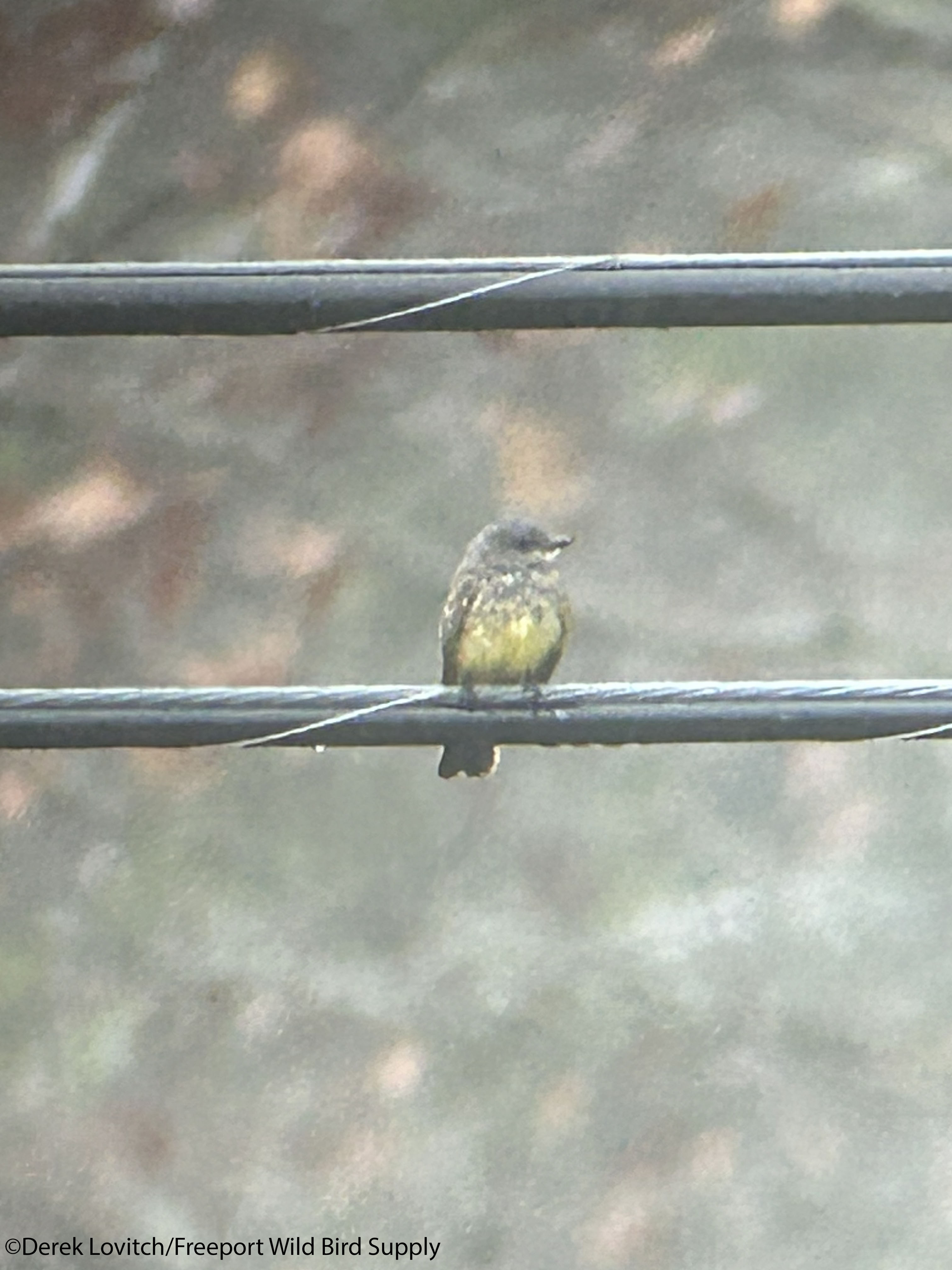
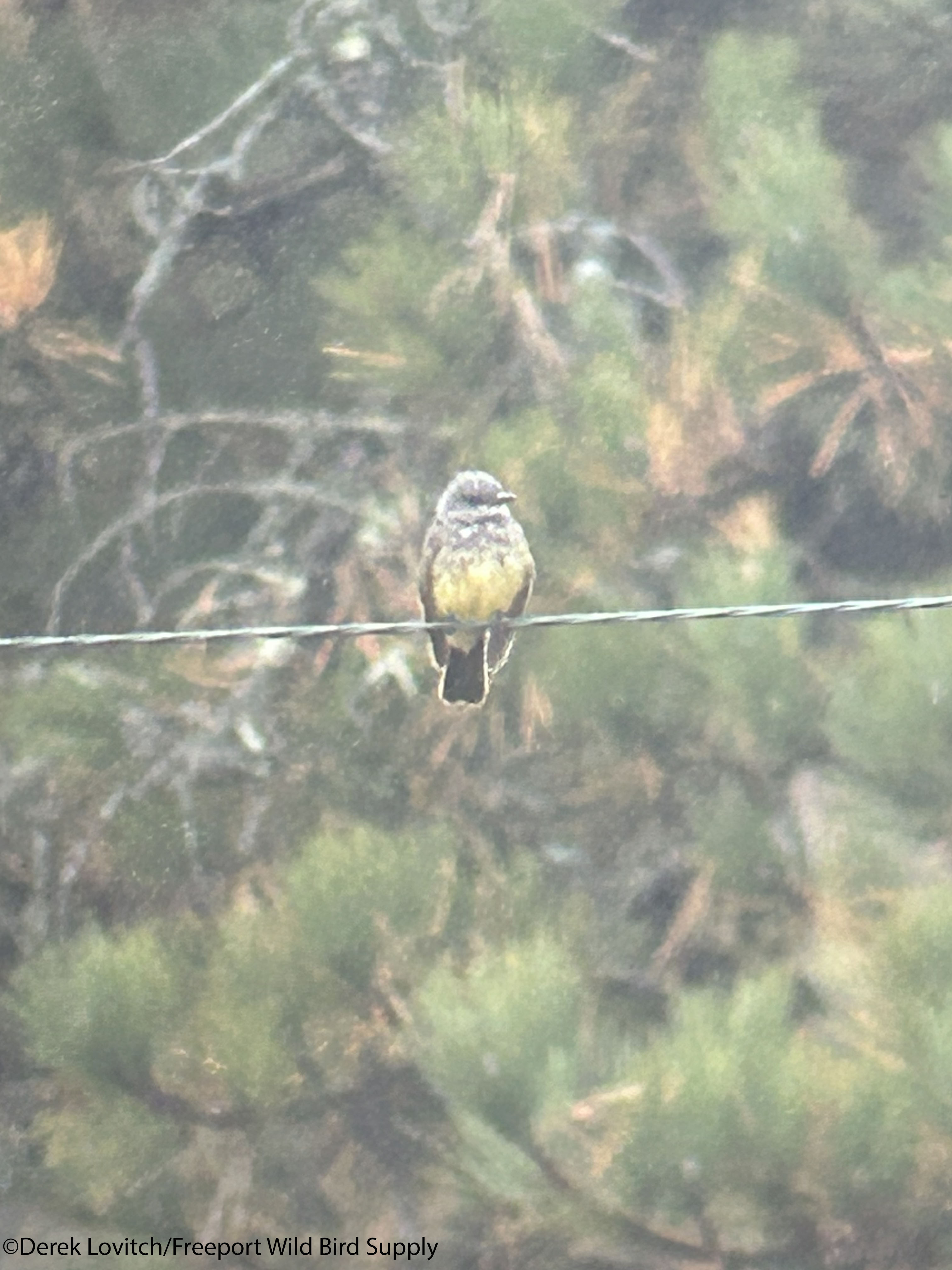
Wow! What had been a relatively slow Rarity Season had its doors blown open by this state first Cassin’s Kingbird on Parson’s Beach Road. I observed it (and phone-scoped it) on 11/7, in the afternoon of its first of 3 days in the area.

Another week, and another First State Record for Maine! With Rarity Season in full swing, I combined a chase (or two) with some bird-finding effort, producing the following observations of note over the past seven days:

  • 1 “Ipswich” Savannah Sparrow and 1 Great Egret, Crescent Beach State Park, Cape Elizabeth, 11/6.
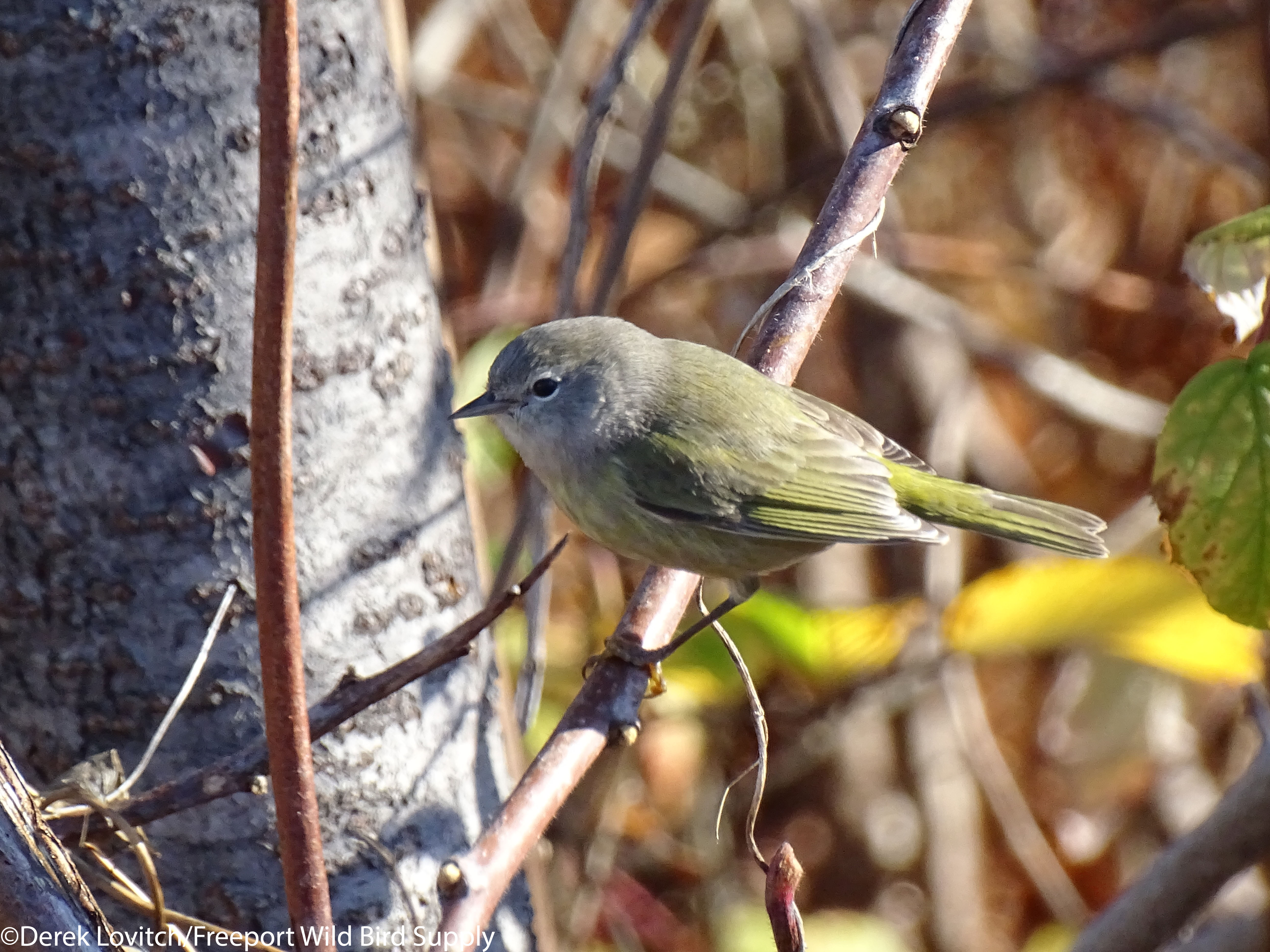
  • 1 Orange-crowned Warbler, private property in Cape Elizabeth, 11/6.
  • 1 CASSIN’S KINGBIRD, Parson’s Beach Road, Kennebunk, 11/7 (with Bill Thompson). Photo above. Found earlier in the day by Will Bayla, it continued through dusk. Bill and I observed it, often in mist and drizzle, between 2:30 and 3:15pm with m.obs. 1st State Record, but I only had it on the honorable mention list on my Next 25 Birds for Maine Predictions List.
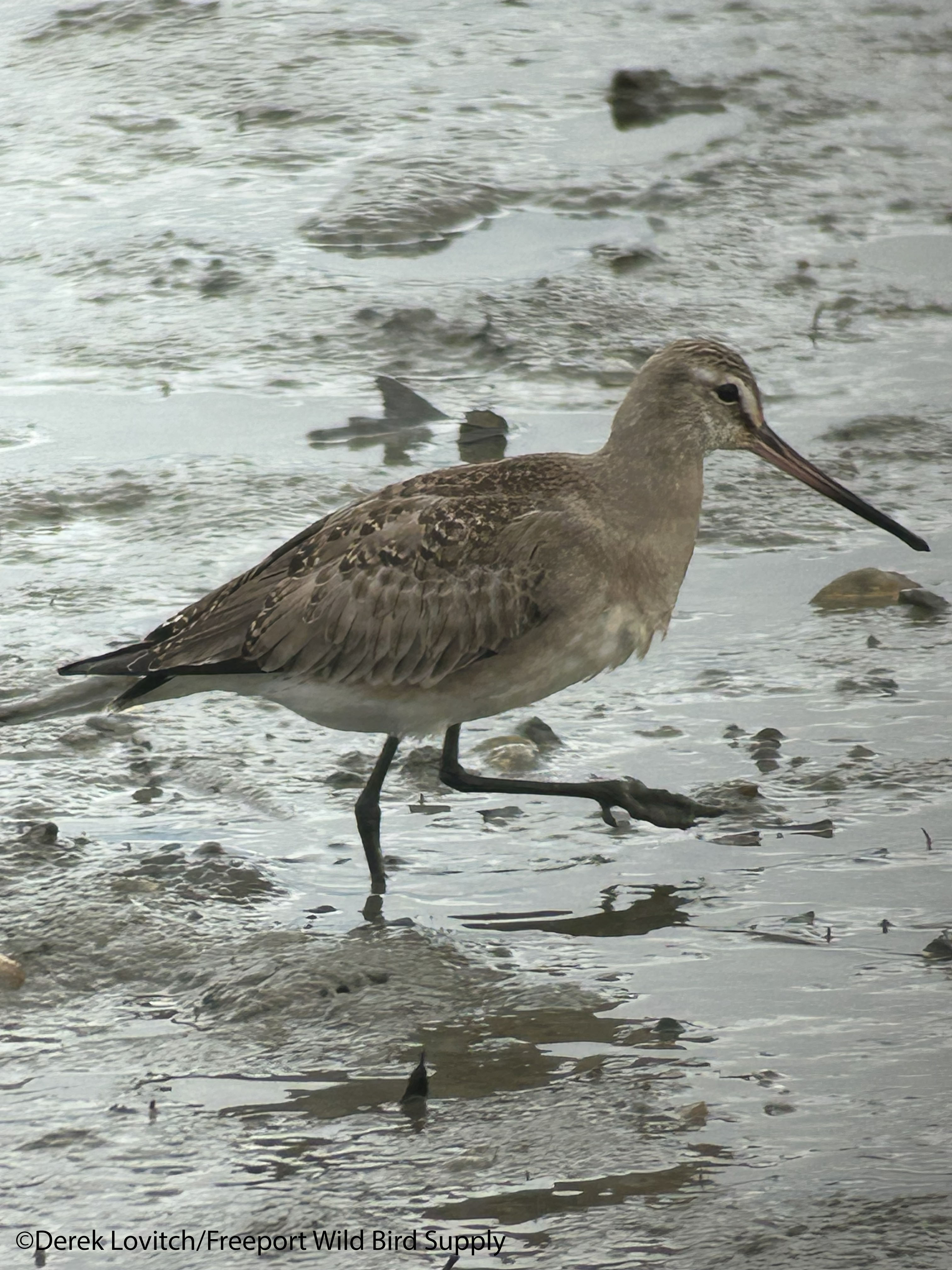
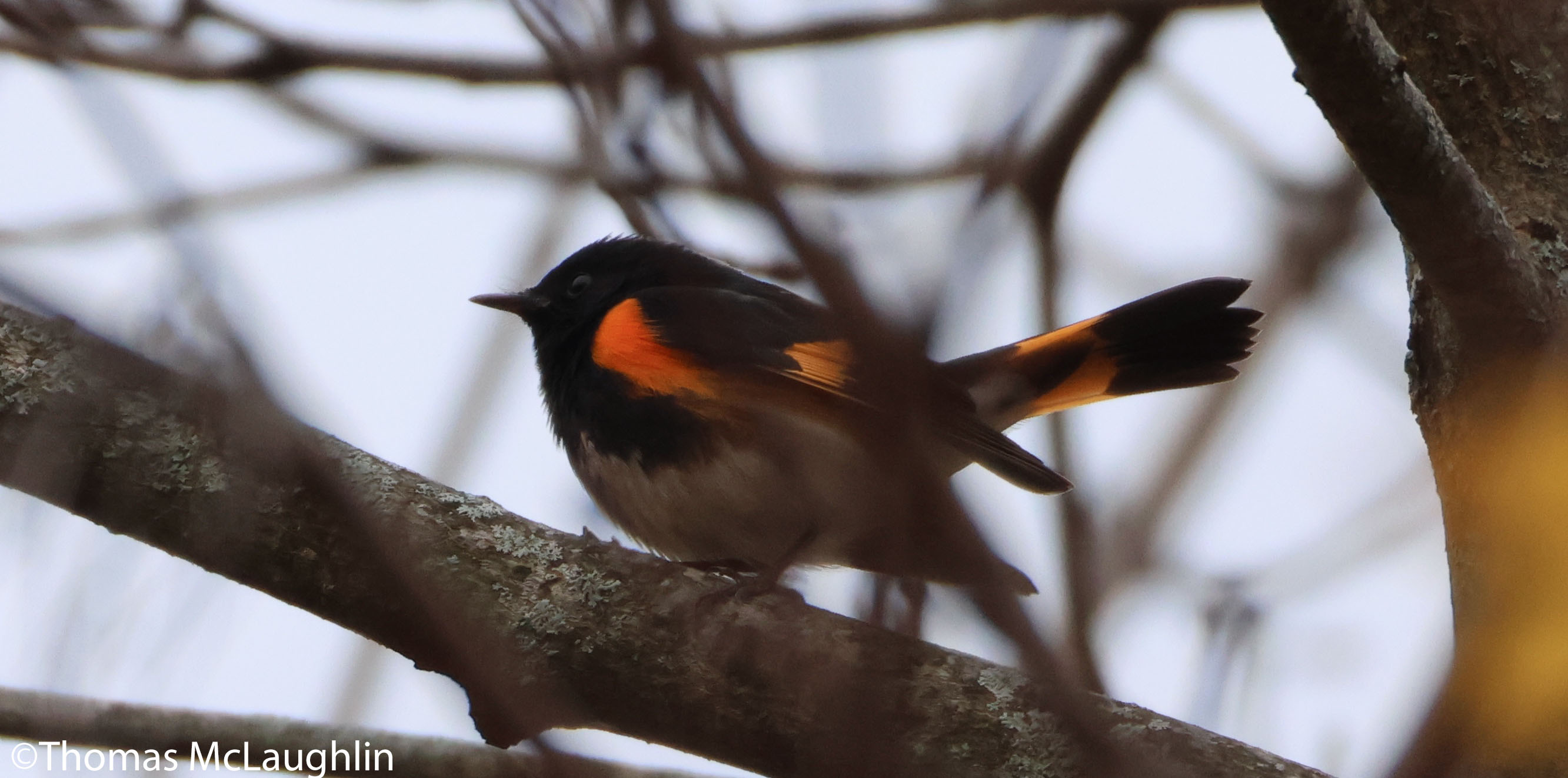
  • Rarity Roundup Van Tour w/Portland Explorer on 11/8: We began with the continuing CASSIN’S KINGBIRD at Parson’s Beach Road and finished with the continuing HUDSONIAN GODWIT at Back Cove. In between, we also had 2 Great Egret’s at Parson’s Beach, 1 continuing pair of AMERICAN OYSTERCATCHERS along Ocean Ave in Biddeford Pool, and then found 2-3 Hermit Thrushes and a male AMERICAN REDSTART on Sheridan Street in Portland. The full trip report can be found here:
  • Sabattus Pond, 11/9 (with Jeannette):

295 Mallards
203 Lesser Scaup
158 Ruddy Ducks
104 American Black Ducks
91 Greater Scaup
75 Green-winged Teal
46 Common Mergansers
39 Canada Geese
28 Hooded Mergansers
21 Ring-necked Ducks
20 unidentified scaup
12 American Wigeon
10 Buffleheads
3 Mallard x Am Black Duck hybrids.
2 Horned Larks
1 RED-BREASTED MERGANSER
1 Wood Duck
1 Common Loon
1 WILSON’S SNIPE
1 Belted Kingfisher

  • 2 Orange-crowned Warblers, Eastern Promenade, Portland, 11/10 (with Ian Doherty).
  • 2 continuing Great Egrets, 1 “Ipswich” Savannah Sparrow, 1 American Kestrel, etc, Parson’s Beach Road, Kennebunk, 11/10 (with Ian Doherty).
  • 1 immature White-crowned Sparrow, feeders here at the store, 11/11.

This Week’s Highlights 10/22– 10/28/2026.

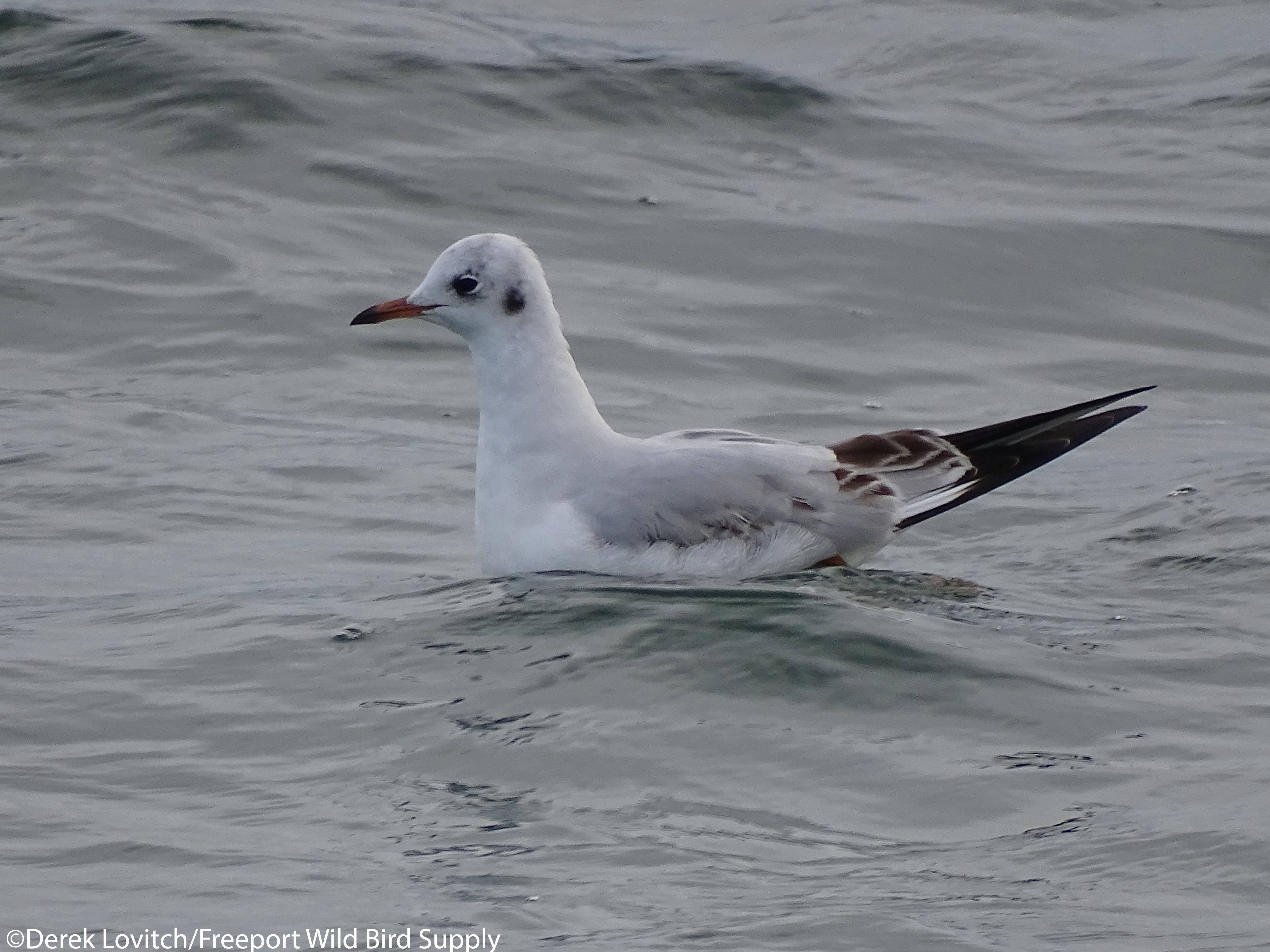
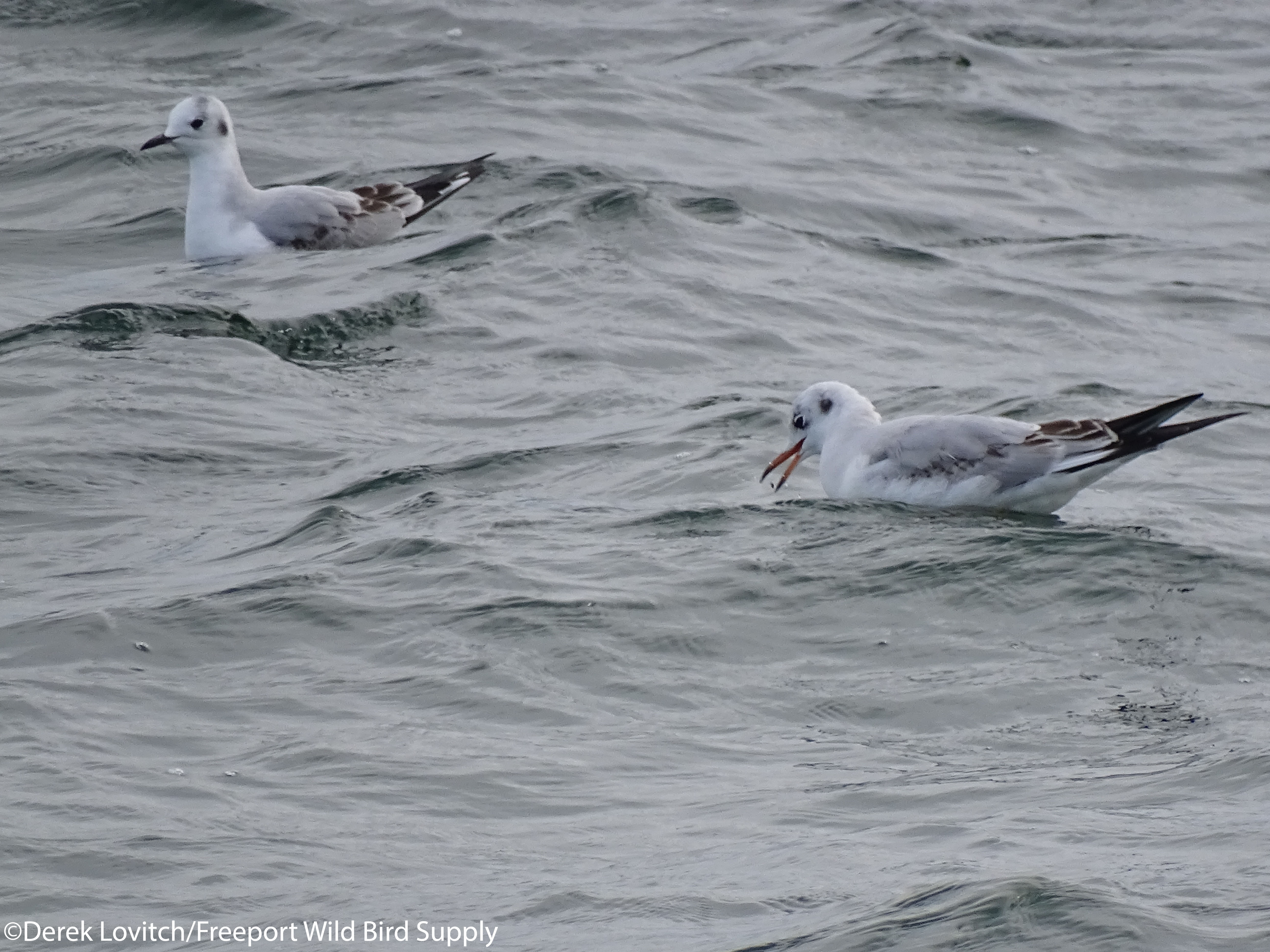
While birding with a client on Sunday, we added a second European species to our day list when I found this Black-headed Gull at Pine Point. A few birders made it over in time to see it before watching it head out of the harbor and disappearing.

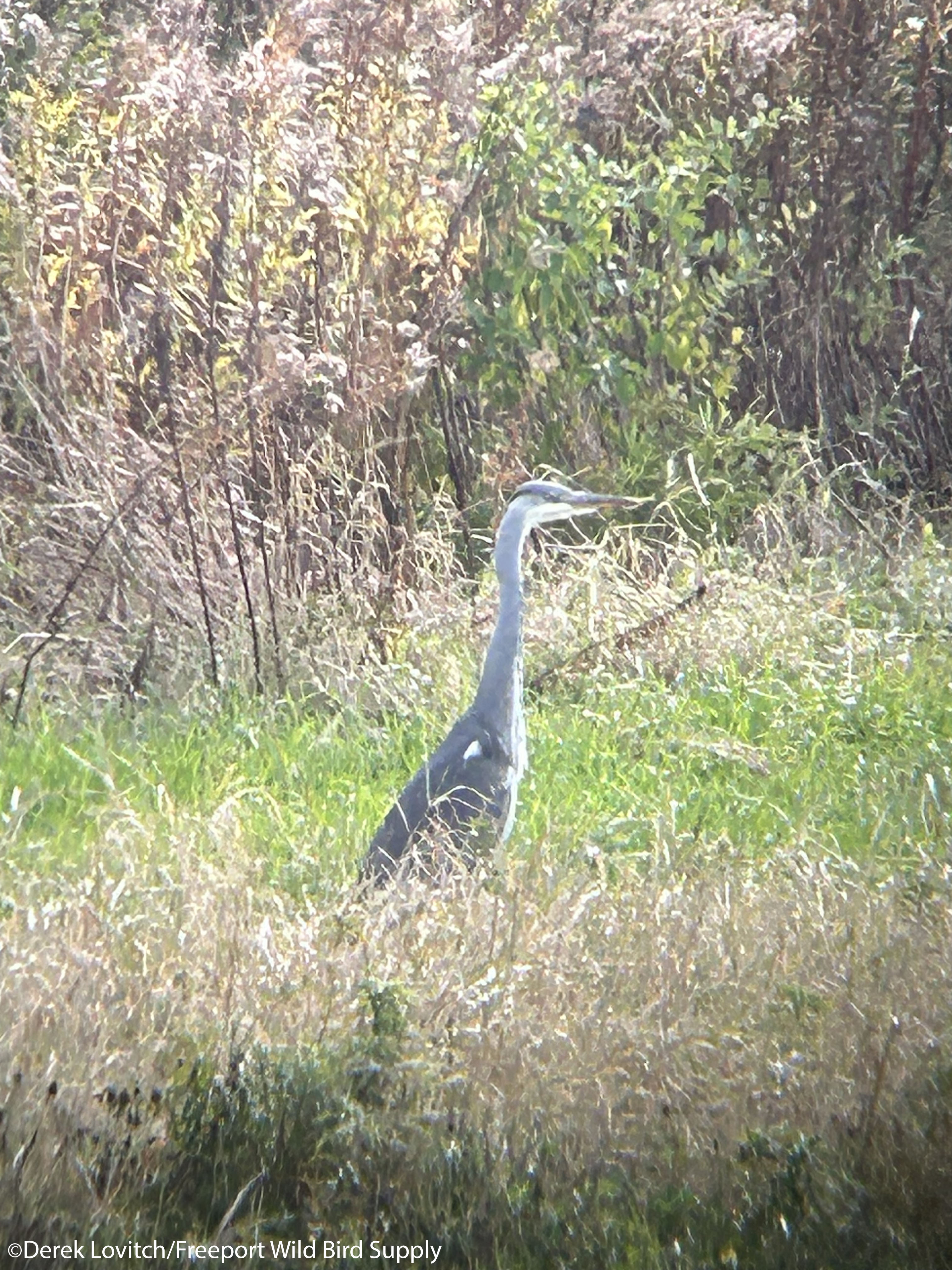
Of course, the big news in birding continued to be the Gray Heron in Cape Elizabeth. Having been present since at least October 1st (but not coming to light until the 18th, it continued in the area through 10/22). I wrote a blog about this bird last week, including salient identification features, links to viewing info, thoughts about vagrancy, and lots of snarky comments about human behavior. Unfortunately it has not been relocated.

My second visit with the Gray Heron was on the 22nd, when I grabbed this phone-scoped photo. I missed the shot of it catching and eating what appeared to be a Song Sparrow!

With rarity season upon us, I birded widely this week, yielding the following observations of note over the past 7 days:

  • Highlights from our Durham property this week included 1 American Woodcock on 10/23; good numbers of Pine Siskins daily and an increase in Purple Finches; and a woodcock foraging under our feeders before sunrise on the 28th!
  • Birding with a client from Florida who was in town to see the Gray Heron was incredibly productive on 10/22. We even found our own rarity! Our long list of highlights included the continuing GRAY HERON (Wells Road, Cape Elizabeth) of course, but also: 2 Snow Buntings (FOF; Eastern Road Trail, Scarborough Marsh); we then found a 1st cycle BLACK-HEADED GULL and 1 late Common Tern at Pine Point (photo above); 1 Indigo Bunting and 1 “Ipswich” Savannah Sparrow (FOF; Kettle Cove, Cape Elizabeth), the continuing HUDSONIAN GODWIT along with 1 Semipalmated Sandpiper, 1 White-rumped Sandpiper, etc, (Back Cove from Payson Park, Portland), and enjoyed other Northeastern specialties such as Common Eiders and Great Cormorants. There were also an impressive number of Northern Gannets nearshore throughout the day.

Sandy Point Morning Flight, 10/24.

A very light flight passed over and through Sandy Point Beach, Cousin’s Island, Yarmouth this morning thanks to a lighter than expected flight overnight and near-calm winds by sunrise.

  • 7:06-8:18, then to 9:00 with Saturday Morning Birdwalk Group
  • 32F, mostly clear, very light WNW to calm.
  • 103 American Robins
  • 24 Yellow-rumped Warblers
  • 23 Pine Siskins
  • 13 Ruby-crowned Kinglets
  • 10 Black-capped Chickadees
  • 5 American Goldfinch
  • 4 Golden-crowned Kinglets
  • 3 Dark-eyed Juncos
  • 3 Eastern Bluebirds
  • 2 Purple Finches
  • 2 Blue Jays
  • 2 Brown Creepers
  • 1 Red-winged Blackbird
  • 1 Common Grackle
  • 1 Red-bellied Woodpecker (crossed after 4 false starts)
  • 1 ORANGE-CROWNED WARBLER
  • 1 Snow Bunting
  • 1 unidentified
  • Total = 200

  • Evan Obercian and I birded the Rockland area on 10/25, searching for late migrants and rarities. It was a very slow (too nice!) day overall, but a few birds of note included 1 DICKCISSEL (private property in Thomaston); 3 Nelson’s Sparrows and 1 Semipalmated Sandpiper (Weskeag Marsh); 2 Common Yellowthroats (Green House Hill Road); 1 WHITE-WINGED CROSSBILL (FOF) and 2 Lesser Black-backed Gulls (The Samoset), etc.
  • 1 CAPE MAY WARBLER, 2 Pine Warblers, etc, Bailey Island, Harpswell, 10/26 (with Jeannette).

Sandy Point Morning Flight, 10/27.

Despite clear skies and very light northwesterly winds overnight and into the morning, a very light flight passed over and through Sandy Point Beach, Cousin’s Island, Yarmouth this morning. With so many nights of unimpeded migration due to our lack of “weathah” this month, the pipeline might just be dry. This may have been my last visit to “my office” for the season.

  • 7:09-9:10am
  • 42F, mostly clear, NW 1.8-3.5 to 2.1-4.1
  • With Luke Seitz and Bill Thompson
  • 74 American Robins
  • 73 Common Grackles
  • 26 Yellow-rumped Warblers
  • 13 Dark-eyed Juncos
  • 11 Canada Geese
  • 6 House Finches
  • 5 Pine Siskins
  • 4 American Pipits
  • 4 Ruby-crowned Kinglets
  • 2 Unidentified
  • 1 Common Loon
  • 1 Palm Warbler
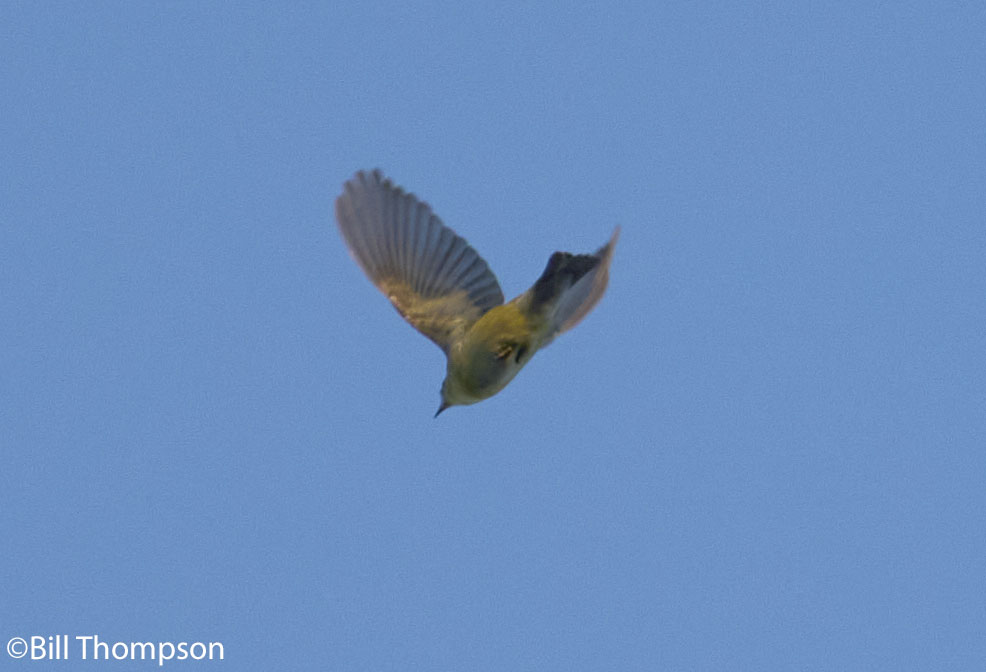
  • 1 TENNESSEE WARBLER (photo below)
  • 1 Red-winged Blackbird
  • 1 Black-capped Chickadee
  • 1 White-throated Sparrow
  • 1 White-crowned Sparrow
  • 1 Hermit Thrush
  • 1 Purple Finch

Total = 227

  • 1 late Solitary Sandpiper that appears to have a broken/deformed bill that doesn’t close on the distal third, 2 White-rumped Sandpipers, 1 Semipalmated Sandpiper, etc., Walsh Preserve, Freeport, 10/28.

Upcoming Tours (with Space Available):

The Rarity Roundup Van Tour 2026 – November 8, 2026; 8:00am – 3:00pm​


Portland Explorer and Freeport Wild Bird Supply are teaming up to offer a very special, very exclusive road trip outing in 2026.

Early November is a fantastic time of year in Maine for vagrants – birds normally seen in far-off places.  Due to a combination of weather patterns, changing seasonal food resources, falling temperatures, and other factors – some of which are not completely understood – birds that may have ended up in Maine by “accident” begin to concentrate at the coast in “migrant traps” and “hotspots.”  In other words, this is the time of year to expect the unexpected.

​A traditional “Rarity Roundup” involves teams of birders heading out on a given day during rarity prime time, looking for species that are not supposed to be around. And in honor of that tradition, that’s exactly what we are going to do on this unique tour. We may “chase” a rarity (go to see something that has already been found, aka “twitch”) or we might choose a destination known for rare birds in an attempt to find one of our own. Or perhaps, we’ll do both!

​Anything in southern Maine is fair game, and we might not even know where we will head until we are on the bus and the latest rare bird alert is received. For those who love adding a bird to your Life or State List, and/or basking in the thrill of discovery, well then this is the tour for you! In between seeing great birds, we’ll discuss the complex factors that are involved in delivering rarities to an area, and how we go about finding them.

For example, last year, our Birds on Tap – Roadtrip: Rarity Roundup traveled to Yarmouth to see one of the few MacGillivray’s Warblers ever recorded in the state, then ventured all of the way to Kittery to try and find our own vagrant and the famous Fort Foster Park.

Recent Highlights, 8/26 – 9/2/24

Jeannette and I spotted these four Red-necked Phalaropes from the Casco Bay Ferry Mailboat run with visiting family on the 26th.

It was a very busy week for me, but when I did get out, birding was productive – especially in the backyard which hosted at least 15 species of warblers this week. Meanwhile, shorebirding continues to be hot. My observations of note over the past 8 days included the following

  • 1 Black Scoter, 2 White-winged Scoters, and 2 Blue-winged Teal with Common Eiders, Reid State Park, Georgetown, 8/27. As scoters begin to increase in September, I’ll forgo reporting the “oversummering” groups from now on.
  • 1 TRICOLORED HERON, Mill River Park, Thomaston, 8/29 (with Jeannette).
  • 2 SANDHILL CRANES, Mayall Road, Gray/New Gloucester, 8/30.
  • 1 Northern Pintail (first of fall) and 1 juv, Little Blue Heron, etc, Eastern Road Trail, Scarborough Marsh, 8/30.
  • 3 adult Lesser Black-backed Gulls, Seawall Beach, Phippsburg, 9/2 (with Ed Hess).

My shorebird high counts for 18 species this week were solid considering I didn’t make it to Biddeford Pool (or Pine Point) during this period. Focusing on mostly lesser-visited hotspots, I found several goodies and had a few decent high counts.

  • Black-bellied Plover: 67, Wharton Point, Brunswick, 9/2 (with Ed Hess).
  • Killdeer: 43, Colonial Acres Sod Farm, Gorham, 8/30.
  • Semipalmated Plover: 100+, Thomaston Public Landing, 8/29 (with Jeannette).
  • HUDSONIAN GODWIT: 2 adults, Wharton Point, 9/2 (with Ed Hess)
  • Ruddy Turnstone: 1, Reid State Park, Georgetown, 8/27.
  • RED KNOT: 1 juv, Wharton Point, 9/2 (with Ed Hess).
  • Sanderling: 82, Seawall Beach, Phippsburg, 9/2 (with Ed Hess).
  • BAIRD’S SANDPIPER: 1 juv, Seawall Beach, 9/2 (with Ed Hess).
  • Least Sandpiper: 92, Eastern Road Trail, Scarborough Marsh, 8/30.
  • White-rumped Sandpiper: 3, Eastern Road Trail, Scarborough Marsh, 8/30.
  • Pectoral Sandpiper: 3, Eastern Road Trail, Scarborough Marsh, 8/30.
  • Semipalmated Sandpiper: 1500, Thomaston Public Landing, 8/29 (with Jeannette).
  • Short-billed Dowitcher: 16, Walsh Preserve, Freeport, 8/31 (with Saturday Morning Birdwalk group).
  • Spotted Sandpiper: 5, Reid State Park, Georgetown, 8/27.
  • Solitary Sandpiper: 1, several locations this week.
  • Lesser Yellowlegs: 45, Walsh Preserve, Freeport, 8/31 (with Saturday Morning Birdwalk group).
  • Greater Yellowlegs: 24, Walsh Preserve, 8/31 (with Saturday Morning Birdwalk group).
  • RED-NECKED PHALAROPE: 4, Casco Bay between Little Chebeague and Cow Islands from the Casco Bay Lines Mailboat run, 8/26 (with Jeannette).

Derek’s Birding This Week: 8/14-20, 2021

Semipalmated Plovers and Semipalmated Sandpipers waiting out the high tide
off of Biddeford Pool Beach on 8/20.

My observations of note over the past seven very productive days included the following:

  • Migrants on Monhegan Island, 8/15 (with Evan Obercian) included: 6+ Cape May Warblers, 1 Bay-breasted Warbler, 2 Least Flycatchers, etc.
  • 1 immature Great Cormorant, Outer Duck Islands, Monhegan, 8/15.
  • 1 Surf Scoter, Simpson’s Point, Brunswick, 8/16 (with Jeannette).
  • 1 Blue-gray Gnatcatcher, Middle Bay Road, Brunswick, 8/16 (with Jeannette).
  • 1 of 2 continuing TRICOLORED HERON, Pelreco Marsh, Scarborough Marsh, 8/16 (with Jeannette) and 8/19 (with Down East Adventures Shorebird Workshop tour group).
  • 2 BOREAL CHICKADEES, Albany Mountain Trail, White Mountain N.F., 8/17 (with Jeannette). Very surprising in mixed woods at 1624ft. Even more surprising since the 1900+ ft summit is not very boreal. Molt migrant and/or post-breeding dispersal? 
  • 1 of the 2-3 continuing Red-necked Grebes, Ocean Avenue, Biddeford Pool, 8/20.

And, with many of the species now peaking (and some of the adults already past peak), my shorebird high counts for a goodly 19 species this week were as follows:

  • American Oystercatcher: 4 (2 ad with 2 juv), Pine Point, Scarborough, 8/16 (with Jeannette) and 8/19 (with Down East Adventures Shorebird Workshop tour group). Plus 1, Ocean Avenue, Biddeford Pool, 8/20.
  • Black-bellied Plover: 93, Wharton Point, Brunswick, 8/16 (with Jeannette).
  • Killdeer: 24, Colonial Acres sod farm, Gorham, 8/20.
  • Semipalmated Plover: 261+, Pine Point, 8/16 (with Jeannette).
  • Whimbrel: 1 each at Pine Point, 8/16 (with Jeannette) and 8/19 (with Down East Adventures Shorebird Workshop tour group); The Pool, Biddeford Pool, 8/19 (with Down East Adventures Shorebird Workshop tour group).
  • HUDSONIAN GODWIT: 43!!!, The Pool, 8/19 (with Down East Adventures Shorebird Workshop tour group).  Horrific video and details here: https://fb.watch/7vL0DY756z/
  • Ruddy Turnstone: 18, Outer Duck Islands, Monhegan, 8/15.
  • Sanderling: 23, Biddeford Pool Beach, 8/20.
  • Least Sandpiper: 100+, Eastern Road Trail, Scarborough Marsh, 8/19 (with Down East Adventures Shorebird Workshop tour group).
  • White-rumped Sandpiper: 10+, Pine Point, 8/19 (with Down East Adventures Shorebird Workshop tour group). 
  • BUFF-BREASTED SANDPIPER (FOY): 1, Colonial Acres sod farm, Gorham, 8/20 (with Phil McCormack).
  • Pectoral Sandpiper: 1, Eastern Road Trail, Scarborough Marsh, 8/19 (with Down East Adventures Shorebird Workshop tour group).
  • Semipalmated Sandpiper: 500+, Pine Point, 8/19 (with Down East Adventures Shorebird Workshop tour group). 
  • Short-billed Dowitcher: 25, The Pool, 8/19 (with Down East Adventures Shorebird Workshop tour group).
  • Spotted Sandpiper: 9, Biddeford Pool area shoreline, 8/20.
  • Solitary Sandpiper: 9, Monhegan Island, 8/15 (with Evan Obercian).
  • Lesser Yellowlegs: 39, between Spear Farm Estuary Preserve and Yarmouth Town Landing, 8/14 (with Saturday Morning Birdwalk group).
  • “Eastern” Willet: 10, The Pool, 8/19 (with Down East Adventures Shorebird Workshop tour group).
  • Greater Yellowlegs: 12, Spear Farm Estuary Preserve, Yarmouth, 8/14 (with Saturday Morning Birdwalk group).
Common Eiders, Semipalmated Plover, Semipalmated Sandpipers, and Sanderlings
at Biddeford Pool Beach on 8/20.

Current Birds, Weather, Predictions . . . and Pretty Shorebird Photos

Yesterday’s record high temperatures (92 in Portland shattered the old record of 87) were ushered in on a strong southwesterly flow.  Unseasonably warm air continues today, as the southwesterly winds aloft are picking up ahead of tonight’s cold front (more on that shortly).

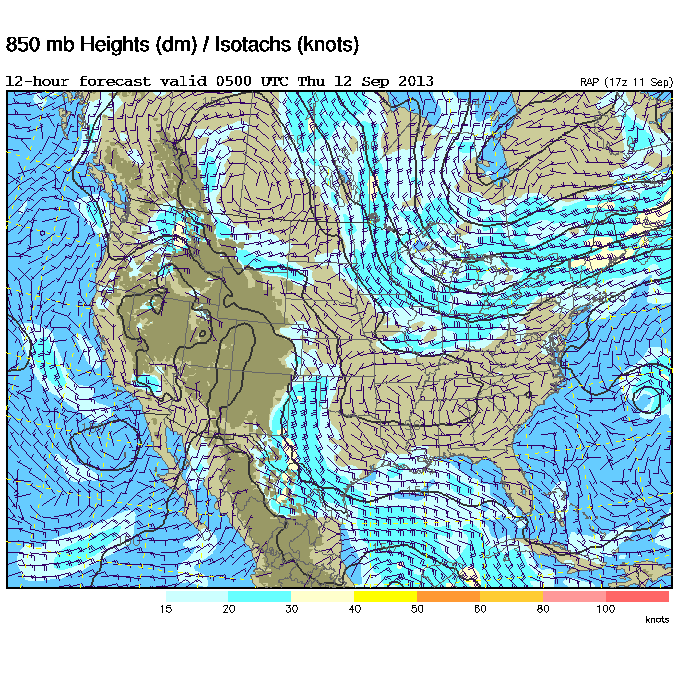
Here are the continental wind maps from yesterday afternoon, and this afternoon.  Yesterday, you can see the south-southwesterly flow originating from under a broad area of high pressure over the Southeast…
wind,9-11-13

…but notice that by today, cool, Canadian air was pouring down into the Upper Midwest (which resulted in some big flights over the last two nights in that region).
wind,9-12-13

In addition to hot and very muggy conditions, this strong southerly flow has the potential to usher in some hot new rarities to our neck of the woods. While it appears that the Biddeford Pool Kentucky Warbler has moved on, I am expecting some more southern strays to turn up in our region.  Keep in mind, however, that these winds are not “blowing” birds north, but instead facilitating birds to arrive here that are either wandering (post-breeding dispersal, prospecting for new territories, etc) or area already flying in the wrong direction (e.g. “180-degree misorientation”).

In other words, if a Kentucky Warbler – for example – was “miswired” and began to fly north instead of south, a strong southerly wind would push it even farther the “wrong” way.  Then, with tonight’s cold front, the strong northwesterly winds that follow could push the birds towards the coast.  There, they find a coastal migrant trap – i.e. a dense thicket full of fruiting bushes in the woods of Biddeford Pool – to seek shelter in while they refuel.  There, they are more likely to be found by an alert birder than say somewhere in the valleys of the western Maine mountains.  Many migrants spend 3 to 7 days to “refuel.”  I don’t think it was a coincidence that the Biddeford Pool KEWA was seen for five days…and that it disappeared after a night of light southerly winds. Of course, it may have just moved to a richer food patch, or one without birders unnecessarily blasting a tape at it all afternoon.

Anyway, what will the weekend produce?  I might be thinking more along the lines of birds like Summer Tanagers and Hooded Warblers based on this recent weather pattern.  Unfortunately, I won’t be around to find them!  Instead, I will be helping out at the Leica Sports Optics booth at the Cape Cod Birding Festival in Hyannis (I’ll also be signing copies of “How to Be a Better Birder,” which of course covers many of the vagrant-producing and Mega-finding topics that I have touched upon here).

Ahead of tonight’s cold front, and before the forecasted thunderstorms of the afternoon, I – not surprisingly – was out birding this morning.  It’s September – there’s really no such thing as a night with “no” migration.  However, what was flying last night was not being noticed on the radar; likely a limited number of birds were flying below the clouds, however.

Here’s the midnight radar image for example:
12am radar, 9-12-13

That would be thunderstorms.  Not birds.  And we can verify it from the velocity image:
12am velocity, 9-12-13

…A distinct west to east movement, unlike the northerly to southerly movement of southbound fall migrant birds.  Therefore, I was not surprised to have very, very few birds overhead at dawn over our yard this morning, or later on at Hedgehog Mountain Park.  I did, however, find a lot of birds in the woods.  While some of these might have been new arrivals that snuck in below the clouds and between the storms, the mixed-species foraging flocks working through the woods was much more indicative of birds that have been around for a day or two.  The flock that moved through our yard shortly after sunrise, consisting mostly of Blackpoll Warblers, also contained not one, but two new Yard Birds for us: Cape May Warbler and Philadelphia Vireo!  Also, at least two Tennessee Warblers.

Multiple mixed flocks were encountered at The Hog, led by Blackpoll Warblers, along with a healthy serving of Black-throated Greens.  A Lincoln’s Sparrow foraged at the edge, and a mixed-species flock consisting of 40+ Chipping Sparrows, 6 Eastern Bluebirds, and 1 Pine Warbler worked the edge of the transfer station and out through the ballfields.

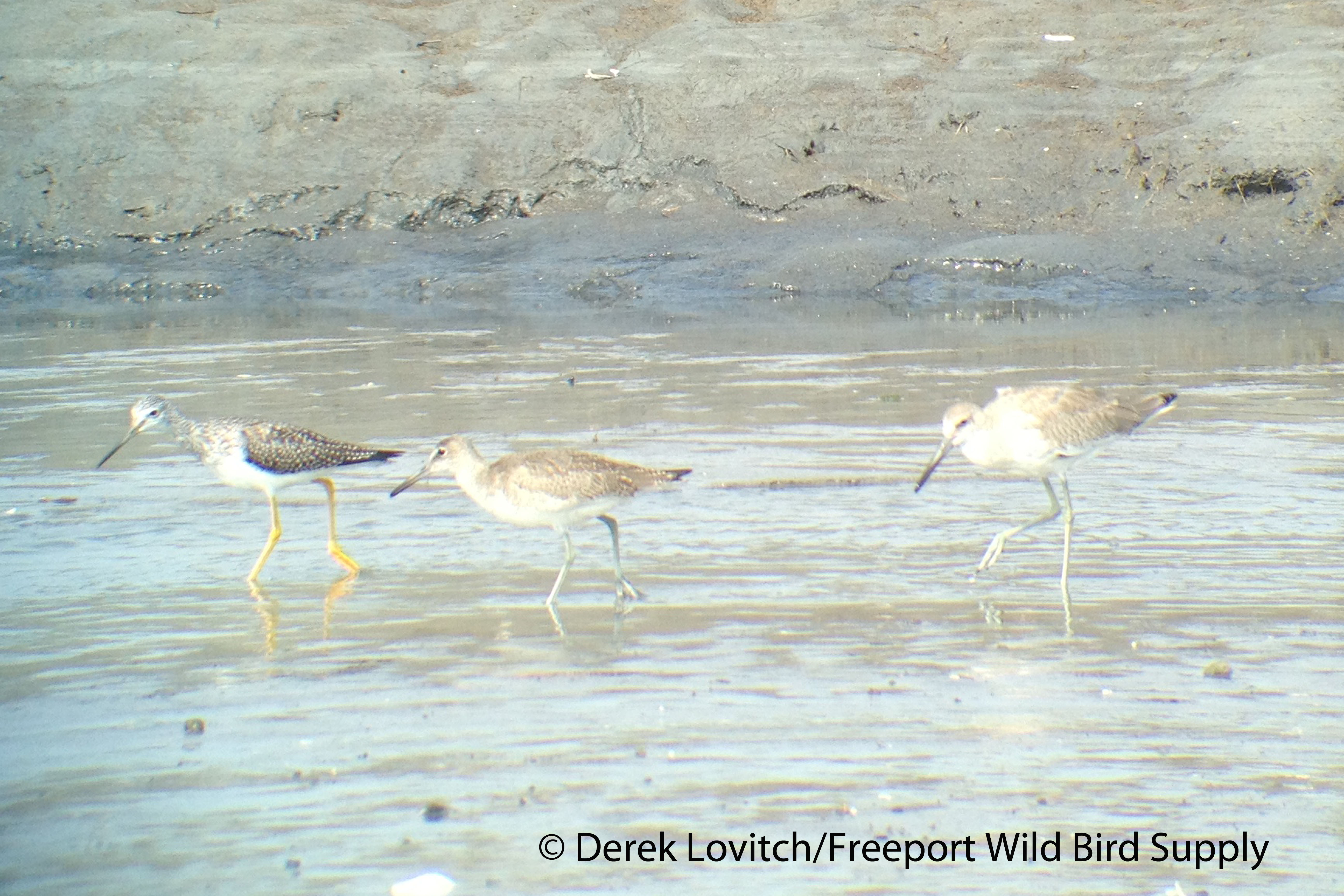
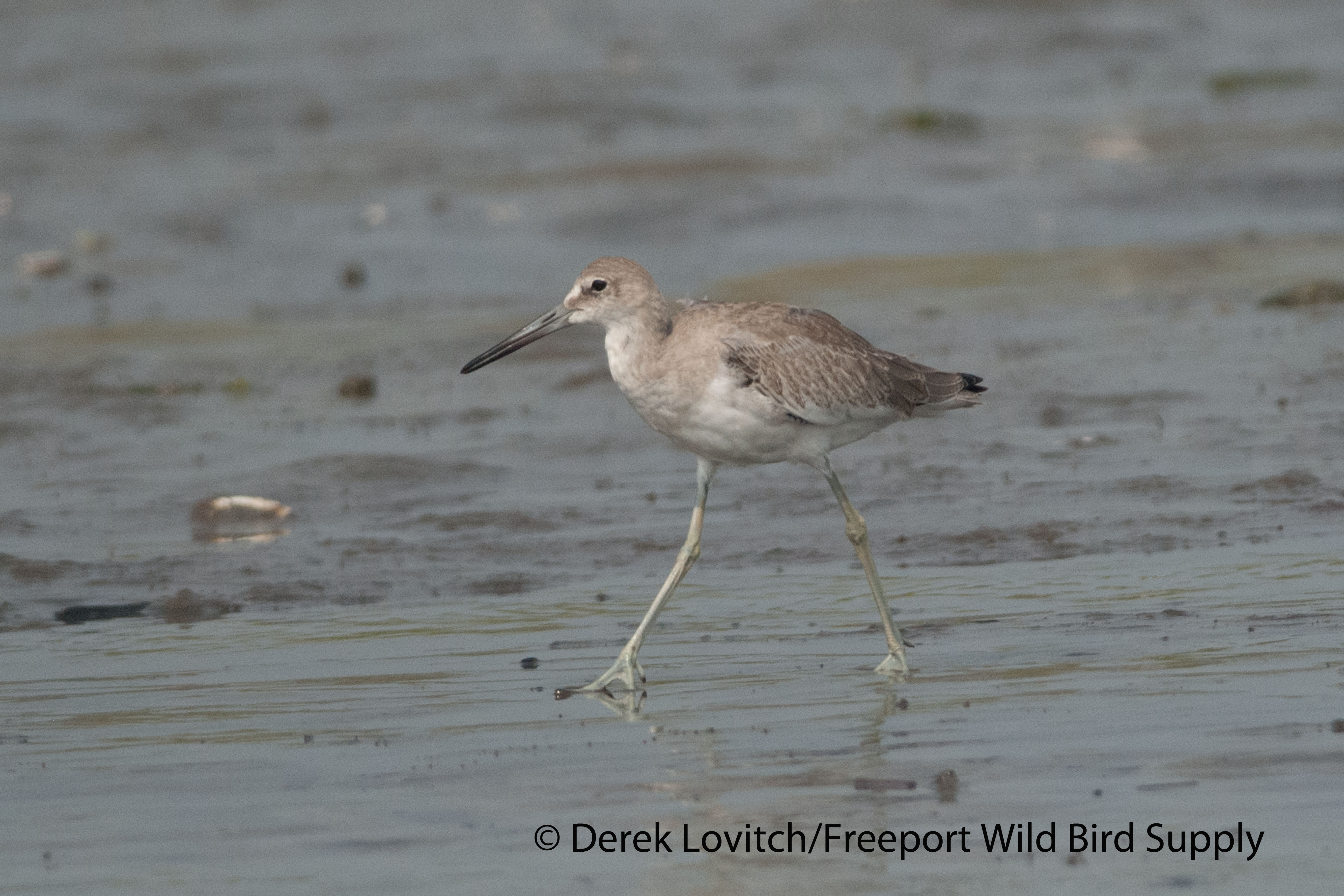
Afterwards, I zipped down to Pine Point for the low tide.  Shorebird numbers are down considerably, as expected by the middle of September.  And, I would expect a lot of the birds I saw today to clear out behind this next cold front.  About 180 Semipalmated Sandpipers led the way, punctuated by a juvenile Red Knot, and two continuing American Oystercatchers (they were too far to determine age, visible over on Western Beach as viewed from Pine Point Beach).  Four juvenile Dunlins were a sign that their migration – one of our two latest migrant shorebirds – is just now picking up.  The highlight, however, were side-by-side “Eastern” and “Western” Willets.  Unfortunately, I was only able to get the two in the frame together by phone-scoping, here with a Greater Yellowlegs for a convenient reference.
EWIL_with_WWIL2, Pine Point, 9-12-13

I then carefully approached with my “real” camera, but I never again saw the two birds in the same field of view.  However, I did get solid photos of both the juvenile Western…
DSC_0002_WesternWILL1,Pine Point,9-13-13

…and the juvenile Eastern.
DSC_0005_EasternWILL1,Pine Point, 9-13-13

Even from the lousy phone-scoped photos, you can see how distinctive these two subspecies (for now!) are.  The smaller, “dumpier,” browner Eastern nicely contrasts with the larger, lankier, and much grayer Western.  Also, note how the darker brown scapulars of the Eastern contrast with the rest of the wing; Western is more uniform.  The head of the Eastern is also more contrast-y, and in this individual, the bill is so distinctly shorter and blunter.

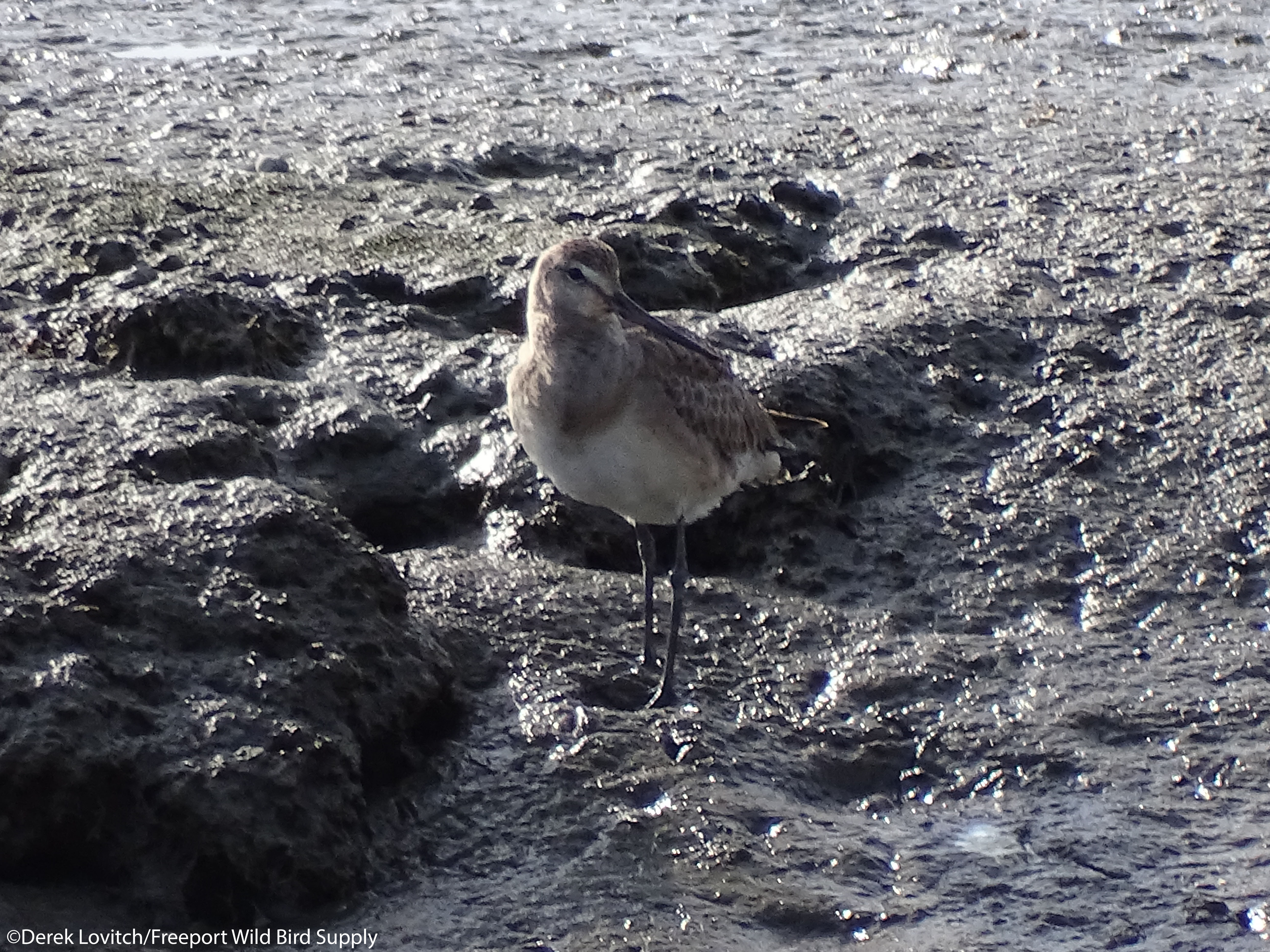
Elsewhere, I finally got a chance to look for – and find – the juvenile Hudsonian Godwit that has been frequenting the river behind the Scarborough Marsh Nature Center for about a week now.  This is the first “Hud-wit” that I have seen in two years here in Maine – this once-common migrant has definitely declined dramatically in the state.
DSC_0010_HUGOjuv1,NatureShed,9-12-13 DSC_0050_HUGOjuv3,Nature_Shed,9-12-13

Now, my eyes are on the weather maps, and after dusk, the radar, to see if I will be at SandyPoint at sunrise on Friday. This is the wind map as of 5pm.  The northwesterlies behind the front are barely peeking into the region north of the St. Lawrence River in Quebec.
winds at 5pm, 9-12-13

Currently, forecasters are suggesting that the cold front won’t pass through until tomorrow morning.  However, with very light winds overnight, perhaps with a westerly component, there could be some birds on the move…depending on when this latest batch of rain and thunderstorms (the storms last night and this afternoon were wicked, weren’t they?  And very un-September-like) moves through. Will the front get here soon enough?  Will birds be moving directly behind the front?  Will they be pushed offshore enough to need to reorient in the morning?  I’ll let you know tomorrow!