Tag Archives: Seal Island

Seal Island Tour Report, July 2023

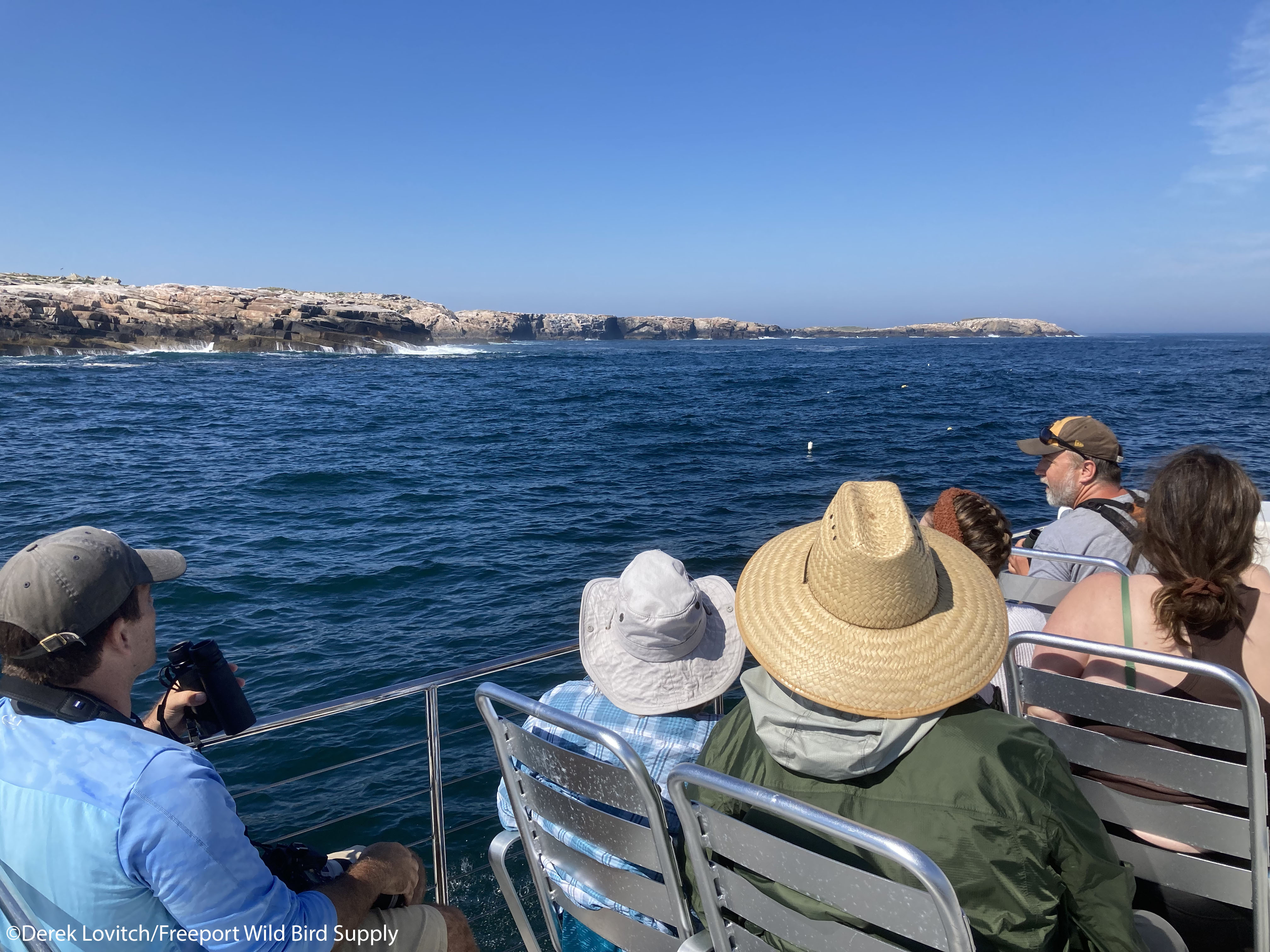
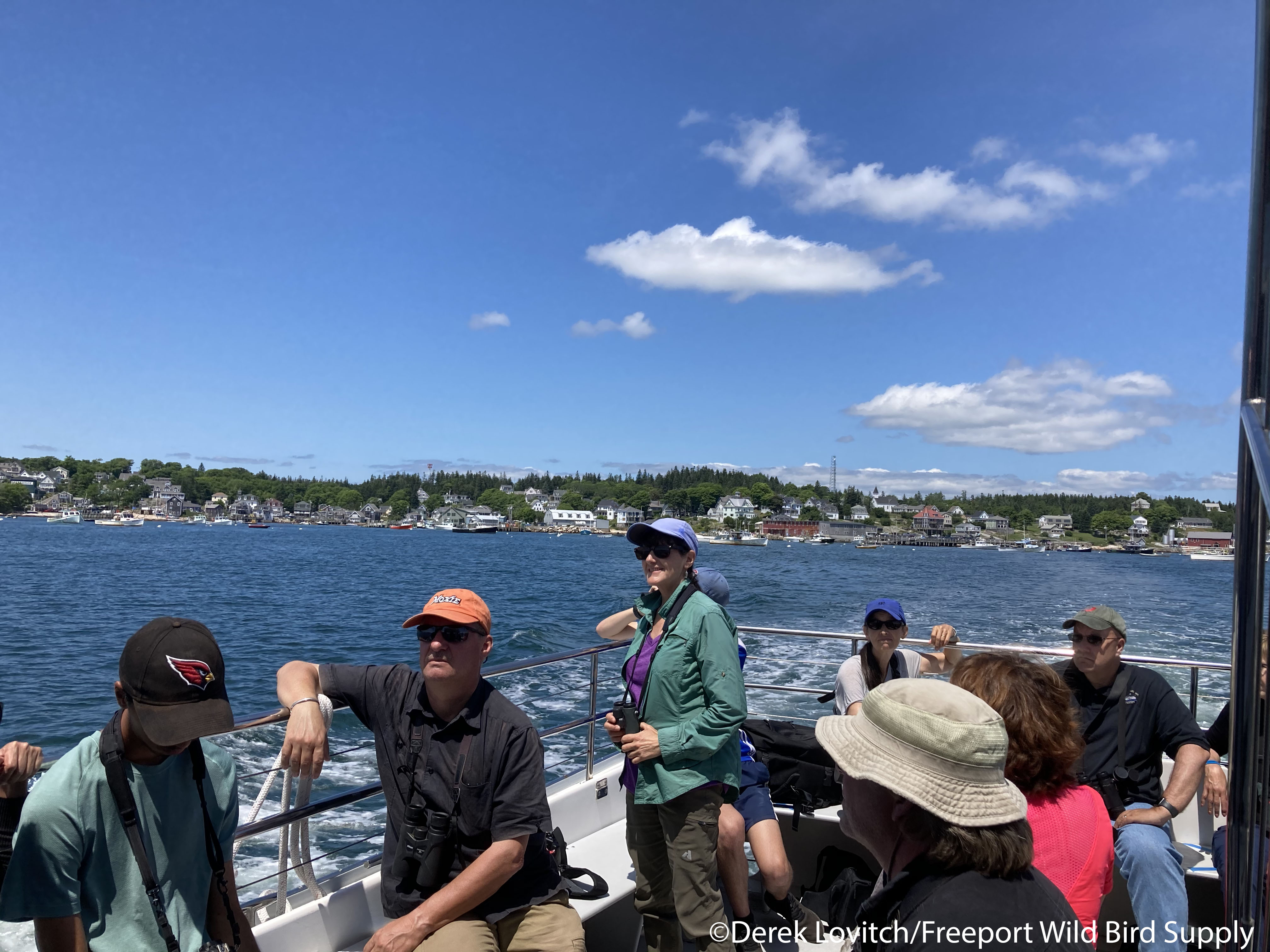
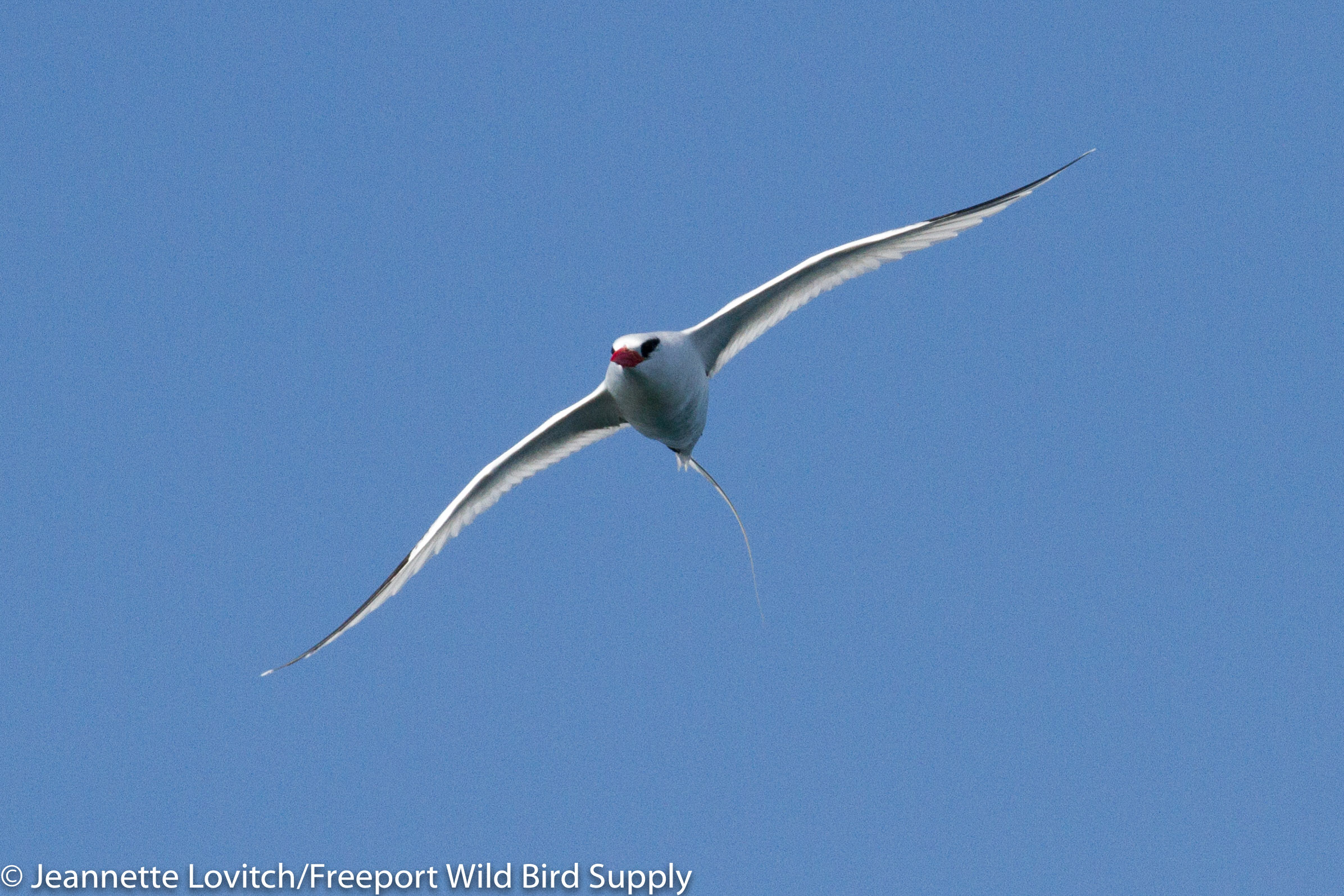
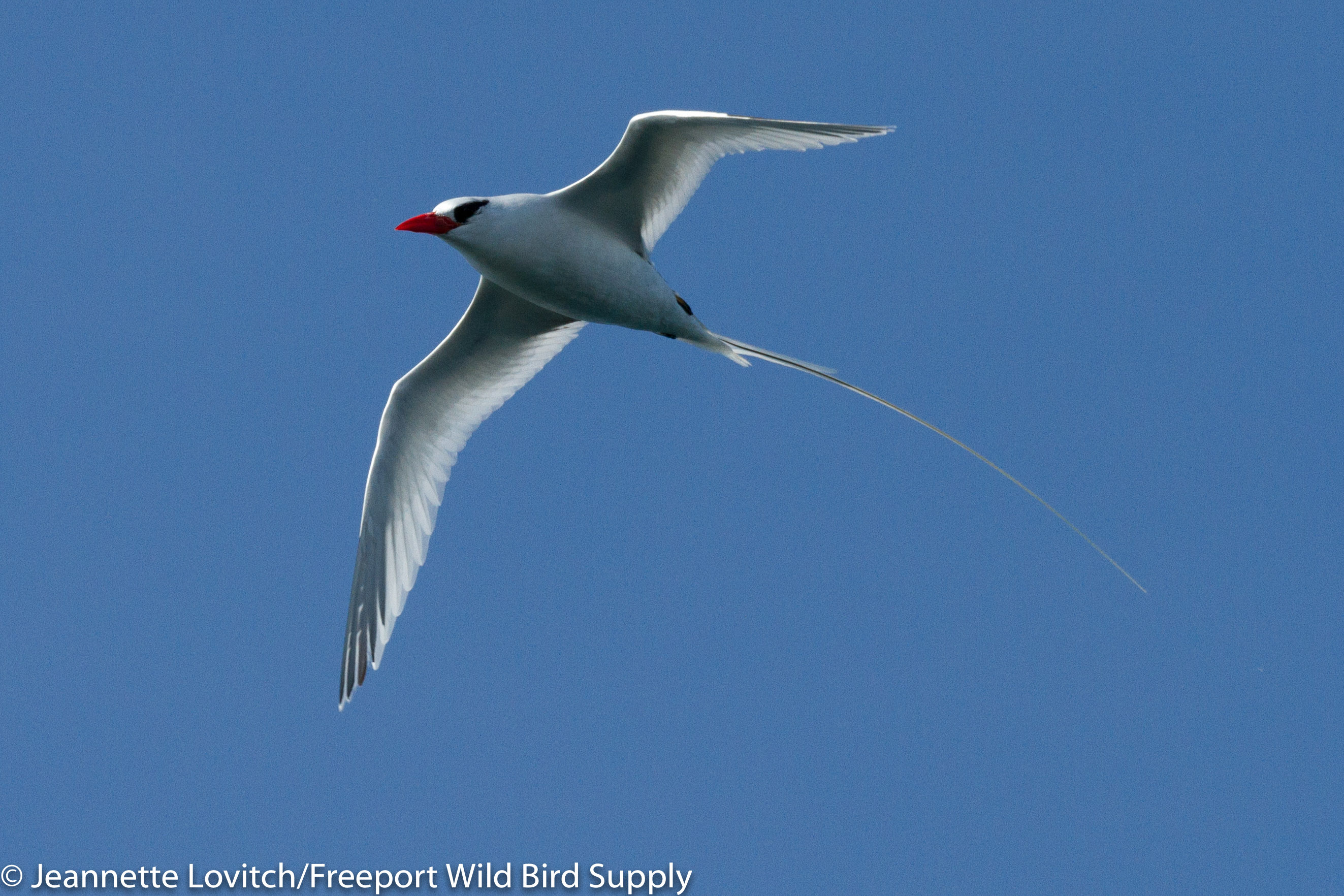
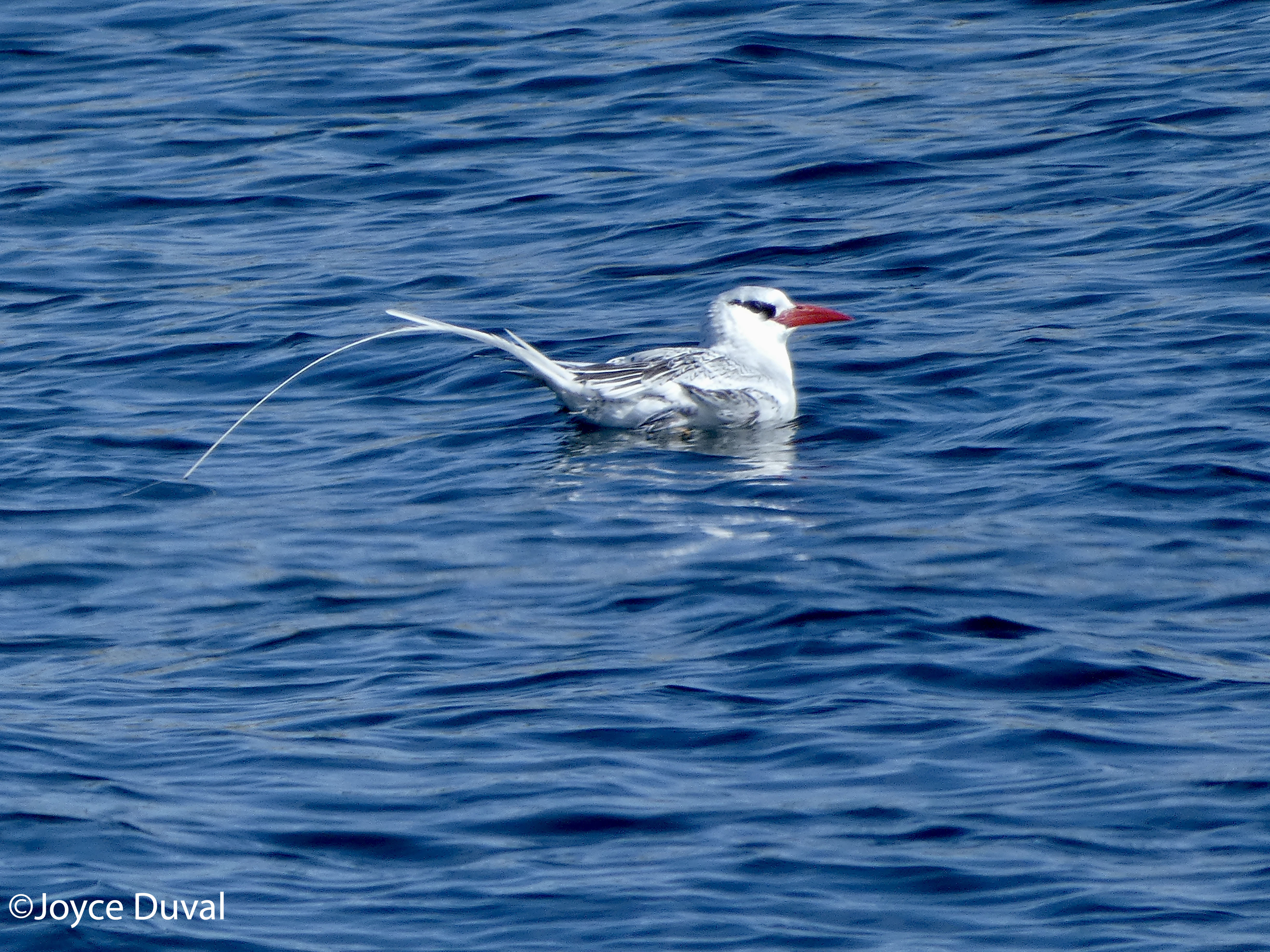
On July 22nd we boarded the Isle au Haut Boat Service’s The Otter for our special annual charter out of Stonington to the raucous seabird colony on Seal Island.  Our partnership began while “Troppy” the world-famous Red-billed Tropicbird that called the area home for 17 years. Unfortunately, Troppy failed to appear last year, but we ran the trip anyway, and had an amazing time!

So we did it again this year. There’s just so much life out there, and it’s such an amazing place to visit, and so I needed an excuse for my annual visit. And sure, if that wily Tufted Puffin that’s been wandering the Gulf for the last two summers wants to be the new Troppy, that would be fine, too. But for now, we headed offshore with all sorts of high hopes.

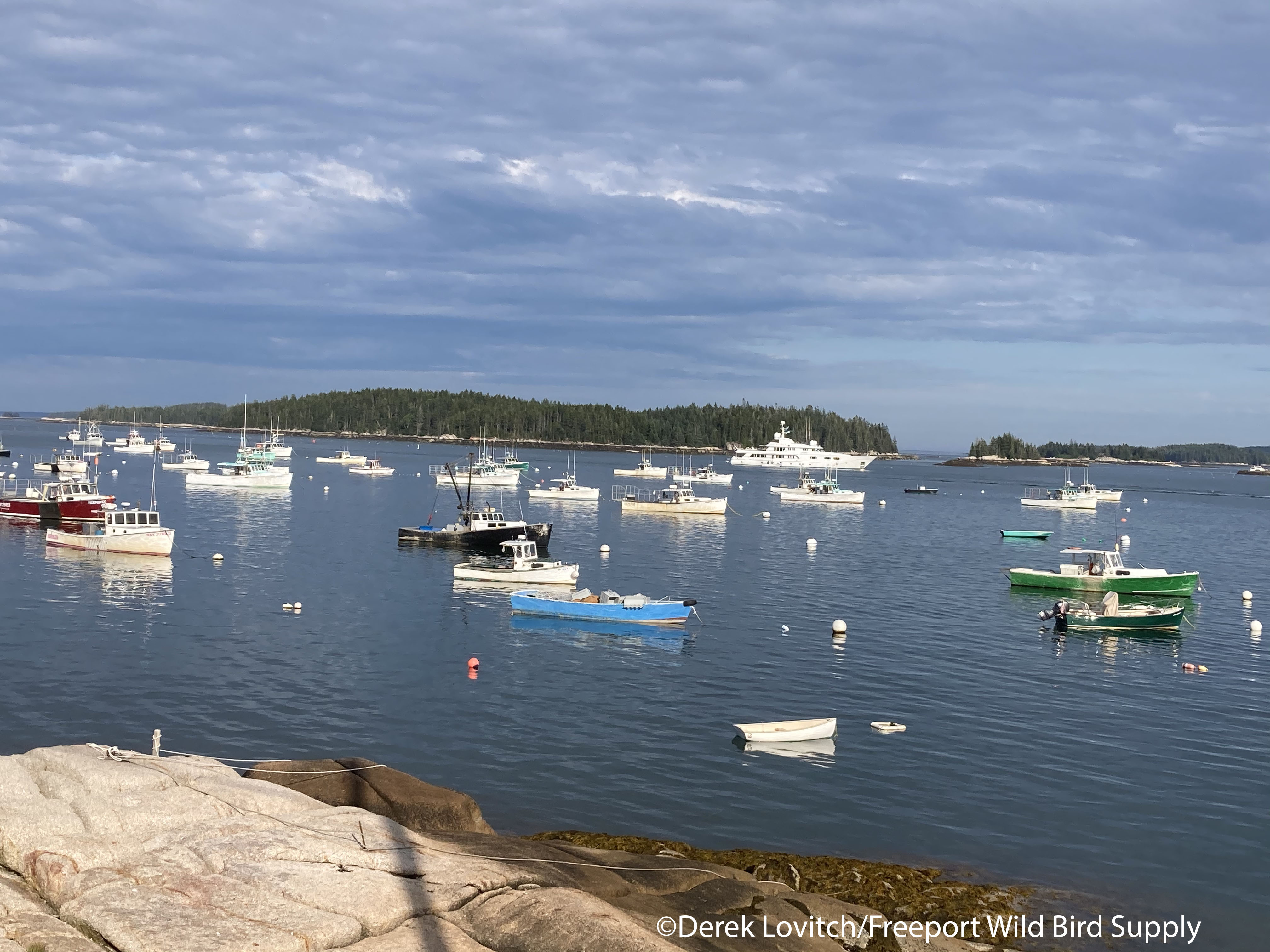
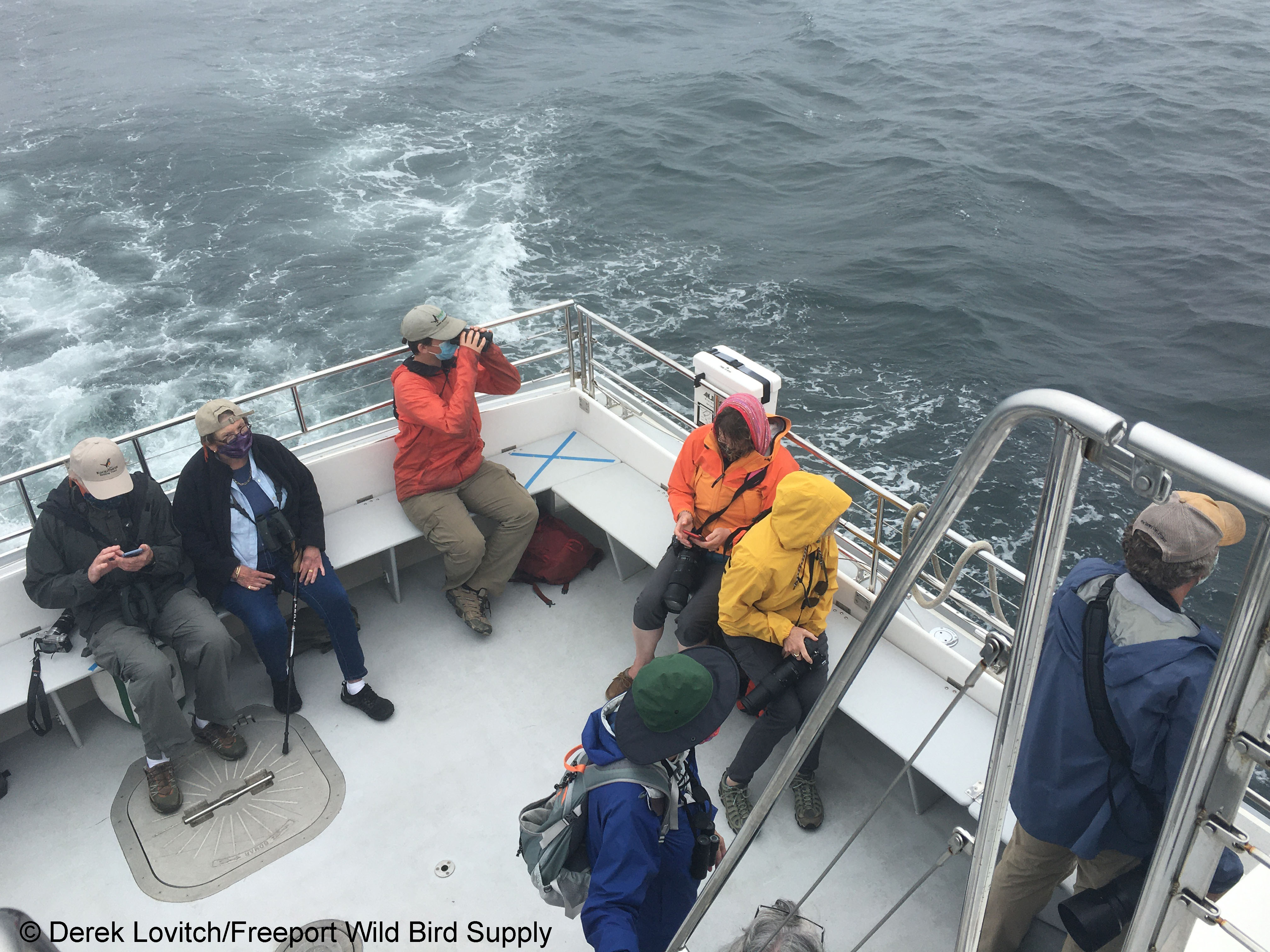
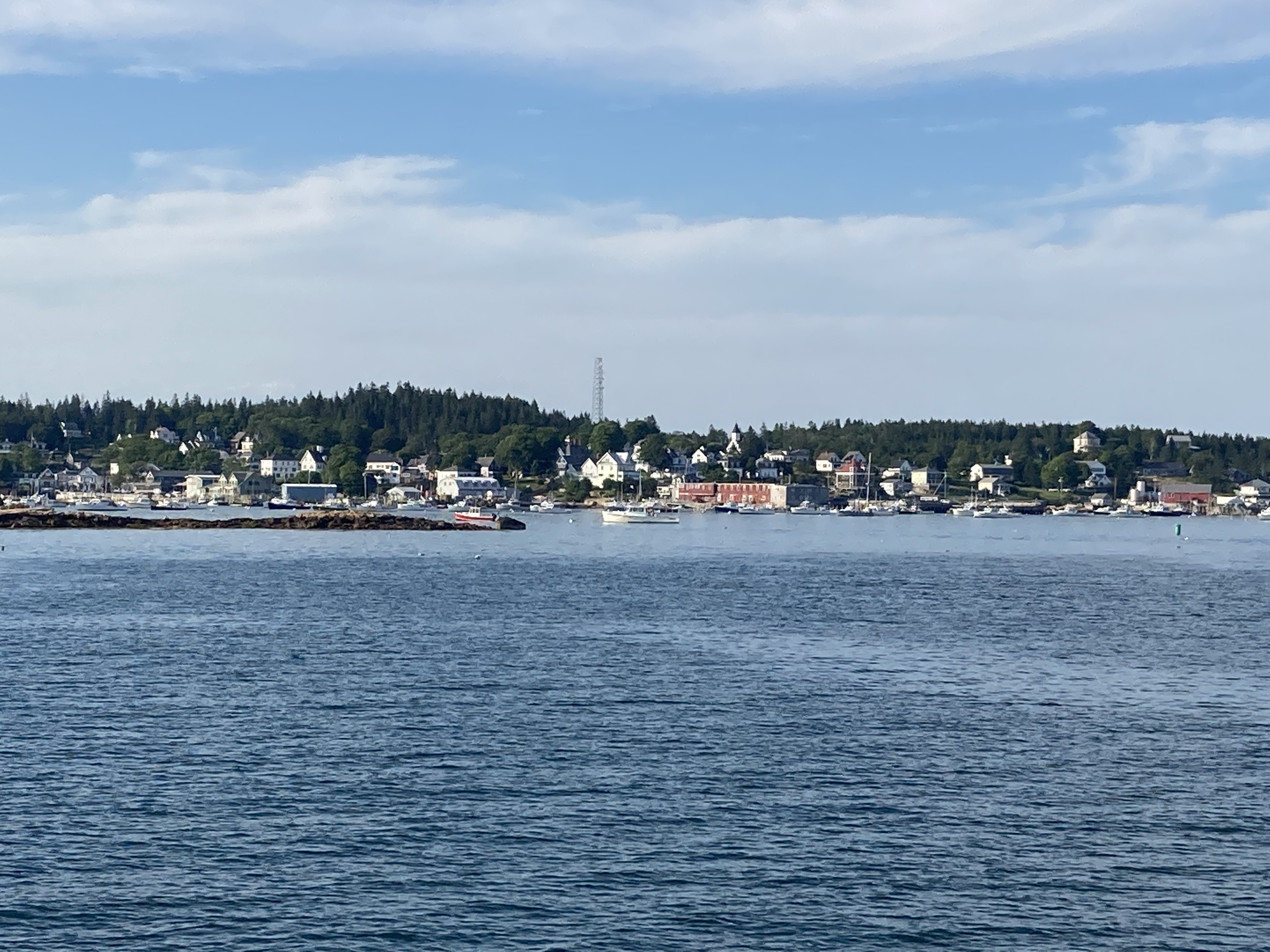
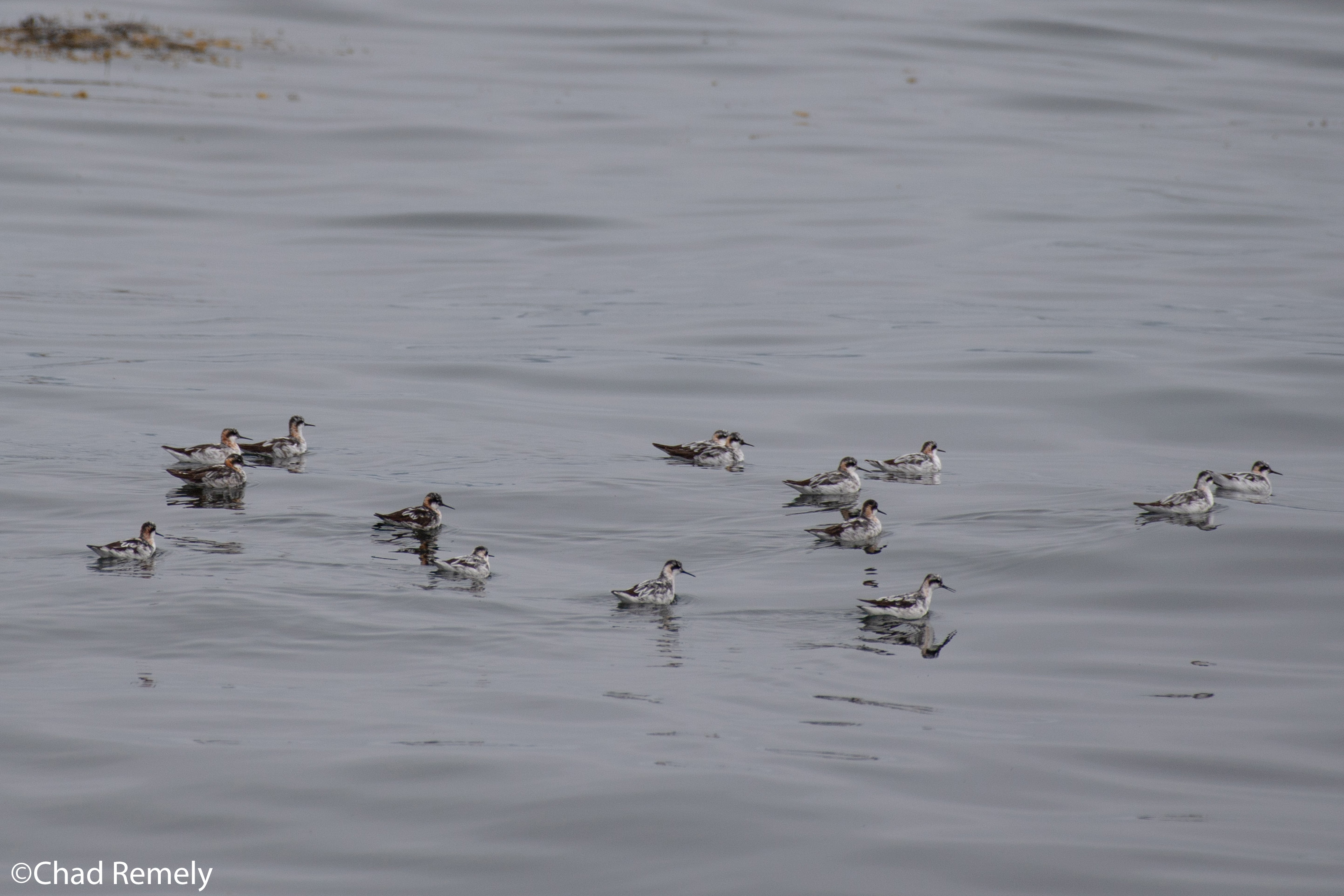
As we left Stonington Harbor, the fog began to thicken, but not before we spotted a group of 15 Red-necked Phalaropes sitting on the water. Captain Tracy did a great job getting us closer, and then inching up to them when they relocated a short distance away. It’s a treat to get so close to phalaropes on the open water.
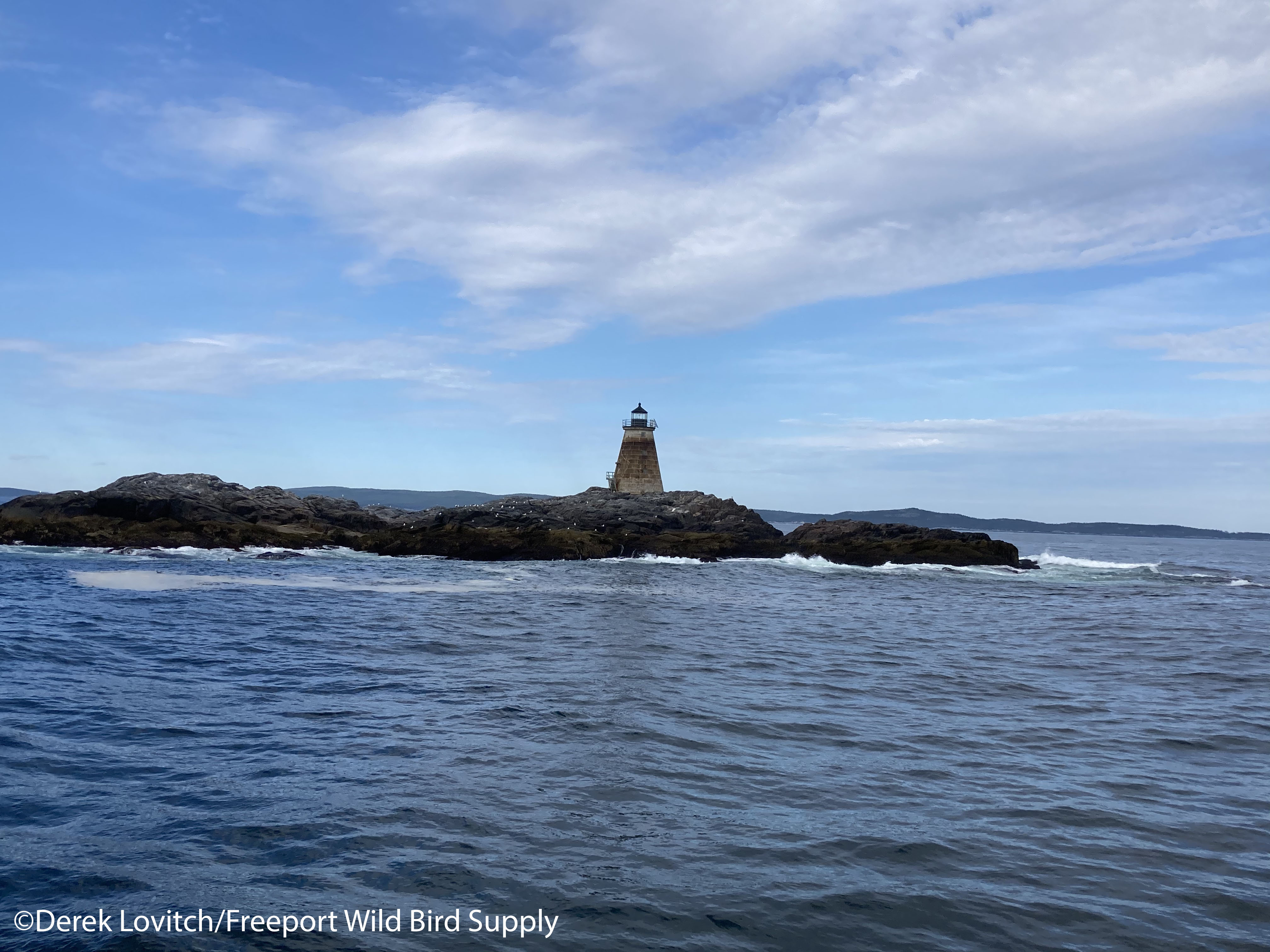
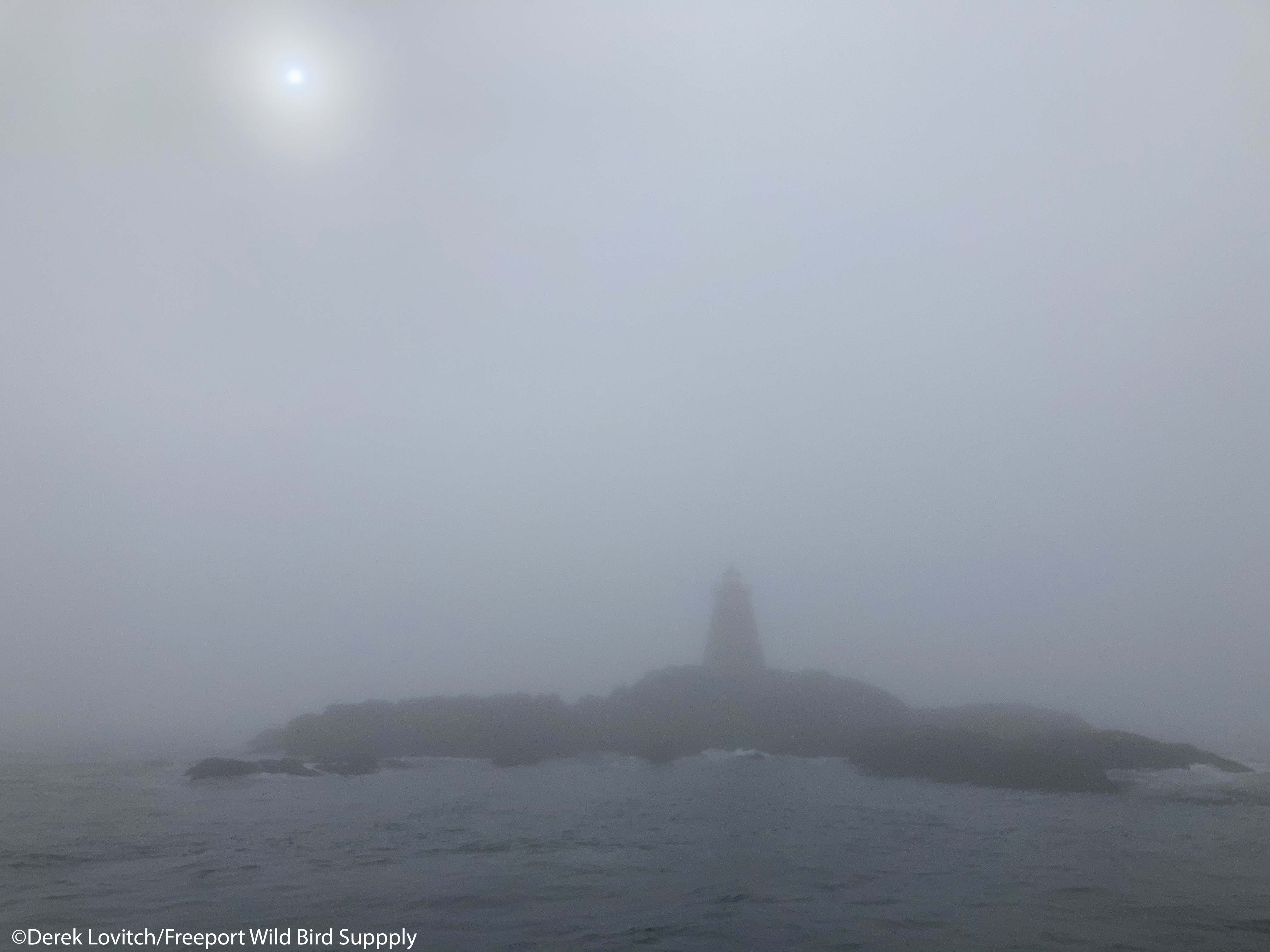
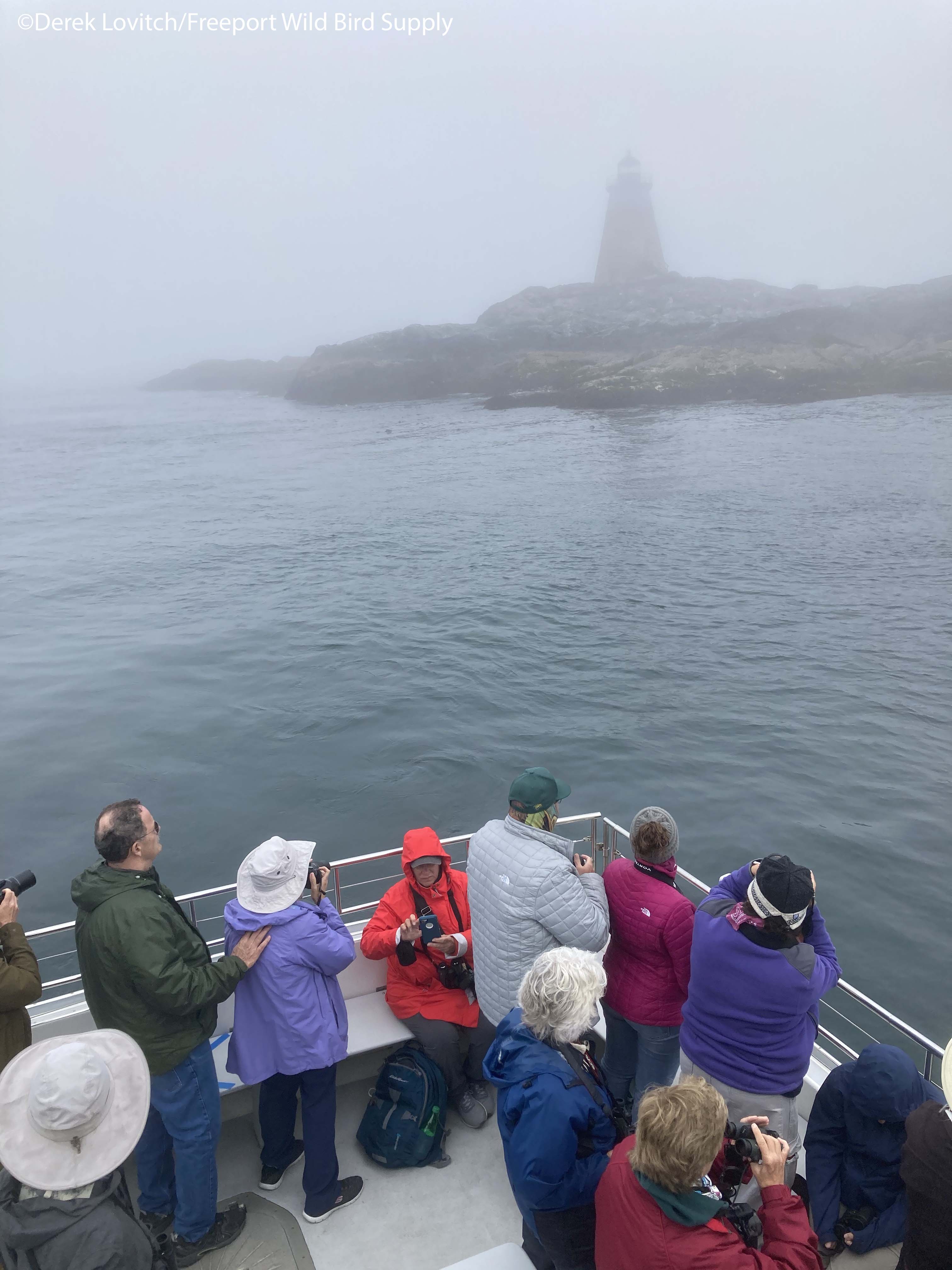
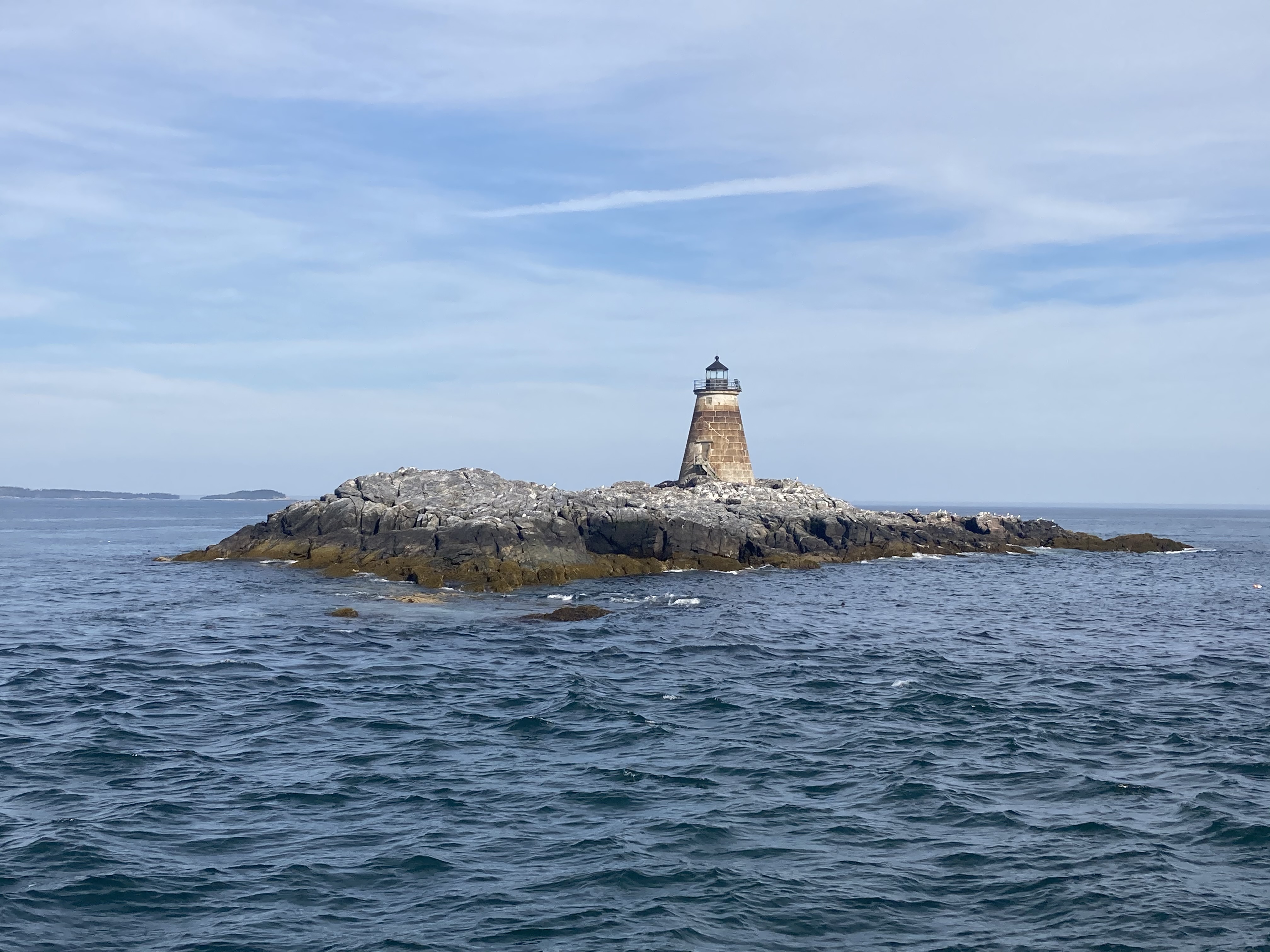
A handful of Wilson’s Storm-Petrels were bouncing around, but the action picked up as usual as we approached Saddleback Ledge Light. A 1st summer Great Cormorant was surveying the scene, and our first Atlantic Puffin circled around us for a couple of passes.  After we ourselves circled the small island twice, we turned for Seal and immediately ran into dense fog that had slowly been creeping in. The tradeoff for calm waters is often fog, and it was pea soup today.

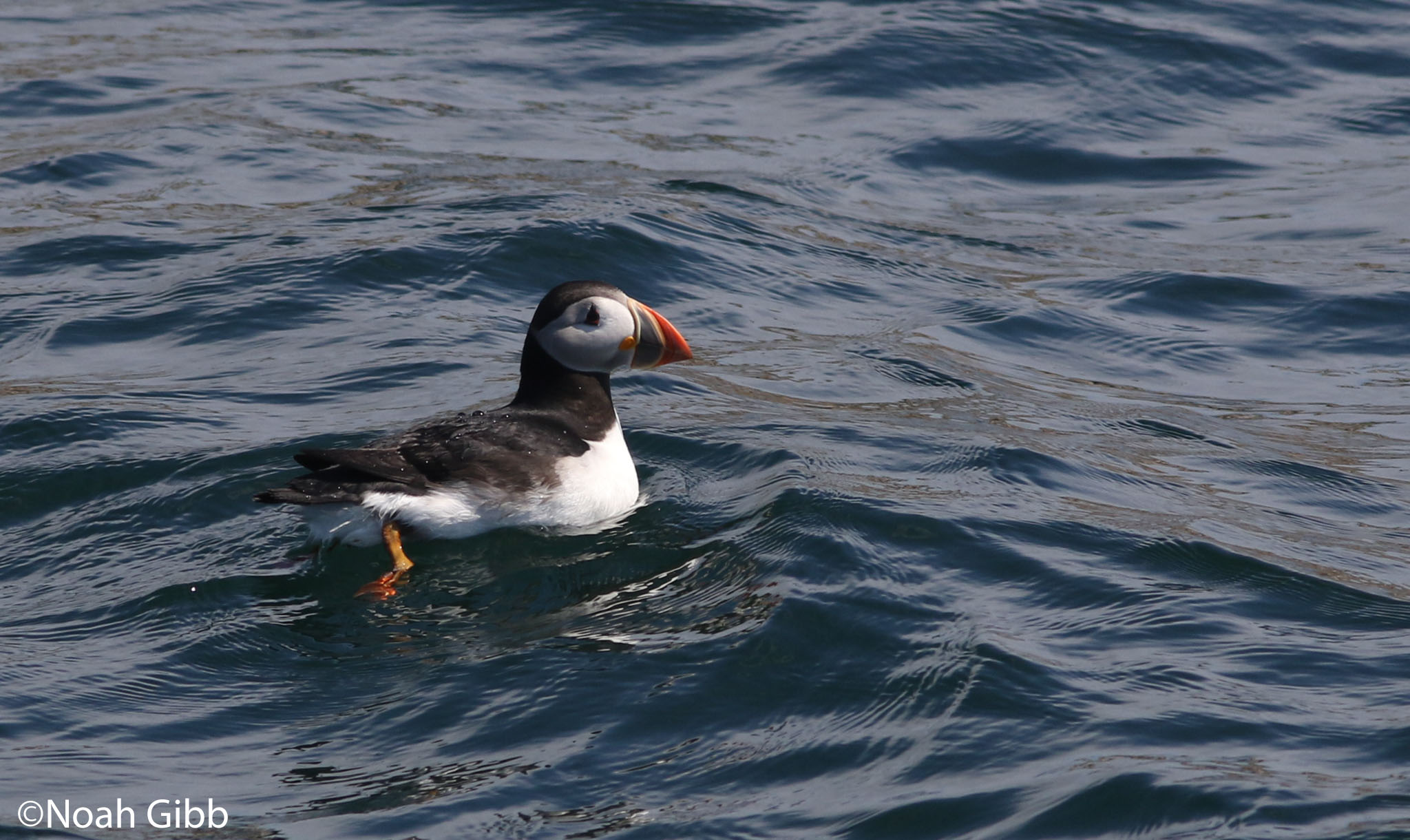
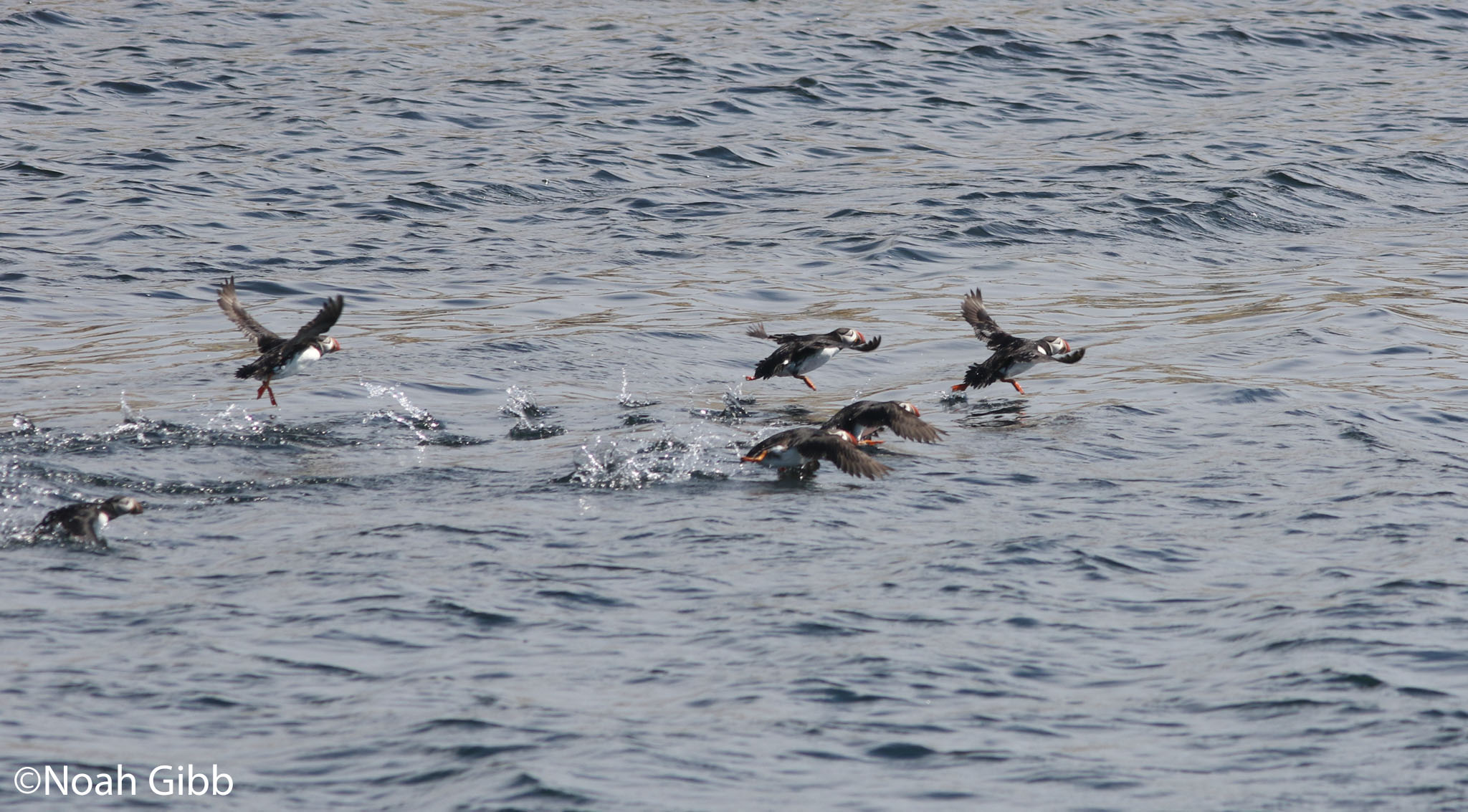
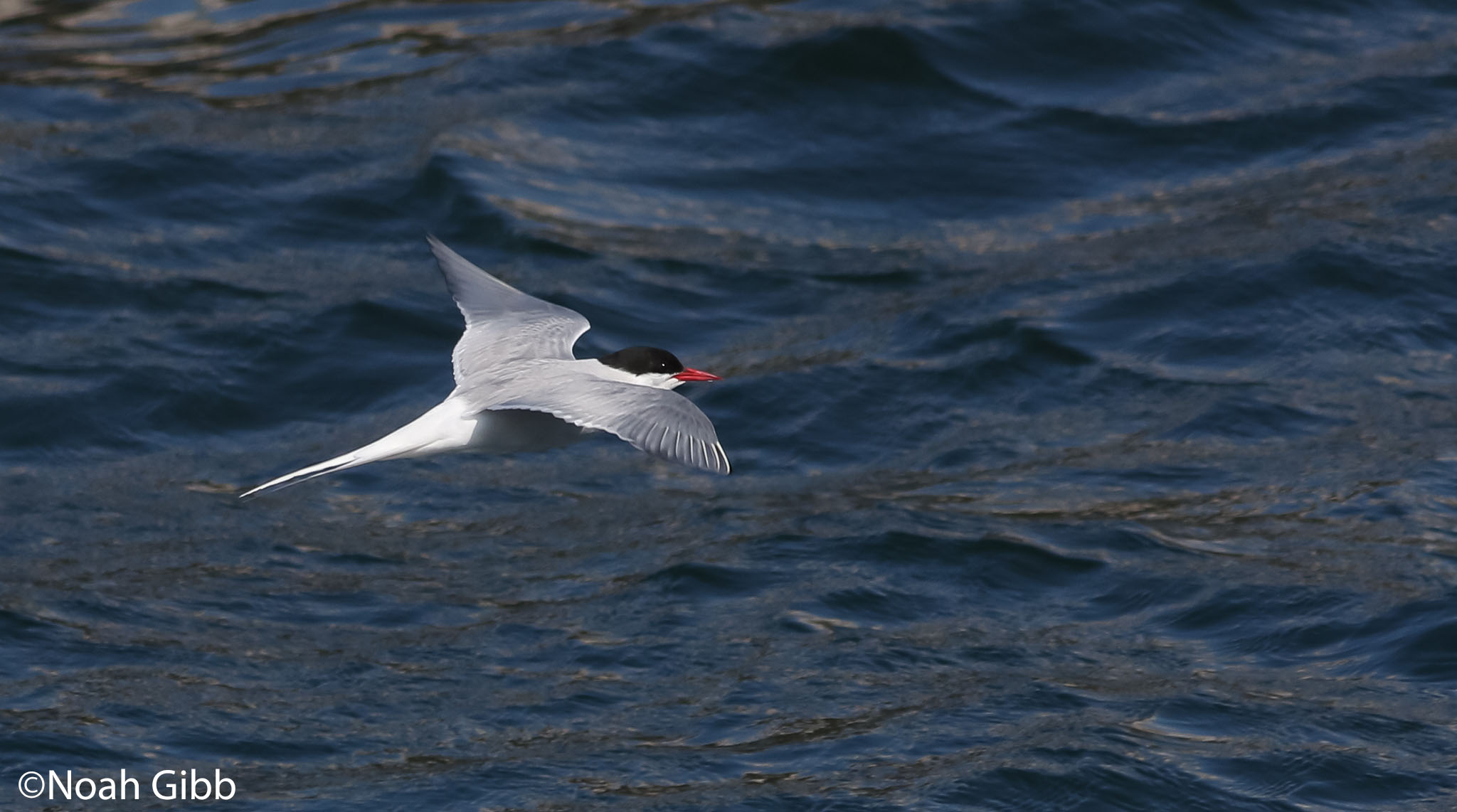
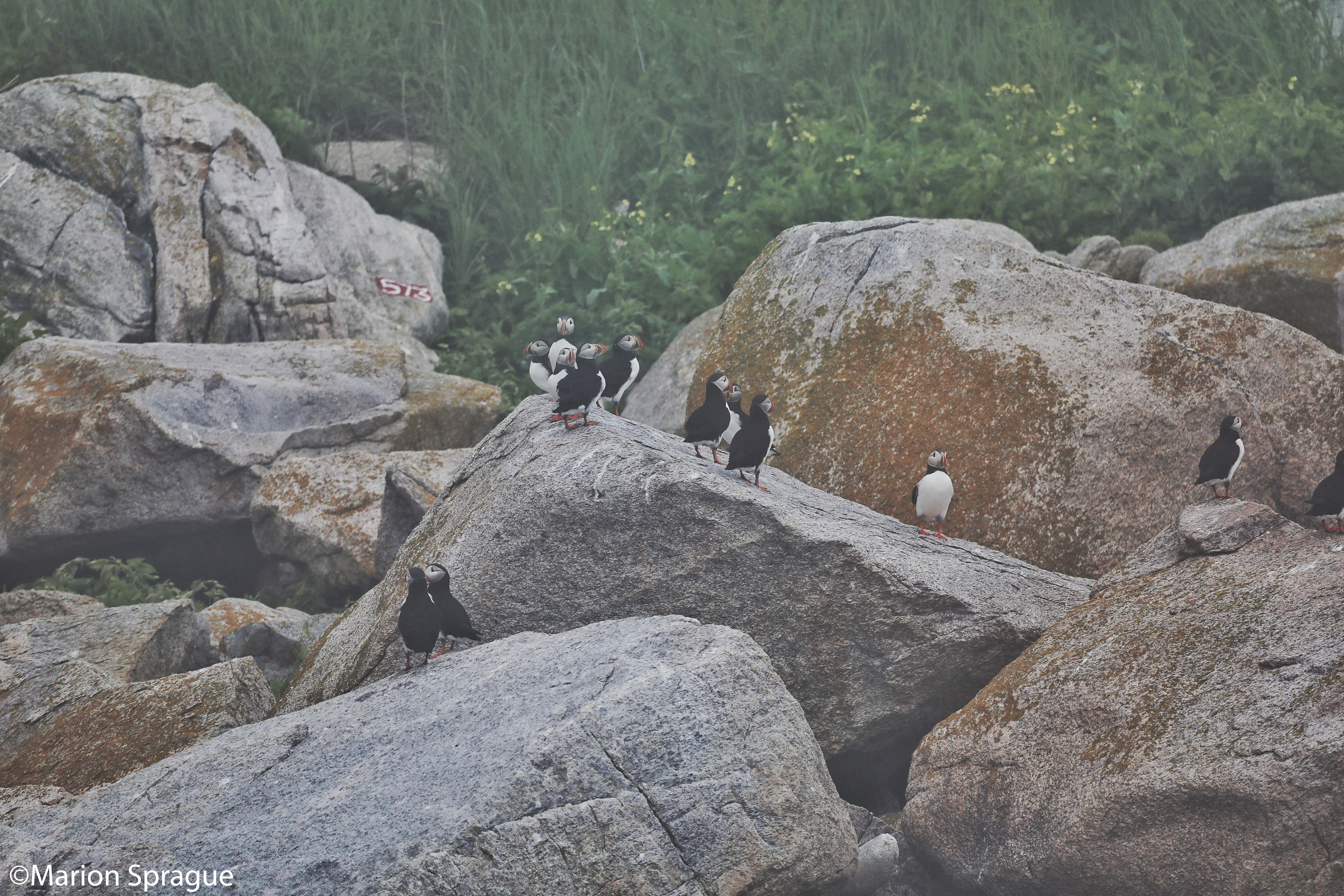
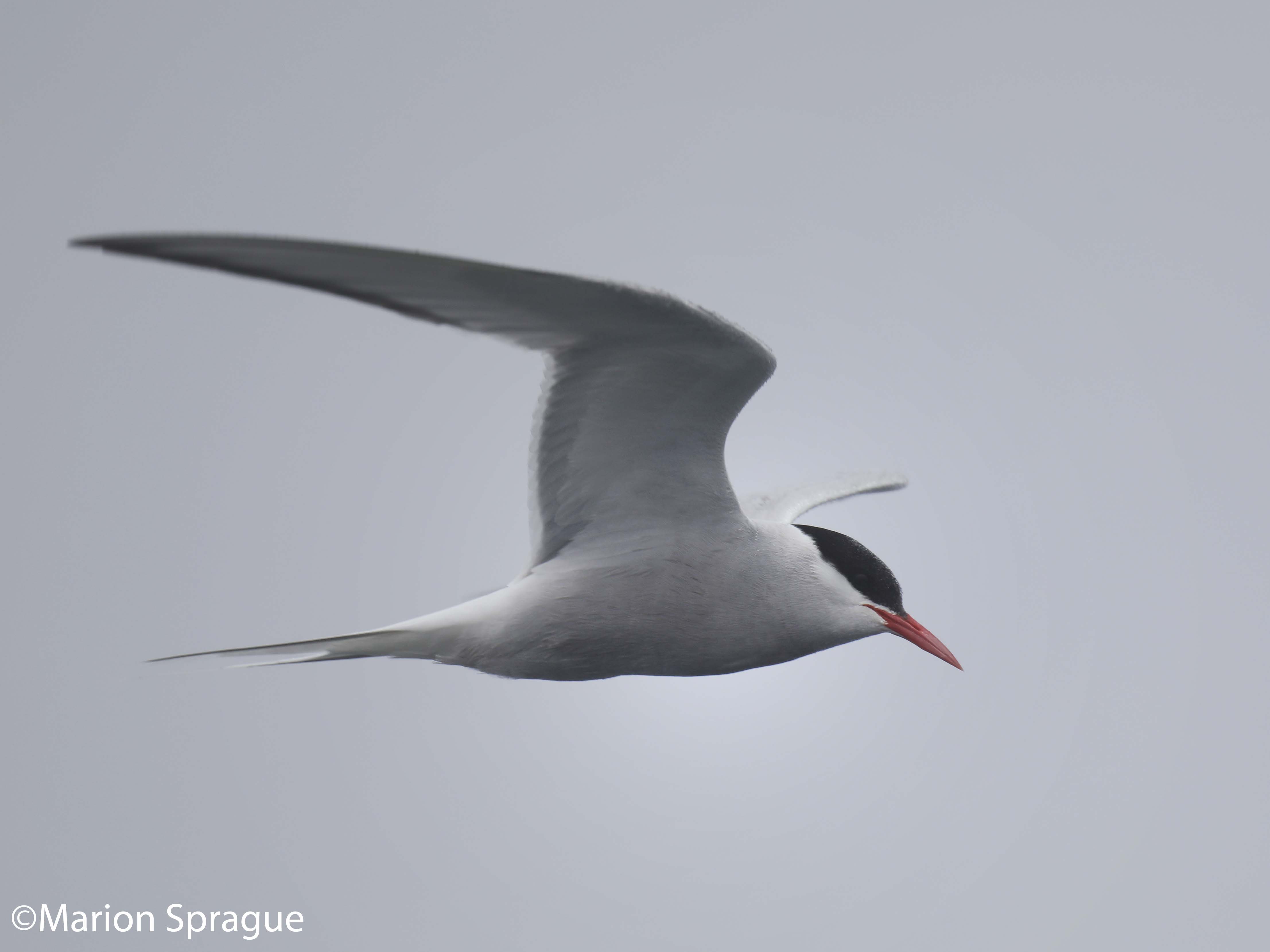
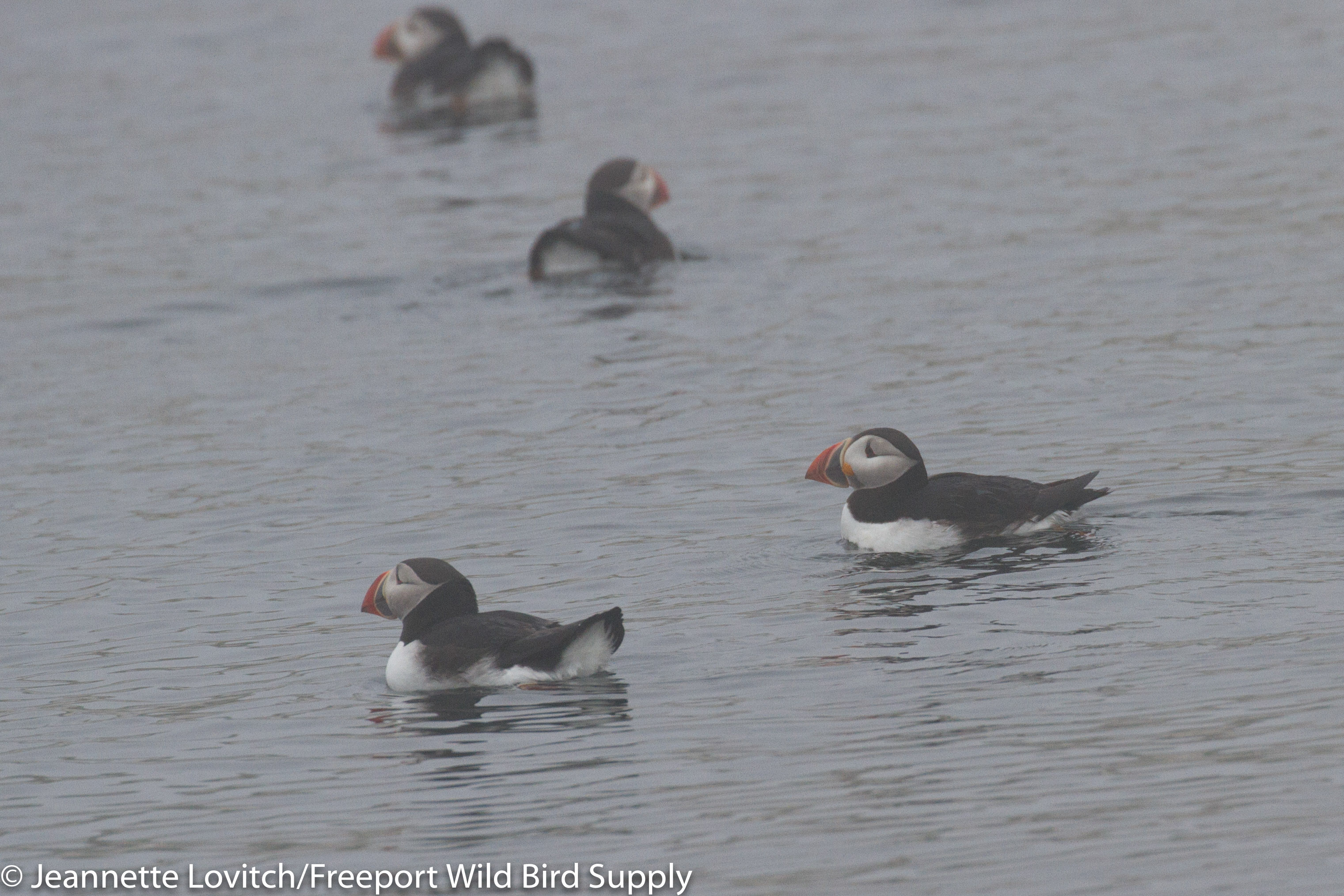
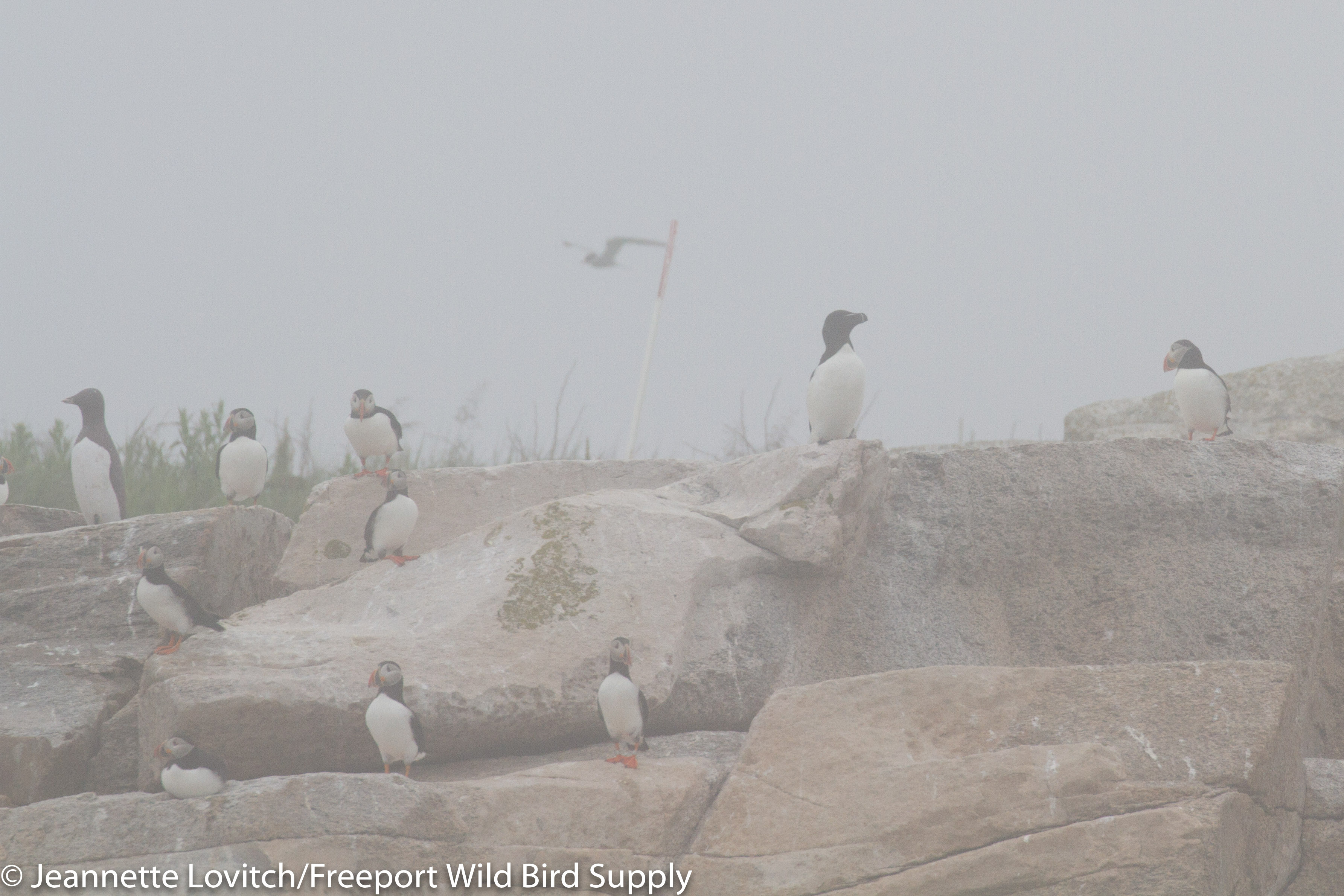
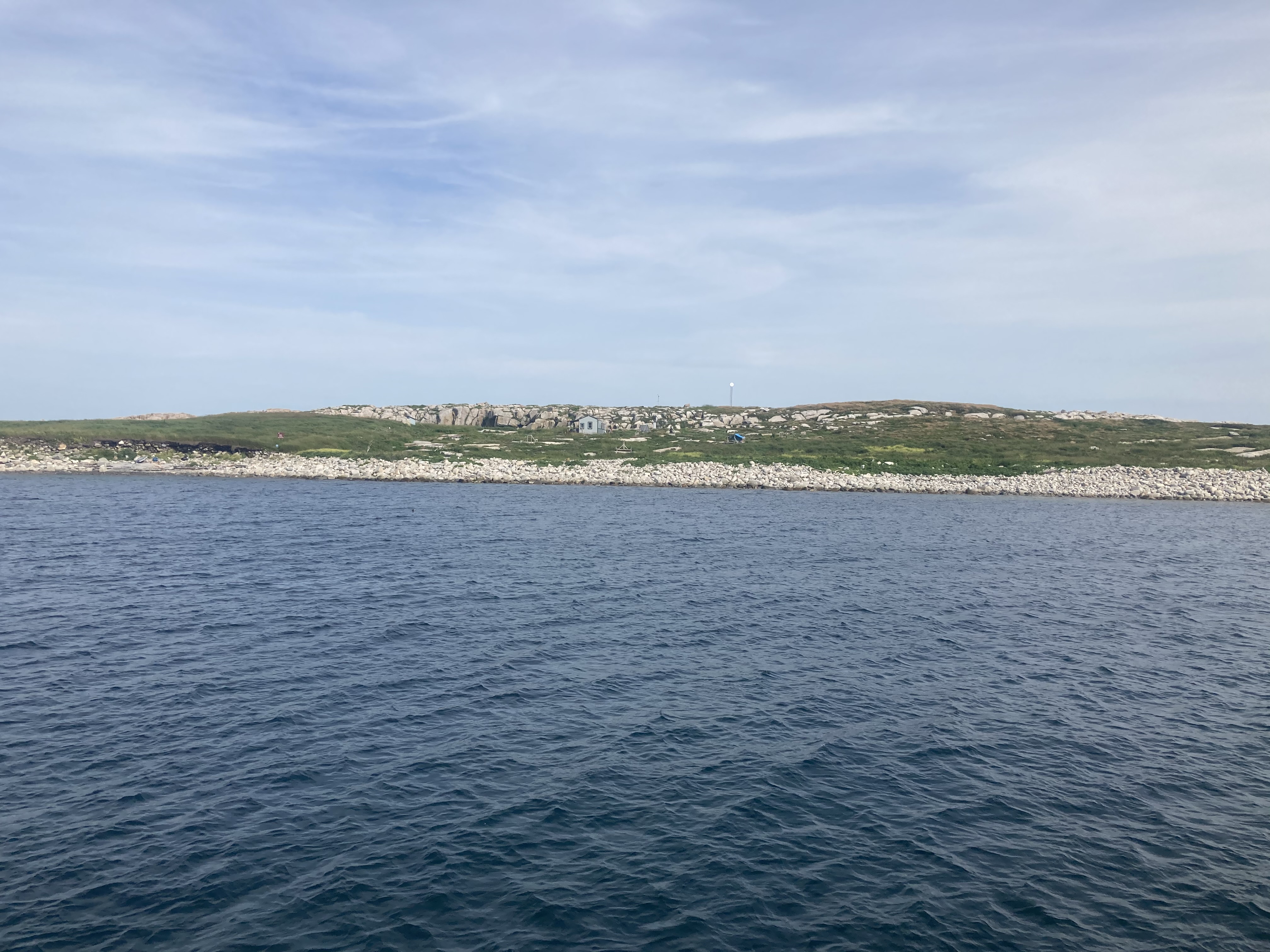
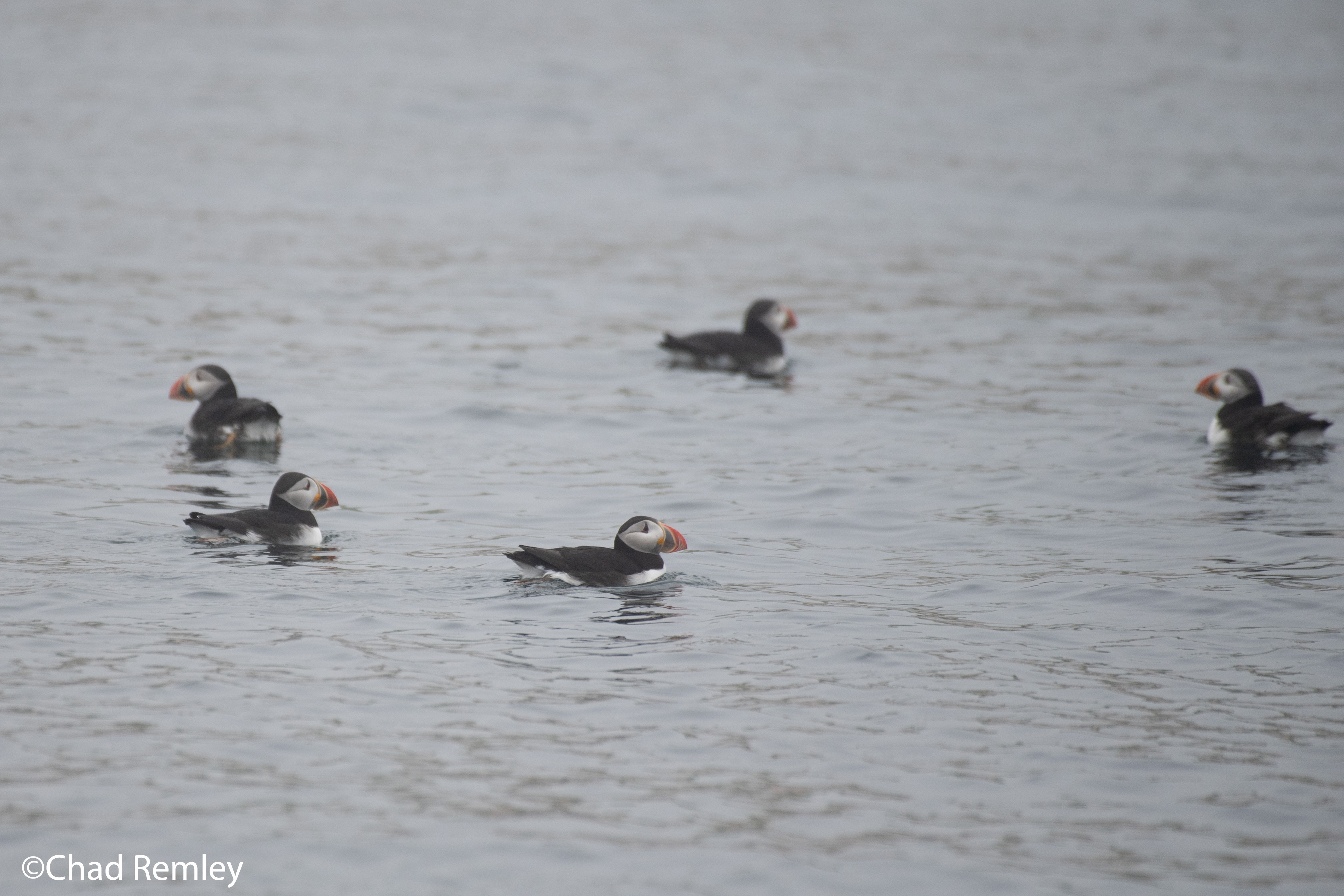
Not surprisingly, we saw little en route, but soon enough, we were out at Seal. While we heard – and even smelled – the tern colony before we could see the island, once along its shores, visibility was adequate. Arctic Terns put on a particularly good show for us, with several near the boat feeding and bathing. Arctic and Common Tern fledglings were everywhere, and we enjoyed their antics.  There were plenty of Atlantic Puffins in the water and on land, including several groups that were remarkably confiding as we sided up to them in the glass-calm waters. And Black Guillemots were numerous, and very busy.

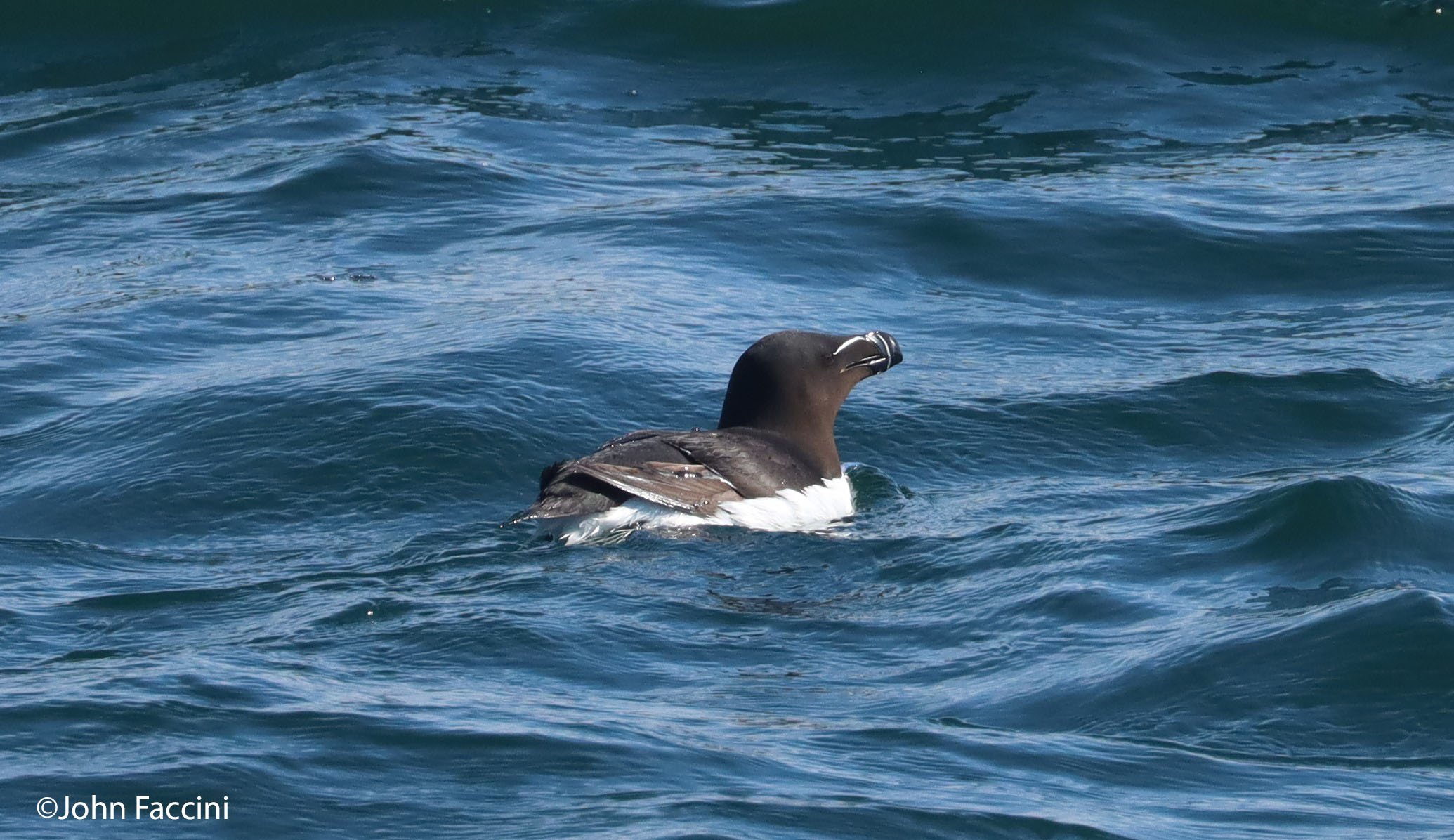
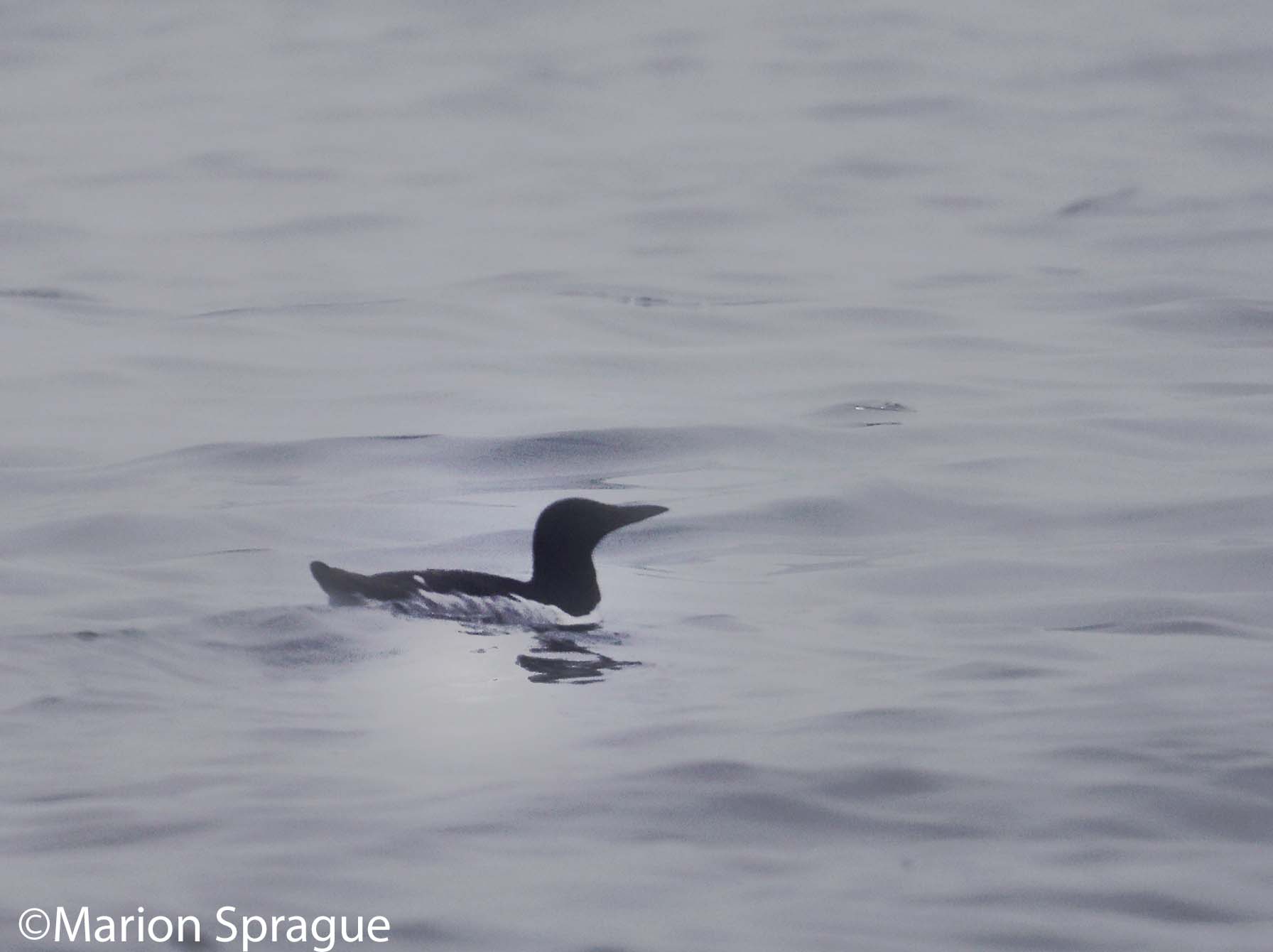
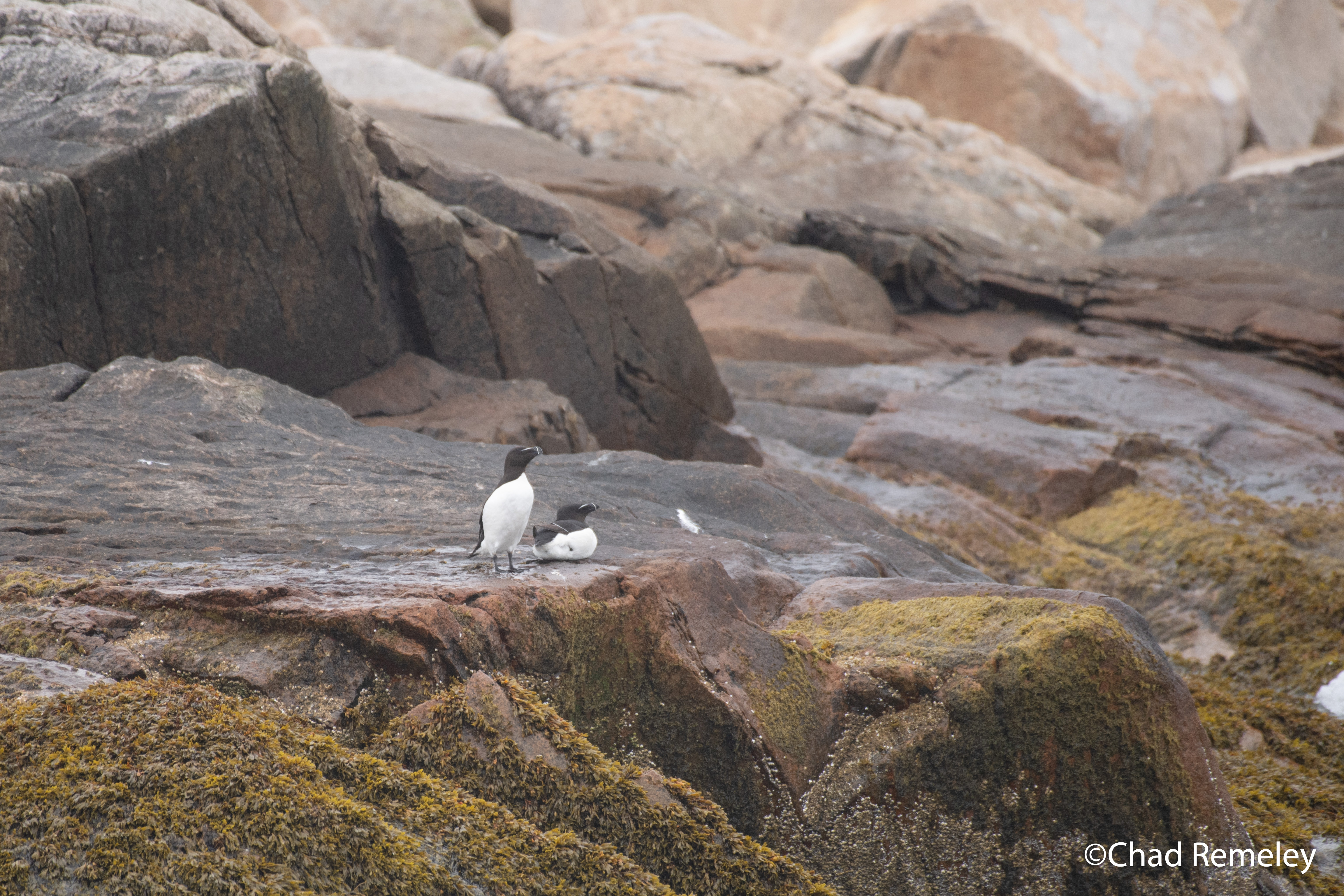
Razorbills were fledgling rapidly, so we only found two on the island, but later, we had great looks at one on the water, too.
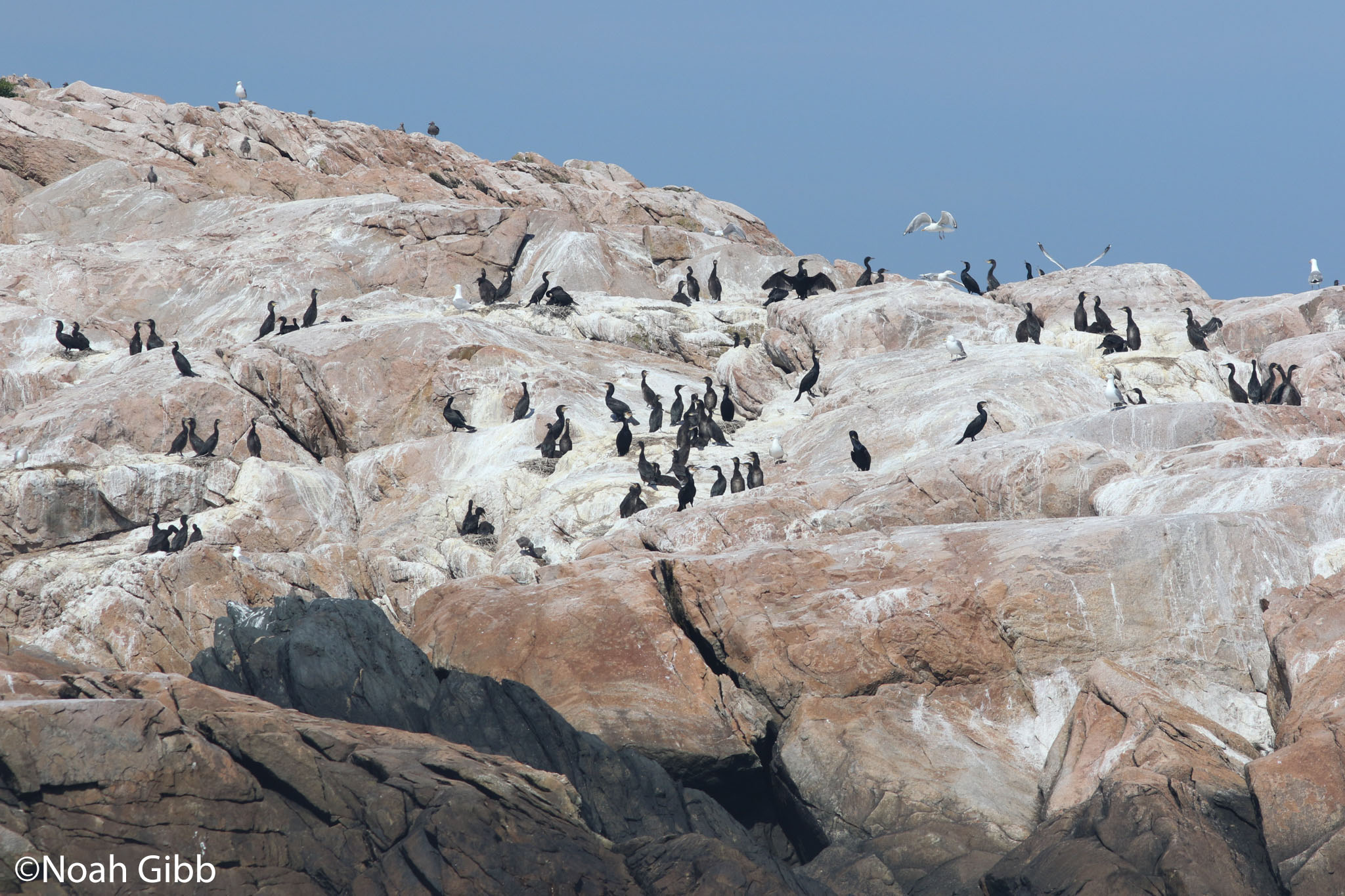
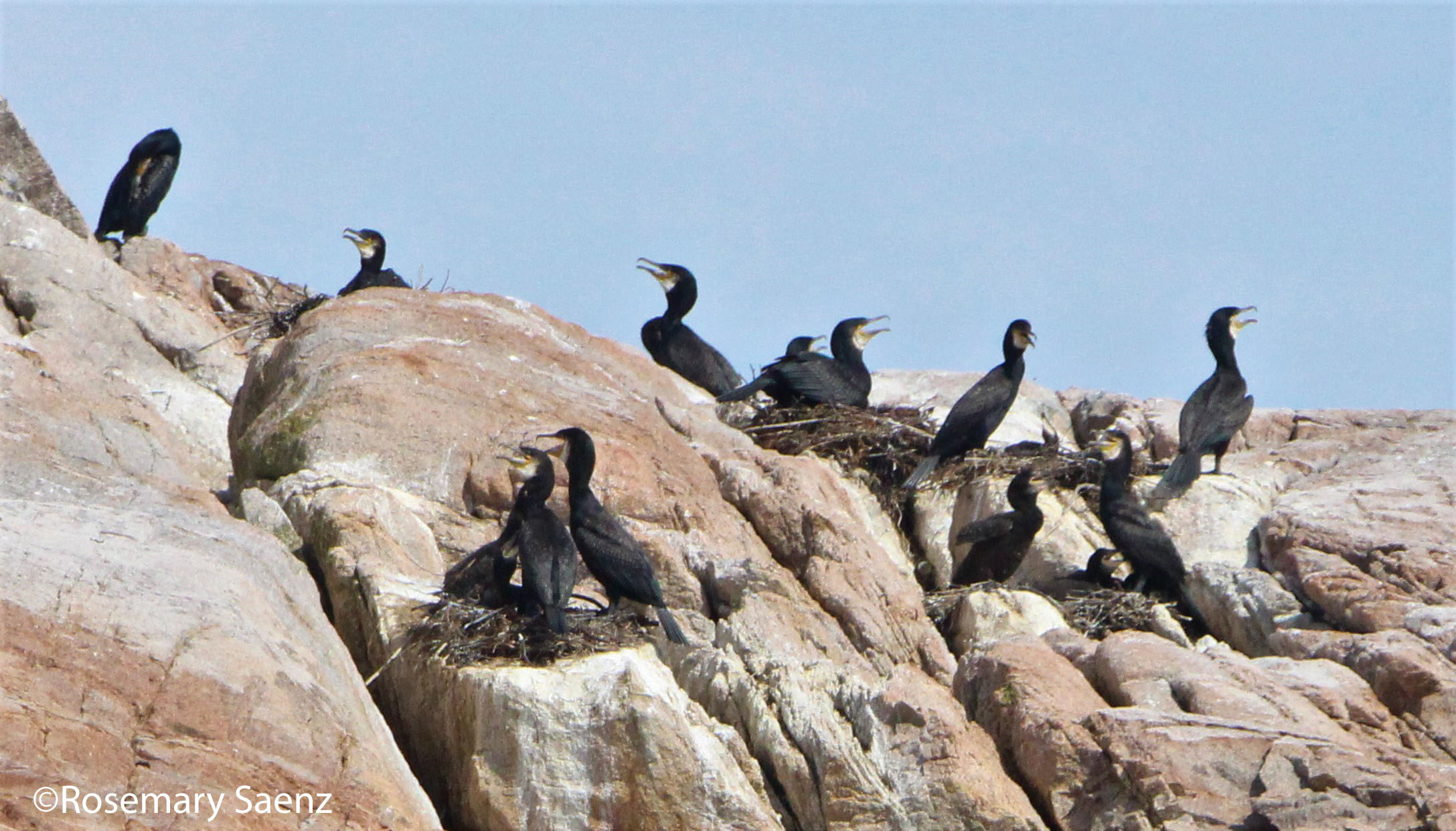
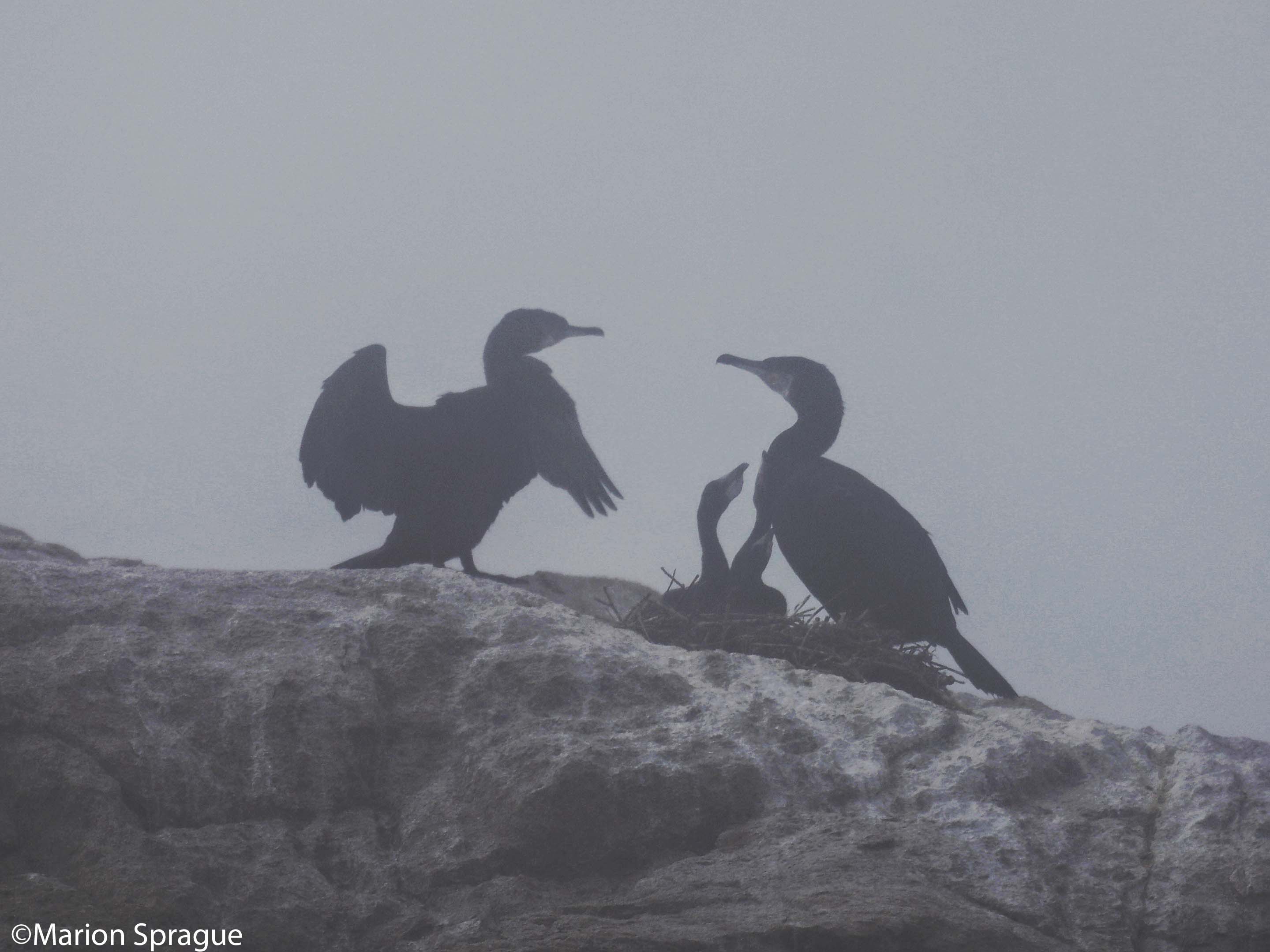
We circled around the southern end, spending some time observing the state’s last colony of Great Cormorants (and Double-crested); nests were brimming with chicks! 

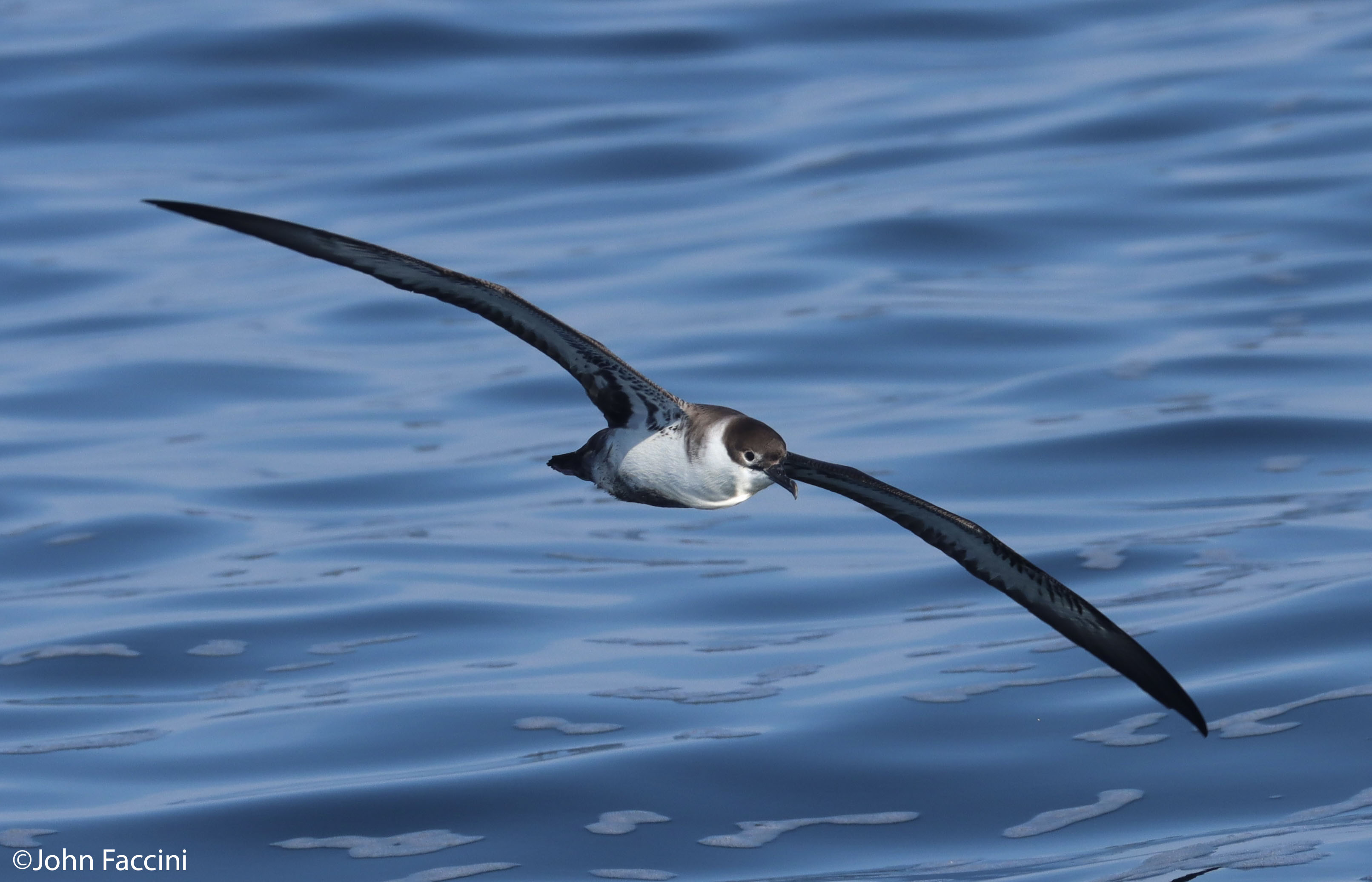
We kept an eye out for migrant shorebirds in addition to the locally breeding Spotted Sandpipers, but visibility remained a challenge: 4 Short-billed Dowitchers, 3 Least Sandpipers, and some unidentified peeps was the best we could do.  A Great Shearwater made a close, but brief, pass as we were on the east side of the island before vanishing back into the fog.

Somehow, it was even foggier on our way back, so seabird sightings – even with a second visit to Saddleback Ledge – were limited to just a couple more Wilson’s Storm-Petrels.

So yeah, the fog was annoying, and did impact photos and our search for the next mega-rarity. But it also produced one of the smoothest boat rides you’ll ever be on in the Gulf of Maine and yielded lots of close puffins and some great looks at phalaropes.  And besides, any day birding from a boat is a good day in our book! Especially when a few days prior we thought this trip was going to be cancelled due to wind and thunderstorms.
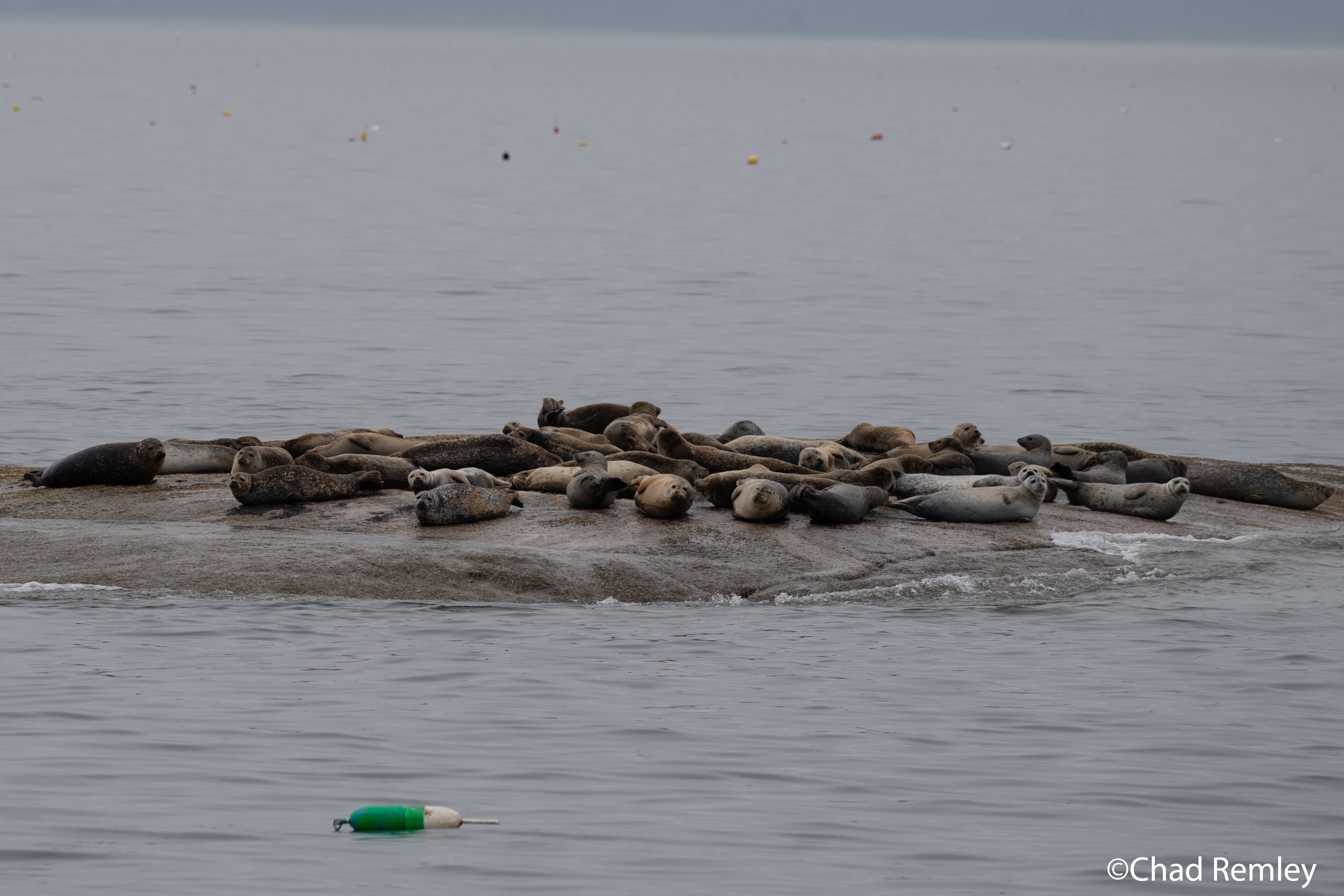
Harbor Seals on the way out of the harbor.

This Week’s Highlights, 7/22-28/2023

White-winged Crossbills were amazingly abundant in Northern Aroostook County during our visit last week (see below).

Returning back from a little vacation to the crown of Maine followed by some time in New Brunswick, I apologize for the late report. Last week was a busy and productive week of birding for me, with the following observations of note.

  • Seal Island Tour, 7/22:

15 RED-NECKED PHALAROPES inside of Saddleback Ledge; 1 1st summer Great Cormorant, Saddleback Ledge Light; 3 Razorbills still at Seal Island; 1 Great Shearwater on trip back. Dense fog impacted our birding all day, but we had a fantastic performance from Atlantic Puffins and Arctic Terns in particular, and the fog cleared enough to enjoy the number of juvenile Great Cormorants in the growing colony on the island’s south end.

  • 2 Red Crossbills, over our yard in Durham, 7/23. Interestingly, we didn’t have a single Red Crossbill in Aroostook County (unless they were all drowned out by all of the White-wings!). However, the Reds in our area seem to be focusing on coastal Red Spruce.
  • Aroostook County WHITE-WINGED CROSSBILLS, 7/24-7/27 (with Terez Fraser, John Lorence, and Jeannette).  Wow, incredible! Over three days of birding from Fort Kent to Stockholm, we conservatively estimated observing about 50 per HOUR while in appropriate habitat!  Our high count was 150-200 total along Square Lake Road in Sinclair on 7/26, with single flock of 70-75 individuals!
  • EVENING GROSBEAKS: just a couple heard here and there, including 1 on Nixon Siding Road, 7/24, 2 at Christina Reservoir, 7/26; and 2 at Square Lake Road, 7/26.
  • BOREAL CHICKADEES: Mostly heard, but some were unusually conspicuous, especially one (of 3) at Square Lake Road on 7/26 and 1 of 3 at Moscovic Road, Stockholm, 7/27 (all with Terez Fraser, John Lorence, and Jeannette).
  • Lake Josephine duck tallies (7/25 with John Lorenc and Jeannette): 125+ Gadwall (including juveniles of all ages); 1 drake American Wigeon, two family groups of Blue-winged Teal, 75+ Ring-necked Ducks, 1 American Bittern, etc.  Numbers were lower when Jeannette and I visited on the 27th, likely due to Bald Eagle presence. 
  • 3 adult Bonaparte’s Gulls, Arnold Brook Beach Recreation Area, 7/25 (with John Lorenc and Jeannette).
  • Additional species from Square Lake Road in Stockholm on 7/26 (with John Lorenc, Terez Fraser, and Jeannette): 1 Bonaparte’s Gull, 3+ Bay-breasted Warblers, 1 Mourning Warbler, 1 Olive-sided Flycatcher, 1 Lincoln’s Sparrow, etc.
  • 1 female American Wigeon with 10 chicks, Long Lake, St. Agatha, 7/26 (with Terez Fraser, John Lorence, and Jeannette).
  • 3 Common Nighthawks, over St. John River at dusk, Fort Kent, 7/26 (with Terez Fraser, John Lorence, and Jeannette).
  • 150+ Ring-necked Ducks, 6 Pied-billed Grebes, etc, Christina Reservoir, 7/27 (with Jeannette).

UPCOMING TOURS:

Most of the White-winged Crossbills we saw were in flight, or calling and singing in the distance. This male tee’d up nicely, albeit in unfortunate light. We also watched only one group feeding, and they appeared to be eating mostly buds of Tamarack (and maybe some young or old cones).

This Week’s Highlights, July 23- July 29, 2022.

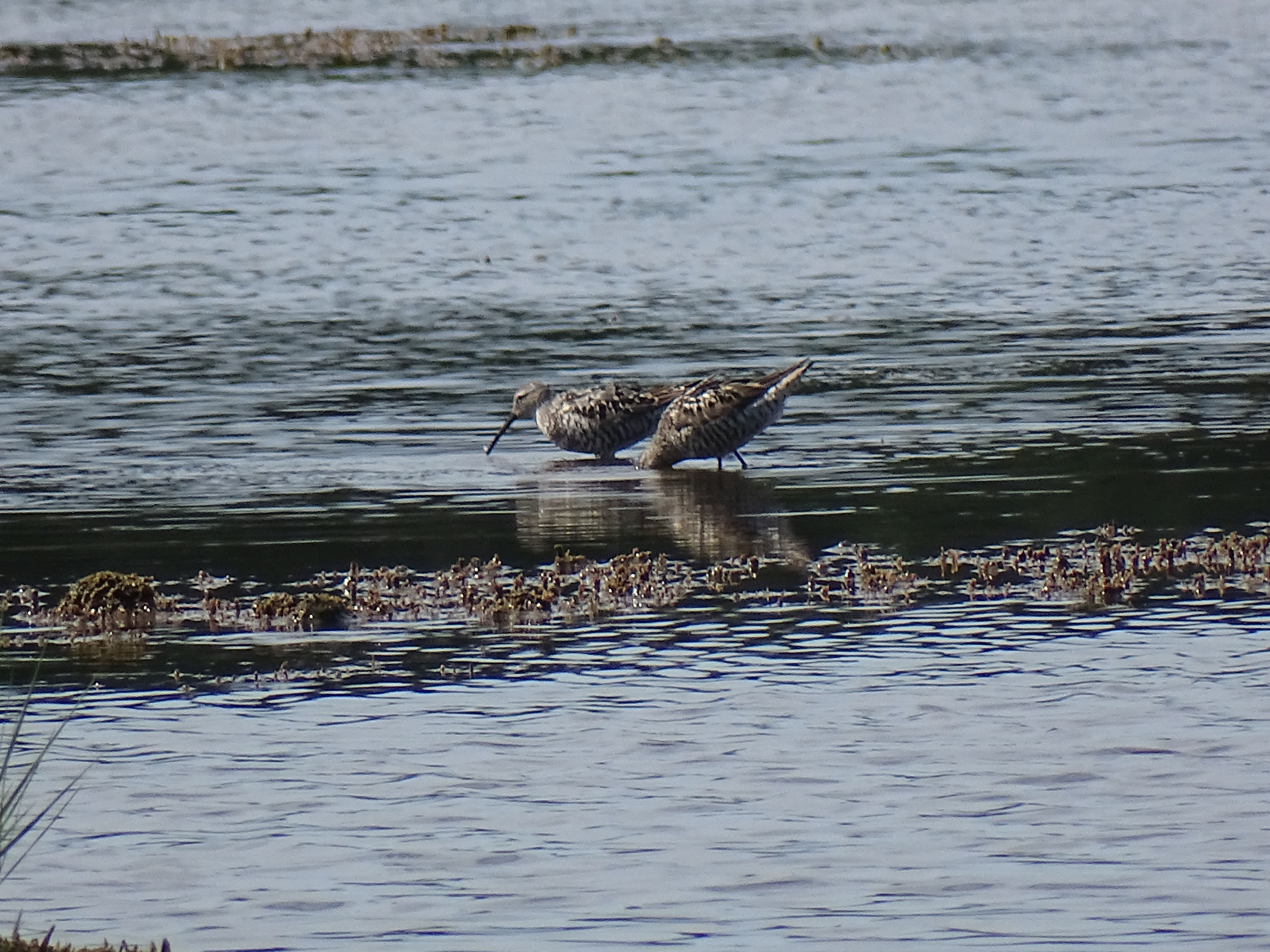
A lousy photo of great birds: two Stilt Sandpipers were in the Pelreco Marsh on 7/29.

Seal Island, Monhegan Island, and shorebird migration. Lots of “good birds” in great places this week. Here are my observations of note over the past seven days.

  • Red Crossbills along the coast: 1+, Pownal, 7/23; 1, Brooksville, 7/24 (with Laura Blandford); 1-2’s scattered on Monhegan Island, 7/25;
  • An incredible trip to Seal Island on 7/23 produced all of the expected breeding seabirds, a couple of Common Murres; a Peregrine Falcon show; migrating Whimbrels, one Great Shearwater, and a PARASITIC JAEGER.  Photos and the complete trip report can be found here.
  • Hardy Boat from New Harbor to Monhegan, 7/25 (with Jeannette): 6 Cory’s Shearwaters (FOY) and 8 Great Shearwaters.
  • A “non-birding” weekend with Jeannette friends to Monhegan Island 7/25-26 actually yielded some outstanding birding! The highlight was a four-species shearwater show off of Lobster Cove throughout the day on 7/25. We saw at least 3 MANX SHEARWATERS and 2 Sooty Shearwaters (FOY) among numbers of Cory’s and Great Shearwaters.  They were passing at a slow but steady rate of about 16 Great and 6 Cory’s every 5 minutes, plus an average of 9 Atlantic Puffins per 5 minutes.  Hard to tell if the shearwaters were swirling, rounding the island, or just streaming by. 1-2 ROSEATE TERNS joined Arctic and Common Terns feeding nearshore – Roseate was a new “island bird” for me.
  • Other Monhegan highlights: 1-2 Blue-winged Teal continue, 1 Great Egret (also an “island bird” for me!), and 1+ Sharp-shinned Hawk.
  • Hardy Boat departure from Monhegan to New Harbor (with Jeannette), 7/26: 1 PURPLE SANDPIPER, Outer Duck Islands from ferry seal watching diversion. Unexpected and incredible mid-summer record; no camera available and phone-binning was a complete failure.  With a few Ruddy Turnstones.  1 more Cory’s Shearwater en route.
  • 1 molting adult BLACK TERN, Pine Point Co-op, Scarborough, 7/29.

Shorebird high counts this week. I had an excellent tally of 19 species, although counts were a little low due to limited visitation to the best shorebird sites.

  • Black-bellied Plover: 14, Pine Point, Scarborough, 7/29.
  • Killdeer: 4, Rte 1/9 pannes, Scarborough Marsh, 7/29.
  • Semipalmated Plover: 159, Pine Point, 7/29.
  • Piping Plover: 6, escaping people by foraging on mudflats off the Pine Point Co-op, Scarborough Marsh, 7/29.
  • Whimbrel: 20 (flocks of 12 and 8), Seal Island, 7/23 (with “Not-so-search for Troppy Tour Group).
  • Ruddy Turnstone: 5, Outer Ducks, Monhegan, 7/26 (with Jeannette).
  • STILT SANDPIPER: 2 ad, Pelreco Marsh, Scarborough Marsh, 7/29 (John Lorenc had 5 earlier in the morning) and 1 ad, Eastern Rd Trail, Scarborough Marsh, 7/29.
  • PURPLE SANDPIPER: 1, Outer Ducks, 7/26 (with Jeannette; see above).
  • Sanderling: 4, Seal Island, 7/23 (with “Not-so-search for Troppy Tour Group).
  • Least Sandpiper: 40+, Eastern Road Trail, 7/29.
  • White-rumped Sandpiper: 6 total around Scarborough Marsh, 7/29.
  • Pectoral Sandpiper: 1, Pine Point, 7/29.
  • Semipalmated Sandpiper: 100+ Pine Point, 7/29.
  • Short-billed Dowitcher: 24, Eastern Road Trail, 7/29.
  • Spotted Sandpiper: 3, Seal Island, 7/23 (with “Not-so-search for Troppy Tour Group).
  • Solitary Sandpiper: 1-2, Monhegan Island, 7/26 (with Jeannette).
  • Lesser Yellowlegs: 18, Eastern Road Trail, 7/29.
  • “Eastern” Willet: 27, Pine Point, 7/29.
  • Greater Yellowlegs: 12, Eastern Road Trail, 7/29.

Our next event here at the store is on August 4th when we welcome Paul Doiron to read from and sign copies of his new book, Hatchett Island. His latest crime thriller takes place on an imaginary seabird island here in Maine!  More information can be found here.

2022 Seal Island Trip Report (The “not-so-search for Troppy), 7/23.

After 17 consecutive summers in the Gulf of Maine, “Troppy” the Red-billed Tropicbird failed to return to Seal Island.  Arriving in 2005, but continuing annually throughout the summer since 2009 exclusively at Seal Island, Troppy had become a mainstay of summer birding in Maine – and our tour calendar!

Arriving as an adult, Troppy was therefore at least two years old when he was first sighted in 2005.  Since most sorces seem to reference “16-30 years” as a lifespan, a 19-year old “Troppy” would be getting a little long in the tooth, err, bill.  But, as I romanticized in my 2019 article for Birding magazine, we all hoped he would find the long lost love. Maybe he did. Maybe he’s making a trop-ling somewhere in the Caribbean where he “should be.”  Yeah, that’s what I’ll think.  We need more happy thoughts these days.

Wherever he might be, it was not Seal Island or any other Gulf of Maine seabird island this summer, and with his absence, tours to Seal Island were few and far between. Our first one cancelled, but we were able to run our July 23rd departure with our friends at Isle au Haut Boat Services thanks to a dedicated group of birders who know how special Seal Island is, with or without the famous rarity.

And Seal Island most did not disappoint!  Even without a tropicbird (or a Tufted Puffin for that matter, which of course we all hoped would make a reappearance).

First, the weather: it was unbelievable! Actually, it was downright hot, even offshore, and especially away from what little breeze there was when we were not motoring. Seas were a gentle 2-3 feet, with an occasional slightly larger but inconsequential swell.  Falling rapidly, it was incredibly smooth in the coves of the island, and on the way back where we enjoyed following seas for a very flat and fast ride.

Shortly after departing Stonington, we spotted our first Atlantic Puffin before we even cleared Isle au Haut.  A few more, scattered small numbers of Wilson’s Storm-Petrels (I tallied 41 in all), and a few Razorbills punctuated our trip out.  Not much was happening around Saddleback Ledge though.

Of course, the show realty began upon arrival at Seal Island.  The heat sent the alcids into the water, so virtually all of the Atlantic Puffins that were present were in the coves and often allowing close approach and stellar photo ops.

We worked our way around the island, slowly improving our views of Razorbills (at least 6) and finally finding two Common Murres. 

Razorbill
It took a while, but we finally found a Common Murre – it was even the uncommon “Bridled” morph.

We motored around the south end, where the swell was just enough to prevent us from getting too close to the Great Cormorant colony – Maine’s last. But the nests brimming with growing chicks was still thoroughly enjoyed.

Off the northeast end, we cut the engine and drifted among the alcids.  Off the open waters came a flock of 12 Whimbrel which we heard first before they flew close by. Likely having tanked up on blueberries in a barren Down East or in the Maritimes, they didn’t seem to consider pausing on the island. Later, 8 more flew by even further offshore.

Laughing Gull

While the lack of shearwaters all day was disappointing, the one Great Shearwater that we saw came in for a close look at us!

A little group of Sanderlings flew by, a few peeps were along the shoreline, and we spotted several calling Spotted Sandpipers.

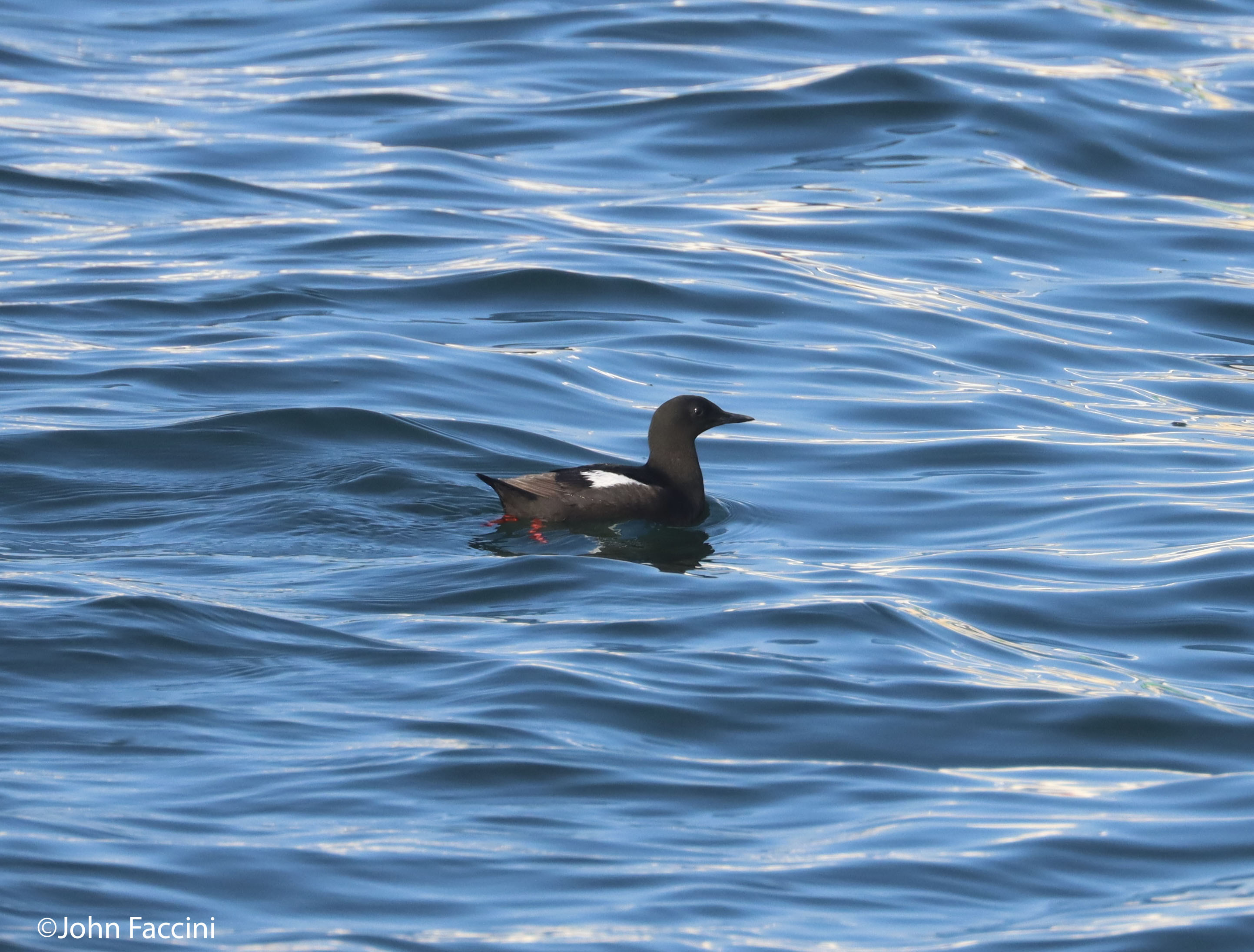
And don’t forget about all of the dapper little Black Guillemots!

And of course, there were the terns. Hundreds of Arctic and Common Terns were present, with a goodly number of juveniles learning the ropes. Arctic Terns were particularly conspicuous today, with many making close approaches of the boat or disregarding our presence to take a bath.

Arctic Terns
Juvenile Common Tern.

I both enjoyed and lamented the fact that I didn’t have Troppy to stress over. In fact, without needing to be in position and waiting for him, we took advantage of the gentle seas to not only circumnavigate the island, but also spend ample time drifting in sheltered coves, photographing alcids and searching for a big, black puffin with punk-rock hair.

The eastern side.

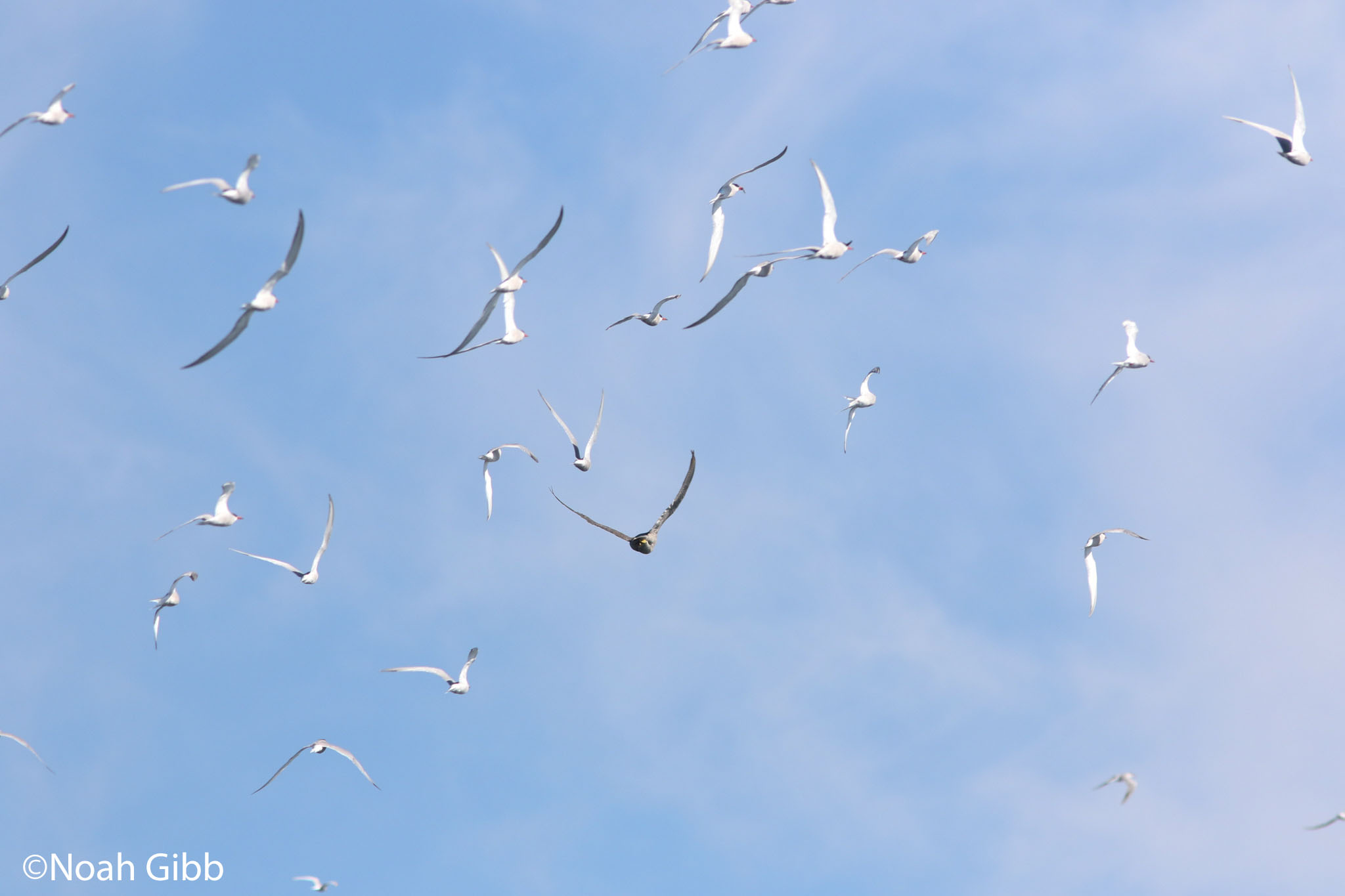
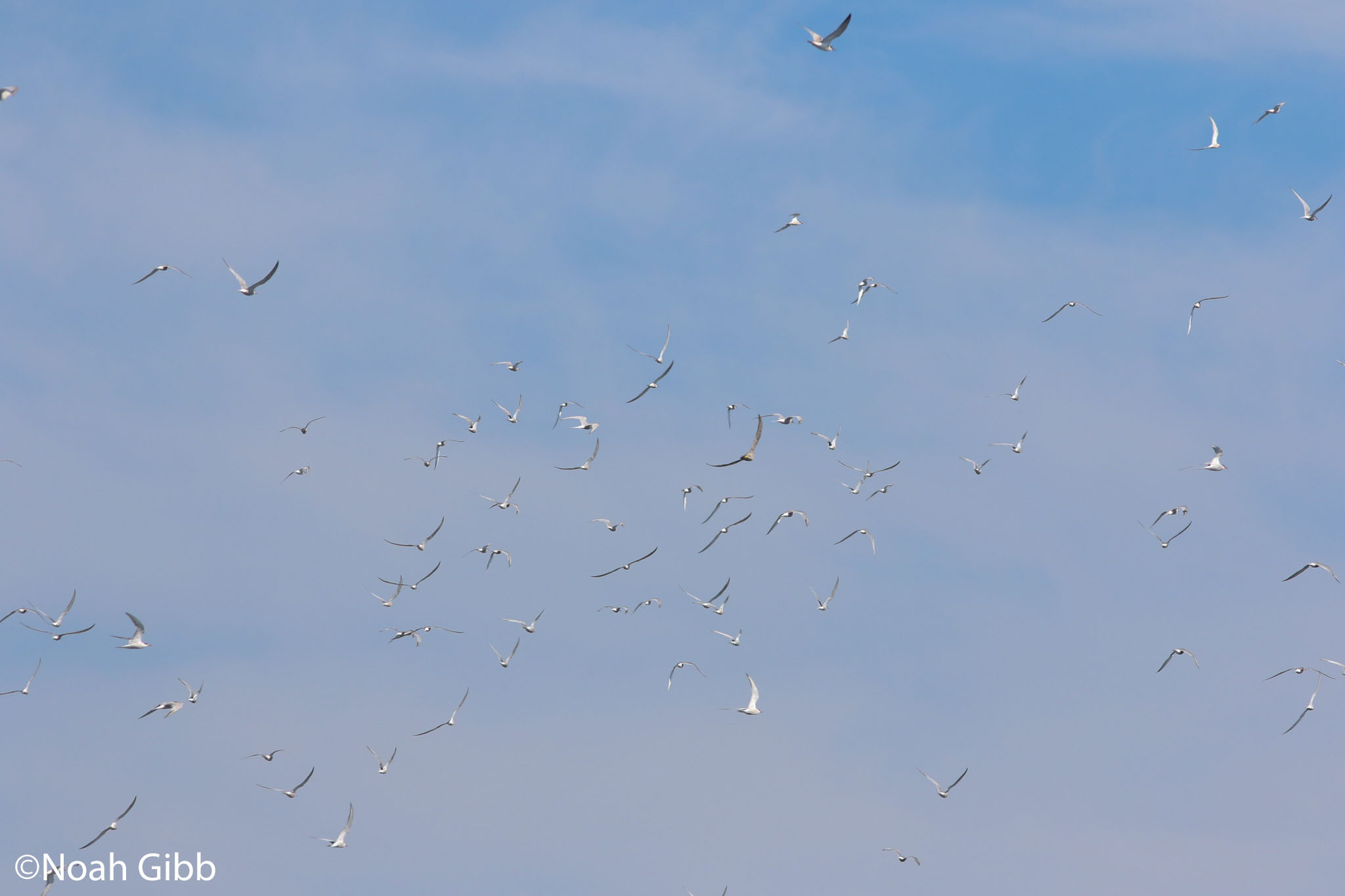
But we still had a time limit for our charter, so we decided to spend our last moments enjoying the action at the tern colony. That’s when a Peregrine Falcon arrived.  While this is a most unwelcome guest at a seabird colony and we were conflicted about seeing it, it was also impossible not to sit back and watch the show. 

It surprised the terns by coming up and over the backside of the island, scattering the entire colony. Upon identifying the intruder, all of the adults made a beeline and began diving, mobbing, and otherwise trying to drive the predator away. Watching one of the world’s greatest – and fastest – predators in action was a real special treat, but we were also not upset that it came away empty; we were rooting for the terns.

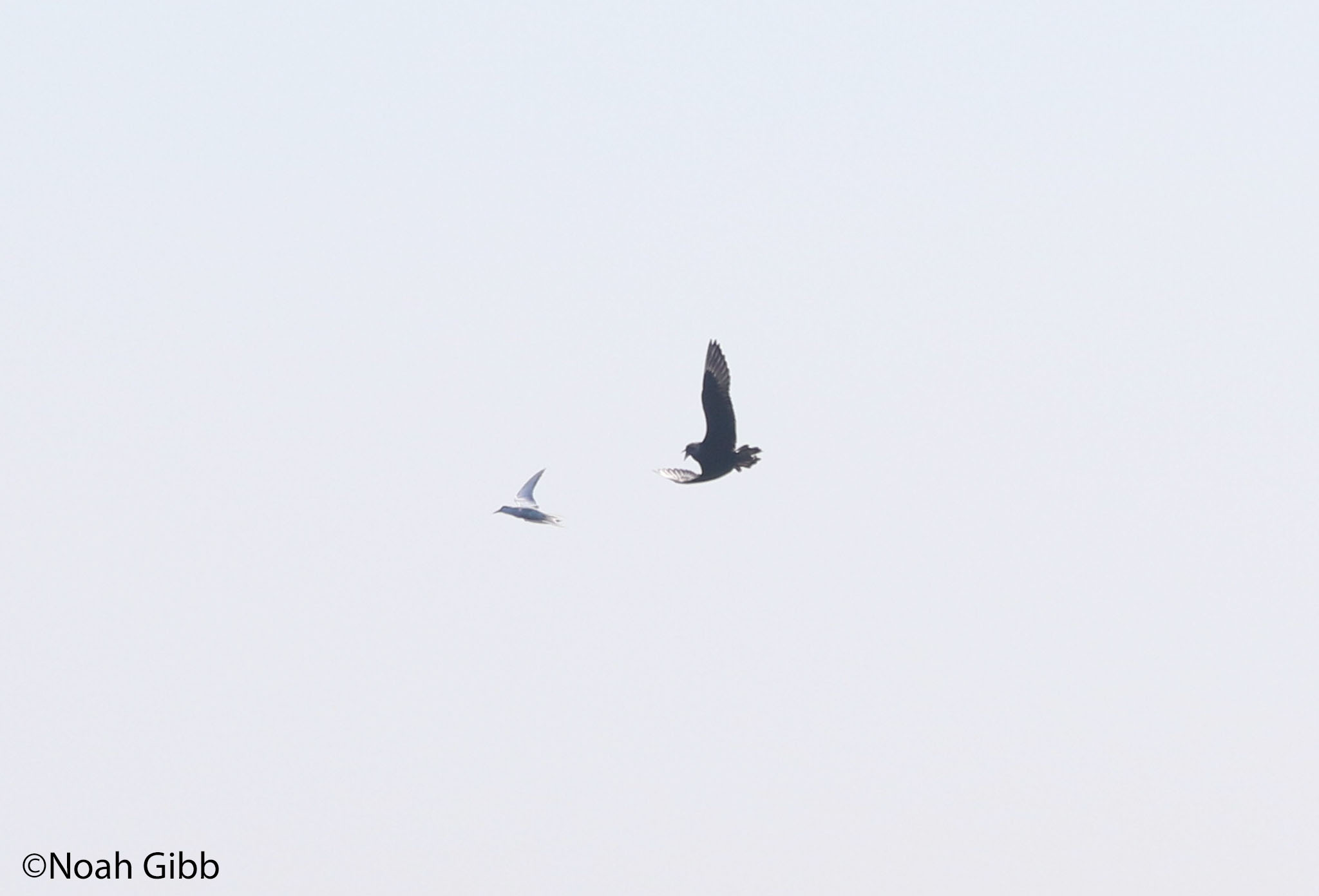
If that wasn’t a grand finale, I don’t know what is.  Well, maybe the Parasitic Jaeger on the way back!

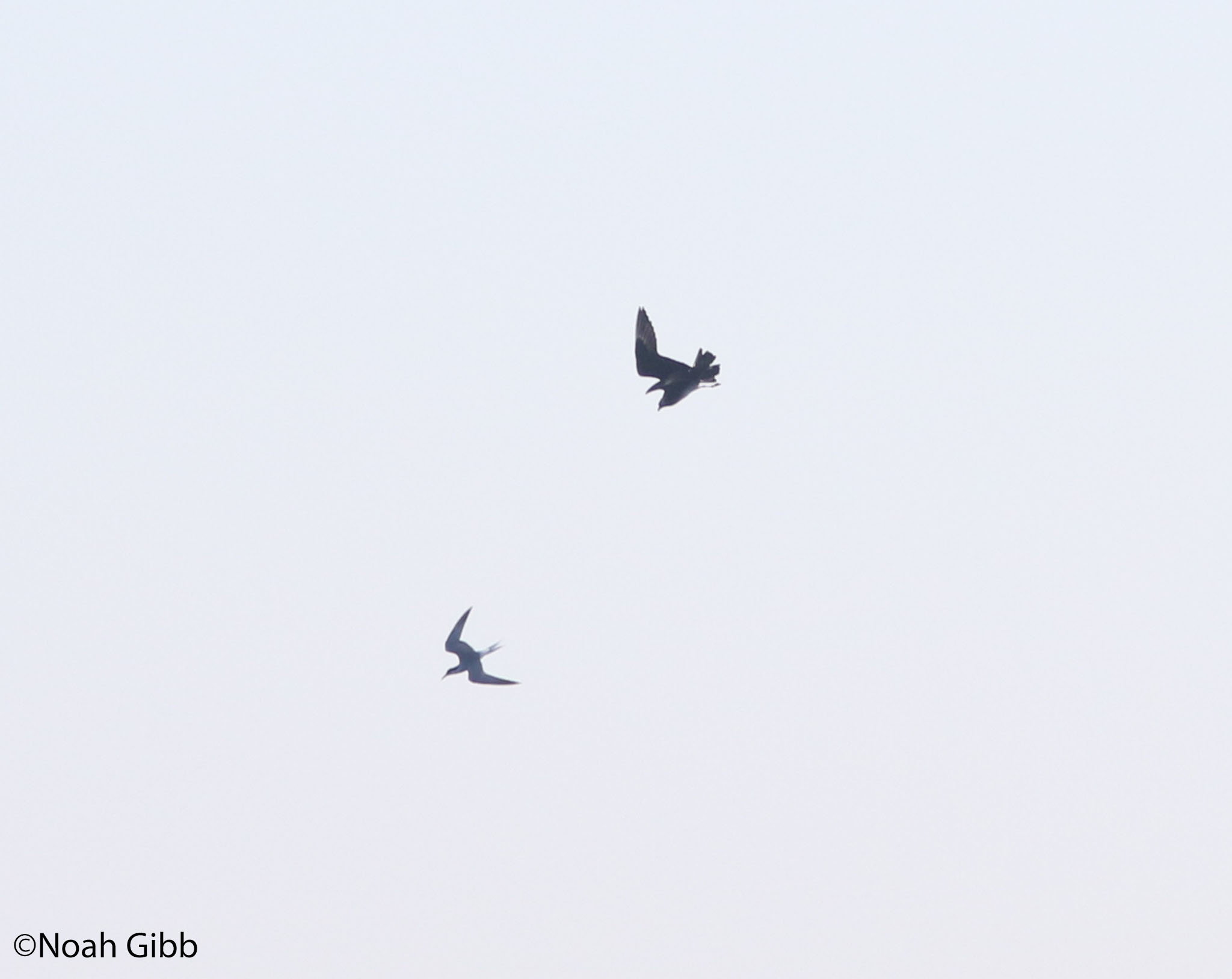
About halfway between Seal and Saddleback Ledge, I first thought it was a Peregrine tearing in after a lone Common Tern. But when it became clear that it was a jaeger, I yelled for Captain Mike to “step on the breaks.”  We watched the dogfight for several minutes, and it was spectacular to see. It was just far enough away that we couldn’t tell if the tern gave up its fish, but it definitely didn’t do it willingly. 

Shortly thereafter we began to run into little rafts of Razorbills (a conservative tally of 36, plus 7 more between Saddleback Ledge and Stonington) and scattered Atlantic Puffins. We had quite a few more Wilson’s Storm-Petrels on the way back, and finally some Northern Gannets.

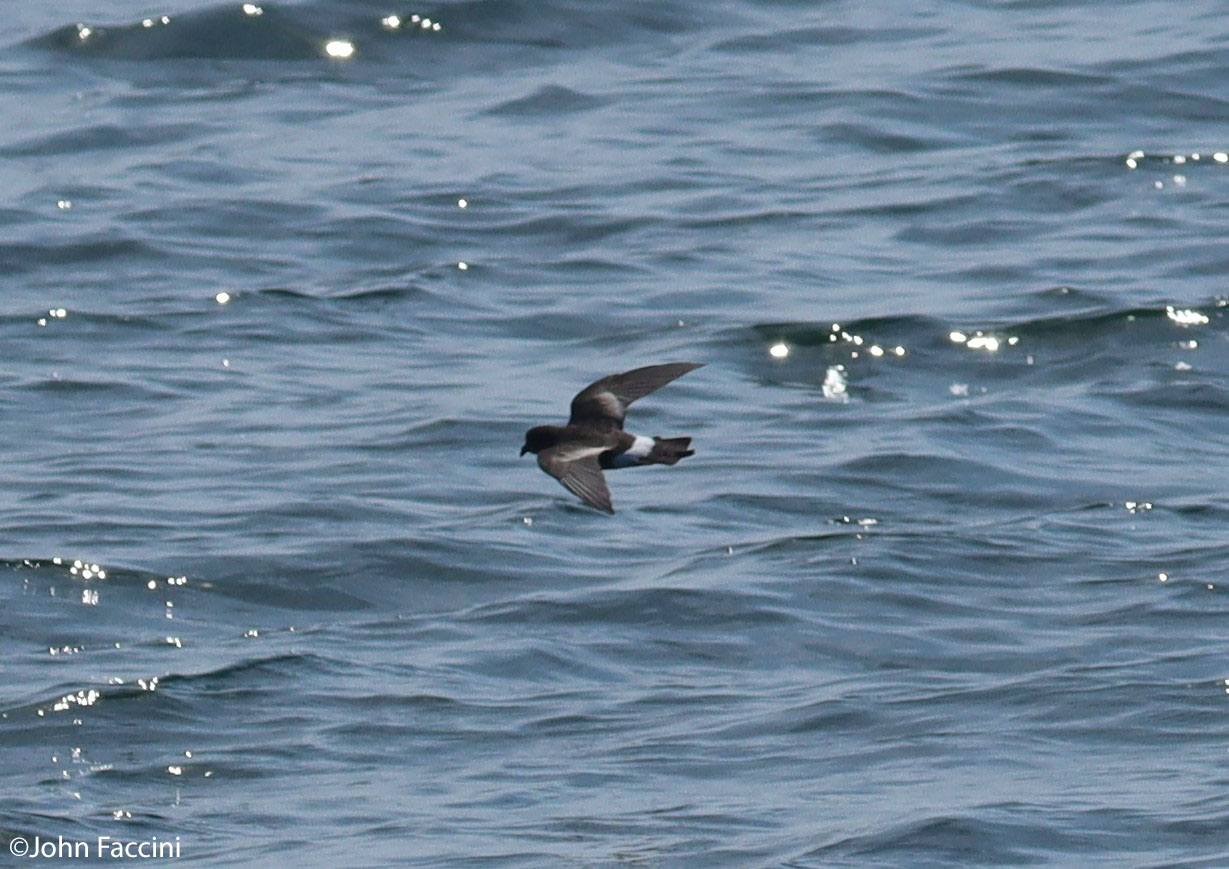
Wilson’s Storm-Petrel

We even had time to check some rocky islets for roosting shorebirds (none), loafing Harbor Seals (lots), and maybe spot something like a Great White Shark (nope; but the boat had one the very next day!).

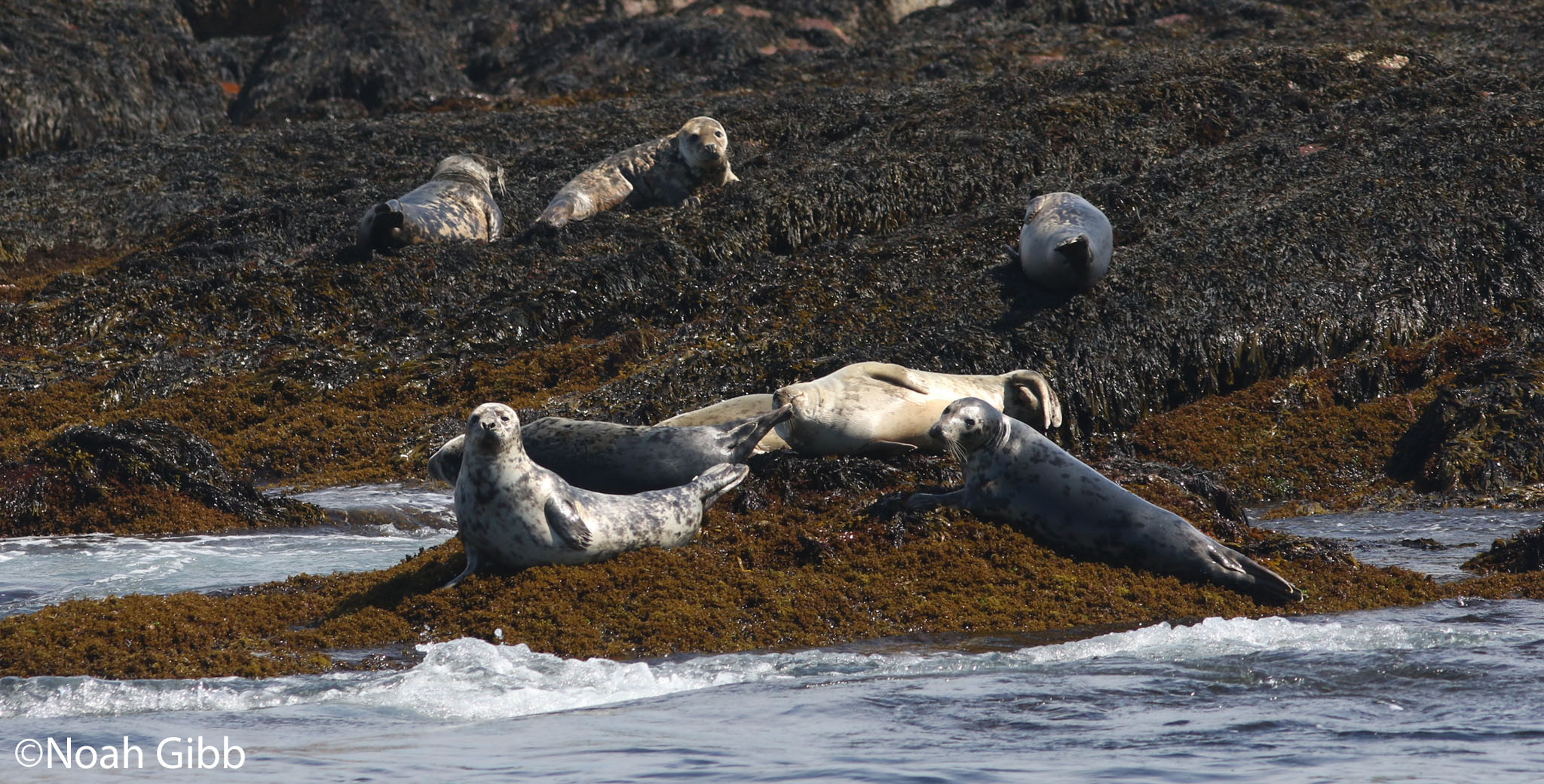
Gray Seals and Harbor Seals. Note the “horse’s head” profile of the Grays, verses the puppy-like Harbors.

In other words: what a trip! And exactly why it’s well worth a tour to Seal Island regardless. That being said, I must admit, it was not quite the same without “Troppy.”  But as a guide, my stress level was a lot lower!  Having seen him 9 times out of 12 visits to Seal, I consider myself beyond fortunate. I’m also so happy to have shared his glory with so many other birders on all these tours. So, wherever you are, Troppy, I’ll continue to lead trips to Seal Island in your honor!

Looking back at “Troppy’s Cove”

Derek’s Birding This 7/3-7/16, 2021.

My observations of note over the past fourteen days included the following:

  • Rare mid-summer SCOTER hat-trick with 4 Black, 2 White-winged, and 1 Surf, Simpson’s Point, Brunswick, 7/3.
  • 4 Greater and 3 Lesser Yellowlegs, Wharton Point, Brunswick, 7/3.
  • Seawatching from Eastern Point, Gloucester, MA on 7/8 during Tropical Storm Elsa (with family): In about 2 hours where fog lifted enough to see, Great Shearwaters were passing at an average of 199 per 5-minute segment and Sooty Shearwaters were passing at an average of 314 per 5-minute segment. Plus 2 MANX SHEARWATERS, 1 unidentified JAEGER, and 1 Cory’s Shearwater.
  • 1 proposed TRICOLORED HERON X SNOWY EGRET X LITTLE EGRET hybrid, Pelreco Marsh, Scarborough Marsh, 7/13.
  • 14 Semipalmated Sandpipers (FOF), Pine Point, Scarborough, 7/13.
  • 7 Sanderlings (FOF; a little on the early side), Crescent Beach State Park, Cape Elizabeth, 7/15.

“The Search for Troppy” Trip II Report, 7/10/21

Our second “Search for Troppy” tour with our partners the Isle au Haut Boat Services took place on Saturday the 10th. With Tropical Storm Elsa roaring through the day before, building seas to 7-10 feet, we were of course just hoping to run the tour.

But we remained optimistic, and as winds turned to the northwest behind the storm, the surf rapidly got knocked down. With calm winds by dawn, they came down even further. And by our 1:00pm departure on the M.V. Otter, Stonington Harbor was nearly flat calm, the sun was shining, and our offshore reports were positive.

With high hopes, we set off, and pretty soon came across several Wilson’s Storm-Petrels and of course, Black Guillemots. As we cleared the shelter of Isle au Haut, we found more storm-petrels, but we also found leftovers waves from the storm. There were a few pretty big swells remaining, but Captain Tracy handled them with skill and kept us surprisingly comfortable.

Scattered Wilson’s Storm-Petrels gave way to some massive groups loafing on the calm surface. Led by a single group of 91, I tallied a conservative estimate of 210!  Unfortunately, the swells were just high enough that we couldn’t safely turn around for the single Sooty Shearwater that we saw bobbing in the waves, or what turned out to be the only Common Murre of the day.

Reaching the lee of Seal Island, the waves disappeared, and we began our slow cruise enjoying the island’s summer denizen.  Arctic and Common Terns were in abundance, there were plenty of Black Guillemots, and we checked out a couple of rafts of Atlantic Puffins. Likely due to the post-storm day, puffins were busy and not doing much loafing, so we actually saw relatively few. Unlike our previous tour where we had as many puffins close to the boat as I have ever seen out there, this was about as few as I have ever had. The Pufflings must be hungry!

We finally spotted 2 Razorbills on our way to the bustling Great Cormorant colony, noted a pair of Common Ravens, and spotted a Peregrine Falcon – a rather unwelcome guest out here.

But so far, there was no sign of Troppy, so we waited. And waited some more. And then waited. Once again, we were at the right place at the right time, and the weather was perfect.

Thanks to the charter, we had plenty of time, and we needed as much patience as possible. I admit I was getting as worried as the guests that Troppy was not home today.

But then, this happened:

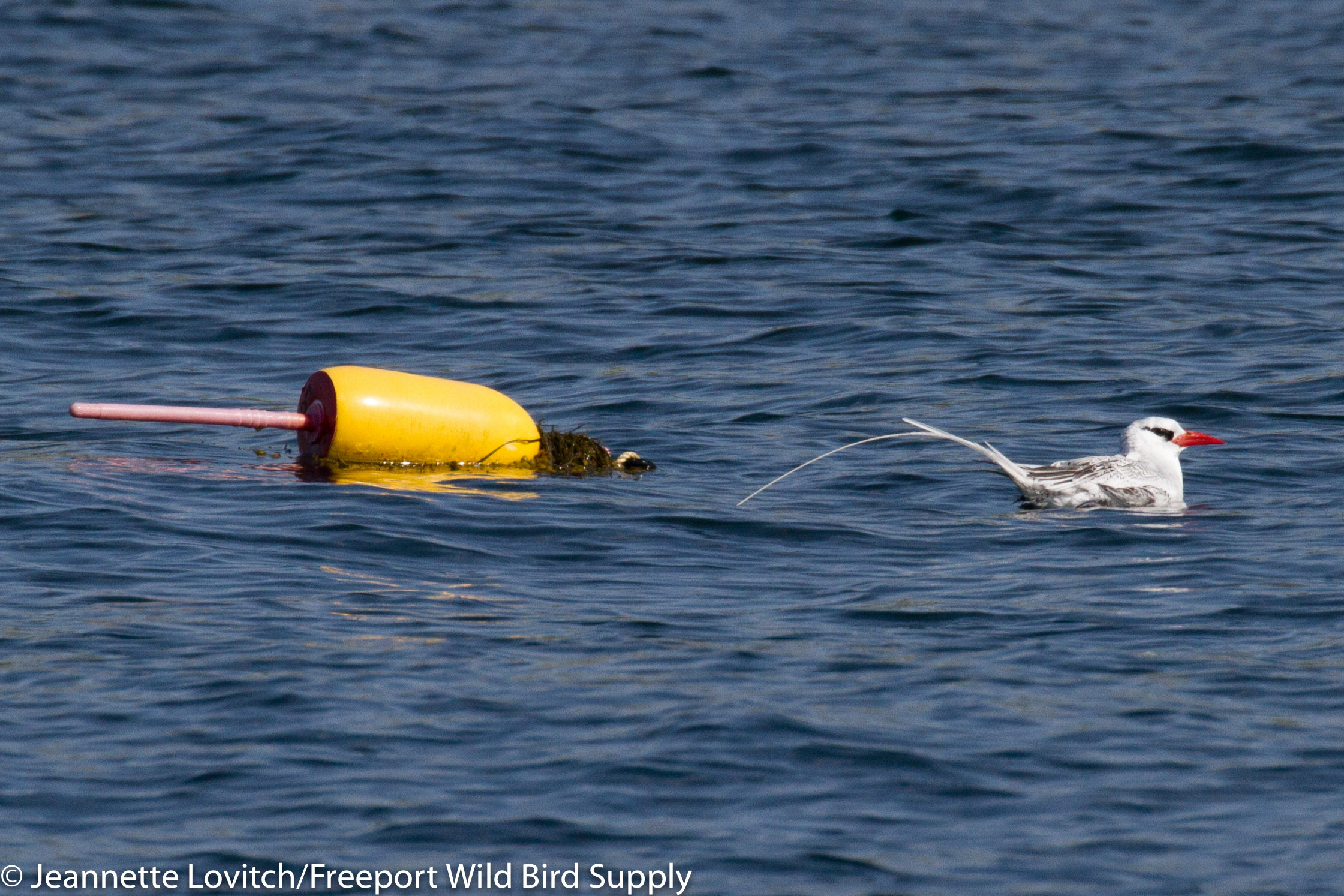
It was simply one of best 2 or 3 shows that I have ever had. He made repeated passes right overhead, did a lot of calling and displaying, and then finally sat on the water and took his bath. Captain Tracy did a great job returning us to good lighting, and we cut the engine once again and drifted along with him, enjoying the sights and sounds of the island, and of course, basking in the glory of a successful twitch!

Three Short-billed Dowitchers with three peeps launched from the island; a sign of the season as these are already on their way south. The other island birds including Song and Savannah Sparrows, Spotted Sandpipers, and oodles of Common Eiders were also present and accounted for.

Captain Tracy finally had to pull us away, but we were just getting greedy. It was time to leave Troppy alone to enjoy his afternoon bath in peace.  He earned it today.

We made really good time coming back as the waves continued to subside. Unfortunately, it was too rough around Saddleback Ledge to check it carefully, but we did have 4 more Great Cormorants there. To and from the ledge, we encountered plenty of Wilson’s Storm-Petrels (although not nearly as many as on the way out) and a couple of Northern Gannets.

Surprisingly, we didn’t have any shearwaters on the way back, but a short distance beyond Saddleback Ledge, we spotted a couple of Razorbills. Then a small raft, and then another. In all, about 40-50 Razorbills  –  I guess that’s why we didn’t have many at the island; they were all feeding inshore!

A single Atlantic Puffin was with them, and we had several more Razorbills when we checked out a feeding frenzy of Herring and Great Black-backed Gulls not far out of the harbor entrance. And of course, a few ledges full of Harbor Seals.

In the end, we saw every possible island summer resident, especially, yeah, THAT one. It was a very good day.

Derek’s Birding This 6/26-7-2

My observations of note over the past seven days included the following:

  • 5 White-winged Scoters, Scott’s Landing Preserve, Deer Isle, 6/27 (with Marion Sprague).
  • “Fall” shorebird migration is underway!  7 Lesser Yellowlegs, 3 Greater Yellowlegs, and 2 Least Sandpipers (FOF) were off Eastern Road Trail, Scarborough Marsh, 7/1 (with clients from AZ).
  • 4 Gadwall, Eastern Road Trail, 7/1 (with clients from AZ).
  • 1-2 TRICOLORED HERONS, Scarborough Marsh, 7/1 (first at Eastern Road and then possibly same bird later at Pelreco Marsh; with clients from AZ).
  • The proposed continuing TRICOLORED HERON X SNOWY EGRET X LITTLE EGRET HYBRID, Pelreco Marsh, Scarborough Marsh, 7/1 (with clients from AZ). Later spotted passing over Pine Point.

“The Search for Troppy” Trip 1 Report, 6/26/2021

The first of two “Search for Troppy” charters to Seal Island took place on Saturday, June 26th.  Departing Stonington at 1pm with the good folks of The Otter from Isle au Haut Boat Services, we would be in prime time for the appearance of Maine’s Red-billed Tropicbird that has called the Gulf of Maine home for the past 17 years. For this first trip of the year, I was joined by Marion Sprague, co-coordinator of the Maine Young Birder’s Club, as my co-leader.

Unfortunately, the weather was not looking good. Dense fog, a moderate southerly breeze, and a forecast for marginal seas made us think twice. At the very least, Captain Garrett gave the talk about seasickness and where to find those handy bags.  However, we were also receiving real-time weather data from a lobster boat hauling traps near the island, and we were being assured “it’s not bad out here.”  But we were skeptical – Maine fishermen are tough!

Keeping us in the shelter of Isle au Haut for as long as possible, Captain Garrett plotted his course. A Merlin offshore was a little surprise, but otherwise we struggled to pull much out of the dense fog beyond the “big 5:” Herring and Great Black-backed Gull, Common Eider, Black Guillemot, and Double-crested Cormorant.  A smattering of Common Terns and several occupied Osprey nests was about it.

As we began the crossing of open water to Seal, we soon became pleasantly surprised by the conditions. It was still foggy, and we had about 20 minutes of fairly rough seas, but the overall wave height was nothing like it was forecast and the winds seemed to be dying. Things were looking up.

We glimpsed a couple of Wilson’s Storm-Petrels and a Northern Gannet on the way out and took the time to ease up to an Atlantic Puffin loafing (probably too full to bother flying). We just didn’t want to take anything for granted. But that was about it, until Seal Island materialized from the fog.

As we approached the surprisingly-sheltered shoreline of the island, puffins were everywhere!  Fewer birds rest on the rocks in the fog, and so hundreds of birds were loafing on the water.  With near-flat conditions in the cove, we just floated up to resting rafts.  We got close to a couple of Razorbills too, and sorted through Arctic and Common Terns. Arctic Terns were also especially confiding today, often passing right over the boat and making repeated close passes.

We enjoyed the show of the tern colony and slowly crept along the shoreline. Spotted Sandpipers sounded off and made short flights, Common Eiders ushered their chicks around, and Black Guillemots were all around. 

We spotted one Common Murre on the rocks, and with the water much calmer than we expected, we were able to round the southern tip to check out the Great Cormorant colony – the last in Maine. Working our way back towards the cove, we scored a much better view of a Common Murre on the water.

And then we waited. The conditions were prefect, and while the sun was not out, fog did not dampen our spirits, especially after last year’s first tour!

It was one of the best puffin shows I have ever had out here, and with the engine turned off, we just floated up to them while listening to the songs of Savannah and Song Sparrows emanating from the island.

But as joyous as this was, the reality soon became clear: the star of the show was not home today.  Troppy disappears for 2-5 day periods and this was one of those periods. We were in the right place, at the right time, and had a couple of hours to search and be patient. But this time, our patience was not rewarded. 

It’s always bittersweet when you depart Seal Island without Troppy, but that’s how it goes out here sometime. At least we weren’t miserable while searching! And we saw every other denizen, and wow, that puffin show!  If you can’t find joy in that, perhaps birding is not for you.

The fog remained dense on the way back, and only a couple of Wilson’s Storm-Petrels and two gannets were spotted. We searched around Saddleback Ledge and a few other outcroppings, turning up only the big 5 and a whole bunch of seals (a few Gray out at Seal Island, but almost all Harbor Seals on the way in). With following seas and diminishing winds, we made great time, and before we knew it, we were at the dock and trying to get our landlegs back.

We’ll try it again on July 10th (that trip is sold out, but email us to get on the waiting list), and hope that Troppy is in town that day!

The Search for Troppy Tour Report, 7/10/2020.

A tropical storm in Maine? Interfering with our first tour since early March? Of course! Because 2020!

But thanks to the flexibility of our partners, the Isle au Haut Boat Services, and the registered participants, we moved up our “Search for Troppy” tour by 24 hours. Not the easiest thing to do within 48 hours of the new departure, but for those who were unable to make the switch, we had an overwhelming response to the few extra spaces we offered up (more on that later).

While we can plan around a tropical storm, you can’t plan around fog in the Gulf of Maine – especially this summer.  With 23 particpants, all of which – along with the guides and crew – wearing masks the whole time (no exceptions) and social distancing as much as possible, we set off from Stonington into the very, very dense fog.
IMG_6465_dense_fog

IMG_6469_masked_birders_on_boat

There wasn’t much to see on the way out, except for the common nearshore species,like Common Eiders.
COEI

And, visibility was close to zero the whole ride out…until Seal Island miraculously appeared. Not clearly, mind you, but it was there.
IMG_6471_Seal_in_Fog

But thanks to the fog, many of the island’s seabirds, especially the Atlantic Puffins, were loafing in the water. And with glass-calm conditions, they were all around us and easy to observe.
ATPU_water

Arctic and Common Terns continuously zipped by as we motored about the island, hoping for Troppy in his usual place, but contenting ourselves with lots of puffins, and the island’s record number of Razorbills this year.
Razorbills

We cruised around the island’s south end, taking in the last remaining Great Cormorant colony in the state…
GRCOs

…And after much searching, finally found a couple of Common Murres including this one (L) standing tall among the puffins and a Razorbill.
COMU,RAZO,ATPU

Considering the trials and tribulations of getting this tour running, we were pretty happy with seeing all of the breeding birds of the island, and the puffins were putting on a particularly good show today.

Of course, however, the star of the show was missing, and my hopes were fading – unlike the fog, which was definitely not at all fading. But then, as visibility lifted just enough to see a little more of the island, the distinctive cackling rattle display call of the world’s most famous Red-billed Tropicbird rang out as he materialized out of the fog and made a close pass of the boat. People were spinning, there was shouting, and there was celebration. But then he disappeared. Was that it? Well, it was good enough to count, but come on, he could do better. So we cut the engine, drifted, and waited.

And several minutes later he was back. Heading right towards us, calling aggressively, seemingly displeased with our intrusion and/or my color commentary over the loudspeakers. He made several passes, some very close, a few right overhead, and he did not stop. We watched him circling around, as per his usual routine, for a good 45 minutes in all. Every time we thought the show was over, and I would start talking about something else, he would reappear. It was truly incredible – one of my top two best performance from him, and definitely my longest duration of observation. He only briefly landed once, but without sun, apparently bathing wasn’t in his plans.
TRoppy1Troppy2Troppy3

In fact, he was still being spotted now and again as we had to depart to head back to the dock. It deal feel weird turning away from one of the most sought-after individual birds in North America, but we did so knowing he had more than earned his peace and quiet today.

This was my 8th visit with Troppy in 9 attempts (third in a row with “The Otter” of the Isle au Haut Boat Services) and my first observation in dense fog. He must have known I was expecting him. I owe him some squid, or whatever it is that he eats (since no one knows!).

Needless to say, there was quite a bit of jubilation on the way back, even if we couldn’t see much (and very little birdlife) until we returned to port.
Stonington

So the spacing worked. Mask use was respected. And Troppy more than cooperated.

And therefore, by popular demand, what do you say we try again?

That’s right, we’re going to make a second run on Saturday, July 25th.  Same time, same price, same social distancing.  Details can be found here.

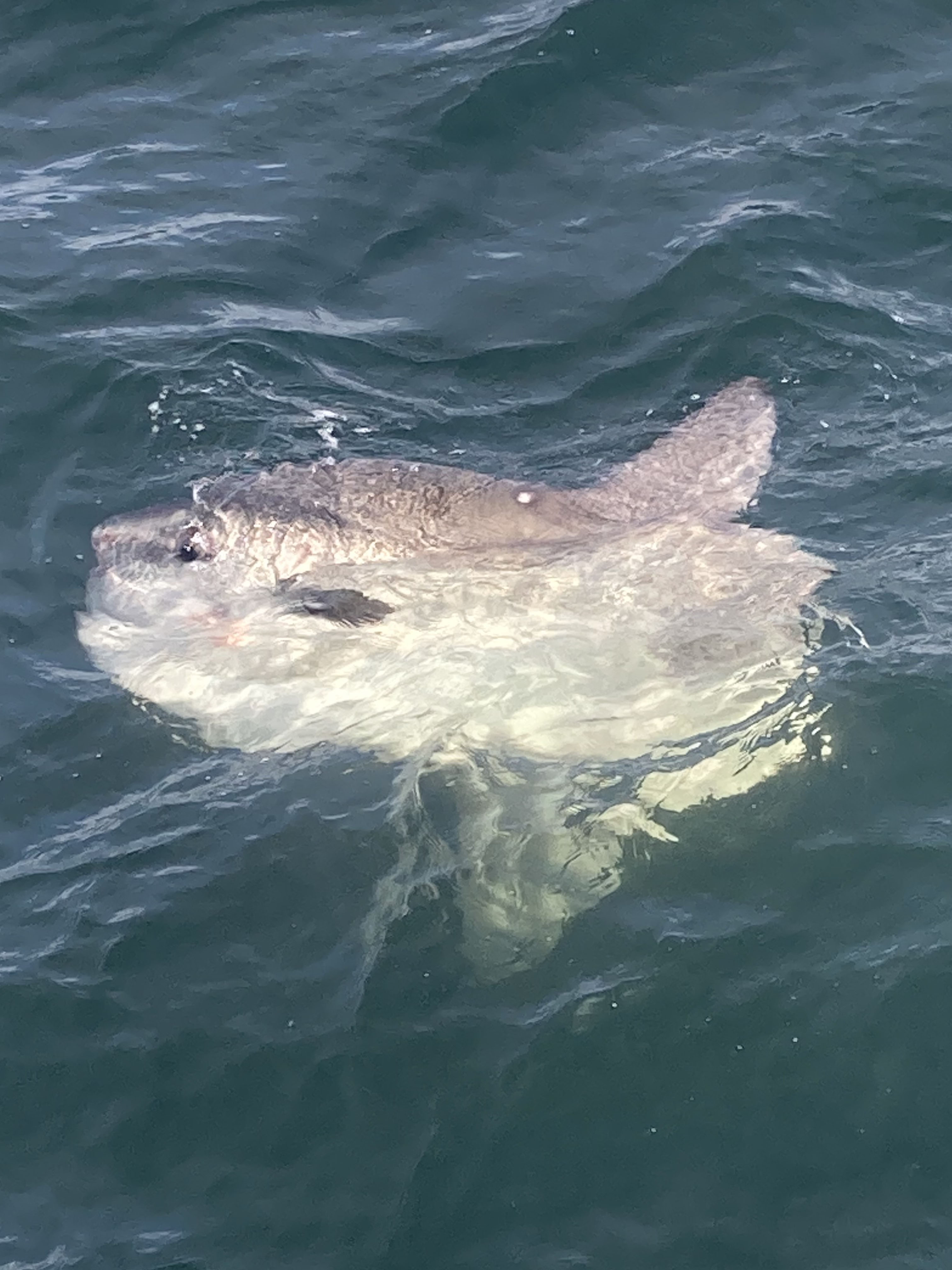
UPDATE: Despite insanely beautiful weather on the 25th, we did not see Troppy. He just wasn’t home today. It was perfectly calm, warm, and abundantly sunny, so if he was on the island, we would have seen him. Alas. However, it was a most enjoyable day, with great looks at Razorbills, Common Murres, and plenty of Atlantic Puffins. Arctic and Common Terns remain busy, and we had scattered migrant shorebirds. Highlights including 4 Mola Mola and a Cory’s Shearwater just off the eastern shore of Seal.

It was definitely a more photogenic day than our first trip!

Freeport Wild Bird Supply (and partners!) Tours for 2020

L1150877_group1_edited-1
Our trip offerings continue to grow. Our collaboration with The Maine Brew Bus continues with our increasingly popular Birds On Tap ℠ – Roadtrips! (see listing below). And, this year, we are excited to announce a new partnership with DownEast Adventures as their exclusive provider of birdwatching tours! Whether you are interested in something local for a few hours, or a multi-day tour, we have something for everyone. Some of these trips fill up fast, so act quickly if any pique your interest! For more details on each of these events, including registration information please visit the Tours, Events, and Workshops Page of our website. We hope to see you soon!

Woodcocks Gone Wild!
April 4th (Weather date, 4/11)

Our most popular annual tour, join us for an evening witnessing the aerial ballet of displaying American Woodcocks on a special outing at Pineland Farms in New Gloucester.  No registration necessary.

Migratory Songbird Workshop with DownEast Adventures
May 17th 

This half-day workshop will focus on the migrant songbirds, especially warblers, that are passing through Maine’s most famous migrant trap, Portland’s Evergreen Cemetery. At the peak of warbler migration, we’ll learn how to identify these charismatic birds and we’ll discuss their mind-boggling migration and what they’re up to in Maine.
BTNW

Monhegan Spring Migration Weekend
May 22nd – 25th

Join Derek on Monhegan during the height of spring migration for 1-4 days searching the island for regular visitors, rarities, and vagrants.  Warblers in their summer finery are pouring through the Northeast, and many will drift over the Gulf of Maine on their nocturnal flights. Rapidly changing weather conditions can result in massive “fallouts” of tired migrants, many of which will forage in the rocks on the shoreline. The possibility of overshoots from the south and vagrants from almost any direction adds icing to the cake.
BLBW

Bicknell’s Thrush Tour
June TBA

Stay tuned to our website for details on this tour.

Seal Island Charter: The Search for Troppy
July 11th

This special 5-hour charter aboard Isle au Haut Ferry Service’s Otter will allow us to travel out to Seal Island specifically to look for “Troppy”, Maine’s famous Red-billed Tropicbird. And, we will also enjoy looks at the puffins, guillemots, terns, and Razorbills that call this island home in summer.
RBTR

Ladona Island Birding Cruise (Birding by Schooner II) with DownEast Adventures
July 13th – 17th

Join Derek aboard the Schooner Ladona for a truly unique and exclusive birding and culinary experience. Enjoy peace, quiet, and tranquility as we spend four days aboard the Ladona enjoying unbelievable food and drink, lots of rest and relaxation, and some great birding! Weather permitting, we’ll have the chance to visit the waters around a seabird breeding colony (likely the famous Eastern Egg Rock) to place us among thousands of breeding seabirds, including Atlantic Puffins, three species of tern, and likely a few Razorbills.

Shorebird Workshop with DownEast Adventures
August 12th

In this full-day workshop, we will hit some of the marshes, beaches, and rocky roosts that shorebirds prefer at the peak of their migration. The ebbs and flows of the season, daily and recent weather, and other factors could produce more than 20 species of shorebirds in our time together. Our focus will be in comparative experience, learning how to recognize each species both near and far.
SEPL

Maine Coast in Fall with Derek and WINGS
September 13th – 20th

Join Derek on this all-inclusive tour to enjoy Monhegan Island at its finest.

Monhegan Fall Migration Weekend
September 25th – 28th

Join Derek on Monhegan during the height of migration for 1-4 days searching the island for regular visitors, rarities, and vagrants. This is a casual outing, with boat and hotel reservations, as well as meals, on your own, allowing for more flexibility (and more time at the brewery if you so desire).
BLGR

Birds On Tap ℠ – Roadtrip!

Our Birds On Tap ℠ – Roadtrip! series is entering its sixth year and features 10 tours! Traveling in the Maine Brew Bus, the first half of each 6-hour tour is spent in the field with Derek as your guide to learn about the birds and their habitats. This is followed by two brewery (and one “kombuchery”) tours led by the Brew Bus guides. The locations were chosen to enjoy the peak of birding at a particular locale at certain times of year. One does not need to be a “birder” to enjoy these outings. People of all skill levels are encouraged to join us!
Kennebunk_Plains_by_Don_Littlefield_edited-1

The 2020 schedule is as follows:

Gulls and Growlers
January 18th, 9:00am – 3:30pm
Hatch Hill Landfill, Augusta
(gulls, eagles)
Bateau & Black Pug Brewing

Seaducks and Suds
February 16th, 9:00am – 3:30pm
York County coast
(seaducks, alcids, gulls)
York Beach Beer & TBA
PUSA

Spring Ducks and Draughts                                       
April 5th, 12:00pm – 6:30pm
Merrymeeting Bay
(migrant waterfowl, eagles)
Oxbow & Bath Brewing

Warblers and Wort
May 10th, 8:00am – 2:00pm
Portland sites
(warblers, other songbird migrants)
Bissell Brothers & Brewery Extrava

Grassland and Grains
June 14th, 8:00am – 2:30pm
Kennebunk Plains
(Upland Sandpiper, Grasshopper Sparrow)
Funky Bow & Banded Brewing
VESP

Terns and Taps
July 26th, 9:00am – 3:00pm
Biddeford Pool
(terns, Piping Plover)
Nuts and Bolts & Island Dog Brewing
LETE

Shorebirds and Steins                                                 
August 23rd, 10:00am – 4:00pm
Scarborough Marsh
(migrant shorebirds)
Foulmouthed & Lone Pine Brewing

“Sod-pipers” and Sips
September 6th, 8:00am – 4:00pm
Fryeburg
(grassland sandpipers, Sandhill Cranes)
Ebenezer’s Pub & Saco River Brewing

Fall Ducks and Draughts
October 25th, 9:00am – 3:30pm
Sabattus Pond                                                             (migrant waterfowl, eagles)
Side by Each Brewing & Maine Beer Co.

“Rarity Roundup”
November 8th, 8:00am – 3:00pm
Portland to Wells
(potential vagrants, general birding)
Root Wild Kombucha & Goodfire Brewing
me2,PaulODonnell,3-4-18_edited-1