Two Black-crowned Night-Herons, including this one, were a nice find for a South Portland Big Day on the 21st. Unfortunately, we didn’t have enough good finds to make up for a slow morning at the favored migrant traps.
I had just a handful of observations of note over the past six days before I head out to Monhegan, including the following:
On Tuesday, John Lorenc and I did a South Portland-only “Big Day,” trying to see as many species as we could within the city’s boundaries. With limited migrants at Hinckley Park, we clawed our way to a decent tally of 94 species by day’s end with a lot of regular migrants being undetected. Highlights for the city and the date were limited to Long-tailed Duck, Black Scoter, Glossy Ibis, Black-crowned Night-Heron, White-throated Sparrow, and Red Crossbill. We unfortunately did not turn up any rarities. My personal FOY’s were limited to Swainson’s Thrush (1 each at Clark Pond Trails and Trout Brook Preserve) and Common Nighthawk (two over John and Terez’s yard at dusk for our last species of the day, followed by 4 over our yard in Durham when I returned home).
Two tours over the weekend and private guiding on Monday were likewise fairly slow for passage migrants, but there was a distinct increase in territorial birds with each passing day, as it seemed birds were dropping into their desired habitats and not migrant traps. A big overnight flight on 5/22-23 yielded more territorial birds, but surprisingly few passage migrants on the ground.
2 American Bitterns, surprisingly high over the yard in the evening on 5/22. Really threw me off at that altitude!
3 Greater Scaup, Wharton Point, Brunswick, 5/23.
Additional personal first-of-years this week also included:
1 briefly glimpsed MOURNING WARBLER, Capisic Pond Park, Portland, 5/19 (with Birds on Tap Roadtrip! Warblers and Wort! Tour group).
One of the many stunning Baltimore Orioles that performed for us on our visit to Capisic Pond Park in Portland during May’s “Warblers and Wort” tour.
Join us for the much-anticipated return of the Birds on Tap series, a unique collaboration between Maine Brews Cruise and Freeport Wild Bird Supply. In 2024, we’re excited to bring back these special birding and beer tours, perfectly blending nature exploration and craft beer tasting.
These unique, relaxed birding and beer-ing adventures that you have come to love combine great local birding at seasonal hotspots with approachable opportunities to sample the delicious creations of some of our favorite Maine breweries. These events are a perfect introduction to birding and/or craft beer, and a great opportunity to enjoy our favorite pastimes with significant others, friends, and family that have interest in one topic, while your interest is primarily in the other (for now!). Educational, enjoyable, and eye-opening, our unique Birds on Tap series enters its 10th Year!
Seasonal birdwatching meets Portland Maine’s finest craft beverages–all with the convenience of being chauffeured!
We’re offering three tours this year, with each trip report being posted here.
Warblers and Wort, May 25th.
May means warbler migration, and the destination for Warblers and Wort visited two of Maine’s most famous springtime migrant traps, Portland’s Evergreen Cemetery and nearby Capisic Pond Park. Oases in the urban jungle, featuring water sources and a mix of various habitats, help concentrate migrant birds that found themselves in or over the city come sunrise. After migrating all night, tired travelers look for refuge: food, water, and shelter, and urban greenspaces are absolutely critical for refueling.
Beginning at Evergreen Cemetery, we confirmed our suspicions from the overnight radar images that it was going to be a slow morning for migration. But wow, it was slow! We enjoyed some good looks at Red-eyed Vireos and lots of Gray Catbirds, practiced our birding by ear, and discussed urban ecology, but I had seen (not) enough.
We then ventured over to Capisic Pond Park, where our luck instantly changed. While passage migrants were still few, it was downright pleasantly birdy. And birdy with vivid colors from some of our most beautiful birds. Blinding Baltimore Orioles were everywhere as expected, but we had some great quality time with battling males and affectionate pairs. We had lots of great views of male and female Yellow Warblers and the range of plumage variation in American Redstarts. Great looks at Warbling Vireos were enjoyed, but orioles kept distracting us! Northern Cardinals refused to be ignored.
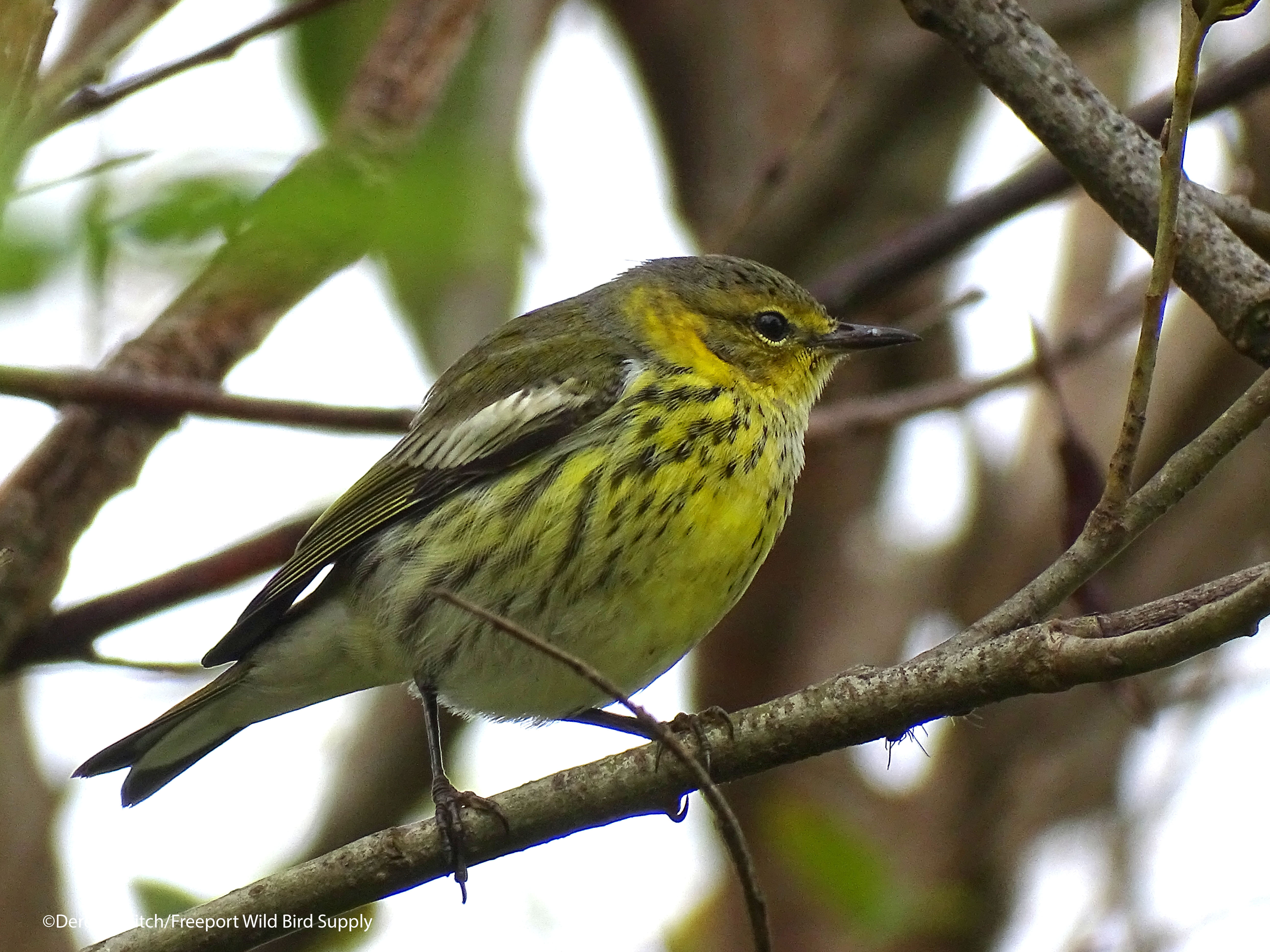
In addition to a couple of Wilson’s Warblers and an uncooperative Magnolia Warblers, passage migrants included the world’s worst look at the awesome Mourning Warbler as it darted down the trail, never to be seen again, but also one of the best looks you’ll ever get at a Cape May Warbler as a female foraged in the grass and low branches of a grove of Eastern White Pine. You don’t often look down on a Cape May Warbler!
We saw a lot of birds well at Capisic today, using even the most common birds to hone our identification skills while taking the time to appreciate the beauty of even some of the most common birds around us. For example, we became intimately familiar with how Common Grackles are anything but black birds! This particular individual stood out because of the perfect lighting showing off it’s glossy, structural colors, but also the unusual white flecks in the head caused by some limited leucistic feathers.
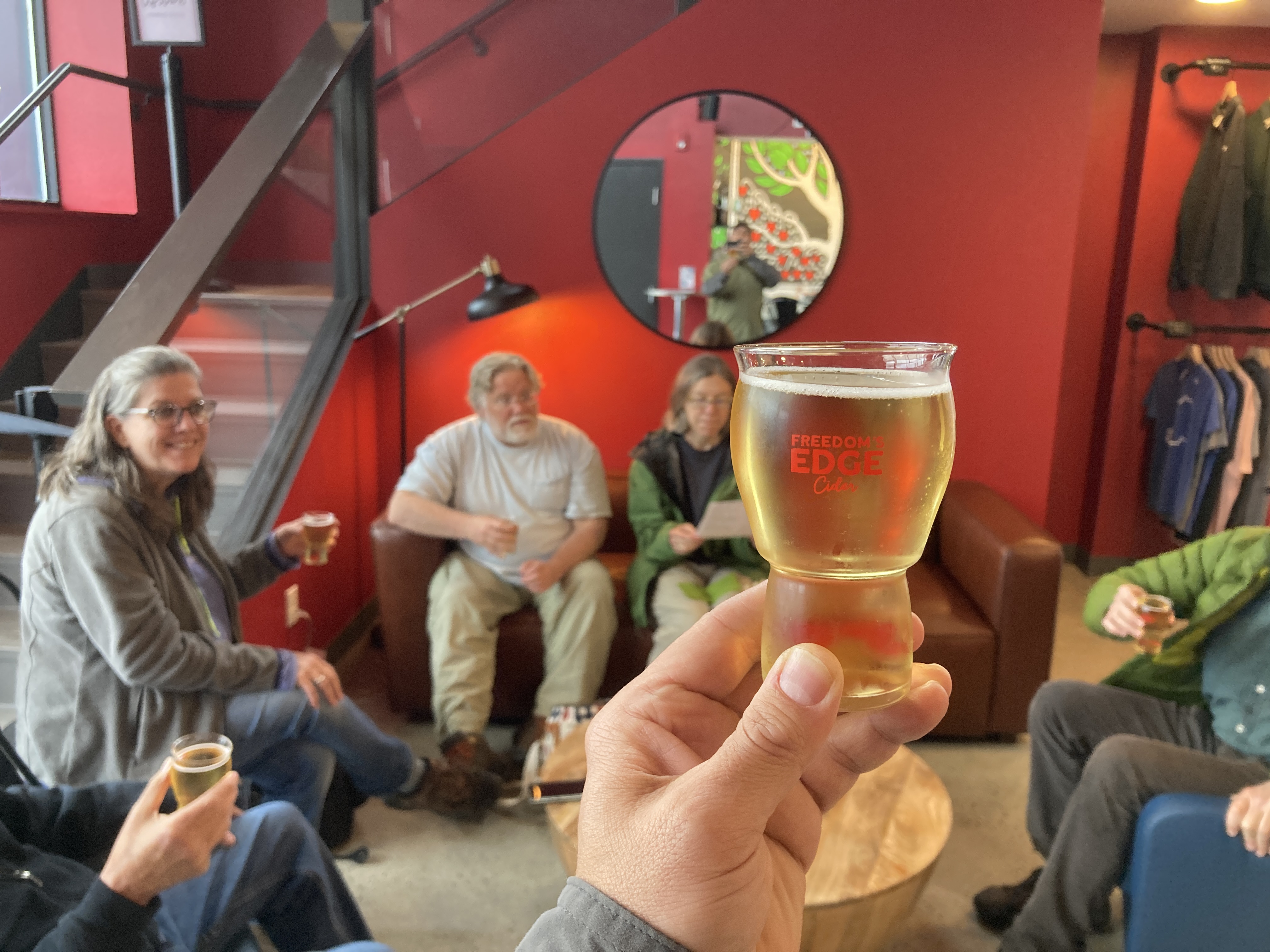
After struggling to see birds at Evergreen, we struggled to leave Capisic on time! It was a lot of fun, but it was time for the second half of the tour as we made the short trip across town to the Bayside neighborhood. Our first stop on the beverage portion of the tour was Freedom’s Edge Cider. After observing migrant birds in the crabapple trees at Capisic, it was only appropriate to enjoy cider, as the creation of hard cider was what led to the creation and diversity of crabapple trees! Focusing on the traditional, drier range of ciders, we began our tasting with their flagship “Original,” a nicely balanced semi-dry cider with a crisp finish. The unfiltered, modern “The Juice” was a touch sweeter thanks to the concentration of sugar via the freezing and thawing of the apples. I definitely picked up musty grape in the “Marc de Marquette,” a very flavorful cider aged over Marquette grapes. And finally, we were able to pick our own fourth sample. I am a sucker for maple, so I went for the “Pick Your Own” (coincidentally and appropriately) that complemented our birds of spring with flavors of spring in Maine: maple syrup and strawberries. The flavors were subtle, but the maple was really evident on the nose. However, the “Sweet Mullet,” a delicious cider steeped with mulling spices seemed to be the crowd favorite.
We’re all about the new and different on these Roadtrips, and our second stop was the very new (opened about 3 months ago) Argenta Brewing, Portland’s first lager-only brewery. Their delightfully named “Generic American Lager” had all the crushability and cleanliness of a traditional American Lager, but with a focus on Maine-grown ingredients. Learning the difference between lagers and ales while discussing topics ranging from glassware to bird conservation, we also learned all about Portland’s newest brewery. We were able to choose our second (very!) generous pour, and I joined others in the “Dark Lager” which had those nice roasted chocolate and malty flavors but with the lighter body and clean finish of a lager.
And with that, our first Birds on Tap – Roadtrip! Came to an end, but it’s not the last one in 2024, and definitely not the last one in years to come. It was good to be back on the road, and the combination of introductory birding with an introduction to Maine’s finest craft beverages is a recipe that has not lost its luster after a COVID-years hiatus.
Shorebirds and Steins, Aug 11.
We began our introduction to shorebirds with the basics, such as plover verses sandpiper, before moving into great depth such as yellowlegs vs Willet. Shape, size, and especially bill size and length are among the “bigger picture” tools we have to learn our shorebirds, such as with some close Willets – the “tringas of the 90’s steroid era in baseball.”
The original BoT Roadtrip! in 2015, our most popular tour returned to Scarborough Marsh at prime time for a good variety of migrant shorebirds. We learned how to identify our common species and searched a bit for the rare.
Birding began at Pine Point as the tide just began to flow. And as the mudflats were slowly inundated, a nice diversity of shorebirds soon appeared, and with each inch of incoming water, many of the birds moved closer and closer.
In Jones Creek, we were able to closely study the eastern subspecies of the Willet, later in close proximity to the closely related Greater Yellowlegs. And wow, did these two yellowlegs put on a show! Demonstrating their entertaining, aggressive feeding style that is highly suggestive of the species, they chased baitfish through the shallows. They were eventually so satiated that they sat down within about 15 feet of us and allowed for close looks at their bill structure and color without any straining through the scope. One spiffy Black-bellied Plover was joined by several dozen more in all stages of molt, and two awesome Whimbrels dropped in for the duration of our stay, nicely demonstrating the wide differences in shape and bill structure of our sandpipers.
Short-billed Dowitchers demonstrated their sowing-machine feeding technique – helpful as feeding style is an important part of the shorebird identification toolkit. But before we got that far, we started with the basics of plover vs sandpiper, nicely demonstrated by a flock of 150+ Semipalmated Plovers and 100+ Semipalmated Sandpipers that were concentrated before us by the incoming tide.
Two additional stops at the outskirts of the marsh gave us a sample of a different micro-habitat at high tide, yielded some Lesser Yellowlegs for our shorebird list, and gave us more looks at non-shorebirds, such as Great and Snowy Egrets, Glossy Ibis, and much more.
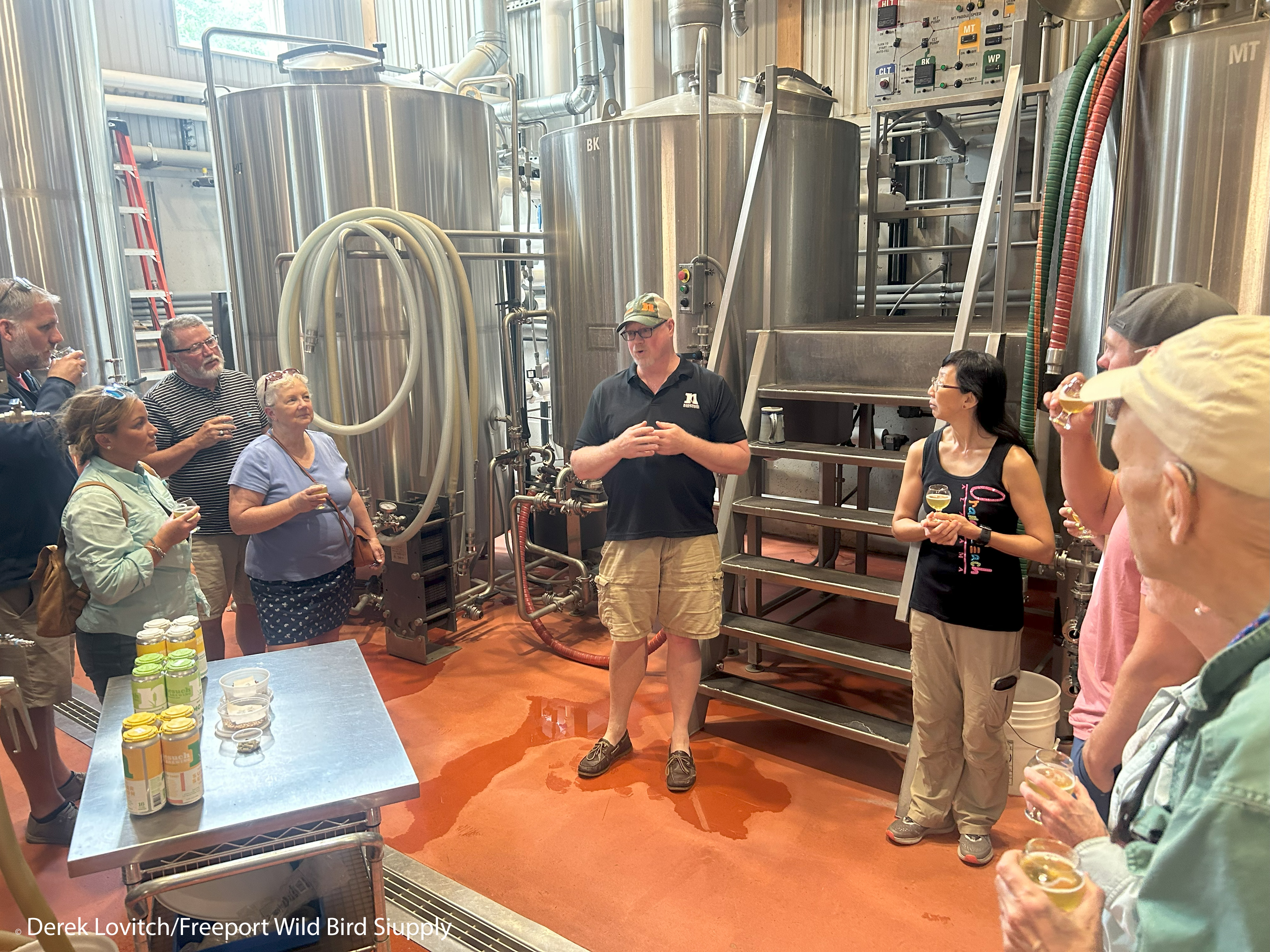
Then it was time to head over to Nonesuch River Brewing, where owner Michael and his wife Kristen graciously greeted us with a sample of their Summer Session – a nice light, refreshing welcome. We then enjoyed sips of their summery and bright Mojito IPA with lime and mint, followed by their Solstice hefeweizen with a little bit of ginger prickliness and hint of lemon. As we enjoyed those beverages, we thoroughly enjoyed an all-in tour in the brewhouse, learning the basics of brewing, and some of the house techniques to make Nonesuch such a popular brewery. I saw several four-packs of Mojito return to the bus with us, and the location can’t be beat for a post-Scarborough Marsh celebratory toast!
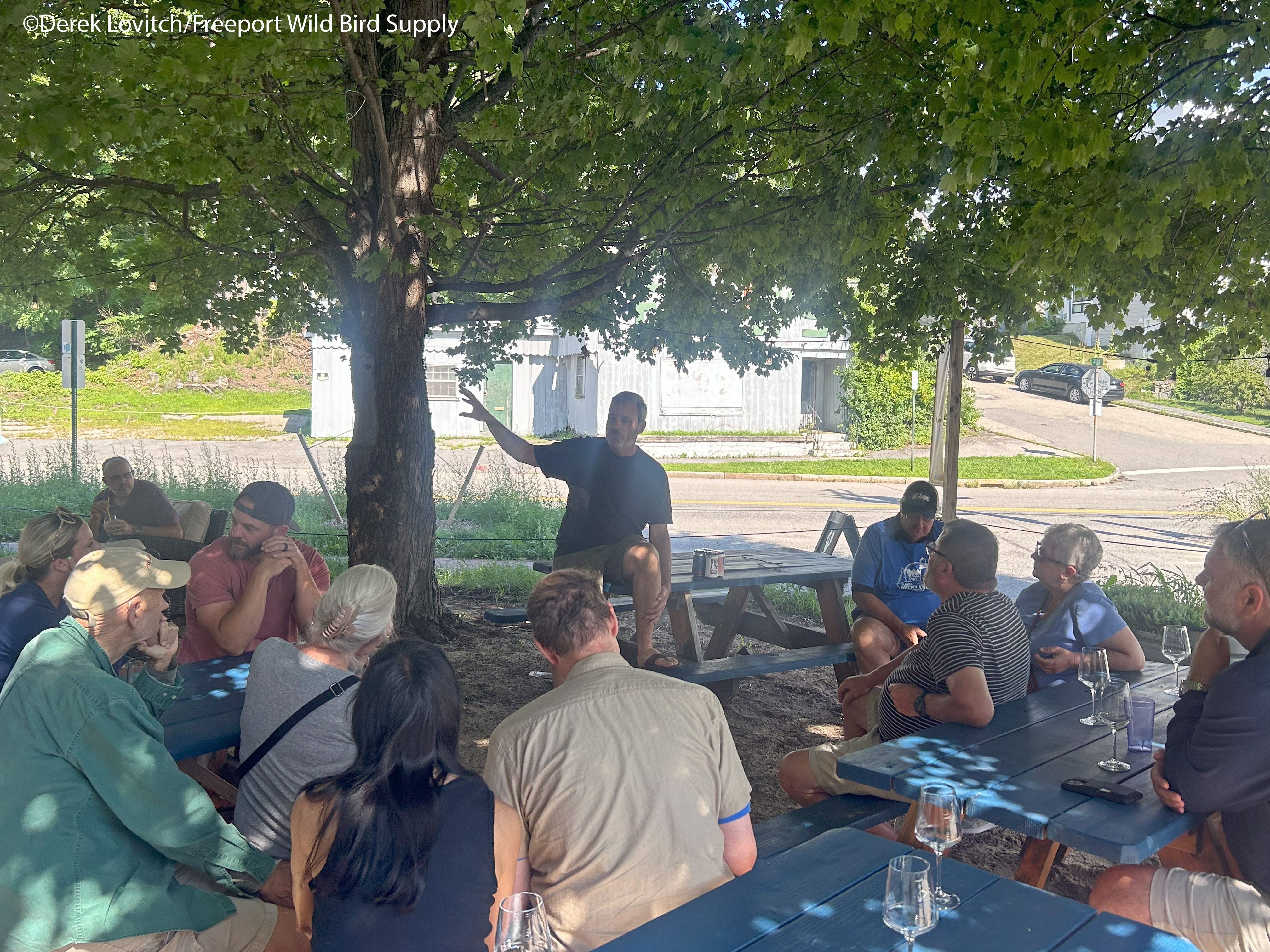
Returning to Portland, our second beverage destination was the newly expanded home of Blue Lobster Urban Winery. Once again, we felt privileged to get the tour from the owner and winemaker! Chris walked us through the winemaking process, the rational for canning it, and the history of the company. We began with a taste of their Tightline cider, a very dry cider made from local apple juice and wild yeast from the winery. Their sparking Rose was up next: very lightly carbonated with a strong strawberry nose but just a slight sweetness on the palate. Bayside Blend red was nice and dry, as I prefer my reds.
Chris then treated us to a special surprise – a barrel tasting, where we were privileged to be the first member of the public to sample an upcoming bottle release that has been conditioning for two years, and was made from grapes grown on 121 year-old vines in California. This was a special wine, and it was absolutely delightful. Our only complaint was we couldn’t buy any yet! Last but not least, we tried their blueberry infused red, with Syrah and merlot grapes infused with Maine blueberry juice. Especially after Chris suggested making a spritzer or Sangria with it, multiple four-packs were purchased to go.
Nice species of shorebirds, three beers, 4 wines, and 1 cider -now that’s a well-rounded Birds on Tap – Roadtrip!
Birds on Tap – The Boat Trip! Rare Birds and Island Exploration.
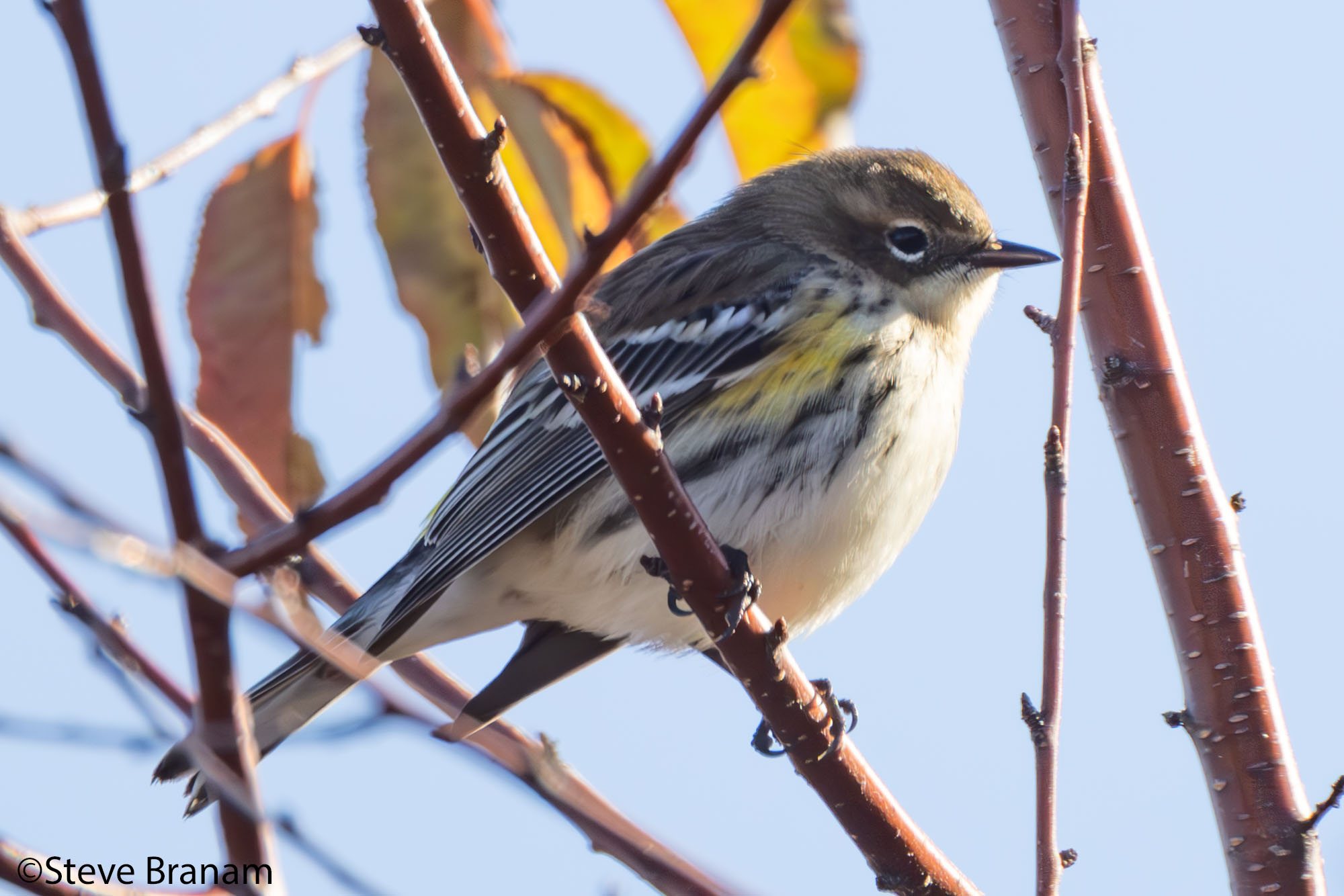
Yellow-rumped Warblers were the dominant species, not surprisingly given the date and island’s habitat, but the number present today was still most impressive. This one is nicely showing off its namesake.
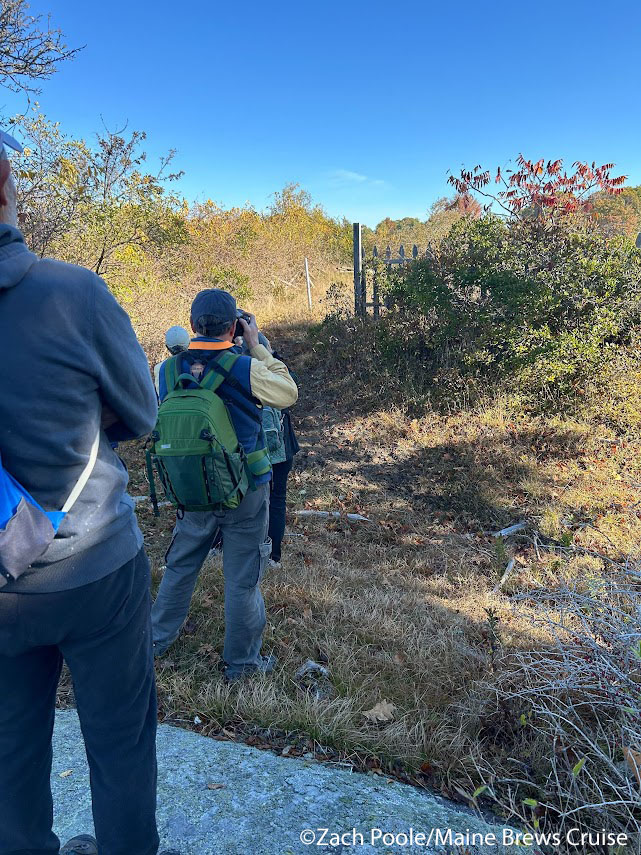
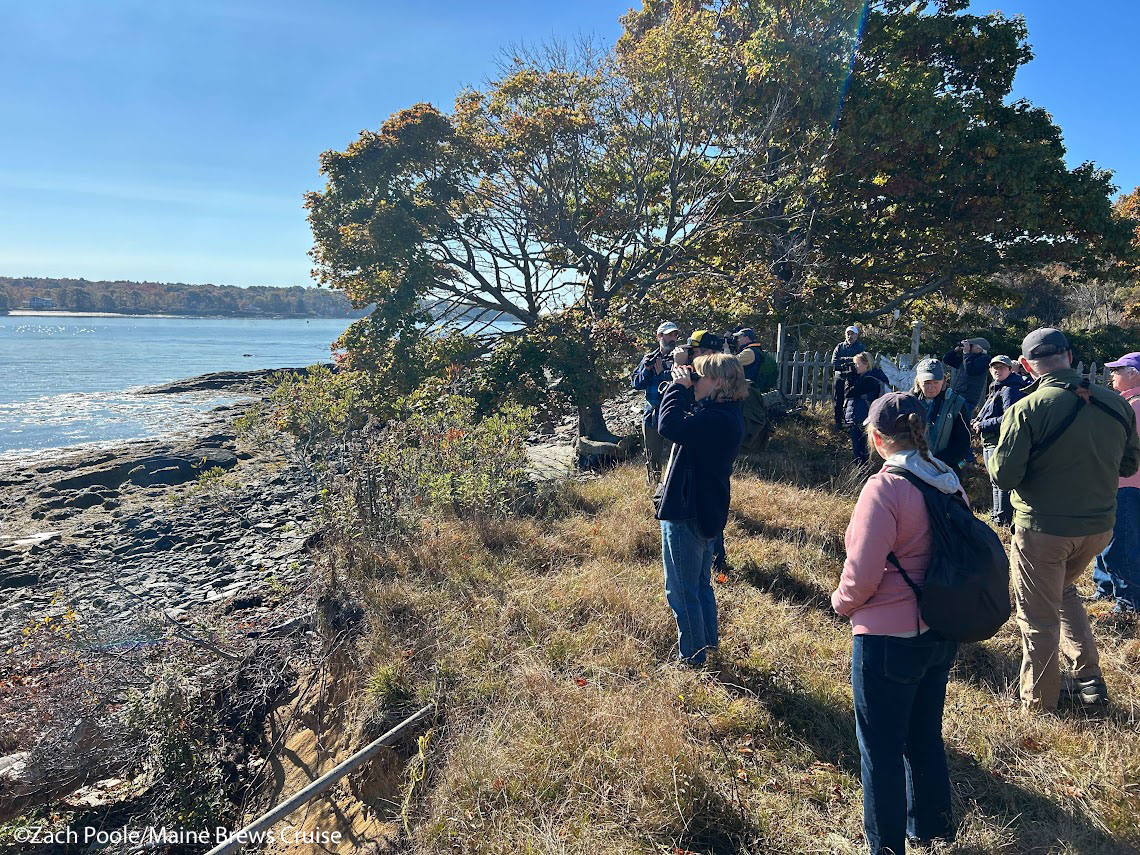
The final Birds on Tap event of 2024 was a special one indeed. This day, we not only took to the water for the first time in the series, but we were able to visit the private House Island and its historic Fort. In fact, we were the first birding tour ever on the island! But this trip was not just about the birds.
We began with some birding, walking the trails and checking all of the nooks and crannies the island and fort had to offer. Yellow-rumped Warblers were simply everywhere, with dozens popping up with limited pishing, and countless others darting around. A few Song and White-throated Sparrows were here and there, and 1-2 Northern Mockingbirds were perhaps delineating winter territories on the island.
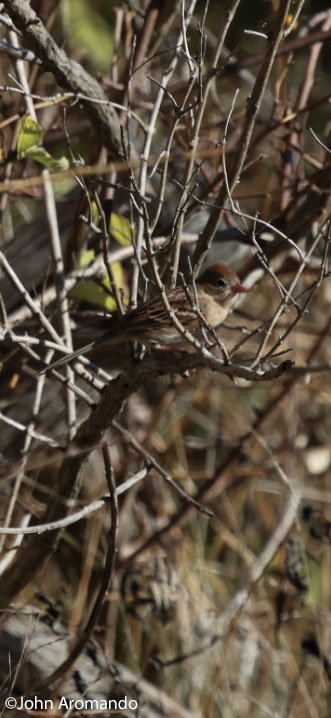
Surf Scoters and Common Eiders were offshore, a pair of Common Ravens flew by, and then, in the cemetery, we found an uncommon migrant: a single Field Sparrow.
We also learned about the food resources of the island, such as native Arrowwood Viburnum and especially the Northern Bayberry that all of these Yellow-rumped Warblers depend on and the invertebrates that can be found in the wrack line on the tiny beach.
Pete then expertly guided us into and through the historic Fort Scammel and the history of House Island. The first English settlement in Maine, it was the only island with a house on it, hence the name of the island. While primarily used for drying cod, fishing operations continued through 1907, when the buildings became part of an immigration station that operated until 1931. On the other half of the island, Fort Scammel was constructed in 1808. Four years later, it became Maine’s only coastal defense fort to fire a shot in aggression when it fired on a British privateer in the War of 1812.
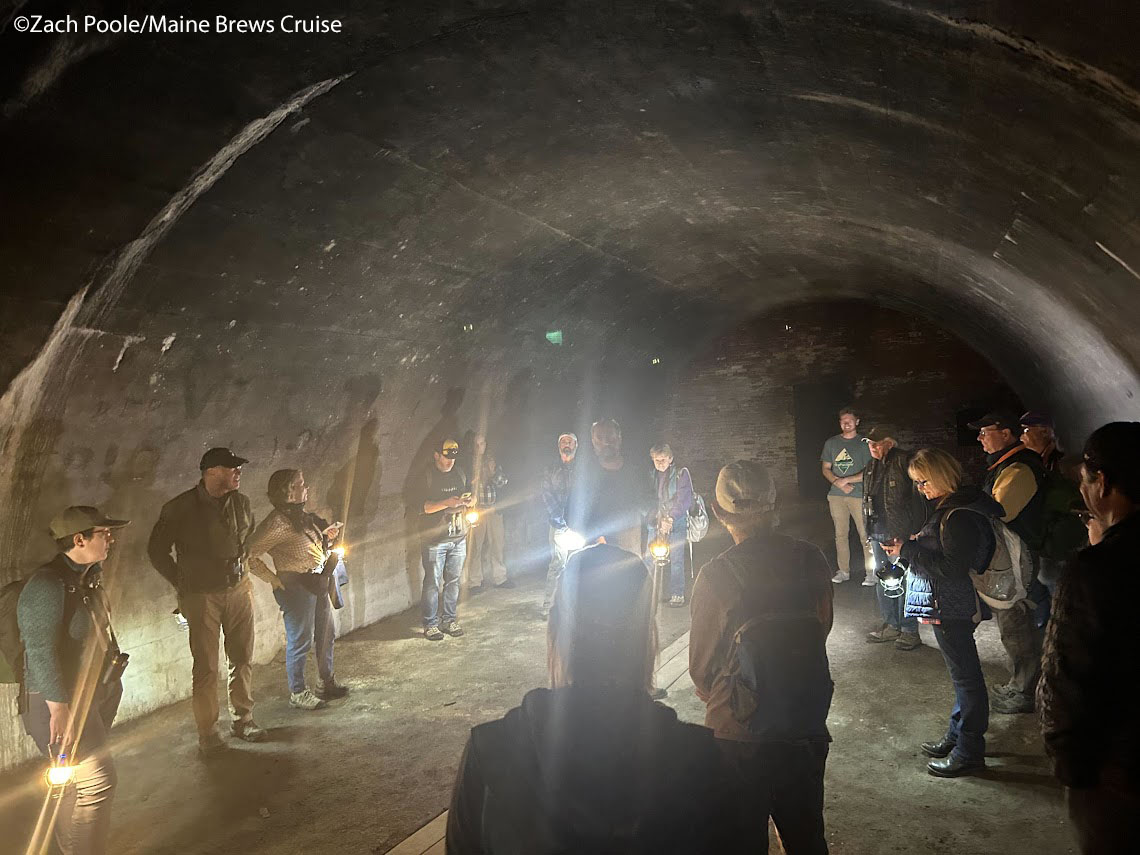
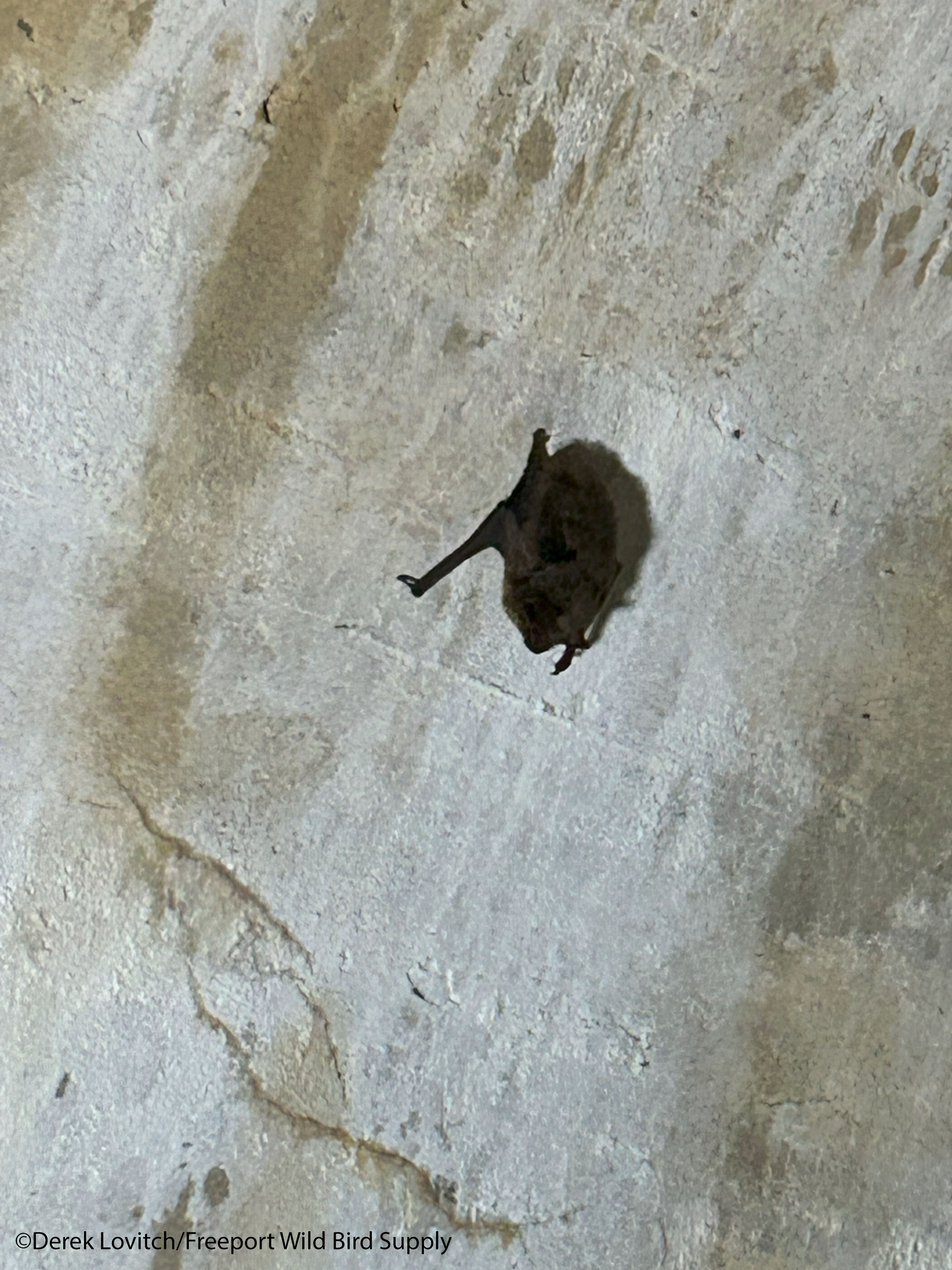
The fort was upgraded in 1840 and again in 1870, when a concrete cap was added, and it was insulated with dirt and sand. While the fort was obsolete by the Spanish-American War, anti-aircraft guns were placed here in World War 1, and in WWII, anti-submarine nets were stored here. Pete guided us through its corridors, described the cannon placement and usage, and we checked out the gunpowder magazines. We learned about the Battle of Portland Harbor, the furthest north battle of the Civil War, and we even found a roosting Big Brown Bat. Even though this was my second visit to the Fort, I was still in awe of the handiwork and the pristine condition.
Wait, what year is this?
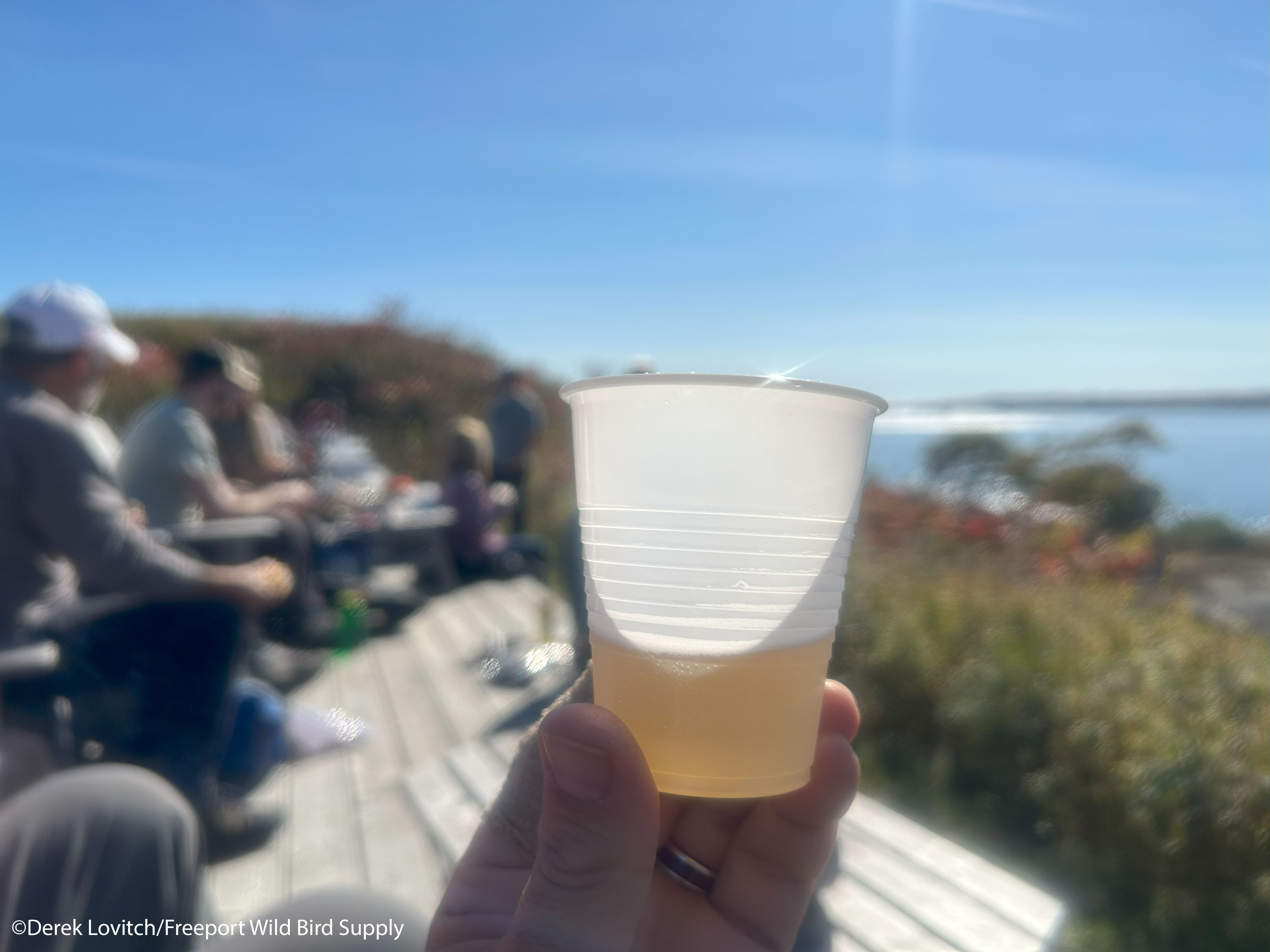
Then it was Tom’s turn to take over, and on such an insanely beautiful day, we took advantage of the comfy chairs above the parade ground for some more Portland history…but this time, it was the history of craft beer in the area. While Orange Bike is one of Portland’s newest breweries, this gluten-free brewery was developed with the help of Alan Pugsley – one of the Godfathers of the Maine craft beer movement. Starting with a refreshing and crisp pilsner, we also paid homage to a classic style.
Few beers say Portland more than Allagash White, and this was up next. The flagship of Maine’s largest brewer, its countless national and international accolades helped put Portland, Maine on the beer map. Speaking of, our next beer was Bissell’s flagship The Substance, one of the pioneers of the “New England IPA,” the hazy, juicy regional endemic that has since colonized the world.
A Horned Lark called as it unfortunately departed the island as we sampled our last beer, Mast Landing’s famous Gunner’s Daughter. A peanut-flavored stout rich in coffee, chocolate, and peanut butter notes, this was a perfect example of how creative modern beer has become.
While it was all-too-soon time to depart the island, our special tour was far from over. With such a gorgeous day (it was in the low 70’s with very little wind), Captain Pete decided to take a little ride out to the mouth of Portland Harbor. We motored past Chief Whitehead…
…and over to Ram Island Light, where Great Cormorants lined the old walkway. We compared their shape and size to the smaller, more common Double-crested Cormorants we passed on our way back inshore, while taking the time to enjoy the view, more Common Eiders and Surf Scoters, and scattered Black Guillemots.
A Gray Seal ushered us into the dock on our return.
Taking the long road to Augusta for an appointment last week, I checked a few open sections of river, including here at the Gardiner Waterfront Park where a group of 16 Common Mergansers were present. Such a snappy bird!
We’ve been busy catching up from our winter vacation, but I did see a few observations of note over the past ten days.
Our feeders In Durham continue to be exceeding active, with at least 70 American Goldfinches and over 50 Dark-eyed Juncos leading the way this week. We’ve also seen increases to 6 American Tree Sparrows, 3 White-throated Sparrows, and a returning two Song Sparrows among all of the resident species. A single Pine Siskin joined the goldfinches on 2/2.
1 hen BARROW’S GOLDENEYE, Bernard Lown Peace Bridge, Lewiston/Auburn, 1/30.
With my guiding season now in full swing, I have no choice but to be out in the field a lot, regardless of my shoulder situation. And with much finer weather and some good nights of especially Saturday and Thursday nights, the arrivals of migrants caught up to the date quite rapidly. Many new arrivals – as well as a lot of personal first-of-years since I had not been getting out much – resulted in a nice long list of highlights for me -and my clients – over the past 7 days.
My observations of note over the past seven days included:
10 Greater Yellowlegs, our property in Durham (thanks to a flood in our field), 5/5 diminishing to 3 by 5/7.
250-300++ White-throated Sparrow in impressive fallout, Evergreen Cemetery, Portland, 5/8 (with client from Spain).
1 female Red Crossbill, Evergreen Cemetery, 5/8 (with client from Spain).
10 species of warblers, Evergreen Cemetery, 5/8 (with client from Spain). This tied my latest date for reaching 10 species at one place in one morning for the first time of the season.
1 WHITE-WINGED SCOTER (looking very out of place) and a pair of RUDDY DUCKS, Sanford Lagoons, Sanford, 5/8 (with clients from Spain and Maine).
1 drake Northern Shoveler, Dunstan Landing, Scarborough Marsh, 5/8 (with clients from Spain and Maine).
1 pair LOUISIANA WATERTHRUSH, Morgan Meadow WMA, Gray/Raymond, 5/11 (with clients from Spain and Maine).
1 BLUE-GRAY GNATCATCHER, Florida Lake Park, Freeport, 5/11 (with clients from Spain and Maine).
The long list of my personal FOY’s this week also included:
1 Ovenbird, Florida Lake Park, 5/6 (with Saturday Morning Birdwalk group).
1 Nashville Warbler, Evergreen Cemetery, 5/8 (with client from Spain).
3 Chimney Swifts, Evergreen Cemetery, 5/8 (with client from Spain).
2 Yellow Warblers, Evergreen Cemetery, 5/8 (with client from Spain).
1 American Redstart, Evergreen Cemetery, 5/8 (with client from Spain).
1 Green Heron, Evergreen Cemetery, 5/8 (with client from Spain).
1 Black-crowned Night-Heron, Evergreen Cemetery, 5/8 (with client from Spain).
1 Chestnut-sided Warbler, Evergreen Cemetery, 5/8 (with client from Spain).
1 Prairie Warbler, Evergreen Cemetery, 5/8 (with client from Spain).
20+ Field Sparrows, Kennebunk Plains, 5/8 (with clients from Spain and Maine).
3 Vesper Sparrows, Kennebunk Plains, 5/8 (with clients from Spain and Maine).
1 Eastern Meadowlark, Kennebunk Plains, 5/8 (with clients from Spain and Maine).
2 Solitary Sandpipers, Sanford Lagoons, 5/8 (with clients from Spain and Maine).
1 Spotted Sandpiper, Sanford Lagoons, 5/8 (with clients from Spain and Maine).
1 Least Tern, Pelreco Marsh, Scarborough Marsh, 5/8 (with clients from Spain and Maine).
30+ Common Terns, Pine Point, Scarborough, 5/8 (with clients from Spain and Maine).
4-6 ROSEATE TERNS, Pine Point, 5/8 (with clients from Spain and Maine).
1 Eastern Kingbird, Dunstan Landing, Scarborough Marsh, 5/8 (with clients from Spain and Maine).
1 Northern Waterthrush, Florida Lake Park, 5/9.
1 Black-throated Blue Warbler, Florida Lake Park, 5/9.
1 Northern Rough-winged Swallow (finally, extremely late for my first of the year, and this one was not due to lack of visitation of its habitats), Florida Lake Park, 5/9.
1 Veery, Florida Lake Park, 5/9.
1 Cliff Swallow, Florida Lake Park, 5/9.
1 Ruby-throated Hummingbird, our yard in Durham, 5/9.
1 White-crowned Sparrows, feeders here at the store, 5/10.
14 Least Flycatchers, Morgan Meadow WMA, 5/11 (with clients from Spain and Maine).
2 Great Crested Flycatcher, Morgan Meadow WMA, 5/11 (with clients from Spain and Maine).
3-4 YELLOW-THROATED VIREOS, Morgan Meadow WMA. 5/11 (with clients from Spain and Maine).
1 Scarlet Tanager, Morgan Meadow WMA, 5/11 (with clients from Spain and Maine).
1 Warbling Vireo, Durham River Park, Durham, 5/11 (with clients from Spain and Maine).
1 Bank Swallow, Florida Lake Park, Freeport, 5/11 (with clients from Spain and Maine).
Freeport Wild Bird Supply is very excited to partner with Down East Magazine’s Down East Adventures for our third year. In 2023, we are expanding our offerings to include two exclusive overnight trips, along with our popular ½- and whole-day targeted workshops. Focused on skill-builder rather than list-building, there will be plenty of “life birds,” but also more knowledge and education about birds, habitats, birding, and much more about the natural world.
The full list of upcoming tours can be found here. At the conclusion of each tour, I’ll post the trip report here.
Winter Waterbirds Workshop, January 15.
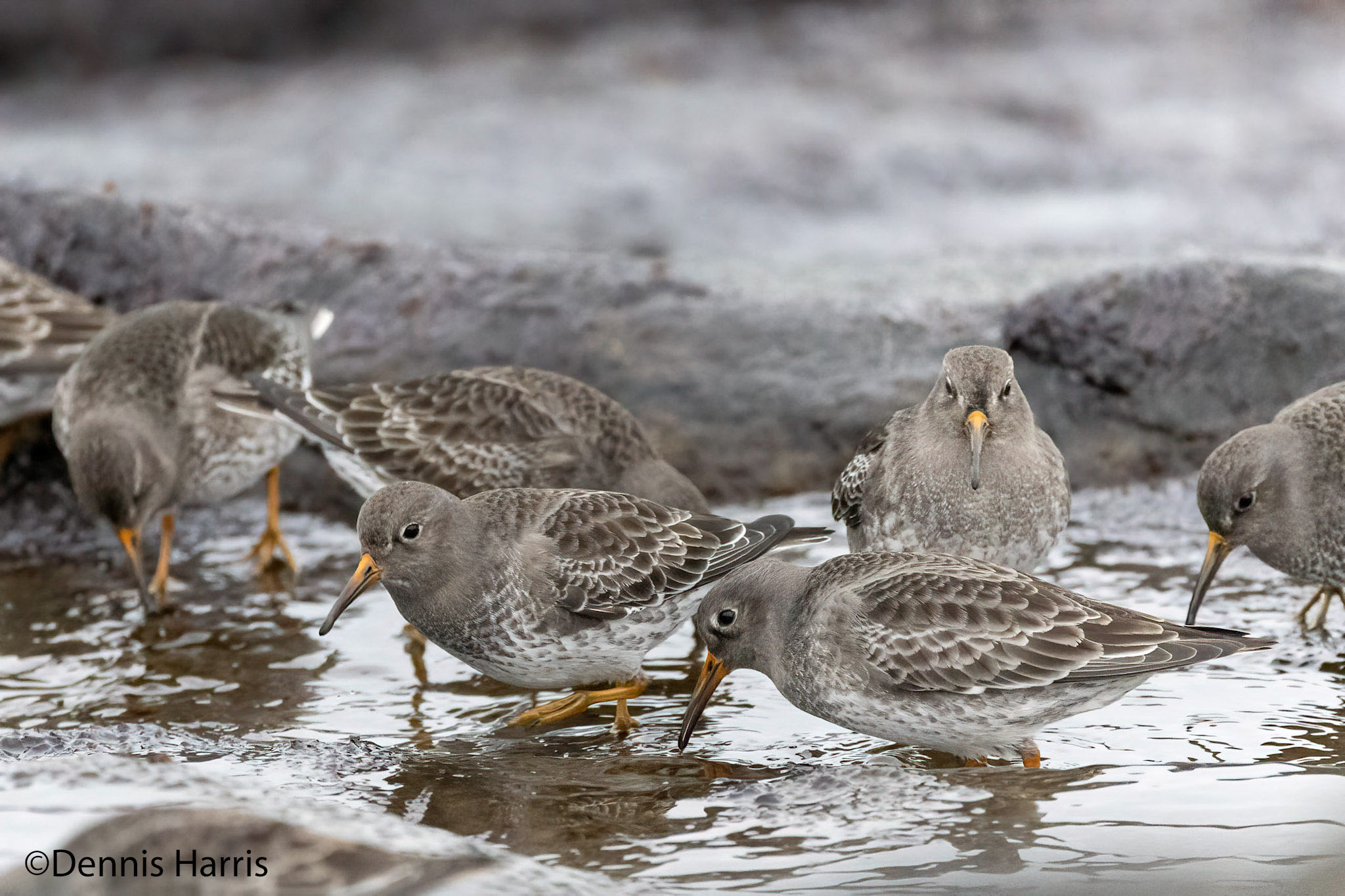
This Purple Sandpiper was about as cooperative as it gets for us at Sohier Park in York. Later, it was joined by its friends (photo below). This is really a lovely shorebird when viewed as well and as close as we experienced.
Extremely strong winds and very high seas presented a challenge as we sought out wintering waterbirds along the southern York County Coast. We worked hard to find sheltered water where we could observe birds well, but when we did find that secluded cove, peninsula lee, or rivermouth, we were treated to incredible looks at many of the birds we had hoped for.
We looked down on Red-breasted Mergansers at Perkin’s Cove, and you’ll never be closer to a Common Loon than we were at the Ogunquit Rivermouth. We checked a few more locations than I usually need to on this tour, but our most productive spot was the southern shoreline of Sohier Park at The Nubble. There, we were treated to close views of Black and White-winged Scoters, Harlequin Ducks, and a most-cooperative flock of Purple Sandpipers. We then ended the day at hidden Abbott’s Pond, where we enjoyed a break for the wind, close comparisons to study details between Mallards, American Black Ducks, and hybrids thereof.
Meanwhile, a group of 8 or so Black-legged Kittiwakes were feeding off of Short Sands Beach, and a stunning adult Iceland Gull passed by at The Nubble. Unfortunately, the seas were just a little too rough to find any alcids today, but we knew they were out there!
Spring Migrant Songbirds Workshop, May 14.
This stunning Blackburnian Warbler nicely demonstrated the value of blooming oak trees for seeing warblers in the middle of May.
Four hours later we had not left Evergreen Cemetery in Portland…a very good sign. There was just no need to move along, the birds kept coming to us. In the end we tallied a respectable 16 species of warblers, even though growing a list was not our goal. What made this workshop successful, however, was how well we saw just about all of the warblers and other songbird migrants throughout the morning.
Warblers were a highlight of course, including repeated quality time with favorites such as American Redstart and Black-and-white Warblers, the two most plentiful migrants this morning. We also enjoyed great looks at several Chestnut-sided Warblers, Magnolia Warblers, and Northern Parulas, with fantastic studies of Black-throated Blue Warbler, Black-throated Green Warbler, Yellow Warbler, and Wilson’s Warbler. We also saw two newly-arrived Tennessee Warblers which aren’t always easy to get looks at. There was a good amount of song this morning, so we had chances to listen and learn many of these species as well.
Shortly after hearing a Red-eyed Vireo and my describing it as “high up and often hard to see,” we found one in the lower branches of a nearby oak, and watched it sing, forage, and do all things vireo for almost 10 minutes! Likewise, after hearing distant Ovenbirds, we had two walking around right in front of us! Beginning with a view of a Veery on the ground in the open, we saw it again as the walk ended, only a few feet in front of us for another great view and chance to observe and study.
During the morning, we chatted about migration, habitat, and the process of building the necessary toolkit to build birding skills. Finishing the walk with a quick overview of some references (we had too many birds to leave much time for anything more), we recapped a very productive and instructive morning of spring birding.
Rangeley Birding Workshop, June 6-8.
Our first overnight tour together, the Rangeley Birding Workshop was based at Bald Mountain Camps in Oquossoc, nestled on the shore of Mooselookmeguntic Lake. Common Loons greeted us, but so did the rain. June of 2023 was one of the rainiest Junes on record in Maine, and we were very thankful for the wood stoves in each cabin!
Our first morning, 6/7, began at Hunter Cove Wildlife Sanctuary, with lots of singing Blackburnian Warblers. A large flock of Red Crossbills flew over, two Yellow-bellied Flycatchers were heard clearly and then glimpsed, and a variety of common warblers were detected. A confiding pair of Canada Jays was the highlight – as they often are – but even the common warblers were tough to see today, so we focused on practicing our birding by ear skills.
Enjoying our delicious boxed lunches at the Rangeley Waterfront Park, with more Common Loons offshore, we delved into an impromptu gull workshop, using each age class of Ring-billed Gull as an introduction to molt, feather topography, and identification. A 3rd-cycle Herring Gull kindly dropped in for comparison as well. In inclement weather, we take advantage of whatever learning opportunities the birds are willing to provide!
After lunch, we poked around the Mingo Spring Birding Loop, with good looks at the likes of Least Flycatcher, Alder Flycatcher, and Dark-eyed Juncos among others. But as rain returned, we called it a day and settled in to dry out in front of our stoves instead of an afternoon of lake-watching from the BMC property. And dinner was absolutely delicious!
Day 2 began with a brief walk around the BMC property (American Redstart, Ruby-throated Hummingbird, etc) followed by a foray over to the famous birding destination of Boy Scout Road, looking to build on the identification toolkit we worked on the previous day. We parked half the cars at one end and then walked the length of the road, birding along the way. But it was rather quiet here too – the ongoing story of June 2023. We did have some more Red Crossbills, a fantastic view -finally – of a Blackburnian Warbler, several Alder Flycatchers, and once again more Canada Jays. But this time, it was a family group of a pair with 2 juveniles in tow!
And then it began to rain. Again. A lot. But I give this group credit – they soldiered on! Of course the rain began in earnest when we were as far from either set of cars as possible, so there wasn’t really a choice, but still, spirits remained high and the birding continued. A pair of Hooded Mergansers, a singing Palm Warbler, and a Spotted Sandpiper were among the last birds of the outing, before the water had penetrated our clothing and it was time to call it a day and hope for better conditions next year!
Shorebirds Workshop, August 10.
The best way to learn shorebirds is to see them in their preferred habitats, feeding, moving, and mixing with other species, such as these Short-billed Dowitchers (a sandpiper) and Semipalmated Plovers here at Hill’s Beach in Biddeford.
An absolutely perfect day of summer weather (finally!) greeted us for this annual favorite outing. And the only thing better than the weather this day was the birding! Recent insane rainfalls have led to very high water in many of our favored high-tide, upper-marsh locales, so we focused on tidal habitats including beaches and mudflats, altering our usual routine from the start.
Beginning in Biddeford Pool, we introduced shorebirds with several Spotted Sandpipers along Ocean Avenue before jumping into the mixed species flock on Biddeford Pool Beach on the outgoing tide. There we estimated over 1,250 Semipalmated Sandpipers and 200 Semipalmated Plovers as we learned the basics of shorebird (sandpiper vs. plover) identification and began to work our way up to teasing out a couple of White-rumped Sandpipers and Ruddy Turnstones from the masses. 2 Killdeer in flight overhead were our only two of the day.
Kicking off our shoes to spend the rest of the morning on the sandflats of Hill’s Beach, we compared a Piping Plover to the many (400+) Semipalmated Plovers and 30 Black-bellied Plovers. A single juvenile Least Sandpiper was out of place on the beach, but offered a perfect opportunity to closely study the differences in shape, size, and overall structure to the 150 or so Semipalmated Sandpipers that were scattered about. 59 Short-billed Dowitchers gave us the chance to really observe shape and feeding styles, practicing identifying these birds both near and far.
Over at The Pool, a distant “Western” Willet joined 7 “Eastern” Willets, as we advanced into subspecific identification just briefly before stopping for lunch as the tide began to roll in.
The afternoon was spent at Scarborough Marsh, where our first two stops offered little (other than a calling Greater Yellowlegs to at least practice our shorebirding by ear) due to the very high water in the salt pannes from the recent rains. Pine Point more than made up for it on the rapidly incoming tide, however, with one heck of a shorebird show: 1500-2000 Semipalmated Sandpipers, 400-500 Semipalmated Plovers, a few more Short-billed Dowitchers and White-rumped Sandpipers, better looks at “Eastern” Willets, and the icing on the cake: a cooperative Whimbrel – our 13th species of shorebird for the day.
Practicing with our identification tool kit, we tested ourselves on finding the uncommon species among the masses, and took a moment or three to simply sit back and enjoy the show. Now that we know how approachable shorebird identification really is, we can more fully appreciate these most marvelous migrants!
Monhegan Birding Workshop, September 23-25.
Northern Gannets and two Green-winged Teal flying with 6 Surf Scoters from the ferry and an adult Lesser Black-backed Gull greeting us upon our arrival seemed like a great sign for what would be a bird- and fun-filled weekend on the Migration Mecca of Monhegan.
Unfortunately, it turned out to be one of the slowest (for both species and diversity) fall weekends I have ever experienced on the island. That being said, a big list wasn’t our goal. It was to learn birds – their ID, their migration ecology, and everything else that makes the island so special for birds and birders. And this is not tour guide spin: a slower day is better for that as we had ample opportunity to view almost everything we encountered, study them, discuss them, and luckily, what the island failed to provide in quantity, it certainly delivered in quality of observations.
On each day, we would find pockets of warblers here and there, but we kept coming back to one particular willow and a nearby thicket that constantly hosted 4-5 Cape May Warblers (photo above), 4 Yellow Warblers, a Yellow-bellied Sapsucker, and a smattering of others. The Cape Mays put on a clinic: all four plumages from pale, 1st-fall female, to bright and spiffy adult male were on display.
Over the first day and a half, we took what the island offered, besides exceedingly pleasant weather! There was the hen Green-winged Teal feeding within three feet of us, fly-over Rusty Blackbirds in the morning, and Great Cormorants on the cliffs on an afternoon short hike to name a few highlights. The skies were punctuated by the occasional migrant Peregrine Falcon and the constantly-hunting Merlins.
Granted, we were really just looking at birds to fill the time between the incredible meals at the Monhegan House!
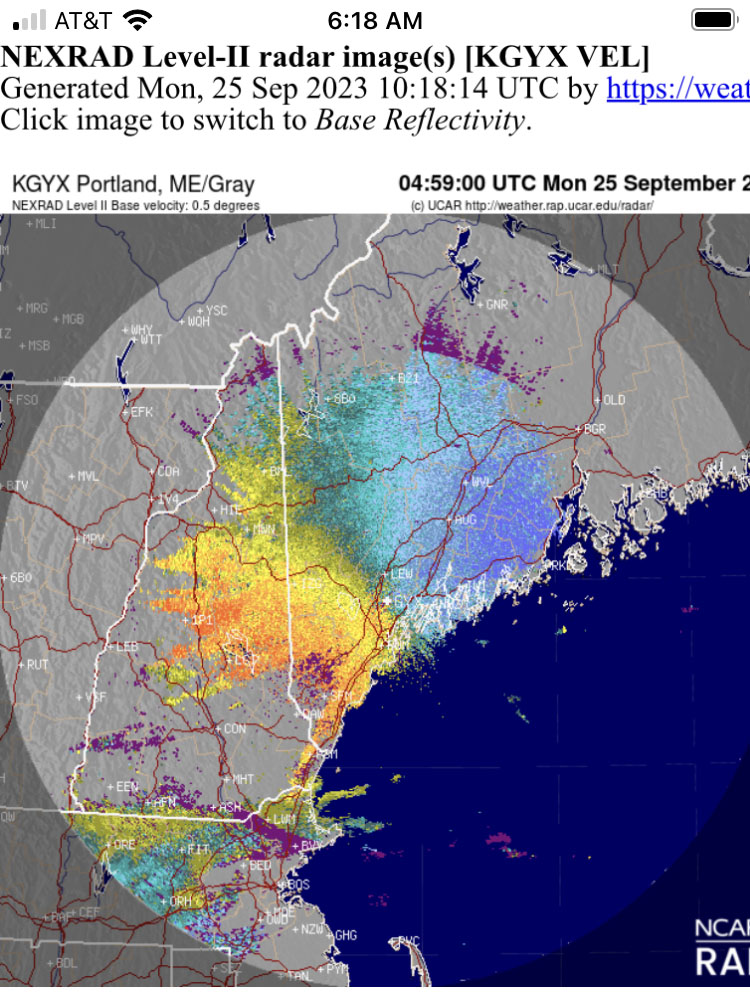
On our final morning, a good migration overnight produced a new arrival of birds for the “morning flight;” the concepts and nuances thereof were topics of regular discussion.
The group’s high spirits earned them a great morning, with a taste of what Monhegan birding has to offer. There were American Pipits and Yellow-rumped Warblers in Morning Flight, a flock of 10 truant Bobolinks circling around, an immature male Belted Kingfisher displaying to a very-uninterested female, more Cape May Warblers, and a surprising fly-by Wilson’s Snipe.
At one point we had four juvenile Sharp-shinned Hawks dogfighting, exemplifying the difference in sizes of male vs female raptors. And the workshopping continued with Great and Double-crested Cormorants side-by-side, migrant raptors including several Northern Harriers, and more species before breakfast than we had most of the previous weekend! Speaking of breakfasts, goodness, they were good as well.
We finished up with a gull workshop on the shoreline, opening eyes to just how easy most gulls are most of the time. The advanced course was the fly-by 1st winter Lesser Black-backed Gull amongst Herring Gulls on the ferry ride back! And yes, we looked at butterflies, too!
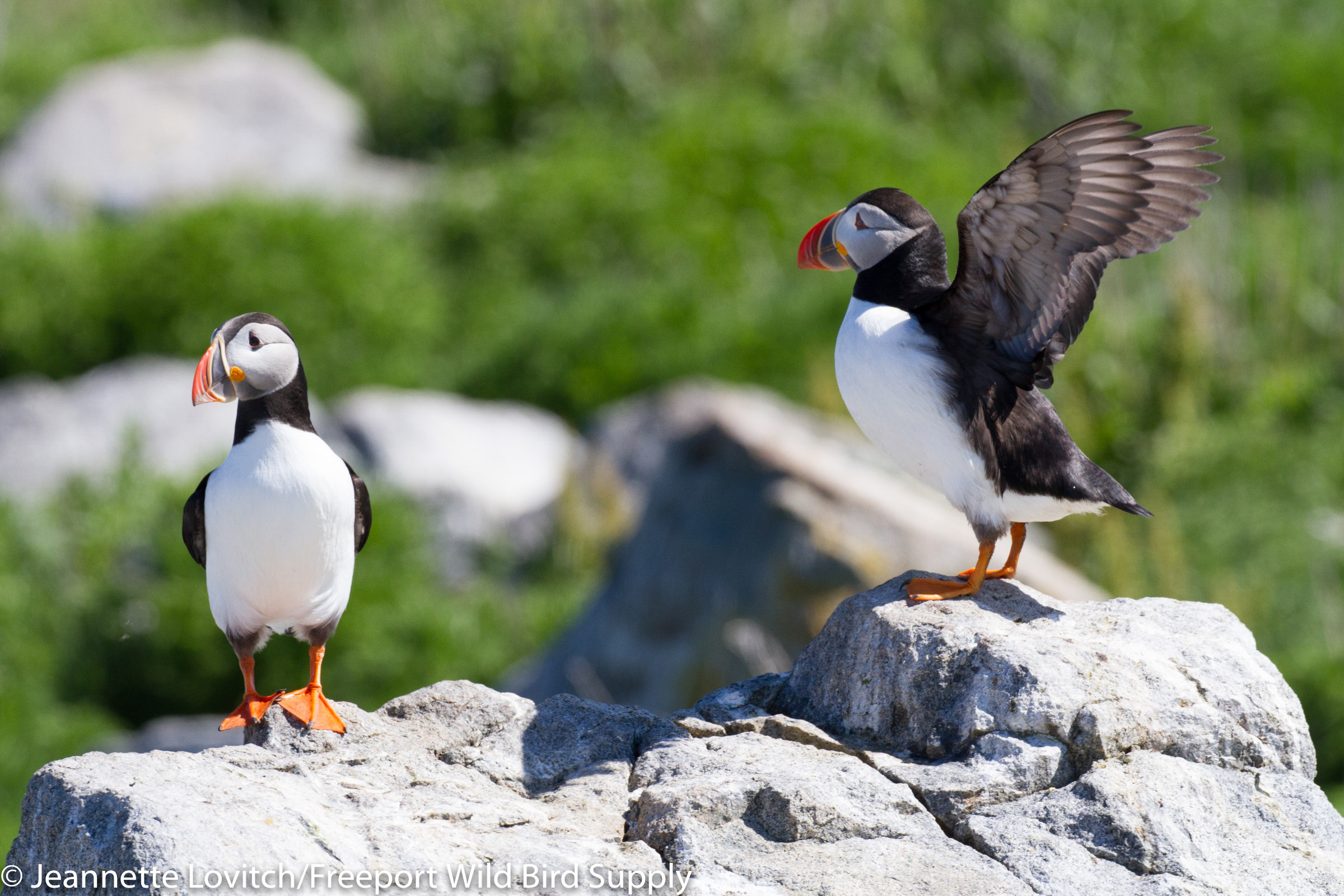
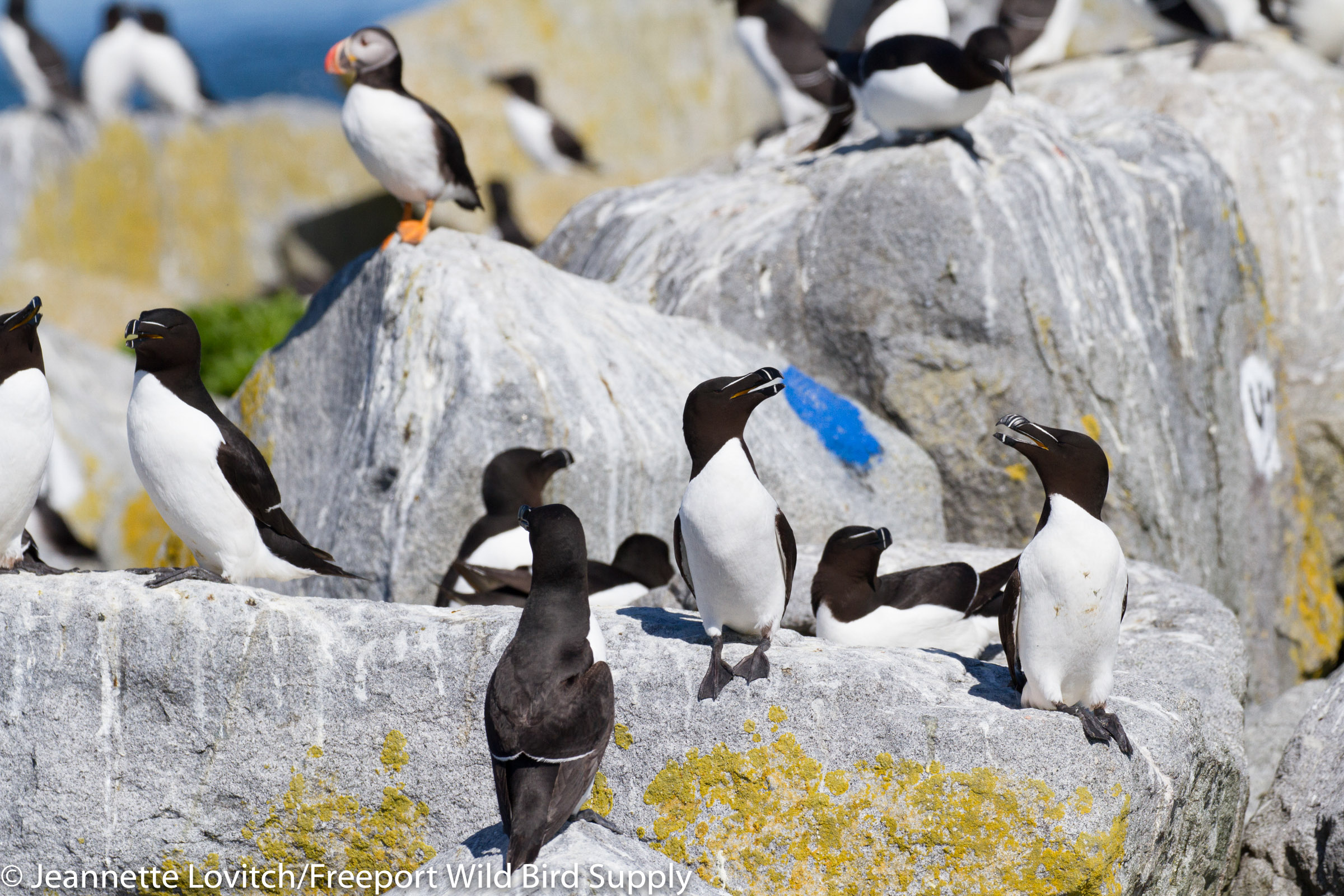
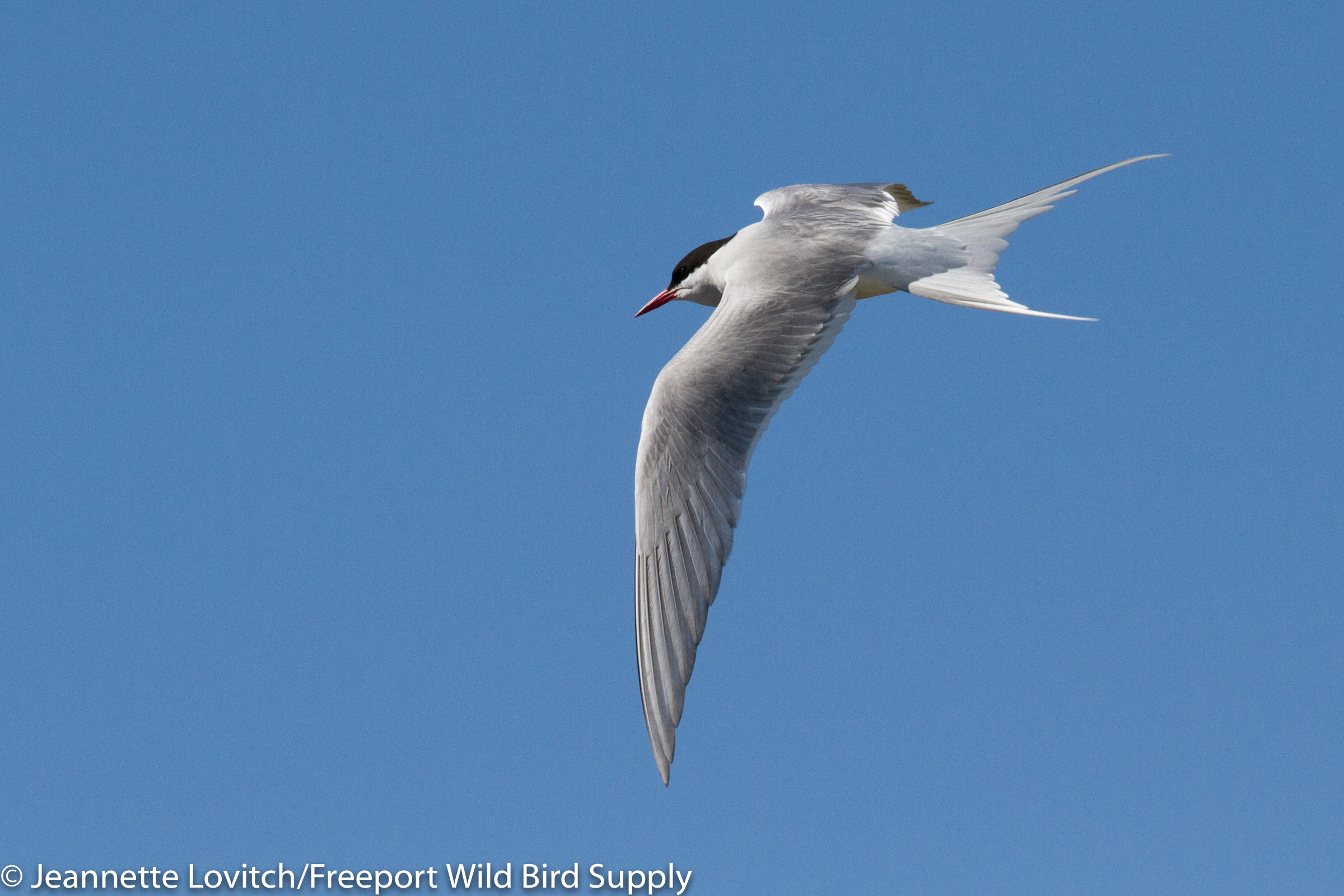
A displaying pair of Northern Gannets stole the show at Machias Seal Island on our visit there on 6/22.Atlantic Puffins, Machias Seal Island, 6/22.Razorbills, Machias Seal Island, 6/22.Arctic Tern, Machias Seal Island, 6/22.
I had a rather busy week, but not as busy with birding as I would have liked. Therefore, this mostly to share Jeannette’s photography from our visit to Machias Seal Island last week. However, a few observations of note over the past seven days included the following
1 female ORCHARD ORIOLE and 1 Blue-gray Gnatcatcher, Green Point WMA, 6/27 (with Jeannette).
1+ BOREAL CHICKADEE, East Royce Mountain, White Mountains National Forest, 6/26 (with Jeannette).
1-2 LITTLE EGRET X SNOWY EGRET hybrids, Falmouth, 6/30. One bird spotted from the Martin’s Point Bridge appeared to have at least one long, Little Egret-like plume. It was not close enough for photos, but the plume – as well as overall structure was distinctive. After flying upriver with the incoming tide, I found a hybrid at Gilsland Farm (photo below), but no head plumes are visible. Note the greenish-yellow lores (looked darker in the field than this poor, phone-scoped photo), very long and fine bill, and spindly neck. It’s slightly longer legs and overall slightly larger size was apparent when it joined a distant Snowy. However, did I imagine the plume in the earlier view? Did it fall off in transit? Or, are there actually two again this year?
This presumptive Little Egret x Snowy Egret Hybrid was along the Presumpscot River in Portland and Falmouth on the 30th. See notes above.
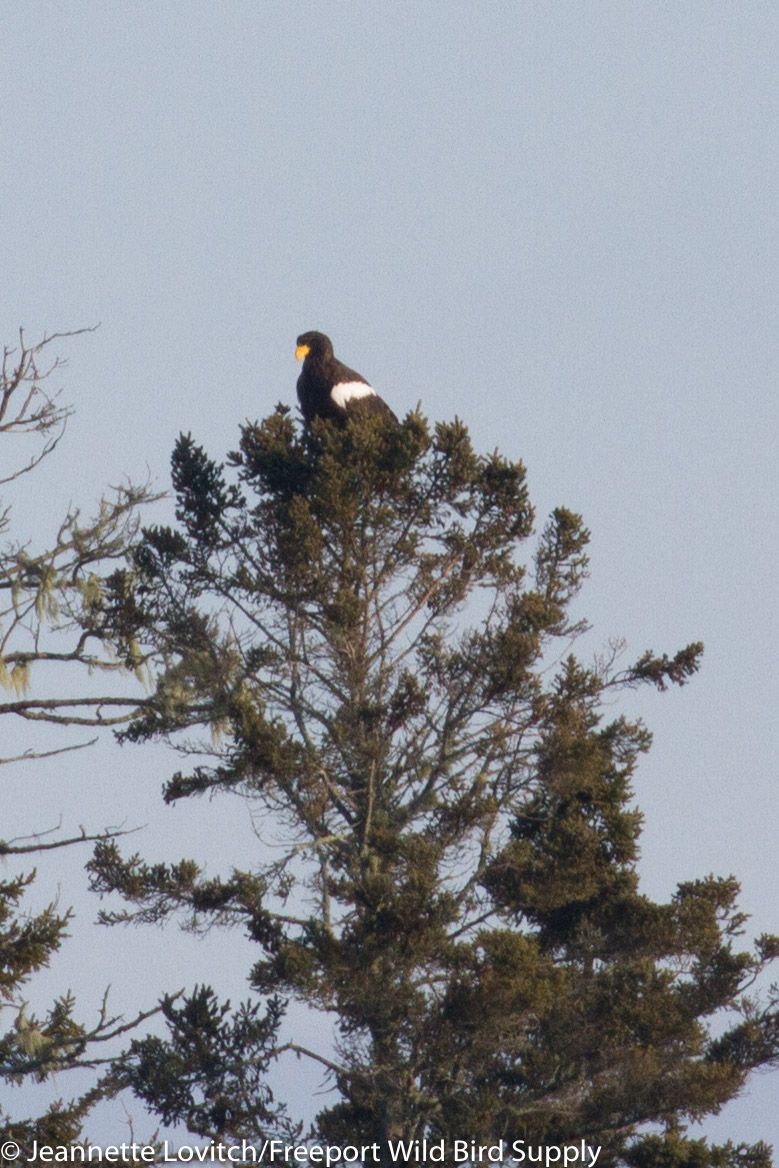
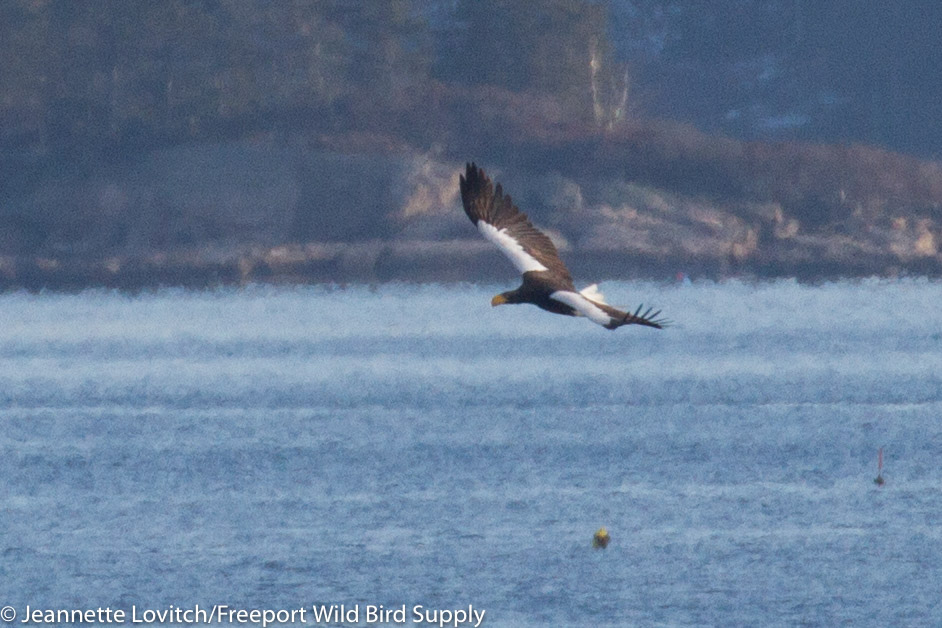
No one could have predicted the bird of the year, err..century..err, ever. This magnificent Steller’s Sea-Eagle spent four days in Georgetown right around the New Year.
It’s once again time for my annual Predictions Blog, where I view into my crystal binoculars and attempt to forecast some of the “new” birds to grace the State of Maine – and then my own personal state list – in the coming year.
I feel like I could have just recycled my blog from 2021. “…Worst Year Ever.” Ha. 2021 replied, “hold my beer!” That all being said, a complete summary would show the full picture, with all its ups and downs (and there were a lot of downs), but undoubtably with many happy moments contained within. That’s all beyond the scope of this blog. I’ll just stick to the birds.
Of course, nothing compares – or perhaps, ever will compare! – to the headliner of 2021: The Steller’s Sea-Eagle. No, this was not on my predictions list – or anyone else’s at the start of the year. That being said, following reports this summer in New Brunswick, November in Nova Scotia, and then December in Massachusetts, there is no doubt it would have been optimistically added to the list for 2022…had it not shown up in Georgetown on December 30th (or perhaps earlier). This mega-of-megas, one of the world’s most extraordinary birds, might render almost any other first state record pedestrian, or at least anticlimactic.
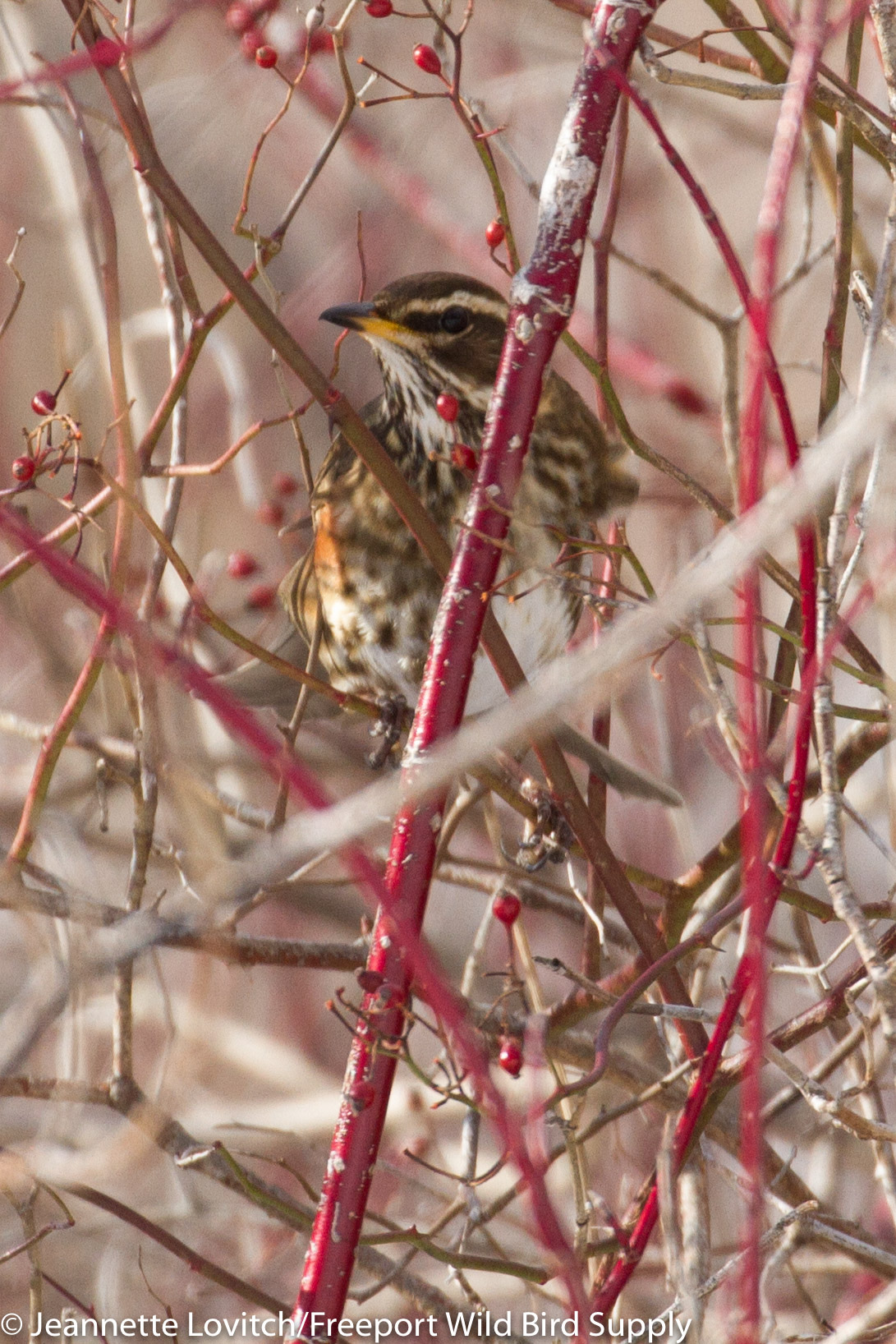
At the very least, it does overshadow the only other chaseable first Maine record for this year: Redwing, a European thrush. What was the “bird of the year” until three days remaining on the calendar, this bird delighted many hundreds of birders at Capisic Pond Park in Portland at the end of January 2021 – which seems like eons ago! The first state record, however, actually came earlier in the month, when a Redwing – perhaps the very same individual – was a one-day wonder on private property in Steuben. Lucky for all, the next one/sighting of it showed up on public property and stayed around for about three weeks. Redwing was #16 on my “Next 25 Species for Maine” list.
And finally, a Masked Booby surprised observers on Mount Desert Rock on August 9th. With increasing observations of tropical seabirds north of the Gulf Stream, this is less shocking than it would have been a few years ago.
Three first state records in one year is pretty good, and the quality of this year’s roster is impressive. How will 2022 compare?
Therefore, my list of next 25 species to occur in Maine receives just a few tweaks.
***EDIT, 3/31 – When a Trumpeter Swan arrived in Scarborough Marsh, it was noted as the 2nd State Record. I realized that the 2011 bird from Fortune’s Rock Beach in Biddeford was indeed added to the “official” state list. I had counted it on my own list (so no change below), but I never followed up on its status, apparently. With the rapidly expanding introduced populations in the Northeast, along with increasing amount of states “declaring” the bird “established,” I’m shocked it’s taken this long to get a second one. The predictions list has been updated accordingly.***
Personally, I was fortunate to add two birds to my own state list this year. And they were good ones!
The aforementioned Redwing got things started. It was not on my Top 25 list because I expected it to be a one-day wonder in some far-off place, never to be seen again. It was. But then it, or another bird – there were several Redwings in the Northeast part of the continent last winter – debuted at Capisic. That was fun.
Did I mention there was a Steller’s Sea-Eagle? That was my 391st species in Maine!
So neither of my state birds were on my Predictions list. I’ll be OK though, all things considered.
And, as usual, there were also a handful of potential state birds for me that I did not see. Franklin’s Gull appears to be on its way to becoming my nemesis, with another one this year: a one-day wonder at the Sanford Lagoons on 9/9. It was #3 on my list.
A Sandwich Tern at Mount Desert Rock on 7/6 was on my Honorable Mention list, as was Brown Booby, which has started to become regular north of Cape Cod. There was one off of Biddeford Pool on 7/8 ahead of Tropical Storm Elsa, followed by one on Mount Desert Rock August 2nd through 9th (not an easy place to chase!).
So a few tweaks to my list for my next additions to my personal state list are as follows:
1) American White Pelican
2) Neotropic Cormorant
3) Franklin’s Gull
4) Brown Pelican
5) Graylag Goose
6) California Gull
7) Black-bellied Whistling-Duck
8) Brown Booby
9) Slaty-backed Gull
10) Boreal Owl
11) Calliope Hummingbird
12) Common Ringed Plover
13) Cerulean Warbler
14) White Ibis
15) Gull-billed Tern
16) Hammond’s Flycatcher
17) Spotted Towhee
18) Pacific Golden-Plover
19) Wood Stork
20) Ross’s Gull
21) Black-chinned Hummingbird
22) Brewer’s Blackbird
23) Yellow Rail
24) Virginia’s Warbler
25) Common Shelduck
So let’s see what 2021 (edited: 2022) brings to the Maine birding world. A return to a sense of normalcy would be a nice start, however.
I am overdue to luck into an American White Pelican in the state!
3 continuing WILSON’S SNIPE, U of Maine-Orono Steam Plant, 3/9 (with Jeannette).
1 Common Grackle (FOY), Veazie, 3/9 (with Jeannette…sure didn’t expect my FOY in Penobscot County, but numbers increased in southern Maine by week’s end).
1 Killdeer (FOY), Highland Road, Brunswick, 3/11.
2 Lesser Scaup, Mill Creek Cove, South Portland, 3/12.
4 Brown-headed Cowbirds (FOY), feeders here at the store, 3/12.
This Week in Finches:
EVENING GROSBEAK: 0
Red Crossbill: 9 (Type 10 fide Matt Young at FiRN, Viles Arboreteum, Augusta, 3/8 with Jeannette).
WHITE-WINGED CROSSBILL:
PINE GROSBEAK: 1 (Viles Arboretum, Augusta, 3/8 with Jeannette).
Purple Finch High Count This Week: 0
Common Redpoll High Count This Week: 7 (continuing at Back Cove, Portland, 3/7 with Ian Doherty and Ilsa Tucker).
HOARY REDPOLL: 1 (continuing at Back Cove, Portland, 3/7 with Ian Doherty and Ilsa Tucker).
Pine Siskin High Count This Week: 1 (Cumberland Town Landing, 3/7).
This distantly phone-scoped image of a Thick-billed Murre at Winslow Park on the 7th was one of two of these sought-after winter pelagics that I saw this week. Despite being so far from open ocean, this was incredible my 3rd ever in the Lower Harraseeket River in South Freeport!
My observations of note over the past seven chilly days including the following:
1 THICK-BILLED MURRE and 1 female BARROW’S GOLDENEYE (first of winter in Harraseeket River, finally), Winslow Park, South Freeport, 2/7.
1 Yellow-rumped Warbler, Bailey Island, Harpswell, 2/9 (with Jeannette).
The continuing REDWING, Capisic Pond Park, Portland, 2/11 – Although it was seen in its usual spot for much of the day, I had the bird fly over me at 3:25, about 2/3rds the way to the Machigonne Street entrance from Lucas Street. It landed in some taller trees in full sun, with a sizeable group of robins. When many of the robins took off, it joined them, flying just about tree level and exiting the park. It flew NNW over Congress Street, which I believe is roughly its behavior from the very first day. A Cooper’s Hawk passes through seconds later.
1 THICK-BILLED MURRE, Dyer Point, Cape Elizabeth, 2/12 (with Pat Moynahan).
This Week in Finches:
EVENING GROSBEAK: 0
Red Crossbill: 10 (Merrill Road, Pownal, 2/11).
WHITE-WINGED CROSSBILL: 32 Bailey Island, Harpswell, 2/9 (with Jeannette).
PINE GROSBEAK: 1 (Maine Street, Brunswick, 2/9; with Jeannette).























 Maine Birding Field Notes