Tag Archives: pelagics

2025 Fall Half-Day Pelagic with Freeport Wild Bird Supply and Cap’n Fish’s Cruises.

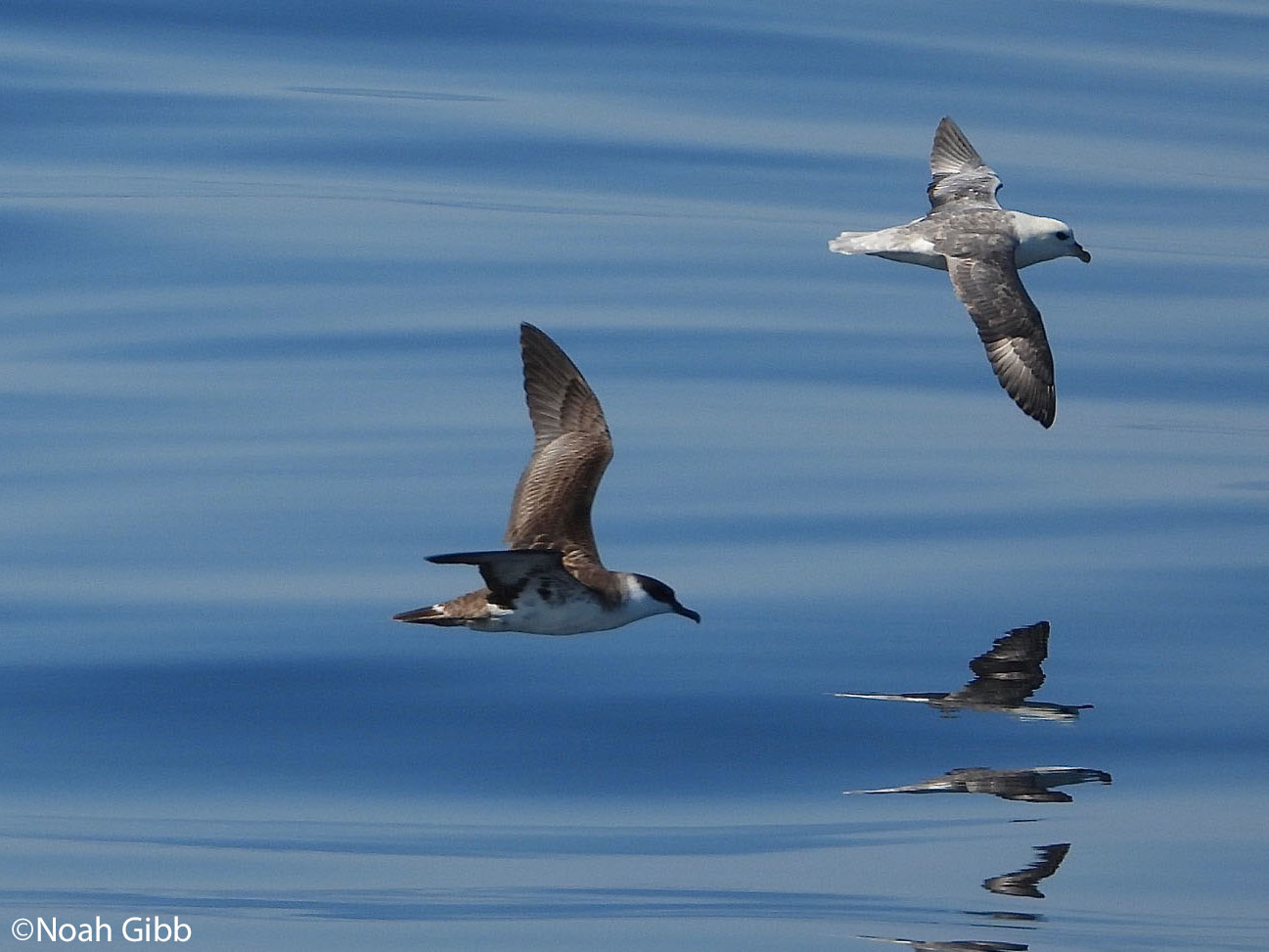
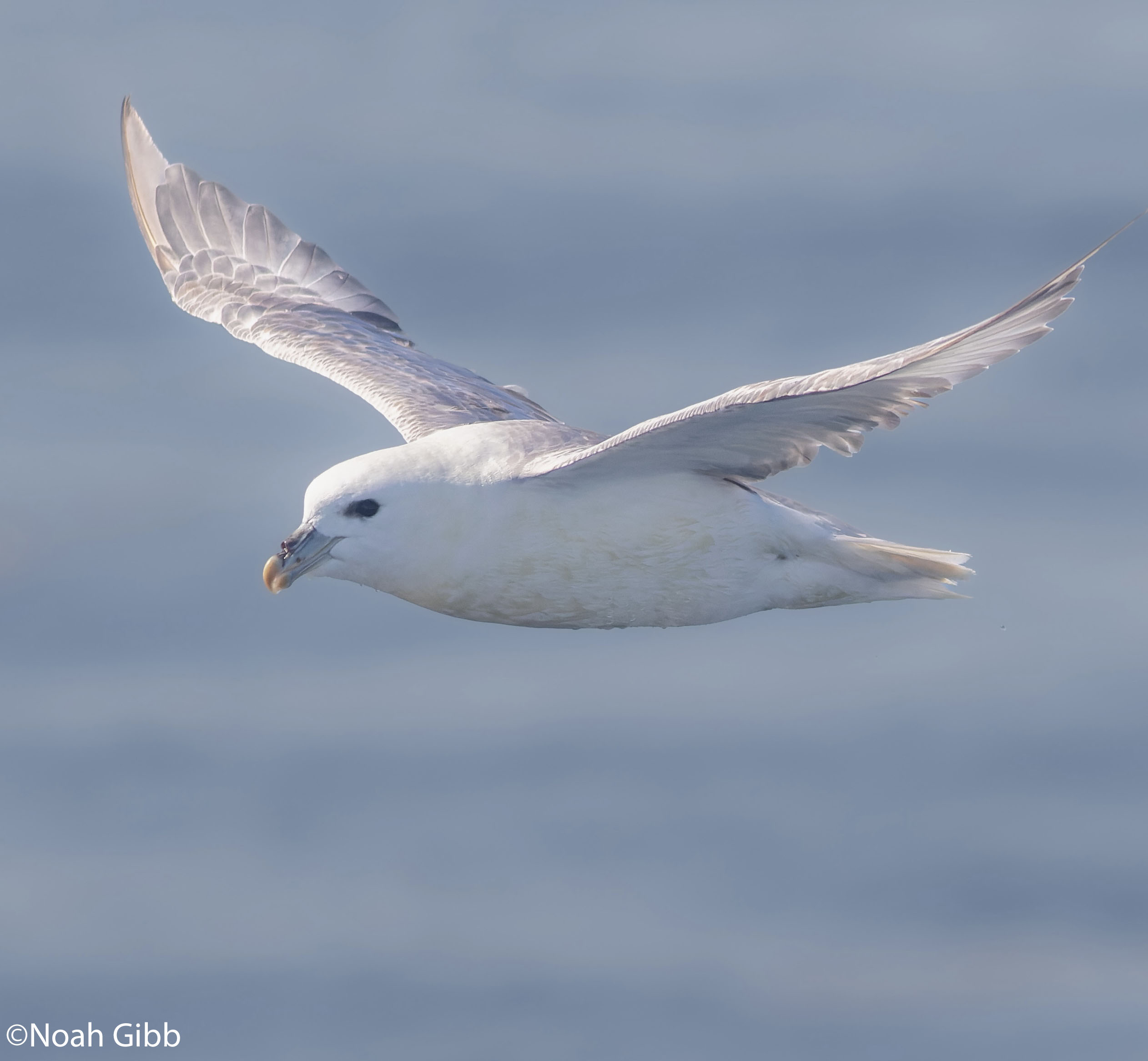
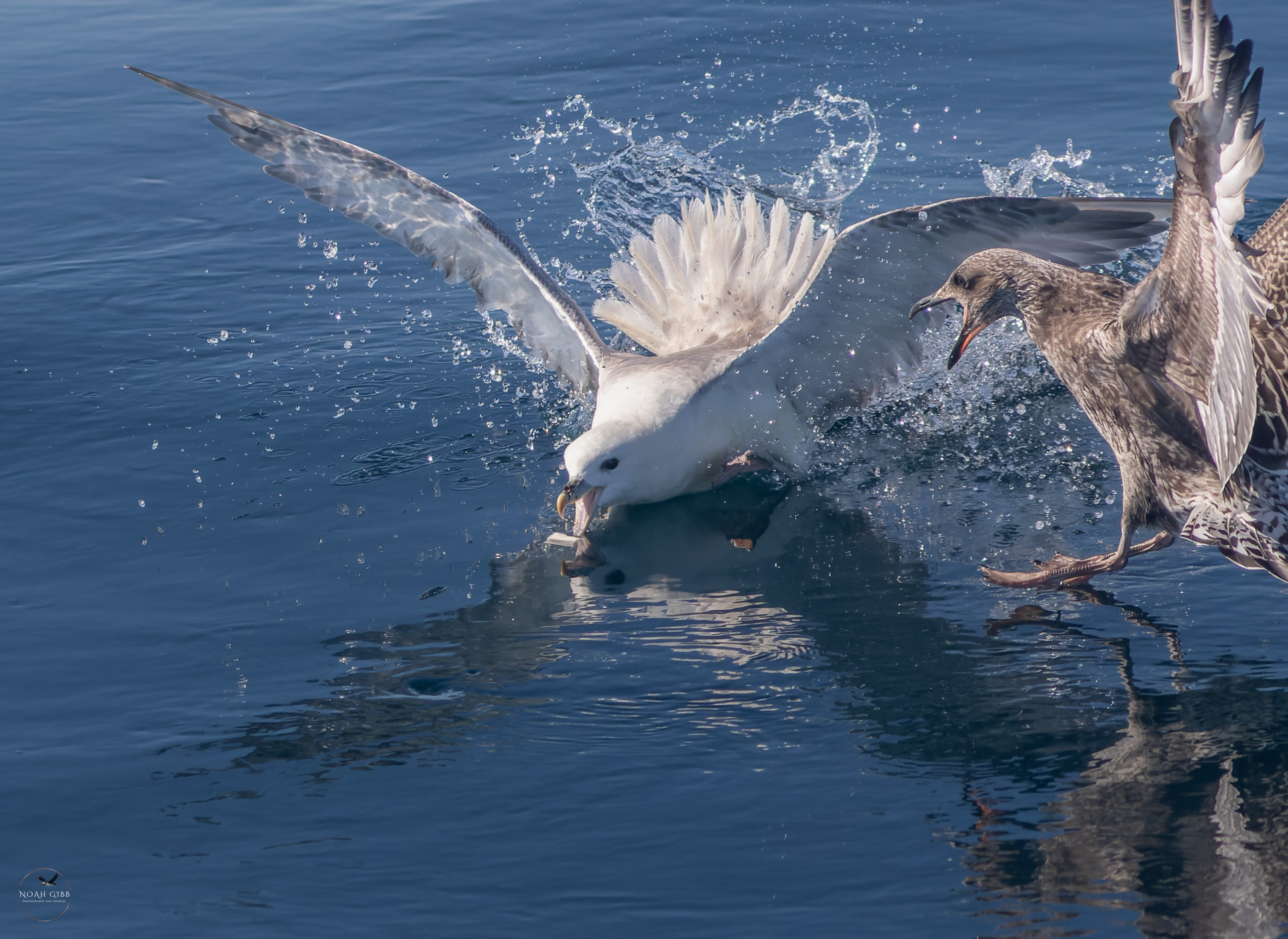
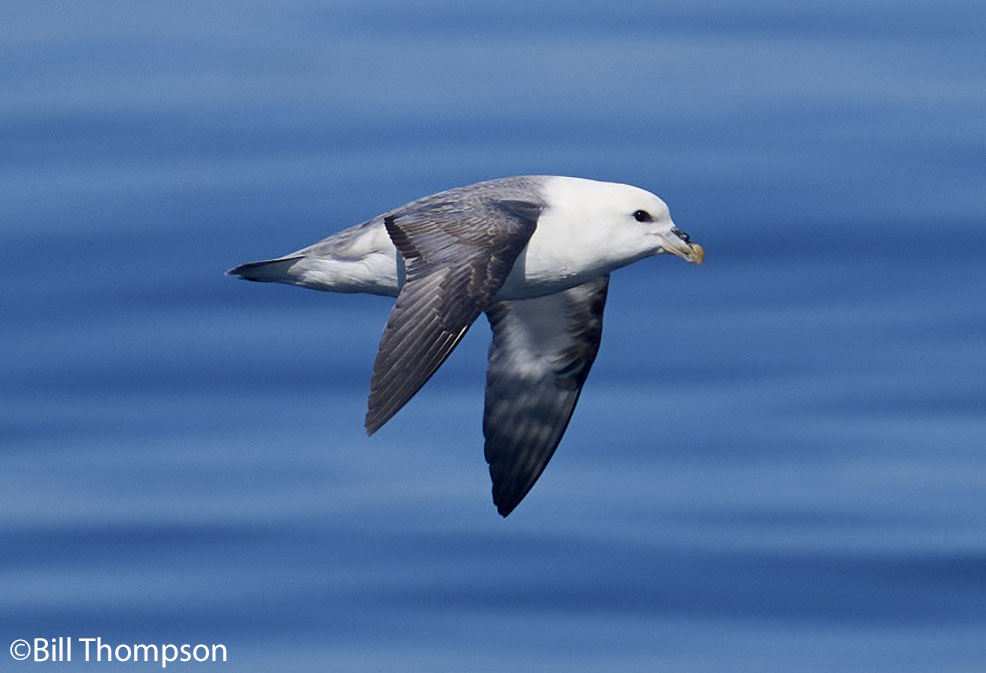
Considering most people would have been happy with a single Northern Fulmar, our tally of at least 18 was fantastic…but the photo opportunities of this winter visitor could not be beat,
including of this much less common dark morph.

Fall pelagics in the Gulf of Maine are notoriously hit or miss. Suffice to say, our Half-Day Pelagic out of Boothbay Harbor on 10/5, with our partner, Cap’n Fish’s Cruises, was most definitely a hit!

And not just because of the ridiculously pleasant weather! The birding was great, the marine mammals were fantastic, and I don’t think a single person was seasick! What a difference a year makes.

We departed the harbor at 9:00am, with clear and calm skies, less than a foot of swell offshore, and high hopes (I had a productive scouting trip on a whale watch two days prior). But even with the always-lofty expectations of pelagic trips, we would not be disappointed this day.

Black Guillemots are always a nice way to begin and end all of our local pelagic trips since they
are usually only seen in inshore waters.

Perhaps the one complaint I had was that we didn’t get all that far offshore! In fact, our furthest point was only about 20 miles south-southwest of Monhegan. There was just too much to look at, and every time we were about to head further offshore, something else of note appeared.

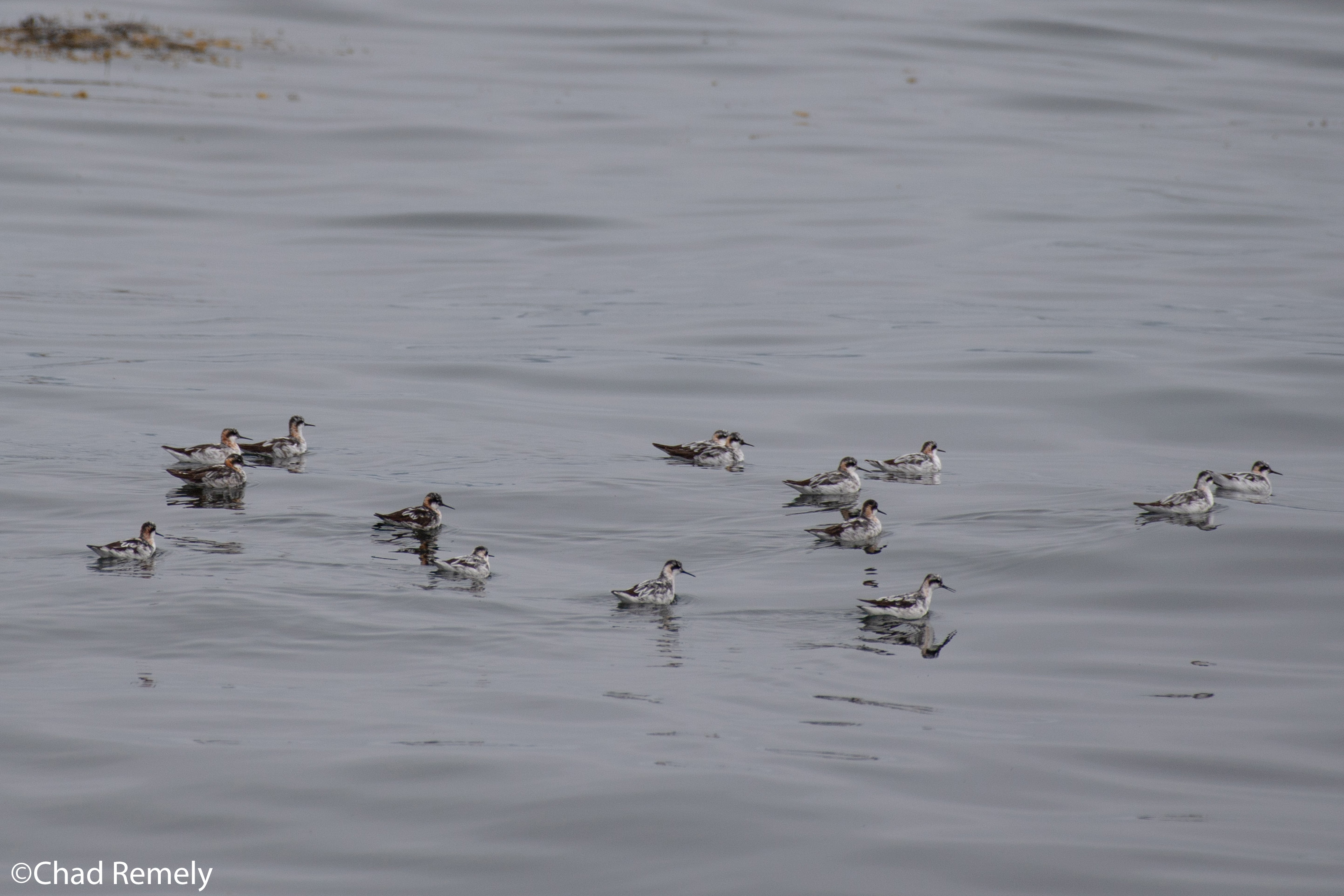
We started picking up a few seabirds, including our first of what would be a remarkable total of mostly juvenile Atlantic Puffins, the first of our sought-after Northern Fulmars, scattered Red-necked Phalaropes (mostly), along with a few Great Shearwaters, all around Murray Hole, but we hit paydirt right around the edge of the incoming shipping channel to Portland.

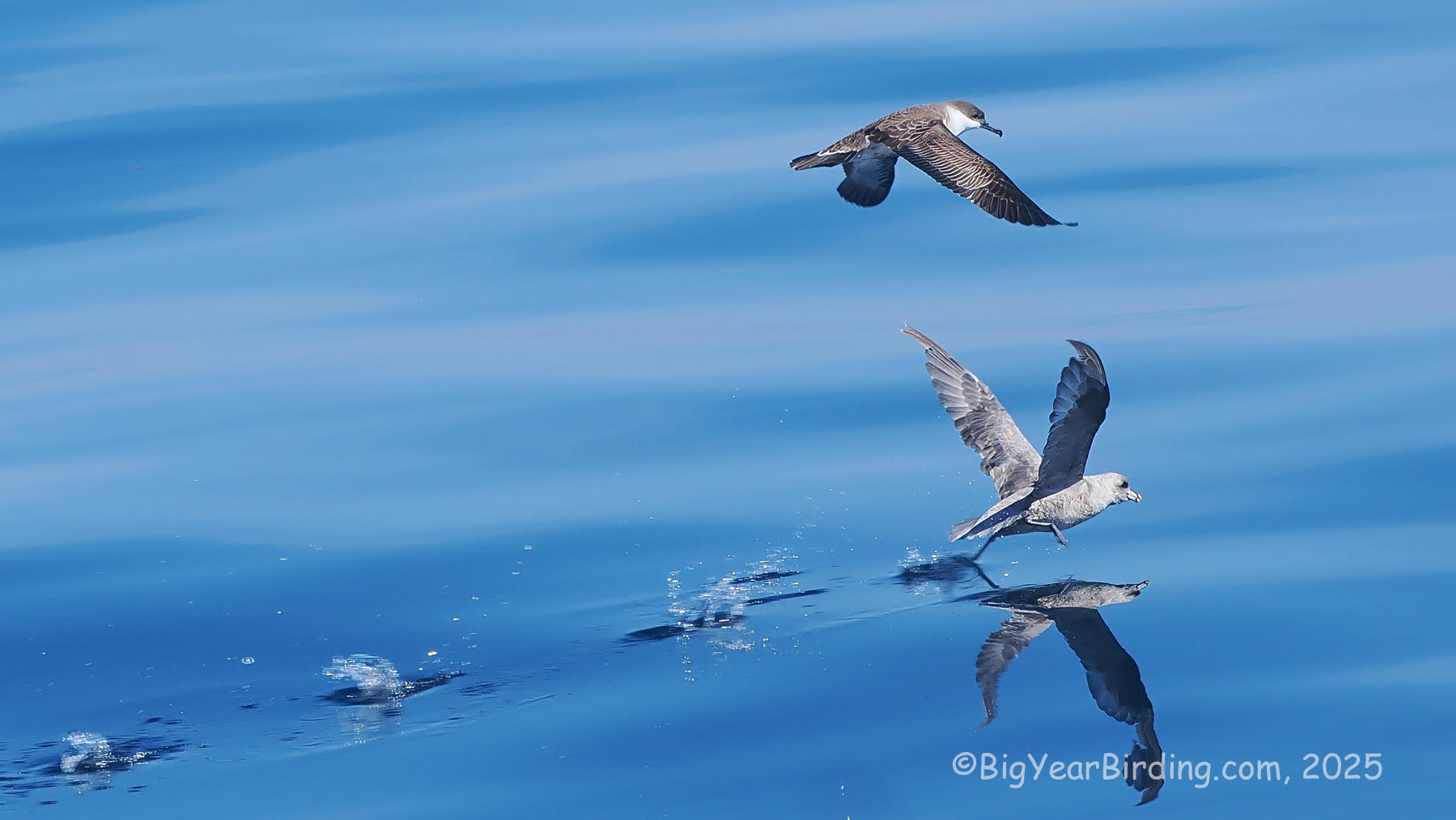
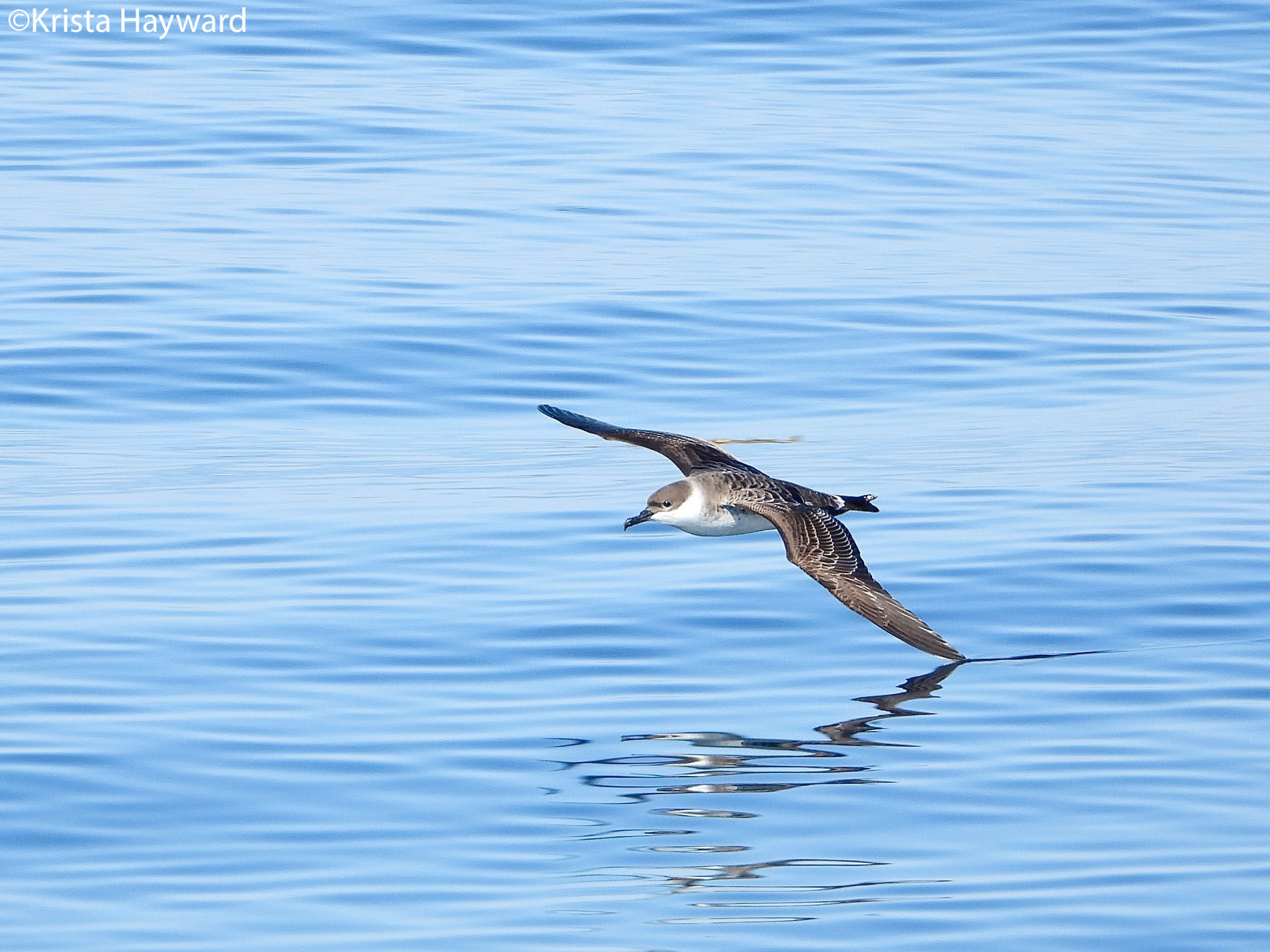
Great Shearwaters and Northern Fulmars were constant companions in our deeper water time.
All of the photographed phalaropes so far that we encountered were Red-necked Phalaropes, so the checklist has been adjusted accordingly, even though we believe we had some Reds over the course of the trip.

There, in about 500-600 feet of water (but otherwise “in the middle of nowhere”), our chum slick of fish oil and pork fat (generously donated by Durham’s Old Crow Ranch!) worked its magic. Will Broussard, with both the honor and burden of his first time as Chummer, was the hero, bringing Northern Fulmars and Great Shearwaters in for close looks.]
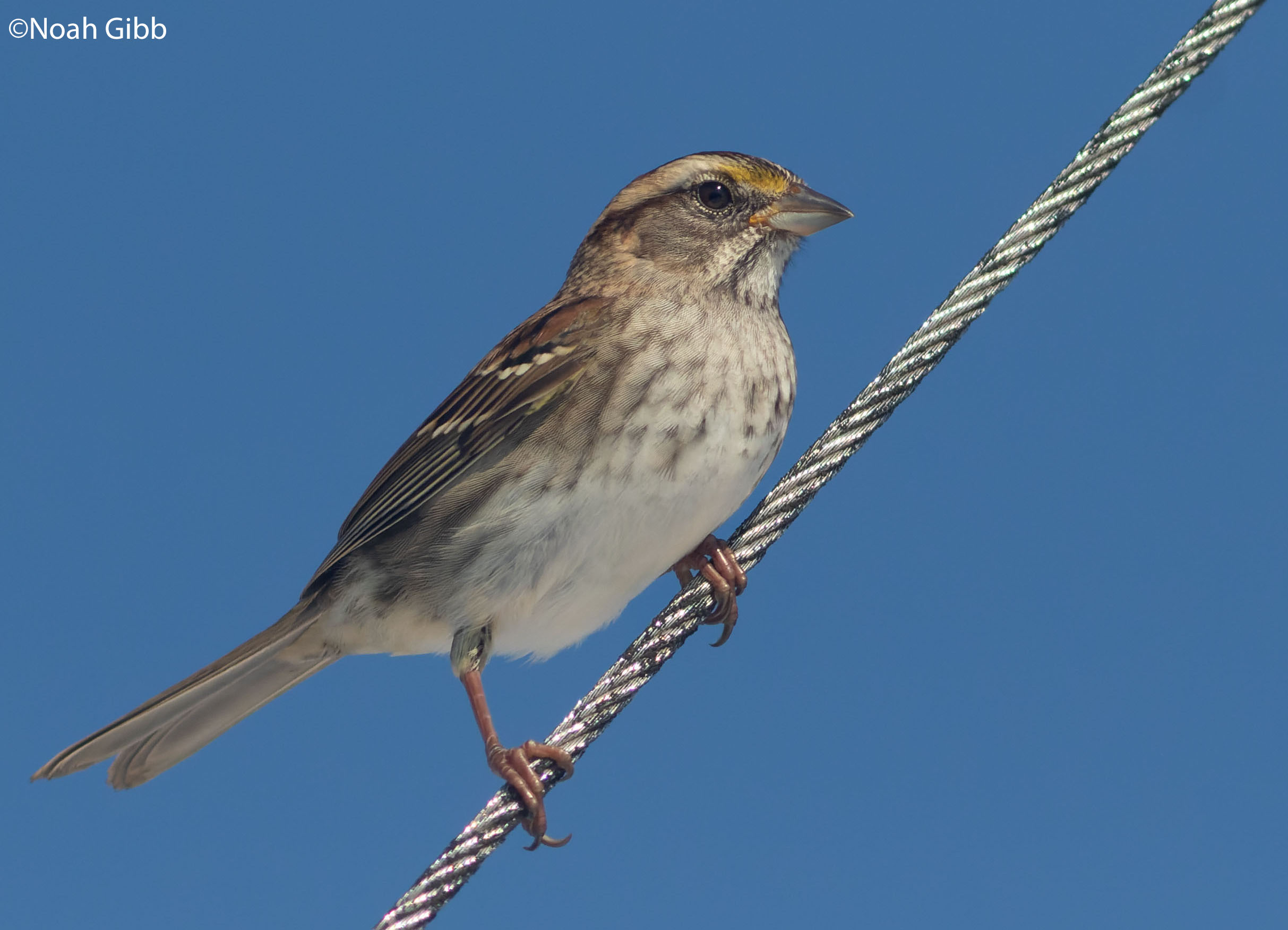
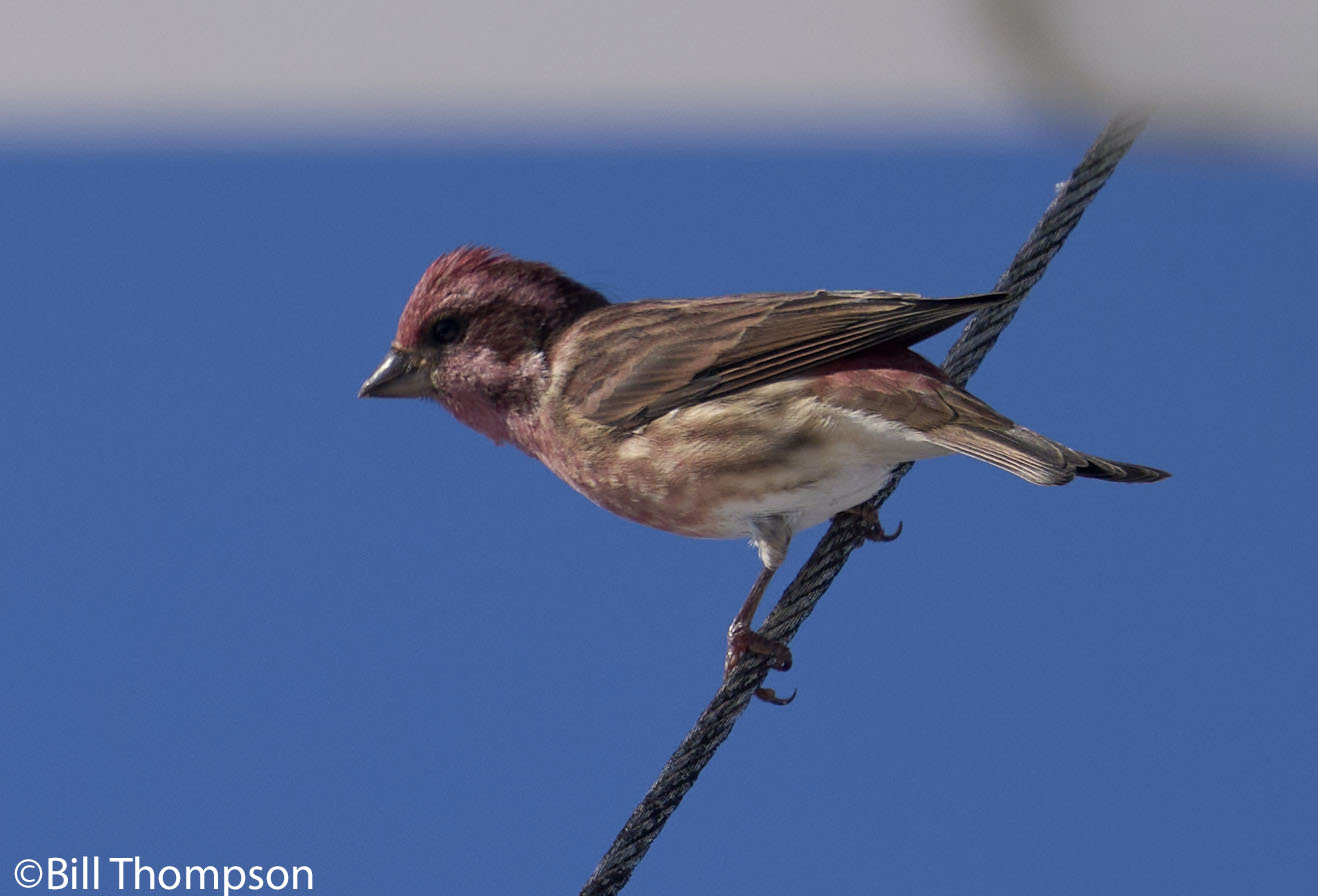
Passerines would appear on occasion, a total of somewhere between 4 and 8 White-throated Sparrows, including one that rode right back to port with us in the cabin. A male Purple Finch took a break on the boat, resting and preening on our radar, as a female did later. Passerines are always a fun addition to a pelagic birding experience.
Less fun, perhaps, but most amazing and insightful, however, was watching a Peregrine Falcon chasing a passerine, driving it into the water, and then, unable to snatch it off the surface, moved on, leaving an Ovenbird helpless on the ocean’s surface, likely becoming waterlogged and hypothermic. It was impossible for us not to, so we attempted a water rescue, with the crew putting in a valiant effort to save the hapless warbler. Unfortunately, it perished, but we had to try!

This might be one of the most incredible photos of non-pelagics ever taken on a pelagic. Awesome work, Bill!

Repeated sightings of Atlantic Puffins continued to surprise us, and we spent some time with two different Fin Whales, including getting to see one doing a little lunge-feeding. While we looked at whales, birds were all around us, thanks to the chum, so we had something for everyone.
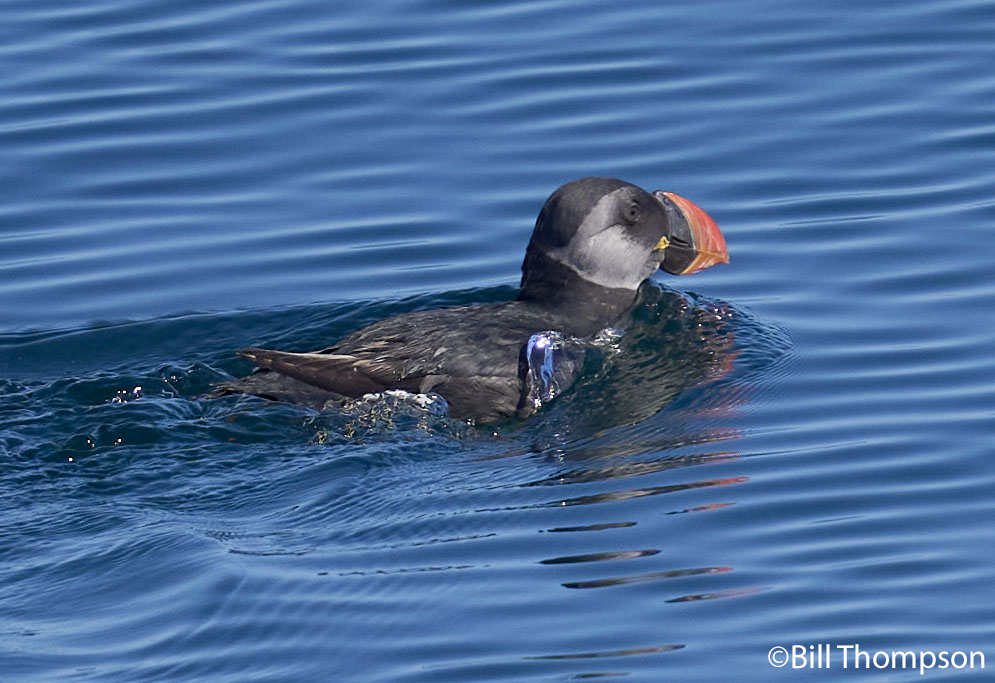
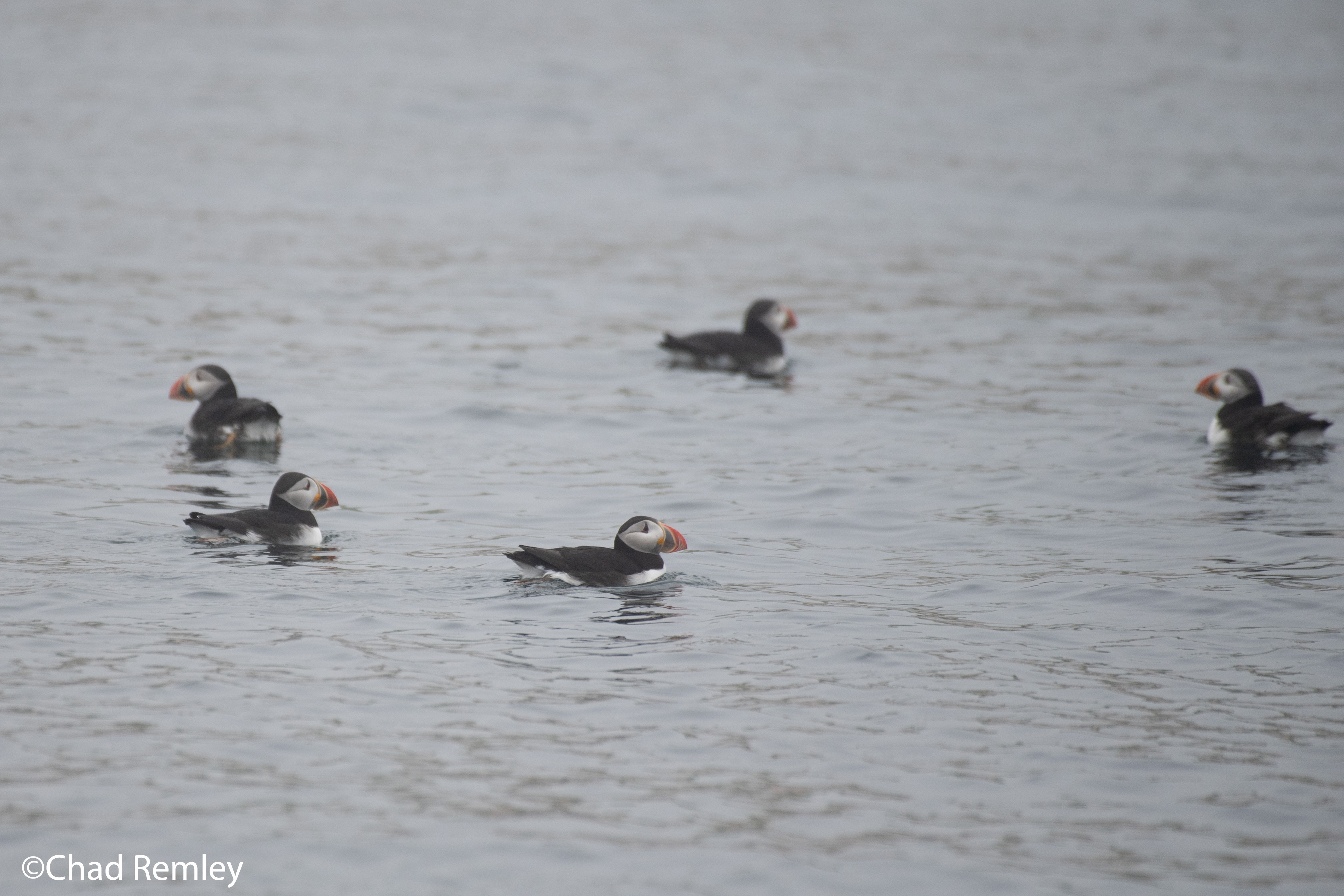
A big and bright-billed adult Atlantic Puffin.
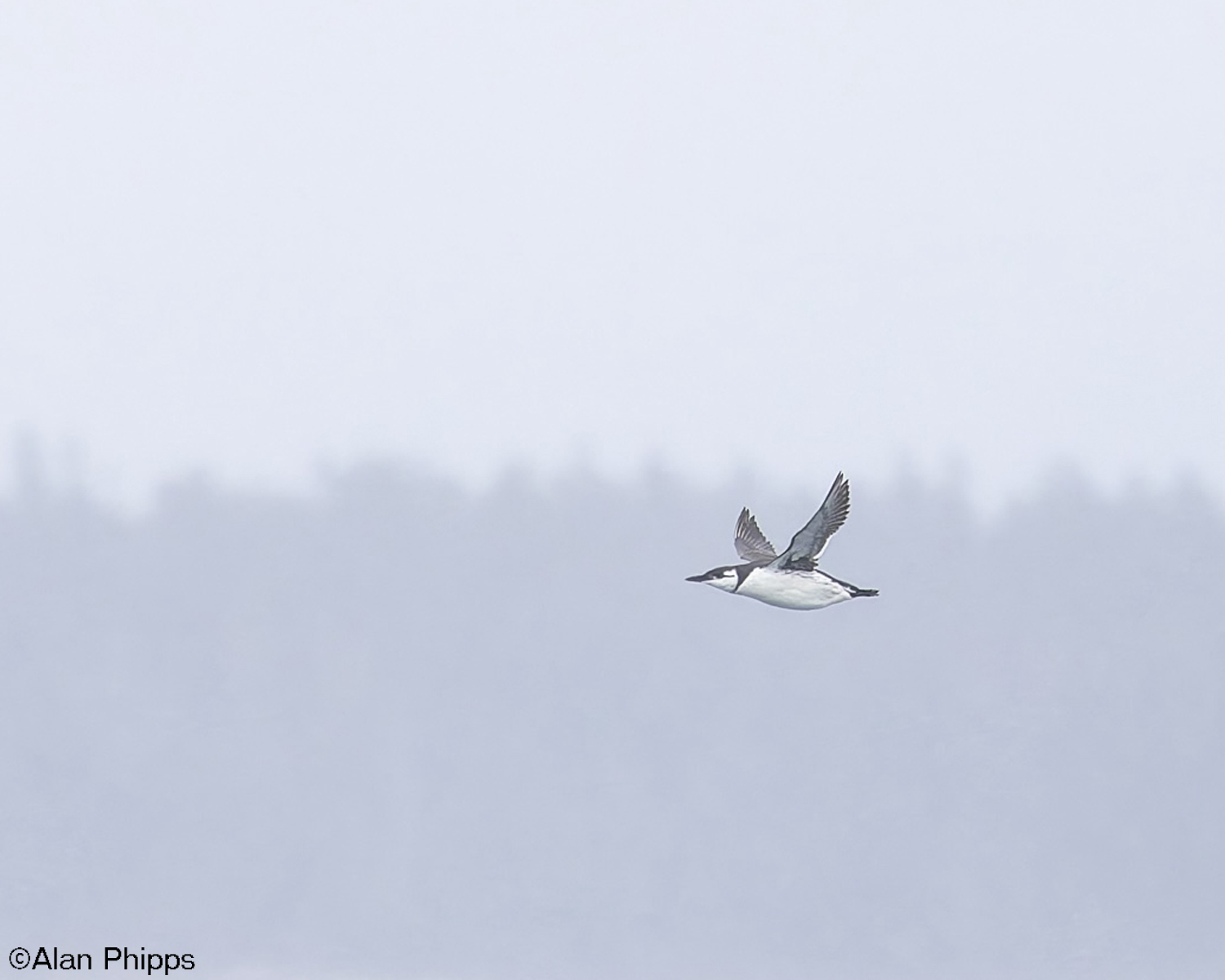
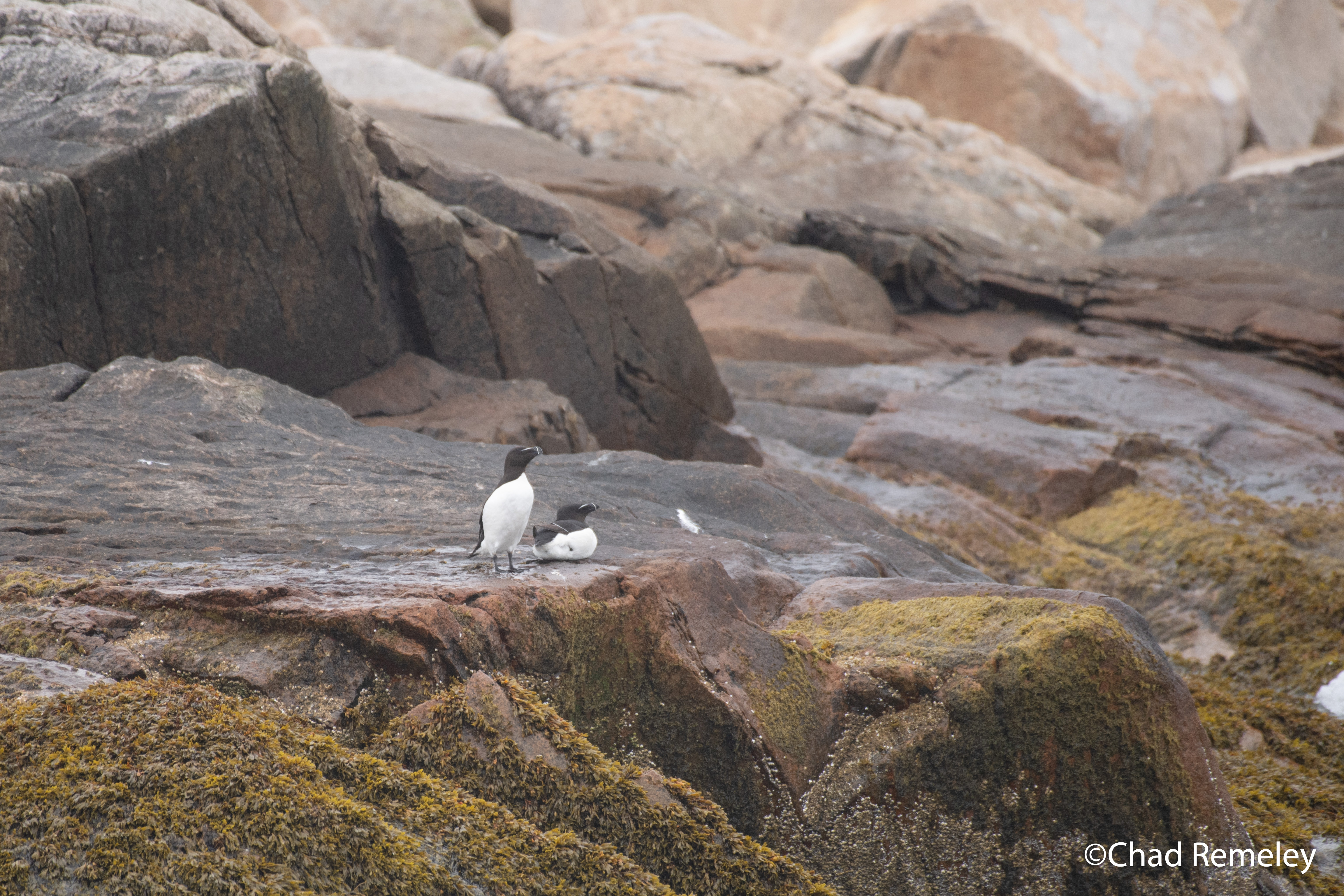
Both of our Razorbills were hanging out with juvenile puffins.

While this was of course a birding tour, we made sure to enjoy the marine mammals we encountered, along with a Blue Shark, but the highlight for most everyone was the incredible and awesome experience we had with a small pod of 25-30 Common Dolphins. Amid all of our seabird activity, the pod approached us in the glass-calm warblers. Captain Nate added a little speed to build up a wake, and the dolphins had come to play. They rode the bow, did some surfing, and otherwise created constant “oohs and aahs.”  The photos don’t quite do it justice…it was really a special experience, a life mammal for most of the crew, and one of the best dolphin encounters I have experienced in the Gulf of Maine.
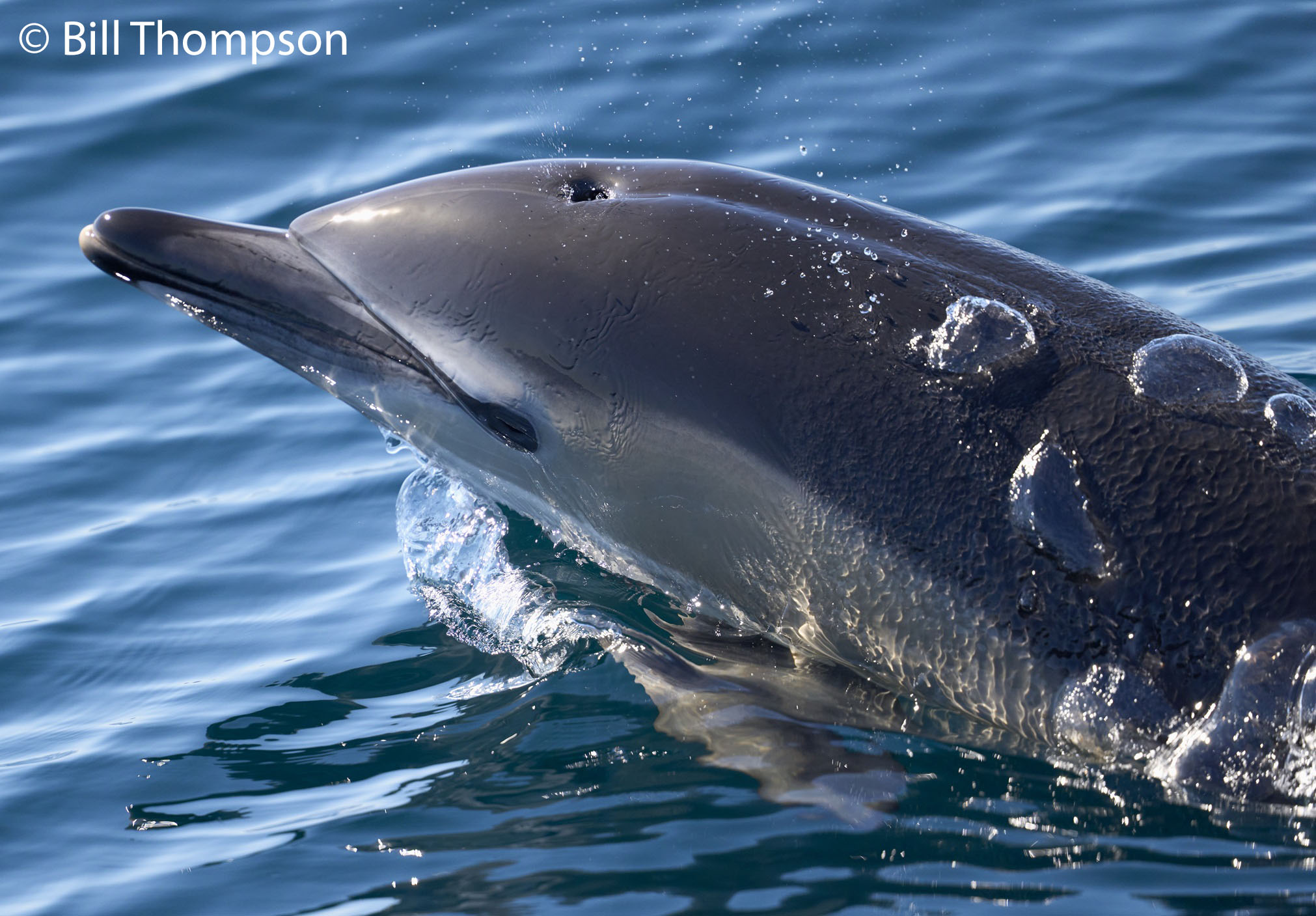
Puffins and fulmars, Fin Whales and dolphins, and all on just the most ridiculous weather possible for a fall pelagic in Maine! We’ll see you on board next year!

I want to thank Captain Nate for his skilled maneuvering of the boat – even more remarkable as this was his first pelagic, too! Naturalist Trinity shared the narration duties with me, taking over for local landmarks and non-feathered marine life, and Valentin and Joe took care of everyone at the galley – and did the work of our attempted Ovenbird rescue. Thanks to my team, chummer Will Broussard, and our checklist-keeper Noah Gibb.  And a special thanks to Tabor and Seamus at Cap’n Fish’s for working with me to make this memorable trip a reality.
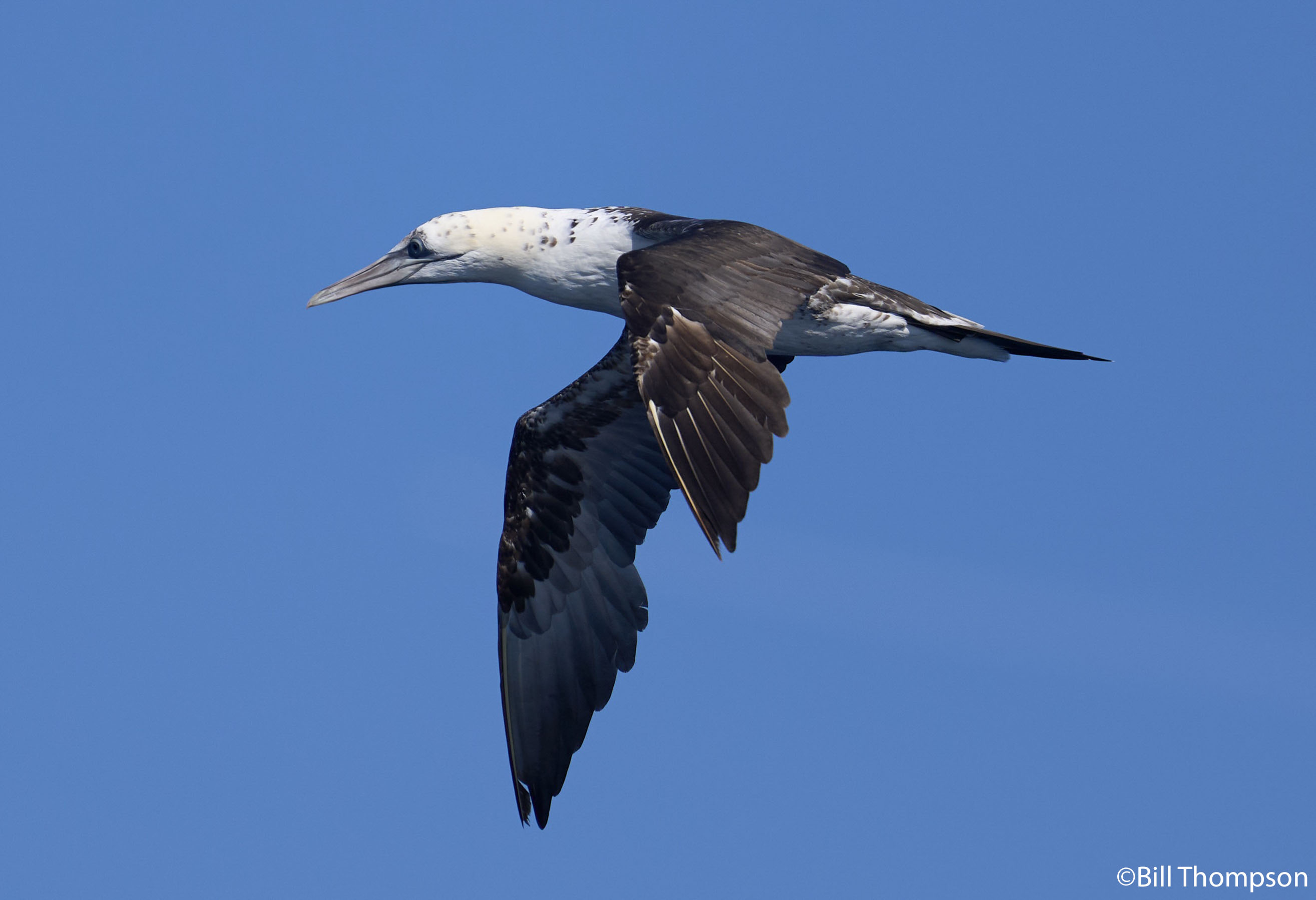
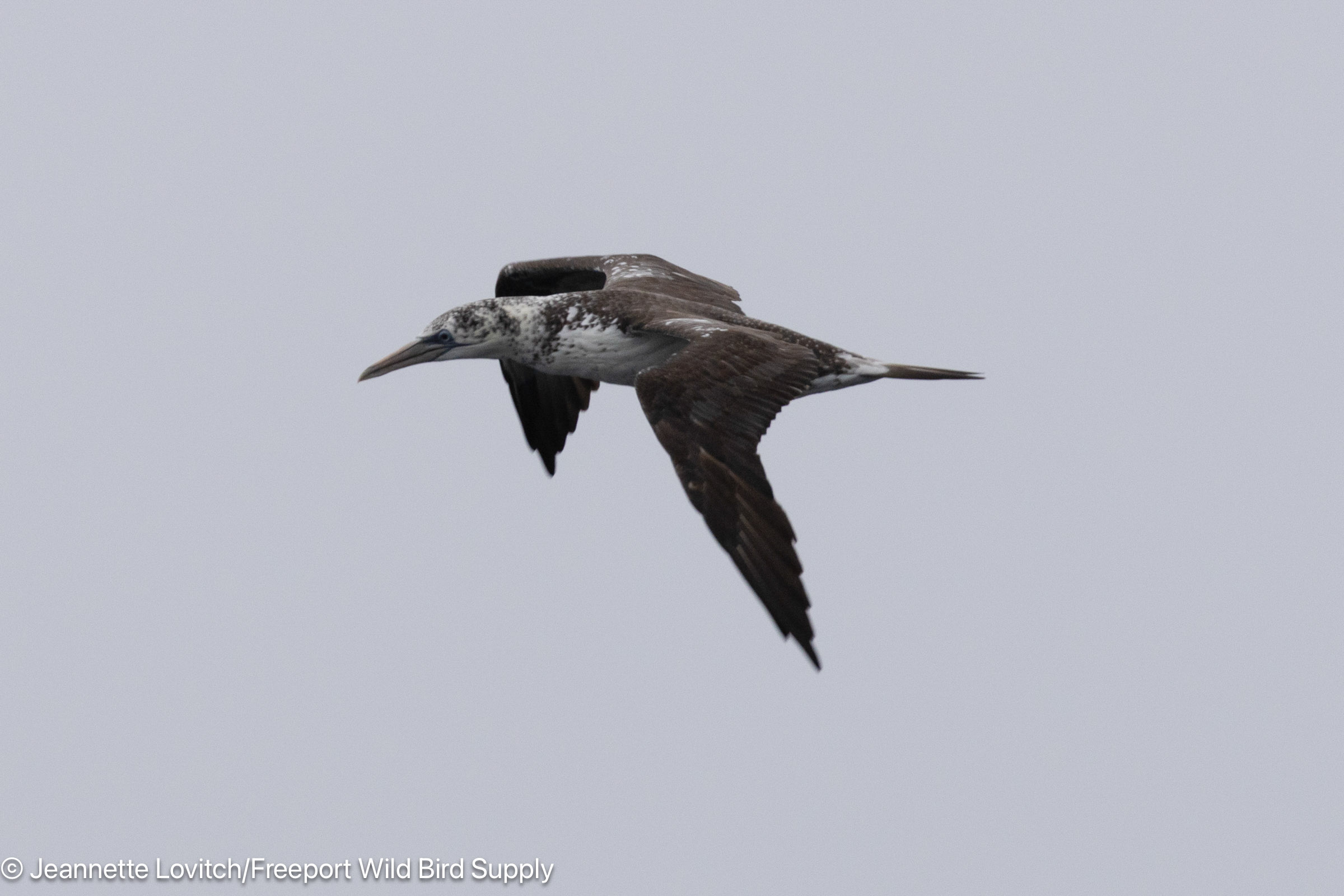
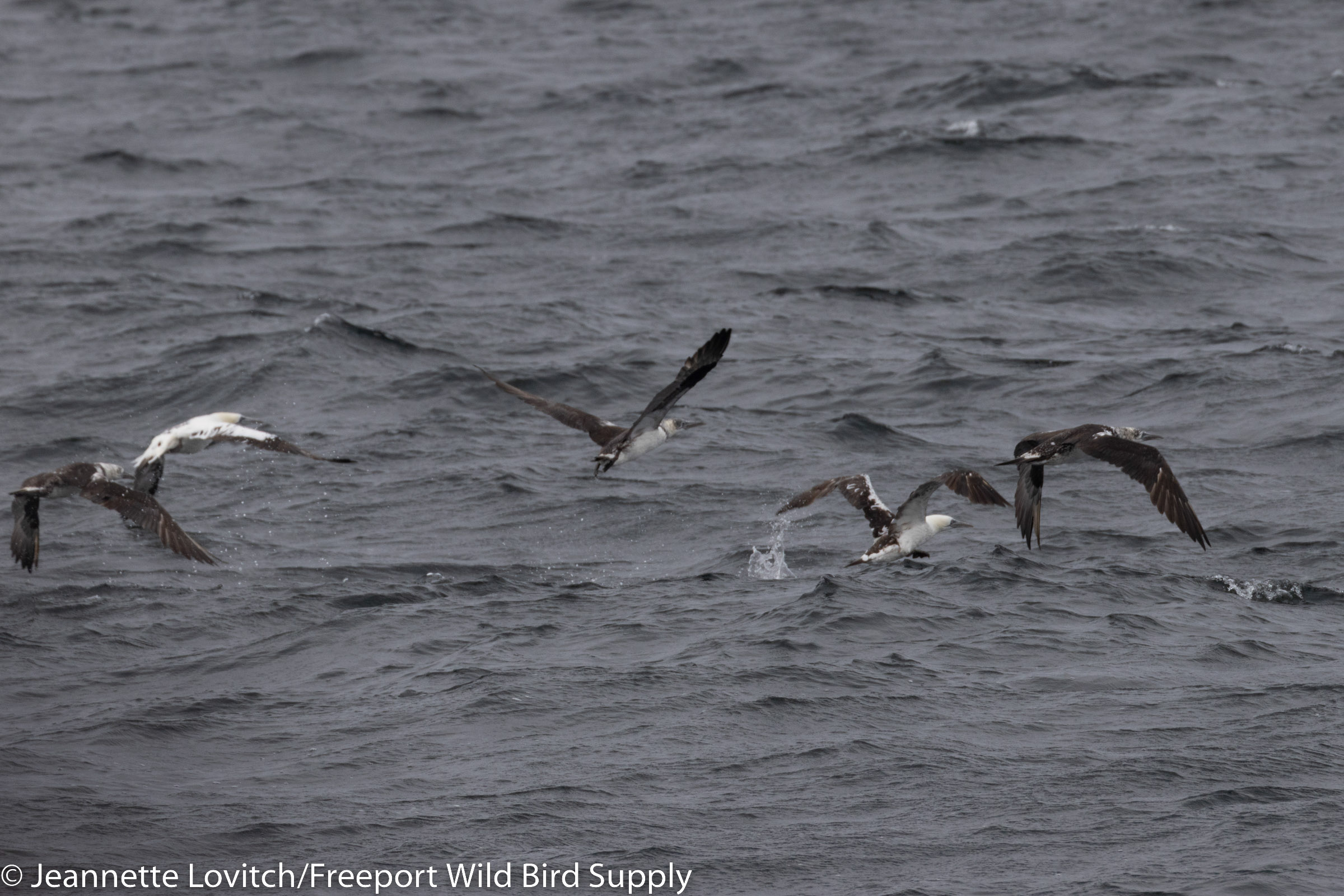
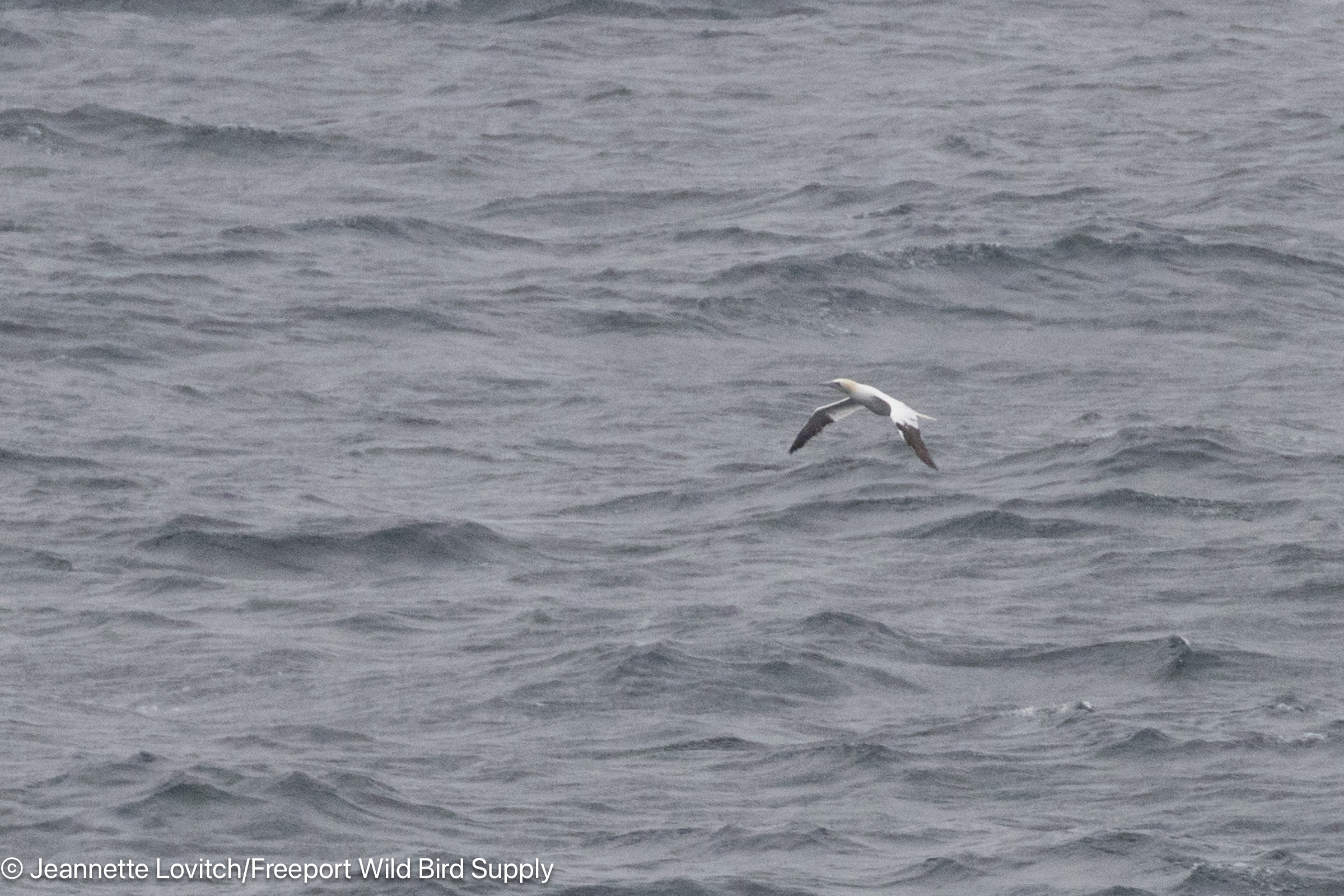
Subadult Northern Gannet

Here’s the complete trip list, including birds seen while docked before departure marled with an *. We know counts of several species, such as Common Eider and Herring Gull are likely extremely low, but we chose to be conservative with our Northern Fulmar and Great Shearwater tallies as we covered a relatively small area during our deeper-water time, and the chumming kept birds with us, and perhaps, coming back for more.

267 Common Eider

89 Surf Scoter

3 White-winged Scoter
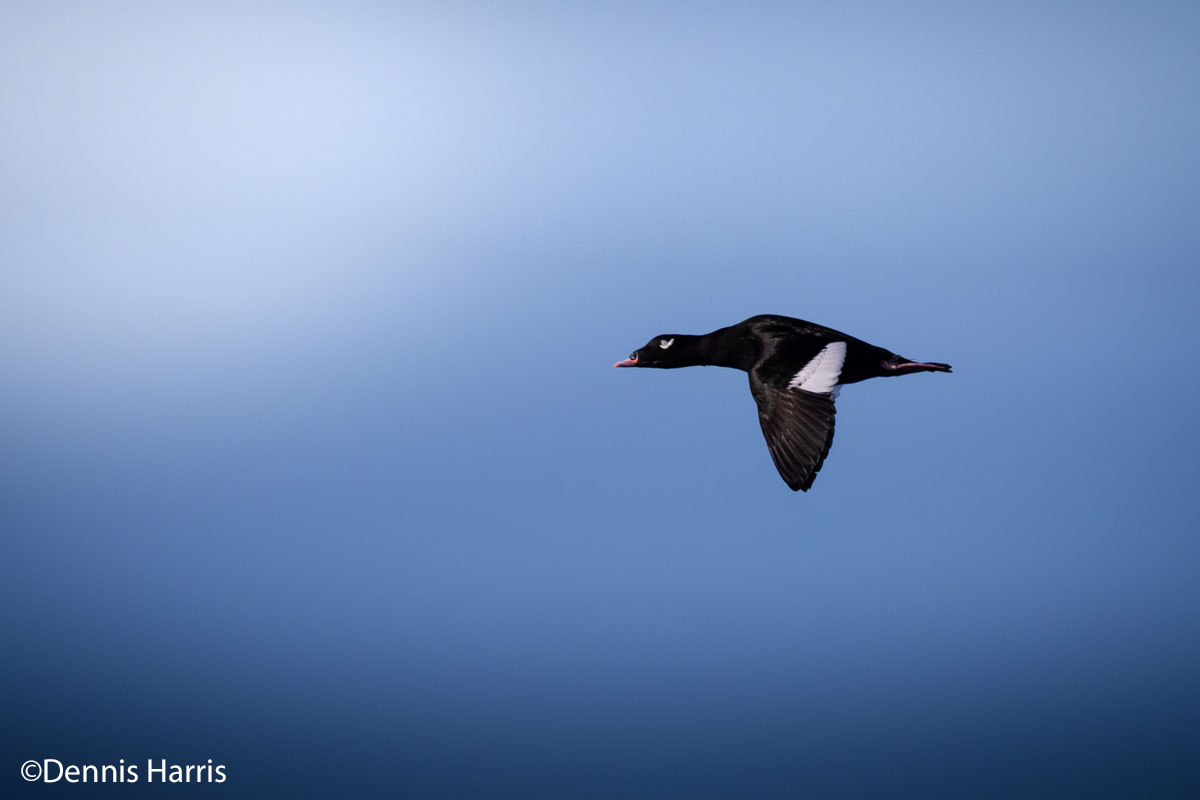
36 Black Scoter

25 Rock Pigeon*

54 Red-necked Phalaropes

21 unidentified phalaropes

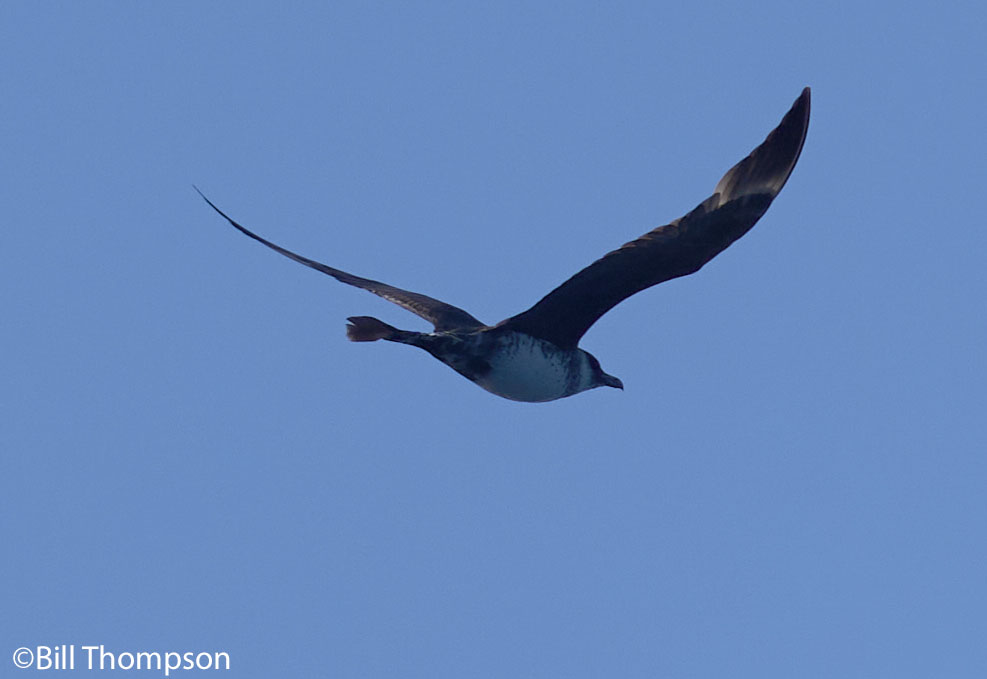
1 Pomarine Jaeger
28 ATLANTIC PUFFINS

15 Black Guillemots

2 Razorbills

1 Black-legged Kittiwake (only spotted from photos later, unfortunately)

10 Laughing Gulls

3 Ring-billed Gulls

385 American Herring Gulls

86 Great Black-backed Gulls

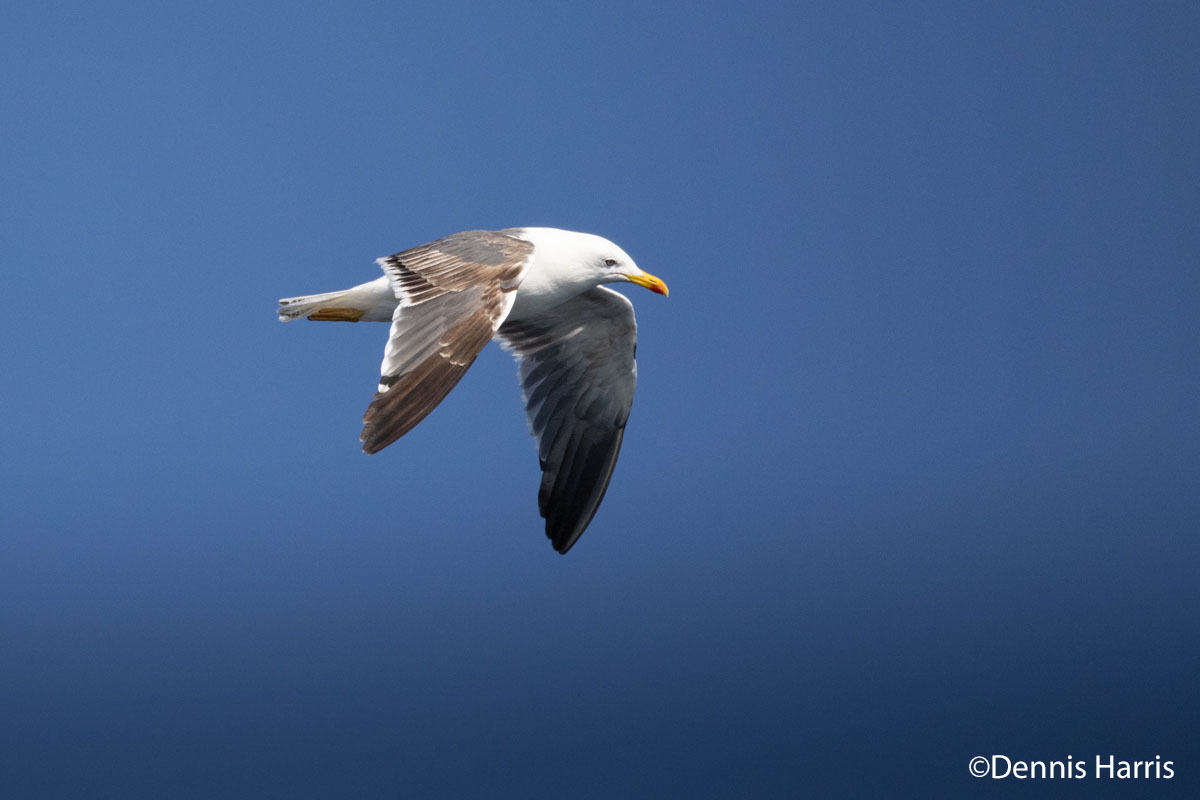
4 Lesser Black-backed Gulls
1 Red-throated Loon

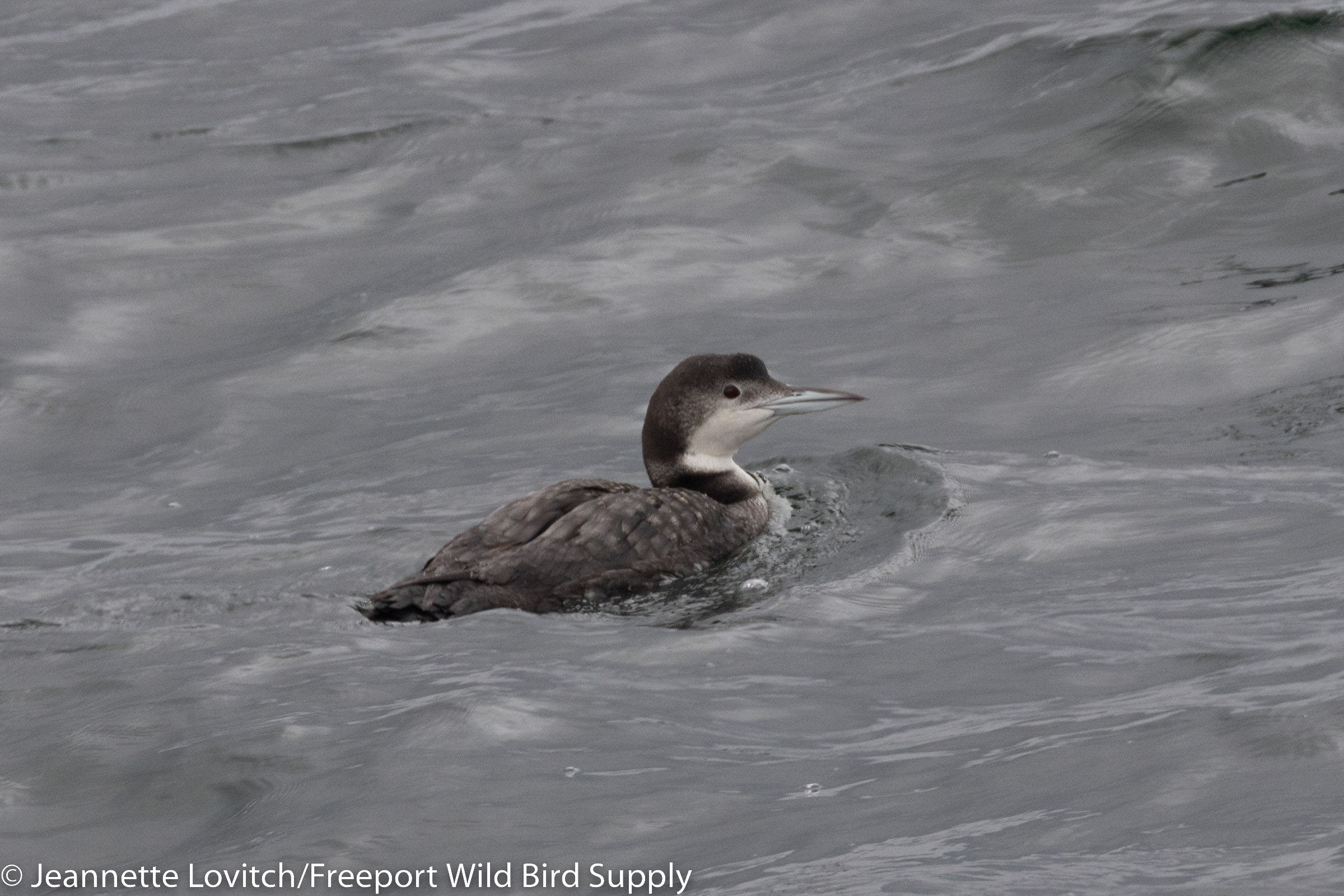
14 Common Loons

18 NORTHER FULMARS

55 Great Shearwaters

13 Northern Gannets

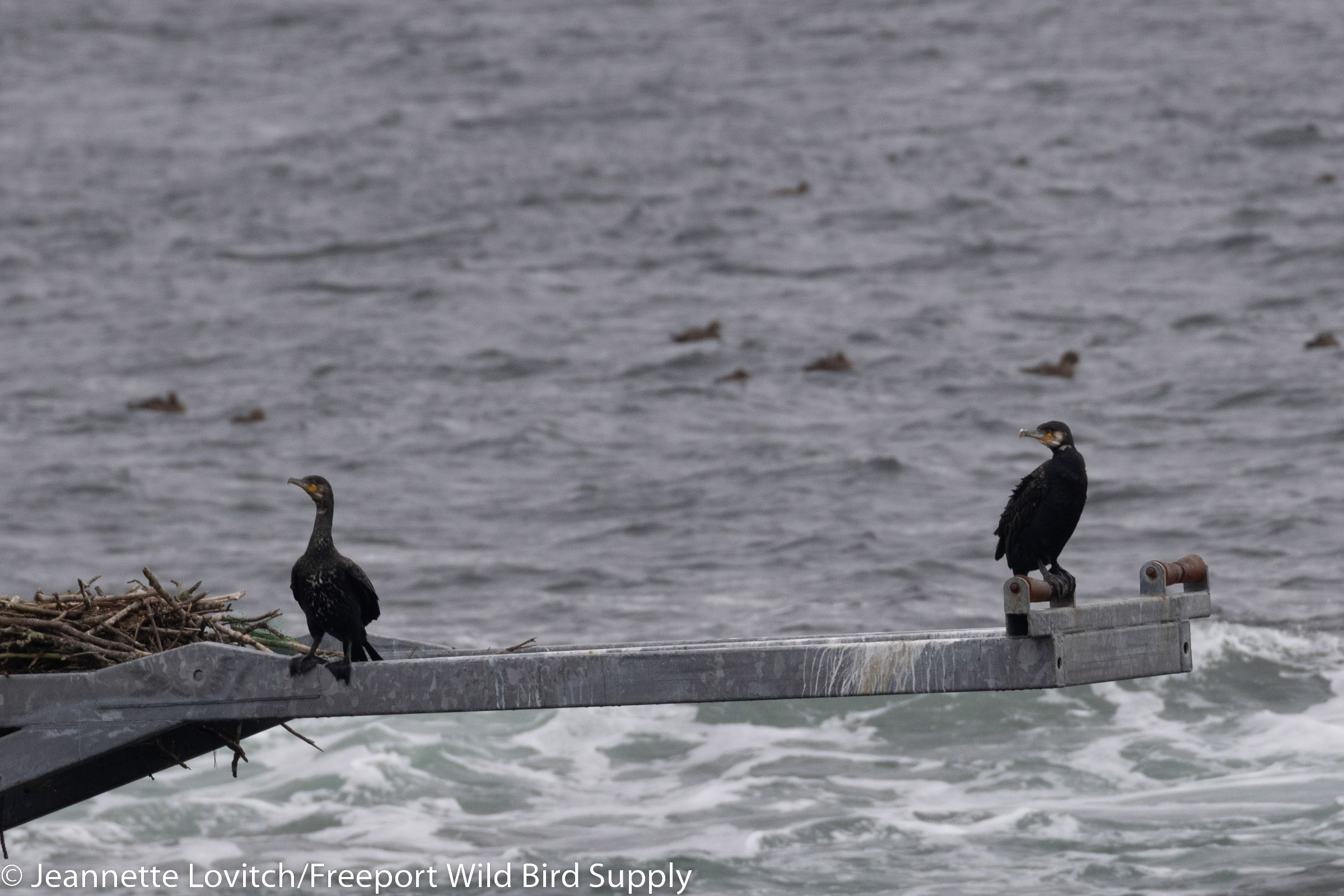
8 Great Cormorants

165 Double-crested Cormorants

3 Great Blue Herons

1 Bald Eagle

1 Peregrine Falcon

2 American Crows*

4 House Sparrows*

2 Purple Finches

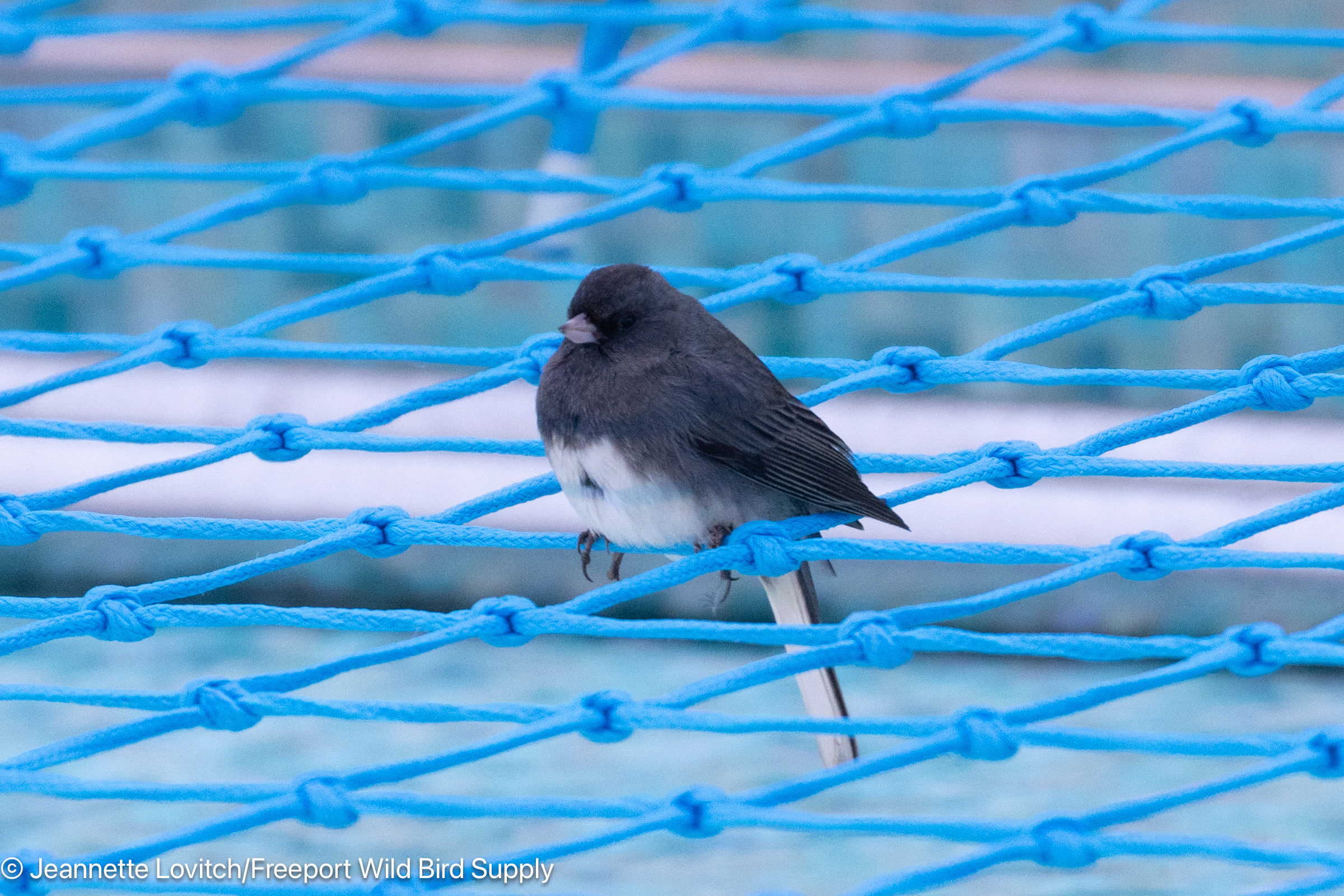
1 Dark-eyed Junco
8 White-throated Sparrows

1 OVENBIRD

Mammals:

2 Fin Whales

2 Minke Whales

30+ Common Dolphin

X  Harbor Porpoise

X  Gray Seal

X Harbor Seal
This Week’s (Plus) Highlights 9/22 – 9/30/2025.

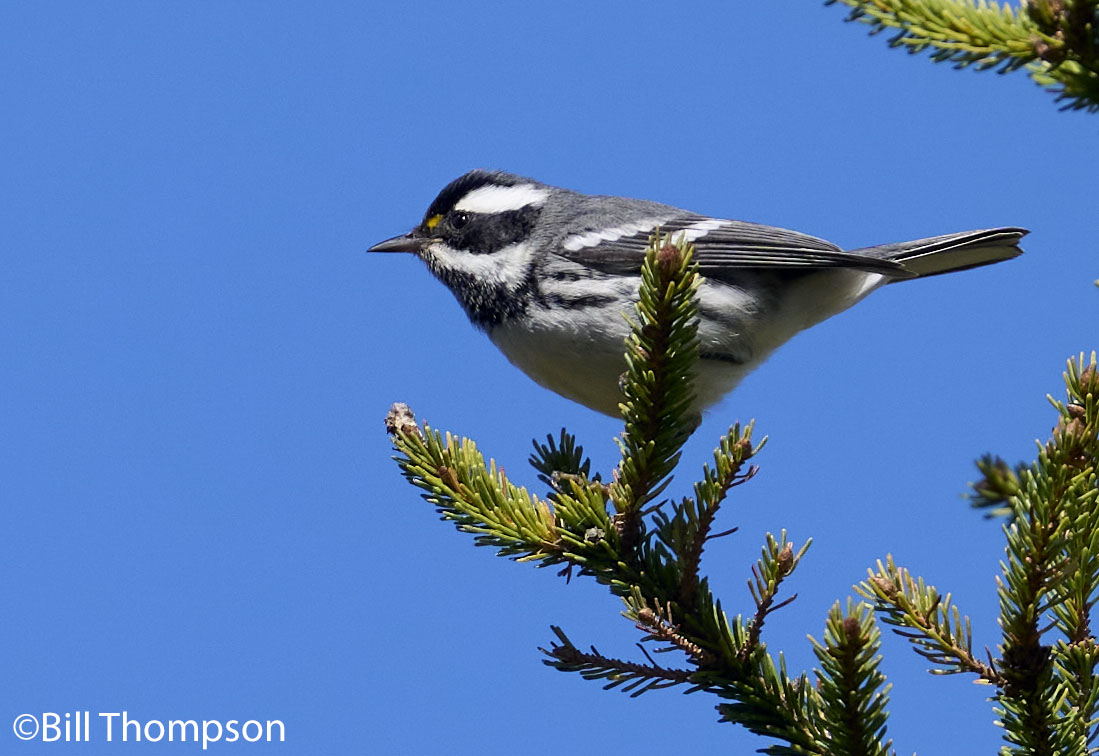
One of the stars of the show during an epic weekend on Monhegan included this Black-throated Gray Warbler that I found with my tour on 9/28. There are only 5-7 previous records of this spiffy western warbler in Maine. It was relocated by others on and off that day, and through much of the day on the 29th. The best show for everyone was when Doug Hitchcox re-relocated it a few feet from where my group and I first discovered it!
That’s when Bill Thompson got this crushing photo.

My observations of note over the last 9 days included 5 remarkable days on Monhegan Island included the following:

  • Highlights from our Durham property this period included 2 continuing Indigo Buntings and 2 Solitary Sandpipers on 9/22; 1 Ruby-throated Hummingbird 9/23-24; and 5 Lincoln’s Sparrows on 9/24.
  • An exceptional day in and around Biddeford Pool on the 23rd with Jeannette included a number of highlights and excellent counts of uncommon birds. Some of the most notable observations include an astounding 26 FORSTER’S TERNS together at Hill’s Beach (with scattered individuals elsewhere that may or may not have been part of this tally,  the shockingly large “irruption” of this tern – especially given the lack of a tropical system to cause it – continues); a juvenile YELLOW-CROWNED NIGHT-HERON at Great Pond, a late juvenile BAIRD’S SANDPIPER on Biddeford Pool Beach, single CLAY-COLORED SPARROWS in Hill’s Beach and East Point, 12 American Oystercatchers off of Ocean Avenue, a goodly 41 Red Knots in The Pool; 7 adult Lesser Black-backed Gulls at Hill’s Beach, and an arrival of fresh juvenile (technically 1st winter as most showed a couple of replaced feathers by now as expected) Dunlin in various locations (high of 30+ on Biddeford Pool Beach).
Forster’s Terns
Baird’s Sandpiper
Clay-colored Sparrow
  • 2 Marsh Wrens, Florida Lake Park, Freeport, 9/24.
  • 2 Ruddy Ducks (First of fall), 1 Dunlin, 1 Pectoral Sandpipers, etc, Sabattus Pond, 9/25.
  • It was like the good ol’ days on Monhegan for my tour group this weekend. I was on the island with the tour 9/26-9/29, and then enjoyed a day off with Jeannette on 9/30. I’ll have a complete tour report posted next week (including rarity photos), but for now, the mind-blowing list of rarities and excitement for my group and I included the following:

1 BELL’S VIREO, 9/28 (refound by my group after being discovered by Jess Bishop and Bill Thompson on 9/28).

1 BLACK-THROATED GRAY WARBLER, 9/28-29 (Found by my group, on 9/28 and refound by m.obs on 9/29).

1 immature female PAINTED BUNTING, 9/26 (independently identified – eventually – by my group and Bill Thompson).

1 YELLOW-THROATED WARBLER, 9/27

1 WESTERN KINGBIRD, 9/27.

21 total species of warblers.

Up to 2 Lark Sparrows daily beginning 9/28.

Up to 6+ Clay-colored Sparrows daily.

Up to 3 Dickcissels daily

Up to 2 Orange-crowned Warblers daily beginning 9/27.

1 American Bittern, 9/26-9/27.

Up to 3 Lesser Black-backed Gulls daily.

1 Blue-gray Gnatcatcher, 9/26.

1 Red-bellied Woodpecker, 9/28.

1 Nelson’s Sparrow, 9/27.

1 Yellow-billed Cuckoo on 9/29 (with my group) and 1 Black-billed Cuckoo on 9/30 (with Evan Obercian and Jeannette).

Upcoming Tours with Limited Space Available:

October 5, 2025   – 9:00am

​Join us on a special cruise dedicated to off-shore birding: a collaboration with Cap’n Fish’s Cruises offering half-day “mini-pelagics!” We’ll seek out the rare and common seabirds that occur in our nearshore waters, but we will always have the hope for something unexpected. Derek will team up with the boat’s expert naturalists to spot, identify, and point out pelagic seabirds. Chumming efforts will provide opportunities to attract the birds in for better photo ops and viewing. While we’ll stop to look at any whales and whatever other interesting sea life we encounter along the way, it is the feathered wildlife we’re searching for, and will be focused on.​​

This annual fall excursion gives a chance at some very sought after pelagic species, such as Great and South Polar Skua. More likely species include Northern Fulmar; Black-legged Kittiwake; Pomarine and Parasitic Jaeger; shearwaters – Great, Sooty, Cory’s, and possibly even Manx; Leach’s Storm-Petrel; Razorbill and Atlantic Puffin; Red and Red-necked Phalaropes, and much more. With the later departure date this year, we hope for more jaegers and a better chance at Great Skua, along with the chance at more early-arriving alcids.

Each of our four October trips have been very different, with each year providing some unexpected highlights. Once again, we will be chumming at at least one hotspot, and we’ll have an additional spotter who will keep dedicated eBird lists for those who so desire and want it shared with them. 

October 6, 2025; 9:00 – 12:00

THREE SPACES JUST OPENED WITH A CANCELLATION.

Join the crew of Seacoast Tours and Derek Lovitch from Freeport Wild Bird Supply on a special tour of the islands and waters of Casco Bay. We’ll explore the inner islands of Freeport, Brunswick and Harpswell as we search for eagles, migrant waterfowl, and an occasional seal basking in the sun on the ledges of hidden coves. We’ll focus on the common resident and migratory water and shoreline birds of the region, including photographic opportunities whenever we can.

​Conditions and tide permitting, we’ll poke around the mouth of Maquoit Bay and especially up into Middle Bay, two of the richest areas for waterfowl concentrations.  If we can find a mass of American Black Ducks, we’ll scour them for a variety of other dabblers, such as Green-winged Teal and Northern Shovelers.  Some of our wintering and migratory bayducks, such as Surf and White-winged Scoters will just be arriving, and Common Loons begin to build in for the winter.

October 19, 2025; 9:00am – 2:00pm

​These unique, relaxed birding and beer-ing adventures that you have come to love combine great local birding at seasonal hotspots with visits to sample the delicious creations of some of our favorite local breweries. These tours are a perfect introduction to birding and/or craft beer, and a great opportunity to travel with significant others, friends, and family that have interest in one topic, while your interest is primarily in the other (for now!). But this time we’re leaving the van in the garage, and hitting the water! That’s right, we’re taking a cruise, and we’re returning to the private House Island in Porland Harbor twice in 2025. 

During last year’s wildly successful outing in which we became the first birding group ever on the island, we found oodles of Yellow-rumped Warblers, an uncommon Field Sparrow, and other migrants. But we were truly captivated by Captain Pete, who guided us through the historic fort, sharing a wealth of historical knowledge and fascinating stories. The beer was pretty darn good too, as we sampled the history of Maine’s craft beer scene. 

Building on that success, we’re visiting the private House Island in Portland Harbor twice in 2025. We’ve been granted special permission to come ashore and scour the island here in the peak of fall migration. We’ll follow well-maintained trails through the island’s mosaic of open habitats, scrub, and young woods. These are great habitats to search for a variety of migrants, and perhaps even a rarity!  

Returning in late October, once again rarities will be on our mind. While rare birds are rare, we are still going to expect the unexpected. But more likely are regular migrants of the season such as Yellow-rumped Warblers, a variety of sparrows, and a growing diversity of waterbirds. At the very least, we’ll have resident waterbirds and several species of gulls to sort through. We are having daydreams of a rare flycatcher!

As we motor back across the harbor, we’ll continue to familiarize ourselves with some of the common waterbirds, such as Common Eiders, Common Loons, and the vanguard of our winter diving ducks while enjoying a local craft beverage produced in the city of Portland. While the exact plan is subject to change, we’ll be sure to come up with a plan to adequately celebrate our discoveries – or the one that got away! 

This Week’s Highlights and Shorebird High Counts, 8/9 – 8/18/2025

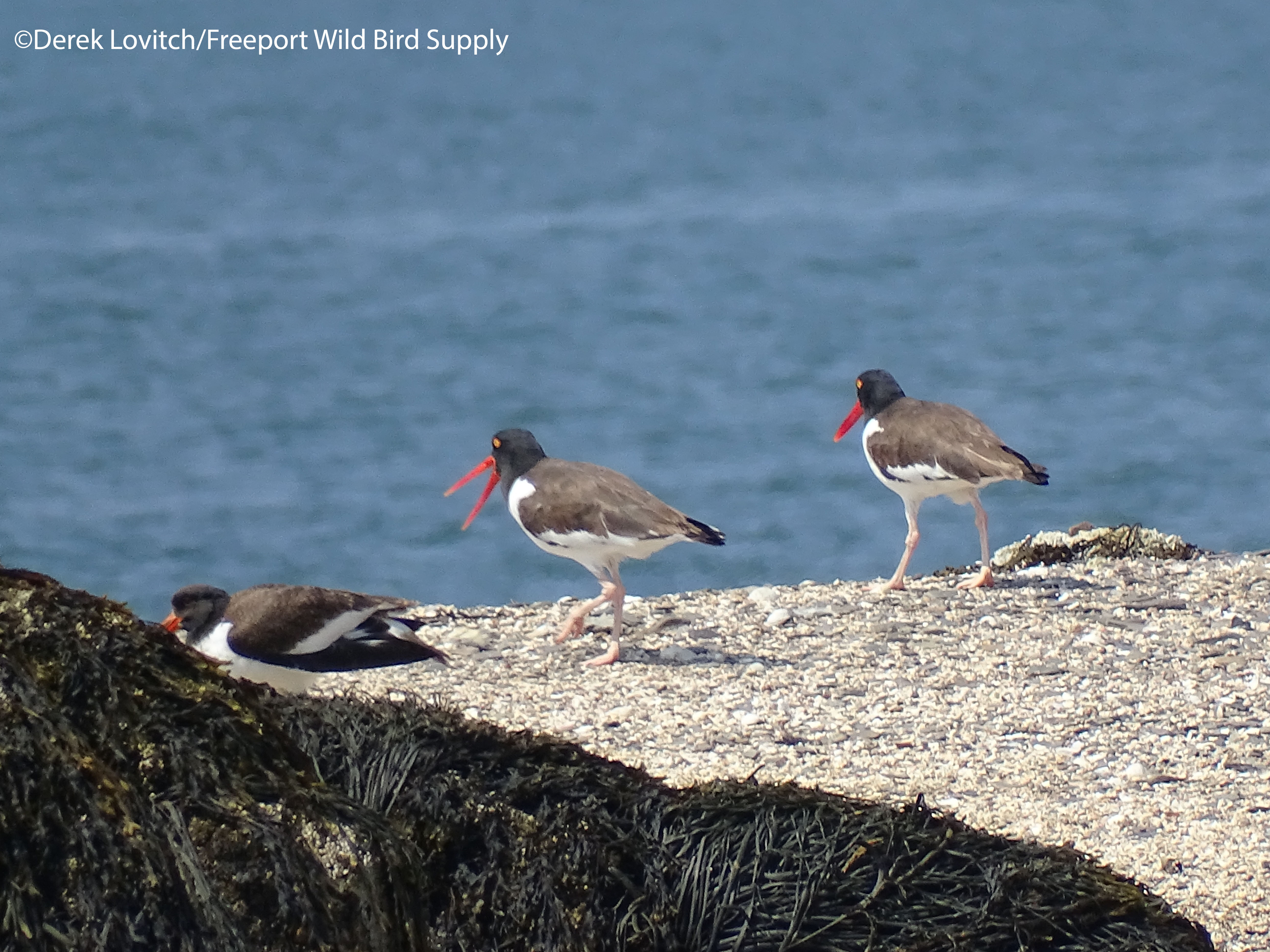
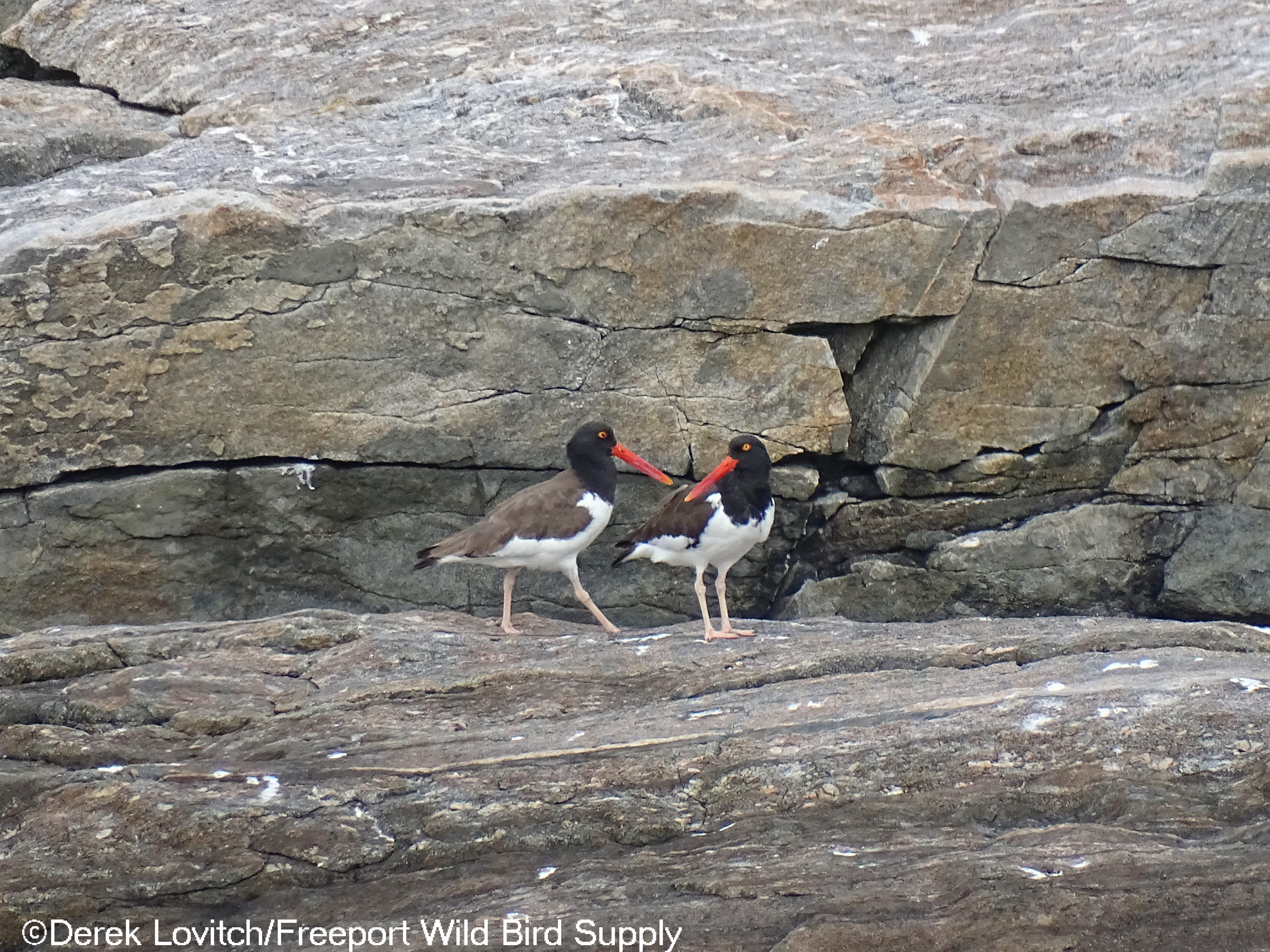
Suspected of breeding in 2022 and confirmed in 2023, a pair of American Oystercatchers has now nested annual on the tiny Upper Green Islands way up in Casco Bay off Yarmouth. On the 17th, our annual shorebird-focuses Birds of Casco Bay with Seacoast Tours collaboration documented a pair of adults with a juvenile once again. Since we discovered them on this tour in 2022, it’s been exciting to visit them each summer. Who would have thought this tiny island and ledge could support one of only a dozen or so pairs in the entire state?
Full trip report here.

Two birdwalks, two shorebird-centric tours, and two whale-watches made for a very nice, diverse array of observations of note for me over the last 10 days (see note in shorebird high counts):

  • 3 Long-tailed Ducks (2 continuing from previous week), Simpson’s Point, Brunswick, 8/9 (with Saturday Morning Birdwalk group).
  • 1 Bonaparte’s Gull and 6 Great Egrets, Sabattus Pond, 8/11 (with Jeannette).
We checked the underwing patterns of every Cory’s Shearwater we could.
  • 8/12 afternoon Puffin/Whale Combo cruise with Cap’n Fish’s Cruises out of Boothbay Harbor: 5 American Oystercatchers at Eastern Egg Rock. Offshore of EER = 104 Wilson’s Storm-Petrels,  6 Cory’s Shearwaters, 3 Great Shearwaters, 2 Northern Gannets, 1 MANX SHEARWATER.
  • 1-2+ Red Crossbills, Popham Beach State Park, Phippsburg, 8/14.
  • 1 molting adult Bay-breasted Warbler (more evidence of a limited molt-migration in Boreal birds to the southern coastal plain), Old Town House Park, North Yarmouth, 8/16 (with Saturday Morning Birdwalk group).

For my “shorebird high counts,” I prefer to visit at least one of each: high tide hotspot, low tide spot, “grasspiper spot,” and a freshwater location, and it must include a visit to local hotspots Wharton Point and the Walsh Preserve as I attempt to make these comparisons comparable week-to-week and year-to-year, which, for my own notes if nothing else, is why I put these together (but hope you find them of value, too). Just due to life and scheduling, it now often takes me more than a week to hit all of these “requirements,” so I am going to try and do every 10 days instead of weekly. Therefore, here are my high counts over these past 10 days:

  • American Oystercatcher: 5, Eastern Egg Rock, 8/12 (via Cap’n Fish’s Cruises Puffin/Whale combo trip). Plus 3 (2 ad with 1 juv), Upper Green Island, 8/17 (with Birds of Casco Bay with Seacoast Tours tour group). Photo above
  • Black-bellied Plover: 163, The Pool, Biddeford Pool, 8/18 (with Down East Adventures Shorebird Workshop group).
  • Killdeer: 13, Crystal Spring Farm, Brunswick, 8/9 (with Saturday Morning Birdwalk group).
  • Semipalmated Plover: 300+, The Pool, 8/18 (with Down East Adventures Shorebird Workshop group).
  • Piping Plover: 13, Popham Beach State Park, 8/14.
  • Ruddy Turnstone: 3, multiple locations this week.
  • Sanderling: 20, Popham Beach State Park, 8/14.
  • 1, Popham Beach State Park, 8/14 and 1 at Great Pond, Biddeford Pool, 8/18 (with Down East Adventures Shorebird Workshop group).
  • Least Sandpiper: 42, Sabattus Pond, 8/11 (with Jeannette).
  • White-rumped Sandpiper: 15, Hill’s Beach, Biddeford, 8/18 (with Down East Adventures Shorebird Workshop group).
  • Semipalmated Sandpiper: 1600, The Pool, 8/18 (with Down East Adventures Shorebird Workshop group).
  • Short-billed Dowitcher: 40, The Pool, 8/18 (with Down East Adventures Shorebird Workshop group).
  • Spotted Sandpiper: 4, Sabattus Pond, 8/11 (with Jeannette).
  • Lesser Yellowlegs: 66, Royal River, Yarmouth, 8/17 (with Birds of Casco Bay with Seacoast Tours tour group).
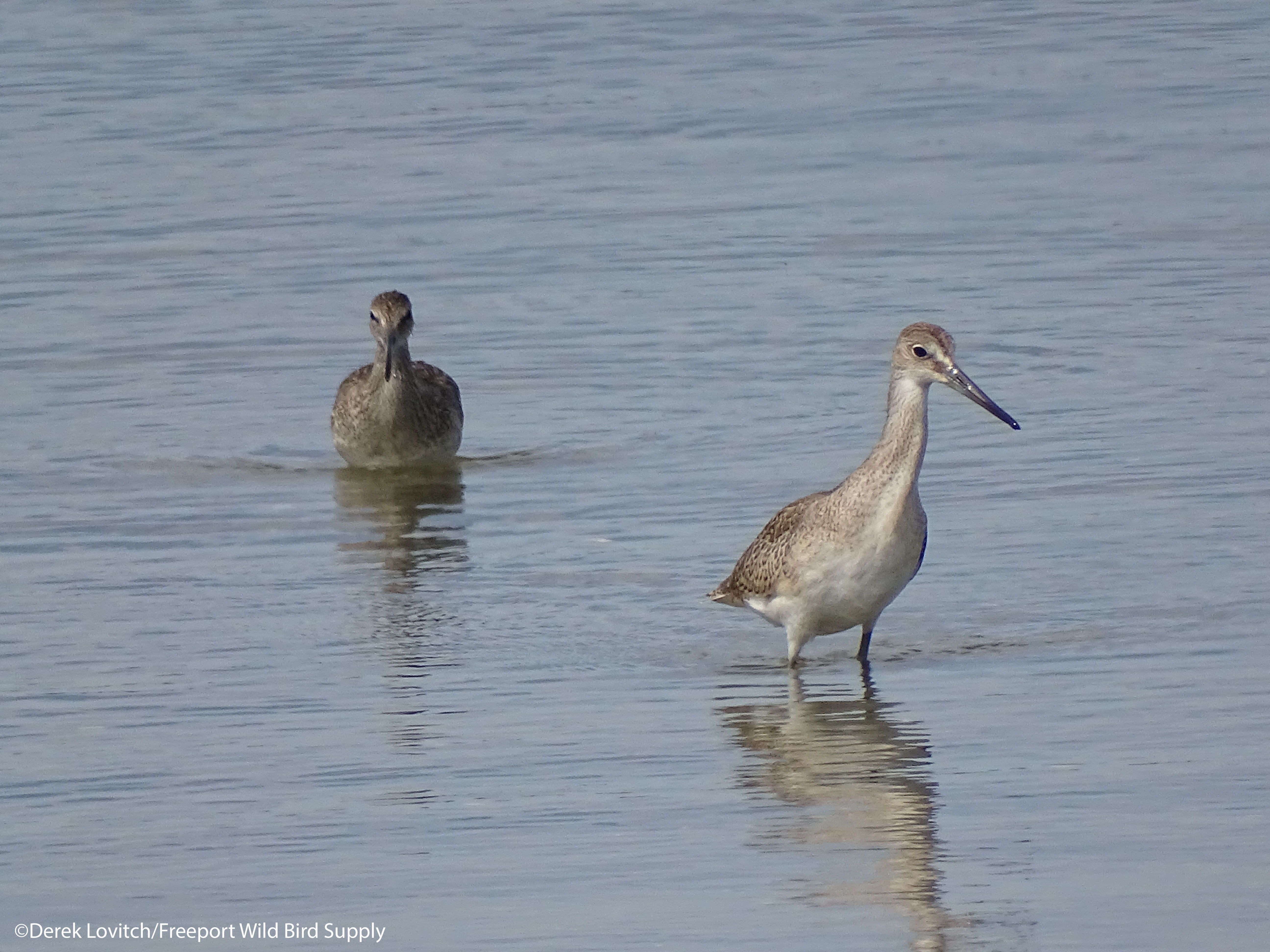
  • “Eastern” Willet: 24, Pine Point, Scarborough, 8/18 (with Down East Adventures Shorebird Workshop group).
  • “WESTERN” WILLET: 1 (FOY), Pine Point, 8/18 (with Down East Adventures Shorebird Workshop group).
  • Greater Yellowlegs: 22, Wharton Point, Brunswick, 8/9 (with Saturday Morning Birdwalk group).
Just including this Wilson’s Storm-Petrel photo here because it is incredible. Nice job, Bill!

This Week’s Highlights, 7/12-7/20/2025

Jeannette and I raced down to the Kennebunk Plains on Monday the 14th for this Fork-tailed Flycatcher. A notorious “one-day-wonder,” it conveniently was discovered on a day off for a change. Even more surprisingly, unlike most Fork-tailed Flycatchers that occur in the Northeast, this one stuck around, continuing through the 16th. There are between 10 and 16 previous occurrences of this vagrant from South America in Maine – incredible considering the distance it has to fly “incorrectly” to get here!

Only in the middle of July is a trip to Monhegan not the birding adventure of the week. But betweenthe chase of a “megs,” an opportunity to visit a banding project on a mountaintop in Vermont, and a couple of boat trips, it was a great week (plus) of birding for me nonetheless. Here are my observation of note over the past nine days.

  • 1 RAZORBILL (just off of Smuttynose outside of Monhegan harbor) and 1 Atlantic Puffin, Hardy Boat from Monhegan to New Harbor, 7/12. Only tubenoses encountered on a very foggy day both to and from were Wilson’s Storm-Petrels.
  • 1 FORK-TAILED FLYCATCHER, Kennebunk Plains, Kennbunk, 7/14 (with Jeannette and m.obs). Found earlier in the day by Sam Darmstadt. Photo above.
  • 7/19: I co-lead the morning Whale and Puffin Combo Cruise tour with our partners Cap’n Fish’s Cruises: 1 MANX SHEARWATER (unexpected close fly-by between our boat and Eastern Egg Rock); 2 American Oystercatchers, Eastern Egg Rock; 3 Cory’s Shearwaters and 100-125 Wilson’s Storm-Petrels offshore. I stayed aboard for the afternoon trip and only had 1 Cory’s Shearwater and 75-100 Wilson’s Storm-Petrels offshore.

UPCOMING TOURS w/ Space Available:

Shorebird workshop with Down East Adventures, August 18th, 8:00am to 4:00pm.

Saturday Morning Birdwalks Return 8/2!

This Week’s Highlights, 6/28-7/4/2025

This week I even had some time to spend a few mornings on my own enjoying Maine’s birds of summer, like this Roseate Tern on Hill’s Beach in Biddeford on the 29th.

It was back to normal for my schedule this week, and I was actually in the state for the whole week! With a little time off for a change as well, I had a great week of birding resulting in the following observations of note:

  • 1 adult male ORCHARD ORIOLE feeding a very-recently fledged fledglings, Old Town House Park, North Yarmouth, 6/28 (with Saturday Morning Birdwalk group).
  • 4 American Oystercatchers, 10 Short-billed Dowitchers (likely first southbound migrants of fall!), 1 Semipalmated Plover, and 1 Black-bellied Plover, Hill’s Beach, Biddeford, 6/28.
  • 3 Short-billed Dowitchers and 2 Black-bellied Plovers, The Pool, Biddeford, 6/28.
  • 8+ singing GRASSHOPPER SPARROWS, California Fields Wildlife Area, Hollis, 6/30.
  • 3 Cory’s Shearwaters and 200+ Wilson’s Storm-Petrels, off Boothbay Harbor via Freeport Wild Bird Supply/Cap’n Fish’s Cruises Whale/Puffin Combo Tour, 7/3 (morning; with tour group).
  • 3 American Oystercatchers, 16 Short-billed Dowitchers, 1 Ruddy Turnstone, etc, Eastern Egg Rock and 40+ Wilson’s Storm-Petrels offshore via Cap’n Fish’s Cruises Whale/Puffin Combo Tour, 7/3 (afternoon).
  • Fledglings being fed at our feeders in Durham this week included Baltimore Oriole, Rose-breasted Grosbeak, Eastern Bluebird, Carolina Wren, etc, etc.

UPCOMING TOURS

Join me and Cap’n Fish’s Cruises out of Boothbay for another special edition of their daily Puffin and Whales Cruise on Saturday July 19th. While this is not a dedicated pelagic, I’ll be a guest naturalist to help spot and call out birds at Eastern Egg Rock and offshore. With the irregular occurrence of the Tufted Puffin and now a Bridled Tern at EEG, you won’t want to miss the chance for a more birding-focused few hours on the water!  And the more birders we have aboard, the better!

Gulf of Maine Pelagic Birding by Cruiseship, Oct-Nov 2024.

Cruise ships are big, stable platforms that allow for pelagic birding in comfort and with the use of spotting scopes!

In 2019, Jeannette and I took a cruise through the Gulf of Maine and northwestern Atlantic Ocean in the hopes of finding Great Skuas in particular. It was wildly successful, and if we could repeat this success, perhaps there would be a cruise-ship-based tour to offer. At least it would be more comfortable than last week’s attempt!

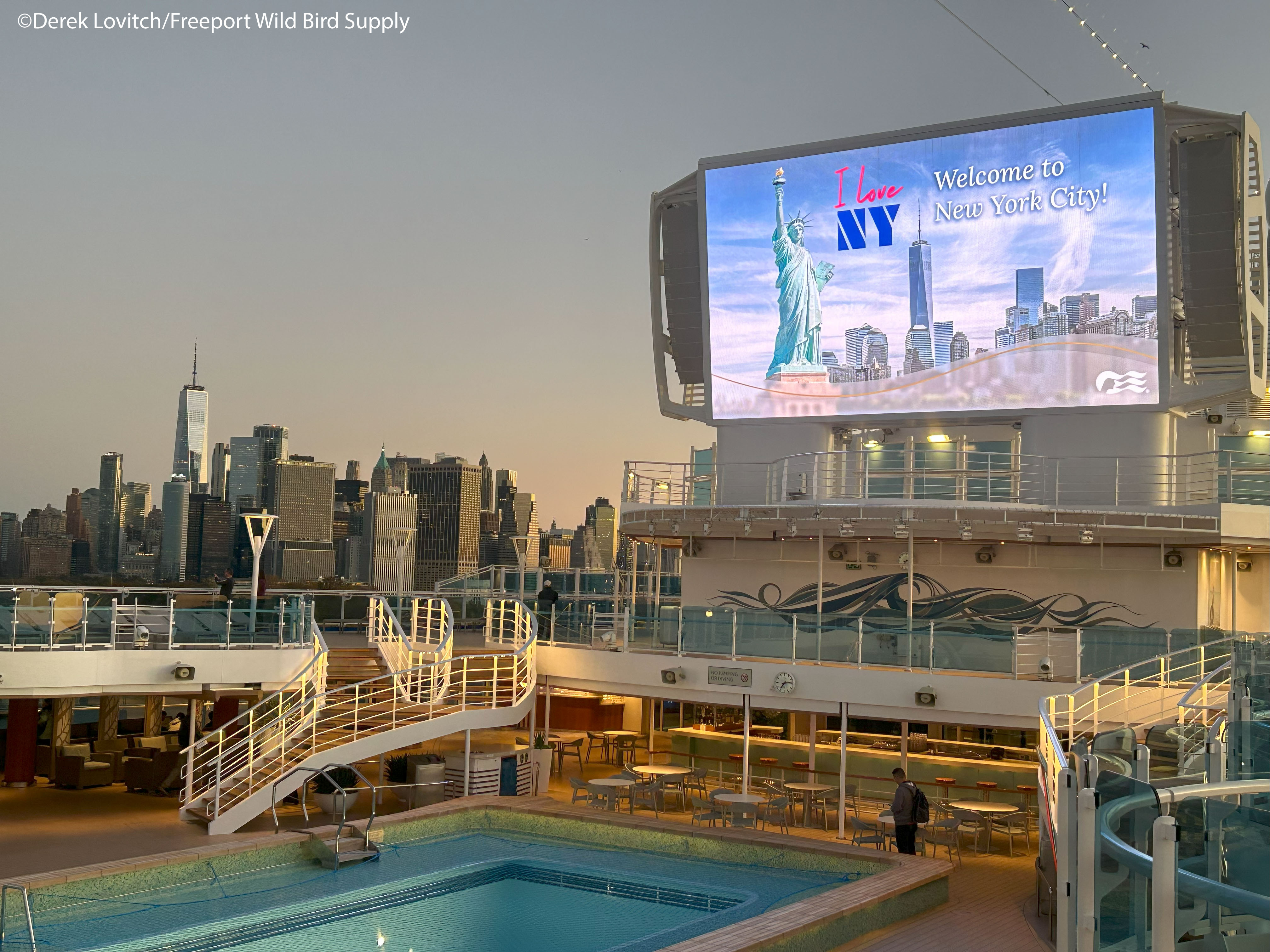
Therefore, on the evening of 10/26, Jeannette and I boarded Princess Cruises’s Enchanted Princess out of Brooklyn, New York. Our hope was to replicate the success of our 2019 trip. We were planning on a second scouting trip in the fall of 2020, but then COVID.

After finally feeling ready to consider a cruise again, we found the itinerary had changed, and we would need to spend seven days to get two full days offshore..we even needed to come back home first! But alas, we had pandemic-era credit that was going to expire, so off we went. Is this a reliable way to see Great Skuas in North America? Could I document a Barolo’s Shearwater this time?

We started our birding, however, at Brooklyn’s Greenwood Cemetery, home of this massive Monk Parakeet colony.

We departed New York Harbor with about an hour of usable daylight, picking up a single Cory’s Shearwater and plenty of Northern Gannets.

Screenshot

Arriving off Newport before dawn the next morning, we got the first shuttle to town, where our friends Bill and Jess picked us up for a lovely day of birding (Clay-colored Sparrow, Orange-crowned Warbler, late Nashville Warbler) before returning to the boat. About 45 minutes of deck time produced 8 Cory’s and a single Great Shearwater.

Newport arrivals.
“Western” Palm Warbler at Sachuest NWR.

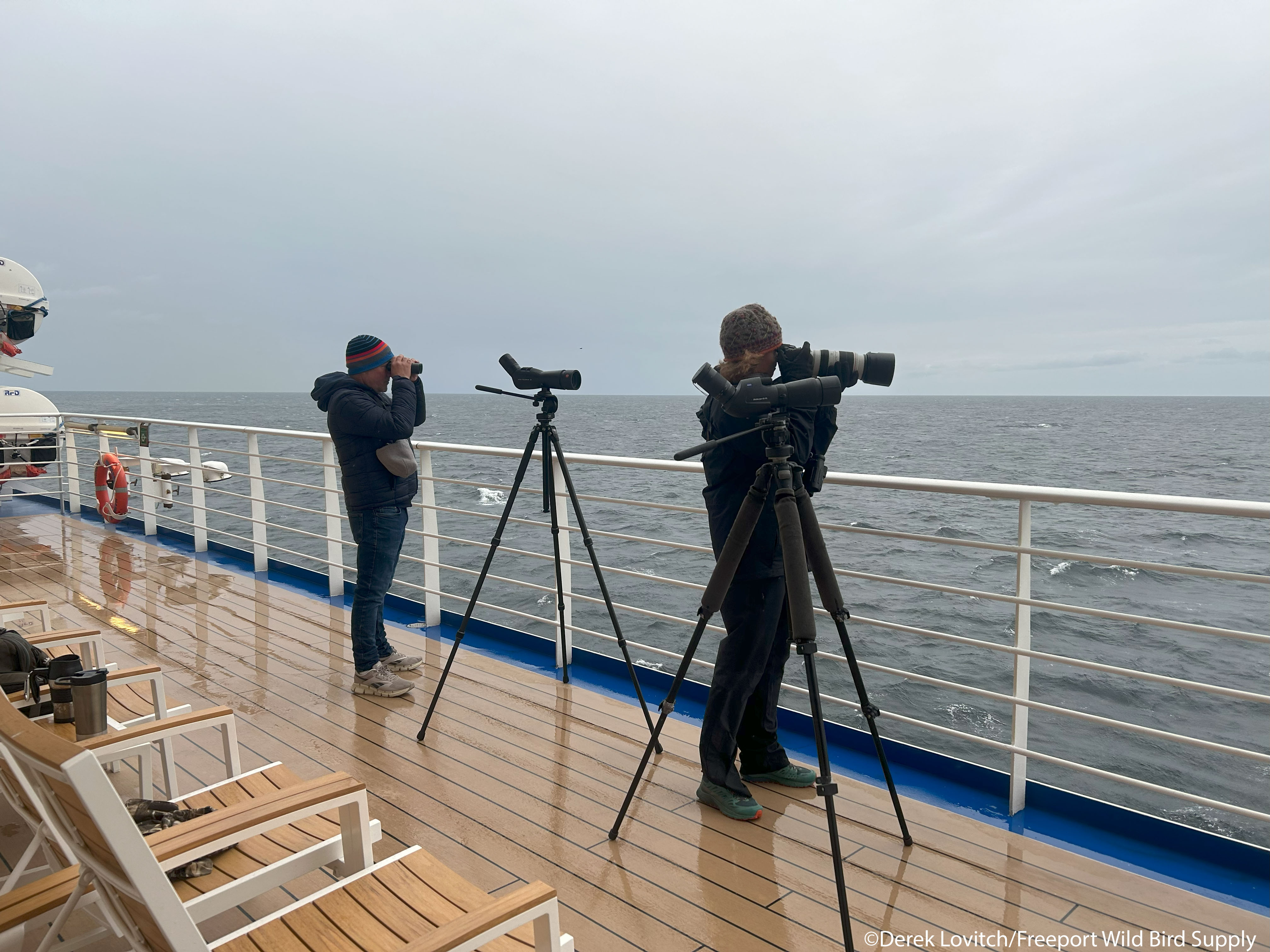
Unfortunately, this particular boat offered less-than-ideal viewing opportunities compared to our first trip, with the best deck space on Deck 7 (a great height) but way too aft. Even with our scopes on the steady platform, this was going to be a challenge.

Approaching Boston on the morning of 10/28, we checked the decks for passerines (none) before taking our place on Deck 7. There were a lot of Northern Gannets, 4-5 Cory’s Shearwaters close enough to identify as borealis, and a pod of Atlantic White-sided Dolphins. A Song Sparrow flew aboard just outside the outer harbor islands, but before that, our first real surprise of the trip: an American Woodcock appearing from the north and cruising alongside the length of the boat before disappearing. That’s not a “pelagic” we expected!

We birded Boston’s Greenway a bit, but returned to the boat well after dark. Sailing slowly overnight, we returned to Portland (the original itinerary had us visiting Bar Harbor), where a long, thorough check of the Eastern Promenade yielded two Orange-crowned Warblers and a very late Red-eyed Vireo.

Darkness reached us a tantalizingly-short distance to Cash’s Ledge, so we retired to rest up for the big day at sea tomorrow (finally!). 

Waking up in Maine waters about 16.5 nautical miles southeast of Mt Desert Rock, I stepped outside well before first light at 6:05am. I immediately texted Noam, the other birder on board that we rapidly had become friends with, and I hustled Jeannette outside. With some drizzle arriving ahead of approaching light rain, we had ourselves a fallout!

Unexpected considering there were little to no birds on the Maine radars overnight, and with a south wind through most of the night, I was surprised to immediately hear the flight calls of several Yellow-rumped Warblers. Sparrows were scattered about on the open decks. Noam and I had to usher a Rusty Blackbird out of a foyer, while Jeannette had to steer a Dark-eyed Junco down a hallway.

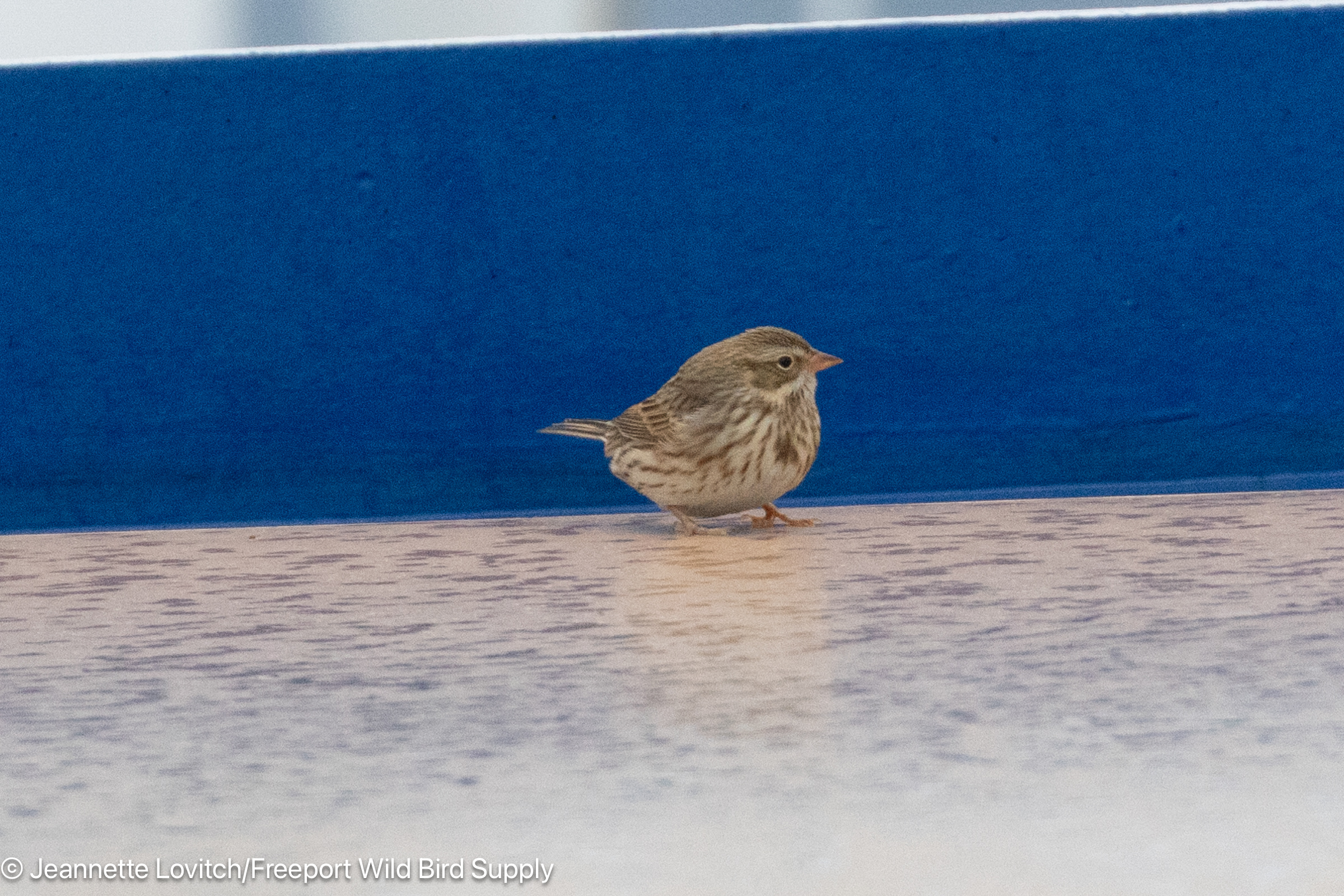
“Ipswich” Savannah Sparrow – that was an unexpected migrant, but makes sense considering we were southwest of Sable Island!

Clearly disoriented by the obnoxiously superfluous lighting of the ship, dozens of birds were around…often being flushed by now-awakening crew and passengers. Luckily, few birds seemed to be in dire straits – only one Yellow-rumped Warbler looked to me to be thoroughly exhausted, thankfully. In fact, most birds were leaving the boat as the sun rose and they were able to reorient themselves. While some birds seemed to arrive in the 15 or so minutes after sunrise, just about all passerines had departed the boat by 7:30 or so.

This photo, taken from off Eastern Point in Gloucester, MA the night before shows just how bright these ships are, and how disorienting they can be to birds.

With birds circling the boat before dawn, calling continuously, and others hiding in corners before being flushed to another corner, it was tough to count, but I estimated and counted a bare minimum of 8 Yellow-rumped Warblers, 8 American Robins (mostly overhead), 7 European Starlings (surprisingly), 6+ Dark-eyed Juncos, 2 Purple Finches, 2 fly-over American Pipits, 2 Savannah Sparrows, and one each of Palm Warbler, Snow Bunting, White-throated Sparrow, Cedar Waxwing, and Rusty Blackbird. Additionally, Noam photographed a Pine Warbler.

The three of us were in place on Deck 7 by 7:30, but the passerine show continued. A flock of 12 Red-winged Blackbirds flew by, while a flock of 14 American Robins joined by two more red-wings flew alongside the boat for several miles later in the morning before overtaking us and heading back to Nova Scotia.

Throughout the day, other passerines appeared and disappeared, some of which could easily have been sheltering out of sight somewhere inaccessible on the boat. These included a few more robins, 3+ Yellow-rumped Warblers, 2 Dark-eyed Juncos, and one each of Palm Warbler, Song Sparrow, Cedar Waxwing, Snow Bunting, American Pipit, and Lapland Longspur.

American Pipit
Harlequin Duck (L) with Black Scoters

But this was a seabird trip, and so we remained vigilant over the water. While we only had a few minutes in Maine waters once we began our vigil, the rest of the day was productive overall, although the afternoon was quite slow. As we passed the southern tip of Nova Scotia (we even spotted Seal Island Light that we were lucky enough to visit with a group of birders about 20 years ago), we finally called it quits at 5:45 pm when cloud cover accelerated the falling of darkness.

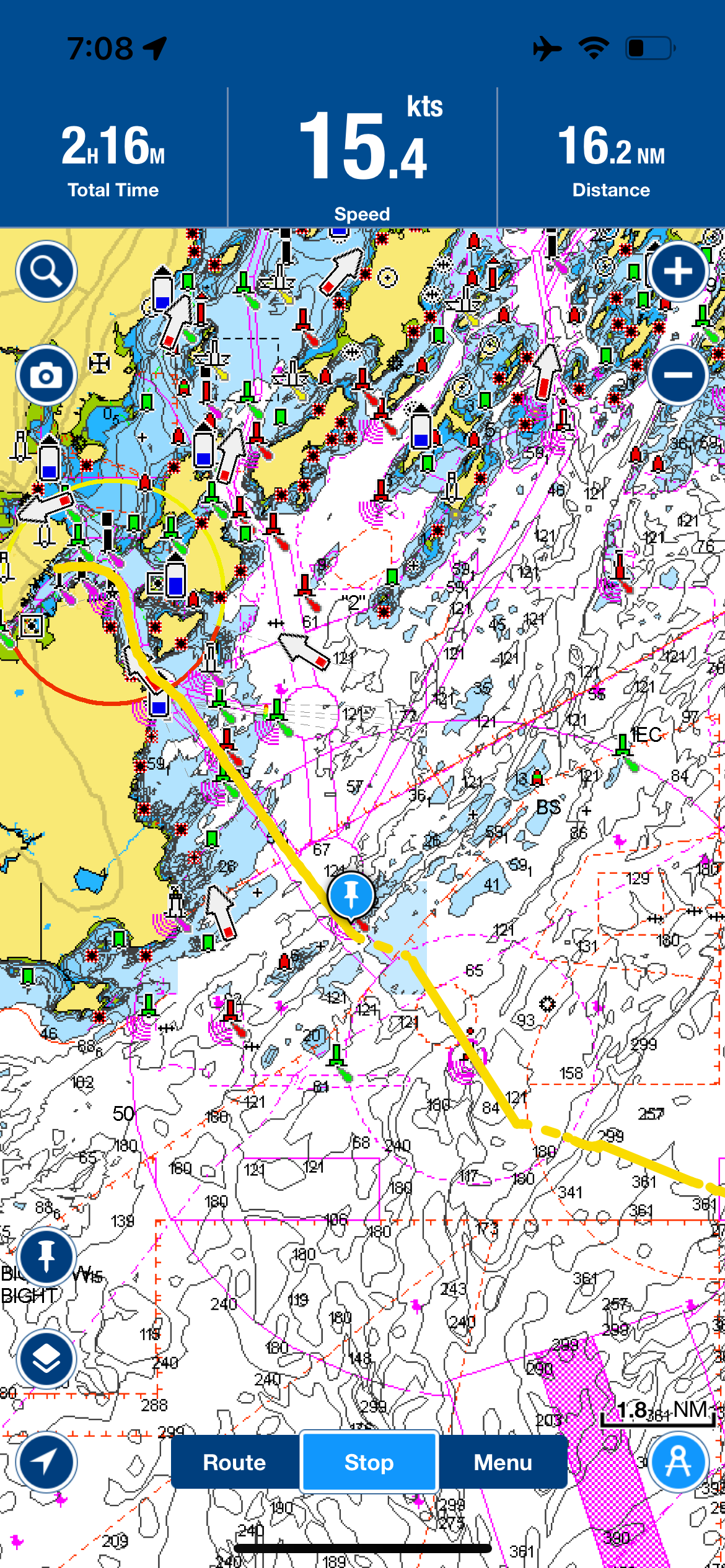
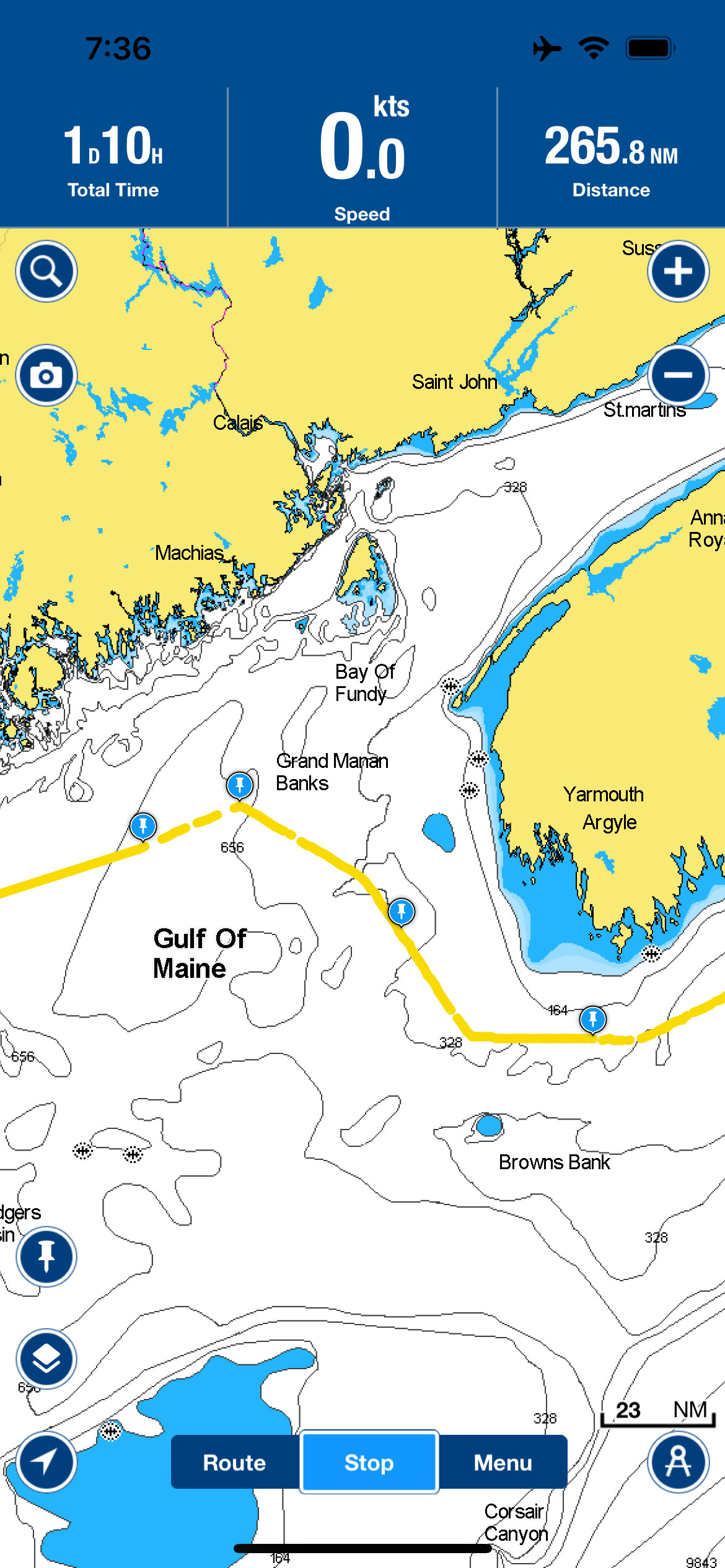
Here’s our route (left pin to right pin) for the day, thanks to the Navionics Boating app by Garmin.

From start to finish, our respectable – albeit not breathtaking – seabird tallies included oodles of Northern Gannets (including a steady southbound trickle almost all morning), and occasional southbound flocks of all three scoters and Common Eiders. Specific counts included:

  • 47 Black-legged Kittiwakes
  • 36 Razorbills
  • 13 Northern Fulmars
  • 10 Great Shearwaters
  • 6 DOVEKIES (one flock landing off to the side of the boat)
  • 3 ATLANTIC PUFFINS
  • 3 American Black Ducks
  • 3 unidentified large shearwaters
  • 2 Harlequin Ducks
  • 1 Greater Scaup
Great Shearwater

So all in all, not a bad day, but the passerines stole the show, and while Dovekie is one of the target birds of this trip, we didn’t see a skua…or even a jaeger, surprisingly.

The next day we awoke well within Halifax Harbor, but a sunrise passerine check yielded two birds: a White-throated Sparrow, and of all things, a rare Dickcissel!

Local friends Eric and Anne once again rescued us for a day of casual birding and good conversation, but the ship departed after dark; just more time to rest for our second full day at sea!

Halifax Public Garden
Northern Flicker

The morning of 11/1 found us between Downeast Maine and the northern corner of Georges Bank. The rest of the day would be in the same waters of our great success on our trip five years ago. After a passerine check which didn’t turn up anything (which meant nothing was disoriented by the ship overnight or desperate for a place to land come dawn, so this is never a bad thing), it was time to get to work in our usual spot.

Unfortunately, strong southwesterly winds and growing seas, with haze and light fog in the distance, made birding challenging. We worked hard though, but it was slow. We did have some excitement from two Dovekies that landed fairly close to the boat, and two Manx Shearwaters that, thanks to the lighting, I was absolutely sure were not Manx Shearwaters until we carefully reviews Noam’s photos later.

With glare and haze becoming problematic, we broke for an early lunch at 11:30, with the previous 4.5 hours of observation producing only the following, plus two Humpback Whales:

  • 12 Northern Gannets
  • 7 Great Shearwaters
  • 6 Red Phalaropes
  • 4 unidentified large shearwaters
  • 2 DOVEKIES
  • 2 Northern Fulmars
  • 2 Manx Shearwater (after review)
  • 2 Black-legged Kittiwakes
  • 2 Lesser Black-backed Gulls
  • 2 unidentified large alcids
  • 1 unidentified small black-and-white shearwater.

Unfortunately, with increasing wind (that we were heading straight into) and seas growing up to 7-10 feet (barely noticeable on a ship this big though, thankfully!), the lower deck was closed off for safety. Later, even the upper decks were closed off due to the very high winds, which were now blowing nearly 30mph out of the southwest.

Screenshot

Luckily for Jeannette and I, we had scored a forward-facing room, and although we were high up on Deck 17, we could see forward. Haze and the angled window were problematic, but we could see birds close to the ship, and we could relax, remove layers, and even crack open a beer. This is pelagic birding in style!

From 1pm to 5pm, when we finally called it a day, the afternoon cabin-watch netted:

  • 11 Great Shearwaters
  • 9 Northern Gannets
  • 5 Cory’s/Cory’s-type Shearwaters
  • 3 unidentified phalaropes
  • 2 Manx Shearwaters
Screenshot

And so our two days at seas concluded without a Great Skua, our primary target species for a future cruise..and perhaps a future tour. Alas, we’re only 1 for 2 in seeing skuas from the boat, and we would need a different class of ship (and, a shorter itinerary with more time at sea and less time in multiple ports) if we were to do this again. We’ll be keeping an eye out from other companies and other Princess ships to see if there’s a more skua-tactic itinerary in the future, but until then, our northeast Atlantic cruisin’ days may have come to a close.

Arriving in New York harbor before dawn, our last sunrise deck check yielded a single Dark-eyed Junco, Yellow-rumped Warbler, and White-throated Sparrow, bringing our more-productive passerine birding cruise to a close.

Boothbay ½-day Pelagic Trip Report, 10/14/2024

The trip started off right with plenty of close Northern Gannets.

Pelagic birding is a lot like Goldilocks’ porridge: it’s hard for it to be juuuuust right. Last year it was too calm and birds were hard to find. This year, it was anything but calm.

Once we traveled beyond the shelter of Damariscove Island, we had a plan – or at least the concept of a plan.  We’d slowly work our way straight south to deep water, make a turn to the east as the forecast was for seas to start diminishing, and then take mostly following seas for a smooth return trip home.

Peregrine Falcon having brunch to go.

We had lots of Northern Gannets early in the trip – always a good sign – but it was pretty slow going through the area known as The Pasture, which like all offshore patches, is always hit or miss. In fact, the only other pelagic we had was a single Cory’s Shearwater seen by only a handful.

Unfortunately, once we made the turn to the east, it became essentially unbirdable. The forecast 4-6 foot seas were right, but the distance between waves (the wave period) was significantly shorter than forecast, and the waves were definitely not diminishing. Captain Steve did an exceptional job of trying to soften the ride and keep us safe, but we just weren’t going to be able to continue east towards some of our deep water hotspots. When a bird was called – such as a single Northern Fulmar (one of our primary targets on the trip), few people were able to even try to see it before it was long gone behind the waves. Perhaps only the Yellow-rumped Warbler and Savannah Sparrow that we encountered about 15 miles offshore were having a worse day. I tried to keep some bird commentary going, if only as a distraction, but I’m not sure anyone was listening at this point!

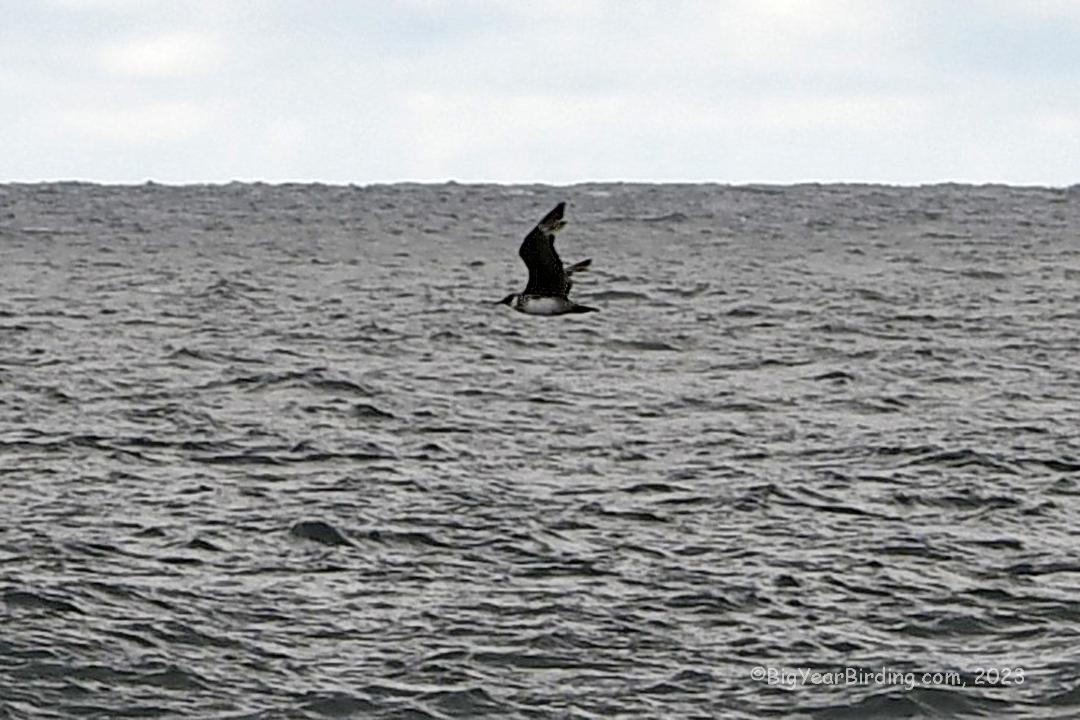
So it was decided to make a turn for home. In a last ditch effort to salvage the birding day, we angled for the mouth of Sheepscot Bay. An unidentified dark jaeger zipped by, seen by just a few, tantalizing us to what else is out here today.

Once in the mouth of the bay, sheltered by Damariscove off to the east, we found gentle seas, and decided to try our hand at attracting some birds with a chum slick.  We laid a slick for about 1-2 miles of pork fat soaked in fish oil. Thanks to a generous donation of surplus fatback compliments of Old Crow Ranch of Durham, we were likely the first ever pelagic to use local, pasture-based, regeneratively-farmed, non-GMO, pork fat. The experiment turned out to be quite a success, too!

First, we kicked up two Common Murres as we traveled, one of which flew past the boat affording a great view for those who were still on deck; even the seabirds were seeking sheltered waters today!

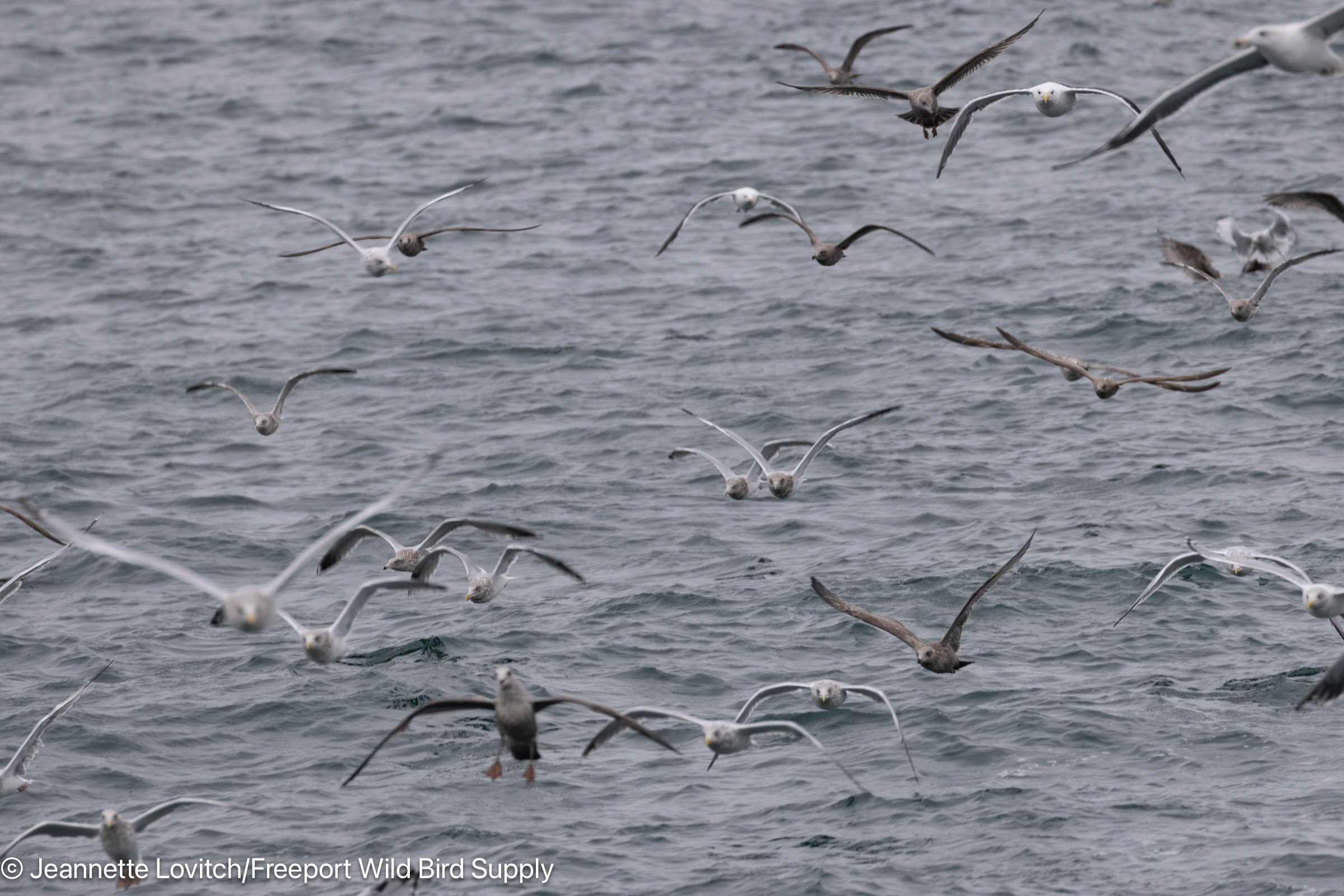
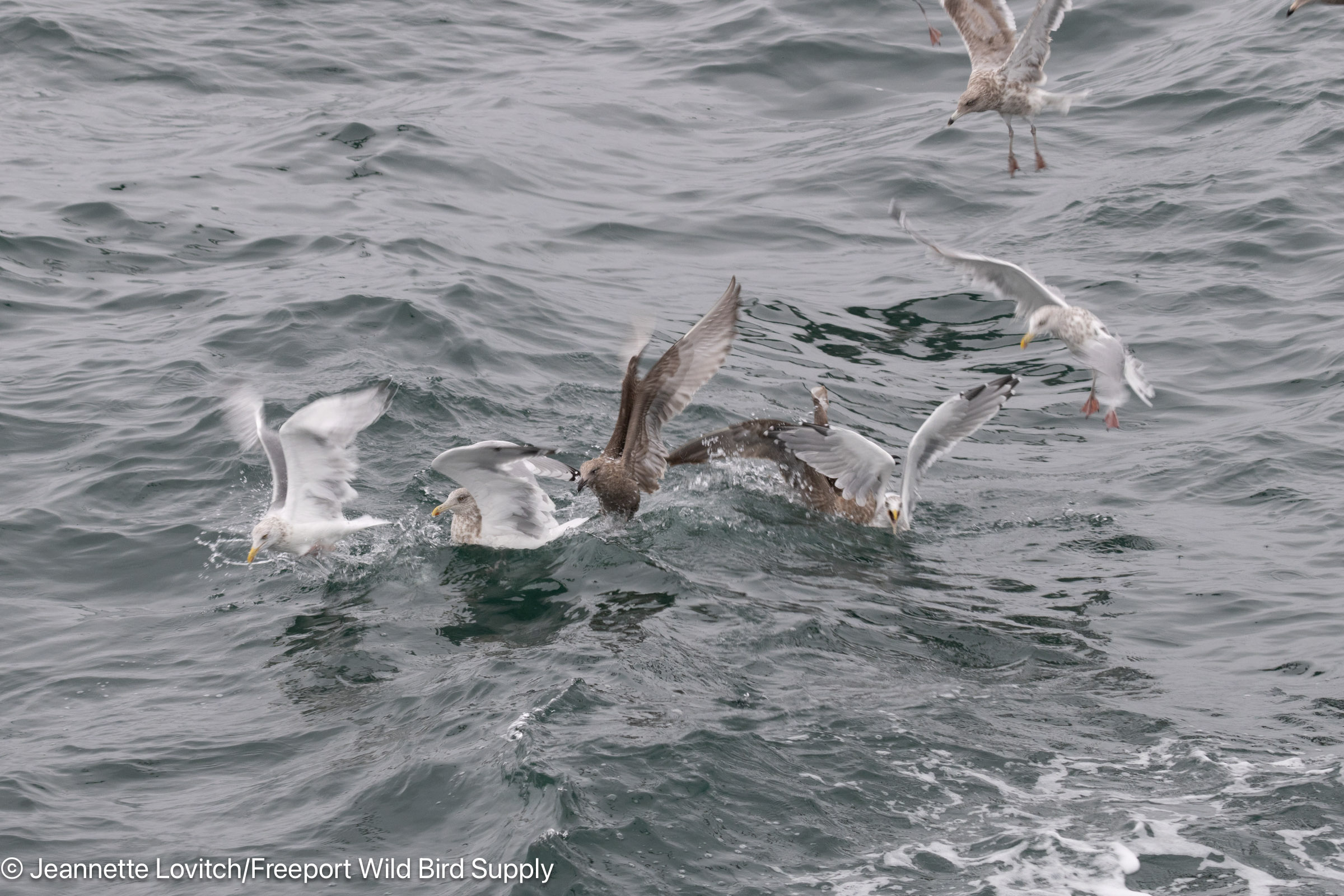
We were soon attracting several hundred gulls to our chumslick, and we finally teased out a single Lesser Black-backed Gull from the masses. A few lingering Laughing Gulls and several Ring-billed Gulls, including spiffy fresh juveniles, joined the myriads of Herring and Great Black-backed Gulls.

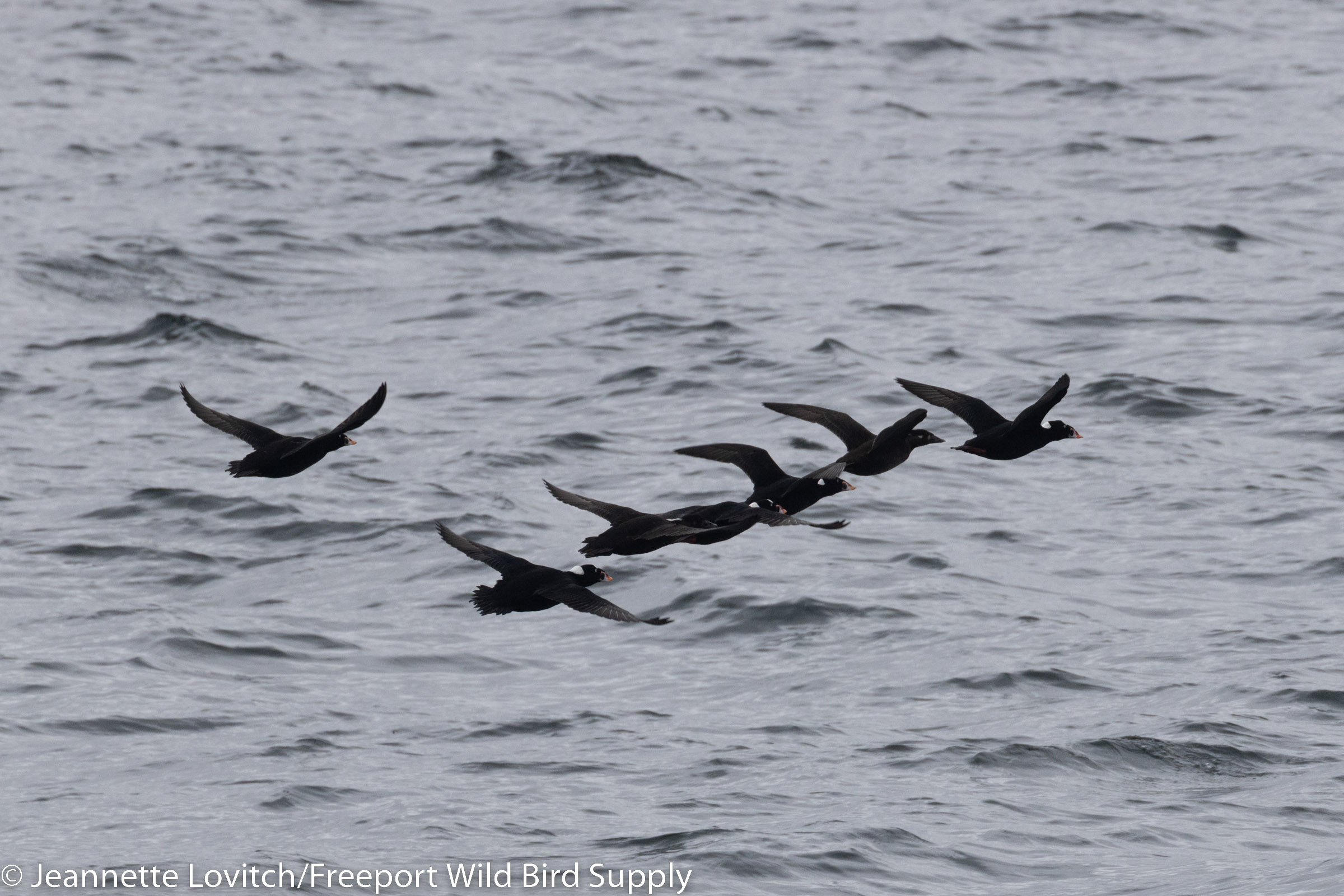
We then tried the same technique closer to the mouth of the outer Boothbay Harbor, closer to Damarsicove. At first the results were surprisingly lower, until a Peregrine Falcon and a Northern Harrier over the island kicked up the gulls roosting on the windward side. Once the gulls saw the feeding birds behind us, the game was on. Meanwhile, we enjoyed many dozens of Surf Scoters and Common Eiders, punctuated by both Black and White-winged Scoters, and from here to the harbor, another couple of dozen Common Loons and plenty of Black Guillemots.

I want to thank the captain and crew of Cap’n Fish’s Cruises for their hard work and dedication today, and their best efforts to keep us comfortable. I want to thank my spotters, Jeannette Lovitch and Ian Carlsen (who also did a fantastic job keeping the official eBird checklist following pelagic protocol). A big thank you to Alex Lamoreaux for still finding birds in the worst of the snotty water. And another big thanks to our chummer, Dan Nickerson, who got the action going once we found some calm waters.

And most importantly, thank you to all of those who came aboard today. Some said they had fun. Many suffered. But everyone endured. If this was your first pelagic, you’ll be thrilled to know you were likely just had your worst trip. For those who like roller coasters (unlike me!), I guess you’re welcome?

Here’s the trip list. For the hit-or-miss October pelagics in the Gulf of Maine it’s really not that bad.

Canada Goose7
Mallard5
American Black Duck2
Common Eider255
Surf Scoter180
White-winged Scoter50
Black Scoter40
unidentified dark-winged scoter40
unidentified scoter240
Rock Pigeon20
Dunlin3
Semipalmated Sandpiper1
Black Guillemot24
COMMON MURRE2
UNIDENTIFIED JAEGER1
Bonaparte’s Gull2
Laughing Gull7
Ring-billed Gull14
Herring Gull781
Great Black-backed Gull347
LESSER BLACK-BACKED GULL1
Common Loon50
NORTHERN FULMAR1
Cory’s Shearwater1
Northern Gannet67
Double-crested Cormorant307
Great Blue Heron1
Osprey3
Northern Harrier1
Peregrine Falcon2
American Crow7
Savannah Sparrow1
Yellow-rumped Warbler1
Unidentified passerine1

Recent Highlights, 10/3– 10/9/24

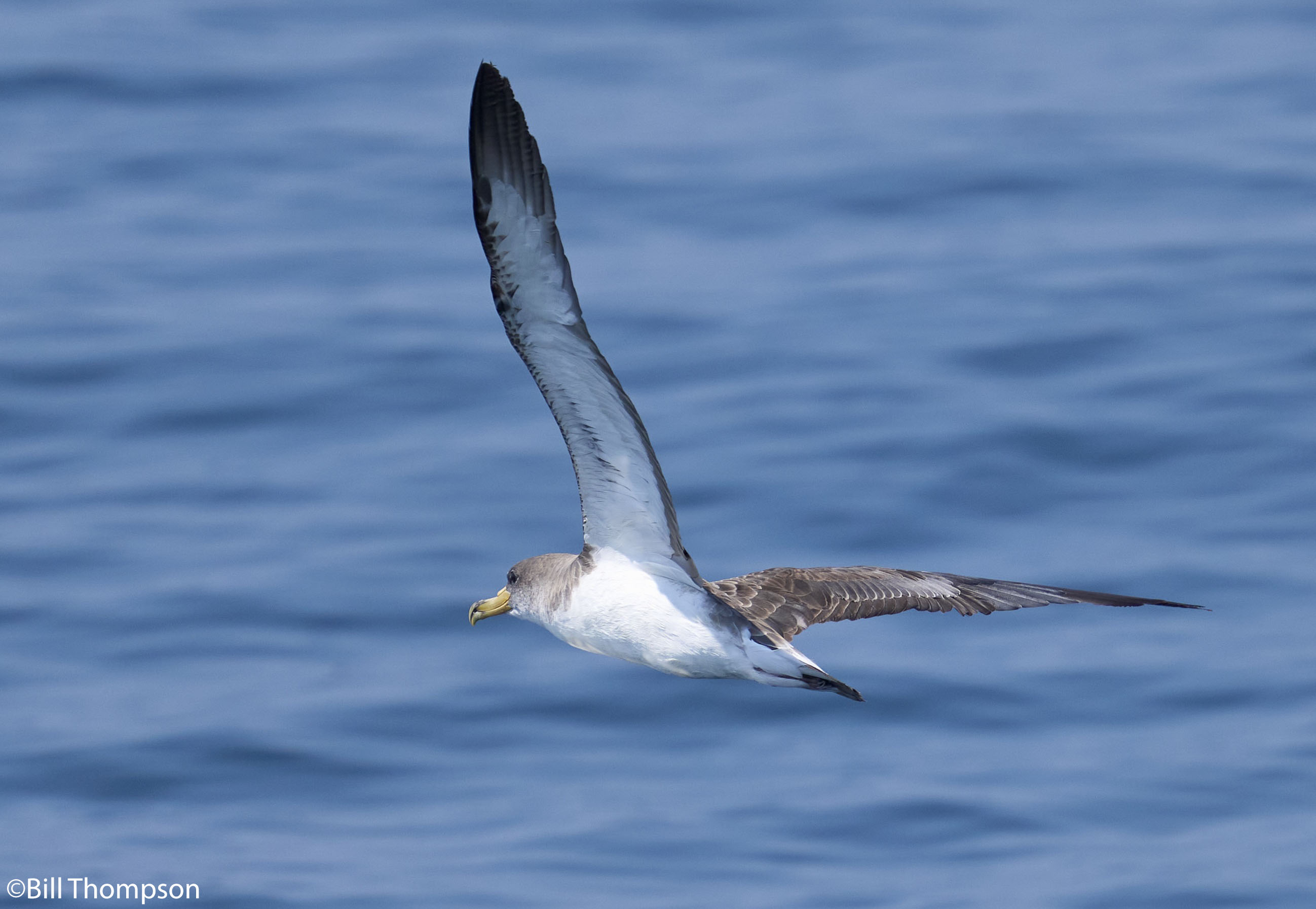
One of at least 15 Cory’s Shearwaters observed from a Cap’n Fish’s Cruises Whale Watch last week, showing the dark outer primaries on the underwing, making for a rounded end to the white of the underwing coverts, separating it from the recently-split Scopoli’s Shearwater.

October is my favorite month of birding in Maine, and this past week showed why. A great diversity of birds are on the move, and my past seven days featured everything from pelagics to yard birds. Here are my observations of note over the past seven days.

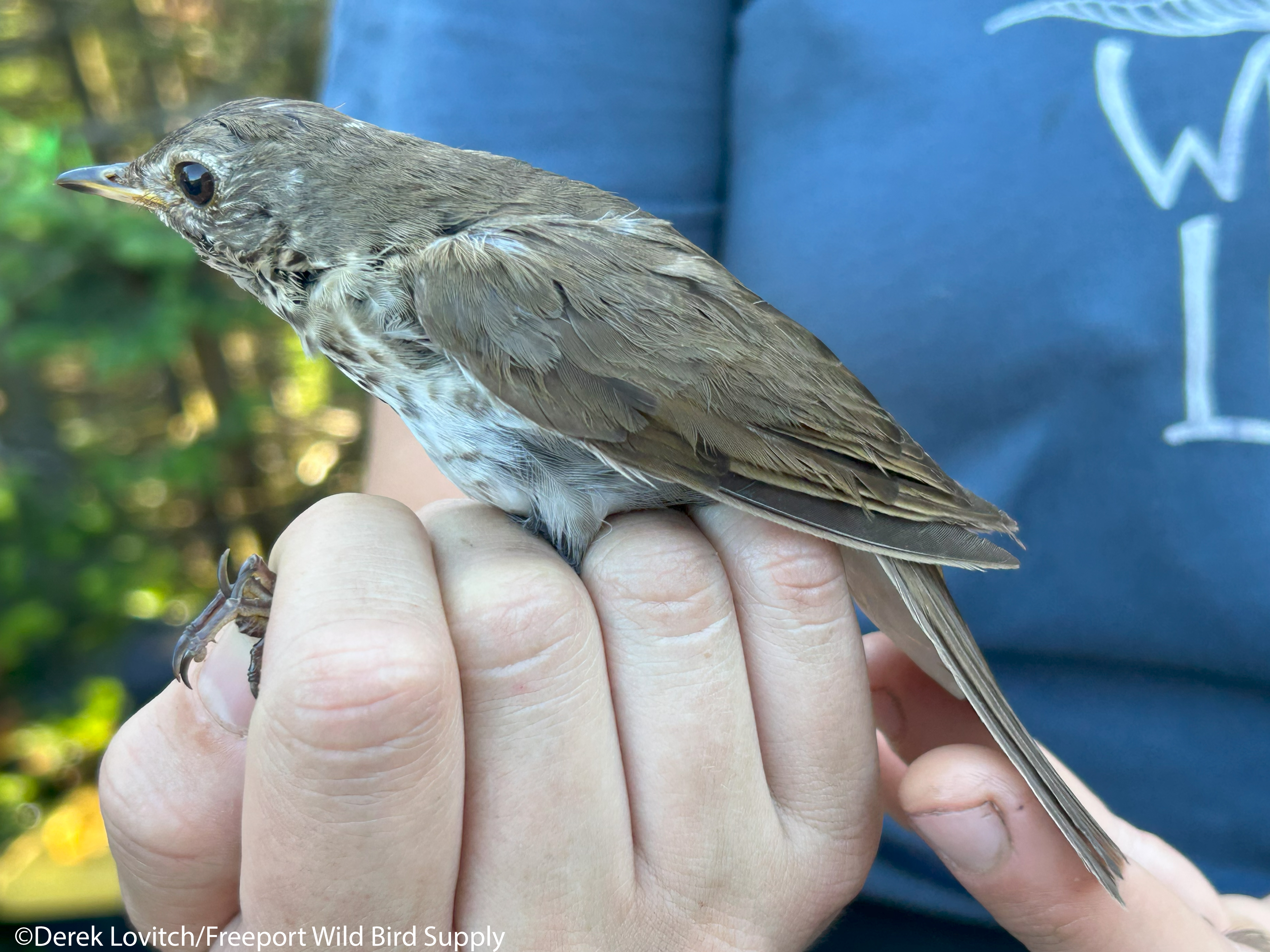
  • Pelagic highlights from a Cap’n Fish’s Cruises Whale Watch out of Boothbay Harbor on 10/4: 4 NORTHERN FULMARS (including one dark morph), 4 ATLANTIC PUFFINS, 14-15 Cory’s Shearwaters (most seen and/or photographed well enough to see full dark outer primaries on the underwing; see above), 6 Red-necked Phalaropes, and one BROWN CREEPER landing on a person on the top deck about 14 miles off of Damariscove Island (photo below). My complete list is posted here.
  • 1 Baltimore Oriole and 1 Nashville Warbler, Wolfe’s Neck Center, Freeport, 10/5 (with Saturday Morning Birdwalk group).
  • Sandy Point Morning Flight, 10/6: 140 birds of 18 species led by 60 Yellow-rumped Warblers. Total tally here.
  • 1 Rusty Blackbird, 1 Nashville Warbler, and 1 Pied-billed Grebe, Capisic Pond Park, Portland, 10/9 (with clients from New York).
  • 20-30+ Cory’s Shearwaters off East Point and Ocean Ave, Biddeford Pool, 10/9. Some just beyond Beach Island in good afternoon light to see dark outer primaries. 15 minutes of counting produced 18 individuals from East Point, all moving north, with 1-3 in view with almost every quick scan thereafter. Good sign for Monday’s pelagic! (with clients from New York).
  • 7 American Oystercatchers and 1 Horned Grebe (first of fall), Ocean Avenue, 10/9 (with clients from New York).
  • 1 American Redstart, Elphis Pond, Biddeford Pool, 10/9 (with clients from New York).
  • Highlights from our Durham property this week included the arrival of the first few Dark-eyed Juncos, a Rose-breasted Grosbeak on 10/4, continuing multiple Lincoln’s Sparrows, Nashville Warbler on 10/8, and another or the same Indigo Bunting on 10/9.
  • And here’s my complete trip report from my Monhegan tour and visit on September 27 through October 1st.

UPCOMING TOURS:

  • Our annual half-day pelagic with our partners Cap’n Fish’s Cruises out of Boothbay Harbor is on Sunday, October 14th – a nice, late date that should put us more in the season of things like Great Skua, and you can be sure we’ll be studying Cory’s Shearwaters hard to find a Scopoli’s! More info and link to registration is here. See notes above from my 10/4 outing.
  • A few spaces remain on our Birds on Tap! – The Boat Trip! To House Island in Casco Bay on Sunday, October 20th. More info here.
Join us on Monday’s pelagic and maybe a Brown Creeper will land on you!

Boothbay Harbor Mini-Pelagic with Cap’n Fish’s Cruises, 10/16/23

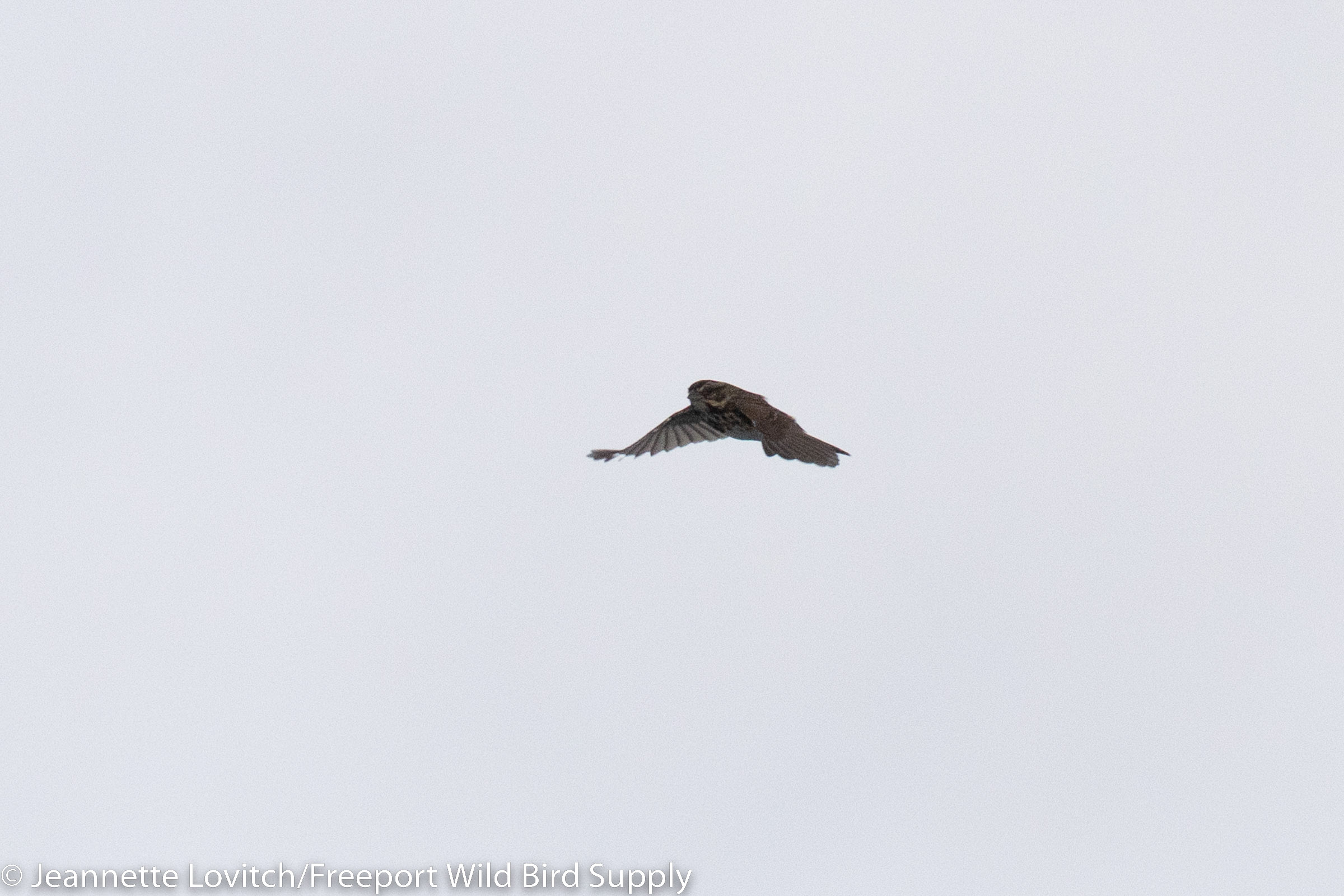
Yup, I’m leading off a pelagic trip report with a photo of a Song Sparrow. It’s a sign of things to come…but it was 28 miles offshore!

The thing about pelagic birding, especially on the Eastern Seaboard, is that it can be very hit or miss.  This year was our 4th Fall Mini-Pelagic with our partners Cap’n Fish’s Cruises out of Boothbay Harbor. Last year’s trip was pretty good, 2021 was outstanding, and 2020, had well, Leach’s Storm-Petrels, so that counts as great! 

This year, well, this one is going to have to be counted as a miss. 

Granted, I love the thrill and challenge of seeing and identifying passerines at sea. It’s like Forrest Gump’s box of chocolates: you never know what you’re gonna get. And they’re always a fun addition to a pelagic birding tour.  But let’s be honest, that’s not what we packed the boat for.  More species of sparrows than seabirds is not why we go on pelagic birding tours!

There’s no other way around it – it was dead out there. Kelsey, the boat’s Naturalist, reported it has been very quiet for both birds and marine mammals recently, and she was not kidding.

But hey, we were offshore on a boat! It sure beats most other things we could have been doing instead. Plus, the waves were not very bad (2-3 feet is pretty generous), the winds were much lighter than forecast, and other than a few sprinkles, we didn’t hit any rain until we returned to the outer harbor. The light winds, the gray sky, and the minimally choppy waters were all perfect for pelagic bird finding. But alas.

We can’t be accused of not trying though!  Captain Steve covered nearly 70 miles, and we hit a total of 5 hotspots, including perennial favorites like Murray Hole and Mistaken Ground.  The only real action we had were gulls and Northern Gannets, which we spent some time with at Bantam Ledge on the way to and from the deeper waters. Diving gannets are always a good show.  And with several visitors from well beyond New England, we saved a few minutes to enjoy the nearshore birds around Cuckhold’s Ledge Light on the way back, with 3 Great Cormorants and all three scoters scattered among 750-1000 Common Eider.

More Northern Flickers than jaegers, more species of warblers than alcids, but we tried!  And days like this only make those great days feel even better! We’ll get ‘em next year.

Here’s the trip list:

  • 12 Canada Geese
  • 3 Mallards
  • 1006 Common Eider
  • 46 Surf Scoters
  • 8 White-winged Scoters
  • 9 Black Scoters
  • 3 Long-tailed Ducks
  • 40 Rock Pigeons
  • 1 POMARINE JAEGER
  • 7 Black Guillemots
  • 1 Black-legged Kittiwake (independently photo’d by two people)
  • 2 Bonaparte’s Gulls
  • 2 Laughing Gulls
  • 2 Ring-billed Gulls
  • 137 Herring Gulls
  • 81 Great Black-backed Gulls
  • 11 Red-throated Loons
  • 30 Common Loons
  • 58 Northern Gannets
  • 3 Great Cormorants
  • 165 Double-crested Cormorants
  • 4 Great Blue Herons
  • 1 Northern Harrier (crossing outer harbor)
  • 1 Cooper’s Hawk (at dock)
  • 2 Northern Flickers
  • 2 Merlin (outer harbor)
  • 4 American Crows (harbor)
  • 4 American Pipits
  • 6 Pine Siskins
  • 2 White-throated Sparrows
  • 3 Savannah Sparrows
  • 1 Song Sparrow
  • 1 Palm Warbler
  • 5 Yellow-rumped Warblers
  • 23 unidentified passerines (including a flock of 14 that were probably Pine Siskins).

*All of the passerines were offshore, including several sparrows 28 miles offshore!

Marine Mammals:

  • 1 distant breaching Minke Whale seen by only a handful
  • scattered Harbor Seals

Seal Island Tour Report, July 2023

On July 22nd we boarded the Isle au Haut Boat Service’s The Otter for our special annual charter out of Stonington to the raucous seabird colony on Seal Island.  Our partnership began while “Troppy” the world-famous Red-billed Tropicbird that called the area home for 17 years. Unfortunately, Troppy failed to appear last year, but we ran the trip anyway, and had an amazing time!

So we did it again this year. There’s just so much life out there, and it’s such an amazing place to visit, and so I needed an excuse for my annual visit. And sure, if that wily Tufted Puffin that’s been wandering the Gulf for the last two summers wants to be the new Troppy, that would be fine, too. But for now, we headed offshore with all sorts of high hopes.

As we left Stonington Harbor, the fog began to thicken, but not before we spotted a group of 15 Red-necked Phalaropes sitting on the water. Captain Tracy did a great job getting us closer, and then inching up to them when they relocated a short distance away. It’s a treat to get so close to phalaropes on the open water.

A handful of Wilson’s Storm-Petrels were bouncing around, but the action picked up as usual as we approached Saddleback Ledge Light. A 1st summer Great Cormorant was surveying the scene, and our first Atlantic Puffin circled around us for a couple of passes.  After we ourselves circled the small island twice, we turned for Seal and immediately ran into dense fog that had slowly been creeping in. The tradeoff for calm waters is often fog, and it was pea soup today.
Not surprisingly, we saw little en route, but soon enough, we were out at Seal. While we heard – and even smelled – the tern colony before we could see the island, once along its shores, visibility was adequate. Arctic Terns put on a particularly good show for us, with several near the boat feeding and bathing. Arctic and Common Tern fledglings were everywhere, and we enjoyed their antics.  There were plenty of Atlantic Puffins in the water and on land, including several groups that were remarkably confiding as we sided up to them in the glass-calm waters. And Black Guillemots were numerous, and very busy.

Razorbills were fledgling rapidly, so we only found two on the island, but later, we had great looks at one on the water, too.

We circled around the southern end, spending some time observing the state’s last colony of Great Cormorants (and Double-crested); nests were brimming with chicks! 

We kept an eye out for migrant shorebirds in addition to the locally breeding Spotted Sandpipers, but visibility remained a challenge: 4 Short-billed Dowitchers, 3 Least Sandpipers, and some unidentified peeps was the best we could do.  A Great Shearwater made a close, but brief, pass as we were on the east side of the island before vanishing back into the fog.

Somehow, it was even foggier on our way back, so seabird sightings – even with a second visit to Saddleback Ledge – were limited to just a couple more Wilson’s Storm-Petrels.

So yeah, the fog was annoying, and did impact photos and our search for the next mega-rarity. But it also produced one of the smoothest boat rides you’ll ever be on in the Gulf of Maine and yielded lots of close puffins and some great looks at phalaropes.  And besides, any day birding from a boat is a good day in our book! Especially when a few days prior we thought this trip was going to be cancelled due to wind and thunderstorms.

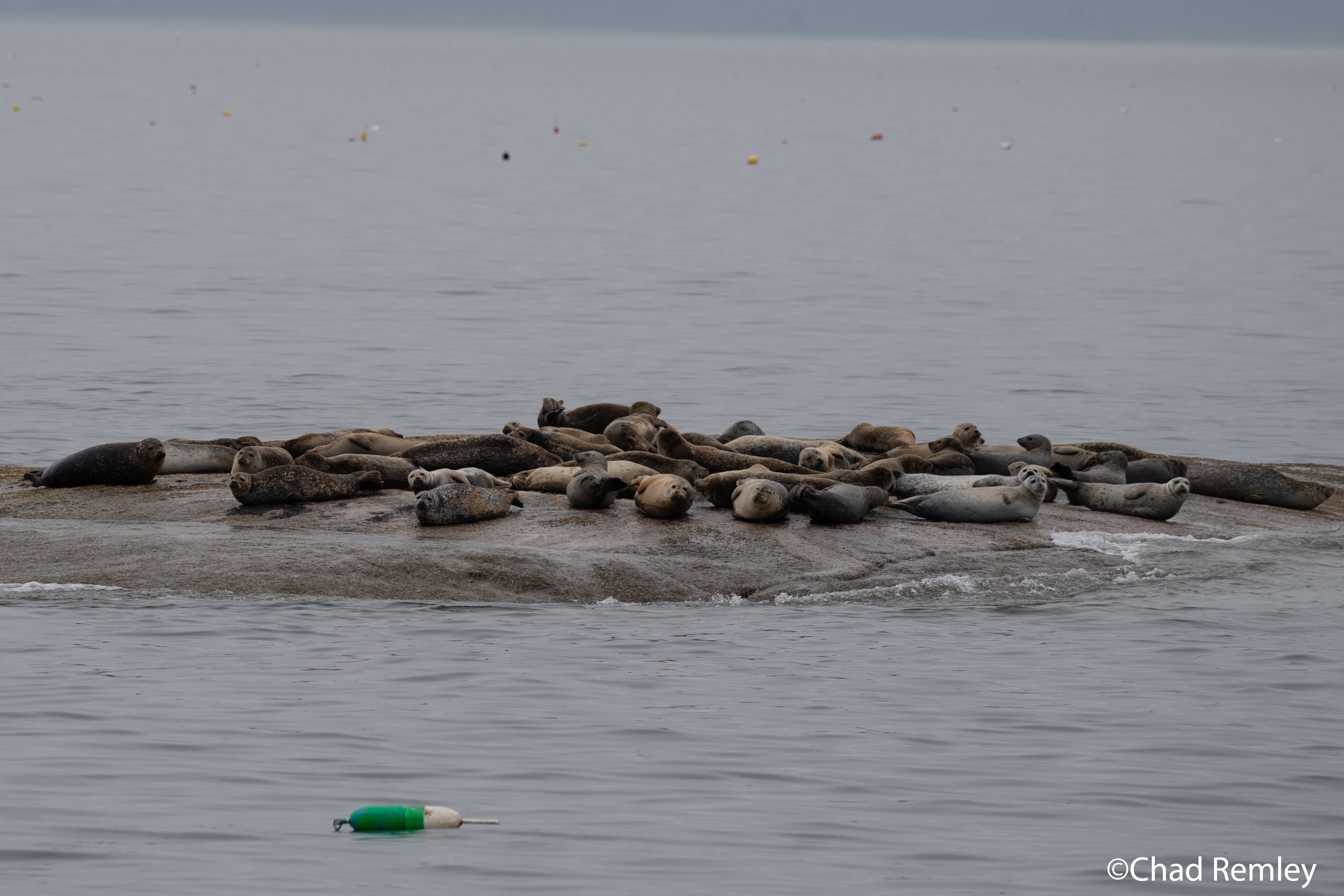
Harbor Seals on the way out of the harbor.