Tag Archives: Maine

Current Birds, Weather, Predictions . . . and Pretty Shorebird Photos

Yesterday’s record high temperatures (92 in Portland shattered the old record of 87) were ushered in on a strong southwesterly flow.  Unseasonably warm air continues today, as the southwesterly winds aloft are picking up ahead of tonight’s cold front (more on that shortly).
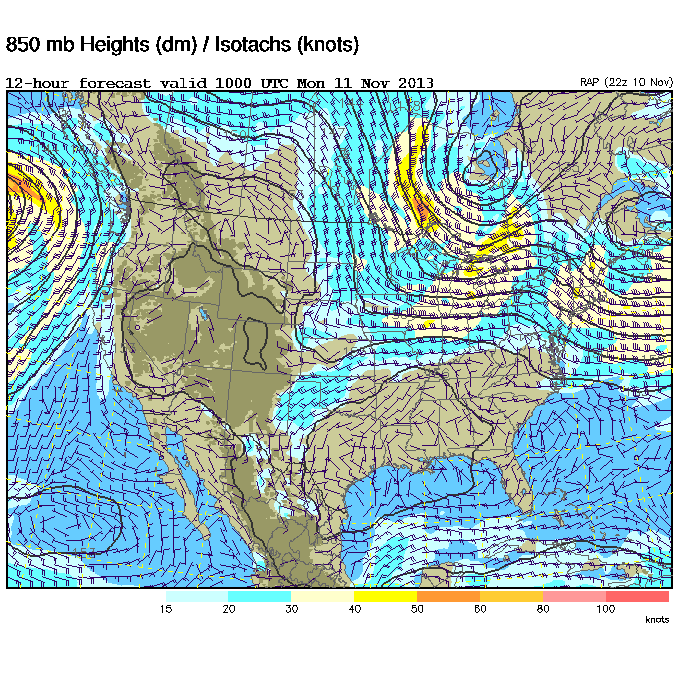
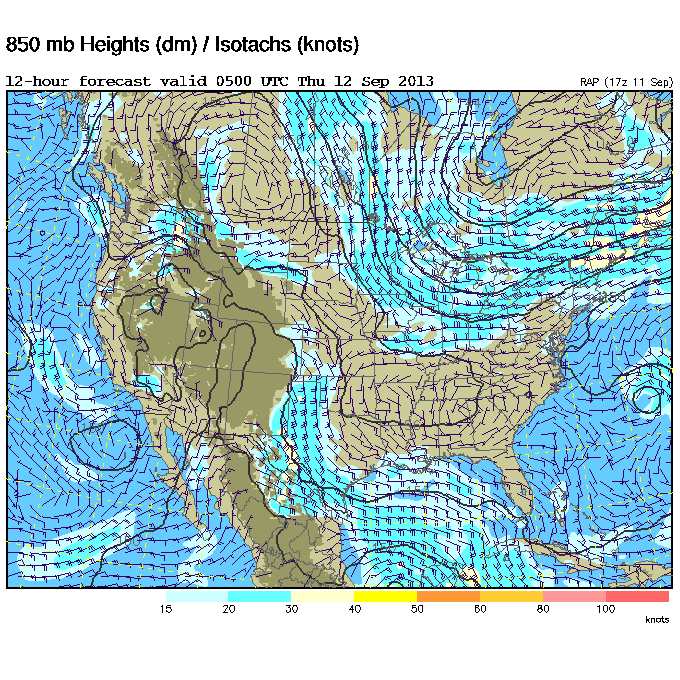
Here are the continental wind maps from yesterday afternoon, and this afternoon.  Yesterday, you can see the south-southwesterly flow originating from under a broad area of high pressure over the Southeast…
wind,9-11-13

…but notice that by today, cool, Canadian air was pouring down into the Upper Midwest (which resulted in some big flights over the last two nights in that region).
wind,9-12-13

In addition to hot and very muggy conditions, this strong southerly flow has the potential to usher in some hot new rarities to our neck of the woods. While it appears that the Biddeford Pool Kentucky Warbler has moved on, I am expecting some more southern strays to turn up in our region.  Keep in mind, however, that these winds are not “blowing” birds north, but instead facilitating birds to arrive here that are either wandering (post-breeding dispersal, prospecting for new territories, etc) or area already flying in the wrong direction (e.g. “180-degree misorientation”).

In other words, if a Kentucky Warbler – for example – was “miswired” and began to fly north instead of south, a strong southerly wind would push it even farther the “wrong” way.  Then, with tonight’s cold front, the strong northwesterly winds that follow could push the birds towards the coast.  There, they find a coastal migrant trap – i.e. a dense thicket full of fruiting bushes in the woods of Biddeford Pool – to seek shelter in while they refuel.  There, they are more likely to be found by an alert birder than say somewhere in the valleys of the western Maine mountains.  Many migrants spend 3 to 7 days to “refuel.”  I don’t think it was a coincidence that the Biddeford Pool KEWA was seen for five days…and that it disappeared after a night of light southerly winds. Of course, it may have just moved to a richer food patch, or one without birders unnecessarily blasting a tape at it all afternoon.

Anyway, what will the weekend produce?  I might be thinking more along the lines of birds like Summer Tanagers and Hooded Warblers based on this recent weather pattern.  Unfortunately, I won’t be around to find them!  Instead, I will be helping out at the Leica Sports Optics booth at the Cape Cod Birding Festival in Hyannis (I’ll also be signing copies of “How to Be a Better Birder,” which of course covers many of the vagrant-producing and Mega-finding topics that I have touched upon here).

Ahead of tonight’s cold front, and before the forecasted thunderstorms of the afternoon, I – not surprisingly – was out birding this morning.  It’s September – there’s really no such thing as a night with “no” migration.  However, what was flying last night was not being noticed on the radar; likely a limited number of birds were flying below the clouds, however.

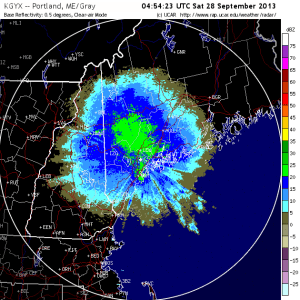
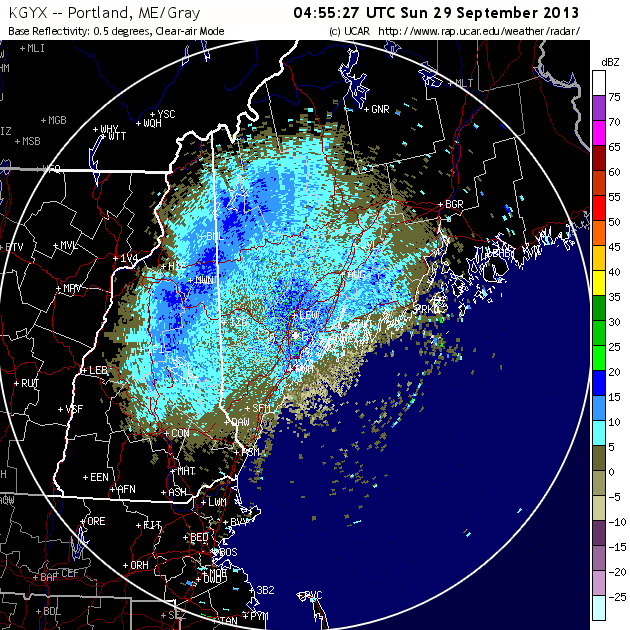
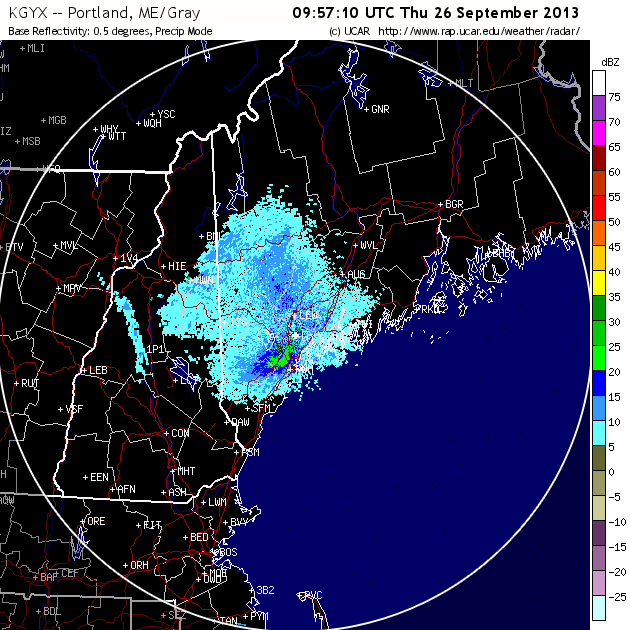
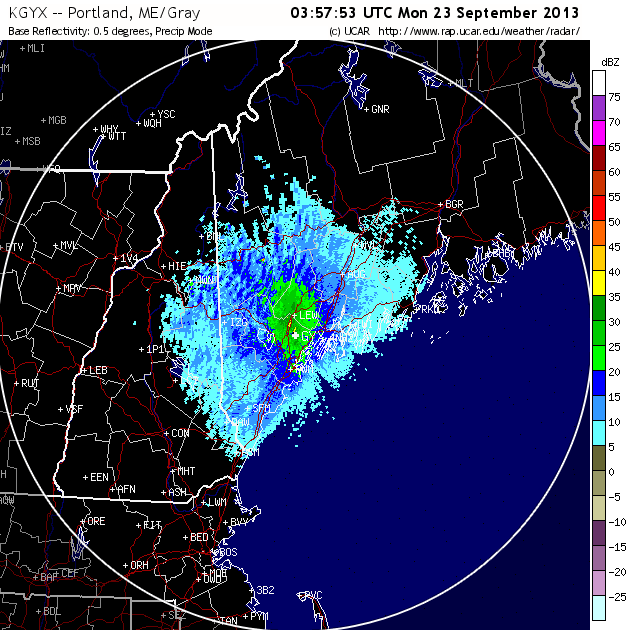
Here’s the midnight radar image for example:
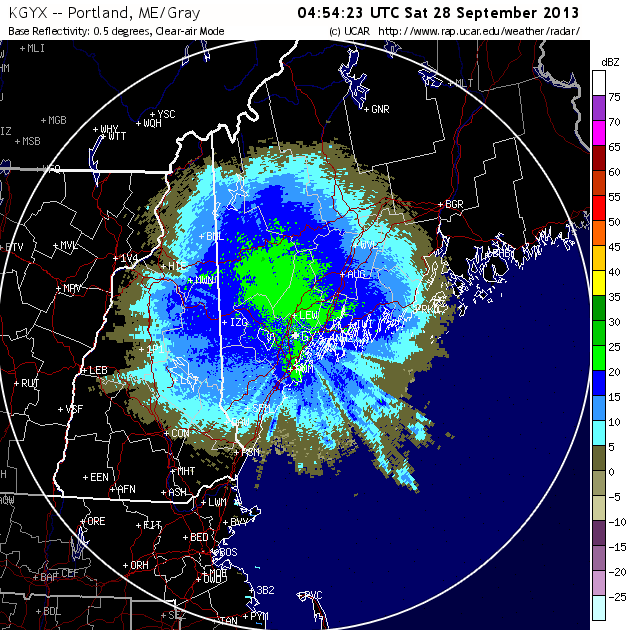
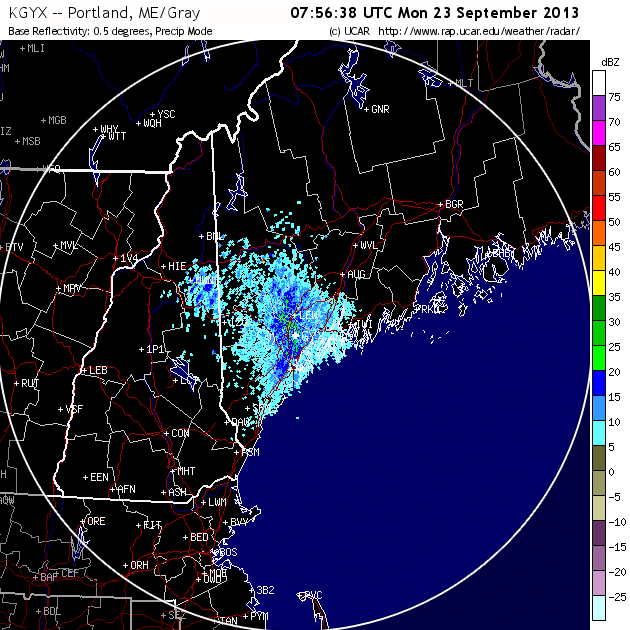
12am radar, 9-12-13

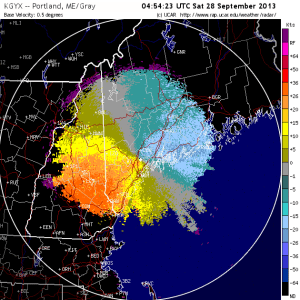
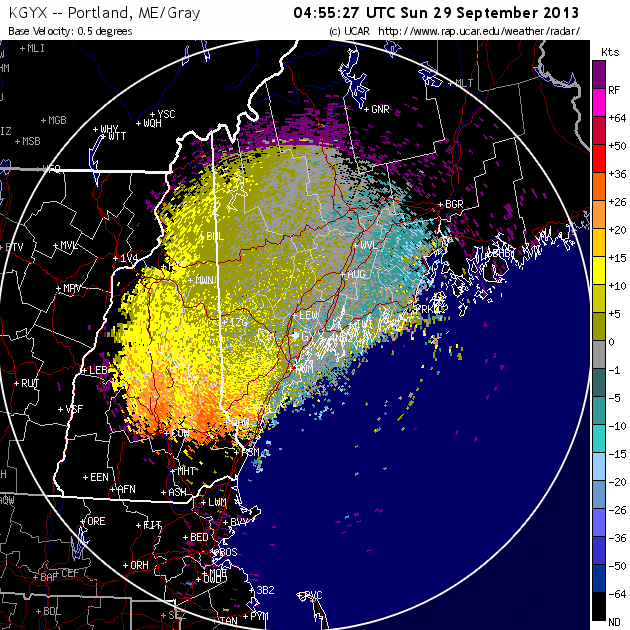
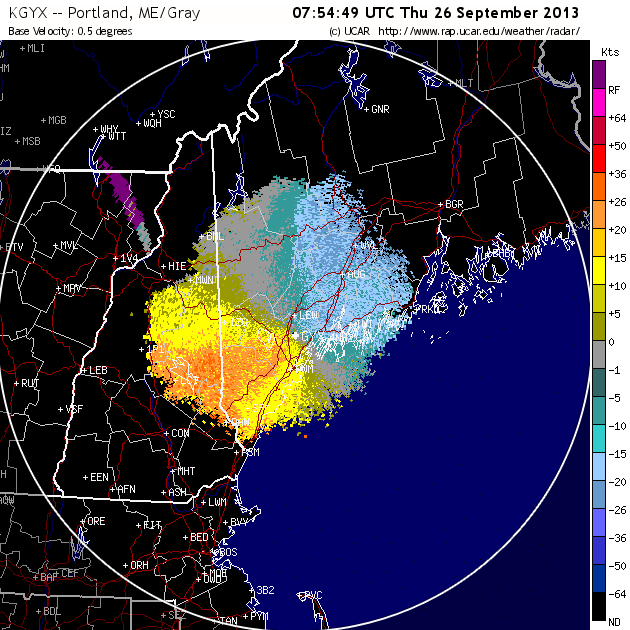
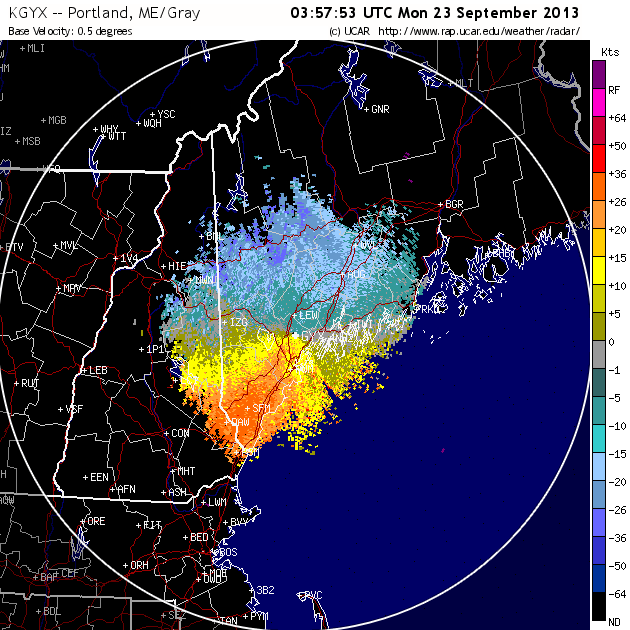
That would be thunderstorms.  Not birds.  And we can verify it from the velocity image:
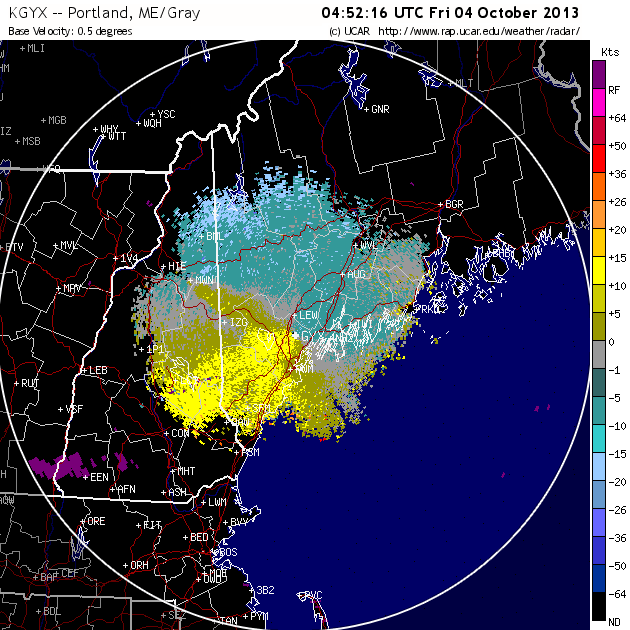
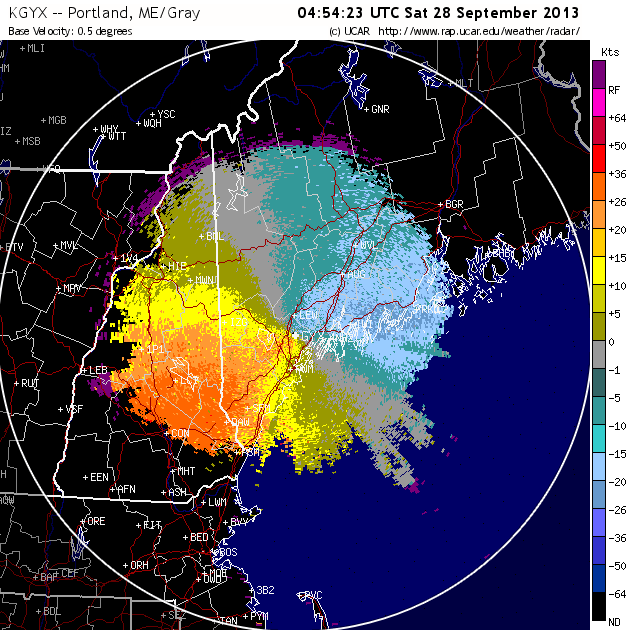
12am velocity, 9-12-13

…A distinct west to east movement, unlike the northerly to southerly movement of southbound fall migrant birds.  Therefore, I was not surprised to have very, very few birds overhead at dawn over our yard this morning, or later on at Hedgehog Mountain Park.  I did, however, find a lot of birds in the woods.  While some of these might have been new arrivals that snuck in below the clouds and between the storms, the mixed-species foraging flocks working through the woods was much more indicative of birds that have been around for a day or two.  The flock that moved through our yard shortly after sunrise, consisting mostly of Blackpoll Warblers, also contained not one, but two new Yard Birds for us: Cape May Warbler and Philadelphia Vireo!  Also, at least two Tennessee Warblers.

Multiple mixed flocks were encountered at The Hog, led by Blackpoll Warblers, along with a healthy serving of Black-throated Greens.  A Lincoln’s Sparrow foraged at the edge, and a mixed-species flock consisting of 40+ Chipping Sparrows, 6 Eastern Bluebirds, and 1 Pine Warbler worked the edge of the transfer station and out through the ballfields.

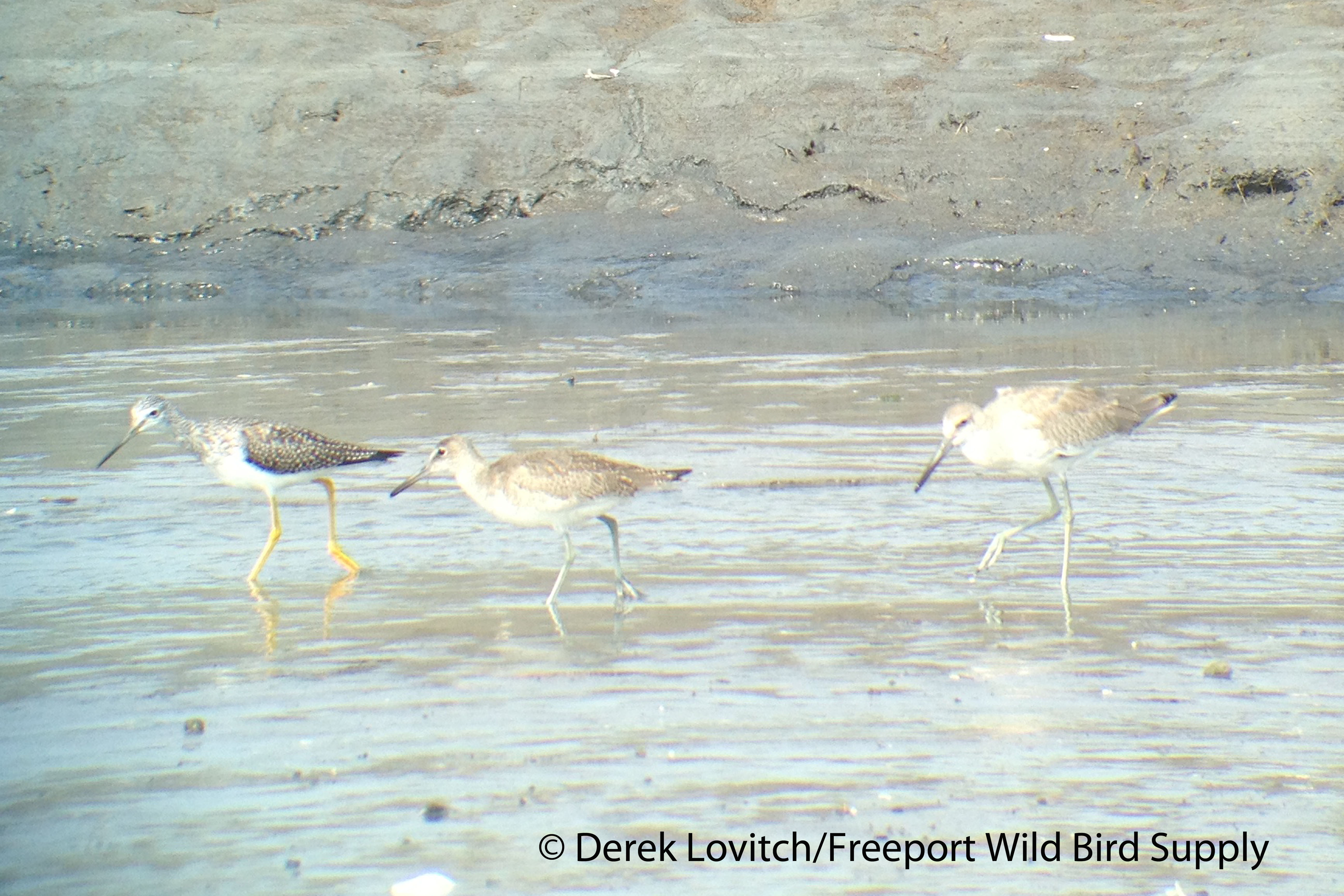
Afterwards, I zipped down to Pine Point for the low tide.  Shorebird numbers are down considerably, as expected by the middle of September.  And, I would expect a lot of the birds I saw today to clear out behind this next cold front.  About 180 Semipalmated Sandpipers led the way, punctuated by a juvenile Red Knot, and two continuing American Oystercatchers (they were too far to determine age, visible over on Western Beach as viewed from Pine Point Beach).  Four juvenile Dunlins were a sign that their migration – one of our two latest migrant shorebirds – is just now picking up.  The highlight, however, were side-by-side “Eastern” and “Western” Willets.  Unfortunately, I was only able to get the two in the frame together by phone-scoping, here with a Greater Yellowlegs for a convenient reference.
EWIL_with_WWIL2, Pine Point, 9-12-13

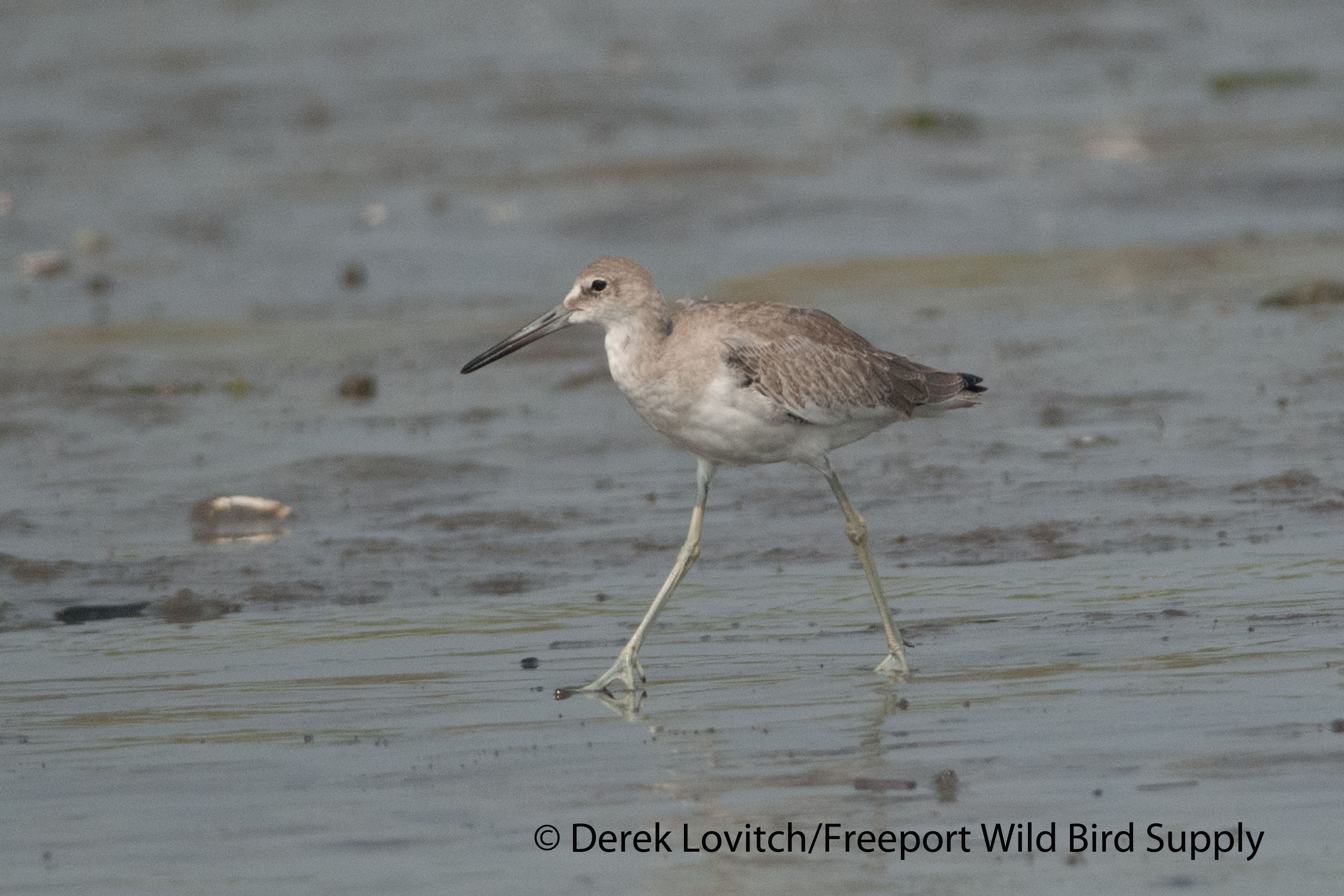
I then carefully approached with my “real” camera, but I never again saw the two birds in the same field of view.  However, I did get solid photos of both the juvenile Western…
DSC_0002_WesternWILL1,Pine Point,9-13-13

…and the juvenile Eastern.
DSC_0005_EasternWILL1,Pine Point, 9-13-13

Even from the lousy phone-scoped photos, you can see how distinctive these two subspecies (for now!) are.  The smaller, “dumpier,” browner Eastern nicely contrasts with the larger, lankier, and much grayer Western.  Also, note how the darker brown scapulars of the Eastern contrast with the rest of the wing; Western is more uniform.  The head of the Eastern is also more contrast-y, and in this individual, the bill is so distinctly shorter and blunter.

Elsewhere, I finally got a chance to look for – and find – the juvenile Hudsonian Godwit that has been frequenting the river behind the Scarborough Marsh Nature Center for about a week now.  This is the first “Hud-wit” that I have seen in two years here in Maine – this once-common migrant has definitely declined dramatically in the state.
DSC_0010_HUGOjuv1,NatureShed,9-12-13 DSC_0050_HUGOjuv3,Nature_Shed,9-12-13

Now, my eyes are on the weather maps, and after dusk, the radar, to see if I will be at SandyPoint at sunrise on Friday. This is the wind map as of 5pm.  The northwesterlies behind the front are barely peeking into the region north of the St. Lawrence River in Quebec.
winds at 5pm, 9-12-13

Currently, forecasters are suggesting that the cold front won’t pass through until tomorrow morning.  However, with very light winds overnight, perhaps with a westerly component, there could be some birds on the move…depending on when this latest batch of rain and thunderstorms (the storms last night and this afternoon were wicked, weren’t they?  And very un-September-like) moves through. Will the front get here soon enough?  Will birds be moving directly behind the front?  Will they be pushed offshore enough to need to reorient in the morning?  I’ll let you know tomorrow!

A MEW GULL in Thomaston!

On August 3rd, Don Reimer found Maine’s Third State Record of a Mew Gull in a parking lot in Thomaston.  While it was seen in the area for most of the day, it was not seen by anyone on the 4th – myself included – despite extensive searching.  However, a few days later, Don relocated it, and it has been seen regularly since, although it is not always in the same place at the same time, and it seems to feed somewhere unknown at low tide.

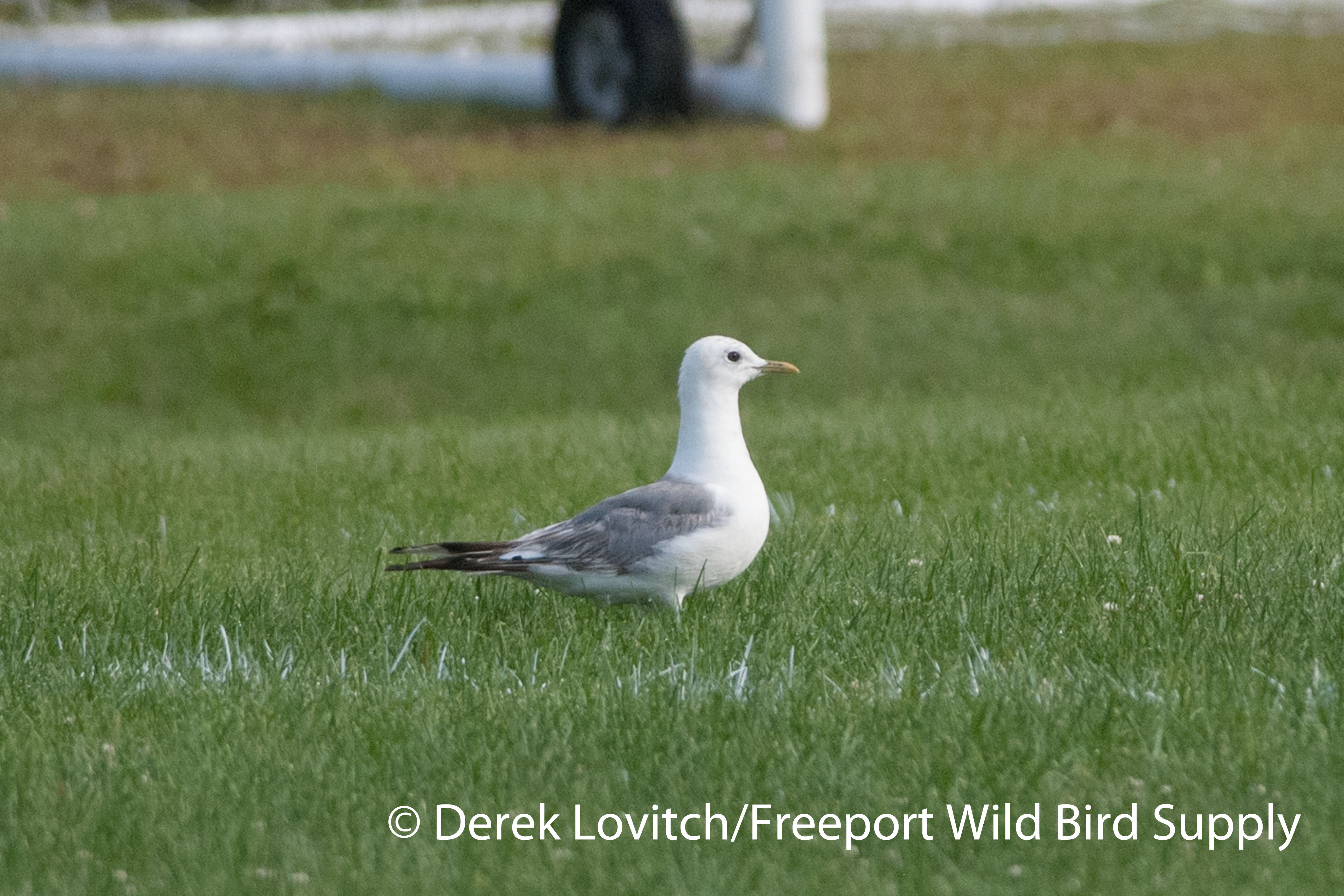
After returning from Hawai’i on Friday, I was happy to see the bird has kindly awaited my return.  Today was the first chance I got to head over, and at 7:45 I met Kristen Lindquist in the parking lot behind downtown Thomaston.  Kristen was studying about 30 Ring-billed Gulls in the parking lot until a birder drove by and flushed them.  Apparently, a few gulls from rooftops and/or a nearby field joined the flushed birds, and as they settled back down or flew off, I noticed a single, seemingly darker gray bird sitting atop a basketball hoop in the adjacent playground.

And sure enough!   I snapped a few phone-scoped images, including this one.
IMG_1357

Boy, that was easy, for us anyway (the gull is hard to see atop the basketball hoop here)!

MEGUonHoop, with Big CrankyDSC_0009_MEGU_on_hoop1

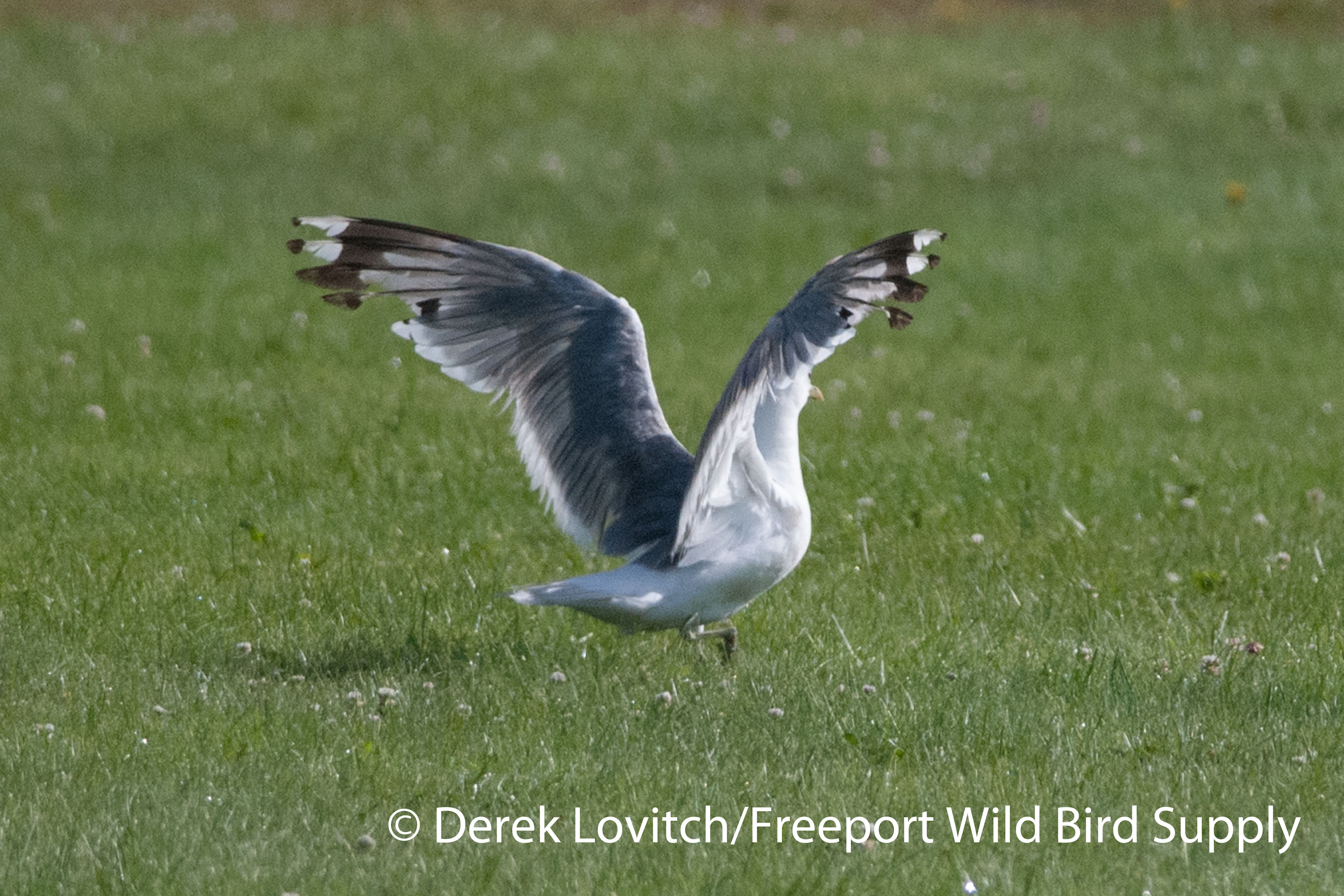
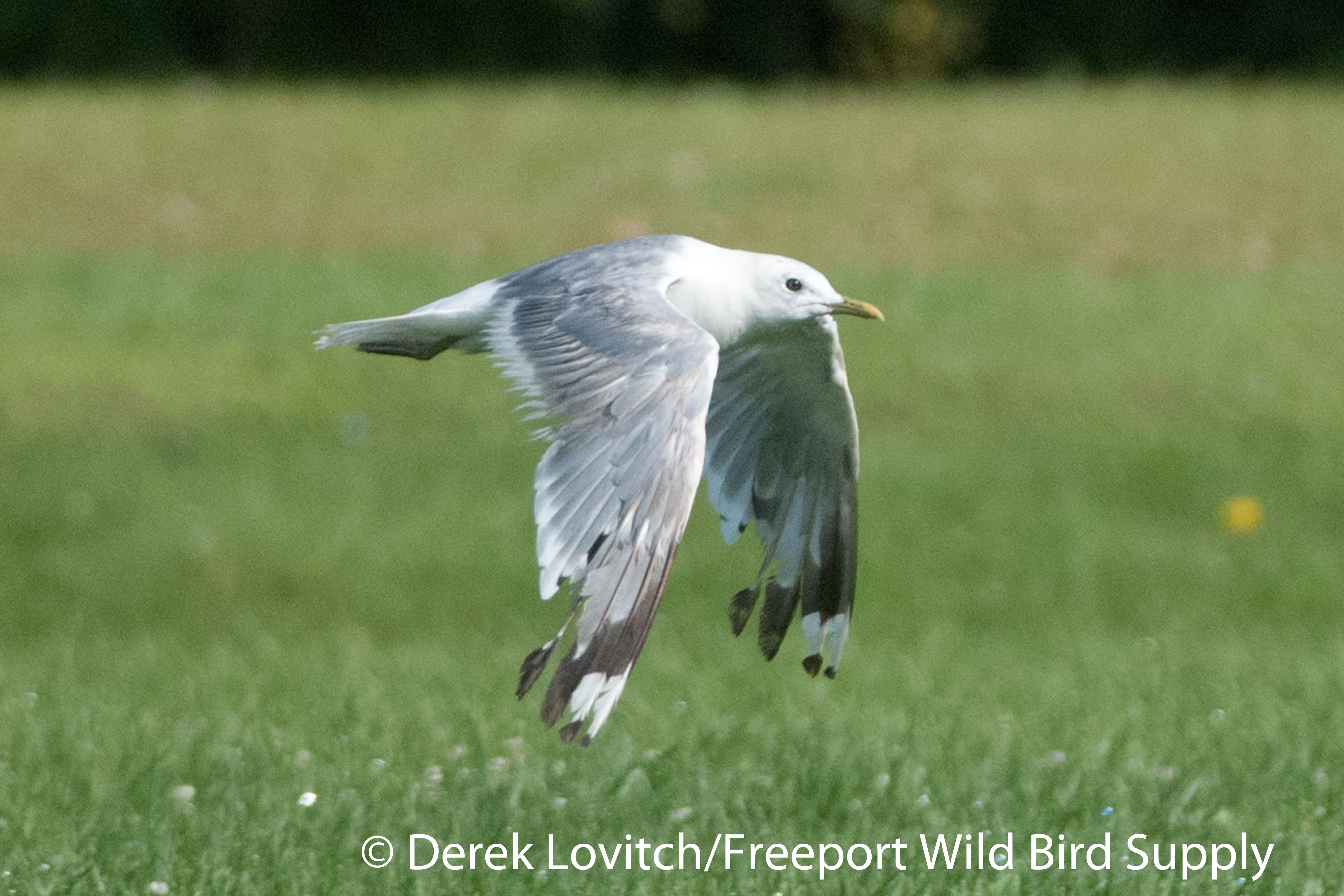
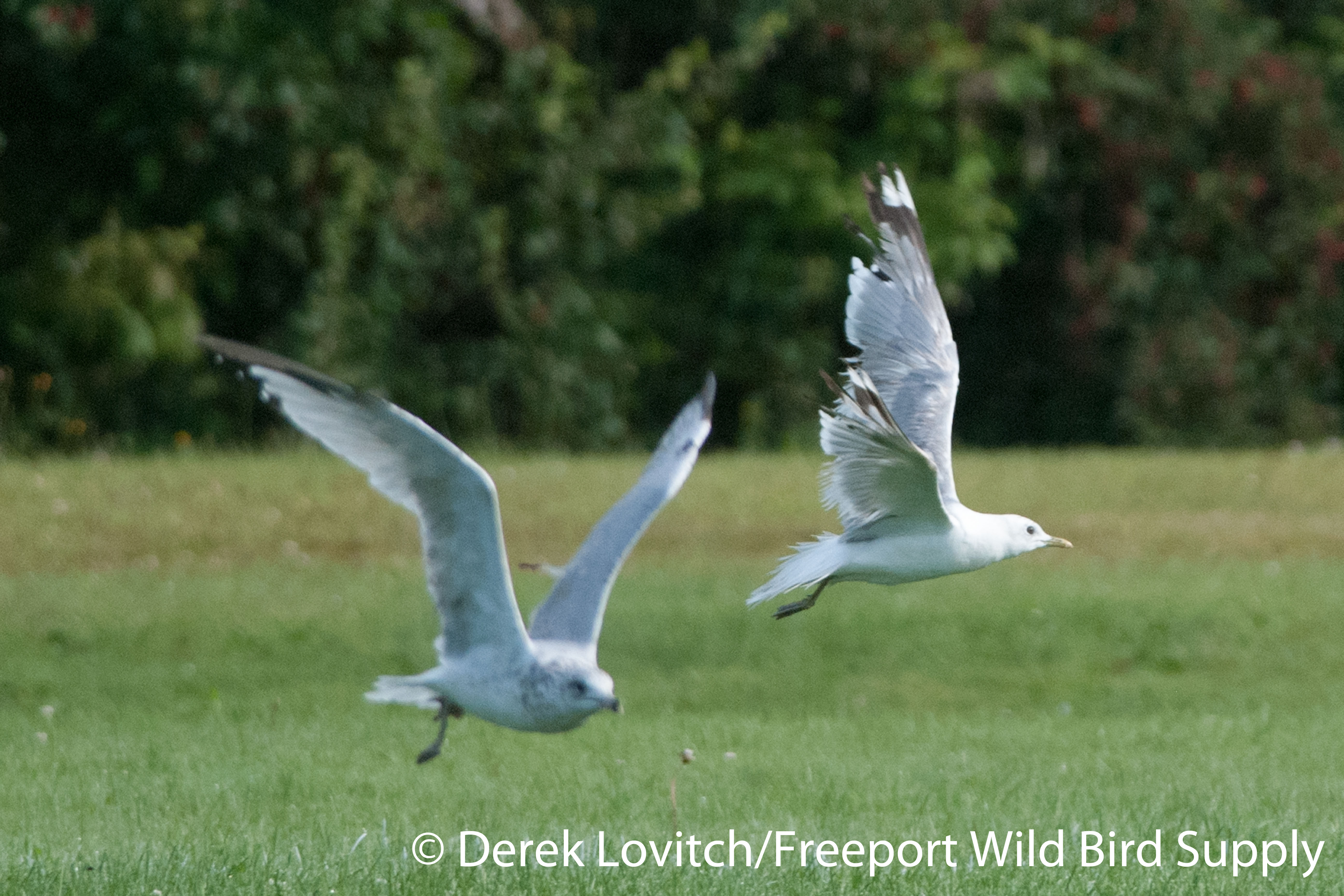
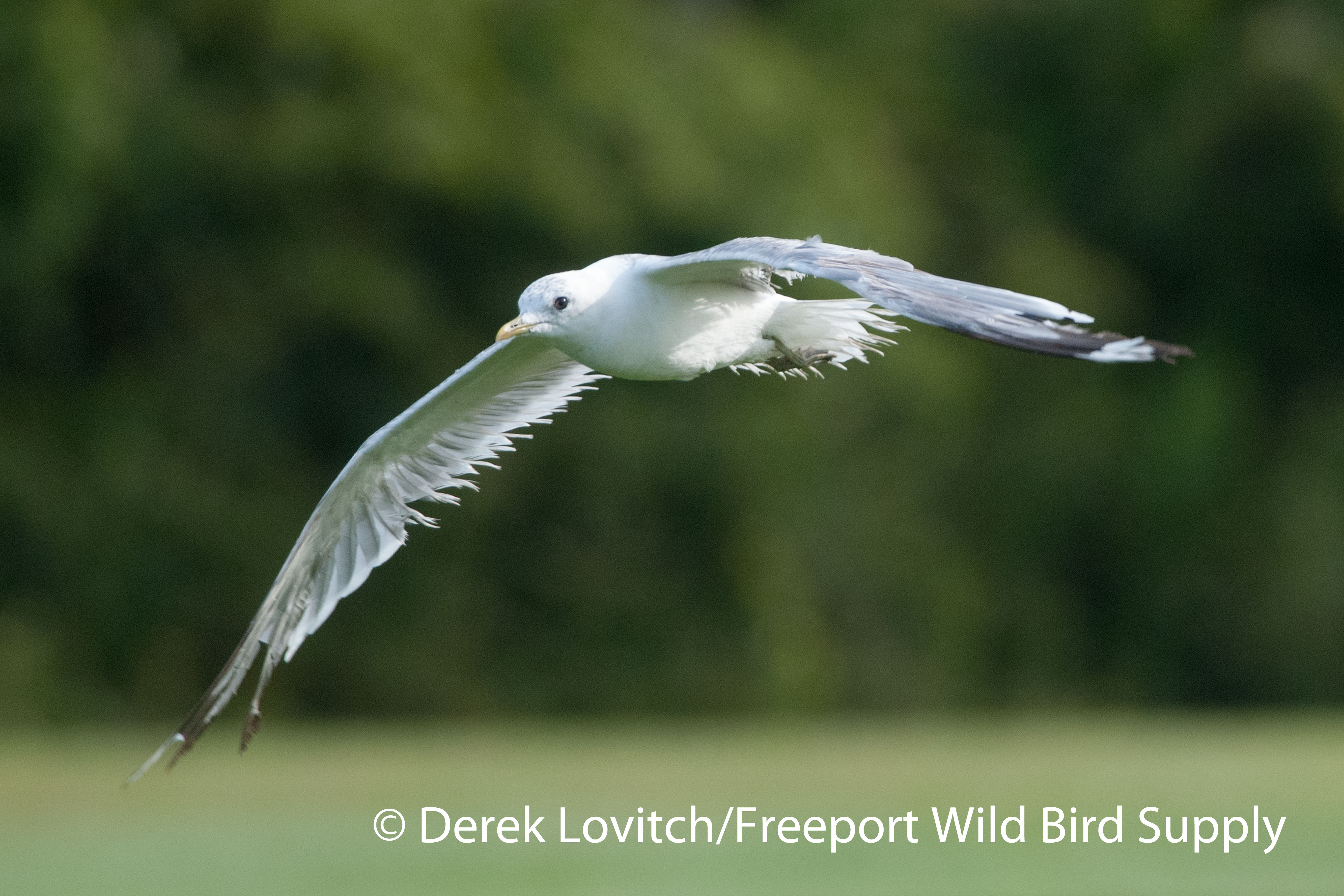
A short while later, it flew to a nearby field next to the Oceanside High School.  There, a jogger was doing laps around the track.  Although the bird was never too perturbed by this, it did fly a short distance when the jogger would be a little too close for comfort.  This afforded me a perfect opportunity for exactly what I wanted: flight and spread-wing photos. Shortly thereafter, it flew off the field and onto the roof of the elementary school where we left it at about 9:00.

(Click on the photos for a larger image)
DSC_0020_MEGU_upperwing2 DSC_0020_MEGU_upperwing3 DSC_0024_MEGU_upper_and_underwing1 DSC_0024_MEGU_upper_and_underwing2 DSC_0024_MEGU_upper_and_underwing3 DSC_0024_MEGU_upper_and_underwing4 DSC_0032_MEGU_in_field1 DSC_0032_MEGU_in_field2

Side-by-side with a Ring-billed Gull:
DSC_0037_MEGU_and_RBGU2 DSC_0037_MEGU_and_RBGU3

DSC_0045_MEGU_flight1 DSC_0045_MEGU_flight2

So, what is this?  Other than a big, fat, mess?

It’s definitely a bird in the Mew Gull (Larus canus) Complex, which here in the States, we refer to as composing four subspecies. There’s “Mew Gull,” L.c.brachyrhynchus that is common in the west, breeding from Alaska to extreme northwestern Manitoba and south through the coast of British Columbia, and wintering along the Pacific Coast from Washington into Baja California.  However, vagrants that have been recorded on the Eastern Seaboard have mostly (I believe) been assigned to the expanding European population, L.c.canus, or “Common Gull.”  There’s also the “Kamchatka Gull” (L.c. kamtschatsensis) of the Russian Far East that is a regular rarity in Western Alaska, with  perhaps a few claimed elsewhere on the continent (I am vaguely recalling one in Massachusetts?).  Finally, there is L.c.heinei of Siberia, which may just be an intergrade between Common and Kamchatka Gulls and I am unaware of any possible records of this in North America.

In short, the European “Common Gull” actually seems to be more likely on the East Coast than the North American “Mew Gull.”  But most records are from winter, and most birds do not have a plumage as trashed as this individual.

The bird appears small to me, with a relatively thin bill (although it’s on the long side), and a relatively dark mantle, all of which would be points in favor of Mew Gull.  However, the plumage is so ravaged, that it’s hard to even age the bird.  Is it an advanced 2nd cycle, a retarded 3rd cycle, or an adult that had some really bad days?  Intermediate-aged birds in the complex are notoriously, well, complex – and very difficult, at best, to identify.

But what can we actually see?
–          Fairly broad white windows in outer two primaries (primaries 10 + 9)
–          Little to know white between the black and gray on P8 (although this is probably only of value on an adult.
–          P7 is trashed
–          Is that a new P6 growing in? (One primary is definitely missing as well, could it be P1?)
–          The four new primaries have a fairly broad white tip.
–          The legs are dull olive-y (subadult-like).
–          The bill is fairly bright yellow at the tip with an olive-y base (adult-like).
–          The tail is too trashed too look for black spots at the tip (expected in a 2nd cycle Mew Gull, but not in a Common)
–          The eye is fairly dark.

So, we have an odd time of year for a vagrant gull, and we have a trashed plumage.  Can we narrow it down to a probable subspecies?  I will be sending this blog out to those who know various members of the Mew Gull Complex better than I do, and I will let you know what I learn.  Whatever it is, I got myself a state bird today!

REFERENCE:
Howell, Steve N.G. and Jon Dunn. 2007. Gulls of the Americas. Houghton Mifflin Company, Boston/New York.

Shorebird Pseudo-Big Day

Luke Seitz and I embarked on a semi-serious “Shorebird Big Day” on Wednesday.  I say “semi-serious” because we didn’t exactly try too hard to build our list…at least not after our first stop.  Instead, we spent more time watching shorebirds, studying, and photographing them.  We still, however, tallied 14 species of shorebirds, but instead of heading inland to pick up Killdeer, Spotted Sandpiper, Solitary Sandpiper, and Upland Sandpiper, we just splashed in the water and studied dowitchers at Hill’s Beach.  It wasn’t a bad way to spend a gorgeous summer day.

We began in the morning at high tide by scouring Scarborough Marsh from the Eastern Road Trail.  If we were to have a chance at 20 species of shorebirds on the day, we would need to add a rarity or two from the pannes.  Unfortunately, high water levels from all of the recent rain minimized habitat, and shorebirds were not as plentiful as we would have preferred.  We did, however, see 2 or 3 Stilt Sandpipers, a decent bird in the summer.  Other than Greater Yellowlegs, with about 55 individuals, numbers were relatively low: 75 Semipalmated Sandpipers, 40 Short-billed Dowitchers, 25+ Least Sandpipers, 8 Lesser Yellowlegs, 3 Black-bellied Plovers, 2 Semipalmated Plovers, and 1 Willet.

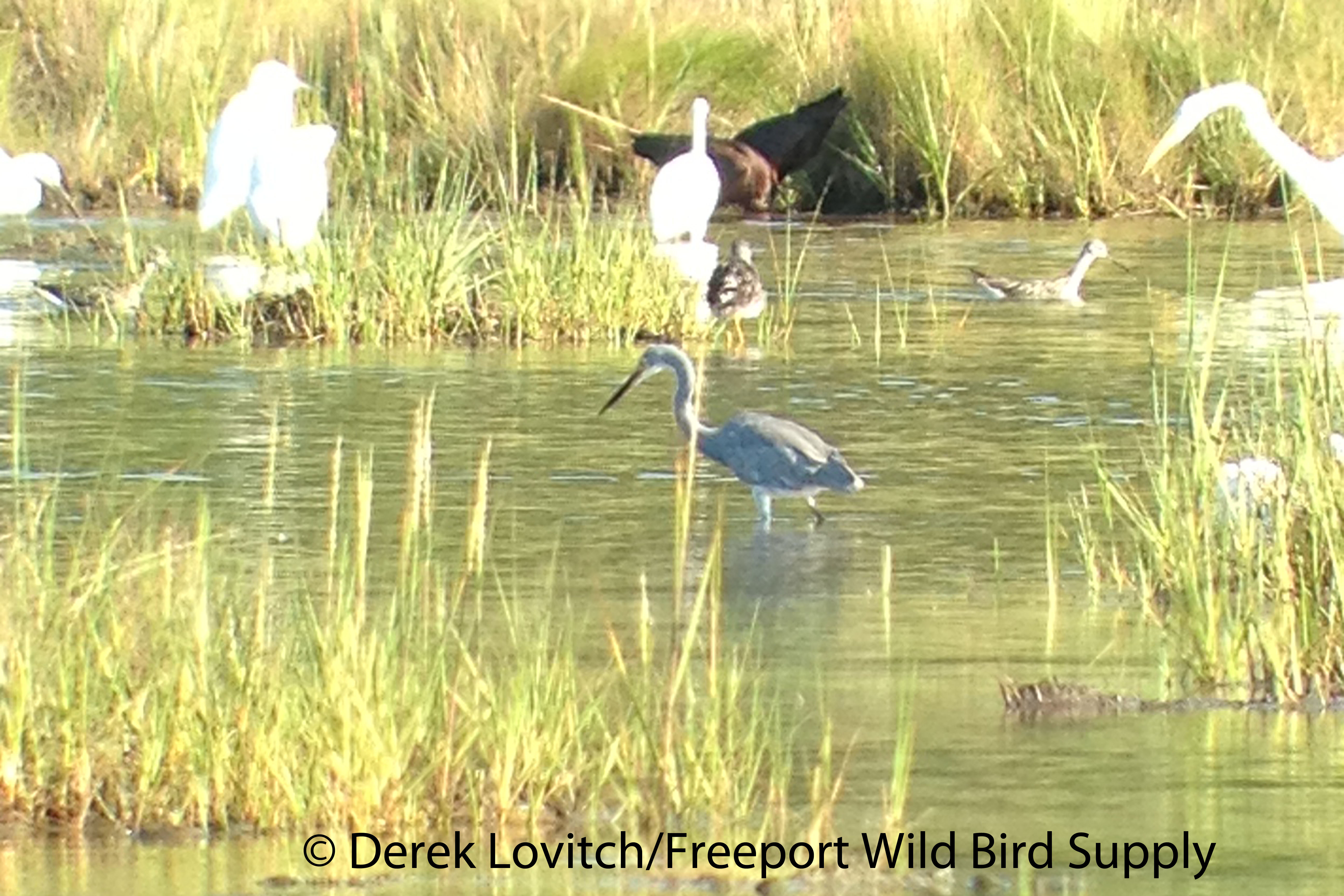
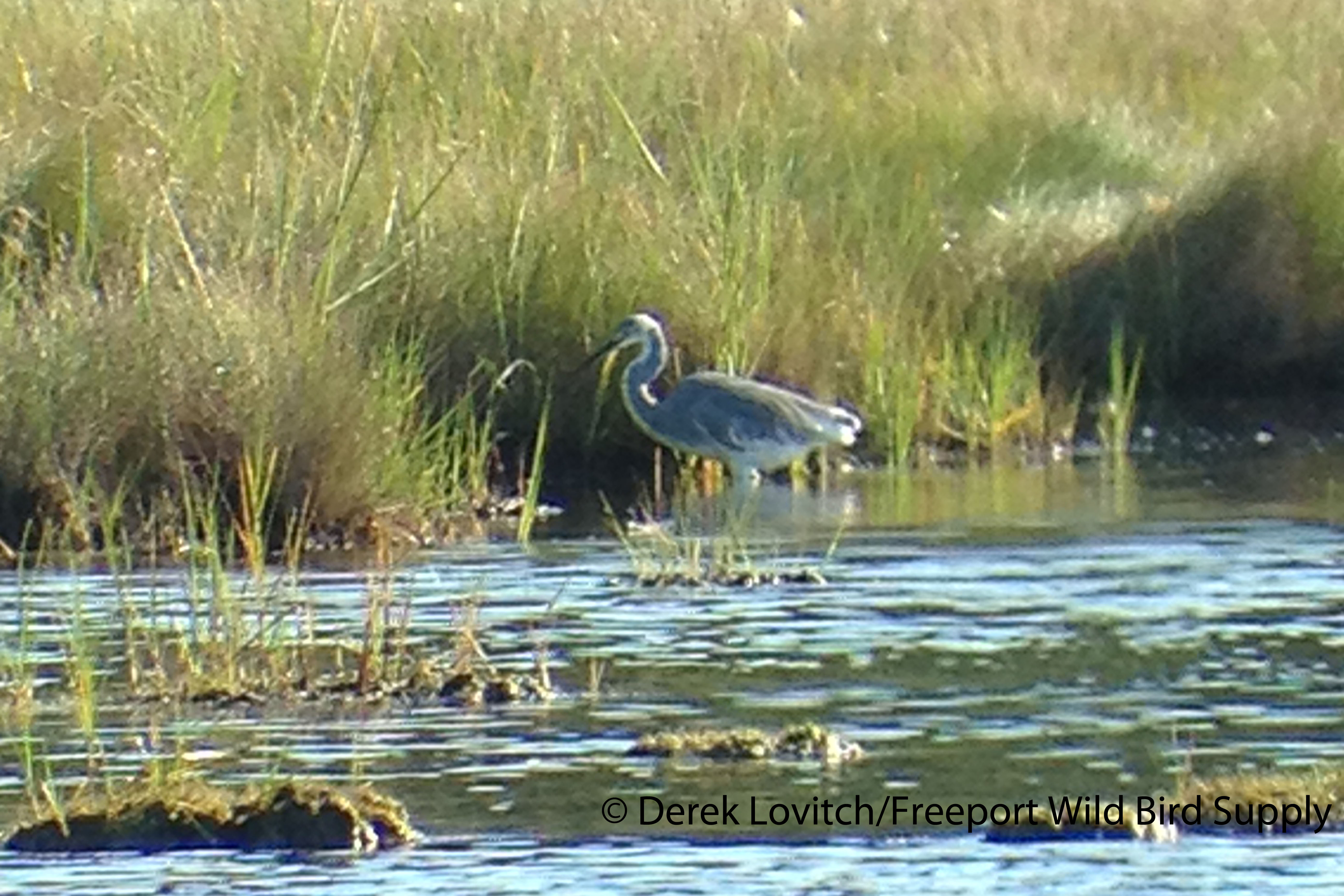
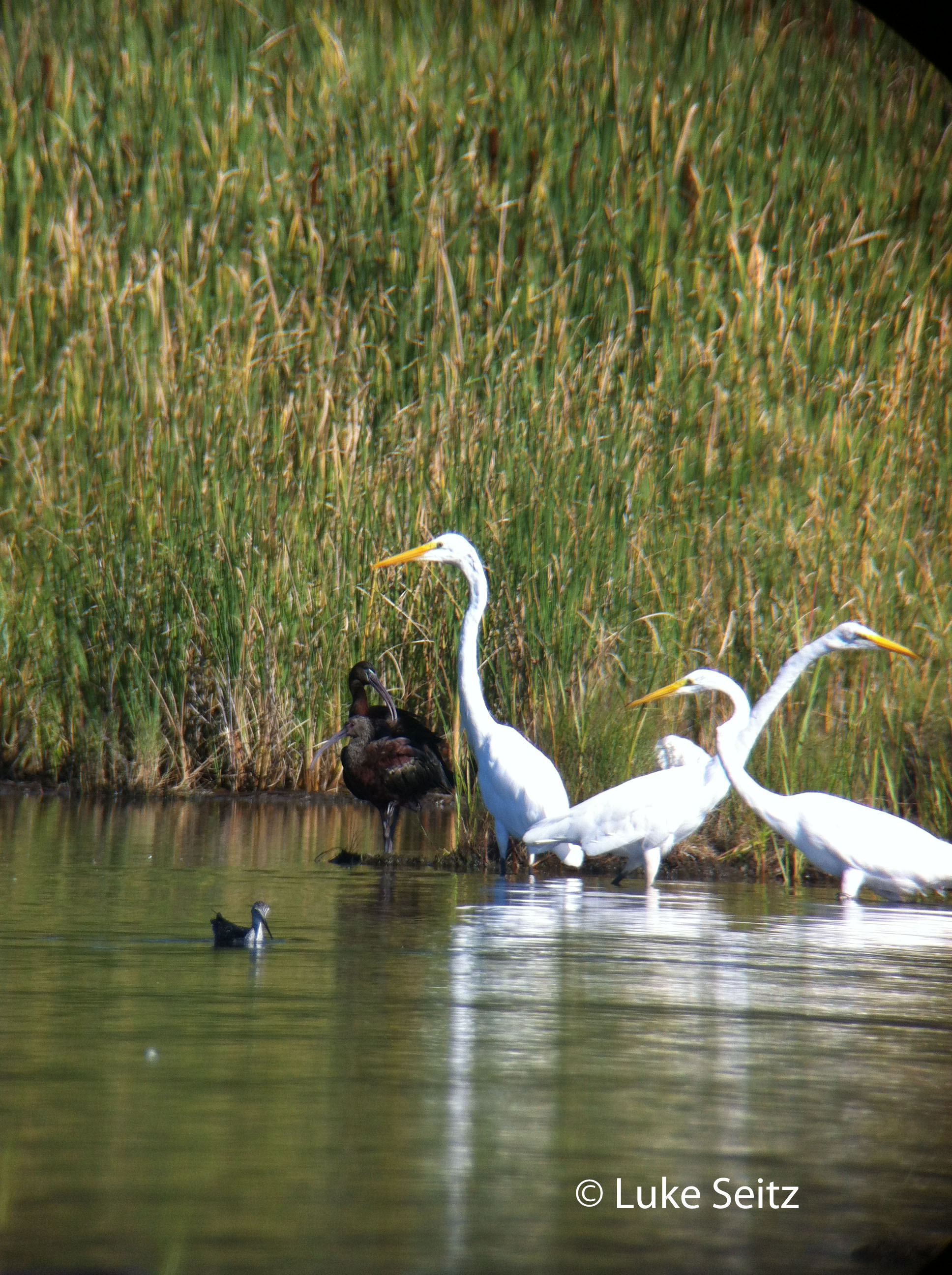
Making up for the low shorebird totals, however, were the high wading bird totals: 85 Snowy Egrets, 60 Great Egrets, 40 Glossy Ibis, 39 Little Blue Herons, and 9 Great Blue Herons.  In addition to teasing out one of the continuing White-faced Ibises and spotting the continuing full Tricolored Heron, we also saw BOTH of the presumed Tricolored Heron x Snowy Egret hybrids.  Yup, there are two of these beasties out there!

The first is the bird that has been present all summer, with a ghostly cast to an otherwise Tricolored-like pattern.  Pure white is confined to the belly, the throat, and a thin line in the foreneck.
TRHExSNEG-A1,ScarMarsh,7-31-13_edited-1
TRHExSNEG-A2,ScarMarsh,7-31-13_edited-1

However, recently, a second bird has appeared, which is very reminiscent of the first, but has some splotchy areas of white, including mostly white wingtips.  I believe I saw this bird on July 18th when I was out with a client and sans camera; I remember commenting (and my field notes confirm) that I didn’t remember so much white in the wing
TRHExSNEG-B1splotchy,ScarMarsh,7-31-13_edited-2
TRHExSNEG- B2splotchy,ScarMarsh,7-31-13_edited-1

Meanwhile, it was nice to see that at least one of the White-faced Ibises continue, although at this stage of molt, it was impossible to age.  It was also not very close.  Here’s Luke’s best shot (mine were not passable at all).
WFIB_byLuke,EasternRd, 7-31-13_edited-1

After spending more time with waders and a little time of sparrows, such as this Nelson’s Sparrow…
NESP,EasternRd,7-31-13_edited-1

…we attempted to regain our shorebird focus over at Pine Point, as the tide was rolling out.  The mudflats had plenty of birds, including a few birds that would be important for a Shorebird Big Day, such as the pair – now, featuring two fledglings! – of American Oystercatchers (the only breeding pair in the state!).  We also had four Whimbrel, along with 296 Semipalmated Sandpipers, 124 Semipalmated Plovers, 25 Willets, 25 Short-billed Dowitchers, 19 Black-bellied Plovers, 3 Ruddy Turnstones, and 2 each of Lesser and Greater Yellowlegs.

But with a morning total of a mere 11 species of shorebirds, we elected for a leisurely lunch at Saco Island Deli instead of heading inland to work on our shorebird list – it is really too early in the season for a true Shorebird Big Day, but I am not sure if I have ever hit 20 in July, and since this was a day we both had a chance to get out all day together, we figured it was at least worth considering.  Anyway, on the incoming tide, we visited Hill’s Beach, where once again, we elected to forego shorebird listing for shorebird “quality” time, and therefore just spent close to three hours playing in the sand.

While the two Red Knots…
DSC_0175_REKN1,HillsBeach,7-31-13_edited-1

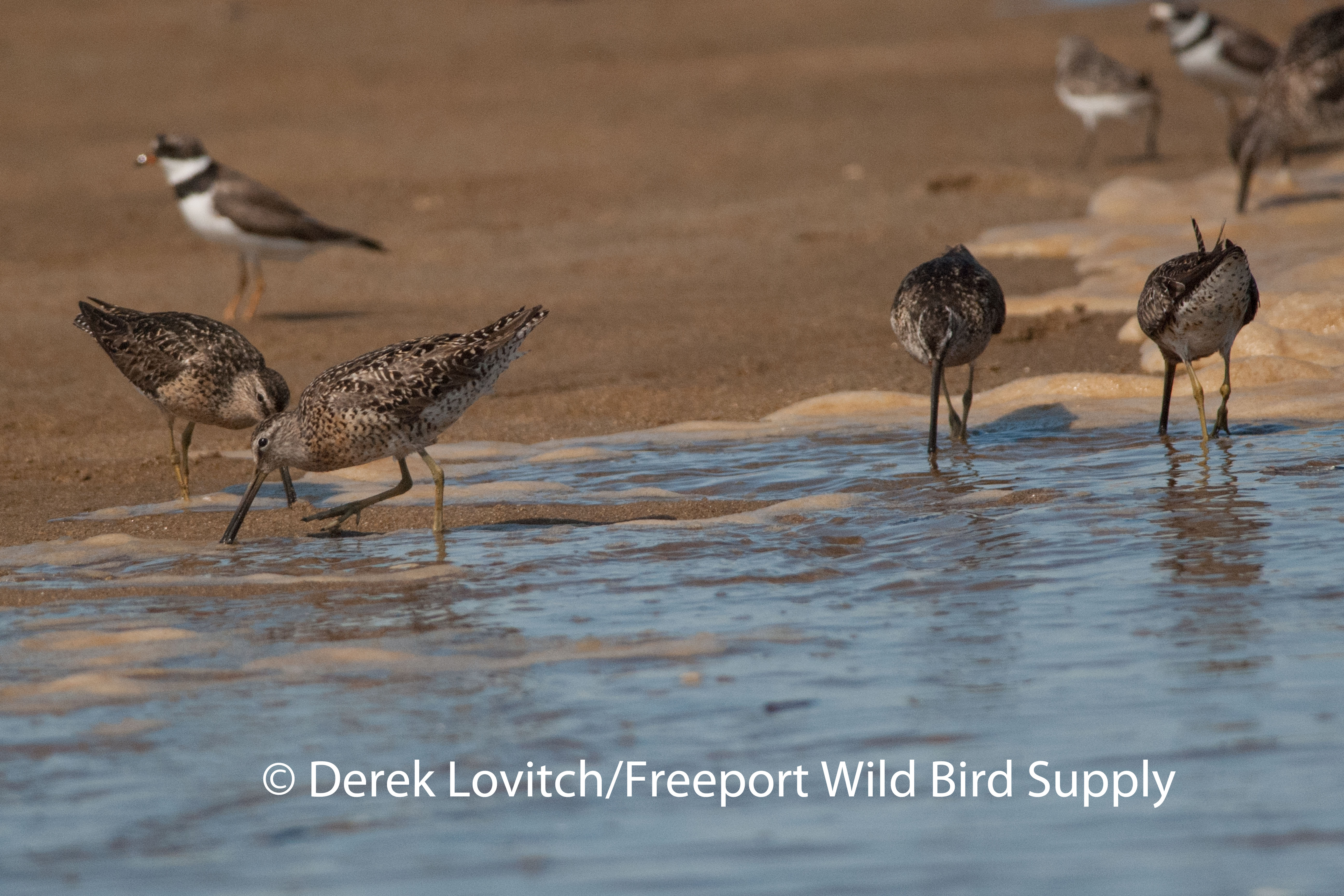
…4 Piping Plovers (a pair fledged two young here for the first time in recent memory), and 8 Sanderlings brought our count to 14 species on the day, we became distracted by photographing terns and studying dowitchers.  While our goodly count of 155 Semipalmated Plovers were augmented by about 65 Semipalmated Sandpipers, 8 Black-bellied Plovers, 4 Ruddy Turnstones, and 1 Least Sandpiper, it was the 120 or so Short-billed Dowitchers that kept our attention.

We were looking for individuals of the interior subspecies hendersonii, as I did on Sunday with Phil. (See blog and photos here:

https://mebirdingfieldnotes.wordpress.com/2013/07/28/biddeford-in-shorebird-season/).  We had what was possibly the same bright bird as Sunday (see above) fly-by, it was the paler birds that had us intrigued.
Luke on Hills, 7-31-13_edited-2

We thought the combination of a bright orange chest, and a fair amount of orange between the legs and on the undertail coverts, compared with the paler face and lightly, but distinctly spotted flanks and side (especially the side of the breast) of this bird made it look “good.”
DSC_0234_HendersoniiSBDO-pale,HillsBeach,7-31-13_edited-1

But we were pondering how extensive of color a hendersonii “needs” to have, as most of the individuals of the expected Eastern subspecies griseus, also were showing at least a touch of peachy-orange color in the undertail, etc.
DSC_0254_SBDOs,HillsBeach,7-31-13_edited-1

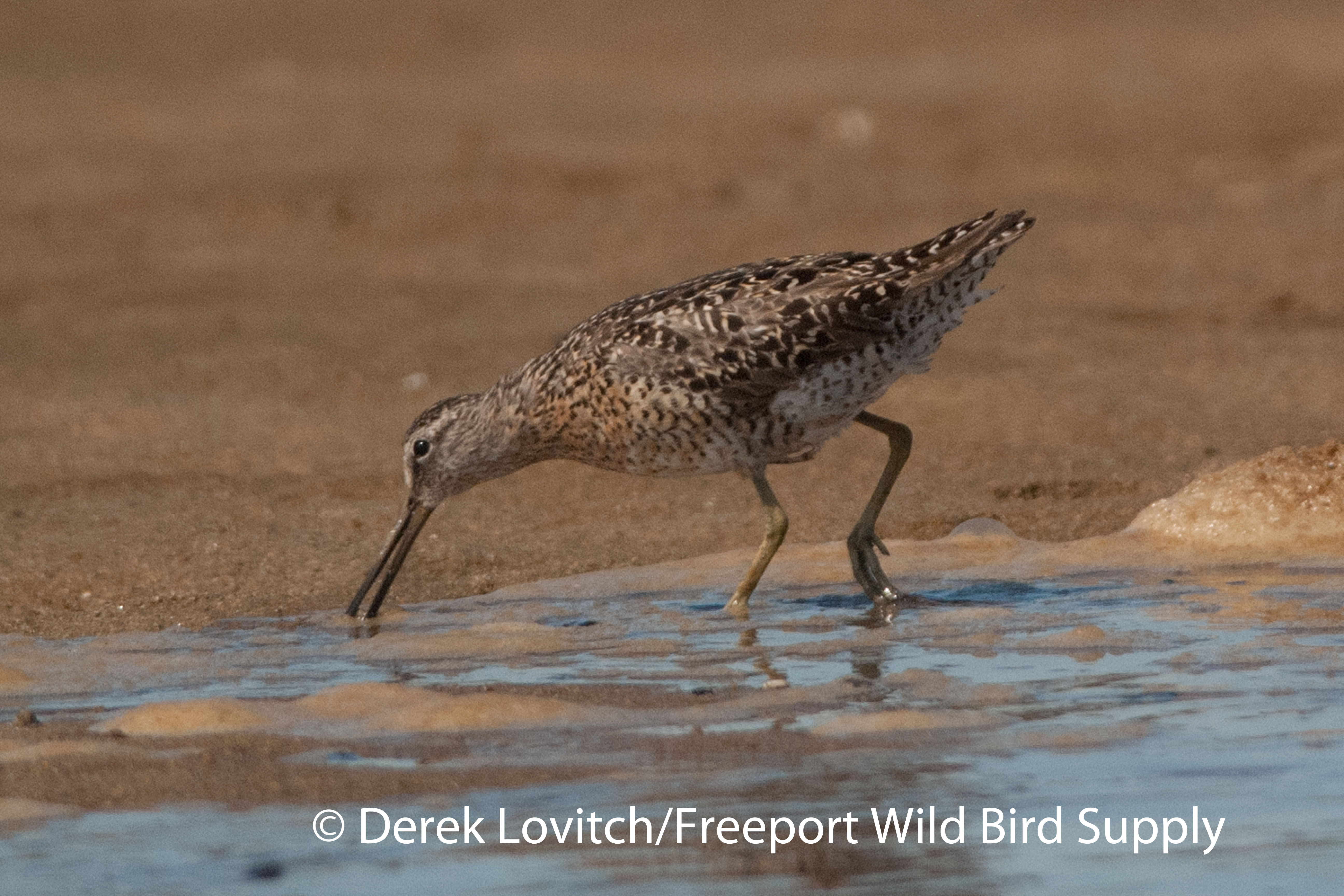
Here are some typical, and typically variable, griseus for comparison.
DSC_0236_SBDOs,HillsBeach,7-31-13_edited-1 DSC_0239_SBDOs,HillsBeach,7-31-13_edited-1 DSC_0250_SBDOgriseus,HillsBeach,7-31-13_edited-1

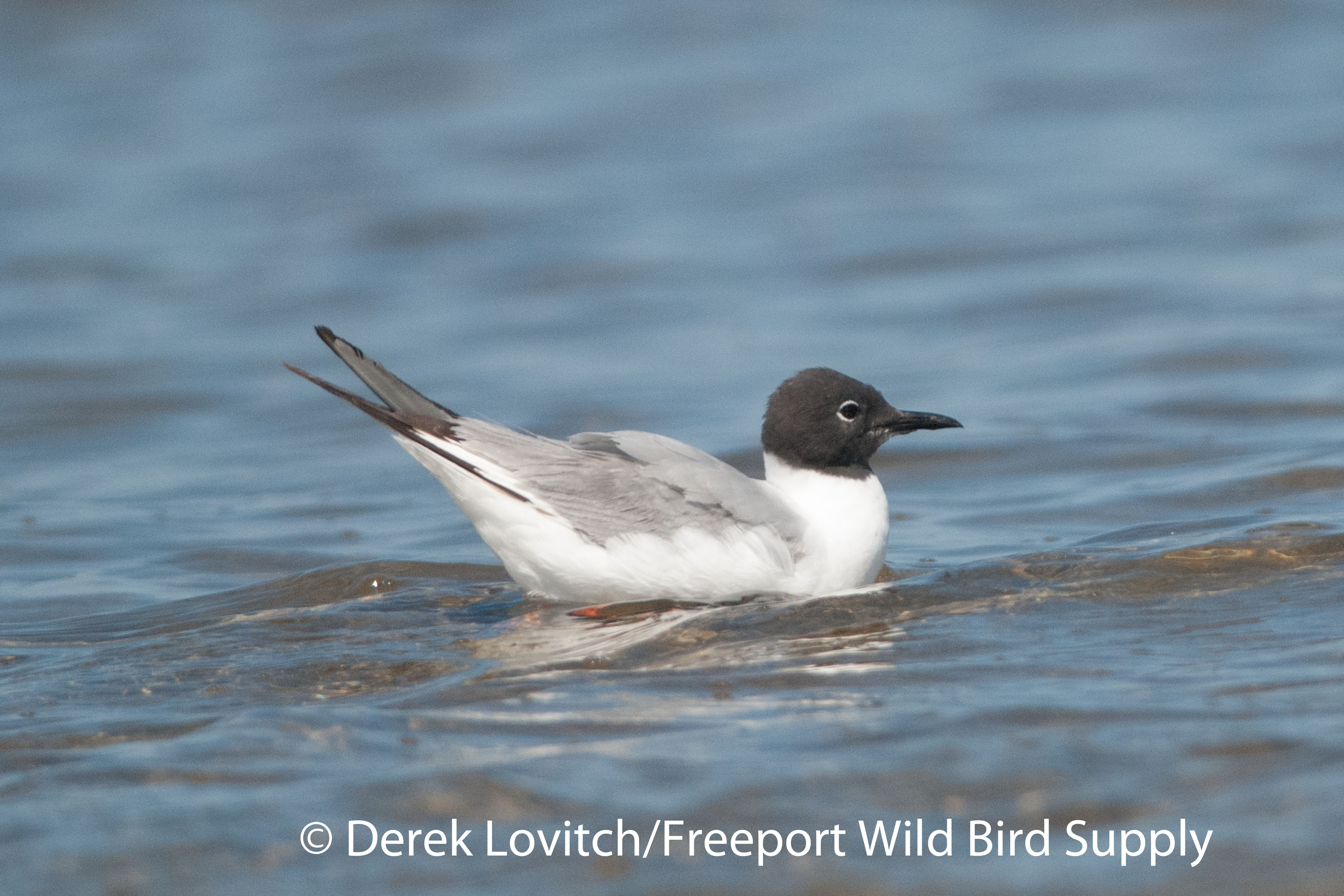
In the end, we simply said, “who knows!?”  and went back to photographing other fun stuff, such as this Bonaparte’s Gull…
DSC_0228_BOGU_HillsBeach,7-31-13_edited-1

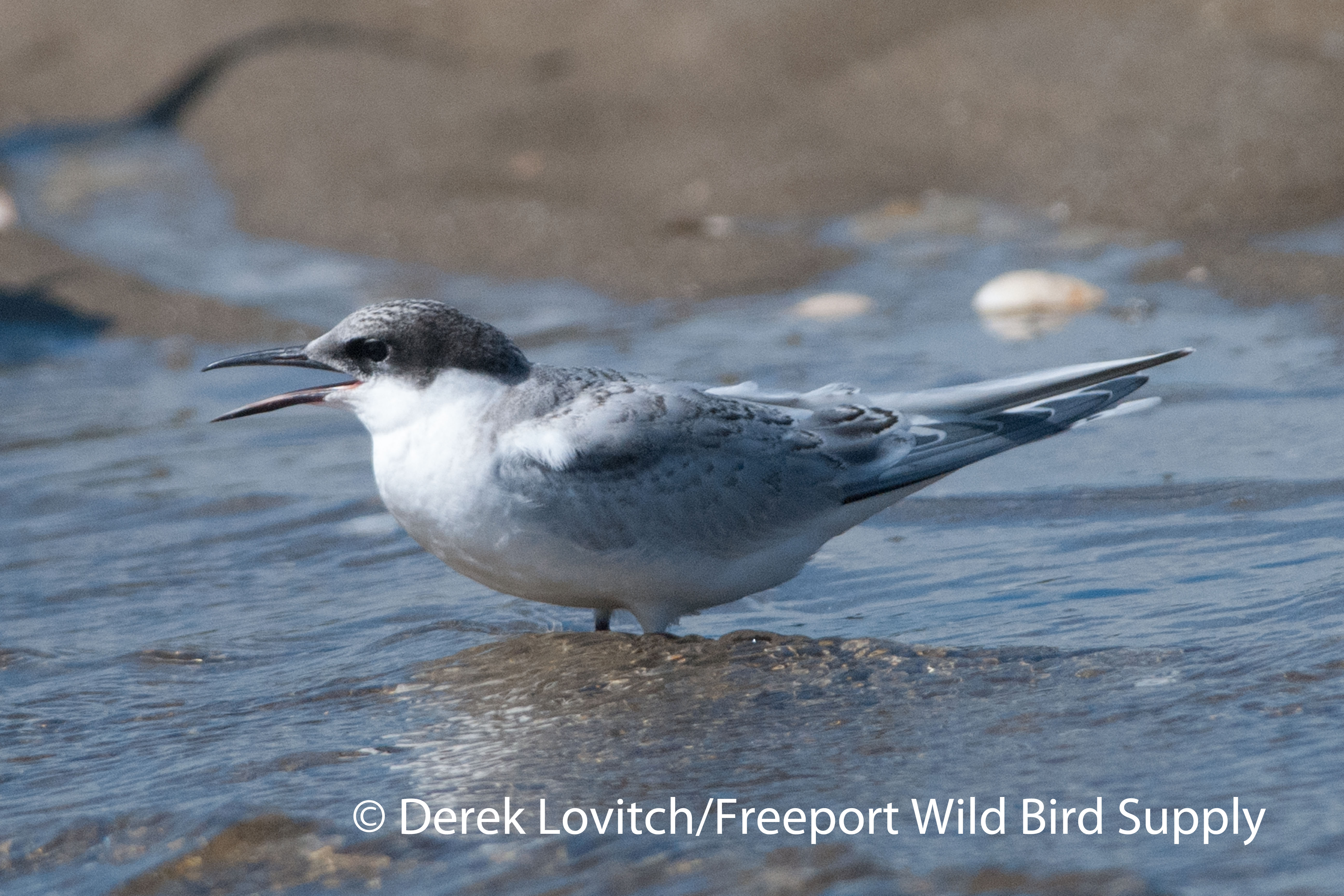
And this juvenile Roseate Tern…which was actually one of my targets to photograph today.
DSC_0218_ROST-juv1,HillsBeach,7-31-13_edited-1

Ok, so we really quit on the Big Day attempt by about 10:33 in the morning, but 14 species of shorebirds included Stilt Sandpiper, American Oystercatcher, and two hendersonii Short-billed Dowitcher, along with two Tricolored Heron x Snowy Egret hybrids, White-faced Ibis, Tricolored Heron, a mid-summer marsh Merlin (these birds have simply got to be breeding in coastal Cumberland County!), it was hardly a bad day of birding.  In fact, it was actually a spectacular day!

Birding By Schooner 2013!

Jeannette and I were once again had the honor and pleasure to have the opportunity to be the guides on a 6-day birding tour aboard the Lewis R. French out of Camden, Maine.  This was our third tour together (I also was aboard for a private charter last year), and we have been looking forward to this trip since the last time we stepped off the boat.  While this blog entry will obviously focus on the birding and wildlife aspects of the trip, I will not be able to do this tour justice with words nor pictures.  It is truly a unique experience from start to finish.

After boarding the boat the night before, we awoke to sunny skies in Camden Harbor on Day 1 of the trip, July 22nd.  Captain Garth and I chatted about possible destinations, and after another check of the forecast, we decided to take advantage of the benign conditions to make a run way out to SealIsland, off of Matinicus.  We have a total of four islands that feature breeding seabirds – with Atlantic Puffins being the prime target – in three different directions, so with every trip, we hope to hit at least one of them.  Seal is the most remote, and the most extraordinary – featuring not just lots of puffins, but Razorbills, Common Murres, Great Cormorants, Arctic and Common Terns, and for the past seven years – a Red-billed Tropicbird.  A few pairs of Manx Shearwaters also breed there, as do many Leach’s Storm-Petrels.  Unlike the other islands, it also offers a fairly sheltered cove for anchoring, and the opportunity to host the island’s seabird biologists for dinner and conversation. (Note: you can double-click on the photos for larger images)
25
The Schooner French, a National Historic Landmark built in 1871 is not mechanized. This means there is plenty of ways to burn a few calories before the next scrumptious meal, such as cranking the anchor…
27b
…or raising the sails
27a

As we departed the harbor, we started our trip list with common species such as Mallards, Double-crested Cormorants, Laughing Gulls, and a smattering of landbirds.   Osprey nests were passed and Black Guillemots were in their usual abundance.  Common Eiders were common, as were Herring and Great Black-backed Gulls, along with a scattering of Common Loons and Common Terns.  Many of these, especially the gulls, cormorants, eiders, and especially the guillemots would be constant companions throughout the trip, especially in in- and nearshore waters.
1.

1a

2
Amanda serving lunch; all meals were, as usual, fantastic. Lunch was “simple:” soup, a salad, fresh baked bread, and desert.

As we left the shelter of Penobscot Bay, the wind died off completely.  This would be the first of what was, unfortunately, a few days where we were forced to use our powered yawl boat to push the French along (Although we still use a tiny fraction of the gas as any other pelagic birding trip out there!).  En route, we encountered a single Leach’s Storm-Petrel that provided a nice view, and a Manx Shearwater passed by – our first two target species spotted, and we hadn’t even reached Seal Island yet!
3
I prepare the chum

The waters around Seal were teeming with birds: lots’o’puffins, Razorbills, a handful of Common Murres, Great Cormorants, and a boat-load of Black Guillemots.  Hundreds of Arctic Terns were wheeling about the island, with many birds making close passes of the boat.  It did appear, however, that Common Terns had already mostly fledged, as we didn’t see too many.  Three Common Ravens were a surprise, but Song and Savannah Sparrows singing from the island were expected.  A few migrant shorebirds were darting about, including Least and Semipalmated Sandpipers, a few Ruddy Turnstones, and at least one Semipalmated Plover.  Spotted Sandpipers foraged along the shore, too, the only shorebird that breeds out here.
4

5

5a
Razorbills

5b
Puffins!

5c
Arctic Tern

5d

5e

5f

Unfortunately, the famous Red-billed Tropicbird did not put in an appearance.  We were in position for his afternoon bath, but later we learned he often skips it when it isn’t sunny. “He’s a fair weather bather,” one of the biologists later told us.

But our spirits were not dampened.  After all, this is not a hard-core listing trip.  Although everyone would have liked to have seen the tropicbird, this tour is more about taking what the weather and the birds provide, and enjoying a relaxed, casual bird-watching experience.

And just in case anyone was upset about dipping on the tropicbird, dinner was soon served – Amanda and Amber’s meals always put a smile on people’s faces – and we welcomed our special guests, the seabird biologists of SealIsland. It’s a treat for us to ask them questions about life and birds on this remote rock, and no doubt a treat for them to get a brief break from the rigors of island life.
6

7

7a

7b
Black Guillemot with Rock Eel

8

9

10
Chatting with the biologists on Matinicus Rock…aka “nah, nah, we’re on a schooner!”

As night fell, and a near-full moon rose, many of the birders on board delayed retiring to their bunk until Leach’s Storm-Petrels – who only visit their burrow nests under the cover of night – began to vocalize.  There were only three of us left on deck by 10:00, when I turned in.  The one birder, our good friend Chris, however, stayed topside (and another birder slept on deck) for a while longer.  Not too long after I gave in to sleep, fog rolled in, and that really got the storm-petrels to call.  Chris was rewarded for his stamina with a cacophony of somewhat-disconcerting cackling chatters.
11

11a

That fog was still around at sunrise, which unfortunately meant we would leave without the tropicbird.  Even if he did come out for his morning bath, we wouldn’t have seen him – heck, we couldn’t even see his cove from the boat.   So we just had to suffer through more puffins.  It’s a tough life.

Fog and occasional rain reduced visibility as we headed for shelter inshore, but we spotted the occasional commuting puffin and a few Northern Gannets.
12

13

We passed around the west side of Vinalhaven Island, and dropped anchor off of North Haven in the Fox Islands Thorofare.  An evening walk in “town” added landbirds to the list, including a few Purple Finches at a feeder and a Cooper’s Hawk.
17

18b

14

A Great-horned Owl called throughout much the night, and come dawn, we shuttled ashore for a birdwalk on Vinalhaven Island.
15

Garth suggested a loop trail that was a short walk away from the dock, but we barely made it to the trailhead – the road in was just too birdy!  A Swainson’s Thrush foraged on the beach, a Blackburnian Warbler sang near the dock, and as we walked the road, we came across a variety of the common birds of these Red Spruce-dominated islands.  Magnolia Warblers and Golden-crowned Kinglets; Winter Wrens and Dark-eyed Juncos.  One little patch of alder scrub at the edge of a meadow exploded with birds with just a little pishing: two family groups of Black-throated Green Warblers, a pair or two of American Redstarts and Common Yellowthroats, a band of Golden-crowned Kinglets, White-throated Sparrows, and one Alder Flycatcher.  We had to hustle back to the boat in time for breakfast.
16

We rounded Vinalhaven clockwise, and came out of the fog for a time as we crossed East Penobscot Bay.  We were back into the sun as we traversed Merchant’s Row, but once again we found ourselves without even a puff of wind.
16a

While an island with terns and alcids is usually the highlight of our sail, over the years, the colony of Herring and Great Black-backed Gulls and Double-crested Cormorants of Southern Mark Island has provided us with some entertainment.  Here, Bald Eagles travel to hunt the colony, and in years past, we have seen some incredible shows.  As we slowed down to view the island, two Bald Eagles rapidly approached right on cue.  One landed in the center of the island, presumably to look for unattended gull chicks.  This time, both eagles were driven off empty-taloned.
18a
Small flocks of southbound migrant shorebirds were also encountered here and there, such as these Semipalmated Sandpipers

Burnt Cove Harbor on Swan’s Island would be our harbor of refuge for the night, and an after-dinner dusk stroll in the village and out to the lighthouse added a couple more species to our growing list.
19

20

21

It was with anxious anticipation that I went to bed that night, as Garth had decided that – weather forecast holding true of course – we were going to head offshore yet again, perhaps all of the way out to Mount Desert Rock.  It was time for some true pelagic birding!  And just to hedge the bet, we picked up some more bait for chumming.
18c

21a
Common Terns were common

22b

A light northeasterly wind helped us get offshore, but yet again, the wind died offshore and we needed the assistance of our yawl boat.  A very long 2-3 foot swell was hardly noticeable in our heavy wooden boat, and as we headed into deeper water, the birding really began to heat up.
22

About a mile away from Mount Desert Rock, we hit pay dirt: massive rafts of Great Shearwaters.  We sailed through them, and then back through them.  The lack of wind was keeping them on the water, and most just paddled away from our slow-moving ship.  I began to chum.  You could say it worked.  It worked really, really well.

Great Shearwaters took the bait, literally, and followed us closely.  Now under sail, the silence afforded us the opportunity to hear these surprisingly-vociferous birds as they fought over morsels, and jockeyed for position.  Many birds were coming within only a few yards of the boat, and many of them were not bothering to fly – just walking on water with wings flapping.  They would plunge in after slowly-sinking chunks of Herring (I really wish I had cut things smaller, the chum bucket was going down way too fast!) and we were close enough to see them underwater.

22c
Great Shearwater

22d
Northern Gannet

22e
Molting adult Red-necked Phalaropes

22f
Juvenile Arctic Tern

22g
OK everyone, grab your copy of Howell’s ‘Petrels, Albatrosses & Storm-Petrels of North America and use molt patterns to age this Great Shearwater!

22h

22i
Sooty Shearwater

22j
Mmmm…herring

22k
Great Shearwater coming in for a landing…I think this is my favorite photo of the trip!

22l
Adult Northern Gannet

Simply put, this was a lot of fun.  And when all was said and done, and we left the hotspot, we had tallied an impressive 764 Great Shearwaters.  They were joined by at least 4 Sooty Shearwaters, and one Manx Shearwater cruised by – not pausing for long, as usual.  A total of 19 Northern Gannets were counted, and Razorbills (9), 2 Common Murres, and more Atlantic Puffins (4+) added to the show.  Although overshadowed by the rafts of shearwaters, Red-necked Phalaropes were in abundance – I estimated at least 400 birds, most of which in tight flocks spinning in floating mats of wrack.  I didn’t pull out any Red Phalaropes from the bunches, but it wouldn’t have surprised me to find some mixed in. Surprisingly, not a single Wilson’s Storm-Petrel was seen – a bird that we somehow didn’t even see all trip!  Where the heck are they this year?  It’s usually the most common tubenose on our tour!

If we didn’t have some important plans for dinner, we would have spent more time out here I am sure, as this was really a great experience.  Even the non-birders aboard were more than impressed by the show.  Unfortunately, only one Fin Whale was briefly spotted.   A feeding frenzy of birds that I spotted in the distance were clearly excited by something feeding – either whales or perhaps tuna, but by the time we made it to the area, the birds had settled into the massive rafts we sailed through.

We skimmed the mouth of BlueHillBay, checking our Harbor Seals basking on ledges exposed by the low tide, and happening upon a few large rafts of molting Common Eiders.
22m

22n

We dropped anchor off of McGlatheryIsland south of Stonington, and rowed ashore for one of the non-birding highlights of the trip – a lobster bake on the beach!
23

24

After the feast, we moved the boat to a safer anchorage off of Hell’s Half-Acre, where we spent the night.  Rain fell in buckets, and continued on and off through much of the next day.  However, for the first time, we had some solid winds to do some real sailing, and after donning our rain gear, many of us stayed on deck for much of the day as we crossed East Penobscot Bay and tacked our way around North Haven.  Slowly but surely, however, most of us made our way to the wood-burning-stove-warmed galley for snacks, tea, and conversation…and a few games.

The rain cleared and fog lifted in the afternoon, and it was a lovely evening in the shelter of Pulpit Harbor.  Although we had seen plenty of Ospreys on this trip, the Ospreys that nest atop the rock (the “pulpit”) that guards the entrance to the harbor are particularly noteworthy – the explorer and cartographer Samuel de Champlain noted an Osprey nest atop this very rock sometime between 1604 and 1607!  The one still-present juvenile that was being watched by an adult had no idea what a historic nest it was raised in.
26

26a

26b

27

July 27th, our 6th and final day of the tour, dawned on Pulpit Harbor under clearing skies, calm winds (again), and warmer temperatures.  Barn Swallow, likely a migrant, was added to our trip list as we sailed northeast into Camden Harbor.  Chimney Swifts overhead and a singing Yellow Harbor from the shoreline were our 82nd and 83rd – and final – species of the trip (an “accounting error” led to a mistaken tally of 78 species announced at the end of the trip; sorry folks, update your notes!) but still a tally held down a little by fewer walks ashore (one due to our deep-water pelagic, and the other due to heavy rain).  However, our seabird list was fantastic, and quite a few of the birders added life birds – the Leach’s Storm-Petrels and Manx Shearwaters in particular.  And perhaps, sucked in by the fun of it all, one or two life lists were born.

a href=”https://mebirdingfieldnotes.blog/wp-content/uploads/2013/07/28.jpg”>28
The always bittersweet return to the lovely port of Camden.Sure I have birding tours that see more birds, and are more reliable for the most sought-after target birds, but this trip is one of my most favorites (only Monhegan Island can compete).  Yeah, we kept a list, and a few people added some lifers, but this trip is truly about enjoying whatever birds we come across in a really unique way.  The Schooner Lewis R. French is a beautiful boat, with an amazing crew, serving great food and good times.  In this case, the birding is actually the icing on the cake. The complete trip list, in order of appearance:
American Crow
Mallard
Canada Goose
Tufted Titmouse
American Goldfinch
Rock Pigeon
Song Sparrow
Black-capped Chickadee
Cedar Waxwing
Blue Jay
European Starling
Belted Kingfisher
Double-crested Cormorant
Common Loon
House Sparrow
Mourning Dove
House Finch
Ring-billed Gull
Herring Gull
Great Black-backed Gull
Osprey
Common Eider
Black Guillemot
Laughing Gull
Common Murre
Razorbill
Northern Gannet
Common Tern
Leach’s Storm-Petrel
Arctic Tern
Atlantic Puffin
Razorbill
Common Raven
Great Cormorant
Common Tern
Manx Shearwater
Spotted Sandpiper
Savannah Sparrow
Semipalmated Plover
Least Sandpiper
Ruddy Turnstone
White-throated Sparrow
Red-eyed Vireo
American Robin
Yellow-rumped Warbler
Cooper’s Hawk
Purple Finch
Red-breasted Nuthatch
Red-winged Blackbird
Downy Woodpecker
Hairy Woodpecker
Northern Flicker
Chipping Sparrow
Great Horned Owl
Common Yellowthroat
Gray Catbird
Blackburnian Warbler
Northern Parula
Swainson’s Thrush
Golden-crowned Kinglet
Magnolia Warbler
Winter Wren
Nashville Warbler
American Redstart
Alder Flycatcher
Ruby-throated Hummingbird
Dark-eyed Junco
Turkey Vulture
Bald Eagle
Bonaparte’s Gull
Semipalmated Sandpiper
Hermit Thrush
Great Blue Heron
Great Shearwater
Sooty Shearwater
Red-necked Phalarope
American Black Duck
Tree Swallow
Greater Yellowlegs
Barn Swallow
Chimney Swift
Yellow Warbler
*************************

Our “Birding By Schooner” Tour aboard the Lewis R. French has been run every three years.  However, thanks to increasing interest and demand, we are going to likely be offering this one-of-a-kind birding experience on an annual basis!  Keep an eye on our “Travel, Tours, and Workshops” page at http://www.freeportwildbirdsupply.com/birdingtoursinMaine.asp for information about the possible 2014 (but likely definitely in 2015) sailing dates.

Biddeford in Shorebird Season

“Shorebird Season” is in full swing, and the greater Biddeford Pool area is one of the best places in the state to observe and study shorebirds.  Although numbers usually pale in comparison to the Lubec Flats and Scarborough Marsh, and diversity usually lags well behind the latter as well, the area often provides some of the best opportunities to study shorebirds, between Ocean Avenue and Biddeford Pool beach on the high tide, and Hill’s Beach at low tide.

Today, Phil McCormack and I birded the area thoroughly, beginning with viewing of the extensive mudflats of The Pool itself.  Birds were already well dispersed by the time we arrived this morning, so it was a challenge to really study and sort through the masses, but our tally was as follows:
196 Short-billed Dowitchers
~75 Semipalmated Sandpipers
57 “Eastern” Willets (plus one distant bird that may have been a “Western”)
~ 20 Black-bellied Plovers
~10 Semipalmated Plovers
4 Whimbrels (first of fall for me)
4 Least Sandpipers
2 Greater Yellowlegs
1 Lesser Yellowlegs
1 Ruddy Turnstone

At dead low, Biddeford Pool Beach was shorebird-free (which is often the case, as birds take advantage of the ephemeral mud and sand flats of The Pool and Hill’s Beach), but as we birded the neighborhood and Ocean Avenue, we picked up a few birds of note, led by 2 breeding-plumaged Red-necked Grebes.  Three Black-crowned Night-Herons and a few migrant passerines such as two Eastern Kingbirds and an Indigo Bunting were also noted.

As the tide began to turn, we headed over to Hill’s Beach, and hit it perfectly!  Here, the rapidly approaching water pushed birds towards us, and concentrated them in the highest spots for last-minute feeding.  We were able to carefully and critically sort through each individual, checking for rarities and studying variation.  Our effort turned up a few “good” birds, led by a trio of “Hendersonii” Short-billed Dowitchers (the prairie subspecies), a fairly-rare-but-regular stray to Maine.

The third bird we found, was the brightest of the lot, and was very obvious with its rufous coloration throughout its underparts.
HendersoniiSBDO1,HillsBeach,7-28-13_edited-1 HendersoniiSBDO1a,HillsBeach,7-28-13_edited-1
 (Phone-scoped Photos)

The other two were quite a bit paler, so were a little tougher to tease out.   I managed a crummy photo of one of them.
HendersoniiSBDO2,HillsBeach,7-28-13_edited-1
(Phone-scoped Photo).

Another highlight was a single adult Stilt Sandpiper, along with an adult Red Knot.  The complete tally was as follows:
119 Semipalmated Sandpipers
114 Short-billed Dowitchers (ssp griseus)
6 Black-bellied Plovers
3 SHORT-BILLED DOWITCHERS (ssp HENDERSONII)
2 Ruddy Turnstones
2 Sanderlings
2 Least Sandpipers
1 STILT SANDPIPER
1 Red Knot

So if the shorebird show was quite good, the tern show was simply great.  At least a hundred Common Terns, including many begging juveniles were present, along with at least 30 Roseate Terns.  A few Least Terns also joined the fray, including this adult standing watch on its fledgling.
LETEwFL,HillsBeach,7-28-13_edited-1
(Phone-scoped photo).

2013 Maine-New Hampshire Tour for WINGS

My Maine-New Hampshire Tour for WINGS is designed to take a comprehensive look at the wide range of breeding birds of northern New England, from Saltmarsh and Nelson’s Sparrows at sea-level to Bicknell’s Thrushes on the 6200ft Mount Washington.  From Grasshopper Sparrows and Upland Sandpipers in the blueberry barrens of the Kennebunk Plains to Boreal Chickadees and Gray Jays in the boreal forests, and from Spruce Grouse and Bay-breasted Warblers “Downeast” to Atlantic Puffins and Razorbills on MachiasSealIsland, this tour enjoys them all.

Over the course of 7 full days of birding and just about 1200 miles traveled (by van, not including what we did by foot and boat!) amassed 163 species, including 20 species of warblers, 4 species of alcids, 9 species of flycatchers, and 14 species of sparrows.  An outstanding whale/bird watch trip that produced 9 Fin Whales, over 150 Great Shearwaters, 6 Sooty Shearwaters, and an impressive 18 Leach’s Storm-Petrels among over 500 Wilson’s Storm-Petrels.  Breathtaking scenery.  Great food, especially lots of fresh lobster.  Moose and a Wood Turtle, too.  What’s not to like about this all-inclusive experience in the state where our motto is “The Way Life Should Be?”  I think our tour left in full agreement with the accuracy of this.

IMG_0891-1st night dinner1,6-15-13_edited-1

We began on Day One in the saltmarshes of Scarborough Marsh, comparing Saltmarsh and Nelson’s Sparrows.  “Eastern” Willets voiced their complaints, while Least Terns foraged nearby.  The nearby sandy beaches afforded an opportunity to study Roseate Terns and Piping Plovers, with lingering White-winged Scoters and a Red-throated Loon offshore.  Our first surprise of the trip was a Brant standing on a sandbar off of Pine Point – not a typical summer bird here in Maine.  As we scanned the sandflats for lingering shorebirds (just four Black-bellied Plovers), we spotted two distant American Oystercatchers.  Just as we started to strain to see them, one flies by right off the end of the pier!

By mid-morning, we had arrived in the Kennebunk Plains, surrounded by the state’s largest population – by far – of Grasshopper Sparrows and Upland Sandpipers with goodly amounts of Vesper Sparrows, Prairie Warblers, and the continuing Clay-colored Sparrow.  After a picnic lunch at a particularly birdy spot, we began our climb into the White Mountains.  Our first stop was at an active Black-backed Woodpecker nest, where patience produced visits by both adults, and views of two hungry youngsters bursting out of the hole.  As this was a major target bird of the trip, I added quite a few miles and minutes to today’s marathon to assure us a look at this often secretive (at least away from the nest) boreal specialty.

And as if this wasn’t enough, we had yet another major target yet to bag.  An after-hours private charter up Mount Washington into the realm of Bicknell’s Thrush was rewarded with exceptionally good views, and a chance to experience the winds and weather of the summit.

IMG_0905_Mt WashingtonSummit,6-16-13_edited-1

Day two began on the Caps Ridge Trailhead, with Gray Jays, Yellow-bellied Flycatchers, and Blackpoll Warblers, before we headed up another mountain for a second helping of Bicknell’s Thrush.  After telling folks that “there’s no way we’ll see a Bicknell’s better than we did last night,” I was made out to be a liar by crippling views of this thrush.

  DSC_0139_BITH,WildcatMtn,6-17-13

We also picked up a Philadelphia Vireo at one of my “secret spots,” and enjoyed some “bugs.”

DSC_0144_HarrissCheckerspot,WildcatMtn,6-17-13

(Harris’s Checkerspot).

IMG_0909_ModestSphinx,WildcatMtn,6-16-13_edited-1

(Modest Sphinx moth).

IMG_0921_GrouponWildcatMountain,6-17-13_edited-1

Heading back into Maine, we spent the night in Rangeley, and come morning, Gray Jays dropped in to clean up after our picnic breakfast.  Kirk Betts joined us for a few hours of birding the Boy Scout Road, where Boreal Chickadees and an Olive-sided Flycatcher were well seen, and as we began our trek eastward, Purple Martins, Black Terns, and two (admittedly ridiculously distant) Sandhill Cranes at Messalonskee Lake nicely broke up the drive.

By the beginning of the fourth day, we were far Downeast in Machias.  We dipped on our first attempt at Spruce Grouse, but all was forgiven when we boarded our boat for MachiasSealIsland on a beautifully warm and sunny day.  Thousands of Atlantic Puffins, Razorbills, and many hundreds of Common Murres – many within just a few feet of the observation blinds.  How do you describe this magical place?  I simply cannot; it must be experienced.  I will let these pictures do the talking.

DSC_0157_1stSummerCOMU1,MSI,6-18-13_edited-1

Immature Common Murre.

IMG_0935_GrouponMSI,6-18-13_edited-1 

DSC_0244_ATPU8,MSI,6-18-13_edited-1

DSC_0240_ATPU8,MSI,6-18-13_edited-1

DSC_0232_ATPU6,MSI,6-18-13_edited-1

DSC_0223_RAZO6,MSI,6-18-13_edited-1

DSC_0212_ATPU1,MSI,6-18-13_edited-1

DSC_0199_RAZOandCOMU1,MSI,6-18-13_edited-1

DSC_0193_RAZO2,MSI,6-18-13_edited-1

DSC_0190_RAZO1,MSI,6-18-13_edited-1

DSC_0174_SAVS1,MSI,6-18-13_edited-1

After lunch, we were joined by Chris Bartlett as we worked our way along the BoldCoast to West Quoddy Head and back to Machias.  On the hot summer afternoon, we didn’t see many of our targets, but we were adding birds to our list.  Unfortunately, we had yet to add Spruce Grouse.  

Therefore, on the 5th morning of the trip, Operation Fool Hen (the colloquial name for Spruce Grouse) went into full effect.  The formerly most-reliable place in the state was no longer reliable (0-3 here), and I had pretty much resigned myself to failure by the time we entered the woods at one last place.  We were cleaning up some “dirty birds,” (birds not seen by the whole group), and while I was trying to get some people a look at a Swainson’s Thrush, a hen Spruce Grouse walks out behind me, about 10 feet away and starts preening. The grouse walks even closer to the growing group, including a family that enjoyed the show, patiently waiting to pass.  We watched for well over 15 minutes before she sauntered off.

DSC_0325_SPGRhen3,QuoddyHead,6-20-13_edited-1

DSC_0319_SPGR_hen2,QuoddyHead,6-20-13_edited-1

Relieved and ecstatic, we continued down the trail.  On our way back, that family, now ahead of us, points to where we saw the hen grouse.  We acknowledged it, they moved on, and instead we see a spiffy male standing just off the trail.  He started walking towards us, we all froze, and he actually walks around a few people in order to take a dust bath within a few feet of us – in the very same spot that we saw the hen.  This guy was not going to be deterred!

DSC_0370_SGPRmale,QuoddyHead,6-20-13_edited-1

Time flies when you’re having fun with Spruce Grouse, so our time was limited in Moosehorn NWR.  Luckily, we did see Bay-breasted Warbler, but before we knew it, it was time to move on and head towards Bar Harbor, where we enjoyed a lobster dinner the way lobster should be (abundant; and on paper plates with bibs and lots of napkins).

IMG_0939_Trenton_Bridge_Lobster_Pound,6-20-13_edited-1

IMG_0951_Summer_Solstice,Bar_Harbor,6-21-13_edited-1

(Dawn on the Summer Solstice from the Back Porch).

Our second boat trip of the tour departed Bar Harbor on the morning of Day 6, and we headed towards Petit Manan to enjoy yet more puffins, Razorbills, and Common Murres.  And unlike Machias Seal, the tern colony here is present and active, with thousands of Common and Arctic Terns wheeling through the air, and at least a few more Roseates.  Heading further offshore, pelagic birds began to increase.  A conservatively-estimated 500 Wilson’s Storm-Petrels were joined by at least 18 Leach’s – probably my best-ever tally from a non-dedicated (no-chumming) pelagic. 150+ Great Shearwaters and 6 Sooty Shearwaters joined the party…oh yeah, and 9 Fin Whales!  It was one of my best pelagic bird shows on this 4-hour trip, and the Fin Whale show was dramatic as well.

DSC_0423_GRSH_flock,offBarHarbor,6-21-13

Great Shearwaters.

DSC_0411_Fin_Whale,Off_Bar_Harbor,6-21-13

Fin Whale.

DSC_0408_LESP1,offBar_Harbor,6-21-13_edited-1

Leach’s Storm-Petrel.

IMG_0950_Cadillac_Summit_Group2,6-21-13_edited-1

The view from the summit of Cadillac.

Day seven was our last day of birding, and a lot was on the agenda once again.  A picnic and walk at Sieur de Monts Spring was highlighted by a great look at a day-hunting Barred Owl, and the scenic Auto Loop Road filled some holes in our list, and surprised us with a lingering immature Great Cormorant!

Heading towards Portland, we stopped for lobster rolls at the world famous Red’s Eats before birding around Brunswick, still adding some birds to our list, such as some rare-for-the-season Long-tailed Ducks.

IMG_0954_Reds_Eats1,6-22-13_edited-1

  LL Bean, Freeport Wild Bird Supply (of course to add a few more species to the list at the feeders), the world’s Largest Rotating Globe at Delorme, a colony of Fish Crows, and last but not least, a scrumptious dinner in Portland brought this remarkable trip to a grand finale.

I hope you’ll consider joining me on this tour when we run it again in 2015.  As with all of our trips and tours, stay tuned to www.freeportwildbirdsupply.com/birdingtoursinMaine.asp for more information.