Two Black-crowned Night-Herons, including this one, were a nice find for a South Portland Big Day on the 21st. Unfortunately, we didn’t have enough good finds to make up for a slow morning at the favored migrant traps.
I had just a handful of observations of note over the past six days before I head out to Monhegan, including the following:
On Tuesday, John Lorenc and I did a South Portland-only “Big Day,” trying to see as many species as we could within the city’s boundaries. With limited migrants at Hinckley Park, we clawed our way to a decent tally of 94 species by day’s end with a lot of regular migrants being undetected. Highlights for the city and the date were limited to Long-tailed Duck, Black Scoter, Glossy Ibis, Black-crowned Night-Heron, White-throated Sparrow, and Red Crossbill. We unfortunately did not turn up any rarities. My personal FOY’s were limited to Swainson’s Thrush (1 each at Clark Pond Trails and Trout Brook Preserve) and Common Nighthawk (two over John and Terez’s yard at dusk for our last species of the day, followed by 4 over our yard in Durham when I returned home).
Two tours over the weekend and private guiding on Monday were likewise fairly slow for passage migrants, but there was a distinct increase in territorial birds with each passing day, as it seemed birds were dropping into their desired habitats and not migrant traps. A big overnight flight on 5/22-23 yielded more territorial birds, but surprisingly few passage migrants on the ground.
2 American Bitterns, surprisingly high over the yard in the evening on 5/22. Really threw me off at that altitude!
3 Greater Scaup, Wharton Point, Brunswick, 5/23.
Additional personal first-of-years this week also included:
1 briefly glimpsed MOURNING WARBLER, Capisic Pond Park, Portland, 5/19 (with Birds on Tap Roadtrip! Warblers and Wort! Tour group).
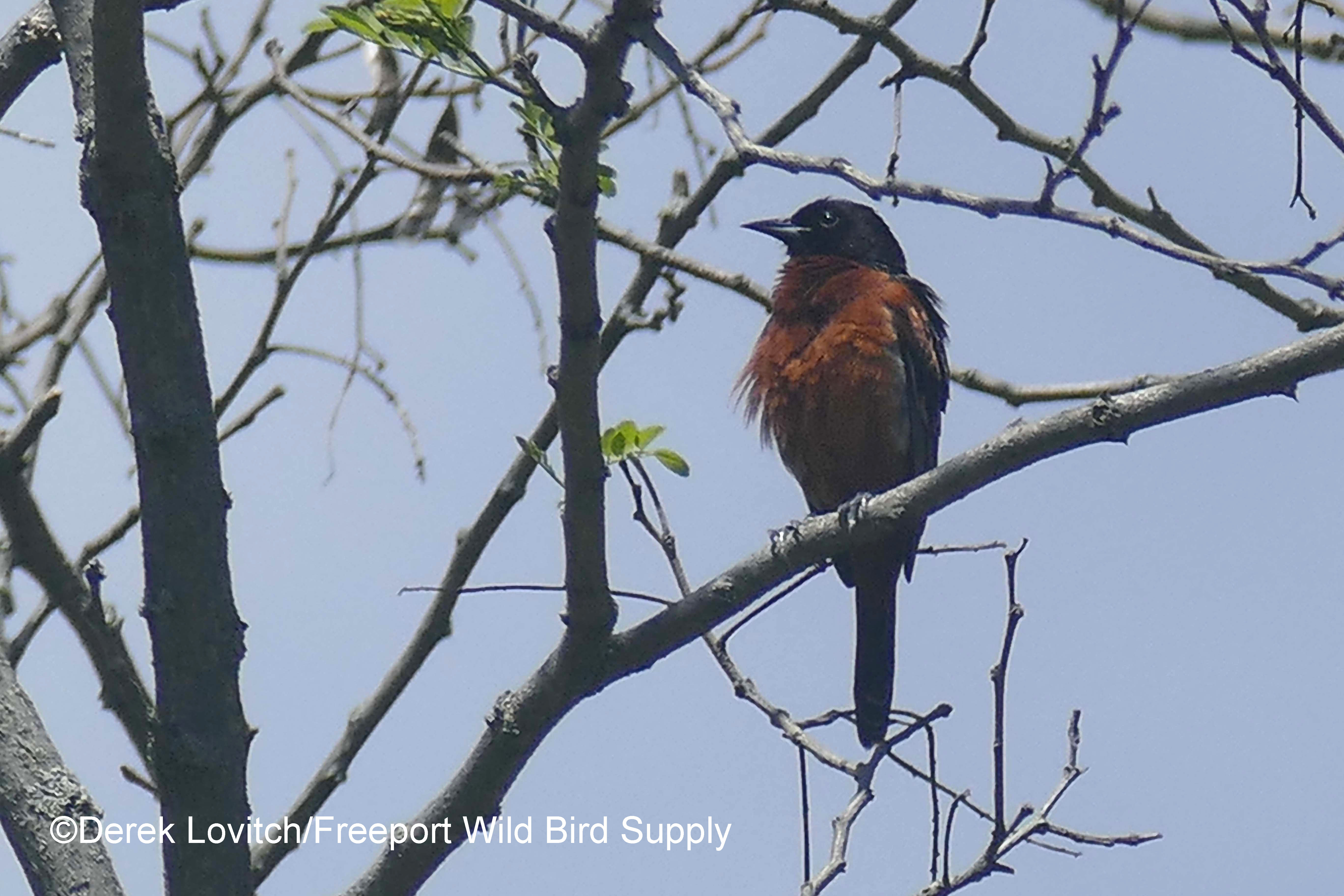
One of the many stunning Baltimore Orioles that performed for us on our visit to Capisic Pond Park in Portland during May’s “Warblers and Wort” tour.
Join us for the much-anticipated return of the Birds on Tap series, a unique collaboration between Maine Brews Cruise and Freeport Wild Bird Supply. In 2024, we’re excited to bring back these special birding and beer tours, perfectly blending nature exploration and craft beer tasting.
These unique, relaxed birding and beer-ing adventures that you have come to love combine great local birding at seasonal hotspots with approachable opportunities to sample the delicious creations of some of our favorite Maine breweries. These events are a perfect introduction to birding and/or craft beer, and a great opportunity to enjoy our favorite pastimes with significant others, friends, and family that have interest in one topic, while your interest is primarily in the other (for now!). Educational, enjoyable, and eye-opening, our unique Birds on Tap series enters its 10th Year!
Seasonal birdwatching meets Portland Maine’s finest craft beverages–all with the convenience of being chauffeured!
We’re offering three tours this year, with each trip report being posted here.
Warblers and Wort, May 25th.
May means warbler migration, and the destination for Warblers and Wort visited two of Maine’s most famous springtime migrant traps, Portland’s Evergreen Cemetery and nearby Capisic Pond Park. Oases in the urban jungle, featuring water sources and a mix of various habitats, help concentrate migrant birds that found themselves in or over the city come sunrise. After migrating all night, tired travelers look for refuge: food, water, and shelter, and urban greenspaces are absolutely critical for refueling.
Beginning at Evergreen Cemetery, we confirmed our suspicions from the overnight radar images that it was going to be a slow morning for migration. But wow, it was slow! We enjoyed some good looks at Red-eyed Vireos and lots of Gray Catbirds, practiced our birding by ear, and discussed urban ecology, but I had seen (not) enough.
We then ventured over to Capisic Pond Park, where our luck instantly changed. While passage migrants were still few, it was downright pleasantly birdy. And birdy with vivid colors from some of our most beautiful birds. Blinding Baltimore Orioles were everywhere as expected, but we had some great quality time with battling males and affectionate pairs. We had lots of great views of male and female Yellow Warblers and the range of plumage variation in American Redstarts. Great looks at Warbling Vireos were enjoyed, but orioles kept distracting us! Northern Cardinals refused to be ignored.
In addition to a couple of Wilson’s Warblers and an uncooperative Magnolia Warblers, passage migrants included the world’s worst look at the awesome Mourning Warbler as it darted down the trail, never to be seen again, but also one of the best looks you’ll ever get at a Cape May Warbler as a female foraged in the grass and low branches of a grove of Eastern White Pine. You don’t often look down on a Cape May Warbler!
We saw a lot of birds well at Capisic today, using even the most common birds to hone our identification skills while taking the time to appreciate the beauty of even some of the most common birds around us. For example, we became intimately familiar with how Common Grackles are anything but black birds! This particular individual stood out because of the perfect lighting showing off it’s glossy, structural colors, but also the unusual white flecks in the head caused by some limited leucistic feathers.
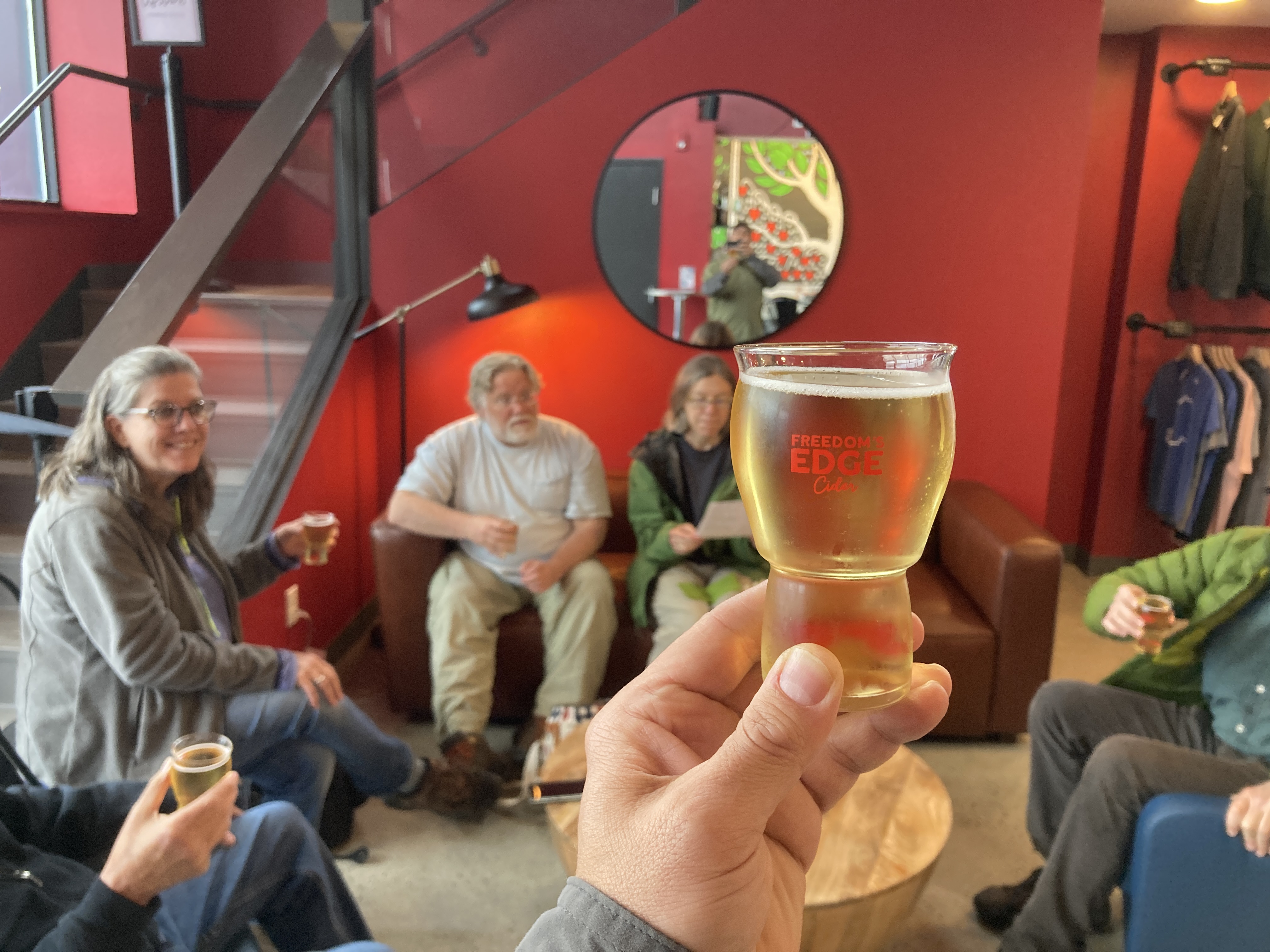
After struggling to see birds at Evergreen, we struggled to leave Capisic on time! It was a lot of fun, but it was time for the second half of the tour as we made the short trip across town to the Bayside neighborhood. Our first stop on the beverage portion of the tour was Freedom’s Edge Cider. After observing migrant birds in the crabapple trees at Capisic, it was only appropriate to enjoy cider, as the creation of hard cider was what led to the creation and diversity of crabapple trees! Focusing on the traditional, drier range of ciders, we began our tasting with their flagship “Original,” a nicely balanced semi-dry cider with a crisp finish. The unfiltered, modern “The Juice” was a touch sweeter thanks to the concentration of sugar via the freezing and thawing of the apples. I definitely picked up musty grape in the “Marc de Marquette,” a very flavorful cider aged over Marquette grapes. And finally, we were able to pick our own fourth sample. I am a sucker for maple, so I went for the “Pick Your Own” (coincidentally and appropriately) that complemented our birds of spring with flavors of spring in Maine: maple syrup and strawberries. The flavors were subtle, but the maple was really evident on the nose. However, the “Sweet Mullet,” a delicious cider steeped with mulling spices seemed to be the crowd favorite.
We’re all about the new and different on these Roadtrips, and our second stop was the very new (opened about 3 months ago) Argenta Brewing, Portland’s first lager-only brewery. Their delightfully named “Generic American Lager” had all the crushability and cleanliness of a traditional American Lager, but with a focus on Maine-grown ingredients. Learning the difference between lagers and ales while discussing topics ranging from glassware to bird conservation, we also learned all about Portland’s newest brewery. We were able to choose our second (very!) generous pour, and I joined others in the “Dark Lager” which had those nice roasted chocolate and malty flavors but with the lighter body and clean finish of a lager.
And with that, our first Birds on Tap – Roadtrip! Came to an end, but it’s not the last one in 2024, and definitely not the last one in years to come. It was good to be back on the road, and the combination of introductory birding with an introduction to Maine’s finest craft beverages is a recipe that has not lost its luster after a COVID-years hiatus.
Shorebirds and Steins, Aug 11.
We began our introduction to shorebirds with the basics, such as plover verses sandpiper, before moving into great depth such as yellowlegs vs Willet. Shape, size, and especially bill size and length are among the “bigger picture” tools we have to learn our shorebirds, such as with some close Willets – the “tringas of the 90’s steroid era in baseball.”
The original BoT Roadtrip! in 2015, our most popular tour returned to Scarborough Marsh at prime time for a good variety of migrant shorebirds. We learned how to identify our common species and searched a bit for the rare.
Birding began at Pine Point as the tide just began to flow. And as the mudflats were slowly inundated, a nice diversity of shorebirds soon appeared, and with each inch of incoming water, many of the birds moved closer and closer.
In Jones Creek, we were able to closely study the eastern subspecies of the Willet, later in close proximity to the closely related Greater Yellowlegs. And wow, did these two yellowlegs put on a show! Demonstrating their entertaining, aggressive feeding style that is highly suggestive of the species, they chased baitfish through the shallows. They were eventually so satiated that they sat down within about 15 feet of us and allowed for close looks at their bill structure and color without any straining through the scope. One spiffy Black-bellied Plover was joined by several dozen more in all stages of molt, and two awesome Whimbrels dropped in for the duration of our stay, nicely demonstrating the wide differences in shape and bill structure of our sandpipers.
Short-billed Dowitchers demonstrated their sowing-machine feeding technique – helpful as feeding style is an important part of the shorebird identification toolkit. But before we got that far, we started with the basics of plover vs sandpiper, nicely demonstrated by a flock of 150+ Semipalmated Plovers and 100+ Semipalmated Sandpipers that were concentrated before us by the incoming tide.
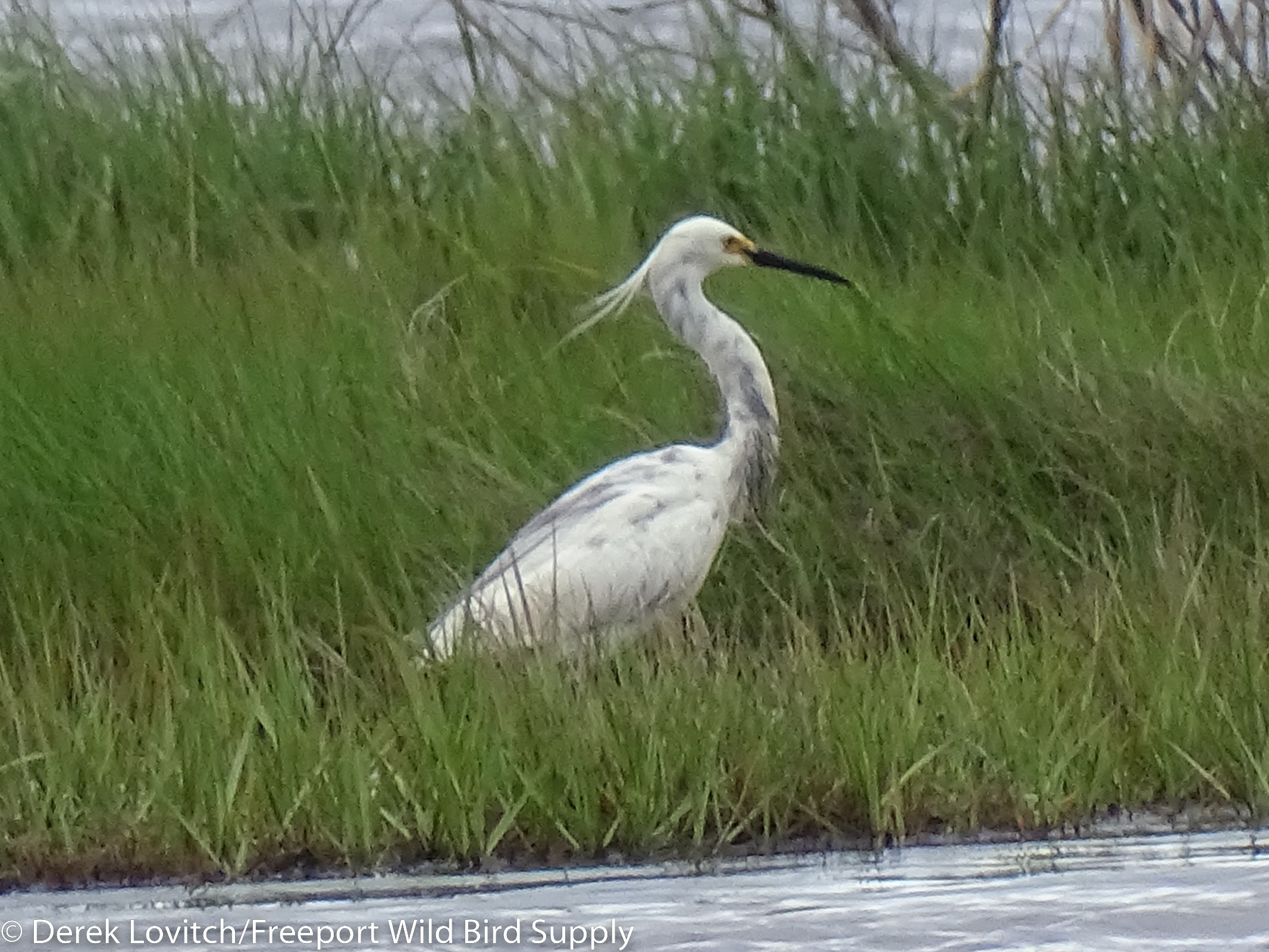
Two additional stops at the outskirts of the marsh gave us a sample of a different micro-habitat at high tide, yielded some Lesser Yellowlegs for our shorebird list, and gave us more looks at non-shorebirds, such as Great and Snowy Egrets, Glossy Ibis, and much more.
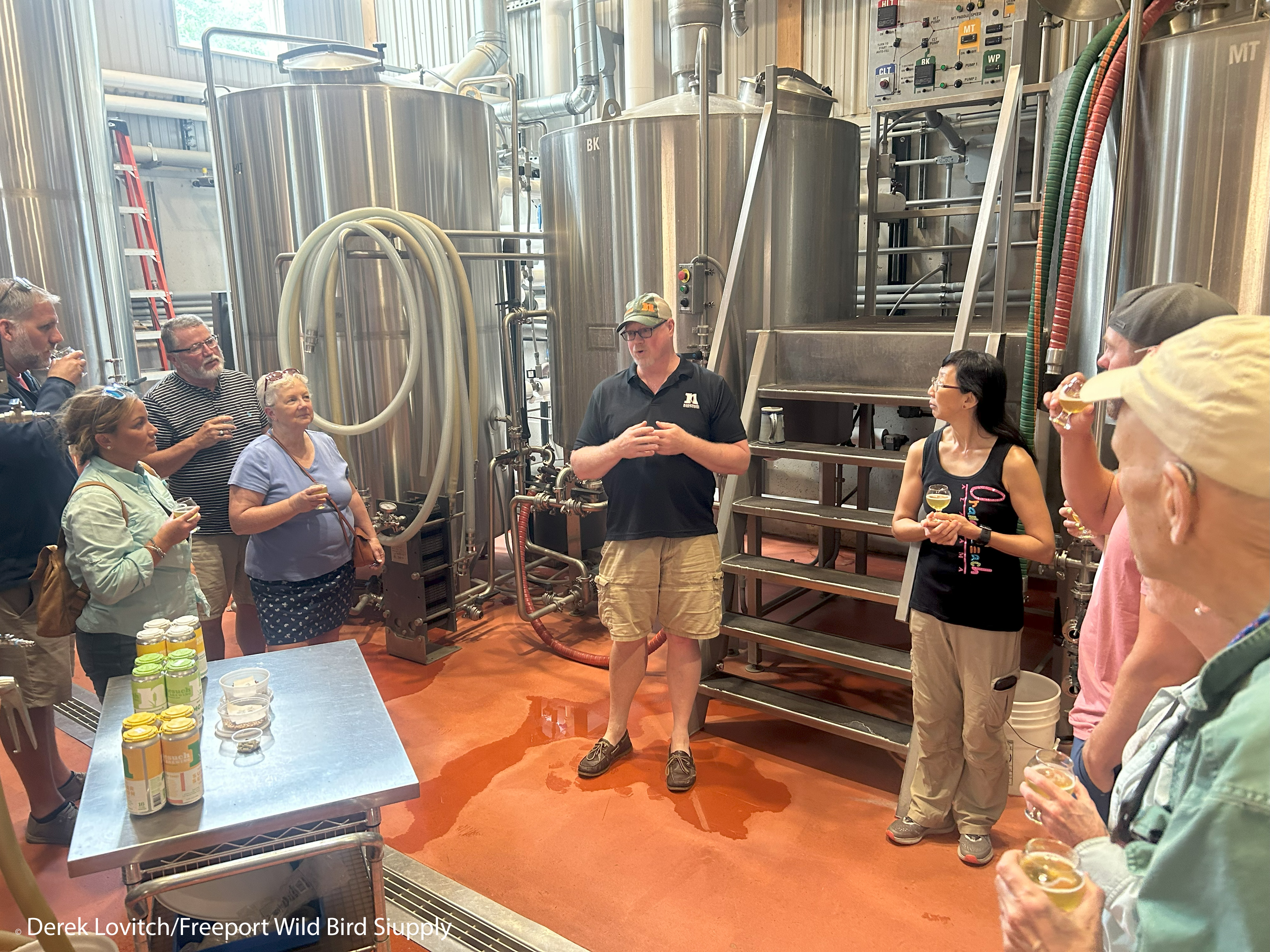
Then it was time to head over to Nonesuch River Brewing, where owner Michael and his wife Kristen graciously greeted us with a sample of their Summer Session – a nice light, refreshing welcome. We then enjoyed sips of their summery and bright Mojito IPA with lime and mint, followed by their Solstice hefeweizen with a little bit of ginger prickliness and hint of lemon. As we enjoyed those beverages, we thoroughly enjoyed an all-in tour in the brewhouse, learning the basics of brewing, and some of the house techniques to make Nonesuch such a popular brewery. I saw several four-packs of Mojito return to the bus with us, and the location can’t be beat for a post-Scarborough Marsh celebratory toast!
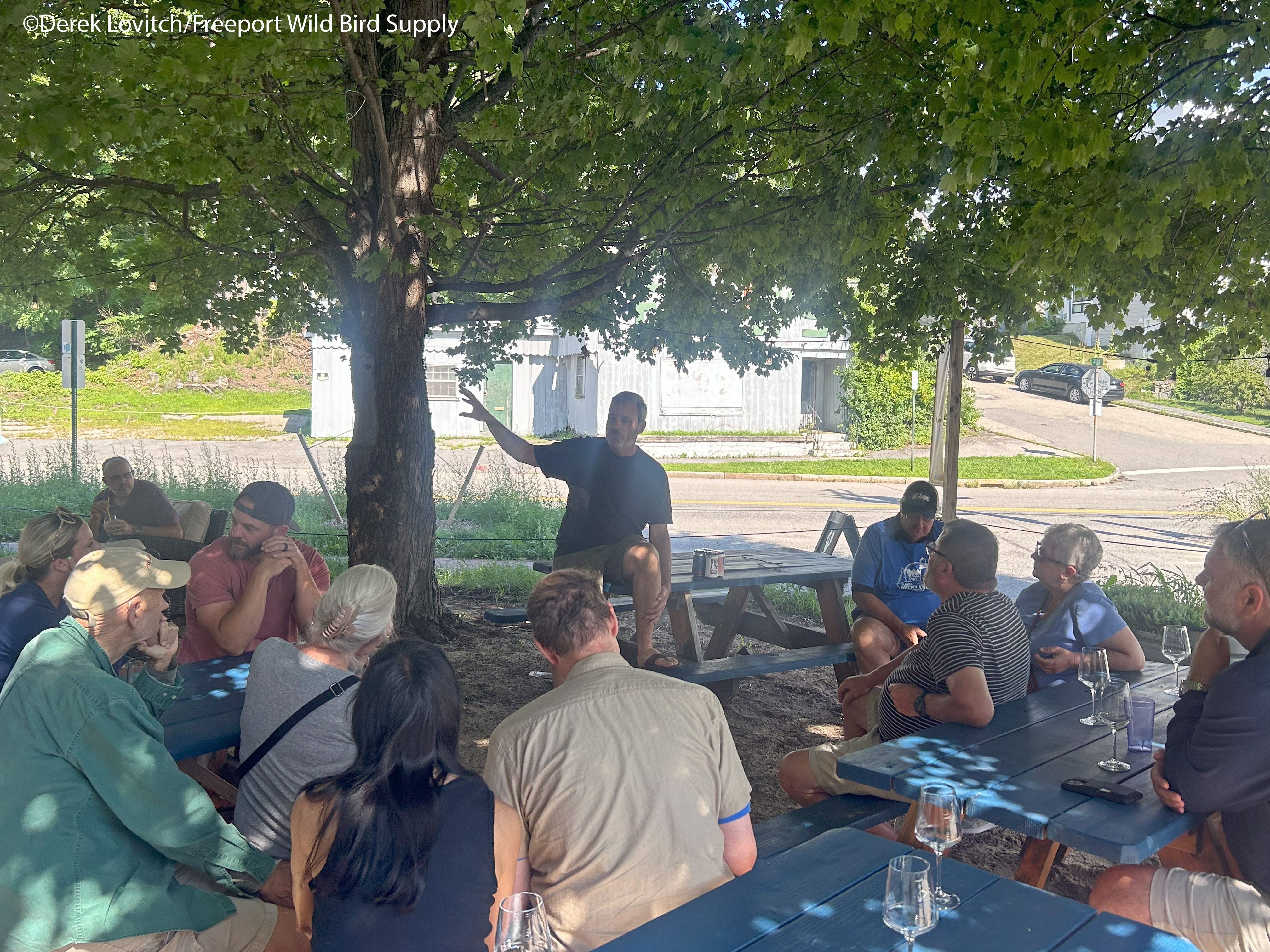
Returning to Portland, our second beverage destination was the newly expanded home of Blue Lobster Urban Winery. Once again, we felt privileged to get the tour from the owner and winemaker! Chris walked us through the winemaking process, the rational for canning it, and the history of the company. We began with a taste of their Tightline cider, a very dry cider made from local apple juice and wild yeast from the winery. Their sparking Rose was up next: very lightly carbonated with a strong strawberry nose but just a slight sweetness on the palate. Bayside Blend red was nice and dry, as I prefer my reds.
Chris then treated us to a special surprise – a barrel tasting, where we were privileged to be the first member of the public to sample an upcoming bottle release that has been conditioning for two years, and was made from grapes grown on 121 year-old vines in California. This was a special wine, and it was absolutely delightful. Our only complaint was we couldn’t buy any yet! Last but not least, we tried their blueberry infused red, with Syrah and merlot grapes infused with Maine blueberry juice. Especially after Chris suggested making a spritzer or Sangria with it, multiple four-packs were purchased to go.
Nice species of shorebirds, three beers, 4 wines, and 1 cider -now that’s a well-rounded Birds on Tap – Roadtrip!
Birds on Tap – The Boat Trip! Rare Birds and Island Exploration.
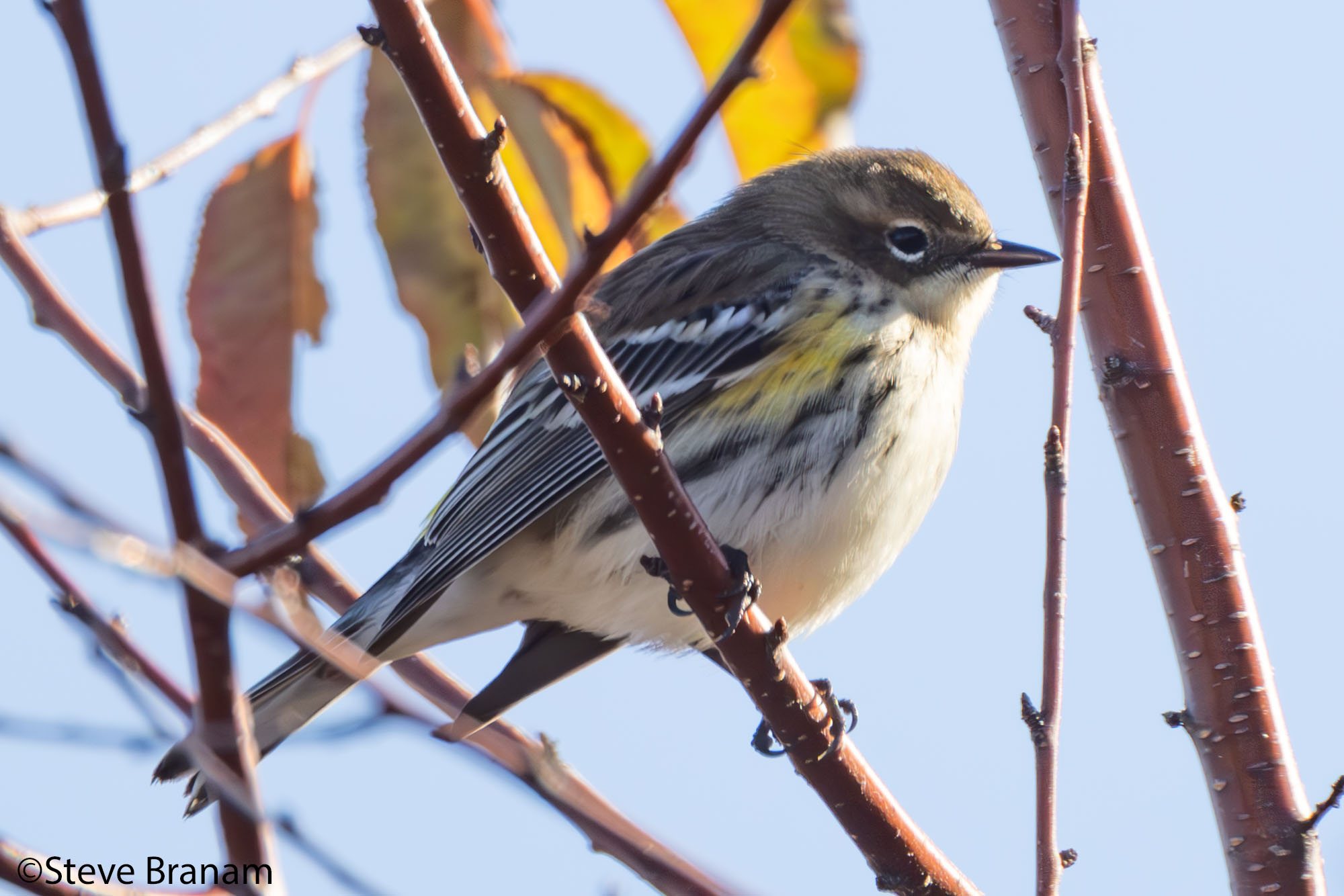
Yellow-rumped Warblers were the dominant species, not surprisingly given the date and island’s habitat, but the number present today was still most impressive. This one is nicely showing off its namesake.
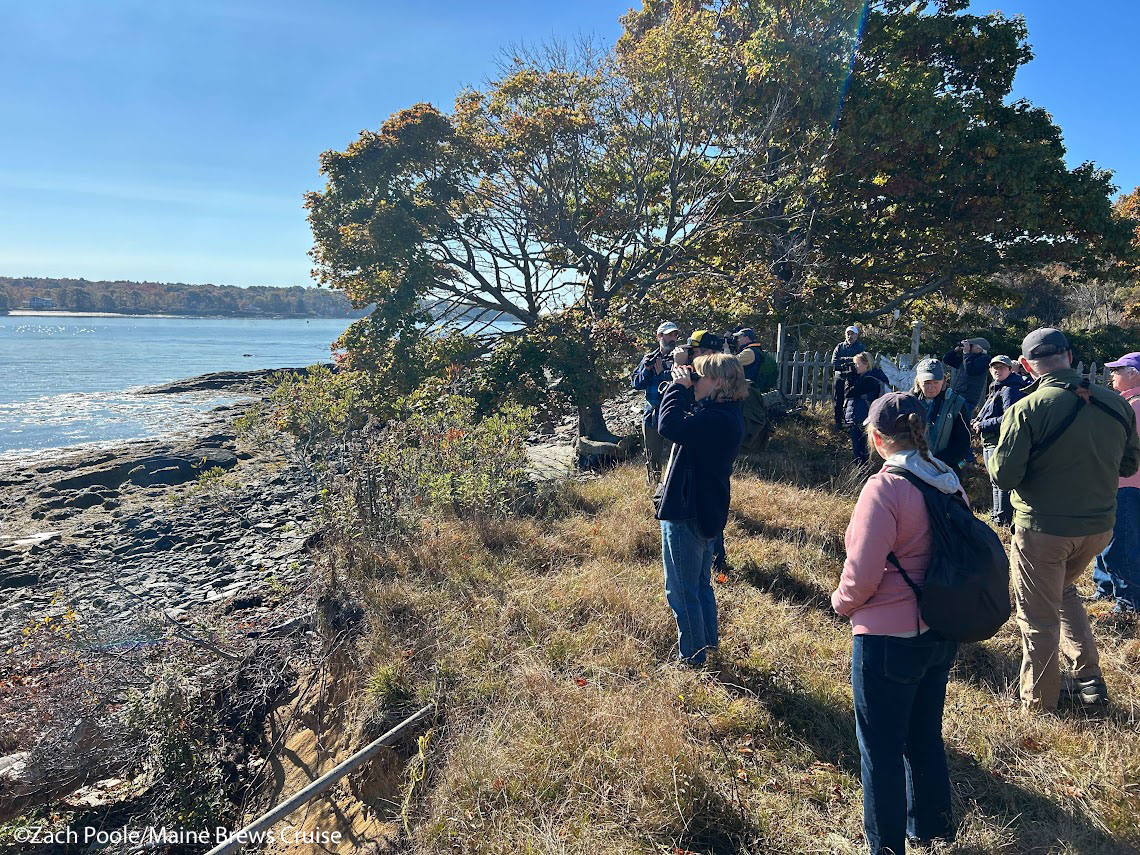
The final Birds on Tap event of 2024 was a special one indeed. This day, we not only took to the water for the first time in the series, but we were able to visit the private House Island and its historic Fort. In fact, we were the first birding tour ever on the island! But this trip was not just about the birds.
We began with some birding, walking the trails and checking all of the nooks and crannies the island and fort had to offer. Yellow-rumped Warblers were simply everywhere, with dozens popping up with limited pishing, and countless others darting around. A few Song and White-throated Sparrows were here and there, and 1-2 Northern Mockingbirds were perhaps delineating winter territories on the island.
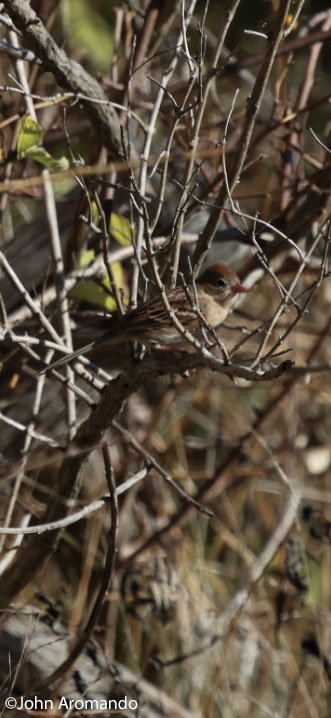
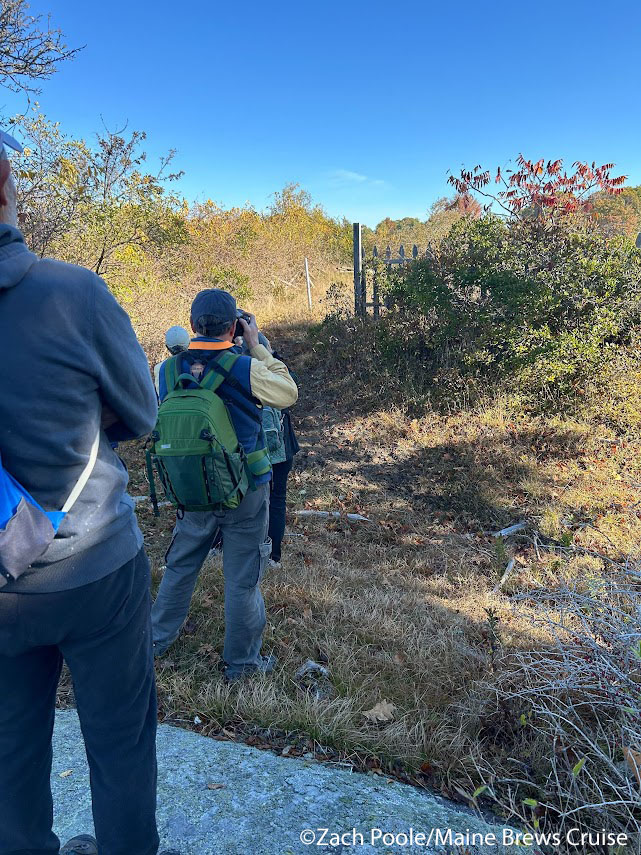
Surf Scoters and Common Eiders were offshore, a pair of Common Ravens flew by, and then, in the cemetery, we found an uncommon migrant: a single Field Sparrow.
We also learned about the food resources of the island, such as native Arrowwood Viburnum and especially the Northern Bayberry that all of these Yellow-rumped Warblers depend on and the invertebrates that can be found in the wrack line on the tiny beach.
Pete then expertly guided us into and through the historic Fort Scammel and the history of House Island. The first English settlement in Maine, it was the only island with a house on it, hence the name of the island. While primarily used for drying cod, fishing operations continued through 1907, when the buildings became part of an immigration station that operated until 1931. On the other half of the island, Fort Scammel was constructed in 1808. Four years later, it became Maine’s only coastal defense fort to fire a shot in aggression when it fired on a British privateer in the War of 1812.
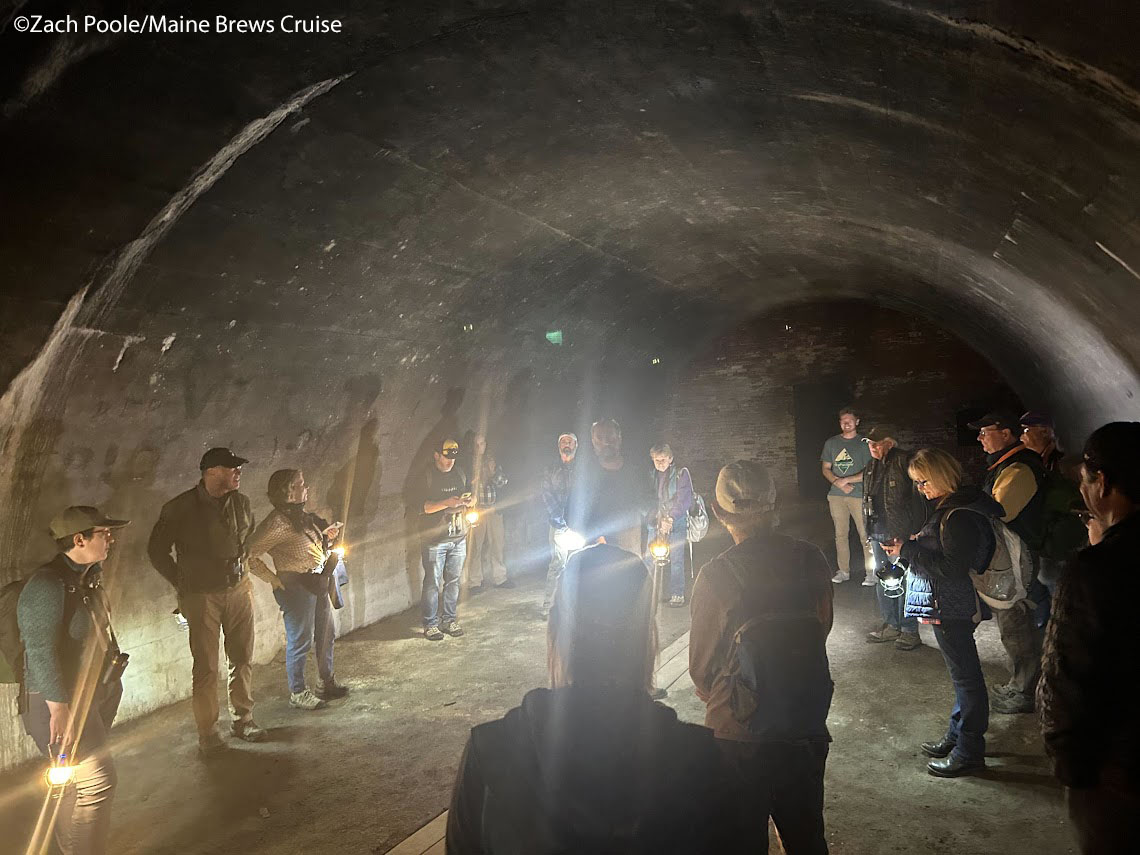
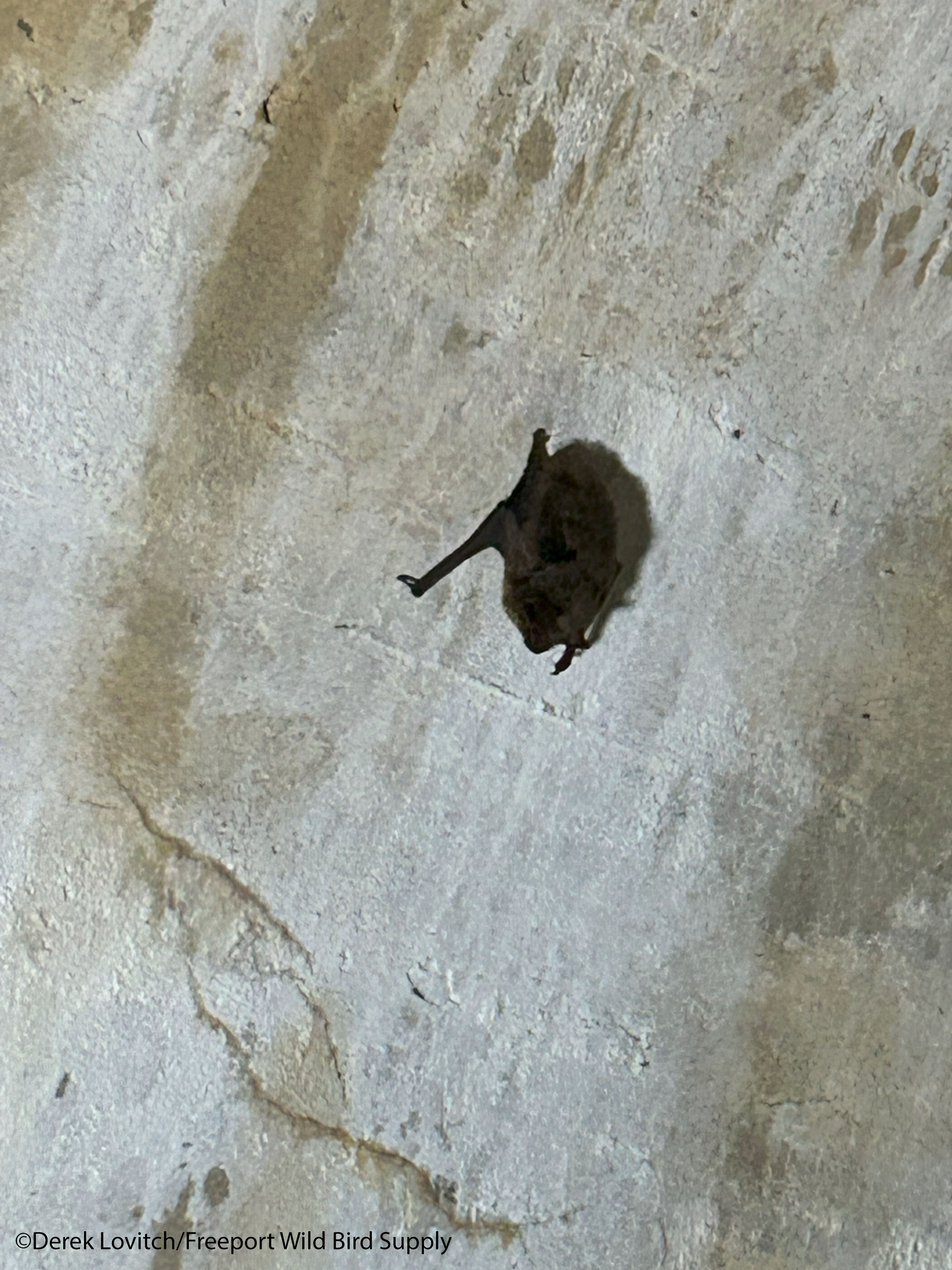
The fort was upgraded in 1840 and again in 1870, when a concrete cap was added, and it was insulated with dirt and sand. While the fort was obsolete by the Spanish-American War, anti-aircraft guns were placed here in World War 1, and in WWII, anti-submarine nets were stored here. Pete guided us through its corridors, described the cannon placement and usage, and we checked out the gunpowder magazines. We learned about the Battle of Portland Harbor, the furthest north battle of the Civil War, and we even found a roosting Big Brown Bat. Even though this was my second visit to the Fort, I was still in awe of the handiwork and the pristine condition.
Wait, what year is this?
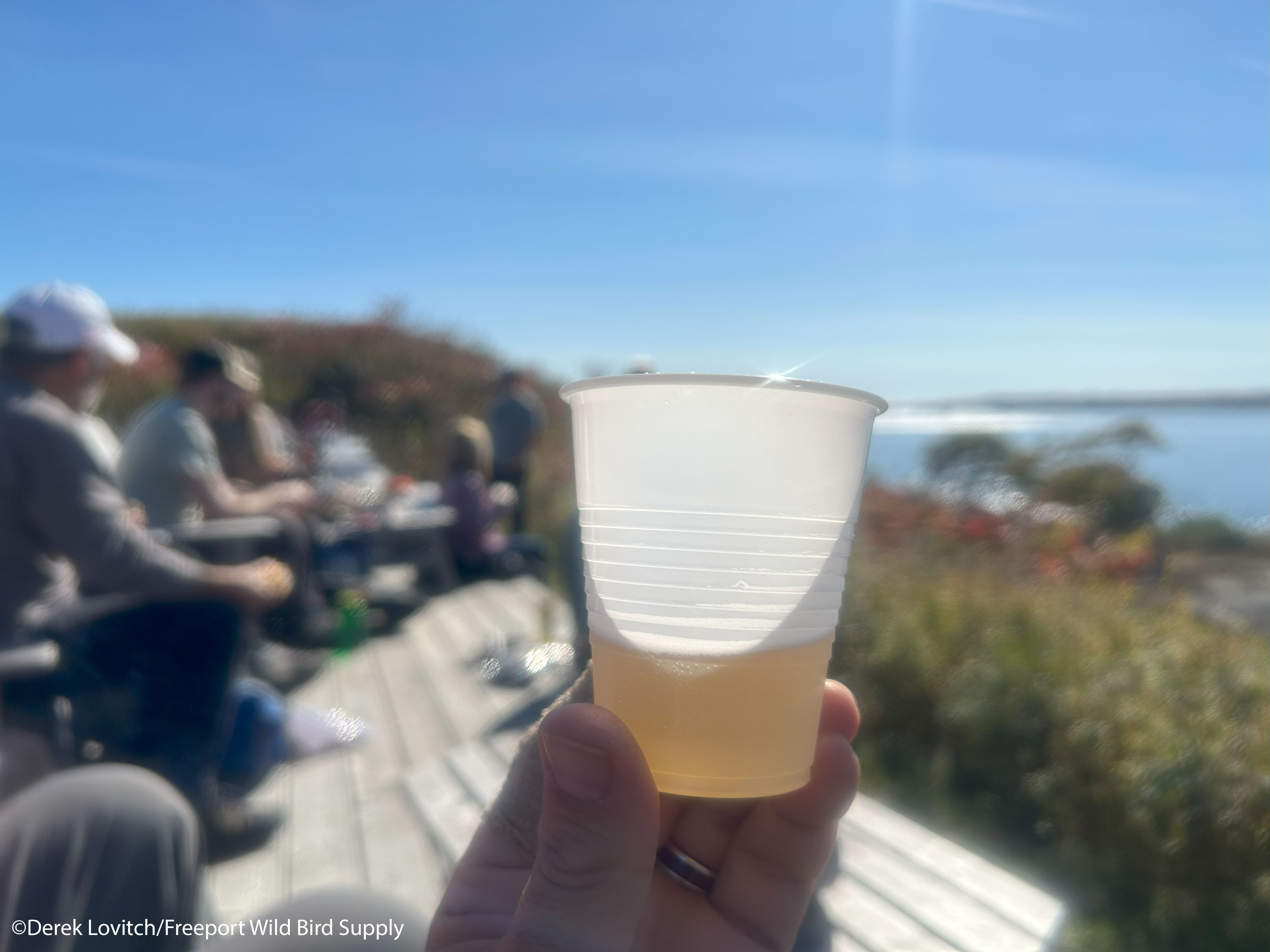
Then it was Tom’s turn to take over, and on such an insanely beautiful day, we took advantage of the comfy chairs above the parade ground for some more Portland history…but this time, it was the history of craft beer in the area. While Orange Bike is one of Portland’s newest breweries, this gluten-free brewery was developed with the help of Alan Pugsley – one of the Godfathers of the Maine craft beer movement. Starting with a refreshing and crisp pilsner, we also paid homage to a classic style.
Few beers say Portland more than Allagash White, and this was up next. The flagship of Maine’s largest brewer, its countless national and international accolades helped put Portland, Maine on the beer map. Speaking of, our next beer was Bissell’s flagship The Substance, one of the pioneers of the “New England IPA,” the hazy, juicy regional endemic that has since colonized the world.
A Horned Lark called as it unfortunately departed the island as we sampled our last beer, Mast Landing’s famous Gunner’s Daughter. A peanut-flavored stout rich in coffee, chocolate, and peanut butter notes, this was a perfect example of how creative modern beer has become.
While it was all-too-soon time to depart the island, our special tour was far from over. With such a gorgeous day (it was in the low 70’s with very little wind), Captain Pete decided to take a little ride out to the mouth of Portland Harbor. We motored past Chief Whitehead…
…and over to Ram Island Light, where Great Cormorants lined the old walkway. We compared their shape and size to the smaller, more common Double-crested Cormorants we passed on our way back inshore, while taking the time to enjoy the view, more Common Eiders and Surf Scoters, and scattered Black Guillemots.
A Gray Seal ushered us into the dock on our return.
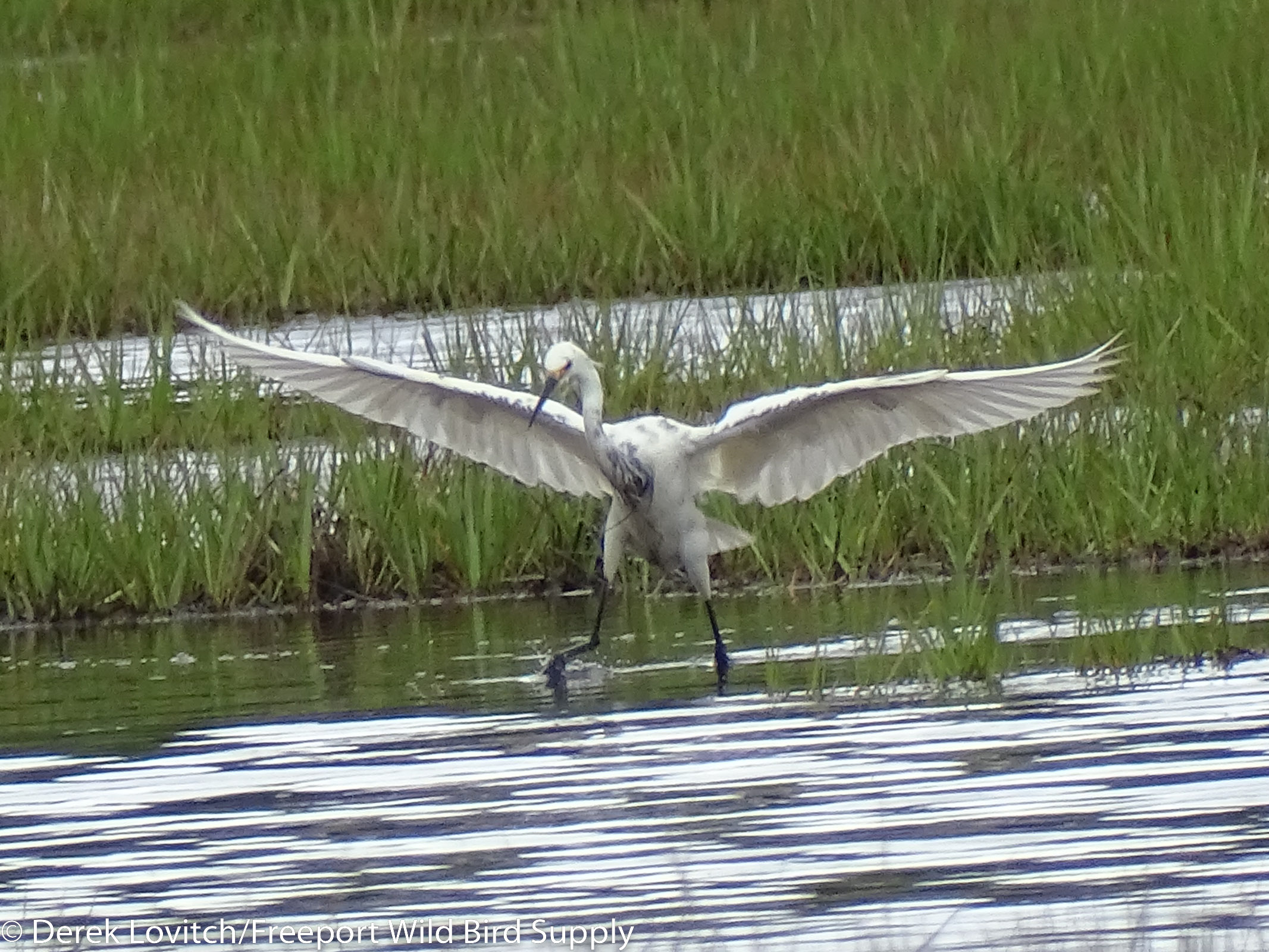
It’s always exciting to show a tour a one-of-a-kind bird that is found no where else in the world (that we know of!). And “Patches III” the proposed Tricolored Heron x Snowy Egret x Snowy Egret hybrid (I think…maybe) put on quite a show for us on the third day of the tour.
I just finished up a whirlwind 9-day tour with my good friend Scott Barnes for New Jersey Audubon. I’ll be sorting photos for a while and will post more later, but our unexpected observations of note while traveling around Maine (with about 24 hours in New Hampshire and a few hours in New Brunswick) besides all of our wonderful breeding birds, included the following:
1 continuing drake KING EIDER, 3 adult RED-NECKED GREBES (including a pair doing a little light courting), and an impressive 72 Black Scoters, Ocean Avenue, Biddeford Pool, 6/18.
1 pair ORCHARD ORIOLES and one late singing Wilson’s Warbler, Capisic Pond Park, 6/19.
1 pair Sandhill Cranes, Messalonskee Lake, 6/19.
1 Yellow-bellied Flycatcher, 1 Red-breasted Nuthatch, and 1 Indigo Bunting, Machias Seal Island, 6/20.
1 MANX SHEARWATER, between Machias Seal Island and Cutler Harbor, 6/20.
Scattered Red Crossbills around Washington County.
80+ Razorbills and 12 Surf Scoters, Quoddy Head State Park, 6/21.
1 family group of CANADA JAYS, Wesley Township, 6/22.
4 Black-bellied Plovers, Petit Manan NWR – Hollingsworth Trail, 6/22.
2 American Oystercatchers, Egg Rock, Frenchman Bay, 6/23 (with Bar Harbor Whale Watch Co).
2 American Oystercatchers and 2 Common Murres, Petit Manan Island, 6/23 (with Bar Harbor Whale Watch Company).
1 LEACH’S STORM-PETREL, 1 BLACK-LEGGED KITTIWAKE, 1 Sooty Shearwater (FOY), 25+ Great Shearwaters, etc, off Bar Harbor with Bar Harbor Whale Watch Co).
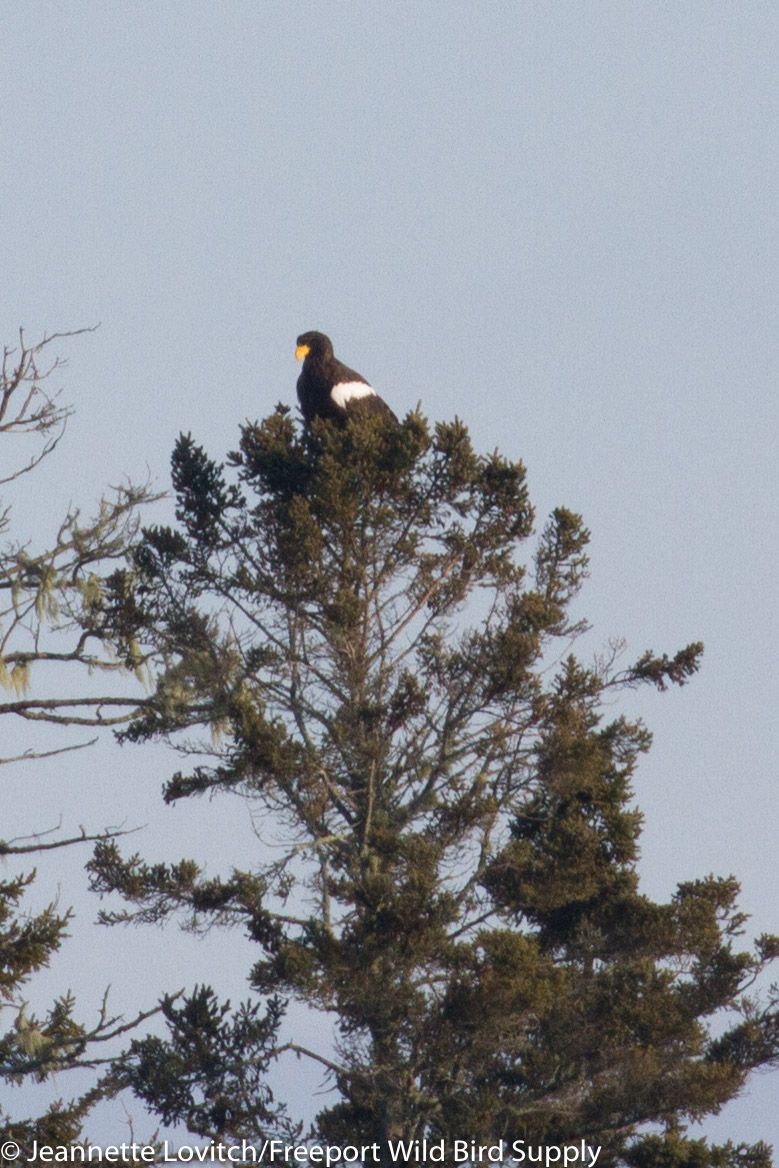
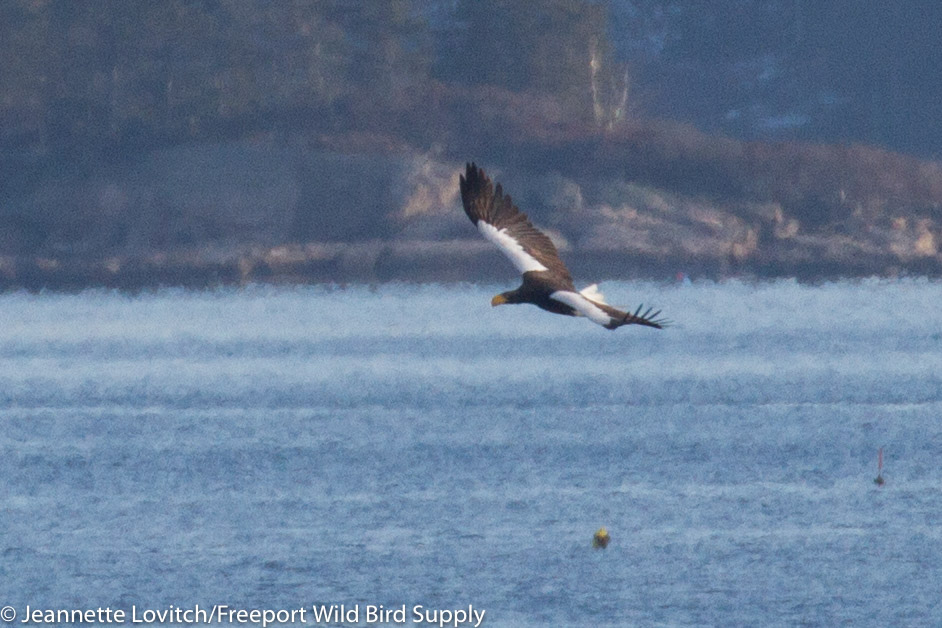
No one could have predicted the bird of the year, err..century..err, ever. This magnificent Steller’s Sea-Eagle spent four days in Georgetown right around the New Year.
It’s once again time for my annual Predictions Blog, where I view into my crystal binoculars and attempt to forecast some of the “new” birds to grace the State of Maine – and then my own personal state list – in the coming year.
I feel like I could have just recycled my blog from 2021. “…Worst Year Ever.” Ha. 2021 replied, “hold my beer!” That all being said, a complete summary would show the full picture, with all its ups and downs (and there were a lot of downs), but undoubtably with many happy moments contained within. That’s all beyond the scope of this blog. I’ll just stick to the birds.
Of course, nothing compares – or perhaps, ever will compare! – to the headliner of 2021: The Steller’s Sea-Eagle. No, this was not on my predictions list – or anyone else’s at the start of the year. That being said, following reports this summer in New Brunswick, November in Nova Scotia, and then December in Massachusetts, there is no doubt it would have been optimistically added to the list for 2022…had it not shown up in Georgetown on December 30th (or perhaps earlier). This mega-of-megas, one of the world’s most extraordinary birds, might render almost any other first state record pedestrian, or at least anticlimactic.
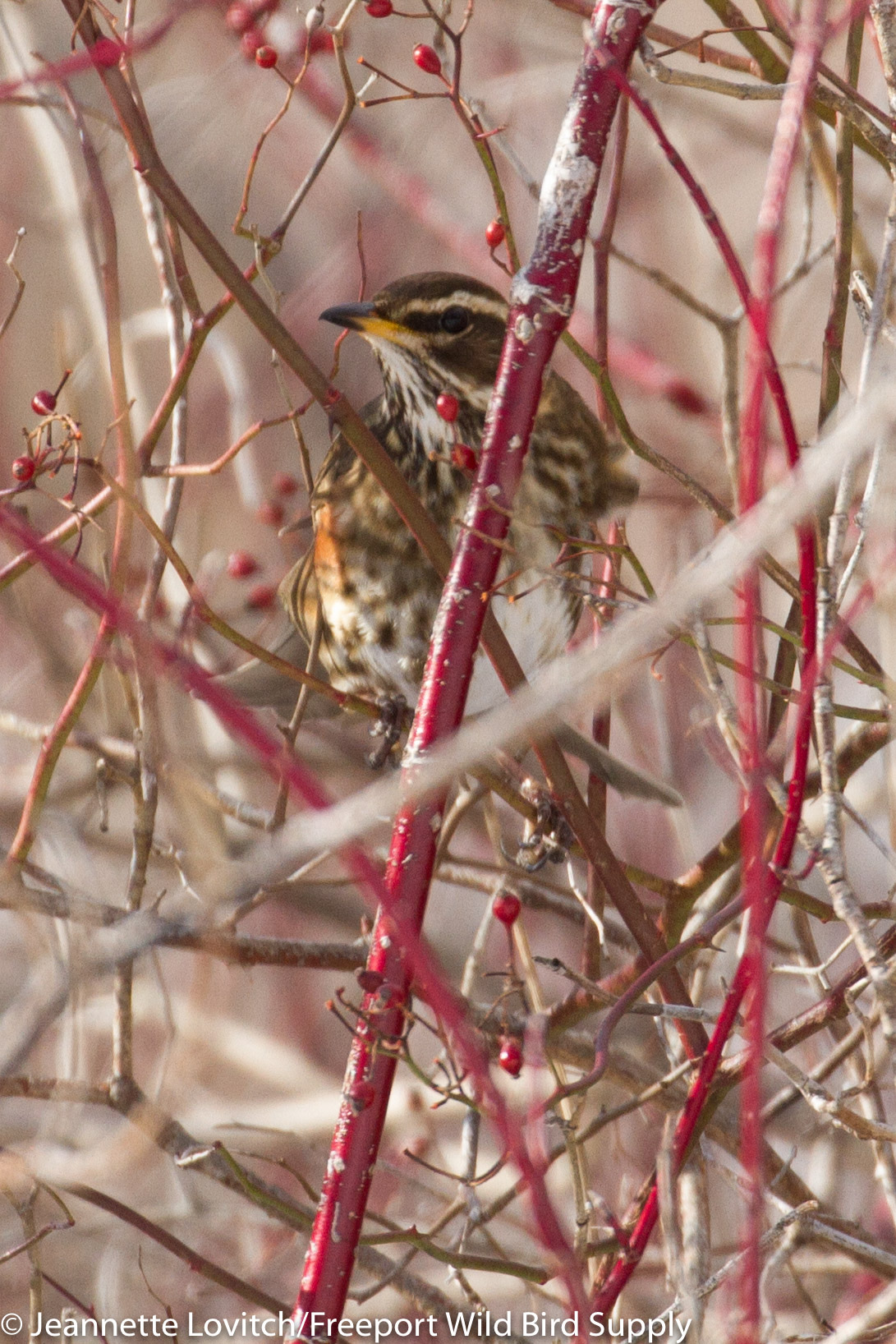
At the very least, it does overshadow the only other chaseable first Maine record for this year: Redwing, a European thrush. What was the “bird of the year” until three days remaining on the calendar, this bird delighted many hundreds of birders at Capisic Pond Park in Portland at the end of January 2021 – which seems like eons ago! The first state record, however, actually came earlier in the month, when a Redwing – perhaps the very same individual – was a one-day wonder on private property in Steuben. Lucky for all, the next one/sighting of it showed up on public property and stayed around for about three weeks. Redwing was #16 on my “Next 25 Species for Maine” list.
And finally, a Masked Booby surprised observers on Mount Desert Rock on August 9th. With increasing observations of tropical seabirds north of the Gulf Stream, this is less shocking than it would have been a few years ago.
Three first state records in one year is pretty good, and the quality of this year’s roster is impressive. How will 2022 compare?
Therefore, my list of next 25 species to occur in Maine receives just a few tweaks.
***EDIT, 3/31 – When a Trumpeter Swan arrived in Scarborough Marsh, it was noted as the 2nd State Record. I realized that the 2011 bird from Fortune’s Rock Beach in Biddeford was indeed added to the “official” state list. I had counted it on my own list (so no change below), but I never followed up on its status, apparently. With the rapidly expanding introduced populations in the Northeast, along with increasing amount of states “declaring” the bird “established,” I’m shocked it’s taken this long to get a second one. The predictions list has been updated accordingly.***
Personally, I was fortunate to add two birds to my own state list this year. And they were good ones!
The aforementioned Redwing got things started. It was not on my Top 25 list because I expected it to be a one-day wonder in some far-off place, never to be seen again. It was. But then it, or another bird – there were several Redwings in the Northeast part of the continent last winter – debuted at Capisic. That was fun.
Did I mention there was a Steller’s Sea-Eagle? That was my 391st species in Maine!
So neither of my state birds were on my Predictions list. I’ll be OK though, all things considered.
And, as usual, there were also a handful of potential state birds for me that I did not see. Franklin’s Gull appears to be on its way to becoming my nemesis, with another one this year: a one-day wonder at the Sanford Lagoons on 9/9. It was #3 on my list.
A Sandwich Tern at Mount Desert Rock on 7/6 was on my Honorable Mention list, as was Brown Booby, which has started to become regular north of Cape Cod. There was one off of Biddeford Pool on 7/8 ahead of Tropical Storm Elsa, followed by one on Mount Desert Rock August 2nd through 9th (not an easy place to chase!).
So a few tweaks to my list for my next additions to my personal state list are as follows:
1) American White Pelican
2) Neotropic Cormorant
3) Franklin’s Gull
4) Brown Pelican
5) Graylag Goose
6) California Gull
7) Black-bellied Whistling-Duck
8) Brown Booby
9) Slaty-backed Gull
10) Boreal Owl
11) Calliope Hummingbird
12) Common Ringed Plover
13) Cerulean Warbler
14) White Ibis
15) Gull-billed Tern
16) Hammond’s Flycatcher
17) Spotted Towhee
18) Pacific Golden-Plover
19) Wood Stork
20) Ross’s Gull
21) Black-chinned Hummingbird
22) Brewer’s Blackbird
23) Yellow Rail
24) Virginia’s Warbler
25) Common Shelduck
So let’s see what 2021 (edited: 2022) brings to the Maine birding world. A return to a sense of normalcy would be a nice start, however.
I am overdue to luck into an American White Pelican in the state!
This distantly phone-scoped image of a Thick-billed Murre at Winslow Park on the 7th was one of two of these sought-after winter pelagics that I saw this week. Despite being so far from open ocean, this was incredible my 3rd ever in the Lower Harraseeket River in South Freeport!
My observations of note over the past seven chilly days including the following:
1 THICK-BILLED MURRE and 1 female BARROW’S GOLDENEYE (first of winter in Harraseeket River, finally), Winslow Park, South Freeport, 2/7.
1 Yellow-rumped Warbler, Bailey Island, Harpswell, 2/9 (with Jeannette).
The continuing REDWING, Capisic Pond Park, Portland, 2/11 – Although it was seen in its usual spot for much of the day, I had the bird fly over me at 3:25, about 2/3rds the way to the Machigonne Street entrance from Lucas Street. It landed in some taller trees in full sun, with a sizeable group of robins. When many of the robins took off, it joined them, flying just about tree level and exiting the park. It flew NNW over Congress Street, which I believe is roughly its behavior from the very first day. A Cooper’s Hawk passes through seconds later.
1 THICK-BILLED MURRE, Dyer Point, Cape Elizabeth, 2/12 (with Pat Moynahan).
This Week in Finches:
EVENING GROSBEAK: 0
Red Crossbill: 10 (Merrill Road, Pownal, 2/11).
WHITE-WINGED CROSSBILL: 32 Bailey Island, Harpswell, 2/9 (with Jeannette).
PINE GROSBEAK: 1 (Maine Street, Brunswick, 2/9; with Jeannette).
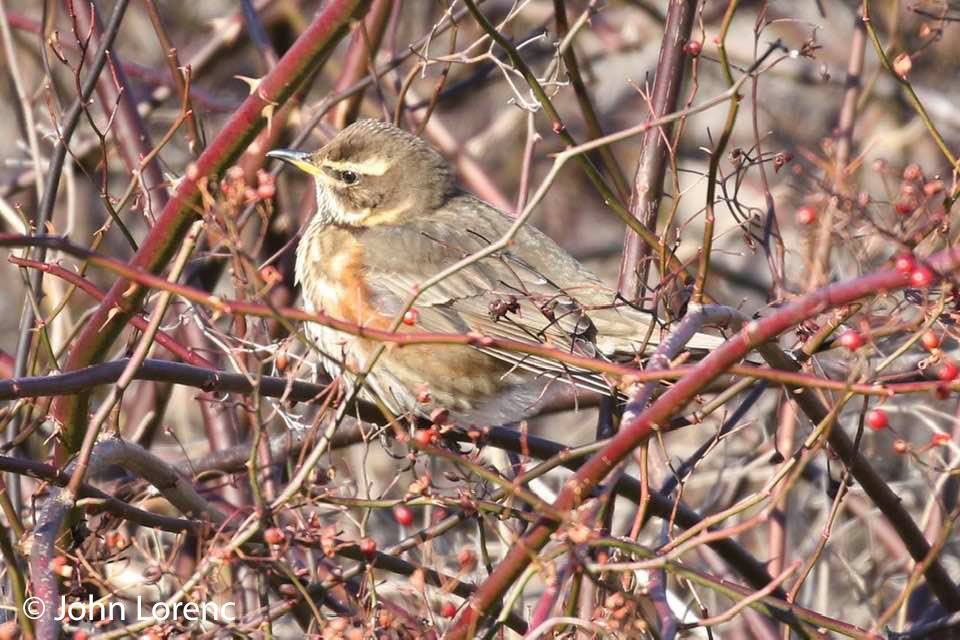
The bird of the week – and an early-contender for bird of the year – was this Redwing discovered at Capisic Pond Park in the afternoon of 1/29. My camera went in for repair this week, so my phone-scoped photos didn’t do this “mega” justice, so John Lorenc let me use his photo from the day.
With two mornings spent at Capisic Pond Park this week (REDWING, BLACK-HEADED GROSBEAK, and 1 DICKCISSEL on 1/30 and “just” the REDWING on 2/1 with Phil McCormack), my other birding was rather limited. I think that’s OK though…because Redwing!
1 drake RING-NECKED DUCK, Anniversary Park, Auburn, 2/3.
1 THICK-BILLED MURRE, Cumberland Town Landing, 2/4.
2 continuing NORTHERN SHOVELERS and 200+ distant scaup, Maquoit Bay Conservation Land, Brunswick, 2/5.
1 drake BARROW’S GOLDENEYE and 350-400 scaup (just a little too far to sort through accurately, but there is still a fair number of Lesser Scaup present), Simpson’s Point, Brunswick, 2/5.
This Week in Finches, aka “This Week in Pine Grosbeaks:”
PINE GROSBEAK: 3 continued daily at the store through 1/31; 3 (Cumberland Town Landing, 2/4); 11 (downtown Brunswick, 2/5).
Meanwhile, we have just announced our 2021 tour slate, including several pelagic trips, two searches for “Troppy,” the Red-billed Tropicbird, and much more, here, on our revamped Tours page:
The reincarnation of our spring “Warblers and Wort” tour in our Birds on Tap – Roadtrip! series with our partners, The Maine Brew Bus, was quite successful last Sunday. On this “Mother’s Day Special” tour, we decided to stay local, visiting some of Portland’s most famous institutions in both the beer and birding worlds.
We began in the urban greenspace – a classic “migrant trap” – of Portland’s Evergreen Cemetery. Spring remains behind schedule this year, and it was a chilly start to the day – but hey, it wasn’t raining for a change! While warbler diversity was lower than expected for the advancing date, we did eek out 10 species of warblers. Almost everything we did see, however, we saw incredibly well. Nashville and Magnolia Warblers performed well, but Ovenbirds stole the warbler show: we had several birds out in the open for prolonged, enjoyable views, about as good as can ever be expected when stomping a large group through the woods.
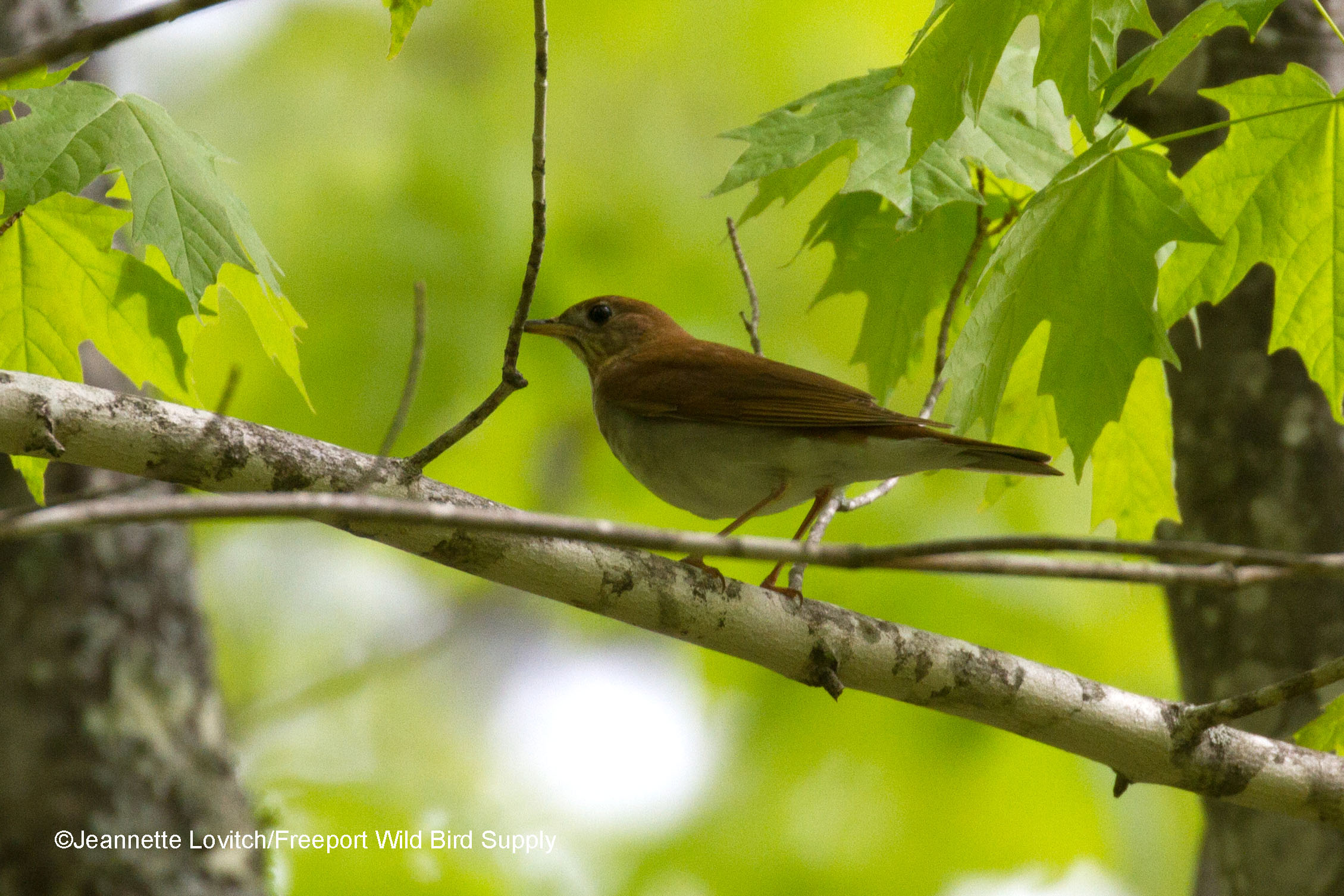
Only Veeries outshined Ovenbirds today in their cooperation. This often-shy thrush was anything but. We saw at least 6, and all were seen incredibly well, including two strolling out in the lawn like the robin they are related to. Many folks commented that they had never seen Veeries – or most any thrush! – so well. There were several sizable groups of White-throated Sparrows marching through the woods, including one group of 20-30 that we were surrounded by at one point. All of their leaf scratching was loud enough that it sounded like some large mammals were tromping through the understory. The song of a newly-arrived Wood Thrush and the old-timey football helmet sported by a White-crowned Sparrow were among the other highlights. Ovenbird Veery
Our second stop in the birding portion of the tour was another urban oasis, nearby Capisic Pond Park. Again, we were treated to fantastic views of almost every species we encountered, highlighted by a male Orchard Oriole (a “life bird” for many on the trip). A pair breeds here almost every year, but it’s the only known regular breeding location for this southern species in the state, so it was a real treat to find and see so well. We also heard and saw several of the more common Baltimore Orioles, and even saw a nest under construction that was using strips of blue tarp! (How Maine is that?) Orchard Oriole
A fly-by Green Heron and an ultra-cooperative Least Flycatcher were other highlights, along with common species such as cardinals and Yellow Warblers. The Least Fly was confiding enough to allow us to get into the topic of “tertial step and primary projection,” adding to our toolkit of identification techniques. The genus Empidonax is one of the most challenging in the bird world, but this structural starting point quickly narrows the choices to a very manageable number. And I always take the time to show off one of my favorite colors in nature: the eye of the Double-crested Cormorant.
Perhaps sour beers are the “tertial step and primary projection on Empidonax flycatchers” to many beer drinkers: it’s a more nuanced approach and probably doesn’t appeal to everyone. But our BOT-Roadtrips want introduce our clients to as wide of a range of beer types as bird species, so we had a special experience in store for the group as we rolled into Bissell Brothers Brewing at Thompson’s Point.
First up, each participant got to choose a different beer based on their tastes or what “lifers” they had not yet tried. There were at least five different brews sampled by my quick count, and the whole gamut of styles was represented. Personally, I chose the new Lucent, a Helles Style Lager as it was light and refreshing (and therefore good for a leader who had to articulate – or try to – for the next few hours). Crisp, clean, with a nice lemony bite, this was a great representation of the style.
But then our trusty beer leader for the day, Don, pulled out a surprise: a Magnum bottle of Bissell’s famous Seed. Brewed only once a year featuring “over 2,000 lbs of strawberries and raspberries from Bradbury Mountain Farm in Pownal,” Bissell was doing a special bottle pour event today, and so of course we had to partake. The faces of some folks was predictable when faced with the words “fruited sour beer,” and were equivalent to the deer-in-headlights looks when hearing “primary projection” for the first time. Some even refused. And then we gave them some anyway. And some of those then had some more.
It’s not for everyone, but I was really pleased by how excited people were to try a “rarity” that they would otherwise likely never have a chance at (like Orchard Orioles without going to Capisic). More importantly, the discussion of the beer that continued as we boarded the bus was how eye-opening the beer was for so many. Pleasantly tart, with a nice clean finish and a real depth of strawberry flavor, we every well may have created some sour fans (or at least sour-curious) on this trip.
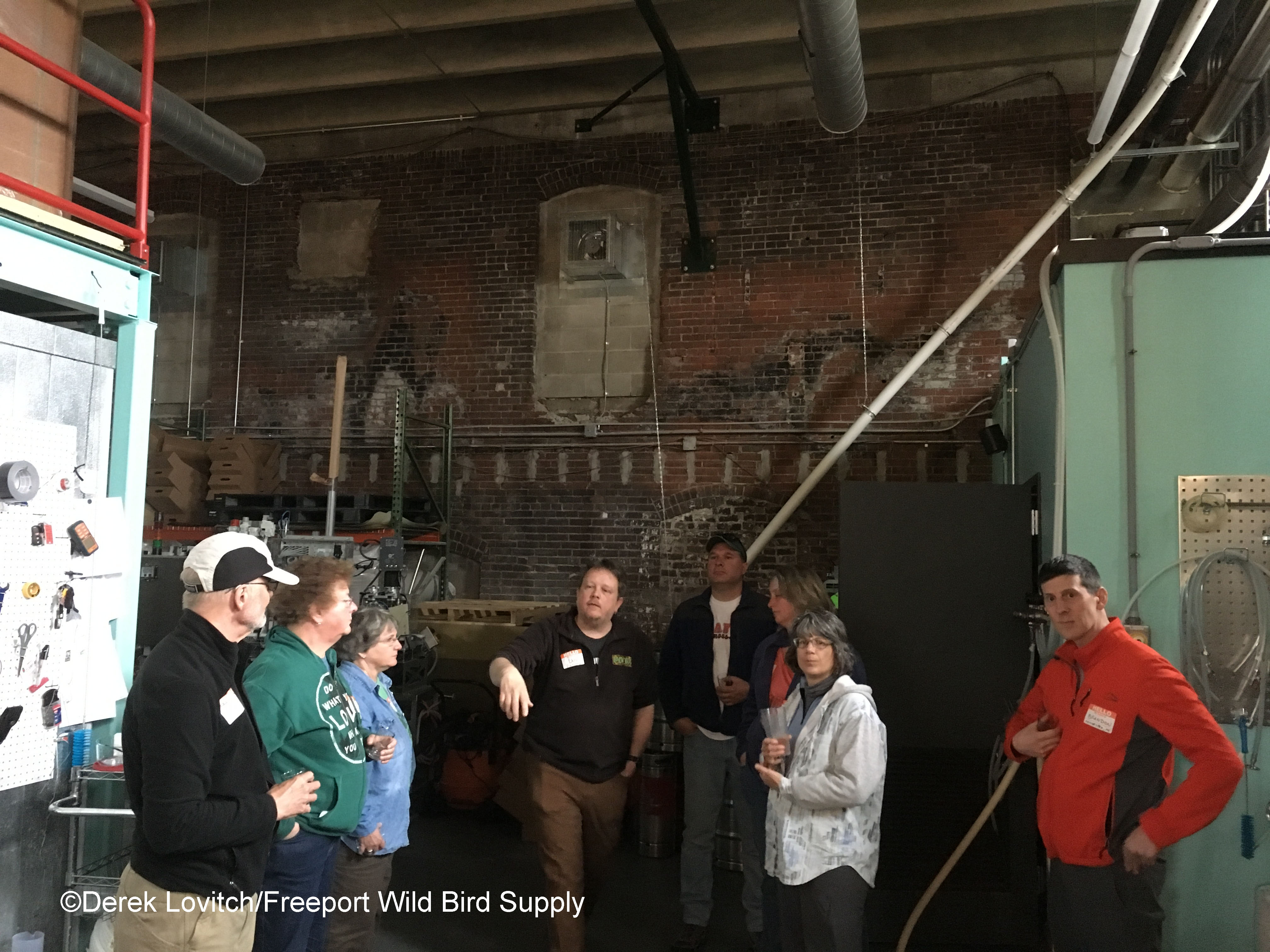
Next up was Goodfire Brewing, one of Portland’s hottest up-and-comers, and admittedly, one of my personal favorites to visit. In a more traditional visit for our beer tours, we enjoyed four small 4oz pours, which nicely showcased the range of styles offered here. As Chrissy led us on a tour of the brew house, we discussed the differences and similarities of each sample we tried, as well as the history of the names and label art.
We began with the perfectly balanced flagship beer, Prime IPA. The Citra and Amarillo hops really shine through, thanks to the clean and rather light malt bill that still ends without any bitterness.
Having learned that hops don’t necessary equal bitter, we dove into deeper discussion of hops with Goodfire’s latest single-hopped brew in their Minimum series. This incarnation featured Idaho 7 hops – itself an up and comer in the beer world – that has a nice flavor balance of citrus and pine with a hint of tropical fruit. If IPAs were Empidonax flycatchers, hops would be their primary projection. Or something, OK, fine, maybe I am stretching these analogies too far now…
Moving on, we lightened things up a bit with Can’t Stay Long, a classic clean and crisp German Pilsner with a somewhat bready finish. Pilsners are a tried and true style that might not be all that hip and trendy, but should still be appreciated – like a common Northern Cardinal sitting in the sun (OK, last one, I swear).
It was appropriate that after our sour revelations at Bissell, Goodfire would finish us up with a sample of their new fruited sour: Astro 5 – Double Blackberry. This was all the way blackberry, pleasantly tart, but with a clean finish that made you come back for more. In fact, more Astro was purchased to go than all other beers combined today! So I guess sours aren’t all that scary! And neither are Empidonax flycatch.….dammit, I did it again.
As usual, our Roadtrips never have enough time for it all, neither beer nor birds, but today we had a delightful sampling of each. And based on the feedback received, I think there’s a fair chance you’ll see this itinerary return next year, and likely on Mother’s Day, so get it in on your schedule now!
Walking around various former hotspots and seasonal patches of significance in and around the Portland peninsula recently (including a few yesterday), I have come to one conclusion: I am so over birding in Portland during migration!
It used to be all I did – come late fall, head to the big city, especially the peninsula, and poke around the Eastern Promenade, weedy gardens, wooded hillsides, and scrubby patches. I’ve found lots of really good birds this way, from a Yellow-throated Warbler in a small grove of pines in front of the old Scotia Prince ferry terminal to annual Yellow-breasted Chats and regular Orange-crowned Warblers and Dickcissels.
But I give up.
I’ve chronicled the destruction to the uplands at Capisic Pond Park – after having once been a shining example of urban landscaping for wildlife and users, and a great way of showing what good can come of people, politicians, and professionals working together. And then it was gone. And that’s before the pond-dredging-skating-rink-creation-project-mess started.
The lack of oversight resulted in a road being built through some of the best woods behind Evergreen Cemetery – and that was even after the same city officials and engineers working on the same (necessary) sewer repair project supposedly learned their lessons with the Capisic Pond Park section. And then there’s the road the University of New England built through the other side of the woods, spreading invasive plants deeper into the forest and destroying some of the best scrub habitat in the park for migrants. Oh yeah, and natural and unnatural sedimentation in the ponds, along with the diminishing shoreline vegetation (erosion, overuse, etc) has greatly reduced the volume of migrant birds that find food and shelter around what was once one of the best spring migrant traps in the entire state. While the cemetery is still pretty good for birding – especially in spring, after “fallouts” – the degraded habitat just doesn’t hold birds like it used to.
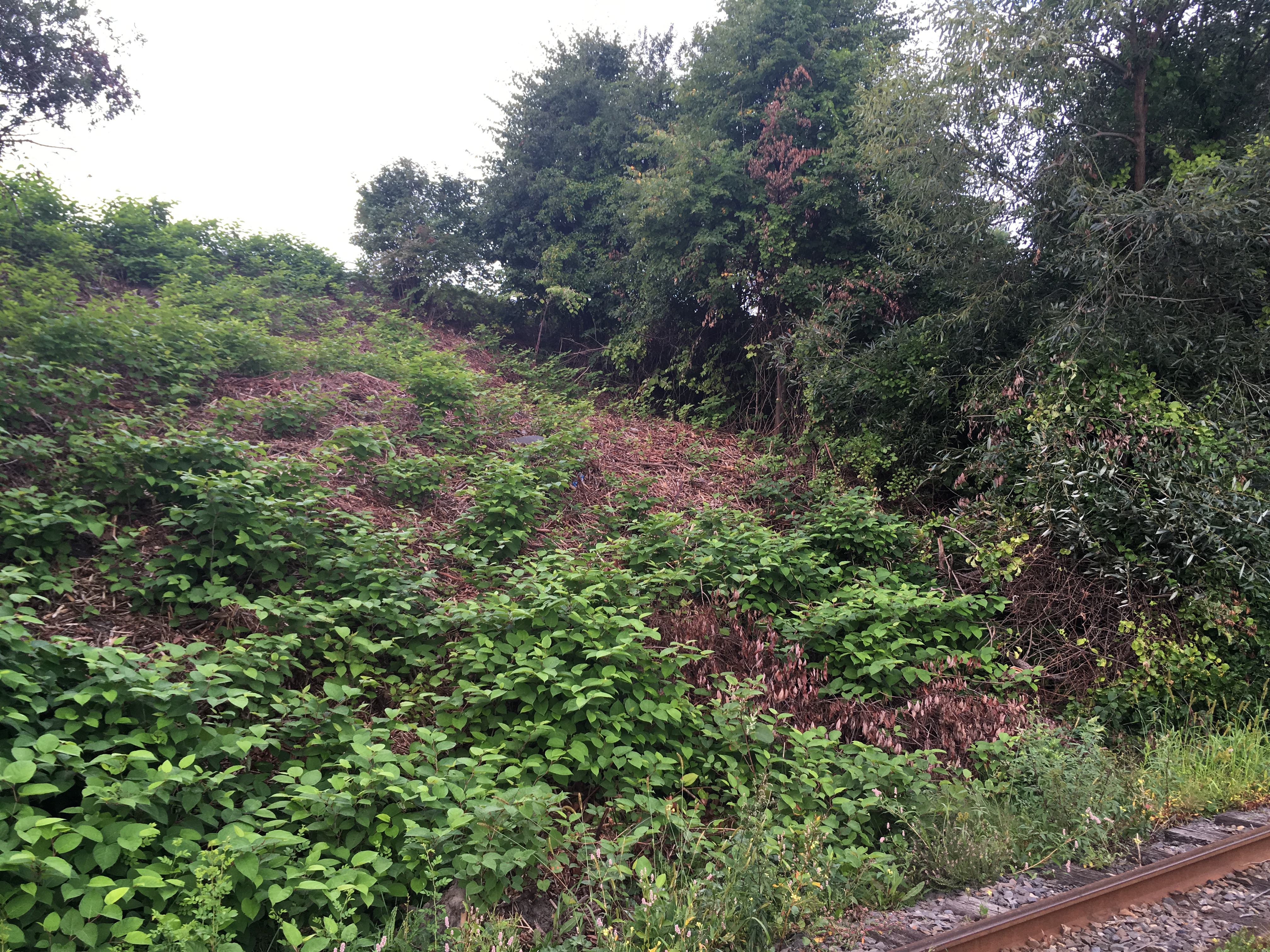
Next, although the area known to birders as “Dragon Field” has long since lost its bird appeal due to mismanagement that allowed for the rapid overtake of invasive plants, there won’t be much of a chance of recovering it anymore. Of course, distributed solar is the way of the future, and this is truly a great project…I just wish it was atop a warehouse roof or over a parking lot instead of one of the city’s greenspaces. But it’s mostly going to be covering Japanese Knotweed and Stinging Nettles now anyway.
Do you see a theme yet?
Urban areas present all sorts of challenges, and it takes very knowledgeable and talented land managers to balance all of the issues, environmentally, socially, and economically. But we also know how important greenspaces are to urban areas, environmentally, socially, and economically.
While I do not expect that the number one priority of any city will be “migratory bird habitat and birding opportunities,” it is clear that Portland does not prioritize at all the health of its greenspaces and the welfare of the wildlife, especially migratory birds, that call these places home for some period of time and various parts of the year.
Today, I want to focus on how much the City of Portland has destroyed the green spaces on the Portland peninsula. Surrounded by water and dense, urban development, city parks and gardens provide critical cover for migratory birds. When certain weather conditions result in migrants being deposited within the urban jungle, they are forced to seek shelter and food wherever they can.
Personally, I love urban birding: immersing myself in fallouts, finding vagrants in the oddest places – like that aforementioned Yellow-throated Warbler – and seeing so-called “late” migrants eking out an existence in seemingly inhospitable corners.
But I am running out of places to bird in the city of Portland! Especially now, in the fall through early winter, when “lingering,” “pioneering,” and vagrant birds seek the warmer microclimates of urban parks, or become “stuck” in low-quality habitat, unable to accumulate the fuel reserves needed to move further. However marginal urban habitats are, they are absolutely critical for these birds to have a chance. Healthy migrants will simply wait out the day and take off under the cover of darkness, while others will find the resources (such as weed seed in the case of many of our native sparrows) necessary for a full recovery.
But such places are becoming impossible to find in Portland.
The once-productive trees and scrub along the Commercial Street Extension is mostly gone – developed or simply clear-cut to hell. Replacing a fairly healthy canopy is little more than regenerating knotweed, bittersweet, and buckthorn.
Many small lots have been developed, and several years ago, the trees and brush throughout the Fore River Parkway Trail was clear cut. Not much for birds left there anymore.
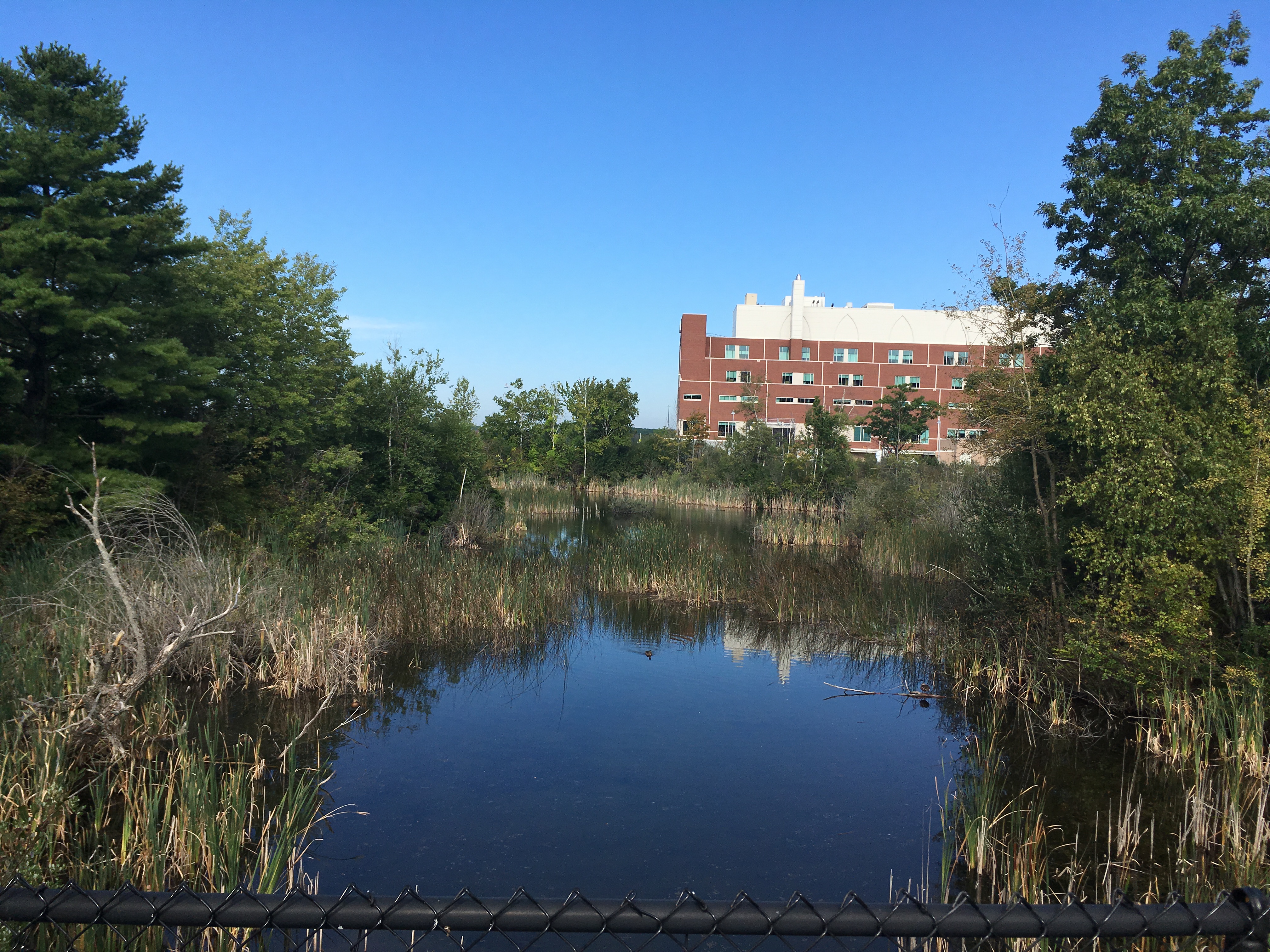
Mercy Pond remains a miniscule oasis – although the edge is far to narrow to hold songbirds for very long.
Unfortunately, it doesn’t seem likely much of this will remain if hospital expansion plans go through. Which seems incredible to me, as this little pond regularly hosts (are they even breeding?) State Endangered Black-crowned Night-Herons!
But I think the most egregious example of poor management and devastation of bird habitat and birding potential is along the Eastern Promenade. A favorite patch of mine since I moved here, I have seen a whopping 176 species along it, including some really “good” birds over the years. With a cumulative list of 208 species as of this year, a lot of people have enjoyed a lot of good birding in this urban greenspace.
Unfortunately, mismanagement and misguided “maintenance” continues to greatly degrade it. Native plants are significantly reduced, and invasive plants have taken over and continue to proliferate. Despite the efforts of the Friends of the Eastern Promenade (who I have worked closely with over the years), it always seems that for every step forward, there’s three or more taken back. In fact, it’s about as bad as ever now, following yet more devastating clearing in late fall of 2015.
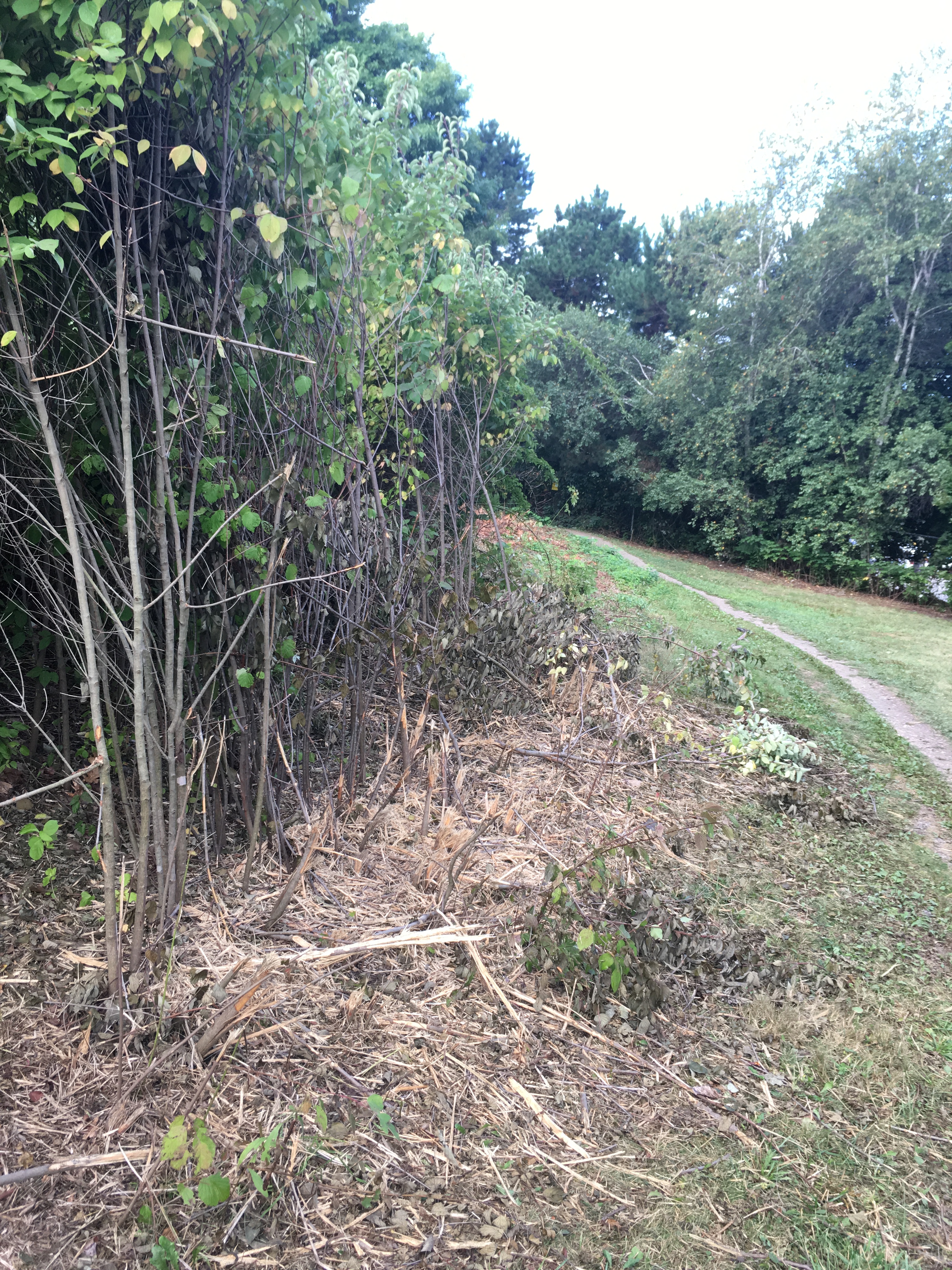
Continued slashing of what’s left of the native vegetation continues. On 9/9, I noticed yet more hacked swaths like this.
Unfortunately, this is so incredibly counter-productive on multiple levels, as all it does is allow dense and ornithologically-useless invasive plants, especially Japanese Knotweed to proliferate even more.
And makes it easier for Asiatic Bittersweet to take over everything else.
Meanwhile, valuable native plants like this Gray-Stemmed Dogwood is hacked to hell.
And it’s great at accelerating erosion.
The “Mid-Slope” Trail, which is often the most productive in late fall, has been destroyed…
…And the weedy slopes full of goldenrods, late-blooming primrose, and other great birdfood was mowed too early this year. Sparrows will be wanting for sustenance, and those late-lingering warblers – especially Orange-crowned – will be hard pressed to find food and cover. Additionally, it seems that it was mowed in perfect time to destroy any chance Monarchs would have had to breed successfully there this year. This is particularly unnecessary and unjustified mismanagement.
Based on the overall size of the greenspace and it’s placement along the shoreline at the northern terminus of the peninsula, there’s little doubt there will still be some birds along the Prom this fall, and perhaps even a rarity or two. But as for regular migrants and vagrants that are seeking shelter and sustenance, there will be little reason to stay very long.
Fallouts will occur because of weather events and the disorientation of migratory birds in city lights (especially in fog) and those birds will still descend on the Prom. However, most will likely leave as soon as they can, winging it inland in “morning redetermined migration,” hopefully not hitting windows or being hit by cars as they do. It also likely means birding opportunities will be greatly reduced as these birds depart immediately in search of better habitat. Get there early!
But the exceptional days of fall birding, such as thousands of White-throated Sparrows scratching in the undergrowth or several Orange-crowned Warblers working the meadows, are unlikely to occur anymore. Birders lose. Birds lose more.
And what does any of this accomplish? It looks like crap. Thickets grow back denser, and people move back in – they’re just harder to see now. And then you clear-cut once again. And in between, tired and hungry migrant birds find little. And birders go elsewhere. Great solution.
As for me, with “Rarity Season” approaching and weather getting cooler, birds seek out warmer microclimates, like sunny hillsides, urban lots, and so on, where moderated temperatures can extend the availability of food resources, even insects. This is the time of year – through the “Christmas Count Season” – where I usually would spend an increased amount of time birding all of the nooks and crannies throughout the peninsula, looking for late migrants and hoping for rarities.
Unfortunately, with so few opportunities left in Portland, I’m forced to look elsewhere. That means fewer eyes covering what’s left of the habitats, and fewer lunches I’ll be eating in town and fewer cash-burning errands.
But much more importantly, there are just fewer places that tired and desperate birds can go to find safety and refuel. That means even more birds hitting windows, being hit by cars, and being killed by cats. All of the trials and tribulations of a bird finding itself in an urban environment are exacerbated when there’s no good habitat left.
And all of the reasons there’s less habitat left in an urban environment are exacerbated when open space is managed as poorly as it is in the City of Portland. For a city that loves to bill and market itself as being “green,” it really does a terrible job in its greenspaces. While cities who honestly attempt to make themselves greener encourage or even mandate “bird safe” building guidelines to reduce collisions with glass surfaces (Portland on the other hand, promotes new developments with glass predominating), and work on “Lights Out!” campaigns to reduce the disorientation of birds from light pollution.
Protect, restore, and enhance urban/suburban habitats for birds
Reduce hazards to birds
Educate and engage citizens in monitoring, caring about, and advocating for birds and their conservation
Foster youth environmental education with a focus on birds
Manage invasive species to benefit and protect birds
Increase awareness of the value of migratory birds and their habitats, especially for their intrinsic, ecological, recreational, and economic significance
Now that’s what a “Green” Portland should be doing. Instead, all it does is fire up the brush-hogs and chain saws.
I’ll be birding elsewhere this Rarity Season. I just hope the birds find somewhere better to go as well.
Several years ago, I joined a group of concerned residents in working for substantial restoration of Capisic Pond Park following the necessary – and federally mandated – replacement of the sewer line that runs the length of the park. The post-construction restoration plan was essentially “spread some grass seed.”
After countless meetings, public hearings, and workshops, a plan was implemented that not only limited damage from the construction process, but improved it. Over $150,000 was spent on restoration, including extensive planting of native plants to not only beautify the park, but improve biodiversity. Birds, and the many birders who frequent this little treasure of an urban park, would benefit.
Over the years, as those plantings have slowly come into their own, and began to bear fruit (literally!), bird diversity has only continued to increase. From the continued presences of Orchard Orioles – the only breeding pair known in the state, to a wealth of migrant sparrows, to rarities (including just last month, one of only 6 or so Ash-throated Flycatchers to ever be seen in Maine) have attracted birders from far and wide.
On Monday, Jeannette and I headed to Portland to work the productive micro-habitats and micro-climates in urban areas to search for rarities, and “lingering” migrants. We began our day at Capisic Pond Park.
And we were greeted by this:
We were appalled. We were horrified. We were saddened.
What the hell has happened?
According to the Facebook page for the Friends of Capisic Pond Park, posted on October 31st:
“Don’t be alarmed by the mowing and cutting that will be done in the first week or so of November. It is important to mow the park for several reason. First, and most important, if the small trees and brush aren’t mowed and cut periodically the meadow environment will transform (in time) into a forest. Just like the open farm fields of the 19th century that covered virtually all of Maine are now woods, Capisic Pond Park will move from field to brush to forest unless it is mown and tended. Second, regular cutting will spread seeds and improve the habitat overall. Lastly, we will again be able to see the pond (what’s left of it, anyway) and access the ice (!) during the months before everything regrows next Spring and Summer. FOCP members Donna and Steve Williams and Andy Graham met with Jeff Tarling of Public Services on Friday October 30th to walk the park and talk about what should and should not be cut – we are fortunate to have Jeff as a knowledgeable and caring partner.
“Also – if you were wondering about the trees being cut on Capisic St near the pond, this is the first preparation for the pond restoration work to be done next year. Apparently this will be an access point for the equipment needed to dredge and remove the spoils next August and September.”
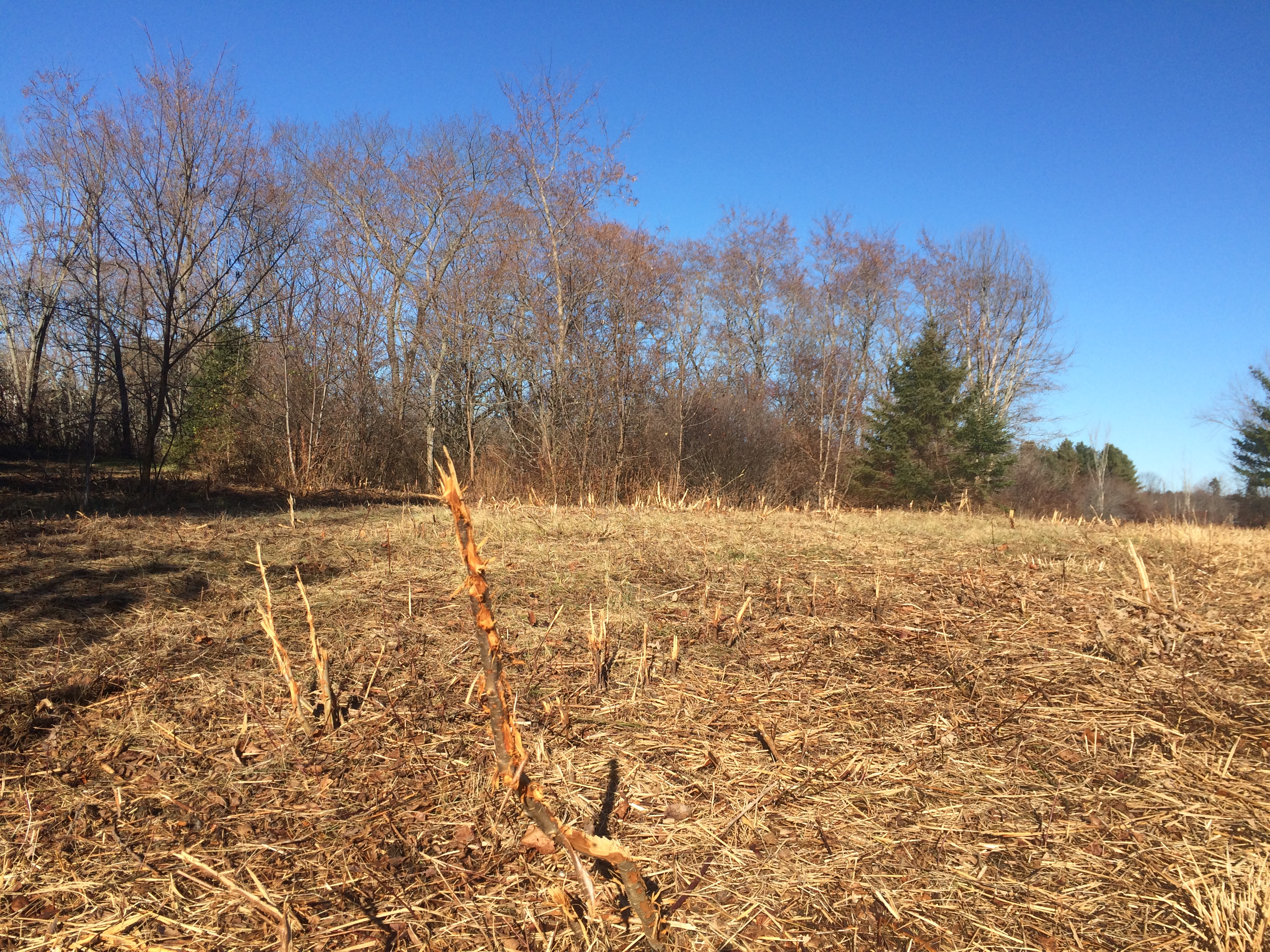
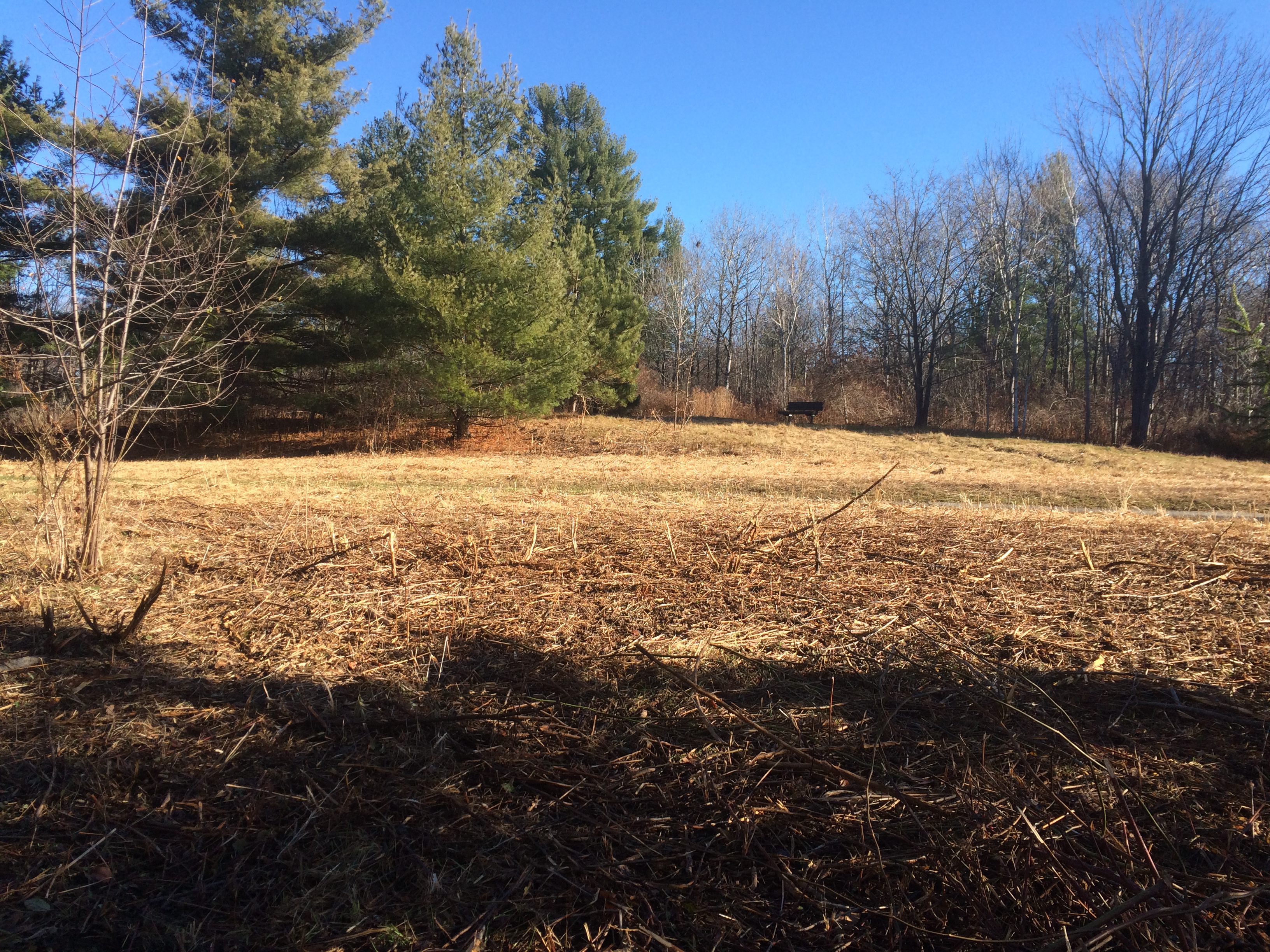
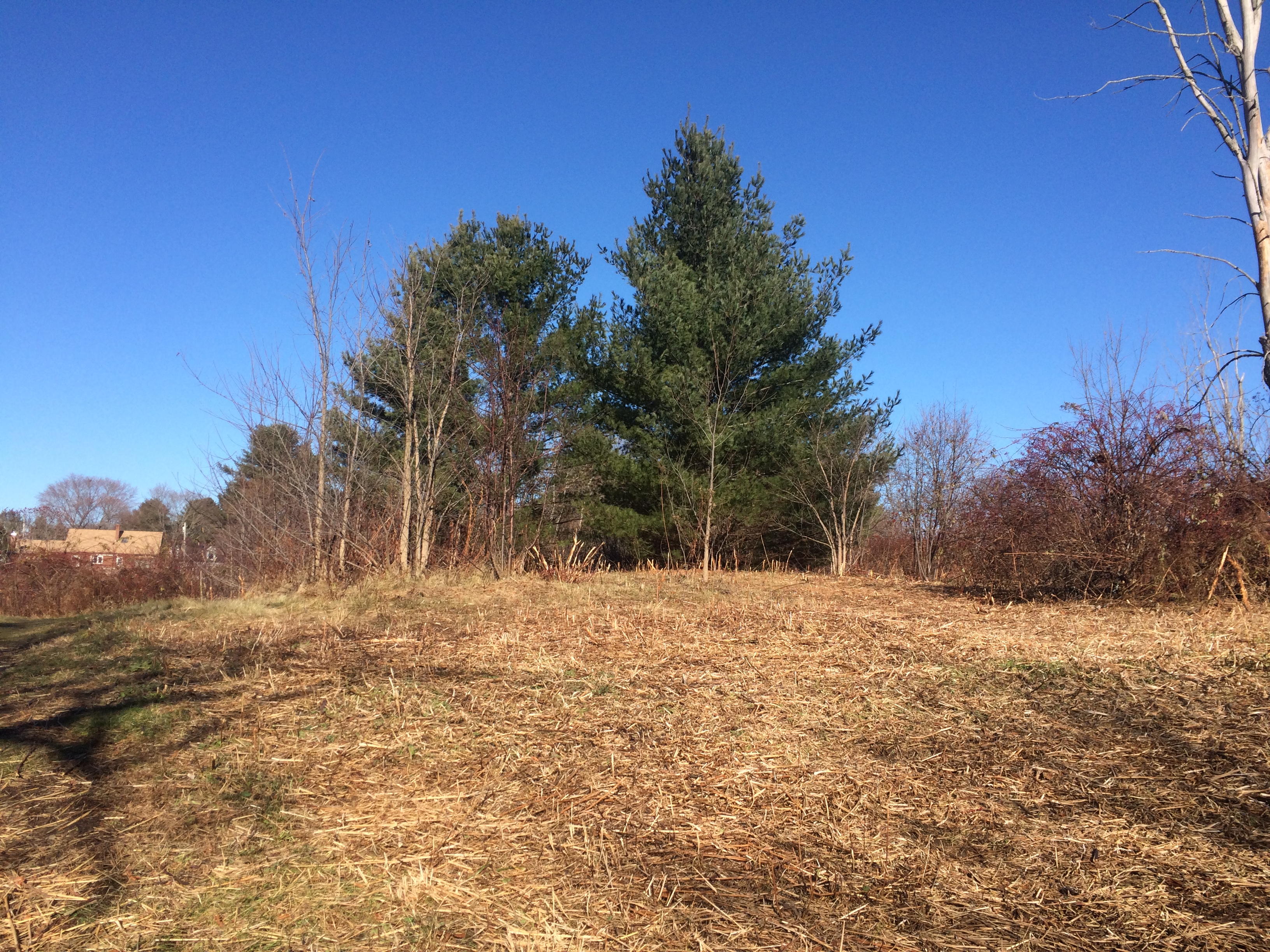
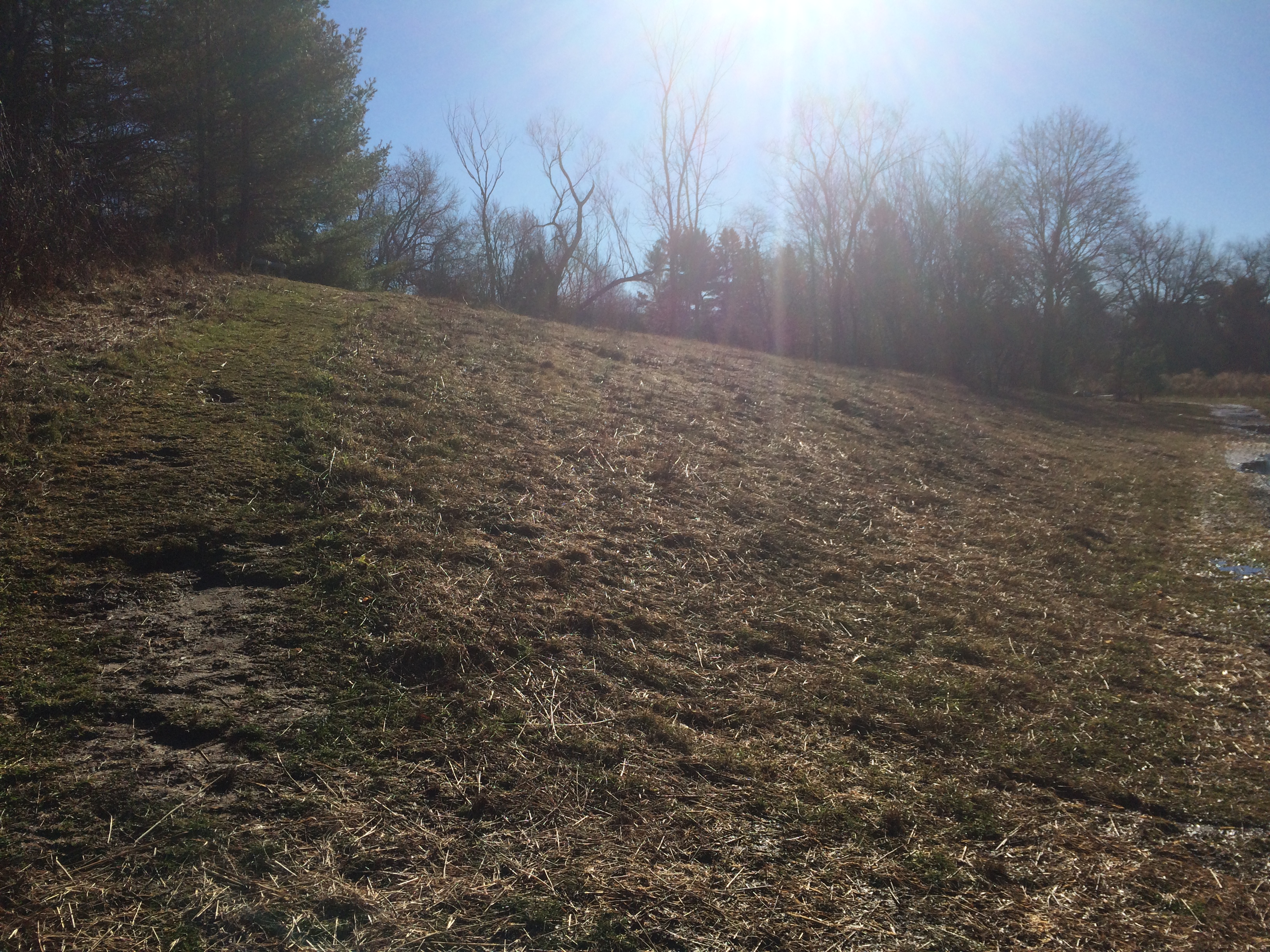
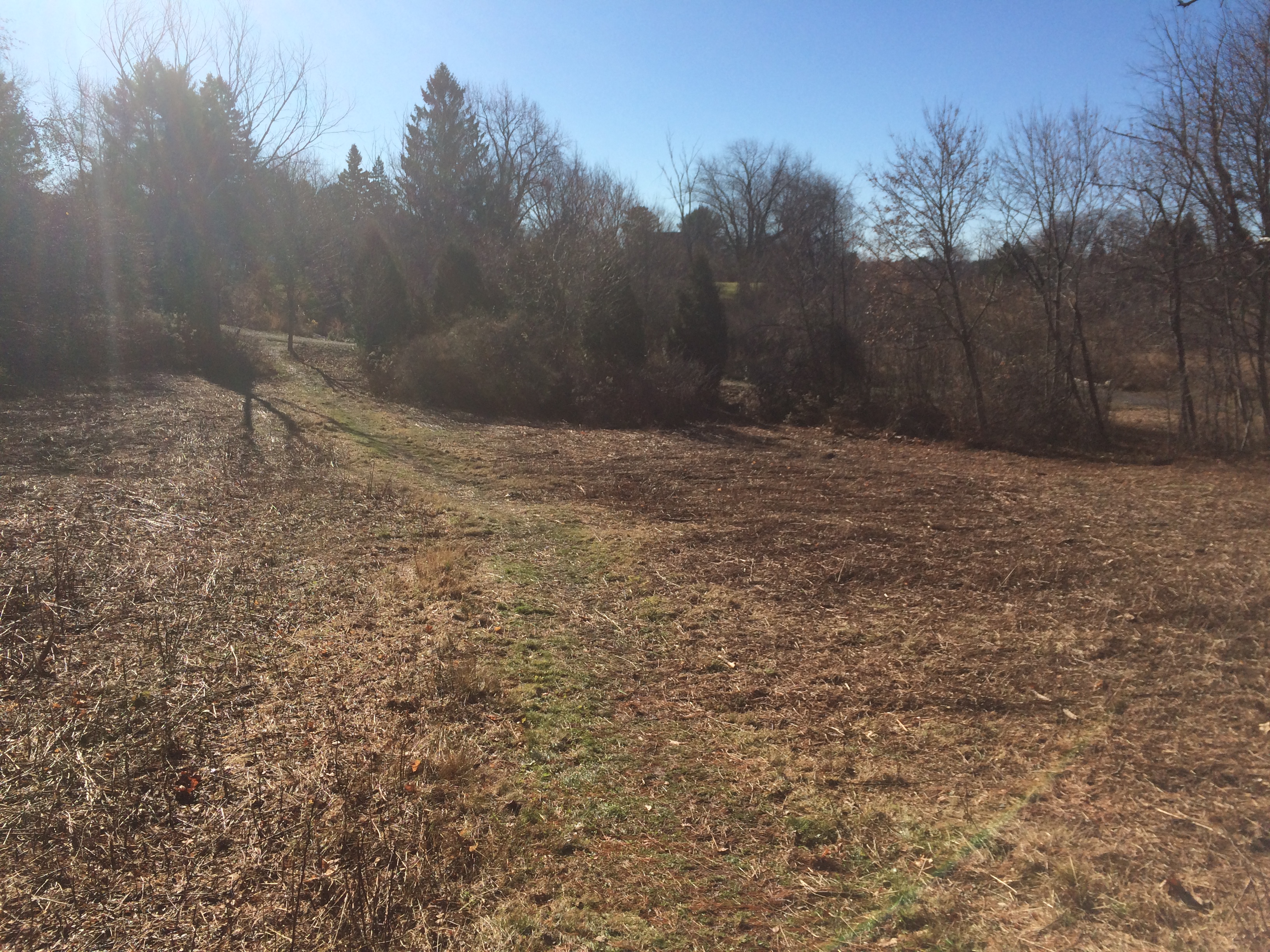
This wasn’t a “haircut.” This was a clear-cut.
Quite frankly, I am left to question either the motives or the expertise behind the decisions that were made – at least beyond the third rationales listed: “…we will again be able to see the pond.” And the reason I question whether that clear-cutting had anything to do with anything other than what site-lines some people preferred seems simple as the other reasons given are complete B.S.
1) Cutting is not necessary to spread seeds. Plants are built to do that on their own, either through wind, animals, or gravity.
2) Improve habitat? Granted this depends on what habitat you are trying to improve, but I would argue that this type of mechanized treatment did not in any way improve habitat for much of anything at Capisic. In fact, it damaged or even ruined the habitat for most of the species that frequent the park.
3) Selective cutting, girdling, or other low-impact methods are widely available to eliminate forest succession, especially on a scale as small as Capisic. Almost any other treatment would substantially improve and augment habitat, not ravage it. And that goes for the aesthetics, too – the place is a mess right now.
So I fail to see what was accomplished here, other than opening up some views or fitting in with some outdated philosophy that parks should be open. Actually, what was accomplished was that the value of Capisic Pond Park to most migratory (just about all passage warblers), breeding (including both Baltimore and the famous Orchard Orioles) and year-round resident species (i.e. Northern Cardinals) was severely, and very negatively, impacted.
The significant improvement in food source diversity (especially for frugivores) from the park’s restoration was set back by a decade – or permanently if native plants are not replaced and restored. This heavy-handed, unselective approach favors invasive species, as they out-compete regenerating natives. If left alone, Capisic will end up with significantly more Asiatic Bittersweet, bush honeysuckle, and Multiflora Rose after this misguided effort. Limited biodiversity begets limited biodiversity.
And we’ve seen this throughout the city, for example, the Eastern Promenade, where – despite the efforts of a handful of local residents attempting to stem the tide of invasives – city mismanagement continues to accelerate their spread and the degradation of the habitat. Portland has already ruined (for birds and birders) the “Dragon Field” (behind the Quarry Run Dogpark), annihilated critical migratory bird habitat along West Commercial Street and wiped out any shelter of any sort along the Fore River Parkway Trail, and continues to assault any sort of cover in roadside edges and overgrown lots (all critical for disoriented and exhausted migrants, and “pioneers” that are attempting to overwinter after possibly becoming “stuck” in the city. Portland stood by as Evergreen Cemetery had a road plowed through it and neglect continues to degrade the pond areas – despite being the most-visited birding location in that state. See a pattern here?
And through all this, little ol’ Capisic Pond Park stood as the lone bastion of hope. Residents, birders, engineers, and city officials came together to not only restore the park after the sewer reconstruction, but actually improve the habitat for migratory and resident birds. And birders have been reaping those dividends, as improved plant diversity continues to provide a greater array of native foodstuffs as the replanted vegetation matures. And that has meant more birds.
I was proud of what was accomplished at Capisic Pond Park. I – and many others – worked tireless to make that happen. A lot of time, effort, dedication – and yes, a substantial amount of money – was invested.
And then, with a few passes of a brush-hog mower, it was gone. All of that time, effort, dedication, money, and concern, wasted. Just like that. Poof.
I’m sickened by what I saw at Capisic Pond Park on Monday. And personally, it will be hard for me to go back. There will always be birds in the park – it’s truly an urban oasis, and some migrants will have no choice but to search for food here. However, the knowledge of how much better the bird habitat, and therefore the birding, should be will forever be a reminded to me about how much time and energy I have wasted fighting for birds in the City of Portland.
But at least I can simply go somewhere else. If you’re a bird in Portland, you’re running out of choices.




























 Maine Birding Field Notes