1 Vesper Sparrow and 1 Orange-crowned Warbler, Wolfe’s Neck Center, Freeport, 10/11.
1 Lesser Yellowlegs and 1 Pectoral Sandpiper with 28 Greater Yellowlegs, Walsh Preserve, Freeport, 10/12 (with Saturday Morning Birdwalk group).
6 Long-tailed Ducks (first of fall), 1 Red-breasted Merganser (first of fall locally), 2 Dunlin, 2 Osprey, 12 Black-bellied Plovers, 200+ Surf Scoters, 73 Laughing and 18 Bonaparte’s Gulls, etc, Casco Bay, 10/13 (with Birds of Casco Bay boat tour group).
Highlights from a, uh, “challenging” half-day pelagic out of Boothbay Harbor on 10/14 included 1 Northern Fulmar and 2 Common Murres. Full trip report and some photos here:
Highlights from the yard this week include a dawn American Woodcock on 10/11 and 3 Rusty Blackbirds and 120+ White-throated Sparrows on 10/15.
UPCOMING TOURS:
There’s still one space open on our Birds on Tap! – The Boat Trip! To House Island in Casco Bay on Sunday, October 20th. More info here, included an updated itinerary. This is going to be a really special trip!
Once we traveled beyond the shelter of Damariscove Island, we had a plan – or at least the concept of a plan. We’d slowly work our way straight south to deep water, make a turn to the east as the forecast was for seas to start diminishing, and then take mostly following seas for a smooth return trip home.
Peregrine Falcon having brunch to go.
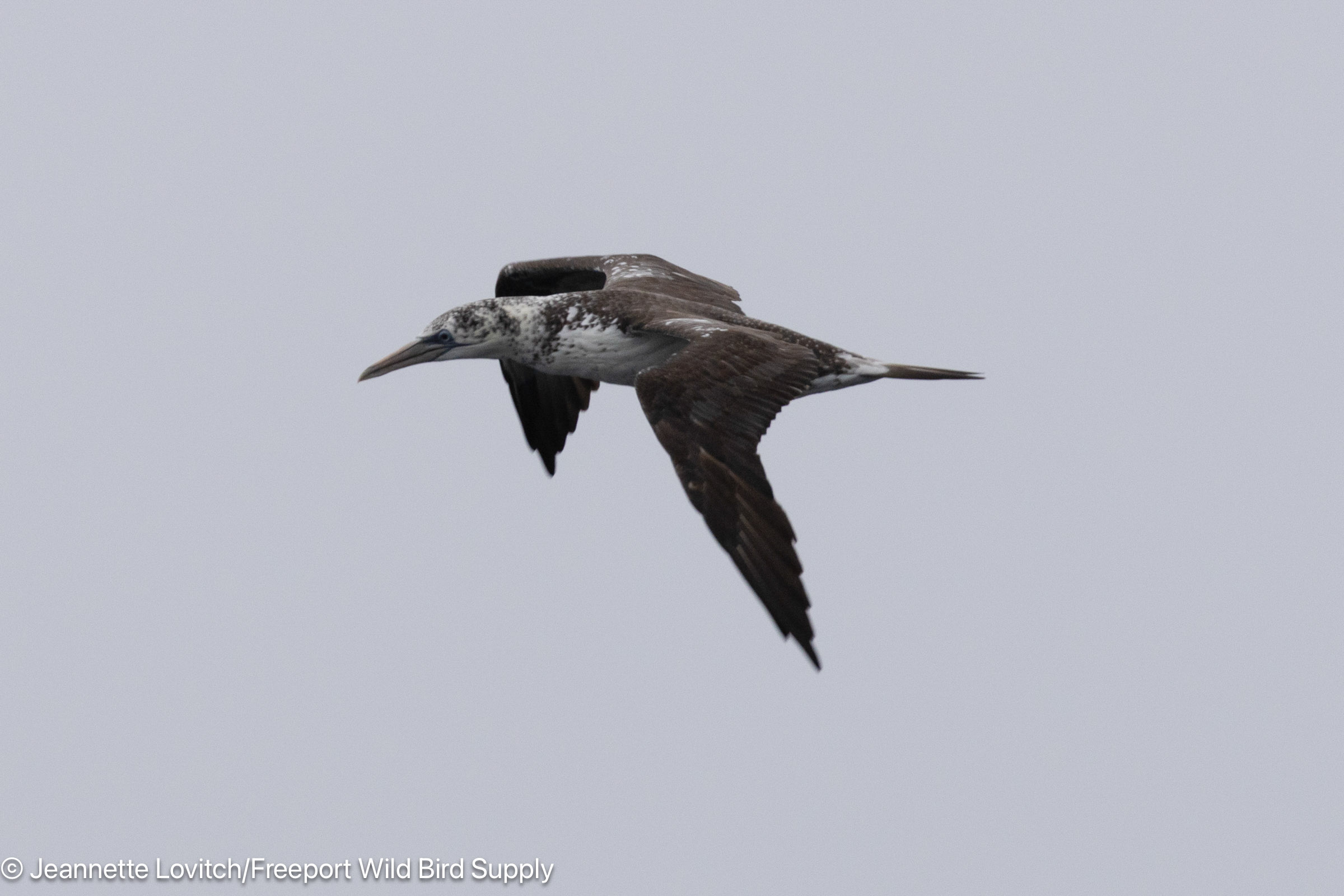
We had lots of Northern Gannets early in the trip – always a good sign – but it was pretty slow going through the area known as The Pasture, which like all offshore patches, is always hit or miss. In fact, the only other pelagic we had was a single Cory’s Shearwater seen by only a handful.
Unfortunately, once we made the turn to the east, it became essentially unbirdable. The forecast 4-6 foot seas were right, but the distance between waves (the wave period) was significantly shorter than forecast, and the waves were definitely not diminishing. Captain Steve did an exceptional job of trying to soften the ride and keep us safe, but we just weren’t going to be able to continue east towards some of our deep water hotspots. When a bird was called – such as a single Northern Fulmar (one of our primary targets on the trip), few people were able to even try to see it before it was long gone behind the waves. Perhaps only the Yellow-rumped Warbler and Savannah Sparrow that we encountered about 15 miles offshore were having a worse day. I tried to keep some bird commentary going, if only as a distraction, but I’m not sure anyone was listening at this point!
So it was decided to make a turn for home. In a last ditch effort to salvage the birding day, we angled for the mouth of Sheepscot Bay. An unidentified dark jaeger zipped by, seen by just a few, tantalizing us to what else is out here today.
Once in the mouth of the bay, sheltered by Damariscove off to the east, we found gentle seas, and decided to try our hand at attracting some birds with a chum slick. We laid a slick for about 1-2 miles of pork fat soaked in fish oil. Thanks to a generous donation of surplus fatback compliments of Old Crow Ranch of Durham, we were likely the first ever pelagic to use local, pasture-based, regeneratively-farmed, non-GMO, pork fat. The experiment turned out to be quite a success, too!
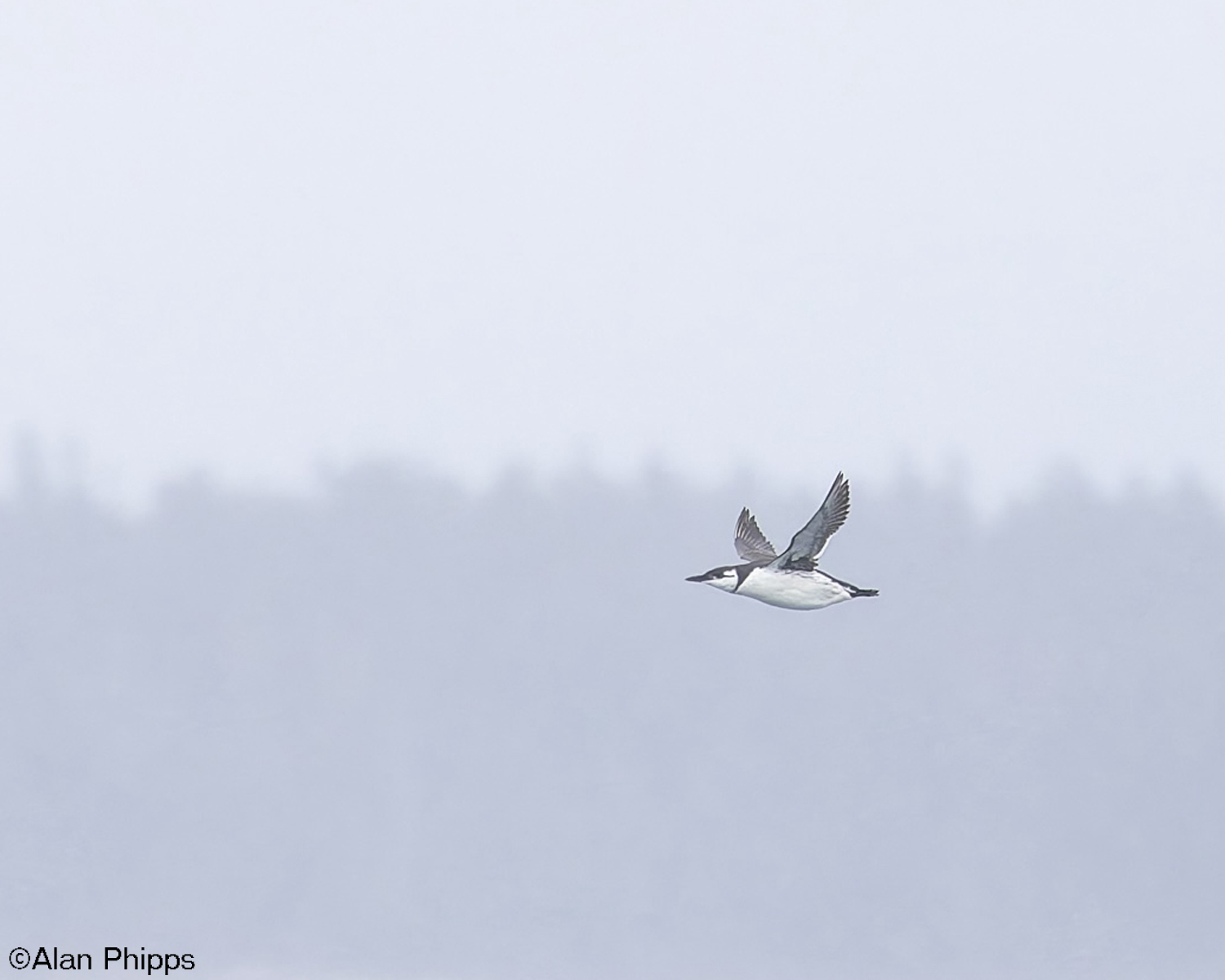
First, we kicked up two Common Murres as we traveled, one of which flew past the boat affording a great view for those who were still on deck; even the seabirds were seeking sheltered waters today!
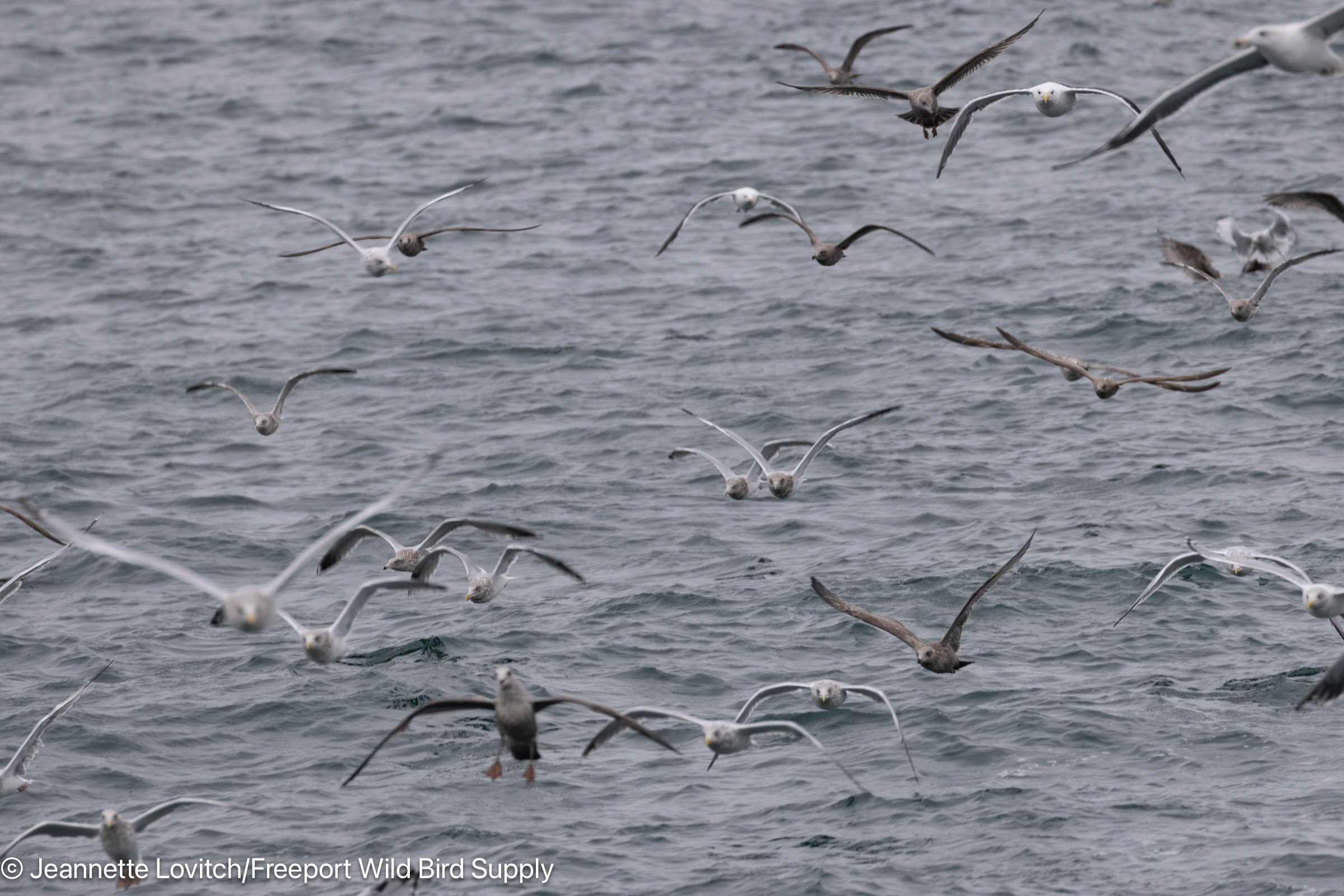
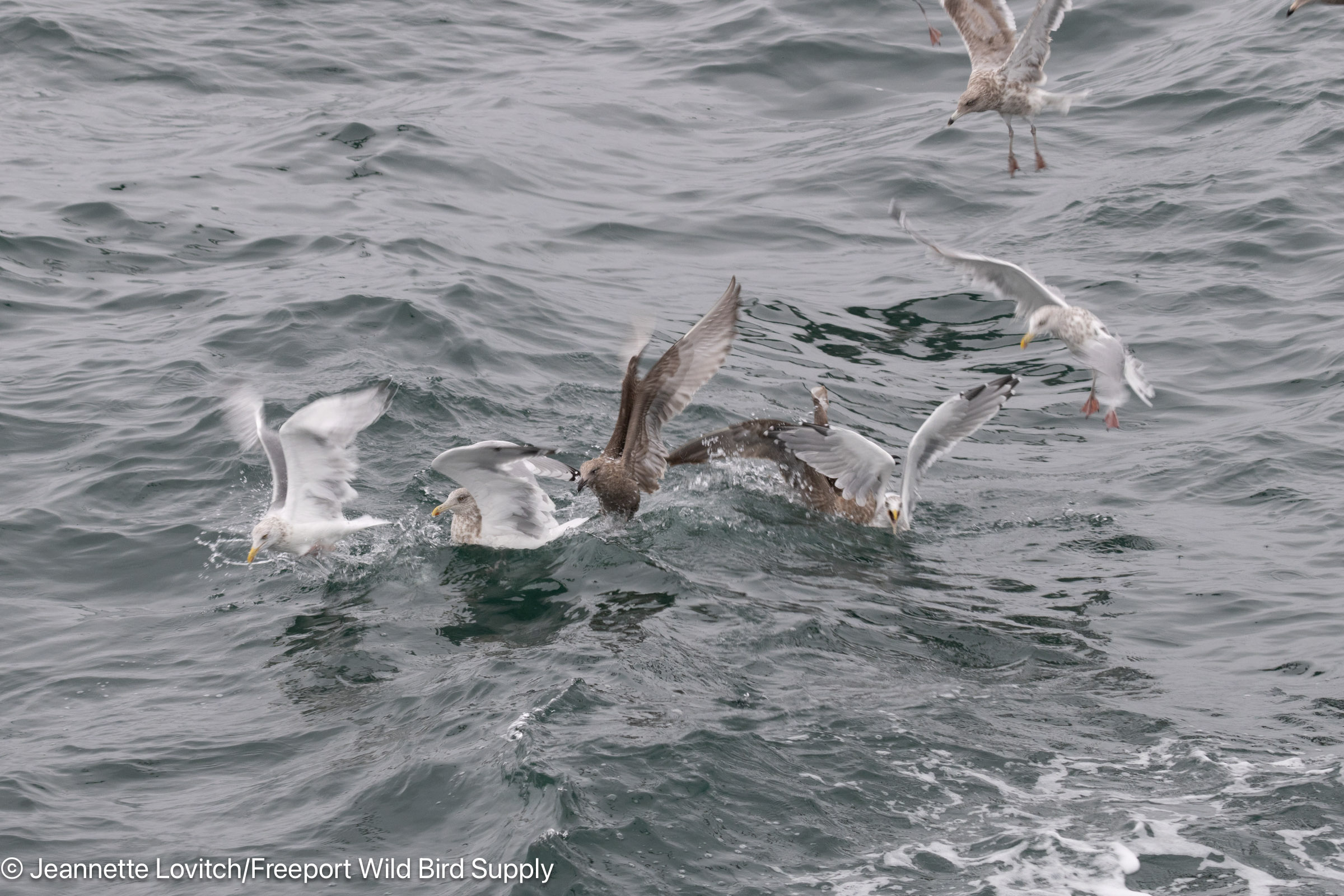
We were soon attracting several hundred gulls to our chumslick, and we finally teased out a single Lesser Black-backed Gull from the masses. A few lingering Laughing Gulls and several Ring-billed Gulls, including spiffy fresh juveniles, joined the myriads of Herring and Great Black-backed Gulls.
We then tried the same technique closer to the mouth of the outer Boothbay Harbor, closer to Damarsicove. At first the results were surprisingly lower, until a Peregrine Falcon and a Northern Harrier over the island kicked up the gulls roosting on the windward side. Once the gulls saw the feeding birds behind us, the game was on. Meanwhile, we enjoyed many dozens of Surf Scoters and Common Eiders, punctuated by both Black and White-winged Scoters, and from here to the harbor, another couple of dozen Common Loons and plenty of Black Guillemots.
I want to thank the captain and crew of Cap’n Fish’s Cruises for their hard work and dedication today, and their best efforts to keep us comfortable. I want to thank my spotters, Jeannette Lovitch and Ian Carlsen (who also did a fantastic job keeping the official eBird checklist following pelagic protocol). A big thank you to Alex Lamoreaux for still finding birds in the worst of the snotty water. And another big thanks to our chummer, Dan Nickerson, who got the action going once we found some calm waters.
And most importantly, thank you to all of those who came aboard today. Some said they had fun. Many suffered. But everyone endured. If this was your first pelagic, you’ll be thrilled to know you were likely just had your worst trip. For those who like roller coasters (unlike me!), I guess you’re welcome?
Here’s the trip list. For the hit-or-miss October pelagics in the Gulf of Maine it’s really not that bad.
One of at least 15 Cory’s Shearwaters observed from a Cap’n Fish’s Cruises Whale Watch last week, showing the dark outer primaries on the underwing, making for a rounded end to the white of the underwing coverts, separating it from the recently-split Scopoli’s Shearwater.
October is my favorite month of birding in Maine, and this past week showed why. A great diversity of birds are on the move, and my past seven days featured everything from pelagics to yard birds. Here are my observations of note over the past seven days.
Pelagic highlights from a Cap’n Fish’s Cruises Whale Watch out of Boothbay Harbor on 10/4: 4 NORTHERN FULMARS (including one dark morph), 4 ATLANTIC PUFFINS, 14-15 Cory’s Shearwaters (most seen and/or photographed well enough to see full dark outer primaries on the underwing; see above), 6 Red-necked Phalaropes, and one BROWN CREEPER landing on a person on the top deck about 14 miles off of Damariscove Island (photo below). My complete list is posted here.
1 Baltimore Oriole and 1 Nashville Warbler, Wolfe’s Neck Center, Freeport, 10/5 (with Saturday Morning Birdwalk group).
Sandy Point Morning Flight, 10/6: 140 birds of 18 species led by 60 Yellow-rumped Warblers. Total tally here.
1 Rusty Blackbird, 1 Nashville Warbler, and 1 Pied-billed Grebe, Capisic Pond Park, Portland, 10/9 (with clients from New York).
20-30+ Cory’s Shearwaters off East Point and Ocean Ave, Biddeford Pool, 10/9. Some just beyond Beach Island in good afternoon light to see dark outer primaries. 15 minutes of counting produced 18 individuals from East Point, all moving north, with 1-3 in view with almost every quick scan thereafter. Good sign for Monday’s pelagic! (with clients from New York).
7 American Oystercatchers and 1 Horned Grebe (first of fall), Ocean Avenue, 10/9 (with clients from New York).
1 American Redstart, Elphis Pond, Biddeford Pool, 10/9 (with clients from New York).
Highlights from our Durham property this week included the arrival of the first few Dark-eyed Juncos, a Rose-breasted Grosbeak on 10/4, continuing multiple Lincoln’s Sparrows, Nashville Warbler on 10/8, and another or the same Indigo Bunting on 10/9.
And here’s my complete trip report from my Monhegan tour and visit on September 27 through October 1st.
Our annual half-day pelagic with our partners Cap’n Fish’s Cruises out of Boothbay Harbor is on Sunday, October 14th – a nice, late date that should put us more in the season of things like Great Skua, and you can be sure we’ll be studying Cory’s Shearwaters hard to find a Scopoli’s! More info and link to registration is here. See notes above from my 10/4 outing.
A few spaces remain on our Birds on Tap! – The Boat Trip! To House Island in Casco Bay on Sunday, October 20th. More info here.
Join us on Monday’s pelagic and maybe a Brown Creeper will land on you!
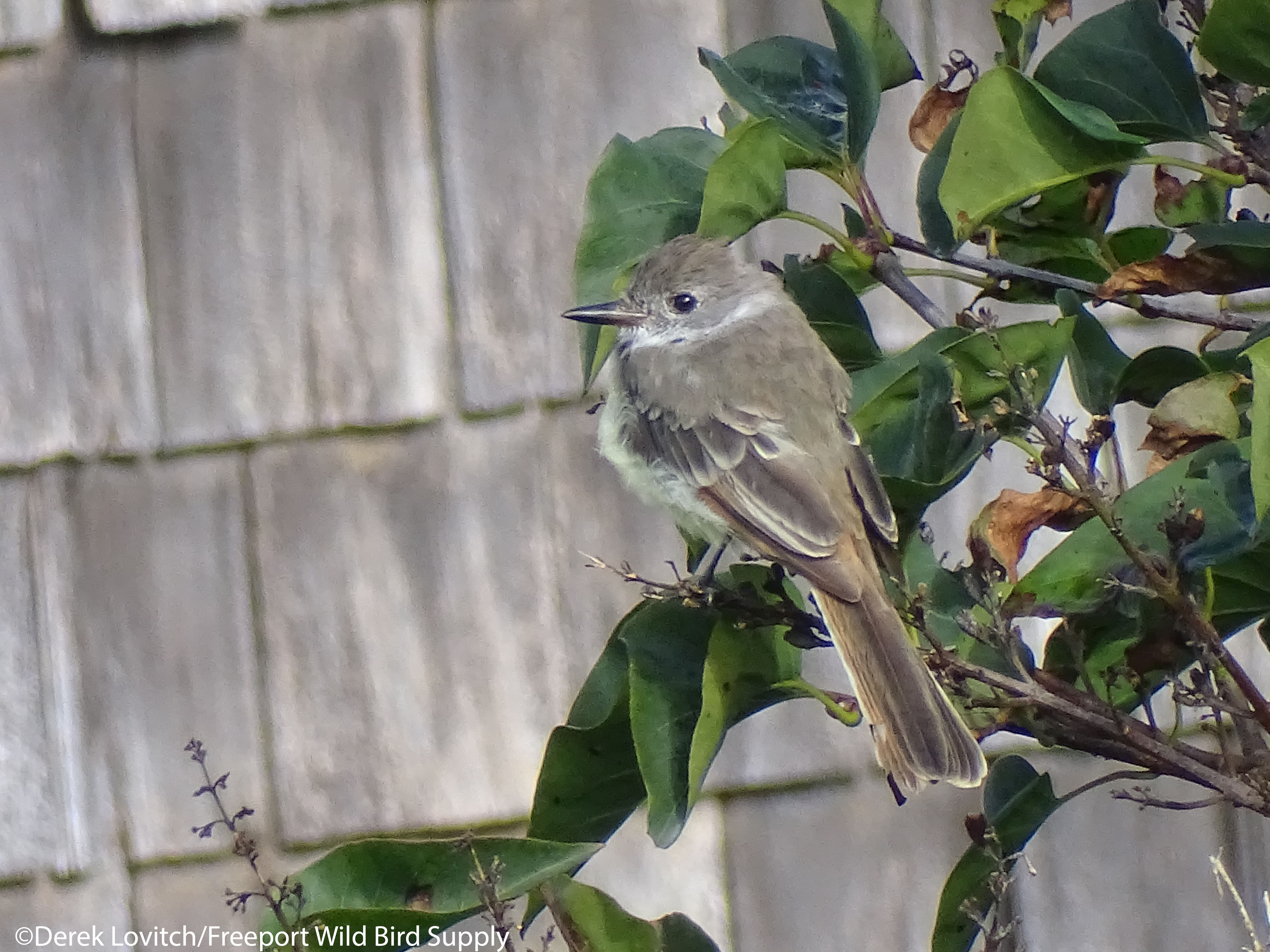
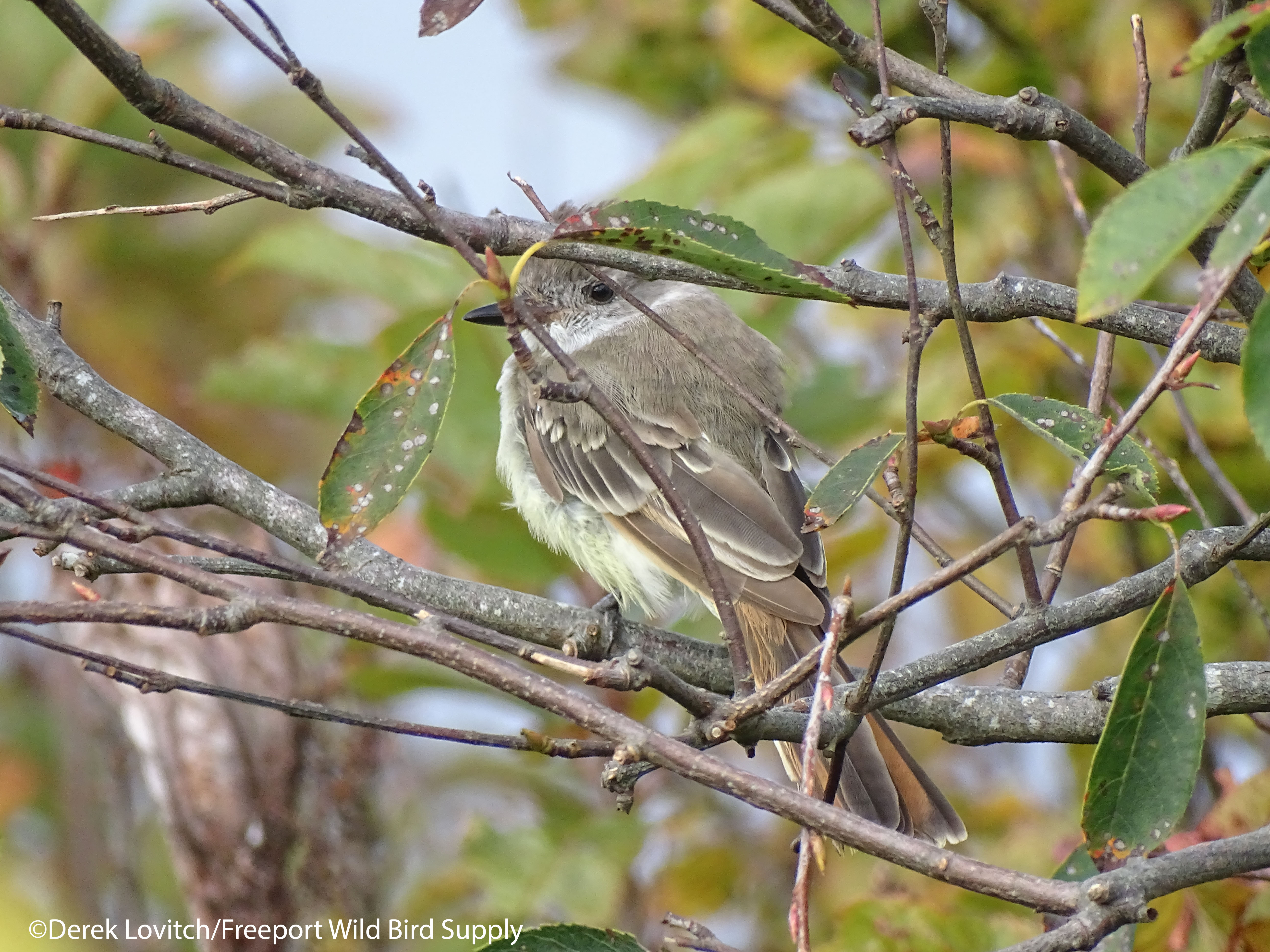
Monhegan’s third Ash-throated Flycatcher was found by Ken and Sue Feustel on Monday, September 30th. I was lucky enough to relocate it a short time later and snag these photos. Despite much searching, only one observer saw it on 10/1, but it is likely still on the island but having recovered, moving around widely. It was not in great shape, with a real tattered plumage, but as the morning went on it continued to feed and look healthier. Although one half of the tail is tattered, the photo below shows the diagnostic pattern in the outer tail feathers, where the dark brown from the outer web wraps around to the end of the inner web. This feature eliminates an even rarer Myiarchus flycatcher, which was important given the rather early date of this individual.
My birding this week included five wonderful days on Monhegan, and two very productive mornings on our Durham property.
My observations of note from Monhegan included (full trip report with photos soon):
1 YELLOW-CROWNED NIGHT-HERON (calling after dark; not with group)
9/29 (with Monhegan Fall Migration Tour group):
2 Orange-crowned Warblers
2 Clay-colored Sparrows
3 Nelson’s Sparrows (ssp subvirgatus)
2 Lesser Black-backed Gulls
9/30 (on my own and then with Jeannette):
1 Yellow-billed Cuckoo
1 ASH-THROATED FLYCATCHER (see photos and notes above)
2 Clay-colored Sparrows
1 Orange-crowned Warbler
1 Lesser Black-backed Gull
2 Wilson’s Snipe
10/1 (with Jeannette):
2 Dickcissels
1 Scarlet Tanager
1 Wilson’s Snipe and 1 Semipalmated Plover
Highlights from the yard included 8+ Lincoln’s Sparrows and a late Nashville Warbler on 9/26, while on the morning of 10/2, 70+ Swamp Sparrows, a continuing Indigo Bunting, and a juvenile Red-shouldered Hawks were among the birds present.
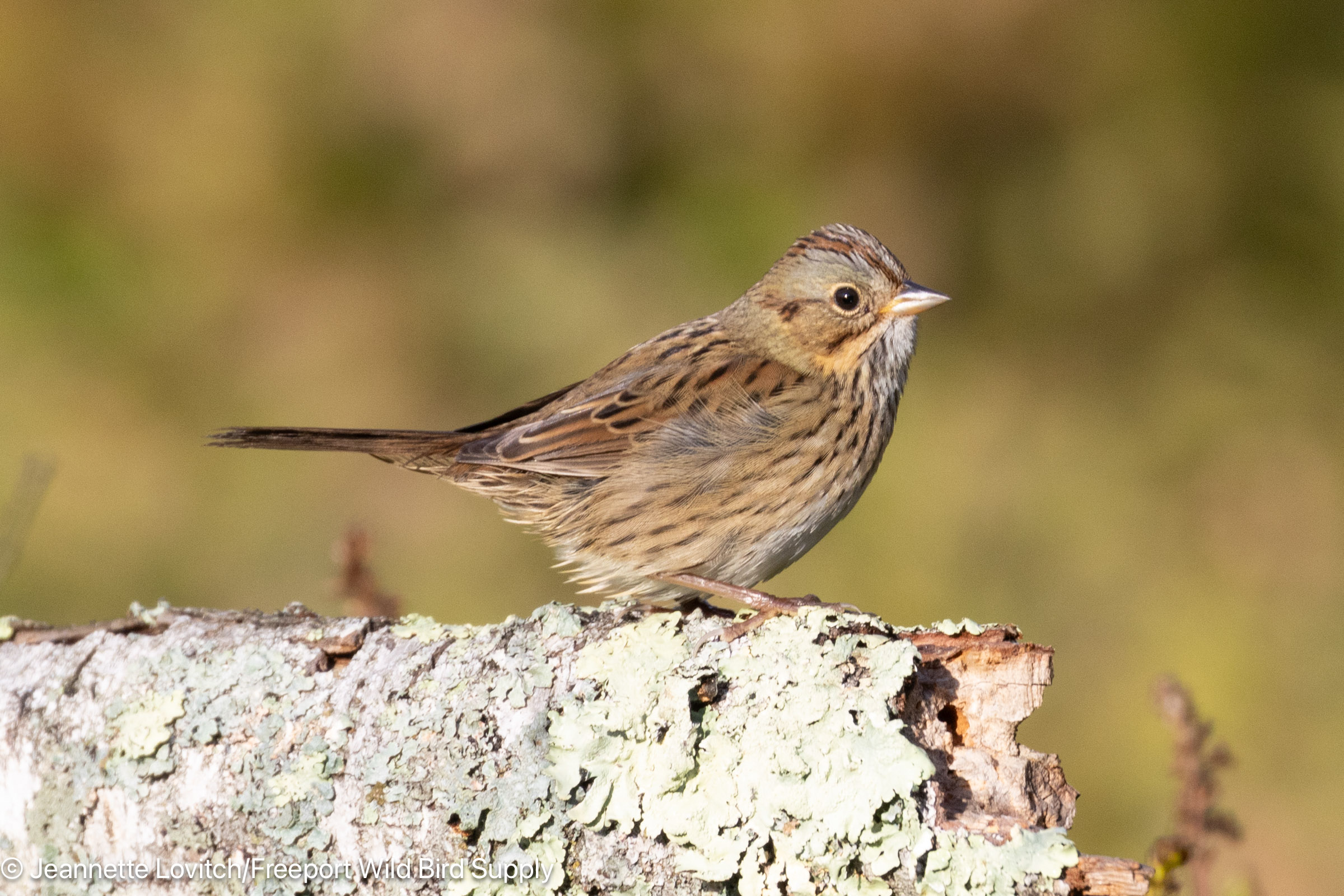
Lincoln’s Sparrows have been quite common in our yard all week, offering ample photo ops.
UPCOMING TOURS:
Our annual half-day pelagic with our partners Cap’n Fish’s Cruises out of Boothbay Harbor is only 1 ½ weeks away! Join us on this annual favorite on October 14th – a nice, late date that should put us more in the season of things like Great Skua. More info and link to registration is here.
A few spaces remain on our Birds on Tap! – The Boat Trip! To House Island in Casco Bay on Sunday, October 20th. More info here.
Although not in Maine, this spiffy adult Sabine’s Gull was the icing on the cake of an incredible day in Head Harbor Passage, New Brunswick on 9/4 (with Beth Edmonds, Dan Nickerson, Jeannette, and friends). An impressive concentration of gulls was led by 5,000-8,000 Bonaparte’s Gulls, 5,000 Herring and Great Black-backed Gulls, and also including 20+ Lesser Black-backed Gulls and 20-30 Laughing Gulls (also Ring-billeds and Black-legged Kittiwakes). It was the best concentrations of birds we have experienced here in several years.
With our annual early fall weekend with friends to Washington County, a productive eight days of birding included the following observations of note:
Sandy Point Morning Flight, 9/3: 355 total migrants led by 105 Northern Parulas and 88 Cedar Waxwings, and also including a single BLUE-GRAY GNATCATCHER (Only my 4th morning flight record). Complete tally here.
4 Red-breasted Mergansers, Lubec Bar and Flats, 9/5 (with Beth Edmonds, Dan Nickerson, Jeannette, and friends).
1 adult Lesser Black-backed Gull, Roque Bluffs State Park, 9/6 (with Jeannette).
1 juvenile YELLOW-CROWNED NIGHT-HERON, Jones Creek, Pine Point, Scarborough, 9/10 (with Jeannette).
Our Durham property continues to impress during migration. Another week with at least 15 species of warblers detected in the yard, and highlights including Philadelphia Vireo on several days and a Brown Thrasher at our feeders 9/8-9.
Based on the progressing season, and my upcoming schedule, this was the last week I focused on shorebirds. As always, my peak shorebird season culminates with our visit down east. There are plenty of shorebirds left to enjoy (and count), but my final shorebird “high counts” report of the season – including a goodly 20 species this week – is as follows:
AMERICAN OYSTERCATCHER: 4 (2 ad with 2 juv), Pine Point, Scarborough, 9/10 (with Jeannette).
Black-bellied Plover: 8, Pine Point, 9/10 (with Jeannette).
Killdeer: 14, Crystal Spring Farm, Brunswick, 9/8.
Semipalmated Plover: 71, Pine Point, 9/10 (with Jeannette).
Whimbrel: 3, Lubec Bar and Flats, 9/5 (with Beth Edmonds, Dan Nickerson, Jeannette, and friends).
For 2024, I decided to post my Sandy Point Morning Flight tallies here in one blog entry (instead of only to Facebook and the Maine Birds Google-group), or perhaps one entry per month. If nothing else, it helps me organize them, and my thoughts! Hopefully, you’ll enjoy reading them, too. A busy tour schedule this fall, a little personal travel, and the continued decline in the number of strong, sweeping cold fronts due to climate change are all conspiring to reduce the number of days I begin at “my office.”
The following lists are birds counted passing over and through Sandy Point Beach, Cousin’s Island, Yarmouth as part of the “Morning Flight” or Morning Redetermined Migration. For more information about this site, and my counts here, see Site C14 in Birdwatching in Maine: The Complete Site Guide (2024).
September 3rd.
A light flight passed over and through this morning. It was my first visit of the season, as cold fronts have been few and weak so far this fall, so it was great to be back at my office. I was expecting a stronger flight, however. Perhaps the winds were just too westerly overnight, as the northwesterly component is so critical for pushing birds out over the bay and beyond, forcing them to reorient into the wind and concentrating here at the northwest tip of the island.
6:02-8:20am
48F, clear, light W increasing then decreasing.
105 Northern Parulas
88 Cedar Waxwings
56 American Redstarts
41 unidentified
12 Yellow Warblers
10 American Goldfinches
7 Red-eyed Vireos
5 Cape May Warblers
4 Magnolia Warblers
3 Eastern Wood-Pewees
3 Chestnut-sided Warblers
2 Nashville Warblers
2 Red-breasted Nuthatches
2 unidentified flycatchers
2 Black-capped Chickadees
2 Rose-breasted Grosbeaks
1 Black-throated Blue Warbler
1 Olive-sided Flycatcher
1 Black-throated Green Warbler
1 Baltimore Oriole
1 Black-and-white Warbler
1 Wilson’s Warbler
1 House Finch
1 Least Flycatcher
1 Bay-breasted/Blackpoll Warbler
1 unidentified Catharus
1 BLUE-GRAY GNATCATCHER (4th Sandy Point Morning Flight Record).
Total = 351
2. September 10th Update.
Well, so much for this plan! A week has gone by and there hasn’t been a decent morning to try at Sandy Point. And, with a massive area of high pressure dominating our weather (and most of the Eastern US) for another week, the next possible day looks a long way off! While several nights have featured at least some northerly component, it has been dead calm by dawn. Most other nights have been calm, and while that’s great for migrants to make progress, it’s not so great for a concentration of birds along the coast. For example, a very weak – and mostly dry – cold front that passed on Monday night briefly changed winds, but they were mostly westerly, and were calm by dusk.
Good for the migrants, not great for the migration-watchers! Let’s hope for a change in the forecast; we need the rain, too!
3. September 11.
I probably should have gone this morning, just based on the huge flight that occurred overnight. But, as with most good nights of migration this season, winds were virtually calm. Maybe there was just enough of a puff from the west to make a count worthwhile, but alas, my schedule didn’t allow for a last-minute change. However, there were A LOT of birds in the air last night.
A huge flight overnight on 9/13-14 resulted in a lot of birds offshore, and while I couldn’t be at Sandy Point, I had an exceptional morning flight on Monhegan – dominated by Cape May Warblers – with my tour group that weekend.
4. September 18th Update.
Yup, another clear and calm night, with migrants passing high overhead. Fog at dawn, too. Another week with no morning flight. Goodness, this blog sucks!
5. September 25th Update.
OK, this is getting ridiculous! Another week with lots of nights of great migration, but with either calm conditions or a light north to northeasterly aloft, not one more was conducive to being on the bridge. Friday and especially Saturday look great though…but alas, I’ll be back on Monhegan. No complaints there. But I’ll go ahead and change this blog title to “September-October” and hope for better conditions next month!
6. October 2nd Update.
Two great flights over the weekend conducive to a good if not great flight at Sandy Point occurred, but my tour group on Monhegan once again reaped the benefits. Next favorable winds might not be until Sunday the 6th. Fingers crossed! Maybe I’ll have some real content for this blog then…and I really need my Sandy Point fix!
6. October 5 – Finally!
I was finally at “my office” on the bridge this morning. Unfortunately, with clouds in the eastern sky and a light northerly wind, only a light flight passed over and through the point this morning. Furthermore, the Caribou radar showed rain into the early night, and likely unsettled weather thereafter, reducing or even eliminating the arrival of birds from the north and northeast (the radar after midnight showed virtually nothing over northern Maine). Nonetheless, it was just good to be back!
6:45-8:45am
45F, partly to mostly cloudy, NNW 5.3-7.0 to N 6.7-8.2mph.
60 Yellow-rumped Warblers
15 Blackpoll Warblers
9 American Robins
7 Palm Warblers
6 Ruby-crowned Kinglets
5 unidentified
4 Golden-crowned Kinglets
4 Red-breasted Nuthatches
4 Chipping Sparrows
3 Northern Flickers
3 Dark-eyed Juncos
3 Common Loons
3 Hermit Thrushes
3 White-throated Sparrows
3 unidentified blackbirds
2 Rusty Blackbirds
2 Blue Jays
1 Blue-headed Vireo
1 unidentified kinglet
1 Tufted Titmouse (did not cross after 4+ false starts)
1 Hairy Woodpecker (finally crossed after 7 false starts)
Total = 140
7. October 10.
A moderately-strong flight overnight on variable W to NW winds suggested many more birds departed last night than arrived. With a light W wind by dawn, only a light flight passed through the point.
6:49-9:15
41F, mostly clear, W 3.5 to 5.0 to W 4.4 to 7.7mph.
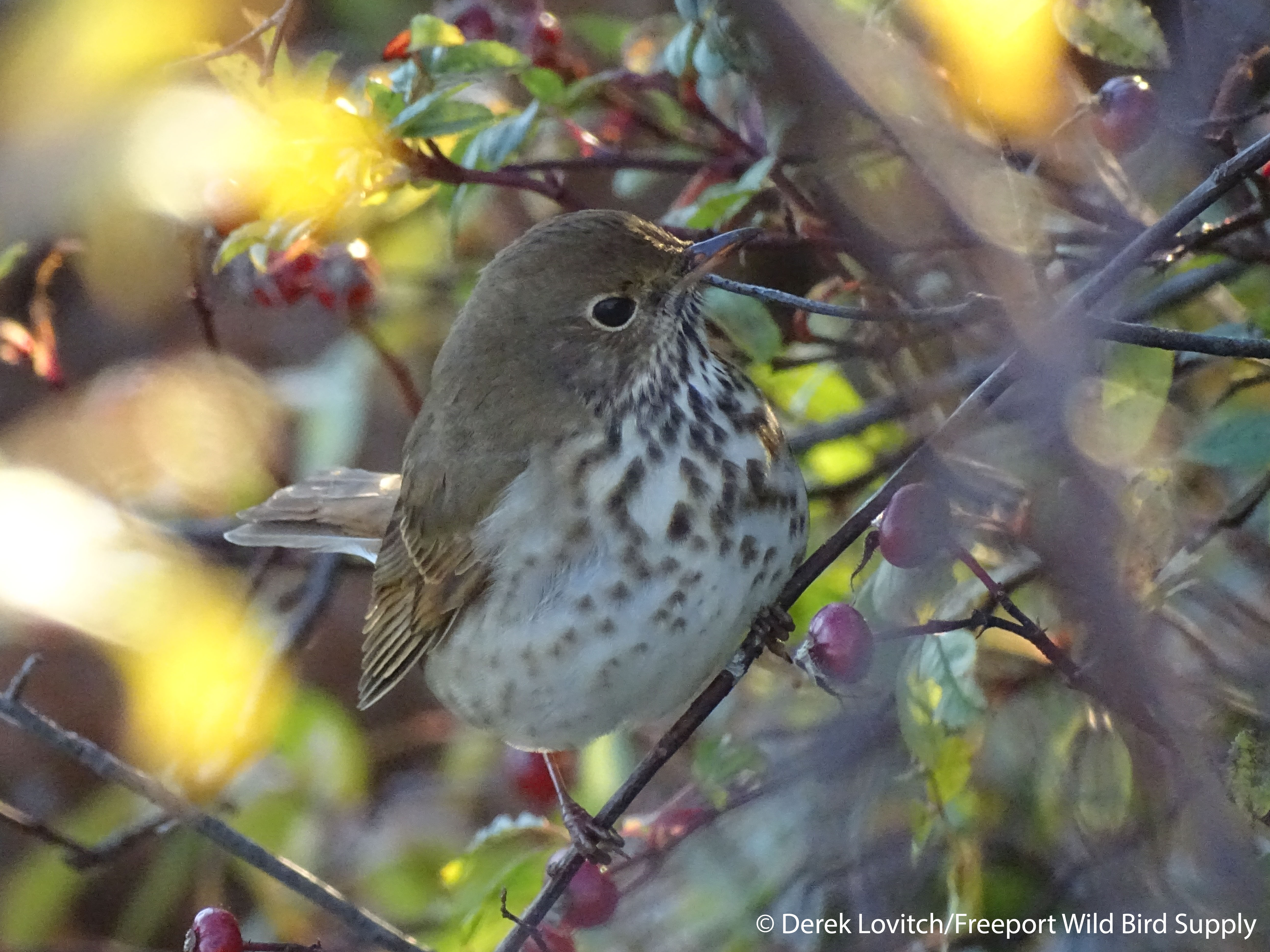
This Hermit Thrush kept me company at the point, alternating between snacking on Pasture Rose hips and contemplating crossing the channel (with Catharus thrushes rarely do after sunrise)
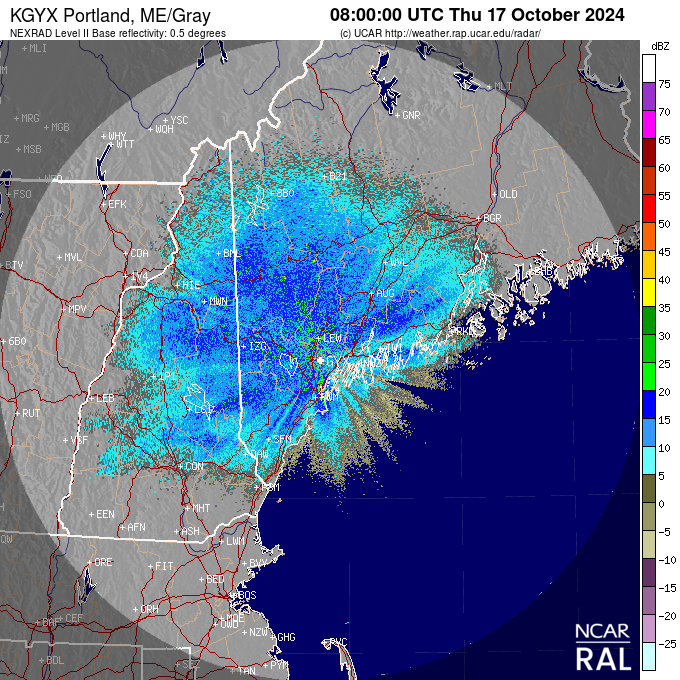
After a very slow start on a chilly morning, the flight picked up a bit in the second hour, but was still far lighter than I would have expected given the massive flight detected by the radar overnight. Even by 4:00am, the radar image was boomin’
6:59-9:15
31F, clear, NW 2.7-4.9 to W 1.2 TO 2.6mph.
114 Yellow-rumped Warblers
56 American Robins
44 Golden-crowned Kinglets
44 Blue Jays
17 Ruby-crowned Kinglets
14 Dark-eyed Juncos
9 Hermit Thrushes
8 Palm Warblers
7 Black-capped Chickadees (still did not cross after 14 “false starts”)
7 White-throated Sparrows
5 Unidentified
4 Nashville Warblers
4 Blackpoll Warblers
3 Swamp Sparrows
2 Purple Finches
2 Blue-headed Vireos
2 Tufted Titmice (did not cross after 4 false starts)
1 TENNESSEE WARBLER
1 Northern Parula
1 Eastern Bluebird
1 Yellow-bellied Sapsucker
1 Red-breasted Nuthatch
1 Northern Flicker
1 Savannah Sparrow
1 Common Loon
1 ORANGE-CROWNED WARBLER (in parking lot)
T=351
10. October 23rd.
With only a moderate flight overnight and very light winds, I didn’t have high hopes today for much of a flight. However, with the forecast for the next few days followed by a trip, this very well may be my last chance of the season, so off I went. Well, I was correct…there wasn’t much.
7:10-8:30
43F, mostly clear, NNW 2.7-3.2 to calm.
10 Dark-eyed Juncos
10 Yellow-rumped Warblers
4 Golden-crowned Kinglets
4 Hermit Thrushes
3 Savannah Sparrows
2 Palm Warblers
1 American Rpbin
1 Purple Finch
1 Black-capped Chickadee
1 Blue-headed Vireo
1 Chipping Sparrow
1 Red-breasted Nuthatch
1 Blackpoll Warbler
Total = 42
11. November 6th.
I had every intention of trying one more morning at the bridge after we returned from vacation. Sunday the 3rd may have been the day. But, avoiding the painful early wake-up call of the end of Daylight Savings Time, I decided to twitch the Common Gull in Rockland instead. I feel a little guilty, but ya know, every now and then I like a little chase, and besides, it was kind enough to stick around until we returned, so I felt I owed it.
It wasn’t a great season for me at “my office,” as this was certainly a record low number of visits. And to not catch any big flights is of course disappointing. But it was a good fall for birding – and an especially good fall for birds with little to impede their migration – and I enjoy every chance I can get to be at Sandy Point. And with a lot less pain this year than last year when I was still recovering from complications following shoulder surgery.
So with that, the 2024 Sandy Point Morning Flight season is officially closed. Still plenty of migration left, but it’s mostly diurnal migrants now. There will be a Dark-eyed Junco flight or two, some great flights of American Robins, and likely one last little push of Yellow-rumped Warblers. However, Rarity Season is now in full swing, so it’s time to focus on other birding locations. See you in August! (If there are any real cold fronts).
(And now it’s time to see what Yarmouth’s plans are for the walkway repair and improvement. I’ll need to make sure birding opportunities are improved and vegetation is protecting. Stay tuned…I might need your help)
Jeannette and I spotted these four Red-necked Phalaropes from the Casco Bay Ferry Mailboat run with visiting family on the 26th.
It was a very busy week for me, but when I did get out, birding was productive – especially in the backyard which hosted at least 15 species of warblers this week. Meanwhile, shorebirding continues to be hot. My observations of note over the past 8 days included the following
1 Black Scoter, 2 White-winged Scoters, and 2 Blue-winged Teal with Common Eiders, Reid State Park, Georgetown, 8/27. As scoters begin to increase in September, I’ll forgo reporting the “oversummering” groups from now on.
1 TRICOLORED HERON, Mill River Park, Thomaston, 8/29 (with Jeannette).
1 Northern Pintail (first of fall) and 1 juv, Little Blue Heron, etc, Eastern Road Trail, Scarborough Marsh, 8/30.
3 adult Lesser Black-backed Gulls, Seawall Beach, Phippsburg, 9/2 (with Ed Hess).
My shorebird high counts for 18 species this week were solid considering I didn’t make it to Biddeford Pool (or Pine Point) during this period. Focusing on mostly lesser-visited hotspots, I found several goodies and had a few decent high counts.
Black-bellied Plover: 67, Wharton Point, Brunswick, 9/2 (with Ed Hess).
Two of the three Lesser Black-backed Gulls present at Hill’s Beach in Biddeford on the 8th included these two 3rd-cycle birds, seen here with a likely 4th cycle Herring Gull for a nice comparison.
Once again, I focused on shorebirds this week, and not surprisingly the non-shorebird highlights I encountered were while looking at said shorebirds. Meanwhile, passerine movement is really ramping up, with lots of early warblers like Yellow, American Redstart, and Black-and-white on the move. Some of the other migrants on our Durham property this week included Canada Warbler, Eastern Kingbird, Bobolink, and Barn Swallow.
3 Lesser Black-backed Gulls (one 1st-summer; with Dan Gardoqui and two 3rd-summers arriving later), Hill’s Beach, Biddeford, 8/8.
The adults of a lot of species of shorebirds are peaking now, and a growing number of juveniles are arriving, providing for some good numbers at a variety of locations. Shorebird high counts this week:
Black-bellied Plover: 86, The Pool, Biddeford Pool, 8/8.
Killdeer: 21, Crystal Spring Farm, Brunswick, 8/5 (with Jeannette).
Semipalmated Plover: 150+, Pine Point, Scarborough, 8/11 (with Birds on Tap – Roadtrip! Tour group).
Semipalmated Sandpiper: 1500+, The Pool, Biddeford Pool, 8/8 (with Dan Gardoqui).
Short-billed Dowitcher: ~40, The Pool, 8/8 (with Dan Gardoqui).
Spotted Sandpiper: 2, multiple locations this week.
Solitary Sandpiper: 1, several locations this week.
Lesser Yellowlegs: 71, Walsh Preserve, 8/9.
“Eastern” Willet: 18, Pine Point, 8/11 (with Birds on Tap – Roadtrip! Tour group).
“WESTERN” WILLET (FOY): 1, Hill’s Beach, Biddeford, 8/8.
Greater Yellowlegs: 12, Wharton Point, 8/6 (with Jeannette).
Tours and Events:
The 20th Anniversary Celebration Month is underway here at the store. All the details can be found here, including free raffles for dinner (get your tickets in soon; drawing on Wednesday!), a silent auction for conservation, and several chances to win a new pair of binoculars!
Birds of Casco Bay with Seacoast Tours, originally scheduled for 8/4, has been postponed until Sunday, 8/25. Call Seacoast Tours to see if any spaces have opened up.
Despite being focuses on shorebirds this week, my most productive photo session were with Roseate Terns on Hill’s Beach on 7/30. This was my favorite shot, of a juvenile still hungry while its banded parent went out in search of more fish.
Shorebird season is in full swing, and since our return from our summer vacation, shorebirds have been my birding focus. As I often do at this time of year, I like to organize my weekly (or thereabouts) observations into a “high counts for the week” summary. This is really for my own organization of notes and allows me to quickly evaluate ebbs and flows across the summer, and across various years. To get a good sample, I need to hit at least one high tide and one low tide hotspot each week, along with one “grasspiper spot,” freshwater location, and “local hotspot.” I never accomplished that in any period in July before our trip, so I will start that pursuit this week. I hope you too find values from these brief syntheses.
This week’s non-shorebird highlights:
1 White-throated Sparrow, our property in Durham, 7/29. They don’t breed withing several miles of the property, and this was our first summer record. It was a molting adult. I think short-distance “molt migration” in songbirds of the Eastern Forest is under-appreciated (see, for example, recent spate of boreal warblers on offshore seabird islands).
1 1st-summer Lesser Black-backed Gull, Hill’s Beach, Biddeford, 7/30.
1 Black and at least 23 Surf Scoters, Wharton Point, Brunswick, 8/4.
Shorebird high counts this week:
AMERICAN OYSTERCATCHER: 3, Hill’s Beach, Biddeford, 7/30. Plus 1 at Pine Point on 8/1.
Black-bellied Plover: 44, Wharton Point, Brunswick, 8/4.
Killdeer: 32, Crystal Spring Farm, Brunswick, 8/4.
Semipalmated Plover: 343, Pine Point, Scarborough, 8/1.
Piping Plover: 6, Biddeford Pool Beach, Biddeford, 7/30.
Whimbrel: 3, Pine Point, 8/1.
Ruddy Turnstone: 11, Hill’s Beach, 7/30.
Sanderling: 8, Hill’s Beach, 7/30.
Least Sandpiper: 40+, Eastern Road Trail, Scarborough Marsh, 8/1.
Pectoral Sandpiper: 1, several locations this week.
Semipalmated Sandpiper: 800+, The Pool, Biddeford Pool, 7/30.
Short-billed Dowitcher: 88, Hill’s Beach, 7/30.
Spotted Sandpiper: 3, Eastern Road Trail, 8/1.
Solitary Sandpiper: 1, our property in Durham, 7/29.
The 20th Anniversary Celebration Month has begun here at the store. All the details can be found here, including free raffles for dinner, a silent auction for conservation, and several chances to win a new pair of binoculars!
Birds of Casco Bay with Seacoast Tours, originally scheduled for this morning, has been postponed until Sunday, 8/25. Call Seacoast Tours to see if any cancellations have opened up any spaces.
Tour itineraries are meant to be broken. Or is that “rules.” Well, those too.
We have offered some kind of “Bicknell’s Thrush Wekeend” tour for almost 15 years now. There was a hiatus for COVID, and last year – perhaps due to the uncertainty with travel planning – we pulled the plug on our weekend for the first time as registrations were slow to come in.
Therefore, for 2024, it was time to try something new and head into Northern New Hampshire for a new plan of attack. Two chances at Bicknell’s Thrush over the course of two days, with this one enigmatic bird the sole focus (well, at least until we see it) – that part of it had not changed. Everything else was new this year.
We assembled at 9:00am on Saturday, June 29th in Errol, New Hampshire. The itinerary? Well, never mind.
Several folks arrived to see their guide staring up at the sky and immersed in deep thought (you could smell the wood burning). It wasn’t raining, and it looked like we had a nice window of fair weather. But it was already 9:00am, and by the time we got up the mountain…
…but the forecast for tonight. And tomorrow morning.
…but it can’t be worth it to try for one of, if not the, most elusive of North American breeding songbirds in the middle of the day.
…and it’s getting warm.
…and there’s rain building to our west. The winds are picking up higher up.
…but let’s go for it!
So up the mountain we went. At least we would be trying. And that evening, with the risk of severe thunderstorms, we might not even have a chance to try. And the next morning didn’t look great.
But weather forecasts are fickle, especially up here in the mountains, so it’s hard to make plans. But it’s easy to look up and see what’s about to happen, or not. And when I looked up, my face didn’t get wet, so that’s the only forecast that’s dependable in these parts.
We raced up hill, arriving at about 3,000 feet and the realm of the Bicknell’s Thrush around 10:30, stopping for a Ruffed Grouse in the road escorting five chicks.
Southerly winds were increasing, blowing right up into and through our thrush territories. This was pointless. But hey, the rain was still across the valley. So we birded.
We heard the Fox Sparrow, spotted a couple of Blackpoll Warblers, and enjoyed the usual high-elevation species like Yellow-rumped Warblers and Dark-eyed Juncos.
Then, at the surprisingly late (or extremely early) time of about 11:15am, a Bicknell’s Thrush began to call. Over the next 15-20 minutes, we were treated to two birds counter-singing, and at least 3 or 4 birds calling. One bird silently flew across a clearing, as well seen as a thrush in flight can get. The two dueling birds darted between trees and occasionally paused in view of one or two people before melting back into the trees.
There weren’t photography opportunities, but everyone was more than satisfied with the sum of their views. And it was a tremendous auditory performance. Overall, it was actually a pretty good show, and really demonstrated the behavior of this fascinating bird. And since this is more than just a tick and run” tour, the birds’ behavior was instructional and of keen interest.
And after all being satisfied, the rain arrived.
We enjoyed a leisurely and delicious lunch, and then set out for a little more birding. Making up for the change of plans in the morning, we took a walk and a drive through some boreal habitats, but rain was becoming steadier now. We heard and saw a few common birds, but it was just some good quality time in the afternoon woods, absorbing our phytoncides. When the rain arrived in earnest, we called it quits and went to check in at our hotel.
The original plan was to have an afternoon break, early dinner, and then head up the mountain at dusk to take advantage of the evening activity of the thrush. Instead, we had a relaxing dinner, many of us enjoyed a beer or glass of wine, and we just chatted. Good conversation was enjoyed by all, and the rain kept falling.
At one point, the rain let up and I began to ponder a run up the mountain. Just in case the thought became serious, a downpour arrived. Dessert was ordered.
We were back in our hotel rooms at about the time I had planned to be on the mountaintop, so I didn’t know what to do with myself! I think I was stressed about having nothing to stress about. When a tour is solely dedicated to one species, a trip is a failure without that one species. But we already had our quarry, and if it was raining in the morning, oh well. And if it wasn’t, we would just go enjoy the bird some more. I think I had the longest and best night of sleep I can recall while leading a Bicknell’s Thrush weekend!
Well, it wasn’t that long. A “civilized” 5:30am departure from the hotel (thanks to our success the day before) found us free of the rain that was forecast, and there were even a few breaks of sun. It was rather breezy atop the mountain, and in almost two hours, we only had a couple of calls from Bicknell’s Thrushes. A simple continental breakfast was served from the back of my Subaru.
However, we had a Canada Jay (likely the last youngster in a family group that passed just downhill from us) in plain view, and spent some quality time with the local breeders like Blackpoll Warbler. Then, much to my disbelief, the second-most wanted bird on the tour (according to an unofficial survey), began to call very close to us. Could it be? I had to be mistaken. But not much else sounds like a Black-backed Woodpecker!
Then, with jaws dropping to the ground, it proceeded to fly overhead of us, heading up the mountain where it called a few more times. That was not something I was expecting – not just the species, but such a great look at it in flight (I can only recall one other time that I had seen one overhead) and far removed from the deep and dark bogs most of the local birds prefer.
Between yesterday’s thrush luck and today’s woodpecker fortune, not to mention another mountaintop visit devoid of the forecast rainfall, we were just ecstatic.
And then this happened…
You get a photo, and you get a photo, and you get a photo!
Wow. Just wow.
And it was on a snag that I had just declared, “if this bird comes out, it’s going to perch here.” Most people thought I was joking.
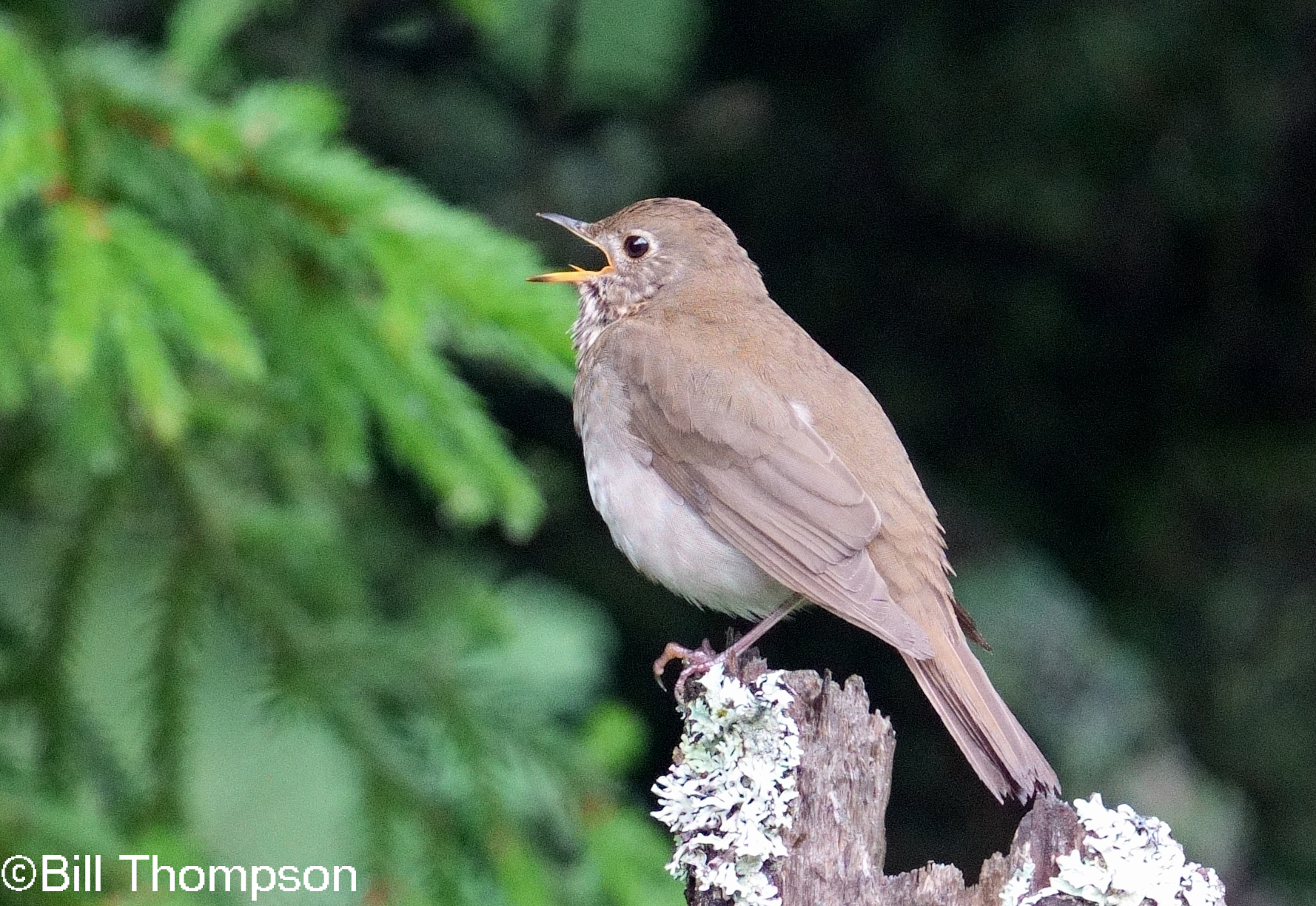
The thrush didn’t. Now, I wish I could always control birds like this, but especially with this species, I have really come to know them and their behavior. To me, it did look perfect for one to sit on. But no, I did not expect it to be sitting on it, singing up a storm, about 30 seconds later. It truly is better to be lucky than good.
And it sat there for long enough to take your camera down, adjust your settings, and return to firing away. It was even there long enough for your dumbfounded guide to remember he had his camera with him for a change. My panicked photos did not do the bird justice, so I will let everyone else’s speak for themselves.
There wasn’t much left to do up here, so we began our trek downhill.
A Mourning Warbler cooperated nicely.
Then, returning to our cars a (the?) family group of Canada Jays returned and came to check us out. Kathy’s granola bar was clutch here as two adults had a snack, with 2-3 dusky juveniles looking on, learning the ways of the Camp Robber.
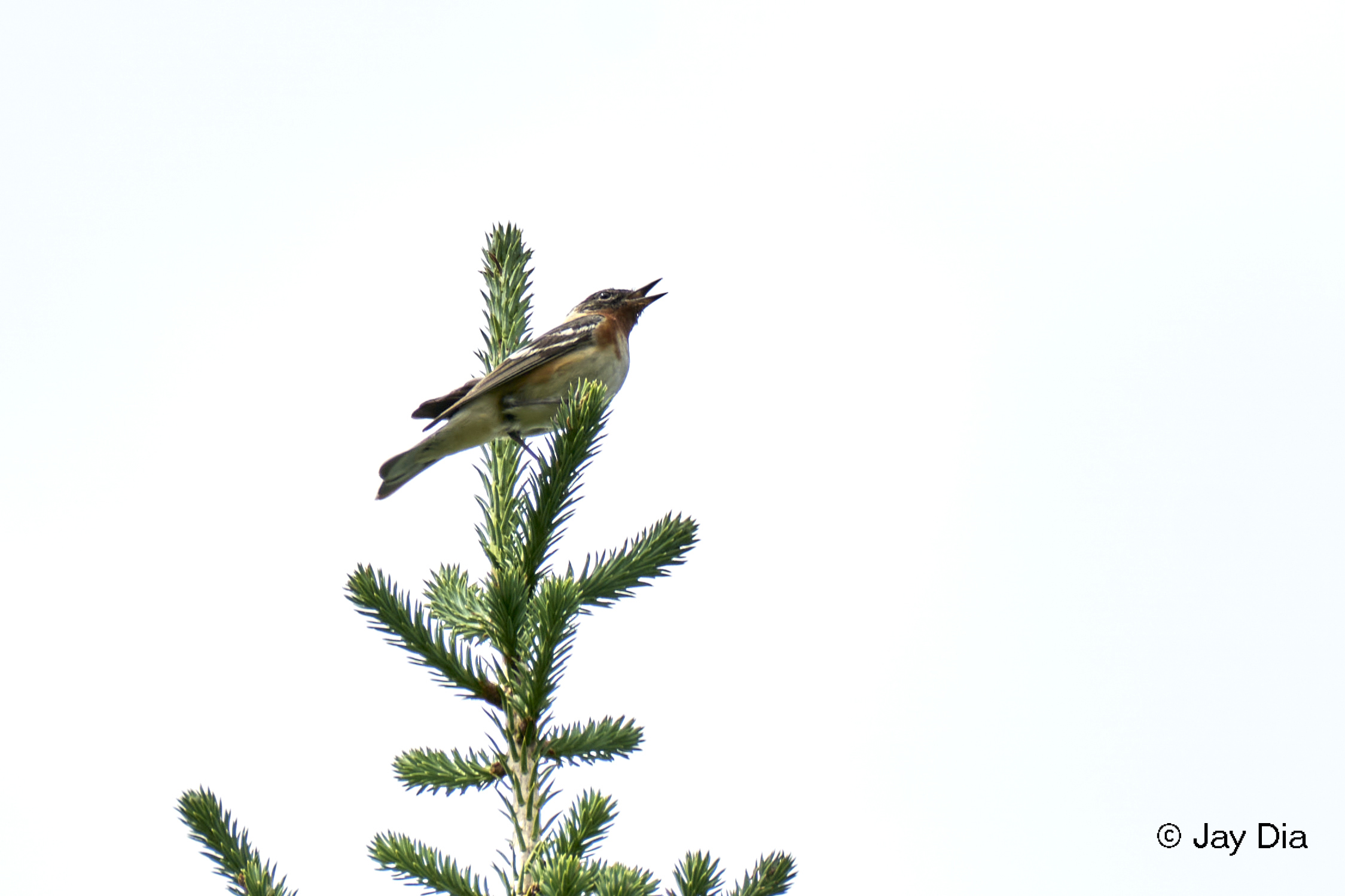
And then Kathy exclaimed “there’s a Bay-breasted!” and we all looked up to see a stunning male singing from a roadside fir right over our heads.
We heard or saw at least another 5 Mourning Warblers on the way down, glimpsed a busy Lincoln’s Sparrow (a Sharp-shinned Hawk passed overhead precluded a better observation, however), and took some time to enjoy and identify butterflies – even skippers (OK, only Bill actually identified said skippers) – and plants.
White Admiral
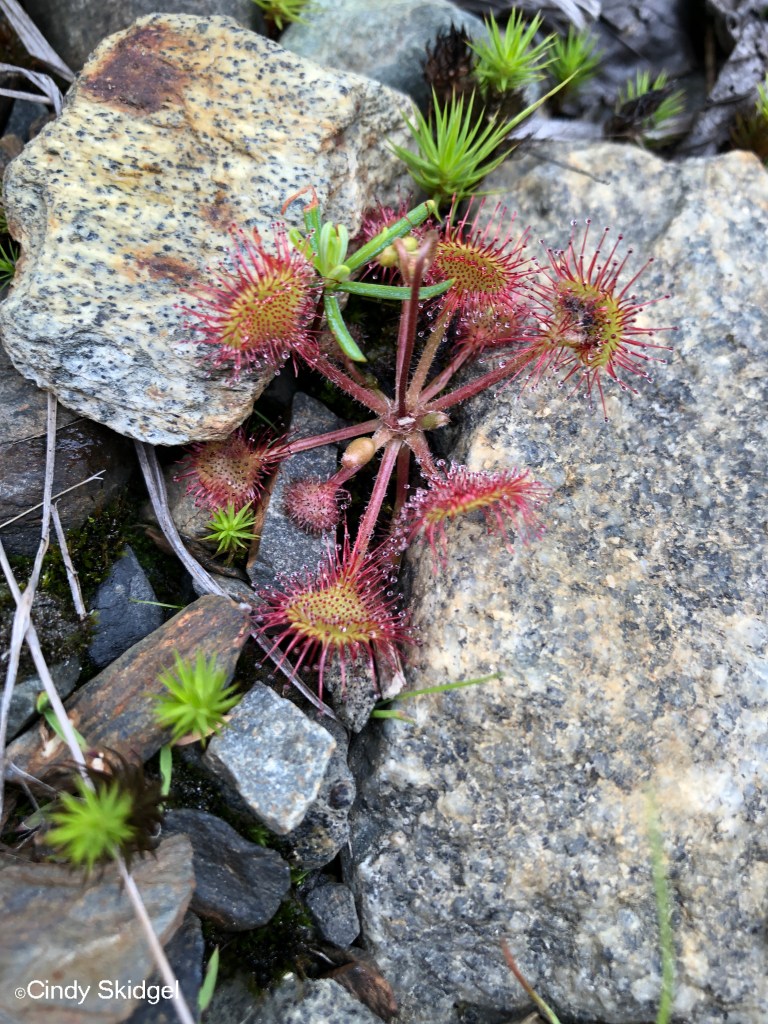
Round-leafed Sundew.
But as the winds began to gust, more rain was approaching, and ATVers were becoming overwhelming, we left the mountain and headed to Colebrook for a relaxed, celebratory luncheon as the rain began to fall and before we headed our separate ways.
As for this new Bicknell’s Thrush Weekend itinerary (with and without necessary audibles), well, I think you can assume we’ll see you here again next year!














 Maine Birding Field Notes