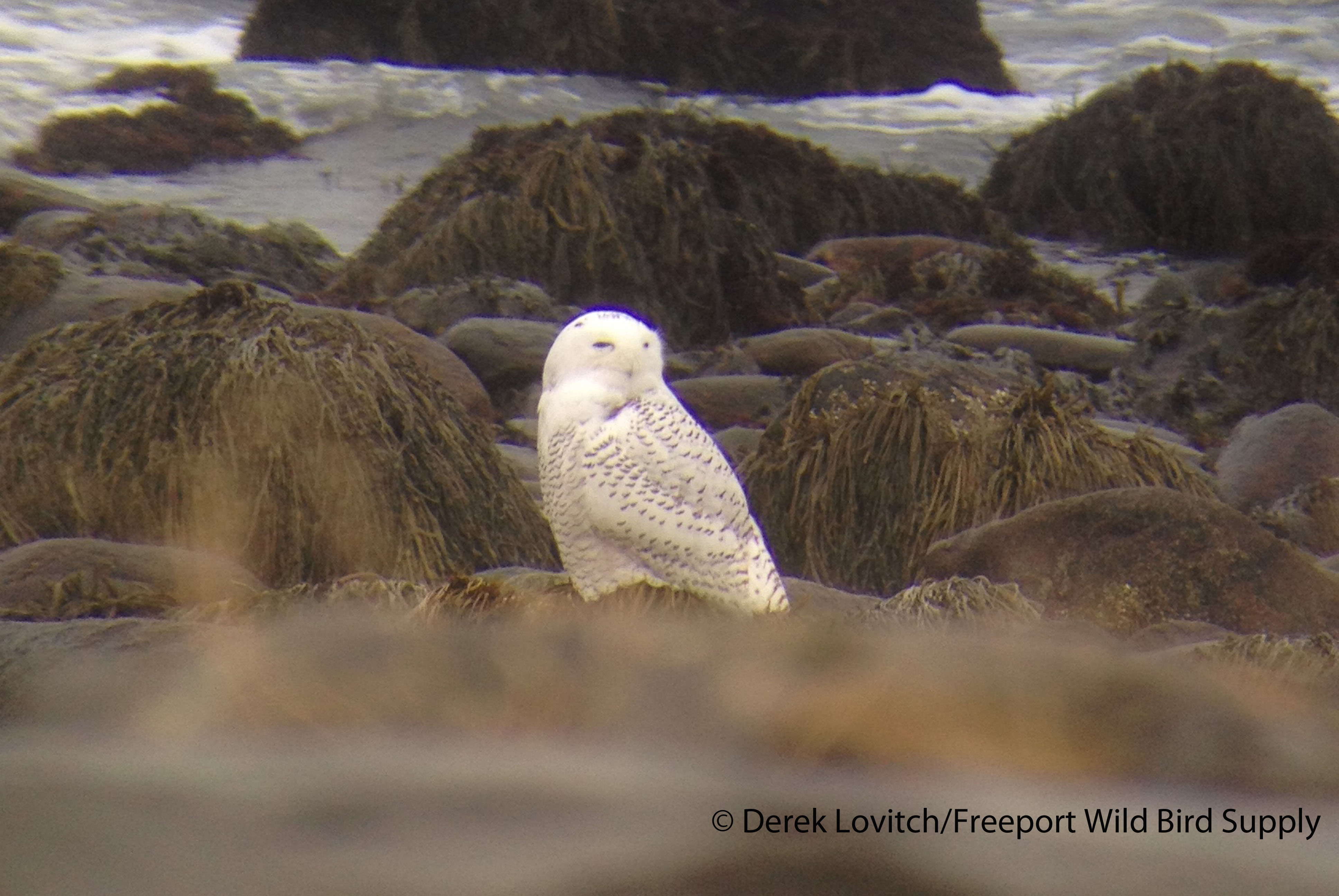
Random Photos Using SLR and Phone-scoping Techniques Over the Last Few Days.

Over the past few days, I have squeezed in a healthy amount of birding, giving the season and a life in retail!  It has been fruitful birding, too, and I posted daily highlights to our store’s Facebook Page for the complete story of recent birding outings.

I also took an unusual amount of photos for me.  I’m really not a bird photographer.  Instead, I call myself a “birding photographer.”  I even wrote an article for the recent Birder’s Guide to Gear from the American Birding Association about techniques of birding photography, from traditional digital SLR’s to phone-scoping.

In the past few days, I have employed both techniques to grab some photos while birding.  Some are better than others, and some are nothing more than “documentation” shots. In the shots below,  I employed either a Nikon D80 with a 300mm F4 lens and a 1.4x teleconveter, or a iPhone 4s coupled with a Zeiss Diascope T*FL 65 using a Phone Skope brand adapter.  Unfortunately, fairly thick cloud cover on both days impacted my lame photographing attempts.  Please remember to double-click the photos to get a larger image.

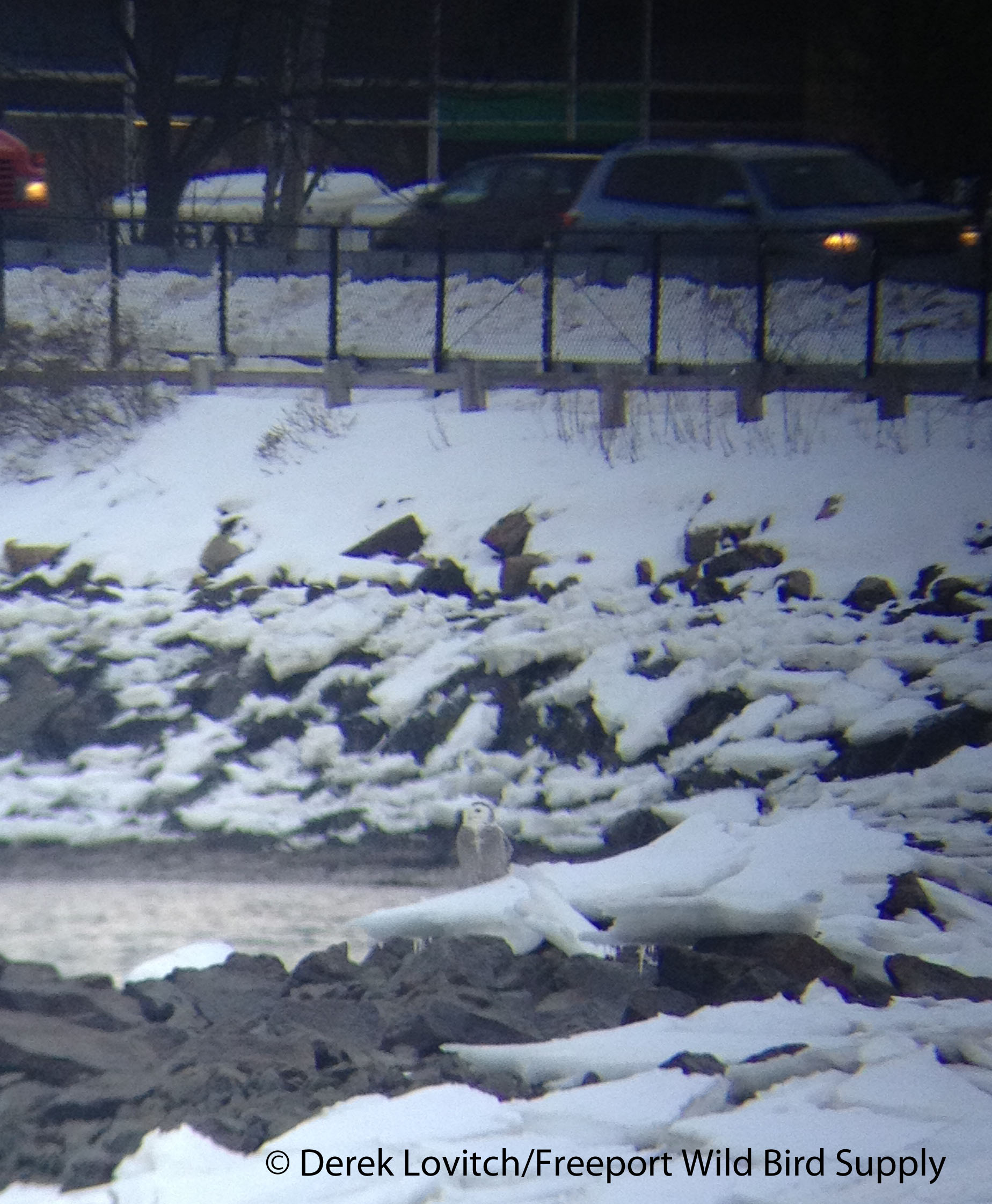
Yesterday, Luke Seitz, Maegan Krieger, and I met at Back Cove in Portland.  While waiting for their arrival, I spotted this Snowy Owl, and phone-scoped it early in the morning.
IMG_2125_SNOWatBackCove,12-19-13IMG_2121_SNOW_BackCove2,12-19-13

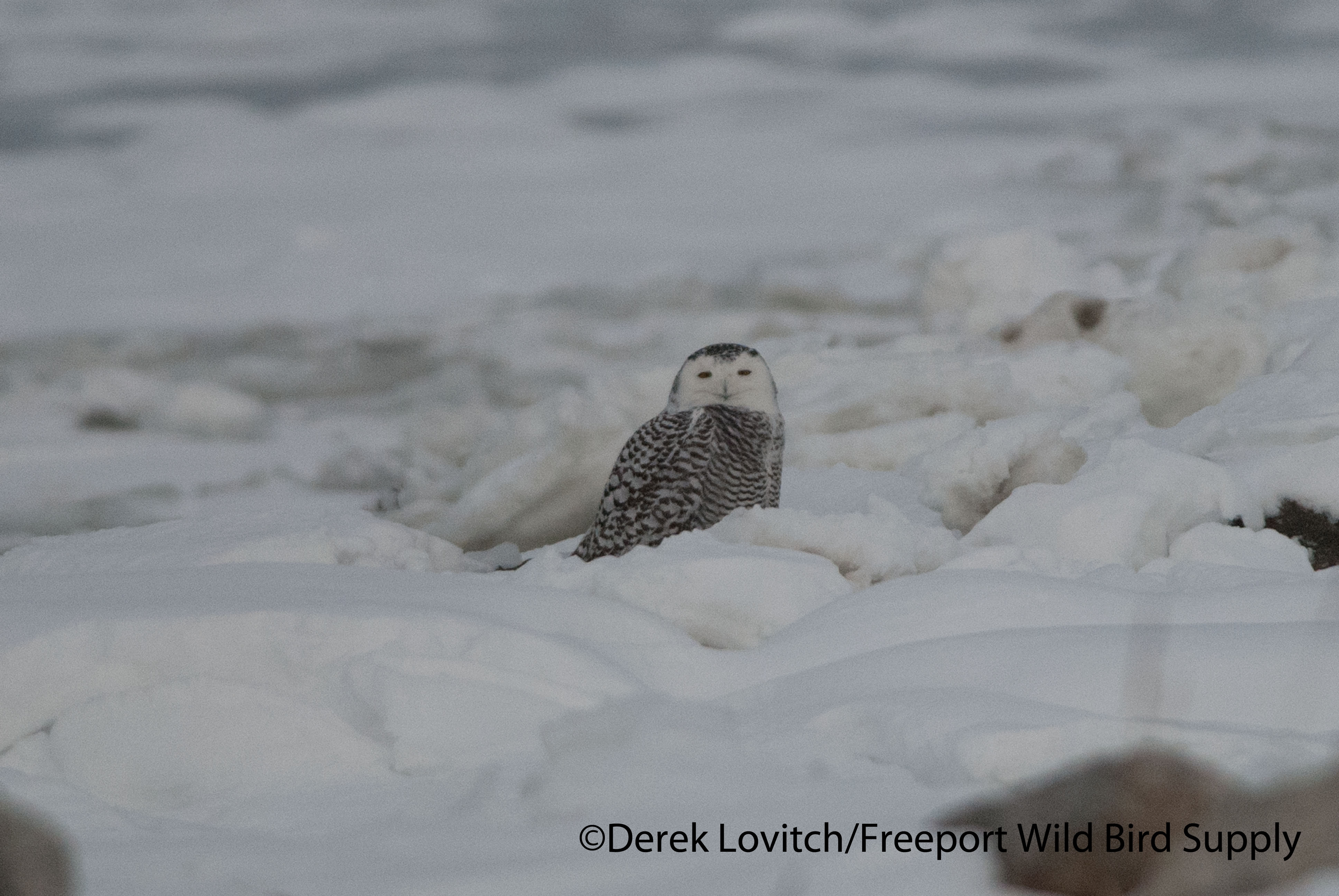
When we returned to the parking lot around 2:00pm, the day was marginally brighter, and the bird was significantly closer.  We used an excersize wall in the playing field as a very convenient blind, and I went to the SLR.
DSC_0025_SNOW1,Back Cove,12-19-13

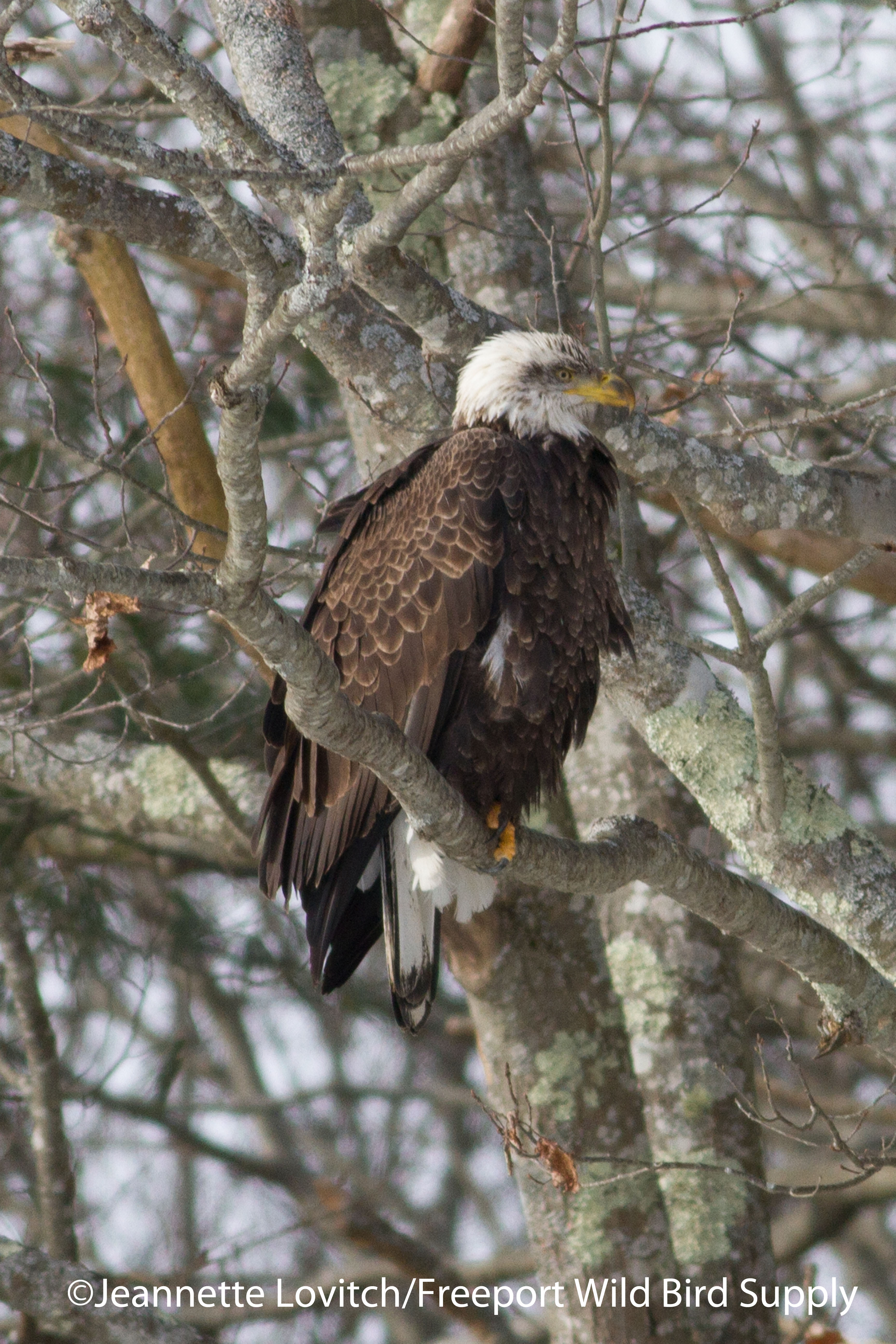
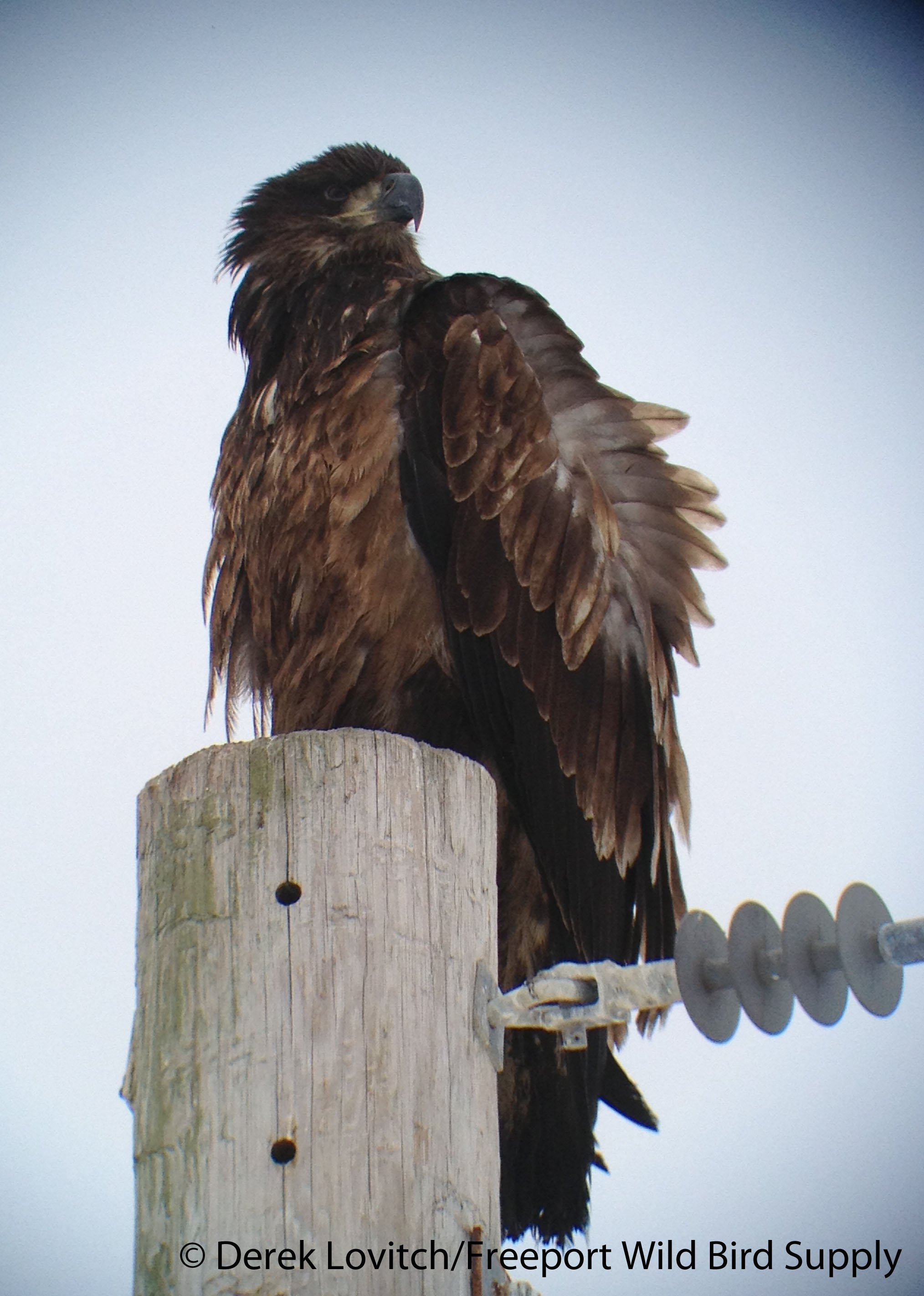
Upon our arrival at Pine Point, this 1st-year Bald Eagle landed nearby.  I was without the SLR, so I snapped these photos using my phone-scoping system!
IMG_2141_1stCBAEA,PinePoint,12-19-13IMG_2148_1stCBaldEagle, PinePt, 12-19-13

We also found some good birds during the course of the day, including these treats at Grondin Pond: a 1st-winter Lesser Black-backed Gull and a male Gadwall – both of which were phone-scoped.
1stWLBBG,GrondinPond,12-19-13IMG_2161_GADW,GrondinPond,12-19-13

This morning, I visited the Hatch Hill Landfill in Augusta to study gulls, such as this rather dark 1st-winter Iceland Gull, which I phone-scoped on top of the hill.
IMG_2173_darkish1stWICGU,HatchHill,12-20-13

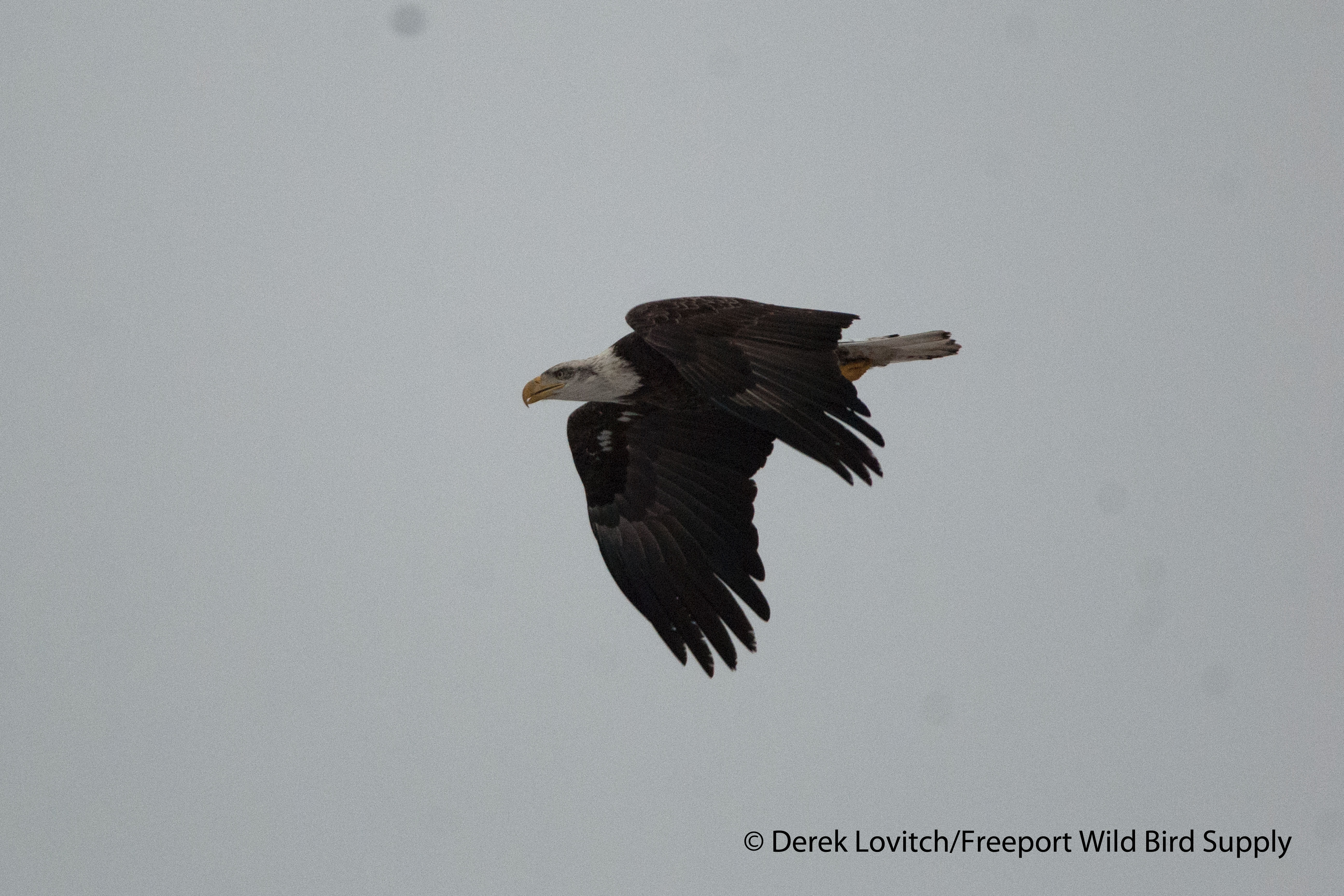
However, at least a dozen Bald Eagles of various ages were particularly active today, so I grabbed the SLR and fired away.  There was this 4th-year bird:
DSC_0050_4thCBAEA,HatchHill,12-20-13-best

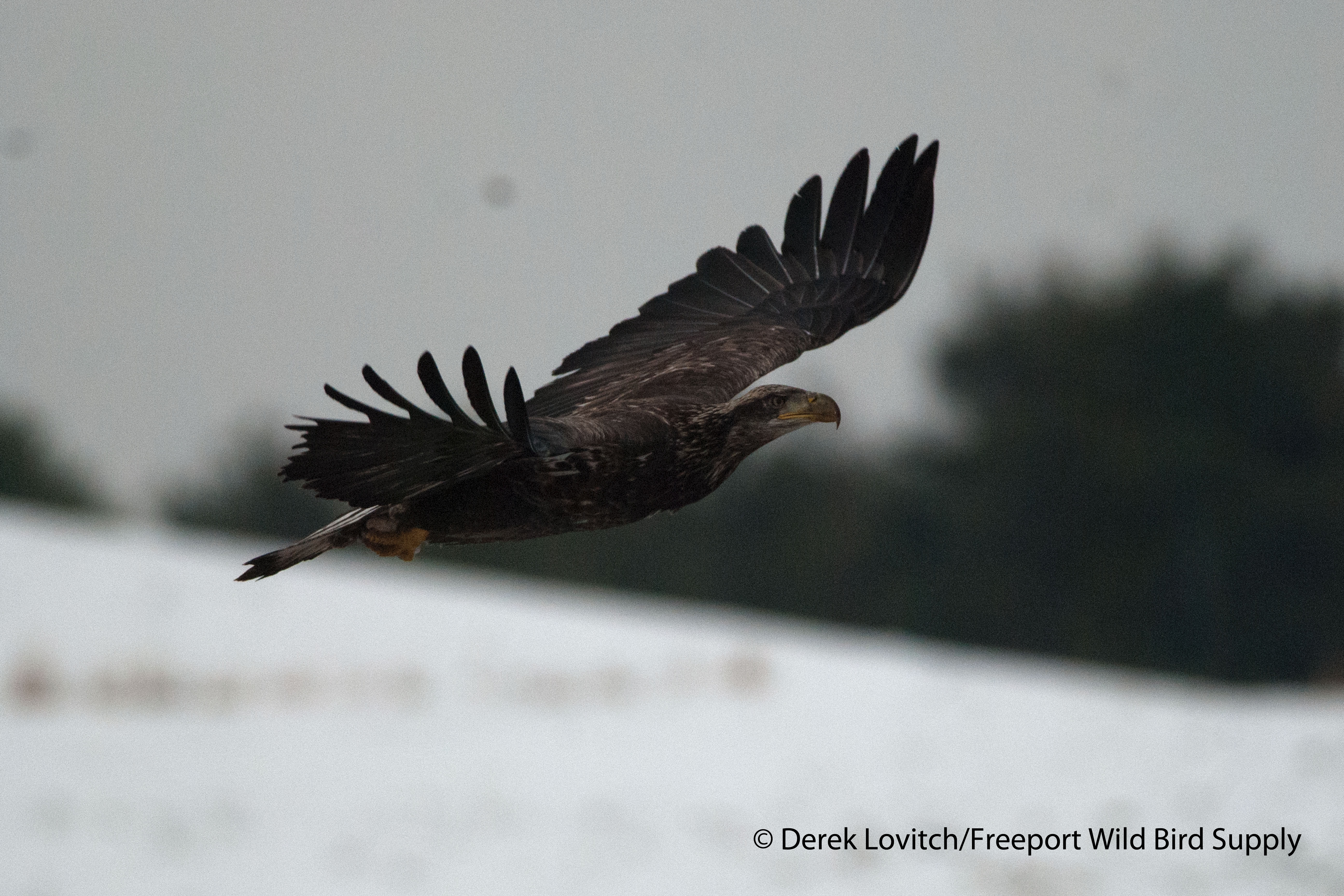
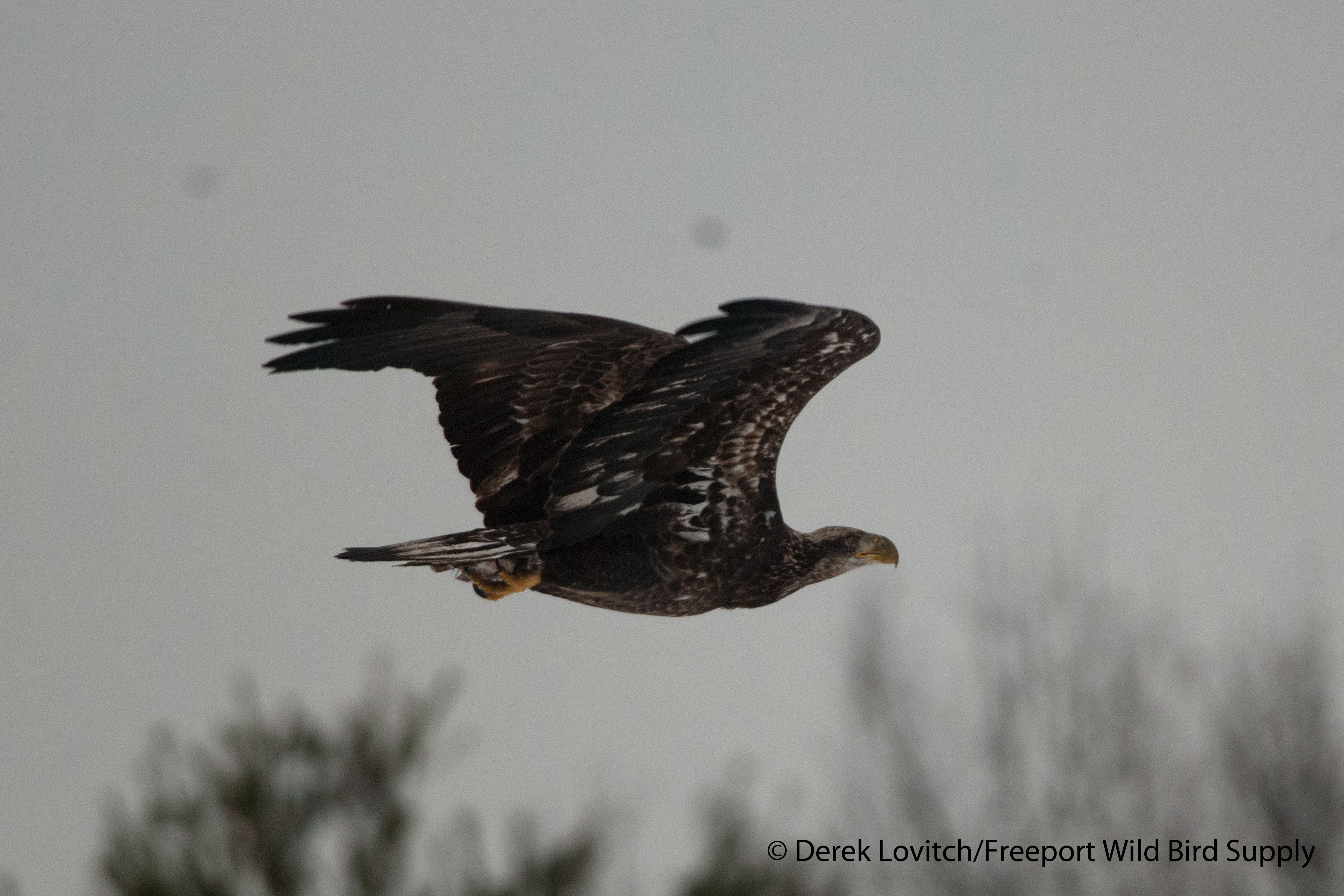
And this interesting 2nd or 3rd year individual:
DSC_0053_2nd-3rdBAEA,HatchHill,12-20-13DSC_0051_2nd-3rdBAEA,HatchHill,12-20-13_edited-1DSC_0058_2nd-3rdBAEA,HatchHillLandfill,12-20-13

Southern York County CBC

The Southern York County Christmas Bird Count (CBC) was held on Monday, and this year, Kristen Lindquist and Phil McCormack joined me in the Moody section of the territory.  I’ve been doing this territory for about 8 years now, and have come to know and love it.

There’s lots of thickets, wooded neighborhoods with feeders, dunes, beach, river, Saltmarsh, ocean, and just about everything in between.  Running from about Eldridge Rd in the Moody section of Wells, south to the center of downtown Ogunquit, lots of intriguing winter habitats are contained within.  The Moody Marsh of the Ogunquit River, Beach Plum Farm, Ogunquit Beach, and the edges of the Wells Sewage treatment facility are all now regular parts of my birding routine after first visiting them when doing this CBC.

Having a small territory allows us to thoroughly cover many nooks and crannies.  We do a lot of walking – about 10 miles combined for the party, compared to only 10.5 by car.  Being outside – even in the bitter cold of yesterday morning – and being thorough always produces good birds and good variety on a CBC, but each year I am absolutely blown away by the quality and diversity of the birds I find in this territory.  In fact, one year, Luke Seitz and I had a 1st, 2nd, 3rd, 4th, and 5th count record, and in the very next year, we had a 1st, 2nd (x2), 3rd, 4th, 5th,  6th, and 7th count record!  Incredible!

And yesterday did not disappoint.

Deep snow and frigid temperatures certainly caused some rarities and so-called half-hardies to perish, or at least pushed many of them to points further south.  Open fresh water was limited, and deep snow prevented us from checking a few places.  So it did not surprise me that we “only” tallied 57 species (compared to last year’s mild December, when Luke and I tallied an exceptional 67 species), and we didn’t get a whole lot of top-5 records.  Of course, TWO 1st count records more than made up for it!  And a 5th, and a 6th, and a 7th, and two 9th!

As usual, we began with a dawn seawatch at Moody Point.  Heat shimmer and painful cold reduced visibility and our duration here, but there wasn’t too much going on thanks to a light westerly wind.
photo (3)_edited-1

A nearby thicket produced a Common Yellowthroat, our first good bird of the day.  A short while later, we pulled into the Wells Sewage Treatment plant, which I told Phil and Kristen is usually good for something “good.”  A Hermit Thrush quickly appeared to prove me right.  But then, as I glanced over at some Dark-eyed Juncos I noticed a Spizella sparrow.  I was excited enough for a Chipping Sparrow on a Maine CBC, but the bird looked warm and buffy to me.  Upon closer inspection, sure enough – the count’s first Clay-colored Sparrow
DSC_0077_CCSP3,WellsSewerage,12-16-13

As I was photographing it, it flew closer, and landed right over my head as I was kneeling in over a foot of snow.
DSC_0082_CCSP1,WellsSewerage,12-16-13

Apparently, it wanted to get back to its favorite spot (which is continued to frequent at least through day’s end) at the edge of the parking lot where a plow had scraped down to the soil.
DSC_0100_CCSP2,WellsSewerage,12-16-13

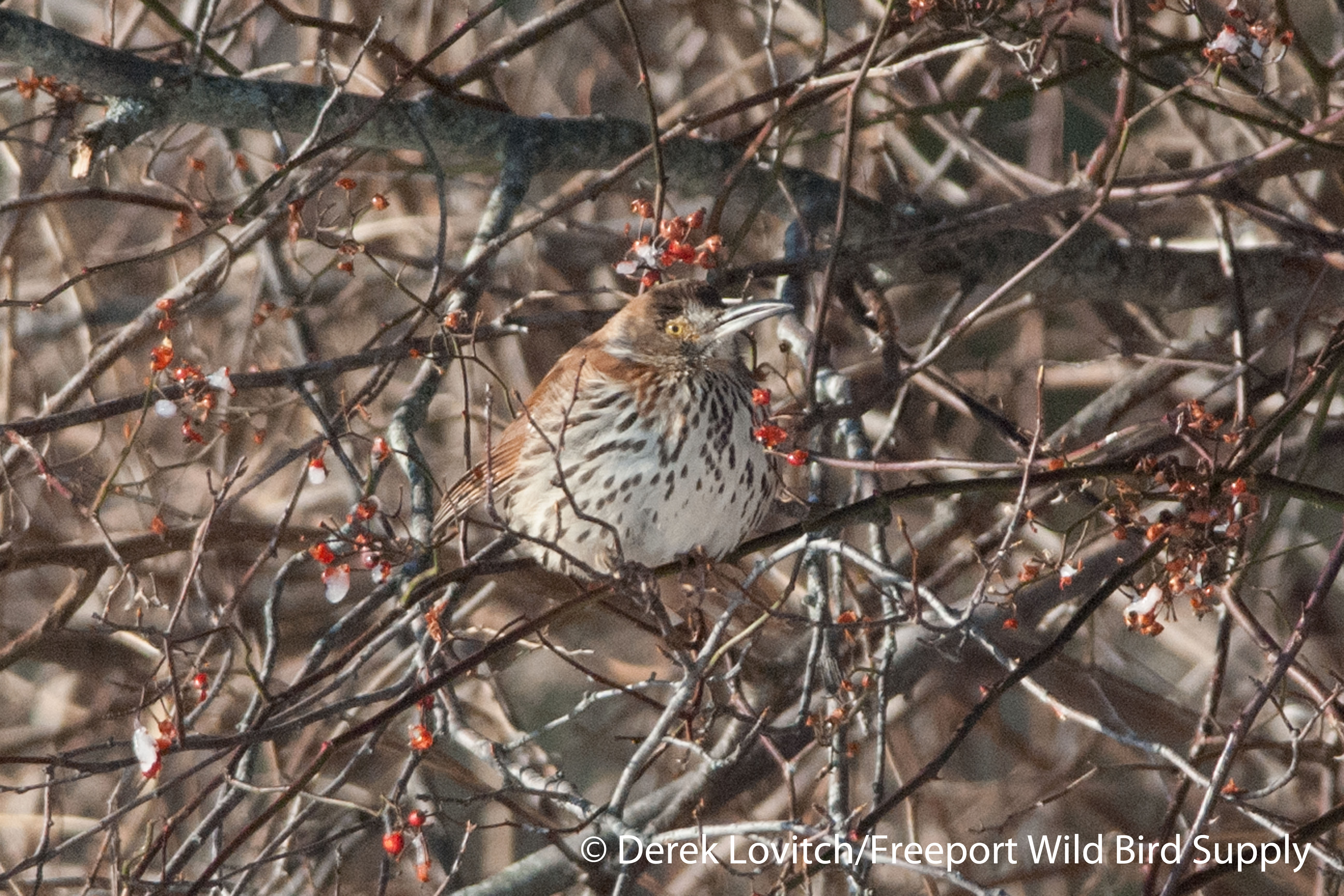
We were still talking about our spiffy little Clay-color when Kristen spotted a Brown Thrasher hunkered down in a tangle of Multiflora Rose.  Another first count record!
DSC_0115_BRTH,WellsSewerage_12-16-13

Perhaps the rest of the day was bound to be a bit anticlimactic after all of that fun before 9:30am, but we still had some great birding.  A lone hen Greater Scaup flew down the OgunquitRiver, while a huge assemblage of 480 Mallards and 86 American Black Ducks roosted at the edge of the marsh.  Much to my surprise – given those numbers – there were no other lingering dabblers.    An Iceland Gull passed by MoodyBeach, heading south, and on OgunquitBeach, we found an American Pipit.  A huge aggregation of 186 Sanderlings (an all-time high count for the entire territory in a season!) contained a dozen Dunlin.  And finally, another group (poachers!) pointed out a Peregrine Falcon having lunch on the marsh – just before its lunch was pilfered by a marauding Bald Eagle!  Speaking of lunch, a round of grilled veggie sandwiches at the Village Market in Ogunquit rounded out our experience.

Oh yeah, and then with an hour of daylight left, we raced down to Hampton, New Hampshire in an attempt to twitch a white Gyrfalcon that had been seen that morning (and the previous two days).  Unfortunately, we soon learned that it had not been seen since about 8:00am.  Well, it was worth a shot.

Anyway, as for the CBC, here’s the full roster and tallies for our rewarding little territory:
148 Canada Geese
143 American Black Ducks
522 Mallards
1 GREATER SCAUP (6th year)
91 Common Eiders
14 Surf Scoters
30 White-winged Scoters
16 Black Scoters
136 Long-tailed Ducks
24 Bufflehead
7 Common Goldeneyes
2 Hooded Mergansers
4 Common Mergansers
12 Red-breasted Mergansers
18 Common Loons
7 Horned Grebes
12 Red-necked Grebes
1 Northern Gannet
3 Great Blue Herons
2 Bald Eagles
4 Northern Harriers (including an adult male migrating offshore at sunrise)
1 PEREGRINE FALCON (5th count record)
12 DUNLIN (7th count record)
2 Purple Sandpipers
189 Sanderlings
322 Herring Gulls
1 Iceland Gull
19 Great Black-backed Gulls
242 Ring-billed Gulls
4 Black-legged Kittiwakes
36 Rock Pigeons
6 Mourning Doves
3 Downy Woodpeckers
7 Blue Jays
31 American Crows
71 Black-capped Chickadees
9 Tufted Titmice
4 White-breasted Nuthatches
3 Carolina Wrens
8 Eastern Bluebirds
1 HERMIT THRUSH (9th year)
40 American Robins
3 Northern Mockingbirds
1 BROWN THRASHER (1st count record)
1 AMERICAN PIPIT (13th count record)
77 European Starlings (very low)
17 Yellow-rumped Warblers (high)
1 COMMON YELLOWTHROAT (9th count record)
9 American Tree Sparrows
1 CLAY-COLORED SPARROW (1st count record)
17 Song Sparrows
7 White-throated Sparrows
73 Dark-eyed Juncos
29 Northern Cardinals
44 House Finches
90 American Goldfinches
215 House Sparrows

Our Letter in Opposition of the Monhegan Wind Project & Press Coverage of the Story.

Early last week, we sent the following letter to various authorities, decision-makers, relevant agencies, and the press regarding the proposal to build a massive industrial wind “farm” very close to Monhegan Island.  I think it’s a terrible place for such a scheme, and Jeannette and I – having lost faith in the state’s environmental organizations – decided we had to do something about it and make our voice heard.

An excellent article appeared in this week’s edition of The Forecaster, our regional newspaper.

The 12/11 broadcast of WGME-13’s Evening News (Portland’s CBS affiliate) included this story.

I also had a good chat with a knowledgeable staffer from Senator King’s office.  Hopefully, this is just the beginning of our effort to make a difference here.

December 2, 2013

Re: Monhegan Wind Project

To whom it may concern:

We are writing today in strong opposition to proposed industrial wind development in the Gulf of Maine off of MonheganIsland.  This is a terrible location for a project that will likely result in a significant amount of avian mortality in a place that is internationally recognized for its value to migratory birds and is an internationally recognized destination for those seeking to see and enjoy these migrants.

Ask any birder or ornithologist where the greatest concentrations of migratory birds occur in Maine, and MonheganIsland will be at the top of everyone’s list.  The quantity and diversity of migrant passerines (songbirds) in spring and fall is well documented, and can readily be seen by the quantity of birders that descend on the island in the spring and fall.  Outside of the peak tourism season, birders provide an important economic input for the inns and restaurants on the island during the “shoulder season.”  And while birders are valuable to the island of Monhegan, the island is absolutely invaluable to the birds themselves.

Thousands upon thousands of migrant passerines descend upon the island, especially during certain weather conditions.  In fall, migrants from the north drift offshore on northwesterly winds and fan out across the Gulf of Maine.  Some, like Blackpoll Warblers may launch directly offshore and not stop until they hit the West Indies.  Others are crossing from Nova Scotia towards Maine or southern New England.  In the spring, birds are returning to Nova Scotia, drifting over the ocean on developing cross winds, or overshooting land following a night of strong tailwinds.  In other words, there is no “flyway” from point A to B, but a broad flood of birds spread across the sky during the night, as the vast majority of our passerines migrate exclusively at night.  Come sunrise, birds seek land for safety, rest, and refueling.  Isolate islands are critical to birds that don’t have the capability to make it to the mainland, especially during inclement weather.

Why birds migrate at night is not known for sure, but what we do know is that nocturnal migrants use the stars to aid in navigation.  For millions of years, birds have navigated across vast and inhospitable stretches of water on their epic journeys between where they breed and where they spend the winter.  Unfortunately, over the past half-century or so, our skies have become much less favorable for migrating birds.  For reason also unknown, lighted structures (radio towers, buildings, and yes, wind turbines) can confuse birds, especially under cloudy conditions –and fog, which we know is frequent in the Gulf of Maine – and draw birds in, not unlike a moth to a porch light.  Confused, they circle the light in an attempt to reorient or simply escape the halo of light.  Unfortunately, in the process, many can collide with the structure, each other, or simply drop dead of exhaustion as their flight muscles are metabolized in a last-ditch effort to find safety.

Most lights in the sky kill birds.  That is a fact.  The more lighted structures there are the more birds will die.  The more material that is surrounding those lights – such as guy wires or massive, spinning turbine blades – the more likely there will be a collision before a bird can regroup and escape the glow.  When those lights are over water, the birds drop into the sea, where they are consumed by scavengers such as fish and gulls.  We’ll never know the true death toll of lighted structures over water, as current guesstimates are simply extrapolations of land-based surveys based mostly on the fundamentally-flawed methodology of carcass searching.  My own experience with carcass search trials offers me no reason for faith in the effectiveness of these estimates, so oft-quoted figures on bird mortality by wind turbines are likely a gross understatement.

As most post-construction surveys are suppressed as “proprietary information,” even when the surveys are designed to fail, concerned citizens are left to take the word of the wind power industry.  I am sorry, but that’s not good enough for me.  Repeated denial of a significant bird mortality issue shows that the wind industry refuses to recognize the conservation implications of their development.  Instead of addressing the concern and working to minimize the threat via lighting requirements or proper citing, the concern from respected ornithologists and the general public are ignored and drowned out by unfulfilled claims of “green energy,” empty promises, or lost in the debate of what wind farms look like.

Since the most vocal, and often most-well-funded, critics of wind power developments are often those who don’t want to look at them, the wind industry looks towards remote areas, especially those with small populations that can put up a fight.  With claims of all sorts of economic returns, rural communities offer less resistance than more developed areas where the power is most needed.

So-called “offshore” development is seen by fewer people, and some see this as a reason to not oppose these equally-destructive proposals.  These near-shore developments (if they were truly so far offshore as to not be seen by people and to minimize threats to wildlife, the cost of construction and transmission lines are prohibitive) are indeed visible from land, especially at night when those bird-killing lights will be readily apparent.  I cannot imagine standing at the island’s south end, seeing those slow blinking lights pulsating in the not-so-distance, imagining how many birds are slamming into blades, consuming their own bodies until they cannot fly, and plunge to their final deaths.

Here, in one of the greatest concentrations of birds in the Gulf of Maine, and one that attracts many hundreds of birders each spring and fall, here is where a massive wind development is proposed.  So much for minimizing the costs.  While no electricity production is truly green, there are methods and locations for those methods where benefits outweigh their economic and environmental costs.  This is not one of those places.

The sense of place that makes MonheganIsland so unique, the quantities of migrant birds that find shelter here, and the volume of tourists of all kinds drawn to this island make it a place worth protecting.  What will happen when migrant birds, heading towards the island or other land refuges instead find themselves confused and disoriented in a maze of towers and spinning blades?  How many birds will die?  How will we even know?  One thing is for certain however, no matter how destructive these things are, they don’t come down once they go up.

Meanwhile, new transmission lines will be strung through some of the stunning landscapes in the peninsulas of Mid-Coast Maine.  Additional forest fragmentation and habitat loss will occur.  And these transmission lines themselves will kill many more birds, especially iconic species such as Bald Eagles, Ospreys, and Great Blue Herons.  In dense fog, birds of all shapes and sizes will collide with the wires and their support towers.  Many of our largest birds simply cannot quickly evade a powerline that they only see at the very last minute.  Common Loons traversing the peninsulas during their journey to and from Maine’s lakes and ponds will strike these wires as well, especially where they cross channels and bays.  Meanwhile, a significant amount of electricity will be lost during the transmission (as is the case with all high-tension transmission lines), of the electricity being generated by these projects off in the distance, making the megawatt promises of the wind developers even further from reality.

Another erroneous assertion put forth about near-shore wind development is that they won’t kill raptors or bats.  That too is untrue.  There are migratory bats that cross the Gulf of Maine, and the risks that wind turbines pose to them could be substantial, especially as we struggle with precipitous declines of these critical pest control agents.  Migrating raptors (birds of prey) which are recognized as threatened by wind development on the mainland also occurs in the Gulf of Maine, especially Peregrine Falcons, Merlins, and American Kestrels.  In fact, the largest concentrations of Peregrine Falcons observed in Maine occur on MonheganIsland each fall.

Maybe I, and countless other ornithologists and birders are wrong.  Maybe they won’t kill vast numbers of birds.  Unfortunately, a lack of transparency and a clear and decisive unwillingness to address and mitigate these concerns presents me with little reason to trust companies such as First Wind.  In the rush to capitalize on subsidies and a mostly-favorable political climate, the true costs and concerns are swept under the rug or ignored completely.

This project cannot and will not be ignored.  There is too much at risk, for far too little of a reward.  Instead of finding the best locations for wind development with the fewest risks, here we find a scheme to put a massive project right in one of the largest concentrations of migrant birds, and a short distance away from one of the most special places in Maine.  And of course, the refusal to admit the bird-death problem means we cannot go forward and work together to use the best available technology to minimize the problem, such as using lighting colors and strobe duration that have been proven to reduce bird collisions.  At the absolute very least, we demand that any lighted structure, from test turbine to permanent structures that are to be constructed off of Monhegan Island be equipped with lighting configurations that have been found to be less hazardous.

This massive project is too big, too costly, and far too destructive to be tolerated.  As a wildlife tour operator, bird conservationists, and avian ecologists, we must stridently oppose this project.  It is simply in the wrong place, and actually maximizes risk for much less benefit than is promised.

Thank you for your time and consideration.

Sincerely,

Derek and Jeannette Lovitch
Freeport Wild Bird Supply
541 Route One, Suite 10
Freeport, ME04032
(207)865-6000
freeportwildbirds@yahoo.com
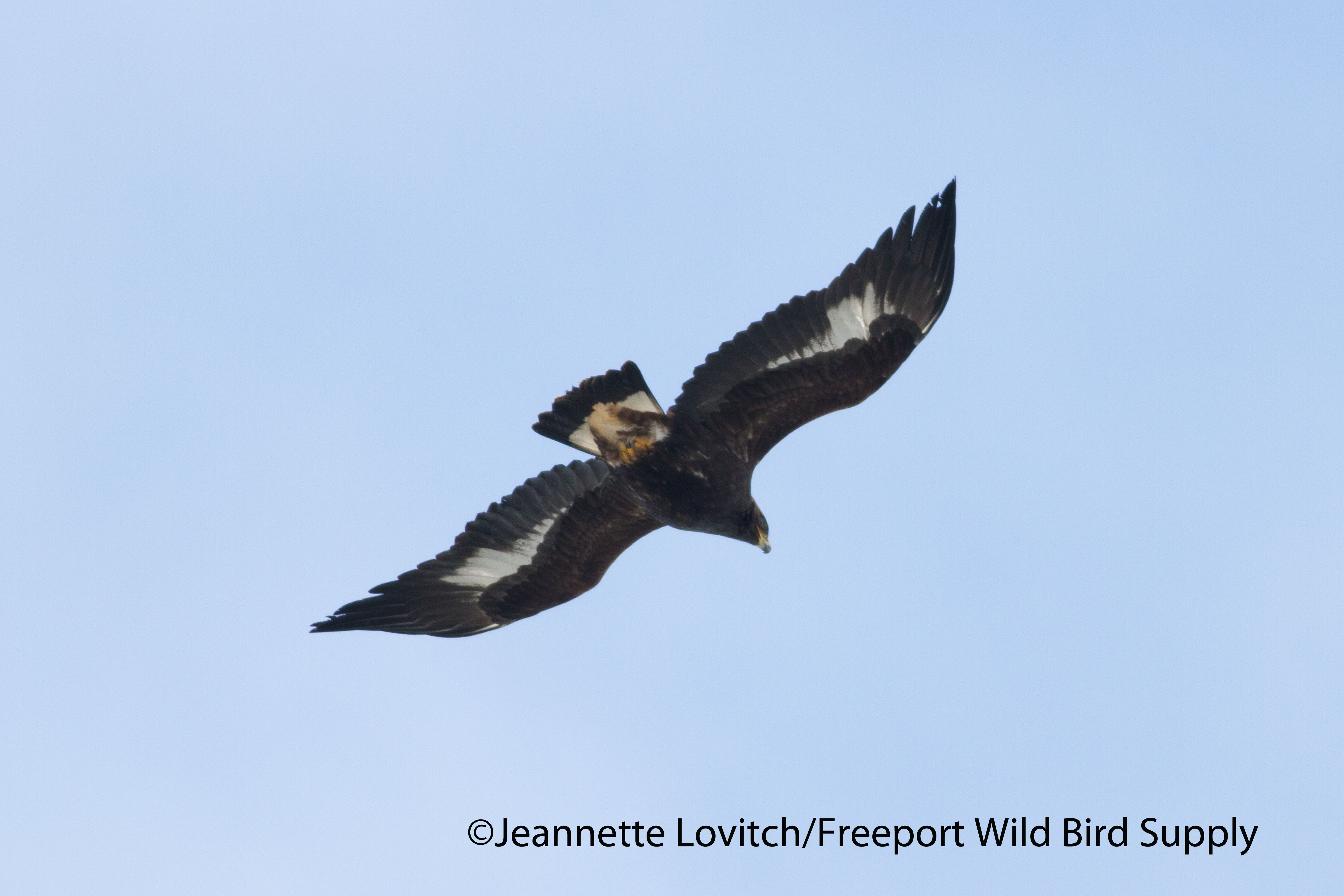
Fork-tailed Flycatcher in Connecticut!

“I don’t always chase birds, but when I do…”
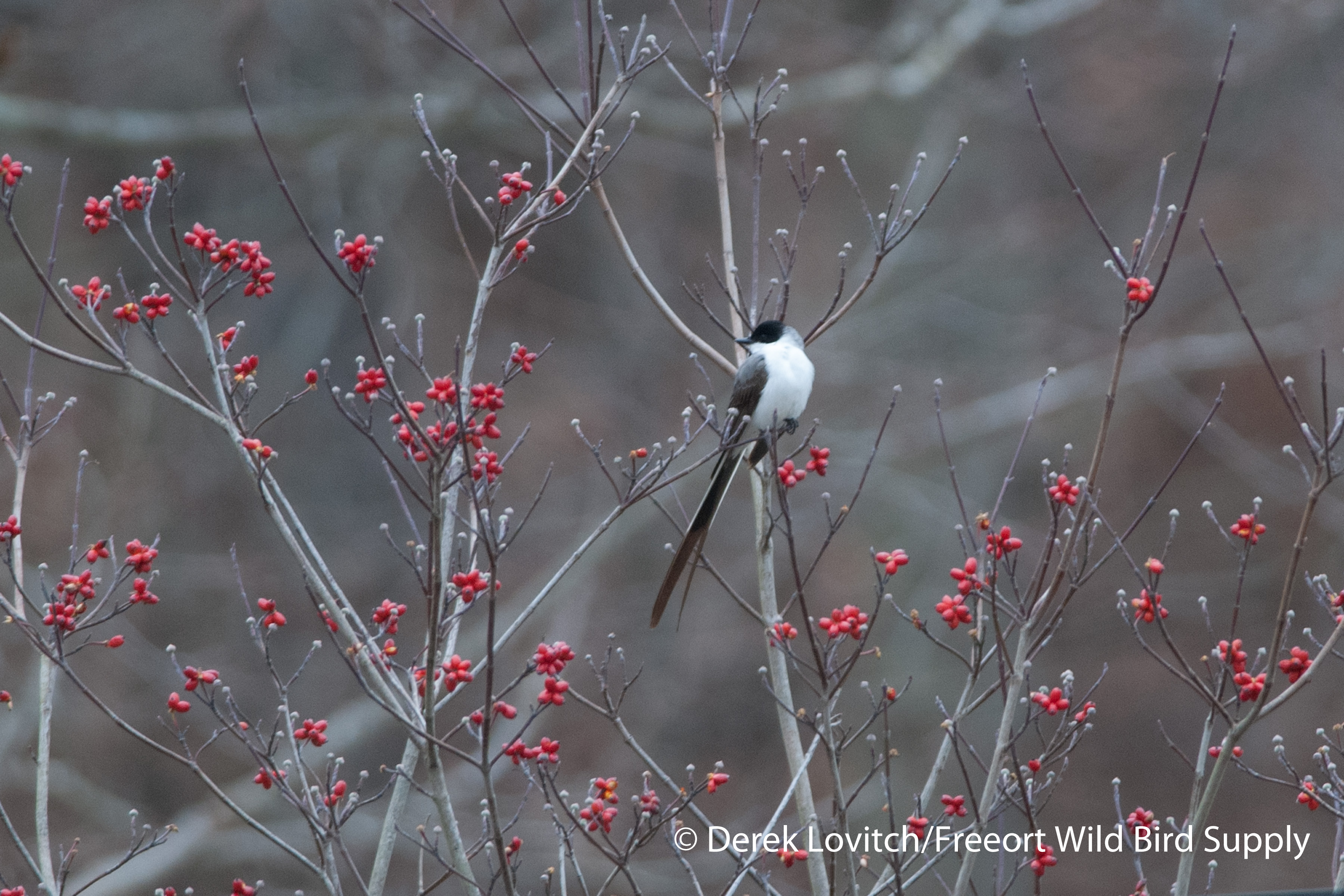
DSC_0233_FTFL1,Lyme,CT_edited-1

…And I almost never chase birds away from Maine, and I rarely even chase birds more than an hour away from home.  Therefore, it was exceedingly out of character for me to even consider chasing the Fork-tailed Flycatcher that has been present in Lyme, Connecticut.
A vagrant from South America, most Fork-tailed Flycatchers that show up in late spring or fall are notorious “one day wonders:” found one day, and gone the next.  That is why I have missed several, including a handful in Maine.  In fact, one showed up 15 minutes away in Brunswick the day we left for Russia two years ago.  Figures.  I even chased one with friends on Stratton Island that involved a boat charter, a borrowed dingy, a rope, and a signpost as a paddle.  We missed that one by about an hour.

In other words, this bird was a bona-fide nemesis, so one hanging out for 9 days as of Sunday was tempting my self-restraint.  Then, as my friend Phil and I and were planning a birding day, we decided to go for it.  Why not?  We didn’t have a better idea, it would be a fun drive of listening to music and conversing, and we’d have the Patriots game to pass the time on the trek back.  So off we went.

The drive seemed like it took forever!  We were anxious – seeing reports that the bird had been seen first thing that morning only made us more excited – and it was a long, often-boring drive.  Once the sun got high enough, we counted roadside Red-tailed Hawks to pass the time (17 starting at the 95/495 junction in Massachusetts).

We arrived at the Hadlyme Ferry slip parking lot at 10:40am, with about a half-dozen other birders still present.  We were informed that it was seen as of about 25 minutes ago. 
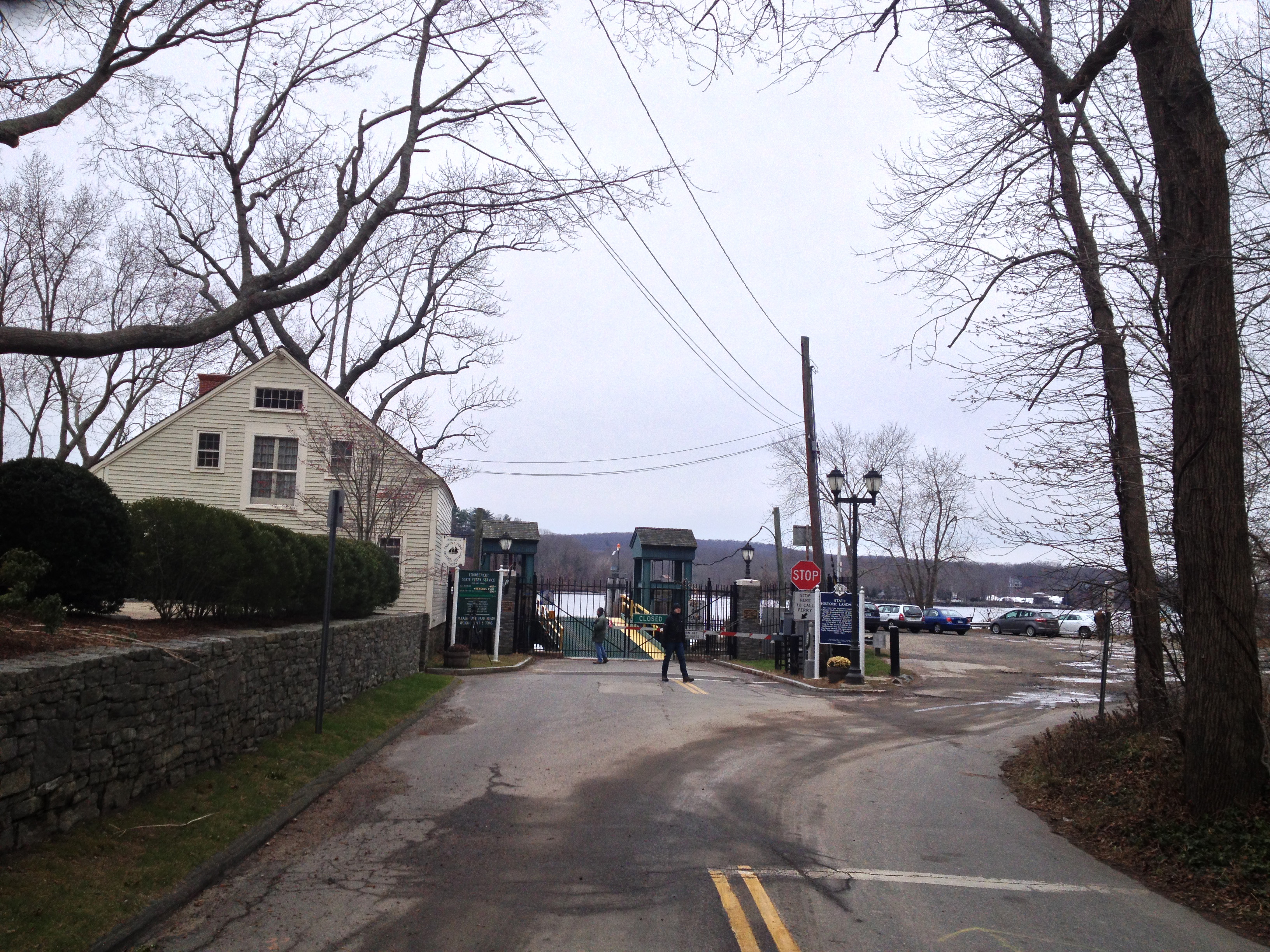
Hadlyme_Ferry_Slip1

Hadlyme_Ferry_Slip2

Although it usually only disappears for about 20-30 minutes at a time (to feed behind a nearby inaccessible hillside), it wasn’t until 11:20 that it reappeared – an agonizing, and bone-chilling (30F, light northwest wind off the river) forty minutes!  The bird was well seen by all going about its business through 11:35.
FTFL6
The flycatcher was surprisingly inconspicuous as it fed on Pokeweed berries on the hillside.

DSC_0206_FTFL2
It was far more obvious when it came out to attempt to flycatcher (we did see it go after a couple of small bugs, despite the cold temperatures).

But Phil and I were not yet satisfied – we didn’t come all this way for 15 minutes – so we waited for its return.  This time, the wait was merely 15 minutes, and we then had a most-satisfactory and fulfilling time with the bird for about 40 minutes.  Quality time with a stunning lifer!  And more time for photographs and studying.  The birds’ behavior – so far out of place at such an amazing season certainly piqued my interest to see what it was eating to survive.
DSC_0197_FTFL3

DSC_0218_FTFL5

DSC_0225_FTFL4

It was already lunchtime, and Phil and I were definitely getting hungry.  Furthermore, I did want to get over to Hammonasset Beach State Park for some fruitful birding to work on my Connecticut state list – a list lacking quite a few common birds, especially winter waterbirds. But it was hard to leave a bird as sexy as a Fork-tailed Flycatcher!  “Let’s walk away from this Fork-tailed Flycatcher so I can look for Common Goldeneyes” said no one, ever.

The ferry slip area was quite birdy, with a little flock of Dark-eyed Juncos and White-throated Sparrows that also included a Hermit Thrush.  A flock of 8 Common Mergansers were heading south down the river, while a migrant Northern Harrier passed overhead just as we were leaving.  But I wanted more than one state bird on the trip, so after spending way too much time trying to find a place to eat: “closed at 1” does not mean “breakfast all day!” were among the examples of our lunch attempts being foiled.

We needed to start to make some progress eastward, and daylight is limited this time of year, so we skipped Hammonasset, and looked for lunch on a way to a park that looked promising on a map that was more or less on our way home.  We finally had lunch – despite rather slow service that resulted in our birding time rapidly ticking away – and then rolled into Bluff Point State Park in Groton.  There were two impounded back-bays, next to an airport, just a mile or two from the coast.  On a map, that looked like a perfect spot to find some ducks…and Snowy Owls.

Unfortunately, we soon learned that we had to walk to the coast, and we didn’t have time to do that.  A scan of the airstrip didn’t yield any owls, but the water – that looked good on the map – was nearly devoid of waterbirds!  8 Mute Swans, 7 Red-breasted Mergansers, and 2 American Black Ducks were it – and none of those were state birds.

I was disappointed, but really, I saw a Fork-tailed Flycatcher!   The disappointment of only seeing one state bird on the day did not last long…and was completely forgotten as Phil and I cheered on the Patriots during their remarkable and exciting comeback that certainly helped make the drive home feel a lot shorter.  As did -of course – the fact that we were successful in our twitch of one of the more charismatic vagrants that shows up in North America.  I’d call the day a success, to say the least!

Rarity Season Ain’t Over Yet..and Fun Store News and Contest Stuff

“It ain’t over ‘til it’s over” – Yogi Berra

Before we get to my birding of recent days, a couple of quick orders of business. First of all, tonight is our “After Hours Sale” here at the store.  This is our biggest sale of the year.  From 6:00 to 8:00 tonight only, everything in the store (with the usual exception of seed, optics, and sale items) is 25% OFF!  And we’ll have treats, coffee, and other refreshments to fuel your shopping

Then rest up and be sure to join us on Saturday morning for our usual Saturday Morning Birdwalk (meets at the store at 8:00am for a carpool to a local park.  We’ll return for coffee and feeder-watching between 10 and 10:30).  While I would, of course, love to see you all year long, you don’t want to miss tomorrow (or any of the next 17 weeks) as it’s the start of the Fifth Annual “SnowBird(er) Contest,” where we’ll award points to birdwalk participants based on how cold it is.  The top three birders at the end of March will receive some great prizes!

GRAND PRIZE: MAINE BIRDS by RALPH PALMER!
The classic tome from 1948 is still a valuable reference for students of the birds of Maine. This excellent condition copy is valued at over $75. It’s great for comparing status and distribution from then to now, and for collectors of birding books.

2ND PRIZE: BACKYARD BIRDHOUSE from Coveside Conservation in Casco. Perfect for everything from House Wrens to White-breasted Nuthatches, this house is perfect for any yard and made from New England White Pine.

3RD PRIZE: $25 GIFT CERTIFICATE to EDNA & LUCY’S in Pownal – Enjoy a great sandwich, award-winning donuts, and more. Perfect for your next trip up to the Bradbury Mtn. Hawkwatch!

Visit our website for more information and how the game is played. 

OK, back to birding….

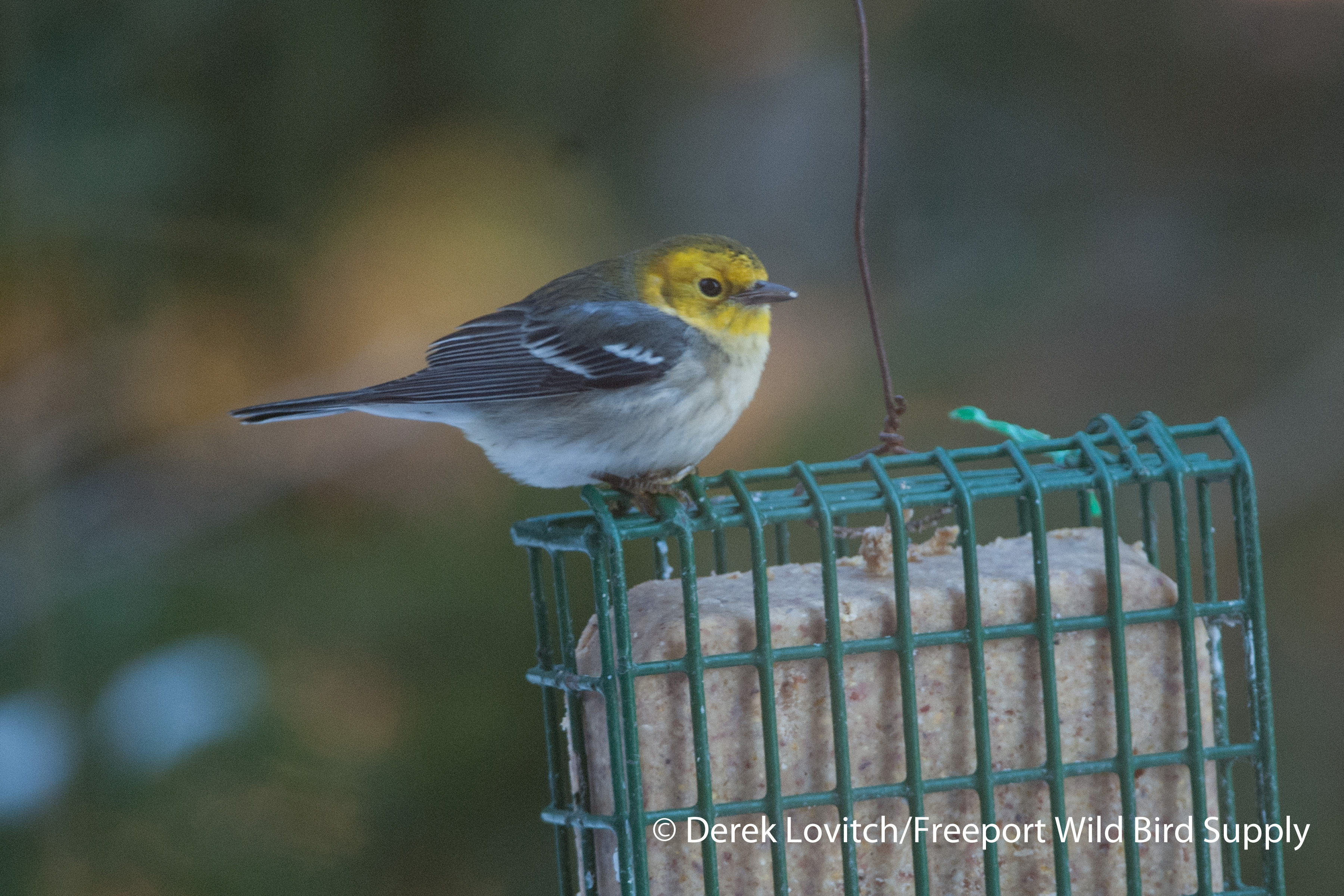
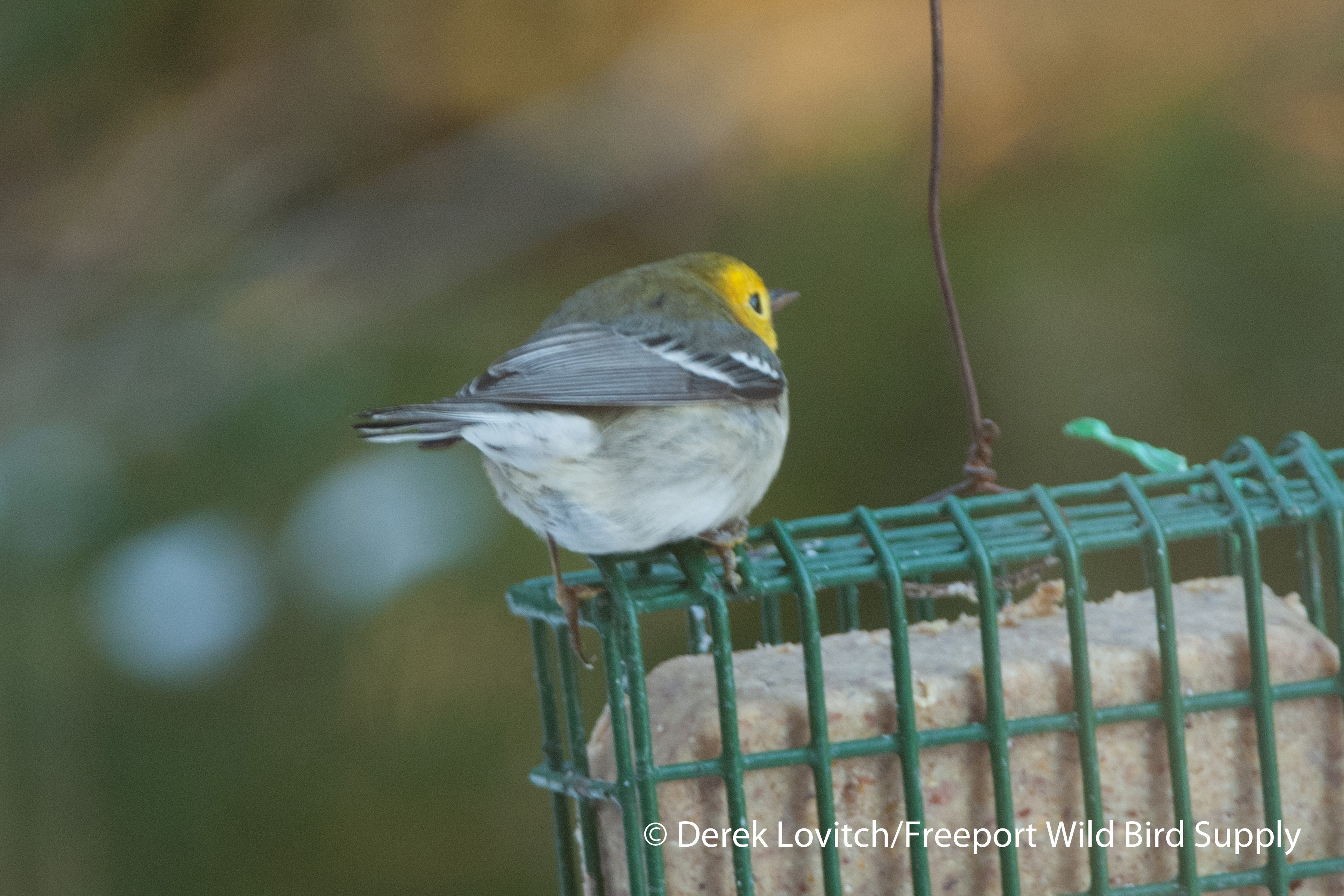
In my blog a few weeks ago in which I summarized the Rarity Season through the middle of November, I suggested that it was unlikely that many rare passerines will turn up away from feeding stations.  However, the possibility of strays “concentrat(ing) along the coast as they seek out more favorable microclimates or seasonal food sources,” still seemed like a cause for hope.  And sure enough, yesterday, I found female Hooded Warbler in the Biddeford Pool neighborhood – a wicked good December bird anywhere in the US!

Unseasonable rarities like this really fascinate me.  How did it get here?  Had it flown the wrong way during the usual period of Hooded Warbler migration and only now was detected as it moved towards the coast to escape the recent cold?  How long has it been present – maybe it’s been in these thickets for months and only now did someone walk by the right place at the right time? (Based on how thoroughly I, and a few others, work this area in November, I find this scenario a little less likely)  Or perhaps, it was a mirror-migrant afterall that flew north instead of south from its usual range in the Southeastern US.  Instead of ending up in Central America, it ended up somewhere in the interior of southern New England.  Then, the recent cold “encouraged” the bird to move on.  But “mis-wired” somehow, it just kept flying the wrong way.  I always wonder why so many birders assume that once birds have made a mistake (i.e. flown north instead of south), they’ll magically figure things out and do the “right” thing the next time.  Of course, who really knows?  But it’s a fun thing to ponder (well, it is to me anyway).

Of course, I was only down at the Pool to look for Snowy Owls.  In that same blog, I wondered if we were seeing the first signs of an irruption.  My goodness, were we ever, and so far, it is HUGE!  There have been dozens up and down the Maine coast.  Jeannette had an amazing TEN in and around Biddeford Pool on Tuesday.  Not only are they widespread, but they are in unusual concentrations.  I “only” found four yesterday, but some of my time was spent walking a mile back for the camera (it was raining and my shoulder was aching when I departed the car) and then not refinding the warbler.
DSC_0157_SNOW,Hatties,12-5-13

This particular bird, that Jeannette also photographed on Tuesday, has made a temporary home for itself in the marsh behind Hattie’s.

While it is unlikely that this density of Snowy Owls will continue, we’ll certainly enjoy it while we can.  Some will head further south, and unfortunately, no small number will succumb to starvation (the reason they’re here in the first place – and with up to 80% of raptors dying in their first winter, it’s no surprise that most of these birds will not make it back to the tundra).  I also wonder if these recent very high tides (astronomical high tide plus a deep low pressure system well offshore) will flood the marshes too much.  In such cases, many rodents (especially voles) will drown as they run out of high ground.  That’s a natural occurrence, but if there are few voles in the marshes, that will be a lot less food for hungry owls.

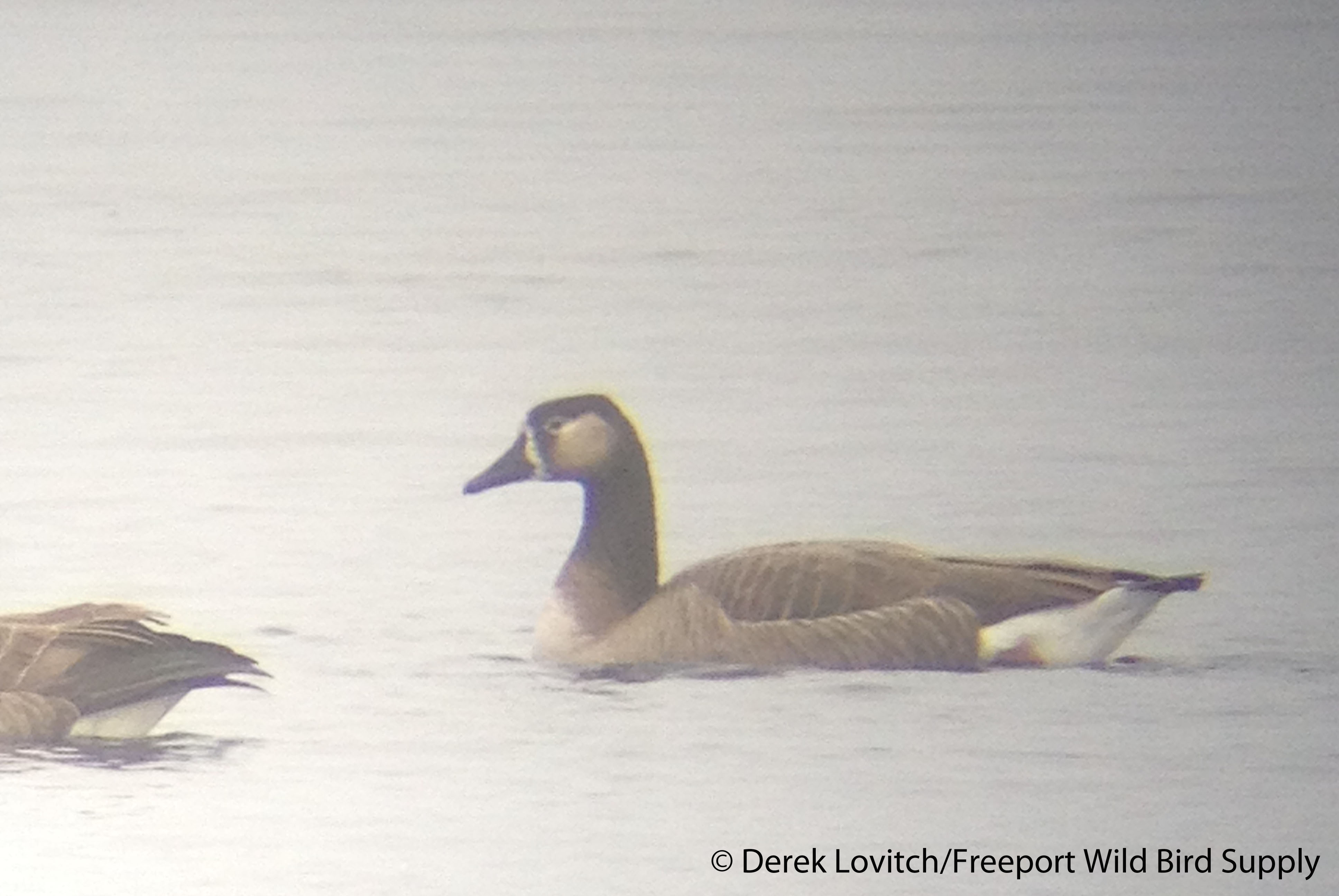
Meanwhile, in that aforementioned blog I also postulated about the potential of finally getting a good goose in the “Greater Yarmouth Goose Fields,” despite the late date.  Finally!  Although my high count of Canada Geese was only 434 birds (on Wednesday), they were punctuated by an adult Greater White-fronted Goose, in the field off of Cross and Winn Road in Cumberland – the first rarity of the season in the fields.  My stubborn perseverance finally paid off.  Today, I improved upon my photos, and I posted a couple here.

I also had a Gray Catbird at Biddeford Pool yesterday, along with the Hermit Thrush that Jeannette found on Tuesday.  I also had a Winter Wren near the store while walking Sasha on Wednesday afternoon and a Northern Flicker fly over the highway in South Portland yesterday. So there are still some “lingering” migrants around.  Meanwhile, with another increase in seaducks offshore (250+ Black Scoters off of East   Point for example), things are picking up along the coast.

Oh yeah, and there are Snowy Owls everywhere!  In other words, go birding…well, after you visit us at the store, that is!

Sabattus Pond Season-in-Review

Sabattus Pond was frozen on Monday morning, as I expected, thanks to this recent bout of unseasonably cold weather.  While 35 Mallards, 3 Hooded Mergansers, 2 American Black Ducks, and 1 Mallard x black duck hybrid were present in the outlet stream, this likely brings my Sabattus birding season to a close.

But it is just after Sabattus’s freeze-up that LakeAuburn is its most productive.  Today, 117 Canada Geese, 58 Greater Scaup, 46 Lesser Scaup, 41 Ruddy Ducks, 22 Common Goldeneyes, 8 Hooded Mergansers, 1 Bufflehead, and 1 continuing hen Black Scoter were tallied in a less-than-exhaustive search of the large lake.  The Black Scoter is a great bird inland, and she’s been present for at least five weeks now.  Meanwhile, among the Canada Geese, there was this funky mutt – apparently a hybrid with some sort of domestic thing.
CANGhybrid1,LakeAuburn,12-2-13

CANGhybrid2,LakeAuburn,12-2-13

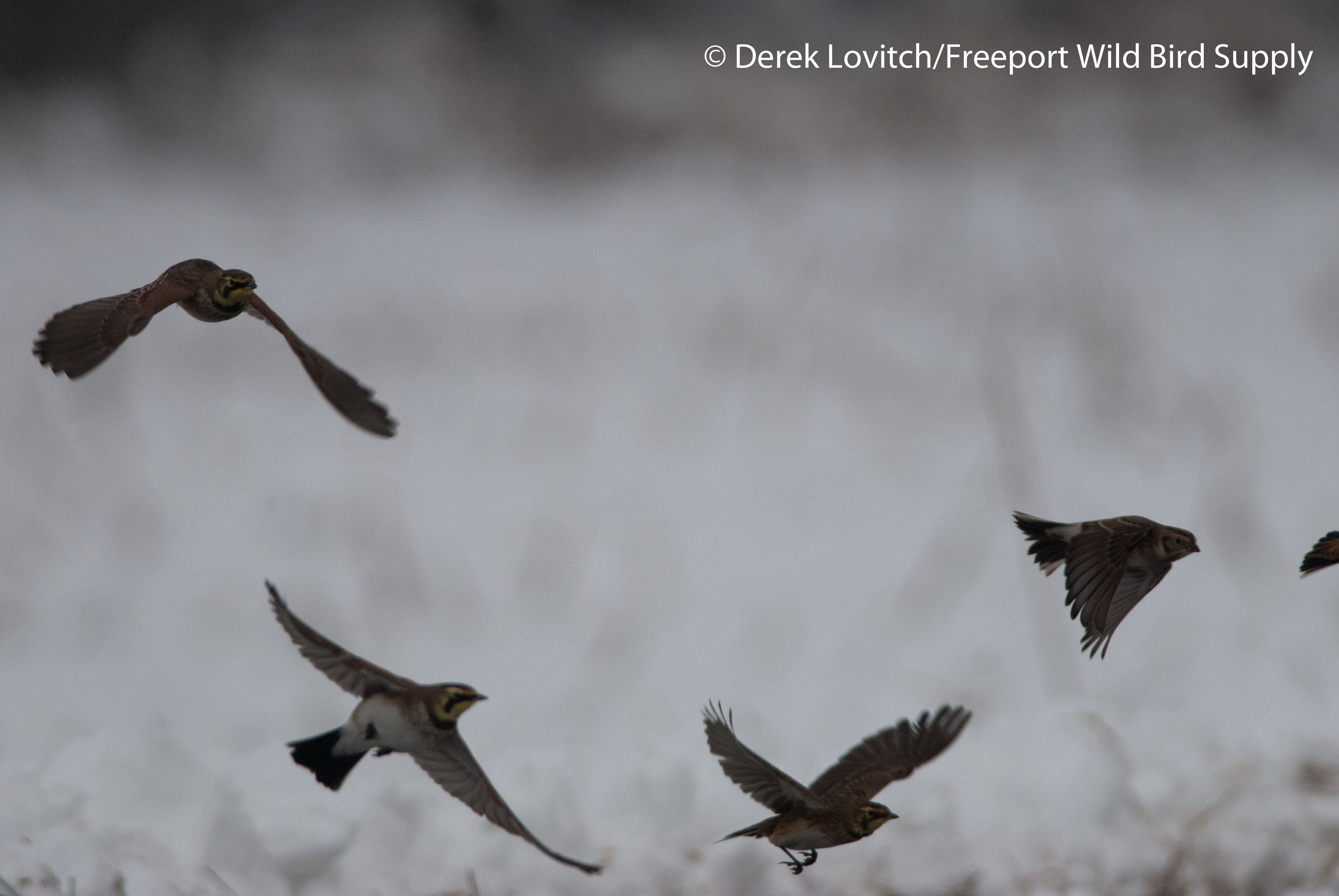
Between visiting the two lakes, I scoured Upper Street in Turner for Snowy Owls (none) or other raptors (just one Red-tailed Hawk), but I did happen upon a small flock of 35 Horned Larks that contained two Lapland Longspurs.  They were feeding at the edge of Pearl Road, taking advantage of where the plow had scraped the sides of ice and snow.  I got this lucky shot of one of the Lapland Longspurs in flight with the Horned Larks.  Unfortunately, the light mist and heavy cloud cover prevented a really great shot.
DSC_0154_LALOwithHOLA,Turner,12-2-13

But back to waterfowl…

Sabattus Pond is one of my favorite birding locations from mid-October through freeze-up.  The diversity of ducks is rarely matched in this part of Maine, and the proximity and ability to study birds (such as Lesser vs. Greater Scaup) is unsurpassed.  Each fall I tell myself I needed to visit Sabattus more often, so this fall I committed to visiting once a week, beginning on 10/30 – I would have started a little earlier in the month, but the weather at the time had been so warm that waterfowl were not yet arriving en masse prior to the end of the month.

I tallied all waterbirds (except for Herring and Ring-billed gulls) on each visit.  I was curious to document the ebbs and flows of respective species throughout a full season here.  I also hoped to find some rarities of course.

Here’s my weekly tally (on 10/30 I birded with Cameron Cox, and on 11/21, Dan Nickerson):

10/30    11/7    11/14   11/21   12/2
Canada Goose                        2          0          0          0          0
American Black Duck          14        53        63        24         2
Mallard                                154      301     254      255       35
Mallard x black duck              2          4          8          6          1
NORTHERN PINTAIL               1          1          0          1          0 (same bird)
Green-winged Teal                 0          0          1          0          0
Greater Scaup                       15        22        27        20         0
Lesser Scaup                       133      185      204      174        0
WHITE-WINGED SCOTER        0          0          0          1         0
Bufflehead                              12          9          5          8         0
Common Goldeneye               2        29          4          2         0
Hooded Merganser               11        17        15        19        0
Red-breasted Merganser        7          1          0          0        0
Common Merganser                0         3          7      224        0
Ruddy Duck                           470     531      541      273        0
Common Loon                          2          4          9          3        0
Horned Grebe                           1          0          0          0        0
RED-NECKED GREBE                0          0          1          0         0
Great Blue Heron                     0          0          0          3         0
Great Black-backed Gull          0          0          0          1         0
American Coot                          0          0          1          0         0
Belted Kingfisher                      0          0          0          2         0

Other highlights at Sabattus included a Peregrine Falcon and 40 Snow Buntings on 11/7 and 3 White-rumped and 3 Pectoral sandpipers on 11/14 (both late and noteworthy inland).

Overall, it was probably only an average season at Sabattus.  The only week I missed was last week, due to my schedule and Thanksgiving, which is unfortunate, as the pre-ice-up week would have provided some interesting data.  There were no fallouts, and only a few unexpected (or at least, expected to be seen rarely) birds (in caps above).   The Ruddy Duck numbers were well above average, but a lot of other things – especially the scaup – were average or below my high counts of recent years.  And why don’t coots visit here much anymore? And really, not a single Ring-necked Duck!? Nevertheless I find it very rewarding to regularly check one location, so I thoroughly enjoyed my extra effort this year.

On each visit, I also visited LakeAuburn, which is a much different body of water (deeper, sandier, and apparently without the invasive Chinese Mystery Snail that provides the sustenance for most of the birds on Sabattus).  Note, however, that as the numbers of ducks decrease on Sabattus, they begin to increase on LakeAuburn – the last lake to freeze in the region.

11/7     11/14   11/21   12/2

Canada Goose                        0          0          0      117
American Black Duck             1          0          0          0
Mallard                                     3          6          0          0
Greater Scaup                         0          0        38        58
Lesser Scaup                           8          0        31        46
SURF SCOTER                          1          0          1          0 (probably same bird)
BLACK SCOTER                       1          0           1          1 (probably same bird)
Bufflehead                              0          2           0          1
Common Goldeneye             0          5         21        22
Hooded Merganser               0        14           5          8
Common Merganser             0          3           0          0
Ruddy Duck                           20         2           0        41
Common Loon                        7         9           1          4
Horned Grebe                         1          0          0          1
RED-NECKED GREBE              0          1          0          0

I can’t help but wonder if some of the birds on the lake on Monday would return to Sabattus if a warm spell opens the pond back up, and if it does, I am sure birds from points north might drop in as well as they are frozen out of lakes and rivers.  In other words, the duck-watching season on Sabattus may not be over yet, but I think I will be turning my attention elsewhere unless it warms up dramatically.

Meanwhile, on all of my visits to the two lakes, I added at least a few other stops in between in the hopes of finally finding a really “good” bird in Androscoggin County (away from Sabattus, that is).  Uh…nope.  My only real highlights away from the two lakes were the two Lapland Longspurs on Monday.  My rarity drought in AndroscogginCounty might continue, but the waterbird watching is certainly exceptional.

By the way, in a series of spring visits, I have found very, very few ducks on Sabattus Pond, for reasons unknown.  Therefore, other than my annual check on Maine Maple Sunday, I’ll have to anxiously await next October!

A Day Along the New Hampshire Seacoast

It was like birding in another world yesterday as Kristen Lindquist and I headed south of the border…to the New Hampshire Seacoast.  For one, we saw birders everywhere!  Well, everywhere where there wasn’t wall-to-wall development.  And goodness, even in winter, there are a lot of people around here (relatively speaking of course). Yup, we weren’t in Maine anymore!

But I have a lifetime listing goal of seeing 200 species in every state, and my goal was to hit that mark in New Hampshire by the end of this year.  This goal is not for any “total ticks” target, or submission to any listing competitions, or anything else other than an excuse and occasional extra motivation to see more parts of the country.  The 200 number seems a reasonable goal to me for most states (I won’t reach it in Hawai’i!) that involves seeing a fair sample of what a state has to offer, and usually in multiple seasons – whether its scenery, food, or other interests (i.e. Rutgers football bowl games!), there’s always a good reason to travel near and far and lots of fun to be had in the process.  And of course I will be birding in between anyway, so long ago I began keeping track of it.

So the 200 goal was born, and it was time to get to know my neighboring state a little better.  Outside of the White Mountains (where I love to bird, hike, and of course, guide), I really didn’t know New Hampshire birding and birding sites very well, and I am happy to say that has changed this year.  While I joked with friends about “never having to bird in NH again!” after the goal was met, I did learn quite a bit about birding the state in the process.  But yeah, I am partial to birding in Maine.

Anyway, I have been watching the NH listserve and plotting my visit.  I needed 5 more species, and I kept an eye on when a handful of uncommon to rare birds joined the more expected species that I “needed.”  Seeing recent reports from the Seacoast – and seeing that my days off will be limited (aka: likely non-existent) from now to Christmas, I decided yesterday would be the day, despite early morning ice that slowed our drive (lots of cars off the Turnpike yet again) and persistent drizzle and occasional light rain.

We began in the Hampton Marsh, where the high tide was pushing Horned Larks to the edges. Check. We then ran into Ben Griffith and Lauren Kras, and then joined them in a Snowy Owl search.  Unfortunately, this was to no avail.

Pulling into Hampton Beach State   Park, the two hen King Eiders (197) performed nicely.  I teased out a few Purple Sandpipers (199) from the flock of 100 or so Dunlin (198), and ran into more friends.
DSC_0062_henKIEI1,HamptonHarbor,12-1-13_edited-1

DSC_0054_henKIEIwithCOEI1,HamptonHarbor,12-1-13_edited-1
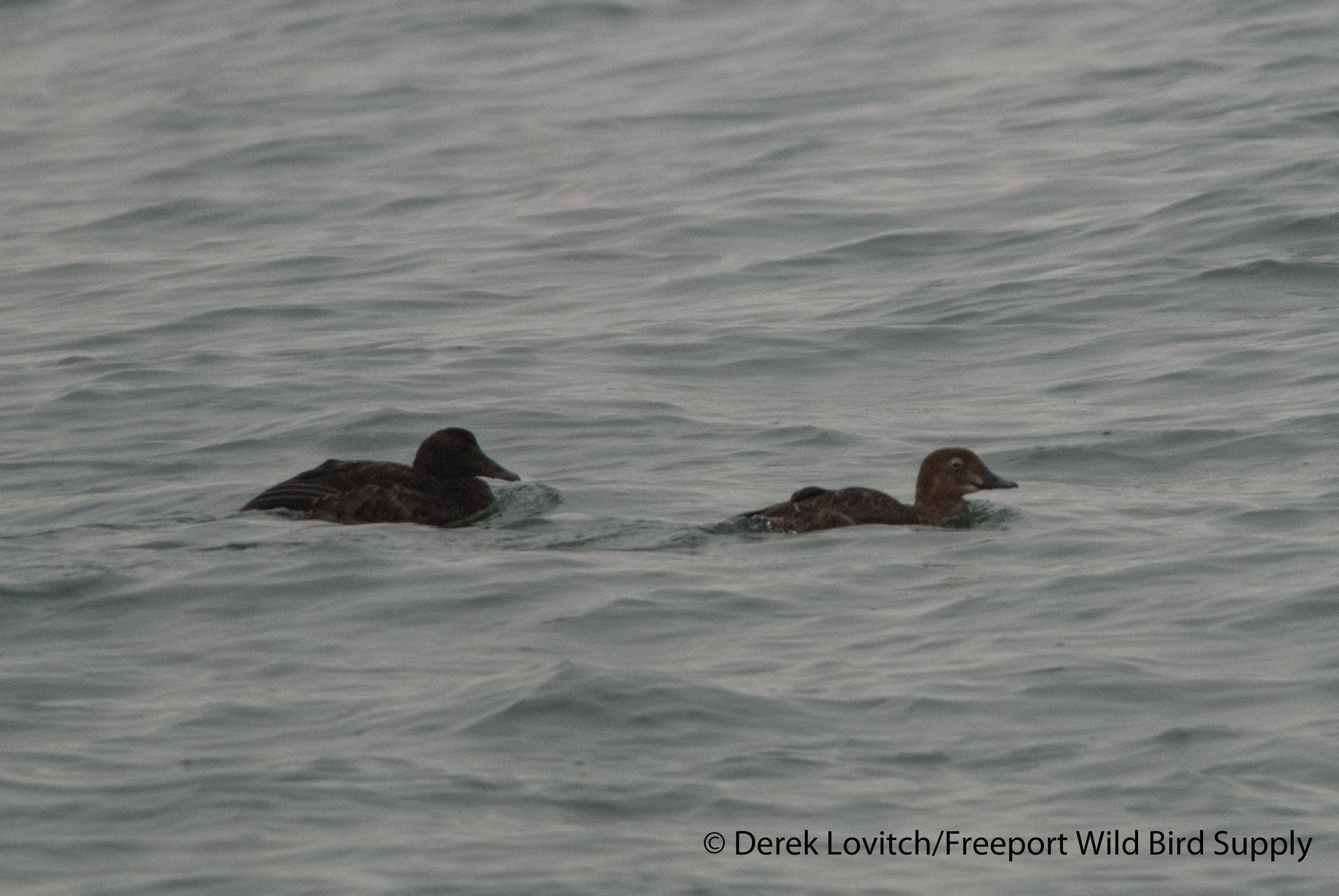
Compare the “Queen” Eider with the hen Common Eider on the right. Note especially the concavity of the bill, the face pattern, and the cooler, grayer tone to the plumage.

After chatting and enjoying the eiders for a bit, Kristen and I grabbed some lunch and then returned to the coast.  Snowy Owl would make a nice milestone bird.

Shortly thereafter, I received a text from Ben “Nelson’s-type Gull on Eel Pond,” followed by “Correction – possible Thayer’s Gull.”  And off we went.

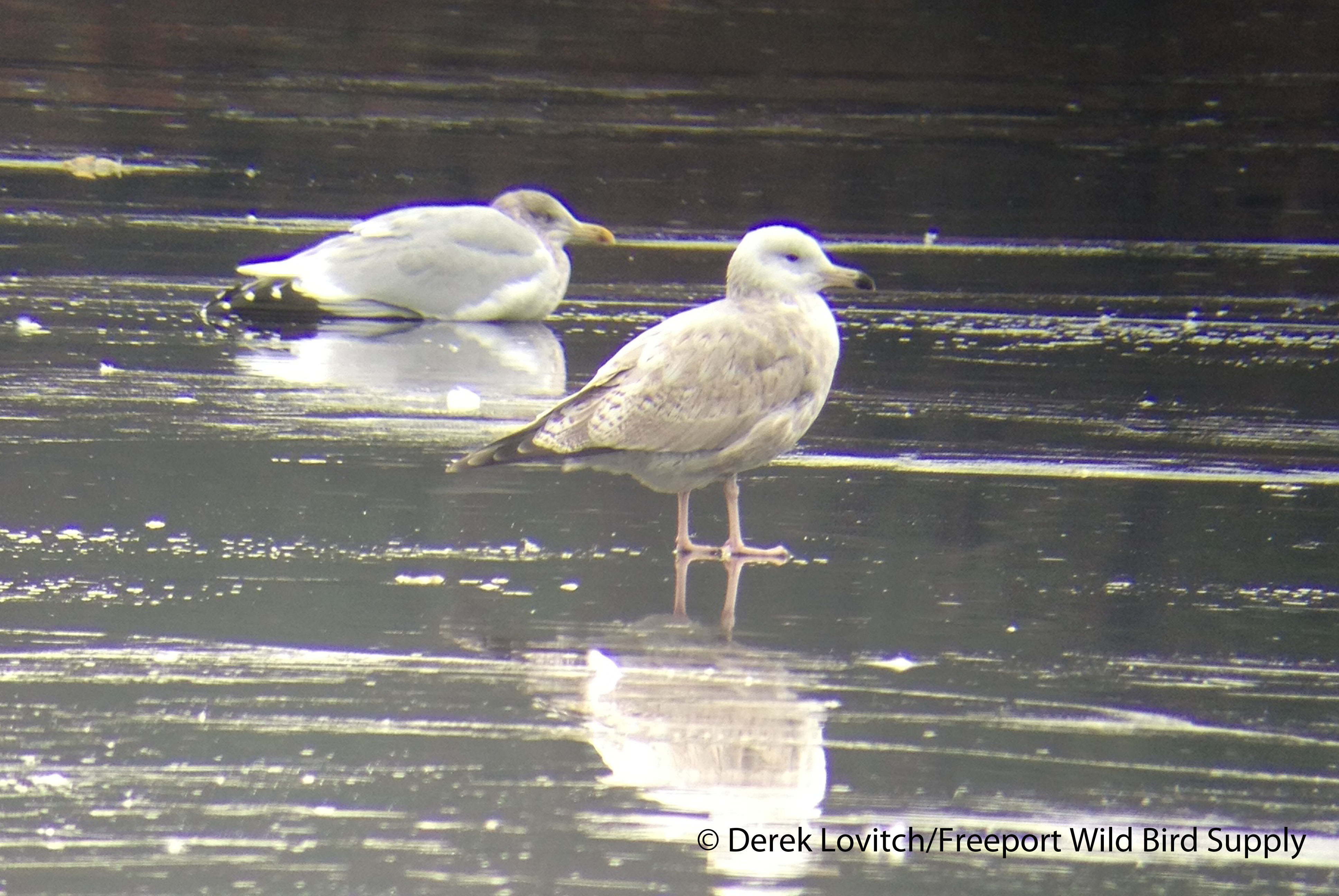
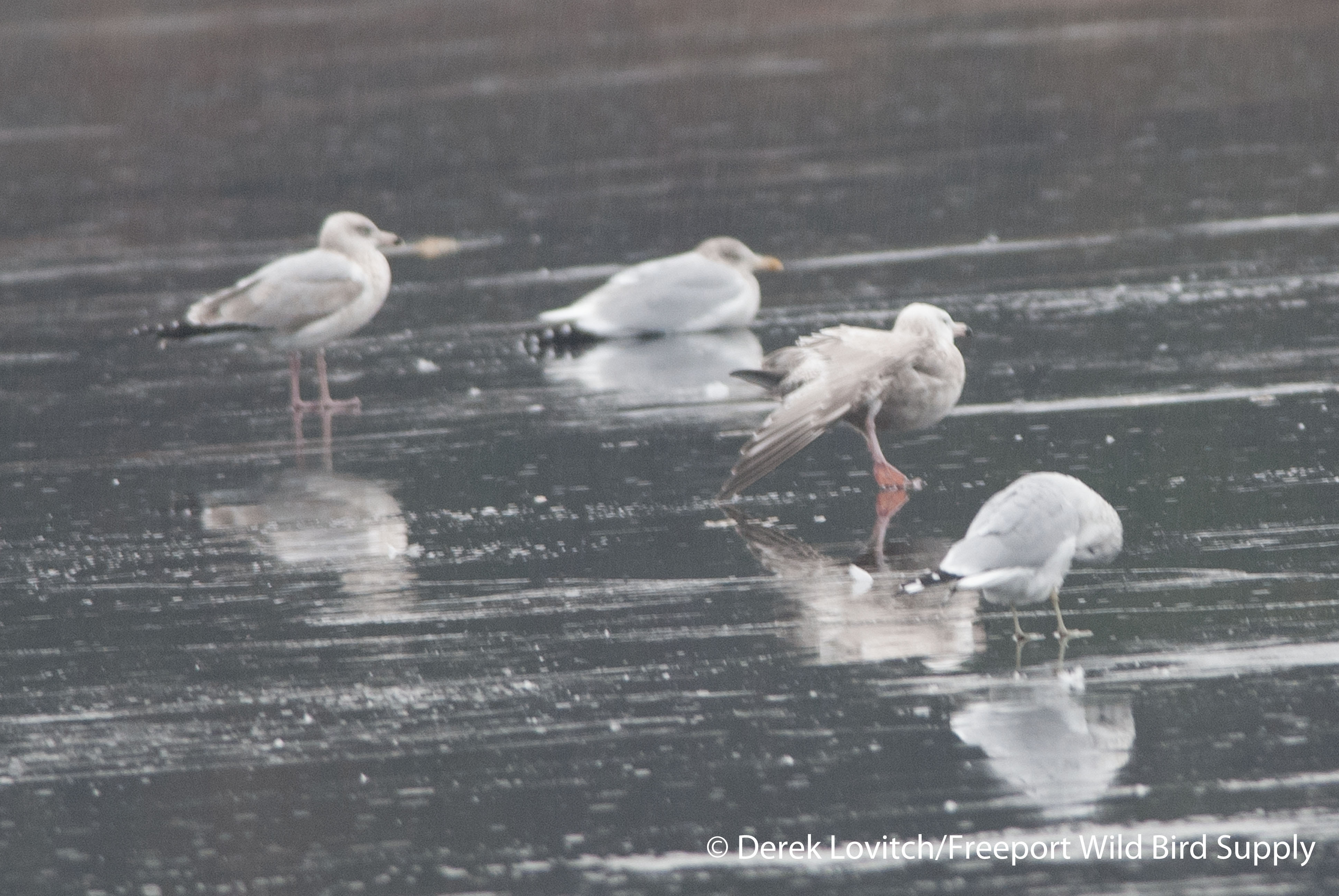
Arriving at Eel Pond, the bird in question immediately stuck out, and I set about studying and photographing it.  While it seemed that people were at least leaning heavily towards a Thayer’s Gull by this point, I had my doubts.  But, I also have limited experience with 2nd Cycle Thayer’s Gulls.  I also did not have a better explanation for this odd bird at the time.  But Thayer’s Gulls are tough, 2nd Cycle gulls are a pain in the ass, and a rarity like this (potential 6th NH record) of course warranted extra scrutiny.

I began to take notes, and even a little feather-sketching.  I took lots of photos.  Birders came and went.  Ben, Lauren, Jason Lambert, and I continued to work on the bird.  Kristen headed to the car to check on the Patriots and to warm up.  She was clearly the smart one.

There were a series of things that bothered me about this bird being a Thayer’s Gull, and I scribbled those down in my notes:
–          The primaries were multiple shades darker than any other part of the bird.
–          The tertials were extensively marbled.
–          The bill was so extensively pale with such a finely demarcated black tip for a bird that was otherwise not very advanced in plumage.
–          The bill looked rather large and heavy, especially at the tip.
–          The eye color was orange-yellow, not light, but definitely not dark.
– The legs were dingy pinkish-flesh.

IMG_1979_gull1

DSC_0106_NEGU_spreadingwing1

IMG_1961_gull_facingaway

While none of these features really eliminate Thayer’s Gull, they are consistent with “Nelson’s Gull,” the name given to Herring x Glaucous Gull hybrids as well.  But try as we might, we could not get the bird to fly closer.  I never saw it with the wing fully outstretched, but the bird was photographed well in flight earlier.

It was not a big bird, and looked smaller than most – but definitely not all – of the nearby Herring Gulls.  Most Nelson’s I’ve seen are noticeably larger, but large gulls are notoriously variable.  But look at this shot – it sure doesn’t look small compared to the 1st cycle Herring Gull on the left!  And see that deep build?  It doesn’t look at slim and dainty as many Thayer’s look (speaking of variable – and subjective – gull criteria).  The head looks rather blocky, and the bill was rather hefty.
DSC_0086_NEGUwithsmallHERG,EelPond,12-1-13

Meanwhile, shortly after my arrival and the beginnings of ponder the mystery gull, a Carolina Wren sang…number 200!  Yeah, it was pretty obvious to all that my NH birding has mostly been in the mountains, but this was a silly hole that somehow was not filled on previous coastal trips.  Mission accomplished.  So I went back to pondering the gull.  And, with daylight fading and the long drive (especially for Kristen) still ahead of us, we hurried over to RyeState   Park to catch up with a Snowy Owl (201), which was one of our real targets of the day.  With at least 12 birds seen along the coast on Saturday, we were surprised that – despite the amount of birders combing the coast – it took us all day to see a Snowy (it sounds like a total of 2 or 3 were seen along the coast by day’s end).
SNOW1,RyeStatePark,12-1-13_edited-1

Driving home, we listened to the Pats once again stage a come-from-behind victory, and as Kristen departed, I hit our library and the internet for some gull study time.  After reviewing my photos of the standing gull, and comparing that to the photos in references – especially Howell & Dunn – and online, I was definitely leaning more towards Thayer’s Gull, as most of my concerns seemed to be accounted for.  But I needed to see the spread wing.

And then Ben forwarded me Jason’s photos.  My response was simple, “Ewww.”  The extensively dark primaries were as extensive and dark as they appeared in the field.  While darker Thayer’s can show dark shading bleeding onto the inner webs of the outermost primaries, the outer three primaries on the Eel Pond bird were clearly wholly dark, and the dark was extensive on the next two as well.  I just don’t think a Thayer’s can show that.  While no single field mark alone can define any gull, this very well could be enough on its own to eliminate a Thayer’s (or, dare I say it, a pure – whatever the hell that means – one), a bird known for its “picket fence” primaries of dark outer webs contrasting with pale inner webs.  Adding that with the other features – including the structure of the head, bill, and body – I’m unable to call this a Thayer’s Gull.  Short of a DNA sample, it’s a “Nelson’s Gull” to me, although I think there is some argument to be made for this to not be a first-generation hybrid.  I sent the link to Jason’s photos (which are far superior to my own) to a handful of friends, and they have so far concurred that this is a Nelson’s-type gull.  But, gulls are one of those birds that everyone can have a different opinion on, so I await responses from others.  I just hated to rain on the parade, especially since Lauren and Ben were so helpful in my little listing quest that initiated the day.

Ahh, large gulls. The Snowy Owl was easier to identify. I like Snowy Owls.

Cape Neddick through Wells – Snowy Owl!

Jeannette and I birded from Cape Neddick through Wells on Tuesday, seeing a really pleasant variety of birds in the process in the calm before the storm. Delayed by a snowy start and somewhat slick roads (OK, not slick if didn’t drive like it was a dry race car track – 7 cars were off the road between Freeport and York, however) that backed up traffic (“Hey, there’s a car in the ditch, let me look!”), we didn’t reach the Nubble neighborhood until almost 9:00, but by then the snow had ended, the ceiling lifted a bit, and a very light wind made for decent  – albeit a bit raw – birding conditions.  Although we didn’t have anything earth-shattering, we did have a fair number of “good birds.”

Without a day off together in December (the store is open seven days a week from Thanksgiving to Christmas), our annual late November run through our usual route is the last time we focus on thickets and migrant traps in the hopes for lingering migrants and rare passerines.  Next time, waterbirds will be more of a focus.  And the limited number of non-resident passerines that we detected today (other than Dark-eyed Junco, White-throated Sparrows, American Tree Sparrows, and a scattered few Yellow-rumped Warblers) confirms that – as did the impressive, and growing, quantity of waterbirds.

Three Carolina Wrens was the highlight of a thorough check of the Nubble neighborhood thickets, although we did have a group of about 40 Snow Buntings fly over.  45 Black Scoters, 13 Purple Sandpipers, 8 Great Cormorants, 6 Harlequin Ducks, etc at The Nubble were a sign of things to come along the shoreline.

Passerines were few and far between along Marginal Way and the adjacent neighborhood, but great numbers of waterfowl along the shoreline more than made up for it.  As with everywhere we looked at the ocean today, all three scoters were present in numbers, including a close and talkative group of about 100 Black Scoters.  Lots of Long-tailed Ducks, Common Eiders, and a total of 20 or 21 Harlequin Ducks were also present, along with a half-dozen Purple Sandpipers.

OgunquitBeach was a hotspot today, with a flock of 75-100 Sanderlings being joined by 32 Dunlin.  200+ Mallards and a handful of American Black Ducks were in the river, and a Belted Kingfisher hunted from its shore.  One of the surprises of the day was two Ruby-crowned Kinglets actively foraging in four Dwarf Alberta Spruces in planters in front of the motel.  A Winter Wren at Beach Plum Farm was a very good bird for this late in the season (they’re the “All but in winter wren” in Maine), and we had two Peregrine Falcons and an immature Northern Harrier in and around Harbor Road and Community Park in Wells.

We checked WellsHarbor and the jetties from a couple of vantage points (wouldn’t this be a perfect place to find a Ross’s Gull!?) and then scanned the offshore rock ledges still above water on the incoming tide from the parking lot at the end of Mile Road.   Six more Dunlin were within the scattered flock of 75+ Purple Sandpipers, and there were a lot of the expected waterbirds, including 6+ Red-throated Loons and at least four Red-necked Grebes.

All day long we were scanning the marshes and shoreline rocks in the hopes of seeing a Snowy Owl.  There have been a rash of reports in the past 7-10 days, as it looks like an irruption is underway.  I have not heard any reports of lemming and vole populations on the tundra, but a southward push of Snowies means there are either too few rodents (a natural cyclical crash, especially in lemmings) or too many owls (good breeding productivity thanks to a boom year in lemmings).  Either way, there are a lot of hungry owls around Maine right now.  It was surprising that based on the recent uptick in reports, we did not see one all day…until our very last stop with the light rapidly fading.  One immature female-type (extremely heavily barred throughout the body, other than the face) was standing guard on the last of the rocking ledges that I scanned.  Any day with a Snowy Owl is a good day in my book!

Please remember that these birds are not down this far south by choice!  The birds are here because they are hungry, or even starving (one emaciated bird was found dead at Prout’s Neck the other day, for example).  While this charismatic and captivating species is sought by birders, photographers, and almost everyone else, we must be mindful of the dire straights that many of these birds are in.  Too often we have heard stories of birds harassed, flushed repeatedly, or otherwise bothered by supposed fans.  In the case of a Snowy Owl perched on a rock 100 yards or more offshore, there is little harm that can come from gawking at them from land.  But when they are in the marsh, in the dunes, out in a field, on a building, etc, how about we remain just as respectful to these magnificent creatures and admire them from a safe distance.  Besides, the birds’ natural behaviors will be more fascinating than watching it fly away from you.  No, you really don’t need to see the bird a little better, or get a photo a little closer . . . admire them from a distance and let’s not make life any more difficult for these birds – or ruin it for other birders!

Rarity Season-to-date in Review

I hope you didn’t think that my lack of blogging of late equated to a lack of birding!  Quite the contrary, actually – it is Rarity Season afterall!  I’ve just been posting more frequent, shorter updates on our store’s Facebook page (you can scroll through the timeline here to see recent posts), especially since I have found myself a bit over-extended with a variety of other projects at the moment – I’ve been working late most nights recently to make up for my morning birding gallivanting.

In fact, I have been birding even harder than usual – if you can believe that!  Spurred on by extraordinary late October finds of an “Audubon’s” Yellow-rumped Warbler at Fort Foster and a Bell’s Vireo (a state bird for me!) on Bailey Island, I found myself somehow even more motivated to beat the bush through the first half of November.  In addition to the 10th Annual South Coastal Maine Rarity Roundup that I organize every year, I worked hard at various traditional hotspots, favorite late fall patches, and various attempts to think “outside the box,” such as walking the 4.5 miles into work today to check a handful of swales and thickets en route (not very productive, except for the exercise, for the record)

While Audubon’s Warbler and Bell’s Vireo are going to be tough to beat – the early-rarity-season bar was set awfully high! – I have had some outstanding birding in November, even if there has yet to be another “Mega.”  Personal highlights in the first half of November include a very nice variety of lingering (pioneering?) warblers, a Yellow-breasted Chat, multiple Orange-crowned Warblers (I’ve had four this season to date), huge numbers of Ruddy Ducks on Sabattus Pond, and overall just really good birding with good diversity.

Elsewhere around the state, current highlights include a Northern Hawk-Owl in Lincoln – not a vagrant in the “Rarity Season” sort of way, but exciting nonetheless!  And perhaps that, along with an early Snowy Owl report from Biddeford Pool, portends a decent owl irruption this winter?  There certainly won’t be any winter finches around this year.).  Other birders have detected a variety of late warblers around the state (wow, November Chestnut-sided in Falmouth!), and lots of lingering shorebirds – especially in Scarborough Marsh.  But as far as the first half of November usually goes, there have been no truly exceptional birds.  Looking around the region, we see goodies such as a Calliope Hummingbird in New Hampshire, A Black-chinned Hummingbird in Connecticut, and the usual fun array of rarities in Massachusetts (Scissor-tailed Flycatcher, Yellow-headed Blackbirds, Western Tanager, American Avocet, etc).  However, it is an ultra-spiffy adult Ross’s Gull near Montreal that is the real headliner of the fall in the Northeast so far (and yes, I am being tempted to chase this, I have to admit).

So there are some good birds around the region, and no doubt there are some good birds still to find in Maine.  Other than a couple of days, it has been fairly temperate to mild all fall, and I can’t help but wonder if birds that arrived in the state through various vagrancy mechanisms (see Chapter 7 of my book, How to Be a Better Birder) have yet to concentrate along the coast as they seek out more favorable microclimates or seasonal food sources.  Also, as the season progresses, more rarities turn up at feeding stations as natural food supplies diminish.  December rarities, for example, are often discovered at feeders.  Two tardy Chipping Sparrows are at our store’s feeders as I type this, by the way; I’m hoping they pick up a clay-colored cousin.  A lot of folks are reporting very busy feeders right now, which is a good sign, especially considering the lack of irruptive finches.

The last few days have seen a nice southwesterly flow aloft.  Look at Friday’s wind map, for example:
wind map,11-15-13

That extensive southwesterly flow early in the month would have surely deposited stuff like Cave Swallows in New England, but I wonder if that window has already closed.  A couple of Caves in Connecticut as recently as the 9th gives me some hope, however.  Contrast that map with the more zonal flow that we have seen for much of the month, such as on 11/10:
wind map,11-10-13

Although few birds are “blown” out of range, certain winds facilitate the arrival of more vagrants in certain areas than others.  And southwesterly winds in late fall are definitely the desired winds here in Maine.  With a fairly complex weather system on its way – including some really severe storms in the Midwest – I remain hopeful for some more out-of-range treats.  Interesting weather does have the tendency to produce some interesting birding, even without facilitating the arrival of rarities.
surface map, 11-17-13

At the very least, behind this system, we should see a return to colder, seasonable weather (as opposed to the 50’s of the last two days for example), and this should help push birds to feeders, warmer coastal and urban areas, etc.  Also, hopefully it will bring some snowfall to points north, as this year’s Goose Rarity Season has been lackluster, especially in the Greater Yarmouth Goose Fields.  A Greater White-fronted Goose that has been in Scarborough for a couple of weeks, and another in Berwick earlier in the month, along with a couple of Cackling Goose reports have been the only geese-of-note in southern Maine.  While “The County” saw single Barnacle and Pink-footed Goose in October, I have not had a single “good” goose in the fields of North Yarmouth, Cumberland, and Falmouth all season.  A Bean (!!!) Goose, Barnacle, and Pink-footed all in Nova   Scotia right now give me plenty of hope, and last year, things really didn’t pick up locally until mid-November anyway.  I will continue my thrice-weekly circuit.

So the short version of this is: go birding!  There are rarities out there to be discovered.

South Coastal Maine Rarity Roundup TEN!

BLPW,SheridanStreet,Portland,11-3-14
This Blackpoll Warbler was one of the record 9 species of warblers tallied on the day, and one of the top birds in my Portland territory. It was only the third time that this species was spotted by Rarity Roundup teams.

Each year on the first weekend of November, a group of us get together to scour the Southern Maine coast for vagrants, lingering migrants, pioneers, irruptive, and other seasonal highlights.  Coinciding with the peak of “Rarity Season,” we set out to use the geography of the Maine coast, coupled with knowledge of the best habitats and vagrant traps in order to find as many “good” birds as possible.  While this year failed to produce any “Megas,” we once again had a great day in the field, found lots of fun stuff, and enjoyed good food and beer at the Great Lost Bear at the end of the day (the real reason we all get together for this event!)

119 species were tallied by the 8 teams of the TENTH Annual South Coastal Maine Rarity Roundup, six species above our 10-year average, despite somewhat more limited coverage than in the past few years. The continuing “Audubon’s” Yellow-rumped Warbler was added to the cumulative checklist, while we also had our second-ever Snowy Egret, Prairie Warbler, and Nelson’s Sparrow.  Blackpoll Warbler and Clay-colored Sparrow appeared for the third time.

Most teams experienced a decidedly “birdy” day, especially from Portland through Scarborough.  A fallout of Dark-eyed Juncos, White-throated Sparrows, and Hermit Thrushes occurred with overnight northwesterly winds and a line of pre-dawn showers, with the fallout especially evident on the Portland Peninsula.  I’ll have more about the fallout on a blog entry later today.

Record high tallies were set for Pectoral Sandpiper (13), Northern Flicker (10), Carolina Wren (11), Hermit Thrush (52: the 26 in Portland alone was only one short of the previous all-time high), “Western” Palm Warbler (3), Chipping Sparrow (12), Field Sparrow (3; tie), and Lapland Longspur (37).  9 species of warblers was a new record as well, and Painted Turtle was added to our non-feather species list.  All but the longspurs can likely be explained by the unusually warm season to date.

Territory Highlights were as follows:

– Area 1, Kittery-York: Davis Finch.
1 NASHVILLE WARBLER, Legion Pond, Kittery.
1 Pine Warbler, Fort Foster.
1 PRAIRIE WARBLER, Fort Foster.
1 “AUDUBON’S” YELLOW-RUMPED WARBLER, Fort Foster.

– Area 2, Ogunquit/Kennebunport: Turk Duddy.
2 American Wigeon, Phillip’s Cove, Ogunquit.
1 Northern Pintail, Phillip’s Cove, Ogunquit.
1 Lesser Yellowlegs, Goose Rocks Beach.

– Area 3, Wells/Kennebunk: Doug Suitor, David Ladd, and Slade Moore.
2 Semipalmated Sandpipers, Webhannet Marsh
2 Gray Catbirds, Laudholm Farm.

– Area 4, Biddeford-Saco: Pat Moynahan, Marian Zimmerman, Joanne Stevens, et al.
1 NASHVILLE WARBLER, Saco Yacht Club.
1 CLAY-COLORED SPARROW, Timber Point.
1 NELSON’S SPARROW, Day’s Landing.
2 Lapland Longspurs, Day’s Landing.

– Area 5, Scarborough: Ed Hess, Noah Gibb, and Leon Mooney.
8 Great Egrets
1 SNOWY EGRET, Pelreco marsh
12 American Coots, Prout’s Pond.
8 LONG-BILLED DOWITCHERS, Eastern Road.
35 Lapland Longspurs

– Area 6, Cape Elizabeth: International Man of Mystery, Claudia, Robby Lambert.
2 “Western” Palm Warblers, private property
1 “Yellow” Palm Warbler, private property
1 DICKCISSEL, Higgin’s Beach.

– Area 7, South   Portland: John Berry and Gordon Smith.
1 Ring-necked Pheasant, Fort Williams Park.
1 Yellow-bellied Sapsucker, Calvary Cemetery.
1 Pine Warbler, Bug Light Park

– Area 8, Portland: Derek Lovitch and Kristen Lindquist; Jeannette Lovitch (Capisic and Evergreen); and a cameo by Doug Hitchcox.
2 Eastern Phoebes, Eastern Promenade.
1 BLUE-HEADED VIREO, Mercy Pond.
1 ORANGE-CROWNED WARBLER, Eastern Promenade.
1 BLACKPOLL WARBLER, Sheridan Street.
1 White-crowned Sparrow, West Commercial Street.

As usual, I exhaustively cover the Portland Peninsula and once again the most urban block in the state produced some great birds.  Kristen joined me for the second year in a row, while Jeannette (and Sasha) helped out with a few outlying patches.  Doug joined us just long enough to find the only White-crowned Sparrow of the entire day.  In addition to the goodies listed above, Kristen and I amassed 9 species of sparrows.

The fallout that I mentioned above was very evident in the morning, as we birded Portland’s East End. 150+ White-throated Sparrows and 100+ Song Sparrows littered the Eastern Promenade.  While Dark-eyed Juncos were fewer there, we encountered some big groups elsewhere, such as 60+ behind the East End School and 50+ in the lot on Sheridan Street, with 70+ later in the day in Western Cemetery. White-throats were everywhere: 50+ on Sheridan   Street for example.  And once again there was a decidedly disproportionate number of White-throated Sparrows in gardens and landscaping of downtown Portland.  A short loop from One City Center through Monument Square, behind Portland High, and back through Post Office Park yielded 35 White-throats, with the only other native migrant being 7 Hermit Thrushes.  Like the sparrow, Hermit Thrushes appear in a wildly disproportionate number to other migrants – especially all other thrushes – in downtown Portland.  I’m convinced that something causes White-throated Sparrows and Hermit Thrushes to either a) become disoriented by urban lights more often/more readily, especially under low ceilings (it was cloudy for most of the night and morning) or perhaps b) they simply don’t leave these lots in a morning flight as species such as Dark-eyed Juncos might.  In fact, I just read in an article in the Brown Alumni Magazine that a friend of the store dropped off about collisions in New York City that since 1997, more White-throated Sparrows have been found dead than any other species.  Coincidence?

Our sum of 26 Hermit Thrushes was truly amazing, as was our overall diversity on the day.  While the mild weather certainly has a lot to do with the number of lingering/pioneering birds that we, and other teams, encountered, the late-season fallout earlier in the morning certainly helped our cause.

Here are the overnight reflectivity and velocity images, with 10pm, 1am, and 4am once again used as an example.
a 10pm 11-2-13 ref

b 10pm 11-2-13 vel

c 1am 11-3-13 ref

d 1am 11-3-13 vel

e 4am 11-3-13 ref

f 4am 11-3-13 vel

At 10pm, there’s mostly rain in the area, but birds are mixed in.  By 1:00am, birds are on the move, as the rain has mostly moved into the Mid-Coast and offshore.  Birds were still on the go at 4:00am, as a narrow line of showers moved through the coast.  About an hour later, a steady rain developed (not shown) that continued until a short time before the 6:20 sunrise.  I believe this is why there were so many sparrows in and around the city come dawn.

In other words, it was another great day of birding in urban Portland in the heart of “Rarity Season!”