St. Vincent and St. Lucia (with a quick stop in Barbados), Feb 2016!

23a_edited-2
St. Lucia Parrot.

Awoken by the light and warmth of the sun, I could muster little more than to roll over, push the curtains aside, and look at the tiny brown bird sitting on the fence. My lifer Barbados Bullfinch! Jeannette staggered to the window to glimpse it as well. We then went back to sleep for a couple more hours.

Those extra two hours did little to alleviate our exhaustion, but hey, at least we saw our bullfinch! The only endemic landbird on Barbados (as well as an endemic subspecies of Carib Grackle, which we also saw out the window), this was the reason for our layover here. A layover that was supposed to be 24 hours, including some time to explore and a get a full night’s rest. Instead, we had 10 hours on the island. And by the time we finally got out of bed for real, it was only about 5 hours – and that included getting to and waiting at the airport.

See, our trip from Maine was anything but smooth. During the second half of the Super Bowl, our early am flight from Portland to JFK in New York was cancelled, and everything was re-booked for two full days later. That was not going to work. So Jeannette spent the better part of the half on hold, and eventually getting us on a flight the next afternoon, and rebooking our JFK-Barbados flight.

Jet Blue ostensibly cancelled that early am flight due to weather, but that was complete B.S. There was nothing more than some wet snow at JFK that next morning, and snow didn’t reach Maine until after noon. There would not have been any interference with that 5:20am flight.

But there was a storm coming, so we were worried about our 3:10pm flight out of Portland. Instead of chancing it, we took the 6:30am Concord Trailways bus from New York City (a newer service, under better circumstances, this was actually a very pleasant experience and one we would consider again…especially at only $69 per person each way). 6 hours later, we walked a mile to a subway station for the E train, and took the E to the Airtrain. While on the Airtrain, a text message alerted us to the arrival of our original flight to Barbados. Salt in the wounds. Moments later, the Airtrain was evacuated when someone left a bag on board.

Finally arriving at the airport, we had 8 hours to explore. 8 hours is a lot in an airport terminal. Anyway, at least we were there, and our 9:30 pm flight out of JFK left with only a minor delay, and we were on our way.

We arrived on Barbados at 3:30am, cleared customs, and then got a cab to our Christ Church guesthouse where we were supposed to spend the night. We had alerted them to our delay, but when our cab dropped us off and sped away, no one was to be found. We knocked, and knocked some more, and finally got someone to pick up the phone. We crawled into our room at about 5:00am.

It was about 7:30 when I looked out the window, and by the time we made it outside (sans coffee, so it was really a struggle! And thank goodness we travel with Cliff Bars) we had just little more than an hour to wander. But Barbados Bullfinch was as common and conspicuous as promised, and so were the grackles.  And Bananaquits – one of our favorite birds in the world.

A short walk fueled by a Coca-Cola from a little shop provided just a glimpse into the island’s town avifauna, such as zippy Black-faced Grassquits, stunning Green-throated Caribs, and ubiquitous Gray Kingbirds.
1_edited-1Our Barbados guest house.

1a_edited-1With bullfinch habitat right out the door.

2a_edited-2Caribbean Elaenia

2b_edited-2

Barbados Bullfinch.

2c_edited-2Green-throated Carib.

2d_edited-2Carib Grackle

3_edited-1View of Kingstown from Grenadine Hotel.

But before we knew it, we were back at the airport. 40 minutes after departure we were back on the ground – and back on schedule – in St. Vincent, the first of our two primary destinations of our trip. We were kinda awake on the cab ride to our hotel, the Grenadine House, on the outskirts of Kingstown. An early dinner, and then early to bed. It was a much needed night of rest.

Unfortunately, we had another snafu, as our birding guide for the day had to postpone because the truck she was going to be using for the day broke down. Luckily, we had two full days on the island, so we just rescheduled for the next day.

This turned out to work to our advantage, as we awoke to pouring rain in the morning. Once again, we went back to bed.

Finally revived, we took a walk to the nearby botanical gardens. We were finally birding for real (read: awake), and enjoyed reacquainting ourselves with some of the common birds of the region, including Grenada Flycatcher, Antillean Crested Hummingbird, and Scaly-naped Pigeons. And the spiffy all-black St. Vincent race of the Bananaquit – one of our favorite birds just got even better!
The afternoon was spent wandering the markets and shops of Kingstown, adding a few species to our fledgling island list along the waterfront, such as migrant Barn Swallows and resident Brown Boobies and Magnificent Frigatebirds.
4_edited-1
5_edited-1Cannonball Tree flower.

6_edited-2St. Vincent Bananaquit.

6a_edited-2Gray Kingbird

7_edited-1St. Vincent Parrot captive breeding program.

8_edited-1

Day 3, 2/11:
Lystra Culzac-Wilson (one of the island’s two birding guides) picked us up early in the morning, and by 6:00 we were already on the trail. Shortly after sunrise, from an overlook, we had spotted our quarry: St. Vincent Parrots! At least 15 in all, with pairs and family groups (pairs plus a youngster from the previous year) squawking from nearby hillsides, flying from ridge to ridge, and feeding in trees across the valley. It was cloudy, and the light was still low, and most of the birds were far, so photography was a challenge.

However, Jeannette managed a couple of shots of a close fly-over, and we did enjoy great views as the birds flew around.  Wow. What a bird!  (Yeah, I know, our pictures don’t do it justice.)

Moseying along the nearby Vermont Nature Trail, Purple-throated Caribs were our next lifer – big, gorgeous, stunning hummers.  The endemic subspecies of House Wren finally showed itself, and we saw regional endemics like Lesser Antillean Bullfinch and Lesser Antillean Tanager for the first time since we visited Grenada 7 years ago.

But the endemic and Endangered Whistling Warbler eluded us, so we were off to the other side of the island to search for it. On some seemingly-random trail (accessed by crossing some farm fields and cattle pasture) in the Montreal area (yes, we traveled from Vermont to Montreal, but had to pass through Mesopotamia to do it!), we hiked up yet more stairs (there are a lot of stairs on trails in St. Vincent, we found) and after quite some effort, Lystra whistled a Whistling Warbler into our vicinity, and after a couple of glimpses, I was treated to a stunning view as this shy little bird popped out in the open for a moment just where I happened to be looking. Unfortunately, Jeannette wasn’t looking in the same exact place, so she only caught a fleeting glimpse. Lystra worked hard for us though.

Our lifer Brown Tremblers a’ trembling were anything but fleeting, as near the bottom of the trail three birds put on quite a show. The “chocolate thrasher-wren” was one of our most-wanted non-endemics (but limited to the Lesser Antilles) of the trip, so it was nice to get a good show.
9_edited-19a_edited-2St. Vincent Parrots!

10_edited-111_edited-1

Day 4, 2/12.
Since Jeannette wasn’t completely satisfied with her Whistling Warbler, we decided to try again at the Vermont Nature Trail. We glimpsed a few more parrots, had some better looks at Purple-throated Carib, but unfortunately only heard a single Whistling Warbler. We knew it was time to give up when several busloads of cruise ship passengers arrived on the trail, quite a few clearly out of their element and voicing their displeasure about things like steps, mud, and the pleasantly few mosquitoes.

Back in Kingstown, we finally twitched some delectable curried goat at Stoplight 2 restaurant, on Lystra’s recommendation. As you know, food is second only to birds when we travel, and it’s a local place off the tourist route (well, what there was for a tourist route here) that we love to find.

Also, unlike most tourists, we prefer mass transit, and although we did need a cab to get to the Vermont Trail in the morning, the afternoon was spent traveling strictly by mini-bus. Cheap, easy, a great way to see the towns, meet the people, and especially here (as in Grenada), listen to some local beats.

A short trip to Villa Beach was a change of scenery from the rainforest, and added several birds to our paltry island list, including Royal Tern, Brown Pelican, Osprey, and Belted Kingfisher. A walk into the village of Villa Flat added Tropical Mockingbird, and since we were on the island’s dry side, most of the Bananaquits had yellow-bellies. Undoubtedly, the extra melanin was a benefit in the wet environs, where it likely helps protect the feathers from mold or lice or something.

The Friday afternoon-evening streets of Kingstown were hopping, so after a couple more Harouns (the local endemic lager), we foraged for dinner, finding a great little barbeque stand near the harbor, where we enjoyed a little local flavor – both food wise and conversation. Actually, talking with the grillmaster was a lot of fun and provided that view into local life that you don’t get at a sterilized resort. I do think we were officially “liming,” which is an art form of relaxation and conversation that is practiced like a religion in the Caribbean. Oh yeah, and the BBQ pork was outstanding – perfectly succulent, tender, and the sauce hit every note.
12_edited-112a_edited-214_edited-1Curried Goat at Stoplight2 Restaurant.

15_edited-1 Villa Beach

16_edited-117_edited-1Kingstown BBQ

Day 5, 2/13.
We felt our return to the Vermont Nature Trail the prior day in the hopes of improving Jeannette’s view of the Whistling Warbler precluded exploration of more of the island and its habitats. However, despite the temptation to go further afield, we decided to take it easy (despite having also missed the endemic subspecies of Brown-throated Solitaire which apparently had not yet begun to sing; we never heard a peep from a single one while in the forest), and just return to the Botanical Gardens, a short walk away, for some relaxed birding and photography.

A single Little Blue Heron was the only “new” bird for us (our 38th species on the island), but we had great looks at all of the local flycatchers, including Yellow-bellied Eleanias and Grenada Flycatcher. We were also very surprised to spot a Lesser Antillean Tanager so low, and at the back of the gardens, we flushed a hunting Common Black-hawk, which also came as a surprise to us at the outskirts of the city.

We then went into town for lunch once again (the food at the Grenadine House was quite good, but as usual, we prefer to be even more local in our dining). Our disappointment that our new BBQ friend wasn’t open yet was alleviated when I turned on my “food-dar” and found a fried chicken stand down a waterfront alley, which turned out to be the best piece of fried chicken we have ever had. It was thoroughly coated with what tasted like more spices than flour, and each bite was packed with flavor.

We really could have used another day on the island, but once again, we were back at an airport, and this time, we were heading to St. Lucia. Rich (for its size) in endemics, and with an impressive conservation ethic (compared to most of the region), this island has always been very high on my list.  And it did not disappoint.

Our hour-long taxi ride crossed through the middle of the island, and deposited us at our quaint and quiet little guesthouse, Peace of Paradise (aka “Lorraine’s’). Lesser Antillean Bullfinches, Antillean Crested Hummingbirds, and Bananaquits (100% yellow-bellied on this island) greeted us, which were more welcome than whom we shared our bedroom with(The next day we learned that Sun Spiders were completely harmless. Nonetheless, we were thankful for the bug netting over the bed at night…even if I may have become a bit ensnared in it as I stumbled to the restroom in the middle of the night).

19_edited-219a_edited-2Black-faced Grassquit

19b_edited-2Grenada Flycatcher.

20_edited-1Best fried chicken ever!
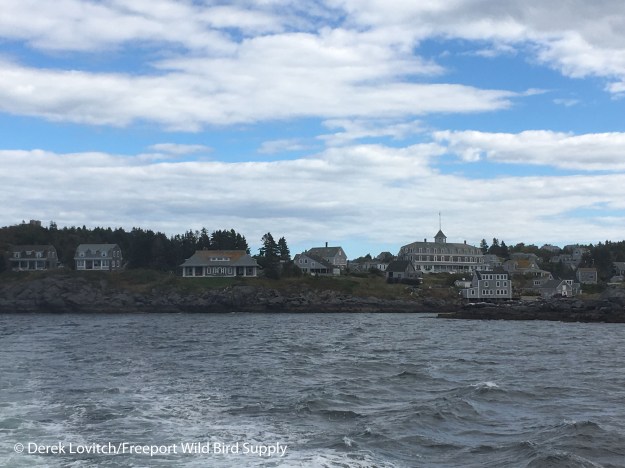
21_edited-122_edited-1“Lorraine’s” Peace of Paradise, St. Lucia.

23_edited-1Our bedroom Sun Spider.

Day 6, 2/14:
With a larger roster of endemics, and with two sides of the island to seek them on, we hired local birding guides for two days to hedge the bet. While we can’t really afford to hire a guide for every day of a trip, we also wouldn’t really want to as we like to also learn and explore on our own. However, we ALWAYS hire local guides for a day or two, for several reasons.

Obviously, they are LOCAL and therefore know the spots better than reading someone’s trip report <ahem>. We certainly could have gotten to the Vermont Nature Trail on St. Vincent without Lystra, but we could never have known the best places to stop and the prime patches to search. We also never would have found that back-up trail near Montreal (nor did I have any interest in renting a car and taking on those roads!). We want to see these endemics, and we never want to leave feeling we “need” to come back (wanting to come back is another story) because we missed something. We also want to learn more about the birds, the habitat, the plants and animals, the places to eat lunch, and what life is really like in the places we visit. Some of our best experiences with guides haven’t even been about the birds, such as eating street food in Port of Spain, Trinidad or getting a tour of our guide’s mother’s garden in Grenada.

Most importantly, however, after we leave, these guides are the ones who will make sure these birds exist for the next visitor. Protecting the birds and places they love, and that provide the income for them and their families, are how these special places and special species will have a chance to survive. Without supporting the local economy, too many of the remaining natural areas we want to protect will fall to development, agriculture, and other ways for an economy to be developed or sustained.

St. Lucia has a great infrastructure (much wider and safer-seeming roads than we saw on St. Vincent, for example) to get around, and it wasn’t hard to discover online that the Des Cartier Rainforest Trail was the place to go. Nonetheless, we looked forward to our time there with our local guide and dark and early (checking clothes and footwear for snoozing Sun Spiders), we met our guide, Vision, who, along with Adams (who we would spend time with the next day), make up Wildlife Ambassadors, the upstart nature tour company of the island.

Our first stop was in fact the Des Cartier trail, and it wasn’t long before Vision pointed out our first St. Lucian endemic (and one of the more challenging and endangered ones), the St. Lucia Black Finch.

And that’s when our life list really began to blossom (at least from an island), as in rapid succession, we added St. Lucia Oriole, Antillean Euphonia, St. Lucia Parrot, Pearly-eyed Thrasher, Scaly-breasted Thrasher, Lesser Antillean Flycatcher, and St. Lucia Pewee (split by most everyone except the AOU). And unlike on St. Vincent, we lucked into some great views and photo opportunities of the local parrot.

Our luck continued with great views of two more lifers, Rufous-throated Solitaire and St. Lucia Warbler. The song of the solitaire was other-worldly, and the charismatic (and common) little warbler would become one of our favorite birds of the trip.

Earlier, I mentioned how local guides are so important for conservation, and after we exited the forest, our next stop was a perfect example of this. The Aupicot Wetlands was an old coconut estate that the local guides have gained access to and are working to protect. With future plans for an ecotourism destination of some sort, for now, they have got the local landowners to reduce the impact of local fisherman and protect the habitat. And because of this effort, it was teeming with birdlife, even though a very dry season was quickly drying out the shallow pond. Migrant Greater and Lesser Yellowlegs and Semipalmated Plovers were joined by migrant Blue-winged Teal and American Wigeons. Great and Snowy Egrets and Little Blue Herons were joined by single Green and Great Blue Herons, and we identified a spiffy Little Egret among the flock. A couple of Common Gallinules joined a little “cover” of coots – both resident the-species-formerly-known-until-very-recently-as-Carribean-Coots and presumed migrant, small-shielded “American” American Coots.

After a check of some of the environs around the Hewanorra International Airport (migrant Solitary Sandpipers and some of the only Eared Doves on the island), we dined on chicken curry and chicken pelau among Carib Grackles on the beach at The Reef Beach Café.

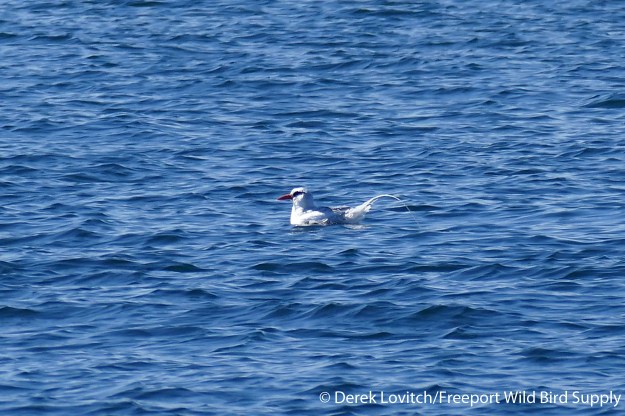
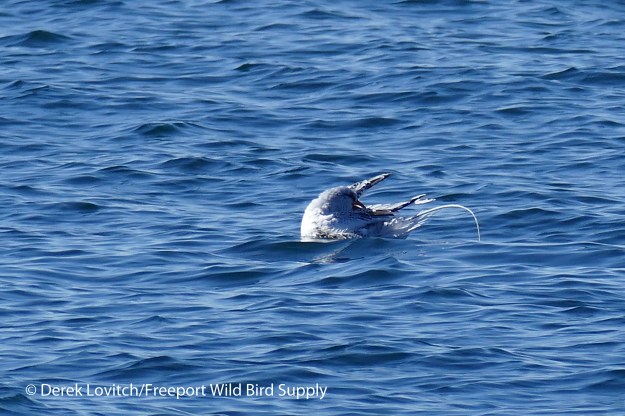
Next up was the southern tip of the island, with the second highest lighthouse in the world. More importantly, however, there were Red-billed Tropicbirds below.

Back in Prasline, Vision had one more trick up his sleeve, eventually pulling out our lifer Endangered White-breasted Thrasher from some roadside scrub, along with a couple of Lesser Antillean Saltators – our 12th lifer of the day!

23b_edited-2St. Lucia Parrot pair.

24_edited-124a_edited-2Little Egret, Aupicot Wetlands.

25_edited-1

26_edited-1

Day 7, 2/15:
We really cleaned up the day before, but we had a few more birds to search for – and more of “someone else doing the work” – as Vision picked us up dark and early for a drive to the island’s northeastern side. There, we met up with his colleague, Adams, and three other visiting birders from the States to pile into one high-clearance, 4WD vehicle for the rough and treacherous road to dry native forest in Grand Anse.

A most fruitful Mango tree (pun intended!) yielded our next lifer, the Gray Trembler, plus better looks at St. Lucia Oriole and several Lesser Antillean Saltators. The forest yielded oodles of St. Lucia Warblers, at least two pairs of St. Lucia Black Finches, a whopping 7+ White-breasted Thrashers, and a pair of ultra-cooperative Lesser Antillean Flycatchers.

Bridled Quail-Doves were giving us fits though, as this shy and reclusive bird was not making it easy for us. Adams worked hard, and we stalked at least 5 different birds. Mostly, they were glimpsed by one or two people as they flew across a gully or flushed straight away. Eventually, I saw one (in flight) well enough to count, but Jeannette was still looking for more than a shadow. I had a decent look at one on the ground as we returned to the vehicle and Vision (rejoining us after a quick vehicle repair) spotted one, but Jeannette is still waiting for her satisfactory view.

Back up the hill and in Vision’s roomy van, the group headed towards the water, arriving at Pigeon Island National Landmark. We ate chicken rotis as we watched Royal Terns and Brown Boobies.

At Gros Islet Bay, Vision was excited to point out the first island record of Great Black-backed Gull, a 1st winter bird that he found here in December. While there was some disagreement over its identification, he and Adams had become convinced by a visiting birder that it was in fact a Great Black-backed Gull. Just on a quick impression of overall shape and size, I thought otherwise, so we pulled around for a closer view.

And as I suspected, it was a Lesser Black-backed Gull, and an impromptu gull workshop explained why. I felt bad, however, as I was afraid I had burst the bubble of a rarity, and I took a lifer off my guide’s list. But then Vision assured me it was quite alright – Lesser Black-backed Gull was also a first record for the island and a life bird for himself!  (I’ll be submitting a write-up to Vision, Adams, and the regional editor for North American Birds, so feel free to shoot me an email if you too would like a copy of the report)

Sandwich Terns and a handful of Ruddy Turnstones were new for our triplist, and we finished up with yet another high-note: an urban Cattle Egret rookery teaming with adults, juveniles, and sprinkled with Snowy Egrets, a family of Common Gallinules, and a confiding Green Heron (hmm… I think I know which hotel, and which rooms, we want to stay at next time!).

Vision dropped us off at our final lodging of the trip (speaking of ending on a high note), Fond Doux Plantation and Resort. A heavily-vegetated eco-lodge with its own cocoa plantation (and fruit trees, and garden that provided much of the food for the restaurant), we were surrounded by Scaly-breasted Thrashers and hummingbirds in our little cottage. Yup, we were definitely on vacation now!
27_edited-127a_edited-2St. Lucia Oriole

27b_edited-2St. Lucia Warbler.

27c_edited-2White-breasted Thrasher

27d_edited-2Lesser Antillean Flycatcher

28_edited-2Adams and Vision.

29_edited-129a_edited-1

Lesser Black-backed Gull, 1st St. Lucia Record!

29b_edited-230_edited-130a_edited-2Juvenile Black-crowned Night-Heron.

30b_edited-2Green Heron.

30c_edited-2Cattle Egrets.
30d_edited-2

Day 8, 2/16.
Jeannette out did herself finding this place, as it was a real birder’s paradise (without trying). A St. Lucia Oriole surprised us on a pre-breakfast walk, and at breakfast, we were joined by dining Lesser Antillean Bullfinches. Two bold pairs not only picked up scraps, but they also foraged on the table while we were eating. One even landed on Jeannette’s water glass and took a sip!

This was pretty awesome, and the biologists in us had to have some fun, too, so we conducted a little “food preference study,” a video of which we posted to our store’s Facebook page.

After a long and educational breakfast full of lots of fresh fruit and good coffee (finally!), we decided to explore the island by mini-bus. We took the bus from Fond Doux into the town of Soufriere, then got a connection to the big city of Castries.

Small city parks hosted Zenaida Doves, Carib Grackles, Rock Pigeons, Gray Kingbirds, Shiny Cowbirds, Black-faced Grassquits, Bananaquits, and American Kestrels, while walking the path along the harbor yielded Snowy Egrets and Little Blue Herons, Magnificent Frigatebirds, and a couple more Green-throated Caribs. But after lunch, some shopping for spices, hot sauce, and a couple of souvenirs, we had enough of city life (and crowds of cruise ship passengers) and took the bus back to the quieter town of Soufriere.

Laughing Gulls (our first of the trip) were right where Vision told us they would be, and bacon-wrapped fried plantains at Petit Peak restaurant which we enjoyed with a couple of afternoon Pitons (the endemic beer) need to become “a thing.”  Also, you couldn’t beat the view of Petit Piton for the enjoyment of your Piton beer.

After a little walk, we decided to have dinner at Water Front De Belle View because I wanted some more curried goat and I was desperate for a good callaloo soup (the one at Fond Doux was just too salty). I wholeheartedly recommend both here.

We grabbed one of the last mini-buses back to Fond Doux, and called it a night.
31a.31b. Bullfinch maleFemale (top) and Male (bottom) Lesser Antillean Bullfinches joining us for breakfast.

30e_edited-2Scaly-breasted Pigeon.

34_edited-1Castries.

Day 9, 2/17.
We squeezed in a little more birding by hopping on the bus and taking it uphill from Soufriere to the Bouton Gap. A short, but steep and muddy hike brought us to a series of small overlooks and passed through some productive edge habitat.

We were out in search of our last likely lifer of the trip, Lesser Antillean Swift, but with frequent downpours and low clouds, we were not holding out much hope for high-flying aerial insectivores. So we were forced to content ourselves with a couple of looks at fly-by St. Lucia Parrots, lots of St. Lucia Warblers, cooperative St. Lucia Pewees, and our best view yet of a Pearly-eyed Thrasher.  And then, between a break in the rain, several dozen swifts were on the move, heading into the valley below, affording us very good views from above and below. It was my 20th lifer of the trip (19 for Jeannette and she remained unsatisfied with her quail-dove shadows).

We found some great vegetarian Jamaican-style patties from a food truck on the streets of Soufriere, before we hopped on a bus once again for the short ride back to Fond Doux. There, we finally took the plantation tour that we have been trying to find time (or lack of heavy rain) for, enjoyed some good views and nice looks at Purple-throated Caribs, St. Lucia Warblers, and another Pearly-eyed Thrasher. The grounds turned out to be more extensive, and with more less-disturbed forest than we thought, so had we a little more time, no doubt we could have picked up a few more “yard birds” of note.

Our last night of vacation, it was time for our splurge dinner, and so we headed over to Boucan Resort – “the chocolate hotel” – where everything on the menu of their fine restaurant had cacao incorporated in it some way. Sometimes themes like this come across as gimmicky and forced, but that was most definitely not the case here. From the cocktails to the amuse bouche to each entrée – and of course, dessert! – were incredibly well-conceived and perfectly executed. In fact, when all was said and done, Jeannette and I both agreed it was one of the top 3 or 5 meals we have ever had. Anywhere.  So yeah, good way to finish a trip!
38_edited-1

39_edited-139a_edited-2Antillean Crested Hummingbird

39b_edited-2St. Lucia Pewee.

39c_edited-2Antillean Crested Hummingbird

40_edited-141_edited-1.1Our cottage at Fond Doux.

41a_edited-2Purple-throated Carib

42_edited-1.2Dinner at Boucan.44_edited-2

Day 10, 2/18.
We awoke to heavy rain, and rain that didn’t quite let up as quickly as we would have liked. Therefore, we dallied a bit, fed more bullfinches at breakfast, and eventually had a break in the rain to walk up a nearby side road towards a Nature Trail that was recommended for its birding, and especially its views of the two Pitons.  A Gray Trembler, lots of St. Lucia Warblers, and a couple of good looks at Mangrove Cuckoos suggested we probably should have done this sooner as well. In fact, the birding was good enough, and combined with waiting out a few downpours under trees, we made it to the entrance of the trail just as we had to turn around.

Jeannette worked on photographing Antillean Crested Hummingbirds and both Green-throated and Purple-throated Caribs from the porch of the office at Fond Doux as we waited for Adams, who surprised us with an offer of a ride to the airport in exchange for a discussion about developing their ecotourism business. With the third employee now on board, Wildlife Ambassadors has the potential to become a force in birding and nature tourism on the island, and this could be a very good thing for birds and bird conservation here. The Aupicot Wetlands and their protection is a perfect example, as both resident and migratory birds (including some of “our” birds from North America) are rapidly losing safe refugia in the Lesser Antilles. Even better, unlike some islands, they don’t shoot everything that lands here.

We were happy to add our limited travel dollars to the cause – money will talk; when these places are financially worth protecting, they are much, much easier to protect – but also happy to offer some advice and suggestions on everything from websites and Facebook, to tour amenities. We certainly wish Adams and Vision well, and look forward to keeping in touch and seeing what they accomplish in the future.

We also made a quick stop to see if any Grassland Yellow-finches were present near the airport, squeezing in a few more minutes of birding before we began the long trip home.  But alas, it was smooth and easy, and nothing like our trip south!
44a_edited-2Scaly-breasted Thrasher.

45_edited-1Fond Doux. At least I finally looked at the pool!

45a_edited-2Green-throated Carib

45b_edited-2Purple-throated Carib.

Trip/Island List (* life bird).

Barbados:

  1. Barbados Bullfinch*
  2. Zenaida Dove
  3. Carib Grackle
  4. Eurasian Collared-Dove
  5. Black-faced Grassquit
  6. Cattle Egret
  7. Caribbean Elaenia
  8. Bananaquit
  9. Shiny Cowbird
  10. Gray Kingbird
  11. Green-throated Carib
  12. Common Ground-Dove
  13. Rock Pigeon
  14. Scaly-naped Pigeon
  15. Antillean Crested Hummingbird

St. Vincent:

  1. Cattle Egret
  2. Magnificent Frigatebird
  3. Bananaquit
  4. Black-faced Grassquit
  5. Rock Pigeon
  6. House Sparrow
  7. Shiny Cowbird
  8. Gray Kingbird
  9. Common Ground-Dove
  10. Antillean Crested Hummingbird
  11. Broad-winged Hawk
  12. Yellow-bellied Elaenia
  13. Grenada Flycatcher
  14. Scaly-naped Pigeon
  15. Green-throated Carib
  16. Eared Dove
  17. Great Egret
  18. Barn Swallow
  19. Carib Grackle
  20. Brown Booby
  21. Spotted Sandpiper
  22. Common Black-Hawk
  23. St. Vincent Parrot*
  24. House Wren
  25. Black-whiskered Vireo
  26. Lesser Antillean Bullfinch
  27. Lesser Antillean Tanager
  28. Purple-throated Carib*
  29. Smooth-billed Ani
  30. Whistling Warbler*
  31. Brown Trembler*
  32. Green Heron
  33. Royal Tern
  34. Brown Pelican
  35. Osprey
  36. Belted Kingfisher
  37. Tropical Mockingbird
  38. Little Blue Heron

St. Lucia:

  1. Royal Tern
  2. Cattle Egret
  3. Zenaida Dove
  4. Rock Pigeon
  5. Carib Grackle
  6. Gray Kingbird
  7. Common Ground-Dove
  8. Lesser Antillean Bullfinch
  9. Bananaquit
  10. Antillean Crested Hummingbird
  11. Green-throated Carib
  12. Spectacled Thrush
  13. Scaly-naped Pigeon
  14. Mangrove Cuckoo
  15. St. Lucia Black Finch*
  16. St. Lucia Oriole*
  17. Purple-throated Carib
  18. Antillean Euphonia*
  19. Pearly-eyed Thrasher*
  20. St. Lucia Parrot*
  21. Broad-winged Hawk
  22. Scaly-breasted Thrasher*
  23. Lesser Antillean Flycatcher*
  24. St. Lucia Pewee*
  25. Rufous-throated Solitaire*
  26. St. Lucia Warbler*
  27. American Kestrel
  28. Greater Yellowlegs
  29. Great Blue Heron
  30. Little Blue Heron
  31. Snowy Egret
  32. Great Egret
  33. Green Heron
  34. American + Caribbean Coots
  35. Little Egret
  36. American Wigeon
  37. Blue-winged Teal
  38. Common Gallinule
  39. Yellow Warbler
  40. Lesser Yellowlegs
  41. Semipalmated Plover
  42. Osprey
  43. Eared Dove
  44. Solitary Sandpiper
  45. Shiny Cowbird
  46. Eurasian Collared-Dove
  47. Red-billed Tropicbird
  48. Caribbean Eleania
  49. Lesser Antillean Saltator*
  50. White-breasted Thrasher*
  51. Black-crowned Night-Heron
  52. Spotted Sandpiper
  53. Tropical Mockingbird
  54. House Wren
  55. Gray Trembler*
  56. Black-whiskered Vireo
  57. Bridled Quail-Dove*
  58. Brown Booby
  59. Magnificent Frigatebird
  60. Barn Swallow
  61. Sandwich Tern
  62. Ruddy Turnstone
  63. Lesser Black-backed Gull
  64. Laughing Gull
  65. Lesser Antillean Swift*

36_edited-1Enjoying a Piton in Soufriere, overlooking Petit Piton.

Six “Birds on Tap – Roadtrips” in 2016

As the readers of this blog have probably picked up on, we love birds…and we love beer! And, it turns out, so do lots of other folks. So, we have worked to incorporate these two elements through events at the store, making birding and learning about birds not only educational, but fun too.
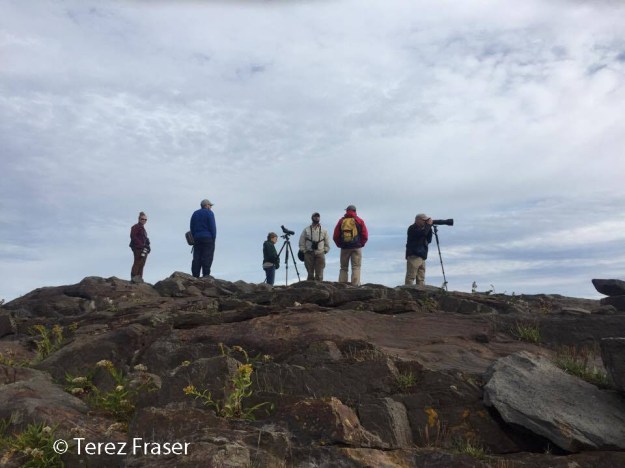
group at south end

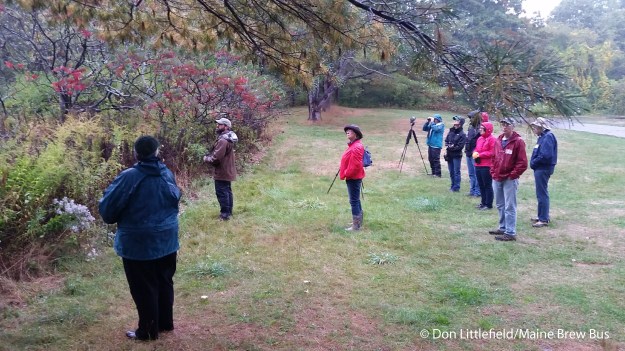
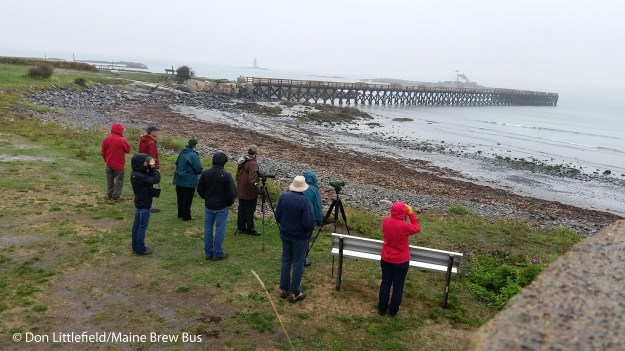
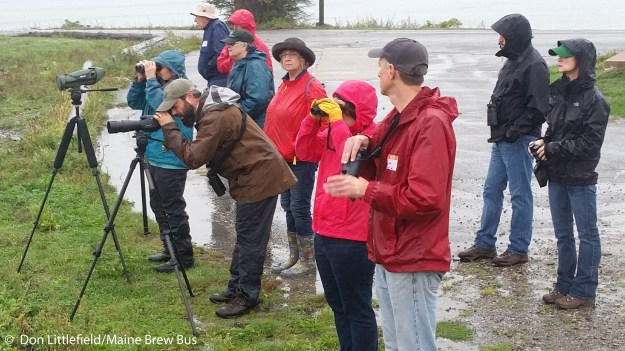
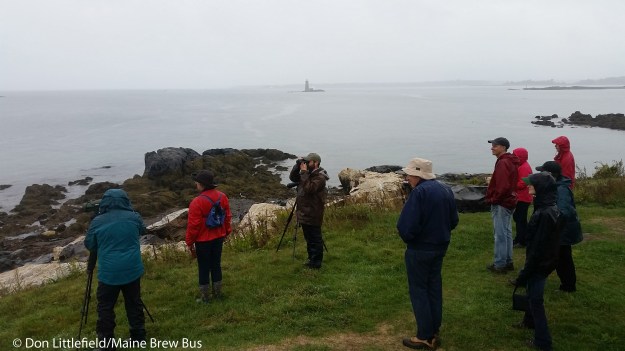
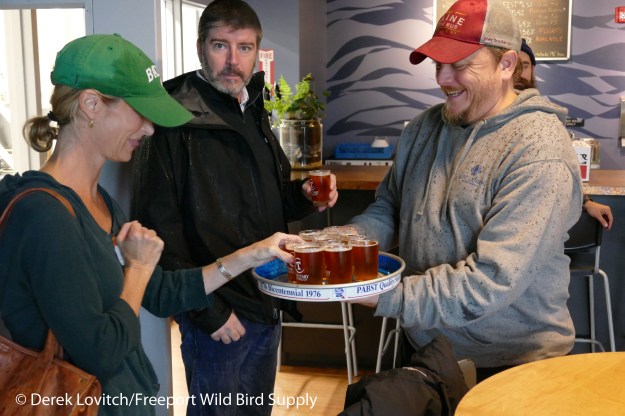
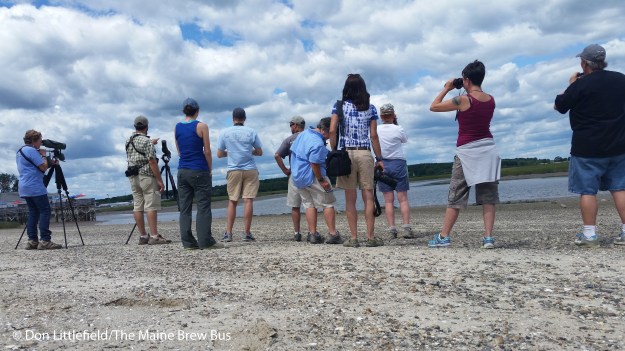
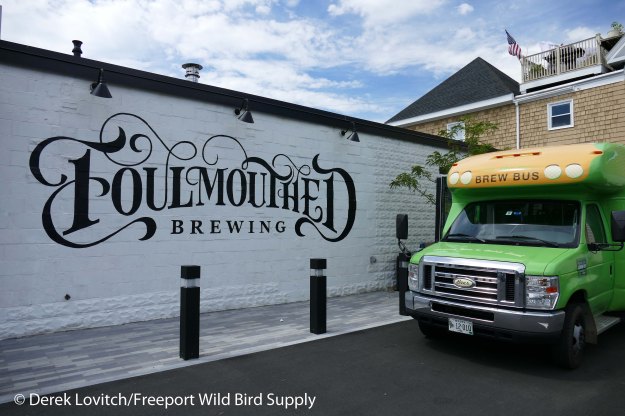
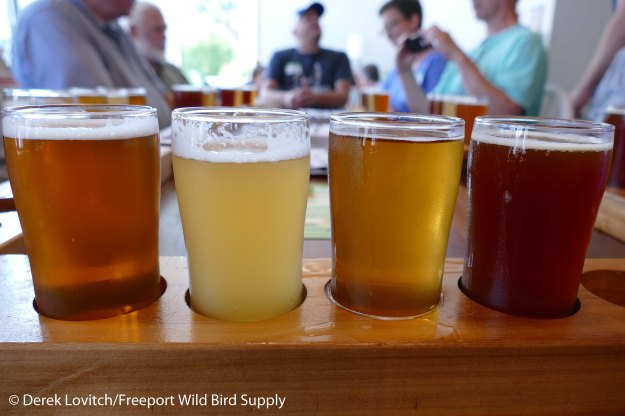
Therefore, we, Freeport Wild Bird Supply (FWBS) are excited to announce the “Birds On Tap – Roadtrip!” series in collaboration with The Maine Brew Bus (MBB). Each tour combines 2-3 hours of birding at one of Maine’s hotspots with a visit to two of our fantastic local breweries. The idea for this series comes on the heels of several very successful programs sponsored by FWBS, working with some of Maine’s finest breweries to combine birding and beer enjoyment. We began with the “Birds, Books, and Beers” author book signings at Maine Beer Company in 2013. The new tradition continues with the “Birds On Tap!” lecture series at Rising Tide Brewing as we host and support scientists conducting research on birds in the Northeast and beyond.

“Birds On Tap – Roadtrip!” seemed like a natural progression – another way to make learning about birds and birding even more fun. Additionally, it is a great way to support several Maine businesses. The trips introduce people to new breweries, new birds, and new places in a casual atmosphere that makes both birding and beer appreciation approachable. “These tours are a perfect way for couples or friends with different interests to spend the day together. We take the pressure off learning about complex topics from identifying shorebirds to hop characteristics.

These trips are truly unique, we know of no other similar tours offered anywhere in the world!

outside Baxter

Don Littlefield, General Manager of the Maine Brew Bus, adds “Craft beer drinkers come from all walks of life and have all kinds of other interests. This pairing of bird observation and ​beer education has proven to be a real hit with all kinds of folks. It gives access to diverse areas of Maine and many different bird species, and also great locally produced Maine beer. We are happy to partner with Derek and his team, it’s been fantastic to see this series mature and take flight!”

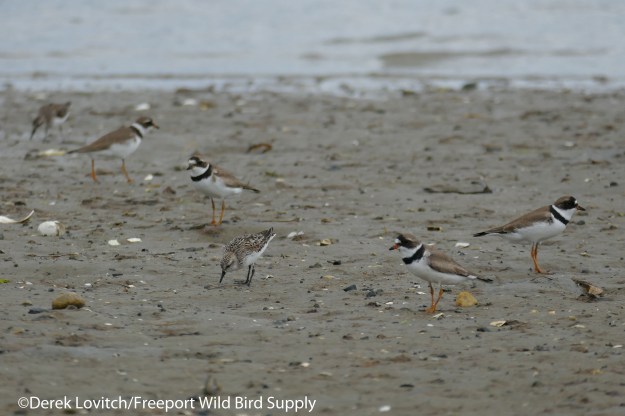
In 2015, we had two very successful outings. In August “Shorebirds and Beer” visited Scarborough Marsh for migrant shorebirds, Barreled Souls, and Rising Tide. In November, we ventured north for a visit to Sabattus Pond for waterfowl, and then visited Baxter Brewing and Maine Beer Company.

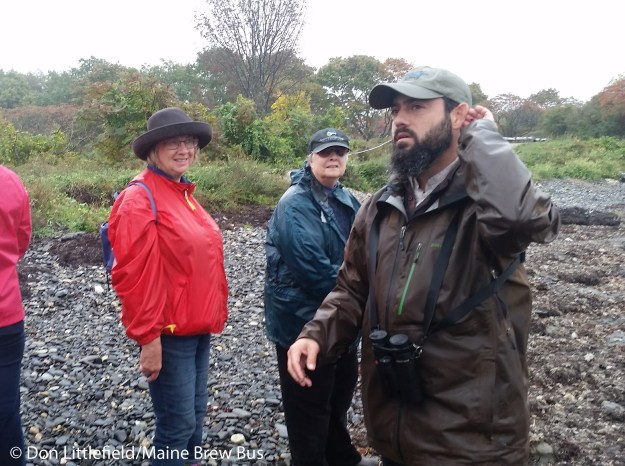
Based on the popularity of these trips, we are excited to offer six different trips in 2016, covering birding and breweries from Kittery to Lewiston. Traveling in the Maine Brew Bus, I’ll be guiding the first half of each, as we learn about the birds and their habitats at seasonal hotspots. This is followed by two brewery tours led by the MBB guides. The locations were chosen to enjoy the peak of birding at a particular locale at certain times of year. One does not need to be a “birder” to enjoy these outings. People of all skill levels are encouraged to join us!

The 2016 schedule is as follows:

Surf and Suds
February 28th , 8:00am – 2:30pm
York and Ogunquit (wintering waterfowl especially Harlequin Ducks, Purple Sandpipers, and  alcids)
SoMe Brewing & Fore River Brewing

Spring Ducks & Draughts
April 10th, 10:00am – 4:00pm.
Merrymeeting Bay (migrant waterfowl and Bald Eagles)
Oxbow & Lively Brewing

Grassland and Grains
June 5th , 8:00am – 2:00pm
Kennebunk Plains(Upland Sandpiper, Grasshopper Sparrow)
Funky Bow & Banded Horn Brewing

Shorebirds and Beer
August 7th, 9:00am-3:00pm.
Scarborough Marsh (migrant shorebirds)
Barreled Souls & Rising Tide

Migrants and Malts
October 9th , 8:00am – 2:30pm
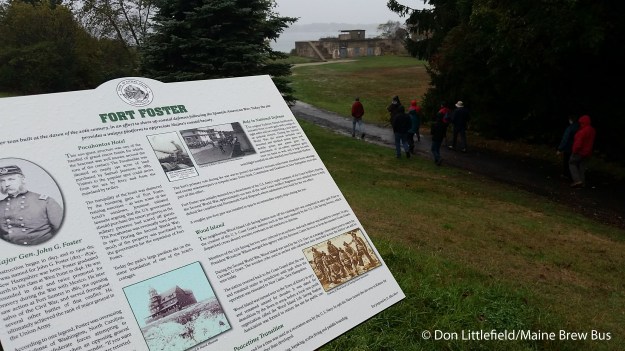
Fort Foster and Seapoint Beach, Kittery (songbird, raptor, and shorebird migrants)
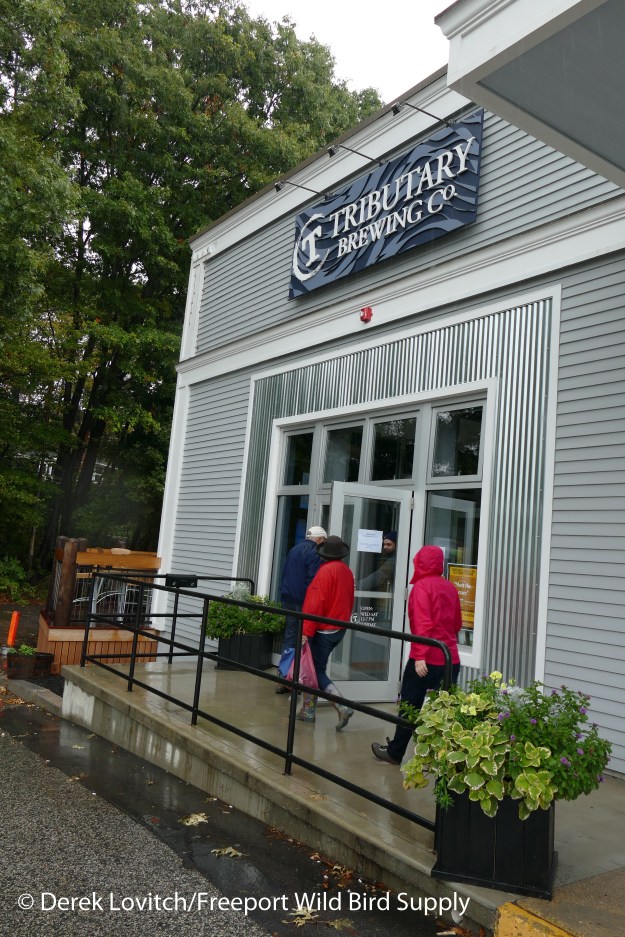
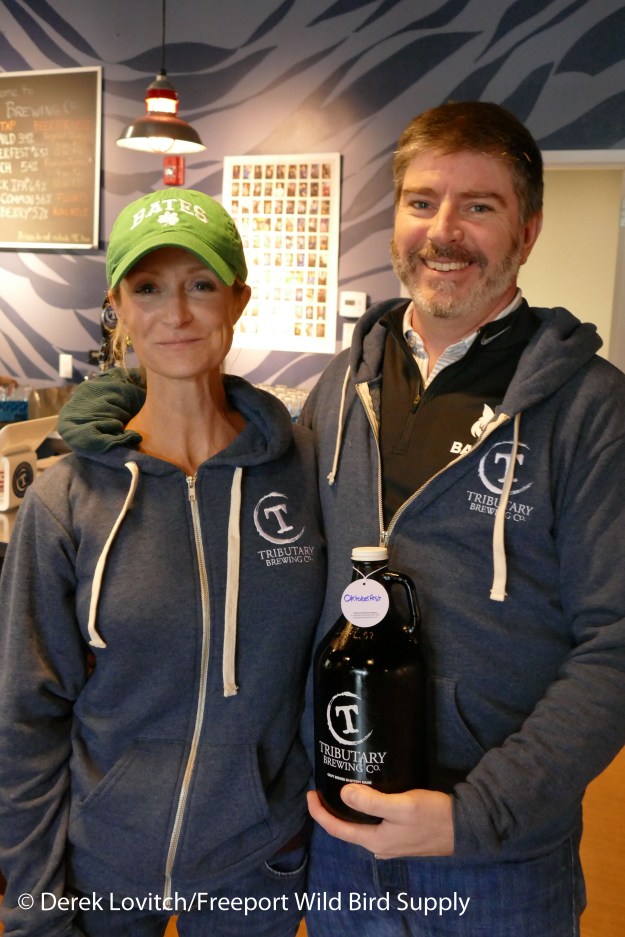
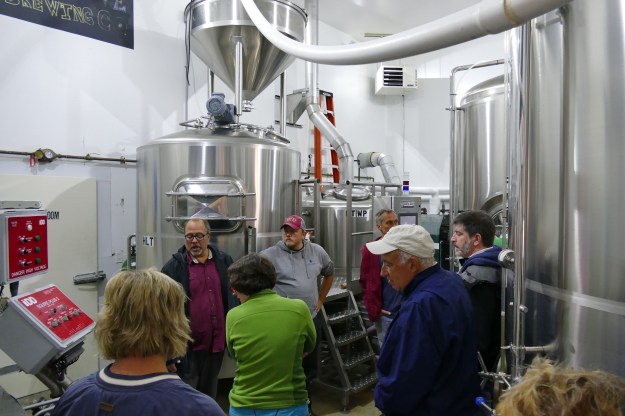
Tributary & Hidden Cover Brewery

Fall Ducks and Draughts
November 13th, 8:30am – 2:30pm
Sabattus Pond and Auburn Riverwalk (migrant waterfowl)
Baxter Brewing & Maine Beer Co.

For more information about each of these tours, see the “Tours, Events, Programs, and Workshops” page our website. And contact us soon (email or call 207-865-6000) as these unique tours fill up fast!

insideRisingTide

Where to Eat Lunch when Birding York County

IMG_7127_edited-1

Whether it’s here on this blog (especially in trip reports), on our store’s Facebook page in posts recounting a birding outing, or elsewhere, people seem to enjoy hearing about where Jeannette and I eat lunch while out birding. In addition to finding “good birds,” we do enjoying finding new places to eat. It’s part of the adventure, and especially when we are out of town, it helps us to explore and appreciate a place for more than just the birding. And apparently, feedback suggests that you have an interest in hearing about these places. Or does it just say something about what you think of my writing about birds!?

In fact, I have often been asked to write some sort of “eating while birding” book, website, or article. Maybe someday the idea will develop, but for now, I thought I would hash out a little list of my favorite places to eat while birding in Maine. And I thought I would start with York County.

Perhaps if you find this of interest, other counties will follow. If not, well, then I know what my next project won’t be!

Let’s start with a little background about the food choices we make. We don’t eat fast food unless we’re desperate, and we avoid chains as much as possible. We’d rather eat at a local establishment – for all of the reasons from economic impact to healthier food (sometimes) to the simple idea that food should not be the exact same thing anywhere you go. We love “fine dining,” but for lunch, we’d rather have a good meal, have it reasonably quickly, and get back to birding. We’ll relax at dinnertime. We also very much believe that “great food” and “inexpensive” do not have to be mutually exclusive!

We bird York County regularly, and we often spend at least half the day doing it. Therefore, we tend to find lots of places to enjoy lunch. They tend to be clustered, however, around where we go birding, and where we end up around lunchtime during our birding routes. There are lots of places we haven’t tried, such as in Kennebunkport, that we just don’t tend to bird near. In other words, this list is by no means a comprehensive review of the “best” places to eat lunch in the county – it’s just our favorite places to have lunch when we are birding our favorite spots to bird.

With that in mind, I present to you, for your reading pleasure and/or future reference, our favorite places to eat lunch when birding in York County, Maine (listed roughly from south to north, no other particular order).

1) Loco Coco’s Taco, Kittery
36 Walker St
Sun-Tues: 11am to 8am
Wed-Sat: 11am to 9am

If Kittery is our only birding destination of the morning, then there’s no question where we go for lunch. We’ve hit fallouts at Fort Foster so amazing that we spend all morning there alone. Or perhaps we end up studying or photographing shorebirds at nearby Seapoint Beach. It’s also a tradition for dinner as we head back from a whale watch out of Rye, NH or a NH Audubon pelagic.

While the carne asada tacos are the best around, neither of us can resist the chili rellenos burrito. Also, a tamale or two to go is the perfect mid-afternoon snack to fuel the rest of your birding day. And we always get a piece of Tres Leches cake for when we get home!

2) Flo’s Steamed Hot Dogs, Cape Neddick
1359 US Route One
Thurs-Tues: 11am-3pm
Closed Wed.

For people who eat so little processed food, it might come as a surprise to those who know us well to find out that this is our most-frequent lunch destination in York County! In fact, we’re here often enough that Kimmie somehow remembers exactly what we order. Once a month, we spend a day birding from Kittery through Wells, and this is our lunch destination most of the time. It didn’t hurt that on our first visit when we first moved to the state and we were birding the area, we popped into the unassuming, but so-crowded-you-know-it-has-to-be-great little building and found the Travel Channel filming!

There isn’t much on the menu. In fact, it’s just one item: steamed hot dogs. While the House Special and the Loaded are popular, for Jeannette and I, we stay simple: just Flo’s famous relish, nothing else. It just works. And if we’re going to eat hot dogs, it’s once a month, and it’s here! (Note: no bathrooms!)

3) Jamaican Jerk Center, Cape Neddick
1400 US Route One

Once or twice each summer, we skip out on Flo’s and head here for a little Caribbean fix. While we have yet to visit Jamaica, we do love the food and flavors of the region, and this little roadside shack serves it up well. The jerk chicken is great, and we always get a couple of patties for lunch the next day. The place doesn’t look like much, but the food is fantastic!

4) Village Food Market, Ogunquit
230 Main Street
Sun-Thurs: 6:30am to 8pm
Fri-Sat: 6:30 am to 9pm

When we don’t make it as far south as Flo’s while birding the Ogunquit shoreline and productive neighborhoods and thickets, then we head here. It’s also the traditional stop for us during the Southern Maine Christmas Bird Count, our territory of which includes the center of town.

I’m sure there are plenty of good things on the menu, but I never order anything other than the grilled veggie Panini. Lots of veggies, lots of cheese, and just enough grease to make this one of the more gut-busting (in all the good ways!) vegetarian sandwiches around.

5) Congdon’s Family Restaurant and Bakery, Wells
1090 Post Road (US Route One)
Winter – Thurs-Sun: 6am to 3pm.
Summer – Open 7 days.

Most of our birding in the Wells area is done in the winter, and on days that this local institution is closed. But if we’re looking for shorebirds in Webhannet Marsh in the summer, or looking at Least Terns and Piping Plovers at Laudholm Farms in the midst of the breeding season, then Congdon’s for “second breakfast” it is. And donuts to go…which, come to think of it, it’s probably best for our health that it’s not always open. Also, during the warmer months, we often follow up a lunch at Flo’s or the JJC with a little mid-afternoon snack here, just because, well, donuts! And forget the cool, trendy places in Portland, these are the real deal – nothing too fancy, just sweet, tasty, and wicked good!

6) Custom Deluxe, Biddeford
1040 Main St.
Tues-Fri, 11am to 2pm.

This is the newest addition to the list, having opened just last fall. Most of our birding lunch stops are quick and cheap, but when we want something just a little “finer,” then this is where we now go. Don’t be surprised to see me here with a tour group or private guiding client sometime this summer. I’m still desperate for another option for a Sunday lunch in the area, unfortunately!

The first visit a couple of weeks ago culminated in the yeast donut with frozen maple mousse, applesauce, and smoked cheddar that a friend and I split for desert (see photo above). Thank goodness we split it, or we would still be in a food coma. It was fantastic, but I was already sold on the place after devouring the house-made noodles.

7) Saco Island Deli, Saco
110 Main St
Mon-Fri, 8am to 4pm.

There are now so many options in the Saco-Biddeford area, that I don’t get here – my favorite sandwich shop in Maine – nearly as often as I used to. Unfortunately, they are closed on weekends, including Sunday, which for whatever reason, I usually when I find myself birding Biddeford Pool or the Saco Riverwalk (in the fall).

However, during the week, and especially when out with clients, there are few better sandwiches anywhere in Maine. You see, the owner, Mark is from New Jersey. That’s what makes the sandwiches so good. Say what you want about my home state, but we know sandwiches. I have not yet had a sandwich here I didn’t like, but in the summer, I always go Primo Veggie – a massive sandwich layered with razor-thin sliced veggies, piled high – nearly too big to get your mouth around: “Double portion of fresh mozzarella, tomatoes, cucumbers, roasted red peppers, kalamata olives and fresh basil leaves drizzled with balsamic vinaigrette on a rustic roll.” This is no lame, afterthought vegetarian option, this is a beastly vegetable meal. But if you want to be really cool, ask for the off-menu Jersey Joe (and expect to have lunch for the next day) to fully understand just how seriously New Jersey takes its sandwiches.

7a) The Run of the Mill, Saco
100 Main St
Sun-Thurs: 11:30am to 9pm.
Fri-Sat: 11:30am to 10pm.

If I am in the Biddeford area on a weekend (when the Saco Island Deli and Luis’s Arepera is closed), especially when it’s cold, I head over to Run of the Mill. After a frigid bout of seawatching at East Point, nothing is better than a piping hot bowl of their Mac & Cheese. The beer cheese soup is another good option, although for me it depends on which cheeses are used.

8) Luis’s Arepera and Grill, Saco
213 North St.
Mon-Thurs: 11am to 8pm.
Fri: 11am to 9pm.

Like the Saco Island Deli, I long for this place to be open on weekends. However, it’s a short enough run south from Scarborough Marsh, or close enough off of the highway (via I-195 to Industrial Way) that I can swing in while heading north from a hotspot like the Kennebunk Plains. And since Jeannette and I discovered their authentic Venezualean cuisine only this summer, it is now a regular stop on our birding agenda, and is definitely deserved as a destination on its own.

An “arepera” is a place that makes the quintessential Venezualean dish, the “arepa.” Luis’s website describes it as “Similar to both a traditional Gordita and Pupusa, it consists of a thick corn tortilla that is fried until golden brown before being filled with a variety of different ingredients, ranging from tangy shredded chicken to meltingly tender braised beef. “ We usually get the “Pabellon Criollo” (traditional with shredded beef and plantains) or one of the veggie options. But no matter what, we simply have to split a side of fried yucca.

Honorable Mention:
(Dinner) Funky Bow Brewery’s “Growler Night” (Lyman)

It’s funny, there seems to be a pattern developing of heading to the Kennebunk Plains at dusk for Whip-poor-wills on a Friday or Saturday night…which just so happens to be when this off-the-beaten path brewery opens up, fires up the brick oven, and serves pizza to go with their hop-a-licious brews.

So let me know what you think, and definitely let me know if there are places I need to try!

The 2016 Maine State List (and my own) Predictions Blog.

The second record (and perhaps the first verified one) for Maine of Black-throated Sparrow was found in Winter Harbor on New Year’s Day, and continues through today, January 6th. I was tempted to chase it yesterday, but instead I am left to hope it sticks around until the end of next week when I return from a short business trip. Fingers crossed!

Before it arrived, I had begun to put together my annual list of the next 25 species to be found in Maine. I then follow that up with my own State List predictions, and no, Black-throated Sparrow was not on that list!

I know, I know, you’ve been awaiting this with baited breath for this. So without any further ado, let’s get started with the annual Maine State Birds Predictions List.

First, a quick recap of 2015.

Only one species was added to the state’s all-time birdlist, a Surfbird, which was discovered at Biddeford Pool in March. It was not a species on anyone’s radar, and it was most definitely not on my Predictions List for 2015!

But I did make several changes to my Next 25 Species for Maine list, and moved things around a bit. So here are the NEW prognostications:
1)Neotropical Cormorant – The new #1! With populations expanding in the Midwest and observations of vagrants increasing around the East, this one is only a matter of time now!
2) Graylag Goose
3) California Gull
4) Roseate Spoonbill
5) Spotted Towhee
6) Ross’s Gull
7) Hammond’s Flycatcher
8) Bermuda Petrel – see notes in last year’s blog entry at the link above.
9) Black-chinned Hummingbird
10) Fieldfare
11) Audubon’s Shearwater – on “hypothetical” list, but I think the record is good.
12) Little Stint
13) Anna’s Hummingbird
14) “Western” Flycatcher (Pacific-slope/Cordilleran) – Hope it calls! After a spate of reports in the Fall of 2015, this is another western bird increasingly being detected well outside of range.
15) Vermillion Flycatcher – Ditto.
16) Common Ground-Dove – A virtual irruption of this bird this fall, including one as close to Massachusetts had me thinking we would have added this in 2015. Maybe one is still out there awaiting discovery.
17) Allen’s Hummingbird
18) Redwing
19) Western Wood-Pewee
20) Spotted Redshank
21) Gray Flycatcher
22) Black-tailed Godwit
23) Brown-chested Martin
24) Black-tailed Gull
25) Common Scoter

As for me, I added three birds to my personal Maine State List in 2015:
A) Gyrfalcon – Wells, 1/17/15 (Ranked #5). This is one I wanted for a while! It was seen sporadically between Wells Harbor and Salisbury, Massachusetts for about a month. If first showed up while we were away at a trade show, but luckily, I caught up with it shortly after our return. I saw it on the 17th, and managed some photos  (my blog entry also includes more background about the sighting), but on April 5th, Jeannette got the better shots!
IMG_0332_edited-2

B) I also caught up with the aforementioned Surfbird on March 22nd (Definitely not on my list!) and Jeannette got these photos when we visited it again two days later.
IMG_0505_edited-2

C) Clapper Rail – Scarborough Marsh, 9/22. I had it as an “Honorable Mention,” a list that I also keep to work off of to come up with each year’s respective Top 25.
IMG_6223_CLRA1,JonesCreek,9-22-15

I missed a Franklin’s Gull on Sebasticook Lake in November, as it appeared just before I took a trip, and departed shortly after my return. There was also a one-day wonder on Stratton Island in Scarborough in June. With an unprecedented incursion of Franklin’s Gulls into the East this fall (the Sebasticook Lake bird clearly preceded the events that brought record numbers to New Jersey and several birds to Massachusetts and New Hampshire), I thought this would be my fall – and I definitely worked for one! But alas.

My two trips off of Bar Harbor this year did not yield a Great Skua (but a September trip did give me my 3rd South Polar Skua in the state!), and once again my summer went by without a trip up north for American Three-toed Woodpecker.

Therefore, I predict that my next 25 species in Maine will be:
1) American Three-toed Woodpecker
1A) Black-throated Sparrow! OK, I know this does not count as a prediction, but still…
2) Great Skua
3) Eurasian Collared-Dove
4) Graylag Goose
5) Say’s Phoebe
6) Western Grebe
7) American White Pelican
8) Neotropic Cormorant
9) Fork-tailed Flycatcher
10) Slaty-backed Gull
11) Tundra Swan
12) Franklin’s Gull
13) Sabine’s Gull
14) Black-bellied Whistling-Duck
15) California Gull
16) Yellow Rail
17) Boreal Owl
18) Calliope Hummingbird
19) Cerulean Warbler
20) White Ibis
21) Gull-billed Tern
22) Hammond’s Flycatcher
23) Loggerhead Shrike
24) Ivory Gull
25) Ross’s Gull

Well, there ya have it! We’ll check back next year to see how I did!

A Warbler (and Sparrow) Big Month. In December. In Maine.

December was unusually warm. In fact, it was record warm. And not just barely… records were shattered. The average temperature for the month was 38F. Not only was that a ridiculous 9 degrees above normal, it smashed the previous record of 24.8F (set in 2001). Surprisingly, despite the everlasting warmth, record daily highs were rare. Christmas Day was an exception, however, when temperatures soared to 62 in Portland, crushing the previous record high of 53, set just last year.

Our first measurable snow of the season didn’t fall until December 29th – the second latest date on record. Those 5-8 inches in southern Maine finally ushered in “real winter” and hopefully set the stage for a return to more normal conditions (although the last few days have once again been 5-10 degrees above normal).

Not surprisingly, such an unseasonable month resulted in some very-unseasonable birding. A variety of “lingering” or perhaps more accurately “pioneering” as Ned Brinkley, editor of North American Birds once dubbed it warblers in particular were making headlines.

So I decided to do a December Warbler Big Month. Because, well, warblers in December! In Maine!

With Tennessee, Yellow (2!), Nashville (2!), Common Yellowthroat, and Wilson’s on December 6th, I was half-way to my newly-set goal of 10 species for the month. The unusually mild fall has allowed more “lingering” birds to survive longer, and normal November hotspots are still hot (literally and figuratively).

Unfortunately, I waited until December 8th to decide to embark on this silly little hunt, so I had some catching up to do. There were some relatively easy ones (Yellow-rumped Warblers overwinter in a few places, along with “known” Blackburnian and Pine Warblers). That meant I just need to find an Orange-crowned Warbler (the second most-regular December warbler after Yellow-rumped) and then one other stray.

So off I went…

Not wanting to take any species for granted, I twitched a Pine Warbler that was reliably coming to a feeder in Brunswick on the 10th. I had to wait all of three minutes for it to arrive on my way back from walking Sasha. If only they were all this easy!
L1040178_PIWA2,JayStormers,Brunswick,12-10-15_edited-1

The next day I was once again at the Saco Yacht Club, looking for the Blackburnian Warbler (which I saw on Nov 30th – one day too early!). Activity didn’t pick up until the fog finally lifted after 10am, but I ran out of time. I did, however, enjoy another visit with the Tennessee, and 1 each of Yellow and Nashville Warblers. 2-3 Ruby-crowned Kinglets were also present, and a Yellow-rumped Warbler dropped in: my 7th species of the month! That and the Western Tanager were the consolation prizes (yes, I did just relegate the tanager to a consolation prize…shame on me… but I “needed” the Blackburnian!).
L1040189_WETA1,SacoRiverwalk,12-11-15_edited-1

I worked hard for an Orange-crowned Warbler in Portland on the 13th to no avail, but I did turn up the continuing Nashville Warbler along the Eastern Promenade (oh look, Portland ravaged vegetation here, too!) and a Gray Catbird on Sheridan St. I also took time to go visit the continuing Ross’s Goose along Stroudwater St in Westbrook – the third I have seen in Maine, and only the 6th or 7th state record.
IMG_6946_ROGO1,StroudwaterSt,Westbrook,12-13-15_edited-1(Phone-scoped image)

Continuing the quest, I had high hopes for the Southern York County Christmas Bird Count on the 14th. With a great territory that almost always turns up a good bird or three, Jeannette, Kristen Lindquist, and I worked the marsh, thickets, neighborhoods, and beach of the “Moody” sector. And we did indeed have a great day, including the 2nd Count Record Clay-colored Sparrow, the 5th Count Records of Baltimore Oriole and Lesser Scaup (21 – also a record high), and 6th Count Record of Dickcissel. But alas, not a single warbler. We didn’t even get a Yellow-rumped – for the first time, as there was virtually no fruit on the bayberry bushes along Ogunquit Beach or anywhere else.

When my friend Evan Obercian found a Yellow-throated Warbler at the Samoset Resort in Rockport on the 13th, my goal was definitely in sight (this was the “additional rarity” I needed), but in the weeks before Christmas, finding time was going to be a challenge. Luckily, a break in my schedule – and the rain – came on Thursday the 17th, so I got an early start and headed east.

I met up with Evan and Kristen and we wandered the grounds of the Samoset for almost two hours. I was not happy to find a stiff onshore breeze when I arrived, and it was increasing over the course of the morning. Then the mist rolled in, and soon, a steadier drizzle. There were not a lot of birds around (other than Canada Geese and Mallards on the golf course), and I was beginning to work on a plan to come back again. And not long thereafter, it called!

We spotted it in an isolated cluster of Scotch Pines, very near where Evan first saw it (and where we walked by 3 times already this morning). We followed it for about 30 minutes as it relocated to another grove before heading over to the hotel building, where it proceeded to forage in the sheltered porches of the four story building! Presumably gleaning insects from old webs in the corners and around furniture, clearly this bird had figured out a novel way of finding sustenance – especially on such a snotty day.

It was my 8th warbler of the month.
L1040215_YTWA3,Samoset,Rockport,12-17-15_edited-1L1040251_YTWA1,Samoset,Rockport,12-17-15_edited-1

I was back to the Saco Yacht Club with Luke Seitz the next morning, once again hoping for the Blackburnian. We worked the hillside and surrounding habitats hard, and absolutely cleaned up! The quick glimpse of a fly-by Western Tanager was more frustrating that satisfying, but we had great looks at the continuing Tennessee, Yellow, 2 Nashville, Common Yellowthroat, 2 Ruby-crowned Kinglets, and then, finally, the Blackburnian! My 9th warbler of the month!

Luke’s quote sums it up: “Let’s take a moment to appreciate what we are seeing and hearing around us right now. What. The. (Expletive deleted)!”

I had a little more time, so I made a quick trip down to Biddeford Pool. Working the neighborhood and thickets, I found a small group of Yellow-rumped Warblers (4-5), a nice addition to the day list. Besides, up until now, I had only seen one all month!

I was in the midst of plotting “Operation Orange-crowned” when I wandered over to look at a chattering Ruby-crowned Kinglet. A loud chip note caught my attention, and I looked up to see this Prairie Warbler – my 10th species of warbler for the month (and 7th of the day)!
L1040305_PRAW,BiddPool,12-18-15_edited-1

But did you really think I would stop at 10?

Hunting for Orange-crowns in Portland and South Portland on the 21st, I turned up a Baltimore Oriole on Sheridan Street (likely the same individual that Jeannette and I found here on 11/23), and along West Commercial Street (in what’s left of the vegetation here!), I had a Swamp Sparrow, and a Field Sparrow – my 8th sparrow of the month.
L1040314_FISP,WCommercialSt,Portland,12-21-15_edited-1

Hmmm…do I need to go for 10 sparrows, too?

Obviously!

So I went to Scarborough Marsh the next day, and quickly picked up a Savannah Sparrow along the Eastern Road Trail for #9.

Jeannette and I, post-holiday madness, continued the search on the 28th, combing the coast from Kittery through Wells. While nothing new was added, we did find three different Swamp Sparrows (two at Fort Foster, 1 in York Beach), and most excitingly, we relocated the Clay-colored Sparrow that we found on the CBC – a mere one block away. Once again, however, I managed only some quick phone-binned photos.
CCSP,Wells,12-28-15

A Northern Flicker and 5 Yellow-rumped Warblers were at Wells’ Community Park, while other highlights included 14 Sanderlings with Purple Sandpipers along Marginal Way in Ogunquit.

But before I knew it, it was December 31st. I still had yet to see an Orange-crowned Warbler (inconceivable!) for the month, and I was stuck at 9 species of sparrow. Therefore, Phil McCormack and I had a mission when we set out in the morning. We worked thickets and fields in Cape Elizabeth, with stops at various nooks and crannies in South Portland and Portland.

While we did not relocate the Lark Sparrow along Fessenden Road (it’s been a week since I have seen a report), we did have a Merlin there, and a couple of Yellow-rumped Warblers at Crescent Beach State Park. Luke had an Orange-crowned Warbler at Camp Ketcha back on the 20th, but it was rather devoid of birds today.

Throughout the day, pockets of Song and American Tree Sparrows were indicative of recent movements and concentration following the snow and ice, but we were not prepared for the concentration of sparrows at a particularly fruitful patch. In fact, it was astounding!

75+ American Tree and 50+ Song Sparrows flew out of the field, joined by 10 or so White-throated Sparrows and 20 or more Dark-eyed Juncos. A continuing female Brown-headed Cowbird was there, along with at least 80 American Goldfinches and 30 or so House Finches. A Carolina Wren sang from the woods, and two Swamp Sparrows and a female Common Yellowthroat were in the marsh…I knew my 10th species of sparrow was here somewhere!
L1040338_mixed_sparrows,Alewives,CapeE,12-31-15

After a teasing brief, distant but highly suggestive look, I finally found it – a Chipping Sparrow! My 10th species of sparrow in December!
L1040361_CHSP,Alewives,CapeE,12-31-15

Shortly thereafter, a Savannah Sparrow (my second of the month) appeared – not just our 7th species of the day, but the 7th species in this one spot! Amazing! And now I had a 7 species of sparrow day and 10 species for the month to match my 7 species of warbler day and 10 species for the month! (The Double 7/10 Split?)

But of course, I still wanted an Orange-crowned Warbler, so we kept birding (well, after a long, celebratory lunch of course), and I tried a few more OC spots in Portland after Phil departed. I still can’t believe I saw 10 species of warbler in Maine in December, and none of them were Orange-crowned, but it seems a fitting finish to the month, and the year, was the continuing Baltimore Oriole and Gray Catbird sitting in the same tree in the Sheridan St lot!
BAORandGRCA,SheridanSt,Portland,12-31-15_edited-2

Meanwhile, some other highlights over the course of the month, of the non-warbler or sparrow variety, including more seasonal species, such as two Snowy Owls on a Saturday Morning Birdwalk on the 12th, my first Iceland Gull of the season (finally) in Old Port on the 15th, a Snowy Owl at Biddeford Pool on the 18th, Harlequin Ducks, Purple Sandpipers, and a growing legion of wintering waterbirds.

Other signs of the unseasonably warm month included a lingering Double-crested Cormorant in Portland Harbor on 12/15, a few more lingering dabblers and Great Blue Herons than usual, but surprisingly, I didn’t see a Hermit Thrush all month – had they all moved on or would some now show up as the snow and ice pushes them to coastal migrant traps? But the most unexpected of them all was the Little Blue Heron that was found in the tiny Jordan Park Marsh in Ocean Park. I stopped by to visit it on the 22nd, about two weeks into its unseasonable stay.
L1040320_LBHE1,OOB,12-22-15_edited-1

Unfortunately, as much fun as this month has been – and as nice as it has been to not yet wear my parka – it’s impossible for me to ignore what this all means: the climate HAS changed. While no one month – warm or cold – is “climate change,” it is impossible for any rational person to not realize that our weather has become more and more unpredictable, less and less “normal,” and prone to more and more wild swings in seasonal and within-season variability. No, a hot day doesn’t mean Global Warming, nor does a snowstorm mean there’s not (Please James Inhoffe, please go away and shut the hell up). But the trends are real, very apparent, and very much here. Now. And they are most definitely affecting birds and bird migration.

That being said, I would not use these warblers as an example of this. Instead, I think the fact that here in December and they are still ALIVE, is however, a perfect example of just how ridiculously warm our weather has been! The mechanisms that delivered these birds to the Saco Riverwalk and elsewhere are likely varied. Perhaps the deformed, crossed-bill of the Tennessee Warbler impedes its ability to efficiently forage and put on the necessary weight for its next leg of migration. Perhaps the extensive southerly winds that have ushered in this warm air also facilitated the arrival of a 180-degree misoriented migrant Yellow-throated Warbler, and I would propose, the Prairie Warbler as well (I think the rare-but-regular late fall Prairies are actually birds from our south) that were “messed up” and flew the wrong way. But it is also possible that some of these warblers are “reverse migrants” that started to go south and then turned around, but I doubt it – facultative migrants like swallows and blackbirds do it, but I don’t know of any known proof that long-distance Neotropical migrants pull it off (on purpose, anyway).

These mechanisms occur every year, and rare warblers are found at places like the Saco Riverwalk every fall. However, they’re usually found in October and November and either move on (or, more likely perish) by now. So I think what’s remarkable is not that all of these warblers are here, but that they are still ALIVE well into December – and that is most definitely due to the mild winter so far. There have still been insects to be found, there’s plenty of fruit left to consume, and fewer calories have been spent to keep up internal body temperatures, meaning there are fewer calories that need to be consumed.

Migration in long-distance, obligate migrants is not triggered by temperatures, but trigged by physiological changes directed by hormones responding to the changing length of the day. In the fall, southbound migration is triggered in part by a response to changes in fat loading to fuel these epic journeys. At some point, the controls are switched away from building the fat reserves that are necessary for migration. I don’t know at what point in the season “pioneering” warblers lose the ability (perhaps, even the “desire”) to migrate. My guess is that even if you pumped these birds full of fat, at this point, they won’t be going anywhere – this is now their winter territory, for better, or for most likely, worse.

So what does this mean besides some amazing early winter birding? Good question. Conventional wisdom says these birds are all “evolutionary dead ends” that will soon be eliminated from the gene pool (it has to get cold sometime, right? If they’re not picked off by a Sharp-shinned Hawk or all of the damn outdoor cats that hunt there). However, with the effects of Global Climate Change clearly upon us, and not reversing anytime soon (if ever), perhaps these “pioneers” are the wave of the future. Maybe someday, warblers will successfully overwinter in Maine, and return to their breeding grounds to pass on those genes.

Maybe. Afterall, without vagrancy, we would not have Hawaiian honeycreepers or Darwin’s finches; distant islands would be sans all landbirds. Perhaps phenomena like “reverse migration” and this pioneering thing will allow the next wave of adaption to a changing climate. Of course, never before in the history of life on earth, has this change occurred so rapidly, and we have little evidence suggesting long-distant migrants can adapt this quickly – it’s going to take more than a few individuals of 10 species of warblers.

Sparrows, however, aren’t obligate long-distance migrants that are “programmed” to leave at a prescribed time. Instead, they are more flexible in their movements, and being seed-eaters, they aren’t reliant on warm-weather dependent insects. As long as seeds are available, and with the complete dearth of snow, they most certainly have been, those that linger can do just fine. White-throated, American Tree, Song, and Dark-eyed Juncos are all regular parts of our winter avifauna in southern Maine, lingering or “pioneering” Swamp Sparrows are regular here and there, and every now and then a Lark Sparrow (a “drift migrant/vagrant” from the Midwest) or Field Sparrow spends the winter in the state. Field and Clay-colored are also rare-but-regular in late fall/early winter, so once again, the presence of 10 species of sparrows is also not in and of itself caused by the record temperatures, but it is most definitely another sign of how mild – and especially snow-free – it has been.

But this is all a blog for another time…this blog was supposed to be about warblers (and sparrows!). In Maine. In December. And that’s amazing. Or, as Luke said, “What. The. (Expletive deleted).”

Yup, We’re Still Against Industrial Wind Development near Monhegan Island


These bedraggled, exhausted, and desperate birds arrived on Monhegan in bad shape, and they didn’t have to contend with a lighted tower or spinning blades. (Clockwise from top: American Redstart, imm male; American Redstart, female; Yellow Warbler, adult male; a vagrant Acadian Flycatcher).

Some bad ideas just never go away. And it seems like the idea of putting industrial wind turbines off of Monhegan Island is one of those.

We have been vehemently opposed to the industrial wind development in the Gulf of Maine off of Monhegan Island from the start, and we have been outspoken in our concern about the impacts of this development. It’s simply the wrong place for such an endeavor. The costs far outweigh the benefits, especially the inordinate risk such structures would pose to migrating birds. And one of the densest concentrations of migratory birds (and birders) is simply not where you put so-called “green” power. There’s nothing “green” about poorly-sited energy development. And this is as poor of a site as you could find in Maine.

After the University of Maine-led consortium, Maine Aqua Ventus, failed to win a bid for Department of Energy funding, it looked like the project was dead. However, the recent announcement that the consortium has received $3.7million in federal funding with the possibility of more to come has us concerned once again.

The wind industry continues to propose locations for new turbines that are poorly sited and do nothing to minimize risks to birds and bats. This is happening across the country from California to Lake Erie to Maine. Monhegan Island is one of the most significant stop-over spots for thousands upon thousands of migrating songbirds in fall and spring – and therefore birders and wildlife tour operators such as ourselves. Most of these birds migrate at night. The size and height of today’s turbines necessitate lighting. Lighted structures disorient birds, especially under cloudy and foggy conditions so common on the Maine coast. Birds are drawn in and then circle the light in an attempt to reorient or simply escape the halo of light. Unfortunately, in the process, many can collide with the structure, each other, or simply drop dead of exhaustion as their flight muscles are metabolized in a last-ditch effort to find safety. New innovations are being developed to harness power from the wind without using massive blades, and this is where government funding and research should be directed – new technologies that maximize efficiency and minimize the risks to birds and bats.

Additionally, the wind industry often uses their own surveys to state that many of their projects pose little threat to wildlife. Such research proves to be woefully incomplete as they are generally based on carcass searches. Scavenging makes this methodology fundamentally flawed and completely irrelevant to offshore development projects. Additionally, much of this information is deemed “proprietary”, so the public rarely knows the full extent of their impacts. In a place as important to birds as Monhegan, a wind farm is not the avenue to pursue for energy generation. While nearshore wind development is much less conspicuous to humans, the risks to Maine’s migrant birds and bats cannot be discounted. The benefits of wind power have been shown to be under-promised again and again and they do not outweigh the potential costs in this case. At the very least, any off-shore turbines should be equipped with lighting that is less hazardous, a simple solution that the industry continues to oppose.

So what’s next for this ill-conceived project? What will throwing more taxpayer money at it prove? We know it won’t go to studying its impacts on migratory birds, and certainly not towards implementing alternative design and lighting. No, instead we’ll simply continue to hear Big Wind deny the problem exists, ignoring facts and reality and having the so-called conservation organizations they sponsor regurgitate the same tired, outdated misinformation.

With another renewal of the Federal subsidies for industrial wind development in the just-passed budget, we must remain vigilant in our fight against dangerously-sited projects. It’s not about being anti-wind power. I am definitely not! But I am most definitely against putting industrial wind development projects smack dab in the middle of some of the densest concentrations of migrant birds in Maine. And Monhegan Island is just one of those places…and there are better, safer, more economical, and more efficient ways of reducing the cost of electricity on Monhegan Island, without putting the birds, and the birder economy that follows them, at risk.

For more information about the threat that poorly-sited wind power development poses to birds, and what can be done to make the industry more ecologically-friendly, please visit the “Wind Energy” page from the American Bird Conservancy.

_MG_6926 edit_edited-1
And you think this Canada Warbler is mad now?

2015 (Southern) York Co CBC: Moody Territory.

It’s Christmas Bird Count season!

The count period began yesterday (Monday, 12/14), and as usual, I participated in Maine’s first count of the season, the (Southern) York County Count. This year, I was joined by Kristen Lindquist and Jeannette, covering the “Moody Territory” that covers the marshes, beaches, thickets, and neighborhoods on the east side of Route 1, between Eldridge Road in Wells and the center of downtown Ogunquit, including Moody Point and Moody Beach.

Despite temperatures well above normal in the mid-40’s, a light east wind and persistent light drizzle made for a rather raw day. However, the continuing mild temperatures also reduced the concentration of birds in the warm microclimates and dense thickets that usually make this territory so, well, fruitful (pardon the pun!). And although we had a lot of birds overall, diversity was a little below average for me, and there were fewer concentrations of birds – many species were in fairly low numbers compared to what I usually find here.

The lack of snow and ice was certainly supporting plenty of birds in this area, but they weren’t concentrated at warm edges and seasonal hotspots like they usually are. In fact, the best days on this count are when it’s clear and cold, with seasonably cold (or colder) and snowy (or snowier) days and weeks prior. Check out my report from the frigid and snowy 2013 count, for example.

We began the day as usual, with a dawn seawatch at Moody Point, with several close alcids, fairly close Black-legged Kittiwakes, and decent numbers of all of the expected overwintering waterbirds. Three small flocks of Lesser Scaup (total of 21) migrating south were a surprise. We were even more surprised to later notice that not only was this just the 5th count record of the species, but it was also the first time more than 1 had been seen! These birds are no doubt late in departing their still-unfrozen northern lakes, bays, and rivers.

Conspicuous in their absence however, was the complete dearth of Yellow-rumped Warblers (almost no bayberry crop was seen at all), and Carolina Wrens (they really did get hammered over these last two winters), but our other “feeder birds” such as Black-capped Chickadee, Tufted Titmouse, and House Finch were actually above average.

Although our birdlist and respective counts grew steadily through the day, we were lamenting the lack of rarities that this territory has become known for. Granted, the bar was pretty high. But our perception changed over the course of about 5 minutes. First, I spotted the count’s second ever Clay-colored Sparrow (on Huckleberry St, and then later relocated and photographed on Cranberry St).

IMG_6964_CCSP,CranberrySt,Wells,12-14-15

As the sparrow flew from his original spot, I spotted a Baltimore Oriole as we searched for the sparrow on Huckleberry St. This was a 5th count record. But note that my phone-binning attempt was not nearly as successful (the real cameras were in the car due to the persistent drizzle). You can kinda see it’s a bird, and there are two wingbars, and if you look really, really hard, you can just barely make out a little bit of orange on the head and chest. A little imagination will help.
BAOR,HuckleberrySt,Wells,12-15-15

We also finished the day off with a continuing Dickcissel (6th count record) that has been present for several weeks now at The Sweatshirt Shop on Route One, a perfect way to end our birding day.

Hours by car: 1
Party hours by foot: 5.75
Miles by car: 12.7
Party miles by foot: 11

Start: 7:15 – 45F, very light E, cloudy.
End: 2:40 – 46F, very light E, drizzle.

Canada Goose: 27
Mallard: 161
American Black Duck: 51
LESSER SCAUP: 21
Common Eider: 36
Surf Scoter: 65
White-winged Scoter: 60
Long-tailed Duck: 166
Bufflehead: 37
Common Goldeneye: 62
Red-breasted Merganser: 43
Red-throated Loon: 7
Common Loon: 7
Horned Grebe: 3
Red-necked Grebe: 14
Northern Gannet: 10
Great Cormorant: 6
Northern Harrier: 1
Sharp-shinned Hawk: 1
Cooper’s Hawk: 1
Red-tailed Hawk: 1
Bonaparte’s Gull: 11
Ring-billed Gull: 29
Herring Gull: 180
Great Black-backed Gull: 29
Black-legged Kittiwake: 9
Black Guillemot: 1
Razorbill: 7
Mourning Dove: 49
Rock Pigeon: 40
Red-bellied Woodpecker: 4
Downy Woodpecker: 9
Blue Jay: 9
American Crow: 43
Black-capped Chickadee: 97
Tufted Titmouse: 18
Red-breasted Nuthatch: 2
White-breasted Nuthatch: 19
Golden-crowned Kinglet: 2
Eastern Bluebird: 1
American Robin: 1
Northern Mockingbird: 2
European Starling: 62
Cedar Waxwing: 12
American Tree Sparrow: 28
CLAY-COLORED SPARROW: 1
Song Sparrow: 17
Dark-eyed Junco: 42
White-throated Sparrow: 4
Northern Cardinal: 24
DICKCISSEL: 1
BALTIMORE ORIOLE: 1
House Finch: 96
Pine Siskin: 12
American Goldfinch: 76
House Sparrow: 229

Total species: 56 (just a little below average).

Not Your Usual December Highlights!

While this fall’s rarity season got off to a fairly slow start at the end of October, things have really heated up lately. In fact, it’s been a really outstanding couple of weeks.  And in the past few days, I have enjoyed some really great birding.

The mild temperatures have certainly played a role – while the southerly and southwesterly winds that have ushered in much of the unseasonably warm air may still be facilitating the arrival of some vagrants, at the very least the mild temperatures and benign weather are allowing vagrants and unseasonable “lingering” migrants to survive long enough to be found! And, the lovely weather is certainly keeping more birders out in the field. I have certainly been taking full advantage of this beautiful weather.

On Sunday, Ed Hess and I visited the Saco Riverwalk. While this is always a hotspot at this season, it is really extraordinary this year. After 8 species of warblers were seen there in November, the mild weather has allowed at least 5 species to continue – almost unprecedented for December. Ed and I saw the Tennessee Warbler, a really remarkable December record…
L1040092_TEWA,SacoRiverWalk, 12-6-15_edited-1

…both of the two continuing Yellow Warblers (the photos are of one of the two individuals), which is another exceptional species for the date…
L1040022_YWAR,SacoRiverWalk,12-6-15_edited-1

…the Nashville Warbler (and confirmed the continued presence of a second Nashville!)…
NAWA by Ed_edited-1

…the Common Yellowthroat (more expected for the season)…
L1040098_COYE1,SacoRiverWalk,12-5-15_edited-1

…and we saw one of the two Ruby-crowned Kinglets still present (much more regular in December than any warbler).
L1040116_RCKI,SacoYachtClub,12-6-15-edited

And although we didn’t see it, the most amazing of them all, a Blackburnian Warbler is still present. (Jeannette and I saw and photographed it earlier in the week, 11/30).
IMG_3040_edited-2

Ed and I then headed to Cape Elizabeth, where we photographed the continuing Grasshopper Sparrow at Dyer Point, and odd bird to see juxtaposed with Harlequin Ducks (18) and Purple Sandpipers (6)…
L1040136_GHSP2,DyerPt,12-6-15_edited-1L1040151_GHSP3,DyerPoint,12-6-15_edited-1L1040163_GHSP1,DyerPoint,12-6-15

…And we twitched a Wilson’s Warbler found earlier in the day nearby, just so we could say we saw five species of warblers in a day in December!  It cannot, however, be said that we “photographed” five species:
WIWA,CapeElizabethm12-6-15

The Grasshopper Sparrow was also our fifth species of sparrow on the day (Song, American Tree, White-throated, and Dark-eyed Junco) – I doubt I’ve had five species of warbler and 5 species of sparrows in the same day in December in Maine before.

Of course, that only somewhat consoled us about missing the vagrant Western Tanager that was found at the Riverwalk later in the afternoon. Damn.

On Monday, I headed over to Reid State Park in Georgetown with Kristen Lindquist. It was a rather quiet day here, but it’s always one of my favorite places to take a walk, especially on such (another) gorgeous morning.  43 Red-necked Grebes, a Northern Harrier, a flyover Red Crossbill (my first of the season), oh yeah, and another rarity: “Oregon” Junco.

While some might dismiss it as “merely a subspecies,” the westernmost subspecies of the Dark-eyed Junco is truly a rarity in the Northeast, and this was the first definitive “Oregon” Junco that I have seen in Maine (although I have never chased one at a feeder, where they are usually seen). It was in a small flock of “Slate-colored” Juncos and an American Tree Sparrow in the scrubby central ridge in the middle of the Griffith’s Head parking lot.

The flock flushed from short grass at the edge as we rounded the corner, and as it briefly alighted in a shrub, I was shocked to see a black-hooded junco. Closer inspection as we followed it for about 20 minutes yielded all of the pertinent field marks for a “textbook” Oregon, nicely eliminating the intermediate “hybrid swarm” – or whatever it is – that we sometimes refer to as “Cassiar’s” Junco.

Note the complete, black (not dark gray) hood, lacking contrast in the supraloral area. Also, the hood is cleanly demarcated on the back of the head, contrasting crisply with the reddish-brown back. The flanks and sides are particularly pale salmon-buff, which is not atypical for adult males (although many are much brighter). At the lower margin of the hood, note the smooth, rounded margin across the chest and up to the “shoulder.”
IMG_6908_ORJU4,meIMG_6909_edited-1IMG_6910_ORJU1,K_edited-1IMG_6912_edited-1,K.Lindquist

Afterwards, Kristen and I birded around Bath – no white-winged gulls or Barrow’s Goldeneyes yet, no doubt related to the mild temperatures as well, but we did spot one of the Snowy Owls at Brunswick Landing – unlike warblers, a slightly more expected highlight for early December in Maine.

While Jeannette and I didn’t turn up any rarities – or much of anything else for that matter! – birding Harpswell Neck this morning, I very much look forward to what the coming weeks will produce, especially when it finally turns cold!

The 2015-16 Winter SnowBird(er) Contest is Underway!

L1010480_RECR1_immMale,CousinsIsland,3-28-14_edited-1A group of Red Crossbills on Cousin’s Island that landed at our feet was just one of the highlights during the 2014-15 Winter SnowBird(er) Contest.

It’s December, and you know what that means! It’s time for the SnowBird(er) Contest here at Freeport Wild Bird Supply!

We are very excited to announce the start of the 7th annual “Winter SnowBird(er) Contest,” which was introduced as a way to encourage people to get outdoors in the depths of winter.  Just because it’s cold out does not mean there aren’t a lot of great birds to see!  While we offer free Saturday morning birdwalks throughout the year, it is much easier to entice people to participate in May when warblers are around, or July when it is nice and warm out.

Therefore, to get more birders out and interested in the great winter birding our area offers, we have added an extra incentive: prizes!  Participants accumulate points based on the temperature at the start of the birdwalk – the colder the morning, the more points are awarded.  The contest runs December 5th through March 26th, and at the end of the period, over $250 in prizes will be awarded!

Winter birding can be a lot of fun.  It is prime season to see seaducks, such as Common and Red-throated Loons, Common Goldeneye, Bufflehead, and scoters.  The southernmost wintering flock of Barrow’s Goldeneyes on the East Coast resides in the lower Harraseeket River in South Freeport, and we frequently visit Winslow Park and the Freeport Town Wharf to enjoy this beautiful duck.
female BAGO with imm COGO1, East Machias River, 2-13-12_edited-1
Barrow’s (center) and Common Goldeneyes side-by-side is another highlight of winter birding in the area.

We’ll look for Northern Shrikes, enjoy our year-round woodland residents, and who knows what else? Last year, we spotted everything from a vagrant Townsend’s Solitaire to Red Crossbills literally at our feet. And, if this winter turns out to be another “irruption” year (and there is a good suggestion that for many species, it will be), we may find Snowy Owls, Common Redpolls, both crossbills, and much more!

Droll Yankees logoThe person with the most points at the end of March wins this year’s Grand Prize: a B7 Domed Caged Feeder complements of DROLL YANKEES. Large capacity, Gray Squirrel-resistant, pigeon-proof, and sheltered from the weather, this great feeder solves feeding station problems. Like all of Droll’s products, it is made in the USA and has a Lifetime Guarantee.

Royal River Massage logoThe runner-up will receive a one-hour massage from ROYAL RIVER MASSAGE in Yarmouth. Relieve “warbler neck” and other aches and pains in a 60 Minute Therapeutic Massage! It’ll be a great way to recover from the winter season of shoveling snow.

Laughing Stock Farm logoAnd, finally, the third place finisher will receive 2 weekly organic vegetable pickups (“medium” shares) at LAUGHING STOCK FARM CSA in Freeport. A selection of veggies will be available on each of two pick-up dates in April.  We’ve been members of the farm’s CSA for 10 years and love having fresh, organic, and local vegetables all year long.

Betsey Puckett, President at Droll Yankees was excited to provide the Grand Prize for the second year in a row, “Kudos…for providing a challenging and educational event. But then again, you Mainers are known for your endurance.”

There are some mornings in mid-winter that can make it tough to get out of bed, so we hope to add a little extra motivation. The real prize of course, is the birding our area offers in the depths of winter.

For a recap of what we have been seeing on our recent birdwalks, you can always visit the News page of our website to see what you are missing. And with 240 species seen in the 11 years of free Saturday Morning Birdwalks, you have been missing a whole lot!

So join us on a Saturday this winter to see how fun winter birding can be, and start accumulating points! Birdwalks meet at the store at 8:00am for a short carpool to a local site, rarely more than 10-15 minutes away. We return to the store between 10 and 10:30 for free shade-grown, organic, bird-friendly coffee and a look at what’s hanging out at our feeders.  The birdwalks are free and do not require advance registration.  Hope to see you soon!

SNOW,Brunswick_Landing_birdwalk,1-31-15_edited-1
This Snowy Owl in Brunswick during last winter’s birdwalk was the 237th species ever seen on a Saturday Morning Birdwalk

Vancouver to LA – Birding and Cruising.

The trip was really supposed to be in celebration of the completion of a writing project. But when I booked the trip, I knew that if said project was not completed, the trip would be a much-needed break – a welcome respite – from a project that has, well, been quite a project! Unfortunately, it’s the latter, and even worse – I’m working on the project on the plane, in the hotel, and on the boat (OK, so working on the boat didn’t actually happen). But the birding has been amazing, and the break has been very welcome, and downright therapeutic.

Boarding my flight in Portland dark and early on Wednesday the 4th, a long-awaited birding adventure was in store. But yeah, I was leaving Maine at the peak of rarity season! Of course, when I landed to – barely – grab my connection in Chicago, I see the report of a Townsend’s Solitaire at Schoodic Point and the reappearance of a Franklin’s Gull at Sebasticook Lake (and so it begins!). But it was of little consequence; life birds awaited!

For a couple of years, I’ve been wanting to join Paul Lehman and company on a West Coast “repositioning cruise.” This is when those massive cruise ships move from one port to another, mostly to switch from the starting point of one season’s itinerary to the other. Sailing predominately well offshore, passengers come aboard for a short getaway, or just a long weekend escape. And these trips are a helluva deal! For birders, the passage through deep, open water from a large, stable platform that even allows you to use a spotting scope to study passing seabirds – it’s low-cost, multi-day, deep water pelagic.

Good friends Adam Byrne and Brad Murphy from Michigan were joining me, as we joined Paul, Barbara Carlson, and several other birders for a sail from Vancouver, British Columbia to LA. But Adam, Brad, and I were meeting up early to do some Pacific Northwest birding. None of us had been to British Columbia before, so we had a few life birds each to seek, and more importantly, since we had to fly all of the way to Vancouver – we might as well get our money’s worth, right?

Frequent flier miles delivered me to Vancouver a day before Adam’s arrival, so I took a train to our hotel, settled in, and took a walk. Of course, I began to experience the culinary delights of this fantastic foodie city, as well as sample some of the birdlife in a few small urban parks. I started to get familiar with how dark the local Song Sparrows were, and reacquaint myself with the snappy call note of “Oregon” Dark-eyed Juncos. I also refreshed my memory about how impossible it is to identify large gulls in the Pacific Northwest, although at least a few adults looked identifiable. My dinner at a Ramen bar was a perfect end to the day, and a good way to ring in my trip to this cultural city.
Day1-Vancouver L1030354_SOSP,Day2-2_edited-1
I could enjoy these dark Song Sparrows all day!

Day 2, 11/5: Vancouver.
I covered over 10 miles this morning, walking from my downtown hotel to Stanley Park, and around the entirety of its perimeter. Passerines weren’t in large supply, but it’s been far too long since I have seen the likes of Chestnut-backed Chickadees and Anna’s Hummingbirds. An American Dipper at the bay’s edge was a welcome surprise.

And the birding along the shoreline was spectacular. I very well may have seen more Barrow’s Goldeneyes this morning than I have seen in sum throughout the East; there was one raft of over 150! A couple of Eurasian Wigeons joined big groups of American Wigeons, a few Cackling, one Snow, and one Greater White-fronted Goose were in lawn-feeding groups of Canada Geese, and Surf Scoters were plentiful. Mew and Ring-billed Gulls, a few Thayer’s Gulls, and a mess of large gulls that were mostly – in quantity and presumably genetically – Glaucous-winged.

More of these dark Song Sparrows and lots of “Oregon” Juncos, several Bald Eagles, and impressive cityscapes – not bad for a morning walk!

Adam arrived in the early afternoon, and after lunch at a Frites Granville (deep fried poutine, need I say more…but the kimchi and Korean beef-topped fries was much better), we spent a pleasant few hours, including a little bit of sunshine at Stanley Park. Adding a few more species to the triplist, including “Sooty” Fox Sparrow, we mostly spent the time taking advantage of the nice light to photograph Barrow’s Goldeneyes and Mew Gulls, among others.
Am in Stanley Park.
Day2-Stanley Park1 Day2-Stanley Park2 Day2-Stanley Park3 Day2-Stanley Park4

Korean-Belgian-Canadian fusion!
Day2-Lunch

Pm…back in Stanley Park.
Day2-pm-in-Stanley1
Day2-pm-in-Stanley2

River Otter devouring flounder.
L1030363_Day2_River_Otter1_edited-1 L1030379_Day2_RiverOtter-best_edited-1 L1030384_Day2_RiverOtter3_edited-1

So many Barrow’s Goldeneyes!
L1030399_Day2-BAGOflock2_edited-1

L1030345_SOSP,Day2-1_edited-1

Day 3, 11/6: Vancouver.
Light rain and drizzle returned by dawn, as Adam and I headed for the hills. Rain continued, steady at times, as we hiked around Cypress Provincial Park looking for forest denizens, especially Sooty Grouse. While we didn’t see much – the conditions were not very bird- or birder- friendly, seeing scattered Varied Thrush was a real treat, along with a Red-breasted Sapsucker, several small flocks of Red Crossbills, and other resident species.

We fetched Brad at the airport; or triumvirate now complete. Real Chinese food (noodles with roasted chicken, broth, veggies, etc.) stuck to the bones – which was needed for the damp and chilly visit to Delta’s Boundary Bay. Adam needed Sharp-tailed Sandpiper, so we thought we would just spend a couple of hours trying to get lucky.

We were a little unprepared for what a task finding one specific shorebird would be. I’ll let the photos explain.

There were easily several hundreds of thousands of birds, 90-95% or so were Dunlin and Northern Pintail. Healthy amounts of American Wigeon and Green-winged Teal were supplemented by Black-bellied Plovers, 10+ Eurasian Wigeons, groups of gulls – mostly Glaucous-winged and Glaucous-winged intergrades, some Sanderlings, a couple of Western Sandpipers, and one particularly interesting, short-billed peep. Perhaps the one that got away!

Am in Cypress Provincial Park.
Day3_CypressDay3-Cypress2 Day3-Cypress3

Boundary Bay.
Day3-BoundaryBay1 (phone-scoped panorama)Day3-BoundaryBay2 Day3-BoundaryBay3

Day 4, 11/7: Vancouver.
Rain was falling in earnest as we departed the city, once again heading for the hills. Thanks to a tip from a local birder, the suggestively-named Grouse Mountain ski resort was our destination. The rain continued, and got heavier and visibility dropped to near nothing as we gained a little elevation.

But the place was busy, and the Skyride tram was running, and for a price, we were whisked uphill. It was still raining…hard. Was this worth it? What self-respecting bird would be out in this?

And then Adam found a Sooty Grouse!

The only non-pelagic lifer for all three of us expected on the trip, this was a most-welcome development. For a moment, we forgot how soaked to the bone we were. And this was no dumb grouse! He would come out to feed in a little weedy garden, and then return to a shed/small livestock pen to preen. After a bit, it was back out into the rain.

We too finally went inside, the triumvirate triumphant, had some coffee and/or hot chocolate, and then went back out for another visit with the grouse, and some quality time with Black-tailed Deer and Gray-crowned Rosy-finches.

With rain still falling, wind and fog as bad as ever, we packed it in, dripping our way into the tram, and back down the hill. Unfortunately, conditions were even worse at Cypress Provincial Park, and although the donair stop for lunch was great and hit the spot, the rain finally defeated us all on a near-birdless walk at the park. It was time to retreat.
Day4-GrouseMountain
It might be raining a little…but Sooty Grouse!

IMG_6630_Day4-Sooty Grouse-best_edited-1

IMG_6678_Day4-GrouseMountain-bear-totem

Day 5, 11/8: Vancouver.
Stanley Park was the destination again today, wanting to spend more time looking at birds – any birds – than driving to more distant sites. I added a few more species to my trip list, including some good studies of Pacific Wren. But the tame Chestnut-backed Chickadees, joining Black-caps in looking for handouts stole the show.

Making our way towards the airport, we spent our last hour of birding in Vancouver at Sea and Iona Islands. More huge flocks of Dunlin were impressive, and several additions to the list ranged from Pied-billed Grebe to Long-billed Dowitcher to Trumpeter Swan.

But before we knew it, it was time to return our rental car, hop on the train, and make our way to Canada Place and the Star Princess – our floating-city home for the next three days, and our big, steady platform for pelagic birding. In other words, the real reason for this trip was only now about to begin!

Another morning in Wonderful Stanley Park.
IMG_6683_Day5-StanleyPark1_edited-1

“Do you think the Chesnut-backed Chickadees get fed here?”
L1030479_Day5-StanleyPark-CBCH-Adam1_edited-1
L1030505_Day5-StanleyPark-CBCH1_edited-1

I will always stop to photograph Wood Ducks!
L1030517_Day5-StanleyPark-WODUdrake1_edited-1

L1030521_Day5-Stanley-WODUpair1_edited-1

L1030535_Day5-StanleyParkCBCH-best_edited-1
L1030541_Day5-StanleyPark-ANHU_edited-1
Anna’s Hummingbird.

Setting Sail.
Day4-Leaving Vancouver_edited-1

Day 6, 11/8: Victoria.
As the sun came up, we were docking in Victoria, only a short trip across from the city of Vancouver. While Brad and Adam set off in search of Skylarks and Red-breasted Sapsuckers, I joined the rest of the group of birders in walking to Beacon Hill Park. The triplist grew with the likes of Barred Owl, Bewick’s Wren, and Ancient Murrelets.

I lingered too long at one thicket, lost the group, but spent an enjoyable couple of hours wandering around this lovely park. Oregon Junco, Fox Sparrows, Song Sparrows, and Spotted Towhees were everywhere, with the ponds chock full of Mallards and American Wigeon. Ruby-crowned and Golden-crowned Kinglets, Golden-crowned Sparrows, Chestnut-backed Chickadees, and Anna’s Hummingbirds were plentiful, as were “more bona fide” Northwestern Crows (if there is truly such a thing). Feral Common Peafowl added a splash of color, and a “Slate-colored” Dark-eyed Junco was on the rare side of things. I passed through a couple of waves of Bushtits, adding a dose of frantic and noisy excitement to the walk.

I took a spin through a sliver of downtown, finding a single “Audubon’s” Yellow-rumped Warbler in a small city pocket park, along with several Bewick’s and Pacific Wrens, and a bunch of Oregon Juncos. Rhinoceros Auklets in the inner harbor were a very pleasant surprise.

The boat departed at 2:24 – next stop: LA! While we only had a couple of hours of daylight left, we made the most of it, as birds were plentiful. Masses of Mew Gulls, rafts of Common Murres, and later, scattered Northern Fulmar – our first tubenose of the trip – were encountered, while my last additions to my Canada List were ticked off – Brandt’s Cormorant, Black Brant, and Heerman’s Gull. Our first two Pomarine Jaegers, a single Red Phalarope, and two White-winged Scoters were added to the trip list as well.

The sun was setting, as the productive waters at the mouth of the Straight of Juan de Fuca off Flattery Point, Washington were just coming into view.

I bet you can tell which day the sun finally came out!
IMG_6693_Day6-Victoria-walkfromship_edited-1

L1030550_Day6-Victoria-BADO1_edited-1
Barred Owl.

IMG_6698_Day6-Victoria-edited
Day6-Victoria-GCSP1_edited-1
Golden-crowned Sparrow.

Day6-Victoria-GWGU1stC1_edited-1
1st winter Glaucous-winged Gull (presumed close enough to pure).

Day6-Victoria-SootyFOSP1_edited-1
“Sooty” Fox Sparrow. Worst-placed bread-bag clip litter.

Day6-Victoria-SPTO1_edited-1
Spotted Towhee.

L1030569_Day6-Victoria-BRCR1_edited-1
Brown Creeper.

L1030583_Day6-Victoria-marchingducks1_edited-1
March of the Mallards.

L1030587_Day6-Victoria-marchingAMWI1_edited-1
..and American Wigeon.

L1030591_Day6-Victoria-ANHU1_edited-1
Anna’s Hummingbird.

L1030599_Day6-Victoria-Peacock1_edited-1
Common (Feral) Peafowl.

L1030660_Day6-Victoria-henEUWI1_edited-1
Hen  Eurasian Wigeon (note nearly concolorous head, neck, and body and lack of black gape spot. Underwings, especially the axillaries, were gray, clinching the ID.

L1030673_Day6-Victoria-SCJU_edited-1
“Slate-colored” Dark-eyed Junco.

IMG_6699_Day6-Victoria-totems_edited-1 IMG_6701_Day6-Victoria-capitol IMG_6706_Day6-Victoria-Cook_edited-1 IMG_6711_Day6-Victoria-harbor2 IMG_6714_Day6-VictoriaHarbor-panoramic1a_edited-1
Day6-Victoria-RHAUinHarbor1_edited-1
Rhinocerous Auklet in the harbor.

IMG_6717_Day6-VictoriaHarbor-panorama_edited-1 IMG_6724_Day6-Victoria-CruiseShip_edited-1 IMG_6730_Day6-onBow_edited-1

L1030727_Day6-LeavingVictoria-OlympicMountains1a_edited-1

The Olympic Mountains.
Day6-LeavingVictoria-MEGUinHarbor_edited-1

There were a few Mew Gulls on the water.
Day6-LeavingVictoria-sunset_edited-1

11/10, Day 7: Off Oregon.

Whoo-ee!

Passing through Washington waters overnight, we awoke in Oregon, about 40 miles off the north-central coast. As soon as there was just enough twilight to see, birds began to appear. And other than about an hour in early afternoon, it did not stop until it was dark. And the most dedicated of us had to drag ourselves, exhausted, achy, and hungry, off the bow.

It was amazing.

Birds all day. Marine Mammals were constant. At one point a dozen Humpback Whale spouts, a hundred or so Pacific White-sided Dolphins, and perhaps thousands of birds were in view. Northern Fulmars were the most abundant tubenose through early afternoon, when Sooty Shearwaters began to take over. I picked up two life birds, Buller’s Shearwater (well over 30) and Flesh-footed Shearwater (after frustratingly missing one earlier, I found one in the big evening feeding frenzy and saw the third of the day). Unfortunately, I also missed the “bird of the day,” an early morning Mottled Petrel. I wasn’t the only one, and unlike most everyone else on the trip, that was the one Pterodroma that wasn’t a lifer for me, so if I had to miss one great bird on the trip, that’s the one I would be least disappointed about. But still.

My lifer Northern Right Whale Dolphins joined Dall’s Porpoise, a Fin Whale, a Minke Whale, Northern Fur Seals, Elephant Seals, and California Sea Lions on the day’s mammal list, while additional avian highlights included Laysan and Black-footed Albatrosses, Black-legged Kittwakes, Cassin’s and Rhinoceros Auklets, a single early Fork-tailed Storm-Petrel, a few Pomarine Jaegers, a couple of Pacific Loons, Common Murres, and plenty of gulls, including the first Western and California Gulls of the trip.

One of my other highlights, and just possibly my “highlight of the day” were several “nursery groups” of Mola Mola. Young molas, in groups of 4-7 or so, were moving south or lounging at the surface, usually with a gull or few in attendance. I’m not quite sure why I was so smitten with these, but I kinda wanted to hug one. I know, very scientific of me.

It truly was an amazing day, and as dusk was falling, the boat passed through a massive aggregation of dolphins, gulls, Sooty Shearwaters, and plenty of Pink-footed and Buller’s Shearwaters. This was the group that contained my lifer Flesh-footed Shearwaters, so it was a stupendous finish to an absolutely fantastic day on the water! And yes, with near constant activity from dawn to dusk, we are all exhausted, and frankly, I am unsure of how I am even seeing a computer screen right now.

I think I will sleep well tonight, although the anticipation of what tomorrow might bring will no doubt impact a needed full night of rest!
Day7-offOregonCoast_edited-1
Off the Oregon Coast.

L1030741_Day7-NOFU1_edited-1
Northern Fulmar.

L1030747_Day7-BFAL1_edited-1
Black-footed Albatross

L1030760_Day7-LAAL1_edited-1
Laysan Albatross

L1030768_Day7-BUSH2_edited-1 L1030770_Day7-BUSH1_edited-1
Buller’s Shearwaters.

L1030780_Day7-BFAL2a_edited-1
Black-footed Albatross.

L1030794_PacWhite-sidedDolph1_edited-1
Pacific White-sided Dolphins.

L1030819_Day7-MolaMola1_edited-1
Mola Mola.

L1030836_Day7-BUSH1a_edited-1
Buller’s Shearwater.

Day7-Sunset2_edited-1

11/11, Day 8: Off Northern California.

The air and seas were warmer as we found ourselves due west of Point Reyes shortly after sunrise. A nice following breeze – strong enough for seabirds to be flying, but in just the right direction to keep us warm and comfy at the bow – raised expectations, especially after the stellar day yesterday,

A Black-footed Albatross at first light also stoked the excitement, but as the day went on, and the lack of seabirds continued, many were left to reminisce about yesterday. Red Phalaropes were the most abundant bird of the day, by far, with a fair number of Northern Fulmars. Ashy Storm-Petrels started to show in 1’s and 3’s, including one that was grounded on the ship and was trying to hide in a corner. No doubt disoriented by the ship’s lights during the night, this “wrecked” bird could have had a long day were it not for two alert walkers who let us know. We raced over, identified it, inspected it, and then let it go off the stern – none of us had ever seen a storm-petrel fly as fast and direct as it booked it away from this floating island full of two-legged predators.

A Peregrine Falcon likely rode with us for a while today, and later in the afternoon, the regular appearance of a Brandt’s Cormorant – far from its nearshore environs – suggested a bird that was also resting on the boat now and again. The flock of 34 European Starlings, nearly 60km offshore, was a little harder to explain, however!

The long, tiring day of scanning the waters only produced a few new species for the trip, including a few Leach’s Storm-Petrels and a couple of Red-necked Phalaropes. But other than a scattered few Sooty and Pink-footed Shearwaters, several Pomarine Jaegers, a couple of Buller’s Shearwaters, and early Laysan and a handful of Black-footed Albatrosses, it was a slow day on the water. Very slow.

A few pods of Common Dolphins, several Humpback Whales, and a loafing Blue Whale were mammalian highlights…until dusk, when four Orcas steamed towards the ship, breaching and tail-slapping as they went by. While today was not the epic seabird and mammal day that yesterday was, the few of us still hanging on to the bitter end were rewarded with an Orca show. I for one was not complaining. Because breaching Orcas.

Day8-sunrise_edited-1
Day8-OffBigSur_edited-1
Off Big Sur, California.

L1030856_Day8-ASSP1_edited-1 L1030865_Day8-ASSP-hand1-edited
Wrecked Ashy Storm-Petrel.

L1030876_ASSP-release1_edited-1
Day8-slowAfternoon_edited-1 Day8-sunset_edited-1

11/12, Day 9: Los Angeles.
Docked in the busy port of Los Angeles well before sunrise, I stepped outside to take in the crisp, dry air, and take a gander at some Western Gulls and a flycatching Black Phoebe. Adam, Brad, and I were anxious to disembark, ready to pack in a full day of twitching LA-are specialties.

Three thousand plus people trying to jam through customs is never quick, but apparently today was particularly nightmarish. Two and a half hours later, we were finally off the boat, picking up our rental car, and finally on our way.

The first stop was Huntingdon Beach Central Park, in pursuit of now-countable Scaly-breasted Munias. It didn’t take long, and although introduced, these really are festive little birds, and an ABA-Area bird for all three of us (we had all seen them elsewhere around the world). A few White-faced Ibis, Black and Say’s Phoebes, and other common urban park denizens were also noted.

It took us longer to find our quarry at Legg Lake Park, but after covering the entire park without any luck, Brad’s lifer Tricolored Blackbirds were right at the parking lot where we began – exactly where my friend Catherine Hamilton told us they would be. Luckily, we had some other fun birds in the meantime, including single Townsend’s Warbler, Hutton’s Vireo, Lesser Goldfinch, and a pair of Red-whiskered Bulbuls. The trip list grew by 14 species.

The time to find the blackbirds and some traffic en route put us way behind schedule as we entered Compton and headed for Colonel Leo H. Washington Park – the last “stronghold” of the once-common, established exotic, the Spotted Dove. I have a confession to make: this was a bird that only I needed. Yes, I was chasing an exotic. But honestly, it was such an interesting place to head to for a new bird (for the ABA-area), that there was a little bit of allure added. Readers of this blog know how much I love urban birding – and it doesn’t get anymore urban birding than this!

Unfortunately, despite quite a bit of searching, the Spotted Dove remained unseen. With so few left, they can be tough to find, and although Catherine promised they have been reliable here of late, she also cautioned that they are easily missed. We talked to a few residents who seemed to be used to random birders showing up in an otherwise less-than-touristy neighborhood and one guy playing soccer stopped to tell me about the Cooper’s Hawk that was catching rats in the alley behind his house; a short while later, a Coop flew overhead. Several other conversations helped prove that many inner-city residents do have a connection and appreciation for nature, as described by a recent study on urban residents’ recognition and valuation of birds in cities. I often sing the praises of the value of urban greenspaces to migratory birds, but these places are even more valuable to residents packed tightly into a confined space, desperate for the connection to fresh air and recreation of all kinds.

But yeah, all of this musing was really displacement behavior for my 1) decision to actually look for Spotted Dove instead of heading to straight to a park that would have had a lot of good birds, perhaps including my nemesis, Williamson’s Sapsucker, and 2) our failure to see it! We also checked Salt Lake Park – perhaps no longer hosting the dove, but at least that park had a few more birds, including some treats for us Easterners – Acorn Woodpeckers and Cassin’s Kingbird in particular. But alas, no Spotted Doves. Two residents, taking a break from chatting, pointed out a Peregrine Falcon on a transmission tower high overhead. Perhaps it knew where to find the doves.

By the time we took our first spin through Washington Park, we realized that with traffic building there was no chance to hit another site, so we just used up the remainder of daylight not seeing Spotted Doves. But, there’s little doubt I would never have seen Compton or Huntingdon Park were it not for searching for these birds, so there’s that. I guess.

As the sun set, Adam and Brad dropped me off at a hotel near the airport (“conveniently” located directly under landing planes) as they headed off to catch their red-eye flights. Thwarted by traffic and our dip on the dove, our afternoon of birding with Catherine turned into a dinner and beers. We caught up and reflected on Spotted Doves, or lack there of, and the meaning of life and listing. Or perhaps we talked more about the flavor composition of the beers we enjoyed.

Day9-LeggLakePark,LA_edited-1
Legg Lake Park.

L1030897_Day9-BRBL1_edited-1
Brewer’s Blackbird.

11/13, Day 10: Los Angeles.
A Cassin’s Kingbird was calling on the roof of my hotel to usher in the dawn, as I boarded my airport shuttle for the quick trip to the final leg of my journey. I have little doubt that I will be on another “Repositioning Cruise” sometime soon – I might be hooked. It sure was more comfortable than rolling around on a dedicated pelagic – and with unlimited food (but yeah, “bland” was my most used descriptor…I used a lot of hot sauce!) and several bars, this was pelagic birding in style!

Although I only ended up with three life birds (Sooty Grouse, Buller’s Shearwater, and Flesh-footed Shearwater), one ABA-area bird (Scaly-breasted Munia), three California birds (Buller’s, Leach’s Storm-Petrel, and munia), and a boatload of Canada birds (I had not birded west of Ontario before), I would deem this trip an utmost success. In fact, I had a great time, enjoyed birding with good friends – old and new – and experienced a completely different avifauna. And no “Megas” were missed here in Maine!

Here’s my total triplist, in order of appearance:
Vancouver:
1. Rock Pigeon
2. Mallard
3. “Oregon” Dark-eyed Junco
4. Song Sparrow
5. European Starling
6. House Sparrow
7. Northwestern Crow (with “better” birds later in Victoria?)
8. Glaucous-winged Gull
9. White-crowned Sparrow
10. American Robin
11. Black-capped Chickadee
12. House Finch
13. Lincoln’s Sparrow
14. Canada Goose
15. Cackling Goose
16. Ring-billed Gull
17. Red-breasted Merganser
18. Great Blue Heron
19. Double-crested Cormorant
20. Barrow’s Goldeneye
21. Golden-crowned Kinglet
22. Horned Grebe
23. Thayer’s Gull
24. Northern “Red-shafted” Flicker
25. Surf Scoter
26. American Wigeon
27. Pine Siskin
28. Common Merganser
29. Bufflehead
30. Belted Kingfisher
31. Spotted Towhee
32. Mew Gull
33. Pelagic Cormorant
34. Bald Eagle
35. Bonaparte’s Gull
36. Common Goldeneye
37. Ruby-crowned Kinglet
38. Anna’s Hummingbird
39. American Dipper
40. Eurasian Wigeon
41. Greater White-fronted Goose
42. Brown Creeper
43. Downy Woodpecker
44. Snow Goose
45. Chestnut-backed Chickadee
46. Red-breasted Nuthatch
47. Hooded Merganser
48. American Coot
49. Red-winged Blackbird
50. Golden-crowned Sparrow
51. Fox Sparrow
52. Common Raven
53. Lesser Scaup
54. Red-necked Grebe
55. Red-breasted Sapsucker
56. Varied Thrush
57. Red Crossbill
58. Hermit Thrush
59. Northern Harrier
60. Eurasian Collared-Dove
61. Brewer’s Blackbird
62. Northern Shoveler
63. Northern Pintail
64. Green-winged Teal
65. Dunlin
66. Black-bellied Plover
67. Sanderling
68. Western Sandpiper
69. Herring Gull
70. Gray-crowned Rosy-Finch
71. SOOTY GROUSE
72. Stellar’s Jay
73. Pacific Wren
74. White-breasted Nuthatch
75. Wood Duck
76. Western Meadowlark
77. Gadwall
78. American Goldfinch
79. Pied-billed Grebe
80. Peregrine Falcon
81. Long-billed Dowitcher
82. Sharp-shinned Hawk
83. Trumpeter Swan
84. Red-tailed Hawk
Victoria
85. Black Turnstone
86. Harlequin Duck
87. Barred Owl
88. Bewick’s Wren
89. Ancient Murrelet
90. Common Loon
91. Purple Finch
— Common Peafowl
— “Slate-colored” Dark-eyed Junco
92. Bushtit
93. “Audubon’s” Yellow-rumped Warbler
94. Rhinoceros Auklet
95. Common Murre
Cruisin’
96. Pigeon Guillemot
97. Pacific Loon
98. Brandt’s Cormorant
99. White-winged Scoter
100. Red-throated Loon
101. Northern Fulmar
102. Heerman’s Gull
103. “Black” Brant
104. Pomarine Jaeger
105. Red Phalarope
106. Pink-footed Shearwater
107. Fork-tailed Storm-Petrel
108. Sooty Shearwater
109. Cassin’s Auklet
110. Black-footed Albatross
111. California Gull
112. Black-legged Kittiwake
113. Laysan Albatross
114. BULLER’S SHEARWATER
115. Short-tailed Shearwater
116. FLESH-FOOTED SHEARWATER
117. Ashy Storm-Petrel
118. Leach’s Storm-Petrel
119. Red-necked Phalarope
Los Angeles
120. Black Phoebe
121. American Kestrel
122. Great Egret
123. Snowy Egret
124. White-faced Ibis
125. American Coot
126. Green Heron
127. Greater Yellowlegs
128. Blue-gray Gnatcatcher
129. SCALY-BREASTED MUNIA
130. Say’s Phoebe
131. Osprey
132. Turkey Vulture
133. American White Pelican
134. Ruddy Duck
135. Lesser Goldfinch
136. Hutton’s Vireo
137. Townsend’s Warbler
138. Orange-crowned Warbler
139. Western Grebe
140. Northern Mockingbird
141. Black-crowned Night-Heron
142. Cooper’s Hawk
143. Mourning Dove
144. Common Yellowthroat.
— Red-whiskered Bulbul
145. Great-tailed Grackle
146. Tricolored Blackbird
147. Allen’s Hummingbird
— Yellow-chevroned Parakeet
148. Acorn Woodpecker
149. Cassin’s Kingbird

Mammals:
1. Eastern Gray Squirrel
2. Douglas Squirrel
3. Harbor Seal
4. River Otter
5. Black-tailed Deer
6. Dall’s Porpoise
7. Humpback Whale
8. Elephant Seal
9. Fin Whale
10. Northern Fur Seal
11. Pacific White-sided Dolphin
12. Minke Whale
13. California Sea Lion
14. Short-beaked Common Dolphin
15. NORTHERN RIGHT WHALE DOLPHIN
16. Blue Whale
17. Orca
18. Fox Squirrel