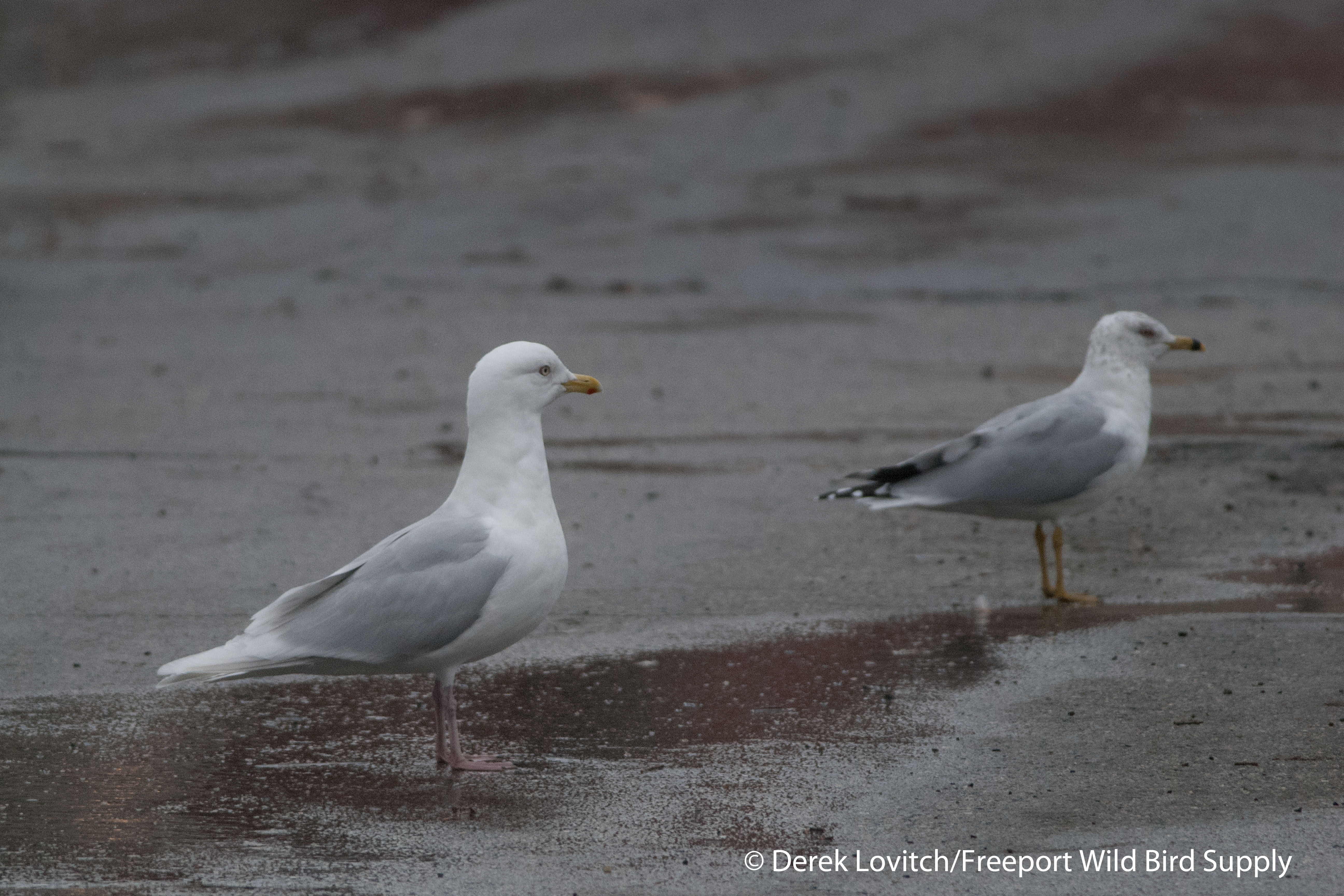
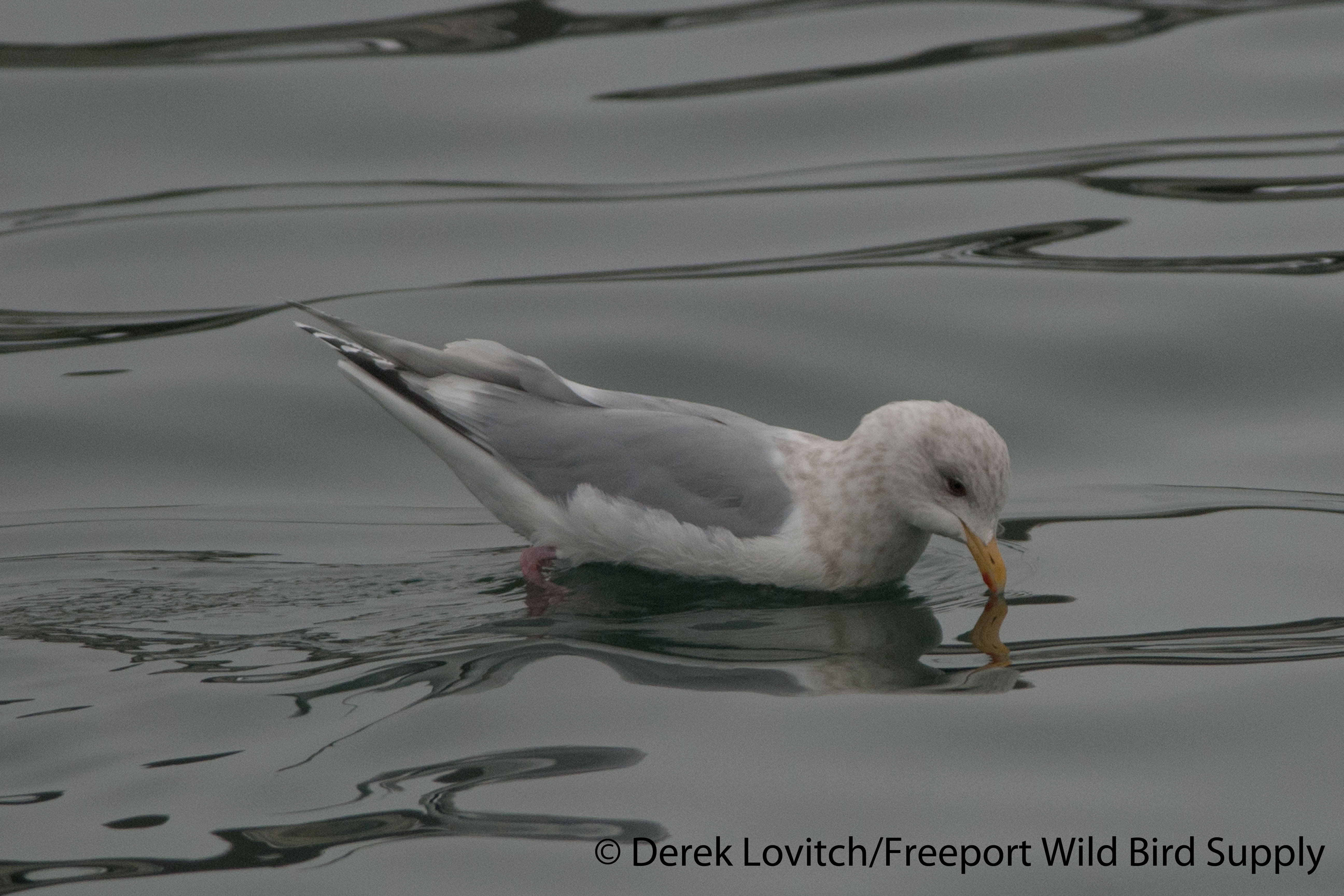
Category Archives: Birding in Maine

A (Very) Early Spring Week in Review

Our Saturday Morning Birdwalk surveyed the waterfront in Freeport and Yarmouth.  On Sunday, Kristen Lindquist and I enjoyed an epic white-winged gull show in Portland, before working our way around the Cape Elizabeth shoreline.  Then, on Monday, we birded from Biddeford Pool through Scarborough Marsh with Snowy and Great Horned owls, Rough-legged Hawk, and Ruddy Turnstones among the many highlights.

Further south, Jeannette and I covered Kittery through Wells, as is our tradition on the first Tuesday in March.  Another exceptionally productive day was enjoyed, including two more Snowy Owls and a Common Eider of the northern subspecies, borealis.

Wednesday was spent dealing with various car issues and seed delivery, so birding was limited to the woods near our house, and the feeders of course.  Same for Friday, where at Hedgehog Mountain Park, a mere 7 species was actually the most that I have detected in a couple of months there.  In between, I was back in Portland and Westbrook on Thursday, and although the Westbrook riverfront was a disappointing, the continuing white-winged gull show in Old Port more than made up for it.

While “new arrivals” were few and far between this week as bitter cold continues, there were definitely signs of the season.  Waterfowl are obviously on the move: Brant, Canada Geese, Mallards, and American Black Ducks are returning in numbers, while the concentrations of seaducks, especially all three scoters, was greatly reduced as these birds have begun to disperse – if not actually migrating north.

For the first week of March, I recorded very few “first-of-years” this week: Great Horned Owl, Yellow-rumped Warbler, and Fox Sparrows.  Of those, only the sparrow is likely a true migrant; the owl is a resident, and the warbler likely wintered locally.  American Robins were definitely on the move, however, with several flocks noted moving northbound (at least at the given time), and American Tree Sparrows also seem to be on the go.

New reports of Snowy Owls – especially inland – likely included northbound migrants.  While all three of the individuals that I saw this week seemed to be birds that were continuing in a specific area for several weeks or more now, the fact that Kristen and I only saw one bird in a very thorough search at Biddeford Pool (four had been present for a couple of months now) suggests birds are already departing. Northern Shrikes – such as the one that briefly visited the yard here at the store on Thursday (our second of the season) are also likely migrating right now.
In the woods there is a different story, however, as even the local residents are a little less active vocally right now than we would expect.  I have yet to hear a Brown Creeper sing – although I am seeing them on regular basis – and Golden-crowned Kinglets remain very few and far between.  And other than goldfinches and resident House Finches, finches remain virtually non-existent.

But all of this is about to change, and my guess is that it will change rather rapidly.  In fact, with the winds turning south today, I wouldn’t be surprised if a few Turkey Vulture and Red-winged Blackbird reports trickle in this weekend.  And once the snow really begins to melt (especially to our south), expect those floodgates to really open!  (Any day now…any day now…)

IMG_4781_edited-3

IMG_4769_edited-2

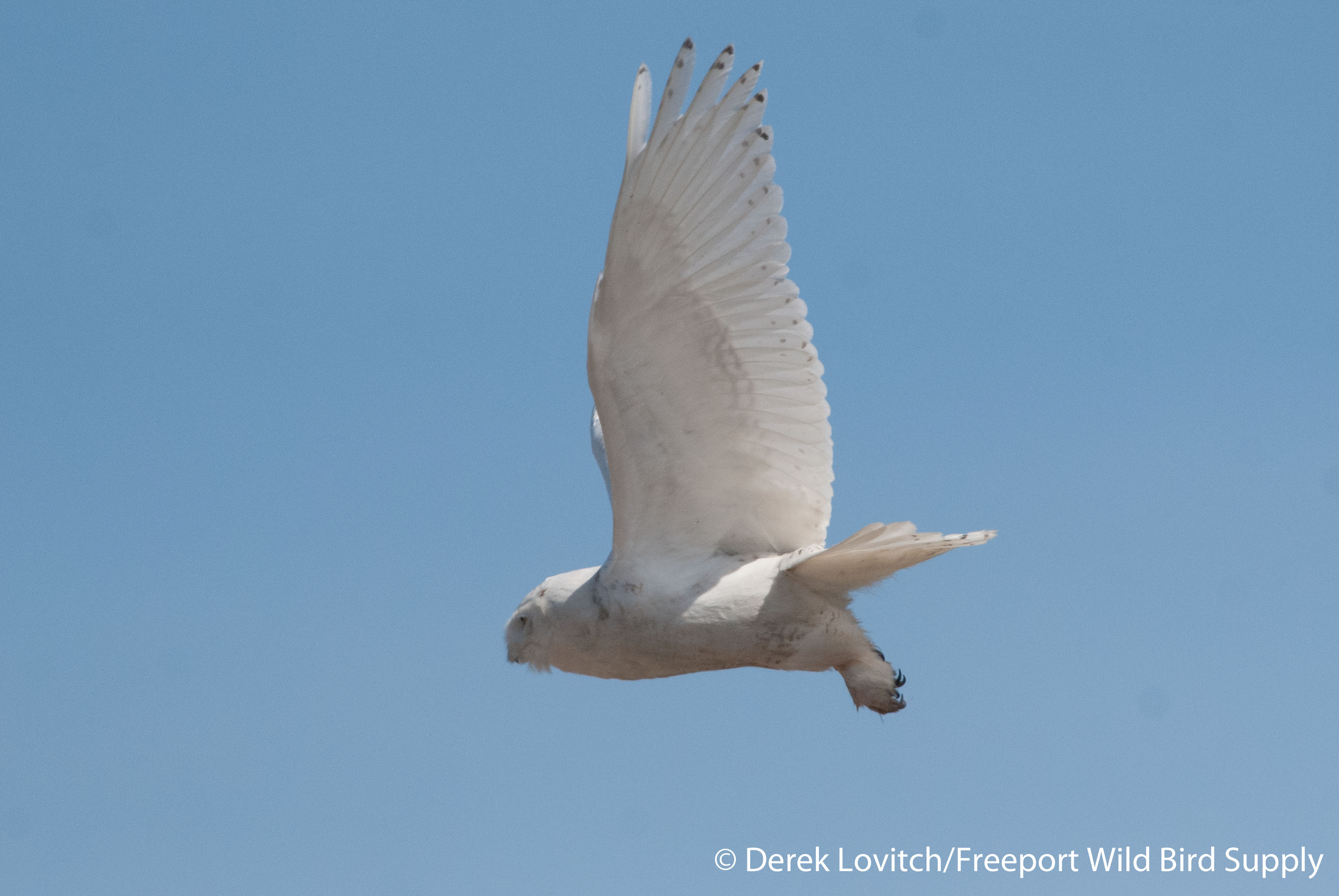
Snowy Owl, The Cliff House, York, 3/4/14. As you have seen on this blog, our store’s Facebook and Flickr pages, etc, most of our Snowy Owl photos this winter have been of relaxed birds, often with their eyes closed.  Few have been “perfect” shots, whether in lighting or resolution.  And we’re proud of that!  To us, the birds ALWAYS comes first, and we pride ourselves in minimizing any chance at disturbance.  Unfortunately, this bird was sitting close to the parking lot and we spooked it before we knew it was present.  A pair of crows likely also affected the bird’s immediate response.  As it flew away from both us and the crows, Jeannette snapped some photos, as the bird first flew straight out to sea – thereby ditching the crows – before returning to land a short distance away.  We backed off and left it alone.  With a lot of unethical and selfish behavior occurring – as always – around charismatic owls around the country, we support the idea that the circumstances of photos be explained when it shows a behavior that may have been modified by our presence or behavior.

A White-winged Gull Convention in Portland Harbor

On Sunday, Kristen Lindquist and I worked Portland Harbor for gulls.  In my usual routine, I started at the Maine State Pier and worked my way west, checking all of the piers and roosting locations in Old Port.  I was pretty happy with the 4 first-winter Glaucous Gulls and a healthy handful of Iceland Gulls from the state pier, and we continued to see Iceland Gulls here and there as we continued along.

DSC_0023_1stC_ICGU-flight2,OldPort,3-2-14

It was a good day for gulls in the harbor, but we didn’t realize just how good it was until we got to the end of the “Fish Pier.”  There, everywhere we looked we saw white-winged gulls!  Out by the dredging barges there were white-winged gulls.  Feeding at the rips around the channel markers there were white-winged gulls.  And all around the fish pier there were white-winged gulls!

I was very conservative in my counts, and yet tallied an exceptional 12 first-winter Glaucous Gulls – an all-time state high count for me.  But it was the abundance of Iceland Gulls that stole the show; 4 adults (all with completely different wing-tip patterns of course), at least three 2nd-winter, and an astounding (for southern Maine, anyway) THIRTY-TWO 1st-winter birds.  With that many, it was not surprising that the whole range of variation of “Kumlien’s” Iceland Gulls was to be seen, but try as I might, I couldn’t find a single bird that even allowed for an attempted stringing of a Thayer’s.

Despite starting the day by saying, “I am not taking any more first cycle Iceland Gull photos this winter,” with this many birds around, I couldn’t help myself.  Here’s a selection of photos, starting with two phone-scoping using an iPhone 4S, Phone Skope adapter, and a Zeiss Diascope FL, followed by “better” photos using my Nikon D80 with a 300mm lens.

IMG_2843_gulls_at_outflow_pipe,3-2-14

IMG_2837_gulls_at_outflow_pipe2,OldPort,3-2-14

At the aforementioned outflow pipe.

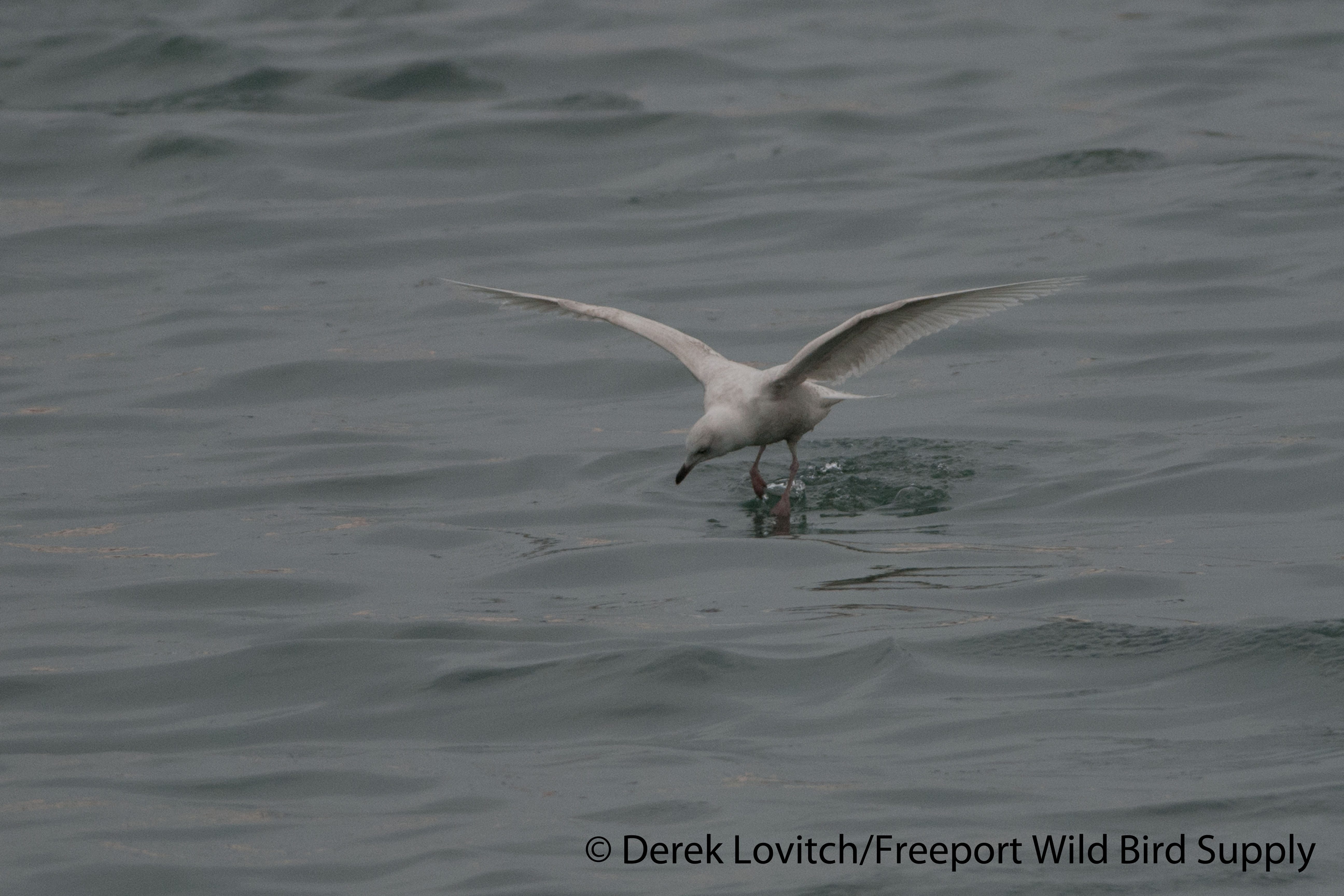
DSC_0002_ICGU_1stC1,OldPort,3-2-14

1st cycle Iceland Gull feeding storm-petrel style.

DSC_0007_3_ICGU,OldPort,3-2-14

1st/2nd cycle (L) and 2 1st-cycle “Kumlien’s” Iceland Gulls (R), with a dark 1st winter Herring Gull for contrast.

DSC_0011_lt_and_dark1stC_ICGU,OldPort,3-2-14

Light and darker 1st-cycle “Kumlien’s” Iceland Gulls.

DSC_0013_ICGU_2ndC1,OldPort,3-2-14

Worn, late 1st Cycle or early 2nd Cycle “Kumlien’s” Iceland Gull.

DSC_0014_ICGU_ad1,OldPort,3-2-14

Adult “Kumlien’s” Iceland Gull.

DSC_0016_ad_with_1stor2ndCICGU,OldPort,3-2-14

Adult and 1st/2nd Cycle “Kumlien’s” Iceland Gulls.

DSC_0017_ad_with_1stCICGUs,OldPort,3-2-14

1st cycle and adult “Kumlien’s” Iceland Gulls.

DSC_0021_COEI_flight,OldPort,3-2-14

Wait, that’s not an Iceland Gull…sorry, I got distracted…

After second breakfast, we checked in at Mill Creek Cove, where the outgoing tide was attracting gulls to the mouth of the creek as usual.  With birds heading to and from the Old Port, we didn’t add to our earlier counts, but there were at least 4 1st-winter Iceland and 2 1st-winter Glaucous Gulls present.  Oh, and this rather confiding female Green-winged Teal was dabbling with the Mallards.

DSC_0033_GWTE_hen1,MillCreek,3-2-14
showing a little more green speculum than usual on one side.

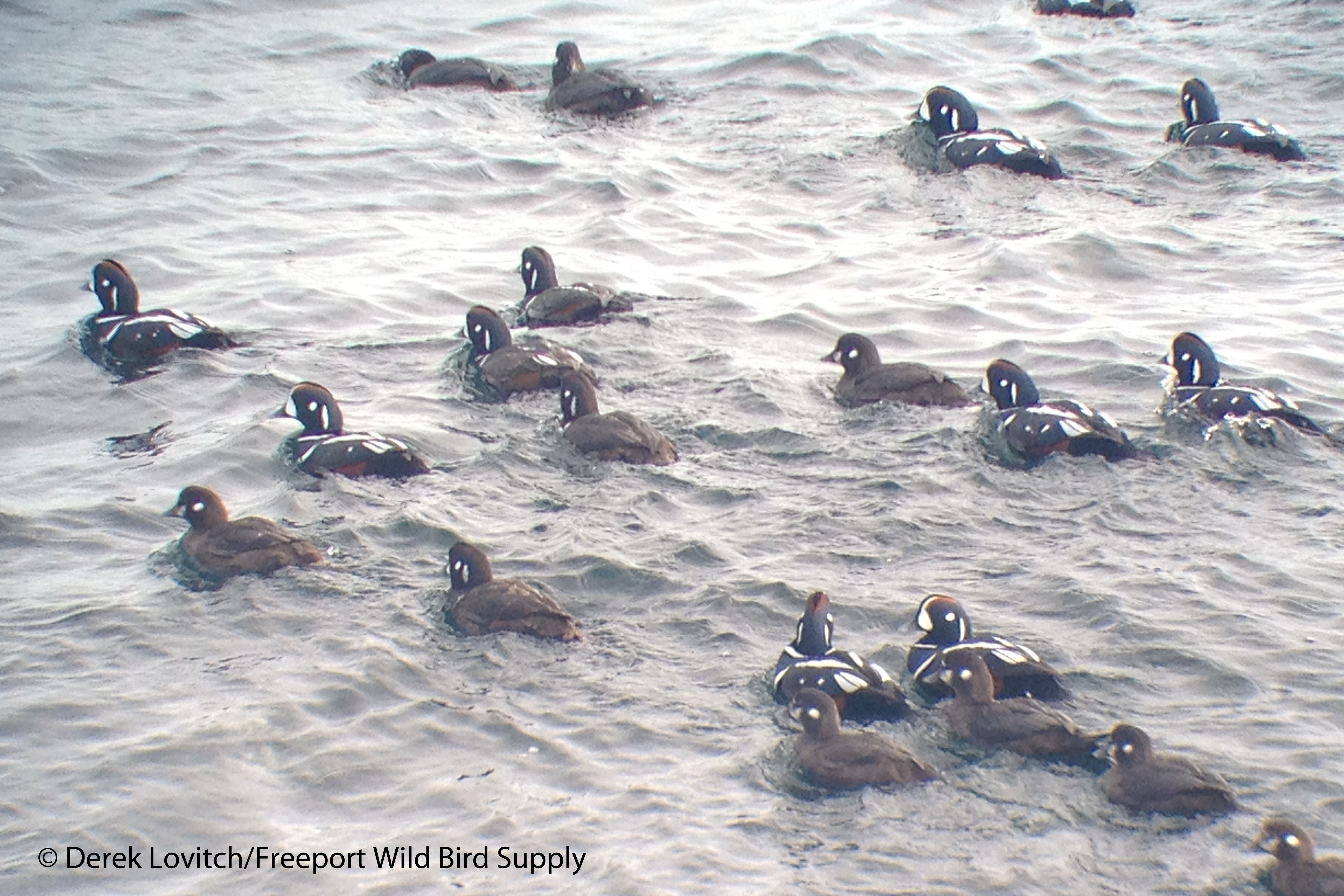
Then we worked the Cape Elizabeth shoreline, highlighted by 3 Greater Scaup at Kettle Cove, 11 Brant at Dyer Point, and these 28 balls of awesomeness (aka Harlequin Ducks; phone-scoped photos).

IMG_2875_HADU1,TwoLightsSP,3-2-14]

IMG_2877_HADU2,TwoLightsSP,3-2-14

But back to those gulls…why so many?  While the number of Herring and Great Black-backed gulls (and the expected relatively small number of Ring-bills) were average (at least by recent winters’ standards), this is by far the most total white-winged gulls that I have seen in PortlandHarbor in the 13 years I’ve lived here.  Some of these gulls are probably northbound migrants, but clearly there was something more at play here.

For one, there’s a dredging operation ongoing in the main channel of Portland Harbor.  While we didn’t see any gulls obviously foraging on the dredge spoils being pumped into the barge, or immediately around the buckets scooping up the muck, there were birds standing around on the new moving “islands.”   I wondered if a lot of these gulls were following/riding the barges in from where they are dumping the dredge spoils seven miles offshore.  But in today’s Portland Press Herald, I read that the occasional dynamiting of underwater bedrock would kill some fish, and then the “seagulls’ (sic… ahem!) were feeding on the dead fish.  That would certainly augment the already-occurring food sources in the harbor.

But most of the Iceland Gulls today were centered around the outflow pipes of various lobster-related facilities, as usual.  Meanwhile, the high tide limited roosting and foraging opportunities along the coast, and here in the harbor.

So my guess is that the time of year (migrants), the dredging operation, and the tides all helped to greatly increase the volume of white-winged gulls present today to numbers not seen in recent years – at least not since Portland had a thriving year-round fishing industry.  Obviously, this is just conjecture, but whatever made it happen, I was happy to be there to enjoy it!

DSC_0022_1stC_ICGU-flight1,OldPort,3-2-14

Also gull-watching:
DSC_0025_Harbor_Seal,OldPort,3-2-14

Scarborough through South Portland: Signs of Spring!

I decided to blog about my birding outing today, if only to give people a little hope that spring is around the corner. As temperatures plummet once again this week, perhaps the knowledge that spring migration has actually begun will provide a little comfort…and warmth.

Phil McCormack and I birded from Scarborough Marsh into South Portland today, enjoying a very spring-like day (highs in the mid-40’s) and some great birding. A few “new arrivals” and continuing wintering species combined for a respectably tally of 54 species without trying – and with ending our birding at 1:30.

We began on the Eastern Road Trail. Within mere seconds of saying to Phil, “I expect some early migrant waterfowl like pintail and Gadwall today,” three drake Northern Pintails came cruising by. I love the look of pintails in flight; they’re so elegant.  The long tail, thin neck, and long, relatively narrow wings suggest a miniature loon, and they have one spiffy pattern. The sense of spring really kicked in when a Killdeer sounded off and came cruising in to an exposed muddy bank – my first of the spring, and a bit on the early side considering the abundant snow cover.

A pair of Gadwall (first of the year – although they were actually southbound) flew over Pine Point, as did at least one Snow Bunting.  Twenty-eight Common Loons were in the channel, while over on Western Beach, the dredging operation was pumping sand onto the beach, collecting a nice concentration of gulls.  Sifting through them yielded two 1st-winter Iceland and 1 1st-winter Glaucous Gull.  American Robins – overwintering birds, not northbound spring migrants – were widespread today, with a high count of 50-75 around Seavey’s Landing.

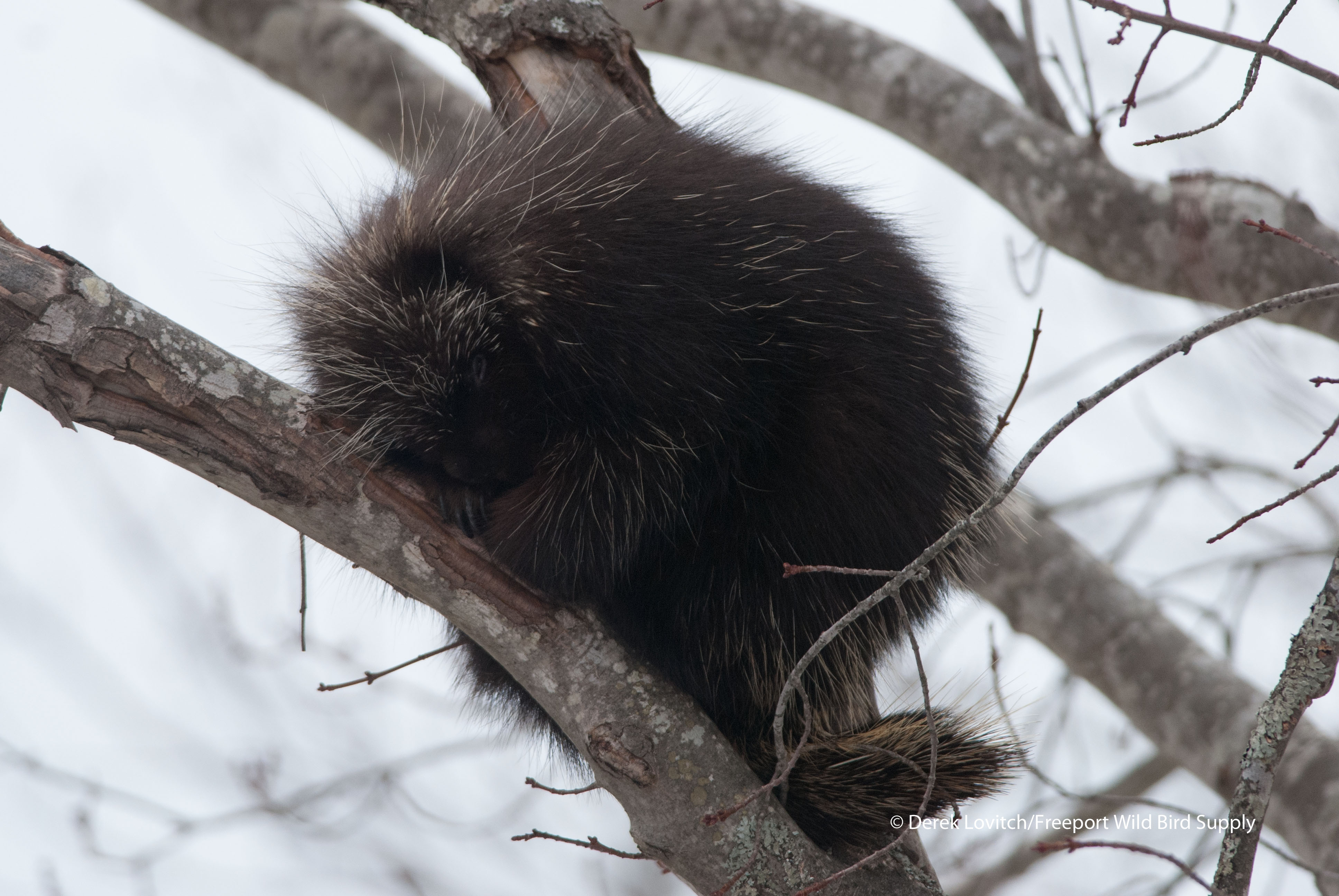
Rounding the north side of the marsh, we checked a couple of neighborhoods for frugivores, before arriving at Kettle Cove.  At Two Lights State Park, a raft of 150 Black Scoter loafed offshore, with 18 Harlequin Ducks in the surf.  A Porcupine at the edge of the parking lot was the star of the show, however.
DSC_0031_Porcupine1a,TwoLightsSP,2-23-14

Ten more Harlequin Ducks and a Northern Shrike (an immature; my 6th of the winter) at Dyer Point were signs of the continuing winter, but a Black Guillemot in full breeding plumage was suggestive of the advancing season.

Moving into South  Portland, a Red-bellied Woodpecker was among the usual denizens at Trout Brook Preserve, but Mill Creek and Mill Creek Cove were hopping!  286 Mallards and a growing legion of American Black Ducks were joined by a single drake Green-winged Teal, our third “FOY” of the day!  Meanwhile, the gull turnover in the cove eventually amounted to eight 1st-winter Iceland Gulls and two or three 1st-winter Glaucous Gulls.

But perhaps our last stop provided the “bird of the day:”
lunch…the fried chicken and waffle from Hot Suppa!

Gull Identification Workshop Wrap-Up

You may have noticed that my blog has been a little quiet in the last couple of weeks.  Mostly, that has been due to my birding being mostly about photographing gulls every chance I get! And in between, accumulating and sorting photos from friends.  What was planned to be a 95-slide PowerPoint program became an exhaustive (literally), 180+ slide dissertation.  Not only was I impressed by how many people signed up, but how many stayed until the bitter end – even though I strongly urged people who were new to this to depart before the section on Thayer’s Gulls and hybrids!

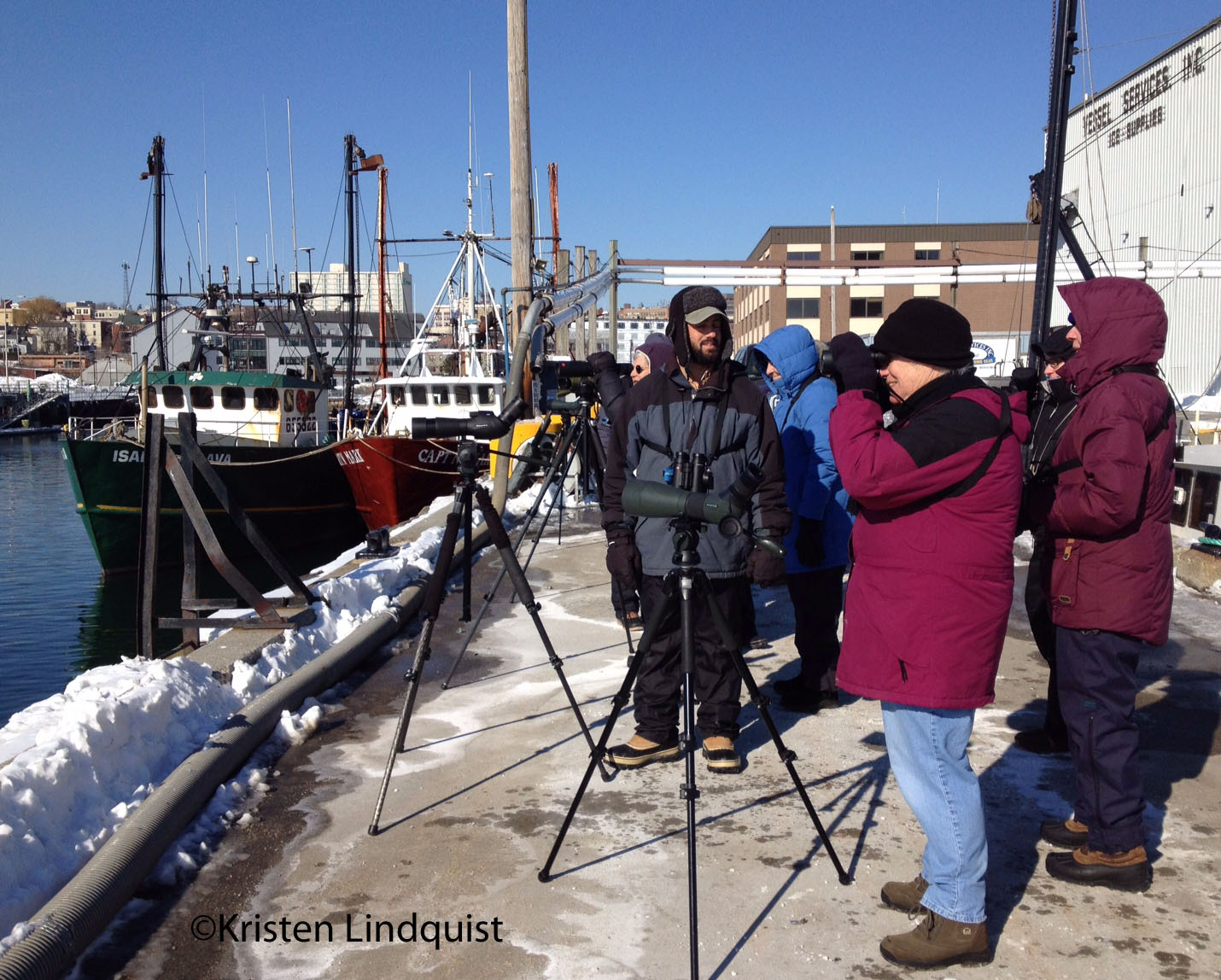
Come Sunday morning, 13 people joined me for the field session of the two-day workshop – no doubt reduced by the 12-degree temperatures that greeted us to start the day. We began with close studies of the various ages of Ring-billed Gulls at Back Cove…aided by a little “incentive,” of course.
photo 3_edited-1

Sorting through Herring Gulls was up next, and then we made our way over to the Fish Pier in OldPort, for some “real” gulling.  And it did not disappoint. The endless variation of “Kumlien’s” Iceland Gulls was readily apparent with eleven 1st-winter, two 2nd-winter, and 2 adults – many of them close and in direct contrast with each other. A total of three 1st-winter Glaucous Gulls were added to the mix, along with ample opportunities to practice aging Herring and Great Black-backed Gulls.
photo 3 (2)_edited-1

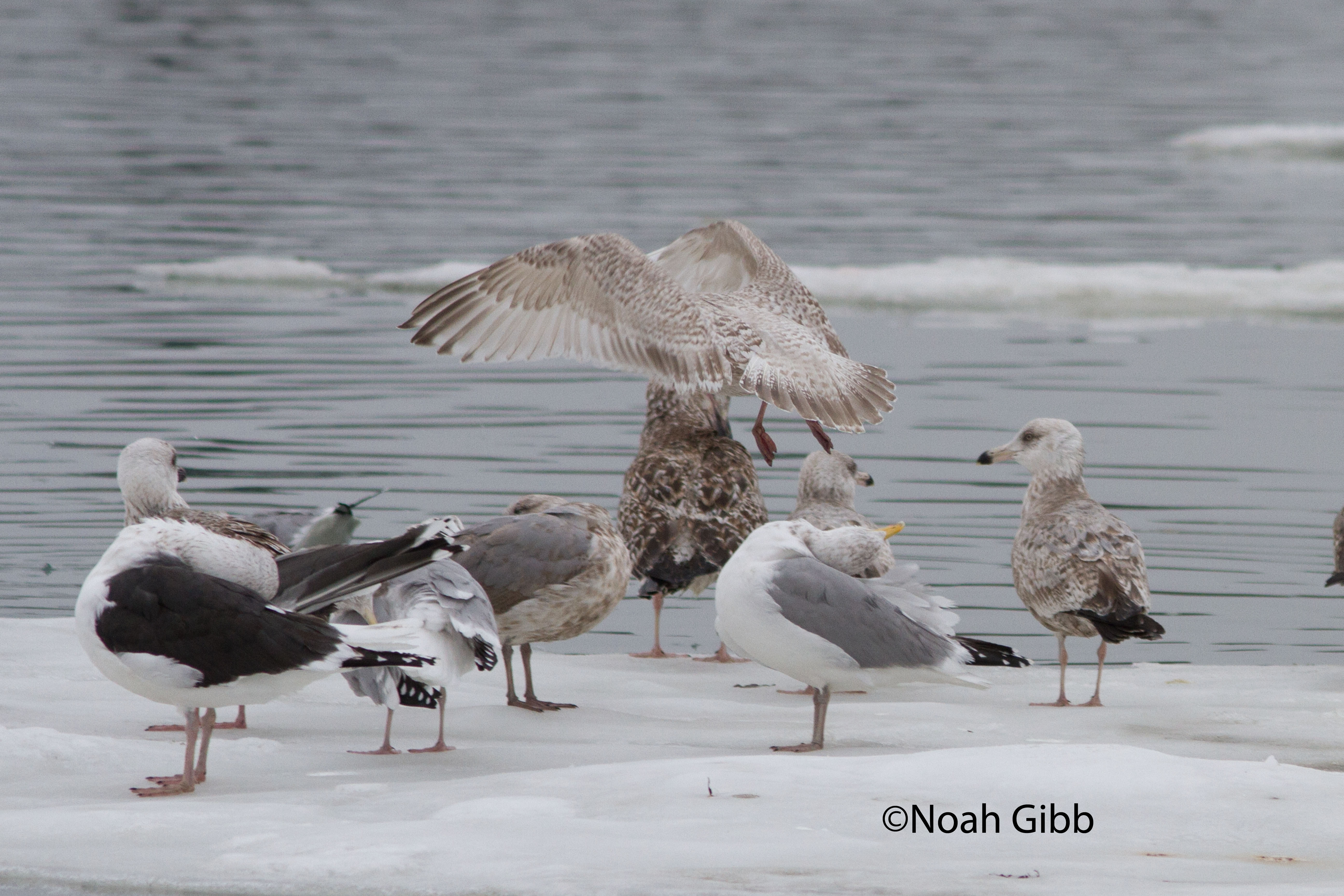
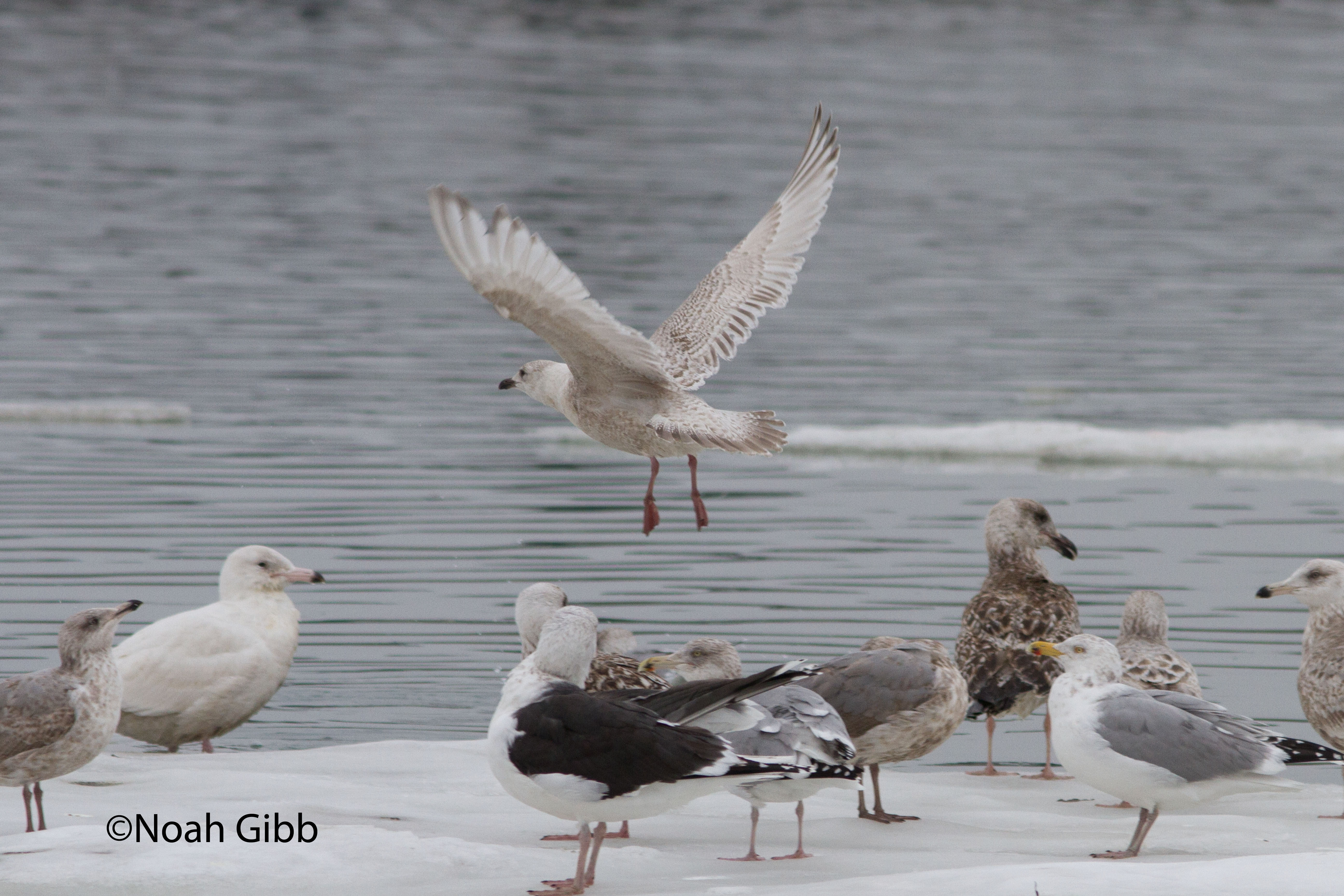
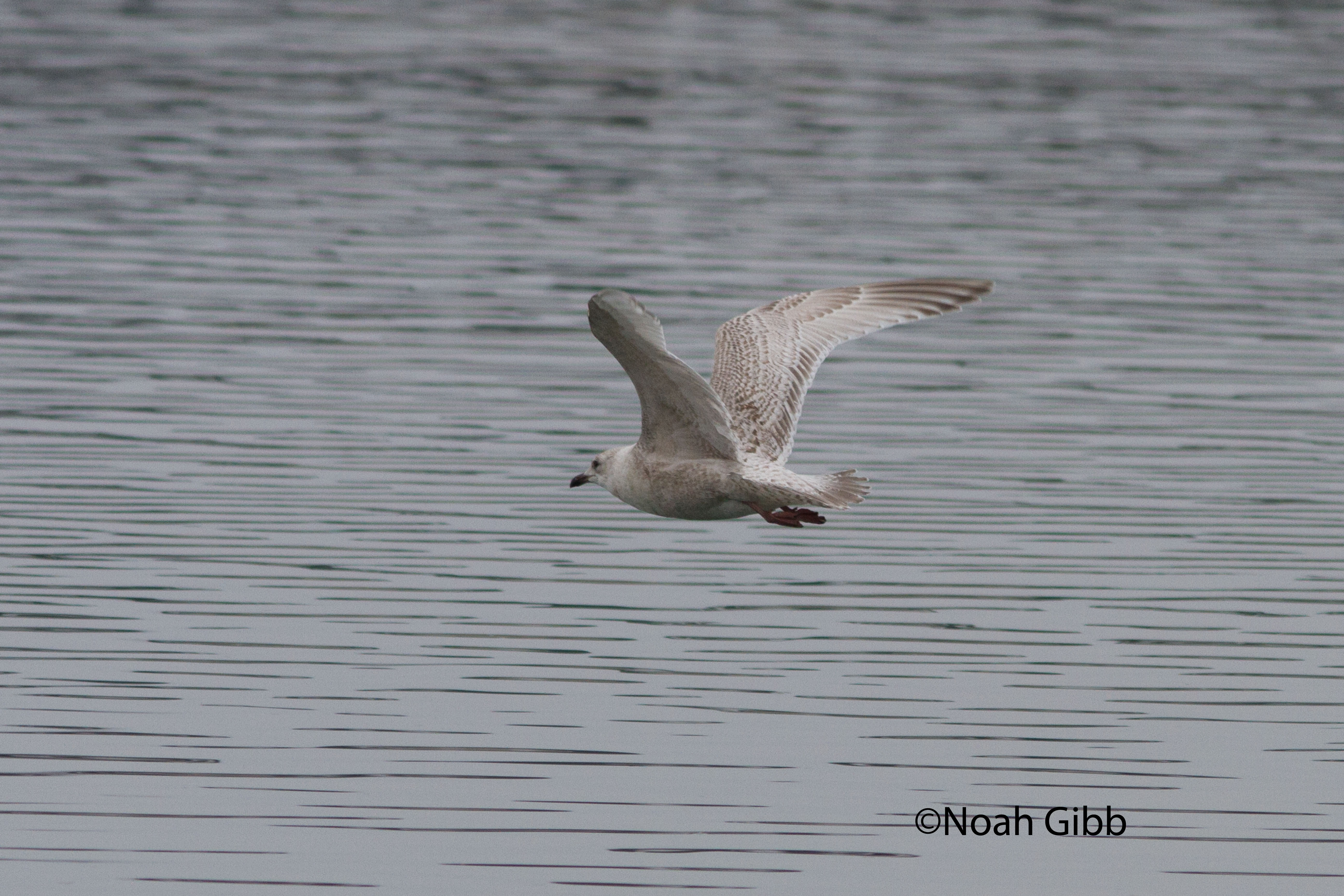
I really couldn’t ask for anything more…well, I could, and of course, did. And shortly thereafter a particular gull-of-interest put in an appearance. Widely being reported as a Thayer’s Gull, this odd individual was a bird I wanted to study closely (Jeannette and I only saw it in the distance on Tuesday), and it was indeed a very instructive bird for a gull workshop.  Having been looking at thousands of gull photos over the last two weeks, I have been a bit negligent with studying and addressing this bird.  Besides, I had not seen it in the field and even some very good photos are of secondary value to time with a bird in the field.

Doug Hitchcox got some decent photos of the bird on Sunday, but the best photos to date have been from Noah Gibb. I will therefore use these photos as our reference.
99.IMG_9975_edited-1

99.IMG_9985_edited-1

99.IMG_9987_edited-1

99.IMG_9998_edited-1

One of my take-home messages during my workshop is that a good “guller” has to be able to say “I don’t know,” and leave some individuals as “Gull sp.” This is probably the best answer to this bird, but what I think we can say is that this cannot be “counted” as a Thayer’s Gull.

For better or for worse, Thayer’s Gulls on the East Coast receive extensive scrutiny.  Birds that would be passed over in coastal California are analyzed to death in New England. Likewise, birds that look like “Kumlien’s” Iceland Gulls on the West Coast get extensive scrutiny, while here in Maine we pass some of these off as typical variation.  And I think this is a good thing – rare birds are rare, and vagrants to opposite coasts should warrant extreme care.

Therefore, this current rash of “Thayer’s Fever” – a common affliction of East Coast gull-watchers – needs to be tempered a bit. There is a reason that there are only two accepted records ever in Maine of this challenging, and variable, species. Therefore, extreme caution is necessary when placing this desirable label on funky gulls.

Like the Shawmut Dam gull reported by many as a Thayer’s a few weeks ago, I believe that the Portland “Thayer’s” is well outside the range of variation of what we can accept as a bona-fide Thayer’s Gull on the East Coast.  While there are a number of characteristics that suggest this bird could be a Thayer’s, there are a number of significant “strikes” against it.  While I think the Shawmut Dam birds suggests a Iceland-Thayer’s intergrade (I am not going to get into the muddled and controversial taxonomy here today), the Portland bird looks to me more like an abnormally dark-winged “Kumlien’s” Iceland Gull. Sure there could be Thayer’s genes in there…which there probably are in all Kumlien’s Gulls . . .oh wait, I said I wasn’t going to get into taxonomy.  Never mind.  Moving on.

So where was I? Oh yes… while the dark secondary bar (and upon closer inspection showing a distinct contrast between dark outer webs and pale inner webs) and the similarly distinctly two-toned outer primaries are important Thayer’s features, there are a serious amount of non-Thayer’s like features shown by this bird. Again, like the Shawmut Dam bird, there are just too many things “wrong” with this bird to safely label it a Thayer’s Gull, in my opinion.

First and foremost, there’s the Portland bird’s incredibly white overall appearance. While a first-summer or some 2nd-cycle Thayer’s can look this pale overall, this bird IS a first-cycle bird.  Since no second-cycle feathers are evident (the bird has a very uniformly-marked plumage typical of a bird less than a year old) and none of the feathers suggest any abnormal wear, we cannot call this anything other than a 1st-cycle bird.  It is not overly worn, and bleaching would affect all of the most-exposed parts of the bird – like the mantle, upperwing, and especially the primaries (and it is those primaries that are abnormally dark, not pale). The mostly-dark bill is also highly suggestive of a 1st-cycle bird, as is the fairly dark eye. Perhaps that is a bit of an over-simplification, but for now, that should suffice.

With that (fairly well) established, we can look at this bird more closely.  Again, those outer primaries and “picket-fence” secondaries are very Thayer’s-esque. Unfortunately, the similarities pretty much end there. The bird is not very big, and similar in size to most of the “Kumlien’s” Iceland Gulls we see it with.  It is also has the somewhat short and thin-billed appearance, with a gently rounded head and large eye that are typical of Iceland Gulls; this bird does not get any subjective gestalt points.  More importantly, in my opinion, are more tangible issues, from head to tail (and in no particular order of importance):
–          The overall pale appearance to the entire bird give that “white” impression at a distance; Thayer’s (THGU) usually look “dirtier” or even “brown.”
–          The pale face doesn’t have that nice dark smudge that we like to see on THGU.
–          The bill is clearly becoming pale at the base already.  The pattern looks good for Iceland (ICGU), and is certainly on one end of the bell curve for THGU.
–          The tertials are wholly marbled, and look perfect for ICGU.  “Classic” THGU show mostly dark tertials with marbled distal ~1/3rd or so.
–          On the folded wing (and on some flight shots), the primaries definitely have dark outer webs, but they also have a pale fringe that not just rounds the tip, but continues down the length of the most of each feather’s outer web. That is more consistent with dark-winged “Kumlien’s” Gulls.
–          While the tail is mostly dark, the bases are fairly extensive white with lots of marbling.  The extent of marbling is a good fit for ICGU.

While absolutely none of these factors eliminate a THGU on their own, the sum of all of them taken together makes for a most unusual THGU.  Considering the range of variation in “Kumlien’s” ICGU combined with hybridization – and by some accounts extensive intergrading – put this bird well outside the possibly-artificially-delineated box that we currently label a Thayer’s Gull.  At the very least, this is far short of a bird that could be “good enough” to constitute a third state record.

Can you see why I was so impressed that so many people stayed to the bitter end of my program on Saturday (and Sunday, for that matter!)?  So there, I said it – the OldPort mystery gull is not a “good” Thayer’s, despite the wishes of many-a-birder!  Sorry.

So anyway, after the Fish Pier, we ventured over to Mill Creek Cove in South Portland.  Two more 1st-winter Iceland and a 1st-winter Glaucous were present (some are all likely birds we saw on the other side of the harbor) to reinforce our new-found skills.
photo 3 (3)_edited-1

And finally, some of the group joined me for a field trip extension over to Westbrook to look for the “Westbrook Gull,” a bird that, as I explained in the workshop, still defies identification and therefore is also quite instructive. Unfortunately, it was not present today (I see it less often on the weekend), but we finished up with a great showing for here of 4 Iceland Gulls (three 1st-winter and 1 2nd-winter) with the Herring and Ring-billed Gulls near the falls.  Meanwhile, while we did look at other birds all day, the open water behind downtown Westbrook yielded the surprise of the day – a pair of Ring-necked Duck that has just been found by Colin Chase.  Whether they are southbound, northbound, are somewhere in between, this was a great winter find, and a nice way to bring our workshop to a close.

Some people added Iceland and Glaucous Gull to their life list this day – and I think one person deleted Thayer’s Gull from their life list! – but more importantly, everyone left with a little more knowledge about how to identify gulls, and more importantly, hopefully a new-found appreciation for these remarkable, adaptable, and successful creatures.

With the success of this weekend (and some refinement due to the slide show portion of the program), I think it is safe to say that you can look for this workshop again in the future.  Until then, good gulling everyone!

2014 Maine State List Predictions

About this time each year on my blog, I make two lists of predictions for the coming year in Maine birding.  The first is my (somewhat-educated) guesses of the next 25 birds to be added to Maine’s state list.  The second is my predictions of the next 25 birds that I will add to my own personal state list.

But first, let’s recap 2013.  This past year, only one new species was added to the Maine list (although there was a report of a Rock Wren in Washington County this fall; I know little of the details): Eurasian Collared-Dove that appeared at a Falmouth feeder on 5/28.  This was my #1-ranked bird for each of the last two years.  I was hardly going out on a limb with this one, as this bird continues to rapidly colonize North America.  While reports in New England continue to be sparse, we can only foresee these becoming much more regular and eventually colonizing much of Maine.

For 2014, I added Neotropical Cormorant to the list, based on the expanding population in the interior of the continent and increasing vagrancy to distant corners of the continent.  I also replaced Bermuda Petrel with Barolo Shearwater.  Recently split from Little Shearwater, this pelagic waif has been detected near the mouth of the Gulf of Maine.  It seems it’s only a matter of time before a research vessel or even a whale-watch trip (especially following a tropical system) finds one within Maine waters.  I also shuffled around a few species based on increasing populations and/or trends in vagrancy.

So here goes my Top 25 Next Species for Maine list:
1)   California Gull
2)   Ross’s Gull
3)   Graylag Goose
4)   Roseate Spoonbill
5)   Little Stint
6)   Fieldfare
7)   Hammond’s Flycatcher
8)   Black-chinned Hummingbird
9)   Spotted Towhee
10)  Audubon’s Shearwater (on “hypothetical” list)
11)  Neotropic Cormorant
12)  Black-tailed Gull
13)  Anna’s Hummingbird
14)  Redwing
15)  Allen’s Hummingbird
16)  Barolo Shearwater
17)  Long-billed Murrelet
18)  Common Ground-Dove
19)  Western Wood-Pewee (my gut still tells me a bird I found on Monhegan last fall was actually this species, but a good voice recording is going to be necessary to confirm identification).
20)  Spotted Redshank
21)  Yellow-legged Gull
22)  Brown-chested Martin
23)  Bermuda Petrel
24)  Gray Flycatcher
25)  Common Scoter

As for me personally, 2013 was a productive year.  I added eight birds to my state list (with last year’s rankings):
a) Hoary Redpoll (#2), Bowdoinham feeder, 2/4.
b) Northern Lapwing (honorable mention), Range Hill Road, Poland, 5/6.
c) Acadian Flycatcher (#22), FortFoster, 5/21.
d) Mew Gull (#21), Thomaston, 8/8.
e) Black-necked Stilt (honorable mention), Eastern Road, Scarborough Marsh, 6/23.
f) Kentucky Warbler (#12), East Point, Biddeford Pool, 9/9.
g) Bell’s Vireo (#23), Bailey Island, Harpswell, 10/23.
h) Hermit Warbler (honorable mention), Harpswell feeder, 12/12.

Of those, only the Acadian Flycatcher and Bell’s Vireo were “self-found,” which is always the more fulfilling way to add to one’s state list.  I’ll have to do better with this in 2014.  Unfortunately, it brings my self-found list down to 88.7% of my total state list (363).

I also “dipped” on the St. George American White Pelican in September, waiting until it was no longer being seen before going to look for it.  I chased enough in 2013, but I could have chased much more.  In fact, I never made the effort, was away, or just didn’t get lucky enough for some other potential state birds (American Three-toed Woodpecker, the collared-dove, Great Skua, Yellow-headed Blackbird, and Bullock’s Oriole all immediately come to mind).

There are lots of options for birds to add to my own list in the coming year(s), so narrowing it down to 25 and ranking them is really just a guessing game.  Of course previous records and trends are taken into account.
1) Slaty-backed Gull
2) American Three-toed Woodpecker
3) Great Skua
4) Eurasian Collared-Dove
5) Gyrfalcon
6) Graylag Goose
7) Say’s Phoebe
8) American White Pelican
9) Western Grebe
10)  Boreal Owl
11)  Fork-tailed Flycatcher
12)  Tundra Swan
13)  Yellow Rail
14)  Ivory Gull
15)  Franklin’s Gull
16)  Sabine’s Gull
17)  Black-bellied Whistling-Duck
18)  California Gull
19)  Calliope Hummingbird
20)  Ross’s Gull
21)  Roseate Spoonbill
22)  Sage Thrasher
23)  Hammond’s Flycatcher
24)  Yellow-headed Blackbird
25)  Loggerhead Shrike

So there ya have it.  Now, let’s go birding and see what 2014 will bring!

A HERMIT WARBLER in Harpswell – BELATED.

DSC_0033_HEWA1,12-12-13_edited-1

A warbler arrived at a Cundy’s Harbor, Harpswell feeding station on November 18th.  Any non-Yellow-rumped Warbler is exciting in Maine by the end of November, but most turn out to be Pine Warblers – a rare but regular “half-hardy” that often winters outside of its usual winter range, and often takes advantage of feeders to do so.  This particular bird was identified as a Black-throated Green Warbler – an outstanding late-November record but not one without precedence.  Intriguingly, on the first day, it appeared with a second warbler that may have been a Black-throated Blue Warbler, but that bird was not seen again.  However, on December 11th, the homeowner brought in an iPhone snapshot of their visitor to the store to confirm the identification.  Distant and blurry through a window, the bright yellow face and black beady eye immediately stood out. “Um, can I come over?” I inquired.

I arrived at 6:55 the next morning, as the bird was regularly being seen just after 7.  And sure enough, it showed up at 7:02!  It remained for just a few minutes, eating hulled sunflower seeds at the feeders with a small band of Black-capped Chickadees. And as I surmised, this was definitely a Hermit Warbler – only the second-ever to be seen in Maine!

The light was low, and the feeders were still in the long, early-morning shadows, so my photos were pretty poor.  I asked to stay a little longer, and after a brief visit at 7:35, the bird returned and fed extensively between 7:55 and 8:03, in which time I was able to photograph the bird extensively.
DSC_0040_HEWA2,12-12-13_edited-1  DSC_0037_HEWA4,12-12-13_edited-1

DSC_0060_HEWA5,12-12-13_edited-1  DSC_0052_HEWA6,12-12-13_edited-1

The bright yellow face was readily apparent, which sets off the seemingly-large dark, beady eye.  There’s a very limited amount of dusky green on the auriculars, and the greenish crown tapers to a “widow’s peak” on the forehead.  The back is greenish-gray and the gray wings are set off by two bold whitish wingbars and pale-fringed secondaries.  The throat was almost wholly yellow, except for a small white chin and a couple of dusky smudges.

I aged this bird as an immature female due to the overall relatively drab colors and lack of black almost anywhere in the plumage.  However, I was not familiar with this plumage in the field, and some photos online and in some books concerned me a bit, so I sent a couple of the photos to a friend in California for confirmation.  He forwarded them to Kimball Garrett, the Ornithological Collections Manager for the Natural History Museum of Los Angeles County, and the co-author of Warblers in the Peterson field guide series.

His response was straightforward, it was an immature female, born this past summer: “I certainly wouldn’t have called it anything other than a female Hermit Warbler.  The yellow across the uppermost throat is fine for female Hermits (shown to various degrees in all 3 of our skins of HY [hatch year] females).  I would worry about prominent streaks on the flanks and undertail coverts, but I really see almost nothing there (and what there is could be explained by darker feather shafts that sometimes lend the impression of streaks).”

This is truly a remarkable record.  The first state record, found by Scott Surner on MonheganIsland between September 29th and October 1st was seen by only a handful of birders – not including yours truly despite my presence on the island at the time, and eventually much effort, but that’s a long story for another day.  Breeding in the mountains of the Pacific Coast from the Olympic Peninsula of Washington south through the Sierra Nevada range to about south-central California, Hermit Warblers normally winter in southwestern Mexico through the mountains of Central America down to Nicaragua.

Therefore, for this bird to arrive in Maine it likely had to fly 90-degrees in the wrong direction.  While “180-degree misorientation” in which birds fly north when they “should” be flying south (for example) is a fairly well-established pattern that results in far-flung vagrancy, 90-degree misorientaton appears to be even rarer.  In other words, this bird was not “blown here,” (although it could certainly have been facilitated in its arrival by a strong storm or persistent westerly winds) but was somehow “miswired” to fly in a very wrong direction.  Although it is fun to ponder (at least for me!), how and why vagrants arrive in certain places, we obviously can’t know for sure what mechanism(s) delivered this bird to a feeder along the shore in Harpswell, Maine.

As I enjoyed this bird, and a wealth of other activity at the feeders, the homeowners and I discussed the significance of this sighting.  Of course, I broached the topic of “visitation,” as many birders would love the opportunity to see this bird as well.  I was exceptionally grateful for the chance to see this fantastic bird, and I knew other birders would be grateful as well.

Sometimes, rare birds at feeders are “easy” to share, such as when they are at a feeder visible from a road with ample parking nearby.  For a variety of reasons, some birds simply cannot be made public.  After much discussion, it was decided that this bird would not be publicized.  A small, private dead-end dirt road with virtually no parking, close neighbors, and no visibility from the road made this a challenge.  Simply put, you had to be in the kitchen…and with life schedules and all of the above considerations, it was, unfortunately, in the best interest of the homeowners to keep this bird under wraps even though everyone regretted this conclusion.

The bird was seen regularly through the 13th of December, but after the homeowners were out of town for the weekend, they came back on the 16th and have not seen the bird again.  A heated birdbath and live mealworms were deployed upon their return, but the bird is nowhere to be found.  Seeing that it has now moved on, I post this blog to document this “Mega” rarity for the permanent record, as per my agreement with the lucky homeowners who were graced by this special visitor from the “other” coast.

Random Photos Using SLR and Phone-scoping Techniques Over the Last Few Days.

Over the past few days, I have squeezed in a healthy amount of birding, giving the season and a life in retail!  It has been fruitful birding, too, and I posted daily highlights to our store’s Facebook Page for the complete story of recent birding outings.

I also took an unusual amount of photos for me.  I’m really not a bird photographer.  Instead, I call myself a “birding photographer.”  I even wrote an article for the recent Birder’s Guide to Gear from the American Birding Association about techniques of birding photography, from traditional digital SLR’s to phone-scoping.

In the past few days, I have employed both techniques to grab some photos while birding.  Some are better than others, and some are nothing more than “documentation” shots. In the shots below,  I employed either a Nikon D80 with a 300mm F4 lens and a 1.4x teleconveter, or a iPhone 4s coupled with a Zeiss Diascope T*FL 65 using a Phone Skope brand adapter.  Unfortunately, fairly thick cloud cover on both days impacted my lame photographing attempts.  Please remember to double-click the photos to get a larger image.

Yesterday, Luke Seitz, Maegan Krieger, and I met at Back Cove in Portland.  While waiting for their arrival, I spotted this Snowy Owl, and phone-scoped it early in the morning.
IMG_2125_SNOWatBackCove,12-19-13IMG_2121_SNOW_BackCove2,12-19-13

When we returned to the parking lot around 2:00pm, the day was marginally brighter, and the bird was significantly closer.  We used an excersize wall in the playing field as a very convenient blind, and I went to the SLR.
DSC_0025_SNOW1,Back Cove,12-19-13

Upon our arrival at Pine Point, this 1st-year Bald Eagle landed nearby.  I was without the SLR, so I snapped these photos using my phone-scoping system!
IMG_2141_1stCBAEA,PinePoint,12-19-13IMG_2148_1stCBaldEagle, PinePt, 12-19-13

We also found some good birds during the course of the day, including these treats at Grondin Pond: a 1st-winter Lesser Black-backed Gull and a male Gadwall – both of which were phone-scoped.
1stWLBBG,GrondinPond,12-19-13IMG_2161_GADW,GrondinPond,12-19-13

This morning, I visited the Hatch Hill Landfill in Augusta to study gulls, such as this rather dark 1st-winter Iceland Gull, which I phone-scoped on top of the hill.
IMG_2173_darkish1stWICGU,HatchHill,12-20-13

However, at least a dozen Bald Eagles of various ages were particularly active today, so I grabbed the SLR and fired away.  There was this 4th-year bird:
DSC_0050_4thCBAEA,HatchHill,12-20-13-best

And this interesting 2nd or 3rd year individual:
DSC_0053_2nd-3rdBAEA,HatchHill,12-20-13DSC_0051_2nd-3rdBAEA,HatchHill,12-20-13_edited-1DSC_0058_2nd-3rdBAEA,HatchHillLandfill,12-20-13

Southern York County CBC

The Southern York County Christmas Bird Count (CBC) was held on Monday, and this year, Kristen Lindquist and Phil McCormack joined me in the Moody section of the territory.  I’ve been doing this territory for about 8 years now, and have come to know and love it.

There’s lots of thickets, wooded neighborhoods with feeders, dunes, beach, river, Saltmarsh, ocean, and just about everything in between.  Running from about Eldridge Rd in the Moody section of Wells, south to the center of downtown Ogunquit, lots of intriguing winter habitats are contained within.  The Moody Marsh of the Ogunquit River, Beach Plum Farm, Ogunquit Beach, and the edges of the Wells Sewage treatment facility are all now regular parts of my birding routine after first visiting them when doing this CBC.

Having a small territory allows us to thoroughly cover many nooks and crannies.  We do a lot of walking – about 10 miles combined for the party, compared to only 10.5 by car.  Being outside – even in the bitter cold of yesterday morning – and being thorough always produces good birds and good variety on a CBC, but each year I am absolutely blown away by the quality and diversity of the birds I find in this territory.  In fact, one year, Luke Seitz and I had a 1st, 2nd, 3rd, 4th, and 5th count record, and in the very next year, we had a 1st, 2nd (x2), 3rd, 4th, 5th,  6th, and 7th count record!  Incredible!

And yesterday did not disappoint.

Deep snow and frigid temperatures certainly caused some rarities and so-called half-hardies to perish, or at least pushed many of them to points further south.  Open fresh water was limited, and deep snow prevented us from checking a few places.  So it did not surprise me that we “only” tallied 57 species (compared to last year’s mild December, when Luke and I tallied an exceptional 67 species), and we didn’t get a whole lot of top-5 records.  Of course, TWO 1st count records more than made up for it!  And a 5th, and a 6th, and a 7th, and two 9th!

As usual, we began with a dawn seawatch at Moody Point.  Heat shimmer and painful cold reduced visibility and our duration here, but there wasn’t too much going on thanks to a light westerly wind.
photo (3)_edited-1

A nearby thicket produced a Common Yellowthroat, our first good bird of the day.  A short while later, we pulled into the Wells Sewage Treatment plant, which I told Phil and Kristen is usually good for something “good.”  A Hermit Thrush quickly appeared to prove me right.  But then, as I glanced over at some Dark-eyed Juncos I noticed a Spizella sparrow.  I was excited enough for a Chipping Sparrow on a Maine CBC, but the bird looked warm and buffy to me.  Upon closer inspection, sure enough – the count’s first Clay-colored Sparrow
DSC_0077_CCSP3,WellsSewerage,12-16-13

As I was photographing it, it flew closer, and landed right over my head as I was kneeling in over a foot of snow.
DSC_0082_CCSP1,WellsSewerage,12-16-13

Apparently, it wanted to get back to its favorite spot (which is continued to frequent at least through day’s end) at the edge of the parking lot where a plow had scraped down to the soil.
DSC_0100_CCSP2,WellsSewerage,12-16-13

We were still talking about our spiffy little Clay-color when Kristen spotted a Brown Thrasher hunkered down in a tangle of Multiflora Rose.  Another first count record!
DSC_0115_BRTH,WellsSewerage_12-16-13

Perhaps the rest of the day was bound to be a bit anticlimactic after all of that fun before 9:30am, but we still had some great birding.  A lone hen Greater Scaup flew down the OgunquitRiver, while a huge assemblage of 480 Mallards and 86 American Black Ducks roosted at the edge of the marsh.  Much to my surprise – given those numbers – there were no other lingering dabblers.    An Iceland Gull passed by MoodyBeach, heading south, and on OgunquitBeach, we found an American Pipit.  A huge aggregation of 186 Sanderlings (an all-time high count for the entire territory in a season!) contained a dozen Dunlin.  And finally, another group (poachers!) pointed out a Peregrine Falcon having lunch on the marsh – just before its lunch was pilfered by a marauding Bald Eagle!  Speaking of lunch, a round of grilled veggie sandwiches at the Village Market in Ogunquit rounded out our experience.

Oh yeah, and then with an hour of daylight left, we raced down to Hampton, New Hampshire in an attempt to twitch a white Gyrfalcon that had been seen that morning (and the previous two days).  Unfortunately, we soon learned that it had not been seen since about 8:00am.  Well, it was worth a shot.

Anyway, as for the CBC, here’s the full roster and tallies for our rewarding little territory:
148 Canada Geese
143 American Black Ducks
522 Mallards
1 GREATER SCAUP (6th year)
91 Common Eiders
14 Surf Scoters
30 White-winged Scoters
16 Black Scoters
136 Long-tailed Ducks
24 Bufflehead
7 Common Goldeneyes
2 Hooded Mergansers
4 Common Mergansers
12 Red-breasted Mergansers
18 Common Loons
7 Horned Grebes
12 Red-necked Grebes
1 Northern Gannet
3 Great Blue Herons
2 Bald Eagles
4 Northern Harriers (including an adult male migrating offshore at sunrise)
1 PEREGRINE FALCON (5th count record)
12 DUNLIN (7th count record)
2 Purple Sandpipers
189 Sanderlings
322 Herring Gulls
1 Iceland Gull
19 Great Black-backed Gulls
242 Ring-billed Gulls
4 Black-legged Kittiwakes
36 Rock Pigeons
6 Mourning Doves
3 Downy Woodpeckers
7 Blue Jays
31 American Crows
71 Black-capped Chickadees
9 Tufted Titmice
4 White-breasted Nuthatches
3 Carolina Wrens
8 Eastern Bluebirds
1 HERMIT THRUSH (9th year)
40 American Robins
3 Northern Mockingbirds
1 BROWN THRASHER (1st count record)
1 AMERICAN PIPIT (13th count record)
77 European Starlings (very low)
17 Yellow-rumped Warblers (high)
1 COMMON YELLOWTHROAT (9th count record)
9 American Tree Sparrows
1 CLAY-COLORED SPARROW (1st count record)
17 Song Sparrows
7 White-throated Sparrows
73 Dark-eyed Juncos
29 Northern Cardinals
44 House Finches
90 American Goldfinches
215 House Sparrows

Rarity Season Ain’t Over Yet..and Fun Store News and Contest Stuff

“It ain’t over ‘til it’s over” – Yogi Berra

Before we get to my birding of recent days, a couple of quick orders of business. First of all, tonight is our “After Hours Sale” here at the store.  This is our biggest sale of the year.  From 6:00 to 8:00 tonight only, everything in the store (with the usual exception of seed, optics, and sale items) is 25% OFF!  And we’ll have treats, coffee, and other refreshments to fuel your shopping

Then rest up and be sure to join us on Saturday morning for our usual Saturday Morning Birdwalk (meets at the store at 8:00am for a carpool to a local park.  We’ll return for coffee and feeder-watching between 10 and 10:30).  While I would, of course, love to see you all year long, you don’t want to miss tomorrow (or any of the next 17 weeks) as it’s the start of the Fifth Annual “SnowBird(er) Contest,” where we’ll award points to birdwalk participants based on how cold it is.  The top three birders at the end of March will receive some great prizes!

GRAND PRIZE: MAINE BIRDS by RALPH PALMER!
The classic tome from 1948 is still a valuable reference for students of the birds of Maine. This excellent condition copy is valued at over $75. It’s great for comparing status and distribution from then to now, and for collectors of birding books.

2ND PRIZE: BACKYARD BIRDHOUSE from Coveside Conservation in Casco. Perfect for everything from House Wrens to White-breasted Nuthatches, this house is perfect for any yard and made from New England White Pine.

3RD PRIZE: $25 GIFT CERTIFICATE to EDNA & LUCY’S in Pownal – Enjoy a great sandwich, award-winning donuts, and more. Perfect for your next trip up to the Bradbury Mtn. Hawkwatch!

Visit our website for more information and how the game is played. 

OK, back to birding….

In my blog a few weeks ago in which I summarized the Rarity Season through the middle of November, I suggested that it was unlikely that many rare passerines will turn up away from feeding stations.  However, the possibility of strays “concentrat(ing) along the coast as they seek out more favorable microclimates or seasonal food sources,” still seemed like a cause for hope.  And sure enough, yesterday, I found female Hooded Warbler in the Biddeford Pool neighborhood – a wicked good December bird anywhere in the US!

Unseasonable rarities like this really fascinate me.  How did it get here?  Had it flown the wrong way during the usual period of Hooded Warbler migration and only now was detected as it moved towards the coast to escape the recent cold?  How long has it been present – maybe it’s been in these thickets for months and only now did someone walk by the right place at the right time? (Based on how thoroughly I, and a few others, work this area in November, I find this scenario a little less likely)  Or perhaps, it was a mirror-migrant afterall that flew north instead of south from its usual range in the Southeastern US.  Instead of ending up in Central America, it ended up somewhere in the interior of southern New England.  Then, the recent cold “encouraged” the bird to move on.  But “mis-wired” somehow, it just kept flying the wrong way.  I always wonder why so many birders assume that once birds have made a mistake (i.e. flown north instead of south), they’ll magically figure things out and do the “right” thing the next time.  Of course, who really knows?  But it’s a fun thing to ponder (well, it is to me anyway).

Of course, I was only down at the Pool to look for Snowy Owls.  In that same blog, I wondered if we were seeing the first signs of an irruption.  My goodness, were we ever, and so far, it is HUGE!  There have been dozens up and down the Maine coast.  Jeannette had an amazing TEN in and around Biddeford Pool on Tuesday.  Not only are they widespread, but they are in unusual concentrations.  I “only” found four yesterday, but some of my time was spent walking a mile back for the camera (it was raining and my shoulder was aching when I departed the car) and then not refinding the warbler.
DSC_0157_SNOW,Hatties,12-5-13

This particular bird, that Jeannette also photographed on Tuesday, has made a temporary home for itself in the marsh behind Hattie’s.

While it is unlikely that this density of Snowy Owls will continue, we’ll certainly enjoy it while we can.  Some will head further south, and unfortunately, no small number will succumb to starvation (the reason they’re here in the first place – and with up to 80% of raptors dying in their first winter, it’s no surprise that most of these birds will not make it back to the tundra).  I also wonder if these recent very high tides (astronomical high tide plus a deep low pressure system well offshore) will flood the marshes too much.  In such cases, many rodents (especially voles) will drown as they run out of high ground.  That’s a natural occurrence, but if there are few voles in the marshes, that will be a lot less food for hungry owls.

Meanwhile, in that aforementioned blog I also postulated about the potential of finally getting a good goose in the “Greater Yarmouth Goose Fields,” despite the late date.  Finally!  Although my high count of Canada Geese was only 434 birds (on Wednesday), they were punctuated by an adult Greater White-fronted Goose, in the field off of Cross and Winn Road in Cumberland – the first rarity of the season in the fields.  My stubborn perseverance finally paid off.  Today, I improved upon my photos, and I posted a couple here.

I also had a Gray Catbird at Biddeford Pool yesterday, along with the Hermit Thrush that Jeannette found on Tuesday.  I also had a Winter Wren near the store while walking Sasha on Wednesday afternoon and a Northern Flicker fly over the highway in South Portland yesterday. So there are still some “lingering” migrants around.  Meanwhile, with another increase in seaducks offshore (250+ Black Scoters off of East   Point for example), things are picking up along the coast.

Oh yeah, and there are Snowy Owls everywhere!  In other words, go birding…well, after you visit us at the store, that is!

Sabattus Pond Season-in-Review

Sabattus Pond was frozen on Monday morning, as I expected, thanks to this recent bout of unseasonably cold weather.  While 35 Mallards, 3 Hooded Mergansers, 2 American Black Ducks, and 1 Mallard x black duck hybrid were present in the outlet stream, this likely brings my Sabattus birding season to a close.

But it is just after Sabattus’s freeze-up that LakeAuburn is its most productive.  Today, 117 Canada Geese, 58 Greater Scaup, 46 Lesser Scaup, 41 Ruddy Ducks, 22 Common Goldeneyes, 8 Hooded Mergansers, 1 Bufflehead, and 1 continuing hen Black Scoter were tallied in a less-than-exhaustive search of the large lake.  The Black Scoter is a great bird inland, and she’s been present for at least five weeks now.  Meanwhile, among the Canada Geese, there was this funky mutt – apparently a hybrid with some sort of domestic thing.
CANGhybrid1,LakeAuburn,12-2-13

CANGhybrid2,LakeAuburn,12-2-13

Between visiting the two lakes, I scoured Upper Street in Turner for Snowy Owls (none) or other raptors (just one Red-tailed Hawk), but I did happen upon a small flock of 35 Horned Larks that contained two Lapland Longspurs.  They were feeding at the edge of Pearl Road, taking advantage of where the plow had scraped the sides of ice and snow.  I got this lucky shot of one of the Lapland Longspurs in flight with the Horned Larks.  Unfortunately, the light mist and heavy cloud cover prevented a really great shot.
DSC_0154_LALOwithHOLA,Turner,12-2-13

But back to waterfowl…

Sabattus Pond is one of my favorite birding locations from mid-October through freeze-up.  The diversity of ducks is rarely matched in this part of Maine, and the proximity and ability to study birds (such as Lesser vs. Greater Scaup) is unsurpassed.  Each fall I tell myself I needed to visit Sabattus more often, so this fall I committed to visiting once a week, beginning on 10/30 – I would have started a little earlier in the month, but the weather at the time had been so warm that waterfowl were not yet arriving en masse prior to the end of the month.

I tallied all waterbirds (except for Herring and Ring-billed gulls) on each visit.  I was curious to document the ebbs and flows of respective species throughout a full season here.  I also hoped to find some rarities of course.

Here’s my weekly tally (on 10/30 I birded with Cameron Cox, and on 11/21, Dan Nickerson):

10/30    11/7    11/14   11/21   12/2
Canada Goose                        2          0          0          0          0
American Black Duck          14        53        63        24         2
Mallard                                154      301     254      255       35
Mallard x black duck              2          4          8          6          1
NORTHERN PINTAIL               1          1          0          1          0 (same bird)
Green-winged Teal                 0          0          1          0          0
Greater Scaup                       15        22        27        20         0
Lesser Scaup                       133      185      204      174        0
WHITE-WINGED SCOTER        0          0          0          1         0
Bufflehead                              12          9          5          8         0
Common Goldeneye               2        29          4          2         0
Hooded Merganser               11        17        15        19        0
Red-breasted Merganser        7          1          0          0        0
Common Merganser                0         3          7      224        0
Ruddy Duck                           470     531      541      273        0
Common Loon                          2          4          9          3        0
Horned Grebe                           1          0          0          0        0
RED-NECKED GREBE                0          0          1          0         0
Great Blue Heron                     0          0          0          3         0
Great Black-backed Gull          0          0          0          1         0
American Coot                          0          0          1          0         0
Belted Kingfisher                      0          0          0          2         0

Other highlights at Sabattus included a Peregrine Falcon and 40 Snow Buntings on 11/7 and 3 White-rumped and 3 Pectoral sandpipers on 11/14 (both late and noteworthy inland).

Overall, it was probably only an average season at Sabattus.  The only week I missed was last week, due to my schedule and Thanksgiving, which is unfortunate, as the pre-ice-up week would have provided some interesting data.  There were no fallouts, and only a few unexpected (or at least, expected to be seen rarely) birds (in caps above).   The Ruddy Duck numbers were well above average, but a lot of other things – especially the scaup – were average or below my high counts of recent years.  And why don’t coots visit here much anymore? And really, not a single Ring-necked Duck!? Nevertheless I find it very rewarding to regularly check one location, so I thoroughly enjoyed my extra effort this year.

On each visit, I also visited LakeAuburn, which is a much different body of water (deeper, sandier, and apparently without the invasive Chinese Mystery Snail that provides the sustenance for most of the birds on Sabattus).  Note, however, that as the numbers of ducks decrease on Sabattus, they begin to increase on LakeAuburn – the last lake to freeze in the region.

11/7     11/14   11/21   12/2

Canada Goose                        0          0          0      117
American Black Duck             1          0          0          0
Mallard                                     3          6          0          0
Greater Scaup                         0          0        38        58
Lesser Scaup                           8          0        31        46
SURF SCOTER                          1          0          1          0 (probably same bird)
BLACK SCOTER                       1          0           1          1 (probably same bird)
Bufflehead                              0          2           0          1
Common Goldeneye             0          5         21        22
Hooded Merganser               0        14           5          8
Common Merganser             0          3           0          0
Ruddy Duck                           20         2           0        41
Common Loon                        7         9           1          4
Horned Grebe                         1          0          0          1
RED-NECKED GREBE              0          1          0          0

I can’t help but wonder if some of the birds on the lake on Monday would return to Sabattus if a warm spell opens the pond back up, and if it does, I am sure birds from points north might drop in as well as they are frozen out of lakes and rivers.  In other words, the duck-watching season on Sabattus may not be over yet, but I think I will be turning my attention elsewhere unless it warms up dramatically.

Meanwhile, on all of my visits to the two lakes, I added at least a few other stops in between in the hopes of finally finding a really “good” bird in Androscoggin County (away from Sabattus, that is).  Uh…nope.  My only real highlights away from the two lakes were the two Lapland Longspurs on Monday.  My rarity drought in AndroscogginCounty might continue, but the waterbird watching is certainly exceptional.

By the way, in a series of spring visits, I have found very, very few ducks on Sabattus Pond, for reasons unknown.  Therefore, other than my annual check on Maine Maple Sunday, I’ll have to anxiously await next October!