Author Archives: Derek

Common Teal to Northern Lapwing; American Woodcocks to Wood Ducks: 5 Great Days of Spring Birding!

Well, that was a helluva good five days of birding! And, I covered a heckuva lot of ground in the process. Yes, spring – and spring birding – is finally upon us.

After checking local hotspots on Thursday morning (lots of Killdeer and my first Eastern Phoebes), I began my trek eastwards after lunch. I was giving a presentation and book signing at the Maine Coastal Islands NWR headquarters in Rockland, thanks to an invite from the Friends of Maine Seabird Islands. On the way, I hit a handful of water overlooks, with the only birds of note being my FOY Fish Crows in downtown Brunswick and FOY Double-crested Cormorant in Damariscotta Harbor.

But then I arrived at Weskeag Marsh, and that was most productive. Highlighted by two drake “Eurasian” Green-winged (aka “Common”) Teal, a nice diversity of waterfowl also included two pairs of American Wigeon and a pair of Northern Pintail. I flushed two American Woodcocks and four Fox Sparrows from the short trail that leads to the viewing blind. Afterwards, I found a single 2nd-Cycle Glaucous Gull with four 1st-cycle Iceland Gulls still at Owl’s Head Harbor.

Here’s a poorly phone-scoped image of one of the Common Teal, showing the bold horiztonal white bar across the wing and the lack of a vertical white bar on the side of the chest.
COTE,WeskeagMarsh,4-5-14

Spending the night with friends, I then met up with staff from the Coastal Mountains Land Trust for a walk around their Beech Hill Preserve to discuss and offer suggestions as to augment and improve bird habitat there. A spiffy male Northern Harrier and a Northern Shrike (my 11th of the season!) were me rewards.

I then took the (very) long way home, checking farm fields on my way to the Hatch Hill Landfill in Augusta. Although 900-1000 gulls were present at the dump – a nice number for here – all but 5 were Herring Gulls (plus three Great Black-backed and 2 Ring-billed). At least 10 Bald Eagles were still present however.

Working my way down the Kennebec, I checked the mouth of the Abagadasset River in Bowdoinham, which I found to still be frozen. Nearby Brown’s Point, however, had open water, and duck numbers were clearly building, including 44 Ring-necked Ducls and 50+ Green-winged Teal. Back at the store soon thereafter, I found our Song Sparrow numbers had grown from four to 12 overnight.

As the rain and drizzle ended on Saturday morning, the birdwalk group convened, and we headed inland (for the first time since December!) to work the “Greater Yarmouth Goose Fields.” Highlighted by two Cackling Geese that were first located on Thursday (a couple of hours after I checked the fields in the fog, dammit!) and yet another Northern Shrike (our third week in a row with a shrike on the birdwalk!), this very productive outing is fully covered on our website, here – as are all of our birdwalk outings.
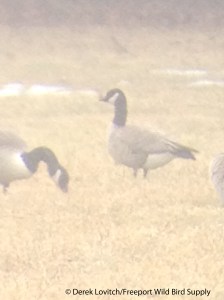
IMG_3244_CACG,GreelyRd,Cumberland,4-5-14One of the two Cackling Geese, phone-scoped through the fog.

Normally, the birdwalk’s return to the store is the end of my birding on Saturday, but not this week. Soon, Kristen Lindquist, Barb Brenneman, and I raced off to Jordan Farm in Cape Elizabeth to twitch a real “mega,” the stunning Northern Lapwing! Discovered Friday evening, the bird was enjoyed by many throughout the day on Saturday, but it was not seen again on Sunday despite much searching. This is the 4th record of lapwing in Maine, and the third in just three years! I consider myself exceedingly fortunate to have seen the last two. My distantly-phone-scoped photos of the Cape Elizabeth bird hardly do this stunner justice.
IMG_3262_NOLA1,JordanFarm,4-5-14  IMG_3264_NOLA2,JordanFarm,4-5-14

Yet even still my birding day was far from over, as Saturday night was our annual “Woodcocks Gone Wild at Pineland Farms” dusk trip. Keeping an eye on the weather (the rain had cleared, but increasing winds were a concern), Jeannette and I wondered if we should postpone the outing. Moments after we decided to give the go-ahead in the afternoon, the winds began to gust – a lot. Then, at about 5pm, they died. When our walk got underway at 6:30, there was a little breeze once again, but it was not enough to keep the woodcocks from going wild! In fact, it’s possible that a little wind kept the birds’ display a little lower – especially the first handful of flights – which resulted in quite possibly the best show we’ve ever had here! At least 7 males were displaying, including one repeatedly right over our heads – and at least two more silent birds were observed flying by. Add to this lots of American Robins and a Northern Shrike before the sun set, and the group was treated to a wonderful spring evening performance!

Next up was Androscoggin County on Sunday with my friend Phil McCormack. While our primary target was a pancake breakfast at Jillison’s Farm in Sabattus, we were also hoping for a Redhead that was discovered on the outlet stream at Sabattus Pond a few days ago. Well, the pancake chase (the more important one!) was successful, but the Redhead chase was not. However, a very good day of birding was enjoyed nonetheless.

Scattered ducks on the river including Ring-necked Ducks and Common Mergansers, a couple of pockets of Tree Swallows, and other assorted species were trumped by two flooded fields along Rte 136 in Durham. With ponds and marshes still frozen, ducks are stacking up at more ephemeral – but unfrozen – habitats.  Thousands of ducks and geese were present, mostly Canada Geese, Mallards, and American Black Ducks.  However, between the two fields, we tallied an unbelievable 273 Wood Ducks (probably about quadruple my previous high count in the state). Two immature Snow Geese were my first of the year, and very rare away from the coastal marshes in the spring. 18 Green-winged Teal, 12 Ring-necked Ducks, 10 Northern Pintail, and two pairs of American Wigeon were also among the masses.
IMG_3271_WODUs2,Durham,4-6-14  IMG_3282_WODUs1,Durham,4-6-14_edited-1

Although these phone-scoped photos hardly do the scene justice, they should at least give you a taste of what things looked like.

After brunch, we birded the west side of the Androscoggin River (more Ring-necked Ducks and Common Mergansers, etc) before spending our last hour of our birding (half) day at Bradbury Mountain.  Our disappointment over missing an unprecedented 9 Sandhill Cranes was alleviated when #10 was spotted, along with my first two Ospreys of the year.

After four days of extensive birding, my Monday agenda at the store was lengthy, but the weather in the morning was just too good to pass up!  A spin of the local waterfowl hotspots was fruitful.  The Goose Fields yielded the two continuing Cackling Geese along Greely Road, along with my first American Kestrels of the year, and my FOY Wilson’s Snipe, also along Greely.

No luck finding a lingering Barrow’s Goldeneye in the Harraseeket River, but at Wharton Point, a group of 7 Northern Shovelers was one of the largest flocks of this species I have seen in Maine. My first Greater Yellowlegs of the year was also present, as were 60+ Green-winged Teal, 16 Ring-necked Ducks, about 30 distant scaup, 8 American Wigeons, and 1 Northern Pintail among several hundred American Black Ducks.

Two joyous hours at the Brad were full of raptors: 127 birds had past the watch when I departed at noon, including 4 Osprey. Red-tailed and Red-shouldered Hawks continue to add to their all-time record tallies. Hundreds of Canada Geese were sorted through, hoping for a rarity, while other migrants included Tree Swallows, American Black Ducks, Common Mergansers, and Great Blue Herons.

Furthermore, signs of a good flight last night included the return of Golden-crowned Kinglets to the area – after we were virtually devoid of them this winter, and an increase in Red-breasted Nuthatches (relatively few and far between this winter as well), Song-Sparrows, and at the store, a Fox Sparrow – a bird we don’t get here every spring due to our open habitat.

So long story short, it’s been a great few days of birding!  But now, I should probably get some work done!

Yup, More About the “Westbrook Gull.”

DSC_0001_Westie1_edited-1

A great day of birding on Friday included new arrivals and migrant waterfowl around Scarborough Marsh (oh yeah, and two more Snowy Owls), continuing good numbers of white-winged gulls in Portland Harbor, and “quality time” with “Westie,” the still unidentified white-winged gull in Westbrook (highlights posted to the store’s Facebook page as usual).

As for this frustrating, fun, and challenging obsession of mine with the “Westbrook Gull,” I won’t rehash the entire story here, but for that please visit this blog entry from January.

During our outing on Friday, Kristen Lindquist and I enjoyed my best photo session of the season with the bird. I’ve posted a variety of photos of the bird into the growing gallery of photos of this bird on our store’s Facebook page, here.

But here I want to discuss a few of the more pertinent images, and explore some of the still-unanswered questions about this bird. First and foremost, and perhaps the single most critical factor in being able to simply dismiss this as an Iceland Gull – likely (due to its pure white wingtips and pale mantle) of the nominate subspecies glaucoides – is the fact (not subject to interpretation) that the wings are short: only two primaries extend beyond the tail, as with Glaucous Gull, and unlike the long, four-primary extension of Iceland Gull of either subspecies. No photo of this bird in four years has shown the typical “long-winged” appearance of Iceland Gull of either subspecies.
DSC_0028_Westie5_edited-1

It’s impossible to ignore this significant structural feature, but of course, we never base an identification (or lack thereof!) on any one particular characteristic. Unfortunately, nothing else is this clear and distinct.

As the bird reached adulthood, I had hoped that the orbital ring – the narrow band of bare skin that surrounds the eye – might yield a clue, and now that we are in late spring, the bird’s head is pure white and the brighter bill suggests that it is now in “high breeding” (or at least close to it), the color should be as true as possible. Howell and Dunn list the orbital ring of Larus glaucoides glaucoides as pinkish to red, turning brighter reddish by spring. L.g kumlieni is described as purplish-pink to reddish, brightening by spring. As for Glaucous Gull: orange to pale pink flesh, brightening in spring to “orange or chrome yellow.” As for Westie?
DSC_0009_Westie3_edited-1

I call that simply “pink.” But does that only mean that this bird is not in high breeding yet (which is suggested by the still-brightening yellow of the bill)? If this is as colorful as it gets, it’s a significant strike against a Glaucous Gull, or at least a pure one, but it is not clinching for Iceland Gull of either subspecies, either.

DSC_0039_Westie7_edited-1
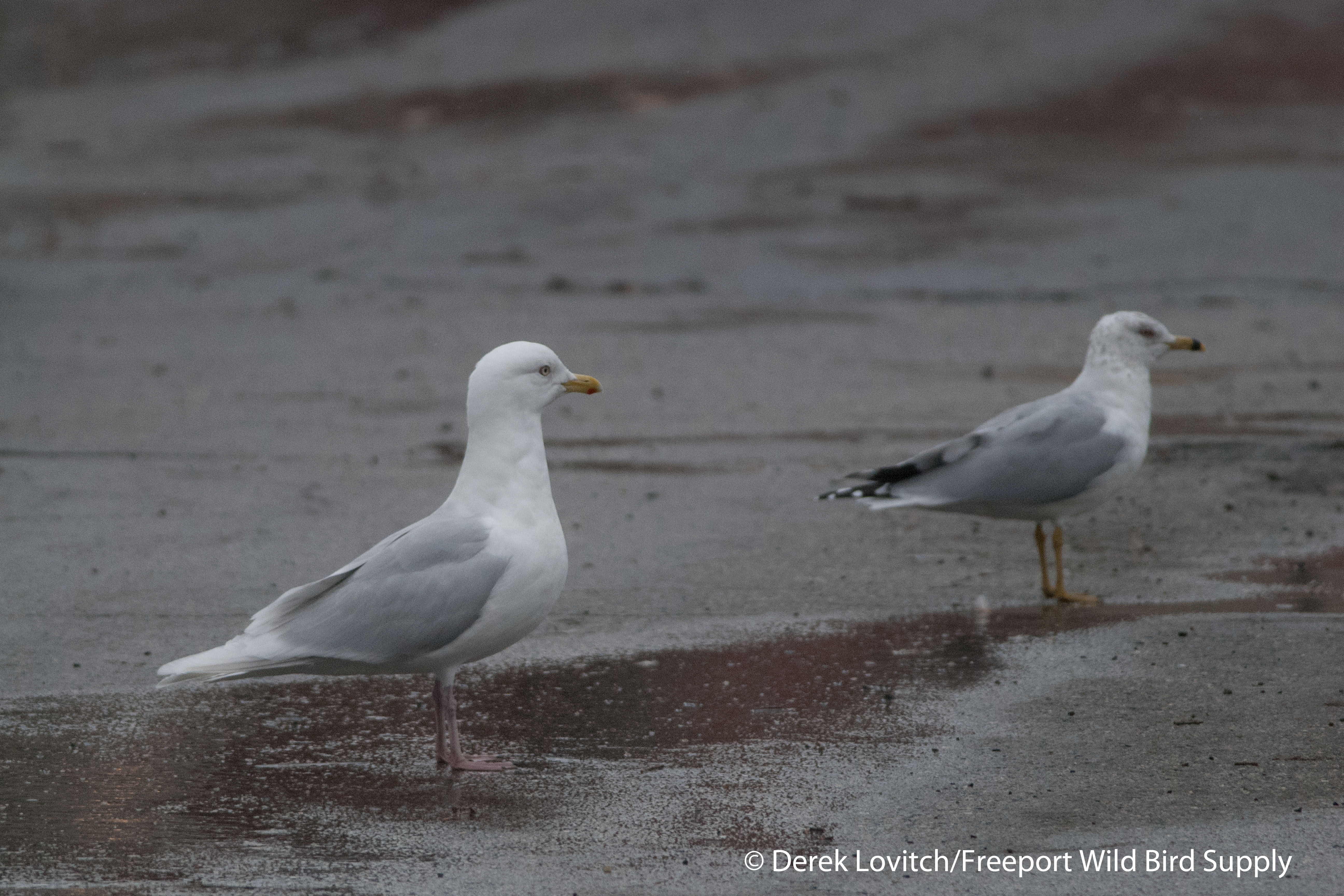
Westie’s dominance of the park leads to aggressive behavior towards other gulls, especially anything of similar size or larger. While the aggressive behavior is more typical of Glaucous Gulls, I think the rather unnatural environment, along with the decided “home-turf’ behavior negates the value of this circumstantial evidence. What it does mean, however, is that it is a royal pain in the ass to get this bird next to something else other than a smaller Ring-bill. I would like to see it next to an adult Herring Gull to compare grayscale, but especially an Iceland Gull of any shape, size, or variety! This was the closest I have come to that goal.
DSC_0048_Westie and ICGU_edited-1

DSC_0018_Westie and RBGU_edited-1

As for Herring Gulls, this youngster was tolerated for a few seconds.
DSC_0068_Westie and HERG_edited-1

In other words, I still don’t know what this is. But at least it gives me something to do in the winter, and offers a really good exercise in studying the finer points of the endless variation in “large white-headed gulls.” Oh yeah, and it’s a pretty bird, too. Might just have to leave it at that…for now.
DSC_0073_Westie and RBGU 6_edited-1

DSC_0071_Westie and RBGU 5_edited-1

DSC_0026_Westie4_edited-1

And believe it or not, there are other birds at Riverbank Park and the adjacent Westbrook Riverwalk.  On Friday, this included one of the continuing Canvasbacks (a rarity in Maine), and a handful of ultra-cooperative Cedar Waxwings!
DSC_0077_CANV,Westbrook,3-18-14_edited-1

DSC_0074_CEDW,Westbrook,3-28-14_edited-1

The Decline of Barrow’s Goldeneyes in Freeport and Beyond.

I like Barrow’s Goldeneyes! And I like getting to see them every winter, and sometimes in numbers…and only a few miles away from home. But I wish I could see more of them.

DSC_0536_edited-2

Unfortunately, with each passing year, I am seeing fewer and fewer. My local Barrow’s Goldeneye (BAGO) “patch” is the Lower Harraseeket River here in South Freeport. A couple of miles of river between Winslow Park and Bartol Island hosts the southernmost wintering flock on the East Coast…or at least what nowadays passes for a flock.

One of just a handful of locales in the state that regularly hosts more than one or two birds, this once-impressive flock has declined dramatically in the past ten years that I have been watching them. Scanning the river once a week, from early December through the middle of April from a variety of locations (Sand Beach, the Town Wharf, the Harraseeket Yacht Club, Winslow Park, and/or Wolfe’s Neck Woods State Park) I have kept track of arrival and departure dates, and perhaps most importantly, overall numbers.

“High counts” are the maximum number of birds seen at one time in a given time period. While some individuals come and go over the course of the winter, it seems to me that the seasonal high count is a reasonable way of estimating the local population (as keeping track of individual birds is impossible). And my high counts for each of the last nine winters show an alarming pattern:

2004-2005: 23
2005-2006: 15
2006-2007: 10
2007-2008: 2
2008-2009: 9
2009-2010: 2
2010-2011: 6
2011-2012: 3
2012-2013: 2

It has become readily obvious that the less ice there is, the fewer Barrow’s concentrate in the Lower Harraseeket. A deep channel and strong tide combine to keep at least a stretch of the gut at the mouth of the river (between Winslow and tiny Pound of Tea Island) open in the coldest winters. Back in 2004-2005, the river was almost completely frozen, and the narrow strip of open water was so thick with ducks, especially Common Eiders, that it looked as if you could almost walk across the river on their backs!

We also know that the climate, and the temperature of Casco Bay, is getting warmer (yes, that is fact, and yes, this year’s cold winter/spring weather does nothing to disprove this – note that “climate” and “weather” are actually different words that describe different things!). Therefore, I optimistically wondered if the apparent decline in the population of BAGO was nothing more than a lack of ice-caused concentration. The less ice, the fewer BAGO I see.

Therefore, when about 90-95% of the Harraseeket froze this winter (the most extensive coverage since 2004-2005) and ducks concentrated in numbers not seen since then, I was cautiously optimistic that BAGO number would spike:

2013-2014: 5

Not the spike I was hoping for. I searched long and hard to find BAGO elsewhere in the vicinity, but I did not see any (the closest was an overwintering bird in South Portland that has returned to the Fore River for the last two or three years now). That’s a 78% decline from the 2004-2005 high.

Unfortunately, Christmas Bird Counts occur too early in the winter to adequately gauge seasonal high counts of BAGO, although the graph does reflect a decrease in the past ten years (the long-term data set is clouded by low birds-per-party-hour totals as a whole, along with misconceptions about identification in the past).

But this decline is not just apparent in the Harraseeket. Birders have detected a decline in all other known wintering concentrations, especially in Belfast Bay. They are now longer seen on most visits in mid-winter there and it’s been a long time since I have seen a report from Bucksport. However, according to the 1996 A Birder’s Guide to Maine, *1 aggregations of 15+ birds are “regular features in most winters” at these two sites.

In other words, at least in Maine, the decline is real. And it’s time for the Department of Inland Fish and Wildlife to do something about it. No more half-assed, non-action policies that bow to the hunting lobby. No more “please tell us if you shoot one and then say you’re sorry and it will be OK” (with only a disincentive to do so) state policy. *2

In 2009 IF&W listed the Barrow’s Goldeneye as “Threatened.” …And has done almost nothing since, other than set up surveys that are conducted every four years. Oh, and they hung up some posters at boat launches asking people to not shoot them (might as well put a target on them, in my mind).

Let me be clear, there is no evidence to suggest that hunting is causing a decline in BAGO. I think much larger factors are at play. There’s acidification and warming of the ponds and lakes in their limited and narrow eastern Quebec breeding range to changes in winter food sources. Forestry practices could be reducing the availability of suitable nesting cavities as well. There’s lead ingestion and heavy metal bioaccumulation. Then there’s reduced ice in most winters in their primary wintering areas of the St. Lawrence estuary (thereby reducing how many birds come further south) to competition with other native and non-native species (BAGO eat small mollusks, especially mussels – could invasive Green Crabs be impacting the food supply for ducks here, too?). In other words, there are a lot of possible proximate and ultimate causes to the species’ decline. But if hunters shoot one or two (by accident, of course) of the remaining 5, well then the decline becomes even quicker. Even repeated disturbance from concentrated hunting pressure on other species could be impacting where the birds tarry, where they feed, and how much energy they waste fleeing boats and shots.

I am not opposed to waterfowl hunting. But I am opposed to hunting that impacts an endangered species (see, for example: Conservation and Management/Effects of Human Activity in the Birds of North America entry referenced below). The closure of a handful of tiny areas will affect very few hunters, and with more than 99% of the state still available to them, this rates as a minor inconvenience at most. However, this fraction of a percent of water closed to hunting could protect a significant majority of the wintering population – or at least what’s left of it. At the very least, this could buy us some time to find out what the root of the problem is.

I like Barrow’s Goldeneye, and if you do too, it’s time to pressure IF&W and politicians to act. Otherwise, there is a very legitimate chance that this bird will no longer be a part of Maine’s winter avifauna.

Notes:

*1 = Pierson, Elizabeth C., Jan Erik Pierson, and Peter D. Vickery. A Birder’s Guide to Maine. 1996. Down East Books: Camden, ME.

*2 = https://www.maine.gov/ifw/hunting_trapping/hunting/alert_waterfowl_hunters.htm

For more information on the status of BAGO in Maine, see:
https://www.maine.gov/ifw/pdfs/species_planning/birds/barrowsgoldeneye/speciesassessment.pdf

Additional Reference:
Eadie, John M., Jean-Pierre L. Savard and Mark L. Mallory. 2000. Barrow’s Goldeneye (Bucephala islandica), The Birds of North America Online (A. Poole, Ed.). Ithaca: Cornell Lab of Ornithology; Retrieved from the Birds of North America Online: http://bna.birds.cornell.edu.bnaproxy.birds.cornell.edu/bna/species/548 doi:10.2173/bna.548

A Vermont and Montreal Roadtrip In Photos

Jeannette and I made a run for the border in our annual pre-hawkwatch roadtrip getaway.  We’ll be covering Katrina’s days off at the Bradbury Mountain Hawkwatch through the end of the season.  Then, my guiding season kicks off in full force through early July.  In other words, it’s a good time for us to get a little break.

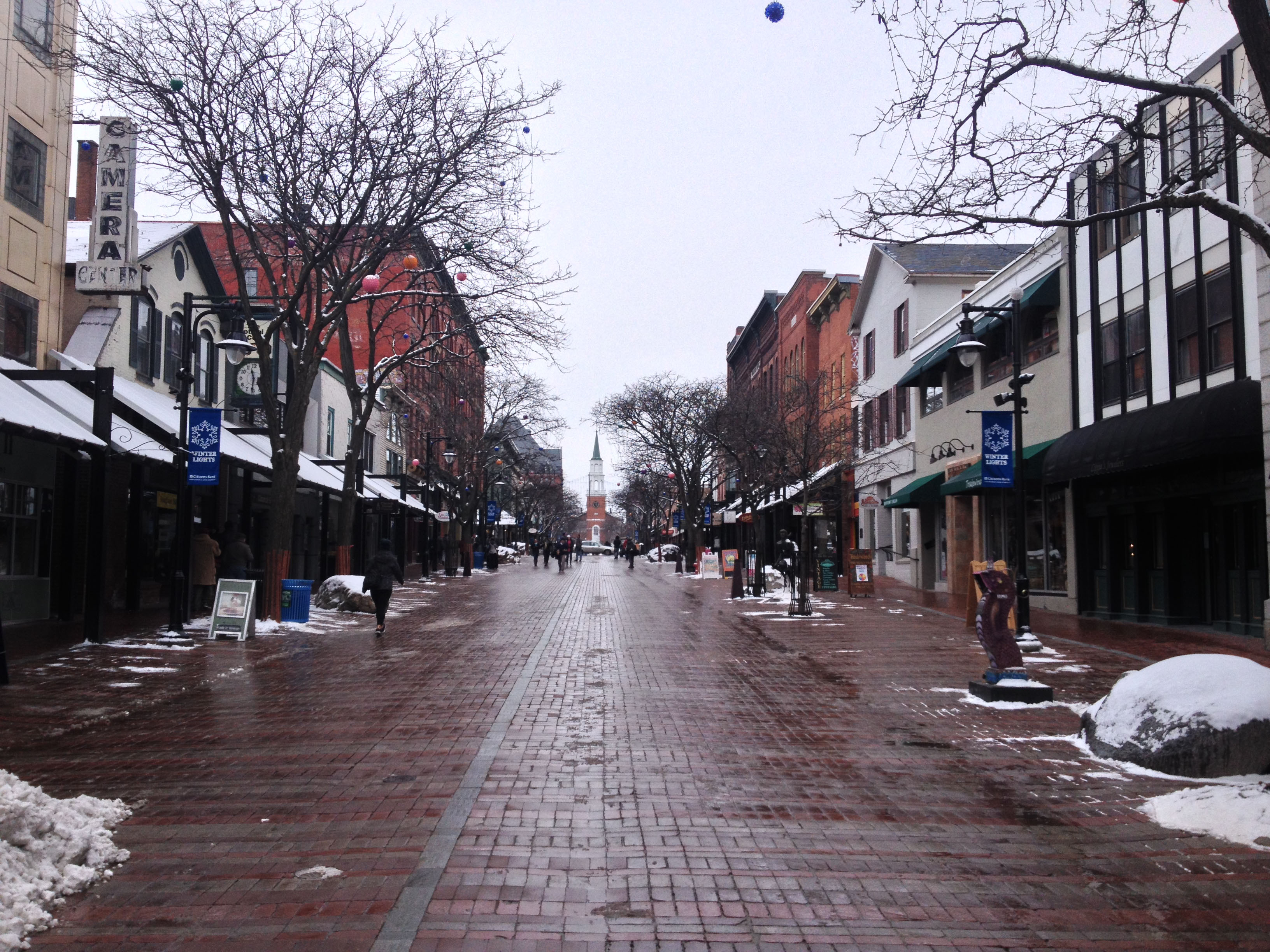
This year’s destination was a visit with family in Vermont, followed by a few days in Montreal.  I had not been to Montreal before – no excuse for that, really – so this was a good incentive to head (mostly) west.  Sure, the weather could have been a little more seasonable, but we enjoyed a really great trip nonetheless.

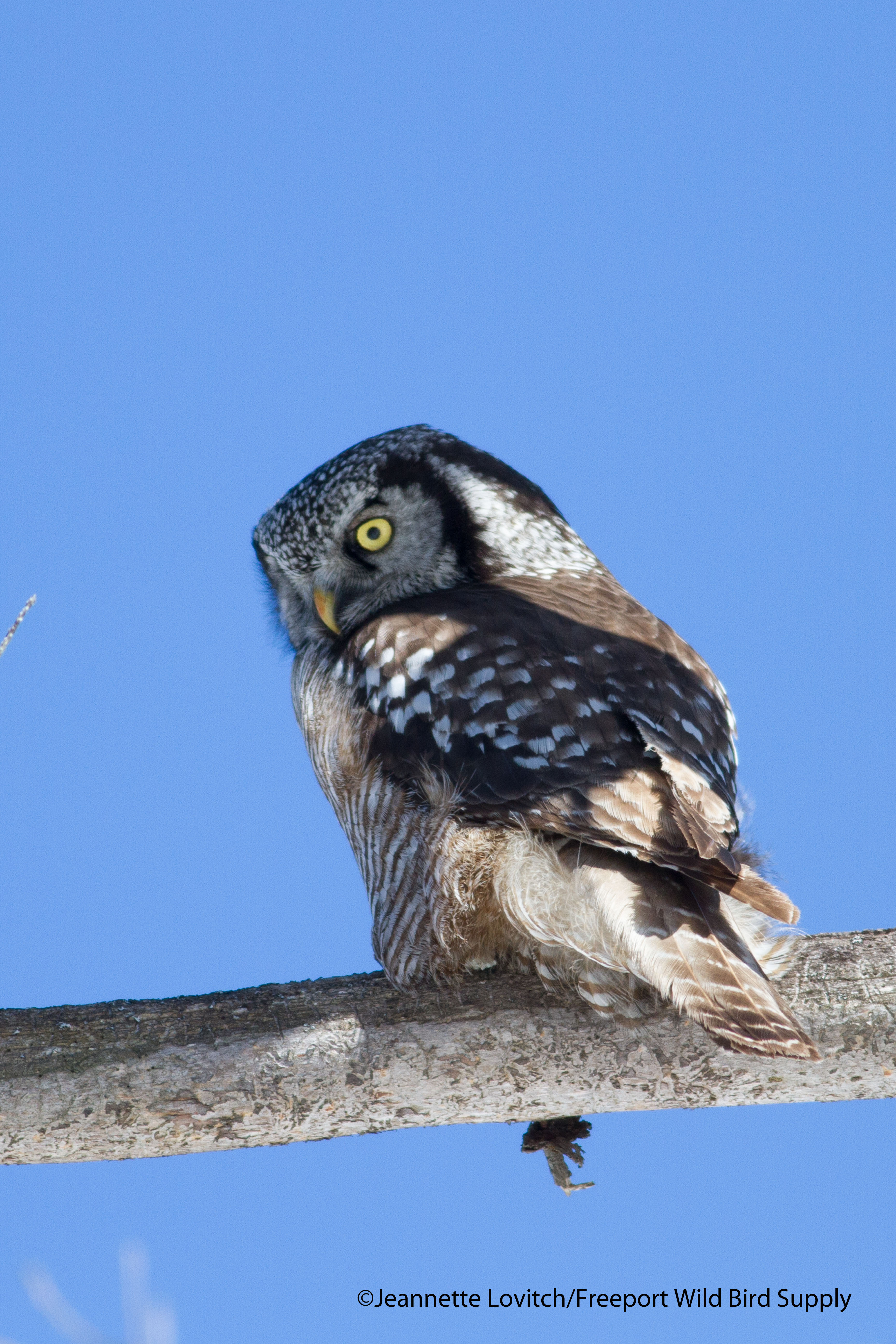
While this trip wasn’t necessarily a “birding trip,” we obviously were going to do some birding.  And there were a few “goodies” around that, if nothing else helped guide us in fruitful directions.  First up was the Northern Hawk Owl that has been spending the winter in Waterbury, Vermont.  Since we had to pass through the intersection that the bird has been frequenting on the way to see the fam, I don’t think this counts as a chase, does it?

Although most hawk owls are notoriously tolerant of people, this bird was ridiculous!   People were walking back and forth on a trail right below it, and it didn’t care.
1. NHOW-phonescoped1a,3-9-14 (30)

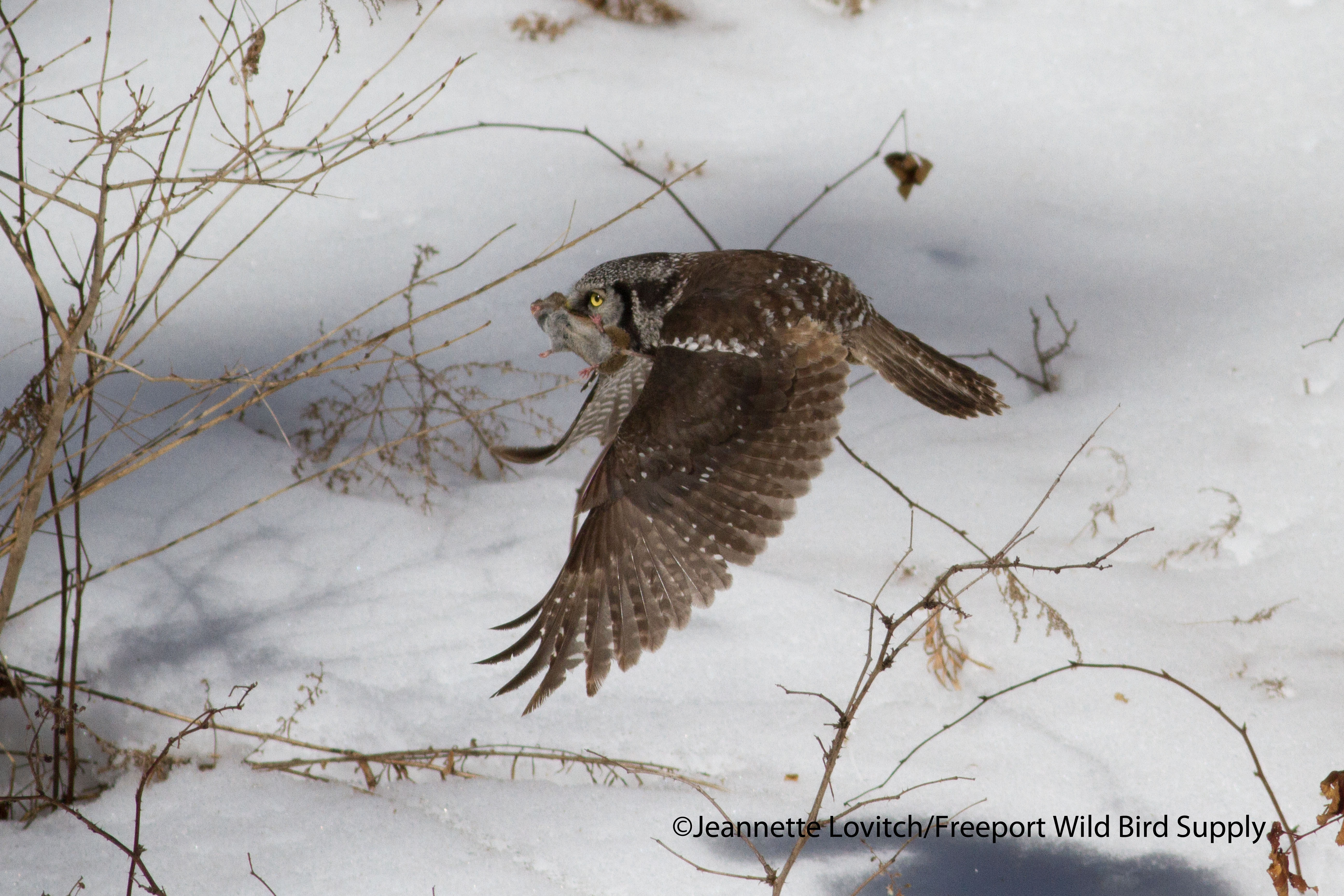
Then, spotting something of interest, it dove through the line of admirers, and landed in the snow.  It scuffled around for a bit, and then came up with a White-footed/Deer Mouse, which is proceeded to devour on a nearby snag…in clear view of everyone.  Returning to its original perch, it flew between two photographers, right at head-level!
2. NHOW-phonescoped1a,3-9-14 (29)

3. NHOW-phonescoped1a,3-9-14 (1)
The lighting and the proximity were so good that I believe these are the best phone-scoped photos that I have ever taken!

After visiting friends and family, we departed the next day.  Of course, we couldn’t help but stop at the hawk-owl once again.  “Let’s just drive past this Northern Hawk Owl,” said no one, ever.
4. NHOW-phonescoped1a,3-9-14 (2)

After lunch in Burlington…
4a. NHOW-phonescoped1a,3-9-14 (15)

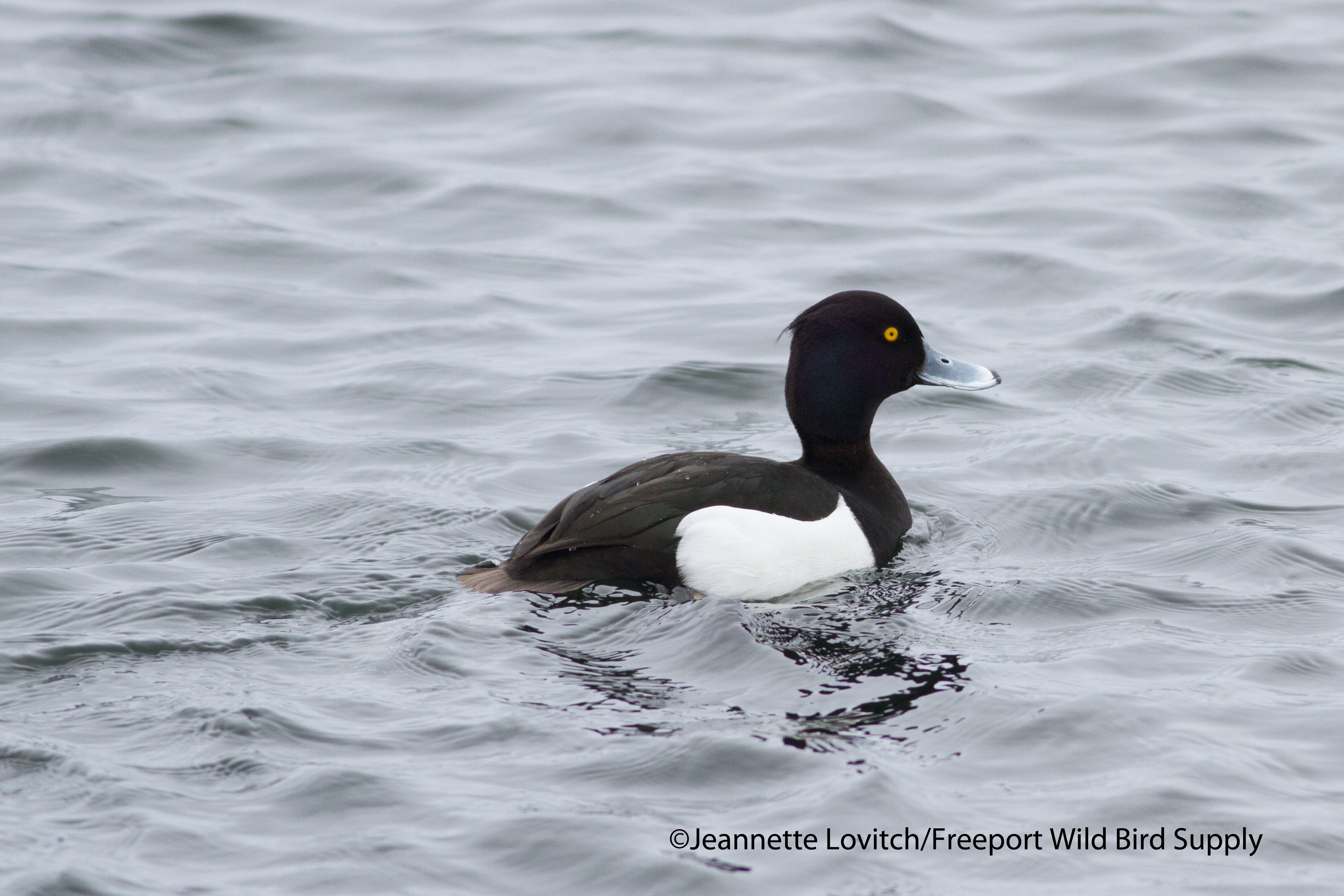
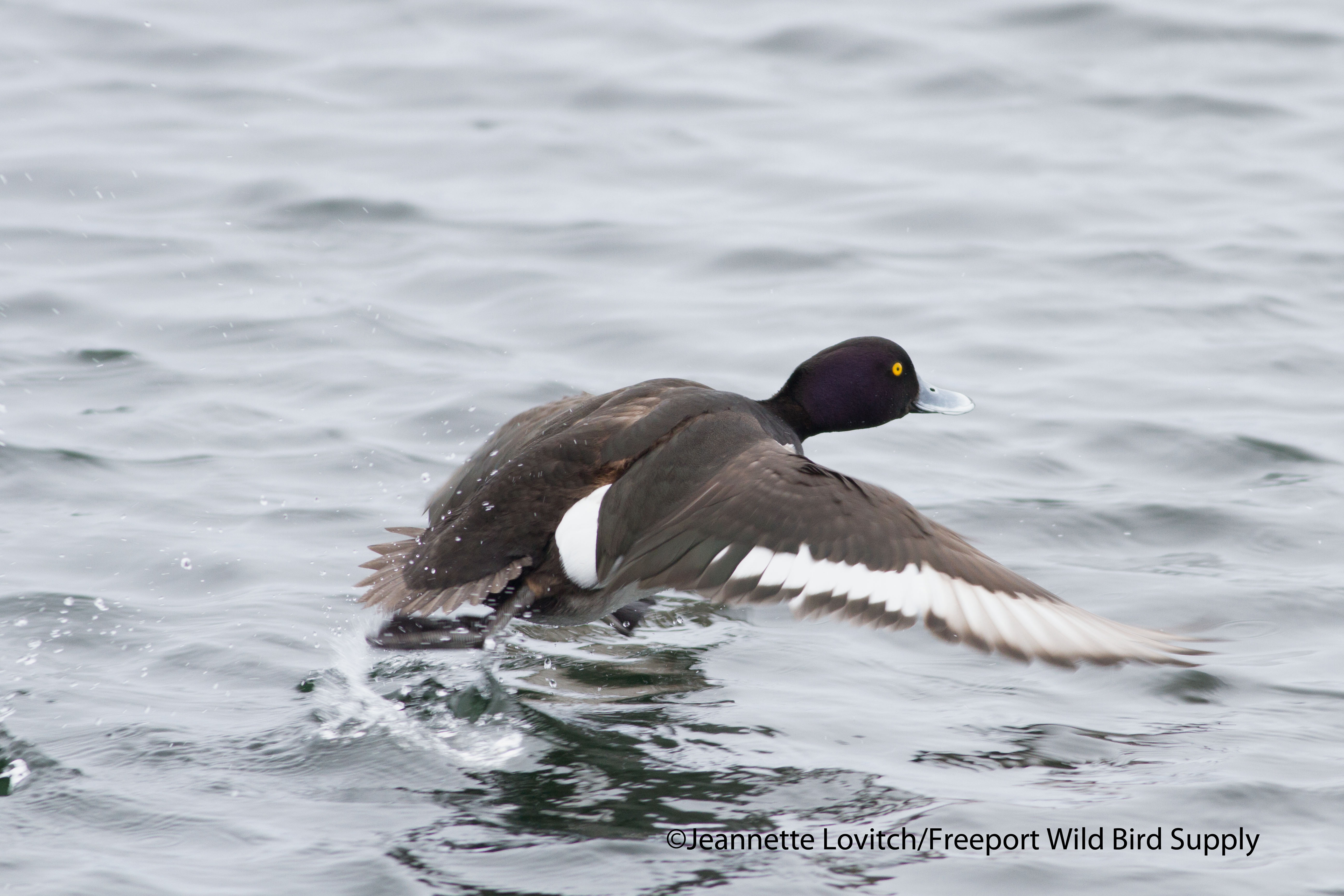
…we dipped down to Charlotte to board the ferry over to Essex, NY.  With such extensive ice on the lake, the only open water is limited to the ferry channels.  Ducks have concentrated in this narrow band of open water, including some very good birds.  The Tufted Duck being seen here was nothing more than an excuse to take the ferry, and we are very glad we did.
5. NHOW-phonescoped1a,3-9-14 (24)This was a great little “mini-pelagic!”  In fact, after we took the car across to NY, we hopped back on as round-trip passengers to have another look.  Good thing we did, because as we began the half-hour journey back to Vermont, the Tufted Duck was right in front of the bow!  And Jeannette “nailed” it, I think it’s safe to say.
7. NHOW-phonescoped1a,3-9-14 (11)

8. NHOW-phonescoped1a,3-9-14 (12)

In addition to the Tufted, impressive numbers of Common Goldeneyes and both Greater and Lesser scaup were enjoyed and extensively photographed.  Mallards, American Black Ducks, a small number of Common Mergansers and Buffleheads, 3 Ring-necked Ducks, 2 female Long-tailed Ducks, and 1 White-winged Scoter (the latter three only in New York, and the final two being good birds for the season here) were also present, and early in the third leg, we spotted a female Barrow’s Goldeneye among the masses for a nice addition to my paltry Vermont state list. Jeannette very nicely augmented here library of waterfowl –especially flight – photos, and this fun little ride turned out to be a real highlight of the entire trip.
6. NHOW-phonescoped1a,3-9-14 (25)
How many species can you identify in this photo?

A quick stop to look for coffee in Plattsburgh, NY resulted in what was perhaps the best cupcake we have ever had (a butter cream-iced tres leches cupcake at Delish), and eventually we made our way across the border and arrived in Montreal in the evening.

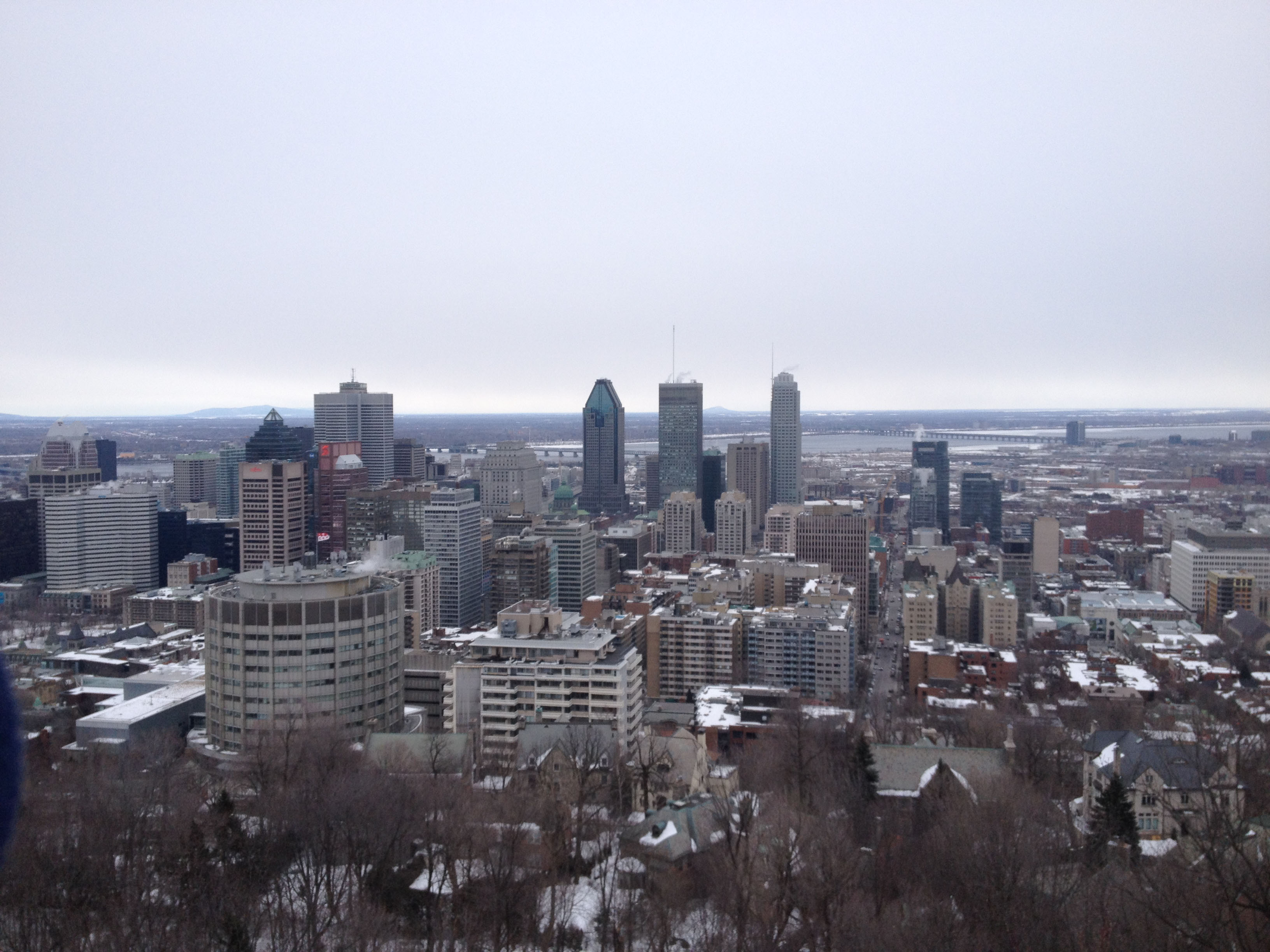
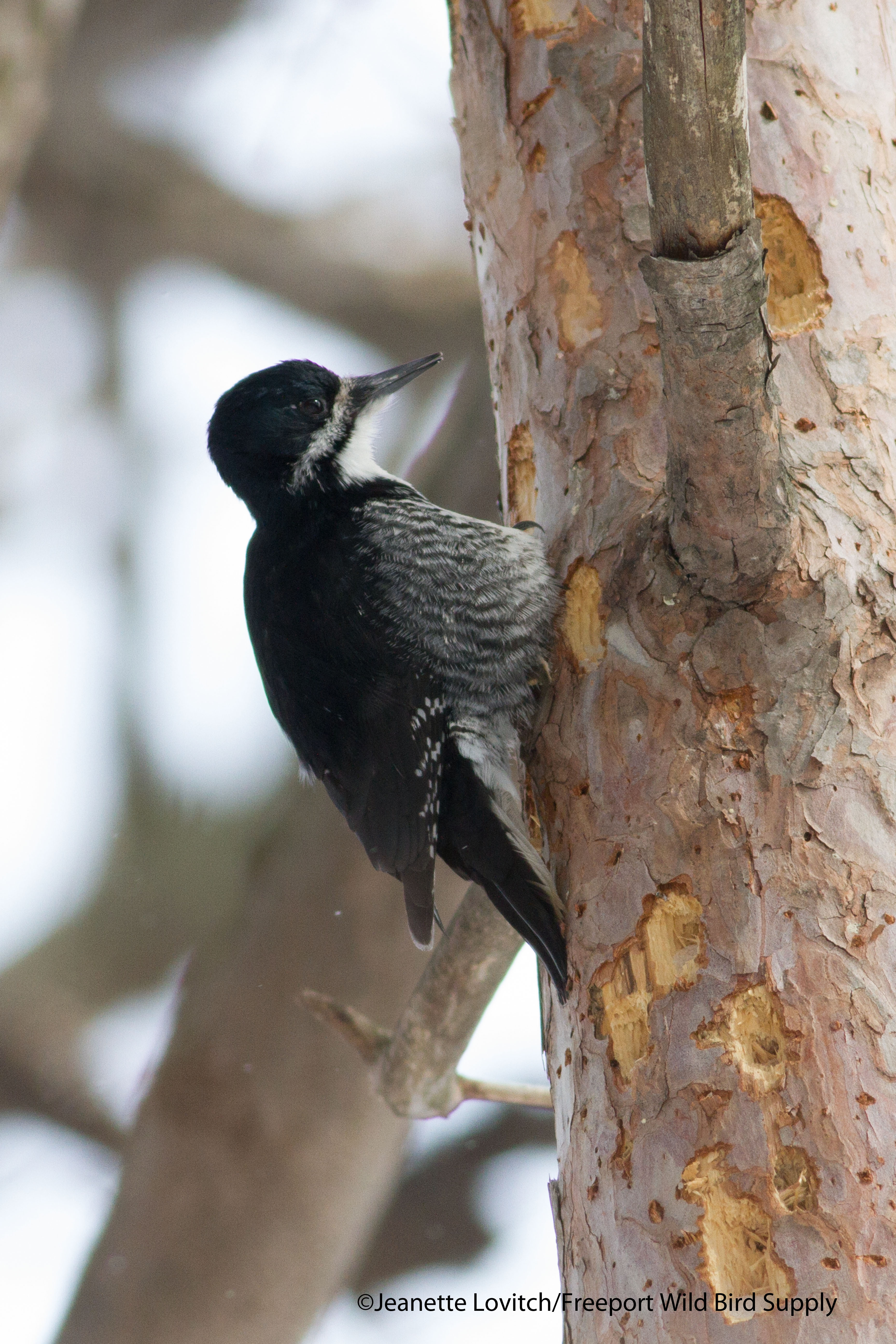
The next morning, we walked from our downtown hotel to Parc du Mont Royal, the expansive park in the heart of the city.  There’s been a Black-backed Woodpecker here all winter, but we did not know exactly where.  We did find a grove of Scotch Pine that had the classic sign of foraging Black-backs, but we didn’t see it…or much else, really.  Just like at home, deciduous-dominated forests are awfully quiet right now.
9. NHOW-phonescoped1a,3-9-14 (6)

10. NHOW-phonescoped1a,3-9-14 (7)

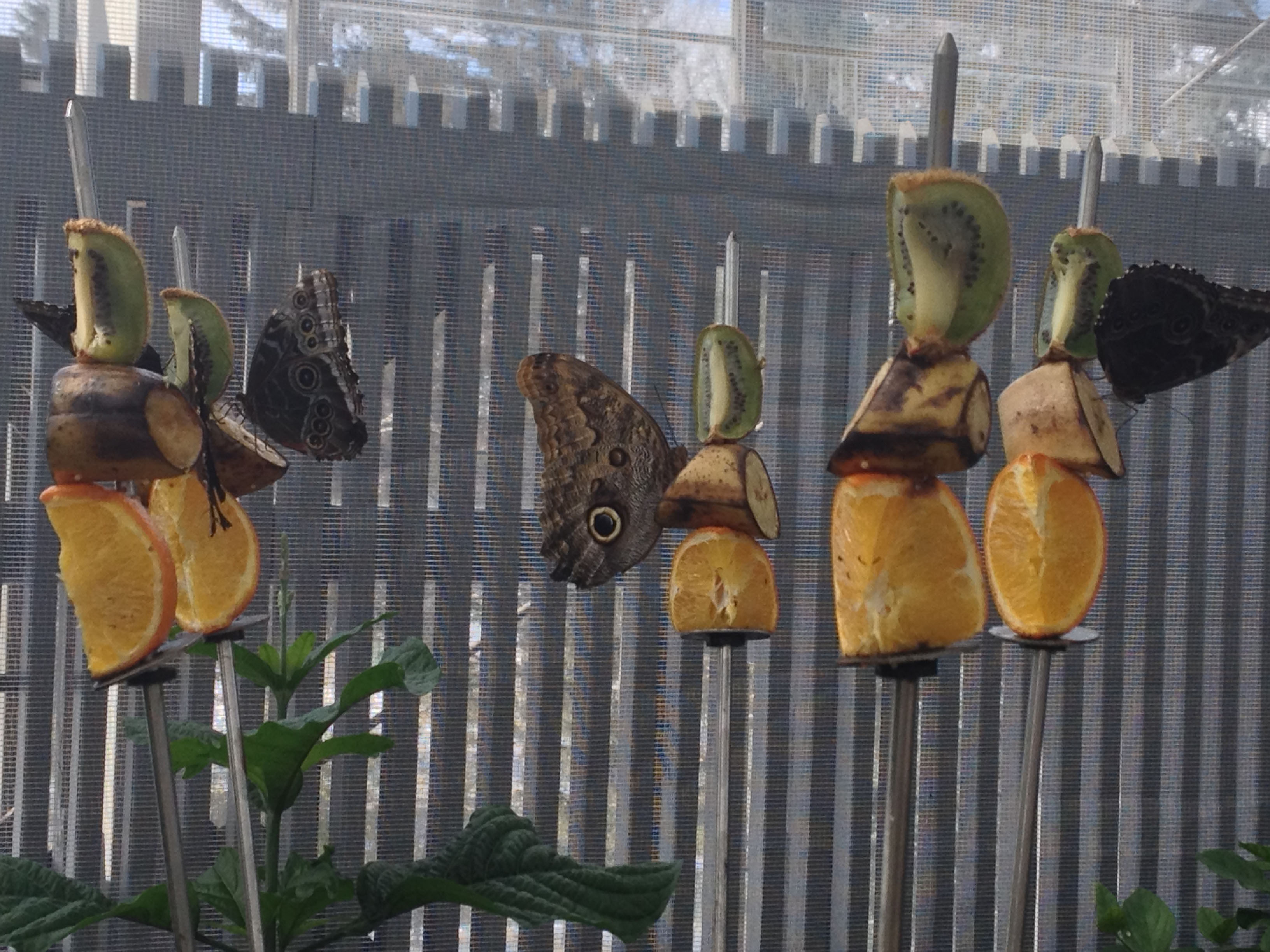
After lunch, we visited the Botanical Gardens, including their impressive Insectarium and extensive greenhouse biomes.  Stealing the show, however, was the free-flying butterfly (and some moths) exhibit.
11. NHOW-phonescoped1a,3-9-14 (14)

11a. NHOW-phonescoped1a,3-9-14 (28)

12. NHOW-phonescoped1a,3-9-14 (16)

13. NHOW-phonescoped1a,3-9-14 (17)

14 NHOW-phonescoped1a,3-9-14 (18)

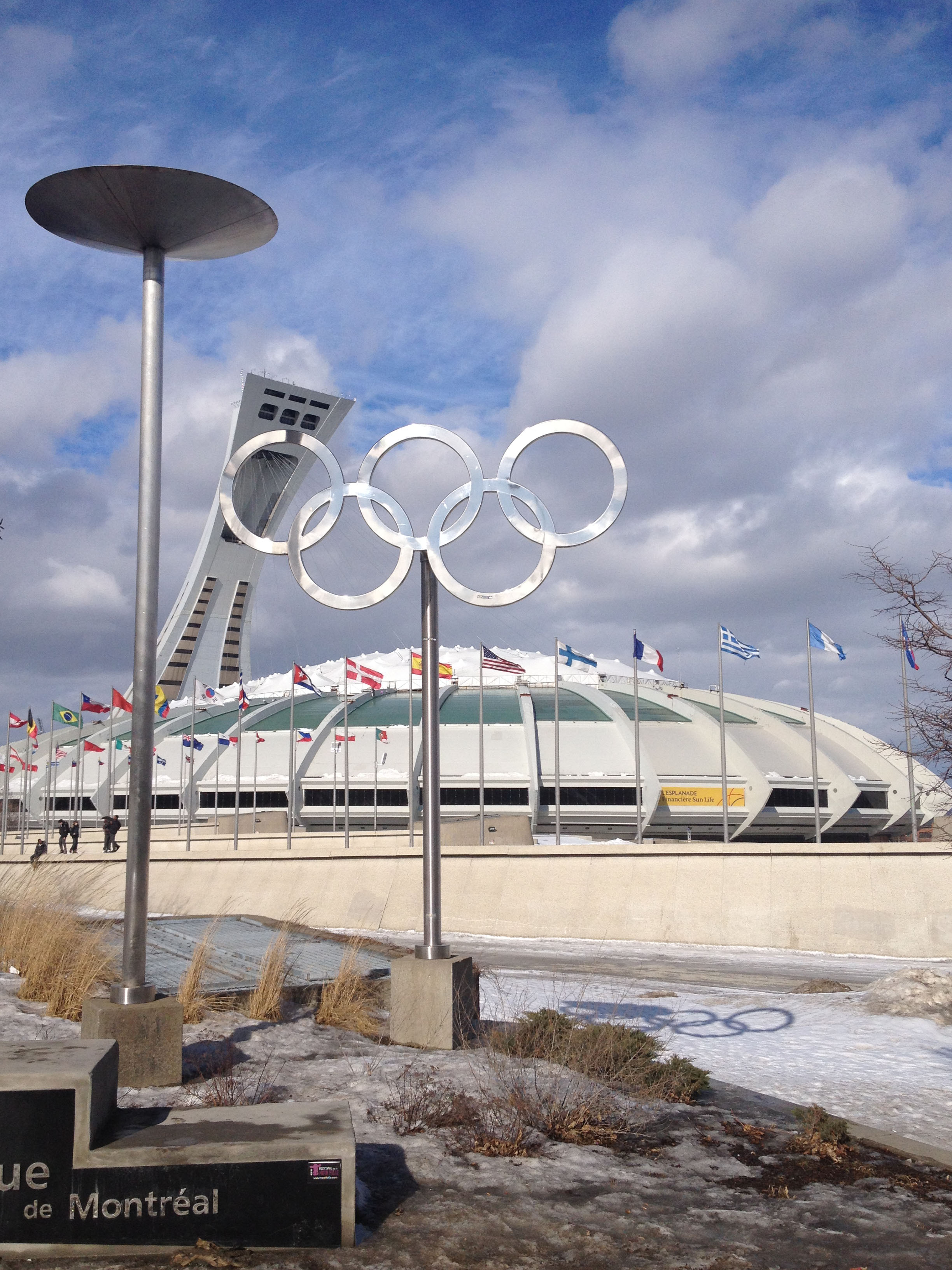
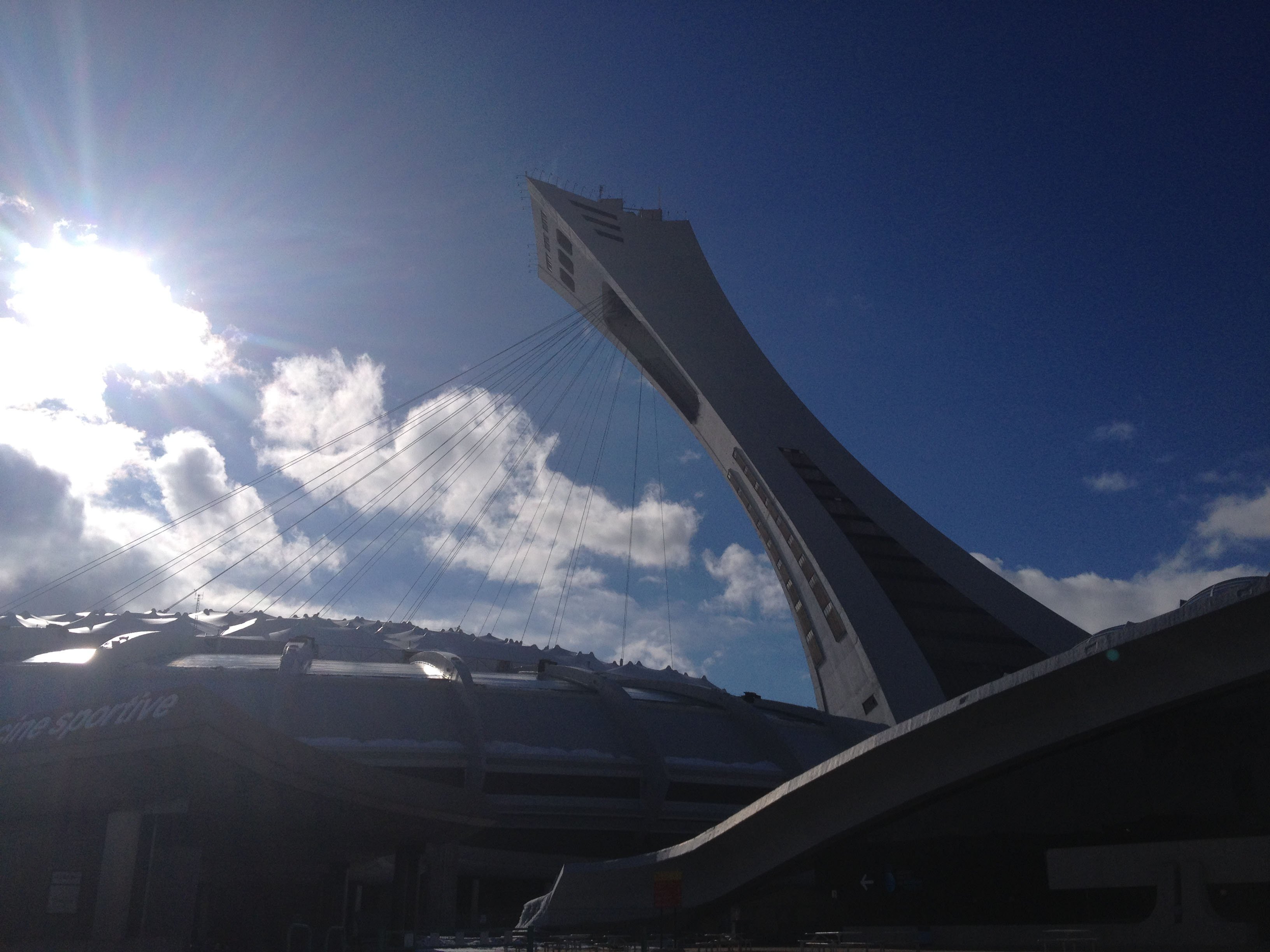
A stroll around Olympic Park…
15. NHOW-phonescoped1a,3-9-14 (4)

16. NHOW-phonescoped1a,3-9-14 (5)

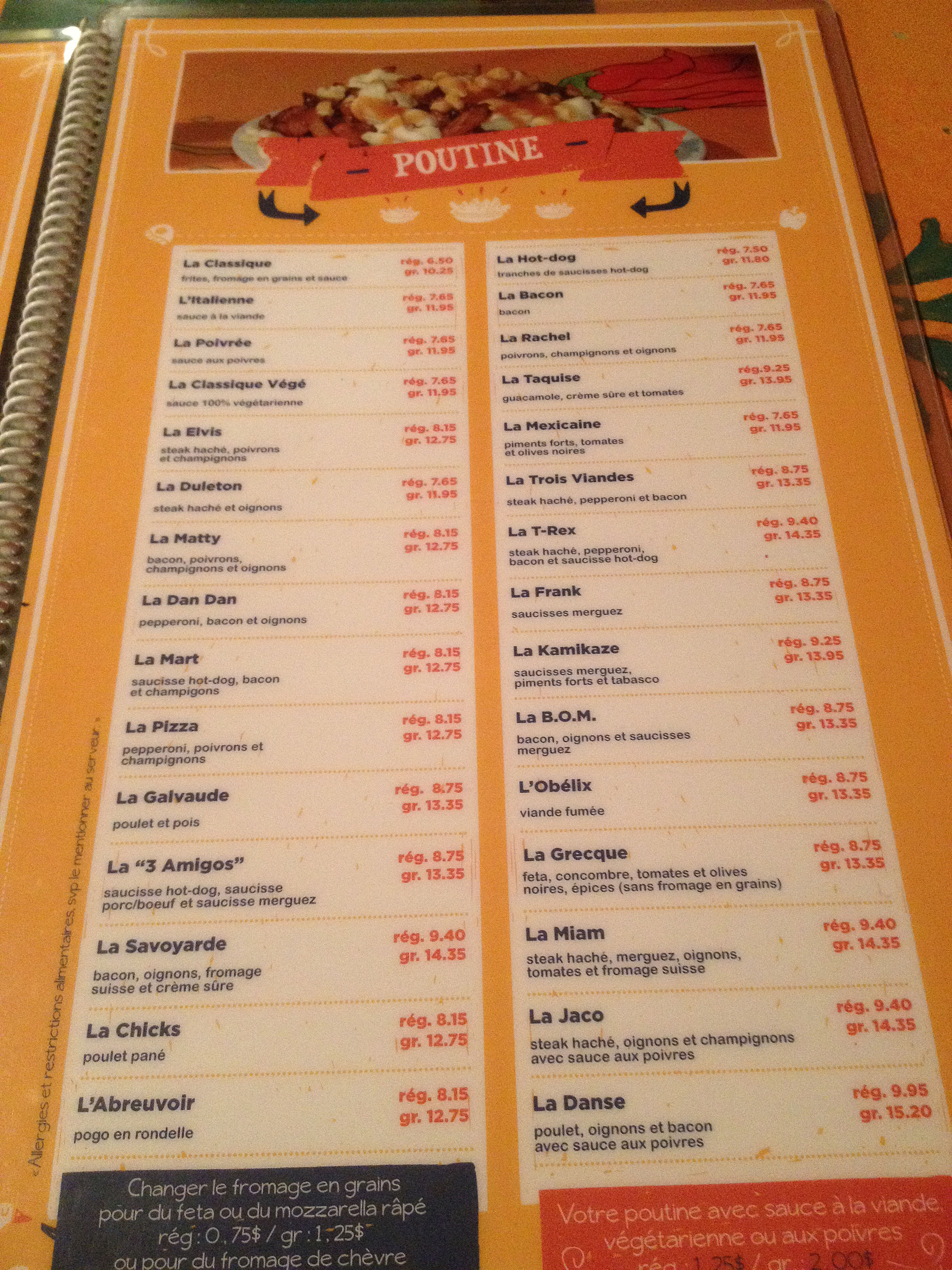
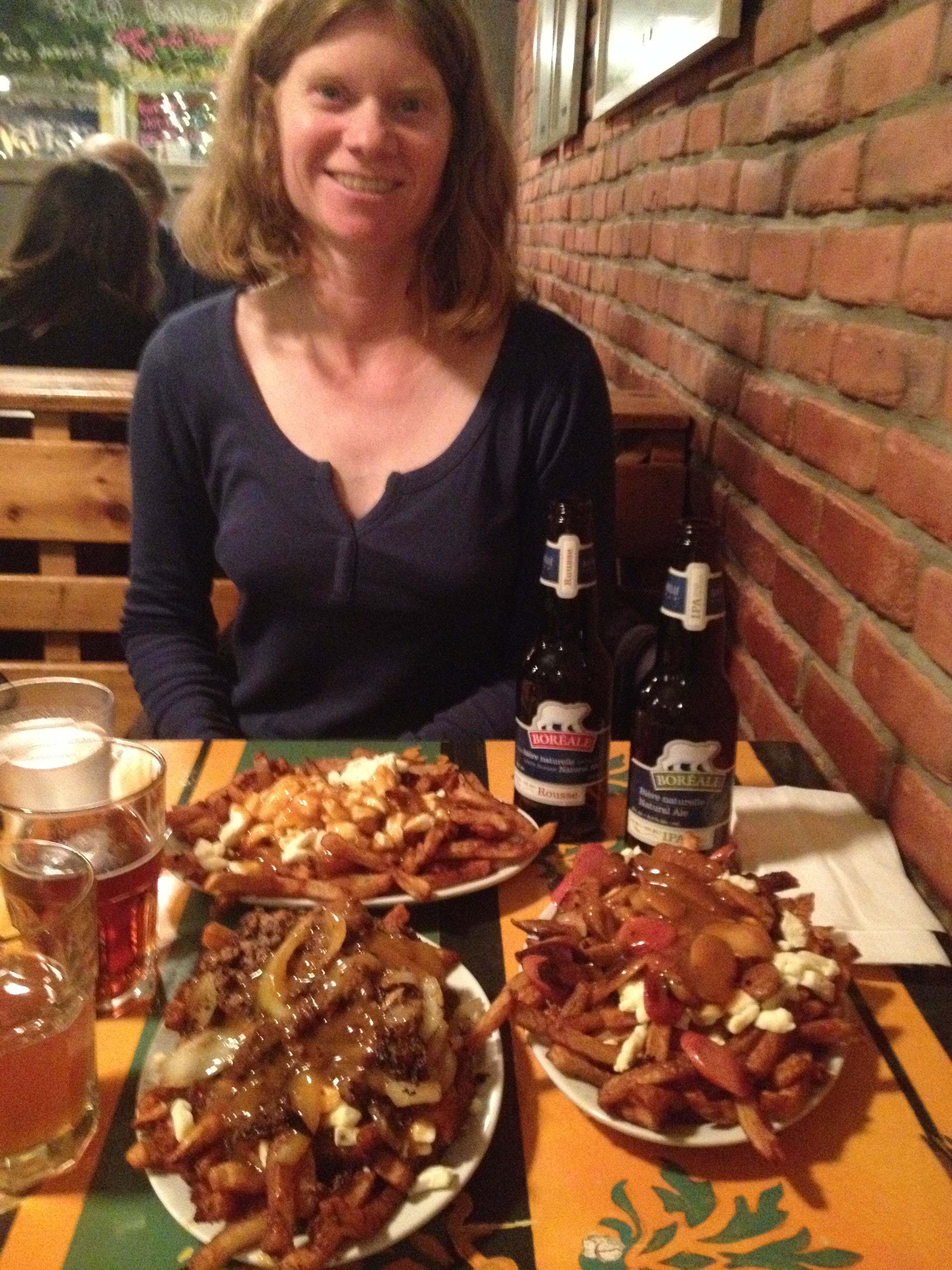
…Was followed by dinner, at a place with 30 kinds of poutine on the menu: Poutine la Banquisse!
17. NHOW-phonescoped1a,3-9-14 (9)

18. NHOW-phonescoped1a,3-9-14 (10)

The next day, another walk at Parc du Mont Royal (which was actually less birdy than our first visit) …
19. NHOW-phonescoped1a,3-9-14 (8)

…was followed by exploration of Old Montreal and the OldPort.  Unfortunately, the weather had taken a turn for the worse.
20. NHOW-phonescoped1a,3-9-14 (3)

The storm was fully upon us…
21. NHOW-phonescoped1a,3-9-14 (22)

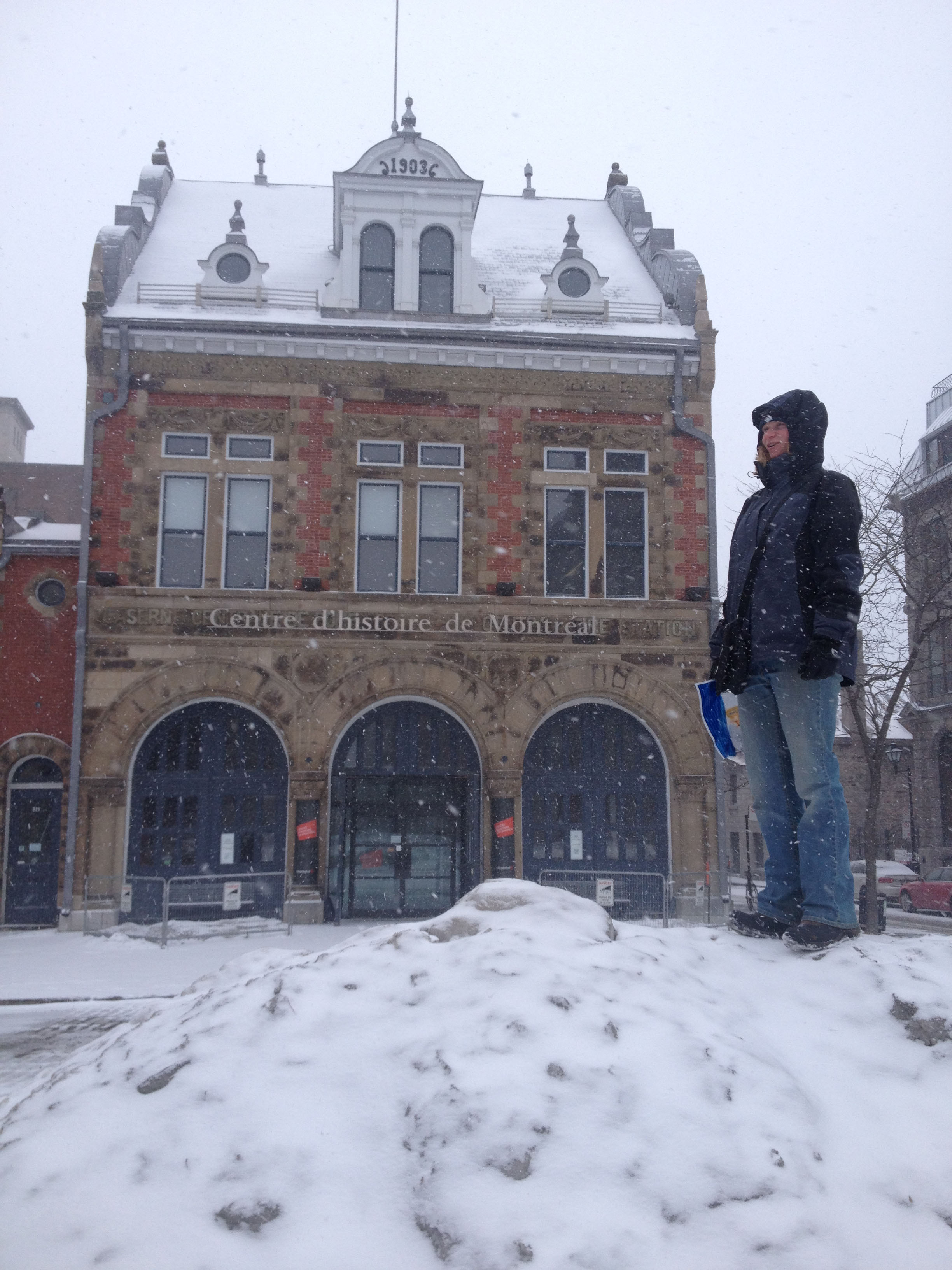
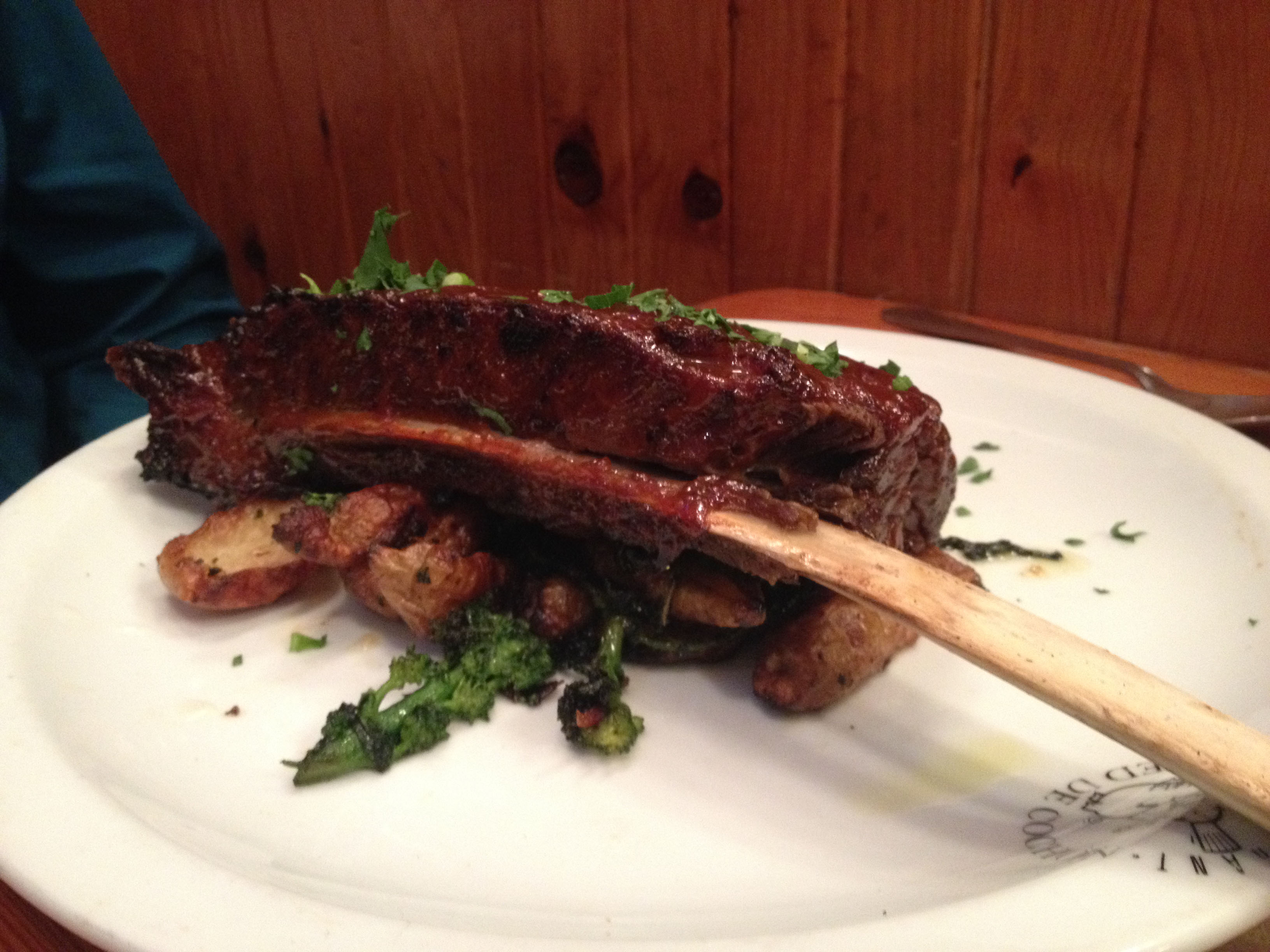
…as we ventured out for our “splurge” dinner of the trip at the famous Au Pied de Cochon.  Because we didn’t have enough poutine the night before, we shared the intriguing and tasty fusion of a poutine temaki, and the duck carpaccio.  Entrees were outstanding as well, with Jeannette getting primal with a Bison rib as I went all in with what may have been the best sandwich I have ever eaten – and by far the most expensive!  With 10 grams of truffles and an apparent three pounds of butter, this was not your everyday grilled cheese!
22. NHOW-phonescoped1a,3-9-14 (19)

23. NHOW-phonescoped1a,3-9-14 (20)

The snow was piling up as we departed the restaurant…
24. NHOW-phonescoped1a,3-9-14 (21)

…and about 8 inches had accumulated by morning.  Now that we actually knew where to look for the Black-backed Woodpecker at Mont Royal, it turned out it was rather east to find after all!

25. NHOW-phonescoped1a,3-9-14 (13)

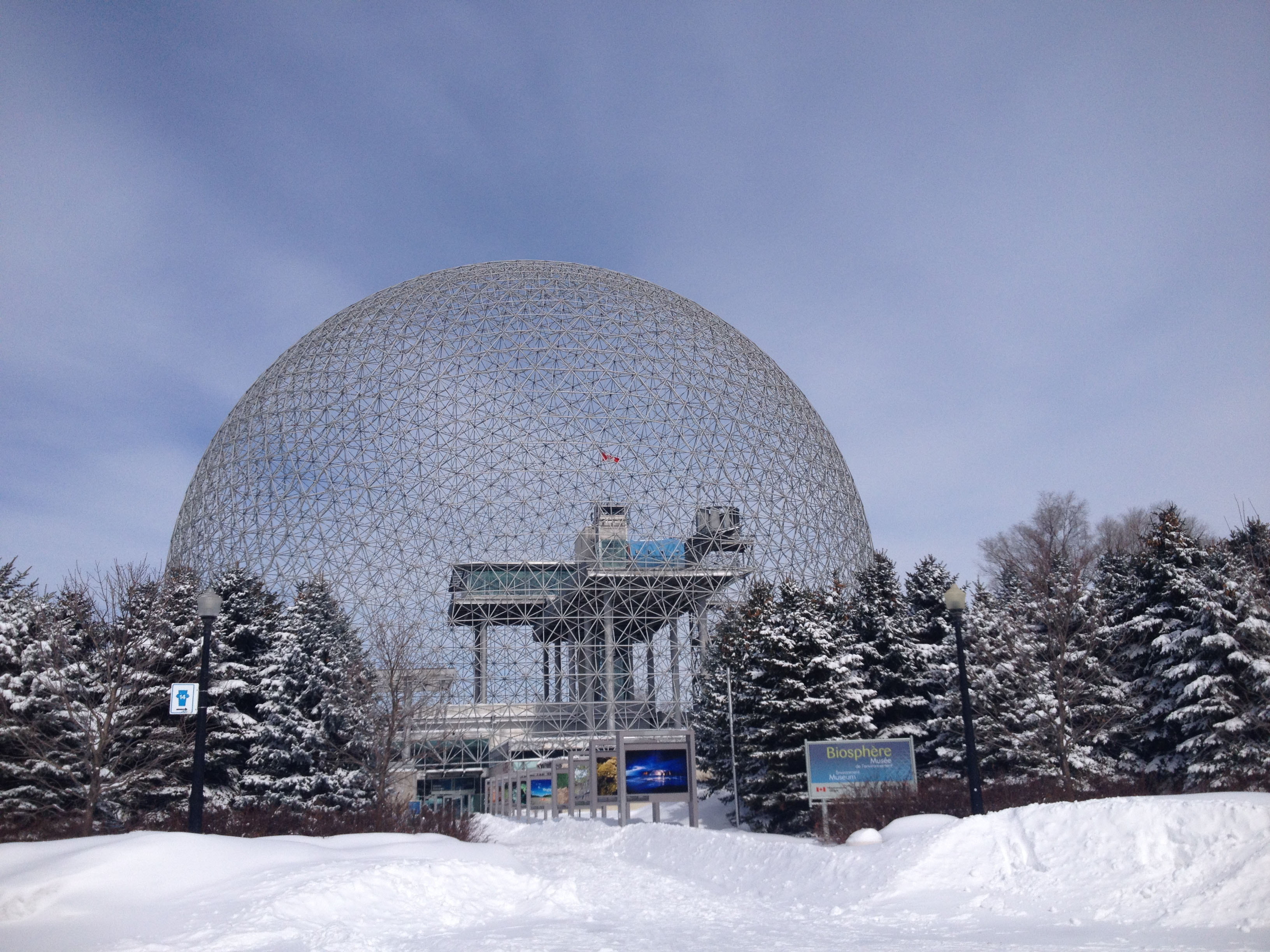
Before hitting the road, we took a walk around Ile Sainte-Helene, which was actually quite birdy; the birdiest place in the city during this short visit.  In addition to the usual woodland residents, goodly numbers of Cedar Waxwings and American Robins were present.  Waterbirds in the fast-moving river were limited to four Common Mergansers and a single Common Loon, however.
26. NHOW-phonescoped1a,3-9-14 (26)

27. NHOW-phonescoped1a,3-9-14 (27)

It was a long and slow drive home, in large part due to the heavy snow in the mountains.  With about two feet in some places, a few of the passes in northern New Hampshire and Maine were a little interesting.  I think it’s safe to say it was a good idea to have taken our Subaru on this road trip!
28.  NHOW-phonescoped1a,3-9-14 (23)

Back to work early in the morning on Friday, we were very pleased to be greeted at the store by some Red-winged Blackbirds.  The hawkwatch is underway, with a goodly 38 birds on the first day (6 Red-shouldered Hawk!), spring is definitely here…even if, once again, it doesn’t feel like it!

A (Very) Early Spring Week in Review

Our Saturday Morning Birdwalk surveyed the waterfront in Freeport and Yarmouth.  On Sunday, Kristen Lindquist and I enjoyed an epic white-winged gull show in Portland, before working our way around the Cape Elizabeth shoreline.  Then, on Monday, we birded from Biddeford Pool through Scarborough Marsh with Snowy and Great Horned owls, Rough-legged Hawk, and Ruddy Turnstones among the many highlights.

Further south, Jeannette and I covered Kittery through Wells, as is our tradition on the first Tuesday in March.  Another exceptionally productive day was enjoyed, including two more Snowy Owls and a Common Eider of the northern subspecies, borealis.

Wednesday was spent dealing with various car issues and seed delivery, so birding was limited to the woods near our house, and the feeders of course.  Same for Friday, where at Hedgehog Mountain Park, a mere 7 species was actually the most that I have detected in a couple of months there.  In between, I was back in Portland and Westbrook on Thursday, and although the Westbrook riverfront was a disappointing, the continuing white-winged gull show in Old Port more than made up for it.

While “new arrivals” were few and far between this week as bitter cold continues, there were definitely signs of the season.  Waterfowl are obviously on the move: Brant, Canada Geese, Mallards, and American Black Ducks are returning in numbers, while the concentrations of seaducks, especially all three scoters, was greatly reduced as these birds have begun to disperse – if not actually migrating north.

For the first week of March, I recorded very few “first-of-years” this week: Great Horned Owl, Yellow-rumped Warbler, and Fox Sparrows.  Of those, only the sparrow is likely a true migrant; the owl is a resident, and the warbler likely wintered locally.  American Robins were definitely on the move, however, with several flocks noted moving northbound (at least at the given time), and American Tree Sparrows also seem to be on the go.

New reports of Snowy Owls – especially inland – likely included northbound migrants.  While all three of the individuals that I saw this week seemed to be birds that were continuing in a specific area for several weeks or more now, the fact that Kristen and I only saw one bird in a very thorough search at Biddeford Pool (four had been present for a couple of months now) suggests birds are already departing. Northern Shrikes – such as the one that briefly visited the yard here at the store on Thursday (our second of the season) are also likely migrating right now.

In the woods there is a different story, however, as even the local residents are a little less active vocally right now than we would expect.  I have yet to hear a Brown Creeper sing – although I am seeing them on regular basis – and Golden-crowned Kinglets remain very few and far between.  And other than goldfinches and resident House Finches, finches remain virtually non-existent.

But all of this is about to change, and my guess is that it will change rather rapidly.  In fact, with the winds turning south today, I wouldn’t be surprised if a few Turkey Vulture and Red-winged Blackbird reports trickle in this weekend.  And once the snow really begins to melt (especially to our south), expect those floodgates to really open!  (Any day now…any day now…)

IMG_4781_edited-3

IMG_4769_edited-2

Snowy Owl, The Cliff House, York, 3/4/14. As you have seen on this blog, our store’s Facebook and Flickr pages, etc, most of our Snowy Owl photos this winter have been of relaxed birds, often with their eyes closed.  Few have been “perfect” shots, whether in lighting or resolution.  And we’re proud of that!  To us, the birds ALWAYS comes first, and we pride ourselves in minimizing any chance at disturbance.  Unfortunately, this bird was sitting close to the parking lot and we spooked it before we knew it was present.  A pair of crows likely also affected the bird’s immediate response.  As it flew away from both us and the crows, Jeannette snapped some photos, as the bird first flew straight out to sea – thereby ditching the crows – before returning to land a short distance away.  We backed off and left it alone.  With a lot of unethical and selfish behavior occurring – as always – around charismatic owls around the country, we support the idea that the circumstances of photos be explained when it shows a behavior that may have been modified by our presence or behavior.

A White-winged Gull Convention in Portland Harbor

On Sunday, Kristen Lindquist and I worked Portland Harbor for gulls.  In my usual routine, I started at the Maine State Pier and worked my way west, checking all of the piers and roosting locations in Old Port.  I was pretty happy with the 4 first-winter Glaucous Gulls and a healthy handful of Iceland Gulls from the state pier, and we continued to see Iceland Gulls here and there as we continued along.

DSC_0023_1stC_ICGU-flight2,OldPort,3-2-14

It was a good day for gulls in the harbor, but we didn’t realize just how good it was until we got to the end of the “Fish Pier.”  There, everywhere we looked we saw white-winged gulls!  Out by the dredging barges there were white-winged gulls.  Feeding at the rips around the channel markers there were white-winged gulls.  And all around the fish pier there were white-winged gulls!

I was very conservative in my counts, and yet tallied an exceptional 12 first-winter Glaucous Gulls – an all-time state high count for me.  But it was the abundance of Iceland Gulls that stole the show; 4 adults (all with completely different wing-tip patterns of course), at least three 2nd-winter, and an astounding (for southern Maine, anyway) THIRTY-TWO 1st-winter birds.  With that many, it was not surprising that the whole range of variation of “Kumlien’s” Iceland Gulls was to be seen, but try as I might, I couldn’t find a single bird that even allowed for an attempted stringing of a Thayer’s.

Despite starting the day by saying, “I am not taking any more first cycle Iceland Gull photos this winter,” with this many birds around, I couldn’t help myself.  Here’s a selection of photos, starting with two phone-scoping using an iPhone 4S, Phone Skope adapter, and a Zeiss Diascope FL, followed by “better” photos using my Nikon D80 with a 300mm lens.

IMG_2843_gulls_at_outflow_pipe,3-2-14

IMG_2837_gulls_at_outflow_pipe2,OldPort,3-2-14

At the aforementioned outflow pipe.

DSC_0002_ICGU_1stC1,OldPort,3-2-14

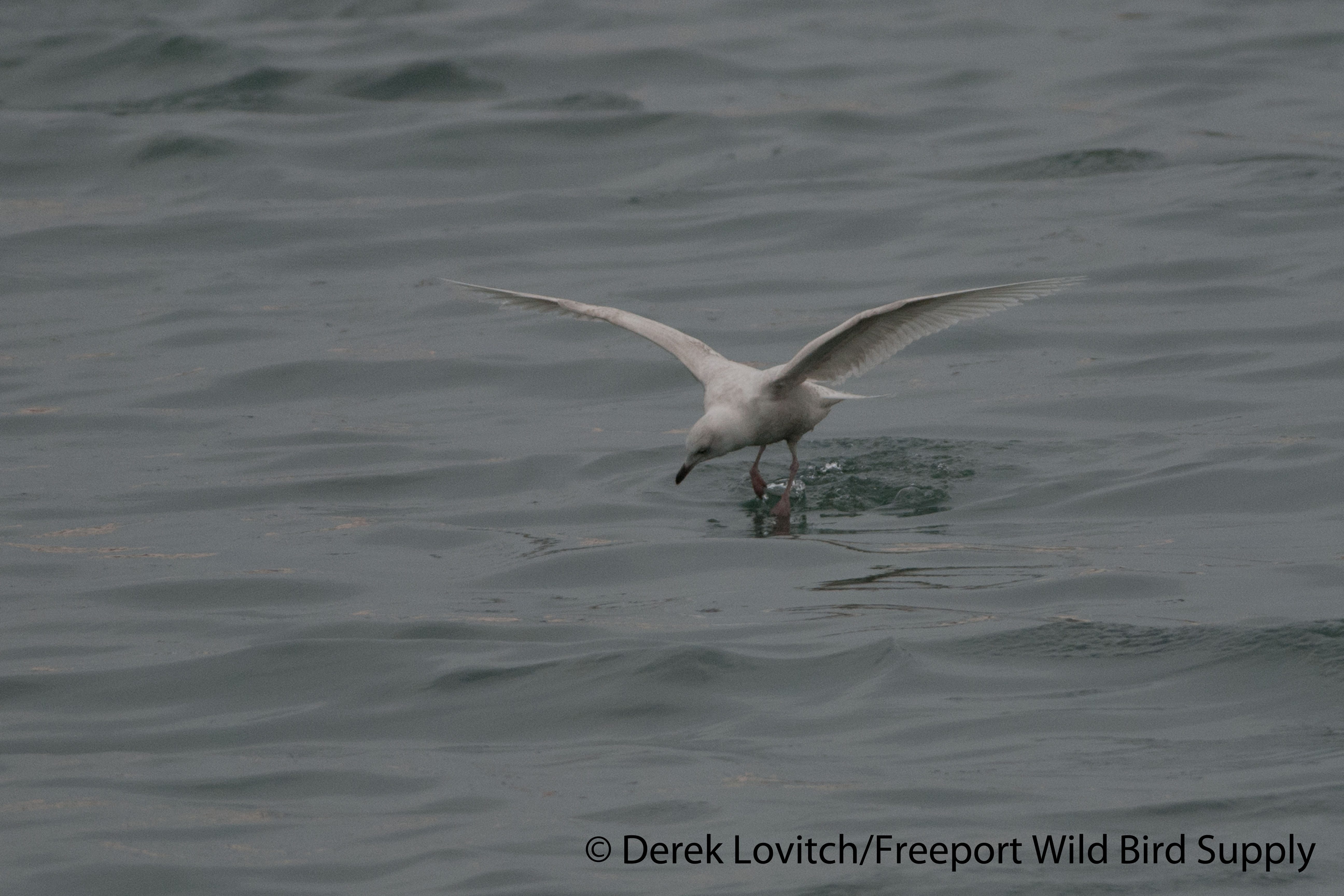
1st cycle Iceland Gull feeding storm-petrel style.

DSC_0007_3_ICGU,OldPort,3-2-14

1st/2nd cycle (L) and 2 1st-cycle “Kumlien’s” Iceland Gulls (R), with a dark 1st winter Herring Gull for contrast.

DSC_0011_lt_and_dark1stC_ICGU,OldPort,3-2-14

Light and darker 1st-cycle “Kumlien’s” Iceland Gulls.

DSC_0013_ICGU_2ndC1,OldPort,3-2-14

Worn, late 1st Cycle or early 2nd Cycle “Kumlien’s” Iceland Gull.

DSC_0014_ICGU_ad1,OldPort,3-2-14

Adult “Kumlien’s” Iceland Gull.

DSC_0016_ad_with_1stor2ndCICGU,OldPort,3-2-14

Adult and 1st/2nd Cycle “Kumlien’s” Iceland Gulls.

DSC_0017_ad_with_1stCICGUs,OldPort,3-2-14

1st cycle and adult “Kumlien’s” Iceland Gulls.

DSC_0021_COEI_flight,OldPort,3-2-14

Wait, that’s not an Iceland Gull…sorry, I got distracted…

After second breakfast, we checked in at Mill Creek Cove, where the outgoing tide was attracting gulls to the mouth of the creek as usual.  With birds heading to and from the Old Port, we didn’t add to our earlier counts, but there were at least 4 1st-winter Iceland and 2 1st-winter Glaucous Gulls present.  Oh, and this rather confiding female Green-winged Teal was dabbling with the Mallards.

DSC_0033_GWTE_hen1,MillCreek,3-2-14
showing a little more green speculum than usual on one side.

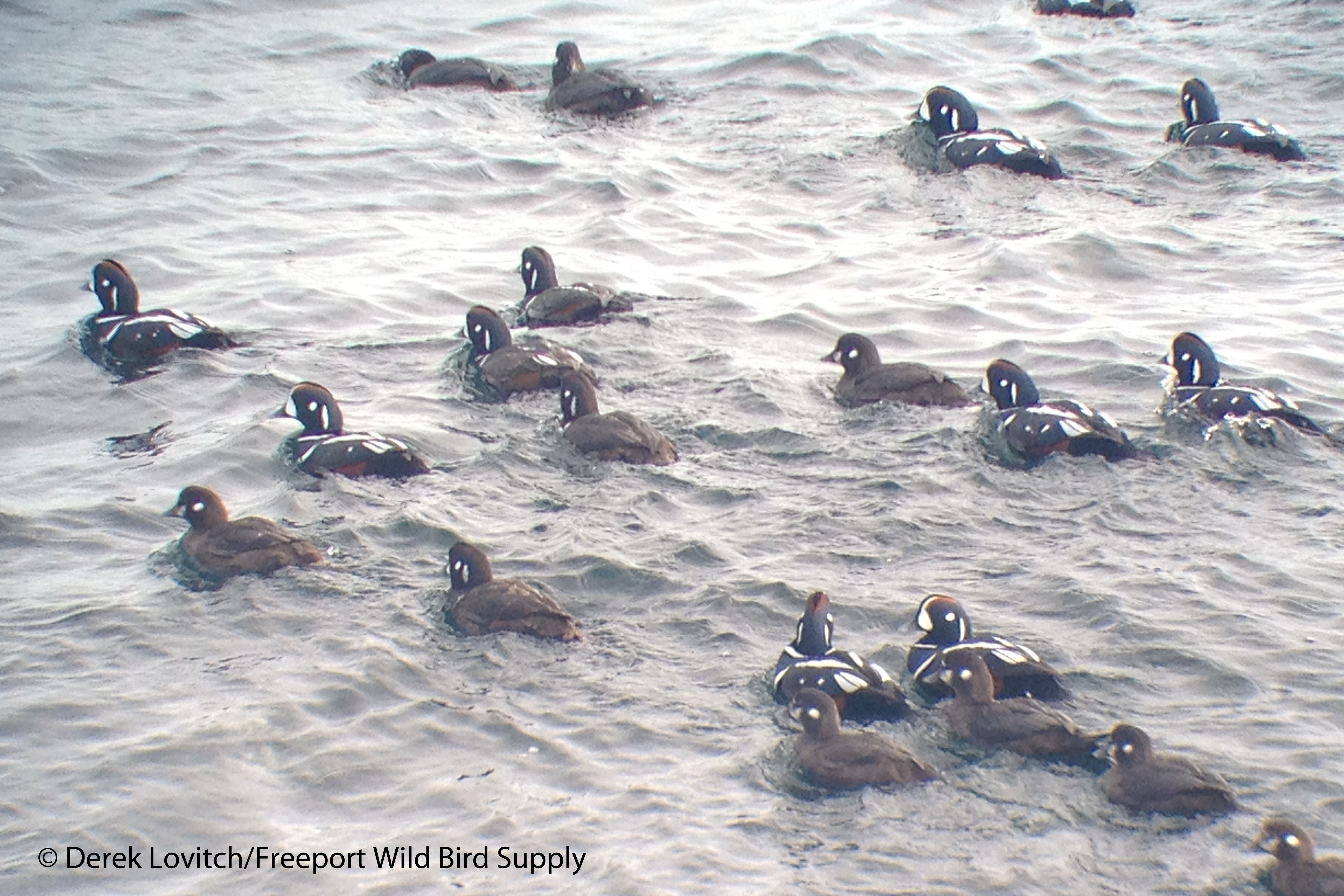
Then we worked the Cape Elizabeth shoreline, highlighted by 3 Greater Scaup at Kettle Cove, 11 Brant at Dyer Point, and these 28 balls of awesomeness (aka Harlequin Ducks; phone-scoped photos).

IMG_2875_HADU1,TwoLightsSP,3-2-14]

IMG_2877_HADU2,TwoLightsSP,3-2-14

But back to those gulls…why so many?  While the number of Herring and Great Black-backed gulls (and the expected relatively small number of Ring-bills) were average (at least by recent winters’ standards), this is by far the most total white-winged gulls that I have seen in PortlandHarbor in the 13 years I’ve lived here.  Some of these gulls are probably northbound migrants, but clearly there was something more at play here.

For one, there’s a dredging operation ongoing in the main channel of Portland Harbor.  While we didn’t see any gulls obviously foraging on the dredge spoils being pumped into the barge, or immediately around the buckets scooping up the muck, there were birds standing around on the new moving “islands.”   I wondered if a lot of these gulls were following/riding the barges in from where they are dumping the dredge spoils seven miles offshore.  But in today’s Portland Press Herald, I read that the occasional dynamiting of underwater bedrock would kill some fish, and then the “seagulls’ (sic… ahem!) were feeding on the dead fish.  That would certainly augment the already-occurring food sources in the harbor.

But most of the Iceland Gulls today were centered around the outflow pipes of various lobster-related facilities, as usual.  Meanwhile, the high tide limited roosting and foraging opportunities along the coast, and here in the harbor.

So my guess is that the time of year (migrants), the dredging operation, and the tides all helped to greatly increase the volume of white-winged gulls present today to numbers not seen in recent years – at least not since Portland had a thriving year-round fishing industry.  Obviously, this is just conjecture, but whatever made it happen, I was happy to be there to enjoy it!

DSC_0022_1stC_ICGU-flight1,OldPort,3-2-14

Also gull-watching:
DSC_0025_Harbor_Seal,OldPort,3-2-14

Book Reviews (Feb 2014), Part II

IMG_2139

Part I, which includes The World’s Rarest Birds, Lost Animals: Extinction and the Photographic Record, and Birdwatcher: The Life of Roger Tory Peterson can be found here.

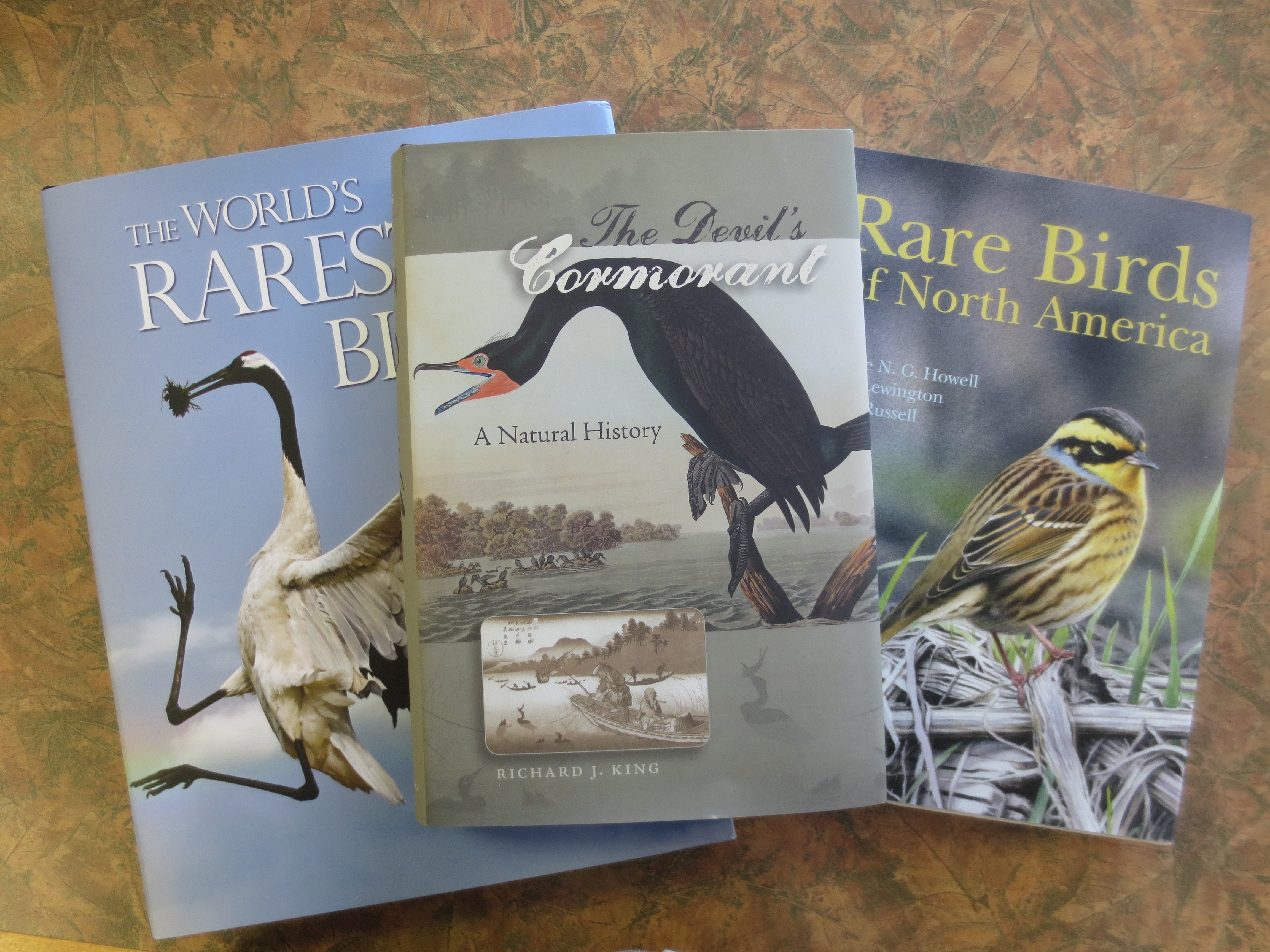
Rare Birds of North America by Steve N.G. Howell, Ian Lewington, and Will Russell.

This long-awaited and much-anticipated book “offers the first complete synthesis of the occurrence and distribution of” every vagrant recorded in North American through July of 2011.  These birds aren’t necessarily rare in a global context as with “World’s Rarest Birds” but they are most certainly rare in the United States (not including Hawai’i) and Canada.

The meat of the book is the species accounts, covering 262 species from around the world.   First and foremost – and certainly the most eye-catching aspect – is the artwork.  This book marks North American unveiling of the remarkable artwork of Ian Lewington, and for many readers, it will be the first introduction to one of the best bird artists of our time.  Simply put, the plates are gorgeous.  The birds appear amazingly life-like, yet technically sound.  There is a lot of detail, but they are not exaggerated schematics. In addition to be a sheer joy to look at, they are incredibly accurate and useful depictions that will go a long way in aiding identification, especially in cases where they are  – and fostering appreciation.  For many of these birds, these are the definitive drawings, and in some cases far surpassing the rendition in those species’ “home” field guides.  The traveling birder will gain a lot of information from studying the plates in this book when heading to that respective corner of the world.  Some of the best and most helpful plates are when similar species are painted side-by-side (such as with many of the albatrosses) and/or on adjacent pages (as with Willow Warbler, Common Chiffchaff, and Wood Warbler).

For each species account, there’s a short analysis of world distribution, North American records and their patterns, and a discussion of taxonomy. The catch-all “Comments” section includes discussions ranging from origin and patterns to unanswered questions. Not surprisingly, I enjoyed the various postulations about patterns and provenance. And last but certainly not least is the “Field Identification” section, which might be one of the most important for people who want to find these rare birds.  If you think you have discovered a new state record, this is probably the first place to go to confirm your identification, for example.  I found it quite helpful when “similar species” were thoroughly compared, although at times, I felt that the authors skipped over potential confusion species, especially when those confusion species were very real and regular features of birding discussions (i.e. domestic waterfowl and bona fide Graylag Geese; considering how often domestic geese are reported as true Graylags, it seems ridiculous to claim “Similar species: none if seen well.”)  But these complaints are relatively few.

My one over-arching quibble with the text is simply a pet-peeve of mine: the use of counties as the sole reference to rare bird records.  I have no problem with the specific locations of the records being left out (the ABA Checklist is a quick and easy place to find that info) but it seems to me that counties are one of the least valuable references.  Perhaps out West, where counties are the size of eastern states, this reference is more useful from a geographic standpoint, but in many parts of the East, in our small counties with irregular borders, many birders probably don’t even know what county they are standing in at a given time.  So why not be just a little more specific?  For example, when looking at the entry for Variegated Flycatcher, type in “York   County, Maine” to Google Maps or your favorite mapping website or software.  OK, you have an idea as to where in Maine the bird was.  Now, type in “Biddeford, Maine,” the town the bird was in.  I bet it won’t take much time (especially after reading the intro material!) to picture where this bird probably occurred – that long, narrow peninsula that sticks straight out into the water…yup, that’s where the bird was.  In other words, towns/townships/territories (or counties in unincorporated areas when necessary) provide a whole lot more information and more specifics with little additional information, space, or even typed characters: In this case “Biddeford” is two characters shorter than “York County” but provides a significant amount more of information and relevance geographically.

While the vast majority of the book is the species accounts, the introductory material is far from superfluous. In fact, it should not be missed.  In addition to the utilitarian aspects of using the book and defining exactly what a “rare bird” is, the instructive sections “Migration and Vagrancy in Birds” and “Where do North American Vagrants Come from?” are chock full of useful and interesting information about the mechanisms and geographic origins, respectively, that produces the “Mega” rarities that birding dreams are made of.  The “Molt and Aging” section is a concise introduction to this complicated topic, but one that is often important to identifying vagrants and their origin.

I must, however, disagree with their use of the term “reverse migrant” in the section “Migration and Vagrancy in Birds” to describe what is more accurately referred to as “180-degree misorientation” or “reverse misorientation” (which the entry confusingly uses in a couple of instances).   Reverse migrant is usually used to describe an entirely different phenomena where birds – from few to massive flocks – undertake a seasonally-opposite movement based on local and current conditions.  For example, a warm spell in the fall might cause thousands of swallows to move north along the west coast, or a cold snap could send Red-winged Blackbirds in a southbound retreat in spring.  These are not “mistakes” by a few as misorientation suggests, but rather a coordinated response to seasonal conditions and its impact on food supplies, regardless of age and experience.

This book is a must-own for any student of vagrancy and rare birds, and it helps to teach everyone how to find more rare birds.  Meanwhile, birders of all levels will simply appreciate flipping through its pages and marveling at Lewington’s artwork and the unbelievable diversity of species that is out there waiting for us.

The Devil’s Cormorant: A Natural History by Richard J. King. (University Press of New England, 2013).

I saved the best for last. In fact, this is one of the best natural (and cultural) history books that I have read in quite some time. Various species of cormorants are found on all continents (yes, including Antarctica) and in all corners of the world, we find these birds to be vilified, hated, and sometimes even cherished.

The author seamlessly integrates fascinating hard science and extensive research with personal anecdotes from his cormorant-centric travels around the world. At the same time, he explores the interaction between humans and these birds.  From the sacred cormorant fishing in Japan to the guano deposits of Peru, we see how cormorants are an important part of some cultures.  On the other hand, from the catfish farms Louisiana to the stocked fishing holes of England, we see how people have come to misunderstand or even downright hate – and often woefully mis-manage – cormorants. The author does an excellent job of remaining objective even when explaining human actions that seem completely insane and inane, but strives to educate the reader about the realities – including when the realities are negative for the cormorant.

During the course of the year, the author follows the life of the Double-crested Cormorants breeding on a small island in Long Island Sound, through all of the trials and tribulations of surviving in a cruel, unforgiving world.  In between, he travels the globes to get to know others species on an intimate level, from spending time with researchers to visiting museums.  I particularly enjoyed his self-deprecating and humorous portrayal of his visit to the Natural History Museum in Tring, England and his travels through the population and species of the “blue-eyed shag group” of the sub-Antarctic, a trip that I have had the privilege of experiencing.

Personally and professionally, I find myself often defending the cormorant, rejecting the vitriol directed towards it. Heck, we even have a giant photograph of the face of a Double-crested Cormorant on our dining room wall: a face that includes a vivid turquoise-green eye – that I feel is one of the most beautiful colors in the world – and the bright and vivid orange facial skin and gular patch that contrasts magnificently with the dark black feathering, the dirty gray and flaky, “ugly-looking” imposing bill.  In other words, I was exceptionally happy when a friend of mine handed me a copy of this book.  It’s a fair treatment of the cormorant – and like most things, when nature is treated fairly, the natural world – including its cormorants – is defended.  I guarantee you will have a new-found understanding and appreciation for this remarkable group of birds.

Of course, most of these titles are available at Freeport Wild Bird Supply, and a shipment of A Devil’s Cormorant has just arrived and is the featured “Derek’s Choice” at the moment.  Also, look for our next installment of “Birds, Books, and Beers” to feature Will Russell, co-author of Rare Birds to take place in early May.  More on that soon.

And speaking of new, “must-have” books, the new and completely updated Sibley Guide is coming out in March!  We’re currently taking discounted pre-orders here at the store.

Scarborough through South Portland: Signs of Spring!

I decided to blog about my birding outing today, if only to give people a little hope that spring is around the corner. As temperatures plummet once again this week, perhaps the knowledge that spring migration has actually begun will provide a little comfort…and warmth.

Phil McCormack and I birded from Scarborough Marsh into South Portland today, enjoying a very spring-like day (highs in the mid-40’s) and some great birding. A few “new arrivals” and continuing wintering species combined for a respectably tally of 54 species without trying – and with ending our birding at 1:30.

We began on the Eastern Road Trail. Within mere seconds of saying to Phil, “I expect some early migrant waterfowl like pintail and Gadwall today,” three drake Northern Pintails came cruising by. I love the look of pintails in flight; they’re so elegant.  The long tail, thin neck, and long, relatively narrow wings suggest a miniature loon, and they have one spiffy pattern. The sense of spring really kicked in when a Killdeer sounded off and came cruising in to an exposed muddy bank – my first of the spring, and a bit on the early side considering the abundant snow cover.

A pair of Gadwall (first of the year – although they were actually southbound) flew over Pine Point, as did at least one Snow Bunting.  Twenty-eight Common Loons were in the channel, while over on Western Beach, the dredging operation was pumping sand onto the beach, collecting a nice concentration of gulls.  Sifting through them yielded two 1st-winter Iceland and 1 1st-winter Glaucous Gull.  American Robins – overwintering birds, not northbound spring migrants – were widespread today, with a high count of 50-75 around Seavey’s Landing.

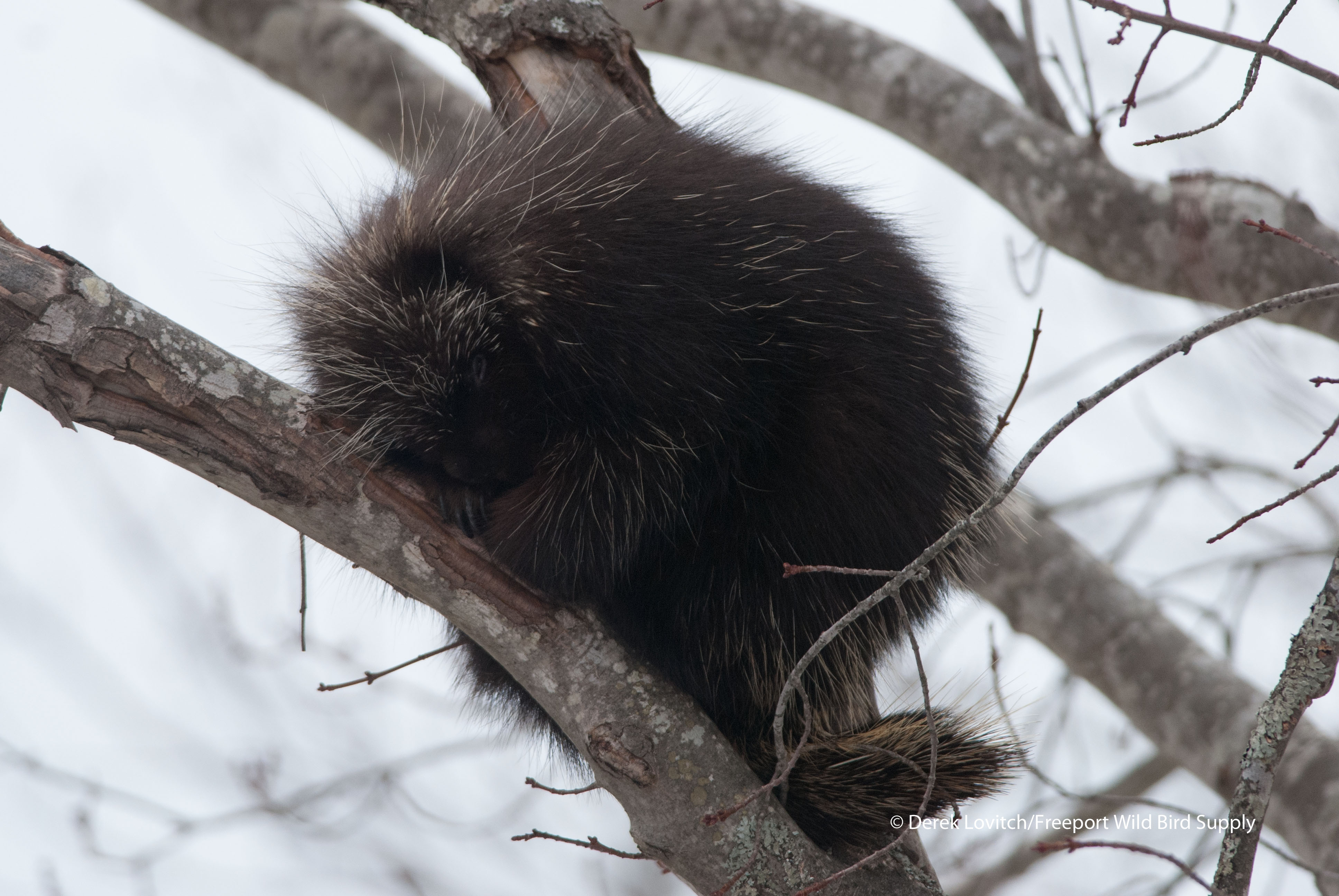
Rounding the north side of the marsh, we checked a couple of neighborhoods for frugivores, before arriving at Kettle Cove.  At Two Lights State Park, a raft of 150 Black Scoter loafed offshore, with 18 Harlequin Ducks in the surf.  A Porcupine at the edge of the parking lot was the star of the show, however.
DSC_0031_Porcupine1a,TwoLightsSP,2-23-14

Ten more Harlequin Ducks and a Northern Shrike (an immature; my 6th of the winter) at Dyer Point were signs of the continuing winter, but a Black Guillemot in full breeding plumage was suggestive of the advancing season.

Moving into South  Portland, a Red-bellied Woodpecker was among the usual denizens at Trout Brook Preserve, but Mill Creek and Mill Creek Cove were hopping!  286 Mallards and a growing legion of American Black Ducks were joined by a single drake Green-winged Teal, our third “FOY” of the day!  Meanwhile, the gull turnover in the cove eventually amounted to eight 1st-winter Iceland Gulls and two or three 1st-winter Glaucous Gulls.

But perhaps our last stop provided the “bird of the day:”
lunch…the fried chicken and waffle from Hot Suppa!

Book Reviews (Feb 2014), Part I.

IMG_2139

I don’t usually review books in this blog, but there has been such a plethora of offerings recently that deserve a word or two. We are most definitely in the Golden Age of bird books, from field guides to natural history tomes to coffee-table picture books. Like many birders, I read a lot more in the winter, and this winter has provided ample opportunity to stay inside with a good book – at least between visits with Snowy Owls and white-winged gulls! This is what I have been reading of late.  I’ll post it in two parts.

The World’s Rarest Birds by Erik Hirschfeld, Andy Swash, and Robert Still (Princeton University Press, 2103).

Wow, simply wow. Sobering and inspiring, exciting and depressing, this is a comprehensive treatment of the 590 Endangered and Critically Endangered species from around the globe – the world’s rarest birds. Increasing awareness is the first step to improving the conservation odds of many of these poorly-known and highly imperiled species.

515 photographs plus 75 paintings cover each species, and each species entry includes estimates of population size, threats, and a paragraph of interesting and important natural history information. It’s impressive to just flip through the pages and marvel at the wonders of avian diversity, but then to step back and contemplate the myriad of threads that will dictate whether or not future generations will have these birds to marvel at.

Each biogeographic region begins with a stunning photograph before getting to work, with pages dedicated to geography, conservation challenges (general and specific), threatened bird hotspots, and a summary of the most threatened bird families. The introductory material to the book is equally chock-full of valuable information, including yet more stunning photography, discussions of each of the threats, and calls for conservation.

This book is a must-have for all birders and any nature lovers who care about conservation and appreciate the wonders of biodiversity. And hopefully, inspire you to act to keep this list from getting any larger.

Lost Animals: Extinction and the Photographic Record by Errol Fuller. (PrincetonUniversity Press, 2013).

In contrast to The World’s Rarest Birds, this is not directly a call to action. For these 28 bird and mammal species, it is too late. They are gone. Extinction is forever. One could easily get depressed from reading this book, and it is a real challenge to fight off some tears, especially when reading the supportive text that explains the circumstances of the species extinction and the last known photos. The photographs are evocative, and Errol’s engaging and accessible text tells a small part of the species story for posterity.

I particularly appreciated his blunt but accurate assessment of the false report of the rediscovery of the Ivory-billed Woodpecker. Hope is a great thing, but hope is not science.  I sure do hope that this bird still exists, but there’s no scientific evidence that it does. False hope is not always helpful, and takes conservation attention – and funding – away from the existent species that need it the most.

The final section of the book is an appendix which features artwork of some of the birds featured in the book whose photographs are of low quality.  There is something about a photograph – an actual moment in time caught forever on a piece of film – that is more haunting than colorful artwork showing a species in its full glory.  Considering many of these birds are painted by referencing specimens (which in some cases added to the journey to extinction) doesn’t help, either.  However, some of the art is truly fantastic, and historical in their own right…and certainly part of the stories of these lost species.

It’s important to learn and understand history so that we don’t repeat it. There are 590 species in The World’s Rarest Birds that could conceivably end up in the next edition of this book. Are you willing to let this happen without a fight?  I for one, most definitely am not.  Lost Animals can be taken as nothing more than a history book summarizing some of what is lost.  Instead, I hope you will be motivated by it and help to prevent a second volume.

Birdwatcher: The Life of Roger Tory Peterson by Elizabeth Rosenthal (The Lyons Press, 2008).

Yes, this is an older book, but one I simply never read until recently when a friend passed on a copy. Roger Tory Peterson (RTP) was a revolutionary. Without him and his field guide(s), many of us would not be birders. Like many birders, I started with a “Peterson’s,” and he was the single inspiration for the next several generations of birders, bird artists, and field guides.

Exhaustively researched, the other chronicles the life of this great man. In addition to being an artist, birder, and photographer, he was also an inspiring conservationist.  Like me, if you consider yourself a “fan” of RTP, you need to read this book to find out more about his remarkable life.

Unfortunately, I found it a real challenge to get through, despite my desire to learn more about him. The book is overwhelmingly a compilation of quotations from people who knew RTP or were inspired by him. While this was quite interesting, I found the extensive use of quotes – including nearly page-sized block quotes with small italicized font – a bit of a challenge to read and follow. More paraphrasing and synthesis of the quotes in the author’s gentle prose would have made this an easier read.

I was also left looking for a deeper dive into RTP’s creative process, including how he goes about his art, his chosen materials, and his philosophies. I also felt the bias in the book was slightly overwhelming, such as what at times felt like an attempt to give RTP nearly sole credit in beginning the conservation movement (yes, he was a large part of it, especially in an indirect way) and the book basically blew off his critics and detractors as mere “haters,” which for the most part is unfair.

RTP is worth knowing, understanding, and appreciating – and this book will definitely help you do that.  My criticisms are mostly based on a style preference, and although I found it very hard for me to read and get “into,” the wealth of information kept me motivated to the end.

In Part II, which I will post next week, I’ll review Rare Birds of North America and The Devil’s Cormorant.

Gull Identification Workshop Wrap-Up

You may have noticed that my blog has been a little quiet in the last couple of weeks.  Mostly, that has been due to my birding being mostly about photographing gulls every chance I get! And in between, accumulating and sorting photos from friends.  What was planned to be a 95-slide PowerPoint program became an exhaustive (literally), 180+ slide dissertation.  Not only was I impressed by how many people signed up, but how many stayed until the bitter end – even though I strongly urged people who were new to this to depart before the section on Thayer’s Gulls and hybrids!

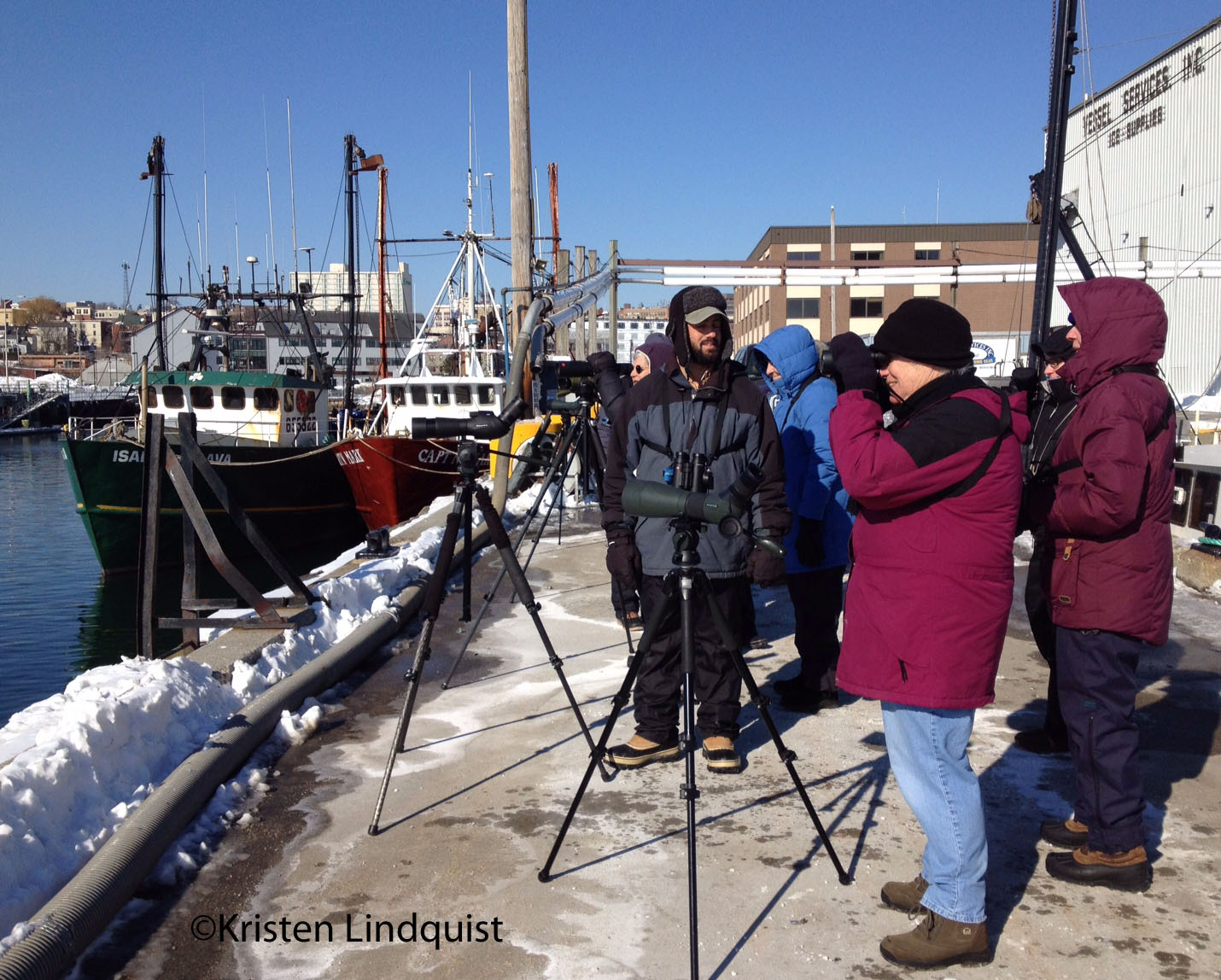
Come Sunday morning, 13 people joined me for the field session of the two-day workshop – no doubt reduced by the 12-degree temperatures that greeted us to start the day. We began with close studies of the various ages of Ring-billed Gulls at Back Cove…aided by a little “incentive,” of course.
photo 3_edited-1

Sorting through Herring Gulls was up next, and then we made our way over to the Fish Pier in OldPort, for some “real” gulling.  And it did not disappoint. The endless variation of “Kumlien’s” Iceland Gulls was readily apparent with eleven 1st-winter, two 2nd-winter, and 2 adults – many of them close and in direct contrast with each other. A total of three 1st-winter Glaucous Gulls were added to the mix, along with ample opportunities to practice aging Herring and Great Black-backed Gulls.
photo 3 (2)_edited-1

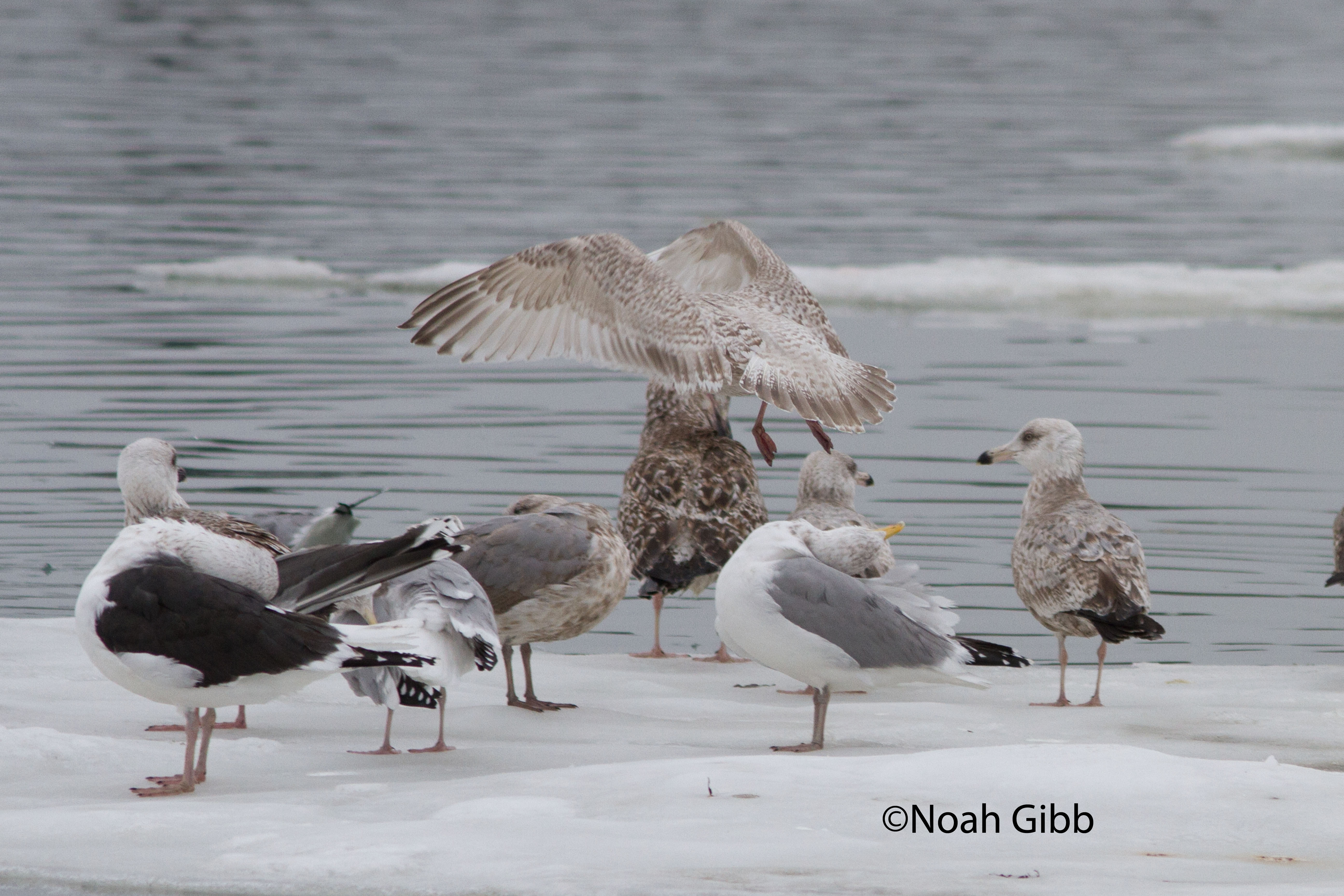
I really couldn’t ask for anything more…well, I could, and of course, did. And shortly thereafter a particular gull-of-interest put in an appearance. Widely being reported as a Thayer’s Gull, this odd individual was a bird I wanted to study closely (Jeannette and I only saw it in the distance on Tuesday), and it was indeed a very instructive bird for a gull workshop.  Having been looking at thousands of gull photos over the last two weeks, I have been a bit negligent with studying and addressing this bird.  Besides, I had not seen it in the field and even some very good photos are of secondary value to time with a bird in the field.

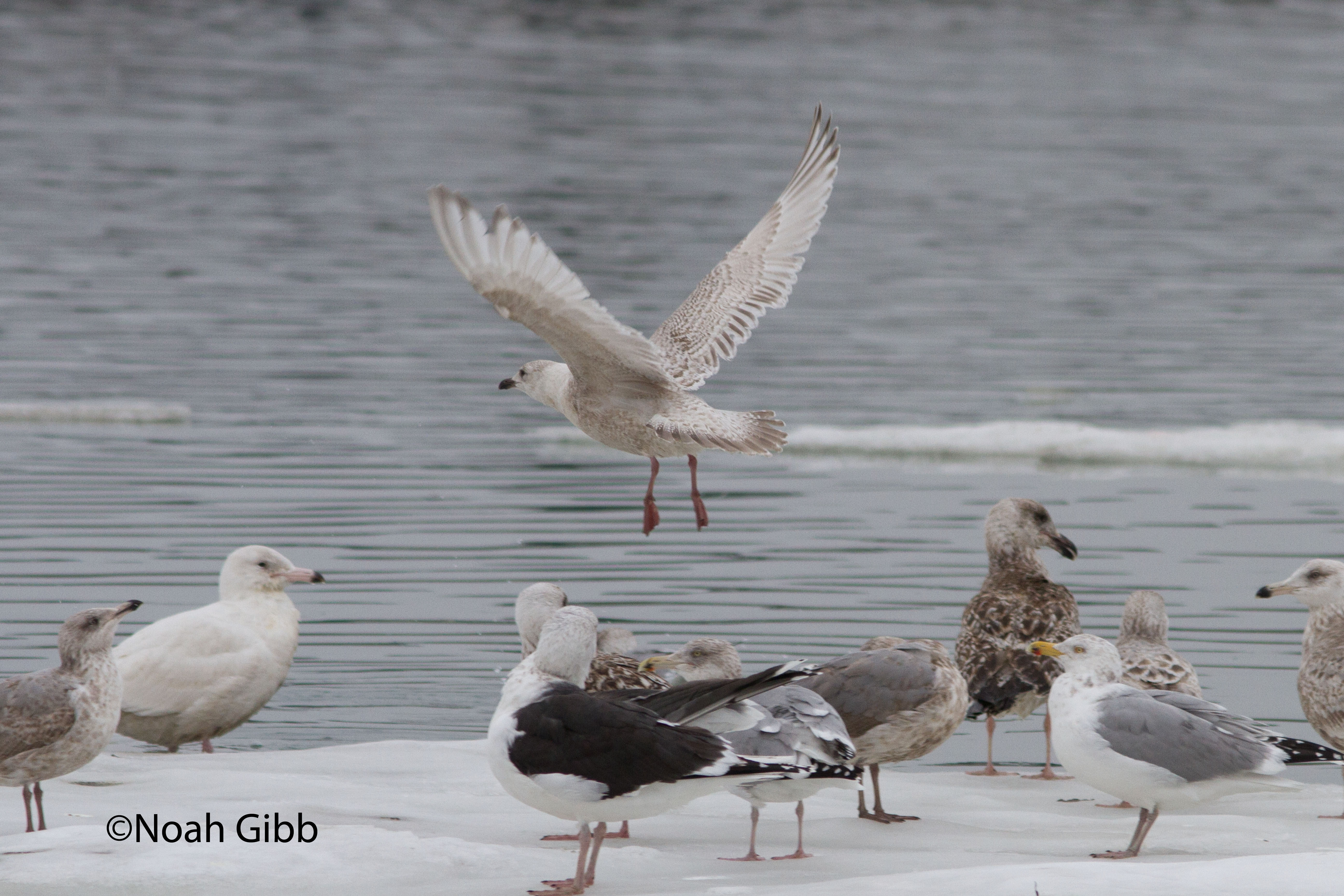
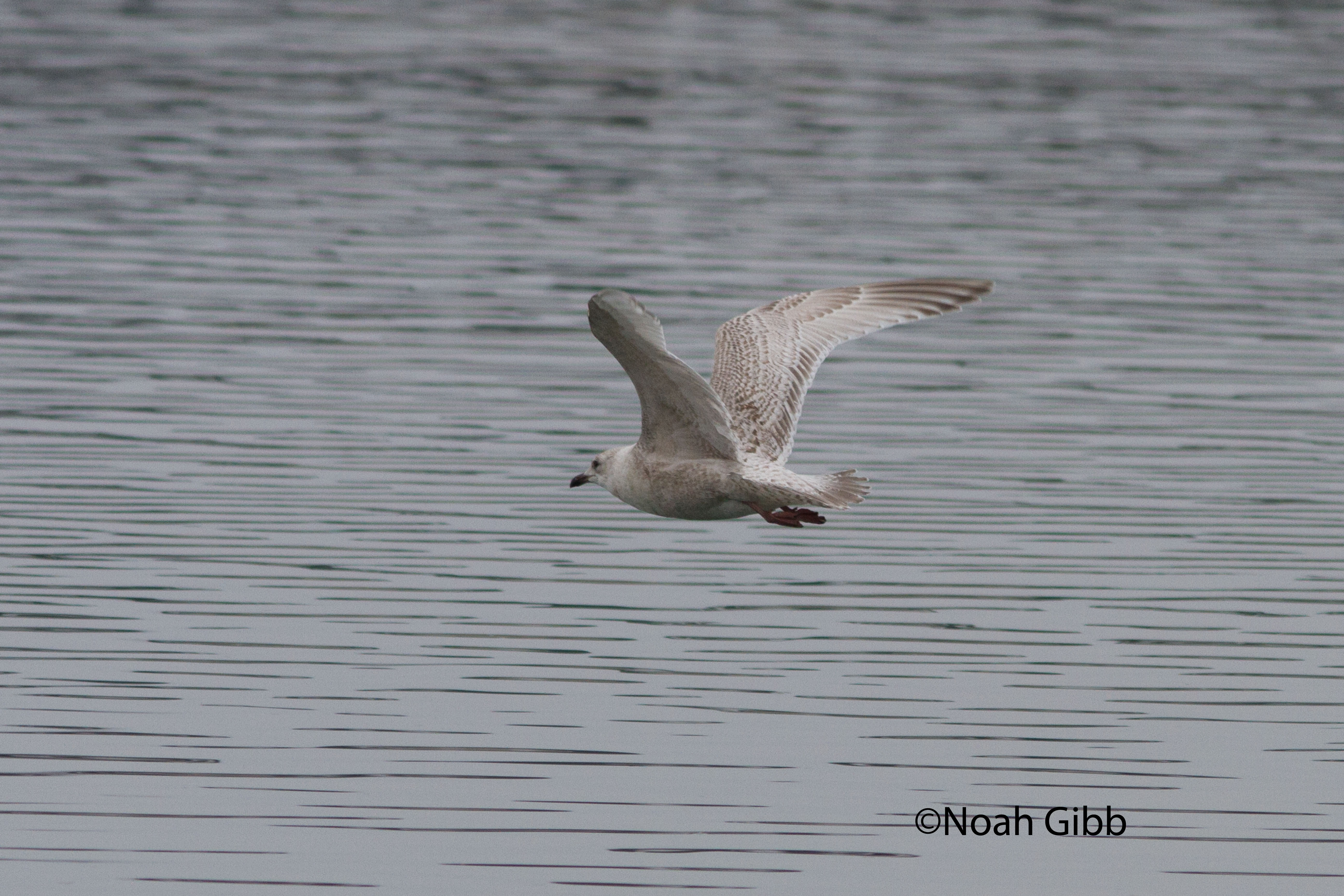
Doug Hitchcox got some decent photos of the bird on Sunday, but the best photos to date have been from Noah Gibb. I will therefore use these photos as our reference.
99.IMG_9975_edited-1

99.IMG_9985_edited-1

99.IMG_9987_edited-1

99.IMG_9998_edited-1

One of my take-home messages during my workshop is that a good “guller” has to be able to say “I don’t know,” and leave some individuals as “Gull sp.” This is probably the best answer to this bird, but what I think we can say is that this cannot be “counted” as a Thayer’s Gull.

For better or for worse, Thayer’s Gulls on the East Coast receive extensive scrutiny.  Birds that would be passed over in coastal California are analyzed to death in New England. Likewise, birds that look like “Kumlien’s” Iceland Gulls on the West Coast get extensive scrutiny, while here in Maine we pass some of these off as typical variation.  And I think this is a good thing – rare birds are rare, and vagrants to opposite coasts should warrant extreme care.

Therefore, this current rash of “Thayer’s Fever” – a common affliction of East Coast gull-watchers – needs to be tempered a bit. There is a reason that there are only two accepted records ever in Maine of this challenging, and variable, species. Therefore, extreme caution is necessary when placing this desirable label on funky gulls.

Like the Shawmut Dam gull reported by many as a Thayer’s a few weeks ago, I believe that the Portland “Thayer’s” is well outside the range of variation of what we can accept as a bona-fide Thayer’s Gull on the East Coast.  While there are a number of characteristics that suggest this bird could be a Thayer’s, there are a number of significant “strikes” against it.  While I think the Shawmut Dam birds suggests a Iceland-Thayer’s intergrade (I am not going to get into the muddled and controversial taxonomy here today), the Portland bird looks to me more like an abnormally dark-winged “Kumlien’s” Iceland Gull. Sure there could be Thayer’s genes in there…which there probably are in all Kumlien’s Gulls . . .oh wait, I said I wasn’t going to get into taxonomy.  Never mind.  Moving on.

So where was I? Oh yes… while the dark secondary bar (and upon closer inspection showing a distinct contrast between dark outer webs and pale inner webs) and the similarly distinctly two-toned outer primaries are important Thayer’s features, there are a serious amount of non-Thayer’s like features shown by this bird. Again, like the Shawmut Dam bird, there are just too many things “wrong” with this bird to safely label it a Thayer’s Gull, in my opinion.

First and foremost, there’s the Portland bird’s incredibly white overall appearance. While a first-summer or some 2nd-cycle Thayer’s can look this pale overall, this bird IS a first-cycle bird.  Since no second-cycle feathers are evident (the bird has a very uniformly-marked plumage typical of a bird less than a year old) and none of the feathers suggest any abnormal wear, we cannot call this anything other than a 1st-cycle bird.  It is not overly worn, and bleaching would affect all of the most-exposed parts of the bird – like the mantle, upperwing, and especially the primaries (and it is those primaries that are abnormally dark, not pale). The mostly-dark bill is also highly suggestive of a 1st-cycle bird, as is the fairly dark eye. Perhaps that is a bit of an over-simplification, but for now, that should suffice.

With that (fairly well) established, we can look at this bird more closely.  Again, those outer primaries and “picket-fence” secondaries are very Thayer’s-esque. Unfortunately, the similarities pretty much end there. The bird is not very big, and similar in size to most of the “Kumlien’s” Iceland Gulls we see it with.  It is also has the somewhat short and thin-billed appearance, with a gently rounded head and large eye that are typical of Iceland Gulls; this bird does not get any subjective gestalt points.  More importantly, in my opinion, are more tangible issues, from head to tail (and in no particular order of importance):
–          The overall pale appearance to the entire bird give that “white” impression at a distance; Thayer’s (THGU) usually look “dirtier” or even “brown.”
–          The pale face doesn’t have that nice dark smudge that we like to see on THGU.
–          The bill is clearly becoming pale at the base already.  The pattern looks good for Iceland (ICGU), and is certainly on one end of the bell curve for THGU.
–          The tertials are wholly marbled, and look perfect for ICGU.  “Classic” THGU show mostly dark tertials with marbled distal ~1/3rd or so.
–          On the folded wing (and on some flight shots), the primaries definitely have dark outer webs, but they also have a pale fringe that not just rounds the tip, but continues down the length of the most of each feather’s outer web. That is more consistent with dark-winged “Kumlien’s” Gulls.
–          While the tail is mostly dark, the bases are fairly extensive white with lots of marbling.  The extent of marbling is a good fit for ICGU.

While absolutely none of these factors eliminate a THGU on their own, the sum of all of them taken together makes for a most unusual THGU.  Considering the range of variation in “Kumlien’s” ICGU combined with hybridization – and by some accounts extensive intergrading – put this bird well outside the possibly-artificially-delineated box that we currently label a Thayer’s Gull.  At the very least, this is far short of a bird that could be “good enough” to constitute a third state record.

Can you see why I was so impressed that so many people stayed to the bitter end of my program on Saturday (and Sunday, for that matter!)?  So there, I said it – the OldPort mystery gull is not a “good” Thayer’s, despite the wishes of many-a-birder!  Sorry.

So anyway, after the Fish Pier, we ventured over to Mill Creek Cove in South Portland.  Two more 1st-winter Iceland and a 1st-winter Glaucous were present (some are all likely birds we saw on the other side of the harbor) to reinforce our new-found skills.
photo 3 (3)_edited-1

And finally, some of the group joined me for a field trip extension over to Westbrook to look for the “Westbrook Gull,” a bird that, as I explained in the workshop, still defies identification and therefore is also quite instructive. Unfortunately, it was not present today (I see it less often on the weekend), but we finished up with a great showing for here of 4 Iceland Gulls (three 1st-winter and 1 2nd-winter) with the Herring and Ring-billed Gulls near the falls.  Meanwhile, while we did look at other birds all day, the open water behind downtown Westbrook yielded the surprise of the day – a pair of Ring-necked Duck that has just been found by Colin Chase.  Whether they are southbound, northbound, are somewhere in between, this was a great winter find, and a nice way to bring our workshop to a close.

Some people added Iceland and Glaucous Gull to their life list this day – and I think one person deleted Thayer’s Gull from their life list! – but more importantly, everyone left with a little more knowledge about how to identify gulls, and more importantly, hopefully a new-found appreciation for these remarkable, adaptable, and successful creatures.

With the success of this weekend (and some refinement due to the slide show portion of the program), I think it is safe to say that you can look for this workshop again in the future.  Until then, good gulling everyone!