Author Archives: Derek

On Recent and Upcoming Weather, Vagrant Season, and Recent Great Birding

Late October through early November is traditionally the best “rarity season” in Maine, where vagrants from all directions are hoped for, and even expected. We’ve been in a rather active and dynamic weather pattern of late, and this may help to usher vagrants in our direction. While weather rarely “blows” birds off-course, winds and weather systems can certainly facilitate their arrival in far-flung places, especially when combined with some sort of misorientation (for a thorough discussion of the concept, see Chapter 7 of my book, How to Be a Better Birder).

As October progresses, the nights get longer, and the days (usually) get colder. The growing season comes to an end (although in many spots the killing frost has not yet reached the immediate coastline yet this year), and food sources become greatly limited. This can push vagrants that may have arrived over the course of the fall migration into favorable micro-climates and patches of seasonal food abundance. More recently-deposited vagrants, “late/lingering” migrants, and other more typical species can also concentrate in such prime areas, such as urban parks, coastal migrant traps, and so on.

Let’s take a look at some of the recent weather, and attempt to identify some possible species to consider.

Over the past ten days, above normal temperatures were regular, thanks to southerly winds. Take a look at the wind map from October 13th, for example.
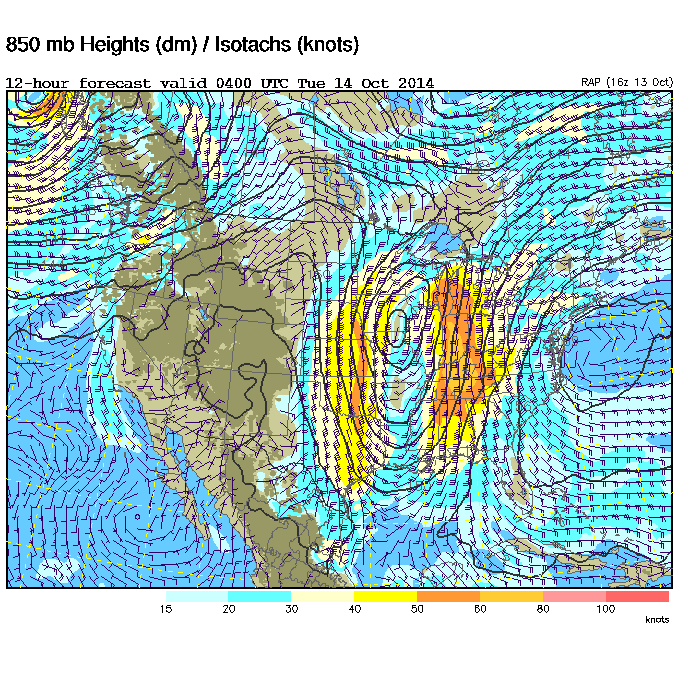
wind map, 10-13-14

Strong southerly winds pumped warm air into the area from the Deep South and the Bahamas (and the South Atlantic Bight). These are favorable conditions for depositing “180-degree misoriented migrants” from the south, such as Summer Tanagers and White-eyed Vireos. I wonder if it’s a little too late for a big push of southern birds, however, as many of the Neotropical migrants have already departed the continent. Meanwhile, that extensive southerly flow all of the way into Mexico is the type of weather pattern that can facilitate the arrival of long-distance vagrants, such as Fork-tailed Flycatcher.

Sparrows are on the move now, and northerly winds with cloudy skies overnight on 10/18 to 19 resulted in a big push of sparrows. The low ceiling likely resulted in disorientation of these low-flying migrants by the big city lights, resulting in a massive flight of birds in Portland’s East End on the morning of the 19th. I estimated over 2000 White-throated Sparrows and 500 Song Sparrows just on the Eastern Promenade alone, with dozens more in almost every lot I checked. A hundred White-throats were in the North St Community Garden, and by the end of the morning, I had tallied 8 species of sparrows, and impressive numbers of Chipping Sparrows (76) and Eastern Phoebes (15) among others. Although 2 Red-bellied Woodpeckers were my 175th species on my Eastern Promenade Patch List, I was surprised that I could not tease out any rarities from the volumes of birds (the sheer number of birds plus gusty winds hampered detection, no doubt).

By 10/19, a strong cold front – a rare occurrence this season – pushed through, and with it, a huge flight of migrants. I tallied over 1100 birds at Sandy Point on the morning of the 20th, led by 461 Yellow-rumped Warblers and 159 American Robins.

You can see how strong and extensive these northwesterly winds finally were from the wind map that day.
wind map, 10-19-14

Rain began to arrive in the afternoon of the 21st, and it didn’t let up until this morning. This massive coastal Nor’easter drenched Maine with up to 5” of rain, and moderate to strong northeasterly winds battered the state, especially the coast.
wind map, 10-23-14

Birding was a challenge on Wednesday and Thursday, as strong winds and often-heavy rain made things difficult. Rain and coastal fog and mist precluded seawatching, and any lake-watching for grounded waterfowl was rendered impossible by visibility and waves. Essentially, feeder-watching was the best bet these two days, and a growing contingent of sparrows at both our home and here at the store provided the entertainment. About 200 Common Grackles descended into our Pownal yard on the 23rd as well.

But now, today (Friday), this massive storm is finally pulling away.
wind map, 10-24-14

And I had a great day of birding in Cape Elizabeth. I began with some seawatching at Dyer Point. From 7:50 to 9:50, I had moderate to good visibility for all but a total of 47 minutes as light showers and mist rolled through. Seas were down to 4-6 feet, and moderate north winds continued. Here’s the scorecard (all southbound unless otherwise noted) – which was actually a little lighter than I had expected:
317 Double-crested Cormorants
127 Northern Gannets (about evenly split between north and southbound)
77 Common Eiders (several hundred northbound)
20 White-winged Scoters
18 Black Scoters
17 Red-breasted Mergansers
16 unidentified ducks
16 Common Loons (plus 18 northbound)
15 Surf Scoters
10 “dark-winged” scoters
8 Long-tailed Ducks (first of fall)
8 Red-throated Loons
5 Great Blue Herons
5 Bonaparte’s Gulls
3 Red-necked Grebes
2 Green-winged Teal
2 Great Cormorants
2 Laughing Gulls
1 Black Guillemot
1 Peregrine Falcon
1 White-throated Sparrow (flew in off the water at 8:05am).

Next up was Kettle Cove, where a nice diversity of migrants, especially sparrows, also included an Orange-crowned Warbler and 3 Common Yellowthroats. Even more interesting was this gull, which appears to be a hybrid Herring x Great Black-back. Intermediate in size and shape between the two, and with an intermediate mantle color, the short wings and pinkish legs separate it from Lesser Black-backed.
DSC_0002_HERGxGBBG1,KettleCove,10-24-14_enlarged_edited-1

DSC_0001_HERGxGBBG2,KettelCove,10-14-14_edited-1

A local sparrow-rific patch of private property was fruitful as well. Although a very tardy Bobolink was the only surprise here, plentiful numbers of sparrows included 200+ White-throated, 100+ Song, 50+ Swamp, 50+ Savannah, 50+ Dark-eyed Juncos, at least 10 White-crowned Sparrows, and a single Lincoln’s Sparrow. A Red-bellied Woodpecker and my second Carolina Wren of the morning were added to the tally.

A male Black-throated Blue and a female Black-and-white Warbler joined Palm and Yellow-rumped Warblers feasting on seaweed flies in and near the wrack at Pond Cove, where another Red-bellied Woodpecker was sounding off.

On my way back, I swung through the goose fields, and clearly more Canada Geese have arrived in the last few days. 718 was a new season-to-date high count, with the most interesting new arrival being this spiffy leucistic Canada. Unlike a hybrid with a Snow or a Domestic Goose, this neat bird was the same shape and size as the average Canada, but with a dull brownish cast to the head, neck, and wingtips.
IMG_4625_leucisticCANG1,GreelyRd,10-24-14_edited-1

As this nasty low rides up into Atlantic Canada and beyond, strong wrap-around winds will offer the potential to displace Northern Wheatears or rare geese from Greenland. Meanwhile, next week, we’ll see unseasonable warmth return on southwesterly winds (“vagrant winds” as I like to call them), just the type of scenario that can facilitate the arrival of strays from the southwest, such as Cave Swallows and Ash-throated Flycatchers. They will also facilitate the survival for at least a little longer of vagrants that are still present but as so far gone undetected.

There isn’t one predominate pattern that yields a strong suggestion of any particular vagrant (or group of vagrants) from any particular direction. However, it is clear that we are getting a nice sample of different conditions that could produce some fun stuff.

At the very least, I expect some big flights of migrants, both day and night in the coming days. In fact, I think there will be a big one tonight. Check out these northwesterly winds that should be ushering in a big push of birds:
wind forecast, overnight

Sparrows will make up the bulk of the flight, especially White-throated Sparrows and Dark-eyed Juncos. If the clouds clear by dawn, I might get a big push at Sandy Point. If the ceiling stays low overnight, look for concentrations of sparrows in migrant traps, especially in and around bright cities. Meanwhile, during the day, a lovely weather forecast should get plenty of birders out into the field.

Needless to say, I will be out looking, and I hope you will to! I look forward to what the coming days and weeks will bring.

October Birding in Maine.

October is my favorite month of birding in Maine. Great diversity, opportunities for observing the thrilling phenomena of migration, an increased chance for rarities, and often-beautiful weather combine to make for exciting times in the field.  I keep my schedule as free as possible for the month to maximize my birding time, and luckily, a current project dictates even more time in the field for me. For the past five days, October birding was at its finest, and my adventures nicely summarized what this glorious month has to offer.

On Friday, I spent the morning exploring 8 preserves of the Harpswell Heritage Land Trust. Six hours and about 5 miles of walking later, I had a better feel for the properties on Harpswell Neck, and their (significant) birding potential.

IMG_4568
Widgeon (sic) Cove Preserve.

I didn’t find anything out of the ordinary today – best birds were probably the Carolina Wren at Pott’s Point, a Red-bellied Woodpecker at the Skofield Shore Preserve, and a Nelson’s Sparrow at Stover Point – but almost all sites were delightfully birdy. Yellow-rumped Warblers were in abundance (especially at Mitchell Field) and there were plenty of Palm Warblers around (again, especially at Mitchell Field).  Other then a few Blackpoll Warblers, my only other warblers were single Pine at Skofield and a Black-throated Blue at the Curtis Farm Preserve.

Sparrows were widespread, as were Purple Finches and Pine Siskins, Red-breasted Nuthatches, and increasing waterbirds including a few groups of Surf Scoters. Mitchell Field was definitely the hotspot today, with good numbers of all expected migrants, along with migrant Osprey, a Sharp-shinned Hawk, a single Indigo Bunting, 3 Gray Catbirds, and 5 Monarchs.

After several nights with little visible migration (although there’s almost never “no” migration at this time of year!), clear and mostly light westerly conditions overnight Friday into Saturday produced a huge flight. Unfortunately, come dawn, clouds had rolled in and winds immediately shifted the northeast. Combined, the Sandy Point Morning Flight was reduced to a mere dribble totaling 91 birds, led by 36 Yellow-rumped Warblers. I was then shocked by a relatively slow birdwalk (even sparrow numbers were far lower than I would have expected) at Old Town House Park – where did all of the migrants overnight go? A Brown Thrasher was a good bird for here though.

Luckily, Saturday was the anomaly. After another very strong flight overnight, Sunday morning finally featured a light northwesterly wind.  Therefore, I finally got my fix in at Sandy Point, with my largest flight of the season.  9 species of warblers and a few new records highlighted the flight, with the following tally:

6:49-9:35am.
38F, clear, NW 5.1 to calm to WNW 4.7mph.

768 Yellow-rumped Warblers (*New Record).
421 Ruby-crowned Kinglets (*2nd highest).
179 Dark-eyed Juncos
116 Unidentified
87 Pine Siskins
79 American Robins
62 Black-capped Chickadees (*New a Record).
31 Golden-crowned Kinglets
26 Purple Finches (*New Record High).
21 Palm Warblers
20 Rusty Blackbirds (*Tied Record High).
17 Canada Geese
14 Blue-headed Vireos
14 Red-breasted Nuthatches
14 White-throated Sparrows
12 Chipping Sparrows
11 Savannah Sparrows (*New Record).
9 Northern Flickers
7 Eastern Phoebes
6 Black-throated Blue Warblers
5 Gray Catbirds
5 Swamp Sparrows
4 Unidentified kinglets
4 Black-throated Green Warblers
3 Brown Creepers
3 Hermit Thrushes
3 Nashville Warblers
3 White-crowned Sparrows
2 American Black Ducks
2 Blue Jays
2 WHITE-BREASTED NUTHATCHES (*tied record high).
2 Unidentified Catharus thrushes
2 Common Yellowthroats
2 Black-and-white Warblers
2 Lincoln’s Sparrows
2 American Goldfinches
1 Osprey
1 Yellow-bellied Sapsucker
1 Unidentified vireo
1 TUFTED TITMOUSE
1 Swainson’s Thrush
1 Nashville/Orange-crowned Warbler
1 Northern Parula
1 Blackpoll Warbler
1 MAGNOLIA WARBLER
1 Cedar Waxwing

Total = 1798 (*3rd Highest October Count).

Afterwards, I began a quick trek east, visiting a friend in Camden, and having dinner with friends in Bar Harbor. In between, I enjoyed a little casual birding, and the fall foliage.
IMG_4574
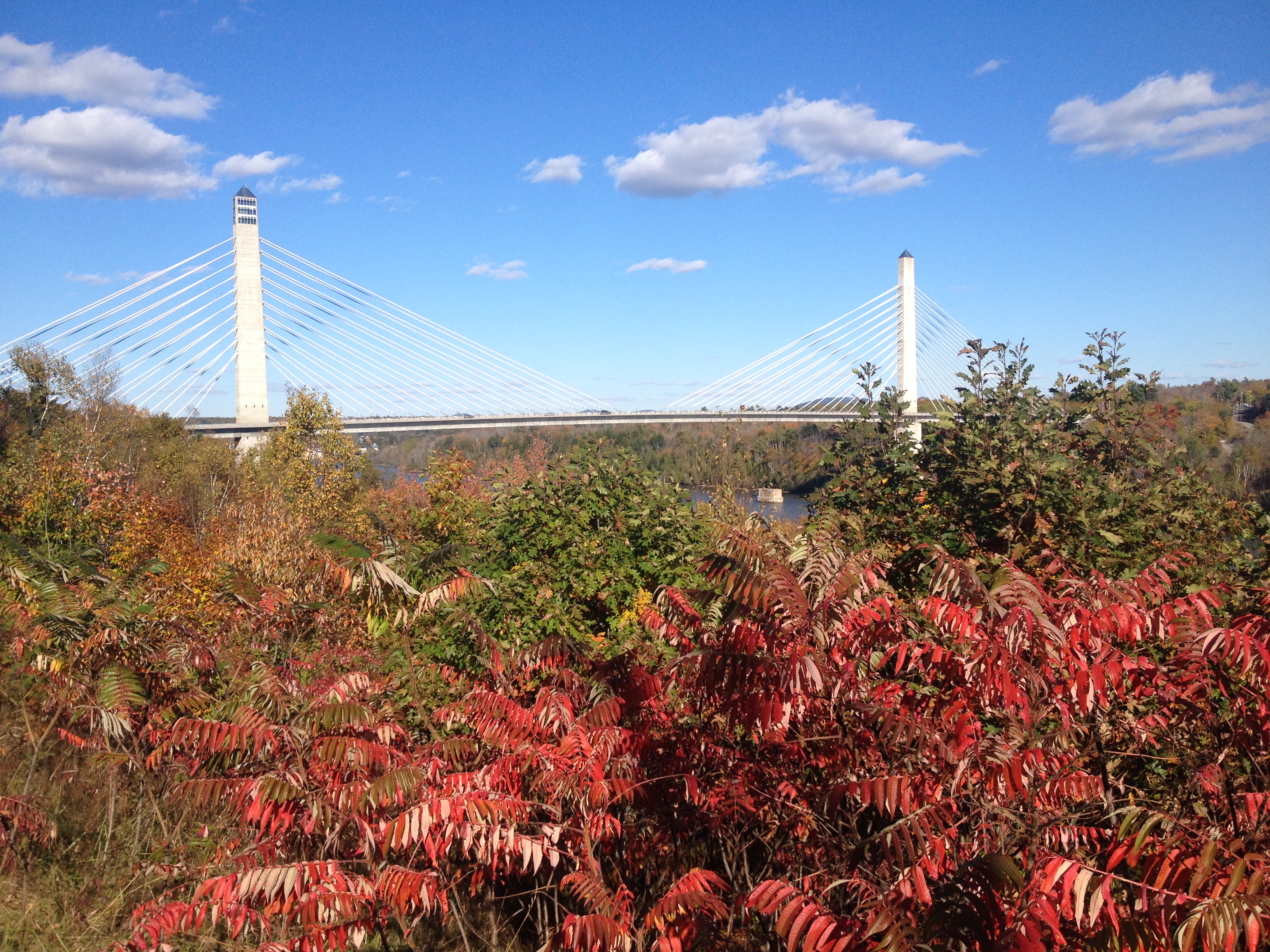
The Penobscot Narrows Bridge.

On Sunday, Rich MacDonald and I did a little birding on the western half of Mount Desert Island.  An “interior/bay” subspecies of Nelson’s Sparrow at Back Beach in Tremont was a highlight, as was a nice variety of birds off Seawall Beach, including an unseasonable 148 Laughing Gulls.  20 Red-necked Grebes and about a dozen White-winged Scoters were also present.
IMG_4586

At noon, we boarded the Friendship V of the Bar Harbor Whale Watch for 3.5 hours offshore. I was really hoping for a Great Skua – my real reason (legitimate excuses aside) for this trip, afterall – but it was a rather slow day on the water. But hey, any day with a jaeger is a good day in my book, and we saw 3 Pomarines. 18 Northern Fulmars were a treat, but birds-of-the-trip honors goes to a rather unseasonable Manx Shearwater.  A single Great Shearwater, Black-legged Kittiwake, and a measly 3 Northern Gannets were all we could muster. Apparently, those northwesterly winds that finally gave me my flight at Sandy Point also pushed sea creatures out from these waters!
IMG_4591

DSC_0003_subadultPOJA,BarHarbor,10-13-14_edited-1
Subadult Pomarine Jaeger.

It was a quick trip Downeast, so I was home by Monday night, and in the morning – following a night with a return to southwesterly winds and no visible migration on the radar – Jeannette and I headed in the other direction. A ridiculously gorgeous day (light winds, temps in the low 70’s!) encouraged us to spend all daylight hours outside and birding hard, covering our usually route between Kittery and Wells.

As usually, Fort Foster provided the highlights, led by a White-eyed Vireo and an Orange-crowned Warbler.  Another Orange-crowned was at Seapoint Beach, an “Ipswich” Savannah Sparrow was in The Nubble neighborhood, 12 Brown-headed Cowbirds were at the feeders behind The Sweatshirt Shop in Wells, and Community Park hosted a Nelson’s Sparrow (ssp. subvirgatus).

Ten (and a half) species of sparrows (Eastern Towhee, Chipping, Savannah – plus “Ipswich,” Nelson’s, Song, Lincoln’s, Swamp, White-throated, White-crowned, and Dark-eyed Juncos) and six species of warblers (Orange-crowned, Black-throated Blue, Pine, Palm, Yellow-rumped, and Common Yellowthroat) were tallied, along with six species of butterflies (including a few dozen Monarchs).  Throughout the day we encountered lots of Yellow-rumped Warblers, Song and White-throated Sparrows, along with most of the regular October migrants from Horned Grebes (FOF) to Ruby-crowned Kinglets.

So there you have it. That’s just a sample of what mid-October has to offer here in Maine.  What’s left?  Finding that “Mega” rarity of course!

2014 MonhegZEN Birding Fall Migration Weekend Trip Report

harbor,K

PHVI,ScottHarvell_edited-1Philadelphia Vireo wrasslin’ a Fall Webworm.

Ninety-seven species of birds, including 16 species of warblers. Yellow-headed Blackbird, Lark and Clay-colored Sparrows, and Dickcissel from the mid-west. Blue Grosbeak from the south. Kettles of Peregrine Falcons, clouds of Yellow-rumped Warblers, good food, great beer, and fantastic camaraderie. Yup, it’s another installment of our annual “MonhegZEN Birding Fall Migration Weekend.”

There are few places in the entire Northeast that I would rather be in fall, especially during the peak of migrant diversity. Our annual tour takes places to coincide with the last waves of warblers, first waves of sparrows, peak of raptors, and the beginning of “Rarity Season.” Check, check, check, and check…and it was hot! In fact, I believe I received the first ever complaint of a room at the Trailing Yew being “too warm in the morning.” Of course, “complaint” is used loosely here, for the record. But it was an unusually warm weekend, and although the birding was not epic by Monhegan standards, great diversity was thoroughly enjoyed – as was the weather (well, at least until the boat ride home a day after the tour ended!).

Two Red-necked Grebes just outside of the harbor were a nice way to start the trip on Friday, as were plenty of Northern Gannets, several Common Loons, and glass-calm seas on our way across. Arriving at 10am via the Hardy Boat from New Harbor, we hit the ground running, and after dropping our bags off to be taken to our inn, we immediately began to bird. Two vocal, dogfighting Peregrine Falcons got us started, and we soon spotted the single continuing Dickcissel. That’s how I like to get things started!
DSC_0054_DICK1,Monhegan,9-28-14_edited-1

IMG_8630_edited-2

Although we did find a Yellow-breasted Chat (frustrating as usual, although at least everyone saw twigs moving), the bird of the day was definitely Peregrine Falcon. A bona fide kettle of 8 were soaring overhead at lunch time, and a steady parade of birds was passing overhead throughout the day. There was a lot of swirling as well, however, which made tabulating an actual count of Peregrines impossible. We know we had at least a dozen birds, but likely multiple times that. Some birds were clearly hunting, but most were probably rising high on the thermals and then soaring off to the south, using the light headwind to efficiently move out to sea, and likely not making landfall until Cape Cod!

Unexpectedly, very light southwesterly winds shifted to west overnight, and as a result, we had a very good arrival of birds to the island. Yellow-rumped Warblers – as expected for the date – dominated, with a conservative estimate of 250 birds observed, with many dozens in the air over the Trailing Yew at sunrise. Three Cape May Warblers, including a couple at the edge of the Yew were the highlight of dozen species of warblers we recorded today. The immature male Dickcissel continued in his favorite seed pile, and we had a fly-by Yellow-billed Cuckoo over the Ice Pond. Unfortunately, a short time later, it was found dead below a nearby window, not just sobering our sighting, but punctuating the fact that up to a billion birds a year meet their death at windows each year – and that’s just in the US!

Good diversity and good (but not, by Monhegan standards, great) numbers made for a fun day of birding, but it was definitely a lot more relaxing once we finally caught up with the Yellow-headed Blackbird! This immature male (a lot of folks were calling it a female, but the blackish body, extent of yellow, face pattern, and every-so-slight touch of white on the wing point to this as being a male) had been present for about 4 days, but since it was a “State Bird” for me, and a “Life Bird” for several, it was obviously a priority.

But on Monhegan, you can only do so much to chase most rarities. In fact, more often than not, you have to simply relax and let the rarities come to you! I call this my “MonhegZEN Migration Birding Weekend” not for any existential reasons – or mandatory meditation or yoga – but simply because we (try) to kick back, focus on the bird(s) in front of us, and let good things happen.

But yeah, we wanted to see this bird, and after missing it by about 5 minutes on a brisk, pre-breakfast (but don’t worry, post-coffee!) walk, the MonhegZEN kicked in. A friend spotted the bird as it flew overhead, alighting nearby in the center of town. Good looks were had by all (I apparently said, “Oh, thank God,” in response to the bird’s arrival, feeling as much relief as joy, apparently!) but about a half hour later, we had even better views as it perched atop a spruce along Dock Road.
DSC_0022_YHBL1,Monhegan,9-27-14_edited-1

We were then able to more thoroughly enjoy the unseasonably warm day, watching Peregrines, and sorting through migrants. Oh, and a relative abundance of Monarch butterflies was heartening.
IMG_8603_edited-2

gentian,ScottHarvell

FringedGentian,Monhegan,9-28-14_edited-1
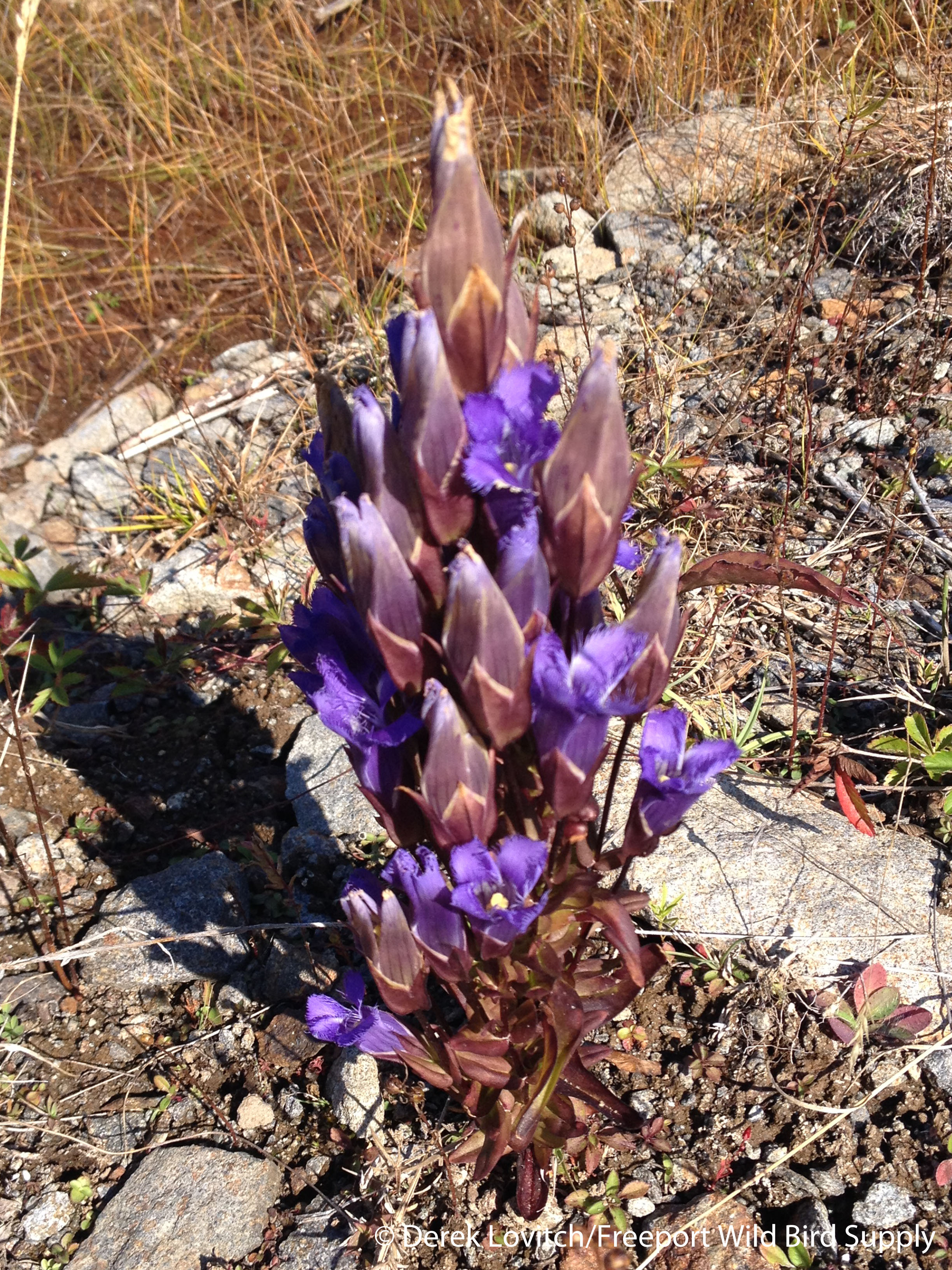
The largest Fringed Gentians I have seen.

IMG_0056_1_edited-1
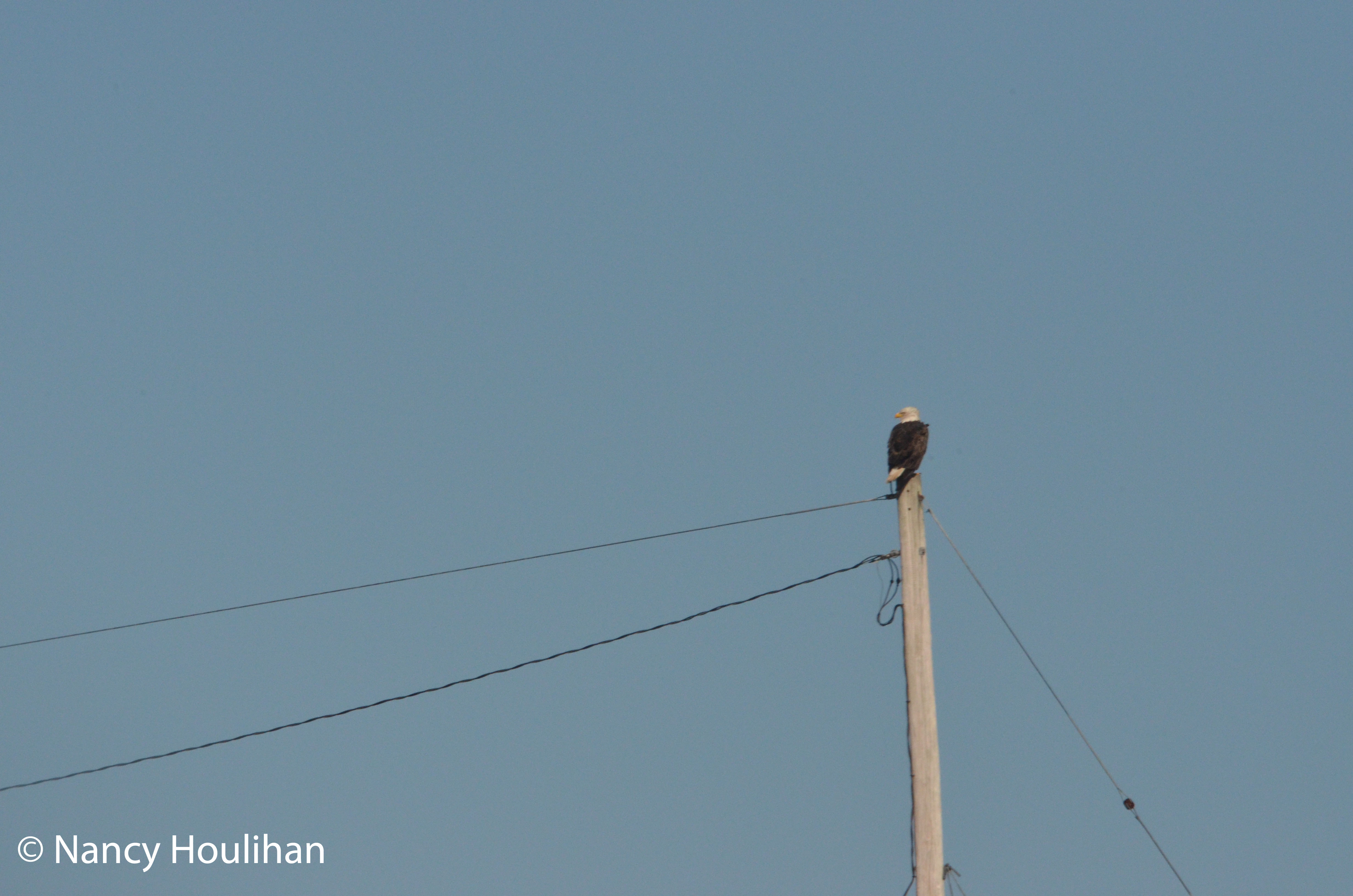
Bald Eagle on the Outer Ducks as some of the participants took the short afternoon cruise around the island.

IMG_0022_1_edited-1
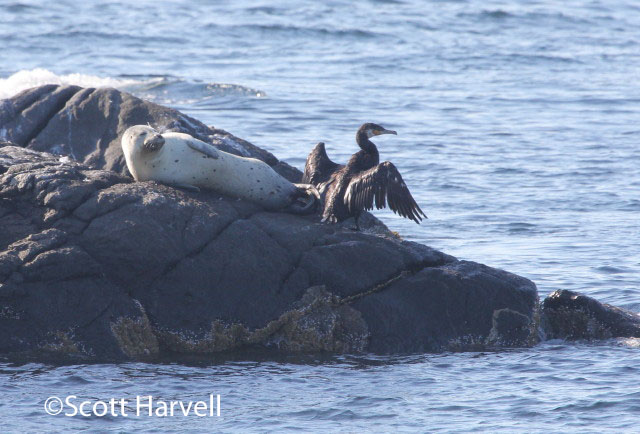
Great Cormorant and Harbor Seal.

A moderate-strong flight developed on clear and calm skies overnight, but come sunrise, the morning flight over the Yew was a little less busy than Saturday. Nonetheless, there were plenty of Yellow-rumped Warblers, Pine Siskins, and noticeable increases in Cedar Waxwings overhead and White-throated Sparrows in the woods and brush. Although overall numbers of birds were lower today, diversity was fantastic, and our trip list grew with the likes of Tennessee Warblers, a Warbling Vireo (I always wonder if these late Warblings out here are all “180-degree misoriented vagrants” as opposed to simply “lingering/late” birds – the local breeders on the mainland are long gone by now afterall), and we finally caught up with the Lark Sparrow that was visiting the seed with the Dickcissel.
LASP_and_DICK,ScottHarvell
Lark Sparrow with Dickcissel – a classic Monhegan juxtaposition.

TEWA,ScottHarvell
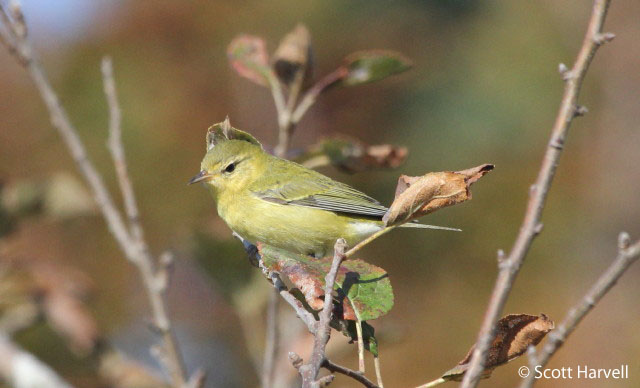
Tennessee Warbler

REVI_coughing_up_cherry_stone,Monhegan,9-28-14
Red-eyed Vireo coughing up a cherry stone; phone-scoped image.

group2,K

We found a female Blue Grosbeak in the marsh behind the grocery store, and we enjoyed another short visit from the Yellow-headed Blackbird (minutes after Jeannette, arriving on the mid-day boat with Sasha, walked away of course).
IMG_8590_edited-2
The eagle was present and accounted for on the way in.

Group3,K
Trap day is coming!

Due to my schedule, the official weekend tour was only three days this year (instead of the usual four), so most of the group departed on the 3:15 ferry back to New Harbor. Al stayed until the 4:30 Port Clyde boat, and his bonus time (three leaders: me, Jeannette, and Kristen Lindquist who assisted me throughout the weekend as I added a second leader when I added a 9th participant – I, and my clients, prefer a small group, especially on Monhegan!) was partially spent watching a few of us struggle with the identity of a dull warbler who really did not want to give us a good look. It was eventually determined to be an immature female Pine Warbler (actually, quite a good warbler out here), and when Jeannette, Kristen, and I saw it later that afternoon in good light, its ID was much more readily apparent.

The always-successful “MonhegZEN Birding Fall Migration Weekend” had officially come to a close, but the birding continued for Kristen, Jeannette, and I. Another hot (80-degrees on the last weekend of September on Monhegan!) and somewhat quiet afternoon relegated our birding to the porch of the Monhegan Brewing Company. Their new delectable DIPA and Pale Ale was thoroughly enjoyed, as was “Brewery Pewee” (a single lingering Eastern Wood-Pewee that was a daily feature of our Brewery List…OK, we didn’t actually keep a brewery list this time, but if we did…and no, this was not my first visit to the brewery on the weekend – it is an important destination for the full MonhegZEN Birding experience) capped the end to a fine and productive day.

After dinner, the three of us walked to and from the dock (a big school of fish, presumably Herring (?) attracted by the lights provided the post-dinner entertainment), but the mere four migrant call notes heard overhead foreshadowed the very light flight overnight that saw many more birds depart than arrive on a diminishing southwesterly wind.

In fact, the skies were nearly devoid of birds undergoing “morning redetermined migration” or “morning flight” come Monday morning, and although there were still plenty of Pine Siskins and Cedar Waxwings overhead, the skies were the quietest that they had been all weekend. But there was little doubt more White-throated Sparrows arrived overnight, and there was not a shortage of Yellow-rumped Warblers.
IMG_8663_edited-2

us,Monhegan,9-29-14,K
Rusty Blackbird.

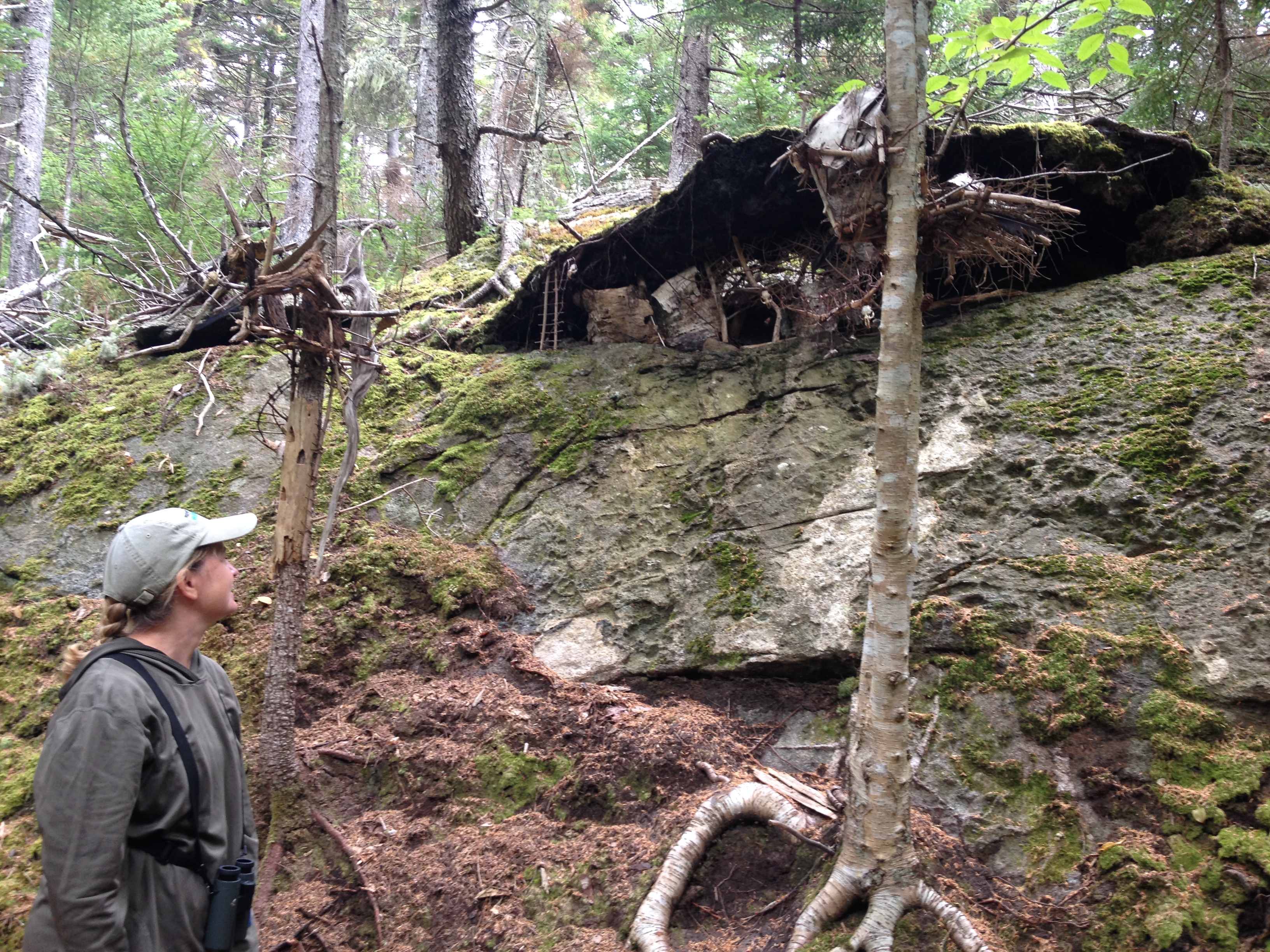
We slowly added a few species to the checklist, including the Clay-colored Sparrow that we had spent all weekend trying to catch up with. The Dickcissel and Blue Grosbeak were present and accounted for as well, and a Prairie Warbler was a nice addition. But as northeast winds began to pick up, we decided to head into the woods. Cathedral Woods offered scattered Golden-crowned Kinglets and more White-throated Sparrows, but our primary destination was this “Fairy House,” or more accurately, palace, that was not to be missed.
IMG_4532

IMG_4530

It was definitely worth the walk, and made even more so by how strong easterly winds were blowing (hmm, that water is looking a little choppy) upon our return to town. It was simply too windy to bird – and rather chilly – after lunch, so we relaxed with a coffee, and then later – just because we “had to” have one more DIPA… err, check of the Brewery Pewee.

The day’s birding was slow, and we had not been able to relocate the Yellow-headed Blackbird…until the literal last minute. The boat was loaded, and we were hustling to the dock, when we asked two birders what they were looking at in the yard of one of the first houses uphill on Dock Rd. “The Yellow-headed Blackbird.” Of course.

And it was, let’s say, confiding, as it walked around the lawn and in some weedy patches a mere 10-15 feet from the gawkers. Sasha even saw it (I would have had a great photo over her head, with her ears up and her face focused on the bird had my phone not just run out of power) – her 127th life bird! It was an exciting way to finish the trip, but the excitement was actually yet to come.
IMG_8673_edited-2

IMG_8678_edited-2

“How high are the seas running?” I asked as we boarded the boat. “6-8 feet or so, they’ah sure comin’ up fast today. It’s gonna be a wet ride.” Uh-oh; was that last beer a good idea? While Sasha has only been on a boat a few times, she has never been “tested,” but we thought it was best to keep her outside. Plus, a hot and stuffy cabin was the last place any of us wanted to be in high seas, so we donned our raingear and moved outside. We were amply warned about splash-over, but none of the four of us wanted to head inside.

Unfortunately, Sasha was not happy with the vibration on the stern, so we headed upstairs to the exposed top deck. 6-8ft seas? No, they were still growing; more in the 8-10ft range now…by far (actually, well more than double) the highest seas I have ever experienced on a Monhegan crossing. But it was surface chop, and not a deep, rolling swell, so it was actually kind of fun. Except for Sasha and except when a series of waves crashed over the boat and smacked into the four of us. I have never seen our tough dog look so miserable, and frankly, soaked to the bone, none of us were all that comfortable anymore. If any of my group had regrets about leaving on Sunday, I can assure you: be glad! It seemed like forever (OK, it was about an hour) before we passed into the lee of the outermost islands. But don’t worry, in between troughs and huddling over Sasha, I kept my eyes open as much as possible for skuas!

That was a wild ride, and very un-MonhegZEN! But once in the sheltered bay and harbor of Port Clyde, we couldn’t help but laugh with the crew. Seas like this are rare – and rarely do they come up so darn quickly – so please do not think that this is part of a Monhegan birding experience! In fact, glass-calm seas were enjoyed by every member of the group on their return trip on Sunday. I guess we might have stayed just one day too long this time.

Actually, no, we just regretted not staying just one day longer!

Kristen and I tabulated the final day’s checklist on the drive to dinner, bringing my four-day total to 99 species, including this final non-tour day. My 4-day weekend tour averages 102 species of birds, so this was just a little below average (this year’s tour officially ended on Sunday with 93 species, which is just below my 3-day average of 95 species).

Here’s the complete, daily checklist. These numbers only represent what our group observed, making no attempt to actually judge the number of birds (at least the common ones) on the island, or summarize the sightings of others and does not include birds tallied on the boat ride across either way.

Species: 9/26,9/27,9/28,9/29

Wood Duck: 1,0,3,2
Mallard: 4,15,15,15
Mallard x American Black Duck: 0,1,0,0
American Black Duck:0,2,0,0
Common Eider: x,x,x,x
White-winged Scoter: 1,0,0,0
Ring-necked Pheasant: 4,1,3,2
Double-crested Cormorant: x,x,x,x
Great Cormorant: 0,2,2,2
Red-necked Grebe: 2,0,0,0
Common Loon: 3,0,0,0
Northern Gannet: 15,50,20,50
Great Blue Heron: 1,1,1,1
Osprey: 1,8,5,2
Bald Eagle: 1,1,2,2
Northern Harrier: 1,0,0,2
Sharp-shinned Hawk: 1,4,6,3
American Kestrel: 0,2,2,1
Merlin: 4+,6+,10,6
Peregrine Falcon: 12++,10+,10+,8
Semipalmated Plover: 0,1,0,0
Greater Yellowlegs: 0,0,0,1
Ring-billed Gull: 0,0,0,2
Herring Gull: x,x,x,x
Great Black-backed Gull: x,x,x,x
Black Guillemot: x,x,x,x,
Mourning Dove: 4,4,4,3
YELLOW-BILLED CUCKOO: 0,1,0,0
Belted Kingfisher: 0,0,1,1
Ruby-throated Hummingbird: 0,2,0,0
Unidentified Hummingbird:0,0,0,1
Yellow-bellied Sapsucker: 2,12,15,4
Downy Woodpecker: 0,1,2,2
Northern Flicker: 10,12,10,20
Eastern Wood-Pewee: 0,3,1,1
Least Flycatcher: 1,2,1,0
Eastern Phoebe: 0,0,3,5
Blue-headed Vireo: 0,0,0,3
Warbling Vireo: 0,0,1,0
Philadelphia Vireo: 1,0,3,3
Red-eyed Vireo: 12,25,30,30
Blue Jay: 4,11,11,6
American Crow: 4,4,4,4
Common Raven: 0,2,2,3
Black-capped Chickadee: x,x,x,4
Red-breasted Nuthatch: 4,12,15,35
White-breasted Nuthatch: 1,0,0,0
Brown Creeper: 0,1,1,2
Carolina Wren: 5,6,8,7
Winter Wren: 0,0,1,3
Golden-crowned Kinglet: 6,8,12,25
Ruby-crowned Kinglet: 3,20,20,6
Swainson’s Thrush: 0,2,1,0
American Robin: 1,5,4,1
Gray Catbird: x,x,4,5
Northern Mockingbird: 1,0,1,0
European Starling: 10,12,12,8
American Pipit: 0,6,2,1
Cedar Waxwing: 40,40,80,50
Black-and-white Warbler: 1,1,1,3
Tennessee Warbler: 0,0,3,0
Nashville Warbler: 2,0,2,1
Common Yellowthroat: 10,6,x,x
American Redstart: 3,3,2,0
Cape May Warbler: 0,2,1,0
Northern Parula: 1,2,3,2
Magnolia Warbler: 0,3,1,1
Yellow Warbler: 0,1,1,1
Blackpoll Warbler: 1,6,5,4
Black-throated Blue Warbler: 0,0,1,1
Palm Warbler: 0,6,3,7
PINE WARBLER: 0,0,1,0
Yellow-rumped Warbler: 40,250,200,175
Prairie Warbler: 0,0,0,1
Black-throated Green Warbler: 4,10,3,1
YELLOW-BREASTED CHAT: 1,0,0,0
Scarlet Tanager: 1,0,0,0
Eastern Towhee: 1,0,0,0
Chipping Sparrow: 7,9,8,9
CLAY-COLORED SPARROW: 0,0,0,1
LARK SPARROW: 0,1,0,0
Savannah Sparrow: 0,9,6,2
Song Sparrow: x,x,x,x
Lincoln’s Sparrow: 1,0,2,1
Swamp Sparrow: 0,1,3,3
White-throated Sparrow: 8,20,100,100
White-crowned Sparrow: 0,3,4,3
Dark-eyed Junco: 0,10,6,10
Northern Cardinal: 2,3,4,4
Rose-breasted Grosbeak: 0,2,3,1
BLUE GROSBEAK: 0,0,1,1
Indigo Bunting: 2,1,1,1
DICKCISSEL: 1,1,1,2
Bobolink: 0,1,0,1
YELLOW-HEADED BLACKBIRD:0,1,1,1
Rusty Blackbird: 0,4,4,4
Common Grackle: 0,6,6,8
Baltimore Oriole: 1,2,3,1
Purple Finch: 0,2,8,6
Pine Siskin: 0,80,50,40
American Goldfinch: 2,2,4,4

Daily Total: 58,72,81,79 Total: 97

RINP,ScottHarvell
Ring-necked Pheasants – the only “countable” ones in Maine!

IMG_8624_edited-2
Cedar Waxwings.

IMG_4519_Monhegan_Sunset,9-27-14
Beautiful nightly sunsets free with price of admission.

The Minnesota Vikings Want to Kill Birds

The National Football League has gotten a lot of bad press recently – and deservedly so. But this blog is not about the wife-beaters, the child abuser, concussions, performance-enhancing drugs, or any other topics that are being discussed ad nauseam on sports stations – and just about everywhere else. It’s also not about the NFL’s mishandling (I’m trying to be polite) of these recent issues, nor is it about how I believe NFL Commissioner Roger Goodell needs to lose his job.

I’m not even remotely attempting to downplay the current troubles in America’s most popular sport. They are many, and they are trying – especially to fans with a conscience. See, I like NFL football (a lot), but I also am finding it harder and harder to support a league in which so much is so very wrong. I am definitely a fan (Go Pats!), but in the recent weeks rooting for anything related to the NFL has been a real challenge.

There’s enough discussion about Ray Rice and Adrian Peterson, among others, elsewhere and nearly everywhere. No, this is a birding blog, and this blog is about birds.

And the death thereof.

And it’s completely preventable.

The Minnesota Vikings are building a state-of-the-art new stadium in Minneapolis. It’s going to be beautiful, and no doubt it is going to offer an amazing fan experience. And, most likely, it is going to kill thousands of birds every year.

The volume of reflective glass and the stadium’s location near the Mississippi River will combine to make it a deathtrap for migratory birds. Collisions with glass are estimated to kill up to ONE BILLION BIRDS a year, and while the majority of them will occur one at a time at windows in residential homes, large commercial buildings can kill shocking numbers of birds. And the Viking’s stadium is destined to do so.

First, for those of you unfamiliar with the issue, let me send you to Sharon Stiteler’s excellent blog entry and this informative page from Minnesota Audubon. And for background on the bird collision issue, check out the American Bird Conservancy’s page on collisions and the Birds and Windows page from the Acopian Center for Ornithology at Muhlenberg College.

So yeah, this thing is bad news, but its impact could be drastically reduced by using different glass. One option is a fritted glass that was used in the Dallas Cowboy’s gargantuan new stadium. It would add a little cost to the overall project, but we’re talking an estimated 1.1 million dollars to a 1 BILLION dollar project. Oh, and for the record, almost half of that is coming from the taxpayers of Minnesota.

But let’s forget this pittance of a cost for the time being. When a dysfunctional commissioner receives $20million a year to destroy the reputation of the league and tarnish its brand repeatedly, what’s another 1.1 million to save countless birds’ lives?

Despite public outcry (granted nothing compared to the public outcry about the Vikings’ plan to suit-up a child-abuser for the next game), including a widely signed petition circulated by Minnesota Audubon

It seems so simple, as the petition says, “Change Glass, Save Birds.” But the Minnesota Vikings have refused. First it was because it was too expensive. Now, it is about the “aesthetics.” Apparently, a pile of dead birds in front of windows is more aesthetically-pleasing to the Minnesota Vikings.

A recent article in Wired by Gwen Pearson did a good job of summarizing the current situation. I urge you to give it a read.

To some it up, the Minnesota Sports Facility Authority and the Minnesota Vikings have refused to act, and have basically said that they don’t care. They expect their fans to come anyway, and pay for the tickets, and buy the beer and Adrian Peterson jerseys Matt Cassell jerseys(?)…and they probably will.

And there are unlikely to be enough people signing enough petitions to get them to change their mind. But back to Adrian Peterson for a moment. After the Vikings “activated” him for the coming weekend (I was so happy to watch my Pats crush the Minnesota Bird-Killers without Peterson last weekend!), public outcry rightly ensued. Yet little changed.

But then sponsors noticed, and some were not happy. Radisson hotels led the way, completely pulling their sponsorship of the Vikings. (Good job, Radisson!). And other sponsors are not happy either, including league-wide sponsors such as Anheuser-Busch.

And what happens? Adrian Peterson is suspended. Coincidence? No. Lesson to be learned? Most definitely.

Listen, the NFL doesn’t care what you or I think. They care about money. They care about corporate money in particular. So what does this horrific Adrian Peterson mess have to teach us? It’s time those who care about birds go after the sponsors of the Minnesota Vikings and the NFL. Money is the only language that the NFL understands.

First, there are the current sponsors. I found this site called “SponsorPitch” which is the largest list of corporate sponsors that I could find. Let them know what you think about their possible association with a bird death trap. And here are some of the companies the Vikings are offering promotions with. (Yet another reason for me to never give a cent to Verizon!)

And the big deal now – and perhaps a major contributing factor to the Peterson suspension – is that the Vikings are looking to sell the lucrative and prestigious naming rights to their new stadium, which could bring in tens of millions of dollars a year.

Few companies want to be associated with teams that employ a child-abuser. Do you think many companies want to spend a hundred million dollars to be associated with piles of dead birds? Probably not (OK, maybe the likes of ExxonMobil or First Wind don’t care). But they probably don’t even know about the controversey. Let’s change that.

First, start with signing the petition. It can’t hurt.

Secondly, let’s keep an eye on the efforts of Minnesota Audubon, and what they recommend.

Meanwhile, I think we need to get this out in more “mainstream” media. ESPN is perhaps the single biggest director of sports discourse in the country, for better or for worse. Their show “Outside the Lines” can bring incredible attention to the events and issues away from the playing field. I propose we begin a campaign to encourage them to do a story on the new stadium and its bird-killing glass. They show even makes it easy, with a simple online suggestion form. Fill it out. I did.

Next, we need to use the power of social media. Besides sharing this blog, links to Minnesota Audubon, and other articles and essays about the stadium, could you image the attention that would be brought if “Minnesota Vikings Kill Birds” showed up in that little “trending” topics box on your web browser? I am probably preaching to the choir here on a birding blog, but this needs wider attention. Therefore, next time(s) you have a moment, type “Minnesota Vikings Kill Birds” into your web browser and click on some links. If enough people do this, search engine algorithms will notice. I have no delusions of grandeur about the influence (or number of readers!) of my blog and my musings, but just for a moment imagine if every birder in the US searched for this phrase – and the attention that would receive as it snowballed with more and more people clicking on it as a trending topic. It has to start somewhere. #MNVikingsKillBirds

And most importantly, if rumors begin to swirl about what company is going to slap its name on this stadium, they need to hear from people immediately. “Company X Bird-Killing Stadium” won’t sound appealing.

This is what it comes down to: the NFL and the Minnesota Vikings have made some abhorrent mistakes lately. They need to correct this. The courts and the court of public opinion will deal with Adrian Peterson (and dealt with he should be, in my opinion). But at such a dark time in America’s favorite sport, a little good PR is needed. And action to save the lives of thousands of birds a year would provide just one glimmer of hope that the NFL actually cares about something more than just the bottom line. Let’s start here: “Change Glass, Save Birds.”

I thank you for your time and consideration.

“Washington County in August” Tour, 2014

The first of what I hope is many “Washington County in August” tours took place last week, and overall was a resounding success.  While a dearth of seabirds and low shorebird numbers plagued us, we ended up with an impressive trip list of 107 species and quite a few highlights. Despite the lack of Helen’s Restaurant and its blueberry pie, we ate darn well too – which is a hallmark of all of my tours!

We assembled on Thursday (8/28) morning, and began our journey north and east. While the state’s first Crested Caracara failed to reappear, we poked around Central Maine, hitting a few interesting birding spots. But really, it was just something to do before we reached Washington County, which we did in the late afternoon.

An evening jaunt to Jasper Beach introduced us to the fascinating geology of the area, and our trip list began to grow.
1

2

While we had a full slate of birding activities planned for the coming days, one of the primary purposes/excuses for our visit was a charter out of Eastport to ply the waters of Passamaquoddy Bay and Head Harbor Passage.  Seabirds have been few and far between this summer, and whales were late to arrive, perhaps due to the unusually cold water this season.

One lone tubenose – a single Great Shearwater – was shocking (hey, wasn’t this supposed to be a seabirds tour?), and only three Razorbills was much lower than expected.
10
A father Razorbill keeps an eye on his young chick.

An Atlantic Puffin was a pleasant surprise however, and 4 Atlantic White-sided Dolphins joined the show put on by the 4 Fin Whales (and later, two Minkes).  There were plenty of Great Cormorants (26) and Bald Eagles (12) as well.

Several hundred Black-legged Kittiwakes were present, and many were roosting on rocks or feeding in the passage…
5

4

…including spiffy, fresh juveniles.  We scanned the rocks for rarities…

6

…took in the scenery (here, abandoned fish weirs)…
7

…and enjoyed the marine mammals, such as this Gray Seal.
12

As we traversed Head Harbor Passage hundreds of Black-legged Kittiwakes and thousands of Herring and Great Black-backed Gulls were roosting, feeding, or otherwise just doing what it is that gulls do.
11

But the stars of the show – and perhaps of the entire trip – were Bonaparte’s Gulls. We crudely guesstimated at least 10,000 individuals were present, and this spectacle is one of the primary excuses to offer this tour.  While I failed to pull out a singe rarity from the masses (Little and Black-headed Gulls were seen the next day, and a Sabine’s Gull was seen a week prior) despite eye-straining effort, the show was still well worth the price of admission.

As the tide began to ebb, and the Old Sow whirlpool began to churn, the birds flocked in from their various roosts and began to feed in swirling clouds. Everywhere you looked there were thousands of “Bonies” in all directions.  As our Captain adeptly and impressively navigated in and out of the Old Sow (and the little whirlpools around its edges which I learned are called “Piglets”), our heads were spinning nearly as much as the waters around us.  No photos could do the scene justice, but here’s a couple of shots that at least (poorly) represent my favorite part of this tour (and what was listed as the highlight for most of the participants at the end of the trip).
11a

11b

13

After lunch and a little birding around Eastport (Surf and Black Scoters, along with some common shorebirds), I decided to run over to the Lubec flats for the evening. While my original itinerary for the day was not going to be this exhausting, I wanted to go for the Buff-breasted Sandpiper that had been seen earlier in the day. It’s just too charismatic of a bird to pass up, and with shorebird numbers also unusually low this season around here, I didn’t want to risk missing a “good one.”

It didn’t take us long to find the “Buffie,” and it proved to be rather cooperative, despite relocating from one side of the bar to another.
14

An adult Hudsonian Godwit on the flats as the tide began to recede confirmed my decision to head here this evening; we did not see it the next day. Two unseasonable hen Northern Pintails were unexpected.

It was going to be hard to top Friday, but Saturday Morning’s sunrise set things off on the right foot.
15

16

Of course, staying at the Machias Motor Inn not only provides wonderful backyard sunrises, but it also offers great birding – even from bed!  A pair of omnipresent Bald Eagles, a smattering of shorebirds, Canada Geese, Ospreys, Double-crested Cormorants, American Black Ducks, and much more were observed before our birding day even begins.

With a decent migration overnight, we began the day with a walk down the multi-purpose trail through town where we found a pleasant variety of migrants. An Alder Flycatcher that burst into song was unexpected for the season, and the American Woodcock were flushed off the trail was as surprised to see us as we were to see it.

Next up was a walk at Quoddy State Park, the easternmost point in the US. Slowly moseying down the trails…
19

…we took in the breathtaking scenery of the Bold Coast.
18

A couple of Boreal Chickadees and a Cape May Warbler were the highlights, but scattered mixed species foraging flocks of migrant warblers slowly built up our list. In case we didn’t get our fill from the boat, another 50 or so Black-legged Kittiwakes were in their usual spot off of the point.

A return visit to the Lubec Flats found even fewer shorebirds than the previous day, but we did get a second dose of the Buff-breasted Sandpiper. Today’s lower shorebirds tally was likely the result of the 1-2 Peregrine Falcons and the juvenile Northern Harrier that were patrolling the area.
21

21a

Taking in the sights and people-watching of Pirate Fest in downtown Lubec, we foraged at the food vendors, and then made a big loop through the town and adjacent Mowry Beach Trail. Unfortunately, the time of day and an increasingly strong southerly wind reduced the fruitfulness of this jaunt. Monica’s Chocolates, however, never disappoints.

But that same wind resulted in a much more fruitful bout of seawatching off of West Quoddy Head. 125+ Black-legged Kittiwakes, two more Razorbills, and our first (shockingly) Northern Gannet of the trip were offshore. Enthusiasm grew when a juvenile dark-morph Parasitic Jaeger arrived on the scene, much to the chagrin of the kittiwakes.

23

About 30 minutes later, our excitement level tripled: 3 Parasitic Jaegers came tearing in towards some feeding kittiwakes and reigned down their jaeger-esque terror. The threesome (a dark morph juvenile – perhaps the same bird as earlier, a light-morph juvenile, and a light-morph subadult) made a few runs at several unfortunate kittiwakes before they flew off to the west in unison.

No Jagermeister, but a celebratory toast was to be had at dinner this evening.
14a.Day2,Skywalkersdinner_edited-1

Personally, I never have enough time to see it all when I am Downeast, and like all good things, our tour had to come to an end. But, not until the day was done, so Sunday was not the time to put down your binoculars!

We began with a walk at the Boot Cove Preserve, one of my favorite trails in the area. Not that we really expect to see one at this season (but one could always hope!), no Spruce Grouse were detected, but it was about as good of a showing of Boreal Chickadees as I have enjoyed here. We spotted at least 7 different individuals; almost all of which were seen about as well as Boreal Chickadees are usually seen.  A few mixed-species foraging flocks, mostly consisting of Black-throated Green and Yellow-rumped Warblers further enhanced our walk, as did the breathtaking scenery and fascinating plant life, such as carnivorous Pitcher Plants in the bog.
25

26

20

27

24

Two Wood Ducks along Rte 191 were our 100th species of the trip, and a short bout of seawatching at the end of Little Machias Road in Cutler yielded another Parasitic Jaeger.

White-rumped Sandpipers were finally added to the triplist (just 2, however) at Addison Marsh, but then it was time for a special culinary treat: Vazquez Mexican Take-out in Milbridge.  You didn’t expect the best Mexican food in the state to be way out here, did you?
28

While I didn’t “need” seconds, I justified my gluttony with the need for “research” for future tours. Really, I did this for you.

To break up the trip home (or, simply to stall our re-entry into the real world), I took the Sebasticook Lake loop. While this year’s draw-down is yet to occur (and therefore the lake was shorebird-free), a pocket of migrants at one of the viewing points turned out to be incredibly productive for our triplist: a flock of Common Grackles, a Blackburnian Warbler, a Rose-breasted Grosbeak, and last but not least, our 107th and final trip bird: Baltimore Oriole.

And only then did it begin to rain in earnest. But, with great weather throughout the trip and nothing by highway ahead of us, we had no complaints as we chatted about the birds and memories of our trip.

The first year of any tour is always a learning process, and I have no doubts I’ll continue to refine and hone the itinerary for the coming years. While I can’t control the birds, I did think the low seabird and shorebird numbers were unusual here, so I look forward to our future tours – as if the whales, scenery, and 10,000 Bonaparte’s Gulls weren’t cause enough!

Keep an eye out for the next installment of the “Washington County in August” tour, likely in 2016.  In the meantime, I hope you will consider joining us for one of our other exciting birding opportunities.  Keep an eye on the “Tours, Events, Workshops, and Programs” page of our website for information about all of our journeys.

And here’s our complete trip list:
Canada Goose
Wood Duck
American Black Duck
Mallard
Blue-winged Teal
NORTHERN PINTAIL
Green-winged Teal
Common Eider
SURF SCOTER
BLACK SCOTER
Hooded Merganser
Wild Turkey
Common Loon
Great Shearwater
Northern Gannet
Double-crested Cormorant
GREAT CORMORANT
Great Blue Heron
Turkey Vulture
Osprey
Bald Eagle
Northern Harrier
Broad-winged Hawk
Red-tailed Hawk
American Kestrel
Peregrine Falcon
Black-bellied Plover
Semipalmated Plover
Killdeer
Spotted Sandpiper
Greater Yellowlegs
Lesser Yellowlegs
HUDSONIAN GODWIT
Ruddy Turnstone
Sanderling
Semipalmated Sandpiper
Least Sandpiper
White-rumped Sandpiper
BUFF-BREASTED SANDPIPER
Short-billed Dowitcher
American Woodcock
Laughing Gull
Bonaparte’s Gull
Ring-billed Gull
Herring Gull
Great Black-backed Gull
Black-legged Kittiwake
Common Tern
PARASITIC JAEGER
RAZORBILL
Black Guillemot
ATLANTIC PUFFIN
Rock Pigeon
Mourning Dove
Common Nighthawk
Ruby-throated Hummingbird
Belted Kingfisher
Yellow-bellied Sapsucker
Downy Woodpecker
Hairy Woodpecker
Northern Flicker
Alder Flycatcher
Least Flycatcher
Blue-headed Vireo
Red-eyed Vireo
Blue Jay
American Crow
Common Raven
Barn Swallow
Black-capped Chickadee
BOREAL CHICKADEE
Red-breasted Nuthatch
White-breasted Nuthatch
Winter Wren
Golden-crowned Kinglet
American Robin
Gray Catbird
European Starling
Cedar Waxwing
Nashville Warbler
Northern Parula
Yellow Warbler
Chestnut-sided Warbler
Magnolia Warbler
CAPE MAY WARBLER
Black-throated Blue Warbler
Yellow-rumped Warbler
Black-throated Green Warbler
Blackburnian Warbler
Black-and-white Warbler
American Redstart
Common Yellowthroat
Wilson’s Warbler
Chipping Sparrow
Savannah Sparrow
Song Sparrow
Dark-eyed Junco
Northern Cardinal
Rose-breasted Grosbeak
Bobolink
Red-winged Blackbird
Common Grackle
Baltimore Oriole
Purple Finch
American Goldfinch
House Sparrow

Mammals:
Fin Whale
Minke Whale
Harbor Porpoise
Atlantic White-sided Dolphin
Gray Seal
Harbor Seal
White-tailed Deer
Red Squirrel
Meadow Vole
Shrew spp.

Reptiles and Amphibians:
Garter Snake
Painted Turtle
Spring Peeper
Green Frog

17
In the end, we fell just short of averaging one eagle per daylight hour of the tour!

(I am very grateful to Nancy Houlihan and Kristen Lindquist for sharing their photography from the trip).


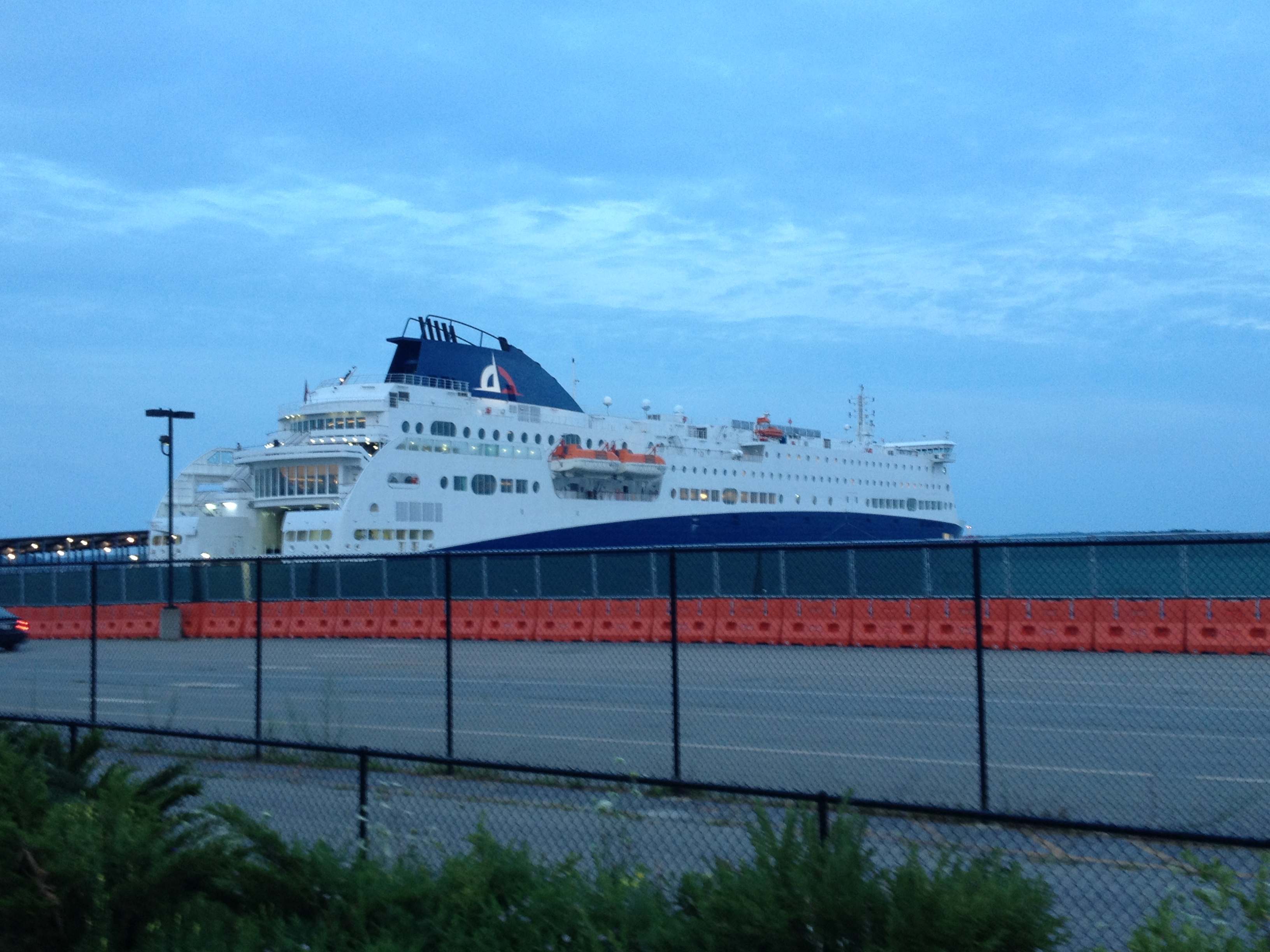
The Nova Star Ferry to Nova Scotia

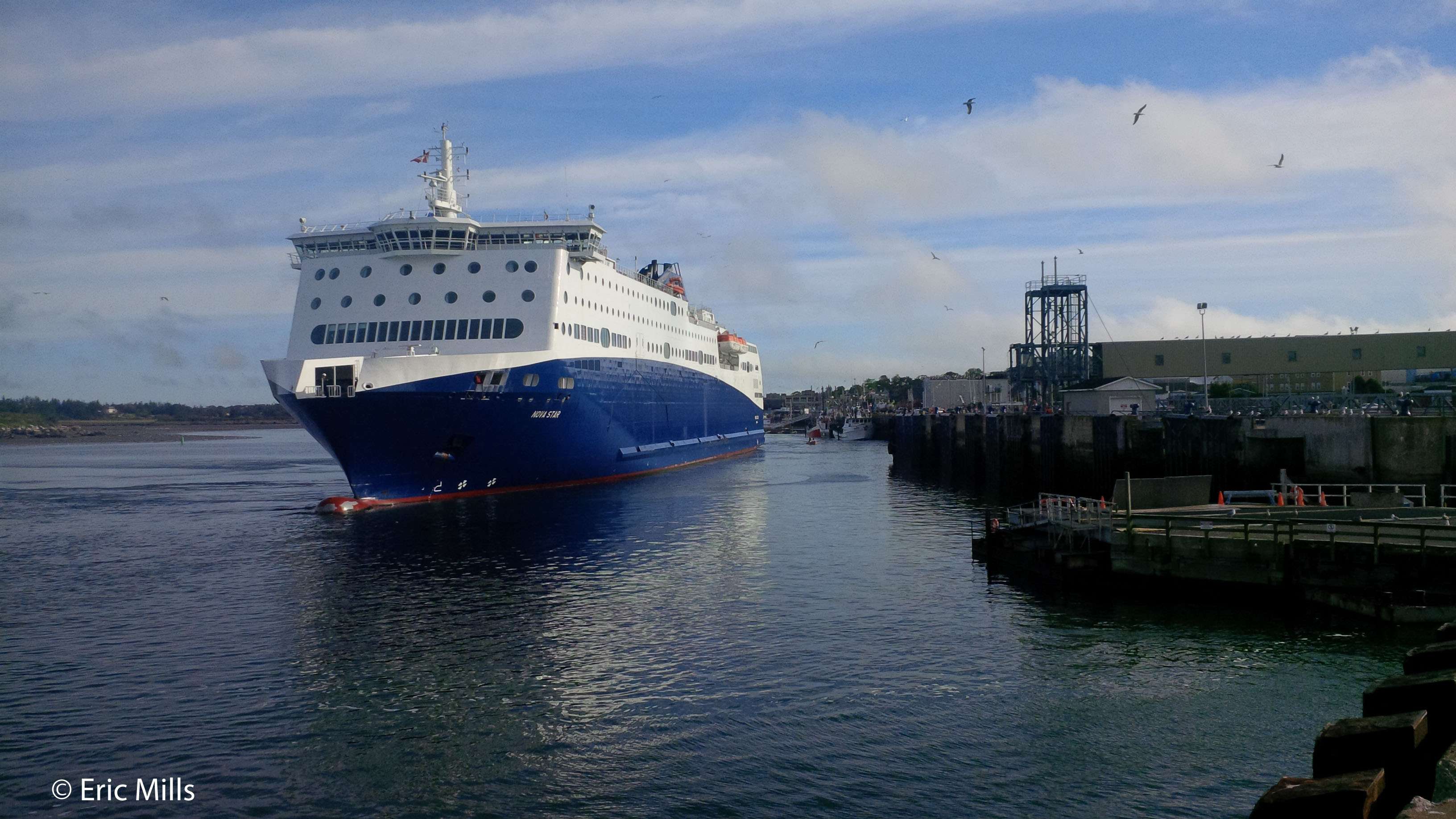
I love birding Nova Scotia, but it’s been a few years since I was last there. This year, with the rebirth of ferry service from Portland, I knew it was time; there were no more excuses.

I finally got a chance to make the voyage this week, with two primary agendas: explore the birding potential of the Nova Star (and scout for the potential of making this a new weekend tour), and visit with my friend Eric Mills for a little southern Nova Scotia birding.

Ever since we lost the Scotia Prince, I have been hoping for a bird-able boat that traverses the Gulf of Maine. The short-lived, high-speed catamaran that replaced the Scotia Prince was of little value – it had almost no outdoor space whatsoever, and it moved far too fast.  With the return of ferry service, and this time with a ship that moved at a more reasonable speed for birding, I was optimistic for a new pelagic birding platform.

I waited until August to take my trip, as the warmer late-summer waters host more pelagics now (especially birds that arrive from their sub-Antarctic breeding grounds). Furthermore, the high cost of a trip on the Nova Star would not permit me to take many journeys this year, unfortunately (and will clearly be the biggest hurdle in running a tour that utilizes this boat), so I had to choose my dates wisely.
IMG_4084

Boarding at 8pm on Tuesday night for the 9pm departure, I settled into my spartan, but plenty comfortable, bunk.
IMG_4085

Next, I walked every corner of the boat in search of the best location for my birding. There’s no access to the top deck, the bow, or anywhere close to it on the sides. The only forward-view was the piano bar with occupied tables, and less than a desirable view to the sides. Really, the only places to view are outside decks on the stern. Not expecting a big ol’ cruise ship to attract many following birds, I was concerned about the birding potential. Quite concerned (especially at this price).

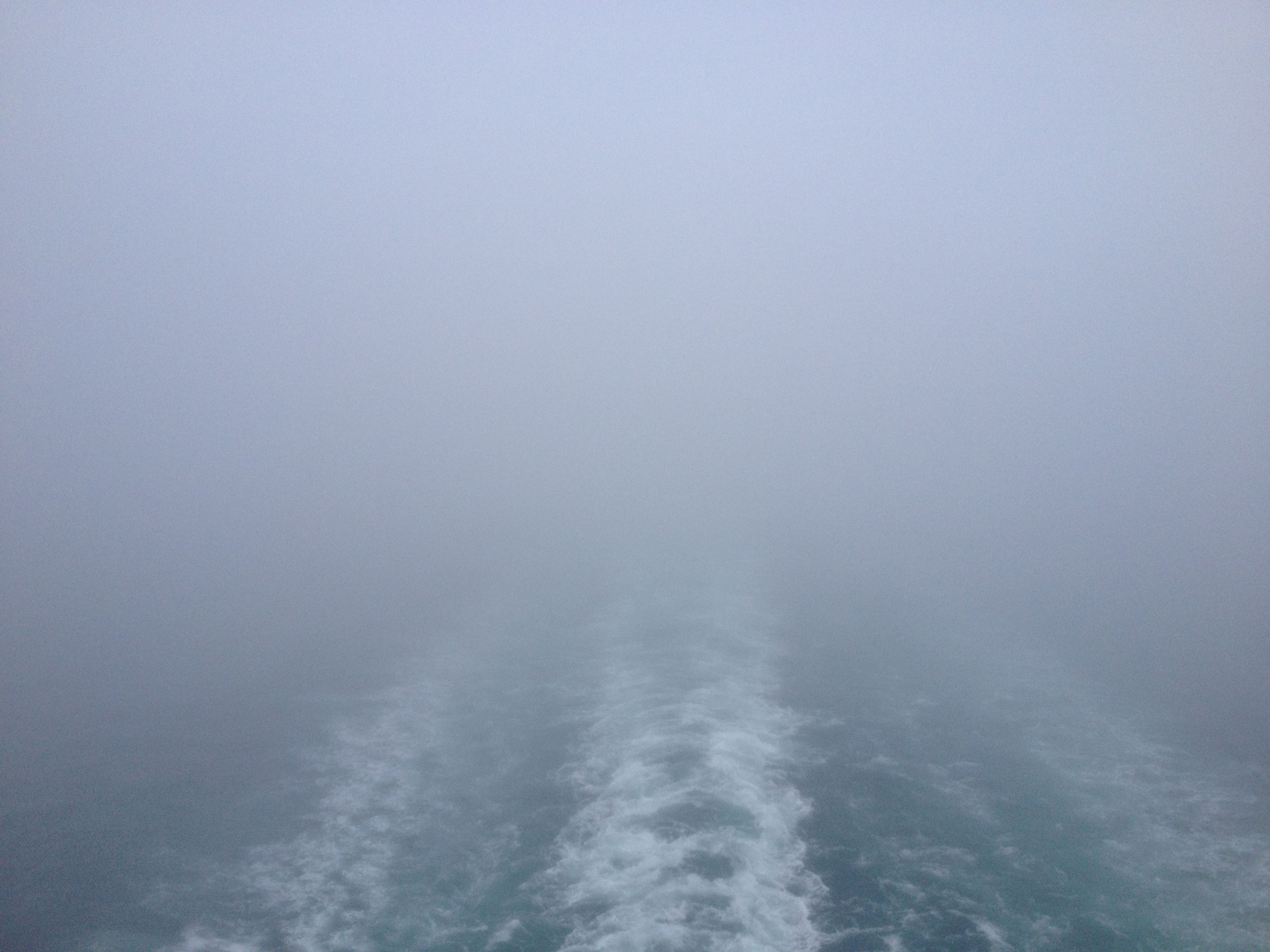
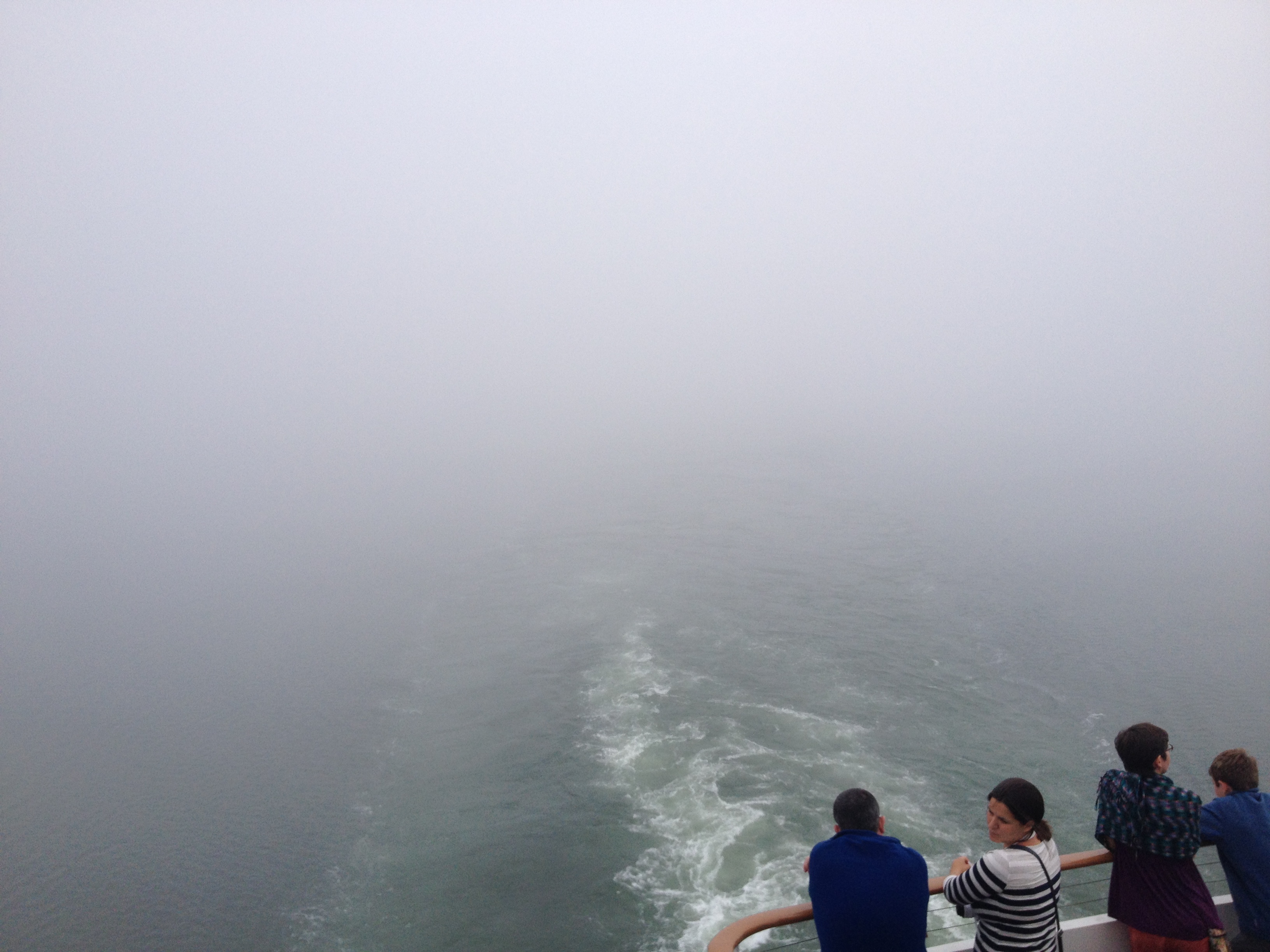
Come morning, the viewing locations were the least of my concerns, however. We were socked in with fog, too thick to see a thing.
IMG_4089

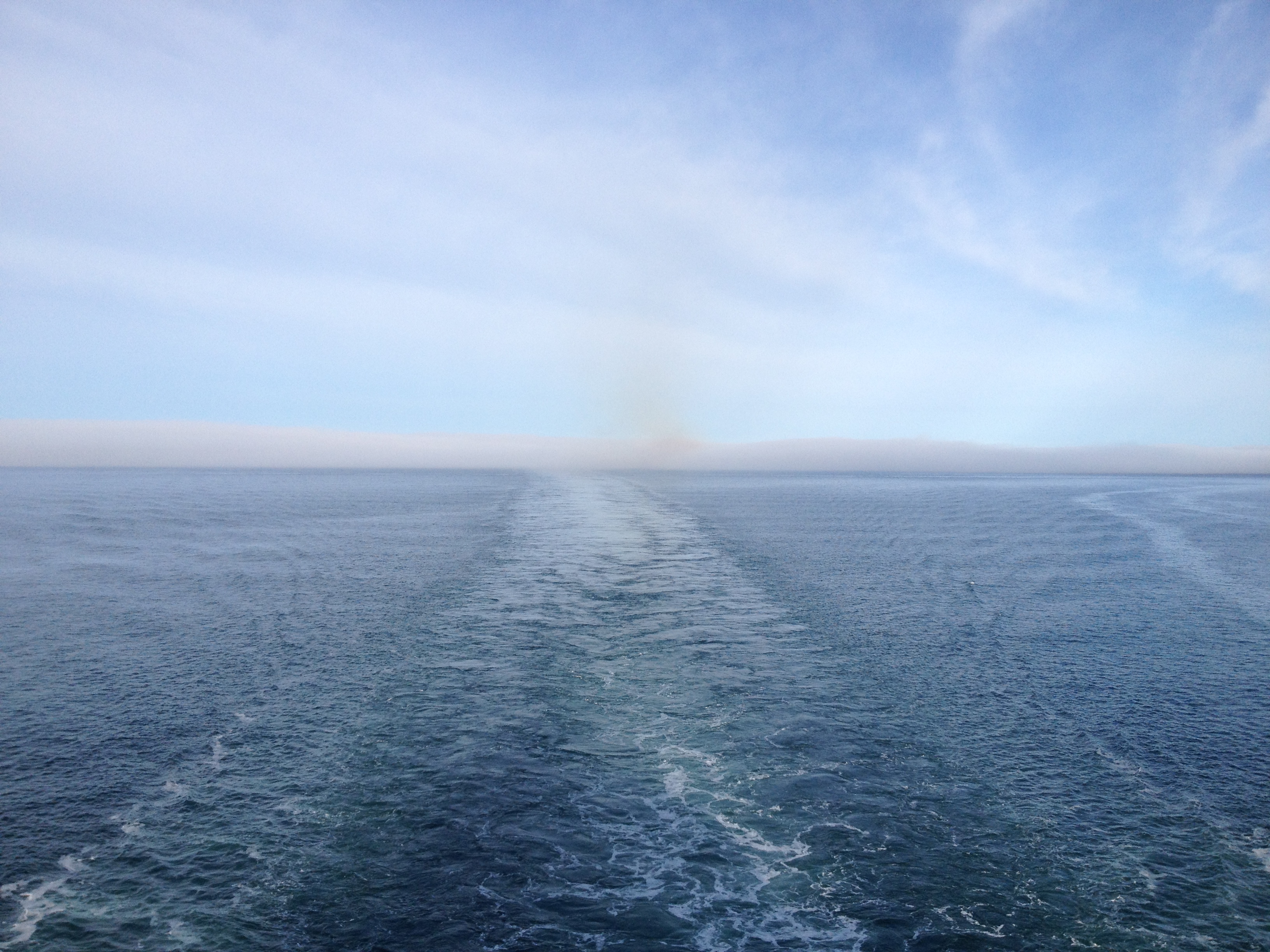
It wasn’t until we were about to enter Yarmouth Harbor that we finally exited the fog, but other than a single Northern Gannet, there would not be any seabirds for me this morning.
IMG_4090

IMG_4096

Entering the harbor, however, the sun was shining, gulls were busy with newly-arrived Herring trawlers, and the mudflats were lined with shorebirds.
Harbor1_edited-1

Harbor2_edited-2

IMG_4098

After disembarking (and I must say, having the relatively few walk-ons wait until every car had offloaded was just stupid; I get why we couldn’t walk down the deck with traffic, but had we been allowed to go first, we all would have been clearing customs before the first cars were being offloaded, but I digress), I met Eric, who I had not seen in four years; it had been way too long.  After the usually greetings and pleasantries, we of course immediately began birding.

The first order of business was Yarmouth Harbor, where I was evaluating the birding potential of a vehicle-free tour. Good shorebird habitat, with decent numbers of Black-bellied Plovers and Short-billed Dowitchers were close by, and we encountered perhaps the last two Laughing Gulls (rare but regular in Nova Scotia) from the fall-out of this species that was caused by Tropical Storm Arthur – the first addition to my Canada list on the trip. A couple of thickets and small parks hold potential for migrant landbirds.
IMG_4106

Moving on, we drove up and down the Yarmouth Bar (Nelson’s Sparrow, Peregrine Falcon, more shorebirds) and north to Mavillette Beach Provincial Park (more Nelson’s Sparrows). After dipping on two Black Skimmers that had also been lingering post-Arthur, we met up with local birder Ronnie D’Entremont for a shorebird survey at Cook’s Beach on Pinkney’s Point. Well, the survey was easy! All of the birds were jam-packed into one gravel spit due to very high tides. The estimation, however, was not easy, but we came up with about 1500 Semipalmated Plovers (a very impressive count), joined by about 750 Semipalmated Sandpipers, 100 Least Sandpipers, 51 Short-billed Dowitchers, 20 White-rumped Sandpipers, 17 Black-bellied Plovers, 2 Killdeer, and 1 Ruddy Turnstone.
DSC_0001_SEPL_group1_edited-1

What was particularly cool about the roosting Semipalmated Plovers was that once we rotated to the side of them, we saw how carefully lined up they were in little, linear depressions in the cobble beach.
DSC_0008_SEPL_row1_edited-1

One last check of Yarmouth Harbor – OK, there are three lingering Laughing Gulls, apparently – and then it was beer o’clock and dinner time at Rudder’s brewpub.

On Thursday, the birding hotspot (to say the least) of Cape (Sable) Island was our destination, and it surpassed all expectations!  Jeannette and I birded here in late September during our first visit to the province beyond Yarmouth 8 years ago, but here in August shorebird season. it was in its full glory.  First, we twitched a vagrant American Avocet that had been present for about a week, finding it within seconds of pulling over.
DSC_0015_AMAV_edited

While we missed peak shorebird density at Hawk Point by perhaps as much as an hour, one of the 4 pairs of American Oystercatchers in the entire province were visible, as were plenty of shorebirds, with a combined guesstimate of several thousand Short-billed Dowitchers, Black-bellied Plovers, Semipalmated Sandpipers and Plovers, with smaller numbers of Lesser and Greater Yellowlegs, Least and White-rumped Sandpipers, along with handfuls of Ruddy Turnstones, “Eastern” Willets, and Sanderlings. Only one Whimbrel, however, and no Hudsonian Godwits.  I was still impressed – especially if we had missed the peak – and thoroughly enjoyed the waves of shorebirds streaming overhead and out of the bays, heading towards their high-tide roosts on the sandy barrier island of Cape Sable.

Next up was South Side Beach at Daniel’s Head. Wow. Simply, wow. We knew there was a Buff-breasted Sandpiper here, and we knew a lot of shorebirds roost here at high tide, but we definitely did not know there would be this many birds!  The narrow strip of sand was coated with shorebirds – the best Eric has ever seen here, and we estimated around 10,000 total birds!  Semipalmated Sandpipers, Sanderlings, Least Sandpipers, and Semipalmated Plovers led the way, followed by goodly numbers of White-rumped Sandpipers, 3 Black-bellied Plovers, 2 “Eastern” Willets, and 1 Short-billed Dowitcher.
IMG_4112

IMG_4113_Shore_Shore_Beach

DSC_0030__South_Shore_Beach2_edited-1

DSC_0022_South_Shore_Beach1_edited-1

Oh yeah, the Buff-breasted Sandpiper was there, too.
DSC_0038_BBSA1_edited-1DSC_0081_BBSA-flight_edited-1

After lunch, we picked up another staked-out rarity in a juvenile Yellow-crowned Night-Heron, as my Canada list grew nicely. Back at South Shore Beach, we found very few shorebirds – another birder saw two harriers flush them out, so Eric and I considered ourselves incredibly lucky to have hit the beach at prime time. While we were there chatting, small numbers of bird began to return as the tide just barely began to recede.

The weather forecast for the day had been a concern, leading us to expect rain on and off throughout the day. But we lucked out, as the rain stayed away until around 2pm, at which time we were already working our way back to Yarmouth, with a detour to Lower West Pubnico.

My short trip was coming to an end on Friday morning, but the most important part – professionally anyway – was about to begin. Eric and I said our goodbyes (after a quick check of the harbor once more), promising it won’t be nearly as long this time until we see each other again, and I boarded my vessel for the return trip.  Unfortunately, the view in the harbor, and for quite some distance offshore, looked familiar.
IMG_4116

We departed at 10:00am ADT with nearly zero visibility.  A small hole in the fog just outside the harbor presented a Red Bat that circled the boat a few times before moving on.  It wasn’t for an hour and a half that the fog lifted enough to see much else, and a short-lived hole produced several Great Shearwaters and Northern Gannets: a frustrating tease as the fog closed back in.

We were in and out of dense fog for the next two hours, but whenever there was visibility, I was on deck, scanning the gentle (today!) seas. Great Shearwaters, Northern Gannets, a few Wilson’s Storm-Petrels, and two Atlantic Puffins were welcome, and then several Leach’s Storm-Petrels. I could only help but wonder what was out there as thick fog once again swallowed the boat, and I set off to find some lunch (the buffet was not very good, especially for a hefty $17…it felt like a mediocre college dining hall; breakfast was only marginally better).  Sitting at the window, doing my best to get the most out of my dollar, the fog started to clear, and views of Leach’s Storm-Petrels sent me scrambling for the deck at 1:10 EDT. I sat down again at 6:25 EDT.

When the fog cleared, the winds were light and the seas were fairly calm, and birds were everywhere. As it turned out, my scouting of birding locations worked out – the corners of Deck 9 provided a decent view from about 2:00 (using the bow of the boat as 12:00) on out. I couldn’t see what was crossing the bow, but I could pick birds up before and after. And, the height of boat gave me great visibility to see well away on either sides, where I spotted most of the action.
IMG_4117

Nonetheless, I would not have guessed that the birding would have been this good!  Shrouded in fog, I was beginning to think my money had been wasted. By the time we arrived in Portland, I was thinking about how I could bring a group aboard and when I could afford to take the trip again (a rather large hurdle, especially for a tour).

I swept all of the expected tubenoses (4 shearwaters and 2 storm-petrels), with the count of Leach’s Storm-Petrels most impressive. While most phalaropes were too far to ID, there were plenty of Red Phalaropes to be seen. Four Fin Whales, 9 Mola Mola (including a patch of five in close proximity), a pod of wake-riding Atlantic White-sided Dolphins, and a breaching Blue Shark were among the non-avian highlights.  At nearly the mid-point of the crossing, well south of Mt. Desert Island, a wayward Yellow Warbler came aboard.

When all was said and done, I had one of the better pelagic birding trips that I’ve had in Maine (list not including near-shore stuff on either end, plus Herring and Great Black-backed Gulls of course):
173 Great Shearwaters
167 Wilson’s Storm-Petrels
131 Northern Gannets
105 unidentified phalaropes
55 (!!!) Leach’s Storm-Petrels
10 unidentified storm-petrels
10 Laughing Gulls
7 unidentified terns
3 Cory’s Shearwaters
2 Sooty Shearwaters
2 unidentified jaegers
2 Atlantic Puffins
2 unidentified passerines
1 Manx Shearwater
1 Common Tern
1 Ruddy Turnstone
1 Yellow Warbler

While the height of boat preclude great photography opportunities, I did alright with “documentation” shots of Leach’s Storm-Petrels as they flew around, bounded like sea-worthy nighthawks.
DSC_0126_LESP1

DSC_0098_LESP2

Great Shearwaters, however, were a little more cooperative.
DSC_0148_GRSH1

Passing south of Matinicus Rock…

DSC_0136_Matinicus_Rock
DSC_0142_big_ass_schooner

…and Monhegan Island!
DSC_0163_Monhegan

So while the birding situation is not optimal, clearly the boat passes through some productive waters. I’m sure not every trip will hit this much activity (‘tis the nature of pelagic birding), but at least my concerns about the feasibility of birding (at least for a small group) from the Nova Star are alleviated. Fog and inclement weather will always be a concern; this is the Gulf of Maine after all.  As for a future weekend tour, I have a plan in mind. Let me give this some thought (and make some calls). But at the very least, suffice to say that birders traveling to and from Nova Scotia, or those just looking for a ride to sea, have another option now, albeit an exceptionally expensive one.

Birding By Schooner 2014!

There are no promises when you lead birding trips by sailboats, but the 2014 Birding By Schooner Aboard the Lewis R. French Tour once again delivered!  This is a very unique trip – not just unique in terms of the tours I lead, but unique for Maine, and as far as we know, everywhere else.

While last week found us plagued by beautiful weather – yup, plagued, we need wind! – great birding, great food, and good company were thoroughly enjoyed.  While our total trip list of 78 species of birds (plus 5 mammals: Harbor Porpoise, Harbor Seal, Gray Seal, Minke Whale, Red Squirrel, one amphibian: Red-backed Salamander, several dragonflies, and 6 species of butterflies) was below our average, we had a few real treats…one in particular.

The wind direction and intensity (or, as in this week, lack there of) dictates where we can and cannot go over the course of our 6 days at sea. Luckily, the first day found conditions acceptable for heading to our number one goal: Seal Island.  Departing Camden Harbor, we set sail directly to this remote seabird island.

IMG_2142_Heading to Seal, 8-4-14_edited-1

Perhaps our only true “schedule” of the week, our goal was to arrive at a very specific time, for a very specific bird. Captain Garth Wells adeptly navigated our way to arrive about 10 minutes before show time.

“Troppy,” the famous Red-billed Tropicbird that has called Seal Island and vicinity its home for the past 10 summers arrived right on queue. I first spotted it flying around the island in the distance.

DSC_0026_Troppy8,8-4-14_edited-1

Then, he made a sharp turn towards us…

DSC_0036_Tropp3,8-4-14_edited-1

…and proceeded to circle our boat several times at an increasingly close proximity…

DSC_0038_Troppy1,8-4-14_edited-1 - Copy

…Before turning away and heading back to the island, often escorted by Arctic Terns.

DSC_0042_Troppy6,8-4-14_edited-1DSC_0053_Troppy10,8-4-14_edited-1

Oh yeah, there were several hundred Atlantic Puffins in the water too, and later, as we hosted the Seal Island biologist crew aboard for dinner and conversation, a Parasitic Jaeger.

IMG_2146_dinner_with_biologists,8-4-14

As the sun set, fog rolled in, and by 10:30, we began to hear the cackles and chatters of Leach’s Storm-Petrels as they commuted to and from the island in the cover of darkness. Several of us awoke in the middle of the night to listen, and we were rewarded with a constant cacophony of this intriguing, and a bit disconcerting, sound. Since we have the luxury of anchoring off of Seal – weather permitting of course – we not only have a great success rate with Troppy, but we also have the rare opportunity to listen to the nocturnal chorus of this pelagic specialty.

Come sunrise…

Seal Island Sunrise,8-5-14

…we enjoyed countless puffins, Black Guillemots, and Arctic Terns, along with at least a dozen Great Cormorants from the local breeding colony, a couple of re-orienting migrant Yellow Warblers at dawn, and several singing Song and Savannah Sparrows.  Surprisingly, we tallied 9 species of shorebirds (plus Sanderling the day before): the locally-breeding Spotted Sandpipers, but also 40+ Semipalmated Sandpipers (plus another 50 unidentified peeps), 9 Ruddy Turnstones, 9 Short-billed Dowitchers,  3 Black-bellied Plovers, 3 Semipalmated Plovers, 3 Lesser Yellowlegs, 2 Least Sandpipers, and my first White-rumped Sandpiper of the fall (and a pretty good bird out here).  A single Red-winged Blackbird dropped in from high above, and we spotted another Parasitic Jaeger.

Shorebirds – a continued theme throughout the trip – were one of the benefits of conducting this tour two weeks later than usual. We also had high hopes for pelagic shearwaters, but our doldrums had set in. Little wind was present as we traveled from Seal to Matinicus Island, and therefore any shearwaters in the vicinity were likely sitting tight, conserving their energy. Two unidentified jaegers, 5 Red Phalaropes, and 28 Wilson’s Storm-Petrels, along with several more Atlantic Puffins and a few Northern Gannets kept our interest however.

Arriving at Matinicus Rock…

IMG_2158_Matinicus_Rock,8-5-14

…we saw plenty of puffins and more Arctic and Common Terns, but our late departure date cost us: Common Murres and Razorbills were nowhere to be found (don’t worry; we resume our usual third week of July itinerary next year!). But, we did have a treat with a single cooperative Manx Shearwater!

As we made a pass around Matinicus Rock, it was time to read the winds (or once again, the lack there of) and make a choice. We had hoped to turn towards Monhegan Island for birds (and the brewery!), but that would have been a very long, perhaps even uncomfortable slog. So instead, we turned inland, and set a course of Port Clyde.

We traveled through some relatively deep and open waters, but shearwaters were nowhere to be found. Another Parasitic Jaeger, 100+ Wilson’s Storm-Petrels, 21 Northern Gannets, 4 migrant Short-billed Dowitchers, a Minke Whale, and two Mola Molas were enjoyed, as were the numerous Harbor Porpoise that were constant companions throughout the tour, easily seen in the often glass-calm waters.

Rounding Metinic Green and passed Marshall Point Light, we dropped anchor in the quintessential mid-coast harbor of Port Clyde.  In the morning, we hopped ashore, and took a bird/plant/sightseeing walk to the lighthouse, slowly but steadily building our trip list. A Broad-winged Hawk being mobbed by a half-dozen or so American Robins was the avian highlight.

IMG_4065_edited-1

Once again, our goal was Monhegan, but once again, barely a puff of breeze was available. Even if we pushed our way out there with our yawl boat, we would have had a hard time making it back the next day – no wind was forecasted, and we only carry so much fuel!  We also have to plan one step in advance, and set ourselves up for where we needed to be the next day. Mutiny was considered, but the difficult decision to turn east was made.

Heading towards North Haven, another 16 Wilson’s Storm-Petrels were added to the tally, but our chumming attempt in these inshore waters was expectedly futile (but we had to try as we had picked up bait in the morning.  Unfortunately, the deepest water that we were to pass through was traversed in the middle of a rather heavy thunderstorm, which we were not able to outrun sailing at a mere 3 knots (well, until the storm itself was upon us!).

IMG_2169_first t-storm,8-6-14

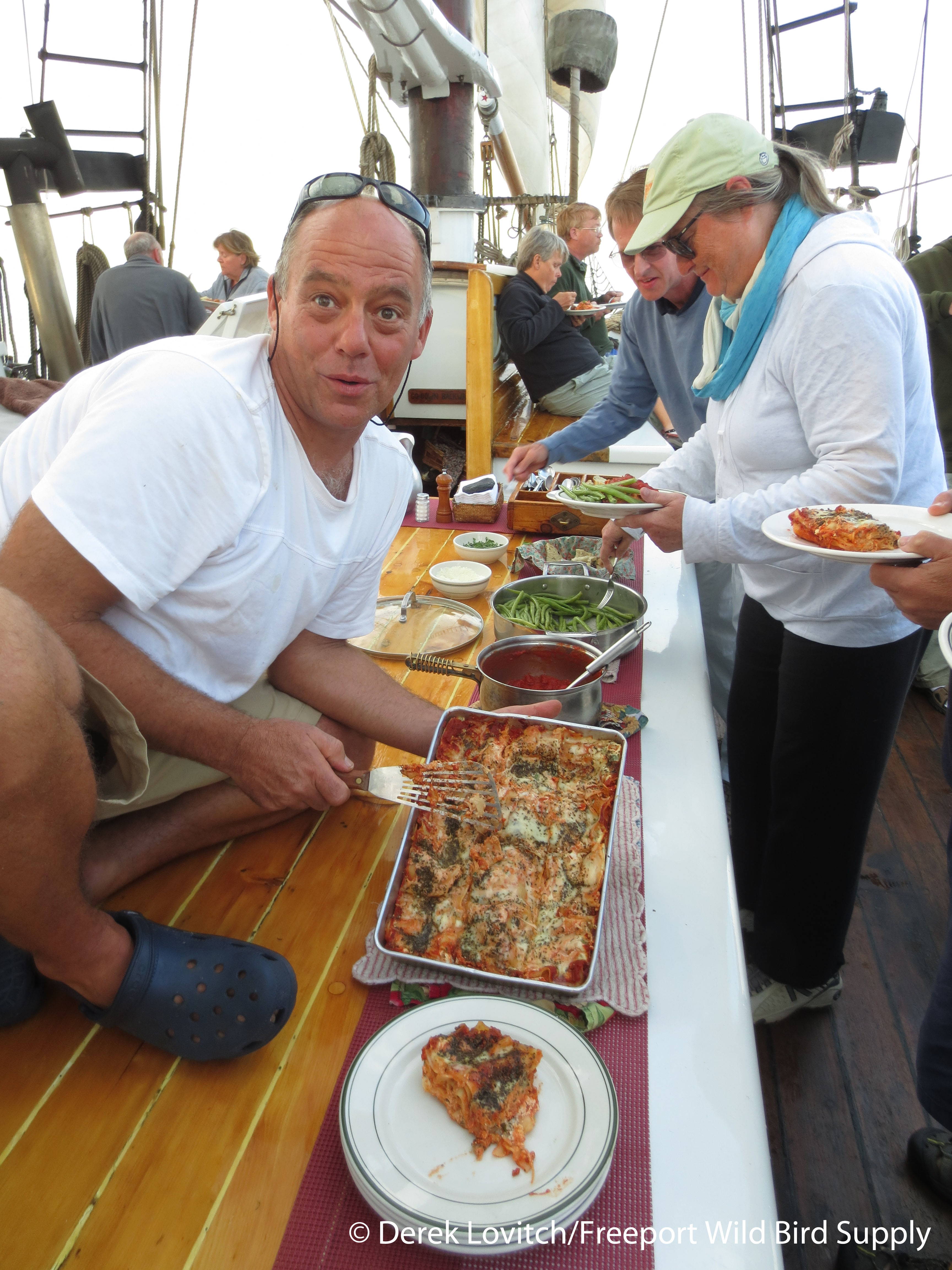
We entered the Fox Island Thoroughfare and dropped anchor in a little bay off of Amesbury Point on North Haven Island. Another delectable dinner was then served by Chef Scott – who is not your average schooner cook!

IMG_2177_lasagne,8-6-14

The storm clouds cleared by dusk…

IMG_2180_Fox_Island_Thorofare,8-6-14

…and we heard several shorebirds calling from up the bay, and two Snowy Egrets passed by overhead.  Therefore, we decided to mix things up a little with a pre-breakfast row to check things out.

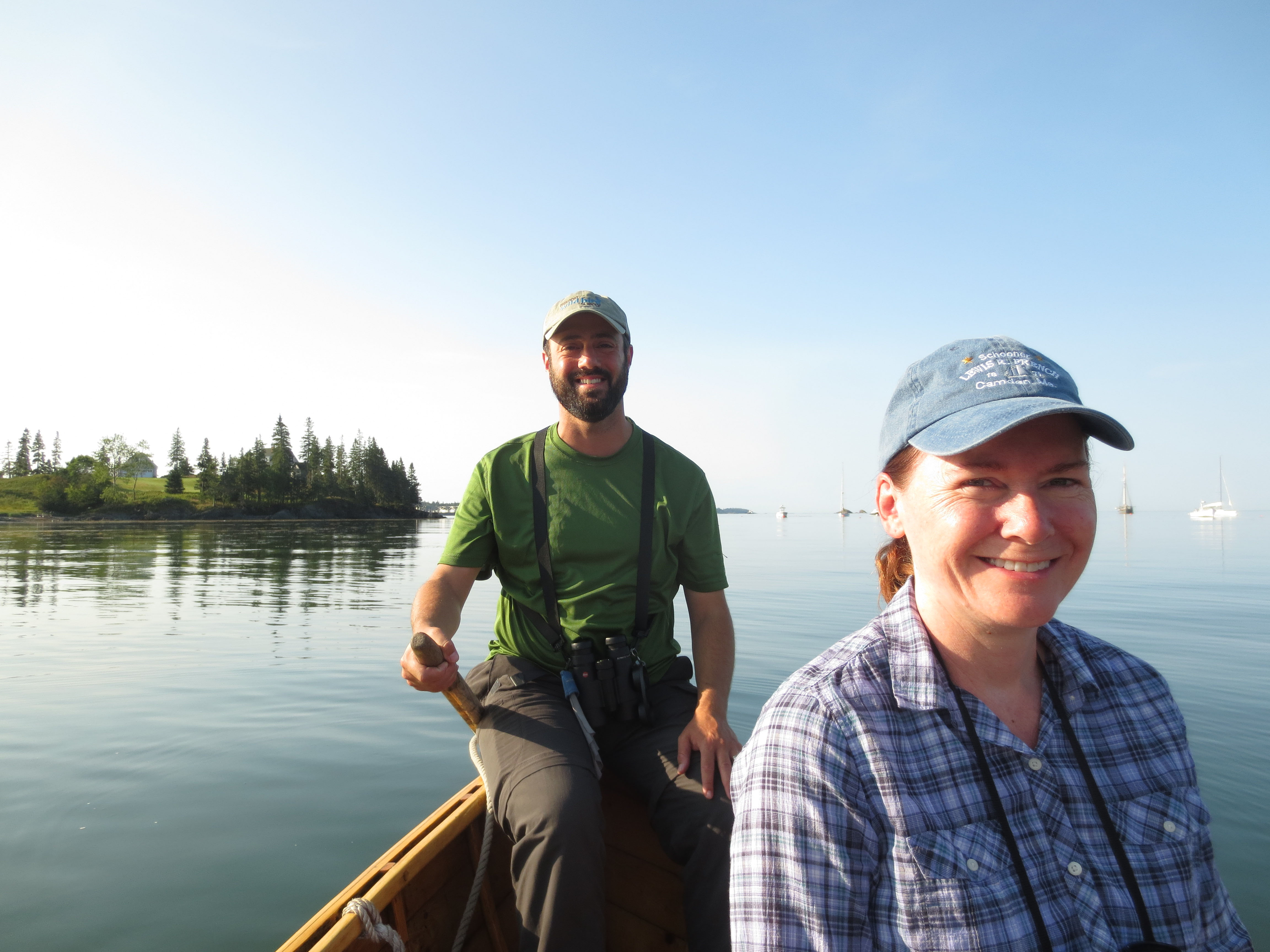
IMG_2183_morning_row,8-7-14_edited-1

I took the helm, and somehow guided us successfully to and from the boat.

IMG_2185_me_at_helm,8-7-14

I was just happy to not run into anything, but a nice mix of shorebirds included 8 Least and 2 Semipalmated Sandpipers, 2 Spotted Sandpipers, and one each of Killdeer and Greater Yellowlegs.

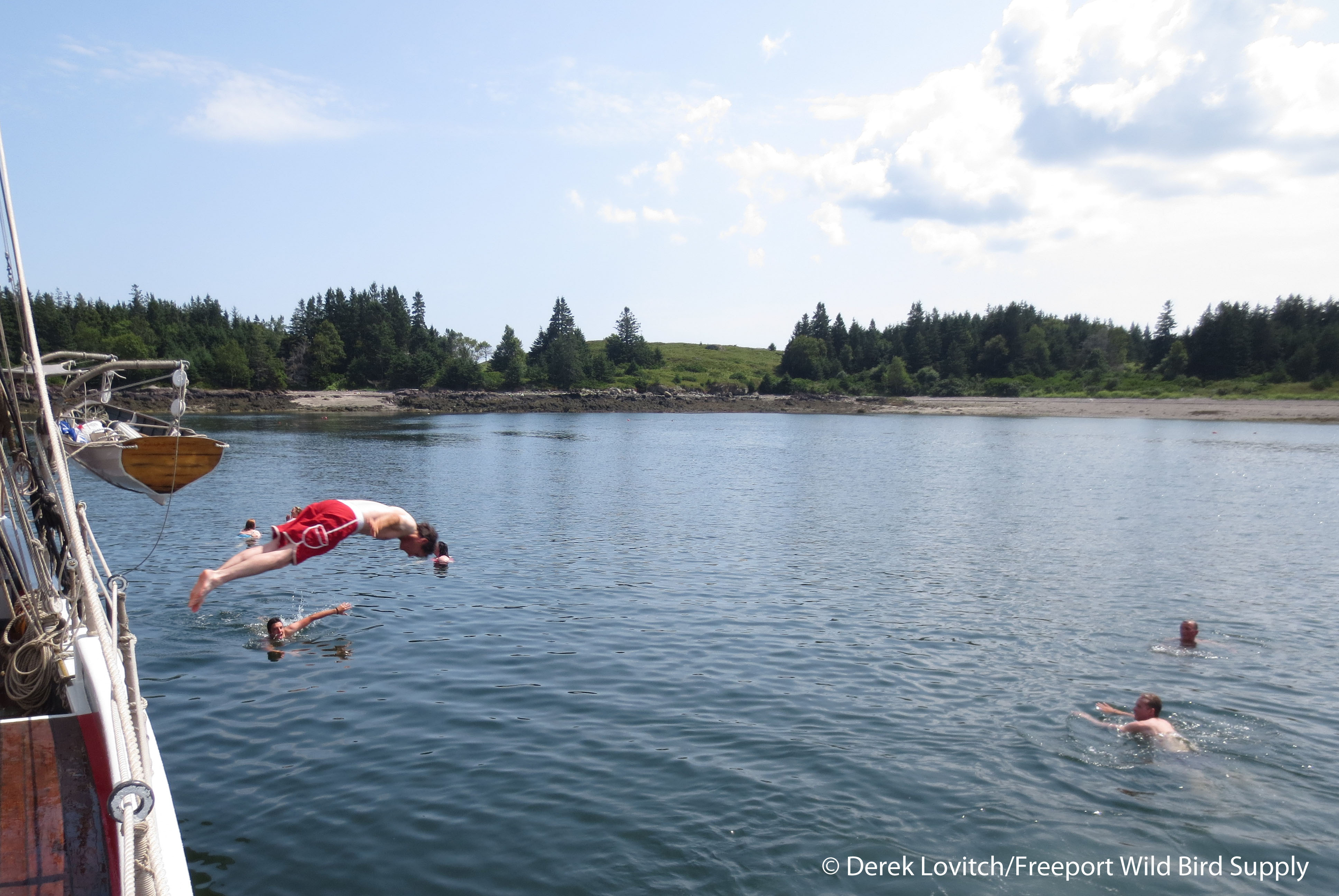
A short sail (again, little wind) through the Thoroughfare yielded the first Bonaparte’s Gulls of the trip, some Common Loons, and plentiful Ospreys.  Dropping anchor off of the Calderwood Island Preserve, much of the boat hit the water, including our Captain.

IMG_2198_Captain_Overboard,8-7-14

Then, it was time to row ashore for one of everyone’s trip highlights: the lobster bake!  While things got cooking, I led a walk around the preserve, adding a few landbirds to the list. Song Sparrows and Common Yellowthroats were especially conspicuous, but I couldn’t help but wonder what migrants the extensive raspberry-gooseberry-juniper thickets that covered much of the island would hold…and rarities?

IMG_2199_Calderwood_Island_Preserve,8-7-14

Storm clouds built up once again…

IMG_2201_Calderwood_Island,8-7-14

…But the lobster bake went off without a hitch…

IMG_2207_Calderwood_Island_2,8-7-14

…perhaps with the exception of Nihls, who bit off a little more than he could chew.

IMG_2209_Calderwood_Island3,8-7-14

Returning to the boat, we adjusted our position for the night, and scoped a small rocky islet that as the tide rolled in, amassed 64 Bonaparte’s Gulls and several families of Common Terns – adults were commuting to and from the island with fish for their hungry fledglings.

IMG_2213_off_Calderwood_Island,8-8-14

It was clear and calm once again at sunrise (we joined the Mary Day at anchorage last night), but a Winter Wren serenaded us from the island. We rounded the southeast corner of North Haven Island, and headed for Islesboro.

The waters of Penobscot Bay are not overly birdy at this time of year – other than plentiful Black Guillemots, Ospreys, Bald Eagles, gulls (mostly Herring and Great Black-backed with smaller numbers of Laughing, Bonaparte’s, and scattered Ring-billed), Common Eiders, scattered Common Loons, Double-crested Cormorants, and so on. But as we passed various little islands, our triplist slowly grew with the likes of a migrant group of Tree Swallows, a single Barn Swallow, a hunting American Kestrel, and plenty of Harbor Seals. Ruddy Turnstones were also scattered about.

But once again, the day’s calm conditions gave way to building thunderstorms…

IMG_2217_off_North Haven,8-8-14

…but we managed to make it to the shelter of Gilkey Harbor off Islesboro before things got too hairy today.

IMG_2220_Gilkey Harbor,8-8-14

And as it had for the last three days, the storms cleared for lovely sunsets…

IMG_2224_Gilkey Harbor2,8-8-14

…more delectable food, and evening entertainment from the crew.

IMG_2230_crew_jamming,8-8-14

Several flight calls early in the night overhead suggested that the front had finally cleared, and fall migrants were once again on the move.

IMG_4078_edited-1

Another lovely morning greeted us on our final day aboard the French, but not before we raced ashore for one last birdwalk. This time, we checked out Warren Island State Park.

We added several species to our list in one single Paper Birch just off the pier (Brown Creeper, Northern Parula, Yellow-rumped Warbler, and Black-and-white Warbler) while a delightfully birdy stroll added Hermit Thrush and Gray Catbird, plus great views of a variety of other species as we also spent time looking at plants and discussing the ecology of the Maine islands once again (and ranting about invasive plants).

But alas, all good Birding By Schooner tours must come to an end, so sails were set and we headed for home.

IMG_2235_Zack_aloft,8-9-14

IMG_2237_Camden,8-9-14

Turkey Vultures over the Camden Hills and Chimney Swifts over the harbor were our final 77th and 78th species of the journey and we pulled into the dock. Goodbyes were said, belongings were gathered, and Captain Garth and I immediately began to plot for next year’s trip.

A special thanks go to Jenny and Garth Wells, and the crew of the Schooner Lewis R. French for making this special trip a reality, and as always, making it a resounding success.  I hope you will consider joining us next year.  For more information, check out The “Tours, Events, Workshops, and Programs” page of our website, or visit the the Lewis R. French

Here’s our birdlist of 79 species from this year’s tour, listed in order of appearance:
Mallard
Canada Goose
House Sparrow
Herring Gull
American Crow
Rock Pigeon
Song Sparrow
Cedar Waxwing
Ruby-throated Hummingbird
Osprey
Great Blue Heron
Black Guillemot
Double-crested Cormorant
Common Eider
Ring-billed Gull
Laughing Gull
Great Black-backed Gull
Northern Gannet
Wilson’s Storm-Petrel
Atlantic Puffin
Arctic Tern
Common Tern
RED-BILLED TROPICBIRD
Savannah Sparrow
GREAT CORMORANT
Spotted Sandpiper
Ruddy Turnstone
Short-billed Dowitcher
Sanderling
Semipalmated Sandpiper
Semipalmated Plover
PARASITIC JAEGER
LEACH’S STORM-PETREL
Yellow Warbler
Black-bellied Plover
White-rumped Sandpiper
Lesser Yellowlegs
Red-winged Blackbird
RED PHALAROPE
MANX SHEARWATER
American Goldfinch
Bald Eagle
Mourning Dove
American Black Duck
Blue Jay
European Starling
Black-capped Chickadee
Common Yellowthroat
Gray Catbird
American Robin
Chipping Sparrow
Hairy Woodpecker
Black-throated Green Warbler
Broad-winged Hawk
Downy Woodpecker
Northern Cardinal
Dark-eyed Junco
White-throated Sparrow
Greater Yellowlegs
House Finch
Killdeer
Snowy Egret
Swainson’s Thrush
Northern Flicker
Red-breasted Nuthatch
Bonaparte’s Gull
Golden-crowned Kinglet
Winter Wren
American Kestrel
Tree Swallow
Barn Swallow
Brown Creeper
Northern Parula
Yellow-rumped Warbler
Black-and-white Warbler
Hermit Thrush
Gray Catbird
Turkey Vulture
Chimney Swift

“Chebeague Birds” – quite possibly the greatest thing on the internet, ever.

After a friend posted this to Facebook yesterday, I have been sharing it all over the place. It is just so well done, so adorable, and quite educational. So, as I head offshore next week for my annual “Birding by Schooner” tour aboard the Lewis R. French, I leave you with this awesome video that simply needs to go viral. Enjoy.

“Chebeague Island School – Mrs Hoidal’s Kindergarten – 2nd Grade students made a movie about the birds they studied the last month. They have had so much fun and have learned so much and today shared with their parents this video and the birds and nests they made along with their research for the movie.”

https://www.youtube.com/watch?v=tMjdNAnH0zQ&feature=youtu.be

Not Seeing a Tufted Puffin at Machias Seal Island…but not really caring!

I don’t chase birds too often. But every now and then, I do get the urge. When a Tufted Puffin was spotted on Machias Seal Island, off of Cutler, on June 17th, I knew that this was one that I was going to chase: it’s one of my favorite birds in the world, and this was only the 3rd of 4th record for the entire Atlantic Ocean.

Since then, it has been seen only sporadically; nothing consistent. It can go a week between observations. Machias Seal is not exactly convenient for a quick check. The Bold Coast Charter Company – now the only access in Maine to the island – is booked solid this time of year. We had to charter. I needed enough people to not spend a fortune. The weather had to cooperate. I went to Colorado. So yeah, this was going to be a challenge.

But Captain Andy Patterson was game, so I put thing together. After the first two attempts were called off due to weather (including the passage of Tropical Storm Arthur), 14 of us joined Andy on Sunday afternoon.  And conditions were glorious.

I have never seen it so glass-calm out here! The lighting was great, and there were boatloads of birds on the water. We spent over three hours around the island, slowly cruising through and around rafts of loafing alcids. We scanned each and every rock of the island, twice. We checked out every bird commuting to and from the island.

In the end, I believe that we looked at every single Atlantic Puffin, Common Murre, and Razorbill at least three times. Not that the Tufted was a challenging ID, but everyone was being extra careful. But alas, finally we had to throw in the towel and motor back to Cutler.

Rarely have I seen so many smiles on a “dip” (when you miss a bird you are “chasing.”). But of all of the chases I have been on, few could compare to the enjoyment of a gentle boat ride in calm seas out to a remote offshore island with thousands upon thousands of breeding seabirds. So yeah, there are worse places to have not been seeing a specific rare bird. In fact, if all chases were like this, I might chase more.

DSC_0003_deer_on_Little_River_Island,Cutler,7-20-14

Everyone on Little River Island paused to take a look at us, too.

IMG_3970MSI_TUPU_chasing1,7-20-14

DSC_0010_NOGA,MSI,7-20-14

Northern Gannet on Gull Rock, a recent occurrence.

DSC_0012_Harbor_Seals1,MSI,7-20-14_edited-1

Harbor Seals.

DSC_0013_Harbor_Seals2,MSI,7-20-14_edited-1

DSC_0014_COMU_taking_flight,MSI,7-20-14_editedC

Common Murre departing.

DSC_0015_ATPU_and_RAZO,MSI,7-20-14_edited-1

Like I was saying, there were a lot of birds on the water!

DSC_0017_ATPU_with_fish,MSI,7-20-14_edited-1

DSC_0024_COMU,MSI,7-20-14_edited-1

DSC_0029_1st_summer_ATPU,MSI,7-20-14_edited-1

1st-summer Atlantic Puffin.

IMG_3969_MSI_TUPU_chase2,7-20-14


Colorado!

It’s been 18 years since I have been to Colorado, and over 10 years as part of Jeannette’s family. Yet I had not made the pilgrimage to her aunt and uncle’s ranch in Ridgway. In other words, I was overdue for a trip to this wonderful, and bird-wise, exceptionally diverse state.

We arrived in Denver late on the 8th of July, and somewhat early the next morning began our birding at Genessee Mountain Park. It was a very birdy location, and I enjoyed a host of birds that I have not seen in a good while, including Cordilleran Flycatcher, Plumbeous Vireo, Green-tailed Towhee, Lesser Goldfinch, and so much more. Like just about everywhere we went in the state, Broad-tailed Hummingbirds were talkative: their chirpy-buzzes created by their namesake tail feathers whipping through the air. Animated Black-billed Magpies worked the picnic areas, and Western Wood-Pewees called here and there.
Genessee Park, 7-9-14_edited-1(Don’t forget to click on the images for a full-sized photo).

GTTOGreen-tailed Towhee

Reynold’s Park was next on the agenda, rapidly growing our trip list with the likes of MacGillivray’s Warblers and Townsend’s Solitaire. But as we departed for our drive out of town, I was left still not believing that Williamson’s Sapsuckers actually exist.

This was primarily a friends and family trip, but of course there would be plenty of birding involved. While there were plenty of birds we hoped to see, the primary target species was the Gunnison Sage-Grouse. An overdue candidate for the Endangered Species List, this range-restricted and declining bird was a priority for us. But we were here in mid-summer, not when the males are “booming” conspicuously on the lek in the early spring. We knew we had our work cut out for us, and didn’t truly expect to find this needle in the sagebrush haystack.
Gold Basin Road, Gunnison, 7-10-14

After over two hours of walking up and down roads along and off Gold Basin Road (just south of Gunnison) first thing in the morning, we resigned ourselves to the expected failure, but enjoyed the multitudes of Brewer’s Sparrows and Sage Thrashers. Then, about 100 yards from the car, a big, brown chicken erupts from the side of the road. Gunnison Sage-Grouse! A female, and only about 15 feet away!
GUSG1

GUSG2

GUSG3

We watched her mosey up a small hillside (did she have chicks hiding nearby?), and so we retreated to some rocks and waited. She didn’t return to the grassy road edge, so we walked around a small rocky mound to get a better look. And that’s when we flushed another one!

We really couldn’t believe our luck as we returned to the car, our mission complete and our spirits high. We also both were happy that we wouldn’t be tempted to try again on the way back to Denver at the end of the trip.

At a more relaxed state now, we birded around the Curecanti National Recreation Area, adding a nice array of waterbirds to our trip list, including a single California Gull, and unexpected over-summering hen Common Goldeneye, and about 25 Western Grebes. One pair of grebes was displaying, head bobbing and posturing to each other. Eventually, they rose to their feet and ran across the water, wings tucked in, necks bent, crests raised, and in perfect unison. I have always wanted to see Western Grebes display.
Curecanti National Rec Area, 7-10-15

Even though it was after noon, and the temperatures had risen well into the 80’s, we decided to give Grace’s Warbler – another potential lifer for me – a shot. Jeannette and had done some excellent research for the trip, and as soon as we stepped out of the car at an unassuming road junction, we heard the male singing! We walked into the open woods here and after a little pishing, the female popped out a mere 15-20 feet away! Then, the male resumed singing and continued to do so until we had fully soaked in his beauty and committed the song to memory (or, at least, attempted to).
GRWAThe cooperative female.

Antlope 

Pronghorn Antelope as we drove back to the highway!

It was hot, but Black Canyon of the Gunnison National Park was not to be missed. I for one had not known much about the place, and I was stunned by how impressive it was. Black-throated Gray Warblers worked the brush, White-throated Swifts chattered overhead, and the glorious song of the Canyon Wren echoed from the cliffs below. But it was the scenery more than stole the show here.
BTGW'

Black Canyon1,7-10-14

Black Canyon3,7-10-14

We arrived at Deedee and Peter’s Ridgway Ranch in time for dinner, and in need of a good night’s sleep. Come morning, we were greeted by Broad-tailed, Rufous, and Black-chinned Hummingbirds at the feeder, Western Meadowlarks in the fields, and Western Kingbirds around the house.
Hummers 2Black-chinned Hummingbird

Hummers 3Rufous Hummingbird

Hummers1Broad-tailed Hummingbirds

Family ranch,7-11-14 And this view!

We visited Ouray for lunch, and then hit Box Canyon Falls. How have I not heard of this place? Although I had seen Black Swifts before, I had never imagined there was a place to see them like this – there was one nest about 15 feet off of the staircase! At least three nests (out of about 12 known here) were very easily visible, and looking into these nests was a remarkable experience.
J-Mo at Box Canyon,7-11-14

BLSW

COFL - Box Canyon
Not to mention what might have been the world’s most confiding Cordilleran Flycatcher.

Birding up Camp Bird Road, we encountered lots of singing White-crowned Sparrows and Swainson’s Thrushes, a few Gray Jays, and runners taking part in a grueling ultra-marathon.
Camp Bird Road, 7-11-14

On the 12th, we got an earlier start and ventured north into Colorado National Monument. While the park itself was the primary motivation for this outing, the chance at my lifer Gray Vireo only added to the anticipation. And with two birds well seen at our first stop (the Devil’s Kitchen picnic area), we were free to take in the scenery, and enjoy the likes of Ash-throated Flycatchers, Black-throated Sparrows (a favorite of both of us), cute Juniper Titmice, and comical Gambell’s Quail. Oh, and the scenery was simply breathtaking.
Colorado_National_Monument1,7-12-14

Colorado_National_Monument2,7-12-14

Colorado_National_Monument3,7-12-14

lizard - Colorado N.M. Does anyone know what kind of lizard this is?

Making a big loop, we climbed into Grand Mesa National Forest where Jeannette caught the birding bug while working on a field biology project with Boreal Owls. Wilson’s Warblers, Lincoln Sparrows, and an Olive-sided Flycatcher were added to the triplist, but I was more interested in hearing Jeannette reminisce. No Boreal Owls, however.
Grand Mesa,7-12-14

Half-way through our trip on Sunday the 13th, we were content with our birding successes (well, expect Williamson’s Sapsucker, but that doesn’t exist) so we planned a relaxing day in Telluride. Or so we thought.

We went out for a big breakfast before heading southwest, steadily climbing into the mountains. A hike to work off breakfast was in order, so we headed up the Bear Creek Trail from downtown Telluride. Cordilleran Flycatchers were impressively vocal and conspicuous in town and the trail, which also held lots of Warbling Vireos, Pine Siskins, and “Gray-headed” Juncos.

But our less-bird-centric day would take a turn just over a half-mile up the trail. Jeannette and I stopped dead in our tracks as we heard the enchanting song of a “Winter Wren” emanating from the gully. But Winter Wrens aren’t supposed to be here. Plus, it doesn’t sound right – the song is a higher-pitched, buzzier, and more mechanical than what we are used to. Pacific Wren!? Well, that’s not supposed to be here either. We listened longer, and I made a recording of this complex song using my iPhone. We briefly sighted the bird on the top of a spruce on the other side of the stream. It looked dark, and lacking the pale-throated contrast of a Winter Wren, but the lighting was poor, and the look was distant and short.

We checked the range map on the Sibley app. Hmm…neither Pacific nor Winter Wrens are supposed to be here. And it sure has heck sounded to us like a Pacific Wren. I had limited cell signal, so I shot a text to our friend David LaPuma, who was currently in the state as an instructor at the American Birding Association’s Camp Colorado. I asked him about the status of Pacific Wren in Colorado in the summer, and he simply replied “Unheard of.”

But by the time we received that exhilarating and intriguing response, the bird had ceased singing, and we had continued along on our hike. The scenery was beautiful, the songs of Swainson’s and Hermit Thrushes were emanating from the woods, and a close encounter with a foraging pair of Evening Grosbeaks was enjoyable. But we were distracted.
Bear Creek Trail, Telluride,7-13-14

We were going to email some birders in Colorado to determine just how “good” this “good bird” was once we got back into town, but just to be sure, we decided to try for better documentation and very specific directions so that others could re-find it should they so desire. The bird was once again belting out its vocals at the same spot, so we took careful field notes, made some more recordings, and this time I was able to take this “documentation” shot by holding my phone up to my binoculars.

PAWR,BearCreekTrail,Telluride,D_edited-1

After listening to the bird for over 20 minutes, observing it as long as we could, and discussing the song as compared to our knowledge of the variation in Winter Wren (a species we are very familiar with from a wide part of its range) – unlike Pacific Wren, which neither of us have heard in some time. In fact, the last time either of us heard one, it didn’t have the name of Pacific Wren (it was a group of subspecies under the moniker “Winter Wren’)! But we were convinced.

When Tony Leukering replied with “…no summer records and less than five overall…” for Pacific Wren, we realized the magnitude of this “Mega.” We sent him, and others, including Ted Floyd, our notes, the voice recordings, and the lousy photo for what it was worth.

The next morning, two local birders re-found the bird, and managed to get “crippling” photos of it. Not only that, but they watched it building a nest! The close-up photos showed the rich buff color of the throat and upper chest that we expect on a Pacific Wren, although these two species are notoriously challenging to separate. Preliminary analysis of the song – including by those very familiar with the two species – seemed to confirm our identification (but since we’re still learning how to separate these two “new” species, we know there is always the chance our judgment could be overturned; the song was going to be analyzed with a spectrograph for example).

We were elated! Finding a mega-rarity on vacation is outstanding, especially on a day when birding wasn’t a priority. But isn’t that always the case? The unexpected love to show up when they are least expected, aka when you don’t have your real camera.

But we still had 2 1/2 days of vacation remaining. Could we top the wren? Probably not, but we did enjoy more good birding. Presumably set off by the onset of the monsoon season, most places we visited were full of birds – and unlike July in the Northeast – full of birdsong. This included the family ranch, where a morning stroll added Virginia’s Warbler to the triplist and a Calliope Hummingbird arrived at the feeder (yay, 4-hummingbird species at a feeder!). Two flycatching Lewis’s Woodpeckers were a pleasant surprise over the downtown Ridgway as we began our journey back to Denver.

We had one last target bird, and as soon as we got out of the car just outside of Montrose, we heard Jeannette’s lifer Sagebrush Sparrow singing. And then saw four. Score!
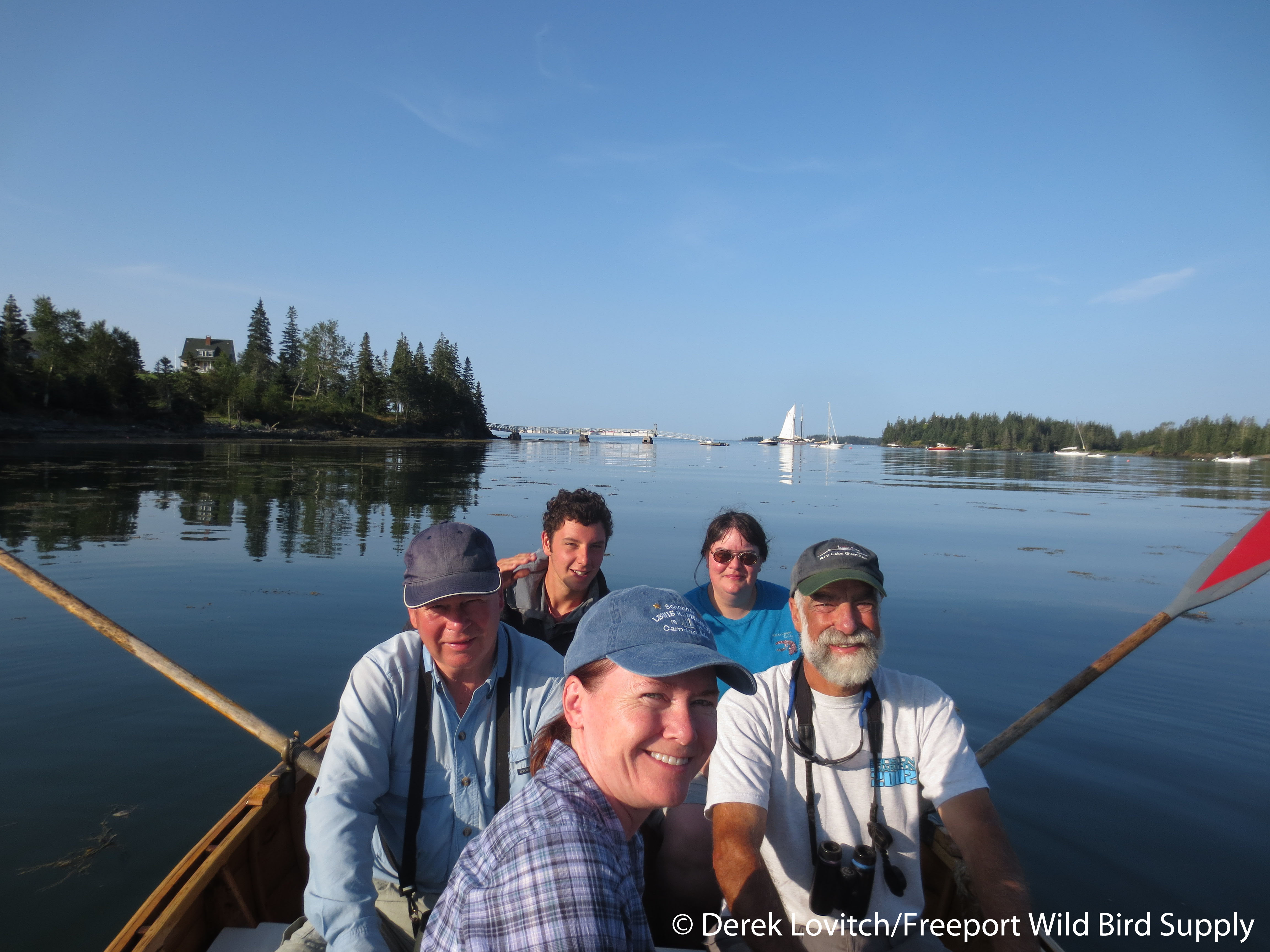
The rest of the day was spent traversing the countryside to get back to Denver. Beautiful scenery was to be had at almost every bend of the road.
driving to Denver,7-14-14

driving to Denver2,7-14-14

Arriving at my friends’ place in Denver – a dear friend since college – we settled down into a couple of relaxing days of catching up, being tourists, and enjoying way too much food, and a little beer.

Of course, Jeannette and I would go through withdrawal if we didn’t pick up our binoculars once a day, so while Jess pushed the stroller (for her son, not us, for the record) and guided us through Washington Park, Jeannette and I padded our trip – and my state – list with Black-crowned Night-Heron, Snowy Egret, Blue Jay, and Chimney Swifts (yup, back in the “East” now!). An afternoon in downtown Denver included a walk around Confluence Park – hmm, I think this would be my “patch” if I lived locally; it looked very intriguing for migration I thought
Confluence Park, Denver, 7-15-14

We had the morning of the 16th to bird before departing for home, so we headed over to another urban park, Belmar Park in Lakewood. Cooper’s Hawk was new for our trip list, but a low-soaring Swainson’s Hawk was the highlight. A brief stop at nearby Sanctuary Park – it looked like it had some birds from the road – trumped Belmar Park. “The pond of fuzziness” including chicks and young juveniles of a surprising array of birds: Mallards, American Coots, Pied-billed Grebes, and Redheads. The latter three, along with a single hen Northern Pintail, were all state birds for me.
PBGR with kids Pied-billed Grebe with chicks.

REDH Redhead juveniles.

Sanctuary Park,Lakewood,7-16-14 It’s a fuzzy romper room!

But alas, eventually it was time to go home. We said goodbye to Jess, and little Stone, but had some more time with Adam as we carpooled to the airport. We encountered an impressive 120 species on this rather-casual trip, and my state list grew by leaps and bounds. On our way to the airport, Western Kingbirds lined the roadways, and we said goodbye to the birds of the Mountain West as we took off and returned to our favorite state of them all.