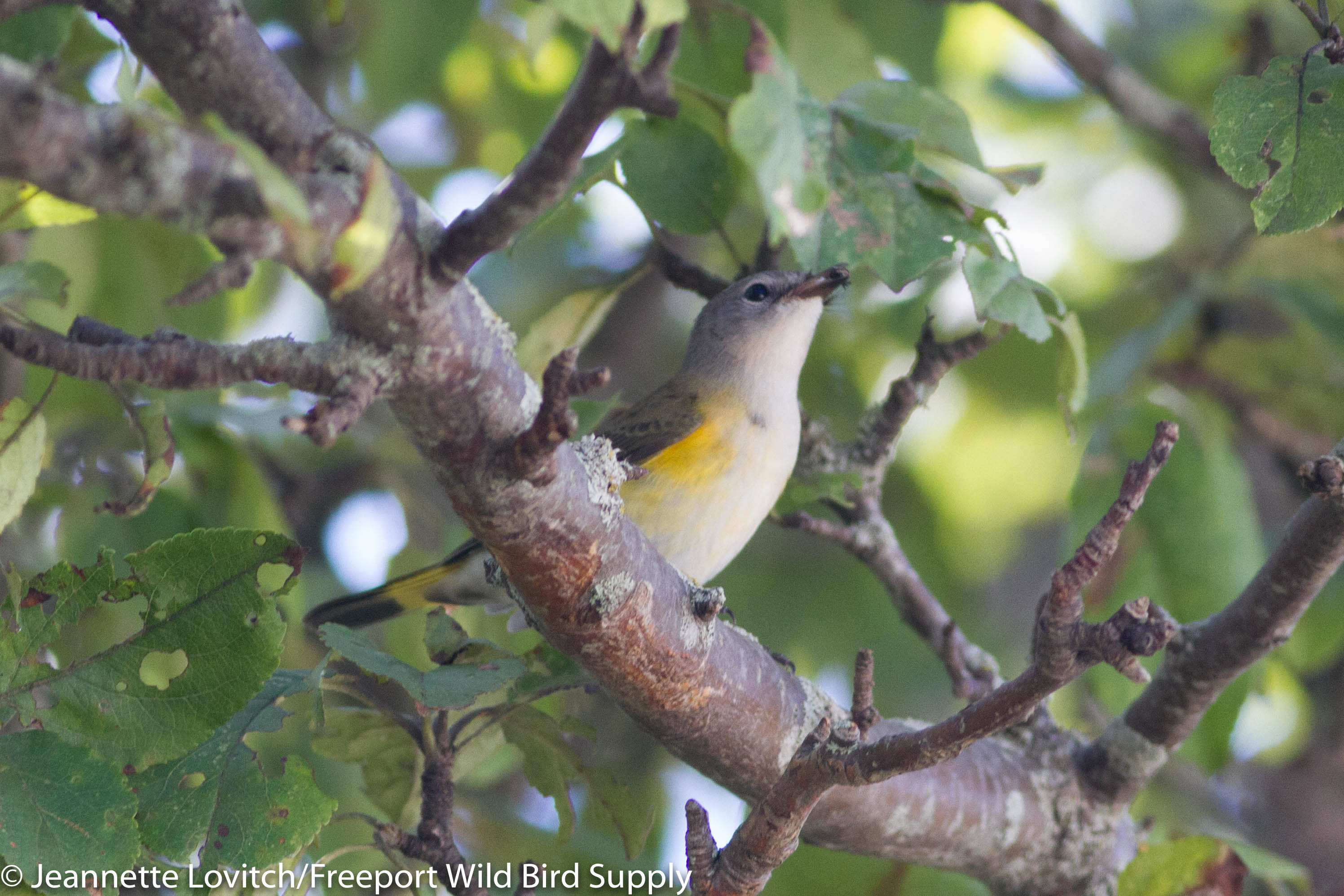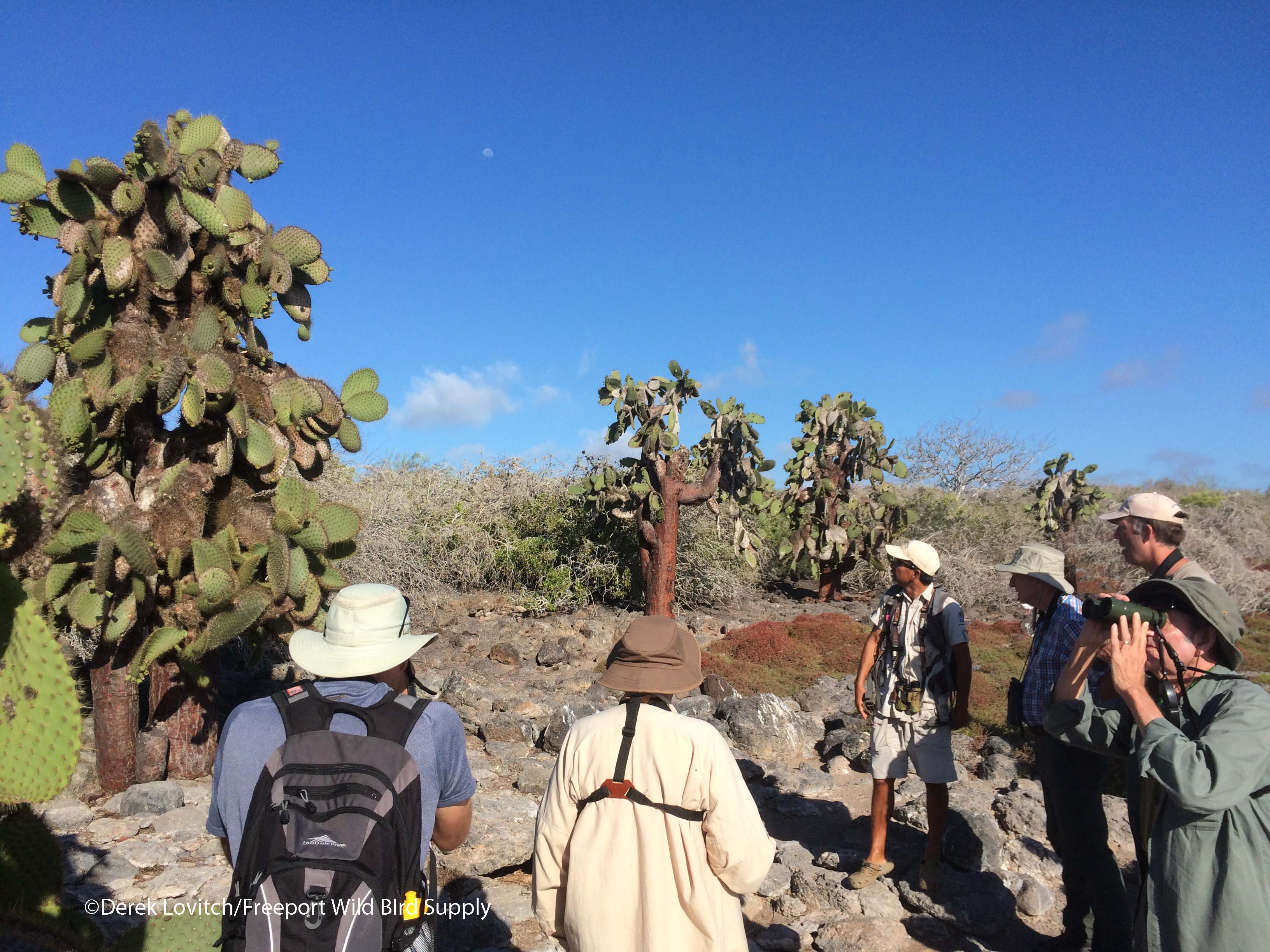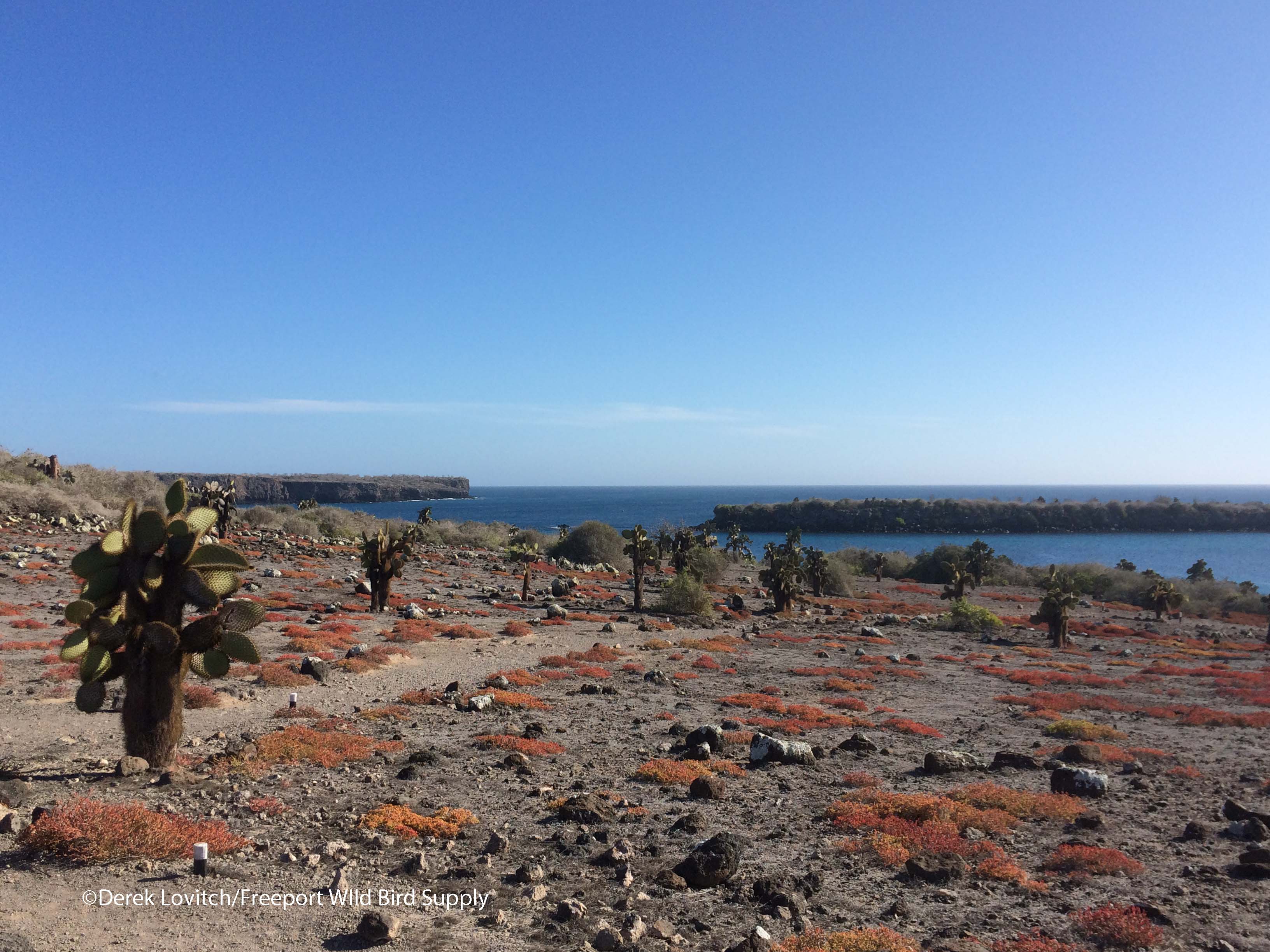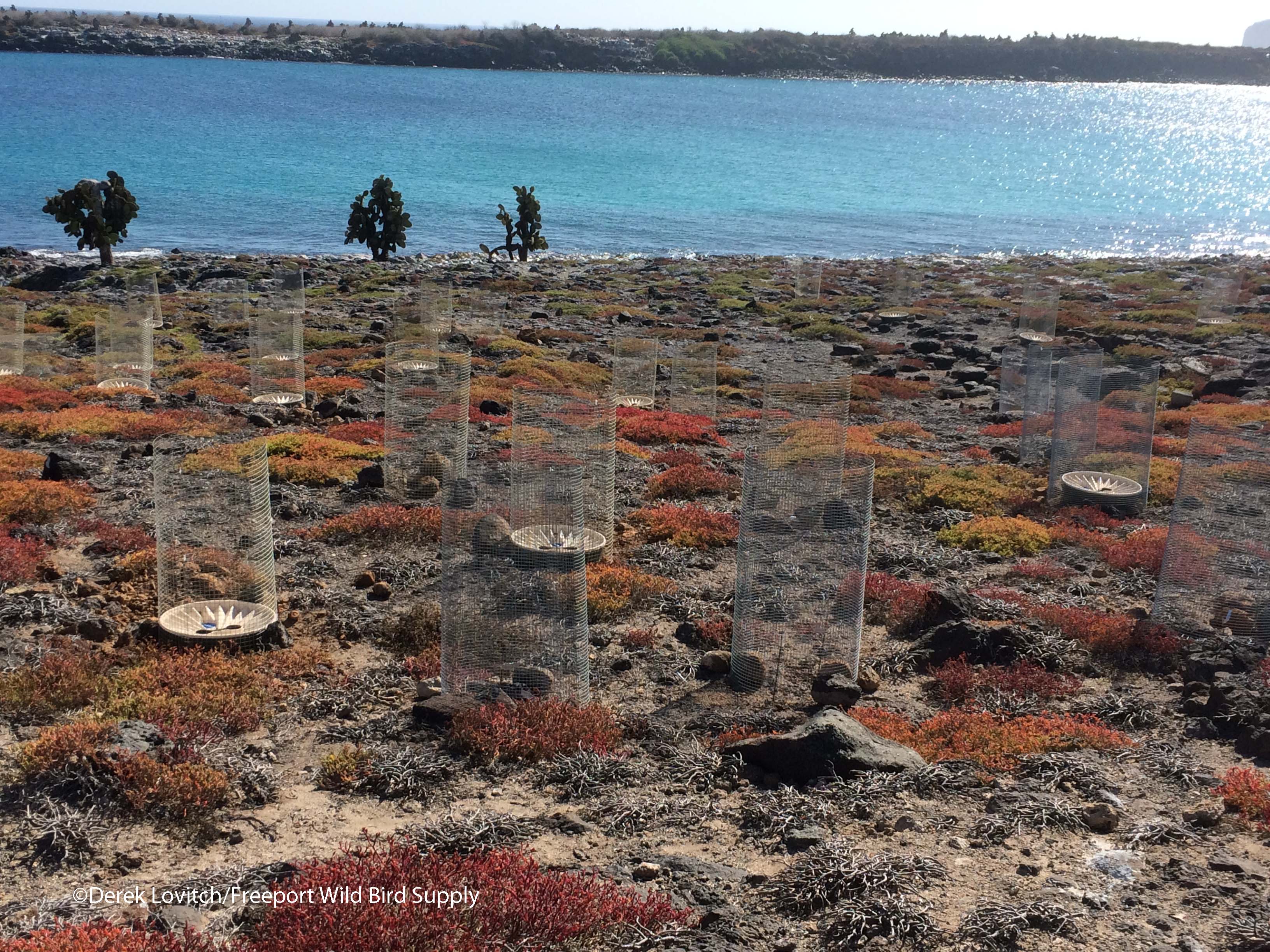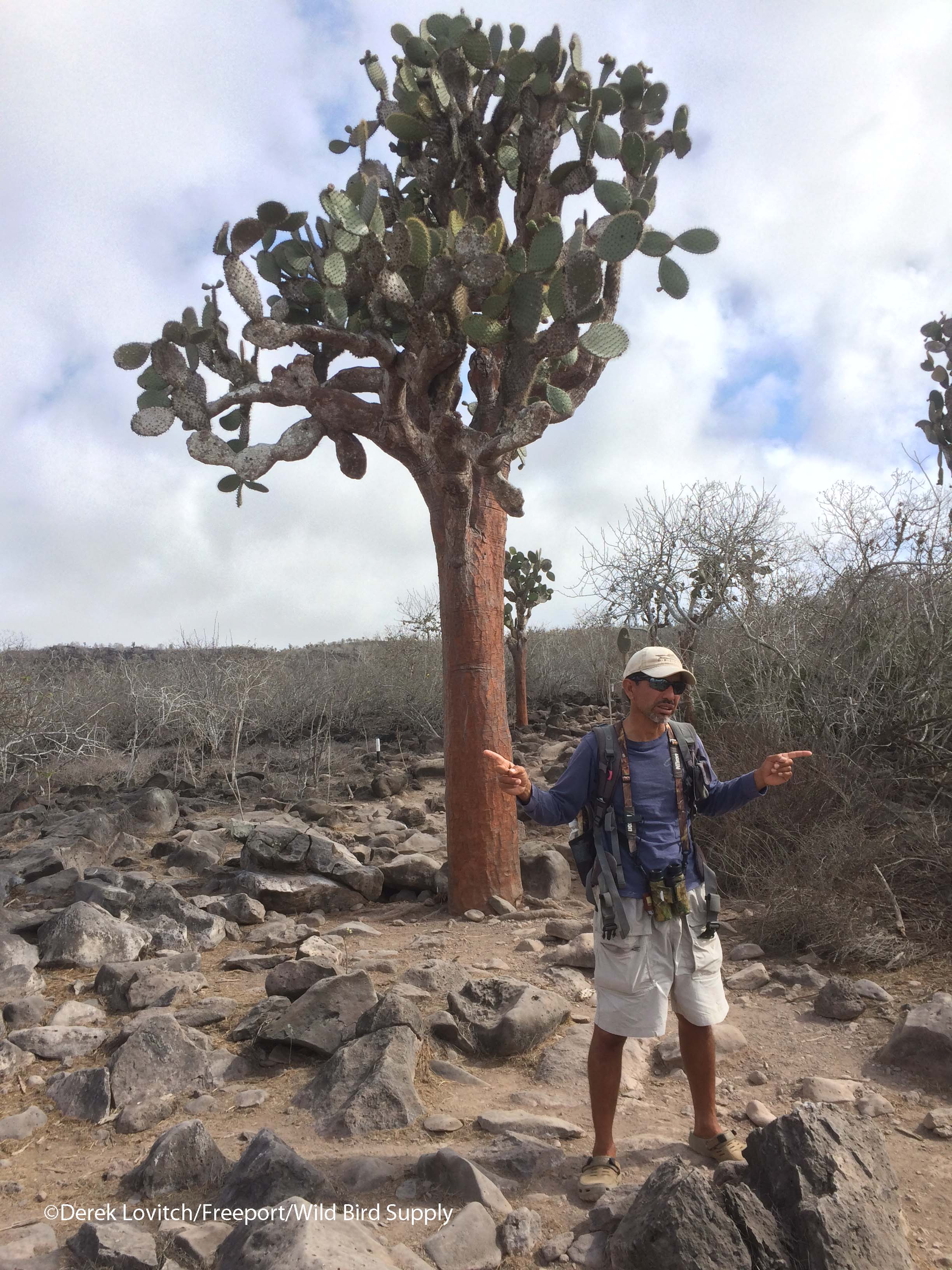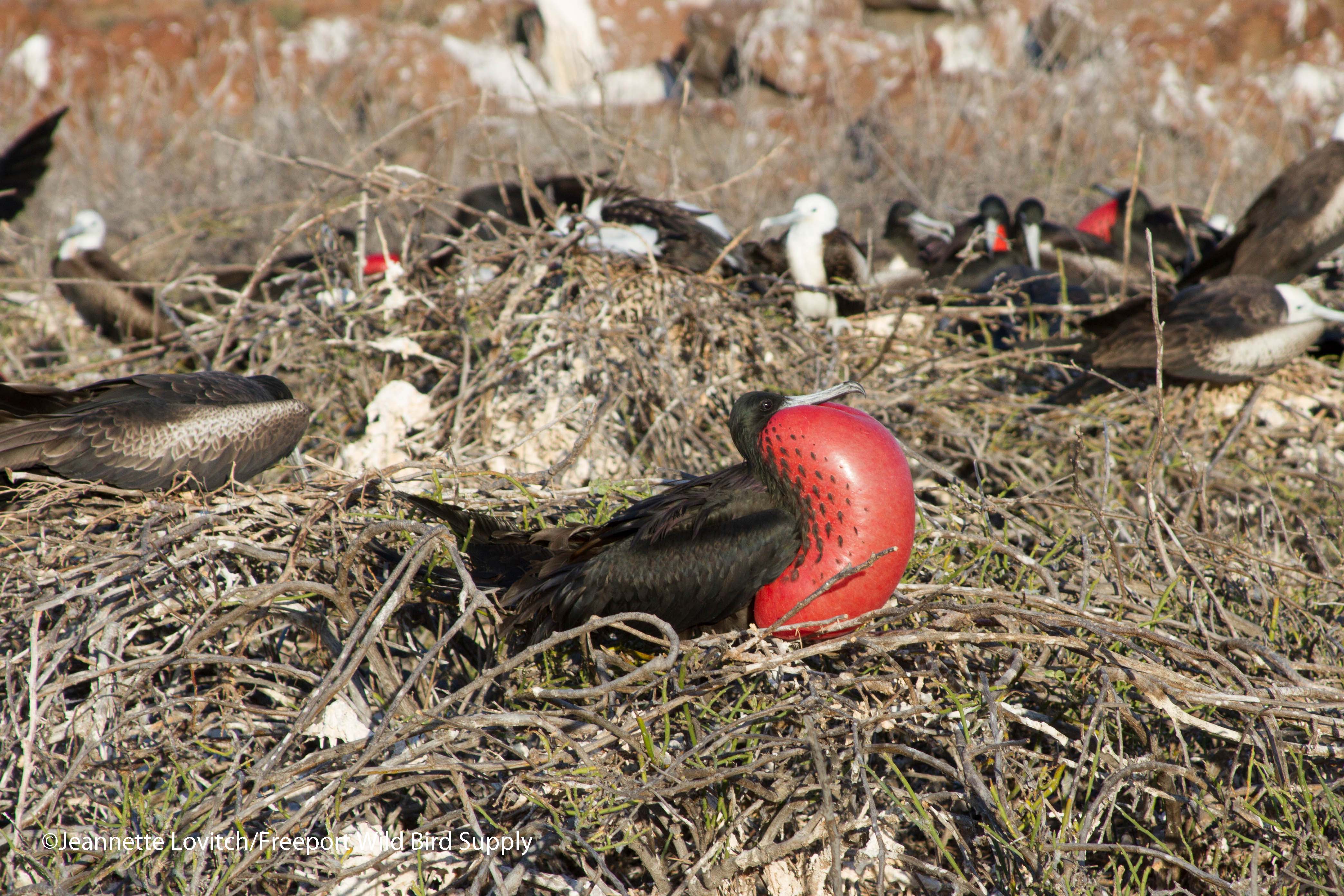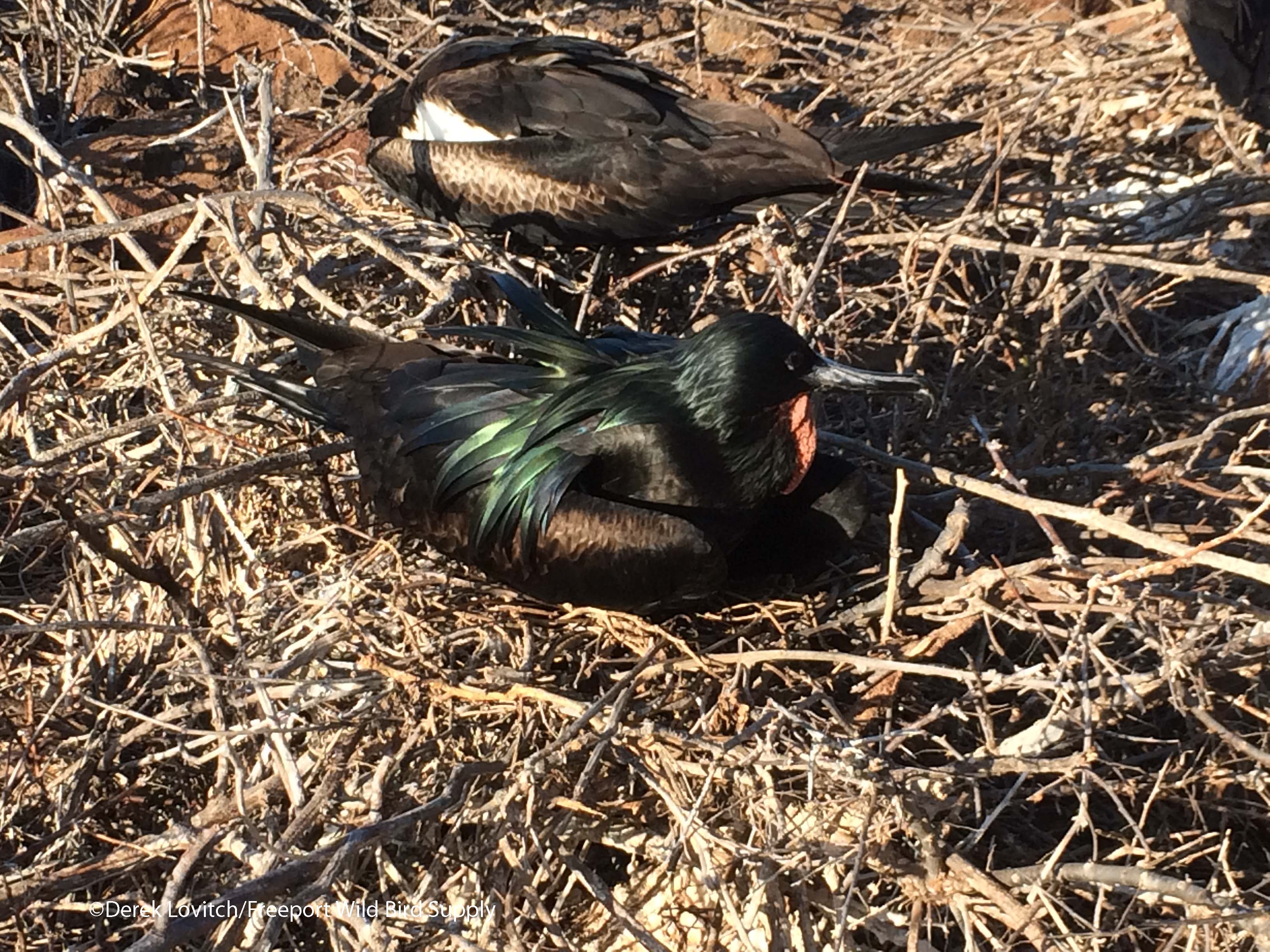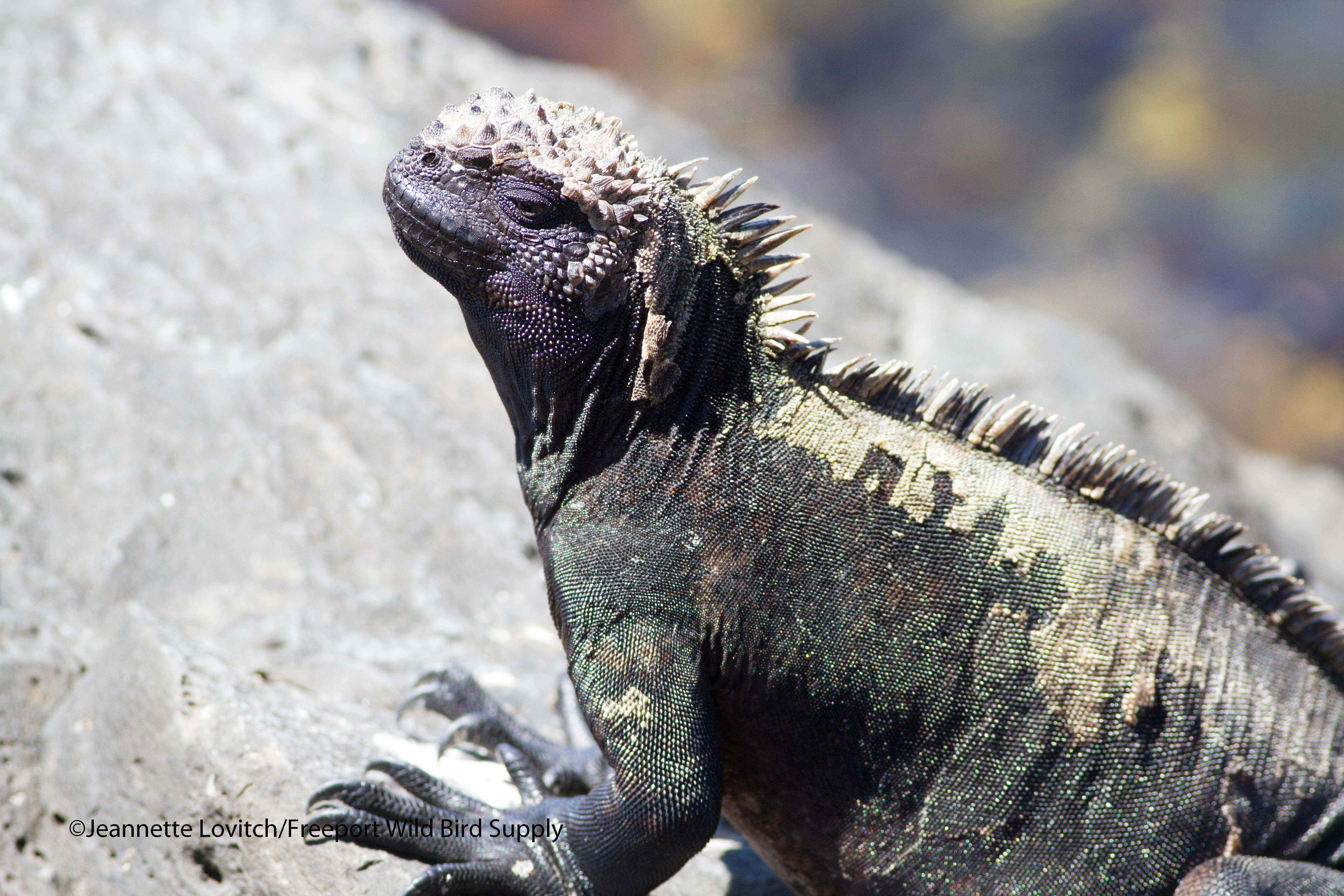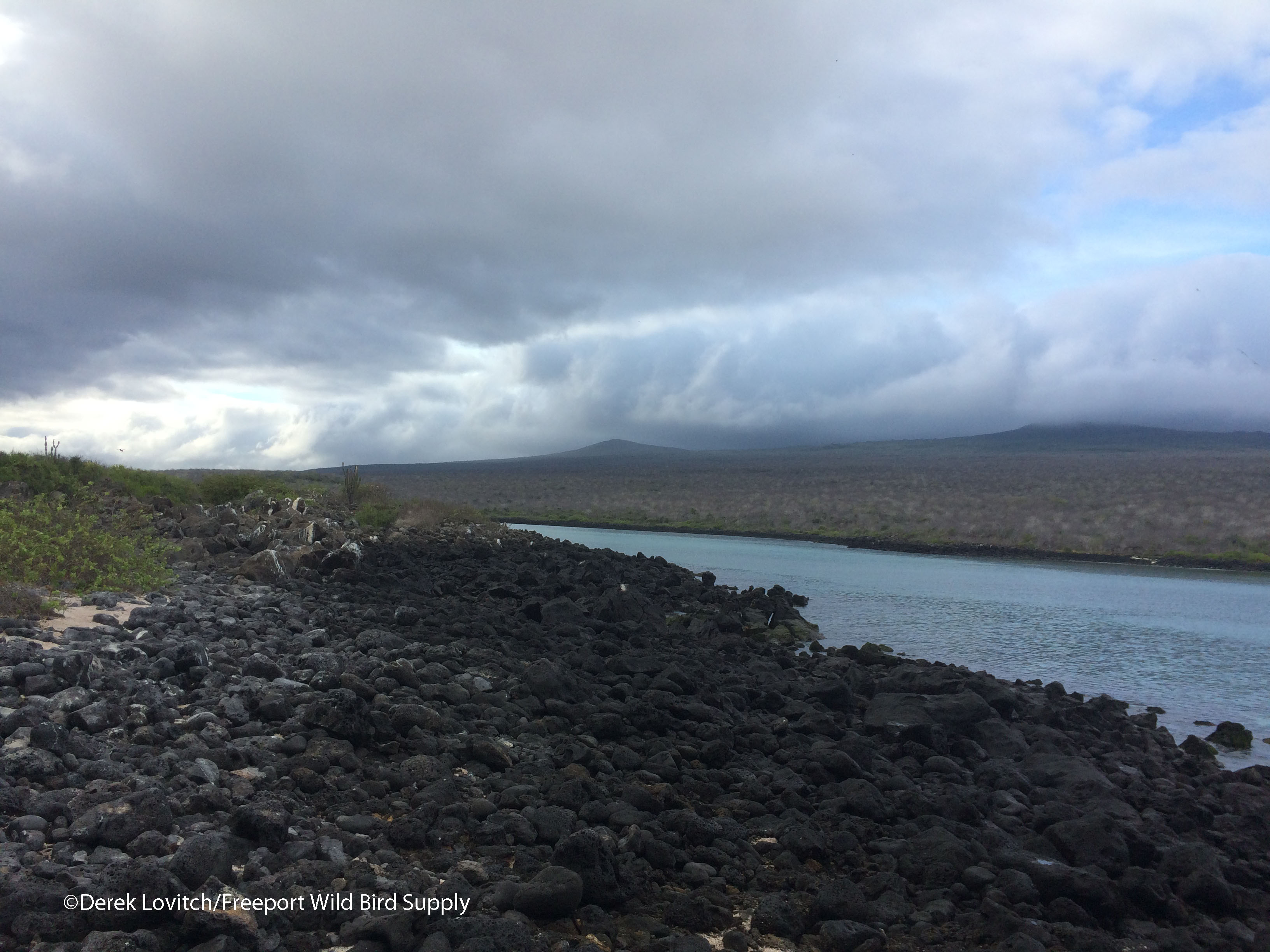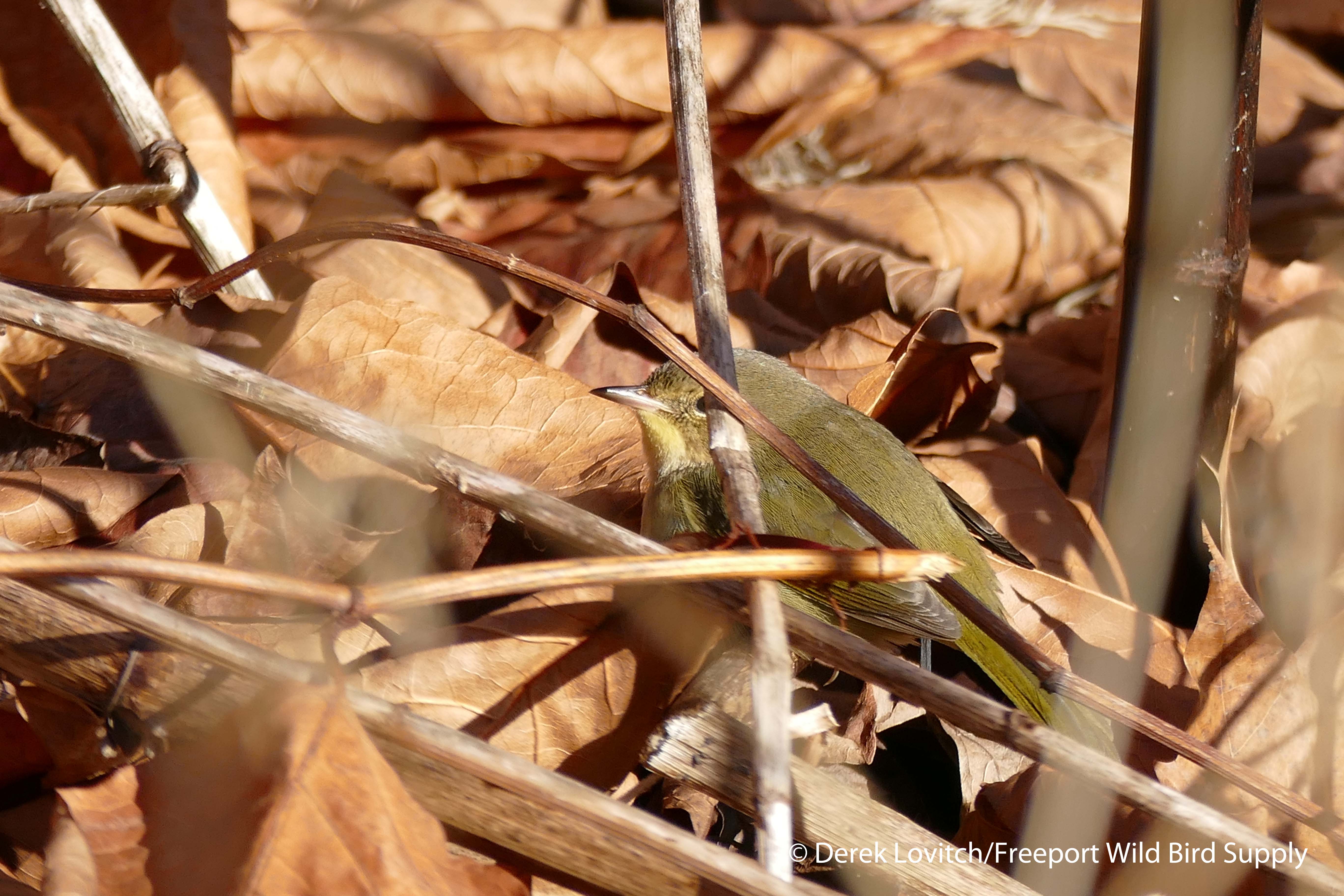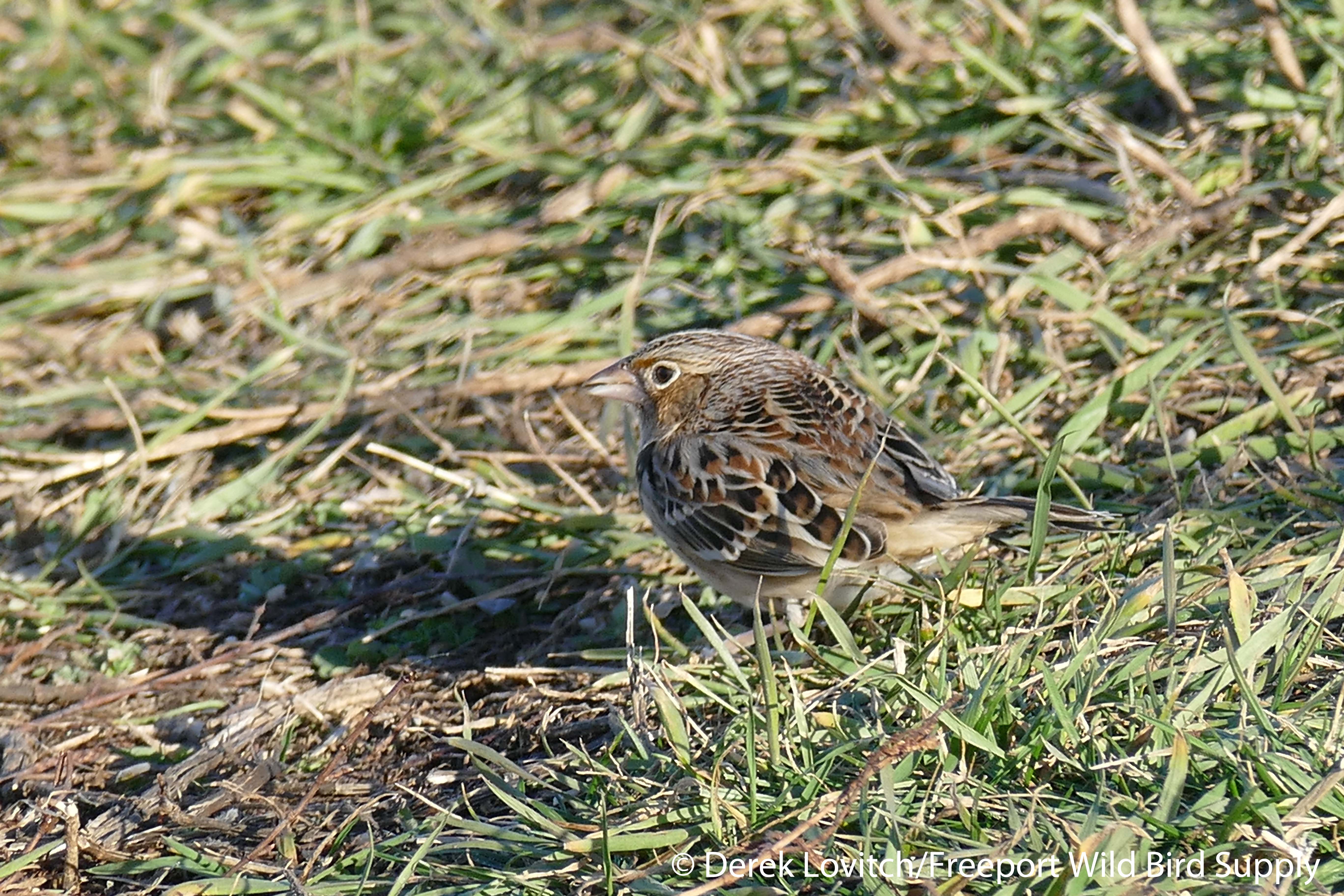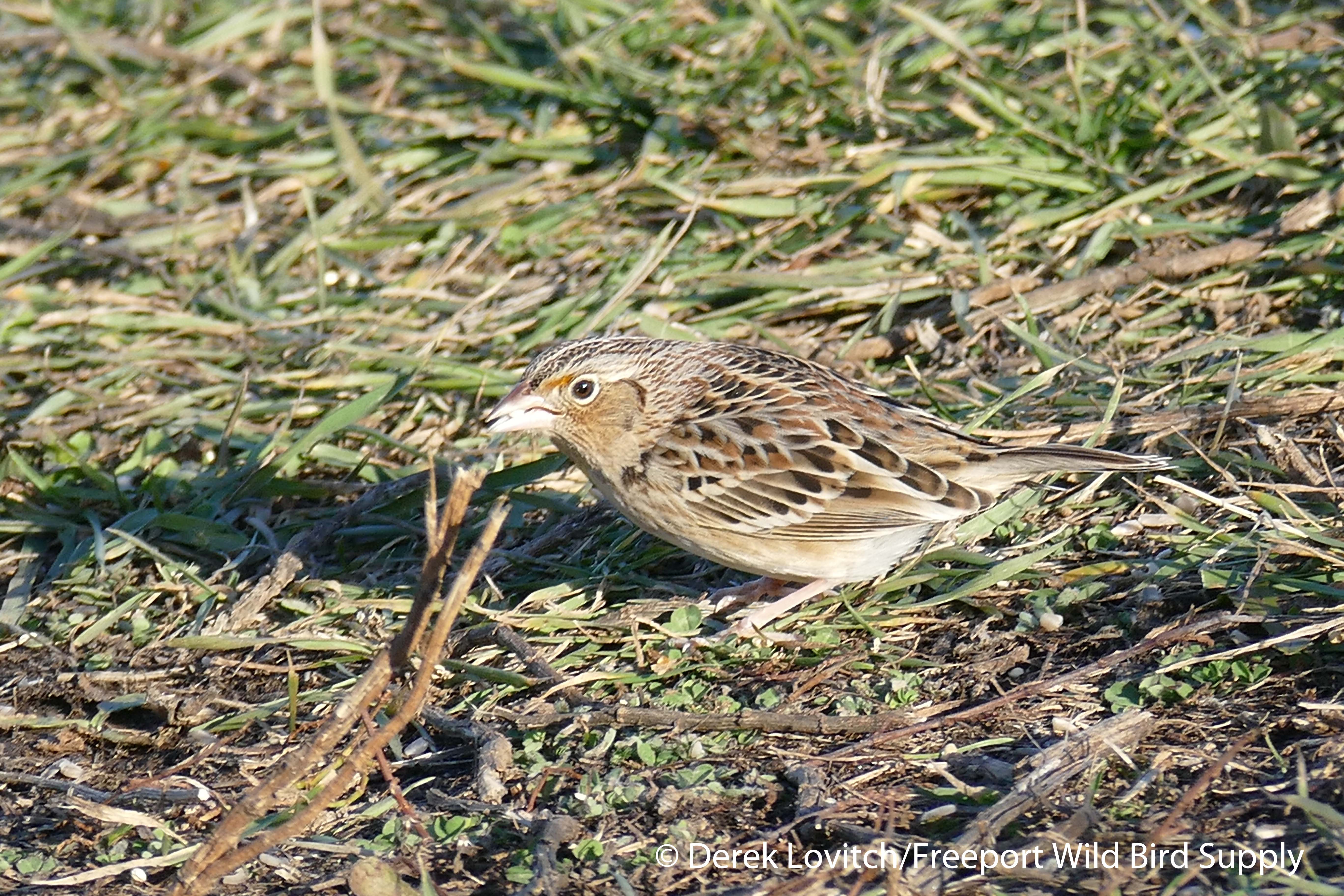
Tag Archives: Yellow Warbler

2025 Monhegan Spring Migration Weekend Trip Report

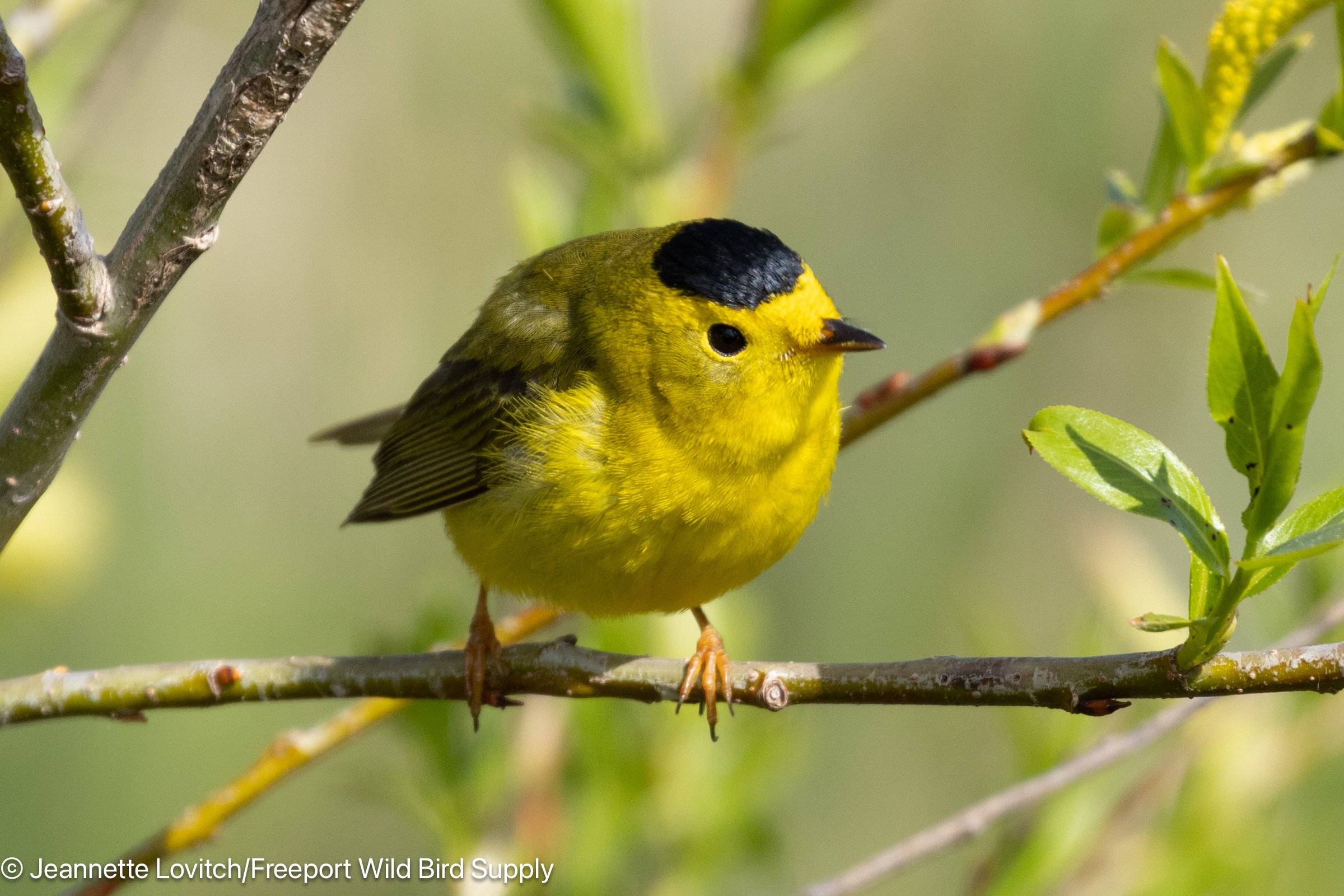
It was a great weekend for warblers, with a tour total of 19 species and a 5-day total of 22 species, including quite a lot of Wilson’s Warblers for the end of May. With 10-20 estimated per day,
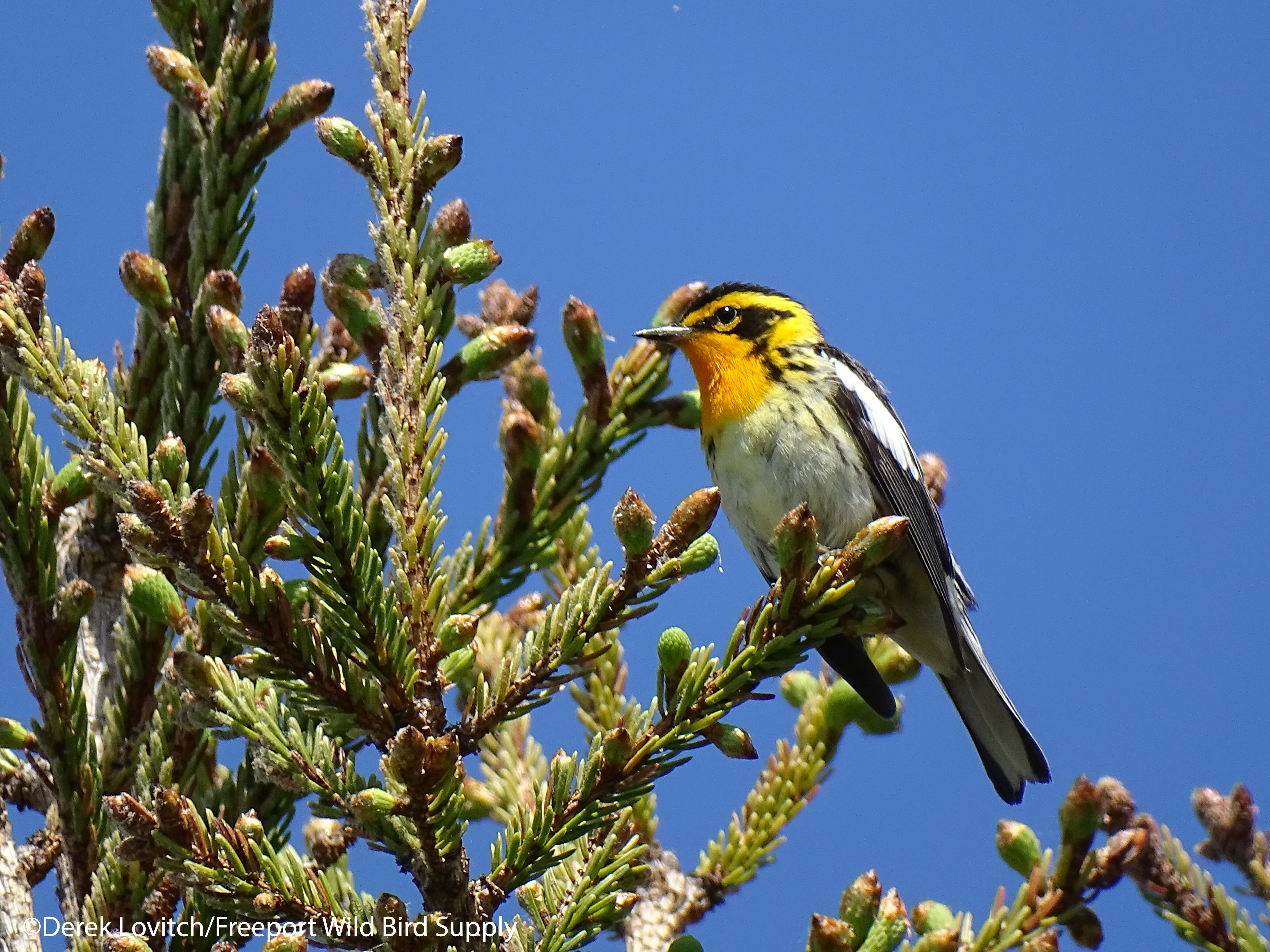
we were regularly treated to exceptional views, such as this adult male.

The 2025 Monhegan Migration Spring Weekend was a shocking success. We went from having a weather forecast that made me worry if there would be any migrants to see at all, to an exceptional weekend that was by far the best Memorial Day weekend of birding out here in quite a few years.

Technically, our tour was to begin on Friday with a little morning birding in Port Clyde before boarding our ferry. But it was raining. A lot. Wisely, most folks held out until the ferry meeting time. Unfortunately, that meeting time was delayed by 5 hours when the first two boats of the day were cancelled due to the storm. It was a bona fide late season Nor’Easter and it was raging out there.

We were lucky enough to get spaces on the 3:00 boat, but even luckier that the seas were dropping dramatically. OK, it was far from calm, and while I might not have thought it was “too bad,” others disagreed. But we made it! And the rain had stopped. And we went from 10-14 foot seas to a few waves that may have approached 8 feet. Not pleasant, but more than manageable. Of course, I have to admit that the “worst ferry ride” bar is pretty high for me.

By the time our luggage was organized, we didn’t have a lot of time, but we decided to try and catch up with the continuing truant Harlequin Ducks that had been seen in and around the harbor. Up to 8 had been reported, but when we arrived at the recommended spot, we found 12!  While common in winter, “Harlies” are usually long gone by now, so this was a treat (it was also an island bird for me!). We also picked up a 2nd/3rd cycle Lesser Black-backed Gull for our troubles. There was even a short break of sunshine!

Noteworthy for the date, 12 lingering Harlequin Ducks diminished to just one by the end of the weekend.

By dusk, winds were light northwest and it was still cloudy. Overnight there were some scattered showers, with winds shifting to the west and then going calm. The fog and showers made the radar hard to decipher, but the wind map for offshore offered some hope.

Screenshot

Note how birds who were offshore of southern New England would be pushed out to sea, but then find a tailwind that could theoretically take them right to the Mid-coast of Maine? The Boston radar was very busy, and suggested birds were indeed well offshore to our south come dawn. We had hope.

But our pre-breakfast walk was not very productive. Uh-oh. Scattered showers had returned, and there were very, very few migrants around. We did see the 12 Harlequin Ducks again, but passage migrants were limited to a handful of Blackpoll Warblers and a Wilson’s Warbler. Was this going to be a very slow weekend?

We returned for breakfast at our respective lodges, and the showers stopped. We met at 9:00 and began our next outing. I was concerned. But then, it happened. All of it.

First, a Lark Sparrow was found – very rare in spring – and while I was going to meet the group, I relocated it in the lawn of the Trailing Yew. It wasn’t there when we returned as a group, but we elected to repeat the southern loop in the hopes of encountering it. And encounter it we did, several times, actually, as it worked its way around the lawns feeding on fresh dandelion seeds.

Meanwhile, something else was happening. Suddenly, birds were everywhere! Pocket after pocket of warbler activity was encountered, and every apple tree had birds in it! Small batches of birds giving flight calls overhead were suggestive of birds only now, at mid-morning, arriving on the island. As these birds were a very different mix of species from the last “birdy” day four days ago, according to a fellow guide, these were in fact “new birds” only now, and rather unexpectedly, arriving en masse.

As the afternoon went on, it only got better! There were warblers in every cluster of trees, with lots of Magnolia Warblers and American Redstarts, but overall good diversity. Birds must have been arriving throughout the day and therefore remained active into the evening. Birds were often low, easy to observe, and the repetition allowed for reinforcing study and comparisons.
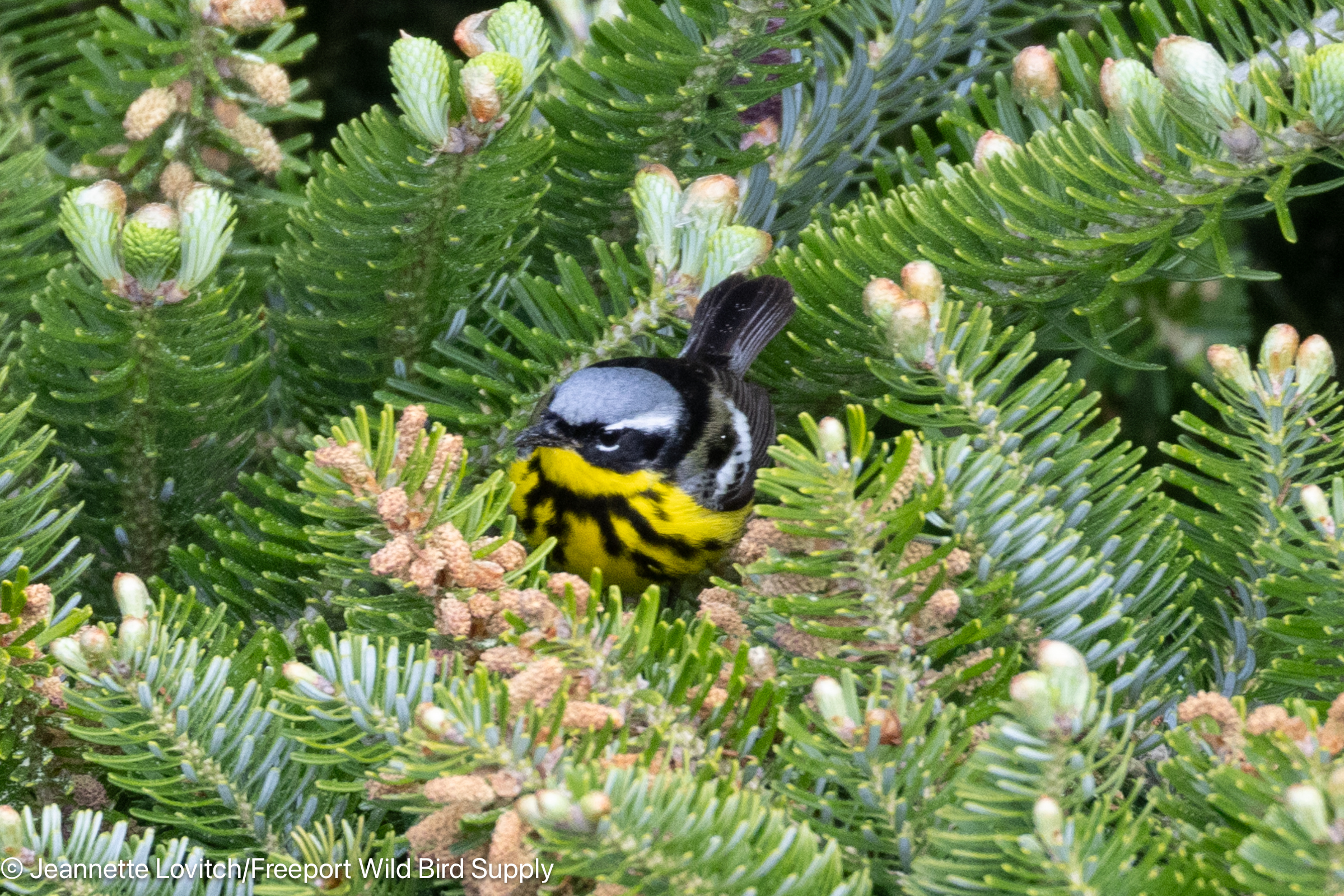
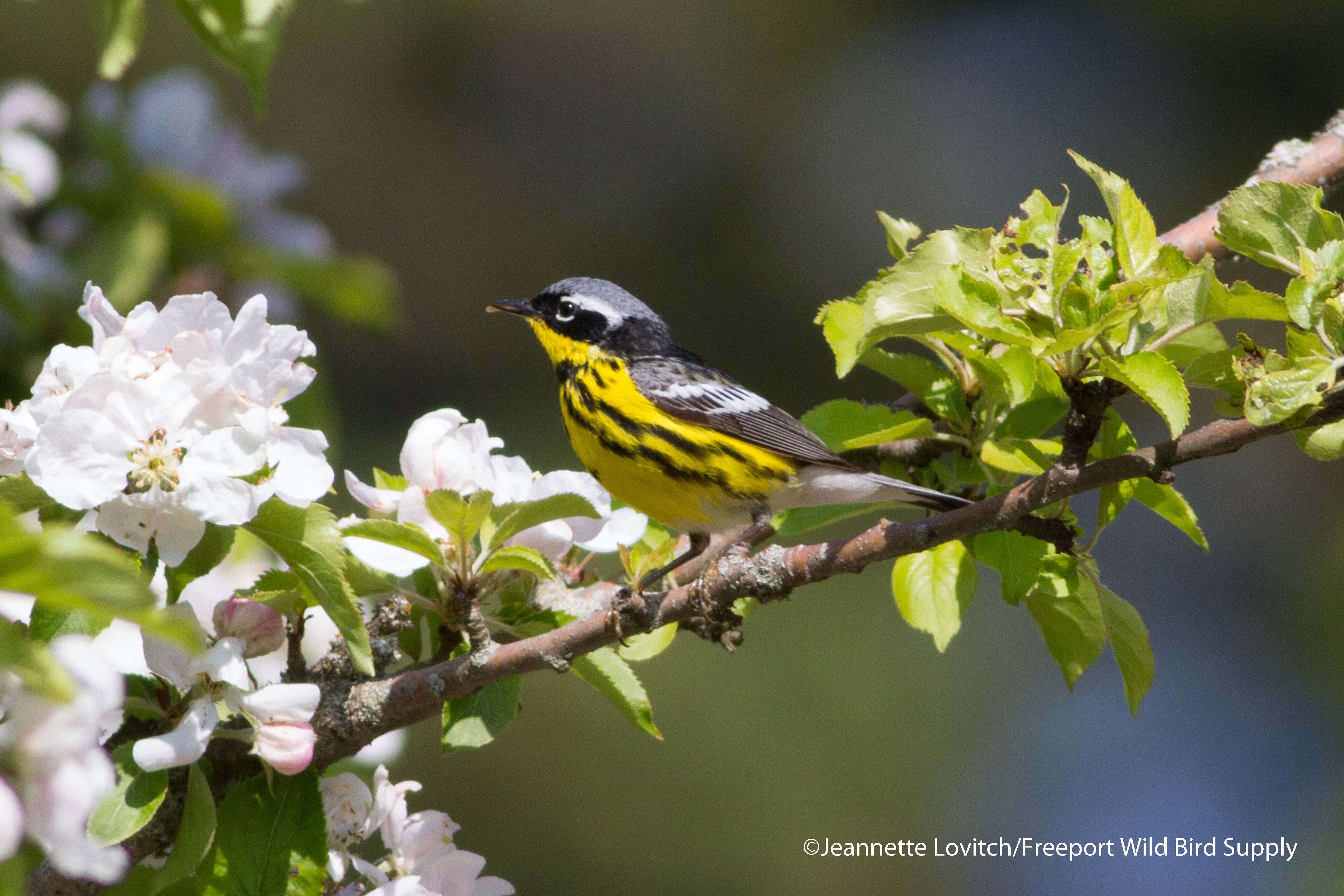
Magnolia Warbler
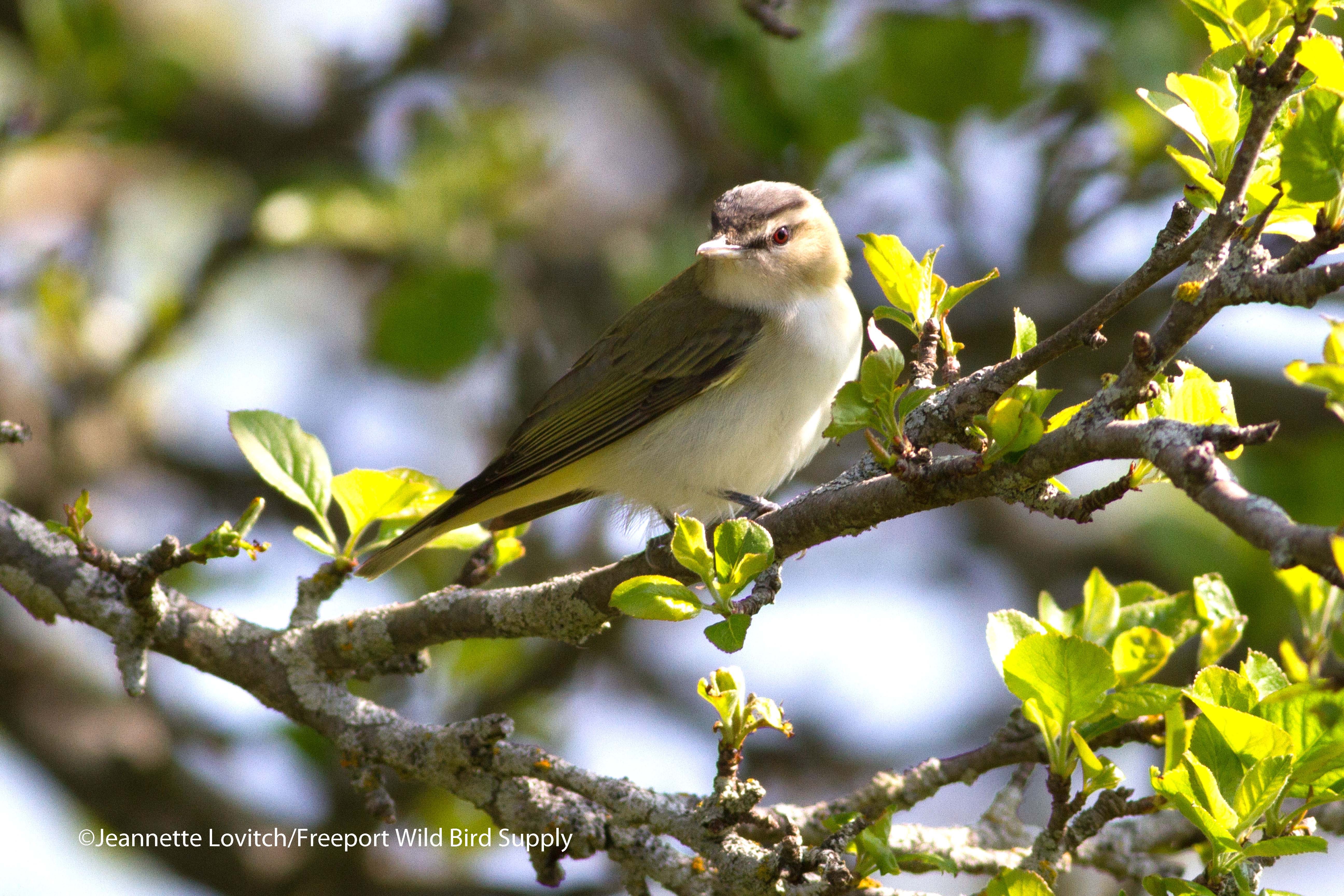
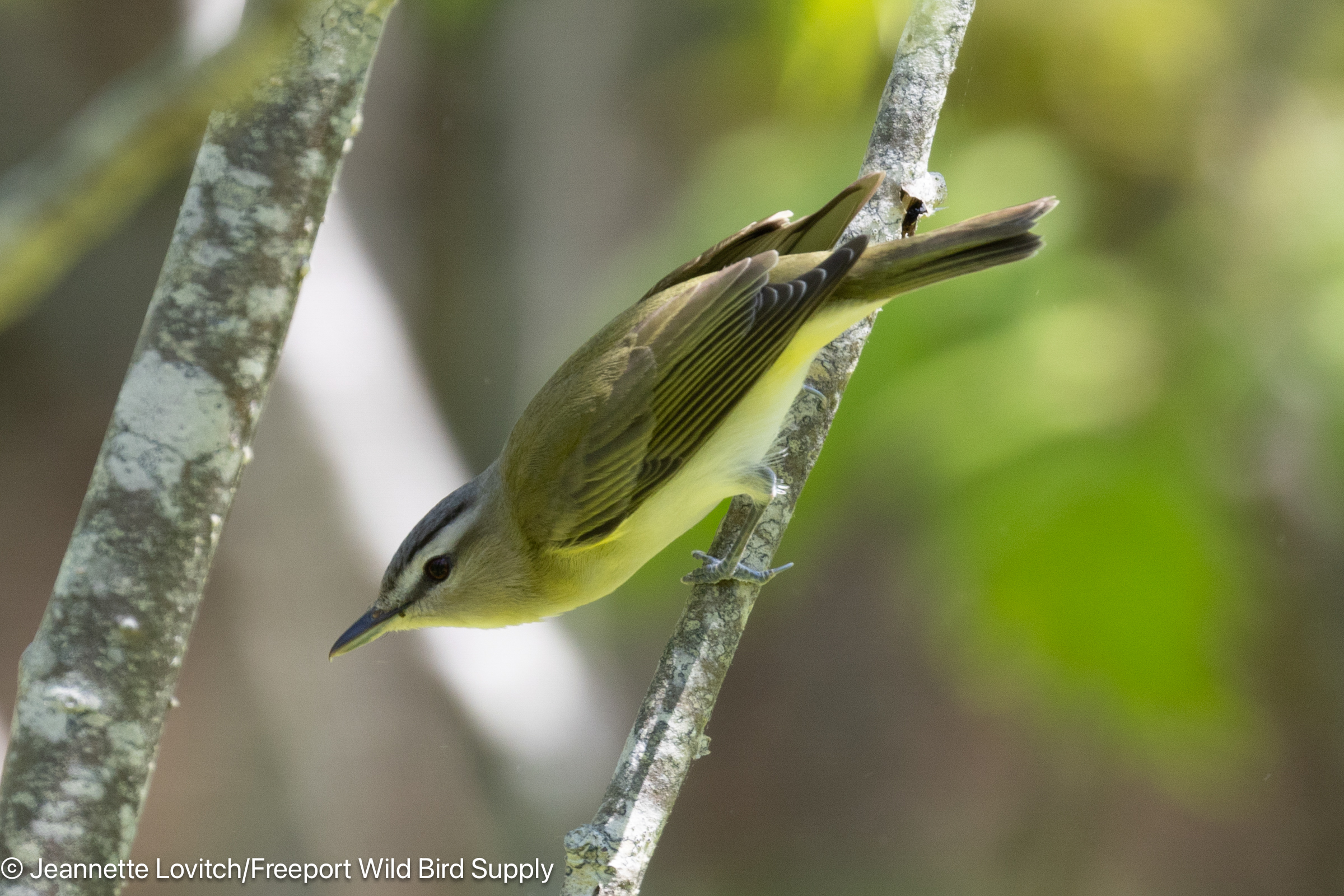
Red-eyed Vireo

Not only was today not the forecast wash-out (just a few brief periods of drizzle and a couple of very light showers), but it was simply amazing! While warblers stole the show as expected, and the Lark Sparrow was a harbinger of things to come, our afternoon at Lobster Cove was rather exceptional, too, with two continuing “Eastern” Willets, a close pair of Harlequin Ducks, and 3 feeding Atlantic Puffins. What a way to end a spectacular day! It was like the good ol’ days out here.
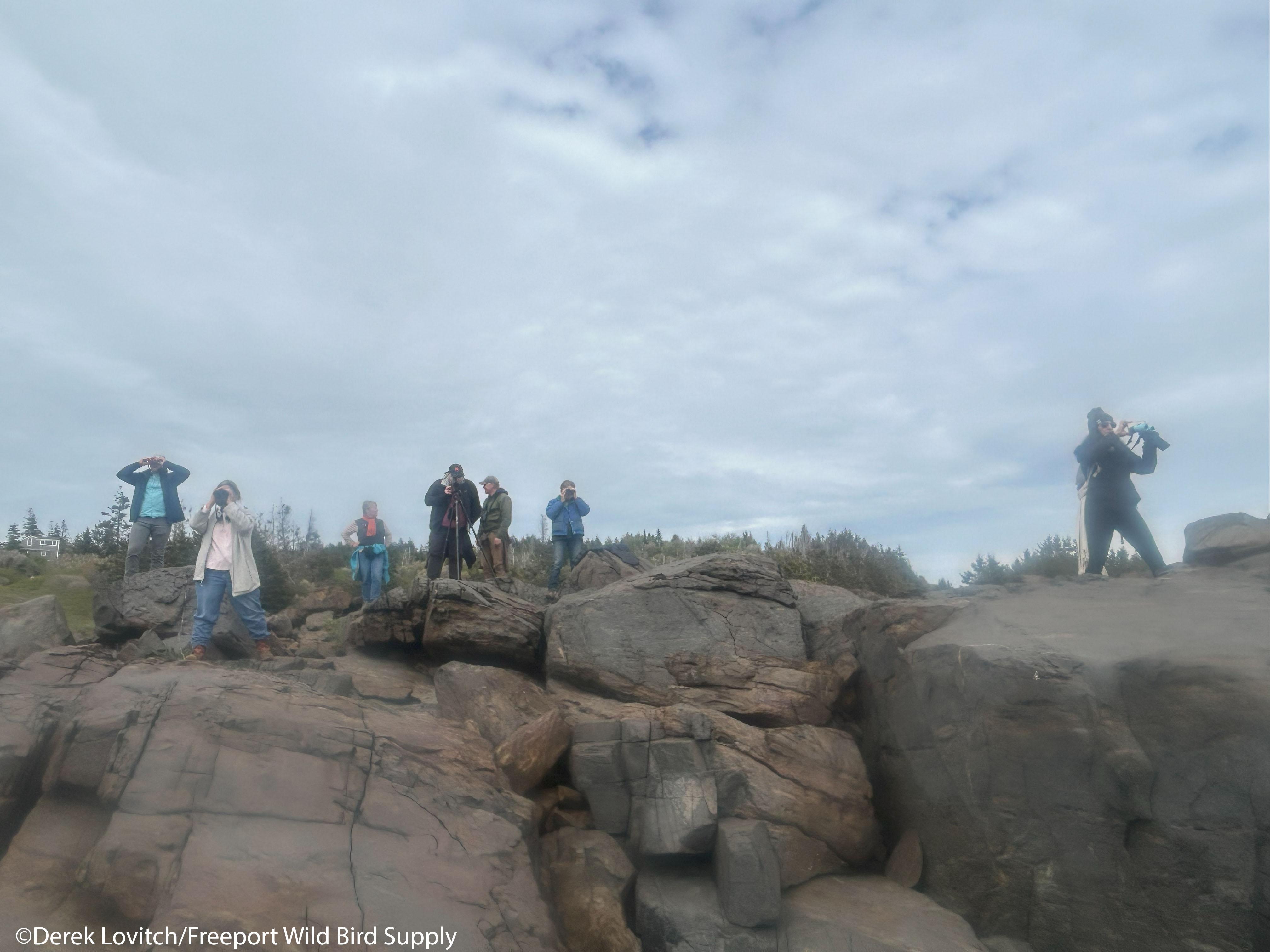
By Sunday, the Low was dissipating over New Brunswick, and while the radar showed what may have been a light migration overnight, there wasn’t much happening in the “morning flight” once again. But as we began our birding day, it was actually quite good! While a lot of birds were left over from yesterday’s flight, they were augmented by some new arrivals, or at the very least, new detections. Once again, the birding was better than expected, and by late morning we already had some partial sunshine.

Unlike Saturday, activity slowly died down as the morning went on as usual, but it was just a downright delightful morning in the field. Lots of pockets of activity were still dominated by American Redstarts and Magnolia Warblers, but there were a lot more Blackpoll Warblers and fewer Wilson’s Warblers today. 8-10 Harlequin Ducks continued, and spiffy Bay-breasted Warblers were particularly cooperative. And we had three irregularly fantastic views of Lincoln’s Sparrows throughout the day.
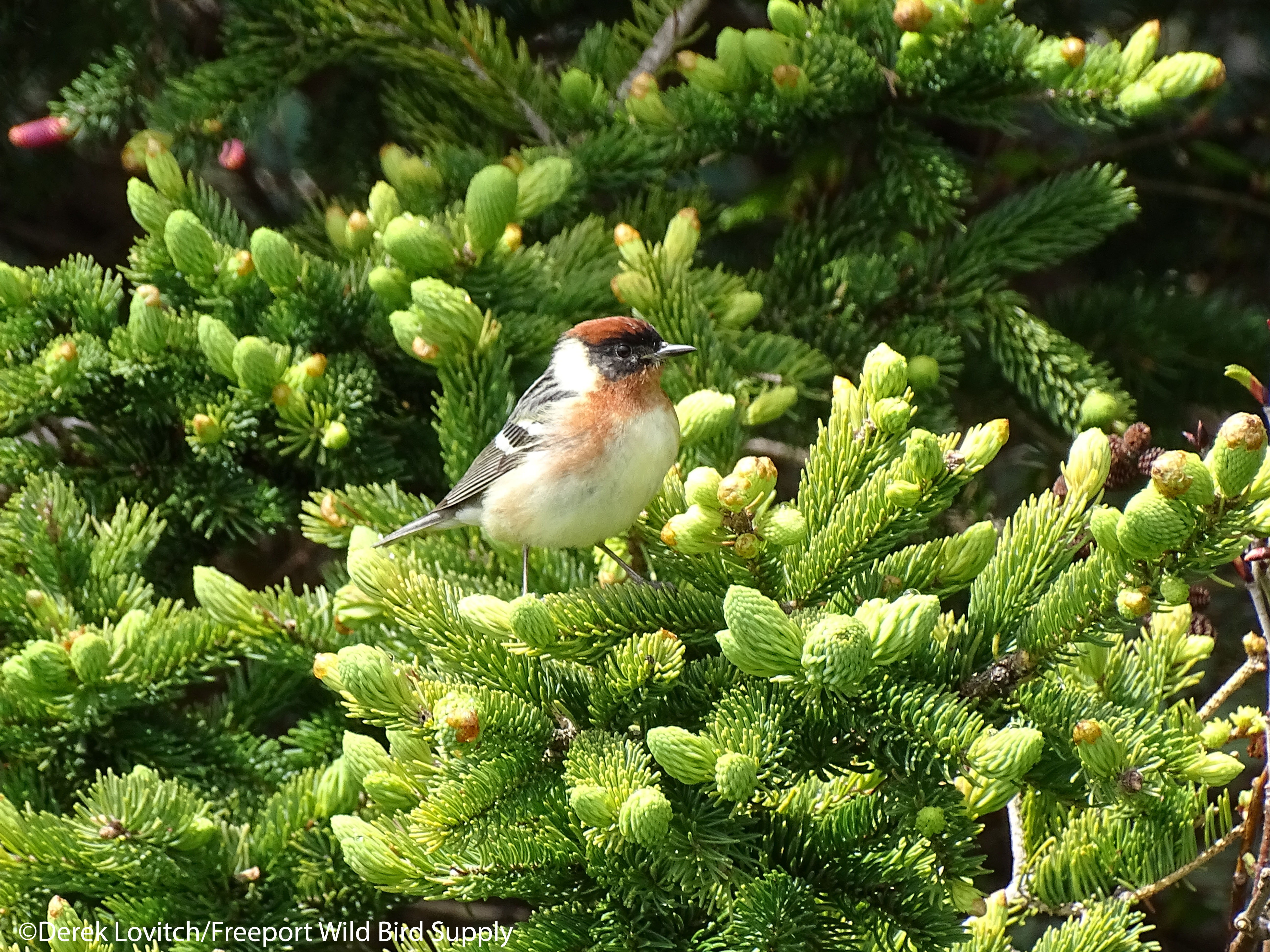
Bay-breasted Warblers were really conspicuous this trip, and we enjoyed great looks at both males and females daily.

Lincoln’s Sparrows were unusually cooperative.

A longer walk out to Burnt Head and a check of the island’s interior in the afternoon found some of the birds that had melted away from the edges, while an uncharacteristically skulky Great-crested Flycatcher gave us a jolt of excitement until finally revealing itself.

With the storm pulling away, light northwesterly winds and mostly cloudy skies dominated the overnight Sunday into Monday, and therefore there was little or no migration overnight, and therefore almost nothing in the Morning Flight. However, it also meant that most birds didn’t leave. And while slower than the last two days, it was still decent, good views of fun species were to be had, and the sun came out for good.

Magnolia Warblers,  American Redstarts, and Blackpoll Warblers continued to dominate, along with the ubiquitous Yellow Warblers. Flycatchers were up, offering ample opportunity for instruction – and for eyes to glaze over. Morning highlights ranged from a particularly good tutelage from a Willow Flycatcher, a raft of 50 Surf Scoters offshore, and a really amazing Common Nighthawk repeatedly flying low over our heads and foraging over the island as noon approached.

It was warm and sunny, and with a sea breeze pushing birds out of the edges and deeper into cover, we decided to enjoy more of the island with a visit to the lighthouse grounds and a stroll deep into the spruce woods. In addition to building our list with island residents like Golden-crowned Kinglet and breeding species such as more Black-throated Green Warblers on territory, we enjoyed the plantlife of the Acadian habitat and a healthy dose of phytoncides. And in between, the occasional pocket of migrant warbler activity to bring us back to birding.
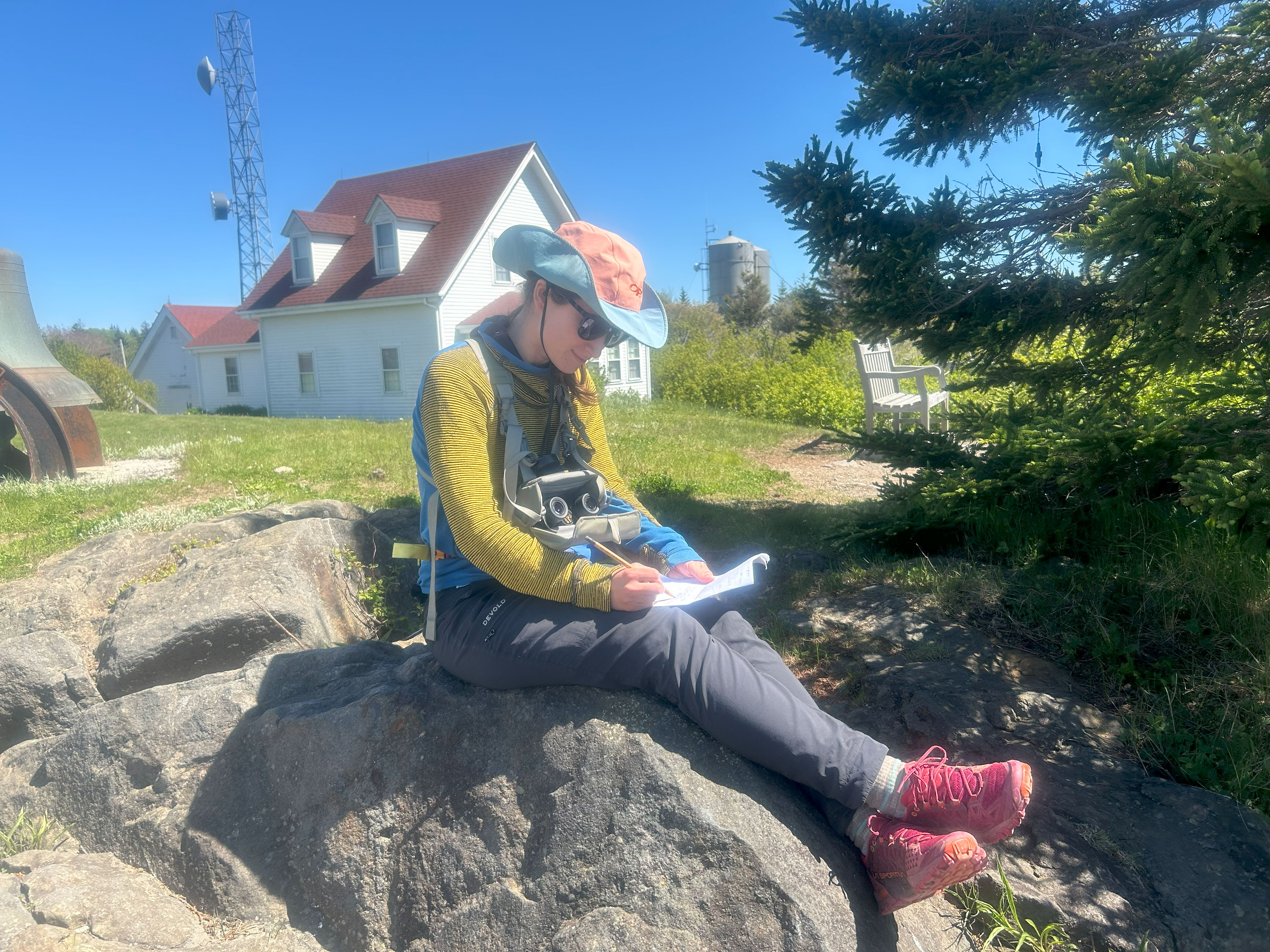
Catching up on note-taking.

Our tour concluded with an impressive 91 total species, but I admit to being a little frustrated by having to give up with 19 species of warblers…20 sounds so much better! But given the unexpected big arrival on Saturday, and the minimal rain and wind after Friday, the tour was truly an incredibly success, far exceeded expectations, and did live up to what Monhegan birding legends are made of.
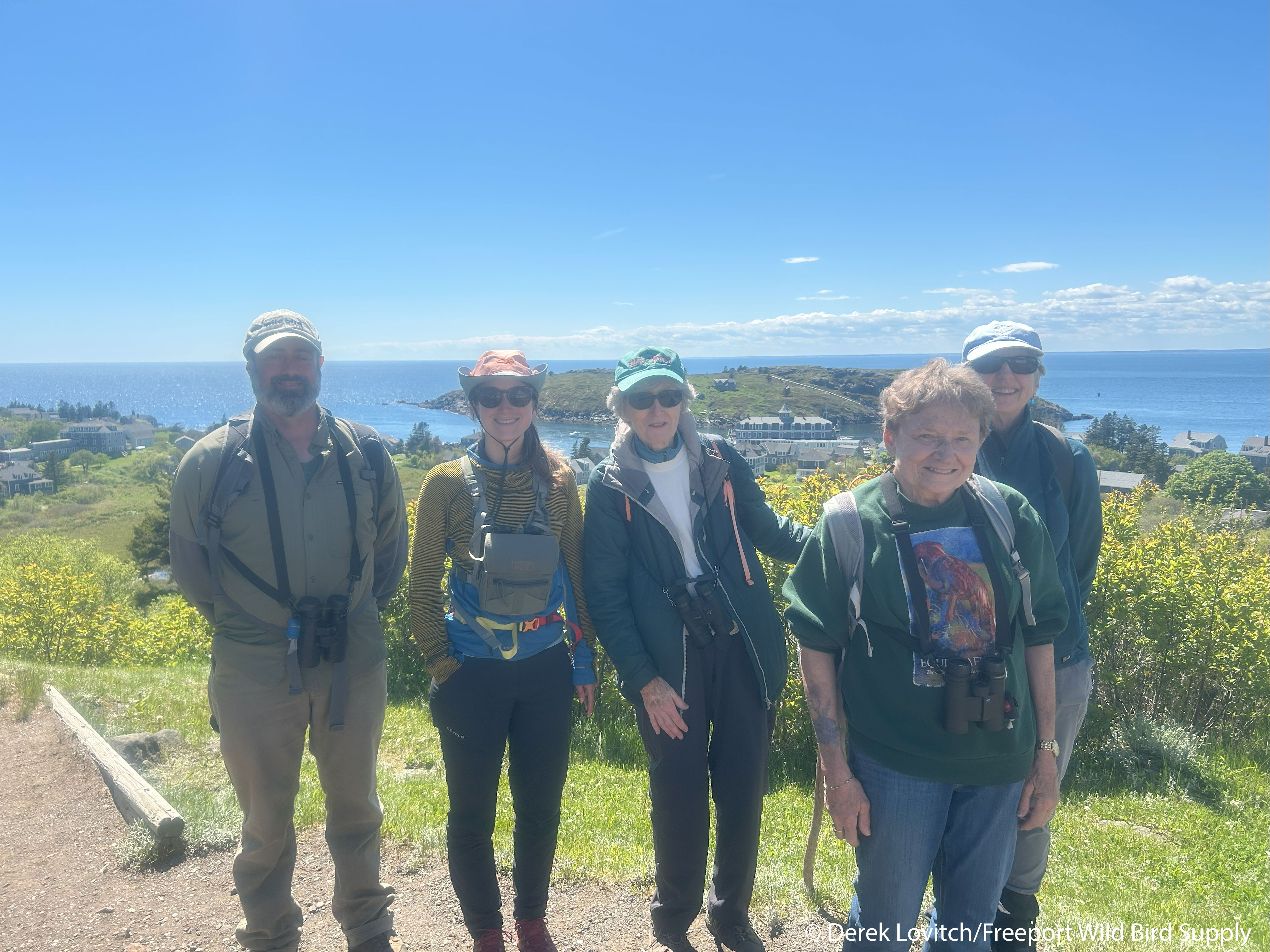
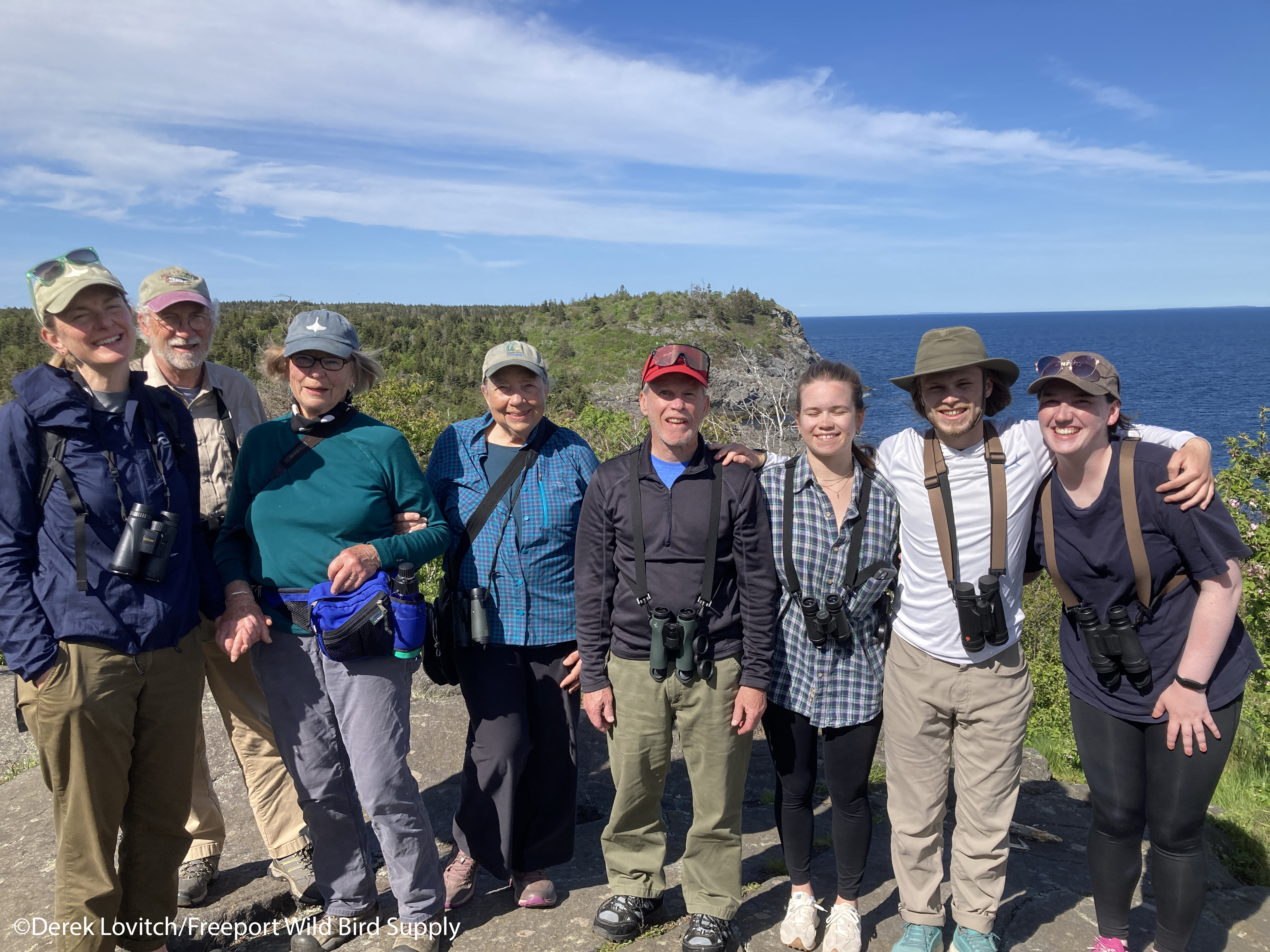
Last birders standing on the last afternoon of the tour.
Staring at Eastern Egg Rock, attempting to will THE Tufted Puffin over to us.

Then, as per usual, Jeannette – who joined us late on Sunday – and I enjoyed a day off together on the island on Tuesday. Unlike the magically-appearing flight on Saturday, this was a more predictable great morning. A moderate to strong flight overnight lit up the radar on light southwesterly to west winds. That put a lot of birds in the Gulf of Maine come dawn, and the morning flight was hoppin!

Consisting mostly of Blackpoll Warblers, American Redstarts, and Magnolia Warblers, it was quite diverse overall. A few “new” species included a Pine Siskin and a Wood Duck, and 3 Red-breasted Mergansers were a fun Morning Flight fly-by.

Before and after breakfast, the birding was excellent. It was the best day by far in volume, but a lot of the birds were “on the move” and departing the island throughout the morning. But there was more of pretty much every migrant species, save for Wilson’s Warblers in particular. Birds weren’t held low by clouds and drizzle, or exhaustion, so it wasn’t as mind-blowing as Saturday, even with more birds around overall.
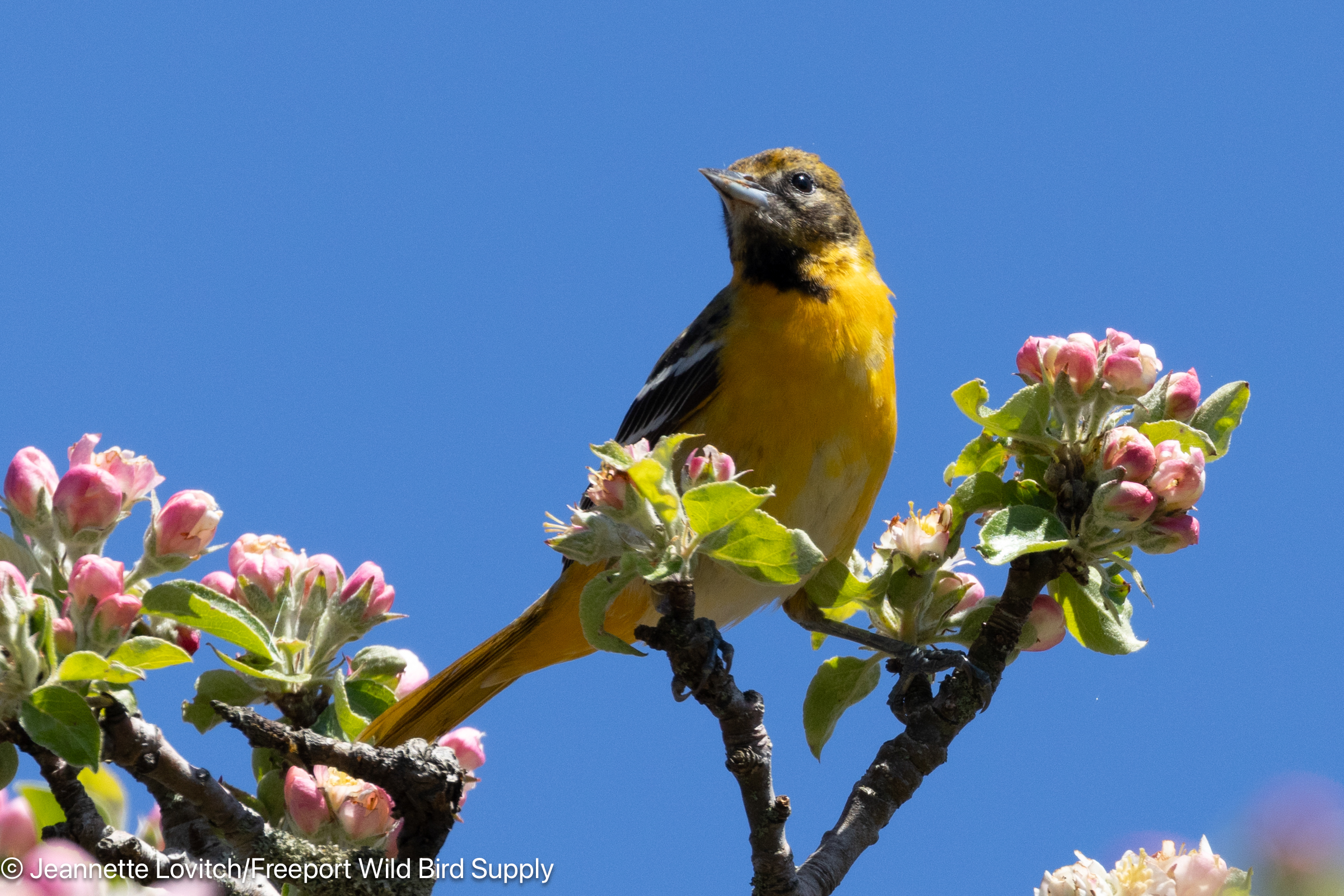
Baltimore Oriole
There were a lot more flycatchers around today, including quite a few Eastern Wood-Pewees.

It was also getting warm on a perfectly sunny sky, and birds took to the shadows earlier than in days past; the hotspots got much quieter by late morning with the increasing seabreeze. Nonetheless, pockets of activity continued right up through lunchtime.

The veggie burger bahn mi from The Bait Bag.

We rapidly added to our collective weekend list (which do not count for our tour total, of course), including finally reaching 20 species of warblers with an uncommon-out-here Pine Warbler. We then eclipsed it with a stunning male Mourning Warbler, and finally in the afternoon, picked up an Ovenbird for our 22nd and final species of warbler. Locally-rare Hairy Woodpecker, a truant Long-tailed Duck, at least one continuing Harlequin Duck, and we found my first Nelson’s Sparrow of the year at Lobster Cove. We even got a little hike in to try and burn a few of the extra calories we consumed from all of the islands’ scrumptious meals. And, anytime we stopped at a favorable looking patch of vegetation, migrants would appear, everywhere we went. It’s always tough to leave, but we at least went out with a bang!

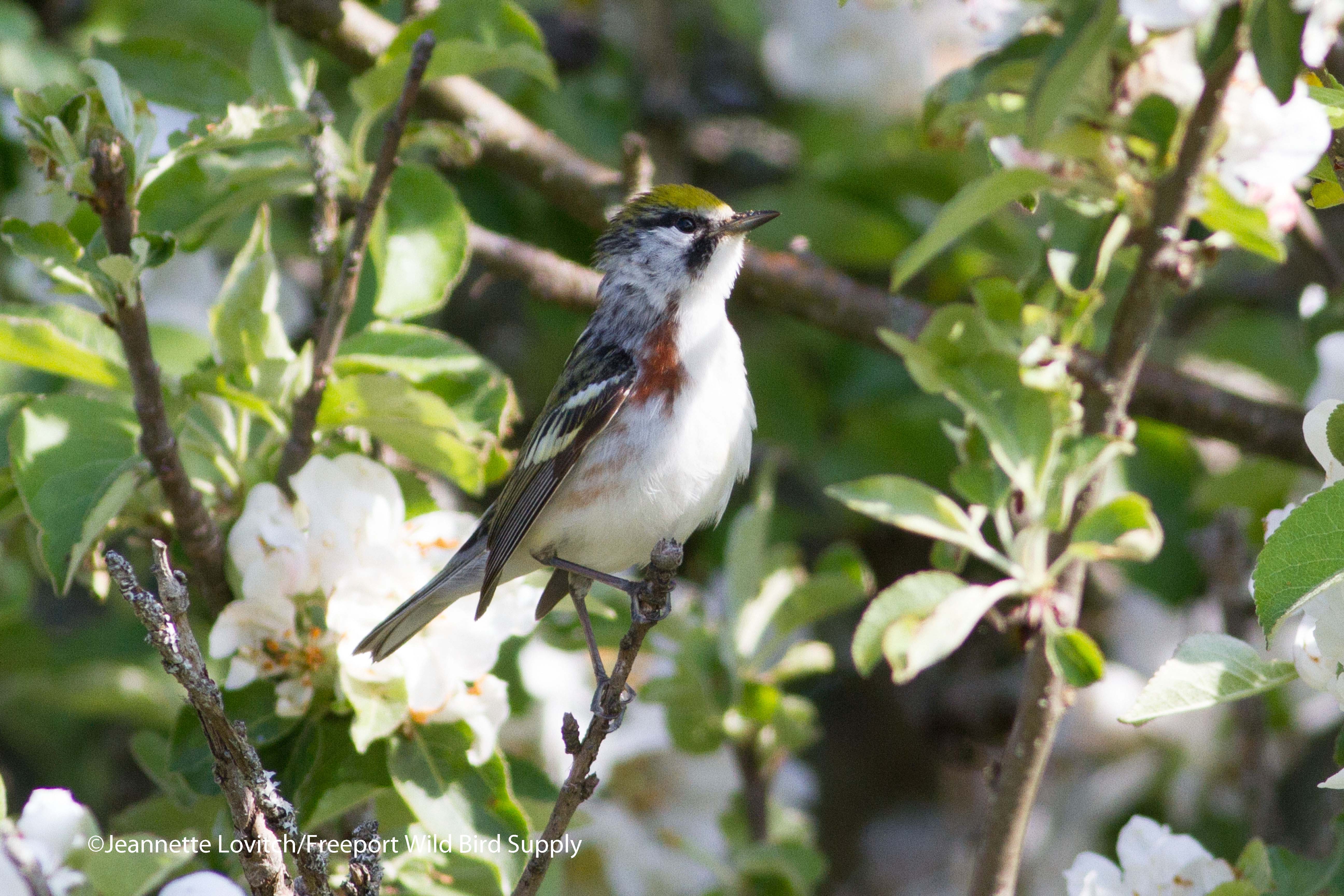
Male Chestnut-sided Warbler

So back here in the Real World now, we can reflect on this past weekend as one that we will most surely always remember!

Here is the trip list four the five-day tour. I didn’t bother including the first day though, but it did net us a Lesser Black-backed Gull that we didn’t see any other day.

* = seen from ferry only.

Species5/245/255/265/27 (with Jeannette)
*ferry ride only
Canada Goose02 42
Wood Duck0001
Mallard1515xx
Common Eiderxxxx
HARLEQUIN DUCK121001
White-winged Scoter0002
Surf Scoter00501
Black Scoter00030*
Long-tailed Duck2001
Red-breasted Merganser0003
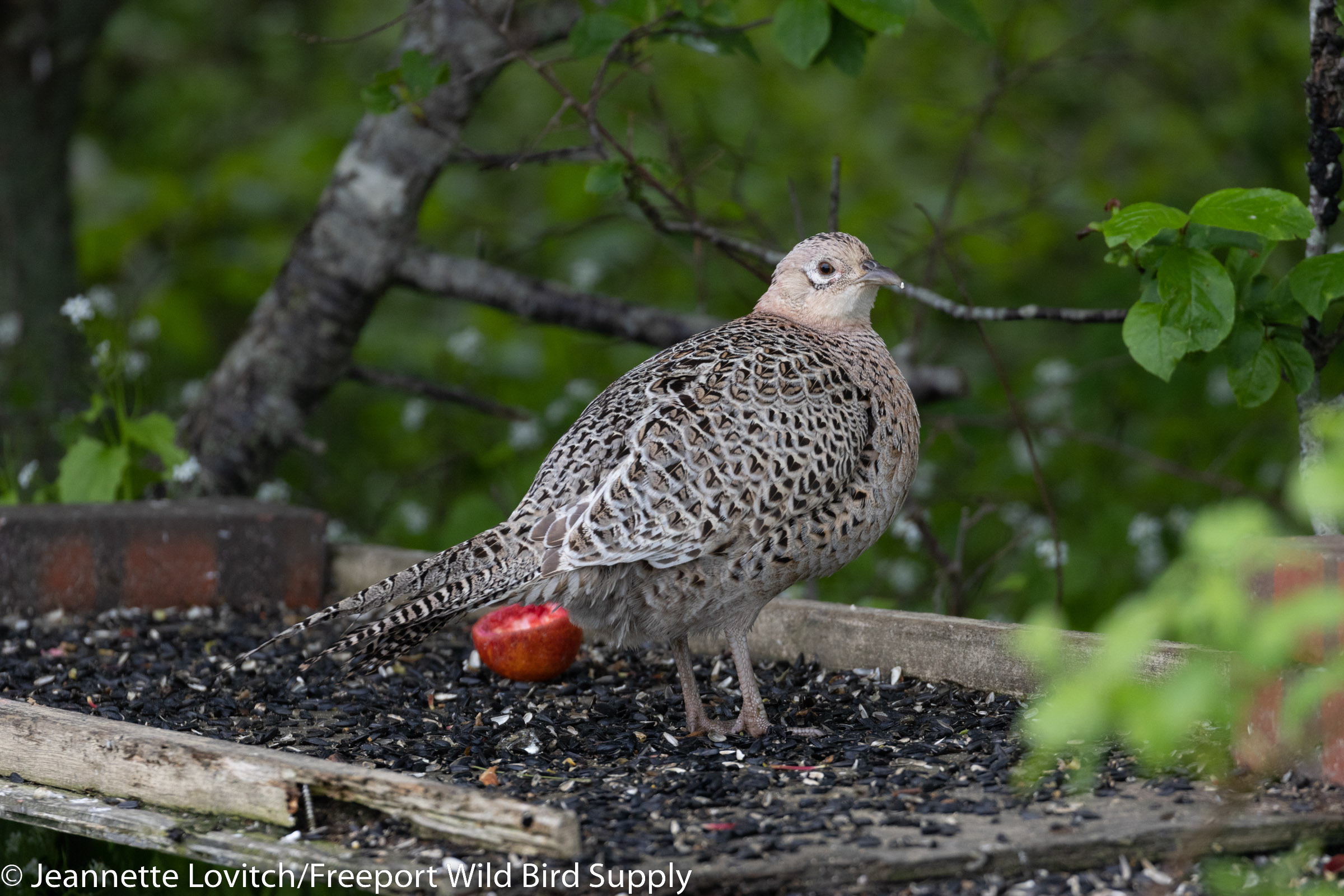
Ring-necked Pheasantxxxx
Mourning Dove68108
Common Nighthawk0010
Ruby-throated Hummingbird3454
Virginia Rail0111
WILLET2000
Spotted Sandpiper0002
Black Guillemotxxxx
ATLANTIC PUFFIN3000
Laughing Gull56106
Herring Gullxxxx
LESSER BLACK-BACKED GULL1 (5/23)000
Great Black-backed Gullxxxx
Common Tern0005*
Common Loon2331
Red-throated Loon0001
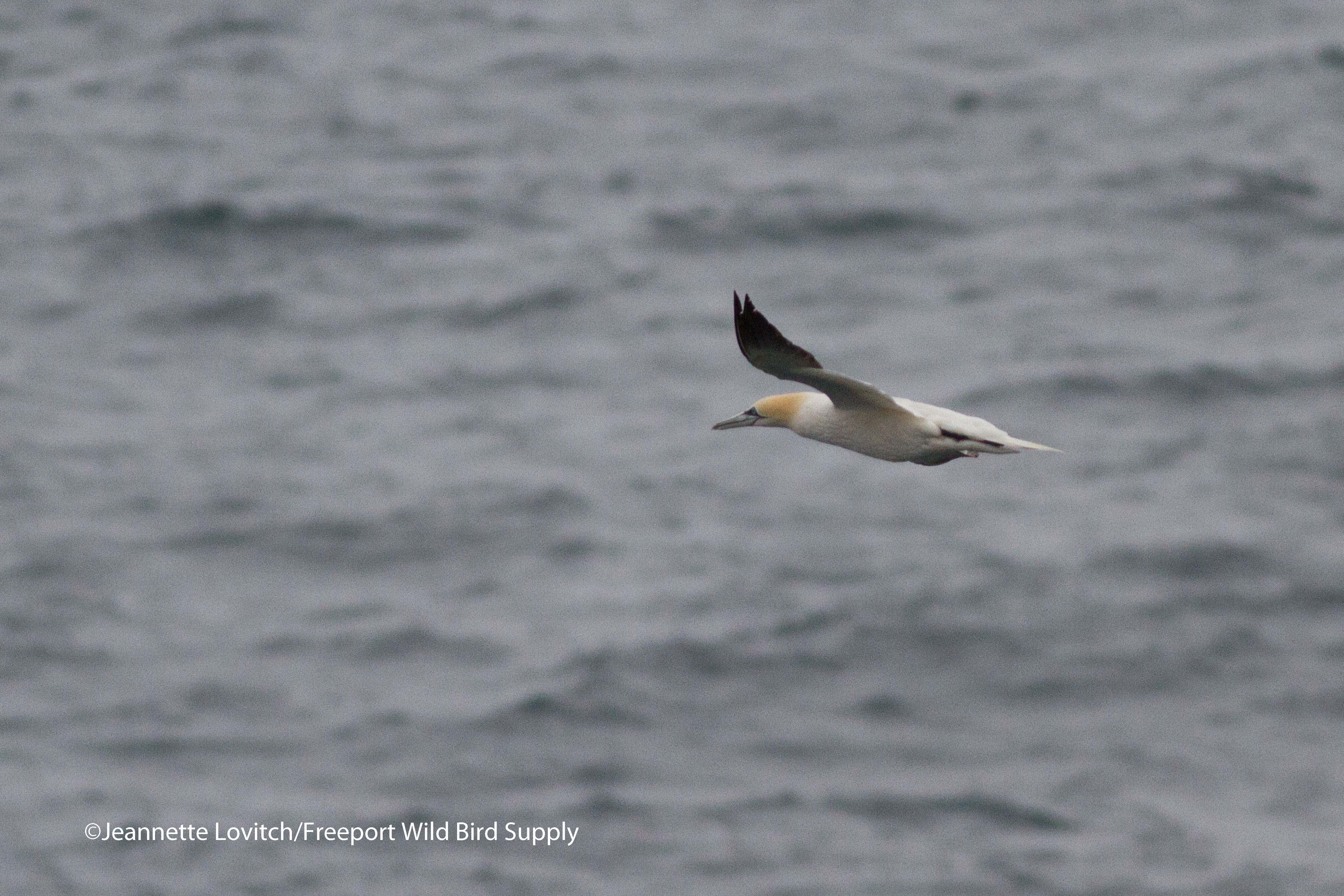
Northern Gannet6212*
Double-crested Cormorantxxxx
Great Cormorant0001*
SNOWY EGRET0101
Great Blue Heron0010
Osprey0120
Sharp-shinned Hawk1000
Bald Eagle2233
Yellow-bellied Sapsucker0010
Downy Woodpecker1000
HAIRY WOODPECKER0001
Northern Flicker1221
American Kestrel0001
Merlin1100
GREAT-CRESTED FLYCATCHER0100
Eastern Kingbird3122
Eastern Wood-Pewee42420
Alder Flycatcher0222
“Traill’s” Flycatcher0013
Willow Flycatcher0022
Least Flycatcher221012
Philadelphia Vireo1000
Red-eyed Vireo65430
Blue Jay4211
American Crow2244
Common Raven2222
Black-capped Chickadeexxxx
Tree Swallow1122
Barn Swallow1136
Golden-crowned Kinglet0221
Cedar Waxwing806060150
Red-breasted Nuthatch1246
Carolina Wren2433
House Wren2212
Gray Catbirdxxxx
Brown Thrasher0111
European Starlingxxxx
Eastern Bluebird0201
Swainson’s Thrush1338
American Robin1010x8
Purple Finch1101
Pine Siskin0001
American Goldfinch10101210
LARK SPARROW1000
Chipping Sparrow2000
White-crowned Sparrow0111
White-throated Sparrow1211
NELSON’S SPARROW0001
Savannah Sparrow 4432
Song SparrowxXxx
Lincoln’s Sparrow03310
Bobolink3413
Baltimore Oriole2232
Red-winged Blackbirdxxxx
Common Gracklexxxx
Ovenbird0001
Northern Waterthrush11110
Black-and-white Warbler1210815
Tennessee Warbler22610
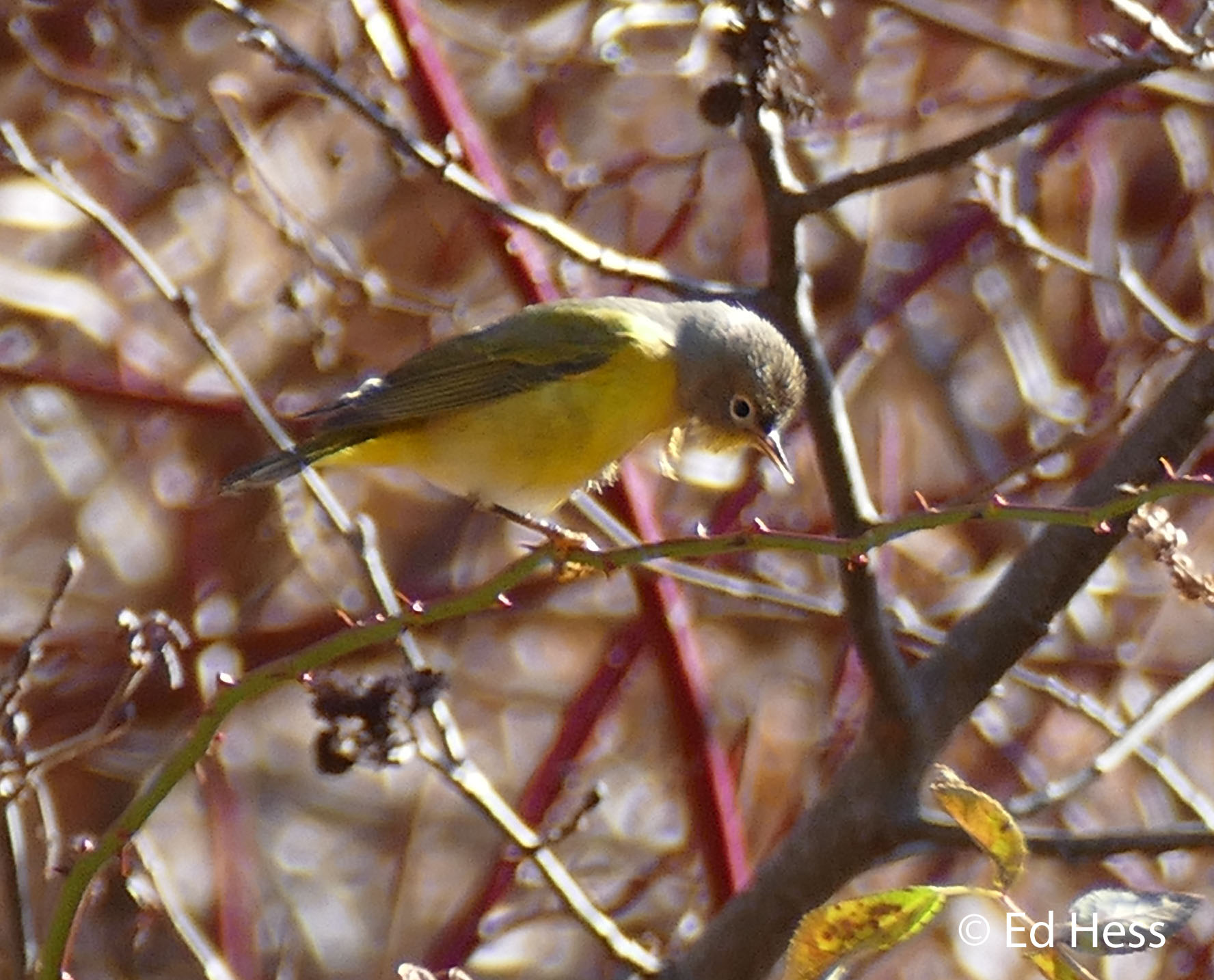
Nashville Warbler0114
MOURNING WARBLER0001
Common Yellowthroat2020xx
American Redstart55454080
Cape May Warbler3426
Northern Parula15154540
Magnolia Warbler50454070
Bay-breasted Warbler810315
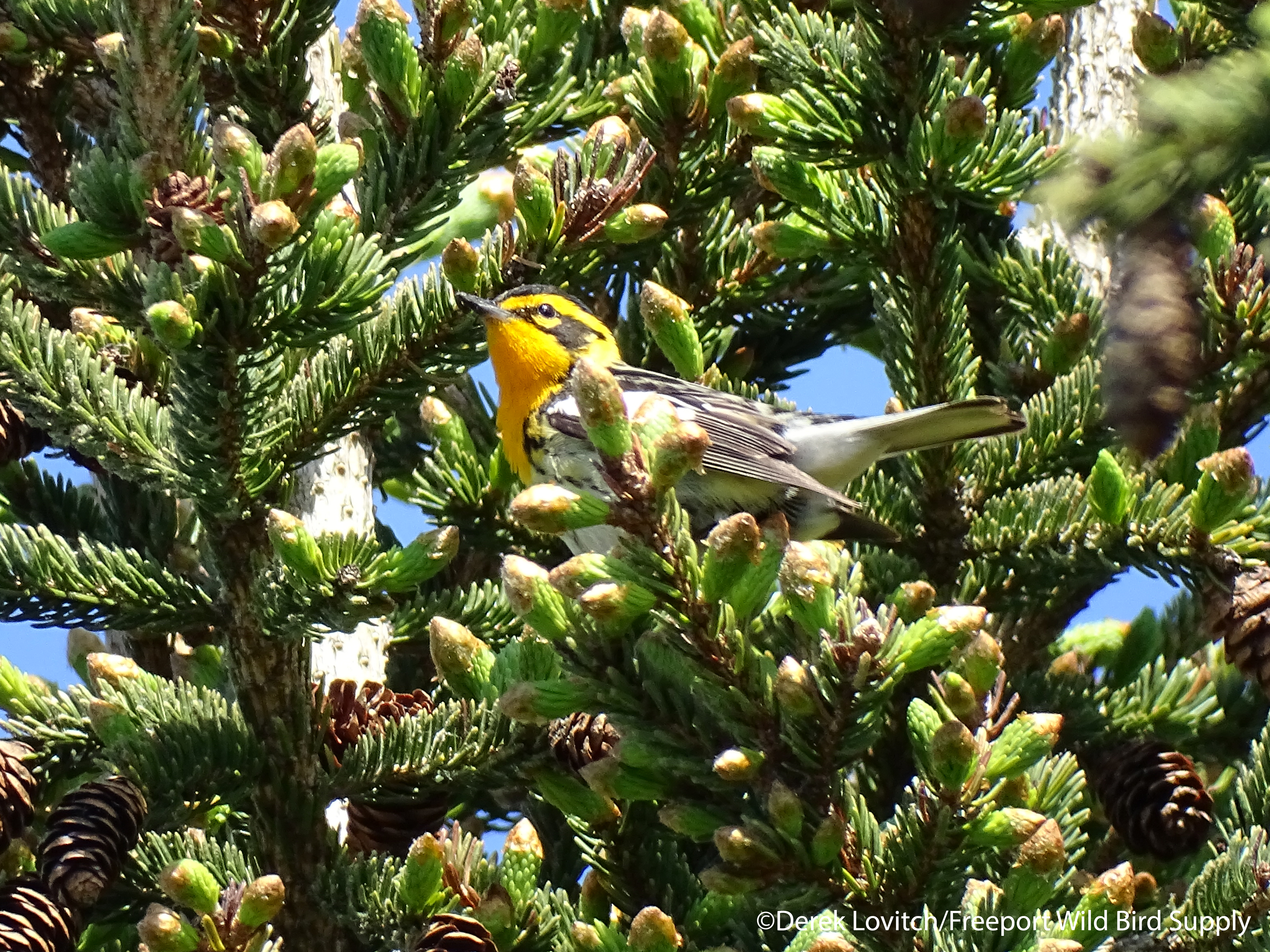
Blackburnian Warbler4434
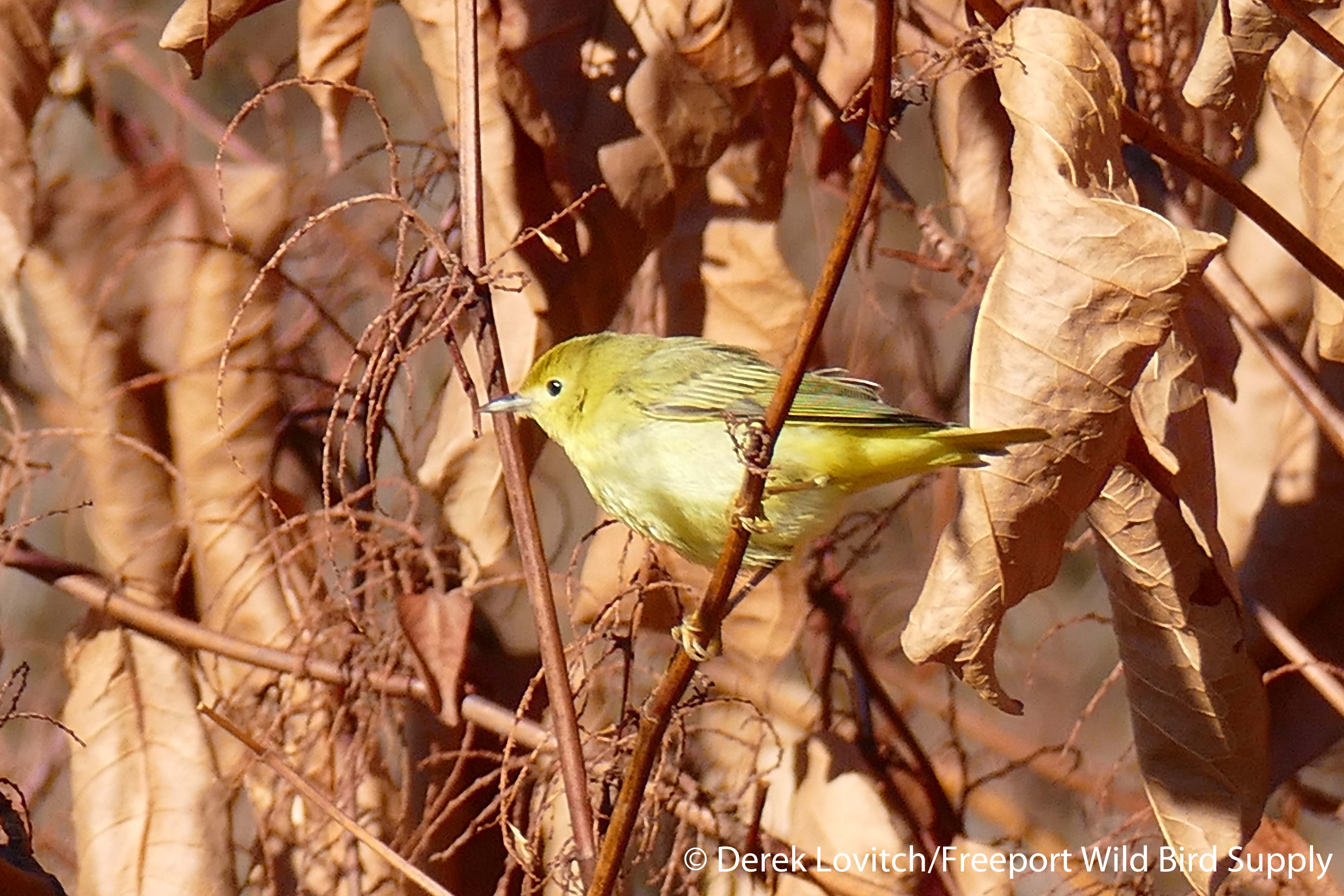
Yellow Warbler353025x
Chestnut-sided Warbler661020
Blackpoll Warbler153555100
Black-throated Blue Warbler1126
Pine Warbler0001
Yellow-rumped Warbler3201
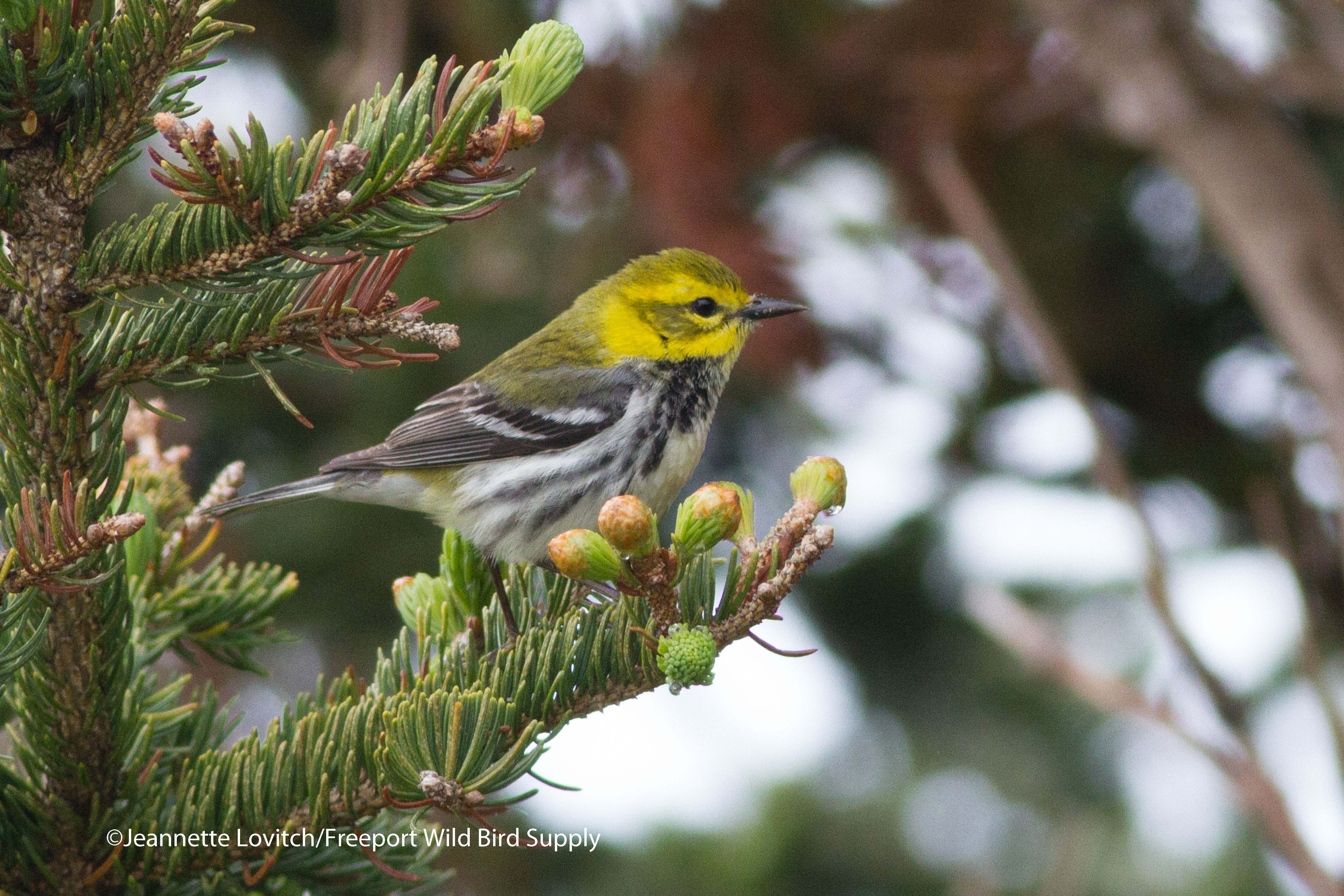
Black-throated Green Warbler10152015
Canada Warbler1000
Wilson’s Warbler20151010
Scarlet Tanager1111
Northern Cardinal61086
Rose-breasted Grosbeak3332
Day Total72757392
Warbler Day Total18181721
Trip Total91Weekend Total inc. Tuesday106
Warbler Trip Total19Warbler total inc, Tuesday22

The above birds follow the “guide plus one” rule, meaning both me and at least one client need to see the bird for it to go onto the list. This year, the only two birds I saw without the group that we didn’t later encounter was a fly-by Belted Kingfisher and an American Woodcock at dusk, both on the the 24th, for a total of 91 with the group and a 5-day tally of a respectable 106 species.

In other words, it was a great weekend!

2024 Spring Monhegan Migration Weekend Tour Report

Blackpoll Warblers were pleasantly ubiquitous over the weekend, with endless opportunities to view them without neck strain for a change.

I just can’t walk away from a male Blackburnian Warbler in the sun, especially at eye-level. Just can’t do it. While Blackpolls were the most numerous migrant of the tour, as expected for the end of May, Blackburnian Warblers consistently stole the show.

Our 14th annual Monhegan Spring Migration Weekend was highlighted by three days of insanely gorgeous weather, 18 species of warblers, and loads of crossbills. But what set this year’s tour apart was how consistently amazing the looks were at so many birds, especially both crossbills and some of our favorite warblers.

The tone was set on our Friday crossing from New Harbor, with lovely weather and 2 fly-by Atlantic Puffins. And once again, we hit the ground running after our 10:15 arrival, taking nearly an hour just to walk up Dock Road. One of our favorite corners was just hoppin’, with our first stellar looks at both Red and White-winged Crossbills and Blackpoll Warblers, as well as our only Canada Warbler of the tour.

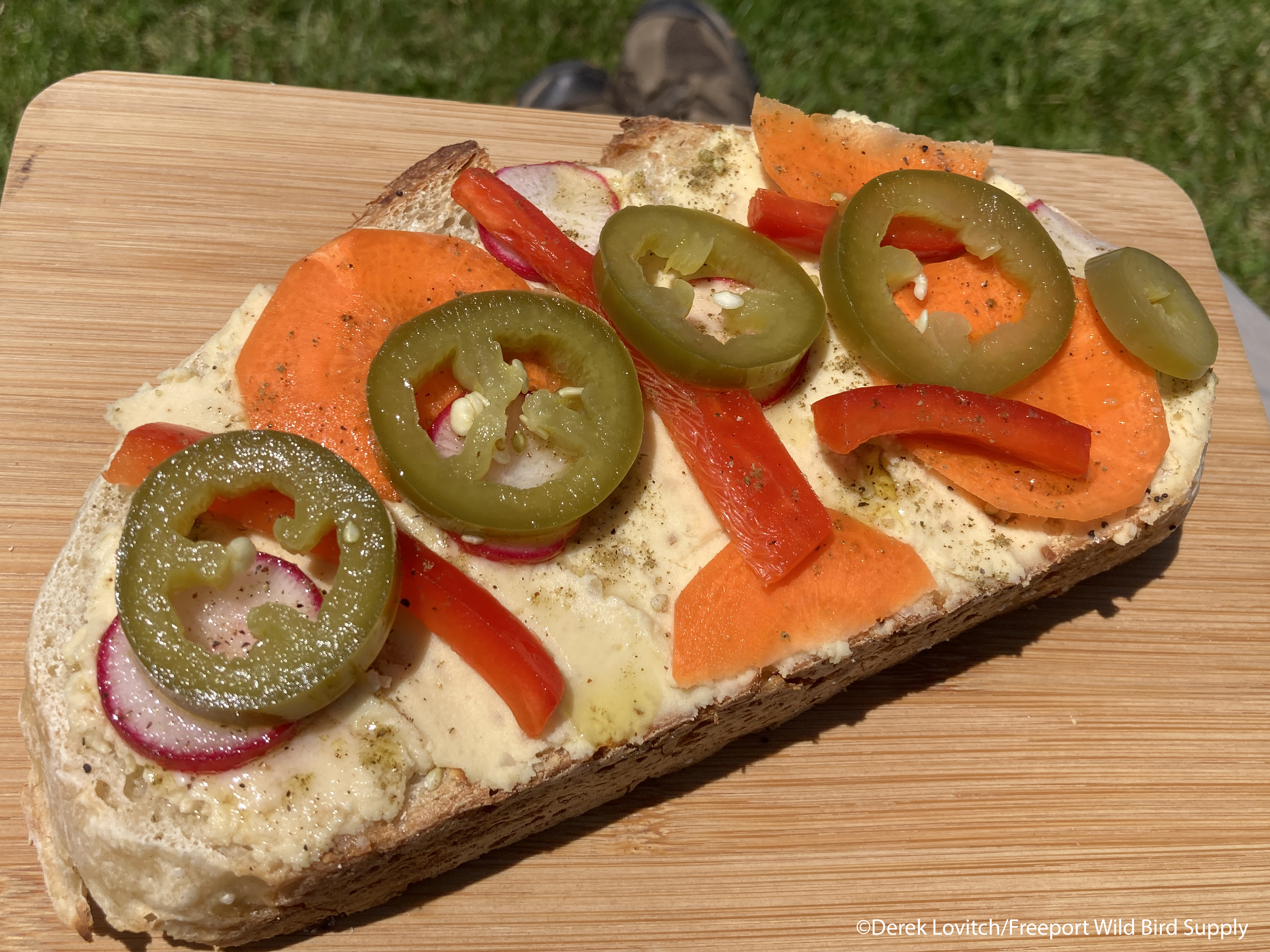
I ate a lot of hummus toasts for lunch at the Trailing Yew in an attempt to make up for copious breakfasts and decadent feeders.

The afternoon, and the next three days were filled with crippling view after crippling view. Blackpoll Warblers were everywhere, both males and females seen in close proximity repeatedly for good studies. American Redstarts were abundant, as were locally-breeding Common Yellowthroats and Yellow Warblers.  But it’s been a long time since we have seen crossbills, especially White-winged, so well and so often everywhere around town and beyond. It’s hard not to name this species the bird of the tour this year.

Male White-winged Crossbills.

In that first afternoon, some of our other highlights were a fleeting glimpse of a Black-billed Cuckoo, and later we found a female Purple Martin. Birds were just unusually low and cooperative, despite the gorgeous weather, so that really set this first day apart.

My days started even earlier than I would have liked as pheasants took to calling from the railing right outside my bedroom window. At 4am. 4am.

Unfortunately, the NEXRAD radar archive was down for the duration of our stay, so I can’t do my usual analysis here, but on Saturday morning, a light morning flight of mostly Blackpoll Warblers and American Redstarts suggested at least some birds had arrived on the light westerly wind overnight. There were also more Magnolia Warblers around, but overall, our two morning walks were slower than yesterday’s birding, but we would repeatedly find pockets of good activity with more great views of most of what we encountered.

This Cape May Warbler showed himself nicely, feeding on little midges/flies buzzing around the buds of this Red Spruce.

A Black-billed Cuckoo was as cooperative as they get, freezing on a bare branch for several minutes. Prolonged scope views of Red and White-winged Crossbills offered the chance to watch their amazing feeding behavior. The afternoon was a little slower, as expected, but still low and close Blackpoll Warblers and crossbills all around.  Friends found a Blue Grosbeak that afternoon, which confirmed what I thought “had to be one” that flew across the marsh early in the morning but disappeared into brush before we could confirm its identity.

Of course we took some time to enjoy Rose-breasted Grosbeaks at Donna’s feeders, along with the omnipresent Ring-necked Pheasants.

Despite southerly winds overnight, Sunday morning was quite a bit slower, likely due to rainfall cutting off the flow of migrants from the south.  We started the day with a bang though, as we moseyed down to the harbor to enjoy an up-close-and-personal Razorbill that ended up spending much of the day foraging in the harbor. 

There was some passerine turnover overnight, however, and new birds this morning included an Alder Flycatcher, a calling Olive-sided Flycatcher, and finally a Tennessee Warbler – perhaps our first uncooperative warbler of the trip!  The bird of the morning, however, was Blackburnian Warbler, as we started the day with amazing views just as we started and finished the morning with repeated great looks at males and females.  Again, we were just in awe of the repeated great views we were getting of so many species, even if, yes, it was slow by Monhegan standards.

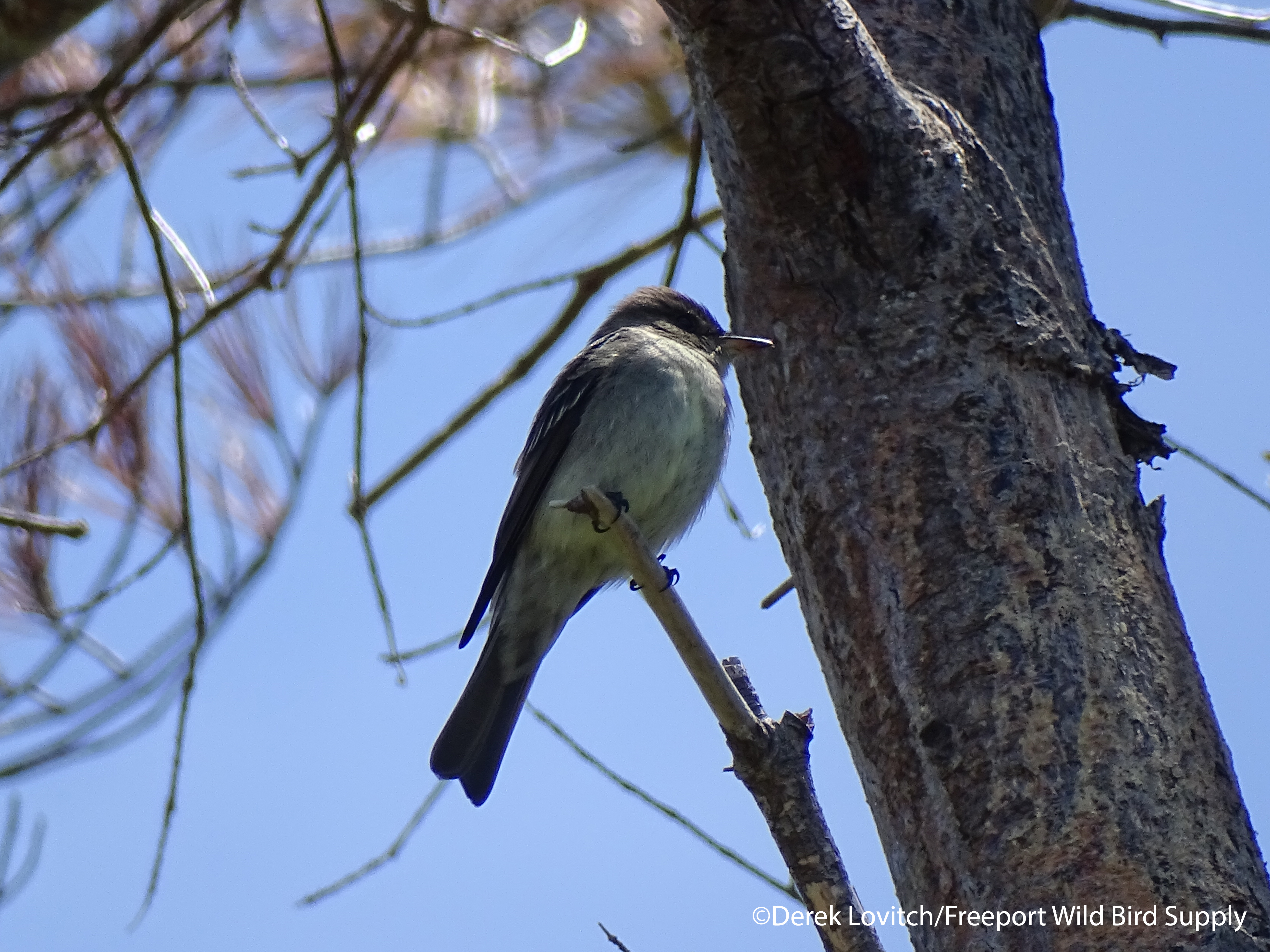
A nice selection of flycatchers over the weekend afforded the opportunity to learn how to break them down via primary projection, such as in this long-winged Eastern Wood-Pewee.

In the afternoon, we took the obligatory walk up to the lighthouse, both for some hawkwatching and snapshots. However, we ended up being enthralled (OK, I was enthralled) by a massive gull feeding frenzy that broke out over the lighthouse hill and beyond. It became clear that the gulls were not just enjoying the weather to soar on thermals but were feeding on some unseen flying insect. While a common event on the mainland, none of the birders present out here has ever seen anything like this over the island. The numerous Herring Gulls attracted a growing number of Laughing Gulls – the most I have ever seen out here (it’s usually just a few pairs around the harbor or fly-bys).

Northern Parula nest under construction.

Monday, the last day of the tour, unfortunately, did not see us go out with a bang. With light easterlies overnight and developing clouds and fog, not only did a new wave of migrants not arrive, but it seemed like just about every single passage migrant had departed!  Even Blackpolls were few and far between, and the number of American Redstarts seemed only on par with the number that remain out here to breed.

Pink Lady’s Slipper in the woods.

But once again, White-winged Crossbills stole the show, with the pre-breakfast walk highlighted by incredible views of a feeding family group. And although slow all day, we covered some ground and slowly built up our triplist with everything from a Purple Finch to a calling fly-over Black-bellied Plover.  We studied a Great Cormorant (and later, a second), and finally caught up with the long-staying Green Heron in the ice pond.  Three tarrying Black Scoters were a surprise in Deadman’s Cove, but not nearly as surprising as the drake Green-winged Teal loafing with Common Eiders on Neigh Duck!

After lunch, an unusual-for-here assortment of swallows over the marsh included two Bank, one Cliff, joining the 2 Tree Swallows and more Barn Swallows that have been out here all weekend. Seawatching at Lobster Cove produced a hen Long-tailed Duck right off the rocks that somehow disappeared in front of our eyes.

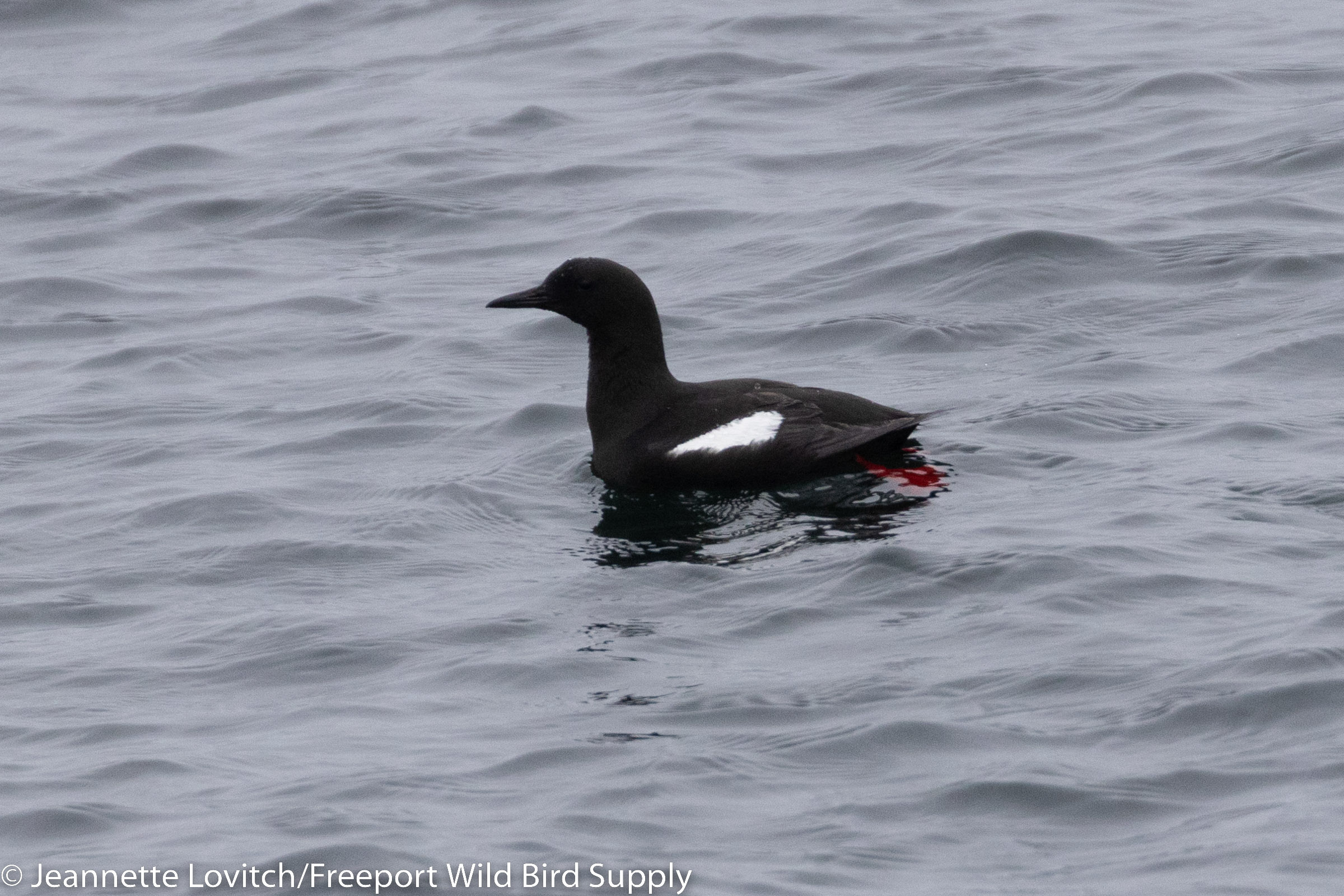
Black Guillemots were all around the island, including some close ones off of Lobster Cove that were close enough to see those vivid red feet.

“Lefty” the Red-winged Blackbird has returned for at least his third summer on territory in the marsh.

With the tour coming to an end at about 3:00pm as just about everyone readied to board the Hardy Boat, rain began to fall, bringing our tour to an official close. However, it wasn’t until dinnertime that a few downpours arrived, and so we squeezed out one more comfortable day of birding.

It was just Jeannette and me now, but “FOMO” was unwarranted. While a White-throated Sparrow outside of the Monhegan House after dinner was unexpected for the date, we didn’t add anything new to the trip list that evening, or the next morning. Rain, heavy at times overnight and a strong south wind with fog in the morning precluded any movement of birds, and our pre-breakfast walk was dreadfully slow. Passage migrants were few, just about 9 Blackpoll Warblers, 1 Canada Warbler, and 1 Northern Waterthrush, and it felt downright June-like with birdsong being almost exclusively breeding birds. We did have another look at uncommon Monhegan birds like the Blue-winged Teal, Green Heron, and Bank Swallow, but it wasn’t the hardest day to walk away from.

Juvenile White-winged Crossbill

…. Which was good, as we were forced to depart earlier than planned due to the cancellation of the afternoon Hardy Boat. With a low pressure system moving along the stalled front that likely reduced our flow of migrants over the second half of the weekend was also building the seas. Our 10:15 trip, however, featured following seas that made for a reasonable ride, but the fog remained thick until New Harbor. We did have 4 Red-necked Phalaropes materialize out of the fog, however, with one remaining on the water just long enough for Jeannette to reach for and get her camera ready.

So, while Monday – and our usual day off together on Tuesday – was lackluster overall, it was really hard to beat the weather, birding, and learning opportunities that this year’s tour offered. Hopefully, everyone will now know how to identify Blackpoll Warblers at least! Oh, and my goodness the crossbills…

We tallied a respectable 93 species, including 18 species of warblers, over the four-day tour. Although below our long-term average, this was slightly above recent spring weekends. The following counts are simply guesstimations of the number of each species we encountered each day. Not the number of observations (eg every time we passed the same singing Yellow Warbler) or even a guess as to how many were on the island on a given day, but some crude attempt to quantify how many individuals of each species we think we saw each day. The ebbs and flows and daily changes are more interesting than the undoubtedly inaccurate numbers. For species such as the two crossbills that move around, back and forth, all over each day, it was impossible to really know how many there were. “A lot” should suffice.

Here is the trip list four the four-day tour. * = seen from ferry only. **=not seen with tour group.

Species5/245/255/265/27
Wood Duck111 0
Blue-winged Teal0010
Mallard15202015
American Black Duck1101
Green-winged Teal0001
Common Eiderxxxx
Surf Scoter2*001
Black Scoter0003
Long-tailed Duck1001
Ring-necked Pheasant8101010
Mourning Dove81088
Black-billed Cuckoo1100
Common Nighthawk1000
Chimney Swift0020
Ruby-throated Hummingbird1212
Virginia Rail0110
Black-bellied Plover0001
RAZORBILL0010
Black Guillemotxxxx
ATLANTIC PUFFIN2*000
Laughing Gull6*2018
Herring Gullxxxx
Great Black-backed Gullxxxx
Common TernX*000
Common Loon5*012
Northern Gannet3*010
Double-crested Cormorantxxxx
Great Cormorant0002
Great Blue Heron0010
Osprey0210
Sharp-shinned Hawk0120
Bald Eagle2222
Red-bellied Woodpecker0100
Merlin0111
Eastern Kingbird3455
Olive-sided Flycatcher0010
Eastern Wood-Pewee4443
Alder Flycatcher0010
“Traill’s” Flycatcher0010
Yellow-bellied Flycatcher0100
Least Flycatcher0451
Blue-headed Vireo0100
Red-eyed Vireo815103
Blue Jay44844
American Crowxxxx
Common Raven1111
Black-capped Chickadeex866
Bank Swallow0002
Tree Swallow2211
Northern Rough-winged Swallow0100
PURPLE MARTIN1000
Barn Swallow4116
CLIFF SWALLOW0001
Golden-crowned Kinglet12102
Cedar Waxwing40608030
Carolina Wren2733
House Wren1121
Gray Catbirdxxxx
Brown Thrasher0110
European Starlingxxxx
Swainson’s Thrush1100
American Robin1012810
Purple Finch0001
WHITE-WINGED CROSSBILL6122025
RED CROSSBILL415124
American Goldfinch10101010
Chipping Sparrow2000
Song SparrowxXxx
Bobolink1111
Baltimore Oriole2212
Red-winged Blackbirdxxxx
Common Gracklexxxx
Northern Waterthrush0001
Black-and-white Warbler0101
Tennessee Warbler02**20
Nashville Warbler1000
Common Yellowthroat101512x
American Redstart30352510
Cape May Warbler2110
Northern Parula4884
Magnolia Warbler61044
Bay-breasted Warbler2012
Blackburnian Warbler3351
Yellow Warbler20202015
Chestnut-sided Warbler6863
Blackpoll Warbler6050356
Yellow-rumped Warbler0100
Black-throated Green Warbler38101
Canada Warbler1000
Wilson’s Warbler2110
Northern Cardinalx1086
Rose-breasted Grosbeak2201
BLUE GROSBEAK0100
Day Total64666562
Warbler Day Total14141312
Trip Total93
Warbler Trip Total18

The above birds follow the “guide plus one” rule, meaning both me and at least one client need to see the bird for it to go onto the list. I saw a Northern Mockingbird on three occasions, for example, but somehow never saw it during the tour! Likewise, an American Woodcock over the Island Inn after sunset on the 26th and the White-throated Sparrow that Jeannette and I heard after the tour ended on Monday, along with our Red-necked Phalaropes on our way home on Tuesday did not count for the official tour list.

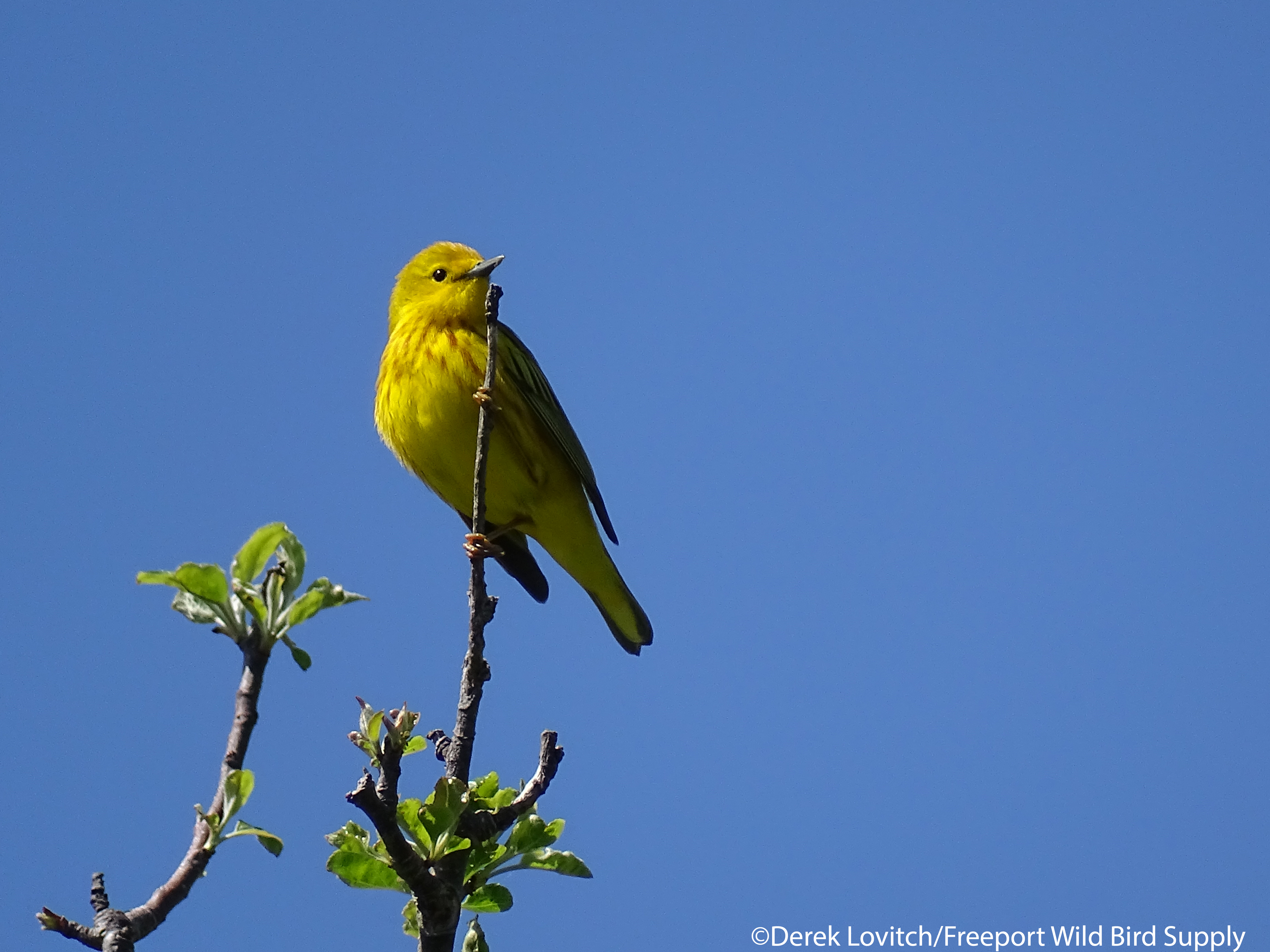
We didn’t care how common Yellow Warblers are…they’re still always beautiful! As are the sunsets from the Trailing Yew.

Recent Highlights, 5/11– 5/17/2024

John Lorenc and I finally caught up with this continuing WHITE-WINGED DOVE at Donna Cundy’s feeders on Monhegan Island in our brief visit on the 17th.  It appeared minutes after we walked away for the” last time,” but we were alerted by friends and raced back. My photos have a twig in front of that beautiful powder blue eyering, so I’m borrowing Kristen’s photo.

My observations of note over the past seven days also included:

  • 15 species of warblers, led by only about 20 Black-and-white Warblers and about 15 Northern Parulas, Evergreen Cemetery, Portland, 5/12 (with Down East Adventures Spring Songbird Workshop group).
  • 1-2 Blue-gray Gnatcatcher, Evergreen Cemetery, 5/12 (with Down East Adventures Spring Songbird Workshop group).
  • 15 species of warblers, led by 9 Ovenbirds and 7 American Redstarts, our property in Durham, 5/13.
  • 1 Louisiana Waterthrush, Suckfish Brook Conservation Area, Falmouth, 5/13 (with Jeannette).
  • 18 species of warblers (FOY), led by 40+ Yellow-rumped and 13 Common Yellowthroats, Florida Lake Park, Freeport, 5/14 (with Jeannette).
  • 15 species of warblers, led by 10+ each of Ovenbirds and Black-throated Green Warblers, our property in Durham, 5/14.
  • 15 species of warblers, led by 19 Common Yellowthroats and 10 Ovenbirds, Florida Lake Park, 5/15.
  • 5 Red Crossbills, around the store’s yard, 5/15. More impressive was the 23 that Jeannette had fly over early in the day on the 18th.
  • A very productive ferry crossing from Port Clyde to Monhegan on 5/17 included 4-6 ATLANTIC PUFFINS (FOY), a group of 6 (or possibly 9) RED-NECKED PHALAROPES (FOY), 6 Black Scoters, several Long-tailed Ducks, etc. (with John Lorenc, Jess Bishop, Ron Joseph, Kristen Lindquist, Bill Thompson, et al).  On the trip back, John and I had a total of 10 ATLANTIC PUFFINS and more Long-tailed Ducks.
  • 1 continuing WHITE-WINGED DOVE (photo above) and 1 female-type SUMMER TANAGER, Monhegan Island, 5/17 (with John Lorenc).

Additional personal first-of-years this week also included:

  • 1 Blackpoll Warbler, Evergreen Cemetery, Portland, 5/12 (with Down East Adventures Spring Songbird Workshop group).
  • 1 Red-eyed Vireo, Evergreen Cemetery, 5/12 (with Down East Adventures Spring Songbird Workshop group).
  • 1 House Wren, Evergreen Cemetery, 5/12 (with Down East Adventures Spring Songbird Workshop group).
  • 2 Bay-breasted Warblers, Florida Lake Park, 5/14 (with Jeannette).
  • 2 Eastern Wood-Pewees, Morgan Meadow WMA, 5/16.
  • 4 Laughing Gull, ferry from Port Clyde to Monhegan, 5/17 (with John Lorenc).
  • 4+ Indigo Buntings, Monhegan Island, 5/17 (with John Lorenc).

It was a great week of birding on our Durham property this week, including local breeding birds on territory often put on a show. Jeannette photographed this Yellow Warbler on our property on the 15th, for example.

Tours and Events:

  • There will not be a Saturday Morning Birdwalk on 5/25 as I’ll be on Monhegan with our tour group. 

2023 Monhegan Spring Migration Tour Report

Not surprisingly for the end of May, Blackpoll Warblers were the dominate migrant on Monhegan this weekend. However, we never tired of seeing both males (above) and females (below) so well each and every day.

A point-blank Bay-breasted Warbler. Up close and personal Magnolia Warblers, Northern Parulas, and 9 other species of warblers including more Blackpoll Warblers than we knew what to do with…and we hadn’t even made it up the hill of Dock Road yet!

In other words, our 2023 Spring Monhegan Migration Weekend tour got off to a great start as we really hit the ground running.  Then, a calling Evening Grosbeak. A fly-by Black-billed Cuckoo…more. Hmm… it was time to check in, and happily, shed a few layers.

After lunch, the excellent birding continued, with highlights including a flock of 10 Bay-breasted Warblers, a spiffy male Orchard Oriole, and great looks at a Philadelphia Vireo.  By day’s end, we had 59 species including 13 species of warblers – not bad for a mid-morning arrival!

Yellow Warblers (above) and Common Yellowthroats (below) were common and conspicuous in and around town and other scrubby environs as expected.

It was cool and clear on Saturday morning, and the overnight radar image was a little ambiguous. Did the light westerly wind overnight push birds offshore as they approached from the south, or was that all just pollen and smoke haze in the atmosphere? However, the radar return did suggest birds offshore in the early morning, so we were excited to find out. Afterall, I did not expect yesterday to be so good, and it was excellent.

While only a few warblers were overhead by the time we assembled around the coffee pot at 6:30, it took a while for us to leave the spruces behind the Trailing Yew, as we had a nice pocket of warblers and good early-morning activity. We teased out a Blackburnian Warbler – the only one of the weekend, and the 3 White-winged Crossbills that have been on the island paid us a visit. Later in the morning, we caught up with the stunning male Dickcissel that has been around for a while, and were among the first to see a pair of recently-arrived House Finches (a surprising rarity on the island!). We also found a flock of 10 tardy White-winged Scoters and a total of 6 Surf Scoters that briefly visited Deadman’s Cove.

After lunch, we had the female/immature Summer Tanager, a female Orchard Oriole, found an Olive-sided Flycatcher, and while the afternoon was overall rather quiet, we had lots of great studies of a variety of birds, especially Blackpoll Warblers.

Although far from one of our best birding days on the island, it was noteworthy how well we saw just about everything. Even with a full group, birds were overwhelmingly cooperative, and everyone thoroughly enjoyed the birding…and another beautiful day of weather!

Many of our common warblers were easy to see, photograph, and enjoy throughout the weekend, such as this Northern Parula (above) and Black-and-white Warbler (below).

Saturday night into Sunday morning saw another ambiguous radar image, but the overall small number of new arrivals suggested that most of the return was something other than birds this day.

That being said, we started the day with one of the birds of the trip when I nearly spit out my coffee when I realized that flock of cormorants that looked strange was actually a flock of 9 Glossy Ibis.  They circled the town, looked to be pondering the town marsh, and then soared up high and over Lighthouse Hill. Incredibly rare for the island, these were a new “island bird” for me, and we felt very fortunate that we were one of the only birders (I believe only one other birder saw them at all) on the island that got to see them. The “lingering around the coffee pot at the Yew” strikes again!

As expected, it was relatively slow overall, but even after the excitement of the ibis, we continued to enjoy ourselves. We had great looks at a lot of things all morning, including common warblers like American Redstarts and oodles of Blackpolls.  We had our best looks yet of feeding Red Crossbills – they were all over the island this spring! – spotted a Peregrine Falcon, and continued to marvel at the growing flock of swirling Blue Jays contemplating a trip back to the mainland.

Ring-necked Pheasants kept us entertained as always, however.

After breakfast, we had another good find when a Purple Martin flew over us, and a bigger flock yet of Red Crossbills entertained us for a while. Jeannette arrived and joined the group to help carry my scope and to take photographs for this trip report, as well as help us find more birds.

Juvenile Red Crossbill.

It was warm and fairly slow, so I needed all the help I could get. Regardless, we added species to our trip list here and there in the afternoon, with quality surpassing quantity.  We visited the long-staying 1st year male Blue Grosbeak that has taken up residence at Lobster Cove, where, unlike most Blue Grosbeaks, it has taken to flycatching for seaweed flies in the wrack. Why it is doing this no one knows, but it was a fascinating behavior to watch. Birds and birding on Monhegan never cease to amaze!

The Blue Grosbeak.

A little later, we found an immature Broad-winged Hawk, or again, it found us, as it passed right over us as we poked around the Underhill Trail to find some birds in the shade and in cover.  It was often a struggle to find birds this afternoon, and it was downright hot!  But I heard very few complaints compared to the slow days when it’s 45-degrees, windy, and raining!

We spent a lot of quality time observing birds today, getting to know their behavior and natural history, such as these courting Cedar Waxwings.

While also practicing our field ID skills, such as Eastern Wood-Pewee.

And enjoyed whatever warblers we did encounter, including this male Black-throated Green Warbler.

Monday saw even further reduced activity, with a very summer-like feel to the birding. The migrant flock of Blue Jays built up to at least 46, a Pine Siskin must have just arrived, and some of us even spotted the Virginia Rail!  While passage migrants were few – almost all Blackpoll Warblers – we still had a great day of birding thanks to continued great views of most of what we were finding. There was a Northern Parula nest that a friend found for us to marvel at, and we had quality time once again with a family group of Red Crossbills. Watching them, especially the juveniles, eating buds and cones of Red Spruce at close enough distance to see if they were “righties” or “lefties” was memorable, and more than worth the visit. We had the male Orchard Oriole again, and paid the Blue Grosbeak another lengthy visit.

We took some time to scan the skies over the marsh while also enjoying “Lefty,” the Red-winged Blackbird with white outer primaries on only his left wing. He’s back for the second year.

One of the few birds we missed as a group all weekend was a long-staying but frustrating Snowy Egret that never seemed to stay in the same place long. It was reported at the Ice Pond while we were having breakfast, and Jeannette and I raced down to see it. The “racing” part after the new and ample breakfast buffet at the Trailing Yew may not have been the best decision, however, we got the bird! It was another island bird for me (#226) and I am glad I made the decision to skip the break to chase it, as it was long gone by the time our group arrived at the Ice Pond. I always like to get those chases out of my system before making a bad leadership decision and marching people across the island for a bird that only I cared about!  (Since they are locally common on the mainland, only an island-lister cares about such silliness).

As the afternoon wore on, the group slowly moseyed away from the Blue Grosbeak-evolving-into-a-flycatcher and made our way back to town to catch the last ferries of the weekend, bringing the tour to a close.

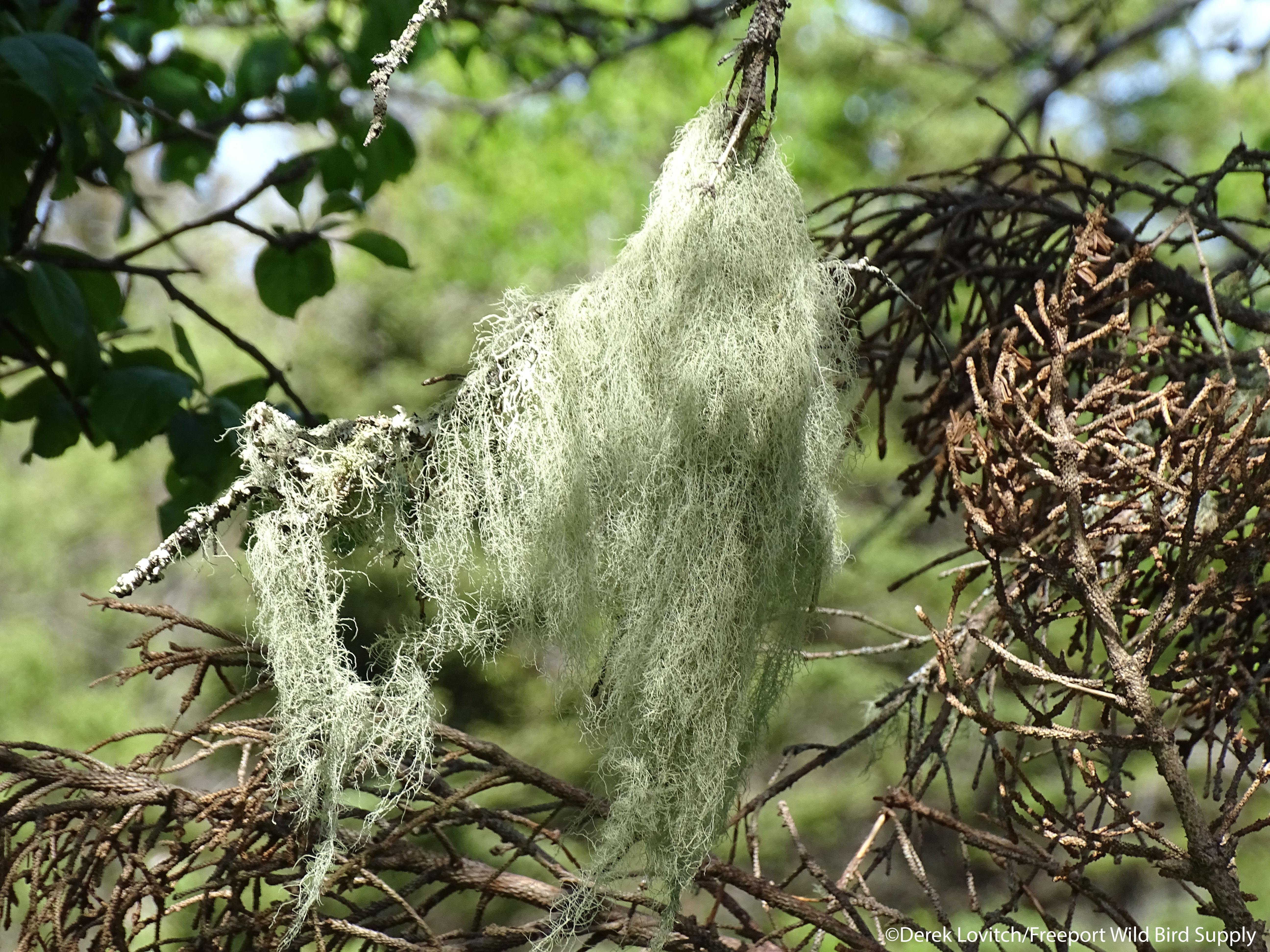
A friend found a Northern Parula nest under construction that we took time to marvel at. Here, the female brings some more material in to line the nest, which is nestled in a woven basket inside of large clumps of down-hanging Old Man’s Bear lichen.

However, as usual, Jeannette and I stayed around for another 24 hours to have a day off together and with friends. Leaving the brewery with one friend, I found a male Eastern Bluebird- an odd “new bird” for the date. Where the heck has he been or where did he just come from? Another Monhegan bird mystery…their migration ended a month ago.

Later, as we walked back from dinner with other friends, we heard at least three displaying American Woodcocks. The sunset was quite the stunner, too.

I wasn’t upset to not have a group on Monday, because my goodness, it was slow! I think what was left of the passage migrants cleared out overnight, and little if nothing came in. There were a few Blackpolls here and there, and maybe a few more American Redstarts than usual in the summer, but in and around town, that was about all.

So Jeannette and I decided to take a longer hike and check some oft-productive-but-less-often-birded areas. In doing so, we found a Field Sparrow on Horn Hill, and had a singing Yellow-bellied Flycatcher between Burnt Head and White Head. An adult male Sharp-shinned Hawk was a surprise – was it breeding here? – and a visit into the shaded woods added Winter Wren and Swainson’s Thrush to our weekend list.

We got excited when we saw a gray-backed, white-bellied flycatcher over at Gull Pond, but alas, it had the expected short, not-forked tail that we were hoping for!

Not including the 7 species Jeannette and I saw between 3:00 on Monday and when we departed at 3:15 on Tuesday, the tour list for the 12th annual Monhegan Spring Migration Weekend ended up a goodly 90 total species, despite only 15 species of warblers.  The overall count was better than our last two tours, but still below our long-term average. But I cannot recall four (and five) days of simply gorgeous and warm weather on any of our prior tours!  While the benign weather of late reduced the volume of migrants yet to pass through, and allowed many recent migrants to pass unimpeded overhead, I was pleasantly surprised by the final tally. It was also a high-quality list, with lots of “good” birds not seen by many in Maine away from the island. Oh, and my two island birds were nice, too!

Blue Jays are not the biggest feeder bird on this island!

Even our most common and familiar birds present speciaal photographic opportunities out here!

Species5/265/275/285/29
Mallardx10108
Mallard x American Black Duck1000
Common Eiderxxxx
White-winged Scoter01000
Surf Scoter0600
Ring-necked Pheasantx665
Mourning Dove810810
Black-billed Cuckoo1000
Chimney Swift0010
Ruby-throated Hummingbird6431
Virginia Railh.oh.o11
Semipalmated Sandpiper0010
Greater Yellowlegs0100
Black Guillemot2030x20
Laughing Gull6*216
Herring Gullxxxx
Great Black-backed Gullxxxx
Common Tern1 + 5*000
Northern Gannet0001
Red-throated Loon0100
Common Loon3*100
Double-crested Cormorantxxxx
Great Blue Heron0013
SNOWY EGRET0001**
GLOSSY IBIS0090
Bald Eagle2100
Osprey0322
Red-bellied Woodpecker0010
Merlin2210
Peregrin Falcon0010
Eastern Kingbird0022
Olive-sided Flycatcher0100
Eastern Wood-Pewee2222
“Traill’s” Flycatcher2010
Least Flycatcher2110
Eastern Phoebe1111
Philadelphia Vireo1100
Red-eyed Vireo6844
Blue Jayx484752
American Crowx46x
Common Raven0110
Black-capped Chickadeexxxx
Tree Swallow0222
PURPLE MARTIN0010
Barn Swallow1011
Golden-crowned Kinglet0010
Cedar Waxwing30504030
White-breasted Nuthatch0111
Red-breasted Nuthatch1000
Carolina Wren3 h.o.443
Gray Catbirdxxxx
European Starlingxxxx
American Robinxxxx
HOUSE FINCH0022
Purple Finch0122
WHITE-WINGED CROSSBILL0330
RED CROSSBILL022420
Pine Siskin0001
American Goldfinch12101212
Chipping Sparrow0011-2
White-throated Sparrow2220
Savannah Sparrow3010
Song Sparrow10Xxx
Lincoln’s Sparrow0110
Bobolink1100
ORCHARD ORIOLE1102
Baltimore Oriole1433
Red-winged Blackbirdxxxx
Common Gracklexxxx
Northern Waterthrush0010
Black-and-white Warbler3443
Tennessee Warbler8430
Common Yellowthroatx8xx
American Redstart525168
Cape May Warbler1000
Northern Parula15101212
Magnolia Warbler10868
Bay-breasted Warbler11302
Blackburnian Warbler0100
Yellow Warbler10201515
Chestnut-sided Warbler2111
Blackpoll Warbler25602520
Black-throated Green Warbler1131
Wilson’s Warbler2220
SUMMER TANAGER0100
Scarlet Tanager0100
Northern Cardinalxxxx
Rose-breasted Grosbeak3220
Indigo Bunting0110
BLUE GROSBEAK0011
DICKCISSEL0110
Day Total60666954
Warbler Day Total13131210
Trip Total90
Warbler Trip Total15
Here is the trip list four the four-day tour. * = seen from ferry only. **=not seen with tour group.

This Week’s Highlights, 11/7-13, 2020

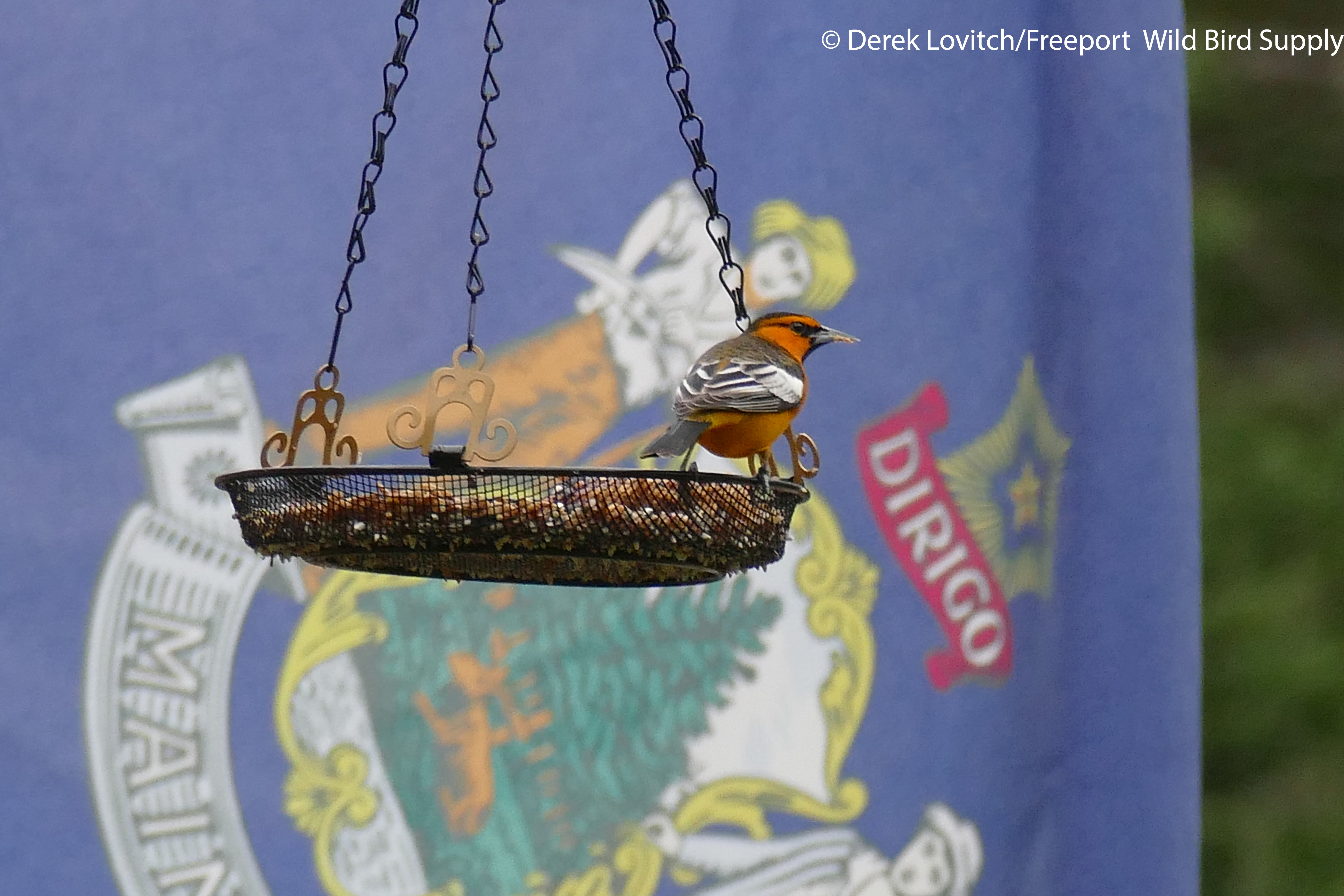
Well this is sure not something you’ll see everyday! Here’s a vagrant BULLOCK’S ORIOLE from the Western US in front of the Maine state flag!
With only 5-9 previous records in Maine, this visitor to a Freeport backyard was definitely my headliner this week…as it was for most birders in the state!

My observations of note over the past seven days were as follows:

  • 3 immature White-crowned Sparrows continue here at the store’s feeders through 11/11.
  • 1 Red Crossbill, around the store, 11/8.
  • 1 YELLOW WARBLER, 1 Rusty Blackbird, 1 Winter Wren, 4 Greater Yellowlegs, etc, Wolfe’s Neck Center, Freeport 11/9 (with Jeannette).
  • 3 PINE GROSBEAKS (FOY), Moose Point State Park, Searsport, 11/10 (with Evan Obercian).
  • 1 WHITE-WINGED CROSSBILL, Sears Island, 11/10 (with Evan Obercian).
  • 1 Winter Wren and 1 Ruby-crowned Kinglet, Sandy Point Beach, Searsport, 11/10 (with Evan Obercian).
  • 1 BOHEMIAN WAXWING, Stockton Cove, Stockton Springs, 11/10 (with Evan Obercian).
  • 1 Lapland Longspur, 1 Red Crossbill, 4 American Pipits, 6 Snow Buntings, 60+ Horned Larks, Mayall Road, Gray/New Gloucester, 11/11.
  • 1 American Pipit, fly-over here at the store, 11/11 (our 130th Yard Bird!).
  • 1 BULLOCK’S ORIOLE, Spring Hill Lane (see previous posts on Maine Birds Google Group or the Maine Birds Facebook Group for directions), Freeport, 11/11.
  • 1 Red Crossbill, Florida Lake Park, Freeport, 11/12.
  • Pine Siskin High Count This Week: 14, Spring Hill Road, Freeport, 11/11.
  • Common Redpoll High Count This Week: 2, multiple locations.
  • EVENING GROSBEAK High Count This Week: 8, over the store, 11/7 (with Saturday Morning Birdwalk group).

A Record-Shattering 5 Days at Sandy Point!

NOPA
Northern Parulas were certainly the “bird of the week” at Sandy Point.

It was a special five-day run at Sandy Point Beach on Cousin’s Island in Yarmouth. It was a record-shattering run in fact, in which I tallied nearly 18,000 migrants engaging in the “Morning Flight,” or “morning re-determined migration” when nocturnally-migrating passerines relocate (to drastically oversimplify things) come sunrise.
SandyPoint_sunrise,9-13-17

(To learn more about Sandy Point, check out the site entry in Birdwatching in Maine: A Site Guide, and for more on nocturnal migration, interpreting the radar, and the “morning flight” phenomena, check out Chapter 5 in my first book, How to Be a Better Birder. Whaddya mean you don’t have these two books!?)

I’ve had a handful of four-day runs, but I cannot think of a time when conditions were favorable – and I was actually present, and not leading tours on Monhegan for example – for five straight days. But I have most certainly never had five days like this!

I recorded 72 species “deemed migrating” through here, not including migrants that were in the bushes, such as the Gray Catbirds and Song Sparrows that are so abundant in the brush here. It does not include species like Osprey, in which some of the many I saw this week were likely southbound, but impossible to separate from the still-locals. And this tally did not include all of the waterbirds, from Common Eiders to herds of dabbling American Black Ducks, and from Bald Eagles to hunting Great Blue Herons, as well as resident species.

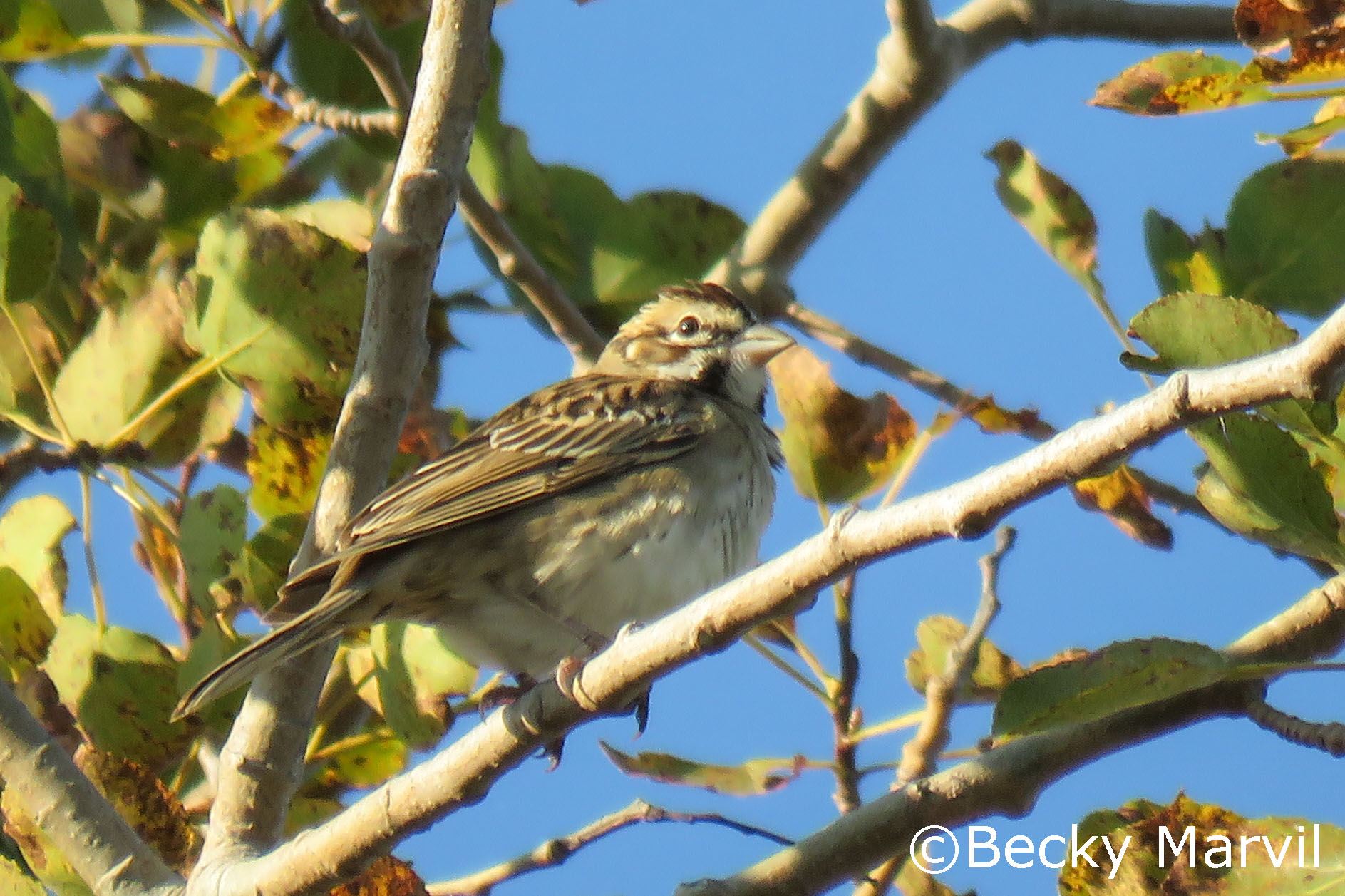
I tallied 25 species of warblers, including a single Connecticut Warbler, one of the most sought-after parulids in Maine. A Northern Mockingbird was only my 5th ever noted here, and two passing Dickcissels are always a treat. But certainly the icing on the cake of this great week was the Lark Sparrow found by the group in the parking lot on the relatively quiet morning of 9/13. This was a first record for Sandy Point, and my personal 184th species here.
LASP, Becky

But it was the morning of the 11th that will go down in Sandy Point history!  8,185 migrants was not only a new record, but almost doubled the previous record (4,346 on Sept 21, 2010). It was incredible. More on that epic morning later.

A number of records for high counts for individual species were set, and I am sure even more would have been shattered if I had a higher rate of identification during the onslaught of the 11th.   Other trends, typical of the season, were evident, such as the slow but steady change in the composition of the flight. The early migrants like Magnolia Warblers were giving way to a growing percentage of Yellow-rumped Warbles and Blackpoll Warblers for example. But it sure seems like we’re not yet running our of Yellow Warblers and American Restarts, however!
AMRE
immature male American Redstart

YWAR
Yellow Warbler, adult male

So first, here’s the numbers (bold font indicates a new daily record).

 9/9 9/10 9/11 9/12 9/13
Blue-winged Teal 3 0 0 0 0
Unidentified teal 0 0 4 0 0
Surf Scoter 3 0 0 0 0
Common Loon 4 0 0 3 0
Northern Harrier 0 1 0 0 0
Killdeer 0 1 0 0 0
Lesser Yellowlegs 0 0 0 1 0
Mourning Dove 0 1 0 1 1
Ruby-throated Hummingbird 2 0 0 1 1
Hairy Woodpecker 0 1 0 0 0
Northern Flicker 1 256 68 26 12
Pileated Woodpecker 0 1 0 1 0
American Kestrel 0 0 3 0 1
Merlin 1 1 0 1 2
Eastern Wood-Pewee 3 4 0 0 0
Yellow-bellied Flycatcher 1 0 0 0 0
“Traill’s” Flycatcher 2 0 0 0 0
Least Flycatcher 9 11 3 2 0
Unidentified Empidonax 5 0 0 1 0
Eastern Phoebe 1 3 2 2 2
Eastern Kingbird 2 1 0 0 0
Unidentified flycatcher 6 1 1 0 0
Blue-headed Vireo 1 3 1 2 0
Philadelphia Vireo 3 4 2 1 0
Red-eyed Vireo 42 49 30 9 4
Unidentified vireo 1 2 0 0 0
Blue Jay 0 0 0 2 5
Barn Swallow 1 0 0 0 0
Red-breasted Nuthatch 1 1 2 1 0
Golden-crowned Kinglet 0 0 0 1 0
Ruby-crowned Kinglet 2 1 5 4 0
Swainson’s Thrush 10 0 0 2 0
American Robin 4 3 1 2 0
Unidentified thrush 0 1 0 0 0
Northern Mockingbird 0 1 0 0 0
Cedar Waxwing 21 265 377 54 0
Ovenbird 0 0 0 0 1
Northern Waterthrush 0 0 0 1 0
Black-and-white Warbler 33 59 41 32 5
Tennessee Warbler 4 2 2 8 0
Nashville Warbler 8 8 10 4 0
CONNECTICUT WARBLER 1 0 0 0 0
Mourning Warbler 0 1 0 0 0
Common Yellowthroat 2 1 5 5 2
American Redstart 602 550 844 119 16
Cape May Warbler 18 5 8 5 0
Northern Parula 705 630 692 612 205
Magnolia Warbler 66 117 32 23 2
Bay-breasted Warbler 5 3 1 1 0
Blackburnian Warbler 7 6 1 0 0
Yellow Warbler 19 52 38 67 8
Chestnut-sided Warbler 5 2 0 2 0
Blackpoll Warbler 9 3 27 25 35
Black-throated Blue Warbler 8 7 4 4 0
Palm Warbler 0 0 0 1 0
“Western” Palm Warbler 1 0 0 0 0
Pine Warbler 0 0 0 1 0
Yellow-rumped Warbler 3 6 3 19 11
Prairie Warbler 1 2 1 1 0
Black-throated Green Warbler 118 63 73 57 26
Canada Warbler 6 0 1 0 0
Wilson’s Warbler 12 17 7 4 0
Chipping Sparrow 2 0 1 3 1
LARK SPARROW 0 0 0 0 1
White-throated Sparrow 1 0 0 0 0
Savannah Sparrow 2 0 0 0 0
Scarlet Tanager 1 1 4 1 0
Rose-breasted Grosbeak 3 1 0 0 0
Indigo Bunting 0 0 1 1 0
DICKCISSEL 0 0 1 0 1
Bobolink 1 2 0 0 0
Red-winged Blackbird 1 2 0 0 0
Rusty Blackbird 0 1 0 0 0
Baltimore Oriole 2 1 1 1 1
House Finch 0 0 0 1 1
Purple Finch 0 0 0 8 0
American Goldfinch 5 12 3 6 4
Unidentified 1915 1887 5893 737 192
TOTAL 3705 4057 8185 1866 540


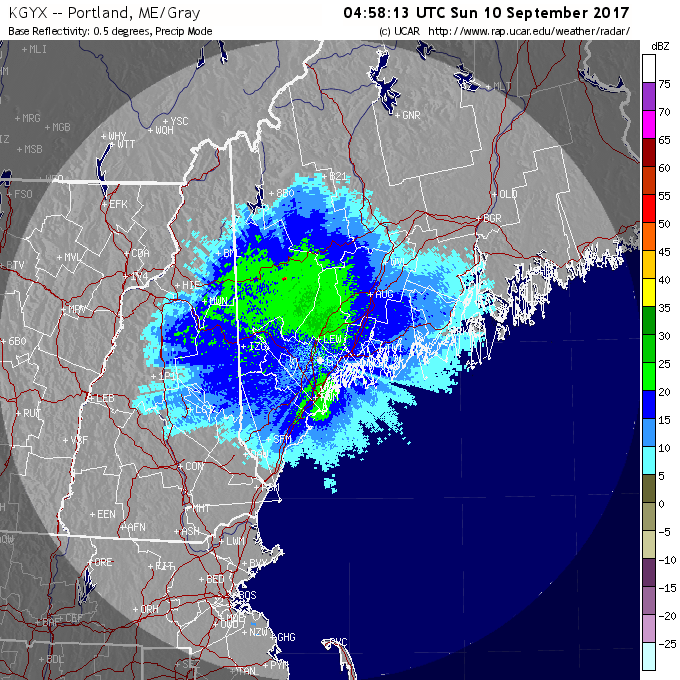
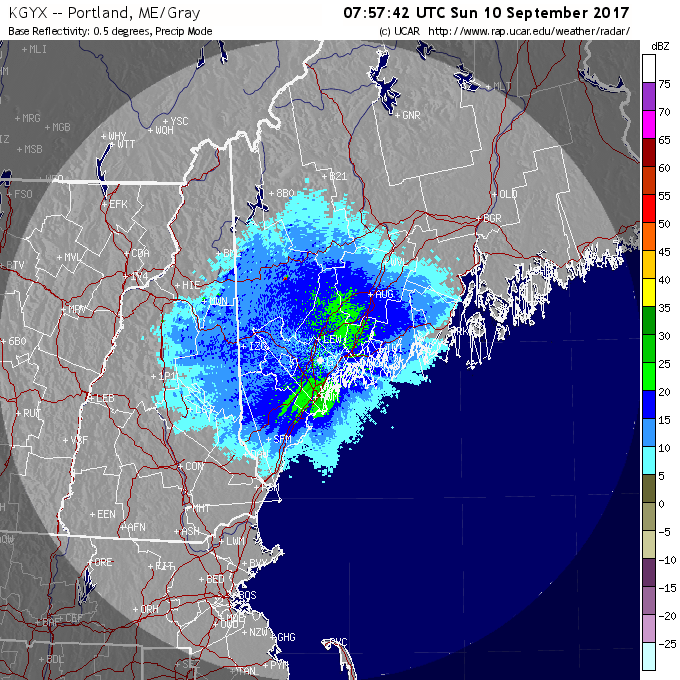
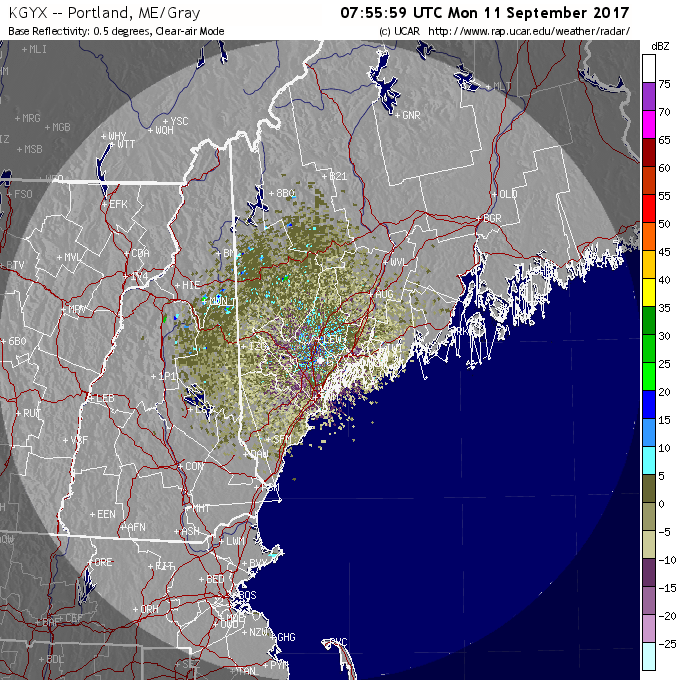
Now, let’s take a look at the radar. Here are the density and velocity images from 1am (as a sample) on 9/9 and 9/10. That’s a ton of birds on the radar.
1amRadar,9-09-17
1amVelocity,9-09-17

1amRadar,9-10-17
1amVelocity,9-10-17

And even as late as 4:00am on each day, a lot of birds were visible, and a lot of birds were offshore.
4amRadar,9-09-17
4amRadar,9-10-17

The night of 9/8 through 9/9 featured light westerly winds, shifting to northwest by sunrise. And on the next night, light north winds became northwest overnight. Both, as expected, produced great flights over and through Sandy Point some dawn.

Weather patterns, especially at this time of year, rarely produce three great nights for migrants in a row. And when they do, it often results in fewer birds overnight (and therefore at Sandy Point) come sunrise; essentially, the well temporarily runs dry.

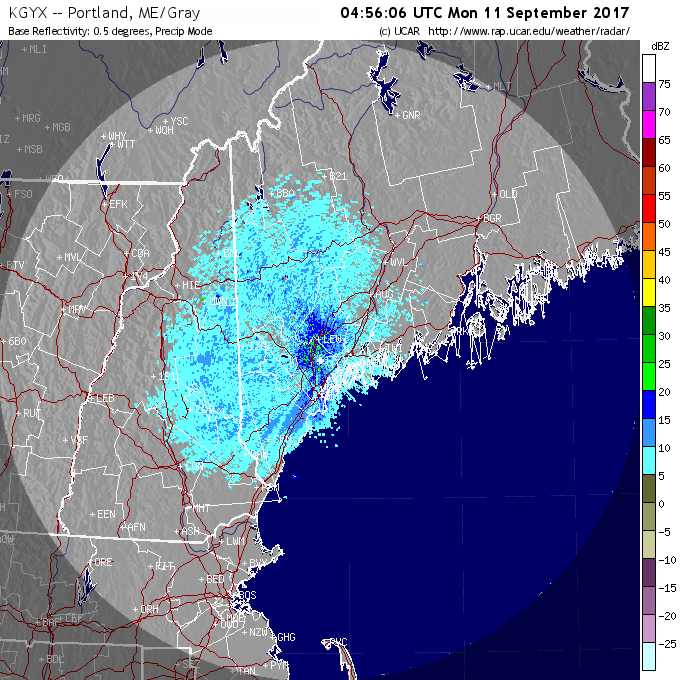
And as you can see by the 1:00am radar image from September 11th, the density was nowhere near the previous two nights, despite mostly light westerly winds overnight.
1amRadar,9-11-17
1amVelocity,9-11-17

And by 4:00am, it was rather quiet.
4amRadar,9-11-17

Light northwesterly winds in the evening slowly gave way to light north, before becoming light and variable. After midnight, they became west but didn’t really increase until after 2:00am. Coupled with a lackluster radar return, this was not a recipe for a huge flight.

Nonetheless with a light westerly wind at sunrise, I was heading to Sandy Point anyway. If only because it was a day off, and I won’t have many more chances to visit “my office” this month. A milky sunrise further clouded (sorry) my optimism for a big flight, but there were plenty of birds in the air.
Sunrise_on_big_day_atSP,9-11-17

And then all hell broke loose.

It was incredible. It was frustrating. It was beautiful. It was painful. It was amazing. It was indeed overwhelming, and at times, my only hopes at quantifying the flood was to skip attempting identification and just click my unidentified clicker as fast as I could.

And I really can’t explain it. It “shouldn’t” have been this amazing.

Come nightfall, with high pressure remaining in control, and with light westerly winds and clear skies once again, a moderate to strong flight occurred overnight. Here are the 1:00am and 4:00am radar images from the wee hours of 9/12:
1amRadar,9-12-17
1amVelocity,9-12-17

4amRadar,9-12-17

With light westerly winds come dawn, I was once again stationed at the bridge, and what was – prior to three days ago! – considered a very good flight passed over and through. It was even downright relaxing – and manageable – after the chaos of the previous morning. I had fun.

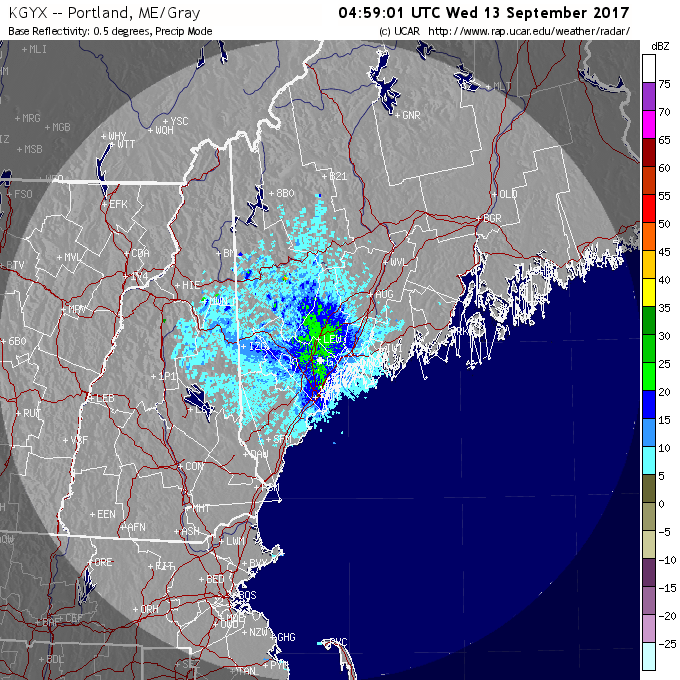
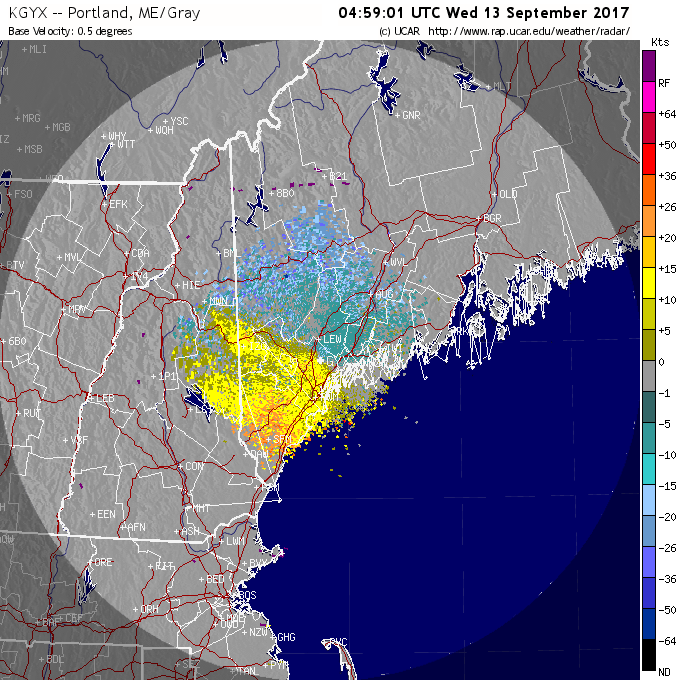
Not surprisingly, after four consecutive nights, the flight was much lighter overnight on the 12th into the 13th, as evidenced once again by the 1:00am and 4:00am images.
1amRadar,9-13-17
1amVelocity,9-13-17

4amRadar,9-13-17

And despite very light westerly winds in the morning, and clear skies, only a light flight was to pass through the point. Of course, that Lark Sparrow more than made up for it. It was also nice to enjoy a slower flight – and identify many more birds than not!

So almost every morning made sense: radar plus weather conditions correctly predicted the intensity of the flight. Except for one. The Big One. And I can’t explain it. But, I am OK (mostly) with that – it’s one of the fascinating and flabbergasting aspects of documenting the morning redetermined migration!

Winds turned to the south during the day on the 13th, and continued light and southerly overnight, bringing the streak of five great nights of migration to an end. Come morning, I also slept in – relatively speaking – and then went for a massage. As my therapist began to work on my aching neck, she simply uttered, “Wow” and got to work. I felt the same on Monday morning when the greatest flight I have ever recorded passed through Sandy Point.

IMG_6455-edited-edited
Species, such as this Swainson’s Thrush, that can be rather secretive in migration, are sometimes seen really well at Sandy Point!

The Galapagos (Part II)

For the first half of our trip, visit my previous blog entry here.

6/23: Santa Cruz Island.
Albatross_monument

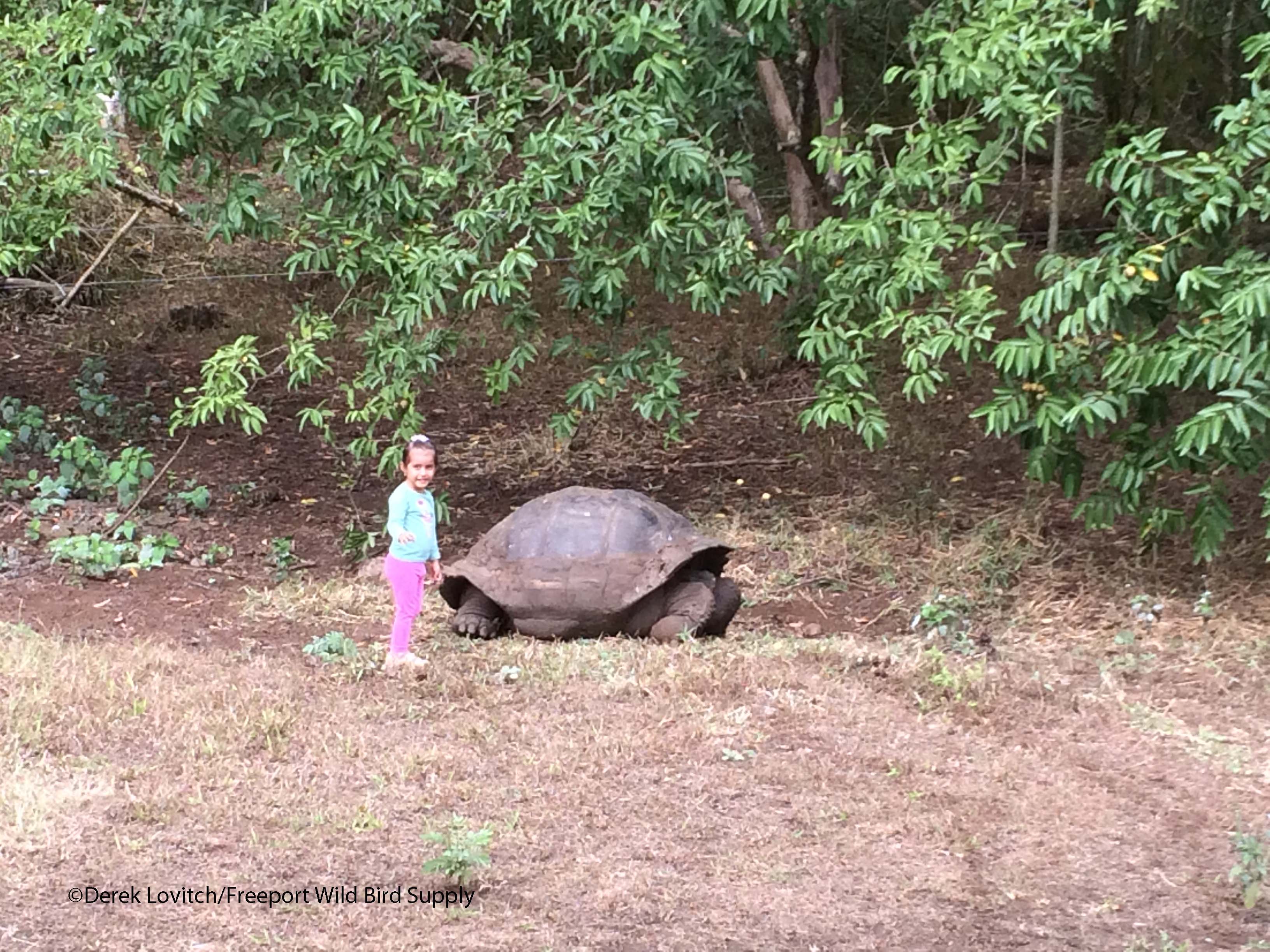
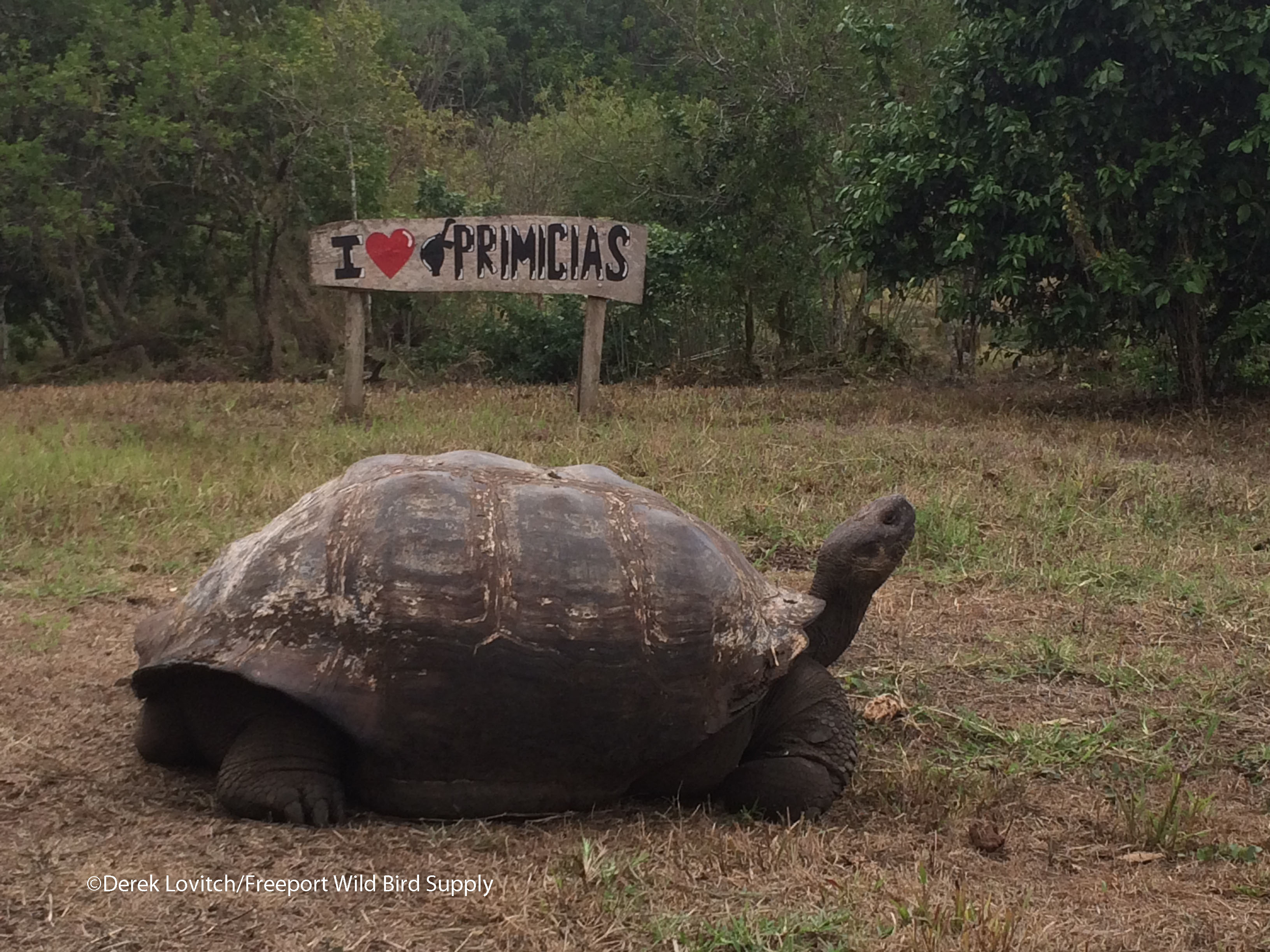
Anchored in Puerto Ayora, we went ashore and boarded a bus back into the highlands of Santa Cruz to Rancho Primicias. There, we encountered our first WILD Galapagos Tortoises!  It was much more satisfying watching them foraging naturally, rather than eating salad off of a cement platform. Like several other ranches in the area, small pools and ponds are dug and kept filled with spring water to attract these water-thirsty beasts. Altitudinal migrants, they stop in for a drink – especially during the dry season – on their seasonal commutes.
firstWildTortoise
Our first wild tortoise!

RanchoPrimicias1RanchoPrimicias2RanchoPrimicias3RanchoPrimicias4_edited-1

These ponds also attract a lot of birds, including numerous Common Gallinules that looked out of place walking around woodlands. A Purple Gallinule was spotted as we drove in – perhaps the island’s most recent colonizer, with breeding records only from the last few years. “Darwin’s Gallinule” may only be several thousands of years away! Another treat was the Paint-billed Crake, a widespread South American species that is very uncommon in the Galapagos, but perhaps is not this confiding anywhere else. Great views were had as it poked around the edge of the tortoise-filled mud.
Paint-billedCrake

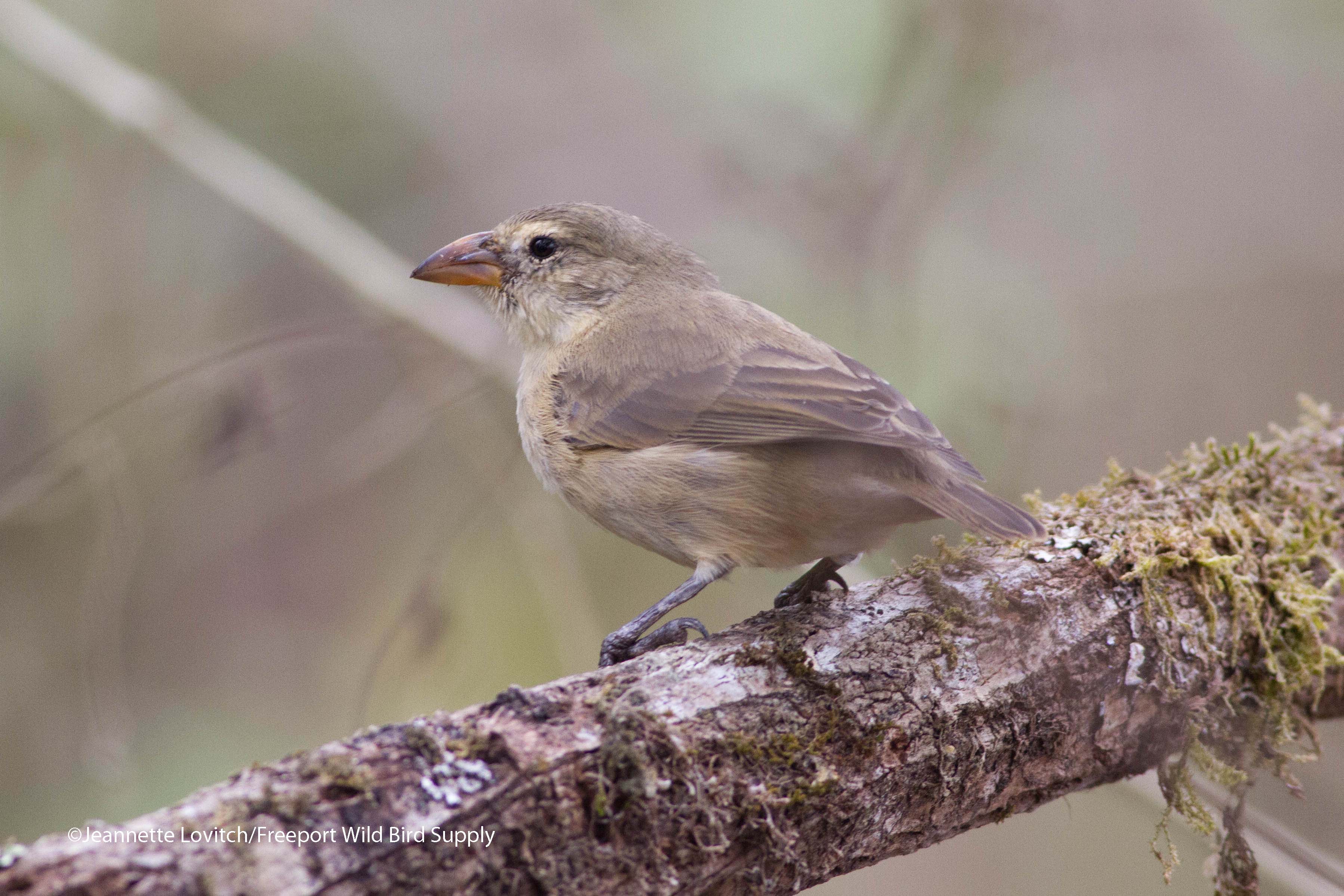
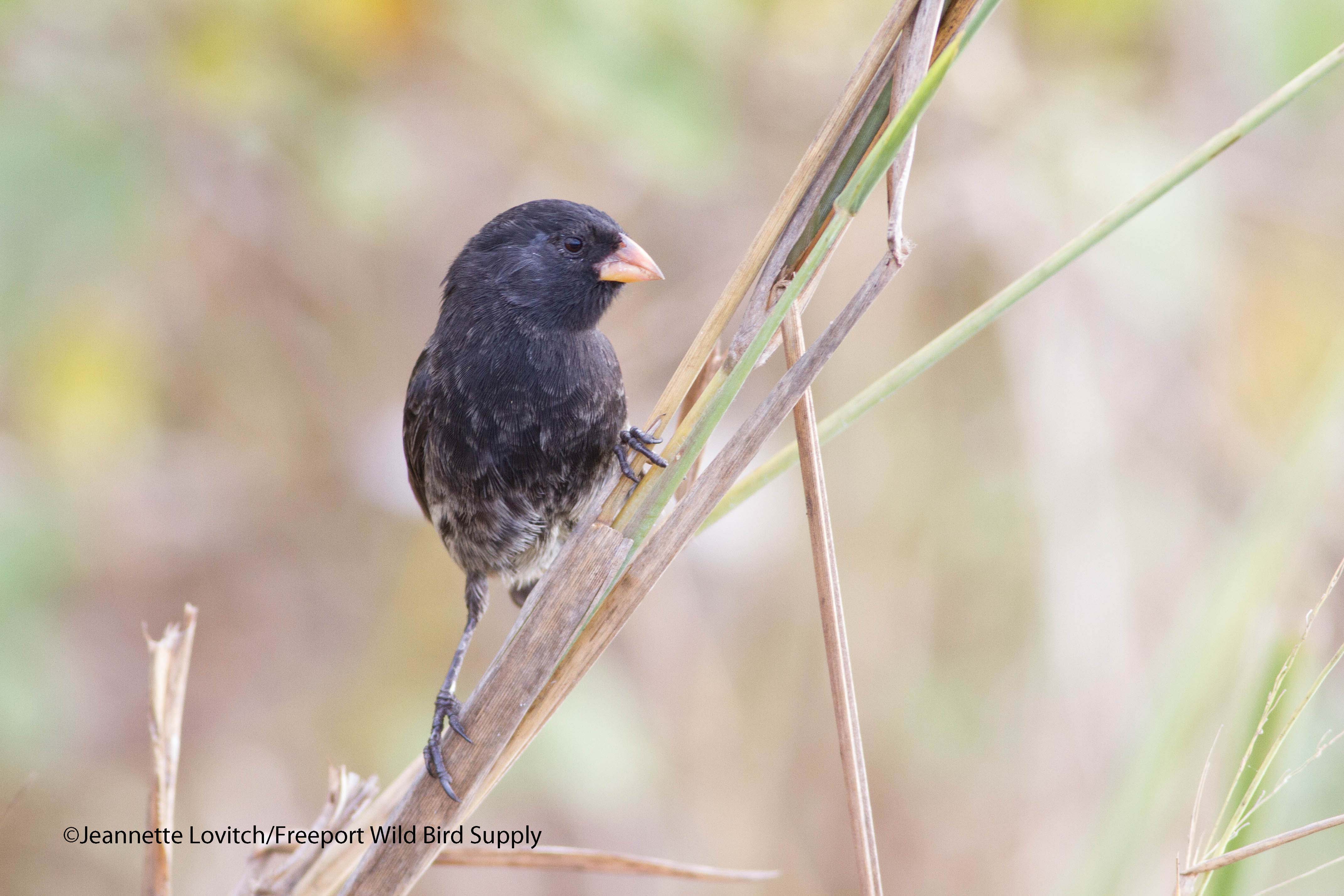
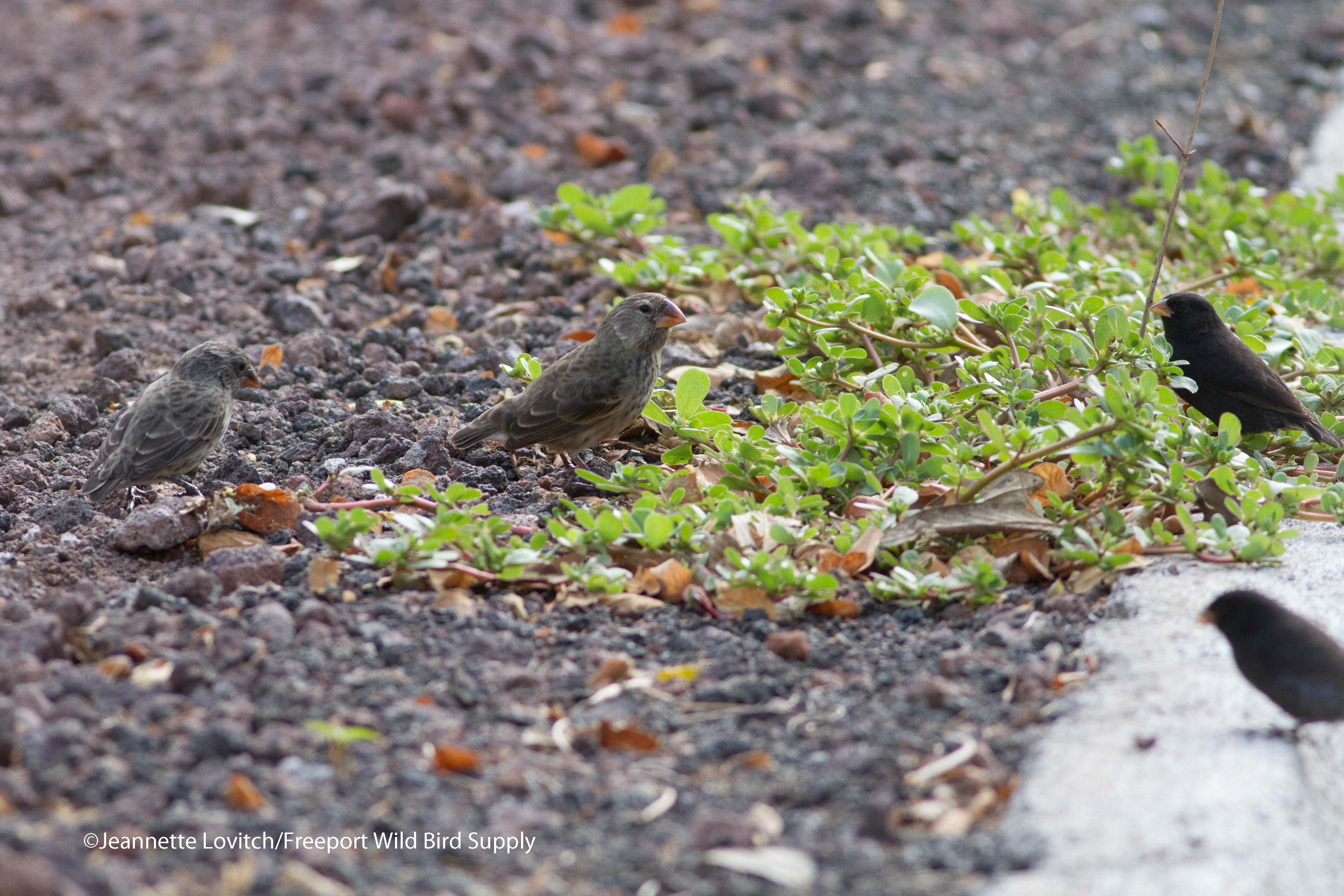
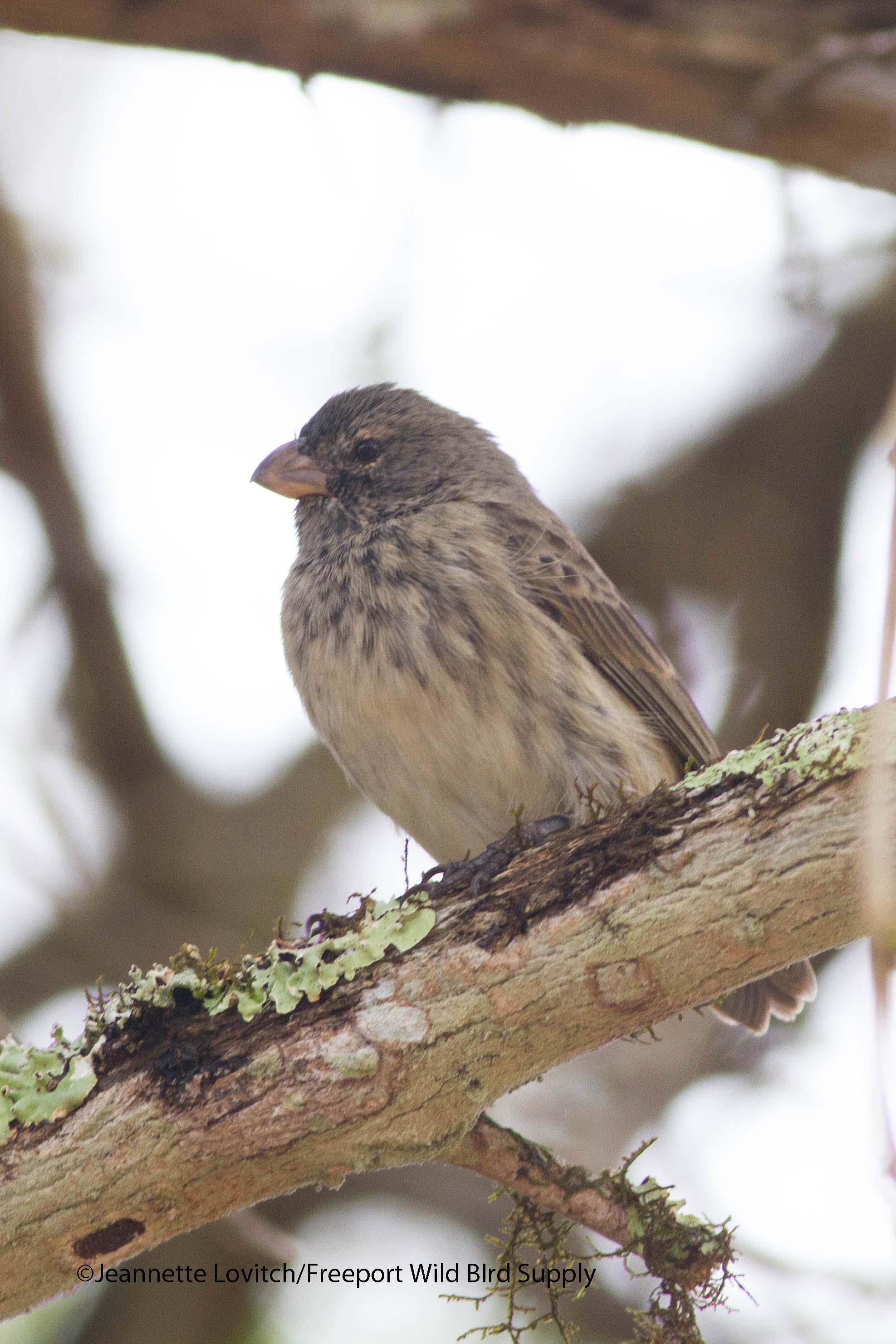
Finches were also in abundance, attracted by the water. Lots of Small and Medium Ground-Finches were present, along with Woodpecker, Small Tree, and Vegetarian. With a little effort, our guide Peter, also found us a pair of Large Tree-Finches – the only bird Jeannette, Steve, and I were still missing from the group’s first day on the island.

I was, however, having a hard time taking my eye off the tortoises, and yeah, we all posed for some touristy photos. No selfies though; we draw the line somewhere.

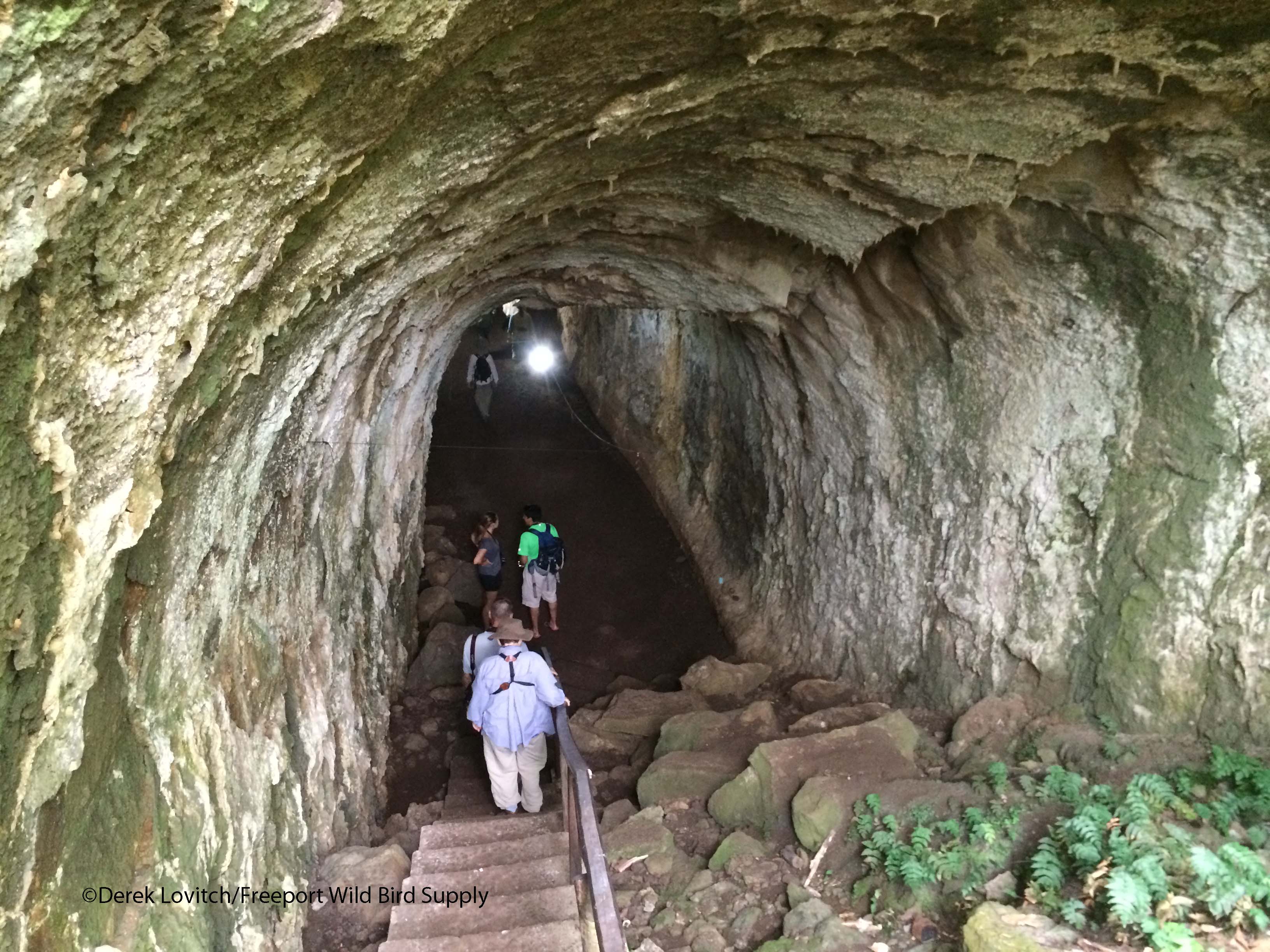
While a stop at a nearby lava tube did not produce a Barn Owl as hoped for, it did offer an impressive lavatube. Also, one of the highlights of the day was the Woodpecker Finch that we watched at close range as it probed a trailside branch. It was fascinating to see the bird hammer with its open bill (unlike a true woodpecker), and even more interesting watching its rapidly-flickering tongue appearing almost snake-like in its speed and purpose.  Jeannette, Steve, and I lost the group as they descended into the tube, us left behind smitten with the finch. Luckily for all, it was in the same exact place when we all resurfaced.
WoodpeckerFinch

lava_tube

A rather unhappy and perhaps exceedingly unhealthy Barn Owl was added to the list in a little maintenance shed housing an old air conditioning unit – a circumstance that definitely took away from truly enjoying yet another endemic subspecies.

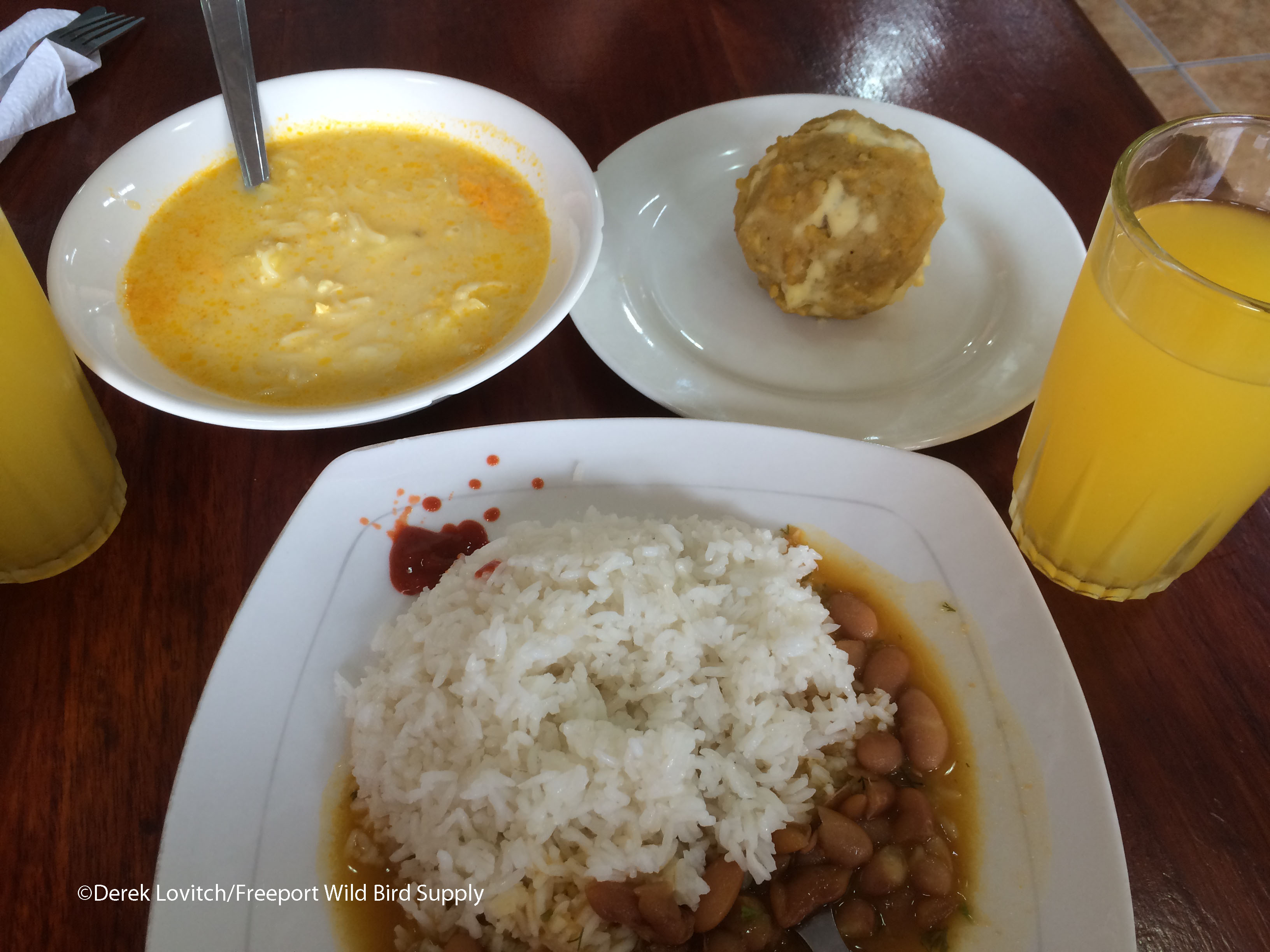
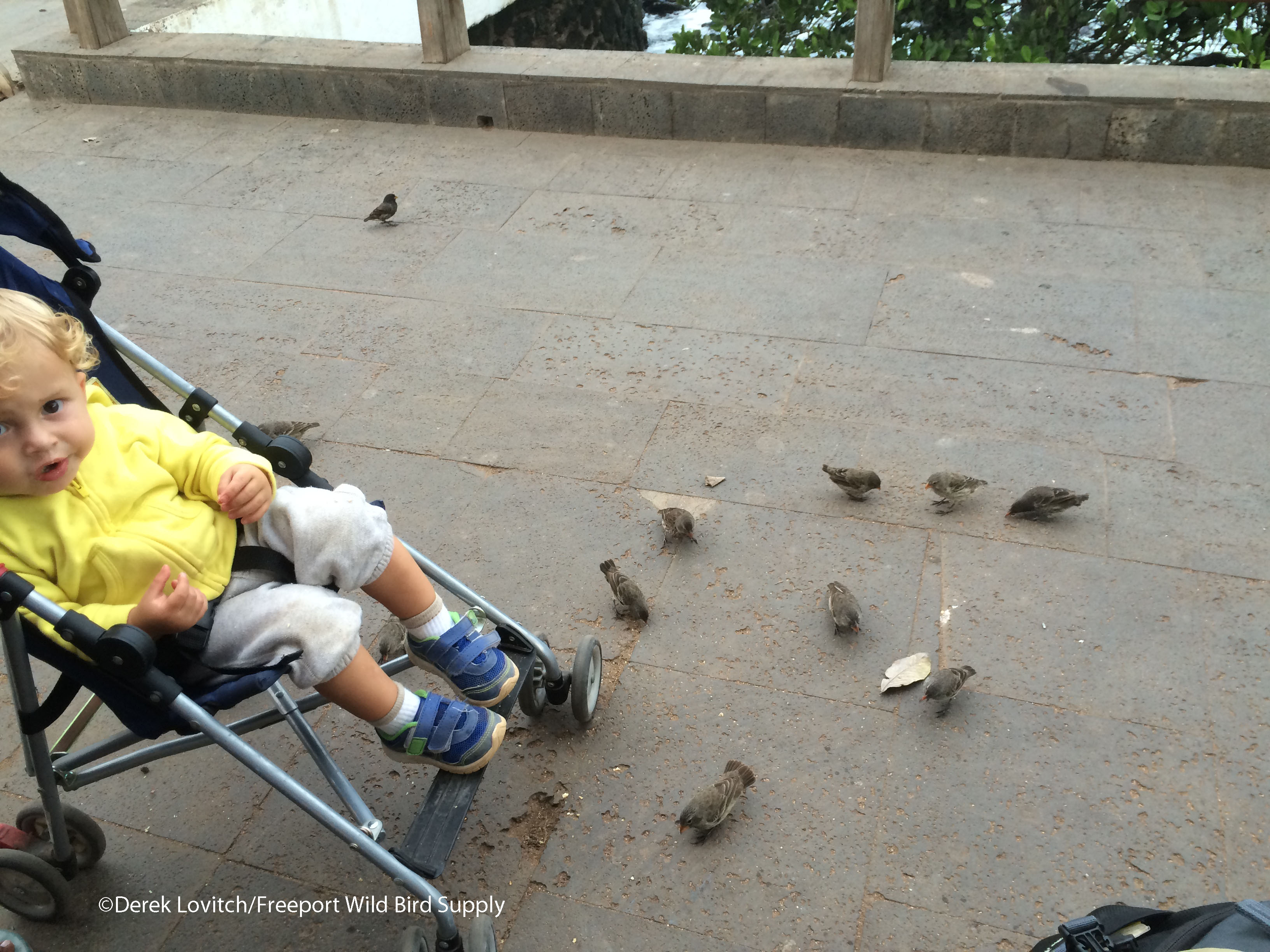
Back in Puerto Ayora, Jeannette and I were granted permission to leave the group as they returned to the boat for lunch. Instead, we wandered around town, had some local food for lunch, checked email (yup, store, house, and Sasha all fine!), photographed a ton of finches (including several Common Cactus-Finches) and Galapagos Mockingbirds in town.
lunchlunchGround-Finch
A Small Ground-Finch visiting us at lunchtime

Mediumor LargeSmall
Small Medium or large Small? Goodness these things are tough!

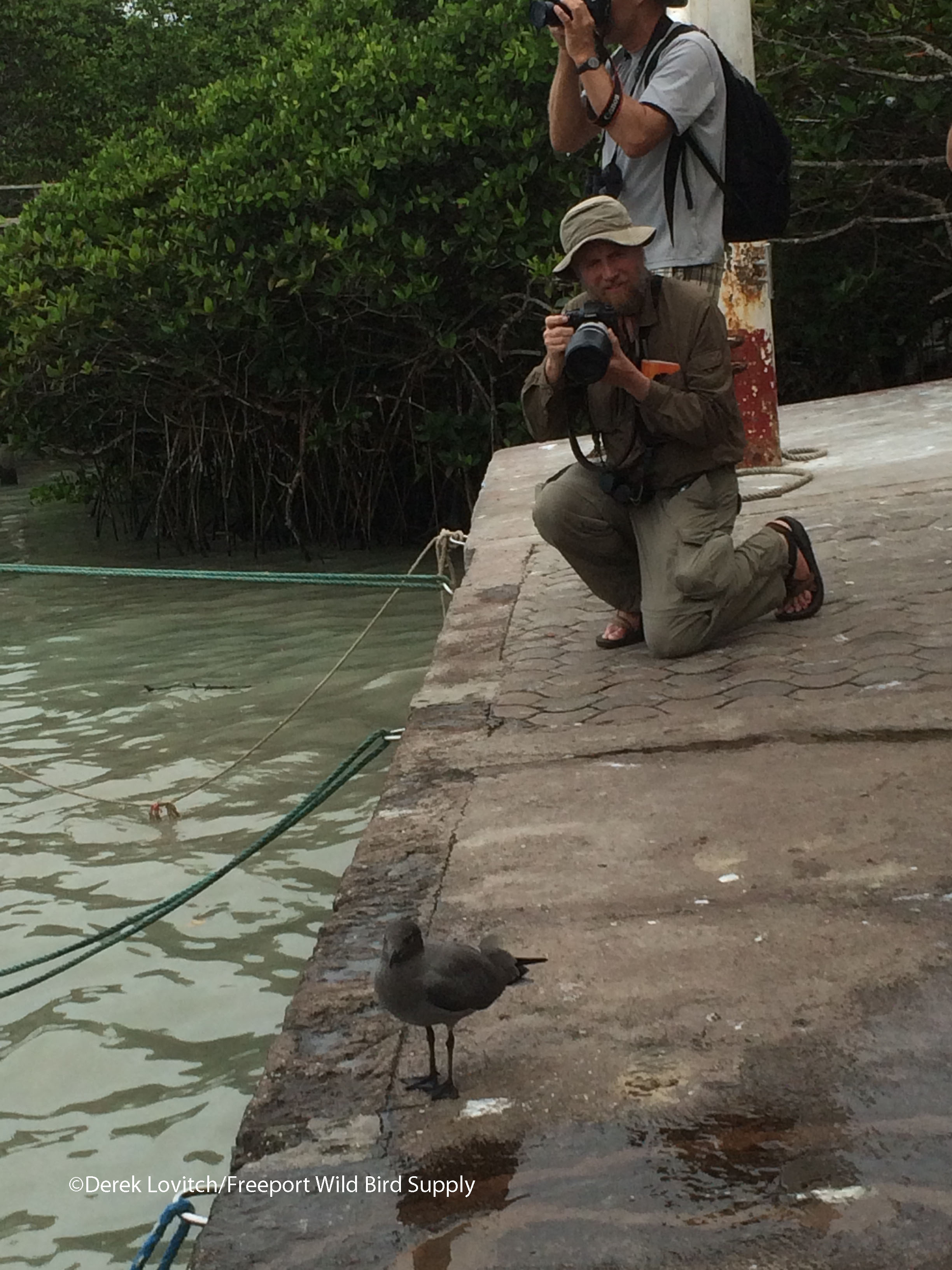
A visit to the fish pier provided the chance to study and photograph Lava Gulls at close range: begging and battling pan-handling Brown Pelicans and Galapagos Sea-Lions for fish-gut handouts, these seemed to be de-volving back into Laughing Gulls!
beggingSeaLion_edited-1

photographingLavaGull1

Lava_Gull

MAFR

PuertoAyora1PuertoAyora2PuertoAyora3

Reunited with the group, we all walked across town – including a stop at the fish pier, working the occasional finch flock. It was really good to see the finches proliferating in urban and developed areas, but it did take a little of their mystique away – if you know what I mean.
finches_edited-1finches2-edited

CommonCactus-Finch
Common Cactus-Finch not on a cactus.

largeMedium
A large Medium or a small Large?

CommonCactus-FinchonCactus
Common Cactus-Finch back on a cactus to restore the mystique.

ProbLargeGround-Finch
Probable Large Ground-Finch?

Photographing_LavaGulls,Steve

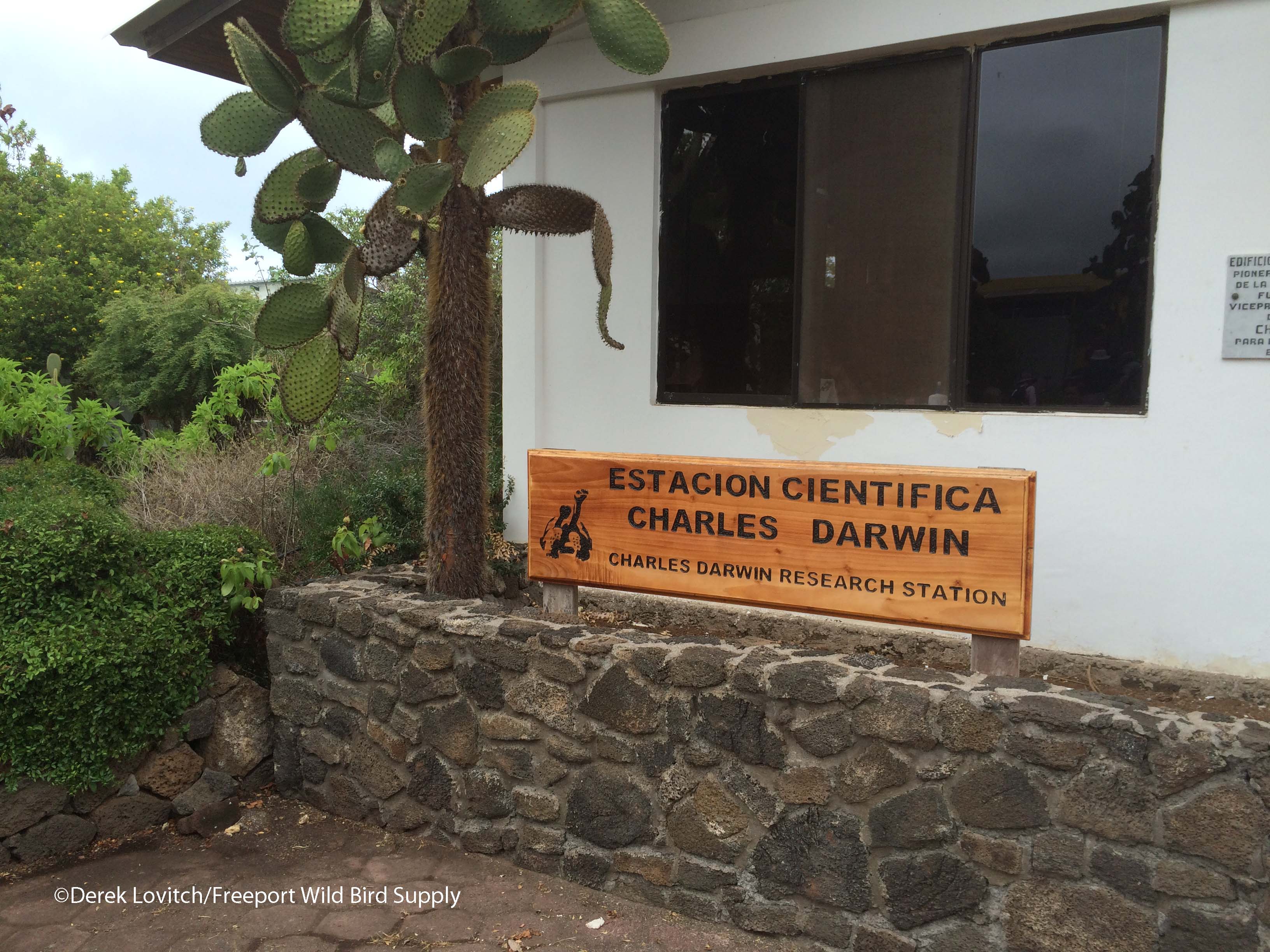
We continued on until we reached the visitor’s center for the National Park, and slowly worked the scrub. Arriving at the Darwin Research Station, we learned about the conservation efforts underway for Mangrove Finch and five of the island’s 10 extant populations of tortoises. There was more good finch and mockingbird-watching to be had as well.
DarwinResearchStation1DarwinResearchStation2
GalapagosMockingbird
<img class=”alignnone size-full wp-image-2928″ src=”https://mebirdingfieldnotes.blog/wp-content/uploads/2016/07/saddlebacktortoise.jpg&#8221; alt=”SaddlebackTortoise” width=”3264″ height=”2448″ />
“Saddleback” tortoise

grou_in_town

sunset

6/24: Santa Cruz Island.

We pulled anchor in Puerto Ayora well before dawn and headed over to Plazas Islet. In stark – and most welcome – contrast to the busy harbor or Puerto Ayora (which was like a Maine harbor in summer, but with more frigatebirds!), we awoke to the peaceful cove at Plazas Islet off of Santa Cruz. We were the only boat around, and the only sign of humanity was the rustic concrete landing for our panga (our inflatable zodiac used for landing; any small boat in the Galapagos are called pangas).
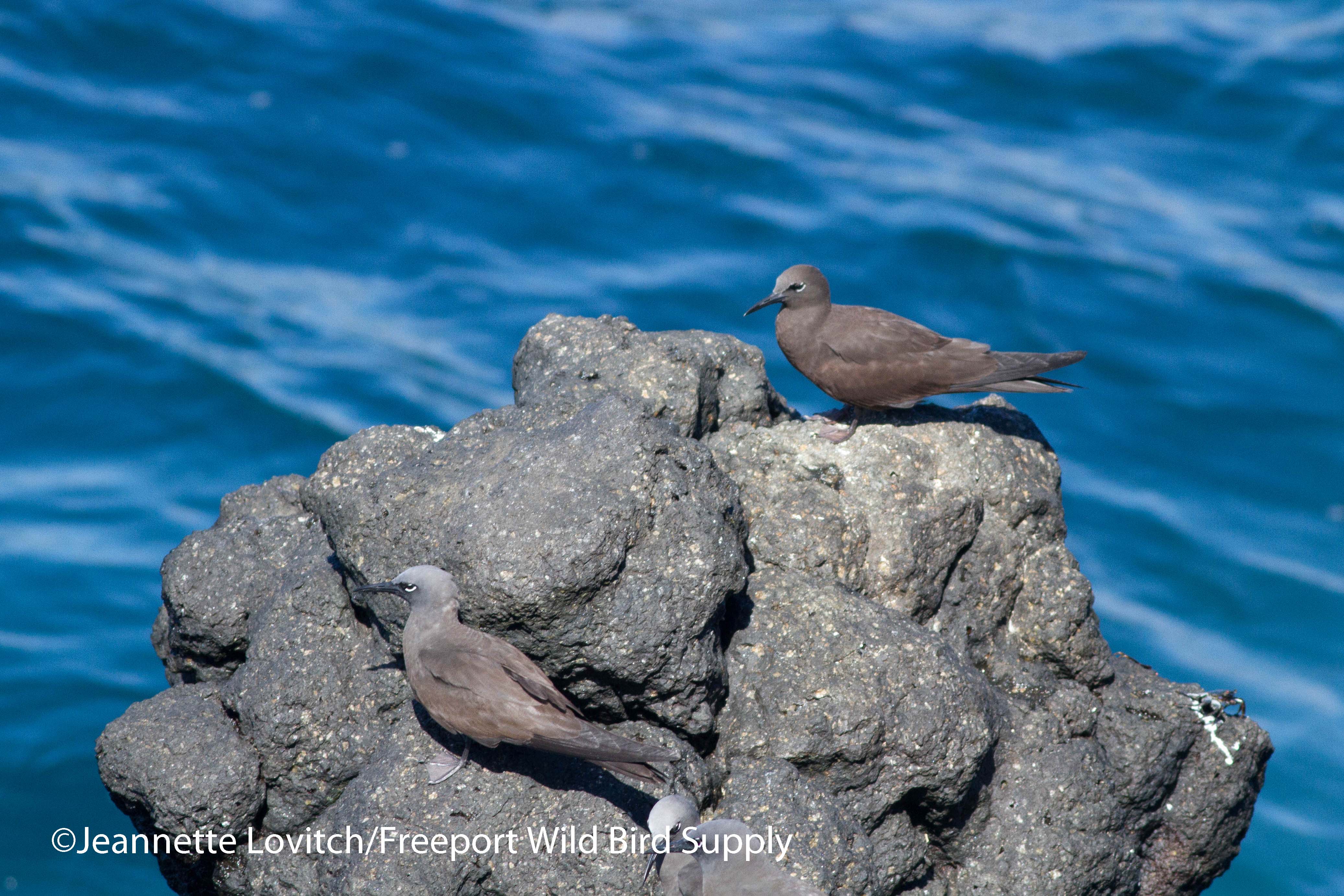
Brown_Noddies
Galapagos Brown Noddies

Galapagos Shearwaters and Swallow-tailed Gulls greeted us instead of yachts and city lights, and once ashore, we looked down on the islet’s cliffs onto huge schools of reef fish (mostly Yellow-tailed Mullet, King Angelfish, surgeonfish, and a few stunning Blue-chinned Parrotfish. Swallow-tailed Gulls, Brown Noddies, Blue-footed Boobies, and Red-billed Tropicbirds glided by, with wheeling flocks of Galapagos Shearwaters calling as they returned to their partners in cliffside crevices.

King_Angelfish
King Angelfish

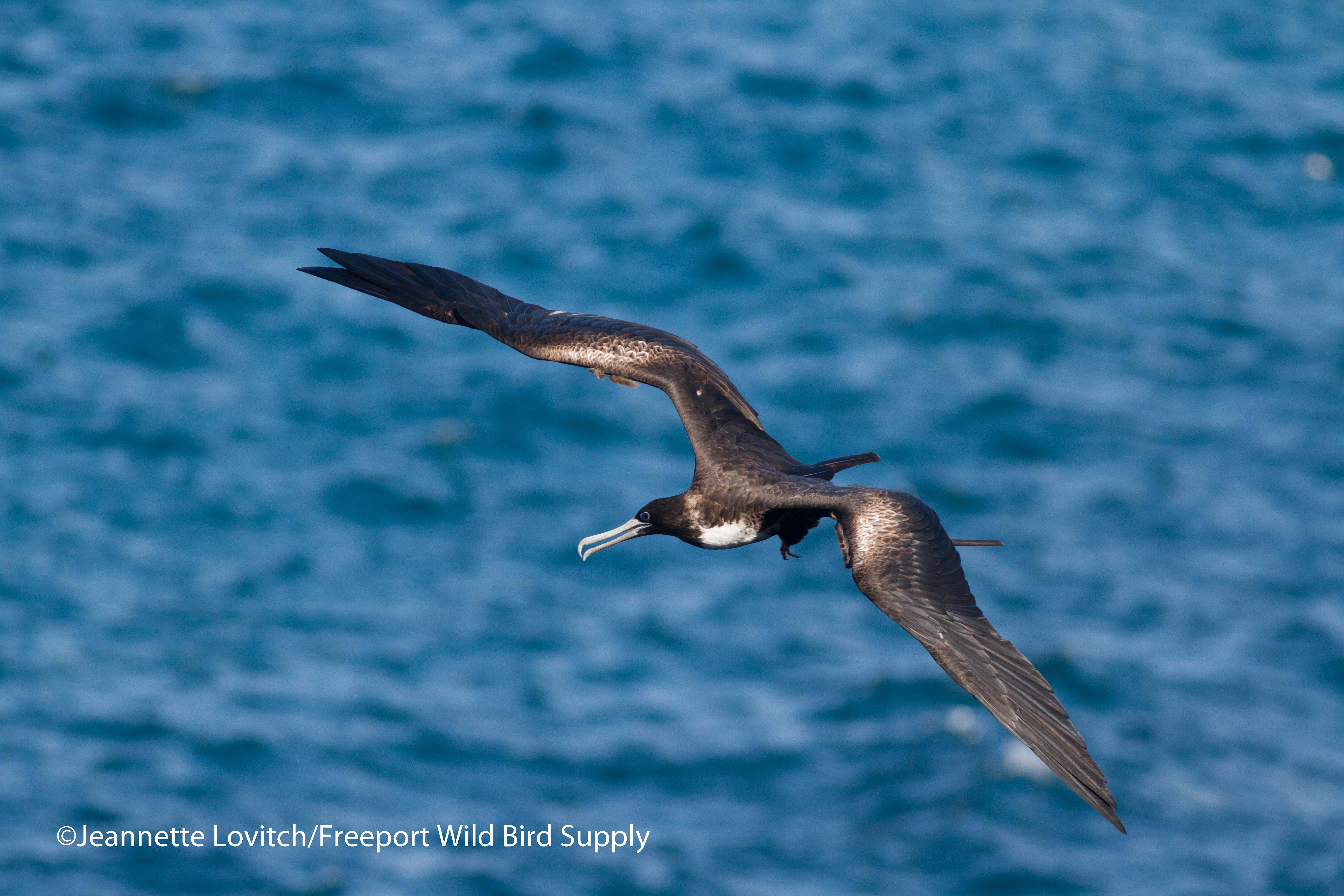
MAFR
Female Magnificent Frigatebird

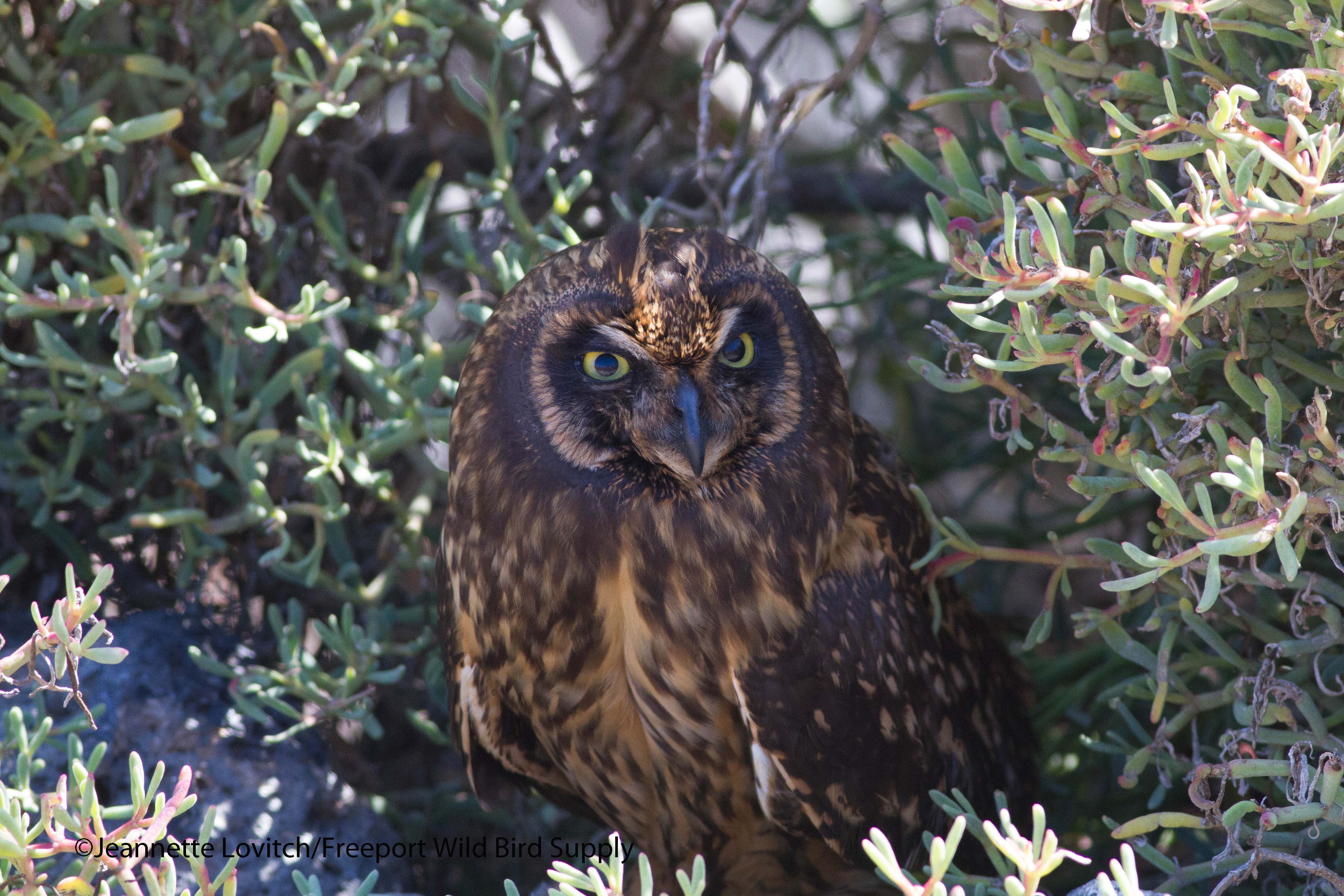
Short-earedOwl
Roosting “Galapagos” Short-eared Owl

It was a hot, dry, and rather vegetatively-desolate island. It’s been remarkable how different every island has been, and for some reason, my mental vision of what to expect from the Galapagos was more like this – few species, lots of bare lava, hot and dry – than the varied habitats that we have been exploring.
PlazasIslet1PlazasIslet2PlazasIslet3Native plant restoration.

Peter_and_prickly_pear_tree

petrifiedSeaLionpoop
Petrified sea-lion poop!

We then motored to our next island, Santa Fe. Some deep water snorkeling produced a wide variety of fish, with Blue-chinned Parrotfish and Reef Cornetfish stealing the show.

On land on Santa Fe, we checked out the endemic subspecies of Galapagos Mockingbird – with longer bills, a different call, and more inquisitive behavior than the birds on Santa Cruz. Galapagos Hawks put in a couple of appearances, including some low and close passes overhead. Galapagos Doves, Gray Warbler-Finches, Small and Medium Ground-Finches, Galapagos Flycatchers, and Common Cactus-Finches – with much larger and imposing bills than the birds we have seen elsewhere – joined Santa Fe Ground Iguanas and Galapagos Lava Lizards on the land.
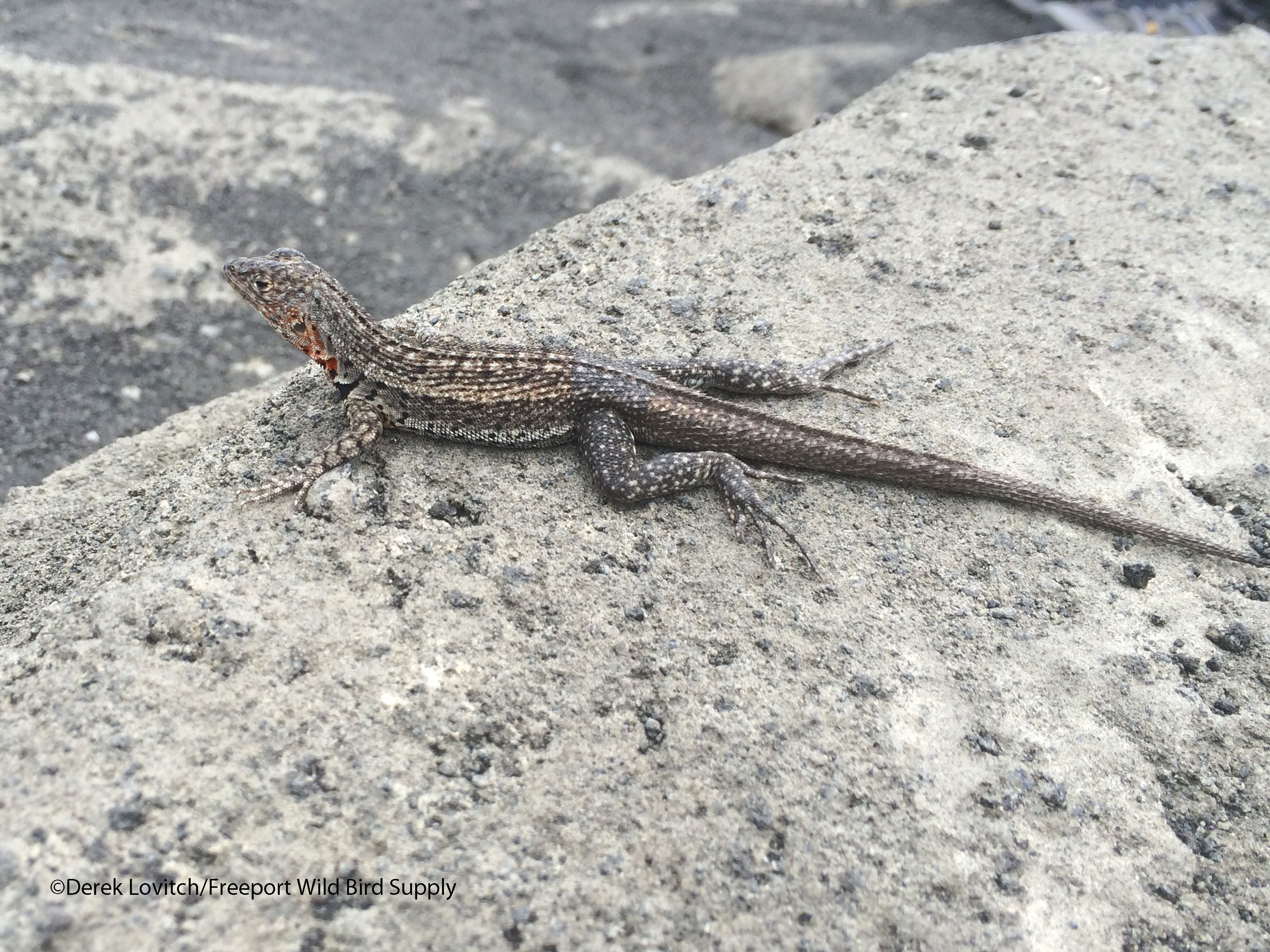
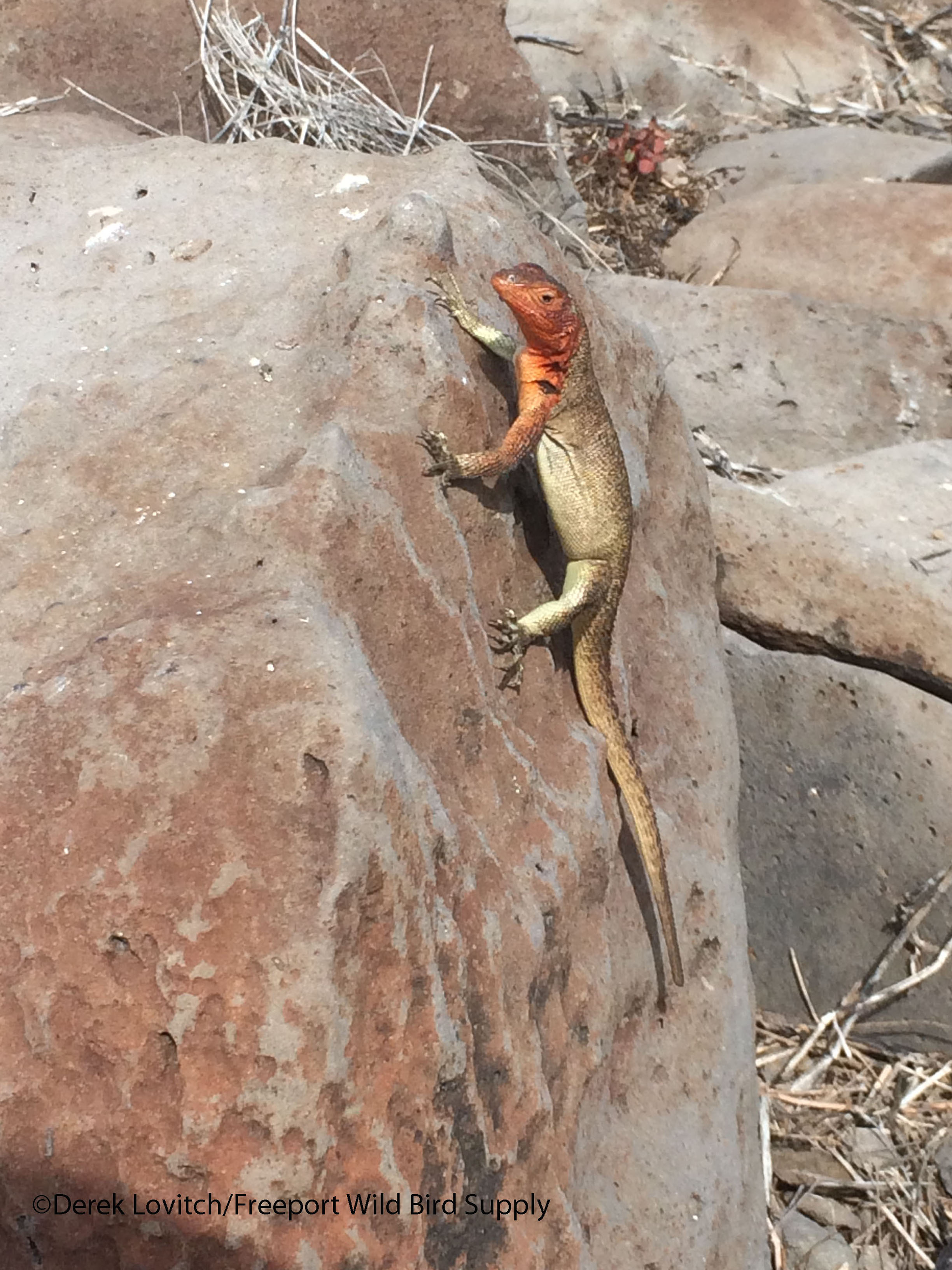
maleLavaLizard
Santa Cruz Lava Lizard -male.

LandIguana
Santa Cruz Land Iguana

GalapagosFlycatcher
Galapagos Flycatcher

The highlight for many, however, were the Galapagos Sea-Lions that greeted us on our arrival on one beach, and others, escorting us away from the departure beach. Inquisitive pups came up to inspect us, with one even exploring Jeannette’s leg with its soft but yet somehow prickly whiskers. It also took a liking to one of her boots.
SeaLions1SeaLions2SeaLions3SeaLions4SeaLions5
SeaLions_J-Mo_edited-1

Pelagic birding on the way northward off of the east side of Santa Cruz yielded more Galapagos Petrels, Swallow-tailed Gulls commuting offshore to feed after the sun went down (and squid come up to the surface), scattered Band-rumped, Wedge-rumped, and Elliot’s Storm-Petrels. But the massive boil of thousands of Galapagos Shearwaters encountered near a couple of sea stacks was simply astounding.
IMG_9051_edited-1

6/25: Bartolome Island.
Bartolome
Desolate, bleak, and vulcan: this is how I pictured more of the Galapagos Islands. But the older islands we have been visiting were softened around the edges by time. Soil built up, and endemic plant communities flourished.

It was different in the northern part of the archipelago, which we sampled around the edges of Santiago Island.  In a busy and fulfilling final full day aboard, we did a lot, beginning with a pre-breakfast panga ride around Bartolome Island. At least 17 Galapagos Penguins were encountered, with several calling their donkey-like bey (the closely related Jackass Penguin is named for this sound). One pair engaged in awkward, and as far as we could tell, unsuccessful, copulation, while Blue-footed Boobies looked on from the cliffs above.
GBHE-and-photographer
A Great Blue Heron (endemic subspecies) looks on.

humpingPenguins

GalapagosPenguins

Landing on Bartolome, the islands’ geology was on full display. Mostly a tuff cone, there wasn’t much here but lava, ash, and a few pioneering plants. Eeeking out a living among them were only a few Small Ground-Finches and a Galapagos Snake (our first of the trip).  Over 370 steps later (hmmm…it feels like we’ve been mostly sitting on a boat for a week!) we were rewarded with spectacular views of Santiago and the surrounding islets, including Santiago’s massive lava flow from less than 200 years ago.
Bartolome1Bartolome2

GalapagosSnake
Galapagos Snake

maleLava Lizard
Male Santiago Lava Lizard

While snorkeling nearby didn’t produce any penguins in the water as we hoped, we did see several new fish, and enjoyed more stunning parrotfish (Blue-chinned and Bicolored).

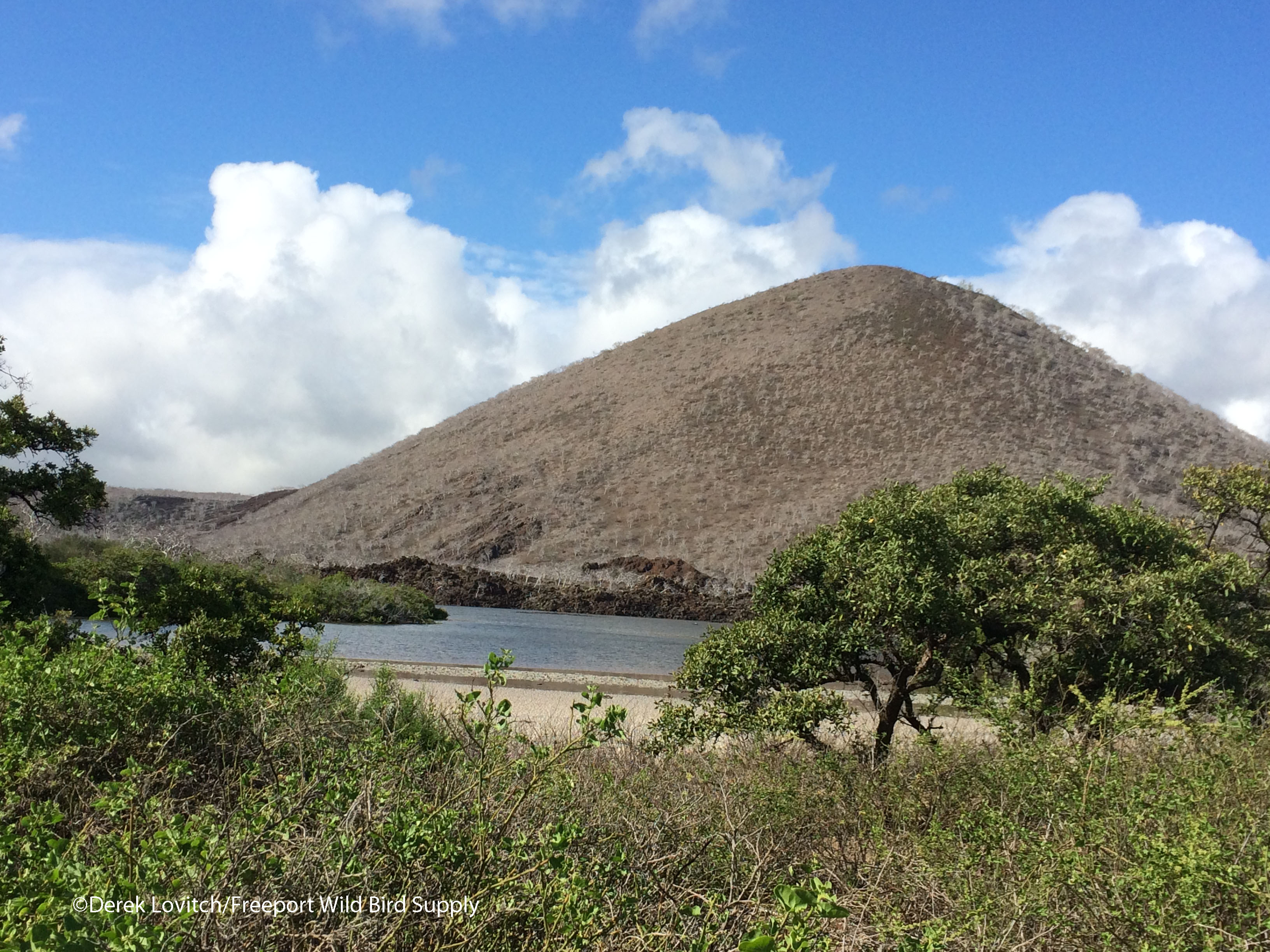
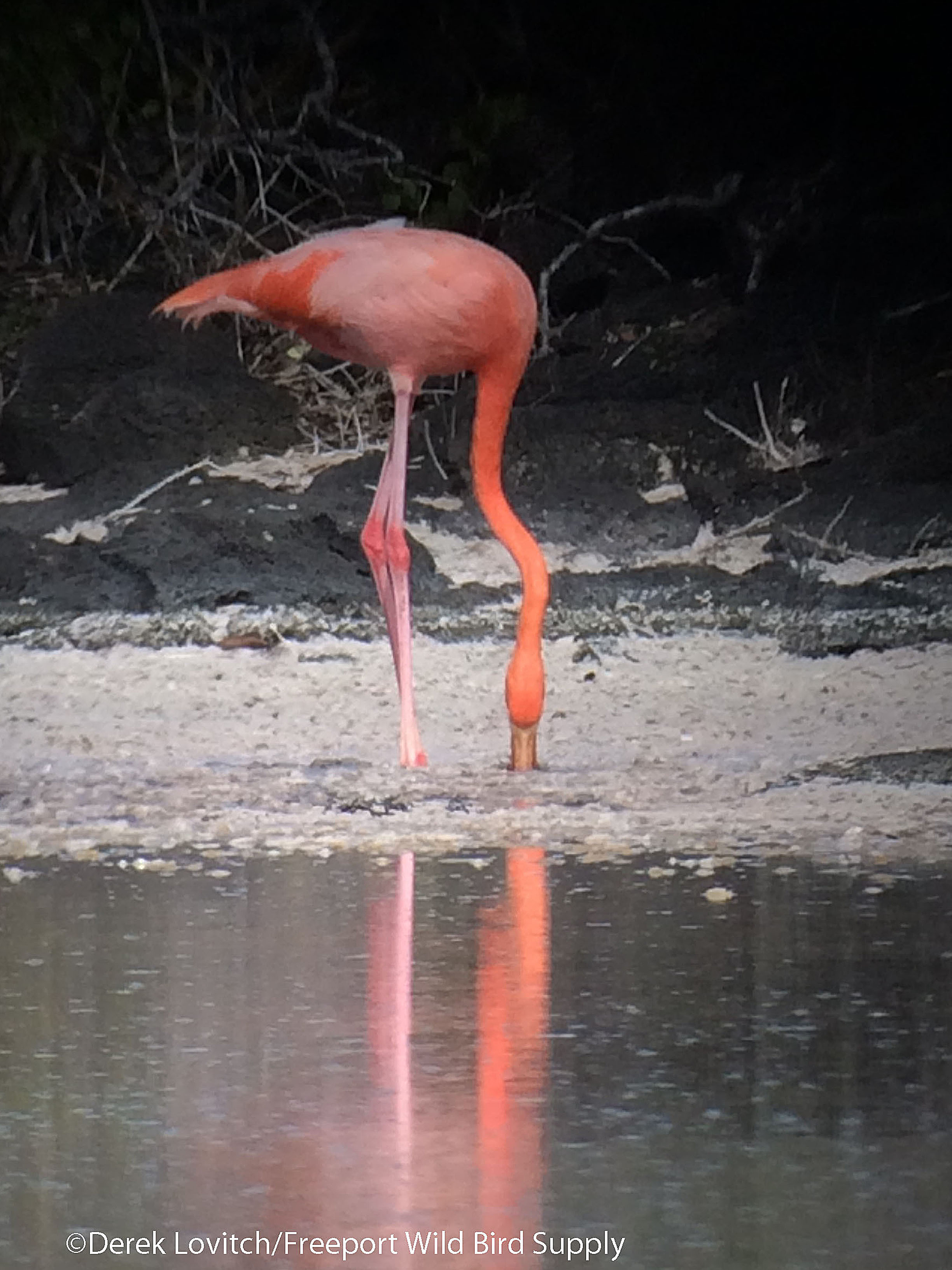
The Nemo III slowly motored past Bainbridge Island, allowing us to peer into its caldera lagoon. Eleven American Flamingos and at least 20 White-cheeked Pintails were present, with more wheeling flocks of Galapagos Shearwaters coming and going from the cliff.

Yet another round of snorkeling offered up a close encounter with two White-tipped Reef Sharks and a jaw-dropping (which was a problem since you had to clench onto the snorkel gear!) Moorish Idol – a spiffy damselfish with a very long, thin and waving dorsal fin that trailed behind it like the underwater equivalent of a tropicbird.

Another panga ride found three Galapagos Penguins (how did we miss those while in the water!?), many more Galapagos Shearwaters, American Oystercatchers, and our first two Whimbrels of the trip – our 58th and final species in the islands.

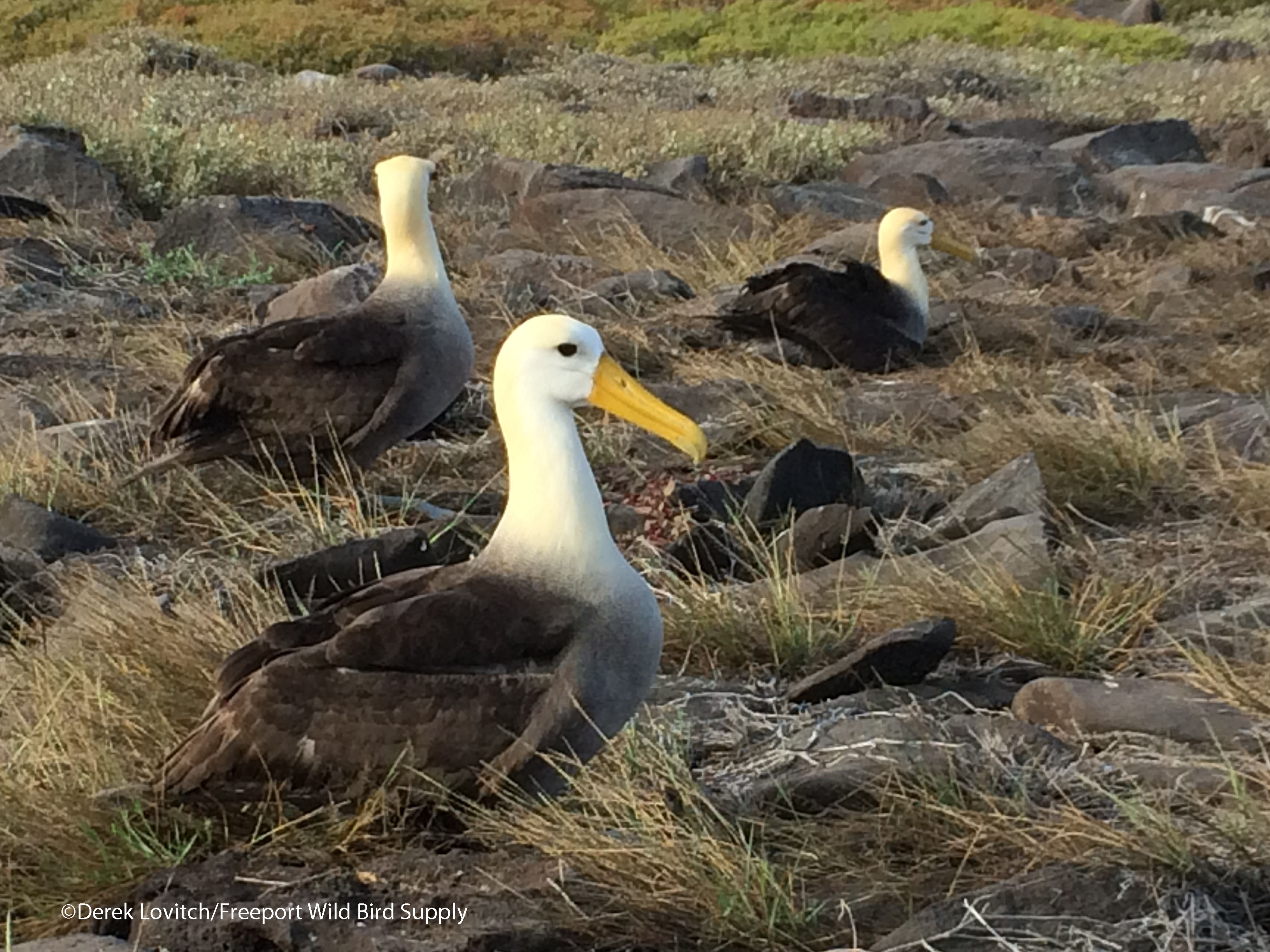
Motoring again, we encountered several more Galapagos Petrels and countless shearwaters, lots of Brown Noddies, and a few Waved Albatrosses.
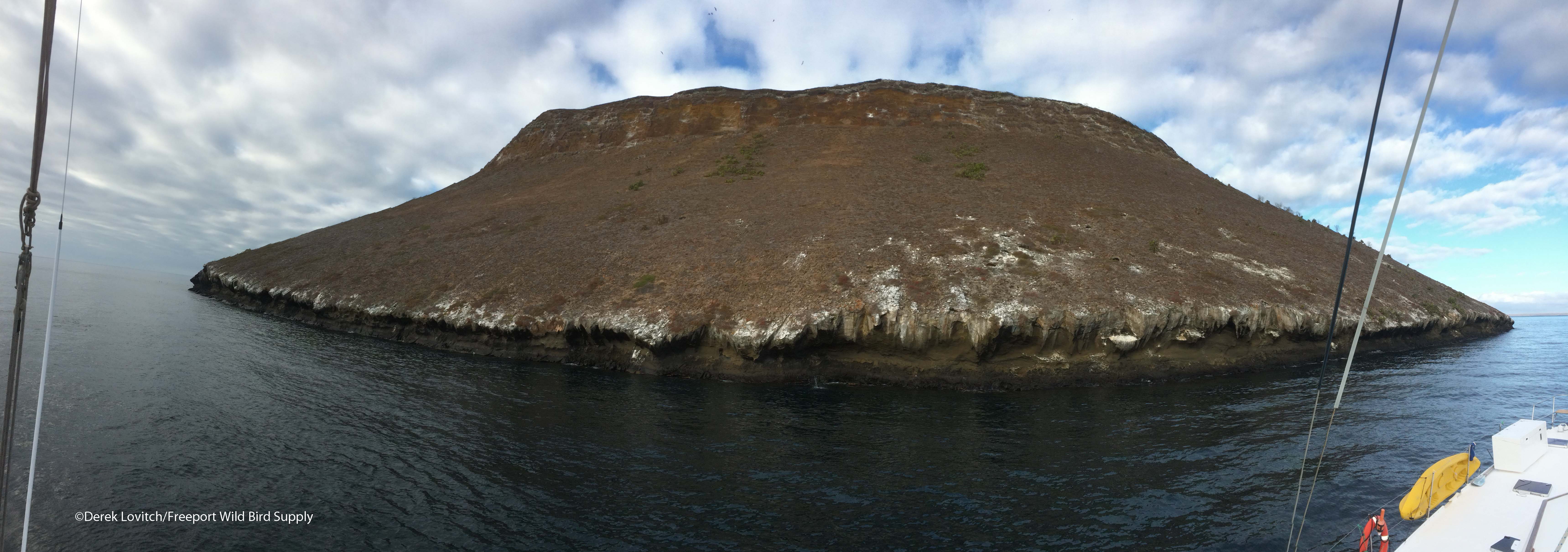
ChineseHat
Chinese Hat

We circled Daphne Major, and although we failed to see any Galapagos Martins, we did see our first two juvenile Swallow-tailed Gulls among adults on the short shoreline cliffs.
SWTGU-nest

Also, I was just happy to get an idea of what this island looks like, having read so much about it, such as in The Beak of the Finch: A Story of Evolution in Our Time by Jonathan Weiner, a Pulitzer-prize winning recount of the groundbreaking research by Peter and Rosemary Grant, and others on rapid, ongoing evolution of Darwin’s finches (Small and Medium Ground-finches in particular).

With the sun setting, and few more Galapagos Petrels, Wedge-rumped Shearwaters, etc added to the tally, we dropped anchor between Baltra and North Seymour Island for our final dinner.
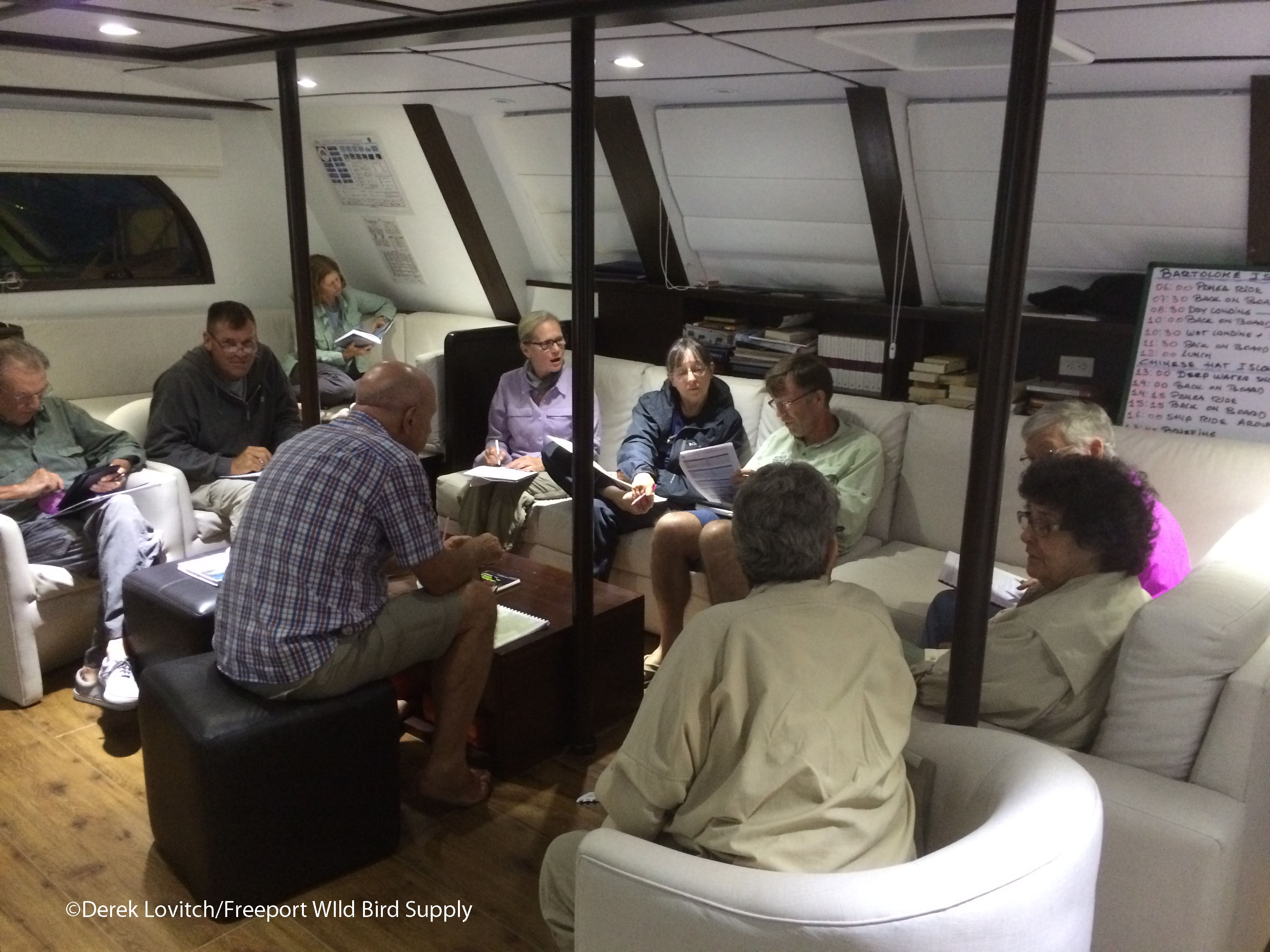
checklist
Final evening checklist session

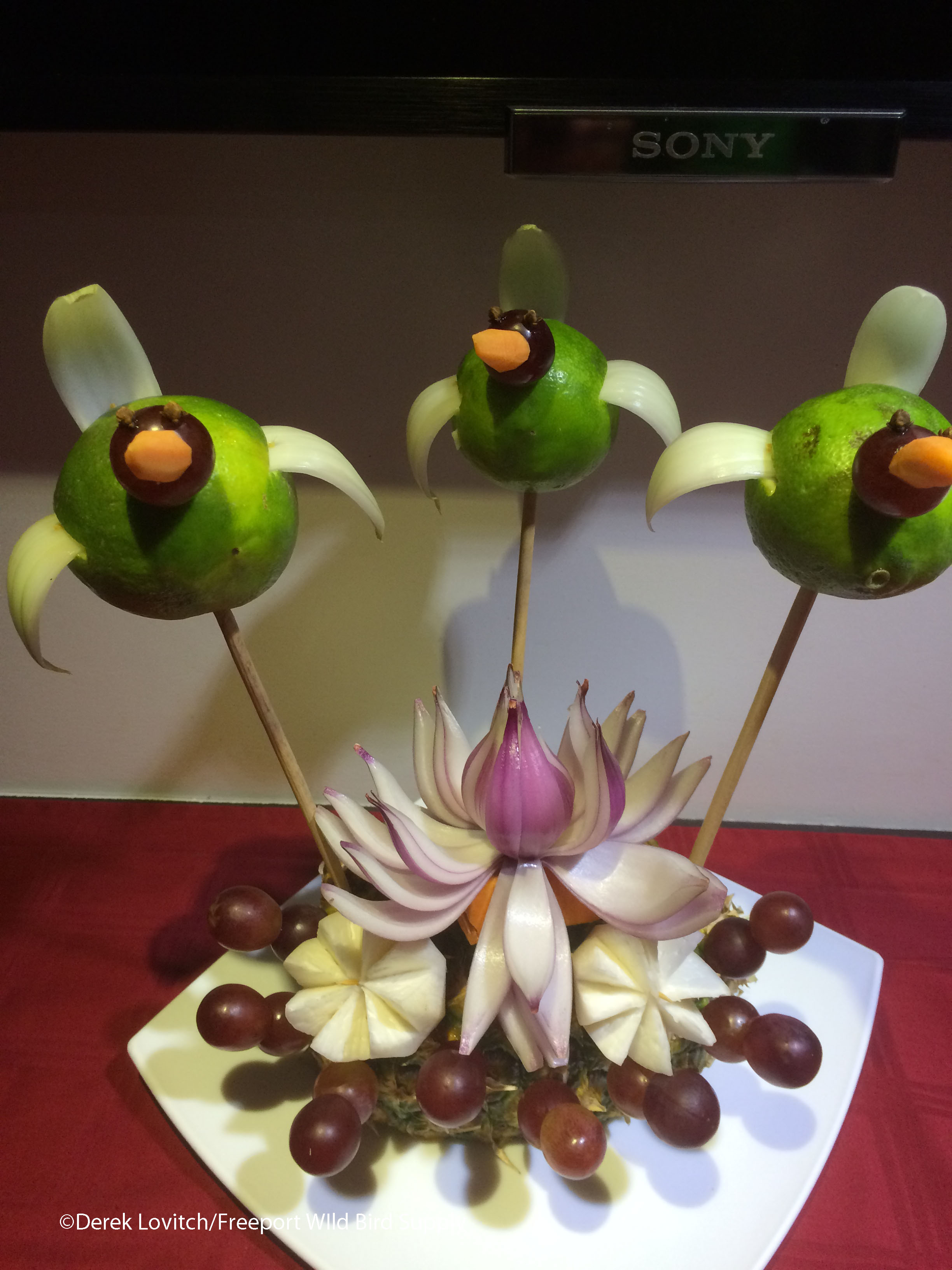
fruitcarvings
Each dinner was accompanied by a fruit/veggie carving. The final one was our favorite.

6/26: Departure.

One last panga ride before breakfast along the shore of North Seymour Island (our first stop on the first day aboard the boat) produced our final endemic mammal of the trip: the Galapagos Fur Seal. Preferring bolder-strewn beaches, or in this case, a few small rubble landslide slips, the more-local fur seal was not expected elsewhere on our itinerary (they’re more common on the western and northern islands, closer to their deep sea fishing grounds).
GalapagosFurSeals

Lots of Swallow-tailed Gulls, both frigatebirds, and Brown Noddies escorted our boat, along with our last looks at Blue-footed Boobies, Red-billed Tropicbirds, Lava Gulls, Galapagos Shearwaters, and Brown Pelicans. Elliot’s Storm-Petrels circled the Nemo III, and on the beach of Baltra, a couple of Ruddy Turnstones and singleton Sanderling and American Oystercatcher.

Saying goodbye to the Nemo III’s fantastic crew, we boarded the bus for the short ride to the airport. With a little time to kill, I took a stroll, enjoying some cooperative Galapagos Doves and studying a Medium Ground-Finch for the last time in the foreseeable future.  Small Ground-Finches, meanwhile, were easy to get last looks of as they foraged for crumbs on the tables of the airport food court. At least a couple of us sipped one last vacation Pilsener.
Departure

The flight to Quito, once again with a short layover in Guayaquil, was smooth and easy, and we arrived at our San Jose hotel with just enough daylight for a little more birding. Jeannette and I quickly scored three more lifers: stunning Sparkling Violetears, pantaloon-sporting Western Emeralds, and impressive Great Thrushes (yes, we do need to bird the South American mainland!).
airportHotel

A final group dinner at the hotel was a nice wrap-up to the trip, even if several folks were a bit under the weather. While Don and Bill were joining Steve on his Mindo Tour in the mountains, the rest of us were begrudgingly heading home dark and early the next morning.

As the trip came to a close, Jeannette and I reflected on how lucky we were to be able to take part in this incredible opportunity. Somehow, we made it work, and despite the hellish couple of weeks that made the trip happen, we could not be any more thrilled about the trip. I am incredibly grateful for the opportunity WINGS offered us, and it was truly wonderful to marvel at Rich Hoyer’s wide wealth of knowledge from plants to birds, bugs to ecology. Our local guide, Peter Freire, was also tremendously knowledgeable, and throw in a little seabird discussion from Steve Howell, and I am overflowing with new information (ah, now, the key: retain some of it!).  Rich was really a pleasure to travel with, and I have never seen a tour group bond so well. Other than a bit of a bug of some sort that was passed around the boat (‘tis life on a boat tour!) that affected some more extremely than others (i.e. Jeannette), few complaints were uttered.

A friend strongly encouraged us to “take the opportunity…and go NOW!” Noah could not have been more right, and I am glad I heeded his advice. And between different government rules, climate change, tourism and population pressures, and much more, I would also encourage you to go to the Galapagos, and do it soon!

I also highly recommend that if you are a birder, you MUST go here with a birding tour group. We would have not seen many of the rarest species (like Large Tree Finch or Galapagos Rail) were we on a “regular” package tour. And with the need for knowledgeable local guides for almost anywhere you go (and Peter is one of the rare, true and talented birders among them), we would never have pulled off the near-complete list that we did.

Rich will likely be leading a WINGS tour in 2018 to the islands, perhaps the “other” route, that would yield one of our most wanted species: Flightless Cormorant. While we knew this itinerary would not produce it, it did produce most everything else – including some real surprises. But, we still need a subspecies of Large Cactus-Finch that will likely get split…and Galapagos Martin (which we missed on our one chance at Daphne Major; our only “dip” of the trip)…and Sharp-beaked Ground Finch…and the blood-sipping subspecies of Woodpecker Finch…and that cormorant.  Hmm, maybe we’ll just have to see you aboard!

Here’s our trip’s birdlist (an * denotes a life bird for both of us, ** is a life bird for only Jeannette, and *** was a life bird for me alone), in currently-accepted taxonomic order:

        1. White-cheeked Pintail (endemic subspecies galapagensis)
        2. Galapagos Penguin*
        3. Waved Albatross*
        4. Galapagos Petrel*
        5. Galapagos Shearwater*
        6. Elliot’s Storm-Petrel*
        7. Wedge-rumped Storm-Petrel (endemic subspecies tethys)*
        8. Band-rumped Storm-Petrel
        9. Markham’s Storm-Petrel***
        10. Red-billed Tropicbird
        11. Magnificent Frigatebird (endemic subspecies magnificens)
        12. Great Frigatebird
        13. Blue-footed Booby (Endemic subspecies excise)*
        14. Nazca Booby*
        15. Red-footed Booby
        16. Brown Pelican (Endemic subspecies urinator)
        17. Yellow-crowned Night-Heron (endemic subspecies pauper)
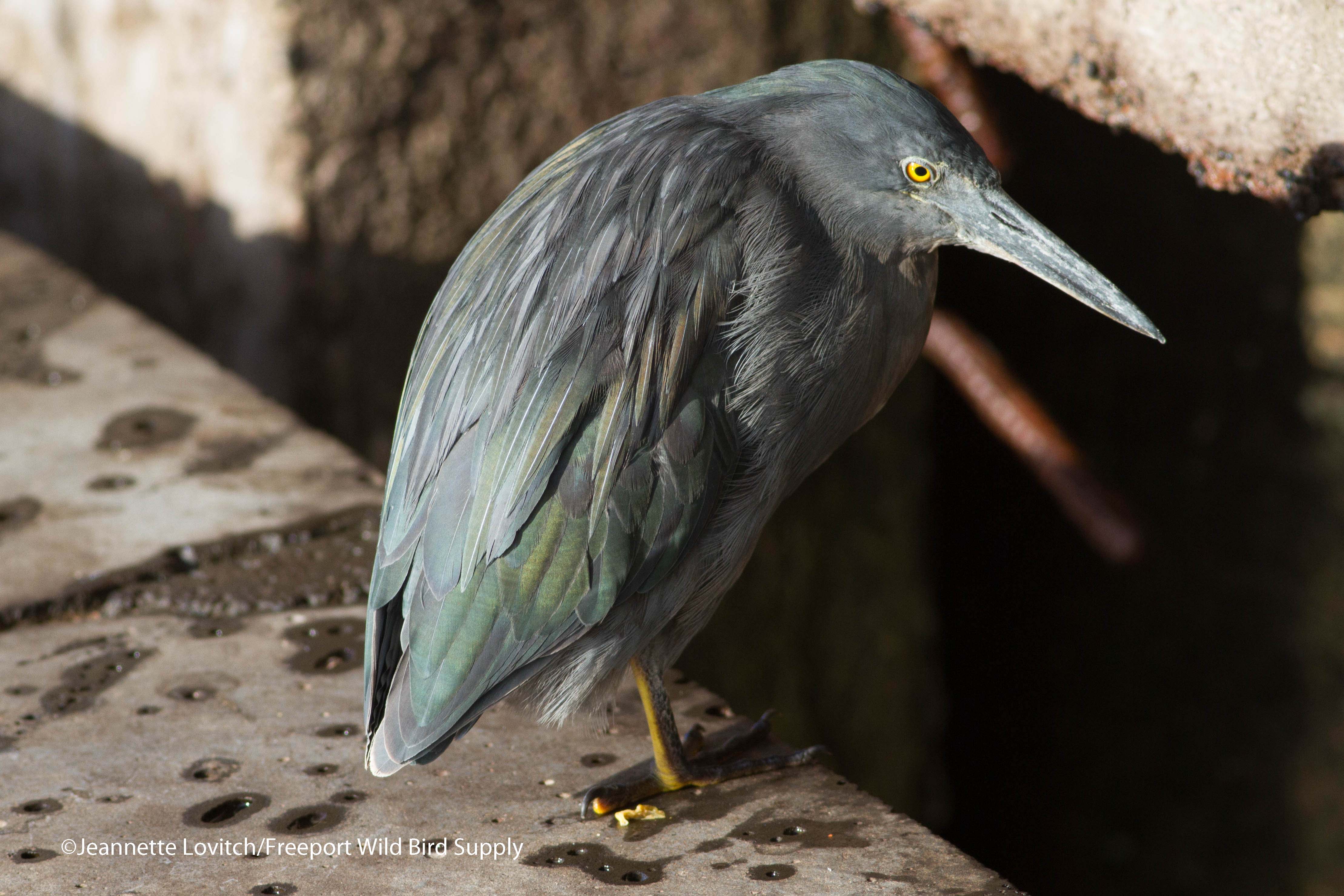
        18. Striated Heron (endemic subspecies sundevalli, including dark morph “Lava Heron”).
        19. Cattle Egret
        20. Great Blue Heron (Endemic subspecies cognata)
        21. Great Egret
        22. American Flamingo**
        23. Galapagos Hawk*
        24. Galapagos Rail*
        25. Paint-billed Crake*
        26. Common Gallinule
        27. Purple Gallinule
        28. Semipalmated Plover
        29. American Oystercatcher (endemic subspecies galapagensis)
        30. Black-necked Stilt
        31. Whimbrel
        32. Wandering Tattler
        33. Ruddy Turnstone
        34. Sanderling
        35. Lava Gull*
        36. Swallow-tailed Gull*
        37. Brown Noddy (endemic subspecies galapagoensis)
        38. Dark-billed Cuckoo
        39. Smooth-billed Ani (introduced)
        40. Barn Owl (subspecies punctatissima)
        41. Short-eared Owl (endemic subspecies galapagoensis)
        42. Galapagos Flycatcher*
        43. Galapagos Mockingbird*
        43a. Sante Fe Galapagos Mockingbird
        44. Espanola Mockingbird*
        45. San Cristobal Mockingbird*
        46. Floreana Mockingbird*
        47. Green Warbler-Finch*
        48. Gray Warbler-Finch (Espanola subspecies cinerascens)*
        48a. Gray Warbler-Finch (San Cristonal subspecies luteola)
        48b. Gray Warbler-Finch (Santa Fe subspecies bifasciata)
        49. Vegetarian Finch*
        50. Woodpecker Finch*
        50a. Woodpecker Finch (San Cristobal subspecies productus)
        51. Large Tree-Finch*
        52. Medium Tree-Finch*
        53. Small Tree-Finch*
        53a. Small Tree-Finch (San Cristobal subspecies salvini)
        54. Small Ground-Finch*
        55. Medium Ground-Finch*
        56. Large Ground-Finch*
        57. Common Cactus-Finch (subspecies intermedia)*
        58. Large Cactus-Finch (Espanola subspecies conirostris)*
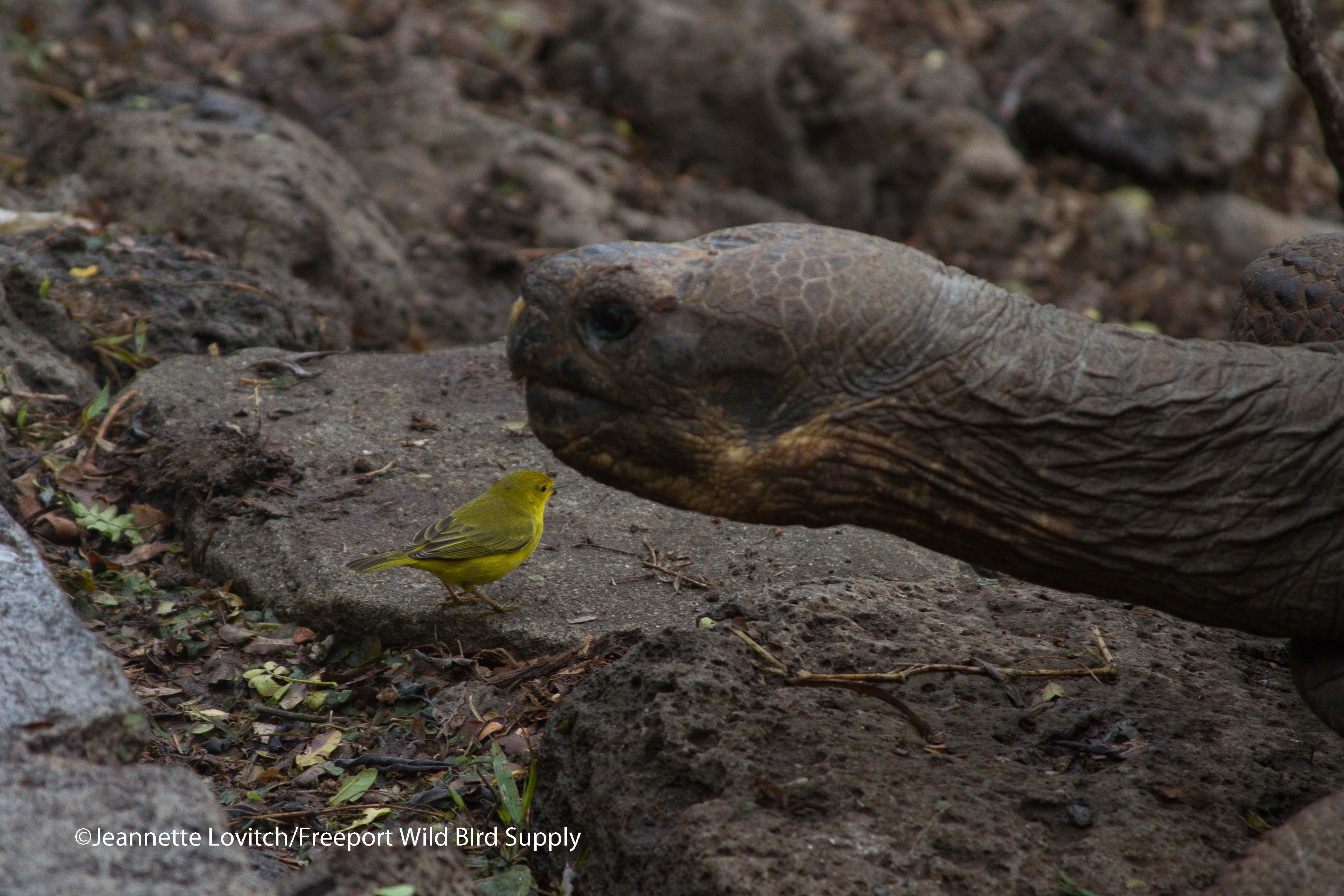
        59. Yellow Warbler (endemic subspecies aureola)

Mammals:
1. Black Rat (introduced)
2. House Mouse (introduced)
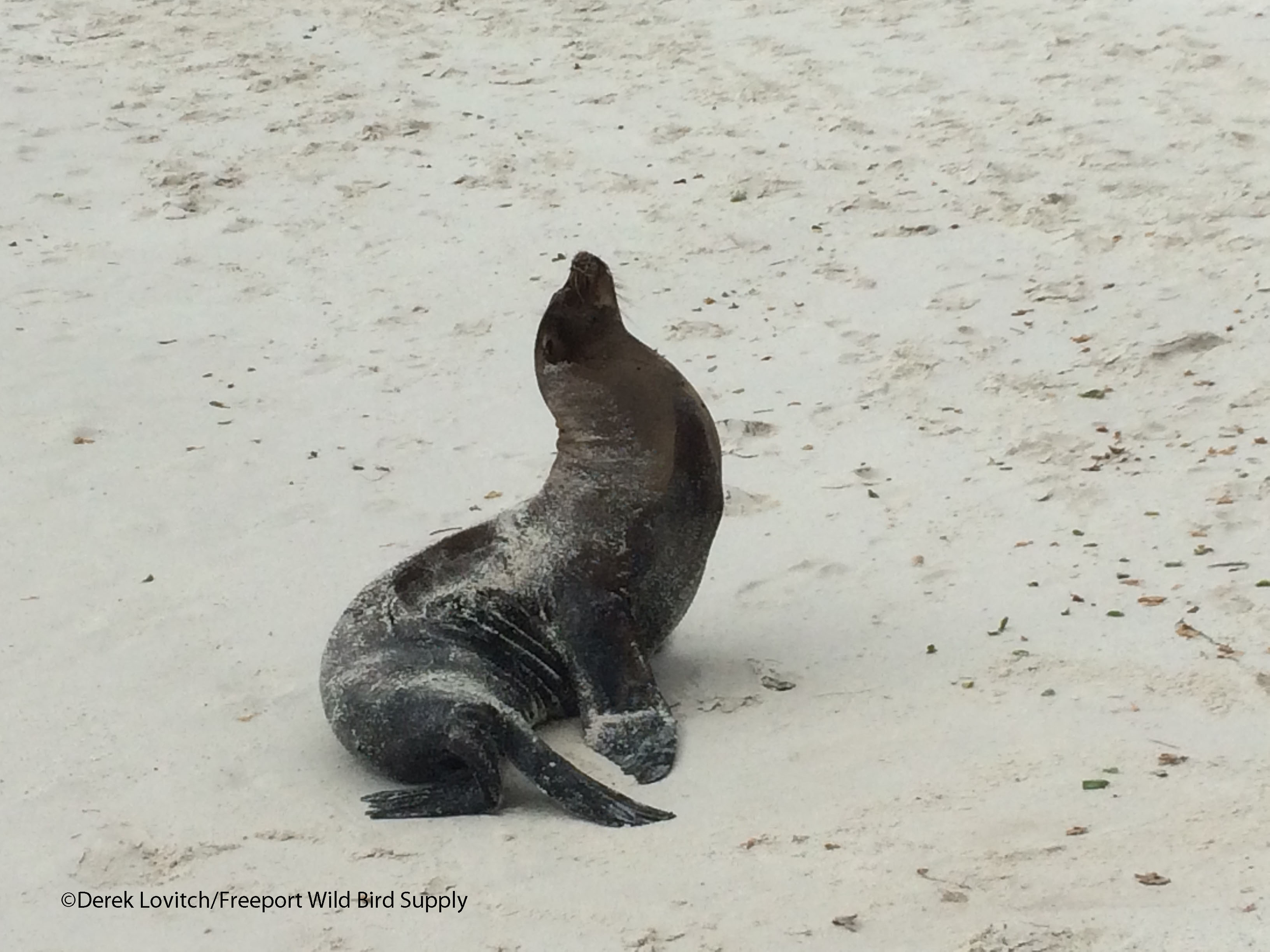
3. Galapagos Sea Lion*
4. Galapagos Fur Seal*
5. Feral Cat (introduced)
6. Bottlenose Dolphin
7. Short-beaked Common Dolphin
8. Minke Whale
9. Blue Whale

Reptiles:
1. Santa Cruz Giant Tortoise*
2. Green Sea Turtle
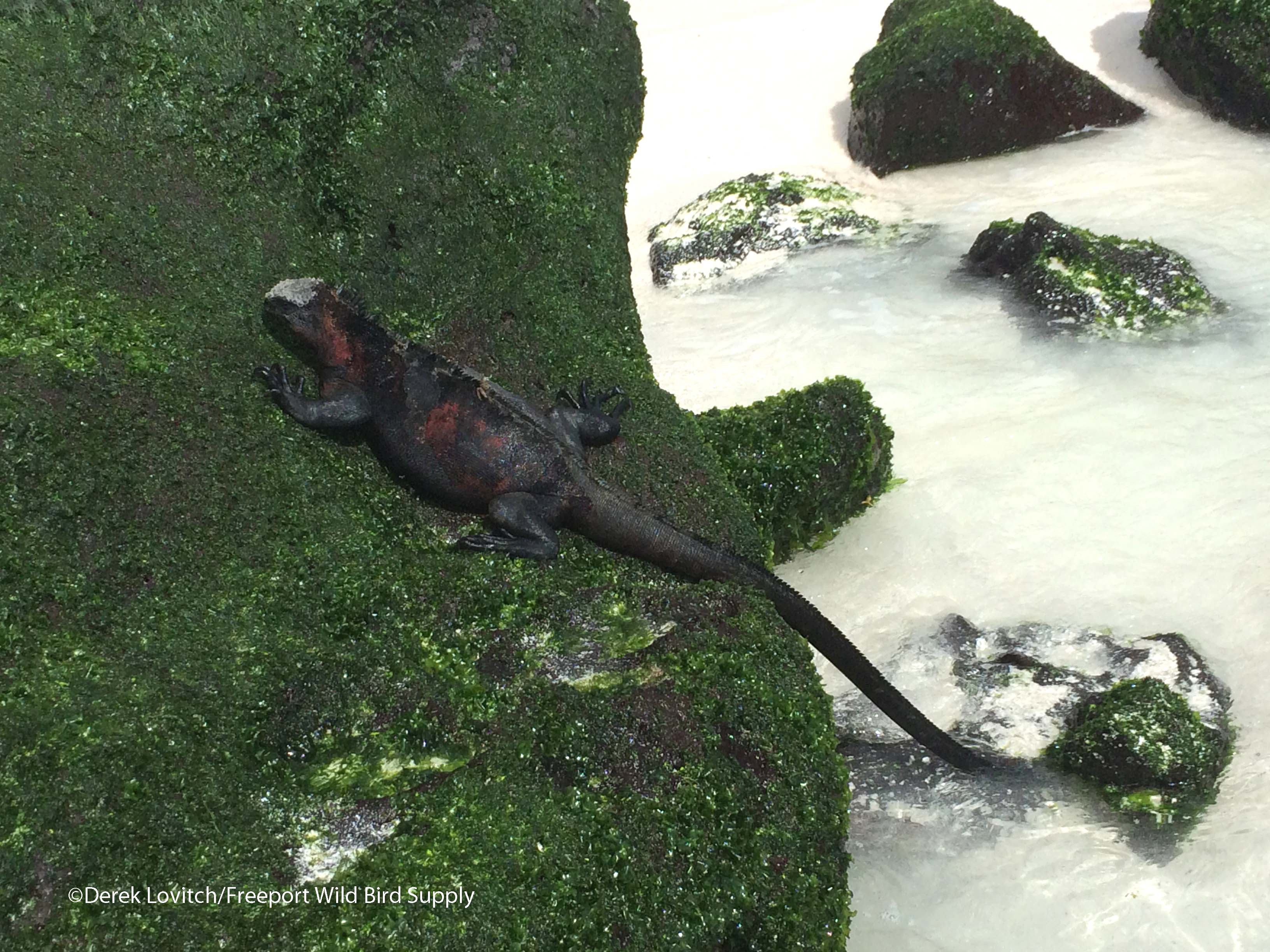
3. Marine Iguana (four subspecies)*
4. Land Iguana (two or three subspecies)*
5. Galapagos Lava Lizard*
6. Espanola Lava Lizard*
7. San Cristobal Lava Lizard*
8. Floreana Lava Lizard*
9. Galapagos Snake*

A small variety of insects were also identified, including several endemics, and a wide variety of fish and other marine life.

And finally, we’ve been posting videos daily (with a few more left to post) on our store’s Facebook page that I took with my iPhone during the trip. You can view all of them here.

YWAR
The ubiquitous, adaptable, and inquisitive Yellow Warbler (endemic subspecies) was with us throughout the trip, occupying most any niche. It – the most colorful landbird on the islands! – seems like an appropriate species to bring this travelogue to a close.

The Galapagos (Part I)!

Jeannette and I now have a saying: “When opportunity knocks, we buy plane tickets!” And such was the case when WINGS – for whom I am a Senior Leader – offered their guides and significant others the chance to take some open berths on Rich Hoyer’s Galapagos tour.  Because the boat was chartered, those empty beds would have gone to waste, so for the price of airfare and various expenses, this was a chance we simply had to make happen. Because the Galapagos!

As luck would have it, one of my weekend tours cancelled with too few participants, and I had kept the second half of June much more open than normal to work on a project. Well, with all of my guiding packed into the first two weeks of the month, plus finishing that project, plus running the store in a very busy season, etc, etc, we simply said “we have to do this” (despite all rational common sense suggesting otherwise)!

And so we did.

(I’ve taken the “travelogue” approach to this blog post as usual, recounting our trip and sharing a few thoughts and tidbits here and there. However, for a great and informative treatment of the Galapagos from birds to geology, I highly recommend John Kricher’s Galapagos: A Natural History.)

6/17: Travel Day.

It was a long day. A drive to Logan, a flight to Miami, a four hour layover, and then a flight to Quito…we didn’t get to bed until 11:30 local time (12:30 EDT). We were tired.

6/18: No time for rest yet.

A 5:45 breakfast, which we were barely conscious for, started the day. In addition to seeing Rich for the first time in many years, and Steve Howell (who also took advantage of the opportunity ahead of his upcoming Ecuador tour) for the first time in a few years, we immediately recognized two of the participants. In the “birding is a small world” department, we came to realize that we met Bill and Don in a van on St. Lucia in January!  We came together when the local guides we each were spending time with teamed up to get us to and from a remote part of the island, and search for Bridled Quail-Dove and White-breasted Thrasher. Go figure.

Organizing luggage and getting ready to board the minibus in the hotel’s parking lot, Jeannette and I quickly picked up a couple of life birds, as neither of us have been to the region before: Blue-and-yellow Tanager and Scrub Tanager. There were no doubt others in the garden, but they would have to wait for our return.

Already back to the airport, we boarded our flight to Baltra in the Galapagos, with a short stop in Guayaquil. After landing in Baltra, the short walk from the tarmac to the arrivals building yielded our first endemic of the trip: Galapagos Dove – with its spiffy, screaming-blue eyeliner.
North Seymour Island
Our first Galapagos Island – North Seymour Island, as we arrived in Baltra.

Our first “Darwin’s finches” flitted about: the un-evocatively but fairly descriptively-named Medium Ground-Finch. I was looking at a Darwin’s finch. Seriously, this was a dream come true.

We cleared immigrations and customs, and then we temporarily split off from the group; we were on our own this afternoon. We hopped on the bus to the ferry for the short crossing to Santa Cruz, enjoying numerous (Galapagos) Brown Noddies along the way.

A half-hour drive to our hotel gave us a sample of the transition between habitats as we gained elevation. We arrived at the Twin Lodges Galapagos, a quaint eco-lodge with lovely and spacious rooms, on the outskirts of the town of Bellavista.
Twin Lodges GardenTwin Lodges room

We walked into town for lunch, first feasting on numerous Yellow Warblers of the near-endemic subspecies aureola. Introduced Smooth-billed Anis were also common, and we began our education of Darwin’s finches by comparing numerous Medium and Small Ground-Finches.  Separated almost exclusively by bill shape and size, we struggled a bit, especially with lone birds, even with a small mixed group in town allowing helpful direct comparisons.

Lunch from a small streetside restaurant was superb, and a nice introduction to the local cuisine.
lunch

We picked up some vittles at a bakery for dinner (lunch was the large meal of the day!) and walked back up to our lodge, spotting our lifer Dark-billed Cuckoos.

After a little rest, a short casual mosey in the other direction gave us more time with finches, including our first Green Warbler-finches, as well as garrulous Galapagos Mockingbirds.

We were in bed by 7:30 and slept for 9 ½ hours. It was wonderful.

Twon Lodges Room 2
Perhaps the most “countable” Large Ground-Finch of the day.

6/19: Birding to the Boat.

After a breakfast overflowing with fresh fruit from the garden of the lodge, we took a short cab ride to meet up with the WINGS group at their resort. It was time to let Rich do the work!

A Small Tree-Finch worked the resort grounds, and following a discussion with Rich and Steve, added Large Ground-Finch to our list from yesterday. These birds are not easy, and a lot of them seem best left unidentified, but one pair of birds in the Bellavista town square clearly had the massively deep bill (as deep or deeper than it is long) and bill ridge above its forehead that should, in theory, confirm it as a Large…and not just a large Medium!

Our birding outing uphill yielded a few Woodpecker Finches. In particular, one bird that was perched on a snag was holding a thin, straight twig in its bill. One of the only birds in the world that uses a tool, this bird had its handy, wood-boring-larvae-extracting device at the ready. “Woodpecker Finch with a tool” was one of my most-wanted observations of the trip. Score!
Woodpecker Finch with tool

A Short-eared Owl almost took out Jeannette as it went crashing into the brush, offering up some of the best photographs that this species(s) will ever offer.

Then Rich went to work and got us a great look at the secretive (about the only secretive thing on these islands) Galapagos Rail – one of the most challenging species to see in the islands.
group hike

As we moseyed downhill, several Vegetarian Finches were encountered, including a few that were observed, well, eating their vegetables. One particular bird was fond of a certain type of fern frond. The uniqueness of each of Darwin’s finches is not found in their plumage, but in their diet and the amazing evolution of specialized bills to aid in that particular diet.
Vegetarian Finch

Galapagos Flycatchers, a rather dull Myiarchus, made their presence known, and one bird graciously posed for photos.

We then took a bus down to the ferry across the channel back to Baltra (with our first views of Galapagos Shearwaters). Then the other bus to the airport. And then another bus to the port where we took a zodiac to our home of the next week, the Nemo III.  Marine Iguanas, the endemic subspecies of American Oystercatcher, our first Galapagos Seal Lions and Blue-footed Boobies, were all soon spotted.

We settled into our exceedingly comfortable cabin, then wandered around the boat, spied Elliot’s Storm-Petrels as we ate lunch, and noted a lingering Sanderling on the beach. A single spiffy Lava Gull (arguably the rarest gull in the world with only about 300 pairs) stood guard.
cabin

Blue-footed Boobies and both Magnificent and Great Frigatebirds escorted us out of the harbor as we made our way to North Seymour Island.

As we dropped anchor, the magic really began. Swallow-tailed Gulls, one of my “most wanted” species in the world were jaw-dropping. Much larger than I expected, with a loping wingbeat reminiscent of a small egret, these simply stunning birds were even more astounding than I expected.

And then we landed.

And this is what Galapagos dreams are made of. While studying dull finches in town squares was pretty cool, having to move Swallow-tailed Gulls out of the landing was a little more impressive.
Swallow-tailed Gull

With an onshore breeze, frigatebirds, Blue-footed Boobies and Swallow-tailed Gulls were cruising by at literally an arm’s length. Our lifer Nazca Boobies punctuated the sorties of Blue-foots, Galapagos Shearwaters were numerous offshore, and Small Ground-Finches worked the dry ground.
MAFR-flight

As we walked along the trail – a mere half-mile that took almost 3 hours! – both frigatebirds were enganged in all stages of breeding, from “ballooning” males to nearly-fledged chicks. A few Blue-footed Boobies were dancing, but most were already incubating or brooding chicks of various ages.
BFBO1BFBO2BFBO-people

Galapagos Lava Lizards darted and prehistoric Land Iguanas lumbered.  A couple of Galapagos Petrels passed by offshore, and a Great Egret was escorted off the island by a Swallow-tailed Gull.

This place was simply extraordinary, and even surpassed what I thought were outsized expectations and visions for being here. As one member of the group said, “Why the hell did I wait so long to do this!?”  It defied superlatives. I just wandered around with a smile. Jeannette filled three memory cards.  I’ll let the photos do the rest of the talking.
frigatebirdcolony

iguana crossing
Iguana crossing.

IMG_8496_Swallow-tailedGull1_edited-1

Land Iguana

MAFR

MAFR-nestMale Great Frigatebird

Marine Iguana

prickley pair

sunset

6/20: San Cristobal Island.
sunrise

We awoke at our anchorage of the tiny Sea Lion Island, just offshore of San Cristobal. After the information and sensory overload yesterday, it was rather relaxing to stroll the tiny island. Plenty of Blue-footed Boobies, both Frigatebirds, and –you guessed it – Galapagos Sea-Lions were present. While there was a photo at every turn yesterday, and our heads were on a swivel, we instead spent a little more time closely looking and watching behaviors of the boobies, and still trying to figure out how to separate the different ages and sexes of Great and Magnificent Frigatebirds. Wandering Tattler (2) and Great Blue Heron (1-2) were added to our list, along with Green Sea Turtles just offshore. A Lava Gull finally posed for photos.
BFBO

posing Blue-footed Booby

Sea Lion Island

Sea Lion

The second half of the morning was spent snorkeling, it was stellar. Besides massive amounts of fish of many varieties and Diamond-backed Sting-Rays, we had feeding Marine Iguanas. It was rather surreal looking down into the water at a lizard, and we were treated to one in full swim commuting from patches of green algae – their required food source that is just starting to recover from the recent El Nino (we have seen quite a few dead iguanas that didn’t make it through the spell of warm water that kills the green algae; they apparently cannot digest the brown algae that flourishes in the warmer waters).

The fish – of which I know nothing about – were a lot of fun, but then, out of nowhere, a Sea Lion appears, and is swimming full speed right towards me!  At what seemed to be the last second, it wheeled around and dodged right, as if entertaining itself in a game of chicken. It did this several times to me, then to others, and then appeared to attempt to get one of us to play. Of course, it was probably just showing off – yeah, they’re a little more nimble in the water than us flopping humans.

The icing on the cake for me was the Brown Pelican that dove into a school of baitfish nearby. It was absolutely amazing to see the bird plunge down, massive maw agape. Unfortunately for the pelican, the little fishes dodged skillfully away.

Being in the water with Marine Iguanas, Galapagos Sea-Lions, and plunging pelicans is not something I will ever forget.

Back on the boat, we motored into some deeper water, hoping to see Wedge-rumped Storm-Petrels. Galapagos Shearwaters were numerous, and we passed a sea stack with Nazca Boobies and a Swallow-tailed Gull.

We glimpsed only one Wedge-rumped Storm-Petrel, along with one Band-rumped and many Elliot’s, but as we sat down for lunch, two Wedge-rumps came darting in and spent at least 20 minutes in our wake, affording great views and photo ops.

IMG_8590_edited-1
Anchoring in the unexpectedly (to us) busy harbor of the Galapagonian capital, Puerto Baquerizo Moreno, we boarded a bus for a short drive to the outskirts of town, just uphill. Starting at a small but packed cemetery, followed by a slow walk downhill on a wide bike path, we quickly scored San Cristobal Mockingbird (followed by five more on our walk), Gray Warbler-Finch (at least a dozen in all), the San Cristobal subspecies of Vegetarian Finch and Woodpecker Finch, and the largest-billed Medium Ground-Finches we have so far seen (adding to our confidence of our Large Ground-Finch identification from the first day). Small Tree-Finches and numerous Small Ground-Finches, ubiquitous Yellow Warblers, and several Smooth-billed Anis rounded out the list.
Sea Lions at dock

San Cristobal Mockingbird

Having gotten slightly more confident in the identification of the Darwin’s finches that we have been seeing, I have found more time to simply study their remarkable behaviors, such as the Woodpecker Finch foraging on a trunk like a nuthatch, the warbler-finch probing the ends of tiny branches like a parula, and the range of foodstuffs fed upon by the two ground-finches.
Gray Warbler-Finch
Gray Warbler-Finch

Small Gorund-Finch
Small Ground-Finch

largerSmallGround-Finch
A larger Small Ground-Finch? Or a small Medium?

Medium Ground-Finch
Definitely a Medium Ground-Finch.

Back in town, we gawked at gaudy Sally Lightfoot Crabs covering the rocks, Galapagos Sea Lions covering the docks, and a patient Lava Heron (dark-morph of the endemic subspecies of Striated Heron) waiting for passing fish.
Sally Lightfoot Crab

Lava Heron
Lava Heron (dark-morph Striated of the endemic subspecies)

6/21: Espanola Island.
sunrise

Today was incredible! I’m going to let the photos do most of the talking today.

The morning started with the exceptional Espanola (Hood) Mockingbird, the first of which left the beach to inspect the deck of our boat. Many more came out to investigate us as we strolled the beach, taking in the Large Cactus-Finches (soon to be Espanola Ground-Finch) and magnificent Galapagos Hawks – a bird Jeannette and I have wanted to see for a very, very long time.
EspanolamOCKINGBIRD_edited-1
Espanola Mockingbirds

femaleLavaLizard_edited-1
Female Espanola Lava Lizard

GalapagosHawk
Galapagos Hawk.

MarineIguana
Marine Iguana

SeaLion

Another mind-boggling hour of snorkeling (even with a wetsuit, that’s about the maximum in these chilly waters) in deep water, with sealife clinging to the shear cliffs included more close passes by Galapagos Sea-Lions. King Angelfish stole the show, however, although the Chocolate Chip Seastar was also a crowd favorite.

After lunch, we visited the Waved Albatross colony (lifer!) at Suarez Point. Dozens of nesting albatross were scattered about and many more were cruising by the cliffs, riding updrafts.
IMG_8689_WAAV_edited-1

I could have stayed at these cliffs all week: close passes by albatross, countless Red-billed Tropicbirds, many in display flight and Nazca Boobies, with goodly numbers of Blue-footed Boobies mixed in, a smattering of Swallow-tailed Gulls, and staggering numbers of Galapagos Shearwaters coming and going from their cliffside burrows.
MarineIguanaPile
Marine Iguanas

NazcaBoobyNazcaBooby2-SuarezPoint
Nazca Booby.

Red-billedTropicbird
Red-billed Tropicbirds

SuarezPoint

Swallow-tailedGull
Swallow-tailed Gull

usWavedAlbatross

The last hour of daylight was spent searching deeper waters for pelagics, which included our first Band-rumped Storm-Petrels of the trip. Then Steve Howell called out “Markham’s Storm-Petrel!” as this big, dark storm-petrel winged by – a lifer even for Rich, and a most unexpected addition to the now-hefty roster of lifer birds for me (unfortunately, Jeannette had just left to hit the shower!).
ElliotsStorm-Petrels
Elliot’s Storm-Petrels.

Wedge-rumped Storm-Petrel

6/22: Floreana Island.

As the Nemo III cruised close to the cliffs of Gardiner-by-Floreana, a few curious Charles (Floreana) Mockingbirds came out to investigate. Critically Endangered and now found only on two offshore islets around Floreana, this was a bird I was not counting on seeing. Seeing about a half-dozen was a real treat, even if they were about as far as anything we had seen the whole trip!
Gardner-by-floreanaGardner-by-Floreana2

A landing at Cormorant Point (named for a wrecked ship, and not the endemic flightless bird our itinerary will not be taking us to) to visit a brackish lagoon was an interesting new habitat, and yielded 11 American Flamingos, and the endemic subspecies of White-cheeked Pintail. Resident Black-necked Stilts, oversummering Ruddy Turnstones, and a single tarrying Semipalmated Plover padded the trip list as well.
CormorantPoint,Floreana

displayingBFBO

White-cheekedPintailandRUTU
endemic subspecies of White-cheeked Pintail with an oversummering Ruddy Turnstone

AmericanFlamingo

Flamingo1_edited-1Flamingo2_edited-1
phone-scoped American Flamingos

Some more birding by boat produced one (perhaps 2) Galapagos Penguins in the water – another bird I did not expect to see on this tour. It only surfaced a few times, but it was seen well, and it was a real treat to see a flamingo and a penguin in the same morning!
group_in_panaga

In the afternoon, we landed at Puerto Velasco Ibarra, where a truck ride uphill into the island’s higher interior, took us to a very different habitat, and into the realm of Medium Tree-Finches, a Galapagos Tortoise reserve (non-releasable hybrids; a long story) and some fascinating island history.
truck_to_AsilodelePaz

AsilodelePaz-view

captiveTortoises

MediumTreeFinch
Medium Tree-Finch

YWAR_and_tortoise
The endemic subspecies of Yellow Warbler occupies many niches, including foraging for flies around tortoises.

A couple of Common Cactus-Finches welcomed us back to town, joining the Small and Medium Ground-Finches, not to mention the Marine Iguanas and sea lions lining the pier.
CommonCactus-Finch
Common Cactus-Finch

Heading into our most productive seabirding waters after lunch, we were soon rewarded with a staggering amount of Galapagos Shearwaters, 100’s of Brown Noddies, and countless swirling Elliot’s and Wedge-rumped Storm-Petrels. A feeding frenzy attracted both Nazca and Blue-footed Boobies, and was centered around a group of feeding whales, which we unfortunately did not get very close to. We did have a couple of Minke Whales before and after, and a little while later, a magnificent Blue Whale – the largest animal to ever roam the earth.
GASH
Galapagos Shearwater

gape
Galapagos Petrel

Steve_checks_in
Steve checks to make sure he isn’t missing anything.

sunset

With our trip already half-over, it seems like a good place to break. Look for Part II (including our species list) in a separate blog post in the coming days!

2016 MonhegZen Spring Birding Weekend PLUS Birds on Tap – Monhegan!

As I do most Memorial Day weekends, I head to Monhegan Island with a tour group for my “MonhegZen Spring Birding Weekend.”  But this was not going to be “just” a weekend on this wonderful, joyful, and bird-filled place. This was going to be truly special – it was “Birds on Tap – Monhegan!

A small group arrived with me on Friday, and boy did we hit the ground running. The first bird we saw off the boat was a Purple Martin zipping overhead – a nice rarity to get things started. As if my usual Monhegan-stoked Rarity Fever wasn’t already in full effect, the next bird we saw was a wet Empid. And let the games begin! Of course, this one was a pretty straightforward Alder Flycatcher after we got good looks at it and heard it call.
ALFL

American Redstarts, Northern Parulas, and Blackpoll Warblers were common and conspicuous as it took us over an hour just to walk up Dock Road!  A great look at a male Bay-breasted Warbler near the Ice Pond was a treat, and we caught up with part of the small flocks of Red and White-winged Crossbills that have been wandering around the island. We saw at least 8 Red and at least 6 White-winged, including fresh juveniles of each – likely having bred out here in the late winter and early spring.

A Sora calling in the marsh didn’t really stop all weekend, and Yellow Warblers were particularly conspicuous around town.
YWAR'

And our FOY Novelty pizza.
Novelty Pizza

While I – and the group – were hearing a little too much “you should have been here yesterday,” we were pretty content with the leftovers of the fallout, with 16 species of warblers by day’s end, including impressive numbers of Northern Parulas.
NOPA

A rare-in-spring Dickcissel flew over the Trailing Yew as we awaited coffee, soon followed by a close-passing Yellow-billed Cuckoo. After a strong flight overnight, there were a lot of new birds around. Fueled by the delicious Birds & Beans coffee being brewed by the Trailing Yew all weekend, we began our birding, soon picking up lots of new arrivals including Cape May Warbler and Swainson’s Thrush.

Apple trees in full bloom all around town were one of the major draws for birds and birders. In fact, you could basically pick an apple tree and sit in front of it long enough to see at least one of all of the common migrants that were about, such as Magnolias Warbler…
MAWA male

MAWA female

…and Chestnut-sided…
CSWA2CSWA1

Jeannette met up with the rest of the tour group arriving on the first boat from New Harbor, and caught up with us after catching up with two of the most cooperative Philadelphia Vireos you’ll ever meet that we all enjoyed along Dock Road.
PHVI

In town, we heard a White-eyed Vireo, another rarity (although one of the expected ones out here), ran into a few more of both species of crossbills behind the Ice Pond, and spotted the young Humpback Whale that has been making regular appearances close to shore off the island’s western shore!  And this Scarlet Tanager…which seemed an appropriate find since we have been consuming the coffee named for it!
SCTA

After hearing a singing Mourning Warbler earlier in the day for our 20th species of warbler on the trip, we had a handful of glimpses of a skulking female near the Yew. I turned around to follow a flitting Yellow-bellied Flycatcher. Training my bins on the flycatcher, I first focused on the branch behind it, which turned out to be hosting a roosting Common Nighthawk!
CONI1a

CONI2

83 species of birds on the day, including 19 species of warblers made for one helluva day, but the fun was just beginning! In addition to my annual tour, this was the weekend of Birds On Tap – Monhegan!

A collaboration between our Freeport Wild Bird Supply, Trailing Yew, Birds & Beans, and Monhegan Brewing, we took our “Birds on Tap” series of events offshore to celebrate birds, migration, bird conservation (especially through consumer choices like what coffee to drink), and, yes, beer!

And one of the truly special events was a limited, 31-gallon batch of a special coffee-infused milk stout from Monhegan Brewing, featuring a pound and a half of the dark roast Scarlet Tanager coffee from Birds & Beans!
MARY POUR

I had the honor of announcing the official release, taking some of the first sips of this delicious light-bodied stout featuring a subtle sweetness from lactose perfectly balanced with a bitter roastiness from the coffee.
Me_At MonheganBrewing_Paul_Wolter_edited-1

ON PORCH

Of course, we were also still birding. I promise!
GROUP AT BREWERY

In fact, we momentarily cleared out the brewery when a possible Orange-crowned Warbler (one was seen by others over the past two days) was spotted nearby. Rushing over, we carefully studied the bird before reaching the conclusion that it was indeed a pale Tennessee Warbler.
TEWA

After an unfortunate but necessary cancellation from our original speaker, Dr. Steve Kress arrived to save us – admittedly a feat marginally less heroic than what he did for puffins and endangered seabirds all over the world!


Giving the weekend’s keynote presentation on his work to bring Atlantic Puffins back to nearby Eastern Egg Rock, Steve explained the challenges he and the puffins faced before finally realizing his novel approach finally bore fruit, or should I say, pufflings.
Steve_Kress2_edited-1Steve_Kress1_edited-1

Overnight, a back door cold front sagged southward, shifting the winds to an easterly direction and limiting the arrival of new migrants to the island. Our “Morning Flight Watch” with plentiful free Birds & Beans coffee for all at the Trailing Yew wasn’t too eventful, but things definitely picked up for the post-breakfast walk.


Jeannette led my tour group, and the birding was still a bit slow, relatively speaking. But, they finally made their way down to the pump house to see Eastern Kingbirds flycatching in the marsh. And, up to the lighthouse for the first time which was highlighted by a fantastic view of a female Blackburnian Warbler.
BLBW female

Meanwhile, Kristen Lindquist assisted me in leading the free, open-to-all birdwalk as part of the weekend’s special events. A nice mix of birders, residents, and visitors enjoyed a casual stroll. We chatted as we went, covering a variety of topics from bird migration to conservation to coffee to the ill-conceived industrial wind development scheme for the island’s southern waters.


Some folks, new to birding, may have left with the impression that Red-eyed Vireos were about the most common bird in the world, as quite a few were calmly and methodically foraging through apple trees in and around town.
revi

But perhaps this male Blackburnian Warbler would end up being a “spark” bird for someone! Because male Blackburnian Warbler!
BLBW male

With a light easterly wind continuing, and our group back together after more Novelty pizza, we walked up to Burnt Head, where we enjoyed some nice close passes from Northern Gannets
NOGA

Jeannette and I spent an extra night on the island, knowing we would need a little time to unwind after the even-more-chaotic-than-expected weekend of events. After a great dinner with friends, we listened to two Soras calling from the marsh and an American Woodcock still displaying somewhere overhead before turning in.

We awoke on Monday to dense fog and no visible migration on the radar, but the birding was actually quite good. We found a Nelson’s Sparrow in the Lobster Cove marsh, but also enjoyed how the damp weather (mist, drizzle, and a few showers) were keeping activity low and close, easily viewed in the blooming apple trees around town once again.
As a warm front passed through, with only a little more drizzle but rapidly warming temperatures and clearing skies, we took a post-pizza hike, heading deeper into the woods, which netted more of the island’s breeding species, such as many more Black-throated Green Warblers.
BTNW

Somehow – now how did this happen? – our hike ended at the brewery, where another pour of the Birds & Beans-infused beer was in order.
CLOSE UP POUR

Unfortunately, especially since the sun was now shining brightly, it was indeed time for us to head back to the real world, so Jeannette and I begrudgingly plodded down to the dock and boarded the Hardy Boat for the return.  It’s never easy saying goodbye to the island – its birds and our friends there – but today was especially challenging as we know a fight about the future of the island – including many of the migratory birds that pass over and through here – is looming.
Leaving_island_edited-1

Here’s the complete daily checklist for the weekend:
26-May 27-May 28-May 29-May
1 Canada Goose 0 0 1 0
American Black Duck x Mallard 0 1 0 0
2 Mallard 2 10 12 8
3 Common Eider x x x x
4 Ring-necked Pheasant 3 3 3 4
5 Common Loon 1 1 0 1
6 Northern Gannet 0 0 12 0
7 Double-crested Cormorant x x x x
8 Great Cormorant 0 0 0 1
9 Great Blue Heron 0 1 0 0
10 Green Heron 1 0 0 0
11 Osprey 0 1 0 0
12 Bald Eagle 2 1 0 0
13 Merlin 0 1 0 1
14 Virginia Rail 0 0 0 1
15 Sora 1 1 2 1
16 American Woodcock 0 0 1 0
17 Black Guillemot x x x x
18 Laughing Gull x x 12 4
19 Herring Gull x x x x
20 Great Black-backed Gull x x x x
21 Common Tern 2 0 0 0
22 Mourning Dove 8 10 4 6
23 YELLOW-BILLED CUCKOO 0 1 0 0
24 Common Nighthawk 0 1 0 0
25 Ruby-throated Hummingbird 2 3 2 2
26 Yellow-bellied Sapsucker 0 1 0 0
27 Downy Woodpecker 4 4 2 0
28 Northern Flicker 0 1 1 1
29 Eastern Wood-Pewee 2 10 4 6
30 Yellow-bellied Flycatcher 1 4 0 5
31 Alder Flycatcher 1 2 0 0
32 Willow Flycatcher 0 4 0 1
33 “Traill’s” Flycatcher 0 6 2 1
34 Least Flycatcher 5 8 2 5
35 Eastern Kingbird 8 14 7 6
36 WHITE-EYED VIREO 0 1 0 0
37 Philadelphia Vireo 2 3 0 0
38 Red-eyed Vireo 15 100 30 25
39 Blue Jay 4 4 6 6
40 American Crow x x x x
41 Tree Swallow 8 2 2 2
42 Cliff Swallow 0 1 0 0
43 Barn Swallow 0 0 2 0
44 PURPLE MARTIN 0 0 0 0
45 Black-capped Chickadee x x x x
46 Red-breasted Nuthatch 2 4 2 3
47 House Wren 0 2 2 2
48 Winter Wren 0 0 0 1
49 Golden-crowned Kinglet 2 2 2 4
50 Swainson’s Thrush 0 1 0 0
51 American Robin 10 8 10 8
52 Gray Catbird x x x x
53 Brown Thrasher 1 0 2 0
54 Northern Mockingbird 0 1 0 0
55 European Starling x x x x
56 Cedar Waxwing 30 80 60 40
57 Ovenbird 0 1 0 0
58 Northern Waterthrush 1 1 0 0
59 Black-and-white Warbler 8 10 6 3
60 Tennesee Warbler 1 10 1 1
61 Nashville Warbler 1 1 1 2
62 MOURNING WARBLER 0 3 0 0
63 Common Yellowthroat x x x x
64 American Redstart 25 40 10 15
65 CAPE MAY WARBLER 0 1 0 0
66 Northern Parula 40 50 20 20
67 Magnolia Warbler 5 15 12 20
68 Bay-breasted Warbler 1 0 0 0
69 Blackburnian Warbler 3 3 2 2
70 Yellow Warbler 20 20 25 20
71 Chestnut-sided Warbler 15 15 10 15
72 Blackpoll Warbler 20 70 30 40
73 Black-throated Blue Warbler 1 3 1 2
74 Yellow-rumped Warbler 0 4 1 2
75 Black-throated Green Warbler 6 7 10 30
76 Canada Warbler 0 1 1 0
77 Wilson’s Warbler 1 0 0 1
78 Eastern Towhee 0 1 0 0
79 Chipping Sparrow 4 1 1 0
80 NELSON’S SPARROW 0 0 0 1
81 Song Sparrow x x x x
82 Lincoln’s Sparrow 0 1 0 1
83 Swamp Sparrow 0 1 0 1
84 White-throated Sparrow 1 2 2 1
85 Scarlet Tanager 0 2 0 0
86 Northern Cardinal 4 4 8 8
87 Rose-breasted Grosbeak 0 1 0 1
88 Indigo Bunting 1 3 1 0
89 DICKCISSEL 0 1 0 0
90 Bobolink 2 6 3 0
91 Red-winged Blackbird x x x x
92 Common Grackle x x x x
93 Baltimore Oriole 4 2 2 1
94 Purple Finch 2 2 2 1
95 RED CROSSBILL 8 2 3 ?
96 WHITE-WINGED CROSSBILL 6 8 0 12
97 Pine Siskin 15 30 30 40
98 American Goldfinch 6 4 4 4

Not Your Usual December Highlights!

While this fall’s rarity season got off to a fairly slow start at the end of October, things have really heated up lately. In fact, it’s been a really outstanding couple of weeks.  And in the past few days, I have enjoyed some really great birding.

The mild temperatures have certainly played a role – while the southerly and southwesterly winds that have ushered in much of the unseasonably warm air may still be facilitating the arrival of some vagrants, at the very least the mild temperatures and benign weather are allowing vagrants and unseasonable “lingering” migrants to survive long enough to be found! And, the lovely weather is certainly keeping more birders out in the field. I have certainly been taking full advantage of this beautiful weather.

On Sunday, Ed Hess and I visited the Saco Riverwalk. While this is always a hotspot at this season, it is really extraordinary this year. After 8 species of warblers were seen there in November, the mild weather has allowed at least 5 species to continue – almost unprecedented for December. Ed and I saw the Tennessee Warbler, a really remarkable December record…
L1040092_TEWA,SacoRiverWalk, 12-6-15_edited-1

…both of the two continuing Yellow Warblers (the photos are of one of the two individuals), which is another exceptional species for the date…
L1040022_YWAR,SacoRiverWalk,12-6-15_edited-1

…the Nashville Warbler (and confirmed the continued presence of a second Nashville!)…
NAWA by Ed_edited-1

…the Common Yellowthroat (more expected for the season)…
L1040098_COYE1,SacoRiverWalk,12-5-15_edited-1

…and we saw one of the two Ruby-crowned Kinglets still present (much more regular in December than any warbler).
L1040116_RCKI,SacoYachtClub,12-6-15-edited

And although we didn’t see it, the most amazing of them all, a Blackburnian Warbler is still present. (Jeannette and I saw and photographed it earlier in the week, 11/30).
IMG_3040_edited-2

Ed and I then headed to Cape Elizabeth, where we photographed the continuing Grasshopper Sparrow at Dyer Point, and odd bird to see juxtaposed with Harlequin Ducks (18) and Purple Sandpipers (6)…
L1040136_GHSP2,DyerPt,12-6-15_edited-1L1040151_GHSP3,DyerPoint,12-6-15_edited-1L1040163_GHSP1,DyerPoint,12-6-15

…And we twitched a Wilson’s Warbler found earlier in the day nearby, just so we could say we saw five species of warblers in a day in December!  It cannot, however, be said that we “photographed” five species:
WIWA,CapeElizabethm12-6-15

The Grasshopper Sparrow was also our fifth species of sparrow on the day (Song, American Tree, White-throated, and Dark-eyed Junco) – I doubt I’ve had five species of warbler and 5 species of sparrows in the same day in December in Maine before.

Of course, that only somewhat consoled us about missing the vagrant Western Tanager that was found at the Riverwalk later in the afternoon. Damn.
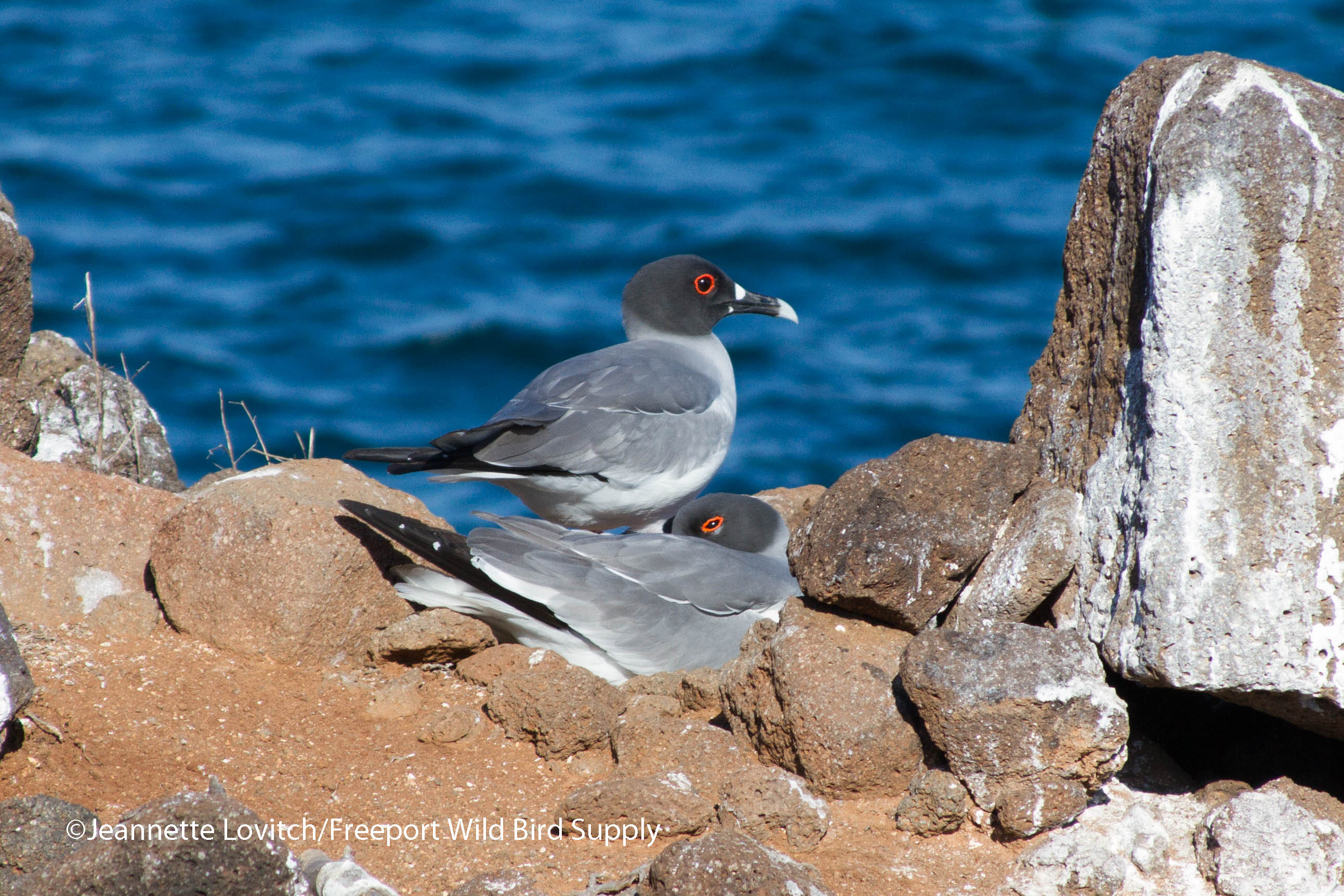
On Monday, I headed over to Reid State Park in Georgetown with Kristen Lindquist. It was a rather quiet day here, but it’s always one of my favorite places to take a walk, especially on such (another) gorgeous morning.  43 Red-necked Grebes, a Northern Harrier, a flyover Red Crossbill (my first of the season), oh yeah, and another rarity: “Oregon” Junco.
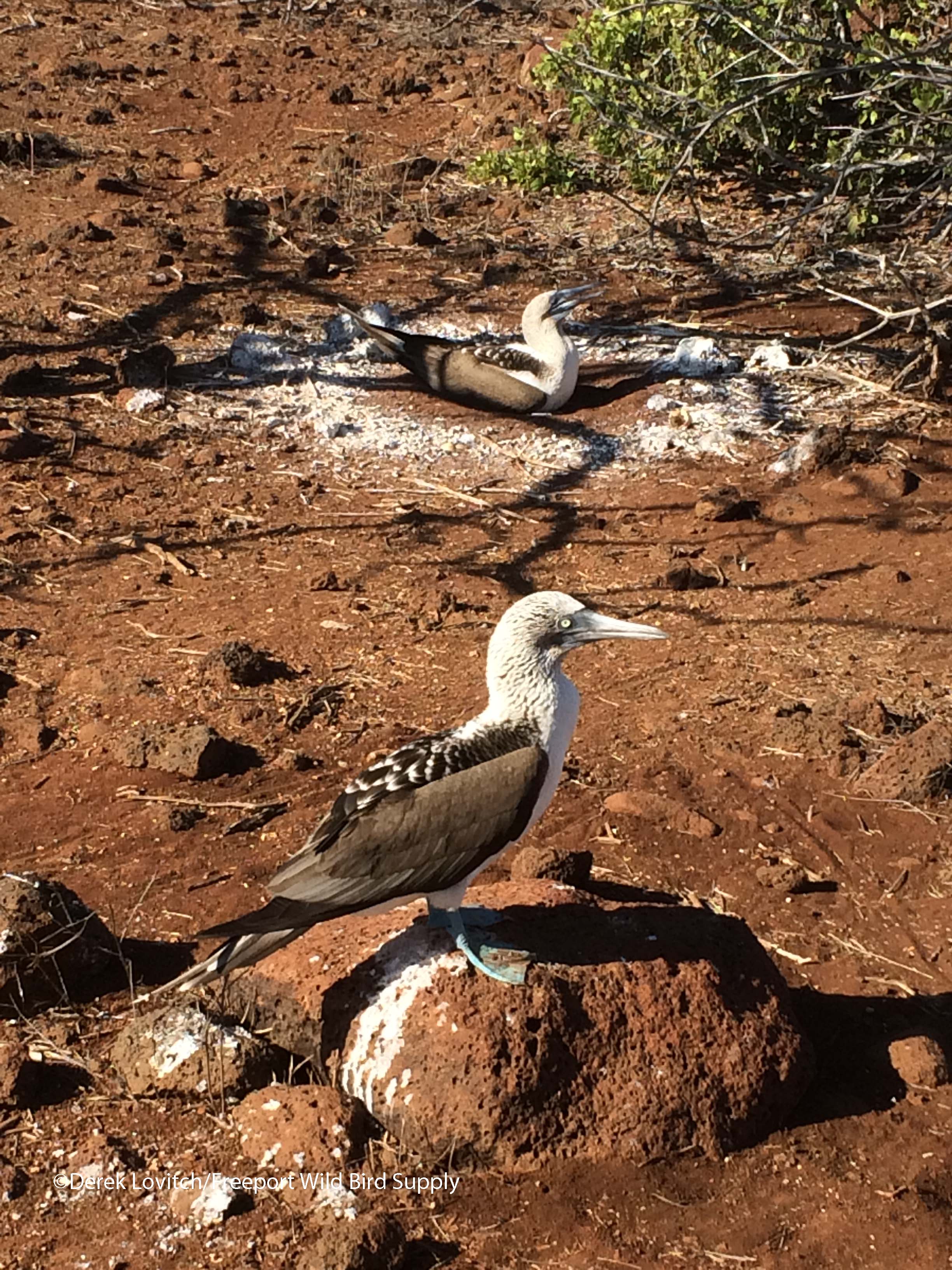
While some might dismiss it as “merely a subspecies,” the westernmost subspecies of the Dark-eyed Junco is truly a rarity in the Northeast, and this was the first definitive “Oregon” Junco that I have seen in Maine (although I have never chased one at a feeder, where they are usually seen). It was in a small flock of “Slate-colored” Juncos and an American Tree Sparrow in the scrubby central ridge in the middle of the Griffith’s Head parking lot.

The flock flushed from short grass at the edge as we rounded the corner, and as it briefly alighted in a shrub, I was shocked to see a black-hooded junco. Closer inspection as we followed it for about 20 minutes yielded all of the pertinent field marks for a “textbook” Oregon, nicely eliminating the intermediate “hybrid swarm” – or whatever it is – that we sometimes refer to as “Cassiar’s” Junco.

Note the complete, black (not dark gray) hood, lacking contrast in the supraloral area. Also, the hood is cleanly demarcated on the back of the head, contrasting crisply with the reddish-brown back. The flanks and sides are particularly pale salmon-buff, which is not atypical for adult males (although many are much brighter). At the lower margin of the hood, note the smooth, rounded margin across the chest and up to the “shoulder.”
IMG_6908_ORJU4,meIMG_6909_edited-1IMG_6910_ORJU1,K_edited-1IMG_6912_edited-1,K.Lindquist

Afterwards, Kristen and I birded around Bath – no white-winged gulls or Barrow’s Goldeneyes yet, no doubt related to the mild temperatures as well, but we did spot one of the Snowy Owls at Brunswick Landing – unlike warblers, a slightly more expected highlight for early December in Maine.

While Jeannette and I didn’t turn up any rarities – or much of anything else for that matter! – birding Harpswell Neck this morning, I very much look forward to what the coming weeks will produce, especially when it finally turns cold!