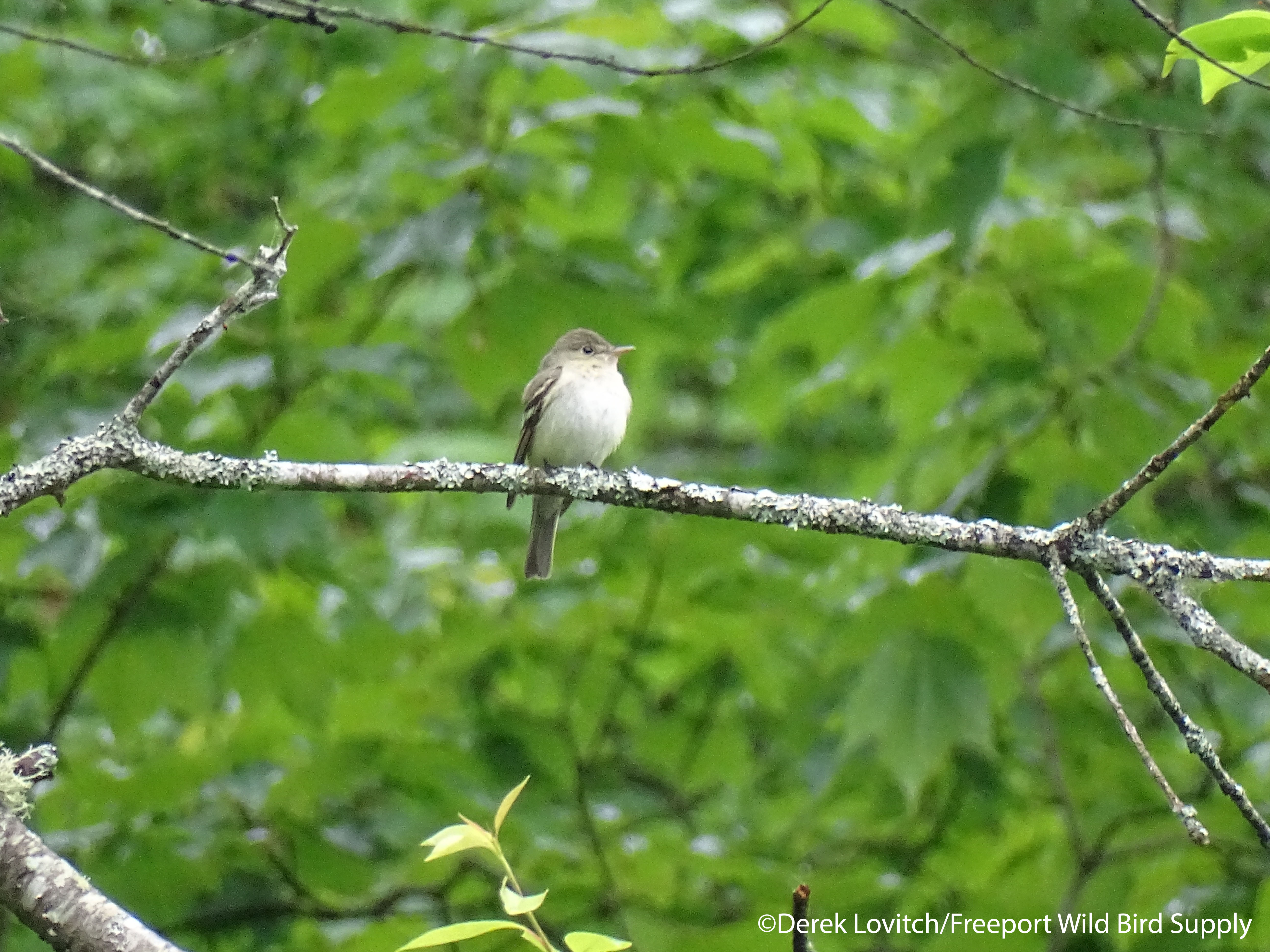
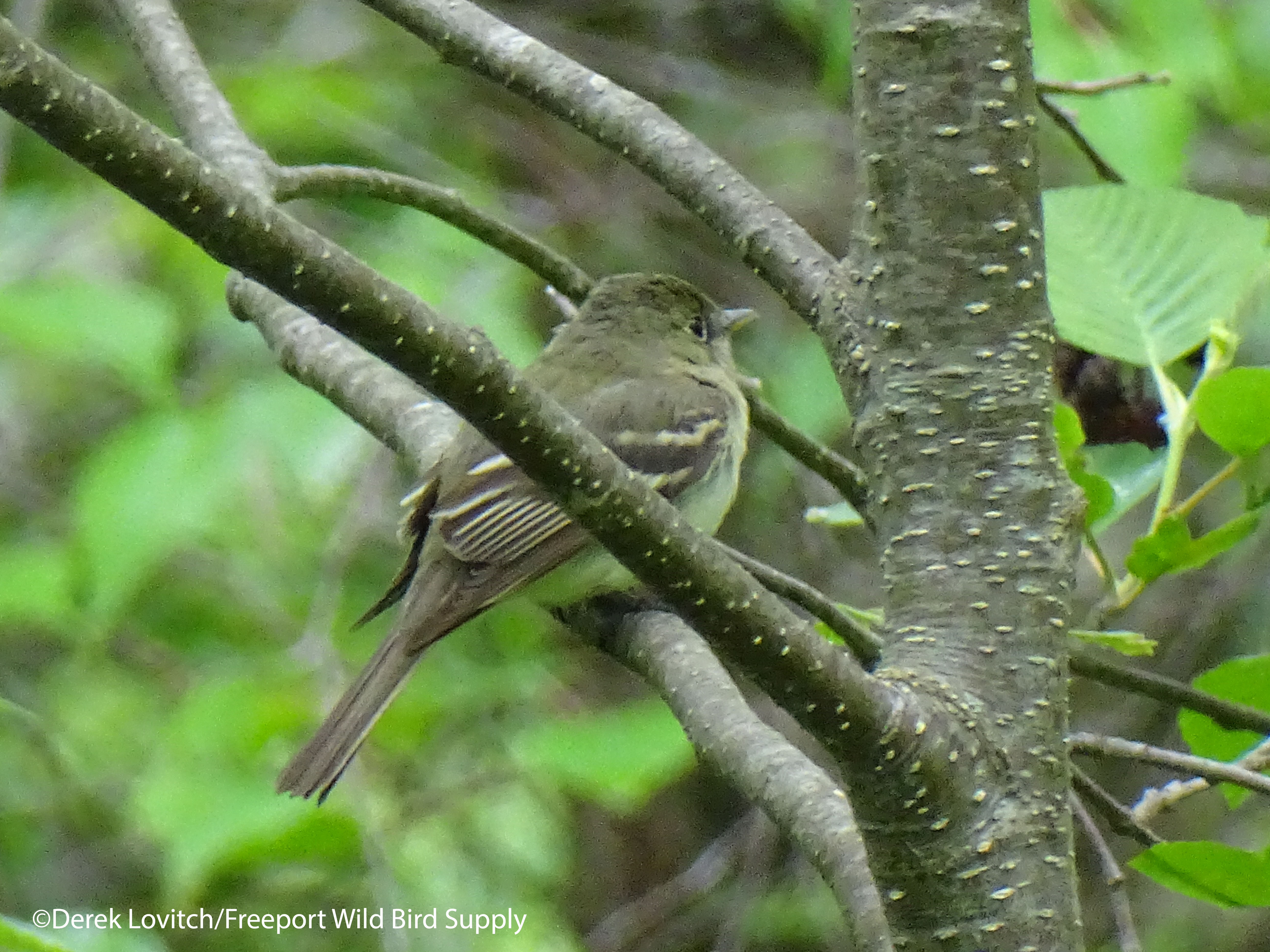
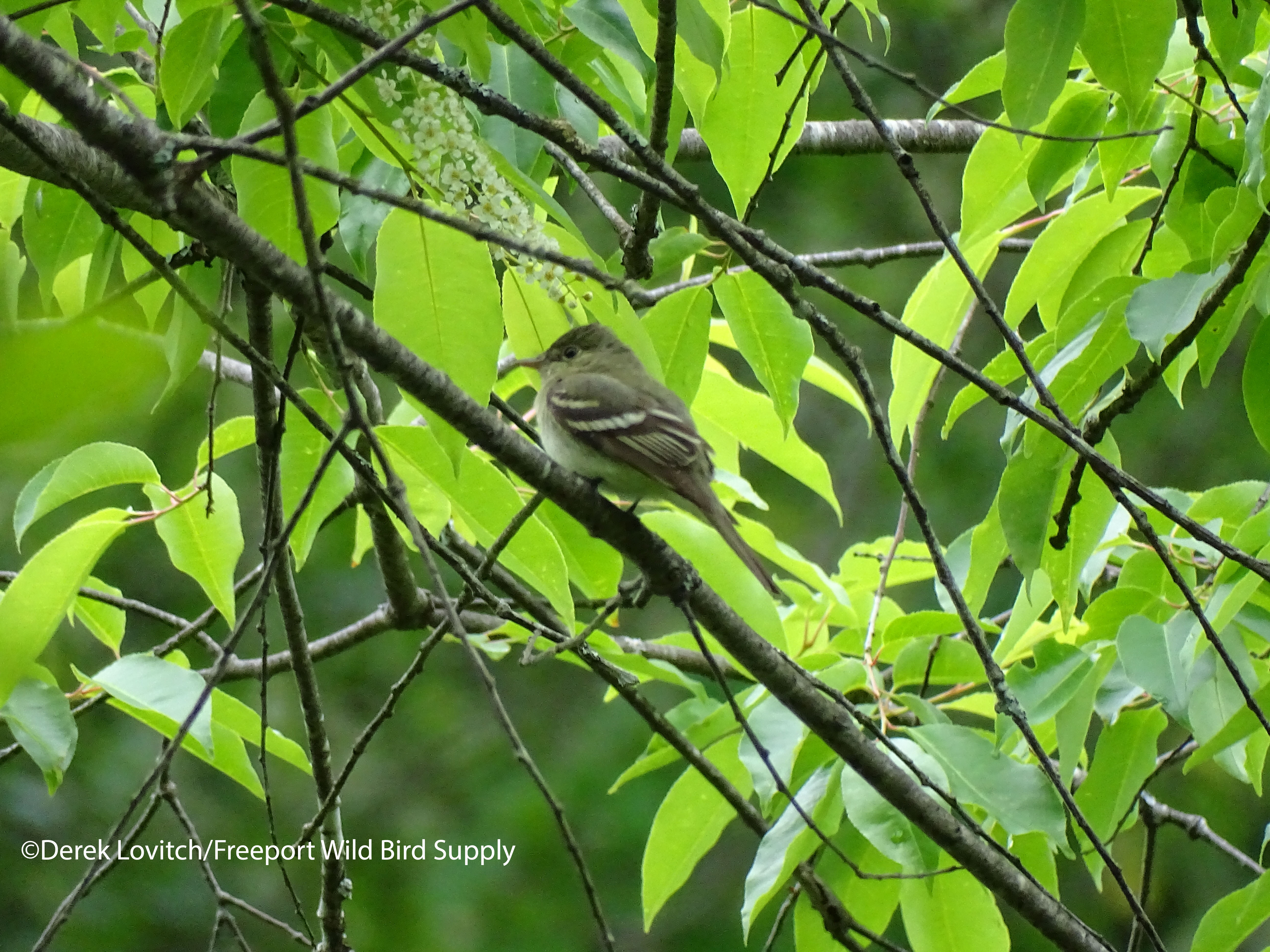
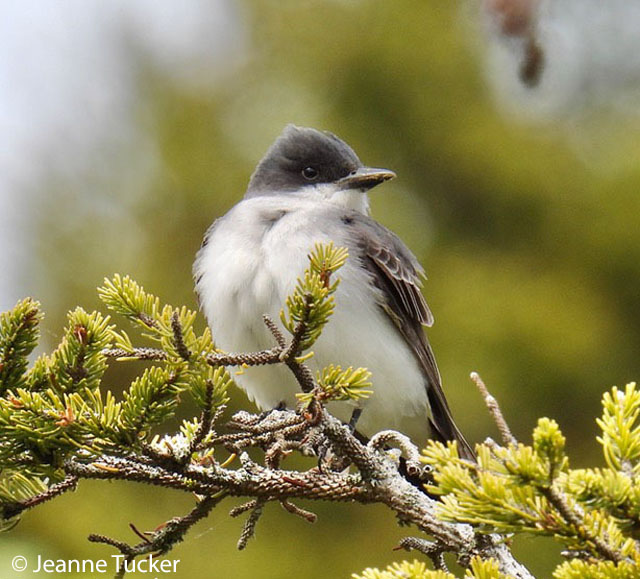
After trying to string one on Monhegan, an Acadian Flycatcher found me! A friend heard it first as he joined me for a bird survey on private, posted property in Durham on 6/2. This was an incredible record for Androscoggin County and really shocked me. It continued at least as of the next morning.This photo nicely shows the very long (for an Empid primary projection, the greenish tone to the upperparts, the complete eyering, and the large, wide and orange mandible. It took a while to see all of the pertinent details, even though the song is so distinctive. When we first saw it, the appearance of no green above and no yellow below through us for a loop, but once we got into the shade with it, those diagnostic tones were readily apparent.
My annual Monhegan Spring Migration Tour took place on 5/27 through 5/30, followed by another day on the island with Jeannette. It was very slow, and significant highlights were few. However, it was still, well, birding on Monhegan for five days, so I am not complaining. I’ll have a full tour report and checklist in the coming days. Highlights included daily crippling views of Black-billed Cuckoo; a CLAY-COLORED SPARROW that we found on 5/30 but was seen by all on 5/31; 3 WILLETS that arrived from the open ocean south of Lobster Cove before landing in the harbor on 5/31; a good Atlantic Puffin commuting flight in the morning of 5/31, and an immature male ORCHARD ORIOLE each day.
Other non-Monhegan and non-flycatcher highlights this week included:
2 RED-NECKED PHALAROPES, Hardy Boat from Monhegan to New Harbor, 5/31 (with Jeannette).
3 AMERICAN OYSTERCATCHERS, 1 Dunlin, 8 Ruddy Turnstones, 26 Black-bellied Plovers, 1 adult Little Blue Heron, etc, Pine Point, Scarborough, 6/1.
It’s June, so we are busy with events and tours here at the store and beyond:
Tomorrow is Zeiss Day at the store, with events including a whole range of products to try on our Saturday Morning Birdwalk, free optics cleaning, and a digiscoping demonstration. Check it out here.
Our first pelagic with our partners Cap’n Fish’s Cruises out of Boothbay Harbor will run on Monday, June 6th. It includes a visit to Eastern Egg Rock and chumming deeper offshore. Info here.
This Sandhill Crane was more than a little shocking as it arrived on the island and flew right over several us eating lunch before landing on the shoreline. It was a most unexpected “island-bird” for me, and a real special treat for my client.
If I was going to top last week’s spectacular week of migration, it was going to require a visit to Monhegan. And Monhegan definitely delivered, even if the largest number of birds this week moved over the weekend, before I arrived on the island. Here are my observations of note over the past seven days.
17 species of warblers, led by 16 Common Yellowthroats and 9 American Redstarts, but also including 5 Bay-breasted Warblers, Florida Lake Park, Freeport, 5/21 (with Saturday Morning Birdwalk group).
1 Yellow-bellied Flycatcher (FOY), Florida Lake Park, 5/21 (with Saturday Morning Birdwalk group).
15 species of warblers, led by 11 Common Yellowthroats and 8 Yellow-rumped Warblers, Florida Lake Park, 5/22 (with clients from Maine).
10 Common Nighthawks (FOY), our yard in Pownal, 5/22.
~40 Short-billed Dowitchers, flying high over our Pownal yard on 5/22 (with Jeannette). Interestingly, the third record for our yard of high spring migrants.
Three days on Monhegan with a client from India on 5/23 through 5/25 yielded 91 species and 18 species of warblers. Monday was incredible, with lots of diversity, lots of quality, and just incredible looks at everything. Blackpoll Warblers were by far the dominant migrant each day, as expected. Here are our daily highlights:
5/23:
1 SANDHILL CRANE – I almost dropped my hand pie as this came cruising over the Trailing Yew, circled the meadow, and landed on the shoreline at a tidepool where observed by almost everyone on the island – birders and bird-curious alike. Photos above.
1 immature, I believe continuing, BROAD-WINGED HAWK.
1 Yellow-billed Cuckoo (FOY)
At least 4-5 Black-billed Cuckoos, including this incredible observation of such normally shy birds!
1 imm. male ORCHARD ORIOLE
1 EASTERN WHIP-POOR-WILL (FOY, and a self-found island bird from my bedroom!)
5/24:
1 continuing SANDHILL CRANE. In the meadow in early morning before reportedly being observed later flying toward the mainland.
1 imm. male Orchard Oriole
1 continuing EASTERN WHIP-POOR-WILL (with client, Kristen Lindquist, Bill Thompson, and Jess Bishop).
1 leucistic (and nearly pure-white but with normal bare parts) Herring Gull.
5/25:
1 female ORCHARD ORIOLE
1 Green Heron (FOY)
1 Wood Thrush
Our first pelagic with our partners Cap’n Fish’s Cruises out of Boothbay Harbor will run on Monday, June 6th. It includes a visit to Eastern Egg Rock and chumming deeper offshore. Info here: https://www.freeportwildbirdsupply.com/pelagics
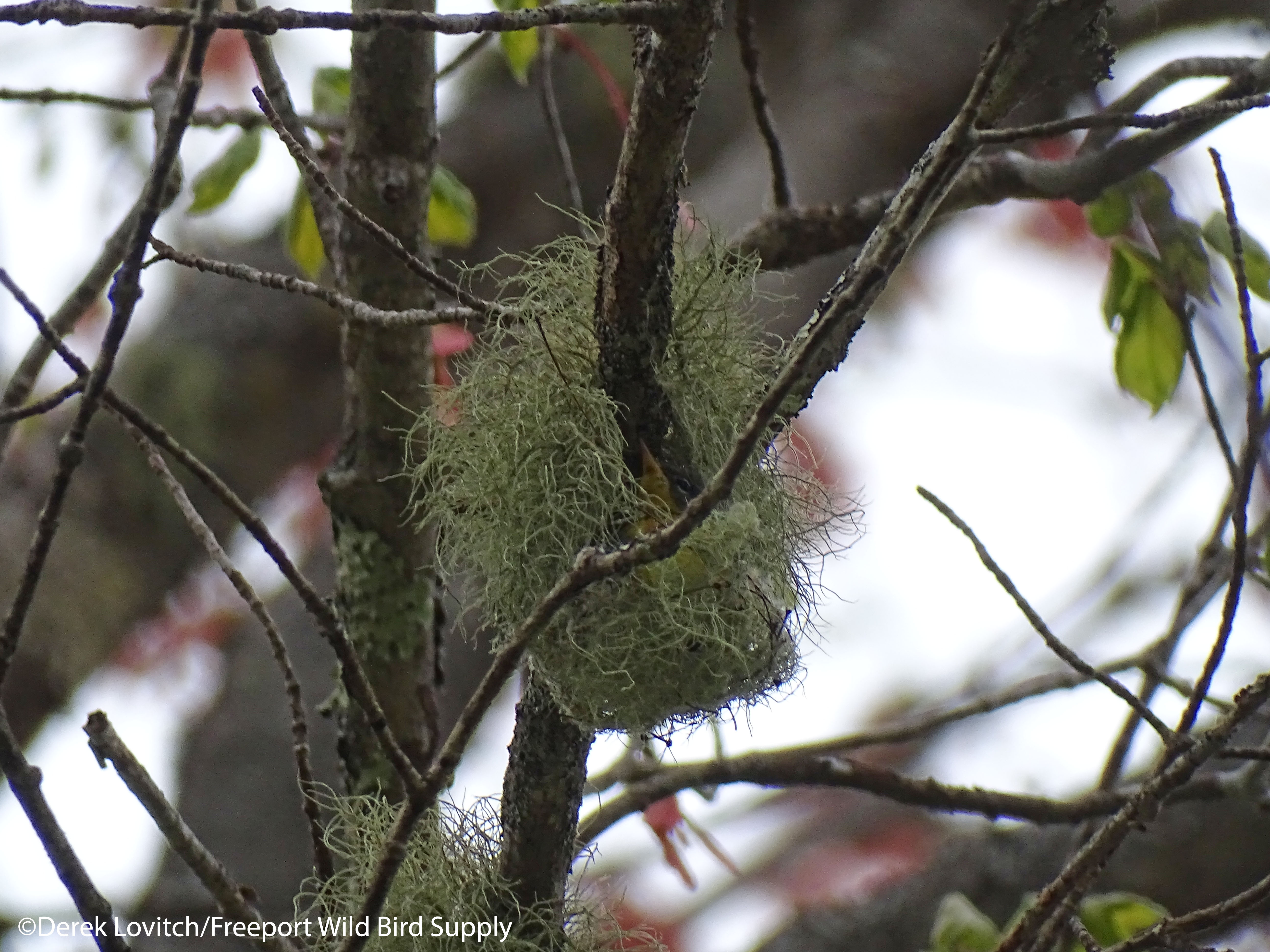
I found a Northern Parula building a nest at Florida Lake Park last week, and was enthralled with watching its progression.
Overall, it was a great week of sparrow migration, with a nice high count on 10/8 from Wolfe’s Neck Center of 125 Song, 100 Savannah, 75 Swamp, 25 White-throated, 2 White-crowned, and 1 Lincoln’s.
Sabattus Pond season is underway as well! On 10/8, I had early-season tallies of 76 Ruddy Ducks (first of fall), 33 Lesser Scaup, 18 Greater Scaup (first of fall), 2 Ring-necked Ducks, 2 Red-breasted Mergansers (first of fall), etc.
This Blue Grosbeak was among the highlights of an incredible weekend on the island.
“It was like the good ol’ days!” When every other bird you saw was a rare one, and you barely walked 10 steps before finding more birds. But this was not what we were expecting, and the weekend sure didn’t start out that way!
After a very rough boat ride, we were still putting ourselves back together when one birder said “Go back, there are no birds here.” Apparently, it had been a dreadfully slow week of little migration, but at least nice weather. This weekend, the weather wasn’t supposed to be very nice. So without many birds on the island, and quite a bit of rain on the way, were less enthused about arriving than usual…well, that might have had something to do with the boat ride.
And I am not sure if it helped that one of the first birds I looked at was a rare hybrid Herring X Great Black-backed Gull. I am not sure if anyone was ready to take in gull hybrids yet. Even more when we feared that this could be our best bird of the trip if the pattern held.
And sure enough, it was a very slow afternoon. But we did have good luck. We found a Sora that walked out into an open patch of mud, quickly caught up with the adult Lesser Black-backed Gull that has been hanging around, and after lunch immediately found the Least Sandpiper and Spotted Sandpiper at Lobster Cove that have been playing hard to get all week. There was also a good Northern Gannet show, which is always a treat. So at least we were seeing what was around, which sadly, really was not very much. But hey, it still hadn’t rained!
Least and Spotted Sandpipers – shorebirds are few and far between on the island.
A period of rain, heavy at times, fell overnight, but the band was much narrower and less heavy than forecast. It did not rain all night, and it even appeared that a light flight of migrants had developed on the radar after midnight. And sure enough, come dawn, there was a light Morning Flight overhead. It was mostly Yellow-rumped and Blackpoll Warblers, but hey, there were new birds around! And once, again, it was not raining.
A fly-over Dickcissel or two, a calling Gray-cheeked Thrush, and more. Birds! Yay!
Then, after breakfast, I went to spread some seed in my favorite corner to attract some birds for the group to enjoy this morning. Turning the corner near the famous “Chat Bridge” a shockingly bright flash of the most intense yellow you can imagine. And blue wings, and a flash of white in the tail. Prothonotary Warbler I exclaimed to no one around.
I raced back towards the group meeting point and sent them on their way. Kristen Lindquist took off running. I eventually made it back with the rest of the group and we divided to conquer. Kristen and about half the group spotted it repeatedly, while it remained tantalizingly out of view from where I and others were standing.
As other birders converged, a classic “Patagonia Picnic Table Effect” occurred. First, there were two Dickcissels, then I spotted a Yellow-breasted Chat making a short flight over the brush. While searching for that, Ilsa spotted a Yellow-billed Cuckoo that would sit still, preening, for well over and hour. It might have been the most cooperative cuckoo ever on the island! Another group had a brief look at a Clay-colored Sparrow.
Unfortunately, the Prothonotary Warbler was never seen again.
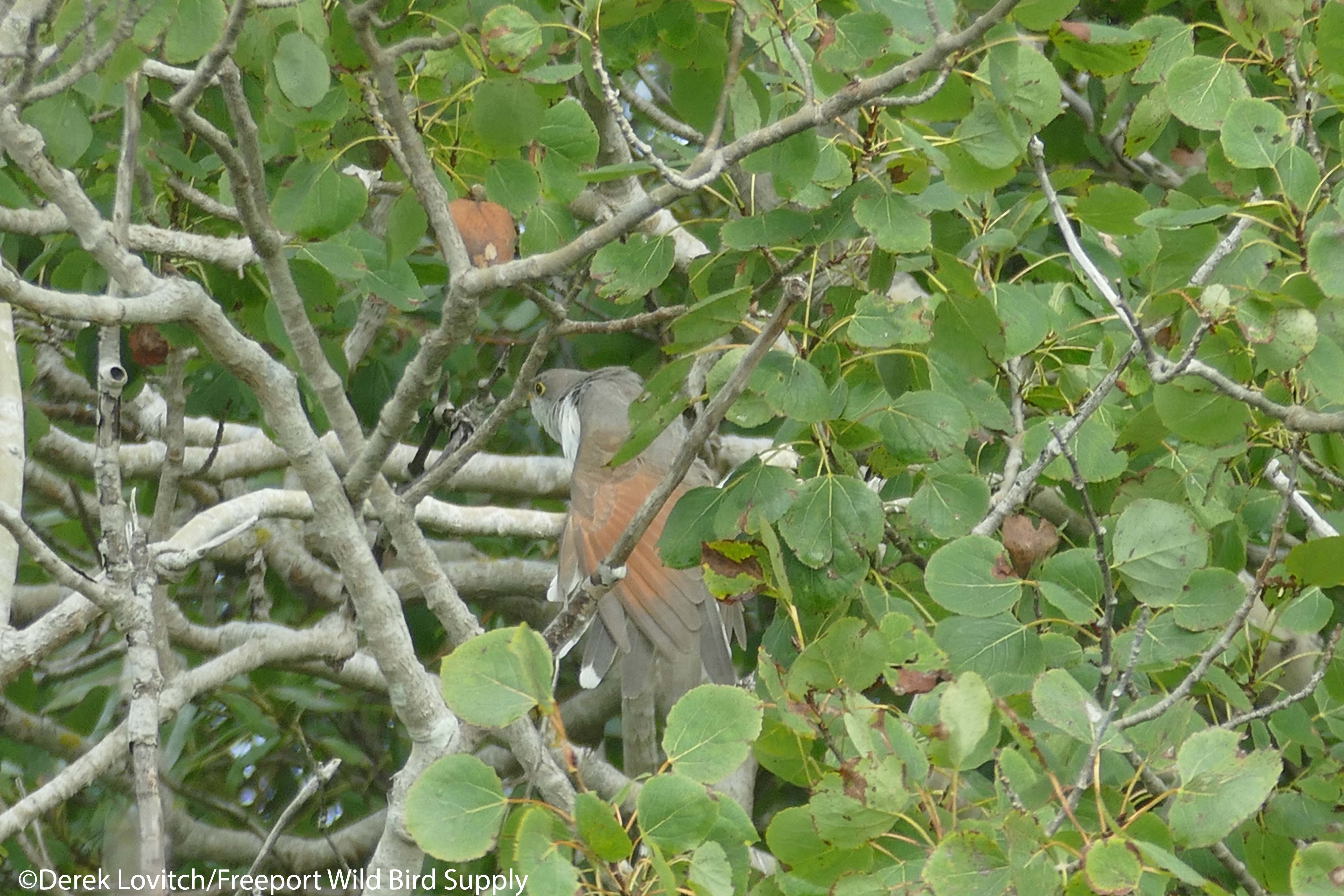
Yellow-billed Cuckoos don’t usually sit this still for this long. This bird was likely exhausted after just arriving on the island.In case you didn’t see it’s yellow bill.
It was already a pretty amazing day for one that we thought would be a wash-out. And it was still not raining. After our lunch break, we convened at the Monhegan House at 1:30, and spent the next hour and a half on its lawn, and going no where else.
One Dickcissel became two, and then four, and when the group finally took off together, we were shocked to confirm a genuine flock of 8 Dickcissels – exceptional, even for Monhegan. And there were not one, but two Clay-colored Sparrows! And other birds just kept arriving, as standing in one spot saw our list quickly grow: American Redstart, Brown Creeper, Warbling Vireo, etc, etc. One “Western” Palm Warbler became 4, a couple of Cape May Warblers paid us a visit, a Savannah Sparrow dropped in…
It was truly incredible! It felt like my first tours here 15 years ago. By now, a light shower was falling, but we didn’t seem to care. We finally pulled ourselves away as the action waned, wanting to see what the next hot corner would offer. After spotting at least 8 Baltimore Orioles along Pumphouse Road, the rain finally arrived in earnest by about 3:30pm. We called it quits, but considering the day we had, no complaints were to be heard. It was a really special day; one that will not soon be forgotten.
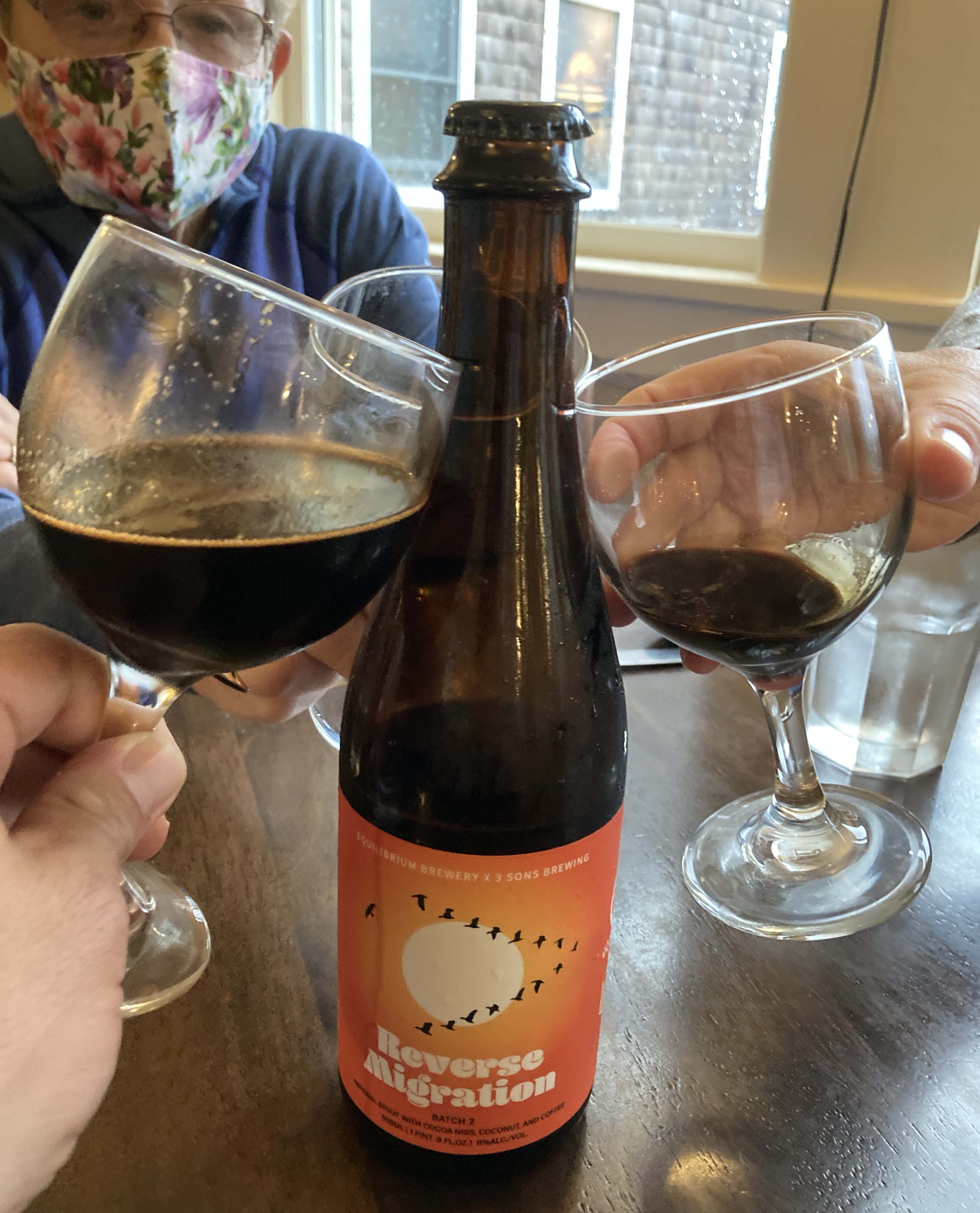
While it was more accurately “180-degree misorientation” and other forms of vagrancy and not “reverse migration” that brought us so many good birds, I brought a special beer out just in case we had a day like we did today!
Rain fell overnight again, and come dawn on Sunday (Day 3), dense fog had rolled in. There were a few Yellow-rumped Warblers overhead, especially during a short respite from the fog, but there were not nearly as many birds around as the day before. But, with fog overnight, we expected birds who were on the island to stay, which was good, because yesterday was awesome and there were still a few birds we had not yet encountered.
It might be a while before they are “countable” again, but the Ring-necked Pheasant population seems to be booming in town.
We delayed the start of the after-breakfast walk to let a batch of heavier rain clear through. We were stuck in such an odd fall weather pattern, with virtually no west-east progression of weather systems. But we had been so lucky with the timing of the rainfall so far, that a little delay was of no concern. Regrouping at 10:00, light showers gave way to just some lingering drizzle by 11, and it soon became apparent that there were new birds around. We had two Prairie Warblers, a Scarlet Tanager joining the growing flock of Baltimore Orioles, and a Blue-winged Teal joined a Green-winged Teal in the marsh. Two Cliff Swallows and a Barn Swallow foraged over Manana, and we had our second Yellow-breasted Chat of the trip – this one in the Island Farm garden on Pumphouse Road. And another Clay-colored Sparrow?
There was a really impressive number of Baltimore Orioles on the island over the weekend.
Pockets of Yellow-rumped Warblers here and there often contained another warbler species or two, and we had good looks at stuff all morning, even often-challenging birds to see with a group like Lincoln’s Sparrows.
And after lunch, the sun was out! We had the Lesser Black-backed Gull again, more looks at Clay-colored Sparrows, and finally the immature male Blue Grosbeak showed up for us, and show it did!
It wasn’t as birdy once the sun was out, but a light raptor flight, including at least 6 Peregrine Falcons helped make up for it.
On Monday, our last day of the tour, it appeared that little moved overnight on a light southwesterly flow aloft. But that had our daydreams going for rarities from our west and southwest. And sure enough, while some of us were dallying over breakfast, a Western Kingbird that Kristen Lindquist found earlier flew right over us at the Yew and alighted nearby!
After breakfast, we “cleaned it up” for the group when we relocated it at the cemetery, affording great looks for all. A slower day finally gave us an opportunity to head into the deeper woods. And while we expected fewer birds in the island’s interior, a couple of mixed-species foraging flocks finally put Red-breasted Nuthatch on the list, and we found the first Pine Warbler of the weekend.
“Look at my tail!” Just in case anyone had hopes of stringing it into a rarer western Tyrannus.
Jeannette joined us by lunchtime, and after lunch, we had a frustratingly brief glimpse of the original Yellow-breasted Chat, along with more great looks at Clay-colored Sparrows.
The tour came to a close with the 3:15 departure back to New Harbor, bringing our incredible four days together to the always-bittersweet end.
Jeannette and I birded the rest of the afternoon together, picking up a few things, like my first “Yellow” Palm Warblers of the weekend and a Solitary Sandpiper. Our walk to dinner yielded a second Pine Warbler, and at the harbor: a juvenile Ring-billed Gull (actually fairly rare out here in the early fall) and another view of the lingering Lesser Black-backed Gull.
On Tuesday, Jeannette and I enjoyed our day off on the island, and Kristen Lindquist joined us for most of the day. A diminishing light southwest wind overnight gave way to a little bit of northwesterly winds by dawn, but it didn’t appear that much had arrived on the island overnight.
At least two, if not three, different Prairie Warblers were around the island. Getting late, a few American Redstarts helped bump up our impressive warbler tally.
However, we soon located a Lark Sparrow found yesterday by Bryan Pfeiffer, the immature male Blue Grosbeak paid us a visit, and we heard the Sora briefly. We then found an Orange-crowned Warbler out past the Ice Pond, my 20th warbler species of the weekend! Unfortunately, we were sans cameras with a little light rain falling.
This Scarlet Tanager was often cooperative at the grape arbor. As per tradition with this tour report: at least one gratuitous “food porn” photo. Here’s the colorful and fresh avocado toast from the Trailing Yew. And here’s one of the island’s resident Black-capped Chickadees…just because.
After lunch, we were excited to find two Lark Sparrows sitting next to each other at the cul-de-sac, there were now two Ring-billed Gulls in the harbor, and yes, there were still at least 4 Clay-colored Sparrows and several Dickcissels around!
Just for a change of pace, we decided to walk the diffuse trail along the island’s southwestern end, but were soon distracted by something large in the water in the distance. Retrieving my scope, it was clear that it was indeed a dead whale, and eventually it floated close enough to identify it as a dead (and rather bloated) Minke Whale. A handful of gulls were around it, and briefly, a quick pass by a jaeger that was too far to claim the identity of. It was a fascinating, if not rather sad, end to our visit as by now it was time for Jeannette and I to head to the dock to return to the real world.
A much more pleasant boat ride back, this time to Port Clyde yielded a number of Common Loons and plenty of Northern Gannets, and a surprise of a small pod of Atlantic White-sided Dolphins. I’m not sure if I have seen this pelagic species from a Monhegan ferry before, or this close to land at all.
And finally, one last “good” bird: a pair of truant American Oystercatchers on Dry Ledges (off of Allen Island)! Interestingly, we had a pair on the same exact ledge on our way back from the island on October 5th of last year.
At least 8 Dickcissels, at least 4 Clay-colored Sparrows, 2 Lark Sparrows, and an Orange-crowned Warbler from the Midwest. A Western Kingbird from the West. A Prothonotary Warbler, 2 Yellow-breasted Chats, and a Blue Grosbeak from the South. 105 total species (102 with the tour) including 20 species of warblers. Yeah, that was a good trip – and the stuff that Monhegan legends are made of, at least sans fallout.
Four of a flock that grew to an impressive 8 Dickcissels, often found in the swale behind the Monhegan House throughout the weekend.
And finally, here is our birdlist from the extraordinary weekend:
9/24 = * denotes ferry ride only 9/27 = * with just Jeannette 9/28 = with Jeannette; *denotes ferry ride only
The weekend will likely start off wet, but with several days of an extensive southerly flow originating all of the way from the Gulf Coast and Deep South, vagrants – like Blue Grosbeak, Hooded Warbler, Summer Tanager, and much more will be on our minds.
Similarly to last week, my birding time was woefully limited thanks to excuses including a trade show and a morning meeting. Therefore, my birding this week was mostly limited to our Saturday Morning Birdwalk and one great flight at Sandy Point.
Speaking of Sandy Point, I did not make it out for what was presumably a light flight on Monday morning, and of course a Clay-colored Sparrow – a long-overdue Patch Bird – was found. It wasn’t until Wednesday morning that I had a chance to look for it. While I didn’t find it, I did get a consolation prize. With a flock of about 400 Semipalmated Sandpipers in the cove on the north side of the point – the largest peep flock that I have seen here, I grabbed the scope. Among them was a single Sanderling, but also a single molting juvenile Dunlin – my 191st all-time species at Sandy Point!
There was a big movement of White-throated Sparrows this week however, augmenting productive feeder-watching. Granted, my extended period of afternoon feeder-watching on Monday was mostly limited to the entertainment of a constant dog-fight between a Sharp-shinned and Cooper’s Hawk for backyard supremacy
Now, let’s hope the forecast for the weekend is a little drier than currently called for! That being said, the pattern that we are in looks really good for southern vagrants (see photo above), and especially after 5 days of poor winds for migration, once this mess clears, the migration could be huge!
Semipalmated Plovers and Semipalmated Sandpipers waiting out the high tide off of Biddeford Pool Beach on 8/20.
My observations of note over the past seven very productive days included the following:
Migrants on Monhegan Island, 8/15 (with Evan Obercian) included: 6+ Cape May Warblers, 1 Bay-breasted Warbler, 2 Least Flycatchers, etc.
1 immature Great Cormorant, Outer Duck Islands, Monhegan, 8/15.
1 Surf Scoter, Simpson’s Point, Brunswick, 8/16 (with Jeannette).
1 Blue-gray Gnatcatcher, Middle Bay Road, Brunswick, 8/16 (with Jeannette).
1 of 2 continuing TRICOLORED HERON, Pelreco Marsh, Scarborough Marsh, 8/16 (with Jeannette) and 8/19 (with Down East Adventures Shorebird Workshop tour group).
2 BOREAL CHICKADEES, Albany Mountain Trail, White Mountain N.F., 8/17 (with Jeannette). Very surprising in mixed woods at 1624ft. Even more surprising since the 1900+ ft summit is not very boreal. Molt migrant and/or post-breeding dispersal?
1 of the 2-3 continuing Red-necked Grebes, Ocean Avenue, Biddeford Pool, 8/20.
And, with many of the species now peaking (and some of the adults already past peak), my shorebird high counts for a goodly 19 species this week were as follows:
American Oystercatcher: 4 (2 ad with 2 juv), Pine Point, Scarborough, 8/16 (with Jeannette) and 8/19 (with Down East Adventures Shorebird Workshop tour group). Plus 1, Ocean Avenue, Biddeford Pool, 8/20.
Black-bellied Plover: 93, Wharton Point, Brunswick, 8/16 (with Jeannette).
Semipalmated Plover: 261+, Pine Point, 8/16 (with Jeannette).
Whimbrel: 1 each at Pine Point, 8/16 (with Jeannette) and 8/19 (with Down East Adventures Shorebird Workshop tour group); The Pool, Biddeford Pool, 8/19 (with Down East Adventures Shorebird Workshop tour group).
HUDSONIAN GODWIT: 43!!!, The Pool, 8/19 (with Down East Adventures Shorebird Workshop tour group). Horrific video and details here: https://fb.watch/7vL0DY756z/
Back on the mainland, my observations of note over the past seven days included the following:
2 Blue-gray Gnatcatchers, Green Point WMA, Dresden, 6/1 (with Jeannette).
1 LOUISIANA WATERTHRUSH, Hedgehog Mountain Park, Freeport, 6/2. Surprising and out of place in a seasonal stream in the deep woods. My 152nd Patch Bird for the Hedgehog complex.
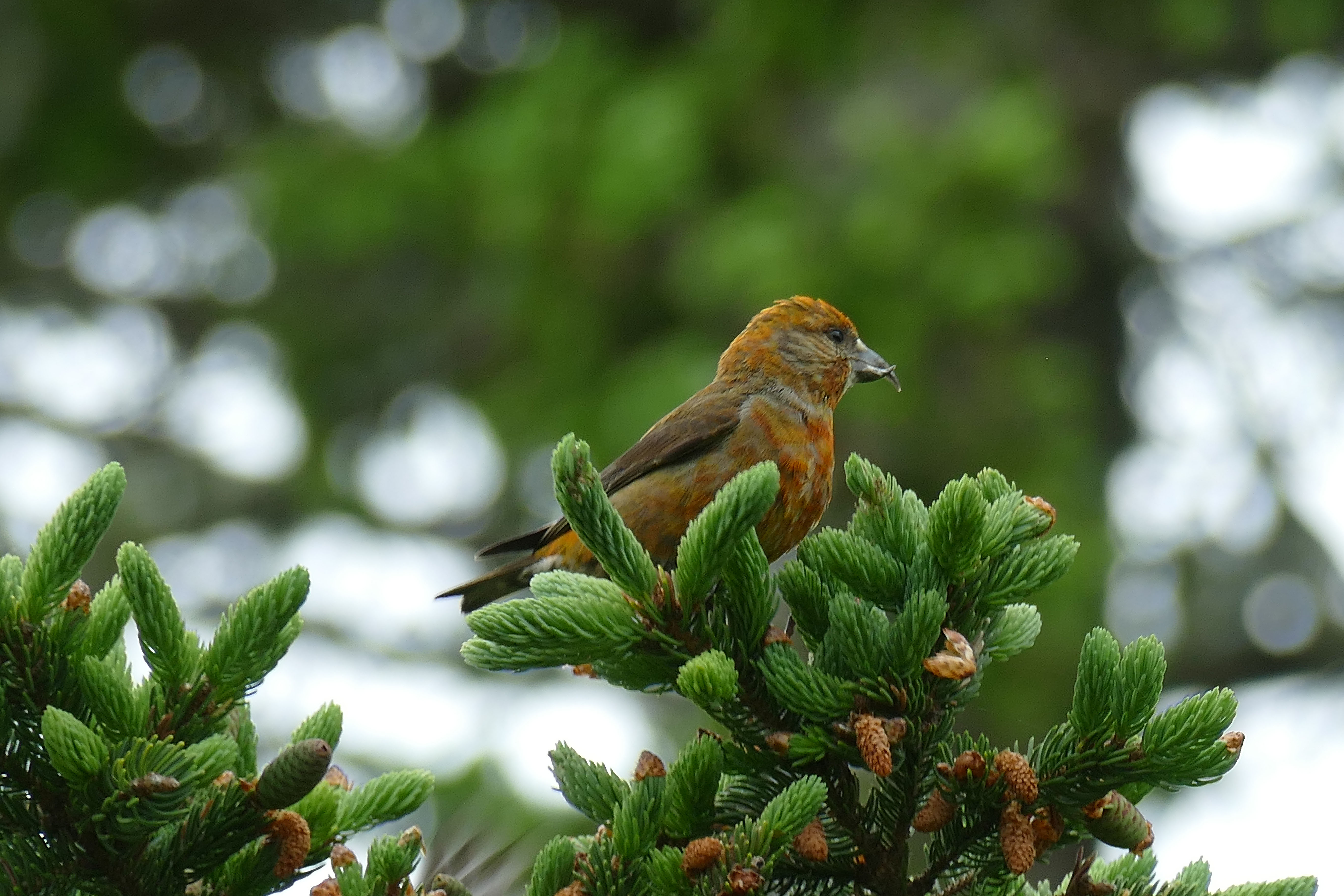
1 Red Crossbill, Otter Brook Preserve, Harpswell, 6/3 (with clients from Maine).
Handful of passage migrants around Biddeford Pool on 6/4 including a female MOURNING WARBLER (FOY) and an immature male Bay-breasted Warbler.
And FYI, we still have some room on Monday’s mini-pelagic out of Boothbay Harbor! Come join me! All the details, as well as reservation information, is here: https://www.freeportwildbirdsupply.com/pelagics
Hmm…how do I spin this one? Well, it could have been colder, and it could have been a lot wetter. The crossbills were pretty amazing, and it was fun to find that Purple Martin.
But yes, as far as Monhegan Spring Migration Weekends go, this was a pretty slow and cold one. In fact, the 77 total species and only 10 species of warblers were both record lows (in 10 years of doing these trips on the last weekend of May). But it is not spin to say a slow day of birding on Monhegan is better than a great day of birding most everywhere else.
The very early spring this year had rapidly advanced vegetation. On many of our Memorial Day weekends, apple trees – one of the most important bird-magnets out here – are not yet blooming. This year, they were just about finished. Meanwhile, the dry and benign weather of the past few weeks have allowed migrant birds to proceed unimpeded. They were either going right overhead or stopping on the island only briefly before continuing onward. No traffic jams of birds held up by unfavorable weather, no concentrations at few and isolated foodstuffs, and certainly no fallouts. Well, at least the abnormally dry conditions we have been experiencing began to break this weekend.
More importantly, while the above complaints made for slow birding, they really made for a great migration for birds who don’t want to get stuck on an island or other migrant trap. Instead, they got to where they needed to go and many seemed to get right to work in order to catch up with the advanced season.
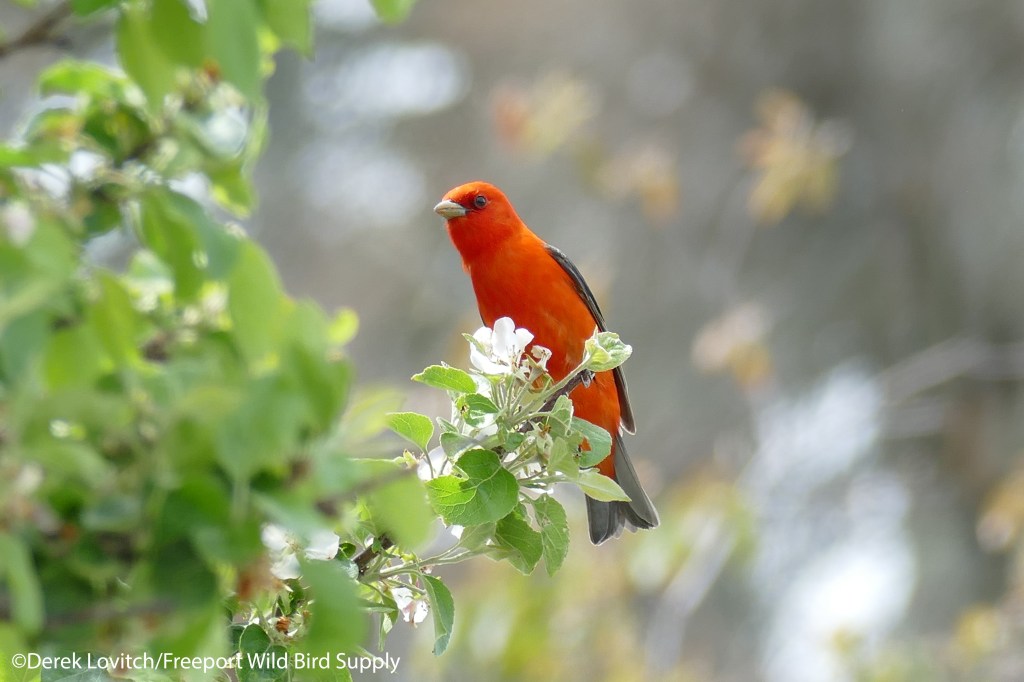
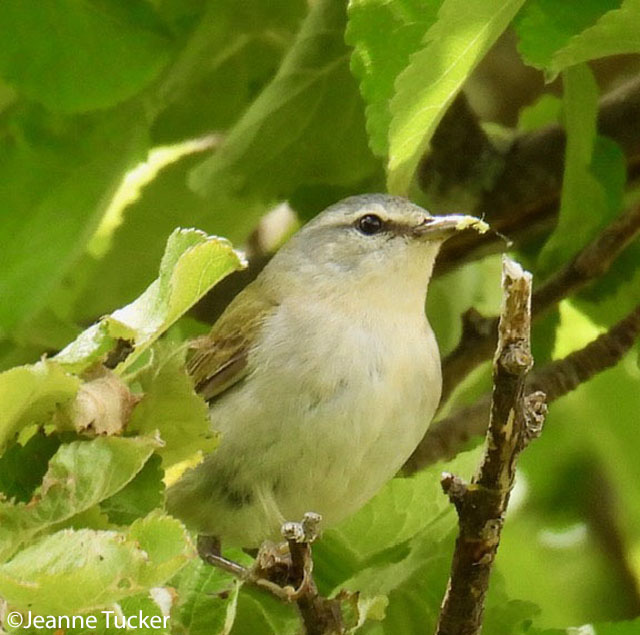
When we arrived on Friday, we found relatively few birds as expected given the preceding week’s beautiful weather. We quickly caught up with the pair of Blue-winged Teal that have been hanging around and possibly breeding out here – a very good bird on offshore islands. I was also happy to finally see my first Tennessee Warblers of the spring. And while diversity was not overly high, it was really nice out and we enjoyed really good looks at a lot of what we encountered, including the aforementioned Tennessee Warblers, Blackburnian Warblers, and our daily dose of the confiding and stunning Scarlet Tanager that was lingering around the village’s south end.
Scarlet TanagerTennessee Warbler.Cedar Waxwing.
I had really high hopes for Saturday morning. With very light southerly winds and partly cloudy skies at dusk (I enjoyed a Common Nighthawk and an American Woodcock while watching the sunset with a friend), the winds became very light southwesterly after dark. Then, around 2:00am, some light rain began to fall, and the winds shifted to the northeast. The hopes for a fallout kept me awake as I listened to those first showers in the early morning hours.
Upon sunrise, it soon became clear that my hopes and dreams had been dashed. There was minimal bird movement visible on the NEXRAD radar before the rain arrived. A large area of low pressure passing to our south, with the northern edge of rain moving much further north than forecast, suggested the possibility of fallout conditions. But were there even any birds on the move before the rain? Or, were they cut off to our south by the approaching storm? Or – as we have been surmising on the mainland as well – have they just mostly passed by already?.
Light rain continued for our pre-breakfast walk, and it was very slow. There was definitely not a fallout, and there did not seem to be many birds around at all. That Scarlet Tanager stole the show again though. Great looks at things like Yellow-bellied Sapsucker, American Redstart, and Northern Parula soon followed.
Rain slowly tapered off during the morning, and while cameras were mostly sealed away, it was more than birdable. We heard a Yellow-bellied Flycatcher (my first of the year), a Virginia Rail, and even briefly saw the vociferous Sora that incessantly called from the marsh throughout the weekend. Then, just before lunch, we found a female Purple Martin. Unexpectedly late, and rare out here in general, this was a nice find, and when we relocated it at Swim Beach, we had some great views to make sure it was indeed a Purple Martin.
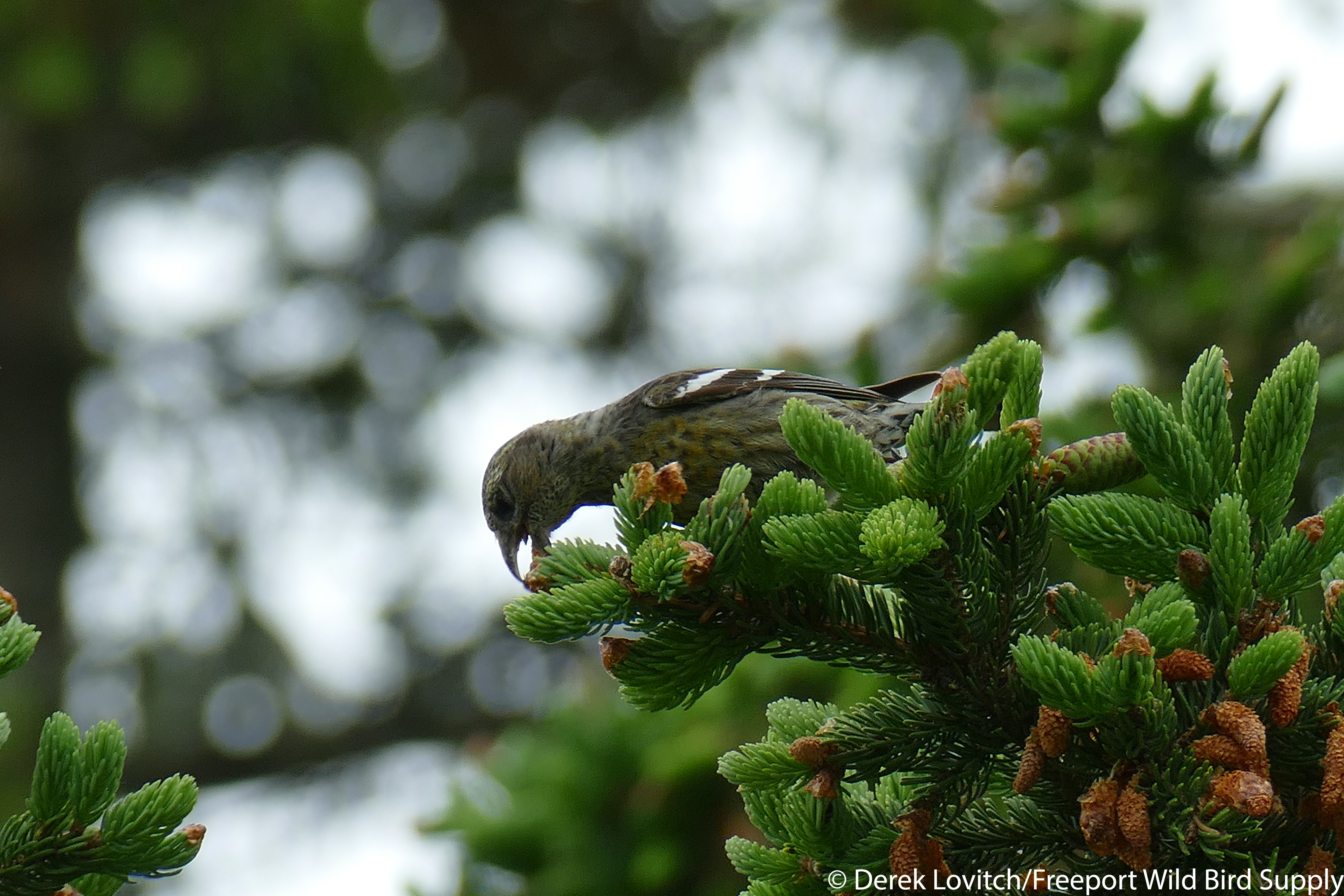
The afternoon was dry, but the birding remained slow. We did get a better view of the dapper male Blue-winged Teal, and spent some real quality time with the flock of 18 Red Crossbills that contained a single White-winged Crossbill. Many folks got one, if not two, life birds in this flock, and we saw them as well as one could ever hope.
With a light northeasterly wind overnight, little to no migration was detected on the radar Saturday night into Sunday morning, but it was not yet raining. It was a little birdier than the day before, but the pre-breakfast walk only yielded two new species for us: a fleeting glimpse of a Lincoln’s Sparrow and a fly-by American Black Duck. But the crossbills entertained us once again! Also, Smooth Green Snake and Redbelly Snake side-by-side.
A large area of low pressure was rapidly developing off the mid-Atlantic coast, and the rain was heading our way. So we were grateful for another dry – albeit chilly – morning. A couple of late Bobolinks and a Merlin were new for us, and we glimpsed a less-than-cooperative Short-billed Dowitcher that had arrived and played hard to get for the next couple of days. With so little shorebird habitat out here, most shorebirds are noteworthy, even species common on the mainland. According to Brett Ewald, this was only the 16th record for the island, and 10th for spring. In fact, this was my 218th species on Monhegan! Even on a slow day, you never know what might show up out here.
Light rain had arrived by the time we regrouped after lunch and the northeasterly wind was picking up. We called it quits as the rain picked up in earnest around 3:00pm, retiring to our respective rooms – or, mostly, heated common areas – and got some reading and relaxation time in.
Overnight rain ended just about as our pre-breakfast walk got underway on Monday, with only light showers and a little drizzle for the next couple of hours. Given the forecast, this was most definitely a win. We checked gull roosts and other sheltered harbor nooks, turning up only a Savannah Sparrow as a new addition to our list. The rest of the morning was spent enjoying some of the birds we have been seeing for the past days, like the Blue-winged Teal and Yellow-bellied Sapsucker.
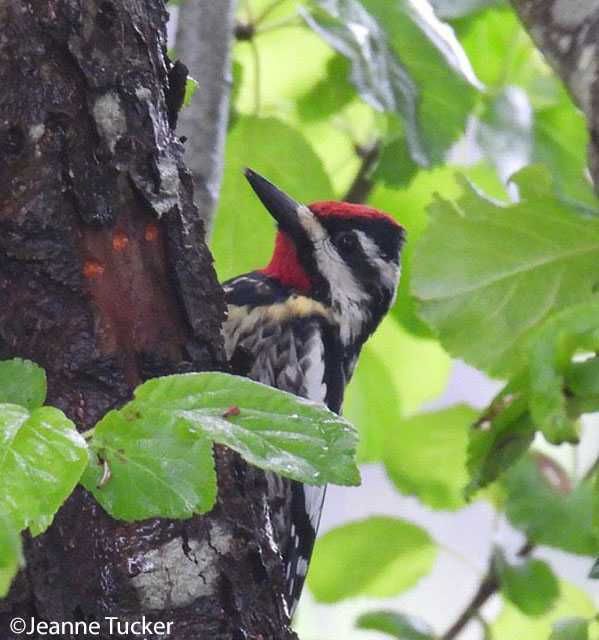
American RedstartRing-necked Pheasant.Yellow-bellied Sapsucker
After the weekend tempest, those of us who survived were rewarded with calm, following seas for our ride back to New Harbor. It was foggy, but we had some great sightings on the easy ride back with single fly-by Razorbill, Atlantic Puffin, and a feeding Bonaparte’s Gull. Adding these three excellent birds helped our paltry list to a total of 77 species. With a long-term average of about 95 species in four days, you can see that we really did have a weekend of low avian diversity.
So alas, the weekend came to a close. A few good birds, lots of great looks at regular birds, and a few lingering chills. But, as usual, we ate well. Perhaps too well. But hey, we were burning off calories thermoregulating! Hey it happens, and the regulars all know that there will be a “bad” weekend once in a while to make the “best” tours that much sweeter.
Read
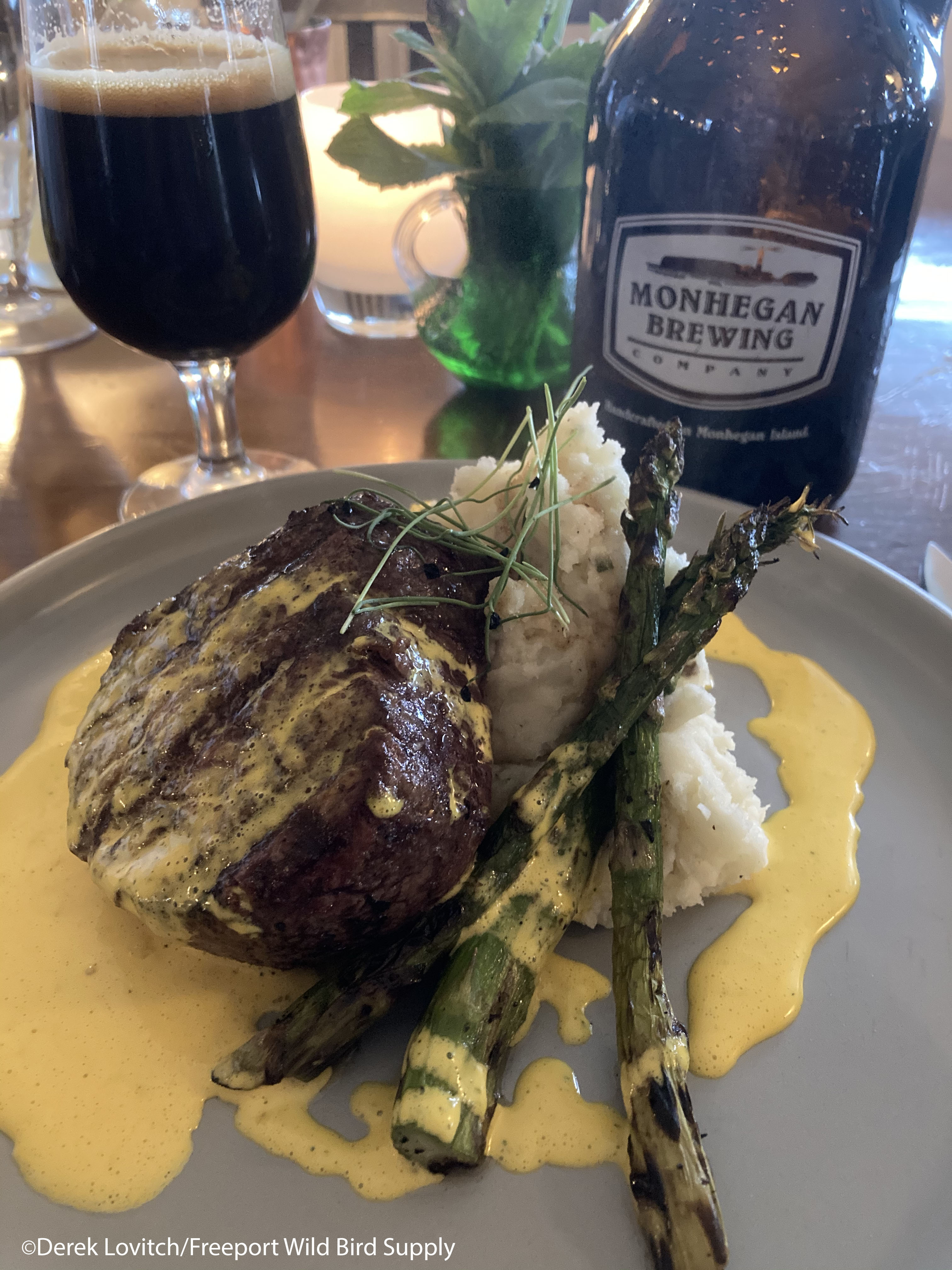
Since folks who have been reading several years of these trip reports, I figured I would include the gratuitous food porn photo as usual. However, without the Novelty open, there was no pizza. Besides, we like to class it up once in a while, in this case, at the Island Inn.
(* denotes seen from the ferry only. **Seen only by the leader outside of group time)
It sure felt good to have a normal tour run, well, normally, in 2020! Other than the requirement of wearing masks all day – despite the annoyance of fogged glasses in the 100% humidity, and some logistical and safety changes at mealtimes, it was as close to normal as 2020 gets. And that felt good. The birding was great, too!
Most of Friday’s participants arrived with me on the early Hardy Boat out of New Harbor, and we sure hit the ground running! A strong flight the night before yielded tons of birds, and it was very birdy right off the bat. Yellow-rumped Warblers were still darting overhead and were in every bush. White-throated Sparrows virtually littered the ground in places. Small flocks of Purple Finches seemed to be everywhere.
Yellow-rumped Warblers were definitely the migrant of the trip, as they often are at the end of September. Only White-throated Sparrows seemed to give them a run for their money on most days.
A continuing juvenile Cooper’s Hawk (a very good bird out here) and a Dickcissel got us started, while in the afternoon we found two Lesser Black-backed Gulls (a juvenile and a really messy 2nd Cycle) and at dusk, a fly-by from a late Common Nighthawk. We ended up with 63 species on the day, which isn’t bad for arriving at 10:15, and likely there were many other species around; we just couldn’t see them through all of the Yellow-rumped Warblers and White-throated Sparrows.
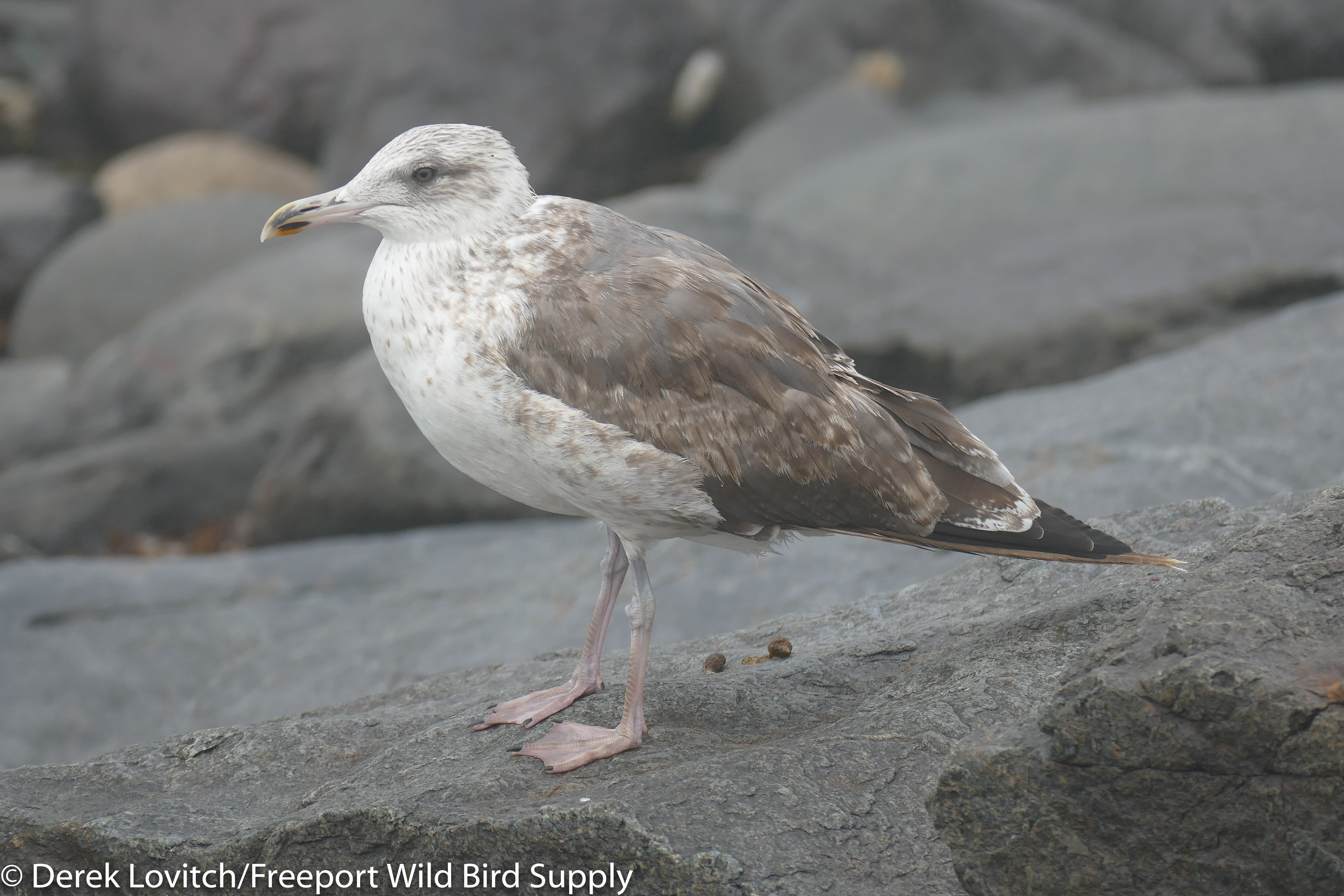
This Lesser Black-backed Gull was not exactly a stunning specimen of fresh feathers, but it was a very instructive study subject.
But before you ask, I’ll let you know: No, you will not find the gratuitous annual photo of Novelty Pizza in this blog this year. It was different, and it was terrible. I was sad. But the handpies for lunch at the Trailing Yew made up for it (but I repeatedly remembered to take the obligatory photo only after it was rapidly consumed in its entirety).
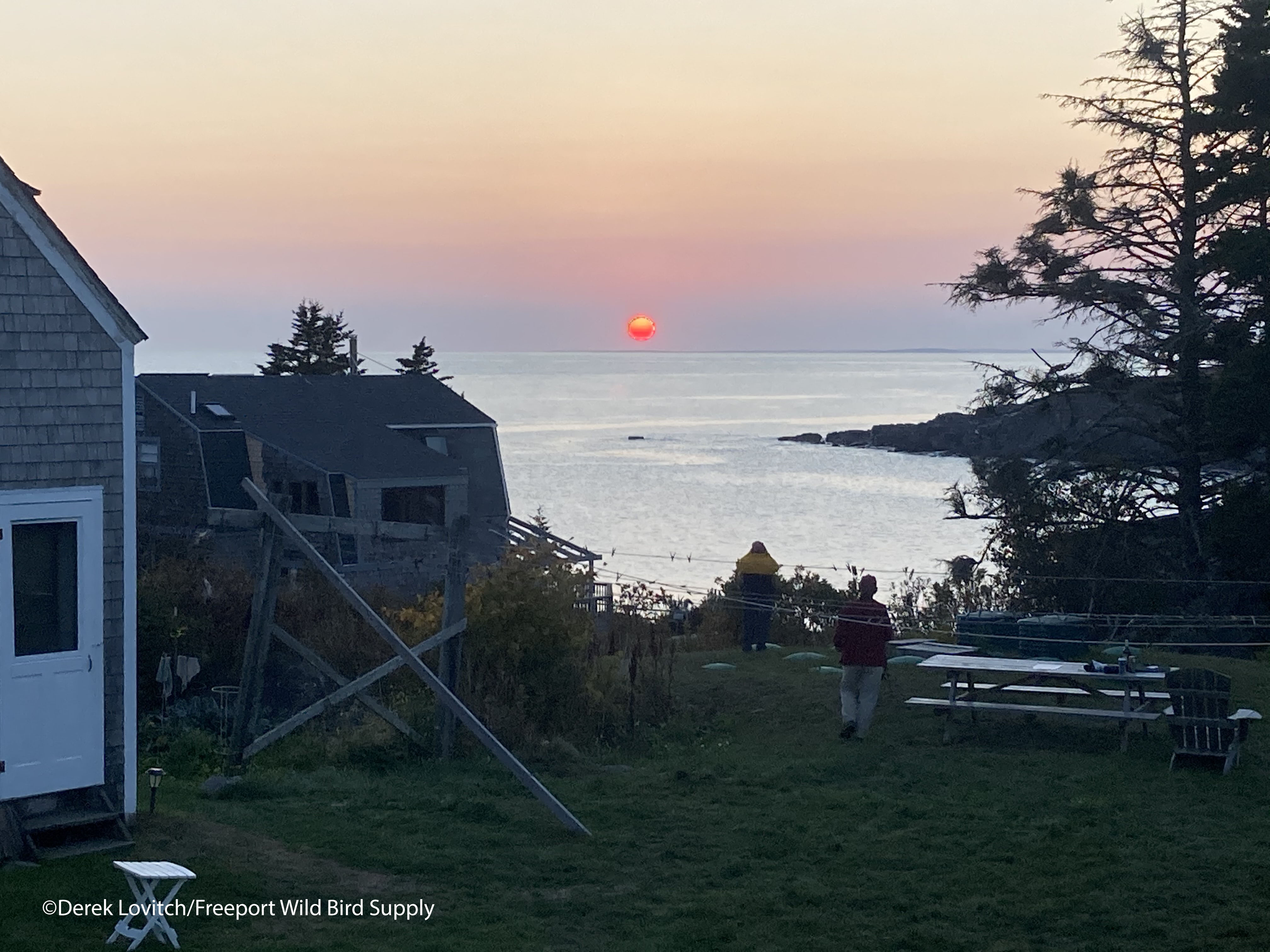
But that evening’s sunset was absolutely delicious!
We awoke to very dense fog on Saturday morning, and with very light southerly winds overnight, only a very light migration had occurred. There was a decent amount of call notes overhead (mostly Yellow-rumped Warblers) at what was supposed to be the time of sunrise, but these birds could have just been moving around. Nonetheless, throughout the day we found plenty of Yellow-rumped Warblers and White-throated Sparrows once again, along with ample number of Purple Finches and Red-breasted Nuthatches. It was birdy, but the diversity remained rather low.
Ring-necked Pheasants were mysteriously common and conspicuous all weekend, once again.
By the afternoon, things had slowed down quite a bit, but we grew our triplist steadily with pockets of activity here and there. Two continuing Rusty Blackbirds put on a good show for us, as did an unusually cooperative Ovenbird. It’s always nice to see Indigo Buntings; we had two today. Although it seemed rather slow and lacking in diversity, our thoroughness accumulated 64 species by day’s end.
Rusty Blackbird at the Ice Pond.
We awoke to more dense fog on Sunday morning, with no detectable migration overnight on a southwesterly flow. But sometimes slower days allow us a chance to be more thorough, and by covering a good amount of ground today, we caught up with – and discovered – several very good birds.
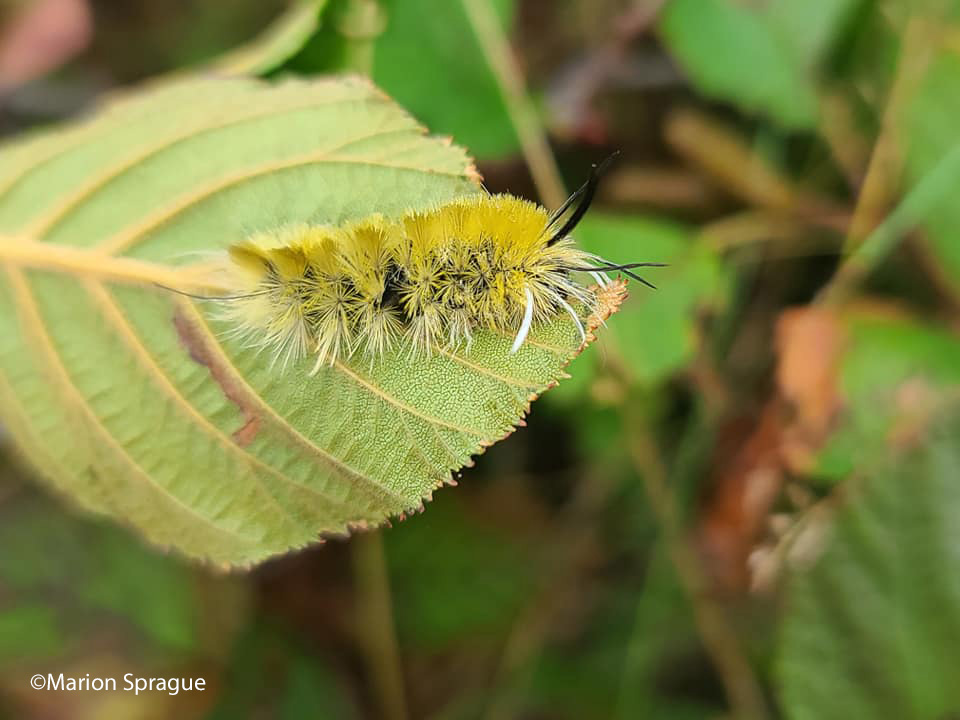
Banded Tussock Moth caterpillar.
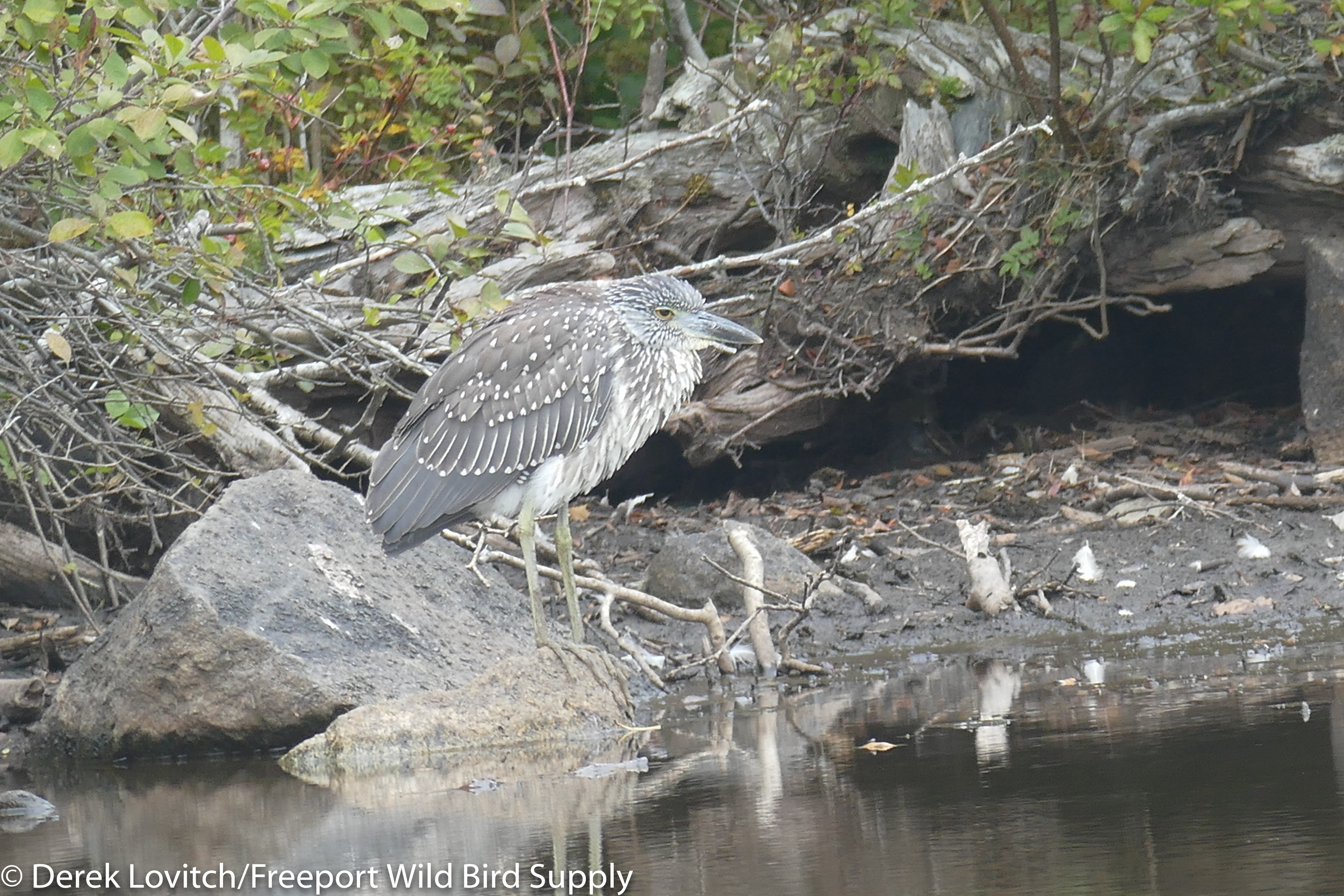
We began with coffee in hand as we marched down to the Ice Pond to catch up with the three continuing Yellow-crowned Night-Herons which we had someone missed each of the previous two days. The drake Wood Duck – very close now to full-spiffiness (technical term!) added to the joy. Then, after breakfast we had the thrilling discovery (OK, Tom discovered it; he deserves the credit) of a Yellow-breasted Chat. Glimpses were fleeting, and through fogged glasses, were not always satisfactory. We then found a Marsh Wren at Lobster Cove, and continued to slowly add birds to the list, such as an Eastern Towhee, a few more warbler species, and the fog finally lifted enough for us to see the water and nearby islands to sort out Great Cormorants from Double-cresteds.
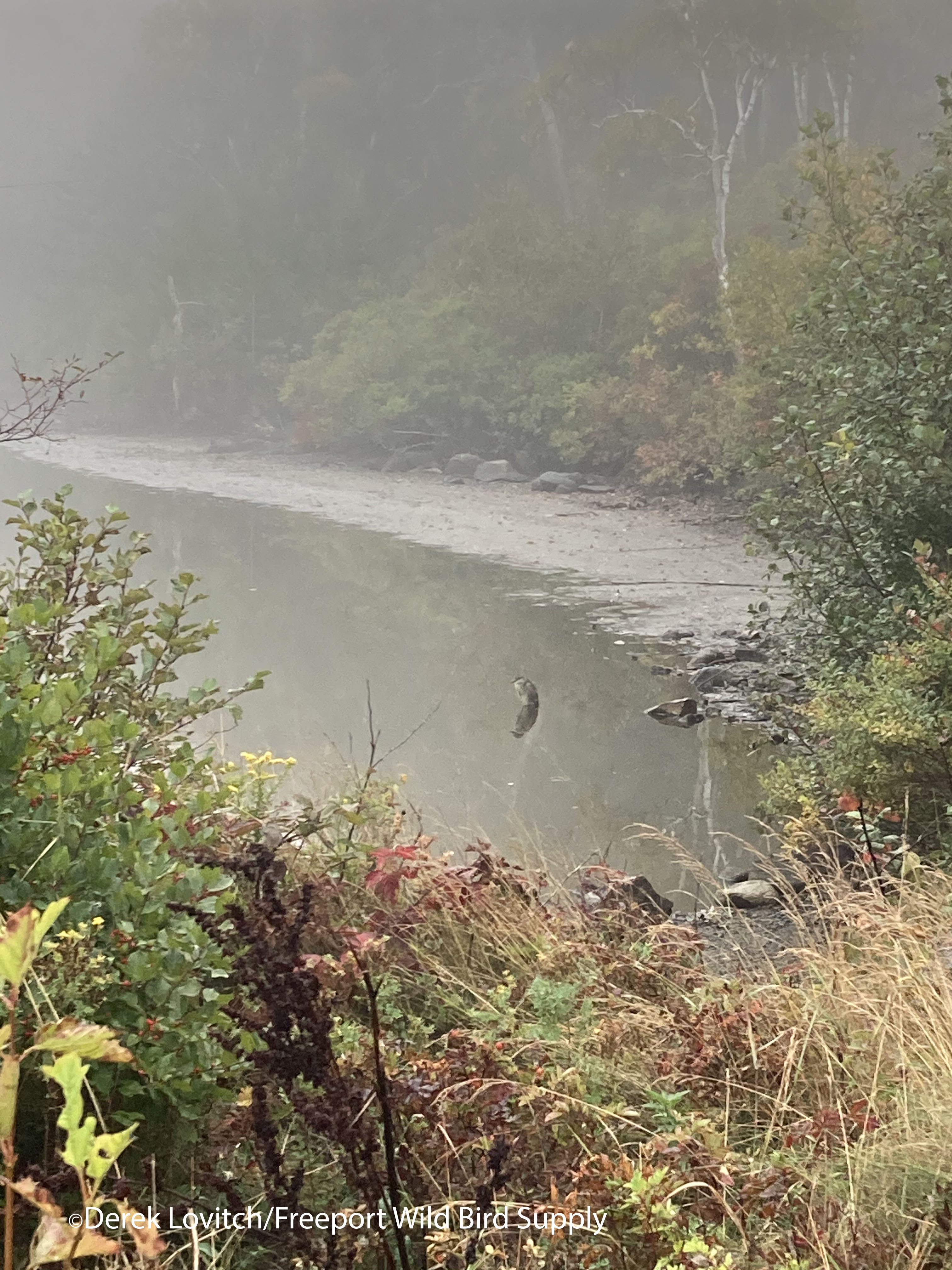
Yellow-crowned Night-Herons. Now, just about annual on Monhegan in fall. A Lobster Cove marsh stomp often produces a surprise or two, like today’s Marsh Wren.
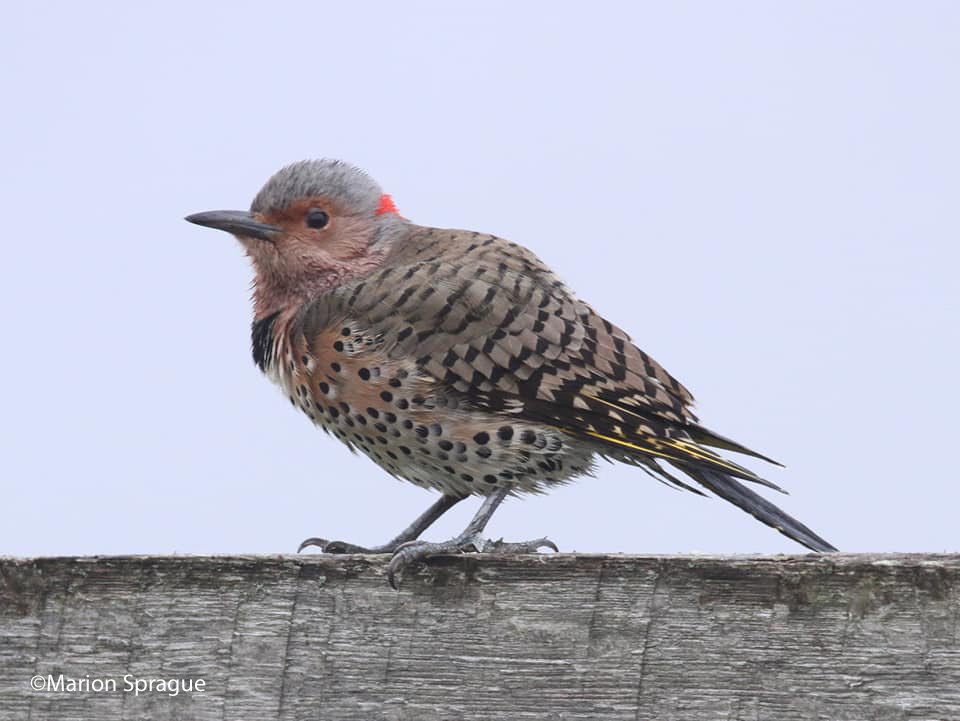
On Monday, our last day of the group tour, we had significant turnover in participants from the weekend, but less turnover in birds. With another night with little to no nocturnal movement on persistent southerly winds and fog. Only a few Yellow-rumped Warblers were calling overhead at coffee pot o’clock, and it was very slow on our pre-breakfast walk. Northern Flickers were definitely moving around though, so it’s possible a few of these birds were new arrivals overnight.
Like all of Maine, Monhegan is desperate for rain, but of course we selfishly were hoping it would not fall on us! The forecast was looking good to get most of the day in, rain-free, but when we reconvened at 9:15, there was a steady light shower. It did not last long, however, and we continued on, unimpeded. Once again, we spent a lot of time sparrow-workshopping, as we regularly encountered fun mixed flocks all weekend of Song, White-throated, Savannah, and often one other species, be it Chipping, White-crowned, Swamp, or Lincoln’s. The side-by-side comparisons are very instructive, and as a guide, I tend to pivot to whatever the birds were offering, and this weekend, they were offering a chance to study, learn, and appreciate the diversity and beauty of sparrows.
We covered a fair amount of ground in the afternoon, checking in with two of the three Yellow-crowned Night-Herons, the continuing Wood Duck and 2 Rusty Blackbirds, and some blooming Fringed Gentian. At least 6 Baltimore Orioles were still present (we had a high of 9+ on Friday), and we had some really good looks at Cape May Warblers and others. Partial clearing in the later afternoon was just enough to get our first view of town from Lighthouse Hill. A mere 56 species by day’s end showed the lack of overall diversity after three full nights with some birds leaving, but very little arriving.
Autumn Meadowhawk (I believe) visiting Barb’s cap.
With the last boat of the day at 4:30, the Monhegan Fall Migration Weekend officially came to a close. However, one of Monday’s participants stayed on for a day of private guiding, so Kate and I continued on for a full day of birding on Tuesday. But, like the weekend, we awoke to more fog and another night of little to no migration on SSE winds. There was, however, some more swirling of Yellow-rumped Warbles around dawn, coming to and from Manana. It was very suggestive of zugunruhe (migratory restlessness) after four days of being stuck on the island with unfavorable winds. Or, it could have been some birds had indeed arrived overnight.
The extensive southerly winds had finally started to pay dividends, however, with the delivery of a Blue-gray Gnatcatcher and a Yellow-billed Cuckoo. The Dickcissel continued, and we had our best look at it since Friday. With only two of us, we covered grown more quickly and efficiently, so we tallied several species that the group had not seen together, such as the two ridiculously cooperative Soras at the Pumphouse. We also found an unusually-cooperative Mourning Warbler, which is always a treat in migration.
Dickcissel.
With a storm a’brewing, Kate and I departed together on the 3:15 Hardy Boat, and were treated to a Cory’s Shearwater and a Northern Fulmar that materialized out of the still-thick fog. Once a rarity in these waters, the Cory’s was rather late in departing, while the fulmar was on the early side of their arrival. I don’t recall having seen both species on a boat trip on the same day before, and any tubenose is “good” in these nearshore waters.
So that officially brought the 2020 Monhegan Fall Migration Weekend tour to a close; ending on a real high note. Below, I will include Tuesday in the list, but I have separated out the species count for the four-day weekend for comparison sake. Please let me know if I missed something (it’s easy to do as I sit down and try to recall the day as the bed is calling my name!), but our tally for now was a solid 92 species – just two species below our average for the past 10 years.
However, the 12 species of warblers were well below our 10-year average of 18 species for the weekend. But given the accelerated migration season (food supply shortages due to drought and/or benign weather allowing migration to proceed relatively unimpeded), this was expected. And we made up for it with more sparrows than usual, and an impressive irruption underway. This was the most Purple Finches and White-breasted Nuthatches I can recall on the island, and along with a goodly number of Red-breasted Nuthatches and the first few Pine Siskins of fall, our island sample reflected what we are seeing on the mainland, and throughout the East.
25-Sep
26-Sep
27-Sep
28-Sep
29-Sep**
Wood Duck
0
1
1
1
1
American Black Duck
2
2
2
3
3
Mallard
12
15
12
16
16
Mallard x American Black Duck Hybrid
0
0
0
1
1
Common Eider
x
x
x
x
X
Surf Scoter
6*
0
0
0
0
Ring-necked Pheasant
7
15
18
18
9
Mourning Dove
6
4
14
16
10
YELLOW-BILLED CUCKOO
0
0
0
0
1
Common Nighthawk
1
0
0
0
0
Sora
0
0
0
0
2
Black-bellied Plover
0
1
0
0
0
Wilson’s Snipe
0
1
0
0
0
Solitary Sandpiper
1
0
0
0
0
Black Guillemot
2*
0
6
3
6
Laughing Gull
0
1
0
0
2*
Herring Gull
x
x
X
x
x
LESSER BLACK-BACKED GULL
2
0
1
0
1
Great Black-backed Gull
x
x
X
x
x
Common Loon
0
0
0
0
1*
Northern Gannet
10*
6
2
4
8*
NORTHERN FULMAR
0
0
0
0
1*
CORY’S SHEARWATER
0
0
0
0
1*
Double-crested Cormorant
X
x
x
x
X
Great Cormorant
0
0
2
2
2
YELLOW-CROWNED NIGHT-HERON
0
0
3
2
0
Osprey
0
3
0
0
0
Bald Eagle
1
1
0
0
0
Sharp-shinned Hawk
6
1
2
2
1
COOPER’S HAWK
1
0
0
0
0
Belted Kingfisher
1
1
1
1
0
Yellow-bellied Sapsucker
20
8
8
8
15
Downy Woodpecker
0
0
2
1
0
Northern Flicker
40
20
15
20
15
American Kestrel
4
1
0
0
0
Merlin
10
6
6
6
2
Peregrine Falcon
6
2
1
0
0
Least Flycatcher
0
0
1
0
0
Eastern Phoebe
6
4
4
6
2
Red-eyed Vireo
8
6
4
4
3
Blue Jay
12
8
12
12
6
American Crow
x
x
x
x
X
Common Raven
4
2
1
1
1
Black-capped Chickadee
x
x
x
x
X
Red-breasted Nuthatch
15
15
20
20
15
White-breasted Nuthatch
3
4
5
7
8
Brown Creeper
1
0
0
0
0
House Wren
0
0
0
1
2
Marsh Wren
0
0
1
0
0
Carolina Wren
2
1
2
2
4
Golden-crowned Kinglet
2
6
2
0
8
Ruby-crowned Kinglet
0
2
1
0
0
BLUE-GRAY GNATCATCHER
0
0
0
0
1
Swainson’s Thrush
2
0
0
0
0
Hermit Thrush
1
0
0
0
0
American Robin
0
2
4
4
4
Gray Catbird
x
x
8
10
10
Brown Thrasher
1
1
1
1
1
European Starling
16
22
28
24
24
Cedar Waxwing
15
16
16
12
8
American Pipit
0
1
0
0
0
Purple Finch
20
40
40
40
40
Pine Siskin
1
0
1
1
1
American Goldfinch
2
8
6
6
3
Eastern Towhee
0
0
1
0
0
Chipping Sparrow
6
6
6
4
4
Dark-eyed Junco
4
8
4
4
1
White-crowned Sparrow
6
3
4
6
3
White-throated Sparrow
75
60
50
35
30
Savannah Sparrow
10
6
10
8
10
Song Sparrow
15
20
20
20
25
Lincoln’s Sparrow
2
2
0
1
2
Swamp Sparrow
4
1
0
2
2
YELLOW-BREASTED CHAT
0
0
1
0
0
Bobolink
1
1
0
0
0
Rusty Blackbird
1
2
2
2
2
Common Grackle
4
1
6
18
18
Baltimore Oriole
8
3
6
6
9
Ovenbird
0
1
0
0
0
Northern Waterthrush
1
0
1
1
2
Black-and-white Warbler
1
1
0
0
0
Common Yellowthroat
3
2
6
6
1
Cape May Warbler
1
1
4
4
0
Northern Parula
0
0
1
0
2
Yellow Warbler
1
1
1
1
2
Blackpoll Warbler
2
2
8
6
3
Palm Warbler
6
2
1
1
2
PINE WARBLER
1
0
0
0
0
Yellow-rumped Warbler
150
125
100
60
40
MOURNING WARBLER
0
0
0
0
1
Scarlet Tanager
1
0
0
0
0
Northern Cardinal
2
2
5
4
6
Rose-breasted Grosbeak
0
1
1
0
1
Indigo Bunting
0
1
0
1
1
DICKCISSEL
1
1
0
0
1
Day Total
67
65
63
58
65
*Denotes Ferry Ride Only. **Private Tour.
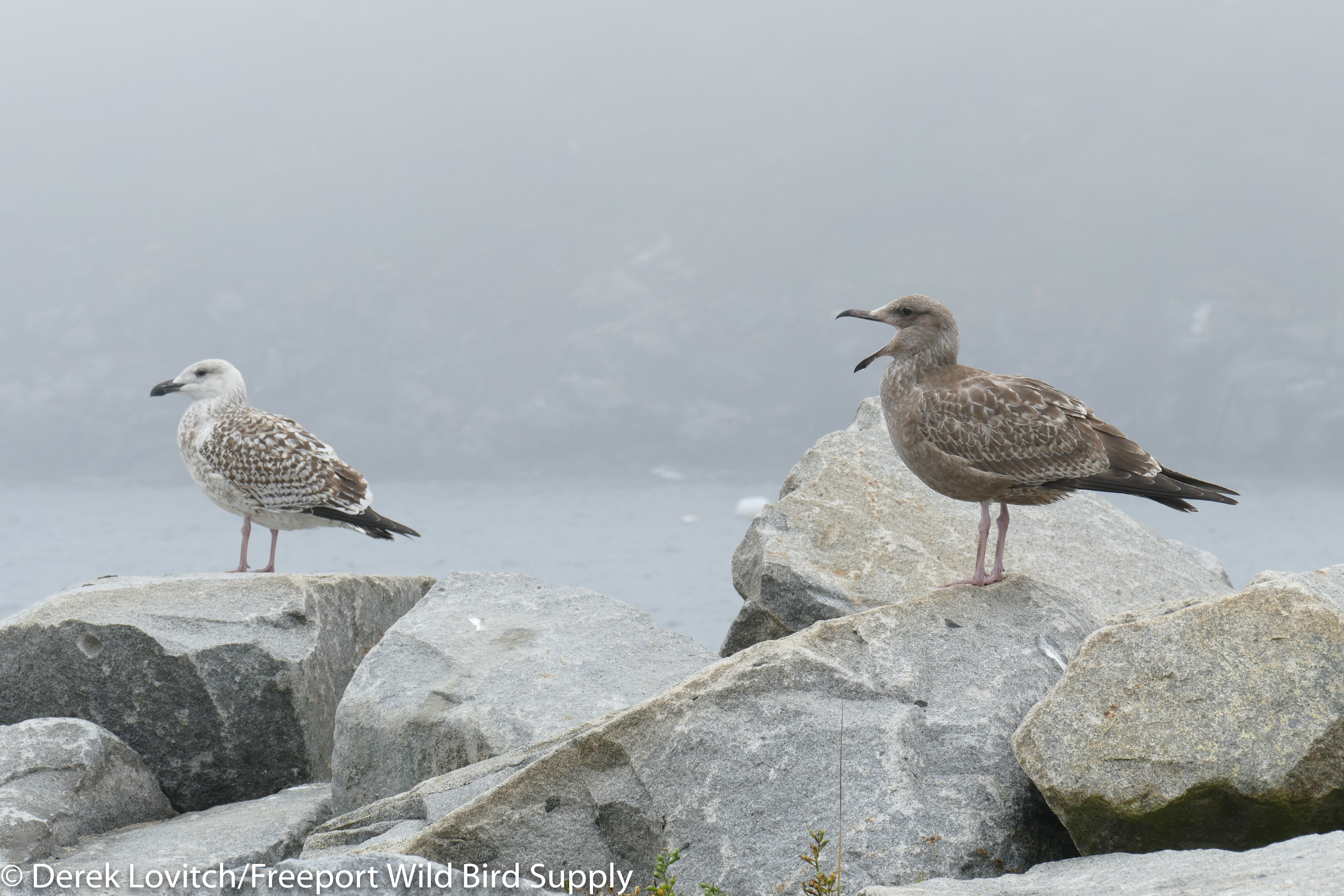
We enjoyed ample time to study many common species, such as separating young gulls. Here’s a juvenile Great Black-backed Gull (L) in the background showing its much whiter overall appearance with bold marbling above. Compare that to “the brown one,” the juvenile Herring Gull (R). It wasn’t the only one yawning from another gull lecture!
Our trip offerings continue to grow. Our collaboration with The Maine Brew Bus continues with our increasingly popular Birds On Tap ℠ – Roadtrips! (see listing below). And, this year, we are excited to announce a new partnership with DownEast Adventures as their exclusive provider of birdwatching tours! Whether you are interested in something local for a few hours, or a multi-day tour, we have something for everyone. Some of these trips fill up fast, so act quickly if any pique your interest! For more details on each of these events, including registration information please visit the Tours, Events, and Workshops Page of our website. We hope to see you soon!
Woodcocks Gone Wild!
April 4th (Weather date, 4/11)
Our most popular annual tour, join us for an evening witnessing the aerial ballet of displaying American Woodcocks on a special outing at Pineland Farms in New Gloucester. No registration necessary.
Migratory Songbird Workshop with DownEast Adventures
May 17th
This half-day workshop will focus on the migrant songbirds, especially warblers, that are passing through Maine’s most famous migrant trap, Portland’s Evergreen Cemetery. At the peak of warbler migration, we’ll learn how to identify these charismatic birds and we’ll discuss their mind-boggling migration and what they’re up to in Maine.
Monhegan Spring Migration Weekend
May 22nd – 25th
Join Derek on Monhegan during the height of spring migration for 1-4 days searching the island for regular visitors, rarities, and vagrants. Warblers in their summer finery are pouring through the Northeast, and many will drift over the Gulf of Maine on their nocturnal flights. Rapidly changing weather conditions can result in massive “fallouts” of tired migrants, many of which will forage in the rocks on the shoreline. The possibility of overshoots from the south and vagrants from almost any direction adds icing to the cake.
Bicknell’s Thrush Tour
June TBA
Stay tuned to our website for details on this tour.
Seal Island Charter: The Search for Troppy
July 11th
This special 5-hour charter aboard Isle au Haut Ferry Service’s Otter will allow us to travel out to Seal Island specifically to look for “Troppy”, Maine’s famous Red-billed Tropicbird. And, we will also enjoy looks at the puffins, guillemots, terns, and Razorbills that call this island home in summer.
Ladona Island Birding Cruise (Birding by Schooner II) with DownEast Adventures
July 13th – 17th
Join Derek aboard the Schooner Ladona for a truly unique and exclusive birding and culinary experience. Enjoy peace, quiet, and tranquility as we spend four days aboard the Ladona enjoying unbelievable food and drink, lots of rest and relaxation, and some great birding! Weather permitting, we’ll have the chance to visit the waters around a seabird breeding colony (likely the famous Eastern Egg Rock) to place us among thousands of breeding seabirds, including Atlantic Puffins, three species of tern, and likely a few Razorbills.
Shorebird Workshop with DownEast Adventures
August 12th
In this full-day workshop, we will hit some of the marshes, beaches, and rocky roosts that shorebirds prefer at the peak of their migration. The ebbs and flows of the season, daily and recent weather, and other factors could produce more than 20 species of shorebirds in our time together. Our focus will be in comparative experience, learning how to recognize each species both near and far.
Maine Coast in Fall with Derek and WINGS
September 13th – 20th
Join Derek on this all-inclusive tour to enjoy Monhegan Island at its finest.
Monhegan Fall Migration Weekend
September 25th – 28th
Join Derek on Monhegan during the height of migration for 1-4 days searching the island for regular visitors, rarities, and vagrants. This is a casual outing, with boat and hotel reservations, as well as meals, on your own, allowing for more flexibility (and more time at the brewery if you so desire).
Birds On Tap℠ – Roadtrip!
Our Birds On Tap ℠ – Roadtrip! series is entering its sixth year and features 10 tours! Traveling in the Maine Brew Bus, the first half of each 6-hour tour is spent in the field with Derek as your guide to learn about the birds and their habitats. This is followed by two brewery (and one “kombuchery”) tours led by the Brew Bus guides. The locations were chosen to enjoy the peak of birding at a particular locale at certain times of year. One does not need to be a “birder” to enjoy these outings. People of all skill levels are encouraged to join us!
The 2020 schedule is as follows:
Gulls and Growlers
January 18th, 9:00am – 3:30pm
Hatch Hill Landfill, Augusta
(gulls, eagles)
Bateau & Black Pug Brewing
Seaducks and Suds
February 16th, 9:00am – 3:30pm
York County coast
(seaducks, alcids, gulls)
York Beach Beer & TBA
Spring Ducks and Draughts
April 5th, 12:00pm – 6:30pm
Merrymeeting Bay
(migrant waterfowl, eagles)
Oxbow & Bath Brewing
Warblers and Wort
May 10th, 8:00am – 2:00pm
Portland sites
(warblers, other songbird migrants)
Bissell Brothers & Brewery Extrava
Grassland and Grains
June 14th, 8:00am – 2:30pm
Kennebunk Plains
(Upland Sandpiper, Grasshopper Sparrow)
Funky Bow & Banded Brewing
Terns and Taps
July 26th, 9:00am – 3:00pm
Biddeford Pool
(terns, Piping Plover)
Nuts and Bolts & Island Dog Brewing
Shorebirds and Steins
August 23rd, 10:00am – 4:00pm
Scarborough Marsh
(migrant shorebirds)
Foulmouthed & Lone Pine Brewing
“Sod-pipers” and Sips
September 6th, 8:00am – 4:00pm
Fryeburg
(grassland sandpipers, Sandhill Cranes)
Ebenezer’s Pub & Saco River Brewing
Fall Ducks and Draughts
October 25th, 9:00am – 3:30pm
Sabattus Pond (migrant waterfowl, eagles)
Side by Each Brewing & Maine Beer Co.
“Rarity Roundup”
November 8th, 8:00am – 3:00pm
Portland to Wells
(potential vagrants, general birding)
Root Wild Kombucha & Goodfire Brewing































 Maine Birding Field Notes