Jeannette and I were once again had the honor and pleasure to have the opportunity to be the guides on a 6-day birding tour aboard the Lewis R. French out of Camden, Maine. This was our third tour together (I also was aboard for a private charter last year), and we have been looking forward to this trip since the last time we stepped off the boat. While this blog entry will obviously focus on the birding and wildlife aspects of the trip, I will not be able to do this tour justice with words nor pictures. It is truly a unique experience from start to finish.
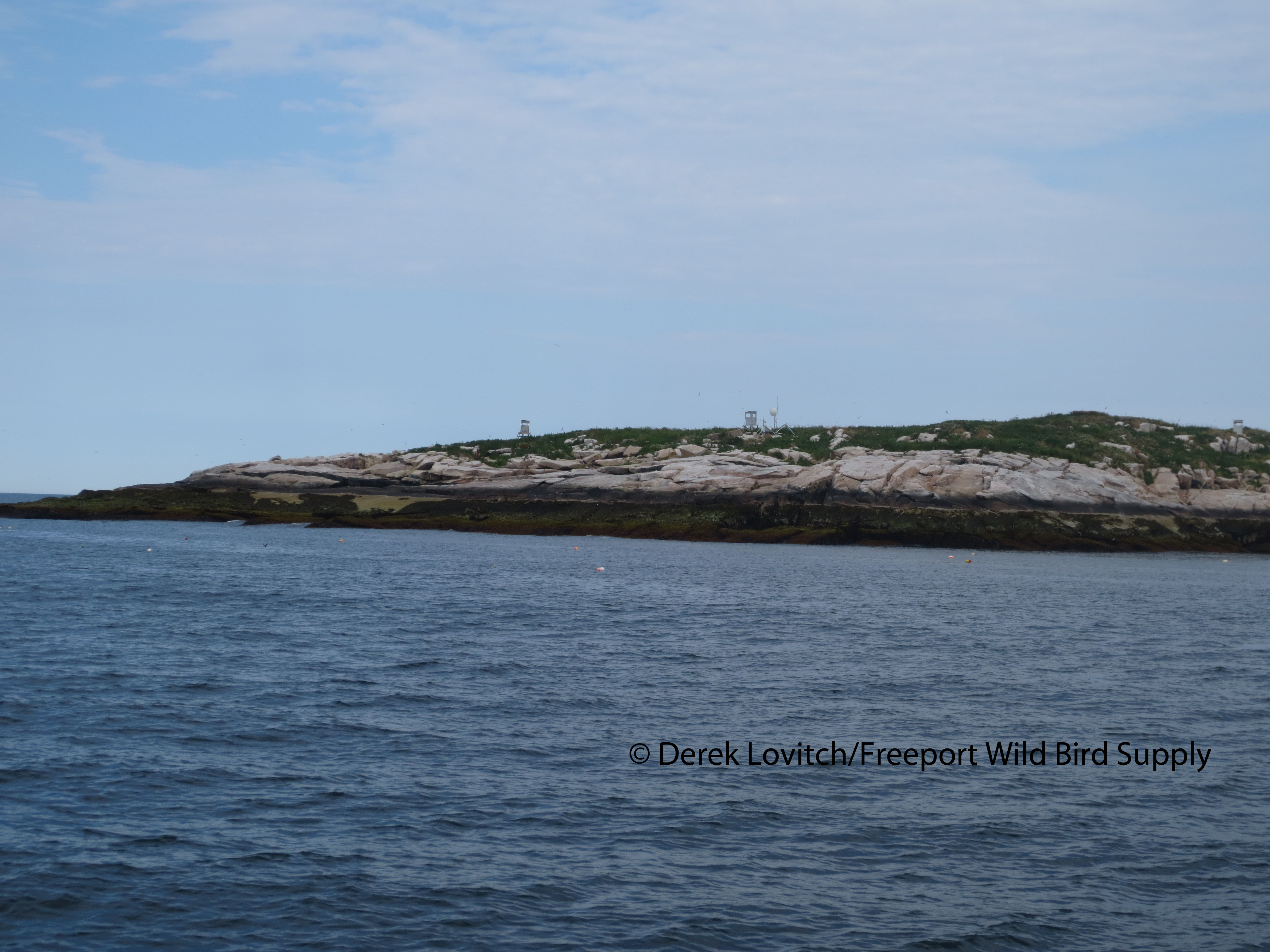
After boarding the boat the night before, we awoke to sunny skies in Camden Harbor on Day 1 of the trip, July 22nd. Captain Garth and I chatted about possible destinations, and after another check of the forecast, we decided to take advantage of the benign conditions to make a run way out to SealIsland, off of Matinicus. We have a total of four islands that feature breeding seabirds – with Atlantic Puffins being the prime target – in three different directions, so with every trip, we hope to hit at least one of them. Seal is the most remote, and the most extraordinary – featuring not just lots of puffins, but Razorbills, Common Murres, Great Cormorants, Arctic and Common Terns, and for the past seven years – a Red-billed Tropicbird. A few pairs of Manx Shearwaters also breed there, as do many Leach’s Storm-Petrels. Unlike the other islands, it also offers a fairly sheltered cove for anchoring, and the opportunity to host the island’s seabird biologists for dinner and conversation. (Note: you can double-click on the photos for larger images)
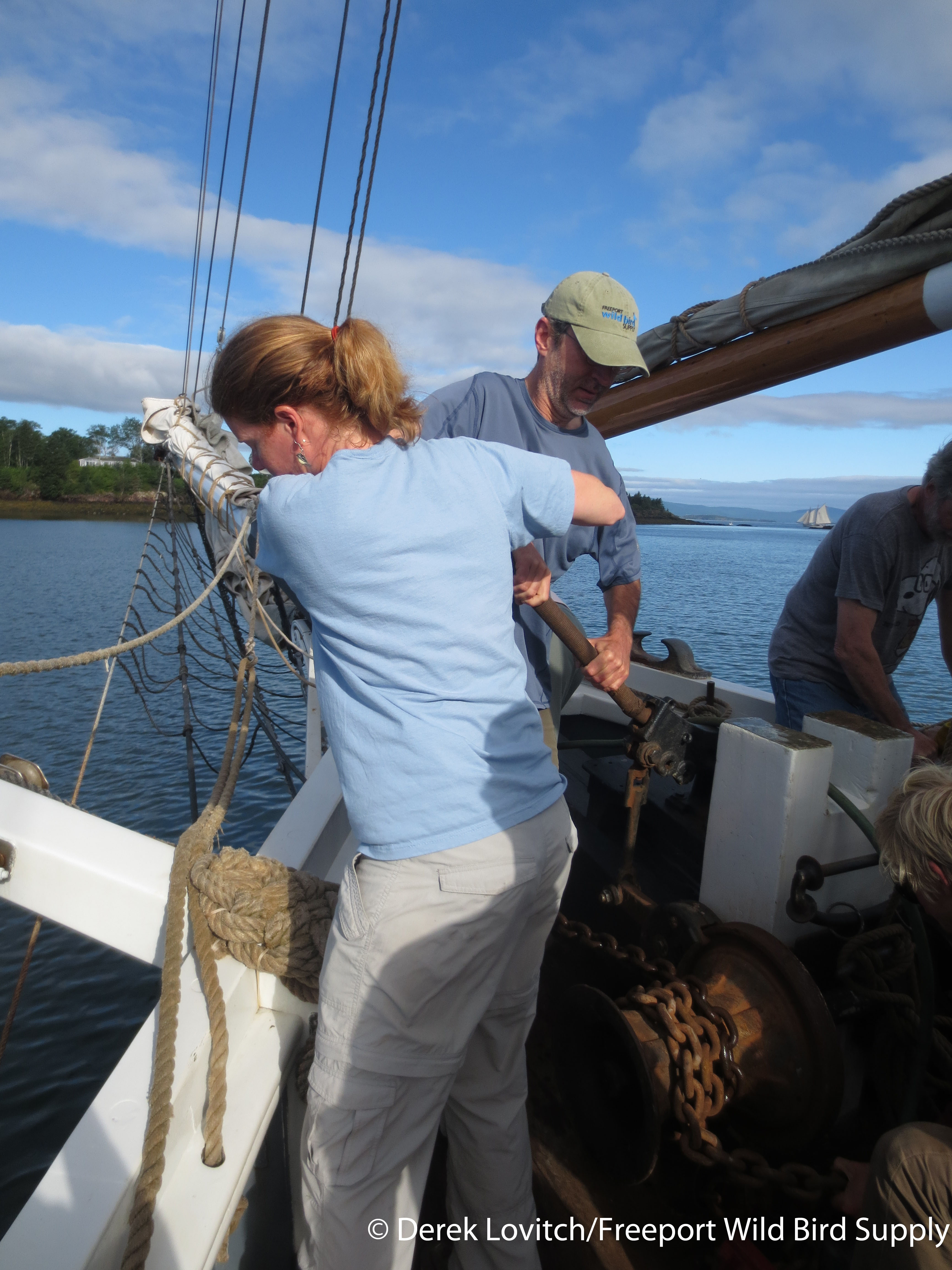
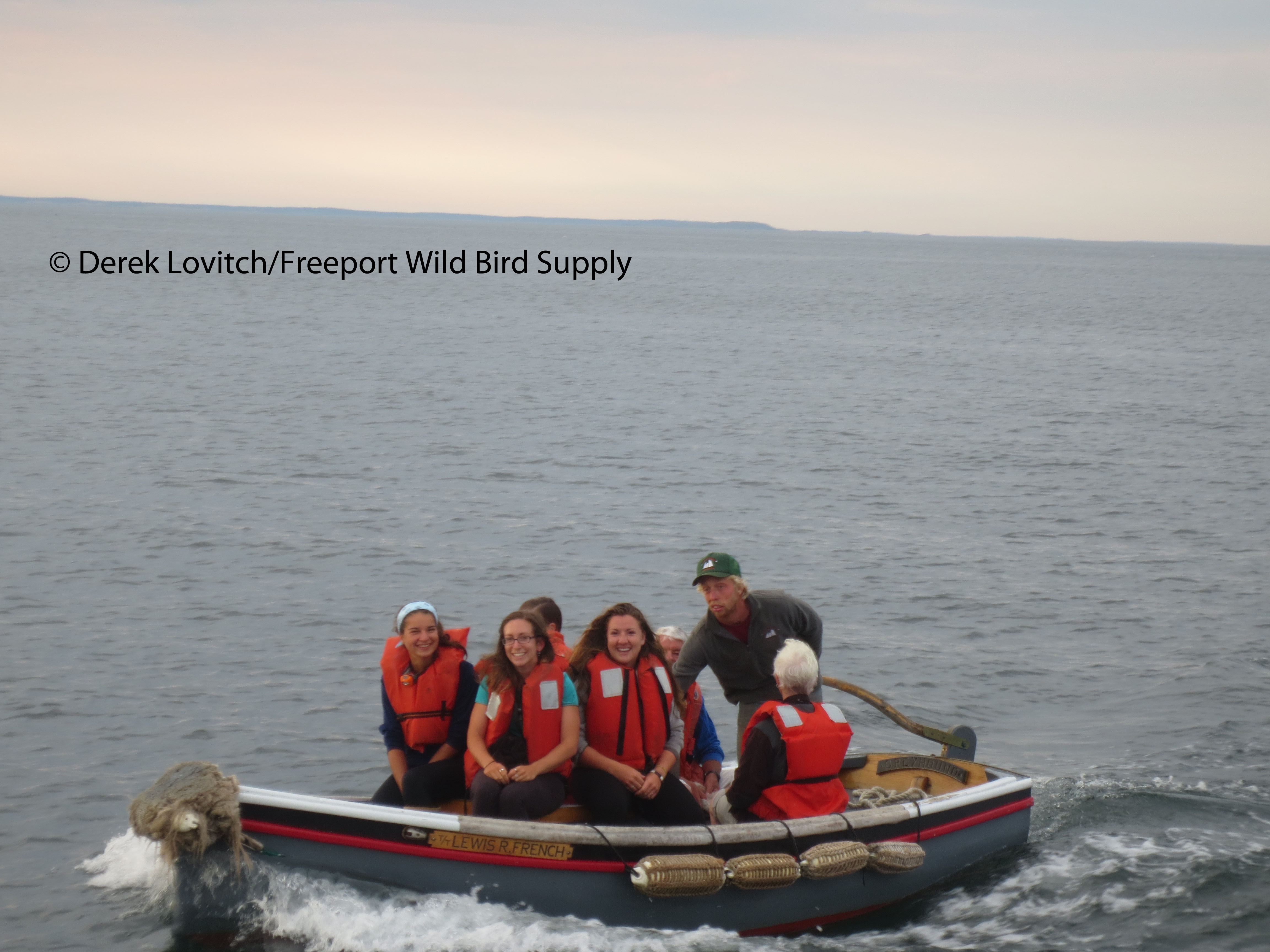
The Schooner French, a National Historic Landmark built in 1871 is not mechanized. This means there is plenty of ways to burn a few calories before the next scrumptious meal, such as cranking the anchor…
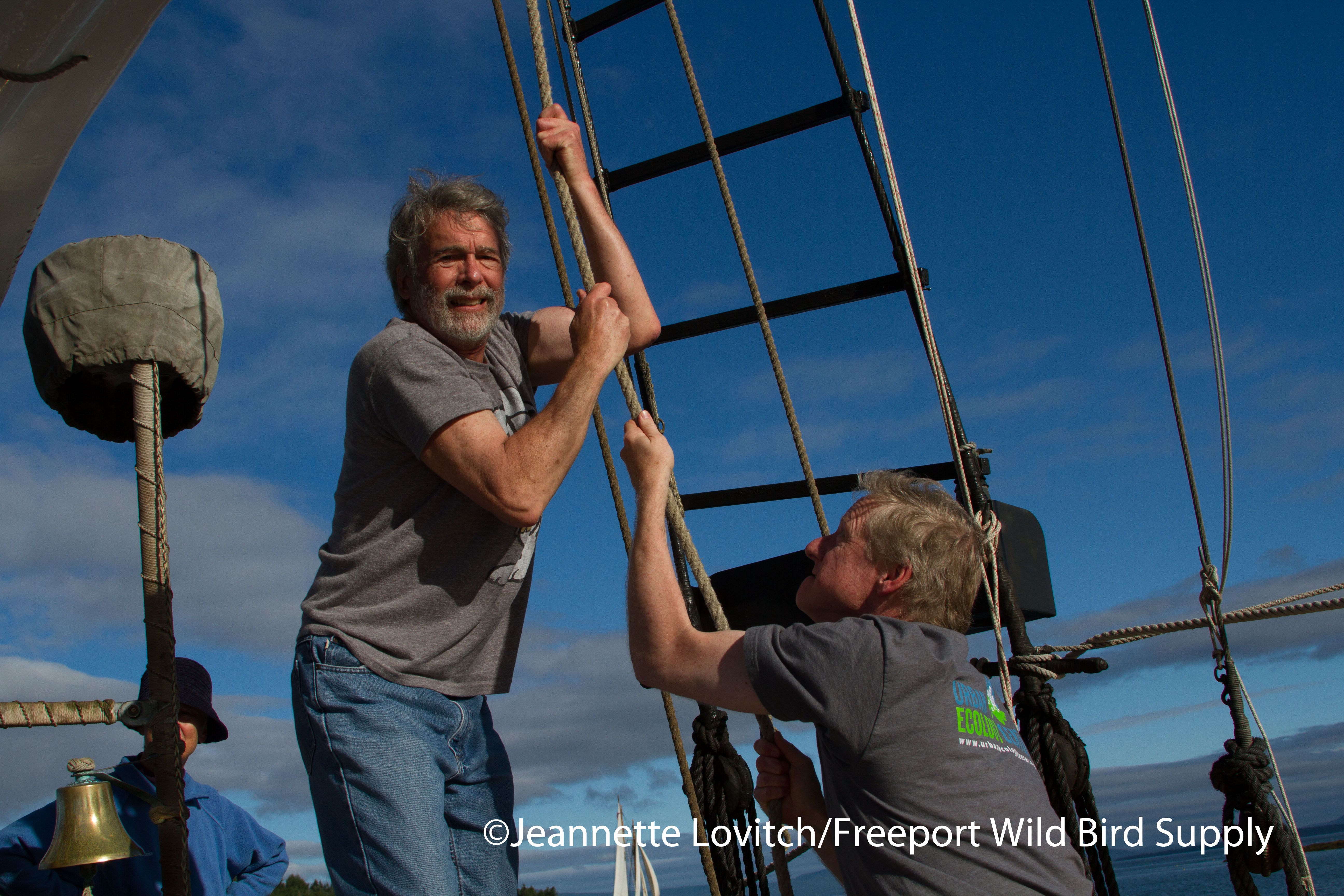
…or raising the sails

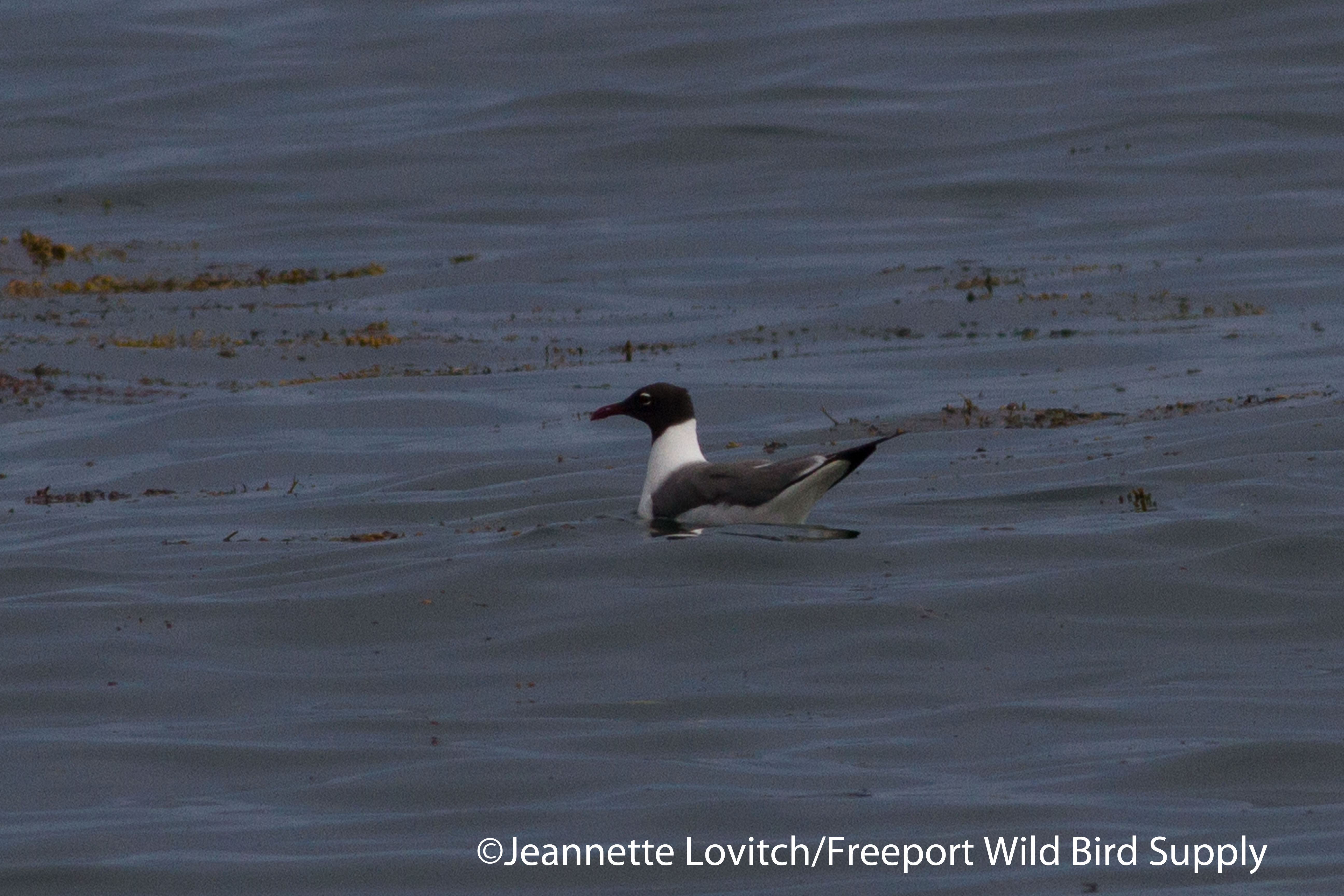
As we departed the harbor, we started our trip list with common species such as Mallards, Double-crested Cormorants, Laughing Gulls, and a smattering of landbirds. Osprey nests were passed and Black Guillemots were in their usual abundance. Common Eiders were common, as were Herring and Great Black-backed Gulls, along with a scattering of Common Loons and Common Terns. Many of these, especially the gulls, cormorants, eiders, and especially the guillemots would be constant companions throughout the trip, especially in in- and nearshore waters.


Amanda serving lunch; all meals were, as usual, fantastic. Lunch was “simple:” soup, a salad, fresh baked bread, and desert.
As we left the shelter of Penobscot Bay, the wind died off completely. This would be the first of what was, unfortunately, a few days where we were forced to use our powered yawl boat to push the French along (Although we still use a tiny fraction of the gas as any other pelagic birding trip out there!). En route, we encountered a single Leach’s Storm-Petrel that provided a nice view, and a Manx Shearwater passed by – our first two target species spotted, and we hadn’t even reached Seal Island yet!
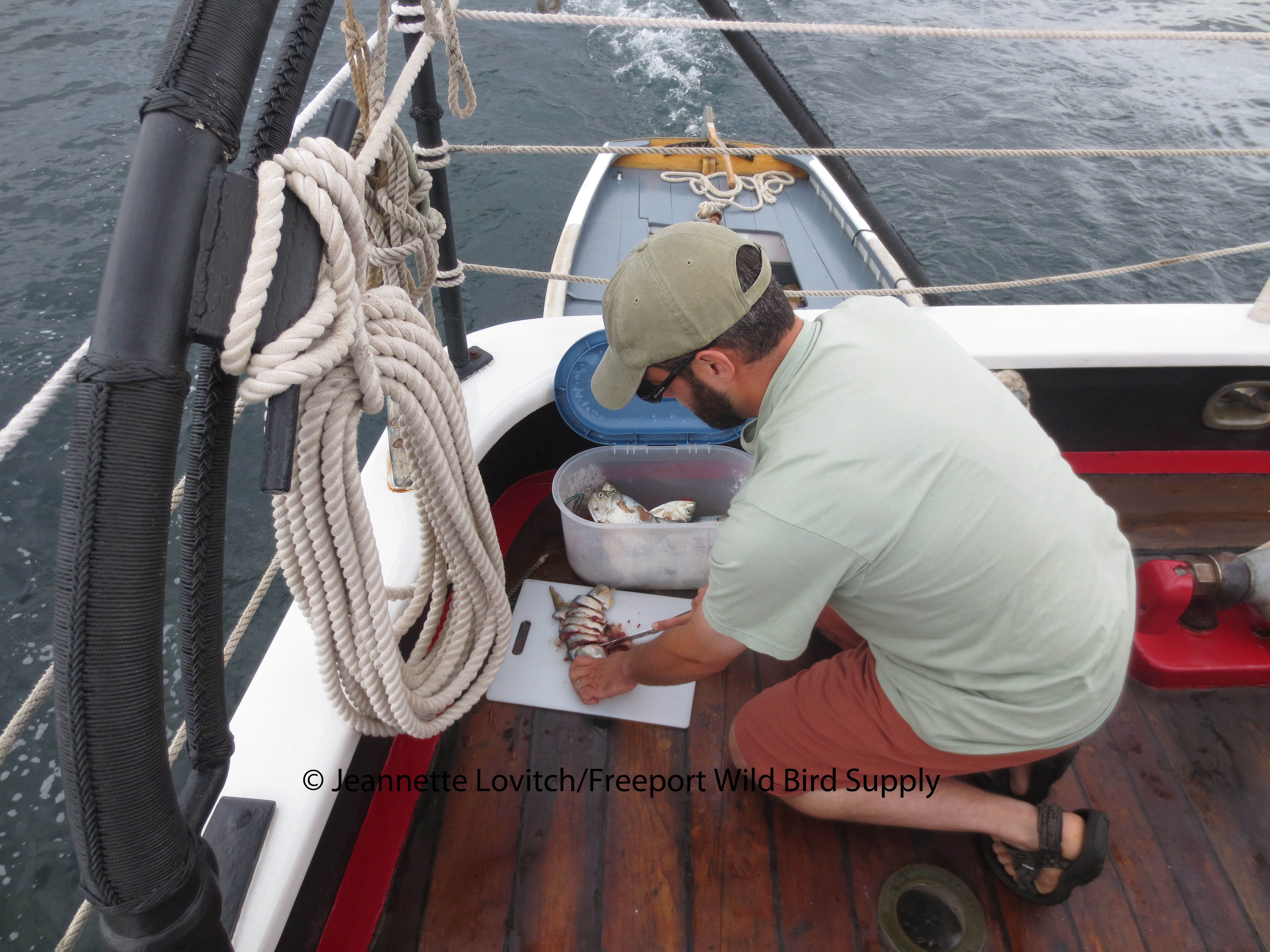
I prepare the chum
The waters around Seal were teeming with birds: lots’o’puffins, Razorbills, a handful of Common Murres, Great Cormorants, and a boat-load of Black Guillemots. Hundreds of Arctic Terns were wheeling about the island, with many birds making close passes of the boat. It did appear, however, that Common Terns had already mostly fledged, as we didn’t see too many. Three Common Ravens were a surprise, but Song and Savannah Sparrows singing from the island were expected. A few migrant shorebirds were darting about, including Least and Semipalmated Sandpipers, a few Ruddy Turnstones, and at least one Semipalmated Plover. Spotted Sandpipers foraged along the shore, too, the only shorebird that breeds out here.


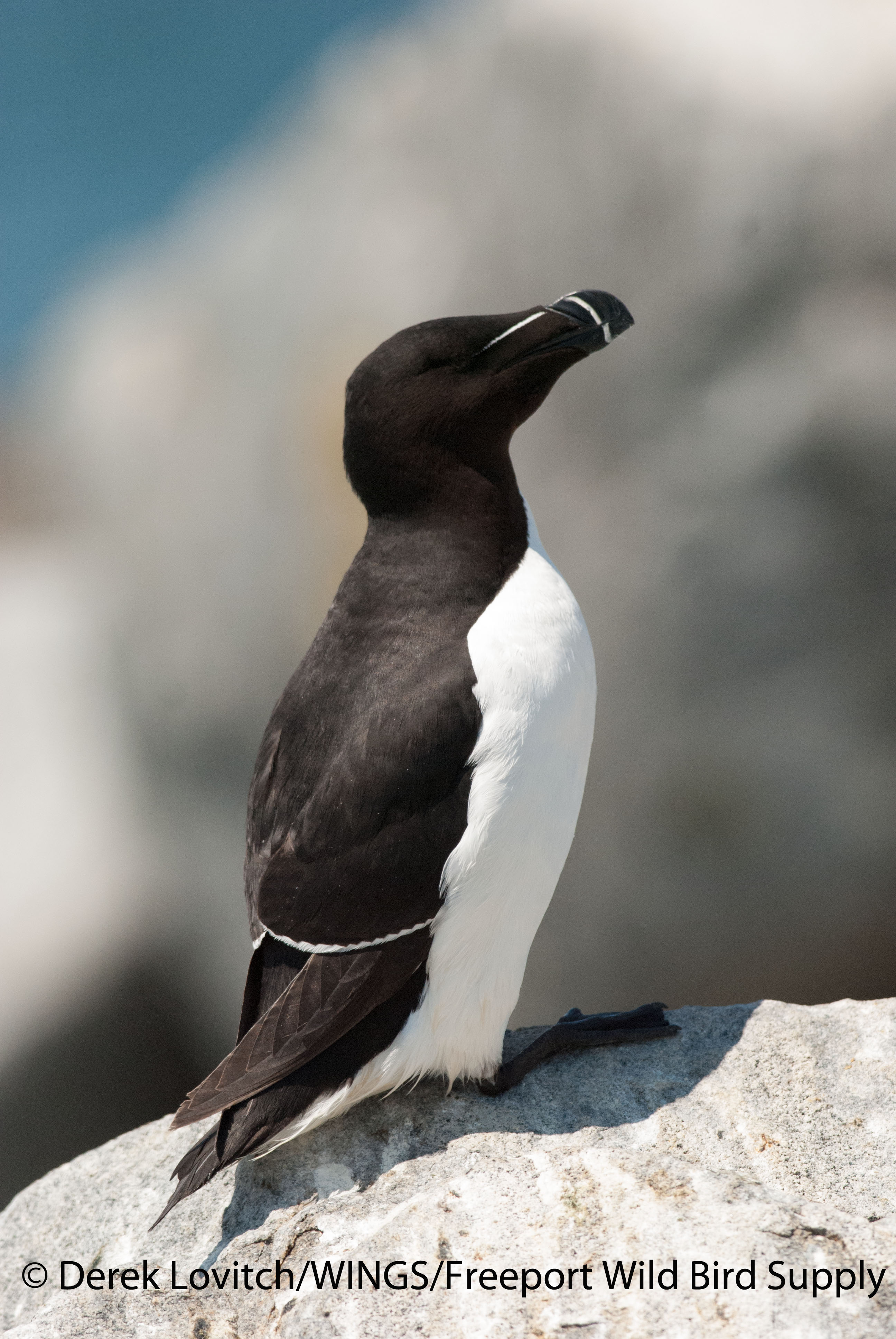
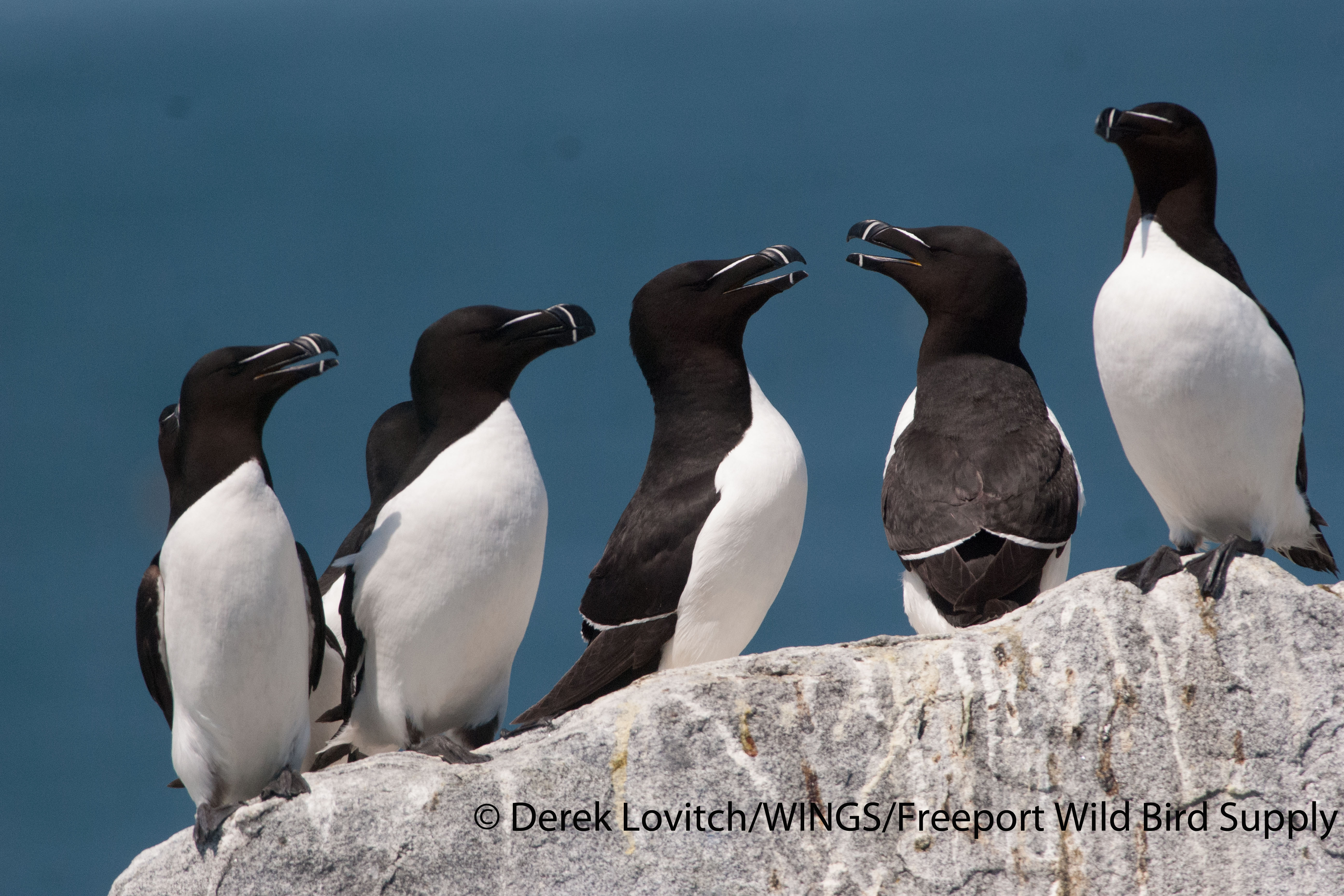
Razorbills
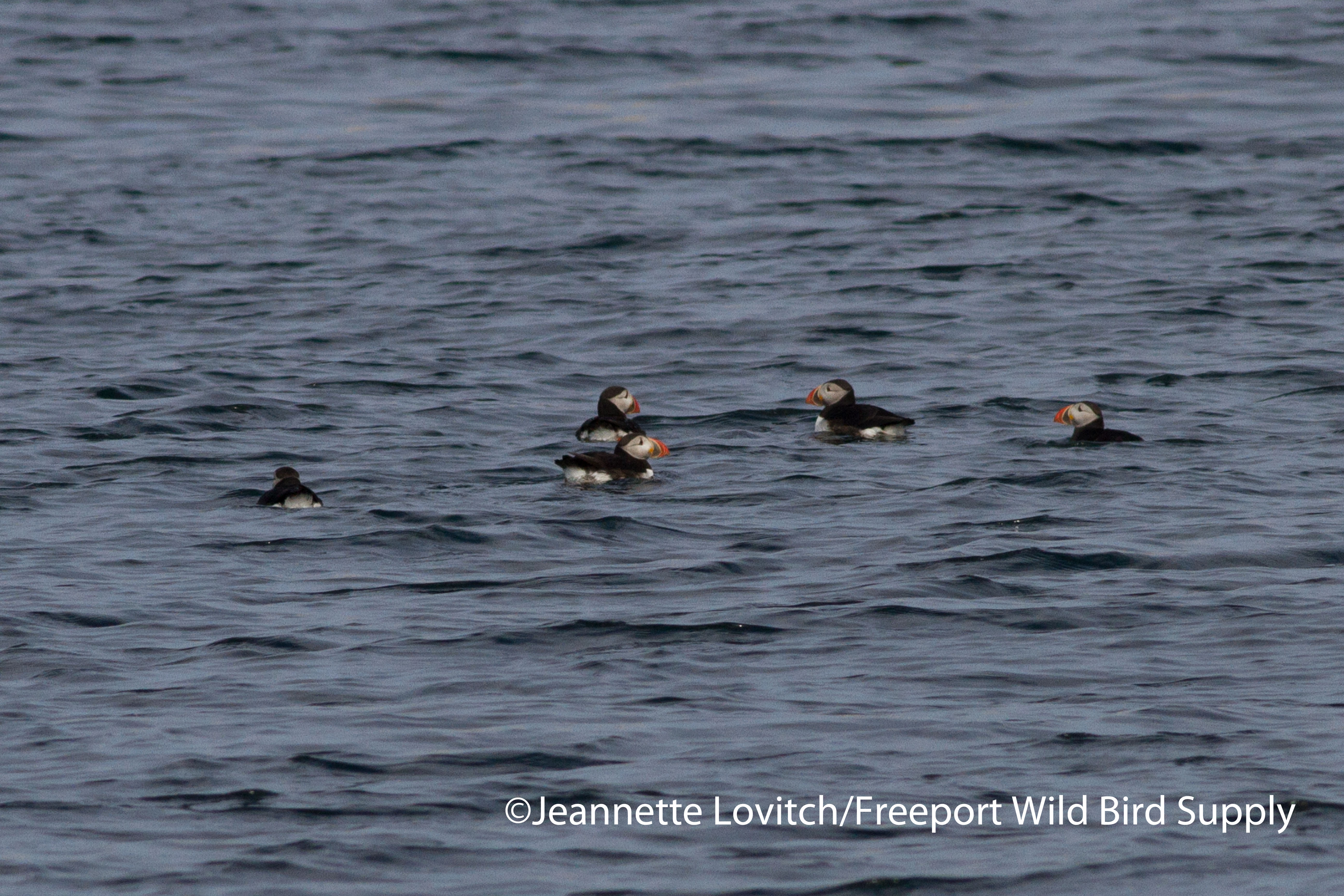
Puffins!
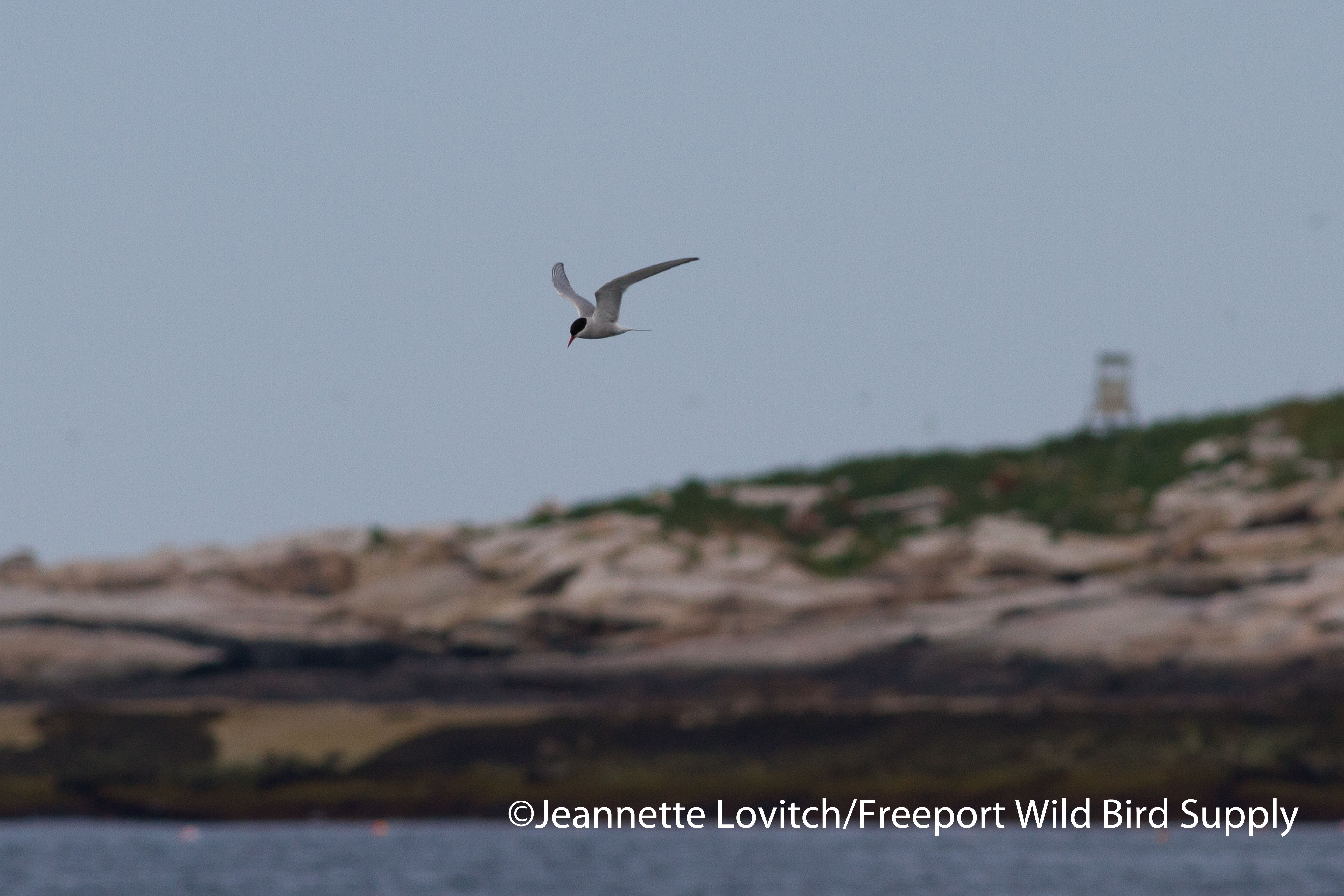
Arctic Tern


Unfortunately, the famous Red-billed Tropicbird did not put in an appearance. We were in position for his afternoon bath, but later we learned he often skips it when it isn’t sunny. “He’s a fair weather bather,” one of the biologists later told us.
But our spirits were not dampened. After all, this is not a hard-core listing trip. Although everyone would have liked to have seen the tropicbird, this tour is more about taking what the weather and the birds provide, and enjoying a relaxed, casual bird-watching experience.
And just in case anyone was upset about dipping on the tropicbird, dinner was soon served – Amanda and Amber’s meals always put a smile on people’s faces – and we welcomed our special guests, the seabird biologists of SealIsland. It’s a treat for us to ask them questions about life and birds on this remote rock, and no doubt a treat for them to get a brief break from the rigors of island life.


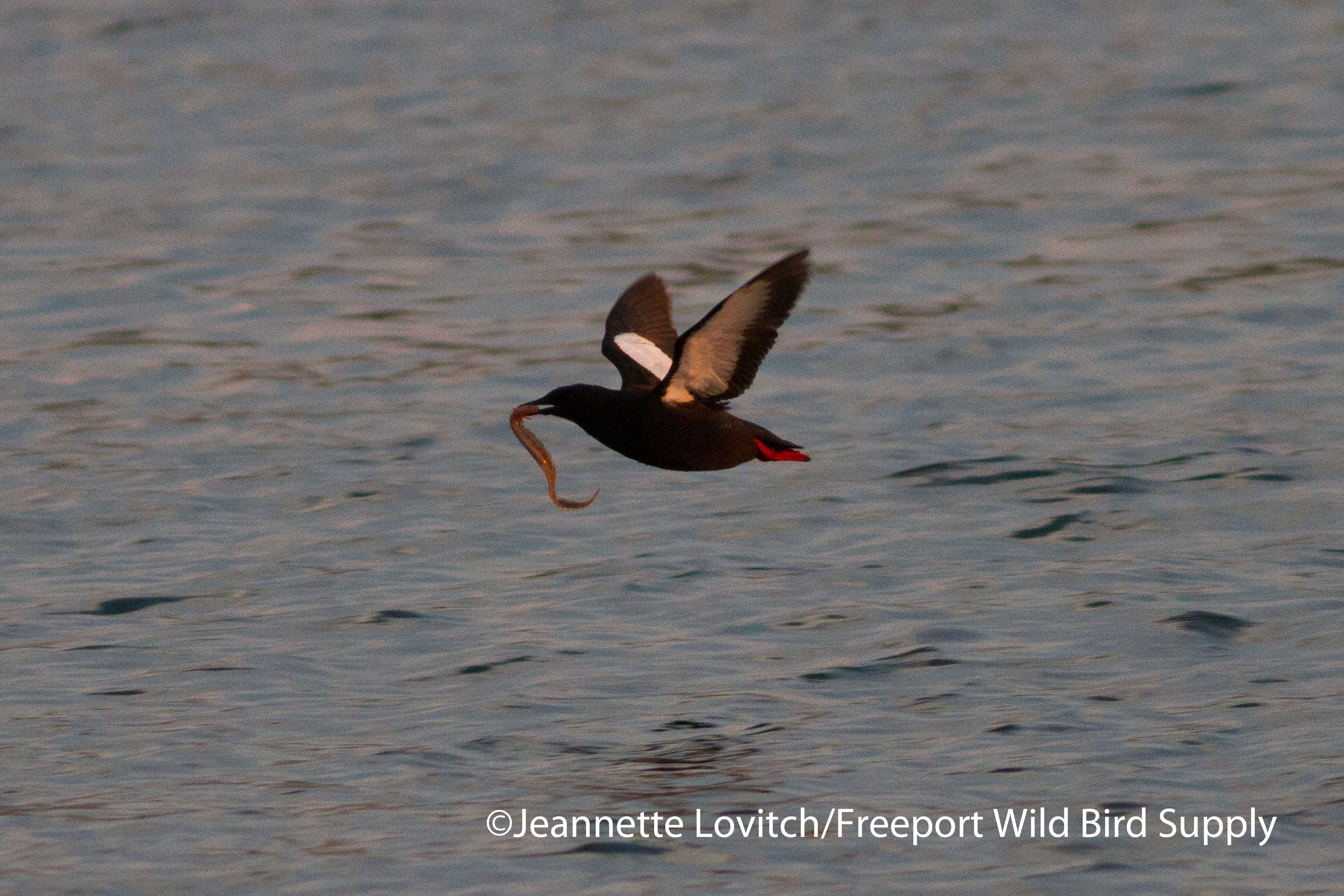
Black Guillemot with Rock Eel

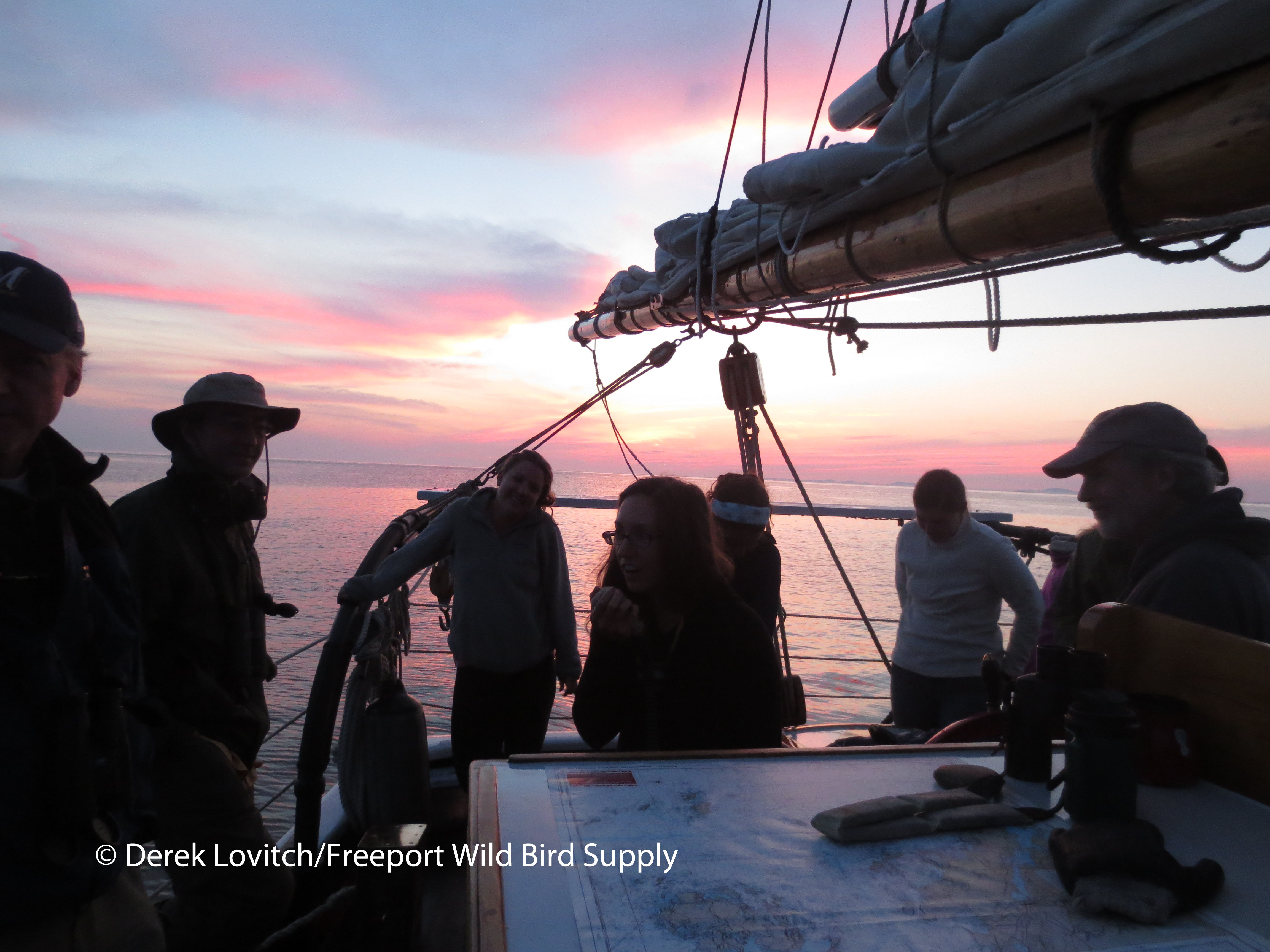
Chatting with the biologists on Matinicus Rock…aka “nah, nah, we’re on a schooner!”
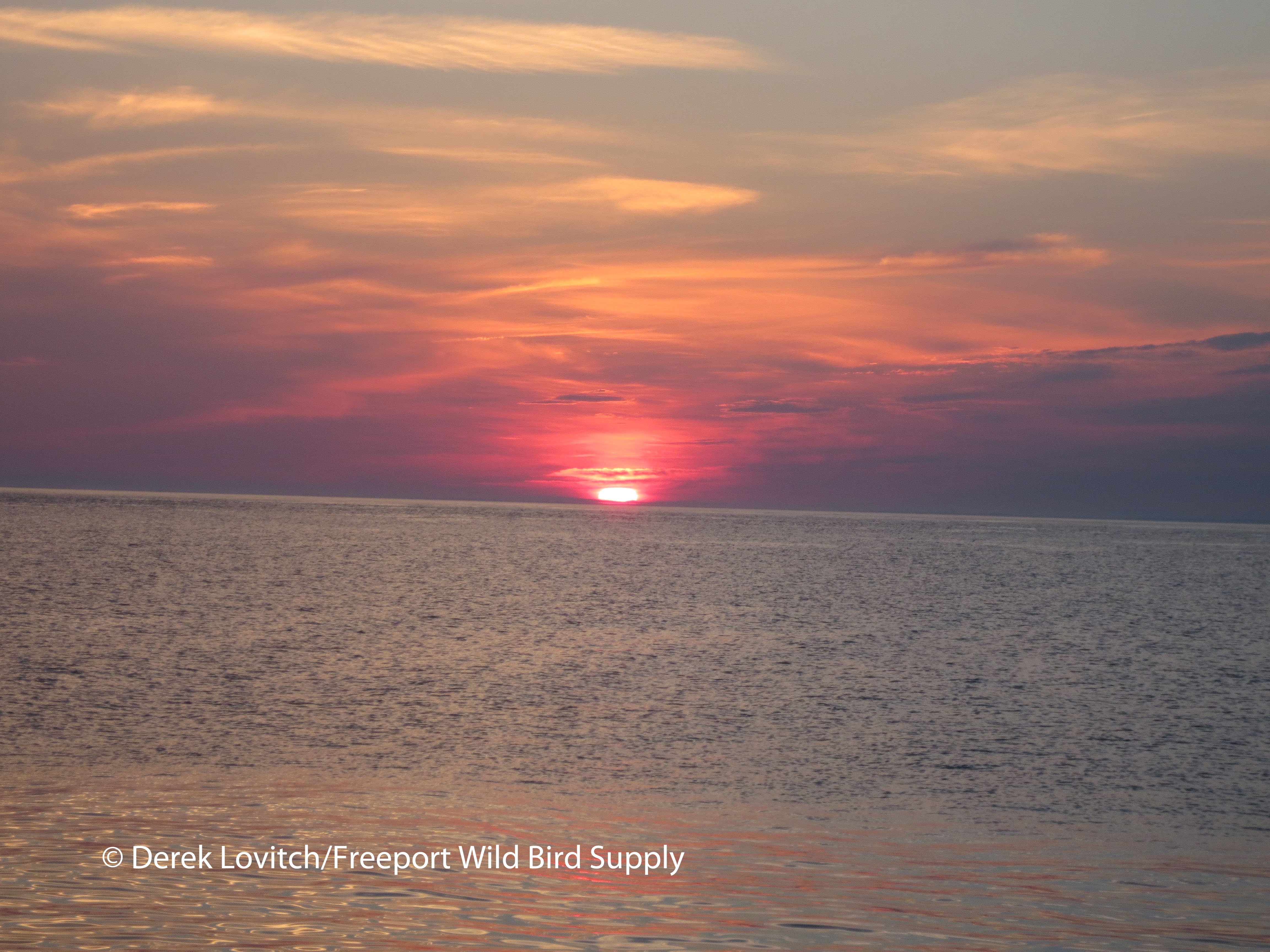
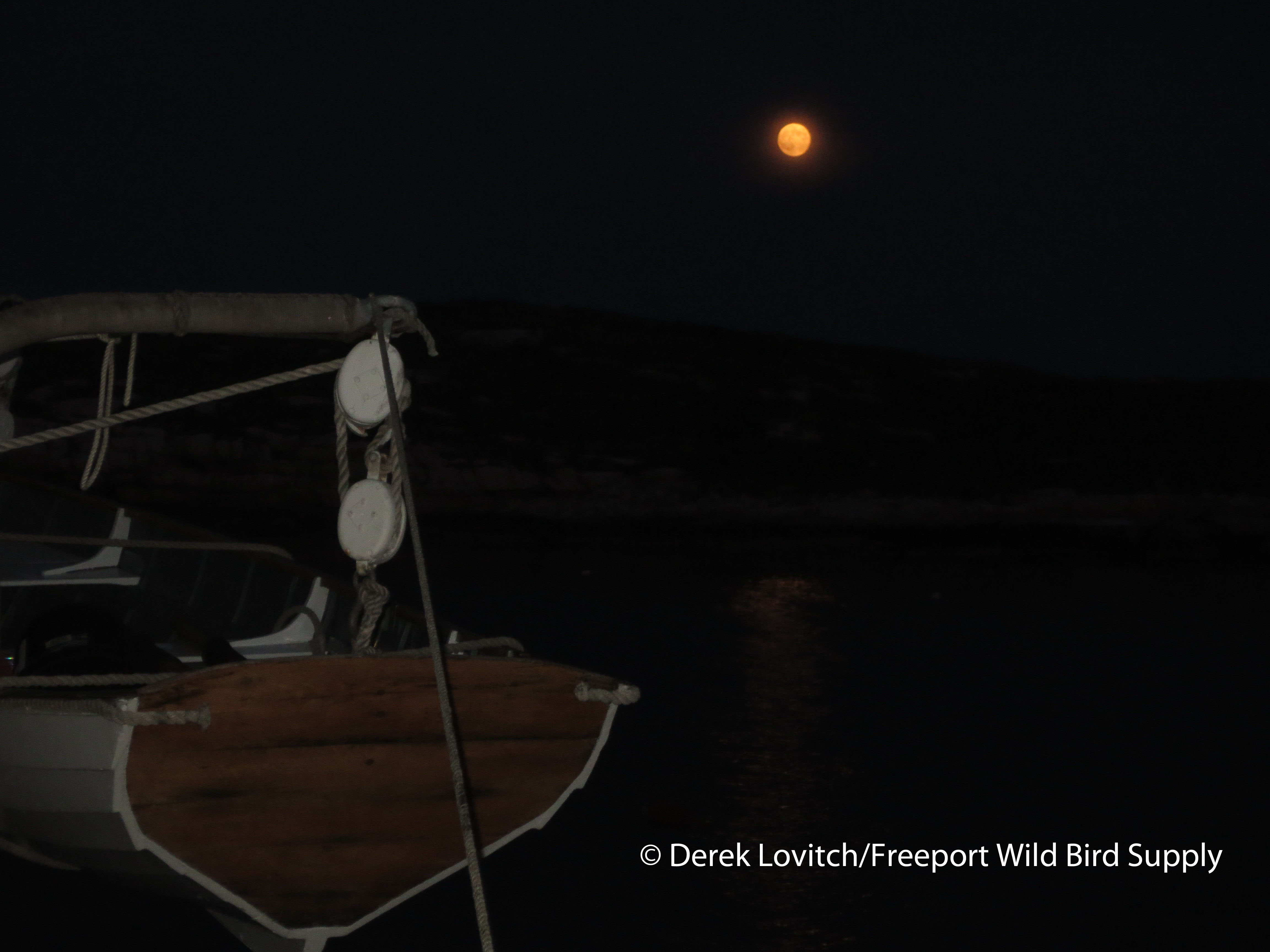
As night fell, and a near-full moon rose, many of the birders on board delayed retiring to their bunk until Leach’s Storm-Petrels – who only visit their burrow nests under the cover of night – began to vocalize. There were only three of us left on deck by 10:00, when I turned in. The one birder, our good friend Chris, however, stayed topside (and another birder slept on deck) for a while longer. Not too long after I gave in to sleep, fog rolled in, and that really got the storm-petrels to call. Chris was rewarded for his stamina with a cacophony of somewhat-disconcerting cackling chatters.

That fog was still around at sunrise, which unfortunately meant we would leave without the tropicbird. Even if he did come out for his morning bath, we wouldn’t have seen him – heck, we couldn’t even see his cove from the boat. So we just had to suffer through more puffins. It’s a tough life.
Fog and occasional rain reduced visibility as we headed for shelter inshore, but we spotted the occasional commuting puffin and a few Northern Gannets.


We passed around the west side of Vinalhaven Island, and dropped anchor off of North Haven in the Fox Islands Thorofare. An evening walk in “town” added landbirds to the list, including a few Purple Finches at a feeder and a Cooper’s Hawk.


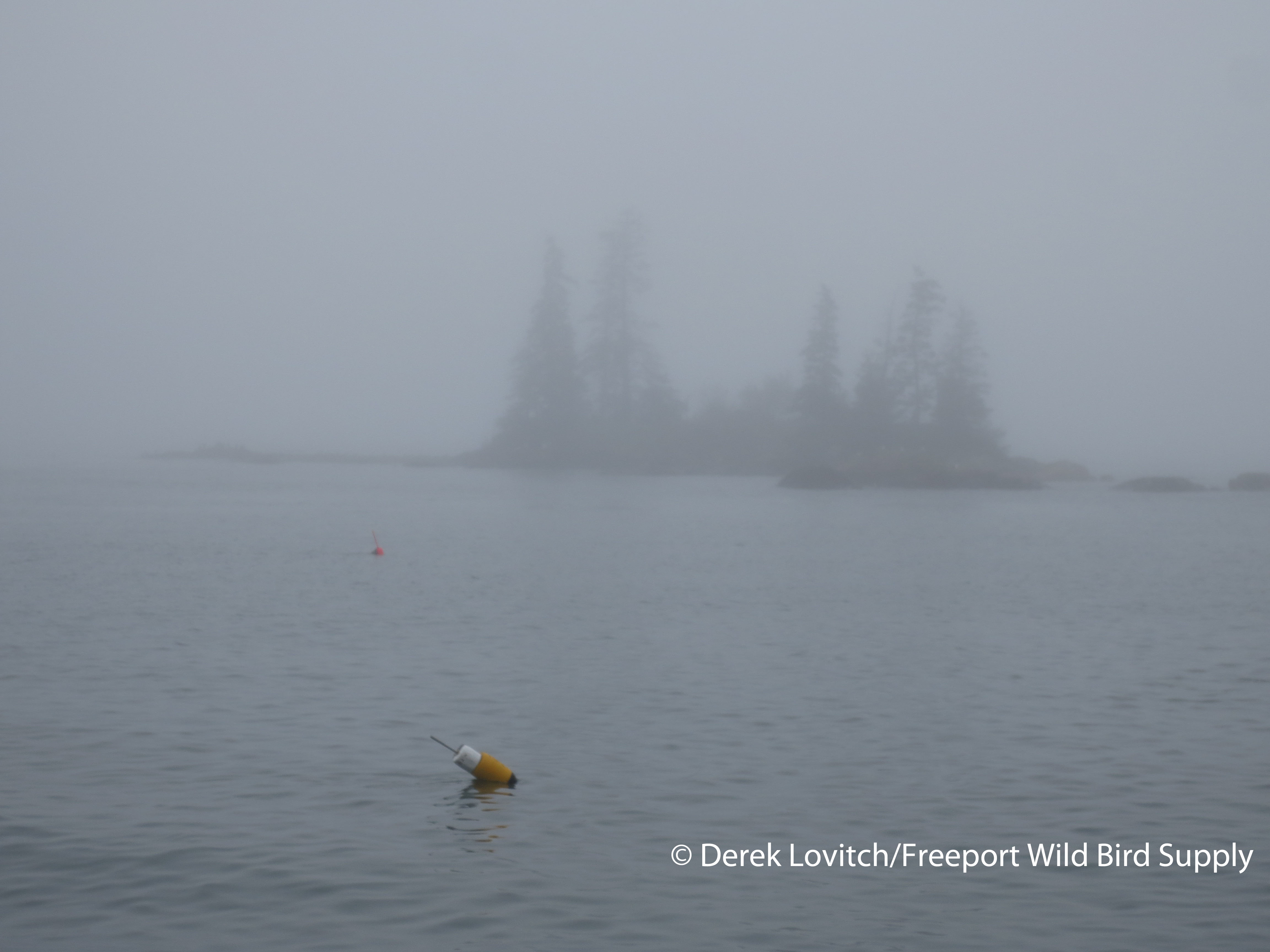
A Great-horned Owl called throughout much the night, and come dawn, we shuttled ashore for a birdwalk on Vinalhaven Island.
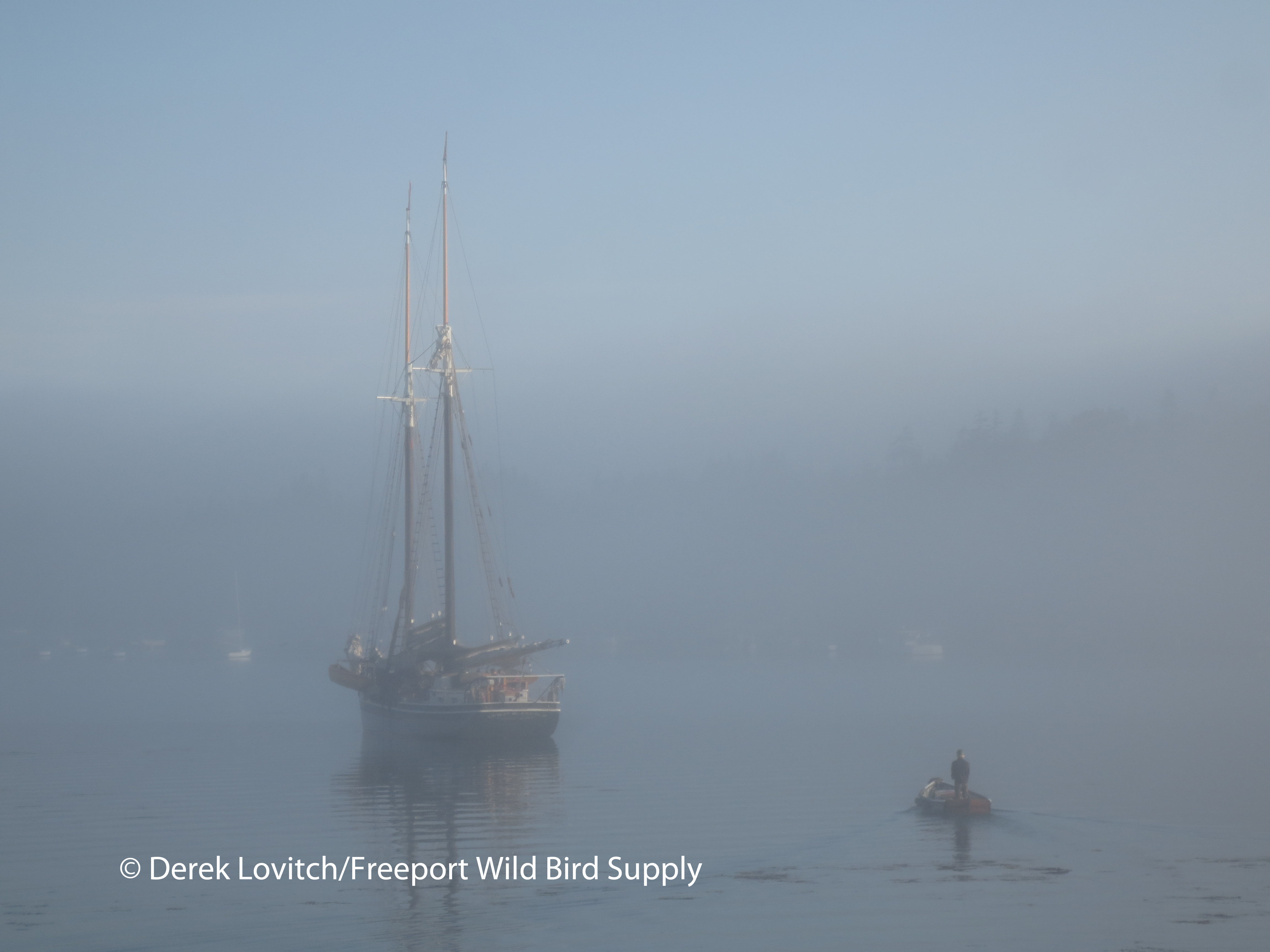
Garth suggested a loop trail that was a short walk away from the dock, but we barely made it to the trailhead – the road in was just too birdy! A Swainson’s Thrush foraged on the beach, a Blackburnian Warbler sang near the dock, and as we walked the road, we came across a variety of the common birds of these Red Spruce-dominated islands. Magnolia Warblers and Golden-crowned Kinglets; Winter Wrens and Dark-eyed Juncos. One little patch of alder scrub at the edge of a meadow exploded with birds with just a little pishing: two family groups of Black-throated Green Warblers, a pair or two of American Redstarts and Common Yellowthroats, a band of Golden-crowned Kinglets, White-throated Sparrows, and one Alder Flycatcher. We had to hustle back to the boat in time for breakfast.
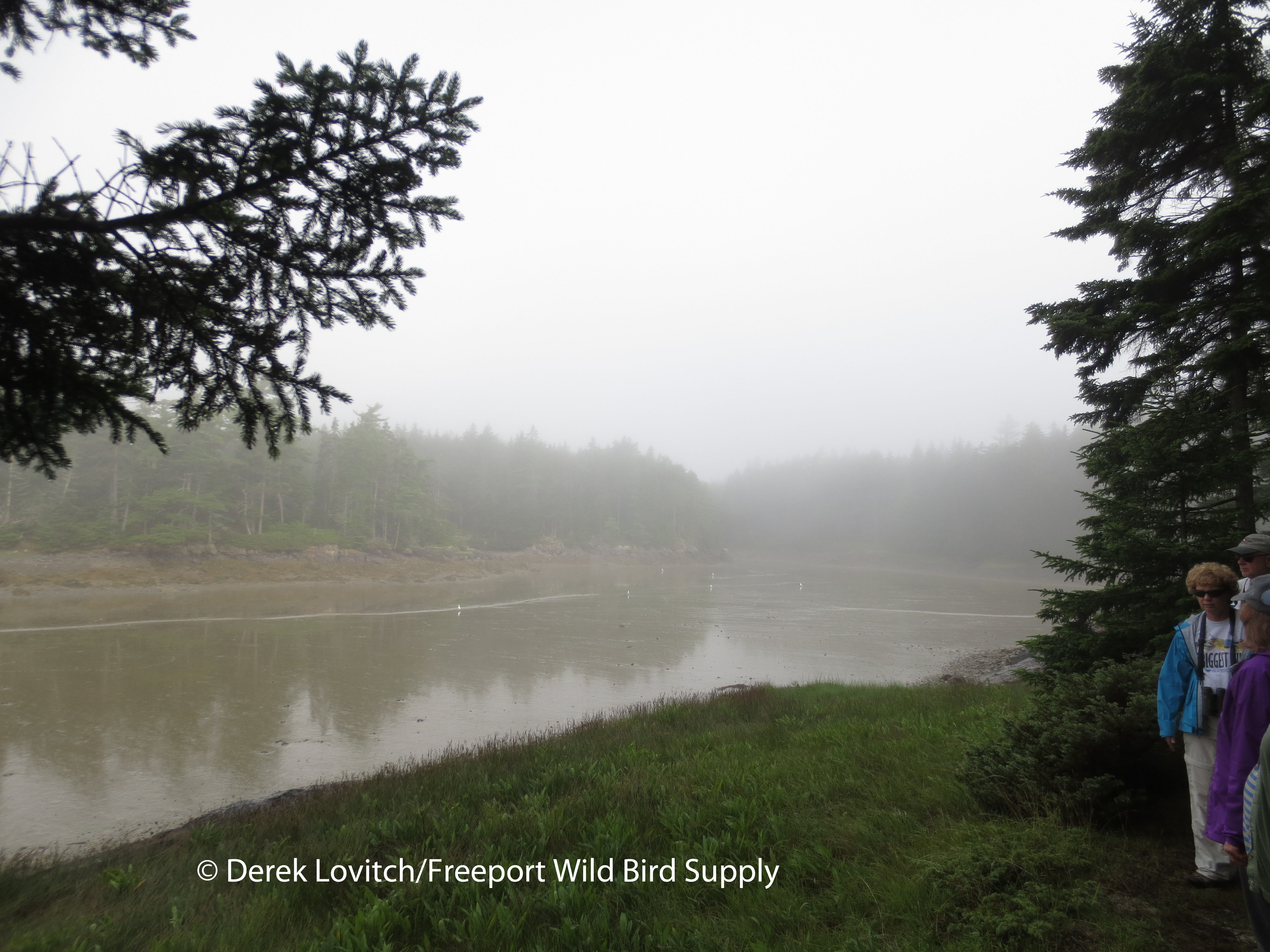
We rounded Vinalhaven clockwise, and came out of the fog for a time as we crossed East Penobscot Bay. We were back into the sun as we traversed Merchant’s Row, but once again we found ourselves without even a puff of wind.

While an island with terns and alcids is usually the highlight of our sail, over the years, the colony of Herring and Great Black-backed Gulls and Double-crested Cormorants of Southern Mark Island has provided us with some entertainment. Here, Bald Eagles travel to hunt the colony, and in years past, we have seen some incredible shows. As we slowed down to view the island, two Bald Eagles rapidly approached right on cue. One landed in the center of the island, presumably to look for unattended gull chicks. This time, both eagles were driven off empty-taloned.

Small flocks of southbound migrant shorebirds were also encountered here and there, such as these Semipalmated Sandpipers
Burnt Cove Harbor on Swan’s Island would be our harbor of refuge for the night, and an after-dinner dusk stroll in the village and out to the lighthouse added a couple more species to our growing list.

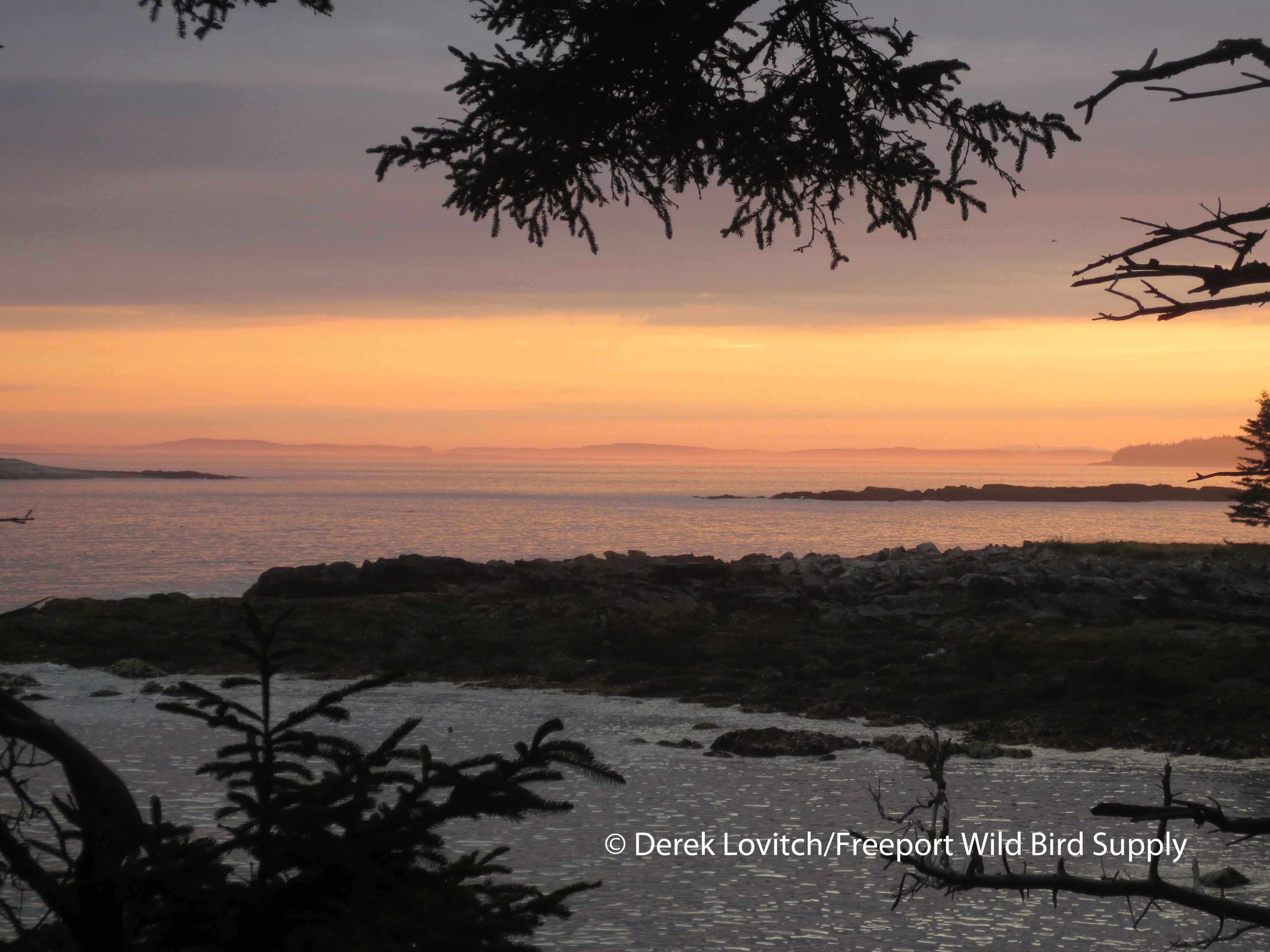

It was with anxious anticipation that I went to bed that night, as Garth had decided that – weather forecast holding true of course – we were going to head offshore yet again, perhaps all of the way out to Mount Desert Rock. It was time for some true pelagic birding! And just to hedge the bet, we picked up some more bait for chumming.
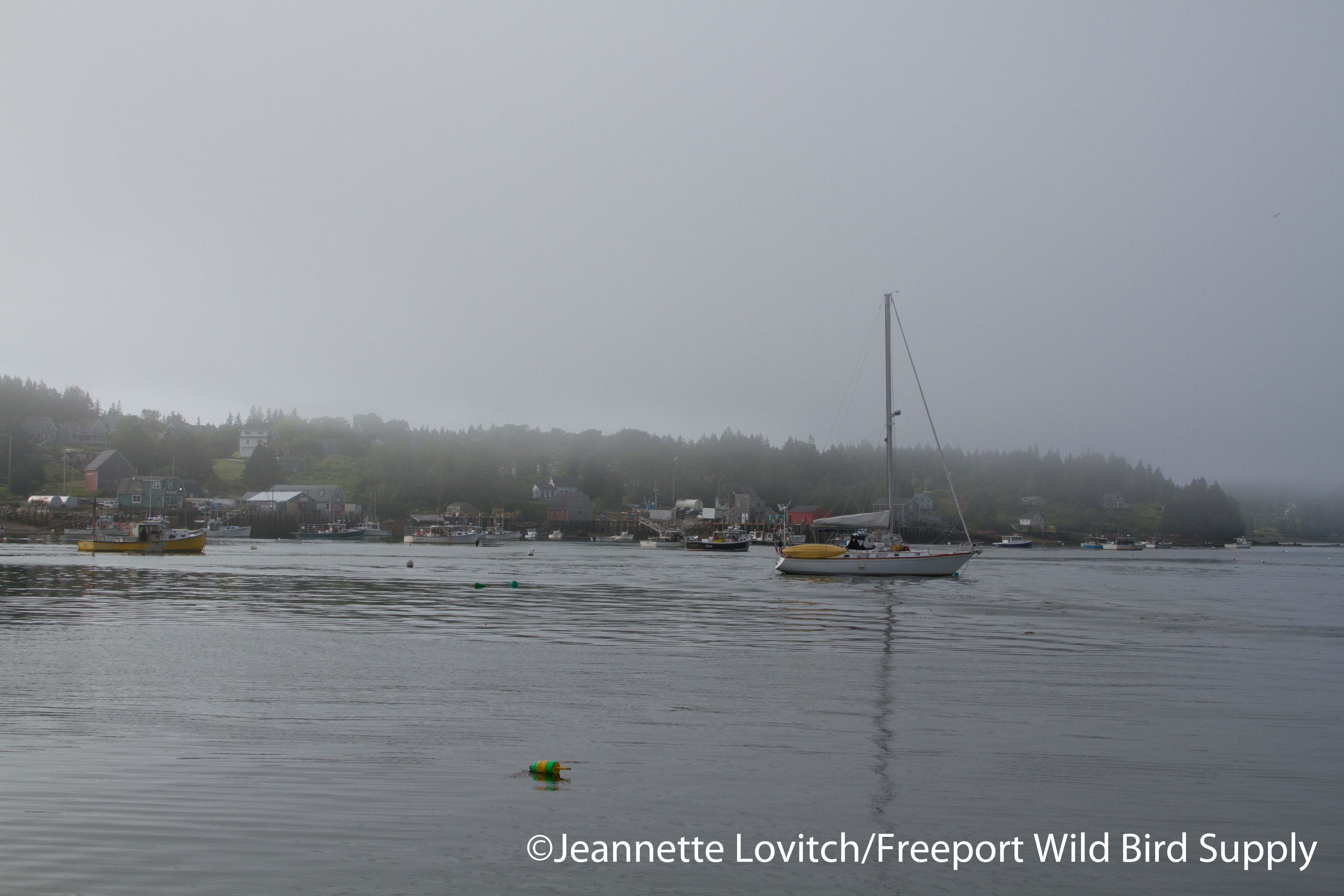

Common Terns were common

A light northeasterly wind helped us get offshore, but yet again, the wind died offshore and we needed the assistance of our yawl boat. A very long 2-3 foot swell was hardly noticeable in our heavy wooden boat, and as we headed into deeper water, the birding really began to heat up.

About a mile away from Mount Desert Rock, we hit pay dirt: massive rafts of Great Shearwaters. We sailed through them, and then back through them. The lack of wind was keeping them on the water, and most just paddled away from our slow-moving ship. I began to chum. You could say it worked. It worked really, really well.
Great Shearwaters took the bait, literally, and followed us closely. Now under sail, the silence afforded us the opportunity to hear these surprisingly-vociferous birds as they fought over morsels, and jockeyed for position. Many birds were coming within only a few yards of the boat, and many of them were not bothering to fly – just walking on water with wings flapping. They would plunge in after slowly-sinking chunks of Herring (I really wish I had cut things smaller, the chum bucket was going down way too fast!) and we were close enough to see them underwater.

Great Shearwater
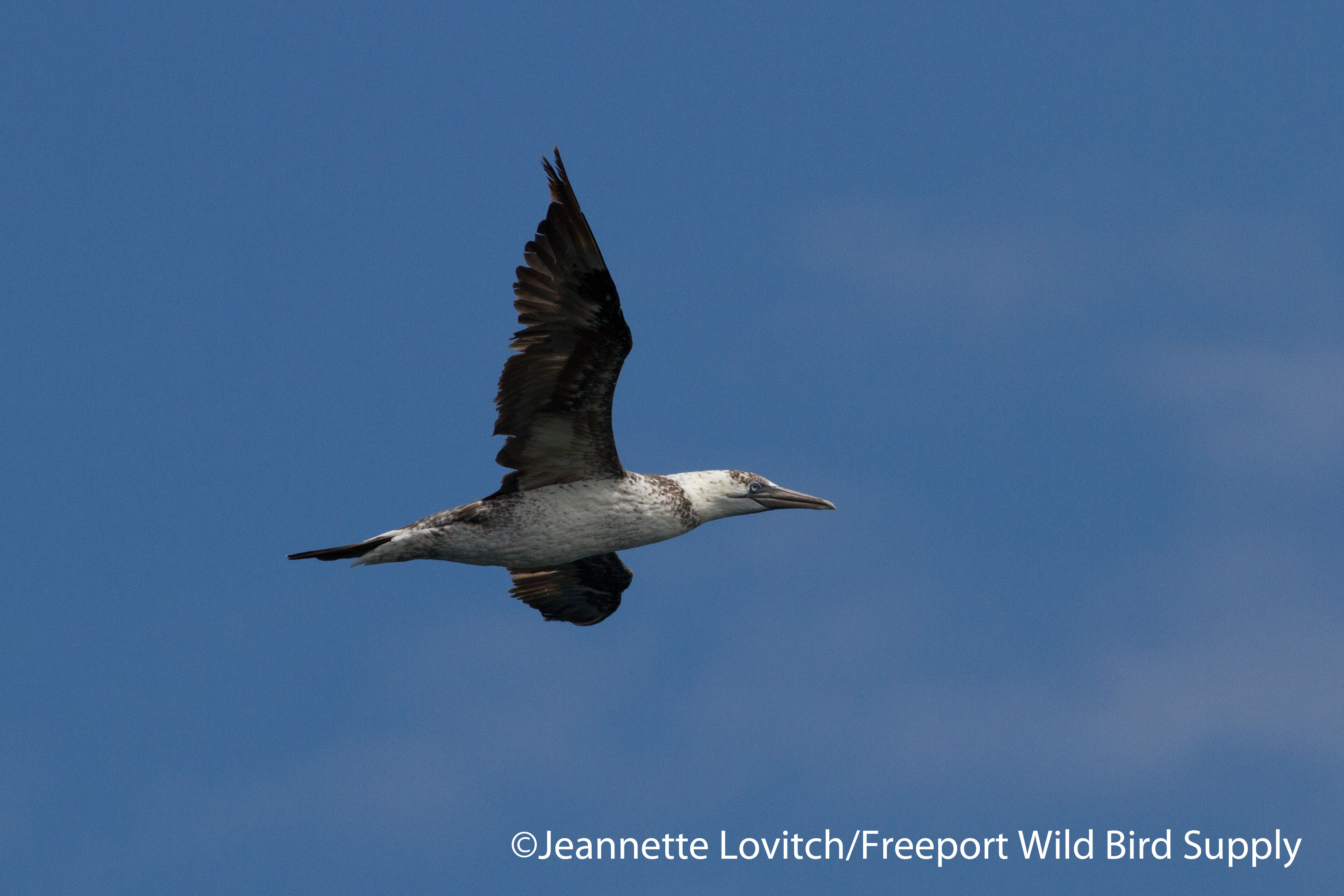
Northern Gannet
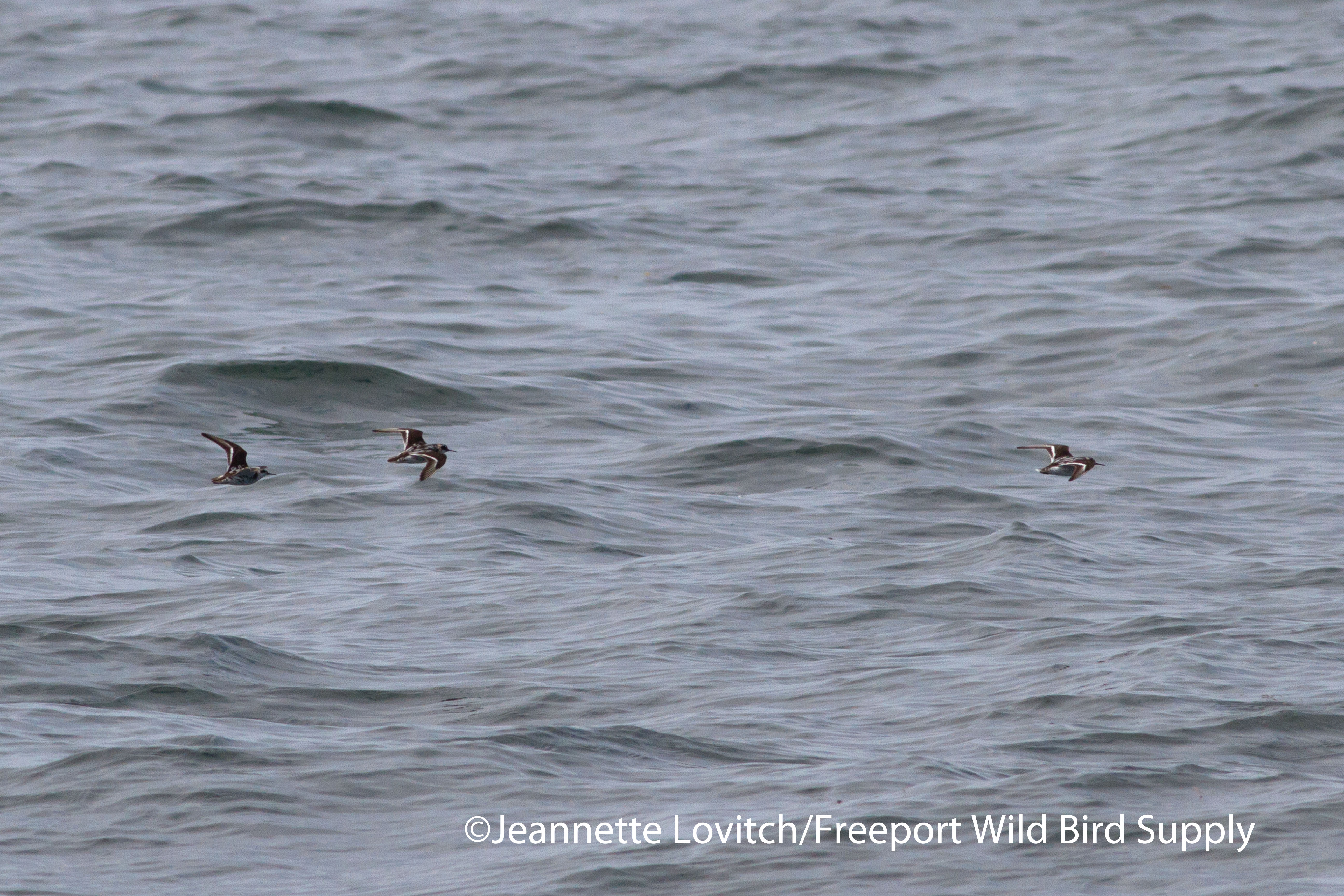
Molting adult Red-necked Phalaropes

Juvenile Arctic Tern

OK everyone, grab your copy of Howell’s ‘Petrels, Albatrosses & Storm-Petrels of North America and use molt patterns to age this Great Shearwater!
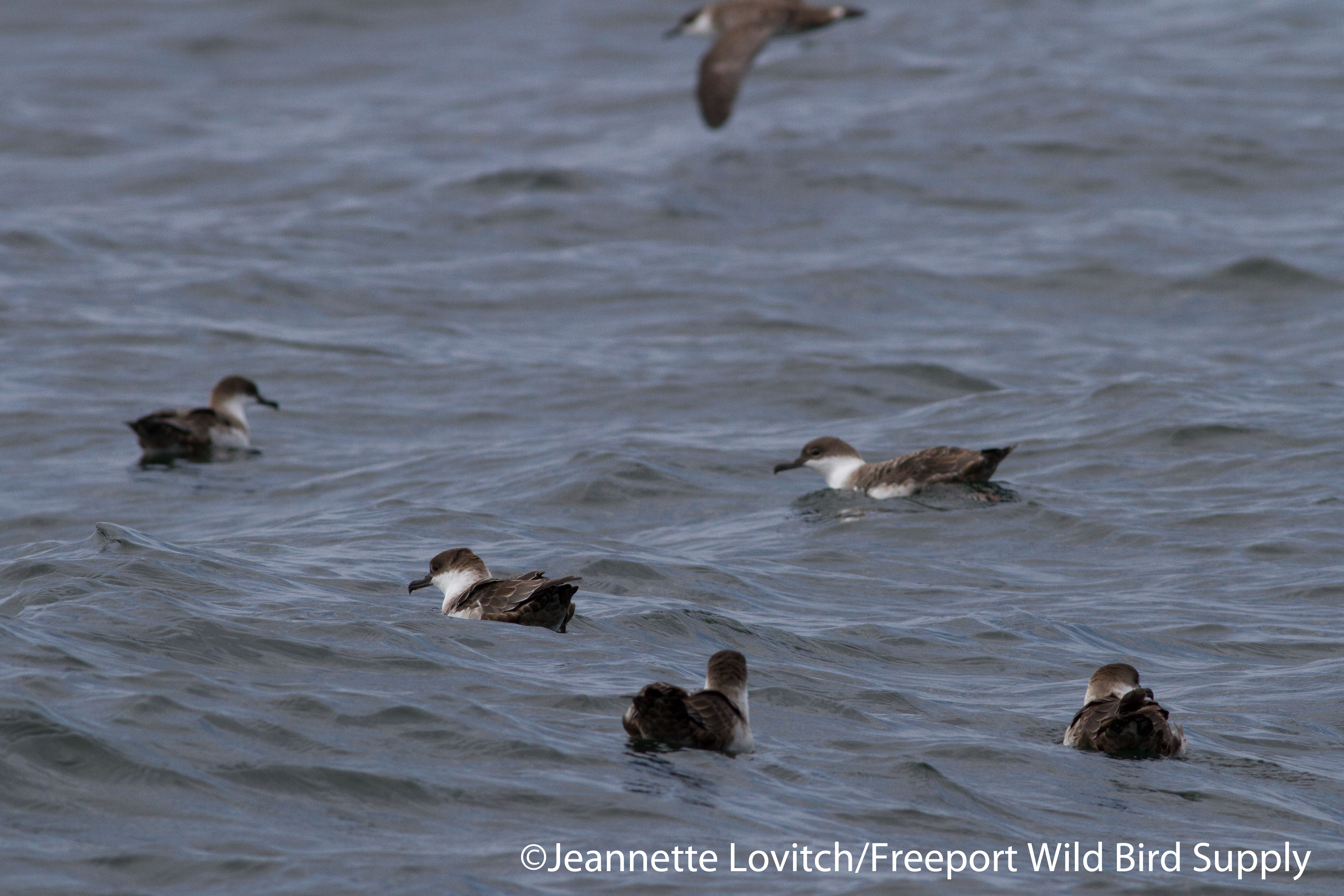

Sooty Shearwater

Mmmm…herring

Great Shearwater coming in for a landing…I think this is my favorite photo of the trip!

Adult Northern Gannet
Simply put, this was a lot of fun. And when all was said and done, and we left the hotspot, we had tallied an impressive 764 Great Shearwaters. They were joined by at least 4 Sooty Shearwaters, and one Manx Shearwater cruised by – not pausing for long, as usual. A total of 19 Northern Gannets were counted, and Razorbills (9), 2 Common Murres, and more Atlantic Puffins (4+) added to the show. Although overshadowed by the rafts of shearwaters, Red-necked Phalaropes were in abundance – I estimated at least 400 birds, most of which in tight flocks spinning in floating mats of wrack. I didn’t pull out any Red Phalaropes from the bunches, but it wouldn’t have surprised me to find some mixed in. Surprisingly, not a single Wilson’s Storm-Petrel was seen – a bird that we somehow didn’t even see all trip! Where the heck are they this year? It’s usually the most common tubenose on our tour!
If we didn’t have some important plans for dinner, we would have spent more time out here I am sure, as this was really a great experience. Even the non-birders aboard were more than impressed by the show. Unfortunately, only one Fin Whale was briefly spotted. A feeding frenzy of birds that I spotted in the distance were clearly excited by something feeding – either whales or perhaps tuna, but by the time we made it to the area, the birds had settled into the massive rafts we sailed through.
We skimmed the mouth of BlueHillBay, checking our Harbor Seals basking on ledges exposed by the low tide, and happening upon a few large rafts of molting Common Eiders.


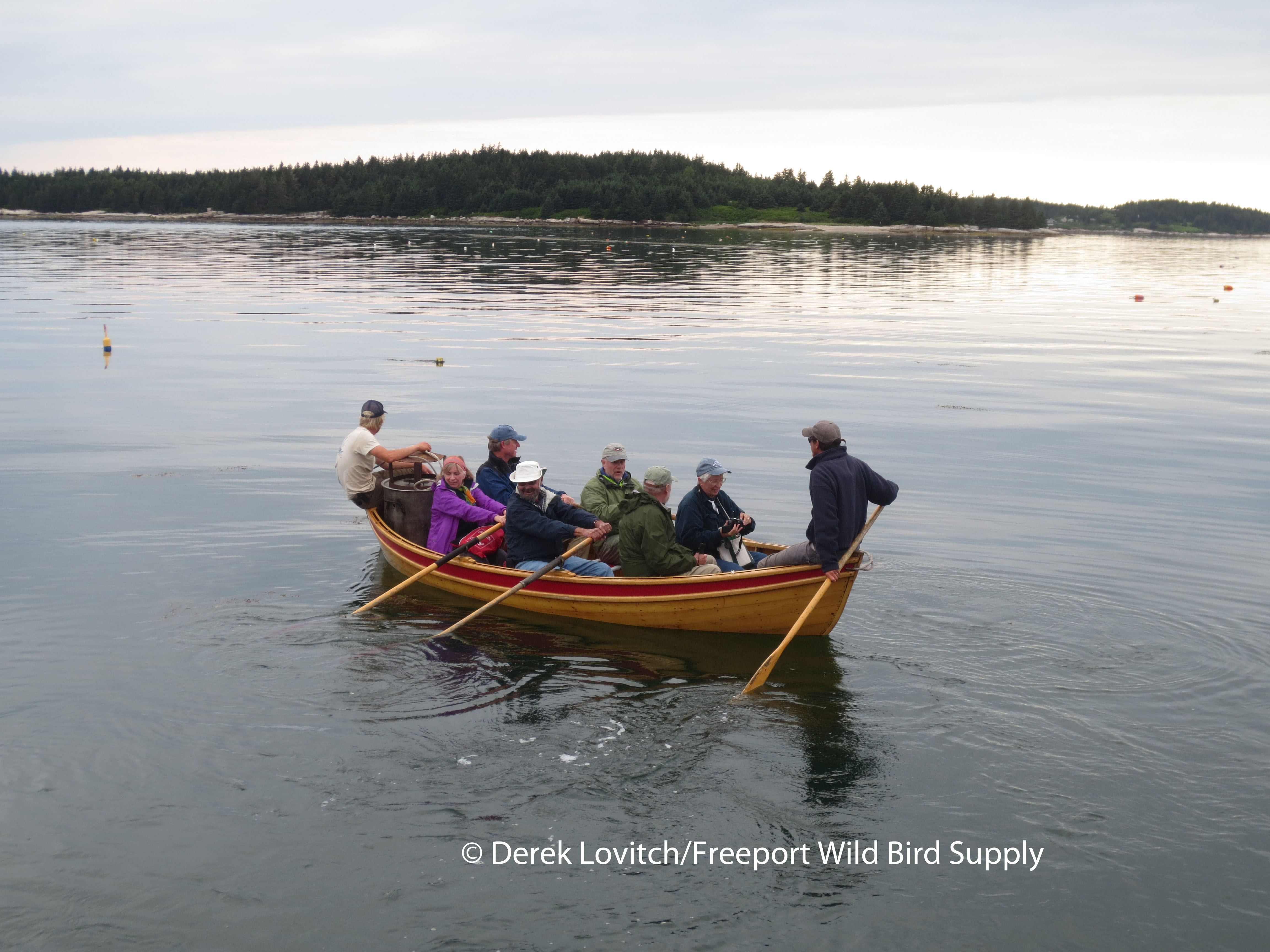
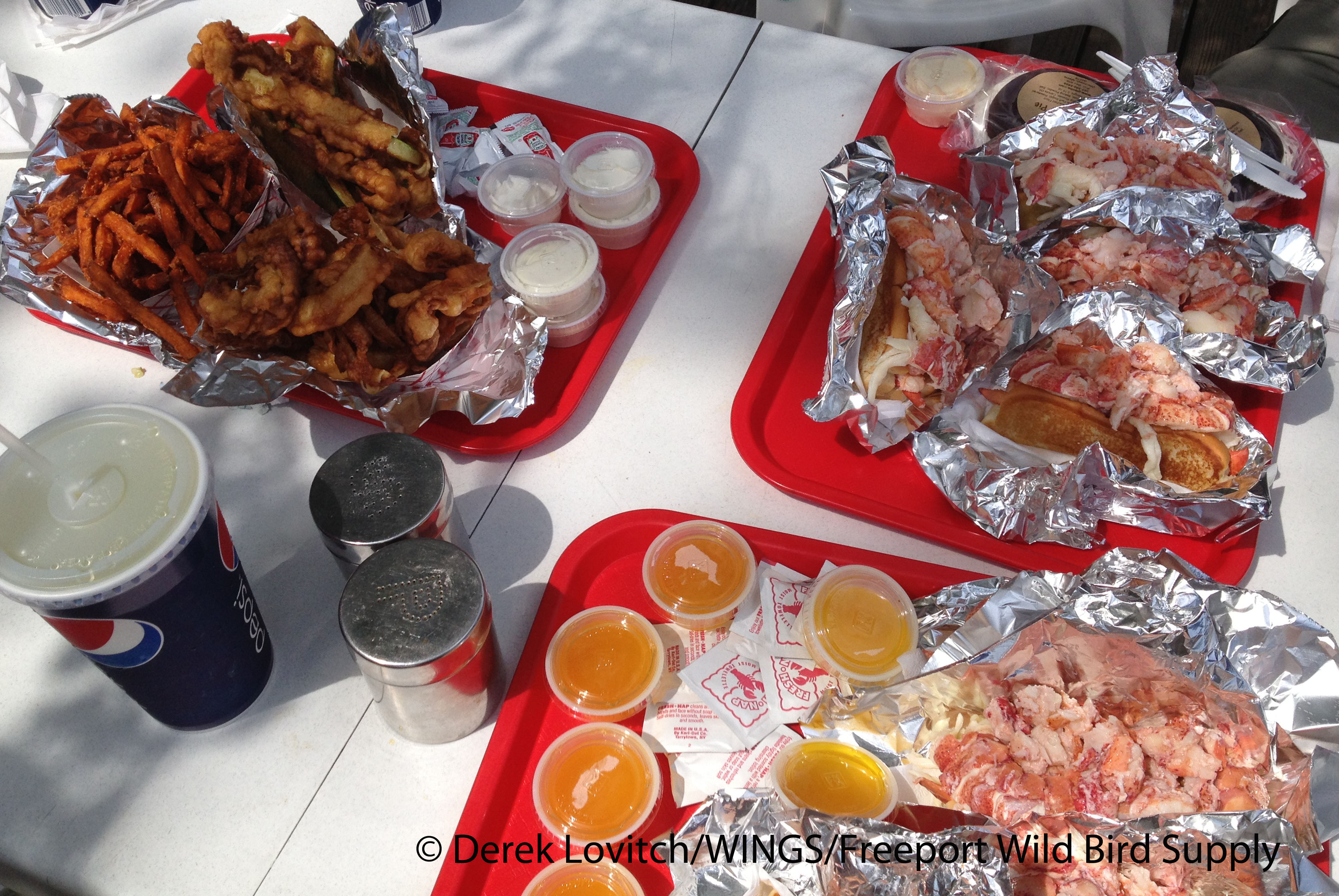
We dropped anchor off of McGlatheryIsland south of Stonington, and rowed ashore for one of the non-birding highlights of the trip – a lobster bake on the beach!
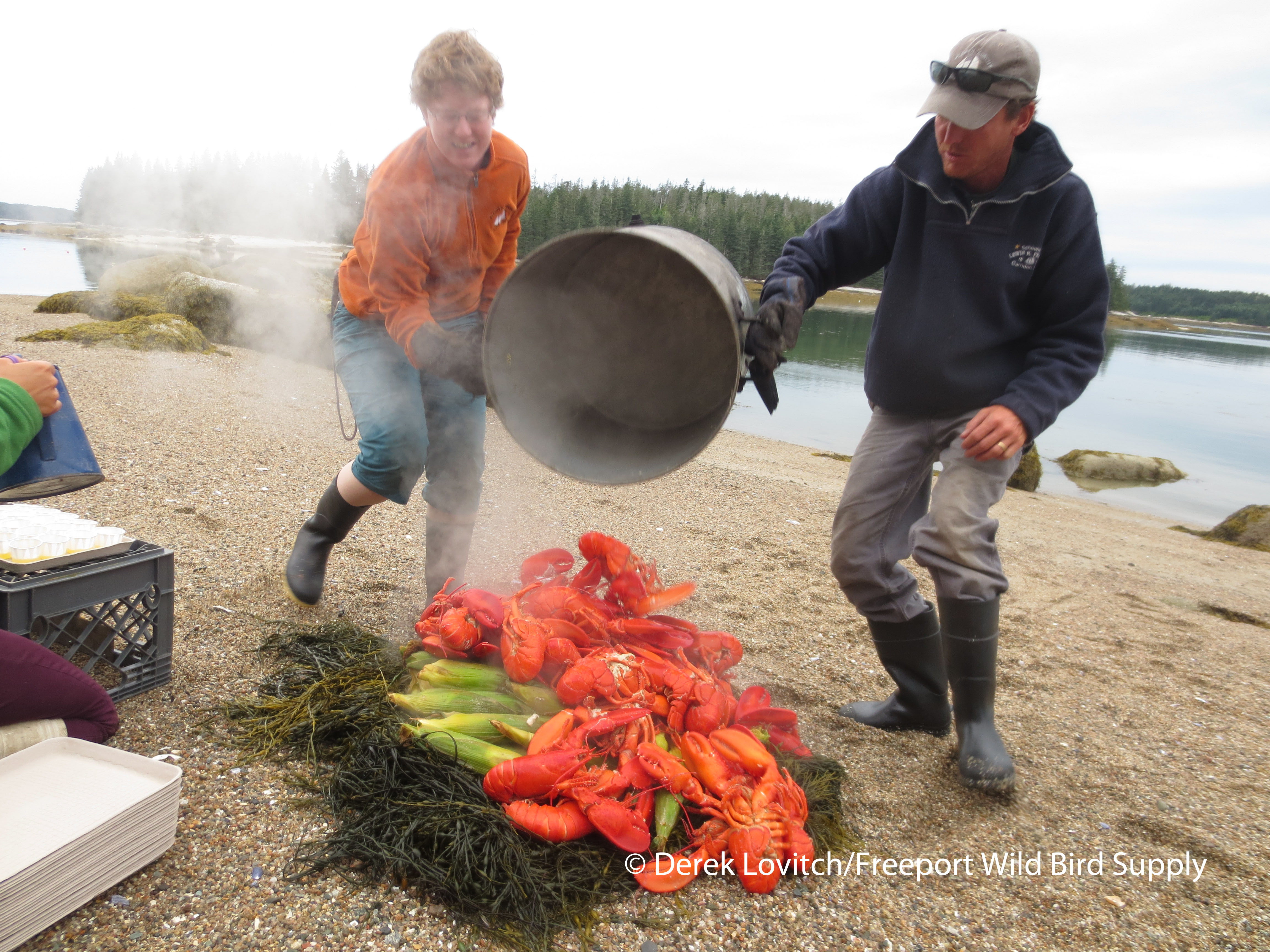
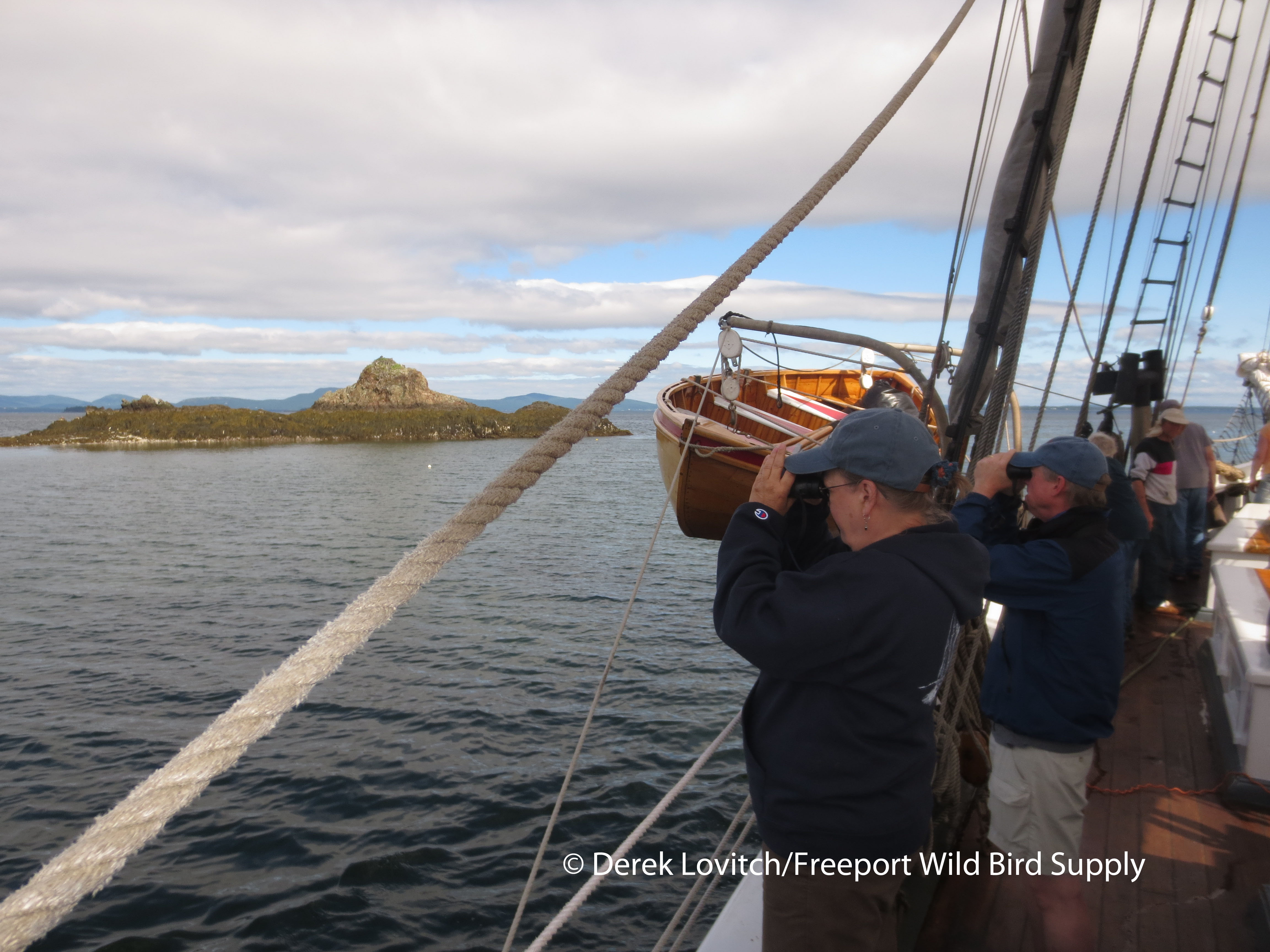
After the feast, we moved the boat to a safer anchorage off of Hell’s Half-Acre, where we spent the night. Rain fell in buckets, and continued on and off through much of the next day. However, for the first time, we had some solid winds to do some real sailing, and after donning our rain gear, many of us stayed on deck for much of the day as we crossed East Penobscot Bay and tacked our way around North Haven. Slowly but surely, however, most of us made our way to the wood-burning-stove-warmed galley for snacks, tea, and conversation…and a few games.
The rain cleared and fog lifted in the afternoon, and it was a lovely evening in the shelter of Pulpit Harbor. Although we had seen plenty of Ospreys on this trip, the Ospreys that nest atop the rock (the “pulpit”) that guards the entrance to the harbor are particularly noteworthy – the explorer and cartographer Samuel de Champlain noted an Osprey nest atop this very rock sometime between 1604 and 1607! The one still-present juvenile that was being watched by an adult had no idea what a historic nest it was raised in.


July 27th, our 6th and final day of the tour, dawned on Pulpit Harbor under clearing skies, calm winds (again), and warmer temperatures. Barn Swallow, likely a migrant, was added to our trip list as we sailed northeast into Camden Harbor. Chimney Swifts overhead and a singing Yellow Harbor from the shoreline were our 82nd and 83rd – and final – species of the trip (an “accounting error” led to a mistaken tally of 78 species announced at the end of the trip; sorry folks, update your notes!) but still a tally held down a little by fewer walks ashore (one due to our deep-water pelagic, and the other due to heavy rain). However, our seabird list was fantastic, and quite a few of the birders added life birds – the Leach’s Storm-Petrels and Manx Shearwaters in particular. And perhaps, sucked in by the fun of it all, one or two life lists were born.

The always bittersweet return to the lovely port of Camden.Sure I have birding tours that see more birds, and are more reliable for the most sought-after target birds, but this trip is one of my most favorites (only Monhegan Island can compete). Yeah, we kept a list, and a few people added some lifers, but this trip is truly about enjoying whatever birds we come across in a really unique way. The Schooner Lewis R. French is a beautiful boat, with an amazing crew, serving great food and good times. In this case, the birding is actually the icing on the cake. The complete trip list, in order of appearance:
American Crow
Mallard
Canada Goose
Tufted Titmouse
American Goldfinch
Rock Pigeon
Song Sparrow
Black-capped Chickadee
Cedar Waxwing
Blue Jay
European Starling
Belted Kingfisher
Double-crested Cormorant
Common Loon
House Sparrow
Mourning Dove
House Finch
Ring-billed Gull
Herring Gull
Great Black-backed Gull
Osprey
Common Eider
Black Guillemot
Laughing Gull
Common Murre
Razorbill
Northern Gannet
Common Tern
Leach’s Storm-Petrel
Arctic Tern
Atlantic Puffin
Razorbill
Common Raven
Great Cormorant
Common Tern
Manx Shearwater
Spotted Sandpiper
Savannah Sparrow
Semipalmated Plover
Least Sandpiper
Ruddy Turnstone
White-throated Sparrow
Red-eyed Vireo
American Robin
Yellow-rumped Warbler
Cooper’s Hawk
Purple Finch
Red-breasted Nuthatch
Red-winged Blackbird
Downy Woodpecker
Hairy Woodpecker
Northern Flicker
Chipping Sparrow
Great Horned Owl
Common Yellowthroat
Gray Catbird
Blackburnian Warbler
Northern Parula
Swainson’s Thrush
Golden-crowned Kinglet
Magnolia Warbler
Winter Wren
Nashville Warbler
American Redstart
Alder Flycatcher
Ruby-throated Hummingbird
Dark-eyed Junco
Turkey Vulture
Bald Eagle
Bonaparte’s Gull
Semipalmated Sandpiper
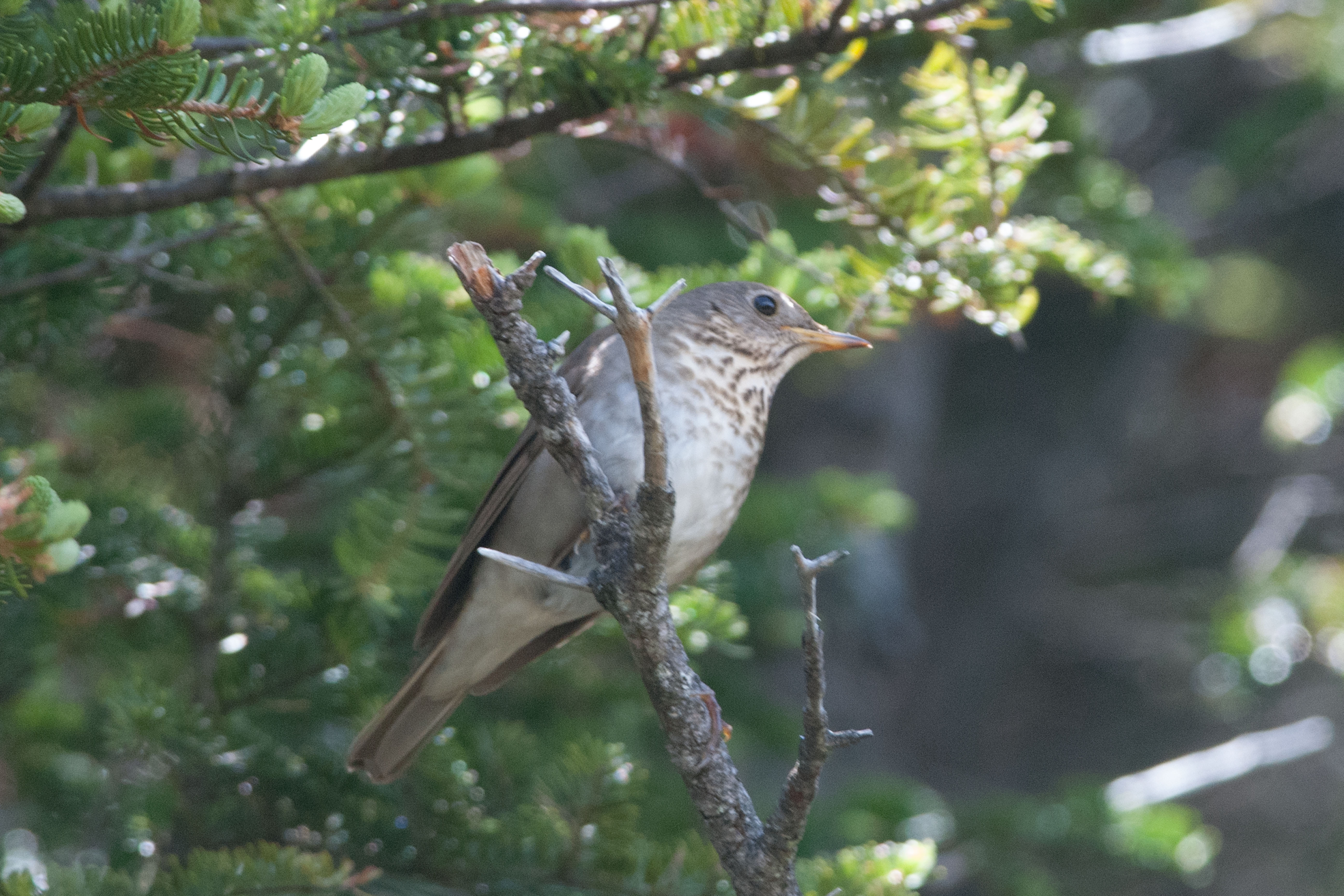
Hermit Thrush
Great Blue Heron
Great Shearwater
Sooty Shearwater
Red-necked Phalarope
American Black Duck
Tree Swallow
Greater Yellowlegs
Barn Swallow
Chimney Swift
Yellow Warbler
*************************
Our “Birding By Schooner” Tour aboard the Lewis R. French has been run every three years. However, thanks to increasing interest and demand, we are going to likely be offering this one-of-a-kind birding experience on an annual basis! Keep an eye on our “Travel, Tours, and Workshops” page at http://www.freeportwildbirdsupply.com/birdingtoursinMaine.asp for information about the possible 2014 (but likely definitely in 2015) sailing dates.













 Maine Birding Field Notes
