Tag Archives: Maine

Derek’s Birding This Week, 12/12-18, 2020.

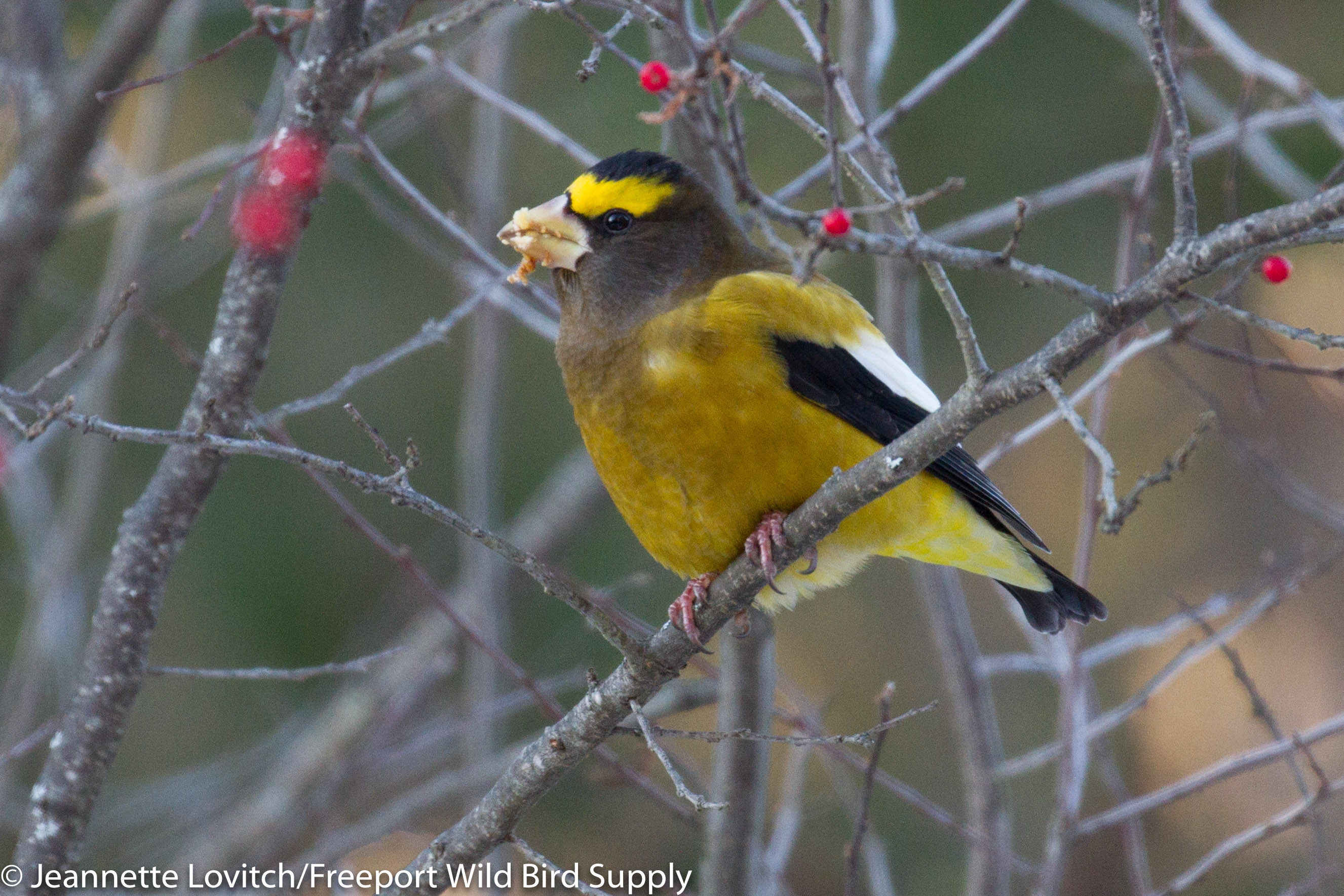
Starting the day with Evening Grosbeaks at our home feeders and enjoying Pine Grosbeaks everytime we carry seed out to someone’s car really isn’t too shabby.

My observations of note over the past seven days included the following:

  • Unusually large number of Red-throated Loons in the northwest corner of Casco Bay all week.
  • 1 BOHEMIAN WAXWING and 1 Savannah Sparrow, Wolfe’s Neck Center, Freeport, 12/13.
  • 1 RING-NECKED DUCK with about 450 mixed Lesser and Greater Scaup with about 1,000 White-winged Scoters, Wharton Point, Brunswick, 12/14.
  • 425+ mixed Lesser and Greater Scaup, Simpson’s Point, Brunswick, 12/14.
  • 1 Hermit Thrush, Harraseeket Yacht Club, Freeport, 12/18.

This Week in Finches:

  • EVENING GROSBEAK: 12 (flying over our yard in Pownal, 12/13); 2 (Verrill Road, Pownal, 12/13); after a several day absence, up to 4 were in our Pownal yard on 12/15; 1 (Verrill Road, 12/17).
  • Red Crossbills: 1 (Wolfe’s Neck Center, Freeport, 12/14); 4 (Cumberland Town Forest, 12/16);
  • WHITE-WINGED CROSSBILL:  0
  • PINE GROSBEAK: 6-10 daily (in and around the yard here at the store all week); 4 (Rte 1, Brunswick, 12/14); 10 (Cumberland Town Landing, 12/16); 4 (Rte 88, Cumberland, 12/16).
  • Purple Finch: 0
  • Common Redpoll: 5 (Cumberland Town Landing, 12/16).
  • Pine Siskin High Count This Week: 2 (Cumberland Town Landing, 12/16).

Derek’s Birding This Week, 12/5-11, 2020

I didn’t get out birding much this week, but my morning on Bailey Island was fantastic! But the good news is that Pine Grosbeaks have been around our store daily, and this morning lost getting snow tires on my car produced the biggest flock I have seen in the area so far this season. It is nice when the birds come to you!

My observations of note over the past seven days included the following:

  • 1 Ruby-crowned Kinglet, 1 Hermit Thrush, and 1 Northern Flicker, Bailey Island, Harpswell, 12/7.
  • 1 SNOWY OWL (FOS) and 28 Snow Buntings, Brunswick Landing, 12/7.
  • 1 Turkey Vulture, over the store, 12/7.

This Week in Finches:

  • EVENING GROSBEAK: Up to 3 continue daily at our feeders at home in Pownal through the early part of the week; 2 (Memak Preserve, North Yarmouth, 12/10).
  • Red Crossbills: 4 (Bailey Island, Harpswell, 12/7); 12 (Waterboro Barrens Preserve, 12/8).
  • WHITE-WINGED CROSSBILL: 2 (Bailey Island, 12/7).
  • PINE GROSBEAK: 4 (in and around the yard here at the store, 12/2-8); increased to 6 (12/9 – present); 6 (Mayall Road, Gray, 12/9); 3 (Westbrook Riverwalk, 12/11); 18 (Saunders Way, Westbrook, 12/11).
  • Purple Finch: 1 (Bailey Island, 12/7).
  • Common Redpoll High Count This Week: 7 (Bailey Island, 12/7).
  • Pine Siskin High Count This Week: 3 (Bailey Island, 12/7).

Derek’s Birding This Week, 11/21-27/2020

Pine Grosbeaks have already started to arrive in Southern Maine, such as this female at the Yarmouth Library on the 25th.

I didn’t get very far afield much this week, but feeder-watching, local patches, and a visit to Sabattus Pond at week’s end made up for it.  My observations of note over the past seven days included the following:

  • 1 continuing LINCOLN’S SPARROW, feeders here at the store through 11/21.
  • 8 American Pipits, Highland Road, Brunswick, 11/21.
  • 1 Fox Sparrow, feeders here at the store, 11/21.
  • 1 Turkey Vulture, over the store, 11/24.
  • 100+ Horned Larks and about 40 Snow Buntings, Mayall Road, Gray/New Gloucester, 11/25.
  • 1 Common Grackle, feeders here at the store, 11/25 -present.

Sabattus Pond, Sabattus, 11/27:

  • It was a great morning as the fog lifted and the water was dead calm. Unfortunately, a high-speed fishing boat, several duck hunting parties, and two hunting Bald Eagles made it difficult to make an accurate count as birds were flushing in different directions.
  • 476 Mallards
  • 301 Canada Geese
  • 231 Ruddy Ducks
  • 174 Common Mergansers
  • 144 American Black Ducks
  • 44 Greater Scaup
  • 26 Hooded Mergansers
  • 18 Lesser Scaup
  • 8 Buffleheads
  • 5 GADWALL
  • 4 Green-winged Teal
  • 4 Common Goldeneyes
  • 3 Northern Pintails
  • 2 Common Loons
  • 1 drake American Wigeon
  • 1 probable hen American Wigeon (very brown-headed individual found last week by P. Moynahan and N. Houlihan. Spotted off South Beach but flushed by fishing boat. Refound on west shore and distantly phone-scoped, but flushed by eagle before I could get closer. Appeared to have white bar on upperwing greater coverts to rule out Eurasian, but not conclusively viewed…other details suggestive or ambiguous. Good luck ruling out a hybrid on a hen wigeon, however!)
  • 1 CACKLING GOOSE (FOY) – in distance from South Beach with large group of Canadas. Flushed by fishing boat before I could get to Riley Road to attempt phone-scoping. Very tiny bird with short neck and very short, stubby bill. Barely larger than the Mallards. Flew north, but not relocated, including searching of farm fields along eastern shore.
  • 1 Belted Kingfisher

The Finch-Tastic Fall festivities continue:

  • EVENING GROSBEAK: 9 continue daily at our feeders at home in Pownal; 1 (Highland Rd, 11/21); 2 (Martin’s Point Park, Sabattus, 11/27.
  • Red Crossbills: 3 (Highland Road, 11/21).
  • PINE GROSBEAK: 4 (Highland Road, 11/21); 3 (Yarmouth Library, 11/25).
  • Purple Finch: 0
  • Common Redpoll: scattered very few.
  • Pine Siskin High Count This Week: 6 (our feeders in Pownal, 11/22).

Derek’s Birding This Week, 11/14-20.

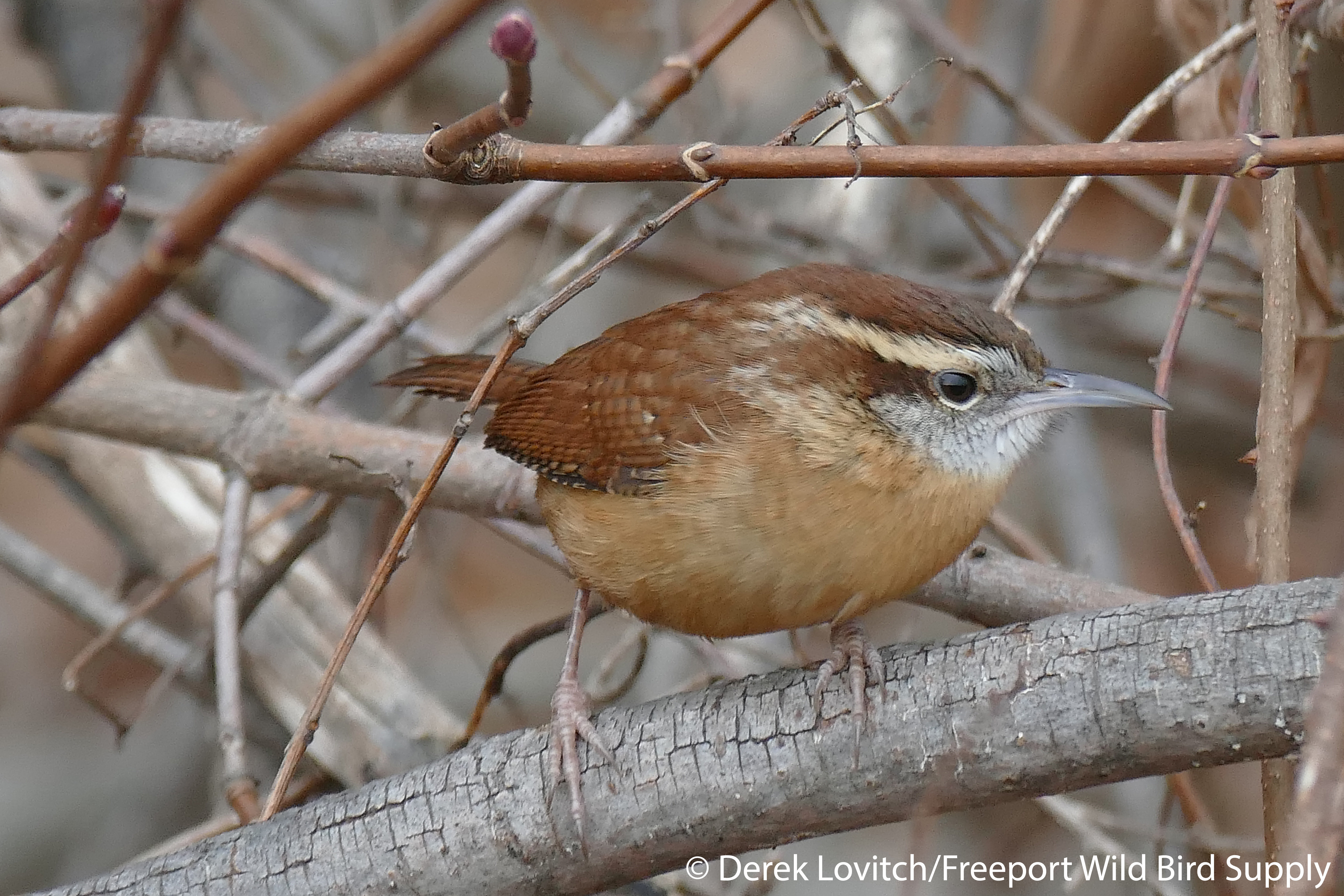
I checked a lot of thickets along the coast this week, hoping for late migrants and vagrants. While those were in rather short supply, I had noticed a significant number of Carolina Wrens. Are they rebounding from a couple of harsh winters in a row, or was there another influx of migrants/dispersing birds into the region this fall. Even the common and fairly common birds have so much to teach us about populations, movements, and vagrancy!

It’s getting colder and quieter out there. But, we are in the midst of the late fall Rarity Season, so I made time to check as many of the migrant and vagrant traps as I could this week. Other than a great morning with Jeannette on Bailey Island on Tuesday, I didn’t find much in the way of “lingering” birds. Did the late-October unseasonable cold snap have something to do with it? And/or the lack of natural food resources because of the drought? Or I was in the wrong places?

My observations of note over the past seven days included the following:

  • 2 PINE GROSBEAKS, Private Property in Durham, 11/14.
  • 1 Red-shouldered Hawk, Wolfe’s Neck Center, Freeport, 11/15.
  • 1 AMERICAN REDSTART, 9 WHITE-WINGED CROSSBILLS, 1 PINE WARBLER, 1 “Ipswich” Savannah Sparrow, 1 Ruby-crowned Kinglet, and 1 Winter Wren, Bailey Island, Harpswell, 11/17 (with Jeannette).
  • 1 Red Crossbill, over our yard in Pownal, 11/17.
  • 300+ Horned Larks, 8-10 Snow Buntings, and 2-3 Lapland Longspurs, Mayall Road, Gray/New Gloucester, 11/18. 
  • 1 Gray Catbird, Saco Riverwalk, 11/19.
  • 1 pair Wood Ducks, Pond Cove, Cape Elizabeth, 11/20.
  • 2 Harlequin Ducks, Trundy Point, Cape Elizabeth, 11/20.
  • 2 immature White-crowned Sparrows, Private Property in Cape Elizabeth, 11/20.
  • 1 very late LINCOLN’S SPARROW, here at the store, 11/20.
  • Pine Siskin High Count This Week: scattered 1-4’s.
  • Common Redpoll High Count This Week: 5, Private Property in Cape Elizabeth, 11/20.
  • EVENING GROSBEAK High Count This Week:  9, our yard in Pownal, 11/18.

This Week’s Highlights, 11/7-13, 2020

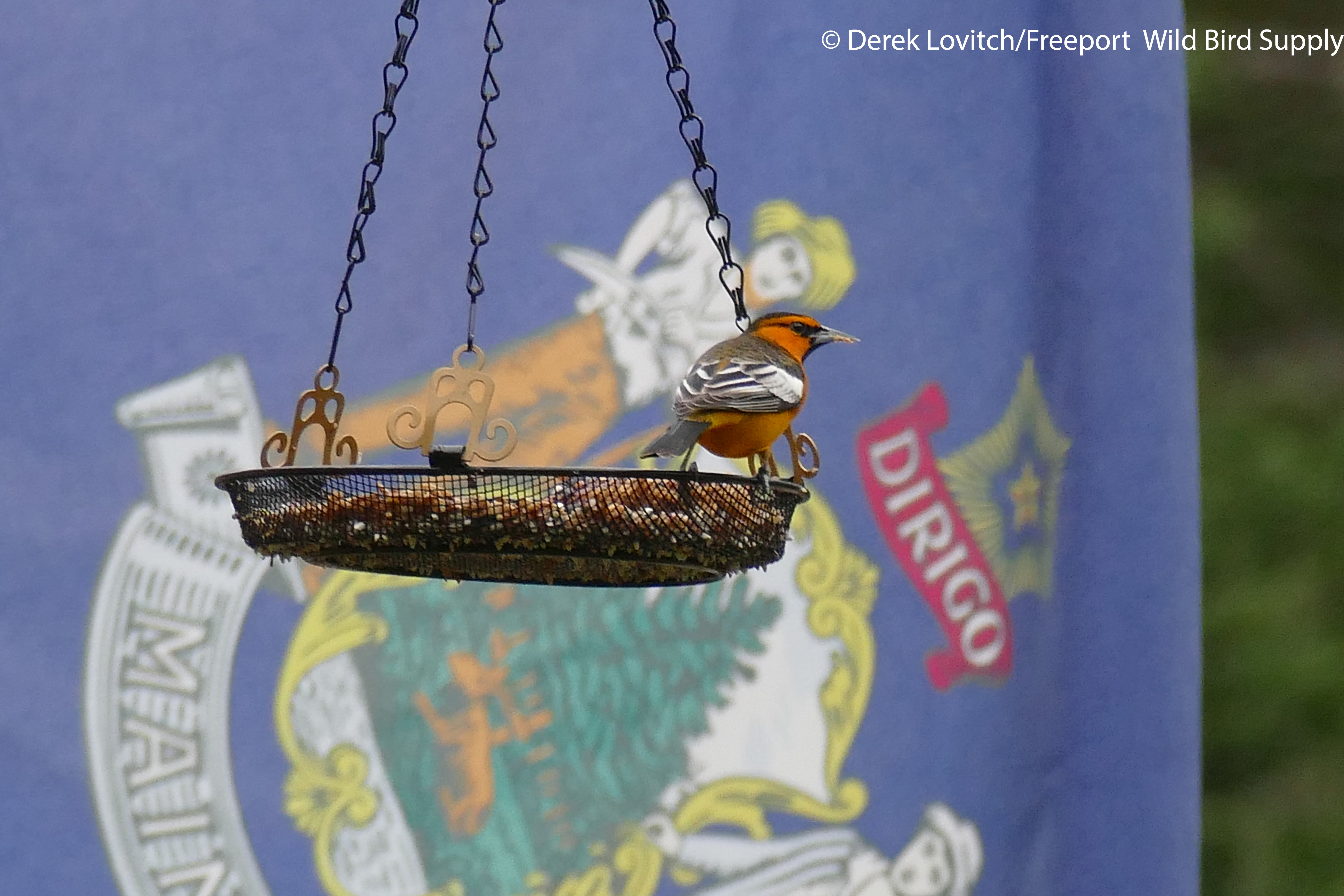
Well this is sure not something you’ll see everyday! Here’s a vagrant BULLOCK’S ORIOLE from the Western US in front of the Maine state flag!
With only 5-9 previous records in Maine, this visitor to a Freeport backyard was definitely my headliner this week…as it was for most birders in the state!

My observations of note over the past seven days were as follows:

  • 3 immature White-crowned Sparrows continue here at the store’s feeders through 11/11.
  • 1 Red Crossbill, around the store, 11/8.
  • 1 YELLOW WARBLER, 1 Rusty Blackbird, 1 Winter Wren, 4 Greater Yellowlegs, etc, Wolfe’s Neck Center, Freeport 11/9 (with Jeannette).
  • 3 PINE GROSBEAKS (FOY), Moose Point State Park, Searsport, 11/10 (with Evan Obercian).
  • 1 WHITE-WINGED CROSSBILL, Sears Island, 11/10 (with Evan Obercian).
  • 1 Winter Wren and 1 Ruby-crowned Kinglet, Sandy Point Beach, Searsport, 11/10 (with Evan Obercian).
  • 1 BOHEMIAN WAXWING, Stockton Cove, Stockton Springs, 11/10 (with Evan Obercian).
  • 1 Lapland Longspur, 1 Red Crossbill, 4 American Pipits, 6 Snow Buntings, 60+ Horned Larks, Mayall Road, Gray/New Gloucester, 11/11.
  • 1 American Pipit, fly-over here at the store, 11/11 (our 130th Yard Bird!).
  • 1 BULLOCK’S ORIOLE, Spring Hill Lane (see previous posts on Maine Birds Google Group or the Maine Birds Facebook Group for directions), Freeport, 11/11.
  • 1 Red Crossbill, Florida Lake Park, Freeport, 11/12.
  • Pine Siskin High Count This Week: 14, Spring Hill Road, Freeport, 11/11.
  • Common Redpoll High Count This Week: 2, multiple locations.
  • EVENING GROSBEAK High Count This Week: 8, over the store, 11/7 (with Saturday Morning Birdwalk group).

2020 Fall Monhegan Migration Weekend Tour Report

It sure felt good to have a normal tour run, well, normally, in 2020! Other than the requirement of wearing masks all day – despite the annoyance of fogged glasses in the 100% humidity, and some logistical and safety changes at mealtimes, it was as close to normal as 2020 gets. And that felt good.  The birding was great, too! 

Most of Friday’s participants arrived with me on the early Hardy Boat out of New Harbor, and we sure hit the ground running!  A strong flight the night before yielded tons of birds, and it was very birdy right off the bat.  Yellow-rumped Warblers were still darting overhead and were in every bush. White-throated Sparrows virtually littered the ground in places. Small flocks of Purple Finches seemed to be everywhere.

Yellow-rumped Warblers were definitely the migrant of the trip, as they often are at the end of September. Only White-throated Sparrows seemed to give them a run for their money on most days.

A continuing juvenile Cooper’s Hawk (a very good bird out here) and a Dickcissel got us started, while in the afternoon we found two Lesser Black-backed Gulls (a juvenile and a really messy 2nd Cycle) and at dusk, a fly-by from a late Common Nighthawk. We ended up with 63 species on the day, which isn’t bad for arriving at 10:15, and likely there were many other species around; we just couldn’t see them through all of the Yellow-rumped Warblers and White-throated Sparrows.

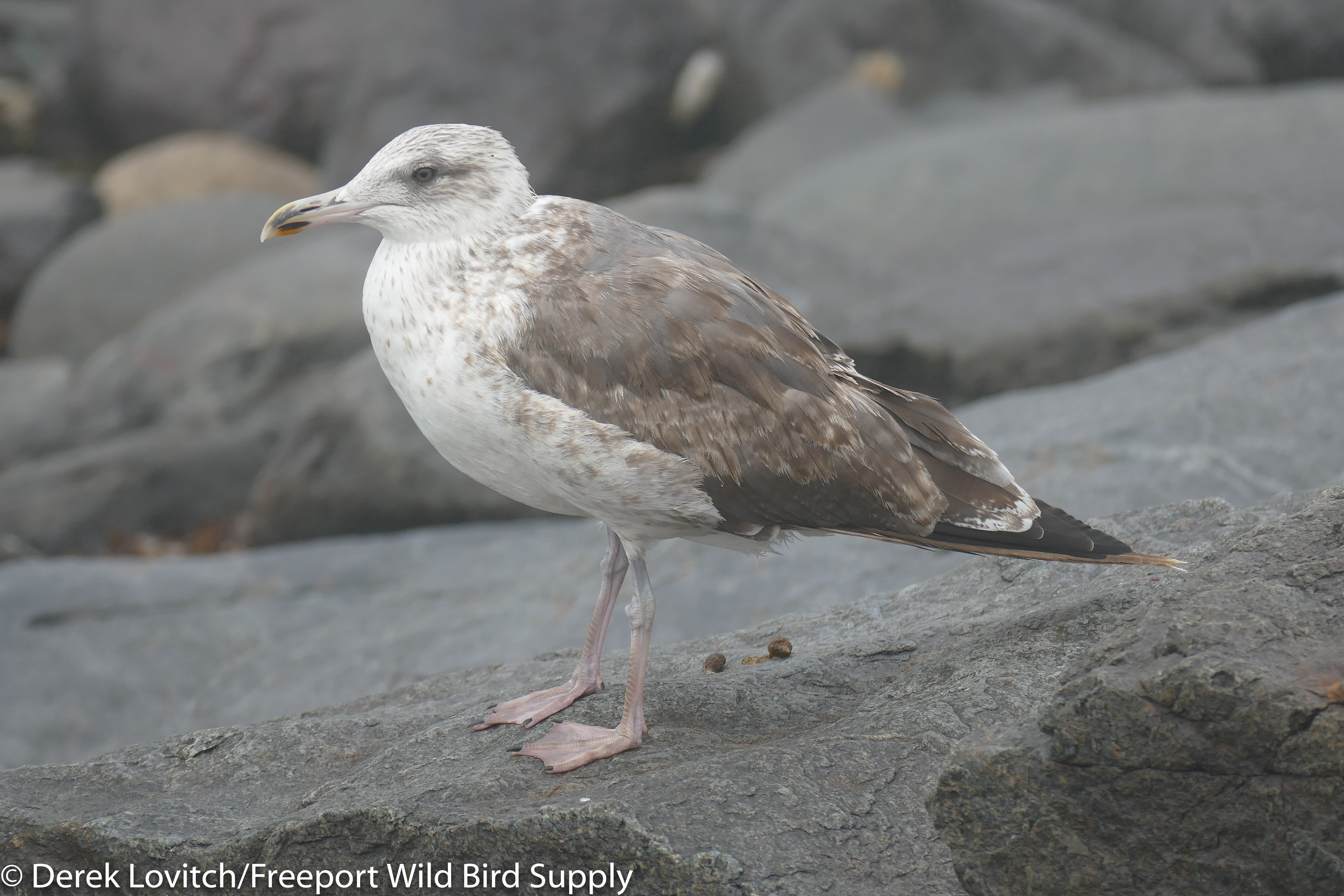
This Lesser Black-backed Gull was not exactly a stunning specimen of fresh feathers, but it was a very instructive study subject.

But before you ask, I’ll let you know: No, you will not find the gratuitous annual photo of Novelty Pizza in this blog this year. It was different, and it was terrible. I was sad. But the handpies for lunch at the Trailing Yew made up for it (but I repeatedly remembered to take the obligatory photo only after it was rapidly consumed in its entirety).

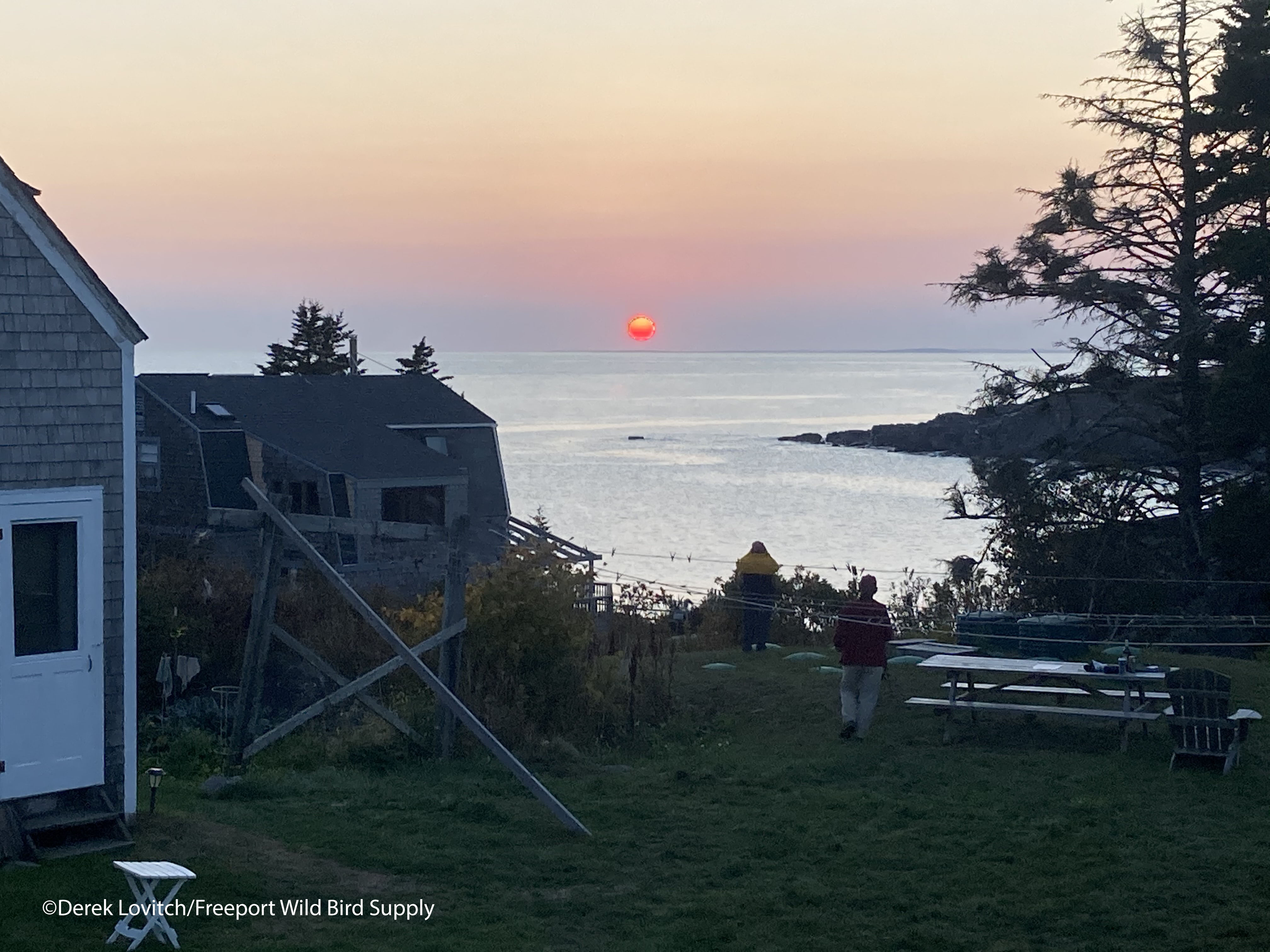
But that evening’s sunset was absolutely delicious!

We awoke to very dense fog on Saturday morning, and with very light southerly winds overnight, only a very light migration had occurred.  There was a decent amount of call notes overhead (mostly Yellow-rumped Warblers) at what was supposed to be the time of sunrise, but these birds could have just been moving around.  Nonetheless, throughout the day we found plenty of Yellow-rumped Warblers and White-throated Sparrows once again, along with ample number of Purple Finches and Red-breasted Nuthatches. It was birdy, but the diversity remained rather low.

Ring-necked Pheasants were mysteriously common and conspicuous all weekend, once again.

By the afternoon, things had slowed down quite a bit, but we grew our triplist steadily with pockets of activity here and there.  Two continuing Rusty Blackbirds put on a good show for us, as did an unusually cooperative Ovenbird. It’s always nice to see Indigo Buntings; we had two today.  Although it seemed rather slow and lacking in diversity, our thoroughness accumulated 64 species by day’s end.

Rusty Blackbird at the Ice Pond.

We awoke to more dense fog on Sunday morning, with no detectable migration overnight on a southwesterly flow.  But sometimes slower days allow us a chance to be more thorough, and by covering a good amount of ground today, we caught up with – and discovered – several very good birds.

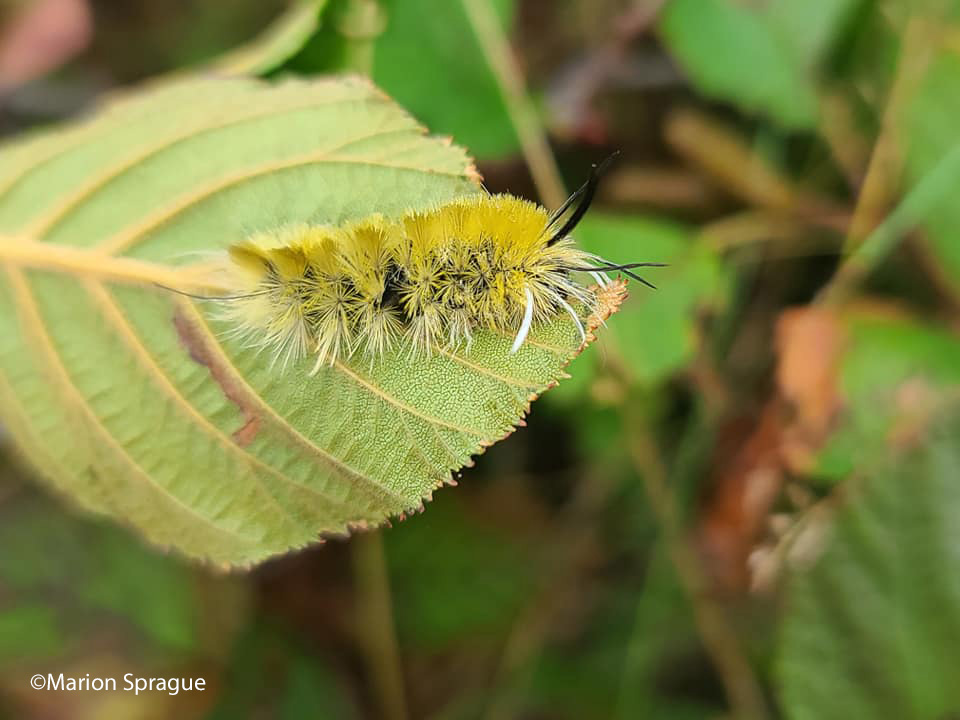
Banded Tussock Moth caterpillar.

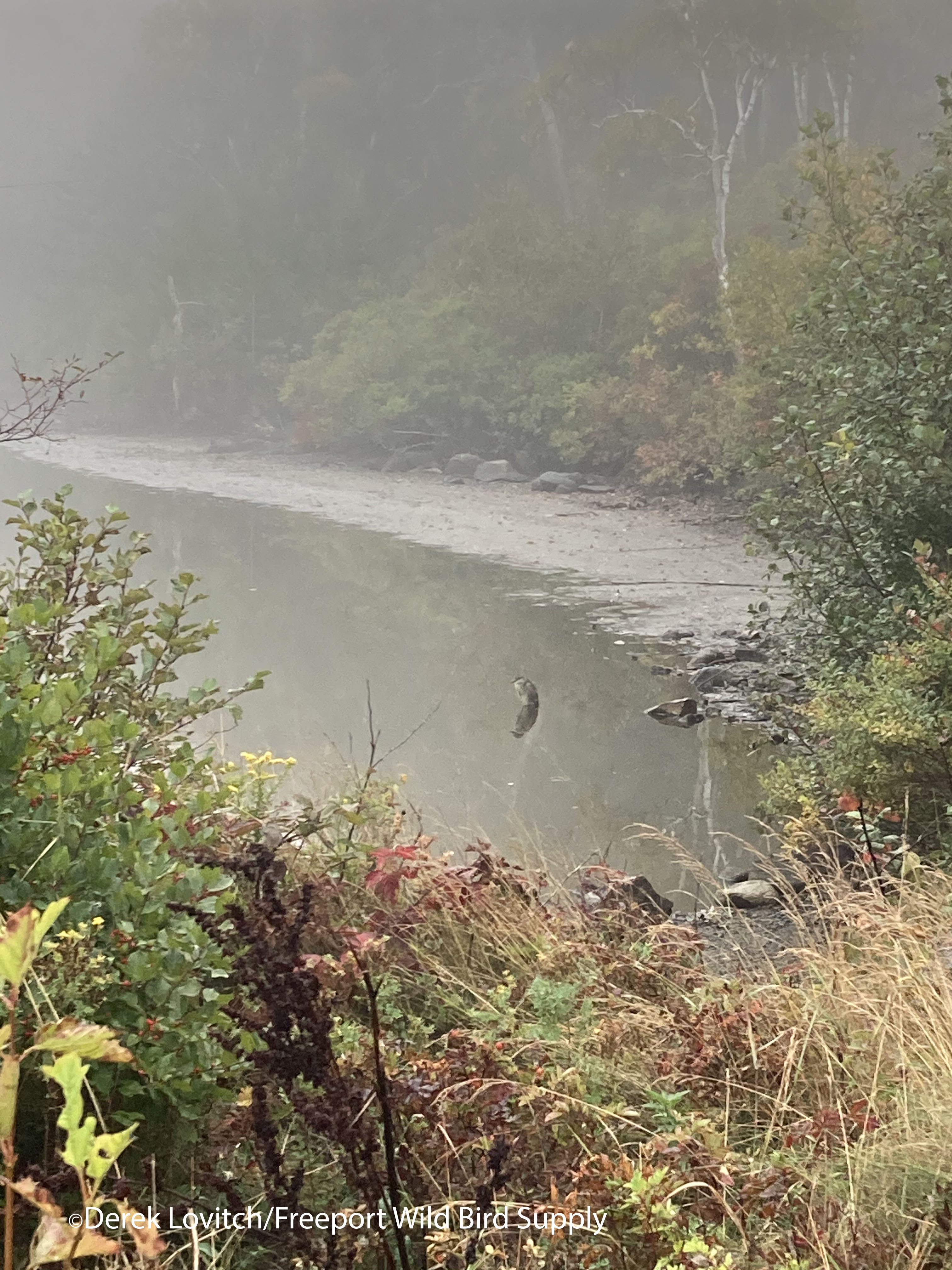
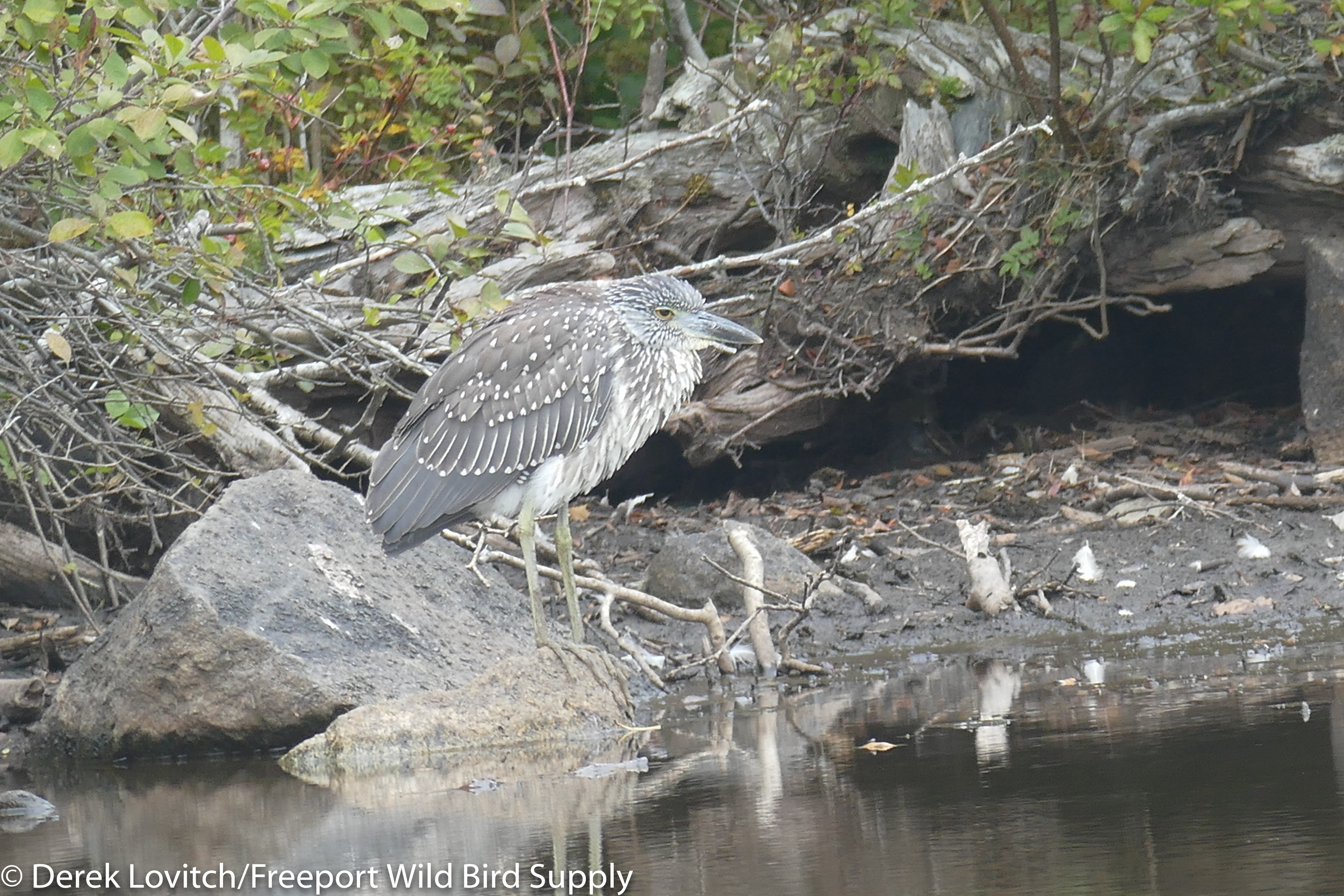
We began with coffee in hand as we marched down to the Ice Pond to catch up with the three continuing Yellow-crowned Night-Herons which we had someone missed each of the previous two days. The drake Wood Duck – very close now to full-spiffiness (technical term!) added to the joy.  Then, after breakfast we had the thrilling discovery (OK, Tom discovered it; he deserves the credit) of a Yellow-breasted Chat. Glimpses were fleeting, and through fogged glasses, were not always satisfactory.  We then found a Marsh Wren at Lobster Cove, and continued to slowly add birds to the list, such as an Eastern Towhee, a few more warbler species, and the fog finally lifted enough for us to see the water and nearby islands to sort out Great Cormorants from Double-cresteds.

Yellow-crowned Night-Herons. Now, just about annual on Monhegan in fall.
A Lobster Cove marsh stomp often produces a surprise or two, like today’s Marsh Wren.

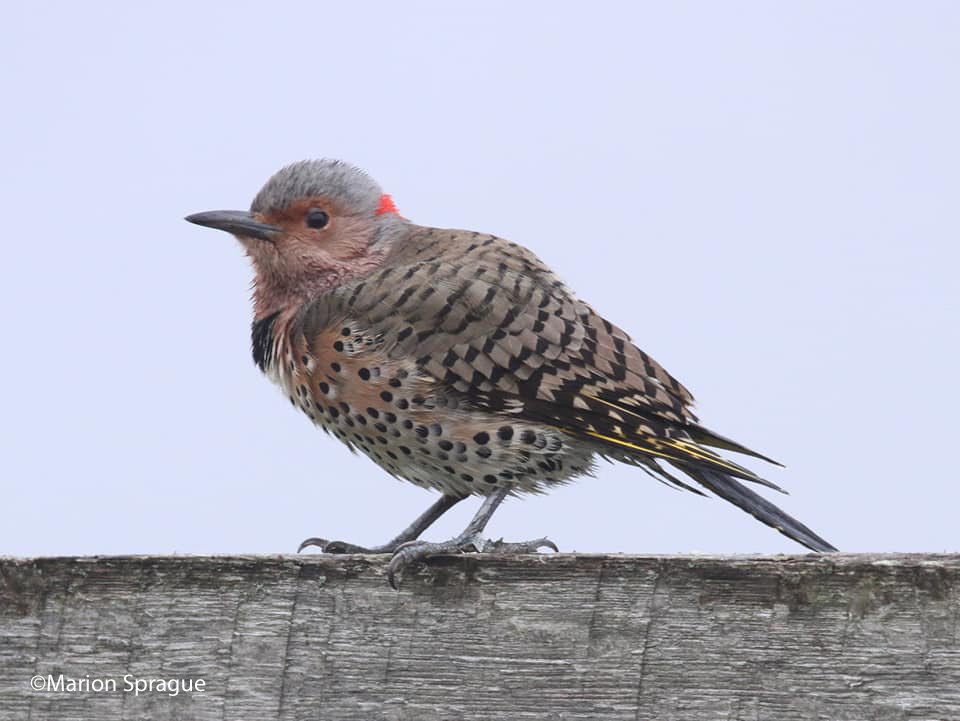
On Monday, our last day of the group tour, we had significant turnover in participants from the weekend, but less turnover in birds.  With another night with little to no nocturnal movement on persistent southerly winds and fog. Only a few Yellow-rumped Warblers were calling overhead at coffee pot o’clock, and it was very slow on our pre-breakfast walk. Northern Flickers were definitely moving around though, so it’s possible a few of these birds were new arrivals overnight. 

Like all of Maine, Monhegan is desperate for rain, but of course we selfishly were hoping it would not fall on us!  The forecast was looking good to get most of the day in, rain-free, but when we reconvened at 9:15, there was a steady light shower. It did not last long, however, and we continued on, unimpeded. Once again, we spent a lot of time sparrow-workshopping, as we regularly encountered fun mixed flocks all weekend of Song, White-throated, Savannah, and often one other species, be it Chipping, White-crowned, Swamp, or Lincoln’s. The side-by-side comparisons are very instructive, and as a guide, I tend to pivot to whatever the birds were offering, and this weekend, they were offering a chance to study, learn, and appreciate the diversity and beauty of sparrows.

We covered a fair amount of ground in the afternoon, checking in with two of the three Yellow-crowned Night-Herons, the continuing Wood Duck and 2 Rusty Blackbirds, and some blooming Fringed Gentian. At least 6 Baltimore Orioles were still present (we had a high of 9+ on Friday), and we had some really good looks at Cape May Warblers and others. Partial clearing in the later afternoon was just enough to get our first view of town from Lighthouse Hill. A mere 56 species by day’s end showed the lack of overall diversity after three full nights with some birds leaving, but very little arriving.

Autumn Meadowhawk (I believe) visiting Barb’s cap.

With the last boat of the day at 4:30, the Monhegan Fall Migration Weekend officially came to a close. However, one of Monday’s participants stayed on for a day of private guiding, so Kate and I continued on for a full day of birding on Tuesday. But, like the weekend, we awoke to more fog and another night of little to no migration on SSE winds. There was, however, some more swirling of Yellow-rumped Warbles around dawn, coming to and from Manana. It was very suggestive of zugunruhe (migratory restlessness) after four days of being stuck on the island with unfavorable winds.  Or, it could have been some birds had indeed arrived overnight.

The extensive southerly winds had finally started to pay dividends, however, with the delivery of a Blue-gray Gnatcatcher and a Yellow-billed Cuckoo. The Dickcissel continued, and we had our best look at it since Friday. With only two of us, we covered grown more quickly and efficiently, so we tallied several species that the group had not seen together, such as the two ridiculously cooperative Soras at the Pumphouse. We also found an unusually-cooperative Mourning Warbler, which is always a treat in migration.

Dickcissel.

With a storm a’brewing, Kate and I departed together on the 3:15 Hardy Boat, and were treated to a Cory’s Shearwater and a Northern Fulmar that materialized out of the still-thick fog. Once a rarity in these waters, the Cory’s was rather late in departing, while the fulmar was on the early side of their arrival. I don’t recall having seen both species on a boat trip on the same day before, and any tubenose is “good” in these nearshore waters.

So that officially brought the 2020 Monhegan Fall Migration Weekend tour to a close; ending on a real high note. Below, I will include Tuesday in the list, but I have separated out the species count for the four-day weekend for comparison sake. Please let me know if I missed something (it’s easy to do as I sit down and try to recall the day as the bed is calling my name!), but our tally for now was a solid 92 species – just two species below our average for the past 10 years.  

However, the 12 species of warblers were well below our 10-year average of 18 species for the weekend. But given the accelerated migration season (food supply shortages due to drought and/or benign weather allowing migration to proceed relatively unimpeded), this was expected. And we made up for it with more sparrows than usual, and an impressive irruption underway. This was the most Purple Finches and White-breasted Nuthatches I can recall on the island, and along with a goodly number of Red-breasted Nuthatches and the first few Pine Siskins of fall, our island sample reflected what we are seeing on the mainland, and throughout the East.

25-Sep26-Sep27-Sep28-Sep29-Sep**
Wood Duck01111
American Black Duck22233
Mallard1215121616
Mallard x American Black Duck Hybrid00011
Common EiderxxxxX
Surf Scoter6*0000
Ring-necked Pheasant71518189
Mourning Dove64141610
YELLOW-BILLED CUCKOO00001
Common Nighthawk10000
Sora00002
Black-bellied Plover01000
Wilson’s Snipe01000
Solitary Sandpiper10000
Black Guillemot2*0636
Laughing Gull01002*
Herring GullxxXxx
LESSER BLACK-BACKED GULL20101
Great Black-backed GullxxXxx
Common Loon00001*
Northern Gannet10*6248*
NORTHERN FULMAR00001*
CORY’S SHEARWATER00001*
Double-crested CormorantXxxxX
Great Cormorant00222
YELLOW-CROWNED NIGHT-HERON00320
Osprey03000
Bald Eagle11000
Sharp-shinned Hawk61221
COOPER’S HAWK10000
Belted Kingfisher11110
Yellow-bellied Sapsucker2088815
Downy Woodpecker00210
Northern Flicker4020152015
American Kestrel41000
Merlin106662
Peregrine Falcon62100
Least Flycatcher00100
Eastern Phoebe64462
Red-eyed Vireo86443
Blue Jay12812126
American CrowxxxxX
Common Raven42111
Black-capped ChickadeexxxxX
Red-breasted Nuthatch1515202015
White-breasted Nuthatch34578
Brown Creeper10000
House Wren00012
Marsh Wren00100
Carolina Wren21224
Golden-crowned Kinglet26208
Ruby-crowned Kinglet02100
BLUE-GRAY GNATCATCHER00001
Swainson’s Thrush20000
Hermit Thrush10000
American Robin02444
Gray Catbirdxx81010
Brown Thrasher11111
European Starling1622282424
Cedar Waxwing151616128
American Pipit01000
Purple Finch2040404040
Pine Siskin10111
American Goldfinch28663
Eastern Towhee00100
Chipping Sparrow66644
Dark-eyed Junco48441
White-crowned Sparrow63463
White-throated Sparrow7560503530
Savannah Sparrow10610810
Song Sparrow1520202025
Lincoln’s Sparrow22012
Swamp Sparrow41022
YELLOW-BREASTED CHAT00100
Bobolink11000
Rusty Blackbird12222
Common Grackle 4161818
Baltimore Oriole83669
Ovenbird01000
Northern Waterthrush10112
Black-and-white Warbler11000
Common Yellowthroat32661
Cape May Warbler11440
Northern Parula00102
Yellow Warbler11112
Blackpoll Warbler22863
Palm Warbler62112
PINE WARBLER10000
Yellow-rumped Warbler1501251006040
MOURNING WARBLER00001
Scarlet Tanager10000
Northern Cardinal22546
Rose-breasted Grosbeak01101
Indigo Bunting01011
DICKCISSEL11001
Day Total6765635865
*Denotes Ferry Ride Only. **Private Tour.
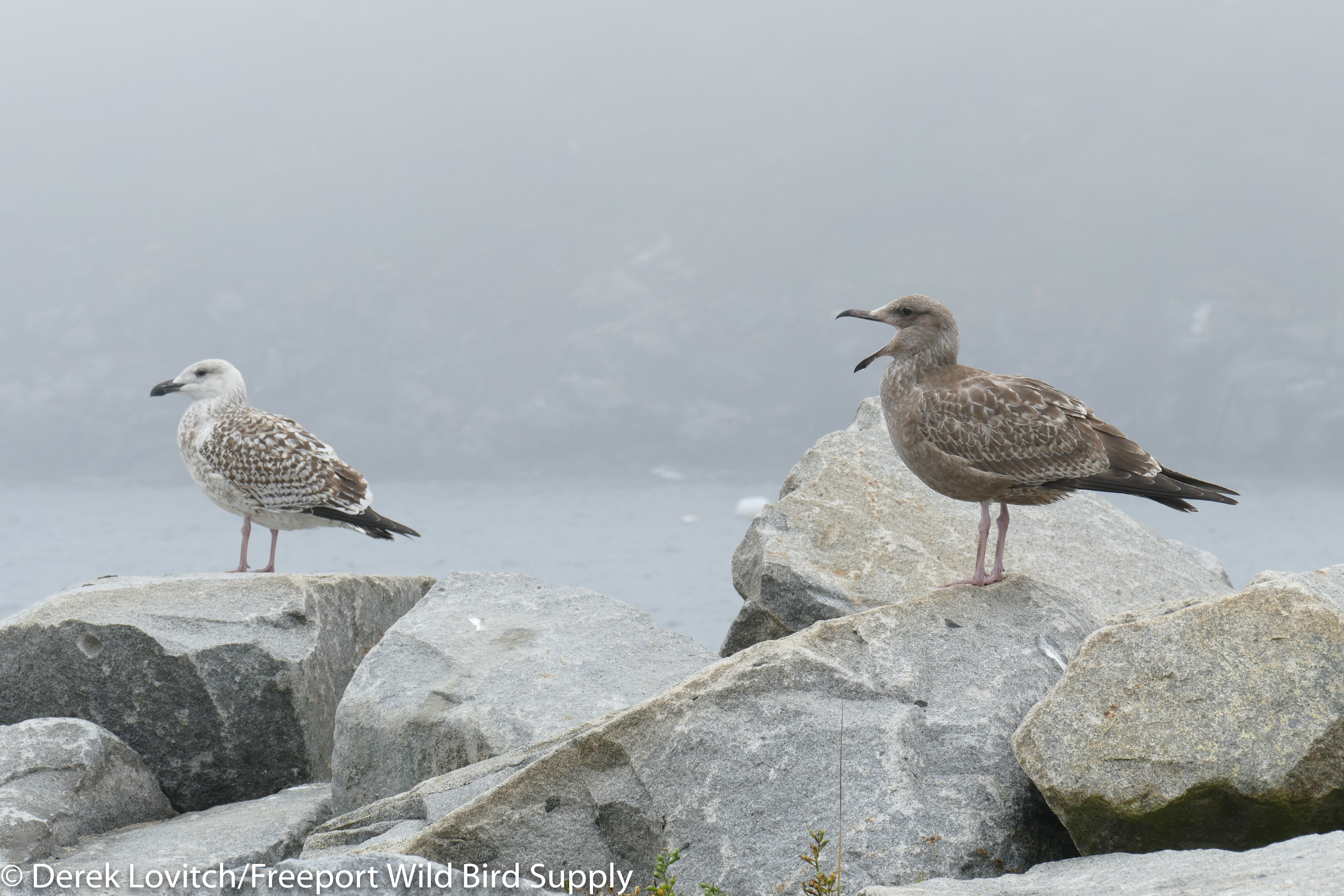
We enjoyed ample time to study many common species, such as separating young gulls. Here’s a juvenile Great Black-backed Gull (L) in the background showing its much whiter overall appearance with bold marbling above. Compare that to “the brown one,” the juvenile Herring Gull (R). It wasn’t the only one yawning from another gull lecture!

Say’s Phoebe – A Maine Nemesis No More!

While out to dinner last night (9/23/2020), I pulled my phone out to look up a couple of things on the menu Jeannette and I were perusing. I usually don’t bother clicking on an email with a subject line “Bird ID” when I am out to dinner; that’s for working hours. But I decided to click on this one from Dave Fensore.

I am sure glad that I did, because those were the photos it contained. Dave and his daughter, Sarah, were out for an afternoon stroll when they found this bird which they identified as a Say’s Phoebe. But they also noted its range: breeding no closer than central North Dakota and winter no closer than southern Texas, they began to have their doubts. Luckily the Sibley Guide shows that they are rare throughout the East, so it is not without precedence, but still, rare birds are rare, and so they sent the photos to me to be sure.

Needless to say, there’s not much question about the birds identify from these stellar photos!

The only question I had was whether or not it would be there in the morning, because for me, the chase was on!

See, Say’s Phoebe (with over a dozen records in Maine) is what I can definitely call a “nemesis” bird in the state for me. I’ve missed three birds on Monhegan, by a sum of less than about 30 hours. One that I missed by a couple of hours resulted in a sprained ankle that lingers with the occasional flare-up of tendinitis. A few friends love to point out how many Say’s Phoebes they have seen in Maine (what are friends for, afterall!). So this bird has physically and mentally scarred me for some time. I also missed at least one on the mainland because I was on Monhegan for the week.

But not anymore.

Sure, I skipped another Morning Flight at Sandy Point, but as of 6:55am this morning, I had finally seen a Say’s Phoebe in Maine. Dave and Carolyn, and Matthew Gilbert, were waiting there, fingers pointing, as I rolled up.

Early morning backlighting made for challenging photography conditions, and my camera is having some front-focusing issues. So my photos are not very good. Dave’s are definitely better, and my flight shots turned out to be a complete disaster. But mine are sweet, oh, so sweet. And my ankle doesn’t even hurt today.

The bird can be observed from the quiet and safe side of Shaker Rd (Old Rte 26…note that Shaker Rd leaves the Rte 26 Bypass a short distance south of here), from the crest of the hill immediately south of the historic village.

Please note, the Village is currently closed. There is no parking there or trespassing into the fields. Luckily, there is plenty of roadside parking on a wide shoulder, and all of the fields are easily visible from the roadside, so this should not be an issue. In fact, it cannot be an issue here; we must respect the community.

The bird is moving around the various fence lines, with the temporary white fence through the closest field being one of its favorite haunts.

I got the word out and birders began to arrive. I departed, owing Dave a whole lot of thanks. And wondering if I’ll find a Say’s Phoebe on Monhegan this weekend, because once you see your nemesis…

2020 Maine Birds Predictions Blog

DSC_0190 edit_edited-1
After missing Maine by just a few miles in 2018, it’s only a matter of time before we see the state’s first Neotropic Cormorant – a species that is rapidly expanding northward. Be sure to double-check a lone cormorant in a tiny pond or river!

As we put 2019 to bed and begin 2020, we have our eyes set on the birding future. As for the future of birding, well, that’s a blog for another day, but for now, what about the next “new birds” to be seen in Maine?

Yup, it’s once again time for my annual Predictions Blog, where I view into my crystal binoculars and attempt to forecast some of the “new” birds to grace the State of Maine – and then my own personal state list – in the coming year.

But first, let us check in with my 2019 Predictions post, and see how I did.

The epic 2018 was going to be hard to follow – in fact, who knows if we’ll ever see a year as exceptional for new birds like that.  While an above-average five new species were added to Maine’s state list in 2018, the infamous Great Black Hawk is a headliner for the ages.

We came back to Earth in 2019, with only 1 or 2 new species for Maine. The first, was a Zone-tailed Hawk in Bridgeton on May the 4th. This was #18 on my predictions list for next new species to be found in Maine following several regional sightings over the past few years.

I say 1-2 because on October 30th, I found a Barolo’s Shearwater in Maine waters, just west of George’s Bank. The problem was it was a single-observer sight record and that’s hard for a functioning and respected rare birds records committee to accept as a first state record. So who knows what Maine’s will do.

Barolo’s Shearwater was on my honorable mention list, but I certainly did not expect to see it; I would have assumed it would have been photographed from a NOAA fisheries research ship in the summer in deeper waters near the continental shelf, or perhaps immediately following a hurricane.

With only 1-2 new species for Maine in 2018, I’ve only made a few minor changes to my forecast, including the debut of Black-capped Petrel. Therefore, my updated predictions for the next 25 species to occur in Maine for 2020 is now:
1) Neotropical Cormorant
2) Graylag Goose
3) California Gull
4) Spotted Towhee
5) Hammond’s Flycatcher
6) Bermuda Petrel
7) Black-chinned Hummingbird
8) Common Shelduck
9) Trumpeter Swan (of wild, “countable” origin)
10) Audubon’s Shearwater – on “hypothetical” list, but I think the record is good.
11) Little Stint
12) Anna’s Hummingbird
13) “Western” Flycatcher (Pacific-slope/Cordilleran)
14) Common Ground-Dove
15) Allen’s Hummingbird
16) Redwing
17) Spotted Redshank
18) Painted Redstart
19) Ross’s Gull
20) Black-capped Petrel
21) Lesser Nighthawk
22) Elegant Tern
23) Kelp Gull
24) Black-tailed Gull
25) Common Scoter

Personally, I added a respectable 5 species to my own Maine list this year as well, including my long-sought #1 (and #1 nemesis): Great Skua. We scored one in Maine waters on our cruise – the aforementioned cruise that resulted in the Barolo’s Shearwater.  Whether you have respect for your state records committee or not, functioning ones are not the “list police” that tell you what you can and cannot count. After much review, study, and discussion, I am confident I saw a Barolo’s Shearwater, so I am putting it on my list. Since I don’t submit my list the the ABA, eBird, or anyone else, I get to make my own rules!  But sorry folks, if you are playing the listing game, you have to play by the listing rules.

Regardless, I did not have Barolo’s on my own prediction list, so for this particular game, it definitely does not count. But prior to getting my #1 bird, I also was lucky enough to be leading a group on Monhegan and was minutes away when my #2 bird – Eurasian Collared-Dove – was discovered(only the second ever in Maine…for now).
IMG_6195-edited-edited

We were at a trade show in Portland when a Tundra Swan (#7 on my list) was spotted at Dunstan Landing in Scarborough Marsh, so we skipped out for a spell and successfully “twitched” it. It was a welcome break from being indoors all day, and it was an easy 15-minute chase.
IMG_6871_edited-1

Last, but definitely not least, was the Harris’s Sparrow at a feeder in Levant that I was lucky enough to see with friends on December 8th…my 385th species in Maine, but only on my list of honorable mentions. But I’ll call predicting 3 our of 5 new state birds a win!
L1160347_HASP1B-editedL1160377_HASP2_edited-1

Then, as always, there were the misses. American White Pelican (#5) is becoming a nemesis, with several brief sighting in Portland on May 16th, and another bird in Aroostook County in August. I worked hard for post-Hurricane Dorian rare terns in late September, but missed out on a Gull-billed Tern (#17) at Hill’s Beach on 9/28.

Not in my top 25, but no less disappointing to miss was Brown Booby that was spotted on and off, here and there, for perhaps much of the summer and a Tropical Kingbird in East Machias on 10/31. Much worse, however, was the dead Purple Gallinule found under the wires at Sandy Point on 10/19.

So with some big changes at the top, my updated list for my own next 25 species in Maine looks quite different.

1) American White Pelican
2) Neotropic Cormorant
3) Graylag Goose
4) Say’s Phoebe
5) Franklin’s Gull
6) Brown Pelican
7) California Gull
8) Black-bellied Whistling-Duck
9) Slaty-backed Gull
10) Boreal Owl
11) Calliope Hummingbird
12) Common Ringed Plover
13) Cerulean Warbler
14) White Ibis
15) Gull-billed Tern
16) Hammond’s Flycatcher
17) Spotted Towhee
18) Wood Stork
19) Ross’s Gull
20) Black-chinned Hummingbird
21) Brewer’s Blackbird
22) Yellow Rail
23) Loggerhead Shrike
24) Virginia’s Warbler
25) Common Shelduck

IMG_7069_edited-2
Maybe 2020 is the year for this nemesis of mine in Maine to come in for a landing in front of me!

Why There are so Many Warblers at Feeders in Maine Right Now (5/3/19).

IMG_4182-edited-edited
On another damp and dreary morning at Florida Lake Park in Freeport on Thursday, I encountered 25-30 Yellow-rumped Warblers and 15 or so Palm Warblers. That was my best total of the season there so far, but in the last week of April through first week of May, I often see tallies of each into the triple digits.

On Friday it was drier, but still cool and raw at Morgan Meadow WMA. I finally hit 5 species of warblers on a morning with my first-of-year (finally) Black-and-white Warbler.  About 20-25 Yellow-rumped and about 15 Palm Warblers were present. For perspective, on 5/3 last year, I hit 10 species of warblers at Florida Lake.

These are two of my favorite mid-spring migration patches, and in most years, I am at Florida Lake Park nearly every day. But this “spring”, it has been lackluster at best; worthless at worst. There just aren’t many birds around.

But it is definitely the spring for warblers at feeders!  After our Facebook post on Wednesday garnered lots of attention and feedback, I thought I would expand a little, as clearly this is a very unusual – perhaps even unprecedented – event.

While Pine Warblers are regular at feeders, especially in early spring – and quite a few of us see some Yellow-rumped Warblers at feeders every year – we cannot recall a spring in which so many people are reporting so many of each at feeders throughout southern Maine.  In fact, many folks are reporting Yellow-rumped Warblers at their feeders for the “first time ever.”  Even more unusual, we’ve had reports of Palm Warblers at feeders, too – something that is almost never seen.
IMG_3970-edited-edited
Pine Warbler is our only regular, wide-spread “feeder warbler” in most seasons

At home in Pownal, we’re up to 20 Yellow-rumped (and our usual pair of Pines), with as many as 8 Yellow-rumps frequenting the feeders at the store this week. We see them annually on our feeders at home, especially on damp and cold mornings, but this year the flock has been slowly but steadily building and has been consistently present for almost 3 weeks. In both locales, a diversity of food is being consumed by this normally-insectivorous (at least in spring and summer) species. In rough order of popularity, they are eating: live mealworms, dried mealworms, insect suet, Nutsie and Mr. Bird nut blocks (especially the Bugs, Nuts,&Fruit block), peanut splits, Birdberry jelly, and even some seed. While a little hulled sunflower isn’t surprising, at home, we even have them gobbling up white proso millet from our tray feeder!
IMG_5747-edited 2.11.46 PM-editedIMG_5750-edited 2.11.46 PM-edited

In fact, until Thursday, I’ve had more Yellow-rumps at our feeders than on any morning at Florida Lake Park! And this is instructive.

Midges are not yet emerging from the pond there, and even through some Red Maples are finally blooming, insect activity has been minimal or even non-existent at this important early-flowering tree. The phenology (to put it simply, the timing of things in nature over the course of the year) is off –way off – this spring. Food resources are not keeping up with the calendar.
Red_Maple

The jet stream is stuck to our south, resulting in unseasonable cool and very unsettled weather, with a steady progression of storm systems and disturbances crossing our area. This pattern is impeding the progress of our spring, and of migrants arriving from the south (I have yet to even see a Black-and-white Warbler this year, for example!). But the cool and wet weather is resulting in natural food sources being well behind schedule, so the birds that are here – on time in many cases – are searching for alternative food sources. And therefore: warblers at feeders.
Jet stream, 4-30-19

This diagram of the jet stream from 4/30 shows the tight gradient and zonal flow that has been dominating our weather pattern and is preventing the arrival of warm temperatures and “spring.”

Or, as better explained by the National Weather Service office in Gray:

April_weather

Meanwhile, cherries, apples, crabapples, Serviceberry, and other important early-season flowering trees aren’t even close to blooming. Nectar, pollen, and even the petals and new buds are consumed, but more importantly for most of our migrants, those flowers attract insects that are then eaten by birds. The forecast is for some better conditions for migration in the coming days, and that will start to deliver us newly returning migrants, but those birds will also have fewer food sources than normal.

In seasons like this, the supplemental food from well-stocked feeding stations becomes more important than usual. Ruby-throated Hummingbirds are already being reported; what would those birds do without a nectar feeder (no red dye!!!!) right now? And of course, who knows what kind of condition all of these hungry Yellow-rumped Warblers would be in right now without feeders.
IMG_5941_edited-2

Soon, other migrants such as orioles, tanagers, catbirds, and a wide array of warblers (or Neotropical migrants) will be arriving, and they need food after their long journeys. Especially until spring catches up (those long-distance migrants have no idea how delayed our season is up here), feeders will continue to be important for migrants – and unexpectedly productive birding hotspots.
IMG_9042-edited-2-edited

There are a lot of hungry birds out there right now, and without a doubt, many of us will get to enjoy species we don’t usually get to see, or at least no so closely. So put your jacket on, come by the store for some high-quality foodstuffs (our insect suet is flying off the shelves right now!) and keep that feeding station well-stocked.  Our migrants thank you.
IMG_4116-edited-edited

Birdwatching in Maine: The Big Year 2017

book cover

“I think I want to do a Big Year…kinda.” I said to Jeannette.
“You want to do WHAT? You? Why?” she responded.

Several friends I floated the idea to had similar initial responses. But when I explained my concept, they started to understand, and be supportive. It wouldn’t be a regular Big Year where I ran around willy-nilly chasing after everything that was reported. Instead, it would have a very specific parameter: I would only count birds – and for that matter, only seek birds – at places covered in my book, Birdwatching in Maine: A Site Guide published this past spring by the University Press of New England.

The goal was to “ground-truth” the comprehensive-ness of the book. Did I successfully cover all of the breeding species? What about the best migrant traps? Rarity Hotspots? Could birding only with this book result in a respectable year list? I set a goal of 300 species in the year in order to act as “proof of concept.”

So off I went.

There were some very good rarities around in January, so the year list got off to a great start. An overwintering immature male and female King Eider in Portland Harbor (Site C5) were nice additions, as you can never really count on where one will be in any given year.
imm_male_KIEI,FishPier,3-19-17_edited-2

The Mid-Coast was particularly hot and Jeannette and I caught up with the two Pink-footed Geese at the Samoset Resort (Site KX5) on 1/30…
PFGO,Samoset,1-30-17

…and the Mew Gull at Owl’s Head Harbor (Site KX4) on the next day
MEGU,OwlsHeadHarbor,1-31

Alas, the Bullock’s Oriole – only the second state record – was at a private feeder in Camden most of the winter, but could not be counted on my little endeavor. But January also produced some good winter irruptives that I would not see in the fall of 2017, such as Pine Grosbeak and Bohemian Waxwing. Of course, since Pine Grosbeak is on the cover, I couldn’t miss that one!

While February is generally a slow month for rarities, a few good year list additions included a Short-eared Owl at Reid State Park (Site SA3) on February 2nd – a bird I chased (but would find a couple in the fall), and then a lucky find of a Dovekie on Valentine’s Day that Jeannette and I enjoyed from The Cliff House (Site Y4).

Slow growth of the list continued in March, but I was seeing most of what was expected. A Canvasback at Fortunes Rocks Beach (Y11) was a quick twitch on 3/20. As migration picked up in April, it was time to get to work. I spent much of my month at our Bradbury Mountain Spring Hawkwatch (Site C18), especially on days with conditions that have produced rarities in the past.

Fly-by Sandhill Cranes on 4/3 would save me some effort later in the year…
SACR1,TheBrad,4-3-17_edited-1

…and I was excited to spot a Black Vulture on April 11th. The vulture, however, paled in comparison to the Bird of the Day: a fly-by Townsend’s Solitaire! (my first self-found in Maine).

By month’s end, Neotropical Migrants began to return, but an impressive storm system at month’s end looked prime for “southern overshoots,” so I dedicated as much time as I could to migrant traps along the coast. The Biddeford Pool neighborhood (Site Y12) is always my first destination in such circumstances, but I did not expect a Gray-cheeked Thrush there on 4/27. My first in spring in Maine, this was a far more satisfying addition than a nocturnal flight call or fleeting glimpse in the fall!
GCTH1,BiddPool,4-27-17

My southerly expectations were met on Bailey Island (Site C23) the next day, where I found my first White-eyed Vireo of the year…
WEVI,BaileyIsland,4-28-17

…and my first of what would be a total of four self-found Hooded Warblers on the year. I synthesized the weather and birding from this storm in a blog entry.

The list grew with each day in May – thanks especially to my local patch, Florida Lake Park (C20) – occasionally punctuated by an important addition, such as the Evening Grosbeaks that flew over Old Town House Park (Site C16) during my Saturday Morning Birdwalk on the 20th. I caught up with the only annually-occurring Orchard Orioles in the state at Capisic Pond Park (Site C9) on the following day.
OROR,CapisicPondPark,5-21-17_edited-2

My guiding schedule was jam-packed in 2017, and tours would take me all over the state as usual. It began in May with a single day tour in Rangeley on the 18th, which produced Mourning Warbler and Gray Jay, among other “first of years” in the boreal forest.
FeedingGRJA1,BoyScoutCamp,5-19-17_edited-1

Then, as usual, it was off to Monhegan Island (Site L1) with the store’s tour group for Memorial Day Weekend. Any visit to Monhegan during migration offers high hopes for rarities, and with a total of three tours there this year, I needed it to produce for me. However, despite a really great and birding weekend, I came away with “only” Summer Tanager…

…and a very-rare-in-spring Orange-crowned Warbler (but I would find a total of five in the fall).
OCWA,Monhegan,5-28

My 10-day tour comprehensive breeding season tour for WINGS is especially important for me to clean up the breeding birds, such as this Spruce Grouse at Boot Head Preserve (Site WN8) on 6/21.
SPRG,BootHead,6-21

During that tour, the waters between Maine and Machias Seal Island (Site WN7) delivered Common Murre and more Razorbills and Atlantic Puffins (my first puffins of the year on the boat to Monhegan in late May).

Usually in June, I am too busy to chase (rarities are always on the opposite side of the state than I am during any given tour), and once again, I missed a few goodies (we’ll get to those in a little bit). However, I always had an incredible stroke of luck with not just two great rarities in two days, but two State Birds for me in two days that I happened to be free for. Or, actually, mostly free.

One June 12th, our wedding anniversary, we were getting ready to head to our fancy dinner in Portland when we received word of a Magnificent Frigatebird over Prout’s Neck in Scarborough. We hurried, raced to Pine Point (Site C1), called the restaurant which graciously allowed us to delay our reservation, and spotted the frigatebird in the distance, soaring over Prout’s Neck.
MAFR,PinePoint,6-12
MAFR_chase1,PinePointBeach,6-12-17 - Copy

The next day, we had plans with our new neighbors, Meghan and Mike Metzger. We were supposed to head over to their house for cocktails in the evening, but when word of a Snowy Plover – a first state record! – at Reid State Park (Site SA3) was received, we decided to test the new friendship. “So, what do you guys think about maybe a walk on the beach on this sultry (record warm, actually) evening?” We figured any friends of birders would eventually find out what it’s like to be friends of birders, so we might as well break them in early. And now that their first life bird was a Snowy Plover in Maine, perhaps we’ll make birders out of them someday.
SNPL,ReidSP,6-13

With a few red-letter rarities and good luck with many of the regular breeding birds in Maine, I finished my June insanity (I was in the store a total of four days all month!) with 258 species after Jeannette and I paid a visit to the King Rail pair breeding once again along Eldridge Road at Moody Point (Site Y5). Glancing over the checklist, I realized that with some dedicated effort, this Big Year-esque project could turn into something.

Therefore, in July, Jeannette and I made sure to use our “weekends” together to fill in the holes on the year list. Every 4th of July weekend, we visit with Bicknell’s Thrushes, and this year was no different. Hiking up Sugarloaf Mountain (Site F12) on the 3rd added the species to my Maine year list (my June tours all go to New Hampshire for this much sought-after species).
BITH,Saddleback,7-3

The following week, we went up to the Baxter State Park area. A wildly productive first full day in the area (7/10) yielded the Black-backed Woodpecker that had so far eluded me this year, as well as the extremely rare American Three-toed Woodpecker, along Harvester Road (Site PS6) and at the Nesowadnahunk Campground Road (Site PS7), respectively. White-winged Crossbills were everywhere too (as were Reds). Unfortunately, Jeannette’s camera was on the fritz, and documentation eluded us.

Phil McCormack and I make an evening visit to the Kennebunk Plains (Site Y9) for Eastern Whip-poor-will every summer, and this year’s outing on 7/8 added that to the list. The list kept growing.

The Little Egret returned to the Falmouth-Portland waterfront for its 3rd summer, and although it was a little more elusive this year, I spotted it from Gilsland Farm (Site C8) on July 14th.
LIEG1,7-14-17

Without a Birding By Schooner tour this summer, I needed to make up a few pelagic ticks, the first of which were Manx Shearwaters that I spotted from East Point (Site Y12) in Biddeford Pool on my birthday, 7/31, with Pat Moynahan, John Lorenc, and Terez Fraser.

From August through early October, I took several boat trips – basically whenever I had the chance and conditions were decent. The Cap n’ Fish Whale Watch (Site L3) out of Boothbay Harbor was very good to me this year, yielded all of the regularly-occurring shearwaters, Parasitic Jaegers (here, on 8/11, but my first of the year were spotted at Dyer Point – Site C3 – on 7/25)…
PAJA1,8-11-17_edited-1
MASH1,8-11-17_edited-1
And some more Manx Shearwaters from the same date

And a whopping 28 Pomarine Jaegers on October 10th.
POJA,BoothbayWhaleWatch,9-10-17_edited-1

One huge void from not doing a schooner trip this summer was filled on August 6th when I spotted “Troppy”, the Red-billed Tropicbird at Seal Island (Site KX6 and H1) that has returned for its incredible 11th year. I accepted an offer to fill in as boat naturalist for a friend who was doing a couple of the Isle au Haut Ferry’s special “Puffins and Lighthouses” evening tours this year. I said yes for the chance to not miss out on a visit to Seal Island for the year…or for my year list. Thanks, Laura Kennedy!
RBTR,SealIs,8-6-17_edited-1

A few other serendipitous twitches and finds in August really helped out my quest. There was the Black-necked Stilt that was found at Weskeag Marsh (Site KX2) on August 2nd. We happened to be away on North Haven for the night before, so this was an easy 1-mile diversion on our way home that afternoon!
BNST,Weskeag, 8-2-17_edited-1

I missed White-faced Ibis in Scarborough Marsh this spring, and all summer it was only being seen in and around Spurwink Marsh in Cape Elizabeth, which is not technically a site in the book. Therefore, I was ecstatic to find it back in Scarborough Marsh while I was searching for shorebirds along the Eastern Road Trail (Site C1) on August 7TH.
WFIB1,8-7-17_edited-1

That day was big for me, as it also added Baird’s Sandpiper…
BASA1,EasternRd,8-7-17_edited-1

…and Stilt Sandpiper to my list.
STSA1,moltingjuv,EasternRd,9-15-17_edited-1

My first Western Sandpiper of the year came from there as well, on August 21st.
WESA,EasternRoad,8-21-17_edited-1

Our summer vacation this year took us out of the state once again, this time to New Brunswick and the Bay of Fundy for the Semipalmated Sandpiper migration spectacle. But our roadtrip finished up at Campobello Island, where we crossed the border for the day to visit our friend Chris Bartlett in Eastport (Site WN13) for a boat ride into the wildly productive waters of Passamaquoddy Bay and Head Harbor Passage on August 20th. Luckily, we found the Little Gull in Maine waters…
LIGU

…as well as my first Red-necked Phalaropes of the year.

Heading into the Big Year project, I was hoping a few of the book signings I would do around the state would give me the chance to add a couple of new species to the list, chase a bird or two I wouldn’t have driven as far for, or otherwise just check out a few sites that I rarely if ever bird. A talk and signing in Bar Harbor on September 7th gave me the chance to find a Blue Grosbeak behind the Mount Desert High School (Site H6) before my program. Little did I know at the time, but this would be my only sighting of the year, so this was another really lucky find.
BLGR2,MDI_high,9-7-17_edited-1

It doesn’t take a Big Year to get me to Sandy Point on Cousin’s Island in Yarmouth (Site C14) at every possible opportunity to take in – and attempt to quantify – the “Morning Flight.” As in most years, it yielded a Connecticut Warbler (on 9/9), and on the 13th, a Lark Sparrow – my 184th species for me here, and the culmination of a record-shattering run at “my office.” Somehow, I didn’t have one in all of my time on Monhegan later that month, so this was a big score.

It was just about time for me to leave the store on September 16th to pick up my rental van for my WINGS tour to Monhegan that was starting the next day. Then the phone rang.

It was our friend, Barbara Carlson, visiting us from San Diego, who was out chasing the Little Egret at Gilsland Farm when she ran into Angus King, Jr, who asked her to identify a bird he just photographed. She called in excited panic as she attempting to explain to us, on Angus’s cell phone she borrowed, that there was a Mega-rare Fork-tailed Flycatcher there as well!

I pondered the timing, but somehow was wise enough to go pick up the van in Lisbon before driving to Falmouth. Notorious one-afternoon wonders, I was happy the Fork-tailed (my 377th Maine state bird) stuck around long enough for me to do the right thing first and not jeopardize my tour!
FTFL1,Gilsland,9-16_edited-1

Joking about wanting to “see the Little Egret and a Fork-tailed Flycatcher from the same spot,” I turned around to scan the Presumpscot River and spotted two Caspian Terns! A species I see every year, usually just by normally birding the right places at the right time – like Biddeford Pool – this species had somehow eluded me all year. In fact, it was getting to be a bit of a year-bird nemesis, and I even resorted to unsuccessfully chasing one that was lingering at Hill’s Beach. I had all but given up on this species before this lucky sighting.

Even better, the flycatcher continued the next day to get my tour off on the right foot.

I departed for Monhegan for my second time this year on 9/17, with my WINGS tour for the next 7 days. With my year list sitting at 293, I needed my two fall tours to the island to come up big for me.

I missed my 4th Say’s Phoebe ever out here – one of my two biggest nemeses for the state! – this time by all of about 45 minutes! I did, however, luck into a Red-headed Woodpecker on the last day of its stay.
RHWO,Monhegan,9-18-17

I only had Clay-colored Sparrows at non-sites up until this point, so that filled in a gaping hole, and a long-staying Yellow-crowned Night-Heron was a needed addition to the year list as well; none were found at Biddeford Pool this fall.
YCNH1,IcePond_edited-1

But overall, the slowest week I have ever experienced on Monhegan set me back in my quest – I simply needed more from my time there.

I was back on Monhegan the next weekend, with my annual Monhegan Fall Migration Weekend tour with my store’s group, and while I didn’t add much to the year list, I did get a big one: the first state record Cassin’s Vireo (For a more complete story, visit my blog entry from the weekend!)
DullVireo5_edited-1

Back on the mainland, I had some work to do. One last-ditch effort for Buff-breasted Sandpiper took us to Fryeburg Harbor (Site O3) on 10/3 on our way to a gluttony-fest at the Fryeburg Fair. Not surprisingly given the date, we didn’t find any “grass-pipers,” but we did find this Greater White-fronted Goose!
GWFG,FryeburgHarbor,10-3-17_edited-1

Jeannette and I took advantage of the flood tide on October 10th to hit the Eastern Road Trail to try to add Long-billed Dowitcher to my Big Year tally.

Every few summers, a Seaside Sparrows stakes out a territory in Scarborough Marsh, but this was not one of those summers. Therefore, I was quite happy when we found one here on this very late date. This was another stroke of luck, and my 299th species of 2017.

This was the type of strategizing that I really enjoyed throughout the year. Find a species that I “needed,” and figure out how to see it. Long-billed Dowitchers are rare-but-regular in Maine, and usually juveniles near the tail end of shorebird migration. The first full moon in October is usually a good time to see one out in the marsh, with areas of dry ground for roosting at a premium. And sure enough, there one was – my 300th species of the year!
LBDO1,EasternRd,10-10-17_edited-1

November “Rarity Season” featured an impressive wave of southern vagrants deposited by a storm at the very end of October. I found another Hooded Warbler at Bailey Island, one at Fort Foster (Site Y1), numerous possible “reverse migrants” like very late warblers and Indigo Buntings, and more. But by having had good southerly luck so far this year, I didn’t add anything to my year list, until November 12th when I found a spiffy Yellow-throated Warbler at the most-unexpected location of Martin’s Point Park in Sabattus during my Birds on Tap – Roadtrip: “Fall Ducks and Draughts”. Being teased by a “flock” of three on Monhegan earlier in the month, and saving me from chasing a few later in the month, this was the type of serendipitous discovery that makes for Big Year fun, and proves the idea that the most important part of finding rarities is just being out in the field.
YTWA,SabattusPond,11-12

My only other Rarity Season “discovery” was finding an error in my checklist that showed me my count was one more (I call those “accounting errors”) than what I thought it was, so when, after much effort of searching, Jeannette and I found a Yellow-breasted Chat at Battery Steele on Peak’s Island (Site C11) on November 27th, I was now up to 303 for the year! It was also a very satisfying find, as this was one of the birds that I was putting a lot of effort into turning up. Again, this type of strategy of searching for specific birds in specific habitats at specific times of the year is much more productive, and fulfilling, than waiting for someone else to find something and racing around looking for it. Chats are notoriously hard to re-find in the fall, as they are ultra-skulkers, so self-found is even more rewarding – and much less frustrating!
YBCH,BatterySteele,11-27-17

The year was winding down, and few regularly-occuring species were likely anymore – regardless of effort. One bird that is likely much more regular than records suggest is Eastern Screech-Owl. I have found them more often than I have not when making concerted effort in southern York County, especially in winter. While I was unable to relocate one found in mid-November in York, I decided to make a dedicated effort come December.

On December 3rd, Pat Moynahan set out for an evening of owling in Wells. After a dusk-watch for Short-eared and Snowy Owls, I decided to try a little fishing for screech-owls. At the first stop we made, just after dusk, a short whistle resulted in not one, but two, very aggressive and vociferous Eastern Screech-Owls right over our heads (at an undisclosed location within Y5). That was too easy!
ESOW,Wells,12-3-17_edited-1

Luckily, the Greater Yarmouth Goose Fields (Site C15) finally yielded a rarity for me this year (other than an early-season Snow Goose which I also saw in the spring), with a Cackling Goose on December 6th for my 305th bird of the year in Maine.
CACG_CANG-comparison1,Thornhurst,12-6-17_edited-1

In the world of retail, there’s not a lot of free time in December, and with this year’s snowy and icy weather, I had even less time to bird than usual. While I did find a bunch of good birds, like a total of 5-6 Snowy Owls (at least 3 not previously reported), an Orange-crowned Warbler along Eldridge Road in Wells (Site Y5) during the York County Christmas Bird Count, various lingering stuff like late dabblers, and half-hardies such as several Gray Catbirds.
SNOW,BiddPool,12-18-17_edited-1
I just had to suffer through enjoying winter visitors such as Snowy Owls, like this photogenic individual at Biddeford Pool on Dec 18th

As December waned, so did my chances for adding any new species. I was hopeful for a rarity to be discovered on one of the state’s Christmas Bird Counts, and while a few birds of note were turned up, nothing I “needed” was detected. We checked Marginal Way (Site Y4) in Ogunquit on the way home from a long Christmas weekend in Massachusetts, just in case a storm-tossed Thick-billed Murre was around. But while in Massachusetts, we did discover a Ross’s Goose on Christmas Day!
IMG_7053_edited-1

Now is where I would like to tell you I finished my Big Year with a bang; how I trudged through the snow and ice, braving sub-zero temperatures, marching up hill (both ways!), and digging out every possible addition for my year list. But alas, it ended more like a thud than a bang: a very snowy, very icy, and very bitterly cold thud.

Few birders were out to find something I might need, and it was even tough for me to motivate in the mornings with temperatures often below zero. But one of the aspects of a Big Year that I – and most every other participant in such a silly pursuit – enjoy is that extra little bit of motivation to get into the field.

Such additional incentive was more than necessary on December 27th and 28th, with morning lows of -5 and -10F, respectively. Without the hopes and dreams of one or two more species for the Big Year, it’s unlikely I would have done much more than sit around, watching the feeders and sipping coffee (and probably swearing at the cable news). Instead, I forced myself to get out for just a little bit, and while no year birds resulted, I did have some nice consolation prizes: two drake Barrow’s Goldeneyes were in the open water off of the Freeport Town Wharf (Site C19) on the 27th. And on the 28th, I had 2 adult Glaucous Gulls and two 1st-winter Iceland Gulls at the Bath Landfill (Site SA5). Then I sipped some coffee in front of the store’s windows (Site C19), hoping for a Common Redpoll to show up! That hour I spend in the evening in a last-ditch effort to find a Long-eared Owl in sub-zero temperatures was just stupid, however.

Besides, I wasn’t going to escape the cold the following day, when Jeannette and I (joined by Zane Baker) spent the entire day walking outside (low of -16, high of merely 6!) on the Freeport-Brunswick CBC. While Florida Lake Park is a site in our circle, our highlights were all away from there, led by the rediscovery of “our” Dickcissel (by plumage and proximity) at a feeder, about a mile from our store that he frequented from November 2nd through December 15th. He did not look happy about the temperature, either.
DICK,DesertRoad,Freeport,12-29-17_edited-1

Winslow Park (C19) was the destination for our Saturday Morning Birdwalk on 12/30, and although the start temperature was a painful -11F, seven people showed up and joined me in enjoying a dashing drake Barrow’s Goldeneye

That left New Year’s Eve Day, and despite morning lows again well below zero, Pat Moynahan and I hit the coast from The Nubble (Site Y3) to Webhannet Marsh (Site Y6), with Thick-billed Murre primarily on our minds. Sea-smoke reduced visibility, and the wind chill was brutal. While we did have a total of 72 Harlequin Ducks – which certainly made us happy – our highlights were all from an extremely productive (and for the first time all day, mostly sheltered) Marginal Way in Ogunquit (Site Y4): 1 Fox Sparrow, 10 Lesser and 4 Greater Scaup, a Yellow-rumped Warbler, 3 Northern Pintails, and this very chilled Yellow-bellied Sapsucker that was eeking out a living on Eastern Redcedar berries. But alas, no murres – or shockingly, alcids of any variety.
YBSA,MarginalWay,12-31-17_edited-1

Therefore, my 2018 Birdwatching in Maine: The Big Year finished at 305 species. When I started the year, my goal was 300, so I am quite satisfied with the tally. Additionally, I saw four species away from sites: Buff-breasted Sandpiper, Great Gray Owl, Bullock’s Oriole, and this Fieldfare – a first state record in a yard in Newcastle in April – for a total year list of 309.
FIEL1,4-22-17_edited-1

The Great Gray Owl stings a bit, considering I missed one at a site (Sunkahaze NWR; Site PE9) in January while we were on vacation, and another showed up near the Orono Bog (Site PE7) in February. But it’s OK, it’s a Great Gray Owl, and site or otherwise, it was awesome.

Worse, however, was the Buff-breasted Sandpiper. Mayall Road in Gray/New Gloucester was one of the last sites cut from the book, and for some reason it was the only place I encountered one this fall. I even made concerted efforts to find them at likely places, such as the Colonial Acres Sod Farm in Gorham (Site C13). I guess I should have sucked it up and chased the three that were found there in September, or any of the handful of others that were found at various sites throughout the month.

Speaking of misses, as with any birding year – big or otherwise – there were plenty of misses. The worst might have been the elusive (usually) Least Bittern. After just about everyone (including most of my tour group), except I, saw the one that was on Monhegan over Memorial Day weekend, I never found time to make the effort to search for one in breeding marshes over the summer. That effort could have also yielded Common Gallinule, another miss for me in 2017, although the only reports of the year came from a non-site.

I always hope for kites and Golden Eagle at the Bradbury Mountain Spring Hawkwatch, but none passed through this year. There were a couple of Golden reports this fall though at sites, including one nicely photographed over Fryeburg Harbor. I also missed a Blue-winged Warbler on Monhegan this fall, as well as a Painted Bunting that left the day before my first tour arrived, while a Western Kingbird finally showed up there two days after I departed. I also dipped on a Franklin’s Gull that was a one-afternoon wonder at Wharton Point (Site C21) on 11/6.

Several other species were seen at sites covered in the book throughout the course of the year that I did not – or could not – chase. These included: Ross’s and Barnacle Geese in Aroostook County in October (Site AR7), Eurasian Wigeon at Messalonskee Lake (Site KE6) on 4/12, a Western Grebe reported off Sears Island (Site WO10) in January, Marbled Godwit at Reid State Park on 6/13, Sabine’s Gull off Eastport in September, a surprising Black-headed Gull at Riverbank Park (Site C12) a one-day wonder in February, and a Franklin’s Gull that flew by Dyer Point (Site C3) on 7/5. Surprisingly, the only Forster’s Tern reported this year was as out-of-place and unseasonable one at Sanford Lagoons (Site Y10) in April, while Royal Terns were briefly spotted at Popham Beach SP (Site SA2) on 7/16 and the Wells Reserve at Laudholm (Site Y7) on 8/19. I also missed Prothonatory Warblers at Wilson’s Cove Preserve (Site C22) on 5/2, and another on Monhegan on 5/16. A Cerulean Warbler was also on Monhegan on 5/21 – a species I have still not yet seen in Maine.

Off-limits but viewable via several boat trips covered in the book, Seal Island NWR hosted its usual slew of incredible rarities this year as well, including a Kentucky Warbler in May, a completely unexpected Gray-tailed Tattler in August, and several sightings of Long-tailed Jaeger in August. Whether or not you count Machias Seal Island as being “Maine” or not, it did host a Bridled Tern and an Ancient Murrelet early this summer,

My lack of an overnight birding-by-schooner tour to Seal Island cost me Leach’s Storm-Petrel for the year as I didn’t luck into any during my summer and fall pelagic trips. Of course, if I didn’t have a total of 4 Bar Harbor Whale Watch Company (Site H7) tours weathered out this fall, I might have picked one up, along with South Polar and Great Skuas – Great Skua remains my all-time nemesis in Maine waters!

And despite concerted effort in late December, I did not see a Thick-billed Murre this year. And Common Redpolls never did return by year’s end, after only a few made it to extreme northern Maine in the previous winter.

However, my most frustrating miss of the year might have been Brown Pelican. What was likely one bird was ranging up and down the coast, perhaps between Prout’s Neck and Plum Island, MA. But between June 9th and 12th, it was reliable off of Pine Point. I was Downeast with my WINGS tour. Until the last report on or about August 2nd, several birders lucked into it here and there, and several non-birders had sightings they reported: one friend saw it while taking a walk at the Camp Ellis jetty, and my landlord texted me a phone photo of it flying past Long Sands Beach (Site Y3) in York while he was out surfing. Oh well, it at least gave me something to look for during the summer, and I definitely spent a few days worth of time trying to turn it up at various coastal locales.

Additional species reported in Maine throughout the year that were not seen at sites covered in Birdwatching in Maine included Redhead (although it probably bred once again somewhere in Aroostook County, including at sites such as Lake Josephine), White-winged Dove, Scissor-tailed Flycatcher, Vermillion Flycatcher (first state record), and a couple of Western Tanagers.

So overall, I think I did quite well! While I am sure I missed a few things here and there, it’s safe to say I saw a large majority of the +/- 343 species observed in Maine this year, or roughly 89%, at sites covered within Birdwatching in Maine: A Site Guide.

I don’t use eBird, so my list “doesn’t count” according to some, but I took a look at the eBird Year List for 2017. My list was good for second in the state, despite my self-imposed limitations, quite a bit of travel (a total of 35 days out of the state this year), an exceptionally busy schedule all year, not to mention my aversion towards chasing more than the occasional mega rarity. I also visited 105 of the 201 sites covered in the book. Not bad. More importantly, it proved my hypotheses correct:
1) Birdwatching in Maine: A Site Guide has comprehensive coverage of just about every regularly-occurring bird in the state.
2) Using the guide to “just go birding” can result in a very respectable list, with just a little extra effort.
3) Birding in Maine is really special.
4) And perhaps most importantly for me: I would never do a Big Year for real!

Of course, I couldn’t have done this without my favorite birding buddy, Jeannette. In addition to having the year list pursuit occupy many of our days off together, she occasionally had to put in a few extra hours at the store here and there as I went gallivanting around the state. I also want to thank my friends who kept me company and helped me find birds, or otherwise assisted on my quest, throughout the year. I could not have accomplished this goal without the help of Zane Baker, Chris Bartlett, Kirk Betts, Paul Doiron, Terez Fraser, Kristen Lindquist, John Lorenc, Rich MacDonald, Phil McCormack, Pat Moynahan, Dan Nickerson, Evan Obercian, Luke Seitz, and Marion Sprague, and of course, all of the other contributors to the book who helped guide me way to numerous birding sites around the state. And I cannot forget to mention all of the other birders who found some good birds to twitch over the course of this productive year of birding in Maine.

As the calendar changed to 2018, like a many a real Big Year birder, I took a deep breath, relished the freedom of not being a slave to the list, grabbed my binoculars, and just went birding!

I hope you will do the same in 2018, and I hope Birdwatching in Maine will guide you along the way to a happy and successful year of birding, whatever goals you do or do not have. (You can order it directly from us at this link if you don’t already have a well-worn copy!)

Good birding, and Happy New Year List! If you keep one that it is (I won’t be!).

CONI1,Monhegan,5-28_edited-1
Common Nighthawk, Monhegan in May.

HOWA,BaileyIsland,11-1-17_edited-1
Hooded Warbler on Bailey Island in November, my 4th self-found HOWA of the year!