Tag Archives: Freeport Wild Bird Supply

Gull Identification Workshop Wrap-Up

You may have noticed that my blog has been a little quiet in the last couple of weeks.  Mostly, that has been due to my birding being mostly about photographing gulls every chance I get! And in between, accumulating and sorting photos from friends.  What was planned to be a 95-slide PowerPoint program became an exhaustive (literally), 180+ slide dissertation.  Not only was I impressed by how many people signed up, but how many stayed until the bitter end – even though I strongly urged people who were new to this to depart before the section on Thayer’s Gulls and hybrids!

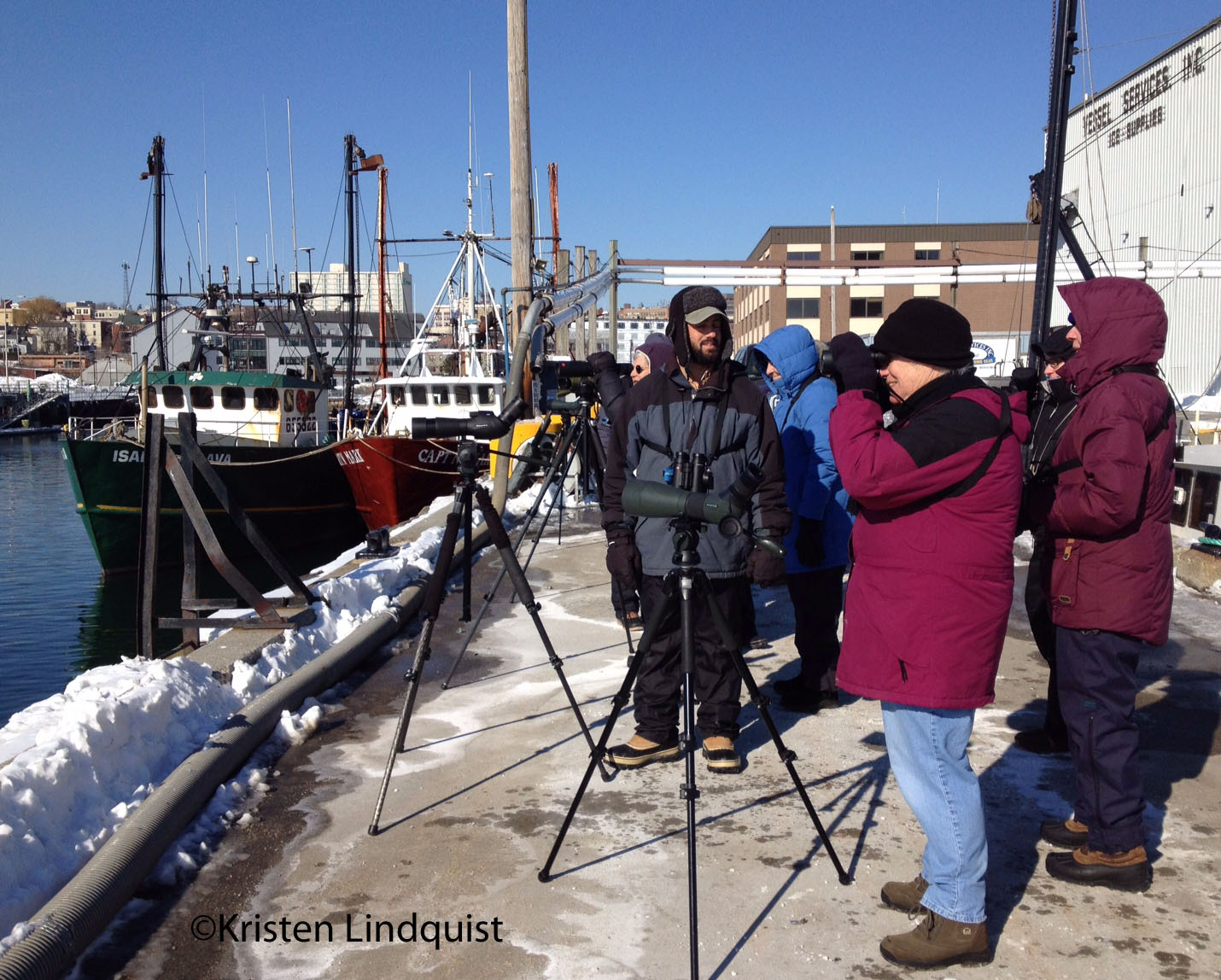
Come Sunday morning, 13 people joined me for the field session of the two-day workshop – no doubt reduced by the 12-degree temperatures that greeted us to start the day. We began with close studies of the various ages of Ring-billed Gulls at Back Cove…aided by a little “incentive,” of course.
photo 3_edited-1

Sorting through Herring Gulls was up next, and then we made our way over to the Fish Pier in OldPort, for some “real” gulling.  And it did not disappoint. The endless variation of “Kumlien’s” Iceland Gulls was readily apparent with eleven 1st-winter, two 2nd-winter, and 2 adults – many of them close and in direct contrast with each other. A total of three 1st-winter Glaucous Gulls were added to the mix, along with ample opportunities to practice aging Herring and Great Black-backed Gulls.
photo 3 (2)_edited-1

I really couldn’t ask for anything more…well, I could, and of course, did. And shortly thereafter a particular gull-of-interest put in an appearance. Widely being reported as a Thayer’s Gull, this odd individual was a bird I wanted to study closely (Jeannette and I only saw it in the distance on Tuesday), and it was indeed a very instructive bird for a gull workshop.  Having been looking at thousands of gull photos over the last two weeks, I have been a bit negligent with studying and addressing this bird.  Besides, I had not seen it in the field and even some very good photos are of secondary value to time with a bird in the field.

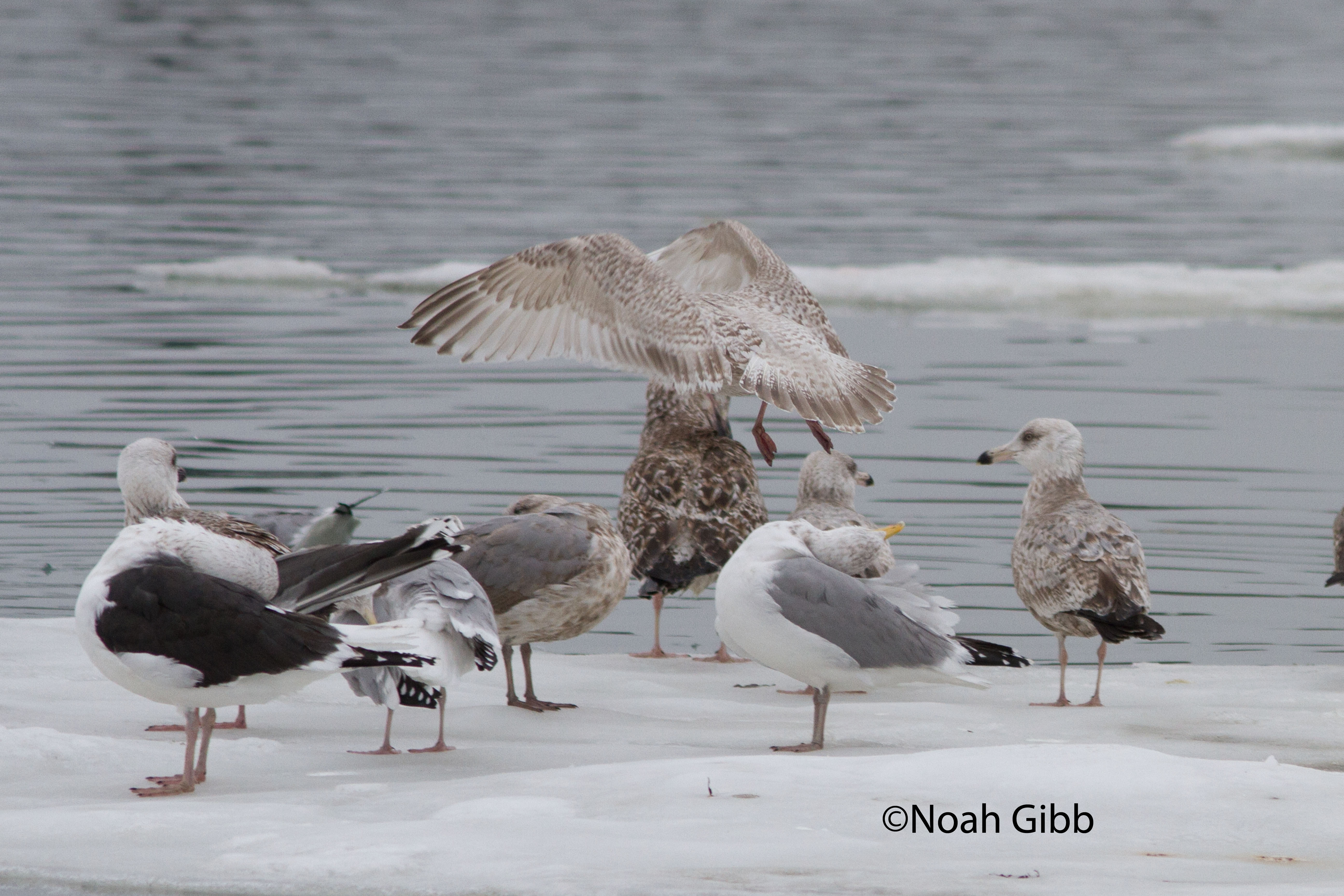
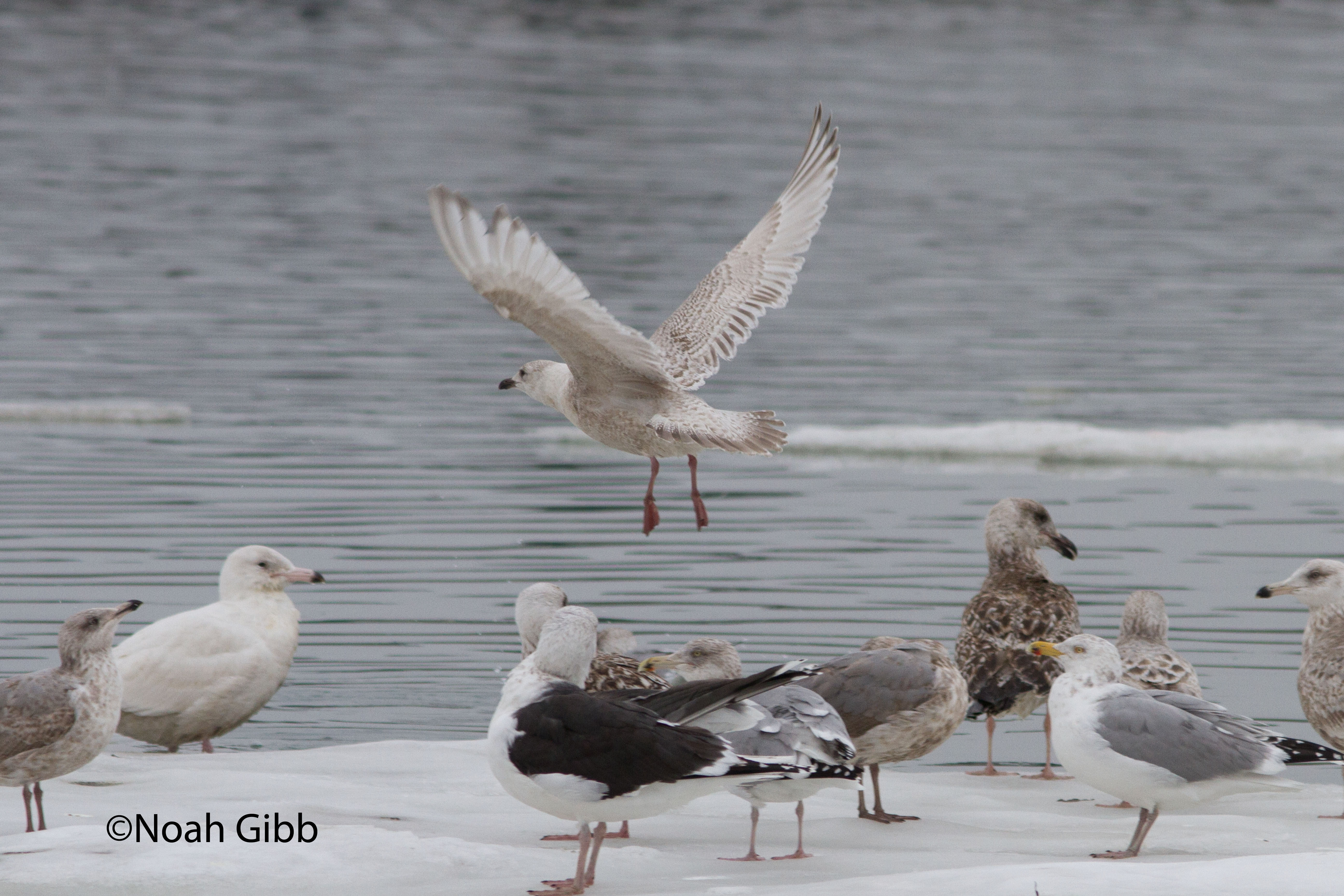
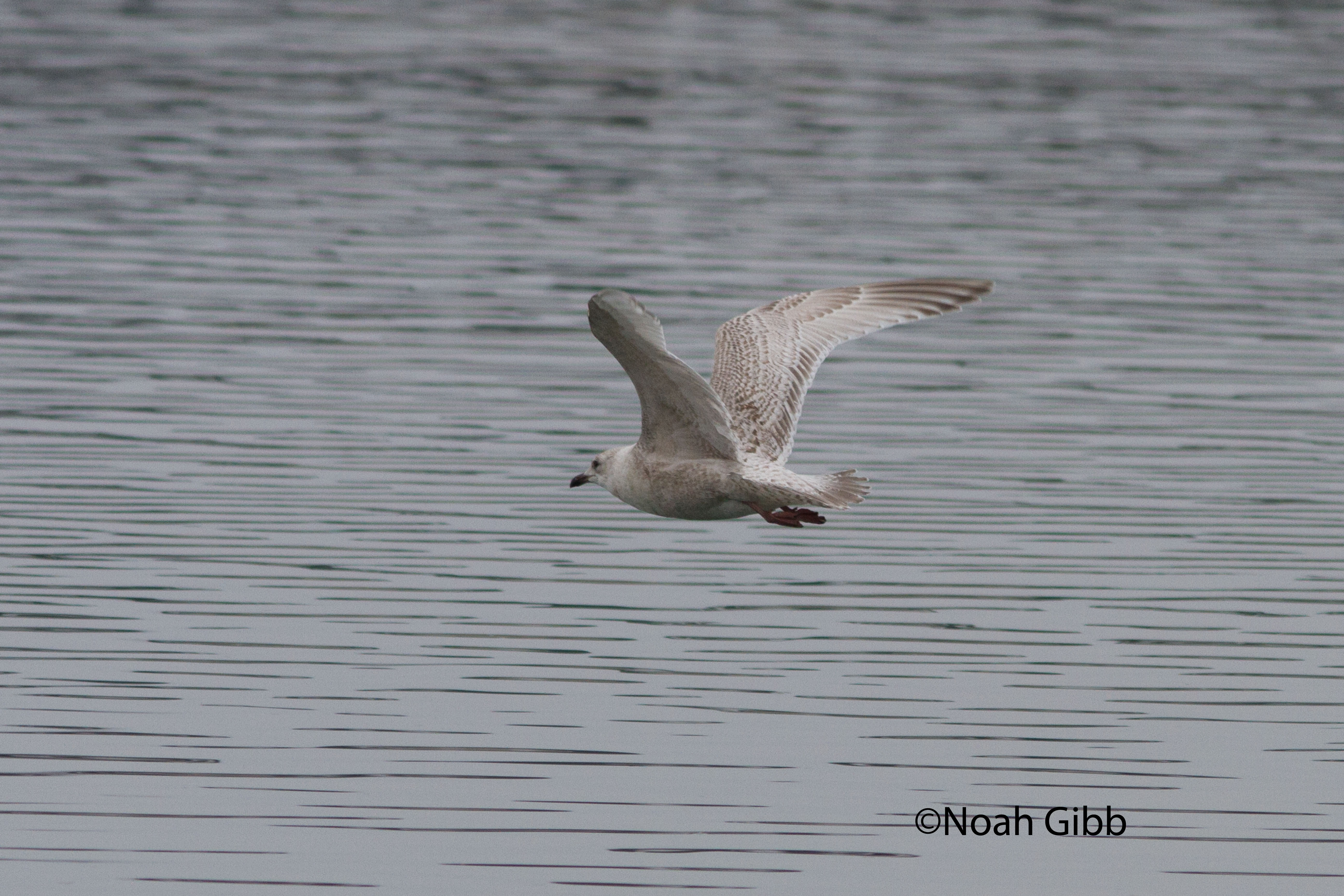
Doug Hitchcox got some decent photos of the bird on Sunday, but the best photos to date have been from Noah Gibb. I will therefore use these photos as our reference.
99.IMG_9975_edited-1

99.IMG_9985_edited-1

99.IMG_9987_edited-1

99.IMG_9998_edited-1

One of my take-home messages during my workshop is that a good “guller” has to be able to say “I don’t know,” and leave some individuals as “Gull sp.” This is probably the best answer to this bird, but what I think we can say is that this cannot be “counted” as a Thayer’s Gull.

For better or for worse, Thayer’s Gulls on the East Coast receive extensive scrutiny.  Birds that would be passed over in coastal California are analyzed to death in New England. Likewise, birds that look like “Kumlien’s” Iceland Gulls on the West Coast get extensive scrutiny, while here in Maine we pass some of these off as typical variation.  And I think this is a good thing – rare birds are rare, and vagrants to opposite coasts should warrant extreme care.

Therefore, this current rash of “Thayer’s Fever” – a common affliction of East Coast gull-watchers – needs to be tempered a bit. There is a reason that there are only two accepted records ever in Maine of this challenging, and variable, species. Therefore, extreme caution is necessary when placing this desirable label on funky gulls.

Like the Shawmut Dam gull reported by many as a Thayer’s a few weeks ago, I believe that the Portland “Thayer’s” is well outside the range of variation of what we can accept as a bona-fide Thayer’s Gull on the East Coast.  While there are a number of characteristics that suggest this bird could be a Thayer’s, there are a number of significant “strikes” against it.  While I think the Shawmut Dam birds suggests a Iceland-Thayer’s intergrade (I am not going to get into the muddled and controversial taxonomy here today), the Portland bird looks to me more like an abnormally dark-winged “Kumlien’s” Iceland Gull. Sure there could be Thayer’s genes in there…which there probably are in all Kumlien’s Gulls . . .oh wait, I said I wasn’t going to get into taxonomy.  Never mind.  Moving on.

So where was I? Oh yes… while the dark secondary bar (and upon closer inspection showing a distinct contrast between dark outer webs and pale inner webs) and the similarly distinctly two-toned outer primaries are important Thayer’s features, there are a serious amount of non-Thayer’s like features shown by this bird. Again, like the Shawmut Dam bird, there are just too many things “wrong” with this bird to safely label it a Thayer’s Gull, in my opinion.

First and foremost, there’s the Portland bird’s incredibly white overall appearance. While a first-summer or some 2nd-cycle Thayer’s can look this pale overall, this bird IS a first-cycle bird.  Since no second-cycle feathers are evident (the bird has a very uniformly-marked plumage typical of a bird less than a year old) and none of the feathers suggest any abnormal wear, we cannot call this anything other than a 1st-cycle bird.  It is not overly worn, and bleaching would affect all of the most-exposed parts of the bird – like the mantle, upperwing, and especially the primaries (and it is those primaries that are abnormally dark, not pale). The mostly-dark bill is also highly suggestive of a 1st-cycle bird, as is the fairly dark eye. Perhaps that is a bit of an over-simplification, but for now, that should suffice.

With that (fairly well) established, we can look at this bird more closely.  Again, those outer primaries and “picket-fence” secondaries are very Thayer’s-esque. Unfortunately, the similarities pretty much end there. The bird is not very big, and similar in size to most of the “Kumlien’s” Iceland Gulls we see it with.  It is also has the somewhat short and thin-billed appearance, with a gently rounded head and large eye that are typical of Iceland Gulls; this bird does not get any subjective gestalt points.  More importantly, in my opinion, are more tangible issues, from head to tail (and in no particular order of importance):
–          The overall pale appearance to the entire bird give that “white” impression at a distance; Thayer’s (THGU) usually look “dirtier” or even “brown.”
–          The pale face doesn’t have that nice dark smudge that we like to see on THGU.
–          The bill is clearly becoming pale at the base already.  The pattern looks good for Iceland (ICGU), and is certainly on one end of the bell curve for THGU.
–          The tertials are wholly marbled, and look perfect for ICGU.  “Classic” THGU show mostly dark tertials with marbled distal ~1/3rd or so.
–          On the folded wing (and on some flight shots), the primaries definitely have dark outer webs, but they also have a pale fringe that not just rounds the tip, but continues down the length of the most of each feather’s outer web. That is more consistent with dark-winged “Kumlien’s” Gulls.
–          While the tail is mostly dark, the bases are fairly extensive white with lots of marbling.  The extent of marbling is a good fit for ICGU.

While absolutely none of these factors eliminate a THGU on their own, the sum of all of them taken together makes for a most unusual THGU.  Considering the range of variation in “Kumlien’s” ICGU combined with hybridization – and by some accounts extensive intergrading – put this bird well outside the possibly-artificially-delineated box that we currently label a Thayer’s Gull.  At the very least, this is far short of a bird that could be “good enough” to constitute a third state record.

Can you see why I was so impressed that so many people stayed to the bitter end of my program on Saturday (and Sunday, for that matter!)?  So there, I said it – the OldPort mystery gull is not a “good” Thayer’s, despite the wishes of many-a-birder!  Sorry.

So anyway, after the Fish Pier, we ventured over to Mill Creek Cove in South Portland.  Two more 1st-winter Iceland and a 1st-winter Glaucous were present (some are all likely birds we saw on the other side of the harbor) to reinforce our new-found skills.
photo 3 (3)_edited-1

And finally, some of the group joined me for a field trip extension over to Westbrook to look for the “Westbrook Gull,” a bird that, as I explained in the workshop, still defies identification and therefore is also quite instructive. Unfortunately, it was not present today (I see it less often on the weekend), but we finished up with a great showing for here of 4 Iceland Gulls (three 1st-winter and 1 2nd-winter) with the Herring and Ring-billed Gulls near the falls.  Meanwhile, while we did look at other birds all day, the open water behind downtown Westbrook yielded the surprise of the day – a pair of Ring-necked Duck that has just been found by Colin Chase.  Whether they are southbound, northbound, are somewhere in between, this was a great winter find, and a nice way to bring our workshop to a close.

Some people added Iceland and Glaucous Gull to their life list this day – and I think one person deleted Thayer’s Gull from their life list! – but more importantly, everyone left with a little more knowledge about how to identify gulls, and more importantly, hopefully a new-found appreciation for these remarkable, adaptable, and successful creatures.

With the success of this weekend (and some refinement due to the slide show portion of the program), I think it is safe to say that you can look for this workshop again in the future.  Until then, good gulling everyone!

Rarity Season Ain’t Over Yet..and Fun Store News and Contest Stuff

“It ain’t over ‘til it’s over” – Yogi Berra

Before we get to my birding of recent days, a couple of quick orders of business. First of all, tonight is our “After Hours Sale” here at the store.  This is our biggest sale of the year.  From 6:00 to 8:00 tonight only, everything in the store (with the usual exception of seed, optics, and sale items) is 25% OFF!  And we’ll have treats, coffee, and other refreshments to fuel your shopping

Then rest up and be sure to join us on Saturday morning for our usual Saturday Morning Birdwalk (meets at the store at 8:00am for a carpool to a local park.  We’ll return for coffee and feeder-watching between 10 and 10:30).  While I would, of course, love to see you all year long, you don’t want to miss tomorrow (or any of the next 17 weeks) as it’s the start of the Fifth Annual “SnowBird(er) Contest,” where we’ll award points to birdwalk participants based on how cold it is.  The top three birders at the end of March will receive some great prizes!

GRAND PRIZE: MAINE BIRDS by RALPH PALMER!
The classic tome from 1948 is still a valuable reference for students of the birds of Maine. This excellent condition copy is valued at over $75. It’s great for comparing status and distribution from then to now, and for collectors of birding books.

2ND PRIZE: BACKYARD BIRDHOUSE from Coveside Conservation in Casco. Perfect for everything from House Wrens to White-breasted Nuthatches, this house is perfect for any yard and made from New England White Pine.

3RD PRIZE: $25 GIFT CERTIFICATE to EDNA & LUCY’S in Pownal – Enjoy a great sandwich, award-winning donuts, and more. Perfect for your next trip up to the Bradbury Mtn. Hawkwatch!

Visit our website for more information and how the game is played. 

OK, back to birding….

In my blog a few weeks ago in which I summarized the Rarity Season through the middle of November, I suggested that it was unlikely that many rare passerines will turn up away from feeding stations.  However, the possibility of strays “concentrat(ing) along the coast as they seek out more favorable microclimates or seasonal food sources,” still seemed like a cause for hope.  And sure enough, yesterday, I found female Hooded Warbler in the Biddeford Pool neighborhood – a wicked good December bird anywhere in the US!

Unseasonable rarities like this really fascinate me.  How did it get here?  Had it flown the wrong way during the usual period of Hooded Warbler migration and only now was detected as it moved towards the coast to escape the recent cold?  How long has it been present – maybe it’s been in these thickets for months and only now did someone walk by the right place at the right time? (Based on how thoroughly I, and a few others, work this area in November, I find this scenario a little less likely)  Or perhaps, it was a mirror-migrant afterall that flew north instead of south from its usual range in the Southeastern US.  Instead of ending up in Central America, it ended up somewhere in the interior of southern New England.  Then, the recent cold “encouraged” the bird to move on.  But “mis-wired” somehow, it just kept flying the wrong way.  I always wonder why so many birders assume that once birds have made a mistake (i.e. flown north instead of south), they’ll magically figure things out and do the “right” thing the next time.  Of course, who really knows?  But it’s a fun thing to ponder (well, it is to me anyway).

Of course, I was only down at the Pool to look for Snowy Owls.  In that same blog, I wondered if we were seeing the first signs of an irruption.  My goodness, were we ever, and so far, it is HUGE!  There have been dozens up and down the Maine coast.  Jeannette had an amazing TEN in and around Biddeford Pool on Tuesday.  Not only are they widespread, but they are in unusual concentrations.  I “only” found four yesterday, but some of my time was spent walking a mile back for the camera (it was raining and my shoulder was aching when I departed the car) and then not refinding the warbler.
DSC_0157_SNOW,Hatties,12-5-13

This particular bird, that Jeannette also photographed on Tuesday, has made a temporary home for itself in the marsh behind Hattie’s.

While it is unlikely that this density of Snowy Owls will continue, we’ll certainly enjoy it while we can.  Some will head further south, and unfortunately, no small number will succumb to starvation (the reason they’re here in the first place – and with up to 80% of raptors dying in their first winter, it’s no surprise that most of these birds will not make it back to the tundra).  I also wonder if these recent very high tides (astronomical high tide plus a deep low pressure system well offshore) will flood the marshes too much.  In such cases, many rodents (especially voles) will drown as they run out of high ground.  That’s a natural occurrence, but if there are few voles in the marshes, that will be a lot less food for hungry owls.

Meanwhile, in that aforementioned blog I also postulated about the potential of finally getting a good goose in the “Greater Yarmouth Goose Fields,” despite the late date.  Finally!  Although my high count of Canada Geese was only 434 birds (on Wednesday), they were punctuated by an adult Greater White-fronted Goose, in the field off of Cross and Winn Road in Cumberland – the first rarity of the season in the fields.  My stubborn perseverance finally paid off.  Today, I improved upon my photos, and I posted a couple here.

I also had a Gray Catbird at Biddeford Pool yesterday, along with the Hermit Thrush that Jeannette found on Tuesday.  I also had a Winter Wren near the store while walking Sasha on Wednesday afternoon and a Northern Flicker fly over the highway in South Portland yesterday. So there are still some “lingering” migrants around.  Meanwhile, with another increase in seaducks offshore (250+ Black Scoters off of East   Point for example), things are picking up along the coast.

Oh yeah, and there are Snowy Owls everywhere!  In other words, go birding…well, after you visit us at the store, that is!

2013 Maine-New Hampshire Tour for WINGS

My Maine-New Hampshire Tour for WINGS is designed to take a comprehensive look at the wide range of breeding birds of northern New England, from Saltmarsh and Nelson’s Sparrows at sea-level to Bicknell’s Thrushes on the 6200ft Mount Washington.  From Grasshopper Sparrows and Upland Sandpipers in the blueberry barrens of the Kennebunk Plains to Boreal Chickadees and Gray Jays in the boreal forests, and from Spruce Grouse and Bay-breasted Warblers “Downeast” to Atlantic Puffins and Razorbills on MachiasSealIsland, this tour enjoys them all.

Over the course of 7 full days of birding and just about 1200 miles traveled (by van, not including what we did by foot and boat!) amassed 163 species, including 20 species of warblers, 4 species of alcids, 9 species of flycatchers, and 14 species of sparrows.  An outstanding whale/bird watch trip that produced 9 Fin Whales, over 150 Great Shearwaters, 6 Sooty Shearwaters, and an impressive 18 Leach’s Storm-Petrels among over 500 Wilson’s Storm-Petrels.  Breathtaking scenery.  Great food, especially lots of fresh lobster.  Moose and a Wood Turtle, too.  What’s not to like about this all-inclusive experience in the state where our motto is “The Way Life Should Be?”  I think our tour left in full agreement with the accuracy of this.

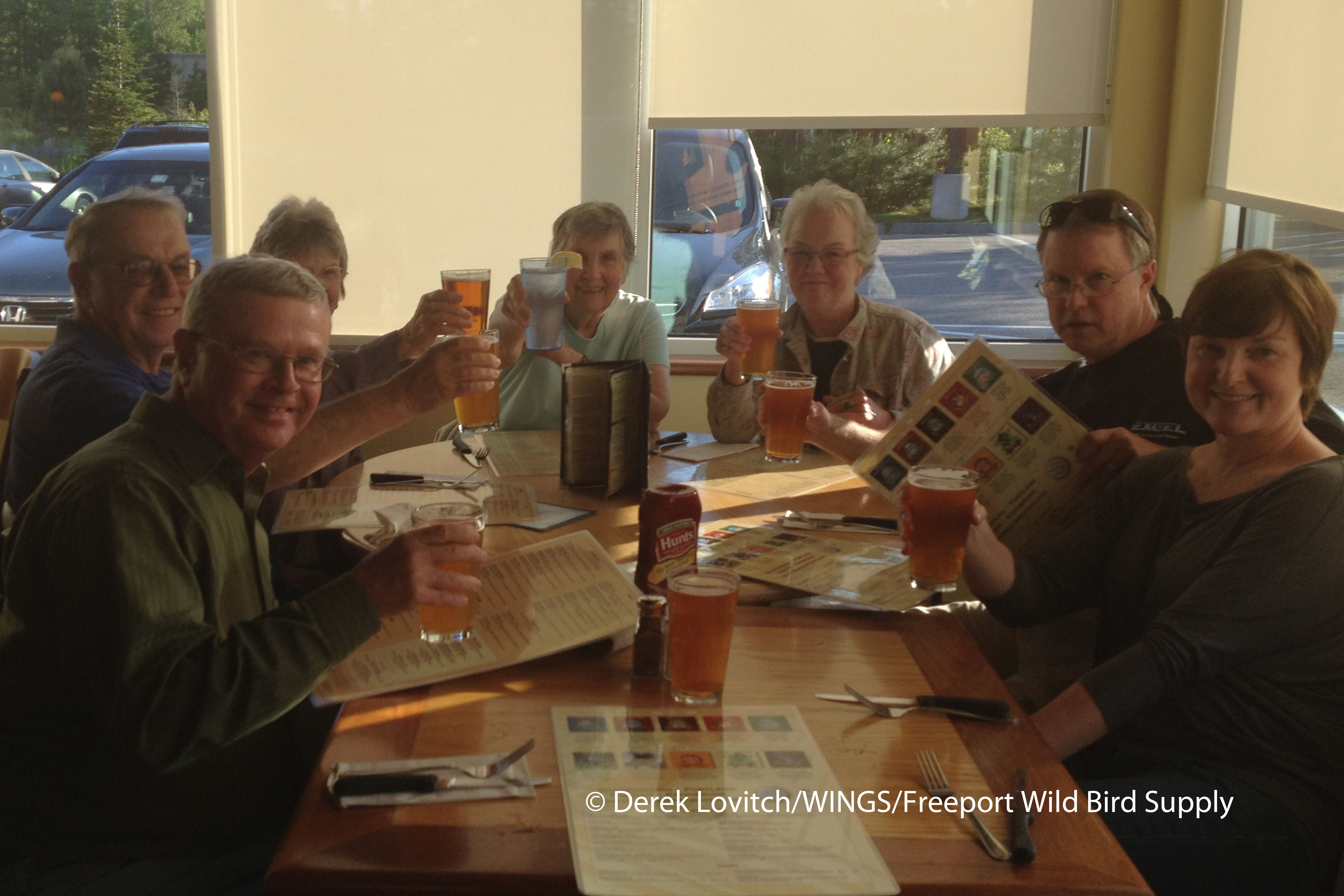
IMG_0891-1st night dinner1,6-15-13_edited-1

We began on Day One in the saltmarshes of Scarborough Marsh, comparing Saltmarsh and Nelson’s Sparrows.  “Eastern” Willets voiced their complaints, while Least Terns foraged nearby.  The nearby sandy beaches afforded an opportunity to study Roseate Terns and Piping Plovers, with lingering White-winged Scoters and a Red-throated Loon offshore.  Our first surprise of the trip was a Brant standing on a sandbar off of Pine Point – not a typical summer bird here in Maine.  As we scanned the sandflats for lingering shorebirds (just four Black-bellied Plovers), we spotted two distant American Oystercatchers.  Just as we started to strain to see them, one flies by right off the end of the pier!

By mid-morning, we had arrived in the Kennebunk Plains, surrounded by the state’s largest population – by far – of Grasshopper Sparrows and Upland Sandpipers with goodly amounts of Vesper Sparrows, Prairie Warblers, and the continuing Clay-colored Sparrow.  After a picnic lunch at a particularly birdy spot, we began our climb into the White Mountains.  Our first stop was at an active Black-backed Woodpecker nest, where patience produced visits by both adults, and views of two hungry youngsters bursting out of the hole.  As this was a major target bird of the trip, I added quite a few miles and minutes to today’s marathon to assure us a look at this often secretive (at least away from the nest) boreal specialty.

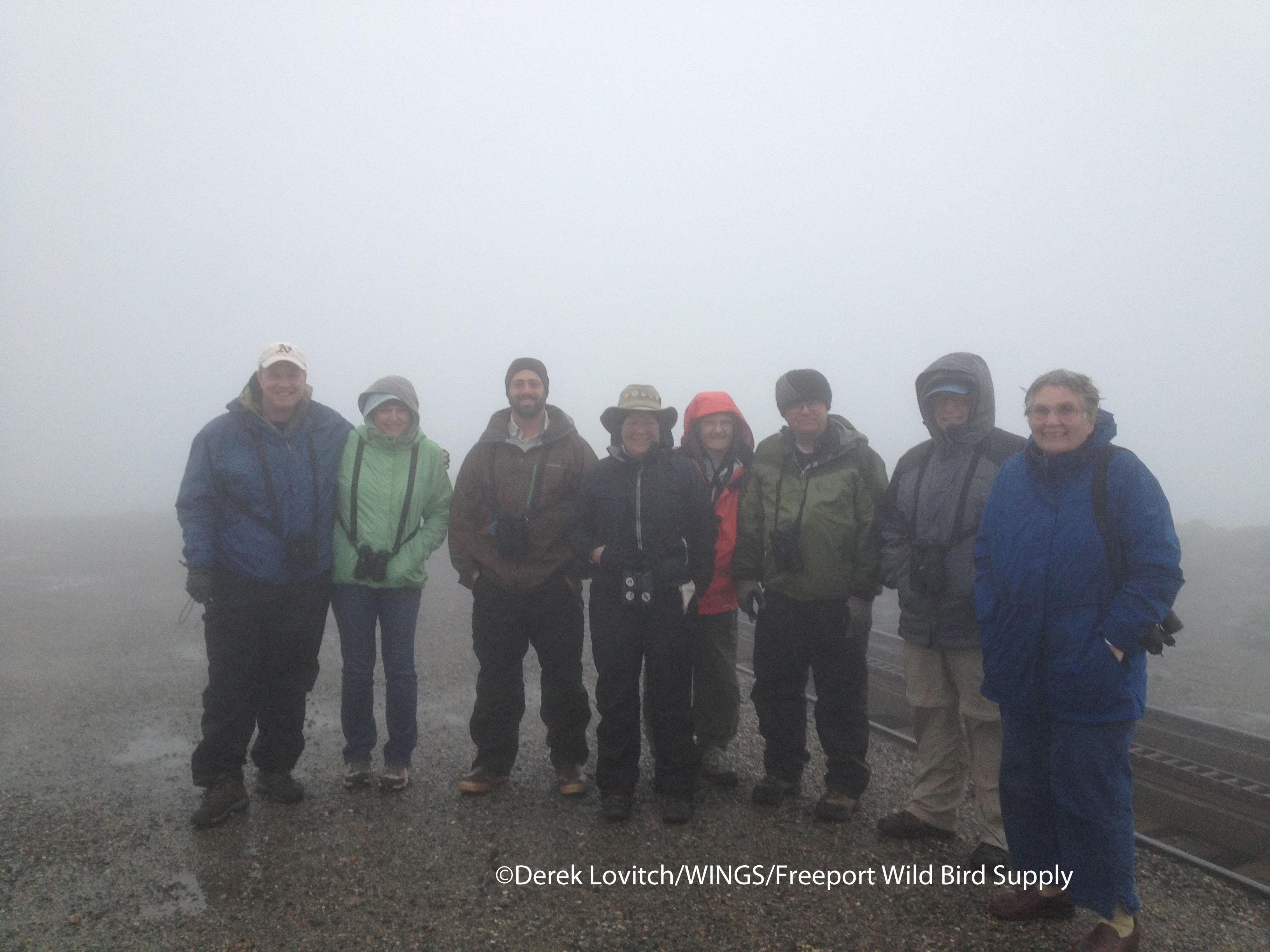
And as if this wasn’t enough, we had yet another major target yet to bag.  An after-hours private charter up Mount Washington into the realm of Bicknell’s Thrush was rewarded with exceptionally good views, and a chance to experience the winds and weather of the summit.

IMG_0905_Mt WashingtonSummit,6-16-13_edited-1

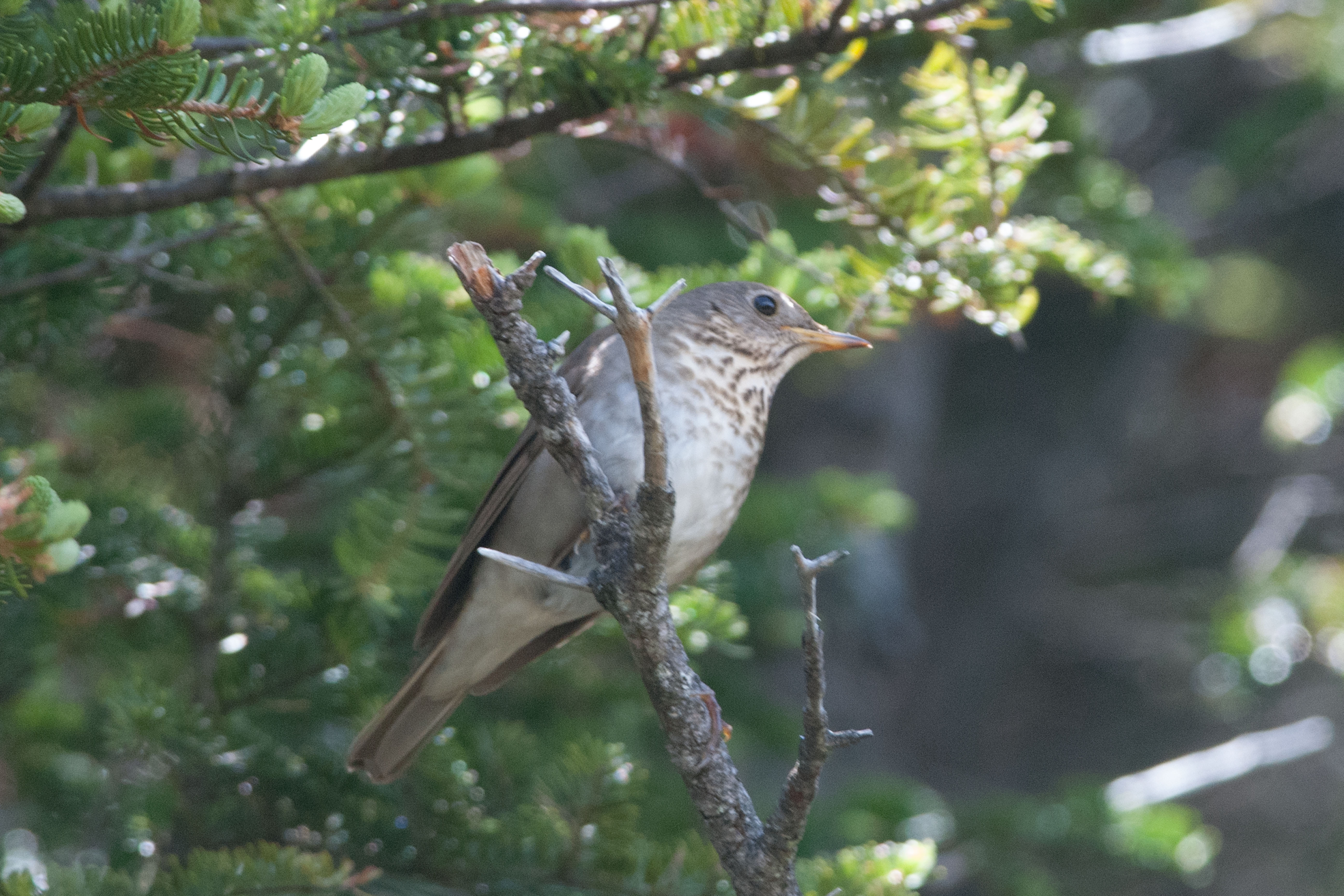
Day two began on the Caps Ridge Trailhead, with Gray Jays, Yellow-bellied Flycatchers, and Blackpoll Warblers, before we headed up another mountain for a second helping of Bicknell’s Thrush.  After telling folks that “there’s no way we’ll see a Bicknell’s better than we did last night,” I was made out to be a liar by crippling views of this thrush.

  DSC_0139_BITH,WildcatMtn,6-17-13

We also picked up a Philadelphia Vireo at one of my “secret spots,” and enjoyed some “bugs.”

DSC_0144_HarrissCheckerspot,WildcatMtn,6-17-13

(Harris’s Checkerspot).

IMG_0909_ModestSphinx,WildcatMtn,6-16-13_edited-1

(Modest Sphinx moth).

IMG_0921_GrouponWildcatMountain,6-17-13_edited-1

Heading back into Maine, we spent the night in Rangeley, and come morning, Gray Jays dropped in to clean up after our picnic breakfast.  Kirk Betts joined us for a few hours of birding the Boy Scout Road, where Boreal Chickadees and an Olive-sided Flycatcher were well seen, and as we began our trek eastward, Purple Martins, Black Terns, and two (admittedly ridiculously distant) Sandhill Cranes at Messalonskee Lake nicely broke up the drive.

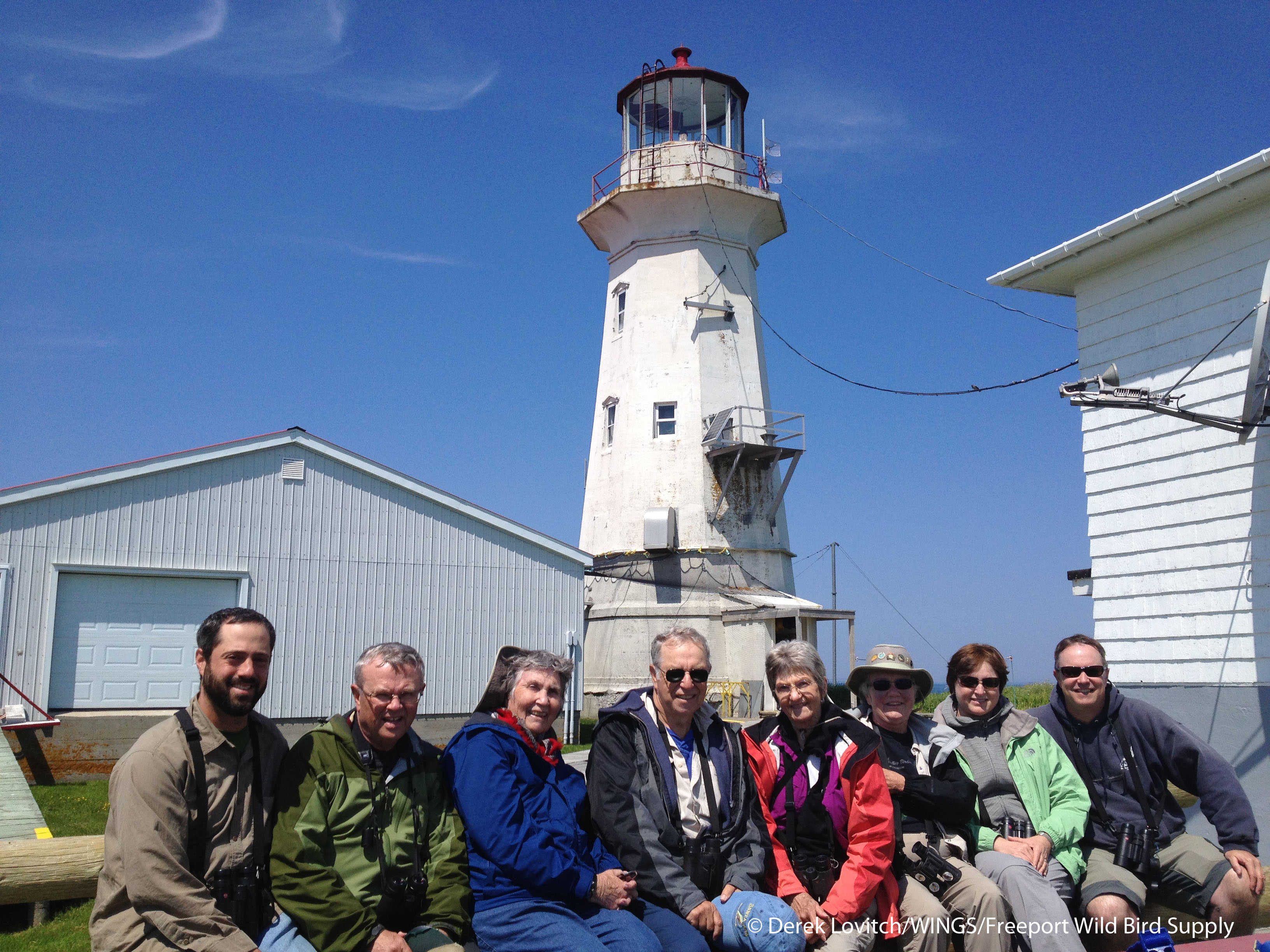
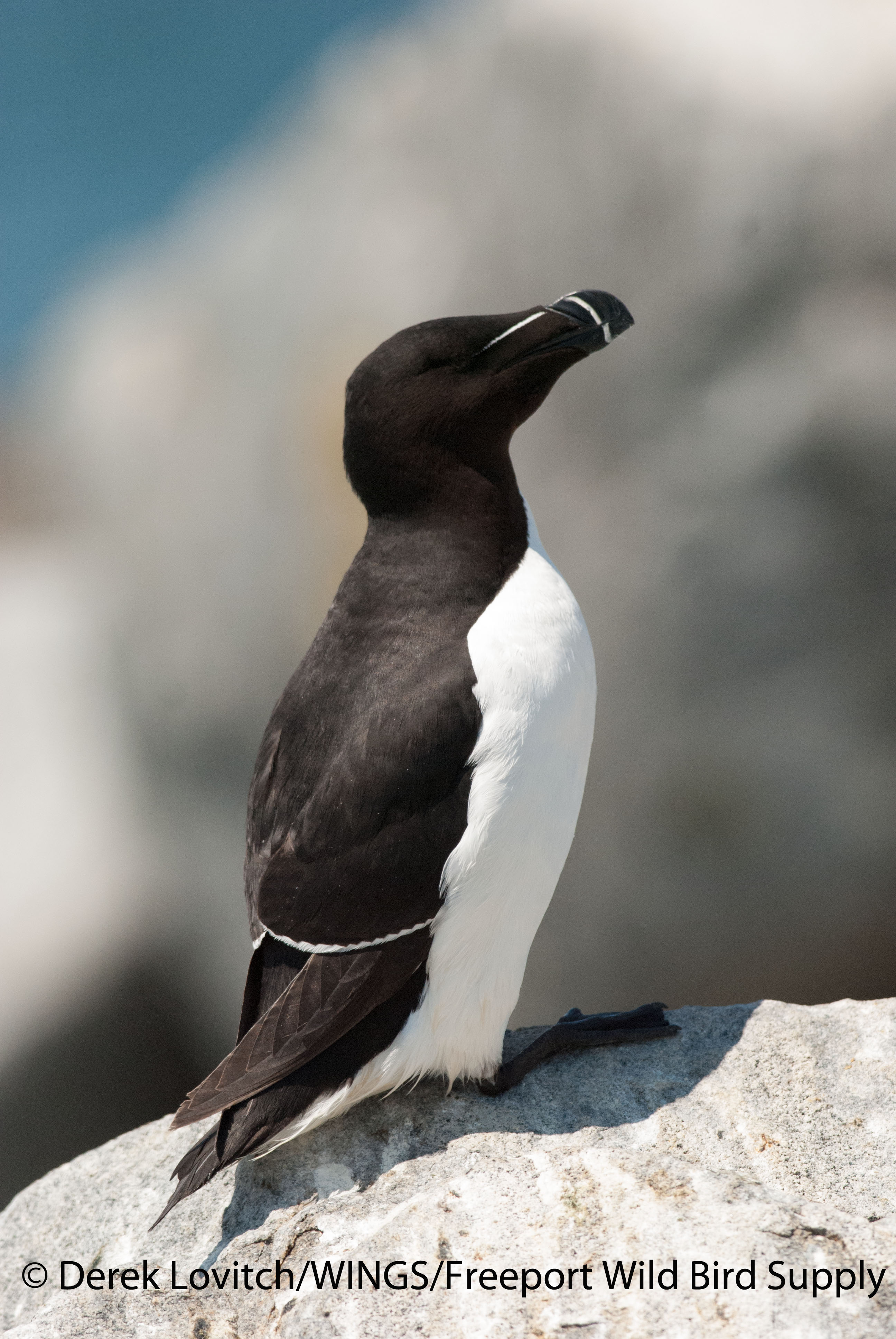
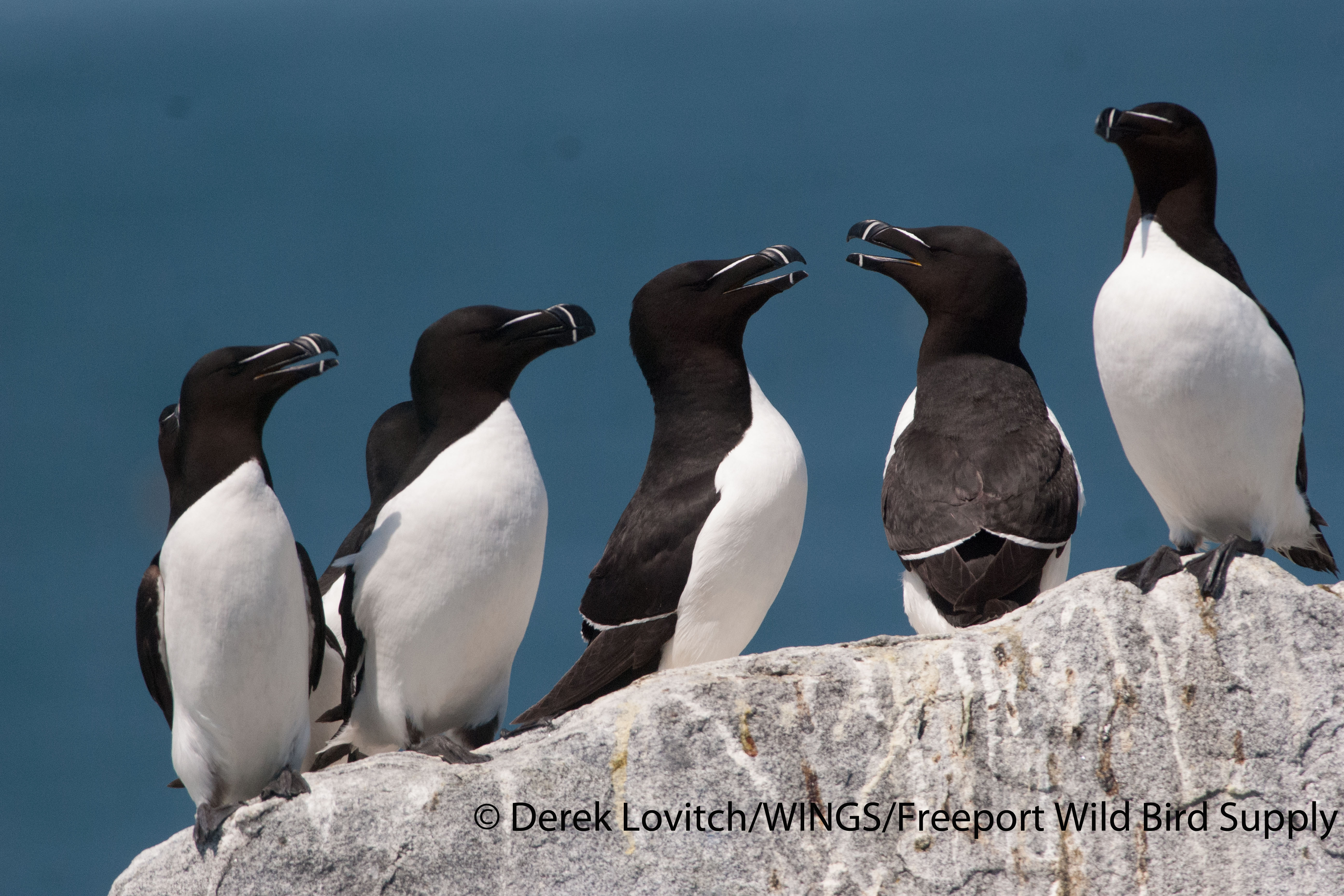
By the beginning of the fourth day, we were far Downeast in Machias.  We dipped on our first attempt at Spruce Grouse, but all was forgiven when we boarded our boat for MachiasSealIsland on a beautifully warm and sunny day.  Thousands of Atlantic Puffins, Razorbills, and many hundreds of Common Murres – many within just a few feet of the observation blinds.  How do you describe this magical place?  I simply cannot; it must be experienced.  I will let these pictures do the talking.

DSC_0157_1stSummerCOMU1,MSI,6-18-13_edited-1

Immature Common Murre.

IMG_0935_GrouponMSI,6-18-13_edited-1 

DSC_0244_ATPU8,MSI,6-18-13_edited-1

DSC_0240_ATPU8,MSI,6-18-13_edited-1

DSC_0232_ATPU6,MSI,6-18-13_edited-1

DSC_0223_RAZO6,MSI,6-18-13_edited-1

DSC_0212_ATPU1,MSI,6-18-13_edited-1

DSC_0199_RAZOandCOMU1,MSI,6-18-13_edited-1

DSC_0193_RAZO2,MSI,6-18-13_edited-1

DSC_0190_RAZO1,MSI,6-18-13_edited-1

DSC_0174_SAVS1,MSI,6-18-13_edited-1

After lunch, we were joined by Chris Bartlett as we worked our way along the BoldCoast to West Quoddy Head and back to Machias.  On the hot summer afternoon, we didn’t see many of our targets, but we were adding birds to our list.  Unfortunately, we had yet to add Spruce Grouse.  

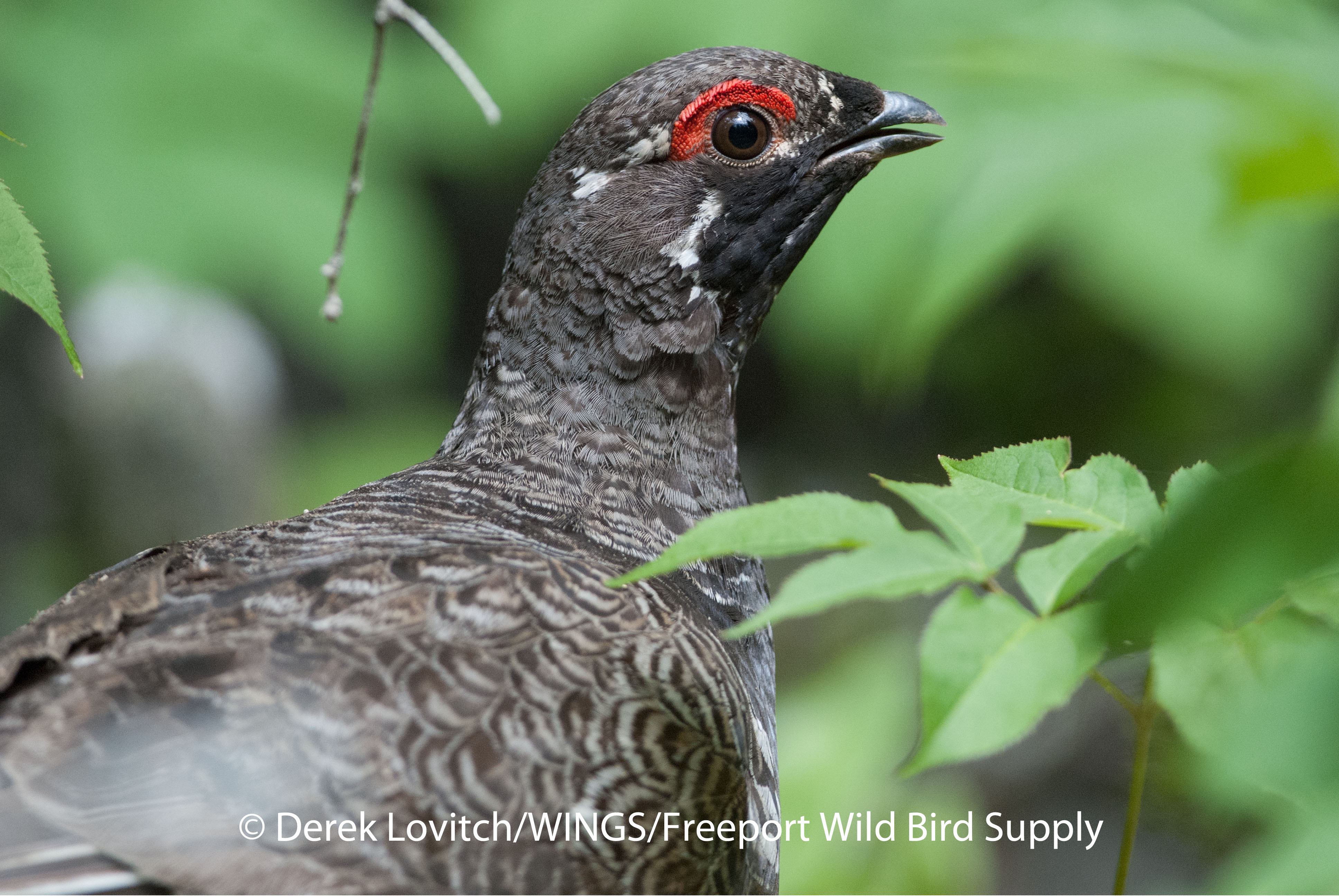
Therefore, on the 5th morning of the trip, Operation Fool Hen (the colloquial name for Spruce Grouse) went into full effect.  The formerly most-reliable place in the state was no longer reliable (0-3 here), and I had pretty much resigned myself to failure by the time we entered the woods at one last place.  We were cleaning up some “dirty birds,” (birds not seen by the whole group), and while I was trying to get some people a look at a Swainson’s Thrush, a hen Spruce Grouse walks out behind me, about 10 feet away and starts preening. The grouse walks even closer to the growing group, including a family that enjoyed the show, patiently waiting to pass.  We watched for well over 15 minutes before she sauntered off.

DSC_0325_SPGRhen3,QuoddyHead,6-20-13_edited-1

DSC_0319_SPGR_hen2,QuoddyHead,6-20-13_edited-1

Relieved and ecstatic, we continued down the trail.  On our way back, that family, now ahead of us, points to where we saw the hen grouse.  We acknowledged it, they moved on, and instead we see a spiffy male standing just off the trail.  He started walking towards us, we all froze, and he actually walks around a few people in order to take a dust bath within a few feet of us – in the very same spot that we saw the hen.  This guy was not going to be deterred!

DSC_0370_SGPRmale,QuoddyHead,6-20-13_edited-1

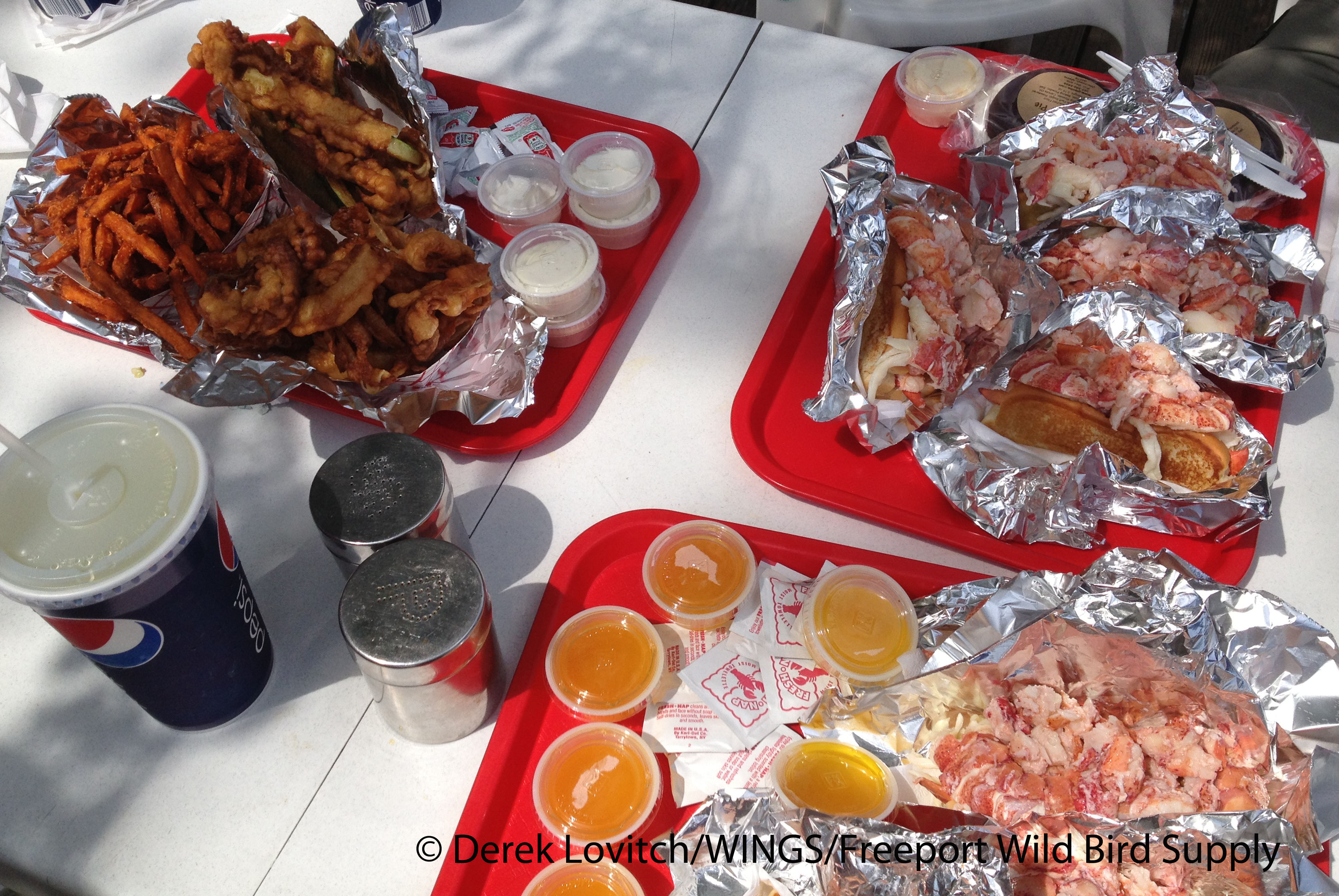
Time flies when you’re having fun with Spruce Grouse, so our time was limited in Moosehorn NWR.  Luckily, we did see Bay-breasted Warbler, but before we knew it, it was time to move on and head towards Bar Harbor, where we enjoyed a lobster dinner the way lobster should be (abundant; and on paper plates with bibs and lots of napkins).

IMG_0939_Trenton_Bridge_Lobster_Pound,6-20-13_edited-1

IMG_0951_Summer_Solstice,Bar_Harbor,6-21-13_edited-1

(Dawn on the Summer Solstice from the Back Porch).

Our second boat trip of the tour departed Bar Harbor on the morning of Day 6, and we headed towards Petit Manan to enjoy yet more puffins, Razorbills, and Common Murres.  And unlike Machias Seal, the tern colony here is present and active, with thousands of Common and Arctic Terns wheeling through the air, and at least a few more Roseates.  Heading further offshore, pelagic birds began to increase.  A conservatively-estimated 500 Wilson’s Storm-Petrels were joined by at least 18 Leach’s – probably my best-ever tally from a non-dedicated (no-chumming) pelagic. 150+ Great Shearwaters and 6 Sooty Shearwaters joined the party…oh yeah, and 9 Fin Whales!  It was one of my best pelagic bird shows on this 4-hour trip, and the Fin Whale show was dramatic as well.

DSC_0423_GRSH_flock,offBarHarbor,6-21-13

Great Shearwaters.

DSC_0411_Fin_Whale,Off_Bar_Harbor,6-21-13

Fin Whale.

DSC_0408_LESP1,offBar_Harbor,6-21-13_edited-1

Leach’s Storm-Petrel.

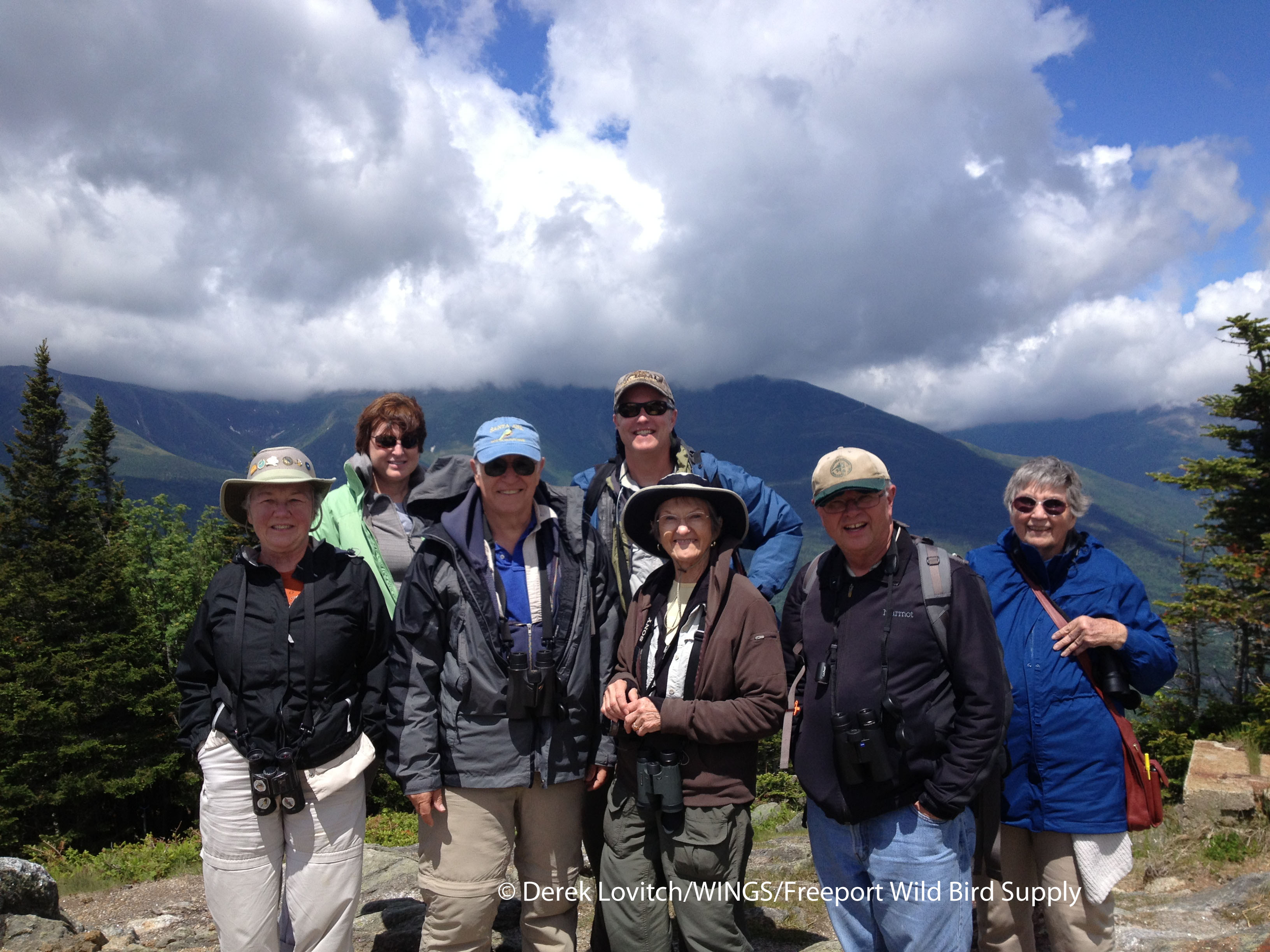
IMG_0950_Cadillac_Summit_Group2,6-21-13_edited-1

The view from the summit of Cadillac.

Day seven was our last day of birding, and a lot was on the agenda once again.  A picnic and walk at Sieur de Monts Spring was highlighted by a great look at a day-hunting Barred Owl, and the scenic Auto Loop Road filled some holes in our list, and surprised us with a lingering immature Great Cormorant!

Heading towards Portland, we stopped for lobster rolls at the world famous Red’s Eats before birding around Brunswick, still adding some birds to our list, such as some rare-for-the-season Long-tailed Ducks.

IMG_0954_Reds_Eats1,6-22-13_edited-1

  LL Bean, Freeport Wild Bird Supply (of course to add a few more species to the list at the feeders), the world’s Largest Rotating Globe at Delorme, a colony of Fish Crows, and last but not least, a scrumptious dinner in Portland brought this remarkable trip to a grand finale.

I hope you’ll consider joining me on this tour when we run it again in 2015.  As with all of our trips and tours, stay tuned to www.freeportwildbirdsupply.com/birdingtoursinMaine.asp for more information.