Tag Archives: Freeport Wild Bird Supply

The All-Time Saturday Morning Birdwalk List

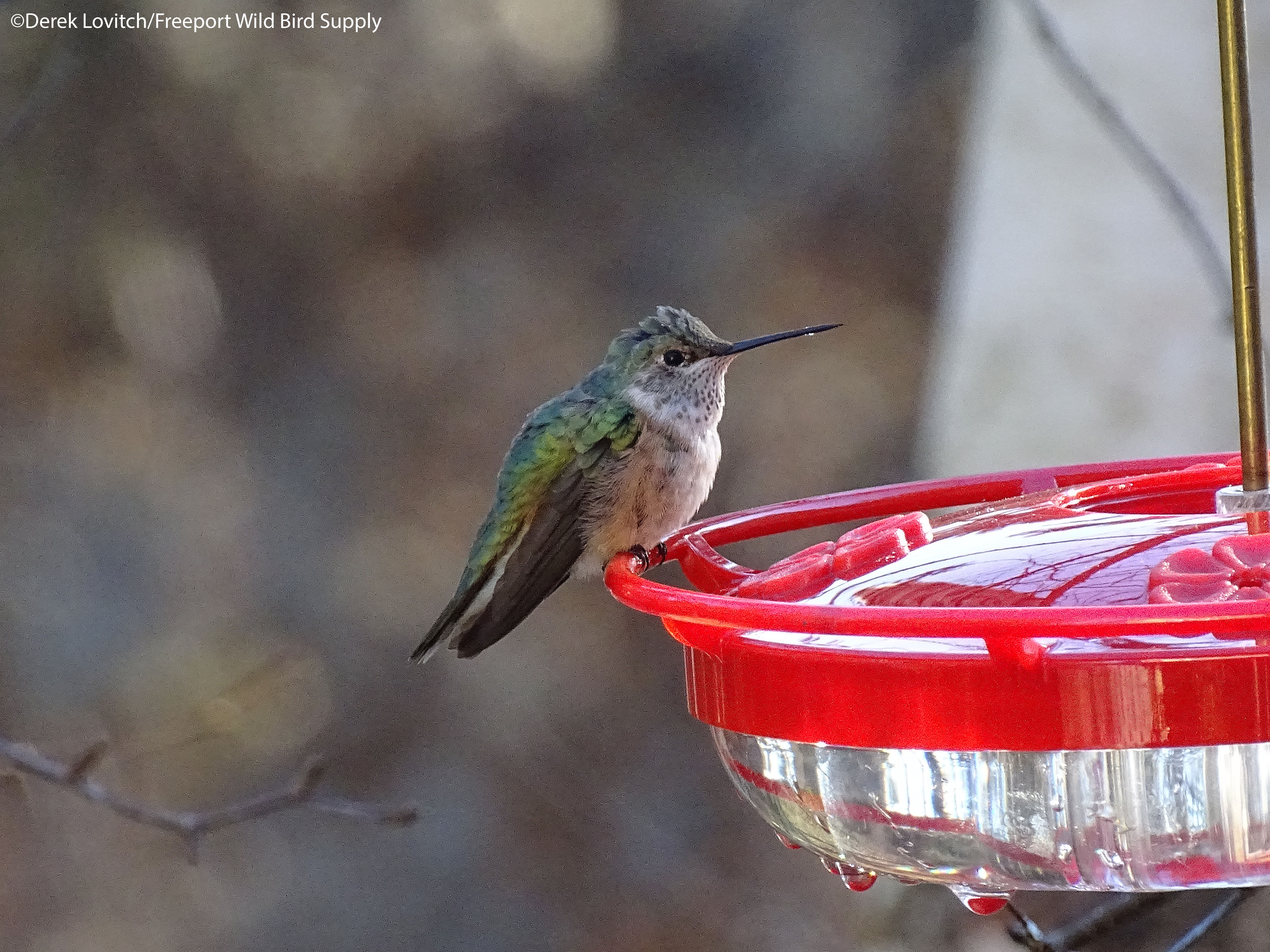
Maine’s first-ever Broad-tailed Hummingbird in November of 2022 was one of the rarest birds ever encountered on a Saturday Morning Birdwalk. Even better, we were among the first to see it as the birdwalk group was among the first to be granted permission to visit this Freeport yard before
it was open to the public for all to enjoy.

Last Update: 11/8/2025.

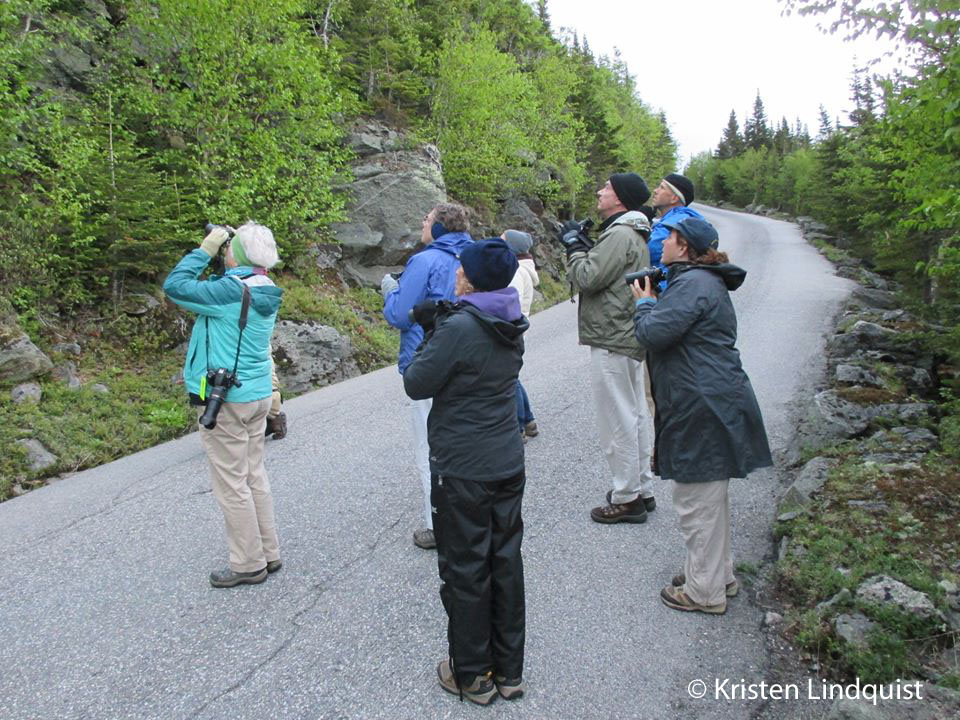
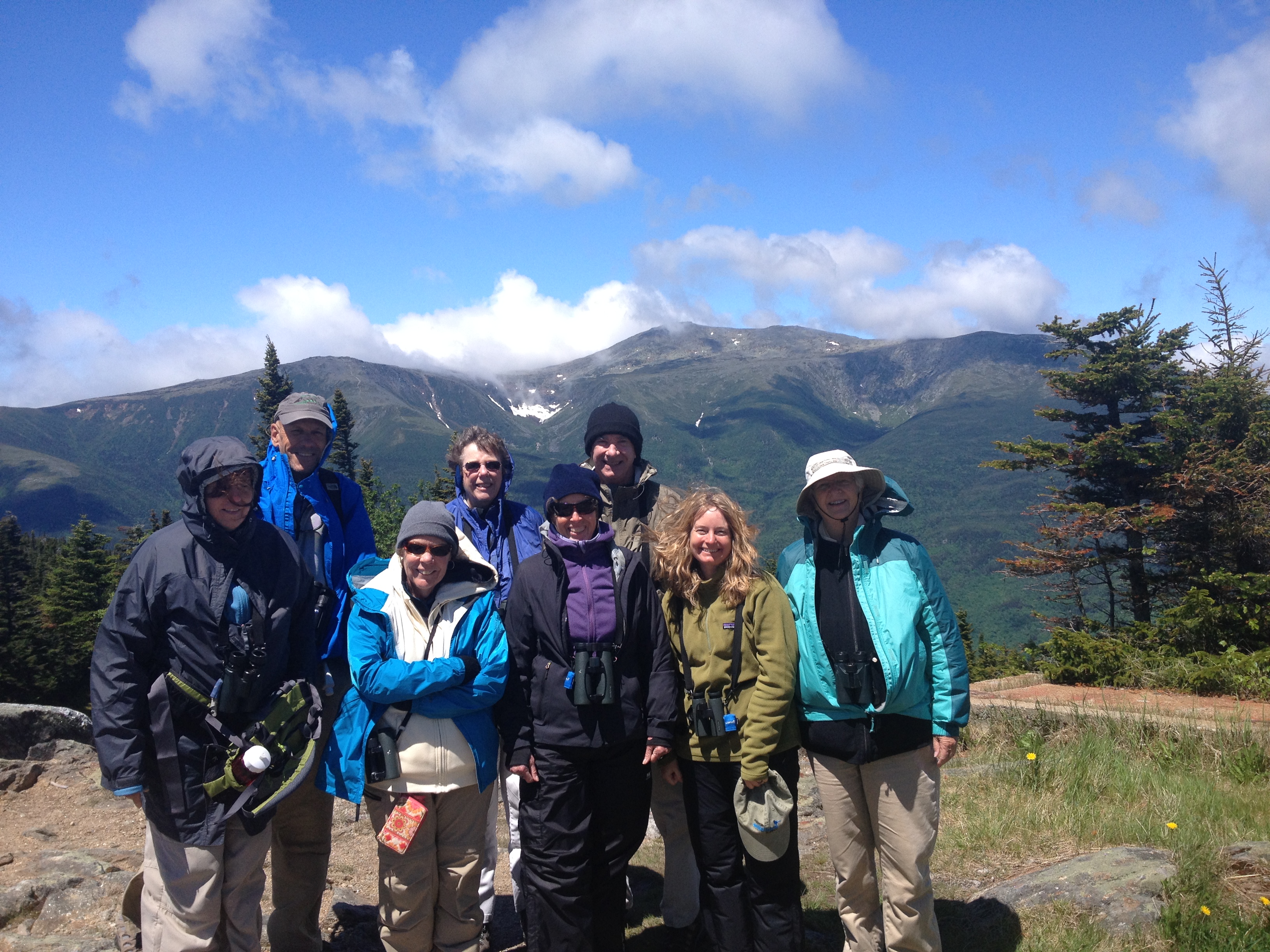
Our store, Freeport Wild Bird Supply, offers free birdwalks every Saturday morning, all year long. Meeting at 8:00am, we carpool to a local park of seasonal interest, and return to the store for bird-friendly coffee between 10 and 10:30. With the exception of inclement weather, we limit the drive to about 10-15 minutes away, and visit a variety of parks, waterfront overlooks, and other hotspots.

Over the years, we have seen a lot of good birds. We’ve “chased” as species or two, but we have found our fair share of “good” birds.  Encompassing a wide variety of habitats each season, we have seen an impressive array of species. Spurred on by the Townsend’s Solitaire that the Saturday Morning Birdwalk group enjoyed this past weekend, I have finally compiled a list of all of the species seen on Saturday Morning Birdwalks over the past 10 ½ years (As of 2015, and not including any other trips, tours, or special walks).

This is the “unofficial” list at the moment. UPPERCASE is for species seen only once or twice. I am hoping participants will take a look at the list and see if I have missed anything, or made any errors. I’ll edit the list as changes come in, so please let me know what I missed!

      1. Greater White-fronted Goose
      2. Snow Goose
      3. BARNACLE GOOSE
      4. Cackling Goose
      5. Canada Goose
      6. Wood Duck
      7. Gadwall
      8. EURASIAN WIGEON
      9. American Wigeon
      10. American Black Duck
      11. Mallard
      12. Blue-winged Teal
      13. Northern Shoveler
      14. Northern Pintail
      15. Green-winged Teal
      16. Canvasback
      17. Ring-necked Duck
      18. Greater Scaup
      19. Lesser Scaup
      20. Common Eider
      21. HARLEQUIN DUCK
      22. Surf Scoter
      23. White-winged Scoter
      24. Black Scoter
      25. Long-tailed Duck
      26. Bufflehead
      27. Common Goldeneye
      28. Barrow’s Goldeneye
      29. Hooded Merganser
      30. Common Merganser
      31. Red-breasted Merganser
      32. Ruddy Duck
      33. Ruffed Grouse
      34. Wild Turkey
      35. Red-throated Loon
      36. Common Loon
      37. Pied-billed Grebe
      38. Horned Grebe
      39. Red-necked Grebe
      40. Double-crested Cormorant
      41. Great Cormorant
      42. American Bittern
      43. Great Blue Heron
      44. Great Egret
      45. Snowy Egret
      46. Little Blue Heron
      47. Green Heron
      48. Black-crowned Night-Heron
      49. Glossy Ibis
      50. Turkey Vulture
      51. Osprey
      52. Bald Eagle
      53. Northern Harrier
      54. Sharp-shinned Hawk
      55. Cooper’s Hawk
      56. Northern Goshawk
      57. Red-shouldered Hawk
      58. Broad-winged Hawk
      59. Red-tailed Hawk
      60. Rough-legged Hawk
      61. GOLDEN EAGLE
      62. American Kestrel
      63. Merlin
      64. Peregrine Falcon
      65. Sandhill Crane
      66. Black-bellied Plover
      67. American Golden-Plover
      68. Semipalmated Plover
      69. Killdeer
      70. Greater Yellowlegs
      71. Lesser Yellowlegs
      72. Solitary Sandpiper
      73. “Eastern” Willet
      74. Spotted Sandpiper
      75. Whimbrel
      76. MARBLED GODWIT
      77. Ruddy Turnstone
      78. Red Knot
      79. Semipalmated Sandpiper
      80. Least Sandpiper
      81. White-rumped Sandpiper
      82. Baird’s Sandpiper
      83. Pectoral Sandpiper
      84. Purple Sandpiper
      85. Dunlin
      86. Buff-breasted Sandpiper
      87. Short-billed Dowitcher
      88. Long-billed Dowitcher
      89. Wilson’s Snipe
      90. American Woodcock
      91. RED PHALAROPE
      92. Laughing Gull
      93. Bonaparte’s Gull
      94. Ring-billed Gull
      95. Herring Gull
      96. Iceland Gull
      97. Lesser Black-backed Gull
      98. Glaucous Gull
      99. Great Black-backed Gull
      100. Common Tern
      101. FORSTER’S TERN
      102. DOVEKIE
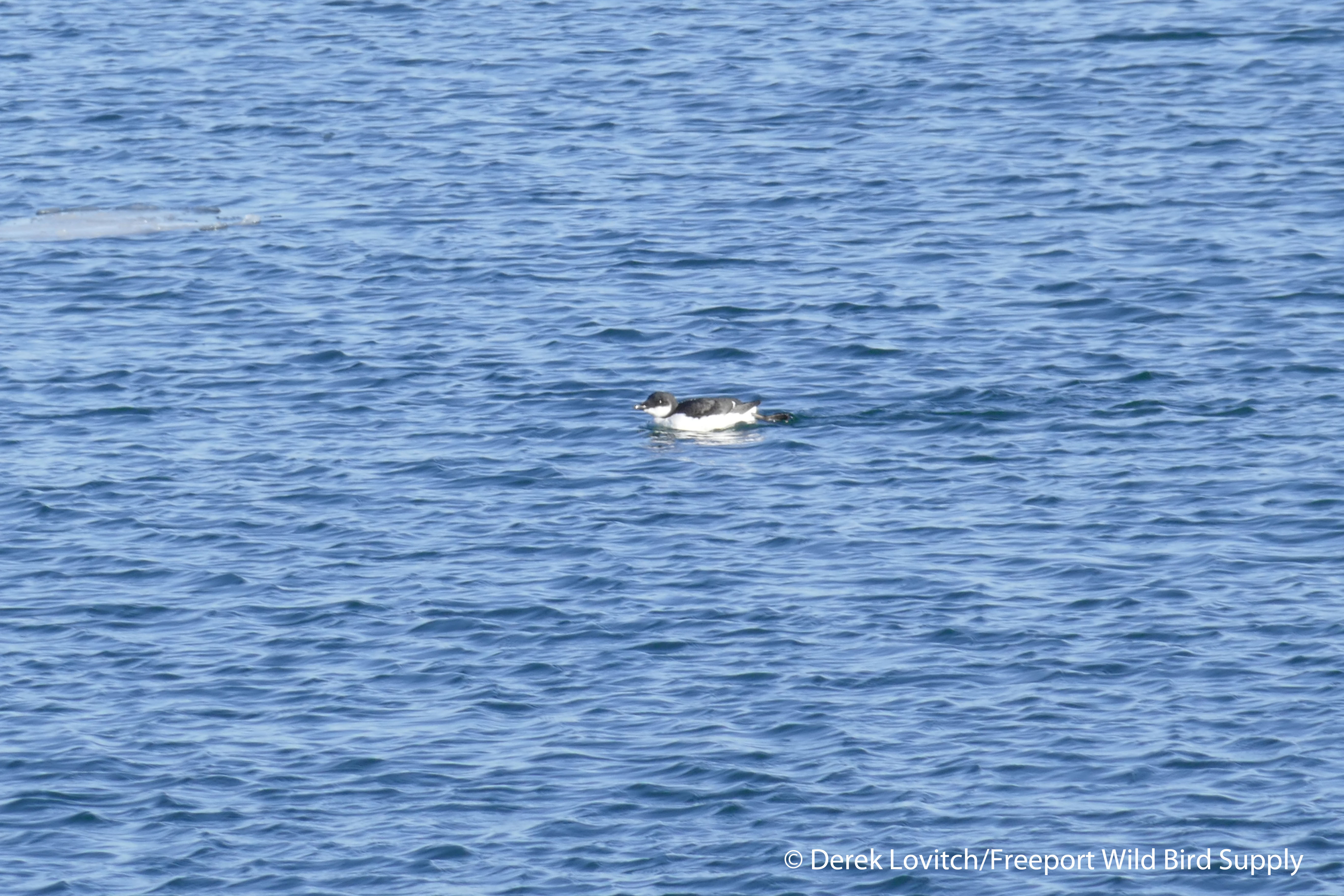
      103. THICK-BILLED MURRE
      104. Razorbill
      105. Black Guillemot
      106. Rock Pigeon
      107. Mourning Dove
      108. Black-billed Cuckoo
      109. Yellow-billed Cuckoo
      110. Great Horned Owl
      111. Barred Owl
      112. Chimney Swift
      113. Ruby-throated Hummingbird
      114. Belted Kingfisher
      115. Red-bellied Woodpecker
      116. Yellow-bellied Sapsucker
      117. Downy Woodpecker
      118. Hairy Woodpecker
      119. Northern Flicker
      120. Pileated Woodpecker
      121. Eastern Wood-Pewee
      122. Yellow-bellied Flycatcher
      123. Alder Flycatcher
      124. Willow Flycatcher
      125. Least Flycatcher
      126. Eastern Phoebe
      127. Great Crested Flycatcher
      128. Eastern Kingbird
      129. Northern Shrike
      130. Blue-headed Vireo
      131. Warbling Vireo
      132. Philadelphia Vireo
      133. Red-eyed Vireo
      134. Blue Jay
      135. American Crow
      136. Fish Crow
      137. Common Raven
      138. Horned Lark
      139. Tree Swallow
      140. Northern Rough-winged Swallow
      141. Bank Swallow
      142. Cliff Swallow
      143. Barn Swallow
      144. Black-capped Chickadee
      145. Tufted Titmouse
      146. Red-breasted Nuthatch
      147. White-breasted Nuthatch
      148. Brown Creeper
      149. Carolina Wren
      150. House Wren
      151. Winter Wren
      152. Marsh Wren
      153. Golden-crowned Kinglet
      154. Ruby-crowned Kinglet
      155. Blue-gray Gnatcatcher
      156. Eastern Bluebird
      157. TOWNSEND’S SOLITAIRE
      158. Veery
      159. GRAY-CHEEKED THRUSH
      160. Swainson’s Thrush
      161. Hermit Thrush
      162. Wood Thrush
      163. American Robin
      164. Gray Catbird
      165. Northern Mockingbird
      166. Brown Thrasher
      167. European Starling
      168. American Pipit
      169. Bohemian Waxwing
      170. Cedar Waxwing
      171. Lapland Longspur
      172. Snow Bunting
      173. Ovenbird
      174. Louisiana Waterthrush
      175. Northern Waterthrush
      176. Black-and-white Warbler
      177. Tennessee Warbler
      178. Nashville Warbler
      179. Common Yellowthroat
      180. American Redstart
      181. Cape May Warbler
      182. Northern Parula
      183. Magnolia Warbler
      184. Bay-breasted Warbler
      185. Blackburnian Warbler
      186. Yellow Warbler
      187. Chestnut-sided Warbler
      188. Blackpoll Warbler
      189. Black-throated Blue Warbler
      190. Palm Warbler
      191. Pine Warbler
      192. Yellow-rumped Warbler
      193. Prairie Warbler
      194. Black-throated Green Warbler
      195. Canada Warbler
      196. Wilson’s Warbler
      197. YELLOW-BREASTED CHAT
      198. Eastern Towhee
      199. American Tree Sparrow
      200. Chipping Sparrow
      201. Clay-colored Sparrow
      202. Field Sparrow
      203. LARK SPARROW
      204. Savannah Sparrow
      205. Nelson’s Sparrow
      206. Saltmarsh Sparrow
      207. Fox Sparrow
      208. Song Sparrow
      209. Lincoln’s Sparrow
      210. Swamp Sparrow
      211. White-throated Sparrow
      212. White-crowned Sparrow
      213. Dark-eyed Junco
      214. Scarlet Tanager
      215. SUMMER TANAGER
      216. Northern Cardinal
      217. Rose-breasted Grosbeak
      218. BLUE GROSBEAK
      219. Indigo Bunting
      220. Dickcissel
      221. Bobolink
      222. Red-winged Blackbird
      223. Eastern Meadowlark
      224. Rusty Blackbird
      225. Common Grackle
      226. Brown-headed Cowbird
      227. ORCHARD ORIOLE
      228. Baltimore Oriole
      229. Pine Grosbeak
      230. House Finch
      231. Purple Finch
      232. White-winged Crossbill
      233. Red Crossbill
      234. Common Redpoll
      235. Pine Siskin
      236. American Goldfinch
      237. Evening Grosbeak
      238. House Sparrow
      239. SNOWY OWL, Brunswick Landing, 1/31/15.
      240. Purple Martin, Rossmore Road, Brunswick, 5/2/15.
      241. BLUE-WINGED WARBLER, Old Town House Park, North Yarmouth, 7/18/15.
      242. WHITE-EYED VIREO, Freeport Transfer Station/Hedgehog Mountain Park 10/10/15
      243. LITTLE EGRET, Tidewater Farm, Falmouth, 7/9/16.
      244. Upland Sandpiper, Bowdoin Sand Plains, 7/1/17
      245. GREAT BLACK HAWK, Deering Oaks Park, Portland, 12/1/18
      246. Vesper Sparrow, Wolfe’s Neck Center, Freeport, 10/9/21.
      247. CATTLE EGRET, Wolfe’s Neck Center, Freeport, 11/6/21
      248. HENSLOW’S SPARROW, Crystal Spring Farm, Brunswick, 7/9/22
      249. Olive-sided Flycatcher, Highland Rd, Brunswick, 8/27/22
      250. HUDSONIAN GODWIT, Wharton Point, Brunswick, 10/15/22.
      251. BROAD-TAILED HUMMINGBIRD, Private Property in Freeport, 11/26/22.
      252. ORANGE-CROWNED WARBLER (finally!), Wolfe’s Neck Center, Freeport, 11/4/23.
      253. Stilt Sandpiper, Walsh Preserve, Freeport, 8/10/24.
      254. RUFF, Walsh Preserve, Freeport, 5/10/25.
      255. MACGILLIVRAY’S WARBLER, Grist Mill Park, Yarmouth, 11/8/25.

2014 MonhegZEN Birding Fall Migration Weekend Trip Report

harbor,K

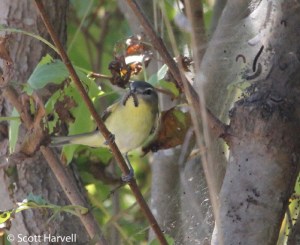
PHVI,ScottHarvell_edited-1Philadelphia Vireo wrasslin’ a Fall Webworm.

Ninety-seven species of birds, including 16 species of warblers. Yellow-headed Blackbird, Lark and Clay-colored Sparrows, and Dickcissel from the mid-west. Blue Grosbeak from the south. Kettles of Peregrine Falcons, clouds of Yellow-rumped Warblers, good food, great beer, and fantastic camaraderie. Yup, it’s another installment of our annual “MonhegZEN Birding Fall Migration Weekend.”

There are few places in the entire Northeast that I would rather be in fall, especially during the peak of migrant diversity. Our annual tour takes places to coincide with the last waves of warblers, first waves of sparrows, peak of raptors, and the beginning of “Rarity Season.” Check, check, check, and check…and it was hot! In fact, I believe I received the first ever complaint of a room at the Trailing Yew being “too warm in the morning.” Of course, “complaint” is used loosely here, for the record. But it was an unusually warm weekend, and although the birding was not epic by Monhegan standards, great diversity was thoroughly enjoyed – as was the weather (well, at least until the boat ride home a day after the tour ended!).

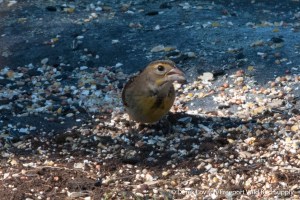
Two Red-necked Grebes just outside of the harbor were a nice way to start the trip on Friday, as were plenty of Northern Gannets, several Common Loons, and glass-calm seas on our way across. Arriving at 10am via the Hardy Boat from New Harbor, we hit the ground running, and after dropping our bags off to be taken to our inn, we immediately began to bird. Two vocal, dogfighting Peregrine Falcons got us started, and we soon spotted the single continuing Dickcissel. That’s how I like to get things started!
DSC_0054_DICK1,Monhegan,9-28-14_edited-1

IMG_8630_edited-2

Although we did find a Yellow-breasted Chat (frustrating as usual, although at least everyone saw twigs moving), the bird of the day was definitely Peregrine Falcon. A bona fide kettle of 8 were soaring overhead at lunch time, and a steady parade of birds was passing overhead throughout the day. There was a lot of swirling as well, however, which made tabulating an actual count of Peregrines impossible. We know we had at least a dozen birds, but likely multiple times that. Some birds were clearly hunting, but most were probably rising high on the thermals and then soaring off to the south, using the light headwind to efficiently move out to sea, and likely not making landfall until Cape Cod!

Unexpectedly, very light southwesterly winds shifted to west overnight, and as a result, we had a very good arrival of birds to the island. Yellow-rumped Warblers – as expected for the date – dominated, with a conservative estimate of 250 birds observed, with many dozens in the air over the Trailing Yew at sunrise. Three Cape May Warblers, including a couple at the edge of the Yew were the highlight of dozen species of warblers we recorded today. The immature male Dickcissel continued in his favorite seed pile, and we had a fly-by Yellow-billed Cuckoo over the Ice Pond. Unfortunately, a short time later, it was found dead below a nearby window, not just sobering our sighting, but punctuating the fact that up to a billion birds a year meet their death at windows each year – and that’s just in the US!

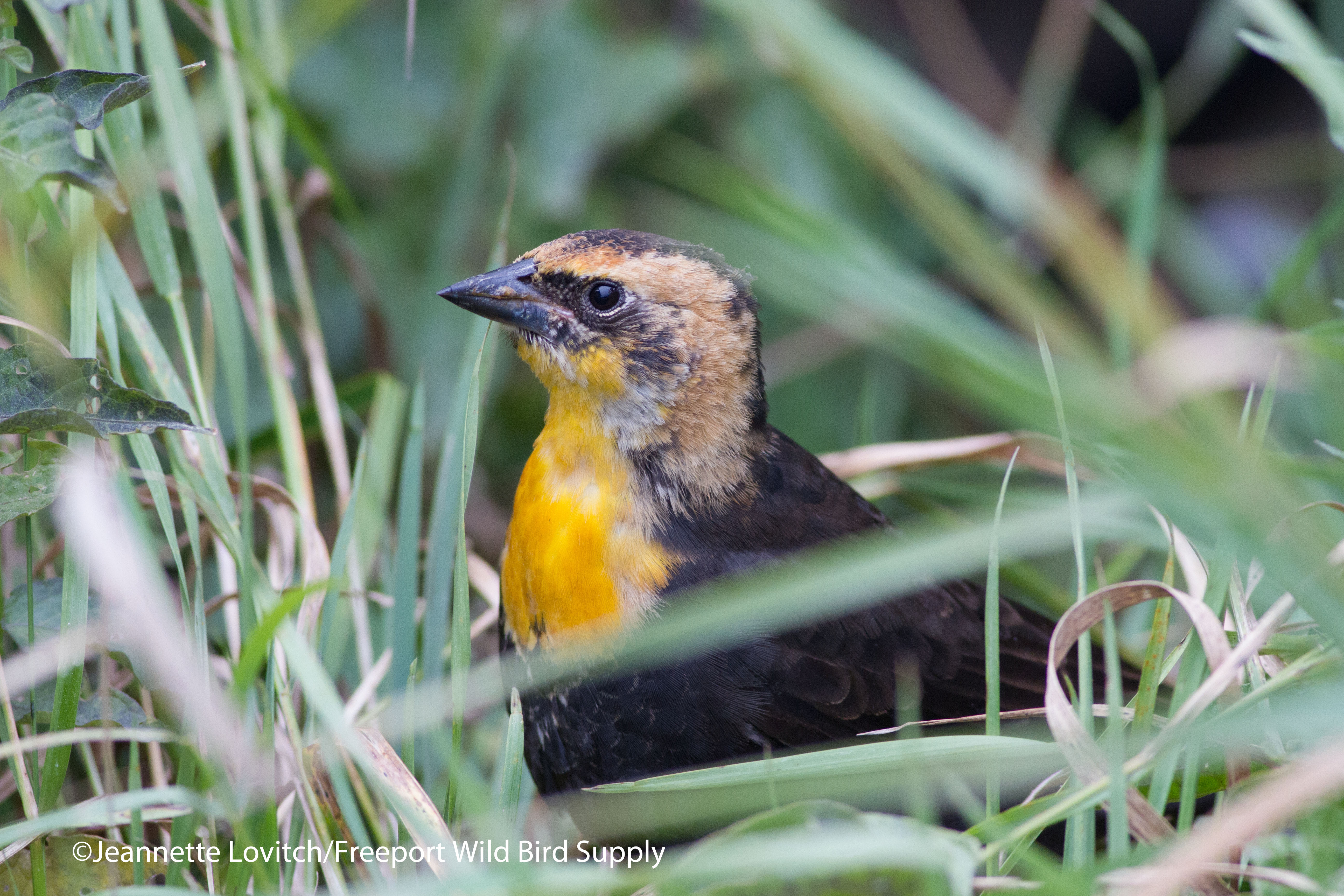
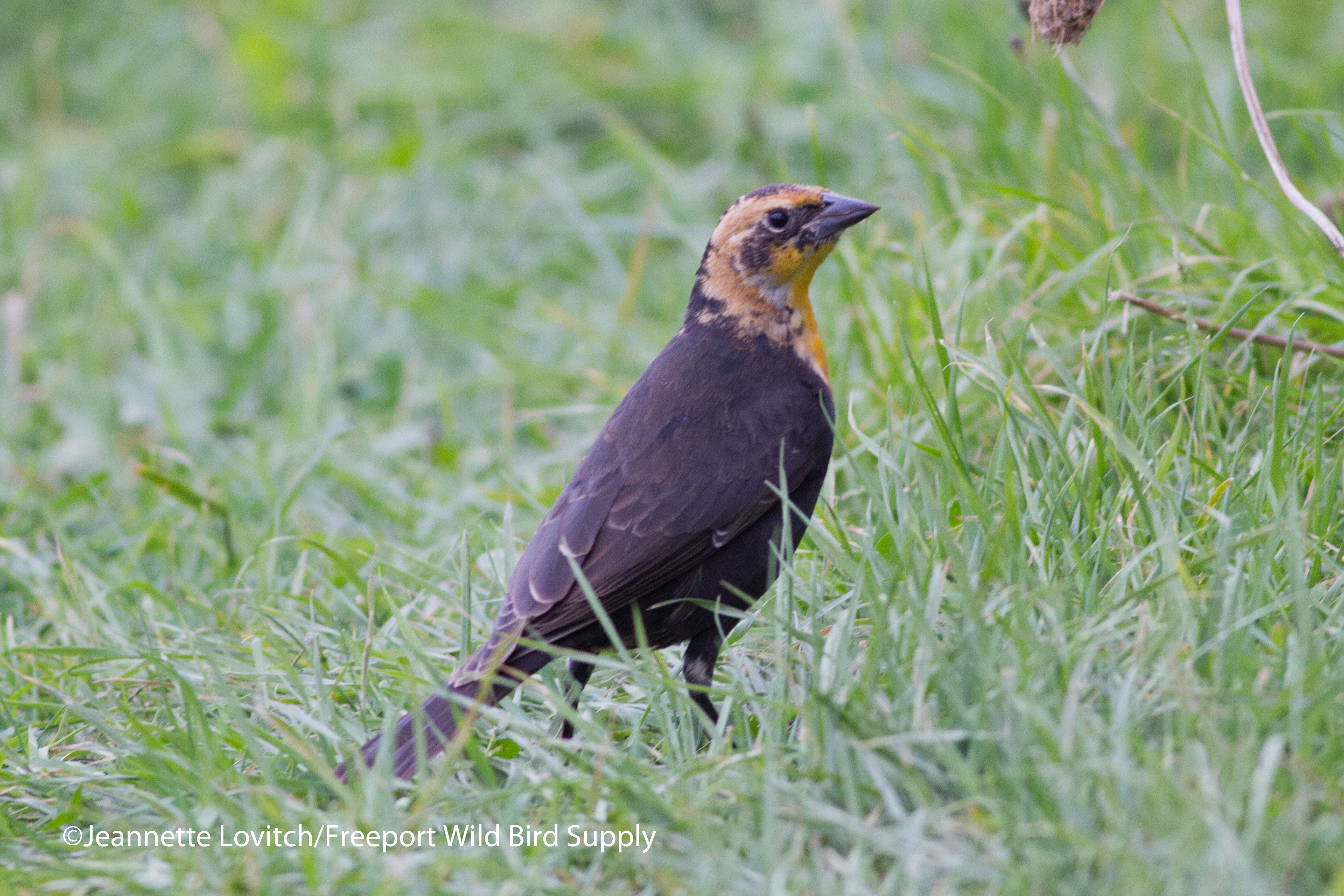
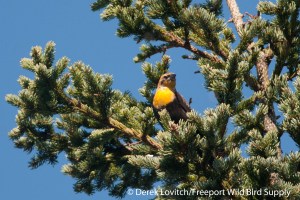
Good diversity and good (but not, by Monhegan standards, great) numbers made for a fun day of birding, but it was definitely a lot more relaxing once we finally caught up with the Yellow-headed Blackbird! This immature male (a lot of folks were calling it a female, but the blackish body, extent of yellow, face pattern, and every-so-slight touch of white on the wing point to this as being a male) had been present for about 4 days, but since it was a “State Bird” for me, and a “Life Bird” for several, it was obviously a priority.

But on Monhegan, you can only do so much to chase most rarities. In fact, more often than not, you have to simply relax and let the rarities come to you! I call this my “MonhegZEN Migration Birding Weekend” not for any existential reasons – or mandatory meditation or yoga – but simply because we (try) to kick back, focus on the bird(s) in front of us, and let good things happen.

But yeah, we wanted to see this bird, and after missing it by about 5 minutes on a brisk, pre-breakfast (but don’t worry, post-coffee!) walk, the MonhegZEN kicked in. A friend spotted the bird as it flew overhead, alighting nearby in the center of town. Good looks were had by all (I apparently said, “Oh, thank God,” in response to the bird’s arrival, feeling as much relief as joy, apparently!) but about a half hour later, we had even better views as it perched atop a spruce along Dock Road.
DSC_0022_YHBL1,Monhegan,9-27-14_edited-1

We were then able to more thoroughly enjoy the unseasonably warm day, watching Peregrines, and sorting through migrants. Oh, and a relative abundance of Monarch butterflies was heartening.
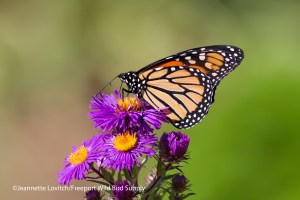
IMG_8603_edited-2

gentian,ScottHarvell

FringedGentian,Monhegan,9-28-14_edited-1
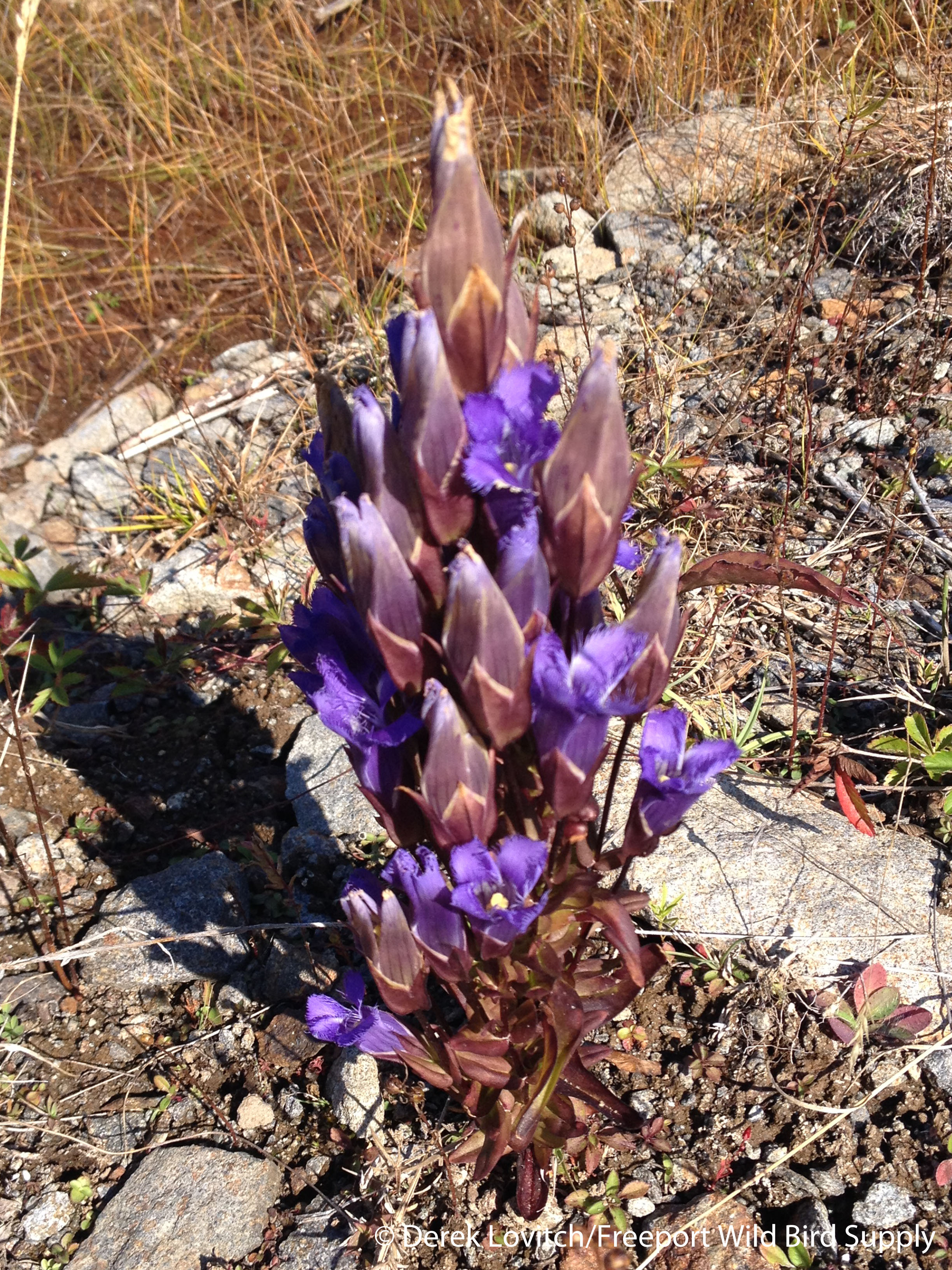
The largest Fringed Gentians I have seen.

IMG_0056_1_edited-1
Bald Eagle on the Outer Ducks as some of the participants took the short afternoon cruise around the island.

IMG_0022_1_edited-1
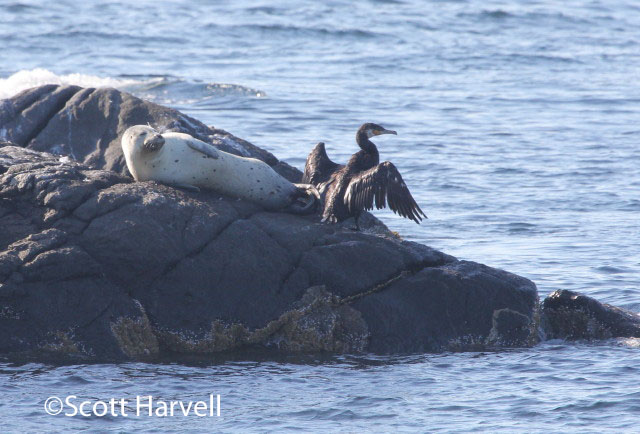
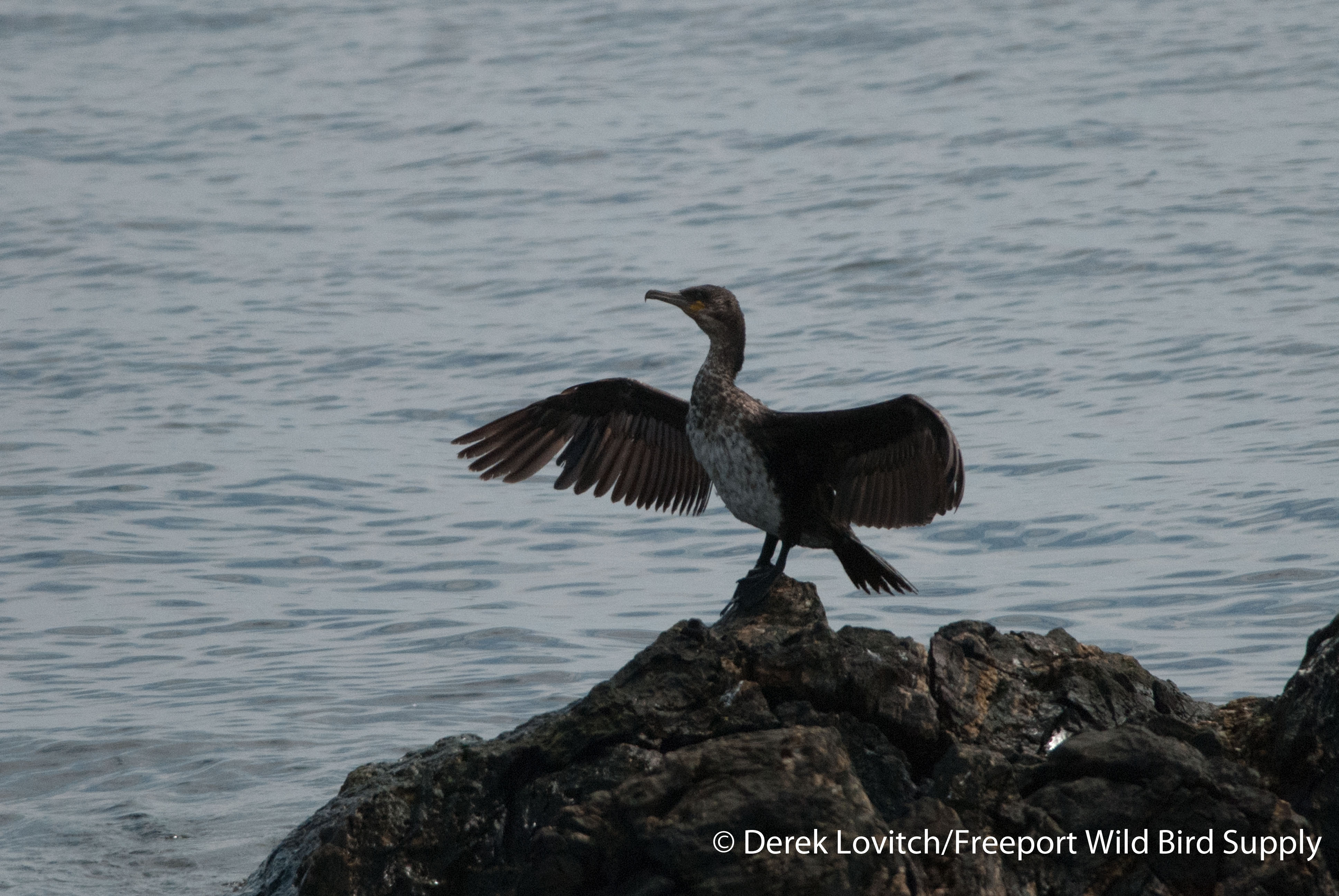
Great Cormorant and Harbor Seal.

A moderate-strong flight developed on clear and calm skies overnight, but come sunrise, the morning flight over the Yew was a little less busy than Saturday. Nonetheless, there were plenty of Yellow-rumped Warblers, Pine Siskins, and noticeable increases in Cedar Waxwings overhead and White-throated Sparrows in the woods and brush. Although overall numbers of birds were lower today, diversity was fantastic, and our trip list grew with the likes of Tennessee Warblers, a Warbling Vireo (I always wonder if these late Warblings out here are all “180-degree misoriented vagrants” as opposed to simply “lingering/late” birds – the local breeders on the mainland are long gone by now afterall), and we finally caught up with the Lark Sparrow that was visiting the seed with the Dickcissel.
LASP_and_DICK,ScottHarvell
Lark Sparrow with Dickcissel – a classic Monhegan juxtaposition.
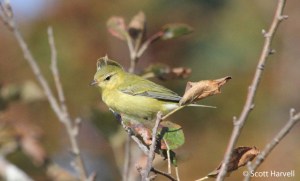
TEWA,ScottHarvell
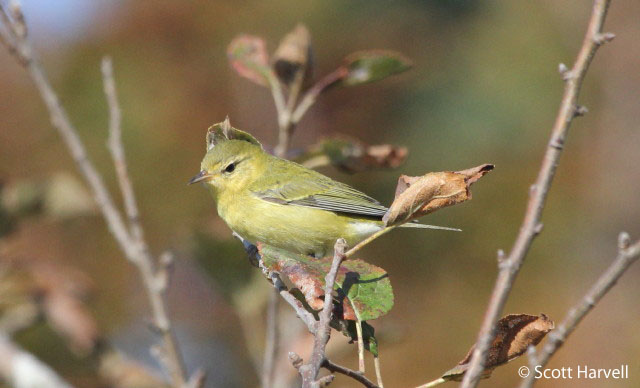
Tennessee Warbler

REVI_coughing_up_cherry_stone,Monhegan,9-28-14
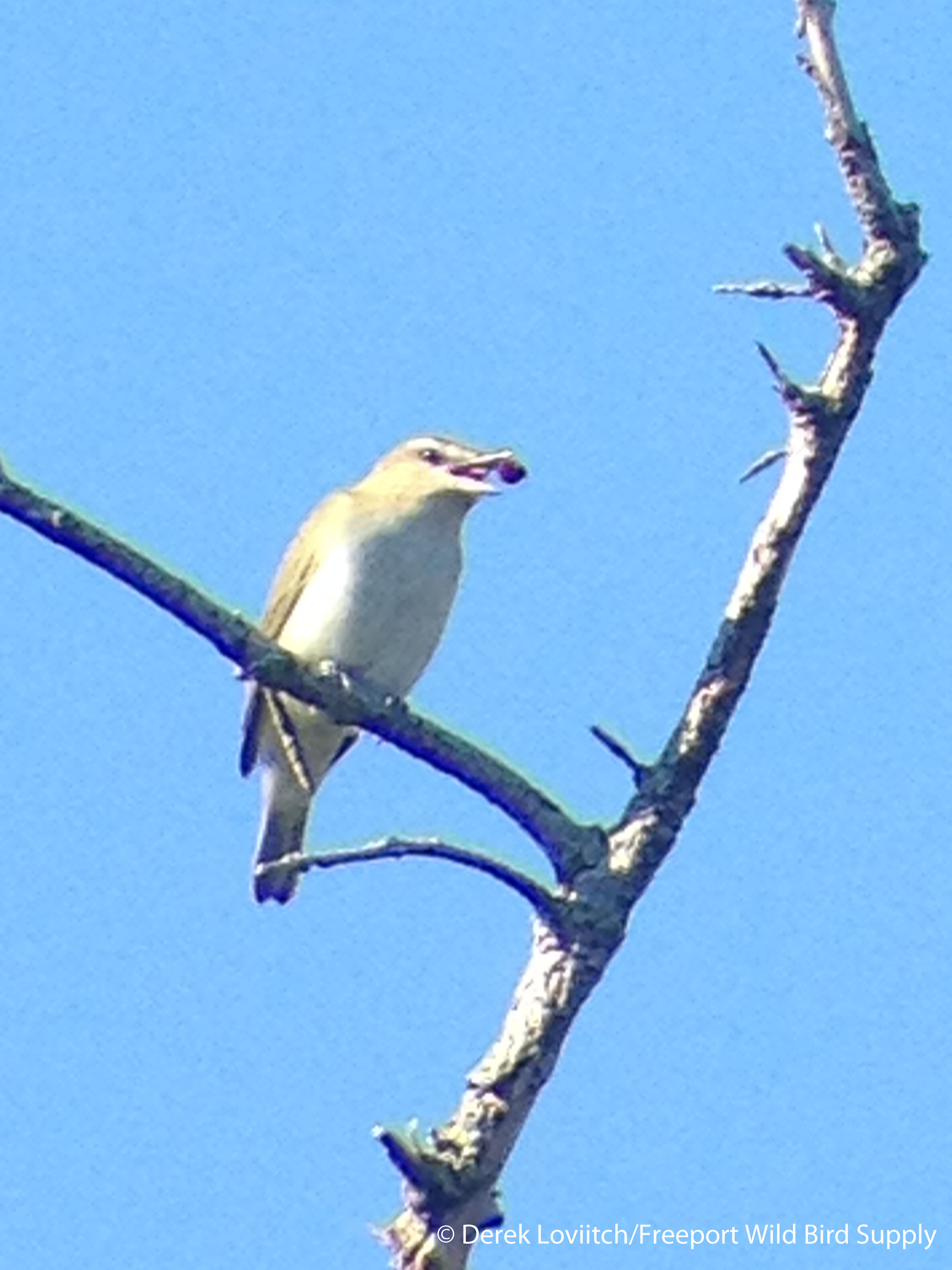
Red-eyed Vireo coughing up a cherry stone; phone-scoped image.
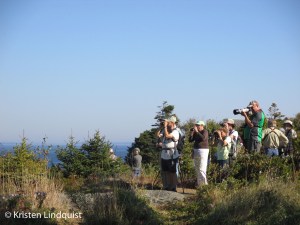
group2,K

We found a female Blue Grosbeak in the marsh behind the grocery store, and we enjoyed another short visit from the Yellow-headed Blackbird (minutes after Jeannette, arriving on the mid-day boat with Sasha, walked away of course).
IMG_8590_edited-2
The eagle was present and accounted for on the way in.

Group3,K
Trap day is coming!

Due to my schedule, the official weekend tour was only three days this year (instead of the usual four), so most of the group departed on the 3:15 ferry back to New Harbor. Al stayed until the 4:30 Port Clyde boat, and his bonus time (three leaders: me, Jeannette, and Kristen Lindquist who assisted me throughout the weekend as I added a second leader when I added a 9th participant – I, and my clients, prefer a small group, especially on Monhegan!) was partially spent watching a few of us struggle with the identity of a dull warbler who really did not want to give us a good look. It was eventually determined to be an immature female Pine Warbler (actually, quite a good warbler out here), and when Jeannette, Kristen, and I saw it later that afternoon in good light, its ID was much more readily apparent.

The always-successful “MonhegZEN Birding Fall Migration Weekend” had officially come to a close, but the birding continued for Kristen, Jeannette, and I. Another hot (80-degrees on the last weekend of September on Monhegan!) and somewhat quiet afternoon relegated our birding to the porch of the Monhegan Brewing Company. Their new delectable DIPA and Pale Ale was thoroughly enjoyed, as was “Brewery Pewee” (a single lingering Eastern Wood-Pewee that was a daily feature of our Brewery List…OK, we didn’t actually keep a brewery list this time, but if we did…and no, this was not my first visit to the brewery on the weekend – it is an important destination for the full MonhegZEN Birding experience) capped the end to a fine and productive day.

After dinner, the three of us walked to and from the dock (a big school of fish, presumably Herring (?) attracted by the lights provided the post-dinner entertainment), but the mere four migrant call notes heard overhead foreshadowed the very light flight overnight that saw many more birds depart than arrive on a diminishing southwesterly wind.

In fact, the skies were nearly devoid of birds undergoing “morning redetermined migration” or “morning flight” come Monday morning, and although there were still plenty of Pine Siskins and Cedar Waxwings overhead, the skies were the quietest that they had been all weekend. But there was little doubt more White-throated Sparrows arrived overnight, and there was not a shortage of Yellow-rumped Warblers.
IMG_8663_edited-2

us,Monhegan,9-29-14,K
Rusty Blackbird.

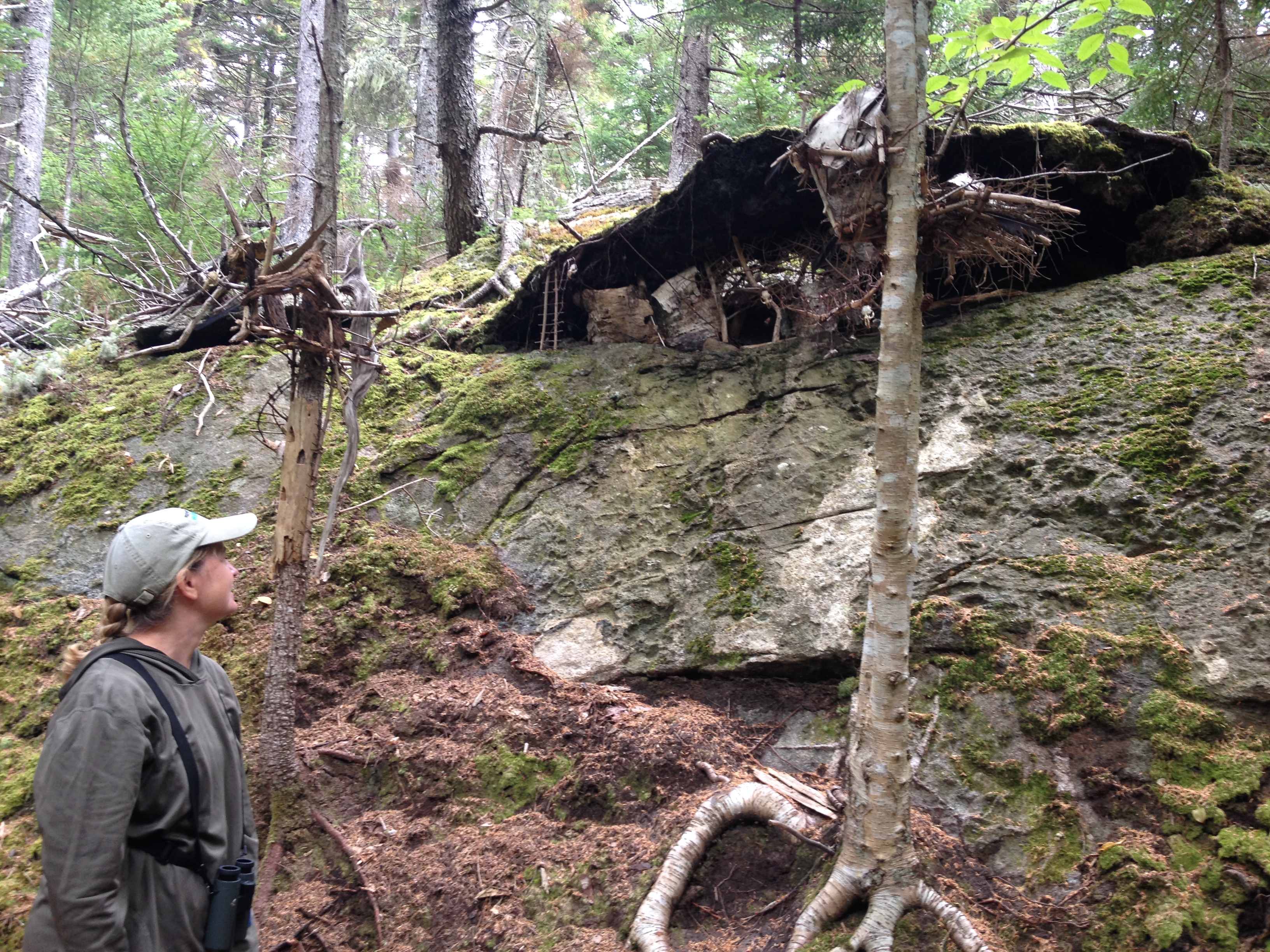
We slowly added a few species to the checklist, including the Clay-colored Sparrow that we had spent all weekend trying to catch up with. The Dickcissel and Blue Grosbeak were present and accounted for as well, and a Prairie Warbler was a nice addition. But as northeast winds began to pick up, we decided to head into the woods. Cathedral Woods offered scattered Golden-crowned Kinglets and more White-throated Sparrows, but our primary destination was this “Fairy House,” or more accurately, palace, that was not to be missed.
IMG_4532

IMG_4530

It was definitely worth the walk, and made even more so by how strong easterly winds were blowing (hmm, that water is looking a little choppy) upon our return to town. It was simply too windy to bird – and rather chilly – after lunch, so we relaxed with a coffee, and then later – just because we “had to” have one more DIPA… err, check of the Brewery Pewee.

The day’s birding was slow, and we had not been able to relocate the Yellow-headed Blackbird…until the literal last minute. The boat was loaded, and we were hustling to the dock, when we asked two birders what they were looking at in the yard of one of the first houses uphill on Dock Rd. “The Yellow-headed Blackbird.” Of course.

And it was, let’s say, confiding, as it walked around the lawn and in some weedy patches a mere 10-15 feet from the gawkers. Sasha even saw it (I would have had a great photo over her head, with her ears up and her face focused on the bird had my phone not just run out of power) – her 127th life bird! It was an exciting way to finish the trip, but the excitement was actually yet to come.
IMG_8673_edited-2

IMG_8678_edited-2

“How high are the seas running?” I asked as we boarded the boat. “6-8 feet or so, they’ah sure comin’ up fast today. It’s gonna be a wet ride.” Uh-oh; was that last beer a good idea? While Sasha has only been on a boat a few times, she has never been “tested,” but we thought it was best to keep her outside. Plus, a hot and stuffy cabin was the last place any of us wanted to be in high seas, so we donned our raingear and moved outside. We were amply warned about splash-over, but none of the four of us wanted to head inside.

Unfortunately, Sasha was not happy with the vibration on the stern, so we headed upstairs to the exposed top deck. 6-8ft seas? No, they were still growing; more in the 8-10ft range now…by far (actually, well more than double) the highest seas I have ever experienced on a Monhegan crossing. But it was surface chop, and not a deep, rolling swell, so it was actually kind of fun. Except for Sasha and except when a series of waves crashed over the boat and smacked into the four of us. I have never seen our tough dog look so miserable, and frankly, soaked to the bone, none of us were all that comfortable anymore. If any of my group had regrets about leaving on Sunday, I can assure you: be glad! It seemed like forever (OK, it was about an hour) before we passed into the lee of the outermost islands. But don’t worry, in between troughs and huddling over Sasha, I kept my eyes open as much as possible for skuas!

That was a wild ride, and very un-MonhegZEN! But once in the sheltered bay and harbor of Port Clyde, we couldn’t help but laugh with the crew. Seas like this are rare – and rarely do they come up so darn quickly – so please do not think that this is part of a Monhegan birding experience! In fact, glass-calm seas were enjoyed by every member of the group on their return trip on Sunday. I guess we might have stayed just one day too long this time.

Actually, no, we just regretted not staying just one day longer!

Kristen and I tabulated the final day’s checklist on the drive to dinner, bringing my four-day total to 99 species, including this final non-tour day. My 4-day weekend tour averages 102 species of birds, so this was just a little below average (this year’s tour officially ended on Sunday with 93 species, which is just below my 3-day average of 95 species).

Here’s the complete, daily checklist. These numbers only represent what our group observed, making no attempt to actually judge the number of birds (at least the common ones) on the island, or summarize the sightings of others and does not include birds tallied on the boat ride across either way.

Species: 9/26,9/27,9/28,9/29

Wood Duck: 1,0,3,2
Mallard: 4,15,15,15
Mallard x American Black Duck: 0,1,0,0
American Black Duck:0,2,0,0
Common Eider: x,x,x,x
White-winged Scoter: 1,0,0,0
Ring-necked Pheasant: 4,1,3,2
Double-crested Cormorant: x,x,x,x
Great Cormorant: 0,2,2,2
Red-necked Grebe: 2,0,0,0
Common Loon: 3,0,0,0
Northern Gannet: 15,50,20,50
Great Blue Heron: 1,1,1,1
Osprey: 1,8,5,2
Bald Eagle: 1,1,2,2
Northern Harrier: 1,0,0,2
Sharp-shinned Hawk: 1,4,6,3
American Kestrel: 0,2,2,1
Merlin: 4+,6+,10,6
Peregrine Falcon: 12++,10+,10+,8
Semipalmated Plover: 0,1,0,0
Greater Yellowlegs: 0,0,0,1
Ring-billed Gull: 0,0,0,2
Herring Gull: x,x,x,x
Great Black-backed Gull: x,x,x,x
Black Guillemot: x,x,x,x,
Mourning Dove: 4,4,4,3
YELLOW-BILLED CUCKOO: 0,1,0,0
Belted Kingfisher: 0,0,1,1
Ruby-throated Hummingbird: 0,2,0,0
Unidentified Hummingbird:0,0,0,1
Yellow-bellied Sapsucker: 2,12,15,4
Downy Woodpecker: 0,1,2,2
Northern Flicker: 10,12,10,20
Eastern Wood-Pewee: 0,3,1,1
Least Flycatcher: 1,2,1,0
Eastern Phoebe: 0,0,3,5
Blue-headed Vireo: 0,0,0,3
Warbling Vireo: 0,0,1,0
Philadelphia Vireo: 1,0,3,3
Red-eyed Vireo: 12,25,30,30
Blue Jay: 4,11,11,6
American Crow: 4,4,4,4
Common Raven: 0,2,2,3
Black-capped Chickadee: x,x,x,4
Red-breasted Nuthatch: 4,12,15,35
White-breasted Nuthatch: 1,0,0,0
Brown Creeper: 0,1,1,2
Carolina Wren: 5,6,8,7
Winter Wren: 0,0,1,3
Golden-crowned Kinglet: 6,8,12,25
Ruby-crowned Kinglet: 3,20,20,6
Swainson’s Thrush: 0,2,1,0
American Robin: 1,5,4,1
Gray Catbird: x,x,4,5
Northern Mockingbird: 1,0,1,0
European Starling: 10,12,12,8
American Pipit: 0,6,2,1
Cedar Waxwing: 40,40,80,50
Black-and-white Warbler: 1,1,1,3
Tennessee Warbler: 0,0,3,0
Nashville Warbler: 2,0,2,1
Common Yellowthroat: 10,6,x,x
American Redstart: 3,3,2,0
Cape May Warbler: 0,2,1,0
Northern Parula: 1,2,3,2
Magnolia Warbler: 0,3,1,1
Yellow Warbler: 0,1,1,1
Blackpoll Warbler: 1,6,5,4
Black-throated Blue Warbler: 0,0,1,1
Palm Warbler: 0,6,3,7
PINE WARBLER: 0,0,1,0
Yellow-rumped Warbler: 40,250,200,175
Prairie Warbler: 0,0,0,1
Black-throated Green Warbler: 4,10,3,1
YELLOW-BREASTED CHAT: 1,0,0,0
Scarlet Tanager: 1,0,0,0
Eastern Towhee: 1,0,0,0
Chipping Sparrow: 7,9,8,9
CLAY-COLORED SPARROW: 0,0,0,1
LARK SPARROW: 0,1,0,0
Savannah Sparrow: 0,9,6,2
Song Sparrow: x,x,x,x
Lincoln’s Sparrow: 1,0,2,1
Swamp Sparrow: 0,1,3,3
White-throated Sparrow: 8,20,100,100
White-crowned Sparrow: 0,3,4,3
Dark-eyed Junco: 0,10,6,10
Northern Cardinal: 2,3,4,4
Rose-breasted Grosbeak: 0,2,3,1
BLUE GROSBEAK: 0,0,1,1
Indigo Bunting: 2,1,1,1
DICKCISSEL: 1,1,1,2
Bobolink: 0,1,0,1
YELLOW-HEADED BLACKBIRD:0,1,1,1
Rusty Blackbird: 0,4,4,4
Common Grackle: 0,6,6,8
Baltimore Oriole: 1,2,3,1
Purple Finch: 0,2,8,6
Pine Siskin: 0,80,50,40
American Goldfinch: 2,2,4,4

Daily Total: 58,72,81,79 Total: 97
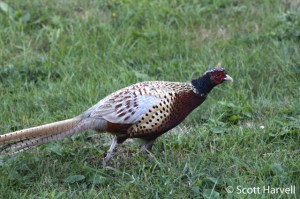
RINP,ScottHarvell
Ring-necked Pheasants – the only “countable” ones in Maine!

IMG_8624_edited-2
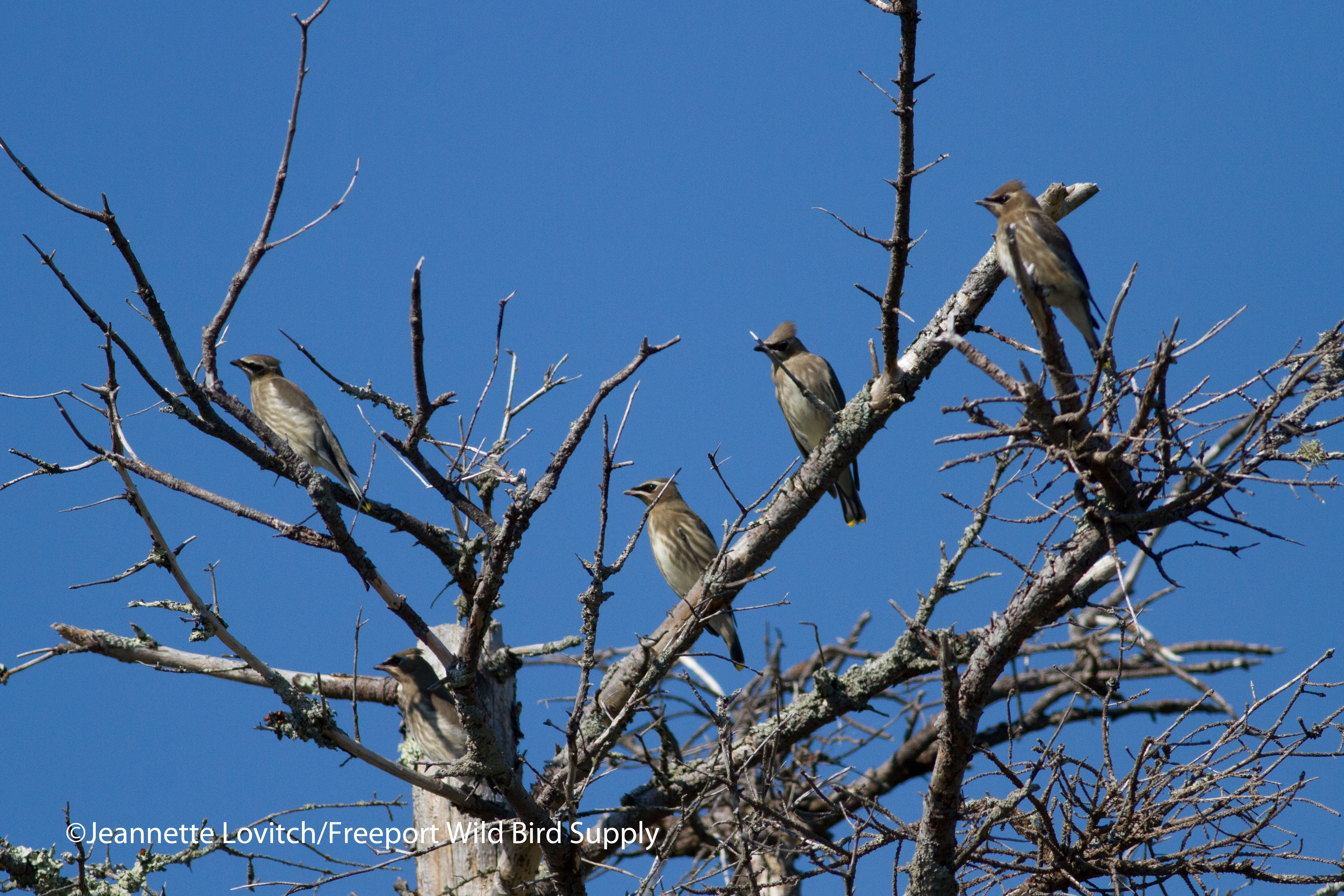
Cedar Waxwings.

IMG_4519_Monhegan_Sunset,9-27-14
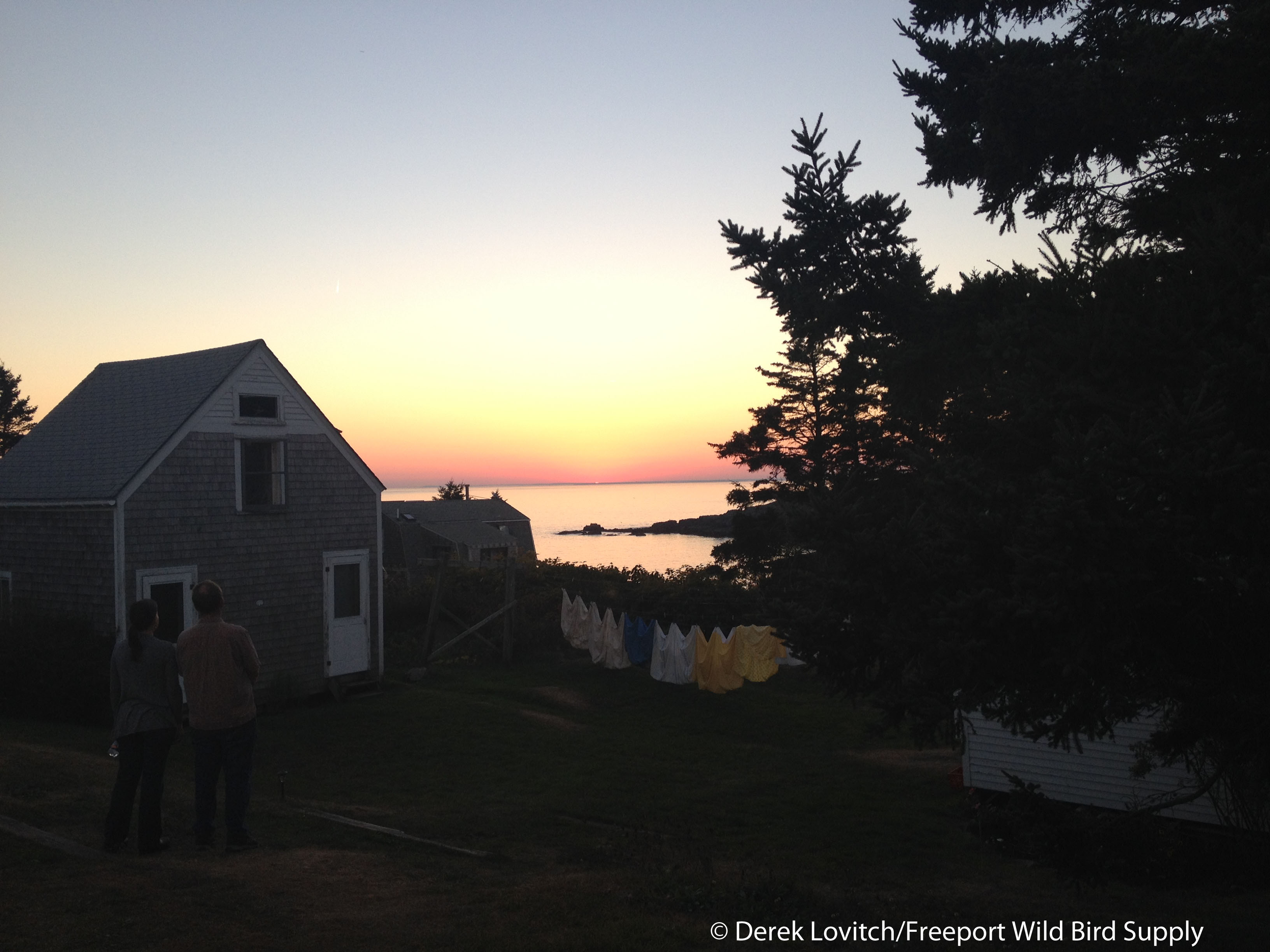
Beautiful nightly sunsets free with price of admission.

“Bicknell’s Thrush and the White Mountains” Trip(s) Report

June is my busiest guiding season. Bicknell’s Thrush, Saltmarsh and Nelson’s Sparrows, Roseate Tern, and Atlantic Puffin are my most popular requests, and there is little doubt that I could fill my entire month with Bicknell’s Thrush tours!

My first visit of the season to the realm of the thrush was last week, as part of a very successful three-day tour for a client visiting from Vancouver. We saw 7 of 8 of our targets: Saltmarsh and Nelson’s Sparrow, Great Cormorant (3!), Bicknell’s Thrush, American Woodcock, Atlantic Puffin, and Manx Shearwater. And most we saw very, very, well. We only missed Razorbill due to a strategic decision that we agreed upon, and in the end, said decision worked out very well as we had unbelievable views of the shearwater.

DSC_0006_GRCO1,CapeNeddick,6-10-14_edited-1 First-summer Great Cormorant.

DSC_0049_MASH1,Revere,6-12-14_edited-2 Manx Shearwater!

In addition to the species we were seeking, we ran into several other highlights, the most noteworthy of which was an unseasonable subadult male Common Goldeneye at Cutt’s Island in Kittery. Other highlights included a truant Olive-sided Flycatcher at Reid State Park, and an Arctic Tern – usually an offshore feeder – feeding with Roseate and Common Terns off of East Point in Biddeford Pool.

Then, this past weekend was my popular annual “Bicknell’s Thrush and the White Mountains” van tour. Meeting at the store on Saturday morning, we headed for the hills, beginning with a surprise detour to West Paris.  For this:

DSC_0006_SNOW,West_Paris,JUNE-14-14_edited-1

That’s right, a Snowy Owl in Maine in June! Really remarkable. And how’s that for a way to start off a weekend tour?  We then made a turn for the White Mountains, and after a couple of stops, arrived at Trudeau Road for this:

DSC_0025_BBWO,TrudeauRd,NH,6-14-14_edited-1

Of course, as awesome as a Snowy Owl and a nest-ful of Black-backed Woodpeckers (this is the male above, who kindly paused to preen between visits to feed the young. We also had a great look at the female, who nearly dropped a fecal sac on the group!) are on a birding tour, this is a thrush trip, so our remarkable day of birding would rapidly fade into memory if we didn’t find our one true quarry.

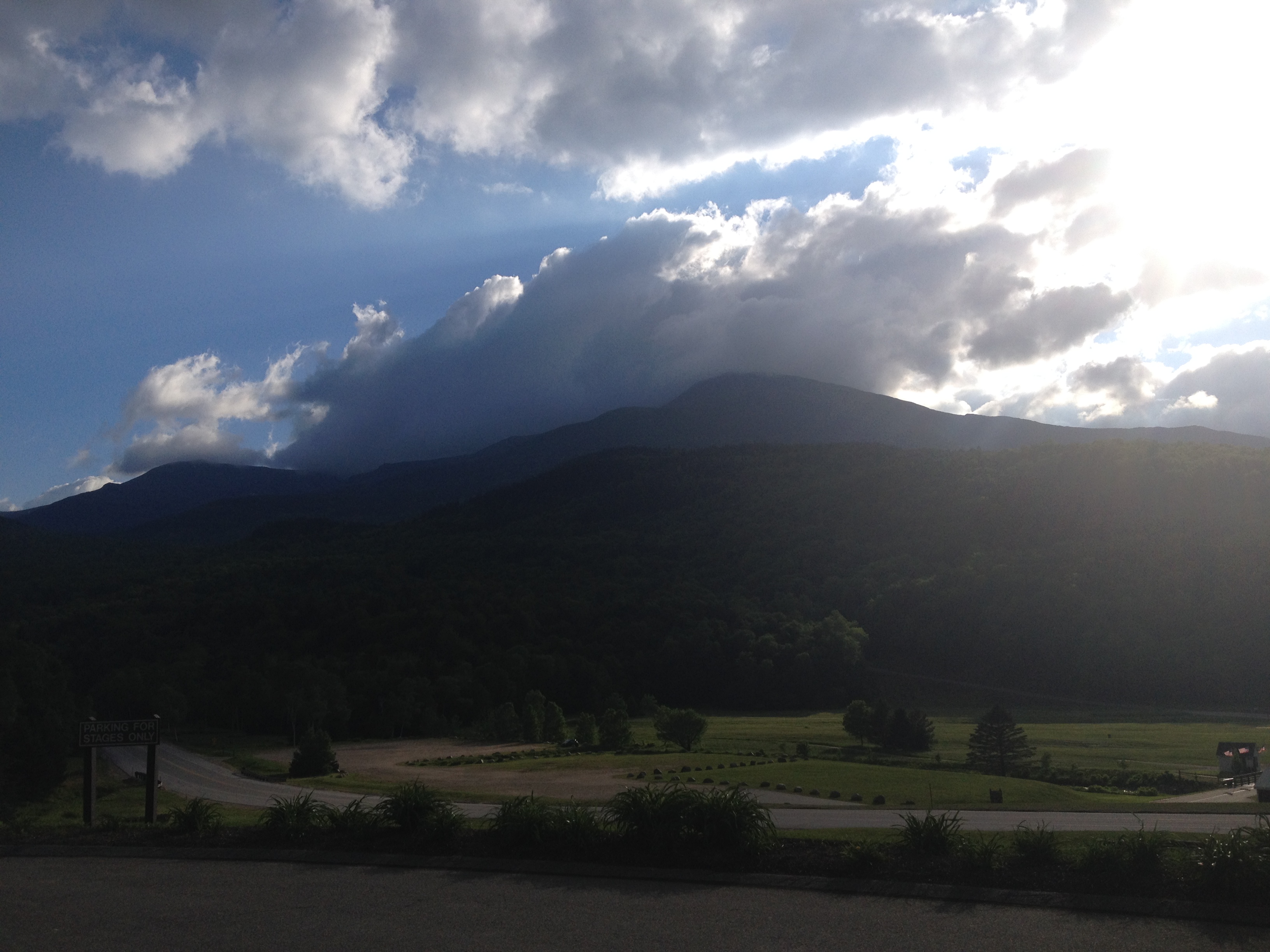
After an early dinner, we boarded the specialized vans of the Mount Washington Stage Line for our private charter up the mountain. It was gorgeous at the base, but looking up, we knew the summit would be different.

IMG_3621

And it was!

IMG_3627

Luckily, the thrushes’ habitat was below the clouds tonight, and so after visiting the summit and checking for American Pipits (too windy, but the flowers were fantastic), we dropped down and began our real mission.
Birding_Auto_Road_by_Kristen_edited-1  Birding_Auto_Road_by_Kristen2_edited-1

Although it took a lot more work than usual, we were all eventually rewarded with good to great views of this enigmatic species. We saw two or three different birds, and heard up to 4 others – a good count for the short stretch of habitat that we cover. It was even the 700th ABA-area bird for one of the clients – a fantastic bird for an impressive milestone. A short celebration was called for upon our return to our hotel.

On Sunday morning, the second day of this two-day “target species” tour, the weather looked gorgeous, but the birding was challenging. Granted, it was going to be hard to top Day 1 anyway – we were probably the first tour in history to see a Bicknell’s Thrush and a Snowy Owl in the same day!  It certainly was a novel – and a completely unexpected – experience for me.

Birding the Caps Ridge Trail in dense fog and cool temperatures to start the day was less productive than usual, but it was still a nice walk into boreal habitat and enjoy the beautiful forest here. Blackpoll Warblers and Yellow-bellied Flycatchers were conspicuous today, at least.

Very strong, downsloping winds cleared the skies for us at our next few stops, but those winds only increased, and birding became a challenge. My favorite spot for Philadelphia Vireo, for example, was just too windswept. Actually, standing upright was occasionally a challenge. But finding some shelter on the backside of a mountain via a short, but steep hike, a few of us were treated to another view of a Bicknell’s Thrush – just as a little more icing on the cake.

A great lunch followed our birding, fueling us for the drive back to Freeport (or, at least, until the ice cream stop) and capping another successful “Bicknell’s Thrush and the White Mountains” weekend.  With one more private thrush tour next weekend, I can only hope my luck with the weather and with seeing the thrush – a mythological bird to some – continues.

IMG_3632 Happy Thrush-watchers!

2014 MonhegZen Spring Migration Birding Weekend.

Ahh, Monhegan Island.

If only I could bird there every day for a full spring (or fall; I won’t be picky). But for now, I will relish my weekends there, and last weekend was our MonhegZen Migration Spring Birding Weekend…and the island did not disappoint.

So while we always expect the unexpected, we most definitely were not expecting this one.
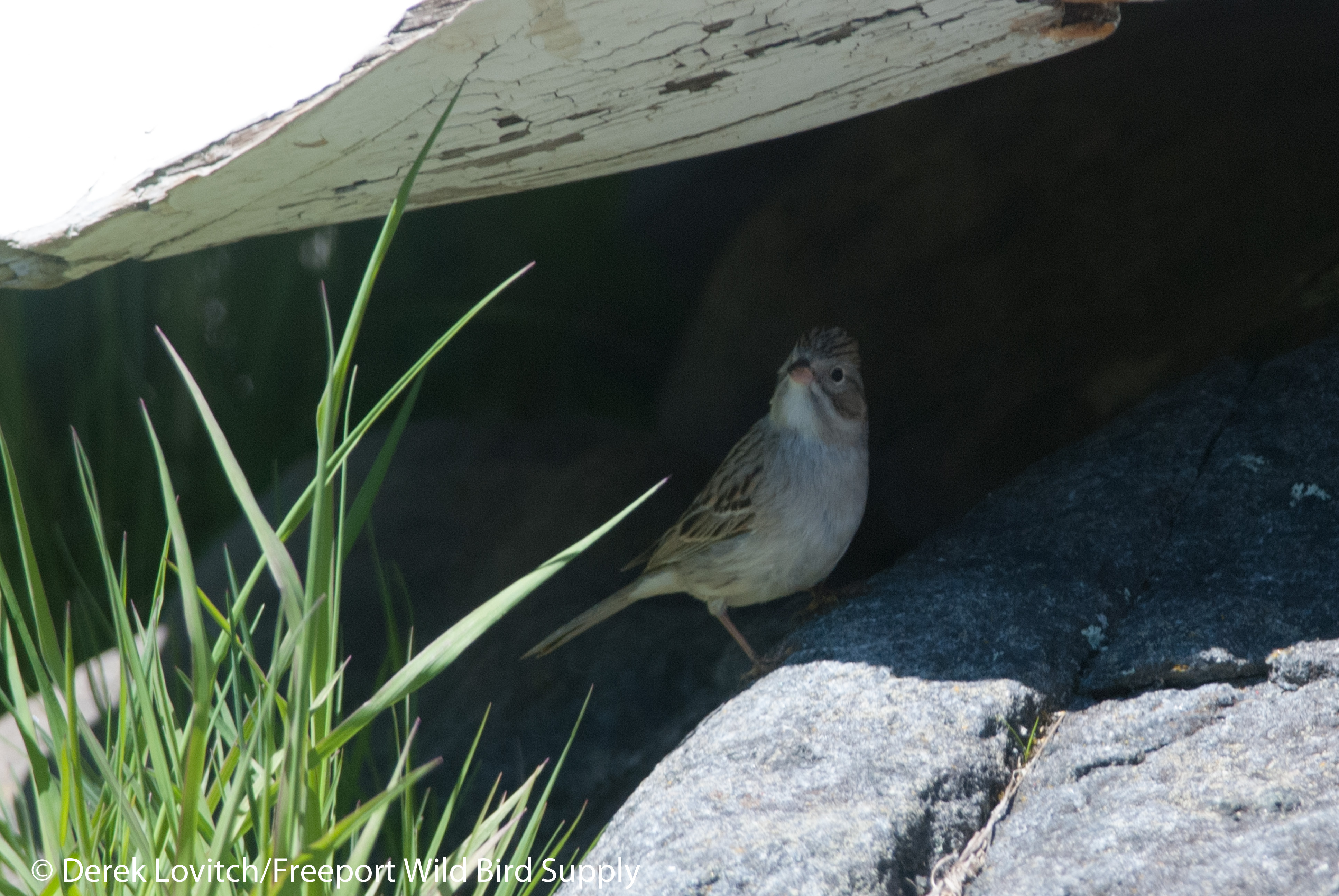
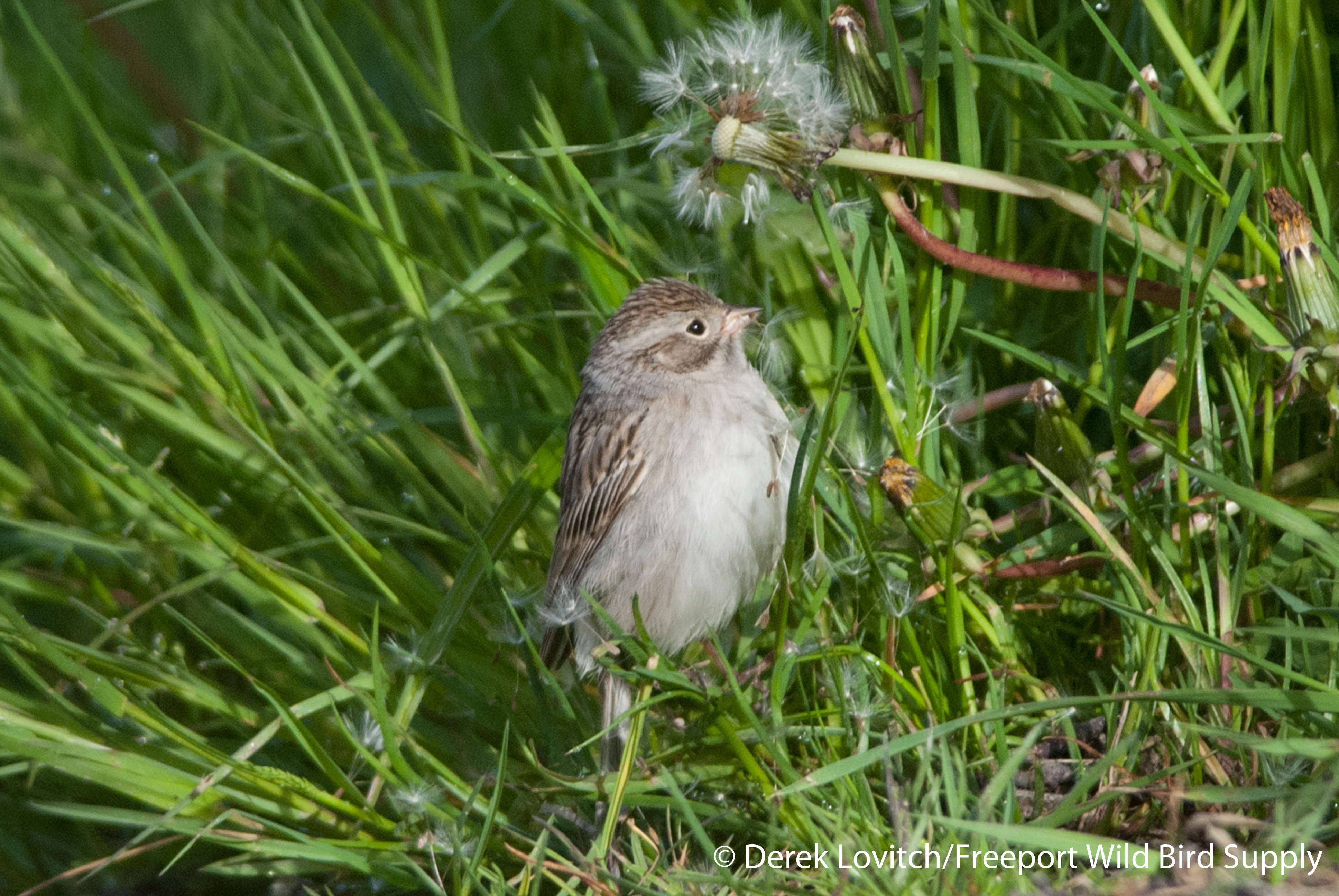
DSC_0124_BRSP1,Monhegan,5-25-14_edited-1 (Click on the photos for a larger image).

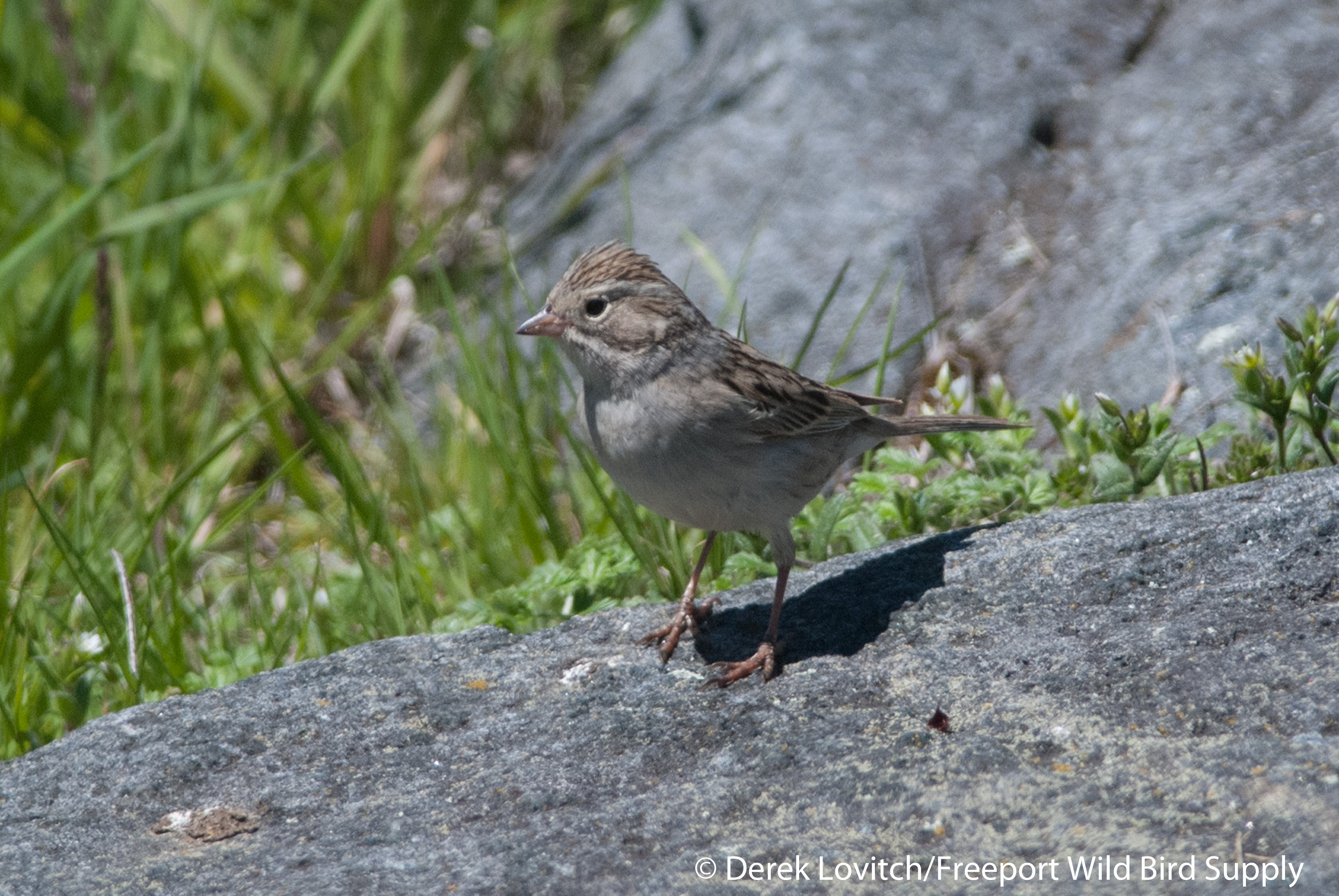
This first state record Brewer’s Sparrow was definitely not high on anyone’s list of next birds for Monhegan, or Maine (certainly not mine!). But more on the sparrow later.

Half of the group arrived with me on the Hardy Boat out of New Harbor on Friday morning, greeted by a veil of fog.

Arrival on Monhegan, 5-23-14
While the shroud of mist offered a lovely scene, it did put a damper on the birding for a little while (excuse the pun), but soon it cleared, and as the ceiling rose, so did the bird activity. In fact, this was the start of a fine weekend of weather – OK, it was rather chilly; extra blankets were dispersed for the night – but other than a few brief, very light showers, our Gore-Tex remained tucked away. We’ll call that a win.

Just about the first bird that we glassed upon our arrival was an immature male Orchard Oriole.  That’s the way we like to start a MonhegZen Birding Weekend!

The rest of Day 1 was highlighted by re-finding one of two immature male Summer Tanagers that had been frequenting the island lately. Friends picked up some seed on their way down (yes, the guy that owns a birdseed store and has several tons of seed on hand forgot to bring seed and had to have someone slum it at a hardware store. Gasp!), and we restocked the stash that kept the tanager visible for all through the weekend.
DSC_0017_SUTA,Monhegan,5-23-14_edited-1

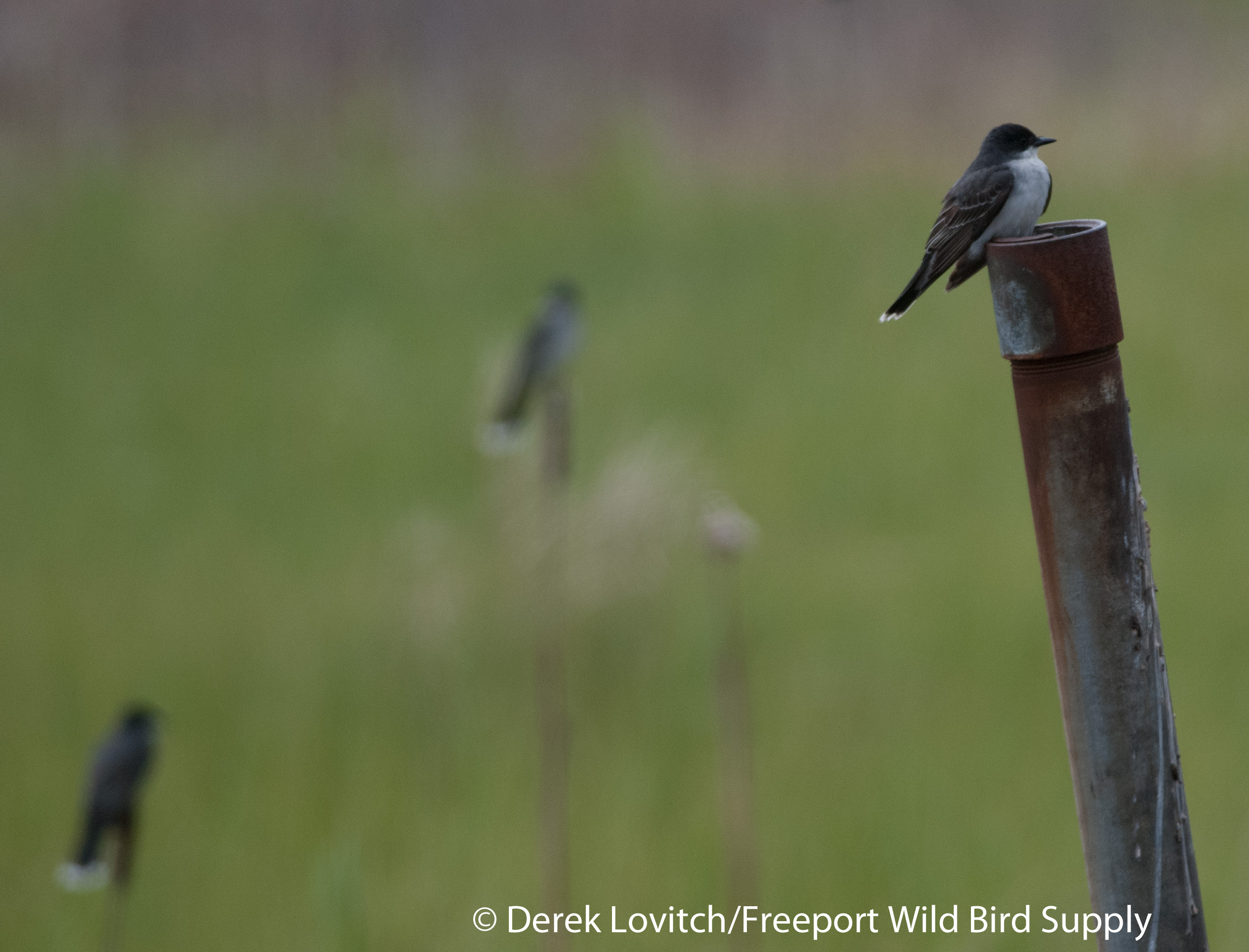
The tanager was our first “good” bird of the trip, but most of us agreed that the kingbird show near the pumphouse was the highlight of the first day. Indeed, it was a highlight for the entire weekend.  Sheltered from a persistent, but raw and cold, easterly wind, the back corner of the town marsh was just about the only place with flying insects out and about. Therefore, flycatchers had piled up here, led by 21 Eastern Kingbirds (growing to 25 by Saturday afternoon, before diminishing on Sunday and Monday).
DSC_0051_2EAKI,Monhegan,5-24-14, edited-1 DSC_0030_3EAKI,Monhegan,5-24-14_edited-1

Other flycatchers were present here, including a couple of cooperative Eastern Wood-Pewees, and several Least Flycatchers.
DSC_0047_LEFL1,Monhegan,5-24-14_edited-1

Little to no migration was visible on the radar overnight Friday into Saturday, and the lack of reorienting birds overhead after sunrise on Saturday morning confirmed the minimal movement overnight.  Although I awoke to a singing Mourning Warbler out my window, we never did catch up with one over the weekend.

But over the course of the day (as our group grew in size), we beat the bush and slowly but surely built up our species total. The Summer Tanager, the immature male Orchard Oriole, a very entertaining Peregrine Falcon over Manana, and 16 species of warblers were the day’s headliners. But yeah, by Monhegan standards, this was a slow day.

Sunday was not.

A light to moderate migration clearly produced some turnover, and plenty of new birds.  Some warblers were reorienting over the Trailing Yew after sunrise – always a good sign – and our walk to Lobster Cove was much slower in pace than on Saturday. A singing Field Sparrow, a calling Common Nighthawk, and a streaking Gray-cheeked/Bicknell’s Thrush were among the species that we added to our tally.

Then the text came through.

When describing our itinerary – or lack thereof – for the coming days upon our arrival, I talked about how chasing birds (dropping everything and running across the island) is often a futile exercise here, and instead we would work our way towards good birds, keeping our eyes open for them – and enjoying everything in our path. I joked that “but if I need it for my island list, all bets are off.”

First state records?  Fuhgettaboutit. Off we went. And I make no apologies…luckily, the coffee pot was on the way. I might not have gotten away with it otherwise.

So yeah, “Maine’s International Birder of Mystery” discovered a Brewer’s Sparrow.  First found at the edge of the road at its terminus at the Ice Pond, it soon made its way into a nearby yard. Dandelion seeds were its quarry.

DSC_0120_BRSP3,Monhegan,5-25-14_edited-1

  DSC_0131_BRSP7,Monhegan,5-25-14_edited-1  DSC_0116_BRSP6,Monhegan,5-25-14_edited-1  DSC_0075_BRSP5,Monhegan,5-25-14_edited-1  DSC_0069_BRSP2,Monhegan,5-25-14_edited-1

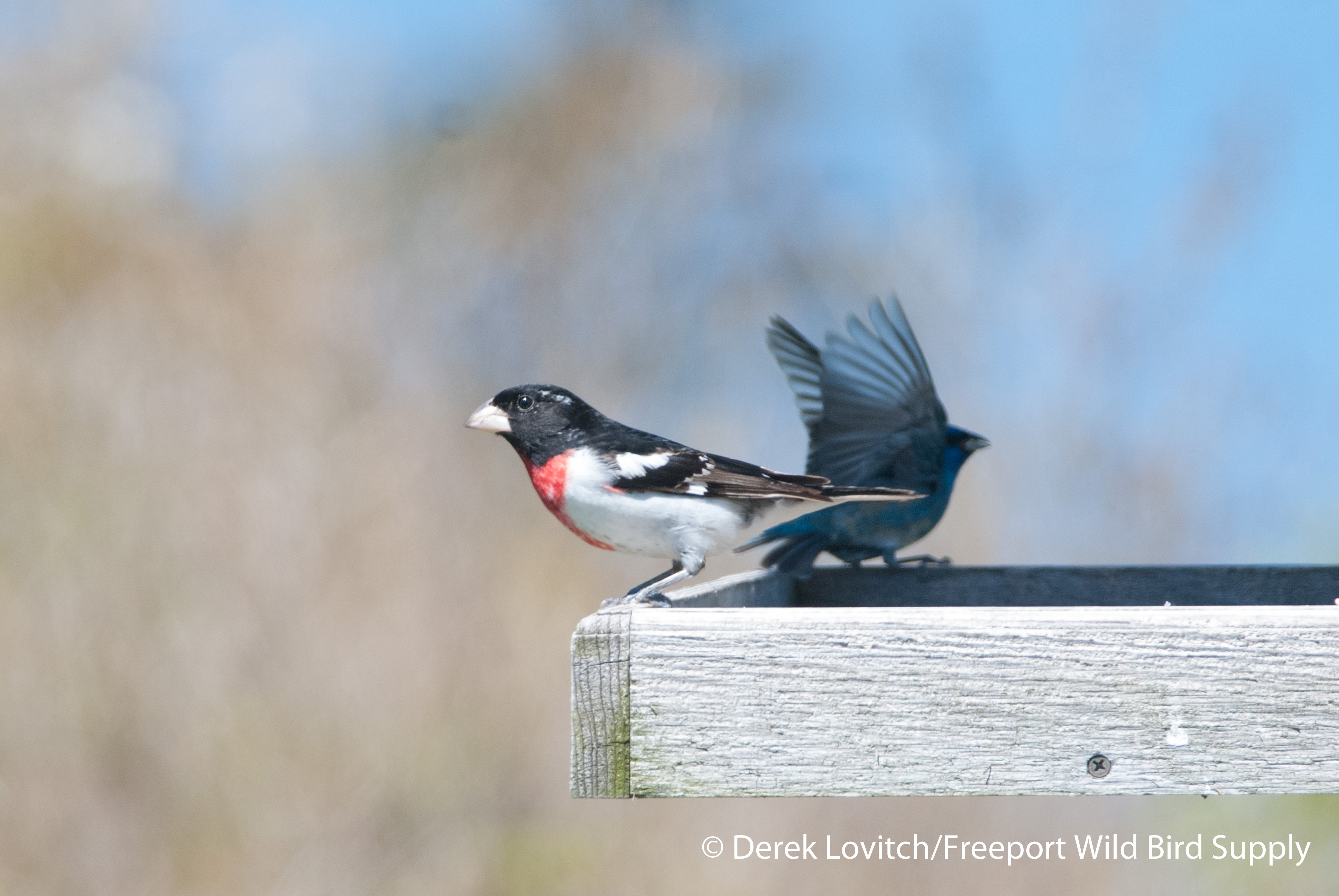
There were other birds to look at too. While I scrutinized the extent of streaking on the nape and crown of the sparrow and took way too many photos, the more sane of the group enjoyed a splash of color at the nearby feeders – at least 3 Rose-breasted Grosbeaks and an Indigo Bunting.
DSC_0100_RBGRandINBU,Monhegan,5-25-14_edited-1

Elsewhere, a Clay-colored Sparrow on one of my other seed stashes, several great views of Philadelphia Vireos, the continuing Summer Tanager, a second Orchard Oriole (an adult male) and a variety of warblers were the other highlights.

All weekend long we had been enjoying lots of warblers, but somehow we only amassed 19 species (we missed singles of Nashville and Prairie seen by others). But of those that we did see, most of them we saw stunningly well. Magnolia, American Redstart, Yellow, and Common Yellowthroat dominated each day, but we had a bunch of Northern Parulas and Chestnut-sided on Sunday as well.  And the views of Canada Warblers and one particular Northern Waterthrush will be tough to beat.

Like each of our first two days on the island, Sunday’s tour came to an end at the Monhegan Brewing Company. On Sunday night, the Brewer’s Sparrow was celebrated, and ideas for a “Brewer’s Brew” or something like that was hatched.

The group had accumulated 89 species (including the aforementioned 19 species of warblers), which was actually well below average for my MonhegZen Spring Birding Weekends.  But at least for me, I had one day left to add to the total, as I extended my stay for another night.

A very strong flight overnight suggested that this was a good call, but I was surprised by how many fewer birds were around on Monday morning than on Sunday. Especially when surrounded by fog – as we were overnight and into the morning – I have found that on really strong flights with favorable conditions, birds probably fly over the island. Perhaps the shroud of fog prevented them from even knowing there was an island below.

However, nearly three hours after sunrise, the winds shifted to the southwest, the ceiling lifted, and all of the sudden, there were warblers in the air. Had they been silently creeping around the forests, waiting for some clearing to reorient to the mainland?  Or, were these birds that were overhead, lost above the fog, looking for a place to finally land?

Hard to say, but for a couple of hours, the birding was quite good. Blackpoll Warblers had increased dramatically, and I had more Bay-breasted and Tennessee Warblers than the previous days, and the Cedar Waxwing flock increased dramatically.

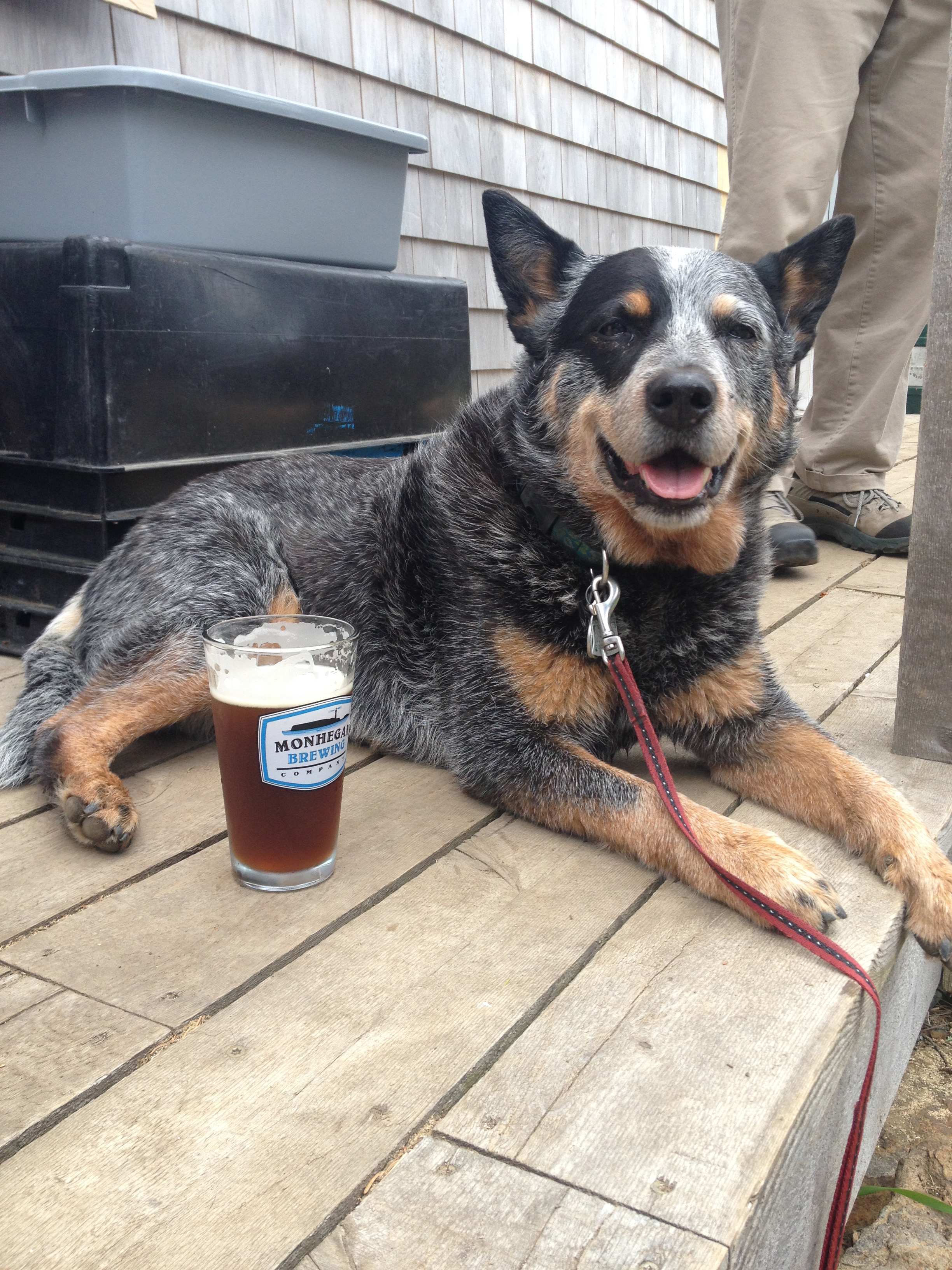
Jeannette and Sasha (finally making her first trip here at the age of 14) arrived, and our friends Paul and Kristen joined us for the next couple of hours.  Blackpoll and Bay-breasted Warblers continued to put on a good show, as did the Brewer’s Sparrow.  More importantly for Jeannette, she was able to successfully twitch all three things she was after today: Hardy Boat cinnamon rolls, Novelty pizza, and Monhegan Brewing.  Yeah, she looked at the sparrow, too.

While Sasha was unable to successfully add Brewer’s Sparrow to her list, she did carefully study plumage variation in Herring and Great Black-backed Gulls. 
Sasha_watching_gulls,Monhegan,5-26-14

She also joined us at the brewery for one final pint.
Sasha_atMonheganBrewery,5-26-14

When many of us present for the weekend’s excitement boarded the boat at 3:15, I was sorry to go, as usual. I eked out 94 species when all was said and done (still below average for a spring weekend out here) including 19 species of warblers (I almost never miss hitting 20 here). While the overall list might have been a little low, the quality of views of most species was hard to beat. The overall quality of the bird list wasn’t too shabby, either. A first state record doesn’t hurt.

The following is my checklist for the group for Friday through Sunday. Monday’s total included birds seen with Jeannette, Paul, and Kristen. The included numbers for each day are conservative estimates or counts of the number of individuals of each species we saw and/or heard on the island (not including the ferry rides).

Species: Friday, May 23rd/Saturday May 24th/Sunday, May 25th/Monday, May 26th.

American Black Duck: 1/0/0/0
Mallard: 15/21/10/10
Black Scoter: 0/0/0/2
Common Eider: x/x/x/x
Red-breasted Merganser: 0/0/0/1
Ring-necked Pheasant: 3/4/5/4
Common Loon: 4/6/6/4
Northern Gannet: 5/6/6/12
Double-crested Cormorant: x/x/x/x
Great Blue Heron: 0/3/0/0
Osprey: 1/3/1/0
Sharp-shinned Hawk: 0/0/0/1
Peregrine Falcon: 0/1/0/0
Merlin: 1/0/0/0
Virginia Rail: 1/1/1/1
Laughing Gull: 5/12/4/2
Herring Gull: x/x/x/x
Great Black-backed Gull: x/x/x/x
Black Guillemot: x/x/x/x
RAZORBILL: 0/1/0/0
Mourning Dove: 6/6/8/4
Common Nighthawk: 0/0/1/0 (FOY)
Chimney Swift: 1/1/2/0
Ruby-throated Hummingbird: 2/4/4/3
Downy Woodpecker: 2/0/0/0
Northern Flicker: 1/0/2/2
Eastern Wood-Pewee: 2/2/2/3
Yellow-bellied Flycatcher: 0/1/2/2
Alder Flycatcher: 0/0/0/3 (FOY)
“Traill’s” Flycatcher: 0/0/0/5
Least Flycatcher: 3/1/6/6
Eastern Phoebe: 1/0/0/0
Eastern Kingbird: 27/25/14/15
Blue-headed Vireo: 0/0/0/1
Philadelphia Vireo: 0/0/2/4
Red-eyed Vireo: 2/2/12/20
Blue Jay: 8/12/8/8
American Crow: x/x/x/x
Common Raven: 2/2/2/2
Tree Swallow: 8/5/6/6
Bank Swallow: 2/2/2/0
Cliff Swallow: 0/0/1/0
Barn Swallow: 2/2/1/2
Black-capped Chickadee: x/x/x/x
Red-breasted Nuthatch: 0/1/2/3
Carolina Wren: 4/8/6/6
Winter Wren: 0/0/1/0
Golden-crowned Kinglet: 0/2/2/4
Ruby-crowned Kinglet: 0/0/0/1 (late)
Veery: 1/1/1/0
GRAY-CHEEKED/BICKNELL’S THRUSH: 0/0/1/0
Swainson’s Thrush: 0/0/1/0
Hermit Thrush: 0/0/1/0
American Robin: 10/10/8/6
Gray Catbird: x/x/x/x
Brown Thrasher: 0/1/1/0
European Starling: 6/4/8/6
Cedar Waxwing: 3/4/18/60
Tennessee Warbler: 0/2/0/4
Northern Parula: 3/12/30/15
Yellow Warbler: 25/25/35/30
Chesnut-sided Warbler: 6/5/20/10
Magnolia Warbler: 25/20/25/20
Black-throated Blue Warbler: 6/8/8/4
Yellow-rumped Warbler: 6/8/0/0
Black-throated Green Warbler: 10/15/15/15
Blackburnian Warbler: 2/0/2/3
Bay-breasted Warbler: 0/1/0/8 (FOY)
Blackpoll Warbler: 4/3/10/50
Black-and-white Warbler: 5/5/10/5
American Redstart: 10/15/35/30
Ovenbird: 0/0/2/0
Northern Waterthrush: 0/3/3/3
MOURNING WARBLER: 0/1/0/0 (FOY)
Common Yellowthroat: 35/35/30/30
Wilson’s Warbler: 4/0/5/1
Canada Warbler: 2/4/4/2
SUMMER TANAGER: 1/1/1/0
Chipping Sparrow: 10/10/6/8
CLAY-COLORED SPARROW: 0/0/1/0
BREWER’S SPARROW!!!!: 0/0/1/1
Field Sparrow: 0/0/1/1
Savannah Sparrow: 1/1/3/1
Song Sparrow: x/x/x/x
Swamp Sparrow: 1/2/2/1
White-throated Sparrow: 1/0/10/10
Northern Cardinal: 6/8/8/6
Rose-breasted Grosbeak: 0/0/4/3
Indigo Bunting: 1/3/4/2
Bobolink: 8/6/4/4
Red-winged Blackbird: x/x/x/x
Common Grackle: 10/15/15/10
ORCHARD ORIOLE: 1/1/2/1
Baltimore Oriole: 0/1/3/4

American Goldfinch: 6/12/8/6

Book Review: Ten Thousand Birds: Ornithology Since Darwin

By Tim Birkhead, Jo Wimpenny, and Bob Montgomerie

This was an impressive book. Impressive in breadth, width, and, yes, weight. In fact, since I often read in bed before falling asleep, one of my biggest concerns was nodding off and having the book fall on my face. Its 524 pages would have easily broken my nose!Ten

Luckily, the writing made me anything but sleepy. While this is not a “curl up on the coach and read cover to cover on a cold winter day” book, it is exceedingly well-written for what is essentially a text book.  The authors have amassed a mind-boggling amount of information covering a range of ornithological topics.

Although the scientific study of birds can be traced back to ancient Greece, ornithology has really come of age in the century following the revolutionary work of Charles Darwin. A fascinating factoid in the preface mentioned that “in 2011, there were as many papers on birds published as there have been during the entire period between Darwin’s Origin (of Species) and 1955.”  Wow!

As noted in the Preface, there are several other compilations of ornithological history.  I will readily admit that when I first learned of this book, my first thought was “Really, another one?”  But this one is different.

They chose to begin with Darwin for good reason as “nothing in biology makes sense, except in the light of evolution.”  But no book could cover every aspect of ornithology; not everything we’ve learned could fit in any one volume. I’d break my back lifting it before I could break my nose dropping it.

Therefore, the authors narrowed down the focus to the highlight of ornithological research that has “influenced the course of scientific progress.” They explain the rationale that included ranking a database of citations and a survey of senior ornithologists. In the end, the authors decided to synthesize things into a topic-based series of chapters, guided by their findings of the most influential researchers and books:

Chapter 1: Yesterday’s Birds – a synopsis of the discovery and analysis of the first birds, and the history of the now-dominant “birds ARE dinosaurs” theory.

Chapter 2: The Origin and Diversification of Species– the evolution of these 10,000 or so birds that we share our planet with.

Chapter 3: Birds and the Tree of Life – the difficult process of figuring out which birds are related to whom and how.

Chapter 4: Ebb and Flow – about migration, the topic in the book that was of most interest to me personally.

Chapter 5: Ecological Adaptations for Breeding.

Chapter 6: Form and Function – the study of avian physiology: how birds do what they do and the evolutionary processes that shape the birds of today and how they exploit their specific niches.

Chapter 7: The Study of Instinct.

Chapter 8: Behavior as Adaptation.

Chapter 9: Selection in Relation to Sex – what birds look like and why. Spoiler alert: it’s about sex.

Chapter 10: Population Studies of Birds.

Chapter 11: Tomorrow’s Birds – what does the future hold for bird species, populations, and survival in the face of humanity and our changes to the planet?

So there’s a fairly wide range of topics, and each topic is covered in depth. There’s a lot of research into each topic and the players involved. A graphic timeline of important events and publications are included in each chapter, almost as a tour guide for the events and people in the coming chapter, or a “Cliff-Notes” version for convenient skimming. What is really remarkable about this tome however, is the very personal approach the authors take. They intentionally attempted to avoid a dull, boring history book.

“…Our experience teaching undergraduates show us that histories were brought to life by stories about the people that populate them. The history of ornithology is overflowing with extraordinary individuals and intriguing stories. Science – ornithological or otherwise – is conducted by real people with real human attributes, including ambition, integrity, jealousy, obsession, and deception. In telling their stories we encounter the full gamut of human frailties from fraud to murder.” 
No, this is not your run of the mill dry, boring textbook. The authors make it personal, and make it engaging by emphasizing the people involved. They want you to not just read about discoveries, but join the researchers as they make them – and embroil in controversies surrounding them. As exemplified by this passage in Chapter 3, “Birds on the Tree of Life”, the authors were not shy about delving into issues of these controversies:

“The first volley in what David Hall would later call the ‘Systematics Wars’ had been fired – the 1960’s and 1970’s would see one of the most contentious periods in the history of any branch of science. While not everyone likes this term, to those of us looking in from the outside, systematics at the time seemed clearly at war, as egos and emotions ran high, and the field seemed to attract some of the most arrogant, opinionated, and downright nasty individuals who have ever called themselves scientists.”

In other words, the authors were more than willing to call a spade a spade and that is refreshing; sugar-coating of controversies was held to a minimum. I loved that. Prosaic and engaging writing keeps the reader interested, and allows the non-scientist to absorb the wealth of information.
History is important, and the authors teach us the value of understanding ornithological history in order to 1) see a researcher’s own work in context, 2) knowing what predecessors have done is an “essential part of scholarship, and at the very least helps to avoid reinventing the wheel, and 3) Perhaps most importantly, “it can be a crucible of creation, triggering new ideas and new ways of looking at old problems.” And the authors went to great lengths to make this needed task as engaging and interesting as possible, and I believe they succeeded.
Each chapter includes added color with an autobiographical vignette from leading scientists, and closes each chapter with a “Coda,” that briefly summarizes what we have learned about the topic and how it applies to current research and why this particular topic is so important. Often, the authors include additional color-commentary as well and perhaps even a little opportunity for some brief opinionated editorializing.

I am not an “ornithologist” by any definition, and while the term “field ornithologist” could be applied to my previous career, I am not an expert in the rigorous science of any of these topics. Therefore, I would not be able to comment on any biases, any missing information, oversights, or errors within the information presented. I am most definitely a student of migration, however, and therefore found Chapter 4 to be the most interesting and valuable to me, and very well done.

I would argue that Chapter 11, however, is the most important, but unfortunately, I found it to be the weakest chapter in the book.  While every other chapter came across as very well laid out, planned, and thorough, I found “Tomorrow’s Birds” to be scattered, at times superficial, and sometimes even a little awkward as the authors skip from one topic to another. That disappointed me quite a bit, and it was a tough way to end. Perhaps it was nothing more than so much new information to be covered, that a sample was the most reasonable option, rather than the through surveys of the preceding chapters.

However, the last two pages of that final chapter, wrapping up the past, present, and future of birds and the study thereof, were poignant and valuable.

“Topics of interest will come and go, but there is one topic whose relentless progress should be of concern to us all. As the human population continues to increase, bird populations will continue to decline. Birds provide a convenient indicator of the quality of the environment, but they also contribute immensely to the quality of the environment and of our lives…A century from now, if someone decides to repeat our survey of the preceding hundred years, it is unlikely that they would be able to use the title  – Ten Thousand Birds…The long-term health of birds and other wildlife depend on teaching our children and students to value the natural world, but it also depends on our training them to be both effective ambassadors for ornithology and first-rate scientists, so they are able to make the right decisions.”

(As with all books reviewed in the blog, of course it is available here at Freeport Wild Bird Supply!)

Book Reviews (Feb 2014), Part II

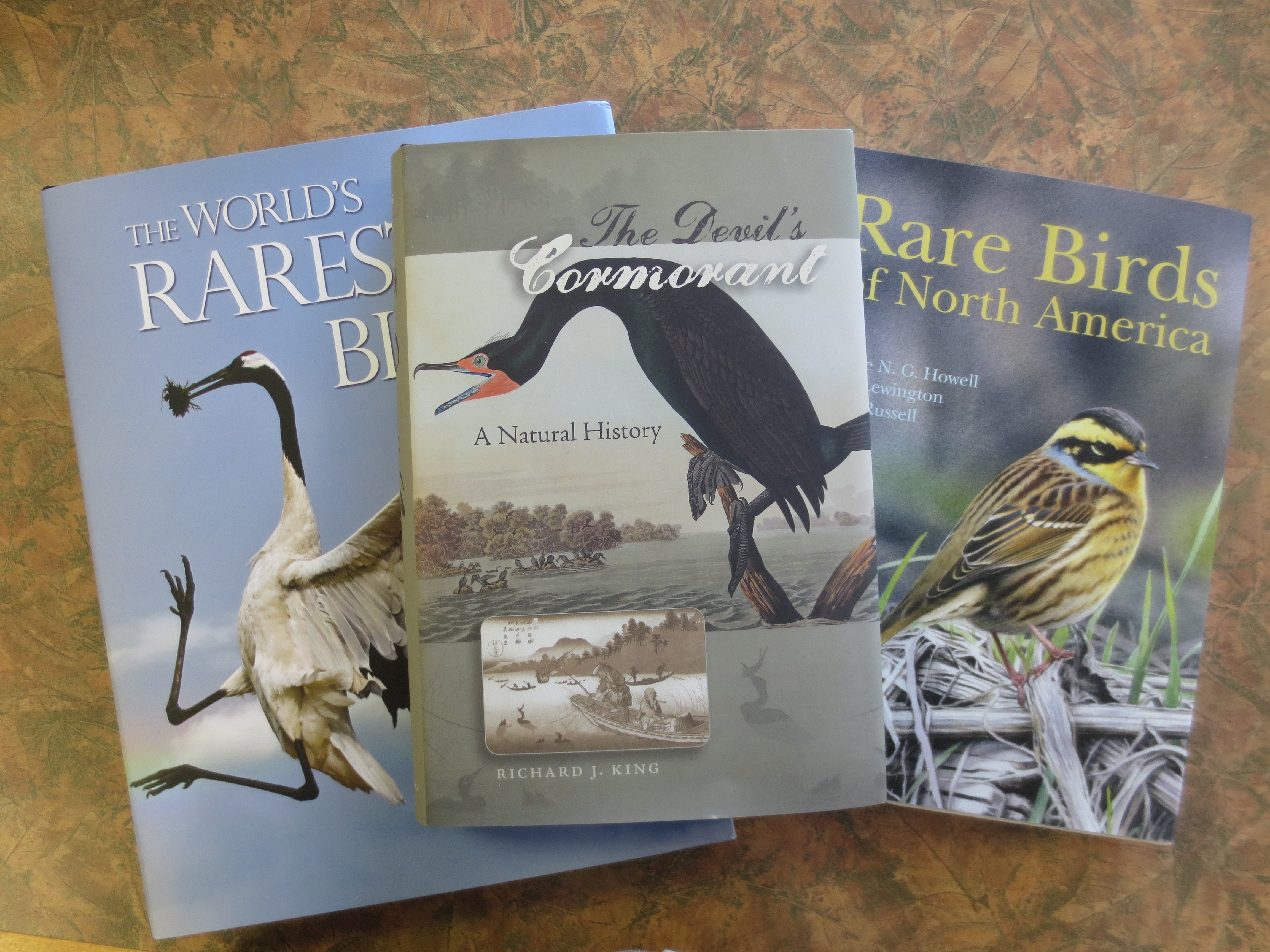
IMG_2139

Part I, which includes The World’s Rarest Birds, Lost Animals: Extinction and the Photographic Record, and Birdwatcher: The Life of Roger Tory Peterson can be found here.

Rare Birds of North America by Steve N.G. Howell, Ian Lewington, and Will Russell.

This long-awaited and much-anticipated book “offers the first complete synthesis of the occurrence and distribution of” every vagrant recorded in North American through July of 2011.  These birds aren’t necessarily rare in a global context as with “World’s Rarest Birds” but they are most certainly rare in the United States (not including Hawai’i) and Canada.

The meat of the book is the species accounts, covering 262 species from around the world.   First and foremost – and certainly the most eye-catching aspect – is the artwork.  This book marks North American unveiling of the remarkable artwork of Ian Lewington, and for many readers, it will be the first introduction to one of the best bird artists of our time.  Simply put, the plates are gorgeous.  The birds appear amazingly life-like, yet technically sound.  There is a lot of detail, but they are not exaggerated schematics. In addition to be a sheer joy to look at, they are incredibly accurate and useful depictions that will go a long way in aiding identification, especially in cases where they are  – and fostering appreciation.  For many of these birds, these are the definitive drawings, and in some cases far surpassing the rendition in those species’ “home” field guides.  The traveling birder will gain a lot of information from studying the plates in this book when heading to that respective corner of the world.  Some of the best and most helpful plates are when similar species are painted side-by-side (such as with many of the albatrosses) and/or on adjacent pages (as with Willow Warbler, Common Chiffchaff, and Wood Warbler).

For each species account, there’s a short analysis of world distribution, North American records and their patterns, and a discussion of taxonomy. The catch-all “Comments” section includes discussions ranging from origin and patterns to unanswered questions. Not surprisingly, I enjoyed the various postulations about patterns and provenance. And last but certainly not least is the “Field Identification” section, which might be one of the most important for people who want to find these rare birds.  If you think you have discovered a new state record, this is probably the first place to go to confirm your identification, for example.  I found it quite helpful when “similar species” were thoroughly compared, although at times, I felt that the authors skipped over potential confusion species, especially when those confusion species were very real and regular features of birding discussions (i.e. domestic waterfowl and bona fide Graylag Geese; considering how often domestic geese are reported as true Graylags, it seems ridiculous to claim “Similar species: none if seen well.”)  But these complaints are relatively few.

My one over-arching quibble with the text is simply a pet-peeve of mine: the use of counties as the sole reference to rare bird records.  I have no problem with the specific locations of the records being left out (the ABA Checklist is a quick and easy place to find that info) but it seems to me that counties are one of the least valuable references.  Perhaps out West, where counties are the size of eastern states, this reference is more useful from a geographic standpoint, but in many parts of the East, in our small counties with irregular borders, many birders probably don’t even know what county they are standing in at a given time.  So why not be just a little more specific?  For example, when looking at the entry for Variegated Flycatcher, type in “York   County, Maine” to Google Maps or your favorite mapping website or software.  OK, you have an idea as to where in Maine the bird was.  Now, type in “Biddeford, Maine,” the town the bird was in.  I bet it won’t take much time (especially after reading the intro material!) to picture where this bird probably occurred – that long, narrow peninsula that sticks straight out into the water…yup, that’s where the bird was.  In other words, towns/townships/territories (or counties in unincorporated areas when necessary) provide a whole lot more information and more specifics with little additional information, space, or even typed characters: In this case “Biddeford” is two characters shorter than “York County” but provides a significant amount more of information and relevance geographically.

While the vast majority of the book is the species accounts, the introductory material is far from superfluous. In fact, it should not be missed.  In addition to the utilitarian aspects of using the book and defining exactly what a “rare bird” is, the instructive sections “Migration and Vagrancy in Birds” and “Where do North American Vagrants Come from?” are chock full of useful and interesting information about the mechanisms and geographic origins, respectively, that produces the “Mega” rarities that birding dreams are made of.  The “Molt and Aging” section is a concise introduction to this complicated topic, but one that is often important to identifying vagrants and their origin.

I must, however, disagree with their use of the term “reverse migrant” in the section “Migration and Vagrancy in Birds” to describe what is more accurately referred to as “180-degree misorientation” or “reverse misorientation” (which the entry confusingly uses in a couple of instances).   Reverse migrant is usually used to describe an entirely different phenomena where birds – from few to massive flocks – undertake a seasonally-opposite movement based on local and current conditions.  For example, a warm spell in the fall might cause thousands of swallows to move north along the west coast, or a cold snap could send Red-winged Blackbirds in a southbound retreat in spring.  These are not “mistakes” by a few as misorientation suggests, but rather a coordinated response to seasonal conditions and its impact on food supplies, regardless of age and experience.

This book is a must-own for any student of vagrancy and rare birds, and it helps to teach everyone how to find more rare birds.  Meanwhile, birders of all levels will simply appreciate flipping through its pages and marveling at Lewington’s artwork and the unbelievable diversity of species that is out there waiting for us.

The Devil’s Cormorant: A Natural History by Richard J. King. (University Press of New England, 2013).

I saved the best for last. In fact, this is one of the best natural (and cultural) history books that I have read in quite some time. Various species of cormorants are found on all continents (yes, including Antarctica) and in all corners of the world, we find these birds to be vilified, hated, and sometimes even cherished.

The author seamlessly integrates fascinating hard science and extensive research with personal anecdotes from his cormorant-centric travels around the world. At the same time, he explores the interaction between humans and these birds.  From the sacred cormorant fishing in Japan to the guano deposits of Peru, we see how cormorants are an important part of some cultures.  On the other hand, from the catfish farms Louisiana to the stocked fishing holes of England, we see how people have come to misunderstand or even downright hate – and often woefully mis-manage – cormorants. The author does an excellent job of remaining objective even when explaining human actions that seem completely insane and inane, but strives to educate the reader about the realities – including when the realities are negative for the cormorant.

During the course of the year, the author follows the life of the Double-crested Cormorants breeding on a small island in Long Island Sound, through all of the trials and tribulations of surviving in a cruel, unforgiving world.  In between, he travels the globes to get to know others species on an intimate level, from spending time with researchers to visiting museums.  I particularly enjoyed his self-deprecating and humorous portrayal of his visit to the Natural History Museum in Tring, England and his travels through the population and species of the “blue-eyed shag group” of the sub-Antarctic, a trip that I have had the privilege of experiencing.

Personally and professionally, I find myself often defending the cormorant, rejecting the vitriol directed towards it. Heck, we even have a giant photograph of the face of a Double-crested Cormorant on our dining room wall: a face that includes a vivid turquoise-green eye – that I feel is one of the most beautiful colors in the world – and the bright and vivid orange facial skin and gular patch that contrasts magnificently with the dark black feathering, the dirty gray and flaky, “ugly-looking” imposing bill.  In other words, I was exceptionally happy when a friend of mine handed me a copy of this book.  It’s a fair treatment of the cormorant – and like most things, when nature is treated fairly, the natural world – including its cormorants – is defended.  I guarantee you will have a new-found understanding and appreciation for this remarkable group of birds.

Of course, most of these titles are available at Freeport Wild Bird Supply, and a shipment of A Devil’s Cormorant has just arrived and is the featured “Derek’s Choice” at the moment.  Also, look for our next installment of “Birds, Books, and Beers” to feature Will Russell, co-author of Rare Birds to take place in early May.  More on that soon.

And speaking of new, “must-have” books, the new and completely updated Sibley Guide is coming out in March!  We’re currently taking discounted pre-orders here at the store.

Gull Identification Workshop Wrap-Up

You may have noticed that my blog has been a little quiet in the last couple of weeks.  Mostly, that has been due to my birding being mostly about photographing gulls every chance I get! And in between, accumulating and sorting photos from friends.  What was planned to be a 95-slide PowerPoint program became an exhaustive (literally), 180+ slide dissertation.  Not only was I impressed by how many people signed up, but how many stayed until the bitter end – even though I strongly urged people who were new to this to depart before the section on Thayer’s Gulls and hybrids!

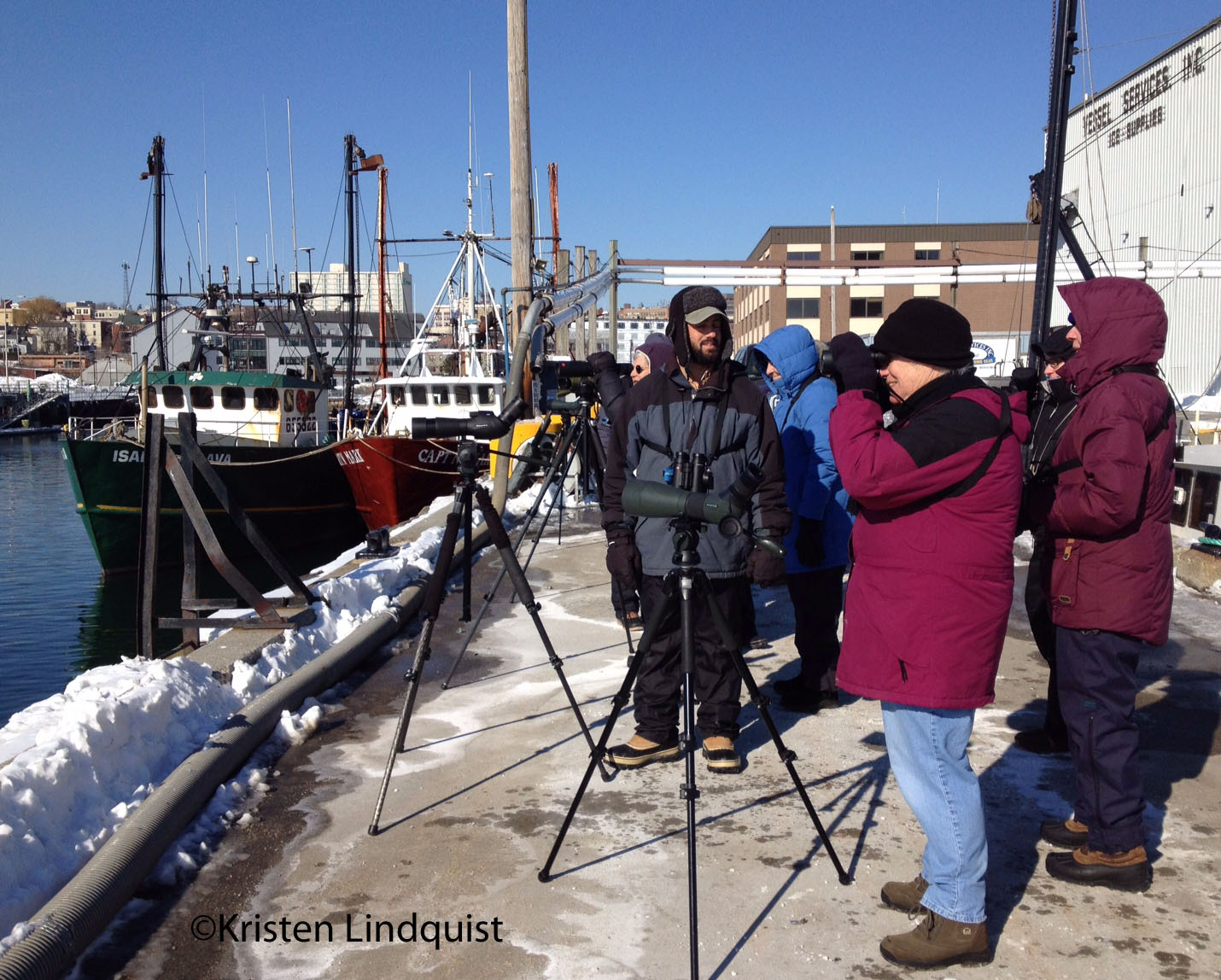
Come Sunday morning, 13 people joined me for the field session of the two-day workshop – no doubt reduced by the 12-degree temperatures that greeted us to start the day. We began with close studies of the various ages of Ring-billed Gulls at Back Cove…aided by a little “incentive,” of course.
photo 3_edited-1

Sorting through Herring Gulls was up next, and then we made our way over to the Fish Pier in OldPort, for some “real” gulling.  And it did not disappoint. The endless variation of “Kumlien’s” Iceland Gulls was readily apparent with eleven 1st-winter, two 2nd-winter, and 2 adults – many of them close and in direct contrast with each other. A total of three 1st-winter Glaucous Gulls were added to the mix, along with ample opportunities to practice aging Herring and Great Black-backed Gulls.
photo 3 (2)_edited-1

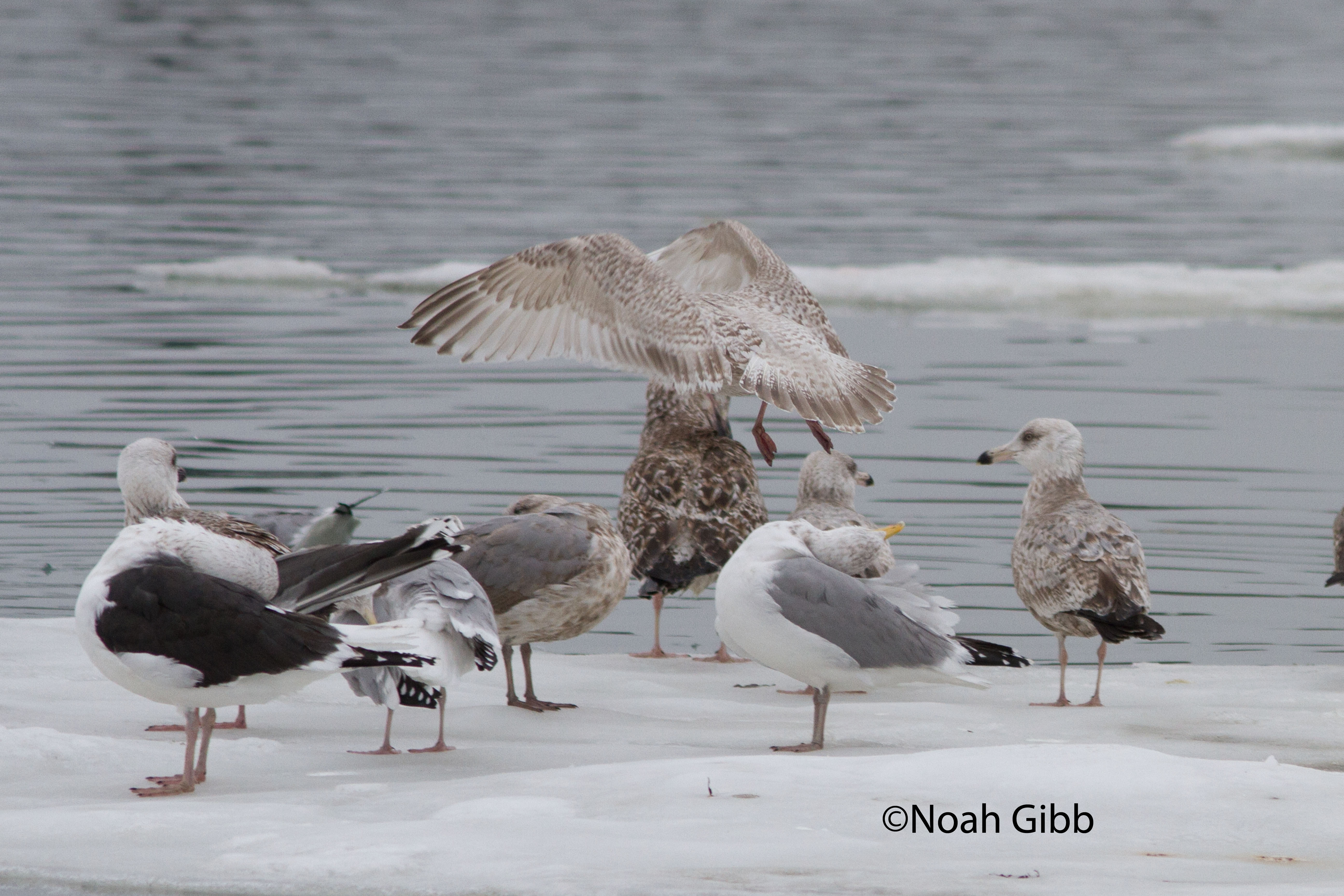
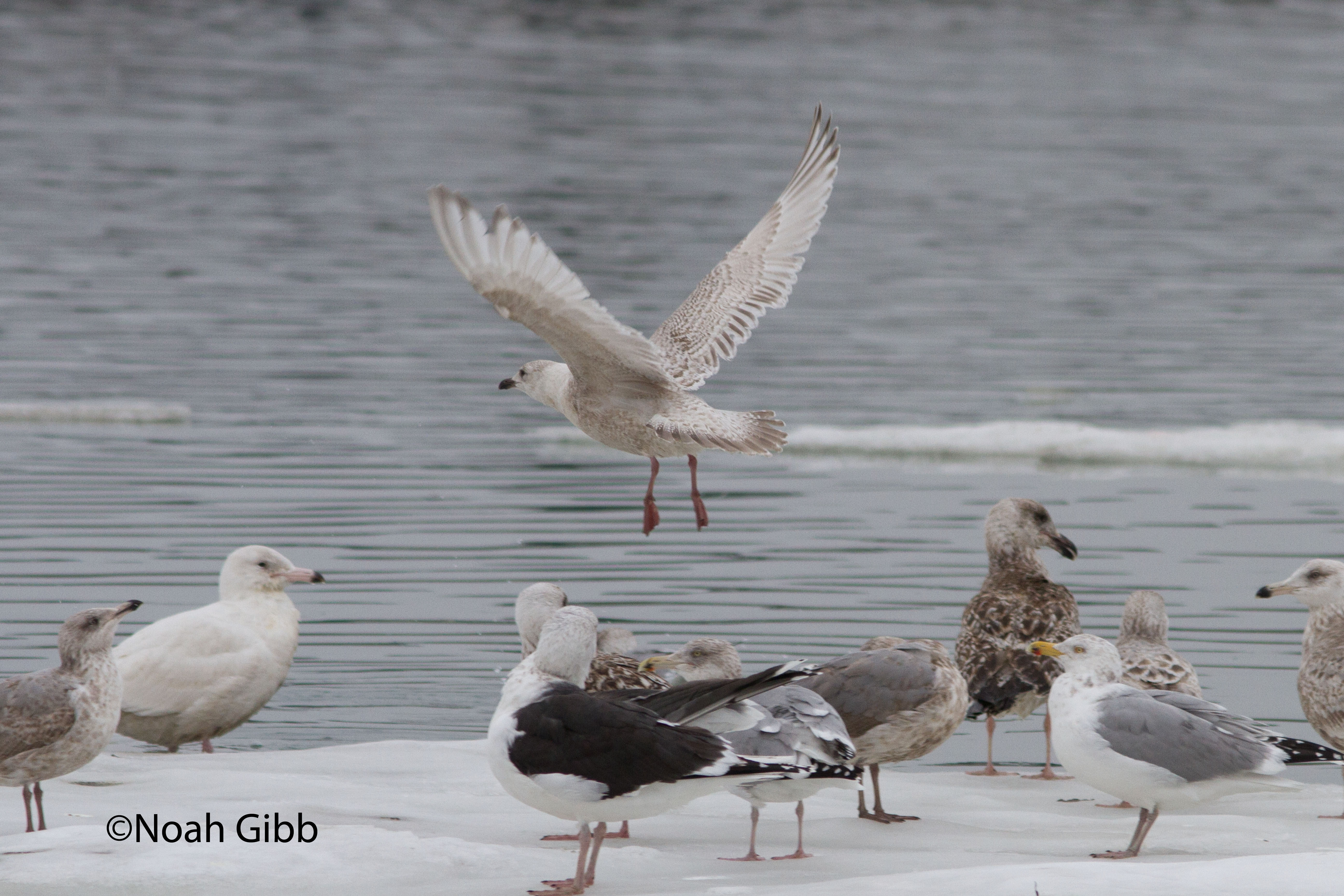
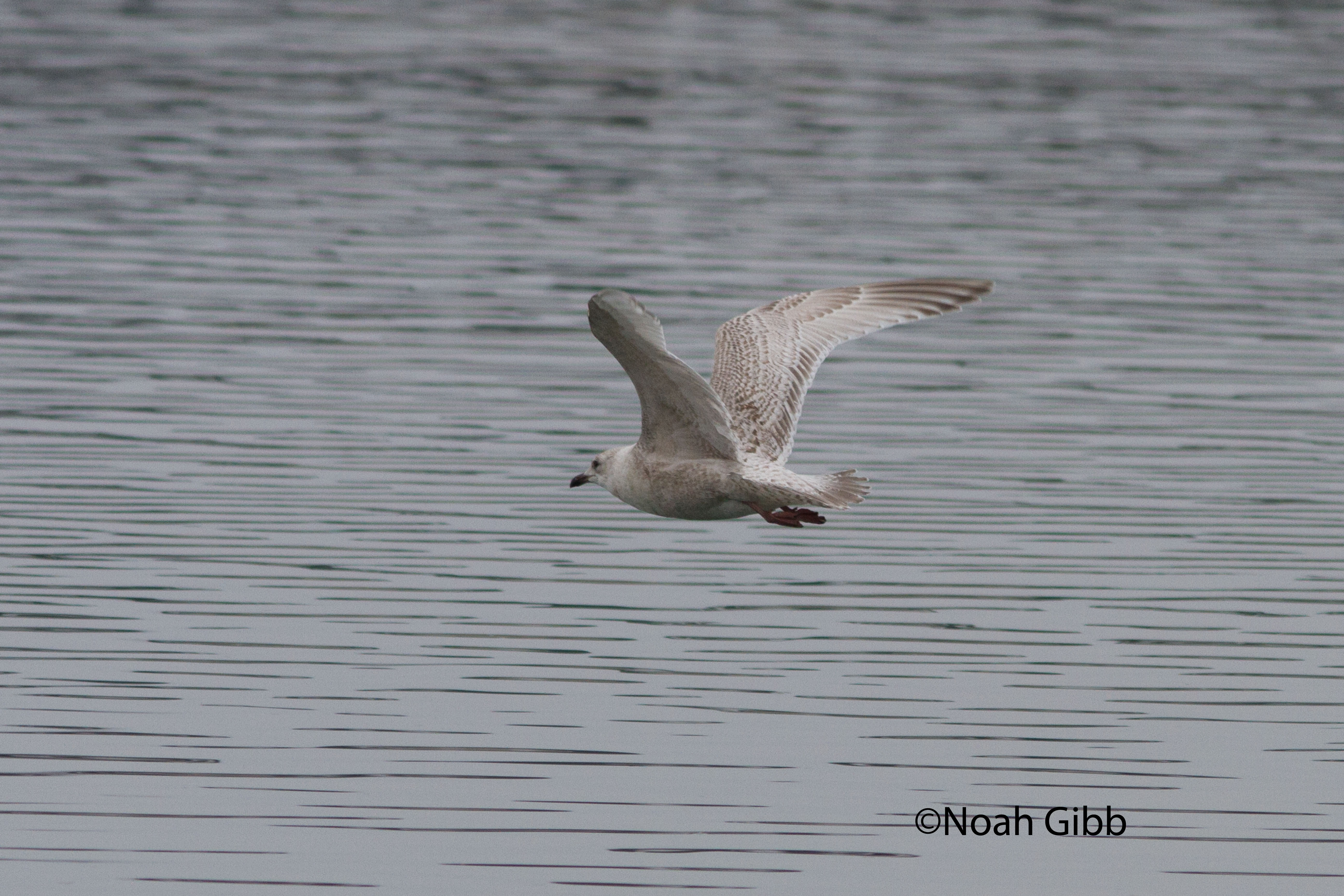
I really couldn’t ask for anything more…well, I could, and of course, did. And shortly thereafter a particular gull-of-interest put in an appearance. Widely being reported as a Thayer’s Gull, this odd individual was a bird I wanted to study closely (Jeannette and I only saw it in the distance on Tuesday), and it was indeed a very instructive bird for a gull workshop.  Having been looking at thousands of gull photos over the last two weeks, I have been a bit negligent with studying and addressing this bird.  Besides, I had not seen it in the field and even some very good photos are of secondary value to time with a bird in the field.

Doug Hitchcox got some decent photos of the bird on Sunday, but the best photos to date have been from Noah Gibb. I will therefore use these photos as our reference.
99.IMG_9975_edited-1

99.IMG_9985_edited-1

99.IMG_9987_edited-1

99.IMG_9998_edited-1

One of my take-home messages during my workshop is that a good “guller” has to be able to say “I don’t know,” and leave some individuals as “Gull sp.” This is probably the best answer to this bird, but what I think we can say is that this cannot be “counted” as a Thayer’s Gull.

For better or for worse, Thayer’s Gulls on the East Coast receive extensive scrutiny.  Birds that would be passed over in coastal California are analyzed to death in New England. Likewise, birds that look like “Kumlien’s” Iceland Gulls on the West Coast get extensive scrutiny, while here in Maine we pass some of these off as typical variation.  And I think this is a good thing – rare birds are rare, and vagrants to opposite coasts should warrant extreme care.

Therefore, this current rash of “Thayer’s Fever” – a common affliction of East Coast gull-watchers – needs to be tempered a bit. There is a reason that there are only two accepted records ever in Maine of this challenging, and variable, species. Therefore, extreme caution is necessary when placing this desirable label on funky gulls.

Like the Shawmut Dam gull reported by many as a Thayer’s a few weeks ago, I believe that the Portland “Thayer’s” is well outside the range of variation of what we can accept as a bona-fide Thayer’s Gull on the East Coast.  While there are a number of characteristics that suggest this bird could be a Thayer’s, there are a number of significant “strikes” against it.  While I think the Shawmut Dam birds suggests a Iceland-Thayer’s intergrade (I am not going to get into the muddled and controversial taxonomy here today), the Portland bird looks to me more like an abnormally dark-winged “Kumlien’s” Iceland Gull. Sure there could be Thayer’s genes in there…which there probably are in all Kumlien’s Gulls . . .oh wait, I said I wasn’t going to get into taxonomy.  Never mind.  Moving on.

So where was I? Oh yes… while the dark secondary bar (and upon closer inspection showing a distinct contrast between dark outer webs and pale inner webs) and the similarly distinctly two-toned outer primaries are important Thayer’s features, there are a serious amount of non-Thayer’s like features shown by this bird. Again, like the Shawmut Dam bird, there are just too many things “wrong” with this bird to safely label it a Thayer’s Gull, in my opinion.

First and foremost, there’s the Portland bird’s incredibly white overall appearance. While a first-summer or some 2nd-cycle Thayer’s can look this pale overall, this bird IS a first-cycle bird.  Since no second-cycle feathers are evident (the bird has a very uniformly-marked plumage typical of a bird less than a year old) and none of the feathers suggest any abnormal wear, we cannot call this anything other than a 1st-cycle bird.  It is not overly worn, and bleaching would affect all of the most-exposed parts of the bird – like the mantle, upperwing, and especially the primaries (and it is those primaries that are abnormally dark, not pale). The mostly-dark bill is also highly suggestive of a 1st-cycle bird, as is the fairly dark eye. Perhaps that is a bit of an over-simplification, but for now, that should suffice.

With that (fairly well) established, we can look at this bird more closely.  Again, those outer primaries and “picket-fence” secondaries are very Thayer’s-esque. Unfortunately, the similarities pretty much end there. The bird is not very big, and similar in size to most of the “Kumlien’s” Iceland Gulls we see it with.  It is also has the somewhat short and thin-billed appearance, with a gently rounded head and large eye that are typical of Iceland Gulls; this bird does not get any subjective gestalt points.  More importantly, in my opinion, are more tangible issues, from head to tail (and in no particular order of importance):
–          The overall pale appearance to the entire bird give that “white” impression at a distance; Thayer’s (THGU) usually look “dirtier” or even “brown.”
–          The pale face doesn’t have that nice dark smudge that we like to see on THGU.
–          The bill is clearly becoming pale at the base already.  The pattern looks good for Iceland (ICGU), and is certainly on one end of the bell curve for THGU.
–          The tertials are wholly marbled, and look perfect for ICGU.  “Classic” THGU show mostly dark tertials with marbled distal ~1/3rd or so.
–          On the folded wing (and on some flight shots), the primaries definitely have dark outer webs, but they also have a pale fringe that not just rounds the tip, but continues down the length of the most of each feather’s outer web. That is more consistent with dark-winged “Kumlien’s” Gulls.
–          While the tail is mostly dark, the bases are fairly extensive white with lots of marbling.  The extent of marbling is a good fit for ICGU.

While absolutely none of these factors eliminate a THGU on their own, the sum of all of them taken together makes for a most unusual THGU.  Considering the range of variation in “Kumlien’s” ICGU combined with hybridization – and by some accounts extensive intergrading – put this bird well outside the possibly-artificially-delineated box that we currently label a Thayer’s Gull.  At the very least, this is far short of a bird that could be “good enough” to constitute a third state record.

Can you see why I was so impressed that so many people stayed to the bitter end of my program on Saturday (and Sunday, for that matter!)?  So there, I said it – the OldPort mystery gull is not a “good” Thayer’s, despite the wishes of many-a-birder!  Sorry.

So anyway, after the Fish Pier, we ventured over to Mill Creek Cove in South Portland.  Two more 1st-winter Iceland and a 1st-winter Glaucous were present (some are all likely birds we saw on the other side of the harbor) to reinforce our new-found skills.
photo 3 (3)_edited-1

And finally, some of the group joined me for a field trip extension over to Westbrook to look for the “Westbrook Gull,” a bird that, as I explained in the workshop, still defies identification and therefore is also quite instructive. Unfortunately, it was not present today (I see it less often on the weekend), but we finished up with a great showing for here of 4 Iceland Gulls (three 1st-winter and 1 2nd-winter) with the Herring and Ring-billed Gulls near the falls.  Meanwhile, while we did look at other birds all day, the open water behind downtown Westbrook yielded the surprise of the day – a pair of Ring-necked Duck that has just been found by Colin Chase.  Whether they are southbound, northbound, are somewhere in between, this was a great winter find, and a nice way to bring our workshop to a close.

Some people added Iceland and Glaucous Gull to their life list this day – and I think one person deleted Thayer’s Gull from their life list! – but more importantly, everyone left with a little more knowledge about how to identify gulls, and more importantly, hopefully a new-found appreciation for these remarkable, adaptable, and successful creatures.

With the success of this weekend (and some refinement due to the slide show portion of the program), I think it is safe to say that you can look for this workshop again in the future.  Until then, good gulling everyone!

Rarity Season Ain’t Over Yet..and Fun Store News and Contest Stuff

“It ain’t over ‘til it’s over” – Yogi Berra

Before we get to my birding of recent days, a couple of quick orders of business. First of all, tonight is our “After Hours Sale” here at the store.  This is our biggest sale of the year.  From 6:00 to 8:00 tonight only, everything in the store (with the usual exception of seed, optics, and sale items) is 25% OFF!  And we’ll have treats, coffee, and other refreshments to fuel your shopping

Then rest up and be sure to join us on Saturday morning for our usual Saturday Morning Birdwalk (meets at the store at 8:00am for a carpool to a local park.  We’ll return for coffee and feeder-watching between 10 and 10:30).  While I would, of course, love to see you all year long, you don’t want to miss tomorrow (or any of the next 17 weeks) as it’s the start of the Fifth Annual “SnowBird(er) Contest,” where we’ll award points to birdwalk participants based on how cold it is.  The top three birders at the end of March will receive some great prizes!

GRAND PRIZE: MAINE BIRDS by RALPH PALMER!
The classic tome from 1948 is still a valuable reference for students of the birds of Maine. This excellent condition copy is valued at over $75. It’s great for comparing status and distribution from then to now, and for collectors of birding books.

2ND PRIZE: BACKYARD BIRDHOUSE from Coveside Conservation in Casco. Perfect for everything from House Wrens to White-breasted Nuthatches, this house is perfect for any yard and made from New England White Pine.

3RD PRIZE: $25 GIFT CERTIFICATE to EDNA & LUCY’S in Pownal – Enjoy a great sandwich, award-winning donuts, and more. Perfect for your next trip up to the Bradbury Mtn. Hawkwatch!

Visit our website for more information and how the game is played. 

OK, back to birding….

In my blog a few weeks ago in which I summarized the Rarity Season through the middle of November, I suggested that it was unlikely that many rare passerines will turn up away from feeding stations.  However, the possibility of strays “concentrat(ing) along the coast as they seek out more favorable microclimates or seasonal food sources,” still seemed like a cause for hope.  And sure enough, yesterday, I found female Hooded Warbler in the Biddeford Pool neighborhood – a wicked good December bird anywhere in the US!

Unseasonable rarities like this really fascinate me.  How did it get here?  Had it flown the wrong way during the usual period of Hooded Warbler migration and only now was detected as it moved towards the coast to escape the recent cold?  How long has it been present – maybe it’s been in these thickets for months and only now did someone walk by the right place at the right time? (Based on how thoroughly I, and a few others, work this area in November, I find this scenario a little less likely)  Or perhaps, it was a mirror-migrant afterall that flew north instead of south from its usual range in the Southeastern US.  Instead of ending up in Central America, it ended up somewhere in the interior of southern New England.  Then, the recent cold “encouraged” the bird to move on.  But “mis-wired” somehow, it just kept flying the wrong way.  I always wonder why so many birders assume that once birds have made a mistake (i.e. flown north instead of south), they’ll magically figure things out and do the “right” thing the next time.  Of course, who really knows?  But it’s a fun thing to ponder (well, it is to me anyway).

Of course, I was only down at the Pool to look for Snowy Owls.  In that same blog, I wondered if we were seeing the first signs of an irruption.  My goodness, were we ever, and so far, it is HUGE!  There have been dozens up and down the Maine coast.  Jeannette had an amazing TEN in and around Biddeford Pool on Tuesday.  Not only are they widespread, but they are in unusual concentrations.  I “only” found four yesterday, but some of my time was spent walking a mile back for the camera (it was raining and my shoulder was aching when I departed the car) and then not refinding the warbler.
DSC_0157_SNOW,Hatties,12-5-13

This particular bird, that Jeannette also photographed on Tuesday, has made a temporary home for itself in the marsh behind Hattie’s.

While it is unlikely that this density of Snowy Owls will continue, we’ll certainly enjoy it while we can.  Some will head further south, and unfortunately, no small number will succumb to starvation (the reason they’re here in the first place – and with up to 80% of raptors dying in their first winter, it’s no surprise that most of these birds will not make it back to the tundra).  I also wonder if these recent very high tides (astronomical high tide plus a deep low pressure system well offshore) will flood the marshes too much.  In such cases, many rodents (especially voles) will drown as they run out of high ground.  That’s a natural occurrence, but if there are few voles in the marshes, that will be a lot less food for hungry owls.

Meanwhile, in that aforementioned blog I also postulated about the potential of finally getting a good goose in the “Greater Yarmouth Goose Fields,” despite the late date.  Finally!  Although my high count of Canada Geese was only 434 birds (on Wednesday), they were punctuated by an adult Greater White-fronted Goose, in the field off of Cross and Winn Road in Cumberland – the first rarity of the season in the fields.  My stubborn perseverance finally paid off.  Today, I improved upon my photos, and I posted a couple here.

I also had a Gray Catbird at Biddeford Pool yesterday, along with the Hermit Thrush that Jeannette found on Tuesday.  I also had a Winter Wren near the store while walking Sasha on Wednesday afternoon and a Northern Flicker fly over the highway in South Portland yesterday. So there are still some “lingering” migrants around.  Meanwhile, with another increase in seaducks offshore (250+ Black Scoters off of East   Point for example), things are picking up along the coast.

Oh yeah, and there are Snowy Owls everywhere!  In other words, go birding…well, after you visit us at the store, that is!

2013 Maine-New Hampshire Tour for WINGS

My Maine-New Hampshire Tour for WINGS is designed to take a comprehensive look at the wide range of breeding birds of northern New England, from Saltmarsh and Nelson’s Sparrows at sea-level to Bicknell’s Thrushes on the 6200ft Mount Washington.  From Grasshopper Sparrows and Upland Sandpipers in the blueberry barrens of the Kennebunk Plains to Boreal Chickadees and Gray Jays in the boreal forests, and from Spruce Grouse and Bay-breasted Warblers “Downeast” to Atlantic Puffins and Razorbills on MachiasSealIsland, this tour enjoys them all.

Over the course of 7 full days of birding and just about 1200 miles traveled (by van, not including what we did by foot and boat!) amassed 163 species, including 20 species of warblers, 4 species of alcids, 9 species of flycatchers, and 14 species of sparrows.  An outstanding whale/bird watch trip that produced 9 Fin Whales, over 150 Great Shearwaters, 6 Sooty Shearwaters, and an impressive 18 Leach’s Storm-Petrels among over 500 Wilson’s Storm-Petrels.  Breathtaking scenery.  Great food, especially lots of fresh lobster.  Moose and a Wood Turtle, too.  What’s not to like about this all-inclusive experience in the state where our motto is “The Way Life Should Be?”  I think our tour left in full agreement with the accuracy of this.

IMG_0891-1st night dinner1,6-15-13_edited-1

We began on Day One in the saltmarshes of Scarborough Marsh, comparing Saltmarsh and Nelson’s Sparrows.  “Eastern” Willets voiced their complaints, while Least Terns foraged nearby.  The nearby sandy beaches afforded an opportunity to study Roseate Terns and Piping Plovers, with lingering White-winged Scoters and a Red-throated Loon offshore.  Our first surprise of the trip was a Brant standing on a sandbar off of Pine Point – not a typical summer bird here in Maine.  As we scanned the sandflats for lingering shorebirds (just four Black-bellied Plovers), we spotted two distant American Oystercatchers.  Just as we started to strain to see them, one flies by right off the end of the pier!

By mid-morning, we had arrived in the Kennebunk Plains, surrounded by the state’s largest population – by far – of Grasshopper Sparrows and Upland Sandpipers with goodly amounts of Vesper Sparrows, Prairie Warblers, and the continuing Clay-colored Sparrow.  After a picnic lunch at a particularly birdy spot, we began our climb into the White Mountains.  Our first stop was at an active Black-backed Woodpecker nest, where patience produced visits by both adults, and views of two hungry youngsters bursting out of the hole.  As this was a major target bird of the trip, I added quite a few miles and minutes to today’s marathon to assure us a look at this often secretive (at least away from the nest) boreal specialty.

And as if this wasn’t enough, we had yet another major target yet to bag.  An after-hours private charter up Mount Washington into the realm of Bicknell’s Thrush was rewarded with exceptionally good views, and a chance to experience the winds and weather of the summit.

IMG_0905_Mt WashingtonSummit,6-16-13_edited-1

Day two began on the Caps Ridge Trailhead, with Gray Jays, Yellow-bellied Flycatchers, and Blackpoll Warblers, before we headed up another mountain for a second helping of Bicknell’s Thrush.  After telling folks that “there’s no way we’ll see a Bicknell’s better than we did last night,” I was made out to be a liar by crippling views of this thrush.

  DSC_0139_BITH,WildcatMtn,6-17-13

We also picked up a Philadelphia Vireo at one of my “secret spots,” and enjoyed some “bugs.”

DSC_0144_HarrissCheckerspot,WildcatMtn,6-17-13

(Harris’s Checkerspot).

IMG_0909_ModestSphinx,WildcatMtn,6-16-13_edited-1

(Modest Sphinx moth).

IMG_0921_GrouponWildcatMountain,6-17-13_edited-1

Heading back into Maine, we spent the night in Rangeley, and come morning, Gray Jays dropped in to clean up after our picnic breakfast.  Kirk Betts joined us for a few hours of birding the Boy Scout Road, where Boreal Chickadees and an Olive-sided Flycatcher were well seen, and as we began our trek eastward, Purple Martins, Black Terns, and two (admittedly ridiculously distant) Sandhill Cranes at Messalonskee Lake nicely broke up the drive.

By the beginning of the fourth day, we were far Downeast in Machias.  We dipped on our first attempt at Spruce Grouse, but all was forgiven when we boarded our boat for MachiasSealIsland on a beautifully warm and sunny day.  Thousands of Atlantic Puffins, Razorbills, and many hundreds of Common Murres – many within just a few feet of the observation blinds.  How do you describe this magical place?  I simply cannot; it must be experienced.  I will let these pictures do the talking.

DSC_0157_1stSummerCOMU1,MSI,6-18-13_edited-1

Immature Common Murre.

IMG_0935_GrouponMSI,6-18-13_edited-1 

DSC_0244_ATPU8,MSI,6-18-13_edited-1

DSC_0240_ATPU8,MSI,6-18-13_edited-1

DSC_0232_ATPU6,MSI,6-18-13_edited-1

DSC_0223_RAZO6,MSI,6-18-13_edited-1

DSC_0212_ATPU1,MSI,6-18-13_edited-1

DSC_0199_RAZOandCOMU1,MSI,6-18-13_edited-1

DSC_0193_RAZO2,MSI,6-18-13_edited-1

DSC_0190_RAZO1,MSI,6-18-13_edited-1

DSC_0174_SAVS1,MSI,6-18-13_edited-1

After lunch, we were joined by Chris Bartlett as we worked our way along the BoldCoast to West Quoddy Head and back to Machias.  On the hot summer afternoon, we didn’t see many of our targets, but we were adding birds to our list.  Unfortunately, we had yet to add Spruce Grouse.  

Therefore, on the 5th morning of the trip, Operation Fool Hen (the colloquial name for Spruce Grouse) went into full effect.  The formerly most-reliable place in the state was no longer reliable (0-3 here), and I had pretty much resigned myself to failure by the time we entered the woods at one last place.  We were cleaning up some “dirty birds,” (birds not seen by the whole group), and while I was trying to get some people a look at a Swainson’s Thrush, a hen Spruce Grouse walks out behind me, about 10 feet away and starts preening. The grouse walks even closer to the growing group, including a family that enjoyed the show, patiently waiting to pass.  We watched for well over 15 minutes before she sauntered off.

DSC_0325_SPGRhen3,QuoddyHead,6-20-13_edited-1

DSC_0319_SPGR_hen2,QuoddyHead,6-20-13_edited-1

Relieved and ecstatic, we continued down the trail.  On our way back, that family, now ahead of us, points to where we saw the hen grouse.  We acknowledged it, they moved on, and instead we see a spiffy male standing just off the trail.  He started walking towards us, we all froze, and he actually walks around a few people in order to take a dust bath within a few feet of us – in the very same spot that we saw the hen.  This guy was not going to be deterred!

DSC_0370_SGPRmale,QuoddyHead,6-20-13_edited-1

Time flies when you’re having fun with Spruce Grouse, so our time was limited in Moosehorn NWR.  Luckily, we did see Bay-breasted Warbler, but before we knew it, it was time to move on and head towards Bar Harbor, where we enjoyed a lobster dinner the way lobster should be (abundant; and on paper plates with bibs and lots of napkins).

IMG_0939_Trenton_Bridge_Lobster_Pound,6-20-13_edited-1

IMG_0951_Summer_Solstice,Bar_Harbor,6-21-13_edited-1

(Dawn on the Summer Solstice from the Back Porch).

Our second boat trip of the tour departed Bar Harbor on the morning of Day 6, and we headed towards Petit Manan to enjoy yet more puffins, Razorbills, and Common Murres.  And unlike Machias Seal, the tern colony here is present and active, with thousands of Common and Arctic Terns wheeling through the air, and at least a few more Roseates.  Heading further offshore, pelagic birds began to increase.  A conservatively-estimated 500 Wilson’s Storm-Petrels were joined by at least 18 Leach’s – probably my best-ever tally from a non-dedicated (no-chumming) pelagic. 150+ Great Shearwaters and 6 Sooty Shearwaters joined the party…oh yeah, and 9 Fin Whales!  It was one of my best pelagic bird shows on this 4-hour trip, and the Fin Whale show was dramatic as well.

DSC_0423_GRSH_flock,offBarHarbor,6-21-13

Great Shearwaters.

DSC_0411_Fin_Whale,Off_Bar_Harbor,6-21-13

Fin Whale.

DSC_0408_LESP1,offBar_Harbor,6-21-13_edited-1

Leach’s Storm-Petrel.

IMG_0950_Cadillac_Summit_Group2,6-21-13_edited-1

The view from the summit of Cadillac.

Day seven was our last day of birding, and a lot was on the agenda once again.  A picnic and walk at Sieur de Monts Spring was highlighted by a great look at a day-hunting Barred Owl, and the scenic Auto Loop Road filled some holes in our list, and surprised us with a lingering immature Great Cormorant!

Heading towards Portland, we stopped for lobster rolls at the world famous Red’s Eats before birding around Brunswick, still adding some birds to our list, such as some rare-for-the-season Long-tailed Ducks.

IMG_0954_Reds_Eats1,6-22-13_edited-1

  LL Bean, Freeport Wild Bird Supply (of course to add a few more species to the list at the feeders), the world’s Largest Rotating Globe at Delorme, a colony of Fish Crows, and last but not least, a scrumptious dinner in Portland brought this remarkable trip to a grand finale.

I hope you’ll consider joining me on this tour when we run it again in 2015.  As with all of our trips and tours, stay tuned to www.freeportwildbirdsupply.com/birdingtoursinMaine.asp for more information.