Tag Archives: Freeport Wild Bird Supply

2023 Down East Adventures Birding Tours.

Freeport Wild Bird Supply is very excited to partner with Down East Magazine’s Down East Adventures for our third year. In 2023, we are expanding our offerings to include two exclusive overnight trips, along with our popular ½- and whole-day targeted workshops.  Focused on skill-builder rather than list-building, there will be plenty of “life birds,” but also more knowledge and education about birds, habitats, birding, and much more about the natural world.

The full list of upcoming tours can be found here.   At the conclusion of each tour, I’ll post the trip report here.

  • Winter Waterbirds Workshop, January 15.

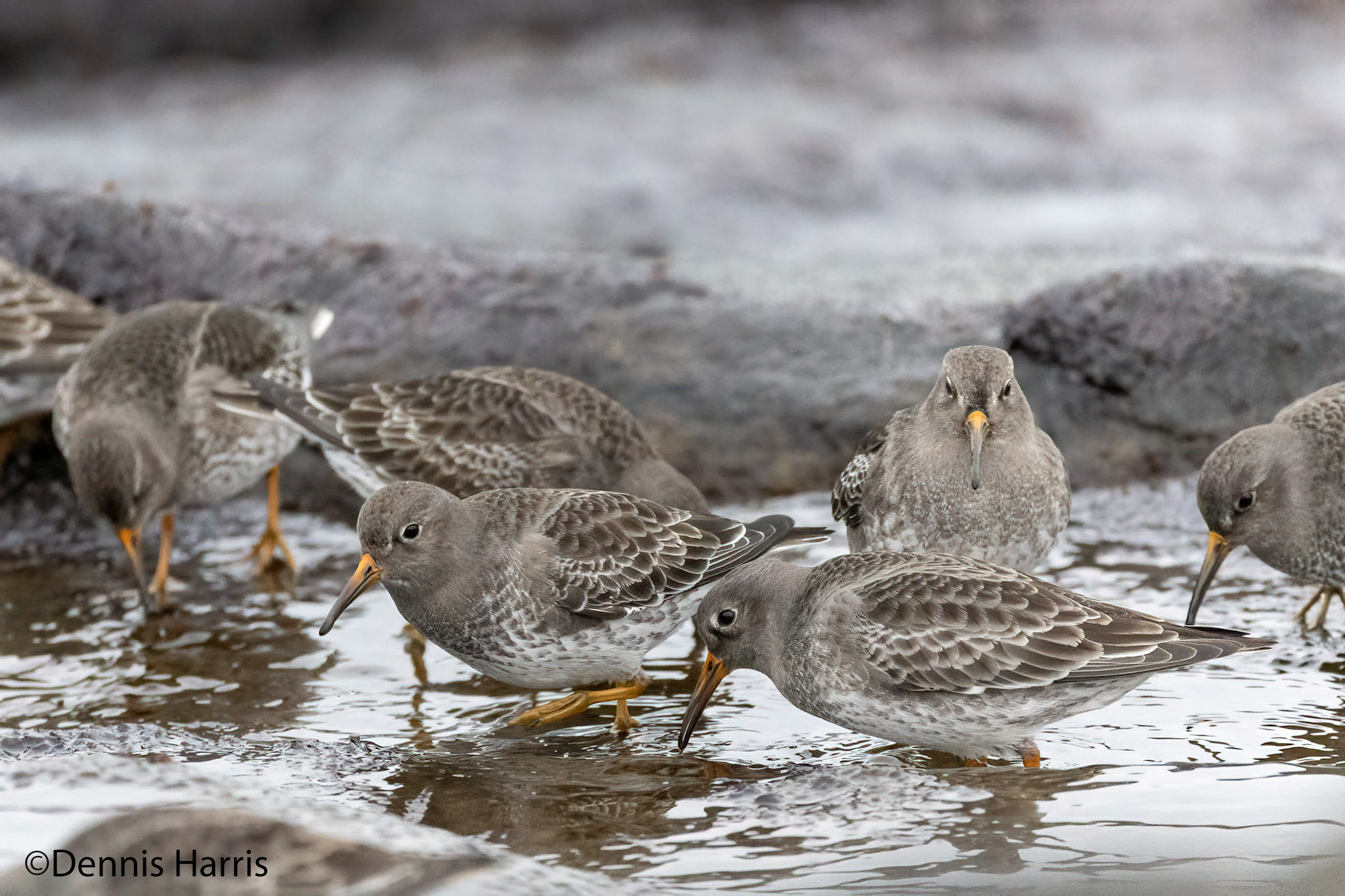
This Purple Sandpiper was about as cooperative as it gets for us at Sohier Park in York.  Later, it was joined by its friends (photo below).  This is really a lovely shorebird when viewed as well and as close as we experienced.

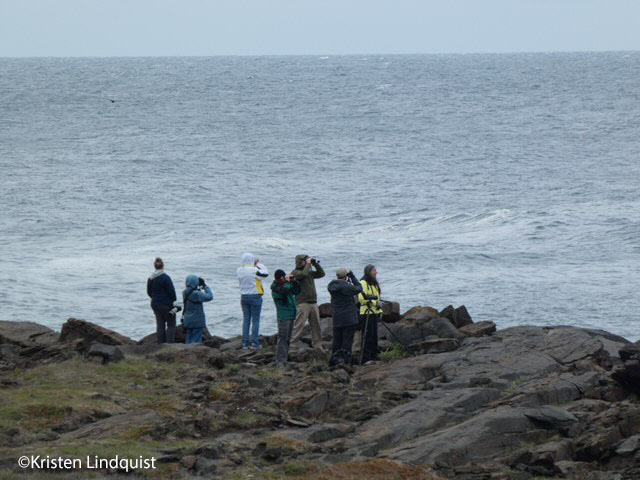
Extremely strong winds and very high seas presented a challenge as we sought out wintering waterbirds along the southern York County Coast. We worked hard to find sheltered water where we could observe birds well, but when we did find that secluded cove, peninsula lee, or rivermouth, we were treated to incredible looks at many of the birds we had hoped for.

We looked down on Red-breasted Mergansers at Perkin’s Cove, and you’ll never be closer to a Common Loon than we were at the Ogunquit Rivermouth. We checked a few more locations than I usually need to on this tour, but our most productive spot was the southern shoreline of Sohier Park at The Nubble. There, we were treated to close views of Black and White-winged Scoters, Harlequin Ducks, and a most-cooperative flock of Purple Sandpipers.  We then ended the day at hidden Abbott’s Pond, where we enjoyed a break for the wind, close comparisons to study details between Mallards, American Black Ducks, and hybrids thereof. 

Meanwhile, a group of 8 or so Black-legged Kittiwakes were feeding off of Short Sands Beach, and a stunning adult Iceland Gull passed by at The Nubble. Unfortunately, the seas were just a little too rough to find any alcids today, but we knew they were out there!
  • Spring Migrant Songbirds Workshop, May 14.

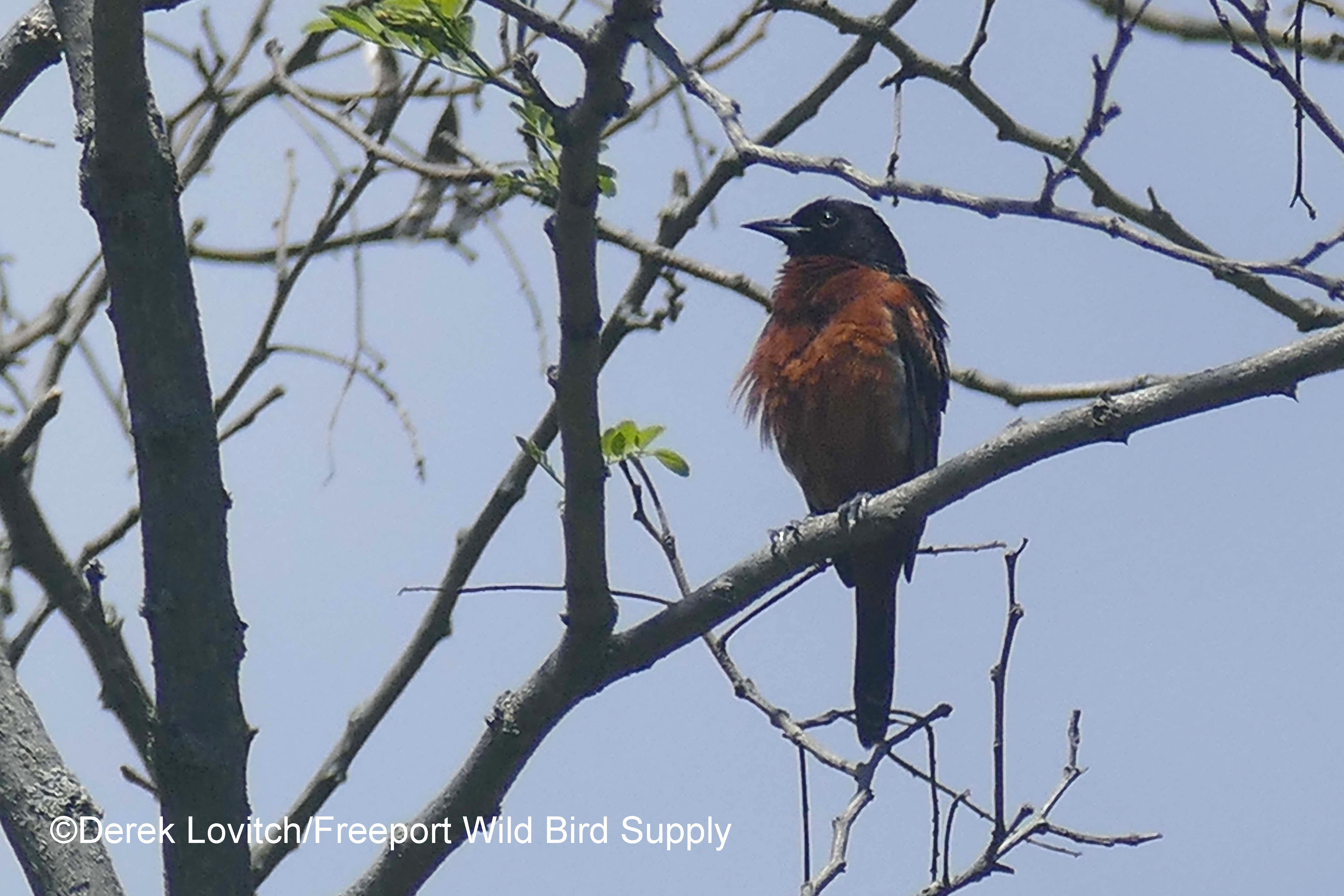
This stunning Blackburnian Warbler nicely demonstrated the value of blooming oak trees for seeing warblers in the middle of May.

Four hours later we had not left Evergreen Cemetery in Portland…a very good sign. There was just no need to move along, the birds kept coming to us. In the end we tallied a respectable 16 species of warblers, even though growing a list was not our goal. What made this workshop successful, however, was how well we saw just about all of the warblers and other songbird migrants throughout the morning.

Warblers were a highlight of course, including repeated quality time with favorites such as American Redstart and Black-and-white Warblers, the two most plentiful migrants this morning. We also enjoyed great looks at several Chestnut-sided Warblers, Magnolia Warblers, and Northern Parulas, with fantastic studies of Black-throated Blue Warbler, Black-throated Green Warbler, Yellow Warbler, and Wilson’s Warbler. We also saw two newly-arrived Tennessee Warblers which aren’t always easy to get looks at. There was a good amount of song this morning, so we had chances to listen and learn many of these species as well.

Shortly after hearing a Red-eyed Vireo and my describing it as “high up and often hard to see,” we found one in the lower branches of a nearby oak, and watched it sing, forage, and do all things vireo for almost 10 minutes!  Likewise, after hearing distant Ovenbirds, we had two walking around right in front of us! Beginning with a view of a Veery on the ground in the open, we saw it again as the walk ended, only a few feet in front of us for another great view and chance to observe and study.

During the morning, we chatted about migration, habitat, and the process of building the necessary toolkit to build birding skills. Finishing the walk with a quick overview of some references (we had too many birds to leave much time for anything more), we recapped a very productive and instructive morning of spring birding.

  • Rangeley Birding Workshop, June 6-8.

Our first overnight tour together, the Rangeley Birding Workshop was based at Bald Mountain Camps in Oquossoc, nestled on the shore of Mooselookmeguntic Lake. Common Loons greeted us, but so did the rain. June of 2023 was one of the rainiest Junes on record in Maine, and we were very thankful for the wood stoves in each cabin!

Our first morning, 6/7, began at Hunter Cove Wildlife Sanctuary, with lots of singing Blackburnian Warblers. A large flock of Red Crossbills flew over, two Yellow-bellied Flycatchers were heard clearly and then glimpsed, and a variety of common warblers were detected. A confiding pair of Canada Jays was the highlight – as they often are – but even the common warblers were tough to see today, so we focused on practicing our birding by ear skills.

Enjoying our delicious boxed lunches at the Rangeley Waterfront Park, with more Common Loons offshore, we delved into an impromptu gull workshop, using each age class of Ring-billed Gull as an introduction to molt, feather topography, and identification. A 3rd-cycle Herring Gull kindly dropped in for comparison as well. In inclement weather, we take advantage of whatever learning opportunities the birds are willing to provide!

After lunch, we poked around the Mingo Spring Birding Loop, with good looks at the likes of Least Flycatcher, Alder Flycatcher, and Dark-eyed Juncos among others. But as rain returned, we called it a day and settled in to dry out in front of our stoves instead of an afternoon of lake-watching from the BMC property.  And dinner was absolutely delicious!

Day 2 began with a brief walk around the BMC property (American Redstart, Ruby-throated Hummingbird, etc) followed by a foray over to the famous birding destination of Boy Scout Road, looking to build on the identification toolkit we worked on the previous day. We parked half the cars at one end and then walked the length of the road, birding along the way. But it was rather quiet here too – the ongoing story of June 2023. We did have some more Red Crossbills, a fantastic view -finally – of a Blackburnian Warbler, several Alder Flycatchers, and once again more Canada Jays. But this time, it was a family group of a pair with 2 juveniles in tow!

And then it began to rain. Again. A lot. But I give this group credit – they soldiered on! Of course the rain began in earnest when we were as far from either set of cars as possible, so there wasn’t really a choice, but still, spirits remained high and the birding continued. A pair of Hooded Mergansers, a singing Palm Warbler, and a Spotted Sandpiper were among the last birds of the outing, before the water had penetrated our clothing and it was time to call it a day and hope for better conditions next year!

  • Shorebirds Workshop, August 10.

The best way to learn shorebirds is to see them in their preferred habitats, feeding, moving, and mixing with other species, such as these Short-billed Dowitchers (a sandpiper) and Semipalmated Plovers here at Hill’s Beach in Biddeford.

An absolutely perfect day of summer weather (finally!) greeted us for this annual favorite outing. And the only thing better than the weather this day was the birding!  Recent insane rainfalls have led to very high water in many of our favored high-tide, upper-marsh locales, so we focused on tidal habitats including beaches and mudflats, altering our usual routine from the start.

Beginning in Biddeford Pool, we introduced shorebirds with several Spotted Sandpipers along Ocean Avenue before jumping into the mixed species flock on Biddeford Pool Beach on the outgoing tide. There we estimated over 1,250 Semipalmated Sandpipers and 200 Semipalmated Plovers as we learned the basics of shorebird (sandpiper vs. plover) identification and began to work our way up to teasing out a couple of White-rumped Sandpipers and Ruddy Turnstones from the masses. 2 Killdeer in flight overhead were our only two of the day.

Kicking off our shoes to spend the rest of the morning on the sandflats of Hill’s Beach, we compared a Piping Plover to the many (400+) Semipalmated Plovers and 30 Black-bellied Plovers. A single juvenile Least Sandpiper was out of place on the beach, but offered a perfect opportunity to closely study the differences in shape, size, and overall structure to the 150 or so Semipalmated Sandpipers that were scattered about. 59 Short-billed Dowitchers gave us the chance to really observe shape and feeding styles, practicing identifying these birds both near and far.

Over at The Pool, a distant “Western” Willet joined 7 “Eastern” Willets, as we advanced into subspecific identification just briefly before stopping for lunch as the tide began to roll in.

The afternoon was spent at Scarborough Marsh, where our first two stops offered little (other than a calling Greater Yellowlegs to at least practice our shorebirding by ear) due to the very high water in the salt pannes from the recent rains. Pine Point more than made up for it on the rapidly incoming tide, however, with one heck of a shorebird show: 1500-2000 Semipalmated Sandpipers, 400-500 Semipalmated Plovers, a few more Short-billed Dowitchers and White-rumped Sandpipers, better looks at “Eastern” Willets, and the icing on the cake: a cooperative Whimbrel – our 13th species of shorebird for the day.

Practicing with our identification tool kit, we tested ourselves on finding the uncommon species among the masses, and took a moment or three to simply sit back and enjoy the show. Now that we know how approachable shorebird identification really is, we can more fully appreciate these most marvelous migrants!

  • Monhegan Birding Workshop, September 23-25.
Northern Gannets and two Green-winged Teal flying with 6 Surf Scoters from the ferry and an adult Lesser Black-backed Gull greeting us upon our arrival seemed like a great sign for what would be a bird- and fun-filled weekend on the Migration Mecca of Monhegan.

Unfortunately, it turned out to be one of the slowest (for both species and diversity) fall weekends I have ever experienced on the island. That being said, a big list wasn’t our goal. It was to learn birds – their ID, their migration ecology, and everything else that makes the island so special for birds and birders. And this is not tour guide spin: a slower day is better for that as we had ample opportunity to view almost everything we encountered, study them, discuss them, and luckily, what the island failed to provide in quantity, it certainly delivered in quality of observations.

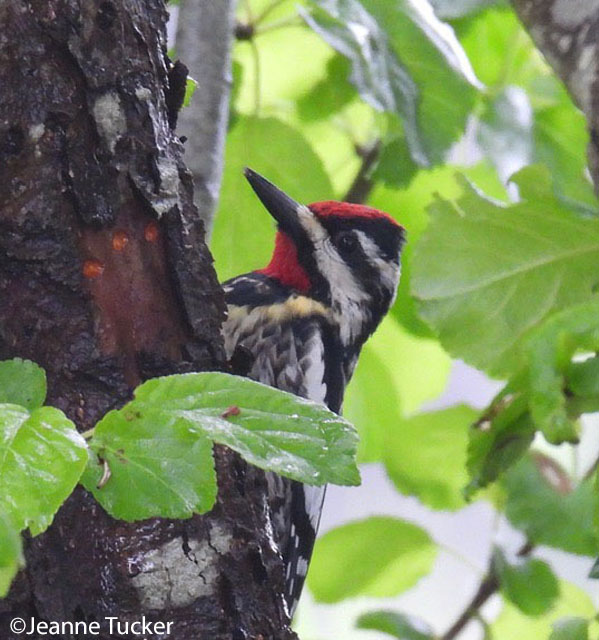
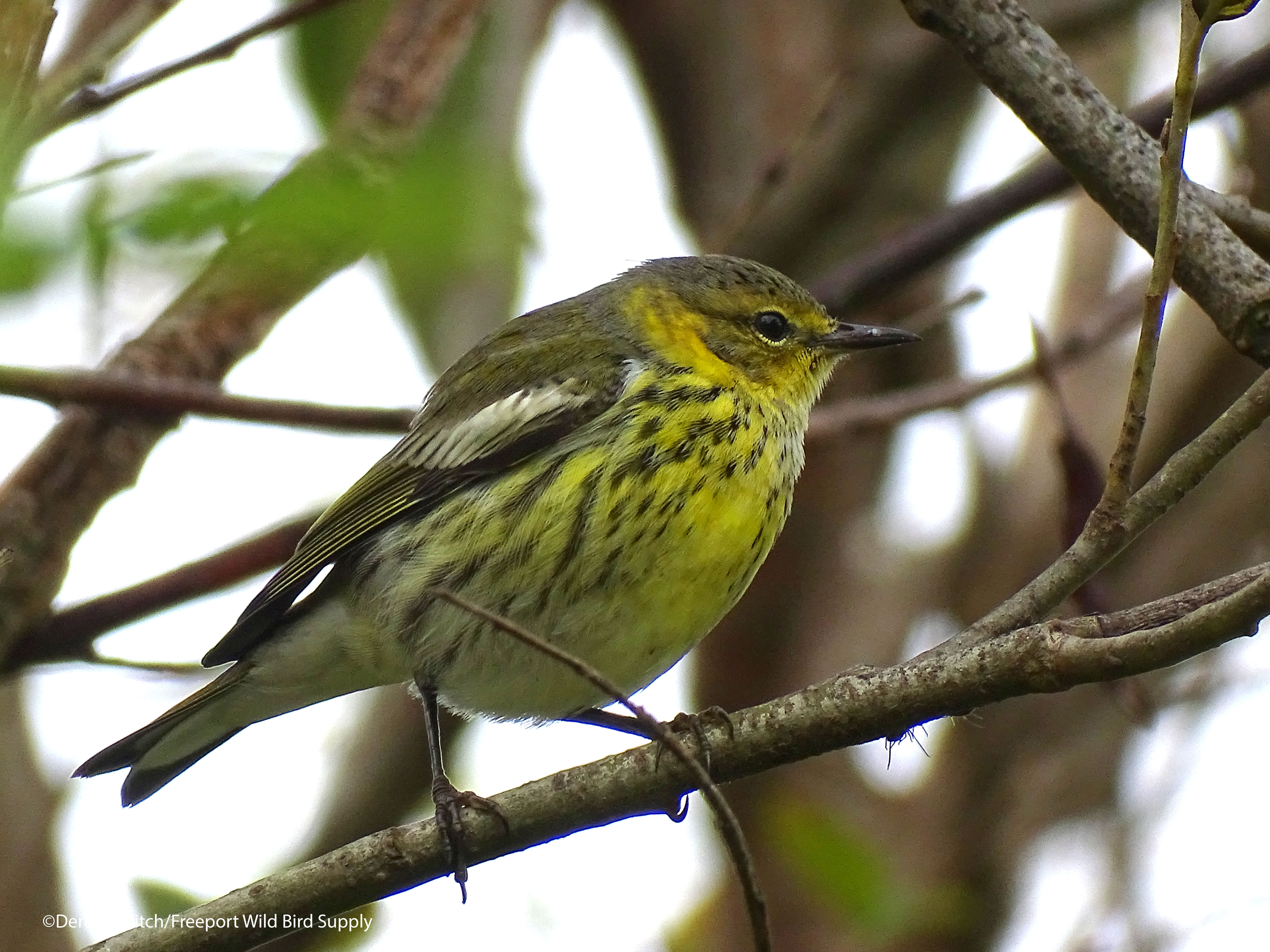
On each day, we would find pockets of warblers here and there, but we kept coming back to  one particular willow and a nearby thicket that constantly hosted 4-5 Cape May Warblers (photo above), 4 Yellow Warblers, a Yellow-bellied Sapsucker, and a smattering of others. The Cape Mays put on a clinic: all four plumages from pale, 1st-fall female, to bright and spiffy adult male were on display.

Over the first day and a half, we took what the island offered, besides exceedingly pleasant weather! There was the hen Green-winged Teal feeding within three feet of us, fly-over Rusty Blackbirds in the morning, and Great Cormorants on the cliffs on an afternoon short hike to name a few highlights. The skies were punctuated by the occasional migrant Peregrine Falcon and the constantly-hunting Merlins.

Granted, we were really just looking at birds to fill the time between the incredible meals at the Monhegan House!

On our final morning, a good migration overnight produced a new arrival of birds for the “morning flight;” the concepts and nuances thereof were topics of regular discussion.

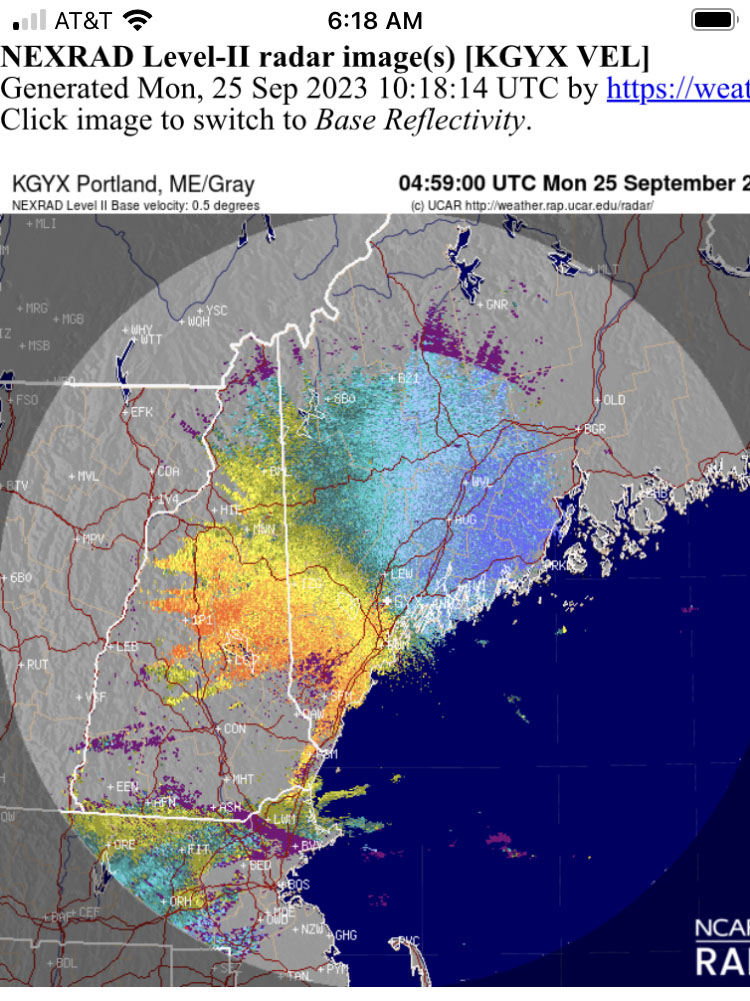
The group’s high spirits earned them a great morning, with a taste of what Monhegan birding has to offer. There were American Pipits and Yellow-rumped Warblers in Morning Flight, a flock of 10 truant Bobolinks circling around, an immature male Belted Kingfisher displaying to a very-uninterested female, more Cape May Warblers, and a surprising fly-by Wilson’s Snipe.

At one point we had four juvenile Sharp-shinned Hawks dogfighting, exemplifying the difference in sizes of male vs female raptors. And the workshopping continued with Great and Double-crested Cormorants side-by-side, migrant raptors including several Northern Harriers, and more species before breakfast than we had most of the previous weekend! Speaking of breakfasts, goodness, they were good as well.

We finished up with a gull workshop on the shoreline, opening eyes to just how easy most gulls are most of the time. The advanced course was the fly-by 1st winter Lesser Black-backed Gull amongst Herring Gulls on the ferry ride back! And yes, we looked at butterflies, too!

The first of the 2024 Down East Adventures tours are already booking, with more to be announced soon. And since these Down East Tours fill up fast, don’t forget we offer a wide range of other tours, as well as private guiding services.

This Week’s Highlights, May 27-June 3, 2022

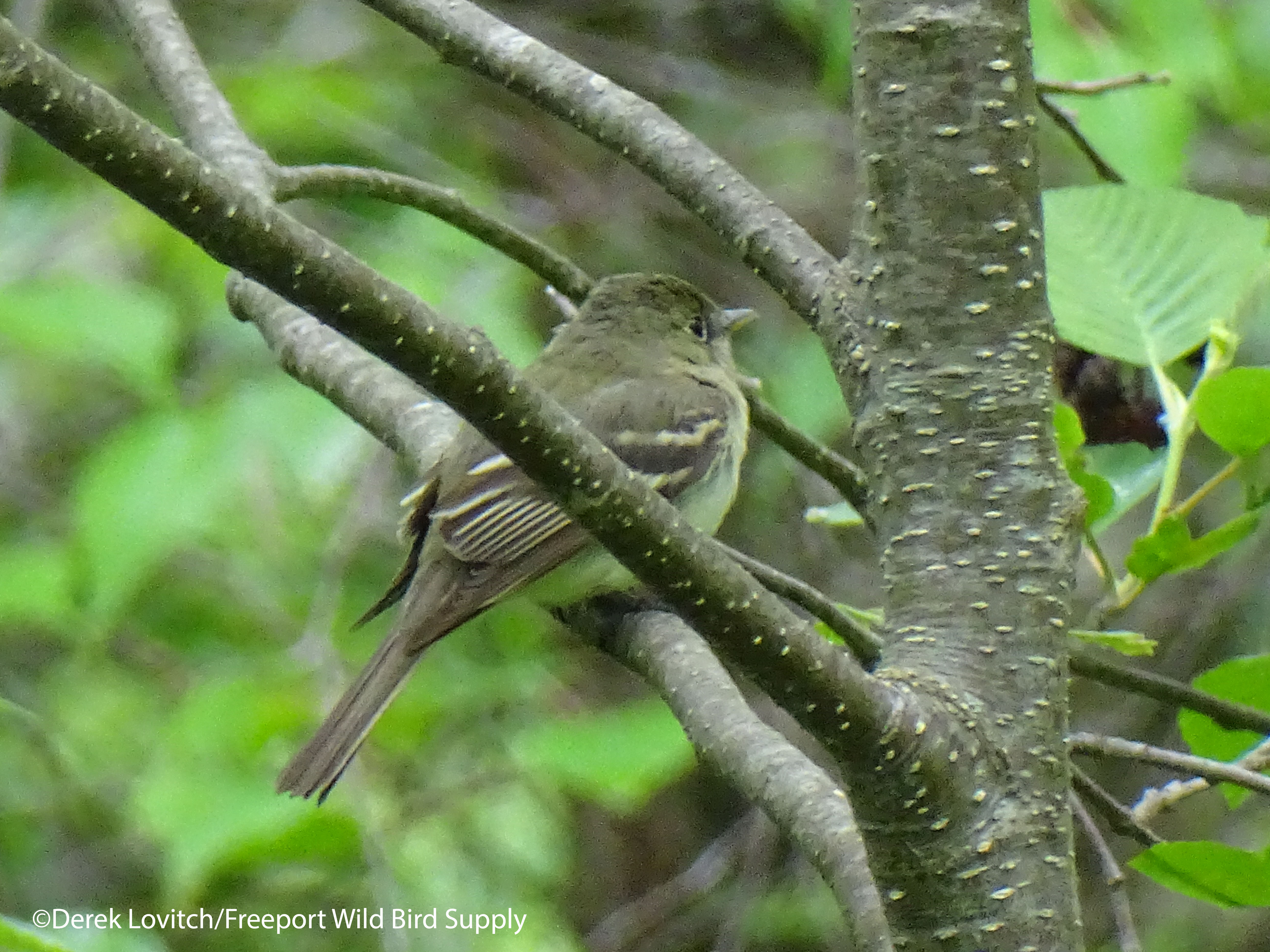
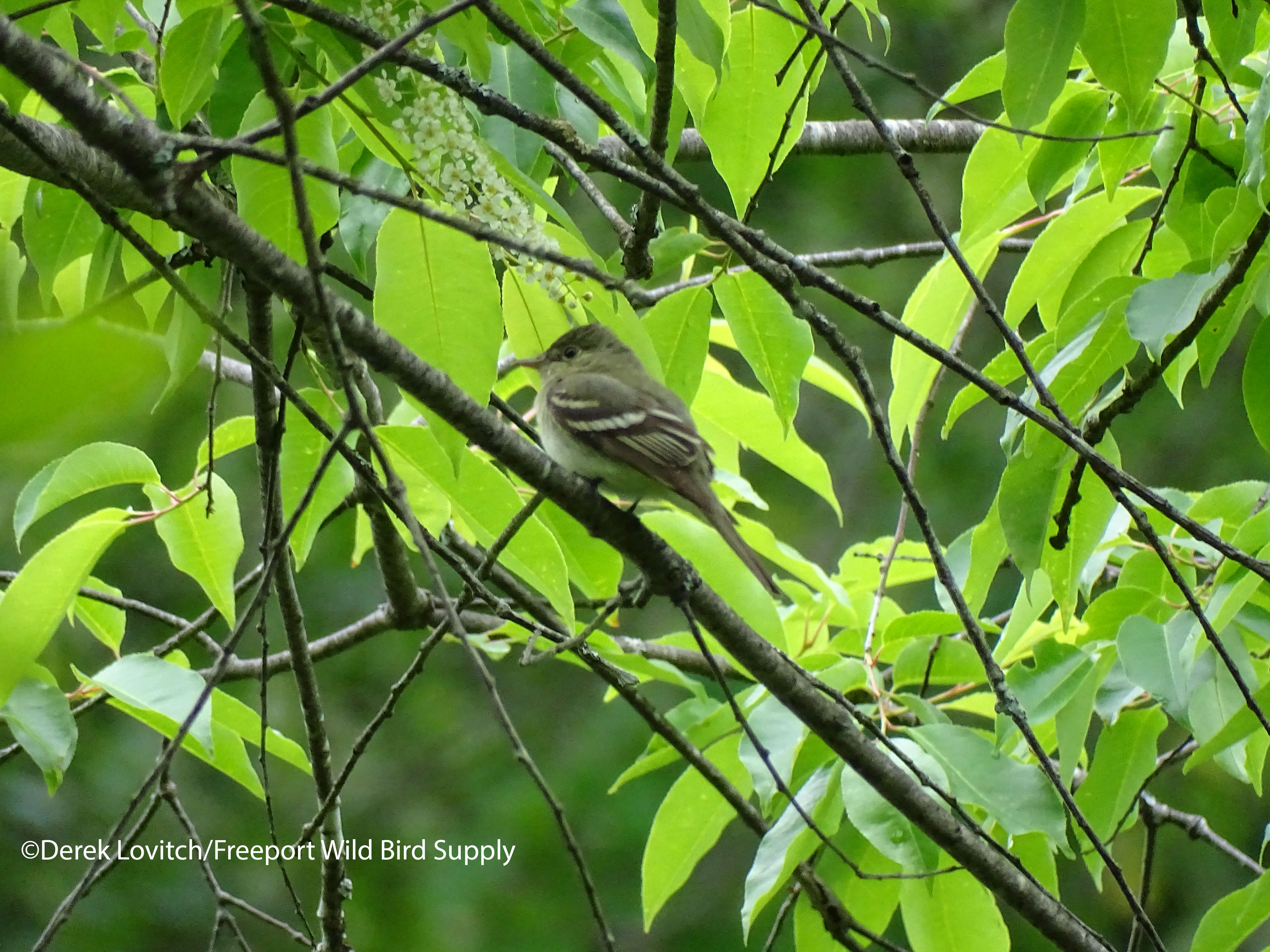
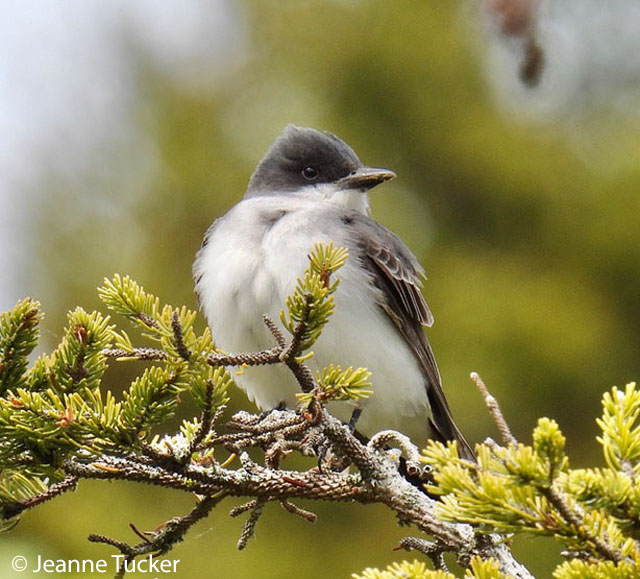
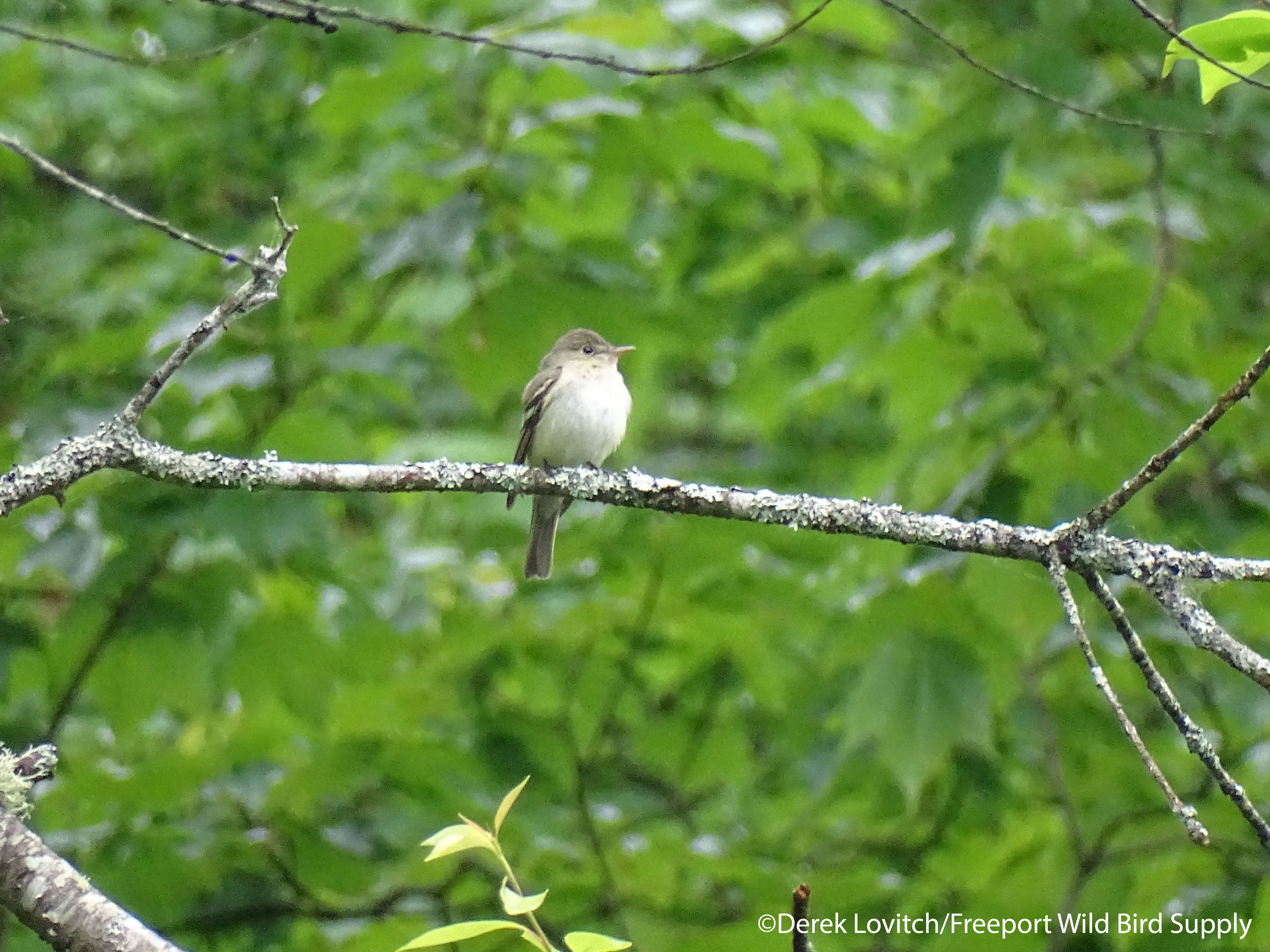
After trying to string one on Monhegan, an Acadian Flycatcher found me!  A friend heard it first as he joined me for a bird survey on private, posted property in Durham on 6/2.  This was an incredible record for Androscoggin County and really shocked me.  It continued at least as of the next morning.
This photo nicely shows the very long (for an Empid primary projection, the greenish tone to the upperparts, the complete eyering, and the large, wide and orange mandible. It took a while to see all of the pertinent details,
even though the song is so distinctive.
When we first saw it, the appearance of no green above and no yellow below through us for a loop, but once we got into the shade with it, those diagnostic tones were readily apparent.
  • My annual Monhegan Spring Migration Tour took place on 5/27 through 5/30, followed by another day on the island with Jeannette. It was very slow, and significant highlights were few. However, it was still, well, birding on Monhegan for five days, so I am not complaining. I’ll have a full tour report and checklist in the coming days.  Highlights included daily crippling views of Black-billed Cuckoo; a CLAY-COLORED SPARROW that we found on 5/30 but was seen by all on 5/31; 3 WILLETS that arrived from the open ocean south of Lobster Cove before landing in the harbor on 5/31; a good Atlantic Puffin commuting flight in the morning of 5/31, and an immature male ORCHARD ORIOLE each day.

Other non-Monhegan and non-flycatcher highlights this week included:

  • 2 RED-NECKED PHALAROPES, Hardy Boat from Monhegan to New Harbor, 5/31 (with Jeannette).
  • 1 LOUISIANA WATERTHRUSH, Mill Brook Preserve, Westbrook, 6/1.
  • 3 AMERICAN OYSTERCATCHERS, 1 Dunlin, 8 Ruddy Turnstones, 26 Black-bellied Plovers, 1 adult Little Blue Heron, etc, Pine Point, Scarborough, 6/1.

It’s June, so we are busy with events and tours here at the store and beyond:

  • Tomorrow is Zeiss Day at the store, with events including a whole range of products to try on our Saturday Morning Birdwalk, free optics cleaning, and a digiscoping demonstration. Check it out here.
  • Our first pelagic with our partners Cap’n Fish’s Cruises out of Boothbay Harbor will run on Monday, June 6th. It includes a visit to Eastern Egg Rock and chumming deeper offshore.  Info here.

Derek’s Birding This Week: 9/11-17, 2021

Philadelphia Vireos have been particularly conspicuous this week at Sandy Point, especially because of their propensity for stopping by the trees right next to “my office” as they contemplate crossing.

I didn’t get out birding much this week, other than at Sandy Point (see tallies here), and when I did, it was mostly just enjoying the local, regular passerine migrants.

In fact, my only observation of note was a good evening at the Walsh Preserve in Freeport on 9/14 with Jeannette, where a great late-season array of shorebirds included:
1 juv. LONG-BILLED DOWITCHER, 1 juv Dunlin (FOF), 76 Lesser Yellowlegs, etc,

Meanwhile, limiting most of my outings to local dog-walking patches and our two yards (home and the store), afforded the opportunity to enjoy lots of up-close migrants this week, including a Nashville Warbler that has been frequenting our dripper at home. Unfortunately, the LARK SPARROW that Will and Jeanne had here at the store on Monday, 9/13, has not returned.

Comparing my notes to last year, the first stages of the “super flight” of irruptives over the winter was already prevalent in these parts with many more Red-breasted Nuthatches and Purple Finches than normal, and the first Pine Siskins of the season. This year, Purple Finches have been in short supply so far, Pine Siskins have been virtually non-existent, and migrant Red-breasted Nuthatches have been limited (although it seems we had a good breeding season locally).  Also at this  time last year, a massive early flight of Dark-eyed Juncos and well-above normal numbers of White-throated Sparrows were around, likely signaling a low year of seed productivity.  This year, those species are around in more seasonable numbers so far this season

“The Search for Troppy” Trip 1 Report, 6/26/2021

The first of two “Search for Troppy” charters to Seal Island took place on Saturday, June 26th.  Departing Stonington at 1pm with the good folks of The Otter from Isle au Haut Boat Services, we would be in prime time for the appearance of Maine’s Red-billed Tropicbird that has called the Gulf of Maine home for the past 17 years. For this first trip of the year, I was joined by Marion Sprague, co-coordinator of the Maine Young Birder’s Club, as my co-leader.

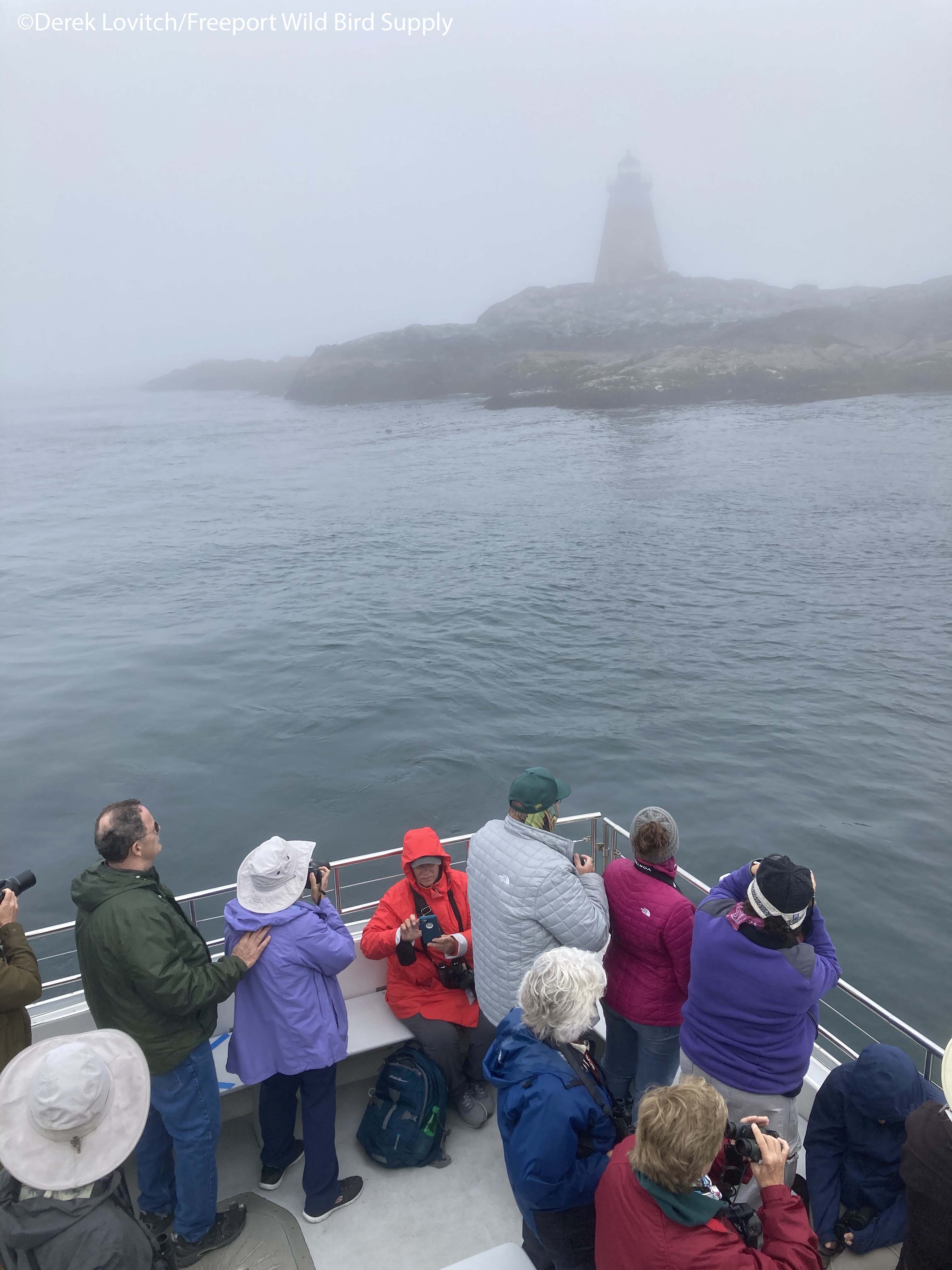
Unfortunately, the weather was not looking good. Dense fog, a moderate southerly breeze, and a forecast for marginal seas made us think twice. At the very least, Captain Garrett gave the talk about seasickness and where to find those handy bags.  However, we were also receiving real-time weather data from a lobster boat hauling traps near the island, and we were being assured “it’s not bad out here.”  But we were skeptical – Maine fishermen are tough!

Keeping us in the shelter of Isle au Haut for as long as possible, Captain Garrett plotted his course. A Merlin offshore was a little surprise, but otherwise we struggled to pull much out of the dense fog beyond the “big 5:” Herring and Great Black-backed Gull, Common Eider, Black Guillemot, and Double-crested Cormorant.  A smattering of Common Terns and several occupied Osprey nests was about it.

As we began the crossing of open water to Seal, we soon became pleasantly surprised by the conditions. It was still foggy, and we had about 20 minutes of fairly rough seas, but the overall wave height was nothing like it was forecast and the winds seemed to be dying. Things were looking up.

We glimpsed a couple of Wilson’s Storm-Petrels and a Northern Gannet on the way out and took the time to ease up to an Atlantic Puffin loafing (probably too full to bother flying). We just didn’t want to take anything for granted. But that was about it, until Seal Island materialized from the fog.

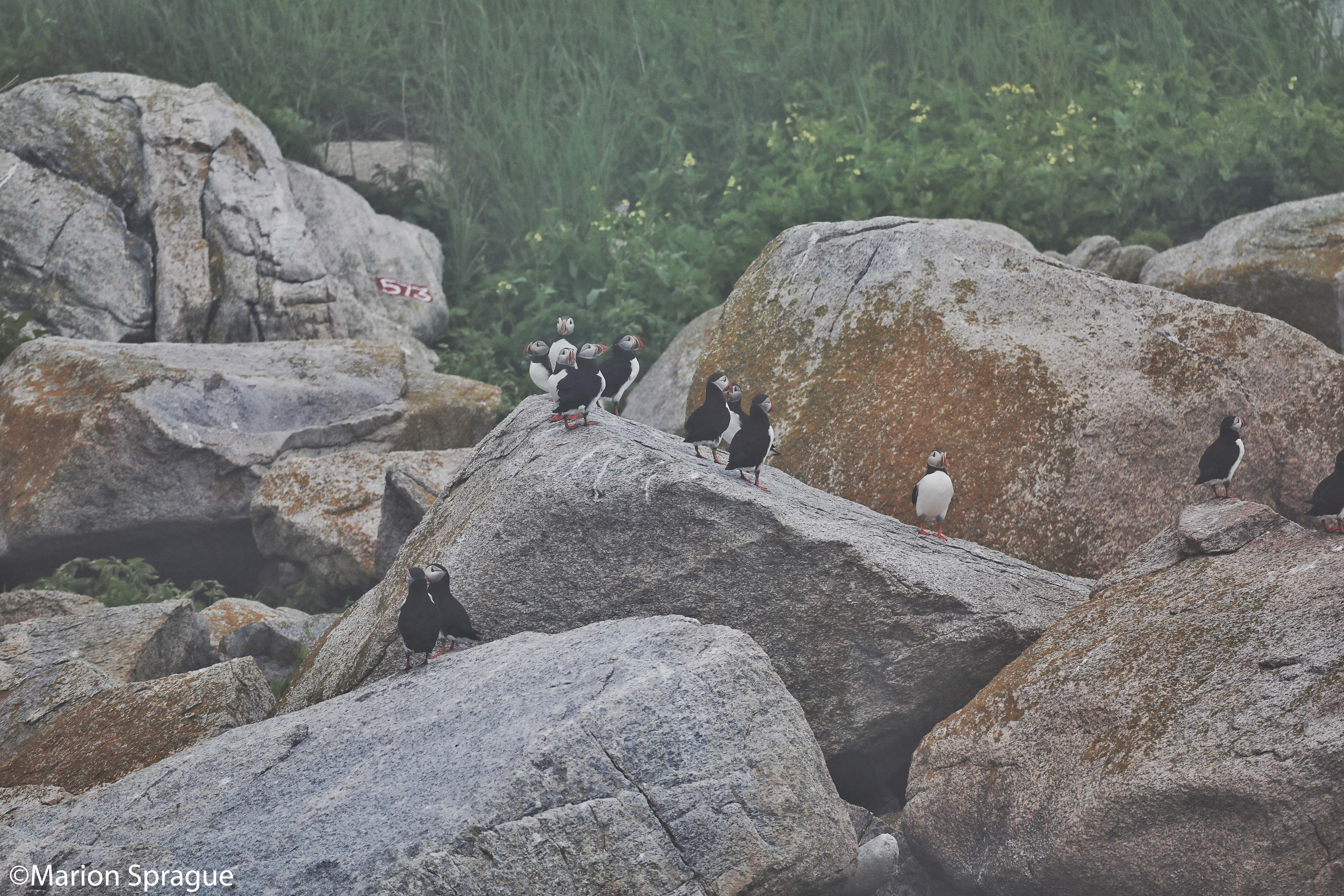
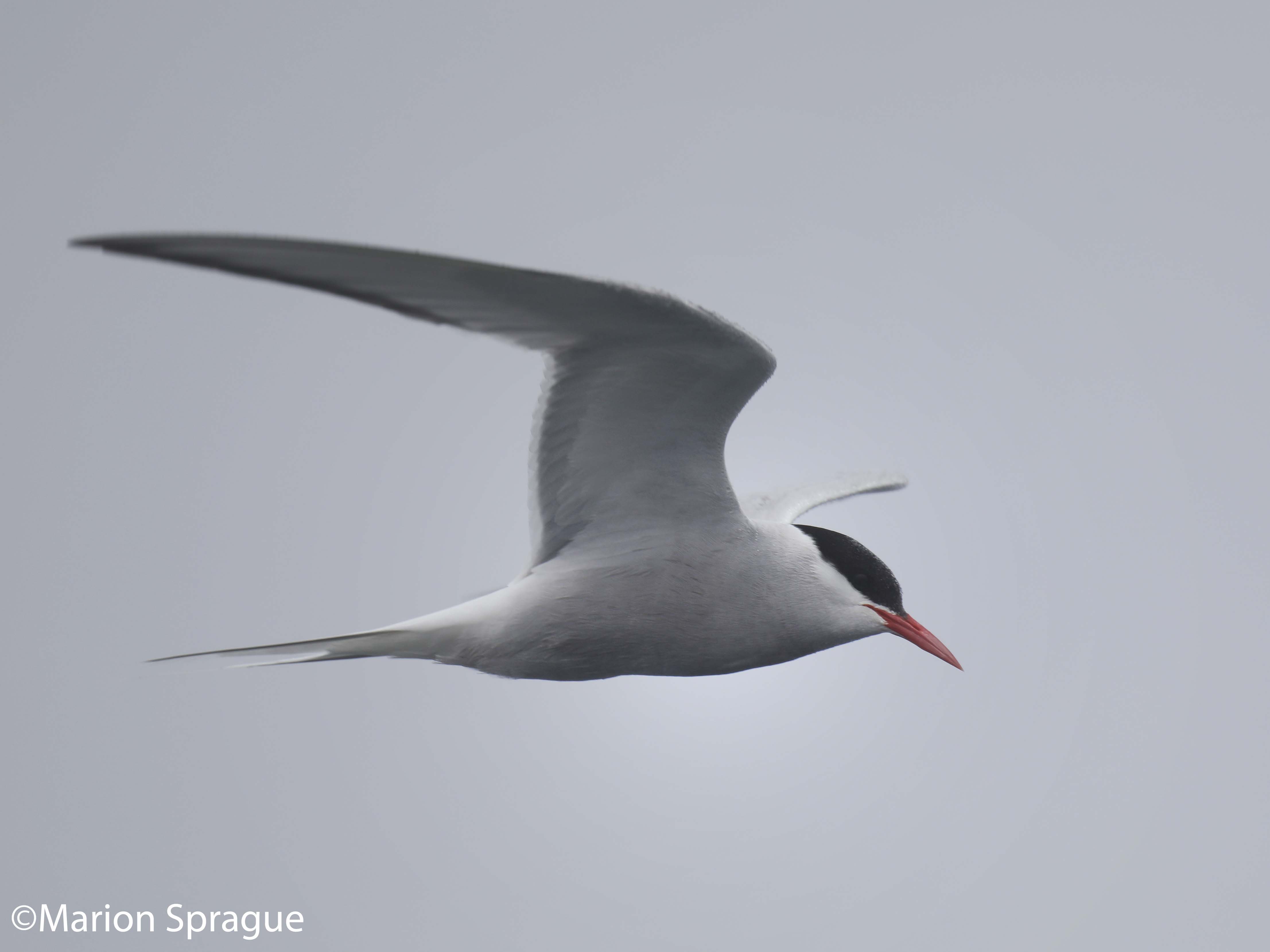
As we approached the surprisingly-sheltered shoreline of the island, puffins were everywhere!  Fewer birds rest on the rocks in the fog, and so hundreds of birds were loafing on the water.  With near-flat conditions in the cove, we just floated up to resting rafts.  We got close to a couple of Razorbills too, and sorted through Arctic and Common Terns. Arctic Terns were also especially confiding today, often passing right over the boat and making repeated close passes.

We enjoyed the show of the tern colony and slowly crept along the shoreline. Spotted Sandpipers sounded off and made short flights, Common Eiders ushered their chicks around, and Black Guillemots were all around. 

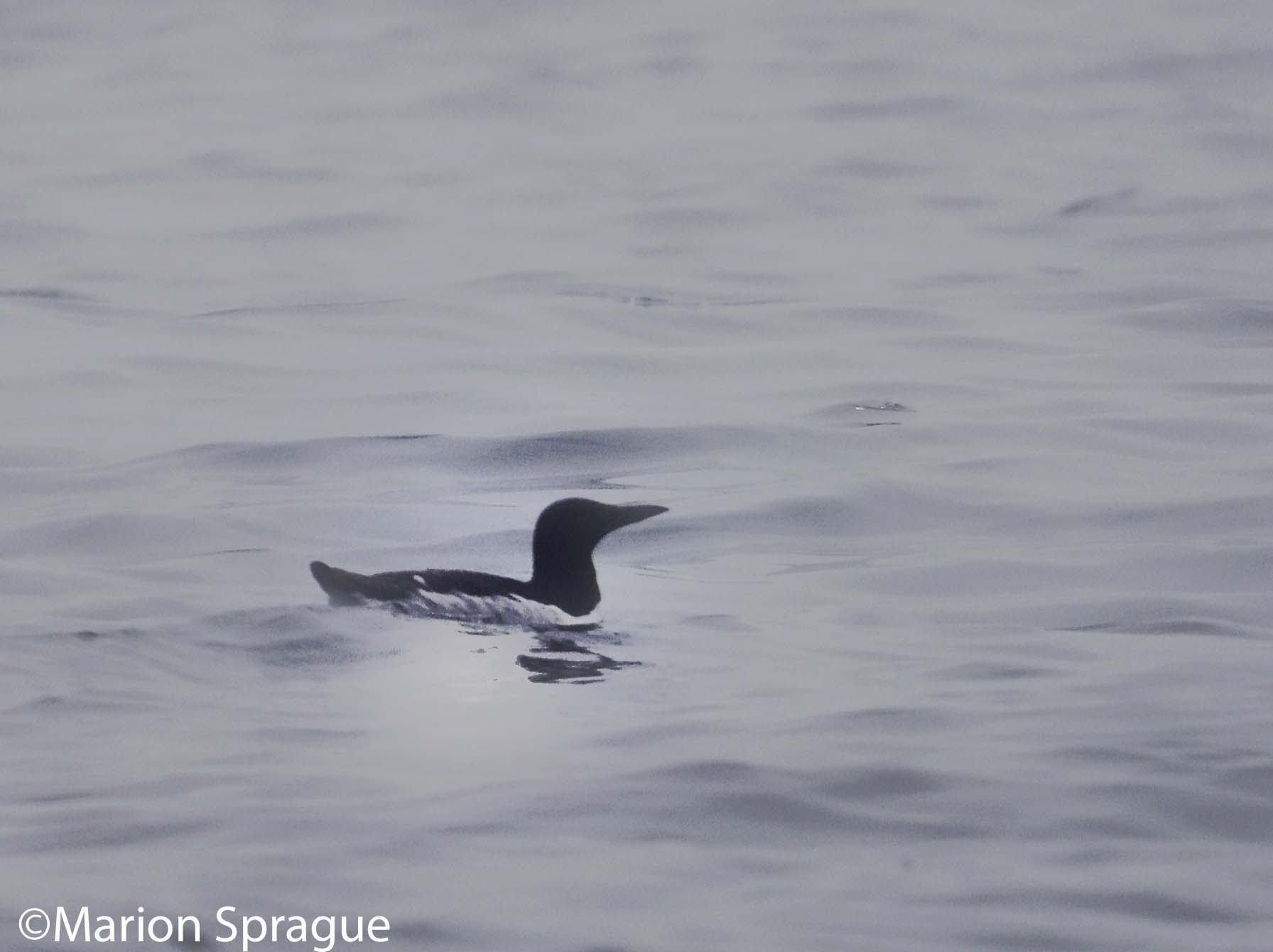
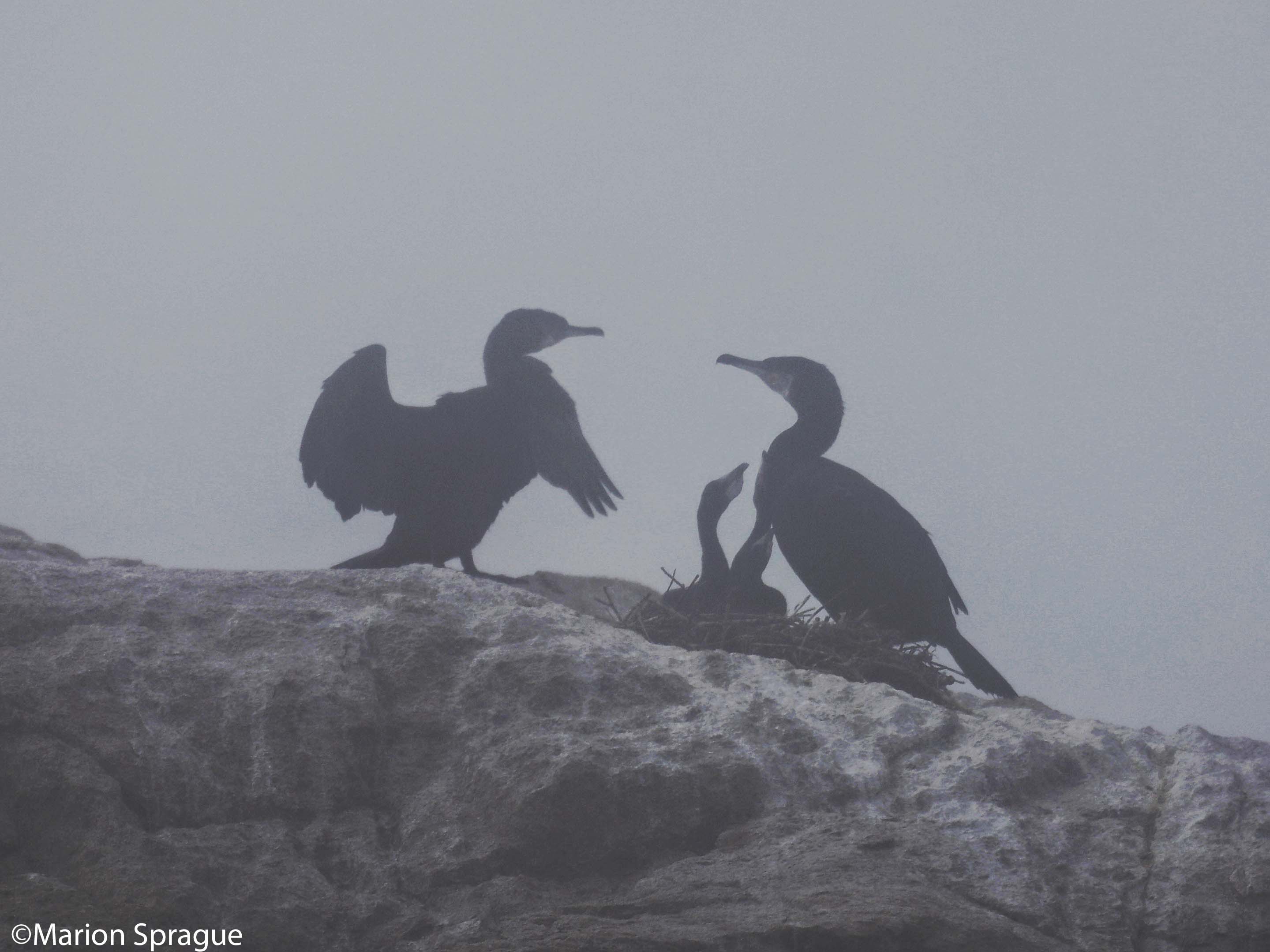
We spotted one Common Murre on the rocks, and with the water much calmer than we expected, we were able to round the southern tip to check out the Great Cormorant colony – the last in Maine. Working our way back towards the cove, we scored a much better view of a Common Murre on the water.

And then we waited. The conditions were prefect, and while the sun was not out, fog did not dampen our spirits, especially after last year’s first tour!

It was one of the best puffin shows I have ever had out here, and with the engine turned off, we just floated up to them while listening to the songs of Savannah and Song Sparrows emanating from the island.

But as joyous as this was, the reality soon became clear: the star of the show was not home today.  Troppy disappears for 2-5 day periods and this was one of those periods. We were in the right place, at the right time, and had a couple of hours to search and be patient. But this time, our patience was not rewarded. 

It’s always bittersweet when you depart Seal Island without Troppy, but that’s how it goes out here sometime. At least we weren’t miserable while searching! And we saw every other denizen, and wow, that puffin show!  If you can’t find joy in that, perhaps birding is not for you.

The fog remained dense on the way back, and only a couple of Wilson’s Storm-Petrels and two gannets were spotted. We searched around Saddleback Ledge and a few other outcroppings, turning up only the big 5 and a whole bunch of seals (a few Gray out at Seal Island, but almost all Harbor Seals on the way in). With following seas and diminishing winds, we made great time, and before we knew it, we were at the dock and trying to get our landlegs back.

We’ll try it again on July 10th (that trip is sold out, but email us to get on the waiting list), and hope that Troppy is in town that day!

2021 Spring Monhegan Migration Weekend

Hmm…how do I spin this one? Well, it could have been colder, and it could have been a lot wetter. The crossbills were pretty amazing, and it was fun to find that Purple Martin. 

But yes, as far as Monhegan Spring Migration Weekends go, this was a pretty slow and cold one.  In fact, the 77 total species and only 10 species of warblers were both record lows (in 10 years of doing these trips on the last weekend of May).  But it is not spin to say a slow day of birding on Monhegan is better than a great day of birding most everywhere else.

The very early spring this year had rapidly advanced vegetation. On many of our Memorial Day weekends, apple trees – one of the most important bird-magnets out here – are not yet blooming. This year, they were just about finished.  Meanwhile, the dry and benign weather of the past few weeks have allowed migrant birds to proceed unimpeded. They were either going right overhead or stopping on the island only briefly before continuing onward. No traffic jams of birds held up by unfavorable weather, no concentrations at few and isolated foodstuffs, and certainly no fallouts. Well, at least the abnormally dry conditions we have been experiencing began to break this weekend.

More importantly, while the above complaints made for slow birding, they really made for a great migration for birds who don’t want to get stuck on an island or other migrant trap. Instead, they got to where they needed to go and many seemed to get right to work in order to catch up with the advanced season.

When we arrived on Friday, we found relatively few birds as expected given the preceding week’s beautiful weather. We quickly caught up with the pair of Blue-winged Teal that have been hanging around and possibly breeding out here – a very good bird on offshore islands. I was also happy to finally see my first Tennessee Warblers of the spring. And while diversity was not overly high, it was really nice out and we enjoyed really good looks at a lot of what we encountered, including the aforementioned Tennessee Warblers, Blackburnian Warblers, and our daily dose of the confiding and stunning Scarlet Tanager that was lingering around the village’s south end.

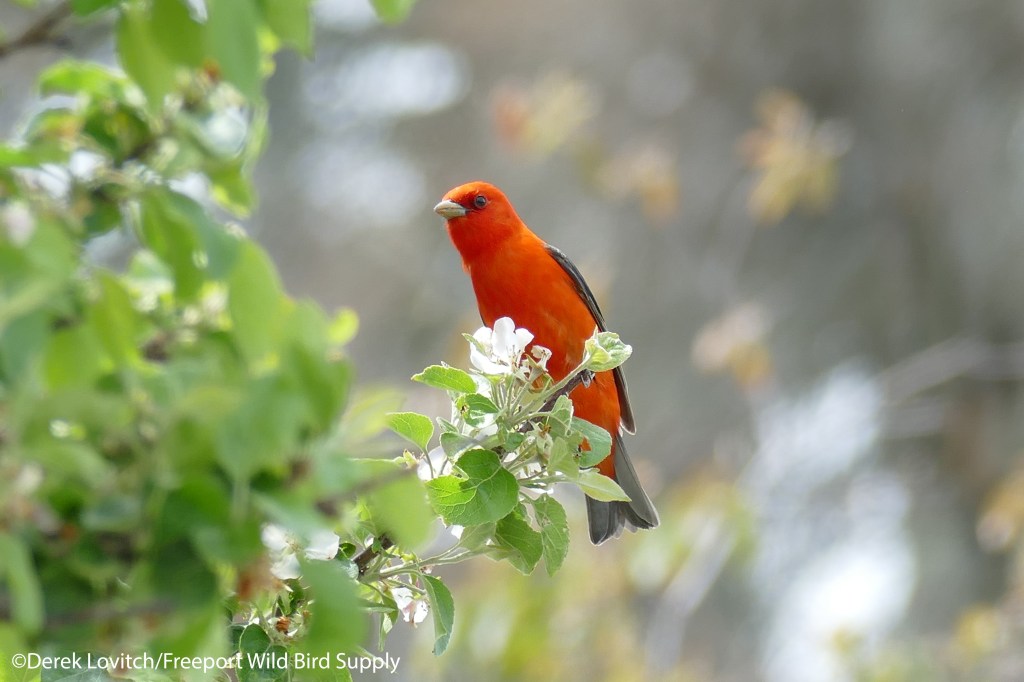
Scarlet Tanager
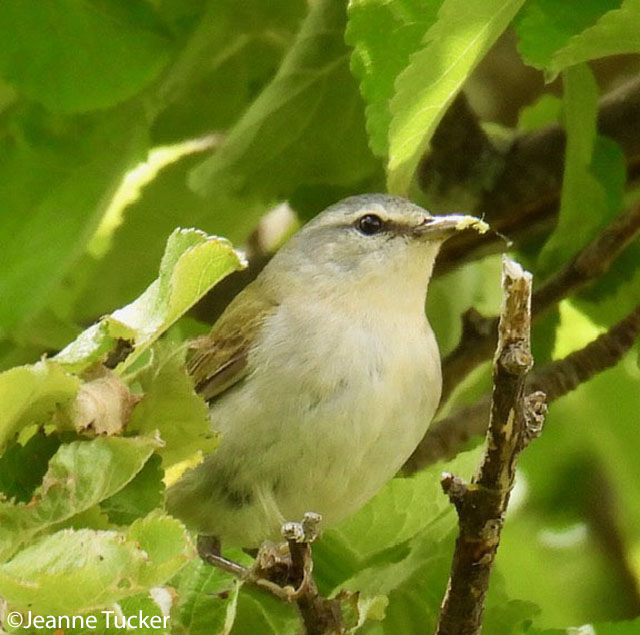
Tennessee Warbler.

Cedar Waxwing.

I had really high hopes for Saturday morning. With very light southerly winds and partly cloudy skies at dusk (I enjoyed a Common Nighthawk and an American Woodcock while watching the sunset with a friend), the winds became very light southwesterly after dark.  Then, around 2:00am, some light rain began to fall, and the winds shifted to the northeast.  The hopes for a fallout kept me awake as I listened to those first showers in the early morning hours.

Upon sunrise, it soon became clear that my hopes and dreams had been dashed. There was minimal bird movement visible on the NEXRAD radar before the rain arrived. A large area of low pressure passing to our south, with the northern edge of rain moving much further north than forecast, suggested the possibility of fallout conditions. But were there even any birds on the move before the rain? Or, were they cut off to our south by the approaching storm? Or – as we have been surmising on the mainland as well – have they just mostly passed by already?.

Light rain continued for our pre-breakfast walk, and it was very slow. There was definitely not a fallout, and there did not seem to be many birds around at all.  That Scarlet Tanager stole the show again though. Great looks at things like Yellow-bellied Sapsucker, American Redstart, and Northern Parula soon followed.

Rain slowly tapered off during the morning, and while cameras were mostly sealed away, it was more than birdable. We heard a Yellow-bellied Flycatcher (my first of the year), a Virginia Rail, and even briefly saw the vociferous Sora that incessantly called from the marsh throughout the weekend.  Then, just before lunch, we found a female Purple Martin. Unexpectedly late, and rare out here in general, this was a nice find, and when we relocated it at Swim Beach, we had some great views to make sure it was indeed a Purple Martin.

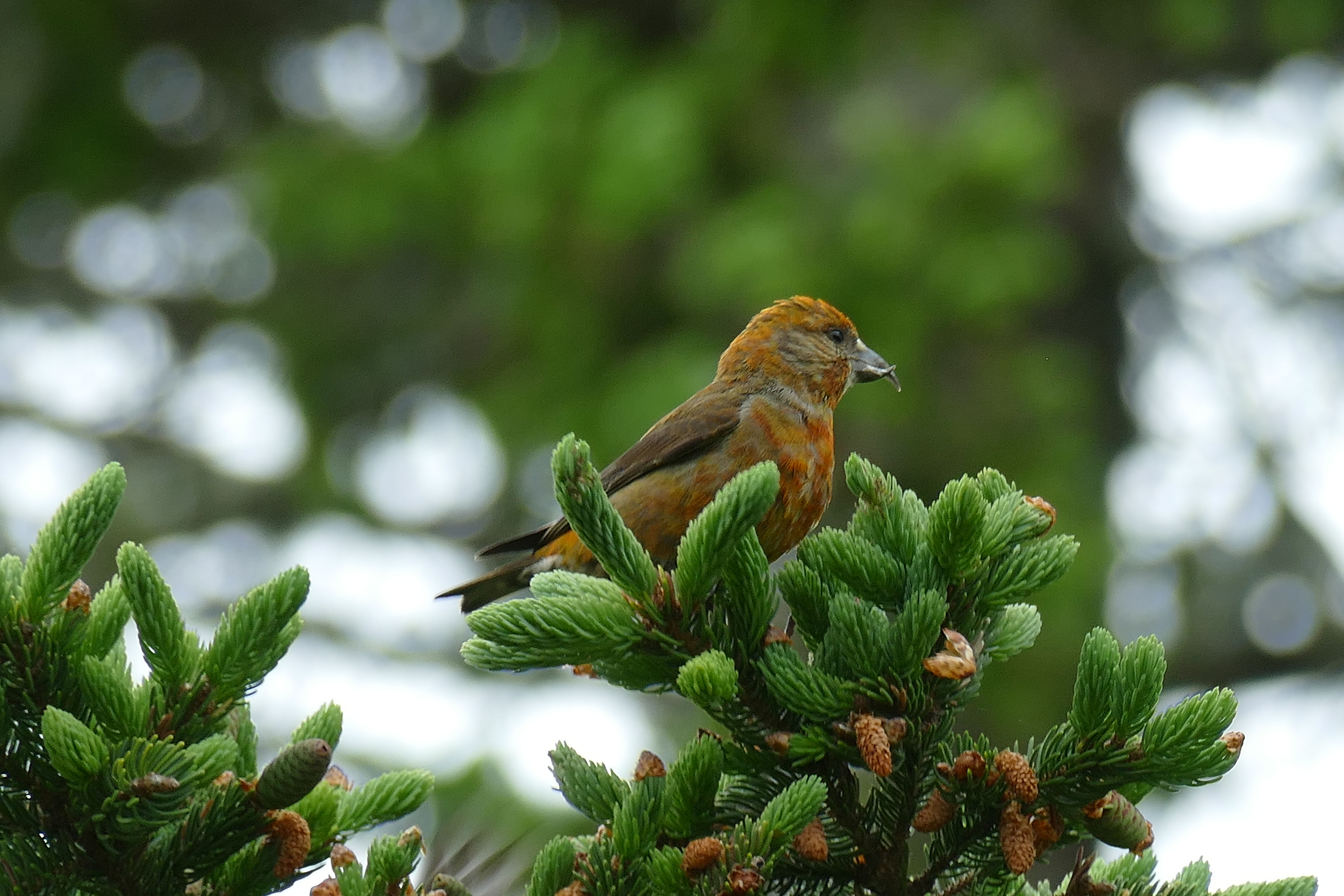
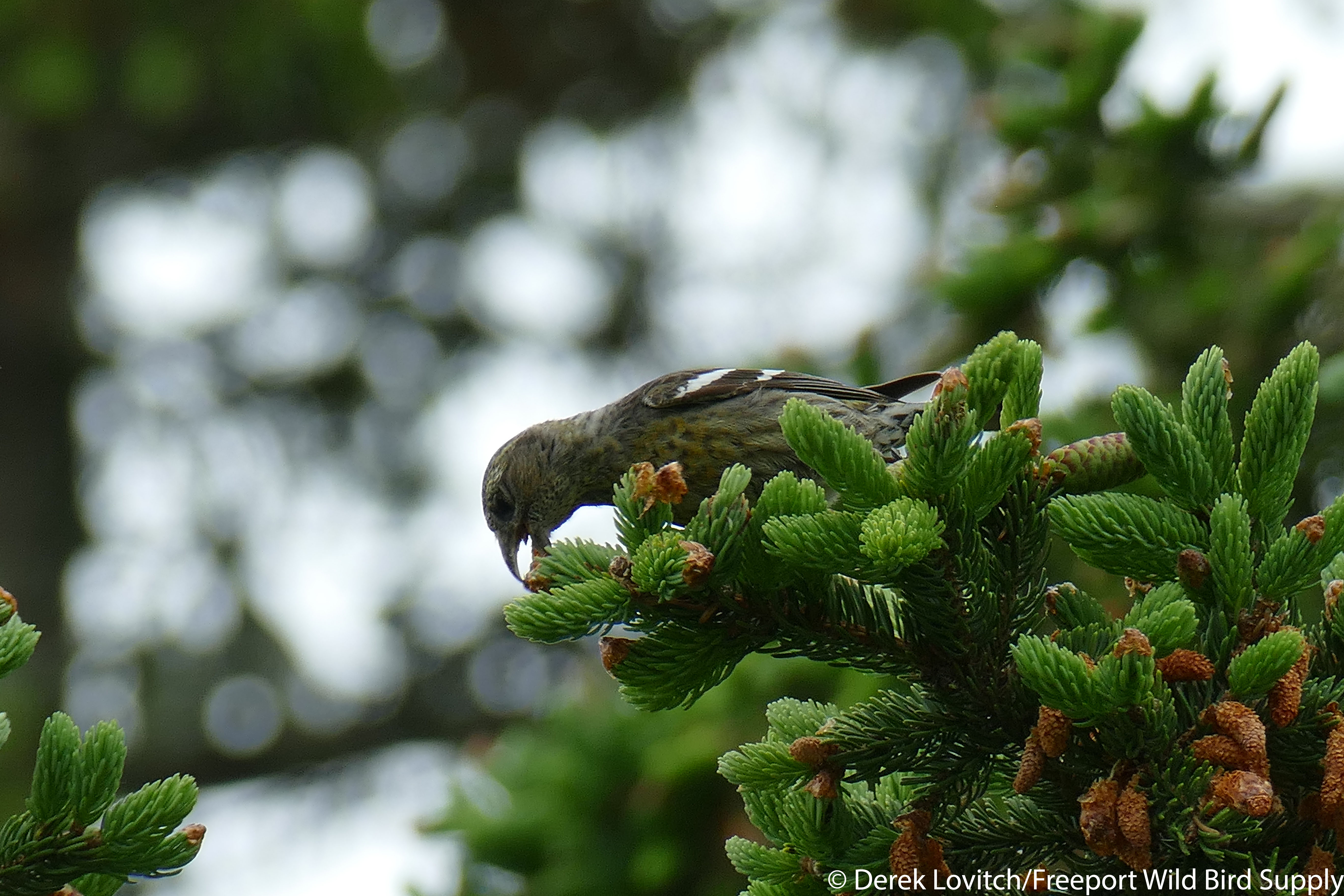
The afternoon was dry, but the birding remained slow. We did get a better view of the dapper male Blue-winged Teal, and spent some real quality time with the flock of 18 Red Crossbills that contained a single White-winged Crossbill.  Many folks got one, if not two, life birds in this flock, and we saw them as well as one could ever hope.

With a light northeasterly wind overnight, little to no migration was detected on the radar Saturday night into Sunday morning, but it was not yet raining. It was a little birdier than the day before, but the pre-breakfast walk only yielded two new species for us: a fleeting glimpse of a Lincoln’s Sparrow and a fly-by American Black Duck.  But the crossbills entertained us once again! Also, Smooth Green Snake and Redbelly Snake side-by-side.

A large area of low pressure was rapidly developing off the mid-Atlantic coast, and the rain was heading our way. So we were grateful for another dry – albeit chilly – morning.  A couple of late Bobolinks and a Merlin were new for us, and we glimpsed a less-than-cooperative Short-billed Dowitcher that had arrived and played hard to get for the next couple of days. With so little shorebird habitat out here, most shorebirds are noteworthy, even species common on the mainland. According to Brett Ewald, this was only the 16th record for the island, and 10th for spring. In fact, this was my 218th species on Monhegan! Even on a slow day, you never know what might show up out here. 

Light rain had arrived by the time we regrouped after lunch and the northeasterly wind was picking up. We called it quits as the rain picked up in earnest around 3:00pm, retiring to our respective rooms – or, mostly, heated common areas – and got some reading and relaxation time in.

Overnight rain ended just about as our pre-breakfast walk got underway on Monday, with only light showers and a little drizzle for the next couple of hours. Given the forecast, this was most definitely a win. We checked gull roosts and other sheltered harbor nooks, turning up only a Savannah Sparrow as a new addition to our list. The rest of the morning was spent enjoying some of the birds we have been seeing for the past days, like the Blue-winged Teal and Yellow-bellied Sapsucker.

American Redstart
Ring-necked Pheasant.
Yellow-bellied Sapsucker

After the weekend tempest, those of us who survived were rewarded with calm, following seas for our ride back to New Harbor. It was foggy, but we had some great sightings on the easy ride back with single fly-by Razorbill, Atlantic Puffin, and a feeding Bonaparte’s Gull. Adding these three excellent birds helped our paltry list to a total of 77 species. With a long-term average of about 95 species in four days, you can see that we really did have a weekend of low avian diversity.

So alas, the weekend came to a close. A few good birds, lots of great looks at regular birds, and a few lingering chills. But, as usual, we ate well. Perhaps too well. But hey, we were burning off calories thermoregulating! Hey it happens, and the regulars all know that there will be a “bad” weekend once in a while to make the “best” tours that much sweeter.

Read

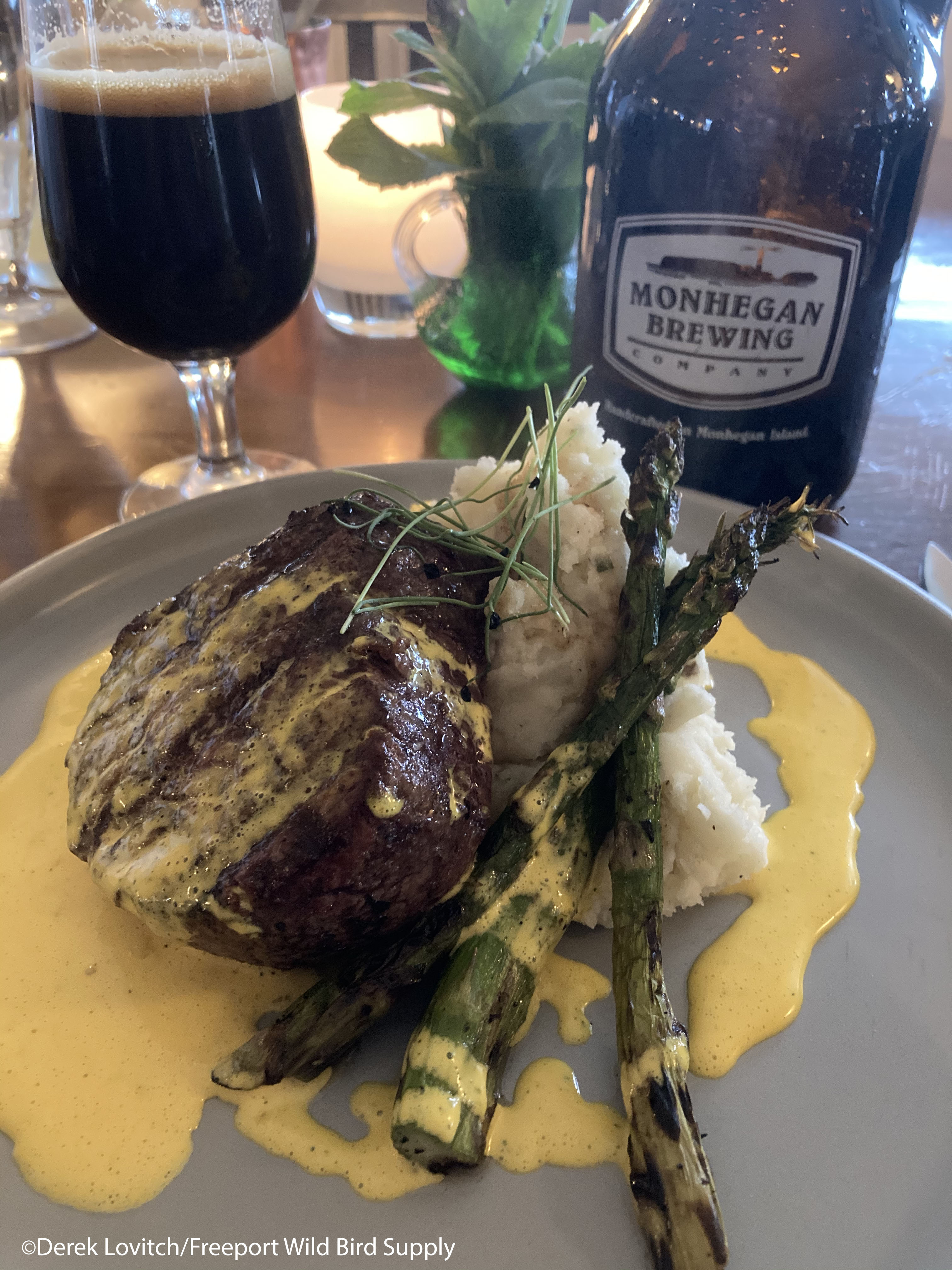
Since folks who have been reading several years of these trip reports, I figured I would include the gratuitous food porn photo as usual. However, without the Novelty open, there was no pizza. Besides, we like to class it up once in a while, in this case, at the Island Inn.

(* denotes seen from the ferry only. **Seen only by the leader outside of group time)

5/285/295/305/31
BLUE-WINGED TEAL2211
American Black Duck0010
Mallardxxxx
Common Eiderxxxx
White-winged Scoter1*000
Ring-necked Pheasant3468
Mourning Dove10888
Common Nighthawk1**000
Ruby-throated Hummingbird1000
Virginia Rail0110
Sora1110
Black Guillemotxxxx
ATLANTIC PUFFIN0001*
Razorbill0001*
American Woodcock1**000
SHORT-BILLED DOWITCHER0010
Bonaparte’s Gull0001*
Laughing Gullx* + 2221+ 14*
Herring Gullxxxx
Great Black-backed Gullxxxx
Common Ternx*006*
Northern Gannet1*120
Double-crested Cormorantxxxx
Great Cormorant1001
Osprey1000
Bald Eagle2210
Sharp-shinned Hawk2000
Red-bellied Woodpecker1100
Yellow-bellied Sapsucker0111
Merlin0011
Eastern Wood-Pewee5011
Yellow-bellied Flycatcher0100
Alder Flycatcher0201
“Traill’s” Flycatcher1000
Least Flycatcher0010
Eastern Kingbird4020
Red-eyed Vireo4122
Blue Jay44104
American Crowxxxx
Common Raven1110
PURPLE MARTIN0100
Tree Swallow2211
Barn Swallow0210
Black-capped Chickadee2xxx
Winter Wren0010
Carolina Wren0001
Golden-crowned Kinglet0211
American Robinxxxx
Gray Catbirdxxxx
Brown Thrasher0014
European Starlingxxxx
Cedar Waxwing40604030
Purple Finch1213
RED CROSSBILL18181818
WHITE-WINGED CROSSBILL1111
American Goldfinch810128
Chipping Sparrow4222
White-throated Sparrow0001
Savannah Sparrow0001
Song Sparrowxxxx
Lincoln’s Sparrow0010
Black-and-white Warbler0112
Common Yellowthroat6101215
American Redstart0330
Northern Parula0233
Magnolia Warbler0132
Blackburnian Warbler2000
Yellow Warbler10868
Chestnut-sided Warbler2101
Blackpoll Warbler4886
Black-throated Green Warbler0121
Scarlet Tanager1111
Northern Cardinal6866
Bobolink0020
Red-winged Blackbird10101010
Common Gracklexxxx
Baltimore Oriole2222
Day Total51505652
4-DAY TOTAL77

Derek’s Birding This Week, 5/1-7/2021

It was fun to watch two male Red Crossbills feeding earlier this week without even leaving the store!

My highlights over the past seven days included the following:

  • 2 Red Crossbills, feeding on Scots Pine here at the store, 5/1.
  • 1 continuing PROPOSED TRICOLORED HERON X SNOWY EGRET X LITTLE EGRET hybrid, Pelreco Marsh, Scarborough Marsh, 5/2 (with clients from Maine.  Full explanation in an upcoming article in North American Birds slated to be published this fall).
  • 10 species of warblers (FOY; finally!) led by only 9 Pine Warblers and 7 Black-and-white Warblers but including 1 LOUISIANA WATERTHRUSH, Morgan Meadow WMA, Raymond, 5/7.
  • 1 Evening Grosbeak, Morgan Meadow WMA, 5/7.

As the Neotropical migrant floodgates open, my personal first-of-years and new spring arrivals included:

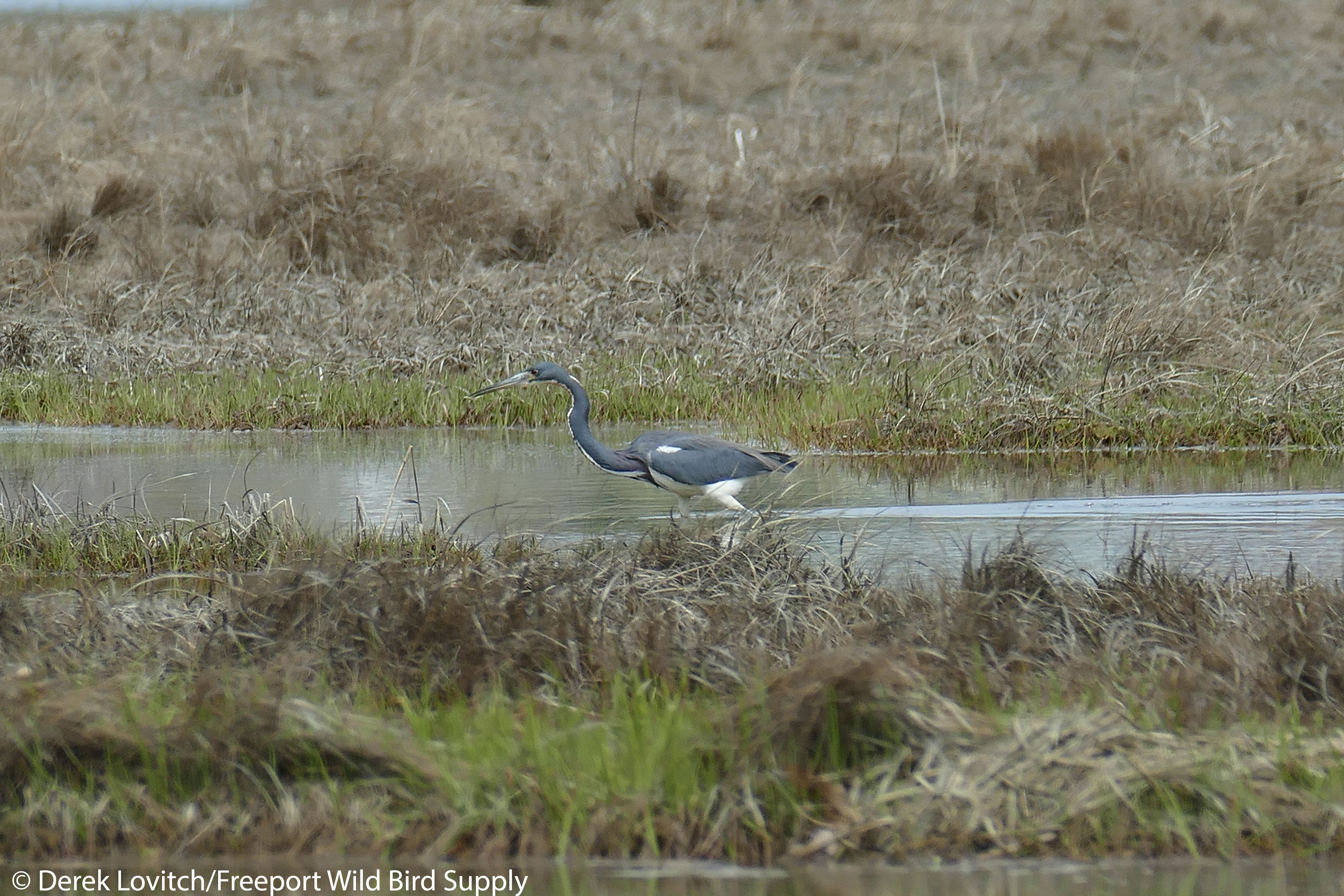
  • 1 continuing TRICOLORED HERON, Spurwink Marsh, 5/2 (with clients from Maine).
  • 6 Piping Plovers, Western Beach, Scarbrough, 5/2 (with clients from Maine).
  • 1 Least Sandpiper, Dunstan Landing, Scarborough Marsh, 5/2 (with clients from Maine).
  • 3 Willets, Scarborough Marsh, 5/2 (with clients from Maine).
  • 1 Ovenbird, our yard in Pownal, 5/3.
  • 1 Northern Parula, our yard in Pownal, 5/3.
  • 1 Black-throated Green Warbler, our yard in Pownal, 5/3.
  • 1 Baltimore Oriole, feeders here at the store, 5/4.
  • 1 Northern Waterthrush, Florida Lake Park, Freeport, 5/5.
  • 1 Nashville Warbler, Florida Lake Park, 5/5.
  • 1 Chestnut-sided Warbler, Runaround Pond, Durham, 5/6.
  • 3 Black-throated Blue Warblers, Morgan Meadow WMA, 5/7.
  • 4 Common Yellowthroats, Morgan Meadow WMA, 5/7.
  • 1 Yellow Warbler, Morgan Meadow WMA, 5/7.
  • 1 Warbling Vireo, Morgan Meadow WMA, 5/7.
  • 1 Veery, Morgan Meadow WMA, 5/7.
  • 3 Chimney Swifts, Bradbury Mountain Spring Hawkwatch, 5/7.
  • 1 Blackburnian Warbler, Bradbury Mountain Spring Hawkwatch, 5/7.
This Tricolored Heron was sitting pretty not far off into Spurwink Marsh when I visited the area with clients on Sunday the 2nd.

Derek’s Birding This Week, 3/6-12/2021

Lingering winter birds and arriving spring migrants. Here are my highlights over the past seven days:

  • 1 Red-winged Blackbird (FOY), feeders here at the store, 3/6. Small flocks around the area by week’s end.
  • 1 drake BARROW’S GOLDENEYE, River Road, Benton, 3/8 (with Jeannette).
  • 1 light morph ROUGH-LEGGED HAWK and 10 Horned Larks, Wyman Road, Benton, 3/8 (with Jeannette).
  • 1 Northern Shrike, Sunkhaze Meadows NWR, 3/9 (with Jeannette).
  • 3 continuing WILSON’S SNIPE, U of Maine-Orono Steam Plant, 3/9 (with Jeannette).
  • 1 Common Grackle (FOY), Veazie, 3/9 (with Jeannette…sure didn’t expect my FOY in Penobscot County, but numbers increased in southern Maine by week’s end).
  • 1 Killdeer (FOY), Highland Road, Brunswick, 3/11.
  • 2 Lesser Scaup, Mill Creek Cove, South Portland, 3/12.
  • 4 Brown-headed Cowbirds (FOY), feeders here at the store, 3/12.

This Week in Finches:

  • EVENING GROSBEAK: 0
  • Red Crossbill: 9 (Type 10 fide Matt Young at FiRN, Viles Arboreteum, Augusta, 3/8 with Jeannette).
  • WHITE-WINGED CROSSBILL:
  • PINE GROSBEAK: 1 (Viles Arboretum, Augusta, 3/8 with Jeannette).
  • Purple Finch High Count This Week: 0
  • Common Redpoll High Count This Week: 7 (continuing at Back Cove, Portland, 3/7 with Ian Doherty and Ilsa Tucker).
  • HOARY REDPOLL: 1 (continuing at Back Cove, Portland, 3/7 with Ian Doherty and Ilsa Tucker).
  • Pine Siskin High Count This Week:  1 (Cumberland Town Landing, 3/7).

Boothbay Harbor Mini-Pelagic with Cap’n Fish Cruises, 10/12/2020

Leach’s Storm-Petrels were the star of the show today!

We were very excited to kick off a new partnership between Freeport Wild Bird Supply and Cap’n Fish Cruises with a half-day pelagic birding trip out of Boothbay Harbor on Indigenous Peoples’ Day, October 12th.  We departed the wharf at 9:00am and returned at about 1:45pm.

Cap’n Fish’s Dominique Caverly joined me in narrating the tour, adding additional natural history information. Captain Tabor did an exceptional job keeping the boat as comfortable as possible, finding some interesting underwater topography, trying to position the boat to view birds in the best light, and catching up with those two jaegers!  Ian Carlsen was our chummer extraordinaire, getting fulmars and Great Shearwaters within a few yards of the boat – while simultaneously keeping track of our eBird transects.

With a forecast for 2-3ft seas, we were not all that happy to find them more like 2-4 with the occasional 5-footer, but Captain Tabor did a great job in picking a track that maximized our time with comfortable following seas. There were a few bumps and splashes along the way, but so goes pelagic birding in the fall in the Gulf of Maine.  We were just happy to successfully get offshore!

Heading into deeper waters of the Portland shipping channel about 20 miles offshore, we explored an area where the seafloor rises from 500 feet to 300, before dropping off again to over 600. What’s great about departing from Boothbay – and bodes well for future tours from here – is that we don’t have to travel too far to get to some good deep-water and interesting seabed topography.

Fall pelagics in the Gulf of Maine, especially in southern Maine, are a fickle beast, and can be really hit or miss. In fact, I have been out on whale watches in October that failed to record a single tubenose!  But, having had a significant amount of success with Cap’n Fish’s whale watches during the fall, I was quite excited for the chance to head out on a dedicated bird-finding mission.

And it did take some work to find birds today.  Even Northern Gannets and gulls were in very short supply. However, once we got to that aforementioned ledge, we had a lot of birds all around us. 

Great Shearwaters were the most numerous “tubenose” as expected.

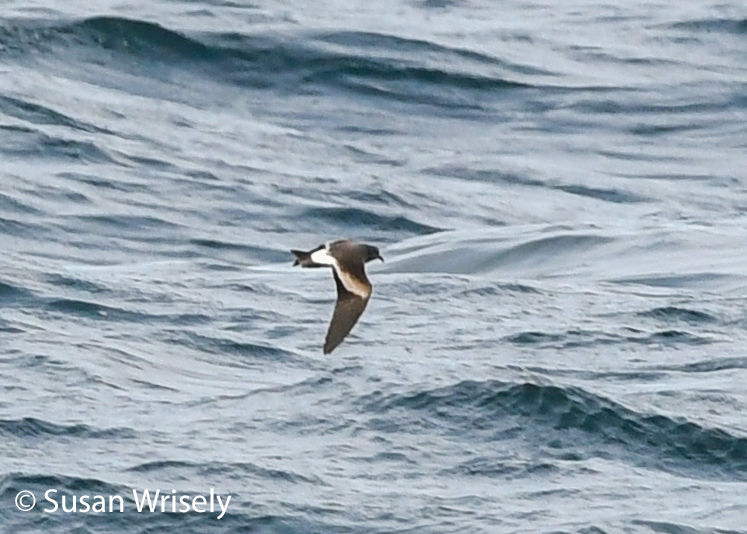
But 3 Leach’s Storm-Petrels were anything but expected!  Even one would have been a headliner, but today we had three – two of which were seen extraordinarily well for prolonged periods of time.  I was hopefully for this species, but they are so hit-or-miss, I only included it on my “possible” list. And then I expected the sighting to be like our first – one zipping by and only seen by a few observers.  Those second two, however: wow, just wow!

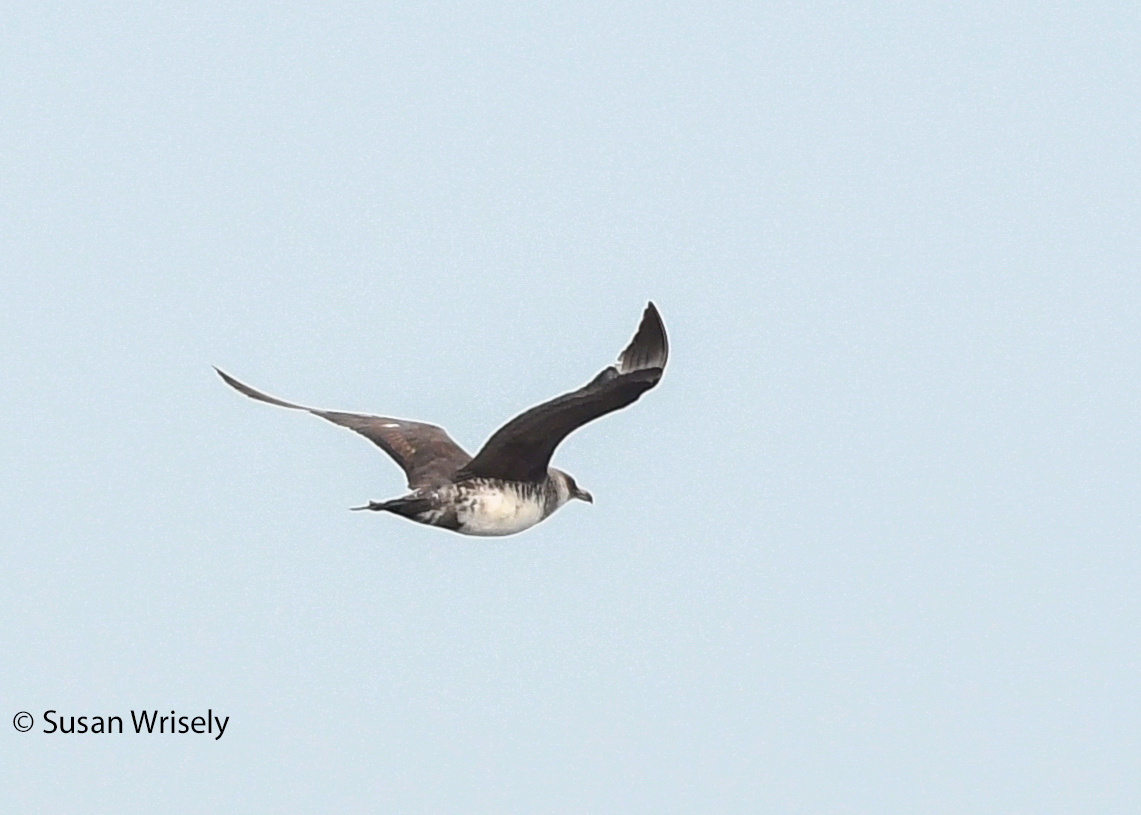
Any day with a jaeger is a good day in my book, and we had two good sightings of Pomarine Jaegers today, including one that was around us and reigning terror for a while. I called them both “Poms” in the field, but I looked forward to receiving photos to confirm their identify – no one should be above going to instant replay for jaegers!   In fact, one early photo I received had me rethinking the first bird, but upon receiving a full set, the play was confirmed as called on the field.

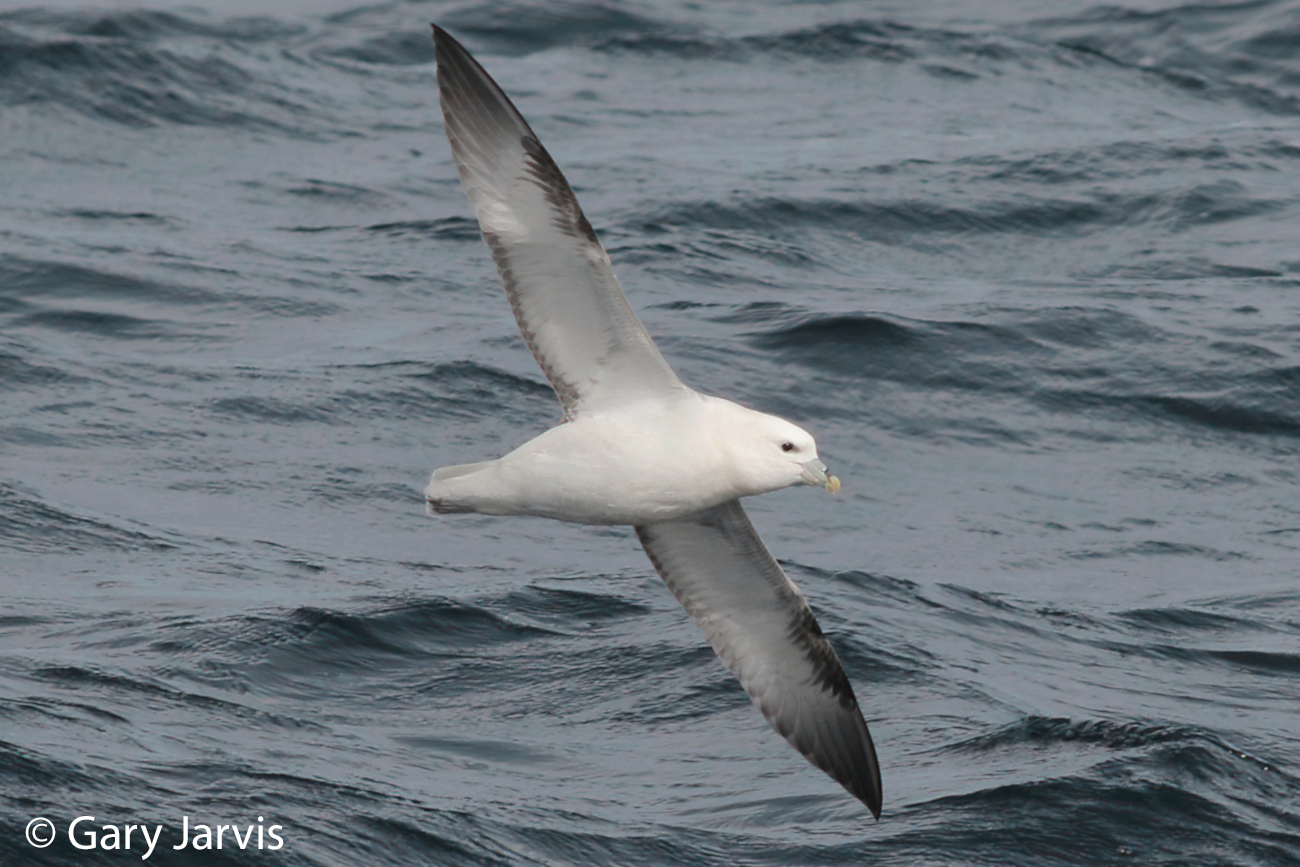
Three Atlantic Puffins and 9 Northern Fulmars were more expected, but no less great to see. Unfortunately, the Razorbill was seen in flight by only a few. My tally of 91 Great Shearwaters is likely woefully conservative. When chumming, it became impossible to keep track of how many birds were circling us rather than just passing by for a look (and sniff!).  And while this was indeed a birding-centric tour, we were disappointed to only encounter Harbor Seals and Harbor Porpoises during our travels; yes, this pelagic brakes for whales!

And finally, passerines are always exciting when encountered offshore, and always a challenge. I was a little surprised we didn’t encounter more as there had been a massive flight overnight, but the lack of a westerly component kept those birds from drifting offshore. In fact, both birds we saw were heading southwest, likely “onward” migration rather than compensating for overnight drift.  One was relegated to “passerine species,” but photographs confirmed the other as a Yellow-rumped Warbler.

Beginning and ending with Black Guillemots and Common Eiders in the harbor and returning to a lovely warm and calm afternoon in the sheltered town, we can unequivocally call the day’s outing a success…and yes, plans are already in the works for more trips together in 2021! Sat tuned!

Here is the annotated checklist from the day:

Common Eider: 23 beyond mouth of the bay; numerous in harbor.

Surf Scoter: 61

dark-winged scoter sp: 20

Pomarine Jaegers: at least 2 winter adults; possibly a third bird.

#1:

#2:

Razorbill: 1 fly-by spotted by Captain and a few participants.

Black Guillemot: x

ATLANTIC PUFFIN: 3

Ring-billed Gull: 2

Herring Gull: x

Great Black-backed Gull: x

Common Loon: 15

LEACH’S STORM-PETRELS: 3. All photographed. First bird seen only by a few, second two birds seen insanely well and for prolonged periods of time.

#1:

#2:

#3:

Just ridiculously stunning views of this very challenging-to-see species!

Northern Fulmar: 9

Great Shearwater: 91 (very conservative count)

Northern Gannet: 30 (low)

Yellow-rumped Warbler: 1 (about 22 miles from land)

Passerine sp: 1 (probably a warbler but that’s as much as I can say)

Only marine mammals were Harbor Porpoises and Harbor Seals.

Great Shearwaters may have been overshadowed this day, but they too put on a great show!

2020 Fall Monhegan Migration Weekend Tour Report

It sure felt good to have a normal tour run, well, normally, in 2020! Other than the requirement of wearing masks all day – despite the annoyance of fogged glasses in the 100% humidity, and some logistical and safety changes at mealtimes, it was as close to normal as 2020 gets. And that felt good.  The birding was great, too! 

Most of Friday’s participants arrived with me on the early Hardy Boat out of New Harbor, and we sure hit the ground running!  A strong flight the night before yielded tons of birds, and it was very birdy right off the bat.  Yellow-rumped Warblers were still darting overhead and were in every bush. White-throated Sparrows virtually littered the ground in places. Small flocks of Purple Finches seemed to be everywhere.
Yellow-rumped Warblers were definitely the migrant of the trip, as they often are at the end of September. Only White-throated Sparrows seemed to give them a run for their money on most days.

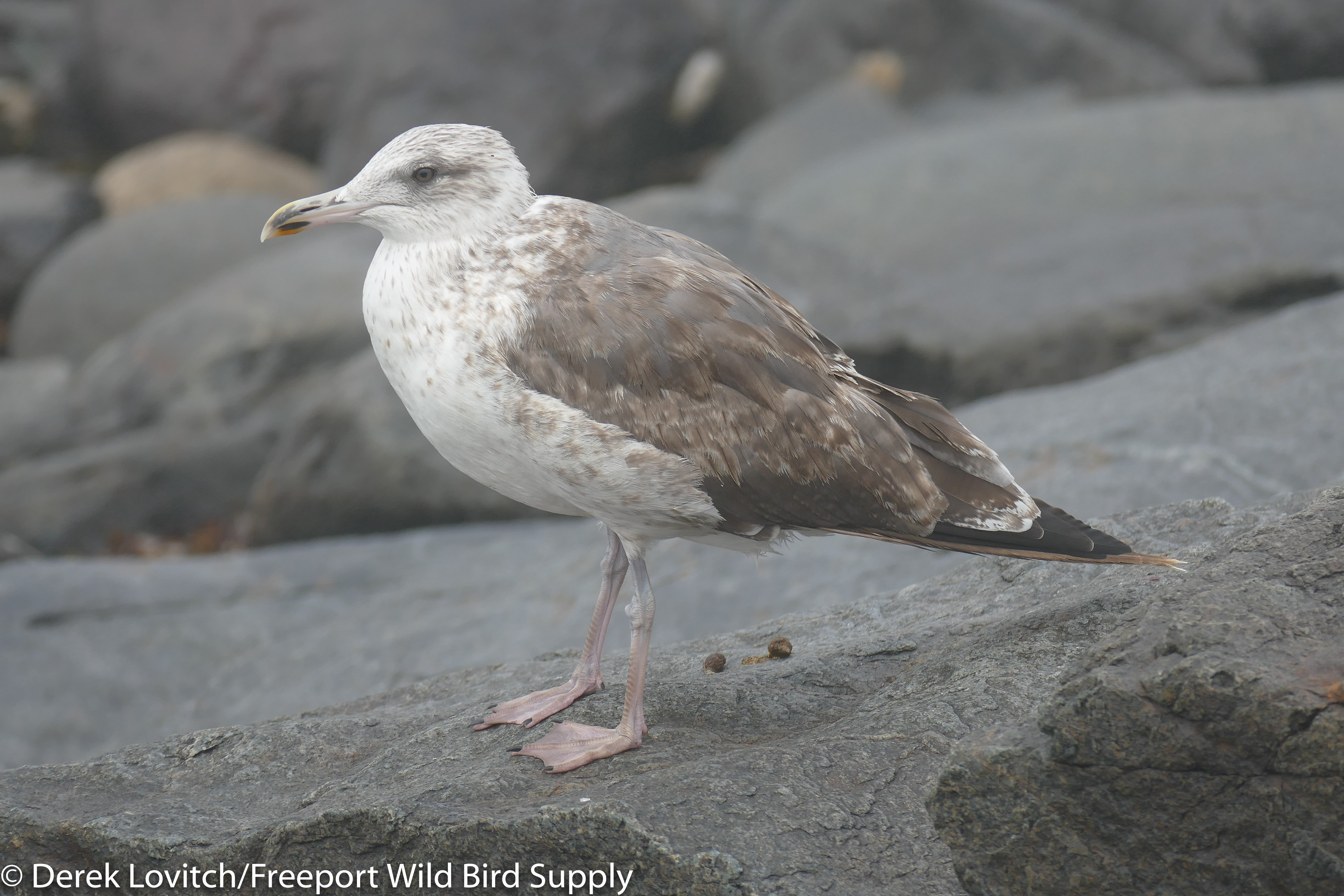
A continuing juvenile Cooper’s Hawk (a very good bird out here) and a Dickcissel got us started, while in the afternoon we found two Lesser Black-backed Gulls (a juvenile and a really messy 2nd Cycle) and at dusk, a fly-by from a late Common Nighthawk. We ended up with 63 species on the day, which isn’t bad for arriving at 10:15, and likely there were many other species around; we just couldn’t see them through all of the Yellow-rumped Warblers and White-throated Sparrows.

This Lesser Black-backed Gull was not exactly a stunning specimen of fresh feathers, but it was a very instructive study subject.

But before you ask, I’ll let you know: No, you will not find the gratuitous annual photo of Novelty Pizza in this blog this year. It was different, and it was terrible. I was sad. But the handpies for lunch at the Trailing Yew made up for it (but I repeatedly remembered to take the obligatory photo only after it was rapidly consumed in its entirety).

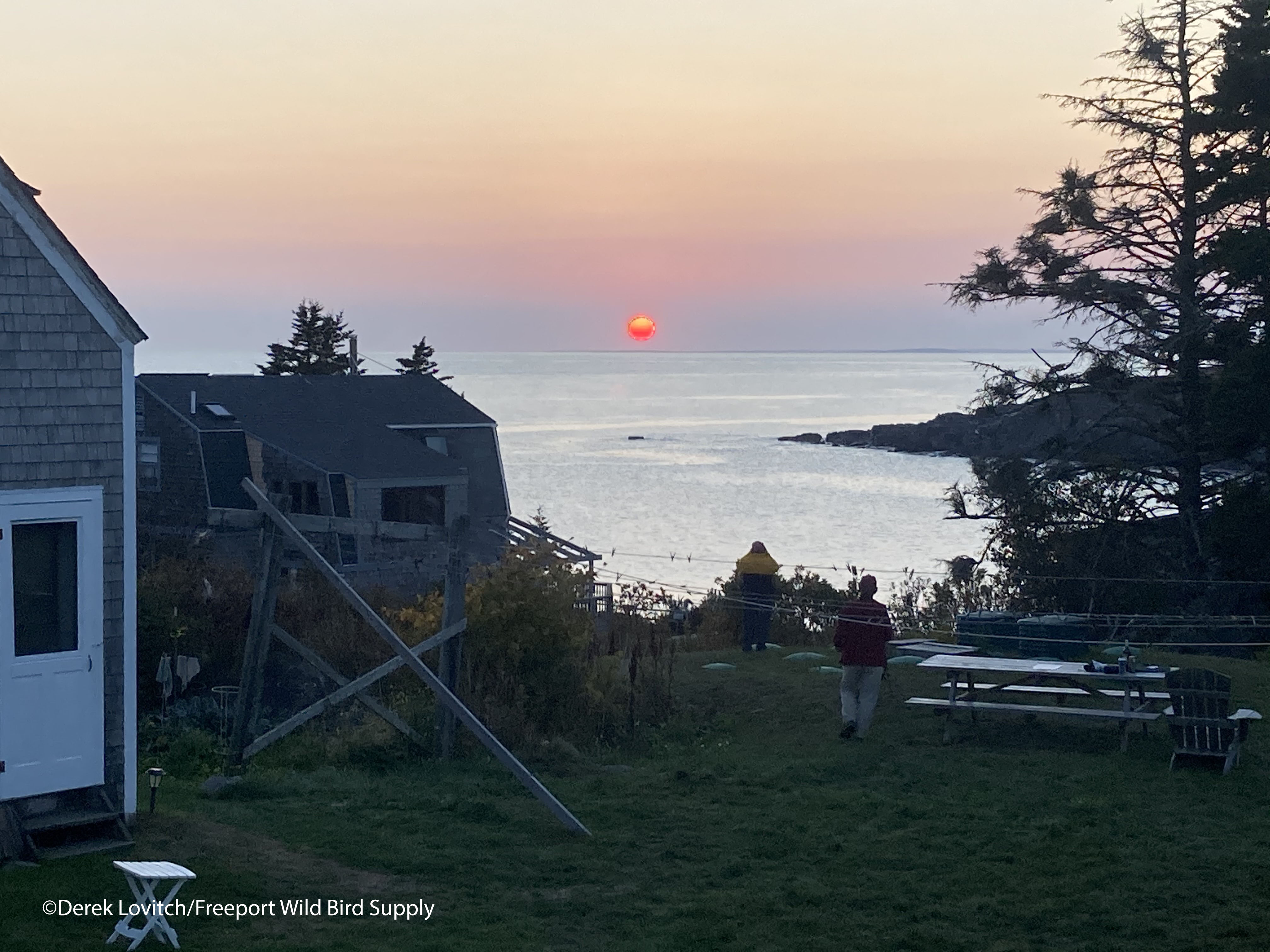
But that evening’s sunset was absolutely delicious!

We awoke to very dense fog on Saturday morning, and with very light southerly winds overnight, only a very light migration had occurred.  There was a decent amount of call notes overhead (mostly Yellow-rumped Warblers) at what was supposed to be the time of sunrise, but these birds could have just been moving around.  Nonetheless, throughout the day we found plenty of Yellow-rumped Warblers and White-throated Sparrows once again, along with ample number of Purple Finches and Red-breasted Nuthatches. It was birdy, but the diversity remained rather low.

Ring-necked Pheasants were mysteriously common and conspicuous all weekend, once again.

By the afternoon, things had slowed down quite a bit, but we grew our triplist steadily with pockets of activity here and there.  Two continuing Rusty Blackbirds put on a good show for us, as did an unusually cooperative Ovenbird. It’s always nice to see Indigo Buntings; we had two today.  Although it seemed rather slow and lacking in diversity, our thoroughness accumulated 64 species by day’s end.

Rusty Blackbird at the Ice Pond.

We awoke to more dense fog on Sunday morning, with no detectable migration overnight on a southwesterly flow.  But sometimes slower days allow us a chance to be more thorough, and by covering a good amount of ground today, we caught up with – and discovered – several very good birds.

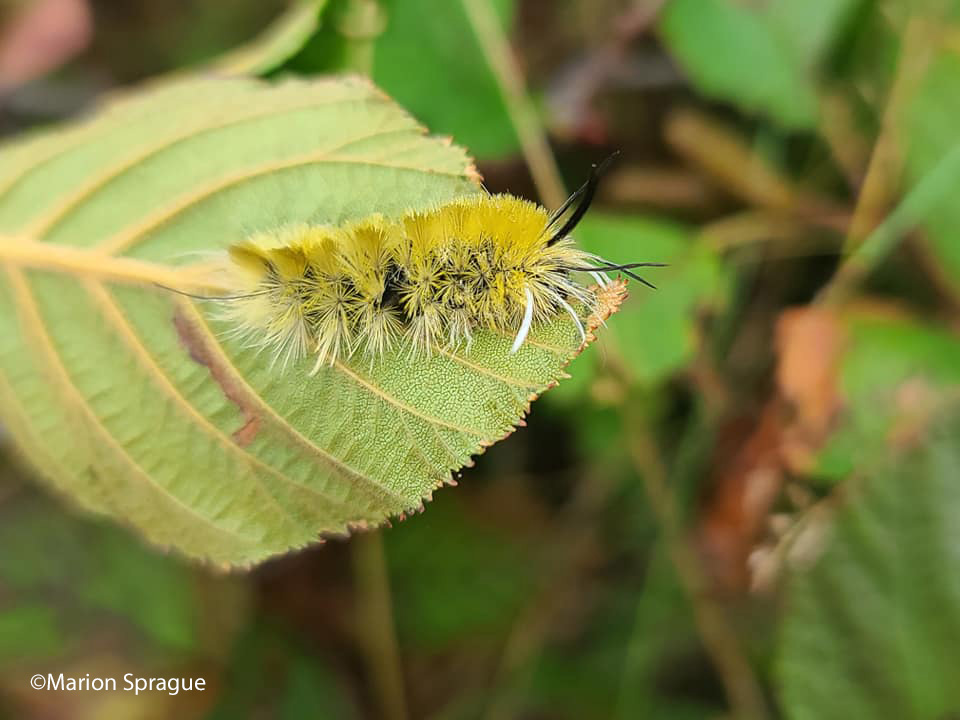
Banded Tussock Moth caterpillar.

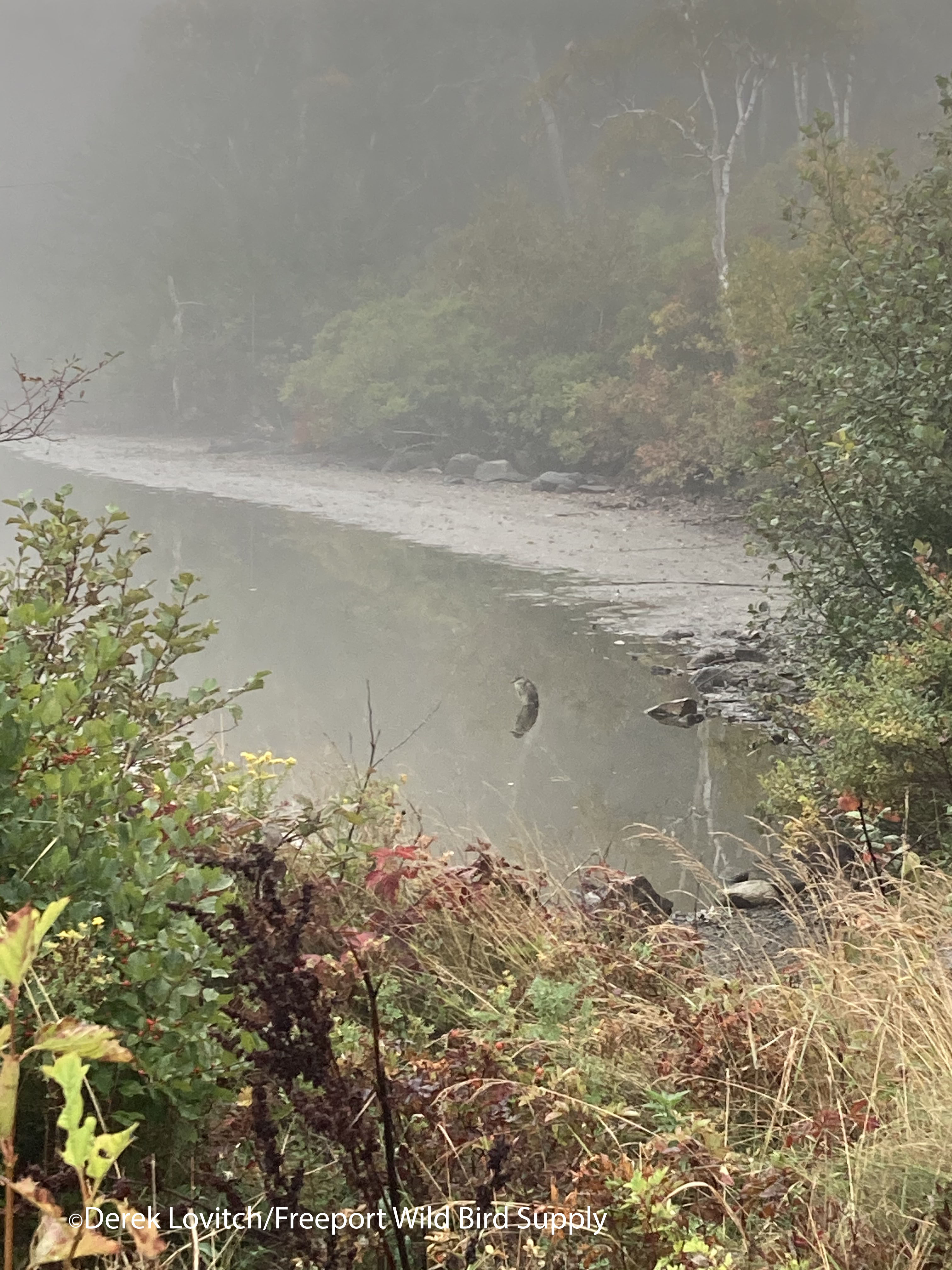
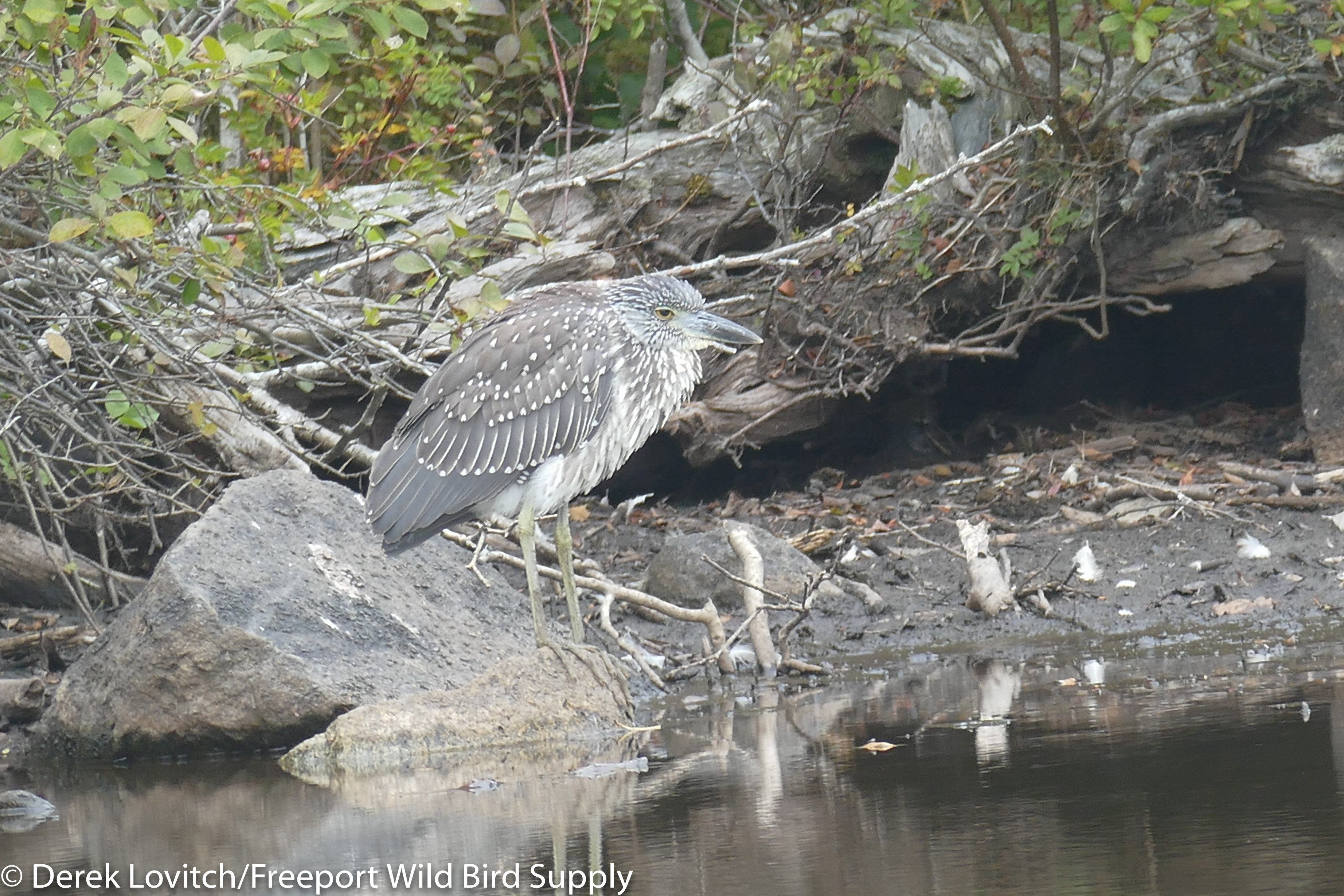
We began with coffee in hand as we marched down to the Ice Pond to catch up with the three continuing Yellow-crowned Night-Herons which we had someone missed each of the previous two days. The drake Wood Duck – very close now to full-spiffiness (technical term!) added to the joy.  Then, after breakfast we had the thrilling discovery (OK, Tom discovered it; he deserves the credit) of a Yellow-breasted Chat. Glimpses were fleeting, and through fogged glasses, were not always satisfactory.  We then found a Marsh Wren at Lobster Cove, and continued to slowly add birds to the list, such as an Eastern Towhee, a few more warbler species, and the fog finally lifted enough for us to see the water and nearby islands to sort out Great Cormorants from Double-cresteds.

Yellow-crowned Night-Herons. Now, just about annual on Monhegan in fall.
A Lobster Cove marsh stomp often produces a surprise or two, like today’s Marsh Wren.

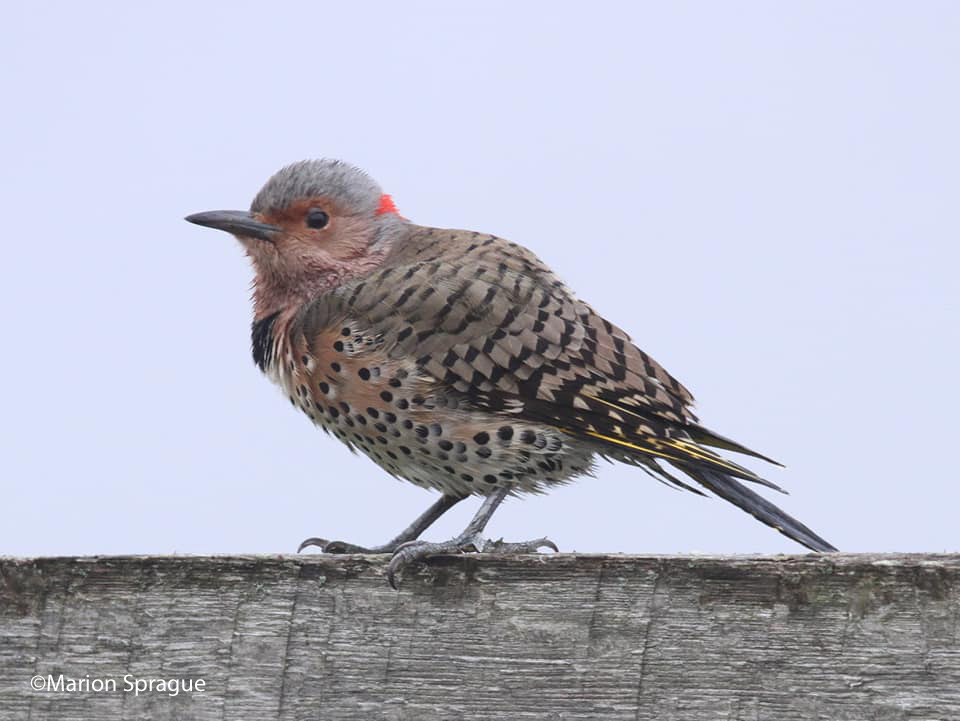
On Monday, our last day of the group tour, we had significant turnover in participants from the weekend, but less turnover in birds.  With another night with little to no nocturnal movement on persistent southerly winds and fog. Only a few Yellow-rumped Warblers were calling overhead at coffee pot o’clock, and it was very slow on our pre-breakfast walk. Northern Flickers were definitely moving around though, so it’s possible a few of these birds were new arrivals overnight. 

Like all of Maine, Monhegan is desperate for rain, but of course we selfishly were hoping it would not fall on us!  The forecast was looking good to get most of the day in, rain-free, but when we reconvened at 9:15, there was a steady light shower. It did not last long, however, and we continued on, unimpeded. Once again, we spent a lot of time sparrow-workshopping, as we regularly encountered fun mixed flocks all weekend of Song, White-throated, Savannah, and often one other species, be it Chipping, White-crowned, Swamp, or Lincoln’s. The side-by-side comparisons are very instructive, and as a guide, I tend to pivot to whatever the birds were offering, and this weekend, they were offering a chance to study, learn, and appreciate the diversity and beauty of sparrows.

We covered a fair amount of ground in the afternoon, checking in with two of the three Yellow-crowned Night-Herons, the continuing Wood Duck and 2 Rusty Blackbirds, and some blooming Fringed Gentian. At least 6 Baltimore Orioles were still present (we had a high of 9+ on Friday), and we had some really good looks at Cape May Warblers and others. Partial clearing in the later afternoon was just enough to get our first view of town from Lighthouse Hill. A mere 56 species by day’s end showed the lack of overall diversity after three full nights with some birds leaving, but very little arriving.

Autumn Meadowhawk (I believe) visiting Barb’s cap.

With the last boat of the day at 4:30, the Monhegan Fall Migration Weekend officially came to a close. However, one of Monday’s participants stayed on for a day of private guiding, so Kate and I continued on for a full day of birding on Tuesday. But, like the weekend, we awoke to more fog and another night of little to no migration on SSE winds. There was, however, some more swirling of Yellow-rumped Warbles around dawn, coming to and from Manana. It was very suggestive of zugunruhe (migratory restlessness) after four days of being stuck on the island with unfavorable winds.  Or, it could have been some birds had indeed arrived overnight.

The extensive southerly winds had finally started to pay dividends, however, with the delivery of a Blue-gray Gnatcatcher and a Yellow-billed Cuckoo. The Dickcissel continued, and we had our best look at it since Friday. With only two of us, we covered grown more quickly and efficiently, so we tallied several species that the group had not seen together, such as the two ridiculously cooperative Soras at the Pumphouse. We also found an unusually-cooperative Mourning Warbler, which is always a treat in migration.

Dickcissel.

With a storm a’brewing, Kate and I departed together on the 3:15 Hardy Boat, and were treated to a Cory’s Shearwater and a Northern Fulmar that materialized out of the still-thick fog. Once a rarity in these waters, the Cory’s was rather late in departing, while the fulmar was on the early side of their arrival. I don’t recall having seen both species on a boat trip on the same day before, and any tubenose is “good” in these nearshore waters.

So that officially brought the 2020 Monhegan Fall Migration Weekend tour to a close; ending on a real high note. Below, I will include Tuesday in the list, but I have separated out the species count for the four-day weekend for comparison sake. Please let me know if I missed something (it’s easy to do as I sit down and try to recall the day as the bed is calling my name!), but our tally for now was a solid 92 species – just two species below our average for the past 10 years.  

However, the 12 species of warblers were well below our 10-year average of 18 species for the weekend. But given the accelerated migration season (food supply shortages due to drought and/or benign weather allowing migration to proceed relatively unimpeded), this was expected. And we made up for it with more sparrows than usual, and an impressive irruption underway. This was the most Purple Finches and White-breasted Nuthatches I can recall on the island, and along with a goodly number of Red-breasted Nuthatches and the first few Pine Siskins of fall, our island sample reflected what we are seeing on the mainland, and throughout the East.

25-Sep26-Sep27-Sep28-Sep29-Sep**
Wood Duck01111
American Black Duck22233
Mallard1215121616
Mallard x American Black Duck Hybrid00011
Common EiderxxxxX
Surf Scoter6*0000
Ring-necked Pheasant71518189
Mourning Dove64141610
YELLOW-BILLED CUCKOO00001
Common Nighthawk10000
Sora00002
Black-bellied Plover01000
Wilson’s Snipe01000
Solitary Sandpiper10000
Black Guillemot2*0636
Laughing Gull01002*
Herring GullxxXxx
LESSER BLACK-BACKED GULL20101
Great Black-backed GullxxXxx
Common Loon00001*
Northern Gannet10*6248*
NORTHERN FULMAR00001*
CORY’S SHEARWATER00001*
Double-crested CormorantXxxxX
Great Cormorant00222
YELLOW-CROWNED NIGHT-HERON00320
Osprey03000
Bald Eagle11000
Sharp-shinned Hawk61221
COOPER’S HAWK10000
Belted Kingfisher11110
Yellow-bellied Sapsucker2088815
Downy Woodpecker00210
Northern Flicker4020152015
American Kestrel41000
Merlin106662
Peregrine Falcon62100
Least Flycatcher00100
Eastern Phoebe64462
Red-eyed Vireo86443
Blue Jay12812126
American CrowxxxxX
Common Raven42111
Black-capped ChickadeexxxxX
Red-breasted Nuthatch1515202015
White-breasted Nuthatch34578
Brown Creeper10000
House Wren00012
Marsh Wren00100
Carolina Wren21224
Golden-crowned Kinglet26208
Ruby-crowned Kinglet02100
BLUE-GRAY GNATCATCHER00001
Swainson’s Thrush20000
Hermit Thrush10000
American Robin02444
Gray Catbirdxx81010
Brown Thrasher11111
European Starling1622282424
Cedar Waxwing151616128
American Pipit01000
Purple Finch2040404040
Pine Siskin10111
American Goldfinch28663
Eastern Towhee00100
Chipping Sparrow66644
Dark-eyed Junco48441
White-crowned Sparrow63463
White-throated Sparrow7560503530
Savannah Sparrow10610810
Song Sparrow1520202025
Lincoln’s Sparrow22012
Swamp Sparrow41022
YELLOW-BREASTED CHAT00100
Bobolink11000
Rusty Blackbird12222
Common Grackle 4161818
Baltimore Oriole83669
Ovenbird01000
Northern Waterthrush10112
Black-and-white Warbler11000
Common Yellowthroat32661
Cape May Warbler11440
Northern Parula00102
Yellow Warbler11112
Blackpoll Warbler22863
Palm Warbler62112
PINE WARBLER10000
Yellow-rumped Warbler1501251006040
MOURNING WARBLER00001
Scarlet Tanager10000
Northern Cardinal22546
Rose-breasted Grosbeak01101
Indigo Bunting01011
DICKCISSEL11001
Day Total6765635865
*Denotes Ferry Ride Only. **Private Tour.
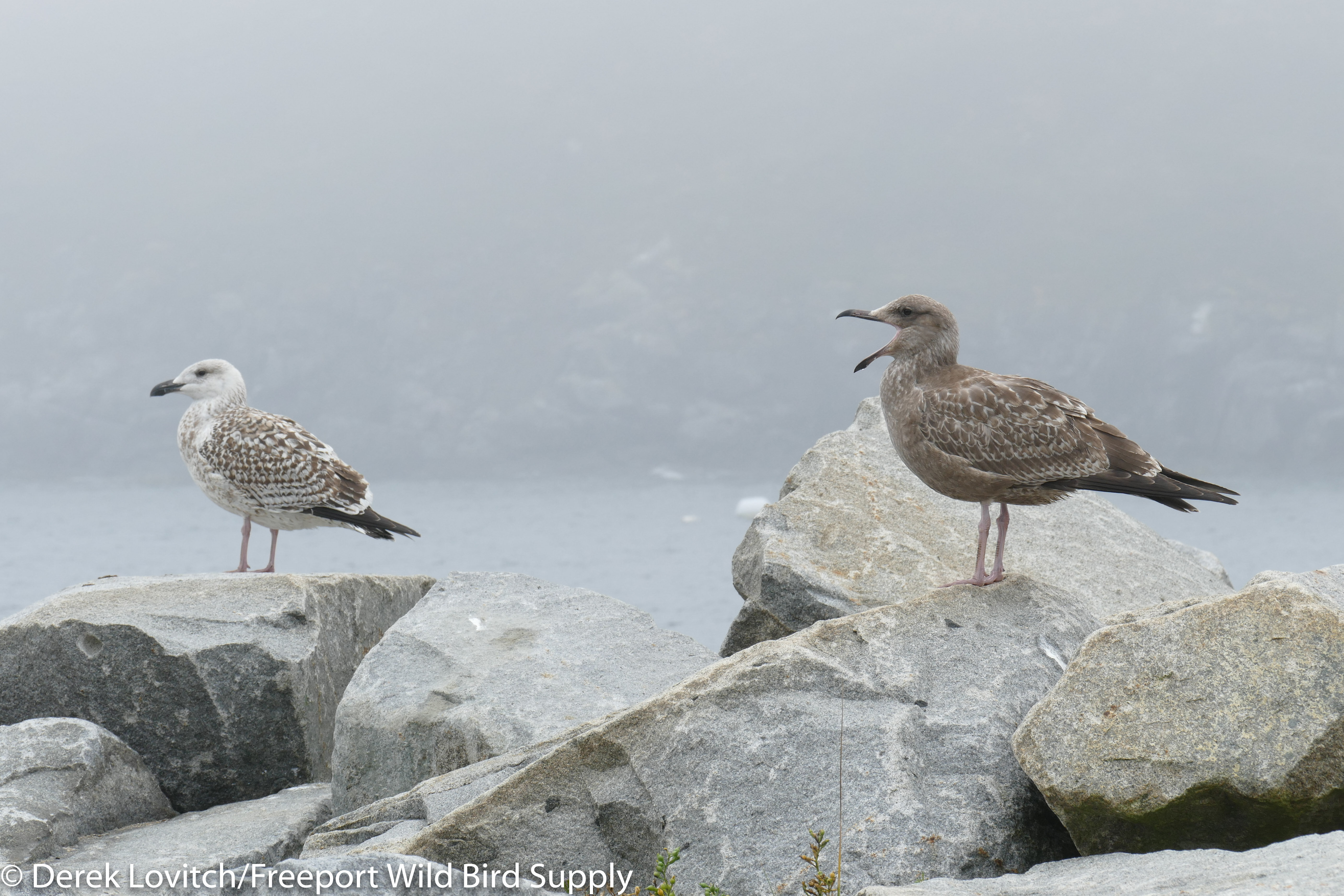
We enjoyed ample time to study many common species, such as separating young gulls. Here’s a juvenile Great Black-backed Gull (L) in the background showing its much whiter overall appearance with bold marbling above. Compare that to “the brown one,” the juvenile Herring Gull (R). It wasn’t the only one yawning from another gull lecture!

Birds on Tap – Roadtrip! Warblers and Wort, 5/12/19


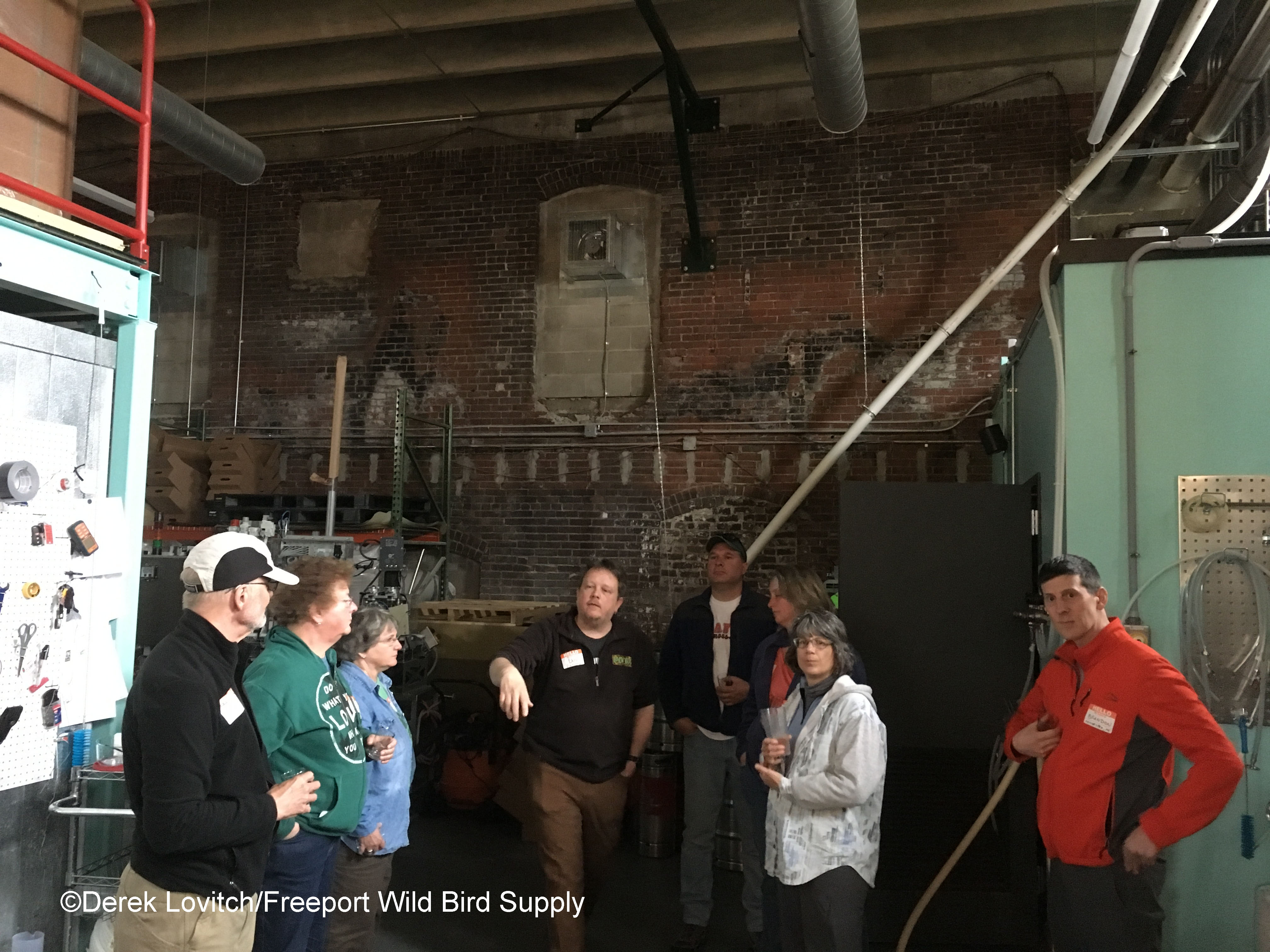
The reincarnation of our spring “Warblers and Wort” tour in our Birds on Tap – Roadtrip! series with our partners, The Maine Brew Bus, was quite successful last Sunday. On this “Mother’s Day Special” tour, we decided to stay local, visiting some of Portland’s most famous institutions in both the beer and birding worlds.

We began in the urban greenspace – a classic “migrant trap” – of Portland’s Evergreen Cemetery.  Spring remains behind schedule this year, and it was a chilly start to the day – but hey, it wasn’t raining for a change!  While warbler diversity was lower than expected for the advancing date, we did eek out 10 species of warblers. Almost everything we did see, however, we saw incredibly well. Nashville and Magnolia Warblers performed well, but Ovenbirds stole the warbler show: we had several birds out in the open for prolonged, enjoyable views, about as good as can ever be expected when stomping a large group through the woods.

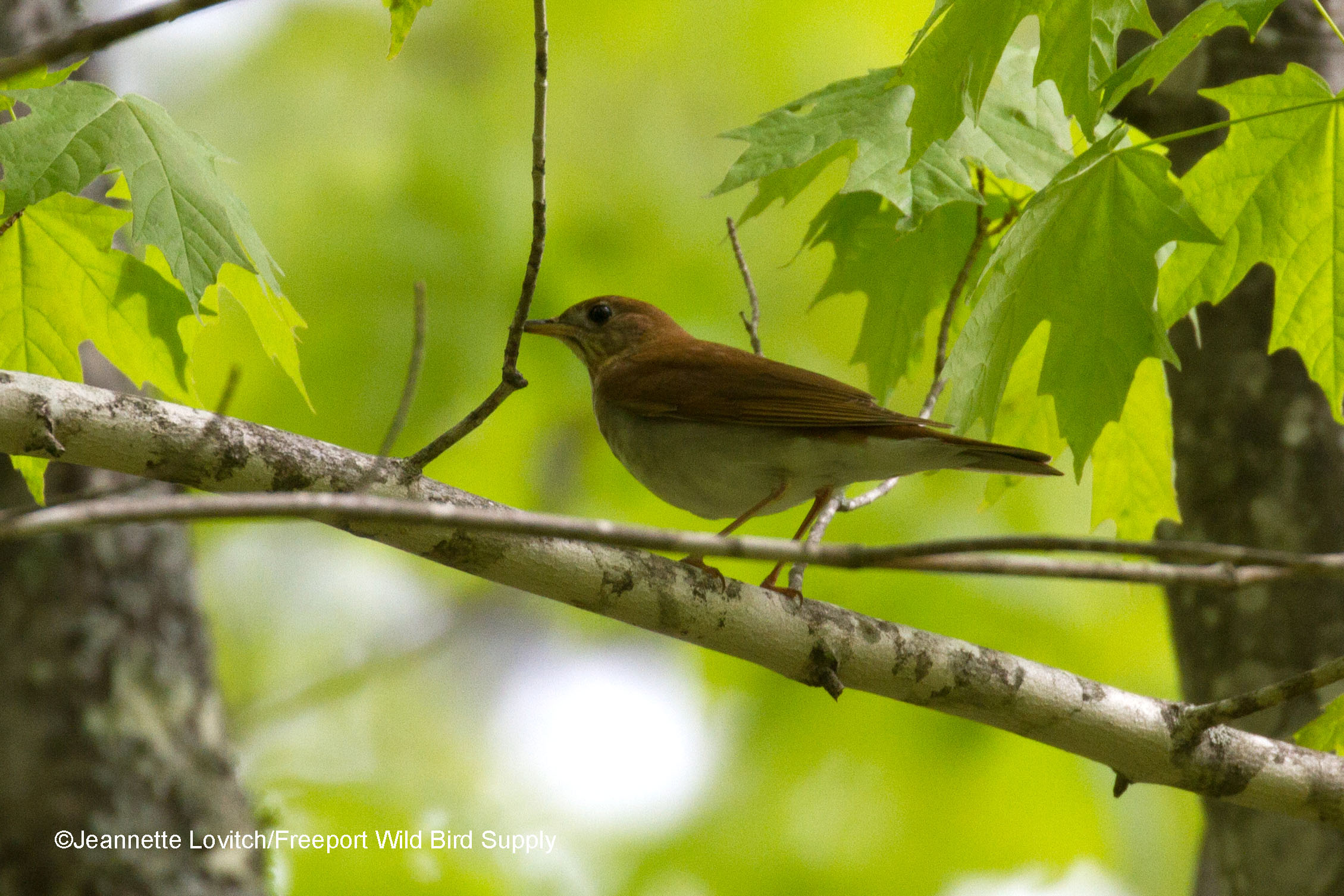
Only Veeries outshined Ovenbirds today in their cooperation. This often-shy thrush was anything but. We saw at least 6, and all were seen incredibly well, including two strolling out in the lawn like the robin they are related to. Many folks commented that they had never seen Veeries – or most any thrush! – so well. There were several sizable groups of White-throated Sparrows marching through the woods, including one group of 20-30 that we were surrounded by at one point. All of their leaf scratching was loud enough that it sounded like some large mammals were tromping through the understory. The song of a newly-arrived Wood Thrush and the old-timey football helmet sported by a White-crowned Sparrow were among the other highlights.

Ovenbird

Veery

Our second stop in the birding portion of the tour was another urban oasis, nearby Capisic Pond Park. Again, we were treated to fantastic views of almost every species we encountered, highlighted by a male Orchard Oriole (a “life bird” for many on the trip). A pair breeds here almost every year, but it’s the only known regular breeding location for this southern species in the state, so it was a real treat to find and see so well. We also heard and saw several of the more common Baltimore Orioles, and even saw a nest under construction that was using strips of blue tarp! (How Maine is that?)

Orchard Oriole

A fly-by Green Heron and an ultra-cooperative Least Flycatcher were other highlights, along with common species such as cardinals and Yellow Warblers. The Least Fly was confiding enough to allow us to get into the topic of “tertial step and primary projection,” adding to our toolkit of identification techniques. The genus Empidonax is one of the most challenging in the bird world, but this structural starting point quickly narrows the choices to a very manageable number. And I always take the time to show off one of my favorite colors in nature: the eye of the Double-crested Cormorant.

Perhaps sour beers are the “tertial step and primary projection on Empidonax flycatchers” to many beer drinkers: it’s a more nuanced approach and probably doesn’t appeal to everyone. But our BOT-Roadtrips want introduce our clients to as wide of a range of beer types as bird species, so we had a special experience in store for the group as we rolled into Bissell Brothers Brewing at Thompson’s Point.

First up, each participant got to choose a different beer based on their tastes or what “lifers” they had not yet tried. There were at least five different brews sampled by my quick count, and the whole gamut of styles was represented. Personally, I chose the new Lucent, a Helles Style Lager as it was light and refreshing (and therefore good for a leader who had to articulate – or try to – for the next few hours). Crisp, clean, with a nice lemony bite, this was a great representation of the style.

But then our trusty beer leader for the day, Don, pulled out a surprise: a Magnum bottle of Bissell’s famous Seed. Brewed only once a year featuring “over 2,000 lbs of strawberries and raspberries from Bradbury Mountain Farm in Pownal,” Bissell was doing a special bottle pour event today, and so of course we had to partake. The faces of some folks was predictable when faced with the words “fruited sour beer,” and were equivalent to the deer-in-headlights looks when hearing “primary projection” for the first time. Some even refused. And then we gave them some anyway.  And some of those then had some more.

It’s not for everyone, but I was really pleased by how excited people were to try a “rarity” that they would otherwise likely never have a chance at (like Orchard Orioles without going to Capisic). More importantly, the discussion of the beer that continued as we boarded the bus was how eye-opening the beer was for so many. Pleasantly tart, with a nice clean finish and a real depth of strawberry flavor, we every well may have created some sour fans (or at least sour-curious) on this trip.

Next up was Goodfire Brewing, one of Portland’s hottest up-and-comers, and admittedly, one of my personal favorites to visit. In a more traditional visit for our beer tours, we enjoyed four small 4oz pours, which nicely showcased the range of styles offered here.  As Chrissy led us on a tour of the brew house, we discussed the differences and similarities of each sample we tried, as well as the history of the names and label art.

We began with the perfectly balanced flagship beer, Prime IPA. The Citra and Amarillo hops really shine through, thanks to the clean and rather light malt bill that still ends without any bitterness.

Having learned that hops don’t necessary equal bitter, we dove into deeper discussion of hops with Goodfire’s latest single-hopped brew in their Minimum series. This incarnation featured Idaho 7 hops – itself an up and comer in the beer world – that has a nice flavor balance of citrus and pine with a hint of tropical fruit.  If IPAs were Empidonax flycatchers, hops would be their primary projection. Or something, OK, fine, maybe I am stretching these analogies too far now…

Moving on, we lightened things up a bit with Can’t Stay Long, a classic clean and crisp German Pilsner with a somewhat bready finish. Pilsners are a tried and true style that might not be all that hip and trendy, but should still be appreciated – like a common Northern Cardinal sitting in the sun (OK, last one, I swear).

It was appropriate that after our sour revelations at Bissell, Goodfire would finish us up with a sample of their new fruited sour: Astro 5 – Double Blackberry. This was all the way blackberry, pleasantly tart, but with a clean finish that made you come back for more. In fact, more Astro was purchased to go than all other beers combined today!  So I guess sours aren’t all that scary! And neither are Empidonax flycatch.….dammit, I did it again.

As usual, our Roadtrips never have enough time for it all, neither beer nor birds, but today we had a delightful sampling of each. And based on the feedback received, I think there’s a fair chance you’ll see this itinerary return next year, and likely on Mother’s Day, so get it in on your schedule now!

Until then, perhaps we’ll see you on June’s Grassland and Grains – one of our most popular, annual outings that are always a blast, with both great birds and some great beer, and never with a dull moment. See you then!