Tag Archives: Falmouth

This Week’s Highlights, 4/19-4/25/2025.

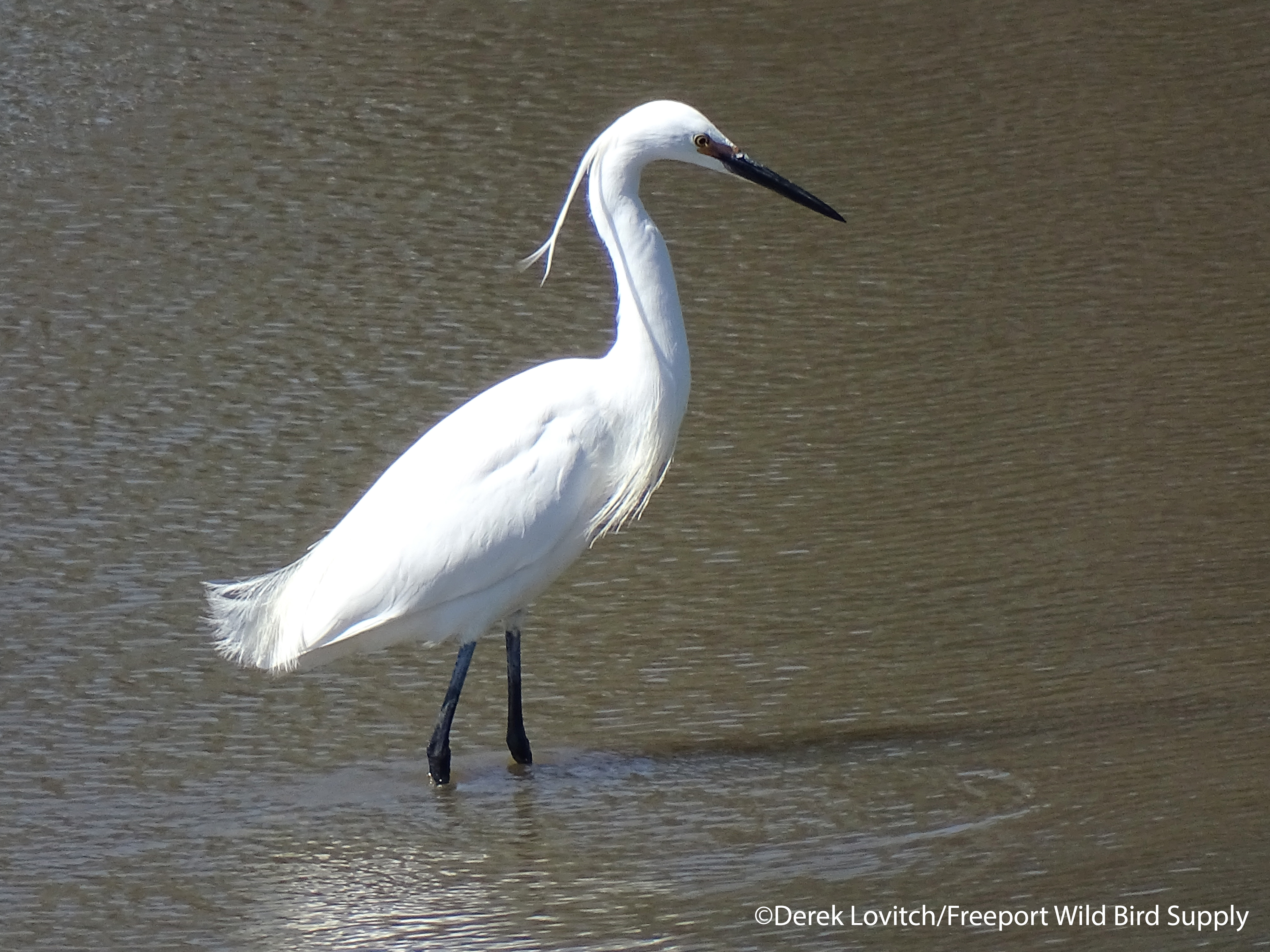
Back for yet another year, Jeannette and I refound the/one of the long-returning LITTLE EGRET X SNOWY EGRET HYBRIDS on the 20th at Tidewater Farm in Falmouth. It was nearly to the date that we relocated it here last year for the first time, and it really favors the tidal creek here at low and mid-tides. The long Little Egret-like neck plumes are highly suggestive of a Little, but they are coupled with some short, wispy neck plumes and yellowish lores indicative of Snowy Egret genes.\

The migratory floodgates opened this week, starting with a big flight Friday night into Saturday morning. Then, during the day, a huge hawk flight occurred. Furthermore, the weather of Friday through Saturday resulted in a small “overshoot” even where birds were facilitated further north than usual for the season, or at all. Locally, this resulted in several rather early dates for returning migrants.  Another great hawk flight on the 21st, and good passerine movements on several other nights made for an exciting and productive week of spring birding. A coastal sparrow-heavy fallout for the morning of the 25th yielded another large arrival of birds, with sheer numbers dominated by White-throated Sparrows. Here are my observations of note over the past seven great days, from a returning hybrid heron to a local first Patch record:

  • 35+ Palm Warblers, 30+ Yellow-rumped Warblers, and 20+ Ruby-crowned Kinglets, etc, Florida Lake Park, Freeport, 4/19 (with Saturday Morning Birdwalk group).
  • Saturday was an extraordinary day at the Bradbury Mountain Spring Hawkwatch. I was fortunate to be able to catch two hours of it, even if it was as the flight was waning. The record-shattering total of 2,712 migrant raptors crushed the old single-day record of 1,814 (5/3/2020). Today’s total was more than 700 birds more than we had for every previous day combined for this season to date. Not only that, but today’s tally eclipsed our two lowest SEASON totals 2,123 (2007) and 2,321 (2011)! 
  • 1 returning LITTLE EGRET X SNOWY EGRET HYBRID, Tidewater Farm, Falmouth, 4/20 (with Jeannette). Photo and details above.
  • 2 SANDHILL CRANES, Morgan Meadow WMA, Gray/Raymond, 4/21 (with Jeannette).
  • ~125 Palm Warblers, ~75 Yellow-rumped Warblers, and 2 Pine Warblers, Florida Lake Park, 4/23.
  • 7 Brant, Wood Island (restricted access), Biddeford, 4/23 (with Bethany Woodworth’s UNE Ornithology class).
  • 1 COMMON GALLINULE (FOY), Florida Lake Park, 4/25 (with Noah Gibb and Stacey Huth). First flushed by Noah and Stacey. Was a real challenge to get a look at, but eventually it came out to an edge for a handful of minutes. My 170th species at Florida Lake!

My personal “first of years” this week also included:

  • 1 Blue-headed Vireo, Florida Lake Park, Freeport, 4/19 (with Saturday Morning Birdwalk group).
  • 1 BANK SWALLOW (quite early), Florida Lake Park, 4/19 (with Saturday Morning Birdwalk group).
  • 1 Barn Swallow, Florida Lake Park, 4/19 (with Saturday Morning Birdwalk group).
  • 1 LOUISIANA WATERTHRUSH, Morgan Meadow WMA, Gray/Raymond, 4/21 (with Jeannette).
  • 3 Black-crowned Night-Herons, Wood Island (restricted access), Biddeford, 4/23 (with Bethany Woodworth and UNE’s Ornithology class).
  • 1 Eastern Towhee Wood Island (restricted access), Biddeford, 4/23 (with Bethany Woodworth and UNE’s Ornithology class).
  • 1 Common Yellowthroat, Florida Lake Park, 4/25.
  • 1 Black-and-white Warbler, Florida Lake Park, 4/25.
Although Black-crowned Night-Herons have likely been around for a few weeks by now, these three at Wood Island in Biddeford on the 23rd were my personal first of the year.

Bradbury Mountain Spring Hawkwatch

The Week 5 report can be found here.

Upcoming Tours (with Space Available):

  1. Birds on Tap Roadtrip – Warbler and Wort. Thursday, May 8.

Evergreen Cemetery, Capisic Pond Park, Orange Bike Brewing and TBA with our partners Portland Explorer (formerly Maine Brews Cruise).

This Week’s Highlights, 2/1 – 2/8/2025

This Greater White-fronted Goose has been making the rounds in Greater Portland this winter, most recently hanging out along Shoreline Drive in Falmouth, where I stopped by to visit it on the 2nd.

It sure feels and looks like winter out there now, but there are still quite a few “lingering” species to add to our usual winter mix. Here are my observations of note over the past seven days:

  • The GRAY CATBIRD that has been at our feeders since January 2nd was last seen on February 2nd. Hopefully it has just moved on as Winterberry and other fruits in and around our property have been exhausted.
  • 1 Fox Sparrow (continuing since early December) continue at our feeders in Durham.
  • 1 Fox Sparrow (since 12/21) continues here at the store through week’s end as well.
  • 1-2 Turkey Vultures continue in the Cumberland-Freeport corridor of I-295.
  • 10 Greater Scaup, Falmouth Town Landing, 2/2.
  • 1-2 Swamp Sparrows, Tidewater Preserve, Falmouth, 2/2.
  • 1 continuing GREATER WHITE-FRONTED GOOSE, Shoreline Drive, Falmouth, 2/2. Refound at this location by Lauren diBaccari and Alex Lamoreaux on 1/30.
  • 1 drake Barrow’s Goldeneye and 45 Dunlin, Back Cove, Portland, 2/7.
  • 4 Greater Scaup, Eastern Promenade, Portland, 2/7.
  • 1 drake Green-winged Teal, Mill Creek Cove, South Portland, 2/7.

Upcoming Tours

1.Winter Waterbirds Workshop with Down East Adventures: THIS SUNDAY, February 9 POSTPONED. New date TBA.

2. Gull Identification Workshop: Freeport, Saturday, February 15, 2025 (1:00-4:00pm) and Part II in Portland: Sunday, February 16, 2025 (8:00am-12:00pm).

3. Our Birds on Tap – Roadtrip “Harlequins and Hops!” scheduled FOR 2/2 was postponed due to the dangerously cold weather until Sunday, February 23rd. A handful of spaces are now open for the new date.

 Recent Highlights, 4/11– 4/19/2024

The deceiving very Little Egret-like Little Egret x Snowy Egret hybrid is back for another season on the Portland-Falmouth waterfront. Jeannette and I saw it for the first time this year at Tidewater Farm Preserve in Falmouth on the 14th. Details below.

My birding was limited during this period, unfortunately, especially considering a significant “overshooting” event from the most recent storm. Southern vagrants and some exceptionally early arrivals were detected. Unfortunately, we were out of town for the days in which most of the rarities were detected early this week. I did try to make up for it by finding something later in the week, but I struck out.

Overall feeder activity decreased as the snow receded, but we noticed an uptick in Purple Finches and Pine Siskins in our yard in Durham, along with the arrival of Pine Warblers at our feeders in Durham and here at the store. My other observations of note over the past nine days included:

  • 10 BOHEMIAN WAXWINGS, Farm Gate Road, Falmouth, 4/14 (with Jeannette).
  • 1 LITTLE EGRET X SNOWY EGRET HYBRID, Tidewater Farm Preserve, Falmouth, 4/14 (with Jeannette). Back for another year, this very Little Egret-like individual is a tricky and misleading ID at any distance. Luckily, it was close to the point today, providing great studies. In the photo above, you can see the very long, LIEG-like plumes. Also apparent today in comparison to a nearby SNEG was the slightly longer and thinner bill and the somewhat thinner and more elegant neck, and it did appear to be a touch larger overall. However, up close, you can see the handful of wispy, SNEG-plumes on the back of the head and neck, and in most lights, the lores gave a distinctly yellowish appearance, especially near the eye.

Additional personal first-of-years this week were limited to:

  • 1 Chipping Sparrow, feeders here at the store, 4/13.
  • 1 Field Sparrow, our property in Durham, 4/14.
  • 2 Pied-billed Grebes, Florida Lake, Freeport, 4/17.
  • 1 Broad-winged Hawk, Florida Lake, 4/17.
  • 1 Northern Mockingbird, our property in Durham, 4/18 (Yard Bird #149!).

TOURS AND EVENTS:

  1. Birds on Tap! Kick-off event at the Portland Beer Hub!

Thursday, April 25, 2024; 5:00 – 7:00pm – Portland Beer Hub – 320 Fore St. Portland, ME 04101- FREE!

Join Birding Guide and owner of Freeport Wild Bird Supply Derek Lovitch, and Brew’s Cruise owner Zach Poole, for an exclusive gathering at the Portland Beer Hub to celebrate the 10th Anniversary of Birds on Tap! and kick off our new tour lineup.

During this casual meetup, guests will mingle with other bird and beer enthusiasts, discuss the exciting lineup of upcoming Birds on Tap tours, and can enjoy flights of bird-themed local beers (for purchase). 

It’s the perfect opportunity to immerse yourself in the world of birdwatching and craft beers. For a bit of fun, be prepared for some impromptu bird trivia and birding games.

2. Feathers Over Freeport!

Saturday, April 27th at Bradbury Mountains State Park and Sunday, April 28th at Wolfe’s Neck Woods State Park. All events free with park entry!

From birdwalks and a hawkwatch workshop to kids’ arts and crafts and a food truck, join us for two activity filled days in the 13th year of Feathers Over Freeport!  A full schedule of events can be found here.

Note our regularly scheduled Saturday Morning Birdwalk meets at Bradbury on the 27th.

This Week’s Highlights: December 24 – 30, 2022.

This Northern Fulmar graced Gloucester, MA harbor on 12/26. I originally found the bird in a short birding outing on Christmas Day. Details below.

My birding highlights this week were mostly from Christmas in Gloucester, Massachusetts.  I did very little birding, but in short outings, found two great birds!  The first was a NORTHERN FULMAR in Gloucester Harbor, during a short break from eating on Christmas Day. Although not a “rarity” in Massachusetts by any means, having one sit in the harbor was an exceedingly rare occurrence in New England.  I managed some lousy phone-scoped photos while hand-holding my phone to my scope with frozen fingers in 30mph winds.  We returned the next day where Jeannette greatly improved upon my photos (see above). Many birders enjoyed it through the 27th.

But that was trumped by a bona fide state rarity that Jeannette and I found while walking Bonxie on the 26th. This Eared Grebe we found off Niles Beach would be MA’s 20th record I believe. My phone-binned photos while out with the dog were the best we did, but many birders were finding it through week’s end.

We also had a THICK-BILLED MURRE off Niles Beach on the 25th (along with an intriguing distant grebe that was undoubtable the Eared we confirmed the next day) and I had 4 RED CROSSBILLS in the Eastern Point neighborhood on the 26th.

Meanwhile, here in Maine, my observations of note over the past ten days included the following:

2 female Greater Scaup, Yarmouth Harbor, 12/24 (with Saturday Morning Birdwalk group).

1 Common Redpoll (FOS), our yard in Durham, 12/28-29.

1 continuing SAGE THRASHER, Gilsland Farm, Falmouth, 12/29. Great views and a prolonged period of observation with no one else present early in the morning. My photos were a little more distant than I would have liked (and backlit) but the quality time with this incredible rarity – unlike the brief view on my first visit – was most rewarding.

This Week’s Highlights: December 17-23, 2022

This snazzy, fresh adult male Red-winged Blackbird at a feeder in Wells was one of the few highlights in my usually-very-productive “Moody Sector” of the Southern York County CBC.

T’was the week before Christmas and all through Wild Bird Supply, no one was birding much, even this guy.  Nonetheless, I found some great birds when I did get out this week:

  • 1 incredibly late NELSON’S SPARROW, 1 Savannah Sparrow, 1 Northern Flicker, 4 Snow Buntings, etc, Eastern Road Trail, Scarborough Marsh, 12/18.  I was unaware that the Portland CBC was being conducted that day, but apparently, the Nelson’s was a first count record! 
  • 1 THICK-BILLED MURRE (FOS), Pine Point, Scarborough, 12/18. Not in great shape; I first saw it on land fighting off a crow on land before eventually waddling into the water.
  • 20-21 continuing AMERICAN COOTS, 2 female GADWALL, 3 Ring-necked Ducks, 1 pair American Wigeon, 1 drake Northern Pintail, etc, Grondin Pond, Scarborough, 12/18.
  • “Moody Sector” of the Southern York County CBC, 12/19: 1538 individuals of 52 species (both quite low for me) with highlights including 4 American Wigeon (very surprisingly only a second count record!), 1 male Red-winged Blackbird, 2 Northern Harrier, and 18 Horned Larks.
  • 1 Great Blue Heron (late for inland) and 1 1st-winted Iceland Gull, Auburn Riverwalk, 12/22.
  • 1 SAGE THRASHER, Gilsland Farm, Falmouth, 12/22. 2nd State Record found earlier in the morning by Doug Hitchcox. I eventually had fantastic looks at it, including in flight, but I was on the wrong side of its favored tree for photographs, so this was the “best” I did!
  • Meanwhile, left off my weekly updates for the past four weeks has been my regular observation of one particular rarity right here in Freeport – Maine’s first ever Broad-tailed Hummingbird!  Here’s the full story.

This Week’s Highlights, June 25 – July 1, 2022

A displaying pair of Northern Gannets stole the show at Machias Seal Island on our visit there on 6/22.
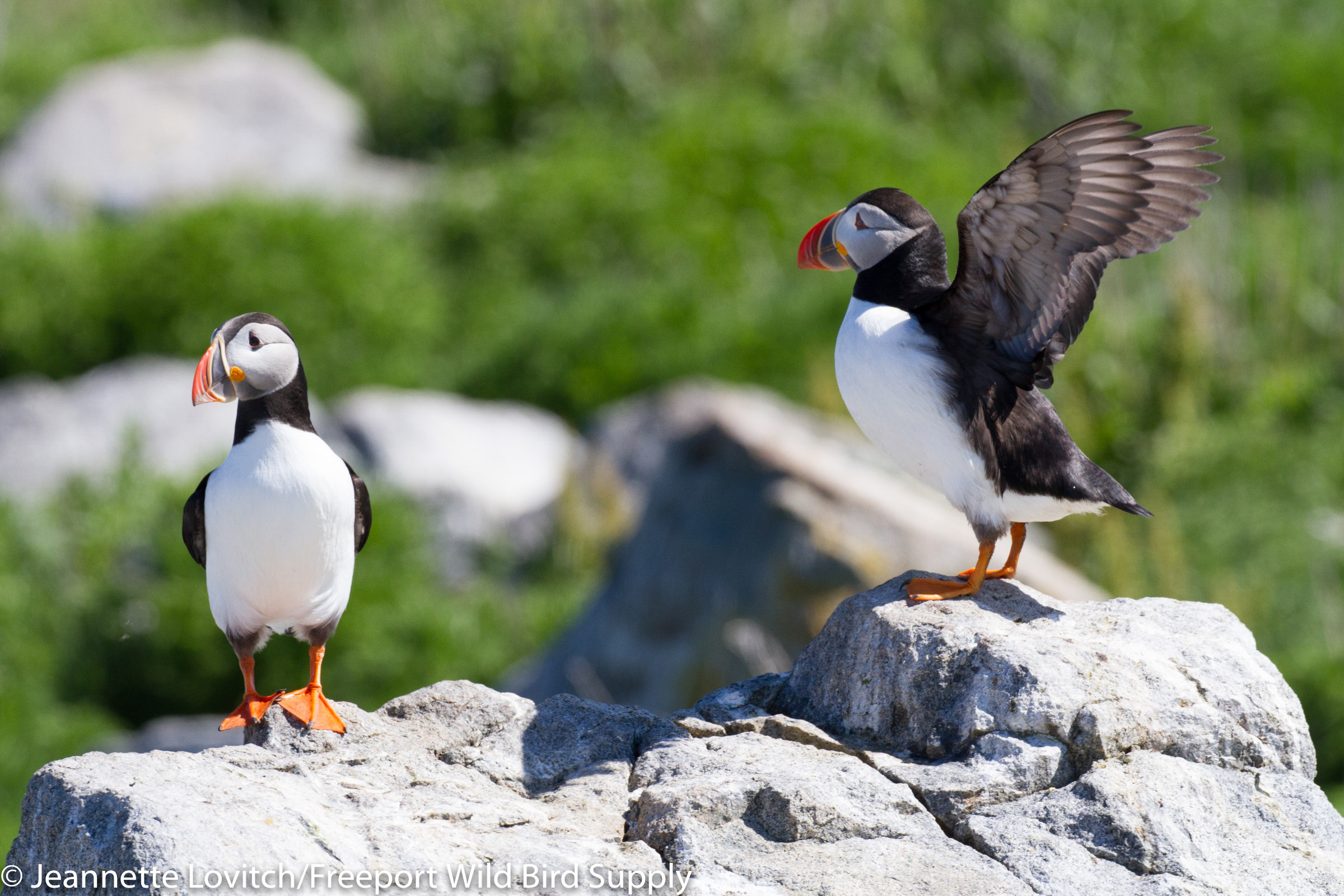
Atlantic Puffins, Machias Seal Island, 6/22.
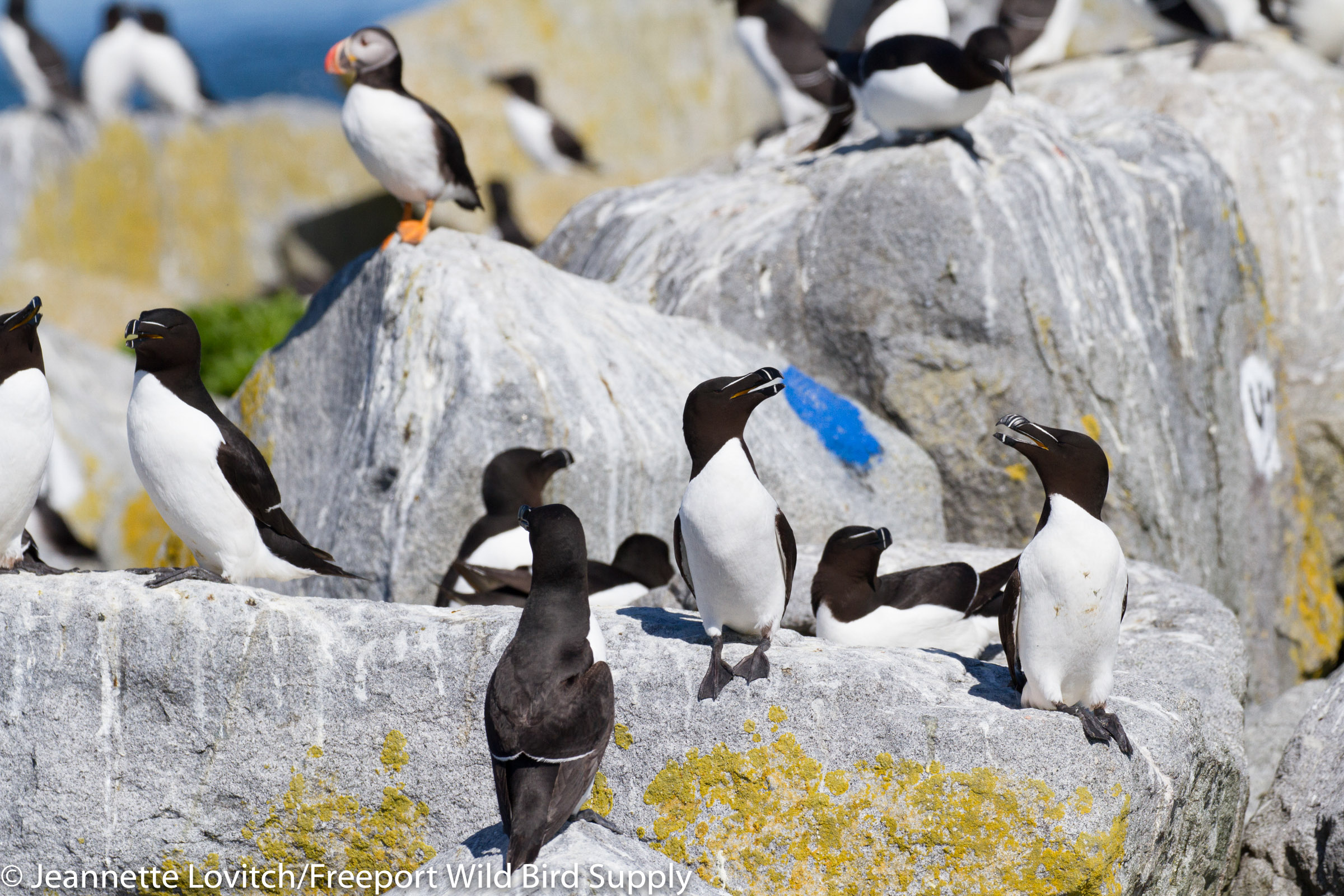
Razorbills, Machias Seal Island, 6/22.
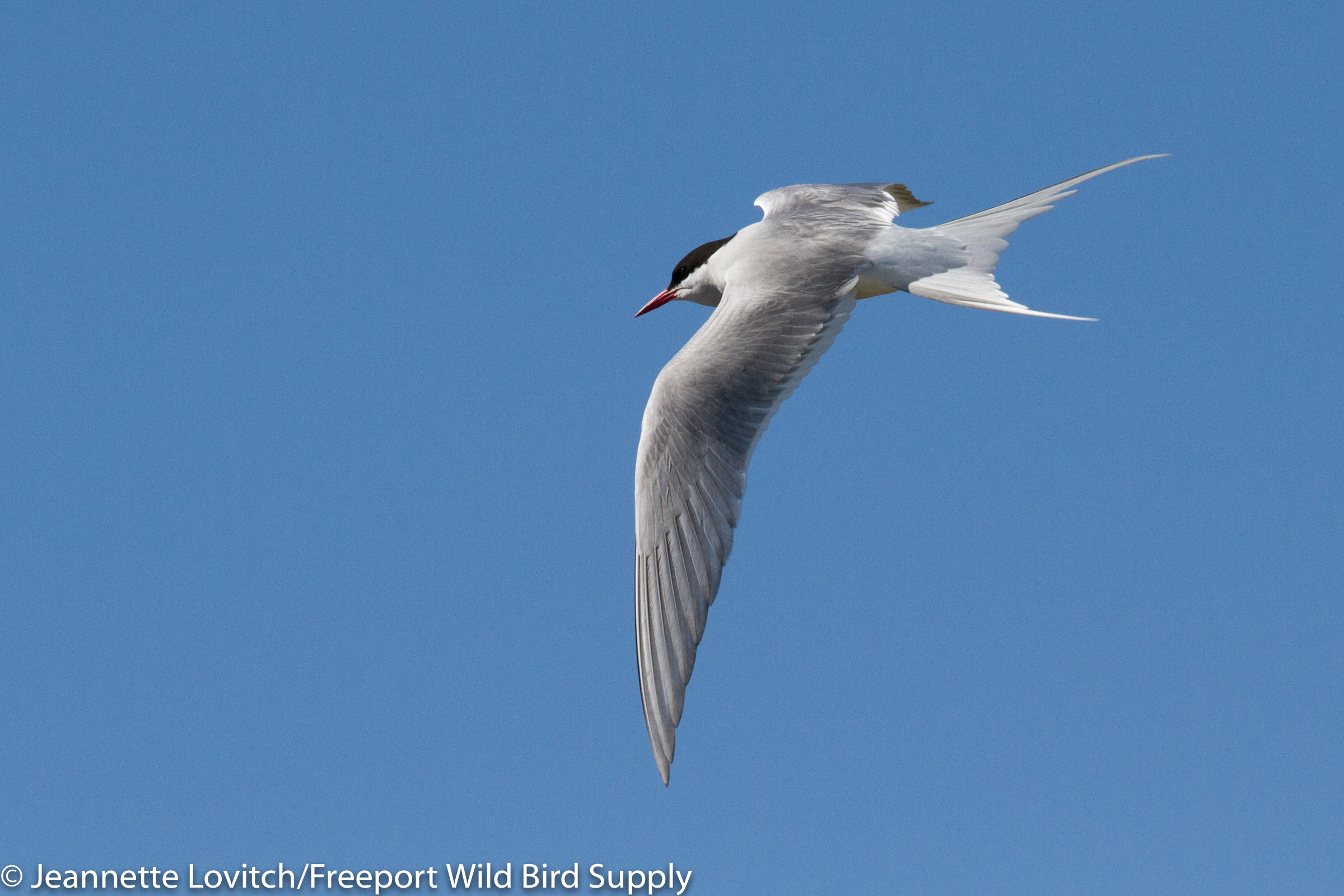
Arctic Tern, Machias Seal Island, 6/22.

I had a rather busy week, but not as busy with birding as I would have liked. Therefore, this mostly to share Jeannette’s photography from our visit to Machias Seal Island last week. However, a few observations of note over the past seven days included the following

  • 1 female ORCHARD ORIOLE and 1 Blue-gray Gnatcatcher, Green Point WMA, 6/27 (with Jeannette).
  • 1+ BOREAL CHICKADEE, East Royce Mountain, White Mountains National Forest, 6/26 (with Jeannette).
  • 1-2 LITTLE EGRET X SNOWY EGRET hybrids, Falmouth, 6/30. One bird spotted from the Martin’s Point Bridge appeared to have at least one long, Little Egret-like plume. It was not close enough for photos, but the plume – as well as overall structure was distinctive. After flying upriver with the incoming tide, I found a hybrid at Gilsland Farm (photo below), but no head plumes are visible. Note the greenish-yellow lores (looked darker in the field than this poor, phone-scoped photo), very long and fine bill, and spindly neck.  It’s slightly longer legs and overall slightly larger size was apparent when it joined a distant Snowy. However, did I imagine the plume in the earlier view? Did it fall off in transit? Or, are there actually two again this year?
This presumptive Little Egret x Snowy Egret Hybrid was along the Presumpscot River in
Portland and Falmouth on the 30th. See notes above.

My February Birding Re-Cap (2/16/15)

I know it’s been a while since I’ve blogged, but I sure hope you have taken that to mean that I have not been out birding! Quite the contrary in fact.

Yeah, it’s been bitter cold – we’ve yet to rise above freezing in February! And if you hadn’t noticed, we’ve had quite a bit of snow recently. Of course, strong winds with dangerous windchills (like yesterday) and heavy snow precluded birding on some days -well, except for feeder-watching, which has been truly excellent.

In fact, the feeder-watching has been so good of late, that Saturday’s birdwalk outing was mostly spent watching feeders. 50+ Common Redpolls, Pine Siskins, Purple Finches, a Carolina Wren, and more were enjoyed from a sheltered yard, or from the inside of our house. Yup, we went indoors for the birdwalk this week, defrosting for about a half hour – our feeders are only visible from inside the house, afterall.

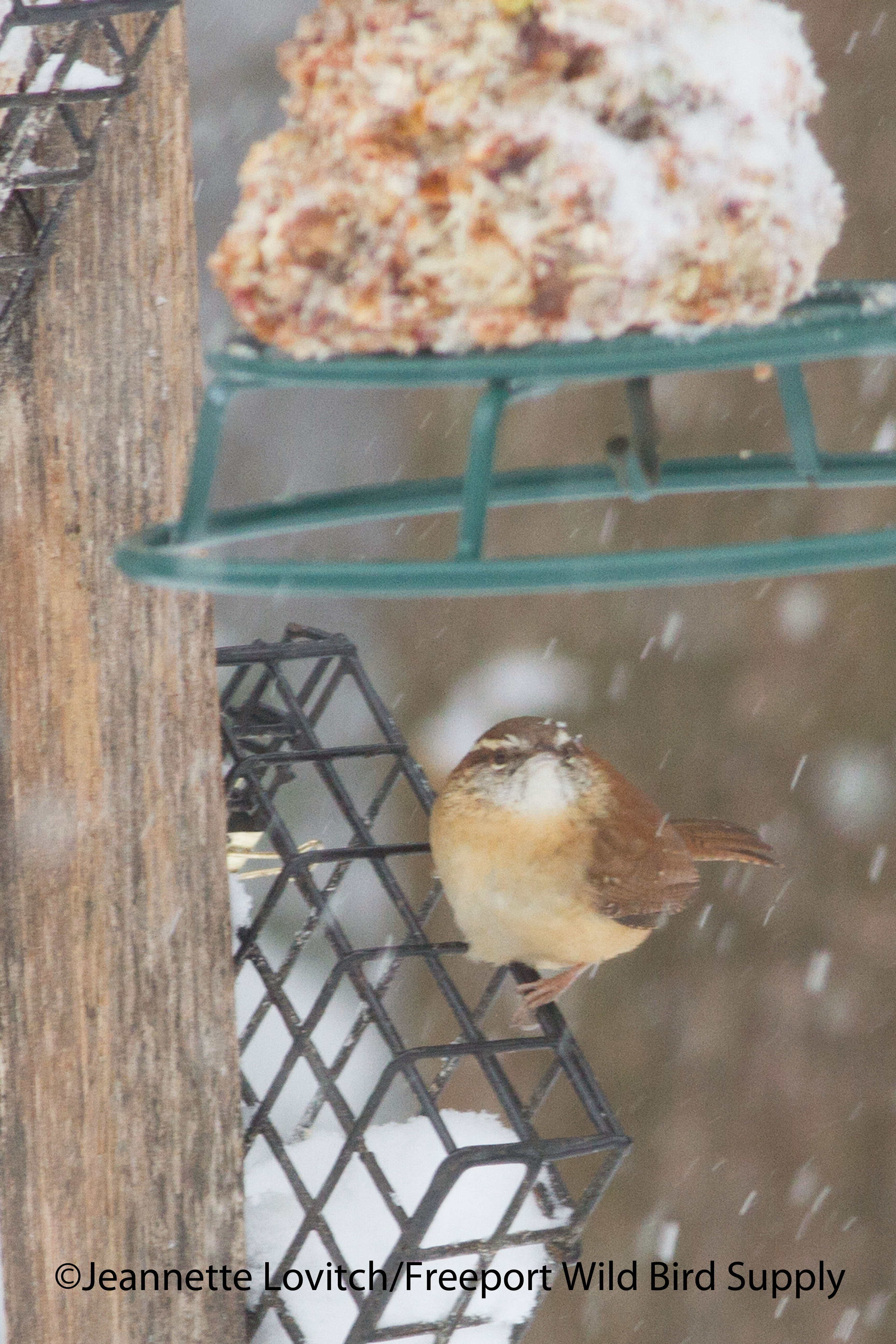
And with several snow days and work-from-home writing days of late, I have been enjoying our feeder activity: a large number of American Goldfinches have been joined by varying small numbers of Pine Siskin, Purple Finch, and Common Redpolls. Still waiting for a big flock, however. And the second-ever, and first long-staying, Carolina Wren in the yard has been a treat – we’re pumping him full of mealworms to keep him around, and healthy.
IMG_9420_edited-3

The feeders at the store have been active, as well, although non-goldfinch finch numbers have not been as good or as consistent at home. But, for mid-winter with this much snow on the ground, the diversity has been surprisingly good. (Weekly totals are posted to our store’s website).

Snowy Owls are around, and on 1/31 we finally added one to our all-time Saturday Morning Birdwalk list with a visit to Brunswick Landing: species #236. Meanwhile, our birdwalk to Winslow Park on 2/7 had Barred Owl, the continuing (despite all the ice) over-wintering Dunlin (12), and the 4 Barrow’s Goldeneyes (3 drakes and 1 hen) that had been present.

But the impressive ice cover in Casco Bay has greatly reduced the amount of waterfowl in the immediate vicinity over the last couple of weeks. The end of Winslow remains clear (barely) and the duck concentrations there are quite good, but as of today, however, the much-reduced area of open water now held only two drake Barrow’s Goldeneyes. Meanwhile, the small hole of open water at the base of the Lower Falls in Yarmouth is still somehow still hosting the merganser “hat-trick” (with varying numbers of all three species) as it does every winter – they’re running out of room though!
IMG_4852_MALLs,RiverbankPark,2-10-15_edited-1

IMG_4862_edited-1
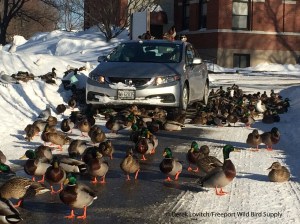
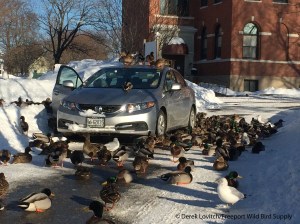
Not all ducks are quite as concentrated as these hungry Mallards (with a few American Black Ducks) at Riverbank Park in Westbrook.

While the field trip portion of my Gull Identification Workshop has been postponed for the last two Sundays, gull-watching is pretty good right now, especially in and around Portland Harbor. Hatch Hill Landfill in Augusta on the 12th, however, had only about 100 Herring Gulls – gull numbers are drastically reduced here when there is little open water on the Kennebec River in downtown. The Bath Landfill is hosting a few Iceland and a couple of Glaucous Gulls, however.

Frugivores have been common, with large flocks of American Robins and goodly numbers of Cedar Waxwings stripping all available, palatable fruit. Bohemian Waxwings have been scattered about – although I have yet to catch up with any – but so far Pine Grosbeaks have mostly remained to our north. The rapidly diminishing fruit crop locally will likely concentrate these birds further, or push them southward.

My two best days of birding this month, however, were on Feb 1 and just this past Friday. On the 1st, a snowshoe at the Waterboro Barrens Preserve was awesome. I went there to refind the Red Crossbills that a friend and I had there in December, as my recordings from that visit were inconclusive as to “type.”

Not only did I find 14 crossbills, but many were in full song, and one male was apparently carrying nesting material! A light wind, and my huffing-and-puffing from snowshoeing in waist-deep snow drifts off trail, impeded the clarity of my recordings, unfortunately. However, one of the call types (as analyzed by Matt Young over at Cornell) was suggestive of the Type 8 Red Crossbill from Newfoundland, which has yet to be definitively recorded outside of that province. Intriguing -yup, I need to find time to go back and improve the recording.

The icing on the cake that day was a Hoary Redpoll teased out from a flock of about 40 Commons as they alighted in fed in the Pitch Pines with the crossbills. This was my first Hoary in Maine away from a feeder.

With all of these storms, and two “nice” days of northeasterly winds, I had alcids on my mind as Lois Gerke and I spent the morning in Cape Elizabeth on Friday (2/13). Apparently, my hunch was correct – we scored 4 species of alcids! This is not an easy feet in winter in Maine, although I have hit the total several times (not yet hit 5, however). Black Guillemots were scattered about, as usual, but the fun started with a fly-by Dovekie at Dyer Point.

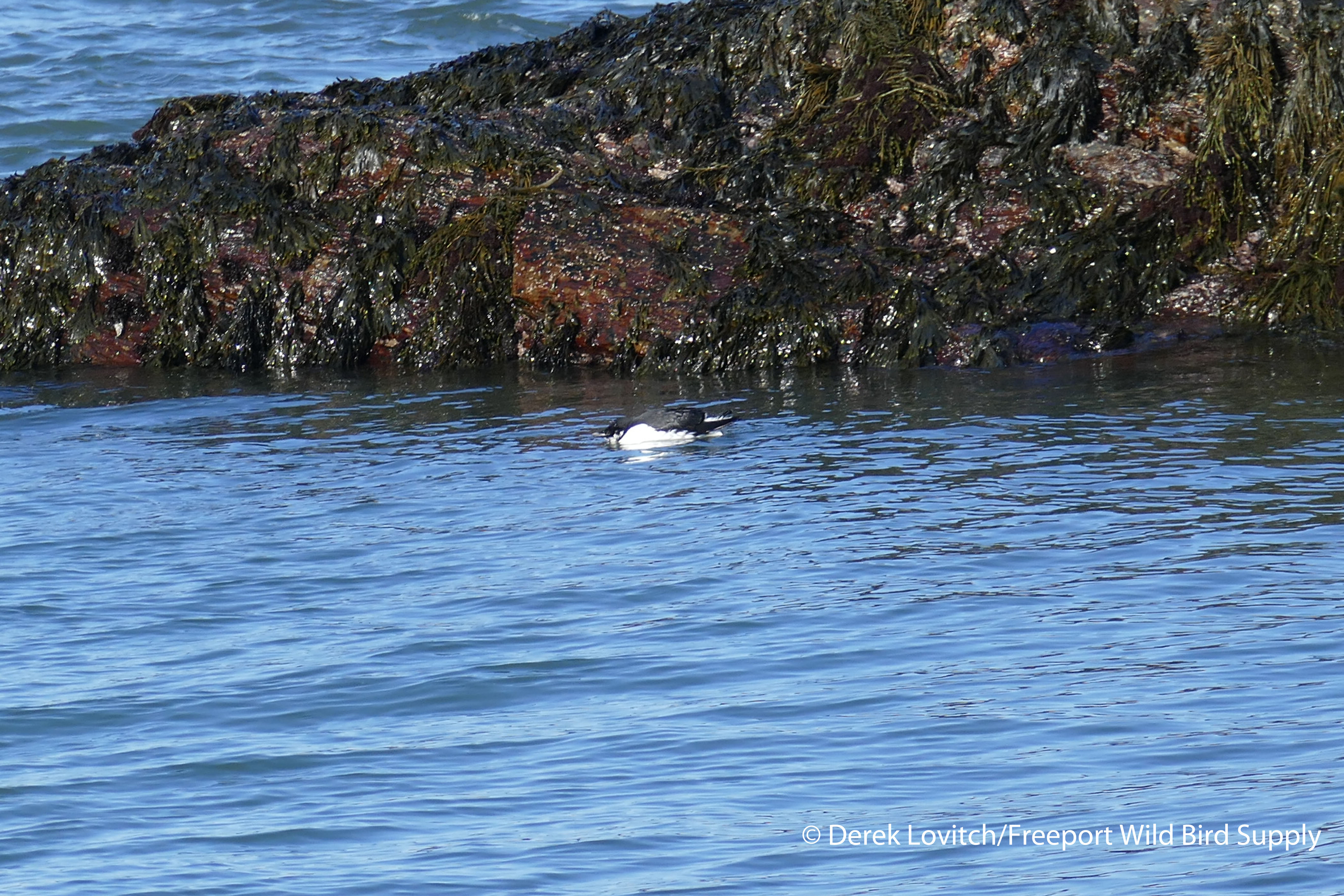
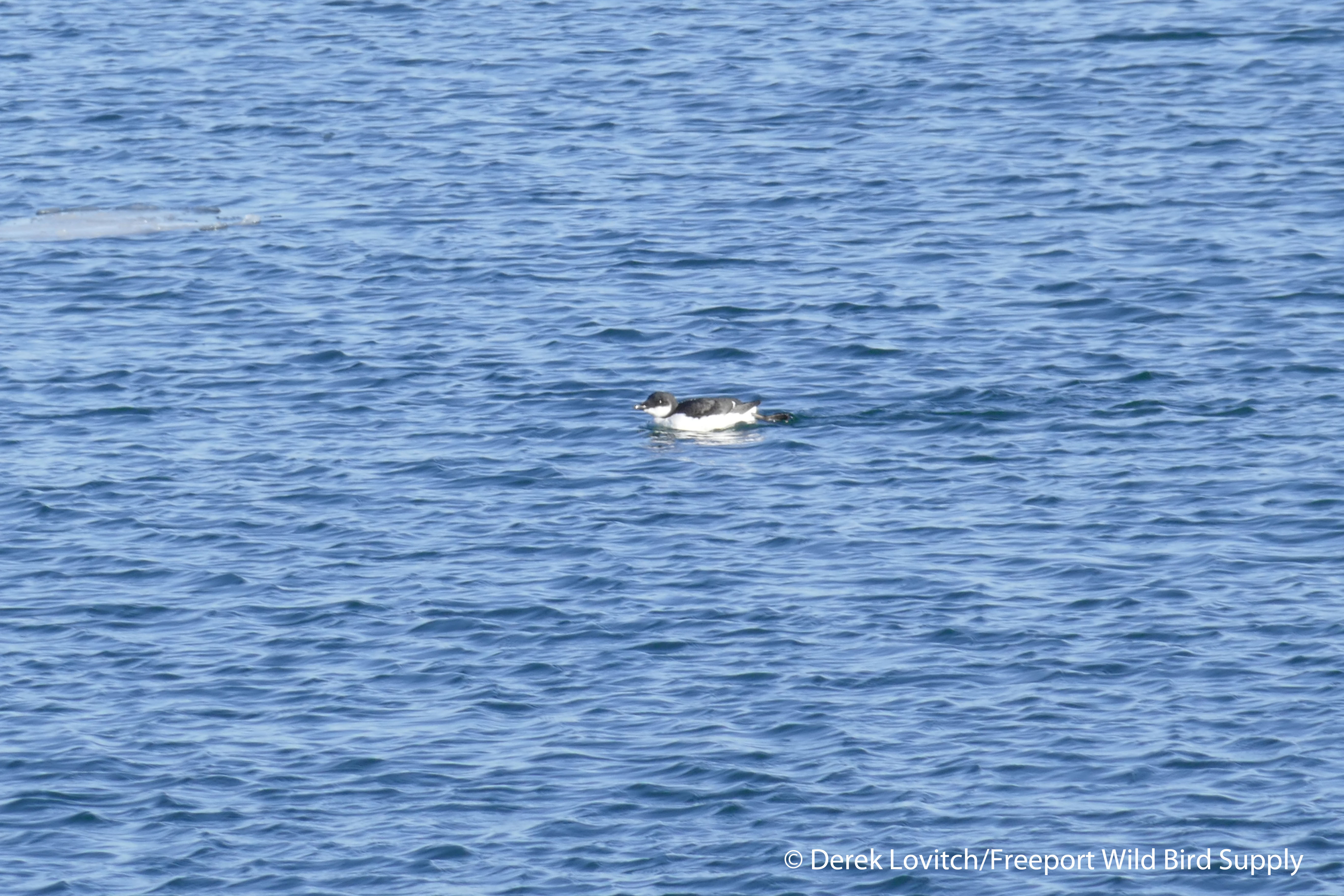
A continuing (and apparently not very healthy) Thick-billed Murre was at nearby Kettle Cove.
L1010192_TBMU,Kettle_Cove,2-13-15_edited-1

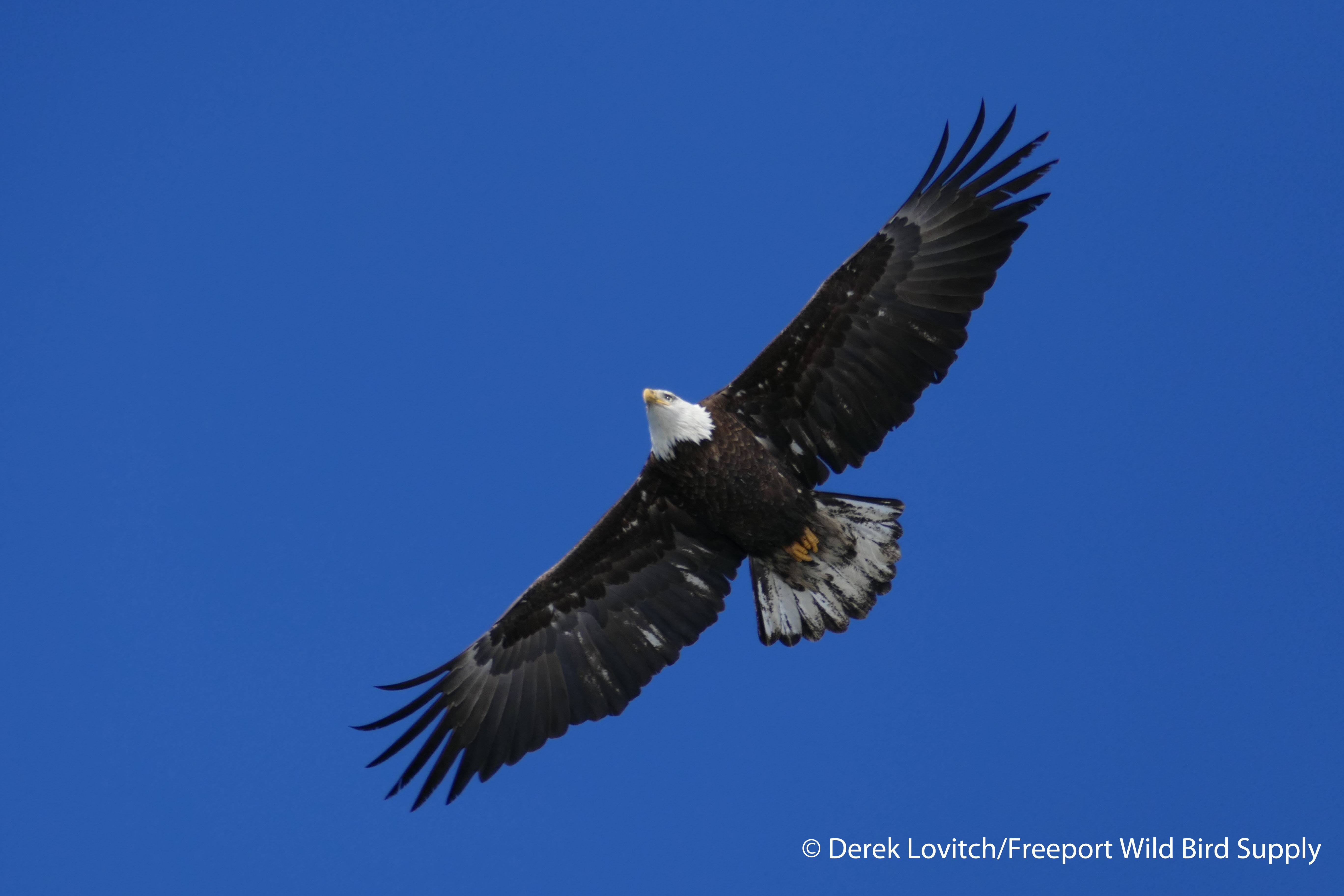
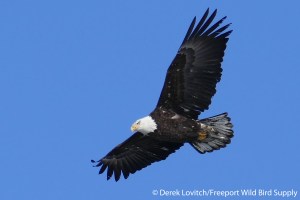
Our presence likely saved its life for now, as a 4th-cycle Bald Eagle had its eye on it – but also, us, apparently. The eagle even landed on the rocks a few inches from the murre, which, instead of diving to escape as a healthy alcid would, was apparently resigned to simply tucking itself into a corner of the rock.
L1010186_BAEA1,4thC,Kettle_Cove,2-13-15_edited-1

L1010189_BAEA2_4thCycle,Kettle_Cove,2-13-15_edited-1

After checking for frugivores at Village Crossings (just a few American Robins on what was left of the crabapple, but we did enjoy a flock of 22 Common Redpolls), we decided to try for a Razorbill for our fourth alcid of the day. Lois’s time was limited, so instead of heading back down to Dyer Point (where the wind was also brutal), we rolled the dice and tried Portland Head Light. And sure enough, a Razorbill was offshore, feeding at the mouth of Casco Bay on the changing tide!

After lunch, I decided to procrastinate a little longer and slowly bird my way to the store, checking for open water on the Falmouth Foreside coastline. Although I was looking for duck concentrations, once again, alcids stole the show: a Thick-billed Murre flew into the cove on the south side of the Mackworth Island causeway. Perfectly strong and healthy, this bird was likely following some small fish into the bay on the incoming tide.

Even more surprising was another Thick-billed Murre in Falmouth, even further up the bay off of the Town Landing. This bird also looked fine, swimming steadily upstream with the tide, “snorkeling” to look for food.
L1010236_TBMU,FalmouthTownLanding,2-13-15_edited-1

L1010218_TBMU_wBUFF,FalmouthTownLanding,2-13-15_edited-1
These Buffleheads looked just as surprised as I was.

So yeah, a 4-alcid day, with three different Thick-billed Murres in quite a day, and probably one of my best birding days of the winter. It just goes to show you what winter birding can bring in Maine, even during an impressive deep-freeze. So yeah, I’ll be out birding as much as I can, and signs of spring are certainly in the air: woodpeckers are drumming actively, Tufted Titmice and White-breasted Nuthatches are singing frequently now, and Great Horned Owls are already nesting. Bald Eagles are probably starting some house-keeping, Common Ravens are reaffirming territories, and in only a month, the Bradbury Mountain Spring Hawkwatch gets underway!

Until then, it’s finches, ducks, white-winged gulls, frugivores, and alcids. I’ll be out in the field, and I hope you will be too. (And don’t forget, you can check out what I have been seeing in near-daily posts to our store’s Facebook page).
Sandy Point on 10/9, Goose Fields Redux, and More.

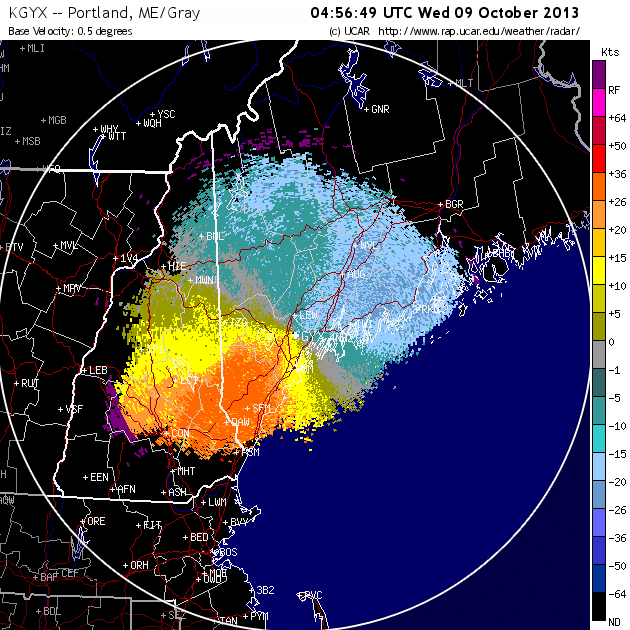
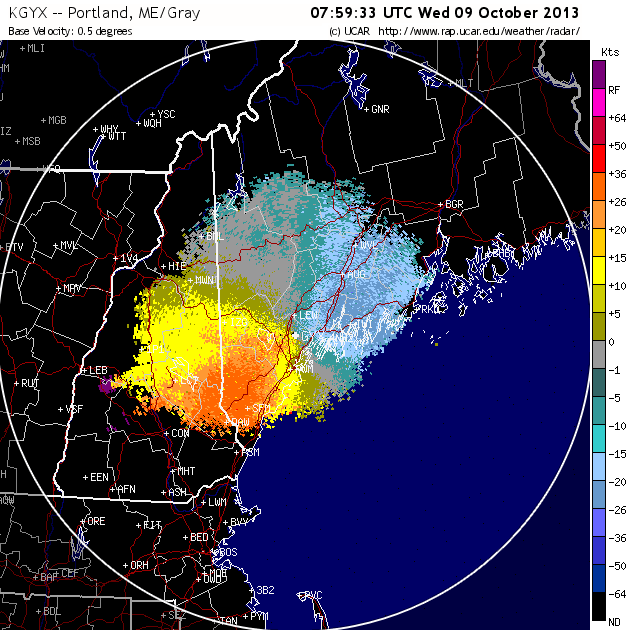
After three nights with little to no migration, birds took to the skies en masse come nightfall last night.  It was a big flight.  For examples, here are the 10pm, 1am, and 4am reflectivity and corresponding velocity images:
10pm radar, 10-8-1310pm velocity, 10-8-13
1am radar, 10-9-13 1am velocity, 10-9-13 4am radar, 10-9-13 4am velocity, 10-9-13

That’s a heckuva flight!  But as October goes on, more and more of the migrants are sparrows. Most sparrows (juncos and Chipping Sparrows are the exceptions) do not partake – or barely so – in the morning re-determined migration (“morning flight”), at least at Sandy Point, so I have been disappointed with the tally come dawn at Sandy Point on more than one occasion in mid-October.  While this morning’s flight was still good, it was not as busy as I would have expected based on the density of those radar returns.  But there were a lot more sparrows around in the bushes at Sandy Point and elsewhere this morning; I wonder what percentage of last night’s flight were White-throated Sparrows?

At the bridge at Sandy Point, the morning’s flight started out quite slow.  By 7:30, I had even considered packing it in and going to look for sparrows.  But then things picked up a little bit, and a steady trickle of birds slowly added up to a respectable tally.  Both kinglets spent a lot of time swirling around the point this morning (as usual, I was conservative in my count of how many were actually crossing, as many would turn around, come back, and try again), and the sparrow tally was probably a lot higher.  However, by the time I left the bridge, most White-throats had already dispersed into the woods.  Song Sparrows – which I do not attempt to tally due the number of breeding birds in the powerline cut – were definitely more abundant than they have been as well.

Here’s the scorecard:
6:45-9:15
39F, light NNW to calm, partly cloudy to clear

323 Yellow-rumped Warblers
105 Ruby-crowned Kinglets
71 Unidentified
60 Dark-eyed Juncos
52 Palm Warblers
39 Golden-crowned Kinglets
30 White-throated Sparrows
15 Unidentified kinglets
13 Blackpoll Warblers
12 Black-capped Chickadees
12 Black-throated Green Warblers
8 American Robins
7 Blue-headed Vireos
7 Northern Parulas
6 Blue Jays
4 Common Loons
4 Common Yellowthroats
4 Chipping Sparrows
3 Nashville Warblers
3 Savannah Sparrows
3 Swamp Sparrows
3 American Goldfinches
2 Sharp-shinned Hawks
2 Eastern Phoebes
2 Tufted Titmice
2 American Pipits
2 Black-throated Blue Warblers
1 Hairy Woodpecker
1 RED-BELLIED WOODPECKER
1 Red-eyed Vireo
1 Hermit Thrush
1 Tennessee Warbler
1 Common Grackle

T=800

Afterwards, I did a circuit of the local “goose fields.” As with everywhere to our south, the resident, non-migratory population of Canada Geese is burgeoning in southern Maine.  This resident population begins to coalesce in the fields of Yarmouth, Cumberland, and Falmouth in early August, and by the middle to end of September, the flock includes a sizeable percentage of the local breeders.  The percentage of local breeders that are in the fields on any given day increases with the onset of early Canada Goose hunting season in early September.

This year, the number of geese among all fields has varied between 200-300 total birds since early September. This number of pre-migrant birds has grown steadily over the past five years in particular.  This week, the first real influx of geese arrived, presumably from some points north.  It is the flock of resident geese that know the safe fields (no hunting, less Bald Eagle activity) and travel corridors to and from the bay where they roost that attract the migrants, including those occasional rarities.

My high count this week of 445 Canada Geese today was my highest tally since the spring.  A couple of Eastern Meadowlarks and up to 8 Killdeer were also present at Thornhurst Farm this week, and Eastern Bluebirds have been rather widespread. A Pied-billed Grebe was once again in the pond on Woodville Road in Falmouth, as is often the case at this time of year.

The goose numbers and the chance for finding rarities should only increase (well, with various ebbs and flows) from now through the first heavy snow.  In fact, I often find my first “good” goose in the second week of October.  It’s also primetime for sparrows.  And this is why I hate leaving the state in October, but once again, I am off!

Early tomorrow morning I depart for Iowa, where I will be speaking at the Iowa Ornithologist Union’s Fall Meeting.  I’ll be giving the keynote presentation on “How to Be a Better Birder” using my SandyPoint case study program and I will also be showing my Russian Far East travelogue.  Finally, I will be joining the 2009 Bradbury Mountain Hawkcounter, Danny Akers, in leading a field trip.

After my weekend in the Hawkeye State, I head to Wisconsin to visit the Urban Ecology Center in Wisconsin.  In between and thereafter, I’ll be spending a couple of days birding and visiting with friends.   I’ll post the occasional update about migration in the Midwest, my birding, and other musings on my book’s Facebook page should you be interested in following my travels.

Now I am just left to wonder what state bird I will miss here in Maine while I am away (there’s always one!)