Tag Archives: Cory’s Shearwater

This Week’s Highlights and Shorebird High Counts, 8/9 – 8/18/2025

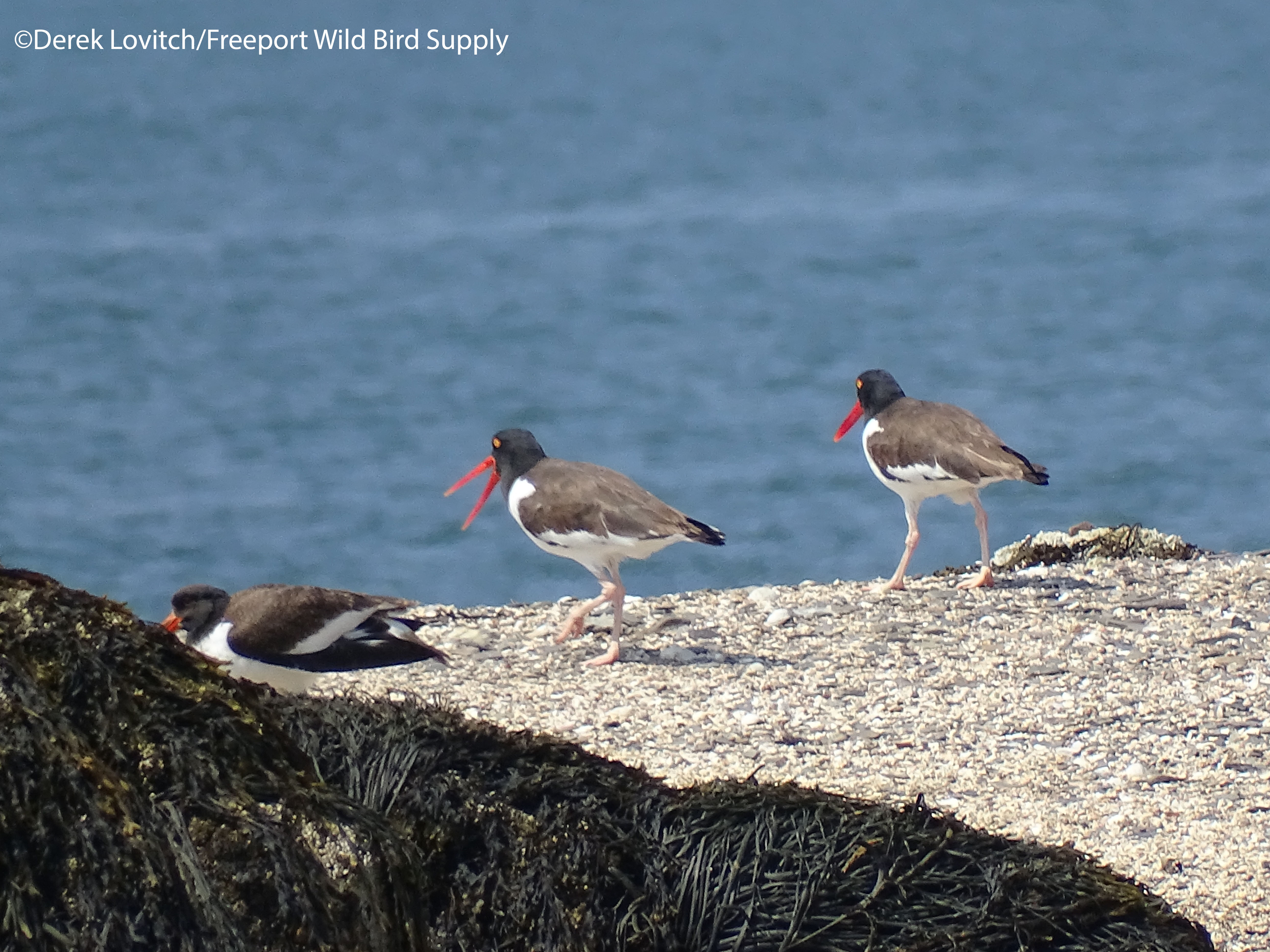
Suspected of breeding in 2022 and confirmed in 2023, a pair of American Oystercatchers has now nested annual on the tiny Upper Green Islands way up in Casco Bay off Yarmouth. On the 17th, our annual shorebird-focuses Birds of Casco Bay with Seacoast Tours collaboration documented a pair of adults with a juvenile once again. Since we discovered them on this tour in 2022, it’s been exciting to visit them each summer. Who would have thought this tiny island and ledge could support one of only a dozen or so pairs in the entire state?
Full trip report here.

Two birdwalks, two shorebird-centric tours, and two whale-watches made for a very nice, diverse array of observations of note for me over the last 10 days (see note in shorebird high counts):

  • 3 Long-tailed Ducks (2 continuing from previous week), Simpson’s Point, Brunswick, 8/9 (with Saturday Morning Birdwalk group).
  • 1 Bonaparte’s Gull and 6 Great Egrets, Sabattus Pond, 8/11 (with Jeannette).
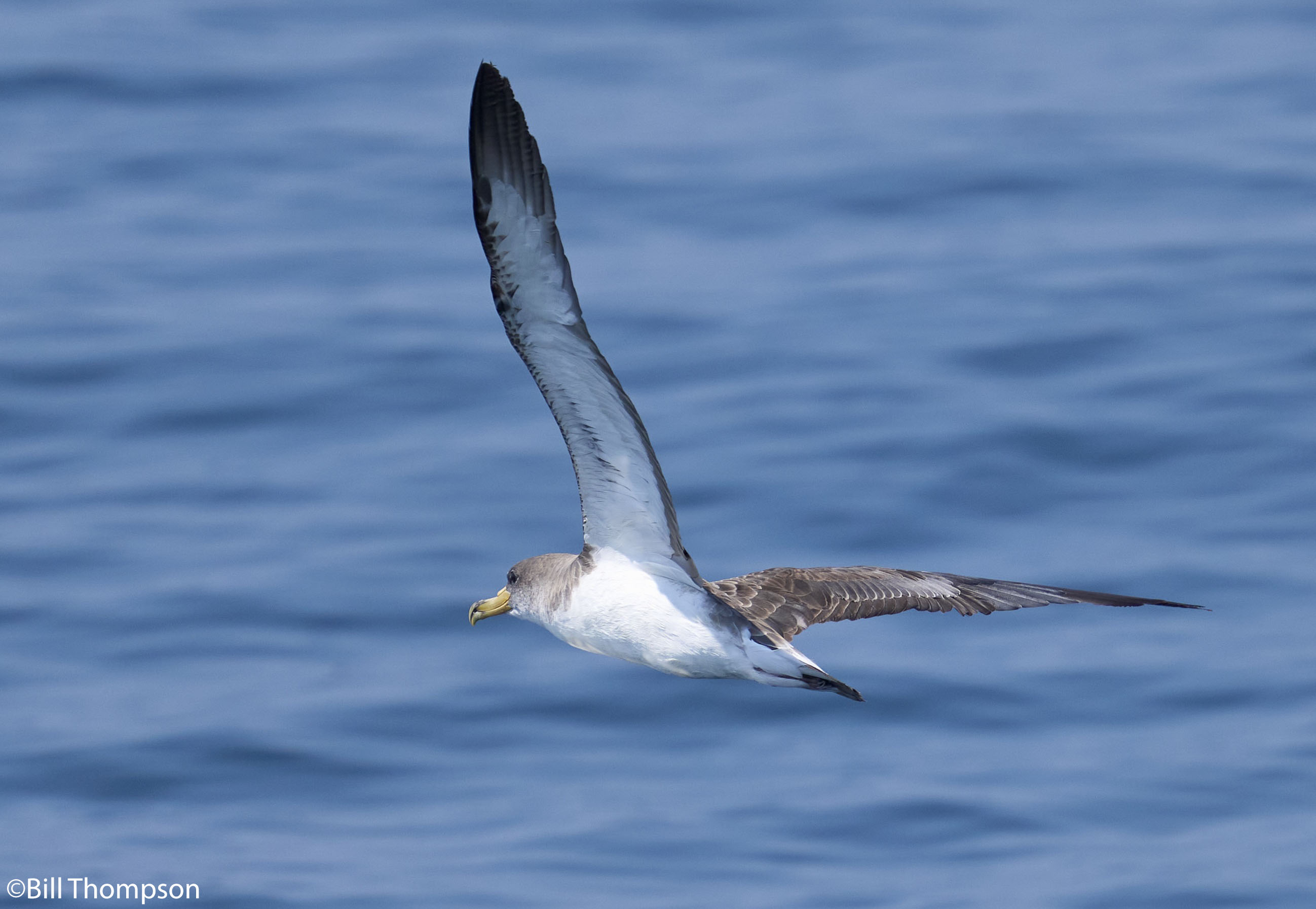
We checked the underwing patterns of every Cory’s Shearwater we could.
  • 8/12 afternoon Puffin/Whale Combo cruise with Cap’n Fish’s Cruises out of Boothbay Harbor: 5 American Oystercatchers at Eastern Egg Rock. Offshore of EER = 104 Wilson’s Storm-Petrels,  6 Cory’s Shearwaters, 3 Great Shearwaters, 2 Northern Gannets, 1 MANX SHEARWATER.
  • 1-2+ Red Crossbills, Popham Beach State Park, Phippsburg, 8/14.
  • 1 molting adult Bay-breasted Warbler (more evidence of a limited molt-migration in Boreal birds to the southern coastal plain), Old Town House Park, North Yarmouth, 8/16 (with Saturday Morning Birdwalk group).

For my “shorebird high counts,” I prefer to visit at least one of each: high tide hotspot, low tide spot, “grasspiper spot,” and a freshwater location, and it must include a visit to local hotspots Wharton Point and the Walsh Preserve as I attempt to make these comparisons comparable week-to-week and year-to-year, which, for my own notes if nothing else, is why I put these together (but hope you find them of value, too). Just due to life and scheduling, it now often takes me more than a week to hit all of these “requirements,” so I am going to try and do every 10 days instead of weekly. Therefore, here are my high counts over these past 10 days:

  • American Oystercatcher: 5, Eastern Egg Rock, 8/12 (via Cap’n Fish’s Cruises Puffin/Whale combo trip). Plus 3 (2 ad with 1 juv), Upper Green Island, 8/17 (with Birds of Casco Bay with Seacoast Tours tour group). Photo above
  • Black-bellied Plover: 163, The Pool, Biddeford Pool, 8/18 (with Down East Adventures Shorebird Workshop group).
  • Killdeer: 13, Crystal Spring Farm, Brunswick, 8/9 (with Saturday Morning Birdwalk group).
  • Semipalmated Plover: 300+, The Pool, 8/18 (with Down East Adventures Shorebird Workshop group).
  • Piping Plover: 13, Popham Beach State Park, 8/14.
  • Ruddy Turnstone: 3, multiple locations this week.
  • Sanderling: 20, Popham Beach State Park, 8/14.
  • 1, Popham Beach State Park, 8/14 and 1 at Great Pond, Biddeford Pool, 8/18 (with Down East Adventures Shorebird Workshop group).
  • Least Sandpiper: 42, Sabattus Pond, 8/11 (with Jeannette).
  • White-rumped Sandpiper: 15, Hill’s Beach, Biddeford, 8/18 (with Down East Adventures Shorebird Workshop group).
  • Semipalmated Sandpiper: 1600, The Pool, 8/18 (with Down East Adventures Shorebird Workshop group).
  • Short-billed Dowitcher: 40, The Pool, 8/18 (with Down East Adventures Shorebird Workshop group).
  • Spotted Sandpiper: 4, Sabattus Pond, 8/11 (with Jeannette).
  • Lesser Yellowlegs: 66, Royal River, Yarmouth, 8/17 (with Birds of Casco Bay with Seacoast Tours tour group).
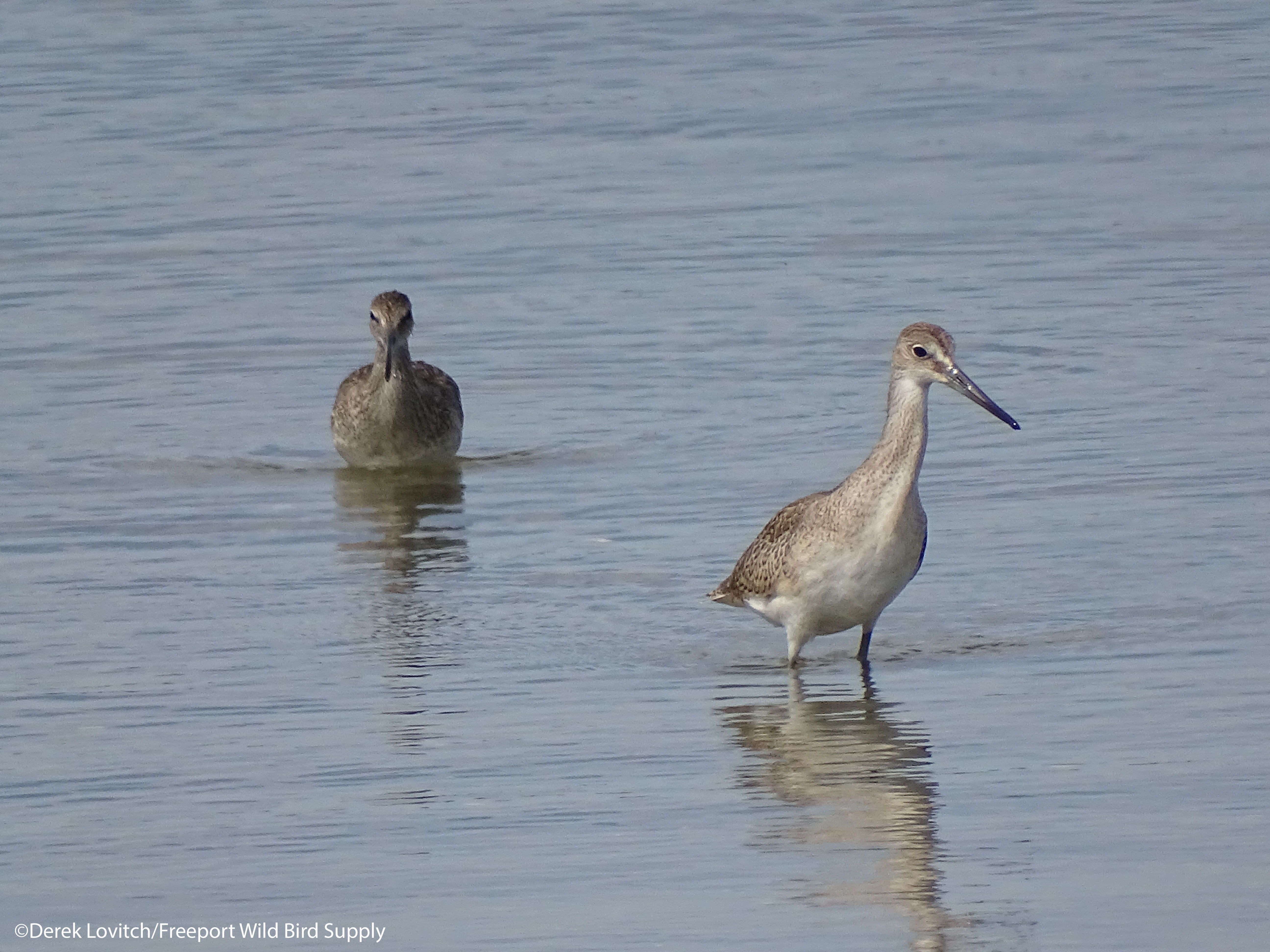
  • “Eastern” Willet: 24, Pine Point, Scarborough, 8/18 (with Down East Adventures Shorebird Workshop group).
  • “WESTERN” WILLET: 1 (FOY), Pine Point, 8/18 (with Down East Adventures Shorebird Workshop group).
  • Greater Yellowlegs: 22, Wharton Point, Brunswick, 8/9 (with Saturday Morning Birdwalk group).
Just including this Wilson’s Storm-Petrel photo here because it is incredible. Nice job, Bill!

Boothbay ½-day Pelagic Trip Report, 10/14/2024

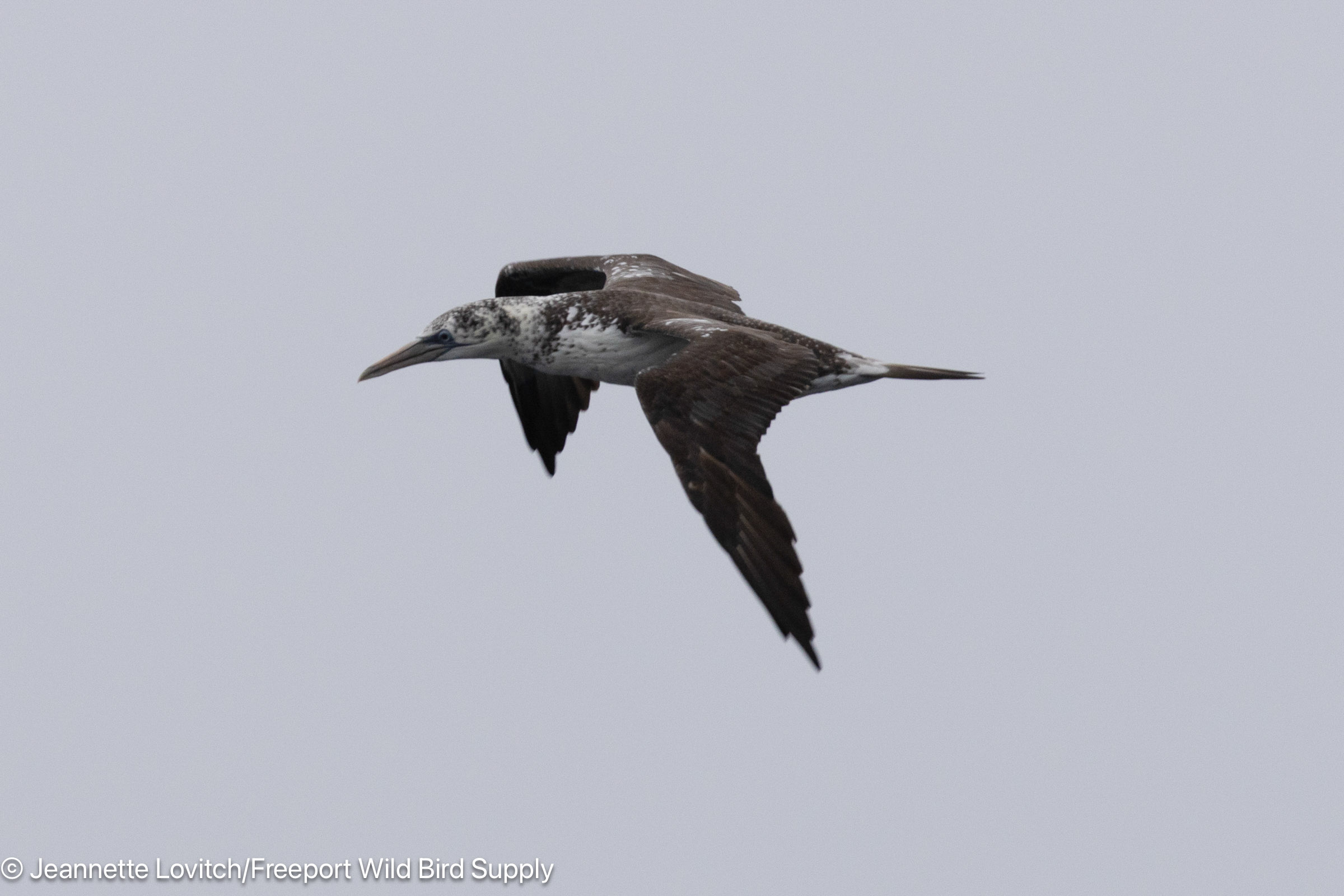
The trip started off right with plenty of close Northern Gannets.

Pelagic birding is a lot like Goldilocks’ porridge: it’s hard for it to be juuuuust right. Last year it was too calm and birds were hard to find. This year, it was anything but calm.

Once we traveled beyond the shelter of Damariscove Island, we had a plan – or at least the concept of a plan.  We’d slowly work our way straight south to deep water, make a turn to the east as the forecast was for seas to start diminishing, and then take mostly following seas for a smooth return trip home.

Peregrine Falcon having brunch to go.

We had lots of Northern Gannets early in the trip – always a good sign – but it was pretty slow going through the area known as The Pasture, which like all offshore patches, is always hit or miss. In fact, the only other pelagic we had was a single Cory’s Shearwater seen by only a handful.

Unfortunately, once we made the turn to the east, it became essentially unbirdable. The forecast 4-6 foot seas were right, but the distance between waves (the wave period) was significantly shorter than forecast, and the waves were definitely not diminishing. Captain Steve did an exceptional job of trying to soften the ride and keep us safe, but we just weren’t going to be able to continue east towards some of our deep water hotspots. When a bird was called – such as a single Northern Fulmar (one of our primary targets on the trip), few people were able to even try to see it before it was long gone behind the waves. Perhaps only the Yellow-rumped Warbler and Savannah Sparrow that we encountered about 15 miles offshore were having a worse day. I tried to keep some bird commentary going, if only as a distraction, but I’m not sure anyone was listening at this point!

So it was decided to make a turn for home. In a last ditch effort to salvage the birding day, we angled for the mouth of Sheepscot Bay. An unidentified dark jaeger zipped by, seen by just a few, tantalizing us to what else is out here today.

Once in the mouth of the bay, sheltered by Damariscove off to the east, we found gentle seas, and decided to try our hand at attracting some birds with a chum slick.  We laid a slick for about 1-2 miles of pork fat soaked in fish oil. Thanks to a generous donation of surplus fatback compliments of Old Crow Ranch of Durham, we were likely the first ever pelagic to use local, pasture-based, regeneratively-farmed, non-GMO, pork fat. The experiment turned out to be quite a success, too!

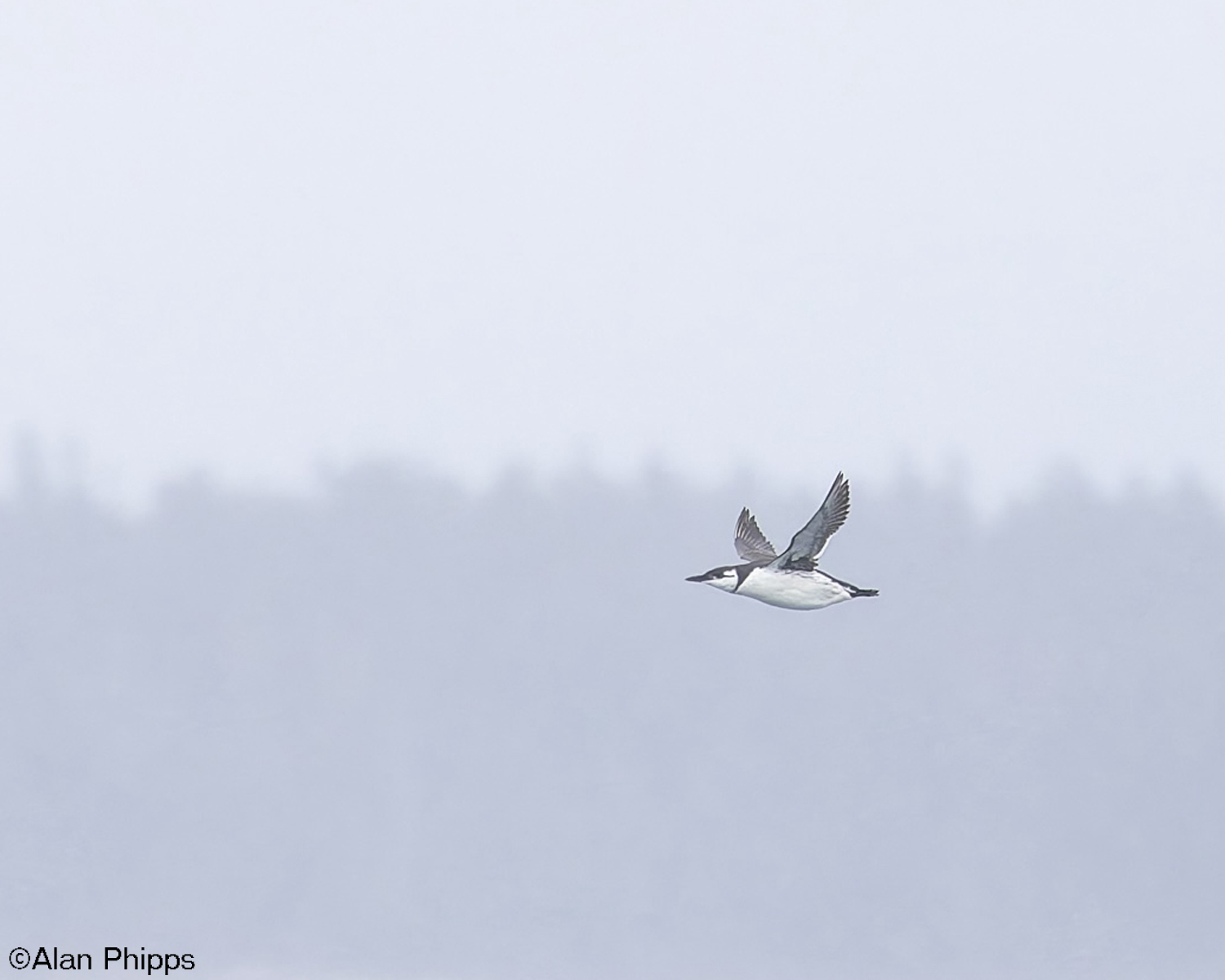
First, we kicked up two Common Murres as we traveled, one of which flew past the boat affording a great view for those who were still on deck; even the seabirds were seeking sheltered waters today!

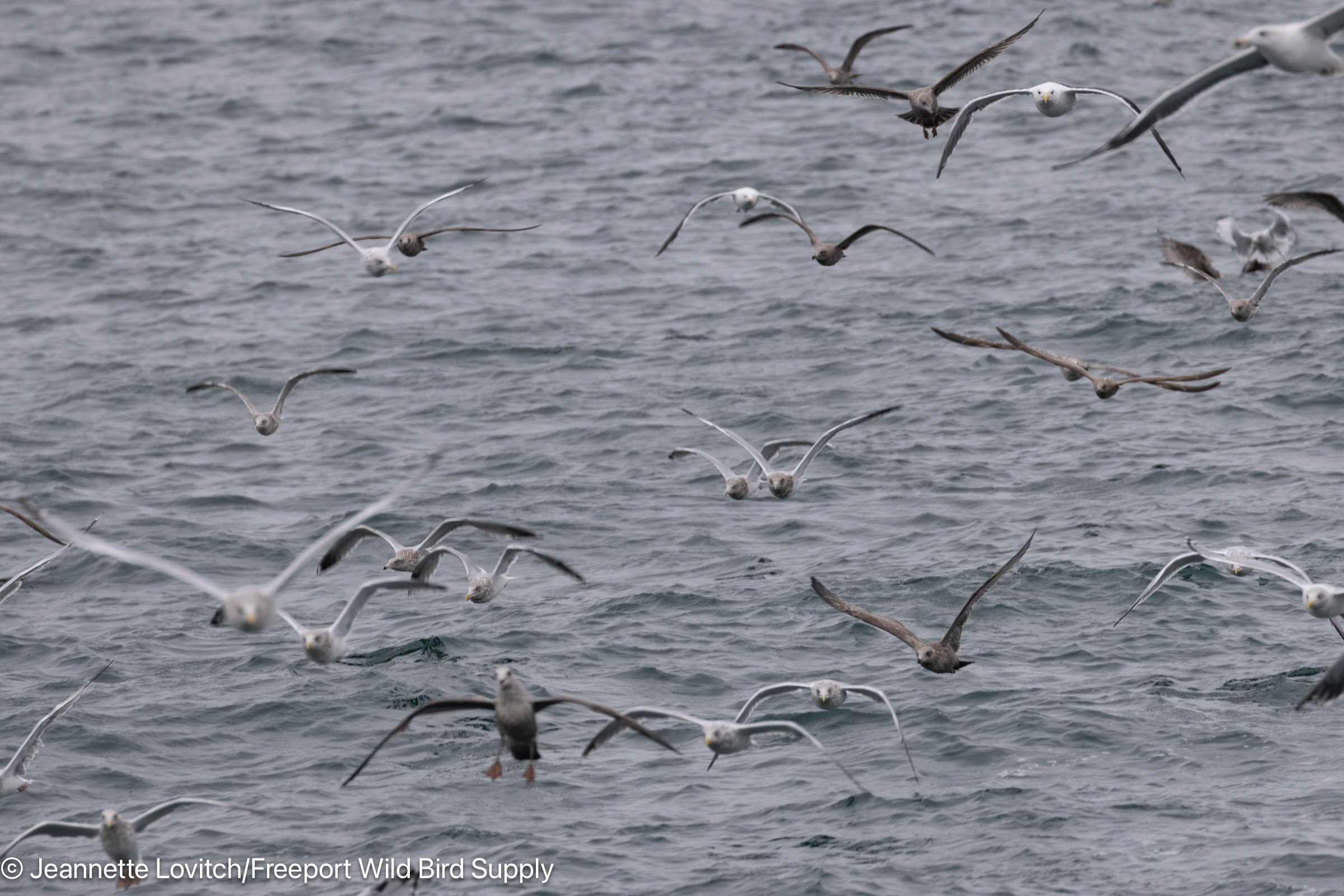
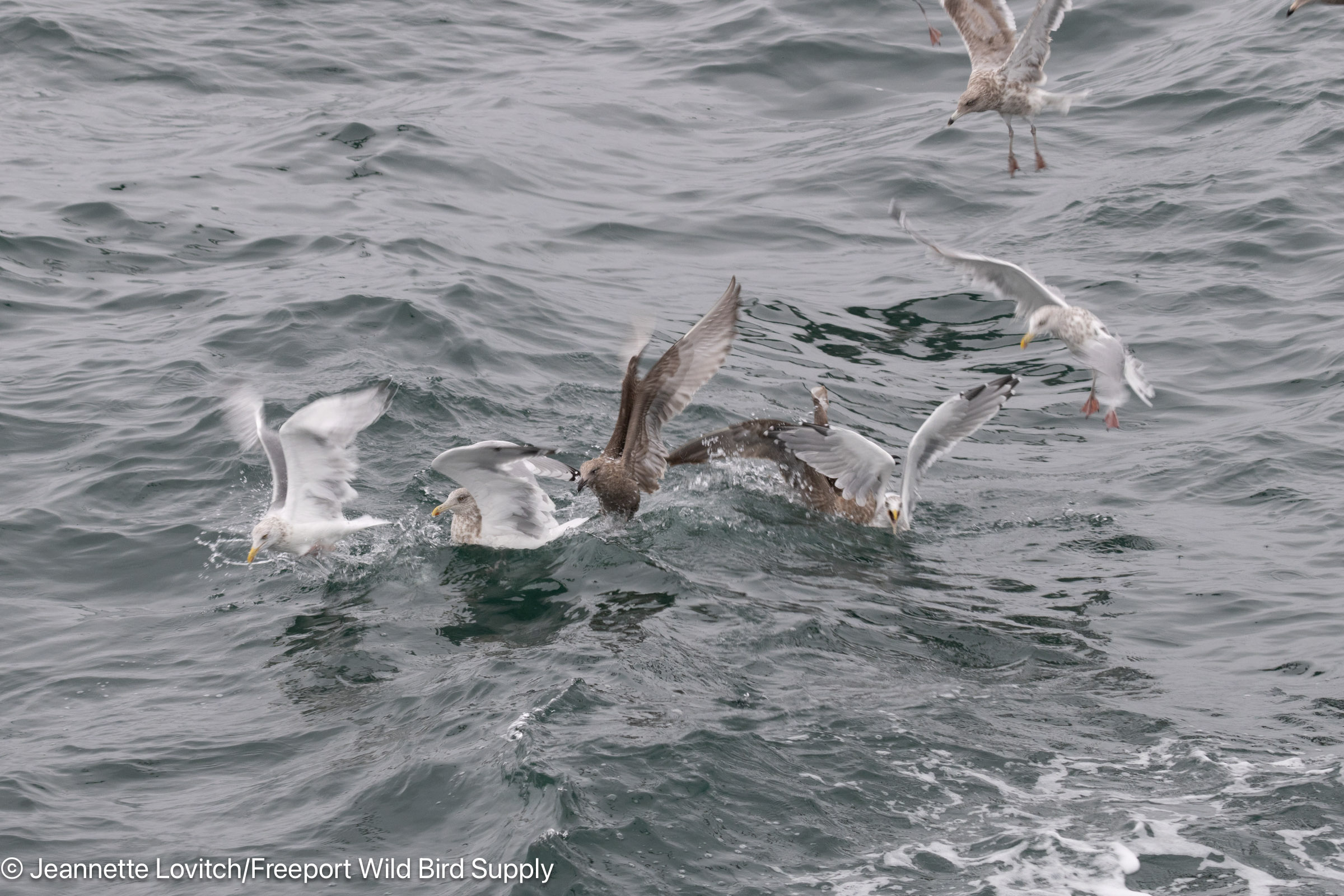
We were soon attracting several hundred gulls to our chumslick, and we finally teased out a single Lesser Black-backed Gull from the masses. A few lingering Laughing Gulls and several Ring-billed Gulls, including spiffy fresh juveniles, joined the myriads of Herring and Great Black-backed Gulls.

We then tried the same technique closer to the mouth of the outer Boothbay Harbor, closer to Damarsicove. At first the results were surprisingly lower, until a Peregrine Falcon and a Northern Harrier over the island kicked up the gulls roosting on the windward side. Once the gulls saw the feeding birds behind us, the game was on. Meanwhile, we enjoyed many dozens of Surf Scoters and Common Eiders, punctuated by both Black and White-winged Scoters, and from here to the harbor, another couple of dozen Common Loons and plenty of Black Guillemots.

I want to thank the captain and crew of Cap’n Fish’s Cruises for their hard work and dedication today, and their best efforts to keep us comfortable. I want to thank my spotters, Jeannette Lovitch and Ian Carlsen (who also did a fantastic job keeping the official eBird checklist following pelagic protocol). A big thank you to Alex Lamoreaux for still finding birds in the worst of the snotty water. And another big thanks to our chummer, Dan Nickerson, who got the action going once we found some calm waters.

And most importantly, thank you to all of those who came aboard today. Some said they had fun. Many suffered. But everyone endured. If this was your first pelagic, you’ll be thrilled to know you were likely just had your worst trip. For those who like roller coasters (unlike me!), I guess you’re welcome?

Here’s the trip list. For the hit-or-miss October pelagics in the Gulf of Maine it’s really not that bad.

Canada Goose7
Mallard5
American Black Duck2
Common Eider255
Surf Scoter180
White-winged Scoter50
Black Scoter40
unidentified dark-winged scoter40
unidentified scoter240
Rock Pigeon20
Dunlin3
Semipalmated Sandpiper1
Black Guillemot24
COMMON MURRE2
UNIDENTIFIED JAEGER1
Bonaparte’s Gull2
Laughing Gull7
Ring-billed Gull14
Herring Gull781
Great Black-backed Gull347
LESSER BLACK-BACKED GULL1
Common Loon50
NORTHERN FULMAR1
Cory’s Shearwater1
Northern Gannet67
Double-crested Cormorant307
Great Blue Heron1
Osprey3
Northern Harrier1
Peregrine Falcon2
American Crow7
Savannah Sparrow1
Yellow-rumped Warbler1
Unidentified passerine1

Recent Highlights, 10/3– 10/9/24

One of at least 15 Cory’s Shearwaters observed from a Cap’n Fish’s Cruises Whale Watch last week, showing the dark outer primaries on the underwing, making for a rounded end to the white of the underwing coverts, separating it from the recently-split Scopoli’s Shearwater.

October is my favorite month of birding in Maine, and this past week showed why. A great diversity of birds are on the move, and my past seven days featured everything from pelagics to yard birds. Here are my observations of note over the past seven days.

  • Pelagic highlights from a Cap’n Fish’s Cruises Whale Watch out of Boothbay Harbor on 10/4: 4 NORTHERN FULMARS (including one dark morph), 4 ATLANTIC PUFFINS, 14-15 Cory’s Shearwaters (most seen and/or photographed well enough to see full dark outer primaries on the underwing; see above), 6 Red-necked Phalaropes, and one BROWN CREEPER landing on a person on the top deck about 14 miles off of Damariscove Island (photo below). My complete list is posted here.
  • 1 Baltimore Oriole and 1 Nashville Warbler, Wolfe’s Neck Center, Freeport, 10/5 (with Saturday Morning Birdwalk group).
  • Sandy Point Morning Flight, 10/6: 140 birds of 18 species led by 60 Yellow-rumped Warblers. Total tally here.
  • 1 Rusty Blackbird, 1 Nashville Warbler, and 1 Pied-billed Grebe, Capisic Pond Park, Portland, 10/9 (with clients from New York).
  • 20-30+ Cory’s Shearwaters off East Point and Ocean Ave, Biddeford Pool, 10/9. Some just beyond Beach Island in good afternoon light to see dark outer primaries. 15 minutes of counting produced 18 individuals from East Point, all moving north, with 1-3 in view with almost every quick scan thereafter. Good sign for Monday’s pelagic! (with clients from New York).
  • 7 American Oystercatchers and 1 Horned Grebe (first of fall), Ocean Avenue, 10/9 (with clients from New York).
  • 1 American Redstart, Elphis Pond, Biddeford Pool, 10/9 (with clients from New York).
  • Highlights from our Durham property this week included the arrival of the first few Dark-eyed Juncos, a Rose-breasted Grosbeak on 10/4, continuing multiple Lincoln’s Sparrows, Nashville Warbler on 10/8, and another or the same Indigo Bunting on 10/9.
  • And here’s my complete trip report from my Monhegan tour and visit on September 27 through October 1st.

UPCOMING TOURS:

  • Our annual half-day pelagic with our partners Cap’n Fish’s Cruises out of Boothbay Harbor is on Sunday, October 14th – a nice, late date that should put us more in the season of things like Great Skua, and you can be sure we’ll be studying Cory’s Shearwaters hard to find a Scopoli’s! More info and link to registration is here. See notes above from my 10/4 outing.
  • A few spaces remain on our Birds on Tap! – The Boat Trip! To House Island in Casco Bay on Sunday, October 20th. More info here.
Join us on Monday’s pelagic and maybe a Brown Creeper will land on you!

A Week on Mohegan with WINGS, 2016

monarch-9-24

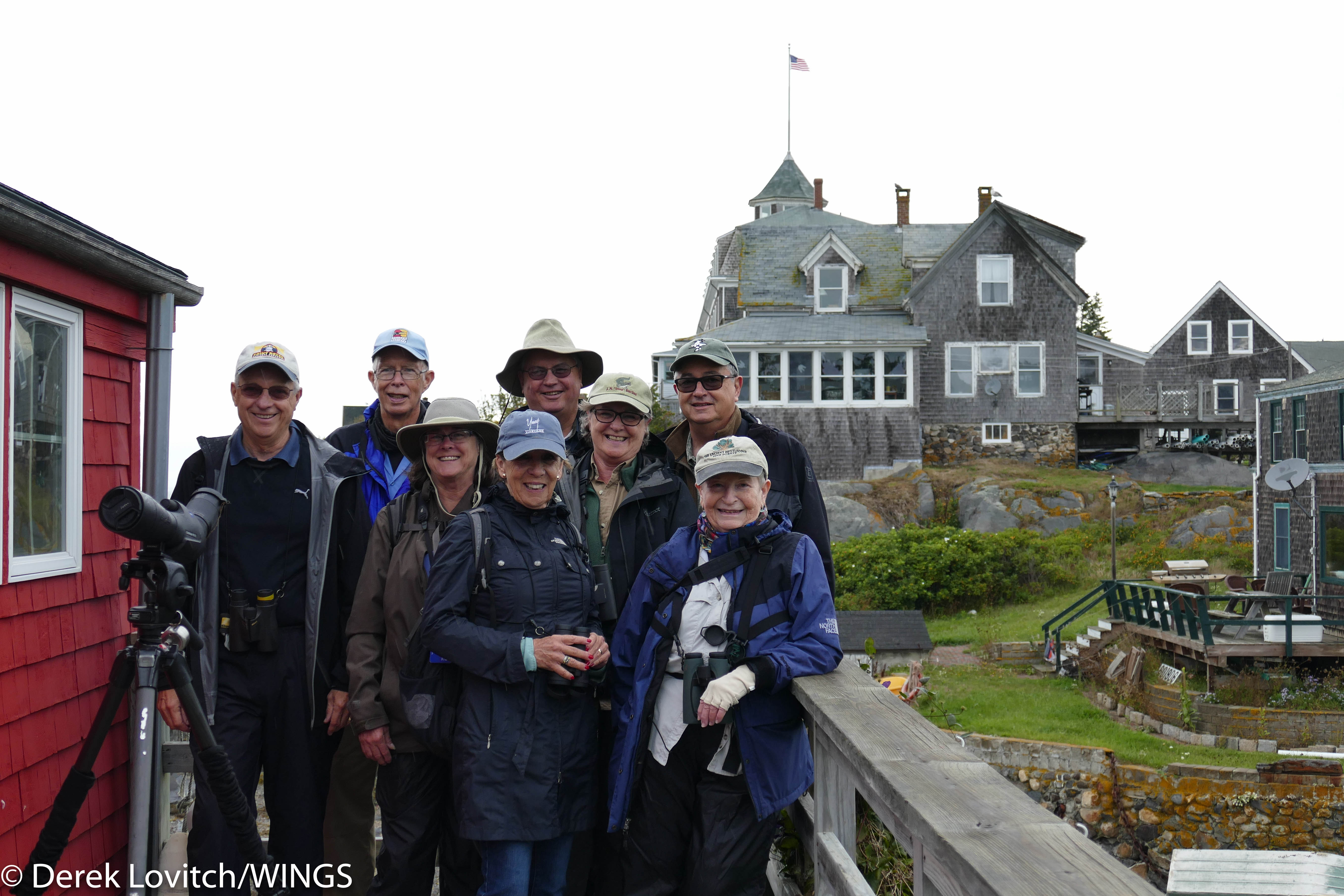
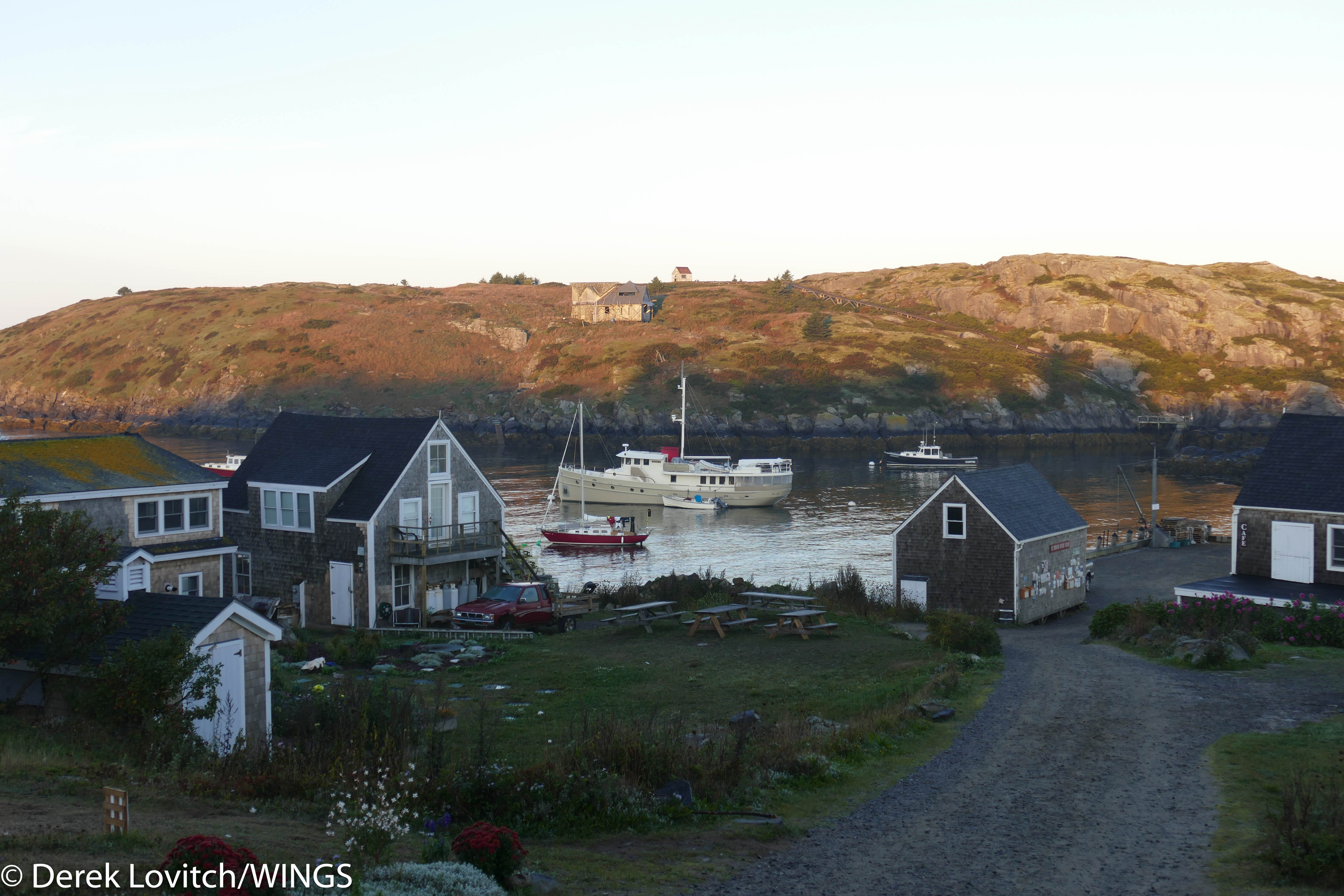
Every other year, I have the pleasure of spending a week on Monhegan Island in the fall with a tour group for WINGS. Unlike my annual weekend tour through the store, this allows us to fully experience multiple changes in the weather and the resultant changes in bird numbers and diversity.

This year’s tour, which took place from September 19-25, recorded 116 species (including 5 seen only from the ferry or while we were on the mainland), including 18 species of warblers. Both tallies were a little low, as the weather was often simply “too nice” for much of the week, and fewer birds found themselves on the island. But as usual, great looks at a wide variety of common birds, spiced up by a smattering of rarities, made for a wondrous week of birding.

Birds from any direction are possible at this migrant trap, and this week, we experienced visitors from the south (e.g. Orchard Oriole), west (e.g. Lark and Clay-colored Sparrows), and even the east (Cory’s and Great Shearwaters). While the allure of a “Mega” kept us searching, local rarities kept us entertained. From Peregrine Falcons overhead to a Sora at our feet, you never quite know what’s around the next corner. Even the “slow” days offered new birds, as our relaxed and casual pace simply allowed us the opportunity to enjoy whatever happened to be in front of us. And the overall weather and food was unbeatable – adding to the mystique of this truly special place.
group-in-town-9-23

While daily turnover in the island’s birdlife is expected during the peak of fall migration, a shift in the weather can yield a distinct change in the birds we see. Several clear and calm nights allowed migration to continue unimpeded, while a northwesterly wind on the night of the 22nd yielded numerous birds overhead in the morning – including our first big push of Yellow-rumped, Palm, and Blackpoll Warblers. However, no fallouts – the stuff Monhegan birding legends are made of – occurred this week as unseasonably warm and relatively pleasant weather continued. It might not have produced massive numbers of birds, but it sure made for comfortable birding!

A couple of nights of southwesterlies produced dreams of vagrants, and likely resulted in the arrival of several “southern” birds such as Orchard Oriole, Yellow-throated Vireo, and Blue-gray Gnatcatchers. In contrast, by week’s end, the first White-crowned Sparrows, Dark-eyed Juncos, and other late-season migrants from the north began to appear.

“Drift migrants/vagrants” such as Lark Sparrows and Clay-colored Sparrows, along with a number of Dickcissels, all normally found further west, were present and accounted for as usual out here.
town-9-23
Lark and Clay-colored Sparrows

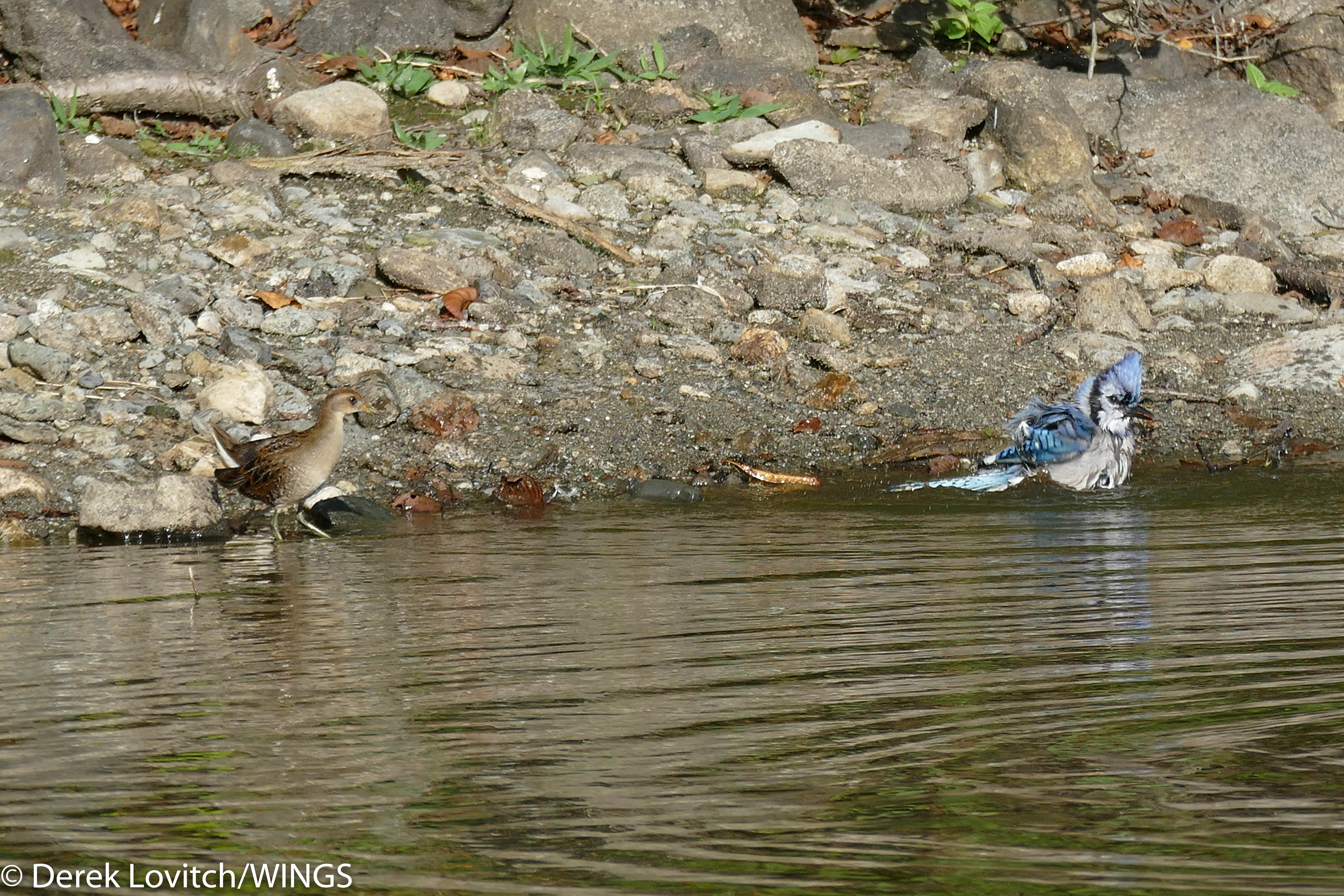
Two immature Yellow-crowned Night-Herons (perhaps part of a small scale northward irruption into the New England coast) stood guard in the early mornings at the Ice Pond.  Later in the week, the world’s most confiding Sora appeared, spending one afternoon foraging in the open at the pond’s muddy edges – this year’s drought had reduced it to a mere muddy puddle.
sora-blja-9-21
Sora and a Blue Jay

A Connecticut Warbler was one of our finds of the week, heard by all, seen by some on two occasions; an “exclusive” for our group. A late Olive-sided Flycatcher was another treat, as was the Black-billed Cuckoo that we caught up with thanks to the efforts (and game of charades) of friends – exemplifying the spirit of the Monhegan birding community shared by most.
bbcu-9-23

Calm winds and the season produced excellent seawatching conditions on the 21st, and from the high cliffs of White Head, we observed Cory’s Shearwaters (once a rarity this far north and east) and Great Shearwaters – with massive rafts of one or both just beyond the realm of identification– and a few Minke Whales. Always a highlight in the fall is the raptor passage, which most of the week was limited to numerous Merlins, scattered Sharp-shinned Hawks, and the occasional Peregrine Falcon, On our last day, a light northerly wind also ushered in a steady movement of Northern Harriers and Ospreys, along with another surge of falcons.

And then there was the food: exquisite fine dining at the Island Inn, the best pizza in Maine at the Novelty, and a candlelight lobster dinner – with lobsters brought in just for us! – at the rustic Trailing Yew, complete with a lobster ecology and human ecology lesson and step-by-step instructions. And that’s in addition to the limitless lobster scrambled eggs at breakfast every morning!

Highlights for our group each day were as follows, along with a brief synopsis of the overnight flight and the day’s weather.

9/19: Balmy Days ferry from Boothbay Harbor:
– 1 Long-tailed Duck (FOF; early)
– 1 Pomarine Jaeger (harassing Northern Gannet)
– 1 Cory’s Shearwater

Island:
– A few light showers, drizzle, and fog occasionally lifting on light and variable, and rather warm winds throughout the day. Calm and foggy at dusk.
– 1 female Orchard Oriole (new)
– 1 Lark Sparrow (continuing)
– 1 Clay-colored Sparrow (continuing)
– 1 Carolina Wren (continuing)
rbnu-9-24
Like everywhere in Maine this fall, Red-breasted Nuthatches were abundant.
ichneumon_wasp_edited
Ichneumon wasp sp on window screen.

9/20:
– Sunrise: 62F, dense fog, very light southeast. Light migration likely overnight, but hard to decipher on the radar due to fog.  Fog coming and going throughout the day, warm and humid, very light southeast.  Light south and fog at dusk.

Another relatively “slow” day, but these were the highlights:
– 1 CONNECTICUT WARBLER
– 2 juvenile Yellow-crowned Night-Herons
– 1 Blue-gray Gnatcatcher
– 1 Lark Sparrow
– 1 Clay-colored Sparrow
– 2 American Golden-Plovers
– 1 Cory’s Shearwater
– 1 Greater Shearwater
– 1 Carolina Wren
harbor-9-20
client-at-barnacle-9-20
I tell people never to leave their binoculars behind when on Monhegan; you never know what you will see where. They also can come in handy for reading the fine print of menus!
group-in-fog-9-20
lasp-9-20
Lark Sparrow

9/21:
– Am: 62F, mostly clear, calm. Light to moderate migration overnight on lt SW to W, but again intensity obscured by fog. Moderate-good morning flight overhead at dawn, with lots of new birds around. Hot and calm!  Clear and calm at dusk.

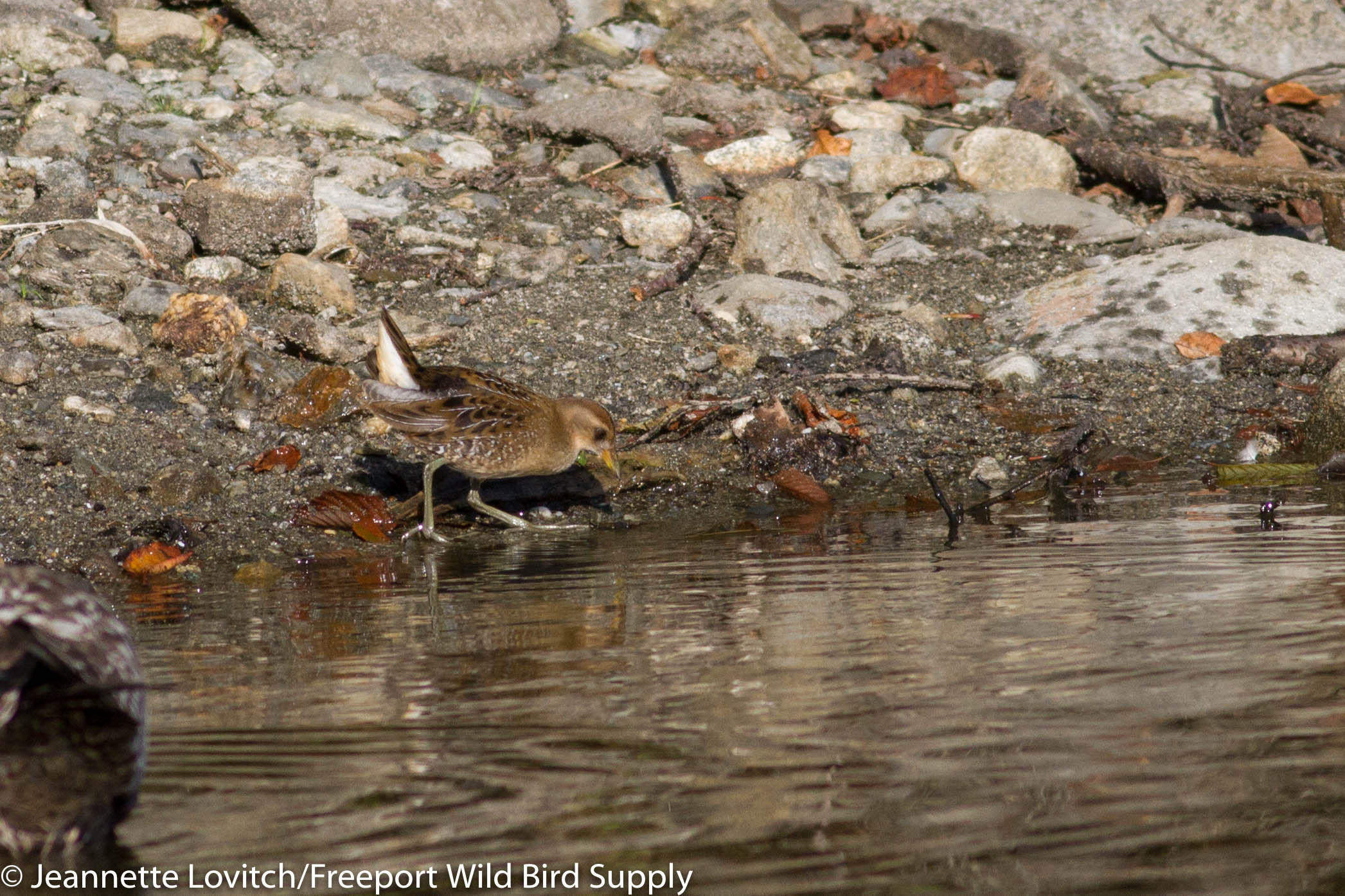
73 species on the day, including the world’s most cooperative Sora and some fantastic afternoon seawatching.

Highlights:
– 1 CONNECTICUT WARBLER
– 1 Yellow-crowned Night-Heron
– 3 Dickcissels
– 1 Clay-colored Sparrow
– 10 Cory’s and 12 Great Shearwaters plus 125 large shearwater sp.
– 2 Lesser Black-backed Gulls
– 1 Eastern Kingbird
– 1 Warbling Vireo
– 1 Sora
– 3 Minke Whales
wyeth-house-9-21
brth-9-21
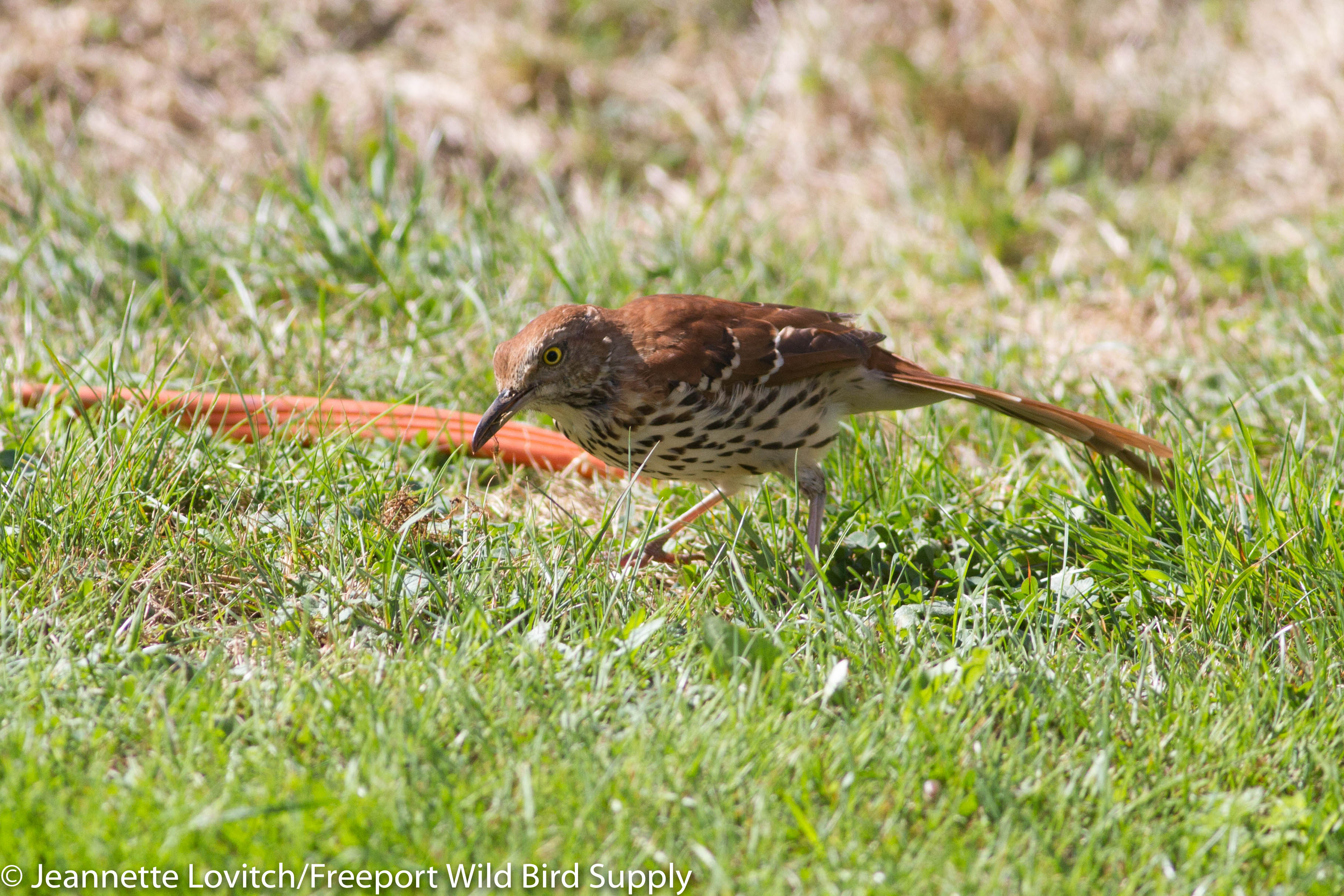
Brown Thrasher on the Trailing Yew lawn
caterpillar-9-21
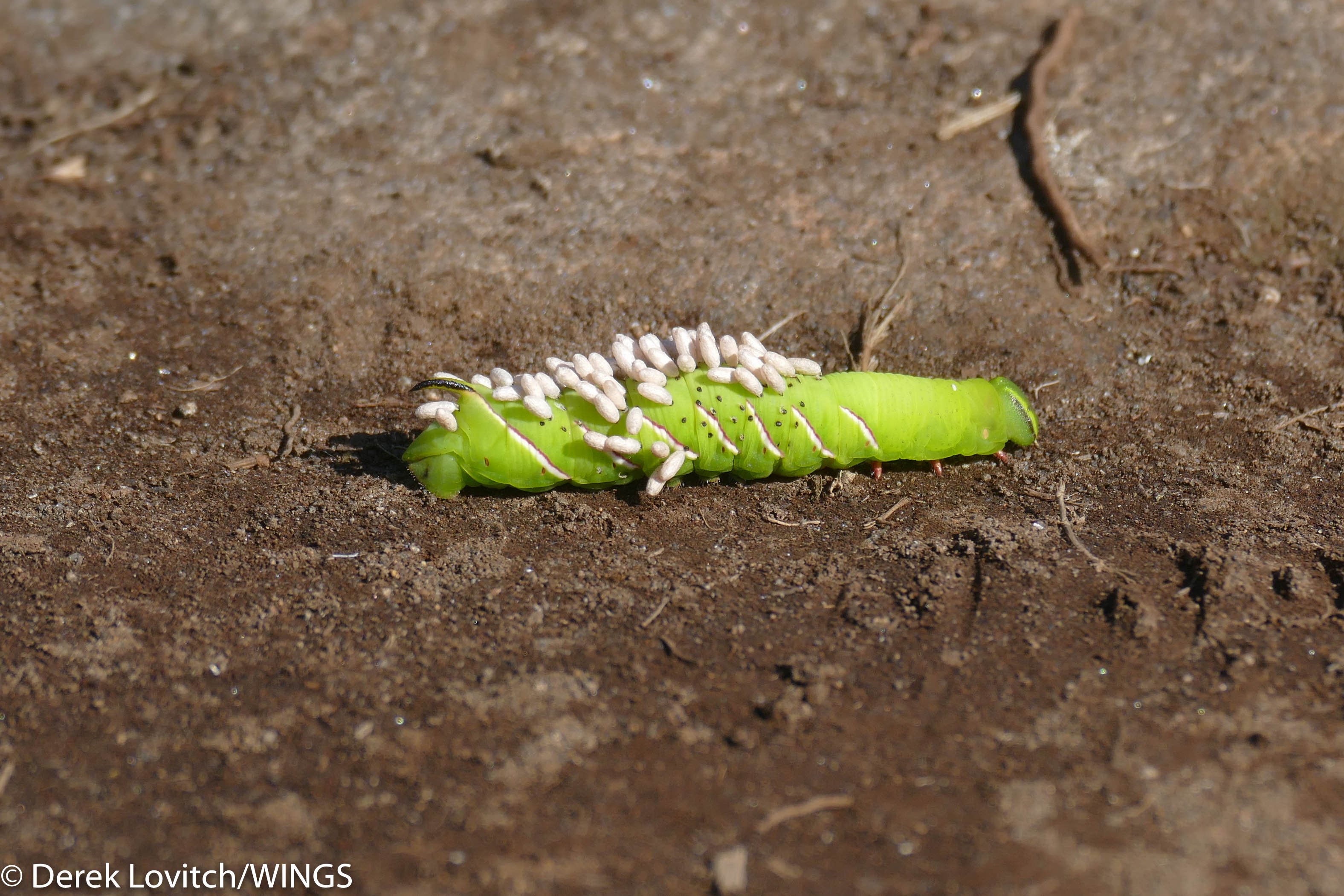
Sphinx moth caterpillar with parasitic wasp pupae
merl-perched-9-21
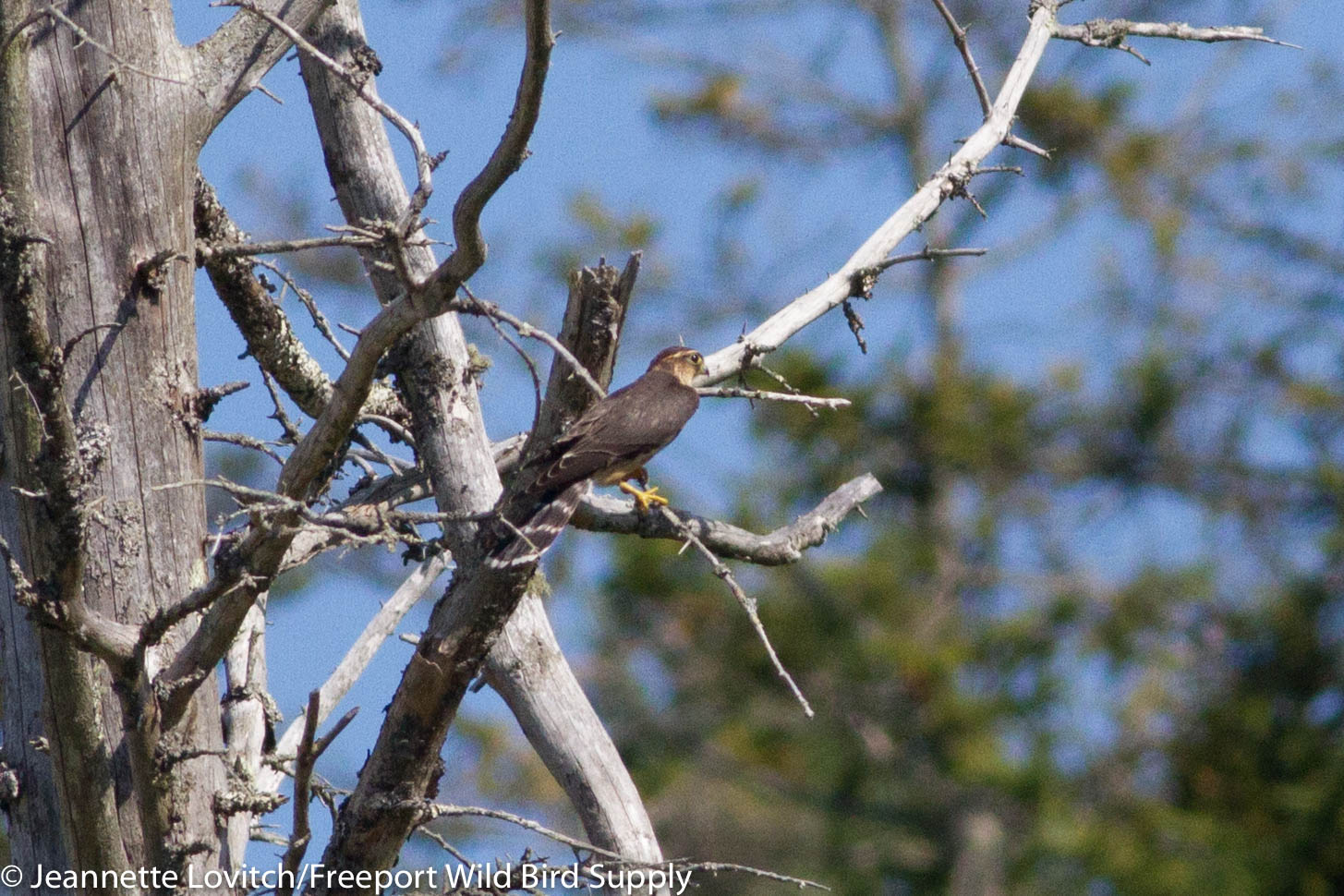
Merlins were all around
rubl-9-21
I’m not sure of this Rusty Blackbird left this particular group of yards for the rest of the week!
rubl2-9-21
whitehead-client-9-21whitehead-9-21
Afternoon seawatching from Whitehead.
sora-9-21
Ending the afternoon with a Sora at the Ice “pond,”
blja-9-21

9/22:
– AM: 59F, clear, very light NW. Light-moderate migration overnight on light SW to West to NW. Lots of birds overhead at sunrise (mostly Blackpoll, Yellow-rumped, and Palm Warblers), but less landing than expected as many birds kept going to the mainland. Relatively hot once again, with light and variable breeze. Clear and light South by dusk.

Highlights:
– 1 Yellow-crowned Night-Heron
– 1 Yellow-throated Vireo
– 1 Olive-sided Flycatcher
– 2 Dickcissels
– 1 American Golden-Plover
– 1 Clay-colored Sparrow
– 1 Blue-gray Gnatcatcher
– 1 Carolina Wren

amre-9-22
American Redstart
baor-9-22
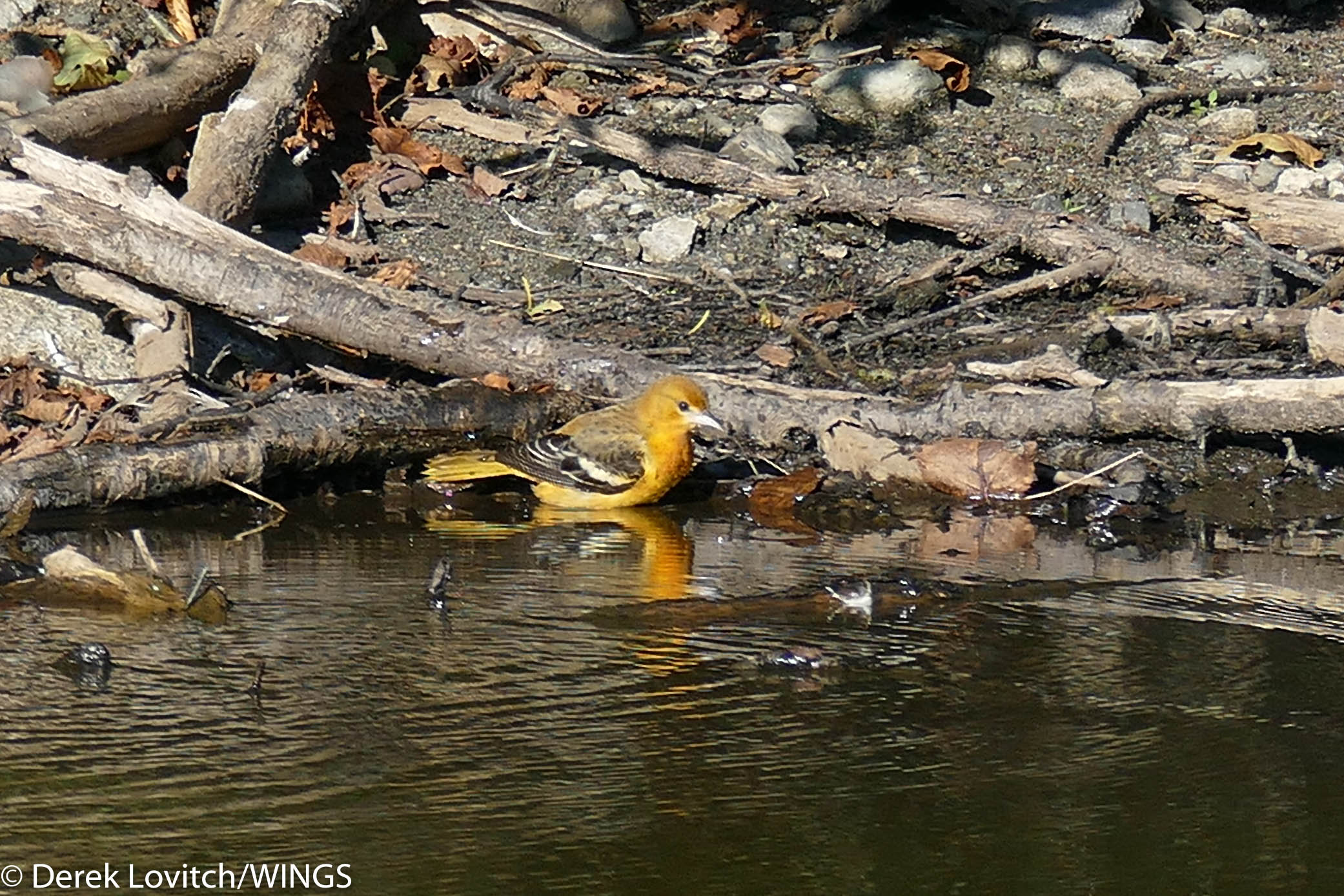
Baltimore Oriole
fuzzy-caterpillar-9-22
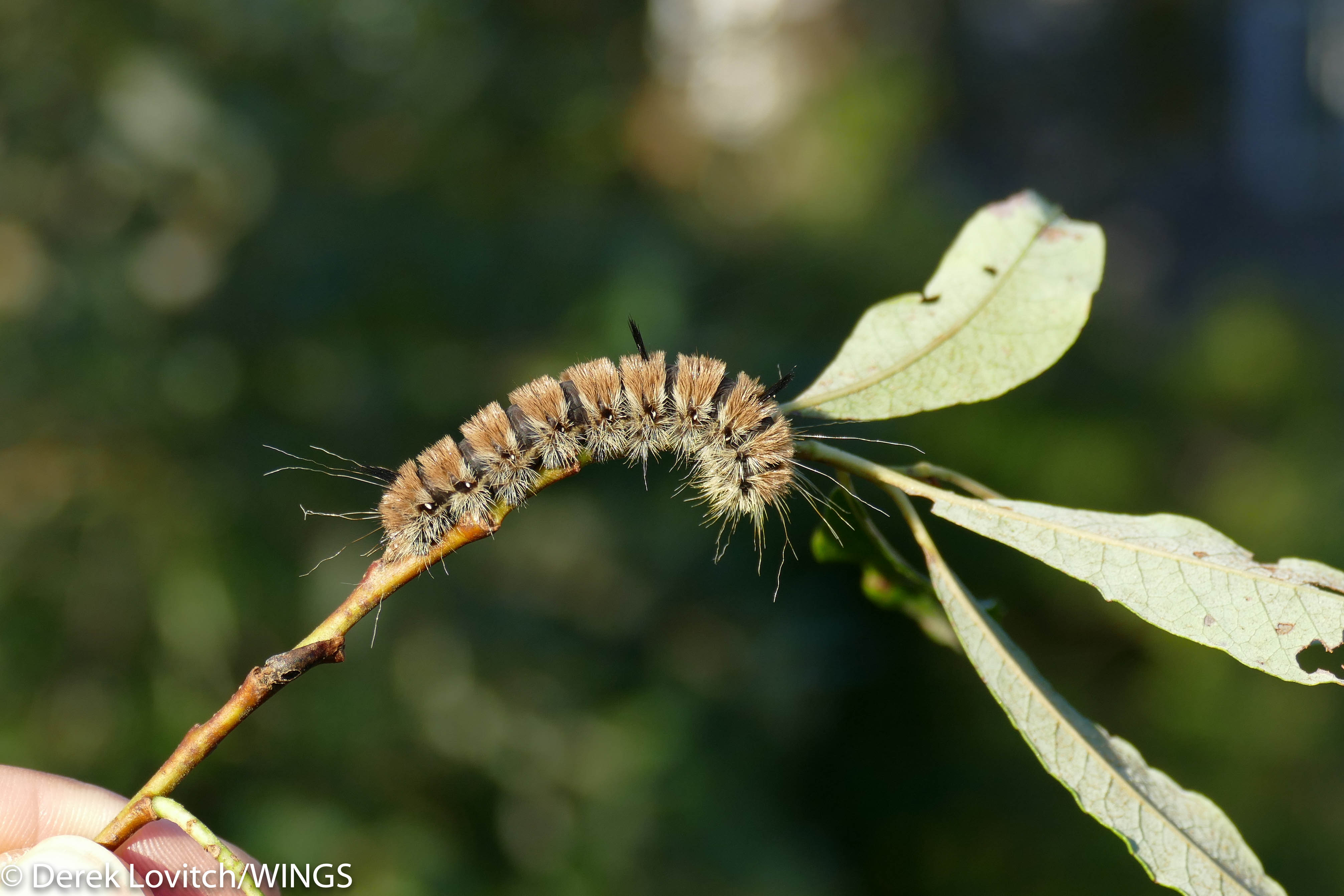
Unidentified caterpillar- some sort of tussock moth?
view-of-harbor-9-22_edited-1
harbor2-9-22

9/23:
– AM: 65F, cloudy, lt-mod SW. Little to no visible migration overnight on lt-mod SW and rain approaching from north with dropping cold front. Drizzle and some light rain ending by mid-morning. Overcast but warm on light west winds. Increasing north by dusk.

A slow day of birding on Monhegan is better than a good day of birding most anywhere else with NINE new species for the week today.

Highlights:
– 1 Black-billed Cuckoo
– 2 Dickcissels
– 2 Cory’s Shearwaters
– 1 White-crowned Sparrow (FOF)
– pair of Pine Warblers were our 18th species of warbler on the week (a little low).
clients-at-lighthouse-9-23cloud-9-23
Here comes the front!
dick-9-23
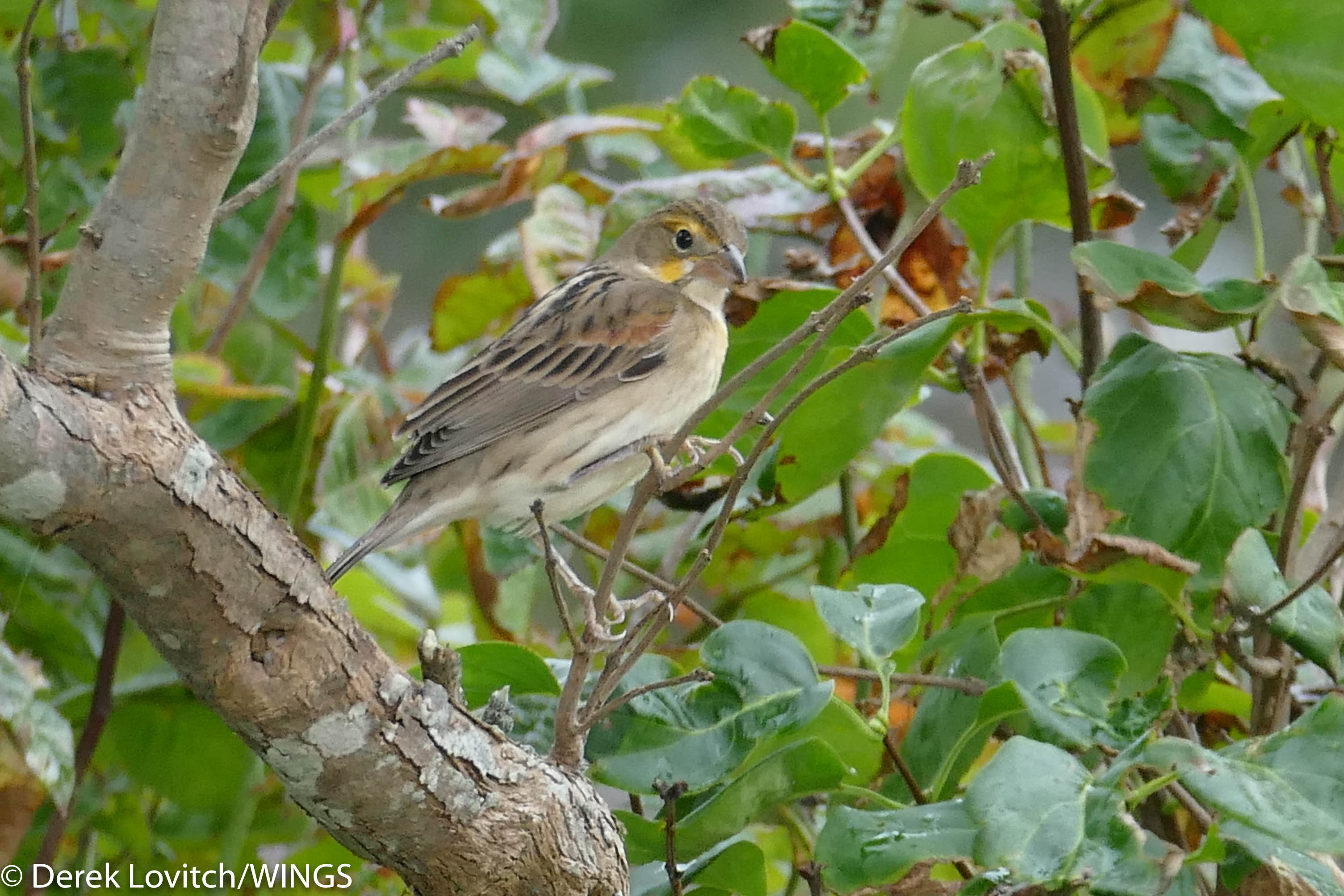
Dickcissel
lobsters-9-23
Special delivery!
lobster-chef-9-23

9/24:
– 50F, mostly clear, light N. Huge flight overnight on radar on diminishing N, but very little overhead at dawn. Although new birds had definitely arrived, it was not the huge flight that was hoped for. Apparently, there were more birds arriving on the south end of the island today (we always started on the west-north-west side) as reorienting migrants were returning to the island, or likely departing from the island’s north end. Diminishing N wind became light and variable before NW began to increase in the late morning, producing a good hawk flight.

With the hopes a big flight dashed by the lack of a westerly wind component by morning, we had a very casual and relaxed pace for our last day with some hawk watching taking precedence. Quite a few new birds were around, including several new species for out week’s list: Northern Harrier, American Pipit, and a single Semipalmated Plover. Cape May Warblers were particularly conspicuous today (at least 5), and as always it is painful to say goodbye. Good thing I’ll be back next weekend with the store’s annual weekend!

Highlights:
– 2 American Pipits (FOF)
– 1 Dickcissel

Ferry back to Boothbay Harbor:
– 1 Yellow-bellied Sapsucker (about half way, heading towards the mainland)
– 2 White-winged Scoters
cmwa-9-24
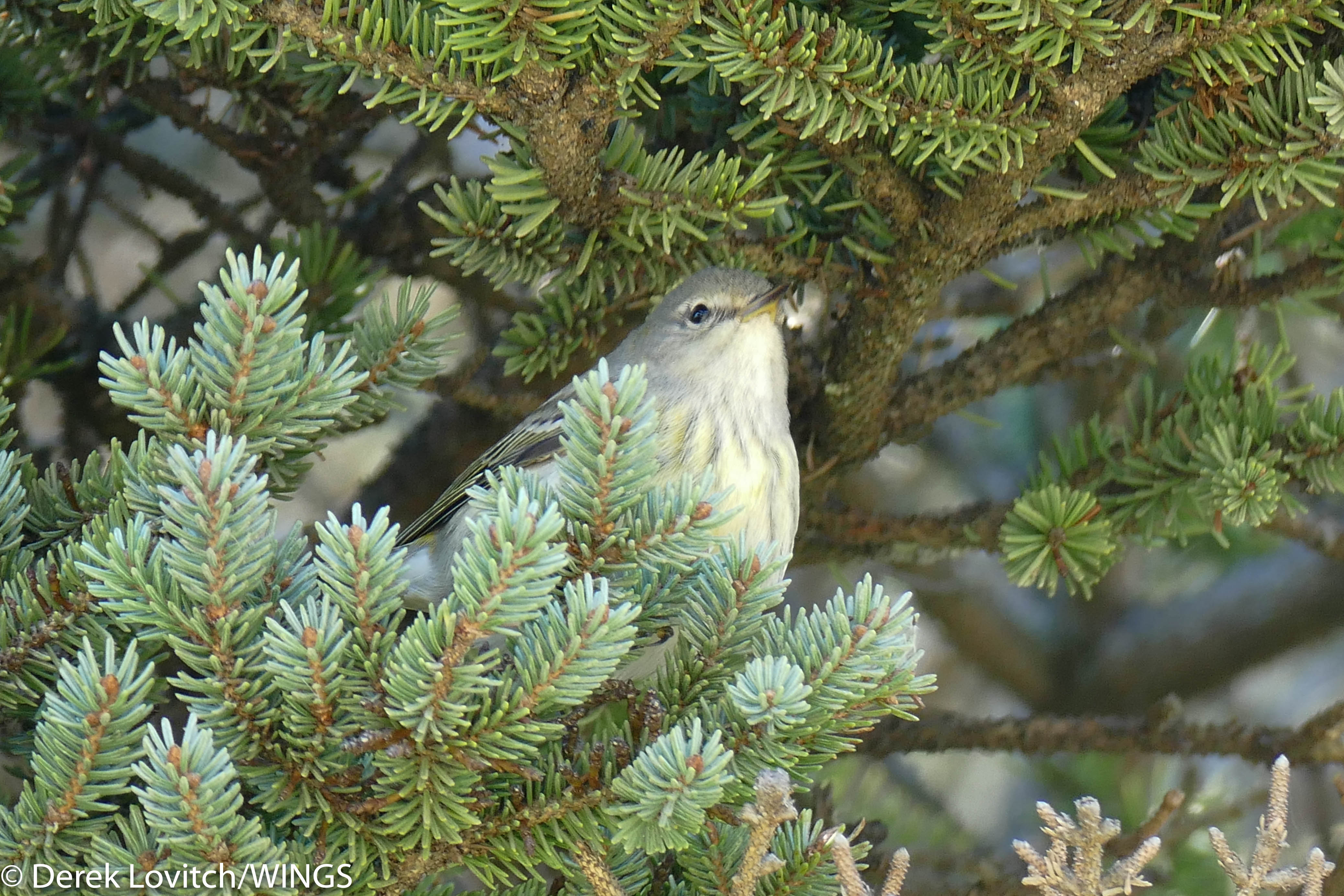
Cape May Warblers were conspicuous the last few days
departing_monhegan9-24_edited-1
group_on_ferry9-24_edited-1
arriving_boothbay9-24_edited-1
Boothbay Arrival

And now I’m off this afternoon for for three more days!
group_at_brewery9-22_edited-1