Tag Archives: Common Murre

Boothbay ½-day Pelagic Trip Report, 10/14/2024

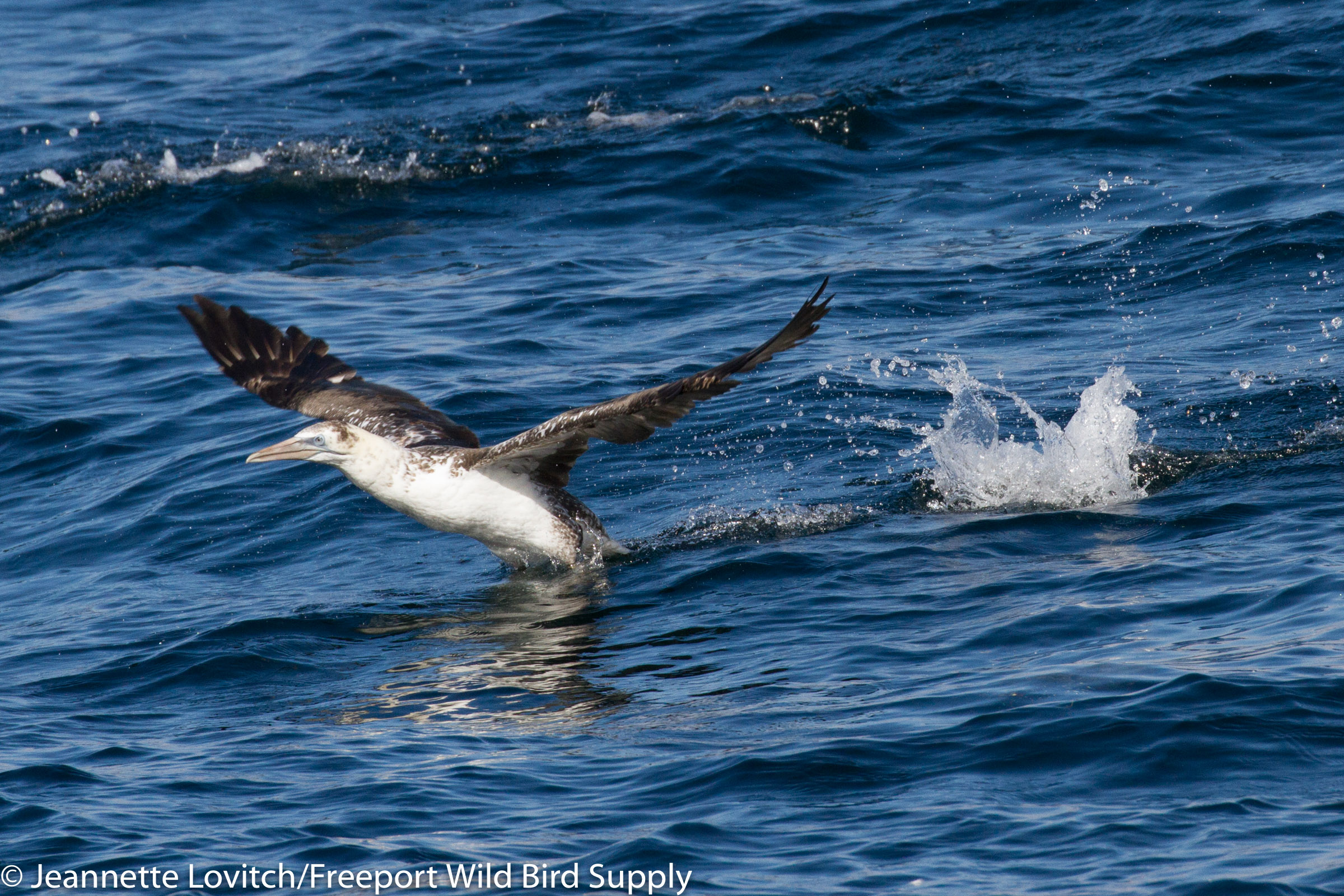
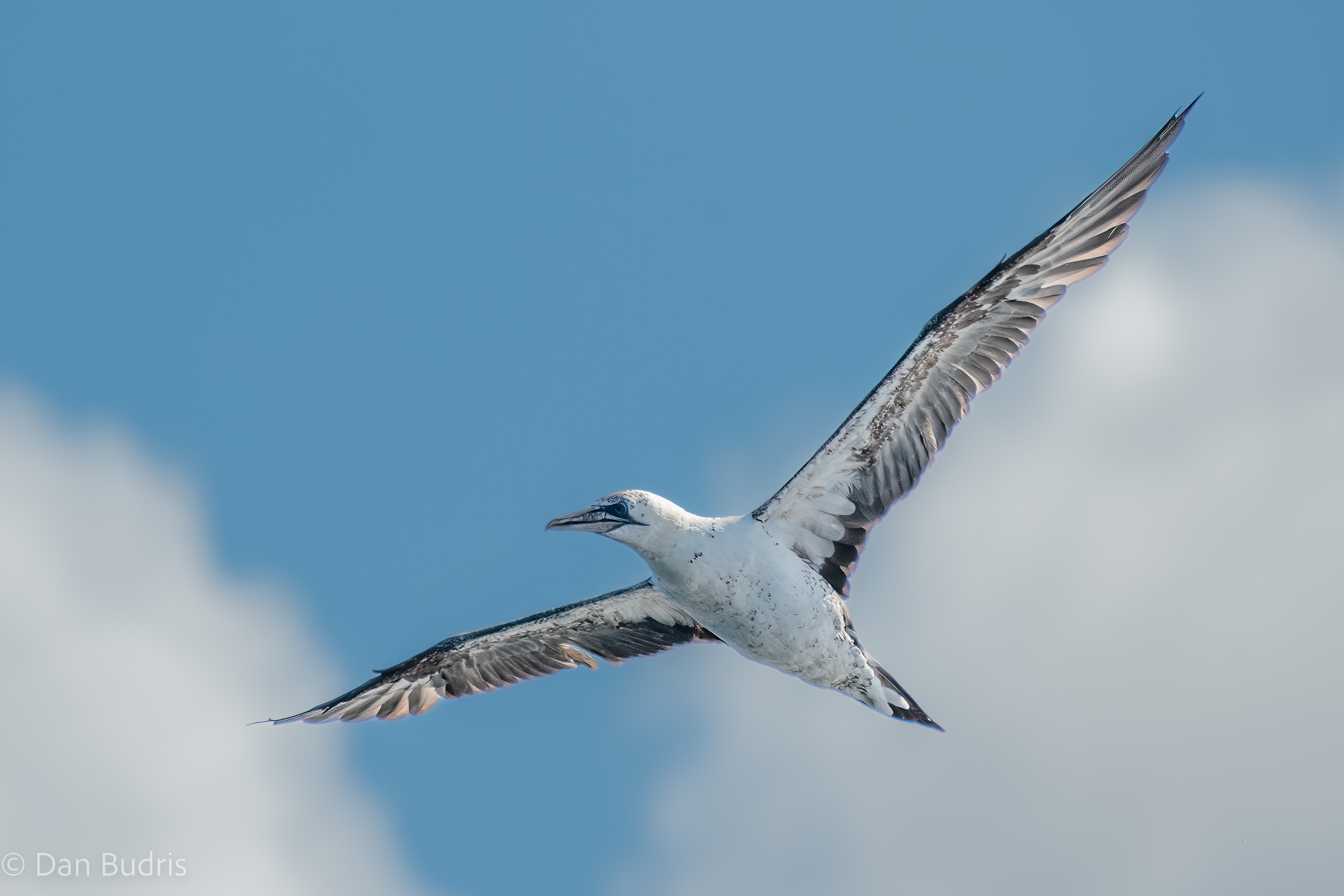
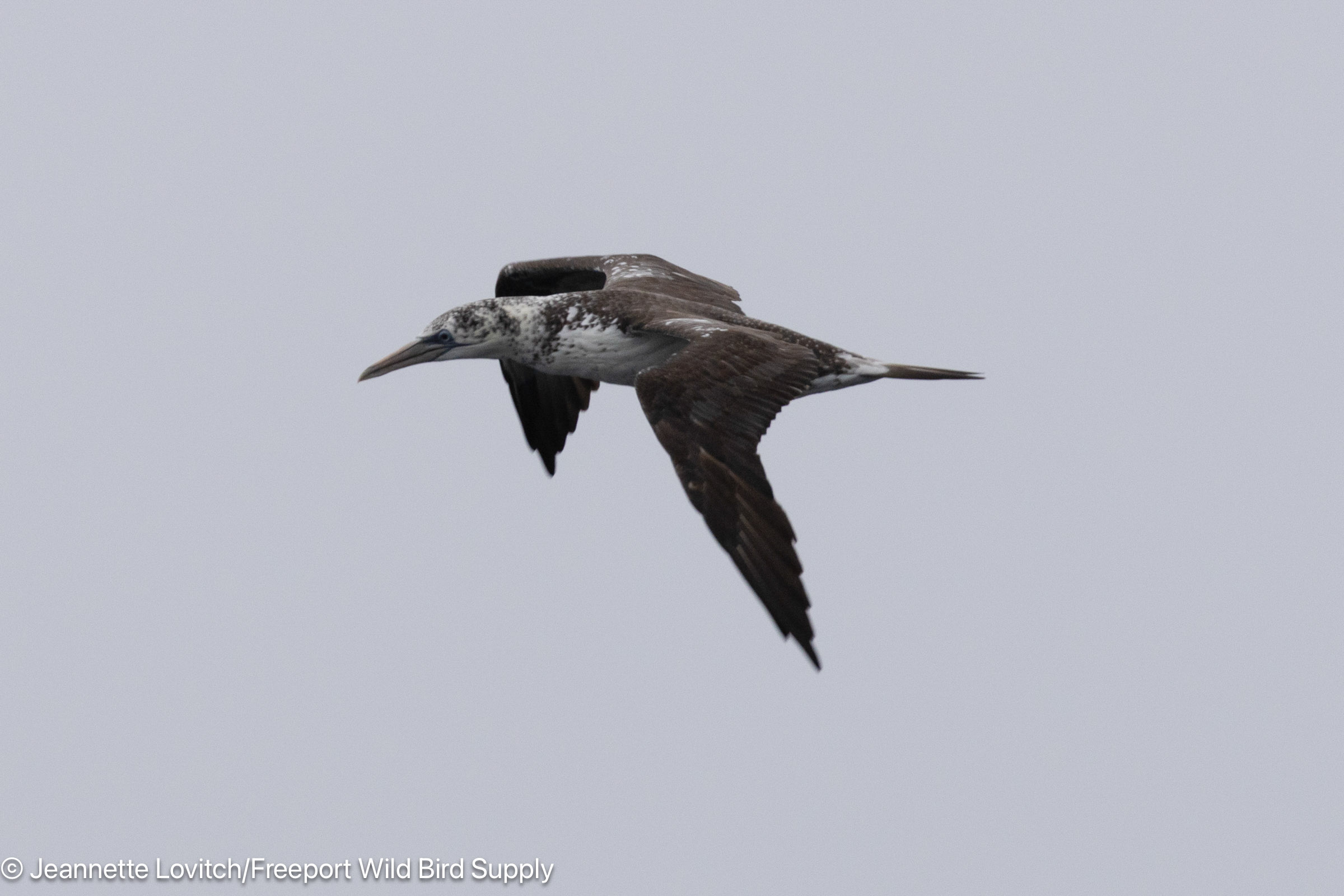
The trip started off right with plenty of close Northern Gannets.

Pelagic birding is a lot like Goldilocks’ porridge: it’s hard for it to be juuuuust right. Last year it was too calm and birds were hard to find. This year, it was anything but calm.

Once we traveled beyond the shelter of Damariscove Island, we had a plan – or at least the concept of a plan.  We’d slowly work our way straight south to deep water, make a turn to the east as the forecast was for seas to start diminishing, and then take mostly following seas for a smooth return trip home.

Peregrine Falcon having brunch to go.

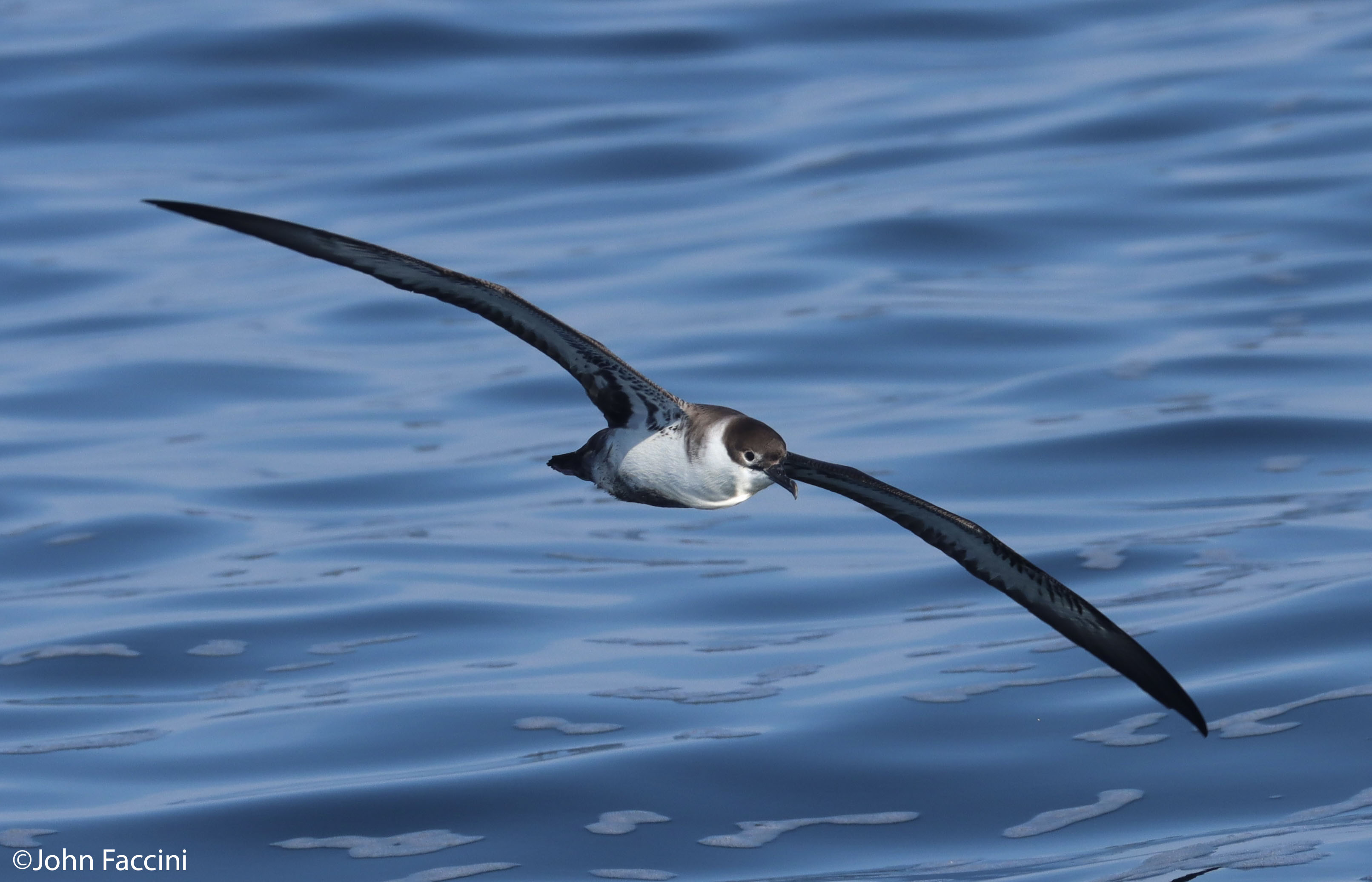
We had lots of Northern Gannets early in the trip – always a good sign – but it was pretty slow going through the area known as The Pasture, which like all offshore patches, is always hit or miss. In fact, the only other pelagic we had was a single Cory’s Shearwater seen by only a handful.

Unfortunately, once we made the turn to the east, it became essentially unbirdable. The forecast 4-6 foot seas were right, but the distance between waves (the wave period) was significantly shorter than forecast, and the waves were definitely not diminishing. Captain Steve did an exceptional job of trying to soften the ride and keep us safe, but we just weren’t going to be able to continue east towards some of our deep water hotspots. When a bird was called – such as a single Northern Fulmar (one of our primary targets on the trip), few people were able to even try to see it before it was long gone behind the waves. Perhaps only the Yellow-rumped Warbler and Savannah Sparrow that we encountered about 15 miles offshore were having a worse day. I tried to keep some bird commentary going, if only as a distraction, but I’m not sure anyone was listening at this point!

So it was decided to make a turn for home. In a last ditch effort to salvage the birding day, we angled for the mouth of Sheepscot Bay. An unidentified dark jaeger zipped by, seen by just a few, tantalizing us to what else is out here today.

Once in the mouth of the bay, sheltered by Damariscove off to the east, we found gentle seas, and decided to try our hand at attracting some birds with a chum slick.  We laid a slick for about 1-2 miles of pork fat soaked in fish oil. Thanks to a generous donation of surplus fatback compliments of Old Crow Ranch of Durham, we were likely the first ever pelagic to use local, pasture-based, regeneratively-farmed, non-GMO, pork fat. The experiment turned out to be quite a success, too!

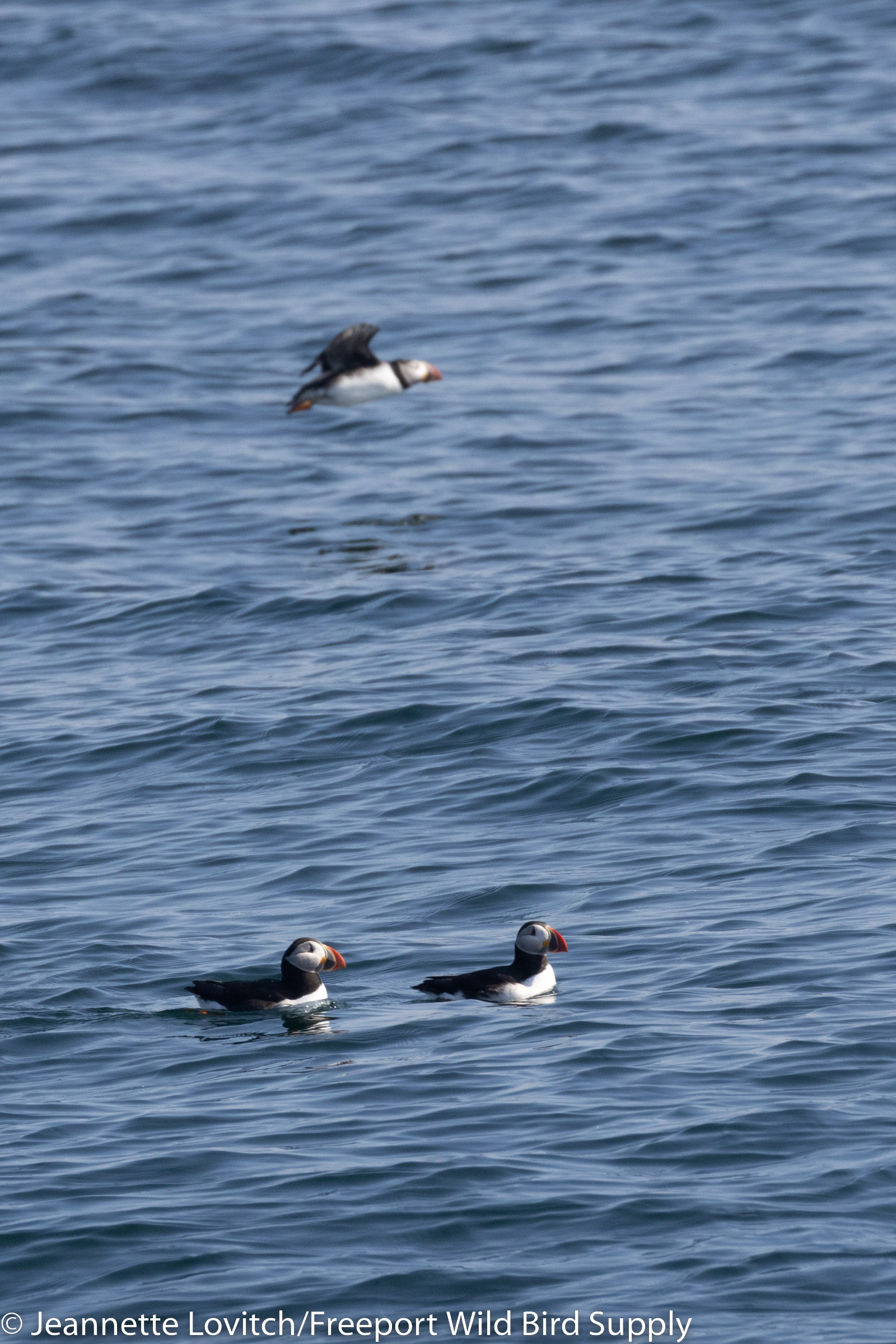
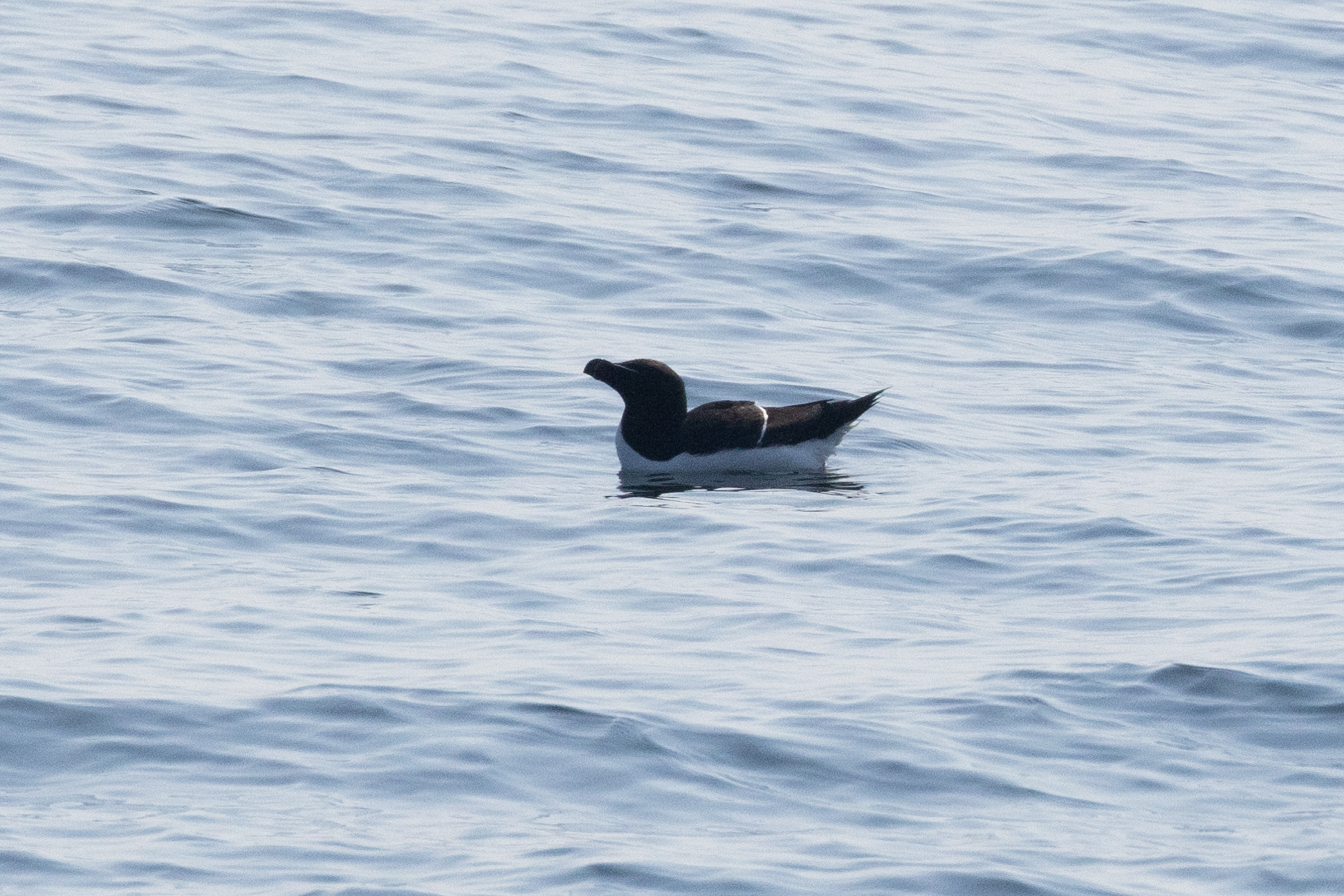
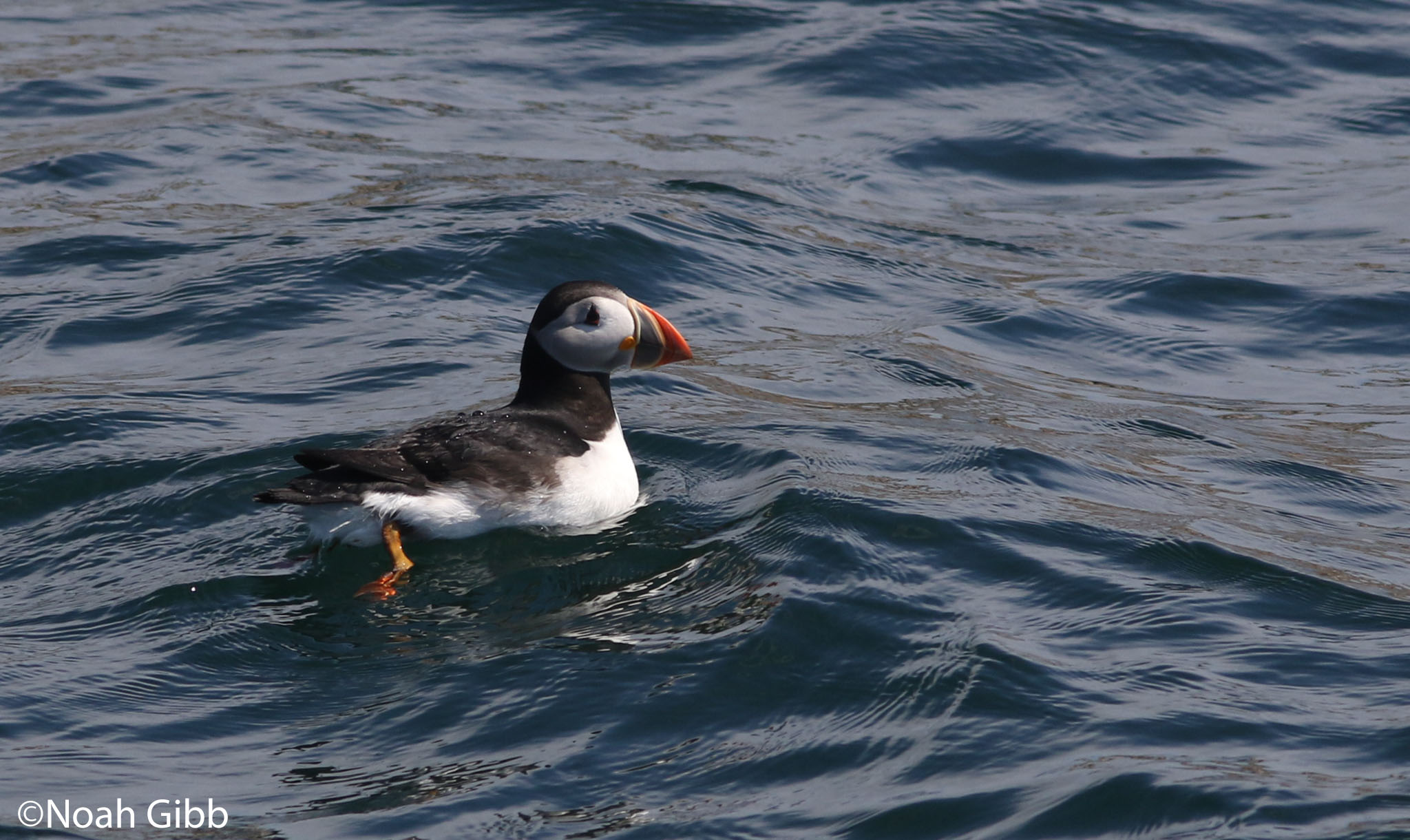
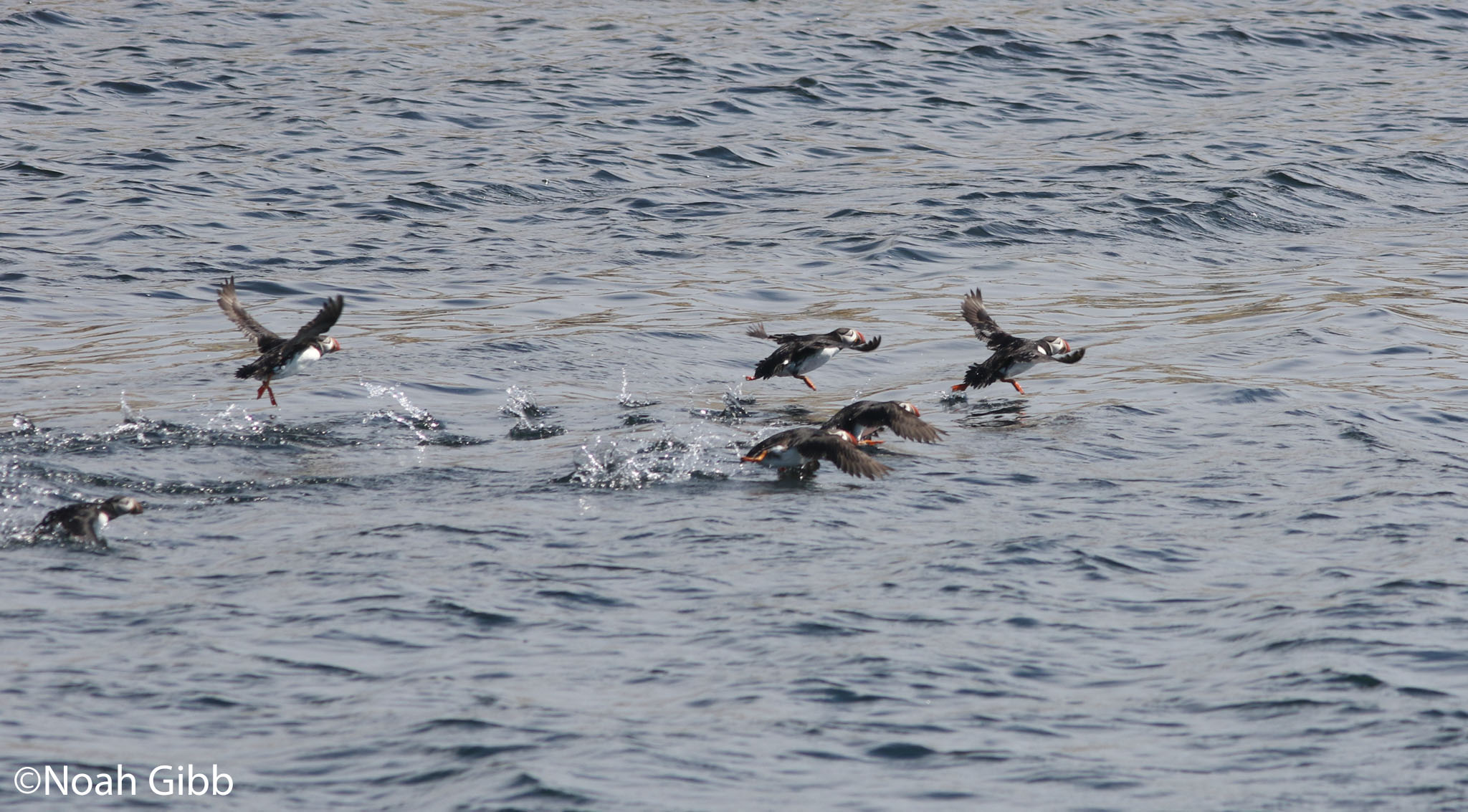
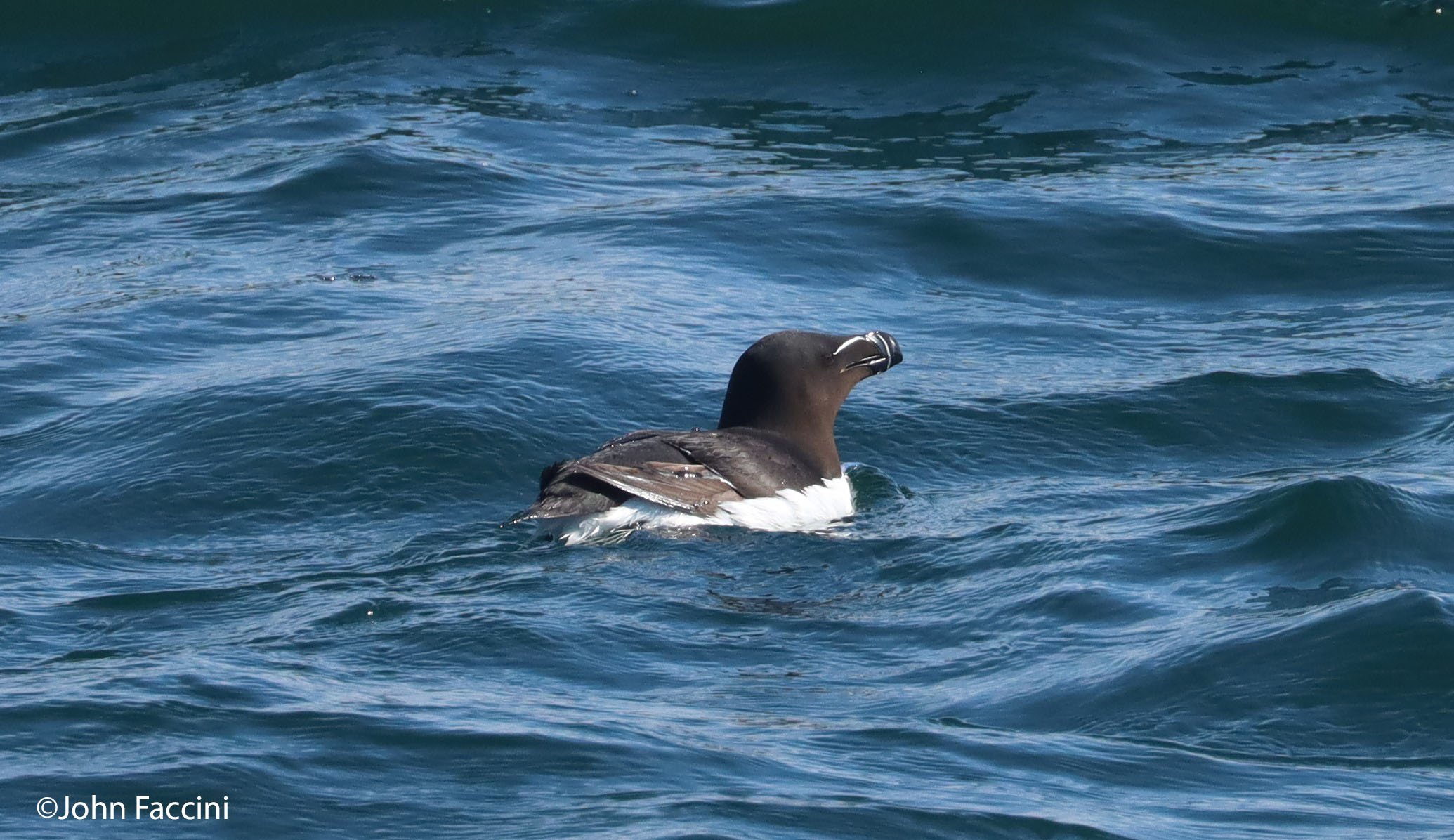
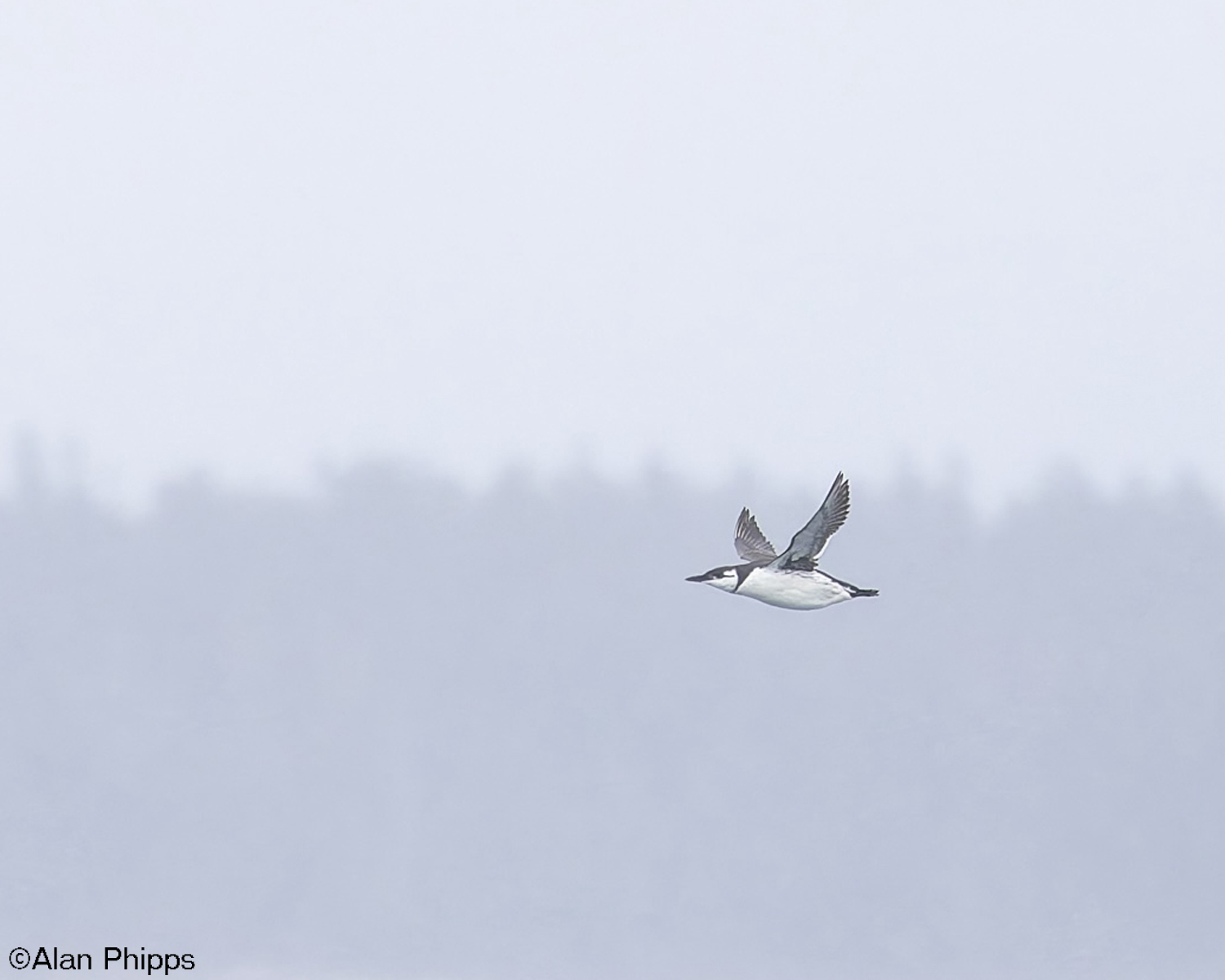
First, we kicked up two Common Murres as we traveled, one of which flew past the boat affording a great view for those who were still on deck; even the seabirds were seeking sheltered waters today!
We were soon attracting several hundred gulls to our chumslick, and we finally teased out a single Lesser Black-backed Gull from the masses. A few lingering Laughing Gulls and several Ring-billed Gulls, including spiffy fresh juveniles, joined the myriads of Herring and Great Black-backed Gulls.
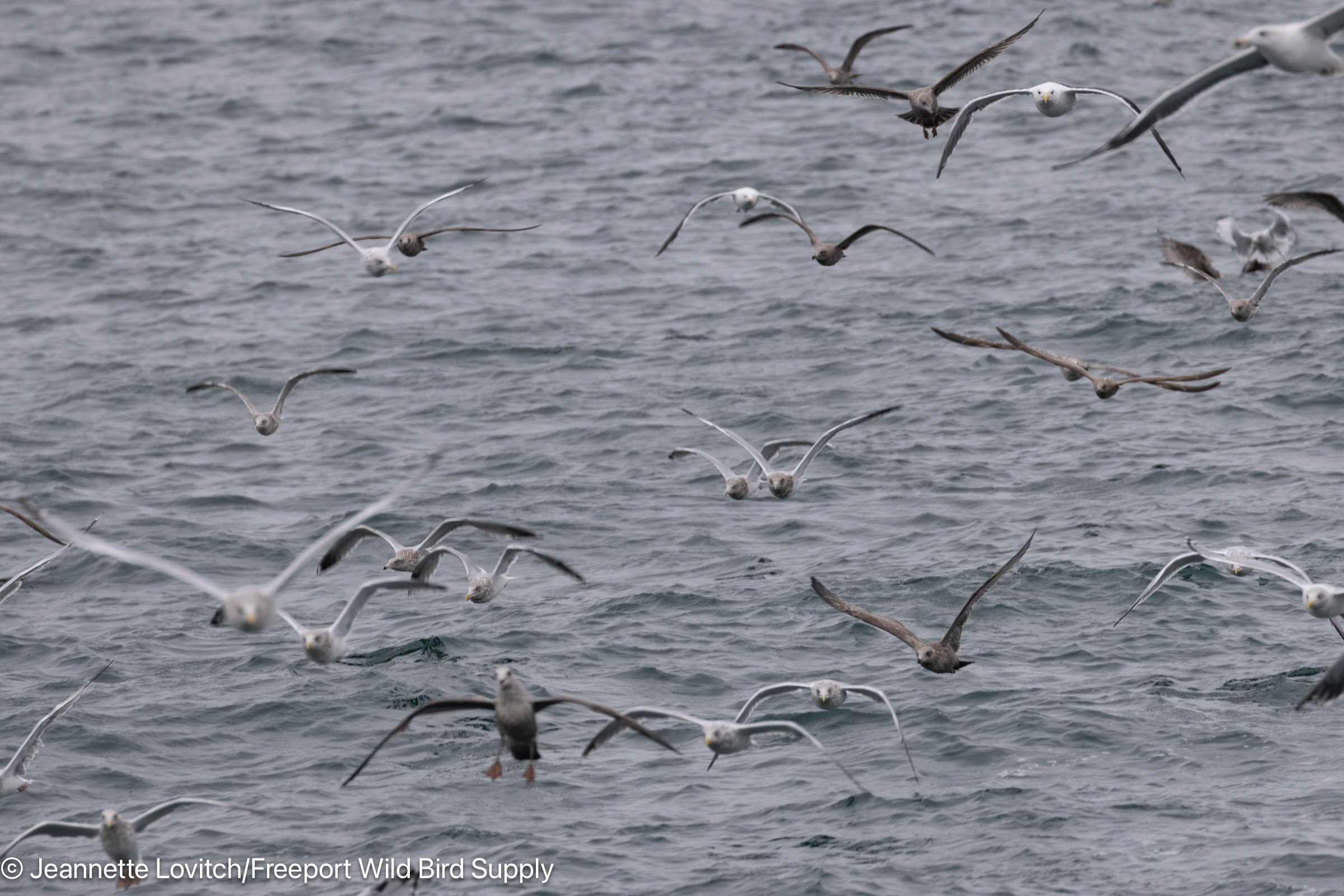
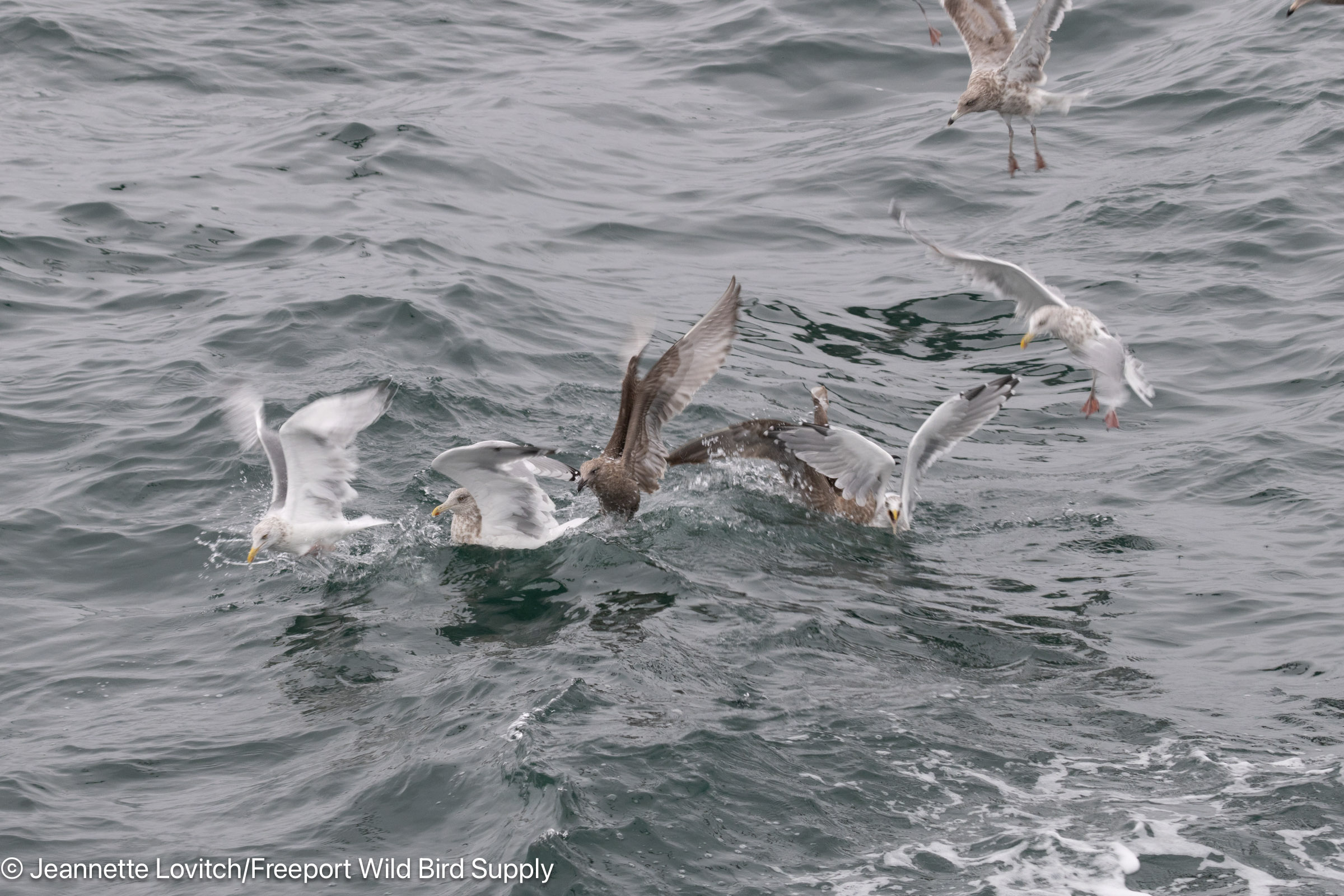
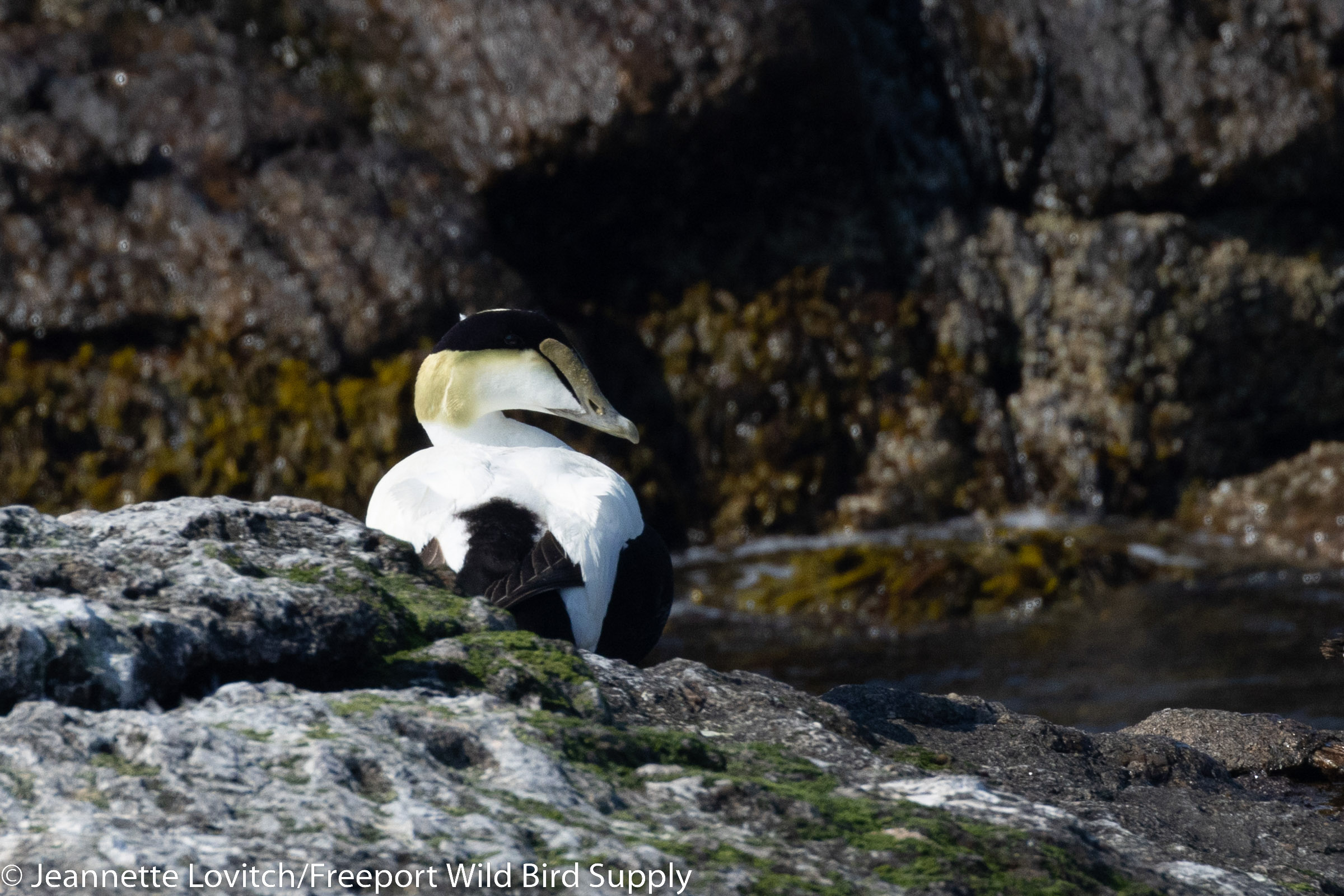
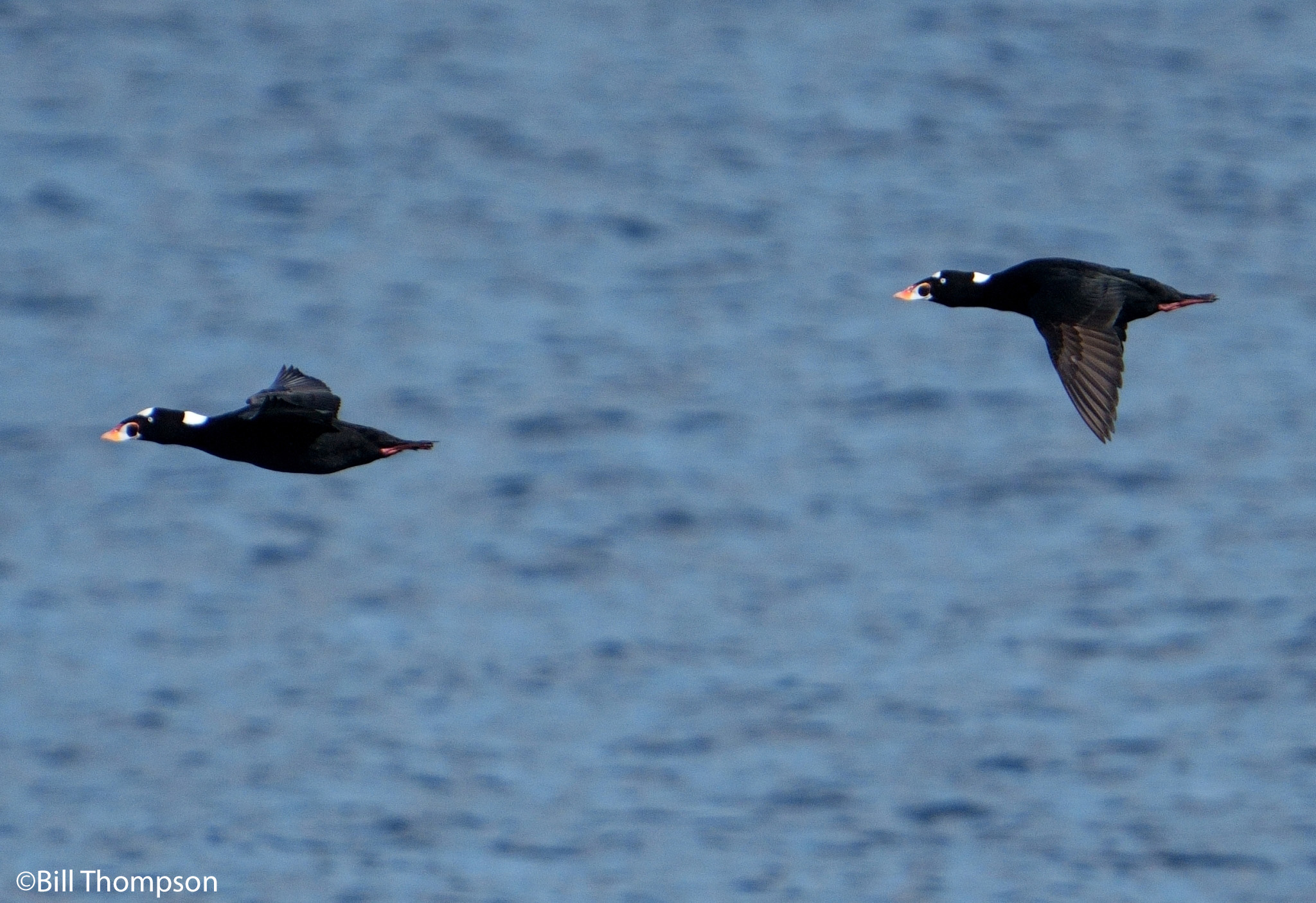
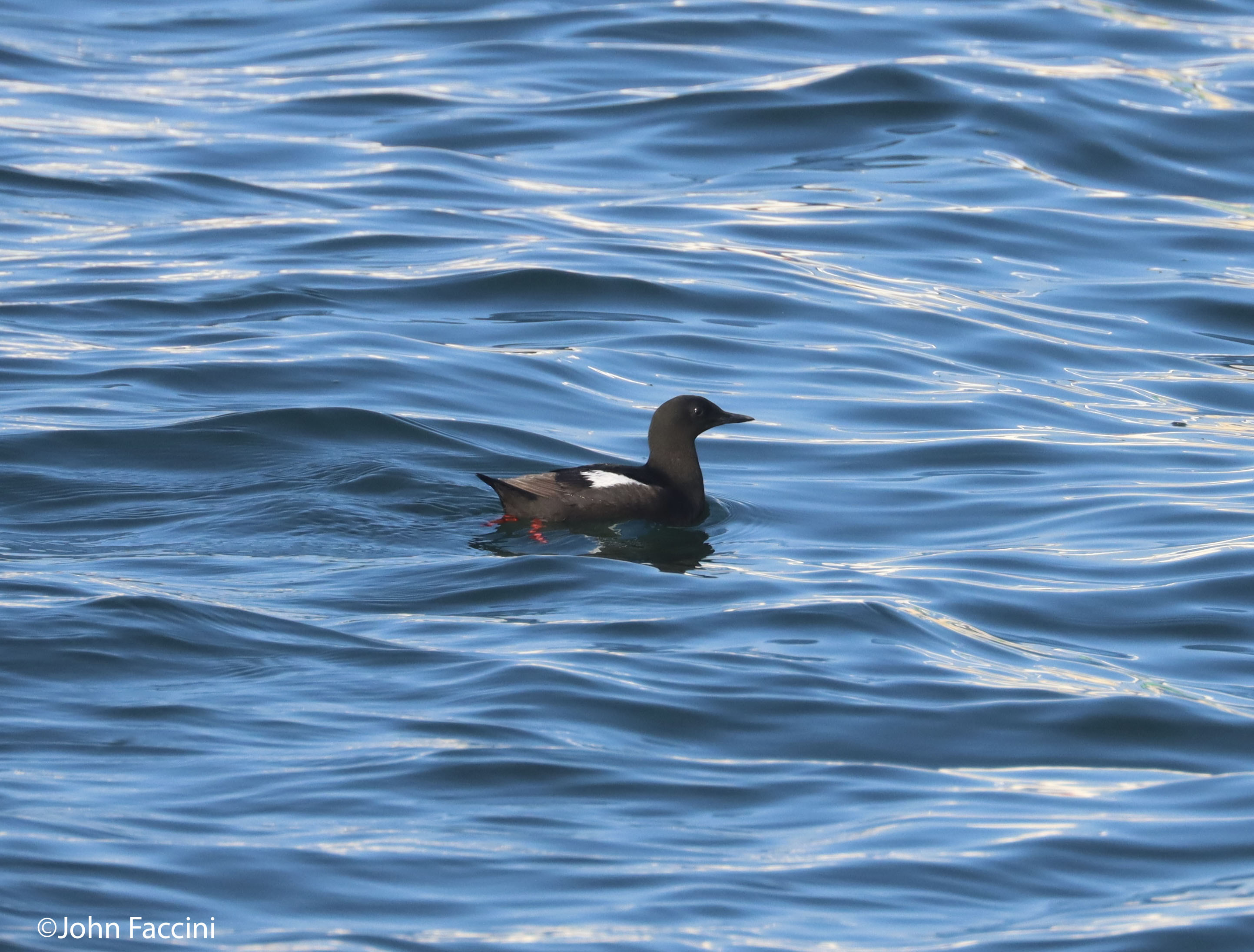
We then tried the same technique closer to the mouth of the outer Boothbay Harbor, closer to Damarsicove. At first the results were surprisingly lower, until a Peregrine Falcon and a Northern Harrier over the island kicked up the gulls roosting on the windward side. Once the gulls saw the feeding birds behind us, the game was on. Meanwhile, we enjoyed many dozens of Surf Scoters and Common Eiders, punctuated by both Black and White-winged Scoters, and from here to the harbor, another couple of dozen Common Loons and plenty of Black Guillemots.

I want to thank the captain and crew of Cap’n Fish’s Cruises for their hard work and dedication today, and their best efforts to keep us comfortable. I want to thank my spotters, Jeannette Lovitch and Ian Carlsen (who also did a fantastic job keeping the official eBird checklist following pelagic protocol). A big thank you to Alex Lamoreaux for still finding birds in the worst of the snotty water. And another big thanks to our chummer, Dan Nickerson, who got the action going once we found some calm waters.

And most importantly, thank you to all of those who came aboard today. Some said they had fun. Many suffered. But everyone endured. If this was your first pelagic, you’ll be thrilled to know you were likely just had your worst trip. For those who like roller coasters (unlike me!), I guess you’re welcome?

Here’s the trip list. For the hit-or-miss October pelagics in the Gulf of Maine it’s really not that bad.

Canada Goose7
Mallard5
American Black Duck2
Common Eider255
Surf Scoter180
White-winged Scoter50
Black Scoter40
unidentified dark-winged scoter40
unidentified scoter240
Rock Pigeon20
Dunlin3
Semipalmated Sandpiper1
Black Guillemot24
COMMON MURRE2
UNIDENTIFIED JAEGER1
Bonaparte’s Gull2
Laughing Gull7
Ring-billed Gull14
Herring Gull781
Great Black-backed Gull347
LESSER BLACK-BACKED GULL1
Common Loon50
NORTHERN FULMAR1
Cory’s Shearwater1
Northern Gannet67
Double-crested Cormorant307
Great Blue Heron1
Osprey3
Northern Harrier1
Peregrine Falcon2
American Crow7
Savannah Sparrow1
Yellow-rumped Warbler1
Unidentified passerine1

Recent Highlights, 6/13 – 6/22/2024.

Thanks to Mike Williams for allowing me to share his photos of this amorous pair of Red-necked Grebes along Ocean Avenue in Biddeford Pool. We’ve had 1-2 Red-necked Grebes “oversummering” here for the last few years, and last year I observed some rudimentary nest building from a pair (also with a stunned tour group). But we did not expect to see them, get, uh “that into it,” with courtship, nest-building, and even copulation. Unfortunately, as you could see, the “nest” was below the high tide line, so there’s not much chance of success here.  A freshwater wetland breeder that nests no closer than central Quebec, this is odd behavior in a very odd place!  It was amazing to watch though, and anytime we get to see Red-necked Grebes in full breeding plumage is a highlight on its own.

Like last week, much of my time was spent with our local breeding birds. From my personal “mini-breeding bird surveys” to a 7-day tour for Gulf Coast Bird Observatory, the birds that call Maine home in summer were once again the “targets” and the highlights, from Saltmarsh Sparrows and Roseate Terns to Grasshopper Sparrows and our wealth of warblers.

However, June is a good time for oddities. During the course of enjoying our usual species, I encountered the following observations of note over the past 10 days:

  • 3 (!) RED-NECKED GREBES, 16 total Black Scoters, 3 Surf Scoters, etc, Ocean Avenue, Biddeford Pool, 6/16 (with Martin Hagne and Denise).
  • After being excited to find the 3 breeding plumage RED-NECKED GREBES the day before, we were shocked to find 4 the next day, all calling, and one pair courting and copulating!  Photos and more details above. (with Gulf Coast Bird Observatory tour group).
  • 2 American Oystercatchers, 1 Red-breasted Merganser, 1+ Black Scoter, Ocean Avenue, 6/17 (with Gulf Coast Bird Observatory tour group).
  • 1 Surf Scoter, Dyer Point, Cape Elizabeth, 6/17 (with Gulf Coast Bird Observatory tour group).
  • 2-3 singing CLAY-COLORED SPARROWS, Kennebunk Plains, 6/18 (with Gulf Coast Bird Observatory tour group).
  • 4 Glossy Ibis, Sanford Lagoons, Sanford, 6/18 (with Gulf Coast Bird Observatory tour group).
  • 3 COMMON MURRES, etc, Eastern Egg Rock via Cap’n Fish’s Cruises, Boothbay Harbor, 6/21 (with Gulf Coast Bird Observatory tour group).
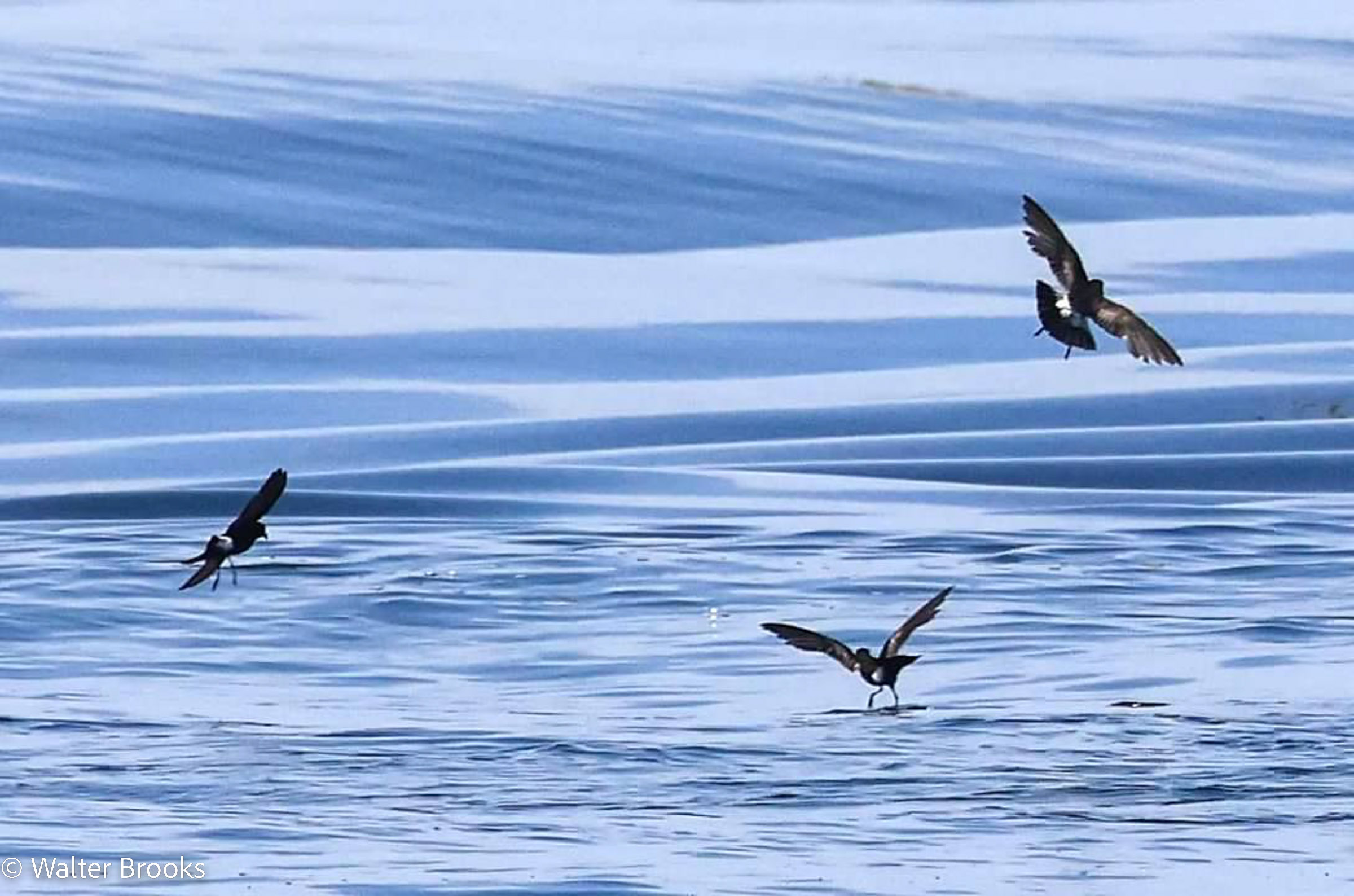
  • 1 Great Shearwater, 2 Sooty Shearwaters, 48 Wilson’s Storm-Petrels, 2 Fin Whales, etc, Cap’n Fish’s whale watch out of Boothbay Harbor, 6/21 (with Gulf Coast Bird Observatory tour group).

This Week’s Highlights, 9/2-9/8, 2023

It was a good week for Caspian Terns, and it’s always a treat to see one sitting still. This adult was on the Lubec Flats on the 4th.

A busy week of birding included our annual late summer/early fall trip to Washington County and a bunch of guiding, producing the following observations of note:

  • 25-30 Common Nighthawks, over Chebeague Island in the mid-morning, 9/3 (with The Chebeague & Cumberland Land Trust birdwalk group).
  • 1 juvenile LITTLE BLUE HERON, 1 CASPIAN TERN, 1 Great Egret, 5 Surf Scoters, etc, Lubec Flats, Lubec, 9/4 (with Jeannette).
  • A relatively slow morning in Head Harbor Passage from Eastport on 9/5 (with Beth Edmonds, Dan Nickerson, Jeannette, and friends) was most noteworthy for the continuing large numbers of COMMON MURRES. I tallied 109, but that seems very conservative. We only had 4 Razorbills and 1 adult Lesser Black-backed Gull. Quiet time with just us and a Fin Whale more than made up for it though.
  • The afternoon whale watch on Eastport Windjammers to the same waters that day (with Beth Edmonds, Dan Nickerson, and Jeannette) yielded an adult LITTLE GULL, 3 CASPIAN TERNS, 1 late ARCTIC TERN, 2 Great Shearwaters, etc. Incredibly experience with 2 Fin Whales, 1 Humpback Whale, and 1 Minke Whale though.

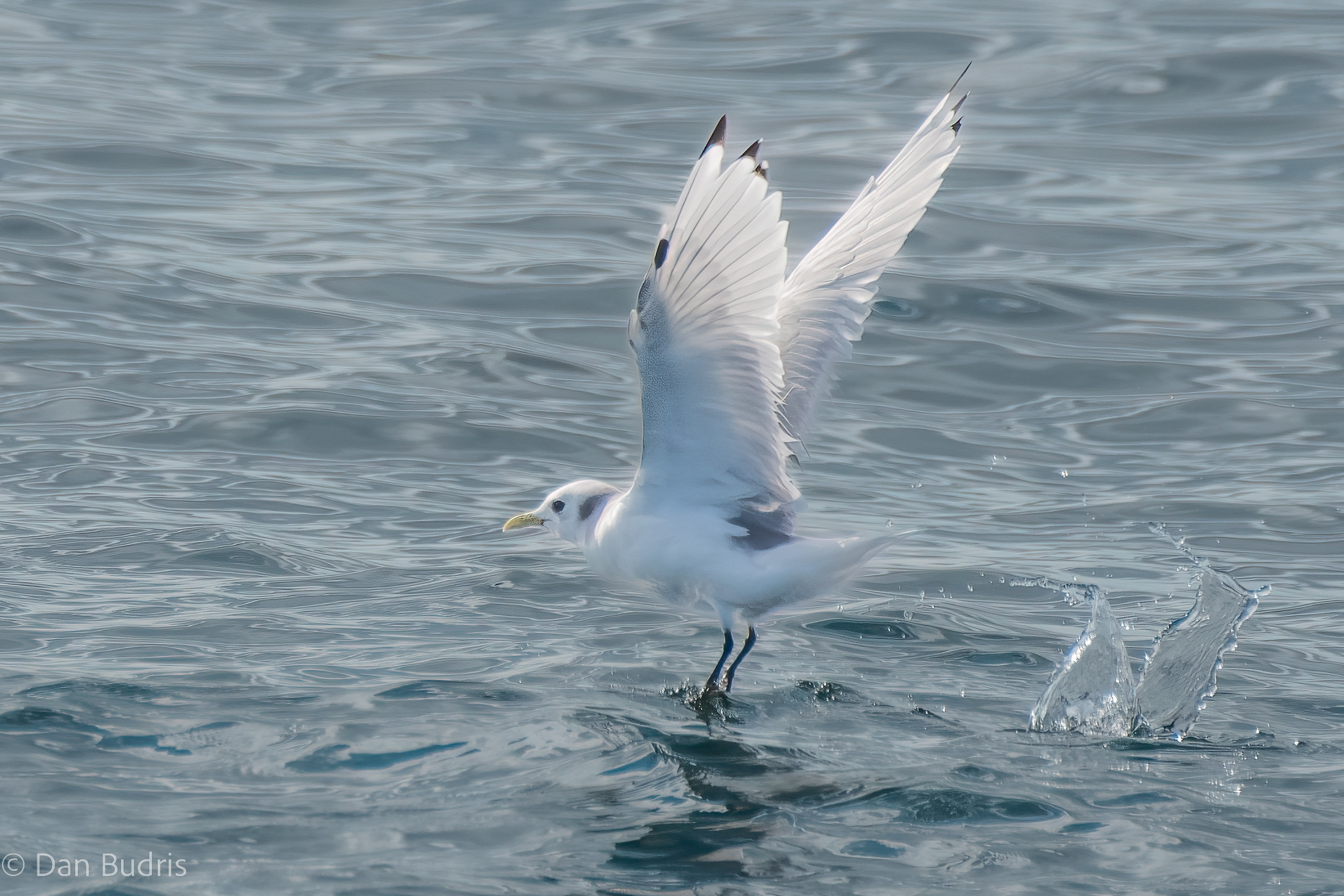
We always enjoy our quality time with Black-legged Kittiwakes in the Head Harbor Passage area at this time of year.

  • 2 American Pipits (FOF), Sanborn Cove, Machiasport, 9/6 (with Jeannette). Interestingly, we had pipits at a number of places throughout the day, with a high count of 22 at Addison Marsh, Addison.
  • 1 Great Egret, Addison Marsh, 9/6 (with Jeannette).
  • 1 Great Egret, Essex Marsh, Bangor, 9/6 (with Jeannette).
  • 3 SANDHILL CRANES, Plymouth Pond, Plymouth, 9/6 (with Jeannette).
  • High count for warbler species in our Durham backyard this week was 11 on 9/7 (with Angela Woodside).
  • 3 adult Lesser Black-backed Gulls, Popham Beach State Park, Phippsburg, 9/8 (with clients from Texas).
  • Great whale-watching trumped the bird-watching again this week with 3 lunge-feeding Fin Whales off of Boothbay Harbor aboard Cap’n Fish’s Cruises on 9/8 (with clients from Texas). 3 RED-NECKED PHALAROPES, 1 Great Shearwater, 1 adult Lesser Black-backed Gull, 10 Wilson’s Storm-Petrels and making it back to shore before the violent thunderstorms add to the success of the trip!

Meanwhile, my shorebird high counts this week were as follows. While reduced in diversity by a lack of visitation to southern Maine shorebird hotspots, Downeast yielded some excellent numbers and I found some uncommon species in unexpected places for a goodly total of 18 species (“shorebird season” is far from over!):

  • AMERICAN OYSTERCATCHER: 1, Popham Beach State Park, Phippsburg, 9/8 (with clients from Texas).
  • Black-bellied Plover: 75, Lubec Flats, Lubec, 9/4 (with Jeannette).
  • Killdeer: 56, Mayall Road, Gray, 9/6 (with Jeannette).
  • Semipalmated Plover: 600, Lubec Flats, 9/4 (with Jeannette).
  • Ruddy Turnstone: 1, flying 10 miles off of Boothbay Harbor, 9/8 (with clients from Texas). Odd sighting of a single juvenile bird circling the boat repeatedly in hazy conditions where the mainland was not visible.
  • Sanderling: 24, Popham Beach State Park, 9/8 (with clients from Texas)
  • BAIRD’S SANDPIPER: 1, Yarmouth Town Landing, 9/2 (with Saturday Morning Birdwalk group).
  • Least Sandpiper: 25+ Sanborn Cove, Machiasport, 9/5 (with Jeannette).
  • White-rumped Sandpiper: 125!, Lubec Flats, 9/4.
  • Semipalmated Sandpiper: 2500-3000!, Lubec Flats, 9/4 (with Jeannette).
  • WESTERN SANDPIPER: 1 juv, Lubec Flats, 9/4 (with Jeannette).
  • Short-billed Dowitcher: 4, Lubec Flats, 9/4 (with Jeannette).
  • American Woodcock: 1, over Rte 1, Pembroke, at dusk on 9/5 (with Jeannette).
  • Spotted Sandpiper: 1, multiple locations.
  • Solitary Sandpiper: 1, over our yard in Durham, 9/2.
  • Lesser Yellowlegs: 9, Yarmouth Town Landing, 9/2 (with Saturday Morning Birdwalk group).
  • Greater Yellowlegs: 2, Red Point Nature Preserve, Lubec, 9/4 (with Jeannette).
  • RED-NECKED PHALAROPE: 7, Passamaquoddy Bay, Eastport-New Brunswick, 9/5 (with Beth Edmonds, Dan Nickerson, Jeannette, and friends).

Summertime Puffin/Whale/Pelagics Trip with Cap’n Fish’s Cruises

Beginning in 2022, Cap’n Fish’s Cruises in Boothbay Harbor and Freeport Wild Bird Supply have partnered together to offer a mid-summer seabirding opportunity. I join the boat’s naturalist as a seabird and pelagic specialist, to help everyone see all of the breeding seabirds at Eastern Egg Rock (Atlantic Puffins; Arctic, Common, and Roseate Terns; Laughing Gulls; and sometimes Razorbill and Common Murre) before we venture offshore in search of whales. While doing so, we pay special attention on this cruise to the bird life – which is often found at the same places where we are looking for whales. This trip gives us a slightly more bird-centric tour compared to the regularly-scheduled departures.

Here are the trip reports from this very popular annual event.

  • July 16. 2022

Seas were fairly high (3-5ft) as we bounced offshore to deeper water first. Wilson’s Storm-Petrels were soon visible, and we passed one Razorbill. We could not stop or turn around for it as the seas were just a little too rough for that, and this was unfortunately our only Razorbill of the day. We cruised around waters over 300 feet deep, and were treated to a good performance from Great Shearwaters, Wilson’s Storm-Petrels, and picked up a few Sooty Shearwaters. We had one offshore Atlantic Puffin, but the big surprise was a rare, mid-summer NORTHERN FULMAR – definitely the pelagic bird of the trip.

With the seas building, we made a turn and took advantage of much more pleasant conditions as we trolled the area, giving people a better chance and seeing the aforementioned species. We also spotted a couple of Mola Molas, but no marine mammals, unfortunately.

Away from Eastern Egg Rock (both coming and going), our offshore (“pelagic”) scorecard was:

  • 76 Great Shearwaters
  • 61 Wilson’s Storm-Petrels
  • 21 Northern Gannets
  • 3 Sooty Shearwaters
  • 2 Arctic Terns
  • 1 Razorbill
  • 1 Atlantic Puffin
  • 1 NORTHERN FULMAR
  • 1 Common Loon
  • scattered Common Terns and unidentified Sterna

As we approached Eastern Egg Rock, the action really picked up with all of the island’s breeding species soon apparent. Roseate and Arctic Terns joined the multitudes of Common Terns. At least a dozen Roseates included several putting on a good show, and we singled out quite a few close-passing Arctic Terns for good studies. 4 migrant Ruddy Turnstones joined island-breeding Spotted Sandpipers onshore, and we heard a couple of singing Song Sparrows. And of course a plentitude of Laughing Gulls; about half of the entire state’s population breeds here. Black Guillemots were also conspicuous today.

But Atlantic Puffins are the star of the show out here, and today, they did not disappoint. In fact, it was a great mid-summer performance, with several dozen on the water – often in very close proximity to the boat, commuters passing by, and dozens more stately stationed on the island’s rocks.

We wandered offshore on the way back, near where the boat had recently seen whales, added a few birds to the tallies, but alas, the only marine mammals of the day were two species of seals: lots of Harbor Seals and two Gray Seals. Hopefully, this got the seal of approval from the marine mammal watchers aboard today.

  • July 10, 2023.

A Parasitic Jaeger got everyone to our feet as we were motoring home through the fog.

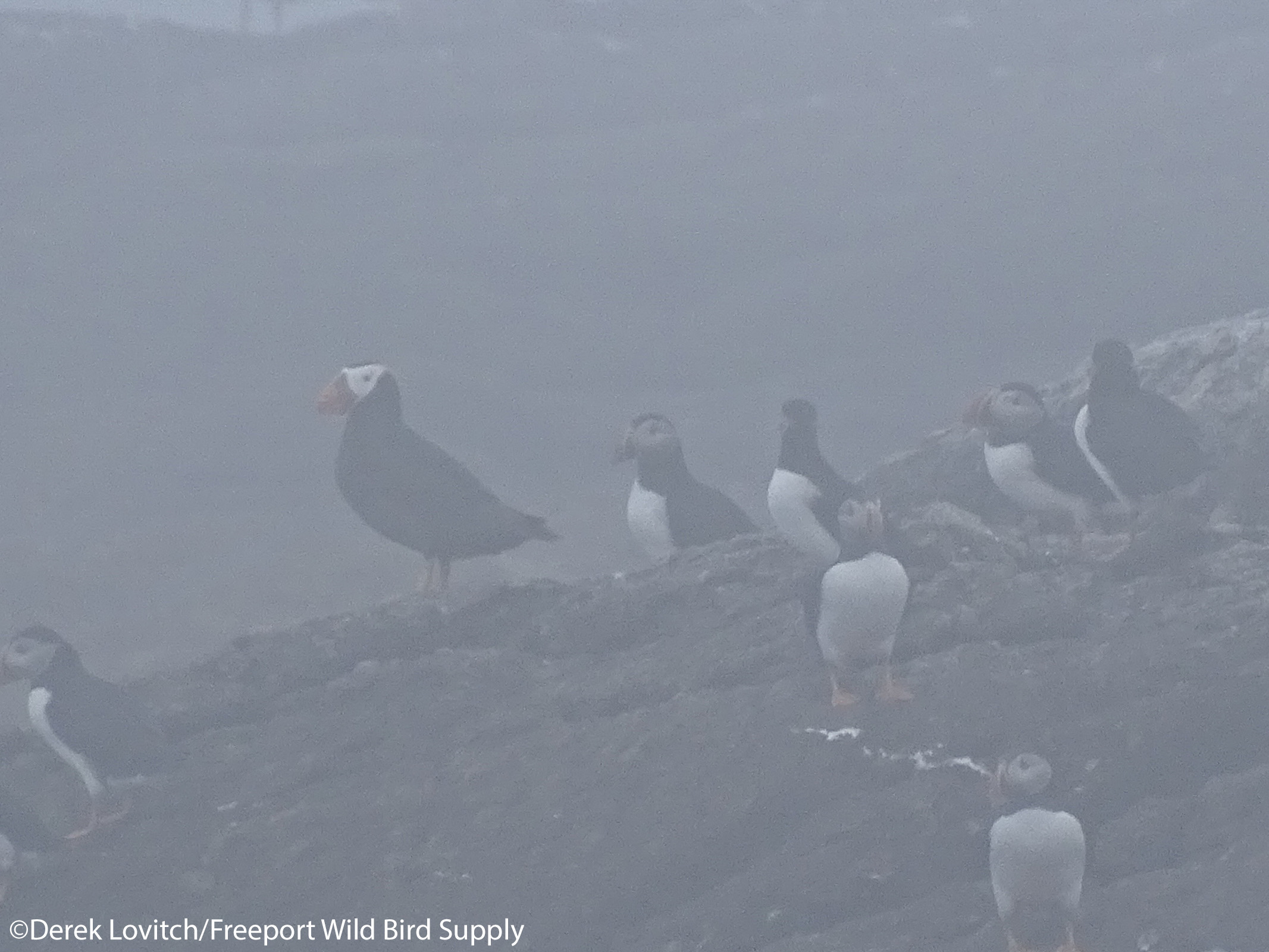
With even more anticipation than usual, birders flocked aboard for this afternoon departure. Three hours earlier, I had spotted the near-mythical Tufted Puffin on Eastern Egg Rock aboard Cap’n Fish’s morning Puffin Cruise.  We made a bee-line for the island’s north end, but alas, the Tufted was not to be seen.

Nonetheless, we had a fantastic visit. Fog resulted in many of the island’s Atlantic Puffins being in the water and we had close birds all around the boat. We studied Arctic and Roseate Terns among the masses, making sure everyone had at least one rewarding look at each. While we searched vigilantly for the Tufted, we picked out one of two American Oystercatchers that have been here this summer, and just as we were about to leave, the single Common Murre floated around just off our bow.

It didn’t take long before our first Wilson’s Storm-Petrels of the day to be sighted, with small groups and singletons here and there throughout the rest of the trip for a total of 100-150 or so. Fog only thickened as we traveled further offshore, however, although we did find a hole where the visibility increased dramatically for a spell. While we searched diligently for whales to no avail (but plenty of Harbor Porpoises today), birds began to appear one by one.

A good look at a Sooty Shearwater. A glimpse of a Great Shearwater was followed later by a cooperative one that allowed close approach on the water. One group spotted a Manx Shearwater heading straight away, and a couple of other distant shearwaters disappeared into the fog. We only saw a few gannets today, scattered Common Loons on our way to and from, but a subadult Parasitic Jaeger spiced things up on our ride back (photo above). 

Considering how dense the fog was, we were happy to spot much of anything once we left the rock, and considering we remained just east of torrential rain all day, we were more than satisfied with the comfort of what we did see!

While we’ll have a dedicated pelagic in October one again (see our website for more information about all of our pelagic birding opportunities) and we look forward to another edition of this summer special in 2024!

This Week’s Highlights, 7/8-14,2023

If I only saw one bird all week, and it was THIS bird, I would have been more than satisfied. The near-mythological Tufted Puffin that has wandered around the Gulf of Maine for the last two summers finally was in front of my binoculars at Eastern Egg Rock on 7/10 (with Cap’n Fish’s Cruises “Audubon Puffin and Scenic Cruise). Unfortunately, it was not seen a mere three hours later when I returned to the island with my previously-scheduled Mini-Pelagic with our partners at Cap’n Fish’s.

While just about anything else would pale in comparison, I did have several other observations of note over the past seven days, plus lots of quality time with Roseate Terns, Salmarsh and Nelson’s Sparrows, etc:

  • Scarborough Marsh migrant shorebirds, 7/9 (with Ken Mettie and Mary Beth Oles): 16 Short-billed Dowitchers (First of fall), 4-6 Lesser Yellowlegs, 4 Least Sandpipers (FOF), and 2 Greater Yellowlegs.
  • Freeport Wild Bird Supply’s “Puffin/Whale Combo Mini-Pelagic” with Cap’n Fish’s Cruises, 7/10: 1 COMMON MURRE and 1 American Oystercatcher at Eastern Egg Rock. Offshore pelagic visitors: 100-150 Wilson’s Storm-Petrels, 2 Great Shearwaters, 2 unidentified shearwaters, 1 Sooty Shearwater, 1 subadult PARASITIC JAEGER. Some observers had a MANX SHEARWATER as well.
  • 1 LOUSIANA WATERTHRUSH and 1 Yellow-billed Cuckoo, Morgan Meadow WMA, 7/11 (with Jeannette).
  • Scarborough Marsh and Pine Point migrant shorebird totals, 7/14 (with Alec Humann and Buffalo Ornithological Society tour group): 18 Short-billed Dowitchers, 15 Lesser Yellowlegs, 12 Least Sandpipers, 5 Semipalmated Sandpipers (FOF), 2 Whimbrel (FOF, Jones Creek, Pine Point), and 1 Greater Yellowlegs.

The 2023 Zeiss Pelagic Trip Report

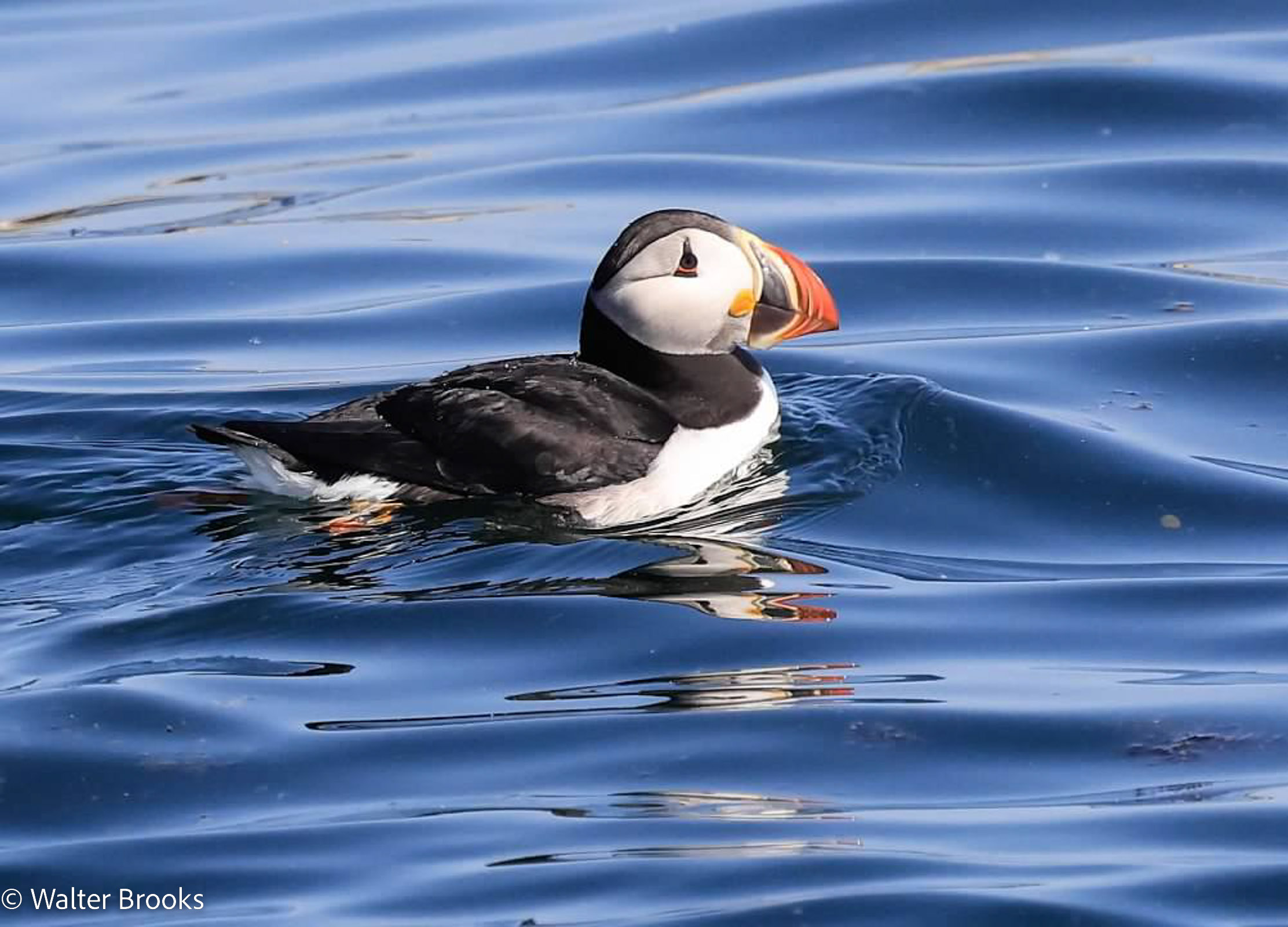
A southerly, and rather confiding, Common Murre was one of the unexpected highlights of the Zeiss Pelagic.

On June 2nd, we ran our now-annual spring mini-pelagic with our partners Cap’n Fish’s Cruises out of Boothbay Harbor. But this wasn’t any old pelagic. Instead, it was not only a way to poke your feet into the proverbial and literal pelagic birding waters, but this was also a chance to try out a new pair of Zeiss optics. And all for a very, very special price.

Thanks to our store’s partnership with Zeiss Optics, our biannual “Zeiss Day” occurred offshore this spring. With Zeiss’s sponsorship, we were able to offer this unique trip at a special price, with extra spotters to help people see birds, and of course, with chumming.

And the weather could not be any better! In fact, we were all excited to head offshore to beat the heat on this day. Barely a puff of breeze resulted in remarkably calm seas, with the only waves caused by our boat. Thanks to the weather gods for this day offshore!

Evan Obercian, Dan Nickerson, and Jeannette helped spot birds, Noah Gibb handled the checklists, and Robby Lambert – chummer emeritus – stood at the ready as the boat’s naturalist, Kelsey, and I scanned from the wheelhouse. Our captain was amazing, and together we laid out a plan for the day. Throughout the day, Rich and Bill from Zeiss handed out binoculars to try and lots of optical questions were answered. It was a great way to test-drive a new pair of excellent binoculars, especially noting how important size and weight is when trying to hold binoculars steady on the open ocean, even without much in the way of waves.

Robby at his office.

Motoring out of Boothbay Harbor and across Muscongus Bay, we familiarized ourselves with the common denizens of Maine’s summer coast, such as Common Eiders, Black Guillemots, Common Terns, and Ospreys. Kelsey pointed out landmarks and gave a little history of the area.

Our first destination was Eastern Egg Rock, home to a thriving seabird colony thanks to the restoration efforts of Project Puffin. Leading pelagic trips in June is easy when at least some of our target birds are guaranteed!

The amazingly calm conditions and unusually warmth worked in our favor, as many of the island’s Atlantic Puffins and Black Guillemots were in the water instead of loafing on the rocks, allowing us to drift closely to many of them. One of the island’s ephemeral Razorbills was spotted near the boat, giving us long and good looks as well.

Razorbill.

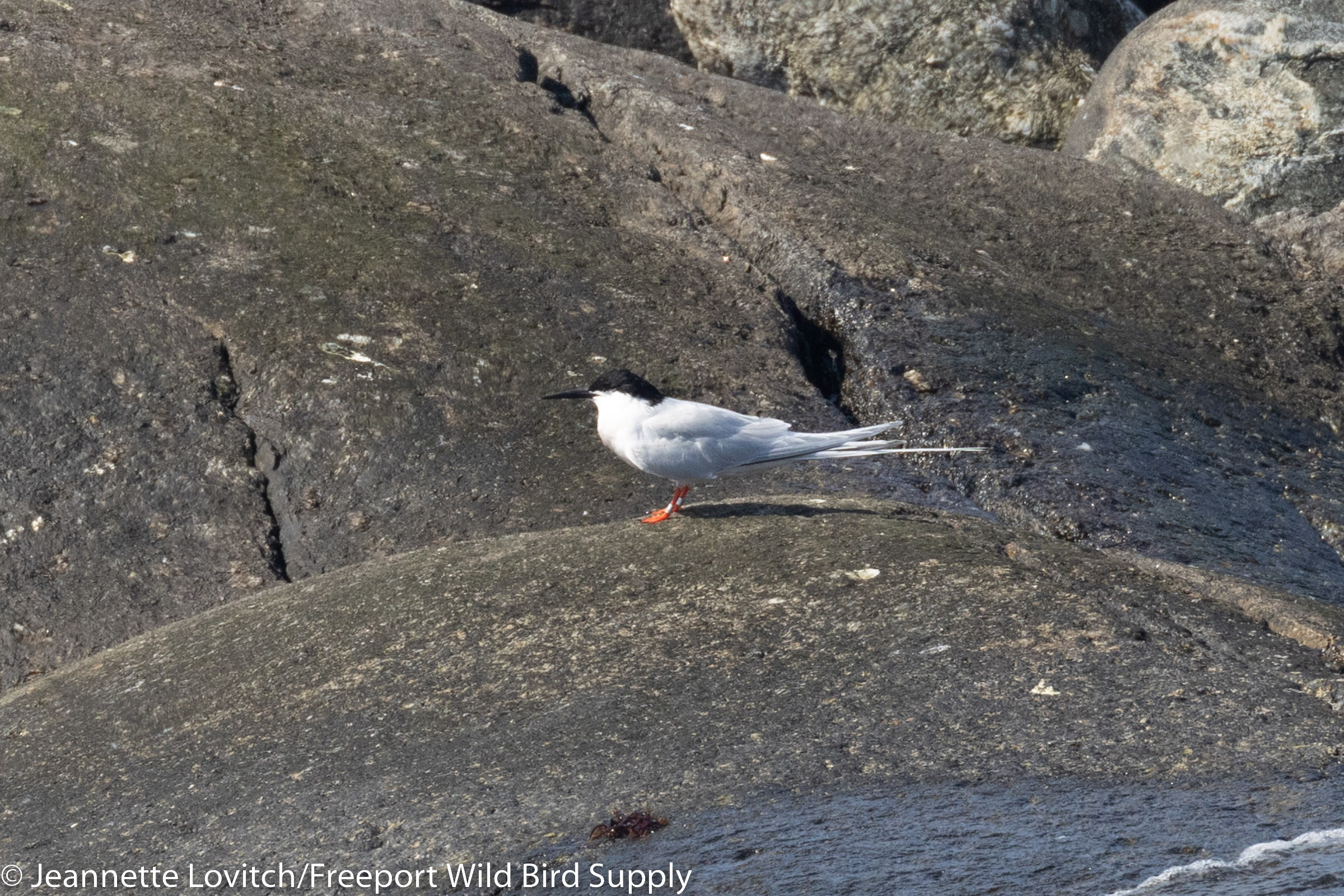
Of course there were the terns, and for a change, both Roseate and Arctic were easy to isolate for all to see. With the help of my spotters, and a cooperative pair of Roseates on an obvious rock, everyone saw each species well, as well as many hundreds of Common Terns of course.  And a thousand or so Laughing Gulls, too.

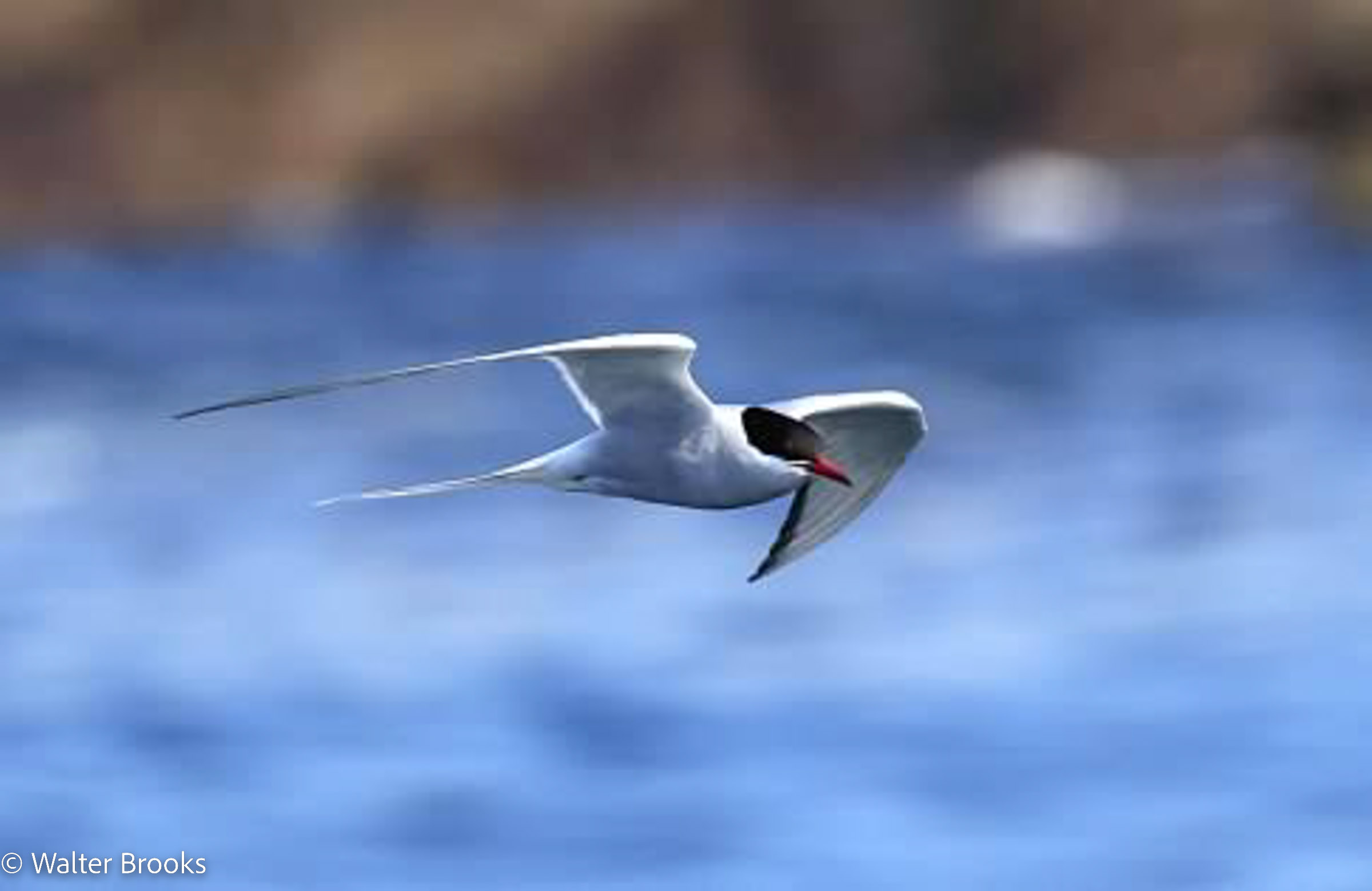
Arctic Tern.

Roseate Tern.

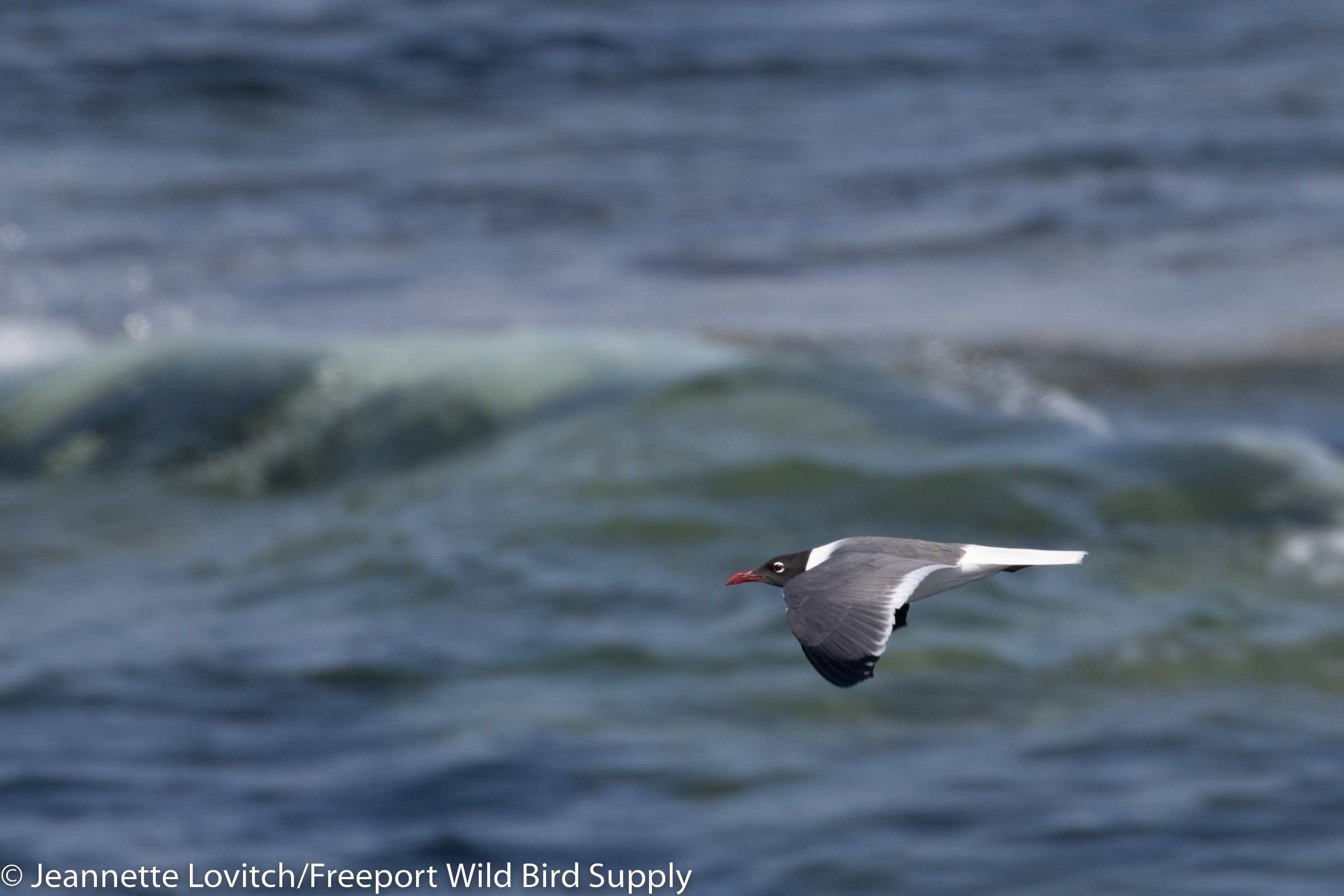
Laughing Gull

Common Eider.

Satisfied with our views of the island’s denizens, we turned offshore and followed the Arctic Terns to deeper waters. It wasn’t too long before we started seeing scattered Wilson’s Storm-Petrels, but we slammed on the breaks when I spotted a Common Murre on the water up ahead. Captain Steve was able to circle the bird for all to see and photograph before we continued on; the murre was most obliging.  It also made for the hoped-for 4-alcid day, which is always a challenge this far south.

The lack of swell allowed us to make good progress and afforded us the chance to check three offshore hotspots. A good number of Wilson’s Storm-Petrels and a few Northern Gannets were at Murray Hole, but we motored through it.

We laid down a mile-long chum slick at The Kettle, but only a few of the many Wilson’s Storm-Petrels came in to check it out. I think it was simply too calm today – the scent wasn’t drifting, and birds – especially any shearwaters out here – were just not taking flight to forage; it’s just too inefficient without any wind for them to bother. But a fly-by from a southbound Ruby-throated Hummingbird nearly 20 miles offshore was unexpected!

We continued to tally Wilson’s when we set up a second chum slick at Mistaken Ground, but once again, little was interested, and only a few Wilson’s and gannets were to be seen.

Despite our extended time with the charter, it was soon time to head back to port, but we kept our eyes peeled throughout the trip. On the way back, we had a flock of 12 Red-necked Phalaropes buzz by and eventually land on the water, but we were going too fast and behind schedule to be able to turn around in time. Later, we passed not one, but two Basking Sharks, which was a real treat.

Harbor Porpoise and Harbor Seals were seen now and again, but overall, the offshore waters were quite slow – especially with gulls. The few gulls around didn’t even seem interested in our popcorn and suet, either.

Robby contemplates the meaning of life…and chum.

Our tally of Wilson’s Storm-Petrels was decent enough, but sadly, this would be our only tubenose of the day. Northern Gannets were in low numbers, as if often the case in early June, and whatever shearwaters may have already arrived may simply have been sitting on the water somewhere waiting for a breeze. I also felt terrible that not everyone saw the phalaropes.

Nonetheless – thanks to a perfect visit at Eastern Egg Rock and a random Common Murre floating offshore – I would call the day a smashing success! And for $40, few complaints were audible. The weather helped, too.

Rich talks optics.

Thanks to Zeiss for making this idea of mine come to fruition, and thanks to Cap’n Fish’s for letting us charter the boat to make this all happen. And most importantly, thanks to everyone who signed up and helped us explore the Gulf of Maine at this woefully under-birded time of year. Every day is different offshore, and you never know what you will or will not see. Excitingly, I am pleased to announce that Rich said, “let’s do this again next year!”  Hope to see you aboard!

Here’s the complete trip list, from dock to offshore and back. Thanks to Noah for compiling this!

  • Canada Goose: 13
  • Mallard: 2
  • Common Eider: 65
  • Surf Scoter: 1
  • Rock Pigeon: 3
  • Ruby-throated Hummingbird: 1
  • RED-NECKED PHALAROPE: 12
  • Spotted Sandpiper; 3
  • COMMON MURRE: 1
  • RAZORBILL: 1
  • Black Guillemot: 114
  • Atlantic Puffin: 102
  • Laughing Gull: 1025
  • Ring-billed Gull: 2
  • Herring Gull: 38
  • Great Black-backed Gull: 11
  • Roseate Tern: 20
  • Common Tern: 504
  • Arctic Tern: 63
  • Common Loon: 8
  • Wilson’s Storm-Petrel: 350-400
  • Northern Gannet: 16
  • Double-crested Cormorant: 70
  • Osprey: 1
  • Bald Eagle: 2
  • Barn Swallow: 14
  • European Starling: 2
  • House Sparrow: 2
  • House Finch: 1
  • Savannah Sparrow: 2
  • Song Sparrow: 1
  • Yellow Warbler: 1

This Week’s Highlights: 6/3-6/9, 2023

This Common Murre was a lucky find in the middle of nowhere as we traveled offshore during our ½ day Zeiss Pelagic out of Boothbay Harbor last Friday.

With 6 of the 7 days this week spent guiding in some shape or form, mostly in the Rangeley area, the weather presented a real challenge!  As a cut-off low spun offshore, activity was certainly reduced on many of my trips, and my birding time in between was rather limited. Therefore, my observations of note over the past seven days were limited to the following – in addition to all of our great local breeding specialty birds, of course!

  • 2 Willow Flycatchers (FOY) and 2 Glossy Ibis – my 152nd Patch Bird here! – Old Town House Park, North Yarmouth, 6/3 (with Saturday Morning Birdwalk group).
  • 2+ Red Crossbills and 1 migrant Yellow-bellied Flycatcher, Hedgehog Mountain Park, Freeport, 6/6.
  • 2 adult CANADA JAYS, 20 Red Crossbills, etc, Hunter Cove Wildlife Sanctuary, 6/7 (with Down East Adventures Rangeley Birding Workshop tour group).
  • 2 adult and 2 juvenile CANADA JAYS,  11+ Red Crossbills, 1 Palm Warbler, etc., Boy Scout Road, Rangeley, 6/8 (with Down East Adventures Rangeley Birding Workshop tour group).
  • 1 BOREAL CHICKADEE, 20 Red Crossbills, etc, Quill Hill, Dallas Plantation, 6/9.
  • 1 adult Great Black-backed Gull, Lakeside Park from porch of Lakeside & Main, Rangeley, 6/9 (with Birds on Tap! Event for Rangeley Birding Festival group.

Meanwhile, as I slowly catch up on trip reports, here’s my travelogue from Memorial Day Weekend on Monhegan, including daily trip lists and lots of Jeannette’s photographs. For those waiting for the daily birdlists, I apologize for the delay.

This Week’s Highlights, 5/26 to 6/2, 2023

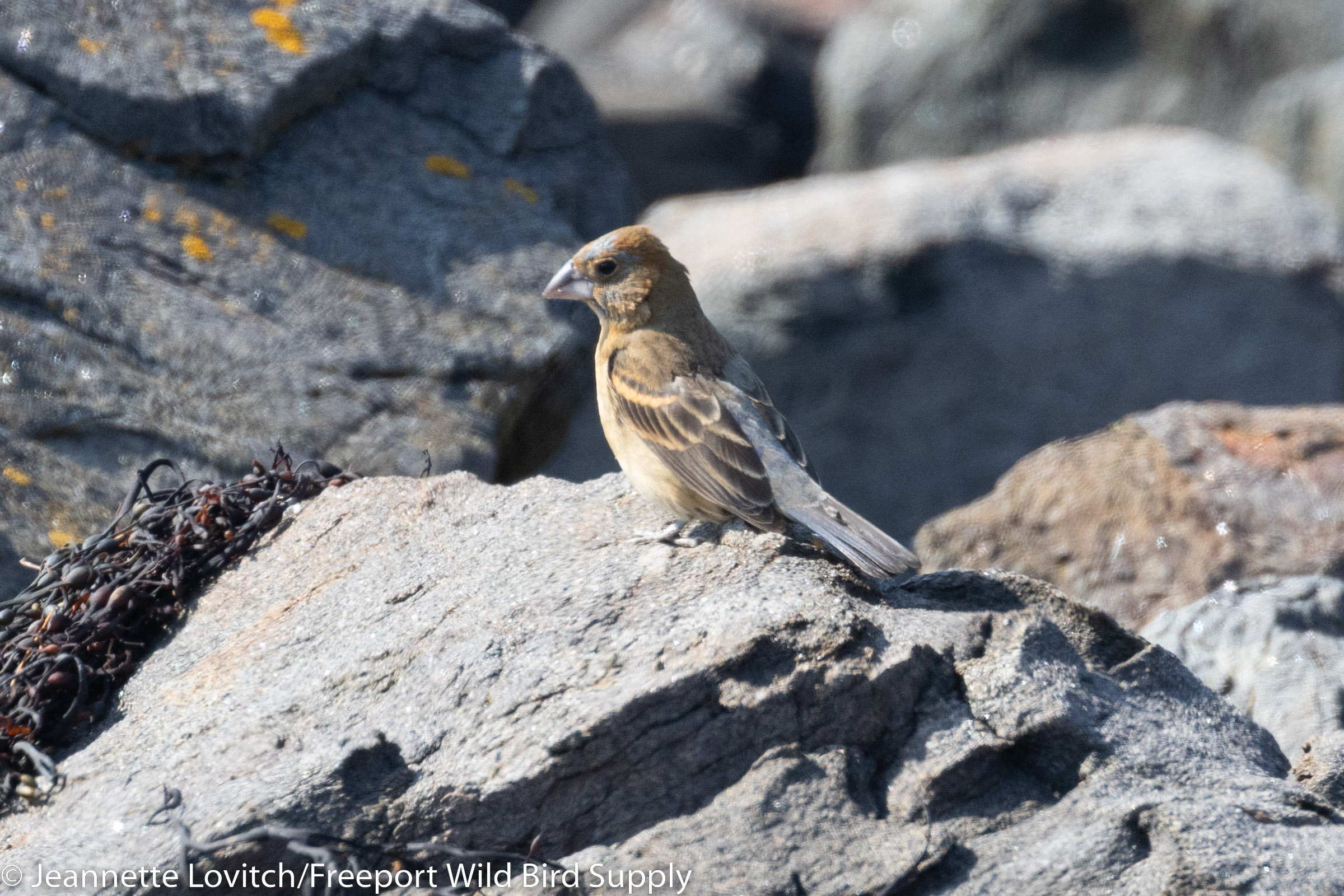
This first summer male Blue Grosbeak was present on Monhegan for at least a week, and unexpectedly, was flycatching for seaweed flies in shoreline rocks for most of the time, including the two days we looked at it with my Monhegan Spring Migration Weekend tour group.

With 5 days on Monhegan and one (half) day offshore, I enjoyed a lot of great birds this week. My observations of note over the past seven days included:

  • 1 Mourning Warbler, our property in Durham, 5/26 (Yard Bird #137!)
  • Monhegan Island with our Monhegan Spring Migration Weekend Tour group (full trip report and photos to come).

Daily:

  • Impressive numbers of Red Crossbills swirling around the island and tough to quantify, including many juveniles. High counts of largest flock(s) in the mid-20’s.  Three WHITE-WINGED CROSSBILLS were present each day at least through the end of the weekend. Rare for the island, a pair of HOUSE FINCHES appeared on the 27th and continued through the end of our stay.  Here are my group’s other daily highlights.

5/26:

  • 11 Bay-breasted Warblers (FOY)
  • 1 Cape May Warbler (FOY)
  • 1 female Evening Grosbeak
  • 1 Black-billed Cuckoo
  • 1 continuing ORCHARD ORIOLE
  • 1 Philadelphia Vireo (FOY)

5/27:

  • 1 continuing male DICKCISSEL
  • 1 continuing female/imm male SUMMER TANAGER
  • 1 female ORCHARD ORIOLE
  • 1 Olive-sided Flycatcher (FOY)

5/28:

  • 9 GLOSSY IBIS – circled the island early in the morning but did not land. My 225th Island Bird!
  • 1 probable immature male PURPLE MARTIN
  • 1 continuing 1st-year male BLUE GROSBEAK
  • 1 immature BROAD-WINGED HAWK
  • 1 continuing male DICKCISSEL

5/29:

  • 1 pair ORCHARD ORIOLES
  • 1 continuing SNOWY EGRET – Jeannette and I finally caught up with it for my 226th Island Bird!
  • 1 continuing 1st year male BLUE GROSBEAK
  • 5/30 (With Jeannette):
  • 1 continuing male ORCHARD ORIOLE
  • 1 Field Sparrow
  • Did not try to catch up with continuing rarities, although two quick checks did not turn up the Dickcissel or the Blue Grosbeak.
  • The Zeiss Pelagic with Cap’n Fish’s Cruises out of Boothbay Harbor, 6/2. This special mini-pelagic, sponsored by Zeiss Optics visited Eastern Egg Rock before heading 20 miles offshore. Trip report to come, but for now, the highlights:

1 Razorbill at Eastern Egg Rock

1 COMMON MURRE (between Eastern Egg Rock and Murray Hole)

350-400 total Wilson’s Storm-Petrels (FOY)

12 RED-NECKED PHALAROPES

  • TOURS AND EVENTS:

I’ll see you next week at the Rangely Birding Festival! Most (but not all) tours are sold out, but everyone can join me for the free and open to the public Birds on Tap! Event at Parkside and Main (beverages not included)!

Boothbay Mini-Pelagic Trip Report, 10/11/22

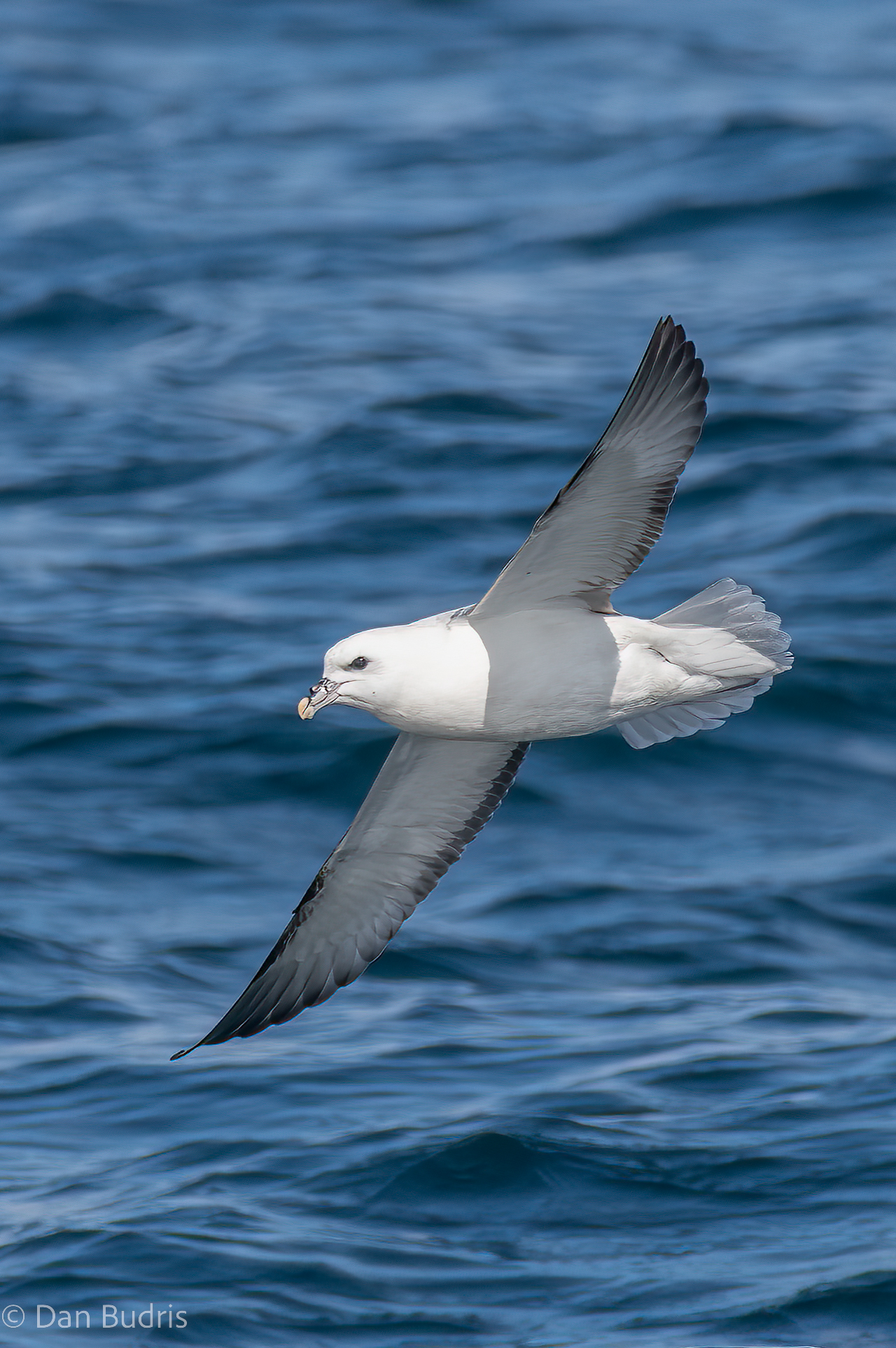
Northern Fulmar

Our third and final ½ Day Pelagic with our partners Cap’n Fish’s cruises out of Boothbay Harbor took place on a glorious fall day on Tuesday, October 11th.

OK, let’s get right down to business: it was NOT a South Polar Skua. This is not the first time a mea culpa was issued over a Stercorariidae. It won’t be the last. Certainly not my last, anyway.  But yeah, I got this one wrong, and I apologize.

We spotted a large, dark, and very heavy-looking skua/jaeger in flight parallel to the boat. Captain Nick did an exceptional job of staying with it, staying parallel to it, affording incredible views for an unusually long amount of time.  We were traveling at 18.2 knots, and the bird was slowly taking the lead. When it looked like it was thinking of landing, I had Nick angle slightly away so as not to make the bird concerned. It worked! It landed, we slowly worked our way up to it, and almost circled it before it took off.  High-fives were exchanged. Smiles reigned. We got a skua!  Big, barrel-chested, thick dark bill, and short tail. The very cold tones and extensive molt strongly suggested South Polar Skua. It would be a life bird for many.

I was convinced in the field, and I was convinced when I got off the boat. Everyone I talked to was convinced too. Other than a small feeling that the bill looked a little long, and the bird looked a little, well, not-menacing on the water, I had little doubt. But as I announce on all of my pelagics, all jaeger and skua identifications are provisional until I can review photographs.

The doubt -err, fear – began in the evening, as I looked over Jeannette’s shoulder as she began to sort photos. Starting with the skua, I wanted to make sure it was in fact a South Polar, and not a Great. That was my only real concern.  But then I saw her pics. I was observing through 8x binoculars, she was shooting at 400mm.  Details would likely emerge that I could not see in the field.  And I didn’t like those details.

That rear end did look a little tapered. The bill did seem a little thin. And wait, is that barring in the underwings? Uh-oh. Are we sure? What about the location of white within the outer primaries? Is it too narrow? And boy, it looks cuter on the water than I expected. And that bill does look two-toned and kinda long.

Photos were sent to a friend. The shadow of doubt cast over the room. He immediately said “Pomarine.”  But we discussed, and he left it off as “but I could buy this as a skua.” Another friend “That’s a skua.”  “I’m flip-flopping…maybe a hint of barring on the undertail and underwing coverts, but it looks so skua-like…the molt pattern is identical to one I saw a couple of weeks ago.”  Back and forth with these three friends continued. I posted to the Skuas and Jaegers of the World Facebook page; “Definitely a skua…” said the first commentor. Books and papers were referenced.

More photos were received.  And discussion continued.  Some photos showed what could be nearly impossible to argue was anything other than a South Polar Skua. I only wanted to look at these.

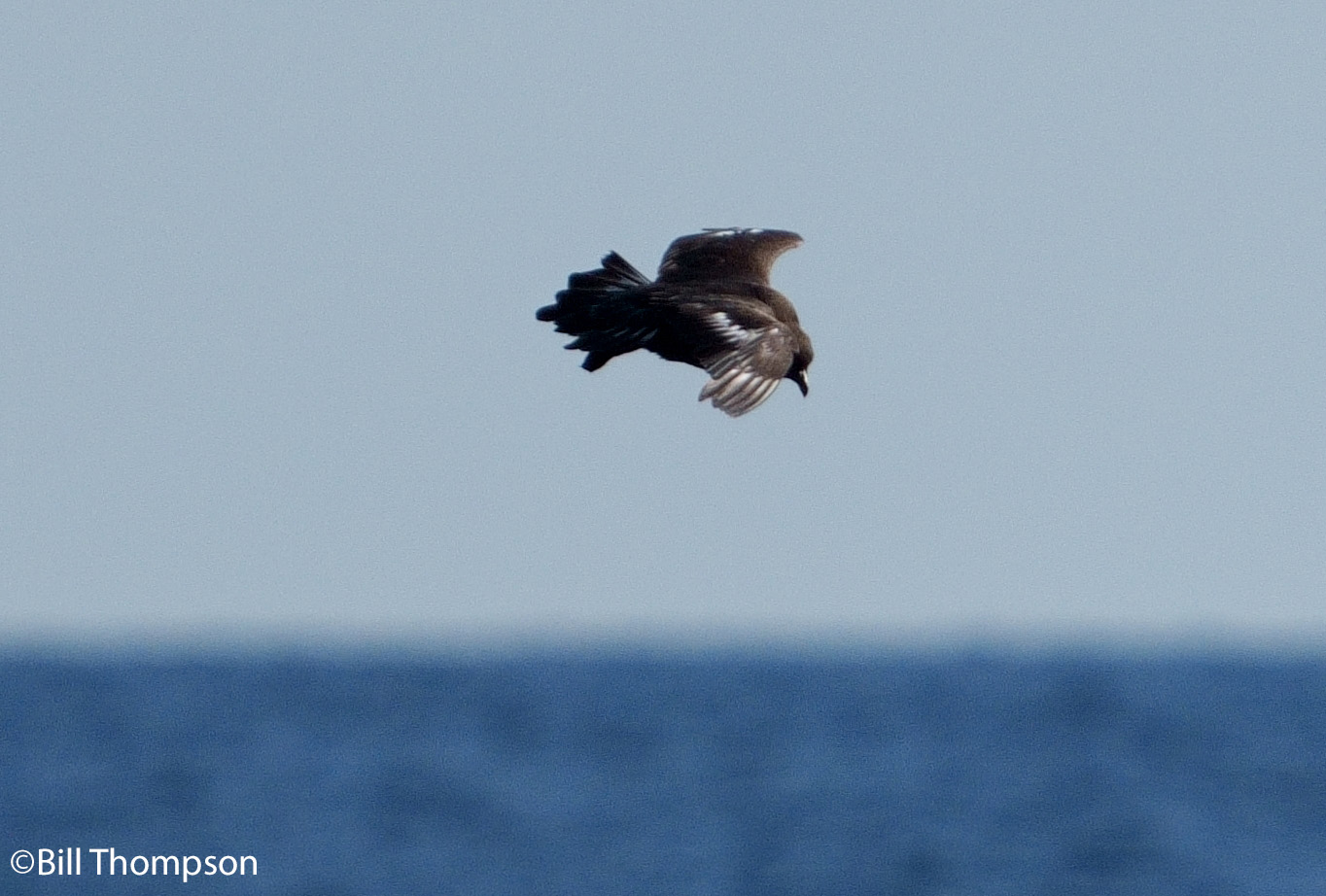
I mean, look at that short little tail!
And those dark underwings!

Sheepishly – knowing how tired he must be after a long drive to and from in the same day, I asked my friend Bill Thompson to check his photos. He jumped right on it, and sent this.

Well, crap.

Is that the beginning of the long, round-tipped central tail feathers of a Pomarine Jaeger? They’re so broad. And the rest of the tail is a worn, ratty disaster. That would explain why it looked so short-tailed in the field. But that bill looks short, stout, and all-dark.

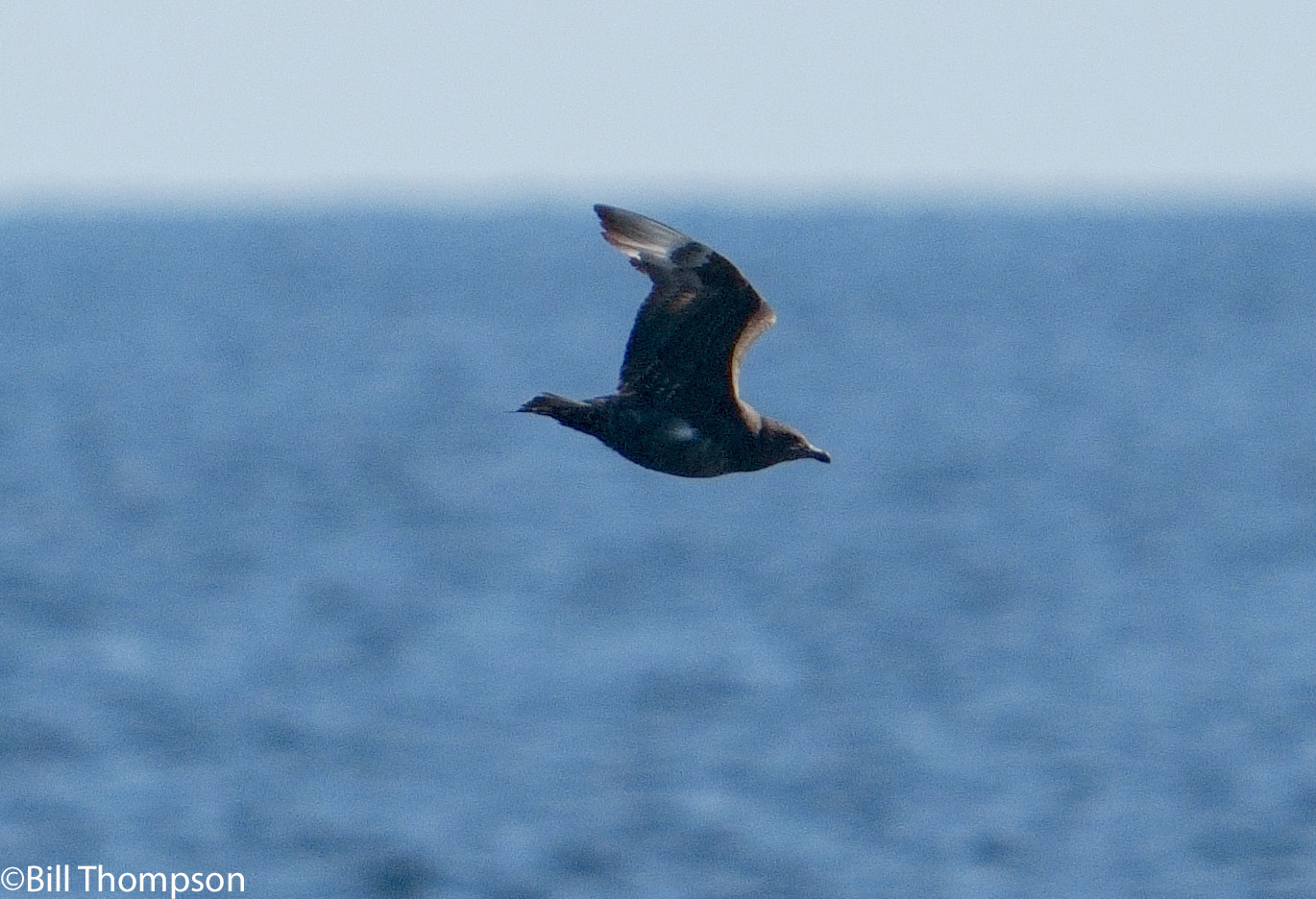
I asked for an underwing shot.

Yeah, that looks barred. But still, that bird was a massive keg.

These photos were entered into the various discussions, and uncertainty ruled as I finally passed out from boat and skua-induced exhaustion.

I awoke – stalled in turning my phone on – and what little glimmer of hope was crushed when I opened some emails from Tony Carapella that clearly showed a Pomarine Jaeger. I mean clearly, unequivocally, without a doubt.

“And upon further review, the call on the field is overturned. After the play, personal foul, unnecessary roughness on the trip leader’s self esteem. 15 yards…”

Sorry, folks, I got this one wrong.

But, hey, the rest of the trip was decent, too, even if we scratched the headliner off the top. Right? Please tell me it’s all OK?

Of course, this wasn’t the only quandary on the day either. Late in the trip, three jaegers gave us the slip. I am hoping someone got some distant photos that might yield a hint, but for now, they will go unidentified.  There were also two larger dolphins within a small group of Atlantic White-sided Dolphins.  Kelsey and I are still trying to figure things out. Stay tuned. They were not skuas, either, however.

Several Northern Fulmars included one that eventually gave fantastic views. We had a few Black-legged Kittiwakes, and Captain Nick did an amazing job getting us a close look at the first one that was loafing on the water. We also had an American Pipit fly-by, and a Yellow-rumped Warbler land in the cabin and rest for a while before departing.  

And it was an absolutely, insanely gorgeous day. The water had only a slight ripple, there was virtually no swell, and it was warm with plenty of sun (but just enough high clouds to reduce the glare). There could not be a better day to head into deep water in the Gulf of Maine.

In fact, the unreasonably benign conditions allowed us to motor even further offshore than usual to explore a new area. After finding two of our favorite spots a little, well, low on birds, we headed out about 28 miles to an area we found on the map known as “Mistaken Ground” where the bottom plunged to a depth of 918 feet.  I accept the name as a warning that maybe this would not be a good decision. But alas, it was where most of our action was. I could have spent all day here.

Northern Gannets

While the chum slick failed to work, perhaps because it wasn’t windy enough to waft the odor towards hungry birds, and there were long stretches with virtually no life in sight, overall, we had a solid list for merely 4.5 hours offshore.  The proximity to deep water and interesting underwater topography afforded by starting from Boothbay Harbor allows us to run these trips in a shorter timeframe, especially for those learning to get their sea legs. And today was definitely a day for building up one’s oceanic confidence. Confidence in skua identification, however, well, that is another story. Apparently, my “mistaken ground” was thinking I could identify these birds before studying photos on the computer! 

Here’s the annotated trip list:

  • 8 Canada Geese
  • 970 Common Eider
  • 113 Surf Scoter
  • 12 White-winged Scoters
  • 24 Rock Pigeon
  • 1 POMARINE JAEGER (see treatise above)
  • 1 PARASITIC JAEGER (one of the three distant birds that turned out to be identifiable from photos)
  • 2 Unidentified jaegers
  • 1 COMMON MURRE (spotted in outer harbor by a few observers)
  • 1 Razorbill (confirmed from jaeger photo bomb)
  • 9 Black Guillemots
  • 7 Black-legged Kittiwakes
  • 2 Bonaparte’s Gulls
  • 145 Herring Gulls
  • 1 Lesser Black-backed Gull
With Great Black-backed Gull (right)
  • 51 Great Black-backed Gulls
  • 3 NORTHERN FULMAR
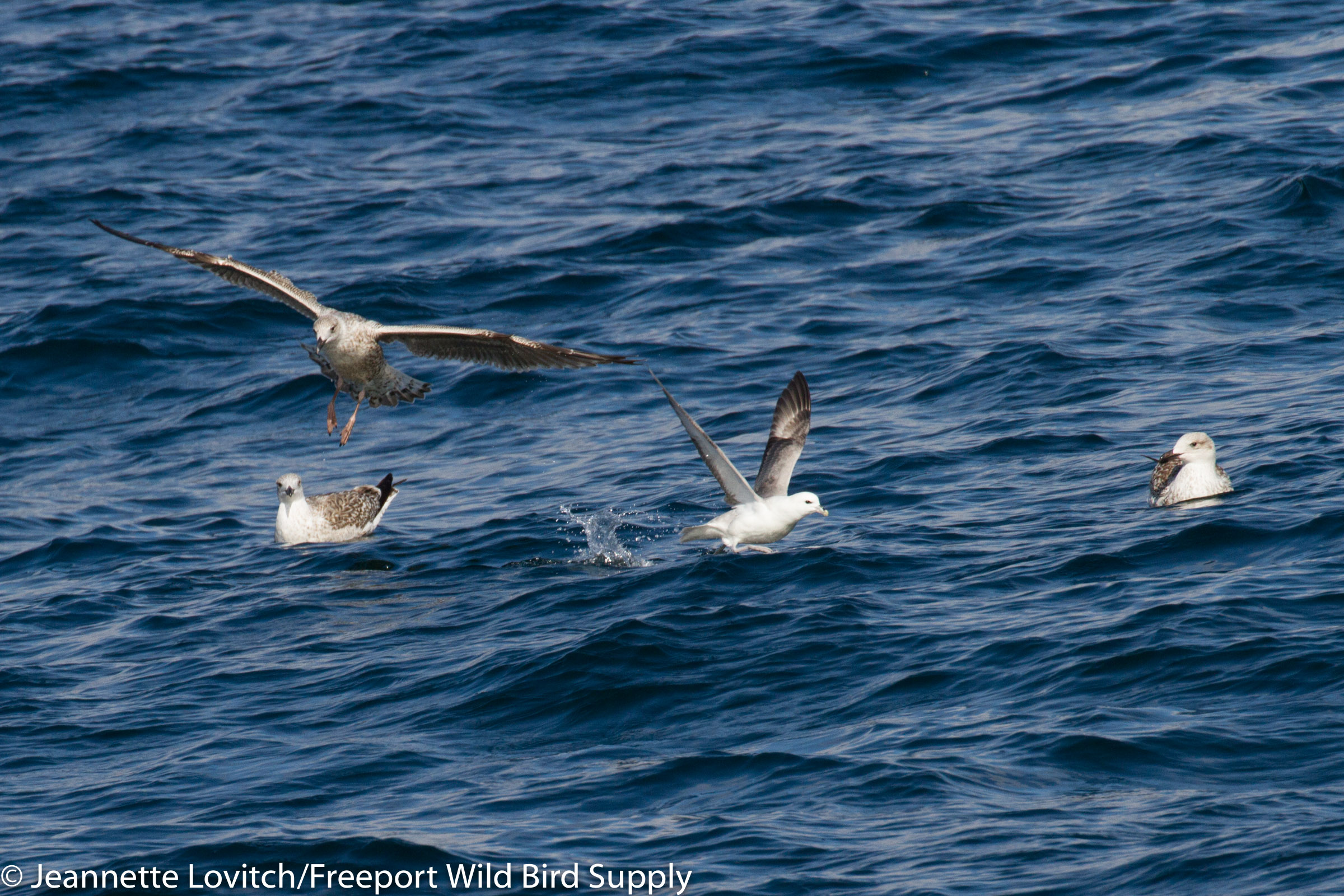
With Great Black-backed Gulls
  • 1 Red-throated Loon
  • 15 Common Loons
  • 242 Northern Gannets
  • 75 Double-crested Cormorants
  • 2 Great Blue Herons
  • 2 Bald Eagles
  • 1 Merlin
  • 8 American Crows
  • 1 American Pipit
  • 1 Yellow-rumped Warbler
  • 1 Unidentified passerine.

Mammals:

  • 1 Minke Whale
  • 1 small pod of Atlantic White-sided Dolphins
  • 2 unidentified larger dolphins (still working on ID possibilities but we have no conclusive photos yet)
  • 2 Gray Seals
  • # Harbor Porpoise
  • # Harbor Seals

Insects:

  • 1 Monarch

2022 Seal Island Trip Report (The “not-so-search for Troppy), 7/23.

After 17 consecutive summers in the Gulf of Maine, “Troppy” the Red-billed Tropicbird failed to return to Seal Island.  Arriving in 2005, but continuing annually throughout the summer since 2009 exclusively at Seal Island, Troppy had become a mainstay of summer birding in Maine – and our tour calendar!

Arriving as an adult, Troppy was therefore at least two years old when he was first sighted in 2005.  Since most sorces seem to reference “16-30 years” as a lifespan, a 19-year old “Troppy” would be getting a little long in the tooth, err, bill.  But, as I romanticized in my 2019 article for Birding magazine, we all hoped he would find the long lost love. Maybe he did. Maybe he’s making a trop-ling somewhere in the Caribbean where he “should be.”  Yeah, that’s what I’ll think.  We need more happy thoughts these days.

Wherever he might be, it was not Seal Island or any other Gulf of Maine seabird island this summer, and with his absence, tours to Seal Island were few and far between. Our first one cancelled, but we were able to run our July 23rd departure with our friends at Isle au Haut Boat Services thanks to a dedicated group of birders who know how special Seal Island is, with or without the famous rarity.

And Seal Island most did not disappoint!  Even without a tropicbird (or a Tufted Puffin for that matter, which of course we all hoped would make a reappearance).

First, the weather: it was unbelievable! Actually, it was downright hot, even offshore, and especially away from what little breeze there was when we were not motoring. Seas were a gentle 2-3 feet, with an occasional slightly larger but inconsequential swell.  Falling rapidly, it was incredibly smooth in the coves of the island, and on the way back where we enjoyed following seas for a very flat and fast ride.

Shortly after departing Stonington, we spotted our first Atlantic Puffin before we even cleared Isle au Haut.  A few more, scattered small numbers of Wilson’s Storm-Petrels (I tallied 41 in all), and a few Razorbills punctuated our trip out.  Not much was happening around Saddleback Ledge though.

Of course, the show realty began upon arrival at Seal Island.  The heat sent the alcids into the water, so virtually all of the Atlantic Puffins that were present were in the coves and often allowing close approach and stellar photo ops.

We worked our way around the island, slowly improving our views of Razorbills (at least 6) and finally finding two Common Murres. 

Razorbill
It took a while, but we finally found a Common Murre – it was even the uncommon “Bridled” morph.

We motored around the south end, where the swell was just enough to prevent us from getting too close to the Great Cormorant colony – Maine’s last. But the nests brimming with growing chicks was still thoroughly enjoyed.

Off the northeast end, we cut the engine and drifted among the alcids.  Off the open waters came a flock of 12 Whimbrel which we heard first before they flew close by. Likely having tanked up on blueberries in a barren Down East or in the Maritimes, they didn’t seem to consider pausing on the island. Later, 8 more flew by even further offshore.

Laughing Gull

While the lack of shearwaters all day was disappointing, the one Great Shearwater that we saw came in for a close look at us!

A little group of Sanderlings flew by, a few peeps were along the shoreline, and we spotted several calling Spotted Sandpipers.

And don’t forget about all of the dapper little Black Guillemots!

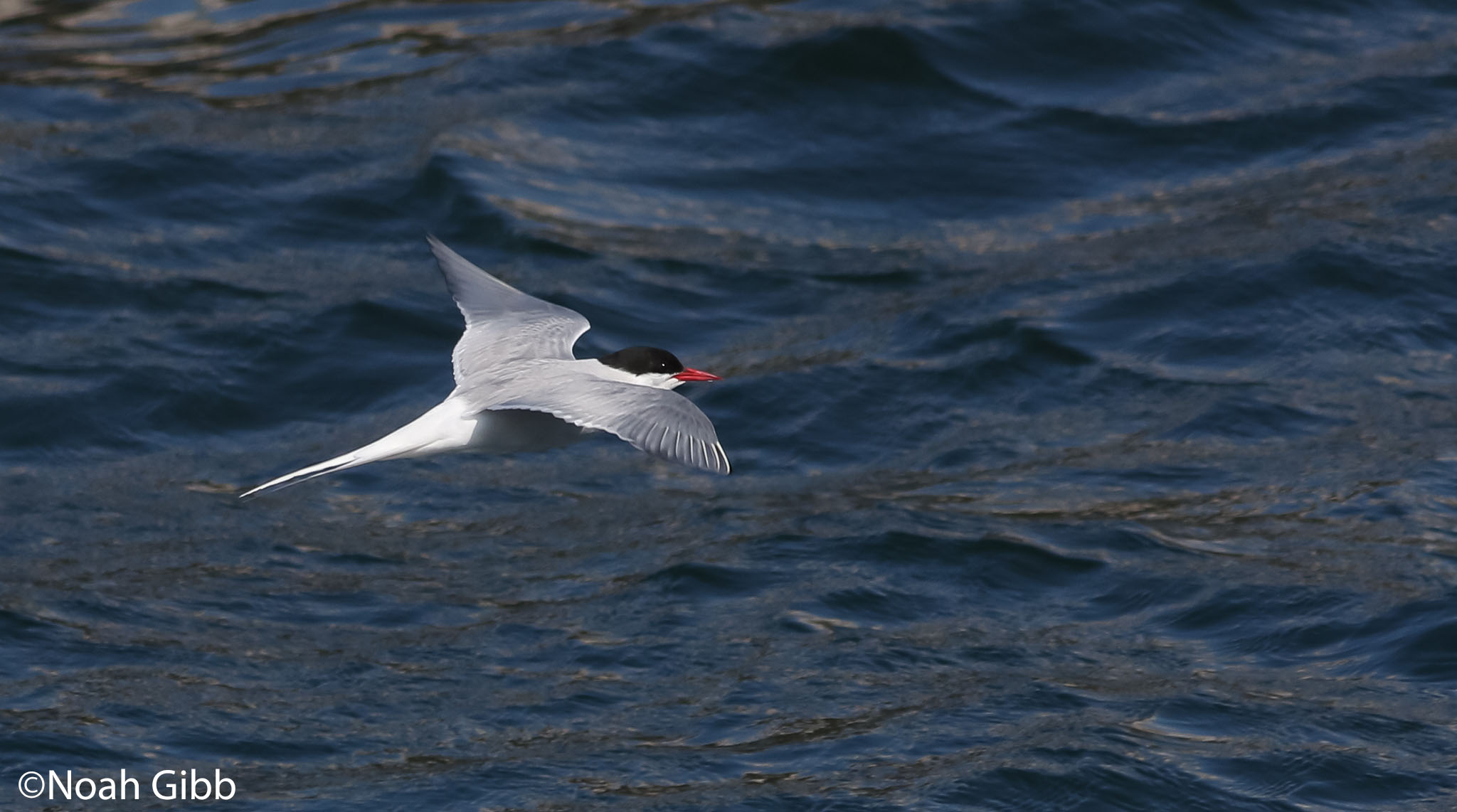
And of course, there were the terns. Hundreds of Arctic and Common Terns were present, with a goodly number of juveniles learning the ropes. Arctic Terns were particularly conspicuous today, with many making close approaches of the boat or disregarding our presence to take a bath.

Arctic Terns
Juvenile Common Tern.

I both enjoyed and lamented the fact that I didn’t have Troppy to stress over. In fact, without needing to be in position and waiting for him, we took advantage of the gentle seas to not only circumnavigate the island, but also spend ample time drifting in sheltered coves, photographing alcids and searching for a big, black puffin with punk-rock hair.

The eastern side.

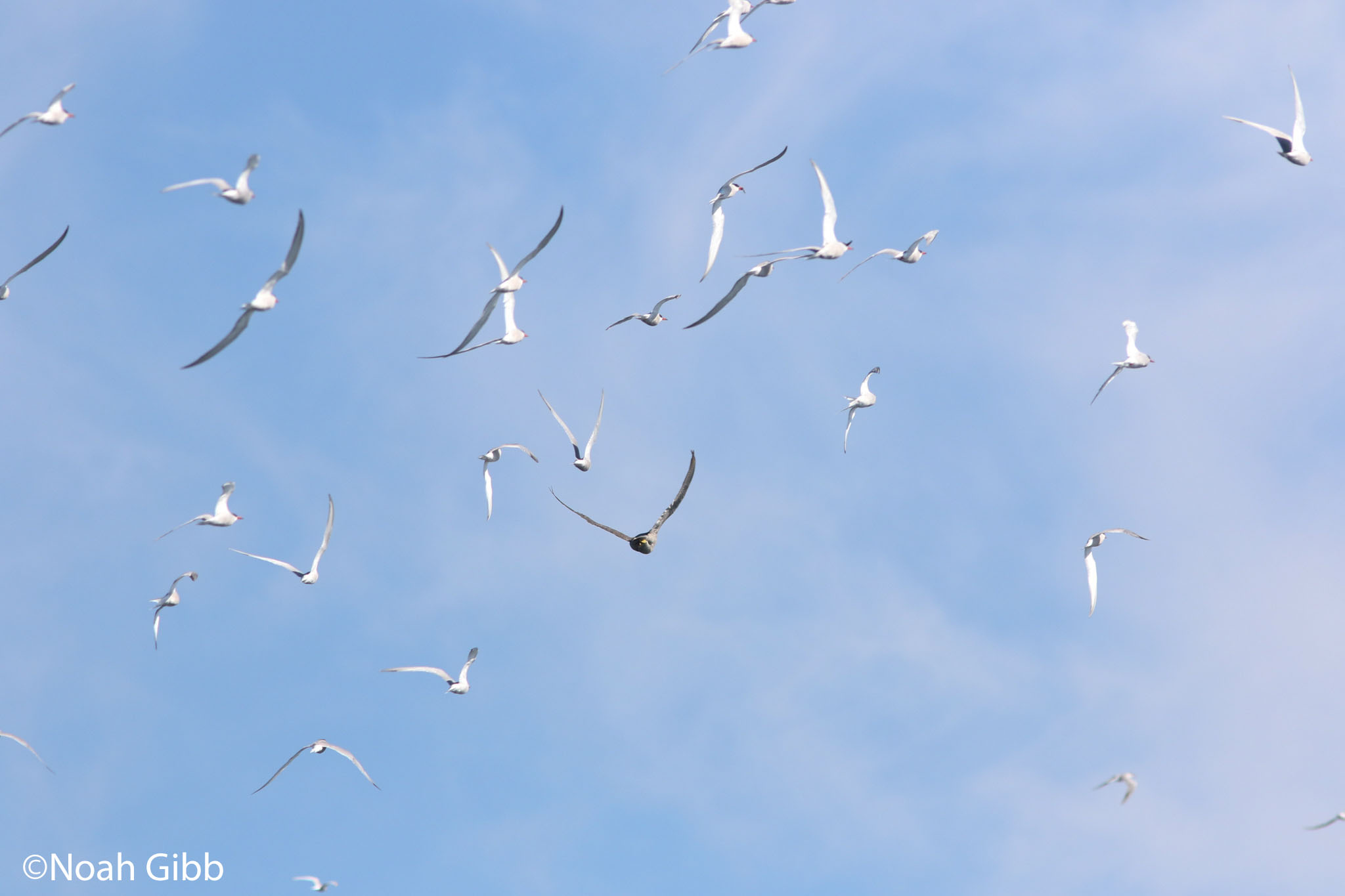
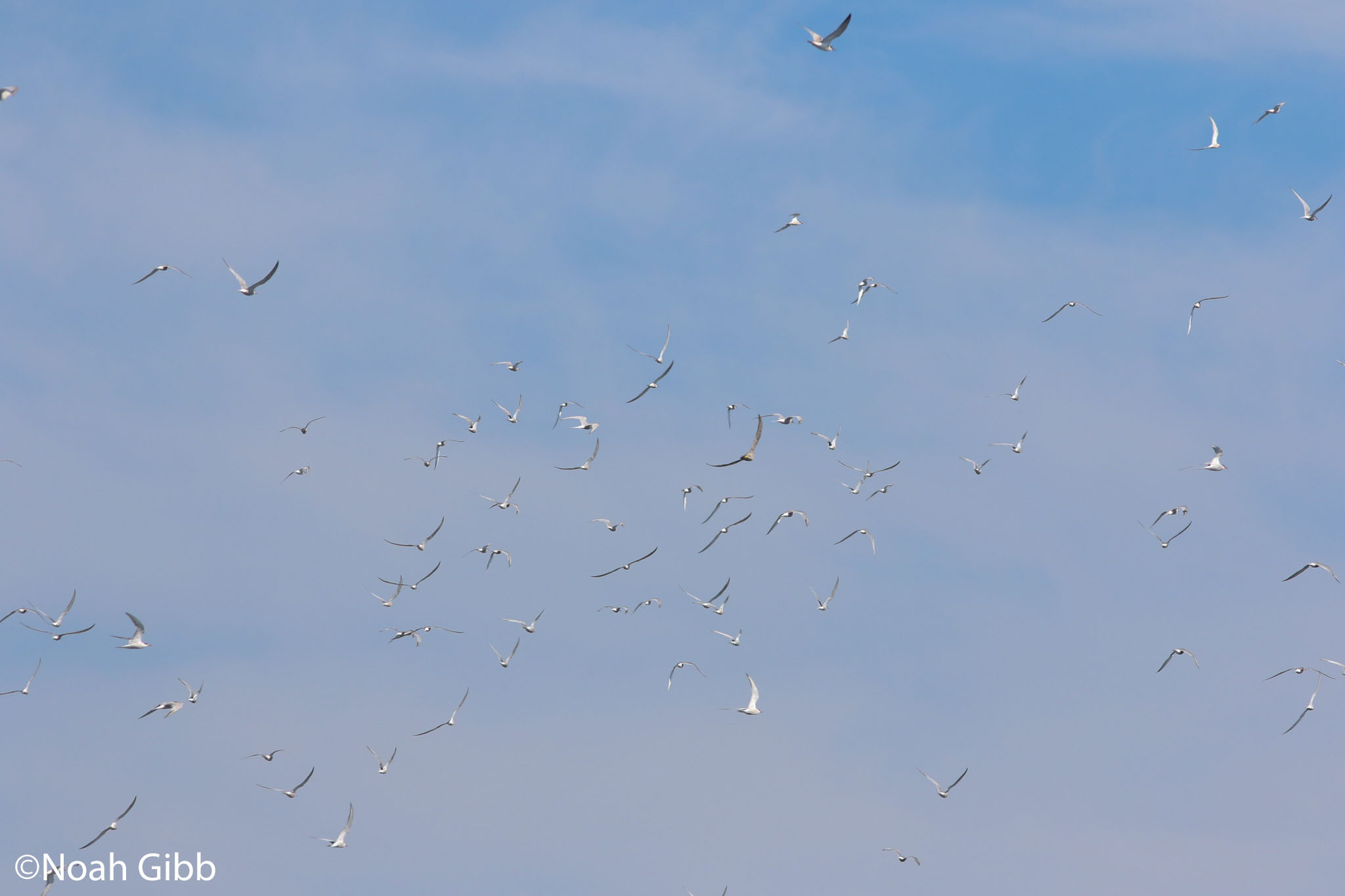
But we still had a time limit for our charter, so we decided to spend our last moments enjoying the action at the tern colony. That’s when a Peregrine Falcon arrived.  While this is a most unwelcome guest at a seabird colony and we were conflicted about seeing it, it was also impossible not to sit back and watch the show. 

It surprised the terns by coming up and over the backside of the island, scattering the entire colony. Upon identifying the intruder, all of the adults made a beeline and began diving, mobbing, and otherwise trying to drive the predator away. Watching one of the world’s greatest – and fastest – predators in action was a real special treat, but we were also not upset that it came away empty; we were rooting for the terns.

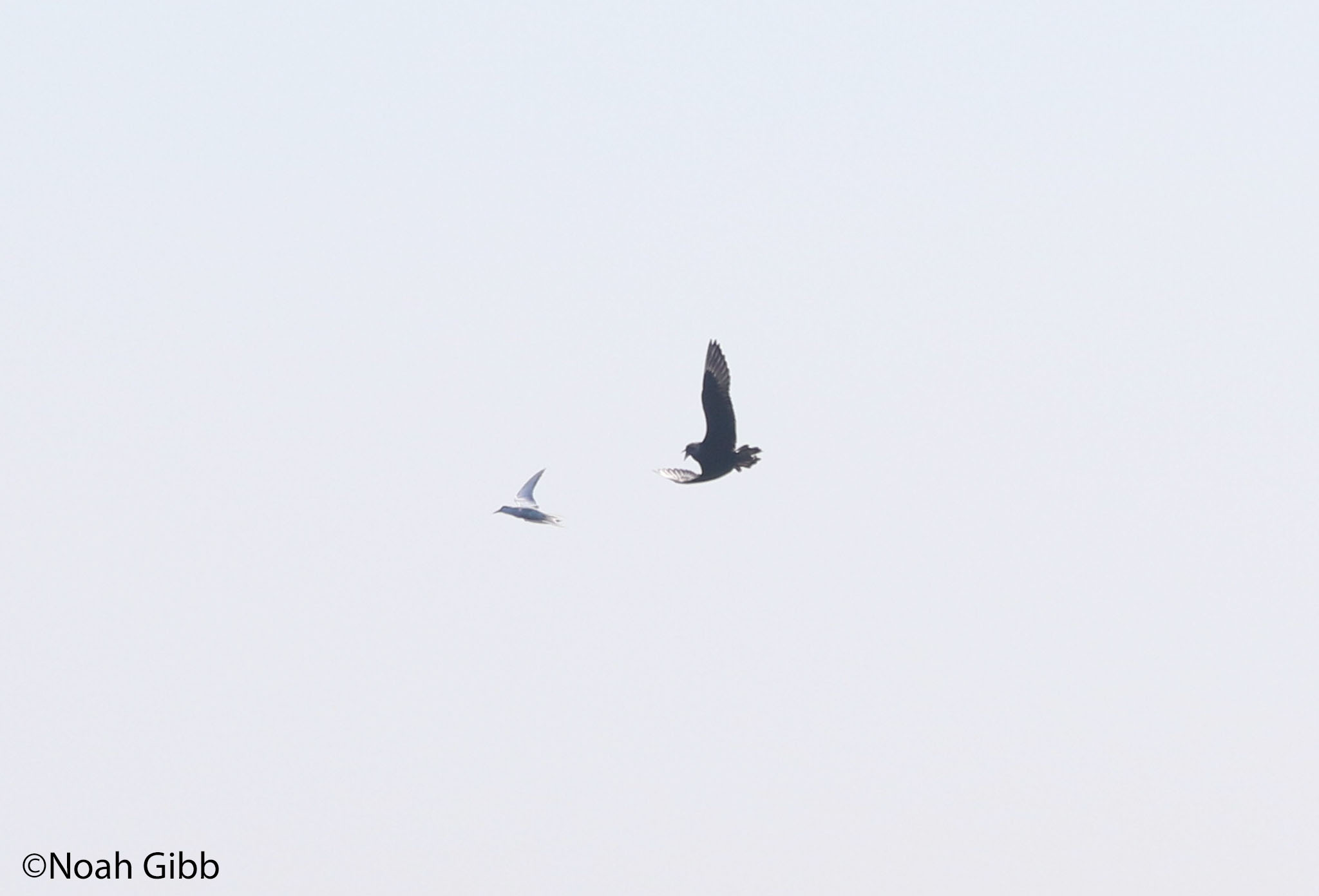
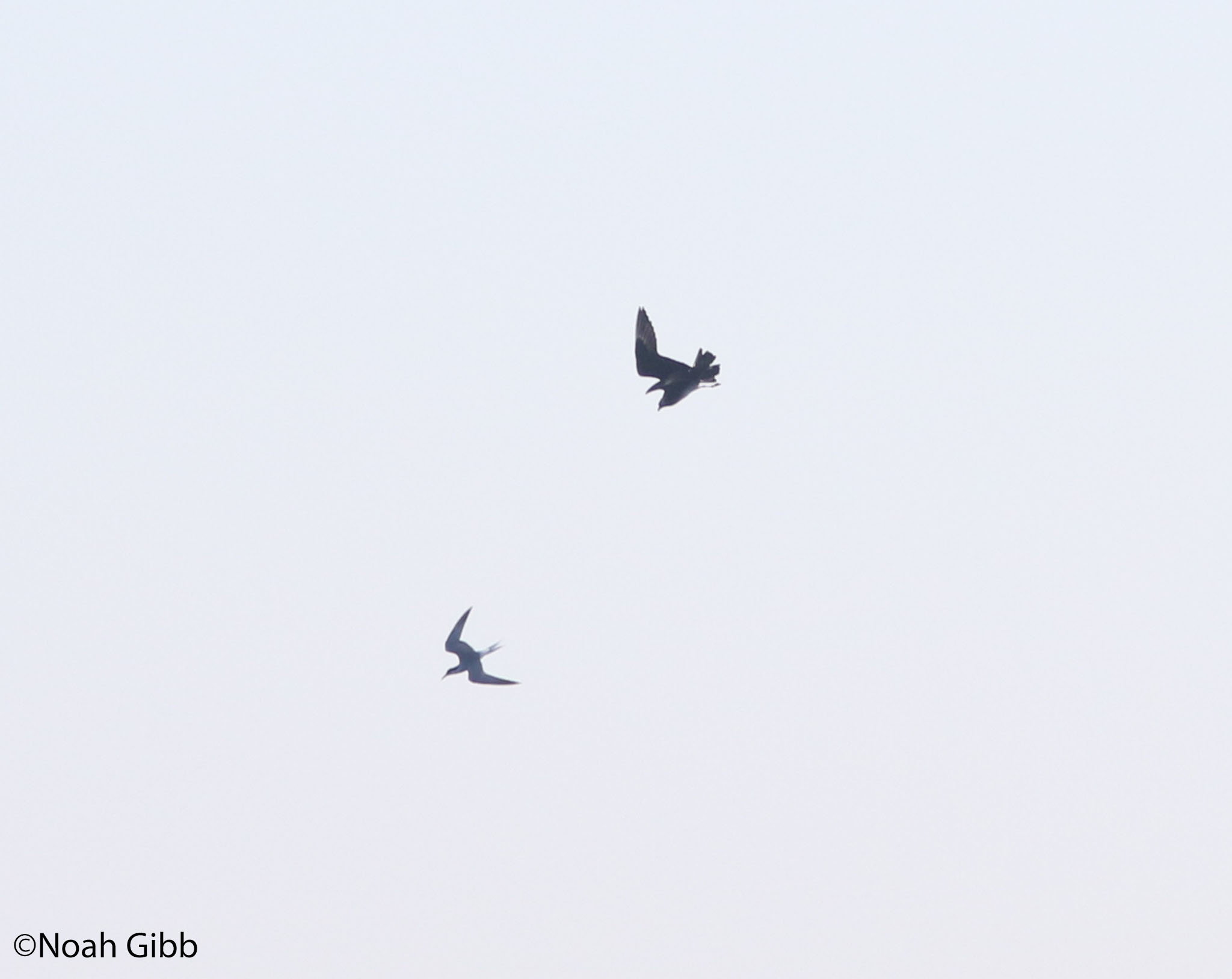
If that wasn’t a grand finale, I don’t know what is.  Well, maybe the Parasitic Jaeger on the way back!

About halfway between Seal and Saddleback Ledge, I first thought it was a Peregrine tearing in after a lone Common Tern. But when it became clear that it was a jaeger, I yelled for Captain Mike to “step on the breaks.”  We watched the dogfight for several minutes, and it was spectacular to see. It was just far enough away that we couldn’t tell if the tern gave up its fish, but it definitely didn’t do it willingly. 

Shortly thereafter we began to run into little rafts of Razorbills (a conservative tally of 36, plus 7 more between Saddleback Ledge and Stonington) and scattered Atlantic Puffins. We had quite a few more Wilson’s Storm-Petrels on the way back, and finally some Northern Gannets.

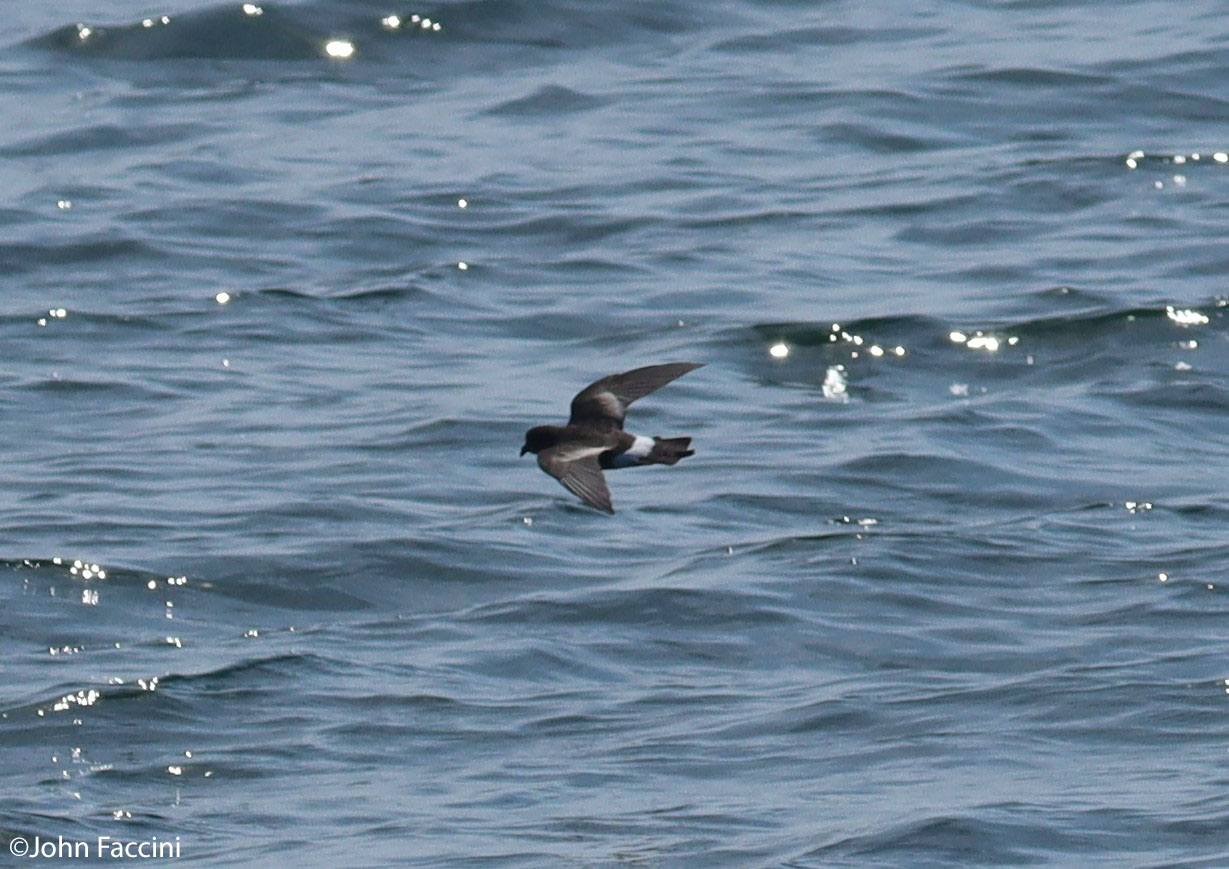
Wilson’s Storm-Petrel

We even had time to check some rocky islets for roosting shorebirds (none), loafing Harbor Seals (lots), and maybe spot something like a Great White Shark (nope; but the boat had one the very next day!).

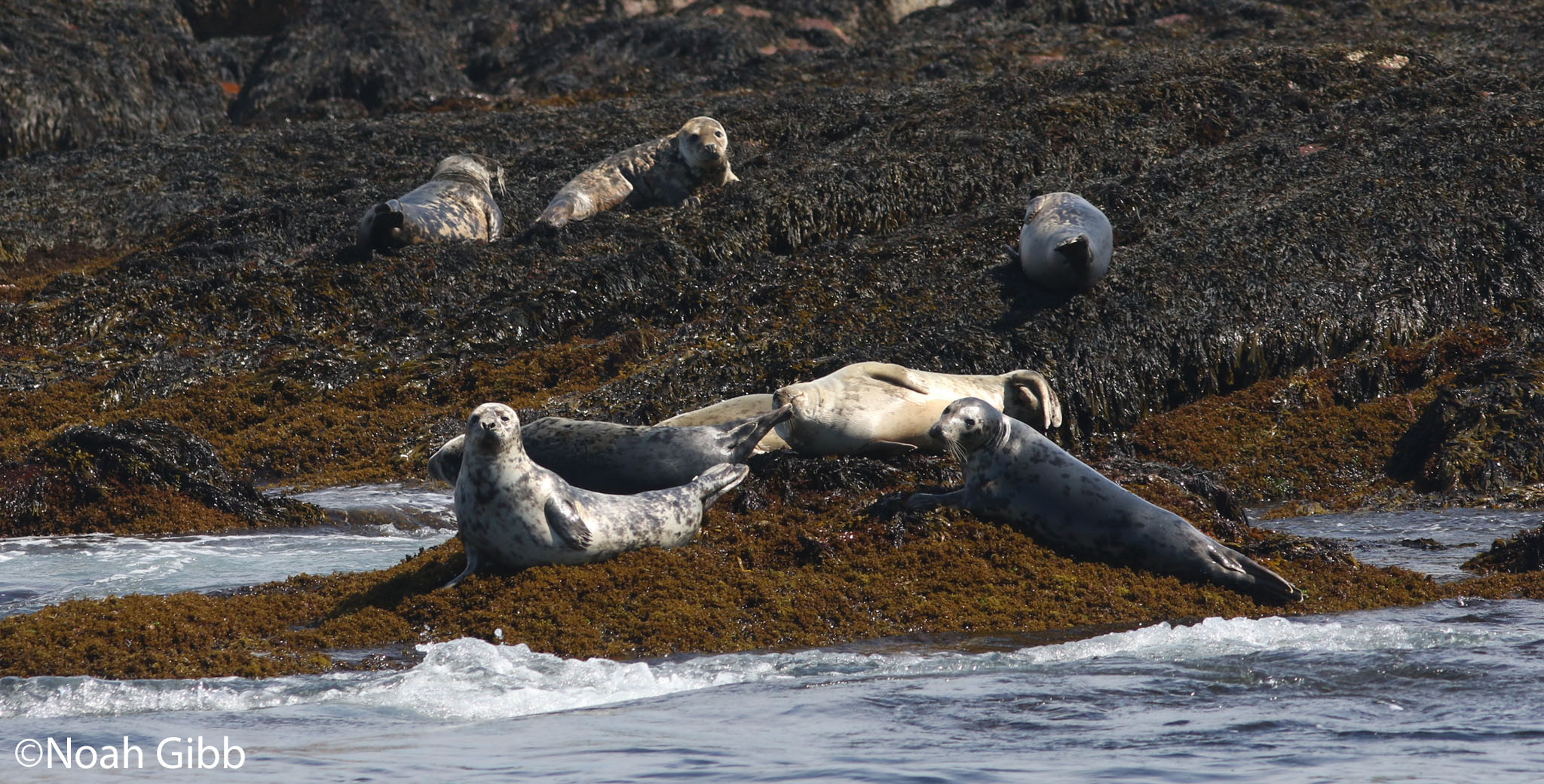
Gray Seals and Harbor Seals. Note the “horse’s head” profile of the Grays, verses the puppy-like Harbors.

In other words: what a trip! And exactly why it’s well worth a tour to Seal Island regardless. That being said, I must admit, it was not quite the same without “Troppy.”  But as a guide, my stress level was a lot lower!  Having seen him 9 times out of 12 visits to Seal, I consider myself beyond fortunate. I’m also so happy to have shared his glory with so many other birders on all these tours. So, wherever you are, Troppy, I’ll continue to lead trips to Seal Island in your honor!

Looking back at “Troppy’s Cove”