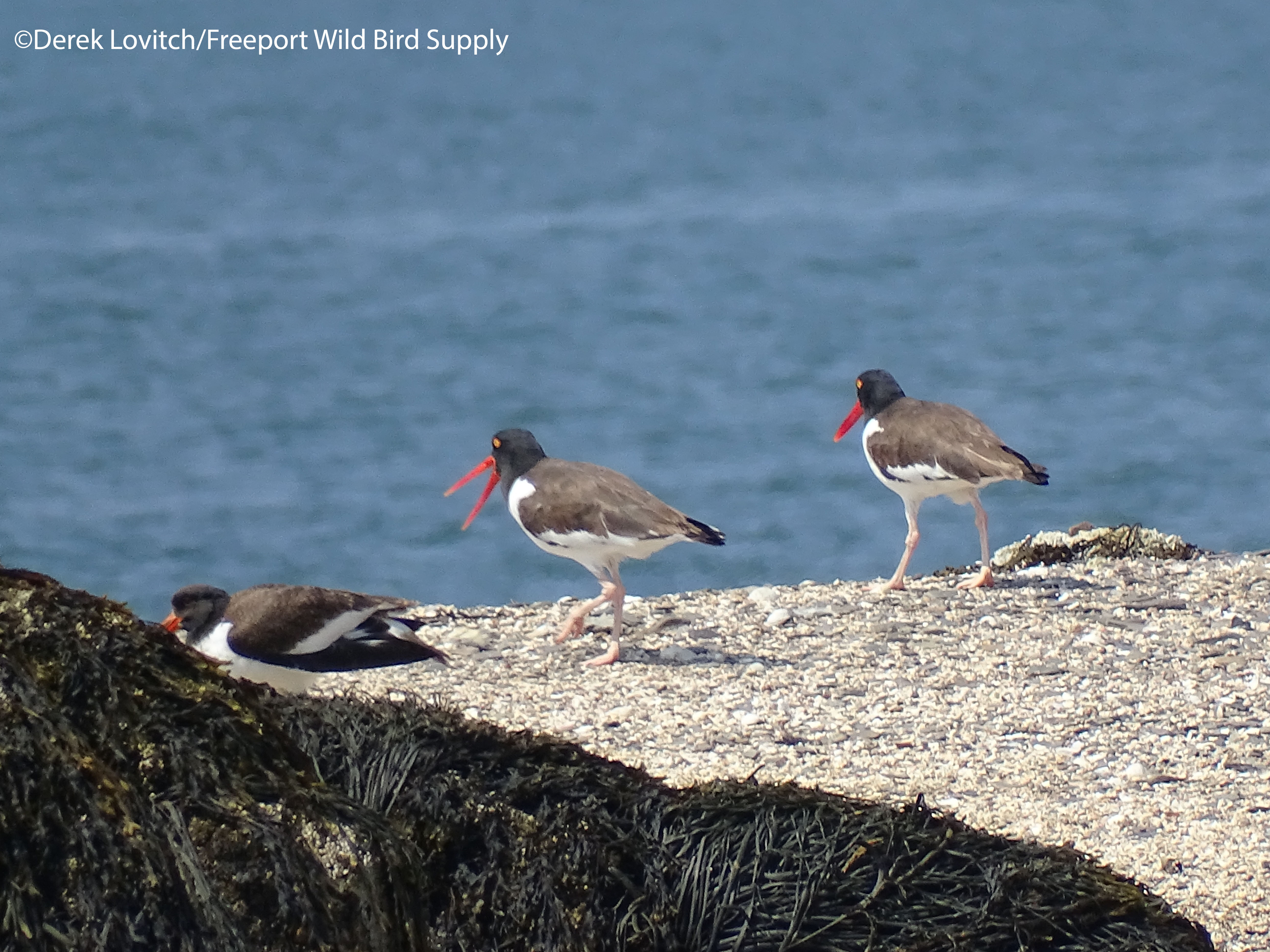
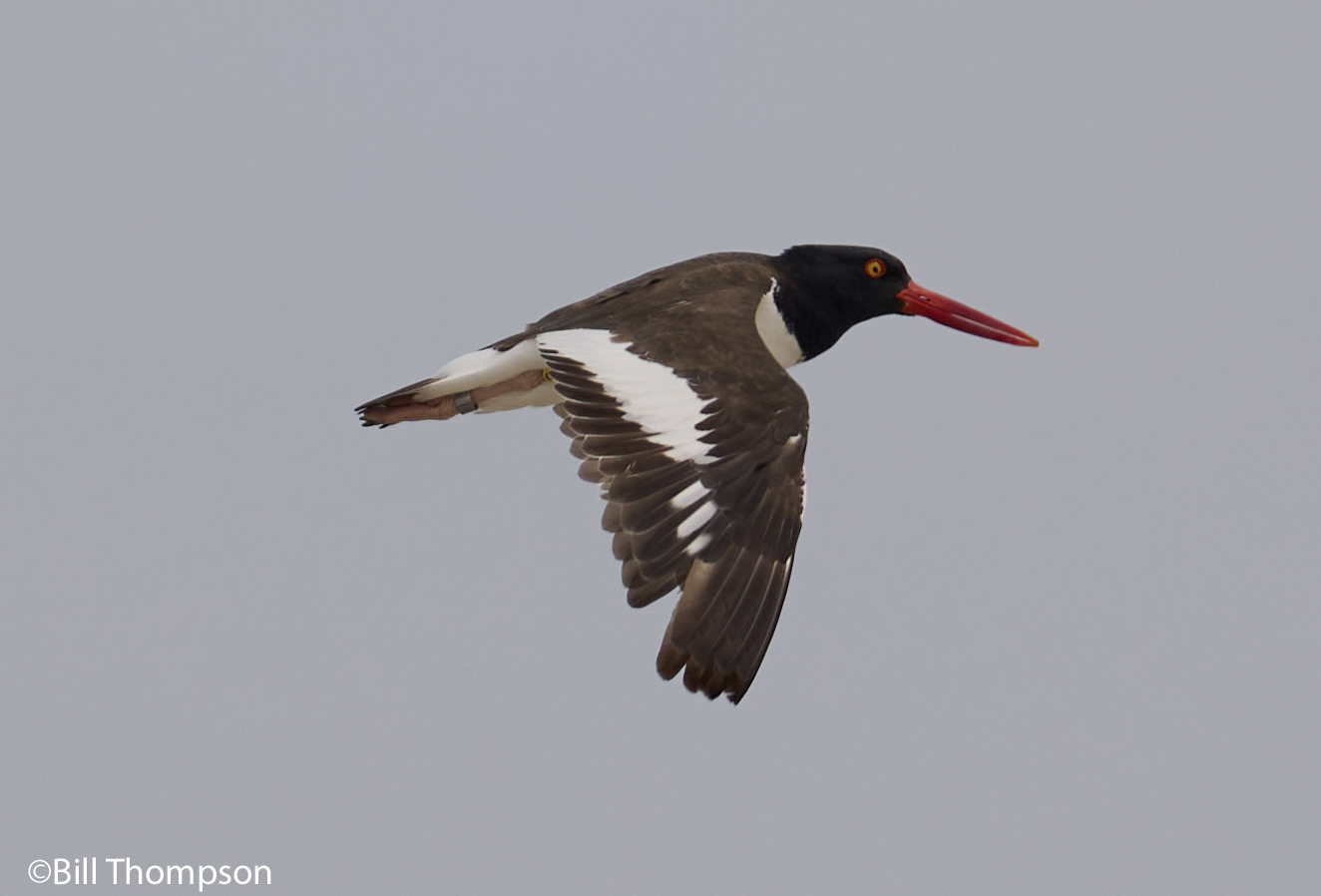
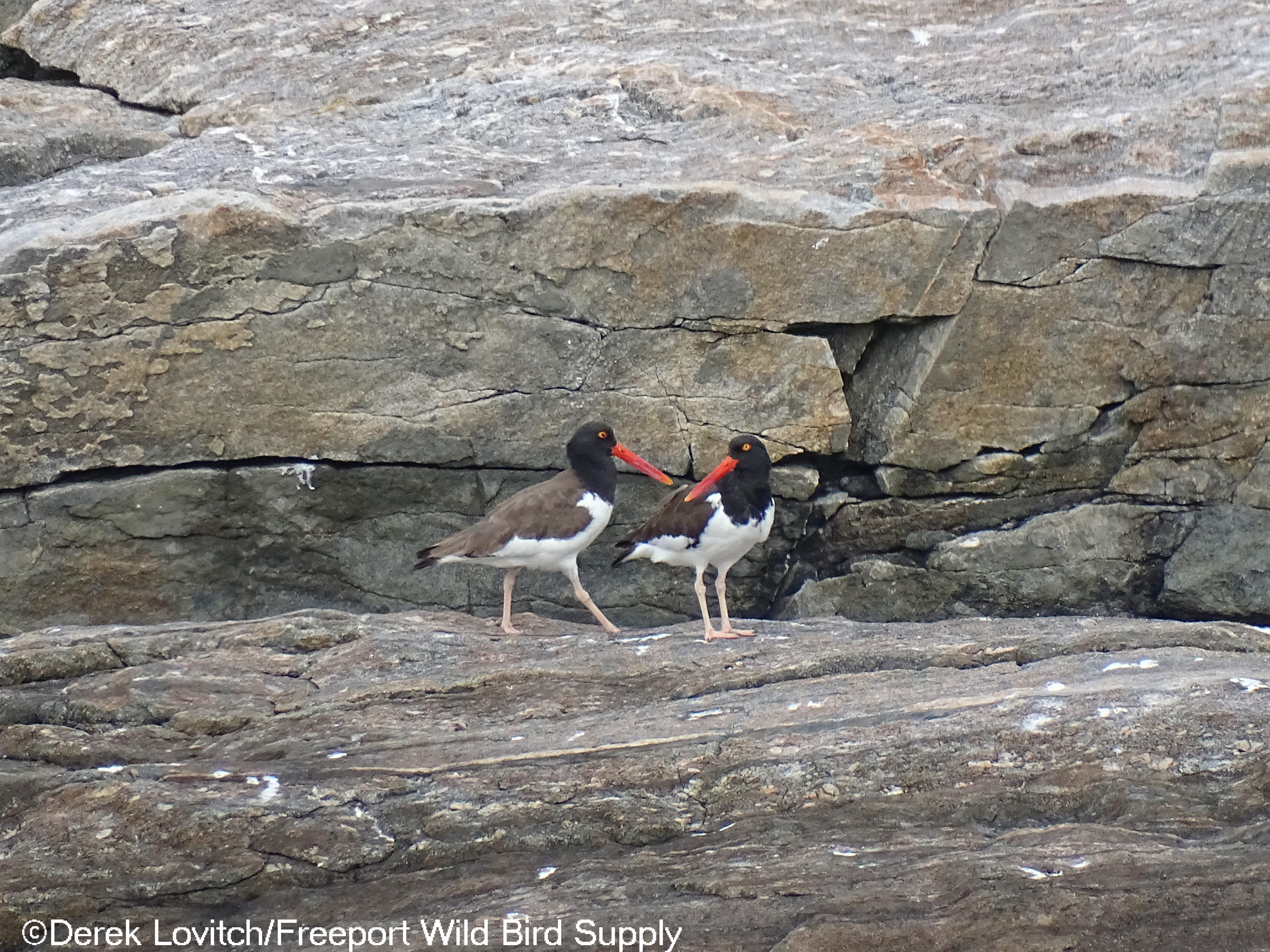
Suspected of breeding in 2022 and confirmed in 2023, a pair of American Oystercatchers has now nested annual on the tiny Upper Green Islands way up in Casco Bay off Yarmouth. On the 17th, our annual shorebird-focuses Birds of Casco Bay with Seacoast Tours collaboration documented a pair of adults with a juvenile once again. Since we discovered them on this tour in 2022, it’s been exciting to visit them each summer. Who would have thought this tiny island and ledge could support one of only a dozen or so pairs in the entire state? Full trip report here.
Two birdwalks, two shorebird-centric tours, and two whale-watches made for a very nice, diverse array of observations of note for me over the last 10 days (see note in shorebird high counts):
3 Long-tailed Ducks (2 continuing from previous week), Simpson’s Point, Brunswick, 8/9 (with Saturday Morning Birdwalk group).
1 Bonaparte’s Gull and 6 Great Egrets, Sabattus Pond, 8/11 (with Jeannette).
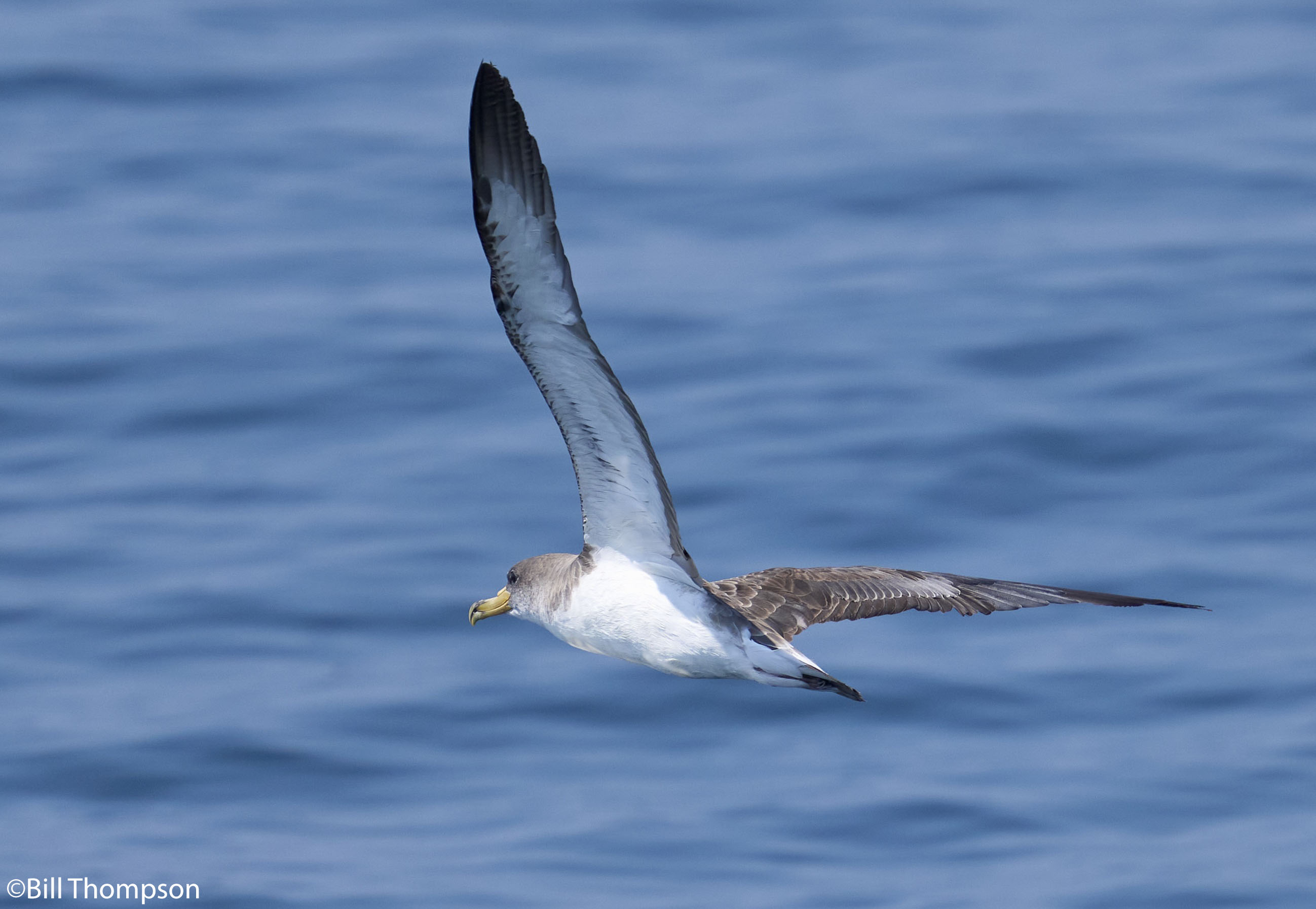
8/12 morning Puffin/Whale Combo cruise with Cap’n Fish’s Cruises out of Boothbay Harbor (with Bill Thompson): 2 American Oystercatchers at Eastern Egg Rock. Offshore of EER = 159 Wilson’s Storm-Petrels, 17 Cory’s Shearwaters, 11 Great Shearwaters, 2 Northern Gannets, 1 Sooty Shearwater (Bill added a second Sooty and 1 Common Murre).
We checked the underwing patterns of every Cory’s Shearwater we could.
8/12 afternoon Puffin/Whale Combo cruise with Cap’n Fish’s Cruises out of Boothbay Harbor: 5 American Oystercatchers at Eastern Egg Rock. Offshore of EER = 104 Wilson’s Storm-Petrels, 6 Cory’s Shearwaters, 3 Great Shearwaters, 2 Northern Gannets, 1 MANX SHEARWATER.
1-2+ Red Crossbills, Popham Beach State Park, Phippsburg, 8/14.
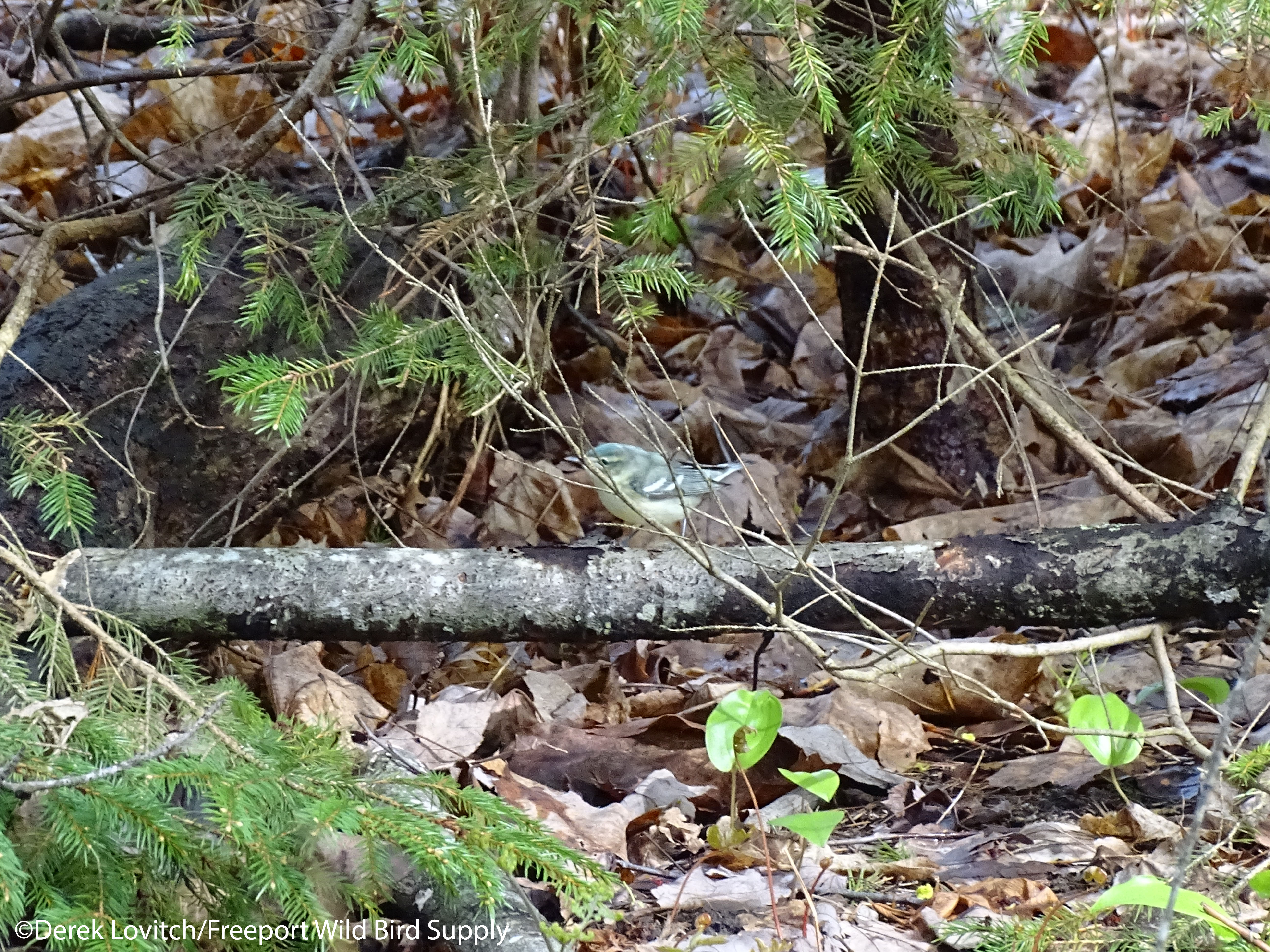
1 molting adult Bay-breasted Warbler (more evidence of a limited molt-migration in Boreal birds to the southern coastal plain), Old Town House Park, North Yarmouth, 8/16 (with Saturday Morning Birdwalk group).
For my “shorebird high counts,” I prefer to visit at least one of each: high tide hotspot, low tide spot, “grasspiper spot,” and a freshwater location, and it must include a visit to local hotspots Wharton Point and the Walsh Preserve as I attempt to make these comparisons comparable week-to-week and year-to-year, which, for my own notes if nothing else, is why I put these together (but hope you find them of value, too). Just due to life and scheduling, it now often takes me more than a week to hit all of these “requirements,” so I am going to try and do every 10 days instead of weekly. Therefore, here are my high counts over these past 10 days:
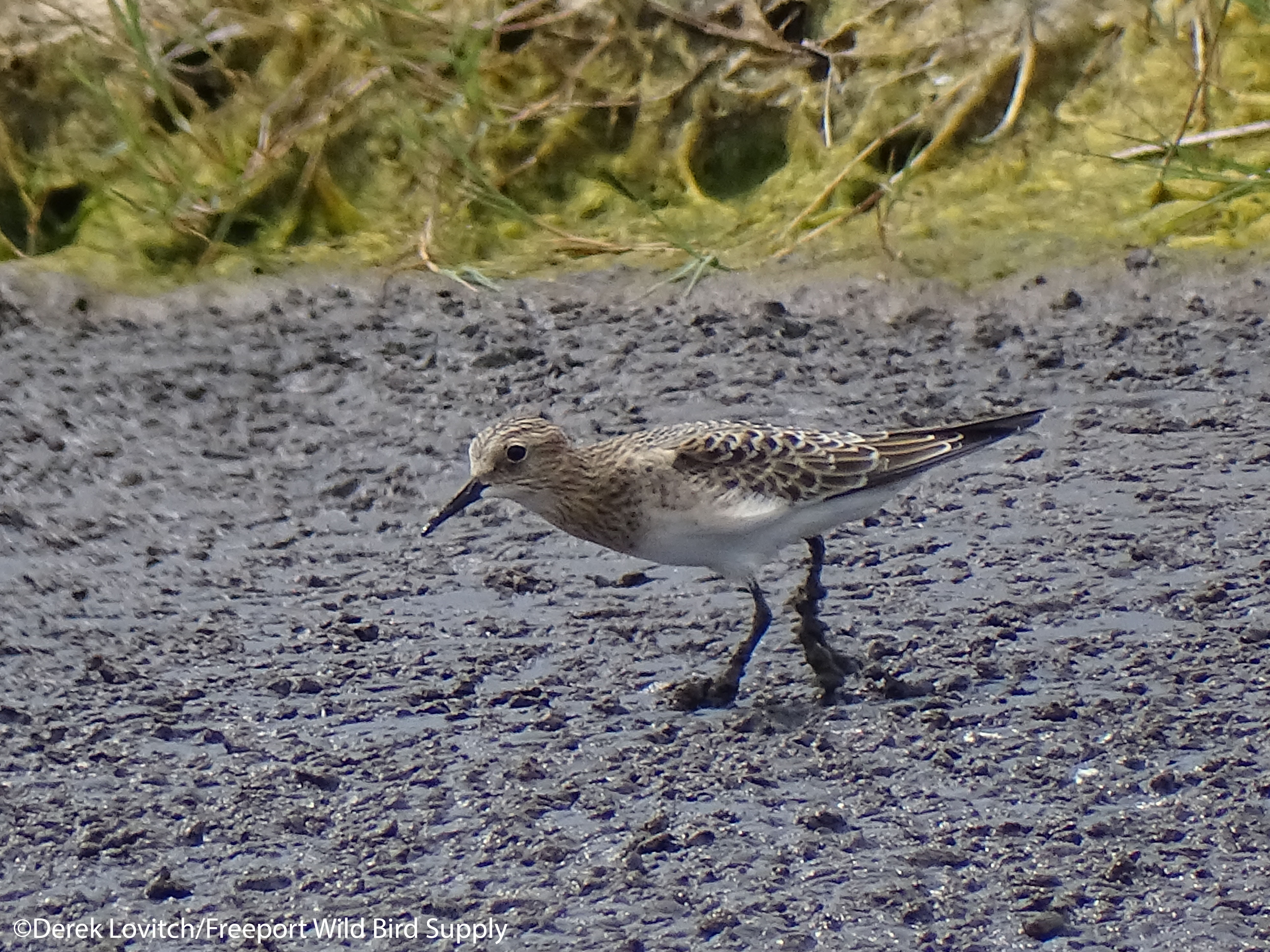
One of two Baird’s Sandpipers that were in the salt pannes of the Eastern Road Trail through Scarborough Marsh on the 7th, it was one of an estimated 3500+ shorebirds present that day. Low water conditions are currently ideal, but they are drying out fast, and without some rain in the next week, this hotspot might just become too dry to hold many birds.
With a busy few days of catching up, my birding was limited immediately upon our return from our summer vacation. However, I made up for it this week with a couple of tours and two birding outings with friends. There is a surprising number and quality of summertime rarities around the state right now, but I stayed fairly local and tried to find my own rare shorebird or two! Here are my observations of note over the past 12 days here in Maine.
A vocal Yellow-billed Cuckoo continues daily in our yard all week.
1 Great Egret, flying over downtown Waterville at dusk, 7/28 (with Jeannette).
2 Long-tailed Ducks, Simpson’s Point, Brunswick, 8/1.
1 TRICOLORED HERON (FOY), Pelreco Marsh, Scarborough Marsh, 8/3 (with Birds on Tap – Roadtrip! Tour Group). Photo in trip report here.
3 adult RED-NECKED GREBES, 1 White-winged Scoter, and 1 Black Scoter, Ocean Avenue-Biddeford Pool Beach, Biddeford, 8/5 (with Bill Thompson)
1 female PURPLE MARTIN, Timber Point, Biddeford, 8/5 (with Bill Thompson). Confirmed breeding as it entered a powerline visual marker ball with food and exited with a fecal sac!
PATCHES! Perhaps Patches the IVth? Presumed TRICOLORED HERON X SNOWY EGRET X LITTLE EGRET HYBRID that now may be a fourth-generation bird that’s a backcross again with a TRICOLORED HERON as this year’s bird has significantly more bluish color than previous years, and in all the right places for a Tricolored. In other words, “Tricolored Heron x Small White Egretta SPP”, or, “Patches.” But the hybrid heron was in the salt pannes of the Eastern Road Trail on 8/7 (with Ian Doherty). My phone-scoped photos in the heat shimmer don’t do it justice!
7 Bonaparte’s Gulls, Sabattus Pond, 8/8.
And as expected for the season, shorebird migration is now in full swing and that was the focus of my birding attention, resulting in a solid 21 species. Here were my high counts over these past 12 days:
American Oystercatcher: 7 (4 ad, 3 juv), Hill’s Beach, Biddeford, 8/5 (with Bill Thompson).
Black-bellied Plover: 60+, The Pool, Biddeford Pool, 8/5 (with Bill Thompson).
Killdeer: 11, Sabattus Pond, 8/8.
Semipalmated Plover: 375, Hill’s Beach, 8/5 (with Bill Thompson).
Least Sandpiper: 350+, Eastern Road Trail, Scarborough Marsh, 8/7 (with Ian Doherty).
White-rumped Sandpiper: 75+ (wow! Great count!), Eastern Road Trail, 8/7 (with Ian Doherty).
Pectoral Sandpiper: 1, Eastern Road Trail, 8/7 (with Ian Doherty).
Semipalmated Sandpiper: Incredible concentration of 2750-3000+ at Eastern Road Trail, 8/7 (with Ian Doherty), but an honorable mention of 2500+ at Pine Point, Scarborough, 8/3 (with Birds on Tap – Roadtrip! Tour Group).
WESTERN SANDPIPER (FOY): 1 ad, Eastern Road Trail, 8/7 (with Ian Doherty).
Short-billed Dowitcher: 58, Hill’s Beach, 8/5 (with Bill Thompson).
American Woodcock: 2, our property in Durham, 8/1.
Spotted Sandpiper: 2, several locations this week.
Jeannette and I raced down to the Kennebunk Plains on Monday the 14th for this Fork-tailed Flycatcher. A notorious “one-day-wonder,” it conveniently was discovered on a day off for a change. Even more surprisingly, unlike most Fork-tailed Flycatchers that occur in the Northeast, this one stuck around, continuing through the 16th. There are between 10 and 16 previous occurrences of this vagrant from South America in Maine – incredible considering the distance it has to fly “incorrectly” to get here!
Only in the middle of July is a trip to Monhegan not the birding adventure of the week. But betweenthe chase of a “megs,” an opportunity to visit a banding project on a mountaintop in Vermont, and a couple of boat trips, it was a great week (plus) of birding for me nonetheless. Here are my observation of note over the past nine days.
1 RAZORBILL (just off of Smuttynose outside of Monhegan harbor) and 1 Atlantic Puffin, Hardy Boat from Monhegan to New Harbor, 7/12. Only tubenoses encountered on a very foggy day both to and from were Wilson’s Storm-Petrels.
1 FORK-TAILED FLYCATCHER, Kennebunk Plains, Kennbunk, 7/14 (with Jeannette and m.obs). Found earlier in the day by Sam Darmstadt. Photo above.
7/19: I co-lead the morning Whale and Puffin Combo Cruise tour with our partners Cap’n Fish’s Cruises: 1 MANX SHEARWATER (unexpected close fly-by between our boat and Eastern Egg Rock); 2 American Oystercatchers, Eastern Egg Rock; 3 Cory’s Shearwaters and 100-125 Wilson’s Storm-Petrels offshore. I stayed aboard for the afternoon trip and only had 1 Cory’s Shearwater and 75-100 Wilson’s Storm-Petrels offshore.
This week I even had some time to spend a few mornings on my own enjoying Maine’s birds of summer, like this Roseate Tern on Hill’s Beach in Biddeford on the 29th.
It was back to normal for my schedule this week, and I was actually in the state for the whole week! With a little time off for a change as well, I had a great week of birding resulting in the following observations of note:
1 adult male ORCHARD ORIOLE feeding a very-recently fledged fledglings, Old Town House Park, North Yarmouth, 6/28 (with Saturday Morning Birdwalk group).
4 American Oystercatchers, 10 Short-billed Dowitchers (likely first southbound migrants of fall!), 1 Semipalmated Plover, and 1 Black-bellied Plover, Hill’s Beach, Biddeford, 6/28.
3 Short-billed Dowitchers and 2 Black-bellied Plovers, The Pool, Biddeford, 6/28.
8+ singing GRASSHOPPER SPARROWS, California Fields Wildlife Area, Hollis, 6/30.
3 Cory’s Shearwaters and 200+ Wilson’s Storm-Petrels, off Boothbay Harbor via Freeport Wild Bird Supply/Cap’n Fish’s Cruises Whale/Puffin Combo Tour, 7/3 (morning; with tour group).
3 American Oystercatchers, 16 Short-billed Dowitchers, 1 Ruddy Turnstone, etc, Eastern Egg Rock and 40+ Wilson’s Storm-Petrels offshore via Cap’n Fish’s Cruises Whale/Puffin Combo Tour, 7/3 (afternoon).
Fledglings being fed at our feeders in Durham this week included Baltimore Oriole, Rose-breasted Grosbeak, Eastern Bluebird, Carolina Wren, etc, etc.
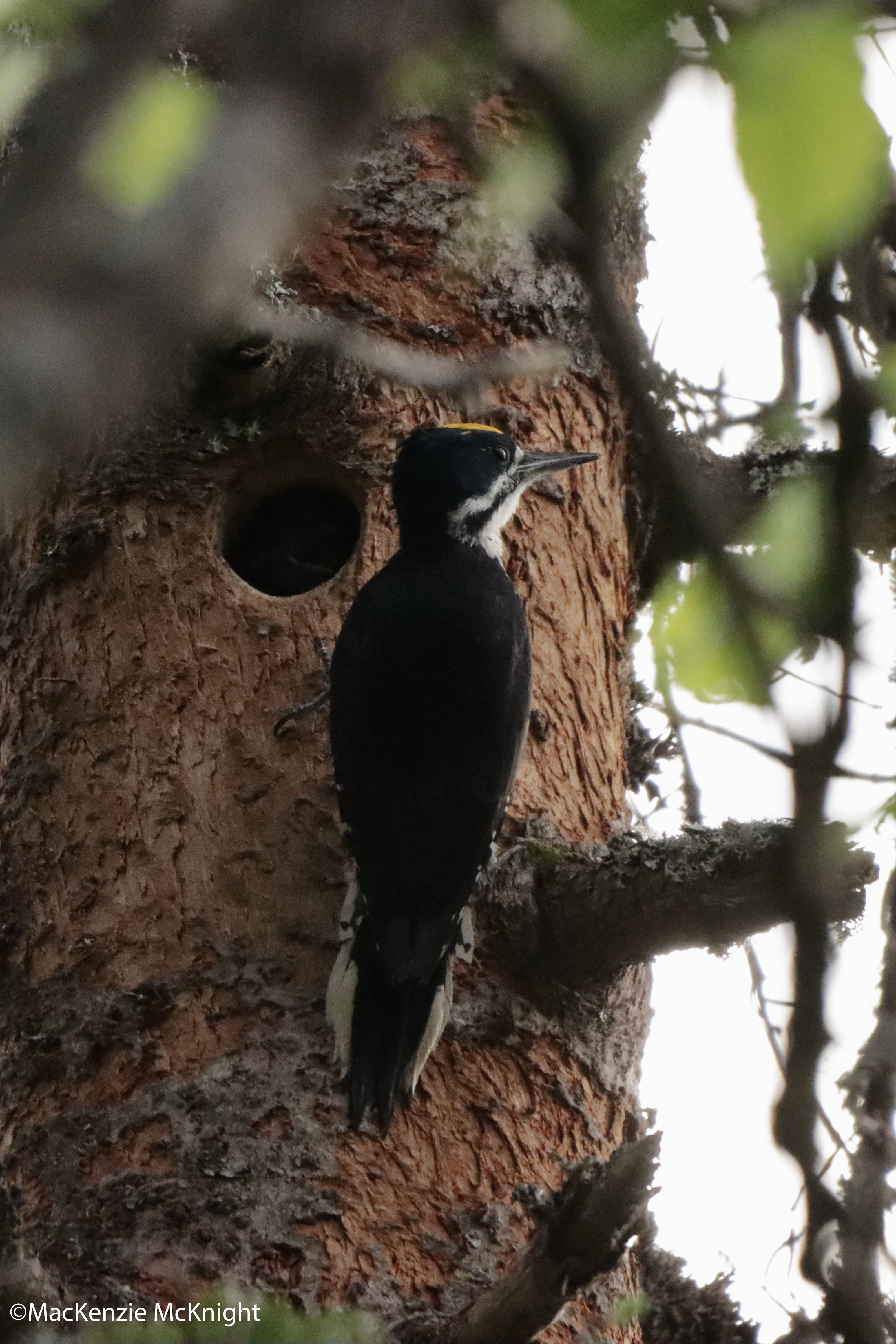
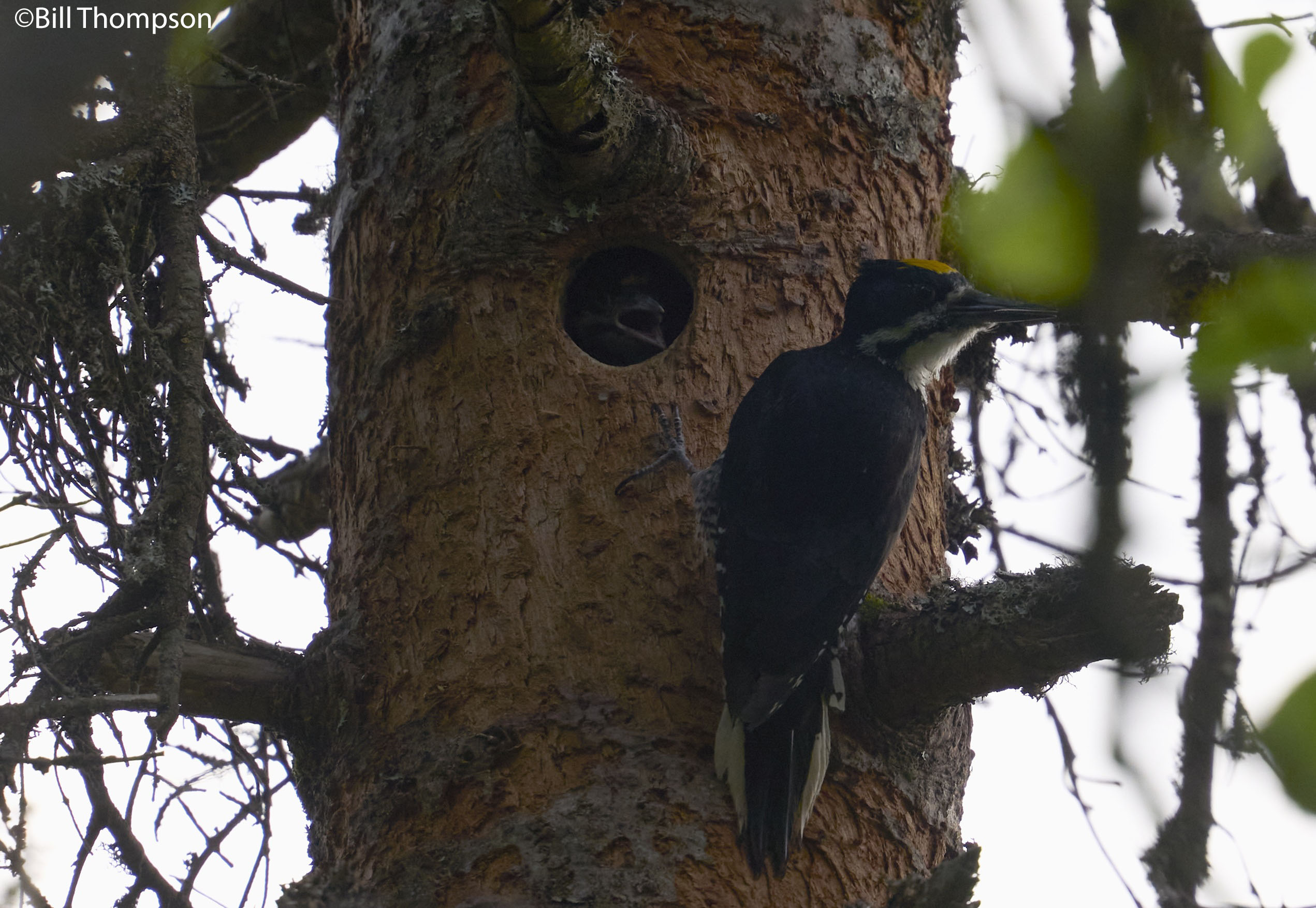
A highlight of our Bicknell’s Thrushes of New Hampshire Weekend was this Black-backed Woodpecker nest that I found on a private tour two weeks ago. By last weekend, the nestling(s?) were getting close to fledging. Thanks to Bill Thompson for the use of his photo as my camera had little interest in performing well in the low light!
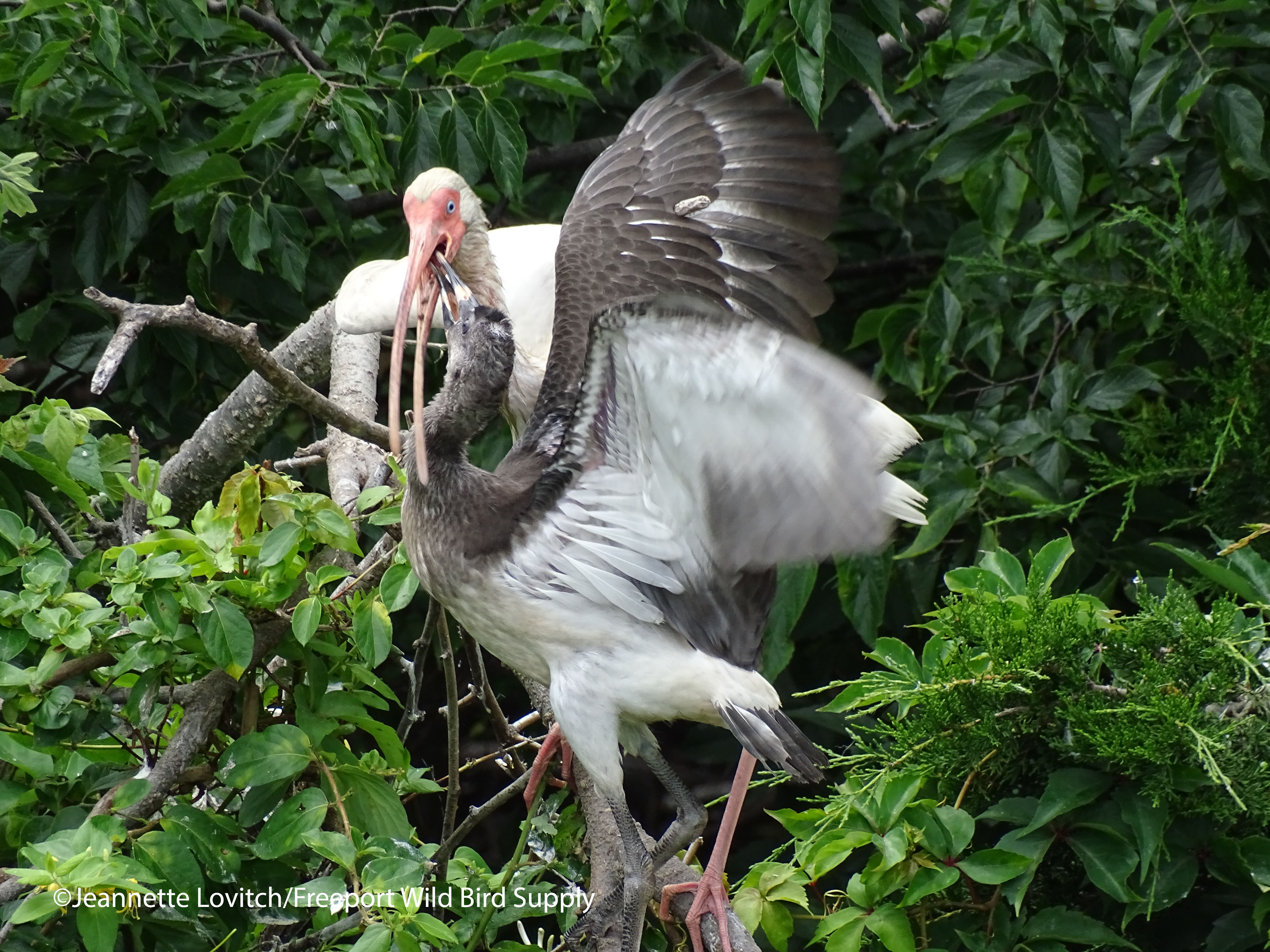
After being out of town for a few days (birding highlights in New Jersey included “southern” specialties, a huge Black Skimmer colony, and the growing, awesome White Ibis rookery), I returned to Maine and jumped right back into this record-busy guiding season. From coastal saltmarshes to mountaintops in New Hampshire, a few of my less expected observations in Maine over the past two weeks included just the following:
1 Yellow-billed Cuckoo (FOY!), our property in Durham, 6/23.
1 White-winged Scoter, Fort Popham, Phippsburg, 6/24 (with clients from Vermont).
1 Vesper Sparrow, Auburn Municipal Airport, 6/25.
And finally, for fun, here’s a selection of our favorite photos from our visit to the White Ibis rookery in Wildwood, NJ last week.
BICKNELL’S THRUSH WEEKEND TOUR REPORT
The trip report from our recent tour can be seen here.
One of the stars of the show this weekend was this incredibly cooperative Mourning Warbler.
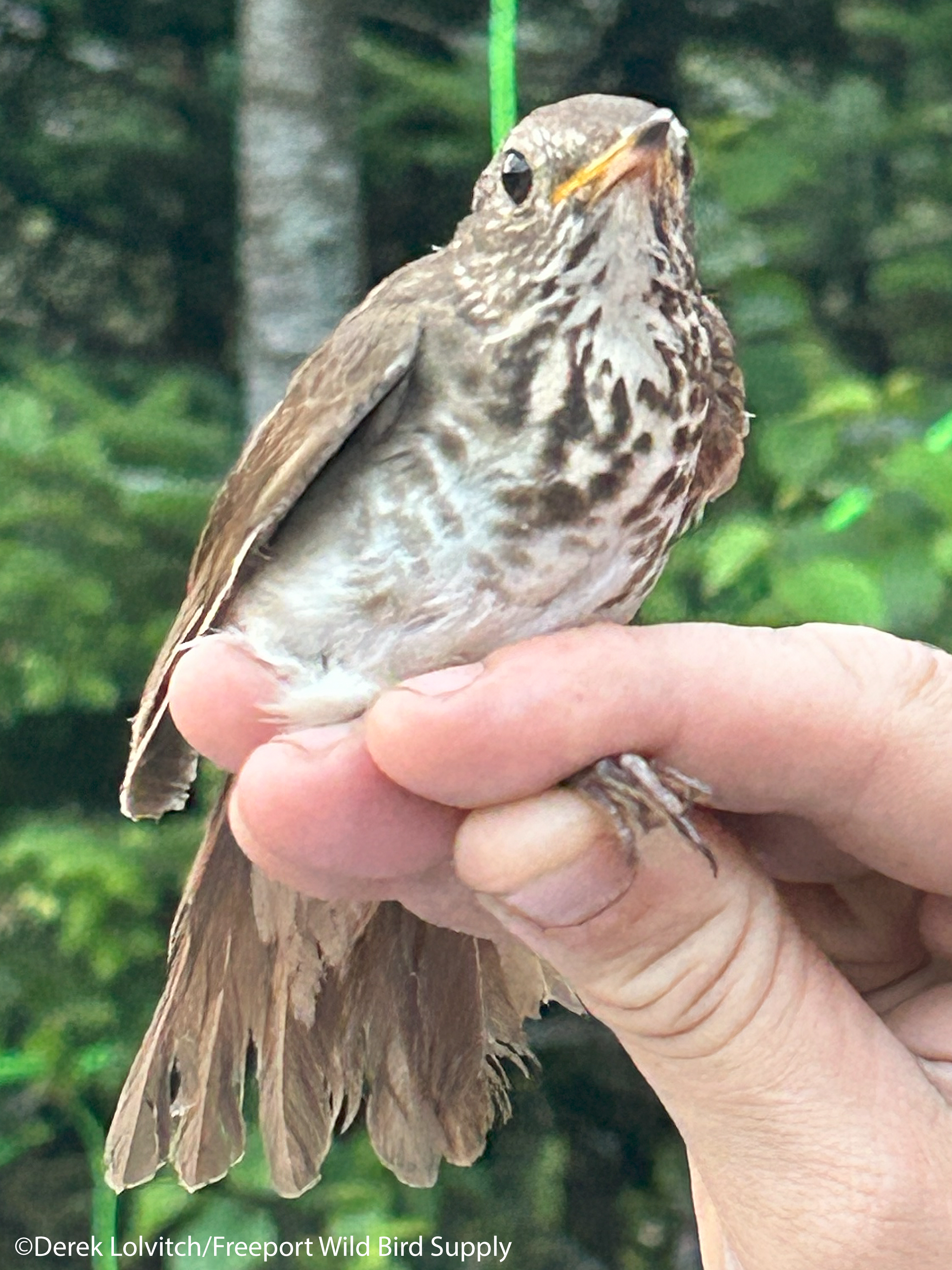
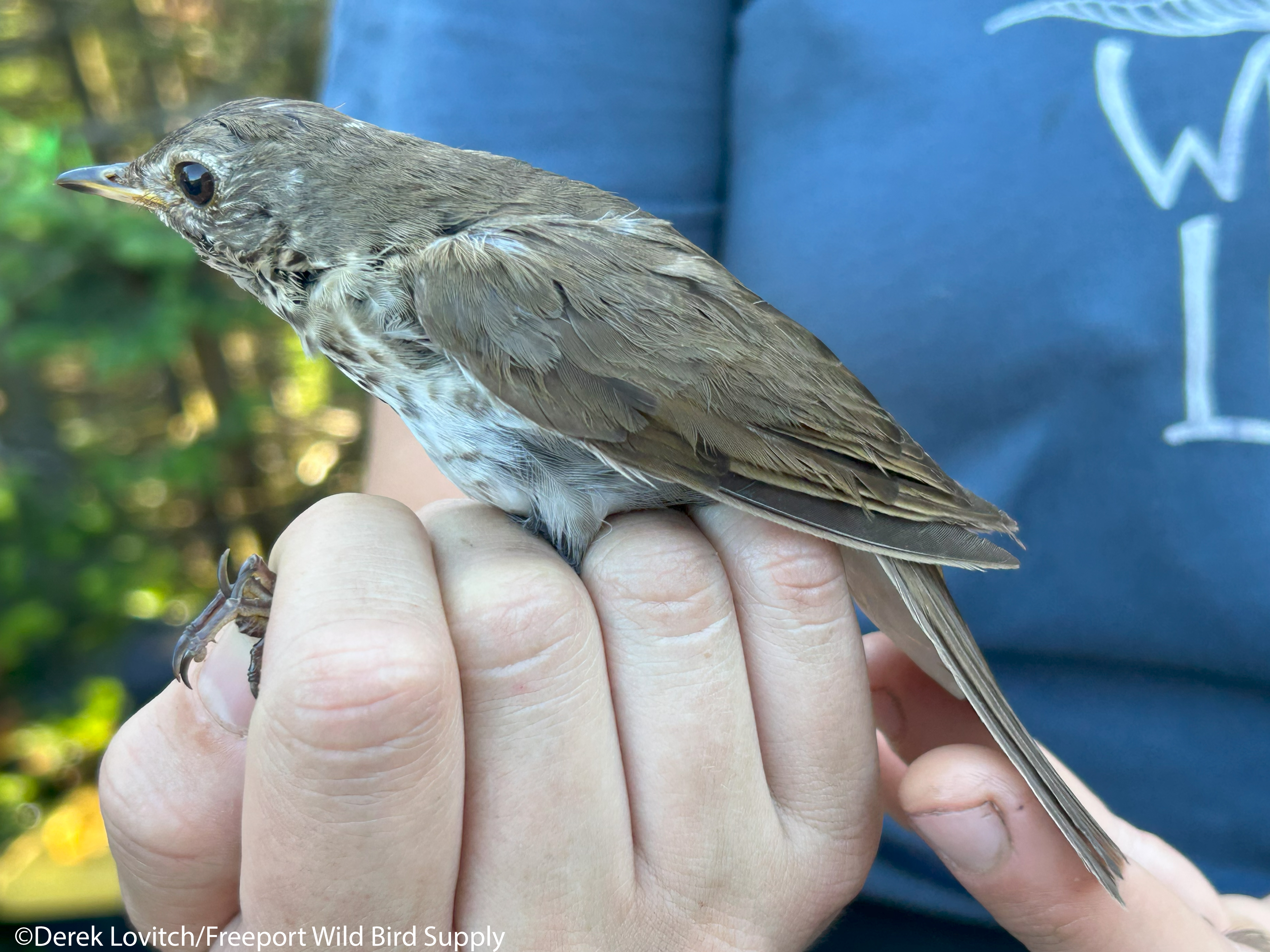
I’ll admit to having a love-hate relationship with this tour. I love taking people into the realm of the Bicknell’s Thrush, but I hate how much I have to stress about getting people to see one! Of course, weather is one of the primary impediments to enjoying a fulfilling mountaintop experience, and well, if I could only control that, too! And then there’s the bird – one of North America’s most reclusive breeding species, and with a behavior that tends to lead to sleep deprivation as well.
But we could not have asked for a better start to the weekend, with the first Saturday without rain in almost three months! In fact, it was absolutely gorgeous as we assembled in Errol, New Hampshire: sunny, a light breeze, and pleasantly warming temperatures. The relaxing morning was spent exploring the lowlands, focusing on boreal transition forest and spruce/tamarack bogs. We heard a couple of Palm Warblers – and glimpsed one in flight, listened to Yellow-bellied Flycatchers, and enjoyed common warblers such as Magnolia.
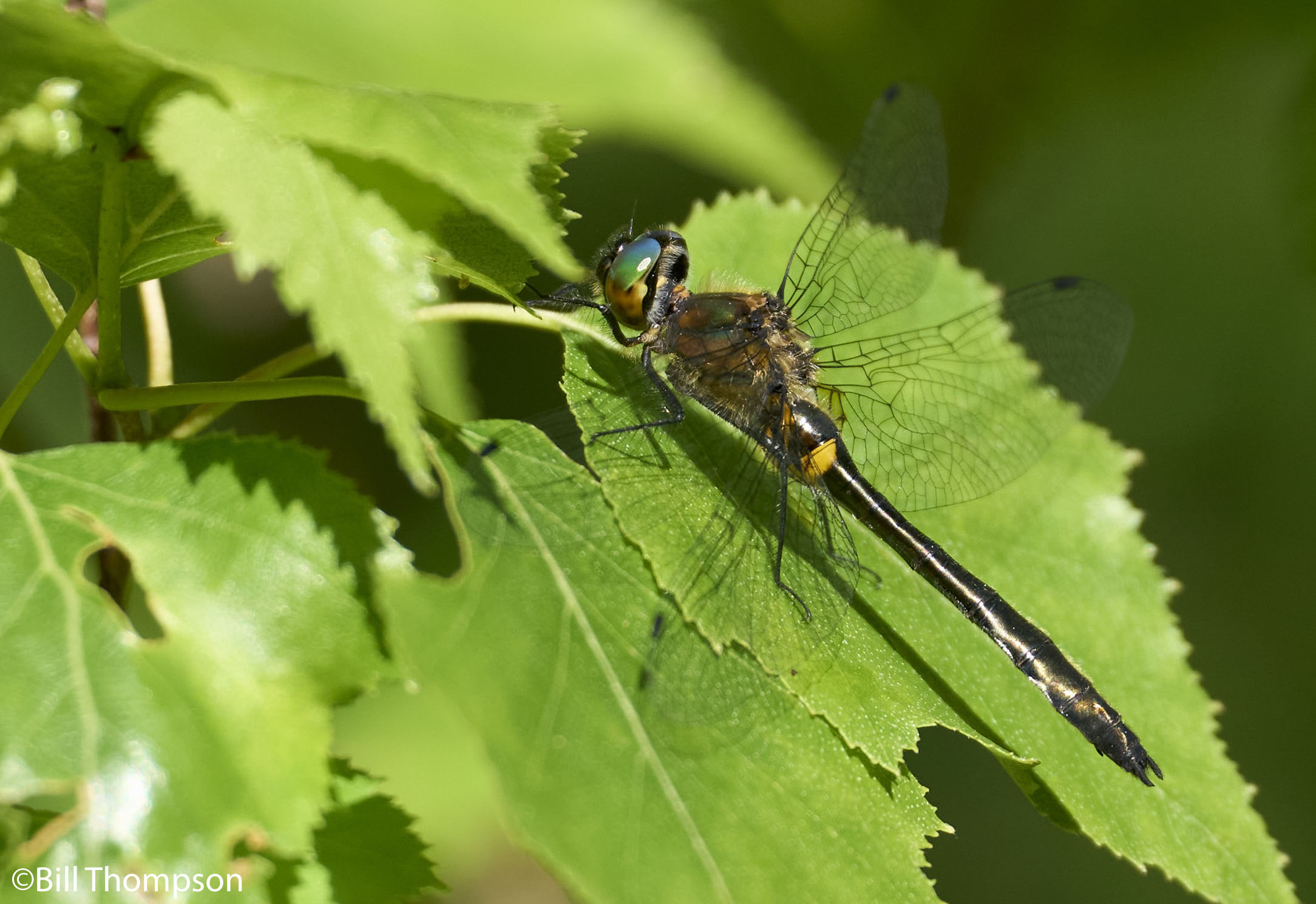
We enjoyed some botanizing as well, and stopped to look at all walks of life, such as butterflies and dragonflies.
Atlantis FritillaryRacket-tailed Emerald
After a quick but delicious lunch, we did a little more casual birding (Blackburnian Warblers!) and even a little sightseeing!
A welcome afternoon break was followed by an early dinner in town, before our first trip up the mountain. With a mostly clear evening, we had some time until dusk, so we used it to make a bee-line to what I assumed would be one of the highlights of the weekend.
On a private tour two weeks ago, I found a Black-backed Woodpecker nest. At the time, the adults were feeding young that I could not yet hear or see. I hoped they would still be in the cavity by now, and it didn’t take long for us to know they were – we heard the begging nestlings from a good 100 feet away. I found a path of least resistance to the nest hole, and we took turns rotating in small groups to watch the adults make repeated feeding visits. Everyone was so respectful of the birds – especially the adult male – who didn’t seem too pleased with our presence. After one feeding visit per group, we backed off, gave the birds a break to feed, and then visited with the next group. While the sun was now setting fast and the photography was challenging, it was truly a special experience with such a charismatic and sought-after species.
Now, it was time to get to work. And tonight, our primary target really did make me work for it! Swainson’s Thrushes continue to increase here, and they were very active and vocal this evening. Too vocal.
While we did have some great looks at them, their presence and activity likely kept the Bicknell’s quiet and in the shadows. In fact, it was getting dark by the time the Swainson’s stopped singing and we finally heard a couple of Bicknell’s calling.
By 8:45, I was starting to get a little worried, so I walked most of the group up a trail where I had activity a couple of weeks ago. One bird was calling there, but it would not come out. I began the retreat to the road when the bird flew right over my head – one person even it heard it whiz by me. We turned back up the path and settled in and eventually at least one thrush began to sing, a couple of others were calling, and surrounded by Bicknell’s Thrushes, we ended up seeing one flying back and forth across the small clearing and at least half the group saw one in silhouette on top a small tree, calling aggressively.
The aural performance was top notch, especially down at the road, and everyone was quite satisfied with at least the sum of all views had of the bird in flight or paused in a tree at the edge of the small clearing. It wasn’t the “crippling views” from last year’s weekend, but everyone agreed it was more than “good enough” and the overall experience was worthy of the effort.
I pushed it a little longer and later than usual as it was such a nice evening (too nice?), and I had my worries about even getting up the mountain the next day. We returned to our hotel at 10:15, and we departed again at 6:00 – I let the group “sleep in” due to the forecast morning rain and our late return.
And it was indeed raining in the morning when we awoke, but the forecast chance of thunderstorms had not materialized. Therefore, it was safe to head up to the mountaintop, so without any further ado, up we went once more.
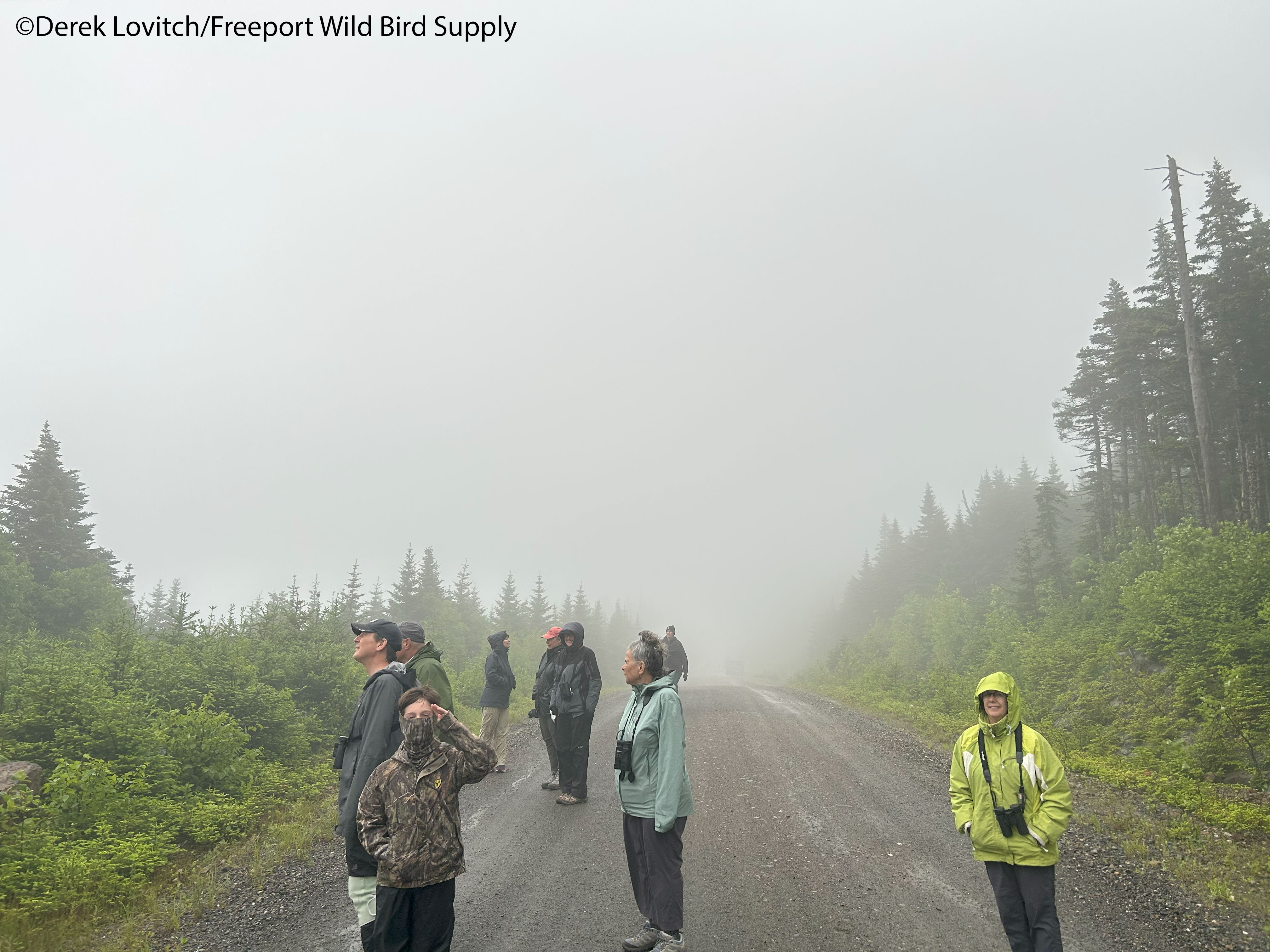
Unfortunately, up top it was still raining, albeit lightly, but the wind was already howling. What a difference 9 hours makes! Light rain came and went, fog would roll in and out, and we had one 10-minute rain delay in our vehicles with a downpour. Luckily, we had just finished breakfast!
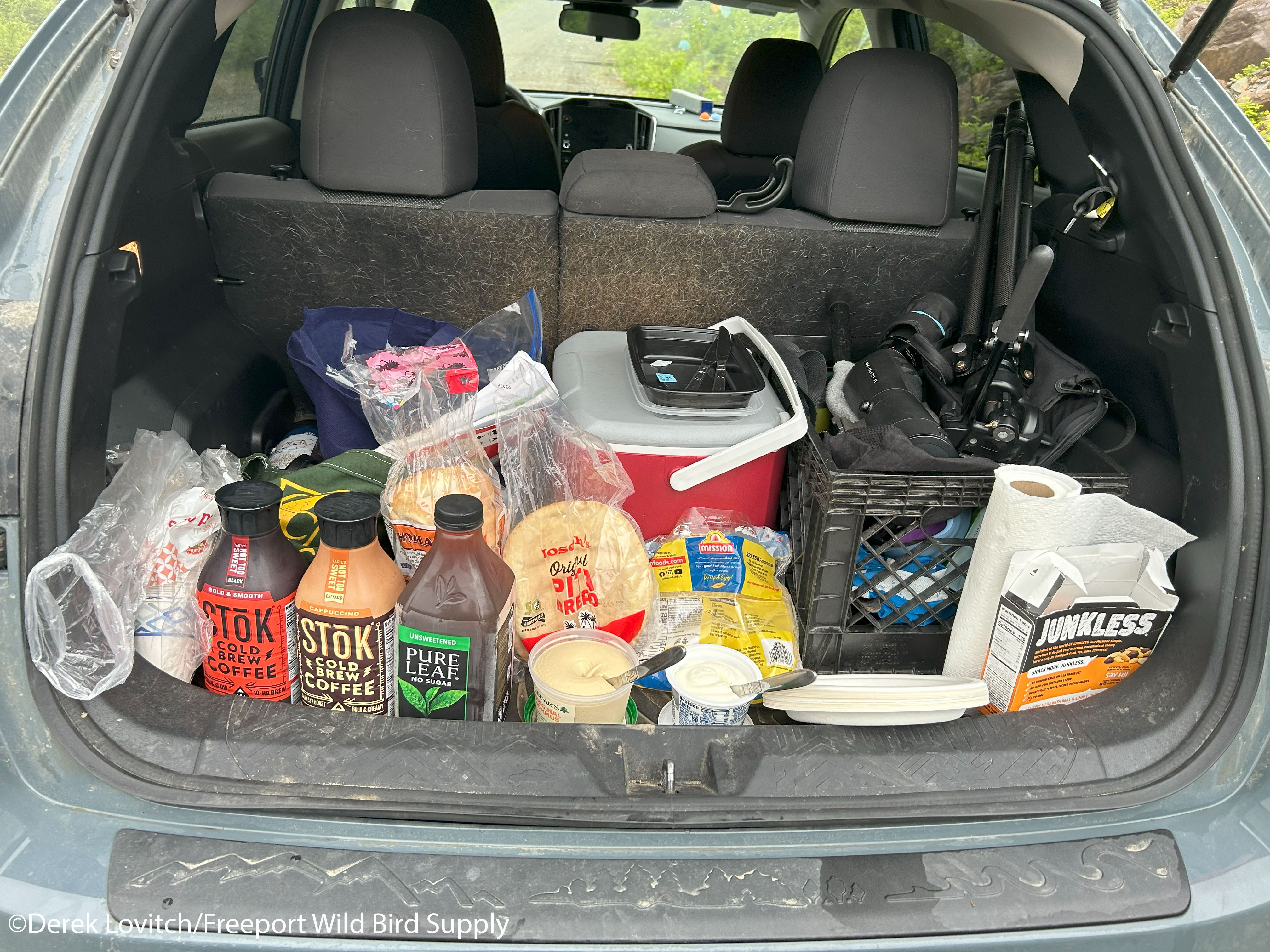
Birding tailgating!
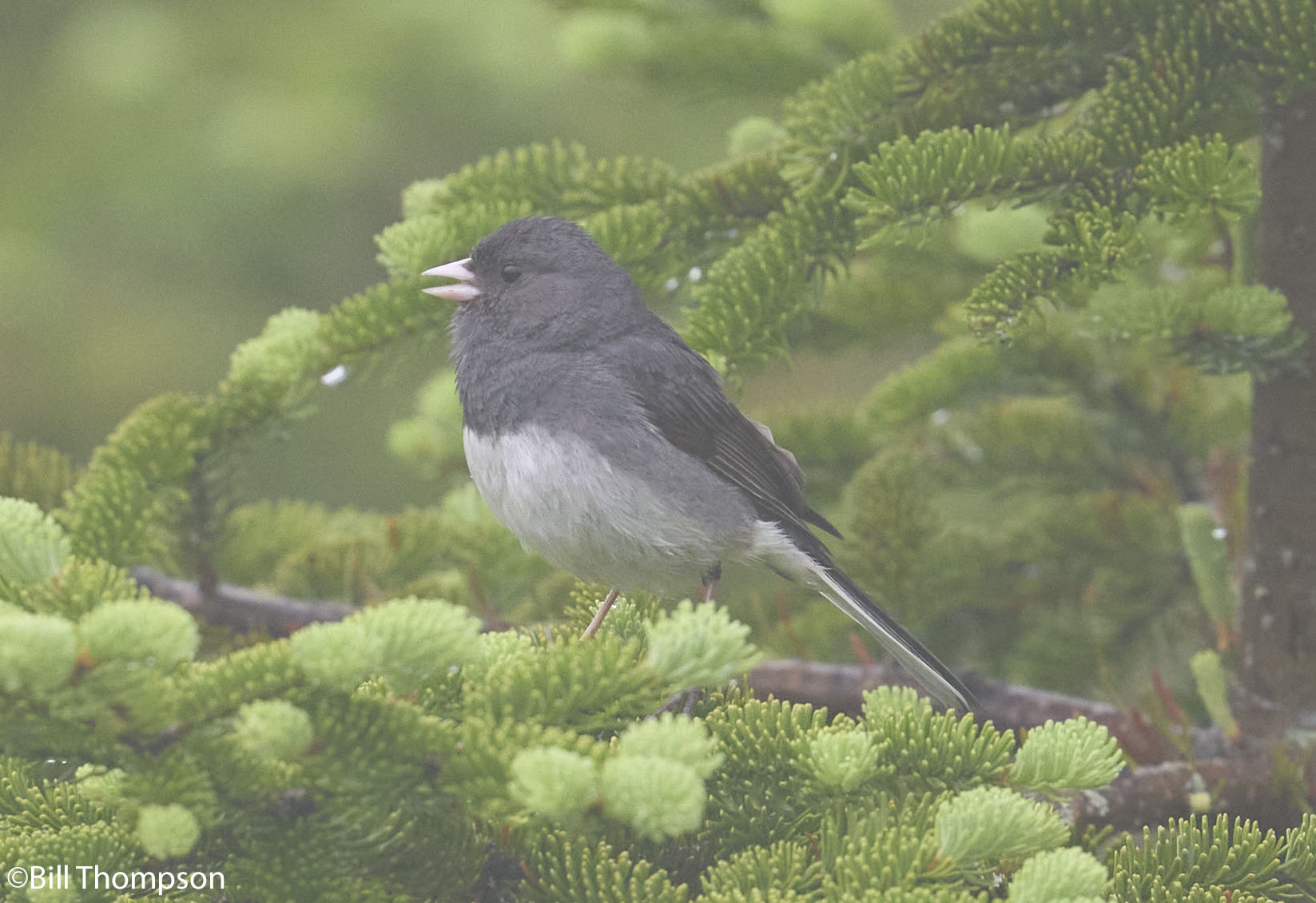
But the morning was by no means the washout we feared, and when the rain stopped, the birding was pretty good. We decided not to bother the Black-backed Woodpeckers (the light was even worse anyway in the fog) given the conditions, but we were happy to hear the begging youngsters from afar. A few Red Crossbills flew over, Blackpoll Warblers were singing, and we heard the mountain’s Fox Sparrow in the distance.
But we did not hear a single Bicknell’s Thrush. I was about ready to give up when one finally called nearby at 8:45. And he kept calling, repeatedly, so close to us, but we never even glimpsed him. He must have been just within the dense edge – so close, yet so far!
Now this tour promises two chances to look for the thrush, not two guaranteed observations, so we took what the birds gave us last night, and with the wind howling, we began our decent.
Stopping as soon as we had some more shelter, we hopped out and soon saw a Bay-breasted Warbler and heard a pair of Boreal Chickadees. A little further down the road, we heard what was almost surely a Cape May Warbler, but could not confirm it. There wasn’t much question about this Mourning Warbler however!
See headline photo…Now that’s the kind of view we were looking for!
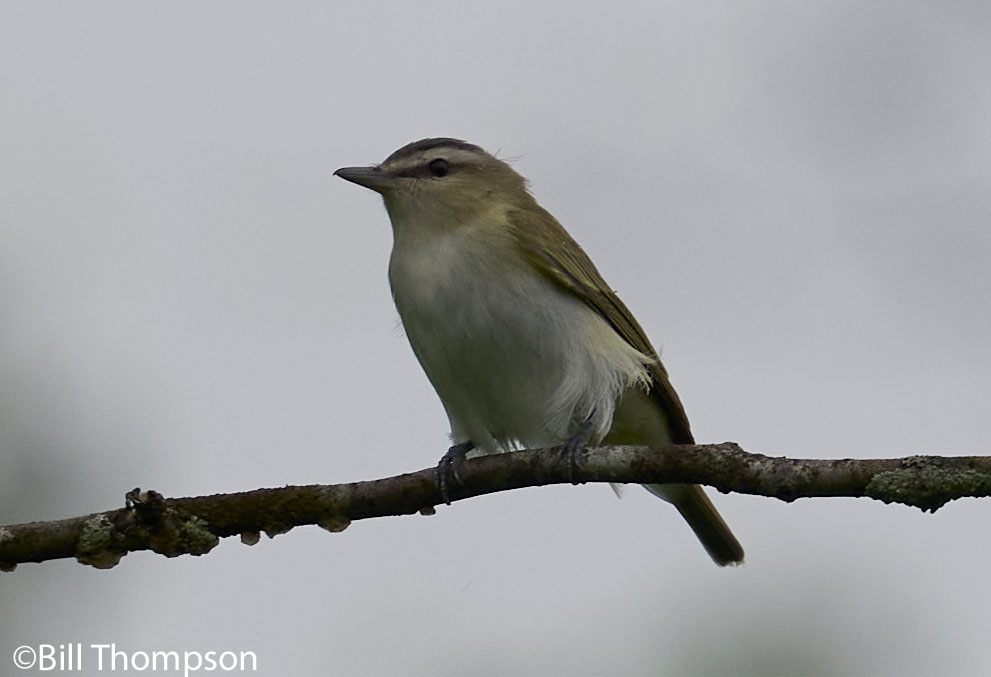
We dipped on Lincoln’s Sparrow, and then spent some time looking for Philadelphia Vireos. While we heard what was likely one singing from within perfect habitat, all of the vireos we saw today – and you simply must see them to identify them – were Red-eyed Vireo. Their march up the mountain and resultant displacement of Philadelphias continue.
It was instructive, however, and analogous to the issues with Swainson’s Thrushes moving uphill and pushing out Bicknell’s – these high elevation specialists have nowhere else to go as our mountains are not getting any taller, and I made sure to weave these conservation and natural history messages throughout the tour.
We looked at plants, too, such as Round-leafed Sundew.
We celebrated our success – especially with Black-backed Woodpecker and Mourning Warbler! – with a wonderful and leisurely lunch, and then half of the group joined me for a casual stroll in the lowlands of Colebrook, where we encountered numerous Veeries – just to add to our thrush tally for the weekend. Of course, our photographers had left, so birds here – especially the Veeries – were exceedingly conspicuous, with repeated views of them out in the open and with bills full of food. American Redstarts, Yellow Warblers, and a couple of singing Bobolinks were icing on the weekend cake.
Have views of our primary target, the Bicknell’s Thrush, been better on this tour? Yes. But they have also been much less fulfilling, and rarely, not even seen at all. So, we’ll take it…plus it was a great experience that fostered appreciation for the challenges of seeing this bird. Oh yeah, and a nest of Black-backed Woodpeckers!
This female Cerulean Warbler at Evergreen Cemetery on 5/6 was the first in Maine for just about every birder who raced to see it! Thanks to Bill for the photo!
Wow! What a week! Although I was out of town for the huge flight Friday night into Saturday morning, my birding with a tour group on an almost-as-productive Sunday morning made up for it. Then, with an upper level low locked into place, migration ground to a halt throughout most of the rest of the week. However, a trickle of new arrivals appeared, and an impressive array of rarities were found around the state. I did a lot more chasing than usual this week (including a personal “state bird”, but a self-found rarity on Friday was a perfect way to put the icing on the cake of a tremendous week of spring birding! My observations of note over the past seven days included the following:
15 species of warblers (FOY) between Evergreen Cemetery and Capsic Pond Park, with Northern Parula the most numerous at both, 5/4 (with Down East Adventures Spring Migrant Songbird Workshop group).
1 ROSS’S GOOSE, Thornhurst Farm/Prince Well Road, North Yarmouth, 5/5. Found by the Boardman family, there was discussion as to its ID. When I was sent photos on the morning of the 5/5, after being present for at least 3 days, I thought it was a “pure” Ross’s Goose. When Jeannette and I then visited the bird to observe it, we left with zero doubt. I posted a series of photos, a short video, and an explanation of the identification on this Facebook post.
1 female CERULEAN WARBLER, Evergreen Cemetery, Portland, 5/6 (with Bill Thompson). Found earlier in the morning by Doug Hitchcox. Bill and I ran into each other on Eastern Road and then raced north together for the twitch. His photo is above. My (and most peoples’) first in Maine, this was #11 on my personal next birds in Maine list, and one that feels long overdue.
1 continuing BLACK-NECKED STILT, Spurwink Marsh, Cape Elizabeth, 5/6 (with Bill Thompson). Well, since we were out chasing together, we figured we might as well visit this elegant rarity found by John Lorence on 5/3.
The continuing CERULEAN WARBLER at Evergreen Cemetery on 5/8 with my Birds on Tap – Roadtrip: Warblers and Wort! Tour group. I don’t generally take photos while guiding groups, but I took a few of this bird…and completely wiffed on them!
After all this “twitching,” I was due to find my own rarity, and did so on 5/9 with an adult breeding plumage female RUFF (REEVE) at Walsh Preserve in Freeport. There are only about 10 previous records for Maine.
My personal “first of years” this week also included:
2 Yellow Warblers, Evergreen Cemetery, Portland, 5/4 (with Down East Adventures Spring Migrant Songbird Workshop group).
8 Black-throated Blue Warblers, Evergreen Cemetery, 5/4 (with Down East Adventures Spring Migrant Songbird Workshop group).
2 Wood Thrushes, Evergreen Cemetery, 5/4 (with Down East Adventures Spring Migrant Songbird Workshop group).
3 Magnolia Warblers, Evergreen Cemetery, 5/4 (with Down East Adventures Spring Migrant Songbird Workshop group).
4 Chestnut-sided Warblers, Evergreen Cemetery, 5/4 (with Down East Adventures Spring Migrant Songbird Workshop group).
2 Great-crested Flycatchers, Evergreen Cemetery, 5/4 (with Down East Adventures Spring Migrant Songbird Workshop group).
2 American Redstarts, Evergreen Cemetery, 5/4 (with Down East Adventures Spring Migrant Songbird Workshop group).
2 Northern Waterthrushes, Capisic Pond Park, Portland, 5/4 (with Down East Adventures Spring Migrant Songbird Workshop group).
7 Chimney Swifts, Capisic Pond Park, 5/4 (with Down East Adventures Spring Migrant Songbird Workshop group).
1 White-crowned Sparrow, feeders here at the store, 5/4.
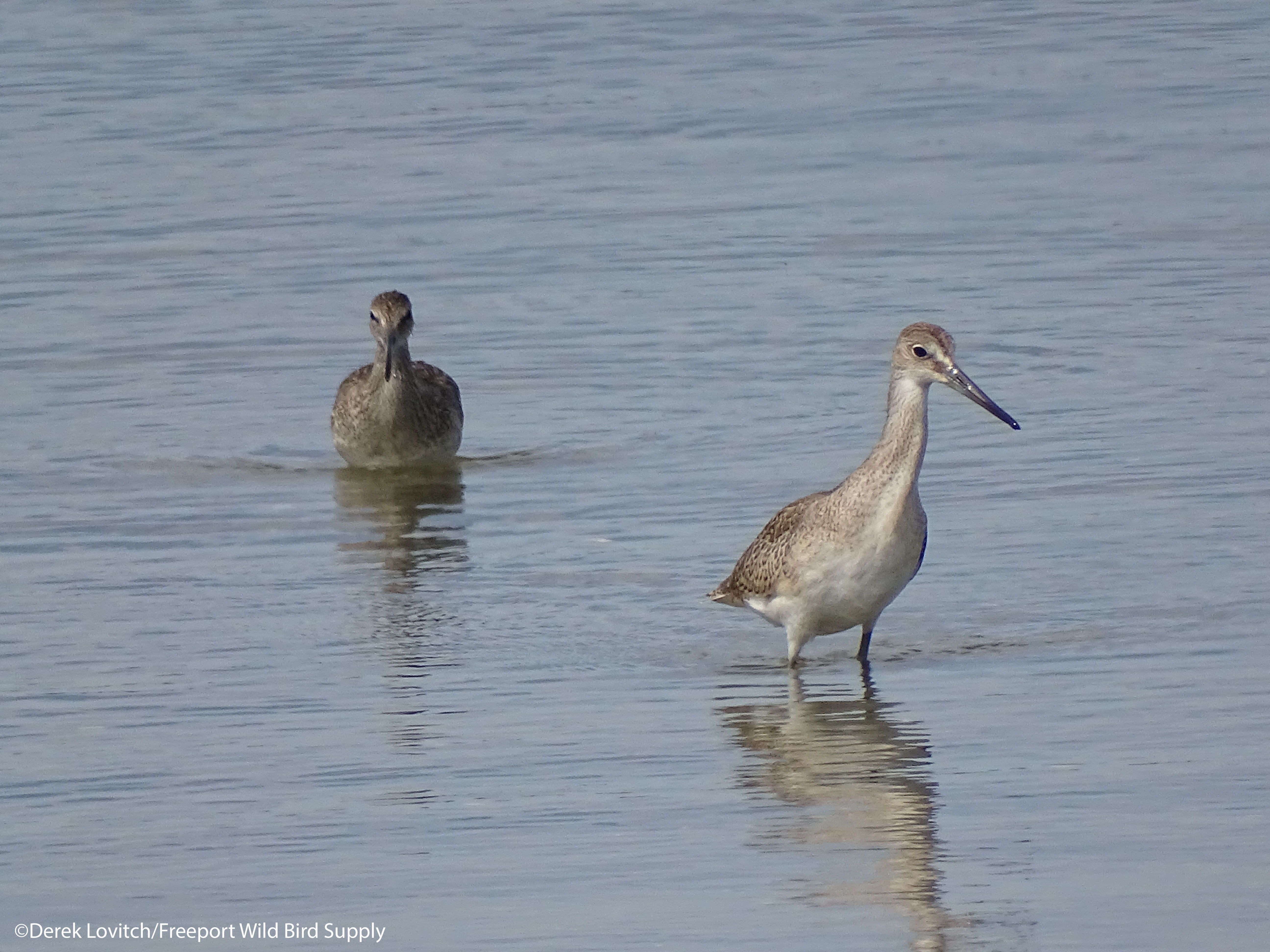
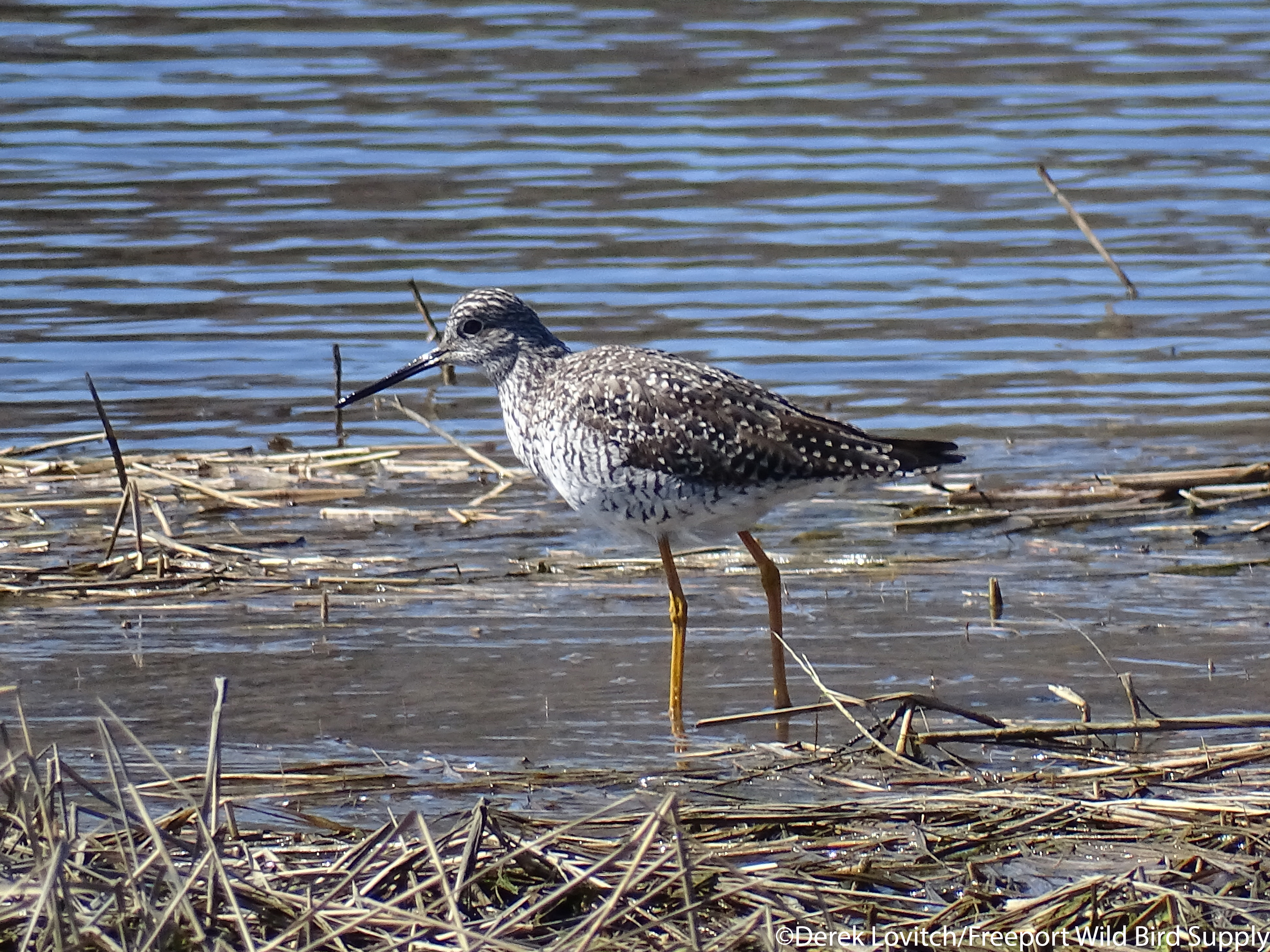
Some Greater Yellowlegs (usually males) can look very dainty, and at this time of year have a virtually all-dark bill, suggesting Lesser Yellowlegs. Luckily, this one called to confirm, which is always helpful at this season when breeding plumage is often not fully developed.
There were not a lot of days this week that felt like spring, but spring birding was in full swing this week, at least when I was actually out in the field. Rare and once-rare waterfowl led the way once again, with an increased appearance of new arrivals of a wider range of species as well. Here are my observations of note and new arrivals over the past seven days:
Three Fox Sparrows continued at our home feeders in Durham through week’s end, while at least 1 continues here at the store as well.
1 continuing Brown Thrasher, 450+ Greater with a few Lesser Scaup, 350+ White-winged Scoter, 3 Swamp Sparrows, etc, Wharton Point, Brunswick, 4/5 (with Saturday Morning Birdwalk group).
1 Eastern Phoebe at the store on 4/6 – feeding on dried mealworms from within the starling-proof bluebird feeder. This was a first for me. They rarely eat mealworms, let alone dried mealworms, and I have never seen them enter a restricted-space feeder.
1drake “EURASIAN” GREEN-WINGED TEAL, Mouth of the Abby, Bowdoinham, 4/7 (with Jeannette. Perhaps the same individual I found here on 3/27 with Bill Thompson.
An incredible 44 Gadwall in the salt pannes at the Eastern Road Trail, Scaborough Marsh, on 4/9. This is likely a new state record high count.
My personal “first of years” this week also included:
1 Yellow-bellied Sapsucker (first of spring), here at the store, 4/5.
3 Piping Plovers, Pine Point Beach, Scarborough, 4/9.
14 Great Egrets, total in Scarborough Marsh, 4/9.
18 Greater Yellowlegs, total in Scarborough Marsh, 4/9 (see photo above).
A week-long immersive skill-building seminar for beginning and intermediate birders based in Steuben.
Caption: While there have been a few nights with decent songbird migration so far this year, the night of the 10th-11th was the first one with a sizeable enough flight to be clearly detectable on the overnight NEXRAD radar. It’s on!
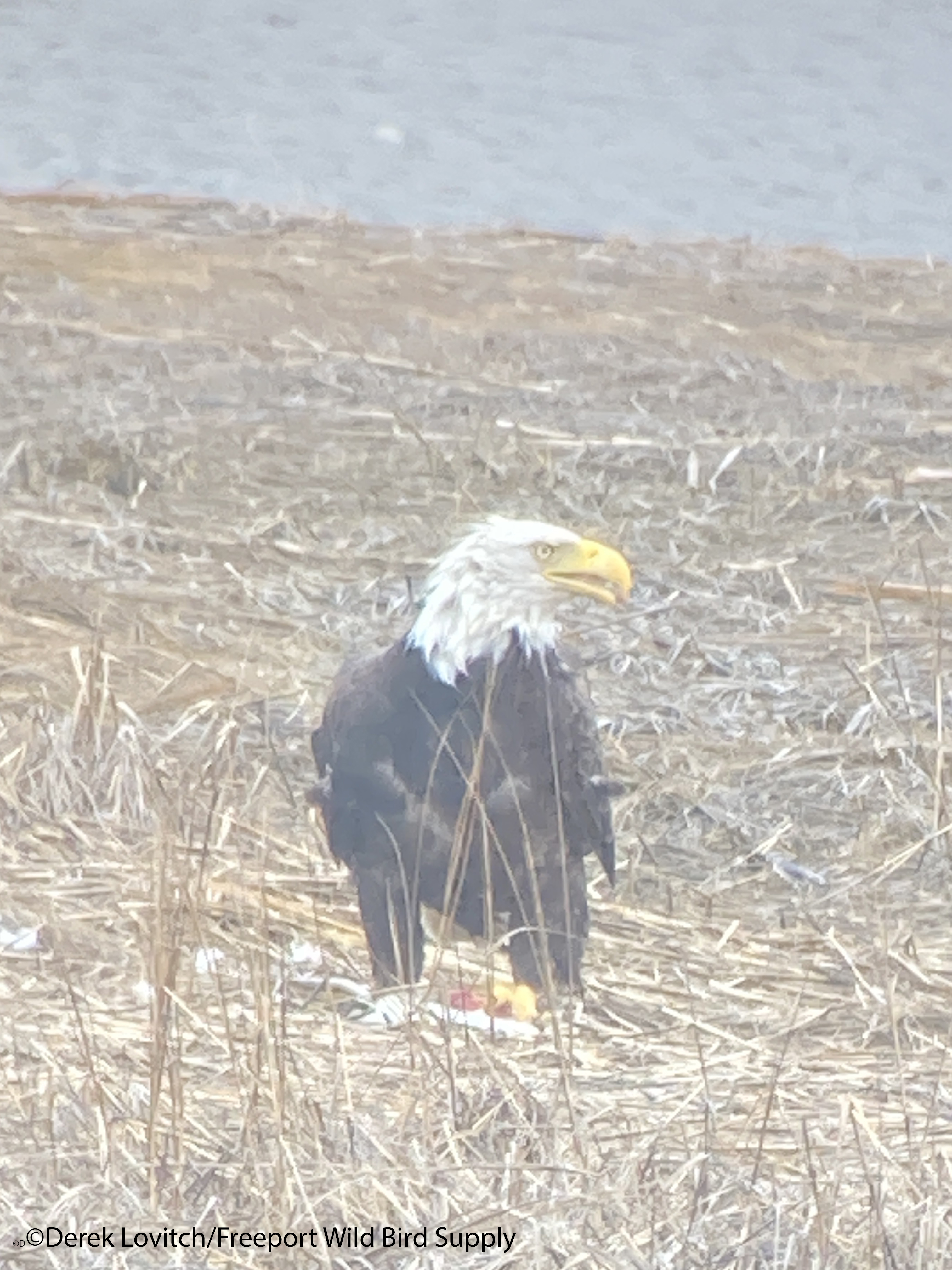
It wasn’t a very photogenic week, but I did snap this phone-scoped shot of a Bald Eagle feasting on a Red-breasted Merganser through the fog off Eastern Road on the 20th.
Spring made only slow progress this week, but some early migrants and other new arrivals, along with a few seasonal highlights were among my observations of note over the past seven days:
Our overwintering Fox Sparrow at home in Durham was joined by a second on the 15th. 1-2 continued through the week’s end. Meanwhile, the overwintering Fox Sparrow here at the store continued through 3/16. With more migrants moving around now, I’ll forgo further Fox Sparrow reports. But it was quite nice to have birds overwinter at both of our feeding stations this year – a first for us at either location.
3 BARROW’S GOLDENEYES (1 pair and 1 female), Winslow Park, Freeport, 3/15 (with Saturday Morning Birdwalk group).
5 Wood Ducks (FOS), Florida Lake Park, Freeport, 3/16.
2 American Woodcocks (FOY), our property in Durham, 3/16.
1 pair Gadwall, 14 Northern Pintail (FOS), 10 American Wigeon, 75 Green-winged Teal, etc, Mouth of the Abby, Bowdoinham, 3/18 (with Jeannette).
The 19th season of the Bradbury Mountain Hawkwatch started last weekend. Free and open to the public, we welcomed Zane Baker back for his 7th season as Official Counter. 9-5 every day, weather permitting. The first week was highlighted by a great first day and two Black Vulture sightings.



















 Maine Birding Field Notes