My photos of my highlights this week are not exactly worthy of a “cover shot,” so instead, here’s a Northern Mockingbird that posed nicely for me in Biddeford Pool on the 29th.
Winter seems to be settling in! The colder (seasonable, finally!) temperatures should produce another wave of rarities and “lingering/late” birds to find though, and that was the case for my observations of note over the past seven days.
45 American Pipits and ~10 Horned Larks, Mayall Road, Gray/New Gloucester, 11/23 (with Saturday Morning Birdwalk group).
1 female BLACK-THROATED BLUE WARBLER, Village Crossings – Cape Elizabeth Greenbelt Trail, 11/24.
1 Northern Shrike (FOS), feeders here at the store, 11/24.
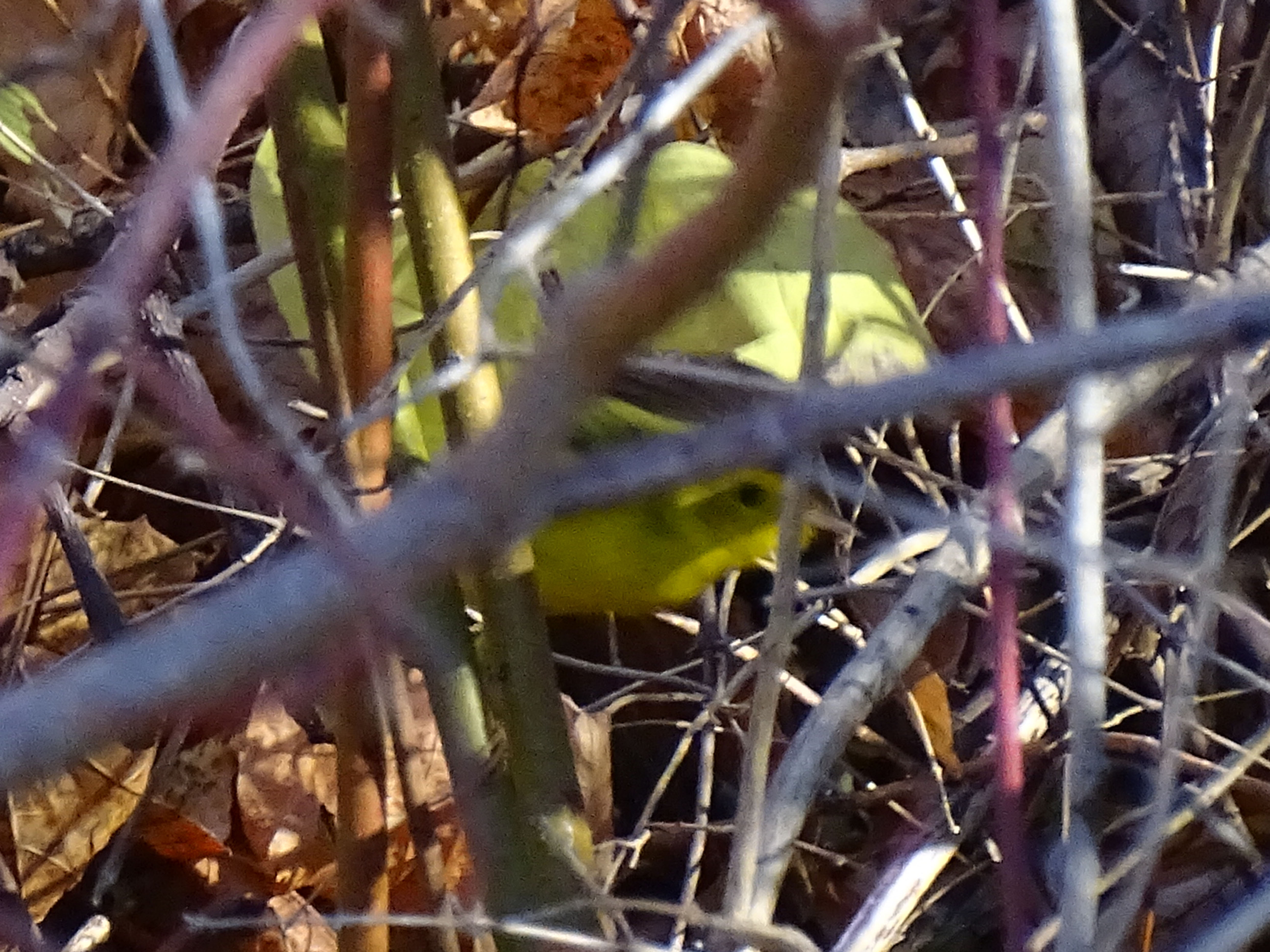
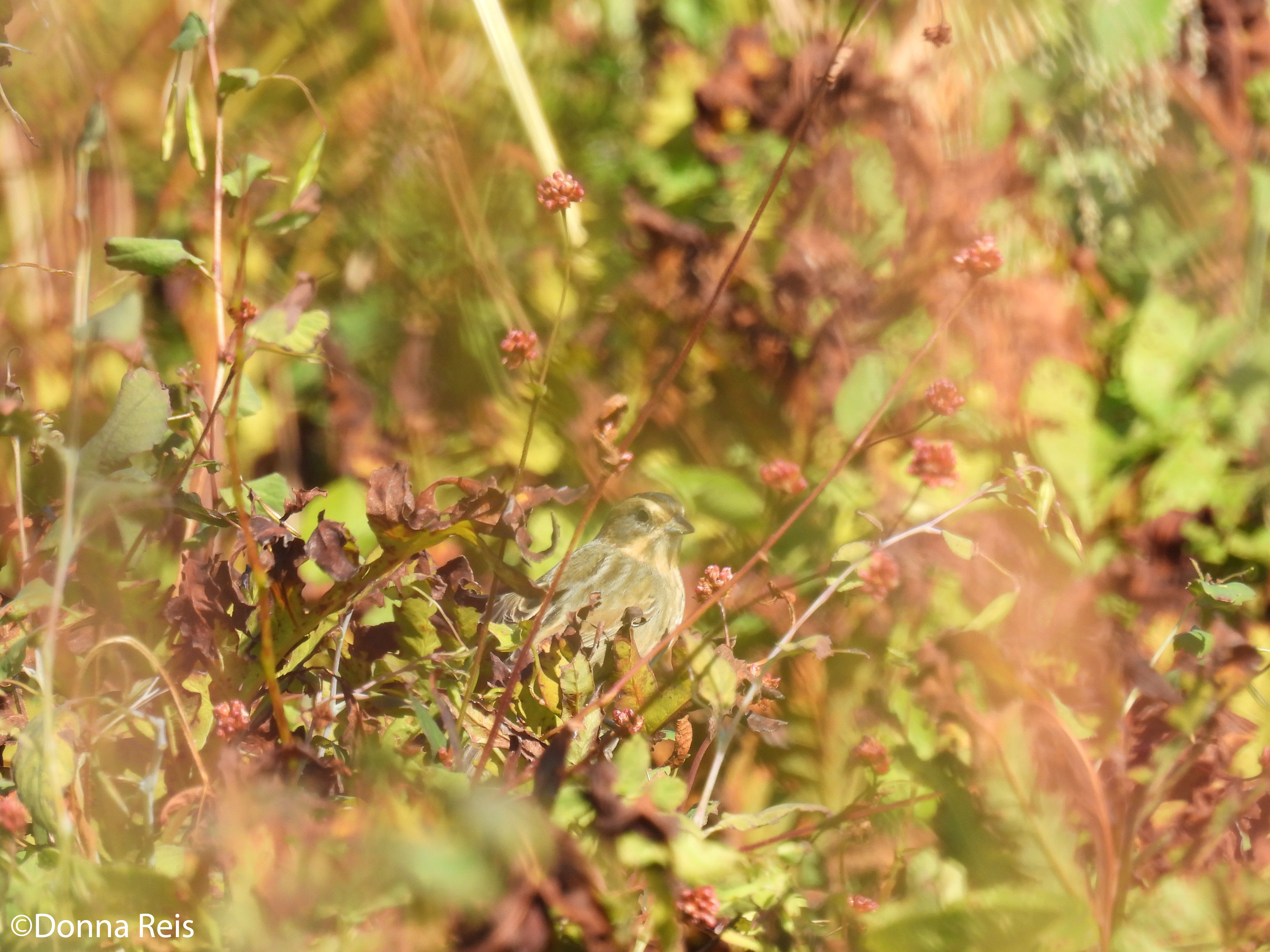
If you stitch together all of my photos, you might be able to make one poor photo of a whole Wilson’s Warbler. Nonetheless, it was a nice surprise that added a splash of color to the week’s birding endeavors. Trust me, the snapshot of the Palm Warbler is much worse!
An above-average number of species such as Northern Flickers, Hermit Thrushes, and Swamp Sparrows still continue around the area.
After seeing the Spotted Towhee briefly a few times late in the morning on the 19th, Jeannette and I returned at the end of the day to see if we could see it better. That worked out perfectly, but the light was getting low for photos, as you can see here. See notes and musings below.
I enjoyed another great week of birding, searching for rarities, and catching up with perhaps an old friend! It’s been a great rarity season to date, and with a return to a more dynamic weather pattern, perhaps it’s only the start.
1 continuing Red-throated Loon, 287 Ruddy Ducks, 363 total Lesser+Greater+too distant Scaup, ~75 Snow Buntings, 2 Northern Pintails, 1 American Wigeon, etc, etc, Sabattus Pond, Sabattus, 11/17 (with Dan Nickerson).
~100 Snow Buntings and 1+ Horned Lark, Plains Road, Turner, 11/17 (with Dan Nickerson).
1 American Pipit, Pearl Road, Turner, 11/17 (with Dan Nickerson).
1 continuing SPOTTED TOWHEE, 1 continuing “Western” Palm Warbler, and 1 Pine Warbler, Seapoint Beach, Kittery, 11/19 (with Jeannette). Is this the same Spotted Towhee as I found last year at nearby Fort Foster? If so, did it return from a summer on breeding grounds? If yes, did it fly back to the actual breeding range of Spotted Towhees (likely near where it was born) or did it continue its navigational mistake and spend the summer distant from any potential mates? Or, has this bird been present locally since last winter? Considering its secretive nature and the amount of dense thickets with no birders between Fort Foster and Seapoint Beach, this is plausible as well. In fact, it being a different bird seems like the least likely scenario! Like all vagrants, it tends to produce more questions than answers, which is what makes vagrancy so fascinating! Photo above.
1 Ruby-crowned Kinglet and 1 Winter Wren, Fort Foster, Kittery, 11/19 (with Jeannette).
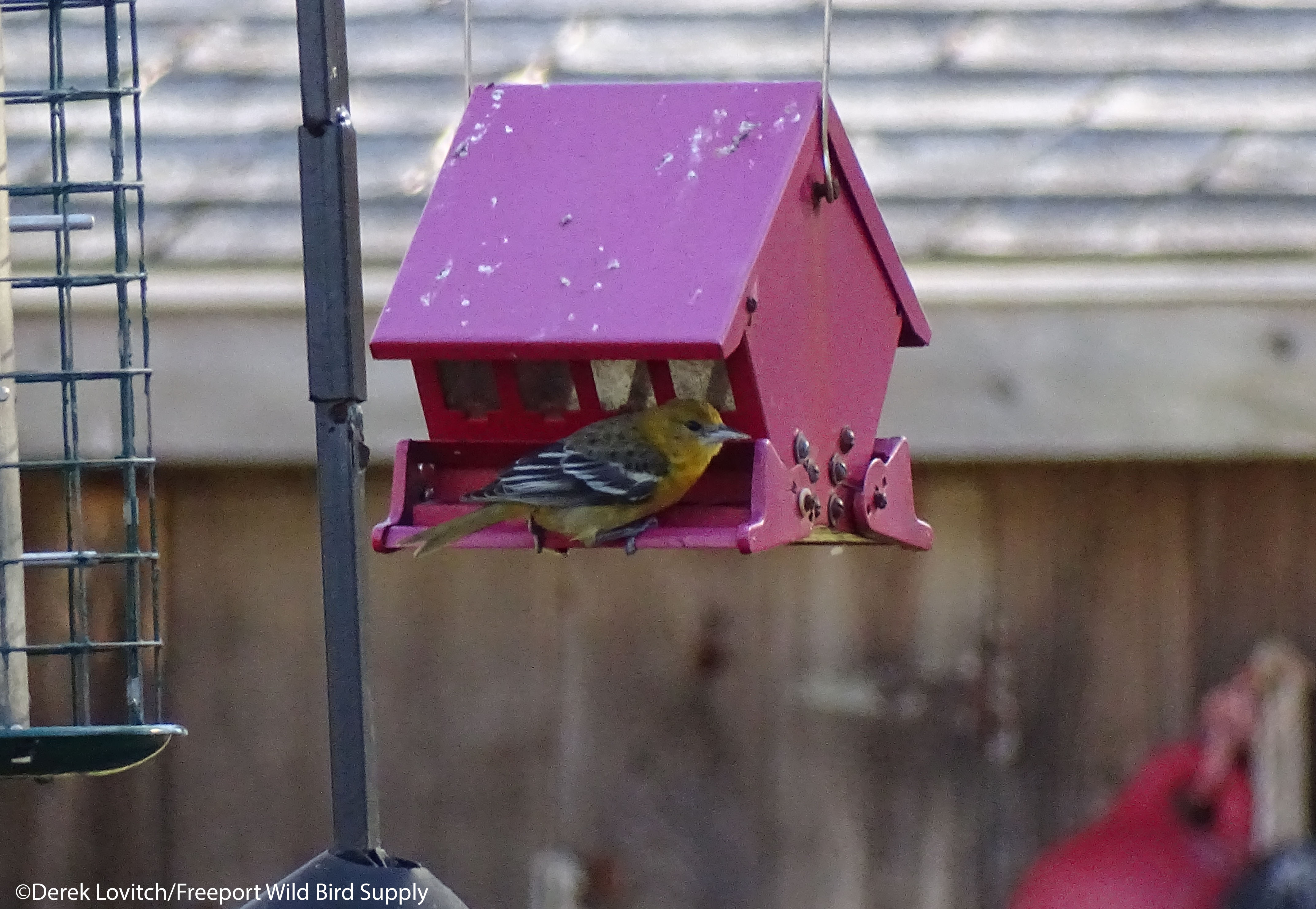
1 BALTIMORE ORIOLE, private property in Richmond, 11/21. A nice surprise bonus during a yard consultation appointment. Homeowner reports it has been present for three days.
An above-average number of species such as Northern Flickers, Hermit Thrushes, Swamp Sparrows, and Red-winged Blackbirds continue around the area.
It might be Rarity Season, but never forget to take your time to enjoy and appreciate our common resident birds! This Red-breasted Nuthatch was on our feeders in Durham on the 15th. There are a lot more in the area this fall than last winter, perhaps due to the lack of Eastern White Pine cones, especially to our north.
Rarity Season continues to be hot. Some dedicated rarity-searching plus some casual birding, yielded the following observations of note over the past 7 days. Swinging for the fences, however, I felt like Aaron Judge in the MLB post-season: lots of strikeouts and no home runs, but at least I went down swinging.
1 Evening Grosbeak, Cedar Pond Road, Durham, 11/15.
Not surprisingly given the mild weather to date, there are a lot of half-hardies around, such as Hermit Thrushes and Swamp Sparrows which I encountered in a number of places this week. Scattered Red-winged Blackbirds and small flocks of Common Grackles continue as well as is now usual in mid-November.
I usually miss at least one “Mega” rarity whenever I go away, so I was pretty pleased that this Common Gull – found on 10/31 by Evan Obercian at the Samoset in Rockland – stuck around until we returned. I was able to see it on 11/3. It took a while, but when it eventually spread its wing, the species/subspecific ID became certain. Separated by the abundant Ring-billed Gulls by the smaller size, slightly darker back, and thin bill, we can rule out the West Coast Short-billed Gull by the length of the bill and the wing pattern. Separation from Kamchatka Gull is more challenging, but it wasn’t particularly dark, the head was lightly flecked with brown, and there’s a relatively distinct bill band. According to Ayyash (2024), the shorter gray tongues on the outer primaries, the large P9 window that connects with the large P10 window, and little to no white at the end of the tongue on P8 all suggest Larus canus canus (and not Kamchatka Gull).
It’s November, and that means “Rarity Season” and unlike recent Novembers, Rarity Season is off to a roaring start. Here are my observations of note over the past 6 days. Below, see the trip report for our 7-day birding cruise that included time in Maine waters.
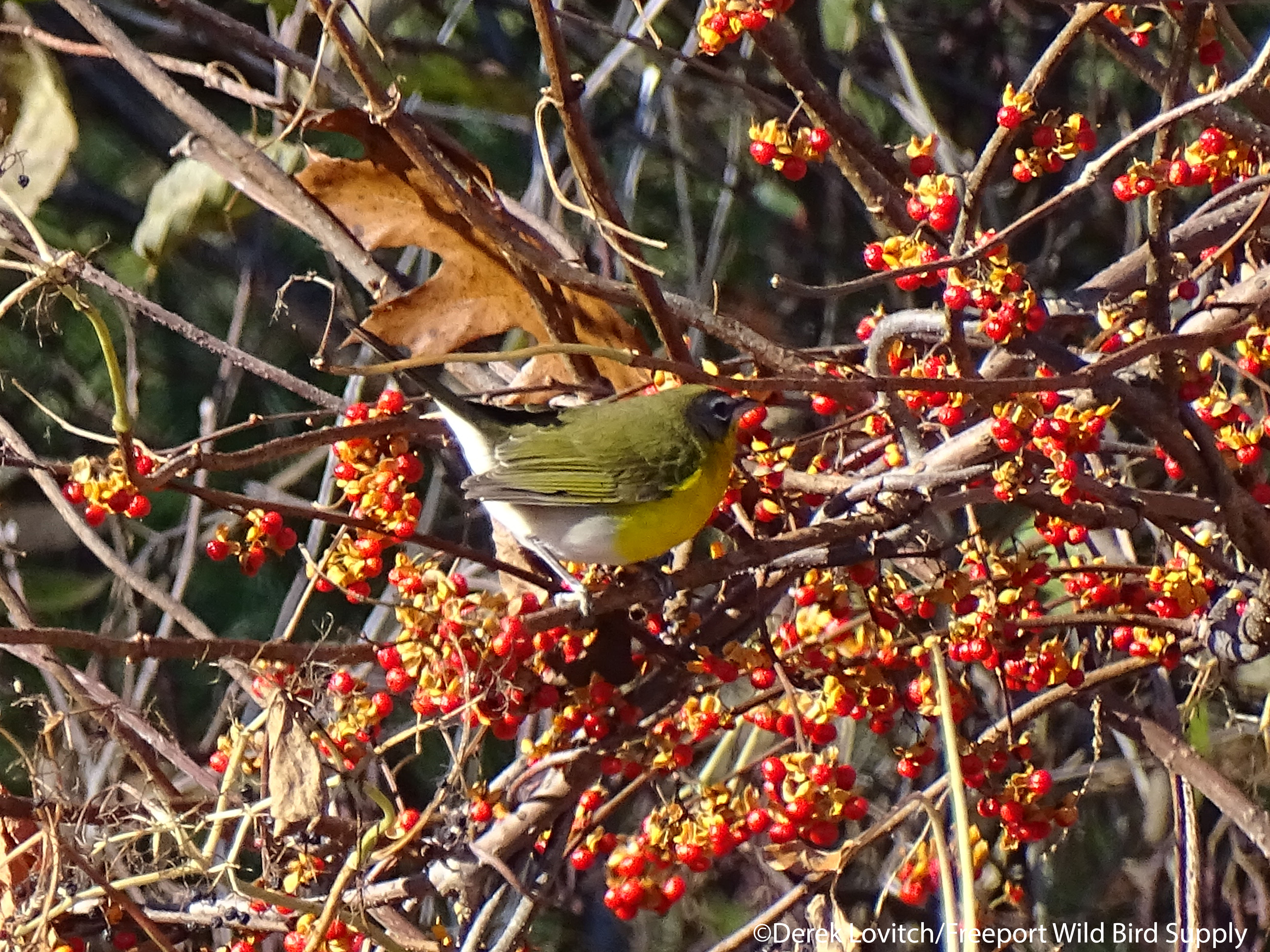
Although I chase even less frequently these days, I did make time to go see one of the two COMMON GULLS at the Samoset in Rockland on 11/3. Photos and discussion above. Additionally, I caught up with the YELLOW-BREASTED CHAT that was found there that day, although I blew the photos. A “Western” Palm Warbler, several American Pipits, and 4 Horned Larks were also present.
1 Pine Warbler, Bailey Island, Harpswell, 11/5 (with Jeannette).
1 RED-EYED VIREO and 6 American Tree Sparrows (FOF), Trout Brook Preserve, South Portland, 11/7.
Biddeford Pool environs, 11/8:
1 BALTIMORE ORIOLE
1 PRAIRIE WARBLER
1 “Ipswich” Savannah Sparrow
1 Rusty Blackbird
2 Lapland Longspurs
2 Greater Yellowlegs, 22 Black-bellied Plovers, and 26 Dunlin.
2 Northern Pintails
4 Hermit Thrushes and 1 Swamp Sparrow, etc.
Our Durham property is much quieter overall these days, but a few Red-winged Blackbirds have been around, a Ruby-crowned Kinglet was present 11/5-6, our first Pine Siskin of the season at home visited on 11/5 and increasing daily since, and Dark-eyed Junco numbers have continued to grow. At least one each of Swamp and Savannah Sparrow continue.
TRIP REPORT
Last week, Jeannette and I boarded a Princess Cruises ship in New York City to unofficially survey for rarities and things like Great Skua. The entire trip report is here, but our highlights from Maine specifically included:
1 RED-EYED VIREO, 2 Orange-crowned Warblers, 2 Field Sparrows, etc, Eastern Promenade, Portland, 10/29. Yes, we took a cruise only to go home!
Passerine FALLOUT, 10/30. Awoke to birds on deck before dawn. 16.5 nautical miles southeast of Mt. Desert Rock. 12 species of passerines, led by 8++ Yellow-rumped Warblers but also including 1 Rusty Blackbird, 1 “Ipswich” Savannah Sparrow, 1 Snow Bunting, and perhaps most surprisingly, 7 European Starlings. Another birder on board photographed a Pine Warbler.
Very little time was spent in daylight in Maine waters, unfortunately, but we did have a couple of Northern Fulmars in Maine waters very early on the 30th.
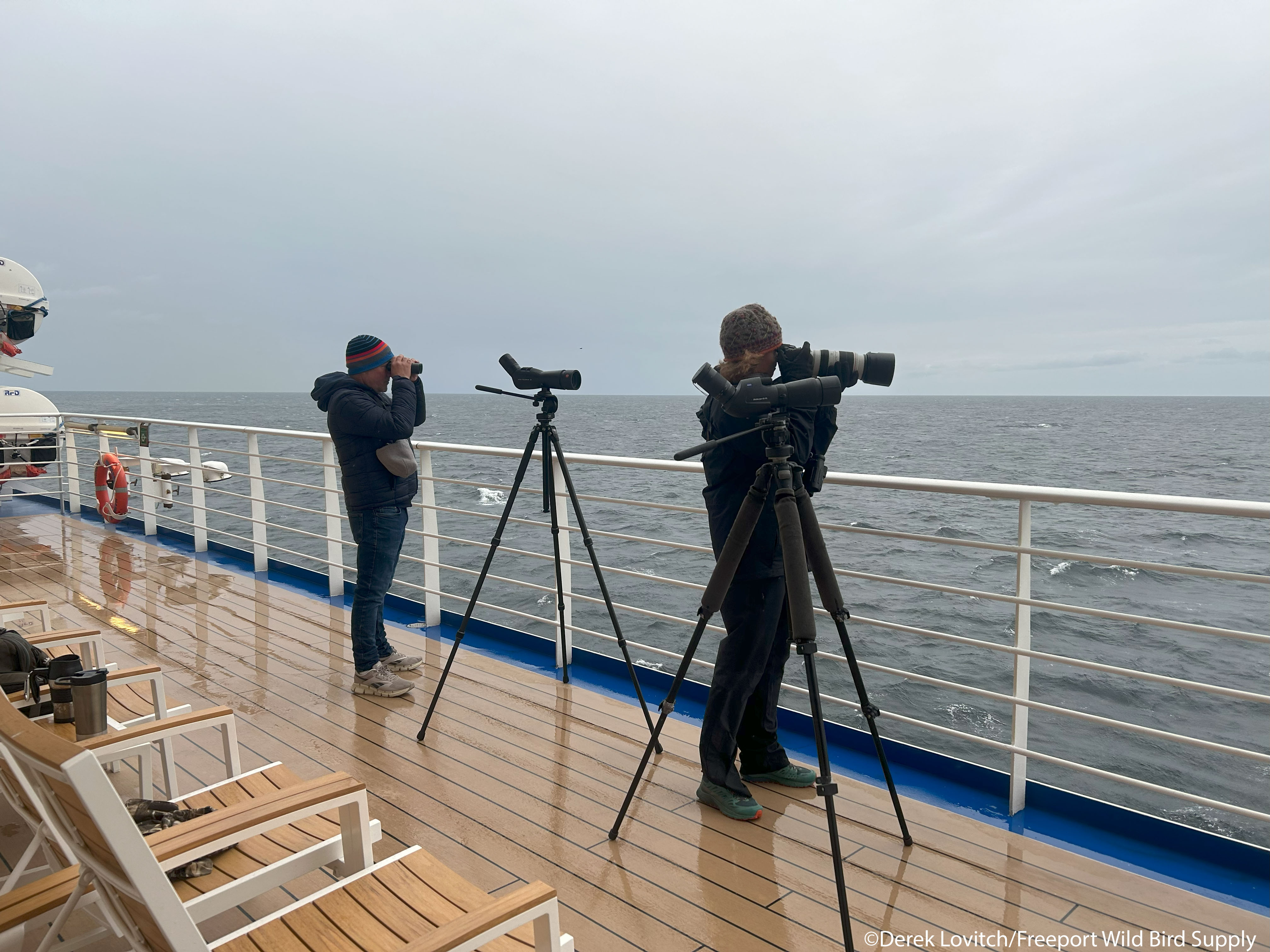
Cruise ships are big, stable platforms that allow for pelagic birding in comfort and with the use of spotting scopes!
In 2019, Jeannette and I took a cruise through the Gulf of Maine and northwestern Atlantic Ocean in the hopes of finding Great Skuas in particular. It was wildly successful, and if we could repeat this success, perhaps there would be a cruise-ship-based tour to offer. At least it would be more comfortable than last week’s attempt!
Therefore, on the evening of 10/26, Jeannette and I boarded Princess Cruises’s Enchanted Princess out of Brooklyn, New York. Our hope was to replicate the success of our 2019 trip. We were planning on a second scouting trip in the fall of 2020, but then COVID.
After finally feeling ready to consider a cruise again, we found the itinerary had changed, and we would need to spend seven days to get two full days offshore..we even needed to come back home first! But alas, we had pandemic-era credit that was going to expire, so off we went. Is this a reliable way to see Great Skuas in North America? Could I document a Barolo’s Shearwater this time?
We started our birding, however, at Brooklyn’s Greenwood Cemetery, home of this massive Monk Parakeet colony.
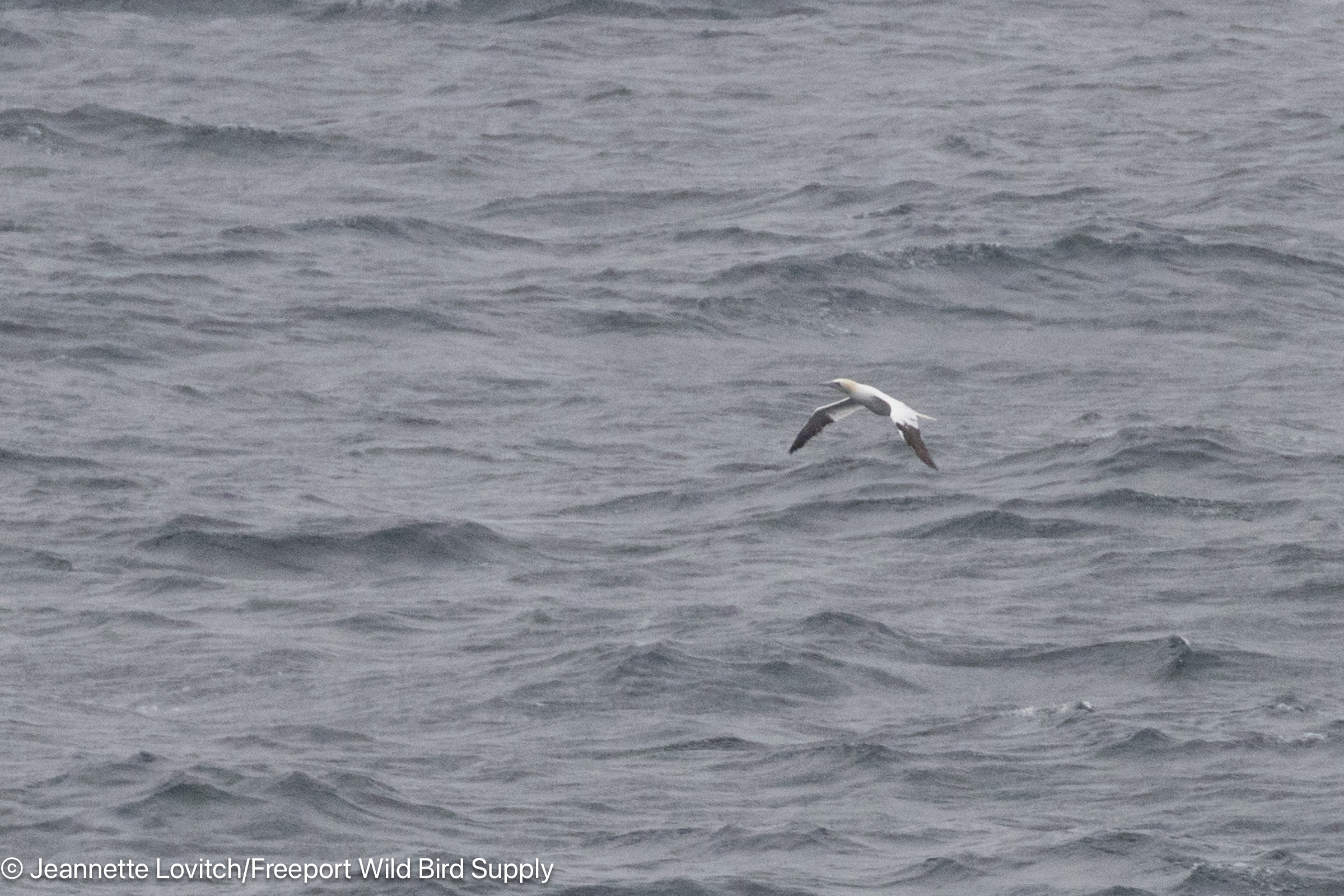
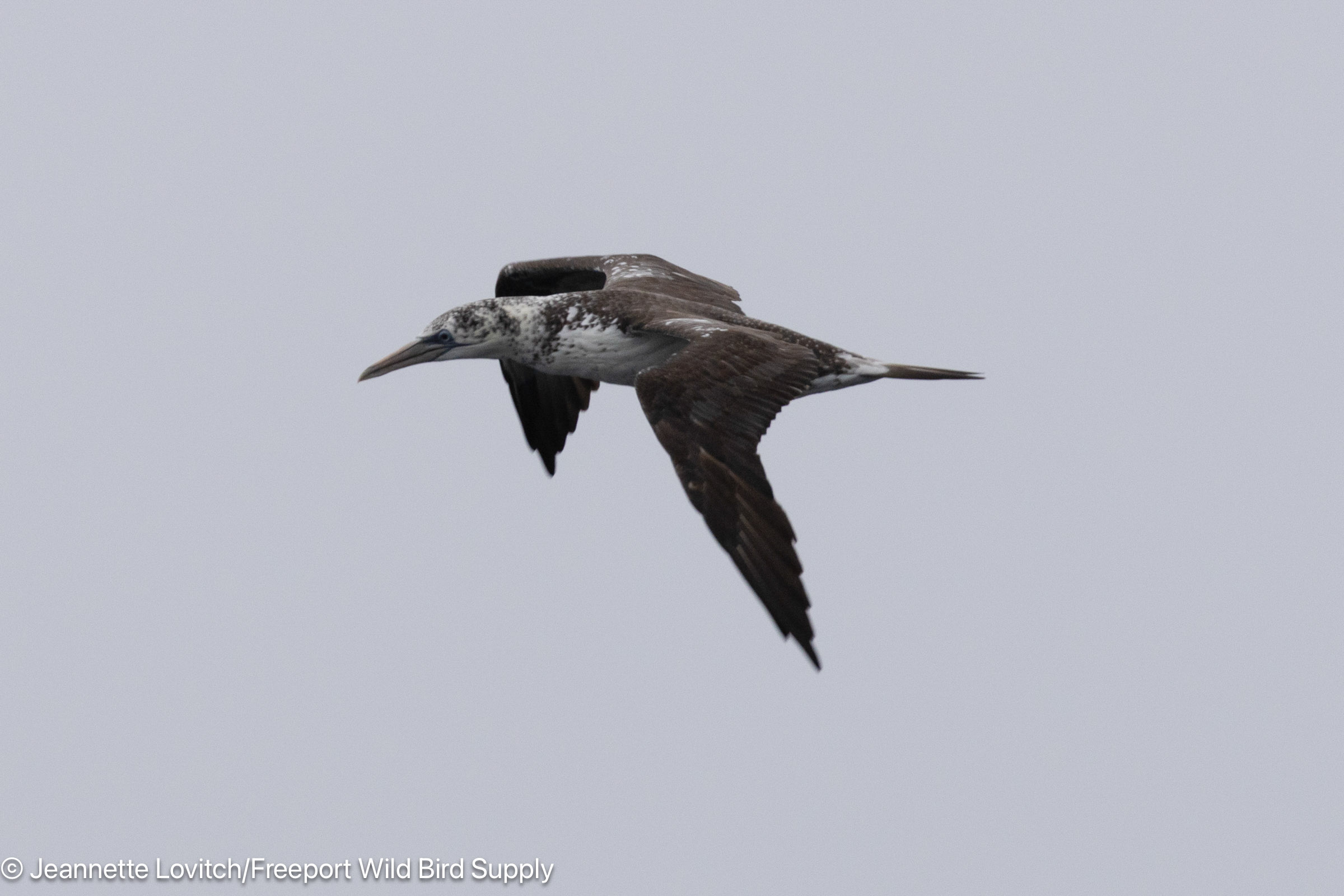
We departed New York Harbor with about an hour of usable daylight, picking up a single Cory’s Shearwater and plenty of Northern Gannets.
Screenshot
Arriving off Newport before dawn the next morning, we got the first shuttle to town, where our friends Bill and Jess picked us up for a lovely day of birding (Clay-colored Sparrow, Orange-crowned Warbler, late Nashville Warbler) before returning to the boat. About 45 minutes of deck time produced 8 Cory’s and a single Great Shearwater.
Newport arrivals. “Western” Palm Warbler at Sachuest NWR.
Unfortunately, this particular boat offered less-than-ideal viewing opportunities compared to our first trip, with the best deck space on Deck 7 (a great height) but way too aft. Even with our scopes on the steady platform, this was going to be a challenge.
Approaching Boston on the morning of 10/28, we checked the decks for passerines (none) before taking our place on Deck 7. There were a lot of Northern Gannets, 4-5 Cory’s Shearwaters close enough to identify as borealis, and a pod of Atlantic White-sided Dolphins. A Song Sparrow flew aboard just outside the outer harbor islands, but before that, our first real surprise of the trip: an American Woodcock appearing from the north and cruising alongside the length of the boat before disappearing. That’s not a “pelagic” we expected!
We birded Boston’s Greenway a bit, but returned to the boat well after dark. Sailing slowly overnight, we returned to Portland (the original itinerary had us visiting Bar Harbor), where a long, thorough check of the Eastern Promenade yielded two Orange-crowned Warblers and a very late Red-eyed Vireo.
Darkness reached us a tantalizingly-short distance to Cash’s Ledge, so we retired to rest up for the big day at sea tomorrow (finally!).
Waking up in Maine waters about 16.5 nautical miles southeast of Mt Desert Rock, I stepped outside well before first light at 6:05am. I immediately texted Noam, the other birder on board that we rapidly had become friends with, and I hustled Jeannette outside. With some drizzle arriving ahead of approaching light rain, we had ourselves a fallout!
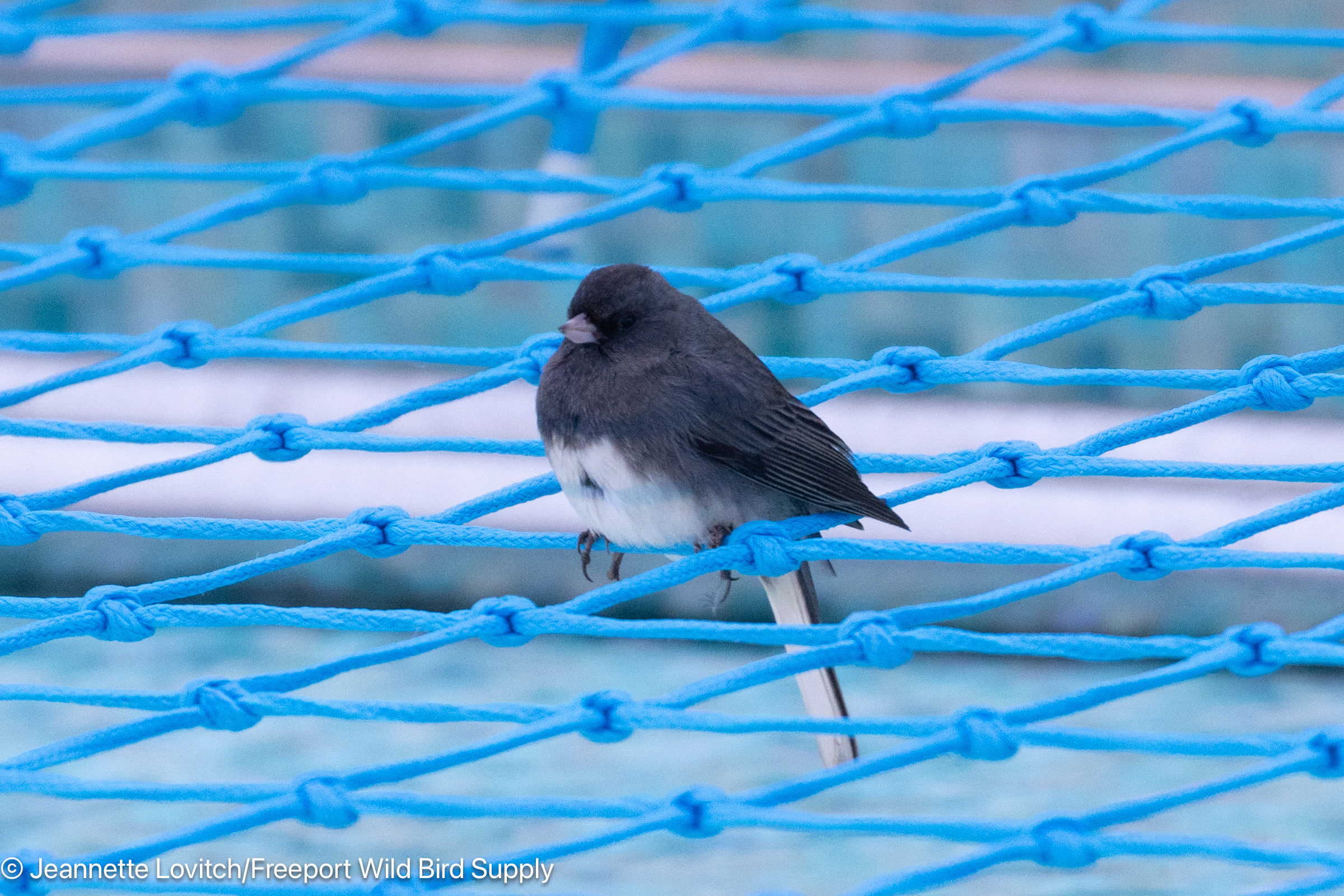
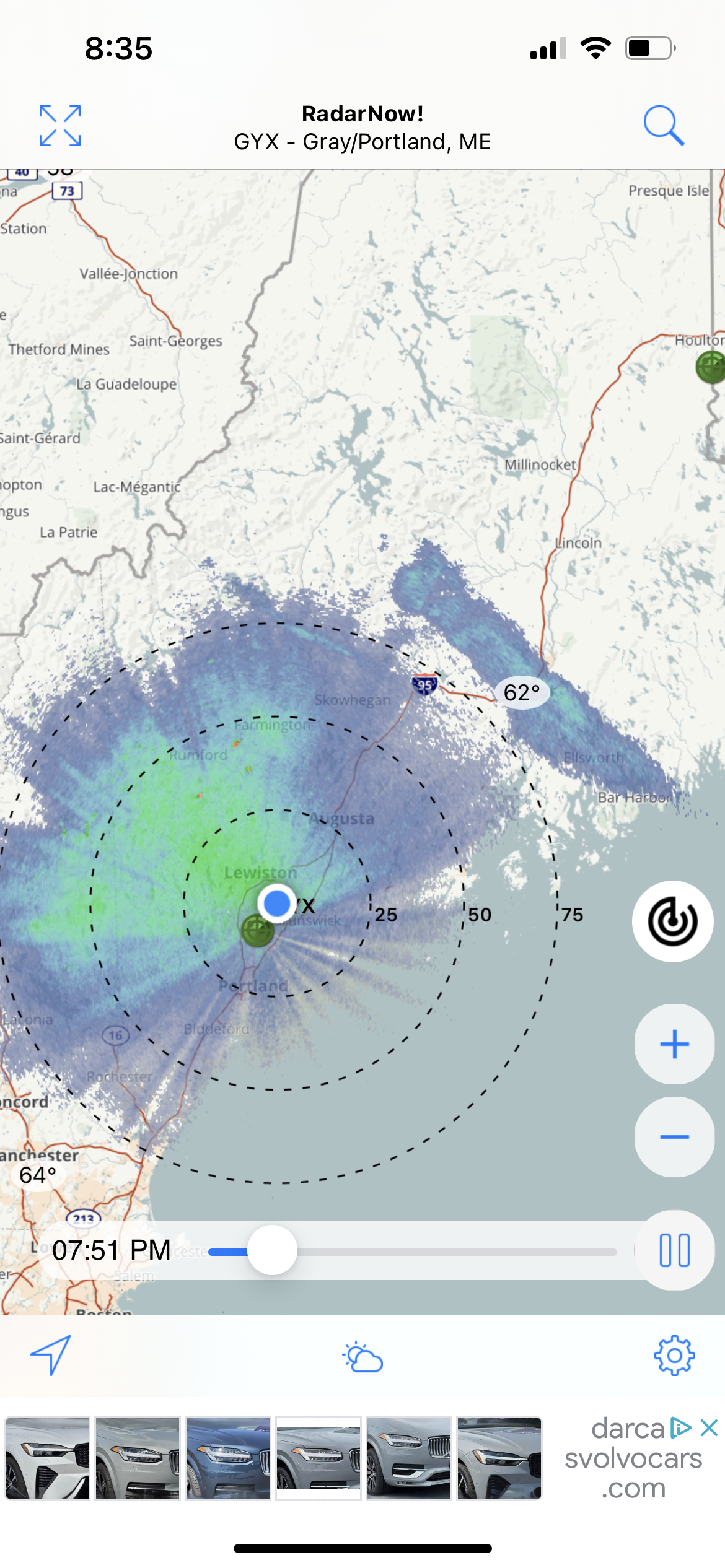
Unexpected considering there were little to no birds on the Maine radars overnight, and with a south wind through most of the night, I was surprised to immediately hear the flight calls of several Yellow-rumped Warblers. Sparrows were scattered about on the open decks. Noam and I had to usher a Rusty Blackbird out of a foyer, while Jeannette had to steer a Dark-eyed Junco down a hallway.
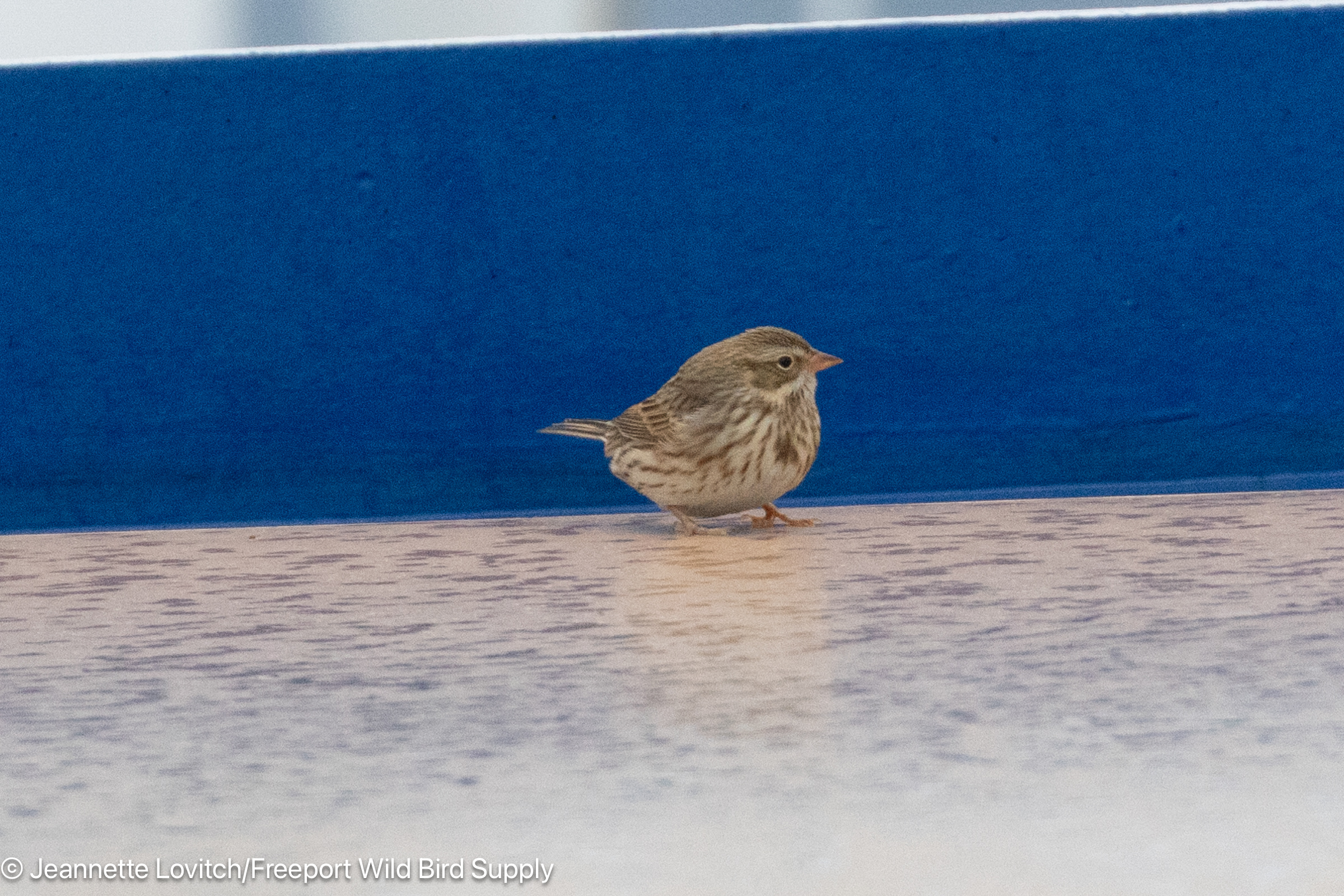
“Ipswich” Savannah Sparrow – that was an unexpected migrant, but makes sense considering we were southwest of Sable Island!
Clearly disoriented by the obnoxiously superfluous lighting of the ship, dozens of birds were around…often being flushed by now-awakening crew and passengers. Luckily, few birds seemed to be in dire straits – only one Yellow-rumped Warbler looked to me to be thoroughly exhausted, thankfully. In fact, most birds were leaving the boat as the sun rose and they were able to reorient themselves. While some birds seemed to arrive in the 15 or so minutes after sunrise, just about all passerines had departed the boat by 7:30 or so.
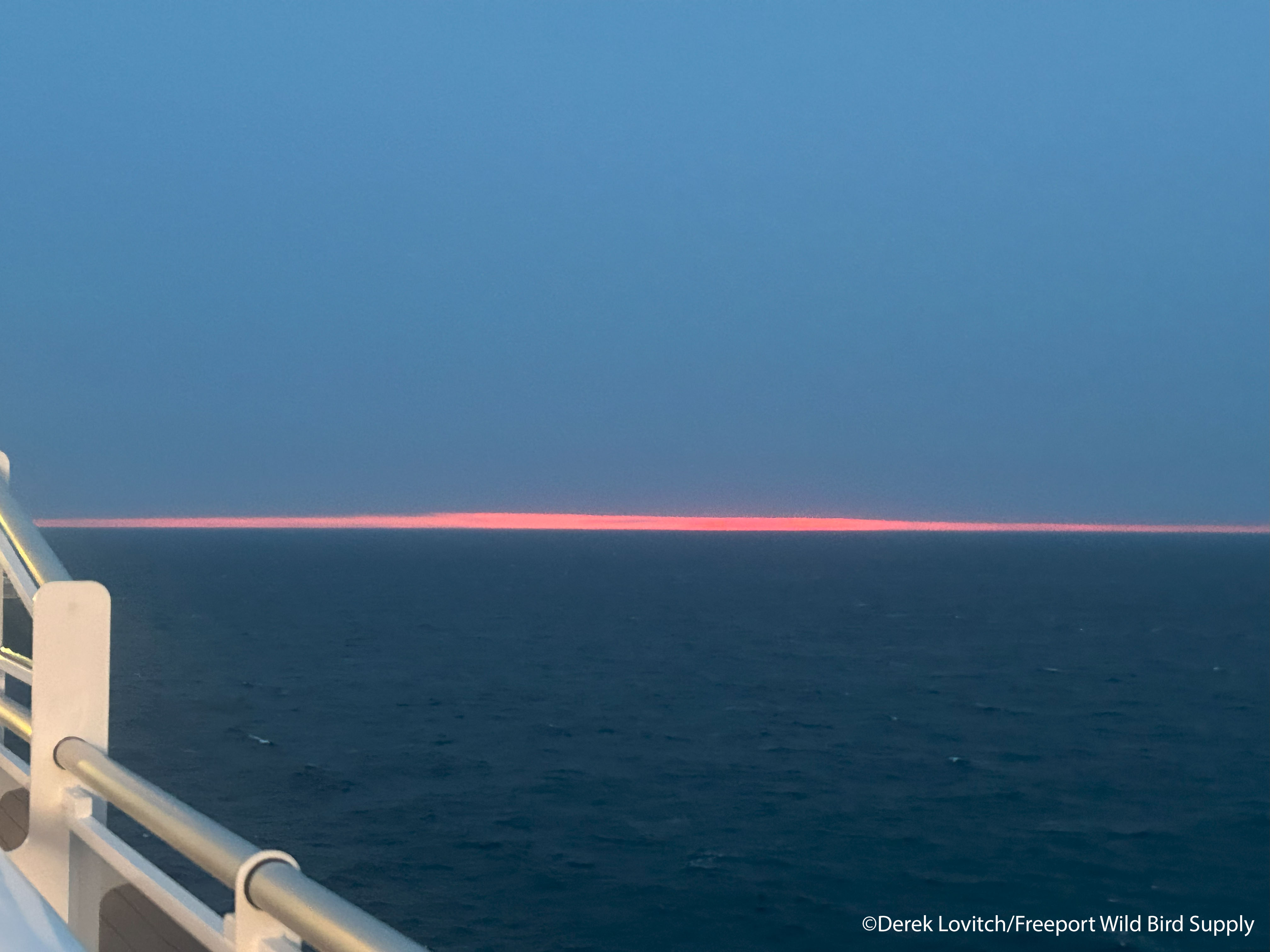
This photo, taken from off Eastern Point in Gloucester, MA the night before shows just how bright these ships are, and how disorienting they can be to birds.
With birds circling the boat before dawn, calling continuously, and others hiding in corners before being flushed to another corner, it was tough to count, but I estimated and counted a bare minimum of 8 Yellow-rumped Warblers, 8 American Robins (mostly overhead), 7 European Starlings (surprisingly), 6+ Dark-eyed Juncos, 2 Purple Finches, 2 fly-over American Pipits, 2 Savannah Sparrows, and one each of Palm Warbler, Snow Bunting, White-throated Sparrow, Cedar Waxwing, and Rusty Blackbird. Additionally, Noam photographed a Pine Warbler.
The three of us were in place on Deck 7 by 7:30, but the passerine show continued. A flock of 12 Red-winged Blackbirds flew by, while a flock of 14 American Robins joined by two more red-wings flew alongside the boat for several miles later in the morning before overtaking us and heading back to Nova Scotia.
Throughout the day, other passerines appeared and disappeared, some of which could easily have been sheltering out of sight somewhere inaccessible on the boat. These included a few more robins, 3+ Yellow-rumped Warblers, 2 Dark-eyed Juncos, and one each of Palm Warbler, Song Sparrow, Cedar Waxwing, Snow Bunting, American Pipit, and Lapland Longspur.
American PipitHarlequin Duck (L) with Black Scoters
But this was a seabird trip, and so we remained vigilant over the water. While we only had a few minutes in Maine waters once we began our vigil, the rest of the day was productive overall, although the afternoon was quite slow. As we passed the southern tip of Nova Scotia (we even spotted Seal Island Light that we were lucky enough to visit with a group of birders about 20 years ago), we finally called it quits at 5:45 pm when cloud cover accelerated the falling of darkness.
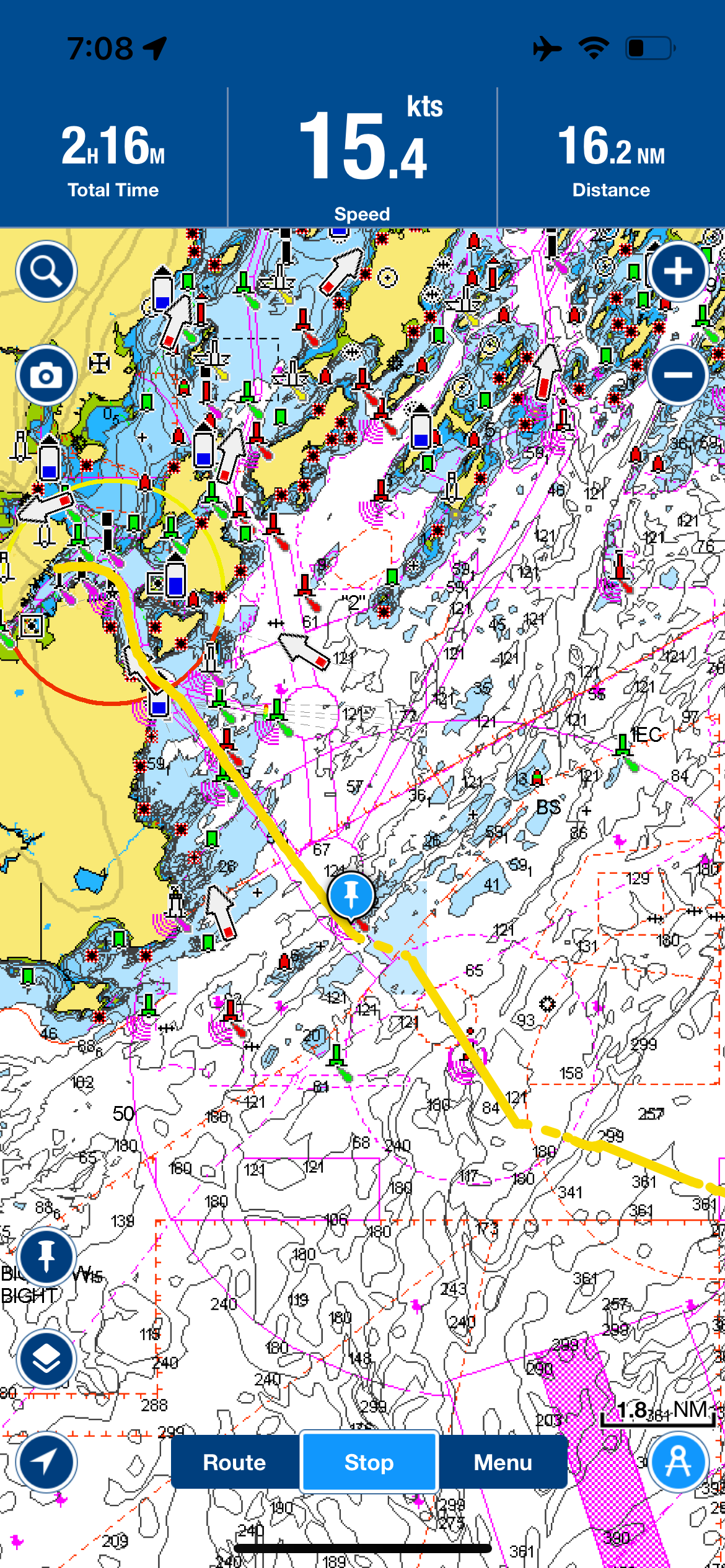
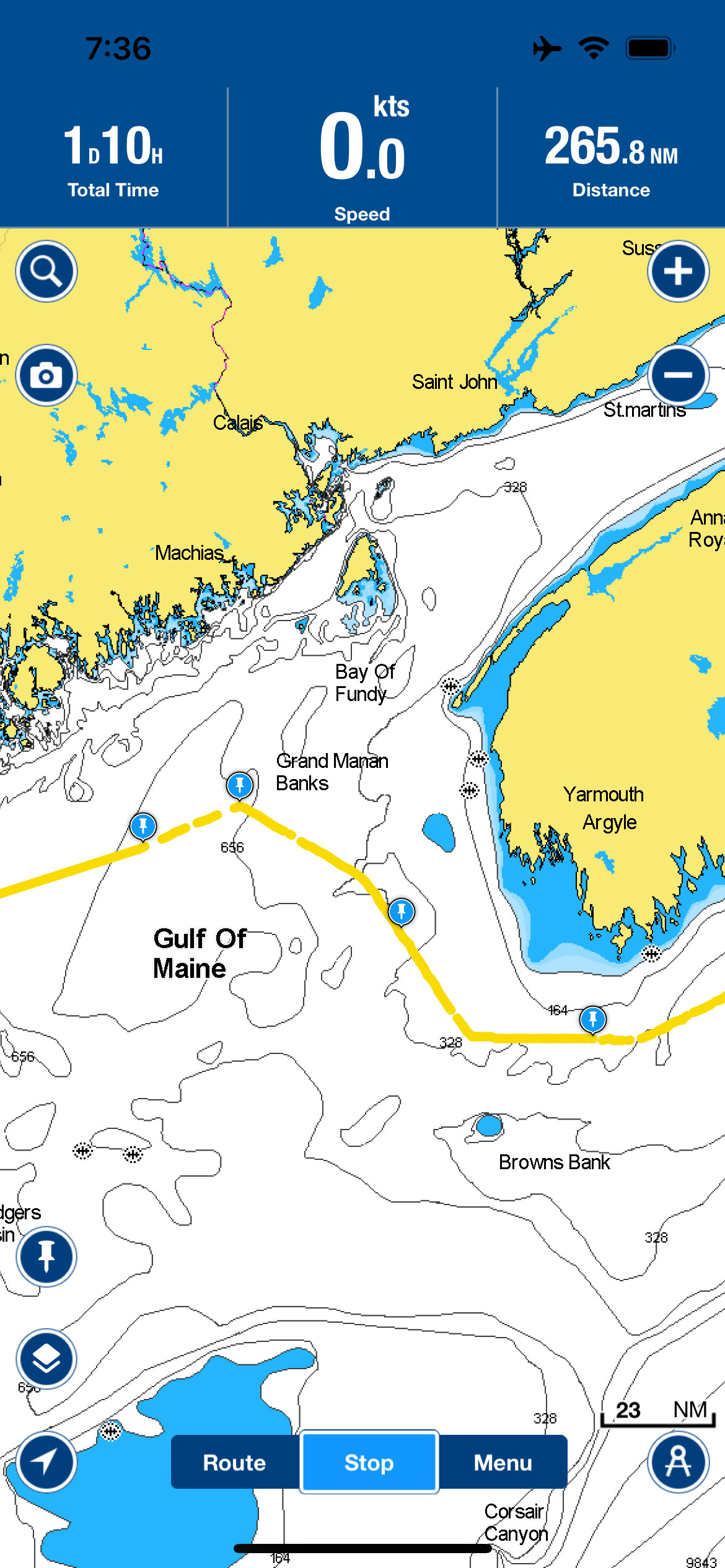
Here’s our route (left pin to right pin) for the day, thanks to the Navionics Boating app by Garmin.
From start to finish, our respectable – albeit not breathtaking – seabird tallies included oodles of Northern Gannets (including a steady southbound trickle almost all morning), and occasional southbound flocks of all three scoters and Common Eiders. Specific counts included:
47 Black-legged Kittiwakes
36 Razorbills
13 Northern Fulmars
10 Great Shearwaters
6 DOVEKIES (one flock landing off to the side of the boat)
3 ATLANTIC PUFFINS
3 American Black Ducks
3 unidentified large shearwaters
2 Harlequin Ducks
1 Greater Scaup
Great Shearwater
So all in all, not a bad day, but the passerines stole the show, and while Dovekie is one of the target birds of this trip, we didn’t see a skua…or even a jaeger, surprisingly.
The next day we awoke well within Halifax Harbor, but a sunrise passerine check yielded two birds: a White-throated Sparrow, and of all things, a rare Dickcissel!
Local friends Eric and Anne once again rescued us for a day of casual birding and good conversation, but the ship departed after dark; just more time to rest for our second full day at sea!
Halifax Public GardenNorthern Flicker
The morning of 11/1 found us between Downeast Maine and the northern corner of Georges Bank. The rest of the day would be in the same waters of our great success on our trip five years ago. After a passerine check which didn’t turn up anything (which meant nothing was disoriented by the ship overnight or desperate for a place to land come dawn, so this is never a bad thing), it was time to get to work in our usual spot.
Unfortunately, strong southwesterly winds and growing seas, with haze and light fog in the distance, made birding challenging. We worked hard though, but it was slow. We did have some excitement from two Dovekies that landed fairly close to the boat, and two Manx Shearwaters that, thanks to the lighting, I was absolutely sure were not Manx Shearwaters until we carefully reviews Noam’s photos later.
With glare and haze becoming problematic, we broke for an early lunch at 11:30, with the previous 4.5 hours of observation producing only the following, plus two Humpback Whales:
12 Northern Gannets
7 Great Shearwaters
6 Red Phalaropes
4 unidentified large shearwaters
2 DOVEKIES
2 Northern Fulmars
2 Manx Shearwater (after review)
2 Black-legged Kittiwakes
2 Lesser Black-backed Gulls
2 unidentified large alcids
1 unidentified small black-and-white shearwater.
Unfortunately, with increasing wind (that we were heading straight into) and seas growing up to 7-10 feet (barely noticeable on a ship this big though, thankfully!), the lower deck was closed off for safety. Later, even the upper decks were closed off due to the very high winds, which were now blowing nearly 30mph out of the southwest.
Screenshot
Luckily for Jeannette and I, we had scored a forward-facing room, and although we were high up on Deck 17, we could see forward. Haze and the angled window were problematic, but we could see birds close to the ship, and we could relax, remove layers, and even crack open a beer. This is pelagic birding in style!
From 1pm to 5pm, when we finally called it a day, the afternoon cabin-watch netted:
11 Great Shearwaters
9 Northern Gannets
5 Cory’s/Cory’s-type Shearwaters
3 unidentified phalaropes
2 Manx Shearwaters
Screenshot
And so our two days at seas concluded without a Great Skua, our primary target species for a future cruise..and perhaps a future tour. Alas, we’re only 1 for 2 in seeing skuas from the boat, and we would need a different class of ship (and, a shorter itinerary with more time at sea and less time in multiple ports) if we were to do this again. We’ll be keeping an eye out from other companies and other Princess ships to see if there’s a more skua-tactic itinerary in the future, but until then, our northeast Atlantic cruisin’ days may have come to a close.
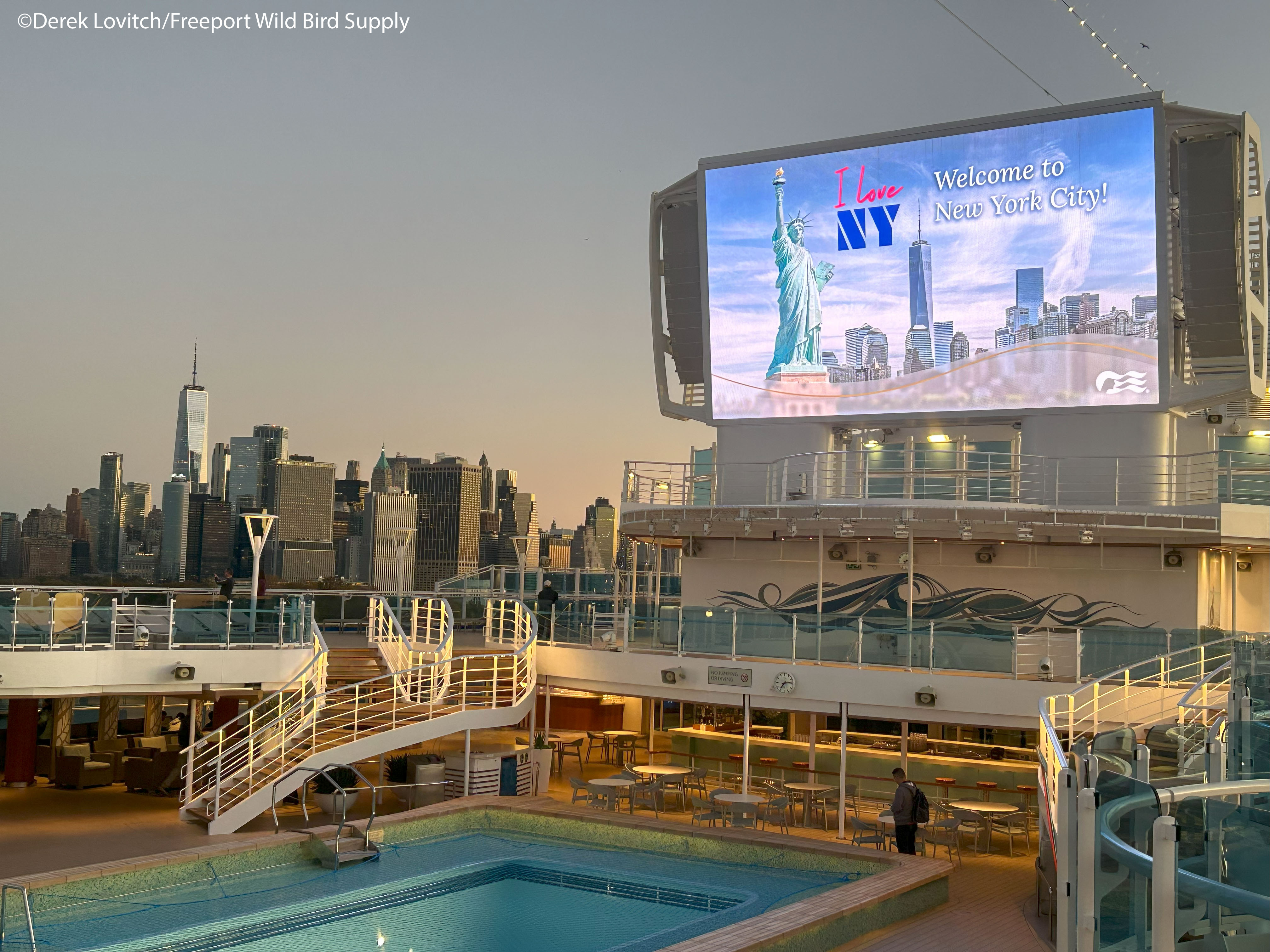
Arriving in New York harbor before dawn, our last sunrise deck check yielded a single Dark-eyed Junco, Yellow-rumped Warbler, and White-throated Sparrow, bringing our more-productive passerine birding cruise to a close.
A big thank you to the homeowners for alerting us to the presence of this very late hummingbird that arrived in a Durham yard on the 20th. We always put an alert in our store’s newsletters about late hummingbirds, and we try to get photographs to confirm their identity as many late season hummingbirds turn out not to be Ruby-throats. This one, however, was indeed a very late Ruby-throated, confirmed with the shape of the outer primaries on the folded wing.
Despite weather often feeling more like summer, it was a great week of autumn birding. Perhaps my last morning flight visit of the season to Sandy Point, a trip to a private island in Casco Bay, a late hummingbird to chase, a day off to do some birdfinding, and time on our property all combined for a very productive eight days of birding. Here are my observations of note.
Sandy Point Morning Flight, 10/17: 351 individuals of 25 species, led by 114 Yellow-rumped Warblers but including a goodly October 17th total of 7 species of warblers. Full list here:
1 Pine Siskin (first of fall), here at the store, 10/18.
1 Field Sparrow and 1 Horned Lark, House Island (private; restricted access), Portland, 10/20 (With Birds on Tap – The Boat Trip! tour group). Trip report here.
1 RUBY-THROATED HUMMINGBIRD, private home in Durham, 10/21 (with Jeannette). After receiving an email about a hummingbird coming to a feeder on 10/20, we made arrangements to visit to get confirmation photographs. Surprisingly, given the date, it was indeed a Ruby-throat. See photos above.
Highlights on our Durham property included at one or more Lincoln’s Sparrows continuing through at least 10/18, two EVENING GROSBEAKS (FOF) and a Field Sparrow on 10/21, and a late PRAIRIE WARBLER on the 24th.
1 Vesper Sparrow and 1 Orange-crowned Warbler, Wolfe’s Neck Center, Freeport, 10/11.
1 Lesser Yellowlegs and 1 Pectoral Sandpiper with 28 Greater Yellowlegs, Walsh Preserve, Freeport, 10/12 (with Saturday Morning Birdwalk group).
6 Long-tailed Ducks (first of fall), 1 Red-breasted Merganser (first of fall locally), 2 Dunlin, 2 Osprey, 12 Black-bellied Plovers, 200+ Surf Scoters, 73 Laughing and 18 Bonaparte’s Gulls, etc, Casco Bay, 10/13 (with Birds of Casco Bay boat tour group).
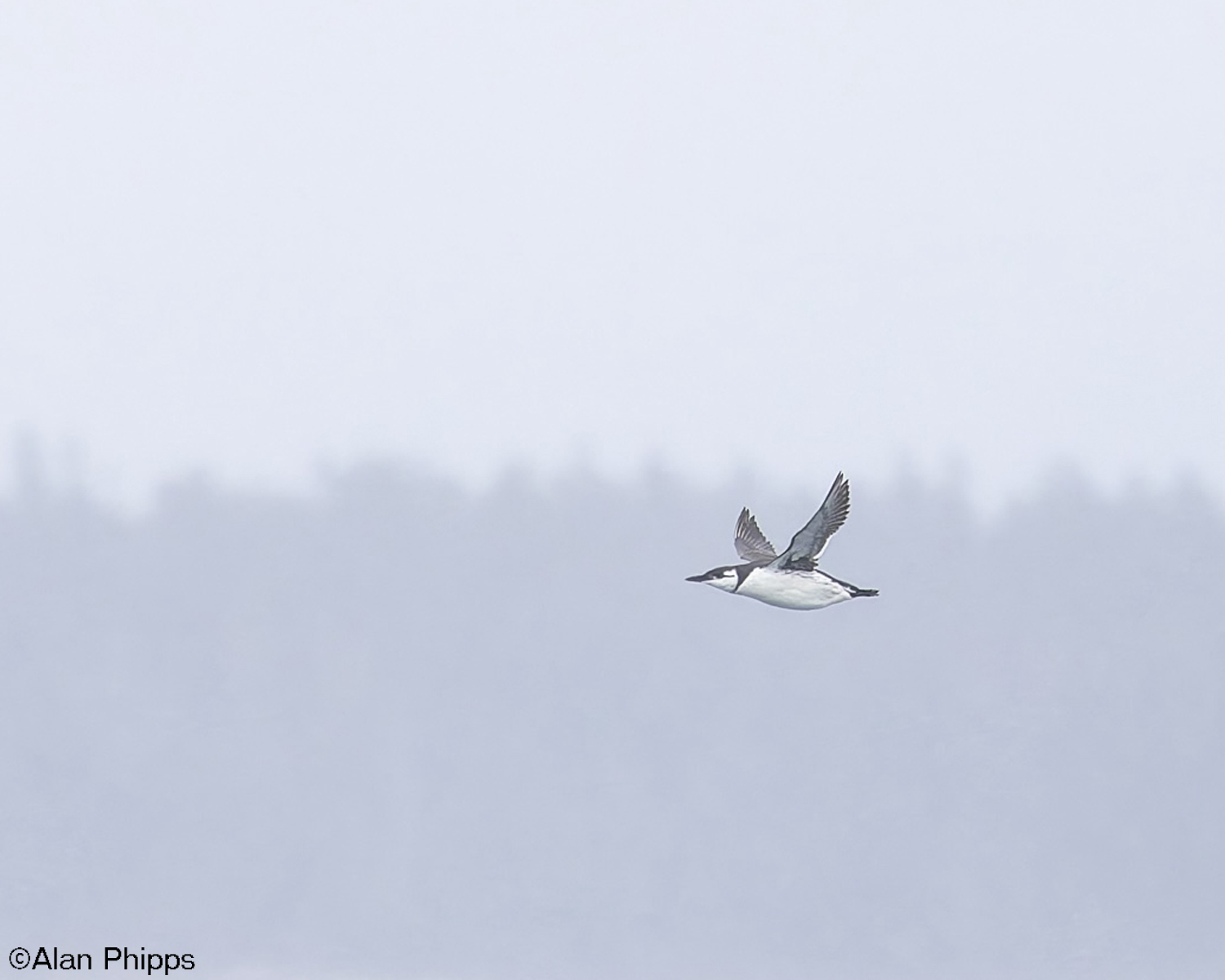
Highlights from a, uh, “challenging” half-day pelagic out of Boothbay Harbor on 10/14 included 1 Northern Fulmar and 2 Common Murres. Full trip report and some photos here:
Highlights from the yard this week include a dawn American Woodcock on 10/11 and 3 Rusty Blackbirds and 120+ White-throated Sparrows on 10/15.
UPCOMING TOURS:
There’s still one space open on our Birds on Tap! – The Boat Trip! To House Island in Casco Bay on Sunday, October 20th. More info here, included an updated itinerary. This is going to be a really special trip!
Once we traveled beyond the shelter of Damariscove Island, we had a plan – or at least the concept of a plan. We’d slowly work our way straight south to deep water, make a turn to the east as the forecast was for seas to start diminishing, and then take mostly following seas for a smooth return trip home.
Peregrine Falcon having brunch to go.
We had lots of Northern Gannets early in the trip – always a good sign – but it was pretty slow going through the area known as The Pasture, which like all offshore patches, is always hit or miss. In fact, the only other pelagic we had was a single Cory’s Shearwater seen by only a handful.
Unfortunately, once we made the turn to the east, it became essentially unbirdable. The forecast 4-6 foot seas were right, but the distance between waves (the wave period) was significantly shorter than forecast, and the waves were definitely not diminishing. Captain Steve did an exceptional job of trying to soften the ride and keep us safe, but we just weren’t going to be able to continue east towards some of our deep water hotspots. When a bird was called – such as a single Northern Fulmar (one of our primary targets on the trip), few people were able to even try to see it before it was long gone behind the waves. Perhaps only the Yellow-rumped Warbler and Savannah Sparrow that we encountered about 15 miles offshore were having a worse day. I tried to keep some bird commentary going, if only as a distraction, but I’m not sure anyone was listening at this point!
So it was decided to make a turn for home. In a last ditch effort to salvage the birding day, we angled for the mouth of Sheepscot Bay. An unidentified dark jaeger zipped by, seen by just a few, tantalizing us to what else is out here today.
Once in the mouth of the bay, sheltered by Damariscove off to the east, we found gentle seas, and decided to try our hand at attracting some birds with a chum slick. We laid a slick for about 1-2 miles of pork fat soaked in fish oil. Thanks to a generous donation of surplus fatback compliments of Old Crow Ranch of Durham, we were likely the first ever pelagic to use local, pasture-based, regeneratively-farmed, non-GMO, pork fat. The experiment turned out to be quite a success, too!
First, we kicked up two Common Murres as we traveled, one of which flew past the boat affording a great view for those who were still on deck; even the seabirds were seeking sheltered waters today!
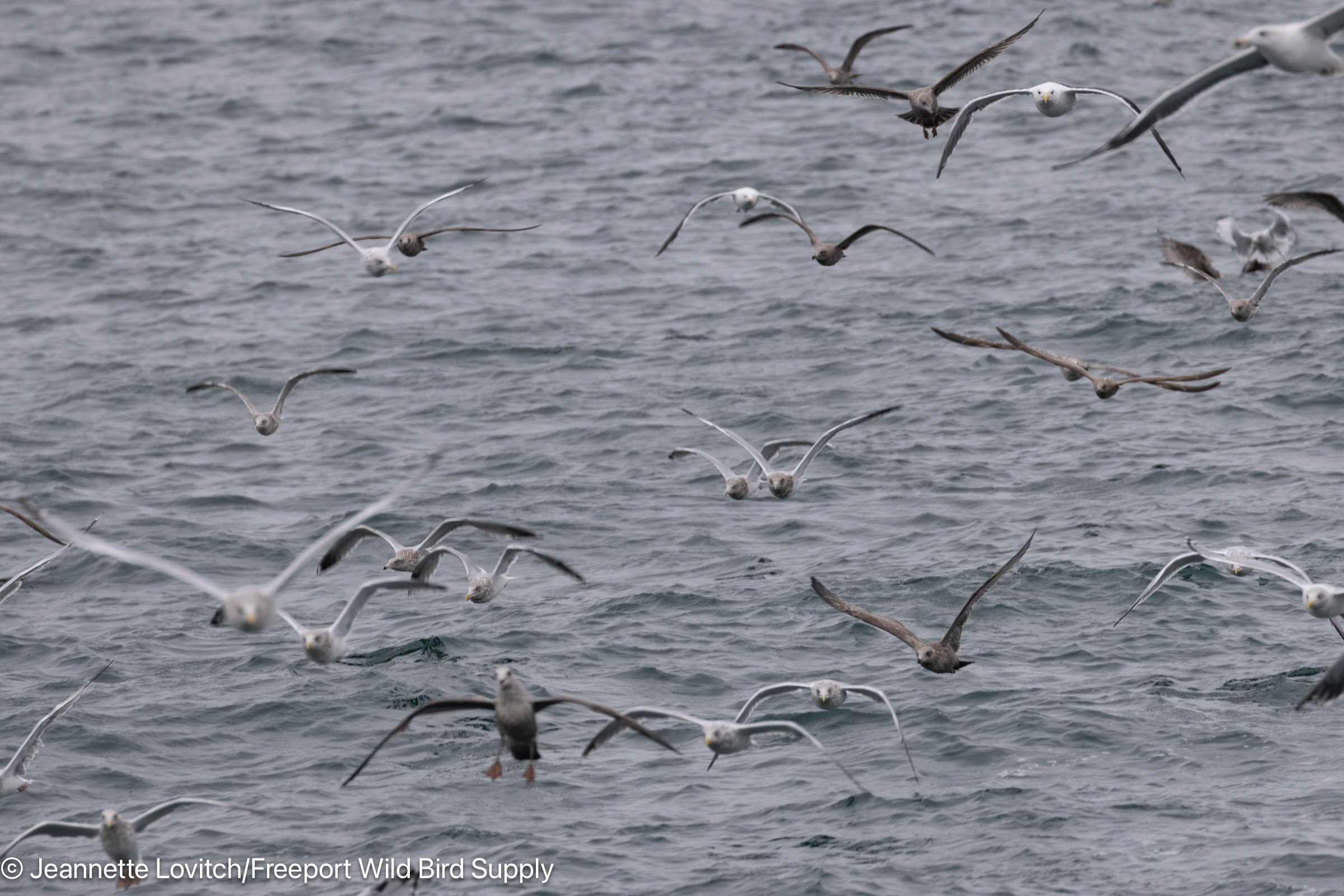
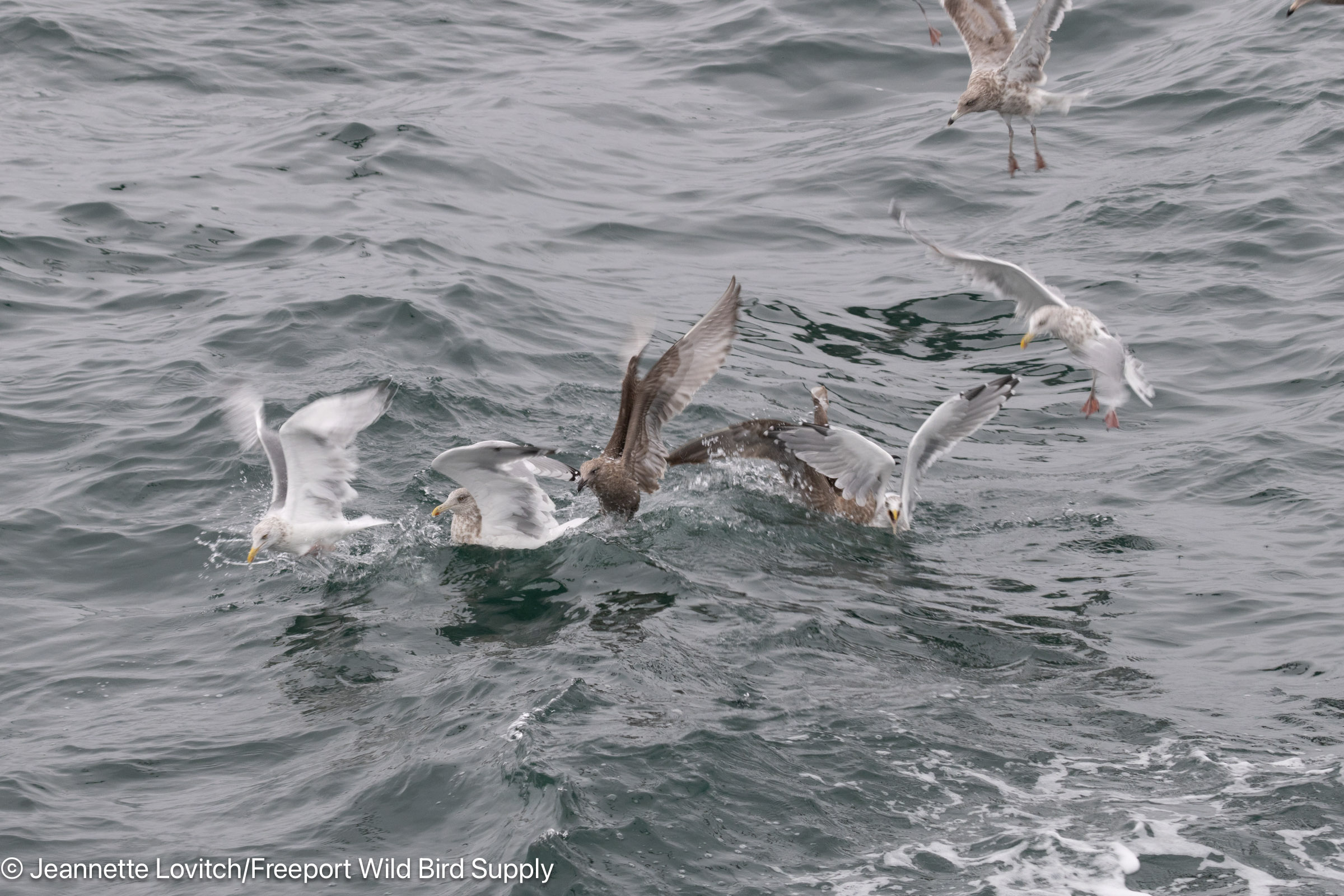
We were soon attracting several hundred gulls to our chumslick, and we finally teased out a single Lesser Black-backed Gull from the masses. A few lingering Laughing Gulls and several Ring-billed Gulls, including spiffy fresh juveniles, joined the myriads of Herring and Great Black-backed Gulls.
We then tried the same technique closer to the mouth of the outer Boothbay Harbor, closer to Damarsicove. At first the results were surprisingly lower, until a Peregrine Falcon and a Northern Harrier over the island kicked up the gulls roosting on the windward side. Once the gulls saw the feeding birds behind us, the game was on. Meanwhile, we enjoyed many dozens of Surf Scoters and Common Eiders, punctuated by both Black and White-winged Scoters, and from here to the harbor, another couple of dozen Common Loons and plenty of Black Guillemots.
I want to thank the captain and crew of Cap’n Fish’s Cruises for their hard work and dedication today, and their best efforts to keep us comfortable. I want to thank my spotters, Jeannette Lovitch and Ian Carlsen (who also did a fantastic job keeping the official eBird checklist following pelagic protocol). A big thank you to Alex Lamoreaux for still finding birds in the worst of the snotty water. And another big thanks to our chummer, Dan Nickerson, who got the action going once we found some calm waters.
And most importantly, thank you to all of those who came aboard today. Some said they had fun. Many suffered. But everyone endured. If this was your first pelagic, you’ll be thrilled to know you were likely just had your worst trip. For those who like roller coasters (unlike me!), I guess you’re welcome?
Here’s the trip list. For the hit-or-miss October pelagics in the Gulf of Maine it’s really not that bad.
One of at least 15 Cory’s Shearwaters observed from a Cap’n Fish’s Cruises Whale Watch last week, showing the dark outer primaries on the underwing, making for a rounded end to the white of the underwing coverts, separating it from the recently-split Scopoli’s Shearwater.
October is my favorite month of birding in Maine, and this past week showed why. A great diversity of birds are on the move, and my past seven days featured everything from pelagics to yard birds. Here are my observations of note over the past seven days.
Pelagic highlights from a Cap’n Fish’s Cruises Whale Watch out of Boothbay Harbor on 10/4: 4 NORTHERN FULMARS (including one dark morph), 4 ATLANTIC PUFFINS, 14-15 Cory’s Shearwaters (most seen and/or photographed well enough to see full dark outer primaries on the underwing; see above), 6 Red-necked Phalaropes, and one BROWN CREEPER landing on a person on the top deck about 14 miles off of Damariscove Island (photo below). My complete list is posted here.
1 Baltimore Oriole and 1 Nashville Warbler, Wolfe’s Neck Center, Freeport, 10/5 (with Saturday Morning Birdwalk group).
Sandy Point Morning Flight, 10/6: 140 birds of 18 species led by 60 Yellow-rumped Warblers. Total tally here.
1 Rusty Blackbird, 1 Nashville Warbler, and 1 Pied-billed Grebe, Capisic Pond Park, Portland, 10/9 (with clients from New York).
20-30+ Cory’s Shearwaters off East Point and Ocean Ave, Biddeford Pool, 10/9. Some just beyond Beach Island in good afternoon light to see dark outer primaries. 15 minutes of counting produced 18 individuals from East Point, all moving north, with 1-3 in view with almost every quick scan thereafter. Good sign for Monday’s pelagic! (with clients from New York).
7 American Oystercatchers and 1 Horned Grebe (first of fall), Ocean Avenue, 10/9 (with clients from New York).
1 American Redstart, Elphis Pond, Biddeford Pool, 10/9 (with clients from New York).
Highlights from our Durham property this week included the arrival of the first few Dark-eyed Juncos, a Rose-breasted Grosbeak on 10/4, continuing multiple Lincoln’s Sparrows, Nashville Warbler on 10/8, and another or the same Indigo Bunting on 10/9.
And here’s my complete trip report from my Monhegan tour and visit on September 27 through October 1st.
Our annual half-day pelagic with our partners Cap’n Fish’s Cruises out of Boothbay Harbor is on Sunday, October 14th – a nice, late date that should put us more in the season of things like Great Skua, and you can be sure we’ll be studying Cory’s Shearwaters hard to find a Scopoli’s! More info and link to registration is here. See notes above from my 10/4 outing.
A few spaces remain on our Birds on Tap! – The Boat Trip! To House Island in Casco Bay on Sunday, October 20th. More info here.
Join us on Monday’s pelagic and maybe a Brown Creeper will land on you!
It might not “count,” but the Ring-necked Pheasants on Monhegan are iconic!
Approaching the island on Friday, 9/27, the fog was rapidly lifting on the mainland, and the skies were clearing. High seas from the previous days were steadily diminishing. An offshore fogbank reduced our chances to see many birds during the boatride, but by the time we reach the island, the sun was shining through.
Things seemed fairly slow, but there were birds here and there. One single bush hosted all three Melospizas: Lincoln’s, Swamp, and Song Sparrows, and one of the tarrying Baltimore Orioles soon joined them. It was a relaxed start to the weekend, affording us time to check in and enjoy lunch before returning to the birding.
We don’t just look at rare birds, we study the common ones…at least on a slow day! Like this cooperative Song Sparrow
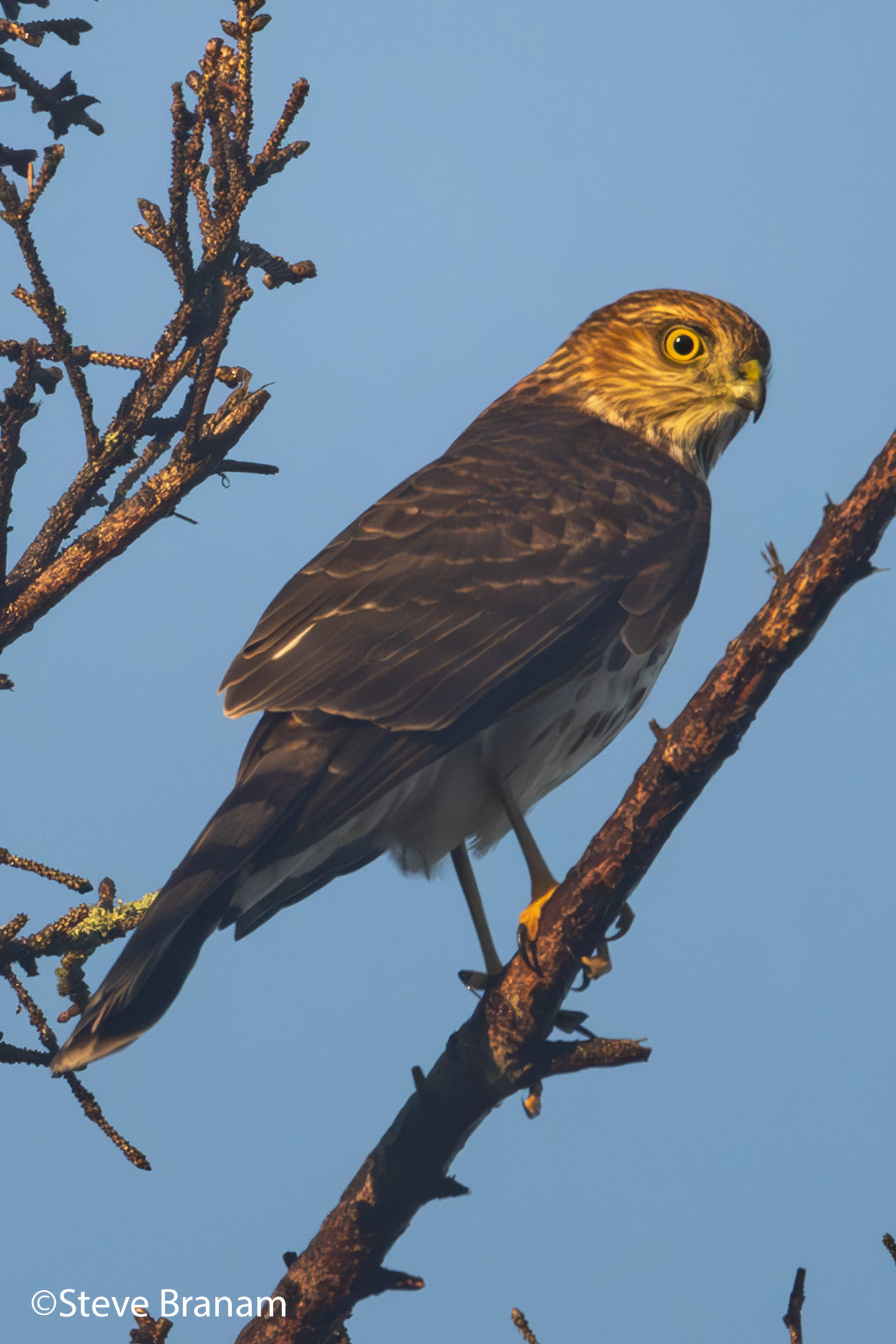
The afternoon was quite slow, as expected from the preceding nights with little or no migration on unfavorable winds, but we had birds to look at: Yellow-rumped Warblers sallying for midges at the top of spruces, scattered assorted sparrows, lots of great Merlin performances, and no shortage of Ring-necked Pheasants.
As usual for the end of September, Yellow-rumped Warblers were the most abundant migrant. This one was nicely demonstarting what makes it a “Myrtle Warbler.”
As the sun set, a huge flight was taking off and continued throughout the night. Very light northwesterly winds overnight were a little lighter than I would have preferred, but there was just a massive amount of birds on the move, and a great Morning Flight on Saturday morning to start our day was indicative of that.
The radar return was huge overnight, with lots of birds on the move. We did wonder, however, if that blob over the Mid-Coast was an isolated shower…or perhaps it was “Independence Day!“
Yellow-rumped Warblers filled the air, with handfuls of Blackpoll Warblers and a small number of Northern Parulas. After the morning flight settled down, the rest of our am was also very good. While the very light winds allowed much of the birds partaking in the Morning Flight to leave the island, there were plenty of birds remaining on the island to be seen. In addition to Yellow-rumps, there was a good arrival of White-throated and other sparrows, and pockets of activity were sifted through, producing a wide array of fun birds.
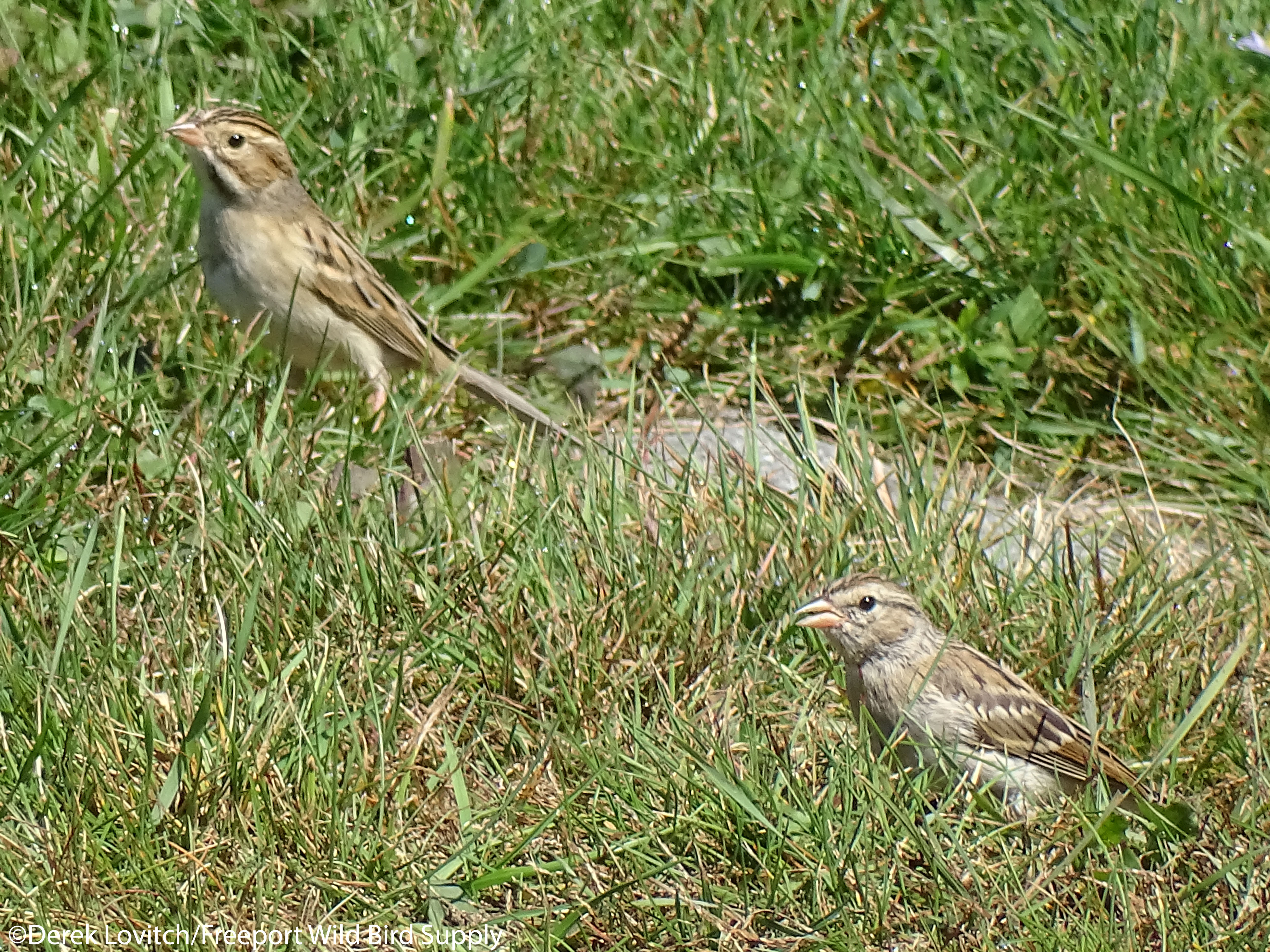
A Dickcissel in the community farm and a total of 6-7 Baltimore Orioles nearby were soon trumped when a first fall female Mourning Warbler actually walked into the open for all to see (for a change) …on a plywood garden table nonetheless! We found a Clay-colored Sparrow feeding amongst Chipping Sparrows, discovered a rather rare on the island Pine Warbler, and enjoyed a nice variety of the expected seasonal migrants.
Clay-colored SparrowClay-colored Sparrow with a molting juvenile Chipping Sparrow in the foreground.
Lovely weather all day encouraged us to enjoy an afternoon on Burnt Head, were we picked up a tardy Chestnut-sided Warbler and a rather rare in the fall on the island juvenile Ring-billed Gull. We also noticed a lot more Red-eyed Vireos during the course of the day, with many at and below eye level.
While a rare Yellow-crowned Night-Heron called over the harbor at nightfall, I was wandering on my own so it doesn’t count for the group, unfortunately. I was still pleasantly surprised by it, and it punctuated the calls of songbirds departing the island.
Luckily, a moderate flight occurred throughout the night (the overall intensity was a little obscured by fog on the radar images) on light west winds that had become calm by morning. Those calm and cooling conditions allowed fog to roll back in, and the Morning Flight was just a trickle to start on Sunday morning, our last morning together.
However, once the sun burned through, birds were in the air and appearing out of nowhere, and the birding really picked up. In flight, it was mostly Yellow-rumped Warblers, but there were more Palm Warblers involved today. We began finding “new” species for the trip list, like a Cape May Warbler, some recently-arrived American Robins, and we enjoyed watching a swirling flock of 16 migrant Black-capped Chickadees.
Late Blackburnian Warbler
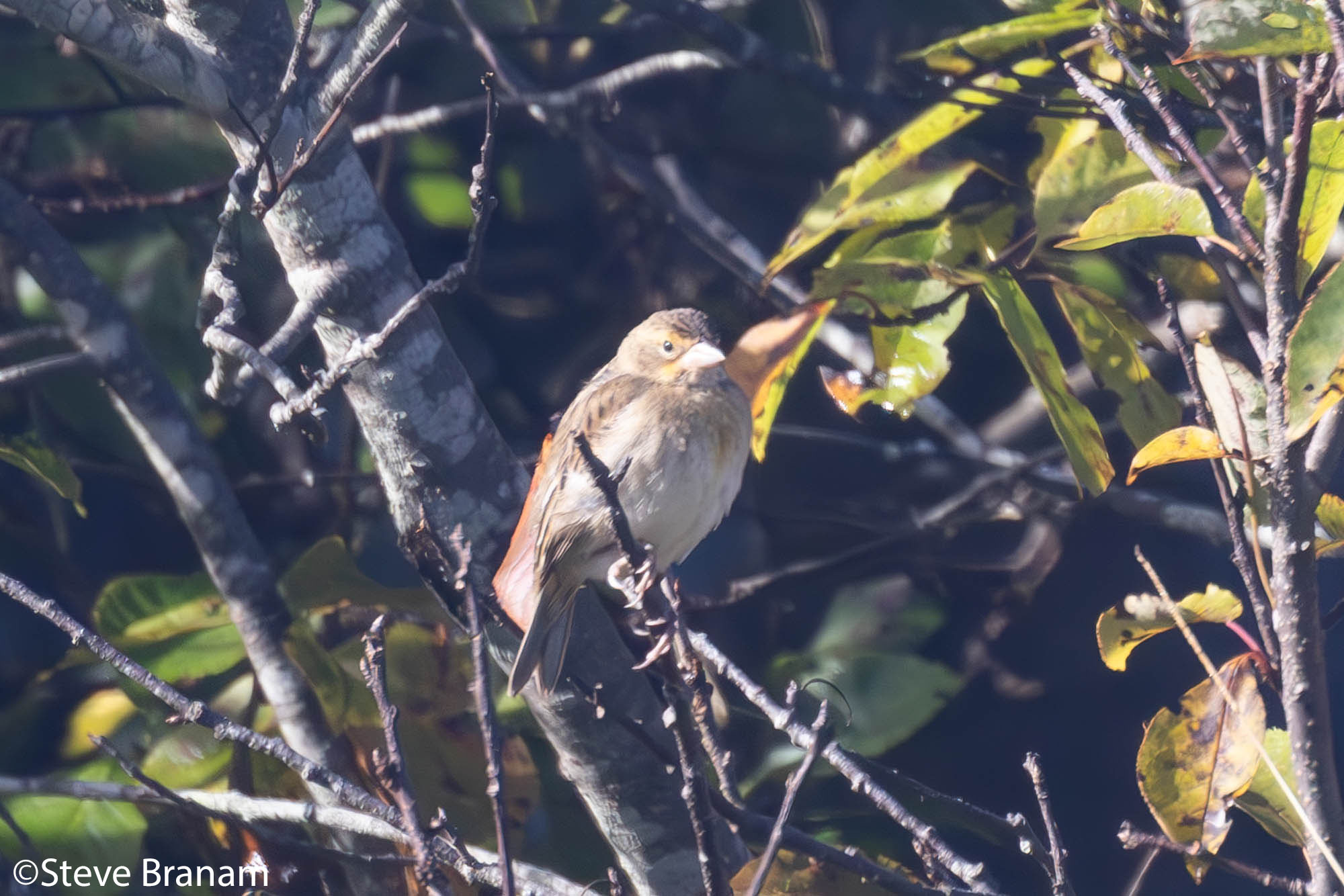
After breakfast, the birding was overall quite a bit slower than Saturday, but the quantity was replaced by quality! An Orange-crowned Warbler at the Ice Pond, a continuing female Dickcissel in the cul-de-sac, two different Clay-colored Sparrows. Pockets of activity offered up nice views of a male Cape May Warbler, a few Blackpoll Warblers, and then we found not one, but 3 Nelson’s Sparrows in the Lobster Cove meadow – one even perched conspicuously enough to be viewed by all!
Nelson;s Sparrow sitting in what passes for “the open” with this species!Dickcissel
As the group trickled home, the last participants standing joined me in a little longer hike from Lobster Cove to Burnt Head, which yielded two Lesser Black-backed Gulls, more Great Cormorants, and yet another Orange-crowned Warbler to bring the official tour to a productive conclusion.
I remained on the island overnight, and with light southerly winds and a return of the fog, there was very little in Morning Flight and to start the day. But the day had a “rarity” feel to it (southwest winds overnight will do that!), and my Rarity Fever was soon stoked by a wayward Yellow-billed Cuckoo that sat still for me, gaining the first rays of sunshine of the morning, in a small tree in the Monhegan House lawn. Two Rusty Blackbirds were foraging on the lawn, and once the sun came up, a few more Yellow-rumped Warblers began to appear.
Yellow-billed Cuckoo
But as Jessica Bishop and I began a post-breakfast search, the What’s App began to ping. Ken and Sue Feustel had just found an Ash-throated Flycatcher on Wharton Ave, and we did a quick 180 and began the march back across town. The ample Trailing Yew breakfast was weighing on me, however, so my speed could have been improved. Nonetheless, the bird had disappeared before we arrived, so we fanned out to search.
After a short spell, I relocated the bird behind the Trailing Yew, and Jess rushed over and we began photographing it as the rest of the island’s remaining birders convened, including Donna the last member of my to depart. And she was quite happy with the decision to linger to say the least! (The tour was officially over, so this gem doesn’t count for the official triplist…darn!)
We studied the flycatcher, and I made sure to get a shot of the tail that would be adequate for identification confirmation (to rule out an even rarer Myiarchus flycatcher). Here, you can see the outer tail feather on one side, showing the dark brown of the outer web intruding into the end of the inner web – diagnostic for Ash-throated.
This was my 227th Monhegan Bird, and the island’s 3rd-ever, of this southwestern vagrant. What a bird!
While the rest of the day was a little anticlimactic from a birding perspective, Jeannette arrived and we set out to search for the now-missing Ash-throat and whatever else we might stumble upon. Two Clay-colored Sparrows were now together, one of the Orange-crowned Warblers was still at the Ice Pond, and at least one Nelson’s Sparrow was still at Lobster Cove. At dusk, two Wilson’s Snipe launched out of the town marsh, and at sunset, a migrant Great Blue Heron flew over. No sign of the Ash-throat for the rest of the day, unfortunately.
Orange-crowned WarblerPeregrine Falcon
On Tuesday, Jeannette and I awoke to a strong flight on the overnight radar image, but as expected on a north to north-east wind by dawn, only fairly a light Morning Flight occurred. Made up of at least 95% Yellow-rumped Warblers, it was a little busier than I expected, but it ended by about 7:00am. Granted, at least two hunting Peregrine Falcons may have had something to do with that.
We watched a Wilson’s Snipe evading a Merlin in flight, and some more new species for the weekend were overhead, including a Horned Lark, an Osprey, and a Semipalmated Plover. There were at least a half-dozen American Pipits in morning flight, and a new-to-us Brown Thrasher put in an appearance.
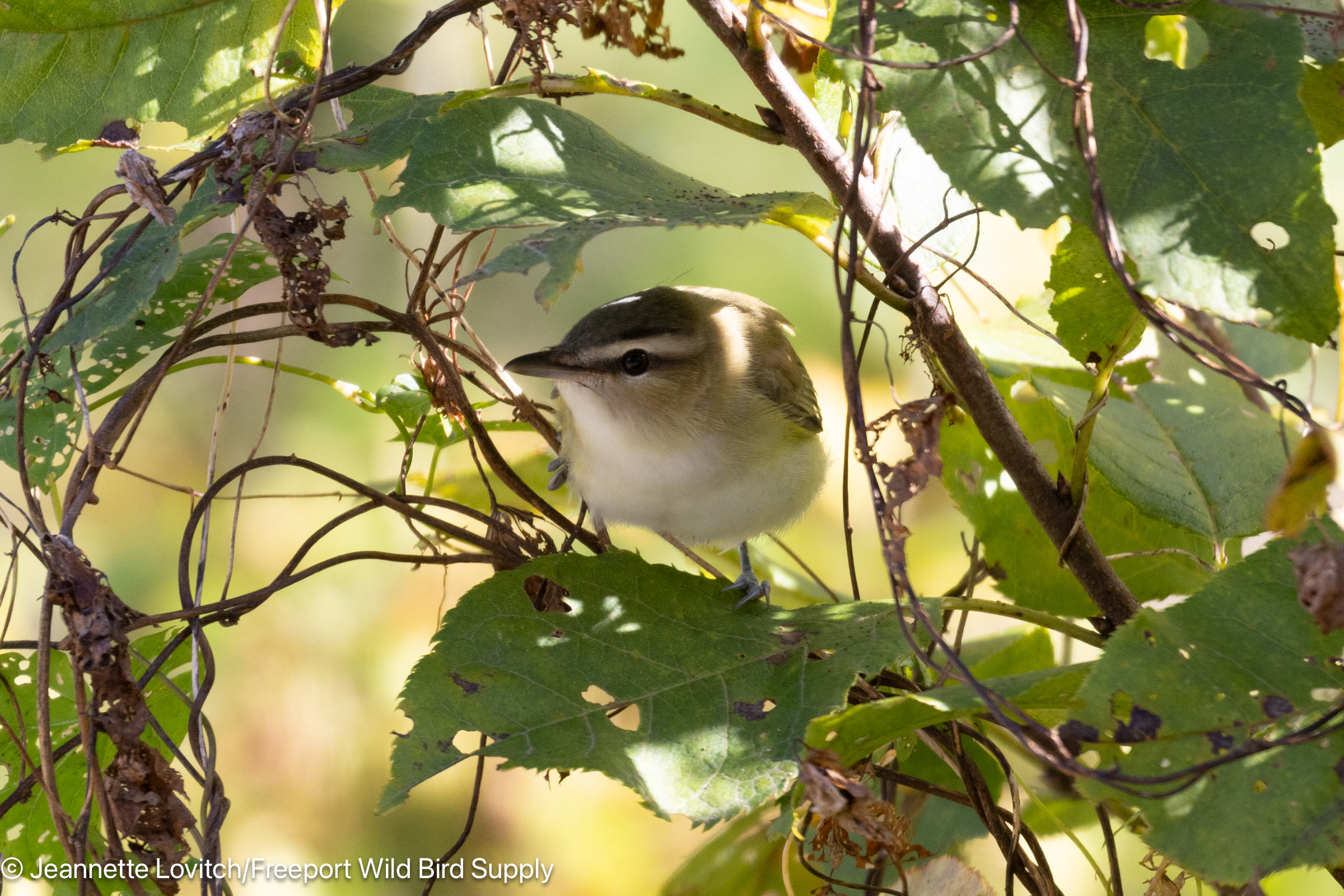
Red-eyed Vireo
After breakfast, it was exceeding slow, but we did have a Dickcissel in the garden, and a Scarlet Tanager joined the remaining Baltimore Orioles in the grapes. But most of our morning was spent chasing a reported Yellow-headed Blackbird (seen by two and never again) and Will Russell briefly relocated the Ash-throated Flycatcher – which looked much healthier today and was much more active. In other words, it was soon once again melting away into the scrub. It kept us occupied until it was time to depart, however.
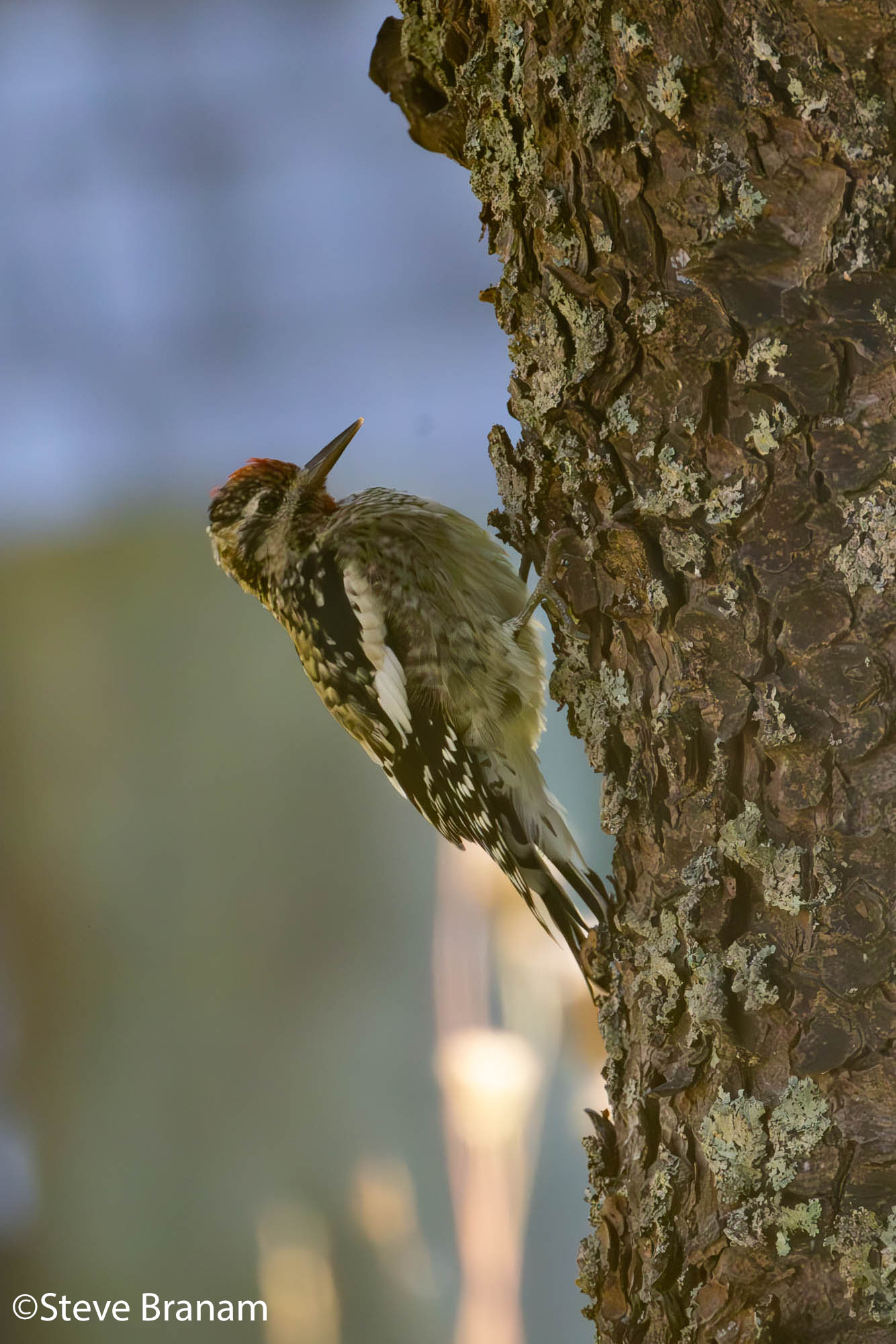
Yellow-bellied Sapsucker
A very pleasant boat ride back to the mainland for Jeannette and I was far too nice to produce any seabirds of note, but it was a lovely way to finish up a delightful and fruitful fall weekend.
Here’s the official tour checklist:
27-Sept
28-Sept
29-Sept
American Black Duck
0
0
1
Mallard
8
12
16
Green-winged Teal
0
0
1
Common Eider
x
x
x
Black Scoter
0
0
8
Ring-necked Pheasant
15
15
25
Mourning Dove
10
15
12
Black Guillemot
x
x
x
Laughing Gull
8*
0
2
Ring-billed Gull
0
1
0
Herring Gull
x
x
x
LESSER BLACK-BACKED GULL
0
0
2
Great Black-backed Gull
x
x
x
Common Loon
1*
0
0
Northern Gannet
2*
0
1
Double-crested Cormorant
x
x
x
Great Cormorant
0
1
5
Bald Eagle
2*
0
1
Sharp-shinned Hawk
2
4
4
Belted Kingfisher
1
0
1
Yellow-bellied Sapsucker
0
20
20
Downy Woodpecker
2
4
3
Northern Flicker
3
15
15
Merlin
6
8
6
Peregrine Falcon
2
3
4
Eastern Phoebe
0
3
3
Blue-headed Vireo
0
3
4
Red-eyed Vireo
1
30
25
Blue Jay
9
13
9
American Crow
4
4
4
Common Raven
0
1
1
Black-capped Chickadee
x
x
30
Golden-crowned Kinglet
4
15
40
Ruby-crowned Kinglet
2
10
20
Cedar Waxwing
30
40
40
Red-breasted Nuthatch
2
8
6
Brown Creeper
0
4
4
House Wren
0
1
0
Carolina Wren
5
10
10
Gray Catbird
10
x
x
Northern Mockingbird
2
2
3
European Starling
x
26
26
Hermit Thrush
0
1
0
American Robin
0
0
2
American Pipit
0
3
3
Purple Finch
0
4
5
American Goldfinch
10
10
8
Chipping Sparrow
0
10
12
CLAY-COLORED SPARROW
0
1
2
Dark-eyed Junco
0
4
2
White-throated Sparrow
15
50
60
NELSON’S SPARROW
0
0
3
Savannah Sparrow
1
6
10
Song Sparrow
x
x
x
Lincoln’s Sparrow
1
5
4
Swamp Sparrow
2
15
20
Rusty Blackbird
0
4
2
Common Grackle
2
20
20
Baltimore Oriole
2
7
6
Northern Waterthrush
0
1
0
Black-and-white Warbler
0
0
3
ORANGE-CROWNED WARBLER
0
0
2
Nashville Warbler
0
3
0
American Redstart
0
1
0
MOURNING WARBLER
0
1
0
Common Yellowthroat
0
8
10
Cape May Warbler
0
1
3
Northern Parula
1
15
15
Blackburnian Warbler
0
0
2
Yellow Warbler
0
2
1
Chestnut-sided Warbler
0
1
1
Blackpoll Warbler
6
25
15
Black-throated Blue Warbler
0
0
1
Palm Warbler
1
30
20
PINE WARBLER
0
2
1
Yellow-rumped Warbler
20
150
100
Black-throated Green Warbler
0
10
3
Wilson’s Warbler
0
1
0
Northern Cardinal
8
10
6
Rose-breasted Grosbeak
1
0
1
Indigo Bunting
0
1
1
DICKCISSEL
1
1-2
1
Day Total
44
68
73
Warbler day total
4
15
14
3-Day Tour total=
81
Plus with Jeannette after the group and on my own =
13
Total warblers =
19+1
Molting juvenile Cedar Waxwing learning how to eat Winterberry.
And the additional species seen by me without the group, on Monday, and on Tuesday:


























 Maine Birding Field Notes