Post-Arthur Beach Birding and Catch-Up

I know I haven’t been blogging much this summer, but I hope you know that doesn’t mean I haven’t been birding. Quite the contrary, actually! My June was as busy with tours and private guiding as it could have been, and with some other projects going on, much of my birding was rather purposeful. Of course, there was some wholly-recreational birding mixed in as well from time to time. Despite my irregular blogging, I did my best to keep folks up to date with my birding adventures and discoveries, mostly with near-daily posts to our store’s Facebook Page. (Remember, you need not be “on Facebook” to browse the posts of a business page.)

It was a busy month. But that’s not a complaint. And now, Jeannette and I are off to Colorado for a bona-fide vacation, to visit friends, family, and yes, do some birding. But first, I had Sunday morning to find some birds. My third attempt to organize a charter to see the Tufted Puffin that has been seen irregularly at Machias Seal Island (3rd or 4th record for the entire Atlantic Ocean!) was thwarted by residual high seas and localized damage from the passage of Tropical Storm Arthur. While Arthur took away my chance to see a Tufted Puffin in Maine waters, I was hoping it would produce some rarities of its own.

In a tropical system, birds are sometimes entrained in the eye, while others are pushed out ahead of the storm. This displacement usually occurs in the strong northeastern quadrant of the storm, and birds escape the eye when it hits land. With the storm passing to the east of Maine, I did not expect to see any vagrants on Friday. However, when the storm reached land in southern Nova Scotia on Saturday morning, birders there were in prime position for rarities. And sure enough: lots of Black Skimmers, several Gull-billed, Royal Terns, and Forster’s Terns…all rarities from points further south. (You can peruse the reports from the province, here).

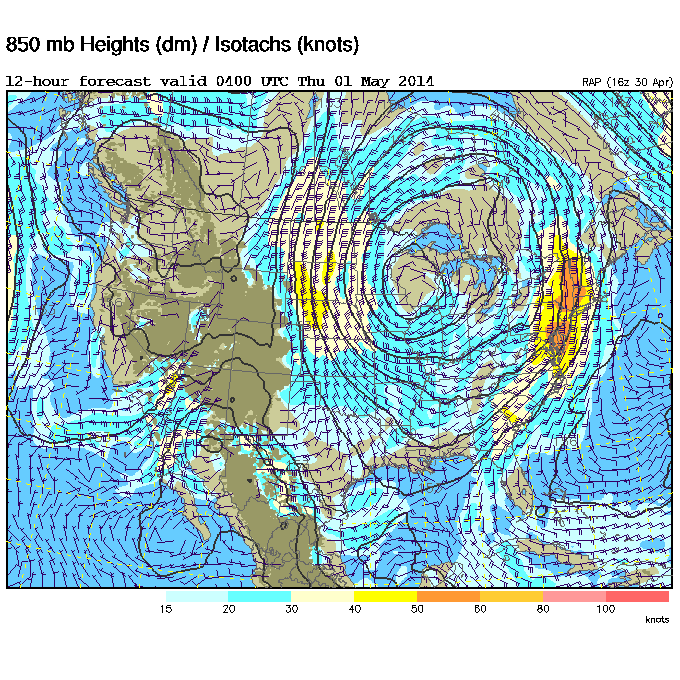
These birds, commonly displaced by tropical systems, were likely picked up by the storm as it passed over North Carolina’s Outer Banks on Thursday. Here’s the cumulative wind map as of 11:00am on Friday, with the storm’s center already off of the Delmarva Peninsula.
entrainment

As the storm hit Nova Scotia, birds finally had a chance to escape its grips. But notice the winds for Maine – they were already strong out of the northwest, on the backside of the storm (note the light winds of the disintegrating eye over the northern Bay of Fundy).
current winds,7-5-14

So Nova Scotia birders were having a lot of fun…and I was not seeing a Tufted Puffin. So instead, I decided to comb the beaches to look for some of these terns that perhaps are already returning south. While most of these birds likely made a bee-line straight across the Gulf of Maine on their return journey, some birds might conceivably follow the coast.

After birding Eastern Road at high tide (34 Least Sandpipers and 20 Short-billed Dowitchers – fall migration is definitely underway!), Lois Gerke and I headed to Pine Point Beach, where we spent a little more than an hour watching from the jetty. As the tide went out, exposing the sandbar and flats, Common, Least, and a few Roseate Terns were feeding, roosting, and loafing with at least a hundred Bonaparte’s Gulls. But alas, there was nothing unusual among them.

I then checked the mudflats from the co-op (more Short-billed Dowitchers, a few more Roseate Terns, and a lot of feeding Common Terns) before I spent the remainder of low tide at Hill’s Beach in Biddeford. At least 8 Roseate Terns, 75+ Bonaparte’s Gulls, 17 Short-billed Dowitchers, and my first Whimbrel of the year joined the regulars, but alas, no rare terns.

It appears I had the right idea, but just the wrong timing. Later in the afternoon, a Royal Tern was found at Hill’s Beach. And then, this morning, two Black Skimmers were roosting at Stratton Island. There are still quite a few waifs being seen in Nova Scotia, so it is conceivable that the coming days could see some reports of returning rarities here in Maine. Unfortunately, this morning, I had time only for a quick stroll at Capisic Pond Park. No rare terns there, but I did see my first Monarch butterfly of the season – which, the way things are going for this species, is even more exciting.

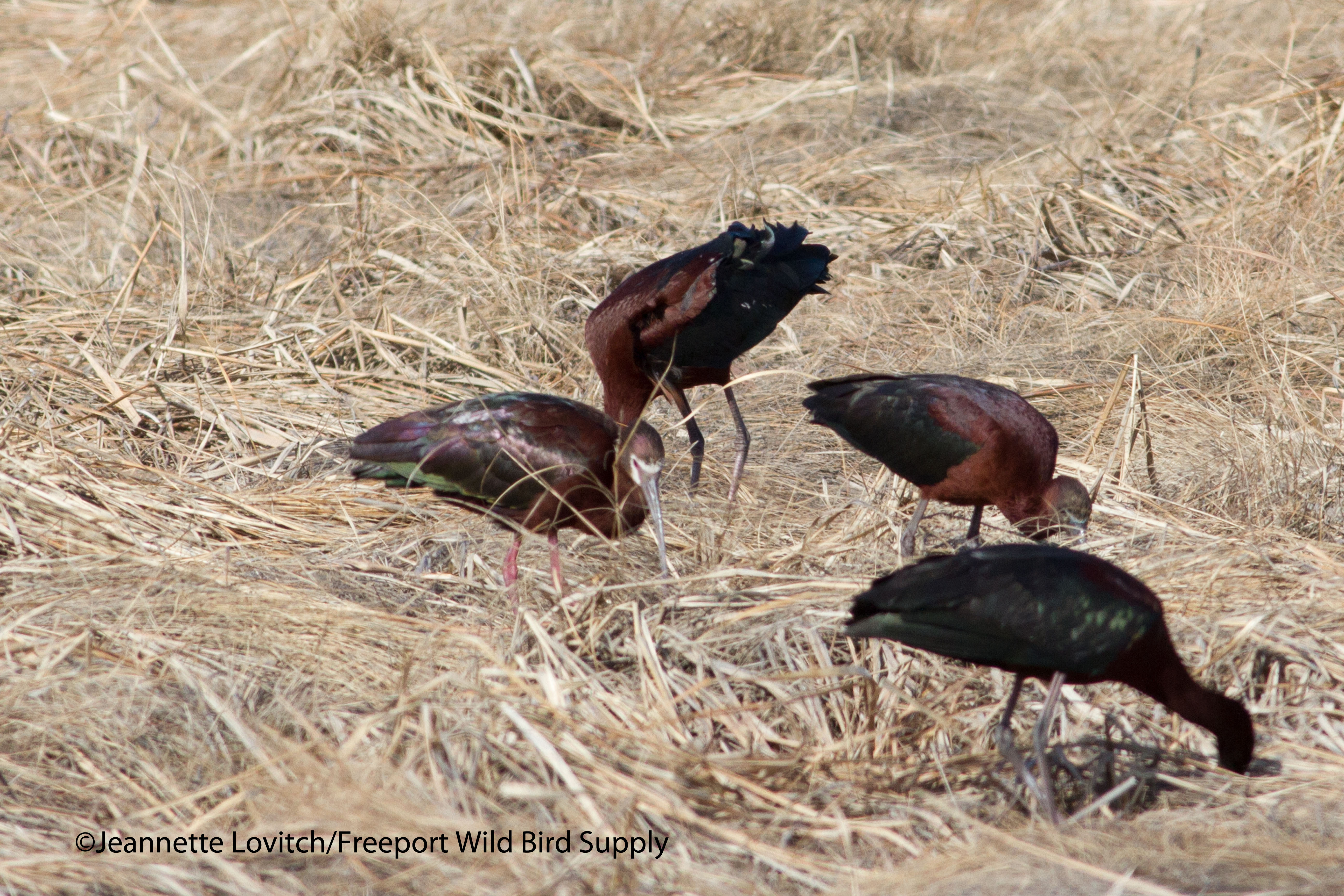
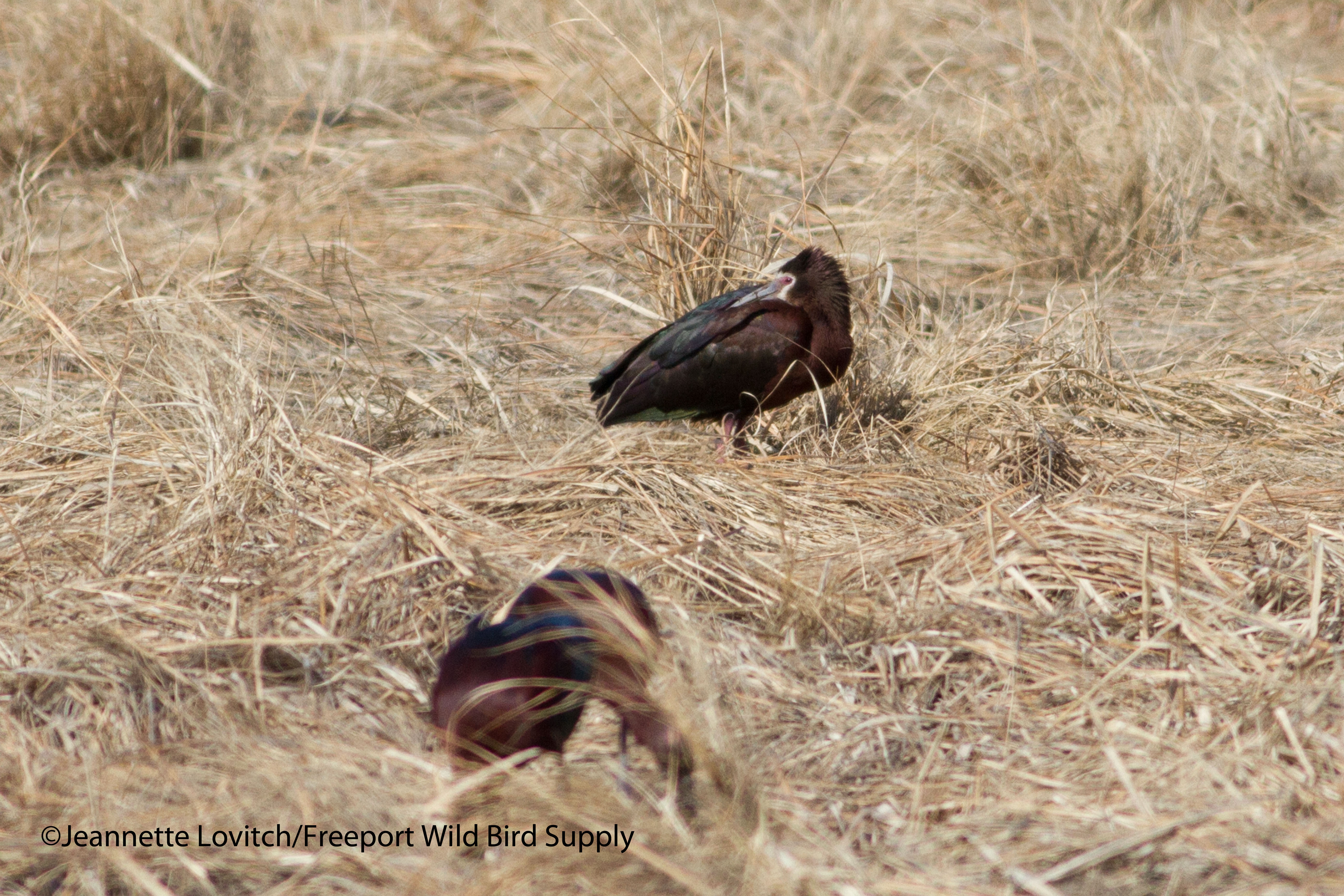
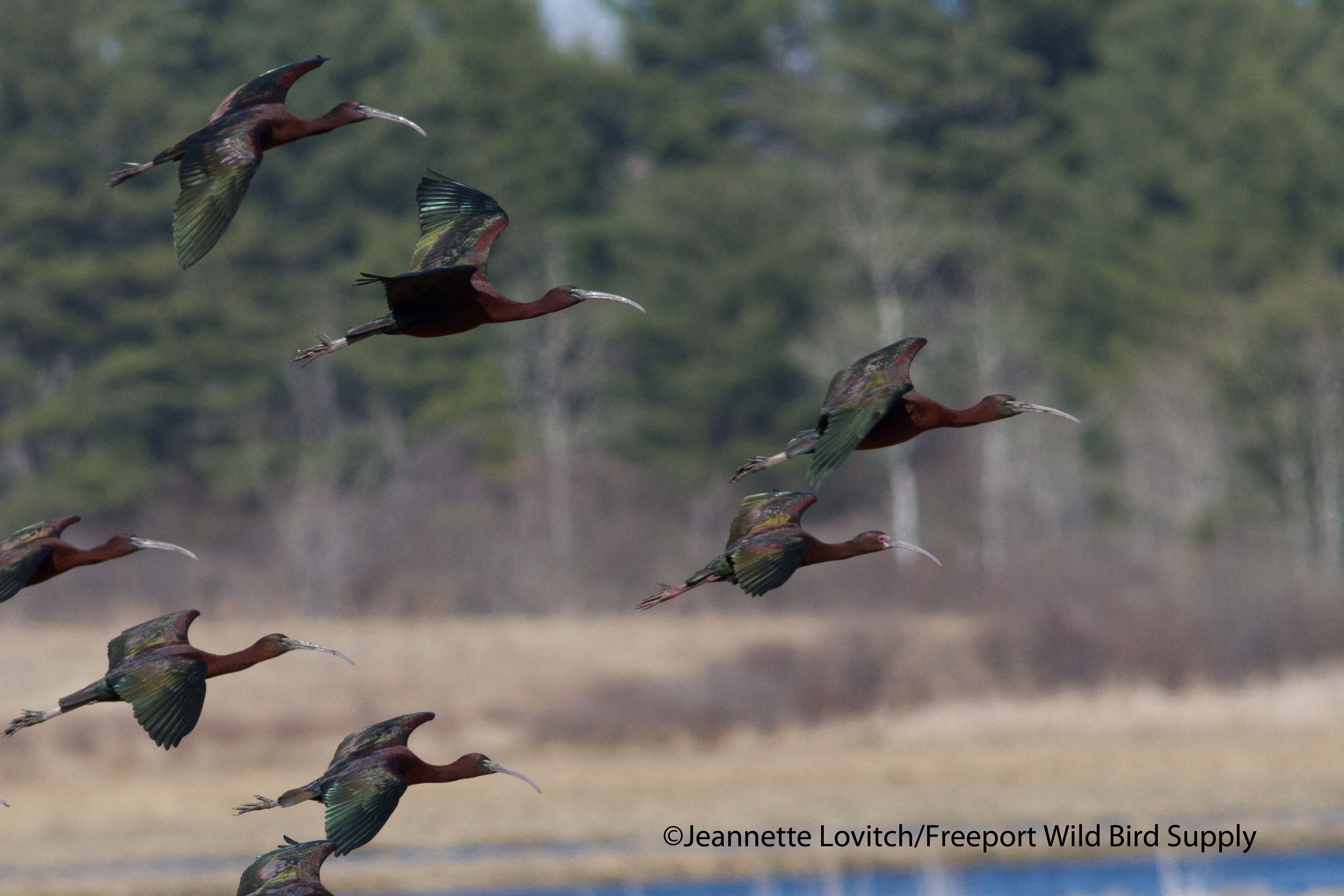
Meanwhile, indirectly storm-related were the 6 Glossy Ibis that were a little bit of a surprise on my Saturday Morning Birdwalk along Highland Road in Brunswick. The heavy rain nicely saturated the soil, and gulls and these ibis had moved inland to take advantage of the bounty.

In other birding news, a pair of Evening Grosbeaks has been frequenting our Pownal feeders – which are particularly exciting considering the dearth of them this year…in fact, these are the only ones that I have seen all year long. And, even more unexpectedly, three Eastern Bluebirds have hatched right here at the store!

Arthur gave us a momentary glimmer of rarity fever, and “fall’ shorebird migration is definitely underway. But July is for breeding birds – from terns to “sharp-tailed” sparrows to bluebirds and warblers. In other words, there’s no such thing as the “summer birding doldrums!”

The 2014 “Claybrook Mountain Lodge Birding Weekend” Trip Report

WTSP,N
White-throated Sparrows were one of an impressive 87 species of birds recorded in just 2 days of birding on this enjoyable, “Maine Woods Immersion” tour.

The “Claybrook Mountain Lodge Birding Weekend” tour is one of my favorite outings that we offer. Its focus is not about species, but learning about habitats, and immersing ourselves in the birds, plants, and wildlife of the Maine Woods. This is a different style of tour than what usually occupies me in June. Following private tours for “target species” and three trips for Bicknell’s Thrush, this is a welcome change of pace. It’s a nice way to end my June guiding busy-season.

While the goal of the trip is to see a lot of species, and we were all excited to reach – and then eclipse – the 85 species spotted on this trip in 2012, the list is just record-keeping; it is not the primary purpose. Instead, our goal is to spend two days immersed in birds: learning songs, observing behaviors, and simply enjoying the diverse avifauna that summer in Maine has to offer.
Lodge,K

We began on Friday afternoon, with the group assembling on the porch and lawn of the Claybrook Mountain Lodge. A Yellow-bellied Sapsucker nest was found, a Great-crested Flycatcher sallied for bugs around the garden, and a various birds foraged in the trees, from Red-eyed Vireos to an American Redstart while Tree and Barn Swallows zoomed around.

After our first scrumptious dinner, we enjoyed some casual birding in the evening light, and then headed out at dusk for a little owling. Of course the Barred Owl – as is often the case at this season – waited for just about everyone to fall asleep before finally calling nearby.

On Saturday, a stroll before breakfast resulted in lots of “awwww’s” when a family group of recently-fledged Eastern Bluebirds were discovered.
EABL_kids,N

Fueled by a hearty breakfast, we boarded the van and Greg Drummond – a master of the Maine Woods – took us around, as we worked our way up and down Long Falls Dam Road. We sampled a variety of habitats, starting in the mostly-deciduous woods around the lodge and working our way in and out of spruce-fir-tamarack dominated bogs.
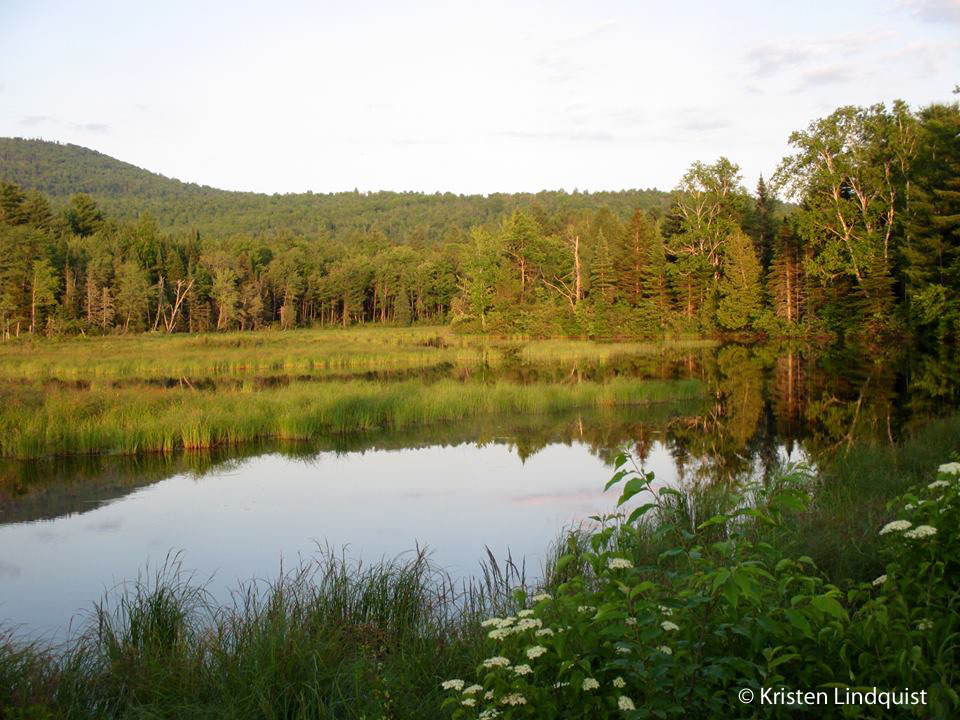
Kettle_bog,K

Some of the bogs we visited hosted some of the species reaching the very southern limits of their breeding range, such as Palm and Wilson’s Warbler, Ruby-crowned Kinglet, and Yellow-bellied Flycatchers. Meanwhile, species such as Pine Warbler are at their northernmost reaches. Over the course of the day, other avian highlights included two well-seen American Bitterns, at least four different Yellow-bellied Sapsucker nest holes, displaying Wilson’s Snipe, Common Merganser chick riding Mom’s back across Flagstaff Lake, and lots of good looks at a wide range of species.

Of course we looked for Boreal “specialties” including the likes of Black-backed Woodpeckers, Boreal Chickadees, Gray Jays, and “spruce” warblers such as Bay-breasted and Cape May. While it is unfortunate that the boreal forest pockets that we did hit failed to produce any of these birds today, it is the habitat that is the primary focus – I have other tours if the “Boreal Breeders” are primary targets. They would have just been another layer of icing on the cake. The dearth of finches in Maine this summer was also apparent – only Purple and goldfinches were seen this weekend.

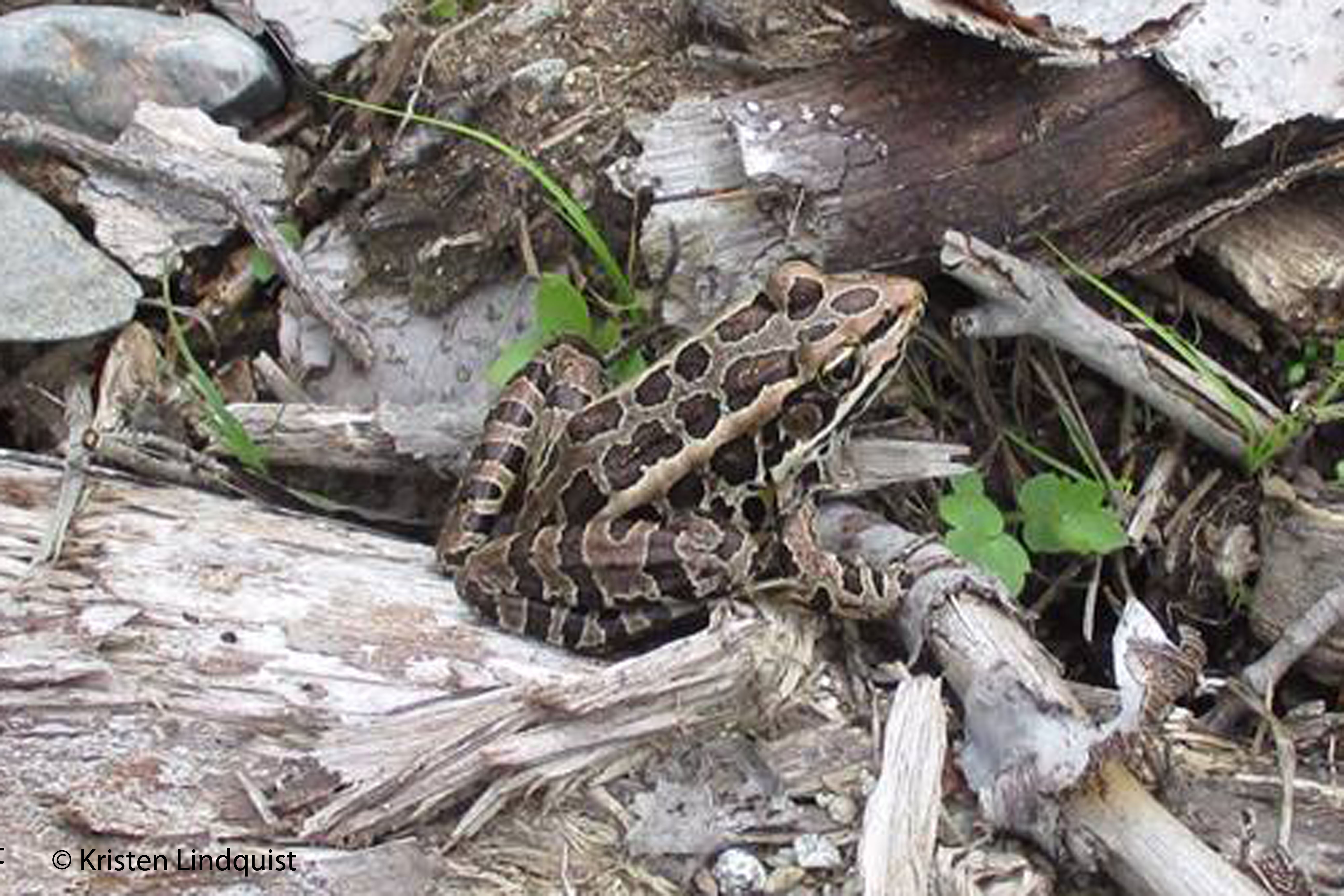
In addition to spending time to stop and smell the Twinflower (which at one point resulted in the startling discovery of a Dark-eyed Junco nest), we spent a lot of time studying and discussing habitats. Birds are our priority, but a host of other species was enjoyed, from a variety of butterflies to a range of amphibians. In fact, after adding a Northern Leopard Frog early Sunday morning, we heard – and for the most part, saw –  all of Maine’s frogs and toad: Green, Mink, Bull, Pickerel, Leopard, Spring Peeper, Gray Tree Frog, and American Toad!
Pickerel_Frog,K

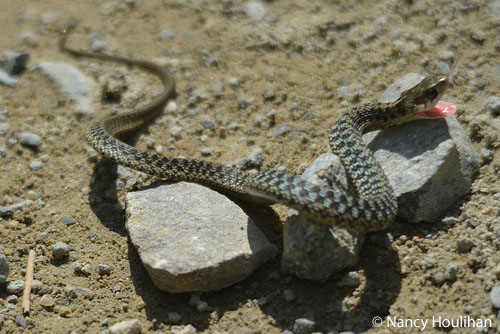
The world’s most aggressive young Garter Snake –of the checkered and non-gartered “Maritime” subspecies – put on quite show and we all enjoyed seeing so many Snowshoe Hares on our morning drive…and lots of Moose sign.

Maritime_Garter_Snake,N Maritime_Garter_Snake,K

Plants were not ignored either. In addition to looking at the trees that make up the various habitats here, we checked out a range of wildflowers, and especially marveled at the magnificent plants of the bog, such as the insectivorous Sundew…
Sundew,K_Lindquist_edited-1

…and the surprising flowers of the Pitcher Plant.
Pitcher_Plant_flower,K

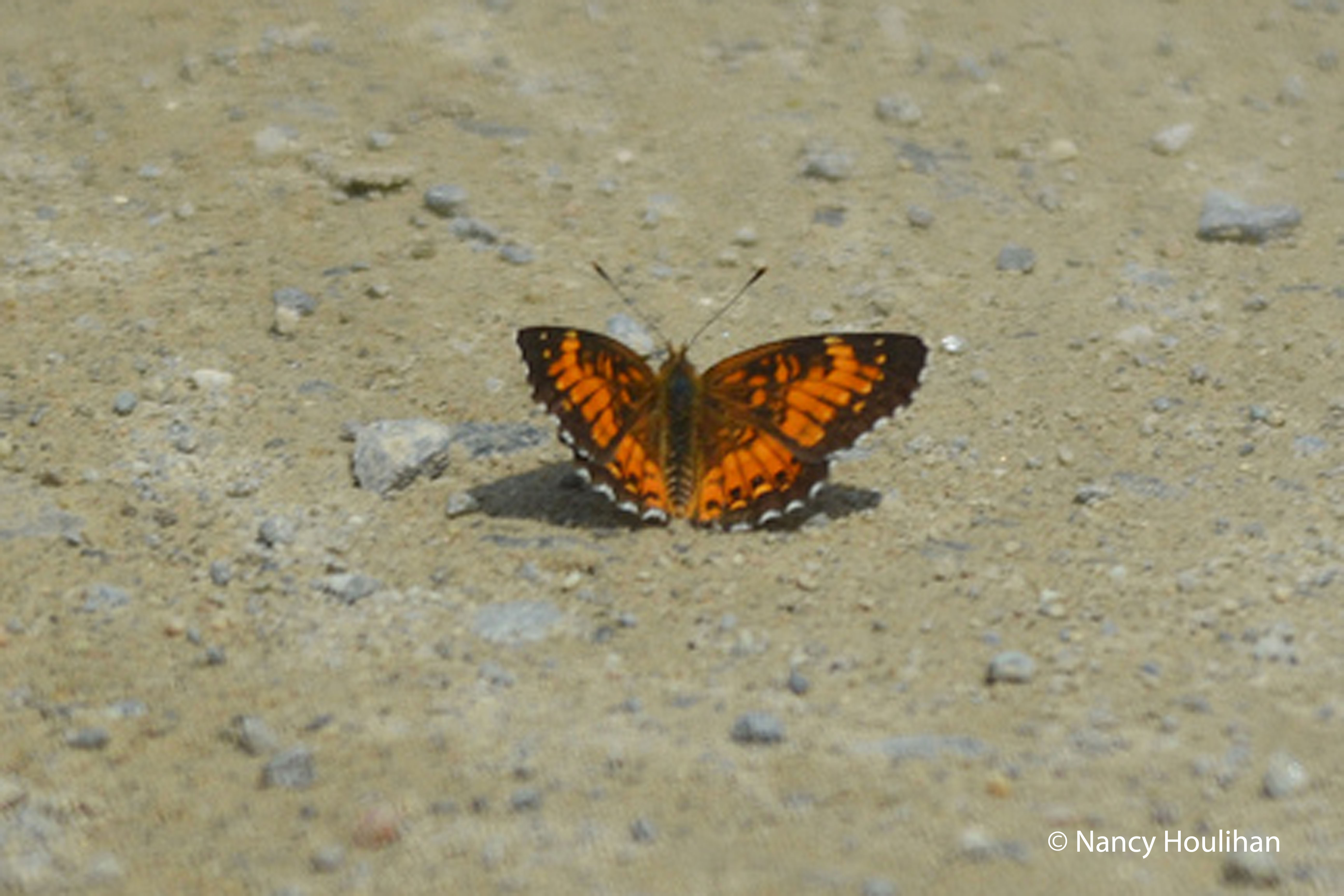
Butterflies included numerous Northern Crescents and Canadian Tiger Swallowtails, but also some clusters of the bog-breeding Harris’s Checkerspot.
flutterby,Nancy_Houlihan_edited-1

All the while we learned about life in the Maine Woods from Greg. Whether it was explaining Moose tracks, showing bear scratches, or explaining the good, the bad, and the ugly of timber and wildlife “management,” his wealth of knowledge about so many topics is one of the best aspects of this tour – I for one learn a ton from him every time he points something out.

So this tour benefits from Greg’s knowledge and expertise…and Pat’s home cooking!  Perfectly-simple sandwiches on homemade bread are packed for lunch, and when Greg takes us to a place like this to devour them, well, it’s as good as life can get.
Lunch_at_Flagstaff,K

It was hot, and birds were quiet in the afternoon. We checked a few patches on the way back to the lodge – as much for the forest as its birds – but everyone welcomed the designated naptime.  Another delectable dinner fueled our bonus evening tour, when Greg took us out once again to hit some local hotspots, and our list grew, as did our collection of breathtaking views and lovely photos.

Back_Road_Bog,K

We were up and at it again shortly after sunrise on Sunday, but I postponed our planned walk of the Drummond’s 200-acres of carefully-managed property (we compared and contrasted these woods to those ravaged by the likes of Plum Creek). Instead, we set out in pursuit of Mourning Warblers – breaking my rule of not going after “target birds” on this trip!  But after failing to turn one up at several seemingly-promising stops on Saturday, and after hearing how many people had not seen a MOWA for their year, ABA, or even life lists, I decided to bend the rules a little. Besides, we are in one of the best areas for this charismatic species.

Besides, I think Greg likes a challenge!  A loop through some likely spots in the area failed to produce however, but as Greg passed by one last clearcut, he slammed on the breaks. And sure enough, within just a couple of minutes, we all had our binoculars on a most-cooperative Mourning Warbler! I think Greg was as happy as anyone…as usual, I was relieved as much as anything (I’m not supposed to get guide-stress on this trip!).

Returning to the lodge, we took a walk through the woods, adding a couple more species to the list, and checking out the famous “bear pole” where generations of Black Bears have come to sent mark – and take chunks out of the last bear’s efforts.
Bear pole, Me_edited-1

Following lunch on the porch, we began our journey home by caravanning down to Gilman Pond.  Osprey and Common Loon at the lake we added to our list, more Bald Eagles were spotted, and at the farm along the road, Canada Geese, Bobolinks, and Killdeer were our final “new” birds for the trip.
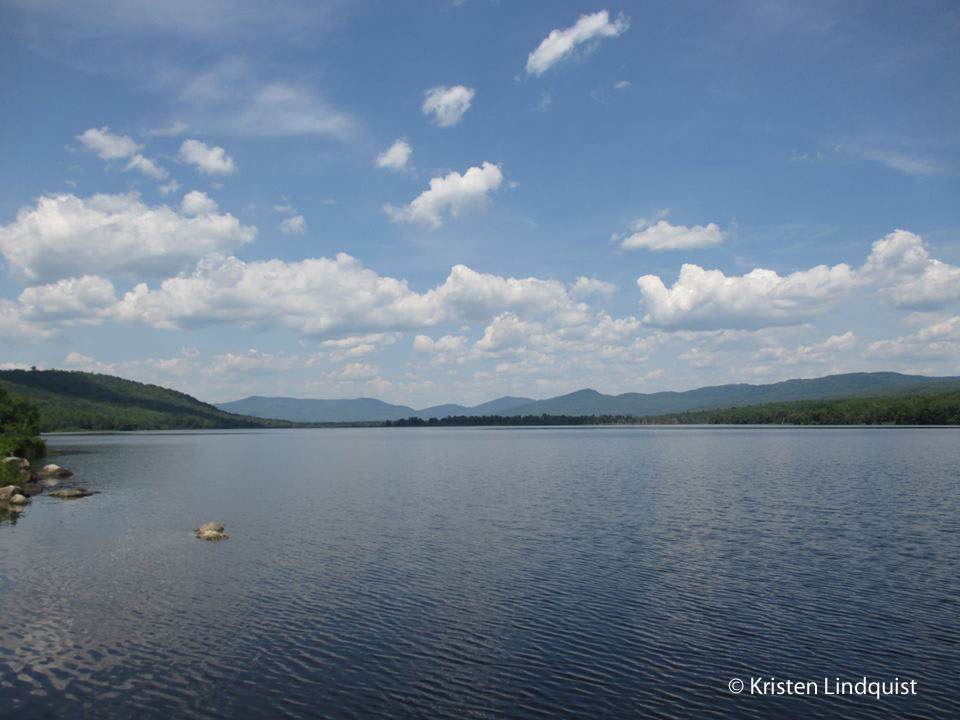
Gilman_Pond,K

But I was presented with one last challenge. A persistent call from the edge of the pond in the meadow had me at a total loss.  Then, there was a second individual, confusing things further. I wracked my brain and went through every possible species I could think of – from the common to the rare. I was leaning towards Common Gallinule – a rarity in Maine, but not a stretch given the nearby habitat – when somehow I spotted a distant shorebird head poking through the grass.  As I got the scope on what was probably a Wilson’s Snipe, the bird took off, flew closer to us, and called. Then, our mystery sound burst from the grass, and fluttering towards the adult. “Baby snipe!” I exclaimed.  Mystery solved. And with that – and with rapidly rising temperatures – the trip concluded. A learning experience for all was just right to bring a successful Claybrook Mountain Lodge Birding Weekend Tour to a close.

When all was said and done, our 48-hr trip list was 87 species of birds, including 19 species of warblers. While this is not a “listing” trip with focused effort on specific species (well, mostly; see above), our objective is to see a wide range of the breeding species of the Maine woods. That, we most certainly accomplished. Here’s the complete list.

(* indicates juveniles or active nests observed; doesn’t include the array of other breeding behaviors observed, such as “carrying food” or “agitation.”)

Canada Goose*
Wood Duck
American Black Duck
Mallard*
Hooded Merganser*
Common Merganser*
Common Loon
Double-crested Cormorant
American Bittern (4!)
Great Blue Heron
Turkey Vulture
Osprey
Bald Eagle
Wilson’s Snipe*
Ring-billed Gull
Mourning Dove
Barred Owl
Ruby-throated Hummingbird
Belted Kingfisher
Yellow-bellied Sapsucker*
Downy Woodpecker
Hairy Woodpecker*
Northern Flicker
Pileated Woodpecker*
Eastern Wood-Pewee
YELLOW-BELLIED FLYCATCHER
Alder Flycatcher
Least Flycatcher
Eastern Phoebe*
Great-crested Flycatcher
Eastern Kingbird
Blue-headed Vireo
Red-eyed Vireo
Blue Jay
American Crow
Common Raven*
Tree Swallow
Barn Swallow
Black-capped Chickadee*
Red-breasted Nuthatch
White-breasted Nuthatch
Winter Wren
Golden-crowned Kinglet
RUBY-CROWNED KINGLET
Eastern Bluebird
Veery
Swainson’s Thrush
Hermit Thrush
American Robin
Gray Catbird
European Starling*
Cedar Waxwing
Ovenbird
Northern Waterthrush
Black-and-white Warbler
Nashville Warbler
MOURNING WARBLER
Common Yellowthroat
American Redstart
Northern Parula
Magnolia Warbler
Blackburnian Warbler
Yellow Warbler
Chestnut-sided Warbler
Black-throated Blue Warbler
PALM WARBLER
Pine Warbler
Yellow-rumped Warbler
Black-throated Green Warbler
Canada Warbler
WILSON’S WARBLER
Scarlet Tanager
Chipping Sparrow*
Savannah Sparrow
Song Sparrow
Swamp Sparrow
White-throated Sparrow
Dark-eyed Junco*
Rose-breasted Grosbeak
Bobolink
Red-winged Blackbird
Common Grackle
Purple Finch
American Goldfinch

I hope you will join us when we return in 2016! (For more information on this, and other Freeport Wild Bird Supply tours, visit the “Tours, Events, Workshops, and Programs” page of our website.

group_birding,K

“Bicknell’s Thrush and the White Mountains” Trip(s) Report

June is my busiest guiding season. Bicknell’s Thrush, Saltmarsh and Nelson’s Sparrows, Roseate Tern, and Atlantic Puffin are my most popular requests, and there is little doubt that I could fill my entire month with Bicknell’s Thrush tours!

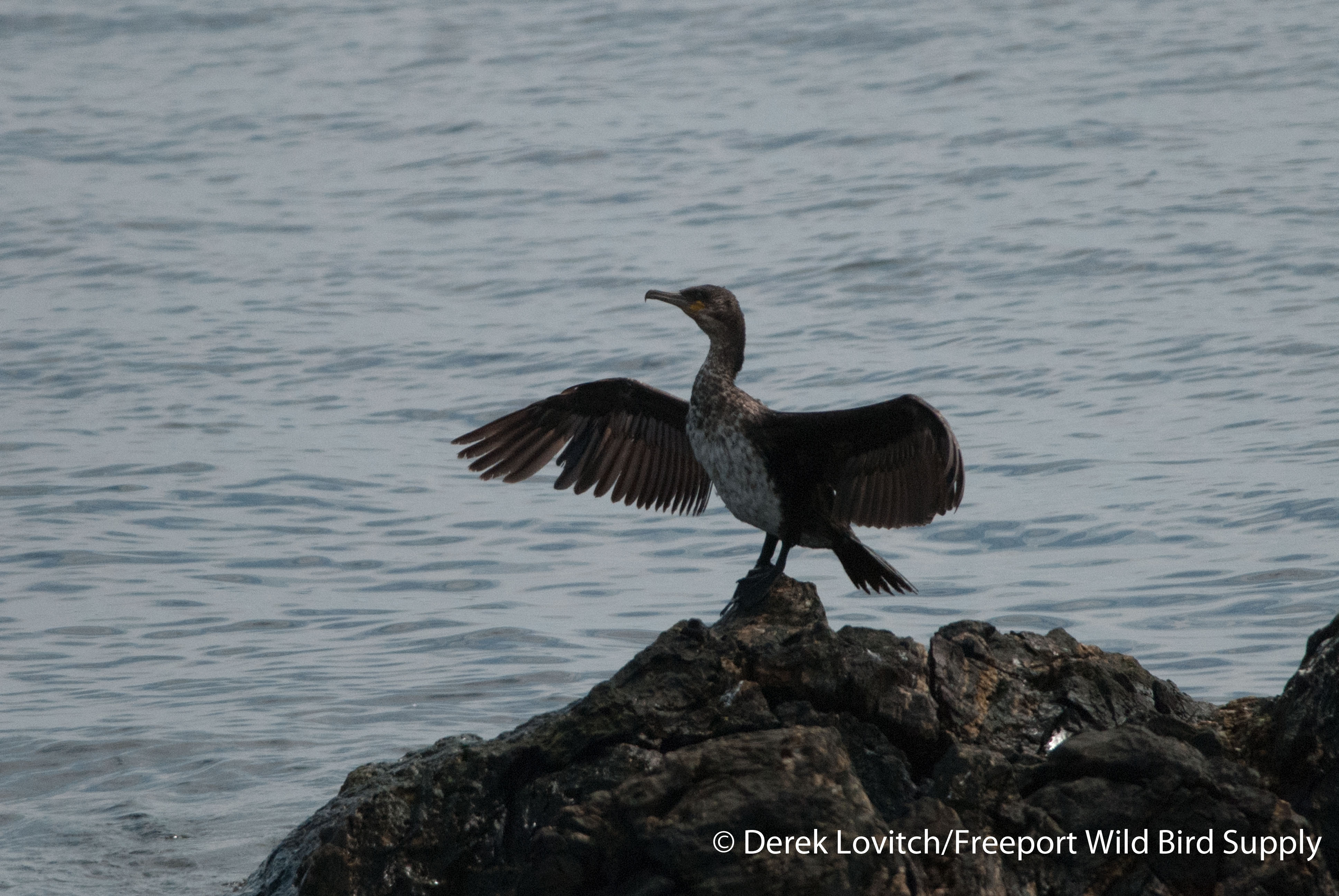
My first visit of the season to the realm of the thrush was last week, as part of a very successful three-day tour for a client visiting from Vancouver. We saw 7 of 8 of our targets: Saltmarsh and Nelson’s Sparrow, Great Cormorant (3!), Bicknell’s Thrush, American Woodcock, Atlantic Puffin, and Manx Shearwater. And most we saw very, very, well. We only missed Razorbill due to a strategic decision that we agreed upon, and in the end, said decision worked out very well as we had unbelievable views of the shearwater.

DSC_0006_GRCO1,CapeNeddick,6-10-14_edited-1 First-summer Great Cormorant.

DSC_0049_MASH1,Revere,6-12-14_edited-2 Manx Shearwater!

In addition to the species we were seeking, we ran into several other highlights, the most noteworthy of which was an unseasonable subadult male Common Goldeneye at Cutt’s Island in Kittery. Other highlights included a truant Olive-sided Flycatcher at Reid State Park, and an Arctic Tern – usually an offshore feeder – feeding with Roseate and Common Terns off of East Point in Biddeford Pool.

Then, this past weekend was my popular annual “Bicknell’s Thrush and the White Mountains” van tour. Meeting at the store on Saturday morning, we headed for the hills, beginning with a surprise detour to West Paris.  For this:

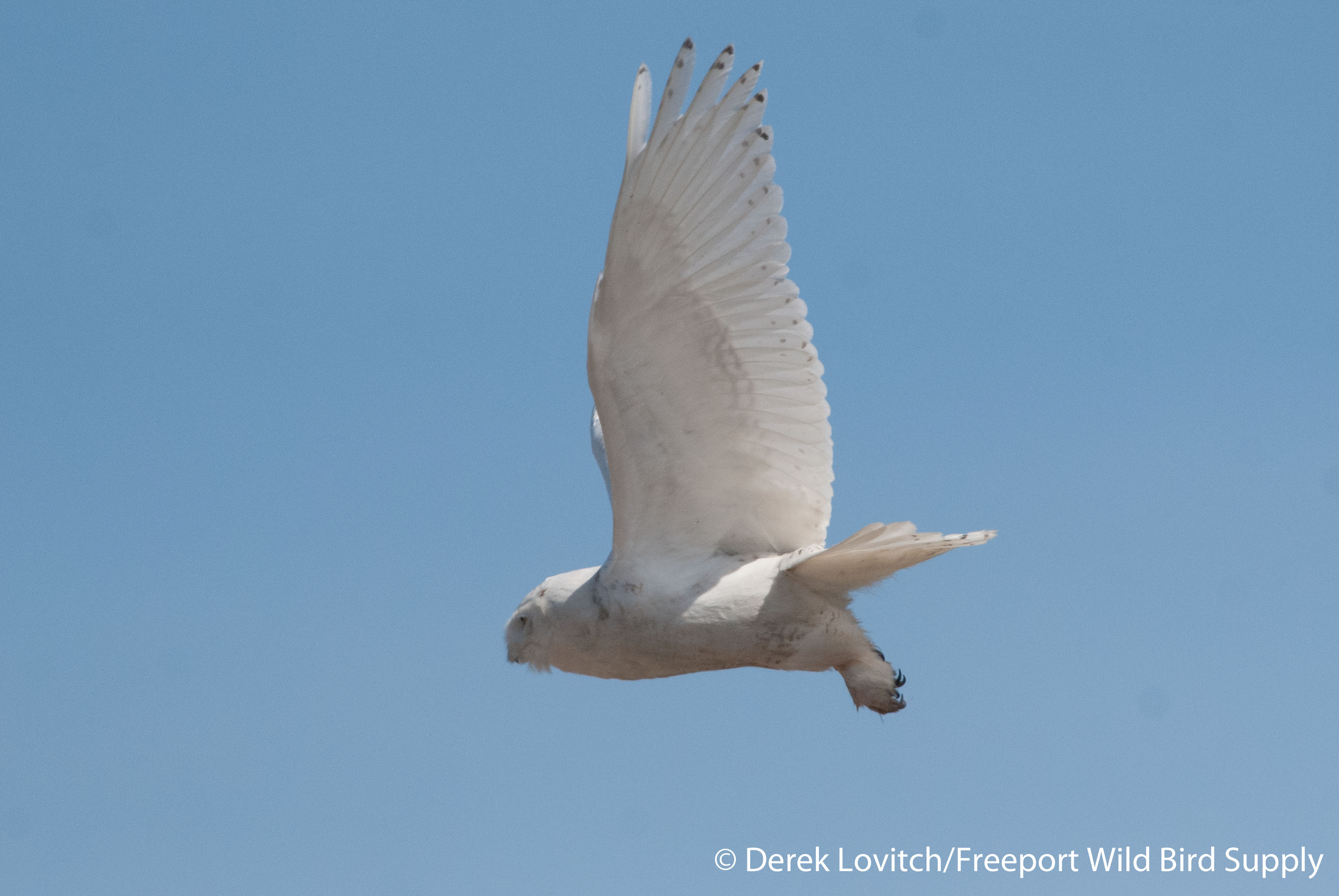
DSC_0006_SNOW,West_Paris,JUNE-14-14_edited-1

That’s right, a Snowy Owl in Maine in June! Really remarkable. And how’s that for a way to start off a weekend tour?  We then made a turn for the White Mountains, and after a couple of stops, arrived at Trudeau Road for this:

DSC_0025_BBWO,TrudeauRd,NH,6-14-14_edited-1

Of course, as awesome as a Snowy Owl and a nest-ful of Black-backed Woodpeckers (this is the male above, who kindly paused to preen between visits to feed the young. We also had a great look at the female, who nearly dropped a fecal sac on the group!) are on a birding tour, this is a thrush trip, so our remarkable day of birding would rapidly fade into memory if we didn’t find our one true quarry.

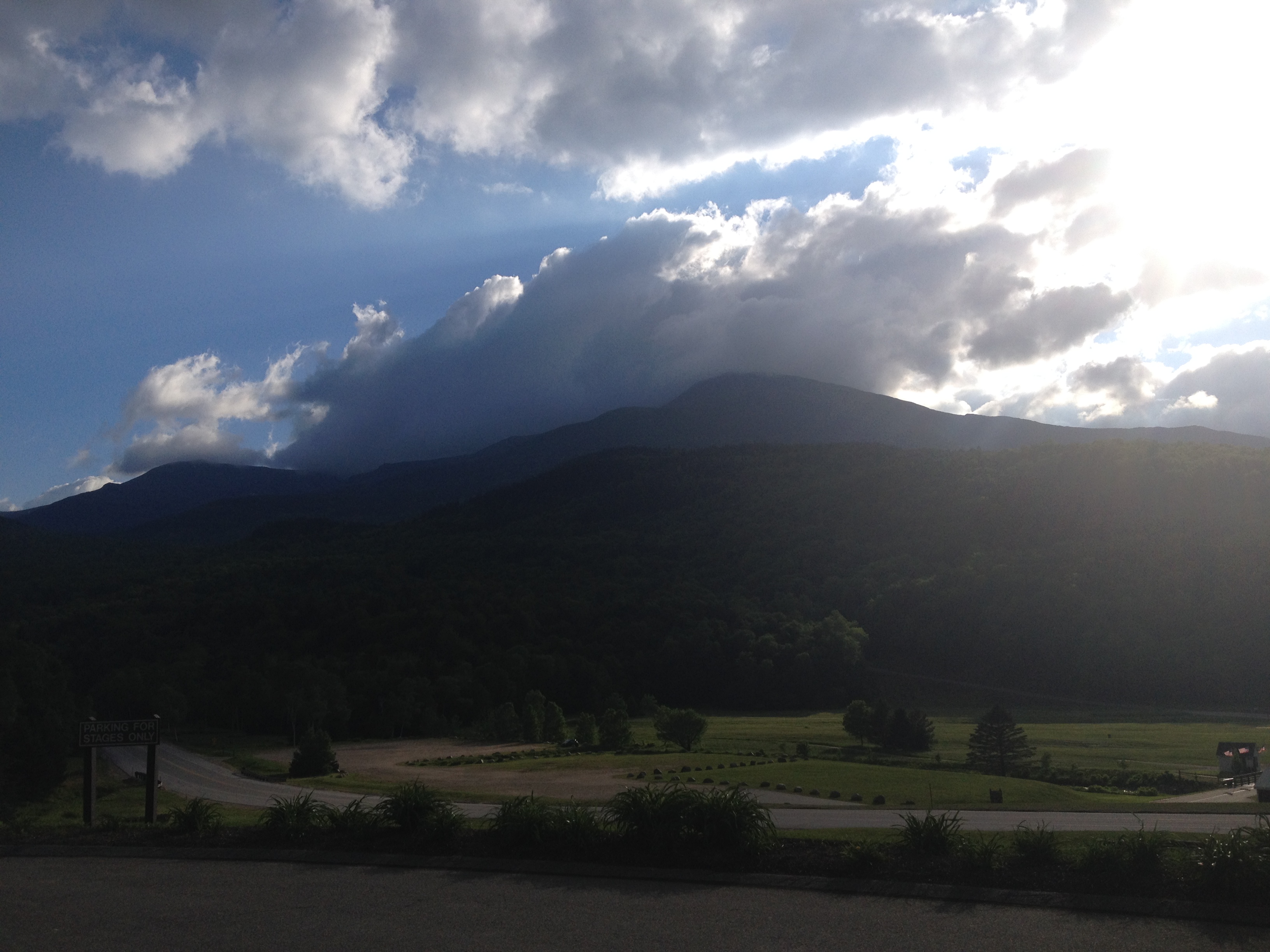
After an early dinner, we boarded the specialized vans of the Mount Washington Stage Line for our private charter up the mountain. It was gorgeous at the base, but looking up, we knew the summit would be different.

IMG_3621

And it was!

IMG_3627

Luckily, the thrushes’ habitat was below the clouds tonight, and so after visiting the summit and checking for American Pipits (too windy, but the flowers were fantastic), we dropped down and began our real mission.

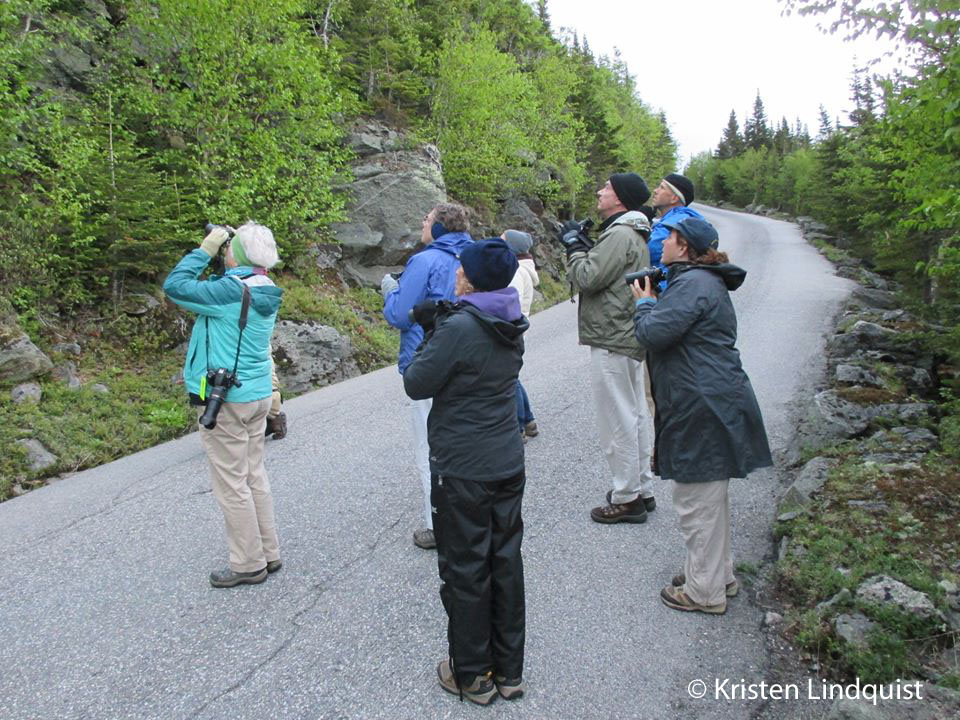
Birding_Auto_Road_by_Kristen_edited-1  Birding_Auto_Road_by_Kristen2_edited-1

Although it took a lot more work than usual, we were all eventually rewarded with good to great views of this enigmatic species. We saw two or three different birds, and heard up to 4 others – a good count for the short stretch of habitat that we cover. It was even the 700th ABA-area bird for one of the clients – a fantastic bird for an impressive milestone. A short celebration was called for upon our return to our hotel.

On Sunday morning, the second day of this two-day “target species” tour, the weather looked gorgeous, but the birding was challenging. Granted, it was going to be hard to top Day 1 anyway – we were probably the first tour in history to see a Bicknell’s Thrush and a Snowy Owl in the same day!  It certainly was a novel – and a completely unexpected – experience for me.

Birding the Caps Ridge Trail in dense fog and cool temperatures to start the day was less productive than usual, but it was still a nice walk into boreal habitat and enjoy the beautiful forest here. Blackpoll Warblers and Yellow-bellied Flycatchers were conspicuous today, at least.

Very strong, downsloping winds cleared the skies for us at our next few stops, but those winds only increased, and birding became a challenge. My favorite spot for Philadelphia Vireo, for example, was just too windswept. Actually, standing upright was occasionally a challenge. But finding some shelter on the backside of a mountain via a short, but steep hike, a few of us were treated to another view of a Bicknell’s Thrush – just as a little more icing on the cake.

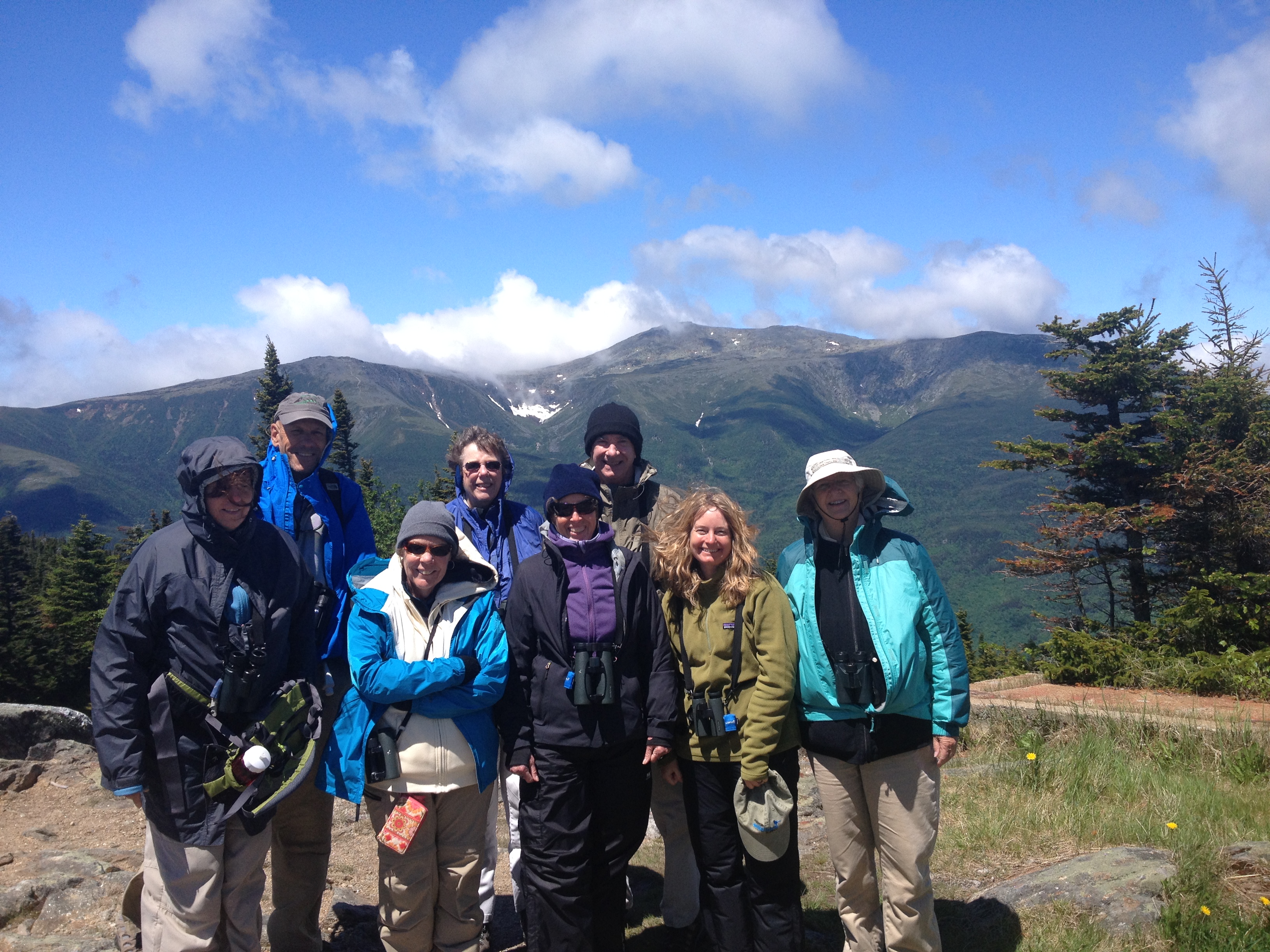
A great lunch followed our birding, fueling us for the drive back to Freeport (or, at least, until the ice cream stop) and capping another successful “Bicknell’s Thrush and the White Mountains” weekend.  With one more private thrush tour next weekend, I can only hope my luck with the weather and with seeing the thrush – a mythological bird to some – continues.

IMG_3632 Happy Thrush-watchers!

2014 MonhegZen Spring Migration Birding Weekend.

Ahh, Monhegan Island.

If only I could bird there every day for a full spring (or fall; I won’t be picky). But for now, I will relish my weekends there, and last weekend was our MonhegZen Migration Spring Birding Weekend…and the island did not disappoint.

So while we always expect the unexpected, we most definitely were not expecting this one.
DSC_0124_BRSP1,Monhegan,5-25-14_edited-1 (Click on the photos for a larger image).

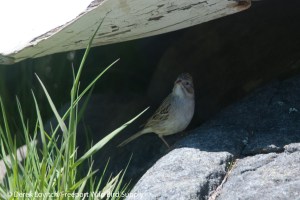
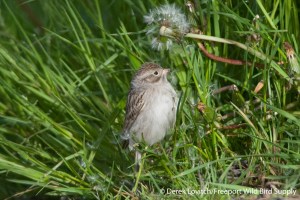
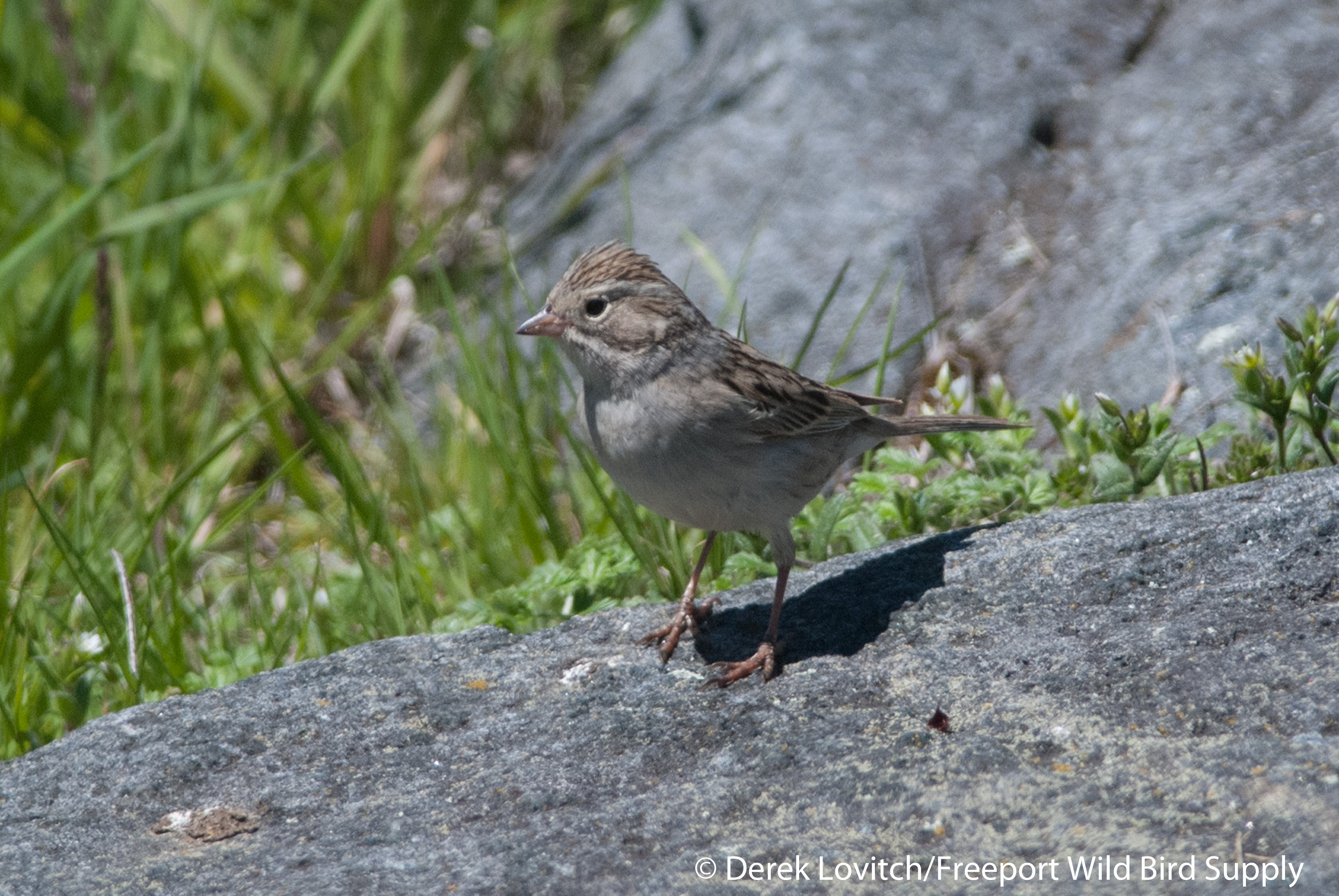
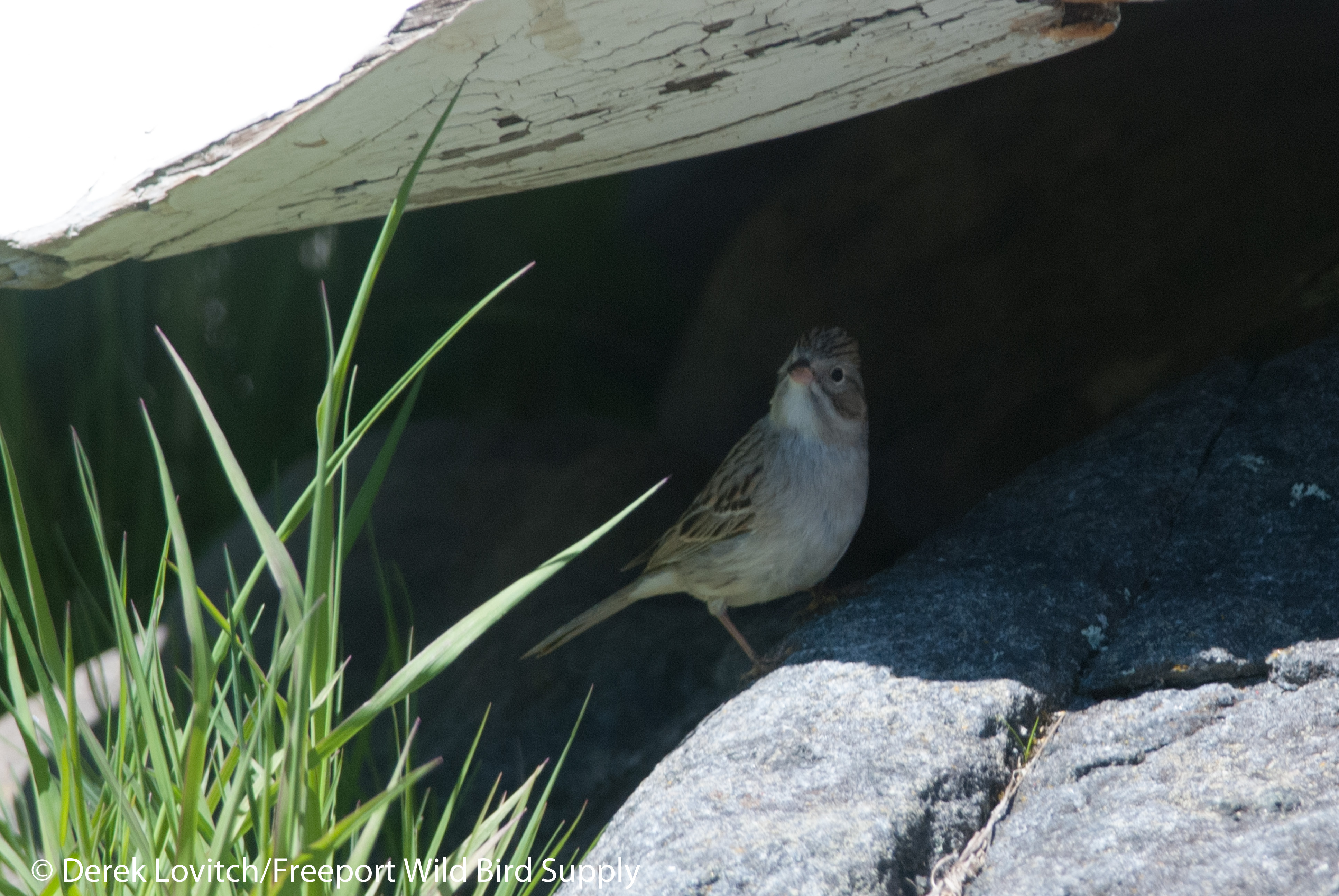
This first state record Brewer’s Sparrow was definitely not high on anyone’s list of next birds for Monhegan, or Maine (certainly not mine!). But more on the sparrow later.

Half of the group arrived with me on the Hardy Boat out of New Harbor on Friday morning, greeted by a veil of fog.

Arrival on Monhegan, 5-23-14
While the shroud of mist offered a lovely scene, it did put a damper on the birding for a little while (excuse the pun), but soon it cleared, and as the ceiling rose, so did the bird activity. In fact, this was the start of a fine weekend of weather – OK, it was rather chilly; extra blankets were dispersed for the night – but other than a few brief, very light showers, our Gore-Tex remained tucked away. We’ll call that a win.

Just about the first bird that we glassed upon our arrival was an immature male Orchard Oriole.  That’s the way we like to start a MonhegZen Birding Weekend!

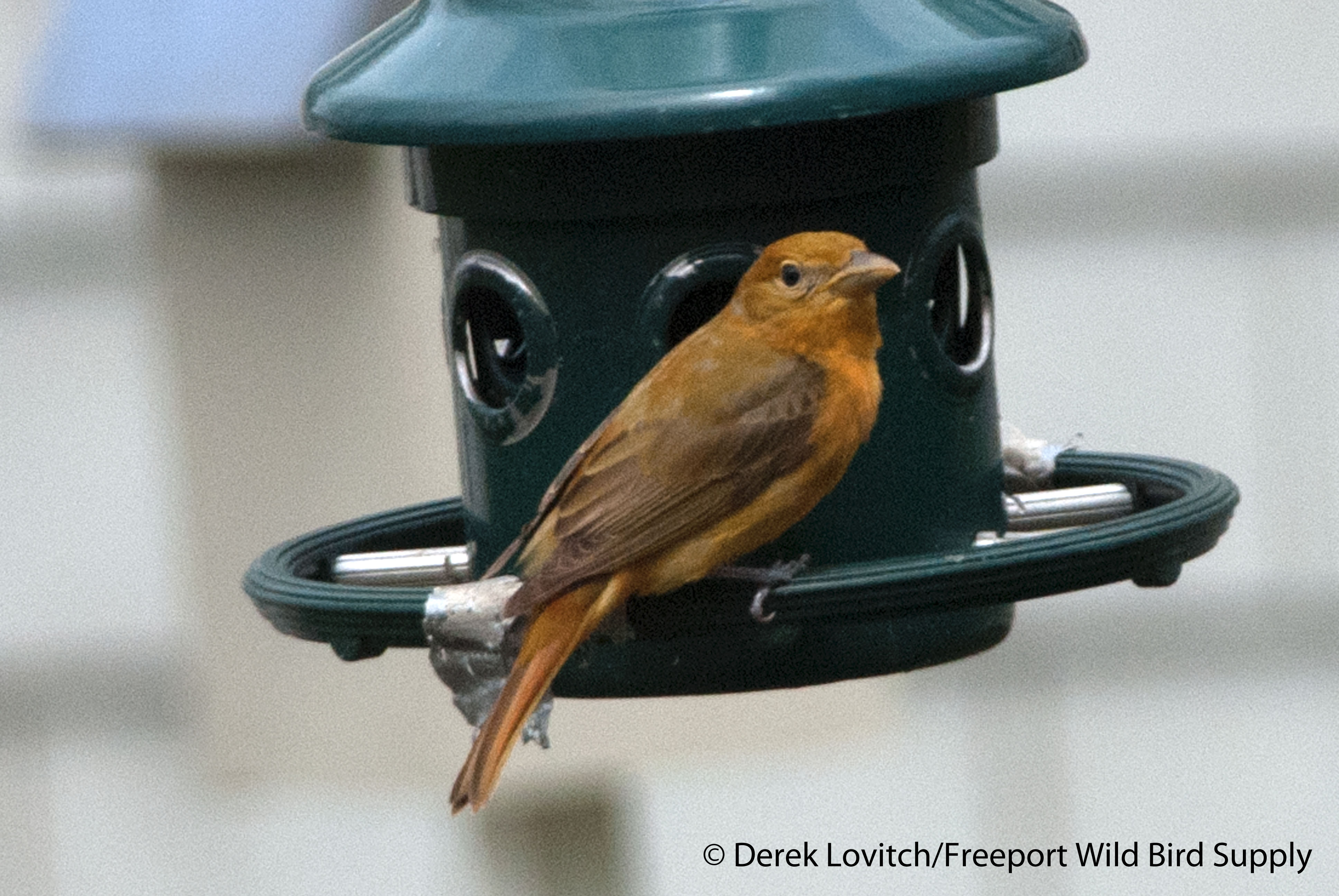
The rest of Day 1 was highlighted by re-finding one of two immature male Summer Tanagers that had been frequenting the island lately. Friends picked up some seed on their way down (yes, the guy that owns a birdseed store and has several tons of seed on hand forgot to bring seed and had to have someone slum it at a hardware store. Gasp!), and we restocked the stash that kept the tanager visible for all through the weekend.
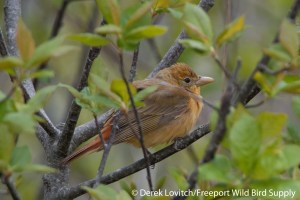
DSC_0017_SUTA,Monhegan,5-23-14_edited-1

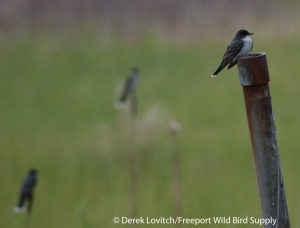
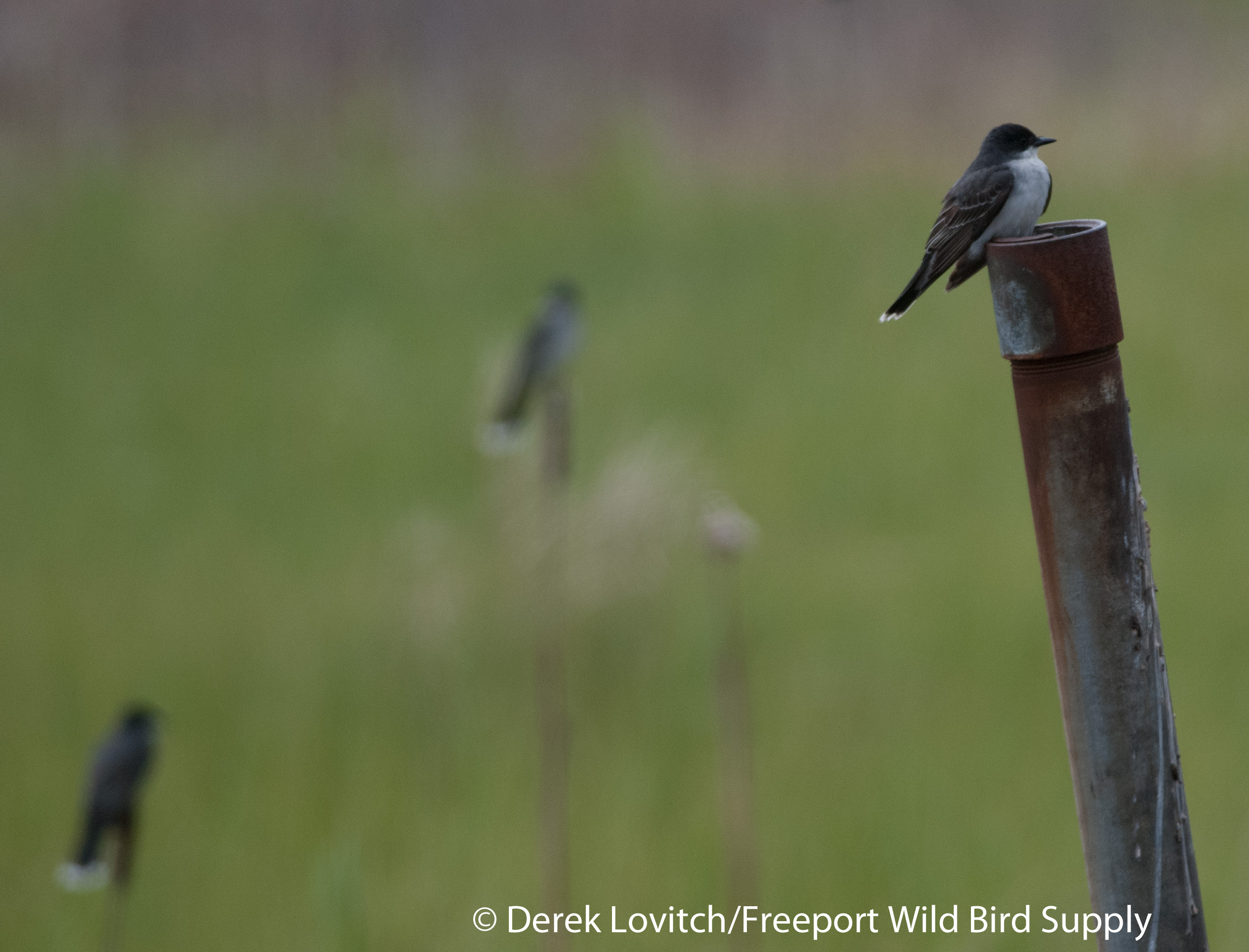
The tanager was our first “good” bird of the trip, but most of us agreed that the kingbird show near the pumphouse was the highlight of the first day. Indeed, it was a highlight for the entire weekend.  Sheltered from a persistent, but raw and cold, easterly wind, the back corner of the town marsh was just about the only place with flying insects out and about. Therefore, flycatchers had piled up here, led by 21 Eastern Kingbirds (growing to 25 by Saturday afternoon, before diminishing on Sunday and Monday).
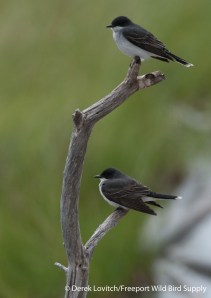
DSC_0051_2EAKI,Monhegan,5-24-14, edited-1 DSC_0030_3EAKI,Monhegan,5-24-14_edited-1

Other flycatchers were present here, including a couple of cooperative Eastern Wood-Pewees, and several Least Flycatchers.
DSC_0047_LEFL1,Monhegan,5-24-14_edited-1

Little to no migration was visible on the radar overnight Friday into Saturday, and the lack of reorienting birds overhead after sunrise on Saturday morning confirmed the minimal movement overnight.  Although I awoke to a singing Mourning Warbler out my window, we never did catch up with one over the weekend.

But over the course of the day (as our group grew in size), we beat the bush and slowly but surely built up our species total. The Summer Tanager, the immature male Orchard Oriole, a very entertaining Peregrine Falcon over Manana, and 16 species of warblers were the day’s headliners. But yeah, by Monhegan standards, this was a slow day.

Sunday was not.

A light to moderate migration clearly produced some turnover, and plenty of new birds.  Some warblers were reorienting over the Trailing Yew after sunrise – always a good sign – and our walk to Lobster Cove was much slower in pace than on Saturday. A singing Field Sparrow, a calling Common Nighthawk, and a streaking Gray-cheeked/Bicknell’s Thrush were among the species that we added to our tally.

Then the text came through.

When describing our itinerary – or lack thereof – for the coming days upon our arrival, I talked about how chasing birds (dropping everything and running across the island) is often a futile exercise here, and instead we would work our way towards good birds, keeping our eyes open for them – and enjoying everything in our path. I joked that “but if I need it for my island list, all bets are off.”

First state records?  Fuhgettaboutit. Off we went. And I make no apologies…luckily, the coffee pot was on the way. I might not have gotten away with it otherwise.

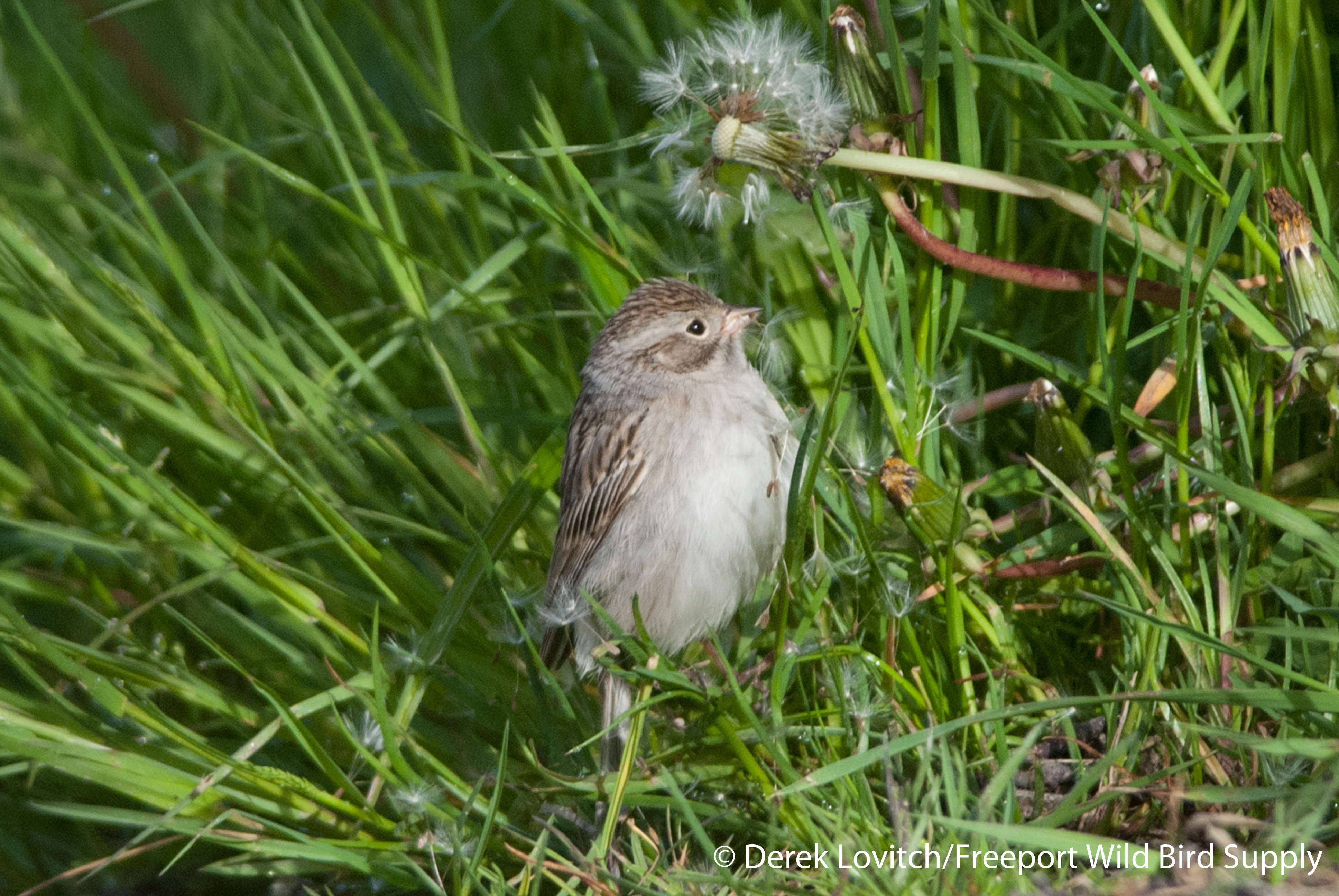
So yeah, “Maine’s International Birder of Mystery” discovered a Brewer’s Sparrow.  First found at the edge of the road at its terminus at the Ice Pond, it soon made its way into a nearby yard. Dandelion seeds were its quarry.

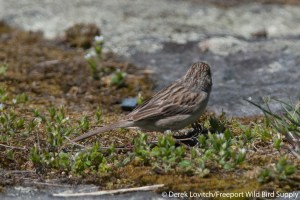
DSC_0120_BRSP3,Monhegan,5-25-14_edited-1

  DSC_0131_BRSP7,Monhegan,5-25-14_edited-1  DSC_0116_BRSP6,Monhegan,5-25-14_edited-1  DSC_0075_BRSP5,Monhegan,5-25-14_edited-1  DSC_0069_BRSP2,Monhegan,5-25-14_edited-1

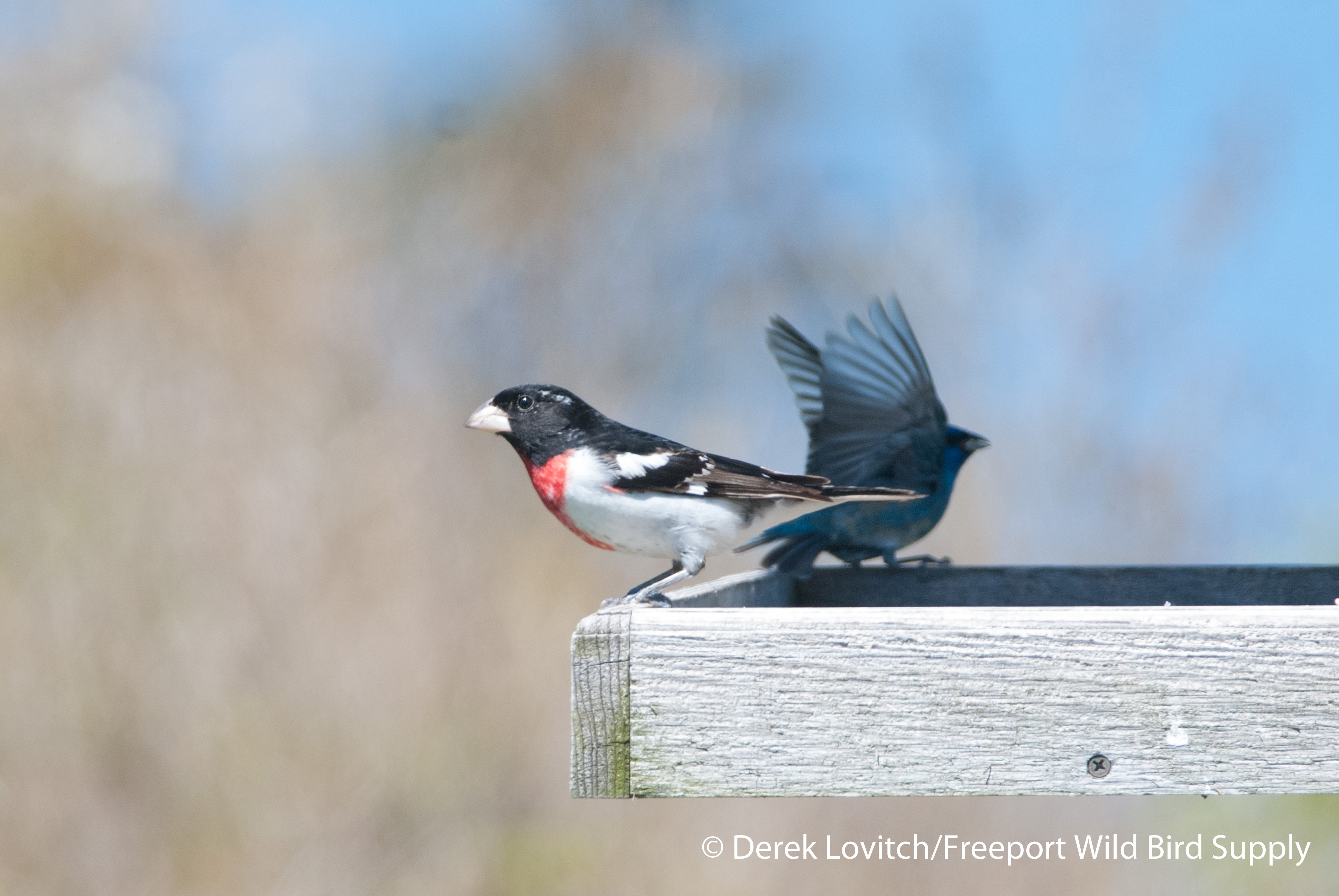
There were other birds to look at too. While I scrutinized the extent of streaking on the nape and crown of the sparrow and took way too many photos, the more sane of the group enjoyed a splash of color at the nearby feeders – at least 3 Rose-breasted Grosbeaks and an Indigo Bunting.
DSC_0100_RBGRandINBU,Monhegan,5-25-14_edited-1

Elsewhere, a Clay-colored Sparrow on one of my other seed stashes, several great views of Philadelphia Vireos, the continuing Summer Tanager, a second Orchard Oriole (an adult male) and a variety of warblers were the other highlights.

All weekend long we had been enjoying lots of warblers, but somehow we only amassed 19 species (we missed singles of Nashville and Prairie seen by others). But of those that we did see, most of them we saw stunningly well. Magnolia, American Redstart, Yellow, and Common Yellowthroat dominated each day, but we had a bunch of Northern Parulas and Chestnut-sided on Sunday as well.  And the views of Canada Warblers and one particular Northern Waterthrush will be tough to beat.

Like each of our first two days on the island, Sunday’s tour came to an end at the Monhegan Brewing Company. On Sunday night, the Brewer’s Sparrow was celebrated, and ideas for a “Brewer’s Brew” or something like that was hatched.

The group had accumulated 89 species (including the aforementioned 19 species of warblers), which was actually well below average for my MonhegZen Spring Birding Weekends.  But at least for me, I had one day left to add to the total, as I extended my stay for another night.

A very strong flight overnight suggested that this was a good call, but I was surprised by how many fewer birds were around on Monday morning than on Sunday. Especially when surrounded by fog – as we were overnight and into the morning – I have found that on really strong flights with favorable conditions, birds probably fly over the island. Perhaps the shroud of fog prevented them from even knowing there was an island below.

However, nearly three hours after sunrise, the winds shifted to the southwest, the ceiling lifted, and all of the sudden, there were warblers in the air. Had they been silently creeping around the forests, waiting for some clearing to reorient to the mainland?  Or, were these birds that were overhead, lost above the fog, looking for a place to finally land?

Hard to say, but for a couple of hours, the birding was quite good. Blackpoll Warblers had increased dramatically, and I had more Bay-breasted and Tennessee Warblers than the previous days, and the Cedar Waxwing flock increased dramatically.

Jeannette and Sasha (finally making her first trip here at the age of 14) arrived, and our friends Paul and Kristen joined us for the next couple of hours.  Blackpoll and Bay-breasted Warblers continued to put on a good show, as did the Brewer’s Sparrow.  More importantly for Jeannette, she was able to successfully twitch all three things she was after today: Hardy Boat cinnamon rolls, Novelty pizza, and Monhegan Brewing.  Yeah, she looked at the sparrow, too.

While Sasha was unable to successfully add Brewer’s Sparrow to her list, she did carefully study plumage variation in Herring and Great Black-backed Gulls. 

Sasha_watching_gulls,Monhegan,5-26-14

She also joined us at the brewery for one final pint.
Sasha_atMonheganBrewery,5-26-14

When many of us present for the weekend’s excitement boarded the boat at 3:15, I was sorry to go, as usual. I eked out 94 species when all was said and done (still below average for a spring weekend out here) including 19 species of warblers (I almost never miss hitting 20 here). While the overall list might have been a little low, the quality of views of most species was hard to beat. The overall quality of the bird list wasn’t too shabby, either. A first state record doesn’t hurt.

The following is my checklist for the group for Friday through Sunday. Monday’s total included birds seen with Jeannette, Paul, and Kristen. The included numbers for each day are conservative estimates or counts of the number of individuals of each species we saw and/or heard on the island (not including the ferry rides).

Species: Friday, May 23rd/Saturday May 24th/Sunday, May 25th/Monday, May 26th.

American Black Duck: 1/0/0/0
Mallard: 15/21/10/10
Black Scoter: 0/0/0/2
Common Eider: x/x/x/x
Red-breasted Merganser: 0/0/0/1
Ring-necked Pheasant: 3/4/5/4
Common Loon: 4/6/6/4
Northern Gannet: 5/6/6/12
Double-crested Cormorant: x/x/x/x
Great Blue Heron: 0/3/0/0
Osprey: 1/3/1/0
Sharp-shinned Hawk: 0/0/0/1
Peregrine Falcon: 0/1/0/0
Merlin: 1/0/0/0
Virginia Rail: 1/1/1/1
Laughing Gull: 5/12/4/2
Herring Gull: x/x/x/x
Great Black-backed Gull: x/x/x/x
Black Guillemot: x/x/x/x
RAZORBILL: 0/1/0/0
Mourning Dove: 6/6/8/4
Common Nighthawk: 0/0/1/0 (FOY)
Chimney Swift: 1/1/2/0
Ruby-throated Hummingbird: 2/4/4/3
Downy Woodpecker: 2/0/0/0
Northern Flicker: 1/0/2/2
Eastern Wood-Pewee: 2/2/2/3
Yellow-bellied Flycatcher: 0/1/2/2
Alder Flycatcher: 0/0/0/3 (FOY)
“Traill’s” Flycatcher: 0/0/0/5
Least Flycatcher: 3/1/6/6
Eastern Phoebe: 1/0/0/0
Eastern Kingbird: 27/25/14/15
Blue-headed Vireo: 0/0/0/1
Philadelphia Vireo: 0/0/2/4
Red-eyed Vireo: 2/2/12/20
Blue Jay: 8/12/8/8
American Crow: x/x/x/x
Common Raven: 2/2/2/2
Tree Swallow: 8/5/6/6
Bank Swallow: 2/2/2/0
Cliff Swallow: 0/0/1/0
Barn Swallow: 2/2/1/2
Black-capped Chickadee: x/x/x/x
Red-breasted Nuthatch: 0/1/2/3
Carolina Wren: 4/8/6/6
Winter Wren: 0/0/1/0
Golden-crowned Kinglet: 0/2/2/4
Ruby-crowned Kinglet: 0/0/0/1 (late)
Veery: 1/1/1/0
GRAY-CHEEKED/BICKNELL’S THRUSH: 0/0/1/0
Swainson’s Thrush: 0/0/1/0
Hermit Thrush: 0/0/1/0
American Robin: 10/10/8/6
Gray Catbird: x/x/x/x
Brown Thrasher: 0/1/1/0
European Starling: 6/4/8/6
Cedar Waxwing: 3/4/18/60
Tennessee Warbler: 0/2/0/4
Northern Parula: 3/12/30/15
Yellow Warbler: 25/25/35/30
Chesnut-sided Warbler: 6/5/20/10
Magnolia Warbler: 25/20/25/20
Black-throated Blue Warbler: 6/8/8/4
Yellow-rumped Warbler: 6/8/0/0
Black-throated Green Warbler: 10/15/15/15
Blackburnian Warbler: 2/0/2/3
Bay-breasted Warbler: 0/1/0/8 (FOY)
Blackpoll Warbler: 4/3/10/50
Black-and-white Warbler: 5/5/10/5
American Redstart: 10/15/35/30
Ovenbird: 0/0/2/0
Northern Waterthrush: 0/3/3/3
MOURNING WARBLER: 0/1/0/0 (FOY)
Common Yellowthroat: 35/35/30/30
Wilson’s Warbler: 4/0/5/1
Canada Warbler: 2/4/4/2
SUMMER TANAGER: 1/1/1/0
Chipping Sparrow: 10/10/6/8
CLAY-COLORED SPARROW: 0/0/1/0
BREWER’S SPARROW!!!!: 0/0/1/1
Field Sparrow: 0/0/1/1
Savannah Sparrow: 1/1/3/1
Song Sparrow: x/x/x/x
Swamp Sparrow: 1/2/2/1
White-throated Sparrow: 1/0/10/10
Northern Cardinal: 6/8/8/6
Rose-breasted Grosbeak: 0/0/4/3
Indigo Bunting: 1/3/4/2
Bobolink: 8/6/4/4
Red-winged Blackbird: x/x/x/x
Common Grackle: 10/15/15/10
ORCHARD ORIOLE: 1/1/2/1
Baltimore Oriole: 0/1/3/4

American Goldfinch: 6/12/8/6

A Great May Week of Birding in Review, and Some Predictions for More Feathery Fun.

DSC_0027_SUTA,Georgetown1,5-6-14

Simply put, it has been a helluva week of birding in Maine!  Strong flights of migrants occurred on 5 of the last 7 nights, producing a whole lot of new arrivals throughout the region. And then there were rarities, but we’ll get to that shortly.

As for regularly-occurring migrants, birds are arriving right about on time now. By week’s end, some of the latest arriving warblers, like Blackpoll have begun to trickle in, while the early migrants like Yellow-rumped and Palm have thinned out considerably. Some locally-breeding Pine Warblers are rarely singing now, as breeding season for them is well underway.

Almost anywhere you went this week, 12 or more species of warblers was possible.  I enjoyed 15 species at Florida Lake on Monday and 17 species at Evergreen Cemetery on Thursday, for example. The third week of May is when the coveted 20-species morning total is most likely around here, so you know I will be gunning for that in the coming days.

I added Lincoln’s Sparrow, Lesser Yellowlegs, White-crowned Sparrow (#126, 127, and 128 respectively) to my Bradbury Mountain patch lists this week, and a Lincoln’s Sparrow was the first in our Pownal yard (#116) on Sunday. Meanwhile, a spiffy male Orchard Oriole was the 114th species at our store, a one-day wonder at our feeders on the 10th.  So it’s been a great week for patch listing as well!

And Scarborough Marsh was just awesome on Tuesday morning, when Katrina and I had unbelievable numbers (for spring) off of Eastern Road, including 1500+ Tree Swallows, 500+ Least Sandpipers, 400+ Barn Swallows, ~125 Greater and ~100 Lesser Yellowlegs, 75-100 Bank Swallows, 6++ Semipalmated and 2++ White-rumped Sandpipers (both FOY), 2 adult Dunlin, and the continuing Tricolored Heron. Nothing rare per se, but the biomass of birdage was impressive, and was definitely the highlight of the week.

Following the “Mega” rarity Northern Wheatear that was last seen last Saturday in Scarborough Marsh, rarity news has been decidedly southern in nature. Although small numbers of “overshooting” southern vagrants are typical in Maine every spring, the number of White-eyed Vireos (I caught up with one at Capisic Pond Park on Thursday with my friend Lois), Summer Tanagers (I saw one in Georgetown last week with Katrina; see above), and Blue-gray Gnatcatchers (they’re everywhere!) is most impressive. Then there was a Painted Bunting on Monhegan this week, a Swallow-tailed Kite at the Bradbury Mountain Hawkwatch on 5/7, and a Mississippi Kite also at The Brad as the grand finale on the 15th.  The widespread smattering of Orchard Orioles is a little more typical.

This pattern of southerly vagrants is not caused by birds being “blown” here in a simple sense, but instead we believe it is caused by southerly winds facilitating their arrival beyond their normal range – perhaps by causing a bird to travel much further (in relation to the ground) in each night’s flight thanks to a favorable tailwind. Perhaps others were entrained by strong winds off the South Atlantic Bight and were pushed northwards until they made landfall in the Northeast (I wonder if the Boston Fork-tailed Flycatcher arrived this way?).

Less fitting of any particular pattern is the remarkable adult Black-headed Grosbeak that was on Monhegan this week – at the SAME FEEDER as the Painted Bunting, 2 Summer Tanagers, a Lark Sparrow, and a Dickcissel. <expletive deleted> And, not to be overshadowed, a dapper male Ruff was found in Bangor.

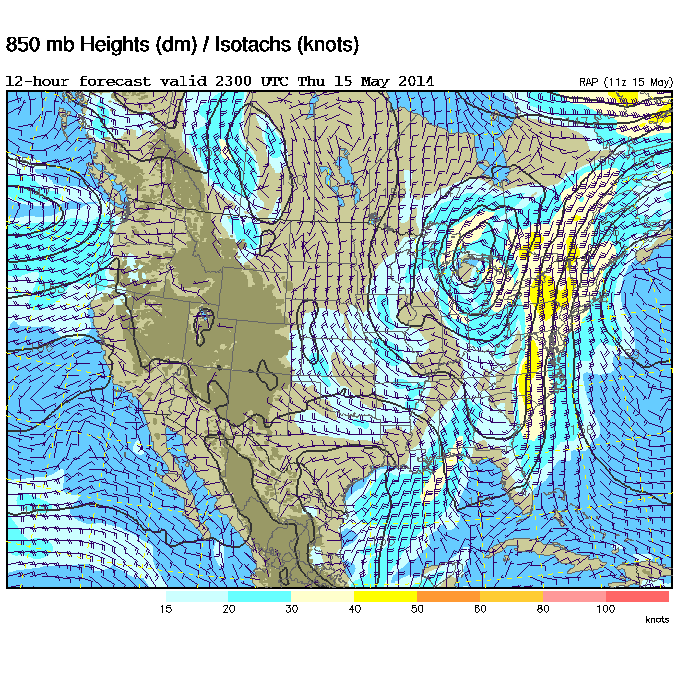
With a deep southerly flow continuing, and some very unsettled weather coming for the weekend, I think things will be getting quite interesting in the coming days. (I don’t want to know how many “Island Birds” Kristen Lindquist will pick up over me on Monhegan this weekend!).  Check out this wind map from the 15th, showing a very strong southerly flow originating all of the way from Florida and the Caribbean.

wind map, 5-15-14

For those of us not on Monhegan this weekend, I sure hope you’ll be birding hard – not despite the weather, but because of the inclement weather. At the very least, keep an eye on those feeders. Both here at the store and at home, we’re stocked up with mealworms, jelly, oranges, insect suet, and nut blocks. Not only will the cool, wet weather limit natural food sources, but the slow progression of the season continues to put a lot of important food sources well behind the birds’ required schedules.

For example, apples and cherries are only now starting to bloom. Early-arriving nectavores and insectivores flock to these (and other early-season bloomers like Shadbush, azalea, and quince) for both nectar and the insects attracted to that nectar. The lack of a lot of flowers so far this season has pushed many orioles (including some Orchards in addition to the regular Baltimores), Gray Catbirds, and Scarlet (and some Summers) Tanagers to feeding stations in above-average numbers.  I expect that trend to continue through the middle of next week, as a stubborn upper-level low remains locked overhead producing unsettled weather.

So keep an eye out the window, get outside, and find some good birds!  And regardless of rarities, it’s just a great time to be birding!

Book Review: Ten Thousand Birds: Ornithology Since Darwin

By Tim Birkhead, Jo Wimpenny, and Bob Montgomerie

This was an impressive book. Impressive in breadth, width, and, yes, weight. In fact, since I often read in bed before falling asleep, one of my biggest concerns was nodding off and having the book fall on my face. Its 524 pages would have easily broken my nose!Ten

Luckily, the writing made me anything but sleepy. While this is not a “curl up on the coach and read cover to cover on a cold winter day” book, it is exceedingly well-written for what is essentially a text book.  The authors have amassed a mind-boggling amount of information covering a range of ornithological topics.

Although the scientific study of birds can be traced back to ancient Greece, ornithology has really come of age in the century following the revolutionary work of Charles Darwin. A fascinating factoid in the preface mentioned that “in 2011, there were as many papers on birds published as there have been during the entire period between Darwin’s Origin (of Species) and 1955.”  Wow!

As noted in the Preface, there are several other compilations of ornithological history.  I will readily admit that when I first learned of this book, my first thought was “Really, another one?”  But this one is different.

They chose to begin with Darwin for good reason as “nothing in biology makes sense, except in the light of evolution.”  But no book could cover every aspect of ornithology; not everything we’ve learned could fit in any one volume. I’d break my back lifting it before I could break my nose dropping it.

Therefore, the authors narrowed down the focus to the highlight of ornithological research that has “influenced the course of scientific progress.” They explain the rationale that included ranking a database of citations and a survey of senior ornithologists. In the end, the authors decided to synthesize things into a topic-based series of chapters, guided by their findings of the most influential researchers and books:

Chapter 1: Yesterday’s Birds – a synopsis of the discovery and analysis of the first birds, and the history of the now-dominant “birds ARE dinosaurs” theory.

Chapter 2: The Origin and Diversification of Species– the evolution of these 10,000 or so birds that we share our planet with.

Chapter 3: Birds and the Tree of Life – the difficult process of figuring out which birds are related to whom and how.

Chapter 4: Ebb and Flow – about migration, the topic in the book that was of most interest to me personally.

Chapter 5: Ecological Adaptations for Breeding.

Chapter 6: Form and Function – the study of avian physiology: how birds do what they do and the evolutionary processes that shape the birds of today and how they exploit their specific niches.

Chapter 7: The Study of Instinct.

Chapter 8: Behavior as Adaptation.

Chapter 9: Selection in Relation to Sex – what birds look like and why. Spoiler alert: it’s about sex.

Chapter 10: Population Studies of Birds.

Chapter 11: Tomorrow’s Birds – what does the future hold for bird species, populations, and survival in the face of humanity and our changes to the planet?

So there’s a fairly wide range of topics, and each topic is covered in depth. There’s a lot of research into each topic and the players involved. A graphic timeline of important events and publications are included in each chapter, almost as a tour guide for the events and people in the coming chapter, or a “Cliff-Notes” version for convenient skimming. What is really remarkable about this tome however, is the very personal approach the authors take. They intentionally attempted to avoid a dull, boring history book.

“…Our experience teaching undergraduates show us that histories were brought to life by stories about the people that populate them. The history of ornithology is overflowing with extraordinary individuals and intriguing stories. Science – ornithological or otherwise – is conducted by real people with real human attributes, including ambition, integrity, jealousy, obsession, and deception. In telling their stories we encounter the full gamut of human frailties from fraud to murder.” 

No, this is not your run of the mill dry, boring textbook. The authors make it personal, and make it engaging by emphasizing the people involved. They want you to not just read about discoveries, but join the researchers as they make them – and embroil in controversies surrounding them. As exemplified by this passage in Chapter 3, “Birds on the Tree of Life”, the authors were not shy about delving into issues of these controversies:

“The first volley in what David Hall would later call the ‘Systematics Wars’ had been fired – the 1960’s and 1970’s would see one of the most contentious periods in the history of any branch of science. While not everyone likes this term, to those of us looking in from the outside, systematics at the time seemed clearly at war, as egos and emotions ran high, and the field seemed to attract some of the most arrogant, opinionated, and downright nasty individuals who have ever called themselves scientists.”

In other words, the authors were more than willing to call a spade a spade and that is refreshing; sugar-coating of controversies was held to a minimum. I loved that. Prosaic and engaging writing keeps the reader interested, and allows the non-scientist to absorb the wealth of information.

History is important, and the authors teach us the value of understanding ornithological history in order to 1) see a researcher’s own work in context, 2) knowing what predecessors have done is an “essential part of scholarship, and at the very least helps to avoid reinventing the wheel, and 3) Perhaps most importantly, “it can be a crucible of creation, triggering new ideas and new ways of looking at old problems.” And the authors went to great lengths to make this needed task as engaging and interesting as possible, and I believe they succeeded.

Each chapter includes added color with an autobiographical vignette from leading scientists, and closes each chapter with a “Coda,” that briefly summarizes what we have learned about the topic and how it applies to current research and why this particular topic is so important. Often, the authors include additional color-commentary as well and perhaps even a little opportunity for some brief opinionated editorializing.

I am not an “ornithologist” by any definition, and while the term “field ornithologist” could be applied to my previous career, I am not an expert in the rigorous science of any of these topics. Therefore, I would not be able to comment on any biases, any missing information, oversights, or errors within the information presented. I am most definitely a student of migration, however, and therefore found Chapter 4 to be the most interesting and valuable to me, and very well done.

I would argue that Chapter 11, however, is the most important, but unfortunately, I found it to be the weakest chapter in the book.  While every other chapter came across as very well laid out, planned, and thorough, I found “Tomorrow’s Birds” to be scattered, at times superficial, and sometimes even a little awkward as the authors skip from one topic to another. That disappointed me quite a bit, and it was a tough way to end. Perhaps it was nothing more than so much new information to be covered, that a sample was the most reasonable option, rather than the through surveys of the preceding chapters.

However, the last two pages of that final chapter, wrapping up the past, present, and future of birds and the study thereof, were poignant and valuable.

“Topics of interest will come and go, but there is one topic whose relentless progress should be of concern to us all. As the human population continues to increase, bird populations will continue to decline. Birds provide a convenient indicator of the quality of the environment, but they also contribute immensely to the quality of the environment and of our lives…A century from now, if someone decides to repeat our survey of the preceding hundred years, it is unlikely that they would be able to use the title  – Ten Thousand Birds…The long-term health of birds and other wildlife depend on teaching our children and students to value the natural world, but it also depends on our training them to be both effective ambassadors for ornithology and first-rate scientists, so they are able to make the right decisions.”

(As with all books reviewed in the blog, of course it is available here at Freeport Wild Bird Supply!)

Three Days of Migration Watching in May -Day and Night.

In my blog last Wednesday, I made some prognostications about what we might expect for birds in the coming days. Let’s see how I did so far.

Rain began to fall Wednesday evening, and continued, heavy at times, through Thursday morning. With a persistent easterly wind, overnight migration was non-existent. In the rain on Thursday morning, Katrina and I checked out Florida Lake Park, but found only about 20 Yellow-rumped and 10 Palm warblers – fewer than in recent days. The local River Otter pair, however, put on a great show. Nothing new under the feeders at home (or at the store), either.

Afterwards, I took a spin through the local farms and fields, but found nothing out of the ordinary; it’s too early for most shorebirds anyway. Admittedly, however, I had vagrants on my mind (and still do! As usual). Although the southerly winds conducive to southern overshoots (as I discussed in the aforementioned blog) had yet to kick in, the deep easterly flow that we have been ensconced within could offer up its own surprises. With reports of the “largest incursion of Icelandic/European birds to Newfoundland in recent memory,” including amazing tallies of European Golden-Plovers, 9 Black-tailed Godwits, North America’s 4th (or so) Common Redhank…yeah, the “Rarity Fever” in me can’t help but kick up. Perhaps something will ride one of those Iceland-Portland cargo ships that are in service these days!

Light rain continued through Thursday morning, diminishing to drizzle and fog until the afternoon, when a shift to westerly winds began to clear things out. Overnight, light and variable winds suggested a good migration should occur, but the radar wasn’t showing more than a light flight.
1am radar, 5-2-14  1am velocity, 5-2-14

However, it was foggy for much of the night, and fog can obscure the image of birds on the radar, especially if they are flying low. “Birding by radar” is not infallible, and I had a feeling it might have been a little misleading this morning. A steady trickle of Yellow-rumped Warblers moving over the yard at dawn confirmed this. The weather was just too-not-terrible for there not to be a lot of birds on the go.

So off to Florida Lake I went.  And, for a change this spring, I was not disappointed.  100+ Yellow-rumped Warblers, 20+ Palm Warblers, my first Northern Waterthrush and Black-throated Green Warbler (finally!) of the year, a singing migrant Greater Yellowlegs, and much, much more. I caught the lingering pair of Green-winged Teal copulating; are they going to breed here? Ring-necked Ducks had increased to 16 and there is still a pair of Common Mergansers here.

As the fog burned off, the sun shone brightly, and heat began to rise in swirling thermals, hawks took to the skies on the light westerly wind. I had to pull myself away from the hawkwatch kicking and screaming at 12:30, but by then we had eclipsed (at 10:35) our all-time record count of 4,474 birds when a Merlin streaked by. 388 Broad-winged Hawks and 22 Sharp-shinned Hawks were included in the total of 429 migrant raptors when I departed.

Last night’s passerine migration – yup, the fog on the radar definitely obscured the intensity of the flight! – was still evident well past noon, as Yellow-rumped Warblers were still on the go, reorienting inland after last night’s flight. Well over 200 had passed the summit by the time I departed, as did my first two Chimney Swifts and Eastern Kingbirds (also 2) of the year. And by day’s end, 705 raptors led by 583 Broad-wings were tallied, adding to our record totals. Around 4:00pm, our 5000th raptor had passed – a milestone we never thought we would reach.

Come nightfall, the radar was active once again.  Here are the 1am reflectivity and velocity images for example:
1am radar, 5-3-141am velocity, 5-3-14

Notice the dark greens in the center of the return, but overall the rather narrow diameter of the image?  My guess is that mostly overcast skies and a light westerly winds, perhaps including some turbulence from the passing cold front, kept birds low once again.  But, without fog around, it was certain that this was birds – confirmed by the distance SW-NE pattern of the velocity image, and its speed. I think it was actually a lot of birds.

And come morning, Yellow-rumped Warblers were overhead as I stood on the back porch at dawn, and the Saturday Morning Birdwalk group and I headed over to Florida Lake.  Yeah, it was good.  Very good.

In the past few days, we’ve also finally had the first couple of reports of Ruby-throated Hummingbirds and Baltimore Orioles, so that those have just begun to arrive.  As I mentioned the other day, food is in short supply for these backyard favorites, so feeders are going to be important for the first arrivals.

But no vagrants from the south, or East …yet!

Biddeford Pool Snowy Owl and Weather Discussion

This was the birding highlight of Tuesday morning’s visit with Katrina to Biddeford Pool.
DSC_0005_SNOW1,Bidd Pool, 4-29-14_edited-1 DSC_0016_SNOW2,BiddPool,4-29-14_edited-1 DSC_0023_SNOW3,BiddPool,4-29-14_edited-1

The first photo was taken shortly after our arrival to The Pool, while the second two -with much more pleasant skies – was taken as we departed around noon.  Although its plumage is much more faded and worn now, it is likely that this is the same Snowy that has spent the winter near the western end of mile stretch.  Today, it was hunting voles once again on the incoming tide from one of its favorite rooftop perches.

While this was my latest Snowy in Maine, it is far from unprecedented following a massive irruption year. But seeing a Snowy Owl a mere two days away from May is still special; it could be a lifetime before we see an irruption of this magnitude again.

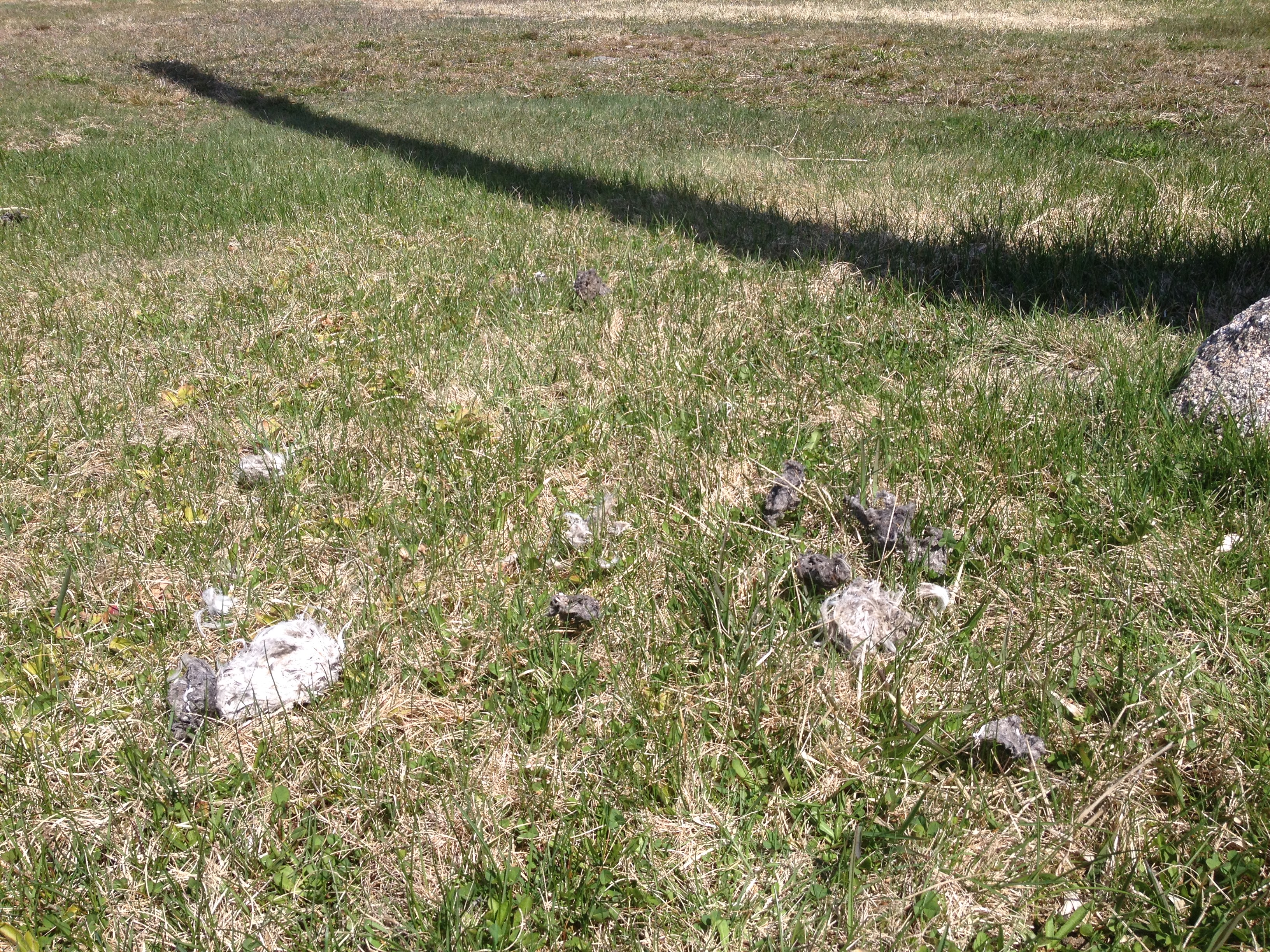
A little further down the road, where the second of the Mile Stretch Snowies overwintered, we found a pile of pellets below one of that bird’s favorite perches. Most were full of small mammal fur and bones, and the skulls were all of voles. One pellet, however, was pure thick, downy feathers – probably from a duck.
IMG_3465

But with migration still at a virtual standstill, the rest of the day’s highlights were rather few and far between; very few migrants were around. A pair of Blue-gray Gnatcatchers around the beach parking lot was a nice, and I had my first House Wren of the year in the neighborhood, and my first Laughing Gull off of East Point. 1-3 Black-crowned Night-Herons were also my personal “FOY’s,” but they have probably been present here for at least a couple of weeks now.

IMG_3449
The seas and skies sure looked like winter today, and the raw winds and low temperatures – and Snowy Owl! – sure made it seem more like early March than late April!

But yeah, migration has been kinda slow.  Although, interestingly enough, the House Wren and Laughing Gull were right on time for me, most of the usual late April arrivals (Black-throated Green Warbler, Northern Waterthrush, Black-and-white Warbler, etc) are nowhere to be seen, and really, have I only heard one Blue-headed Vireo so far this season?

We all know spring has been running late this year, and I would say bird migration is now about 7-10 days behind schedule (catching up from the 2-3 weeks behind schedule of early April).  Recently, our onshore winds (not conducive to facilitating migration for birds heading north) in this stubborn blocking pattern (a pattern that has seemingly become more and more regular recently) have not helped matters.  Here, for example, is the wind map from Sunday, showing the low pressure system just south of Nova Scotia that was pumping in those onshore winds since late last week.
wind map, 4-27-14

But take a look at today’s wind forecast…
wind map, 4-30-14

Here we see the massive low pressure system marching across the Great Plains. But now, on the leading edge of it, we see a deep southerly flow, originating all of the way from the Gulf Coast.  This southerly flow is expected to last for at least the next 48 hours.

Although the weather will remain unsettled – and we’re about to get a pretty good soaking tonight and tomorrow – through at least the weekend, I would expect quite a few migrants to begin to trickle in over the next few days. Simply put, some birds are running low on time to wait!  And, as evidenced by the 73 and 110 raptors tallied passing The Brad over the last two days, respectively, despite easterly winds, it is clear that some birds simply have to make some progress, and will do so when conditions are at least somewhat favorable (or, at least not completely unfavorable).

Furthermore, these deep southerly flows at this time of year can facilitate the arrival of annual spring “overshoots” from the south (see Chapter 4 of my book, How to Be a Better Birder for a full explanation of this phenomenon). When I see weather patterns such as this, I begin to think about things such as Summer Tanagers, Blue Grosbeaks, and Hooded Warblers!

At least potential food sources (insects emerging from ponds; insects attracted to blooming trees) are getting a little chance to catch up before the bulk of migrant birds arrive.  This phenology, or timing, of the plant and insect cycle is critical for migrant birds that need to refuel and/or then fuel up for the next leg of their journey. “Weird” weather such as this doesn’t bother birds as much as it bothers us, but it becomes a real problem when the weather results in the lack of specific food sources.

I haven’t seen much in the way of nectar-producing flowers yet – but Ruby-throated Hummingbirds and Baltimore Orioles often begin to arrive in the first week of May. This is going to be one of those seasons where well-stocked feeding stations are critically important to migrants, especially those that need insects and nectar.  Our hummingbird and oriole feeders are out and ready for business, and our feeder is stocked with insect-laden suet blocks (check out our “Photos from Friends of the Store” gallery on our Facebook Page to see what one particular feeding station in Brunswick has been seeing eating insect suet) and live mealworms.  It lies in wait for the first hummers, orioles, or any other migrants in need of assistance…oh yeah, any vagrants from the south, too!

White-faced Ibis Have Returned to Scarborough Marsh

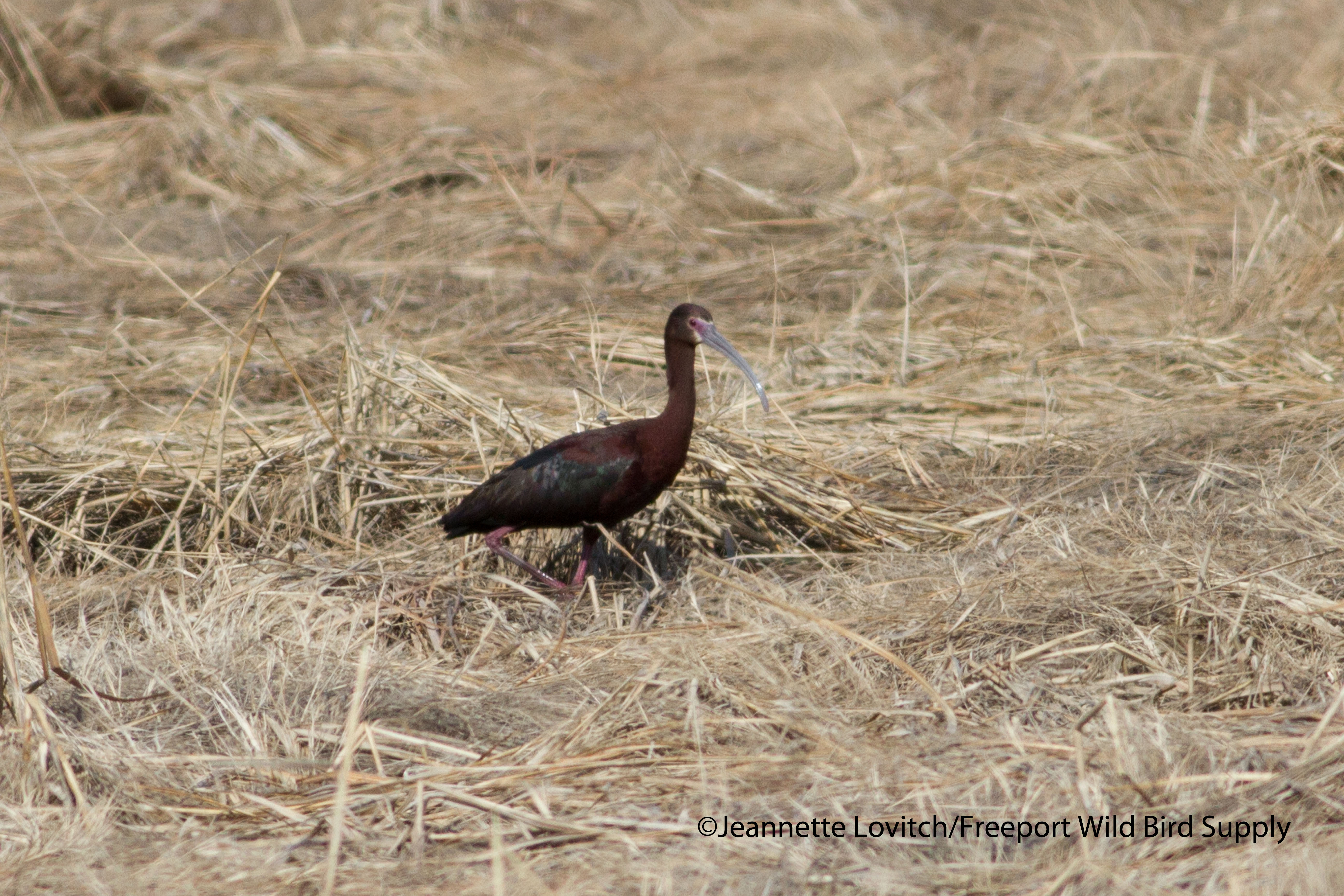
For the 7th consecutive spring, White-faced Ibis have been found in Scarborough Marsh.  I found the state’s 5th record in 2008 – a single adult bird – and in each of the next three years, a single adult bird was seen. It is more than likely that this was the same adult returning for each of those years, and likely beyond.

Things became a little more muddied in 2012, however, when three different White-faced Ibis (WFIB) were documented (that spring, I wrote an extensive blog summarizing the difference and the previous records. Although that was posted to my old Mainetoday.com blog that has since imploded, if anyone would like a copy of that synthesis, please let me know).

Photos from 2012 can be seen here.

Additionally, some earlier photos of the sub-adult bird can be seen here, although they are not of high quality.

In 2013, at least three individuals were identified once again.

So the question becomes are these birds all related? How many of these individuals have shown up for home many consecutive years? And, are they breeding?

Last year, WFIB were spotted on occasion through the end of the summer, confirming that the birds are not just spring overshoots or drift vagrants. Although the detection of – and ability to study the – ibis becomes much more challenging as the season progresses due to the growing marsh grasses, last year WFIB was a semi-regular sighting in the marsh. Some of my photos from July and August of last year can be seen here.

Juvenile WFIB are impossible to separate in the field from juvenile Glossy Ibis in the late summer and fall (by late winter, the development of the red eye and perhaps even facial skin coloration would at least tip us off to the possible identification). Therefore, if breeding is to be confirmed, it would likely have to be on Stratton Island – where they would likely breed within the large colony of Glossy Ibis (GLIB) – or, by conjecture as a population increases. Figuring out exactly how many birds are seen each year, and their ages, could help us track potential breeding (and perhaps eventual colonization?). It’s also fun – if you like this sort of thing.

Each year, WFIB show up in late April, about the time that the majority of the GLIB arrive, and this year, the birds were first reported on Saturday (4/19). Two to three birds were reported, and over the past week, we have tried to determine exactly how many birds they are, and, if possible, what ages they are.

On Sunday, Jeannette and I were planning on heading to the marsh in the afternoon anyway (to take advantage of the high tide on our rare extra day off), so looking for the WFIB first reported on Saturday added extra incentive. And luck was with us. As soon as we arrived at the marsh, we found a group of about 70 GLIB foraging close to Pine Point Road. We jumped out, and immediately found two White-faced Ibis within the group, along with one other bird of interest (a bird that looked absolutely fine for a pure GLIB, but with distinctly reddish-pink knees, and perhaps a pinkish hue on the rest of the leg.  Jeannette, unfortunately, was unable to get photos of this individual).

Most obvious, there was this “bright-faced” bird.
IMG_5543_edited-2 IMG_5543_edited-2a IMG_5533_edited-2 IMG_5530_edited-2 IMG_5455_edited-2

Although the facial skin, especially right at the base of the bill, has a slight grayish tint, I see no reason to argue that this is anything other than an adult bird (or very near-adult, perhaps).

Secondly, there was this “pale-faced” bird.IMG_5519_edited-2

IMG_5518_edited-2

IMG_5464_edited-2 IMG_5576_edited-2

IMG_5576_edited-2a IMG_5574_edited-2 IMG_5574_edited-2a

Note the greatly reduced amount of white around the face, with no white behind the eye. In the field, I called this bird a sub-adult, but on close inspection of the photos, I don’t feel comfortable calling its age – other than it is definitely more than a year old. Although there isn’t much white on the “face,” the pure red eye, pink facial skin, and pinkish legs with brighter red-pink knees are all fine for an adult, in fact, as are the spiffy, glossy tertials. Perhaps a spread-tail shot could help confirm this. It might simply be a dull (facial-marking-wise) adult.

Meanwhile, photos from other folks suggest that a third WFIB, or perhaps a hybrid, is present. If it is, perhaps we will be able to compare these birds to those of last year, and perhaps even conclude that the same three birds are back. Regardless, it will be an interesting exercise, and quite the challenge, as ibis are a real challenge to age. In fact, we might not even know for sure how to age them! Of course, you know me, that doesn’t necessarily stop me from trying.

What intrigues me is that we have not yet documented a hybrid, even after an adult was present for 4-5 years. Since out of range WFIB are well known to hybridize with GLIB (and visa-versa), we often expected to see hybrid kiddies running around (at least by next spring when they would have been noticeable). Perhaps it did not breed, or the young did not survive. And/or perhaps it waited long enough for another WFIB to arrive. Whatever is going on, it will be most interesting to watch, this summer and beyond.