This stunning male Indigo Bunting really brightened up a wet and dreary morning on Bailey Island on Tuesday. Rather than just a very early migrant, this bird is more likely part of an “overshooting” vagrancy event that brought several southern birds to Maine in the past week.
I had relatively few things scheduled this week, so I took full advantage to spend a little extra time in the field – it might be July by the time I get a week this open again! While I definitely “swung for the fences” a few times in my pursuit of finding rare birds, I enjoyed a really great week of birding overall.
My observations of note over the past seven days included:
1 Red Crossbill, Waterboro Barrens Preserve, Waterboro, 4/11 (with Jeannette).
But my highlight was experiencing a fallout along the southern York County coast on 4/14, led by Song Sparrows, Dark-eyed Juncos, and Golden-crowned Kinglets, but also including goodly tallies of Ruby-crowned Kinglets, Brown Creepers, White-throated Sparrows, Northern Flickers, and especially Hermit Thrushes. I also totaled 10 sparrow species on the day, several first-of-years, but alas, none of the hoped-for rarities. I summarized the event briefly in this post.
And my list of personal “first of years” and other new arrivals this week really showed the progression of the season.
2 Yellow-rumped Warblers (FOS), Florida Lake Park, 4/13.
1 drake Blue-winged Teal, Spring Brook Farm, Cumberland, 4/13.
1 Chipping Sparrow, feeders here at the store, 4/13.
1 Field Sparrow, Fort Foster, Kittery, 4/14.
1 Eastern Towhee, Fort Foster, 4/14.
1 Northern Rough-winged Swallow, Fort Foster, 4/14.
1 pair GADWALL (FOS), Seapoint Beach, Kittery, 4/14.
1 Dunlin (FOS), Seapoint Beach, 4/14.
And finally, the first event of this year’s extended Feathers Over Freeport celebration is Wednesday, 4/20 at Maine Beer Co. A portion of the proceeds of every food purchase will directly support the weekend’s events! I’ll be joining park staff to answer questions about our local state parks, local birding, and the Feathers Over Freeport Weekend. For more information, visit: www.maine.gov/feathersoverfreeeport
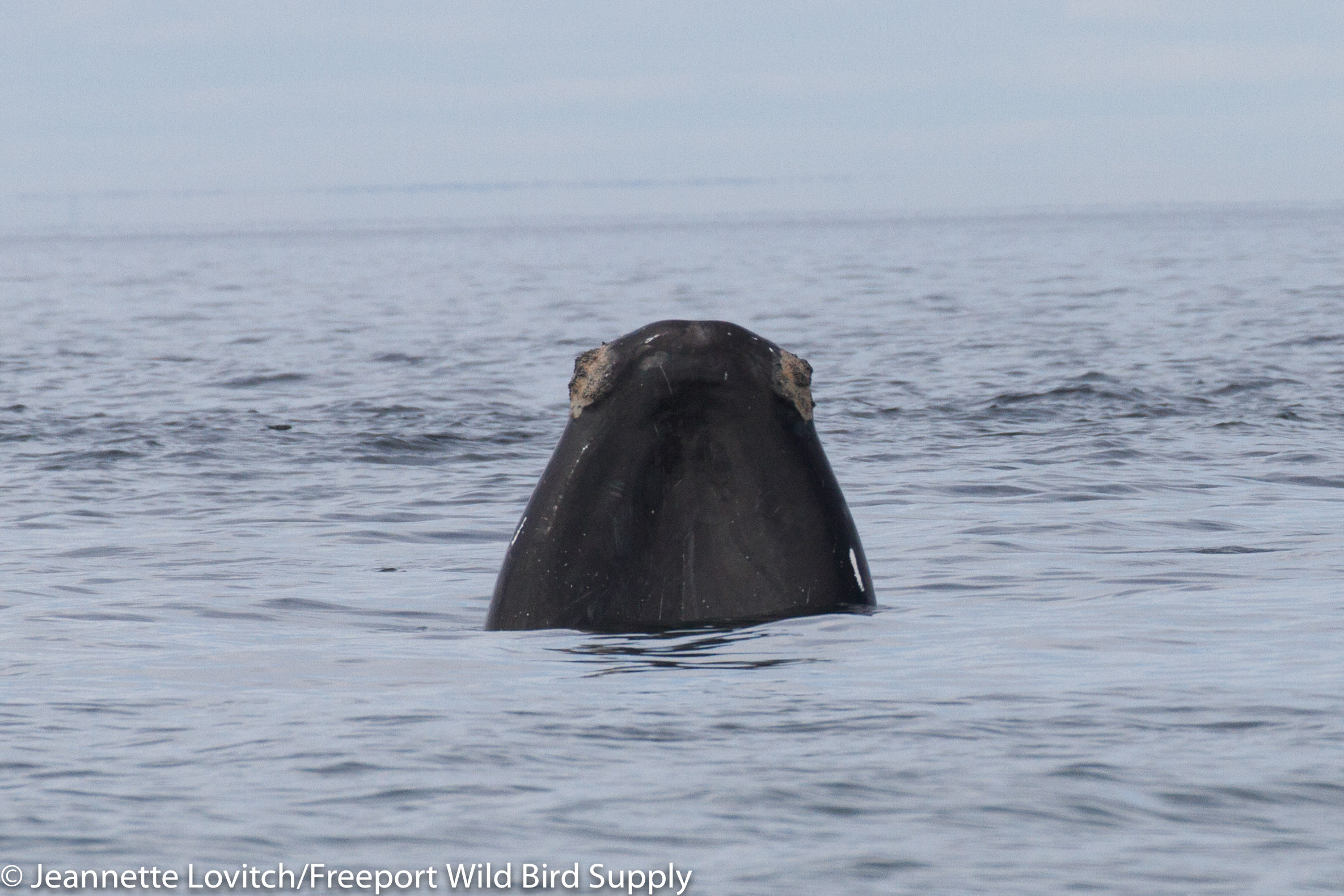
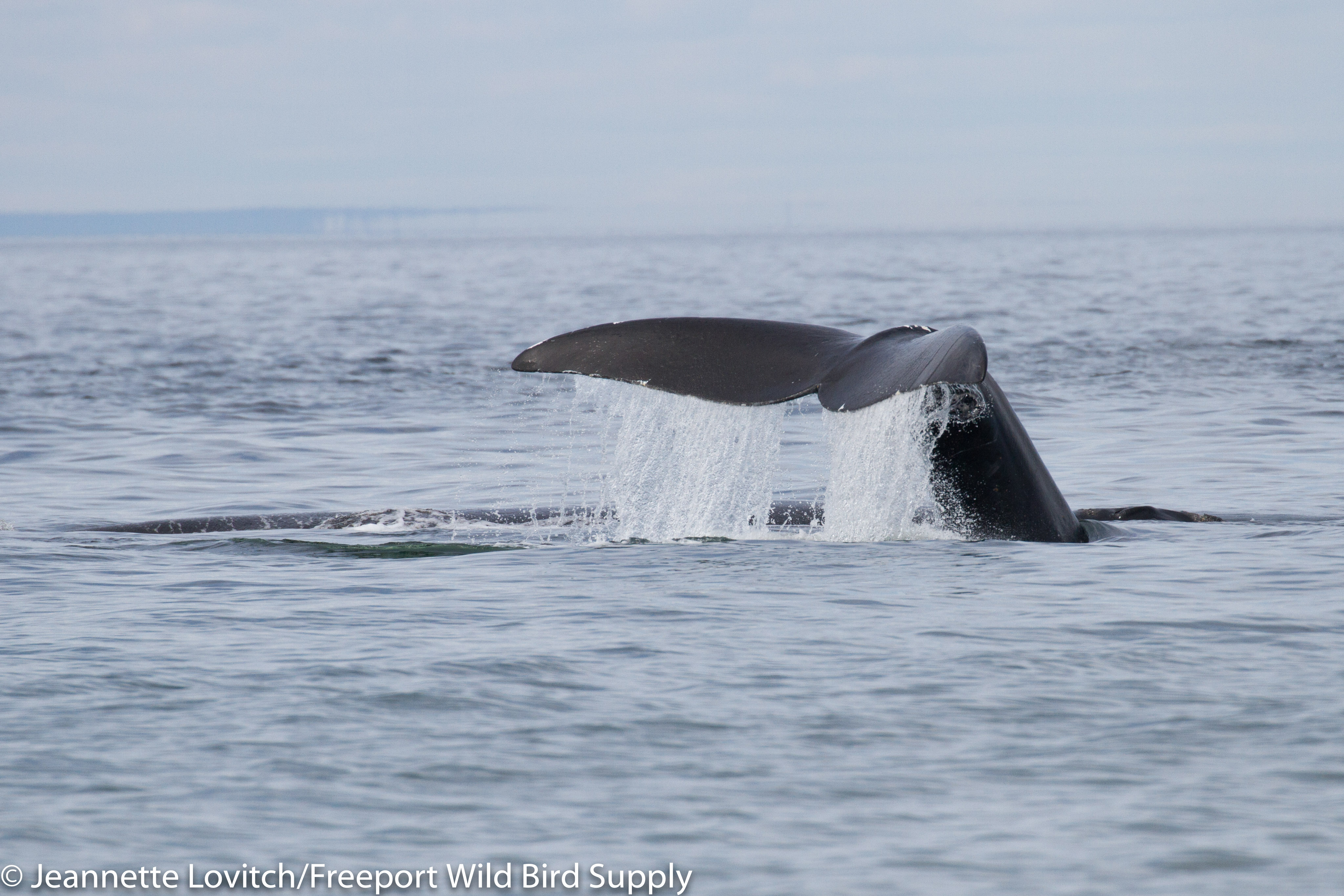
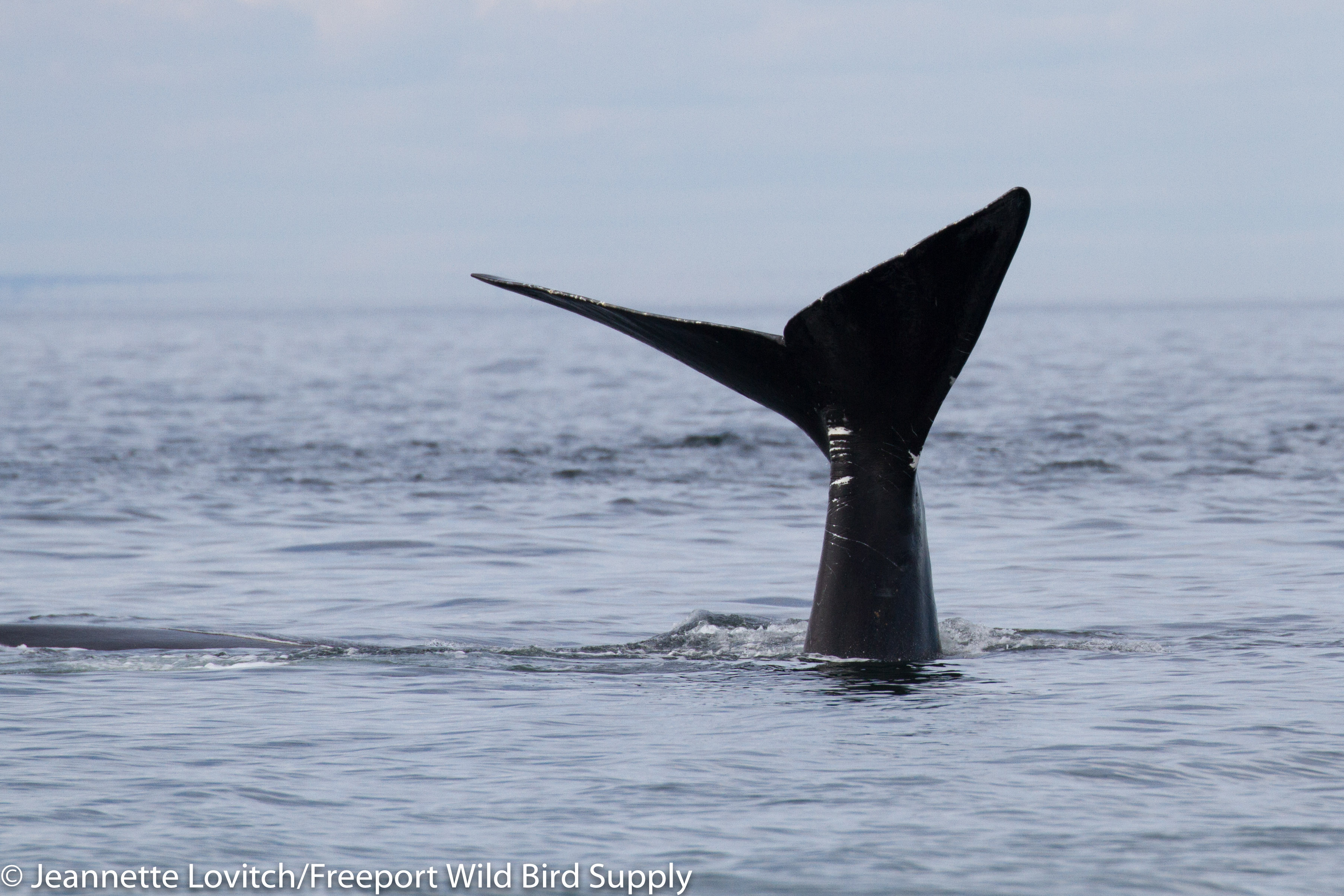
Jeannette and I escaped for a long weekend in Cape Cod, Friday through Monday. We were mostly looking for North Atlantic Right Whales, but of course we did some birding too! Jeannette’s whale and bird photos from the weekend are posted in this short blog about our trip:
Meanwhile, back in Maine, the strong northwesterly winds slowed the pace of migration. However, by week’s end, I had some time do a little local birding, producing the following highlights:
Over the weekend, Jeannette and I made a little escape to Cape Cod. I’ve been wanting to take this trip for many years, but our schedule rarely allows it. But thanks to Jeanne and Haley holding down the fort at the store, and the return of Zane to the hawkwatch, we felt we could make a run for it.
While Cape Cod is always great for birding, especially Race Point, from late winter into the middle of spring Race Point is even more famous for its whale-watching. From land. Of one of the rarest animals on the planet: the North Atlantic Right Whale.
While much to most of the world’s diminishing population arrives in Cape Cod Bay in February, the best time to see the whales is in late March and April of most years (sometimes earlier, sometimes later) when they frequent the waters immediately off of the very tip of Cape Cod. Here, a narrow and deep channel come in close proximity to land and its shallow shores, providing a rich area of upwelling and unrivaled proximity to rich feeding areas for whales and birds.
We arrived Friday afternoon and decided to get the lay of the land. I haven’t been to Race Point in over 20 years – sadly – and Jeannette had never been here, despite growing up a short ferry ride away. While we didn’t see any whales this afternoon in a brief visit, we got to know the viewing spot, a little of the strategy from another visiting couple, and got to spend some time with the birds. It’s really extraordinary how much birdlife is at this place!
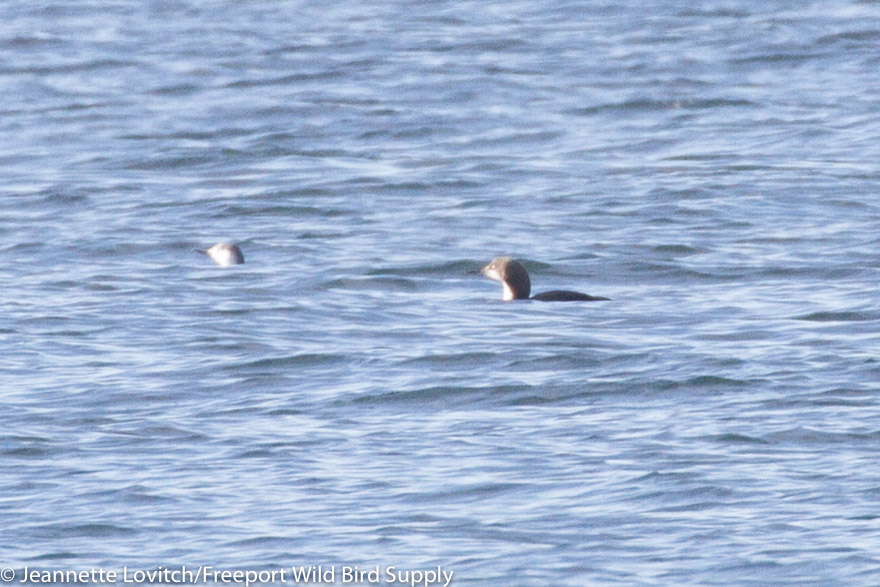
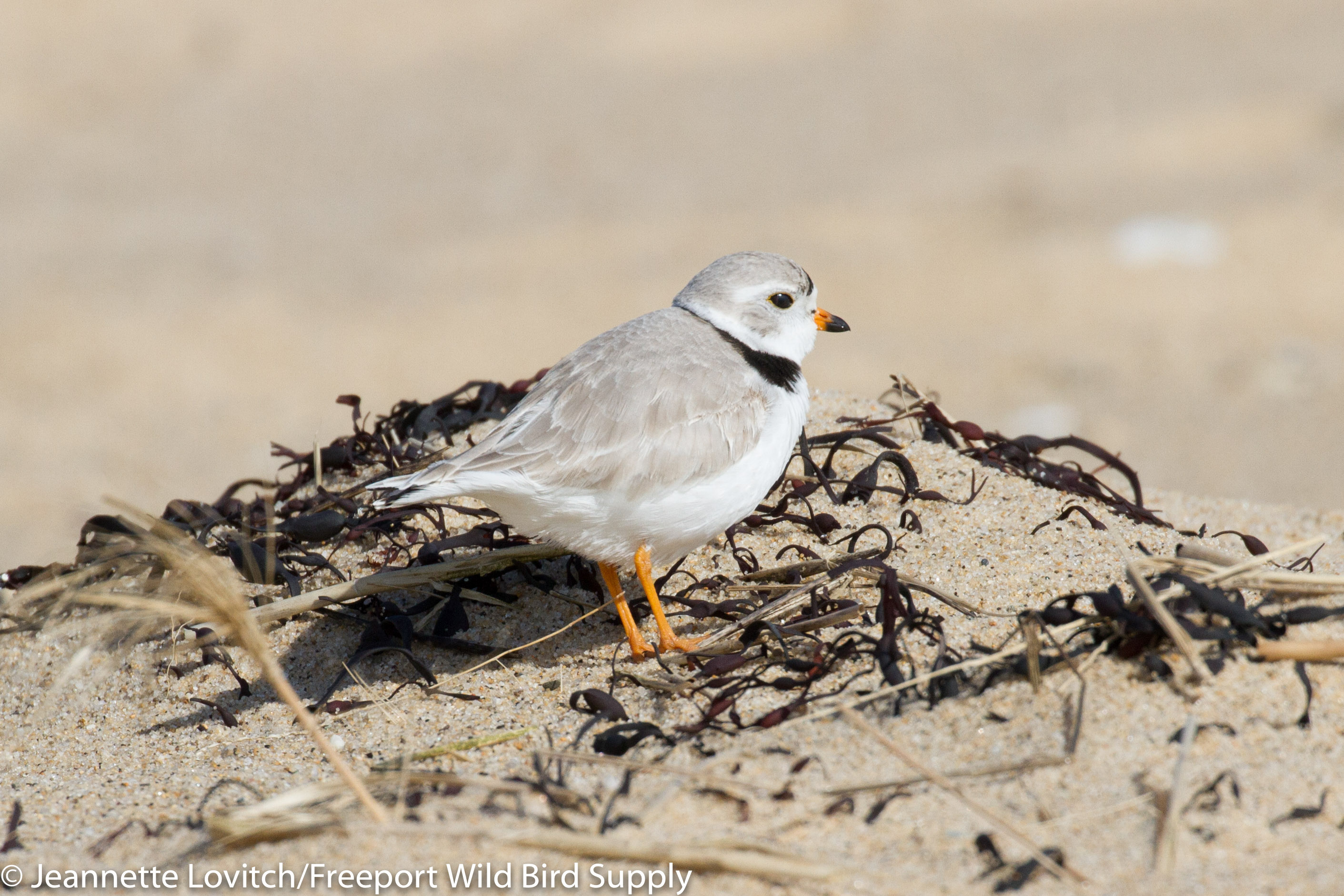
100’s of Red-throated Loons, at least a dozen Iceland Gulls, Razorbills, a couple of newly-arrived Piping Plovers, and a local avian specialty – Pacific Loon! Arguably the best place in the Atlantic to see this – yes, you guess it- Pacific species, we found one fairly close to shore with a minimum amount of effort. This photo was the best that Jeannette can do, and while my phone-scoped photos are marginally better (or at least, more diagnostic, WordPress is being stupid with its photos uploading right now and I have given up!)
But with perfect afternoon light, Jeannette did much better with the “real” photography.
Red-throated Loon1st winter Iceland and Glaucous Gulls with a Great Black-backed Gull and Herring Gulls of several ages.Piping Plover
We were back early on Saturday morning, ready for the 1.5-2-mile slog over fairly soft sand. We would have been to the point much sooner were it not for all of the birds along the way once again. And the soft sand.
Our pace quickened markedly when we saw a North Atlantic Right Whale in the distance. Well, distant to us. It was clearly right off the point! We also spotted a Minke Whale moderately close to shore just as our walk began. We were getting excited now.
In position at the point by about 8:20 – after reassurances from the local expert – we began to wait. Flocks of Common Eiders were moving out of the bay, as were many of the dozens of Northern Gannets. A Northern Harrier did not even hesitate to head straight offshore, its bearings set for landfall in Nova Scotia.
Red-throated LoonCommon EidersWhite-winged Scoter
And then there were the Razorbills! Singles, handfuls, small flocks; a steady stream heading out of Cape Cod Bay. I tallied 356 when not distracted by other things.
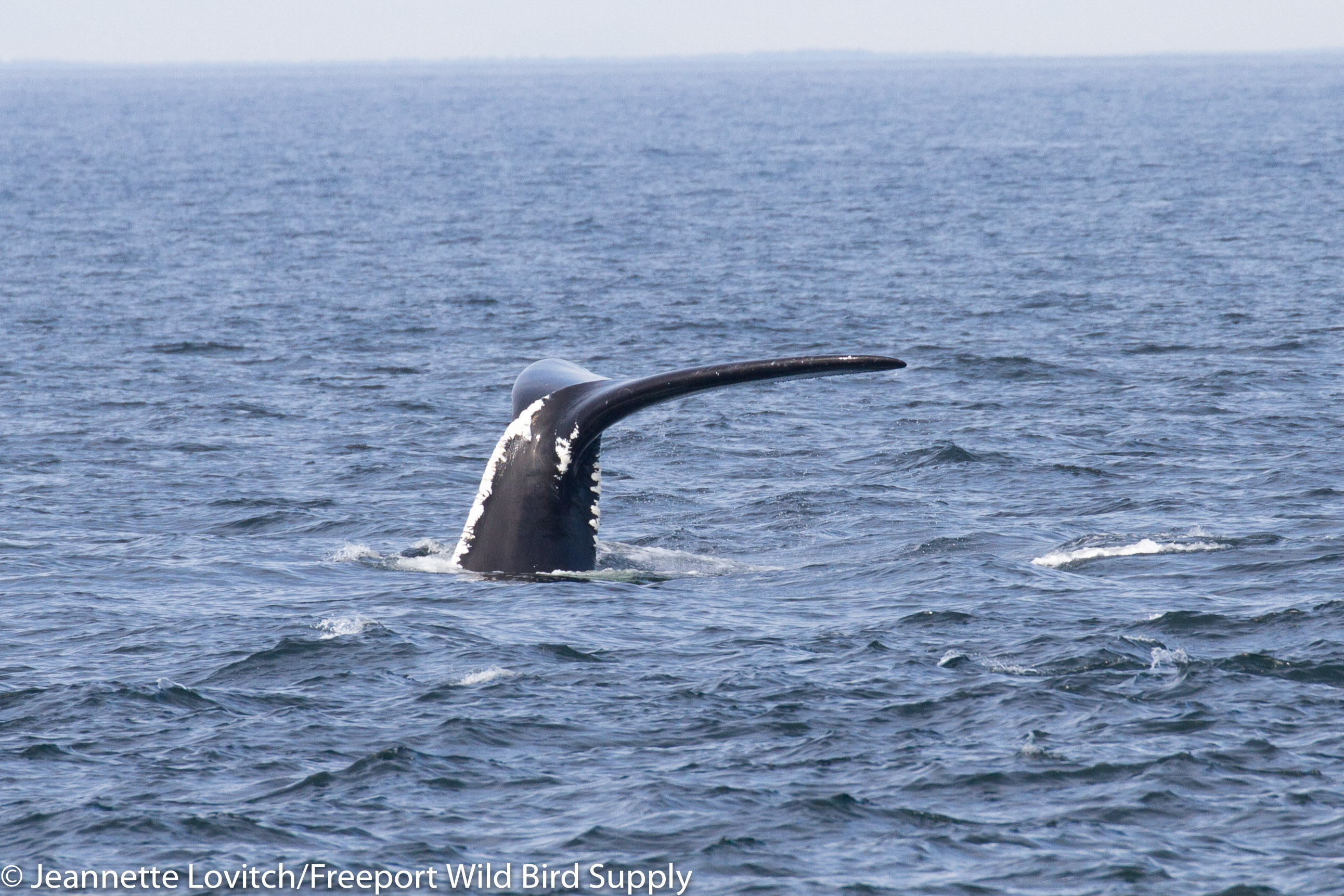
Like Right Whales. Close to shore. Like right there Right Whales. In the surf of the rips just off the point. First there was one who showed its fluke to announce its presence and departure. The next one (or the same that had circled around) was spotted off in the distance to the west, first by it’s v-shaped blow. It slowly but steadily came closer, feeding with shallow dives as it passed in front of us. Then, completely catching all of the photographers off-guard, a breach! Like right there. Right in front of us. It was absolutely breathtaking.
About when we realized it was almost noon and we forgot to pack snacks, two whales appeared in the rips nearby. We forgot about being hungry as we watched them feed for almost 45 minutes! We also forgot to continue to click Razorbills. But that’s OK.
I don’t know what to say. It was a moving experience. We were so close to something so special, so rare, and whose continued existence is so precarious. At least one tear escaped my ducts. It was amazing. I am so glad we finally did this.
The adrenaline and satisfaction, as well as the reflection of it all, powered us back to the car, passing another Glaucous Gull with more Iceland Gulls, another or the same Minke Whale, and just as we reached the parking lot, one more North Atlantic Right Whale fluke in the distance for good measure.
Ist Winter Iceland Gull“Ipswich” Savannah Sparrow
We did some casual birding and tourist-ing for the rest of the afternoon. The perfect weather of the day – light winds, fairly warm (we were most enthused about being overdressed!), gave way to some rain with an approaching cold front.
Said front made for a much cooler and windier morning on Sunday. We decided to forgo another trek to the point – with much reservation and consternation – and try our luck at Herring Cove after a leisurely breakfast. We were on vacation afterall, no matter how mini.
There weren’t nearly as many birds here as the day before, so we went back to Race Point. A series of blows from a North Atlantic Right Whale from the beach just beyond the parking lot made us ponder sucking it up and taking another walk, but the fact that we couldn’t see the massive animal at all because of the surf made us think twice. Again.
Our experience on Saturday – including the delightful weather – was something to savor and remember. We didn’t need a sand-blasted facial to sour our experience. So begrudgingly, we departed, working our way towards Providence for the night, to indulge in some Rhode Island birding and way too much divine Italian food. Seriously the spaghettoni alla carbonara at Ristorante Il Massimo might have been almost as memorable as the whales. Almost.
We’ll be back for the pasta. The question is, how much longer will we be able to see North Atlantic Right Whales? With less than 340 remaining on Earth, this is a trip we could no longer delay. And nor should you.
My personal highlights over the past six were as follows. Not surprisingly, it was mostly first-of-year new arrivals. The new bird for my Bradbury Mountain list, however, was definitely more of a surprise!
3 male and 1 female NORTHERN SHOVELERS (FOY), 100+ Greater and 10+ Lesser Scaup, 1 drake American Wigeon, 1 Bonaparte’s Gull (FOY), etc, Wharton Point, Brunswick, 3/19 (with Saturday Morning Birdwalk group).
4 Horned Larks and 1 American Wigeon, Highland Road, Brunswick, 3/19 (with Saturday Morning Birdwalk group).
2 Eastern Meadowlarks (FOY) and 5 Brown-headed Cowbirds (FOY), Chesley Hill Road, Durham, 3/20.
1 Great Blue Heron (FOS), Cousin’s River Marsh, 3/20.
4 American Kestrels (FOY), Bradbury Mountain Hawkwatch, 3/20.
1 adult LESSER BLACK-BACKED GULL, fly-by at the Bradbury Mountain Hawkwatch, 3/20 (with Zane Baker). This was my 142nd all-time Bradbury Mountain State Park species!
20 Ring-necked Ducks (FOY), 2 American Wigeon, etc, Mouth of the Abagadasset River, Bowdoinham, 3/21 (with Jeannette).
6 Fish Crows (FOY), Maine Mall Road, 3/22.
6 Brant, Kettle Cove, Cape Elizabeth, 3/22.
7+ American Woodcocks, Pownal, 3/23 (with Jeannette).
And finally, our spring tour season gets kicked off next Saturday with our annual “Woodcocks Gone Wild!” See the Tours page of our website for more info.
The photo of the week was this cute and cuddly Porcupine from Stud Mill Road on 3/6.
It was another busy week of birding for me! And it was another great week of birding, with the vanguard of spring migration coupled with lots of winter specialties still around – and a lot more finches! Turkey Vulture, Red-winged Blackbird, and Common Grackle numbers were slowly increasing by week’s end. Scattered Pine Siskins are now reaching the coastal plain (from the north, west, or south?). My observations of note over the past seven days were as follows:
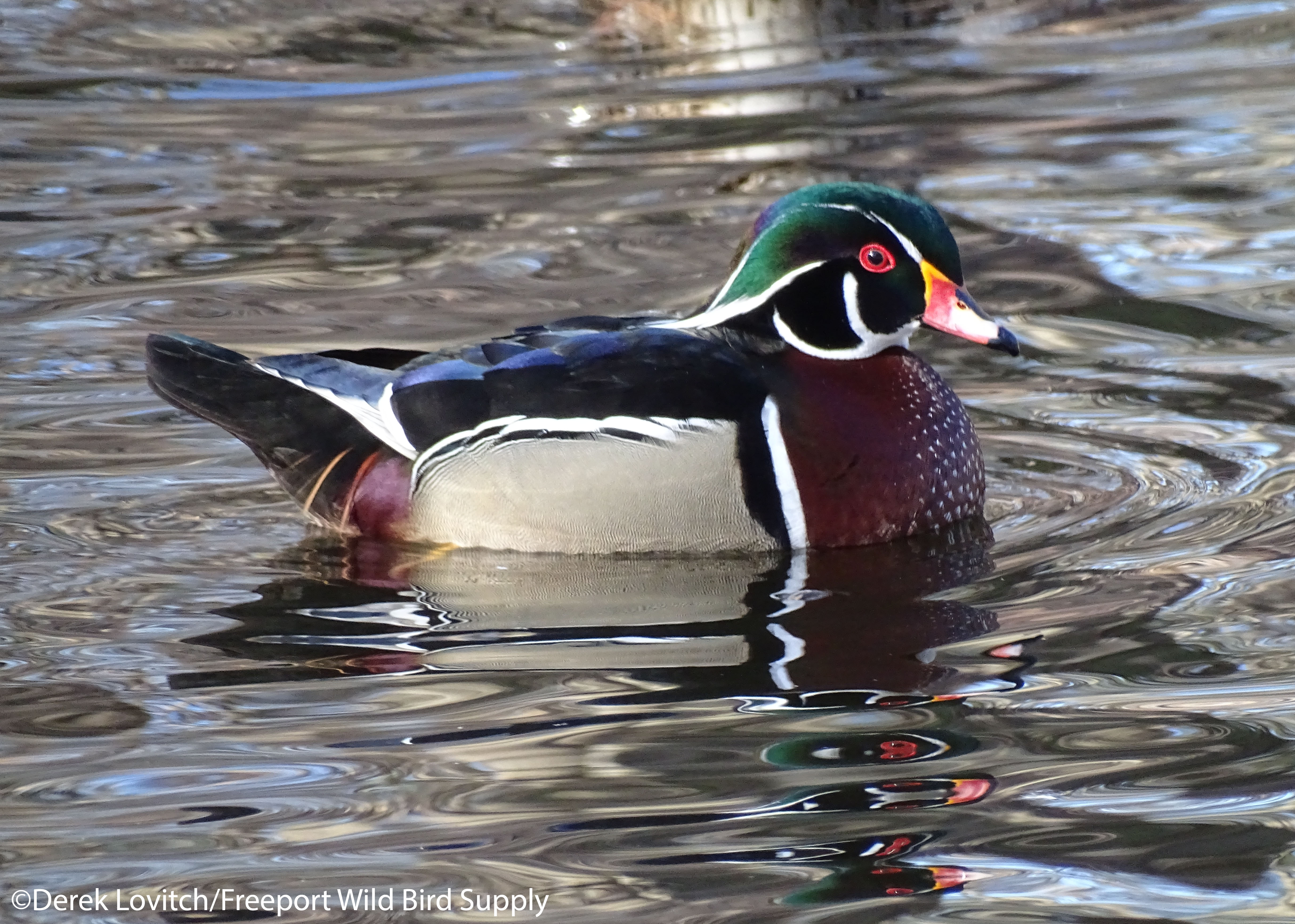
There are few better places to photograph Wood Ducks in Maine than Abbott’s Pond (aka the “York Duck Pond”) in York. A quick stop here on Friday with clients visiting from Texas afforded some great photo ops!
It was a busy – and exceptionally productive – birding week for me! The extensive list of highlights – including two full days of private guiding which cleaned up on most of our regular wintering species in southern Maine – were as follows:
7 BARROW’S GOLDENEYES, Winslow Park, Freeport, 2/26 (with Saturday Morning Birdwalk Group). Two days later, on 2/28, Allison Anholt, Cameron Cox, Jeannette, and I had an incredible EIGHT birds (4 pairs). This is my highest count here (or anywhere else in southern Maine) in nearly a decade. At least 6 were still present on 3/3 (with clients from Texas).
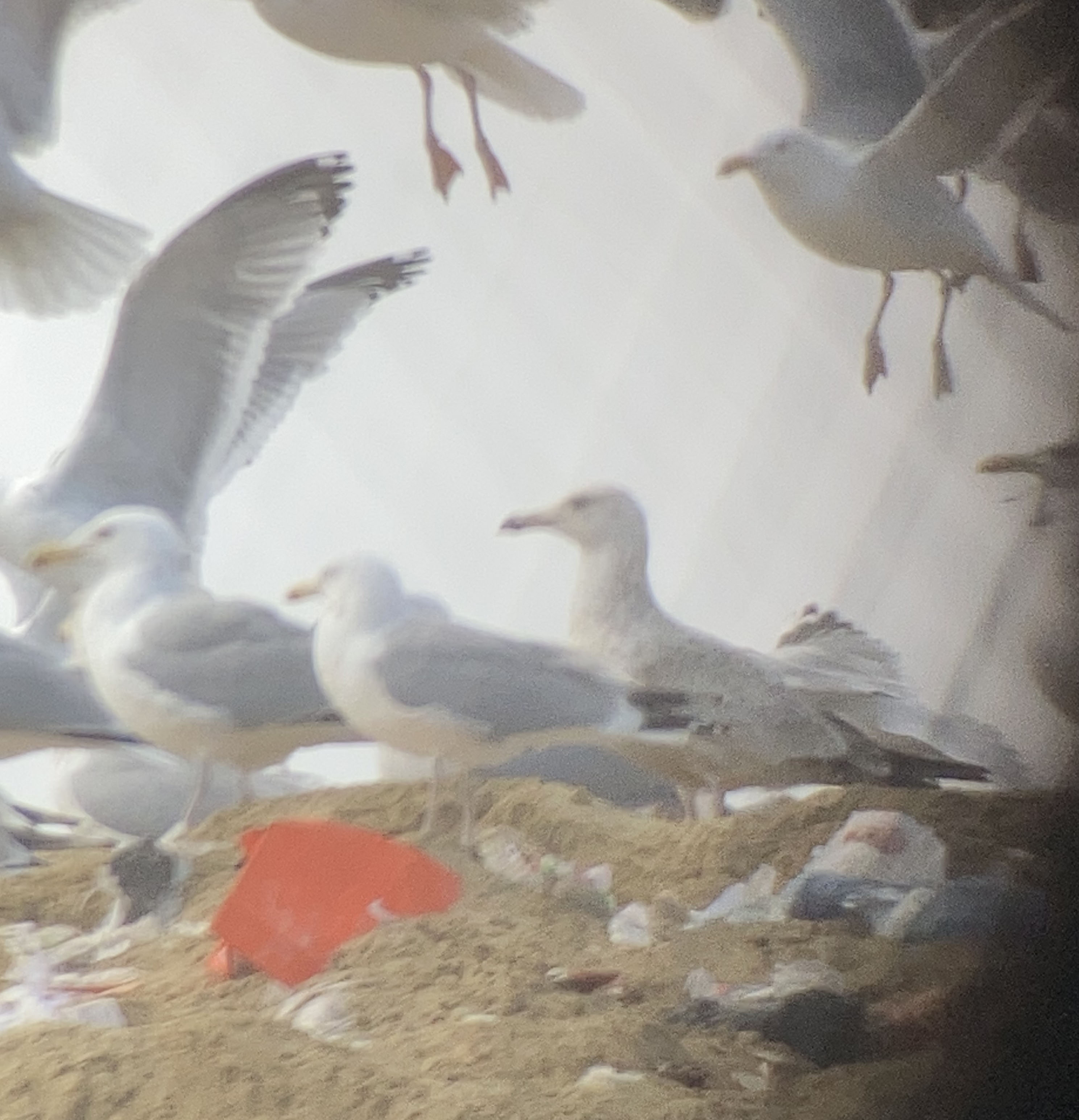
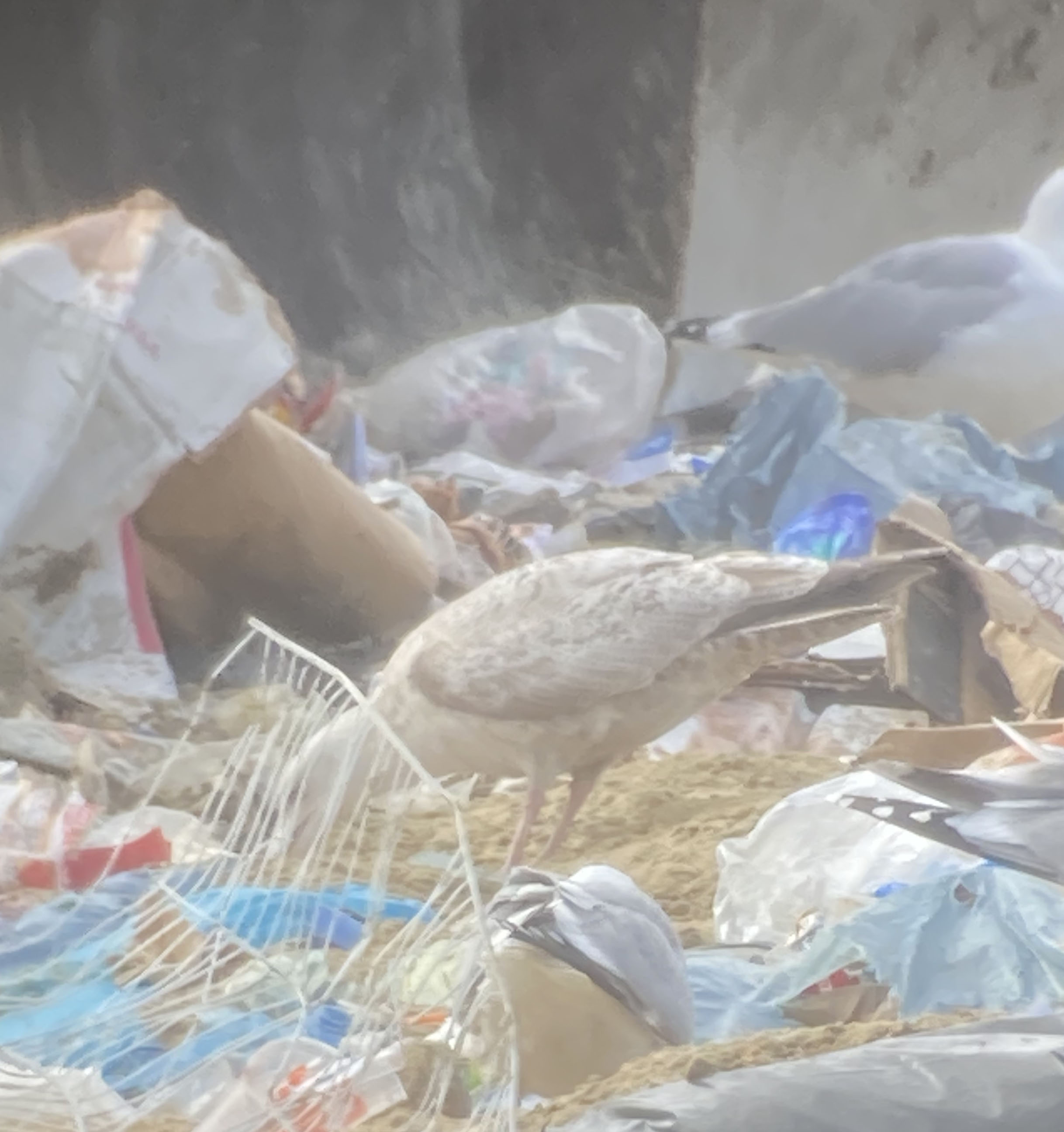
1 interesting, likely hybrid GLAUCOUS GULL X HERRING GULL, Bath Landfill, 3/1 (with Jeannette). Showing characteristics consistent of this fairly-regular hybrid pair, the much darker primaries suggest the possibility of a second-generation hybrid – perhaps a backcross with a Herring Gull. Discussion on this bird continues but this is the current consensus. Unfortunately, the phone-scoped photos were further challenged by photographing through the debris netting.
1 drake Northern Pintail, Falmouth Town Landing, 3/2.
1 2nd winter Iceland Gull, Mill Creek Cove, South Portland, 3/3 (with clients from Texas).
1 Killdeer (FOY), Fort Williams Park, Cape Elizabeth, 3/3 (with clients from Texas).
This ultra-confiding Harlequin Duck wowed the crowd at Sohier Park (the Nubble) in York during my Winter Waterbird Workshop for Down East Magazine’s Down East Adventures tour group on the 20th.
A handful of observations of note over the past seven days included both signs of spring and winter specialties.
This spiffy adult Black-headed Gull surprised me at Wharton Point on the 17th. The bird was so pink on the breast that I nearly had a heart-attack when this is the first thing that caught my eye.
Returning from vacation late on Tuesday night, it was right back to work. But a limited time out and about on Thursday morning followed by a full-day of private guiding on Friday produced several highlights:
1 adult BLACK-HEADED GULL, Wharton Point, Brunswick, 2/17 (photo above).
THE STELLER’S SEA-EAGLE, Rte 127 bridge between Arrowsic and Georgetown, 2/18, 10:45 to 12:30pm (with clients from Delaware). While searching for it earlier – as well as while watching it and birding elsewhere thereafter – the number of Bald Eagles in the air today was impressive. We had at least 25 over the course of the day. But many were pairs in courtship flight. It made we wonder if the recent unpredictable movements of the Steller’s was related to increased territoriality in our local, abundant Bald Eagles. Here’s a distantly-phone-scoped-with-wind-driven-scope-shake-and-cold-hands for what it’s worth.
1 drake and 2 hen BARROW’S GOLDENEYES, Doughty Cove, Brunswick/Harpswell, 2/18 (with clients from Delaware).
3 Turkey Vultures, over downtown Bath, 2/18 (with clients from Delaware).
3 Turkey Vultures, over the store here in Freeport, 2/18.