A Month of Birding Out the Window.

Sharp-shinned Hawk drama has been keeping me entertained for the past month.

For the most of the past four weeks, my birding has been exclusively at our feeding station at our home in Durham as I recover from shoulder surgery.  We designed our house to maximize feeder- and yard-viewing opportunities, and I am sure thankful that we did! It will come as no surprise to anyone who knows me that I don’t sit still well, so my extended feeder-watching sessions have been both mentally and physically therapeutic. It has also been quite productive! And keeping track of daily numbers has been quite elucidating.

Despite our new construction being completed (well, mostly!) in October and virtually no landscaping occurring, we have been very pleasantly surprised by the diversity and activity – a reflection of the quality of the habitat on our property (and hence why we purchased it).  Nonetheless, I did not expect to be hosting 19-22 species a day at the feeding station in our first winter!

My feeder-watching vigils began the day after my surgery, on January 19th. The ebbs and flows during that first week were quite insightful. With three storm systems and snow piling up, the daily changes were noticeable, and mostly predictable. Our feeders were busiest with 22 species on 1/23 as over 14”of snow accumulated here in Durham. Numbers of ground-feeders peaked that day, with the week’s high counts of Mourning Doves (27), American Tree Sparrows (9), Northern Cardinals (11-12), and White-throated Sparrows (3). The 22 Dark-eyed Juncos was down a bit from a high of 25 following the first snowfall on the 20th.

Despite adding a third platform feeder, some ground-feeders had moved on by week’s end: 24 Mourning Doves, 14 Dark-eyed Juncos, 10 Northern Cardinals, and only 1 White-throated Sparrow remained, although American Tree Sparrows bumped back up to 9 with the snowfall of the 25th.

Eastern Bluebirds, meanwhile, had been increasing, with 4-6 daily becoming 14 by week’s end. Two House Finches became 5; they often travel with bluebirds in winter, so their simultaneous rise is not surprising. A single European Starling on 1/24 was unwelcome.

We picked up a second Red-breasted Nuthatch by week’s end, while one each of Red-bellied Woodpecker and Carolina Wren continue.  Resident woodland birds that travel together in a mixed-species foraging flocks are notoriously hard to count, as it’s often impossible to know whether you are looking at the same flock or multiple flocks as they come and go throughout the day. Therefore, we are left to take the daily “high count” (maximum number of birds seen at one time) only as our “total,” so trends are harder to detect. My high count of Black-capped Chickadees did increase from 6 to 10 by week’s end, however, while a pair of White-breasted Nuthatches, 2 Downy Woodpeckers, 2-4 Hairy Woodpeckers, and 4 Tufted Titmice remain the same.

We also have a single American Crow that visits daily, an irregular visit from a male Pileated Woodpecker, and I’m trying to get a feel for the wide variation in daily Blue Jay high counts (between 1 and 10).

The only disappointment so far this winter had been our finch diversity so far. A single Pine Siskin 1/19-20 and female Purple Finches during the storm on the 23rd were our only non-goldfinches in that first week. However, our American Goldfinch flock has more than made up for it with between 32 and 74 (1/25).

But speaking of finches, the “birds of the week” those first seven days were 5 fly-over Pine Grosbeaks on the 25th. Bald Eagles and a Red-tailed Hawk regularly fly past the windows, as does the daily commute of Herring (and a few Great Black-backed Gulls) moving up and down the Androscoggin River; hoping to tease out a white-winged gull for the yard list. We’ve also had a small flock of American Robins (up to 18) feeding on Winterberry and Multiflora Rose in the past few days.

By the second week, a relatively deep, now-frozen snowpack, and only a couple of weak weather systems, resulted in less daily variation in the numbers at our feeders here in Durham. Fluctuations in counts had more to do with the day’s weather and the presence of a Sharp-shinned Hawk (see below), rather than the seasonal movements of species as had occurred with the onset of “real winter” the week prior.

A lot of species counts stabilized, such as the daily average of about a dozen Eastern Bluebirds and up to 46 American Goldfinches.  However, some changes were noticeable, especially the ebbs and flows of ground-feeders: 6 American Tree Sparrows increased to 9, as many as 24 Dark-eyed Juncos decreased to 14, and after entertaining a third White-throated Sparrow for a couple of days, we are back down to two.

An impressive 13 Northern Cardinals on 1/29 was a seasonal high count, but otherwise most counts of the 18-21 species each day remained about the same. I had still not confirmed the presence of a second mixed-species foraging flock, for example, and our only finches remain the aforementioned impressive number of American Goldfinches and 4 House Finches. 

Since my “observation week” begins on Saturdays, Week 3 began the morning of February 4th with some extreme cold weather. And, wow, that was some cold!  Wind chill records (e.g. -45F in Portland and an astounding -108 at Mount Washington) Friday night into Saturday were thankfully short-lived. Here at our home, our windchill was “only” -21 on a low of -16F, as our anemometer was not receiving the full force of the wind.

The short duration of the cold snap – as extreme as it was – didn’t seem to have much impact on feeder birds, especially as the rest of the week’s weather was rather benign. Our Carolina Wren made it through, and overall activity and diversity was similar to last week (scroll down for previous posts). 

American Goldfinches slowly declined at our feeders this (from 46 to a low of 22), likely as our birch crop is being picked clean. Sparrows were up again, however, with 15 American Tree Sparrows now after starting the week with 6.  Dark-eyed Juncos spiked again to 20 on 2/5-6 before settling back down to 18; three more than we started the week with.

A female Purple Finch returned, and a Brown Creeper was now spotted daily in the trees immediately behind the feeding station. And a single Wild Turkey has returned to the feeders after being absent since early winter. Unfortunately, a pair of European Starlings were now present.

Two noticeable declines this week were in Northern Cardinals (from 11 to 7) and Mourning Doves (from 28 to 14). Meanwhile, Eastern Bluebirds have been far less frequent at our feeders as the week went on. This is all likely the result of direct and indirect (disturbance) effects of the continuing Accipiter saga. Daily high counts of other species were similarly affected by the presence of two different Sharp-shinned Hawks this week (see below).

Not surprisingly, the spring-like weather (including two days of record warmth) and very little precipitation reduced overall activity at the feeding station during Week 4, beginning on 2/11. We now have some bare spots on a slope now, where birds have been foraging, and the snowpack is much reduced in the woods. There’s more natural food available and less calories burned, so there’s less need for supplemental food – it’s long past time to put the “dependency on feeders” myth to bed!

Nonetheless, this week saw another uptick in Mourning Doves (high of 27) and American Tree Sparrows (of 10). Dark-eyed Juncos returned to a high of 21, but they have been spending as much time on the bare slope of our berm then at the feeders.

Eastern Bluebirds have been much less frequent this week, with a high of only 3 and they’re not visiting everyday. Same for the House Finches they usually travel with in winter –it’s just a sporadic pair now. American Goldfinches, however, remain strong, with a high of 32 this week. Our latest singleton Purple Finch has apparently moved on.

Winter flocks are breaking up, and that’s likely why the bluebirds have been less frequent; they might be spreading out already. The mixed-species foraging flock of residents are breaking up as well, and “bickering” is increasing among them, especially the Black-capped Chickadees. Meanwhile, Hairy Woodpeckers are courting now, and territorial drumming is frequent.

And then, with temperatures spiking to over 50 degrees on the 16th, Jeannette had the first Red-winged Blackbird of the year flying north overhead!  Already. I expect diversity and daily counts to change more often in the coming weeks now.

Meanwhile, birdwatching is not just about counting, so I kept notes of interesting observations and behaviors through the duration of my time stationed in front of the window (and short walks up and down the driveway, weather and ice permitting). I enjoyed seeing the slow but sure progression of the season, as Downy and especially Hairy Woodpeckers became more territorial, and male Hairys especially began drumming, accelerating this week. A pair of Common Ravens was regularly observed, with pair-bonding flight displays increasing. Tufted Titmice and Black-capped Chickadees began singing more, too.

I’ve also conducted an experiment with some suet products that we may bring into the mix at the store. None of which, however, has come close to being as popular as our current offerings, however.

A few of my most interesting behavioral and natural history observations were:

1. 1/28: I watched a Dark-eyed Junco that was foraging along our foundation grab a large cutworm-like-caterpillar and smack it on the snow. As it began to eat it, a bluebird flew down and grabbed the caterpillar. I had not observed kleptoparasitism in bluebirds before!

2. 2/2:  The male Sharp-shinned Hawk that has been hanging around was pursued and killed by a second accipiter that had been undetected by us. The brutal end to the chase took place within 10 feet of me. It was quick, I was in shock, neither a camera nor binoculars was within reach of my working arm, and I was afraid to move as I didn’t want to disrupt the proceedings – it’s the worst feeling to flush a predator from its hard-earned prey and see that prey item suffer and go to waste. 

The thing is, I think the only-marginally larger predator was actually an adult female Sharp-shinned Hawk as opposed to the far more likely adult male Cooper’s Hawk. Cooper’s Hawks are known to kill Sharpies, but I am unaware of published accounts of cannibalistic Sharpies. It all happened too quickly, and accipters are much easier to identify in flight three miles away than when they are sitting in front of your face (at least as adults). Apparently I was too traumatized by the event (and/or slowed mentally by painkillers) to look at details of face pattern. But the relative size and the paler chest and less steely-back were highly suggestive of an adult female Sharp-shinned.  Hopefully, it will take up the territory and I will be able to confirm its ID circumstantially.  But it was a rather violent end to my feeder-watching week!

Although only circumstantial evidence, an unequivocal female Sharp-shinned Hawk was spotted (and positively identified!) the next day thereafter, leading credence to the rare cannibalism theory. It’s only circumstantial evidence, but I have little doubt this is the bird that took the male the prior day. Furthermore, I have not seen a Cooper’s Hawk here all winter. Absolutely fascinating, and I wish I had photos to document the gruesome event.

The plot thickened even further on the 8th, when I spotted (and photographed this time) a second-winter male (subadult) Sharp-shinned Hawk hunting the feeders in the morning.  He better be careful out there! The woods of Durham are unforgiving!

The next week, I didn’t see him as only the adult female was around.

3. I’ve been sorting through as many of the daily commuting gulls as possible, and finally on the 15th, I picked out an Iceland Gull for our 122nd Yard Bird!  Interestingly, it was an adult or near-adult, different from the 1st winter birds that have been frequenting the Lewiston-Auburn riverfront a few miles upriver.

For almost three weeks, I left the house or driveway exactly three times (a follow-up appointment, a field trip to see Avatar, and a successful chase of the Common Ringed Plover at Timber Point in Biddeford on 1/31. Jeannette dumped me in the car and we drove down – me fully reclined and with an icepack strapped on. The bird was present as we arrived, and since the word was just getting out, we even had a parking spot. She set me up behind the scope (I had to ask a fellow birder for assistance in moving it!) and then took some photos.  I was pretty uncomfortable on the way home – to put it lightly – but it was absolutely worth it!

It wasn’t until Monday, February 6th (just under three weeks since my surgery) that I went out for a little birdwalk with Jeannette at the Auburn Riverwalk. It was a lovely day, and it was fantastically birdy!  We found a hen Northern Pintail amongst nearly 500 Mallards, and had three 1st-winter Iceland Gulls – the most I have had here in several years.  The overall bird activity was quite a bit above average, as the cold snap finally put some ice on the river and helped to concentrate birds here. Unfortunately, we did not see the Harris’s Sparrow in Turner before my body had enough of being upright.

The next day’s outing, however, was for an easy twitch.  I only had to get out of the car and find some open space along the railing of the Arrowsic-Georgetown bridge over the Back River.

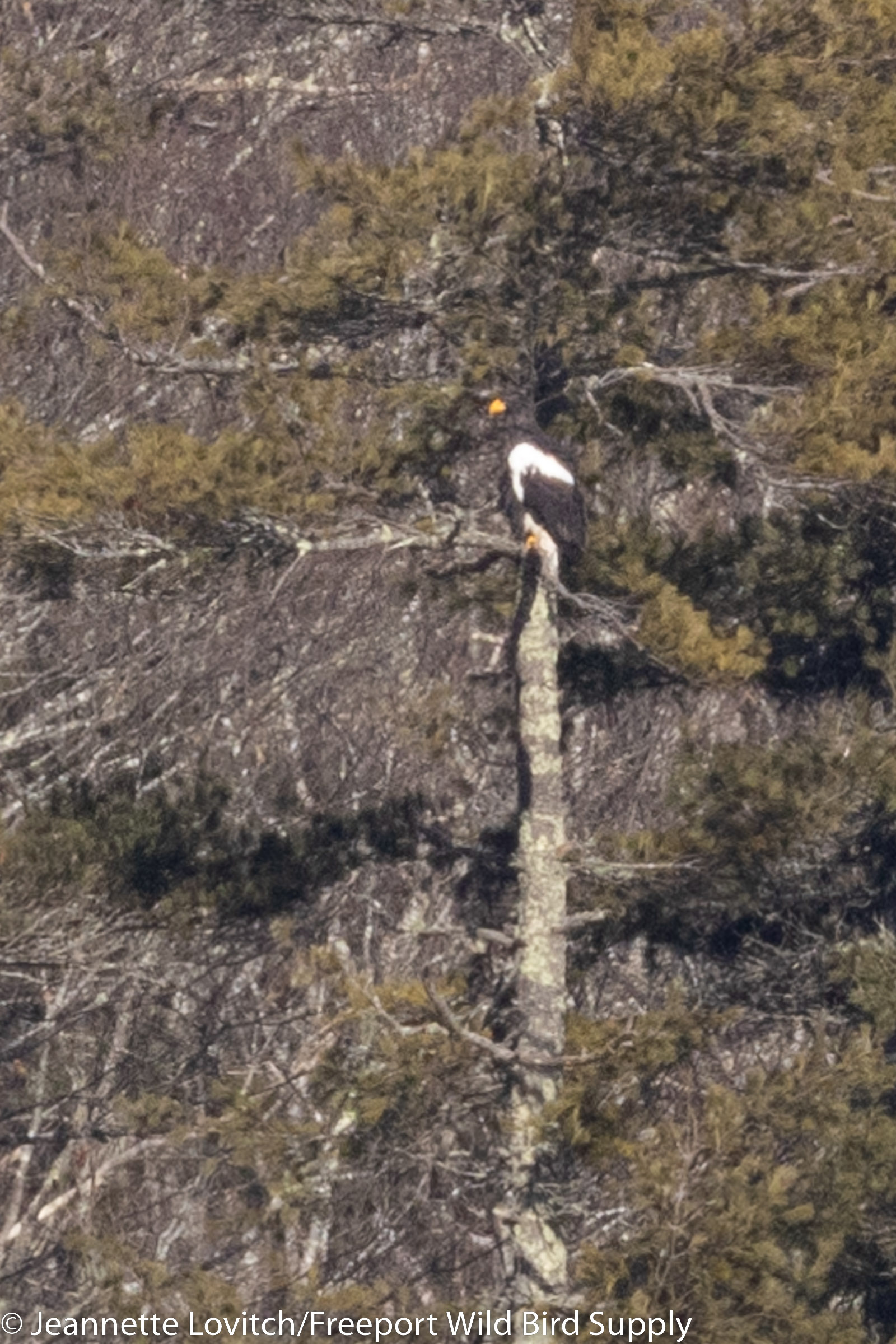
So yeah, the Steller’s Sea-Eagle is back, and it was in full (albeit fairly distant) view in our first visit with it of the year. I’ll get out of my recliner for a Steller’s Sea-Eagle any day!  It was also good to catch up with a friend and get out of the house for the second day in a row.

A few days later, Jeannette and I took a walk at Winslow Park in Freeport (2/9) where we were thrilled to find 7 Barrow’s Goldeneyes (3 drakes and 4 hens), the second highest count that I have had here in nearly a decade. They put on a great show, too.

A visit to the Auburn Riverwalk on the 13th yielded only one 1st-winter Iceland Gull, while a walk along Brown’s Point Road in Bowdoinham the next day produced a couple of pioneering Northern Flickers.

So there ya have it…my last month of birdwatching. With slow progress on my recovery, I expect feeder-watching will dominate my activity for a few more weeks, but temperature swings will make that interesting…and hopefully another snowstorm or two. I need to be out and about with few limitations by the time spring is here to stay!

This Week’s Highlights: January 13-17, 2023.

A remarkable bird for Maine, let alone in under-birded (away from Sabattus Pond anyway) Androscoggin County, I was privileged to be able to visit this Harris’s Sparrow on private property in Turner on the 13th, the day after we returned from vacation. It was most cooperative, being constantly in view for the 35 minutes I was there. Unfortunately, it was a dark and dreary morning, so my photos leave something to be desired!

A few observations of note over the past five days as I tried to squeeze in as much birding as I could before I undergo shoulder surgery included the following. Even if I missed the Livermore Falls Townsend’s Solitaire twice (darn it), it was a very productive week, headlined by my second Harris’s Sparrow in Maine (and one of my favorite sparrows, too!).

  • 1 female Barrow’s Goldeneye, Bernard Lown Peace Bridge, Lewiston/Auburn, 1/13.
  • 1 adult Iceland Gull, North River Road boat launch, Auburn, 1/13.
  • 1 continuing HARRIS’S SPARROW (present since 1/11), private property in Turner, 1/13 (photo above).
  • 1 Pine Grosbeak (first of season), Hillman Ferry Road, Livermore Falls, 1/13 (did not find the Townsend’s Solitaire that day, unfortunately).
  • 2 drake BARROW’S GOLDENEYES, between Winslow Park and the Harraseekett Yacht Club, South Freeport, 1/14 (with Saturday Morning Birdwalk group).
  • 8 Black-legged Kittiwakes, Short Sands Beach, York, 1/15 (with Down East Adventures Winter Waterbirds Workshop group).
  • 1 adult Iceland Gull, The Nubble, York, 1/15 (with Down East Adventures Winter Waterbirds Workshop group).
  • 374!!! BOHEMIAN WAXWINGS, Pearl Road, Turner, 1/16 (with Jeannette). Photo below.
  • 1 female Green-winged Teal and 1 1st-winter Iceland Gull, Mill Creek Cove and Park, South Portland, 1/17.

A very small portion of the 374 Bohemian Waxwings that Jeannette and I counted on Monday in Turner. It was a big week for Androscoggin County!

2023 Down East Adventures Birding Tours.

Freeport Wild Bird Supply is very excited to partner with Down East Magazine’s Down East Adventures for our third year. In 2023, we are expanding our offerings to include two exclusive overnight trips, along with our popular ½- and whole-day targeted workshops.  Focused on skill-builder rather than list-building, there will be plenty of “life birds,” but also more knowledge and education about birds, habitats, birding, and much more about the natural world.

The full list of upcoming tours can be found here.   At the conclusion of each tour, I’ll post the trip report here.

  • Winter Waterbirds Workshop, January 15.

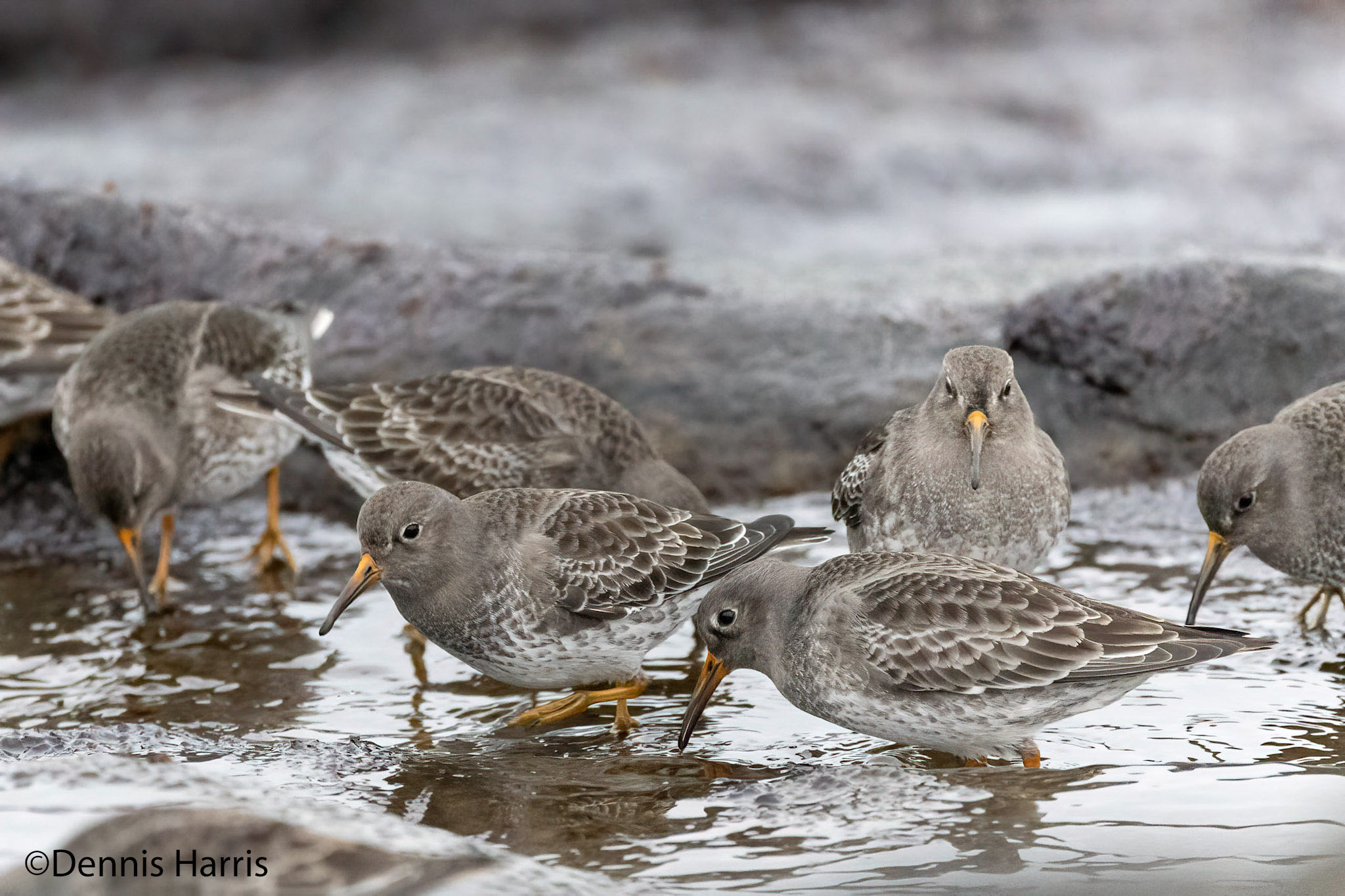
This Purple Sandpiper was about as cooperative as it gets for us at Sohier Park in York.  Later, it was joined by its friends (photo below).  This is really a lovely shorebird when viewed as well and as close as we experienced.

Extremely strong winds and very high seas presented a challenge as we sought out wintering waterbirds along the southern York County Coast. We worked hard to find sheltered water where we could observe birds well, but when we did find that secluded cove, peninsula lee, or rivermouth, we were treated to incredible looks at many of the birds we had hoped for.

We looked down on Red-breasted Mergansers at Perkin’s Cove, and you’ll never be closer to a Common Loon than we were at the Ogunquit Rivermouth. We checked a few more locations than I usually need to on this tour, but our most productive spot was the southern shoreline of Sohier Park at The Nubble. There, we were treated to close views of Black and White-winged Scoters, Harlequin Ducks, and a most-cooperative flock of Purple Sandpipers.  We then ended the day at hidden Abbott’s Pond, where we enjoyed a break for the wind, close comparisons to study details between Mallards, American Black Ducks, and hybrids thereof. 

Meanwhile, a group of 8 or so Black-legged Kittiwakes were feeding off of Short Sands Beach, and a stunning adult Iceland Gull passed by at The Nubble. Unfortunately, the seas were just a little too rough to find any alcids today, but we knew they were out there!

  • Spring Migrant Songbirds Workshop, May 14.

This stunning Blackburnian Warbler nicely demonstrated the value of blooming oak trees for seeing warblers in the middle of May.

Four hours later we had not left Evergreen Cemetery in Portland…a very good sign. There was just no need to move along, the birds kept coming to us. In the end we tallied a respectable 16 species of warblers, even though growing a list was not our goal. What made this workshop successful, however, was how well we saw just about all of the warblers and other songbird migrants throughout the morning.

Warblers were a highlight of course, including repeated quality time with favorites such as American Redstart and Black-and-white Warblers, the two most plentiful migrants this morning. We also enjoyed great looks at several Chestnut-sided Warblers, Magnolia Warblers, and Northern Parulas, with fantastic studies of Black-throated Blue Warbler, Black-throated Green Warbler, Yellow Warbler, and Wilson’s Warbler. We also saw two newly-arrived Tennessee Warblers which aren’t always easy to get looks at. There was a good amount of song this morning, so we had chances to listen and learn many of these species as well.

Shortly after hearing a Red-eyed Vireo and my describing it as “high up and often hard to see,” we found one in the lower branches of a nearby oak, and watched it sing, forage, and do all things vireo for almost 10 minutes!  Likewise, after hearing distant Ovenbirds, we had two walking around right in front of us! Beginning with a view of a Veery on the ground in the open, we saw it again as the walk ended, only a few feet in front of us for another great view and chance to observe and study.

During the morning, we chatted about migration, habitat, and the process of building the necessary toolkit to build birding skills. Finishing the walk with a quick overview of some references (we had too many birds to leave much time for anything more), we recapped a very productive and instructive morning of spring birding.

  • Rangeley Birding Workshop, June 6-8.

Our first overnight tour together, the Rangeley Birding Workshop was based at Bald Mountain Camps in Oquossoc, nestled on the shore of Mooselookmeguntic Lake. Common Loons greeted us, but so did the rain. June of 2023 was one of the rainiest Junes on record in Maine, and we were very thankful for the wood stoves in each cabin!

Our first morning, 6/7, began at Hunter Cove Wildlife Sanctuary, with lots of singing Blackburnian Warblers. A large flock of Red Crossbills flew over, two Yellow-bellied Flycatchers were heard clearly and then glimpsed, and a variety of common warblers were detected. A confiding pair of Canada Jays was the highlight – as they often are – but even the common warblers were tough to see today, so we focused on practicing our birding by ear skills.

Enjoying our delicious boxed lunches at the Rangeley Waterfront Park, with more Common Loons offshore, we delved into an impromptu gull workshop, using each age class of Ring-billed Gull as an introduction to molt, feather topography, and identification. A 3rd-cycle Herring Gull kindly dropped in for comparison as well. In inclement weather, we take advantage of whatever learning opportunities the birds are willing to provide!

After lunch, we poked around the Mingo Spring Birding Loop, with good looks at the likes of Least Flycatcher, Alder Flycatcher, and Dark-eyed Juncos among others. But as rain returned, we called it a day and settled in to dry out in front of our stoves instead of an afternoon of lake-watching from the BMC property.  And dinner was absolutely delicious!

Day 2 began with a brief walk around the BMC property (American Redstart, Ruby-throated Hummingbird, etc) followed by a foray over to the famous birding destination of Boy Scout Road, looking to build on the identification toolkit we worked on the previous day. We parked half the cars at one end and then walked the length of the road, birding along the way. But it was rather quiet here too – the ongoing story of June 2023. We did have some more Red Crossbills, a fantastic view -finally – of a Blackburnian Warbler, several Alder Flycatchers, and once again more Canada Jays. But this time, it was a family group of a pair with 2 juveniles in tow!

And then it began to rain. Again. A lot. But I give this group credit – they soldiered on! Of course the rain began in earnest when we were as far from either set of cars as possible, so there wasn’t really a choice, but still, spirits remained high and the birding continued. A pair of Hooded Mergansers, a singing Palm Warbler, and a Spotted Sandpiper were among the last birds of the outing, before the water had penetrated our clothing and it was time to call it a day and hope for better conditions next year!

  • Shorebirds Workshop, August 10.

The best way to learn shorebirds is to see them in their preferred habitats, feeding, moving, and mixing with other species, such as these Short-billed Dowitchers (a sandpiper) and Semipalmated Plovers here at Hill’s Beach in Biddeford.

An absolutely perfect day of summer weather (finally!) greeted us for this annual favorite outing. And the only thing better than the weather this day was the birding!  Recent insane rainfalls have led to very high water in many of our favored high-tide, upper-marsh locales, so we focused on tidal habitats including beaches and mudflats, altering our usual routine from the start.

Beginning in Biddeford Pool, we introduced shorebirds with several Spotted Sandpipers along Ocean Avenue before jumping into the mixed species flock on Biddeford Pool Beach on the outgoing tide. There we estimated over 1,250 Semipalmated Sandpipers and 200 Semipalmated Plovers as we learned the basics of shorebird (sandpiper vs. plover) identification and began to work our way up to teasing out a couple of White-rumped Sandpipers and Ruddy Turnstones from the masses. 2 Killdeer in flight overhead were our only two of the day.

Kicking off our shoes to spend the rest of the morning on the sandflats of Hill’s Beach, we compared a Piping Plover to the many (400+) Semipalmated Plovers and 30 Black-bellied Plovers. A single juvenile Least Sandpiper was out of place on the beach, but offered a perfect opportunity to closely study the differences in shape, size, and overall structure to the 150 or so Semipalmated Sandpipers that were scattered about. 59 Short-billed Dowitchers gave us the chance to really observe shape and feeding styles, practicing identifying these birds both near and far.

Over at The Pool, a distant “Western” Willet joined 7 “Eastern” Willets, as we advanced into subspecific identification just briefly before stopping for lunch as the tide began to roll in.

The afternoon was spent at Scarborough Marsh, where our first two stops offered little (other than a calling Greater Yellowlegs to at least practice our shorebirding by ear) due to the very high water in the salt pannes from the recent rains. Pine Point more than made up for it on the rapidly incoming tide, however, with one heck of a shorebird show: 1500-2000 Semipalmated Sandpipers, 400-500 Semipalmated Plovers, a few more Short-billed Dowitchers and White-rumped Sandpipers, better looks at “Eastern” Willets, and the icing on the cake: a cooperative Whimbrel – our 13th species of shorebird for the day.

Practicing with our identification tool kit, we tested ourselves on finding the uncommon species among the masses, and took a moment or three to simply sit back and enjoy the show. Now that we know how approachable shorebird identification really is, we can more fully appreciate these most marvelous migrants!

  • Monhegan Birding Workshop, September 23-25.

Northern Gannets and two Green-winged Teal flying with 6 Surf Scoters from the ferry and an adult Lesser Black-backed Gull greeting us upon our arrival seemed like a great sign for what would be a bird- and fun-filled weekend on the Migration Mecca of Monhegan.

Unfortunately, it turned out to be one of the slowest (for both species and diversity) fall weekends I have ever experienced on the island. That being said, a big list wasn’t our goal. It was to learn birds – their ID, their migration ecology, and everything else that makes the island so special for birds and birders. And this is not tour guide spin: a slower day is better for that as we had ample opportunity to view almost everything we encountered, study them, discuss them, and luckily, what the island failed to provide in quantity, it certainly delivered in quality of observations.

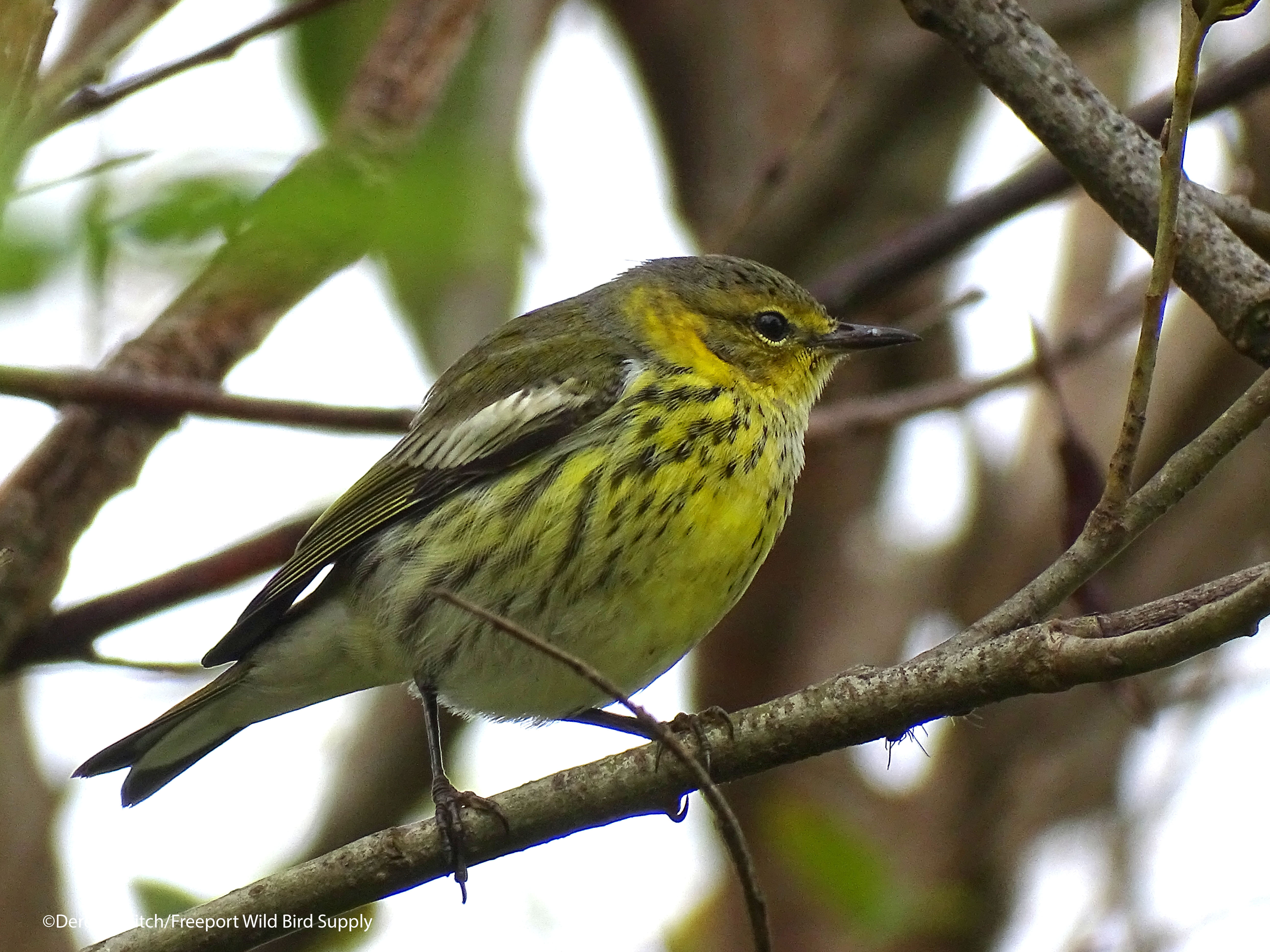
On each day, we would find pockets of warblers here and there, but we kept coming back to  one particular willow and a nearby thicket that constantly hosted 4-5 Cape May Warblers (photo above), 4 Yellow Warblers, a Yellow-bellied Sapsucker, and a smattering of others. The Cape Mays put on a clinic: all four plumages from pale, 1st-fall female, to bright and spiffy adult male were on display.

Over the first day and a half, we took what the island offered, besides exceedingly pleasant weather! There was the hen Green-winged Teal feeding within three feet of us, fly-over Rusty Blackbirds in the morning, and Great Cormorants on the cliffs on an afternoon short hike to name a few highlights. The skies were punctuated by the occasional migrant Peregrine Falcon and the constantly-hunting Merlins.

Granted, we were really just looking at birds to fill the time between the incredible meals at the Monhegan House!

On our final morning, a good migration overnight produced a new arrival of birds for the “morning flight;” the concepts and nuances thereof were topics of regular discussion.

The group’s high spirits earned them a great morning, with a taste of what Monhegan birding has to offer. There were American Pipits and Yellow-rumped Warblers in Morning Flight, a flock of 10 truant Bobolinks circling around, an immature male Belted Kingfisher displaying to a very-uninterested female, more Cape May Warblers, and a surprising fly-by Wilson’s Snipe.

At one point we had four juvenile Sharp-shinned Hawks dogfighting, exemplifying the difference in sizes of male vs female raptors. And the workshopping continued with Great and Double-crested Cormorants side-by-side, migrant raptors including several Northern Harriers, and more species before breakfast than we had most of the previous weekend! Speaking of breakfasts, goodness, they were good as well.

We finished up with a gull workshop on the shoreline, opening eyes to just how easy most gulls are most of the time. The advanced course was the fly-by 1st winter Lesser Black-backed Gull amongst Herring Gulls on the ferry ride back! And yes, we looked at butterflies, too!

The first of the 2024 Down East Adventures tours are already booking, with more to be announced soon. And since these Down East Tours fill up fast, don’t forget we offer a wide range of other tours, as well as private guiding services.

This Week’s Highlights: December 31, 2022 to January 2, 2023.

It took over a month, but I finally made time to look for the Townsend’s Solitaire in Wells on the 2nd. Quality time with it was a worthy consolation for just missing the Northern Lapwing in Arundel that departed this morning.

A few observations of note over the past three days before we head off on vacation included the following:

  • 1 drake BARROW’S GOLDENEYE (first of season locally) and 19 DUNLIN, Winslow Park, Freeport, 12/31 (with Saturday Morning Birdwalk group).
  • 40 continuing American Coots, 6 Ring-necked Ducks, 14 Lesser Scaup, 10 Greater Scaup, etc, Chickawaukie Pond, Rockland (with Paul Dioron, Kristen Lindquist, and Jeannette).
  • 1 continuing Killdeer, Arundel Road, Kennebunkport, 1/2. I missed the Northern Lapwing by 28 minutes.
  • 1 continuing TOWNSEND’S SOLITAIRE, Wells Reserve at Laudholm Farm, 1/2. After about 45 minutes, heard calling from marsh edge north of viewing platform on Laird-Norton Trail. Called as Eastern Bluebirds arrived, often chasing or at least following them. Followed them right through viewing platform and alighted in small tree only about 30 feet away. Unfortunately, it was backlit for photos, but great look. Vocal and conspicuous for 15-20 minutes until bluebirds flew out across marsh. Photo above.
  • And as the calendar changes, it’s time for my annual Predictions Blog where I attempt to forecast the next 25 birds to occur in Maine, and for my own list:

2023 Next Maine Birds Predictions Blog.

OK, so it was technically first seen in 2021, but Steller’s Sea Eagle was the bird of the year. Or was it?  It’s suffice to say, however, that my only photos of it from 2022 were not my photos of the year! Here it is in Georgetown on February 18th.

It’s once again time for my annual Predictions Blog, where I view into my crystal binoculars and attempt to forecast some of the “new” birds to grace the State of Maine – and then my own personal state list – in the coming year.

Well, well, well, what a year of birding 2022 was here in Maine!  Four new species were added to the all-time state list this season, and one of them was a complete shock. Let’s take a look at last year’s prognostications and see how I did. 

Barolo Shearwater was added to the state list based on a 2021 photo by Doug Gochfeld from well offshore in the Northeast Channel, according to the Maine Bird Records Committee.  That was #21 on my predictions list for Maine’s next birds.

A Masked Booby (on my honorable mentions list) at Mount Desert Rock in August was perhaps a sign of things to come – it or another may have been photographed off Monhegan in late September. 

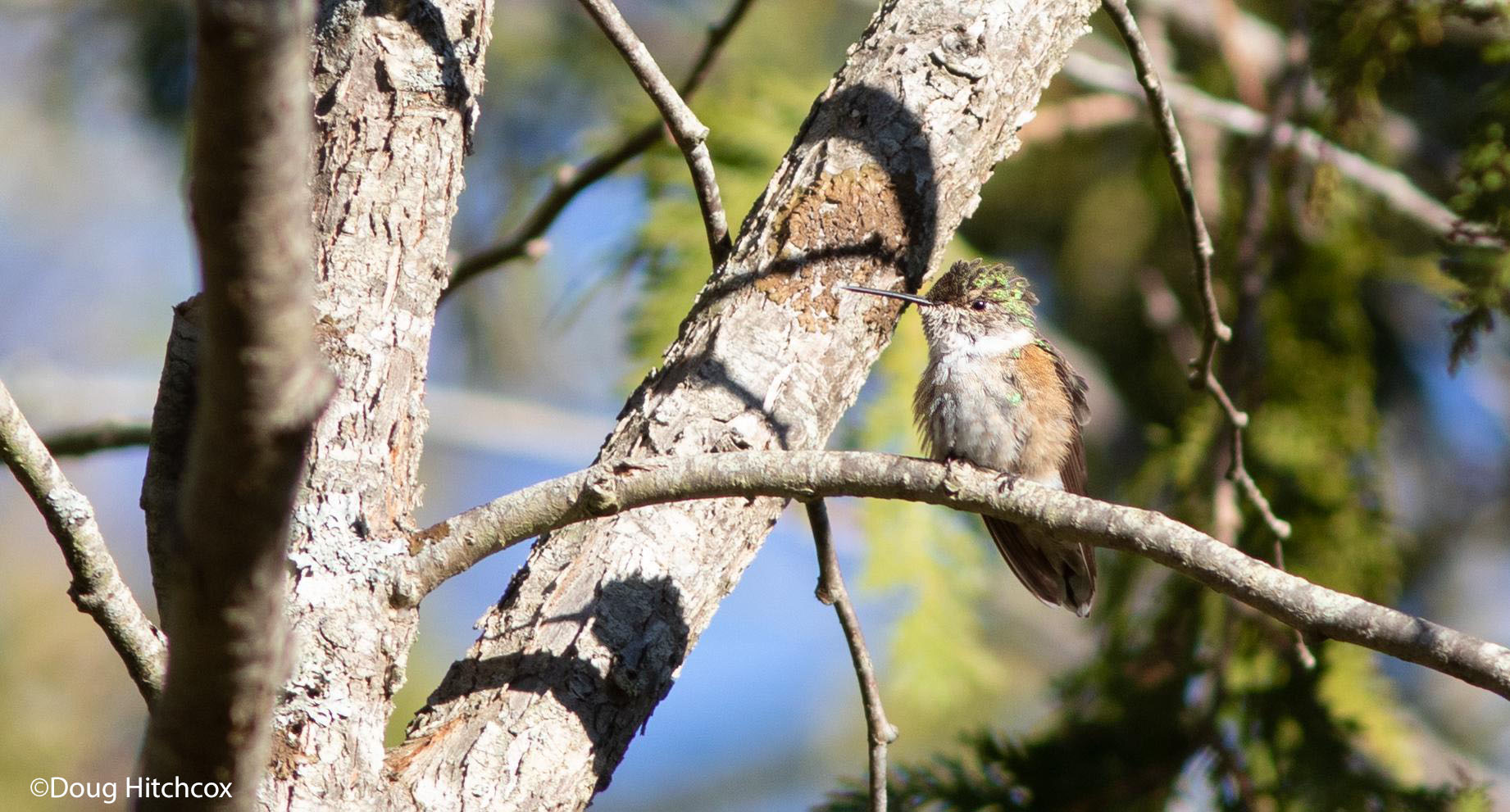
Also on my honorable mention list was Broad-tailed Hummingbird that graced a Freeport yard from November 5th through December 23rd.  The details and the full story can be found on my blog, here.  One could make the argument that this should have made the cut, as it has been long-overdue to be identified in New England.

Since the now-world-famous Steller’s Sea Eagle arrived at the tail end of 2021, it was not technically a new record in 2022. However, just about everyone saw it for the first time this year, and 2022 was definitely the year of the Steller’s Sea Eagle.

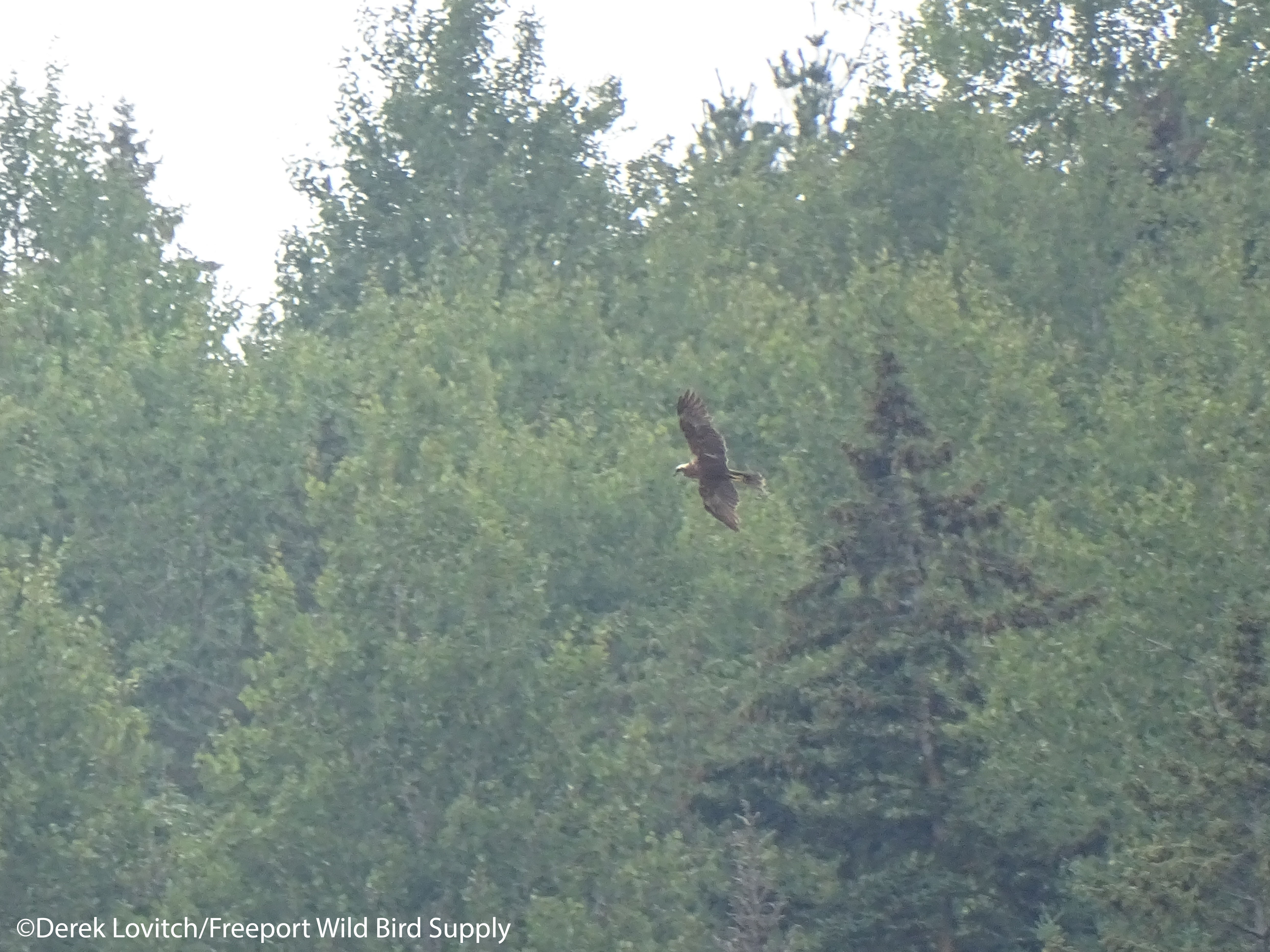
Shockingly, however, there was some debate about whether or not that was the bird, or even the raptor, of the year! Seriously. Since Steller’s Sea Eagle have bred on the continent and have been seen on several occasions in Alaska (and then “our bird” which was seen from Texas to Canada), one could argue that the raptor of the year was actually the Eurasian Marsh-Harrier that was discovered on North Haven on 8/25 and then found the next day at Weskeag Marsh in Thomaston (where it remained for less than 3 days). This was only the second record ever for the entire continent! The same bird resurfaced at the Troy Meadows in northern New Jersey in early November, but this is an incredible bird for North America.  However, I would argue that the worldwide rarity of the Steller’s (only about 4,000 individuals) trumps the marsh-harrier, as it is quite common through much of the Old World. (These are the things birders like to argue about over pints of beer)

And no, the Eurasian Marsh-Harrier was most definitely not on my predictions list!

So with four new records only one of which was on my list, it’s obvious that predicting vagrancy is getting even more challenging. Climate change, land-use changes, rising and falling populations, perhaps even pesticide contamination or electromagnetic pollution is all conspiring to put odd birds in weird places. And, there are more birders looking, and much better communication. 

While I would love to be “right” about my forecasts, we can now truly expect the unexpected, and one could argue almost any bird capable of flight (or long-distance swimming) could become Maine’s latest big twitch.  But, if only for tradition’s sake, I’ll take a stab at my Next 25 Birds for Maine forecast:

  • 1) Neotropical Cormorant
  • 2) Black-chinned Hummingbird
  • 3) California Gull
  • 4) Spotted Towhee
  • 5) Hammond’s Flycatcher
  • 6) Bermuda Petrel
  • 7) Graylag Goose
  • 8) Little Stint
  • 9) Audubon’s Shearwater
  • 10) Common Shelduck
  • 11) Anna’s Hummingbird
  • 12) “Western” Flycatcher (Pacific-slope/Cordilleran)
  • 13) Common Ground-Dove
  • 14) Allen’s Hummingbird
  • 15) Spotted Redshank
  • 16) Limpkin
  • 17) Ross’s Gull
  • 18) Black-capped Petrel
  • 19) Lesser Nighthawk
  • 20) Elegant Tern
  • 21) Heerman’s Gull
  • 22) Painted Redstart
  • 23) Hooded Oriole
  • 24) Black-tailed Gull
  • 25) Common Scoter

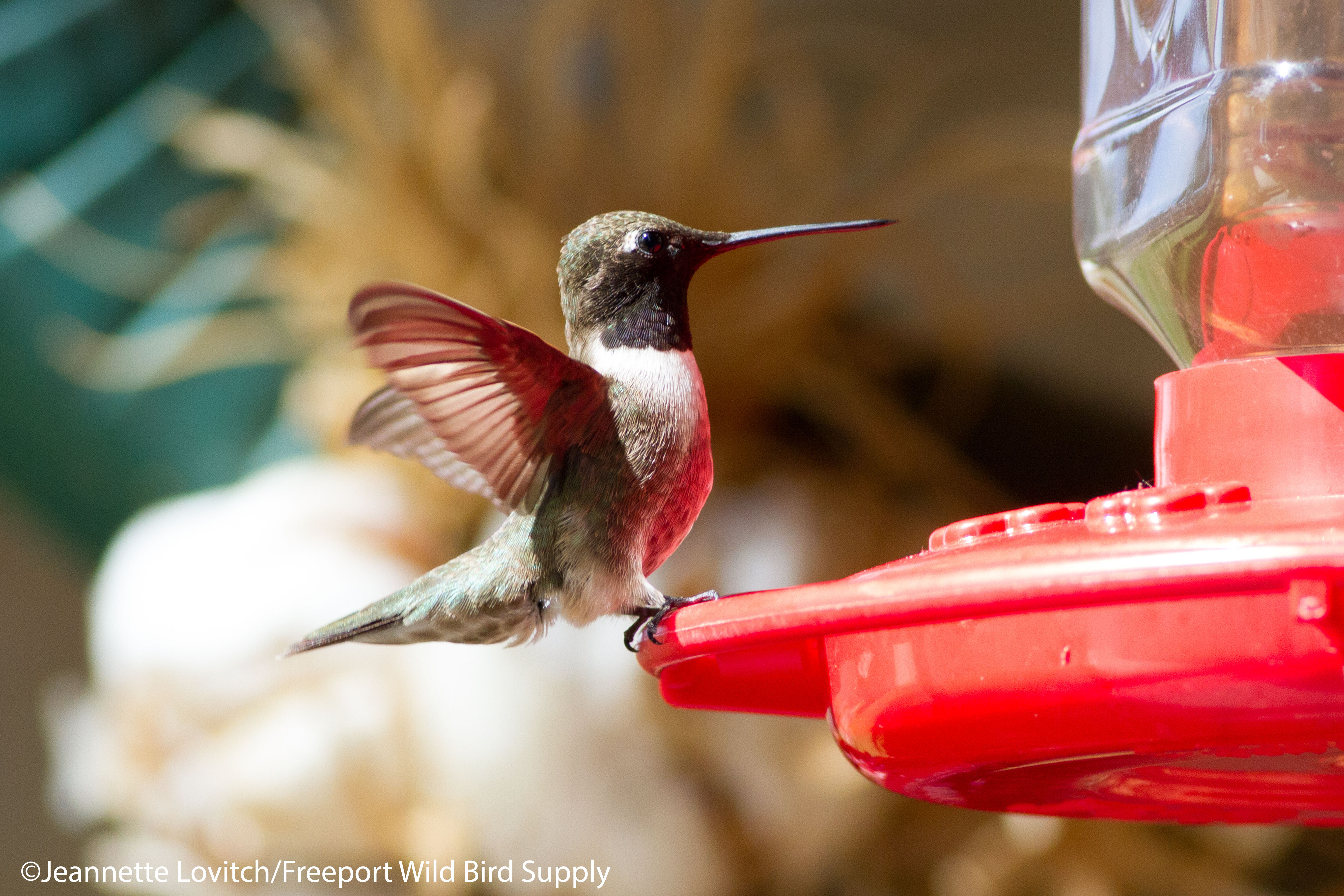
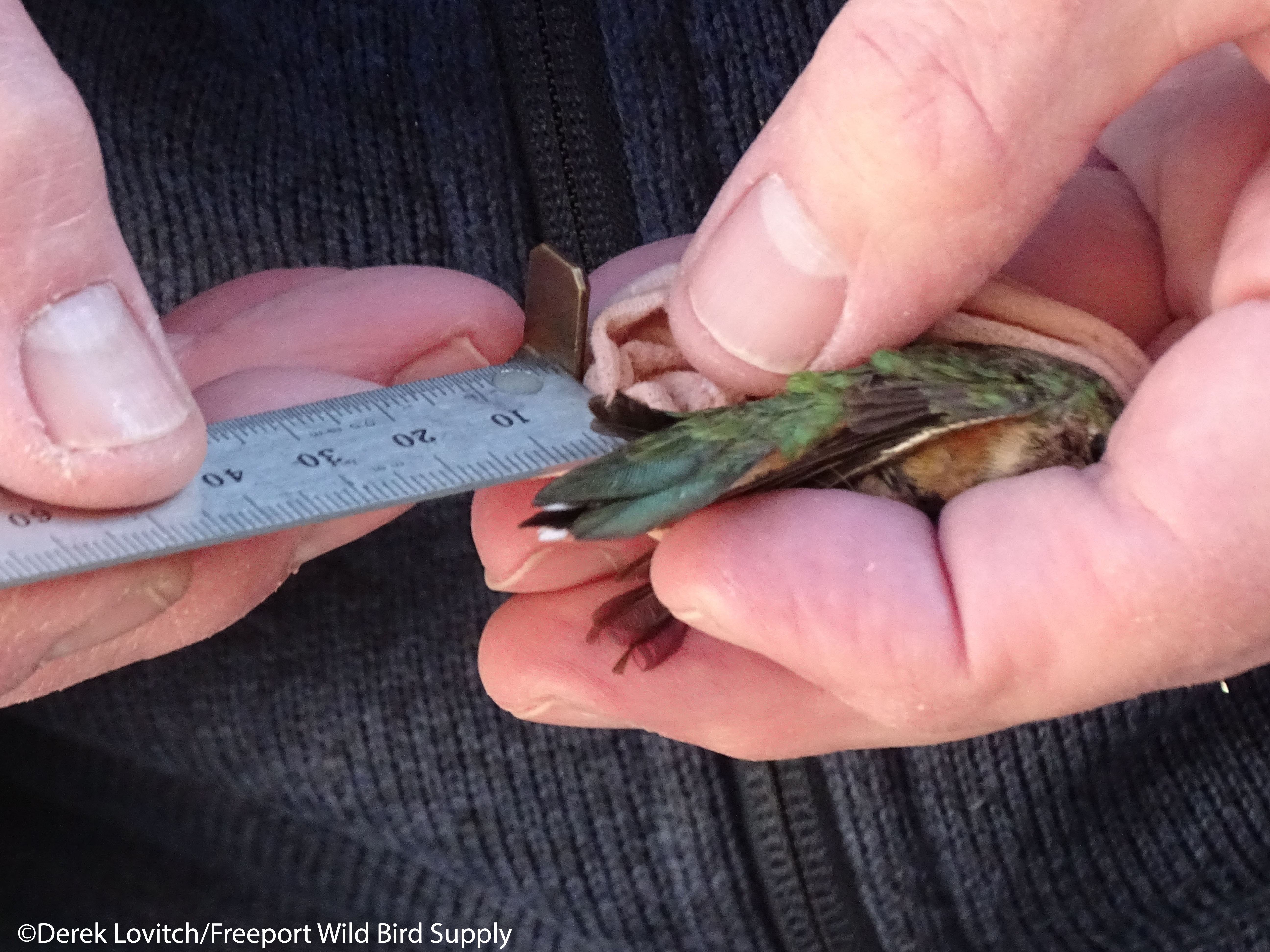
A Black-chinned Hummingbird is overdue for Maine, but unless it’s an adult male with his purple throat in good light, it’s likely going to take banding and measurements to identify (like this year’s Broad-tailed).

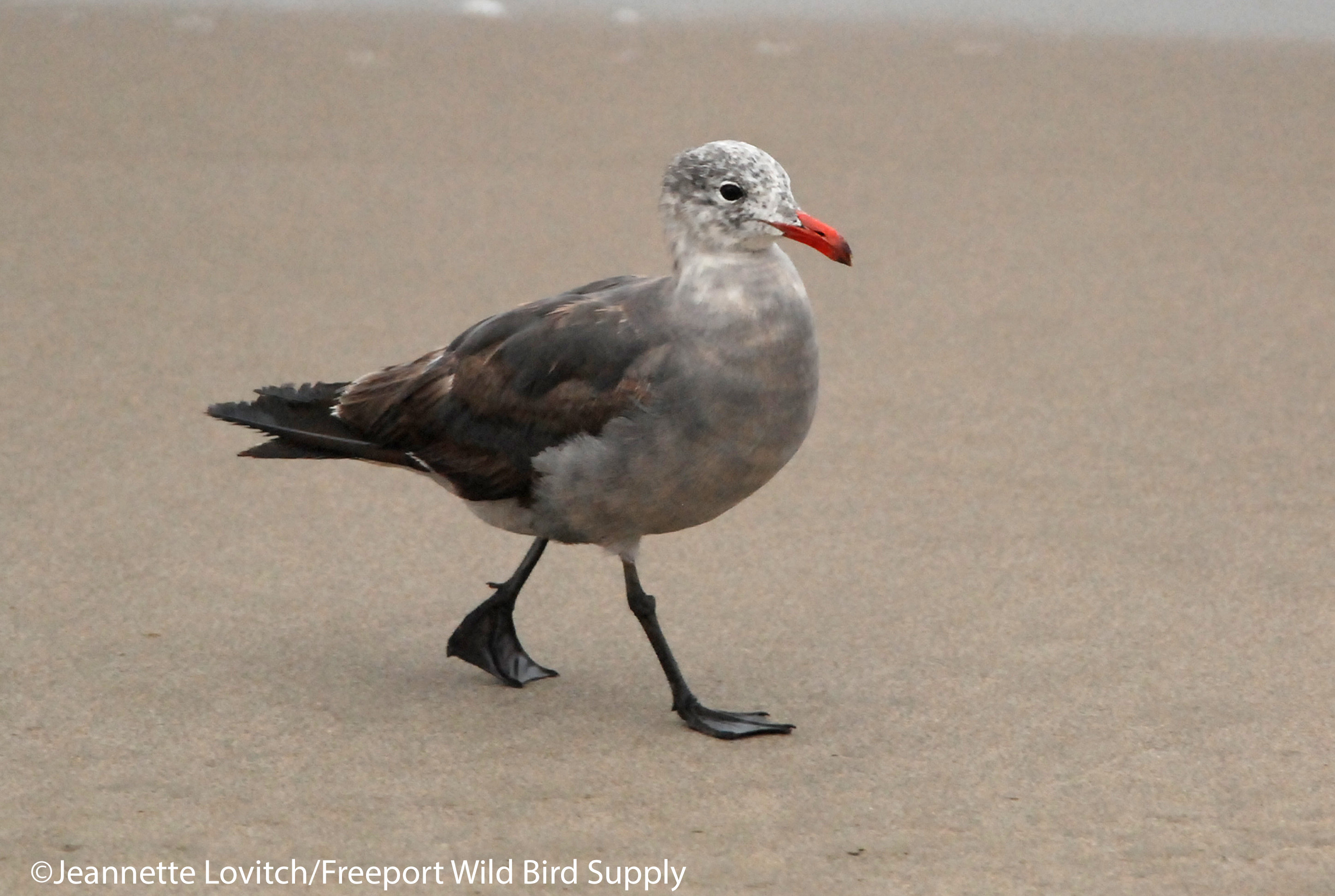
I’ve added Heerman’s Gull to the list thanks to a growing number of Eastern Seaboard records – most of which are likely the same individual moving up and down the coast, although it seems like a longshot to make it this far north. Limpkin also debuts after an incredible irruption in 2022 with extralimital records from as far north as Michigan and New York. Was this a one-off due to some drastic change in water or food levels in its limit range in Florida, or is this another sign of the “new normal” of tropical birds venturing northward? To make room, I’ve dropped Kelp Gull out of the Top 25 for now.

Heerman’s Gull, San Diego, CA, August 2011.

Personally, I added an incredible six birds to my own state list this year. I even predicted two of them: The flock of Black-bellied Whistling-Ducks in Camden that I twitched on 5/2 were #7 on my personal next list, while the flock of White Ibis in the Webhannet Marsh in Wells on 8/11 were #14 on my list. 

Black-bellied Whistling Ducks.

The Sage Thrasher at Gilsland Farm was the first in line on my honorable mentions list, as it was long overdue for Maine to get it’s second.  Likewise, the two Henslow’s Sparrows in Brunswick (7/6) and the now-famous Freeport Broad-tailed Hummingbird were both on my honorable mentions list, but had not cracked the top 25 just yet.

Sage Thrasher

Henslow’s Sparrow

Broad-tailed Hummingbird

Out of the blue was the aforementioned Eurasian Marsh-Harrier, which I happily got to see in Weskeag Marsh on 8/26. As Maine stakes its claim as the Raptor Rarity Capital of North America, I would not have wanted to miss this shocker.

As usual, I missed plenty of rarities too, although I was unable to chase many of them for various reasons (6 for 6 on chases this year is incredible…although it does help make up for all the times I did not see the Steller’s Sea Eagle!). American White Pelican (Grand Isle, 7/5; #1) and Franklin’s Gull (Sabattus Pond, 5/22; #3) are officially nemesis birds now. Other unchaseable potential state birds included Common Gull (Eastport, 2/17-23; honorable mention), Sandwich Tern (Mount Desert Rock, 7/6; honorable mention), and Western Wood-Pewee (banded at Riverpoint, Falmouth, 9/7; honorable mention).

As I approach the 400 species milestone, it’s not getting any easier, although I should hit the mark this year, based on current vagrancy trends!  That’s my first prediction. As for what bird it will be, I believe it will be one of these 25. Although, nowadays, anything seems possible!

  1. American White Pelican
  2. Franklin’s Gull
  3. Neotropic Cormorant
  4. Brown Pelican
  5. California Gull
  6. Brown Booby
  7. Slaty-backed Gull
  8. Boreal Owl
  9. Calliope Hummingbird
  10. Common Ringed Plover
  11. Graylag Goose
  12. Cerulean Warbler
  13. Gull-billed Tern
  14. Hammond’s Flycatcher
  15. Spotted Towhee
  16. Pacific Golden-Plover
  17. Wood Stork
  18. Black-chinned Hummingbird
  19. Brewer’s Blackbird
  20. Yellow Rail
  21. Ross’s Gull
  22. Virginia’s Warbler
  23. Common Shelduck
  24. Common Gull
  25. Heerman’s Gull

Brown Pelican records are increasing in the northeast. It’s just a matter of time for one to fly by me! San Diego, CA, August 2011.

This Week’s Highlights: December 24 – 30, 2022.

This Northern Fulmar graced Gloucester, MA harbor on 12/26. I originally found the bird in a short birding outing on Christmas Day. Details below.

My birding highlights this week were mostly from Christmas in Gloucester, Massachusetts.  I did very little birding, but in short outings, found two great birds!  The first was a NORTHERN FULMAR in Gloucester Harbor, during a short break from eating on Christmas Day. Although not a “rarity” in Massachusetts by any means, having one sit in the harbor was an exceedingly rare occurrence in New England.  I managed some lousy phone-scoped photos while hand-holding my phone to my scope with frozen fingers in 30mph winds.  We returned the next day where Jeannette greatly improved upon my photos (see above). Many birders enjoyed it through the 27th.

But that was trumped by a bona fide state rarity that Jeannette and I found while walking Bonxie on the 26th. This Eared Grebe we found off Niles Beach would be MA’s 20th record I believe. My phone-binned photos while out with the dog were the best we did, but many birders were finding it through week’s end.

We also had a THICK-BILLED MURRE off Niles Beach on the 25th (along with an intriguing distant grebe that was undoubtable the Eared we confirmed the next day) and I had 4 RED CROSSBILLS in the Eastern Point neighborhood on the 26th.

Meanwhile, here in Maine, my observations of note over the past ten days included the following:

2 female Greater Scaup, Yarmouth Harbor, 12/24 (with Saturday Morning Birdwalk group).

1 Common Redpoll (FOS), our yard in Durham, 12/28-29.

1 continuing SAGE THRASHER, Gilsland Farm, Falmouth, 12/29. Great views and a prolonged period of observation with no one else present early in the morning. My photos were a little more distant than I would have liked (and backlit) but the quality time with this incredible rarity – unlike the brief view on my first visit – was most rewarding.

This Week’s Highlights: December 17-23, 2022

This snazzy, fresh adult male Red-winged Blackbird at a feeder in Wells was one of the few highlights in my usually-very-productive “Moody Sector” of the Southern York County CBC.

T’was the week before Christmas and all through Wild Bird Supply, no one was birding much, even this guy.  Nonetheless, I found some great birds when I did get out this week:

  • 1 incredibly late NELSON’S SPARROW, 1 Savannah Sparrow, 1 Northern Flicker, 4 Snow Buntings, etc, Eastern Road Trail, Scarborough Marsh, 12/18.  I was unaware that the Portland CBC was being conducted that day, but apparently, the Nelson’s was a first count record! 
  • 1 THICK-BILLED MURRE (FOS), Pine Point, Scarborough, 12/18. Not in great shape; I first saw it on land fighting off a crow on land before eventually waddling into the water.
  • 20-21 continuing AMERICAN COOTS, 2 female GADWALL, 3 Ring-necked Ducks, 1 pair American Wigeon, 1 drake Northern Pintail, etc, Grondin Pond, Scarborough, 12/18.
  • “Moody Sector” of the Southern York County CBC, 12/19: 1538 individuals of 52 species (both quite low for me) with highlights including 4 American Wigeon (very surprisingly only a second count record!), 1 male Red-winged Blackbird, 2 Northern Harrier, and 18 Horned Larks.
  • 1 Great Blue Heron (late for inland) and 1 1st-winted Iceland Gull, Auburn Riverwalk, 12/22.
  • 1 SAGE THRASHER, Gilsland Farm, Falmouth, 12/22. 2nd State Record found earlier in the morning by Doug Hitchcox. I eventually had fantastic looks at it, including in flight, but I was on the wrong side of its favored tree for photographs, so this was the “best” I did!
  • Meanwhile, left off my weekly updates for the past four weeks has been my regular observation of one particular rarity right here in Freeport – Maine’s first ever Broad-tailed Hummingbird!  Here’s the full story.

Maine’s 1st Broad-tailed Hummingbird in Freeport (Nov-Dec 2022).

In the afternoon of 11/19, a customer of the store alerted me to the presence of a hummingbird in her Freeport yard, present since the 5th of November. For over 15 years, we have promoted keeping hummingbird feeders up late into the fall and letting us know about any hummingbirds after October 1st.  In addition to several incredibly late reports of Ruby-throated Hummingbirds (now annual in small numbers well into the second week of October), this campaign has resulted in the detection and documentation of a Selasphorous hummingbird on 10/16-17, 2015 in Yarmouth, and a long-staying Rufous Hummingbird observed by many between 10/18 and 12/5, 2020, also in Yarmouth – the first “chaseable” Rufous in eight years in the state.

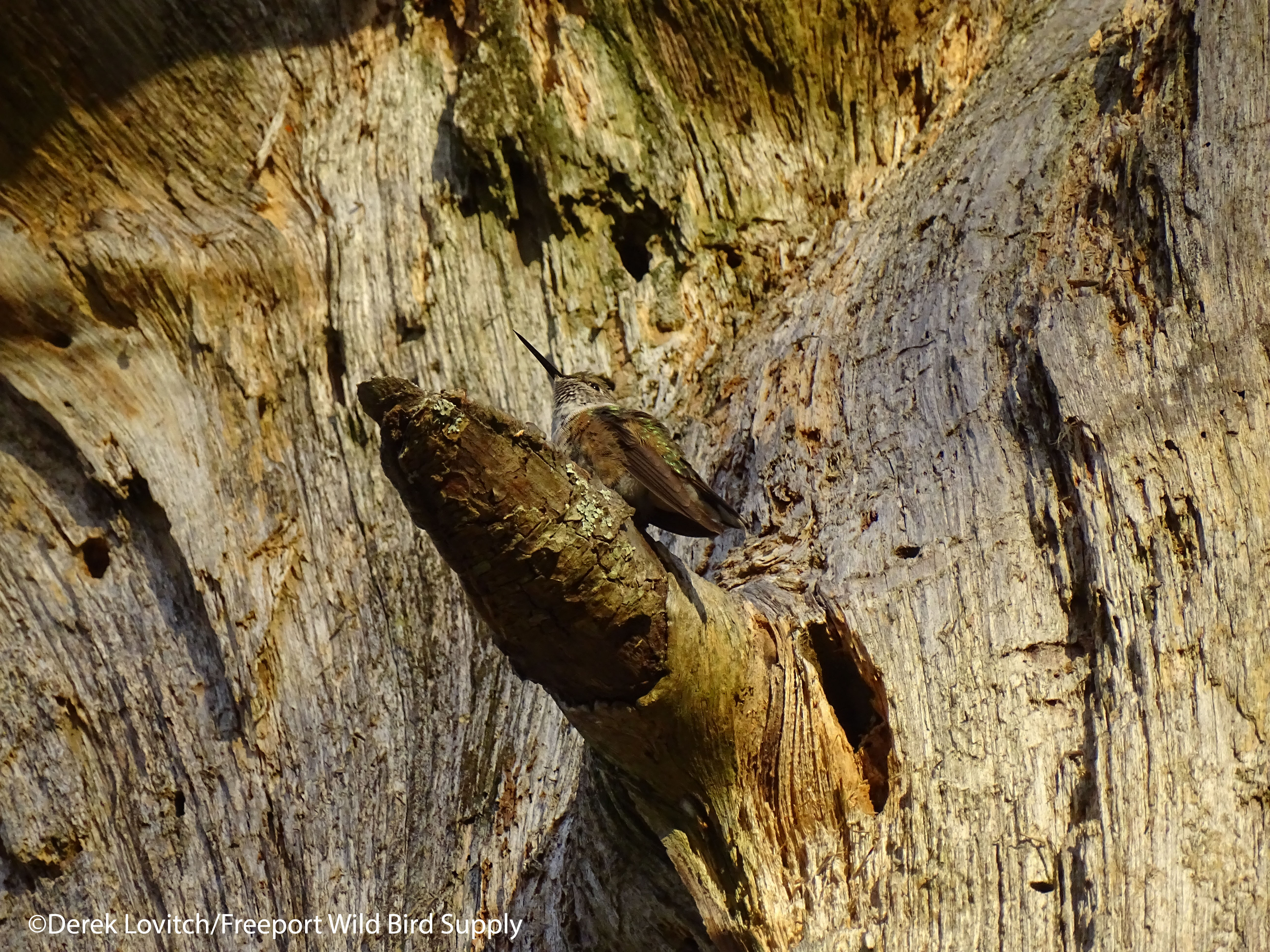
Upon receiving the report, we urged the homeowner to get any sort of photo. Later that day the bird finally obliged, and the photos sent to us were suggestive of a Selasphorous hummingbird.  I was invited to the property the following day to attempt more documentation.  I arrived at 3:05pm with snow flurries falling, and soon heard the bird. The call was clearly of a Selasphorous-type hummingbird. My limited experience with separating Selasphorous by call did not permit me to draw any further conclusions (in hindsight though!)

Twenty minutes later, the bird appeared at the feeders, feeding long enough for photographs, before alighting on a nearby snag in a sliver of sunlight.  In the field, and upon review of photographs, I immediately knew it was a Selasphorous. Lucky photos of a semi-spread tail showed a fairly broad outer tail feather, but I assumed it was probably “just” a Rufous. Or at least I am not knowledgeable enough to have thought beyond Rufous/Allen’s (it was clearly not a Calliope).

I reached out to Scott Weidensaul with the first few photos, and since he was available the next day to band it, I made arrangements with the homeowner. Scott was intrigued by the tail, and stated “I cannot rule out Broad-tailed from the photos” but also assumed it was likely to be a Rufous. They usually are.

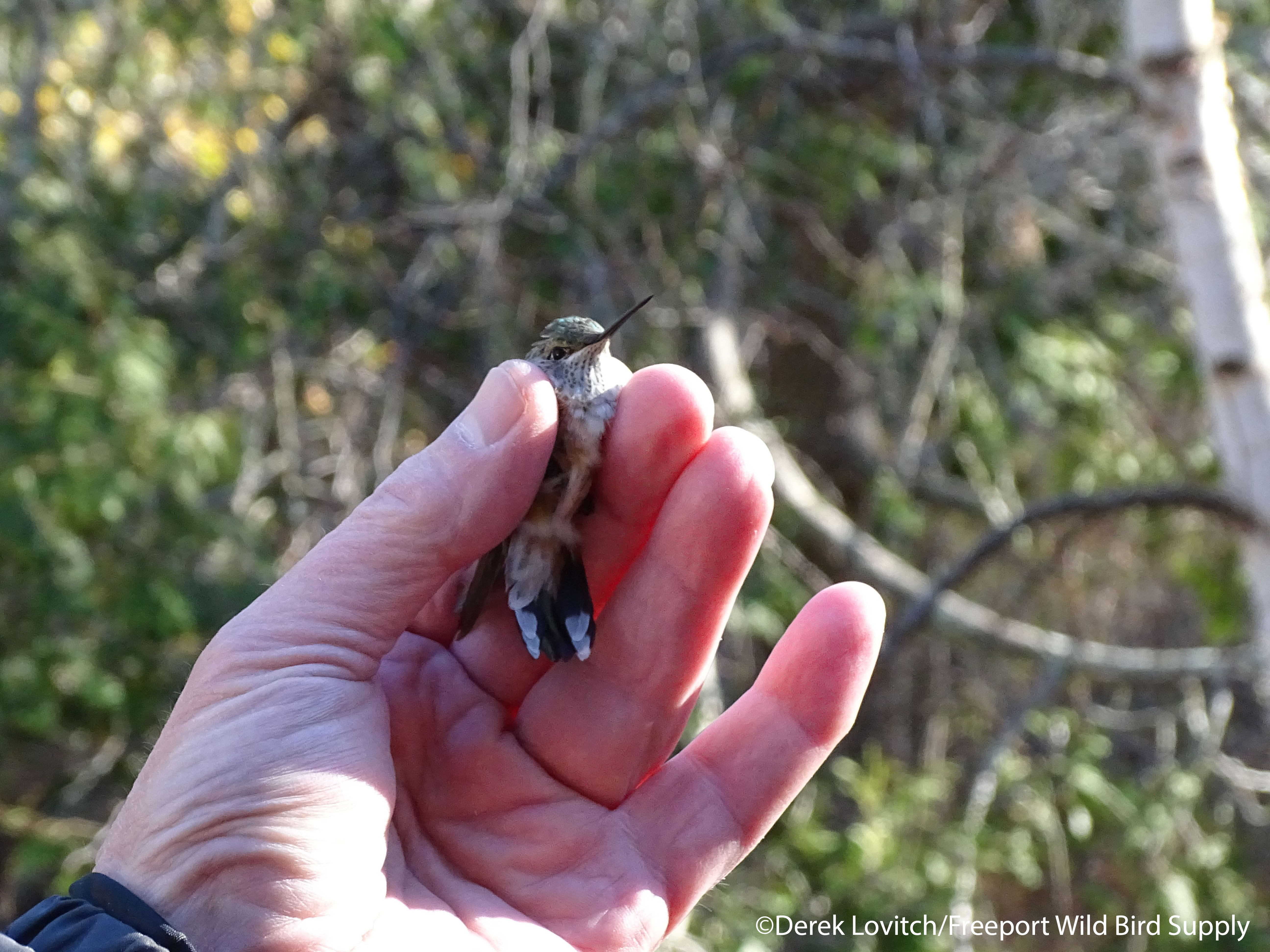
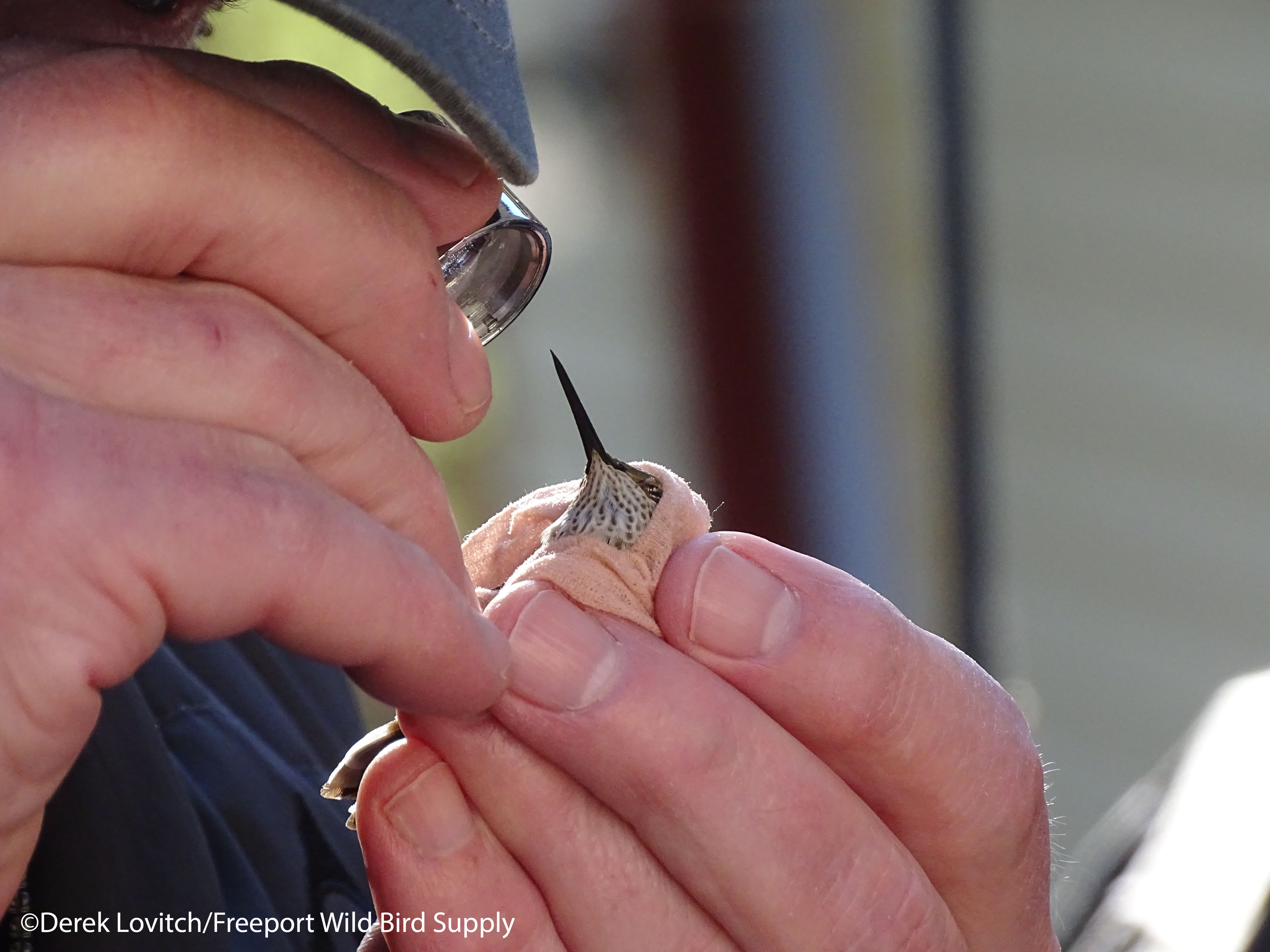
Scott, Doug Hitchcox, and I arrived at noon on 11/21 to attempt to band the bird. In less than an hour, we had safely trapped the bird, and took a series of measurements and photos. The bird was healthy, undergoing active molt, and had a fat score of 1.

When we first observed the bird, Scott pointed out the bluish hue that was sometimes apparent on the back of the bird. He mentioned he saw that in one of my photos from the prior day, but dismissed it as probably being an artifact of the photo. I was unaware of this impression until he pointed it out.

However, as the banding process began, we were still working under the assumption that this was going to be a Rufous Hummingbird, until the “numbers” kept coming in. Doug was recording and noted the significant difference between Rufous Hummingbirds on the data sheet. When Scott read the width of the outer tail feather aloud, he seemed shocked, and immediately measured again. And again. Doug and I kept glancing at each other, eyes wide, attempting to hold back exuberance.

Wing: 49.15mm

Tail: 30mm

Bill: 18.62mm

Width of Outer Tail Feather (R5): 5.44!!!

We double-checked all measurements, took lots of photos, and Doug and I tried to not explode with excitement as Scott calmly but clearly excitedly expressed comments such as “this is the biggest tail I have ever seen on a Selasphorous in the East.”  We, as well as the homeowner who had joined us for the banding, were all shaking with excitement by now. The below-freezing air temperature played much less of a role.  A quick check of references, a final check of the measurements, and then the bird was released.  Of course, the bird’s host had the honor of letting it go. After processing, it immediately returned to the feeder and fed regularly for the rest of the day, calling even more vociferously in between.

Upon checking some references at home, and sending photos out for additional opinions, it was clear to Scott that we (OK, he) had just documented the first Broad-tailed Hummingbird, a hatch-year male, for Maine – and apparently, for all of New England!

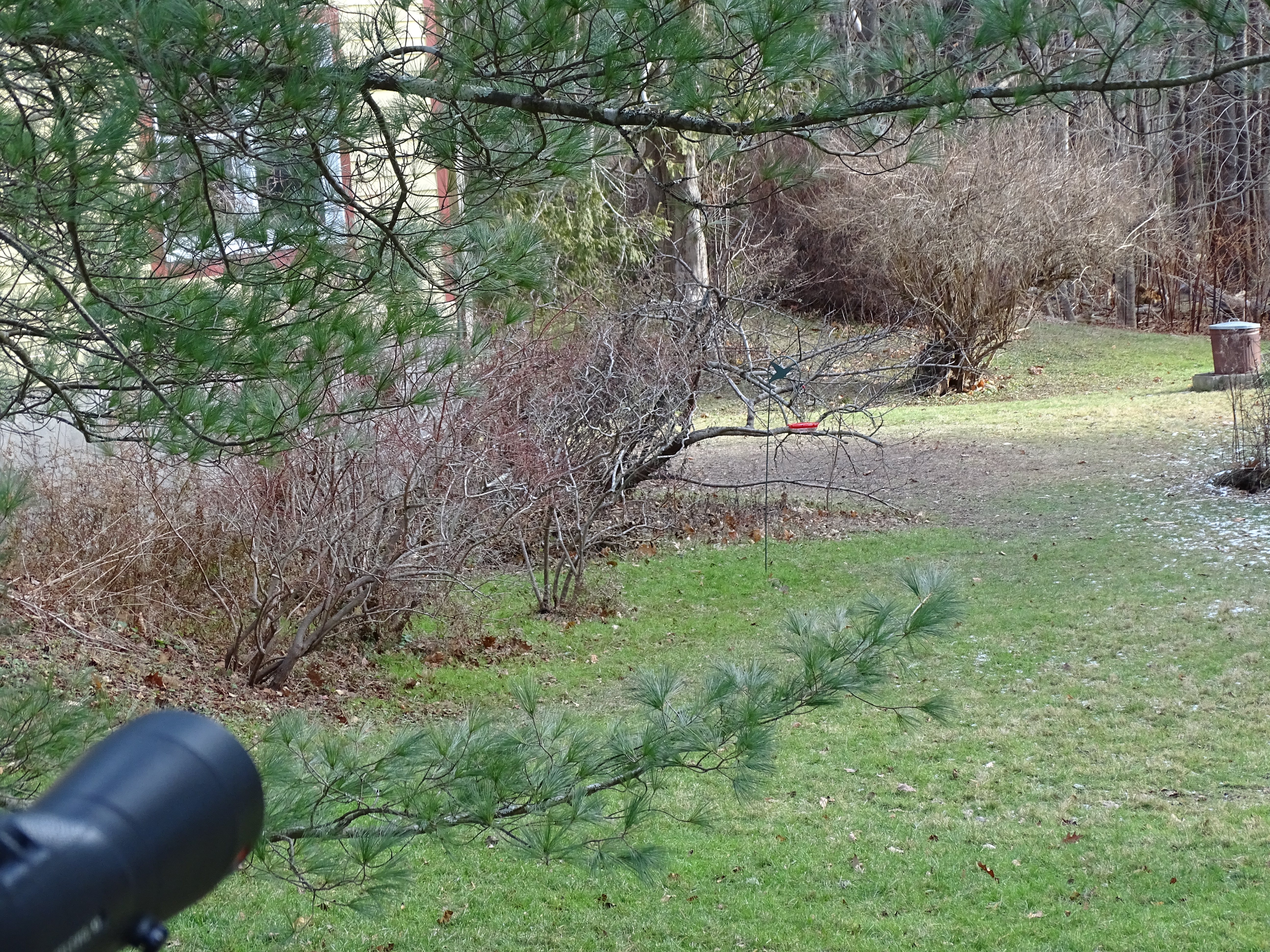
Jeannette was invited to observe the bird on the 22nd, while I spoke to the homeowner several times over the phone to discuss the opportunity for others to share in the excitement. I arranged for a small group to visit in the morning of the 23rd as a test-run – a few close friends and young birders were the guests. After that successful visit when we all had repeated views, I suggested a feeder be placed in the front yard. If the bird took to it, visitors would have the chance to see it from a public road, without entering the yard. 

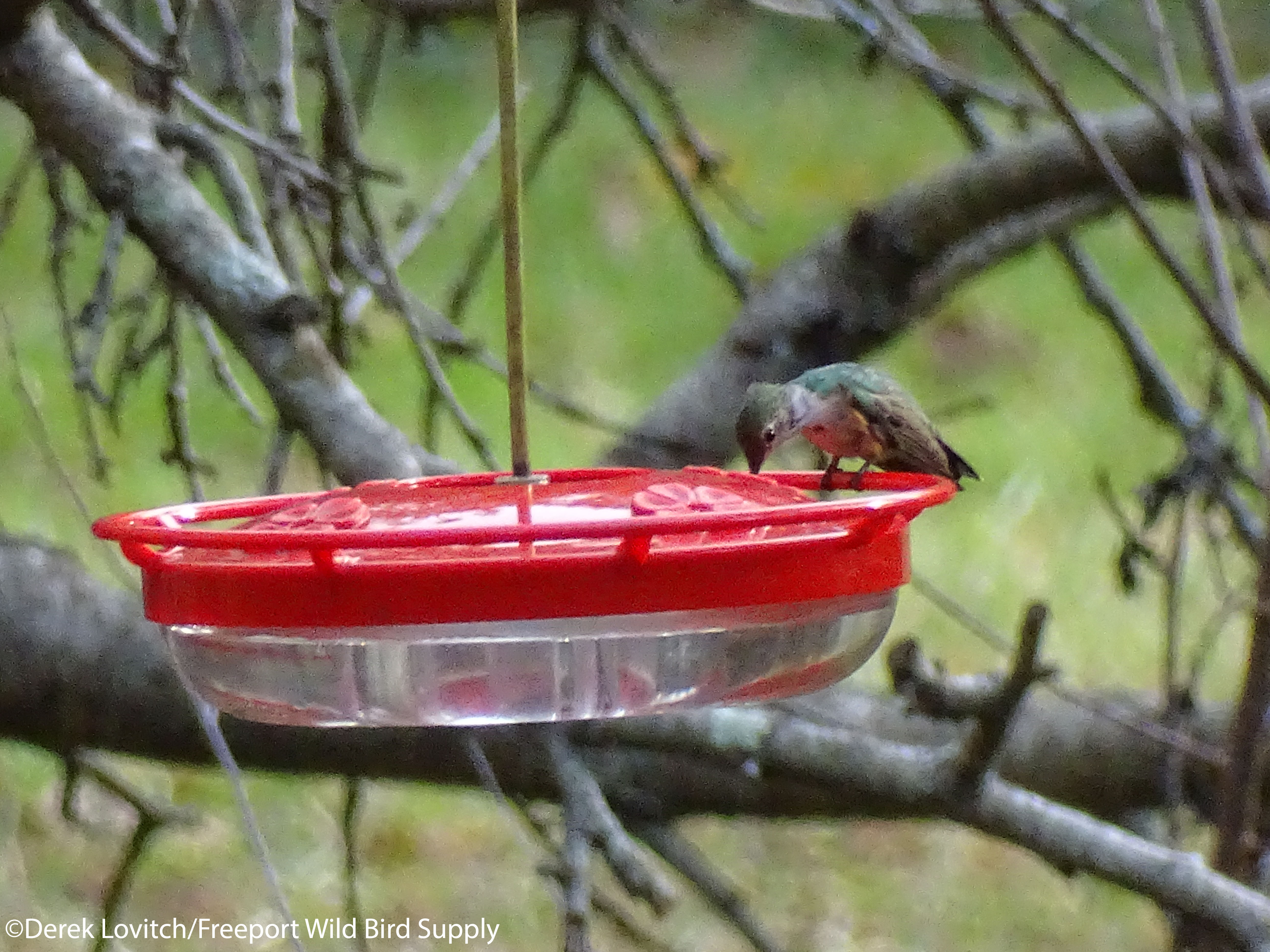
I placed that one of our feeders on the morning of the 25th, after the holiday so as not to bother the homeowner. I also observed the bird, regularly feeding in the cold rain, making two visits to the feeders within 15 minutes – a faster pace now. It was cold, but was it also tanking up?  Later in the day, Jeannette returned with a small shepherd’s hook to give the feeder even better visibility from the road, along with getting it into the morning sun to help keep it warmer on these frigid mornings. 

The homeowner has been taking in the feeder (now, feeders), every night so the first feeding will be at room temperature nectar. She’s been heading out early with a headlamp so as not to miss it’s first feeding session! What an amazing host!

My Saturday Morning Birdwalk group was invited over on that first Saturday morning, but the bird never came to the new feeder. As per prior arrangement, an hour later we were able to enter the yard and in doing so we enjoyed immediate prolonged views of it at the original feeder in the backyard.

The next test run was another small group on Sunday morning. We arrived at 8:00, and for almost an hour were teased by the hummer as he darted around the backyard, calling constantly, and briefly perching in obscured views.  Then, at 8:56, he finally made a brief visit to the new feeder!

In the next 30 minutes, he visited that carefully-place feeder three times, including two prolonged drinking bouts which provided ample opportunity for people to study, enjoy, and photograph the bird.  Success!  He is now using a feeder in view from the road, without entering the yard!

And with that success, on Wednesday the 28th, I was given the go-ahead to let the word get out, slowly, methodically, and carefully managed to avoid crowds and overwhelming the homeowner and the neighbors.

In consultation with the homeowner, I was tasked with managing the crowds and birders’ behaviors. People needed to email me for the set of visitation instructions and caveats, and since the end of November birders visited, saw, photographed, and mostly remained on their best behavior. The vast majority (but of course, not all) even followed all of the rules! I remained in close contact with the homeowner and reassured her that just about everyone was receiving the instructions directly from me. I did my best to respond to every one of the emails I received, spacing out visitation as much as possible. Of course, not everyone followed every rule – especially the one about sharing the location.

The bird continued into the middle of December. I would say “miraculously” given the plummeting temperatures, but it was mostly through the passionate dedication of the homeowner. When temperatures failed to reach the freezing mark for a high on December 10th,  it ushered in the most challenging stretch of weather in which temperatures did not hit 32 for four days.  During the time, the homeowner would go out regularly throughout the day with unfrozen sugar water to replace the simple syrup popsicles. The hummingbird learned to recognize her and this activity and would often visit the feeder immediately after she walked away.

Unfortunately, however, during this time, it saved energy by sitting for long periods in the sun, out of view from visiting, shivering observers. Even more frustrating for some, was hearing it vocalize in the backyard and never seeing it from the road – at the side feeder or his favorite perch. Thankfully, no one decided to tempt fate by entering the yard to look around back.

Earlier in the month, I had asked Scott Weidensaul about possible departure times, given his experience with vagrant hummingbirds in the Northeast. He told me that birds often depart on the first nice day after the first significant cold snap where the temperatures failed to reach the freezing mark for multiple days.  Such a day occurred on 12/15, where temperatures reached the low 40’s and a light northerly wind was increasing.  Thinking it could be his last day, I finished my morning’s birding at the location.

I arrived at 10:02 and immediately found him sitting in one of his favorite perches in the multiflora Rose. He sat there – save for one short sally, presumably for an insect – for the next 16 minutes before buzzing off, presumably to the feeder in the backyard. I heard him for most of the time but did not glimpse him again before I departed at 10:30. 

By the middle of December, his first gorget feathers had already begun to appear – but only on one side of its head, best seen in this photo from the homeowner on 12/12.

I was sure this was it. Storm a’coming. Temperatures above normal in the low 40’s, a light northerly breeze, and the sun was shining for a while. But alas, with the wet snow falling on Friday the 16th, the homeowner informed us that he was still present and feeding actively.  He was still present on Saturday Morning, with heavy flakes starting to pile out.

Luckily, the heated hummingbird feeders that the homeowner ordered had arrived and were deployed just in time!

Over 90 100 people have seen it now, and visitors are still welcome to view it, as long as they follow a strict set of rules. If you would like to see it, email us at freeportwildbird@yahoo.com with a day that you are interested in going, and we’ll send the instructions and address the day before, as long as the numbers of visitors remain manageable each day and on our best behavior. To minimize the number of emails in the queue, please include the day in your original email.

***12/26 UPDATE:*** We just received an email this afternoon from the homeowner, reporting that she has not seen the bird since 3:47 pm on Friday, 12/23. Pressure was dropping rapidly through the day with rain, heavy at times, and southwesterly winds gusting over 50mph for much of the day. She reported it was drinking regularly throughout that stormy day, with temps rising into the low 50s. Overnight temperatures dropped dramatically, by 40 degrees by sunrise, despite still-strong SW winds. Certainly not the time and conditions I would have expected it to depart on (assuming it survived the night), but it does bring up some interesting questions. Did it survive the storm? Was the storm the final incentive to depart? And if so, did it depart in the “wrong” direction that perhaps it arrived on (i.e. it was a “mirror vagrant” flying in the wrong direction to start with)? But since it’s banded, should it be found anywhere else, we very well might know, but short of that, we are left to conjecture.

The homeowner is leaving the feeders out for a little longer, just in case. If he returns, we’ll post an update here and include new instructions for visitation if possible.

This Week’s Highlights: December 10 – 16, 2022

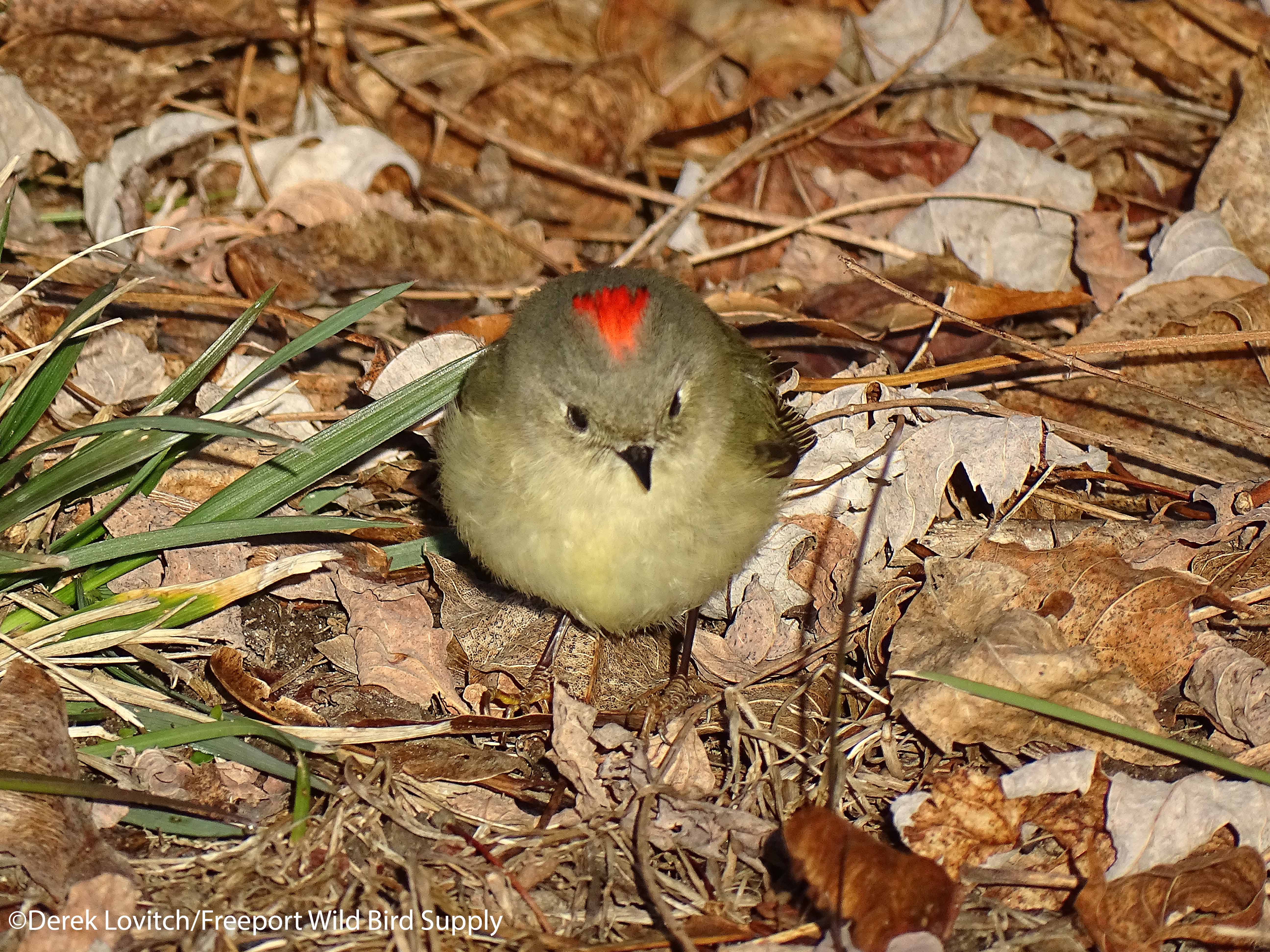
At least one Ruby-crowned Kinglet continues at the Saco Riverwalk as of 12/15 (I had three here last week). This one does not seem particularly happy about it, however.

Being short-staffed in the weeks before Christmas is not a good recipe for lots of birding time when you work in retail!  Luckily, my three mornings out and about were all quite productive for mid-December.

  • 1 DOVEKIE, 14+ Razorbills, 3 Black-legged Kittwakes, etc. in one hour of seawatching at Dyer Point, Cape Elizabeth, 12/11.
  • 1 Field Sparrow, private property in Cape Elizabeth, 12/11.
  • 1 Yellow-bellied Sapsucker, Mill Creek Park, South Portland, 12/11.
  • ~140 RUDDY DUCKS, 1 drake Green-winged Teal, 1 drake Northern Pintail, 52 Lesser Scaup, 19 Greater Scaup, etc, Sabattus Pond, Sabattus, 12/12.
  • 2 Red Crossbills, private property in Freeport, 12/13.
  • Scattered tarrying Turkey Vultures this week included a high count of 4 over the store on 12/13.
  • 1 continuing GRAY CATBIRD, 1 continuing Ruby-crowned Kinglet, and 1 continuing Wood Duck, Saco Riverwalk, 12/15.

This Week’s Highlights: December 3 – 9, 2022

The still-unfrozen waters of Sabattus Pond were fantastic this week. One of the highlights was this continuing drake Canvasback.

So-called “half-hardies” dominated my highlights away from a still-productive Sabattus Pond, as if often the case this time of year.

  • 1 adult Iceland Gull, Yarmouth Town Landing, 12/3 (with Saturday Morning Birdwalk group).
  • Sabattus Pond, 12/5: 1 continuing immature male EURASIAN WIGEON, 1 continuing drake CANVASBACK, 1 PIED-BILLED GREBE, 1 1st winter Iceland Gull, ~350 Ruddy Ducks, 3 Northern Pintails, 2 Ring-necked Ducks, 1 Horned Grebe, etc.  Full waterbird list here.
  • 1 Winter Wren, 1 Hermit Thrush, 1 Northern Flicker, and 3 Red Crossbills, Bailey Island, Harpswell, 12/5.
  • 1 Evening Grosbeak, our yard in Durham, 12/6.
  • 1 Fox Sparrow, feeders here at the store, 12/6-7.
  • 1 Gray Catbird, 3 Ruby-crowned Kinglets, and 1 Swamp Sparrow, Saco Riverwalk, Saco, 12/9 (with Allison Anholt).

I take a lot of photos this time of year of birds with Multiflora Rose stems in front of their faces. Like this – and every other – Ruby-crowned Kinglet shot from the Saco Riverwalk on 12/9.