Another busy week of tours and other things produced some interesting observations of note, including some late migrants. However, most of my birding this week was once again focused on our local summer favorites. More noteworthy over the previous six days as I head out on another long tour were the following:
2 Red Crossbills, Hunter Cove Wildlife Sanctuary, Rangeley, 6/10 (with Michael Lanzone and Rangeley Birding Festival tour group).
1 late Solitary Sandpiper, Rangeley sewerage facility, 6/10 (with Michael Lanzone).
1 singing MOURNING WARBLER, our yard in Durham, 6/11.
1 pair LOUISIANA WATERTHRUSHES, Big Falls Preserve, New Gloucester, 6/12 (with Jeannette) – I’ve been waiting for a pair here for years!
Our next tours with availability is our July 10th Eastern Egg Rock and Whale Watch with Cap’n Fish’s in Boothbay Harbor and our July 22nd charter to Seal Island via Stonington. You know we’ll be looking for that Tufted Puffin!
Thanks to our store’s partnership with Zeiss Optics, our biannual “Zeiss Day” occurred offshore this spring. With Zeiss’s sponsorship, we were able to offer this unique trip at a special price, with extra spotters to help people see birds, and of course, with chumming.
And the weather could not be any better! In fact, we were all excited to head offshore to beat the heat on this day. Barely a puff of breeze resulted in remarkably calm seas, with the only waves caused by our boat. Thanks to the weather gods for this day offshore!
Evan Obercian, Dan Nickerson, and Jeannette helped spot birds, Noah Gibb handled the checklists, and Robby Lambert – chummer emeritus – stood at the ready as the boat’s naturalist, Kelsey, and I scanned from the wheelhouse. Our captain was amazing, and together we laid out a plan for the day. Throughout the day, Rich and Bill from Zeiss handed out binoculars to try and lots of optical questions were answered. It was a great way to test-drive a new pair of excellent binoculars, especially noting how important size and weight is when trying to hold binoculars steady on the open ocean, even without much in the way of waves.
Robby at his office.
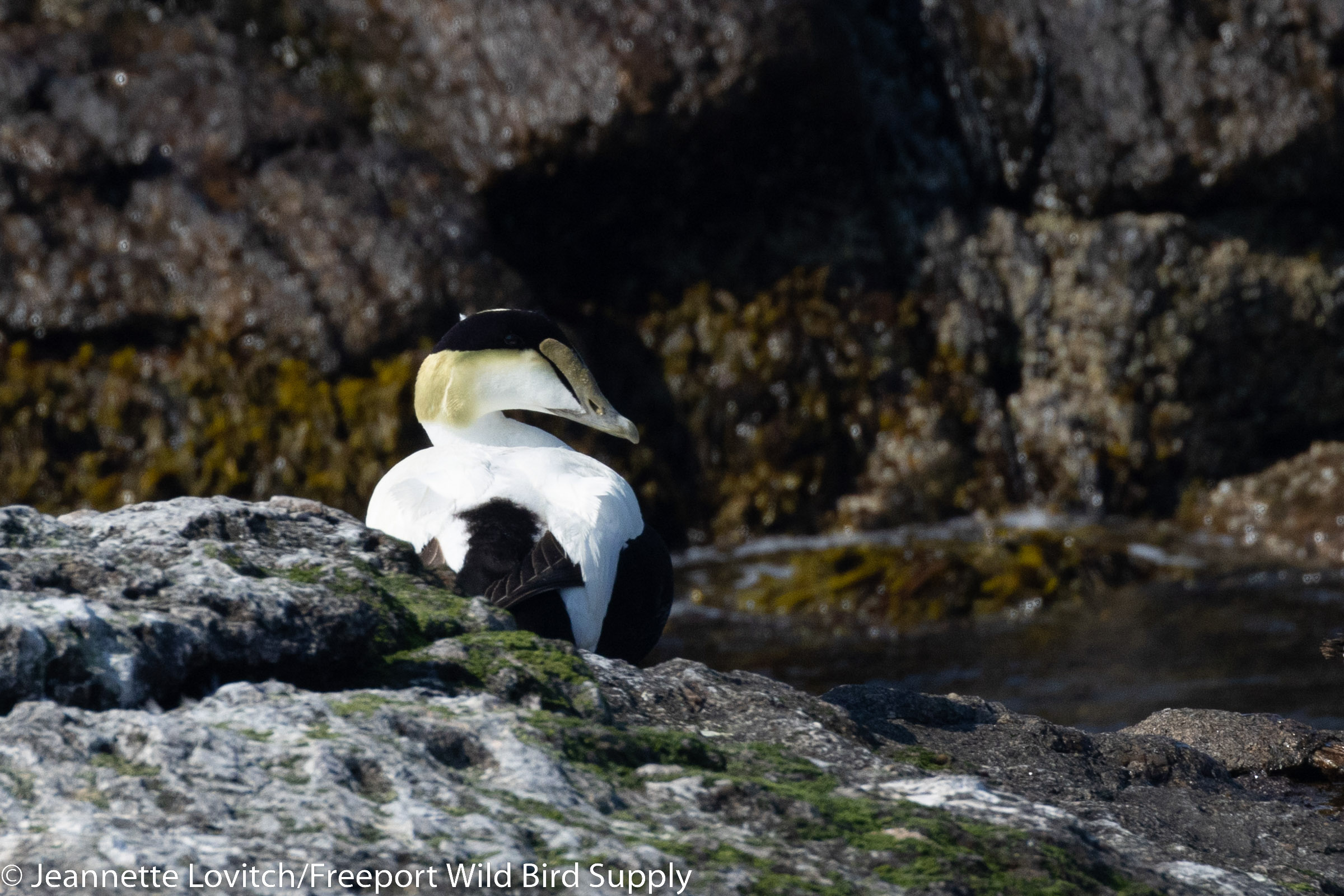
Motoring out of Boothbay Harbor and across Muscongus Bay, we familiarized ourselves with the common denizens of Maine’s summer coast, such as Common Eiders, Black Guillemots, Common Terns, and Ospreys. Kelsey pointed out landmarks and gave a little history of the area.
Our first destination was Eastern Egg Rock, home to a thriving seabird colony thanks to the restoration efforts of Project Puffin. Leading pelagic trips in June is easy when at least some of our target birds are guaranteed!
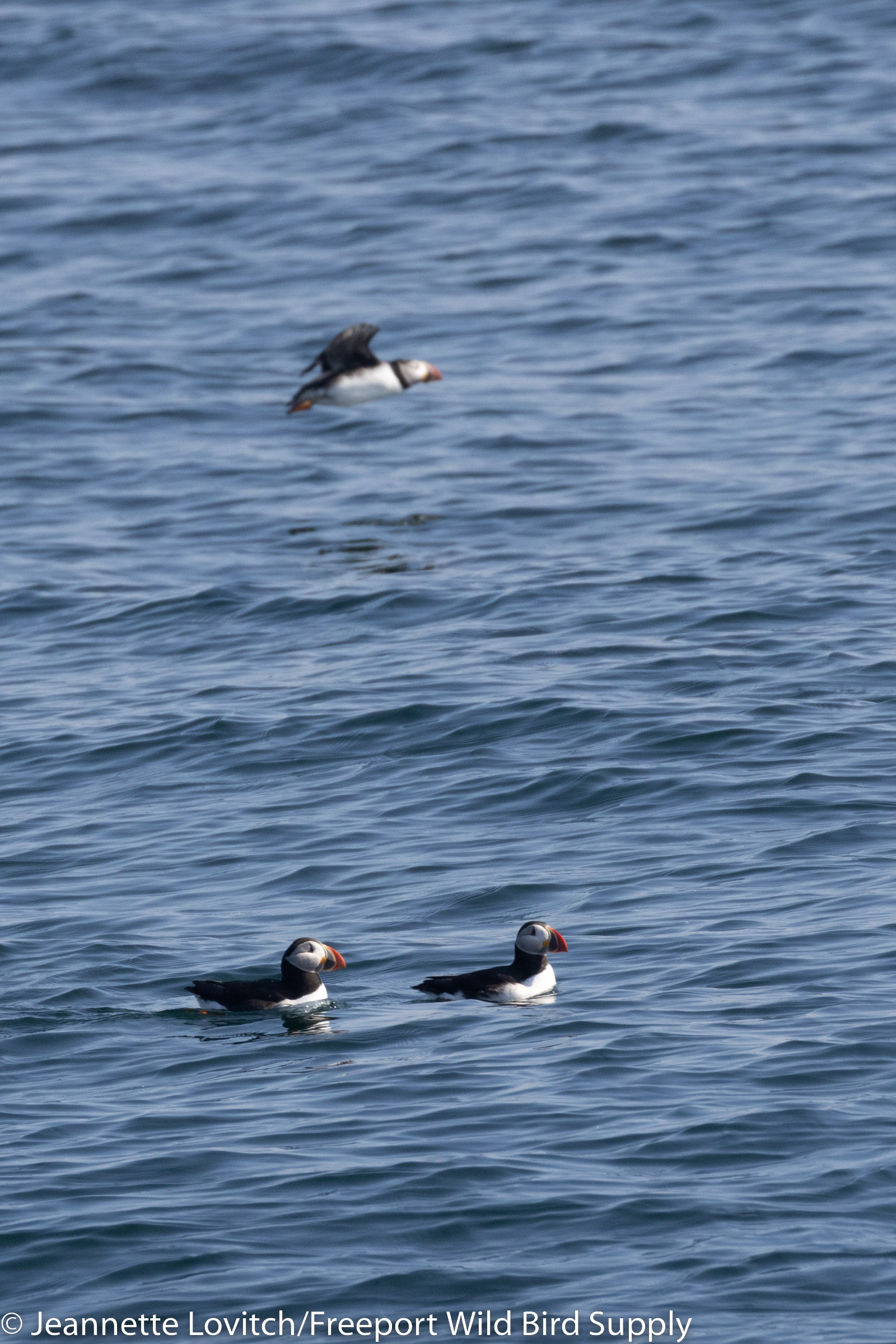
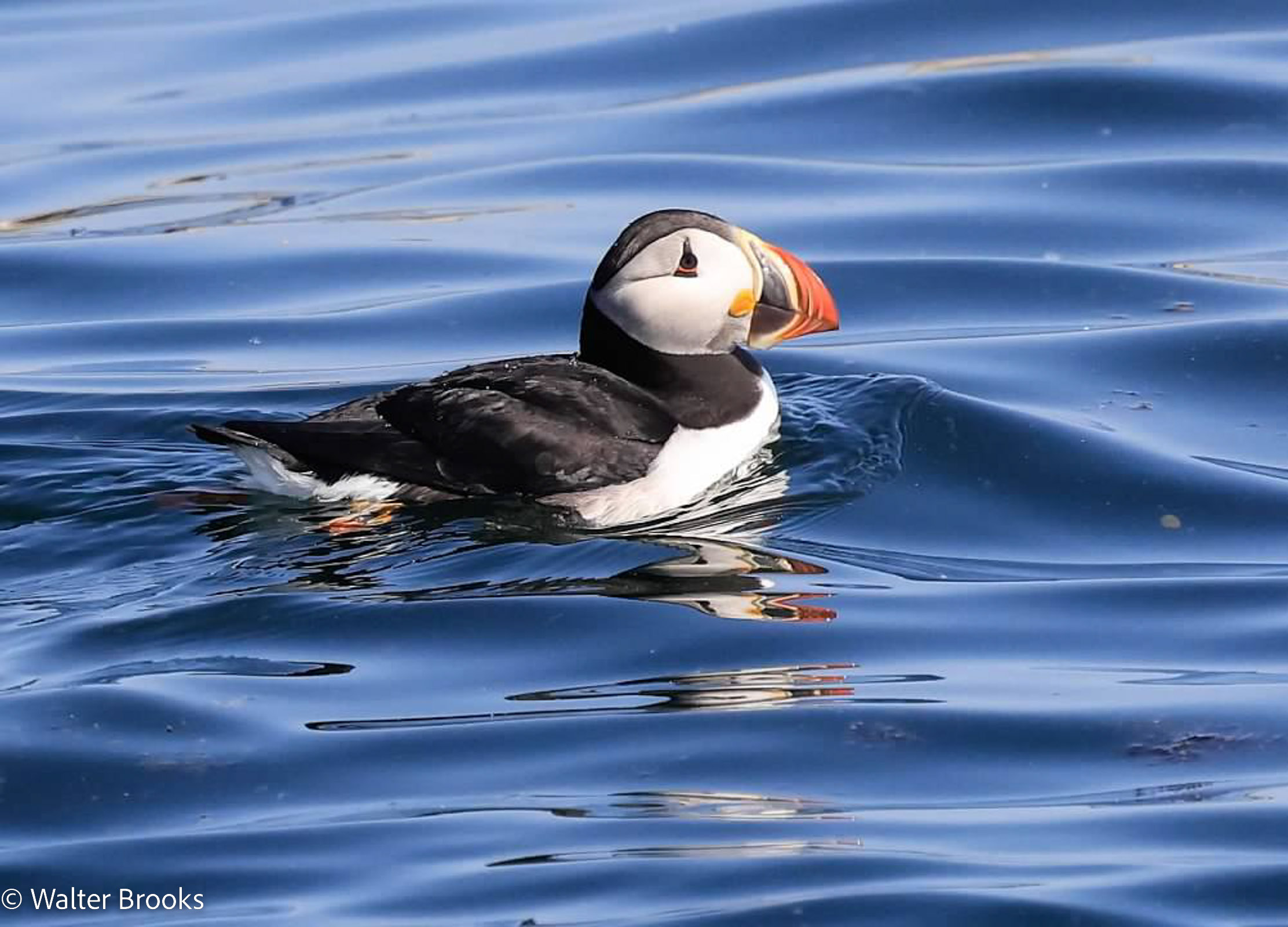
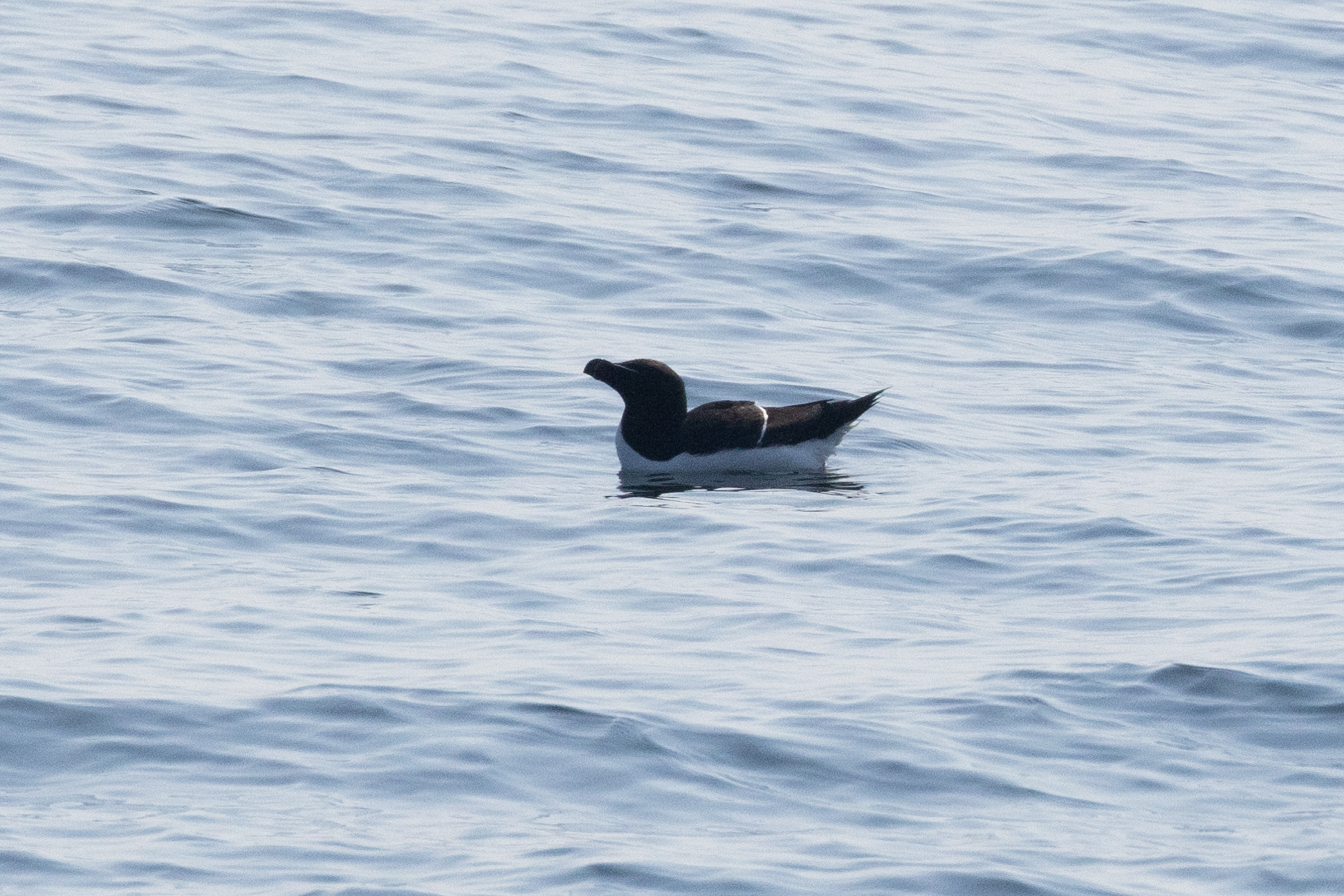
The amazingly calm conditions and unusually warmth worked in our favor, as many of the island’s Atlantic Puffins and Black Guillemots were in the water instead of loafing on the rocks, allowing us to drift closely to many of them. One of the island’s ephemeral Razorbills was spotted near the boat, giving us long and good looks as well.
Razorbill.
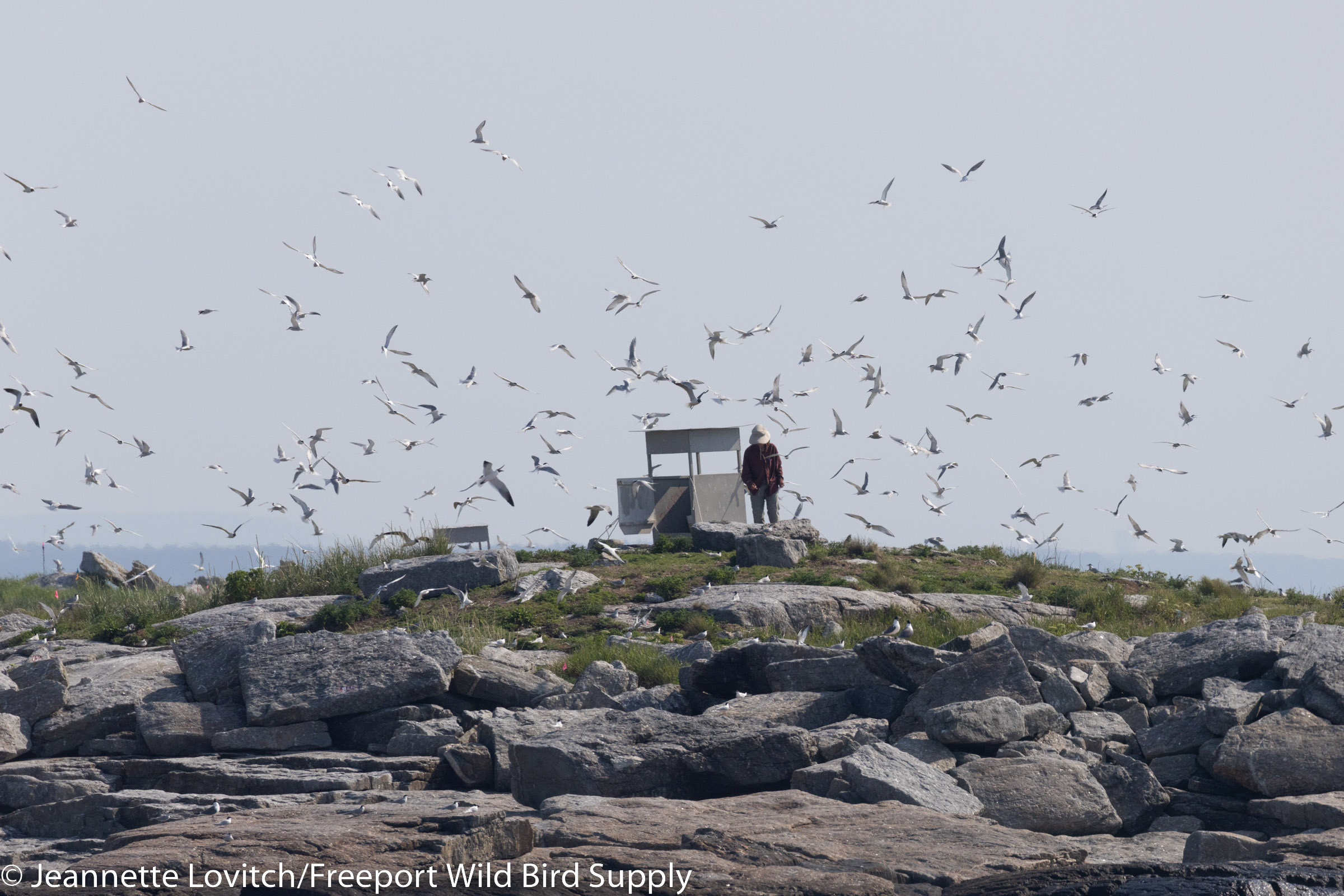
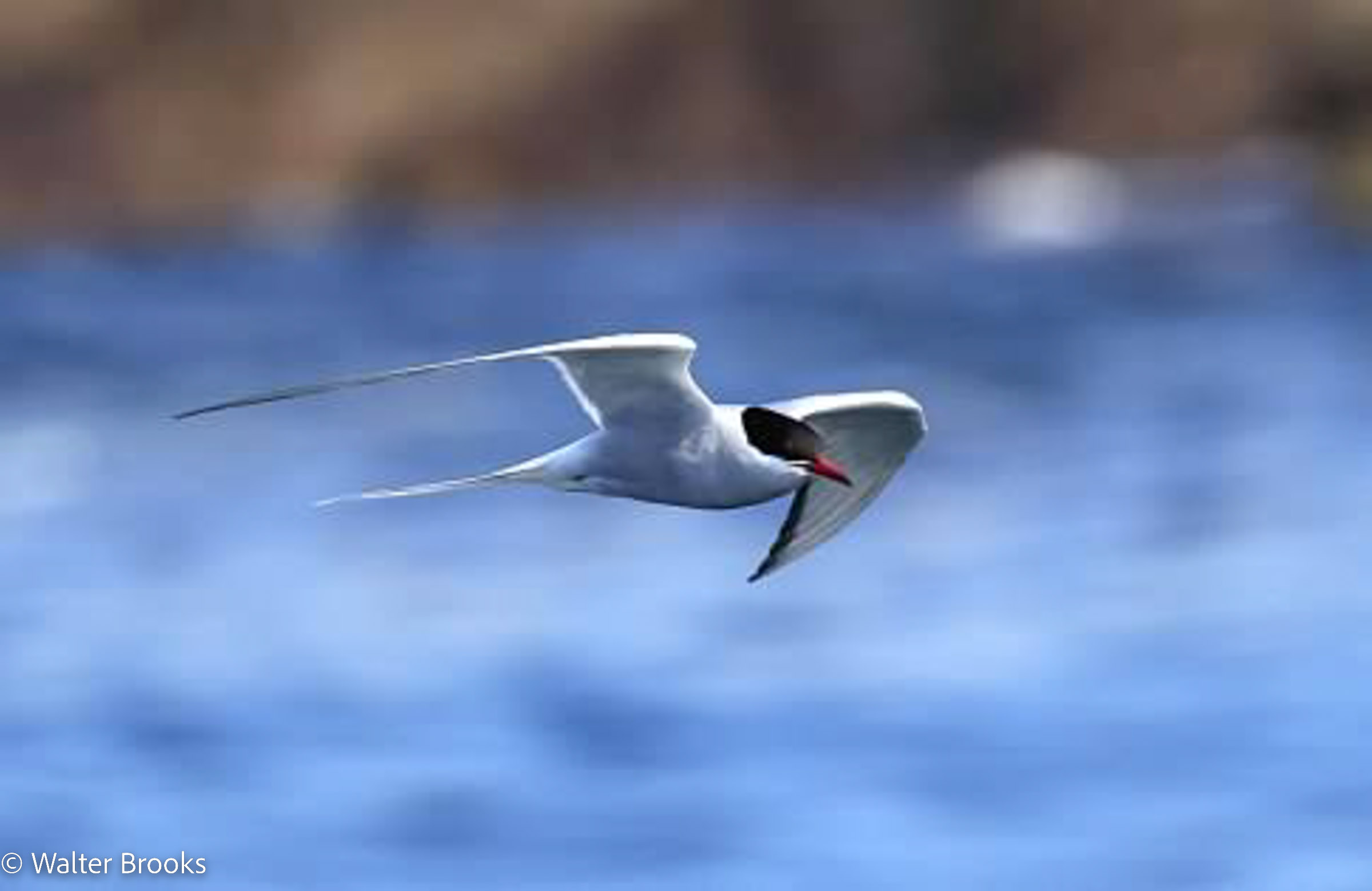
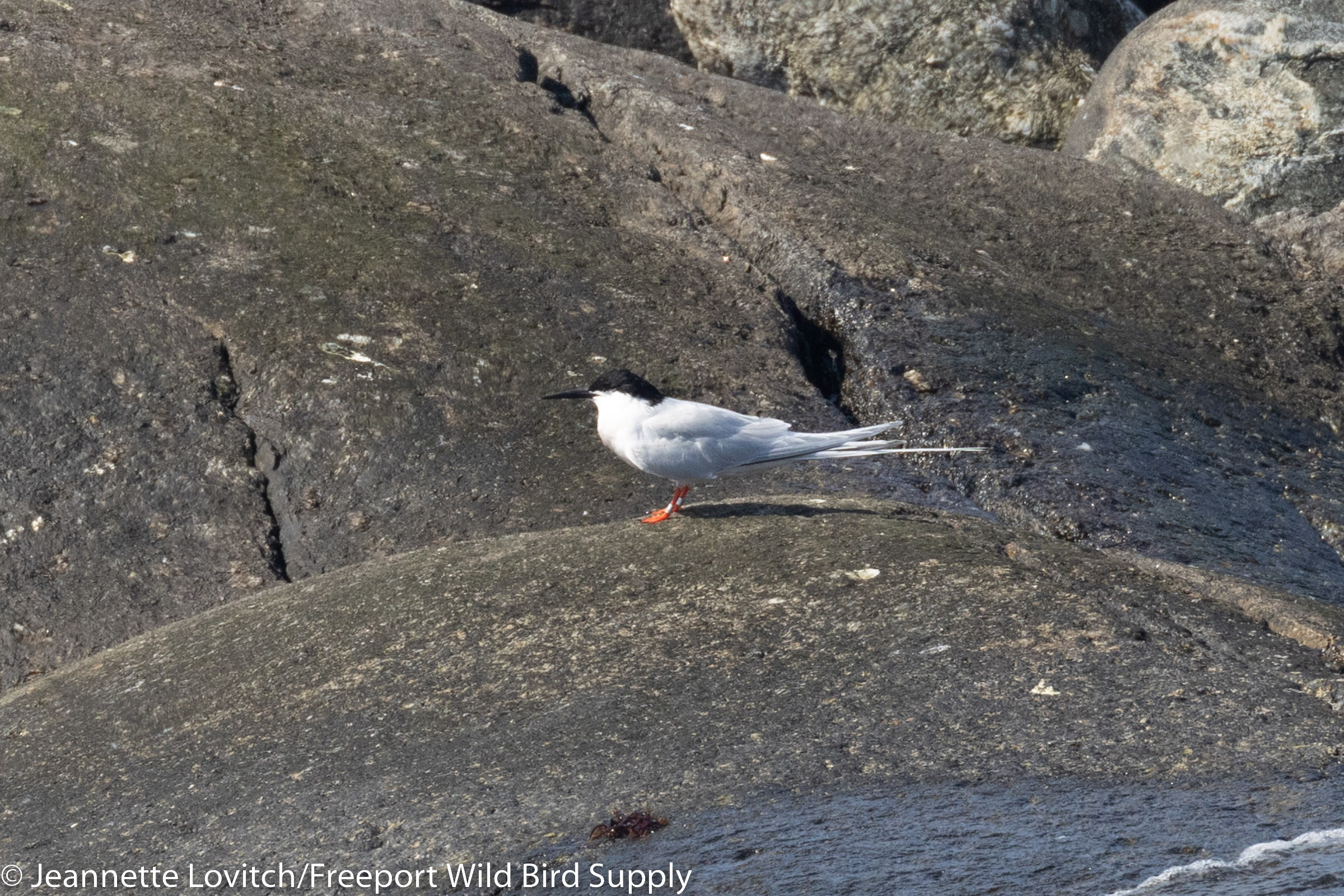
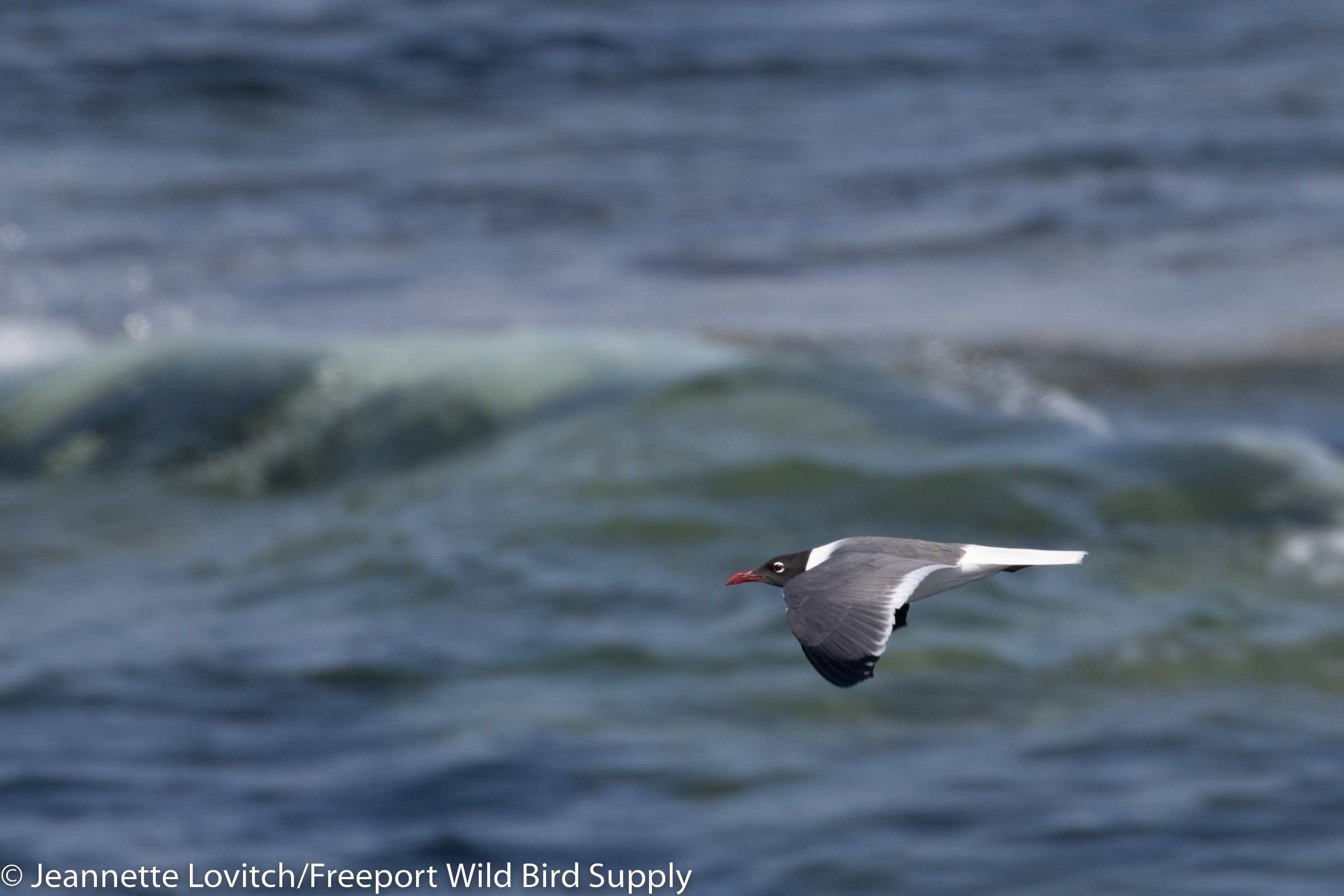
Of course there were the terns, and for a change, both Roseate and Arctic were easy to isolate for all to see. With the help of my spotters, and a cooperative pair of Roseates on an obvious rock, everyone saw each species well, as well as many hundreds of Common Terns of course. And a thousand or so Laughing Gulls, too.
Arctic Tern.
Roseate Tern.
Laughing Gull
Common Eider.
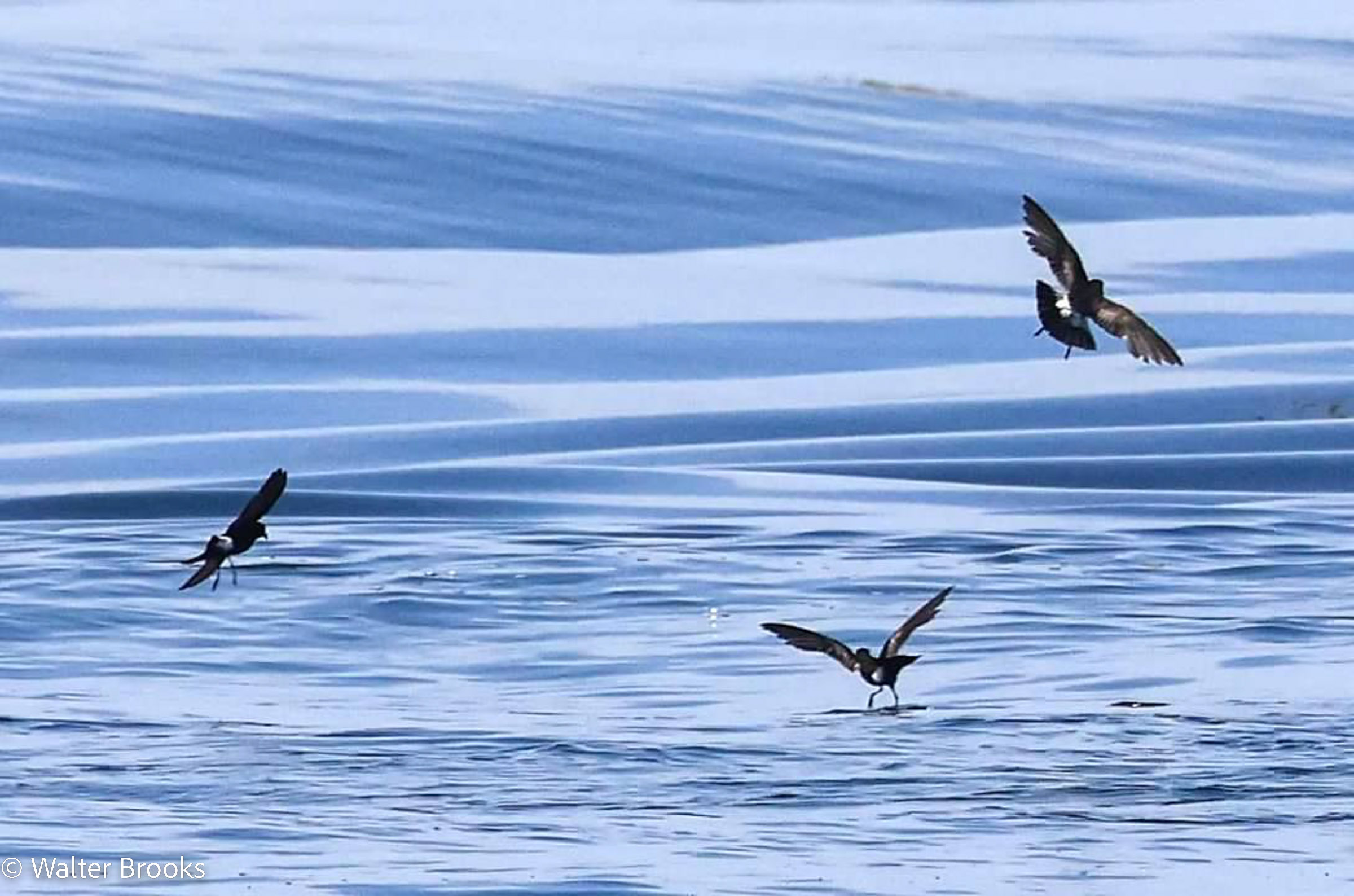
Satisfied with our views of the island’s denizens, we turned offshore and followed the Arctic Terns to deeper waters. It wasn’t too long before we started seeing scattered Wilson’s Storm-Petrels, but we slammed on the breaks when I spotted a Common Murre on the water up ahead. Captain Steve was able to circle the bird for all to see and photograph before we continued on; the murre was most obliging. It also made for the hoped-for 4-alcid day, which is always a challenge this far south.
The lack of swell allowed us to make good progress and afforded us the chance to check three offshore hotspots. A good number of Wilson’s Storm-Petrels and a few Northern Gannets were at Murray Hole, but we motored through it.
We laid down a mile-long chum slick at The Kettle, but only a few of the many Wilson’s Storm-Petrels came in to check it out. I think it was simply too calm today – the scent wasn’t drifting, and birds – especially any shearwaters out here – were just not taking flight to forage; it’s just too inefficient without any wind for them to bother. But a fly-by from a southbound Ruby-throated Hummingbird nearly 20 miles offshore was unexpected!
We continued to tally Wilson’s when we set up a second chum slick at Mistaken Ground, but once again, little was interested, and only a few Wilson’s and gannets were to be seen.
Despite our extended time with the charter, it was soon time to head back to port, but we kept our eyes peeled throughout the trip. On the way back, we had a flock of 12 Red-necked Phalaropes buzz by and eventually land on the water, but we were going too fast and behind schedule to be able to turn around in time. Later, we passed not one, but two Basking Sharks, which was a real treat.
Harbor Porpoise and Harbor Seals were seen now and again, but overall, the offshore waters were quite slow – especially with gulls. The few gulls around didn’t even seem interested in our popcorn and suet, either.
Robby contemplates the meaning of life…and chum.
Our tally of Wilson’s Storm-Petrels was decent enough, but sadly, this would be our only tubenose of the day. Northern Gannets were in low numbers, as if often the case in early June, and whatever shearwaters may have already arrived may simply have been sitting on the water somewhere waiting for a breeze. I also felt terrible that not everyone saw the phalaropes.
Nonetheless – thanks to a perfect visit at Eastern Egg Rock and a random Common Murre floating offshore – I would call the day a smashing success! And for $40, few complaints were audible. The weather helped, too.
Rich talks optics.
Thanks to Zeiss for making this idea of mine come to fruition, and thanks to Cap’n Fish’s for letting us charter the boat to make this all happen. And most importantly, thanks to everyone who signed up and helped us explore the Gulf of Maine at this woefully under-birded time of year. Every day is different offshore, and you never know what you will or will not see. Excitingly, I am pleased to announce that Rich said, “let’s do this again next year!” Hope to see you aboard!
Here’s the complete trip list, from dock to offshore and back. Thanks to Noah for compiling this!
This Common Murre was a lucky find in the middle of nowhere as we traveled offshore during our ½ day Zeiss Pelagic out of Boothbay Harbor last Friday.
With 6 of the 7 days this week spent guiding in some shape or form, mostly in the Rangeley area, the weather presented a real challenge! As a cut-off low spun offshore, activity was certainly reduced on many of my trips, and my birding time in between was rather limited. Therefore, my observations of note over the past seven days were limited to the following – in addition to all of our great local breeding specialty birds, of course!
2 Willow Flycatchers (FOY) and 2 Glossy Ibis – my 152nd Patch Bird here! – Old Town House Park, North Yarmouth, 6/3 (with Saturday Morning Birdwalk group).
2+ Red Crossbills and 1 migrant Yellow-bellied Flycatcher, Hedgehog Mountain Park, Freeport, 6/6.
2 adult CANADA JAYS, 20 Red Crossbills, etc, Hunter Cove Wildlife Sanctuary, 6/7 (with Down East Adventures Rangeley Birding Workshop tour group).
2 adult and 2 juvenile CANADA JAYS, 11+ Red Crossbills, 1 Palm Warbler, etc., Boy Scout Road, Rangeley, 6/8 (with Down East Adventures Rangeley Birding Workshop tour group).
1 BOREAL CHICKADEE, 20 Red Crossbills, etc, Quill Hill, Dallas Plantation, 6/9.
1 adult Great Black-backed Gull, Lakeside Park from porch of Lakeside & Main, Rangeley, 6/9 (with Birds on Tap! Event for Rangeley Birding Festival group.
Meanwhile, as I slowly catch up on trip reports, here’s my travelogue from Memorial Day Weekend on Monhegan, including daily trip lists and lots of Jeannette’s photographs. For those waiting for the daily birdlists, I apologize for the delay.
Not surprisingly for the end of May, Blackpoll Warblers were the dominate migrant on Monhegan this weekend. However, we never tired of seeing both males (above) and females (below) so well each and every day.
A point-blank Bay-breasted Warbler. Up close and personal Magnolia Warblers, Northern Parulas, and 9 other species of warblers including more Blackpoll Warblers than we knew what to do with…and we hadn’t even made it up the hill of Dock Road yet!
In other words, our 2023 Spring Monhegan Migration Weekend tour got off to a great start as we really hit the ground running. Then, a calling Evening Grosbeak. A fly-by Black-billed Cuckoo…more. Hmm… it was time to check in, and happily, shed a few layers.
After lunch, the excellent birding continued, with highlights including a flock of 10 Bay-breasted Warblers, a spiffy male Orchard Oriole, and great looks at a Philadelphia Vireo. By day’s end, we had 59 species including 13 species of warblers – not bad for a mid-morning arrival!
Yellow Warblers (above) and Common Yellowthroats (below) were common and conspicuous in and around town and other scrubby environs as expected.
It was cool and clear on Saturday morning, and the overnight radar image was a little ambiguous. Did the light westerly wind overnight push birds offshore as they approached from the south, or was that all just pollen and smoke haze in the atmosphere? However, the radar return did suggest birds offshore in the early morning, so we were excited to find out. Afterall, I did not expect yesterday to be so good, and it was excellent.
While only a few warblers were overhead by the time we assembled around the coffee pot at 6:30, it took a while for us to leave the spruces behind the Trailing Yew, as we had a nice pocket of warblers and good early-morning activity. We teased out a Blackburnian Warbler – the only one of the weekend, and the 3 White-winged Crossbills that have been on the island paid us a visit. Later in the morning, we caught up with the stunning male Dickcissel that has been around for a while, and were among the first to see a pair of recently-arrived House Finches (a surprising rarity on the island!). We also found a flock of 10 tardy White-winged Scoters and a total of 6 Surf Scoters that briefly visited Deadman’s Cove.
After lunch, we had the female/immature Summer Tanager, a female Orchard Oriole, found an Olive-sided Flycatcher, and while the afternoon was overall rather quiet, we had lots of great studies of a variety of birds, especially Blackpoll Warblers.
Although far from one of our best birding days on the island, it was noteworthy how well we saw just about everything. Even with a full group, birds were overwhelmingly cooperative, and everyone thoroughly enjoyed the birding…and another beautiful day of weather!
Many of our common warblers were easy to see, photograph, and enjoy throughout the weekend, such as this Northern Parula (above) and Black-and-white Warbler (below).
Saturday night into Sunday morning saw another ambiguous radar image, but the overall small number of new arrivals suggested that most of the return was something other than birds this day.
That being said, we started the day with one of the birds of the trip when I nearly spit out my coffee when I realized that flock of cormorants that looked strange was actually a flock of 9 Glossy Ibis. They circled the town, looked to be pondering the town marsh, and then soared up high and over Lighthouse Hill. Incredibly rare for the island, these were a new “island bird” for me, and we felt very fortunate that we were one of the only birders (I believe only one other birder saw them at all) on the island that got to see them. The “lingering around the coffee pot at the Yew” strikes again!
As expected, it was relatively slow overall, but even after the excitement of the ibis, we continued to enjoy ourselves. We had great looks at a lot of things all morning, including common warblers like American Redstarts and oodles of Blackpolls. We had our best looks yet of feeding Red Crossbills – they were all over the island this spring! – spotted a Peregrine Falcon, and continued to marvel at the growing flock of swirling Blue Jays contemplating a trip back to the mainland.
Ring-necked Pheasants kept us entertained as always, however.
After breakfast, we had another good find when a Purple Martin flew over us, and a bigger flock yet of Red Crossbills entertained us for a while. Jeannette arrived and joined the group to help carry my scope and to take photographs for this trip report, as well as help us find more birds.
Juvenile Red Crossbill.
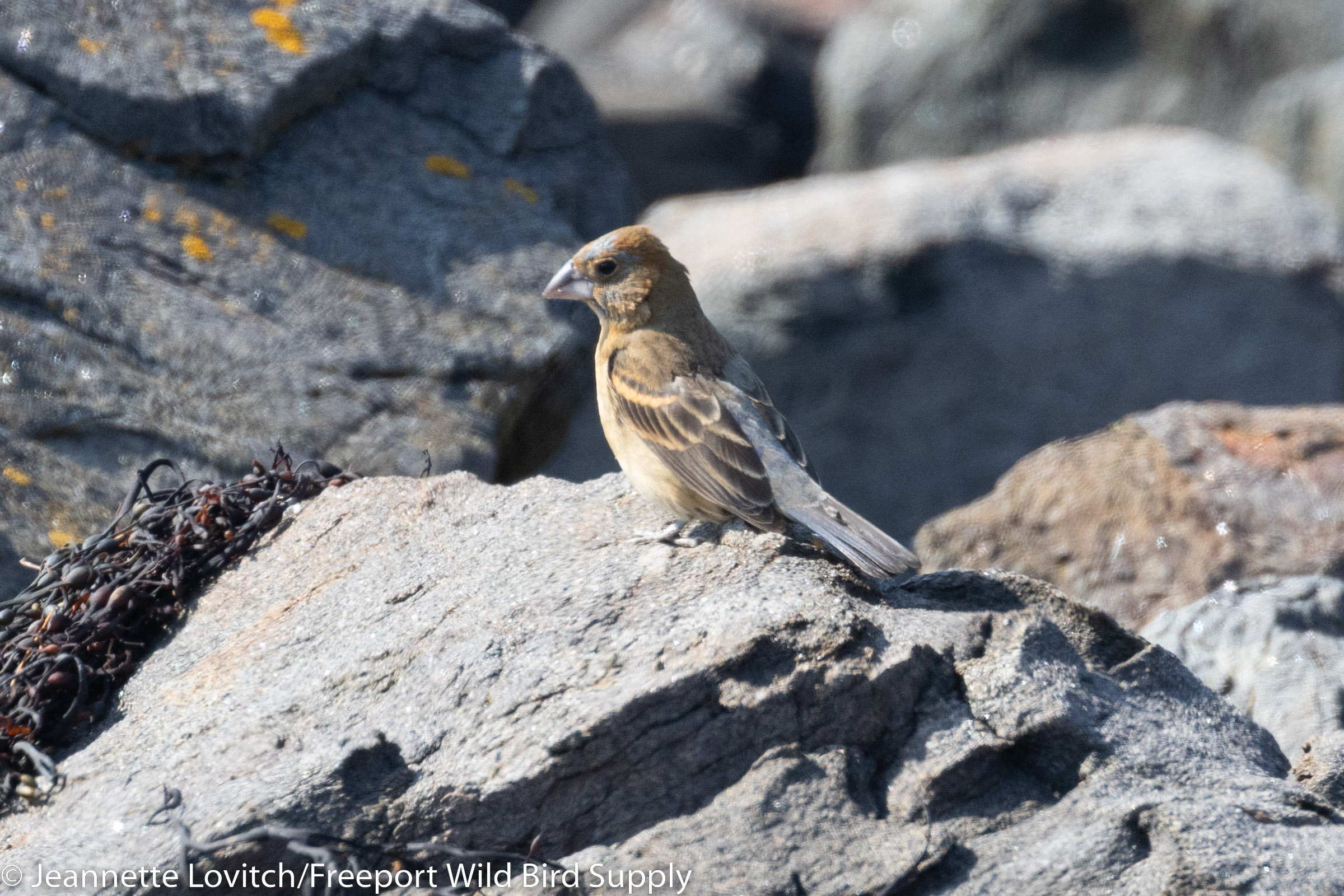
It was warm and fairly slow, so I needed all the help I could get. Regardless, we added species to our trip list here and there in the afternoon, with quality surpassing quantity. We visited the long-staying 1st year male Blue Grosbeak that has taken up residence at Lobster Cove, where, unlike most Blue Grosbeaks, it has taken to flycatching for seaweed flies in the wrack. Why it is doing this no one knows, but it was a fascinating behavior to watch. Birds and birding on Monhegan never cease to amaze!
The Blue Grosbeak.
A little later, we found an immature Broad-winged Hawk, or again, it found us, as it passed right over us as we poked around the Underhill Trail to find some birds in the shade and in cover. It was often a struggle to find birds this afternoon, and it was downright hot! But I heard very few complaints compared to the slow days when it’s 45-degrees, windy, and raining!
We spent a lot of quality time observing birds today, getting to know their behavior and natural history, such as these courting Cedar Waxwings.
While also practicing our field ID skills, such as Eastern Wood-Pewee.
And enjoyed whatever warblers we did encounter, including this male Black-throated Green Warbler.
Monday saw even further reduced activity, with a very summer-like feel to the birding. The migrant flock of Blue Jays built up to at least 46, a Pine Siskin must have just arrived, and some of us even spotted the Virginia Rail! While passage migrants were few – almost all Blackpoll Warblers – we still had a great day of birding thanks to continued great views of most of what we were finding. There was a Northern Parula nest that a friend found for us to marvel at, and we had quality time once again with a family group of Red Crossbills. Watching them, especially the juveniles, eating buds and cones of Red Spruce at close enough distance to see if they were “righties” or “lefties” was memorable, and more than worth the visit. We had the male Orchard Oriole again, and paid the Blue Grosbeak another lengthy visit.
We took some time to scan the skies over the marsh while also enjoying “Lefty,” the Red-winged Blackbird with white outer primaries on only his left wing. He’s back for the second year.
One of the few birds we missed as a group all weekend was a long-staying but frustrating Snowy Egret that never seemed to stay in the same place long. It was reported at the Ice Pond while we were having breakfast, and Jeannette and I raced down to see it. The “racing” part after the new and ample breakfast buffet at the Trailing Yew may not have been the best decision, however, we got the bird! It was another island bird for me (#226) and I am glad I made the decision to skip the break to chase it, as it was long gone by the time our group arrived at the Ice Pond. I always like to get those chases out of my system before making a bad leadership decision and marching people across the island for a bird that only I cared about! (Since they are locally common on the mainland, only an island-lister cares about such silliness).
As the afternoon wore on, the group slowly moseyed away from the Blue Grosbeak-evolving-into-a-flycatcher and made our way back to town to catch the last ferries of the weekend, bringing the tour to a close.
A friend found a Northern Parula nest under construction that we took time to marvel at. Here, the female brings some more material in to line the nest, which is nestled in a woven basket inside of large clumps of down-hanging Old Man’s Bear lichen.
However, as usual, Jeannette and I stayed around for another 24 hours to have a day off together and with friends. Leaving the brewery with one friend, I found a male Eastern Bluebird- an odd “new bird” for the date. Where the heck has he been or where did he just come from? Another Monhegan bird mystery…their migration ended a month ago.
Later, as we walked back from dinner with other friends, we heard at least three displaying American Woodcocks. The sunset was quite the stunner, too.
I wasn’t upset to not have a group on Monday, because my goodness, it was slow! I think what was left of the passage migrants cleared out overnight, and little if nothing came in. There were a few Blackpolls here and there, and maybe a few more American Redstarts than usual in the summer, but in and around town, that was about all.
So Jeannette and I decided to take a longer hike and check some oft-productive-but-less-often-birded areas. In doing so, we found a Field Sparrow on Horn Hill, and had a singing Yellow-bellied Flycatcher between Burnt Head and White Head. An adult male Sharp-shinned Hawk was a surprise – was it breeding here? – and a visit into the shaded woods added Winter Wren and Swainson’s Thrush to our weekend list.
We got excited when we saw a gray-backed, white-bellied flycatcher over at Gull Pond, but alas, it had the expected short, not-forked tail that we were hoping for!
Not including the 7 species Jeannette and I saw between 3:00 on Monday and when we departed at 3:15 on Tuesday, the tour list for the 12th annual Monhegan Spring Migration Weekend ended up a goodly 90 total species, despite only 15 species of warblers. The overall count was better than our last two tours, but still below our long-term average. But I cannot recall four (and five) days of simply gorgeous and warm weather on any of our prior tours! While the benign weather of late reduced the volume of migrants yet to pass through, and allowed many recent migrants to pass unimpeded overhead, I was pleasantly surprised by the final tally. It was also a high-quality list, with lots of “good” birds not seen by many in Maine away from the island. Oh, and my two island birds were nice, too!
Blue Jays are not the biggest feeder bird on this island!
Even our most common and familiar birds present speciaal photographic opportunities out here!
Species
5/26
5/27
5/28
5/29
Mallard
x
10
10
8
Mallard x American Black Duck
1
0
0
0
Common Eider
x
x
x
x
White-winged Scoter
0
10
0
0
Surf Scoter
0
6
0
0
Ring-necked Pheasant
x
6
6
5
Mourning Dove
8
10
8
10
Black-billed Cuckoo
1
0
0
0
Chimney Swift
0
0
1
0
Ruby-throated Hummingbird
6
4
3
1
Virginia Rail
h.o
h.o
1
1
Semipalmated Sandpiper
0
0
1
0
Greater Yellowlegs
0
1
0
0
Black Guillemot
20
30
x
20
Laughing Gull
6*
2
1
6
Herring Gull
x
x
x
x
Great Black-backed Gull
x
x
x
x
Common Tern
1 + 5*
0
0
0
Northern Gannet
0
0
0
1
Red-throated Loon
0
1
0
0
Common Loon
3*
1
0
0
Double-crested Cormorant
x
x
x
x
Great Blue Heron
0
0
1
3
SNOWY EGRET
0
0
0
1**
GLOSSY IBIS
0
0
9
0
Bald Eagle
2
1
0
0
Osprey
0
3
2
2
Red-bellied Woodpecker
0
0
1
0
Merlin
2
2
1
0
Peregrin Falcon
0
0
1
0
Eastern Kingbird
0
0
2
2
Olive-sided Flycatcher
0
1
0
0
Eastern Wood-Pewee
2
2
2
2
“Traill’s” Flycatcher
2
0
1
0
Least Flycatcher
2
1
1
0
Eastern Phoebe
1
1
1
1
Philadelphia Vireo
1
1
0
0
Red-eyed Vireo
6
8
4
4
Blue Jay
x
48
47
52
American Crow
x
4
6
x
Common Raven
0
1
1
0
Black-capped Chickadee
x
x
x
x
Tree Swallow
0
2
2
2
PURPLE MARTIN
0
0
1
0
Barn Swallow
1
0
1
1
Golden-crowned Kinglet
0
0
1
0
Cedar Waxwing
30
50
40
30
White-breasted Nuthatch
0
1
1
1
Red-breasted Nuthatch
1
0
0
0
Carolina Wren
3 h.o.
4
4
3
Gray Catbird
x
x
x
x
European Starling
x
x
x
x
American Robin
x
x
x
x
HOUSE FINCH
0
0
2
2
Purple Finch
0
1
2
2
WHITE-WINGED CROSSBILL
0
3
3
0
RED CROSSBILL
0
2
24
20
Pine Siskin
0
0
0
1
American Goldfinch
12
10
12
12
Chipping Sparrow
0
0
1
1-2
White-throated Sparrow
2
2
2
0
Savannah Sparrow
3
0
1
0
Song Sparrow
10
X
x
x
Lincoln’s Sparrow
0
1
1
0
Bobolink
1
1
0
0
ORCHARD ORIOLE
1
1
0
2
Baltimore Oriole
1
4
3
3
Red-winged Blackbird
x
x
x
x
Common Grackle
x
x
x
x
Northern Waterthrush
0
0
1
0
Black-and-white Warbler
3
4
4
3
Tennessee Warbler
8
4
3
0
Common Yellowthroat
x
8
x
x
American Redstart
5
25
16
8
Cape May Warbler
1
0
0
0
Northern Parula
15
10
12
12
Magnolia Warbler
10
8
6
8
Bay-breasted Warbler
11
3
0
2
Blackburnian Warbler
0
1
0
0
Yellow Warbler
10
20
15
15
Chestnut-sided Warbler
2
1
1
1
Blackpoll Warbler
25
60
25
20
Black-throated Green Warbler
1
1
3
1
Wilson’s Warbler
2
2
2
0
SUMMER TANAGER
0
1
0
0
Scarlet Tanager
0
1
0
0
Northern Cardinal
x
x
x
x
Rose-breasted Grosbeak
3
2
2
0
Indigo Bunting
0
1
1
0
BLUE GROSBEAK
0
0
1
1
DICKCISSEL
0
1
1
0
Day Total
60
66
69
54
Warbler Day Total
13
13
12
10
Trip Total
90
Warbler Trip Total
15
Here is the trip list four the four-day tour. * = seen from ferry only. **=not seen with tour group.
This first summer male Blue Grosbeak was present on Monhegan for at least a week, and unexpectedly, was flycatching for seaweed flies in shoreline rocks for most of the time, including the two days we looked at it with my Monhegan Spring Migration Weekend tour group.
With 5 days on Monhegan and one (half) day offshore, I enjoyed a lot of great birds this week. My observations of note over the past seven days included:
Monhegan Island with our Monhegan Spring Migration Weekend Tour group (full trip report and photos to come).
Daily:
Impressive numbers of Red Crossbills swirling around the island and tough to quantify, including many juveniles. High counts of largest flock(s) in the mid-20’s. Three WHITE-WINGED CROSSBILLS were present each day at least through the end of the weekend. Rare for the island, a pair of HOUSE FINCHES appeared on the 27th and continued through the end of our stay. Here are my group’s other daily highlights.
5/26:
11 Bay-breasted Warblers (FOY)
1 Cape May Warbler (FOY)
1 female Evening Grosbeak
1 Black-billed Cuckoo
1 continuing ORCHARD ORIOLE
1 Philadelphia Vireo (FOY)
5/27:
1 continuing male DICKCISSEL
1 continuing female/imm male SUMMER TANAGER
1 female ORCHARD ORIOLE
1 Olive-sided Flycatcher (FOY)
5/28:
9 GLOSSY IBIS – circled the island early in the morning but did not land. My 225th Island Bird!
1 probable immature male PURPLE MARTIN
1 continuing 1st-year male BLUE GROSBEAK
1 immature BROAD-WINGED HAWK
1 continuing male DICKCISSEL
5/29:
1 pair ORCHARD ORIOLES
1 continuing SNOWY EGRET – Jeannette and I finally caught up with it for my 226th Island Bird!
1 continuing 1st year male BLUE GROSBEAK
5/30 (With Jeannette):
1 continuing male ORCHARD ORIOLE
1 Field Sparrow
Did not try to catch up with continuing rarities, although two quick checks did not turn up the Dickcissel or the Blue Grosbeak.
The Zeiss Pelagic with Cap’n Fish’s Cruises out of Boothbay Harbor, 6/2. This special mini-pelagic, sponsored by Zeiss Optics visited Eastern Egg Rock before heading 20 miles offshore. Trip report to come, but for now, the highlights:
1 Razorbill at Eastern Egg Rock
1 COMMON MURRE (between Eastern Egg Rock and Murray Hole)
350-400 total Wilson’s Storm-Petrels (FOY)
12 RED-NECKED PHALAROPES
TOURS AND EVENTS:
I’ll see you next week at the Rangely Birding Festival! Most (but not all) tours are sold out, but everyone can join me for the free and open to the public Birds on Tap! Event at Parkside and Main (beverages not included)!
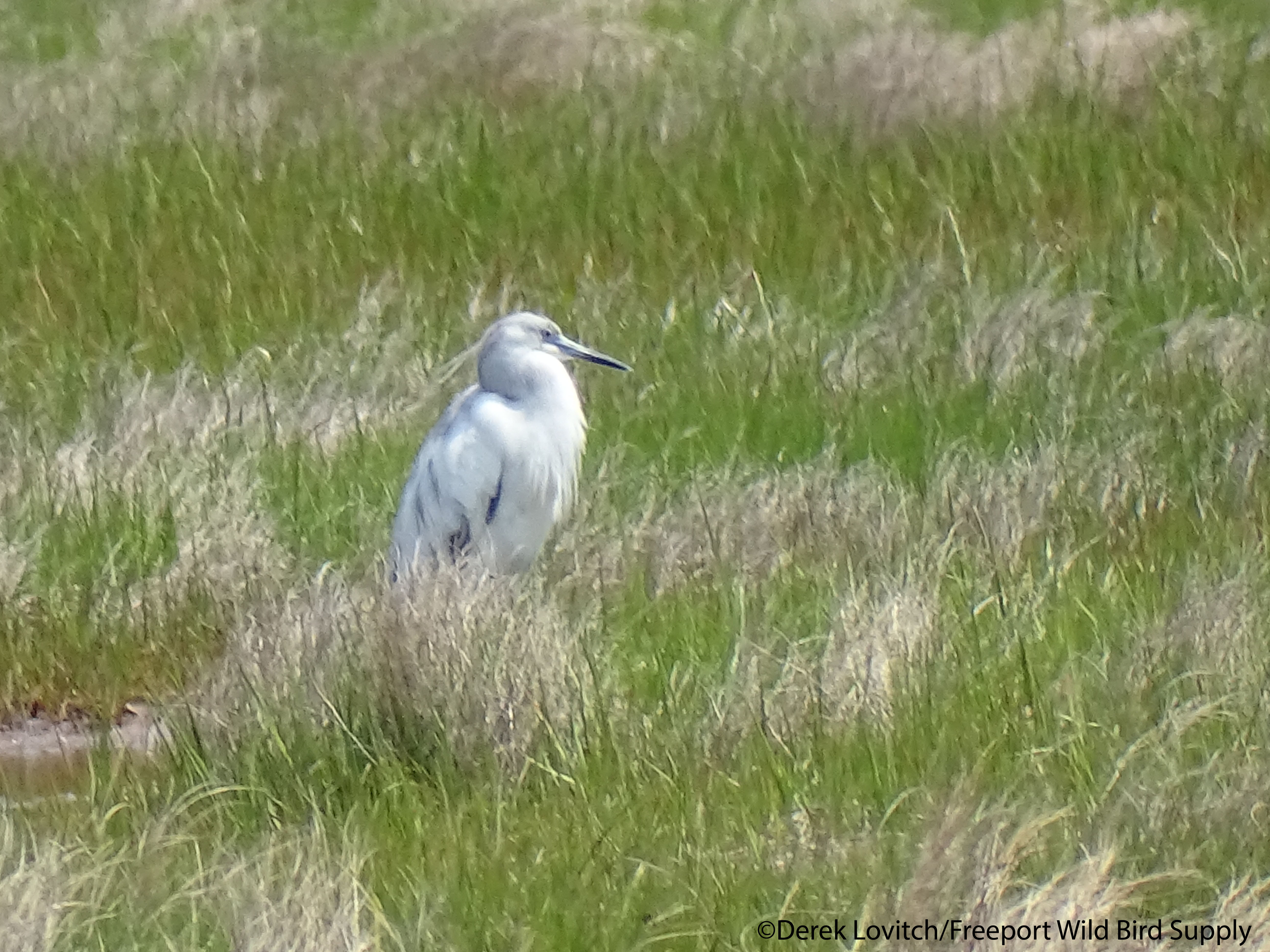
This reported Little Blue Heron x Snowy Egret Hybrid in Spurwink Marsh of Cape Elizabeth may add to the mix of ultra-rare hybrid herons that have been occurring annually since 2012 in the Greater Scarborough Marsh area. Or does it? See below.
The last cadre of migrants are arriving, and the late spring “rarity season” is now upon us. With new arrivals, breeding birds on territory, and the expectation of the unexpected, it was a great week of birding for me as I head out to Monhegan Island with our annual tour group.
My observations of note over the past seven days included:
1 continuing reported LITTLE BLUE HERON X SNOWY EGRET HYBRID, Spurwink Marsh, Cape Elizabeth, 5/22 (with Jeannette, et al). Present since 5/16, this would be the first record of this hybrid combination in Maine, and one of the few ever. Or, is this just a funky 1st or second summer Little Blue Heron that is showing oddly dark legs? Plus if it is truly a hybrid with a small white heron, I am not sure how we would rule out Little Egret (or a hybrid that includes Little Egret) as the other half of the mix, especially with the long-ish-looking dual wiry plumes. Furthermore, some folks have raised doubts about even the potential of mixed parentage here. While clearly different from the TRICOLORED HERON X SMALL WHITE EGRET SPP hybrids that have been in Scarborough Marsh since 2012, I hypothesized about the possibility of Little Blue joining the mix(es) in my 2021 article in North American Birds. I saw the bird again on the 23rd with clients, and obtained better photos than the evening before. Unless of course, my fascination with the hybrid herons of Maine is clouding my judgement here? (Edited for clarity and for minimizing definitives*)
The bicolored bill and blue-gray lores looks fine for Little Blue Heron, but the bill seems a little longer and thinner. The two wiry plumes on the back of the head also look longer and wispier than a Little Blue – could it suggest that the small white egret that’s 50% of its blood (we think) is actually a Little Egret…or the Little Egret x Snowy Egret hybrid…or…
The extra bushy plumes suggestive of Snowy is evident here, and are the soles of the feet a little yellowish? Other photos show the blakcish legs better than this, and 1st summer Little Blue Heron should have uniformly yellow-green legs, especially if still this white.
Also very Snowy/Little-like are the bushy plumes on the foreneck. When it shook, I also observed some whispy white plumes on the back…neither of these should be so fluffy and obvious in a pure Little Blue Heron, especially in its first summer.
***5/26 am edits: The more I think about and study this bird, the less sure I am. It bothers me that the lores and bill are spot on for a Little Blue. But would color develop further when in high breeding, which it won’t reach until next year? Could this just be a super-shaggy-looking Little Blue? Howver, the legs are black or blackish, which is not a characteristic of Little Blue Heron at any age. There seem to be too many anomolous features here to dismiss it as just another splotchy 1st-summer Little Blue. Perhaps, as the summer goes on, and more adult-like characteristics develop, a true pattern and its presumptive ID will become apparent. Hope it sticks around in the same area!**
1 BLACK-NECKED STILT, Eastern Road Trail, Scarborough Marsh, 5/23 (with clients from Maine and Idaho). First spotted by one of my clients as we were split up and scanning both sides of the marsh for sharp-tailed sparrow activity. Awesome find, Ralph! Here’s a lousy, one-armed phone-scoped photo of the bird in the distance.
1 Blue-gray Gnatcatcher, Garcelon Bog Preserve, Lewiston, 5/25.
With the advancement of the season, my personal “FOY’s” this week were limited, as expected in late May, but many of our latest-arriving breeders are showing up on territory now.
1 Alder Flycatcher, Long Reach Preserve, Harpswell, 5/21 (with Harpswell Heritage Land Trust tour group).
1 MOURNING WARBLER, Long Reach Preserve, 5/21 (with Harpswell Heritage Land Trust tour group).
1 Eastern Wood-Pewee, our property in Durham, 5/22.
1 Common Nighthawk, over Bayside neighborhood of Portland, 5/22 (with Jeannette).
3+ Saltmarsh Sparrows, Scarborough Marsh, 5/23 (with clients from Maine and Idaho).
2+ Nelson’s Sparrows, Scarborough Marsh, 5/23 (with clients from Maine and Idaho).
7 RED KNOTS, Pine Point, Scarborough, 5/23 (with clients from Maine and Idaho).
3 Short-billed Dowitchers, Pine Point, 5/23 (with clients from Maine and Idaho).
TOURS AND EVENTS:
Our June 2ndZeiss Pelagic is sold out, but we are starting a waiting list in case there are any late cancellations. Please email the store at info@freeportwildbirdsupply.com to get on it.
I haven’t been carrying my camera much, and with only one working arm still, my photography has not been very successful. But this Gray Catbird posed nicely for me at Hinckley Park on the 19th.
I had a very busy week of programming, with two tours and some private guiding. With limited free time in between, I made the most of it with some excellent morning outings. Highlights included lots of migrants and more new arrivals, as well as uncommon local breeding birds.
My observations of note over the past seven days included:
16 species of warblers led by 15+ American Redstarts and 10+ Black-and-white Warblers, Evergreen Cemetery, 5/14 (with Down East Adventures Spring Songbird Workshop tour group).
Unknown number in a small group of calling Red Crossbills, Evergreen Cemetery, 5/14 (with Down East Adventures Spring Songbird Workshop tour group).
1 pair SANDHILL CRANES, 3 YELLOW-THROATED VIREOS, 1 LOUISIANA WATERTHRUSH, and 1 BLUE-GRAY GNATCATCHER, Morgan Meadow WMA, 5/15 (with Jeannette. That was a great morning!)
30-40 Long-tailed Ducks, Stover’s Cove Preserve, Harpswell, 5/18 (with Harpswell Heritage Land Trust tour group).
19 species of warblers, led by 14 American Redstarts and 9 Black-and-white Warblers, but also including 5+ Tennessee Warblers, etc, Hinckley Park, South Portland, 5/19. My best warbler morning of the season so far.
4 Red Crossbills, Hinckley Park, 5/19.
My personal FOY’s this week once again included a mix of “they’ve been around for a while but I haven’t been in the habitat,” regular and on-time arrivals, a few species that have been slow to arrive given our abnormal spring weather pattern, and even an oddly early arrival or two.
4 Magnolia Warblers, Florida Lake Park, 5/13 (with Saturday Morning Birdwalk group).
1 YELLOW-BELLIED FLYCATCHER, Florida Lake Park, 5/13 (with Saturday Morning Birdwalk group. Exceptionally early; likely my earliest record by at least several days if not over a week).
1 Lincoln’s Sparrow, Florida Lake Park, 5/13 (with Saturday Morning Birdwalk group).
1 Blackburnian Warbler, Florida Lake Park, 5/13 (with Saturday Morning Birdwalk group).
3 Red-eyed Vireos, Evergreen Cemetery, 5/14 (with Down East Adventures Spring Songbird Workshop tour group).
2 Tennessee Warblers, Evergreen Cemetery, 5/14 (with Down East Adventures Spring Songbird Workshop tour group).
1 Cape May Warbler, Bradbury Mountain Spring Hawkwatch, 5/14.
1 House Wren, Hidden Pond Preserve, Freeport, 5/16 (with clients from Maine).
1 male Indigo Bunting, our feeders in Durham, 5/17.
10+ Bobolinks, Old Brunswick Road, Durham, 5/18.
8 Blackpoll Warblers, Hinckley Park, 5/19.
3 Swainson’s Thrushes, Hinckley Park, 5/19.
1 Black-billed Cuckoo, Hinckley Park, 5/19.
TOURS AND EVENTS:
We now have one spot open for all four days of our upcoming Monhegan Spring Migration tour, May 26-29th.
With my guiding season now in full swing, I have no choice but to be out in the field a lot, regardless of my shoulder situation. And with much finer weather and some good nights of especially Saturday and Thursday nights, the arrivals of migrants caught up to the date quite rapidly. Many new arrivals – as well as a lot of personal first-of-years since I had not been getting out much – resulted in a nice long list of highlights for me -and my clients – over the past 7 days.
My observations of note over the past seven days included:
10 Greater Yellowlegs, our property in Durham (thanks to a flood in our field), 5/5 diminishing to 3 by 5/7.
250-300++ White-throated Sparrow in impressive fallout, Evergreen Cemetery, Portland, 5/8 (with client from Spain).
1 female Red Crossbill, Evergreen Cemetery, 5/8 (with client from Spain).
10 species of warblers, Evergreen Cemetery, 5/8 (with client from Spain). This tied my latest date for reaching 10 species at one place in one morning for the first time of the season.
1 WHITE-WINGED SCOTER (looking very out of place) and a pair of RUDDY DUCKS, Sanford Lagoons, Sanford, 5/8 (with clients from Spain and Maine).
1 drake Northern Shoveler, Dunstan Landing, Scarborough Marsh, 5/8 (with clients from Spain and Maine).
1 pair LOUISIANA WATERTHRUSH, Morgan Meadow WMA, Gray/Raymond, 5/11 (with clients from Spain and Maine).
1 BLUE-GRAY GNATCATCHER, Florida Lake Park, Freeport, 5/11 (with clients from Spain and Maine).
The long list of my personal FOY’s this week also included:
1 Ovenbird, Florida Lake Park, 5/6 (with Saturday Morning Birdwalk group).
1 Nashville Warbler, Evergreen Cemetery, 5/8 (with client from Spain).
3 Chimney Swifts, Evergreen Cemetery, 5/8 (with client from Spain).
2 Yellow Warblers, Evergreen Cemetery, 5/8 (with client from Spain).
1 American Redstart, Evergreen Cemetery, 5/8 (with client from Spain).
1 Green Heron, Evergreen Cemetery, 5/8 (with client from Spain).
1 Black-crowned Night-Heron, Evergreen Cemetery, 5/8 (with client from Spain).
1 Chestnut-sided Warbler, Evergreen Cemetery, 5/8 (with client from Spain).
1 Prairie Warbler, Evergreen Cemetery, 5/8 (with client from Spain).
20+ Field Sparrows, Kennebunk Plains, 5/8 (with clients from Spain and Maine).
3 Vesper Sparrows, Kennebunk Plains, 5/8 (with clients from Spain and Maine).
1 Eastern Meadowlark, Kennebunk Plains, 5/8 (with clients from Spain and Maine).
2 Solitary Sandpipers, Sanford Lagoons, 5/8 (with clients from Spain and Maine).
1 Spotted Sandpiper, Sanford Lagoons, 5/8 (with clients from Spain and Maine).
1 Least Tern, Pelreco Marsh, Scarborough Marsh, 5/8 (with clients from Spain and Maine).
30+ Common Terns, Pine Point, Scarborough, 5/8 (with clients from Spain and Maine).
4-6 ROSEATE TERNS, Pine Point, 5/8 (with clients from Spain and Maine).
1 Eastern Kingbird, Dunstan Landing, Scarborough Marsh, 5/8 (with clients from Spain and Maine).
1 Northern Waterthrush, Florida Lake Park, 5/9.
1 Black-throated Blue Warbler, Florida Lake Park, 5/9.
1 Northern Rough-winged Swallow (finally, extremely late for my first of the year, and this one was not due to lack of visitation of its habitats), Florida Lake Park, 5/9.
1 Veery, Florida Lake Park, 5/9.
1 Cliff Swallow, Florida Lake Park, 5/9.
1 Ruby-throated Hummingbird, our yard in Durham, 5/9.
1 White-crowned Sparrows, feeders here at the store, 5/10.
14 Least Flycatchers, Morgan Meadow WMA, 5/11 (with clients from Spain and Maine).
2 Great Crested Flycatcher, Morgan Meadow WMA, 5/11 (with clients from Spain and Maine).
3-4 YELLOW-THROATED VIREOS, Morgan Meadow WMA. 5/11 (with clients from Spain and Maine).
1 Scarlet Tanager, Morgan Meadow WMA, 5/11 (with clients from Spain and Maine).
1 Warbling Vireo, Durham River Park, Durham, 5/11 (with clients from Spain and Maine).
1 Bank Swallow, Florida Lake Park, Freeport, 5/11 (with clients from Spain and Maine).
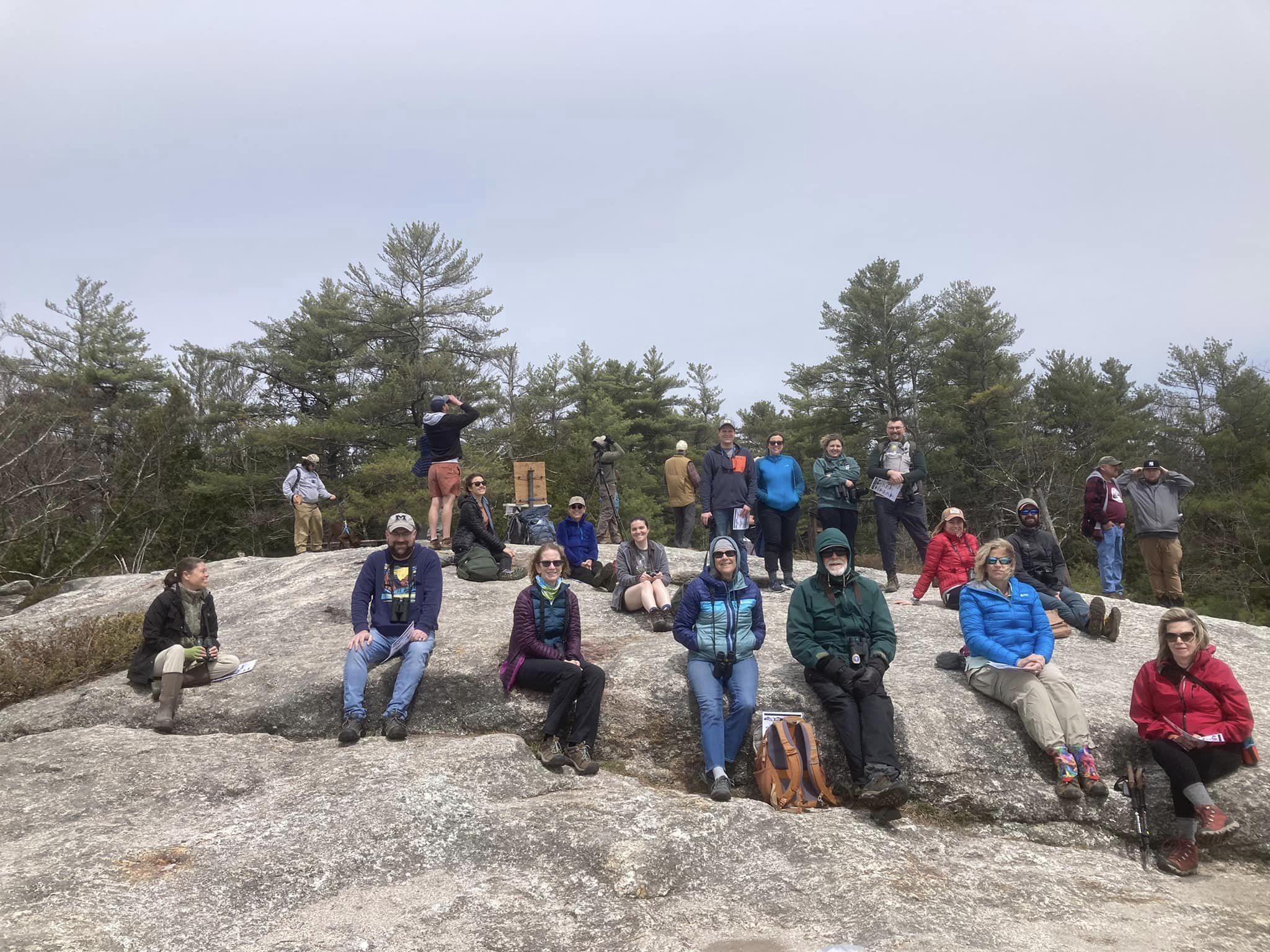
We enjoyed a great turnout of hawkwatchers and hawks for my hawkwatch workshop at Bradbury Mountain on the 29th as part of the 13th Annual Feathers over Freeport weekend of events.
In case you were wondering, the meteorological term for this week is “yuck.” However, despite the weather, some birds were pushing through. The storm also pushed a wreck of Red and Red-necked Phalaropes to the coast, and with reports of some very early arrivals and vagrant southern birds, there seems to be a rather widespread displacement/overshoot event caused by this massive and stubborn upper-level low rotating over the great lakes. I didn’t get out very much to help prove or disprove this, but I did have some decent birding this week. While migrants overall made very slow gains, I did have my best morning of spring so far this year…right in our yard!
My observations of note over the past seven days included:
1 Evening Grosbeak, Bowie Hill Road, Durham, 5/1 (with Jeannette).
3 Lesser Scaup, Sabattus Pond, 5/1.
6 species of warblers led by 50+ Yellow-rumped and 5-10 Palm, but also including 3 Pine, 2 Black-and-white (FOY), 1 Black-throated Green (FOY), and 1 Northern Parula (FOY), our property in Durham, 5/2. After corresponding with other local birders, I believe this was a localized, light fall-out caused by an isolated, dense fog bank that was centered around Lewiston-Auburn. Florida Lake Park, only about 9 miles away to the southeast, was nearly devoid of migrants for example (fide N. Gibb).
1 Red Crossbill, Littlefield Woods Preserve, Chebeague Island, 5/4 (with Chebeague & Cumberland Land Trust tour group).
7 Evening Grosbeaks, our feeders in Durham, 5/5.
My other personal FOY’s this week also included:
1 Greater Yellowlegs, Wharton Point, Brunswick, 4/30.
1 Black-bellied Plover, Wharton Point, Brunswick, 4/30.
1 RUSTY BLACKBIRD, our property in Durham, 5/2 through present.
6 Lesser Yellowlegs, Rte 136, Durham, 5/2
1 Least Sandpiper, Rte 136, Durham, 5/2
1 Baltimore Oriole, our feeders in Durham, 5/2 through present.
2 Gray Catbirds, feeders here at the store, 5/3 through present.
1 Rose-breasted Grosbeak, Chebeague Island, 5/4 (with Chebeague & Cumberland Land Trust tour group).
5 Laughing Gulls, Indian Point Preserve, 5/4 (with Chebeague & Cumberland Land Trust tour group).
3 Eastern Towhees, Indian Point Preserve, 5/4 (with Chebeague & Cumberland Land Trust tour group).
1 BLUE-GRAY GNATCATCHER, Indian Point Preserve, 5/4 (with Chebeague & Cumberland Land Trust tour group).
1 Great Egret, Cousin’s River Marsh, Yarmouth/Freeport, 5/4 (yeah, it’s been a while since I have been to Scarborough Marsh!)
As is often the case with prolonged cool, wet spells in early spring, Yellow-rumped (and Pine) Warblers descended on feeders. By week’s end, at least 14 were devouring suet, nuts, mealworms, and jelly in our yard in Durham.
Migration ground nearly to a halt for most of the week with a persistent onshore flow and lots of precipitation. Wednesday and Thursday nights, however, saw some good flights of passerines, with hawks moving once again on Thursday and Friday. My observations of note over the past seven days included:
1 female Evening Grosbeak, our feeders in Durham, 4/22.
This weekend (April 29-30) is the 13th Annual Feathers Over Freeport that we sponsor with public and private partners at Bradbury Mountain and Wolfes Neck Woods State Parks. We have a full slate of events all day, each day once again. The entire schedule and more information can be found here. All events are free with park admission.


















 Maine Birding Field Notes