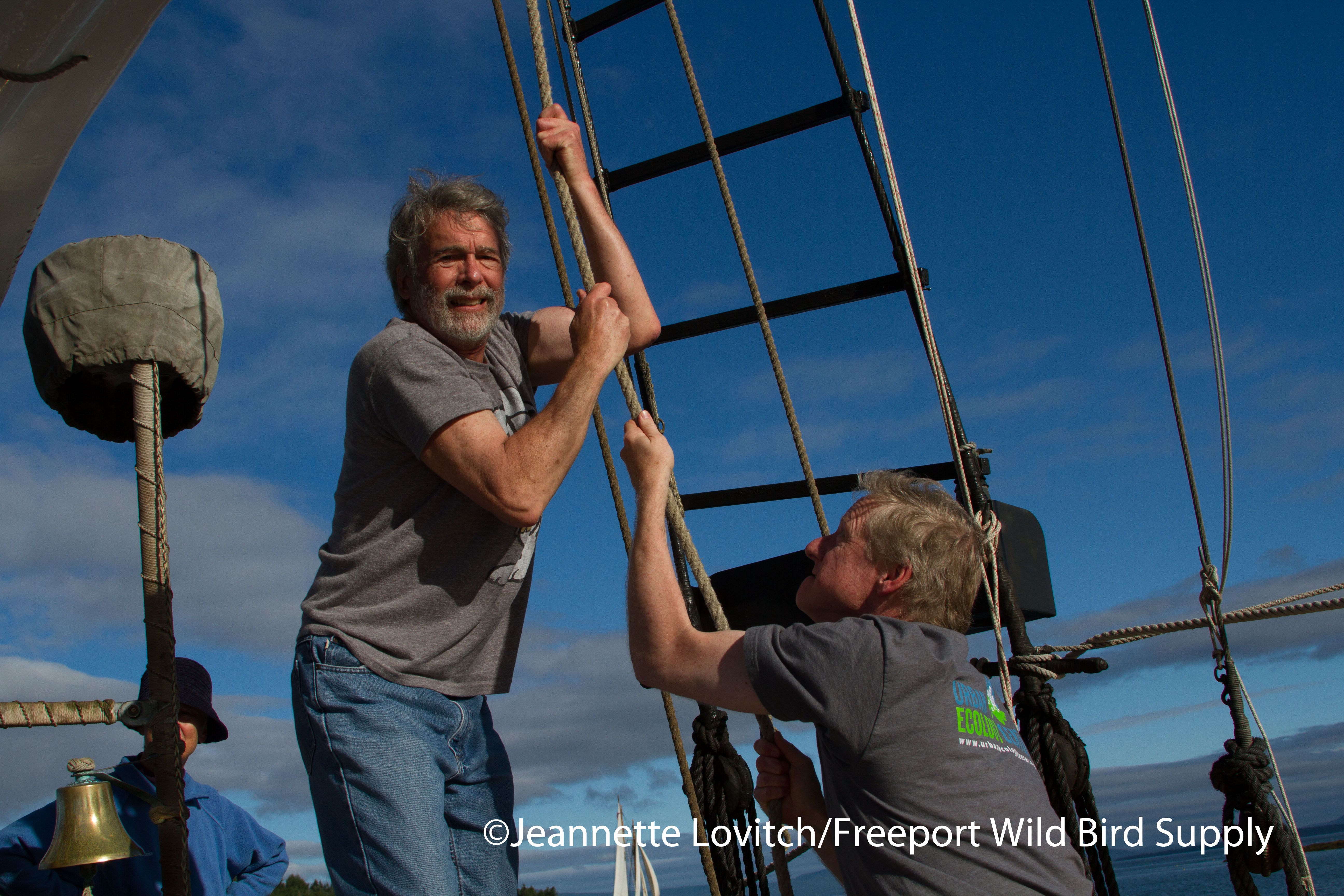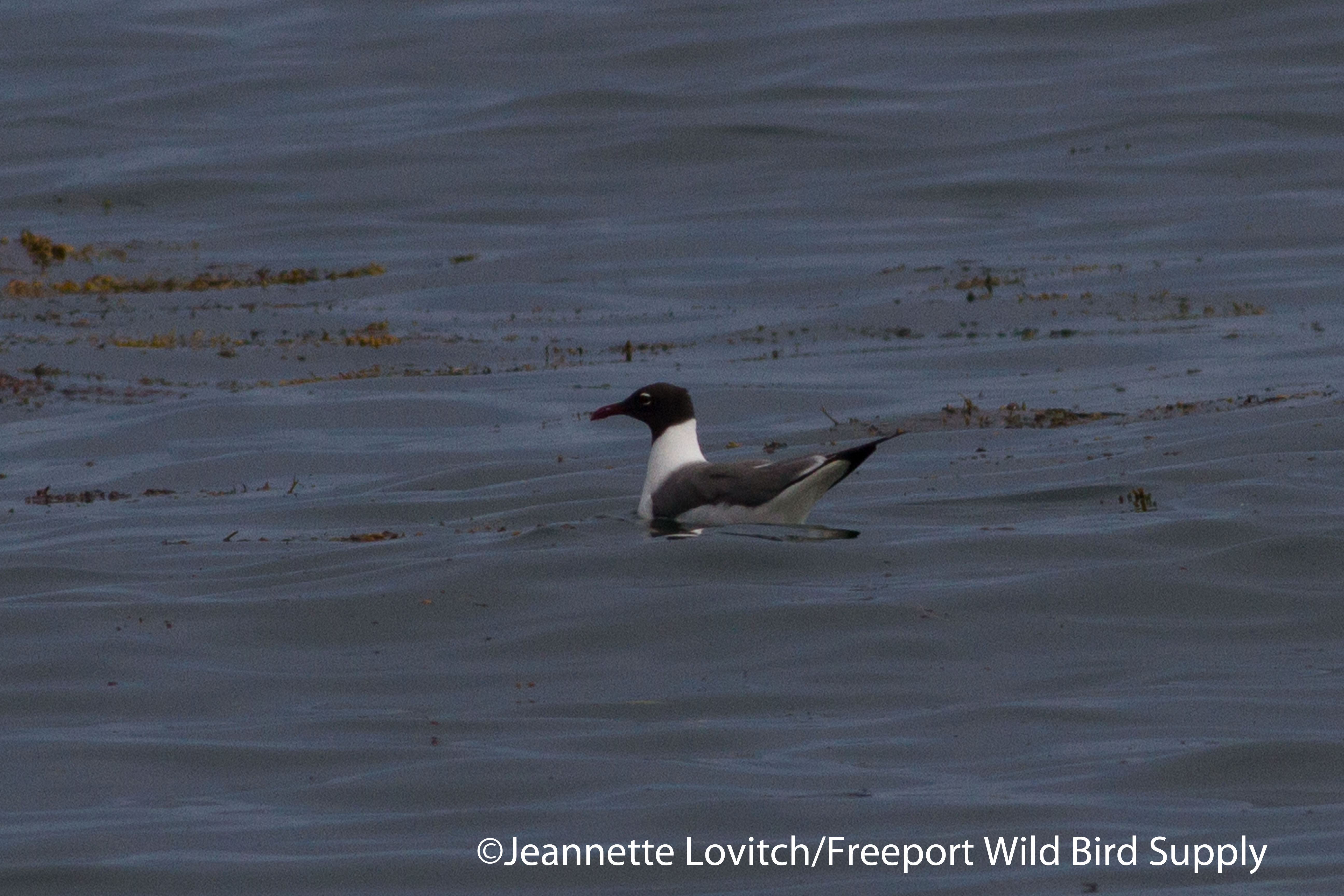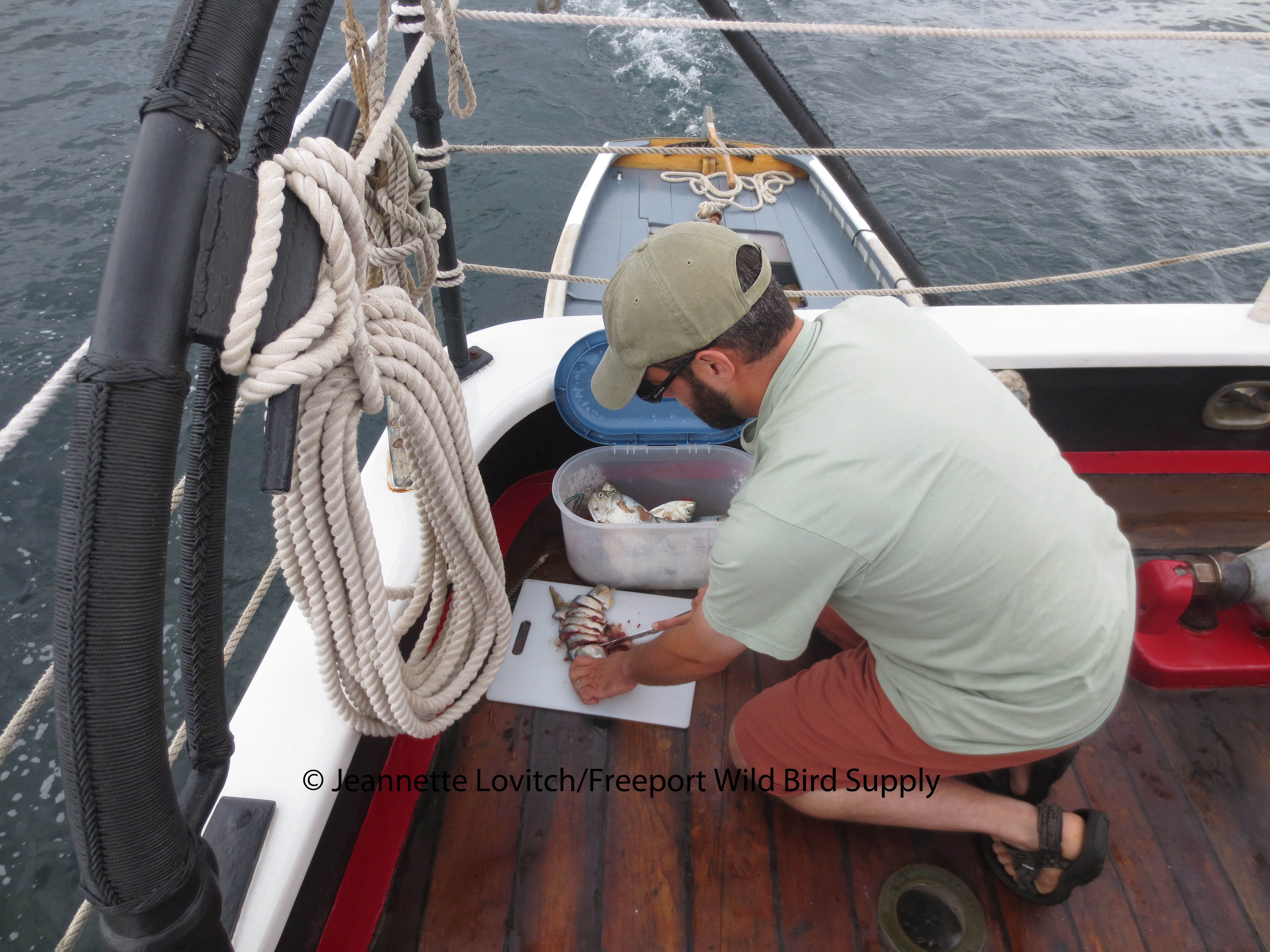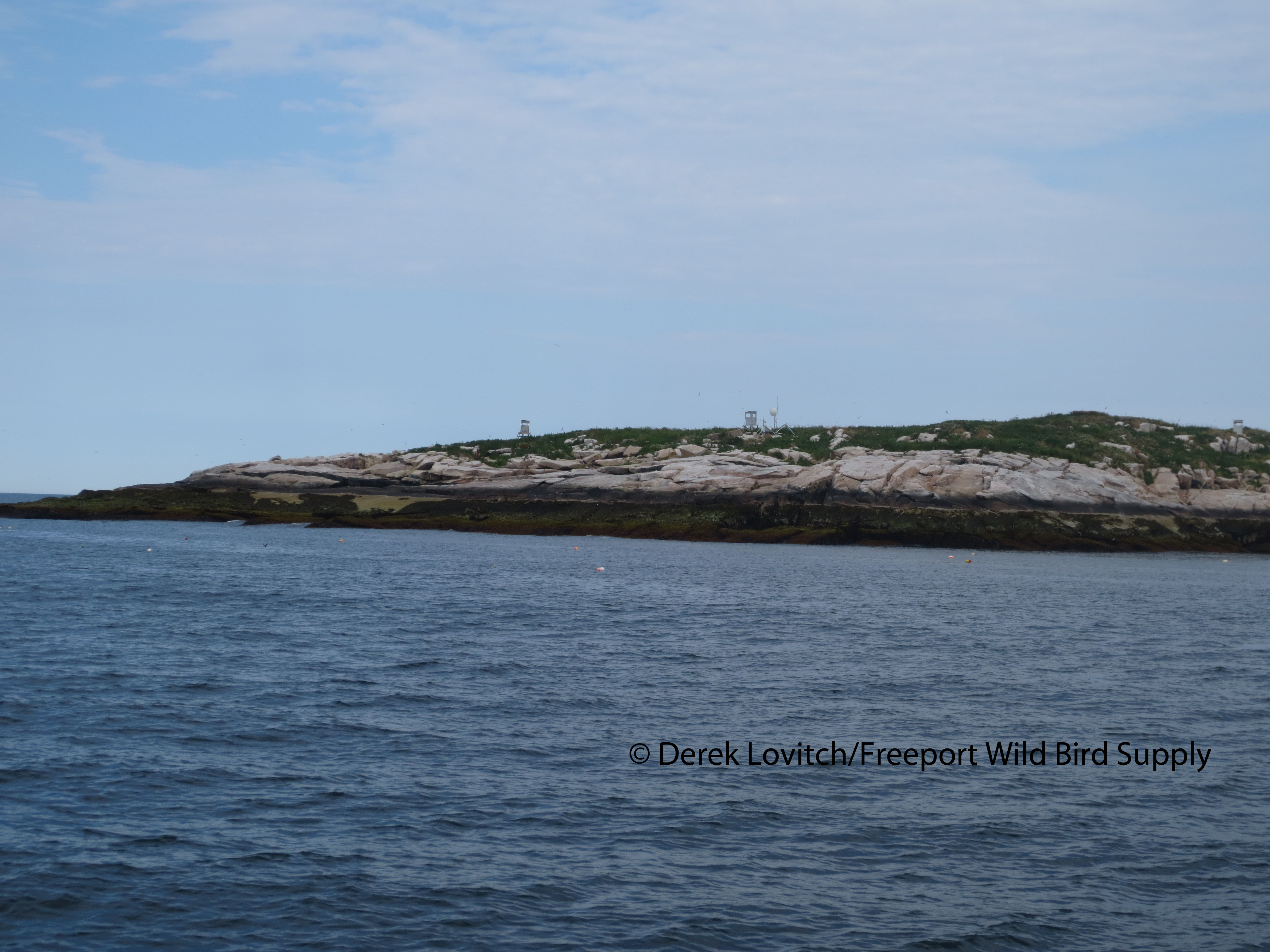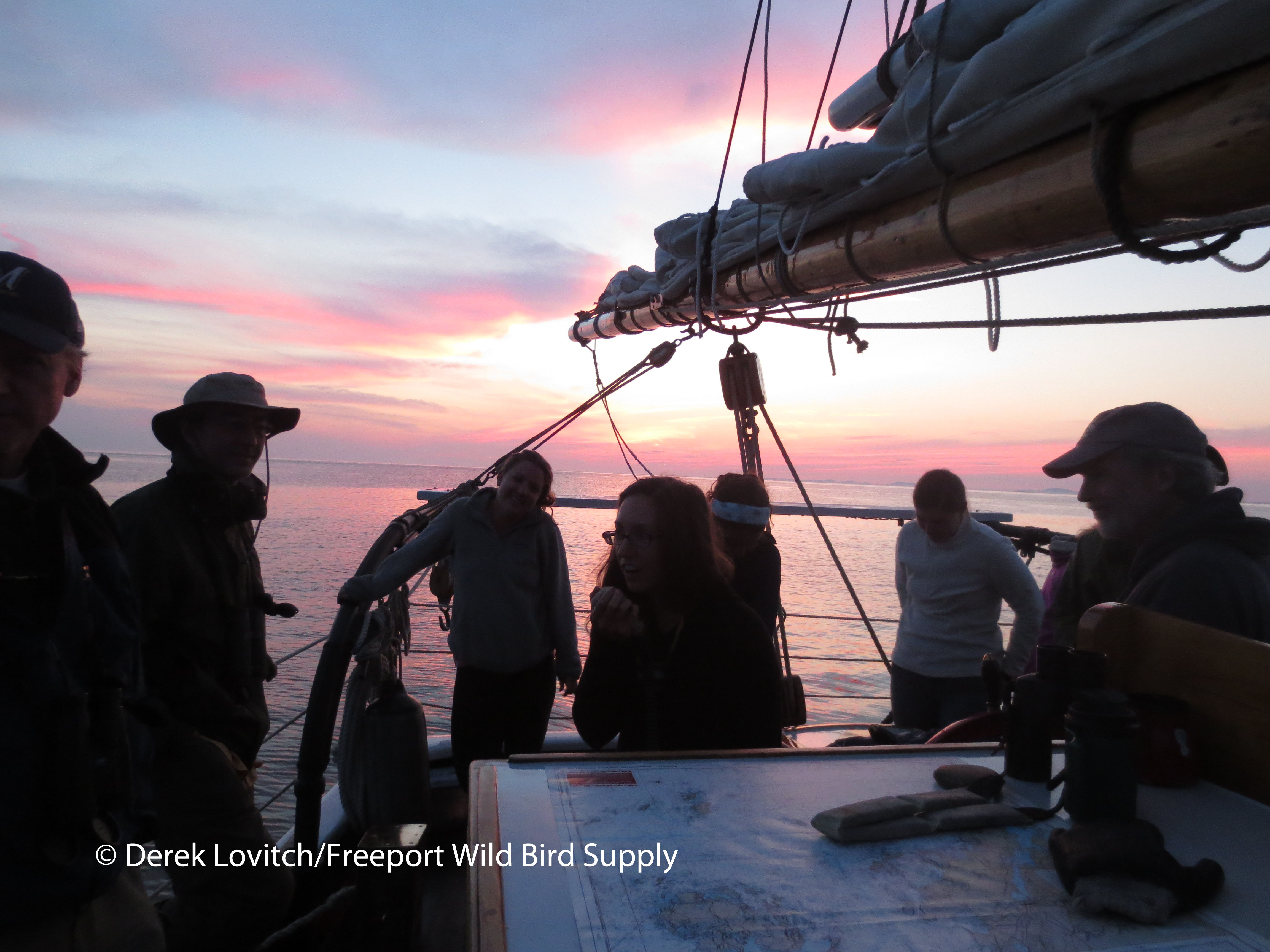
Category Archives: Private Guiding and Tours

Birding By Schooner 2014!

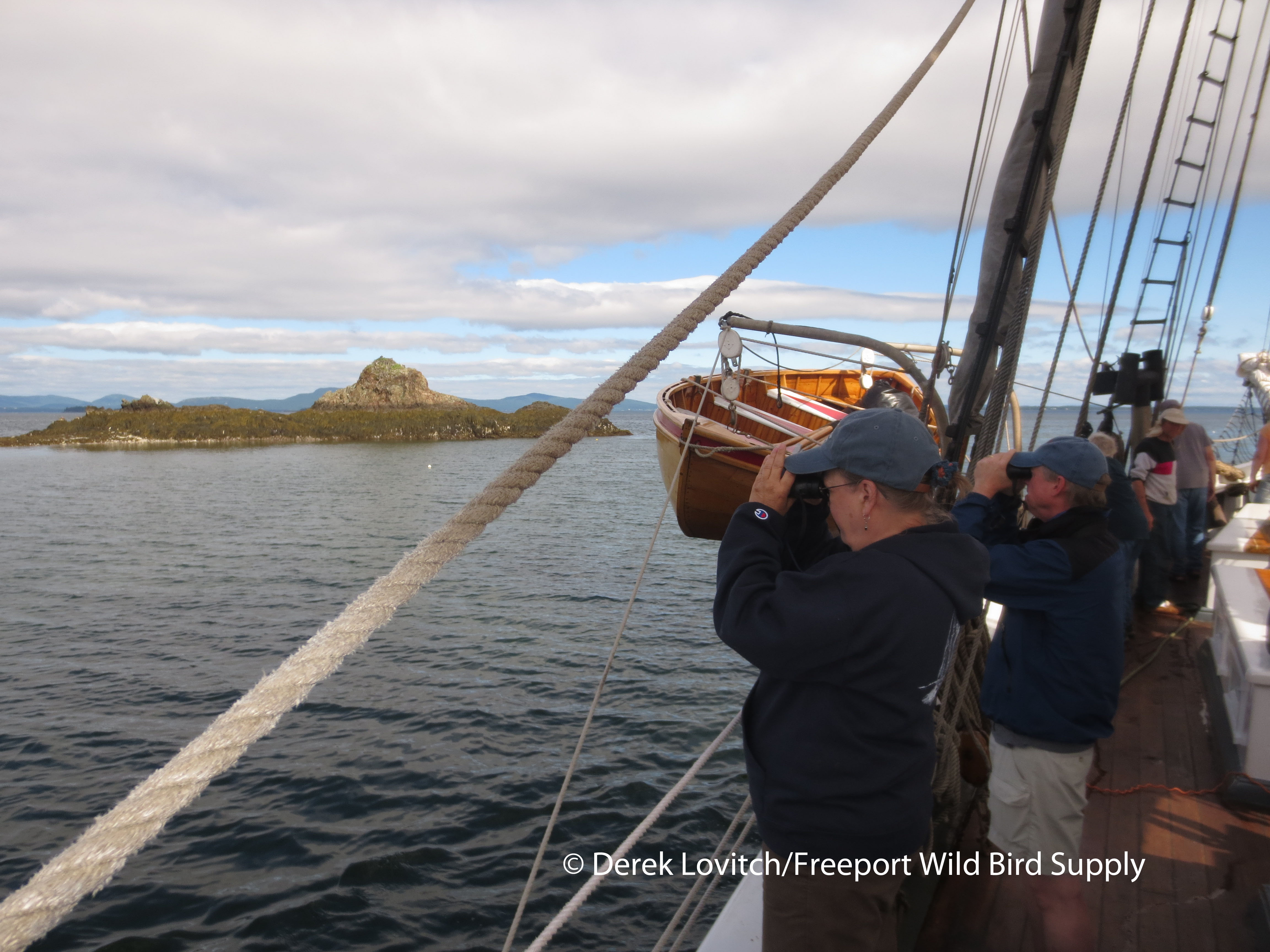
There are no promises when you lead birding trips by sailboats, but the 2014 Birding By Schooner Aboard the Lewis R. French Tour once again delivered!  This is a very unique trip – not just unique in terms of the tours I lead, but unique for Maine, and as far as we know, everywhere else.

While last week found us plagued by beautiful weather – yup, plagued, we need wind! – great birding, great food, and good company were thoroughly enjoyed.  While our total trip list of 78 species of birds (plus 5 mammals: Harbor Porpoise, Harbor Seal, Gray Seal, Minke Whale, Red Squirrel, one amphibian: Red-backed Salamander, several dragonflies, and 6 species of butterflies) was below our average, we had a few real treats…one in particular.

The wind direction and intensity (or, as in this week, lack there of) dictates where we can and cannot go over the course of our 6 days at sea. Luckily, the first day found conditions acceptable for heading to our number one goal: Seal Island.  Departing Camden Harbor, we set sail directly to this remote seabird island.

IMG_2142_Heading to Seal, 8-4-14_edited-1

Perhaps our only true “schedule” of the week, our goal was to arrive at a very specific time, for a very specific bird. Captain Garth Wells adeptly navigated our way to arrive about 10 minutes before show time.

“Troppy,” the famous Red-billed Tropicbird that has called Seal Island and vicinity its home for the past 10 summers arrived right on queue. I first spotted it flying around the island in the distance.

DSC_0026_Troppy8,8-4-14_edited-1

Then, he made a sharp turn towards us…

DSC_0036_Tropp3,8-4-14_edited-1

…and proceeded to circle our boat several times at an increasingly close proximity…

DSC_0038_Troppy1,8-4-14_edited-1 - Copy

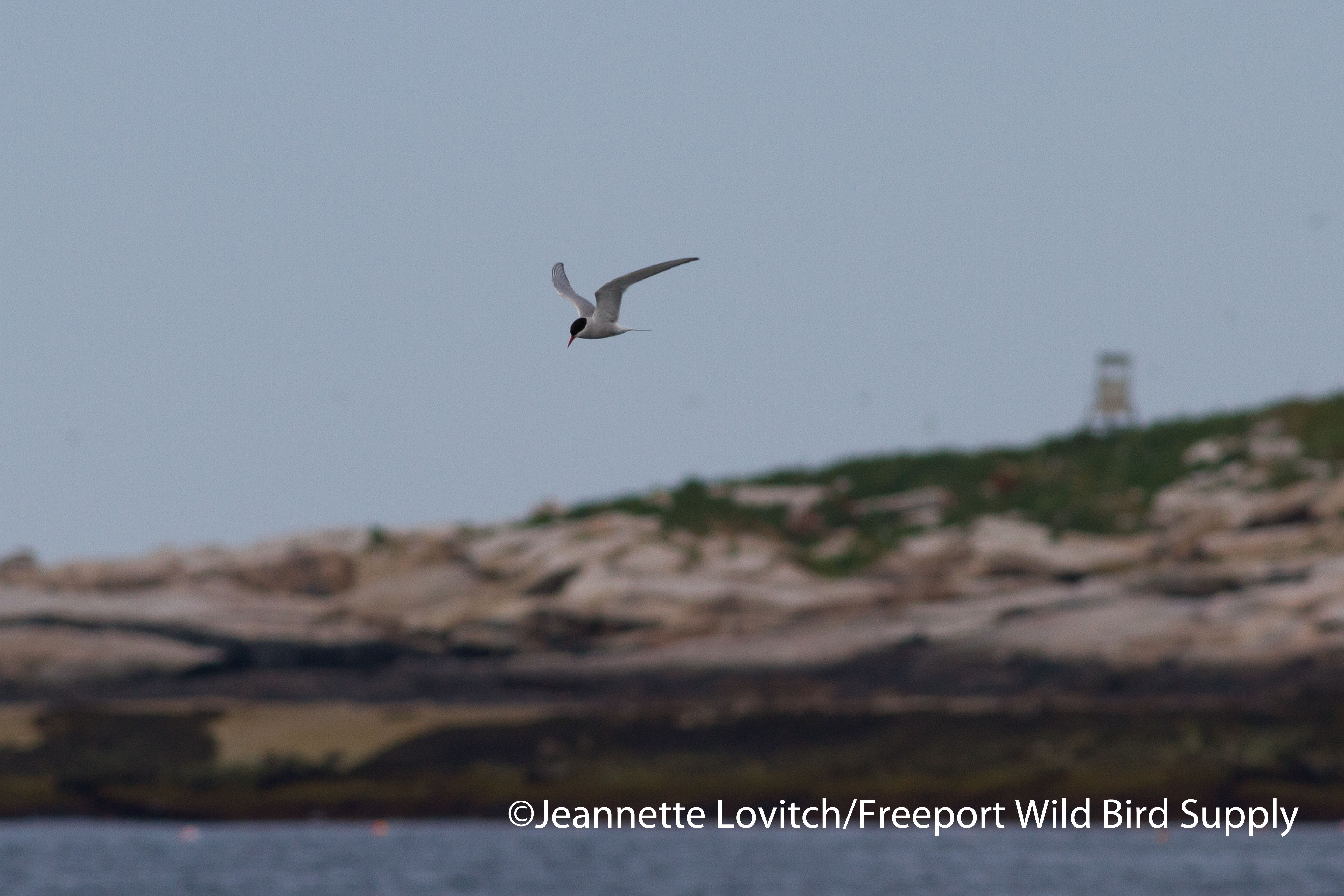
…Before turning away and heading back to the island, often escorted by Arctic Terns.

DSC_0042_Troppy6,8-4-14_edited-1DSC_0053_Troppy10,8-4-14_edited-1

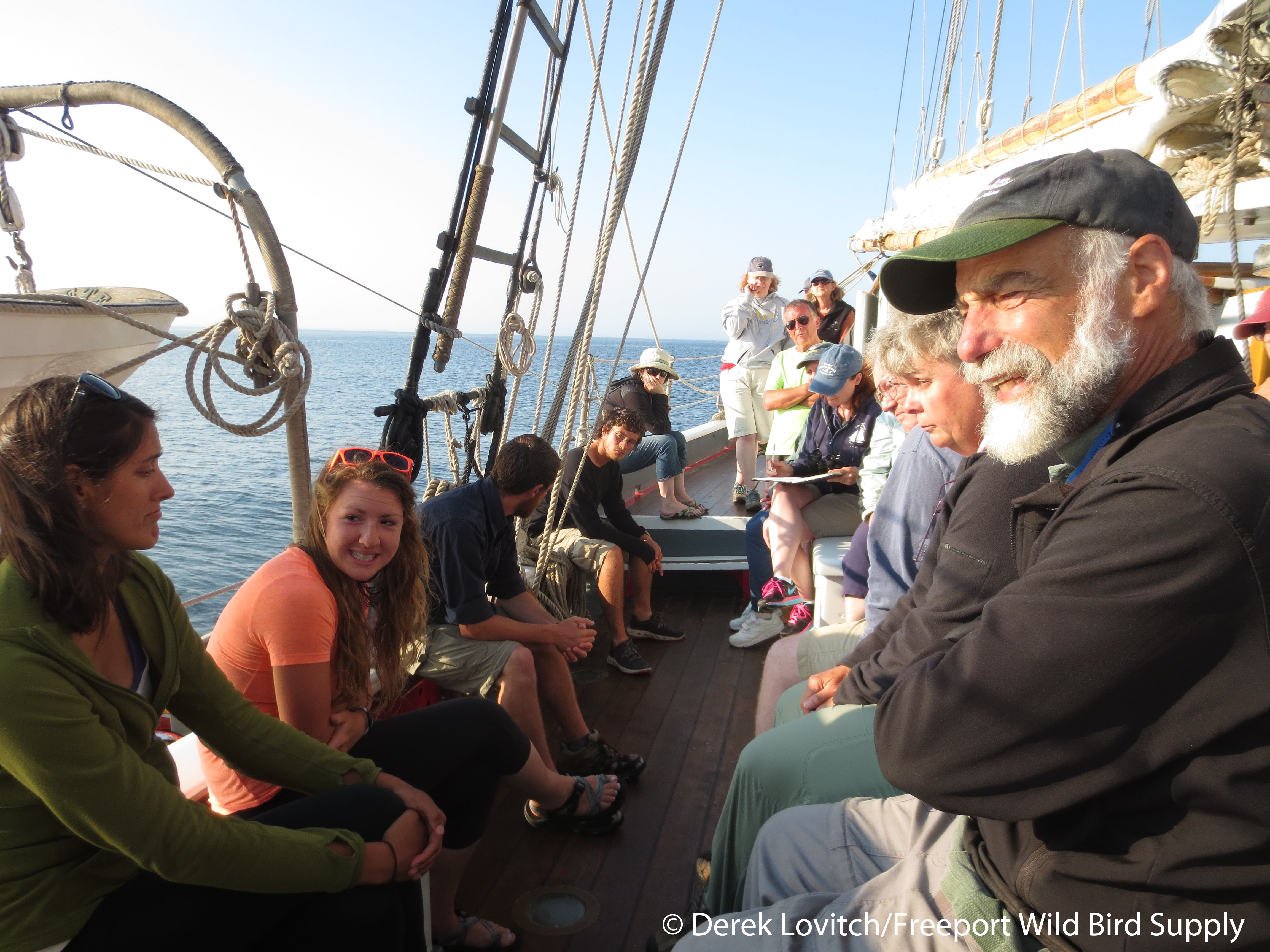
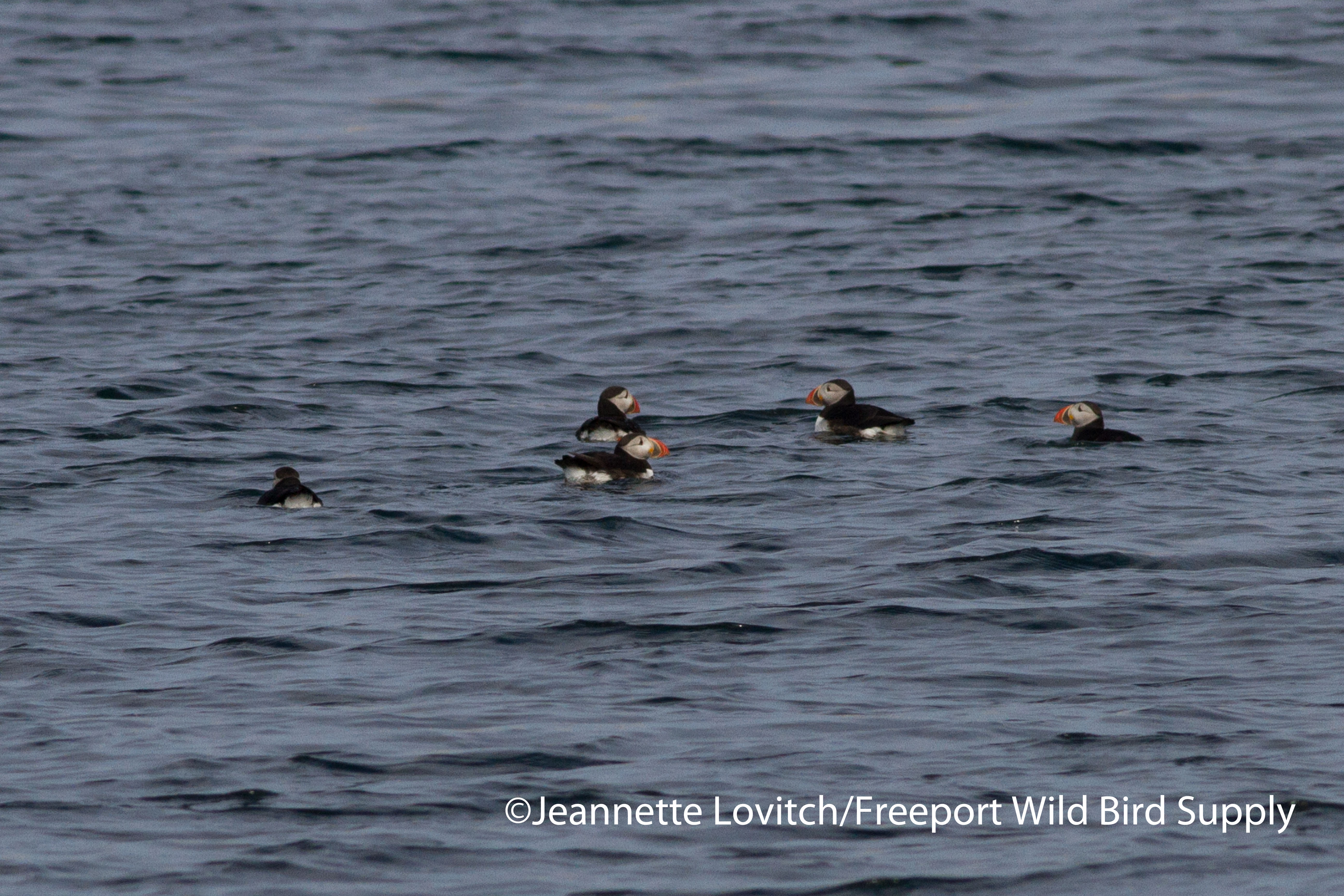
Oh yeah, there were several hundred Atlantic Puffins in the water too, and later, as we hosted the Seal Island biologist crew aboard for dinner and conversation, a Parasitic Jaeger.

IMG_2146_dinner_with_biologists,8-4-14

As the sun set, fog rolled in, and by 10:30, we began to hear the cackles and chatters of Leach’s Storm-Petrels as they commuted to and from the island in the cover of darkness. Several of us awoke in the middle of the night to listen, and we were rewarded with a constant cacophony of this intriguing, and a bit disconcerting, sound. Since we have the luxury of anchoring off of Seal – weather permitting of course – we not only have a great success rate with Troppy, but we also have the rare opportunity to listen to the nocturnal chorus of this pelagic specialty.

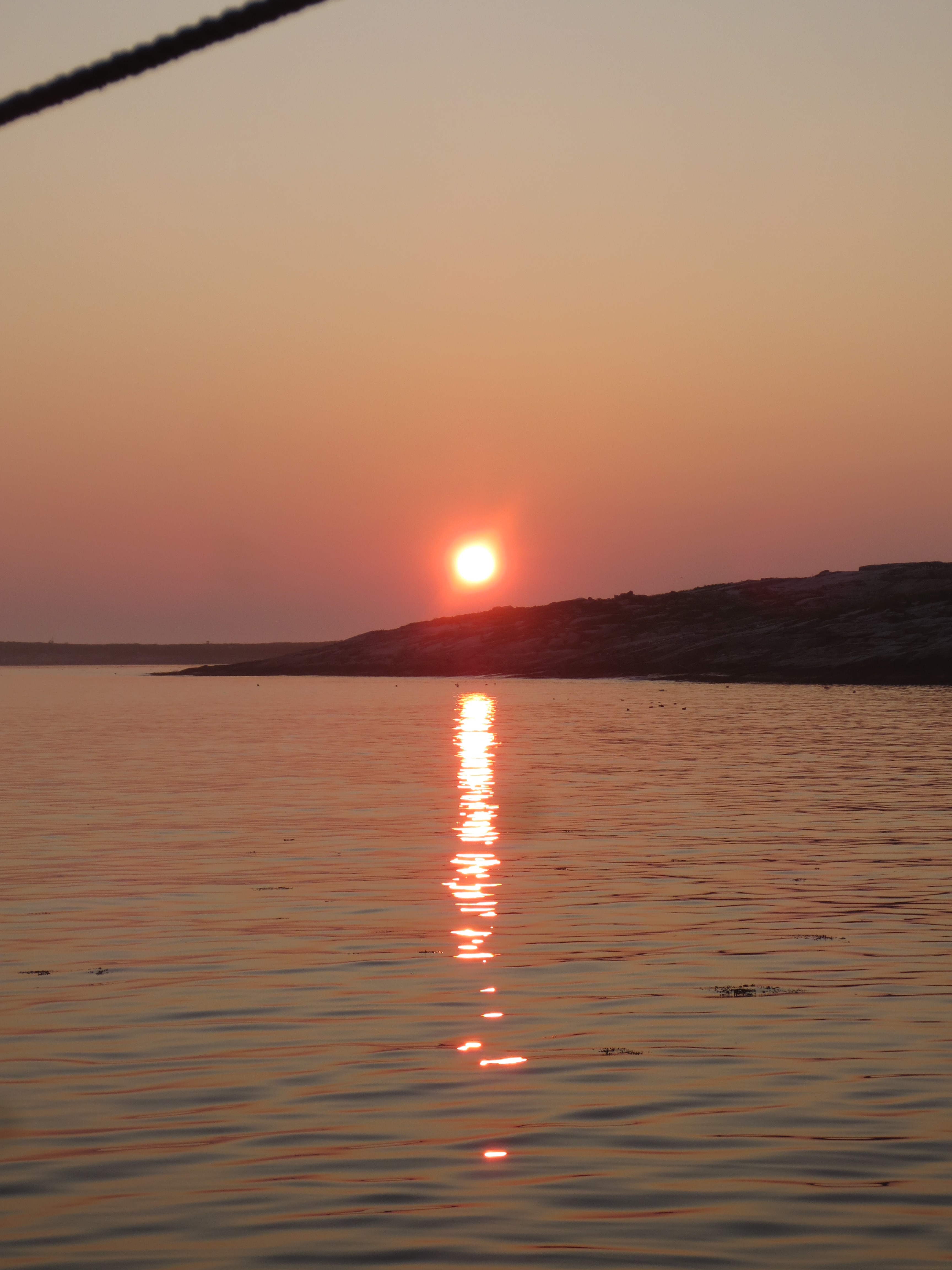
Come sunrise…

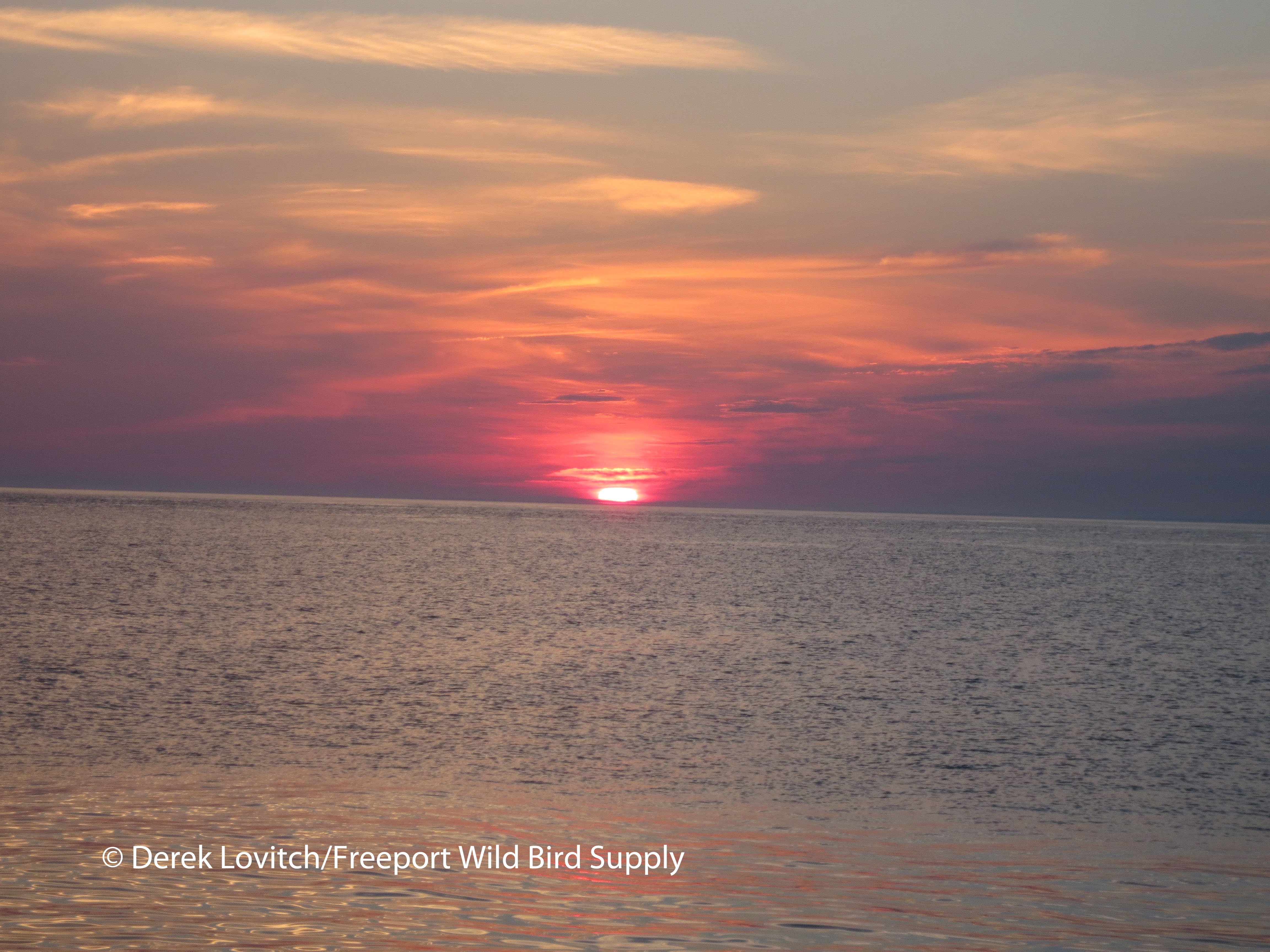
Seal Island Sunrise,8-5-14

…we enjoyed countless puffins, Black Guillemots, and Arctic Terns, along with at least a dozen Great Cormorants from the local breeding colony, a couple of re-orienting migrant Yellow Warblers at dawn, and several singing Song and Savannah Sparrows.  Surprisingly, we tallied 9 species of shorebirds (plus Sanderling the day before): the locally-breeding Spotted Sandpipers, but also 40+ Semipalmated Sandpipers (plus another 50 unidentified peeps), 9 Ruddy Turnstones, 9 Short-billed Dowitchers,  3 Black-bellied Plovers, 3 Semipalmated Plovers, 3 Lesser Yellowlegs, 2 Least Sandpipers, and my first White-rumped Sandpiper of the fall (and a pretty good bird out here).  A single Red-winged Blackbird dropped in from high above, and we spotted another Parasitic Jaeger.

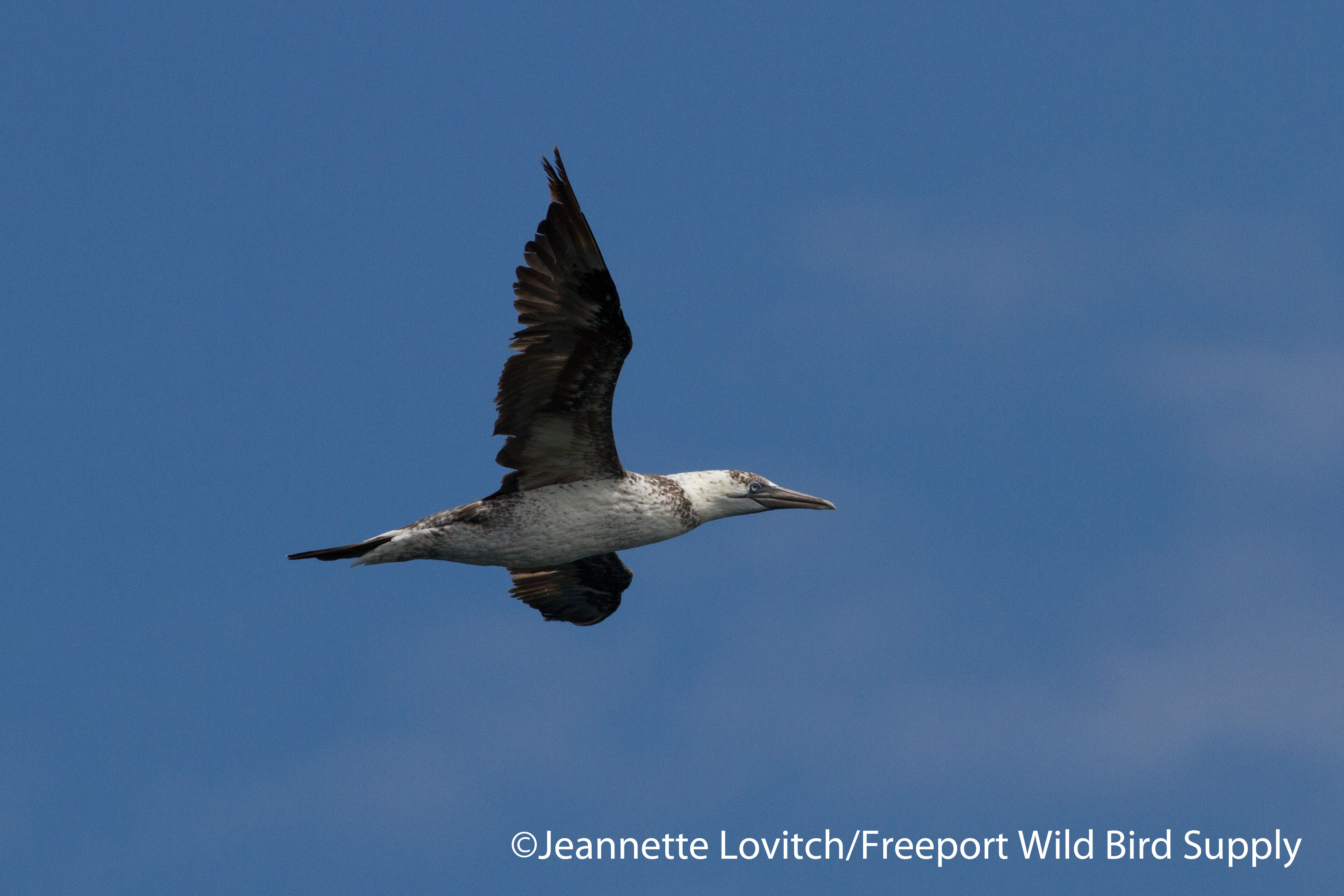
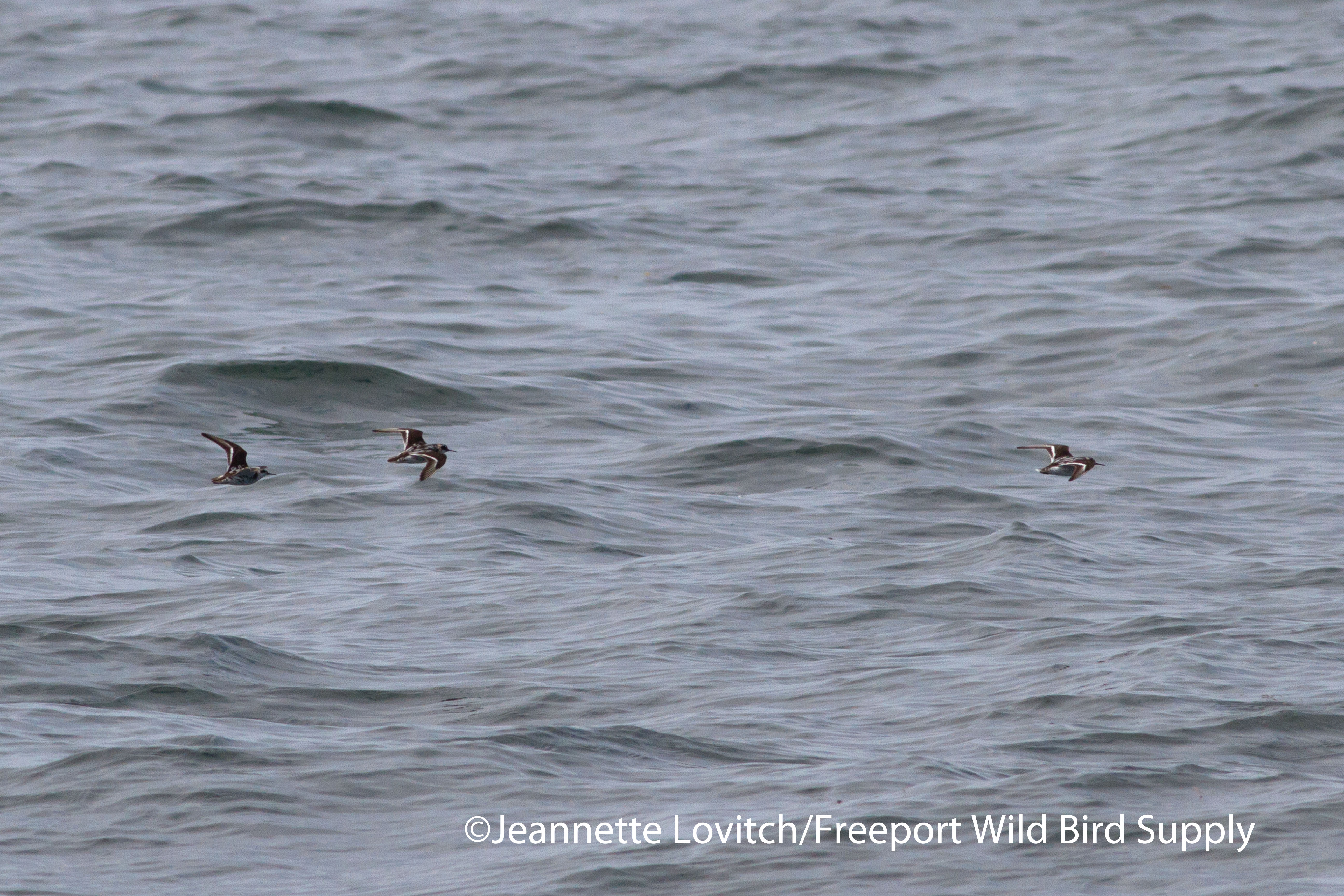
Shorebirds – a continued theme throughout the trip – were one of the benefits of conducting this tour two weeks later than usual. We also had high hopes for pelagic shearwaters, but our doldrums had set in. Little wind was present as we traveled from Seal to Matinicus Island, and therefore any shearwaters in the vicinity were likely sitting tight, conserving their energy. Two unidentified jaegers, 5 Red Phalaropes, and 28 Wilson’s Storm-Petrels, along with several more Atlantic Puffins and a few Northern Gannets kept our interest however.

Arriving at Matinicus Rock…

IMG_2158_Matinicus_Rock,8-5-14

…we saw plenty of puffins and more Arctic and Common Terns, but our late departure date cost us: Common Murres and Razorbills were nowhere to be found (don’t worry; we resume our usual third week of July itinerary next year!). But, we did have a treat with a single cooperative Manx Shearwater!

As we made a pass around Matinicus Rock, it was time to read the winds (or once again, the lack there of) and make a choice. We had hoped to turn towards Monhegan Island for birds (and the brewery!), but that would have been a very long, perhaps even uncomfortable slog. So instead, we turned inland, and set a course of Port Clyde.

We traveled through some relatively deep and open waters, but shearwaters were nowhere to be found. Another Parasitic Jaeger, 100+ Wilson’s Storm-Petrels, 21 Northern Gannets, 4 migrant Short-billed Dowitchers, a Minke Whale, and two Mola Molas were enjoyed, as were the numerous Harbor Porpoise that were constant companions throughout the tour, easily seen in the often glass-calm waters.

Rounding Metinic Green and passed Marshall Point Light, we dropped anchor in the quintessential mid-coast harbor of Port Clyde.  In the morning, we hopped ashore, and took a bird/plant/sightseeing walk to the lighthouse, slowly but steadily building our trip list. A Broad-winged Hawk being mobbed by a half-dozen or so American Robins was the avian highlight.

IMG_4065_edited-1

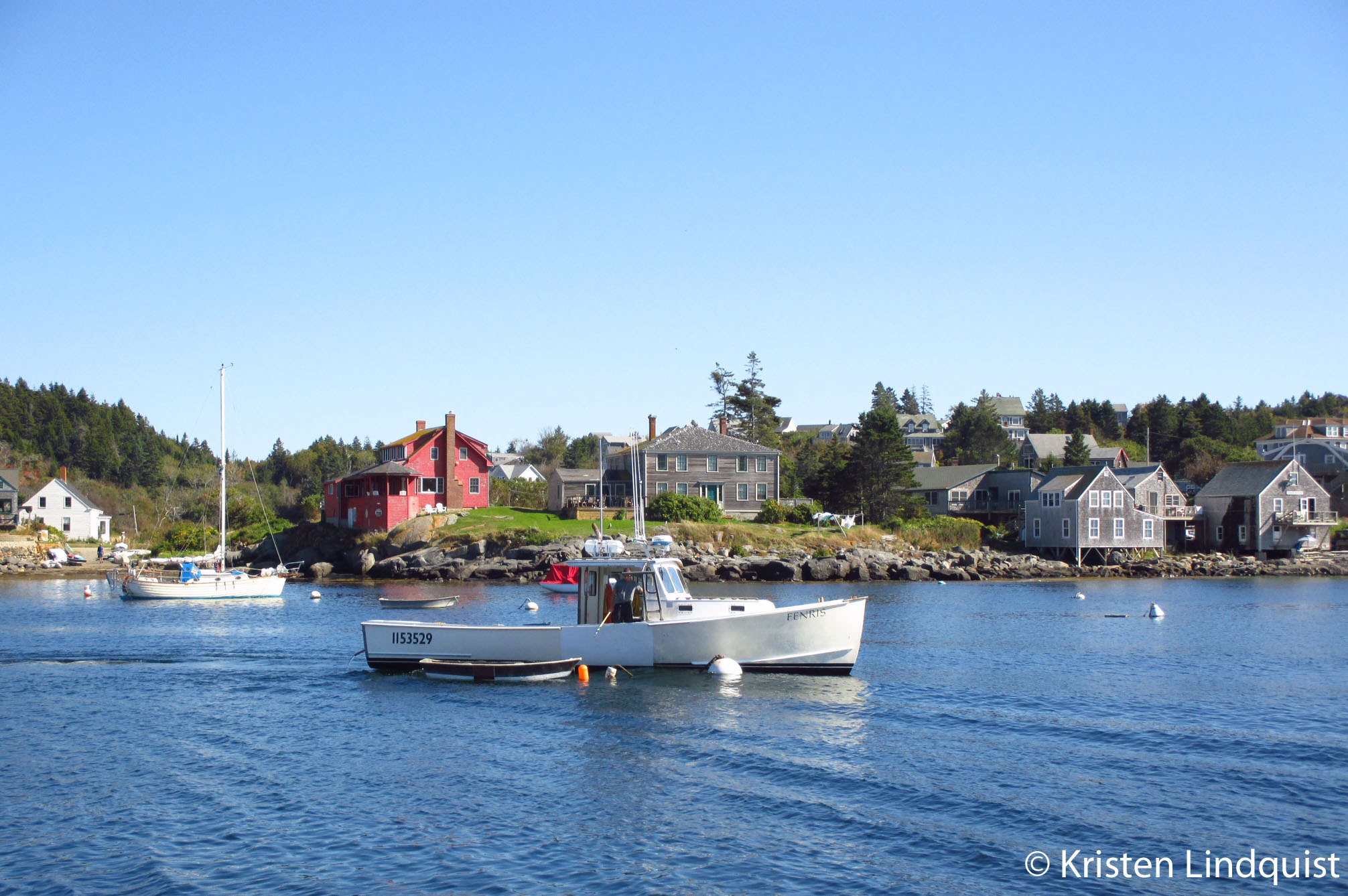
Once again, our goal was Monhegan, but once again, barely a puff of breeze was available. Even if we pushed our way out there with our yawl boat, we would have had a hard time making it back the next day – no wind was forecasted, and we only carry so much fuel!  We also have to plan one step in advance, and set ourselves up for where we needed to be the next day. Mutiny was considered, but the difficult decision to turn east was made.

Heading towards North Haven, another 16 Wilson’s Storm-Petrels were added to the tally, but our chumming attempt in these inshore waters was expectedly futile (but we had to try as we had picked up bait in the morning.  Unfortunately, the deepest water that we were to pass through was traversed in the middle of a rather heavy thunderstorm, which we were not able to outrun sailing at a mere 3 knots (well, until the storm itself was upon us!).

IMG_2169_first t-storm,8-6-14

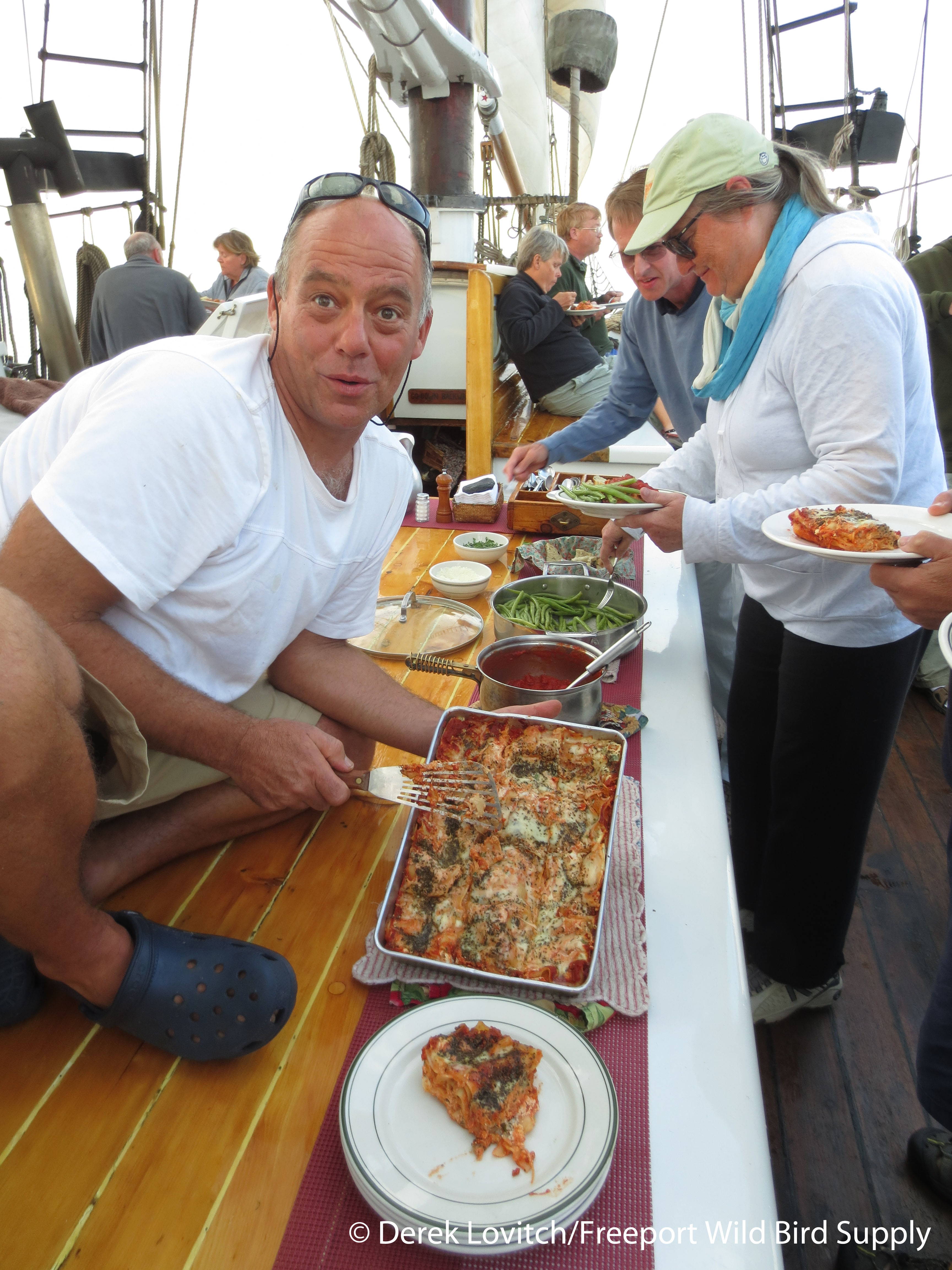
We entered the Fox Island Thoroughfare and dropped anchor in a little bay off of Amesbury Point on North Haven Island. Another delectable dinner was then served by Chef Scott – who is not your average schooner cook!

IMG_2177_lasagne,8-6-14

The storm clouds cleared by dusk…

IMG_2180_Fox_Island_Thorofare,8-6-14

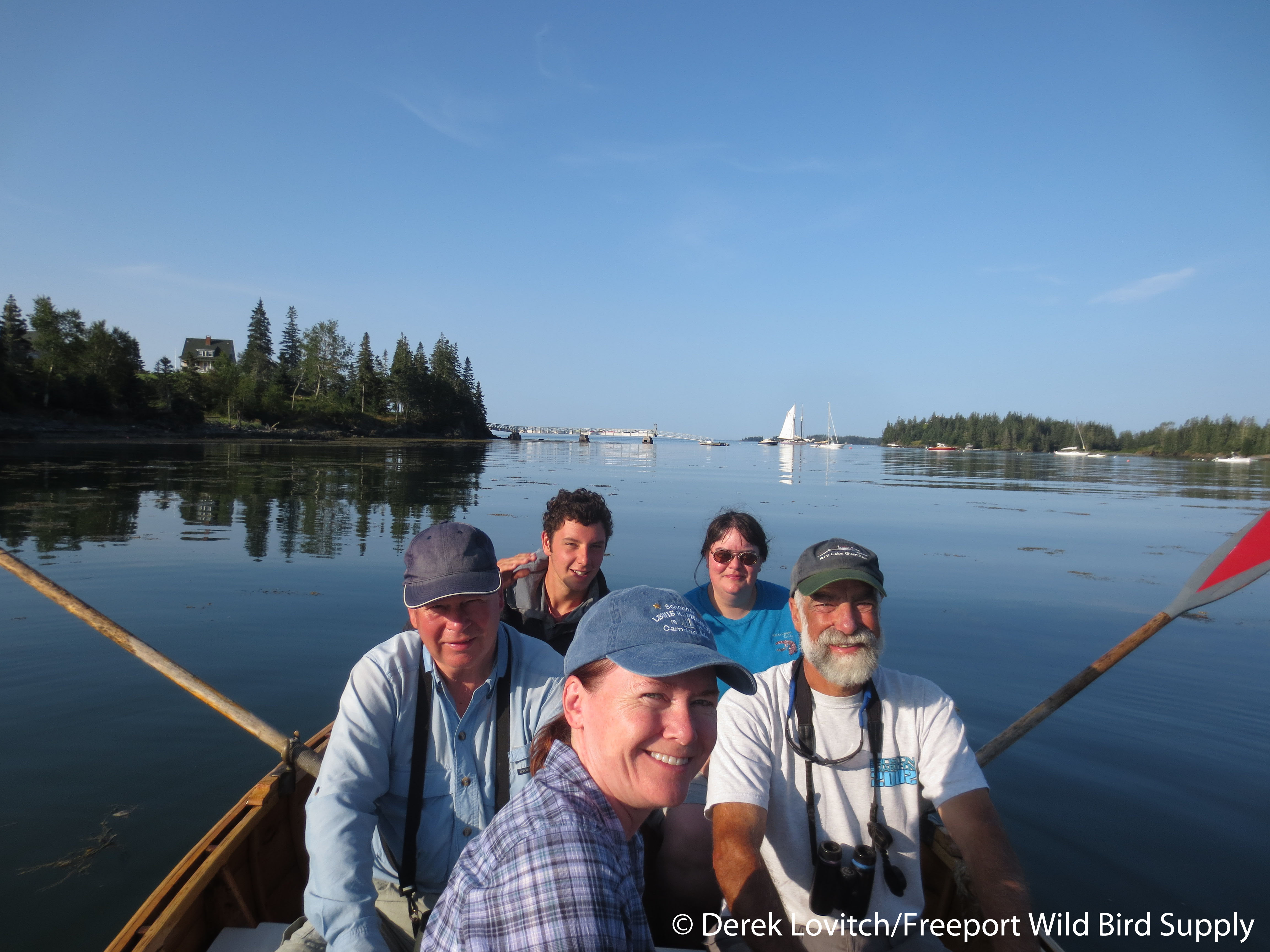
…and we heard several shorebirds calling from up the bay, and two Snowy Egrets passed by overhead.  Therefore, we decided to mix things up a little with a pre-breakfast row to check things out.

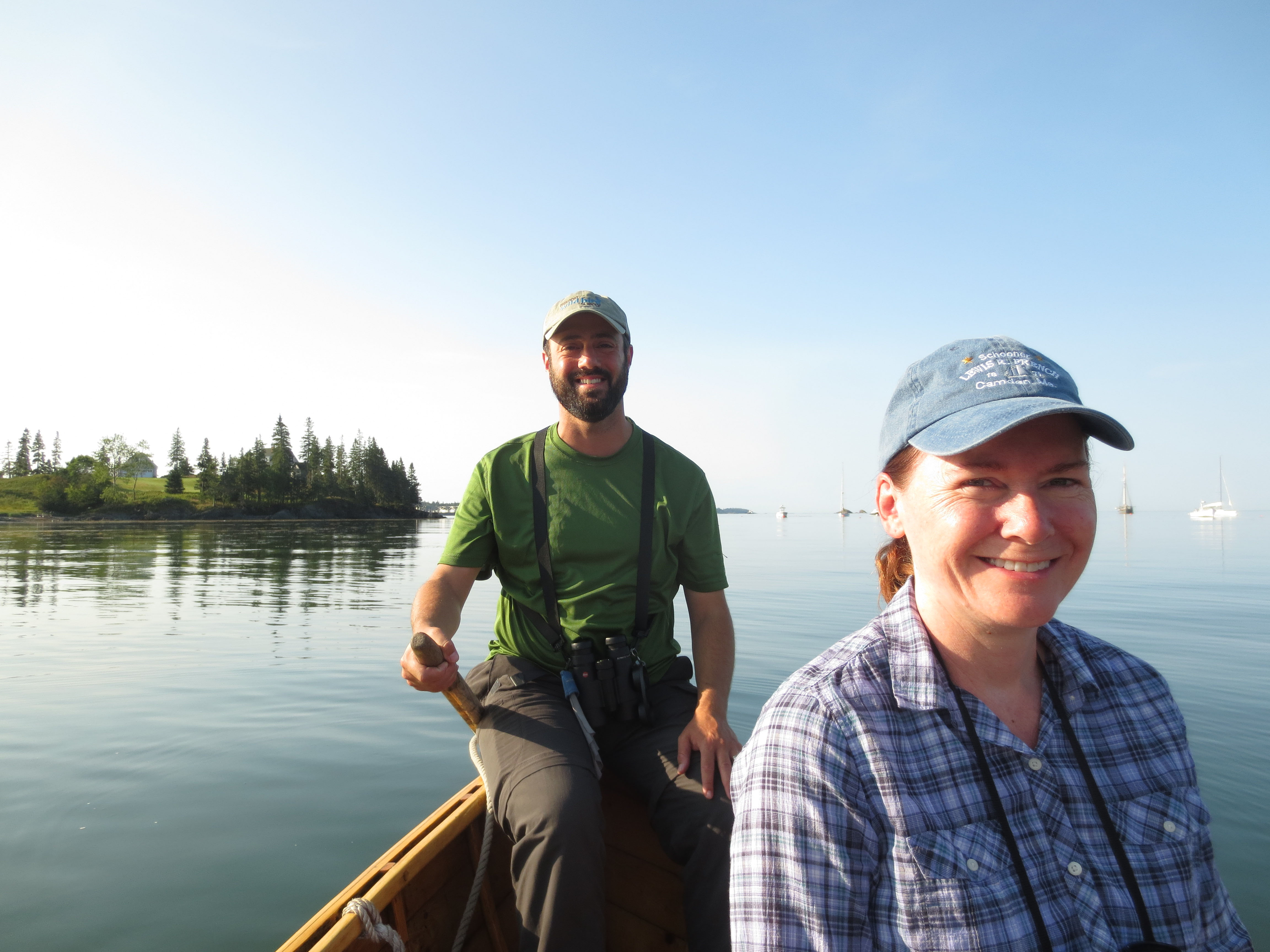
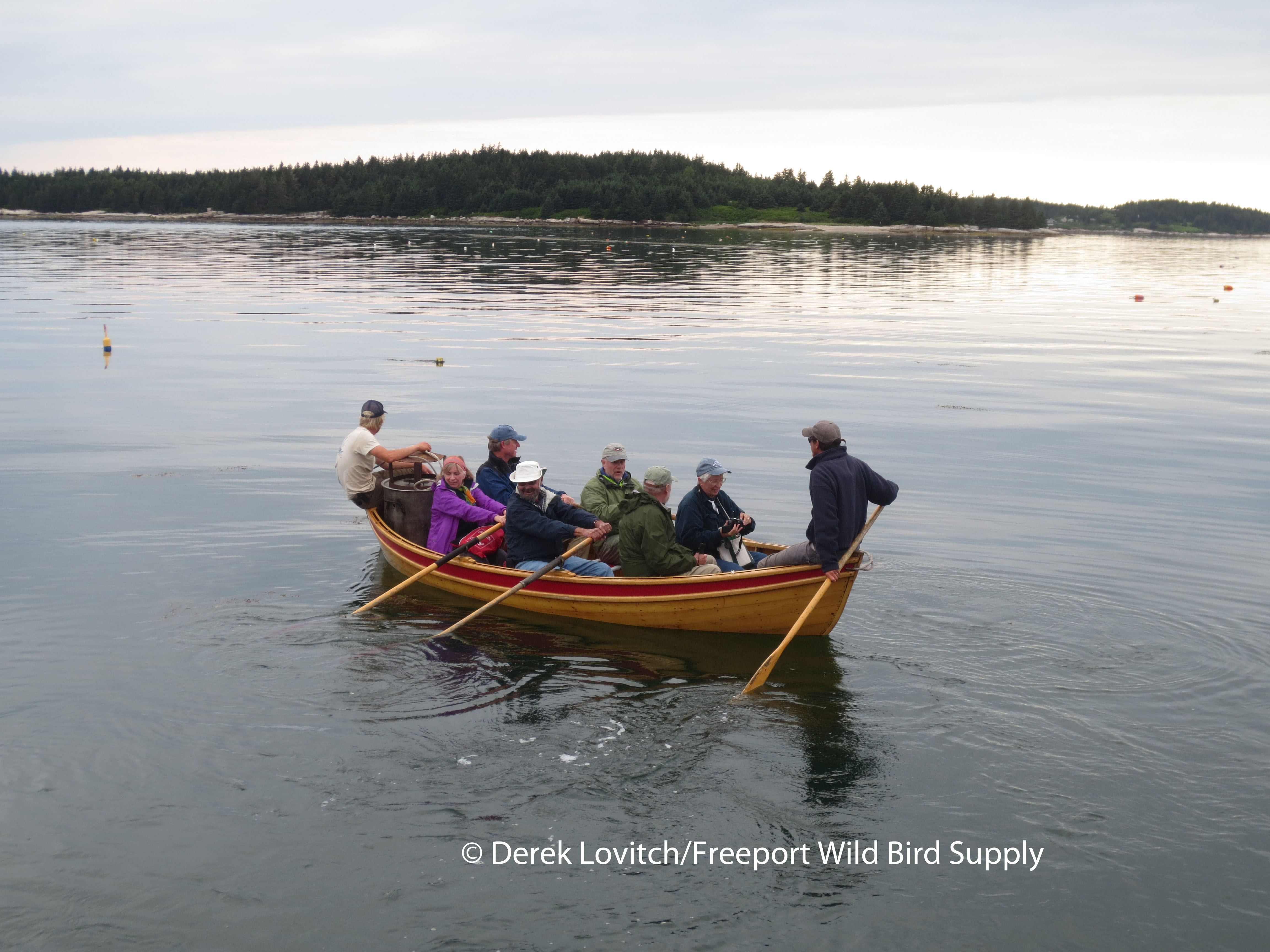
IMG_2183_morning_row,8-7-14_edited-1

I took the helm, and somehow guided us successfully to and from the boat.

IMG_2185_me_at_helm,8-7-14

I was just happy to not run into anything, but a nice mix of shorebirds included 8 Least and 2 Semipalmated Sandpipers, 2 Spotted Sandpipers, and one each of Killdeer and Greater Yellowlegs.

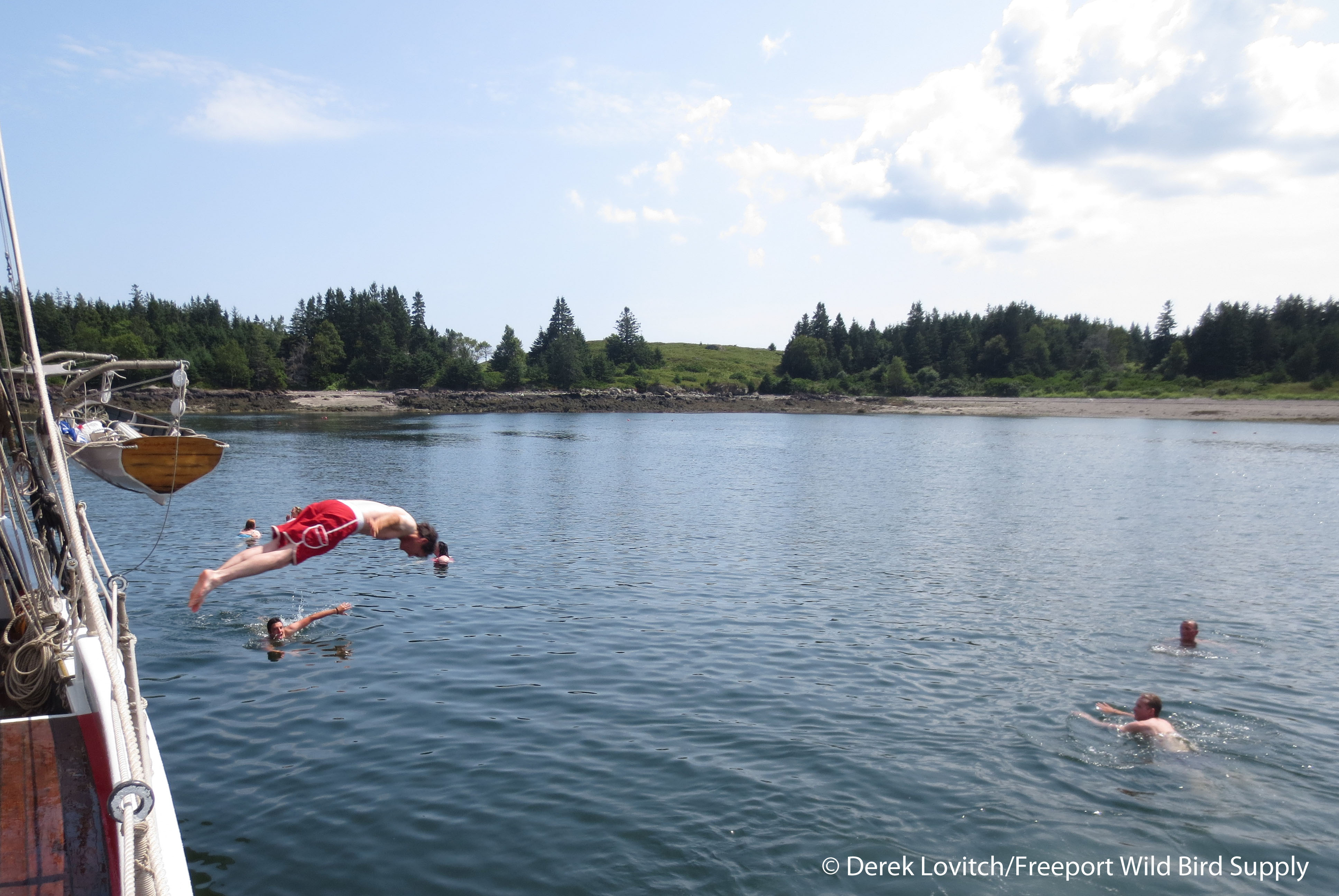
A short sail (again, little wind) through the Thoroughfare yielded the first Bonaparte’s Gulls of the trip, some Common Loons, and plentiful Ospreys.  Dropping anchor off of the Calderwood Island Preserve, much of the boat hit the water, including our Captain.

IMG_2198_Captain_Overboard,8-7-14

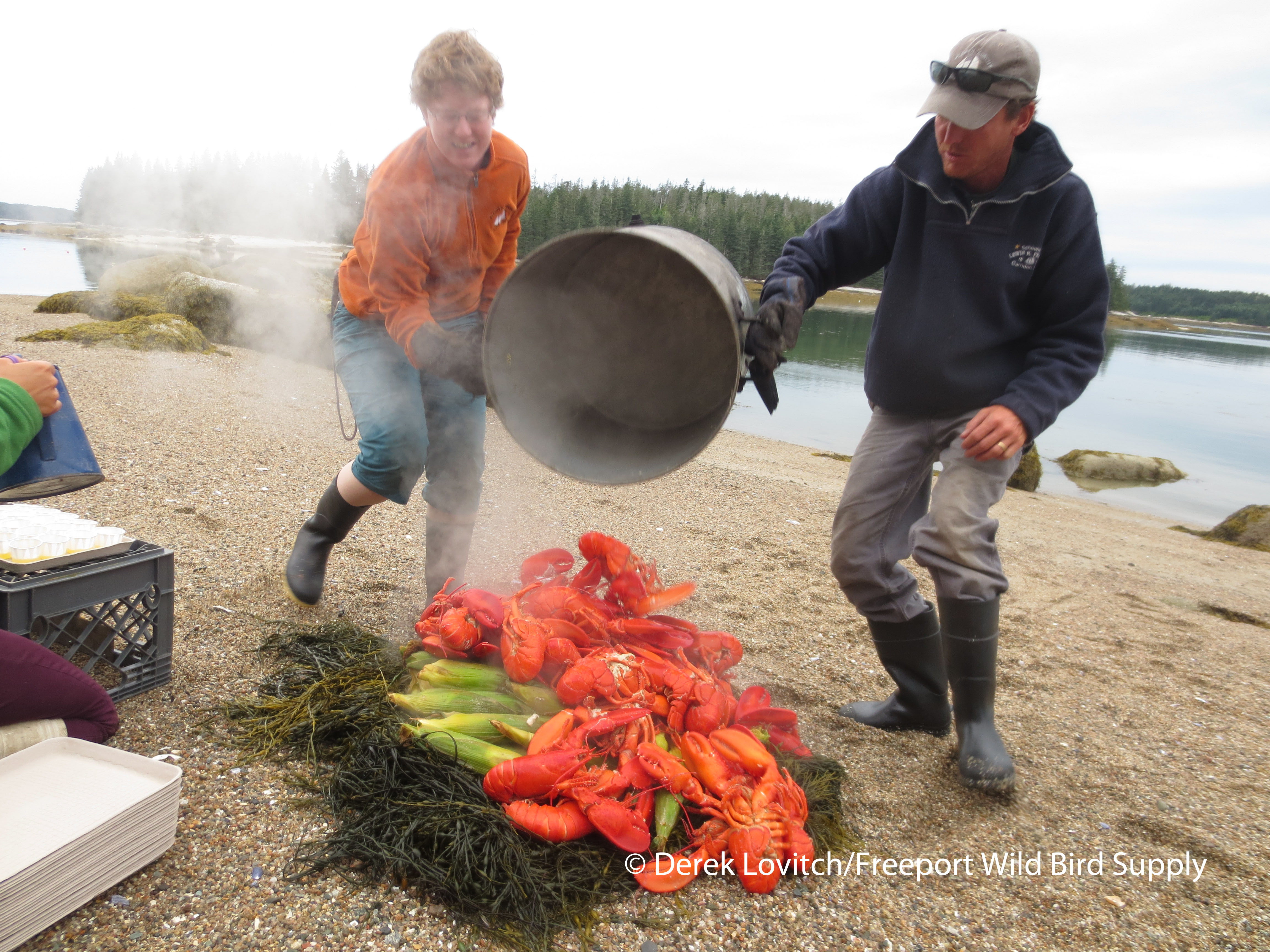
Then, it was time to row ashore for one of everyone’s trip highlights: the lobster bake!  While things got cooking, I led a walk around the preserve, adding a few landbirds to the list. Song Sparrows and Common Yellowthroats were especially conspicuous, but I couldn’t help but wonder what migrants the extensive raspberry-gooseberry-juniper thickets that covered much of the island would hold…and rarities?

IMG_2199_Calderwood_Island_Preserve,8-7-14

Storm clouds built up once again…

IMG_2201_Calderwood_Island,8-7-14

…But the lobster bake went off without a hitch…

IMG_2207_Calderwood_Island_2,8-7-14

…perhaps with the exception of Nihls, who bit off a little more than he could chew.

IMG_2209_Calderwood_Island3,8-7-14

Returning to the boat, we adjusted our position for the night, and scoped a small rocky islet that as the tide rolled in, amassed 64 Bonaparte’s Gulls and several families of Common Terns – adults were commuting to and from the island with fish for their hungry fledglings.

IMG_2213_off_Calderwood_Island,8-8-14

It was clear and calm once again at sunrise (we joined the Mary Day at anchorage last night), but a Winter Wren serenaded us from the island. We rounded the southeast corner of North Haven Island, and headed for Islesboro.

The waters of Penobscot Bay are not overly birdy at this time of year – other than plentiful Black Guillemots, Ospreys, Bald Eagles, gulls (mostly Herring and Great Black-backed with smaller numbers of Laughing, Bonaparte’s, and scattered Ring-billed), Common Eiders, scattered Common Loons, Double-crested Cormorants, and so on. But as we passed various little islands, our triplist slowly grew with the likes of a migrant group of Tree Swallows, a single Barn Swallow, a hunting American Kestrel, and plenty of Harbor Seals. Ruddy Turnstones were also scattered about.

But once again, the day’s calm conditions gave way to building thunderstorms…

IMG_2217_off_North Haven,8-8-14

…but we managed to make it to the shelter of Gilkey Harbor off Islesboro before things got too hairy today.

IMG_2220_Gilkey Harbor,8-8-14

And as it had for the last three days, the storms cleared for lovely sunsets…

IMG_2224_Gilkey Harbor2,8-8-14

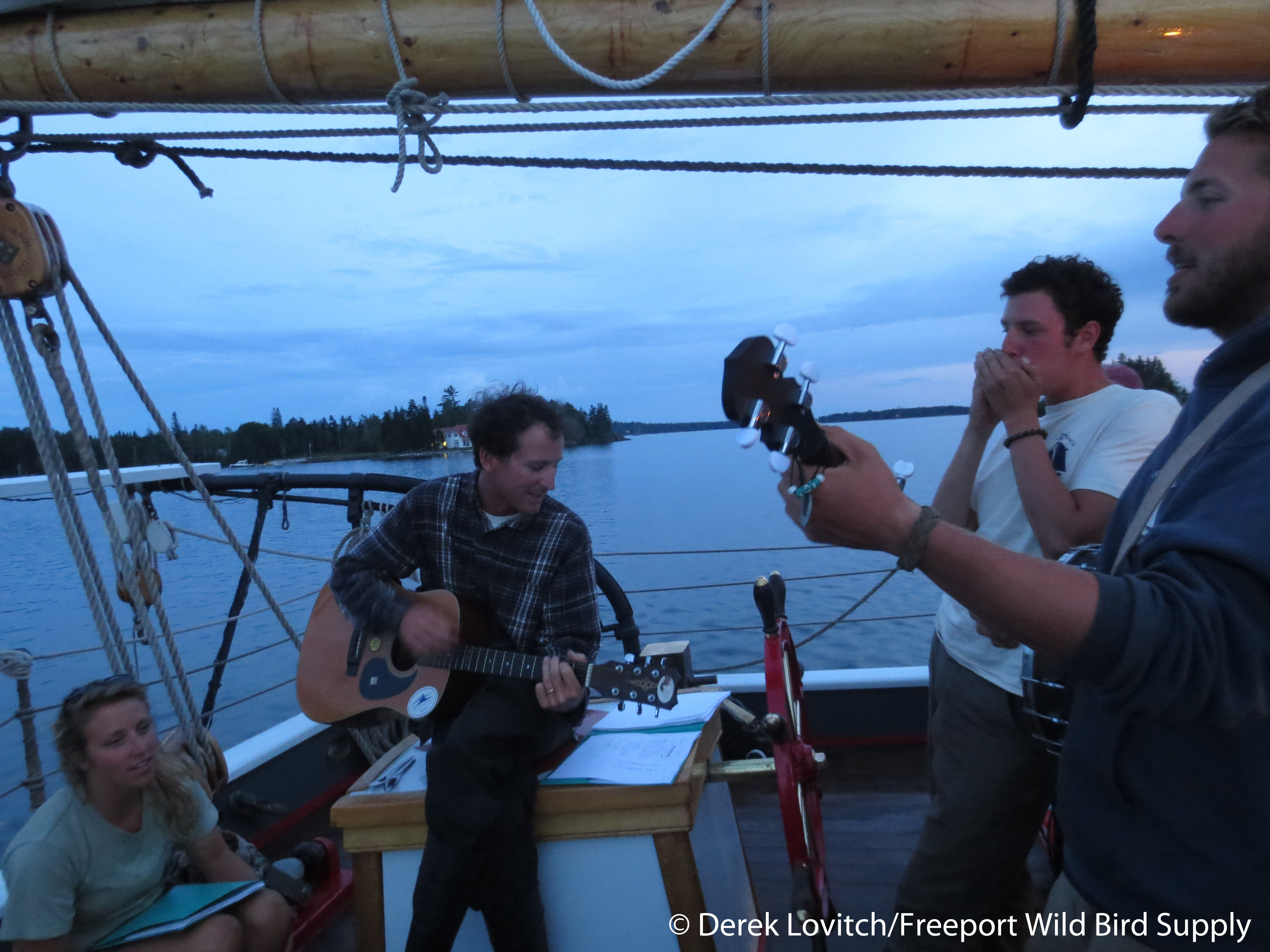
…more delectable food, and evening entertainment from the crew.

IMG_2230_crew_jamming,8-8-14

Several flight calls early in the night overhead suggested that the front had finally cleared, and fall migrants were once again on the move.

IMG_4078_edited-1

Another lovely morning greeted us on our final day aboard the French, but not before we raced ashore for one last birdwalk. This time, we checked out Warren Island State Park.

We added several species to our list in one single Paper Birch just off the pier (Brown Creeper, Northern Parula, Yellow-rumped Warbler, and Black-and-white Warbler) while a delightfully birdy stroll added Hermit Thrush and Gray Catbird, plus great views of a variety of other species as we also spent time looking at plants and discussing the ecology of the Maine islands once again (and ranting about invasive plants).

But alas, all good Birding By Schooner tours must come to an end, so sails were set and we headed for home.

IMG_2235_Zack_aloft,8-9-14

IMG_2237_Camden,8-9-14

Turkey Vultures over the Camden Hills and Chimney Swifts over the harbor were our final 77th and 78th species of the journey and we pulled into the dock. Goodbyes were said, belongings were gathered, and Captain Garth and I immediately began to plot for next year’s trip.

A special thanks go to Jenny and Garth Wells, and the crew of the Schooner Lewis R. French for making this special trip a reality, and as always, making it a resounding success.  I hope you will consider joining us next year.  For more information, check out The “Tours, Events, Workshops, and Programs” page of our website, or visit the the Lewis R. French

Here’s our birdlist of 79 species from this year’s tour, listed in order of appearance:
Mallard
Canada Goose
House Sparrow
Herring Gull
American Crow
Rock Pigeon
Song Sparrow
Cedar Waxwing
Ruby-throated Hummingbird
Osprey
Great Blue Heron
Black Guillemot
Double-crested Cormorant
Common Eider
Ring-billed Gull
Laughing Gull
Great Black-backed Gull
Northern Gannet
Wilson’s Storm-Petrel
Atlantic Puffin
Arctic Tern
Common Tern
RED-BILLED TROPICBIRD
Savannah Sparrow
GREAT CORMORANT
Spotted Sandpiper
Ruddy Turnstone
Short-billed Dowitcher
Sanderling
Semipalmated Sandpiper
Semipalmated Plover
PARASITIC JAEGER
LEACH’S STORM-PETREL
Yellow Warbler
Black-bellied Plover
White-rumped Sandpiper
Lesser Yellowlegs
Red-winged Blackbird
RED PHALAROPE
MANX SHEARWATER
American Goldfinch
Bald Eagle
Mourning Dove
American Black Duck
Blue Jay
European Starling
Black-capped Chickadee
Common Yellowthroat
Gray Catbird
American Robin
Chipping Sparrow
Hairy Woodpecker
Black-throated Green Warbler
Broad-winged Hawk
Downy Woodpecker
Northern Cardinal
Dark-eyed Junco
White-throated Sparrow
Greater Yellowlegs
House Finch
Killdeer
Snowy Egret
Swainson’s Thrush
Northern Flicker
Red-breasted Nuthatch
Bonaparte’s Gull
Golden-crowned Kinglet
Winter Wren
American Kestrel
Tree Swallow
Barn Swallow
Brown Creeper
Northern Parula
Yellow-rumped Warbler
Black-and-white Warbler
Hermit Thrush
Gray Catbird
Turkey Vulture
Chimney Swift

The 2014 “Claybrook Mountain Lodge Birding Weekend” Trip Report

WTSP,N
White-throated Sparrows were one of an impressive 87 species of birds recorded in just 2 days of birding on this enjoyable, “Maine Woods Immersion” tour.

The “Claybrook Mountain Lodge Birding Weekend” tour is one of my favorite outings that we offer. Its focus is not about species, but learning about habitats, and immersing ourselves in the birds, plants, and wildlife of the Maine Woods. This is a different style of tour than what usually occupies me in June. Following private tours for “target species” and three trips for Bicknell’s Thrush, this is a welcome change of pace. It’s a nice way to end my June guiding busy-season.

While the goal of the trip is to see a lot of species, and we were all excited to reach – and then eclipse – the 85 species spotted on this trip in 2012, the list is just record-keeping; it is not the primary purpose. Instead, our goal is to spend two days immersed in birds: learning songs, observing behaviors, and simply enjoying the diverse avifauna that summer in Maine has to offer.
Lodge,K

We began on Friday afternoon, with the group assembling on the porch and lawn of the Claybrook Mountain Lodge. A Yellow-bellied Sapsucker nest was found, a Great-crested Flycatcher sallied for bugs around the garden, and a various birds foraged in the trees, from Red-eyed Vireos to an American Redstart while Tree and Barn Swallows zoomed around.

After our first scrumptious dinner, we enjoyed some casual birding in the evening light, and then headed out at dusk for a little owling. Of course the Barred Owl – as is often the case at this season – waited for just about everyone to fall asleep before finally calling nearby.

On Saturday, a stroll before breakfast resulted in lots of “awwww’s” when a family group of recently-fledged Eastern Bluebirds were discovered.
EABL_kids,N

Fueled by a hearty breakfast, we boarded the van and Greg Drummond – a master of the Maine Woods – took us around, as we worked our way up and down Long Falls Dam Road. We sampled a variety of habitats, starting in the mostly-deciduous woods around the lodge and working our way in and out of spruce-fir-tamarack dominated bogs.
Kettle_bog,K

Some of the bogs we visited hosted some of the species reaching the very southern limits of their breeding range, such as Palm and Wilson’s Warbler, Ruby-crowned Kinglet, and Yellow-bellied Flycatchers. Meanwhile, species such as Pine Warbler are at their northernmost reaches. Over the course of the day, other avian highlights included two well-seen American Bitterns, at least four different Yellow-bellied Sapsucker nest holes, displaying Wilson’s Snipe, Common Merganser chick riding Mom’s back across Flagstaff Lake, and lots of good looks at a wide range of species.

Of course we looked for Boreal “specialties” including the likes of Black-backed Woodpeckers, Boreal Chickadees, Gray Jays, and “spruce” warblers such as Bay-breasted and Cape May. While it is unfortunate that the boreal forest pockets that we did hit failed to produce any of these birds today, it is the habitat that is the primary focus – I have other tours if the “Boreal Breeders” are primary targets. They would have just been another layer of icing on the cake. The dearth of finches in Maine this summer was also apparent – only Purple and goldfinches were seen this weekend.

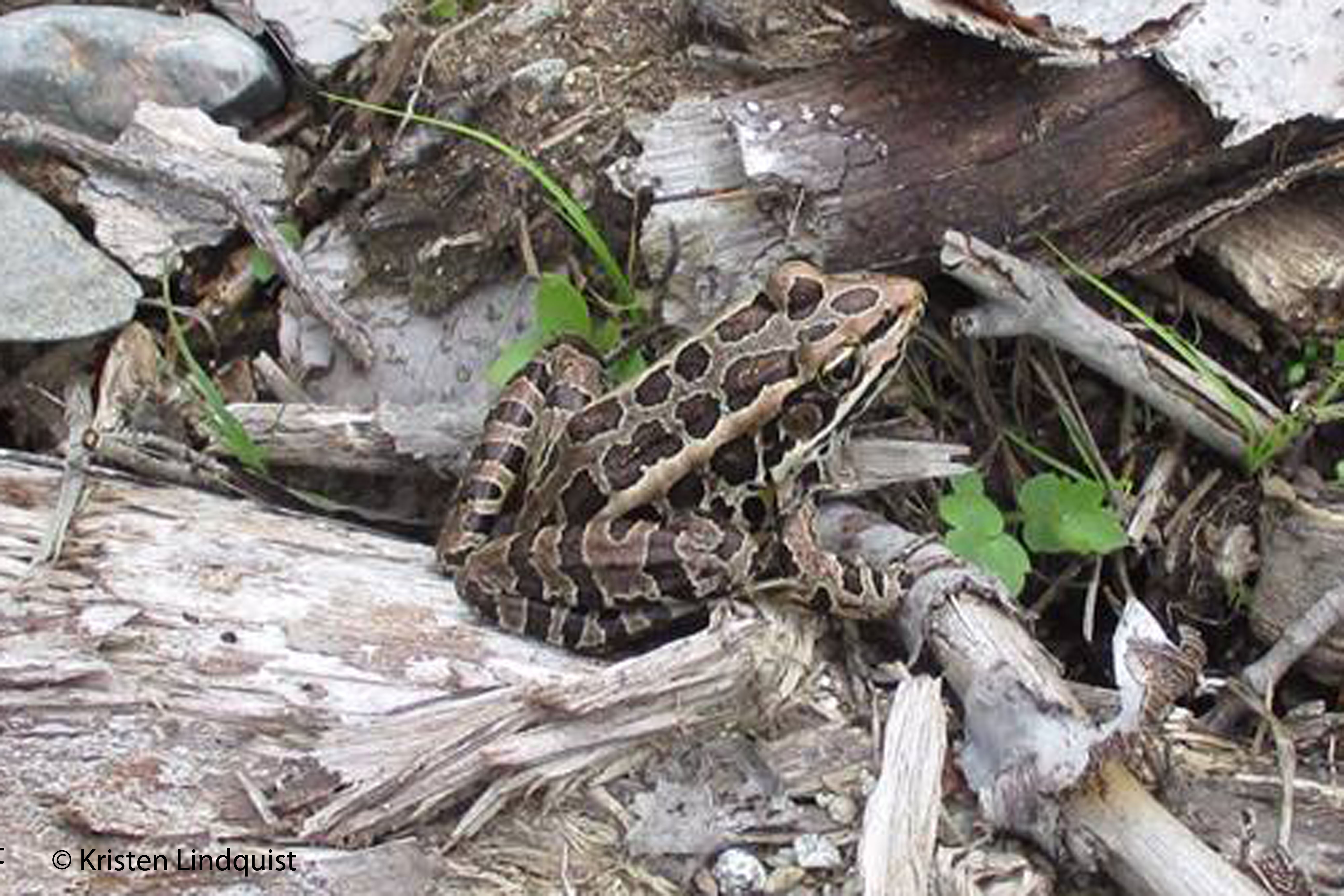
In addition to spending time to stop and smell the Twinflower (which at one point resulted in the startling discovery of a Dark-eyed Junco nest), we spent a lot of time studying and discussing habitats. Birds are our priority, but a host of other species was enjoyed, from a variety of butterflies to a range of amphibians. In fact, after adding a Northern Leopard Frog early Sunday morning, we heard – and for the most part, saw –  all of Maine’s frogs and toad: Green, Mink, Bull, Pickerel, Leopard, Spring Peeper, Gray Tree Frog, and American Toad!
Pickerel_Frog,K

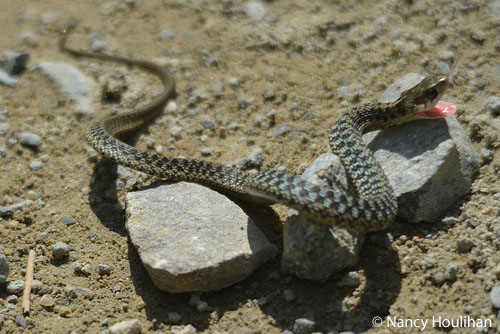
The world’s most aggressive young Garter Snake –of the checkered and non-gartered “Maritime” subspecies – put on quite show and we all enjoyed seeing so many Snowshoe Hares on our morning drive…and lots of Moose sign.

Maritime_Garter_Snake,N Maritime_Garter_Snake,K

Plants were not ignored either. In addition to looking at the trees that make up the various habitats here, we checked out a range of wildflowers, and especially marveled at the magnificent plants of the bog, such as the insectivorous Sundew…
Sundew,K_Lindquist_edited-1

…and the surprising flowers of the Pitcher Plant.
Pitcher_Plant_flower,K

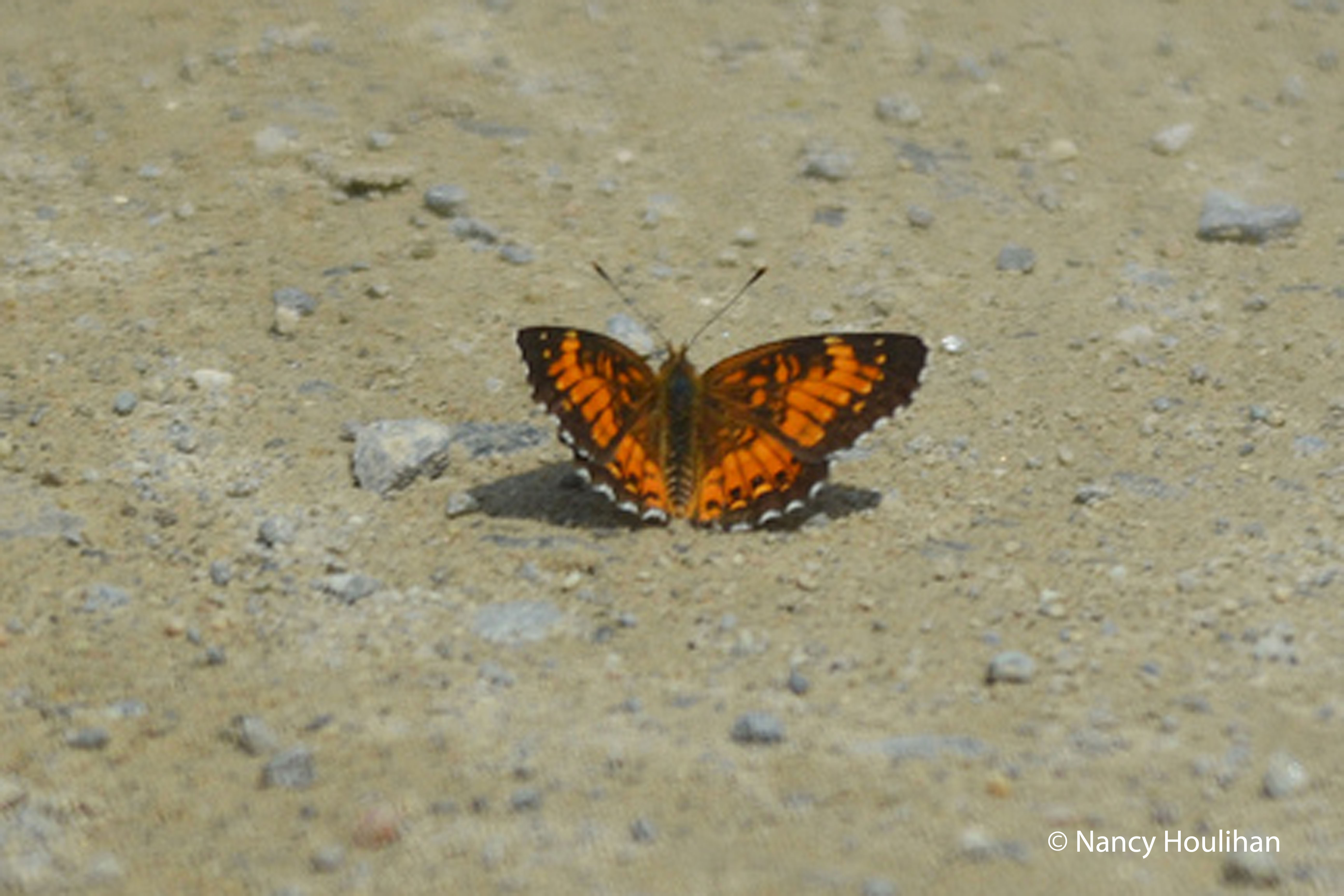
Butterflies included numerous Northern Crescents and Canadian Tiger Swallowtails, but also some clusters of the bog-breeding Harris’s Checkerspot.
flutterby,Nancy_Houlihan_edited-1

All the while we learned about life in the Maine Woods from Greg. Whether it was explaining Moose tracks, showing bear scratches, or explaining the good, the bad, and the ugly of timber and wildlife “management,” his wealth of knowledge about so many topics is one of the best aspects of this tour – I for one learn a ton from him every time he points something out.

So this tour benefits from Greg’s knowledge and expertise…and Pat’s home cooking!  Perfectly-simple sandwiches on homemade bread are packed for lunch, and when Greg takes us to a place like this to devour them, well, it’s as good as life can get.
Lunch_at_Flagstaff,K

It was hot, and birds were quiet in the afternoon. We checked a few patches on the way back to the lodge – as much for the forest as its birds – but everyone welcomed the designated naptime.  Another delectable dinner fueled our bonus evening tour, when Greg took us out once again to hit some local hotspots, and our list grew, as did our collection of breathtaking views and lovely photos.

Back_Road_Bog,K

We were up and at it again shortly after sunrise on Sunday, but I postponed our planned walk of the Drummond’s 200-acres of carefully-managed property (we compared and contrasted these woods to those ravaged by the likes of Plum Creek). Instead, we set out in pursuit of Mourning Warblers – breaking my rule of not going after “target birds” on this trip!  But after failing to turn one up at several seemingly-promising stops on Saturday, and after hearing how many people had not seen a MOWA for their year, ABA, or even life lists, I decided to bend the rules a little. Besides, we are in one of the best areas for this charismatic species.

Besides, I think Greg likes a challenge!  A loop through some likely spots in the area failed to produce however, but as Greg passed by one last clearcut, he slammed on the breaks. And sure enough, within just a couple of minutes, we all had our binoculars on a most-cooperative Mourning Warbler! I think Greg was as happy as anyone…as usual, I was relieved as much as anything (I’m not supposed to get guide-stress on this trip!).

Returning to the lodge, we took a walk through the woods, adding a couple more species to the list, and checking out the famous “bear pole” where generations of Black Bears have come to sent mark – and take chunks out of the last bear’s efforts.
Bear pole, Me_edited-1

Following lunch on the porch, we began our journey home by caravanning down to Gilman Pond.  Osprey and Common Loon at the lake we added to our list, more Bald Eagles were spotted, and at the farm along the road, Canada Geese, Bobolinks, and Killdeer were our final “new” birds for the trip.
Gilman_Pond,K

But I was presented with one last challenge. A persistent call from the edge of the pond in the meadow had me at a total loss.  Then, there was a second individual, confusing things further. I wracked my brain and went through every possible species I could think of – from the common to the rare. I was leaning towards Common Gallinule – a rarity in Maine, but not a stretch given the nearby habitat – when somehow I spotted a distant shorebird head poking through the grass.  As I got the scope on what was probably a Wilson’s Snipe, the bird took off, flew closer to us, and called. Then, our mystery sound burst from the grass, and fluttering towards the adult. “Baby snipe!” I exclaimed.  Mystery solved. And with that – and with rapidly rising temperatures – the trip concluded. A learning experience for all was just right to bring a successful Claybrook Mountain Lodge Birding Weekend Tour to a close.

When all was said and done, our 48-hr trip list was 87 species of birds, including 19 species of warblers. While this is not a “listing” trip with focused effort on specific species (well, mostly; see above), our objective is to see a wide range of the breeding species of the Maine woods. That, we most certainly accomplished. Here’s the complete list.

(* indicates juveniles or active nests observed; doesn’t include the array of other breeding behaviors observed, such as “carrying food” or “agitation.”)

Canada Goose*
Wood Duck
American Black Duck
Mallard*
Hooded Merganser*
Common Merganser*
Common Loon
Double-crested Cormorant
American Bittern (4!)
Great Blue Heron
Turkey Vulture
Osprey
Bald Eagle
Wilson’s Snipe*
Ring-billed Gull
Mourning Dove
Barred Owl
Ruby-throated Hummingbird
Belted Kingfisher
Yellow-bellied Sapsucker*
Downy Woodpecker
Hairy Woodpecker*
Northern Flicker
Pileated Woodpecker*
Eastern Wood-Pewee
YELLOW-BELLIED FLYCATCHER
Alder Flycatcher
Least Flycatcher
Eastern Phoebe*
Great-crested Flycatcher
Eastern Kingbird
Blue-headed Vireo
Red-eyed Vireo
Blue Jay
American Crow
Common Raven*
Tree Swallow
Barn Swallow
Black-capped Chickadee*
Red-breasted Nuthatch
White-breasted Nuthatch
Winter Wren
Golden-crowned Kinglet
RUBY-CROWNED KINGLET
Eastern Bluebird
Veery
Swainson’s Thrush
Hermit Thrush
American Robin
Gray Catbird
European Starling*
Cedar Waxwing
Ovenbird
Northern Waterthrush
Black-and-white Warbler
Nashville Warbler
MOURNING WARBLER
Common Yellowthroat
American Redstart
Northern Parula
Magnolia Warbler
Blackburnian Warbler
Yellow Warbler
Chestnut-sided Warbler
Black-throated Blue Warbler
PALM WARBLER
Pine Warbler
Yellow-rumped Warbler
Black-throated Green Warbler
Canada Warbler
WILSON’S WARBLER
Scarlet Tanager
Chipping Sparrow*
Savannah Sparrow
Song Sparrow
Swamp Sparrow
White-throated Sparrow
Dark-eyed Junco*
Rose-breasted Grosbeak
Bobolink
Red-winged Blackbird
Common Grackle
Purple Finch
American Goldfinch

I hope you will join us when we return in 2016! (For more information on this, and other Freeport Wild Bird Supply tours, visit the “Tours, Events, Workshops, and Programs” page of our website.

group_birding,K

“Bicknell’s Thrush and the White Mountains” Trip(s) Report

June is my busiest guiding season. Bicknell’s Thrush, Saltmarsh and Nelson’s Sparrows, Roseate Tern, and Atlantic Puffin are my most popular requests, and there is little doubt that I could fill my entire month with Bicknell’s Thrush tours!

My first visit of the season to the realm of the thrush was last week, as part of a very successful three-day tour for a client visiting from Vancouver. We saw 7 of 8 of our targets: Saltmarsh and Nelson’s Sparrow, Great Cormorant (3!), Bicknell’s Thrush, American Woodcock, Atlantic Puffin, and Manx Shearwater. And most we saw very, very, well. We only missed Razorbill due to a strategic decision that we agreed upon, and in the end, said decision worked out very well as we had unbelievable views of the shearwater.

DSC_0006_GRCO1,CapeNeddick,6-10-14_edited-1 First-summer Great Cormorant.

DSC_0049_MASH1,Revere,6-12-14_edited-2 Manx Shearwater!

In addition to the species we were seeking, we ran into several other highlights, the most noteworthy of which was an unseasonable subadult male Common Goldeneye at Cutt’s Island in Kittery. Other highlights included a truant Olive-sided Flycatcher at Reid State Park, and an Arctic Tern – usually an offshore feeder – feeding with Roseate and Common Terns off of East Point in Biddeford Pool.

Then, this past weekend was my popular annual “Bicknell’s Thrush and the White Mountains” van tour. Meeting at the store on Saturday morning, we headed for the hills, beginning with a surprise detour to West Paris.  For this:

DSC_0006_SNOW,West_Paris,JUNE-14-14_edited-1

That’s right, a Snowy Owl in Maine in June! Really remarkable. And how’s that for a way to start off a weekend tour?  We then made a turn for the White Mountains, and after a couple of stops, arrived at Trudeau Road for this:

DSC_0025_BBWO,TrudeauRd,NH,6-14-14_edited-1

Of course, as awesome as a Snowy Owl and a nest-ful of Black-backed Woodpeckers (this is the male above, who kindly paused to preen between visits to feed the young. We also had a great look at the female, who nearly dropped a fecal sac on the group!) are on a birding tour, this is a thrush trip, so our remarkable day of birding would rapidly fade into memory if we didn’t find our one true quarry.

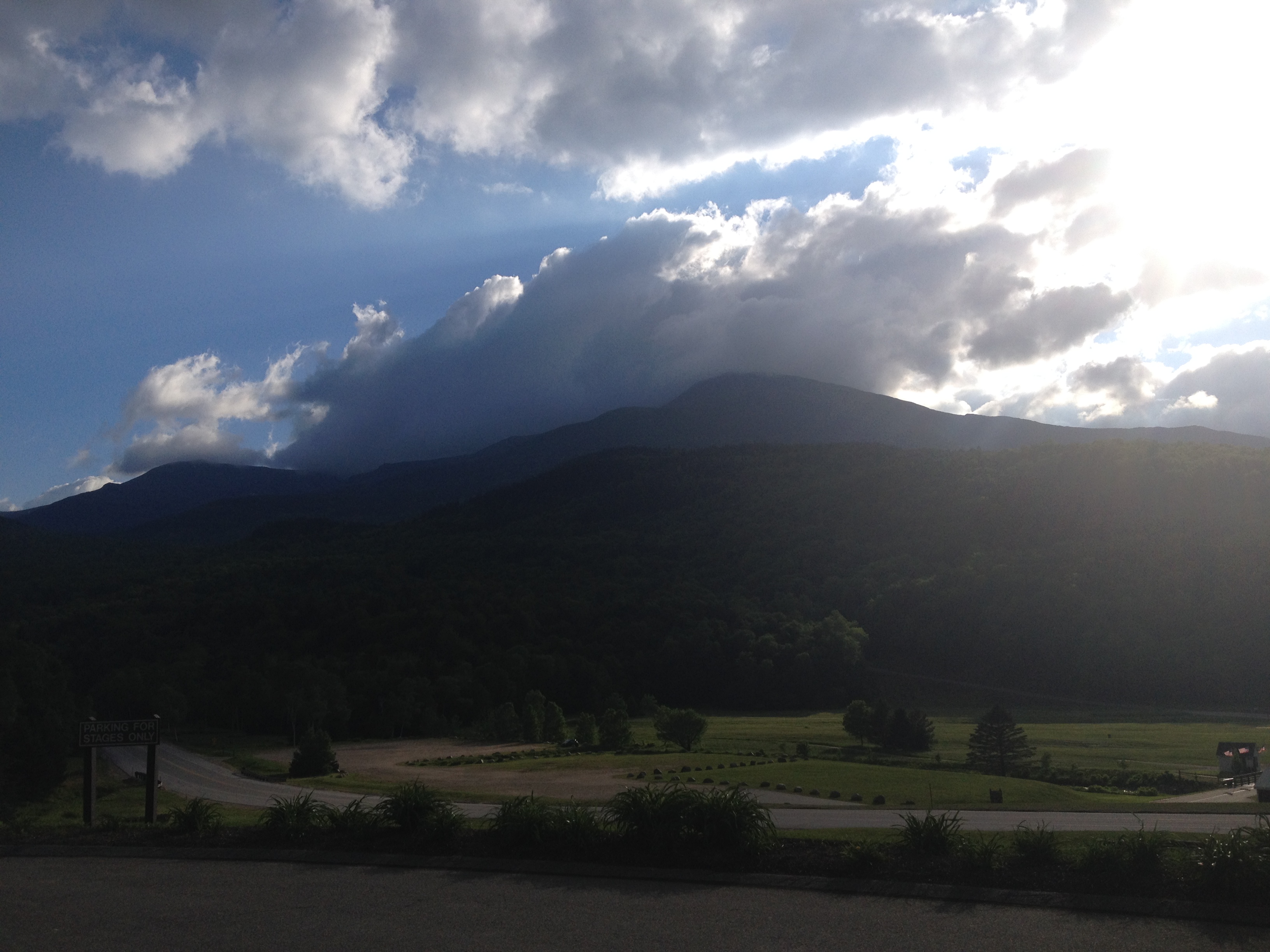
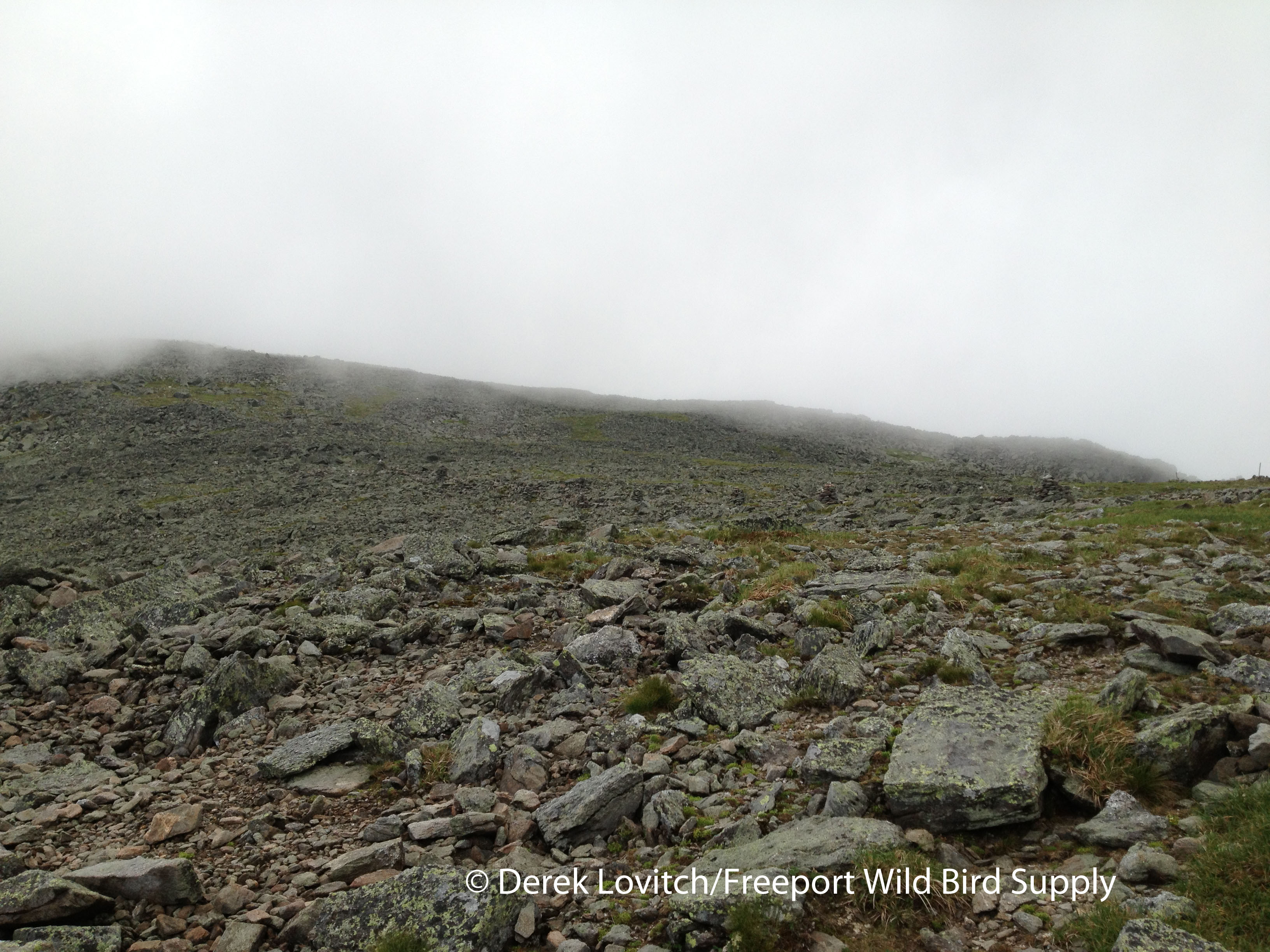
After an early dinner, we boarded the specialized vans of the Mount Washington Stage Line for our private charter up the mountain. It was gorgeous at the base, but looking up, we knew the summit would be different.

IMG_3621

And it was!

IMG_3627

Luckily, the thrushes’ habitat was below the clouds tonight, and so after visiting the summit and checking for American Pipits (too windy, but the flowers were fantastic), we dropped down and began our real mission.

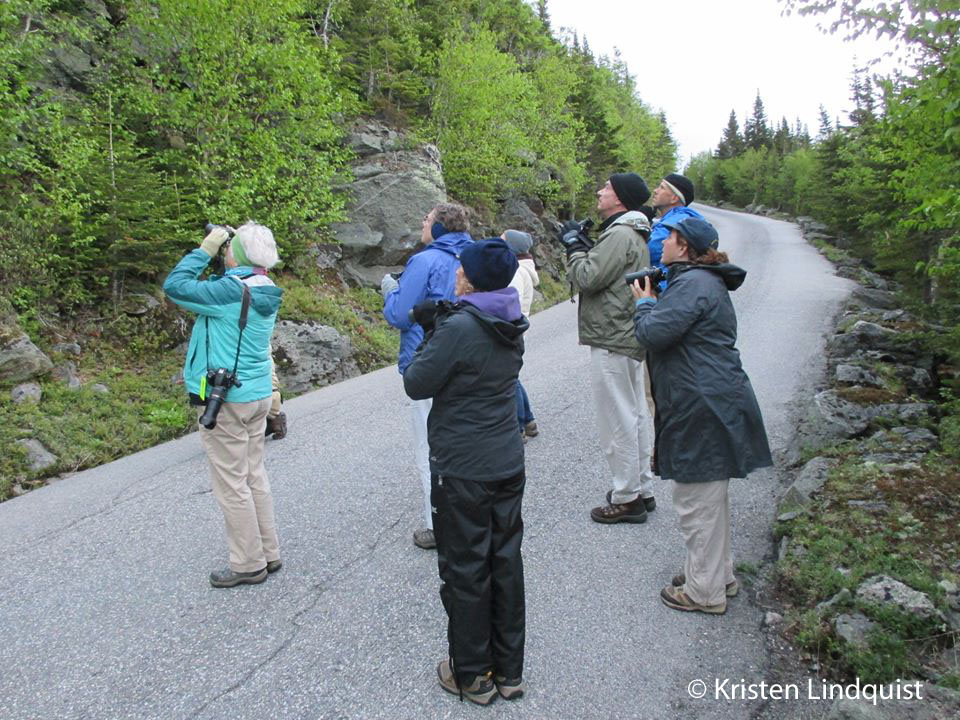
Birding_Auto_Road_by_Kristen_edited-1  Birding_Auto_Road_by_Kristen2_edited-1

Although it took a lot more work than usual, we were all eventually rewarded with good to great views of this enigmatic species. We saw two or three different birds, and heard up to 4 others – a good count for the short stretch of habitat that we cover. It was even the 700th ABA-area bird for one of the clients – a fantastic bird for an impressive milestone. A short celebration was called for upon our return to our hotel.

On Sunday morning, the second day of this two-day “target species” tour, the weather looked gorgeous, but the birding was challenging. Granted, it was going to be hard to top Day 1 anyway – we were probably the first tour in history to see a Bicknell’s Thrush and a Snowy Owl in the same day!  It certainly was a novel – and a completely unexpected – experience for me.

Birding the Caps Ridge Trail in dense fog and cool temperatures to start the day was less productive than usual, but it was still a nice walk into boreal habitat and enjoy the beautiful forest here. Blackpoll Warblers and Yellow-bellied Flycatchers were conspicuous today, at least.

Very strong, downsloping winds cleared the skies for us at our next few stops, but those winds only increased, and birding became a challenge. My favorite spot for Philadelphia Vireo, for example, was just too windswept. Actually, standing upright was occasionally a challenge. But finding some shelter on the backside of a mountain via a short, but steep hike, a few of us were treated to another view of a Bicknell’s Thrush – just as a little more icing on the cake.

A great lunch followed our birding, fueling us for the drive back to Freeport (or, at least, until the ice cream stop) and capping another successful “Bicknell’s Thrush and the White Mountains” weekend.  With one more private thrush tour next weekend, I can only hope my luck with the weather and with seeing the thrush – a mythological bird to some – continues.

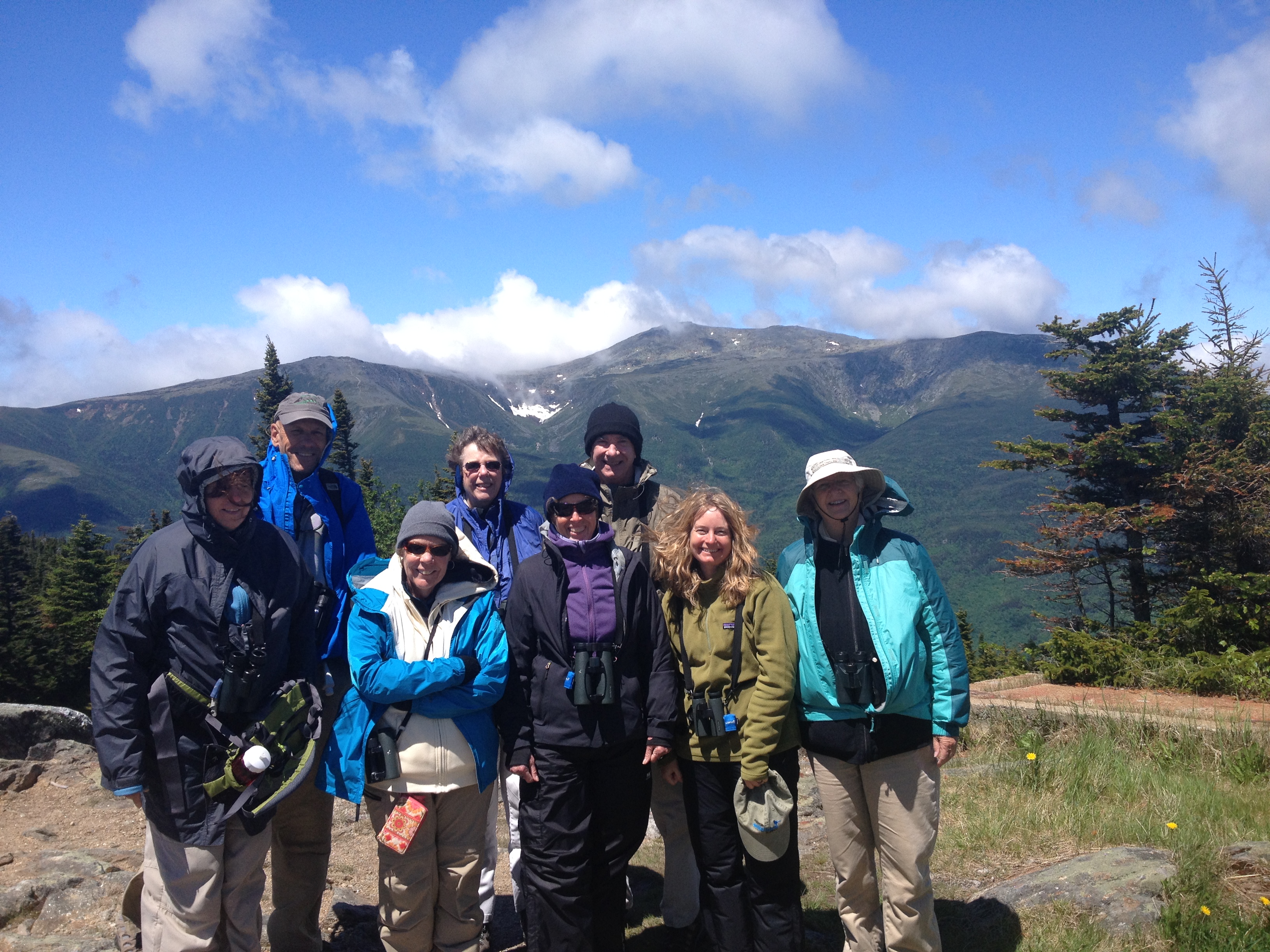
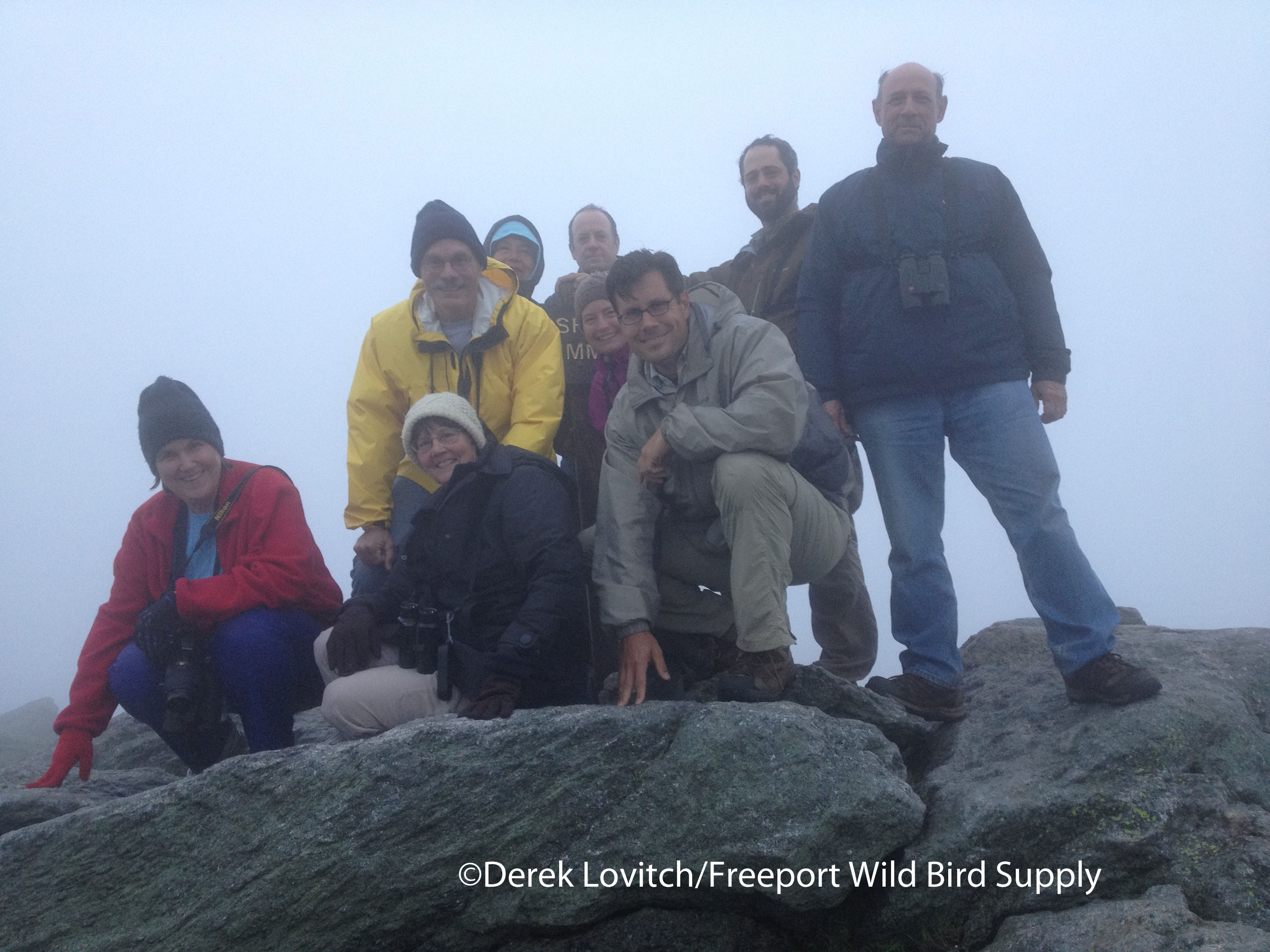
IMG_3632 Happy Thrush-watchers!

2014 MonhegZen Spring Migration Birding Weekend.

Ahh, Monhegan Island.

If only I could bird there every day for a full spring (or fall; I won’t be picky). But for now, I will relish my weekends there, and last weekend was our MonhegZen Migration Spring Birding Weekend…and the island did not disappoint.

So while we always expect the unexpected, we most definitely were not expecting this one.
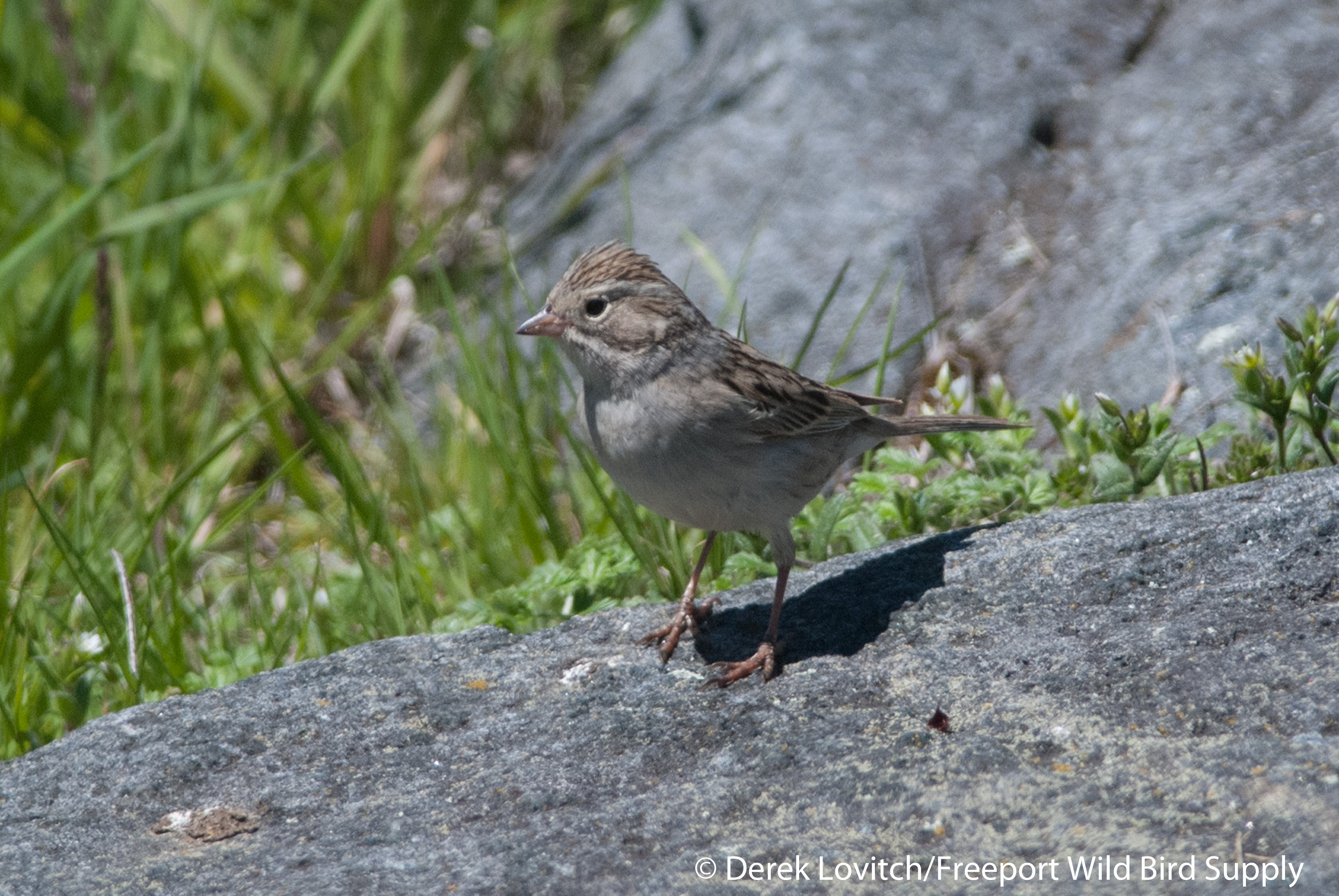
DSC_0124_BRSP1,Monhegan,5-25-14_edited-1 (Click on the photos for a larger image).

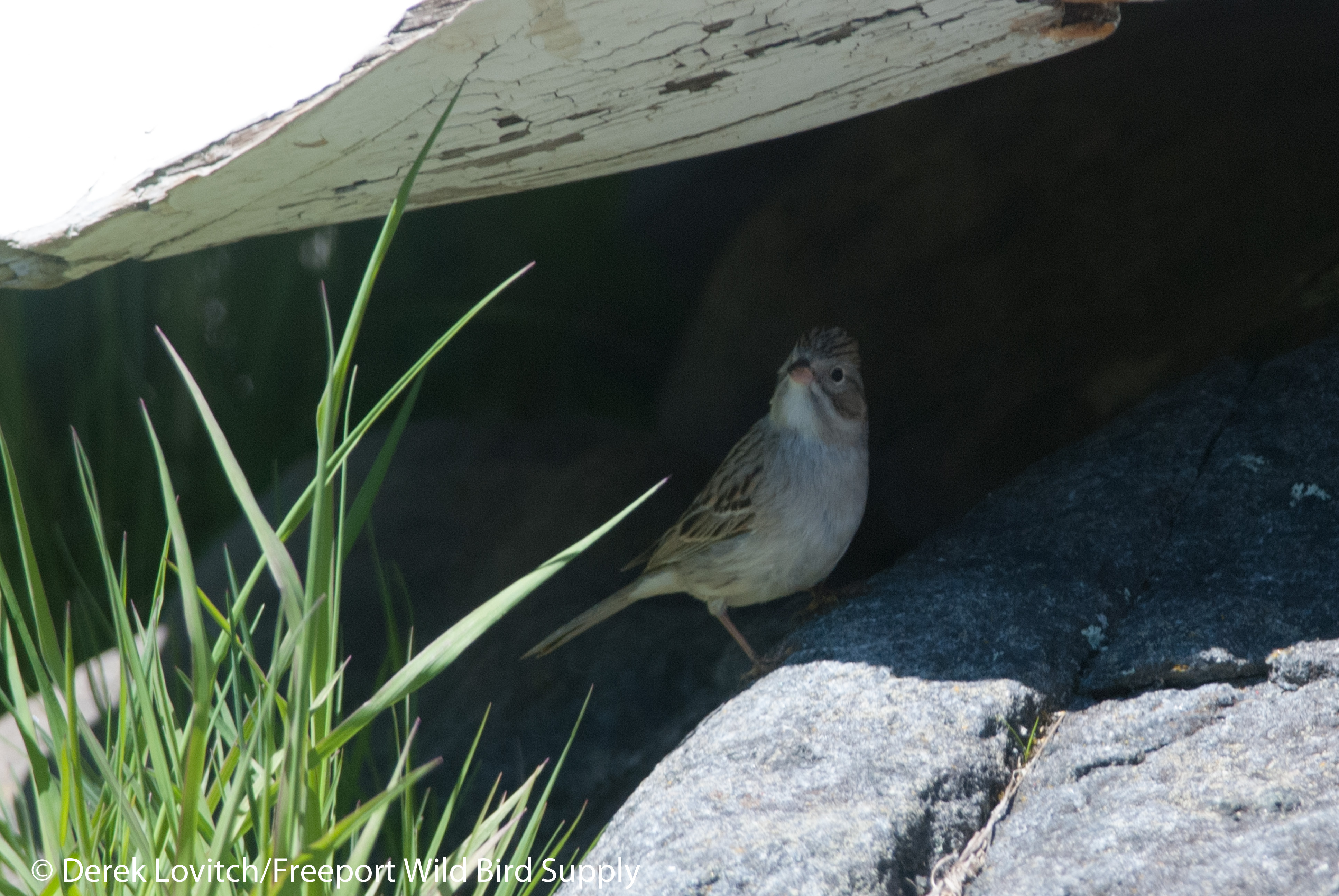
This first state record Brewer’s Sparrow was definitely not high on anyone’s list of next birds for Monhegan, or Maine (certainly not mine!). But more on the sparrow later.

Half of the group arrived with me on the Hardy Boat out of New Harbor on Friday morning, greeted by a veil of fog.

Arrival on Monhegan, 5-23-14
While the shroud of mist offered a lovely scene, it did put a damper on the birding for a little while (excuse the pun), but soon it cleared, and as the ceiling rose, so did the bird activity. In fact, this was the start of a fine weekend of weather – OK, it was rather chilly; extra blankets were dispersed for the night – but other than a few brief, very light showers, our Gore-Tex remained tucked away. We’ll call that a win.

Just about the first bird that we glassed upon our arrival was an immature male Orchard Oriole.  That’s the way we like to start a MonhegZen Birding Weekend!

The rest of Day 1 was highlighted by re-finding one of two immature male Summer Tanagers that had been frequenting the island lately. Friends picked up some seed on their way down (yes, the guy that owns a birdseed store and has several tons of seed on hand forgot to bring seed and had to have someone slum it at a hardware store. Gasp!), and we restocked the stash that kept the tanager visible for all through the weekend.
DSC_0017_SUTA,Monhegan,5-23-14_edited-1

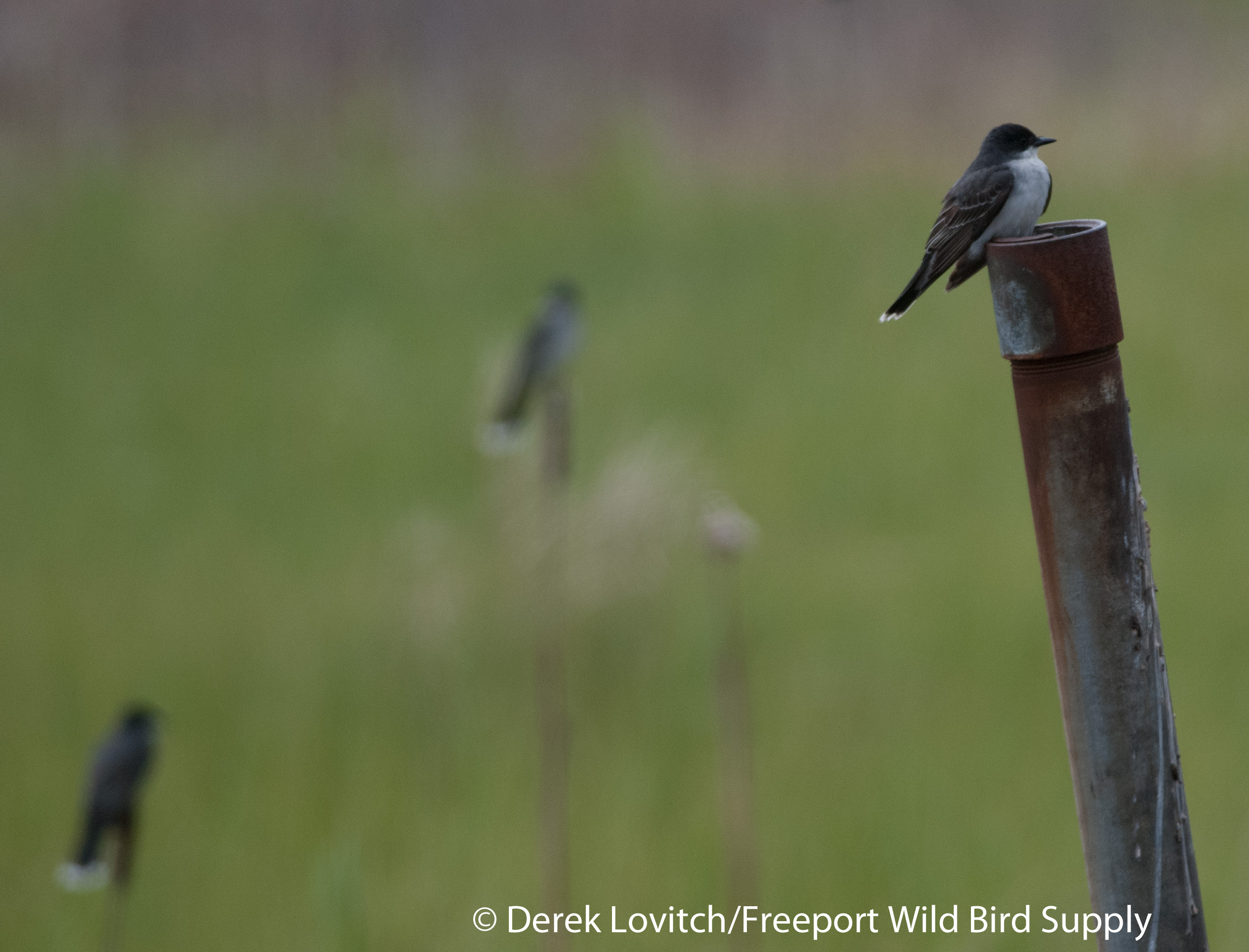
The tanager was our first “good” bird of the trip, but most of us agreed that the kingbird show near the pumphouse was the highlight of the first day. Indeed, it was a highlight for the entire weekend.  Sheltered from a persistent, but raw and cold, easterly wind, the back corner of the town marsh was just about the only place with flying insects out and about. Therefore, flycatchers had piled up here, led by 21 Eastern Kingbirds (growing to 25 by Saturday afternoon, before diminishing on Sunday and Monday).
DSC_0051_2EAKI,Monhegan,5-24-14, edited-1 DSC_0030_3EAKI,Monhegan,5-24-14_edited-1

Other flycatchers were present here, including a couple of cooperative Eastern Wood-Pewees, and several Least Flycatchers.
DSC_0047_LEFL1,Monhegan,5-24-14_edited-1

Little to no migration was visible on the radar overnight Friday into Saturday, and the lack of reorienting birds overhead after sunrise on Saturday morning confirmed the minimal movement overnight.  Although I awoke to a singing Mourning Warbler out my window, we never did catch up with one over the weekend.

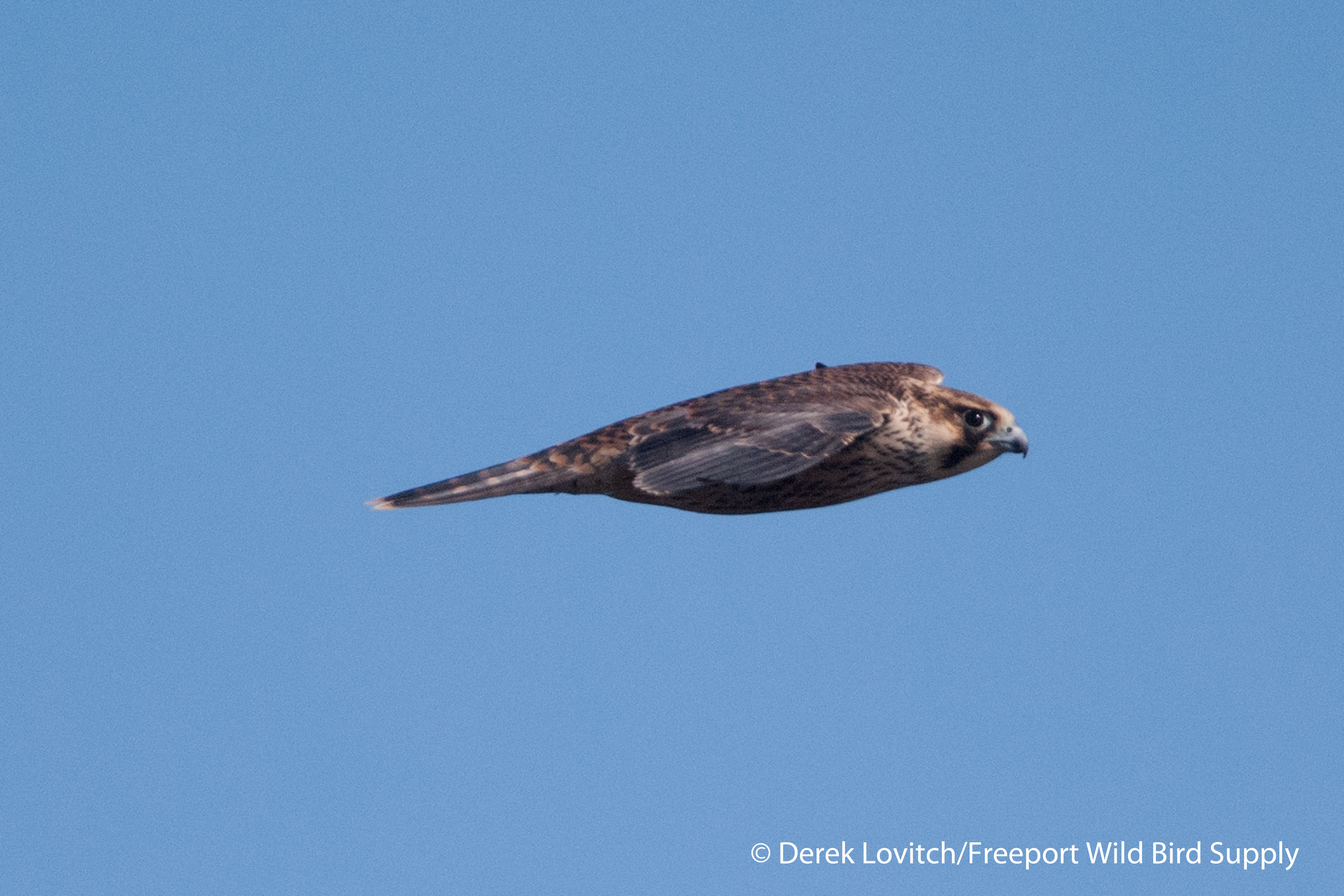
But over the course of the day (as our group grew in size), we beat the bush and slowly but surely built up our species total. The Summer Tanager, the immature male Orchard Oriole, a very entertaining Peregrine Falcon over Manana, and 16 species of warblers were the day’s headliners. But yeah, by Monhegan standards, this was a slow day.

Sunday was not.

A light to moderate migration clearly produced some turnover, and plenty of new birds.  Some warblers were reorienting over the Trailing Yew after sunrise – always a good sign – and our walk to Lobster Cove was much slower in pace than on Saturday. A singing Field Sparrow, a calling Common Nighthawk, and a streaking Gray-cheeked/Bicknell’s Thrush were among the species that we added to our tally.

Then the text came through.

When describing our itinerary – or lack thereof – for the coming days upon our arrival, I talked about how chasing birds (dropping everything and running across the island) is often a futile exercise here, and instead we would work our way towards good birds, keeping our eyes open for them – and enjoying everything in our path. I joked that “but if I need it for my island list, all bets are off.”

First state records?  Fuhgettaboutit. Off we went. And I make no apologies…luckily, the coffee pot was on the way. I might not have gotten away with it otherwise.

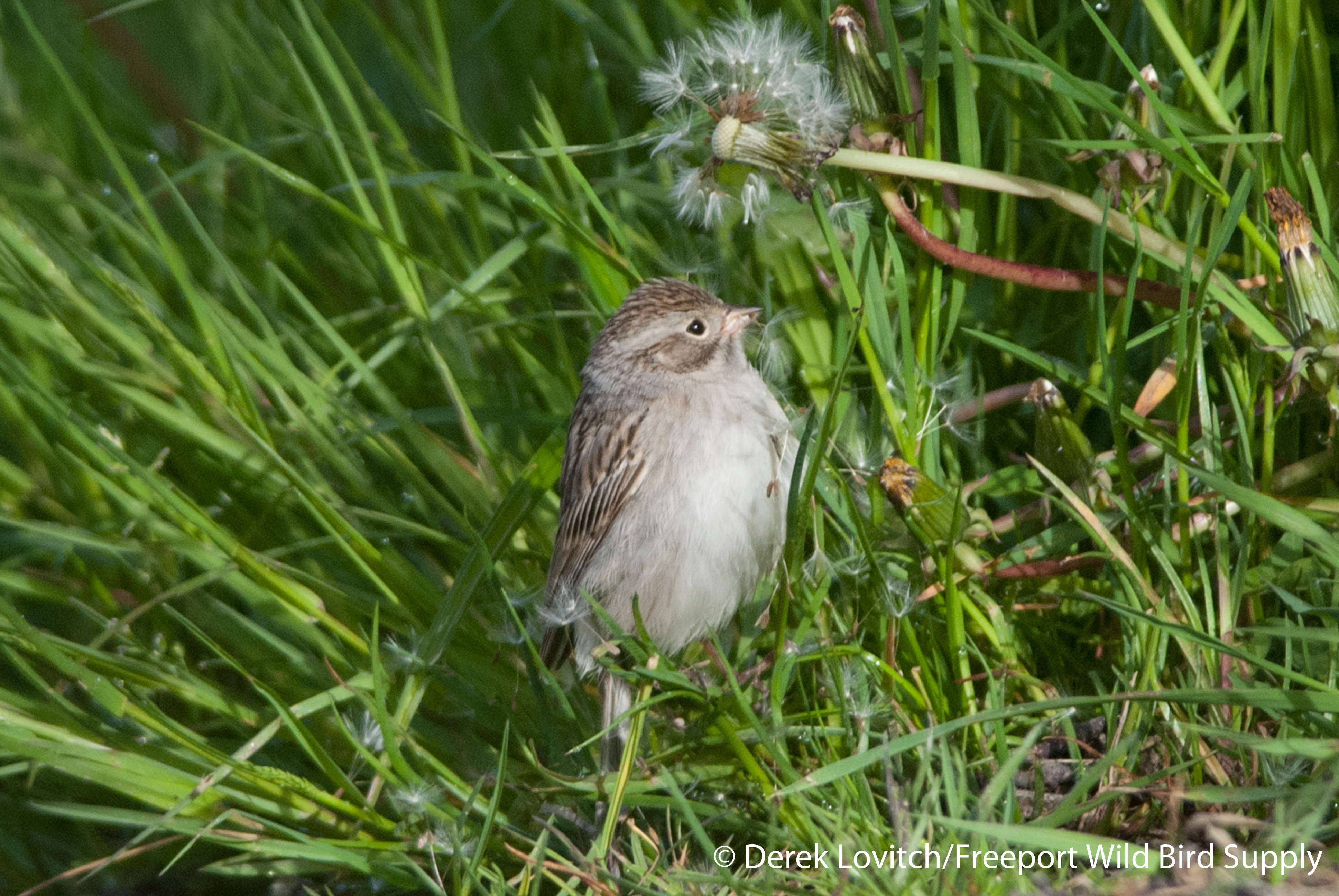
So yeah, “Maine’s International Birder of Mystery” discovered a Brewer’s Sparrow.  First found at the edge of the road at its terminus at the Ice Pond, it soon made its way into a nearby yard. Dandelion seeds were its quarry.

DSC_0120_BRSP3,Monhegan,5-25-14_edited-1

  DSC_0131_BRSP7,Monhegan,5-25-14_edited-1  DSC_0116_BRSP6,Monhegan,5-25-14_edited-1  DSC_0075_BRSP5,Monhegan,5-25-14_edited-1  DSC_0069_BRSP2,Monhegan,5-25-14_edited-1

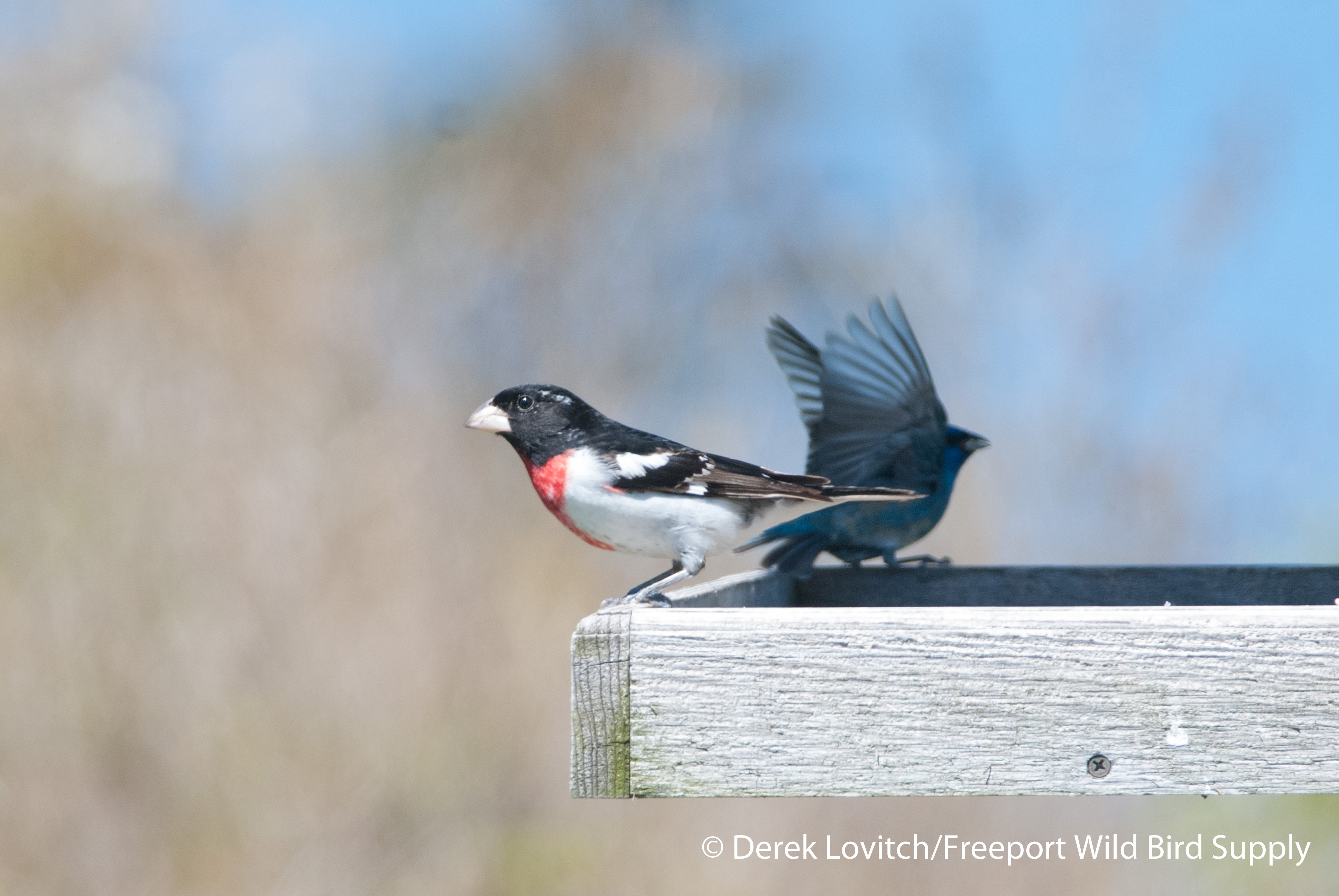
There were other birds to look at too. While I scrutinized the extent of streaking on the nape and crown of the sparrow and took way too many photos, the more sane of the group enjoyed a splash of color at the nearby feeders – at least 3 Rose-breasted Grosbeaks and an Indigo Bunting.
DSC_0100_RBGRandINBU,Monhegan,5-25-14_edited-1

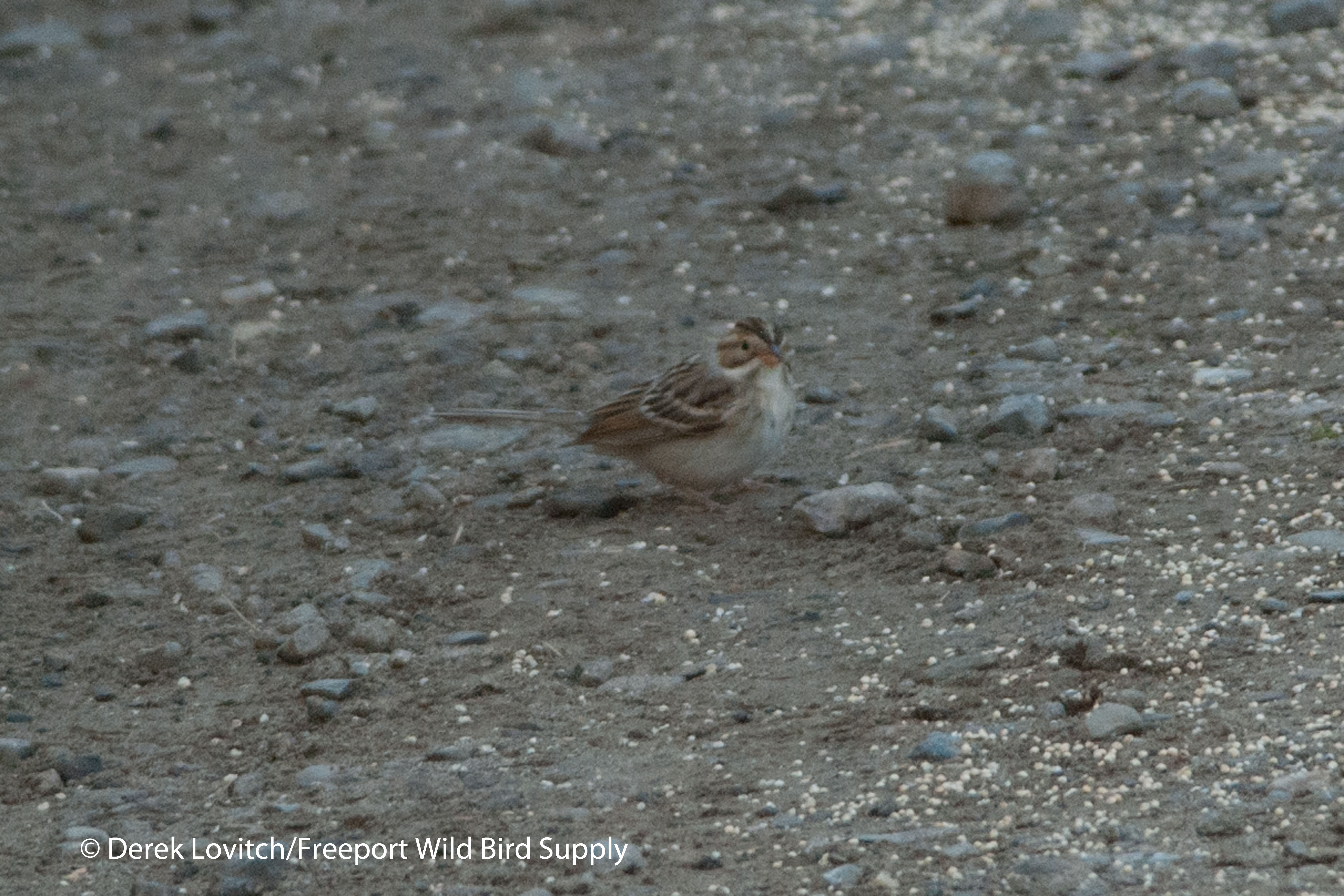
Elsewhere, a Clay-colored Sparrow on one of my other seed stashes, several great views of Philadelphia Vireos, the continuing Summer Tanager, a second Orchard Oriole (an adult male) and a variety of warblers were the other highlights.

All weekend long we had been enjoying lots of warblers, but somehow we only amassed 19 species (we missed singles of Nashville and Prairie seen by others). But of those that we did see, most of them we saw stunningly well. Magnolia, American Redstart, Yellow, and Common Yellowthroat dominated each day, but we had a bunch of Northern Parulas and Chestnut-sided on Sunday as well.  And the views of Canada Warblers and one particular Northern Waterthrush will be tough to beat.

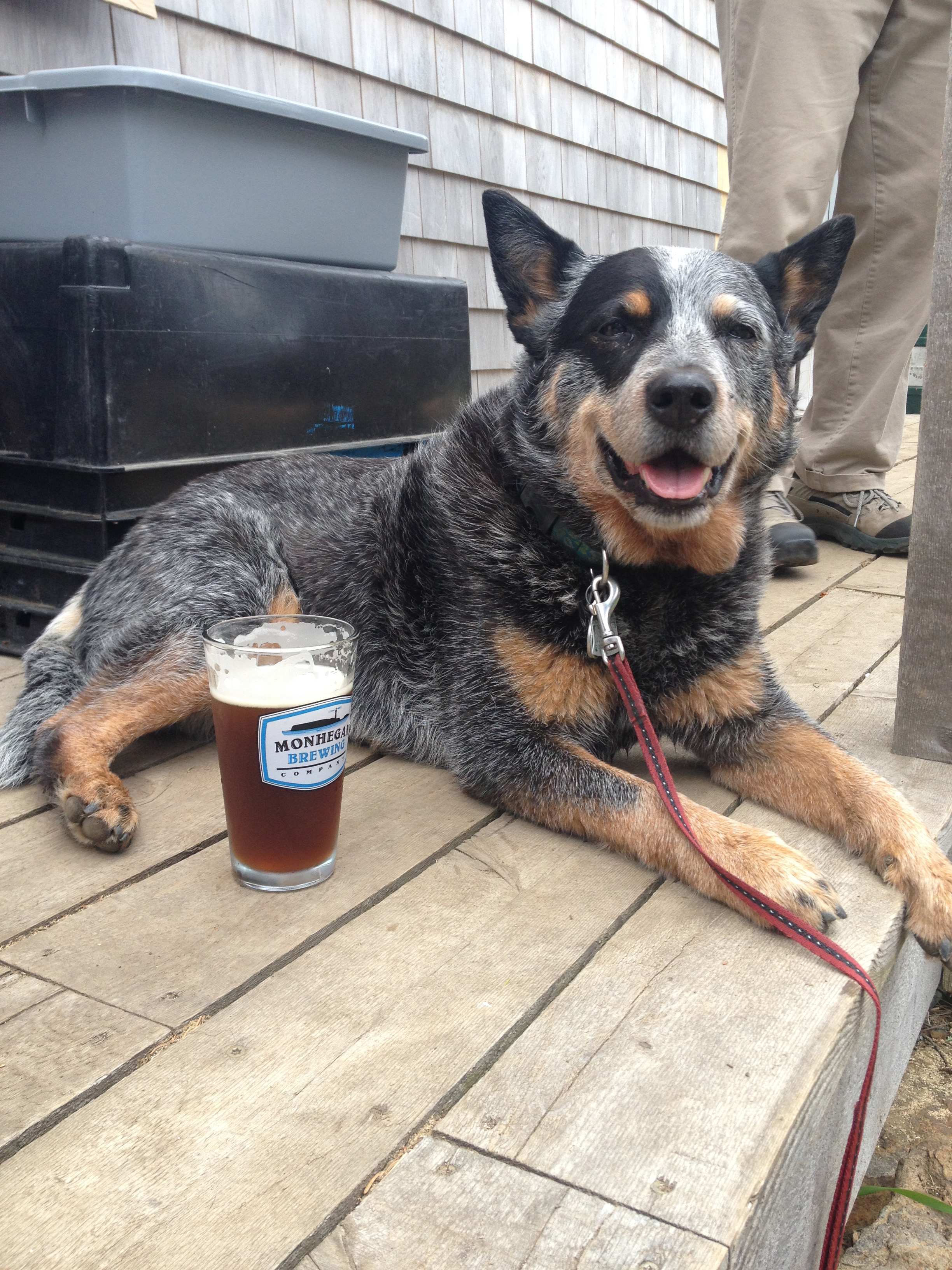
Like each of our first two days on the island, Sunday’s tour came to an end at the Monhegan Brewing Company. On Sunday night, the Brewer’s Sparrow was celebrated, and ideas for a “Brewer’s Brew” or something like that was hatched.

The group had accumulated 89 species (including the aforementioned 19 species of warblers), which was actually well below average for my MonhegZen Spring Birding Weekends.  But at least for me, I had one day left to add to the total, as I extended my stay for another night.

A very strong flight overnight suggested that this was a good call, but I was surprised by how many fewer birds were around on Monday morning than on Sunday. Especially when surrounded by fog – as we were overnight and into the morning – I have found that on really strong flights with favorable conditions, birds probably fly over the island. Perhaps the shroud of fog prevented them from even knowing there was an island below.

However, nearly three hours after sunrise, the winds shifted to the southwest, the ceiling lifted, and all of the sudden, there were warblers in the air. Had they been silently creeping around the forests, waiting for some clearing to reorient to the mainland?  Or, were these birds that were overhead, lost above the fog, looking for a place to finally land?

Hard to say, but for a couple of hours, the birding was quite good. Blackpoll Warblers had increased dramatically, and I had more Bay-breasted and Tennessee Warblers than the previous days, and the Cedar Waxwing flock increased dramatically.

Jeannette and Sasha (finally making her first trip here at the age of 14) arrived, and our friends Paul and Kristen joined us for the next couple of hours.  Blackpoll and Bay-breasted Warblers continued to put on a good show, as did the Brewer’s Sparrow.  More importantly for Jeannette, she was able to successfully twitch all three things she was after today: Hardy Boat cinnamon rolls, Novelty pizza, and Monhegan Brewing.  Yeah, she looked at the sparrow, too.

While Sasha was unable to successfully add Brewer’s Sparrow to her list, she did carefully study plumage variation in Herring and Great Black-backed Gulls. 
Sasha_watching_gulls,Monhegan,5-26-14

She also joined us at the brewery for one final pint.
Sasha_atMonheganBrewery,5-26-14

When many of us present for the weekend’s excitement boarded the boat at 3:15, I was sorry to go, as usual. I eked out 94 species when all was said and done (still below average for a spring weekend out here) including 19 species of warblers (I almost never miss hitting 20 here). While the overall list might have been a little low, the quality of views of most species was hard to beat. The overall quality of the bird list wasn’t too shabby, either. A first state record doesn’t hurt.

The following is my checklist for the group for Friday through Sunday. Monday’s total included birds seen with Jeannette, Paul, and Kristen. The included numbers for each day are conservative estimates or counts of the number of individuals of each species we saw and/or heard on the island (not including the ferry rides).

Species: Friday, May 23rd/Saturday May 24th/Sunday, May 25th/Monday, May 26th.

American Black Duck: 1/0/0/0
Mallard: 15/21/10/10
Black Scoter: 0/0/0/2
Common Eider: x/x/x/x
Red-breasted Merganser: 0/0/0/1
Ring-necked Pheasant: 3/4/5/4
Common Loon: 4/6/6/4
Northern Gannet: 5/6/6/12
Double-crested Cormorant: x/x/x/x
Great Blue Heron: 0/3/0/0
Osprey: 1/3/1/0
Sharp-shinned Hawk: 0/0/0/1
Peregrine Falcon: 0/1/0/0
Merlin: 1/0/0/0
Virginia Rail: 1/1/1/1
Laughing Gull: 5/12/4/2
Herring Gull: x/x/x/x
Great Black-backed Gull: x/x/x/x
Black Guillemot: x/x/x/x
RAZORBILL: 0/1/0/0
Mourning Dove: 6/6/8/4
Common Nighthawk: 0/0/1/0 (FOY)
Chimney Swift: 1/1/2/0
Ruby-throated Hummingbird: 2/4/4/3
Downy Woodpecker: 2/0/0/0
Northern Flicker: 1/0/2/2
Eastern Wood-Pewee: 2/2/2/3
Yellow-bellied Flycatcher: 0/1/2/2
Alder Flycatcher: 0/0/0/3 (FOY)
“Traill’s” Flycatcher: 0/0/0/5
Least Flycatcher: 3/1/6/6
Eastern Phoebe: 1/0/0/0
Eastern Kingbird: 27/25/14/15
Blue-headed Vireo: 0/0/0/1
Philadelphia Vireo: 0/0/2/4
Red-eyed Vireo: 2/2/12/20
Blue Jay: 8/12/8/8
American Crow: x/x/x/x
Common Raven: 2/2/2/2
Tree Swallow: 8/5/6/6
Bank Swallow: 2/2/2/0
Cliff Swallow: 0/0/1/0
Barn Swallow: 2/2/1/2
Black-capped Chickadee: x/x/x/x
Red-breasted Nuthatch: 0/1/2/3
Carolina Wren: 4/8/6/6
Winter Wren: 0/0/1/0
Golden-crowned Kinglet: 0/2/2/4
Ruby-crowned Kinglet: 0/0/0/1 (late)
Veery: 1/1/1/0
GRAY-CHEEKED/BICKNELL’S THRUSH: 0/0/1/0
Swainson’s Thrush: 0/0/1/0
Hermit Thrush: 0/0/1/0
American Robin: 10/10/8/6
Gray Catbird: x/x/x/x
Brown Thrasher: 0/1/1/0
European Starling: 6/4/8/6
Cedar Waxwing: 3/4/18/60
Tennessee Warbler: 0/2/0/4
Northern Parula: 3/12/30/15
Yellow Warbler: 25/25/35/30
Chesnut-sided Warbler: 6/5/20/10
Magnolia Warbler: 25/20/25/20
Black-throated Blue Warbler: 6/8/8/4
Yellow-rumped Warbler: 6/8/0/0
Black-throated Green Warbler: 10/15/15/15
Blackburnian Warbler: 2/0/2/3
Bay-breasted Warbler: 0/1/0/8 (FOY)
Blackpoll Warbler: 4/3/10/50
Black-and-white Warbler: 5/5/10/5
American Redstart: 10/15/35/30
Ovenbird: 0/0/2/0
Northern Waterthrush: 0/3/3/3
MOURNING WARBLER: 0/1/0/0 (FOY)
Common Yellowthroat: 35/35/30/30
Wilson’s Warbler: 4/0/5/1
Canada Warbler: 2/4/4/2
SUMMER TANAGER: 1/1/1/0
Chipping Sparrow: 10/10/6/8
CLAY-COLORED SPARROW: 0/0/1/0
BREWER’S SPARROW!!!!: 0/0/1/1
Field Sparrow: 0/0/1/1
Savannah Sparrow: 1/1/3/1
Song Sparrow: x/x/x/x
Swamp Sparrow: 1/2/2/1
White-throated Sparrow: 1/0/10/10
Northern Cardinal: 6/8/8/6
Rose-breasted Grosbeak: 0/0/4/3
Indigo Bunting: 1/3/4/2
Bobolink: 8/6/4/4
Red-winged Blackbird: x/x/x/x
Common Grackle: 10/15/15/10
ORCHARD ORIOLE: 1/1/2/1
Baltimore Oriole: 0/1/3/4

American Goldfinch: 6/12/8/6

Gull Identification Workshop Wrap-Up

You may have noticed that my blog has been a little quiet in the last couple of weeks.  Mostly, that has been due to my birding being mostly about photographing gulls every chance I get! And in between, accumulating and sorting photos from friends.  What was planned to be a 95-slide PowerPoint program became an exhaustive (literally), 180+ slide dissertation.  Not only was I impressed by how many people signed up, but how many stayed until the bitter end – even though I strongly urged people who were new to this to depart before the section on Thayer’s Gulls and hybrids!

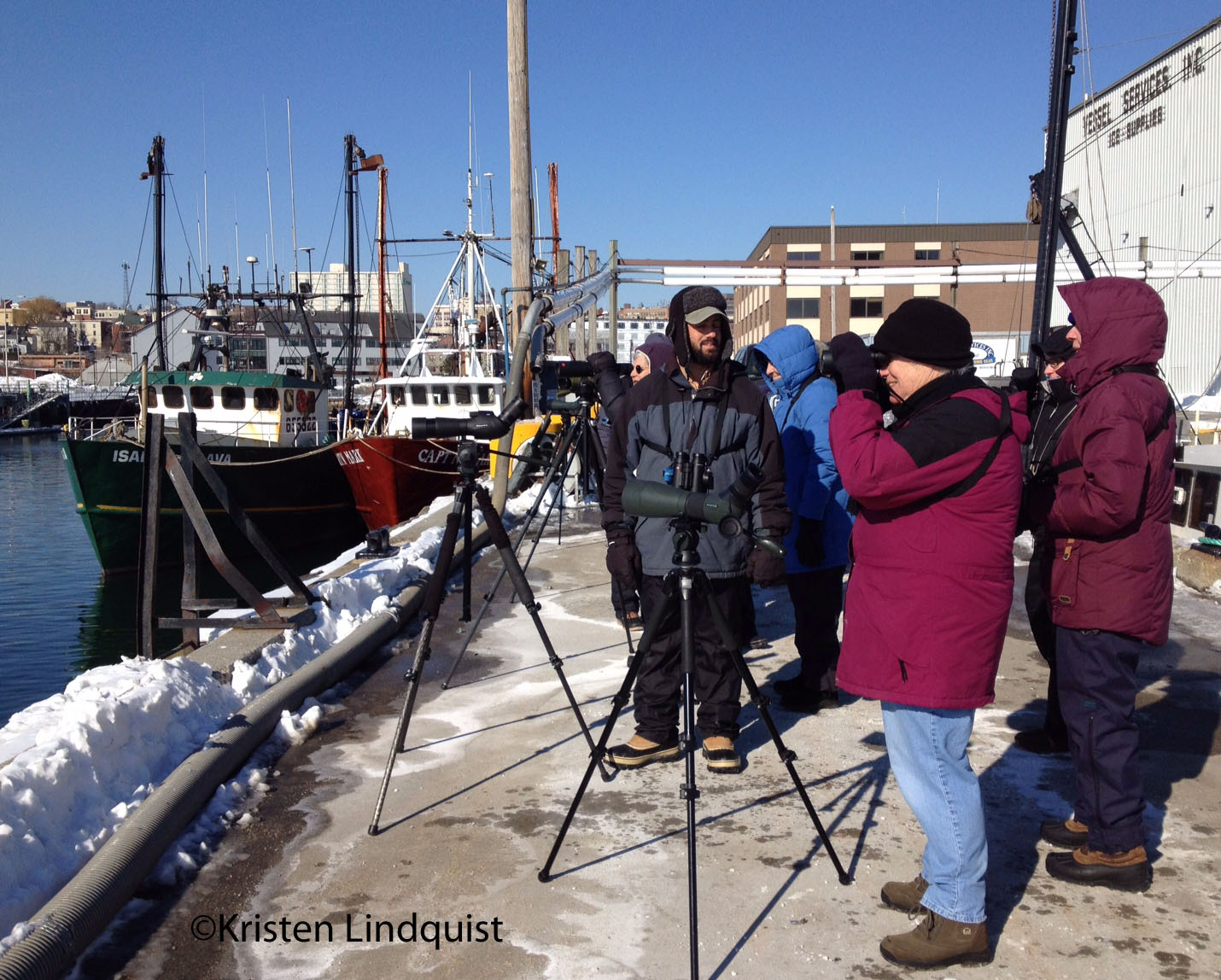
Come Sunday morning, 13 people joined me for the field session of the two-day workshop – no doubt reduced by the 12-degree temperatures that greeted us to start the day. We began with close studies of the various ages of Ring-billed Gulls at Back Cove…aided by a little “incentive,” of course.
photo 3_edited-1

Sorting through Herring Gulls was up next, and then we made our way over to the Fish Pier in OldPort, for some “real” gulling.  And it did not disappoint. The endless variation of “Kumlien’s” Iceland Gulls was readily apparent with eleven 1st-winter, two 2nd-winter, and 2 adults – many of them close and in direct contrast with each other. A total of three 1st-winter Glaucous Gulls were added to the mix, along with ample opportunities to practice aging Herring and Great Black-backed Gulls.
photo 3 (2)_edited-1

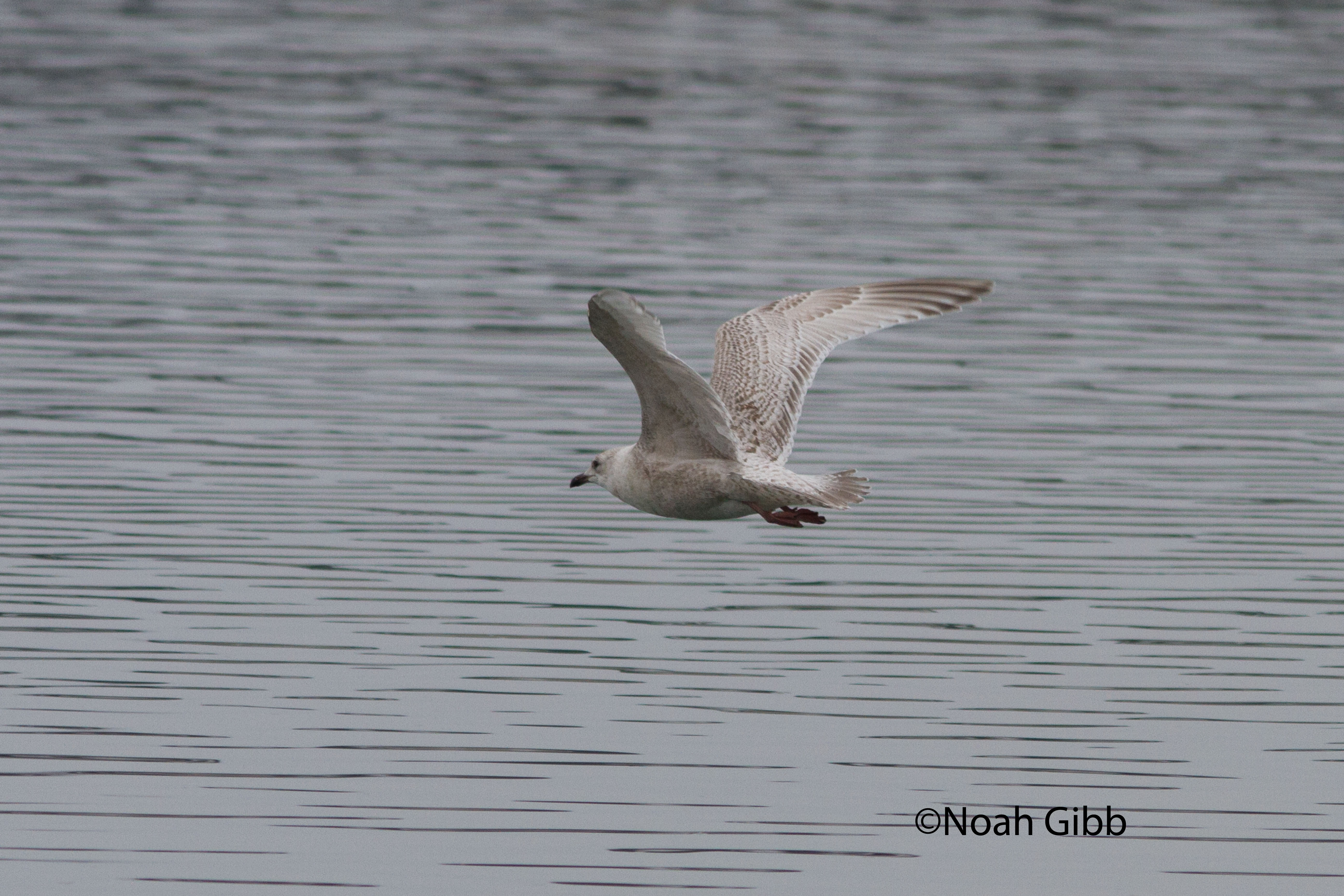
I really couldn’t ask for anything more…well, I could, and of course, did. And shortly thereafter a particular gull-of-interest put in an appearance. Widely being reported as a Thayer’s Gull, this odd individual was a bird I wanted to study closely (Jeannette and I only saw it in the distance on Tuesday), and it was indeed a very instructive bird for a gull workshop.  Having been looking at thousands of gull photos over the last two weeks, I have been a bit negligent with studying and addressing this bird.  Besides, I had not seen it in the field and even some very good photos are of secondary value to time with a bird in the field.

Doug Hitchcox got some decent photos of the bird on Sunday, but the best photos to date have been from Noah Gibb. I will therefore use these photos as our reference.
99.IMG_9975_edited-1

99.IMG_9985_edited-1

99.IMG_9987_edited-1

99.IMG_9998_edited-1

One of my take-home messages during my workshop is that a good “guller” has to be able to say “I don’t know,” and leave some individuals as “Gull sp.” This is probably the best answer to this bird, but what I think we can say is that this cannot be “counted” as a Thayer’s Gull.

For better or for worse, Thayer’s Gulls on the East Coast receive extensive scrutiny.  Birds that would be passed over in coastal California are analyzed to death in New England. Likewise, birds that look like “Kumlien’s” Iceland Gulls on the West Coast get extensive scrutiny, while here in Maine we pass some of these off as typical variation.  And I think this is a good thing – rare birds are rare, and vagrants to opposite coasts should warrant extreme care.

Therefore, this current rash of “Thayer’s Fever” – a common affliction of East Coast gull-watchers – needs to be tempered a bit. There is a reason that there are only two accepted records ever in Maine of this challenging, and variable, species. Therefore, extreme caution is necessary when placing this desirable label on funky gulls.

Like the Shawmut Dam gull reported by many as a Thayer’s a few weeks ago, I believe that the Portland “Thayer’s” is well outside the range of variation of what we can accept as a bona-fide Thayer’s Gull on the East Coast.  While there are a number of characteristics that suggest this bird could be a Thayer’s, there are a number of significant “strikes” against it.  While I think the Shawmut Dam birds suggests a Iceland-Thayer’s intergrade (I am not going to get into the muddled and controversial taxonomy here today), the Portland bird looks to me more like an abnormally dark-winged “Kumlien’s” Iceland Gull. Sure there could be Thayer’s genes in there…which there probably are in all Kumlien’s Gulls . . .oh wait, I said I wasn’t going to get into taxonomy.  Never mind.  Moving on.

So where was I? Oh yes… while the dark secondary bar (and upon closer inspection showing a distinct contrast between dark outer webs and pale inner webs) and the similarly distinctly two-toned outer primaries are important Thayer’s features, there are a serious amount of non-Thayer’s like features shown by this bird. Again, like the Shawmut Dam bird, there are just too many things “wrong” with this bird to safely label it a Thayer’s Gull, in my opinion.

First and foremost, there’s the Portland bird’s incredibly white overall appearance. While a first-summer or some 2nd-cycle Thayer’s can look this pale overall, this bird IS a first-cycle bird.  Since no second-cycle feathers are evident (the bird has a very uniformly-marked plumage typical of a bird less than a year old) and none of the feathers suggest any abnormal wear, we cannot call this anything other than a 1st-cycle bird.  It is not overly worn, and bleaching would affect all of the most-exposed parts of the bird – like the mantle, upperwing, and especially the primaries (and it is those primaries that are abnormally dark, not pale). The mostly-dark bill is also highly suggestive of a 1st-cycle bird, as is the fairly dark eye. Perhaps that is a bit of an over-simplification, but for now, that should suffice.

With that (fairly well) established, we can look at this bird more closely.  Again, those outer primaries and “picket-fence” secondaries are very Thayer’s-esque. Unfortunately, the similarities pretty much end there. The bird is not very big, and similar in size to most of the “Kumlien’s” Iceland Gulls we see it with.  It is also has the somewhat short and thin-billed appearance, with a gently rounded head and large eye that are typical of Iceland Gulls; this bird does not get any subjective gestalt points.  More importantly, in my opinion, are more tangible issues, from head to tail (and in no particular order of importance):
–          The overall pale appearance to the entire bird give that “white” impression at a distance; Thayer’s (THGU) usually look “dirtier” or even “brown.”
–          The pale face doesn’t have that nice dark smudge that we like to see on THGU.
–          The bill is clearly becoming pale at the base already.  The pattern looks good for Iceland (ICGU), and is certainly on one end of the bell curve for THGU.
–          The tertials are wholly marbled, and look perfect for ICGU.  “Classic” THGU show mostly dark tertials with marbled distal ~1/3rd or so.
–          On the folded wing (and on some flight shots), the primaries definitely have dark outer webs, but they also have a pale fringe that not just rounds the tip, but continues down the length of the most of each feather’s outer web. That is more consistent with dark-winged “Kumlien’s” Gulls.
–          While the tail is mostly dark, the bases are fairly extensive white with lots of marbling.  The extent of marbling is a good fit for ICGU.

While absolutely none of these factors eliminate a THGU on their own, the sum of all of them taken together makes for a most unusual THGU.  Considering the range of variation in “Kumlien’s” ICGU combined with hybridization – and by some accounts extensive intergrading – put this bird well outside the possibly-artificially-delineated box that we currently label a Thayer’s Gull.  At the very least, this is far short of a bird that could be “good enough” to constitute a third state record.

Can you see why I was so impressed that so many people stayed to the bitter end of my program on Saturday (and Sunday, for that matter!)?  So there, I said it – the OldPort mystery gull is not a “good” Thayer’s, despite the wishes of many-a-birder!  Sorry.

So anyway, after the Fish Pier, we ventured over to Mill Creek Cove in South Portland.  Two more 1st-winter Iceland and a 1st-winter Glaucous were present (some are all likely birds we saw on the other side of the harbor) to reinforce our new-found skills.
photo 3 (3)_edited-1

And finally, some of the group joined me for a field trip extension over to Westbrook to look for the “Westbrook Gull,” a bird that, as I explained in the workshop, still defies identification and therefore is also quite instructive. Unfortunately, it was not present today (I see it less often on the weekend), but we finished up with a great showing for here of 4 Iceland Gulls (three 1st-winter and 1 2nd-winter) with the Herring and Ring-billed Gulls near the falls.  Meanwhile, while we did look at other birds all day, the open water behind downtown Westbrook yielded the surprise of the day – a pair of Ring-necked Duck that has just been found by Colin Chase.  Whether they are southbound, northbound, are somewhere in between, this was a great winter find, and a nice way to bring our workshop to a close.

Some people added Iceland and Glaucous Gull to their life list this day – and I think one person deleted Thayer’s Gull from their life list! – but more importantly, everyone left with a little more knowledge about how to identify gulls, and more importantly, hopefully a new-found appreciation for these remarkable, adaptable, and successful creatures.

With the success of this weekend (and some refinement due to the slide show portion of the program), I think it is safe to say that you can look for this workshop again in the future.  Until then, good gulling everyone!

MonhegZEN Birding Fall Migration Weekend, 9/26-30/13

This past weekend was my annual “MonhegZEN Migration Weekend.”  A small group – absolutely no more than eight people per day – joins me on a per diem basis to enjoy the wonder of fall migration at this offshore hotspot.  While the 105 total species was right about my Fall Weekend average, it did include 20 species of warblers, and a variety of the usual fall-on-Monhegan cast of characters.  And a few “good” birds as always.

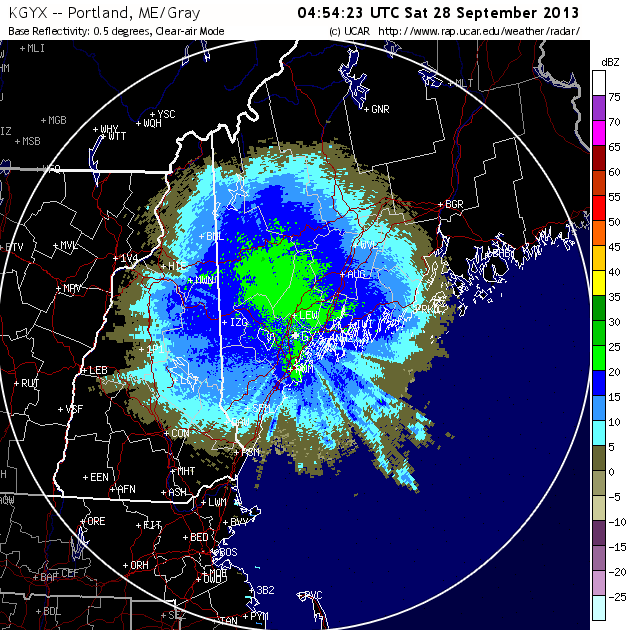
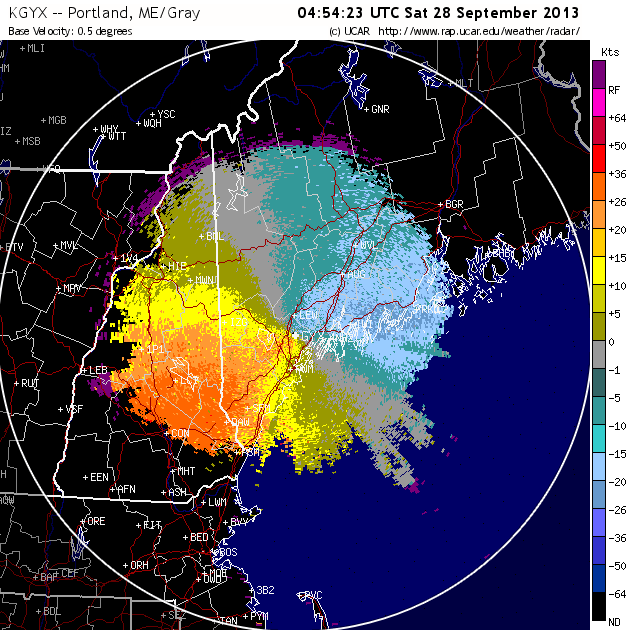
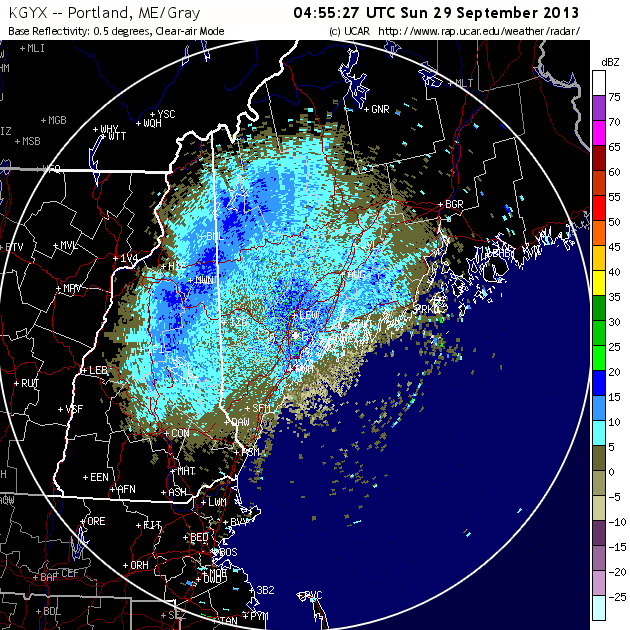
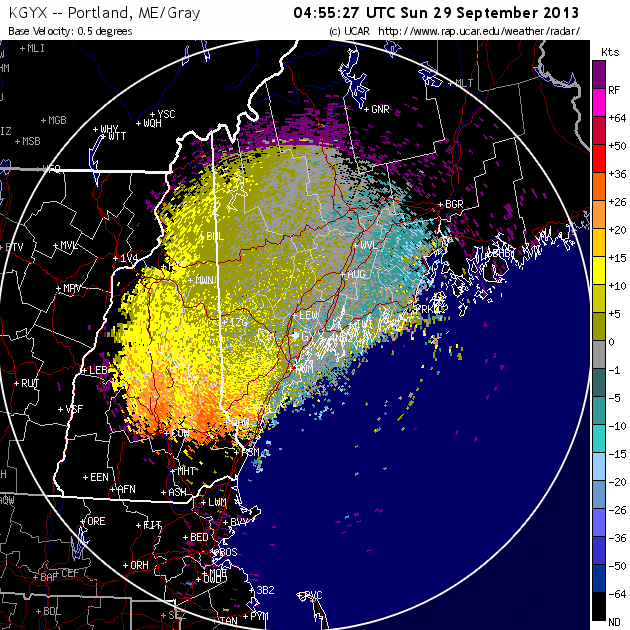
But before I get into the daily rundown, let me post a quiz.  Here are the 1am radar and velocity images from each of the four nights preceeding each of my four days on the island.  Can you guess which days had the most birds?
9-27-13 1am ref 9-27-13 1am vel 9-28-13 1am ref 9-28-13 1am vel 9-29-13 1am ref 9-29-13 1am vel 9-30-13 1am ref 9-30-13 1am vel

If you said the first two had more birds than the second two, you would be absolutely right!  And yes, Saturday (Day 2) was definitely the best day for migrants on the island.  And yes, Monday (Day 4) was very, very slow.  The radar certainly suggested it, and our birding over the course of each day definitively ground-thruthed it.

IMG_1587Leaving Port Clyde, 9/26.

After the good flight on Thurday night into Friday morning, I arrived with part of my group from Port Clyde on the 7am ferry, dropping us on the island just before 8.  The birding was still going strong.  In fact, it took us almost an hour and a half just to walk to the end of Dock Road (about ¼ mile)!  At least six Cape May Warblers in one cluster of spruces, Rusty Blackbirds were overhead (including one just as our boat docked, a nice welcome to the island), and then a buzz-by from a Cooper’s Hawk.

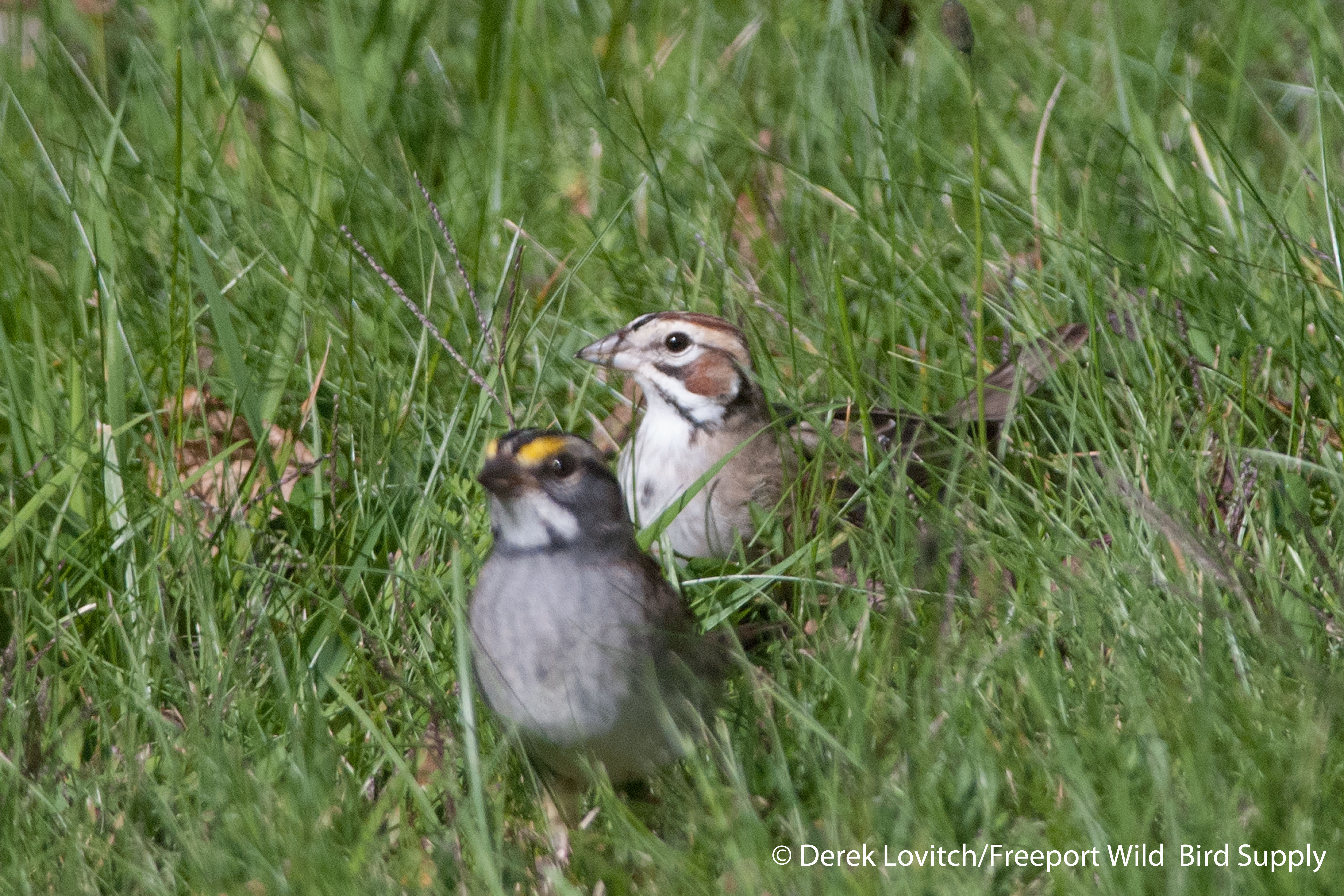
Common on the mainland, Coops are rather rare this far offshore, and I don’t see them on the island every fall, so this was a real treat – and an “Island Bird” for a friend I was exchanging info with.  A short while later we caught up with the last individual of what was once 5 Broad-winged Hawks that drifted to the island – only my second-ever out here.   A Yellow-billed Cuckoo, a continuing Lark Sparrow, Clay-colored Sparrow, and Dickcissel – yup, most of the usual fall Monhegan “trash birds!”
a -DSC_0007_LASP1,Monhegan,9-28-13Lark and White-throated Sparrows

b -DICK1,Monhegan,9-27-13Very pale juvenile Dickcissel

c -CCSP,Monhegan,9-27-13Clay-colored Sparrow.

Honestly however, the bird of the day – from an island rarity perspective – was probably House Sparrow.  Seriously.   A male that apparently landed on the Hardy Boat half way to the island a few days prior had taken up residence here.  Were a female to show up – almost certainly in similar fashion – then we could have an issue <insert ominous foreshadowing music here>.

The morning flight was hot and heavy on Saturday morning.  In fact, there was so much overhead that we barely left the grounds of the Trailing Yew before breakfast.  All we could do was stand around, look up, and marvel at the wonders of migration.  Hundreds of Yellow-rumped Warblers, 10’s of Palm Warblers, oodles of Golden-crowned and Ruby-crowned Kinglets…2-3 Blue-gray Gnatcatchers, another Dickcissel or two, and a fly-by Blue Grosbeak (the first on the island this fall?) – it would have been overwhelming to quantify, but luckily, when I am away from SandyPoint, I am not nearly as compulsive.  Phew.

d -DSC_0020_BGGN1,Monhegan,9-28-13e -DSC_0016_BGGN_jumping,Monhegan,9-28-13
This Blue-gray Gnatcatcher visited us while we were dining on Novelty pizza.

ea -DSC_0092_BRCR,Monhegan,9-29-13Brown Creepers were common, and unusually photogenic, throughout the day.

Good birding continued throughout the day.  We confirmed a Nelson’s Sparrow in the marsh at Lobster Cove and found a Marsh Wren.  We tallied 17 species of warblers over the course of the day. It was warm.  It was calm.  It was simply perfect!

But we all agreed that the highlight was the afternoon on White Head.  A light southeasterly breeze produced a light updraft off of the cliffs, and Peregrine Falcons were taking full advantage.  Some birds were swirling around, doing little more than what could be described only as “playing” in the wind.  Some birds were undoubtably passage migrants getting a quick lift from the rising warm air.  We know there were at least six Peregrines, as we had a bona-fide kettle of six swirling together at one point.  Normally, the hawkcounter in me swings into action.  But alas, this is MonhegZEN birding, so I just sat back and enjoyed the show.
eb -DSC_0104_PEFA1,Monhegan, 9-28-13f -DSC_0105_PEFA2,Monhegan,9-28-13

g -DSC_0124_PEFA3,Monhegan,9-28-13j -DSC_0053_OSPR1,Monhegan,9-26-13me_with_group_Monhegan,9-28-13,K.Lindquist (Photo (c) K. Lindquist).
Sea- and Hawk-watching from White Head. Lots of eye-to-eye Peregrine Falcons, an Opsrey, and a distant Minke Whale or two.

A shroud of fog enveloped the island on Sunday morning, but there weren’t too many birds overhead to be obscured by it.  Although there were few birds overhead or moving around once the fog lifted, there was still an ample supply of Yellow-rumped Warblers and Golden-crowned Kinglets.   We happened upon a Prairie Warbler, and added a few other species to our trip list, such as two Ruby-throated Hummingbirds, and – finally – Ring-necked Pheasants (how did I go two days without hearing or seeing a pheasant here?).  Lark Sparrow, Yellow-billed Cuckoo, Rusty Blackbird, Least Flycatcher (finally, after three days I had an Empid to try and string!)…the list goes on.  But overall, birding was decidedly slower than the previous two days (note what constitutes a slow day on Monhegan!), and rather warm.
IMG_1591IMG_1600IMG_1597
While the birding was slow, we took time to enjoy the scenery in the fog.

Remember when I said that all that male House Sparrow needed was a female to arrive?  Uh-oh.
h -HOSPpair,Monhegan,9-29-13

I am unsure how long it’s been – if ever? – since two House Sparrows were on the island.  While only die-hard island-listers appreciated these birds as much as I did (I remain captivated by the way birds – all birds – find their way to islands and what their lives are like once they get there ), the members of my group that have birded here before at least understood the significance, and potential colonization consequences of this sighting.

Luckily, we had other intrigue to talk about as well.  The spruces along Dock Road were happenin’ again today, but one warbler in particular occupied us for a while.  I first called it a Blackburnian, and then I back-tracked…a lot.  It was so impressively pale, and feeding above us, some of the most diagnostic features were not visible.  We spent about a half hour with this bird, which eventually obliged us as it fed in the lowest boughs of the tree.  We worked it carefully and thoroughly, taking the opportunity to really learn from this individual.  It took a while, but I was finally convinced it was a Blackburnian in large part due to the very pale but distinct “braces” on the back, and what we would (via camera-screen “instant replay”) finally confirm as a small, pale orange central forehead stripe.
i -DSC_0142_ultra-paleBLBW1,Monhegan,9-28-13l -DSC_0134_ultra-paleBLBW2,Monhegan,9-28-13m -DSC_0155_ultra-paleBLBW3,Monhegan,9-28-13

The orange feet seem odd to me, and the dark auriculars appeared much more contrasting on these photos than we interpreted it in the field.  This was a good “learning and teaching bird,” and therefore this was one of my favorite birds of the trip.

IMG_1624_Monhegan_Brewery
I visited the Monhegan Brewing Company a couple of times for good beer and conversation.  And we know good business can be conducted over a beer.  In fact, during my last beer there on Sunday evening, I struck a deal with Sue to buy the sunflower heads from the Island Farm.  They’re currently drying at our house, but they’ll soon be for sale here at the store.  The money will go to help the Island Farm in their pursuit to provide a sustainable source of produce for the island.  The gardens are also great birding!
IMG_1614me,Sue,andSunflowers,K_Lindquist

Very few birds were on the move Sunday night, and with almost nothing visible on the radar, I didn’t exactly pop out of bed in the morning.  I did get out for a little while before breakfast, however, and once again the morning flight – or lack thereof – proved what the radar suggested.  My tour had come to an end, but I elected to stay out for the day to bird with my friend Kristen.  We both just wished there were a few more birds to see!

n -DSC_0167_YRWA1,Monhegan,9-30-13n -DSC_0168_YRWA2,Monhegan,9-30-13
Although I like the photo on the left of the Yellow-rumped Warbler atop a Red Spruce, as you can see on the right, I excel at photographs of fuzzy twigs.

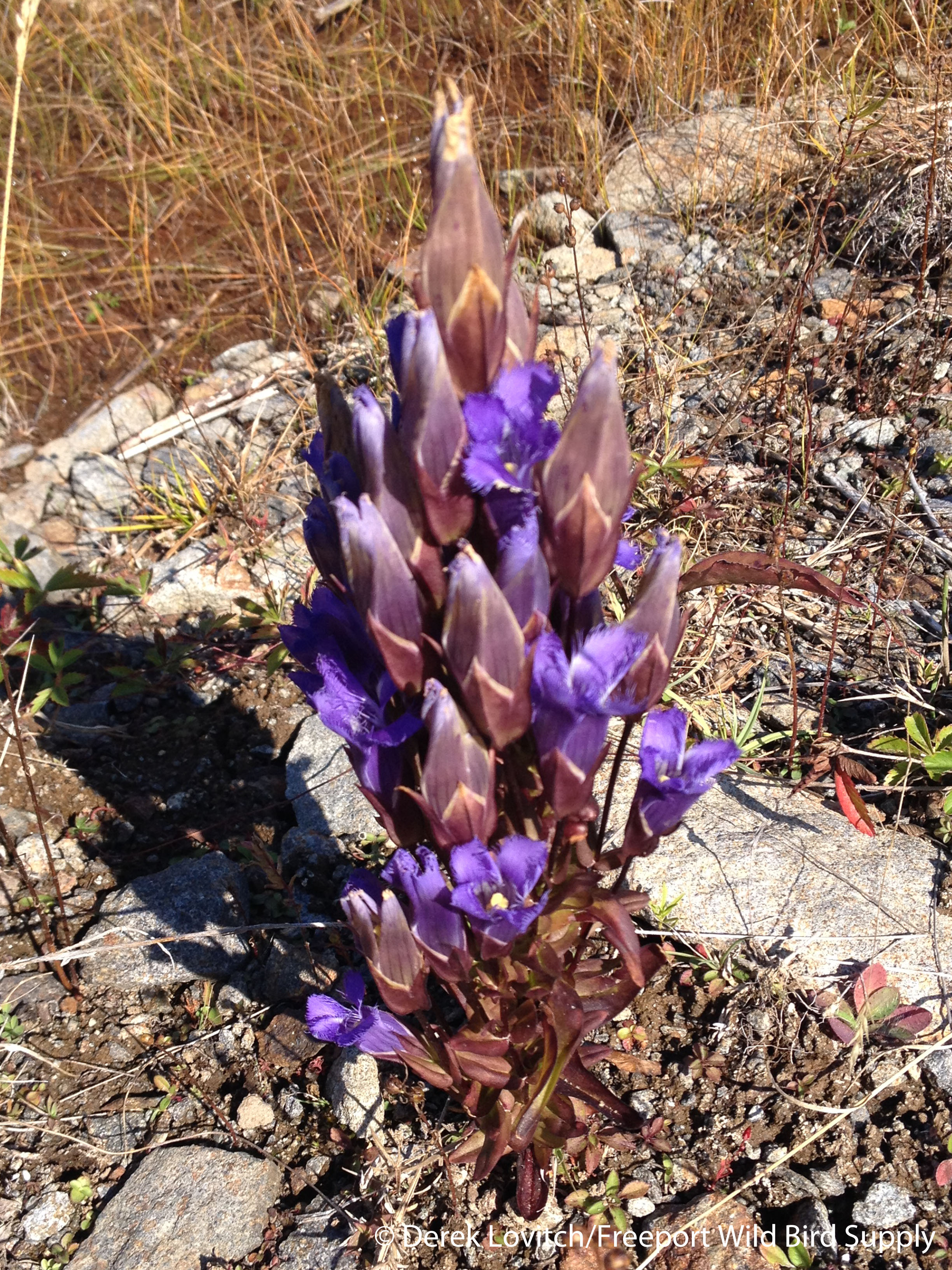
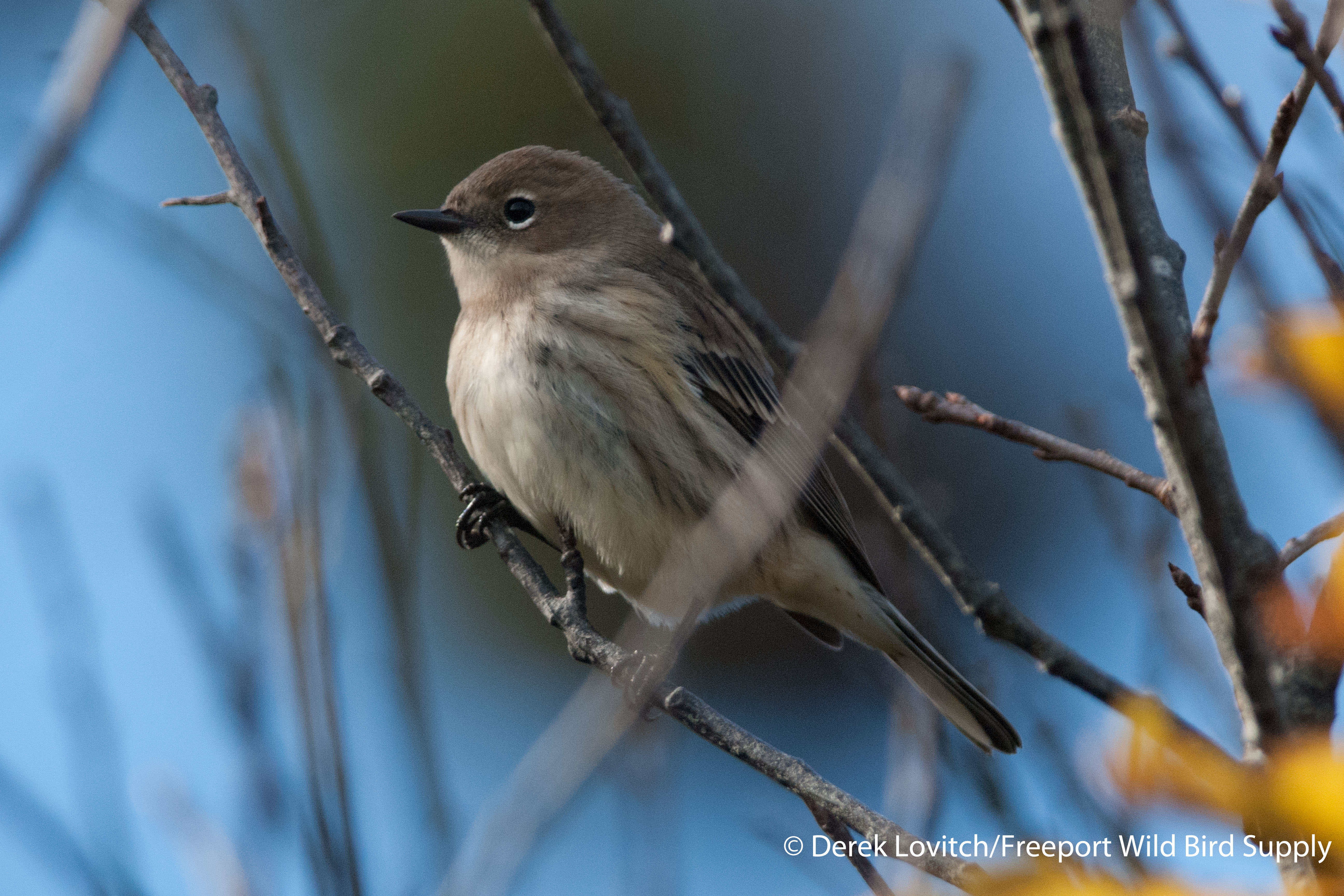
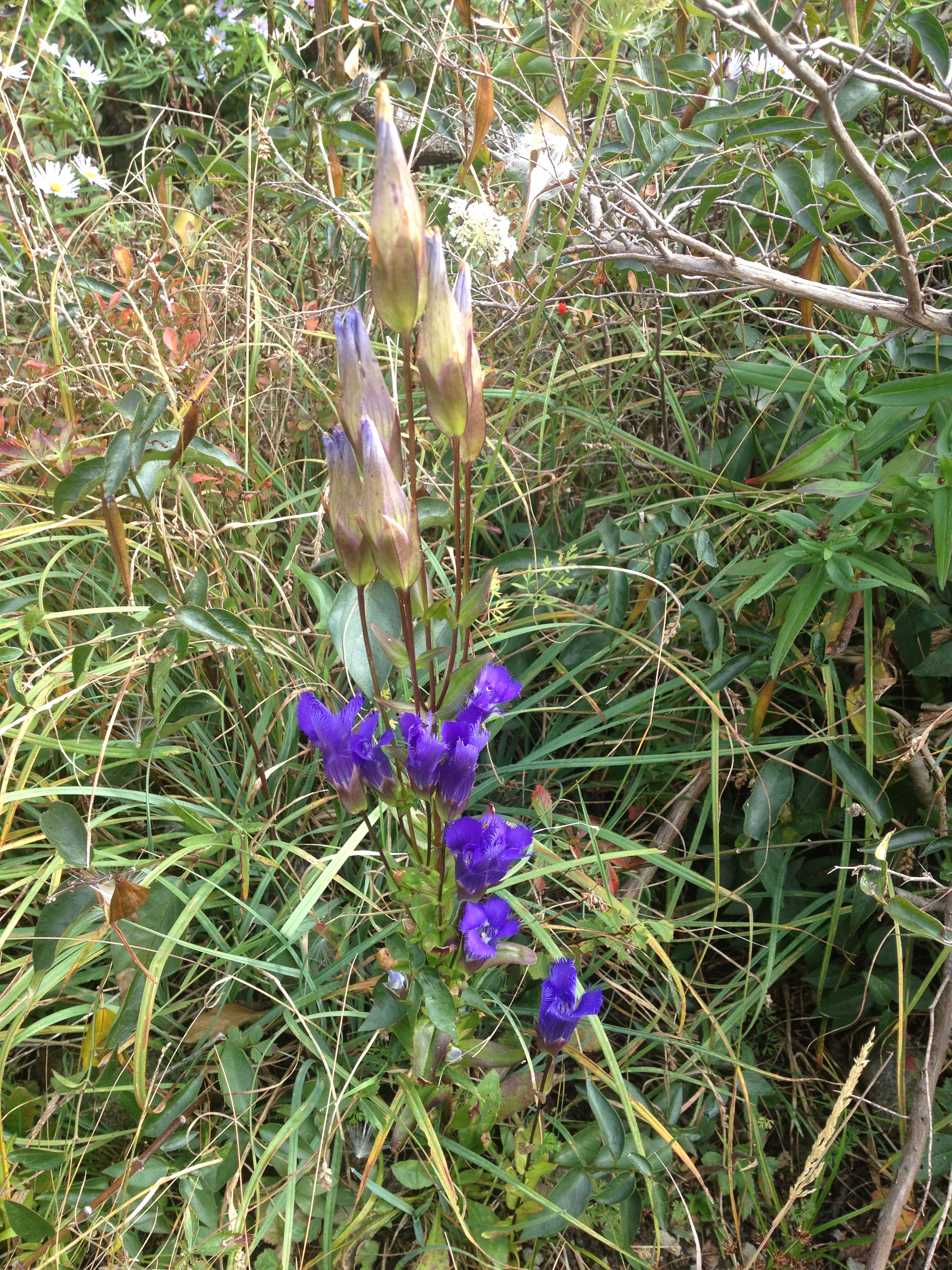
IMG_1603 A most impressive Fringed Gentian.

We worked the bush hard, checking all sorts of seldom-searched nooks and crannies.  Some of our totals for the day were higher than previous days simply because we covered more ground.  The Clay-colored and Lark Sparrows continued, as did the two Green-winged Teal in the town marsh.  A spiffy Chestnut-sided Warbler was my 20th species of warbler for the weekend, and we added a few more waterbirds to the list by dedicating some time to sea-watching and scanning the gulls in the harbor.

Unfortunately, most of the afternoon – following one last pizza – was spent keeping an eye on our watches and watching our time rapidly tick away.  At least we weren’t nursing a concern about leaving hot and heavy birding – it was slow, very slow, today, and that did make our departure a little less unwelcome.  A little; it’s never easy to leave this magical place.
IMG_1627IMG_1632
Trap Day!

Here’s my weekend’s checklist, with estimates or counts of each species per day (not including ferry):

Mallard: 12, 12, 12, 12
American Black Duck: 1, 1, 1, 5
Green-winged Teal: 1, 1, 2, 2,
Common Eider: x, x, x, x
Surf Scoter: 0, 0, 0, 4
Ring-necked Pheasant: 0, 0, 3, 2
Common Loon: 3, 2, 1, 1
Red-necked Grebe: 0, 1, 0, 0
Great Cormorant: 1, 5, 1, 7
Double-crested Cormorant: x,x,x,x
Northern Gannet: 0, 125, 8, 30
Great Blue Heron: 1, 1, 1, 0
Osprey: 0, 2, 0, 0
Bald Eagle: 2, 2, 2, 2
Northern Harrier: 1, 1, 0, 0,
Sharp-shinned Hawk: 6, 5, 5, 4
COOPER’S HAWK: 1,0,0,0
BROAD-WINGED HAWK: 1,0,0,0
American Kestrel: 2, 2, 1, 1
Merlin: 15, 8, 4, 3
Peregrine Falcon: 8, 12, 1, 1
Semipalmated Plover: 2, 0, 1, 0
Laughing Gull: 0, 0, 0, 2
Ring-billed Gull: 0, 0, 0, 1
Herring Gull: x,x,x,x
LESSER BLACK-BACKED GULL: 0, 0, 0, 2
Great Black-backed Gull: x,x,x,x
Black Guillemot: 10, 20, 10, 15
Mourning Dove: 3, 3, 3, 3
YELLOW-BILLED CUCKOO: 1, 0, 1, 0
Ruby-throated Hummingbird: 0, 0, 2, 2
Belted Kingfisher: 1, 0, 1, 1
RED-BELLIED WOODPECKER: 1, 0, 0, 0
Yellow-bellied Sapsucker: 25, 50, 25, 20
Downy Woodpecker: 0, 1, 1, 1
Northern Flicker: 20, 15, 25, 20
Eastern Wood-Pewee: 0, 1, 0, 0
Least Flycatcher: 0, 0, 1, 0
Eastern Phoebe: 8, 5, 3, 1
Red-eyed Vireo: 30, 20, 18, 12
Blue-headed Vireo: 12, 20, 25, 6
Blue Jay: 6, 10, 8, 8
Common Raven: 2,2,2,2
American Crow: x,x,x,x
Black-capped Chickadee: 20, 15, 15, 20
Red-breasted Nuthatch: 6, 15, 10, 8
Brown Creeper: 15, 35, 20, 3
Carolina Wren: 5, 8, 10, 12
House Wren: 0, 1, 1, 0
Winter Wren: 1, 1, 1, 1
Marsh Wren: 0, 1, 1, 1
Golden-crowned Kinglet: 15, 75, 50, 35
Ruby-crowned Kinglet: 25, 40, 25, 15
BLUE-GRAY GNATCATCHER: 1, 2-3, 2, 0
American Robin: 0, 1, 0, 0
Gray Catbird: 6, 8, 10, 18
Northern Mockingbird: 1, 1, 0, 0
Brown Thrasher: 2, 1, 1, 0
European Starling: 8, 10, 12, 14
American Pipit: 2, 2, 1, 0
Cedar Waxwing: 40, 60, 40, 40
Tennessee Warbler: 0, 1, 0, 0,
Nashville Warbler: 5, 3, 6, 1
Northern Parula: 1, 0, 2, 2
Yellow Warbler: 2, 6, 7, 0
Chestnut-sided Warbler: 0, 0, 0, 1
Magnolia Warbler: 6, 5, 2, 0
Cape May Warbler: 9, 3, 0, 0
Black-throated Blue Warbler: 0, 8, 6, 1
Yellow-rumped Warbler: 300, 400, 300, 175
Black-throated Green Warbler: 0, 4, 2, 1
Blackburnian Warbler: 0, 0, 1, 0
PRAIRIE WARBLER: 0, 0, 1, 0
Palm Warbler: 30, 100, 30, 15
Bay-breasted Warbler: 0, 2, 0, 0
Blackpoll Warbler: 1, 20, 1, 3
Black-and-white Warbler: 25, 30, 15, 2
American Redstart: 2, 1, 2, 0
Northern Waterthrush: 0, 1, 1, 0
Common Yellowthroat: 10, 15, 10, 18
Wilson’s Warbler: 3, 4, 1, 0
Scarlet Tanager: 1, 0, 0, 0
Chipping Sparrow: 4, 6, 6, 5
CLAY-COLORED SPARROW: 1, 0, 1, 1-2
LARK SPARROW: 1, 1, 1, 1
Savannah Sparrow: 2, 15, 12, 10
NELSON’S SPARROW (spp. subvirgatus): 0, 1, 0, 0
Song Sparrow: 15, 15, 20, 25
Lincoln’s Sparrow: 0, 2, 2, 2
Swamp Sparrow: 2, 30, 20, 15
White-throated Sparrow: 25, 50, 60, 30
White-crowned Sparrow: 1, 5, 4, 2
Dark-eyed Junco: 3, 10, 6, 8
Northern Cardinal: 8, 6, 5, 8
Rose-breasted Grosbeak: 0, 0, 0, 1
BLUE GROSBEAK: 0, 1, 0, 0
Indigo Bunting: 0, 1, 0, 0
DICKCISSEL: 0, 2, 0, 0
Rusty Blackbird: 4, 9, 1, 0
Common Grackle: 1, 3, 4, 4
Baltimore Oriole: 1, 2, 2, 0
American Goldfinch: 12, 10, 10, 8
HOUSE SPARROW: 1, 1, 2, 0

Total species: 64, 83, 79, 66 (Total =105)

Mammals:
Minke Whale
Gray Seal
Harbor Seal
Harbor Porpoise
Muskrat
Brown Rat

IMG_1629

Birding By Schooner 2013!

Jeannette and I were once again had the honor and pleasure to have the opportunity to be the guides on a 6-day birding tour aboard the Lewis R. French out of Camden, Maine.  This was our third tour together (I also was aboard for a private charter last year), and we have been looking forward to this trip since the last time we stepped off the boat.  While this blog entry will obviously focus on the birding and wildlife aspects of the trip, I will not be able to do this tour justice with words nor pictures.  It is truly a unique experience from start to finish.

After boarding the boat the night before, we awoke to sunny skies in Camden Harbor on Day 1 of the trip, July 22nd.  Captain Garth and I chatted about possible destinations, and after another check of the forecast, we decided to take advantage of the benign conditions to make a run way out to SealIsland, off of Matinicus.  We have a total of four islands that feature breeding seabirds – with Atlantic Puffins being the prime target – in three different directions, so with every trip, we hope to hit at least one of them.  Seal is the most remote, and the most extraordinary – featuring not just lots of puffins, but Razorbills, Common Murres, Great Cormorants, Arctic and Common Terns, and for the past seven years – a Red-billed Tropicbird.  A few pairs of Manx Shearwaters also breed there, as do many Leach’s Storm-Petrels.  Unlike the other islands, it also offers a fairly sheltered cove for anchoring, and the opportunity to host the island’s seabird biologists for dinner and conversation. (Note: you can double-click on the photos for larger images)
25
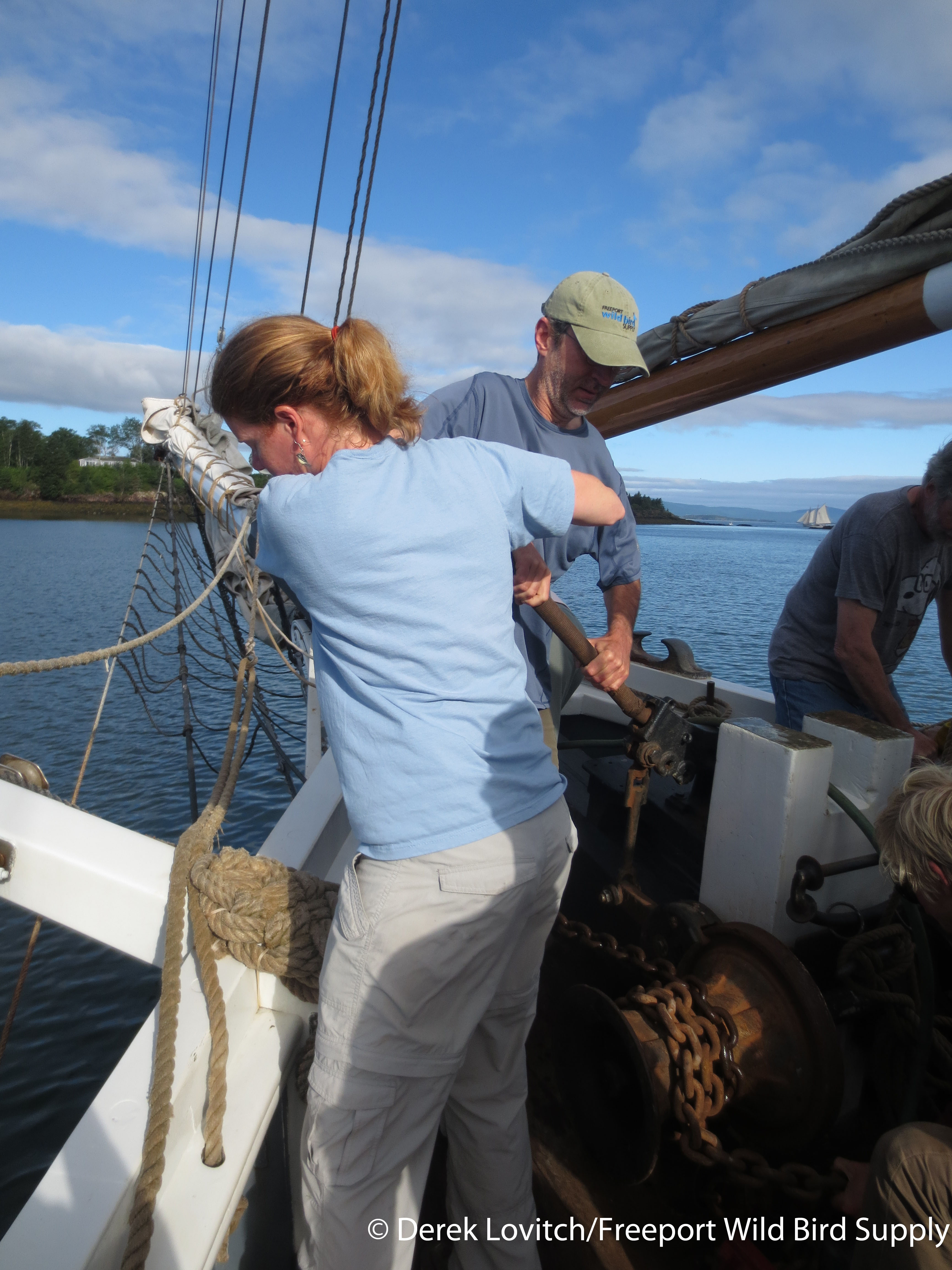
The Schooner French, a National Historic Landmark built in 1871 is not mechanized. This means there is plenty of ways to burn a few calories before the next scrumptious meal, such as cranking the anchor…
27b
…or raising the sails
27a

As we departed the harbor, we started our trip list with common species such as Mallards, Double-crested Cormorants, Laughing Gulls, and a smattering of landbirds.   Osprey nests were passed and Black Guillemots were in their usual abundance.  Common Eiders were common, as were Herring and Great Black-backed Gulls, along with a scattering of Common Loons and Common Terns.  Many of these, especially the gulls, cormorants, eiders, and especially the guillemots would be constant companions throughout the trip, especially in in- and nearshore waters.
1.

1a

2
Amanda serving lunch; all meals were, as usual, fantastic. Lunch was “simple:” soup, a salad, fresh baked bread, and desert.

As we left the shelter of Penobscot Bay, the wind died off completely.  This would be the first of what was, unfortunately, a few days where we were forced to use our powered yawl boat to push the French along (Although we still use a tiny fraction of the gas as any other pelagic birding trip out there!).  En route, we encountered a single Leach’s Storm-Petrel that provided a nice view, and a Manx Shearwater passed by – our first two target species spotted, and we hadn’t even reached Seal Island yet!
3
I prepare the chum

The waters around Seal were teeming with birds: lots’o’puffins, Razorbills, a handful of Common Murres, Great Cormorants, and a boat-load of Black Guillemots.  Hundreds of Arctic Terns were wheeling about the island, with many birds making close passes of the boat.  It did appear, however, that Common Terns had already mostly fledged, as we didn’t see too many.  Three Common Ravens were a surprise, but Song and Savannah Sparrows singing from the island were expected.  A few migrant shorebirds were darting about, including Least and Semipalmated Sandpipers, a few Ruddy Turnstones, and at least one Semipalmated Plover.  Spotted Sandpipers foraged along the shore, too, the only shorebird that breeds out here.
4

5

5a
Razorbills

5b
Puffins!

5c
Arctic Tern

5d

5e

5f

Unfortunately, the famous Red-billed Tropicbird did not put in an appearance.  We were in position for his afternoon bath, but later we learned he often skips it when it isn’t sunny. “He’s a fair weather bather,” one of the biologists later told us.

But our spirits were not dampened.  After all, this is not a hard-core listing trip.  Although everyone would have liked to have seen the tropicbird, this tour is more about taking what the weather and the birds provide, and enjoying a relaxed, casual bird-watching experience.

And just in case anyone was upset about dipping on the tropicbird, dinner was soon served – Amanda and Amber’s meals always put a smile on people’s faces – and we welcomed our special guests, the seabird biologists of SealIsland. It’s a treat for us to ask them questions about life and birds on this remote rock, and no doubt a treat for them to get a brief break from the rigors of island life.
6

7

7a

7b
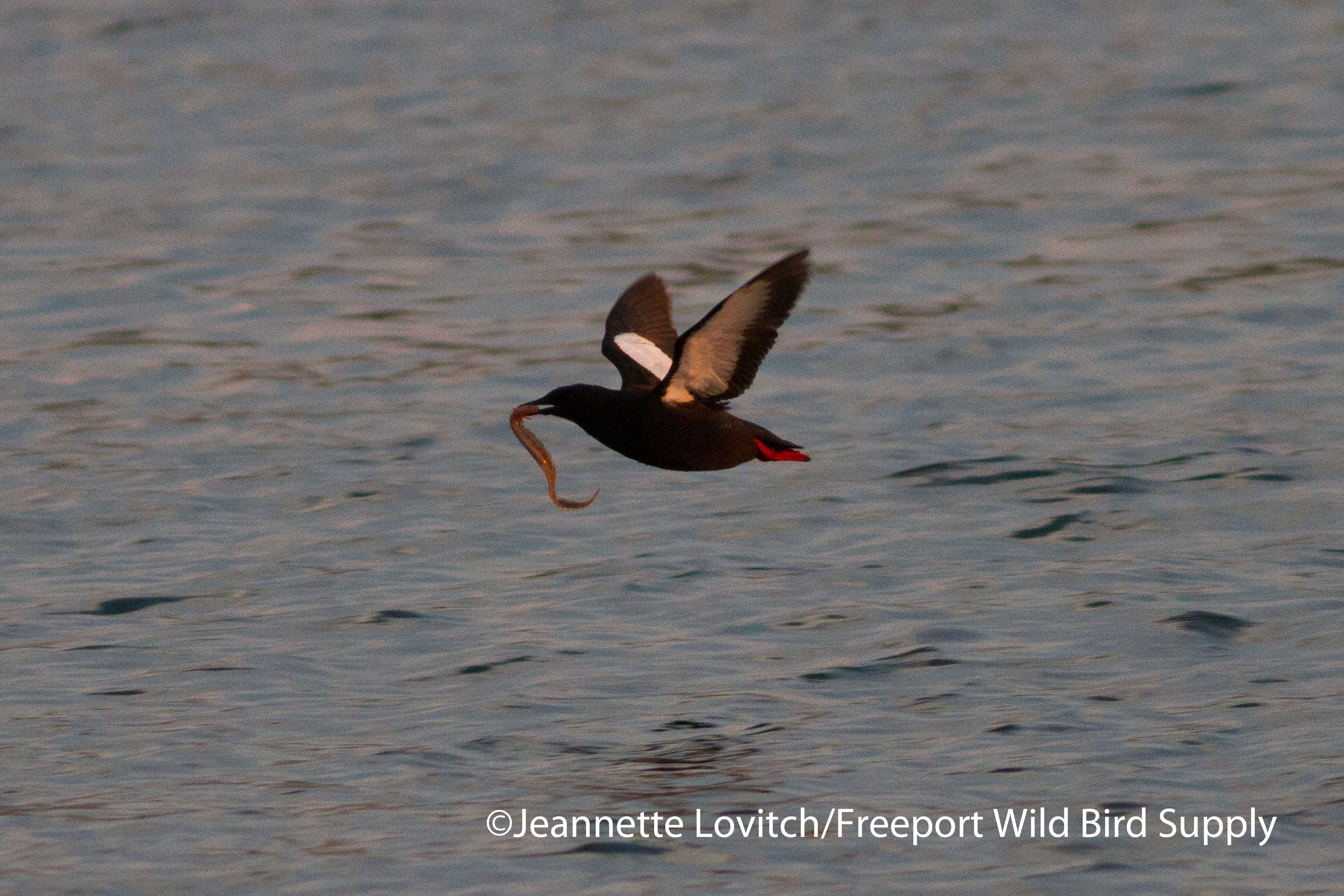
Black Guillemot with Rock Eel

8

9

10
Chatting with the biologists on Matinicus Rock…aka “nah, nah, we’re on a schooner!”

As night fell, and a near-full moon rose, many of the birders on board delayed retiring to their bunk until Leach’s Storm-Petrels – who only visit their burrow nests under the cover of night – began to vocalize.  There were only three of us left on deck by 10:00, when I turned in.  The one birder, our good friend Chris, however, stayed topside (and another birder slept on deck) for a while longer.  Not too long after I gave in to sleep, fog rolled in, and that really got the storm-petrels to call.  Chris was rewarded for his stamina with a cacophony of somewhat-disconcerting cackling chatters.
11

11a

That fog was still around at sunrise, which unfortunately meant we would leave without the tropicbird.  Even if he did come out for his morning bath, we wouldn’t have seen him – heck, we couldn’t even see his cove from the boat.   So we just had to suffer through more puffins.  It’s a tough life.

Fog and occasional rain reduced visibility as we headed for shelter inshore, but we spotted the occasional commuting puffin and a few Northern Gannets.
12

13

We passed around the west side of Vinalhaven Island, and dropped anchor off of North Haven in the Fox Islands Thorofare.  An evening walk in “town” added landbirds to the list, including a few Purple Finches at a feeder and a Cooper’s Hawk.
17

18b

14

A Great-horned Owl called throughout much the night, and come dawn, we shuttled ashore for a birdwalk on Vinalhaven Island.
15

Garth suggested a loop trail that was a short walk away from the dock, but we barely made it to the trailhead – the road in was just too birdy!  A Swainson’s Thrush foraged on the beach, a Blackburnian Warbler sang near the dock, and as we walked the road, we came across a variety of the common birds of these Red Spruce-dominated islands.  Magnolia Warblers and Golden-crowned Kinglets; Winter Wrens and Dark-eyed Juncos.  One little patch of alder scrub at the edge of a meadow exploded with birds with just a little pishing: two family groups of Black-throated Green Warblers, a pair or two of American Redstarts and Common Yellowthroats, a band of Golden-crowned Kinglets, White-throated Sparrows, and one Alder Flycatcher.  We had to hustle back to the boat in time for breakfast.
16

We rounded Vinalhaven clockwise, and came out of the fog for a time as we crossed East Penobscot Bay.  We were back into the sun as we traversed Merchant’s Row, but once again we found ourselves without even a puff of wind.
16a

While an island with terns and alcids is usually the highlight of our sail, over the years, the colony of Herring and Great Black-backed Gulls and Double-crested Cormorants of Southern Mark Island has provided us with some entertainment.  Here, Bald Eagles travel to hunt the colony, and in years past, we have seen some incredible shows.  As we slowed down to view the island, two Bald Eagles rapidly approached right on cue.  One landed in the center of the island, presumably to look for unattended gull chicks.  This time, both eagles were driven off empty-taloned.
18a
Small flocks of southbound migrant shorebirds were also encountered here and there, such as these Semipalmated Sandpipers

Burnt Cove Harbor on Swan’s Island would be our harbor of refuge for the night, and an after-dinner dusk stroll in the village and out to the lighthouse added a couple more species to our growing list.
19

20

21

It was with anxious anticipation that I went to bed that night, as Garth had decided that – weather forecast holding true of course – we were going to head offshore yet again, perhaps all of the way out to Mount Desert Rock.  It was time for some true pelagic birding!  And just to hedge the bet, we picked up some more bait for chumming.
18c

21a
Common Terns were common

22b

A light northeasterly wind helped us get offshore, but yet again, the wind died offshore and we needed the assistance of our yawl boat.  A very long 2-3 foot swell was hardly noticeable in our heavy wooden boat, and as we headed into deeper water, the birding really began to heat up.
22

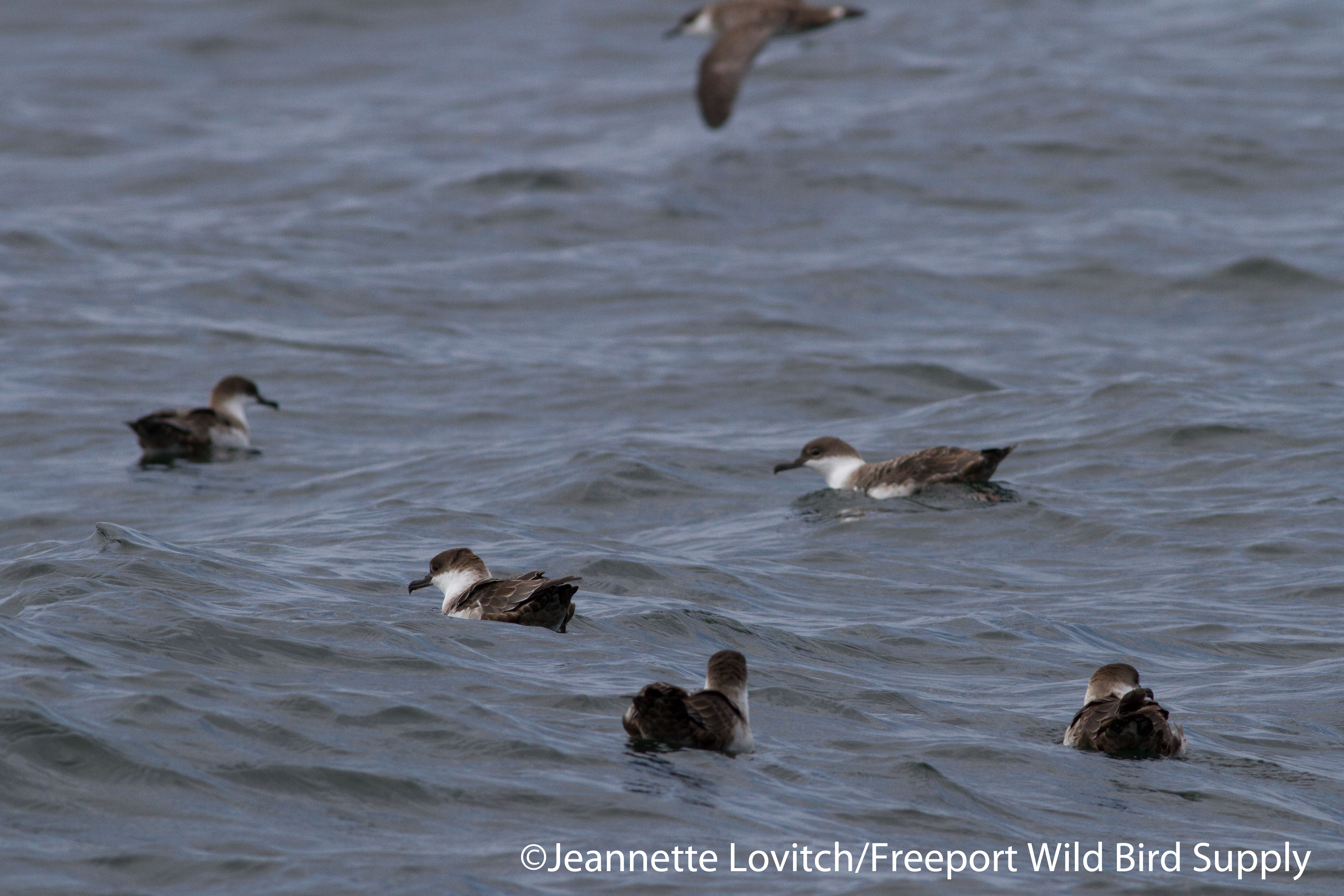
About a mile away from Mount Desert Rock, we hit pay dirt: massive rafts of Great Shearwaters.  We sailed through them, and then back through them.  The lack of wind was keeping them on the water, and most just paddled away from our slow-moving ship.  I began to chum.  You could say it worked.  It worked really, really well.

Great Shearwaters took the bait, literally, and followed us closely.  Now under sail, the silence afforded us the opportunity to hear these surprisingly-vociferous birds as they fought over morsels, and jockeyed for position.  Many birds were coming within only a few yards of the boat, and many of them were not bothering to fly – just walking on water with wings flapping.  They would plunge in after slowly-sinking chunks of Herring (I really wish I had cut things smaller, the chum bucket was going down way too fast!) and we were close enough to see them underwater.

22c
Great Shearwater

22d
Northern Gannet

22e
Molting adult Red-necked Phalaropes

22f
Juvenile Arctic Tern

22g
OK everyone, grab your copy of Howell’s ‘Petrels, Albatrosses & Storm-Petrels of North America and use molt patterns to age this Great Shearwater!

22h

22i
Sooty Shearwater

22j
Mmmm…herring

22k
Great Shearwater coming in for a landing…I think this is my favorite photo of the trip!

22l
Adult Northern Gannet

Simply put, this was a lot of fun.  And when all was said and done, and we left the hotspot, we had tallied an impressive 764 Great Shearwaters.  They were joined by at least 4 Sooty Shearwaters, and one Manx Shearwater cruised by – not pausing for long, as usual.  A total of 19 Northern Gannets were counted, and Razorbills (9), 2 Common Murres, and more Atlantic Puffins (4+) added to the show.  Although overshadowed by the rafts of shearwaters, Red-necked Phalaropes were in abundance – I estimated at least 400 birds, most of which in tight flocks spinning in floating mats of wrack.  I didn’t pull out any Red Phalaropes from the bunches, but it wouldn’t have surprised me to find some mixed in. Surprisingly, not a single Wilson’s Storm-Petrel was seen – a bird that we somehow didn’t even see all trip!  Where the heck are they this year?  It’s usually the most common tubenose on our tour!

If we didn’t have some important plans for dinner, we would have spent more time out here I am sure, as this was really a great experience.  Even the non-birders aboard were more than impressed by the show.  Unfortunately, only one Fin Whale was briefly spotted.   A feeding frenzy of birds that I spotted in the distance were clearly excited by something feeding – either whales or perhaps tuna, but by the time we made it to the area, the birds had settled into the massive rafts we sailed through.

We skimmed the mouth of BlueHillBay, checking our Harbor Seals basking on ledges exposed by the low tide, and happening upon a few large rafts of molting Common Eiders.
22m

22n

We dropped anchor off of McGlatheryIsland south of Stonington, and rowed ashore for one of the non-birding highlights of the trip – a lobster bake on the beach!
23

24

After the feast, we moved the boat to a safer anchorage off of Hell’s Half-Acre, where we spent the night.  Rain fell in buckets, and continued on and off through much of the next day.  However, for the first time, we had some solid winds to do some real sailing, and after donning our rain gear, many of us stayed on deck for much of the day as we crossed East Penobscot Bay and tacked our way around North Haven.  Slowly but surely, however, most of us made our way to the wood-burning-stove-warmed galley for snacks, tea, and conversation…and a few games.

The rain cleared and fog lifted in the afternoon, and it was a lovely evening in the shelter of Pulpit Harbor.  Although we had seen plenty of Ospreys on this trip, the Ospreys that nest atop the rock (the “pulpit”) that guards the entrance to the harbor are particularly noteworthy – the explorer and cartographer Samuel de Champlain noted an Osprey nest atop this very rock sometime between 1604 and 1607!  The one still-present juvenile that was being watched by an adult had no idea what a historic nest it was raised in.
26

26a

26b

27

July 27th, our 6th and final day of the tour, dawned on Pulpit Harbor under clearing skies, calm winds (again), and warmer temperatures.  Barn Swallow, likely a migrant, was added to our trip list as we sailed northeast into Camden Harbor.  Chimney Swifts overhead and a singing Yellow Harbor from the shoreline were our 82nd and 83rd – and final – species of the trip (an “accounting error” led to a mistaken tally of 78 species announced at the end of the trip; sorry folks, update your notes!) but still a tally held down a little by fewer walks ashore (one due to our deep-water pelagic, and the other due to heavy rain).  However, our seabird list was fantastic, and quite a few of the birders added life birds – the Leach’s Storm-Petrels and Manx Shearwaters in particular.  And perhaps, sucked in by the fun of it all, one or two life lists were born.

a href=”https://mebirdingfieldnotes.blog/wp-content/uploads/2013/07/28.jpg”&gt;28
The always bittersweet return to the lovely port of Camden.Sure I have birding tours that see more birds, and are more reliable for the most sought-after target birds, but this trip is one of my most favorites (only Monhegan Island can compete).  Yeah, we kept a list, and a few people added some lifers, but this trip is truly about enjoying whatever birds we come across in a really unique way.  The Schooner Lewis R. French is a beautiful boat, with an amazing crew, serving great food and good times.  In this case, the birding is actually the icing on the cake. The complete trip list, in order of appearance:
American Crow
Mallard
Canada Goose
Tufted Titmouse
American Goldfinch
Rock Pigeon
Song Sparrow
Black-capped Chickadee
Cedar Waxwing
Blue Jay
European Starling
Belted Kingfisher
Double-crested Cormorant
Common Loon
House Sparrow
Mourning Dove
House Finch
Ring-billed Gull
Herring Gull
Great Black-backed Gull
Osprey
Common Eider
Black Guillemot
Laughing Gull
Common Murre
Razorbill
Northern Gannet
Common Tern
Leach’s Storm-Petrel
Arctic Tern
Atlantic Puffin
Razorbill
Common Raven
Great Cormorant
Common Tern
Manx Shearwater
Spotted Sandpiper
Savannah Sparrow
Semipalmated Plover
Least Sandpiper
Ruddy Turnstone
White-throated Sparrow
Red-eyed Vireo
American Robin
Yellow-rumped Warbler
Cooper’s Hawk
Purple Finch
Red-breasted Nuthatch
Red-winged Blackbird
Downy Woodpecker
Hairy Woodpecker
Northern Flicker
Chipping Sparrow
Great Horned Owl
Common Yellowthroat
Gray Catbird
Blackburnian Warbler
Northern Parula
Swainson’s Thrush
Golden-crowned Kinglet
Magnolia Warbler
Winter Wren
Nashville Warbler
American Redstart
Alder Flycatcher
Ruby-throated Hummingbird
Dark-eyed Junco
Turkey Vulture
Bald Eagle
Bonaparte’s Gull
Semipalmated Sandpiper
Hermit Thrush
Great Blue Heron
Great Shearwater
Sooty Shearwater
Red-necked Phalarope
American Black Duck
Tree Swallow
Greater Yellowlegs
Barn Swallow
Chimney Swift
Yellow Warbler
*************************

Our “Birding By Schooner” Tour aboard the Lewis R. French has been run every three years.  However, thanks to increasing interest and demand, we are going to likely be offering this one-of-a-kind birding experience on an annual basis!  Keep an eye on our “Travel, Tours, and Workshops” page at http://www.freeportwildbirdsupply.com/birdingtoursinMaine.asp for information about the possible 2014 (but likely definitely in 2015) sailing dates.

The 2013 Bicknell’s Thrushes of the White Mountains Tour

Over the past weekend, I was back in the White Mountains of New Hampshire to visit with Bicknell’s Thrushes.  This time, it was for our annual weekend van trip for a “quick hit” for those looking for the thrush – one of the most range-restricted breeders in all of North America.  Between two dedicated efforts for the thrush, I also try and find a few other target birds for participants, so we bird all day both days, but in a pleasantly relatively-relaxed pace.

We headed straight for the hills on Saturday, picking up three Fish Crows in Windham, and a Peregrine Falcon just outside of Crawford Notch as we headed over to Pondicherry National Wildlife Refuge.  There, a friend turned me onto an area of early-successional forest that yielded our first target bird: Mourning Warbler.  With just a little squeaking and pishing (no tapes), one male popped up and sat in the open on a bare twig for over five minutes (of course, my camera was in the car…someone had to take one for the team!). It really was one of, if not the, best view I have ever had of this species on the breeding grounds.

Afterwards, we took a stroll along the Mud Pond Trail, which is such a pleasant place to take a walk, with the raised boardwalk and platform into the bog the reward at the end of the short trail.  A couple of Canada Warblers were a reward as well.  Then, with time to spare, we walked some of the diverse habitats along Hazen Road in Whitefield, which yielded Bobolinks, Savannah Sparrows, and the expected common warblers.  A pair of Bank Swallows and a few Hooded Mergansers were in and over a pond, but the highlight were the dozens of Hummingbird Clearwings (sphinx moths) feeding on roadside weeds.  I don’t think I have ever seen so many in such a short stretch.  The expected rain began just as we were walking back to the car at our last stop.

After an early dinner (at which time the rain was really coming down), it was finally time to get to work for real, and we joined the good folks at the Mount Washington Auto Road for a private charter up the Auto Road after hours.  The rain was finally clearing as we headed up hill, and it was actually partially clear, and with a fairly light wind when we got out at the alpine meadow around 6,000ft up – quite the contrast from when I was here two weeks ago and we could barely open the van doors.

IMG_1010_edited-1

IMG_1009_edited-1

Unfortunately, we did not see any American Pipits this evening. The summit was enshrouded with clouds but with “only” a 30mph wind and no rain, it was far from unpleasant out.

IMG_1013_edited-1

But enough with these shenanigans, it was finally time for me to get my game face on.  As we rolled downhill a bit to my new favorite thrush spot on the mountain, it began to rain.  And then it rained harder.  It was a downpour.  I don’t think we were stuck in the vans for more than about 10, maybe 15, minutes, but it felt like forever to me!   Rain this hard would make thrush-watching impossible.  I was seriously stressing. Luckily, it began to let up as quickly as it arrived, and we moved into position.  As the first Bicknell’s Thrush of the evening was just about at the edge of the road, a strong gust of wind blew through, pushing the thrush deeper into the krummholz.  And it was not coming back out.

Further down the road, we eventually had success, with one bird flying back and forth across the road a few times, occasionally pausing in view.  Everyone saw it fairly well, but it was almost always moving quickly, and although everyone claimed to be satiated, I was far from convinced that everyone was satisfied.

But as we walked to the van, one of the participants saw a thrush walking around.  Although it was a Swainson’s, the bird flew across the road.  As we were about to start getting back into the van again, two birds hopped out into the road.  Hmm, they did not look like Swainson’s, so I moved a little closer, and sure enough two BICKNELL’S THRUSHES were out in the wide open!

One bird was picking on the road (I couldn’t help but wonder if it was finding dead insects hit by cars over the course of the day, as this is now the third time I have seen such behavior here), and the other was following it closely.  My impression is that a female was the bird feeding, while the male was “attending” her, mostly to make sure her foray away from the nest was not a chance for another male to “visit” with her (or, her to “visit” with him).  Regardless of what was going on, we now all had our great looks, and we rolled down the hill and into Gorham fully satiated…well, with the bird – a lifer for all – but not necessarily satiated fully until a celebratory drink at the bar.  It’s always a good sign when a group, after a long and tiring day, wants to go out for a post-birding drink!

On Sunday morning, we began at the Caps Ridge Trail for a sampling of the area’s boreal breeders.  It was rather quiet – it was the end of June afterall – but there was actually more birdsong than when I was here two weeks before.  Quite a few Yellow-bellied Flycatchers were calling, and we had some great looks at Blackpoll Warblers in particular.  Three Great Blue Herons flying high overhead seemed like an odd sight as we were peering over the forest.

Then it was time for another trip into the realm of the Bicknell’s Thrush.  This is my “back-up” in case I missed them on Mount Washington (like if that downpour didn’t stop in time), but it has always been just a second serving of this enigmatic species.  And, my “secret spot” did not disappoint, as we had a brief, but enjoyable view of a single bird, while hearing two others.  As we looked for Boreal Chickadees nearby, a few thrushes started calling and singing, and over the next 20 minutes, we were treated to quite a show as the birds settled their little territorial dispute.  One bird even perched in the open at the edge of a trail for a moment, but my camera only took sharp photos of the twigs in the background.  But it was really a great experience, and no one minded that we never did run into a Boreal Chickadee.

IMG_1022_edited-1

Just what I like to see, a tour full of smiling faces!

After my “secret” Philadelphia Vireo spot yielded a bird immediately, it was time to move on, and begin our trip home, breaking for a late lunch at the Moat Mountain Smokehouse in North Conway, and for custard in Naples – a perfect dessert to cap a fantastic weekend.

PHVI1,WildcatMtn,6-30-13_edited-1

PHVI2, WildcatMtn,6-30-13_edited-1

2013 Maine-New Hampshire Tour for WINGS

My Maine-New Hampshire Tour for WINGS is designed to take a comprehensive look at the wide range of breeding birds of northern New England, from Saltmarsh and Nelson’s Sparrows at sea-level to Bicknell’s Thrushes on the 6200ft Mount Washington.  From Grasshopper Sparrows and Upland Sandpipers in the blueberry barrens of the Kennebunk Plains to Boreal Chickadees and Gray Jays in the boreal forests, and from Spruce Grouse and Bay-breasted Warblers “Downeast” to Atlantic Puffins and Razorbills on MachiasSealIsland, this tour enjoys them all.

Over the course of 7 full days of birding and just about 1200 miles traveled (by van, not including what we did by foot and boat!) amassed 163 species, including 20 species of warblers, 4 species of alcids, 9 species of flycatchers, and 14 species of sparrows.  An outstanding whale/bird watch trip that produced 9 Fin Whales, over 150 Great Shearwaters, 6 Sooty Shearwaters, and an impressive 18 Leach’s Storm-Petrels among over 500 Wilson’s Storm-Petrels.  Breathtaking scenery.  Great food, especially lots of fresh lobster.  Moose and a Wood Turtle, too.  What’s not to like about this all-inclusive experience in the state where our motto is “The Way Life Should Be?”  I think our tour left in full agreement with the accuracy of this.

IMG_0891-1st night dinner1,6-15-13_edited-1

We began on Day One in the saltmarshes of Scarborough Marsh, comparing Saltmarsh and Nelson’s Sparrows.  “Eastern” Willets voiced their complaints, while Least Terns foraged nearby.  The nearby sandy beaches afforded an opportunity to study Roseate Terns and Piping Plovers, with lingering White-winged Scoters and a Red-throated Loon offshore.  Our first surprise of the trip was a Brant standing on a sandbar off of Pine Point – not a typical summer bird here in Maine.  As we scanned the sandflats for lingering shorebirds (just four Black-bellied Plovers), we spotted two distant American Oystercatchers.  Just as we started to strain to see them, one flies by right off the end of the pier!

By mid-morning, we had arrived in the Kennebunk Plains, surrounded by the state’s largest population – by far – of Grasshopper Sparrows and Upland Sandpipers with goodly amounts of Vesper Sparrows, Prairie Warblers, and the continuing Clay-colored Sparrow.  After a picnic lunch at a particularly birdy spot, we began our climb into the White Mountains.  Our first stop was at an active Black-backed Woodpecker nest, where patience produced visits by both adults, and views of two hungry youngsters bursting out of the hole.  As this was a major target bird of the trip, I added quite a few miles and minutes to today’s marathon to assure us a look at this often secretive (at least away from the nest) boreal specialty.

And as if this wasn’t enough, we had yet another major target yet to bag.  An after-hours private charter up Mount Washington into the realm of Bicknell’s Thrush was rewarded with exceptionally good views, and a chance to experience the winds and weather of the summit.

IMG_0905_Mt WashingtonSummit,6-16-13_edited-1

Day two began on the Caps Ridge Trailhead, with Gray Jays, Yellow-bellied Flycatchers, and Blackpoll Warblers, before we headed up another mountain for a second helping of Bicknell’s Thrush.  After telling folks that “there’s no way we’ll see a Bicknell’s better than we did last night,” I was made out to be a liar by crippling views of this thrush.

  DSC_0139_BITH,WildcatMtn,6-17-13

We also picked up a Philadelphia Vireo at one of my “secret spots,” and enjoyed some “bugs.”

DSC_0144_HarrissCheckerspot,WildcatMtn,6-17-13

(Harris’s Checkerspot).

IMG_0909_ModestSphinx,WildcatMtn,6-16-13_edited-1

(Modest Sphinx moth).

IMG_0921_GrouponWildcatMountain,6-17-13_edited-1

Heading back into Maine, we spent the night in Rangeley, and come morning, Gray Jays dropped in to clean up after our picnic breakfast.  Kirk Betts joined us for a few hours of birding the Boy Scout Road, where Boreal Chickadees and an Olive-sided Flycatcher were well seen, and as we began our trek eastward, Purple Martins, Black Terns, and two (admittedly ridiculously distant) Sandhill Cranes at Messalonskee Lake nicely broke up the drive.

By the beginning of the fourth day, we were far Downeast in Machias.  We dipped on our first attempt at Spruce Grouse, but all was forgiven when we boarded our boat for MachiasSealIsland on a beautifully warm and sunny day.  Thousands of Atlantic Puffins, Razorbills, and many hundreds of Common Murres – many within just a few feet of the observation blinds.  How do you describe this magical place?  I simply cannot; it must be experienced.  I will let these pictures do the talking.

DSC_0157_1stSummerCOMU1,MSI,6-18-13_edited-1

Immature Common Murre.

IMG_0935_GrouponMSI,6-18-13_edited-1 

DSC_0244_ATPU8,MSI,6-18-13_edited-1

DSC_0240_ATPU8,MSI,6-18-13_edited-1

DSC_0232_ATPU6,MSI,6-18-13_edited-1

DSC_0223_RAZO6,MSI,6-18-13_edited-1

DSC_0212_ATPU1,MSI,6-18-13_edited-1

DSC_0199_RAZOandCOMU1,MSI,6-18-13_edited-1

DSC_0193_RAZO2,MSI,6-18-13_edited-1

DSC_0190_RAZO1,MSI,6-18-13_edited-1

DSC_0174_SAVS1,MSI,6-18-13_edited-1

After lunch, we were joined by Chris Bartlett as we worked our way along the BoldCoast to West Quoddy Head and back to Machias.  On the hot summer afternoon, we didn’t see many of our targets, but we were adding birds to our list.  Unfortunately, we had yet to add Spruce Grouse.  

Therefore, on the 5th morning of the trip, Operation Fool Hen (the colloquial name for Spruce Grouse) went into full effect.  The formerly most-reliable place in the state was no longer reliable (0-3 here), and I had pretty much resigned myself to failure by the time we entered the woods at one last place.  We were cleaning up some “dirty birds,” (birds not seen by the whole group), and while I was trying to get some people a look at a Swainson’s Thrush, a hen Spruce Grouse walks out behind me, about 10 feet away and starts preening. The grouse walks even closer to the growing group, including a family that enjoyed the show, patiently waiting to pass.  We watched for well over 15 minutes before she sauntered off.

DSC_0325_SPGRhen3,QuoddyHead,6-20-13_edited-1

DSC_0319_SPGR_hen2,QuoddyHead,6-20-13_edited-1

Relieved and ecstatic, we continued down the trail.  On our way back, that family, now ahead of us, points to where we saw the hen grouse.  We acknowledged it, they moved on, and instead we see a spiffy male standing just off the trail.  He started walking towards us, we all froze, and he actually walks around a few people in order to take a dust bath within a few feet of us – in the very same spot that we saw the hen.  This guy was not going to be deterred!

DSC_0370_SGPRmale,QuoddyHead,6-20-13_edited-1

Time flies when you’re having fun with Spruce Grouse, so our time was limited in Moosehorn NWR.  Luckily, we did see Bay-breasted Warbler, but before we knew it, it was time to move on and head towards Bar Harbor, where we enjoyed a lobster dinner the way lobster should be (abundant; and on paper plates with bibs and lots of napkins).

IMG_0939_Trenton_Bridge_Lobster_Pound,6-20-13_edited-1

IMG_0951_Summer_Solstice,Bar_Harbor,6-21-13_edited-1

(Dawn on the Summer Solstice from the Back Porch).

Our second boat trip of the tour departed Bar Harbor on the morning of Day 6, and we headed towards Petit Manan to enjoy yet more puffins, Razorbills, and Common Murres.  And unlike Machias Seal, the tern colony here is present and active, with thousands of Common and Arctic Terns wheeling through the air, and at least a few more Roseates.  Heading further offshore, pelagic birds began to increase.  A conservatively-estimated 500 Wilson’s Storm-Petrels were joined by at least 18 Leach’s – probably my best-ever tally from a non-dedicated (no-chumming) pelagic. 150+ Great Shearwaters and 6 Sooty Shearwaters joined the party…oh yeah, and 9 Fin Whales!  It was one of my best pelagic bird shows on this 4-hour trip, and the Fin Whale show was dramatic as well.

DSC_0423_GRSH_flock,offBarHarbor,6-21-13

Great Shearwaters.

DSC_0411_Fin_Whale,Off_Bar_Harbor,6-21-13

Fin Whale.

DSC_0408_LESP1,offBar_Harbor,6-21-13_edited-1

Leach’s Storm-Petrel.

IMG_0950_Cadillac_Summit_Group2,6-21-13_edited-1

The view from the summit of Cadillac.

Day seven was our last day of birding, and a lot was on the agenda once again.  A picnic and walk at Sieur de Monts Spring was highlighted by a great look at a day-hunting Barred Owl, and the scenic Auto Loop Road filled some holes in our list, and surprised us with a lingering immature Great Cormorant!

Heading towards Portland, we stopped for lobster rolls at the world famous Red’s Eats before birding around Brunswick, still adding some birds to our list, such as some rare-for-the-season Long-tailed Ducks.

IMG_0954_Reds_Eats1,6-22-13_edited-1

  LL Bean, Freeport Wild Bird Supply (of course to add a few more species to the list at the feeders), the world’s Largest Rotating Globe at Delorme, a colony of Fish Crows, and last but not least, a scrumptious dinner in Portland brought this remarkable trip to a grand finale.

I hope you’ll consider joining me on this tour when we run it again in 2015.  As with all of our trips and tours, stay tuned to www.freeportwildbirdsupply.com/birdingtoursinMaine.asp for more information.

3 Days of Breeding-Season Private Guiding.

So here it is, my first blog entry as I re-enter the blogosphere. I hope that you enjoy it.

It’s been a busy, and challenging, week for me. As is often the case in June, I spend a lot of my time guiding, both for private clients and on organized tour. In fact, I begin my 9-day comprehensive Maine and New Hampshire tour for WINGS tomorrow. That tour will take us from Scarborough Marsh to the top of Mt. Washington, across the boreal forest, out to Machias Seal Island, and through Acadia National Park. Lots of great birding, good food, and majestic scenery will be enjoyed.

This week, however, my guiding work kept me closer to home. While I hardly dodged all of the raindrops this week, the weather cooperated for my one-day tour on Monday for two couples from Oregon. This was their first birding trip to the Northeast, so there was a wide array of target birds, especially a diversity of warblers. Of course, the challenge at this time of year is seeing warblers, not just hearing them. But we did very well with visual observations of a host of species, all without the use of audio recordings. By positioning ourselves in the right places, we got a look at a very large percentage of what we heard. It just takes a little more patience.

We spent the morning in all of my favorite patches: Florida Lake Park, Hidden Pond Preserve, Old Town House Park, and Hedgehog Mountain Park. By doing so, I was able to capitalize on my familiarity with each park to focus on where specific species were on territory.

I didn’t have high hopes for seeing secretive Black-billed Cuckoos, but when one bird momentarily perched in the open shortly after our arrival, I knew we were going to have good fortune. The cuckoo was the first of many life birds on the day for our visitors. Additionally, we took time to look at everything our local habitats had to offer, from a hen Hooded Merganser with five chicks at Florida Lake Park to the occupied mud nests of Cliff Swallows at The Hog. The highlight, however, was the nest-full of baby Blue-gray Gnatcatchers at OTP – three chicks were absolutely bursting from the round, lichen-encrusted nest. While I didn’t have my camera with me today, my friends were firing away.

On Wednesday morning, however, I returned with another client, and we both had an excellent photo session. The chicks had left the nest by now, but I found them a few trees away. All three were doing well, and we watched the female bring a series of tasty treats to two of the cuties.
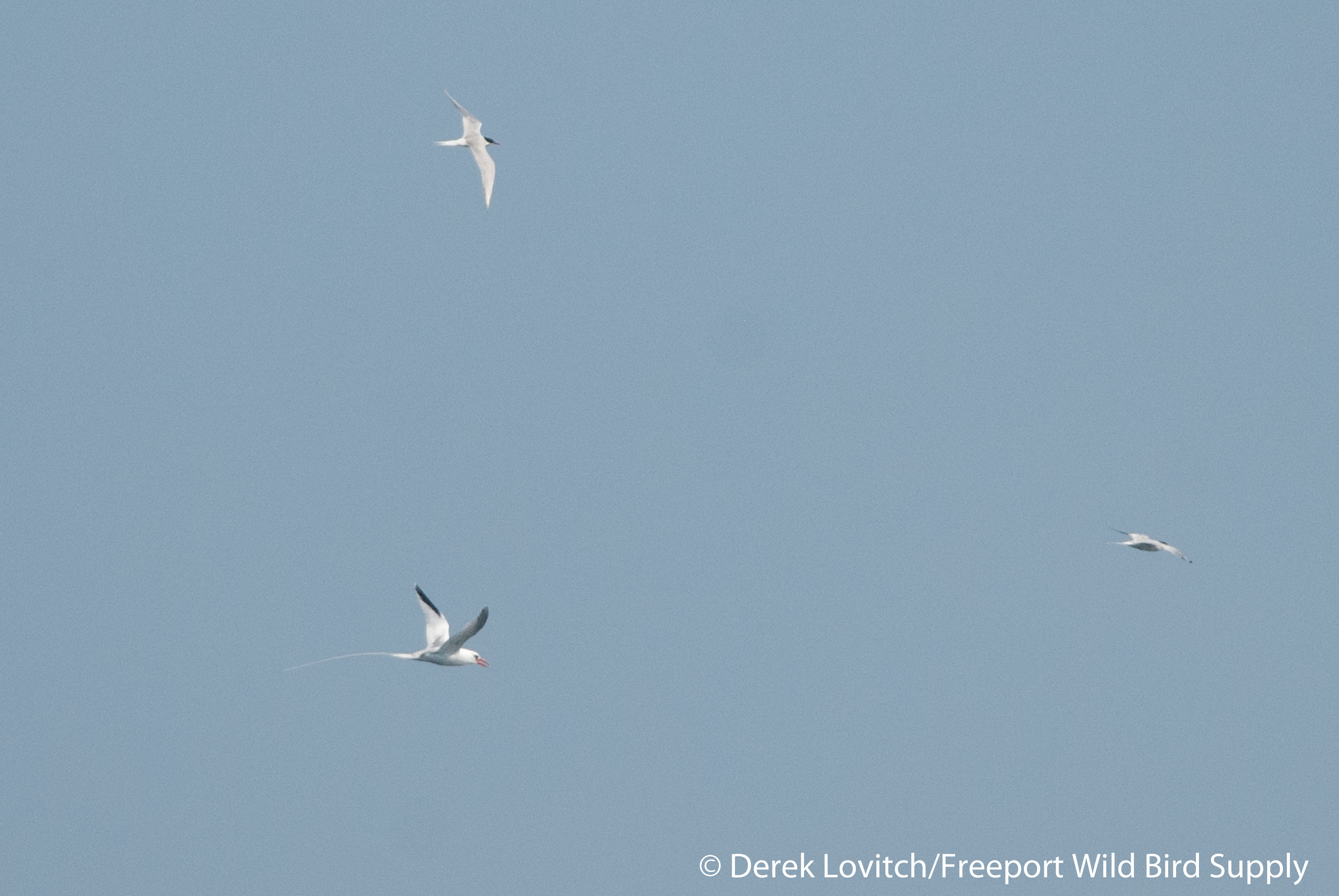
BGGN ad with fledglings,OTP, 6-10-13

BGGN ad with fledglings2,OTP, 6-10-13

BGGN fledglings1,OTP,6-10-13

BGGN fledglings2,OTP,6-10-13

BGGN fledglings3,OTP,6-10-13

In the afternoon, we stopped at Simpson’s Point in Brunswick to take a look at an over-summering Common Loon, and I was surprised to find a raft of 52 Black and 3 Surf Scoters, along with 4 Long-tailed Ducks as well. Simpson’s Point once again hosts truant Arctic-nesting sea ducks for a reason that I have yet to ascertain.

Rain was falling steadily on Tuesday morning, as I began a two-day tour with a client from Kentucky. Unlike the more general nature of the efforts on Monday, we were very specifically targeting four species on this two-day tour. However, we filled them time in between with additional birding, showcasing all of the species that our area has to offer.

First up was Scarborough Marsh for Saltmarsh and Nelson’s Sparrows. I was definitely a little stressed as we arrived with steady rain still falling, and an easterly breeze beginning to pick up. I didn’t want to waste time, so I headed straight for my favorite spot and we were rewarded with excellent views of both species – as well as a presumed hybrid thereof – in surprisingly short order (once again, sans the need for tapes). One particular pair of Nelson’s Sparrows were too busy going about their business to pay us much attention, so we were able to follow the two for many minutes as the male crept along behind the foraging female, who rewarded him for his persistence by inviting a total of five copulations. It was a rare window into the world of another secretive species.

Roseate Terns, Piping Plovers, 16 lingering Black-bellied Plovers; the birding was good, but the rain had soaked to our bones, and with saturated clothing, we begrudgingly departed the marsh, stopped for hot chocolate, and then enjoyed a leisurely and warming lunch at Hot Suppa in Portland. While I pride myself on feeding my clients well when we are on tour, a lengthy sit-down lunch is either a really good sign (we got what we came for) or a really bad sign (the weather was terrible). Today, it was both.

Afterwards, I once again headed up to Brunswick to take advantage of the diversity of lingering sea ducks to bolster our day list. While we only had 30 Black Scoters today, we did add a fifth Long-tailed Duck. A single Semipalmated Sandpiper was at Wharton Point, and then we headed into the fields to enjoy Bobolinks.

On Wednesday, Vicki and I were back at it, and at least the rain had let up for a while. Heading inland, we took a stroll at Intervale Marsh to study Willow and Alder Flycatchers, and then headed into the woods nearby to tick off Blackburnian Warbler. With a little spare time, I revisited Old Town House Park for photo ops, which included quality time with the aforementioned gnatcatchers (see photos above).

Following an afternoon break, we hit the road for New Harbor. Somehow, the weather gods had done us a favor. The northwesterly winds of the day flattened out the 5+ foot seas of the day before, and with a light wind, and only some scattered showers en route, we were aboard the Hardy Boat for their evening Puffin Cruise. I had been worried for two days about getting out to Eastern Egg Rock (or planned Tuesday evening trip was cancelled), but things were looking up as Vicki, her friend Hanno visiting from the Netherlands, and I crossed the calm bay and arrived at the island.

Black Guillemots, Common, Arctic, and Roseate Terns were a’plenty, but we had made it ¾ the way around the island before we finally got a look at a puffin. I was getting worried, and as I later found out, so was Captain Al! But the last ¼ of the circumnavigation produced some close views of multiple puffins, and with the second of two lifers of the trip for Vicki accomplished, I finally relaxed and settled into some photography…with my mission being in-focus underwings of flying Black Guillemots. Here are a few of my shots from the evening.
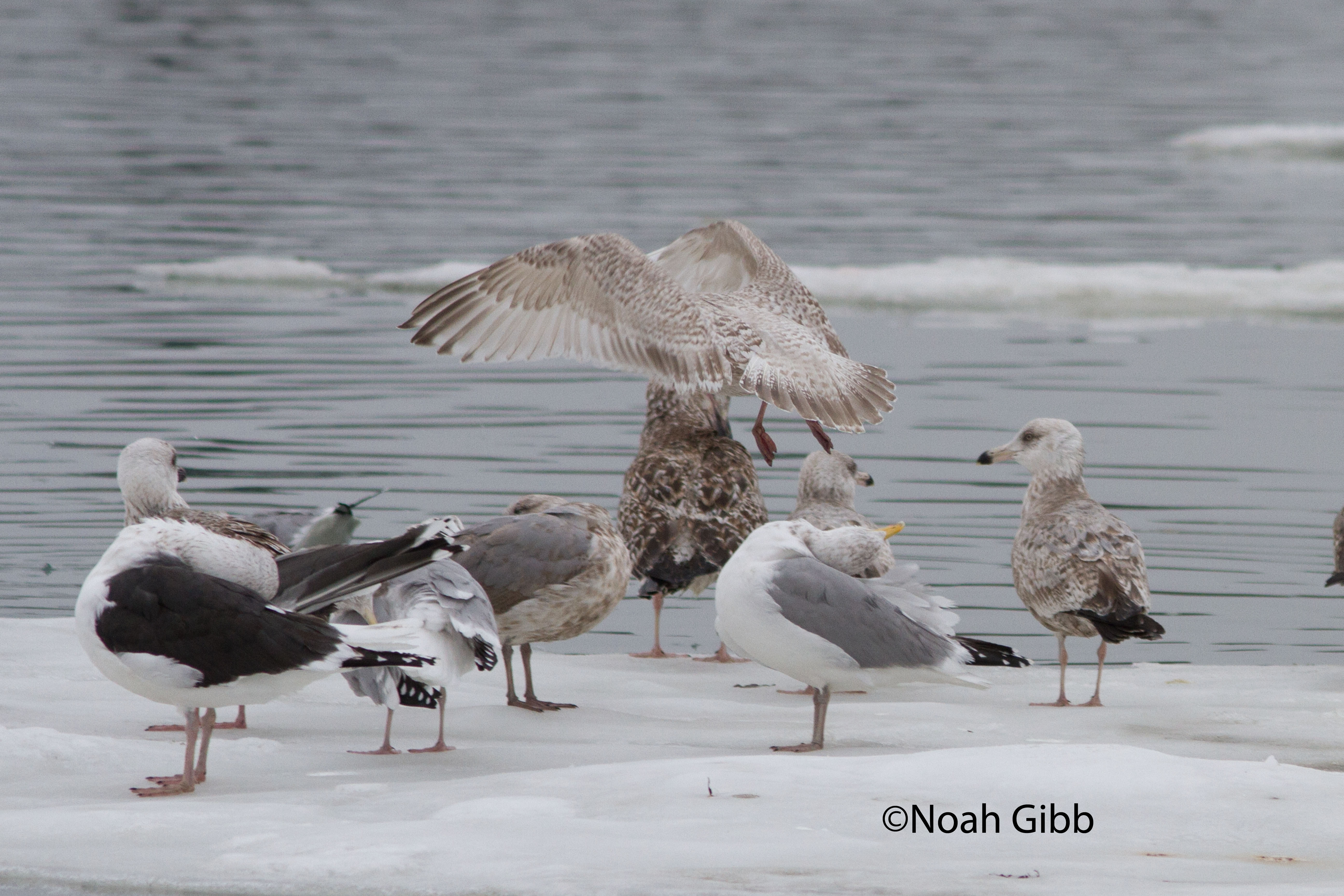
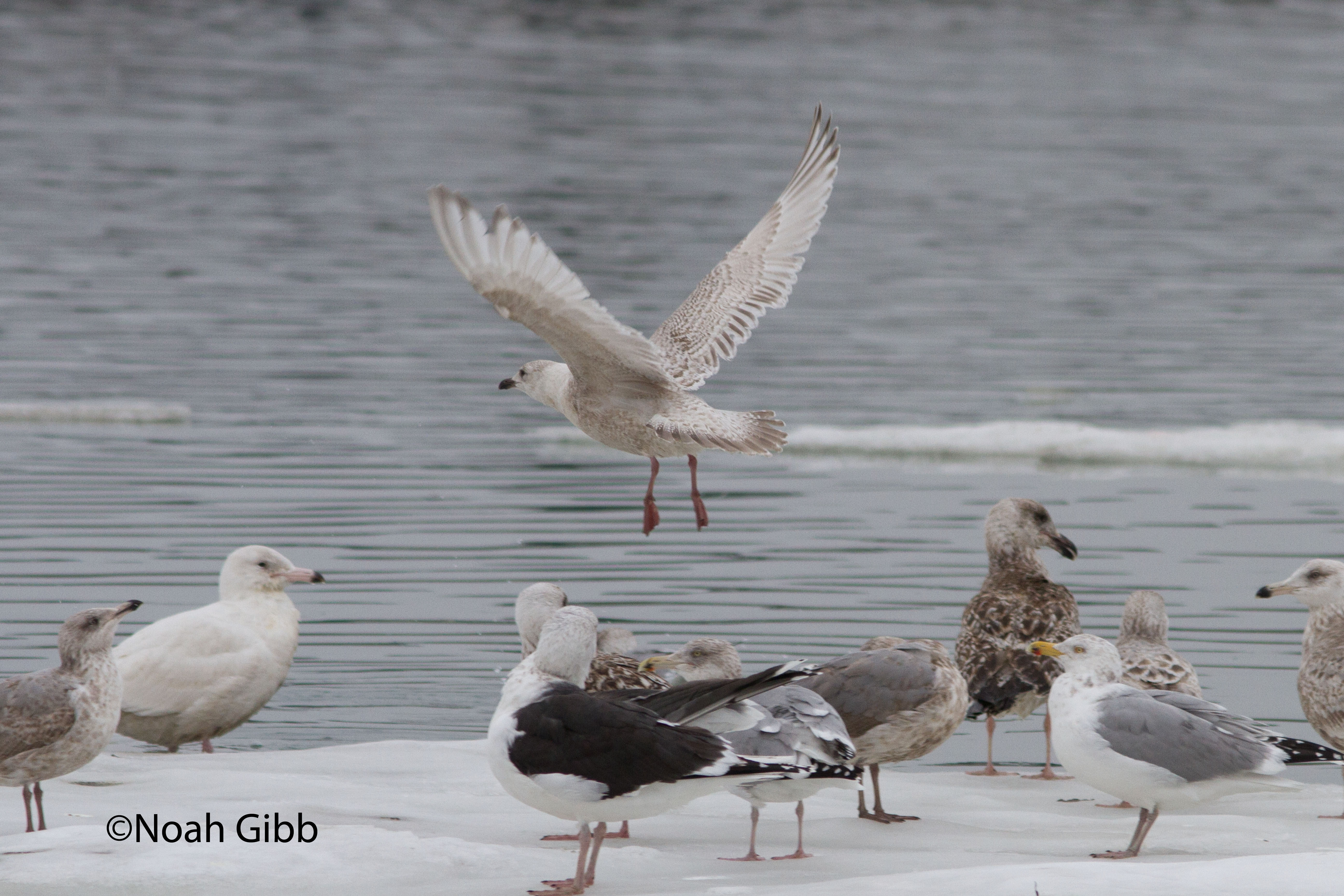
ATPU flight1,Eastern Egg Rock,6-12-13

ATPU1,Eastern Egg Rock,6-12-13

BLGU flight1, Eastern Egg Rock, 6-12-13

BLGU flight2, Eastern Egg Rock, 6-12-13

BLGU flight3, Eastern Egg Rock, 6-12-13

BLGU on rocks, Eastern Egg Rock,6-12-13

Of course, before the boat departed, we spent some time at Pemaquid Light…
Pemaquid Light,6-12-13

…where I proved I run a full-service guiding outfit.
walking corgis,6-12-13