Category Archives: Birding in Maine

Birding By Schooner Trip Report, 2015

It’s hard for me to pick my “favorite” tour, but if pressed, I would probably answer our annual “Birding by Schooner” aboard the Lewis R. French tour. It just offers such a unique way to bird, and such unique birding experiences. The scenery, the food, and the good conversation can also not be beat.

Last week was my 6th tour aboard the French. And one of the aspects of the tour that I so very much enjoy is that every tour is different. We often don’t know where we are going even as we depart Camden Harbor on our first morning! Weather (especially wind, or lack there of) dictates the plan. And I must say, it’s a nice bit of respite to not have any control over where we go! All I have to do is point out birds wherever our captain takes us.

Of course, this is a birding-themed trip, so we make our best efforts to get into position for some great birding, especially to visit one or more islands with breeding seabirds. But when I boarded the vessel on Sunday night, I could only guess what a plan might be.

We awoke to fog and calm on Monday morning, departed the harbor on the very lightest of breezes, and pushed our way across a bay with only the minimum of ripples. We found a whole in the fog bank as we rounded Owl’s Head Light…
1. L1020522_OwlsHeadLight,7-20_edited-1
(click on photos for larger images)

…but soon we were back in the murk.
2. L1020526_IntotheFig,7-20_edited-1

Wilson’s Storm-Petrels began to show up, with at least 50 noted by the time we pulled into Port Clyde. Bald Eagles were conspicuous, as were the common bay denizens such as Black Guillemot…
3. IMG_1540_edited-2

…and Common Eider.
4. IMG_1770_edited-2

A stroll to Marshall Point Light added to our landbird list, while a Greater Yellowlegs in the harbor was the first migrant shorebird of the trip.

Overnighting in Port Clyde set us up nicely for a short trip to Eastern Egg Rock, which we rounded slowly to enjoy Roseate Terns among the Arctic and Commons, lots of Black Guillemots, and over 100 Atlantic Puffins. The fog lifted enough for us to have great visibility when near the island, but the offshore fog bank and cloudy skies meant a lot of puffins were on the water, and many loafed close to our boat or zipped right by.
5. IMG_1567_edited-2

Back into the fog as we trudged offshore, seabirds were few and far between. Or, I should say, we saw few seabirds…I am sure plenty were out there. We encountered some more puffins, and this one Northern Gannet.
6. IMG_1589_edited-2

Our destination this afternoon was none other than Monhegan Island…one of my favorite places in the world. It was pretty foggy, so the views were limited…
7. L1020530_MonheganFog,7-21_edited-1

…But few complained. Especially those of us who ended up at the Monhegan Brewing Company (Wait, how do so many of my tours end up at breweries?).
8. L1020548_MonheganBrewery,7-21_edited-1

Several common breeding birds were added to our trip list, but no mid-summer vagrants were detected. We had hoped to overnight in the harbor and take a birdwalk in the morning, but a tenuous anchorage and an approaching cold front led Captain Garth to err on the side of caution, and head for the shelter of the mainland, so we said an early farewell to Monhegan.
9. L1020554_departingMonhegan,7-21_edited-1

We sought shelter up the St. George River, first in Turkey Cove, but then Garth made a last minute decision to anchor on the river’s other bank, in the Pleasant Point Gut. Overnight, the storm cleared, and so did the fog.
10. L1020565_PleasantPointGut,7-22_edited-1

We didn’t have much wind, but what we did have facilitated a trip out to remote Seal Island. We had to motor-sail most of the way, but we had an afternoon date with a punctual local.

On the way, we enjoyed some great birding. While we didn’t have enough wind to take the long way out to Matinicus Rock and deeper water, cutting a straight line around the north end of Metinic produced a whole lot of Wilson’s Storm-Petrels (450+ on the day), 6 Red Phalaropes (along with another 20 phalaropes that were just a little too far to ID), and a Mola Mola that gave us the slip. Most surprising, however, was a pair of American Oystercatchers that were flying around Little Green Island. Whether this is a previously-unknown pair of this slowly-increasing species in Maine, southbound migrants, or Maine breeders undergoing post-breeding dispersal is impossible to know, but it was a new “Schooner Bird” for me: my 116th species seen during our “Birding by Schooner” tours!

It was a bit of work, but we made it to Seal Island on a sunny, fairly calm day at the perfect time. And “Troppy” the Red-billed Tropicbird that has returned to Seal Island for its 9th straight summer (10th overall in the area), made his afternoon appearance for a little bath. This was my fourth visit to Seal aboard the French, and we have seen Troppy three times (the only miss was on a cloudy day with fog the next morning).
11. IMG_1633_edited-2

12. IMG_1695_edited-2

13. L1020582_RBTR_landing1,7-22_edited-1

14. L1020583_RBTR_landing2,7-22_edited-1

15. L1020584_RBTR_landing3,7-22_edited-1

16. IMG_1738_edited-2

17. IMG_1684_edited-2

And despite that sign, we dropped anchor for a special evening. One of the unique experiences for participants on this most unique tour is an evening with the Seal Island’s biologists. Not only do the passengers get a break from hearing me talk, the biologists get a break from cooking and their usual routine.
18. L1020637_Seal_biologists_arriving,7-22_edited-1

19. L1020648_Seal_biologists_onBoard,7-22_edited-1

20. L1020658_Seal_Island_sunset,7-22_edited-1

Yet another unique experience afforded by spending a night out at Seal is to get up and listen for Leach’s Storm-Petrels returning to the island from foraging trips in the middle of the night. While clear skies and a light westerly wind reduced the cacophony, the eerie, sinister chuckling of the petrels rang through the night.

And if a sunrise over Seal isn’t enough…
21. L1020667_Seal_sunrise,7-23_edited-1

…there was what seemed to be the entire tern colony in the air…
22. L1020673_Seal_terns,7-23_edited-1

… more puffins, a couple of dozen Razorbills and 1 Common Murre, Great Cormorants, and more Black Guillemots than you could count.
23. IMG_1875_edited-2

Migrant shorebirds included a Whimbrel, a flock of small shorebirds that totaled 20 Semipalmated and 2 Least Sandpipers along with 4 Semipalmated Plovers, and unexpectedly, a fly-by Wood Duck! Not to mention another view of the Red-billed Tropicbird!

If your head wasn’t already on a swivel from looking at all of that, looking down offered a mesmerizing ballet of traveling jellies, both Moon and White-cross Jellies(here)…
24. L1020663_Moon_Jelly,7-23_edited-1

…and painful Lion’s Mane Jellies.
25. L1020677_LionsManeJelly,7-23_edited-1

For me, it is always too soon to depart, but we had other fish to fry, or to be exact, lobsters to boil. So we set a course towards Stonington, keeping our eyes open along the way. Two male Razorbills with their chick in tow were nice to see, as was a Minke Whale. A handful of Northern Gannets and about 10 Wilson’s Storm-Petrels were our only other seabirds, however.

As we entered nearshore waters, we kept an eye out on islands, both big and small. You never know what you might see, and while I am on the lookout for something “mega” like a Brown Booby, we did spot a Great Cormorant on tiny Saddleback Ledge.
26. L1020692_SaddlebackLedge2,7-23_edited-1

27. L1020696_GRCO,SaddlebackLedge,7-23_edited-1

Back in the usual domain of the Schooner fleet, we passed The Heritage…
28. L1020702_The_Heritage,7-23_edited-1

…and while the water boiled on Russ Island, the Angelique cruised passed us.
29. L1020706_FrenchandAngelique,Russ_Island,7-23_edited-1

A little bird, plant, and ecology walk further swelled our appetites. Which was good, because we had a few lobsters to eat tonight. Swainson’s Thrushes offered the evening’s musical performance.
30. L1020712_Lobster_Bake,Russ_Island,7-23_edited-1

A Sharp-shinned Hawk carrying breakfast over Russ Island was another addition to my Schooner List, and our morning walk around Stonington added several new species to our triplist.
31. L1020717_Stonington,7-24_edited-1

Rounding North Haven Island, we kept tallying Wilson’s Storm-Petrels (we don’t always see these birds inshore on this tour), spotted a few small groups of southbound swallows and a few shorebirds, and watched the storm clouds build.
32. L1020727_Storm1,7-24_edited-1

Um, should we have been worried?
33. L1020730_Storm2,7-24_edited-1

Nah, this crew has got it covered!
34. L1020750_Storm3,7-24_edited-1

Although we had some good sailing winds ahead of the storm, and some moderate rain during the storm, the skies looked much worse than what we weathered. In fact, by the time we motored into Gilkey Harbor on Islesboro, the rain was ending and the skies showed a few hints of blue. And once again, we ate. Ate real well.
35. L1020754_food,7-24_edited-1

It’s amazing how fast a week aboard the Schooner French flies by – even without the birds – but it was now time to crank the anchor one last time. A Greater Yellowlegs sounded off and Ospreys circled overhead as we departed the quiet harbor for the bustle of Camden.

Crossing West Penobscot Bay, we encountered yet more Wilson’s Storm-Petrels, and surprisingly (for this far up the bay) another Razorbill father and kid.

Chimney Swifts twittering over Camden were our 79th and final species of the tour – two over our average. Emails were exchanged, bunks were cleared, and one last photo-op capped off yet another stellar “Birding By Schooner” tour.
L1020761_group,7-25_edited-1

Here’s the complete, annotated checklist for this year’s trip, in order of appearance:

  1. American Crow
  2. House Sparrow
  3. Rock Pigeon
  4. Canada Goose (a couple of family groups in Camden Harbor)
  5. Mallard
  6. Song Sparrow
  7. Double-crested Cormorant
  8. Laughing Gull (common; all days)
  9. Osprey (common, just about every day)
  10. House Finch
  11. Herring Gull
  12. Great Black-backed Gull
  13. Cedar Waxwing
  14. Northern Cardinal
  15. Mourning Dove (all of the above from the boat within Camden Harbor)
  16. Wilson’s Storm-Petrel (daily; high day count of 450+ on 7/22, with 400+ between Little Green Island and Seal Island. Unusually common within Penobscot Bay).
  17. Black Guillemot (Abundant daily; several hundred on multiple days).
  18. Common Eider (very common; all days)
  19. Common Tern (abundant, including thousands at Eastern Egg Rock and Seal Island, but also scattered throughout inshore waters)
  20. Bald Eagle (common and seen daily; high count of 7 on 7/20).
  21. Bonaparte’s Gull (scattered few)
  22. Common Loon (scattered few on several days)
  23. Great Blue Heron
  24. Northern Parula
  25. European Starling
  26. Black-capped Chickadee
  27. Common Grackle
  28. American Robin
  29. Common Yellowthroat
  30. Black-throated Green Warbler
  31. Purple Finch
  32. Common Raven
  33. White-throated Sparrow
  34. Blue Jay
  35. Greater Yellowlegs (scattered singletons)
  36. Least Sandpiper (scattered few)
  37. Northern Flicker
  38. Gray Catbird
  39. Semipalmated Sandpiper (scattered small groups; high of 30 at Seal Island on 7/23)
  40. White-rumped Sandpiper (1 each at Eastern Egg Rock, 7/22 and Seal Island, 7/22)
  41. Spotted Sandpiper
  42. ATLANTIC PUFFIN (100+ at Eastern Egg Rock, 7/22 and hundreds at Seal Island 7/22-23)
  43. ROSEATE TERN (dozens at Eastern Egg Rock, 7/22)
  44. ARCTIC TERN (many hundreds at Eastern Egg Rock, 7/22 and Seal Island, 7/22-23)
  45. Northern Gannet (1 between Eastern Egg and Seal, 7/22; 5 between Seal and Stonington, 7/23)
  46. Tree Swallow (several southbound groups seen offshore and around islands)
  47. Brown-headed Cowbird
  48. Red-winged Blackbird
  49. Ruby-throated Hummingbird
  50. Winter Wren
  51. Black-throated Green Warbler
  52. Yellow-rumped Warbler
  53. Barn Swallow (scattered small numbers, many southbound over water)
  54. Blue-headed Vireo
  55. Killdeer
  56. AMERICAN OYSTERCATCHER (pair at Little Green Island, 7/22)
  57. RED PHALAROPE (6 between Little Green Island and Seal Island, 7/22, plus 20 unidentified phalaropes)
  58. GREAT CORMORANT (35+ including juveniles at Seal Island, 7/22-23, plus 1 at Saddleback Ledge light, 7/23).
  59. RED-BILLED TROPICBIRD (Troppy! Seal Island, 7/22-23).
  60. RAZORBILL (20+ Seal Island, 7/22-23)
  61. Bank Swallow (6 off of Seal Island, 7/22)
  62. COMMON MURRE (1 at Seal Island, 7/22)
  63. LEACH’S STORM-PETREL (many heard overnight at Seal Island, 7/22-23)
  64. Savannah Sparrow
  65. Whimbrel (one at Seal Island, 7/23)
  66. WOOD DUCK (one unexpected fly-by at Seal Island, 7/23)
  67. Semipalmated Plover (4 at Seal Island, 7/23 and 4 off North Haven, 7/24)
  68. Turkey Vulture
  69. Dark-eyed Junco
  70. Red-breasted Nuthatch
  71. Golden-crowned Kinglet
  72. Sharp-shinned Hawk
  73. Chipping Sparrow
  74. Black-and-white Warbler
  75. Yellow Warbler
  76. Hermit Thrush
  77. Belted Kingfisher
  78. Ring-billed Gull (just a few in and around Camden Harbor)
  79. Chimney Swift

Since every trip is unique, here are links to the trip reports from the previous two tours.

August, 2014.
And July 2013.

And in the not-so-distant future, we’ll be posting dates and information for our 2016 adventure. This trip fills up fast, so don’t dally…sign up soon and we’ll see you aboard next year!

June 2015 Month in Review

I guide nearly full-time in the month of June, and this year was no different. Add a few days at the store here and there and three days for working on writing projects, it was, needless to say, a very busy month. Please excuse my lack of blogging. I’ll try and make up for it here with a summary of the birds and my birding for the month as I try to catch up here and everywhere else.

After a troublingly-dry spring, rain began to fall in early June, with three inches in the first few days of the month, temporarily alleviating our drought conditions. But unseasonably cool temperatures continued to dominate through much of the month, but at least we started to see rain on a regular basis (but we could still use more) with a more active weather pattern. Unfortunately, it sometime fell at inopportune time for me and my clients!

Early June is often a time for rarities, especially of southern “overshoots” that are often found prospecting for territories – things like Hooded or Worm-eating Warblers, Summer Tanagers, etc. It was rather surprising, actually, that these southern strays weren’t found, considering May ended with several days of southwesterly winds – perfect for facilitating the arrival of late migrants (and kites)!
ADD TO BLOG-wind map, 5-30-15

It’s also a great time for even more exceptional vagrants.  But this year, rarities in early June were limited to a short-staying Franklin’s Gull on Stratton Island on 6/3, and a 1st-summer Little Gull that was hanging out with Bonparte’s Gulls on Pine Point Beach in Scarborough through the first week of the month (following an adult in late May).
L1010930_LIGU1,PinePointBeach,6-4-15_edited-1

But on June 8th, a Little Egret was found in Falmouth, and was followed into Portland. On the 9th, I spent the afternoon chasing it around with Luke Seitz, eventually relocating it several times and eventually getting some good photos.  Hanging out some of the time with Snowy Egrets, this summertime occurrence is most intriguing. This was the third record for Maine, all of which have occurred in the summer, and all since 2011 – could they all be of the same bird?
L1020115_LIEG_best_edited-1

I’m a full-time guide in June, and this summer my private guiding (following a postponement due to the heavy, steady rain on the 1st) kicked of on June 3rd with a two-day tour for a couple who currently reside in Nicaragua. After amazing experiences with Saltmarsh and Nelson’s Sparrows in Scarborough Marsh – with the aforementioned Little Gull as a welcomed treat – we headed for the hills for my first of three visits to the mountaintop realm of the Bicknell’s Thrush. Despite a private, after-hours charter up Mount Washington one evening, and an exhaustive search on another mountain the next morning, for the first time in over 30 attempts, I failed to produce satisfactory views of the enigmatic thrush for my clients. No small part of me was frustrated and disappointed that I could no longer claim a perfect score!  I knew it would happen eventually, however.

Was it too early? Especially during such a cold start to the season? Or was it just too nice out both days? Warm temperatures in the low 50’s and very light winds just don’t seem to be as useful for seeing these birds!

We had a great birdwalk outing on 6/6, and local guiding for a visitor from Alabama on the 7th was fruitful: some of our local breeders here in Freeport, followed by a visit to Pine Point Beach (no Little Gull this day, but the continuing raft of “winter” diving ducks: ~40 White-winged, ~30 Black, and 4 Surf Scoters, along with a single Long-tailed Duck) made for a nice morning.

My next overnight trip was on June 8-9, taking me to Rangeley with a client from Massachussetts. We managed all 6 of our target birds, including finding a Black-backed Woodpecker and with the help of a friend, a new spot for Mourning Warbler.

The weekend of the 13-14th was my annual “Bicknell’s Thrush and the White Mountains” tour. Licking my chops from my first whiff earlier in the month, I was excited to get back on the horse and see some Bicknell’s Thrushes. Of course, even more pressure is on when you’re running a two-day trip solely dedicated to one species!  While we do bird our way to and from the mountain thrush locations, this is an all-or-nothing trip for a lot of people. Let’s just say, a new streak has begun – and wow, what a way to do it!

With rare days off, I squeezed in some relaxed birding with Jeannette and Sasha. We didn’t see the Portland area Little Egret on the 15th, but did enjoy a birdy visit to Capisic Pond Park to walk Sasha, including a nice view of the male Orchard Oriole. A Red Crossbill in the afternoon in our Pownal yard was a surprise. The next day, we did our annual march around all of the Kennebunk Plains. At least five Upland Sandpipers (all very well-seen), 10 Grasshopper Sparrows (low), 18 Vesper Sparrows, 38 Prairie Warblers, and all of the other expected barrens denizens. A visit to Peak’s Island on the 18th yielded a very late migrant Yellow-bellied Flycatcher and a sampling of the breeding birds of this lovely island. Willow Flycatchers and Black-crowned Night-Herons were in the marsh by Battery Steele but I did not hear or see a single Carolina Wren – wow, did this bird get hammered by our winter this year. Of course, there were a few morning dogwalks to local patches as well mixed in

The grand finale of my June this year was my 10-day Maine-New Hampshire Tour for WINGS. This biennial tour is exhaustive, and exhausting.  But 5 hotels, 1300 miles, and 159 species later, we all knew it was well worth it: 20 species of warbler (including Bay-breasted), all 9 species of Maine’s flycatchers (including Olive-sided), 7 species of thrush (including Bicknell’s in New Hampshire), 5 species of tern, 5 species of vireo, 4 species of alcids, and so much more.

After seeing Saltmarsh and Nelson’s Sparrows, Roseate Tern, American Oystercatchers, etc at Scarborough Marsh, we successfully searched for the Little Egret – a life or ABA-area bird for everyone.  Bicknell’s Thrush played hard to get on Mount Washington, but my secret spot produced crippling views the next day.  It rained – a lot – in Rangeley, but we still managed to get several sought-after species, including Gray Jays and Moose. Messalonskee Lake was its usual awesomeness, and then we headed east, way east, arriving in Machias.
GRJA1,BoyScoutCamp,Rangeley,6-23-15_edited-1

GRJA-RickSkehen1,Rangeley,6-23-15_edited-1

Machias Seal Island needs no explanation; although landed was thwarted by swells, we couldn’t have asked for more birds up close and personal from the boat.
ATPU2,MachiasSealIsland,6-24-15_edited-1

BAEA_flying1,CutlerHarbor,6-24-15_edited-1

Spruce Grouse eluded my group for the first time, but we picked up lifers for many, especially as we rode the whale/puffin watch trip out of Bar Harbor (2 Manx and 14 Great Shearwaters, 3 Leach’s and 350+ Wilson’s Storm-Petrels, Northern Fulmars, and another view of puffins, Razorbills, and Common Murres.  And we finally turned up some Great Cormorants – 7 actually – in Acadia National Park.
GRSH_takeoff1,offBarHarbor,6-26-15_edited-1
The Great Shearwaters we encountered today had some serious molt going on!

Besides the Little Egret, which obviously stole the show, unexpected treats included an immature male Purple Martin at Pine Point exploring nesting/roosting cavities with 6 White-winged Scoters off the beach and 2 Black-bellied Plovers off the point. A pair of Black Scoters was off of Quoddy Head State Park was another unseasonable addition to the checklist.

We filled in a few holes on the checklist on the tour’s last day, including Barred Owl, and some feeder watching in our backyard. And like all of my tours, we ate well- very, very well; food is always an important part of my tours as it is so important to tell an area’s story.
QuoddyHeadGroup2,6-25-15_edited-1

With rain falling and clients departing on Sunday the 28th, I slept. A lot. I also slept a lot the next two days, although of course, but I made some time for some casual birding with Jeannette and Sasha, including another chase of the Little Egret – this time resulting in Jeannette’s 600th ABA-area bird!  Then, on Tuesday, we visited Simpson’s Point and spotted the remarkably-unseasonable Pacific Loon that was found there the day before. Joining almost-as-amazing summer records of two Red-throated Loons, a drake Bufflehead, and three Long-tailed Ducks, this amazing bay that has become a real summer oddity hotspot delivers once again.

And with that, my June comes to a close. I have a few tours and private guiding outings coming up, but I look forward to a slightly more relaxed schedule, with perhaps a few minutes on the recliner and wading out to sandbars to enjoy shorebirds!

Restoring the Belgrade Purple Martin Colony.

IMG_1245_edited-2

The Purple Martin is an iconic bird of the Northeast and has long had a “relationship” with people. Their large apartment-style houses grace the yards of many homeowners. However, this large swallow species reaches its northern range limit in Maine, so nesting colonies in our state are very localized and spread out. One such colony has been active since at least 1909 in Belgrade. Over the years, Maggie and Carl Yeaton maintained several martin houses on this property, most recently with assistance from Hammond Lumber Company workers. But, there has come a point where even those houses started to fall into disrepair. Without these houses would this colony that birders from far and wide come to see disappear, as other colonies this far north have done? Many of Maine’s birders, including myself, saw their first Purple Martins here, and the colony is frequented by birders working on their state and year lists, or just want to enjoy one of the state’s rarest breeding birds.

IMG_1226_edited-2

Last summer, I stopped at the colony with a client, John Alexander, visiting from Sheffield, MA. After noticing the poor state of the houses, Alexander offered a donation to replace them. That got the ball rolling. I then contacted local resident, birder, and active member of the Belgrade community, Don Mairs to assist with the project. Don was instrumental in getting this project going; we couldn’t have done it without him. He arranged for all of the permissions necessary, and began to drum up local support for the project.

IMG_1250_edited-2The martins have been returning annually to houses that are now beyond repair. Something needed to be done before this vibrant colony no longer had adequate housing.

One year later, in May 2015, our store, Freeport Wild Bird Supply procured a new steel pole with pulleys (to facilitate cleaning) and plastic gourd array, which is now the preferred style of martin dwelling. With the additional help of local volunteers, Bob Lewis and Ed Slattery, this new set-up was established at the old Yeaton property, now owned by Don and Mary Hammond, of Hammond Lumber.IMG_5413The new gourd array in the background of the colony between Depot Road and Rte 27.

But, the plan does not stop there. Alexander and FWBS supplied a second array to be placed in another location. The thought here is that as martins from the original colony are out foraging, they may notice this nearby housing and eventually establish themselves in this “suburb;” starting an auxiliary colony as a back-up in case the original colony was to fail due to some catastrophic event or circumstances changed. After consultation with Belgrade Librarian Janet Patterson and her Board, and President Mike Barrett of the Friends of the Library Board, it was decided to put this other gourd set-up in the open space behind the library.  This pleasant and bird-friendly location has the advantage of proximity to Belgrade Central School, with obvious potential for collaboration.

IMG_5474It was obvious that Maine birders do not have much experience installing martin poles. The second installation, however, took about 1/4 of the time than the first, so clearly we are learning…slowly.

IMG_5478Sasha’s supervision must have made the difference.

Although it is probably too late for nesters to use the new set-ups this year, the idea is to give the inhabitants of the old houses a chance to check out the new arrays, which they are already doing, along with allowing prospecting immatures to check out future homes. And, as of last check at the library, a pair of Tree Swallows had taken up residence in one of the gourds – a good sign. We at FWBS are excited that this collaboration between us, the Hammonds, the Belgrade Library, and several local residents has resulted in what may just be the beginning of a project to maintain and grow this Purple Martin colony.

2015 Bradbury Mountain Hawkwatch Season in Review

The 2015 Bradbury Mountain Spring Hawkwatch, co-sponsored by Freeport Wild Bird Supply and Leica Sport Optics, came to its conclusion on May 15th. This season was an interesting one, especially in how the weather affected our counts. During the 2-month period, the Official Hawkcounter, Andrew Wolfgang, tallied a total of 3628 raptors. This included vultures, hawks, eagles, and falcons. Over the 8-year span that we have conducted this standardized count, this year was the second lowest, coming in 12% below average.

Andrew_at_the_Brad,3-14-15

The_Brad,3-14-15
Welcome to spring hawkwatching in Maine, Andrew!

However, a single year’s count tells us little beyond what the weather conditions were like during the course of the season. The late arrival of spring was actually a benefit to the count at the start, as few early migrants had progressed north by March 15th. Therefore, we had very good counts of our earliest migrants: Bald Eagles, Red-shouldered Hawks, and Turkey Vultures. In fact, we set a new record for eagles deemed migrating, and vultures produced our second highest tally of all time. We simply didn’t “miss” any of these migrants before the project got underway.
IMG_0693_edited-2

IMG_0701_edited-2
Bald Eagles set a new all-time record this season.

However, as the season progressed, spring still didn’t seem to arrive. Lots of unfavorable (for viewing birds at Bradbury Mountain) winds meant that viewing migrating hawks past this mountain was not optimal. Strong and cold west winds, for example, push birds towards the coast beyond our view, while persistent easterlies seem to shunt birds inland before they reach the northern terminus of the coastal plain. Simply put, the poor conditions during the peak of our migration period in mid to late April really lowered the overall numbers and it’s those couple of weeks that can really make or break the overall count for the season. Therefore, the below-average numbers of our two most abundant migrants (Broad-winged Hawk and Sharp-shinned Hawk) combined to yield a below-average season total.

However, we had some great birds once again, highlight by our 4th record of a Golden Eagle.
Golden Eagle Bradbury 4 edit

Andrew also recorded a new record of 3 Rough-legged Hawks, no doubt due to the late onset of the spring’s flight (most Rough-legs probably move north before the start of the count in most years).

Meanwhile, a total of 85 species were recorded, including an ever-increasing number of Sandhill Cranes. This year a total of 11 migrant cranes were recorded. Other highlights included frequent visits by Bohemian Waxwings to the summit for much of the first half of the count, both Red and White-winged Crossbills. Fox Sparrow was recorded at the summit for the first time as well (two dates).

But, this hawkwatch is not just about the numbers. We also work hard to educate visitors to the park, both birders and non-birders. Every year we expose more and more people to the world of hawkwatching and bird migration in general. Bradbury Mountain is just one of many hawk migration sites throughout the continent. The data we collect becomes part of this vast network allowing researchers to determine population and geographical trends in particular species. So, even though our numbers this year were low relative to past seasons, it becomes no small part of building this data set. 1174 visitors were recorded at the hawkwatch (tabulated as coming specifically for the hawkwatch or spending time chatting with the counter), plus many hundreds more who at least briefly read the sign or asked a question or two. This was slightly below average, but likely due to the cool conditions for most of the season.
IMG_5373

There are few public projects where scientific data collection so effectively goes hand-in-hand with public outreach and education. With the growth of regular hawkwatch visitor volunteers, and especially the growth of the “Feather Over Freeport: A Birdwatching Weekend” festival, we look forward to many more years of introducing people to hawkwatching and hawk research and conservation.

Season Totals:
Turkey Vulture 374
Osprey 382
Bald Eagle 102*
Northern Harrier 101
Sharp-shinned Hawk 610
Cooper’s Hawk 85
Northern Goshawk 4
Red-shouldered Hawk 104
Broad-winged Hawk 1190
Red-tailed Hawk 236
Rough-legged Hawk 3*
Golden Eagle 1
American Kestrel 307
Merlin 75
Peregrine Falcon 8
Unidentified Hawk 46

Total 3628

*Denotes new season record

IMG_0846_edited-2
Peregrine Falcons just eclipsed our annual average this year; most migrants in this area stick closer to the coast.

Our ninth Spring Hawkwatch kicks off again on March 15th, 2016! We invite everyone, whether seasoned veteran hawkwatchers or casual nature enthusiast, to join our professional biologist and naturalist at the summit once again.

IMG_0733_edited-2
Ospreys are a fan favorite at the hawkwatch.

L1010831
It was quite a change in climate and the color of the scenery since the start of the count!

Monhegan Island, May 18-20, 2015.

Hooded Warbler, Yellow-crowned Night-Heron, Summer Tanager, Grasshopper Sparrow, 19 species of warblers and 89 species? All in 48 hours? It must be Monhegan!

Jeannette and I escaped for a quick trip to Monhegan Island this week. It was all-too-brief as usual, but we’re always happy for whatever short visit we can muster. With the early season ferry schedule still in effect, we couldn’t arrive until noon on Monday, and departed at 12:30 on Wednesday. That only gave us 48 hours of birding.

IMG_1020_edited-2
Northern Parulas were common and conspicuous – and looking mighty fine! – throughout the visit.

A strong flight overnight Sunday into Monday ushered in some new migrants to the island, but also ushered out several of the rarities that had been present over the weekend. Luckily, a few goodies lingered, including the adult Yellow-crowned Night-Heron that was seen almost all day for all three days of our visit in a corner of the Ice Pond. Our best discovery of the trip was a Grasshopper Sparrow that we kicked up near the microwave tower. Unfortunately, it was not seen again by us or anyone else.

The remnants of the good morning were present – it was decidedly birdy and we managed 16 species of warblers and 65 total species of birds before dinner…and with the pleasant surprise of finding Monhegan Brewing open, we may have spent a little afternoon time there instead of beating the bush.

Monhegan_Brewing,5-18-15_edited-1
FOY.

IMG_1030_edited-2
Magnolia Warbler was our most common warbler on Day 1.

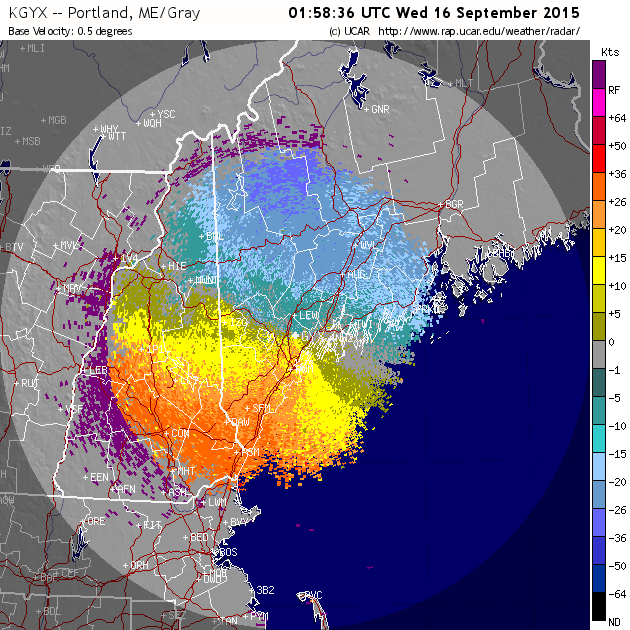
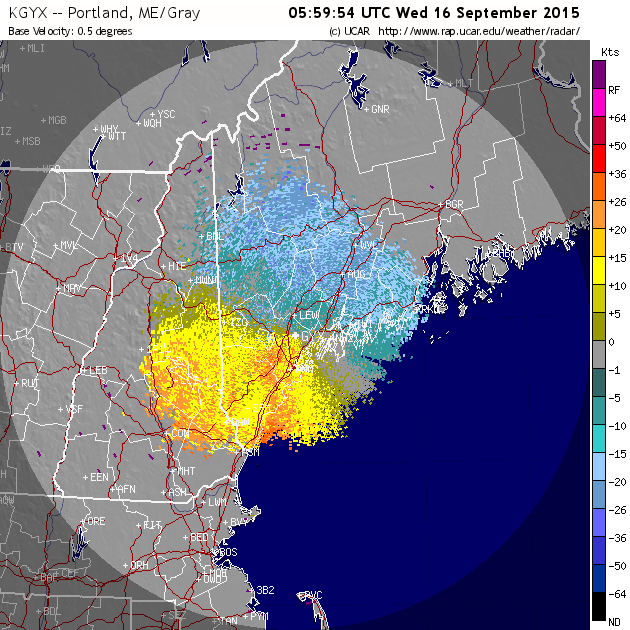
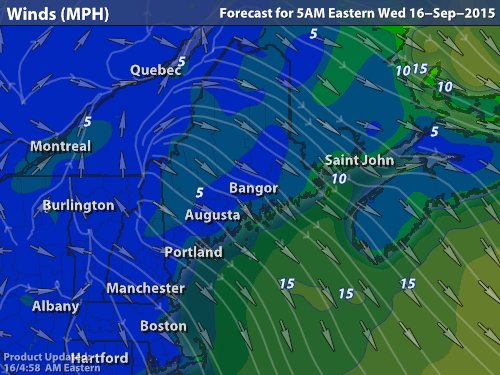
Come nightfall, birds took the air on light southerly winds. However, after midnight, there were very few
birds on the radar near the coast, suggesting many more birds would have departed than arrived. And that certainly was the case!

It was a quiet morning, and in the dense fog, birds were few and far between. The Yellow-crowned Night-Heron was present and accounted for however. Then, in the afternoon, Jeannette and I (mostly) circumnavigated the island – a hike I haven’t done in a while, so that was a nice change of pace. The only Cape May Warbler we saw in the three days was during the hike, in one of quite a few small mixed-species foraging flocks that we encountered on the island’s east side.
Hiking_East_Side,5-19-15_edited-1

We also came upon a tired and wet Scarlet Tanager (I can’t believe I didn’t bring mealworms on this trip!), which was slowly working the rocks for seaweed flies. It was finding several, and after watching it for about 15 minutes, we can tell it was getting a little more strength.

Upon our return to town, we were alerted to the re-sighting of the weekend’s Summer Tanager, flycatching on Swim Beach. To say it posed for pictures would be an understatement.
J_SUTA,Monhegan,5-19-15_edited-1

IMG_1068_edited-2

IMG_1082_edited-2

Overall, it was a slow day of birding by Monhegan standards (55 species including 13 species of warblers), but a slow day of birding on Monhegan is a great day of birding most anywhere else!

Although we awoke to more dense fog on Wednesday (5/20), our last day on the island, there were soon peaks of sun overhead, and a lot of new birds were to be seen. A moderate flight overnight on light southwest winds then saw birds drift offshore a little more as the winds shifted to the west after midnight. This brought an array of new arrivals to the island, although nothing in exceptionally large quantities, but our trip list grew steadily.

Our morning began with a nice flight of Northern Gannets off Lobster Cove and ended with 17 total species of warblers. Personal first-of-years included the gannets, 1 American Pipit at Lobster Cove, and a singing Willow Flycatcher.  The Summer Tanager continued, and the Yellow-crowned Night-Heron was still standing guard.

And finally, we ran into the one rarity that we had not yet caught up with – a female Hooded Warbler that had been present since the weekend. In true MonhegZen birding style, after being told we “just missed it” several times, I played a hunch and gave one little thicket a quick check before we headed up to the Trailing Yew to grab our carry-on bags.

And sure enough, there she was!
IMG_1180_edited-2

While both a Wood Thrush and Snowy Egret that were seen on Tuesday would have been “Island Birds” for me, we managed to see all of three of the continuing rarities, plus finding our own in the Grasshopper Sparrow (a very good bird out here).

In other words, it was a great – albeit quick – trip. I look forward to returning no later than our MonhegZen Fall Migration Weekend, if not sooner.  And for the record, Monhegan Brewing’s new Flyway IPA – named for the birds and birders that descend on the island each spring and fall – is fantastic!

Sasha_and_Chaco,5-19-15_edited-1
The trip was also way too short for Sasha. Not only did she not get any lifers, but her little island romance with Chaco came to an all-too soon end.

Our full trip list was as follows:

Mallard: 6, 8, 10.
Mallard x American Black Duck hybrid: 0,0,2
Common Eider: x,x,x
Ring-necked Pheasant: 3,5,4.
Red-throated Loon: 0,0,1.
Common Loon: 2, 0,0.
Northern Gannet: 0,0,73
Double-crested Cormorant: x,x,x
Great Cormorant: 0,0,1.
Great Blue Heron: 0,0,1.
YELLOW-CROWNED NIGHT-HERON: 1,1,1.
Osprey: 0,0,1.
Merlin: 1,1 or 2, 1
Sora: 1,1,1 (calling incessantly all day long all three days!)
Greater Yellowlegs: 2,1,0
Spotted Sandpiper: 0,0,2
Laughing Gull: 0,0,4.
Herring Gull: x,x,x.
Great Black-backed Gull: x,x,x
Black Guillemot: x,x,x.
Mourning Dove: 6,6,6.
Ruby-throated Hummingbird: 0,1,2.
RED-BELLIED WOODPECKER: 1,1,0.
HAIRY WOODPECKER: 1,0,1.
Northern Flicker: 1,1,0.
Eastern Wood-Pewee: 1,0,3.
Alder Flycatcher: 0,0,2.
Willow Flycatcher: 0,0,1.
Least Flycatcher: 2,2,20.
Eastern Phoebe: 2,0,2.
Eastern Kingbird: 6,1,3.
Warbling Vireo: 0,0,2.
Red-eyed Vireo: 0,1,6.
Blue Jay: 4,5,5.
American Crow: x,x,x.
Common Raven: 2,2,2.
Tree Swallow: 10,6,8.
Cliff Swallow: 1,0,0
Barn Swallow: 2,0,2.
Black-capped Chickadee: x,x,x.
Red-breasted Nuthatch: 2,2,2.
Winter Wren: 0,1,1.
Golden-crowned Kinglet: 0,8,2.
Swainson’s Thrush: 0,1,1.
American Robin: x,x,x.
Gray Catbird: #,#,#
Brown Thrasher: 3,2,2.
European Starling: x,4,6.
American Pipit: 0,0,1.
Cedar Waxwing: 0,0,15.
Nashville Warbler: 0,0,2.
Northern Parula: 10,20,25.
Yellow Warbler: 10,10,20.
Chestnut-sided Warbler: 1,1,8.
Magnolia Warbler: 15,30,40.
Black-throated Blue Warbler: 5,3,2.
Yellow-rumped Warbler: 10,15,12.
Black-throated Green Warbler: 3,15,18.
CAPE MAY WARBLER: 0,1,0.
Blackburnian Warbler: 1,0,0.
Blackpoll Warbler: 2,2,10.
Black-and-white Warbler: 6,10,15.
American Redstart: 2,3,25.
Ovenbird: 1,0,1.
Northern Waterthrush: 3,1,2.
Common Yellowthroat: #,#,#.
HOODED WARBLER: 0,0,1.
Wilson’s Warbler: 2,0,6.
Canada Warbler: 1,0,3.
SUMMER TANAGER: 0,1,1.
Scarlet Tanager: 0,1,0.
Eastern Towhee: 0,0,2.
Chipping Sparrow: 2,1,0.
Savannah Sparrow: 3,2,2.
GRASSHOPPER SPARROW: 1,0,0.
Song Sparrow: x,x,x
Lincoln’s Sparrow: 1,0,0.
Swamp Sparrow: 4,2,3.
White-throated Sparro: 15,10,10.
White-crowned Sparrow: 1,6,7.
Northern Cardinal: 4,6,6.
Rose-breasted Grosbeak: 4,5,5.
Indigo Bunting: 0,0,1.
Bobolink: 6,4,3.
Red-winged Blackbird: 4,4,8.
Common Grackle: x,x,x.
Baltimore Oriole: 2,1,4.
Pine Siskin: 0,0,1.
Purple Finch: 1,0,0.
American Goldfinch: 8,4,6.

Day totals: 65, 56,77

But most conspicuous in their complete absences was the lack of Carolina Wrens. The island usually has the densest population of this “southern” species anywhere in the state (although one neighborhood in Wells might rival it), but we did not have a single bird the entire trip! Same for everyone else we talked to. Apparently, the unusually harsh, long, and snowy (especially for out here) winter took its toll – as it is wont to do on Carolina Wrens pushing the northern limits of their range.

IMG_1175_edited-2
Chestnut-sided Warblers were one of many species that were more frequently encountered this morning that in the previous two days.

Departing_Monhegan,5-20-15_edited-1

2015 Bradbury Mountain SPRING Hawkwatch starts Sunday!

IMG_0485_edited-2
Bald Eagles are already on the move, but the delayed start to spring have kept most of the birds to our south…just waiting to be tallied as they begin to push north.

Hawkwatching season is here! Freeport Wild Bird Supply (FWBS) will once again be partnering with Leica Sport Optics to sponsor the Spring Hawkwatch at Bradbury Mountain State Park in Pownal, beginning on March 15th. 2015 marks the ninth consecutive season for this project through which valuable data is collected while providing an enjoyable and educational experience for visitors. Not only does it feel like spring today, but in a mere four days (weather permitting), spring hawkwatching will be underway!

This year, we welcome Andrew Wolfgang as our official Hawkcounter. Andrew is a Biology graduate of Millersville University of Pennsylvania where he created two research projects studying bird diversity in riparian habitats and bird vocalization detection. Most recently, he worked as an environmental educator at Chincoteague Bay Field Station in Virginia. He is an experienced birder and hawkwatcher with a particular interest in Raptor Ecology. He’ll be stationed at the summit from 9:00am to 5:00pm daily from March 15th to May 15th.

IMG_8481_edited-2
Sharp-shinned Hawks shattered their previous record count last season. What will this season’s totals look like?

Rising 485 feet above the southern coastal plain, Bradbury Mountain provides unimpeded views to the south and east all the way to the islands of Casco Bay. Whether using updrafts off the mountain, gliding overhead, or soaring over the plains, observers watch raptors utilizing a variety of migratory methods as they work their way north. The goal of the project is to document this migration by identifying and counting all raptors that pass by the mountain. Last year’s count was record-setting, with 6,015 hawks tallied, including 97 Bald Eagles, 724 Ospreys and 2,357 Broad-winged Hawks. All but two of our regularly occurring species were counted in above average numbers, with seven species showing record season highs. We were particularly excited to count 190 Red-shouldered Hawks (160% above the average) – a species that had not been known to migrate through Maine in any significant numbers before the start of this project nine years ago. Over a period of years, these data can be analyzed to determine trends in species numbers as well as changes in distributions, which when studied in conjunction with other monitoring sites across the continent, give us a broadscale idea of what is happening with raptor populations.

Last year’s record-shattering season got off to a great start thanks to the late arrival of spring. Late snowfall well to our south, cold temperatures and ice cover on lakes and rivers, and the lack of favorable southerly winds greatly limited the number of birds (especially Turkey Vultures, Bald Eagles, and Red-tailed Hawks) that pushed north before the beginning of our count season. We would expect a similar situation this spring – there hasn’t been a whole lot of spring prior to March 15th this year once again. That should get things off to a great start.

But, it is not just about the numbers. Hawkwatching is a very social activity that is accessible to birders of all abilities. Last spring, we interacted with more than 1500 visitors! Seeing your first kettle (group of birds rising up on an updraft or thermal) of 50+ Broad-winged Hawks, or learning how to tell the difference between a Bald Eagle and a Turkey Vulture several miles away is an eye-opening experience for many folks. Organized hawkwatch sites, like Bradbury Mountain, are great places to meet new people and learn about raptors and the conservation issues they face at the same time.

So, grab your binoculars and join us atop Bradbury Mountain this spring. Andrew will gladly answer questions about the raptors you will see and help visitors learn what to look for to identify the 18 species that may pass by. The hawkwatch is free, though there is an entry fee to the park.

Also, be sure to mark your calendar for Feathers Over Freeport: A Birdwatching Weekend on April 25th – 26th. The Hawkwatch will be one of many featured activities during this family-oriented event at Bradbury Mountain and Wolfe’s Neck Woods State Parks.

More information about the hawkwatch, including a link to daily counts, can be found on our website, here.

And to read about last spring’s record-shattering season, check out this blog entry on Leica’s blog.

And you know where to find me on most birding days for the next two months!

IMG_8556_edited-2
Northern Harrier was also among the eight species that set a new record last season.

My February Birding Re-Cap (2/16/15)

I know it’s been a while since I’ve blogged, but I sure hope you have taken that to mean that I have not been out birding! Quite the contrary in fact.

Yeah, it’s been bitter cold – we’ve yet to rise above freezing in February! And if you hadn’t noticed, we’ve had quite a bit of snow recently. Of course, strong winds with dangerous windchills (like yesterday) and heavy snow precluded birding on some days -well, except for feeder-watching, which has been truly excellent.

In fact, the feeder-watching has been so good of late, that Saturday’s birdwalk outing was mostly spent watching feeders. 50+ Common Redpolls, Pine Siskins, Purple Finches, a Carolina Wren, and more were enjoyed from a sheltered yard, or from the inside of our house. Yup, we went indoors for the birdwalk this week, defrosting for about a half hour – our feeders are only visible from inside the house, afterall.

And with several snow days and work-from-home writing days of late, I have been enjoying our feeder activity: a large number of American Goldfinches have been joined by varying small numbers of Pine Siskin, Purple Finch, and Common Redpolls. Still waiting for a big flock, however. And the second-ever, and first long-staying, Carolina Wren in the yard has been a treat – we’re pumping him full of mealworms to keep him around, and healthy.
IMG_9420_edited-3

The feeders at the store have been active, as well, although non-goldfinch finch numbers have not been as good or as consistent at home. But, for mid-winter with this much snow on the ground, the diversity has been surprisingly good. (Weekly totals are posted to our store’s website).

Snowy Owls are around, and on 1/31 we finally added one to our all-time Saturday Morning Birdwalk list with a visit to Brunswick Landing: species #236. Meanwhile, our birdwalk to Winslow Park on 2/7 had Barred Owl, the continuing (despite all the ice) over-wintering Dunlin (12), and the 4 Barrow’s Goldeneyes (3 drakes and 1 hen) that had been present.

But the impressive ice cover in Casco Bay has greatly reduced the amount of waterfowl in the immediate vicinity over the last couple of weeks. The end of Winslow remains clear (barely) and the duck concentrations there are quite good, but as of today, however, the much-reduced area of open water now held only two drake Barrow’s Goldeneyes. Meanwhile, the small hole of open water at the base of the Lower Falls in Yarmouth is still somehow still hosting the merganser “hat-trick” (with varying numbers of all three species) as it does every winter – they’re running out of room though!

IMG_4852_MALLs,RiverbankPark,2-10-15_edited-1

IMG_4862_edited-1
Not all ducks are quite as concentrated as these hungry Mallards (with a few American Black Ducks) at Riverbank Park in Westbrook.

While the field trip portion of my Gull Identification Workshop has been postponed for the last two Sundays, gull-watching is pretty good right now, especially in and around Portland Harbor. Hatch Hill Landfill in Augusta on the 12th, however, had only about 100 Herring Gulls – gull numbers are drastically reduced here when there is little open water on the Kennebec River in downtown. The Bath Landfill is hosting a few Iceland and a couple of Glaucous Gulls, however.

Frugivores have been common, with large flocks of American Robins and goodly numbers of Cedar Waxwings stripping all available, palatable fruit. Bohemian Waxwings have been scattered about – although I have yet to catch up with any – but so far Pine Grosbeaks have mostly remained to our north. The rapidly diminishing fruit crop locally will likely concentrate these birds further, or push them southward.

My two best days of birding this month, however, were on Feb 1 and just this past Friday. On the 1st, a snowshoe at the Waterboro Barrens Preserve was awesome. I went there to refind the Red Crossbills that a friend and I had there in December, as my recordings from that visit were inconclusive as to “type.”
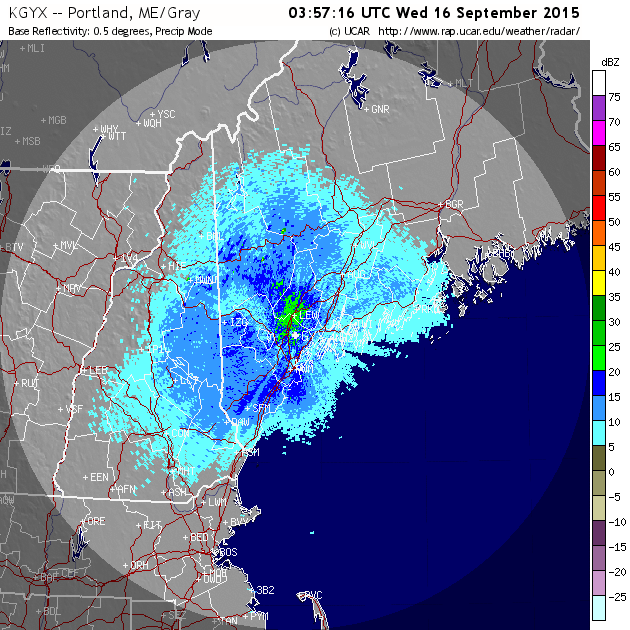
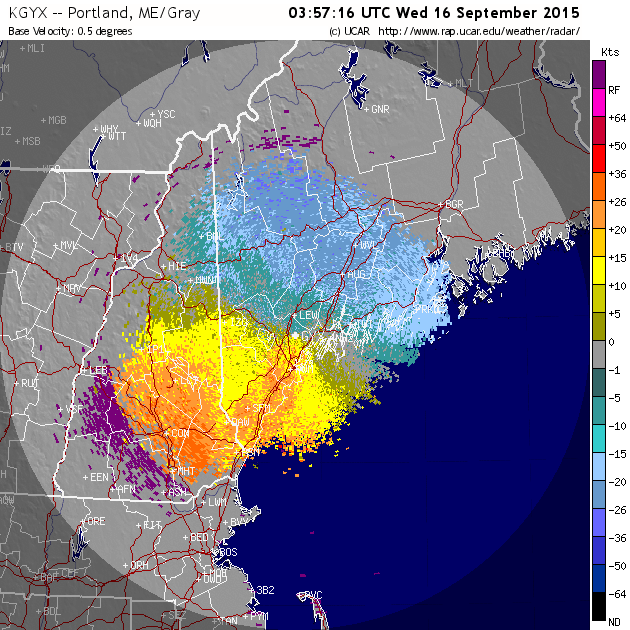
Not only did I find 14 crossbills, but many were in full song, and one male was apparently carrying nesting material! A light wind, and my huffing-and-puffing from snowshoeing in waist-deep snow drifts off trail, impeded the clarity of my recordings, unfortunately. However, one of the call types (as analyzed by Matt Young over at Cornell) was suggestive of the Type 8 Red Crossbill from Newfoundland, which has yet to be definitively recorded outside of that province. Intriguing -yup, I need to find time to go back and improve the recording.

The icing on the cake that day was a Hoary Redpoll teased out from a flock of about 40 Commons as they alighted in fed in the Pitch Pines with the crossbills. This was my first Hoary in Maine away from a feeder.

With all of these storms, and two “nice” days of northeasterly winds, I had alcids on my mind as Lois Gerke and I spent the morning in Cape Elizabeth on Friday (2/13). Apparently, my hunch was correct – we scored 4 species of alcids! This is not an easy feet in winter in Maine, although I have hit the total several times (not yet hit 5, however). Black Guillemots were scattered about, as usual, but the fun started with a fly-by Dovekie at Dyer Point.

A continuing (and apparently not very healthy) Thick-billed Murre was at nearby Kettle Cove.
L1010192_TBMU,Kettle_Cove,2-13-15_edited-1

Our presence likely saved its life for now, as a 4th-cycle Bald Eagle had its eye on it – but also, us, apparently. The eagle even landed on the rocks a few inches from the murre, which, instead of diving to escape as a healthy alcid would, was apparently resigned to simply tucking itself into a corner of the rock.
L1010186_BAEA1,4thC,Kettle_Cove,2-13-15_edited-1

L1010189_BAEA2_4thCycle,Kettle_Cove,2-13-15_edited-1

After checking for frugivores at Village Crossings (just a few American Robins on what was left of the crabapple, but we did enjoy a flock of 22 Common Redpolls), we decided to try for a Razorbill for our fourth alcid of the day. Lois’s time was limited, so instead of heading back down to Dyer Point (where the wind was also brutal), we rolled the dice and tried Portland Head Light. And sure enough, a Razorbill was offshore, feeding at the mouth of Casco Bay on the changing tide!

After lunch, I decided to procrastinate a little longer and slowly bird my way to the store, checking for open water on the Falmouth Foreside coastline. Although I was looking for duck concentrations, once again, alcids stole the show: a Thick-billed Murre flew into the cove on the south side of the Mackworth Island causeway. Perfectly strong and healthy, this bird was likely following some small fish into the bay on the incoming tide.

Even more surprising was another Thick-billed Murre in Falmouth, even further up the bay off of the Town Landing. This bird also looked fine, swimming steadily upstream with the tide, “snorkeling” to look for food.
L1010236_TBMU,FalmouthTownLanding,2-13-15_edited-1

L1010218_TBMU_wBUFF,FalmouthTownLanding,2-13-15_edited-1
These Buffleheads looked just as surprised as I was.

So yeah, a 4-alcid day, with three different Thick-billed Murres in quite a day, and probably one of my best birding days of the winter. It just goes to show you what winter birding can bring in Maine, even during an impressive deep-freeze. So yeah, I’ll be out birding as much as I can, and signs of spring are certainly in the air: woodpeckers are drumming actively, Tufted Titmice and White-breasted Nuthatches are singing frequently now, and Great Horned Owls are already nesting. Bald Eagles are probably starting some house-keeping, Common Ravens are reaffirming territories, and in only a month, the Bradbury Mountain Spring Hawkwatch gets underway!

Until then, it’s finches, ducks, white-winged gulls, frugivores, and alcids. I’ll be out in the field, and I hope you will be too. (And don’t forget, you can check out what I have been seeing in near-daily posts to our store’s Facebook page).

GYRFALCON in Wells (January 2015)!

Gyrfalcons are one of those enigmatic birds of the high northern latitudes that are always a favorite among northern birders, and lusted over by those further south. I’ve been lucky enough to see quite a few in Alaska, one in Michigan, and even one in South Boston. And few sightings of mine will ever surpass the eyrie of three white morph juveniles that we saw in Kamchatka.

But I had yet to see one in Maine. Or, at least, seen one for certain: there was this large, dark falcon with shallow wingbeats that screamed by during a snow squall while birding at Fort Halifax in Winslow one winter morning with a friend. It probably was, but…

On January 13th, a dark morph Gyrfalcon was found ravaging a Herring Gull on a ballfield in Kennebunk by Shiloh Shulte. His crippling photos of this beautiful bird can be seen here.

We were in Georgia.

Meanwhile, the plot thickened. Shiloh’s photos were strongly suggestive of the dark morph Gyrfalcon seen in Madbury, New Hampshire on December 15th, with at least one more sighting later at the Rochester Waste Water Treatment Plant. Meanwhile, it came to light the bird was actually photographed in Maine on January 10th, in the Ogunquit River Marsh from Ocean Street in Ogunquit.

Then, yesterday (Saturday, 1/17), Bob and Sandi Duchesne, et al, refound the bird in the Webhannet Marsh, just north of Wells Harbor (via Harbor Road). Quite a few birders were able to make it down to the marsh, and observe the bird in the area through sundown.

Not surprisingly, a lot of birders converged on Wells Harbor this morning. Myself included.

I arrived at Harbor Road at about 8:00am, and a short while later, chatted with folks at the end of the road, at the marina and boat launch of the harbor. No sign of the “Gyr.” Several us decided to split up and search elsewhere, keeping in touch of course.

I walked Community Park, scanning the marsh along the way (9 Horned Larks, 2 Yellow-rumped Warblers). I then went up to Parson’s Beach, where there was a possible sighting a few days ago. No luck, but I was surprised to find a small flock of 6 Savannah Sparrows at the end of the road; unseasonable.

Next up, I drove Drake’s Island Road. A car was pulled over, and seeing that they were looking at a Rough-legged Hawk (also seen earlier by others from Harbor Road), I too pulled over. I watched the hawk for several minutes, before it took off rather abruptly. I thought I saw something streaking low across the marsh, but blocked by trees, I really assumed it was a figment of my imagination. Driving ahead to a better view of the marsh, I scanned to the south, spotting a dark lump in the middle of the marsh – a lump that I had not noticed before. Four Common Redpolls flew over. The lump moved. I scoped Harbor Rd and did not see any birders. It was dark, it seemed small-headed, and it was fairly big. But there was heat shimmer, and it was far, very far.

I called Noah Gibb, wondering where he was, and mentioning I spotted a “promising lump” to the north of Harbor Rd and I was racing over. As I pulled into the parking lot at the end of Harbor Road, at least a half dozen birders were now present, but looking in different directions, and clearly not excited. “Damn it,” I thought. Was my lump just a bona fide lump? My excitement waned.

But I set up the scope anyway, pointed it towards said lump, and turned to the other birders and said, “Do you guys know the Gyrfalcon is sitting out here?” After they all saw it, we enjoyed a good chuckle, but most importantly, we all knew where the bird was, and dozens of birders converged.

Between 9:55 and 10:50, many of us enjoyed this magnificent bird, which, through a scope, afforded more than satisfactory views. During the time, it made two sorties, one low over the marsh, taking a run at an American Crow, and another higher flight over the water, flushing up roosting gulls.

This is one beastly bird, almost certainly a female based on its size. Gyr’s don’t have narrow wings like a lot of falcons, but big, broad (especially at the base) wings that seem to fight tapering to a point. In many angles, they even suggest buteos or goshawks. The flight of a Gyr is incredibly fast and seemingly effortless. Its shallow wingbeats generate a lot of power. It’s really like a Peregrine Falcon on steroids.

After each flight, the bird returned to a piece of driftwood in the marsh, north-northwest of the end of the parking lot at the end of Harbor Road (Wells Harbor), about 1/3rd the way between here and Drake’s Island Road. From the boat launch on the north side of the parking lot, looking out at about 11:00, somewhat in line with a marsh-edge house along the western end of Drake’s Island Road.

This phone-scoped photo was the best that I could muster:
GYRF1,Wells Harbor, 1-17-15

And this was the best flight shot I got of the bird in flight with my Nikon:
DSC_0001_GYRF2,WellsHarbor,1-17-15

On a couple of occasions, the bird took off to the west, and we all lost site of it behind trees and buildings. It crossed the road once, heading over the salt pannes near the beginning of Harbor Road, and disappearing to the south. Several of us failed to locate it in the marsh to the south, and eventually, Luke Seitz and I gave into the call of second breakfast at Congdon’s Donuts.

When we returned to Harbor Road at 12:25, the Gyrfalcon was once again on her low driftwood perch to the north. At least today, the bird seemed to come back to this spot reliably, and it was observed there on and off through a little before 3:00pm. In other words, for birders seeking the bird, spending time patiently looking north from the end of Harbor Road (also, the parking lot at the end Atlantic Road in Wells Beach, accessed from Mile Road off of Rte 1) would likely be a good idea – and keep an eye out for promising lumps! And clearly, the bird covers some ground, so if it is not being seen, spreading out would be useful eventually. Hopefully, my description of the day’s sightings (and lack there of) offers some help in directing the next search, if necessary.

This was my 366th species in Maine, and Gyrfalcon was #5 on my personal “next birds” for my state list, as I wrote about earlier this month. But it was a Gyr, and Gyrs are awesome, no matter what list they are or are not on.

Several dozen birders came and went today, and not surprisingly, with so many birders in an area, and with so many people spread out and looking for the bird, there was a classic “Patagonia Picnic Table Effect” underway: when birders seeking one rare bird start finding others nearby. In addition to the Rough-legged Hawk (not many have been around this winter so far) seen on all three days, 2-3 Yellow-rumped Warblers at Community Park, and scattered Horned Larks, some of the other birds in the area that were reported included:

(Updated, 11:00am, 1/21)

1/18:
– 1 Eastern Meadowlark on Furbish Road in Wells (presumably the same bird that Kristen Lindquist and I found there on the York County CBC in December and has been seen at least once since).
– 6 Savannah Sparrows, Parson’s Beach.
– 2 Bohemian Waxwings, Wells Library.
– 1 Northern Flicker, Drake’s Island Road.
– 1 Snowy Owl, Drake’s Island Beach.

1/19:
– 1 Swamp Sparrow, Eldridge Road.
– 1 Merlin, Wells Harbor.
– 2 Dunlin with 128 Sanderlings, Ogunquit Beach.

1/20:
– Snowy Owl, over Wells Beach.
– 128 Sanderling, Ogunquit Beach.

Meanwhile, the overwintering drake King Eider at The Cliff House in York had quite a bit of visitation during these few days.

While dozens, if not hundreds, of birders from throughout New England were looking for the bird in the afternoon on the 19th and all day on the 20th, the Gyr apparently moved on. Late in the afternoon on the 20th, it was reported back in New Hampshire, in the marshes of Hampton – not far from where it was first spotted last month! Will the bird stick around there? Will it be back in Wells? Who knows, but hopefully, people will continue to enjoy the bird, and when its not being seen, spread out and look throughout all of the marshes of both states. Gyrfalcons travel widely in search of food, and there’s no reason why the entire area from Hampton through Kennebunk can’t be part of this bird’s winter range.

In the meantime, please enjoy Luke Seitz’s photos of the Gyrfalcon from Harbor Road on the evening of Saturday, January 17th (note especially the bird’s massive size and girth, and broad wings in relation to a Red-tailed Hawk that it took a run at).
Lukes_GYR1

Lukes_GYR2

2014-15 Freeport-Brunswick CBC: West Freeport Territory.

The Freeport-Brunswick Christmas Bird Count (CBC) was conducted on Saturday, January 3rd. With the exception of the last two winters in which we were away visiting family during the count, Jeannette and I have taken part in the count since 2004.

In our first year, as newcomers to the count, we were assigned the least-popular “West Freeport” territory, which includes all of Freeport west of I-295, a corner of Yarmouth and Durham, and a sliver of Pownal. With open water (in some winters) limited to a small stretch of the Cousin’s River and Pratt’s Brook and adjacent brackish marsh, the territory doesn’t get the diversity of the other sections, that include productive places like Cousin’s Island, Winslow Park, and Harpswell.

While Hedgehog Mountain Park and Florida Lake Park are included, these are not usually very productive places in the middle of winter. But I still enjoy being able to cover two of my favorite patches, plus our own backyard (which makes for a good excuse to take a mid-day break for a hot lunch while counting at our feeding station). But in order to adequately sample this large area, with lots of yards, woodlots, and scattered fields, adequately, Jeannette and I spend a lot of time walking.

And whether it’s a CBC or any other birding, I always prefer more time walking than driving. So instead of driving all of these suburban and exurban roads, we walk them. And we walk a lot. Leap-frogging each other with the car, walking one mile stretches at a time, we walk about 20 miles (about 11-12 miles each) in all, and drive only 18-20. In doing so, we pass by a lot of feeders, and encounter mixed species foraging flocks that we would most likely never detect by just driving around.

And so we count a lot of birds. We sift through hundreds of Black-capped Chickadees as we pick out the other members of the winter flock. We listen for finches, check out feeders, and otherwise just go birding! This is how I like to CBC!

One of the other things I particular enjoy about covering this territory is that I am able to quantify some of my impressions of the winter’s birding that I have been noting walking Sasha at the ‘Hog, or watching my own feeders, and just while birding in general.

This year, a lack of snowcover made for easy walking, but reduced concentrations of birds, especially at edges and feeders. Some of the impressions that I have had turned out to be true: although feeders are often a little slower than usual, there are plenty of birds around. Red-breasted Nuthatches are abundant, but Golden-crowned Kinglets are nearly absent. Irruptive finches are still in short supply, but I expect them to now increase as winter returns. There also seem to be a lot of Red-tailed Hawks around, Wild Turkeys and Red-bellied Woodpeckers continue to increase, and the daily “commute” of gulls overhead (which I often note from the yard and Florida Lake Park in particular) no longer occurs following the closing of a feed lot in Auburn (gulls used to travel from Casco Bay to and from this and other Lewiston-Auburn feeding locations).

Dan Nickerson joined us this year, also welcoming the opportunity to bird his neighborhood as well, and making sure his feeder birds get counted. And we really lucked out with the weather. It was indeed the calm before the storm, with light winds all day and the first flurries not falling until we were at the wrap-up in the evening. It was cold though: 10F to start, with a high of only 21F. Increasing humidity and cloud cover made for a very raw afternoon, and a bone-chilling day. That lunch break at our feeders was a necessary respite today, as was some hot chai.

Due to the complex geography of the circle, we actually have two compilers, and two compilations, splitting the long peninsulas of the eastern edge off from the rest of the circle. Therefore, we usually speak of the western half of the circle (nicknamed “The Bean Count”) when comparing our numbers. Of the western half teams, we tallied 9 high counts, and had the only Common Redpolls, White-winged Crossbills, and Northern Shrike of the parties in our area.

The bird of the day was definitely the four White-winged Crossbills that Dan and I had departing a feeder on Beech Hill Road in Freeport. Jeannette and I were very excited to find a shrike at Hidden Pond Preserve where we also hope to see one, and hopefully the two Common Redpolls that flew over us on Granite Road in Yarmouth are a sign of things to come.

But my highlight was the Red-bellied Woodpecker that Dan and I found along Hunter Road. As we were coming up onto the Hunter Road Fields, the Red-bellied called and we spotted it at the edge of the road. I greatly amused Dan, apparently, as I sprinted across the road, got my feet onto the Hunter Road Fields property – which is part of my Hedgehog Mountain Patch List area – and logged the Red-belly for my 148th Patch Bird! …A long overdue, border-line nemesis patch bird at that!

Good conversation throughout the day, and Stella’s chili at the wrap-up at the store, were icing on today’s frosty cake. While our crossbills were one of the best birds of “The Bean Count” area, one could argue the Snowy Owl found at Brunswick Landing would take the crown. 31 Northern Pintails in the “Winter of the Pintail” at Simpson’s Point may have been the most unexpected, along with a Common Grackle in Brunswick, and two Barrow’s Goldeneyes were other highlights.

Because Jeannette and I conduct the CBC with such a consistent route and methodology, I find it unusually valuable to compare data from year to year. Therefore, as I offer the list of this year’s sightings, in parenthesis, I also offer the average for our territory. An *asterix signifies a new record high for our territory.

American Black Duck (8): 4
Wild Turkey (12): 23
Cooper’s Hawk (<1): 1
Red-tailed Hawk (1): 4*
Herring Gull (23): 3
Rock Pigeon (14): 19
Mourning Dove (47): 54
Red-bellied Woodpecker (<1): 2*
Downy Woodpecker (12): 26*
Hairy Woodpecker (7): 27*- by almost triple the previous high!
Pileated Woodpecker (2): 1
NORTHERN SHRIKE (1): 1
Blue Jay (66): 97
American Crow (76): 66
Common Raven (2): 3
Black-capped Chickadee (283): 380
Tufted Titmouse (24): 48*
Red-breasted Nuthatch (13): 44*- by more than triple!
White-breasted Nuthatch (20): 45*
Brown Creeper (3): 2
Golden-crowned Kinglet (13): 0 – our first-ever miss of this species
American Robin (42): 7
European Starling (14): 7
American Tree Sparrow (24): 30
Song Sparrow (1): 3*
White-throated Sparrow (1): 1
Dark-eyed Junco (15): 34
Northern Cardinal (5): 21* – more than double the previous high
House Finch (6): 3
COMMON REDPOLL (9): 2
American Goldfinch (63): 66
WHITE-WINGED CROSSBILL: 4* 1st territory record.
House Sparrow (12): 22

Total (31): 33 species.

The “West Freeport” section of the Freeport-Brunswick CBC doesn’t offer the rarities of the “Moody” section that I annually cover on the York County CBC, nor does it offer the intrigue and surprises when I cover the Portland Peninsula on the Greater Portland CBC. However, this is our “home field” CBC, and with thorough coverage, we quantify a nice sample of what occurs away from the shorelines in the winter. I look forward to learning more, counting lots of chickadees, and getting my exercise on next year’s CBC.

2015 Maine State List Predictions

It’s that time of the year again! Time for me to look into my birding crystal ball, and make random guesses…err, insightful, educated, prognostications about what the next year will bring to Maine and birders’ state lists.

But first, let’s, as usual, review the previous year. For the full list of 2014 species predictions, you can visit my blog from last January here.

Two species were added to Maine’s all-time list in 2014, a Brewer’s Sparrow on Monhegan in May, and a Crested Caracara in Unity (and later in Norridgewock) in August. While both species were on my “long list” for future additions, neither made the top 25. Following the report in the spring of 2014 of a Crested Caracara in New Brunswick (the 2013 caracara in Nova Scotia – and NJ – was apparently not a fluke…albeit distinctly possible to have been the same individual), there’s little doubt Crested Caracara would have made it onto the list this year. But I don’t update the list as the year progresses, so alas, no credit for me.

Meanwhile, perhaps even more remarkable, was the Tufted Puffin seen sporadically off of Machias Seal Island in June and July. Without getting into geopolitical boundary disputes, I believe both Maine (waters to south and east of island at least) and New Brunswick (definitely when it was on land) can claim this bird. While the puffin was not technically new for Maine, it was the first record – and unequivocal record – since a somewhat-disputed record claimed by Audubon in 1834.

Next, I would like to call attention to #23 – Bermuda Petrel, an annual species that is on my list, but this is the lowest it has appeared. However, it very already occurred in Maine. Geolocator (“data-loggers”)data from researchers puts the birds well into the Gulf of Maine, and even within the margin of error, perhaps several birds have appeared within the usual boundaries association with state bird lists (it is well beyond the 3 mile political zone).

“Conservation and At-Sea Range of Bermuda Petrel” by Jeremy Madeiros, Bob Flood, and Kirk Zufelt in the June-July 2014 issue of North American Birds (V.67, no. 4) includes a map (p.555) of hundreds of locations from around the Atlantic Basin, including about a half-dozen within the Gulf of Maine.

(Members of the American Birding Association can read the article in its entirety here)

Whether or not we “believe” geolocators are accurate enough to document an occurrence is a discussion for another time, but I predict a bird will be seen or confidently tracked into nearby waters in the future. Therefore, that species has moved up the list. Neotropic Cormorant’s continued increase to the north and east, with increasing frequency of vagrants, bumps that species up quite a bit as well. I shuffled things around near the end as well, including replacing Yellow-legged Gull with Black-tailed Godwit

Otherwise, I have made few changes to my list of the next 25 species to appear in Maine:
1) California Gull
2) Graylag Goose
3) Neotropic Cormorant
4) Roseate Spoonbill
5) Ross’s Gull
6) Fieldfare
7) Hammond’s Flycatcher
8) Bermuda Petrel
9) Black-chinned Hummingbird
10) Spotted Towhee
11) Audubon’s Shearwater (on “hypothetical” list, but I think the record is a good one)
12) Little Stint
13) Anna’s Hummingbird
14) Redwing
15) Barolo Shearwater
16) Allen’s Hummingbird
17) Black-tailed Gull
18) Common Ground-Dove
19) Western Wood-Pewee
20) Spotted Redshank
21) Gray Flycatcher
22) Black-tailed Godwit
23) Brown-chested Martin
24) Long-billed Murrelet
25) Common Scoter

Personally, I added two species to my own “State List” this year, the Brewer’s Sparrow (not on my predictions list) during my MonhegZen Spring Migration Weekend:
DSC_0124_BRSP1,Monhegan,5-25-14_edited-1

And, on the MonhegZen Fall Migration Weekend, I finally added Yellow-headed Blackbird to my state list (after moving it out if the top 10 for the first year, dropping it all the way down to #24 for some reason – probably out of frustration about still not having seen one…it worked!)
IMG_8673_edited-2

(And yes, this is why birders go to Monhegan Island!)

Once again, I didn’t make it up north to look for American Three-toed Woodpeckers (#2), which were again reliable near Baxter State Park, and despite Great Skua (#3) being seen regularly off of Bar Harbor this summer, I only made it offshore on a whale watch there once in October – on a skua-free day. I did not see the reported Western Grebe (#9) off of Harpswell last week, and I missed the Crested Caracara three times! I also did not chase a Tundra Swan (#12) in Winterport in October, or a Virginia’s Warbler (long list) on Monhegan. I also did not see a Cerulean Warbler (long list) that was on Monhegan this fall as well.

So, without any further ado, here are my predictions for the next 25 species to be added to my personal list here in Maine (with quite a bit of reshuffling this year):
1) American Three-toed Woodpecker
2) Great Skua
3) Eurasian Collared-Dove
4) Slaty-backed Gull
5) Gyrfalcon
6) Graylag Goose
7) Say’s Phoebe
8) Western Grebe
9) American White Pelican
10) Boreal Owl
11) Fork-tailed Flycatcher
12) Tundra Swan
13) Yellow Rail
14) Sabine’s Gull
15) Franklin’s Gull
16) Black-bellied Whistling-Duck
17) California Gull
18) Ivory Gull
19) Calliope Hummingbird
20) Cerulean Warbler
21) White Ibis
22) Gull-billed Tern
23) Hammond’s Flycatcher
24) Loggerhead Shrike
25) Neotropic Cormorant

So there it is, the annual list. Now, it’s time to go birding!