Category Archives: Birding “Away”

Gulf of Maine Pelagic Birding by Cruiseship, Oct-Nov 2024.

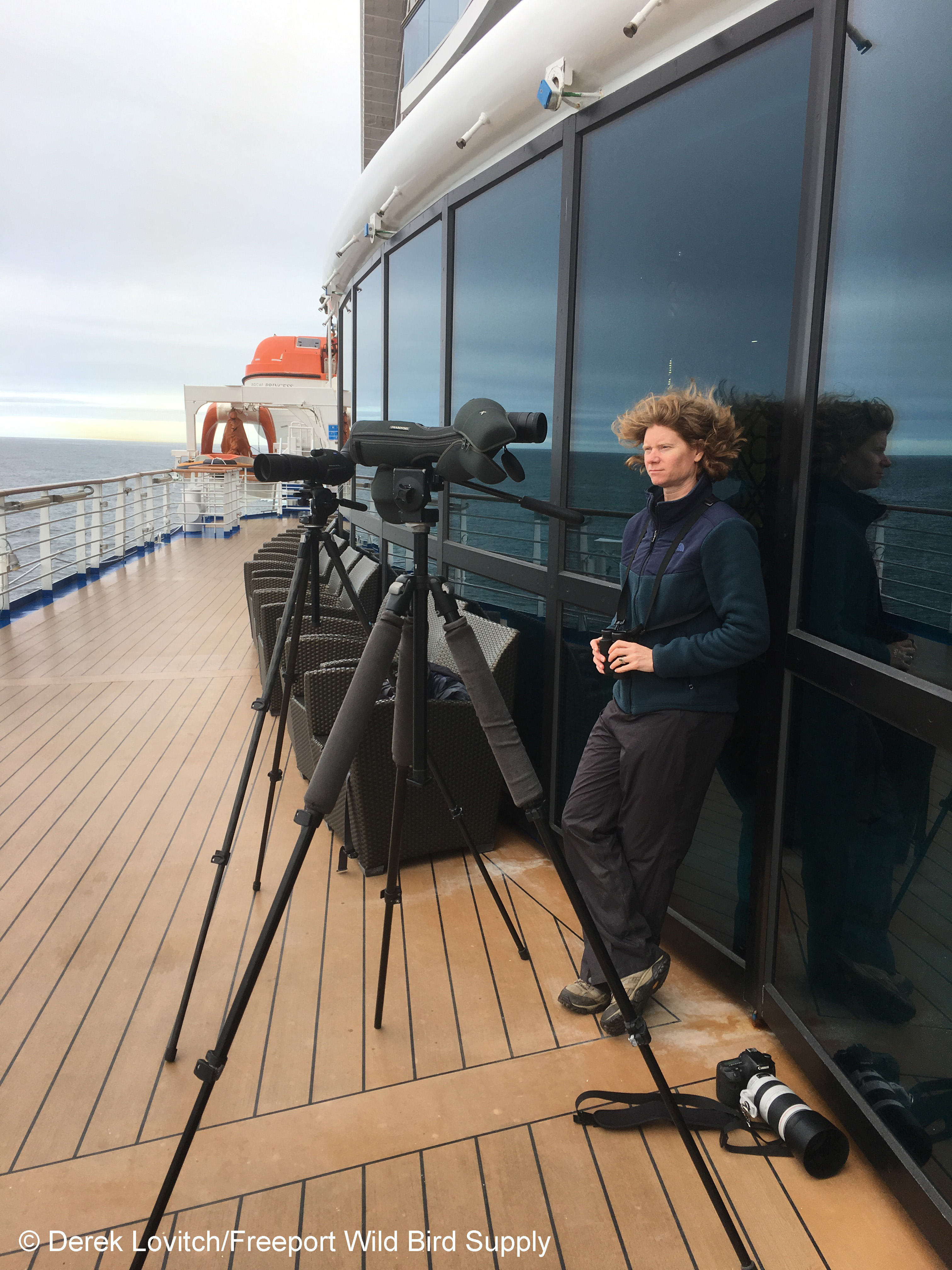
Cruise ships are big, stable platforms that allow for pelagic birding in comfort and with the use of spotting scopes!

In 2019, Jeannette and I took a cruise through the Gulf of Maine and northwestern Atlantic Ocean in the hopes of finding Great Skuas in particular. It was wildly successful, and if we could repeat this success, perhaps there would be a cruise-ship-based tour to offer. At least it would be more comfortable than last week’s attempt!

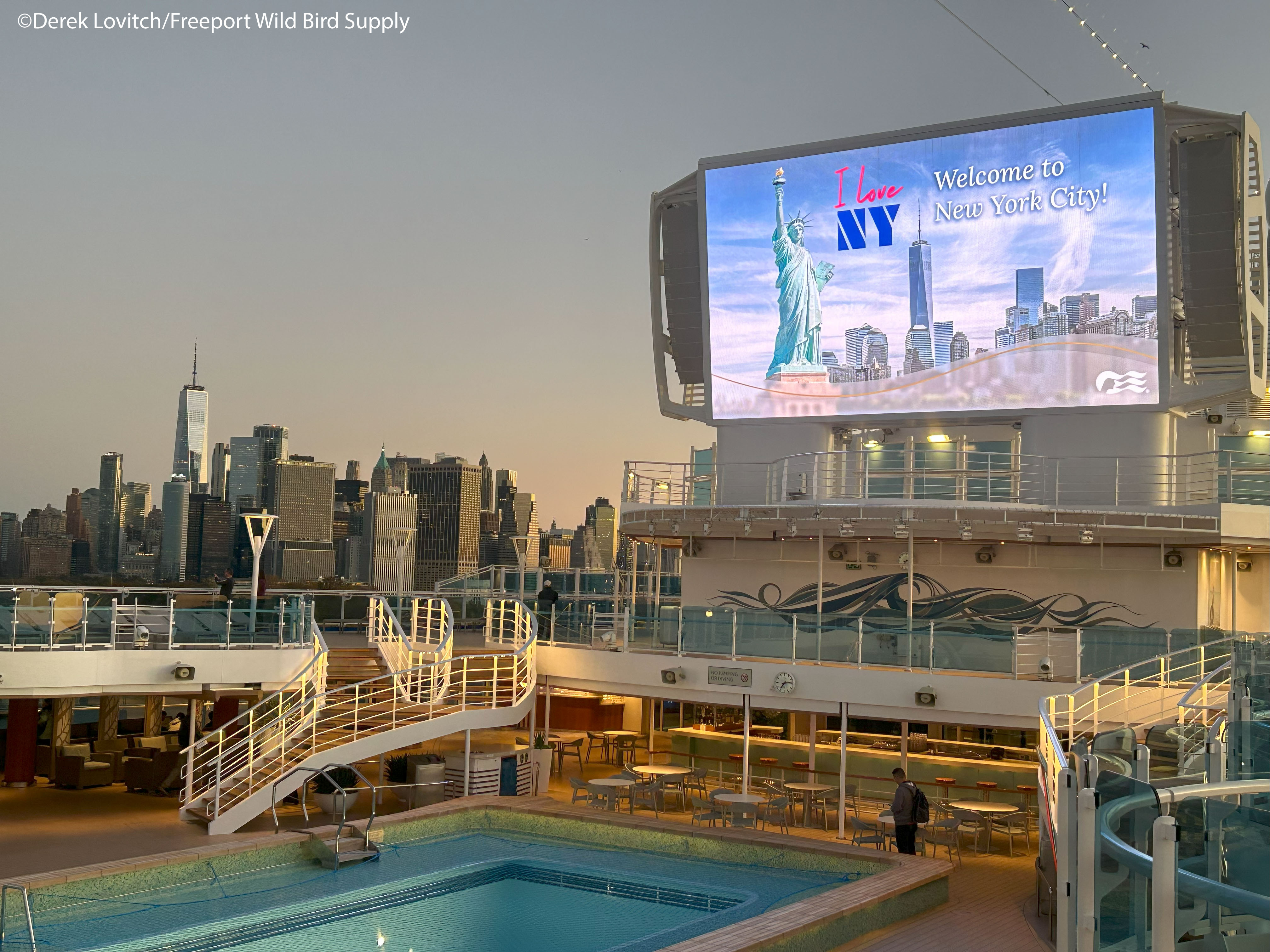
Therefore, on the evening of 10/26, Jeannette and I boarded Princess Cruises’s Enchanted Princess out of Brooklyn, New York. Our hope was to replicate the success of our 2019 trip. We were planning on a second scouting trip in the fall of 2020, but then COVID.

After finally feeling ready to consider a cruise again, we found the itinerary had changed, and we would need to spend seven days to get two full days offshore..we even needed to come back home first! But alas, we had pandemic-era credit that was going to expire, so off we went. Is this a reliable way to see Great Skuas in North America? Could I document a Barolo’s Shearwater this time?

We started our birding, however, at Brooklyn’s Greenwood Cemetery, home of this massive Monk Parakeet colony.

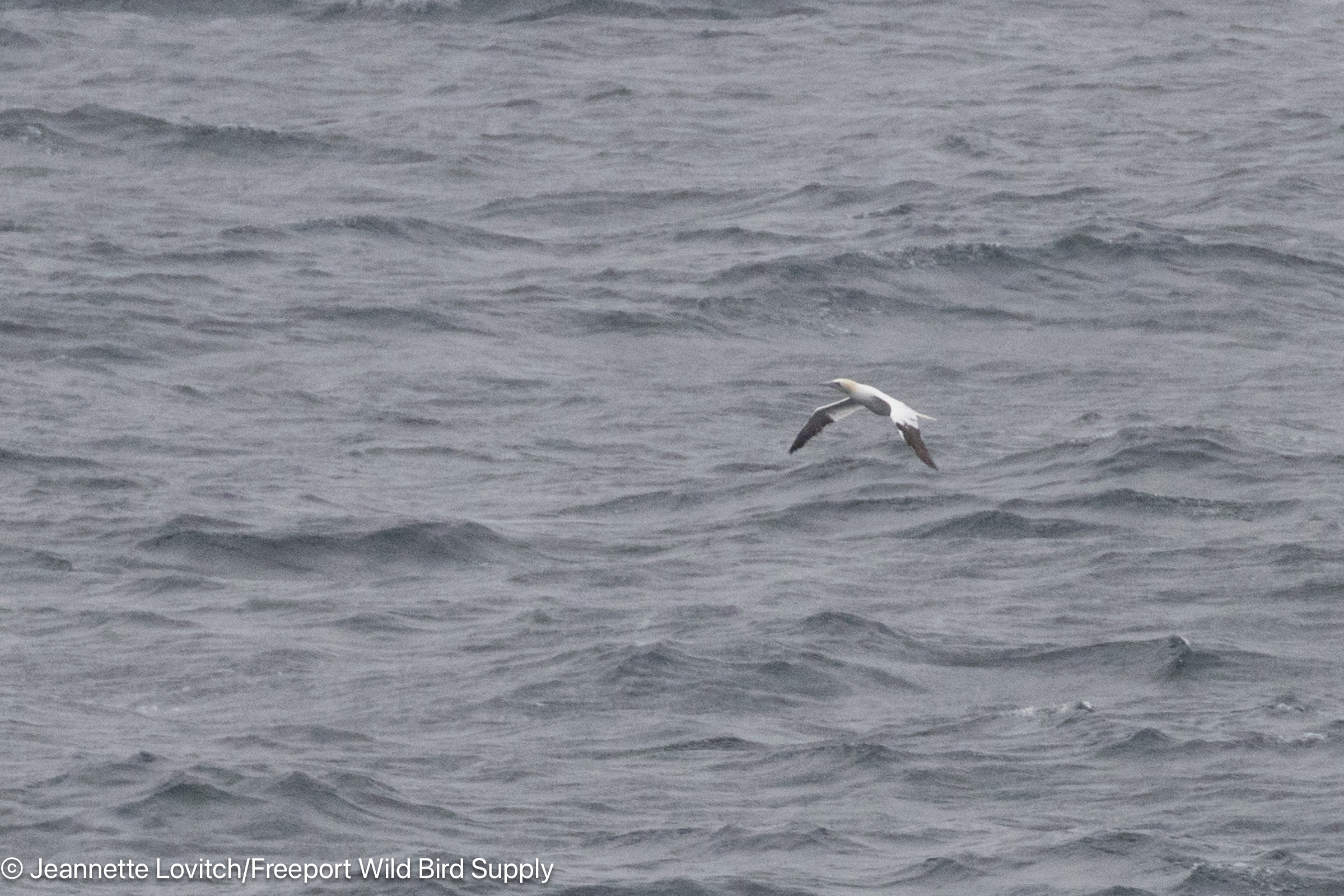
We departed New York Harbor with about an hour of usable daylight, picking up a single Cory’s Shearwater and plenty of Northern Gannets.

Screenshot

Arriving off Newport before dawn the next morning, we got the first shuttle to town, where our friends Bill and Jess picked us up for a lovely day of birding (Clay-colored Sparrow, Orange-crowned Warbler, late Nashville Warbler) before returning to the boat. About 45 minutes of deck time produced 8 Cory’s and a single Great Shearwater.

Newport arrivals.
“Western” Palm Warbler at Sachuest NWR.

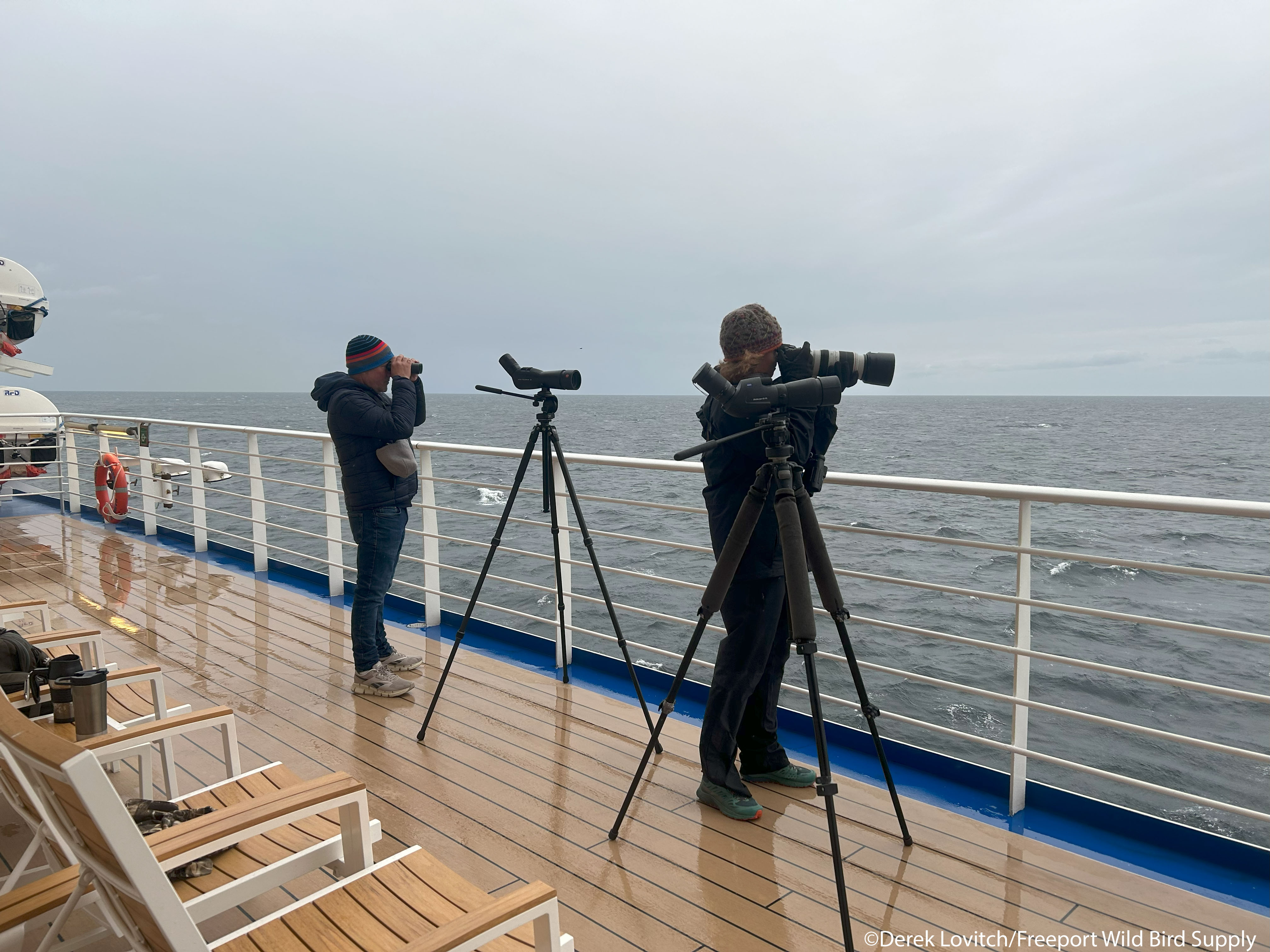
Unfortunately, this particular boat offered less-than-ideal viewing opportunities compared to our first trip, with the best deck space on Deck 7 (a great height) but way too aft. Even with our scopes on the steady platform, this was going to be a challenge.

Approaching Boston on the morning of 10/28, we checked the decks for passerines (none) before taking our place on Deck 7. There were a lot of Northern Gannets, 4-5 Cory’s Shearwaters close enough to identify as borealis, and a pod of Atlantic White-sided Dolphins. A Song Sparrow flew aboard just outside the outer harbor islands, but before that, our first real surprise of the trip: an American Woodcock appearing from the north and cruising alongside the length of the boat before disappearing. That’s not a “pelagic” we expected!

We birded Boston’s Greenway a bit, but returned to the boat well after dark. Sailing slowly overnight, we returned to Portland (the original itinerary had us visiting Bar Harbor), where a long, thorough check of the Eastern Promenade yielded two Orange-crowned Warblers and a very late Red-eyed Vireo.

Darkness reached us a tantalizingly-short distance to Cash’s Ledge, so we retired to rest up for the big day at sea tomorrow (finally!). 
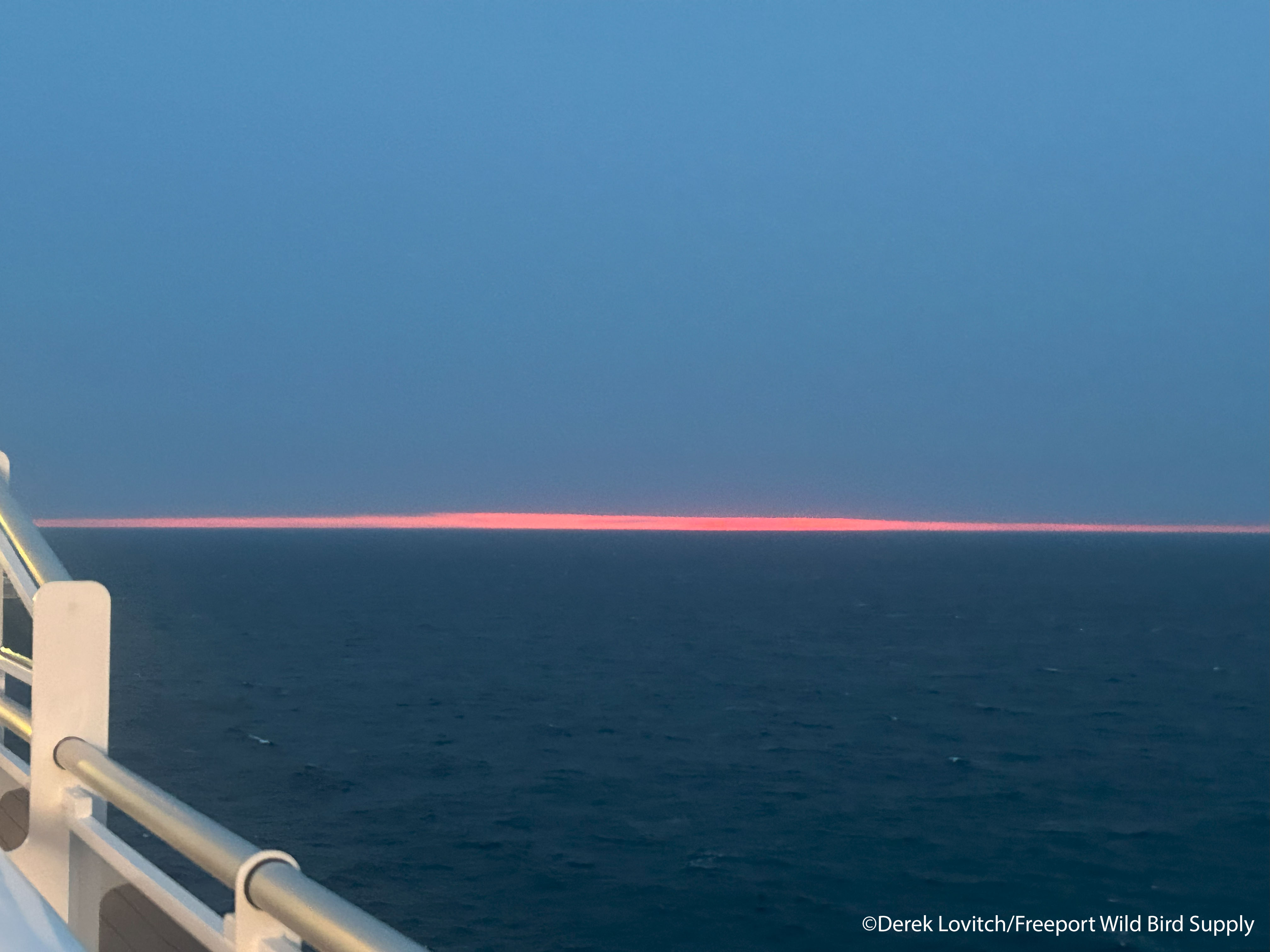
Waking up in Maine waters about 16.5 nautical miles southeast of Mt Desert Rock, I stepped outside well before first light at 6:05am. I immediately texted Noam, the other birder on board that we rapidly had become friends with, and I hustled Jeannette outside. With some drizzle arriving ahead of approaching light rain, we had ourselves a fallout!
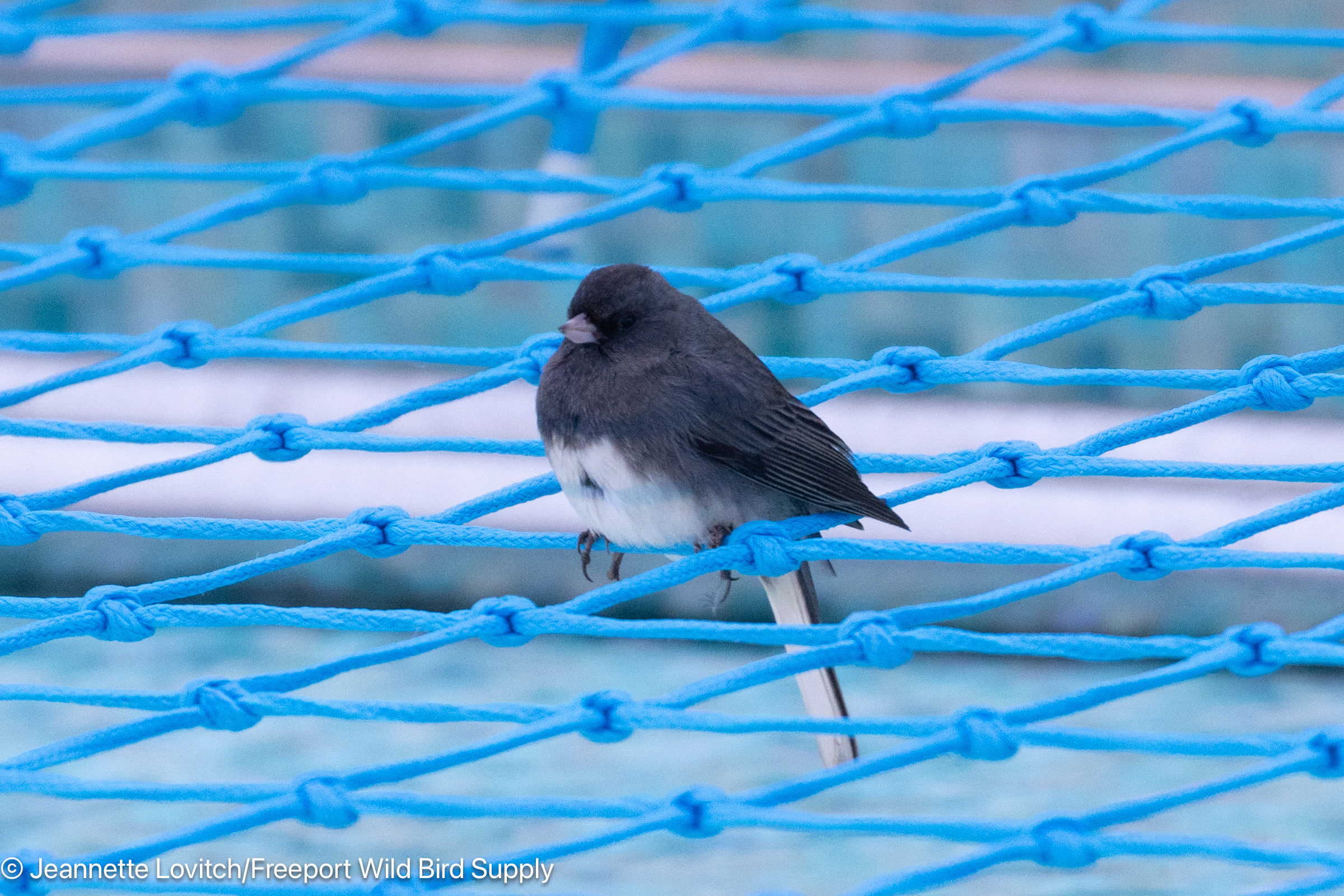
Unexpected considering there were little to no birds on the Maine radars overnight, and with a south wind through most of the night, I was surprised to immediately hear the flight calls of several Yellow-rumped Warblers. Sparrows were scattered about on the open decks. Noam and I had to usher a Rusty Blackbird out of a foyer, while Jeannette had to steer a Dark-eyed Junco down a hallway.
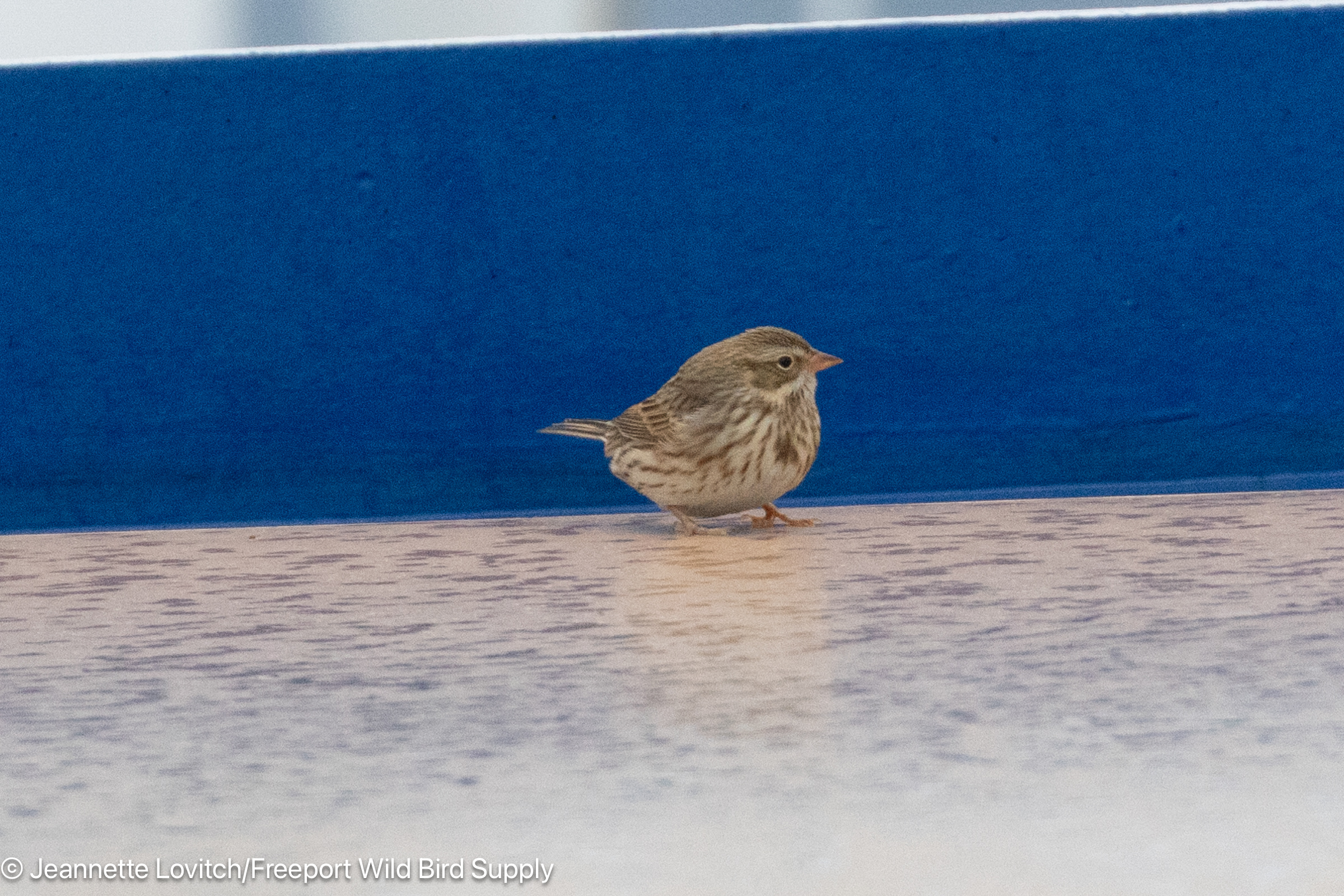
“Ipswich” Savannah Sparrow – that was an unexpected migrant, but makes sense considering we were southwest of Sable Island!

Clearly disoriented by the obnoxiously superfluous lighting of the ship, dozens of birds were around…often being flushed by now-awakening crew and passengers. Luckily, few birds seemed to be in dire straits – only one Yellow-rumped Warbler looked to me to be thoroughly exhausted, thankfully. In fact, most birds were leaving the boat as the sun rose and they were able to reorient themselves. While some birds seemed to arrive in the 15 or so minutes after sunrise, just about all passerines had departed the boat by 7:30 or so.

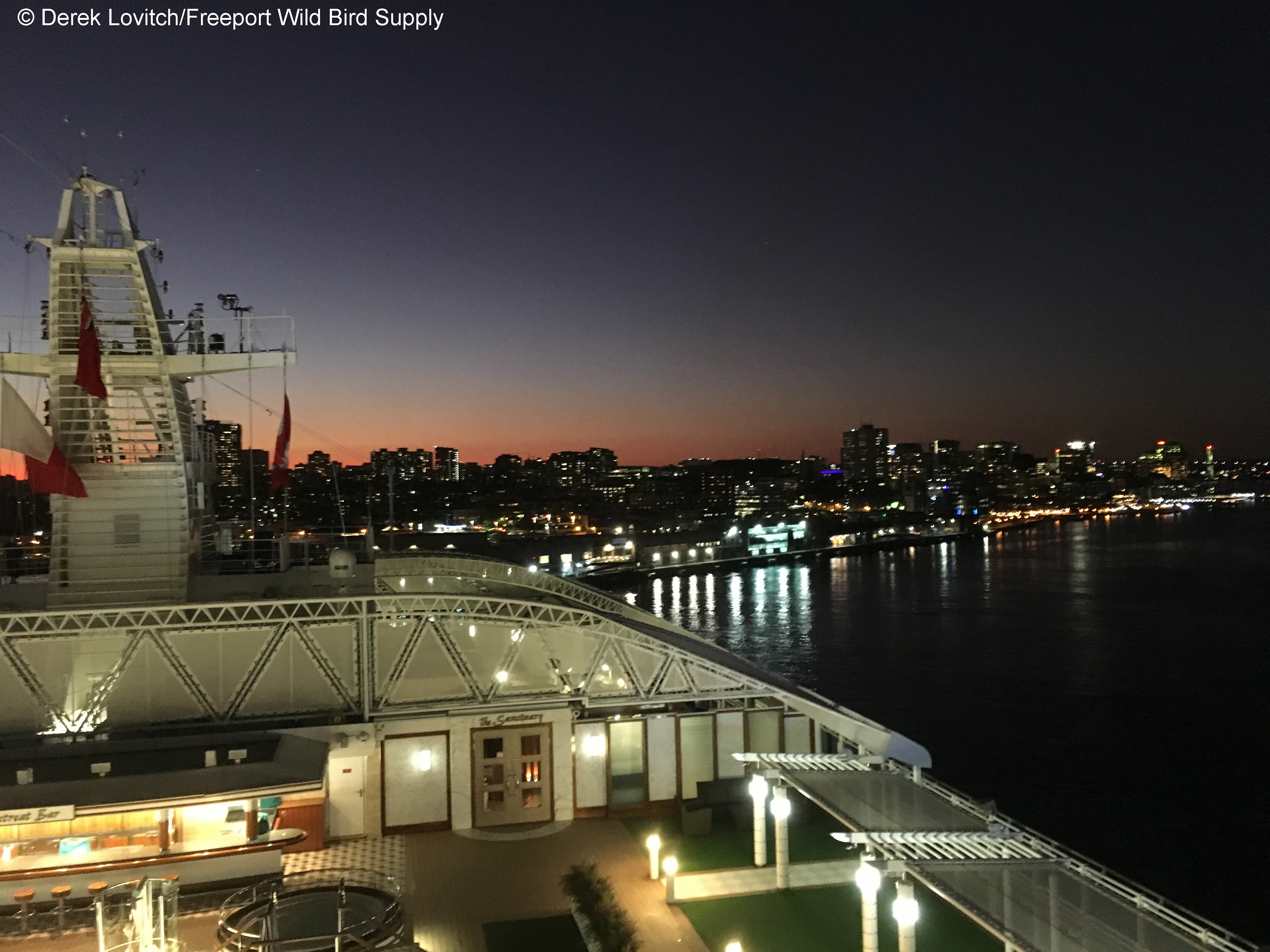
This photo, taken from off Eastern Point in Gloucester, MA the night before shows just how bright these ships are, and how disorienting they can be to birds.

With birds circling the boat before dawn, calling continuously, and others hiding in corners before being flushed to another corner, it was tough to count, but I estimated and counted a bare minimum of 8 Yellow-rumped Warblers, 8 American Robins (mostly overhead), 7 European Starlings (surprisingly), 6+ Dark-eyed Juncos, 2 Purple Finches, 2 fly-over American Pipits, 2 Savannah Sparrows, and one each of Palm Warbler, Snow Bunting, White-throated Sparrow, Cedar Waxwing, and Rusty Blackbird. Additionally, Noam photographed a Pine Warbler.

The three of us were in place on Deck 7 by 7:30, but the passerine show continued. A flock of 12 Red-winged Blackbirds flew by, while a flock of 14 American Robins joined by two more red-wings flew alongside the boat for several miles later in the morning before overtaking us and heading back to Nova Scotia.

Throughout the day, other passerines appeared and disappeared, some of which could easily have been sheltering out of sight somewhere inaccessible on the boat. These included a few more robins, 3+ Yellow-rumped Warblers, 2 Dark-eyed Juncos, and one each of Palm Warbler, Song Sparrow, Cedar Waxwing, Snow Bunting, American Pipit, and Lapland Longspur.

American Pipit
Harlequin Duck (L) with Black Scoters

But this was a seabird trip, and so we remained vigilant over the water. While we only had a few minutes in Maine waters once we began our vigil, the rest of the day was productive overall, although the afternoon was quite slow. As we passed the southern tip of Nova Scotia (we even spotted Seal Island Light that we were lucky enough to visit with a group of birders about 20 years ago), we finally called it quits at 5:45 pm when cloud cover accelerated the falling of darkness.
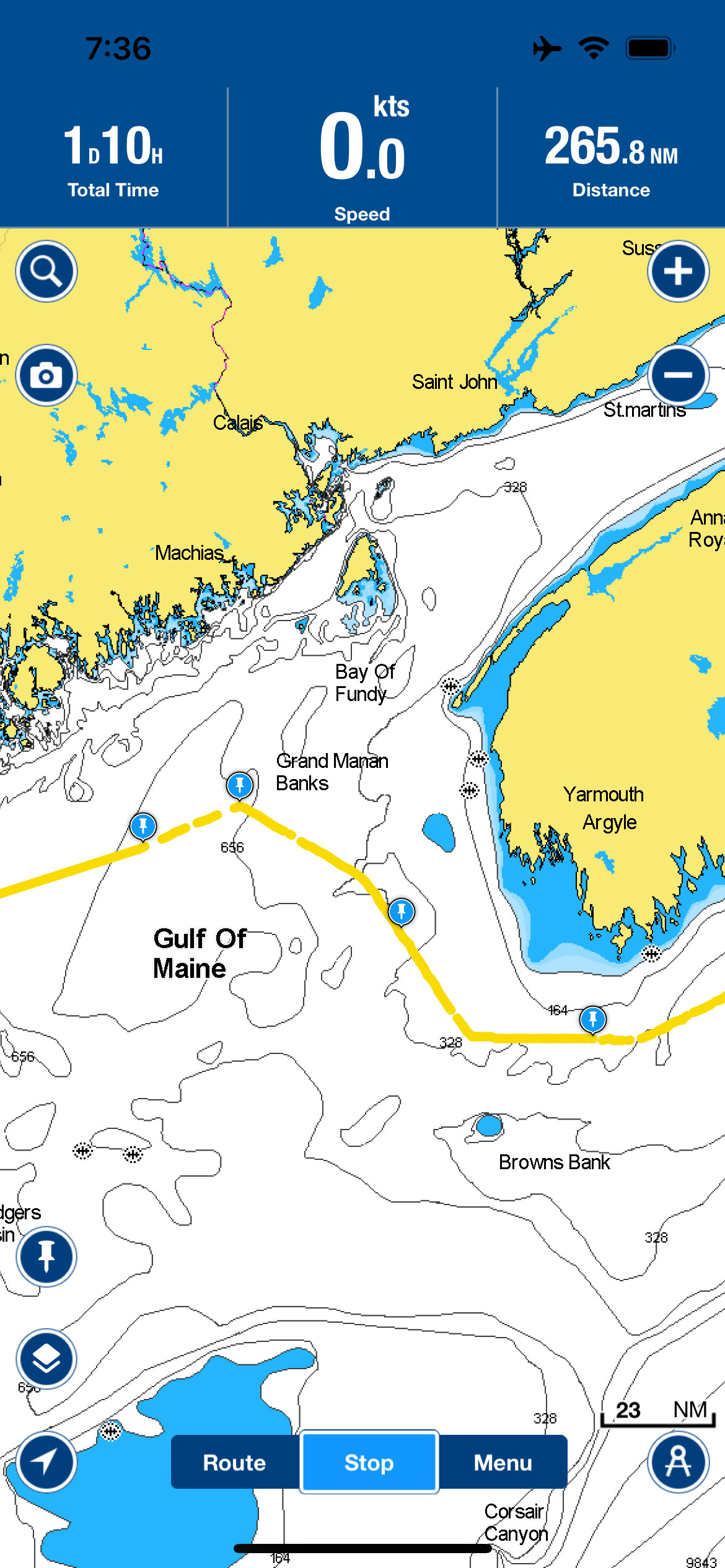
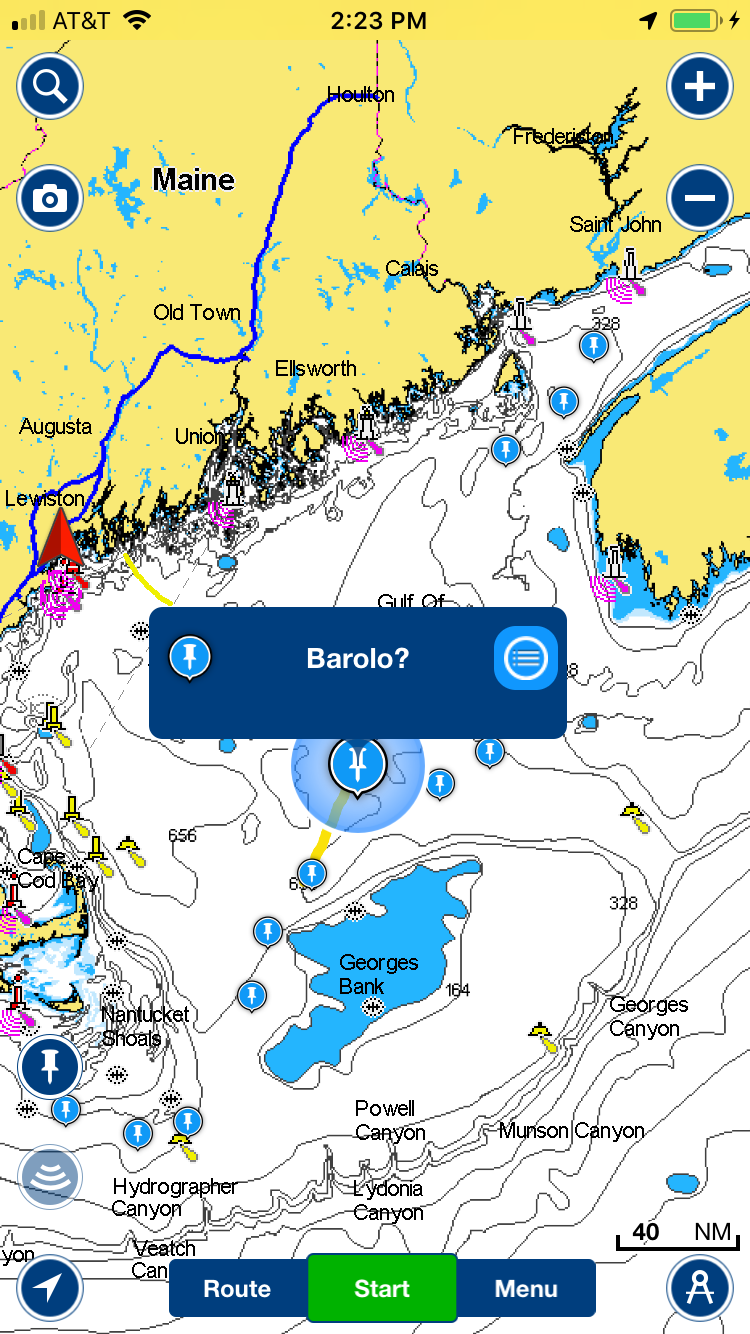
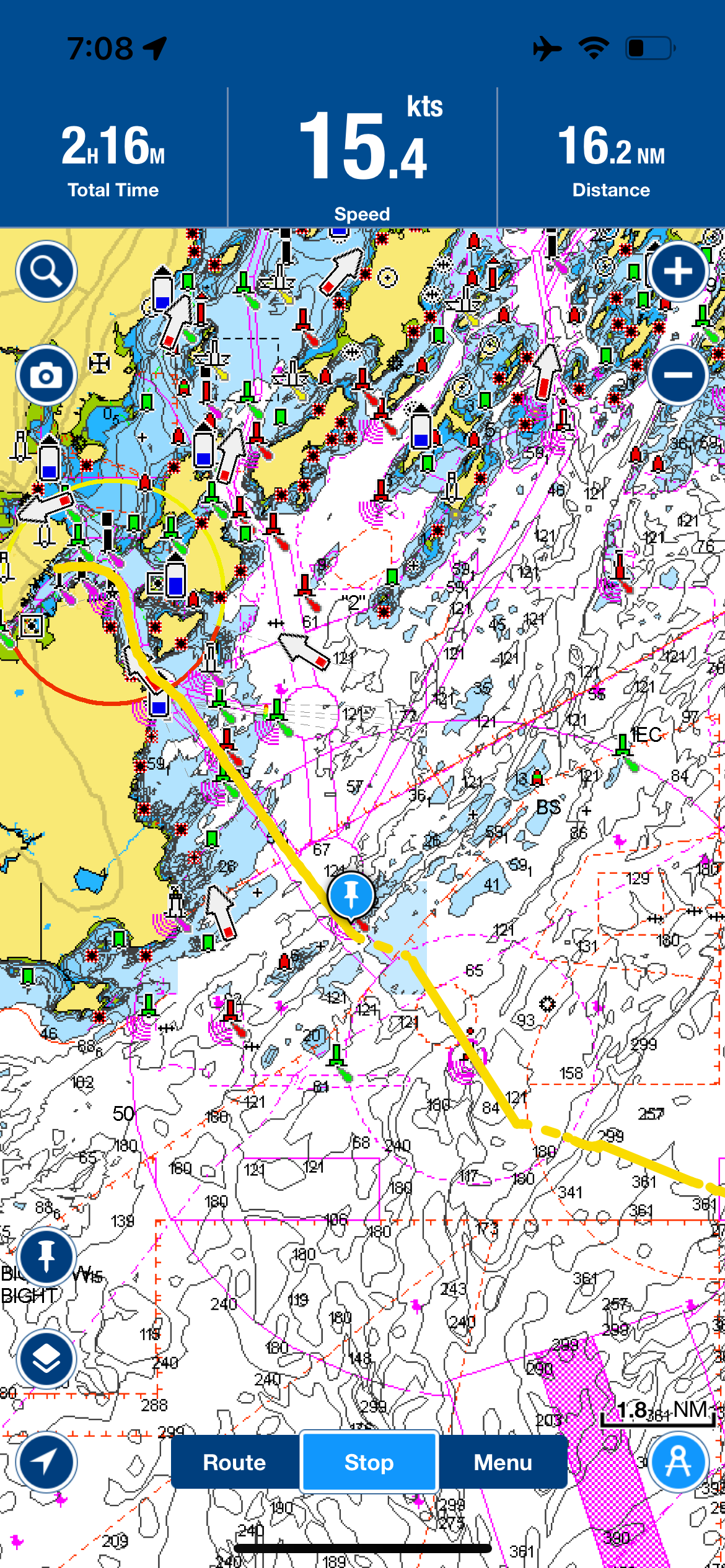
Here’s our route (left pin to right pin) for the day, thanks to the Navionics Boating app by Garmin.

From start to finish, our respectable – albeit not breathtaking – seabird tallies included oodles of Northern Gannets (including a steady southbound trickle almost all morning), and occasional southbound flocks of all three scoters and Common Eiders. Specific counts included:

  • 47 Black-legged Kittiwakes
  • 36 Razorbills
  • 13 Northern Fulmars
  • 10 Great Shearwaters
  • 6 DOVEKIES (one flock landing off to the side of the boat)
  • 3 ATLANTIC PUFFINS
  • 3 American Black Ducks
  • 3 unidentified large shearwaters
  • 2 Harlequin Ducks
  • 1 Greater Scaup
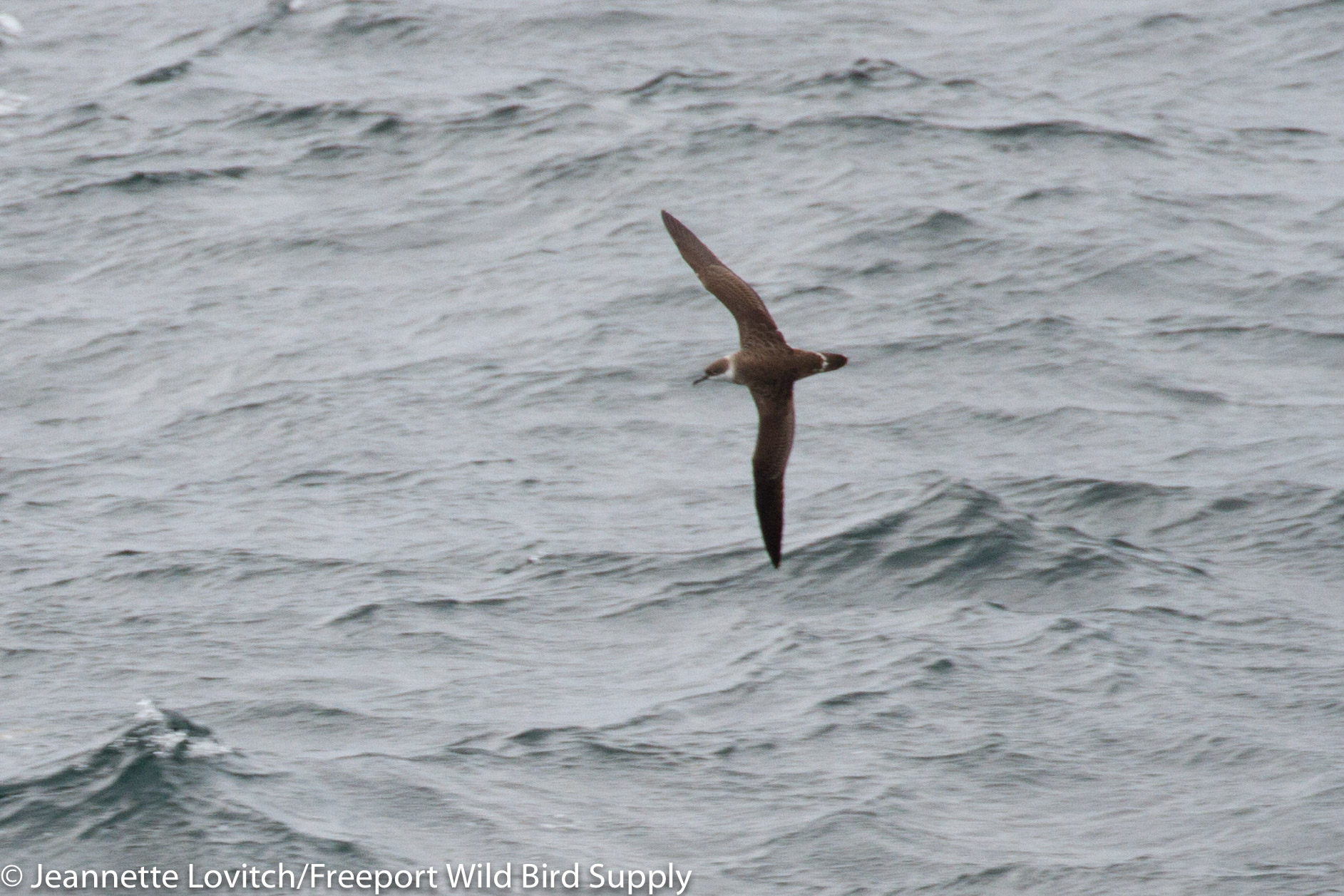
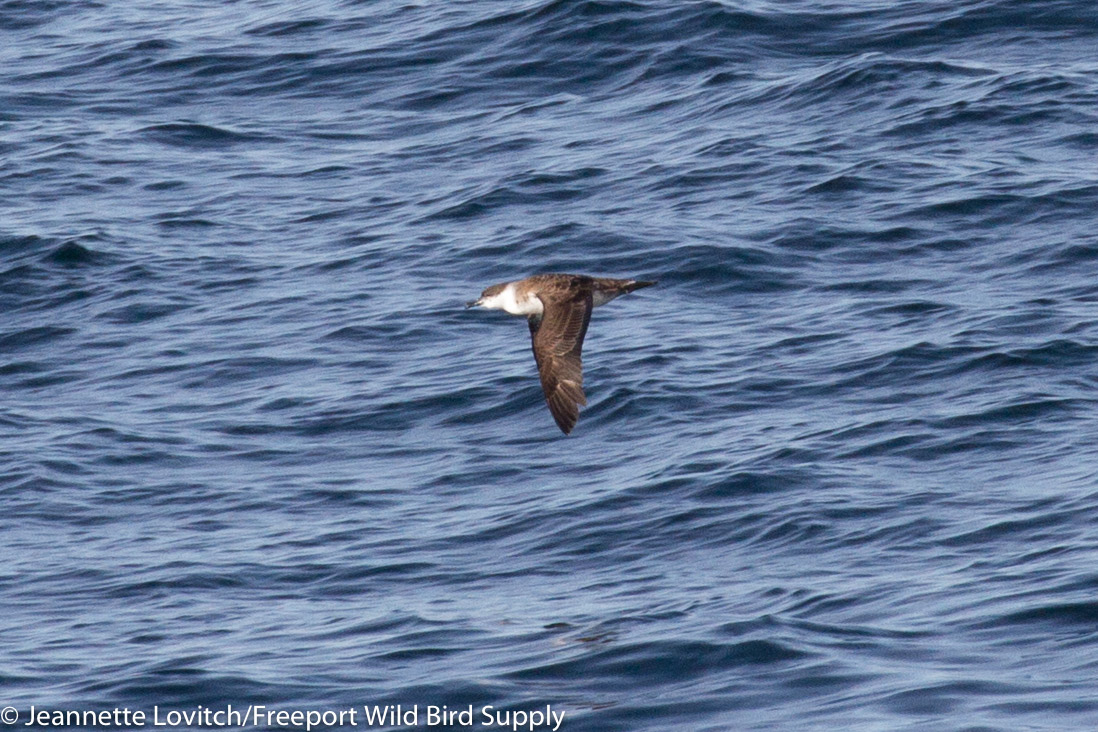
Great Shearwater

So all in all, not a bad day, but the passerines stole the show, and while Dovekie is one of the target birds of this trip, we didn’t see a skua…or even a jaeger, surprisingly.

The next day we awoke well within Halifax Harbor, but a sunrise passerine check yielded two birds: a White-throated Sparrow, and of all things, a rare Dickcissel!

Local friends Eric and Anne once again rescued us for a day of casual birding and good conversation, but the ship departed after dark; just more time to rest for our second full day at sea!

Halifax Public Garden
Northern Flicker

The morning of 11/1 found us between Downeast Maine and the northern corner of Georges Bank. The rest of the day would be in the same waters of our great success on our trip five years ago. After a passerine check which didn’t turn up anything (which meant nothing was disoriented by the ship overnight or desperate for a place to land come dawn, so this is never a bad thing), it was time to get to work in our usual spot.

Unfortunately, strong southwesterly winds and growing seas, with haze and light fog in the distance, made birding challenging. We worked hard though, but it was slow. We did have some excitement from two Dovekies that landed fairly close to the boat, and two Manx Shearwaters that, thanks to the lighting, I was absolutely sure were not Manx Shearwaters until we carefully reviews Noam’s photos later.

With glare and haze becoming problematic, we broke for an early lunch at 11:30, with the previous 4.5 hours of observation producing only the following, plus two Humpback Whales:

  • 12 Northern Gannets
  • 7 Great Shearwaters
  • 6 Red Phalaropes
  • 4 unidentified large shearwaters
  • 2 DOVEKIES
  • 2 Northern Fulmars
  • 2 Manx Shearwater (after review)
  • 2 Black-legged Kittiwakes
  • 2 Lesser Black-backed Gulls
  • 2 unidentified large alcids
  • 1 unidentified small black-and-white shearwater.

Unfortunately, with increasing wind (that we were heading straight into) and seas growing up to 7-10 feet (barely noticeable on a ship this big though, thankfully!), the lower deck was closed off for safety. Later, even the upper decks were closed off due to the very high winds, which were now blowing nearly 30mph out of the southwest.

Screenshot

Luckily for Jeannette and I, we had scored a forward-facing room, and although we were high up on Deck 17, we could see forward. Haze and the angled window were problematic, but we could see birds close to the ship, and we could relax, remove layers, and even crack open a beer. This is pelagic birding in style!

From 1pm to 5pm, when we finally called it a day, the afternoon cabin-watch netted:

  • 11 Great Shearwaters
  • 9 Northern Gannets
  • 5 Cory’s/Cory’s-type Shearwaters
  • 3 unidentified phalaropes
  • 2 Manx Shearwaters
Screenshot

And so our two days at seas concluded without a Great Skua, our primary target species for a future cruise..and perhaps a future tour. Alas, we’re only 1 for 2 in seeing skuas from the boat, and we would need a different class of ship (and, a shorter itinerary with more time at sea and less time in multiple ports) if we were to do this again. We’ll be keeping an eye out from other companies and other Princess ships to see if there’s a more skua-tactic itinerary in the future, but until then, our northeast Atlantic cruisin’ days may have come to a close.

Arriving in New York harbor before dawn, our last sunrise deck check yielded a single Dark-eyed Junco, Yellow-rumped Warbler, and White-throated Sparrow, bringing our more-productive passerine birding cruise to a close.
Recent Highlights, 9/3 – 9/10/24

Although not in Maine, this spiffy adult Sabine’s Gull was the icing on the cake of an incredible day in Head Harbor Passage, New Brunswick on 9/4 (with Beth Edmonds, Dan Nickerson, Jeannette, and friends). An impressive concentration of gulls was led by 5,000-8,000 Bonaparte’s Gulls, 5,000 Herring and Great Black-backed Gulls, and also including 20+ Lesser Black-backed Gulls and 20-30 Laughing Gulls (also Ring-billeds and Black-legged Kittiwakes). It was the best concentrations of birds we have experienced here in several years.

With our annual early fall weekend with friends to Washington County, a productive eight days of birding included the following observations of note: 

  • Sandy Point Morning Flight, 9/3: 355 total migrants led by 105 Northern Parulas and 88 Cedar Waxwings, and also including a single BLUE-GRAY GNATCATCHER (Only my 4th morning flight record). Complete tally here.
  • 4 Red-breasted Mergansers, Lubec Bar and Flats, 9/5 (with Beth Edmonds, Dan Nickerson, Jeannette, and friends).
  • 1 adult Lesser Black-backed Gull, Roque Bluffs State Park, 9/6 (with Jeannette).
  • 1 juvenile YELLOW-CROWNED NIGHT-HERON, Jones Creek, Pine Point, Scarborough, 9/10 (with Jeannette).
  • Our Durham property continues to impress during migration. Another week with at least 15 species of warblers detected in the yard, and highlights including Philadelphia Vireo on several days and a Brown Thrasher at our feeders 9/8-9.

Based on the progressing season, and my upcoming schedule, this was the last week I focused on shorebirds. As always, my peak shorebird season culminates with our visit down east. There are plenty of shorebirds left to enjoy (and count), but my final shorebird “high counts” report of the season – including a goodly 20 species this week – is as follows:

  • AMERICAN OYSTERCATCHER: 4 (2 ad with 2 juv), Pine Point, Scarborough, 9/10 (with Jeannette).
  • Black-bellied Plover:  8, Pine Point, 9/10 (with Jeannette).
  • Killdeer: 14, Crystal Spring Farm, Brunswick, 9/8.
  • Semipalmated Plover: 71, Pine Point, 9/10 (with Jeannette).
  • Whimbrel: 3, Lubec Bar and Flats, 9/5 (with Beth Edmonds, Dan Nickerson, Jeannette, and friends).
  • Ruddy Turnstone: 1, Lubec Bar and Flats, 9/5 (with Beth Edmonds, Dan Nickerson, Jeannette, and friends).
  • RED KNOT: 1 juv, Lubec Bar and Flats, 9/5 (with Beth Edmonds, Dan Nickerson, Jeannette, and friends).
  • STILT SANDPIPER: 1 juvenile, Walsh Preserve, Freeport, 9/9.
  • Sanderling: 11, Carrying Place Cove, Lubec, 9/5 (with Jeannette).
  • DUNLIN: 1 juv, Lubec Bar and Flats, 9/5 (with Beth Edmonds, Dan Nickerson, Jeannette, and friends).
  • Least Sandpiper: 150+, Sanborn Cove, Machiasport, 9/3 (with Jeannette).
  • White-rumped Sandpiper: 10+, Sanborn Cove, 9/3 (with Jeannette).
  • Pectoral Sandpiper: 2, Walsh Preserve, 9/9.
  • Semipalmated Sandpiper: 3,000-4,000 (!), Machiasport, 9/3 (with Jeannette). Only 2,000 or so on 9/6 (with Jeannette).
  • WESTERN SANDPIPER: 1 juvenile, Pine Point, 9/10 (with Jeannette).
  • Short-billed Dowitcher: 15, Walsh Preserve, 9/9.
  • Spotted Sandpiper: 2, Pike Lands Preserve, Lubec, 9/5 (with Jeannette).
  • Lesser Yellowlegs: 41, Walsh Preserve, 9/9.
  • “Eastern” Willet: 2, Pine Point, 9/10 (with Jeannette).
  • Greater Yellowlegs: 6, Wharton Point, Brunswick, 9/8.

2024 Bicknell’s Thrush Weekend Tour Report.

Tour itineraries are meant to be broken. Or is that “rules.” Well, those too.

We have offered some kind of “Bicknell’s Thrush Wekeend” tour for almost 15 years now. There was a hiatus for COVID, and last year – perhaps due to the uncertainty with travel planning – we pulled the plug on our weekend for the first time as registrations were slow to come in.

Therefore, for 2024, it was time to try something new and head into Northern New Hampshire for a new plan of attack. Two chances at Bicknell’s Thrush over the course of two days, with this one enigmatic bird the sole focus (well, at least until we see it) – that part of it had not changed. Everything else was new this year.

We assembled at 9:00am on Saturday, June 29th in Errol, New Hampshire. The itinerary? Well, never mind.

Several folks arrived to see their guide staring up at the sky and immersed in deep thought (you could smell the wood burning). It wasn’t raining, and it looked like we had a nice window of fair weather. But it was already 9:00am, and by the time we got up the mountain…

…but the forecast for tonight. And tomorrow morning.

…but it can’t be worth it to try for one of, if not the, most elusive of North American breeding songbirds in the middle of the day.

…and it’s getting warm.

…and there’s rain building to our west. The winds are picking up higher up.

…but let’s go for it!

So up the mountain we went.  At least we would be trying. And that evening, with the risk of severe thunderstorms, we might not even have a chance to try. And the next morning didn’t look great.

But weather forecasts are fickle, especially up here in the mountains, so it’s hard to make plans. But it’s easy to look up and see what’s about to happen, or not. And when I looked up, my face didn’t get wet, so that’s the only forecast that’s dependable in these parts.

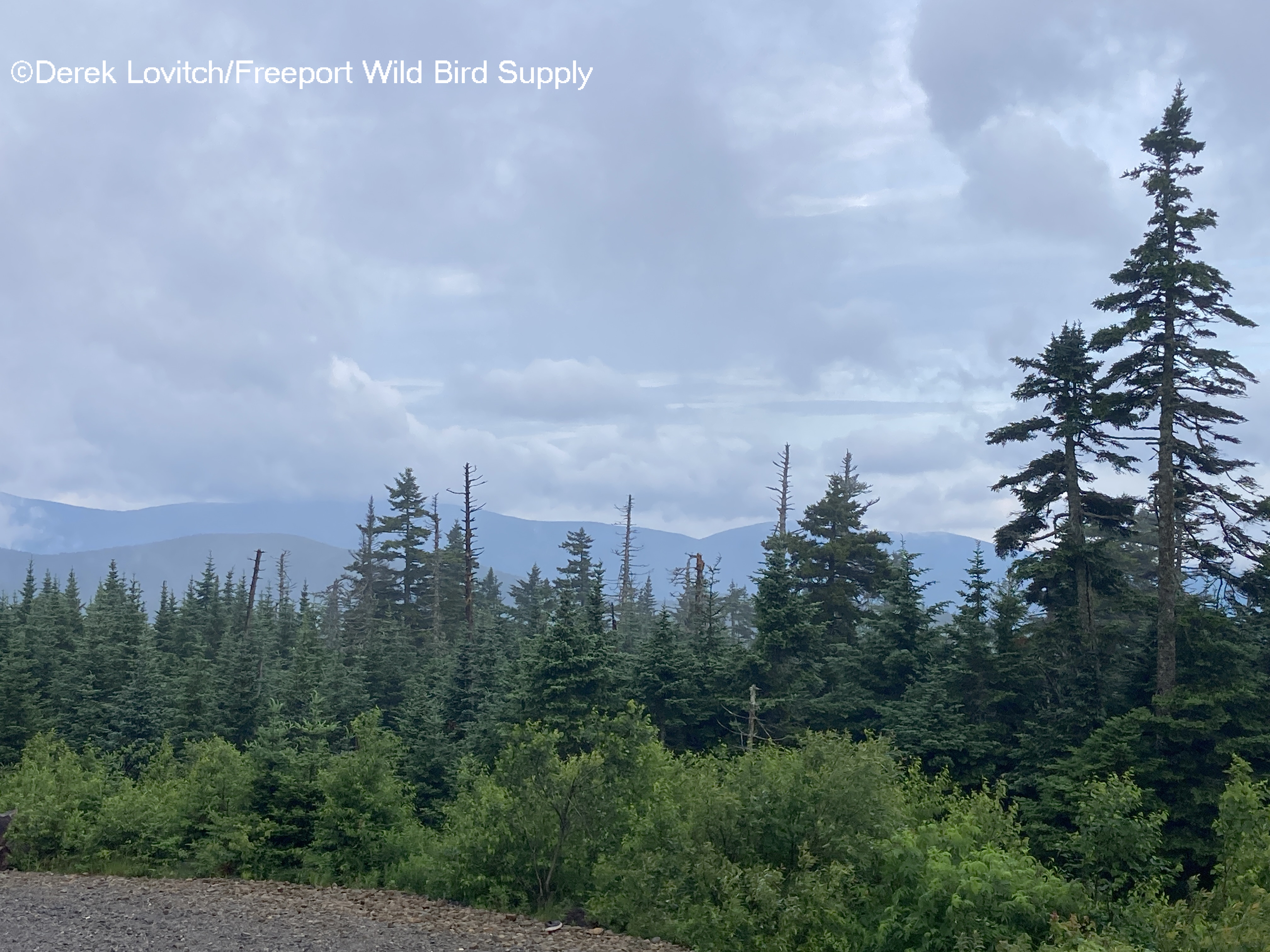
We raced up hill, arriving at about 3,000 feet and the realm of the Bicknell’s Thrush around 10:30, stopping for a Ruffed Grouse in the road escorting five chicks.

Southerly winds were increasing, blowing right up into and through our thrush territories. This was pointless. But hey, the rain was still across the valley. So we birded.

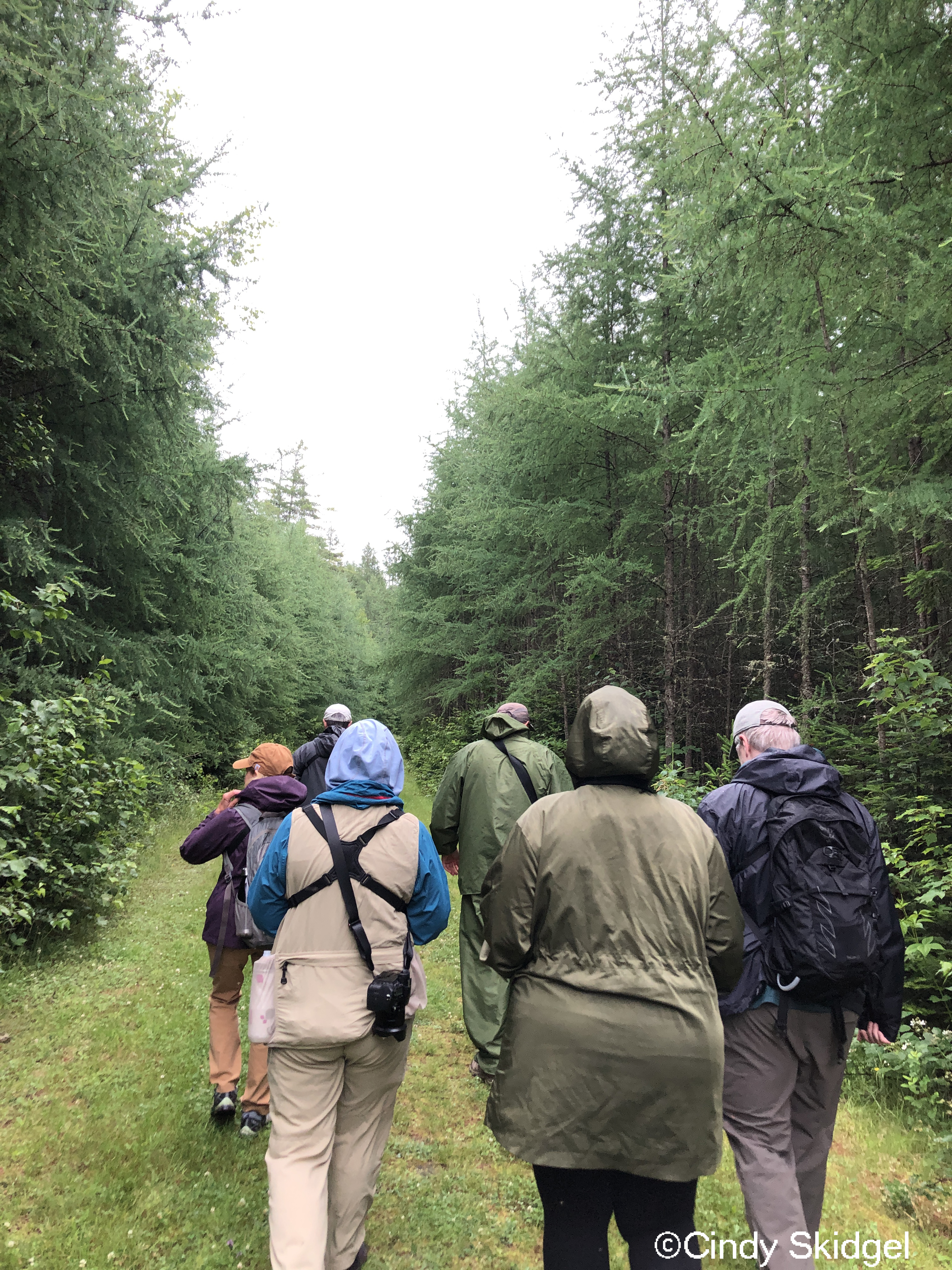
We heard the Fox Sparrow, spotted a couple of Blackpoll Warblers, and enjoyed the usual high-elevation species like Yellow-rumped Warblers and Dark-eyed Juncos.

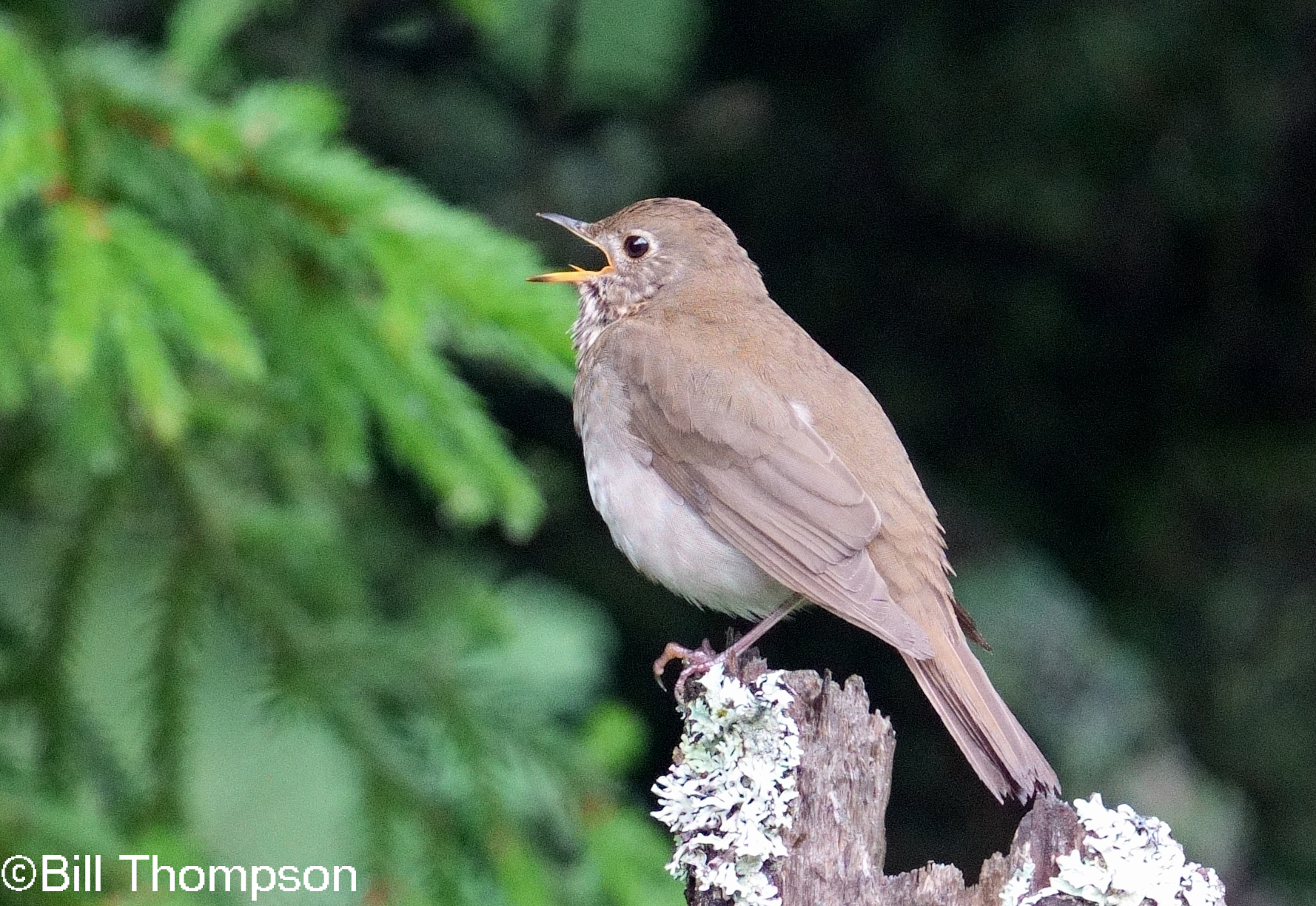
Then, at the surprisingly late (or extremely early) time of about 11:15am, a Bicknell’s Thrush began to call. Over the next 15-20 minutes, we were treated to two birds counter-singing, and at least 3 or 4 birds calling. One bird silently flew across a clearing, as well seen as a thrush in flight can get. The two dueling birds darted between trees and occasionally paused in view of one or two people before melting back into the trees.

There weren’t photography opportunities, but everyone was more than satisfied with the sum of their views. And it was a tremendous auditory performance. Overall, it was actually a pretty good show, and really demonstrated the behavior of this fascinating bird. And since this is more than just a tick and run” tour, the birds’ behavior was instructional and of keen interest.

And after all being satisfied, the rain arrived.

We enjoyed a leisurely and delicious lunch, and then set out for a little more birding. Making up for the change of plans in the morning, we took a walk and a drive through some boreal habitats, but rain was becoming steadier now. We heard and saw a few common birds, but it was just some good quality time in the afternoon woods, absorbing our phytoncides.  When the rain arrived in earnest, we called it quits and went to check in at our hotel.

The original plan was to have an afternoon break, early dinner, and then head up the mountain at dusk to take advantage of the evening activity of the thrush. Instead, we had a relaxing dinner, many of us enjoyed a beer or glass of wine, and we just chatted. Good conversation was enjoyed by all, and the rain kept falling.

At one point, the rain let up and I began to ponder a run up the mountain. Just in case the thought became serious, a downpour arrived. Dessert was ordered.

We were back in our hotel rooms at about the time I had planned to be on the mountaintop, so I didn’t know what to do with myself! I think I was stressed about having nothing to stress about. When a tour is solely dedicated to one species, a trip is a failure without that one species. But we already had our quarry, and if it was raining in the morning, oh well. And if it wasn’t, we would just go enjoy the bird some more. I think I had the longest and best night of sleep I can recall while leading a Bicknell’s Thrush weekend!

Well, it wasn’t that long. A “civilized” 5:30am departure from the hotel (thanks to our success the day before) found us free of the rain that was forecast, and there were even a few breaks of sun. It was rather breezy atop the mountain, and in almost two hours, we only had a couple of calls from Bicknell’s Thrushes. A simple continental breakfast was served from the back of my Subaru.

However, we had a Canada Jay (likely the last youngster in a family group that passed just downhill from us) in plain view,  and spent some quality time with the local breeders like Blackpoll Warbler. Then, much to my disbelief, the second-most wanted bird on the tour (according to an unofficial survey), began to call very close to us. Could it be? I had to be mistaken. But not much else sounds like a Black-backed Woodpecker!

Then, with jaws dropping to the ground, it proceeded to fly overhead of us, heading up the mountain where it called a few more times. That was not something I was expecting – not just the species, but such a great look at it in flight (I can only recall one other time that I had seen one overhead) and far removed from the deep and dark bogs most of the local birds prefer.

Between yesterday’s thrush luck and today’s woodpecker fortune, not to mention another mountaintop visit devoid of the forecast rainfall, we were just ecstatic.

And then this happened…

You get a photo, and you get a photo, and you get a photo!

Wow. Just wow.

And it was on a snag that I had just declared, “if this bird comes out, it’s going to perch here.” Most people thought I was joking.

The thrush didn’t.  Now, I wish I could always control birds like this, but especially with this species, I have really come to know them and their behavior. To me, it did look perfect for one to sit on. But no, I did not expect it to be sitting on it, singing up a storm, about 30 seconds later. It truly is better to be lucky than good.

And it sat there for long enough to take your camera down, adjust your settings, and return to firing away. It was even there long enough for your dumbfounded guide to remember he had his camera with him for a change. My panicked photos did not do the bird justice, so I will let everyone else’s speak for themselves.

There wasn’t much left to do up here, so we began our trek downhill.

A Mourning Warbler cooperated nicely.

Then, returning to our cars a (the?) family group of Canada Jays returned and came to check us out. Kathy’s granola bar was clutch here as two adults had a snack, with 2-3 dusky juveniles looking on, learning the ways of the Camp Robber.

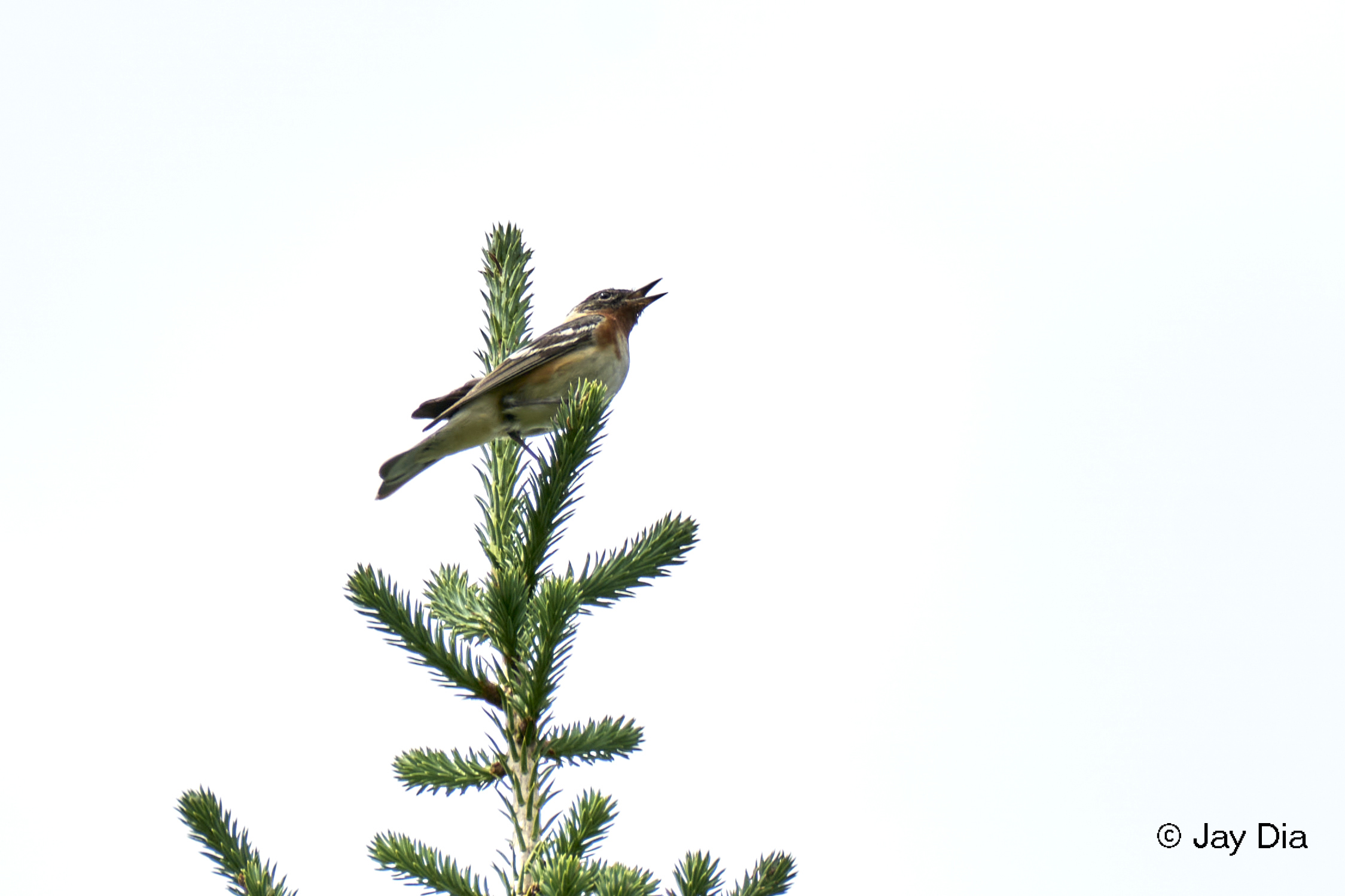
And then Kathy exclaimed “there’s a Bay-breasted!” and we all looked up to see a stunning male singing from a roadside fir right over our heads.

We heard or saw at least another 5 Mourning Warblers on the way down, glimpsed a busy Lincoln’s Sparrow (a Sharp-shinned Hawk passed overhead precluded a better observation, however), and took some time to enjoy and identify butterflies – even skippers (OK, only Bill actually identified said skippers) – and plants.

White Admiral

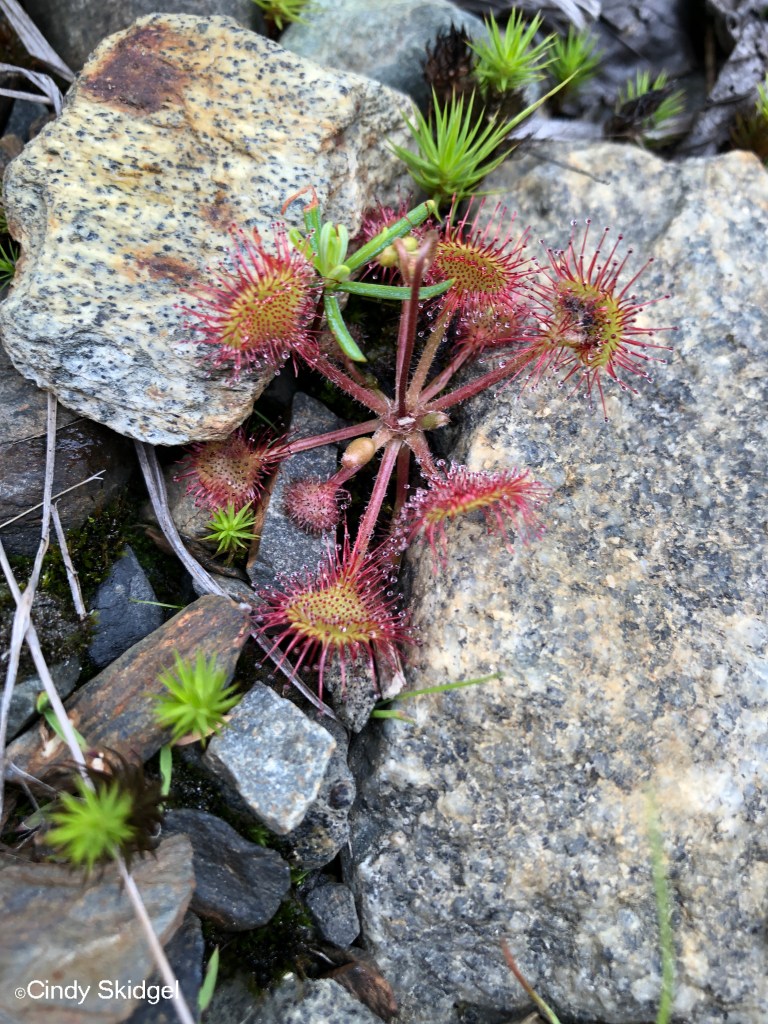
Round-leafed Sundew.

But as the winds began to gust, more rain was approaching, and ATVers were becoming overwhelming, we left the mountain and headed to Colebrook for a relaxed, celebratory luncheon as the rain began to fall and before we headed our separate ways.

As for this new Bicknell’s Thrush Weekend itinerary (with and without necessary audibles), well, I think you can assume we’ll see you here again next year!

New Brunswick – PEI Roadtrip Bird Photo Journal, 8/2022.

Jeannette and I enjoyed a summer roadtrip to the Atlantic Provinces of New Brunswick and Prince Edward Island from August 15th through 23rd. Shorebirds were our birding focus, because August, but our expectations were far surpassed! Here are a few photo highlights from the journey.

We began our roadtrip in Bangor, where we could not resist some quality time with an unusually-confiding family group of Least Bitterns that has been hanging out in Essex Marsh.
We then drove straight to Johnson’s Mills, New Brunswick, near the head of the Bay of Fundy.
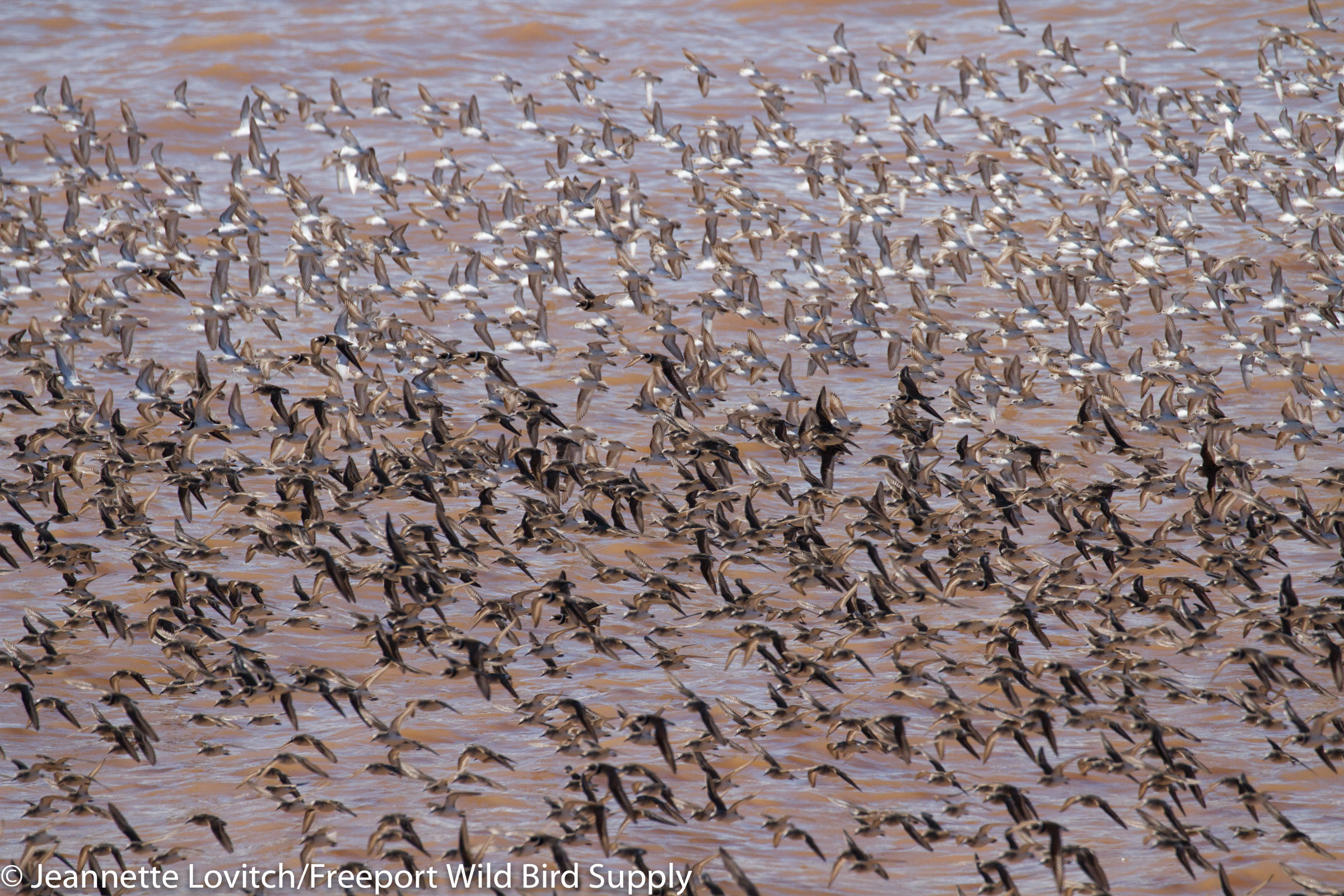
Here, at and nearby the Shorebird Interpretive Center, nearly half of the world’s population of Semipalmated Sandpipers passes through. After a day count of 100,000 a couple of days before we arrived, we had to settle for a tally of about 60,000. It was awesome (in the literal sense of the word).
I wrote about this special place and how everyone needs to visit in a blog back in 2017 that can be read here.
Staying in the delightful town of Sackville, we made multiple visits to the downtown Waterfowl Park. Copious amounts of dabbling ducks breed and stage here.
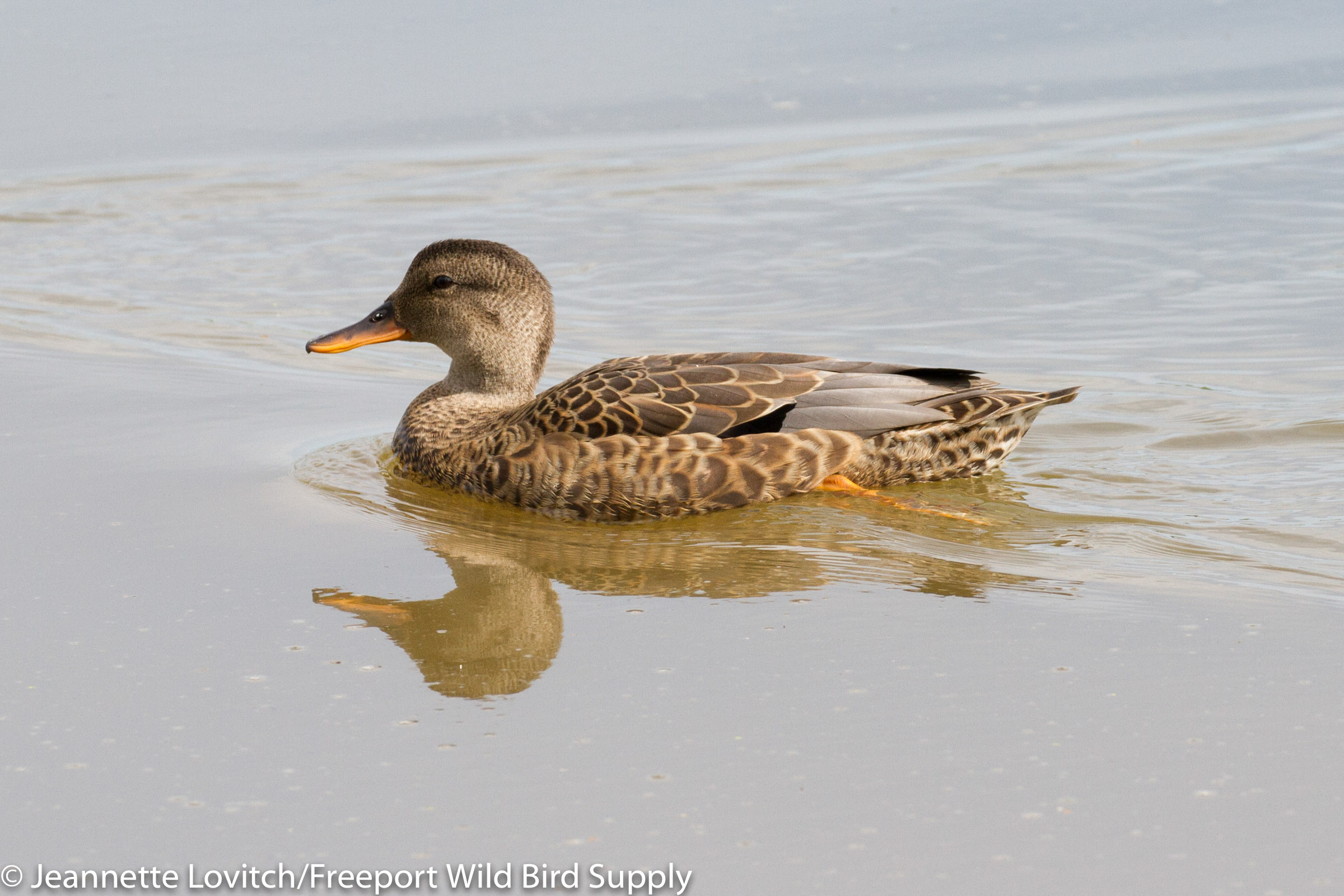
. Here are a couple of Gadwall.
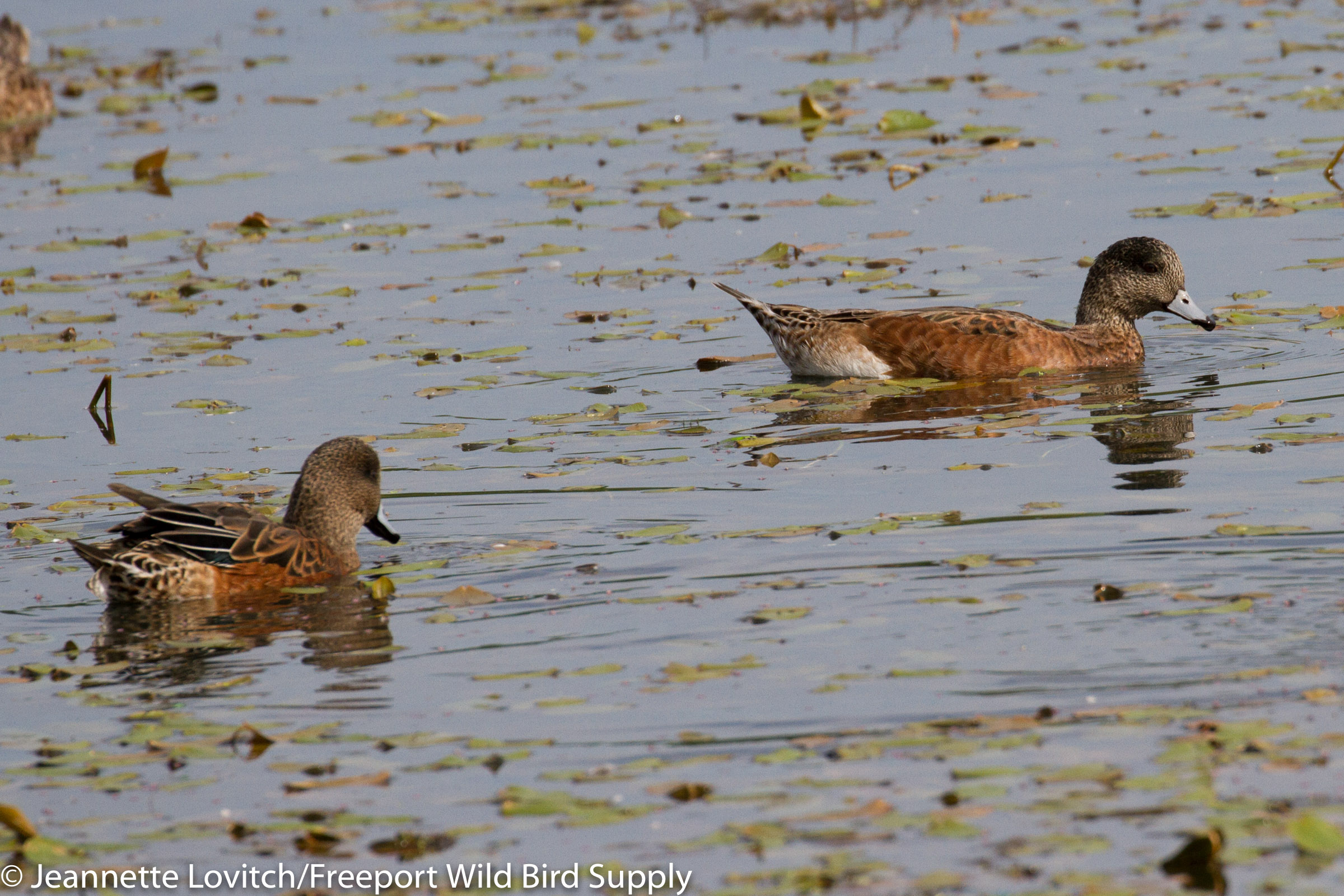
Good numbers of American Wigeon are also present.
But of course you’re really here at this time of year for the shorebirds, so on the next day, we were right back to Johnson’s Mills for the incoming tide.
. Here’s a Semipalmated Sandpiper pool party.
So. Many. Shorebirds.

It’s hard for still photos to do the scene true justice however, so we posted a few videos to our store’s Facebook Page. They can be viewed here.

As per tradition in this blog, a photo of our meal of the trip! This was our “lifer” Kurdish food from Fener’s Place in Sackville. Since we have not had this cuisine before, it notched out the win from several great meals in Charlottetown and elsewhere throughout the tour.
Then it was off to Prince Edward Island, our primary destination of the trip. Our first stop was Brackley Marsh, but rain caught up with us and it was absolutely pouring. Birding was not easy, although we found two good birds: Long-billed Dowitcher and “Western” Willet.
However, it took us until the next morning to find what we were looking for
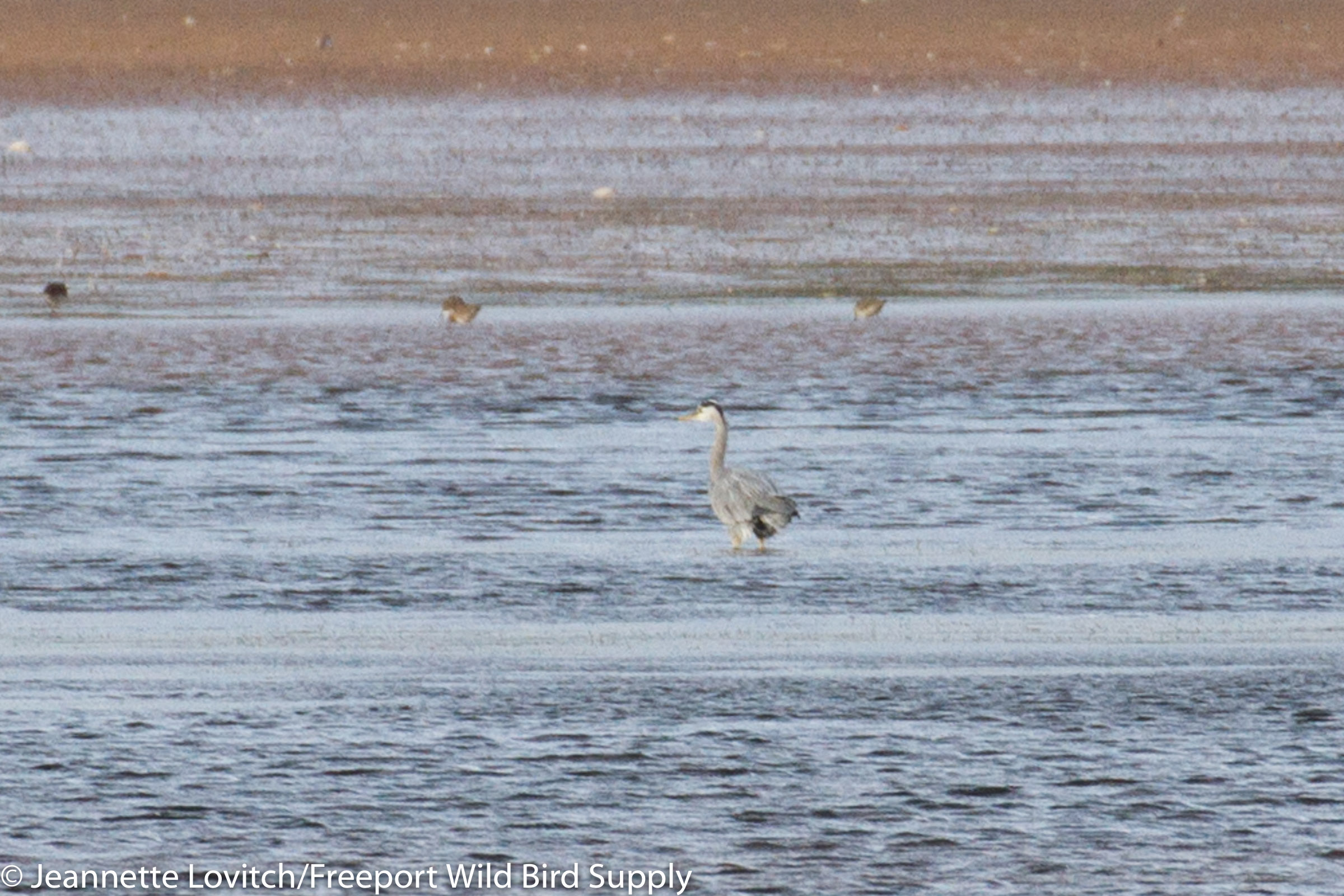
… this Gray Heron! A vagrant from Europe, this is the first we have seen in North America. With this trip cancelled for the last two years due to the closed border, it was serendipitous for it to show up when we could finally make it. A big thanks to our friend Dwaine for rising early and pinning it down for us!
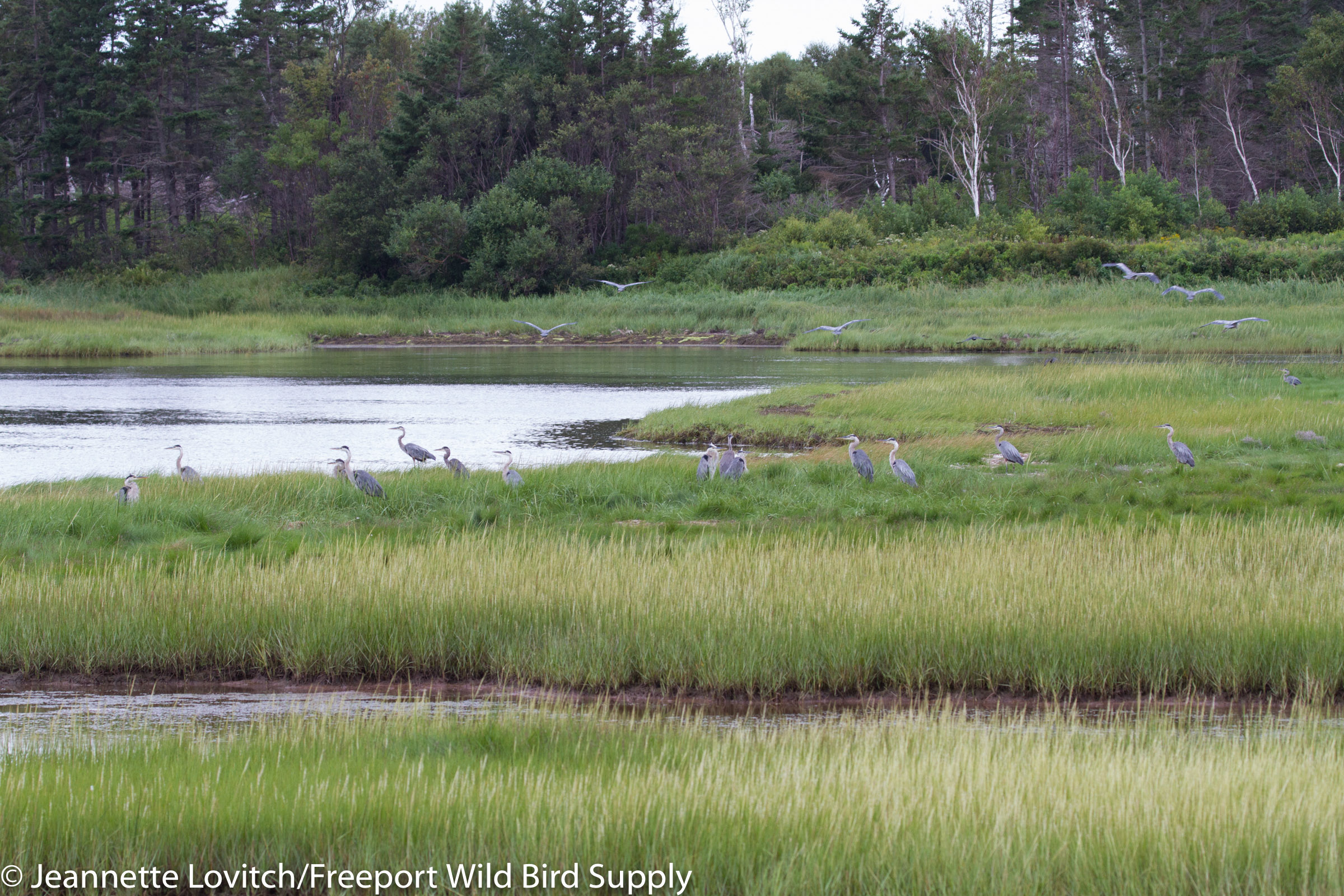
We were amazed by the number of Great Blue Herons all over the island, too, such as this group near
Savage Harbor.
Dwaine showed us around, and after lunch, we birded Borden-Carlton
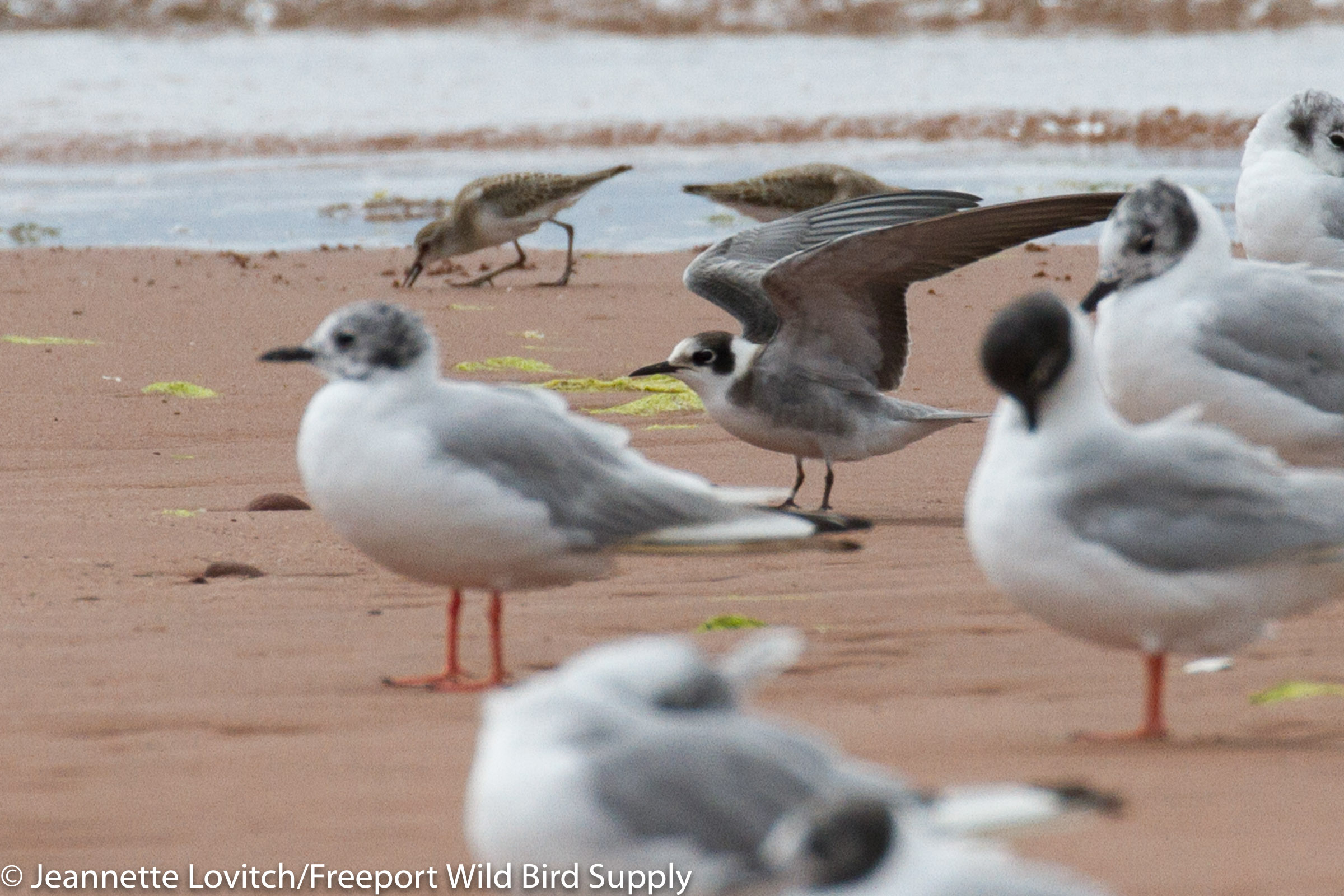
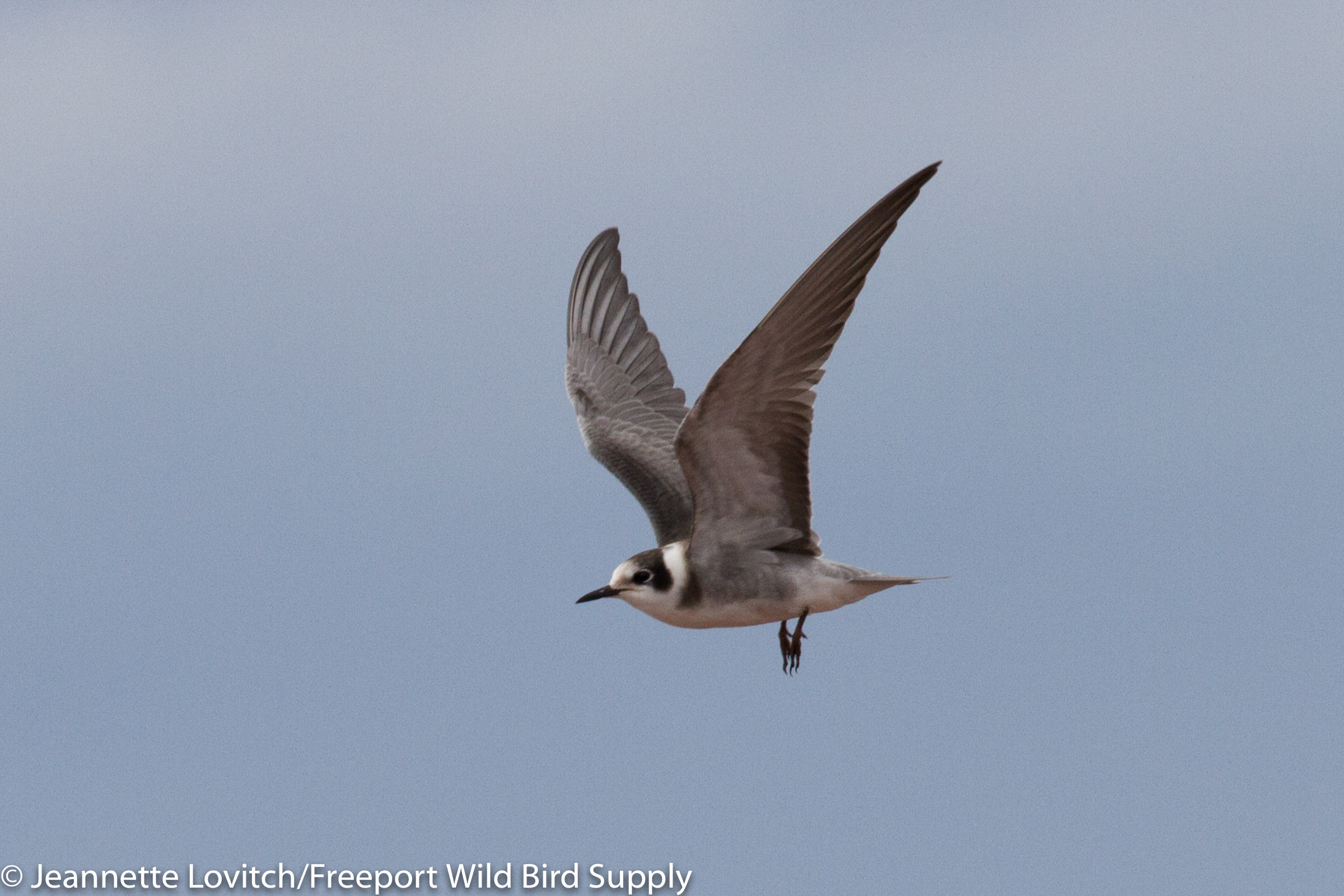
…where we returned the favor by finding this very rare for the island Black Tern at Borden Beach.
Standing next to Bonaparte’s Gulls and Semipalmated Sandpipers, you can see how tiny this marsh tern is.
Jeannette was put in charge of documenting it thoroughly!
We spent the next day vehicle-free in Charlottetown, starting with morning birding at Victoria Park, where we quickly tallied a dozen species of warblers in scattered mixed-species foraging flocks.
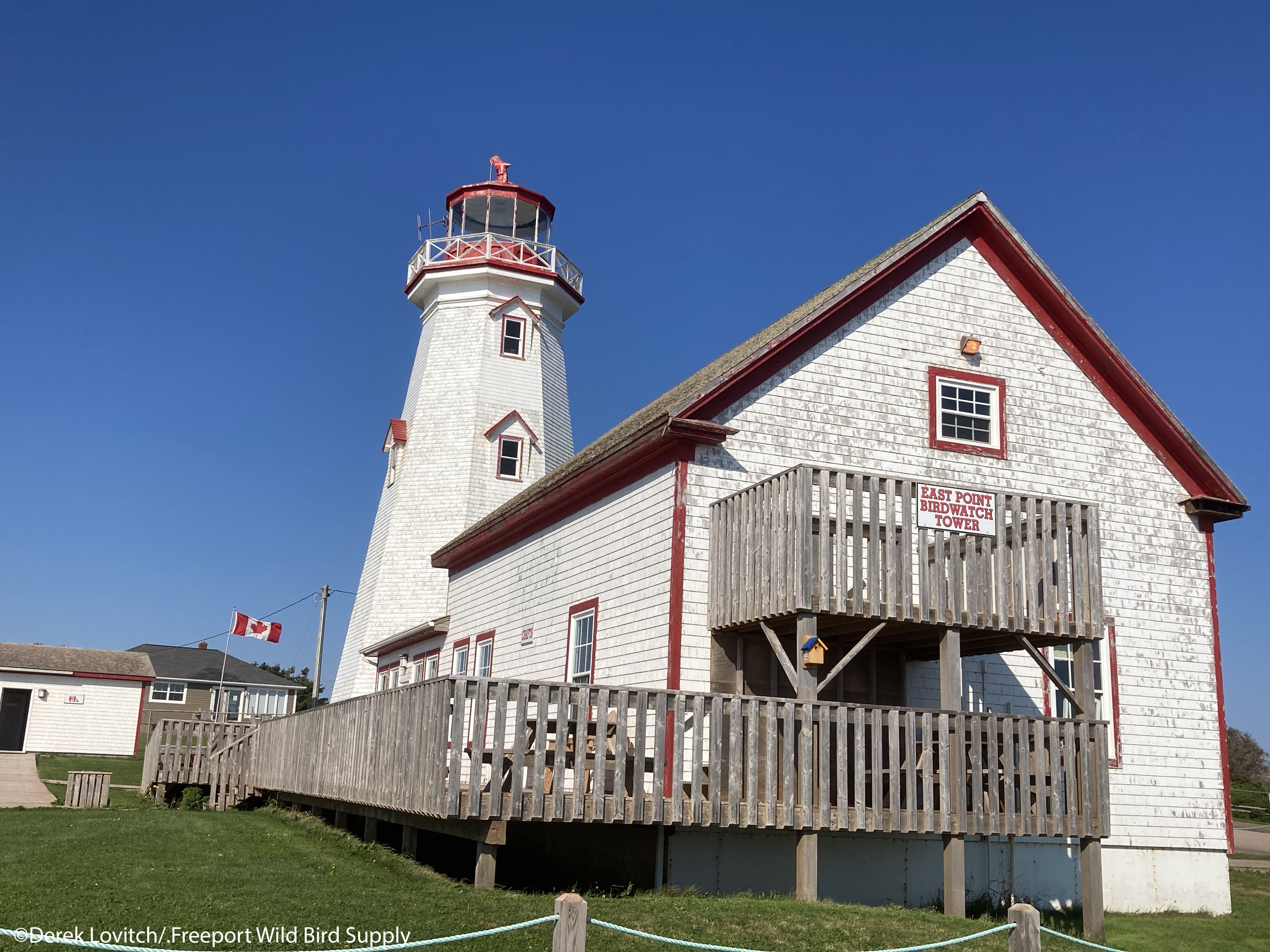
After Charlottetown, we relocated to Goose River and the next morning began with sewatching at East Point. There, we found another mid-summer rarity in a first-summer male Harlequin Duck. Unfortunately, it was too distant for photos.
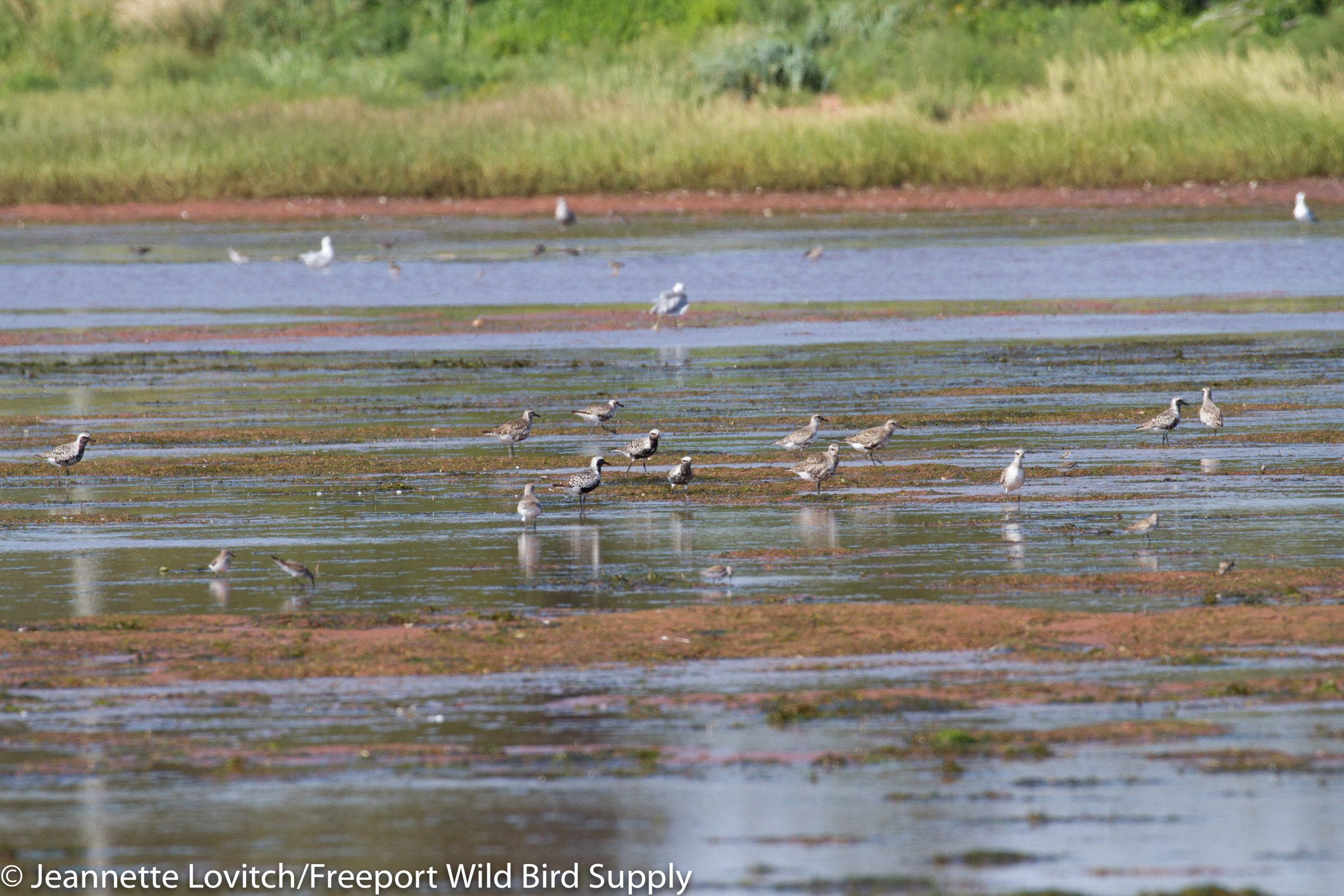
Later, however, at Rollo Bay, we had plenty of opportunities for close shorebird photography, including ample numbers of Black-bellied Plovers.
And Semipalmated Plovers.
Common Tern fledgling following an adult. Six Red Knots were among the highlights here.
On our last morning in PEI, we once again began at East Point, where we enjoyed 3 Pomarine Jaegers chasing Northern Gannets, a few more Razorbills, and a Mourning Warbler along the road.
Then, as our last stop before crossing the bridge, it was back to Borden-Carlton Beach.
We just could not get enough of the shorebirds here, and photographing them against the island’s red sand really makes them – especially these Sanderlings – pop!
Sanderlings and White-rumped Sandpiper.
We just could not get over, nor stop enjoying, the plethora of White-rumped Sandpipers that stage and pass through the island. We had counts of over 200 in some places, and in some beaches and salt pannes, it was the most abundant shorebird. Here at Borden Beach, we took some more time to marvel at it.
Shorebirds tracks and probes.
And photograph some more Semipalmated Sandpipers…bringing our trip full-circle
before beginning the trek home.

This Week’s Highlights, June 4 – June 9, 2022

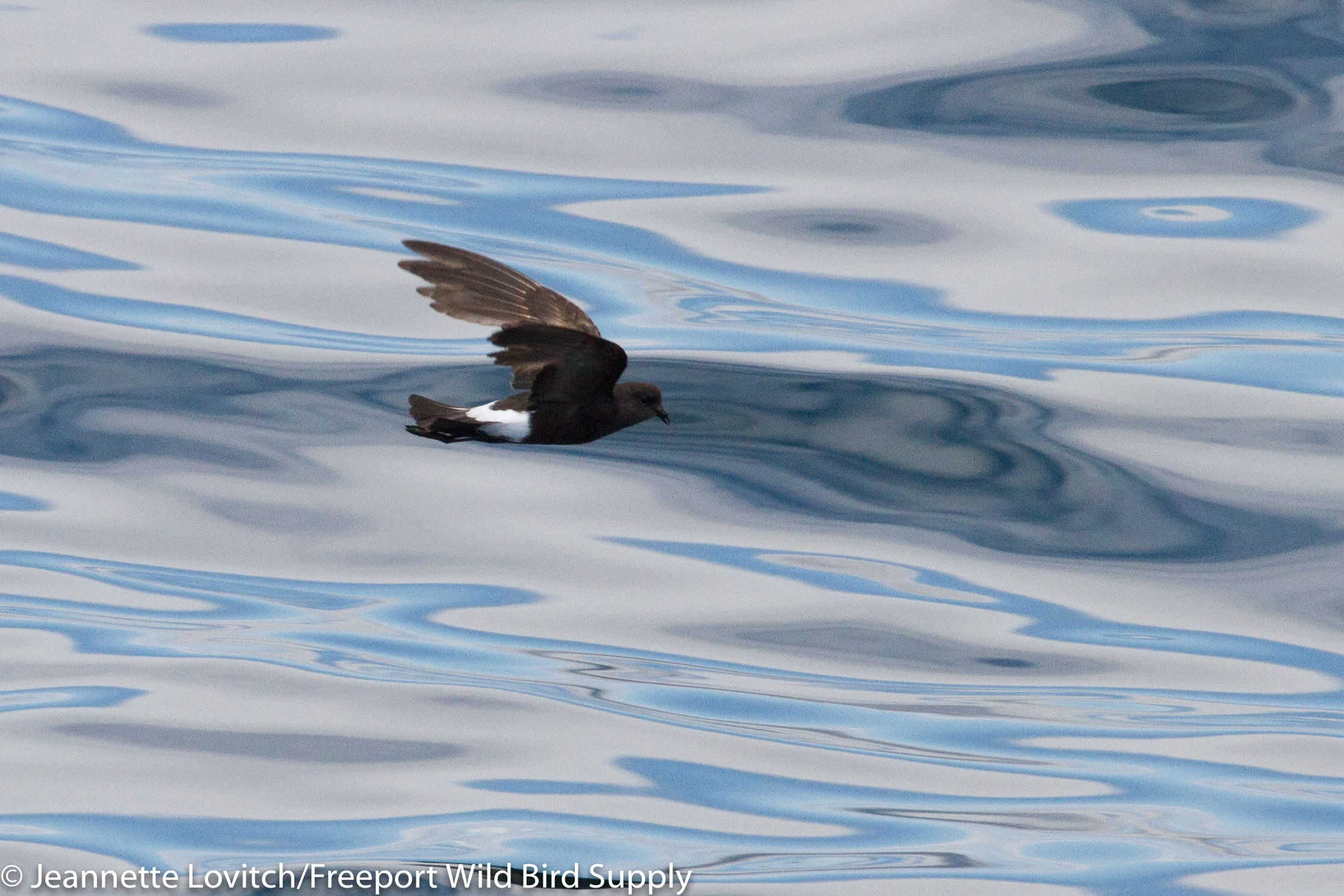
Wilson’s Storm-Petrels were the bird of the week. Incredible numbers, especially for this early in the
pelagic season, are now in our offshore waters.

My observations of note over the past six days, with my tour season in full swing, included the following:

  • 2 NORTHERN FULMARS and 1100+ Wilson’s Storm-Petrels, Cap’n Fish’s Whale Watch, Boothbay Harbor, 6/5.
  • Boothbay Mini-Pelagic with our partners, Cap’n Fish’s, Dan Nickerson, and Jeannette on 6/6.

7 Razorbills among the puffins and terns at Eastern Egg Rock.

Unbelievable estimate of 2600 Wilson’s Storm-Petrels offshore. Massive early-season numbers continue in the Gulf of Maine from Massachusetts at least to the Mid-coast of Maine.

Complete trip report here.

Upcoming pelagics from both Boothbay Harbor and to Seal Island NWR from Stonington are listed here.

  • 1 continuing CLAY-COLORED SPARROW, 1-2 UPLAND SANDPIPERS, 10+ Grasshopper Sparrows, etc, Kennebunk Plains, 6/7 (with Jeannette).
  • And finally, here is my full trip report (including daily lists) of my Monhegan Spring Migration Weekend tour on May 27 – May 31.

The Right Whales of Race Point.

Over the weekend, Jeannette and I made a little escape to Cape Cod. I’ve been wanting to take this trip for many years, but our schedule rarely allows it. But thanks to Jeanne and Haley holding down the fort at the store, and the return of Zane to the hawkwatch, we felt we could make a run for it.

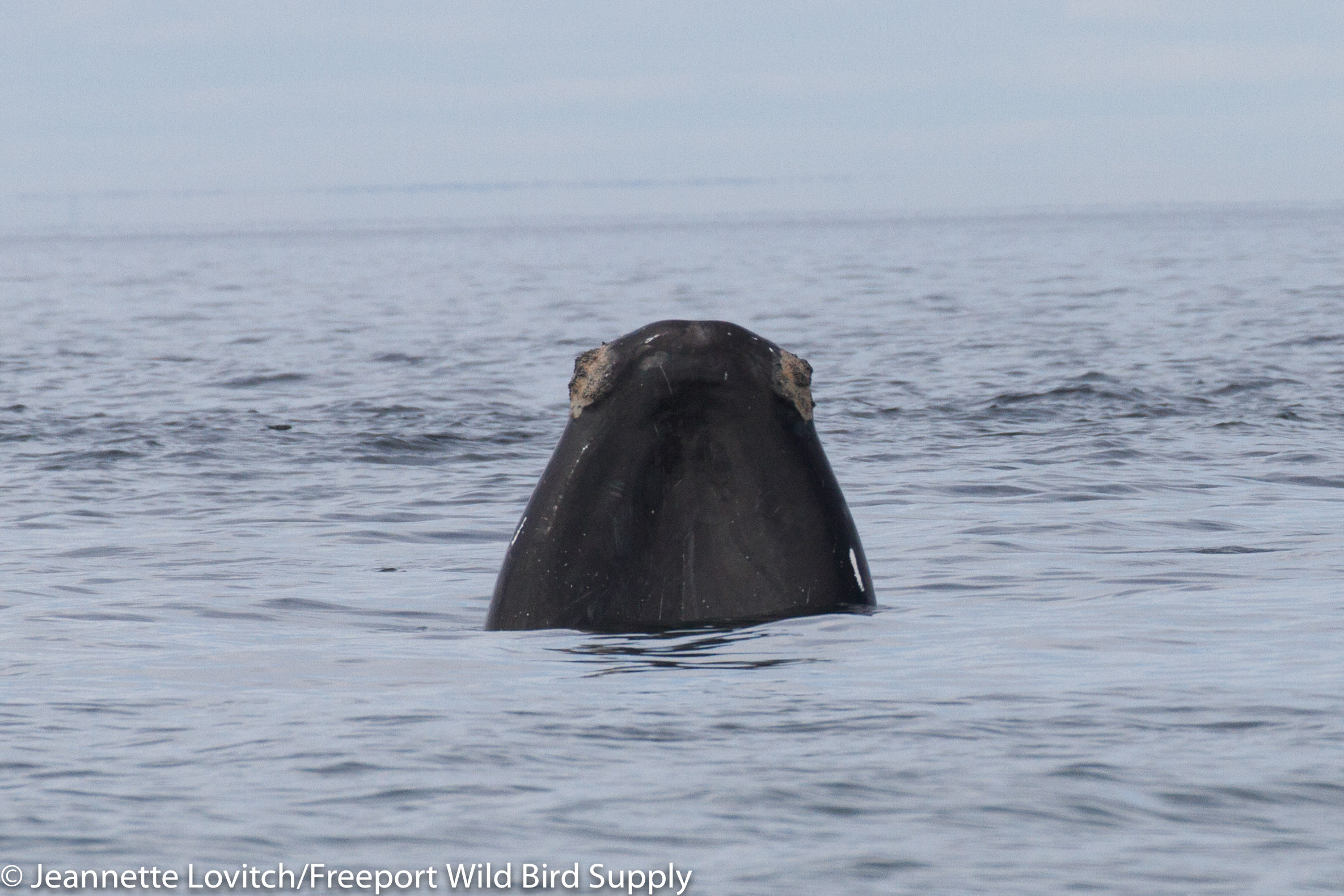
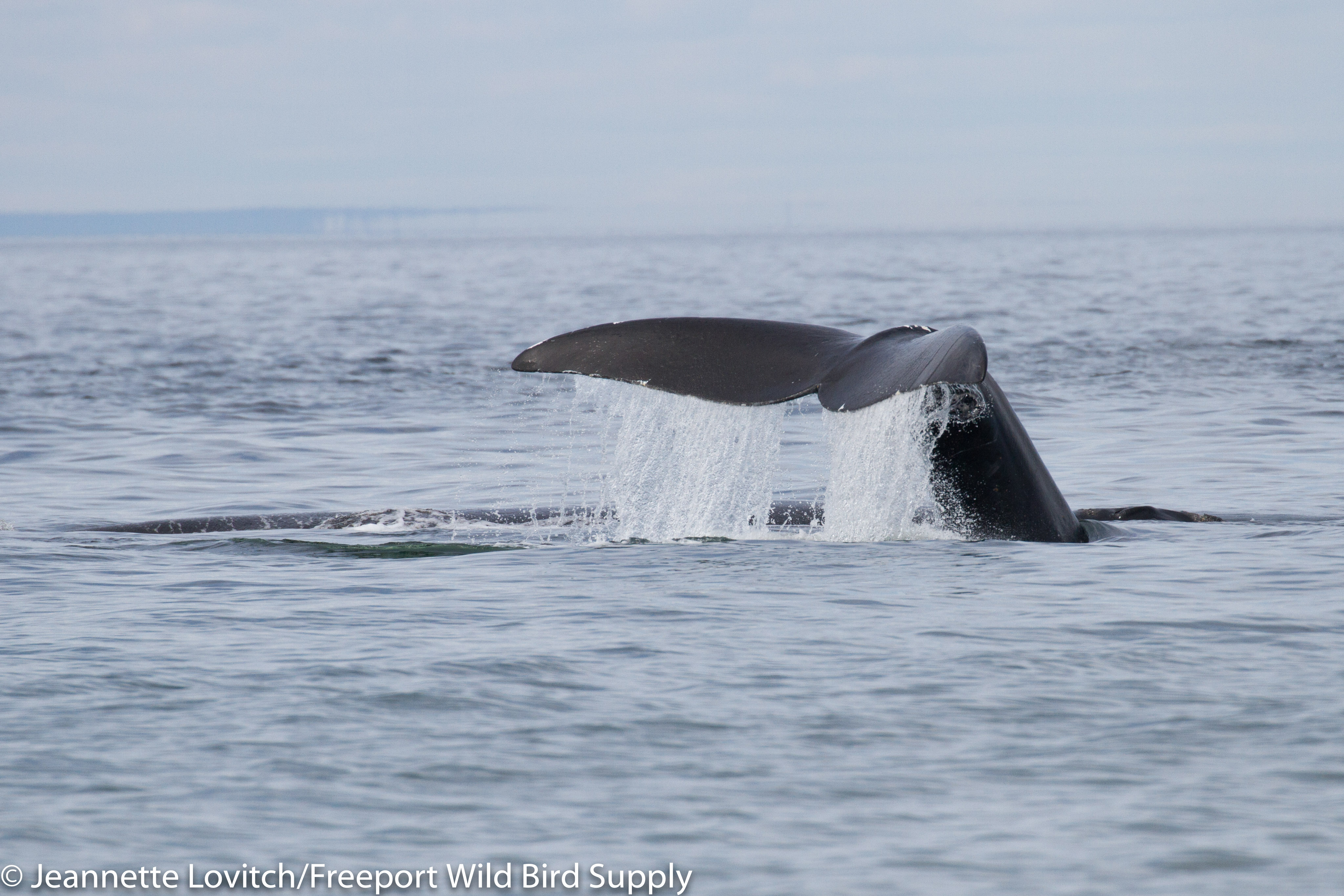
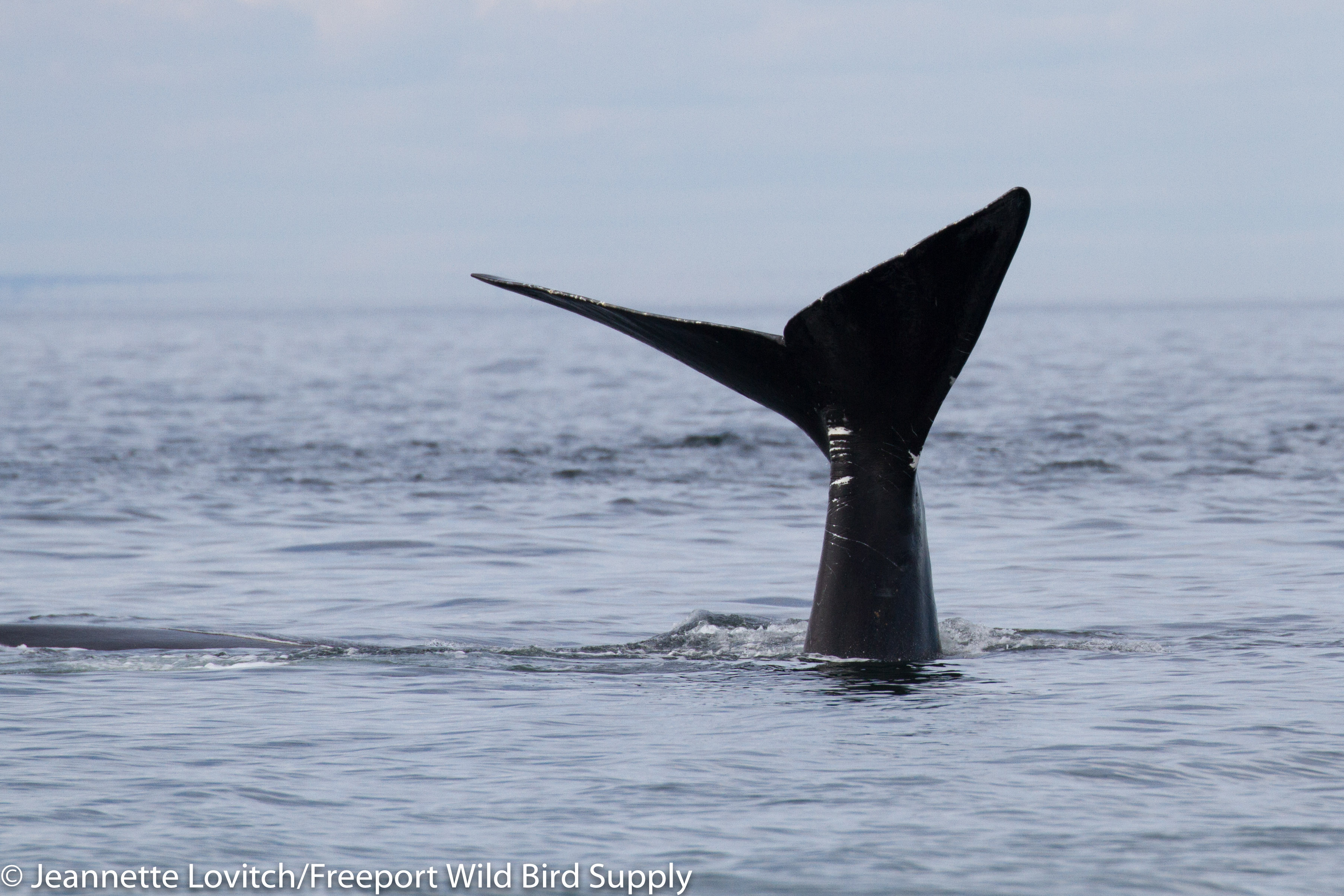
While Cape Cod is always great for birding, especially Race Point, from late winter into the middle of spring Race Point is even more famous for its whale-watching. From land. Of one of the rarest animals on the planet: the North Atlantic Right Whale.

While much to most of the world’s diminishing population arrives in Cape Cod Bay in February, the best time to see the whales is in late March and April of most years (sometimes earlier, sometimes later) when they frequent the waters immediately off of the very tip of Cape Cod. Here, a narrow and deep channel come in close proximity to land and its shallow shores, providing a rich area of upwelling and unrivaled proximity to rich feeding areas for whales and birds.

For some background reading on the phenomenon, you can start with this article from last spring from the NOAA Fisheries.

We arrived Friday afternoon and decided to get the lay of the land. I haven’t been to Race Point in over 20 years – sadly – and Jeannette had never been here, despite growing up a short ferry ride away. While we didn’t see any whales this afternoon in a brief visit, we got to know the viewing spot, a little of the strategy from another visiting couple, and got to spend some time with the birds. It’s really extraordinary how much birdlife is at this place!

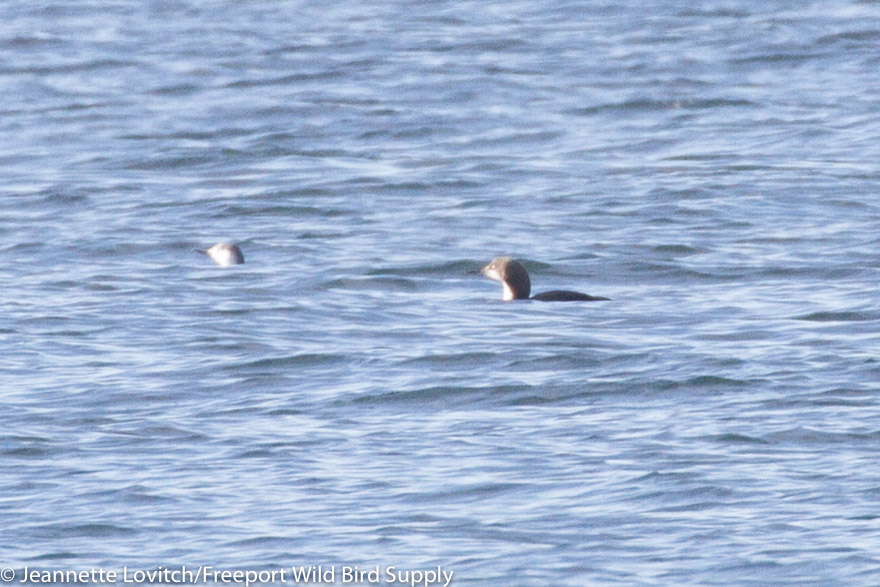
100’s of Red-throated Loons, at least a dozen Iceland Gulls, Razorbills, a couple of newly-arrived Piping Plovers, and a local avian specialty – Pacific Loon!  Arguably the best place in the Atlantic to see this – yes, you guess it- Pacific species, we found one fairly close to shore with a minimum amount of effort. This photo was the best that Jeannette can do, and while my phone-scoped photos are marginally better (or at least, more diagnostic, WordPress is being stupid with its photos uploading right now and I have given up!)

But with perfect afternoon light, Jeannette did much better with the “real” photography.

Red-throated Loon
1st winter Iceland and Glaucous Gulls with a Great Black-backed Gull and Herring Gulls of several ages.
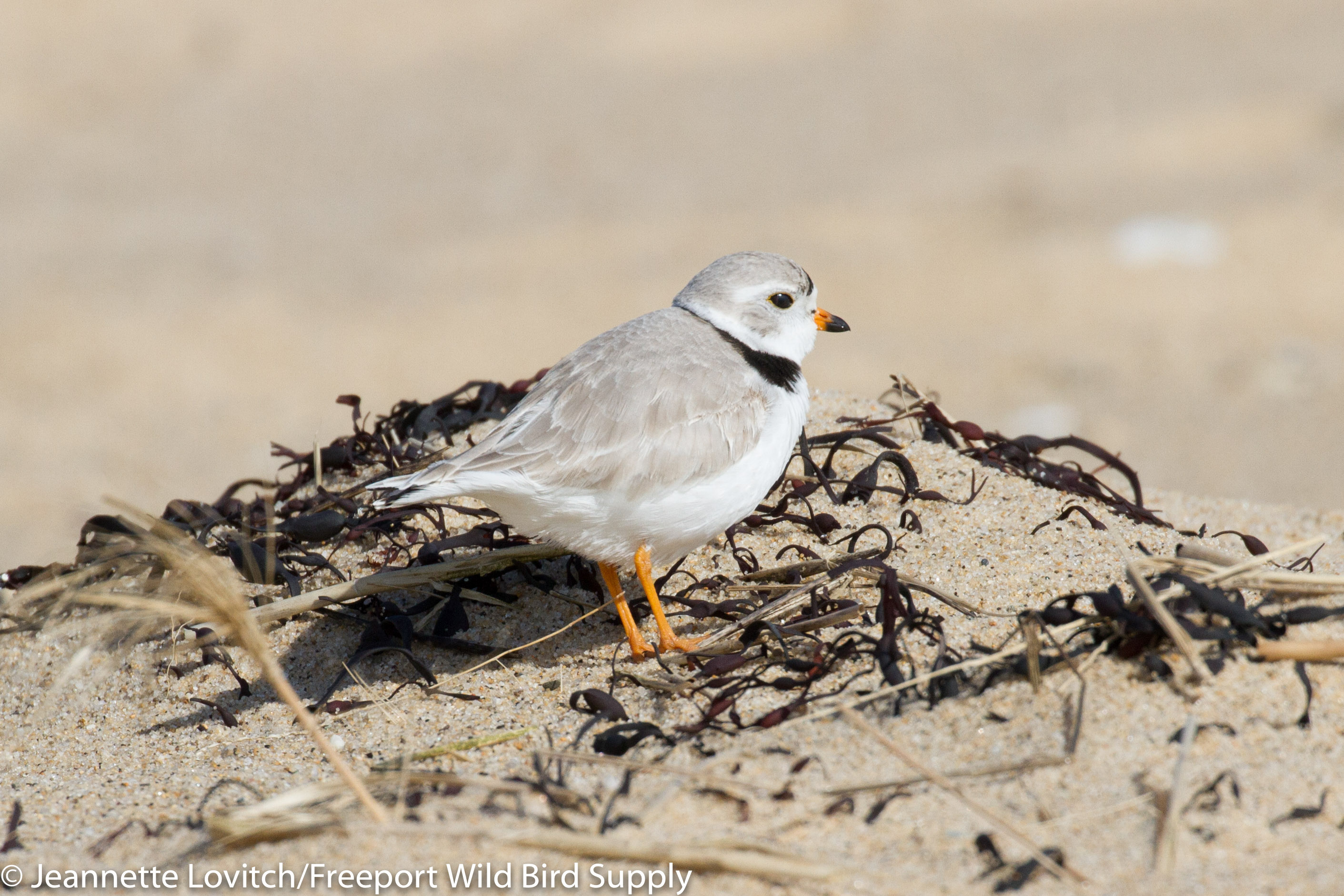
Piping Plover

We were back early on Saturday morning, ready for the 1.5-2-mile slog over fairly soft sand.  We would have been to the point much sooner were it not for all of the birds along the way once again. And the soft sand.

Our pace quickened markedly when we saw a North Atlantic Right Whale in the distance. Well, distant to us. It was clearly right off the point! We also spotted a Minke Whale moderately close to shore just as our walk began. We were getting excited now.

In position at the point by about 8:20 – after reassurances from the local expert – we began to wait. Flocks of Common Eiders were moving out of the bay, as were many of the dozens of Northern Gannets.   A Northern Harrier did not even hesitate to head straight offshore, its bearings set for landfall in Nova Scotia.

Red-throated Loon
Common Eiders
White-winged Scoter

And then there were the Razorbills!  Singles, handfuls, small flocks; a steady stream heading out of Cape Cod Bay.  I tallied 356 when not distracted by other things.

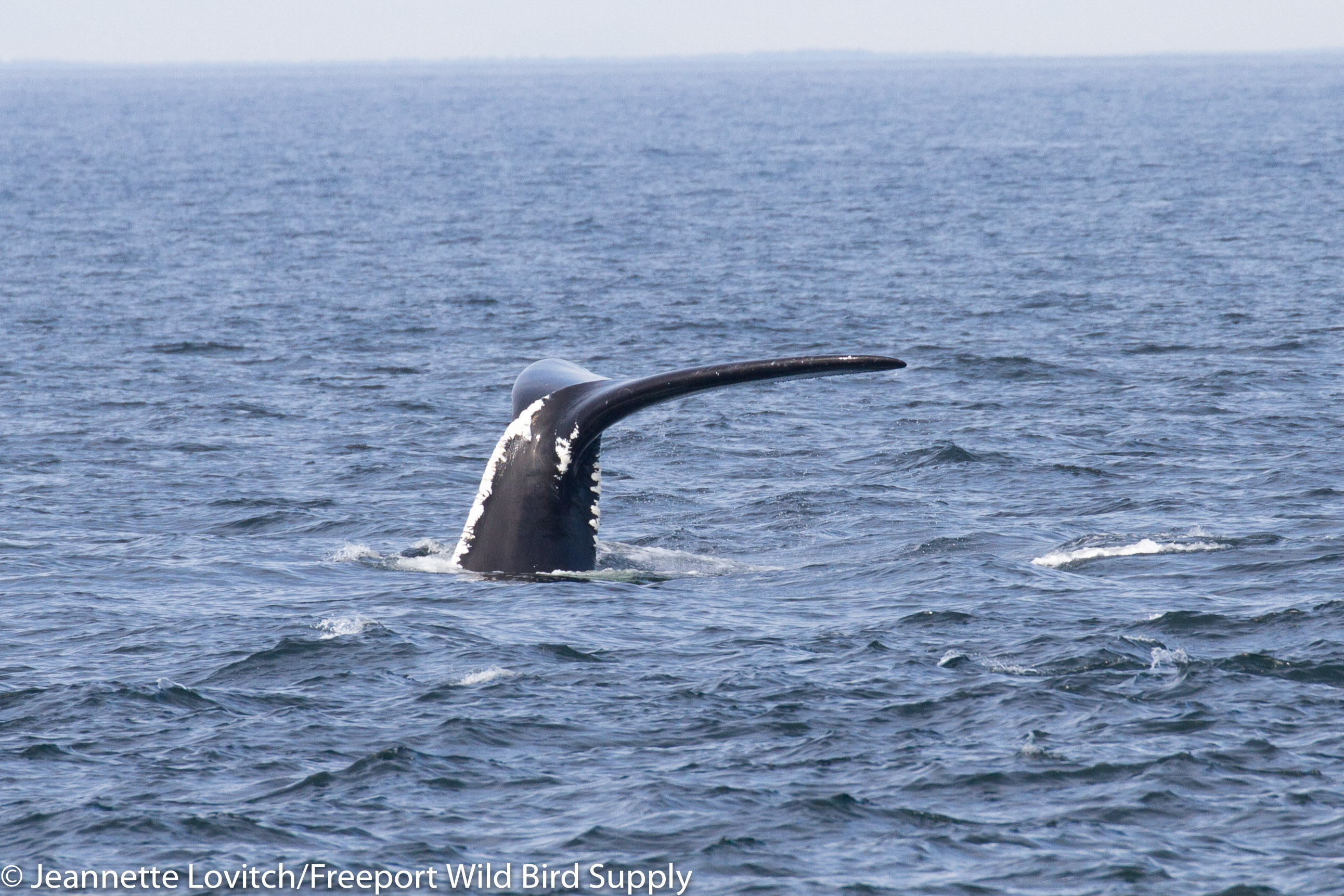
Like Right Whales. Close to shore. Like right there Right Whales. In the surf of the rips just off the point.  First there was one who showed its fluke to announce its presence and departure. The next one (or the same that had circled around) was spotted off in the distance to the west, first by it’s v-shaped blow. It slowly but steadily came closer, feeding with shallow dives as it passed in front of us. Then, completely catching all of the photographers off-guard, a breach! Like right there. Right in front of us. It was absolutely breathtaking.

About when we realized it was almost noon and we forgot to pack snacks, two whales appeared in the rips nearby. We forgot about being hungry as we watched them feed for almost 45 minutes!  We also forgot to continue to click Razorbills. But that’s OK.


I don’t know what to say. It was a moving experience. We were so close to something so special, so rare, and whose continued existence is so precarious. At least one tear escaped my ducts. It was amazing. I am so glad we finally did this.

The adrenaline and satisfaction, as well as the reflection of it all, powered us back to the car, passing another Glaucous Gull with more Iceland Gulls, another or the same Minke Whale, and just as we reached the parking lot, one more North Atlantic Right Whale fluke in the distance for good measure.

Ist Winter Iceland Gull
Ipswich” Savannah Sparrow

We did some casual birding and tourist-ing for the rest of the afternoon. The perfect weather of the day  – light winds, fairly warm (we were most enthused about being overdressed!), gave way to some rain with an approaching cold front.  

Said front made for a much cooler and windier morning on Sunday. We decided to forgo another trek to the point – with much reservation and consternation – and try our luck at Herring Cove after a leisurely breakfast. We were on vacation afterall, no matter how mini.

There weren’t nearly as many birds here as the day before, so we went back to Race Point.  A series of blows from a North Atlantic Right Whale from the beach just beyond the parking lot made us ponder sucking it up and taking another walk, but the fact that we couldn’t see the massive animal at all because of the surf made us think twice. Again.

Our experience on Saturday – including the delightful weather – was something to savor and remember. We didn’t need a sand-blasted facial to sour our experience. So begrudgingly, we departed, working our way towards Providence for the night, to indulge in some Rhode Island birding and way too much divine Italian food. Seriously the spaghettoni alla carbonara at Ristorante Il Massimo might have been almost as memorable as the whales. Almost.

We’ll be back for the pasta. The question is, how much longer will we be able to see North Atlantic Right Whales?  With less than 340 remaining on Earth, this is a trip we could no longer delay. And nor should you.

This Week’s Highlights, 1/15-21, 2022

Barrow’s Goldeneyes are one of my favorite visitors to Maine in winter. The hens provide a nice challenge to pick out, too. This was one of two distinctive Barrow’s visible from the
Bernard Lown Peace Bridge in Auburn/Lewiston on the 13th.

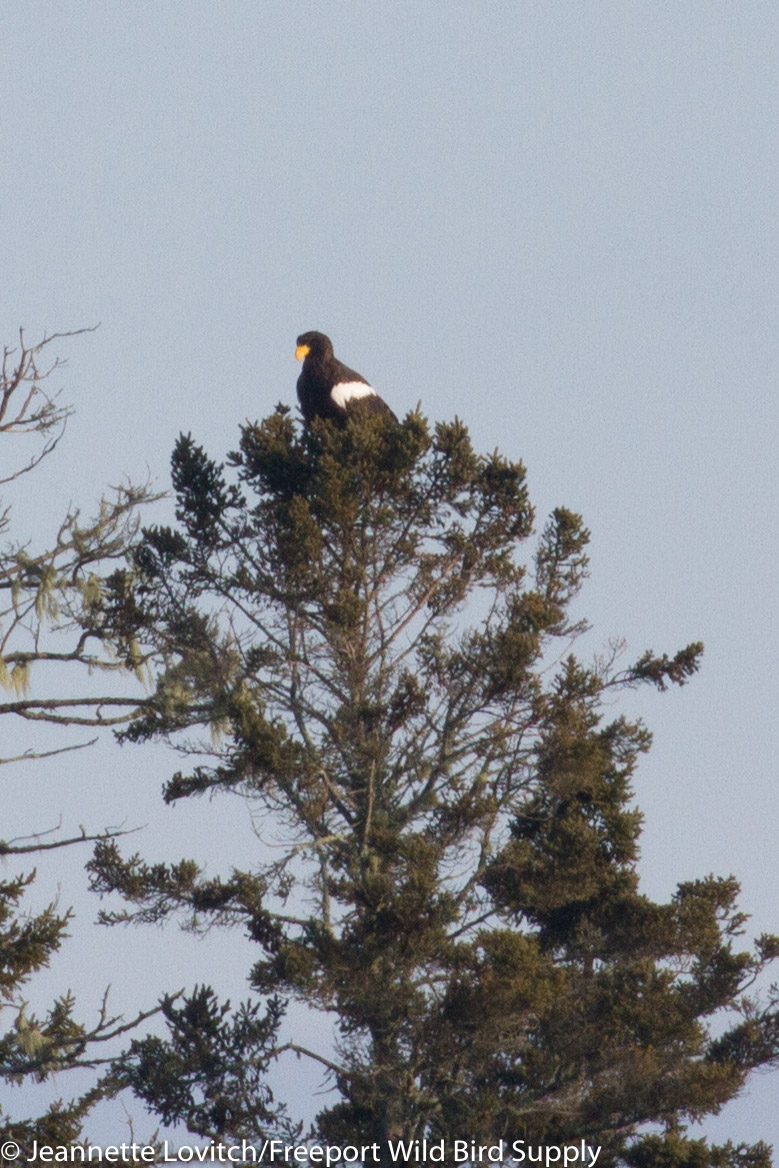
Especially in November – and often again with the first cold snap in December – I talk about “rarity fever,” when there is that additional motivation and encouragement to go birding thanks to the expectation of the unexpected. And usually we in Maine talk about the “winter doldrums” in an non-irruption year. And this year, there are virtually zero irruptives in the southern half of Maine – other than Snowy Owls. But with the Steller’s Sea-Eagle (as you may have heard!), a Bullock’s Oriole at a feeder in Damariscotta Mills, a Townsend’s Warbler in Cape Elizabeth (I missed it twice this week with a limited amount of effort), and a Barnacle Goose in Rockland, there is no doubt I – and many other birders – are experiencing a little mid-winter Rarity Fever!  And that has helped motivate me to get out birding as often as I can. The to-do list can wait until February, right?

With the fairly sudden arrival to a bitter “real winter” cold, once again “pioneering” waterfowl made up most of my highlights this week, as I spent most of my birding time searching for the next big deal. My observations of note over the past seven days include the following:

  • 1 Northern Flicker, Village Crossings/Cape Elizabeth Greenbelt Trail, 1/16 (with John Lorenc).
  • 7 Brant, Kettle Cove, Cape Elizabeth, 10/18 (with Jeannette).
  • At least 2 hen BARROW’S GOLDENEYES.  A third hen is suggestive of an odd Barrow’s or a Common x Barrow’s hybrid (see photo captions), Bernard Lown Peace Bridge, Auburn/Lewiston, 1/20.
  • Fun to hear two Carolina Wrens counter-singing across the Androscoggin River – one in Lewiston and one in Auburn – from Little Andy Park, Auburn, 1/20.
  • 1 drake Northern Pintail and 3 1st-winter Iceland Gulls, Auburn Riverwalk, 1/20.
  • 1 female Northern Pintail, Westbrook Riverwalk, 1/21.
In addition to a bright-orange-billed classic Barrow’s, and the perfectly good smudgy-billed individual above (and here, on the left), there was a third bird that I am pondering. It’s either a third female Barrow’s (a great tally, especially for Androscoggin County) or perhaps a hybrid between Barrow’s x Common – the males of which do occur in Maine and are fairly straightforward to identify.

This Week’s Highlights, 12/29-31, 2021

At this point, this bird really needs no introduction. Here are Jeannette’s photos of the famous Steller’s Sea-Eagle that we caught up on the morning of on New Year’s Eve at Five Islands in Georgetown.

What an incredible bird!
  • 1 drake Northern Pintail, Harraseeket Yacht Club, Freeport, 12/29.
  • 1 Double-crested Cormorant, dusk at Five Islands, Georgetown, 12/30.
  • 5 Double-crested Cormorants, 4++ Razorbill, etc, Five Islands, Georgetown, 12/31.  Oh yeah, that bird in the photos above, too.
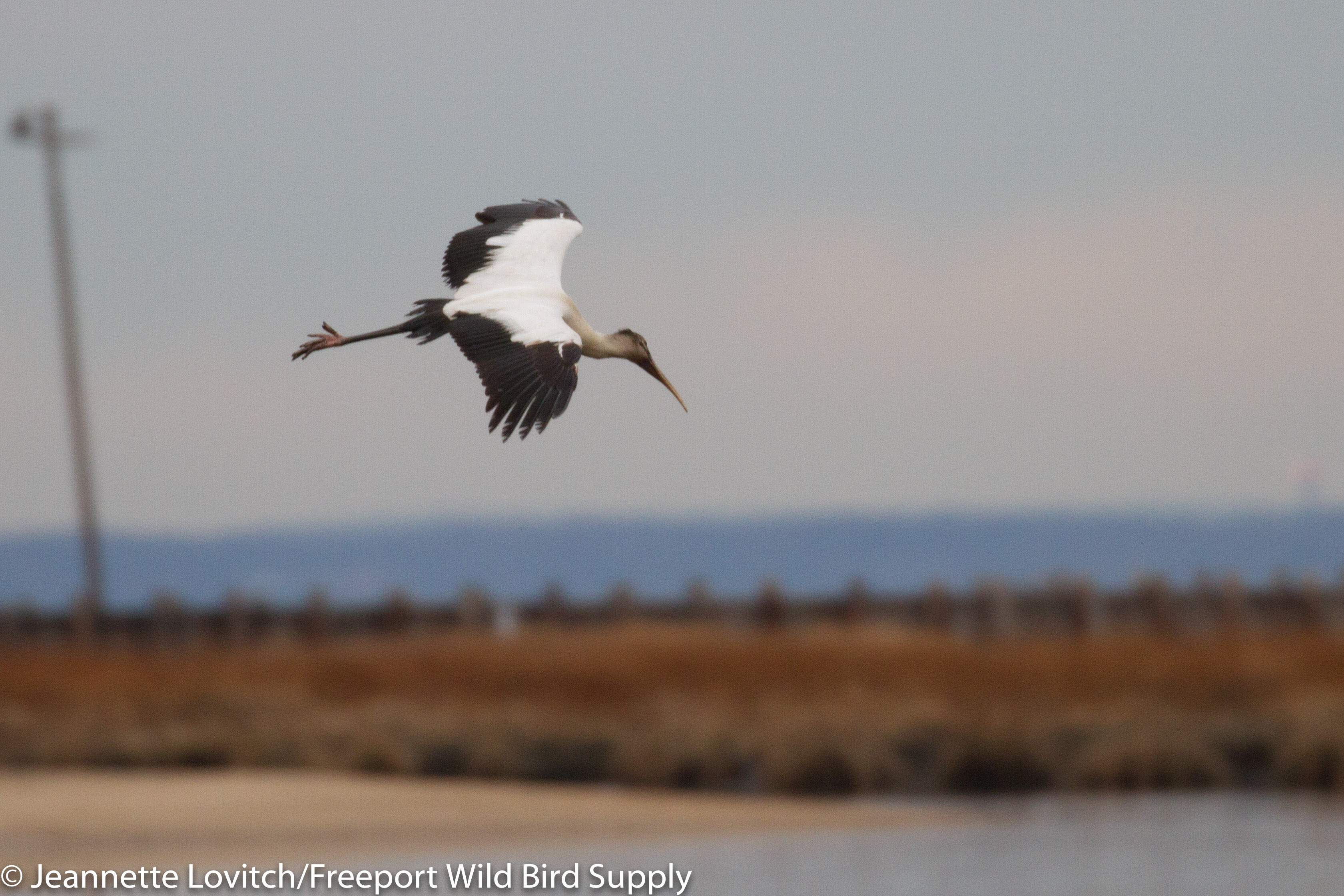
While spending Christmas with family in New Jersey, Jeannette and I successfully chased this Wood Stork at my old stomping grounds of Sandy Hook. It was my 350th species in New Jersey.
Not bad for a place that I haven’t lived in over 20 years!

This Week’s Highlights, 11/17-19, 2021.

Part of this fall’s incursion of Cattle Egrets into the Northeast, we caught up with this cooperative individual while birding in Vermont at the Goose Viewing Area of the Dead Creek Wildlife Management Area on 11/13.

After spending a long weekend in Vermont – including quite a few birding highlights – it’s been mostly catching up here at the store. Nonetheless, I did have a great morning at Sabattus Pond on Friday.

  • 1 Winter Wren, Highland Road, Brunswick, 11/18.
  • Sabattus Pond, Sabattus, 11/19 – 16 species of waterfowl!

520 Ruddy Ducks

444 Mallards

251 Lesser Scaup

154 American Black Ducks

74 Green-winged Teal

48 Greater Scaup

41 Common Mergansers

19 Hooded Mergansers

18 Canada Geese

16 American Wigeon

13 Northern Pintails

8 Buffleheads

3 Common Goldeneyes

2 Surf Scoters

1 White-winged Scoter

1 Ring-necked Duck

X Mallard x American Black Duck hybrid

37 Turkey Vultures

1 Carolina Wren

This out of place Brant graced the Burlington Waterfront Park when we spent the morning strolling it on the 11/14.

Pelagic Birding by Cruiseship: NYC-NS-NB-NYC, Oct 2019.

Skua
Bonxie!
Jeannette and I took round trip a Princess Cruise from New York City October 26 (pm departure) through October 31st (early am arrival). It made ports of call in Halifax, Nova Scotia and Saint John, New Brunswick.  The full-day at seas between NYC and Halifax on 10/27 and from St John to NYC on 10/30 were the draws for us.  Cruise ships offer steady, stable and unreasonably comfortable deep-sea birding opportunities. Paul Lehman helped put the “repositioning cruise” itinerary on the West Coast on the birding radar and he, along with several others around the world, demonstrated the value of these floating behemoths for pelagic birding.
departing NYC
Verrazano

Our transit from NYC to Halifax was our best stretch, with seas a mere 2-3ft, partially cloudy skies, and unseasonably warm temperatures. We awoke to find ourselves at 49.9 nautical miles south-southeast of Nantucket.
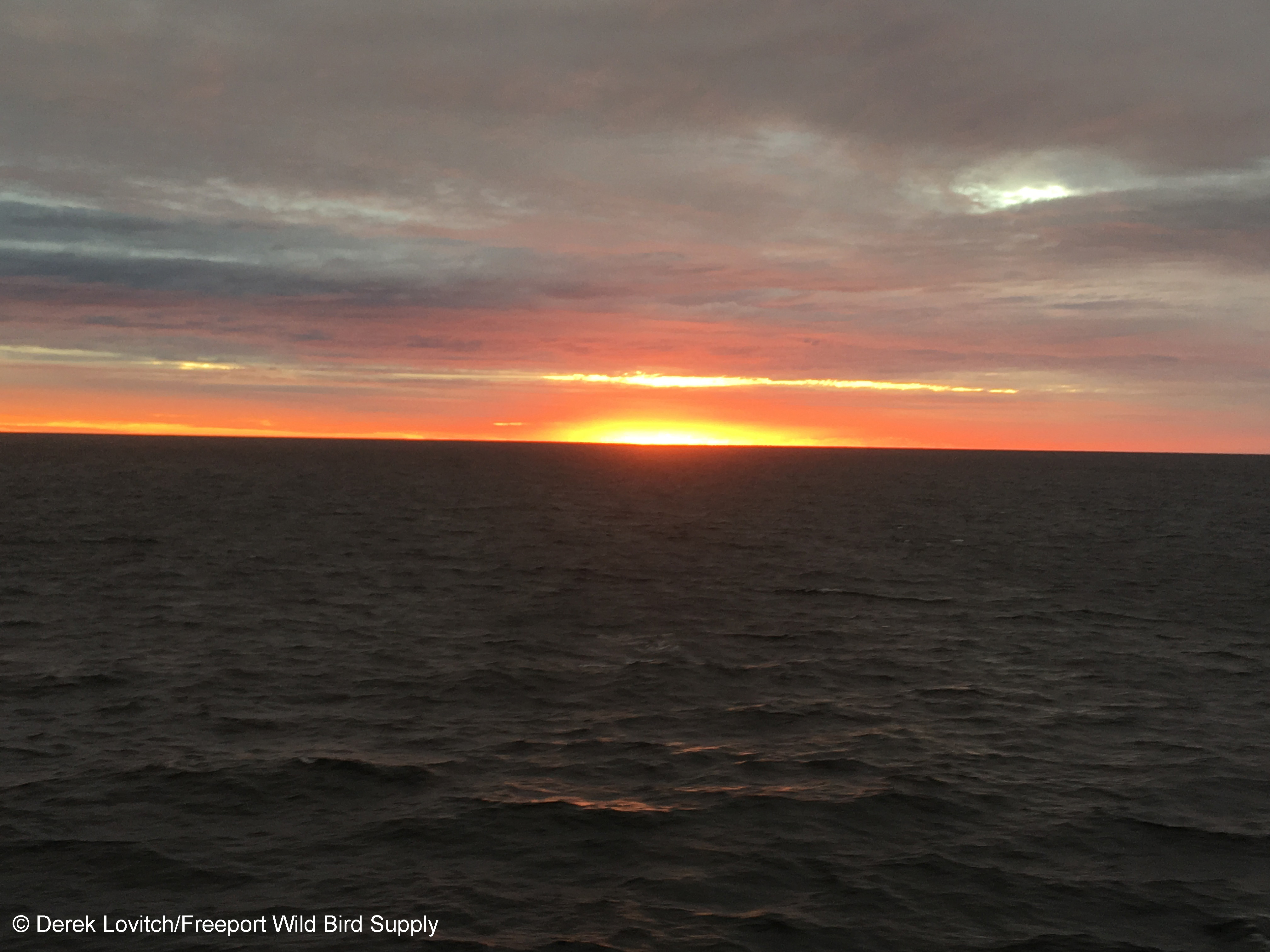
Sunrise, 10-27

After a surprisingly slow first 2 hours of the day, the action really got going and remained strong into the early afternoon. The day ended up yielding an impressive 5 Great Skuas and 6 unidentified skuas. A small dark storm-petrel – likely a very late Wilson’s – may have been the one that got away this day as we were unable to photograph it. A Manx Shearwater was well seen, along with 9 Cory’s Shearwaters and many of the expected species. A Song Sparrow arrived on the boat, first seen shortly after sunrise that morning.  A complete list is below, but all of our highlights were in Massachusetts waters.
GRSHGRSH2
Great Shearwaters
COSH
Cory’s Shearwater.

A 27-minute stretch in Maine waters (U.S. territorial waters with the closest point of land being 101nm to Mt Desert Rock) yielded little, and not my most-desired bird of the trip: a Great Skua in Maine waters, a bird that has become an unreasonable nemesis for me.  Nova Scotia waters were very slow, and an area of low pressure caught up to us, with rain becoming steadier and rapidly reducing visibility and light.
NOFU
Northern Fulmar
IMG_1181.PNG

On 10/28, we arrived in Halifax Harbor before sunrise, and our friends Eric and Anne Mills picked us up at the dock for a day of local birding. A continuing Yellow-throated Warbler at Point Pleasant Park and 2 Indigo Buntings at the old city dump were highlights, but like it has been in Maine, landbirds – especially in the woods, but also sparrowy-edges – were sparse.
old_city_dump
Point_Pleasant_Park

leaving_Halifax
The boat pulled away after sunset, but we were pleasantly surprised to awaken on 10/29 with a considerable distance of the Bay of Fundy left to transit. The boat was at a lower speed than usual, as we had to wait for high water in St. John Harbor. Beginning 17.3nm WSW of Brier Island, we enjoyed very productive birding through 11:00am as we were entering St. John Harbor.  Single American Robin, Horned Lark, Dark-eyed Junco, American Pipit, and Savannah Sparrow made morning passes around the boat, but the alcid show we had been waiting for had arrived: 58 Atlantic Puffins, 44 Razorbills, and 12 Common Murres (the majority of all were in New Brunswick waters). We were very excited to see a total of 5 Dovekies – a group of four followed by one lone bird in flight – all on the Nova Scotia side.  This was another one of the “target birds” we had identified for this itinerary.
IMG_1236

We arrived in Saint John at noon, and walked across the city to get to Rockwood Park. There were “no” birds in the woods here, either, so we visited a couple of breweries and had our best meal of the trip at the St. John Alehouse on our way back. It was not until almost midnight that the boat departed as the world’s highest tides had finally filled back in.
RockwoodPark1RockwoodPark2
St_John_dusk
Gulls commuting back from Rockwood Park with us.

The morning of October 30th has been circled on the proverbial calendar for a while, but there was quite a bit of apprehension about where we would find ourselves at dawn. I had my eyes on Maine waters – especially for my state Great Skua! – but also out of my own general birding interests of course.
Sunrise,10-30

Rolling over in bed at 5:30 EDT, I pulled up the Navionics Boating app and found our position to be 64.8nm ESE of Mt. Desert Rock, well within Maine-countable waters and with a current track that would keep us in these waters for some time. Breakfast was consumed rapidly, and we were on deck at 6:45, with just enough light to start looking for birds. Seas were still 2-3ft, with very light chop, and a little breeze. Skies were partly to mostly cloudy all morning. Conditions were once again unreasonably perfect.
me_sunrise

Great Shearwaters and Northern Fulmars were soon visible, and we picked up our first Red Phalaropes of the journey. Since Jeannette and I were the only birders on board, not surprisingly, we had been taking turns looking for passerines on the open decks and going on coffee and restroom runs. At about 8:00 or so, Jeannette went to the upper decks and returned about 30 minutes later to find me writing furiously. At 8:21EDT, I had a good bird, and I think it was a very, very good bird. Of course, she wasn’t there to see it, but as importantly for the task at hand, she was not there to try and document it while I studied it for as long as I can.

After watching it in the scope for a minute or two, I made the decision to go for the camera, despite the extreme distance of the bird. I paused for a moment at the idea of attempting a phone-scoping session, but I realized the unlikelihood of that being successful. I snapped a couple of pictures, realizing they were unlikely to be anywhere within the realm of realistically seeing “something” and went back to following the bird in the scope, hoping for it to turn or land, or at least stick around long enough for Jeannette to return.

I have seen a lot of Manx Shearwaters, and ample numbers of Audubon’s Shearwaters. Instantaneously, it was obvious this was not a Manx, so I started scribbling notes. I had a feeling based on my studying before the trip, that I was looking at a Barolo’s Shearwater, a bird not yet recorded in Maine (but on my long list of likely new additions).

Here are my transcribed field notes, lightly edited only for decipherability (comments added later):

  • Coordinates: 42(d) 35.966”N, 67 (d) 56.02’W
  • small seabird spotted distance while J was on coffee/passerine run.
  • Blackish back and white undersides but extremely stiff and very shallow wingbeats noticed immediately.
  • Thought alcid, but wings too narrow and relatively long (compared to size of body)
  • (First) observed at approx 60-degree angle as it was angling slightly towards the bow, but rapidly getting further away.
  • White underwing clean and appeared to go right out to wingtips.
  • White face – could possibly make out eye – rose well up towards narrow-appearing crown. Even compensating for morning light, face was far too white and clean for Manx Shearwater, more like Audubon’s, but with even more white than that
  • Could not see undertail coverts (specifically), but white did appear to “continue” towards rear.
  • Small bill, almost imperceptible at distance.
  • No shearwatering, stayed level (low over water) with shallow, stiff wingbeats/
  • Did not see “saddlebags” or not (too far for such fine detail).
  • No molt visible.
  • Dwarfed by passing Great Shearwater
  • Flight considerably different from Manx, plus extensive white on face and extensively white and clean underwings. Very short wings, relatively.
  • White as “far as I could see to” wingtips and undertail.
  • Need to get out field guides to compare Barolo’s vs Audubon, but this looked smaller, pudgier body, whiter underneath, and wingbeats so stiff and shallow.
  • Cannot reconcile wingbeats/flight and extensive white face, undertail, (underwing), with anything but Barolo’s Shearwater.
  • (wishing I went for the camera sooner!)

As I was scribbling away, Jeannette returned, I took one sip of coffee, and went back to my notes. Shortly thereafter, she yelled “BONX-IIIIEEEEEE!”  And finally, at 8:37am, 82.2nm southeast of Matincus Rock, and only about 6-10nm closes than any point on Cape Cod, I had my Maine state Great Skua. Finally. Mission accomplished.
IMG_1292

But then, it was back to the shearwater. Plans were made to celebrate later (wait, why can’t I get a drink delivered to me outside?). I added to my notes, still before checking any references, summarizing my observation:

  • Manx quickly eliminated by short wings, very small size, and bright white face. Flight style quite different. This was closer to an alcid with super-shallow wingbeats.
  • Single bird, all alone, picked up in straight, powered flight.
  • Distance could have obscured internal underwing markings, but none noticed
  • White rose up face – even if compensating (for) sun “overexposure,” so high that when going away, appeared to have a very narrow dark crown. (I made an exceedingly poor drawing of the impression. It is not worth sharing).

I had Howell and Zufelt’s Oceanic Birds of the World and the Nat Geo field guide with me, so I consulted them, along with an online image search. I revisited those resources and looked longer online when we returned to our cabin later. After that, I added the following:

– (my bird) looked “normally” tapered/pointed wing(tip) and not at all rounded like Audubon’s.
– did not appear particularly long-tailed
– short bill; Audubon’s looks longer-billed.
– cold/cool water environs. No water temperature measurement on board boat, but well within Gulf of Maine at 689ft depth. No “warm water species” seen on entire trip.
– too small for Manx, as a Great Shearwater crossed in front of it (while I was viewing through the scope). 3-5 had been circling the ship (consistently).
IMG_1358

Oh, and my desperate attempt at a photograph I alluded to? Well, I think it was one of the Great Shearwaters (is that a hind collar behind a dark cap?), but it could also be a giant piece of sushi. I whiffed. And that does not make me happy, as even a crappy photo might have had some value.

Looking at those resources, photos online, and more resources upon our return home, I concluded that this bird was indeed a Barolo’s Shearwater. Whether “sight records” are “good enough” for First State Records, well, that’s a debate for another day…

But yeah, we had other birds that day too, with Great Shearwaters and Northern Fulmars leading the way, and lots of dolphins, including several small close pods of Short-beaked Common Dolphin.  We also had another skua in Massachussets waters that suggested South Polar to me, but it was just too far, and Jeannette was unable to get on it in the camera for closer study.
COSHandGRSH
Cory’s Shearwater with Great Shearwaters.
GRSHandGBBG
Great Shearwaters with Great Black-backed Gull

At 4:15, with nearly-lifeless waters – the same early morning dull stretch from day 1 that got us worried about whether this entire trip was a good idea or not, we called it quits and went inside. A beer and a top-deck jacuzzi were in order. Come dawn, we’d be back in port in Brooklyn, so maybe we’ll even have a second drink tonight!
J-Mo_on_deck

Yeah, this cruise ship pelagic birding has its perks! And you can expect us to offer this as a tour in the near future. Unfortunately, a change in ships on this route next year may hamper the birding access, so we’re going to figure this out before we promote the tour and the future of birding possibilities on this intriguing cruise route.

Here’s the breakdown of the birdlist:

10/27.
-On deck 6:30 EDT. Mostly cloudy, lt-mod SE, light-moderate chop and 1-1.5m swell.  49.9 nm SSE of Nantucket.

1) Massachusetts waters:
GREAT SKUA: 5 total (coordinates recorded for each).
UNIDENTIFIED SKUA: 6 (coordinates recorded for each)
Parasitic Jaeger: 4
Unidentified Jaeger: 9
Black-legged Kittiwake: 4
Herring Gull: x
Lesser Black-backed Gull: 1
Great Black-backed Gull: x
Northern Fulmar: 3
Cory’s Shearwater: 9
Great Shearwater: 259
Manx Shearwater: 1
UNIDENTIFIED STORM-PETREL – 1, Wilson’s-type most likely.
Northern Gannet: 186
Song Sparrow – 1 found on Lido Deck

Atlantic White-sided Dolphin pods: 1

2) Maine: 27 minutes.
Herring Gull: 1
Great Black-backed Gull: 1
Northern Fulmar: 2
Great Shearwater: 1
Northern Gannet: 1

3) Nova Scotia waters.
Black-legged Kittiwake: 1
Herring Gull: x
Great Black-backed Gull: x
Northern Fulmar: 2
Great Shearwater: 2
Mourning Dove: 1 – 81.4 nm SW of Seal Island. Reappeared and was stooped upon by PEFA.
Peregrine Falcon: 1- 83.8nm SW of Seal Island

Pilot Whales: 4-6
PEFA1PEFA2

10/29: Bay of Fundy.

  • On deck 7:54 ADT. 7.5nm W of Boar’s Head, Briar Island, NS..
  • Nova Scotia waters through about 9:30am EDT:

Common Eider: 13
White-winged Scoter: 2
DOVEKIE: 5
Razorbill: 3
Atlantic Puffin: 15
Pomarine Jaeger: 6
Unidentified jaeger: 3
Black-legged Kittiwake: 59
Herring Gull: x
Great Black-backed Gull: x
Red-throated Loon: 2
Northern Fulmar: 7
Sooty Shearwater: 2
Northern Gannet: 24
American Robin: 1 at dawn, flying parallel to boat.
Horned Lark: 1 flying with DEJU 9.4nm W of Centreville Harbor
American Pipit: 1
Savannah Sparrow: 1
Song Sparrow: continues on deck.
Dark-eyed Junco: 1 flying with HOLA 9.4nm W of Centreville Harbor
AMRO

New Brunswick waters (after about 9:30 EDT):
Common Eider: 186
Common Murre: 12
Razorbill: 41
Atlantic Puffin: 43
Large alcids sp: 9
Pomarine Jaeger: 1
Black-legged Kittiwake: 49
Herring Gull: x
Great Black-backed Gull: x
Northern Fulmar: 1
Northern Gannet: 8
Red-throated Loon: 14

Minke Whale: 1
Harbor Porpoise: x

10/30.
– On deck 6:45 EDT. Maine waters, 64.8nm ESE of Mount Desert Rock and 60nm W of Seal Island, NS, but in US territorial waters.  Seas 2-3ft, light chop, increasing breeze.

1) Maine Waters:
GREAT SKUA: 1 – 42  31.291’N, 67  58.735’W
Pomarine Jaeger: 1
Red Phalarope: 16
Atlantic Puffin: 1
Black-legged Kittiwake: 7
Herring Gull: x
Great Black-backed Gull: x
Northern Fulmar: 76
Great Shearwater: 74
BAROLO’S SHEARWATER: 1, See Above. (42.35988’N, -67.5602’W)
Northern Gannet: 1

  • Massachusetts waters:

Unidentified phalarope: 30
UNIDENTIFIED SKUA: 1 (probable South Polar)
Pomarine Jaeger: 2
Parasitic Jaeger: 2
Unidentified Jaeger: 4
Black-legged Kittiwake: 14
Herring Gull: x
Lesser Black-backed Gull: 1
Great Black-backed Gull: x
Northern Fulmar: 158
Cory’s Shearwater: 6
Sooty Shearwater: 1
Great Shearwater: 233
Northern Gannet: 77

Atlantic White-sided Dolphin pods: 3+
Short-beaked Common Dolphin Ponds: 3+
Unidentified dolphin pods: 4+

Common_Dolphin
Common_Dolphin2
Short-beaked Common Dolphin.