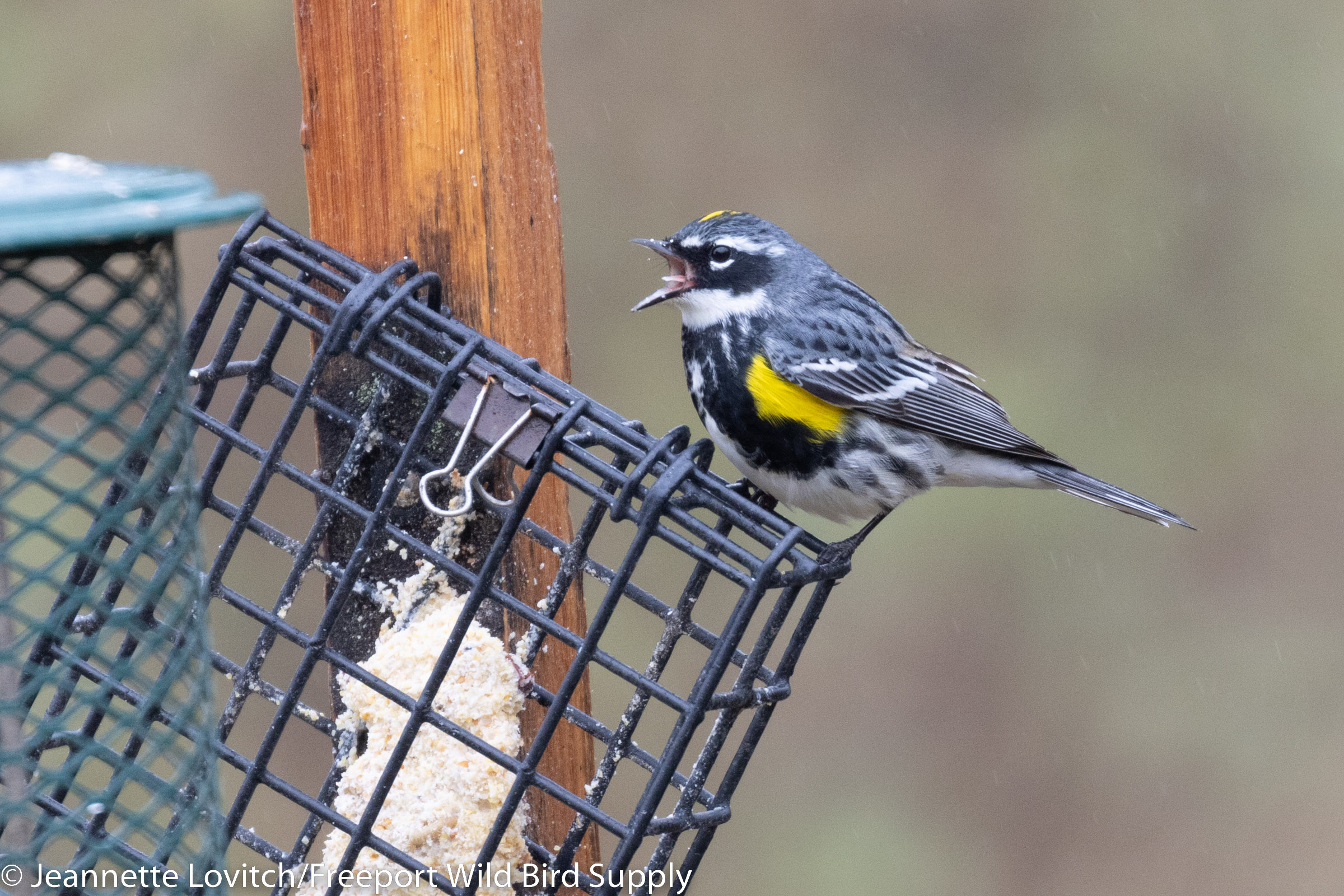
As is often the case with prolonged cool, wet spells in early spring, Yellow-rumped (and Pine) Warblers descended on feeders. By week’s end, at least 14 were devouring suet, nuts, mealworms, and jelly in our yard in Durham.
Migration ground nearly to a halt for most of the week with a persistent onshore flow and lots of precipitation. Wednesday and Thursday nights, however, saw some good flights of passerines, with hawks moving once again on Thursday and Friday. My observations of note over the past seven days included:
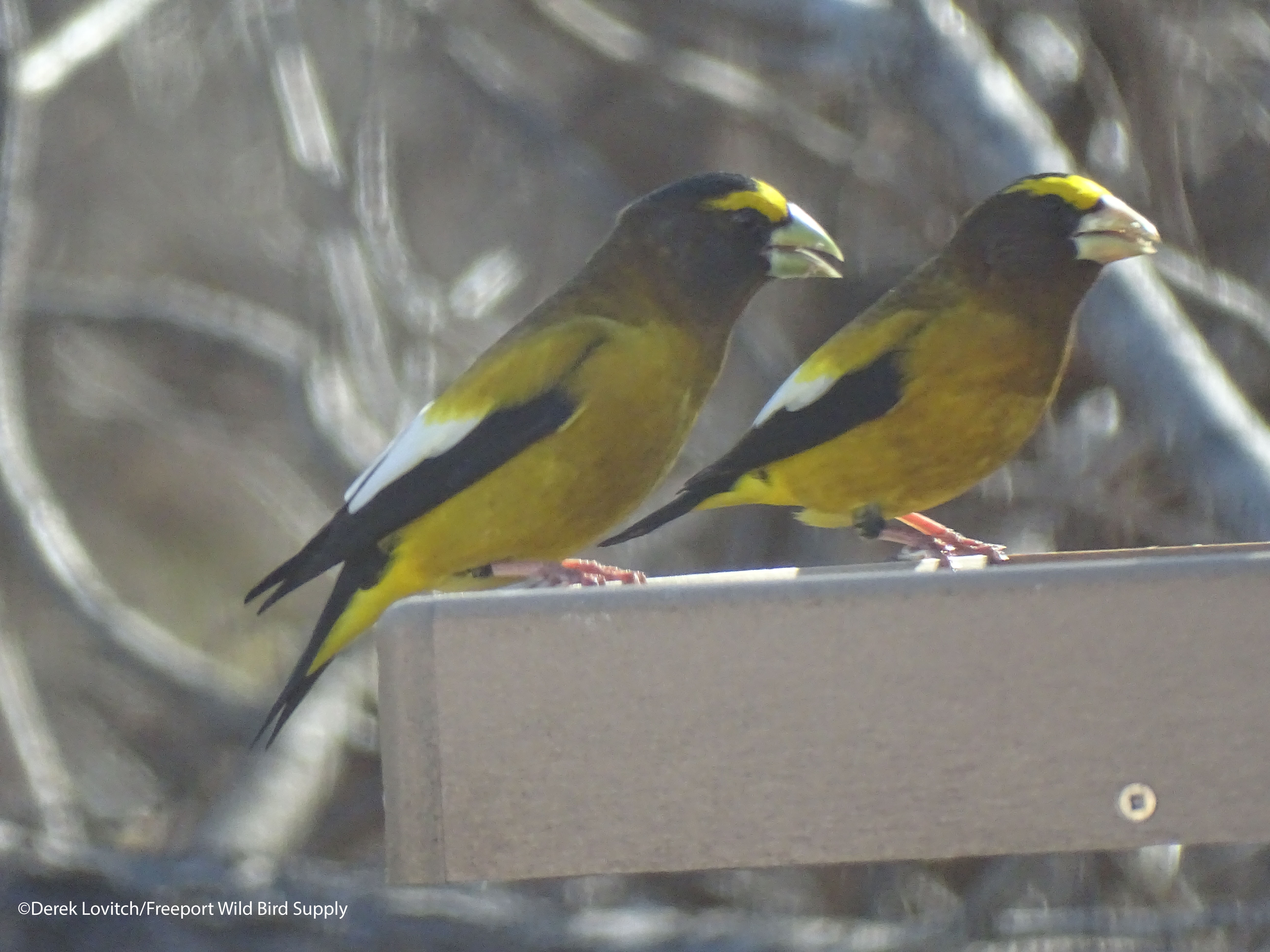
1 female Evening Grosbeak, our feeders in Durham, 4/22.
This weekend (April 29-30) is the 13th Annual Feathers Over Freeport that we sponsor with public and private partners at Bradbury Mountain and Wolfes Neck Woods State Parks. We have a full slate of events all day, each day once again. The entire schedule and more information can be found here. All events are free with park admission.
For the third week of April, this is not a very impressive report – especially in terms of new arrivals! However, we were in Boston for three days cheering on Jeannette in the Boston Marathon (she did great…Go Jeannette!) and well, now I have frozen shoulder. So, field time remains woefully limited. Nonetheless, I had some observations of note (in Maine) over the past seven days:
~40 Yellow-rumped Warblers (FOY), 40+ Palm Warblers, 8 Pine Warblers, etc, Florida Lake Park, Freeport, 4/15 (with Saturday Morning Birdwalk group).
3 EVENING GROSBEAKS, our feeders in Durham, 4/19-20.
My other personal FOY’s this week also included:
2 Swamp Sparrows (FOS), Florida Lake Park, 4/15 (with Saturday Morning birdwalk group).
1 Pied-billed Grebe, Morgan Meadow WMA, 4/21
1 LOUISIANA WATERTHRUSH, Morgan Meadow WMA, 4/21.
1 Broad-winged Hawk, over I-295, Yarmouth, 4/21 (with Jeannette. Finally! I have really been missing spending time at the Brad!)
TOURS AND EVENTS:
Next weekend (April 29-30) is the 13th Annual Feathers Over Freeport that we sponsor with public and private partners at Bradbury Mountain and Wolfes Neck Woods State Parks. We have a full slate of events all day, each day once again, plus a Thursday night (4/27) kick-off presentation at Patagonia in Freeport!
Our first tour of the season, a roadtrip for work, lots of new arrivals, and more good feeder-watching, but the highlight of the week for me was the awesome congregation of Ring-necked Ducks at Corinna Marsh.
Evening Grosbeaks continued at our feeders in Durham, with 5 on 4/8 and 2 on 4/9.
Great performance by American Woodcocks (at least 5-6) including one landing in the open before dusk during our “Woodcocks Gone Wild!” Tour at Pineland Farms on 4/8.
1 Evening Grosbeak, Shawmut Dam, Fairfield, 4/10.
Incredible concentration of _576_ Ring-necked Ducks on the partially-open Corrina Marsh, Corrina, 4/10.
Personal first-of-years and new arrivals:
1 Brown Thrasher, our feeders in Durham, 4/8 (Yard Bird #126!)
Saturday Morning Birdwalks return tomorrow, 4/15! As always, meet at the store at 8:00am for a carpool to a local park.
Join us at Maine Beer Company on Wednesday, April 19th for their monthly Community Pizza Night to support Feathers Over Freeport! 20% of food sales between 4:00 and 8:00pm will be donated to the upcoming event. https://mainebeercompany.com/visit-us/calendar/community-pizza-night-5
Speaking of Feathers Over Freeport, Community Pizza Night at MBC is the first of two pre-event events leading up the fun-filled weekend. For a full schedule, see: http://www.maine.gov/feathersoverfreeport
Three Evening Grosbeaks at our feeders in Durham on the 3rd was a highlight this week; they were our first here this year.
It didn’t feel like it on most days this week, but spring was still in the air. My observations of note over the past seven days included the following:
3 male Evening Grosbeaks, our feeders in Durham, 4/3.
1 Pine Warbler (FOY), Brown’s Point Road, Bowdoinham, 4/4.
I enjoyed a fantastic visit to the Mouth of the Abby in Bowdoinham on 4/4. The tally:
1 drake “EURASIAN” GREEN-WINGED TEAL
1 drake “EURASIAN” X “AMERICAN” GREEN-WINGED TEAL HYBRID
269 American Black Ducks
264 Green-winged Teal
90 Canada Geese
28 Mallards
13 Wilson’s Snipe (FOY)
11 Common Mergansers
6 Ring-necked Ducks
4+ Mallard x American Black Duck hybrids
2 American Wigeon
2 Common Goldeneyes
2 Buffleheads
2 Lesser Scaup
1 pair NORTHERN SHOVELERS (FOY)
1 pair Blue-winged Teal (FOY)
1 Hermit Thrush (FOS), Florida Lake Park, Freeport, 4/5.
2 male Evening Grosbeaks, our feeders in Durham, 4/7.
Now that I am back in the field and at work a little more, my feeder-watching at home is just a little less frequent. However, as you can see above, we had some good visitors this week. For continued weekly updates, you can follow “Feeder Watching Friday” posts each Friday on our store’s Facebook page. This week was certainly interesting at the feeding station.
Tour Notes:
Our annual “Woodcocks Gone Wild!” trip at Pineland Farms was rescheduled to Saturday, 4/8 and we are a go. More info here.
Despite a few wintery days this week, spring is most definitely in the air. As I have finally seemed to have turned the corner with my dreadfully slow recovery, I am also getting out a lot more. Therefore, with more to report, and more changes week-to-week, I’ll try to get back into my old habit of weekly posts here.
Observations of note over the past seven days:
increasing number of blackbirds
first trickle of migrant sparrows
1 SNOW GOOSE, our property in Durham, 3/27.
increasing number and diversity of waterfowl inland.
1 Tree Swallow (FOY), Bradbury Mountain Hawkwatch, 3/31.
Despite only getting out into the field twice this week, I enjoyed some good birding. For now, my birding remains primarily feeder- and yard-watching, but this week, it was more evenly split between our feeders at home in Durham and here at the store in Freeport. Blackbird flocks are officially “in” and several species of sparrows are on the move.
At home, Common Grackles and Red-winged Blackbirds are now present daily, in varying numbers (between 4 and 56 and between 3 and 26, respectively), with one or two Brown-headed Cowbirds on most days. Similarly, at the store, small flocks of Common Grackles come and go, but 7 Red-winged Blackbirds are more consistent. One Brown-headed Cowbird made only one appearance here.
A Fox Sparrow that arrived last Friday departed on Tuesday night, and a second Song Sparrow arrived this week. Dark-eyed Juncos continue, with fewer by week’s end. However, a third White-throated Sparrow arrived on the 30th. Here at the store, four Song Sparrows continue, and 2 American Tree Sparrows arrived on the 26th– surprisingly our first two of the entire winter.
At both locations, breeding activity is heating up, too, with more territorial and courtship behaviors observed each day.
The yard highlight, however, was the Snow Goose – Yard Bird #125! -I spotted passing low over our yard on the 27th. While I didn’t technically see it from bed, I did get out of bed – where I was doing some of my physical therapy exercises to look at a large group of geese passing overhead. You may not be surprised to know that we have a pair of binoculars in every room, which is a good thing, as I was able to pull out the lone Snow from a flock of about 75 Canadas.
Speaking of binoculars, I need to take a moment to plug my Zeiss SFL 8×40’s. I fell in love with them when they came out last year, and I was very thankful for them when my shoulder was in pain. They’re just so incredibly lightweight, but I have found minimal tradeoff in brightness, color, etc. Since I am still a one-armed birder, they have been absolutely critical for my ability to look at birds when out and about now. Great balance combined with the light weight just makes them perfect for holding steady with one hand. I do need to rebuild my stamina, however, as there has been a lot of atrophy of field birding muscles over the last 2+ months!
Anyway, back to waterfowl….another highlight this week was the arrival of Wood Ducks in our backyard. A pair have been frequenting a vernal pool we can see from the house for the last few days, and Jeannette spotted them sitting in the trees just off of our porch on the 29th. Three more drakes are frequenting a pond across the street, where a pair of American Wigeon (my first of the spring) plopped in on the 30th).
Finally this week, I was able to get back up to the Bradbury Mountain Hawkwatch for a couple of hours on Friday. A few raptors were on the move (much less than we expected given the conditions), but I did pick up my first Eastern Phoebe and Tree Swallow of the year. Later that afternoon, another phoebe was staking out a territory around our house.
Quite likely the same individual that was first found in Portland before relocating to Thornhurst Farm in North Yarmouth, this Barnacle Goose was found on North River Road in Auburn on the 22nd. Dan Nickerson and I caught up with it two days later, here, on the 24th.
This (Two) Week’s Highlights:
Birding in Kentucky with the Beckham Bird Club
Changes at the feeding station.
Bradbury Mountain Spring Hawkwatch gets underway!
American Woodcocks are going wild!
2 Brown-headed Cowbirds (FOY), our feeders in Durham, 3/17 (with Dan Nickerson)
2 Common Grackles (FOY), our feeders in Durham, 3/18.
3 displaying American Woodcocks (FOY), our property in Durham, 3/18.
1 continuing BARNACLE GOOSE, North River Road, Auburn, 3/24 (with Dan Nickerson).
1 Fox Sparrow (FOY), our feeders in Durham, 3/24.
In contrast to my previous 8 weeks (summarized here and here), this period began with actual birding…in Kentucky! I had the pleasure and honor of giving a presentation at the Annual Meeting of the venerable Beckham Bird Club of Louisville. It was my first time birding beyond Greater Durham in two months; a most welcome change of scenery. But I must say, flying with a recovering shoulder really kinda sucks.
My new Kentucky state list kicked off on the morning of the 14th thanks to a local birding tour from Andrew Melnykovych. Starting at his patch, the Grand Allie section of Beckley Creek Park, I started to familiarize myself with the local wintering avifauna. I enjoyed revisiting with Carolina Chickadees in particular, with Black Vultures joining Turkey Vultures overhead. The weather didn’t feel like it, but I was definitely in the South!
That evening, I spoke to over 100 people at the banquet, offering my program about the Morning Flight at Sandy Point to describe concepts and techniques described in my first book, How to Be a Better Birder.
The following morning, I joined club members on a birdwalk to the delightful Anchorage Trail in the nearby town of Anchorage. Passing through a variety of habitats on an easy, paved, two-mile trail, we spent the morning slowly working through the various species we encountered (43 I believe was the official tally). Being from Maine, it was nice to hear Eastern Phoebes (overwintering and/or returning migrants), oodles of Carolina Wrens, and a nice variety of ducks in the pond: one Green-winged with a half-dozen Blue-winged Teal, Northern Shovelers, Gadwall, Hooded Mergansers, Gadwall, Ring-necked Ducks, and Mallards (photo above). I also enjoyed the woodpecker sweep: Downy and Hairy, Pileated and Red-bellied, Yellow-bellied Sapsucker, and Northern Flickers.
While it will be a little while longer before our Saturday Morning Birdwalks return, it was sure nice to get out in the field on a pleasant (by Maine standards that is!) early spring morning to help folks see some birds!
But then it was back to my usual routine. Arriving at home at 1:30am on Thursday the 16th, it wasn’t exactly an early start to my window-watching day, however. Not surprisingly, I spent less time looking out at our feeding station over that week than I have at any point over the past two months. Being out of town for three days coupled with a few visits to the store and lots of physical therapy resulted in fewer hours spent evaluating feeder bird numbers. Sharp-shinned Hawk presence didn’t help either, with our adult male continuing.
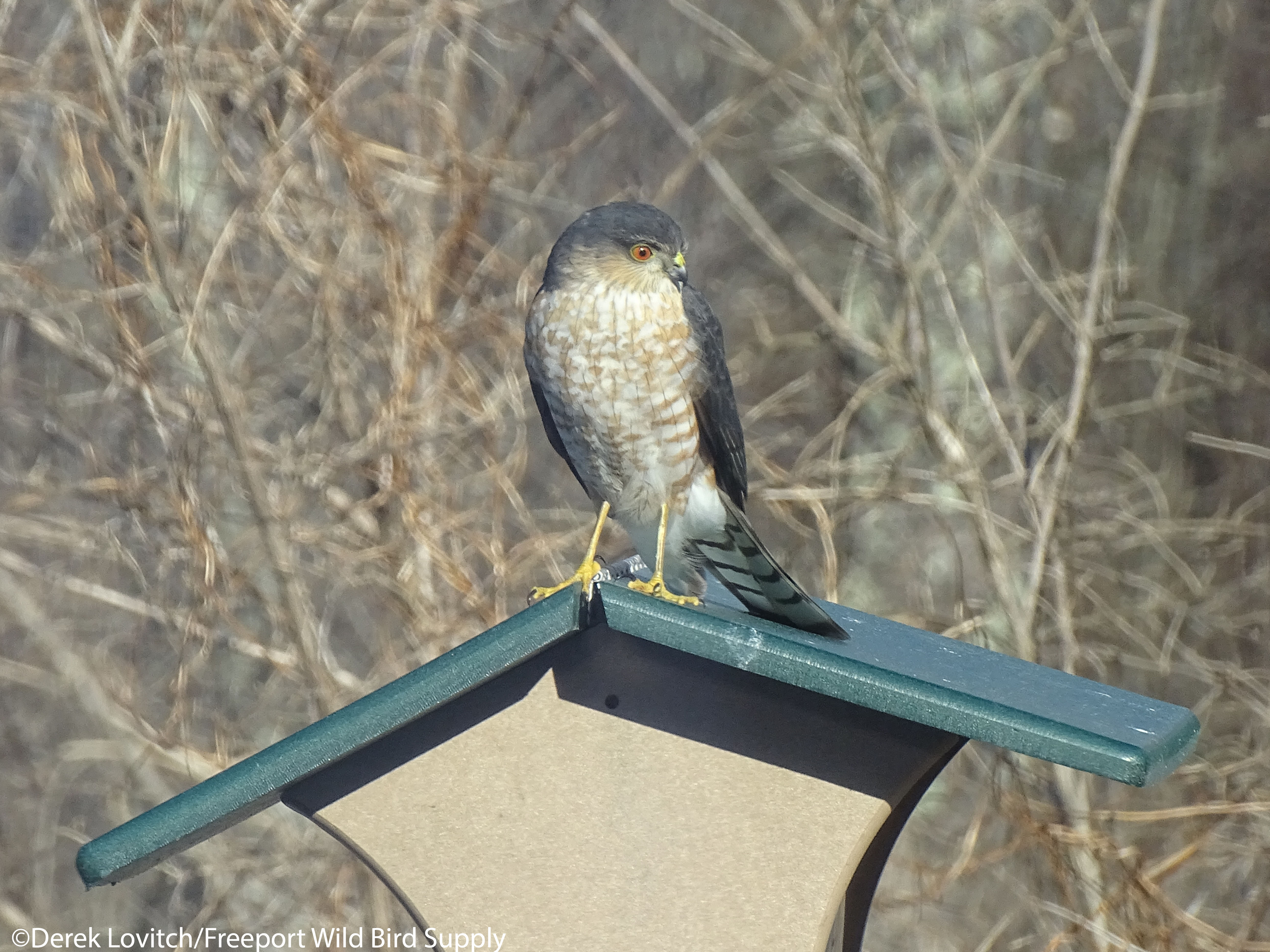
This continuing adult male continues to wreak havoc at the feeders, but my consistent observation this winter has offered me insight into this species’ natural history.
Nonetheless, there were plenty of changes in species composition and quantity noticed this week. We only received about 5-6 inches of snow here in Durham as temperatures hovered around the freezing mark for most of the day on the 14th, preventing accumulation until the late afternoon. In fact, there was less snow on the ground two days after the storm than there was the day before the storm (that was far from true for most of the state, however.
Not surprisingly, there were fewer Dark-eyed Juncos and American Tree Sparrows this week. Three Red-winged Blackbirds are regular, while the high counts of Northern Cardinals and Eastern Bluebirds continued to decline as territories began to be established and enforced. We also saw a noticeable decrease in the size of our American Goldfinch flock this week. Then, in the afternoon, my first two Brown-headed Cowbirds of the year (in Maine, that is) appeared.
The following week was much more spring-like, and the avian changes were even more evident. At least here in Durham, and changes to species composition and quantities are happening fast now.
Natural food is becoming more available as the snow recedes and the first “new” food sources emerge. A new uptick in American Goldfinches to 45 on 3/23 saw most of the birds spending most of their time eating aspen buds. Although a Pileated Woodpecker remains in the area, I did not see it visit the feeders once this week. We still have 8-12 Dark-eyed Juncos around, but they are often dispersed under brush away from the feeders. Our overwintering male Red-bellied Woodpecker, pair of Red-breasted Nuthatches, and our Carolina Wren have also spent considerably less time at the feeders this week. And not a single House Finch.
The last of our two American Tree Sparrows of the winter departed on the 17th, but a presumably new bird – a migrant – was at the feeders on the 21st through the end of the week. Our first Song Sparrow of the year arrived on the 18th and has been under the feeders since. Two White-throated Sparrows continue as well, and our first Fox Sparrow of the year appeared in the evening on the 24th.
While one Brown Creeper has been regular in the trees immediately behind the feeding station for a couple of weeks now, we now have a pair, and on the 23rd I spotted one of them creeping on the ground under a hulled sunflower tube. I didn’t see it eat anything, so I won’t count it on the feeder list quite yet, but I can see its bravery increasing.
Red-winged Blackbirds are now here to stay, with 2-3 territorial birds occasionally joined by migrants (high of 14 on the 21st), while we had Brown-headed Cowbirds (1-2) on two days this week. After our first two Common Grackles of the year briefly visited on the 18th, a flock of 22 dropped by on the 21st.Also on the 21st, we had 2 Pine Siskins – our first here since January 21st. I also spotted our first Turkey Vulture over the yard this year later that day.
Meanwhile, my yard-listing gears shifted from sorting through commuting gulls to commuting geese. With growing numbers of Canada Geese beginning to arrive starting on the 17th, flocks would often be visible from the window and over our yard as they commute between the Androscoggin River and local fields.
Our suspicion that the area right around our house would be a perfect place for displaying American Woodcocks was confirmed on the first warm and calm night of the spring: 3 birds displaying closely and vociferously right over our driveway on the 18th with two displaying and one silent fly-by (a female?) on the 22nd. Speaking of American Woodcocks, our first tour of the season is right around the corner: Woodcocks Gone Wild at Pineland Farms is only a week away!
Another sure sign that spring really is here, the Bradbury Mountain Hawkwatch kicked off on March 15th as usual, albeit delayed by 2 hours as the last of the precipitation cleared. It absolutely pains me that I cannot be up there, but thankfully Zane Baker has returned for his 5th season as Official Counter. While Jeannette and I will be up there much less than usual for a while longer at least, we know the count is in great hands!
I did, however, make a cameo on the 20th, spending an hour and a half to test drive my stamina. A handful of migrant raptors were spotted, and I was rewarded for the effort with a flock of 6 Northern Pintails flying by. This was my personal 144th species at Bradbury Mountain State Park, and we believe a first record for the Hawkwatch -and therefore the park itself!
Speaking of appearances, Jeannette and I appeared on Newscenter Maine’s 207 last week, discussing birds, bird feeding, and the changing climate and bird populations. Check it out!
I think my friend Dan Nickerson took pity on me – or was just tired of reading about our feeder birds? – so he was kind enough to pick me up and take me birding for the morning on the 24th for some local birding. It was great to get out, and I was most appreciative. And what a day we had!
We worked our way up the Androscoggin River, finding one 1st-winter Iceland Gull still at the Auburn Riverwalk and some new arrivals at the south end of North River Road in Auburn, including the boat launch area: a total of 10 Ring-necked Ducks and 3 Double-crested Cormorants (both being my first of the year in Maine), and off the boat launch, a small flock of 5 Lesser Scaup with one female Greater Scaup hanging out with them. The first of our three Ring-necked Ducks joined them briefly.
Further up the road, we looked for a previously-reported Barnacle Goose in the farm fields, but we couldn’t find it. There were a goodly number of Canada Geese around though, and with birds in and out of gulleys and presumably moving back and forth from the river, we decided to check back later.
We looked for Snow Buntings and the like along Upper Street in Turner, kept an eye out for frugivores, and then paid the Lower Street Harris’s Sparrow a visit. I saw this bird back on January 13th, but it was too good of a bird to not see again. When it immediately popped out of its favored bush, Dan got a life bird and I enjoyed a nice long view (but not so much photographs with one hand in a cold and gusty wind!).
We then returned to North River Road where I spotted the Barnacle Goose immediately this time. We savored this sighting – Dan’s second lifer in an hour! – and photographs were more successful (see above). We decided to celebrate with Thai food and broke for an early lunch as my shoulder was starting to whine a little about all of this excitement and activity. Thai food made everything better though, as it usually does.
Hopefully, I have finally turned the corner on my slow recovery, and next week will feature a little more time in the field and at the store, but for now, I will continue to track feeder birds in between.
This adult male Sharp-shinned Hawk was our fourth individual “Sharpie” identified at our feeding station this winter.
With the dreadfully slow pace of recovery following shoulder surgery, my birding these past three weeks was once again mostly outside our windows here at our home in Durham. One unseasonably mild week was followed by a week of below normal temperatures and several snow events. Then, the period finished out with spring-like feel. It was fascinating to track the ebbs and flows of feeder activity with each change in the weather and the progression of the season.
Highlights over the last 3 weeks:
2 Red-winged Blackbirds (First of Year), our feeders in Durham, 2/23.
Continued Sharp-shinned Hawk saga at our feeders.
Scattered Turkey Vultures and more Red-winged Blackbirds returning the area in the second week of March.
1 hen Barrow’s Goldeneye, Bernard Lown Peace Bridge, Auburn/Lewiston, 3/7 (with Jeannette).
Compared to the previous weeks –which I summarized in my last blog – unseasonably mild weather and a rapidly diminishing snowpack, activity at the feeders here in Durham continued to decrease during the week of the 2/13. The mixed-species foraging flocks had mostly broken up already, so it became harder to tell how many of each resident are around. However, a female Red-breasted Nuthatch rejoined our overwintering male, and we do have at least 12 Black-capped Chickadees now. There still seems to be two pairs of Tufted Titmice, but they no longer tolerate each other’s company.
Eastern Bluebirds (down to a pair daily) and Northern Cardinals (down to two pairs) decreased, but there was a noticeable increase in Dark-eyed Juncos this week: I saw around 20 under the feeders on 2/19 (up from 10-16), but there were more in the bushes. We have a little “evening flight” where the juncos leave our yard and scrub, fly down our driveway, and across the street into woods with thicker evergreen cover to spend their winter nights. I counted 34 that day as they departed the feeders and the woods behind it. With more bare ground, a lot of our ground feeders (also including Mourning Doves) were not frequenting the feeders as much, as expected. We still had 5 American Tree Sparrows and 2 White-throated Sparrows, however, carrying over from last week.
Signs of spring were everywhere. I caught a pair of Mourning Doves copulation on the 19th, and I began to see daily Canada Goose flocks moving between the river and the opening nearby farm fields. Common Mergansers returned to the Androscoggin River across the street from our property the next day. Woodpeckers were drumming more this week, and birdsong noticeably increased.
Then came the snowfall on the 23rd, and the accumulation brought a renewed surge of activity to the feeders, and a return to winter. The highlight was my first two Red-winged Blackbirds of the year, adding more color to a birdy day. Northern Cardinals jumped back up to 7, American Tree Sparrows increased to 10, and a third White-throated Sparrow arrived. Mourning Doves increased to 24, Eastern Bluebirds were back up to 7, and 3 House Finches returned.
Other than the Red-wings, these are mostly local birds that had begun to spread out, but returned to the supplemental food with the fresh snowfall. There did seem to be a legitimate increase in Dark-eyed Juncos that week, however, which may have included some early migrants. Meanwhile, 30-40 American Goldfinches continued daily, although once again we were sans winter finches except for a single female Purple Finch on the 21st.
Now, with a return to some significantly cold temperatures and more rounds of snow, I expected feeder-watching to be excellent during the week after that first storm. And sure enough, three bitter cold mornings followed by two more bouts of snow resulted in increased feeder activity overall yet again.
We continued to see 16-20 species a day at the feeders, although the wintery week pumped the breaks on new arrivals. Last week’s Red-winged Blackbirds likely turned back around when the snow began to accumulate, for example. A small bump in daily counts of Dark-eyed Juncos and American Tree Sparrows could involve some northbound migrants, but probably more likely were local birds concentrating again as snow piled up. Our 3 White-throated Sparrows continued. There was a definite uptick in American Goldfinches, however, with a high count of 46 on the 28th.
We saw fewer Eastern Bluebirds, Northern Cardinals, and Blue Jays most days that week compared to weeks prior, likely as these birds start setting up territories and/or begin to disperse. Lots of Hairy Woodpecker drumming and Tufted Titmouse singing this week, too, despite the return to full-on winter weather. Our lone overwintering male Red-breasted Nuthatch has also become less frequent. Unfortunately, 2-5 European Starlings became more regular – come on Sharpie, help me out here!
On Saturday the 4th, 12.5 heavy, wet inches accumulated here in Durham, burying our brush pile once again. Not surprisingly, ground-feeders didn’t appreciate that very much, especially with the continuing Sharp-shinned Hawk activity. Two “Sharpies” were present this week (see below) both an adult male and the return of a sub-adult male. Our brush pile is critical -as it often is in open areas and following new construction – for birds’ safety, and when buried under snow, it didn’t have a lot of accessibility to hide.
On the 5th, for example, the subadult male was seen for the first time in a few weeks, and after just missing a Tufted Titmouse diving off the feeders, it perched conspicuously next to the brush pile for over an hour. The next day, the adult male was staking out the feeders during my prime feeder-watching time of the morning, dramatically reducing my day’s tallies once again. There were times this week when the only bird in view out the window was a Sharp-shinned Hawk!
As the weather improved and snow began to melt rapidly as the week went on, Dark-eyed Juncos and Northern Cardinals in particular returned to previous weeks’ highs, finding safety when necessary in the brush pile once again. American Tree Sparrows had decreased to only 2 by week’s end, however, this may reflect the season more than anything; tree sparrows are among our first birds to start heading back north. Overall though, daily averages were down, but when all was said and done, the week’s high counts were very similar to previous weeks for most species.
Eastern Bluebirds have been fewer this week, likely as birds begin to disperse to breeding territories. And I have officially lost control of counting the number of Black-capped Chickadees and Tufted Titmice that are now visiting as they come randomly now instead of as a tight-nit mixed species flock(s) as they do in the winter. Another sign of the season was the arrival of 5 male Red-winged Blackbirds this morning (3/10), our first here since one on 2/23. Now, it’s possible they are here to stay.
In addition to marked changes in the weather, daily activity and consumption ebbed and flowed with Sharp-shinned Hawk presence and activity as I mentioned above. I would say my most fascinating observations this constant feeder-watching vigil provided was the Accipiter drama. I am sure this is happening everywhere, all of the time, but my unusual observation duration and frequency offered the rare opportunity to study the predator presence.
The adult female that has been present most of the winter and has provided much of the said drama continued to be spotted in the yard through the end of February. However, much to my surprise, yet a different bird was present on a couple of days during the week of the 27th: a new adult male. This makes the fourth different Sharp-shined Hawk that we have hosted this winter. Then, during the snowstorm on the 4th, a poor view of a Sharpie strongly suggest the subadult male that I saw only one day about three weeks prior. The saga continues! That ID was confirmed the next day, and he was seen repeatedly for the rest of the week. The adult male was also spotted a few more times through at least the 6th.
A second-winter male Sharp-shinned Hawk also returned to the scene this week.
Meanwhile, at the store in Freeport, two Red-winged Blackbirds that first appeared on the 19th increased to 7 during the snow, and a second Song Sparrow joined our single overwintering individual that week.
I have started to spend some time at the store in my continued limited-capacity, enjoying the feeder activity there was well. I was treated to the most activity that we have had there in a while on the 3rd, for example. We need our local Cooper’s Hawk to return as the Rock Pigeon flock is building again. But unlike at home, Red-winged Blackbirds continued, with 2-3 still present from a high of 7. We had a surge of American Goldfinches (from only 2-4 for most of the last few weeks to 12+. Our single overwintering Song and White-throated Sparrows continue, and 4 Eastern Bluebirds are now regular. I also welcomed back to work that day by a flock of 12 Cedar Waxwings descending on our Highbush Cranberry in the yard – a most welcome visit from one of my favorite birds!
And yes, I got out for a little birding this week, finally, as Jeannette and I visiting Auburn’s Little Andy Park and the Riverwalk, catching up with a few continuing winter birds: 1 Barrow’s Goldeneye and 3 Iceland Gulls. And when I was out and about this week (mostly being driven to and from appointments!), the renewed presence of Turkey Vultures was readily apparent.
I will be out birding a little more next week, but based on my visit with my surgeon yesterday, it looks like I’ll be forced to focus on feeder-watching for a while longer. Stay tuned!
Sharp-shinned Hawk drama has been keeping me entertained for the past month.
For the most of the past four weeks, my birding has been exclusively at our feeding station at our home in Durham as I recover from shoulder surgery. We designed our house to maximize feeder- and yard-viewing opportunities, and I am sure thankful that we did! It will come as no surprise to anyone who knows me that I don’t sit still well, so my extended feeder-watching sessions have been both mentally and physically therapeutic. It has also been quite productive! And keeping track of daily numbers has been quite elucidating.
Despite our new construction being completed (well, mostly!) in October and virtually no landscaping occurring, we have been very pleasantly surprised by the diversity and activity – a reflection of the quality of the habitat on our property (and hence why we purchased it). Nonetheless, I did not expect to be hosting 19-22 species a day at the feeding station in our first winter!
My feeder-watching vigils began the day after my surgery, on January 19th. The ebbs and flows during that first week were quite insightful. With three storm systems and snow piling up, the daily changes were noticeable, and mostly predictable. Our feeders were busiest with 22 species on 1/23 as over 14”of snow accumulated here in Durham. Numbers of ground-feeders peaked that day, with the week’s high counts of Mourning Doves (27), American Tree Sparrows (9), Northern Cardinals (11-12), and White-throated Sparrows (3). The 22 Dark-eyed Juncos was down a bit from a high of 25 following the first snowfall on the 20th.
Despite adding a third platform feeder, some ground-feeders had moved on by week’s end: 24 Mourning Doves, 14 Dark-eyed Juncos, 10 Northern Cardinals, and only 1 White-throated Sparrow remained, although American Tree Sparrows bumped back up to 9 with the snowfall of the 25th.
Eastern Bluebirds, meanwhile, had been increasing, with 4-6 daily becoming 14 by week’s end. Two House Finches became 5; they often travel with bluebirds in winter, so their simultaneous rise is not surprising. A single European Starling on 1/24 was unwelcome.
We picked up a second Red-breasted Nuthatch by week’s end, while one each of Red-bellied Woodpecker and Carolina Wren continue. Resident woodland birds that travel together in a mixed-species foraging flocks are notoriously hard to count, as it’s often impossible to know whether you are looking at the same flock or multiple flocks as they come and go throughout the day. Therefore, we are left to take the daily “high count” (maximum number of birds seen at one time) only as our “total,” so trends are harder to detect. My high count of Black-capped Chickadees did increase from 6 to 10 by week’s end, however, while a pair of White-breasted Nuthatches, 2 Downy Woodpeckers, 2-4 Hairy Woodpeckers, and 4 Tufted Titmice remain the same.
We also have a single American Crow that visits daily, an irregular visit from a male Pileated Woodpecker, and I’m trying to get a feel for the wide variation in daily Blue Jay high counts (between 1 and 10).
The only disappointment so far this winter had been our finch diversity so far. A single Pine Siskin 1/19-20 and female Purple Finches during the storm on the 23rd were our only non-goldfinches in that first week. However, our American Goldfinch flock has more than made up for it with between 32 and 74 (1/25).
But speaking of finches, the “birds of the week” those first seven days were 5 fly-over Pine Grosbeaks on the 25th. Bald Eagles and a Red-tailed Hawk regularly fly past the windows, as does the daily commute of Herring (and a few Great Black-backed Gulls) moving up and down the Androscoggin River; hoping to tease out a white-winged gull for the yard list. We’ve also had a small flock of American Robins (up to 18) feeding on Winterberry and Multiflora Rose in the past few days.
By the second week, a relatively deep, now-frozen snowpack, and only a couple of weak weather systems, resulted in less daily variation in the numbers at our feeders here in Durham. Fluctuations in counts had more to do with the day’s weather and the presence of a Sharp-shinned Hawk (see below), rather than the seasonal movements of species as had occurred with the onset of “real winter” the week prior.
A lot of species counts stabilized, such as the daily average of about a dozen Eastern Bluebirds and up to 46 American Goldfinches. However, some changes were noticeable, especially the ebbs and flows of ground-feeders: 6 American Tree Sparrows increased to 9, as many as 24 Dark-eyed Juncos decreased to 14, and after entertaining a third White-throated Sparrow for a couple of days, we are back down to two.
An impressive 13 Northern Cardinals on 1/29 was a seasonal high count, but otherwise most counts of the 18-21 species each day remained about the same. I had still not confirmed the presence of a second mixed-species foraging flock, for example, and our only finches remain the aforementioned impressive number of American Goldfinches and 4 House Finches.
Since my “observation week” begins on Saturdays, Week 3 began the morning of February 4th with some extreme cold weather. And, wow, that was some cold! Wind chill records (e.g. -45F in Portland and an astounding -108 at Mount Washington) Friday night into Saturday were thankfully short-lived. Here at our home, our windchill was “only” -21 on a low of -16F, as our anemometer was not receiving the full force of the wind.
The short duration of the cold snap – as extreme as it was – didn’t seem to have much impact on feeder birds, especially as the rest of the week’s weather was rather benign. Our Carolina Wren made it through, and overall activity and diversity was similar to last week (scroll down for previous posts).
American Goldfinches slowly declined at our feeders this (from 46 to a low of 22), likely as our birch crop is being picked clean. Sparrows were up again, however, with 15 American Tree Sparrows now after starting the week with 6. Dark-eyed Juncos spiked again to 20 on 2/5-6 before settling back down to 18; three more than we started the week with.
A female Purple Finch returned, and a Brown Creeper was now spotted daily in the trees immediately behind the feeding station. And a single Wild Turkey has returned to the feeders after being absent since early winter. Unfortunately, a pair of European Starlings were now present.
Two noticeable declines this week were in Northern Cardinals (from 11 to 7) and Mourning Doves (from 28 to 14). Meanwhile, Eastern Bluebirds have been far less frequent at our feeders as the week went on. This is all likely the result of direct and indirect (disturbance) effects of the continuing Accipiter saga. Daily high counts of other species were similarly affected by the presence of two different Sharp-shinned Hawks this week (see below).
Not surprisingly, the spring-like weather (including two days of record warmth) and very little precipitation reduced overall activity at the feeding station during Week 4, beginning on 2/11. We now have some bare spots on a slope now, where birds have been foraging, and the snowpack is much reduced in the woods. There’s more natural food available and less calories burned, so there’s less need for supplemental food – it’s long past time to put the “dependency on feeders” myth to bed!
Nonetheless, this week saw another uptick in Mourning Doves (high of 27) and American Tree Sparrows (of 10). Dark-eyed Juncos returned to a high of 21, but they have been spending as much time on the bare slope of our berm then at the feeders.
Eastern Bluebirds have been much less frequent this week, with a high of only 3 and they’re not visiting everyday. Same for the House Finches they usually travel with in winter –it’s just a sporadic pair now. American Goldfinches, however, remain strong, with a high of 32 this week. Our latest singleton Purple Finch has apparently moved on.
Winter flocks are breaking up, and that’s likely why the bluebirds have been less frequent; they might be spreading out already. The mixed-species foraging flock of residents are breaking up as well, and “bickering” is increasing among them, especially the Black-capped Chickadees. Meanwhile, Hairy Woodpeckers are courting now, and territorial drumming is frequent.
And then, with temperatures spiking to over 50 degrees on the 16th, Jeannette had the first Red-winged Blackbird of the year flying north overhead! Already. I expect diversity and daily counts to change more often in the coming weeks now.
Meanwhile, birdwatching is not just about counting, so I kept notes of interesting observations and behaviors through the duration of my time stationed in front of the window (and short walks up and down the driveway, weather and ice permitting). I enjoyed seeing the slow but sure progression of the season, as Downy and especially Hairy Woodpeckers became more territorial, and male Hairys especially began drumming, accelerating this week. A pair of Common Ravens was regularly observed, with pair-bonding flight displays increasing. Tufted Titmice and Black-capped Chickadees began singing more, too.
I’ve also conducted an experiment with some suet products that we may bring into the mix at the store. None of which, however, has come close to being as popular as our current offerings, however.
A few of my most interesting behavioral and natural history observations were:
1. 1/28: I watched a Dark-eyed Junco that was foraging along our foundation grab a large cutworm-like-caterpillar and smack it on the snow. As it began to eat it, a bluebird flew down and grabbed the caterpillar. I had not observed kleptoparasitism in bluebirds before!
2. 2/2: The male Sharp-shinned Hawk that has been hanging around was pursued and killed by a second accipiter that had been undetected by us. The brutal end to the chase took place within 10 feet of me. It was quick, I was in shock, neither a camera nor binoculars was within reach of my working arm, and I was afraid to move as I didn’t want to disrupt the proceedings – it’s the worst feeling to flush a predator from its hard-earned prey and see that prey item suffer and go to waste.
The thing is, I think the only-marginally larger predator was actually an adult female Sharp-shinned Hawk as opposed to the far more likely adult male Cooper’s Hawk. Cooper’s Hawks are known to kill Sharpies, but I am unaware of published accounts of cannibalistic Sharpies. It all happened too quickly, and accipters are much easier to identify in flight three miles away than when they are sitting in front of your face (at least as adults). Apparently I was too traumatized by the event (and/or slowed mentally by painkillers) to look at details of face pattern. But the relative size and the paler chest and less steely-back were highly suggestive of an adult female Sharp-shinned. Hopefully, it will take up the territory and I will be able to confirm its ID circumstantially. But it was a rather violent end to my feeder-watching week!
Although only circumstantial evidence, an unequivocal female Sharp-shinned Hawk was spotted (and positively identified!) the next day thereafter, leading credence to the rare cannibalism theory. It’s only circumstantial evidence, but I have little doubt this is the bird that took the male the prior day. Furthermore, I have not seen a Cooper’s Hawk here all winter. Absolutely fascinating, and I wish I had photos to document the gruesome event.
The plot thickened even further on the 8th, when I spotted (and photographed this time) a second-winter male (subadult) Sharp-shinned Hawk hunting the feeders in the morning. He better be careful out there! The woods of Durham are unforgiving!
The next week, I didn’t see him as only the adult female was around.
3. I’ve been sorting through as many of the daily commuting gulls as possible, and finally on the 15th, I picked out an Iceland Gull for our 122nd Yard Bird! Interestingly, it was an adult or near-adult, different from the 1st winter birds that have been frequenting the Lewiston-Auburn riverfront a few miles upriver.
For almost three weeks, I left the house or driveway exactly three times (a follow-up appointment, a field trip to see Avatar, and a successful chase of the Common Ringed Plover at Timber Point in Biddeford on 1/31. Jeannette dumped me in the car and we drove down – me fully reclined and with an icepack strapped on. The bird was present as we arrived, and since the word was just getting out, we even had a parking spot. She set me up behind the scope (I had to ask a fellow birder for assistance in moving it!) and then took some photos. I was pretty uncomfortable on the way home – to put it lightly – but it was absolutely worth it!
It wasn’t until Monday, February 6th (just under three weeks since my surgery) that I went out for a little birdwalk with Jeannette at the Auburn Riverwalk. It was a lovely day, and it was fantastically birdy! We found a hen Northern Pintail amongst nearly 500 Mallards, and had three 1st-winter Iceland Gulls – the most I have had here in several years. The overall bird activity was quite a bit above average, as the cold snap finally put some ice on the river and helped to concentrate birds here. Unfortunately, we did not see the Harris’s Sparrow in Turner before my body had enough of being upright.
The next day’s outing, however, was for an easy twitch. I only had to get out of the car and find some open space along the railing of the Arrowsic-Georgetown bridge over the Back River.
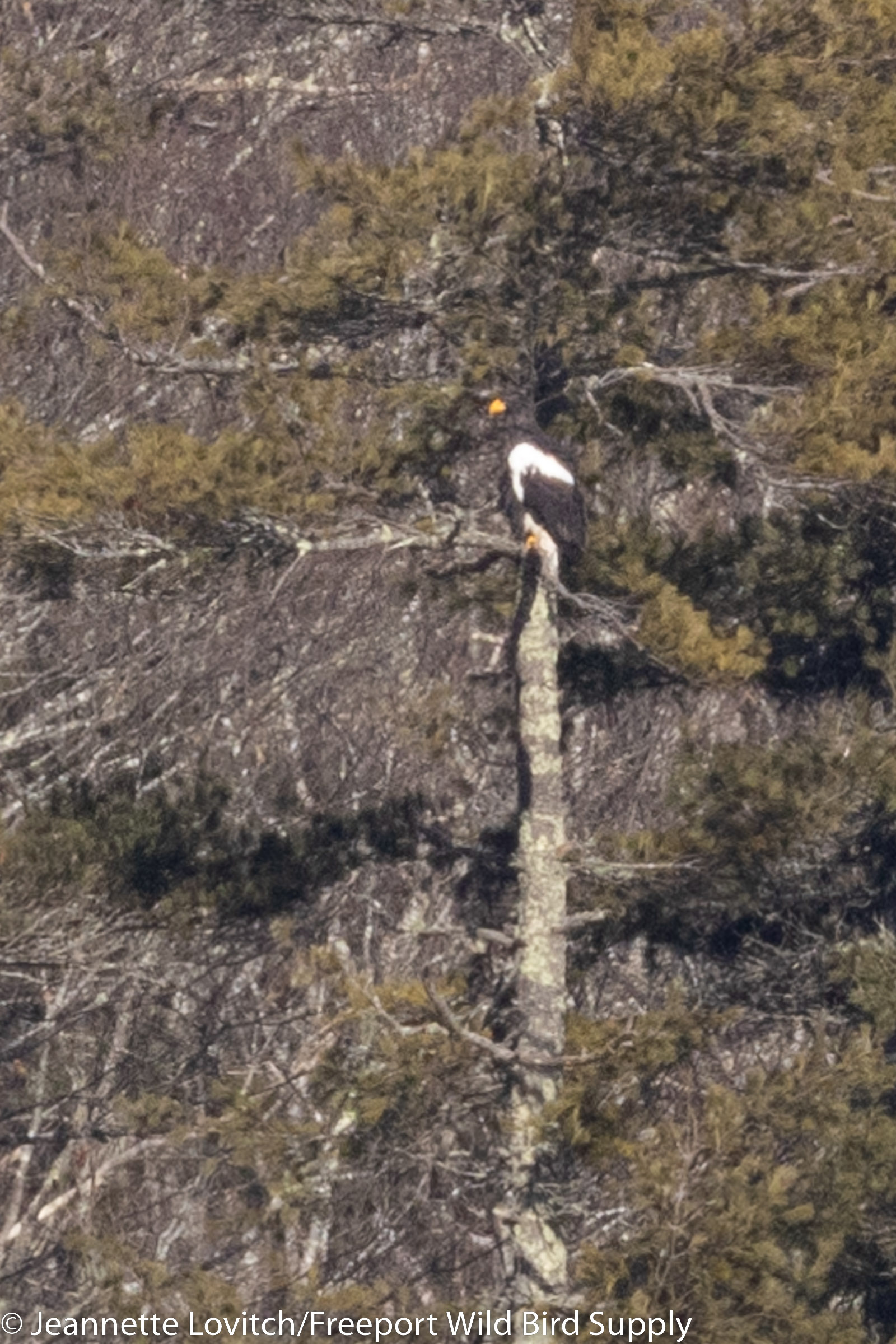
So yeah, the Steller’s Sea-Eagle is back, and it was in full (albeit fairly distant) view in our first visit with it of the year. I’ll get out of my recliner for a Steller’s Sea-Eagle any day! It was also good to catch up with a friend and get out of the house for the second day in a row.
A few days later, Jeannette and I took a walk at Winslow Park in Freeport (2/9) where we were thrilled to find 7 Barrow’s Goldeneyes (3 drakes and 4 hens), the second highest count that I have had here in nearly a decade. They put on a great show, too.
A visit to the Auburn Riverwalk on the 13th yielded only one 1st-winter Iceland Gull, while a walk along Brown’s Point Road in Bowdoinham the next day produced a couple of pioneering Northern Flickers.
So there ya have it…my last month of birdwatching. With slow progress on my recovery, I expect feeder-watching will dominate my activity for a few more weeks, but temperature swings will make that interesting…and hopefully another snowstorm or two. I need to be out and about with few limitations by the time spring is here to stay!
A remarkable bird for Maine, let alone in under-birded (away from Sabattus Pond anyway) Androscoggin County, I was privileged to be able to visit this Harris’s Sparrow on private property in Turner on the 13th, the day after we returned from vacation. It was most cooperative, being constantly in view for the 35 minutes I was there. Unfortunately, it was a dark and dreary morning, so my photos leave something to be desired!
A few observations of note over the past five days as I tried to squeeze in as much birding as I could before I undergo shoulder surgery included the following. Even if I missed the Livermore Falls Townsend’s Solitaire twice (darn it), it was a very productive week, headlined by my second Harris’s Sparrow in Maine (and one of my favorite sparrows, too!).
1 female Barrow’s Goldeneye, Bernard Lown Peace Bridge, Lewiston/Auburn, 1/13.
1 adult Iceland Gull, North River Road boat launch, Auburn, 1/13.
1 continuing HARRIS’S SPARROW (present since 1/11), private property in Turner, 1/13 (photo above).
1 Pine Grosbeak (first of season), Hillman Ferry Road, Livermore Falls, 1/13 (did not find the Townsend’s Solitaire that day, unfortunately).
2 drake BARROW’S GOLDENEYES, between Winslow Park and the Harraseekett Yacht Club, South Freeport, 1/14 (with Saturday Morning Birdwalk group).
8 Black-legged Kittiwakes, Short Sands Beach, York, 1/15 (with Down East Adventures Winter Waterbirds Workshop group).
1 adult Iceland Gull, The Nubble, York, 1/15 (with Down East Adventures Winter Waterbirds Workshop group).
Freeport Wild Bird Supply is very excited to partner with Down East Magazine’s Down East Adventures for our third year. In 2023, we are expanding our offerings to include two exclusive overnight trips, along with our popular ½- and whole-day targeted workshops. Focused on skill-builder rather than list-building, there will be plenty of “life birds,” but also more knowledge and education about birds, habitats, birding, and much more about the natural world.
The full list of upcoming tours can be found here. At the conclusion of each tour, I’ll post the trip report here.
Winter Waterbirds Workshop, January 15.
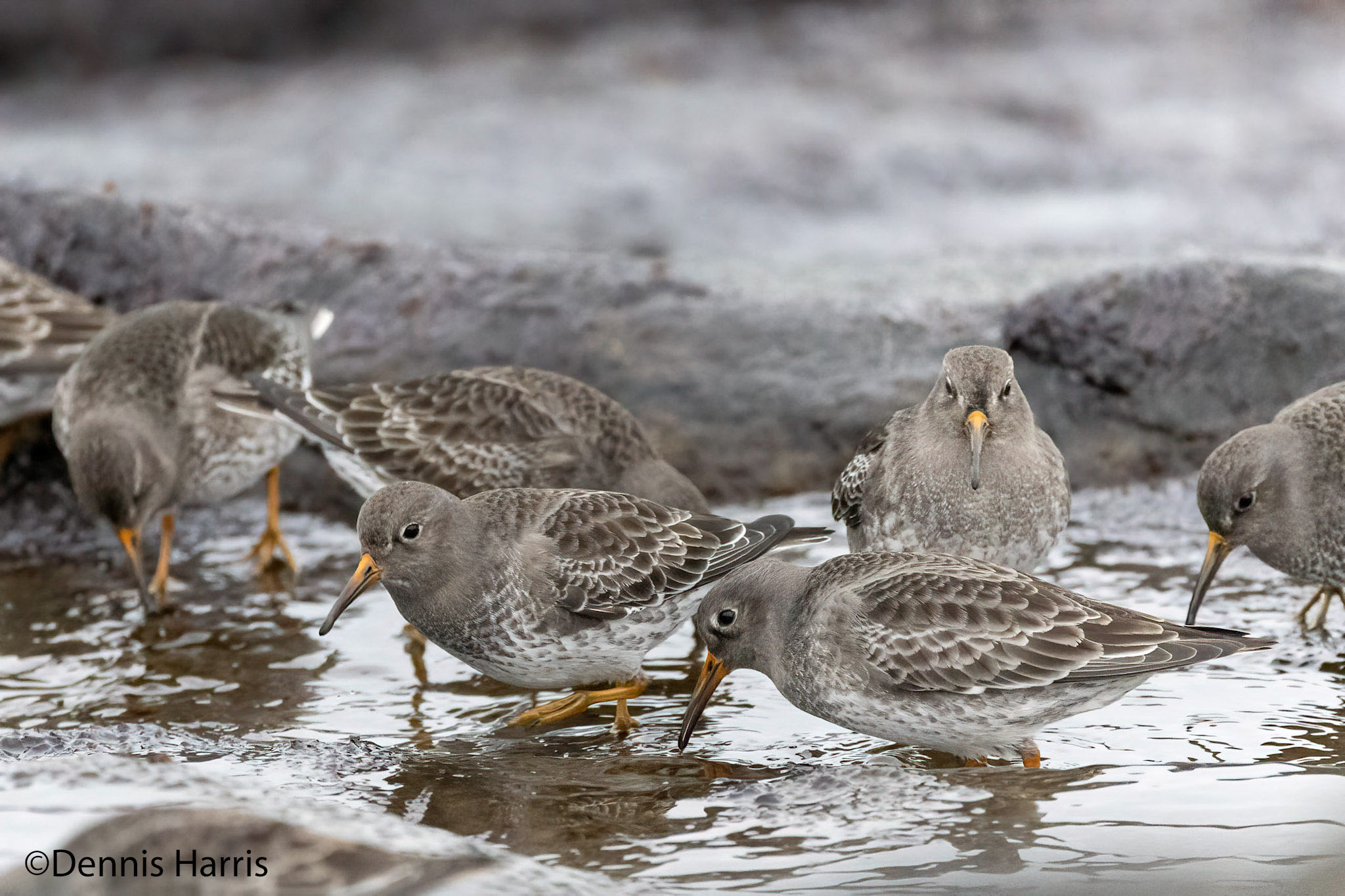
This Purple Sandpiper was about as cooperative as it gets for us at Sohier Park in York. Later, it was joined by its friends (photo below). This is really a lovely shorebird when viewed as well and as close as we experienced.
Extremely strong winds and very high seas presented a challenge as we sought out wintering waterbirds along the southern York County Coast. We worked hard to find sheltered water where we could observe birds well, but when we did find that secluded cove, peninsula lee, or rivermouth, we were treated to incredible looks at many of the birds we had hoped for.
We looked down on Red-breasted Mergansers at Perkin’s Cove, and you’ll never be closer to a Common Loon than we were at the Ogunquit Rivermouth. We checked a few more locations than I usually need to on this tour, but our most productive spot was the southern shoreline of Sohier Park at The Nubble. There, we were treated to close views of Black and White-winged Scoters, Harlequin Ducks, and a most-cooperative flock of Purple Sandpipers. We then ended the day at hidden Abbott’s Pond, where we enjoyed a break for the wind, close comparisons to study details between Mallards, American Black Ducks, and hybrids thereof.
Meanwhile, a group of 8 or so Black-legged Kittiwakes were feeding off of Short Sands Beach, and a stunning adult Iceland Gull passed by at The Nubble. Unfortunately, the seas were just a little too rough to find any alcids today, but we knew they were out there!
Spring Migrant Songbirds Workshop, May 14.
This stunning Blackburnian Warbler nicely demonstrated the value of blooming oak trees for seeing warblers in the middle of May.
Four hours later we had not left Evergreen Cemetery in Portland…a very good sign. There was just no need to move along, the birds kept coming to us. In the end we tallied a respectable 16 species of warblers, even though growing a list was not our goal. What made this workshop successful, however, was how well we saw just about all of the warblers and other songbird migrants throughout the morning.
Warblers were a highlight of course, including repeated quality time with favorites such as American Redstart and Black-and-white Warblers, the two most plentiful migrants this morning. We also enjoyed great looks at several Chestnut-sided Warblers, Magnolia Warblers, and Northern Parulas, with fantastic studies of Black-throated Blue Warbler, Black-throated Green Warbler, Yellow Warbler, and Wilson’s Warbler. We also saw two newly-arrived Tennessee Warblers which aren’t always easy to get looks at. There was a good amount of song this morning, so we had chances to listen and learn many of these species as well.
Shortly after hearing a Red-eyed Vireo and my describing it as “high up and often hard to see,” we found one in the lower branches of a nearby oak, and watched it sing, forage, and do all things vireo for almost 10 minutes! Likewise, after hearing distant Ovenbirds, we had two walking around right in front of us! Beginning with a view of a Veery on the ground in the open, we saw it again as the walk ended, only a few feet in front of us for another great view and chance to observe and study.
During the morning, we chatted about migration, habitat, and the process of building the necessary toolkit to build birding skills. Finishing the walk with a quick overview of some references (we had too many birds to leave much time for anything more), we recapped a very productive and instructive morning of spring birding.
Rangeley Birding Workshop, June 6-8.
Our first overnight tour together, the Rangeley Birding Workshop was based at Bald Mountain Camps in Oquossoc, nestled on the shore of Mooselookmeguntic Lake. Common Loons greeted us, but so did the rain. June of 2023 was one of the rainiest Junes on record in Maine, and we were very thankful for the wood stoves in each cabin!
Our first morning, 6/7, began at Hunter Cove Wildlife Sanctuary, with lots of singing Blackburnian Warblers. A large flock of Red Crossbills flew over, two Yellow-bellied Flycatchers were heard clearly and then glimpsed, and a variety of common warblers were detected. A confiding pair of Canada Jays was the highlight – as they often are – but even the common warblers were tough to see today, so we focused on practicing our birding by ear skills.
Enjoying our delicious boxed lunches at the Rangeley Waterfront Park, with more Common Loons offshore, we delved into an impromptu gull workshop, using each age class of Ring-billed Gull as an introduction to molt, feather topography, and identification. A 3rd-cycle Herring Gull kindly dropped in for comparison as well. In inclement weather, we take advantage of whatever learning opportunities the birds are willing to provide!
After lunch, we poked around the Mingo Spring Birding Loop, with good looks at the likes of Least Flycatcher, Alder Flycatcher, and Dark-eyed Juncos among others. But as rain returned, we called it a day and settled in to dry out in front of our stoves instead of an afternoon of lake-watching from the BMC property. And dinner was absolutely delicious!
Day 2 began with a brief walk around the BMC property (American Redstart, Ruby-throated Hummingbird, etc) followed by a foray over to the famous birding destination of Boy Scout Road, looking to build on the identification toolkit we worked on the previous day. We parked half the cars at one end and then walked the length of the road, birding along the way. But it was rather quiet here too – the ongoing story of June 2023. We did have some more Red Crossbills, a fantastic view -finally – of a Blackburnian Warbler, several Alder Flycatchers, and once again more Canada Jays. But this time, it was a family group of a pair with 2 juveniles in tow!
And then it began to rain. Again. A lot. But I give this group credit – they soldiered on! Of course the rain began in earnest when we were as far from either set of cars as possible, so there wasn’t really a choice, but still, spirits remained high and the birding continued. A pair of Hooded Mergansers, a singing Palm Warbler, and a Spotted Sandpiper were among the last birds of the outing, before the water had penetrated our clothing and it was time to call it a day and hope for better conditions next year!
Shorebirds Workshop, August 10.
The best way to learn shorebirds is to see them in their preferred habitats, feeding, moving, and mixing with other species, such as these Short-billed Dowitchers (a sandpiper) and Semipalmated Plovers here at Hill’s Beach in Biddeford.
An absolutely perfect day of summer weather (finally!) greeted us for this annual favorite outing. And the only thing better than the weather this day was the birding! Recent insane rainfalls have led to very high water in many of our favored high-tide, upper-marsh locales, so we focused on tidal habitats including beaches and mudflats, altering our usual routine from the start.
Beginning in Biddeford Pool, we introduced shorebirds with several Spotted Sandpipers along Ocean Avenue before jumping into the mixed species flock on Biddeford Pool Beach on the outgoing tide. There we estimated over 1,250 Semipalmated Sandpipers and 200 Semipalmated Plovers as we learned the basics of shorebird (sandpiper vs. plover) identification and began to work our way up to teasing out a couple of White-rumped Sandpipers and Ruddy Turnstones from the masses. 2 Killdeer in flight overhead were our only two of the day.
Kicking off our shoes to spend the rest of the morning on the sandflats of Hill’s Beach, we compared a Piping Plover to the many (400+) Semipalmated Plovers and 30 Black-bellied Plovers. A single juvenile Least Sandpiper was out of place on the beach, but offered a perfect opportunity to closely study the differences in shape, size, and overall structure to the 150 or so Semipalmated Sandpipers that were scattered about. 59 Short-billed Dowitchers gave us the chance to really observe shape and feeding styles, practicing identifying these birds both near and far.
Over at The Pool, a distant “Western” Willet joined 7 “Eastern” Willets, as we advanced into subspecific identification just briefly before stopping for lunch as the tide began to roll in.
The afternoon was spent at Scarborough Marsh, where our first two stops offered little (other than a calling Greater Yellowlegs to at least practice our shorebirding by ear) due to the very high water in the salt pannes from the recent rains. Pine Point more than made up for it on the rapidly incoming tide, however, with one heck of a shorebird show: 1500-2000 Semipalmated Sandpipers, 400-500 Semipalmated Plovers, a few more Short-billed Dowitchers and White-rumped Sandpipers, better looks at “Eastern” Willets, and the icing on the cake: a cooperative Whimbrel – our 13th species of shorebird for the day.
Practicing with our identification tool kit, we tested ourselves on finding the uncommon species among the masses, and took a moment or three to simply sit back and enjoy the show. Now that we know how approachable shorebird identification really is, we can more fully appreciate these most marvelous migrants!
Monhegan Birding Workshop, September 23-25.
Northern Gannets and two Green-winged Teal flying with 6 Surf Scoters from the ferry and an adult Lesser Black-backed Gull greeting us upon our arrival seemed like a great sign for what would be a bird- and fun-filled weekend on the Migration Mecca of Monhegan.
Unfortunately, it turned out to be one of the slowest (for both species and diversity) fall weekends I have ever experienced on the island. That being said, a big list wasn’t our goal. It was to learn birds – their ID, their migration ecology, and everything else that makes the island so special for birds and birders. And this is not tour guide spin: a slower day is better for that as we had ample opportunity to view almost everything we encountered, study them, discuss them, and luckily, what the island failed to provide in quantity, it certainly delivered in quality of observations.
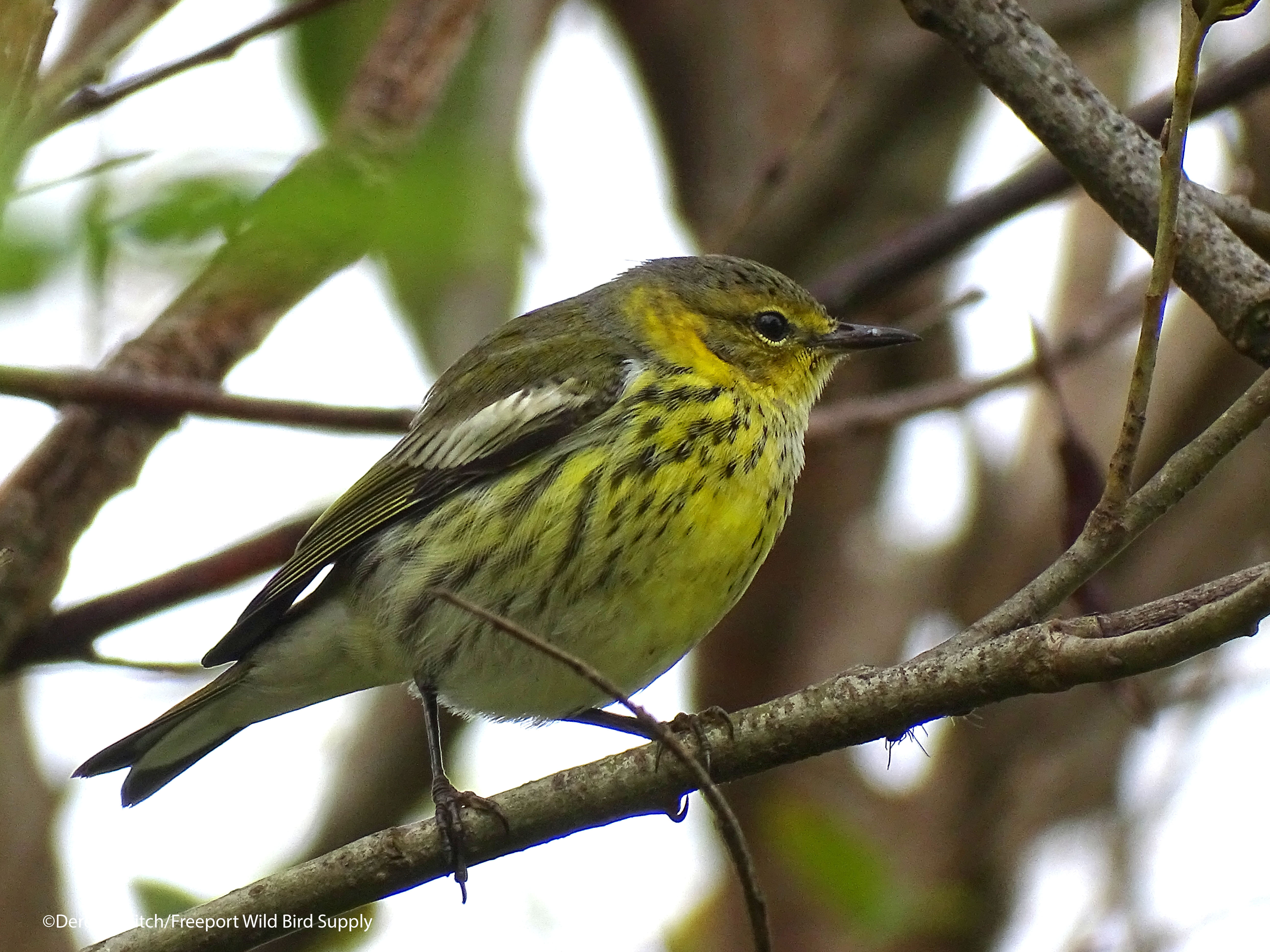
On each day, we would find pockets of warblers here and there, but we kept coming back to one particular willow and a nearby thicket that constantly hosted 4-5 Cape May Warblers (photo above), 4 Yellow Warblers, a Yellow-bellied Sapsucker, and a smattering of others. The Cape Mays put on a clinic: all four plumages from pale, 1st-fall female, to bright and spiffy adult male were on display.
Over the first day and a half, we took what the island offered, besides exceedingly pleasant weather! There was the hen Green-winged Teal feeding within three feet of us, fly-over Rusty Blackbirds in the morning, and Great Cormorants on the cliffs on an afternoon short hike to name a few highlights. The skies were punctuated by the occasional migrant Peregrine Falcon and the constantly-hunting Merlins.
Granted, we were really just looking at birds to fill the time between the incredible meals at the Monhegan House!
On our final morning, a good migration overnight produced a new arrival of birds for the “morning flight;” the concepts and nuances thereof were topics of regular discussion.
The group’s high spirits earned them a great morning, with a taste of what Monhegan birding has to offer. There were American Pipits and Yellow-rumped Warblers in Morning Flight, a flock of 10 truant Bobolinks circling around, an immature male Belted Kingfisher displaying to a very-uninterested female, more Cape May Warblers, and a surprising fly-by Wilson’s Snipe.
At one point we had four juvenile Sharp-shinned Hawks dogfighting, exemplifying the difference in sizes of male vs female raptors. And the workshopping continued with Great and Double-crested Cormorants side-by-side, migrant raptors including several Northern Harriers, and more species before breakfast than we had most of the previous weekend! Speaking of breakfasts, goodness, they were good as well.
We finished up with a gull workshop on the shoreline, opening eyes to just how easy most gulls are most of the time. The advanced course was the fly-by 1st winter Lesser Black-backed Gull amongst Herring Gulls on the ferry ride back! And yes, we looked at butterflies, too!












 Maine Birding Field Notes