Tag Archives: Zeiss

The 2023 Zeiss Pelagic Trip Report

A southerly, and rather confiding, Common Murre was one of the unexpected highlights of the Zeiss Pelagic.

On June 2nd, we ran our now-annual spring mini-pelagic with our partners Cap’n Fish’s Cruises out of Boothbay Harbor. But this wasn’t any old pelagic. Instead, it was not only a way to poke your feet into the proverbial and literal pelagic birding waters, but this was also a chance to try out a new pair of Zeiss optics. And all for a very, very special price.

Thanks to our store’s partnership with Zeiss Optics, our biannual “Zeiss Day” occurred offshore this spring. With Zeiss’s sponsorship, we were able to offer this unique trip at a special price, with extra spotters to help people see birds, and of course, with chumming.

And the weather could not be any better! In fact, we were all excited to head offshore to beat the heat on this day. Barely a puff of breeze resulted in remarkably calm seas, with the only waves caused by our boat. Thanks to the weather gods for this day offshore!

Evan Obercian, Dan Nickerson, and Jeannette helped spot birds, Noah Gibb handled the checklists, and Robby Lambert – chummer emeritus – stood at the ready as the boat’s naturalist, Kelsey, and I scanned from the wheelhouse. Our captain was amazing, and together we laid out a plan for the day. Throughout the day, Rich and Bill from Zeiss handed out binoculars to try and lots of optical questions were answered. It was a great way to test-drive a new pair of excellent binoculars, especially noting how important size and weight is when trying to hold binoculars steady on the open ocean, even without much in the way of waves.

Robby at his office.

Motoring out of Boothbay Harbor and across Muscongus Bay, we familiarized ourselves with the common denizens of Maine’s summer coast, such as Common Eiders, Black Guillemots, Common Terns, and Ospreys. Kelsey pointed out landmarks and gave a little history of the area.

Our first destination was Eastern Egg Rock, home to a thriving seabird colony thanks to the restoration efforts of Project Puffin. Leading pelagic trips in June is easy when at least some of our target birds are guaranteed!
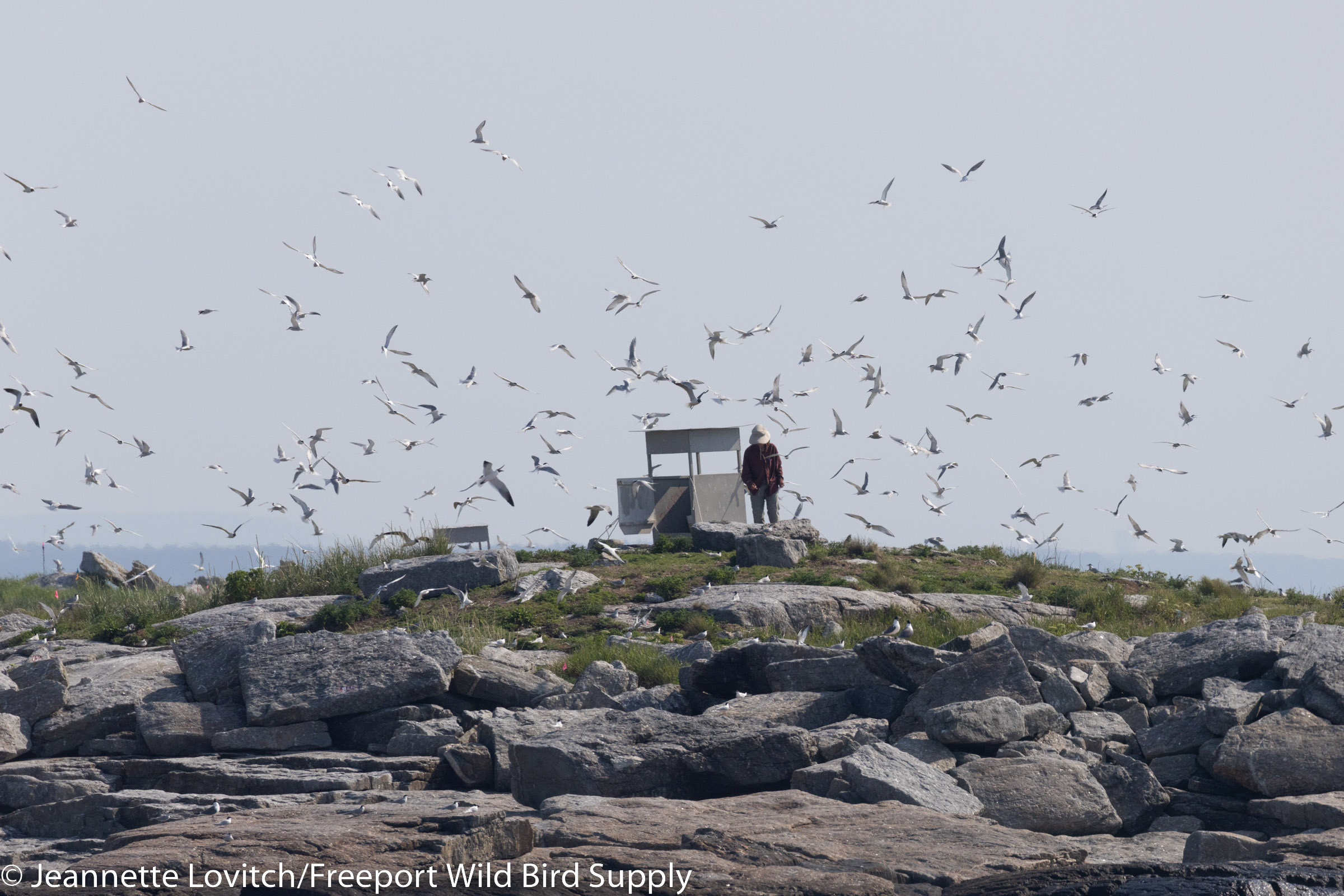
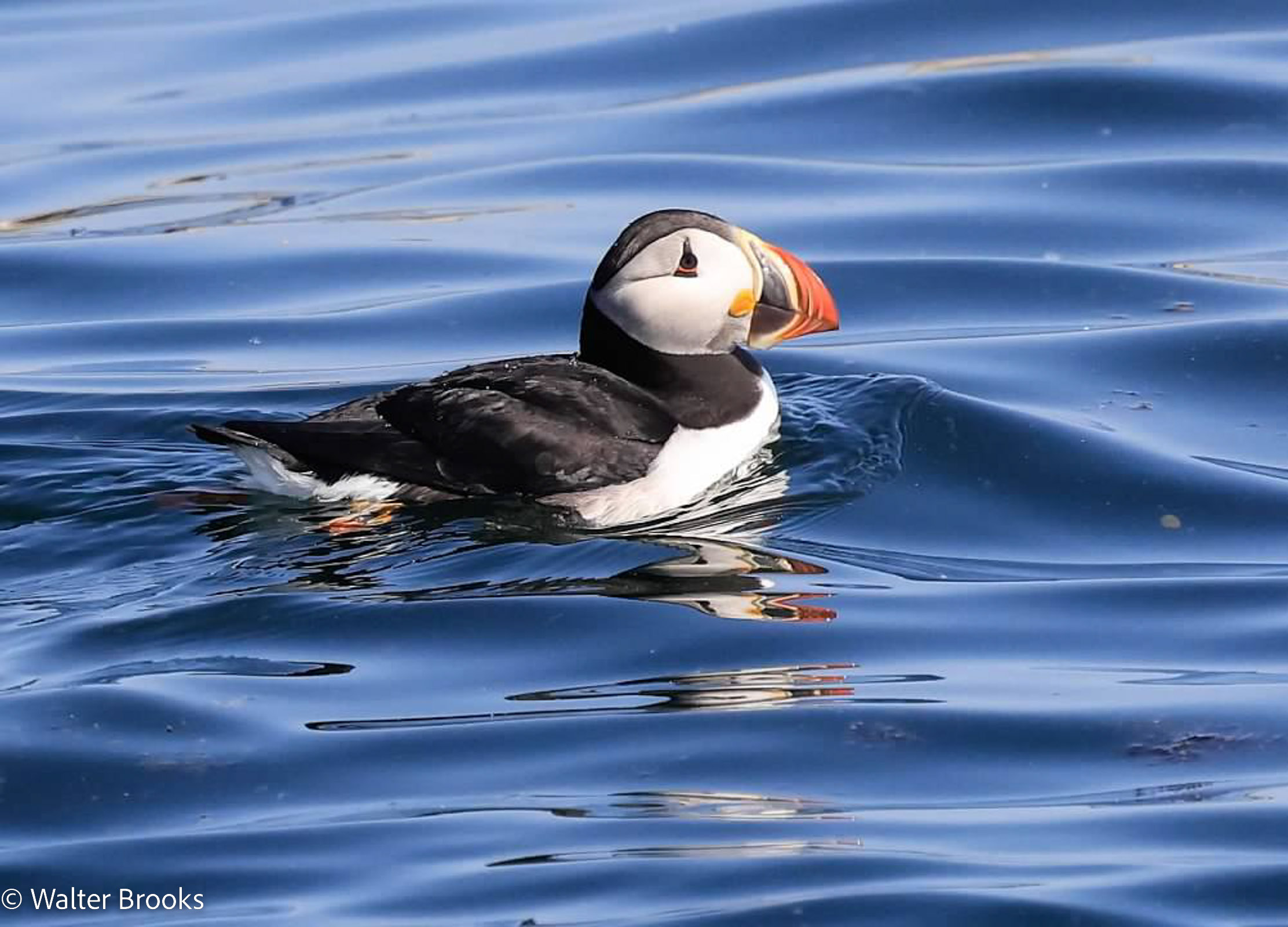
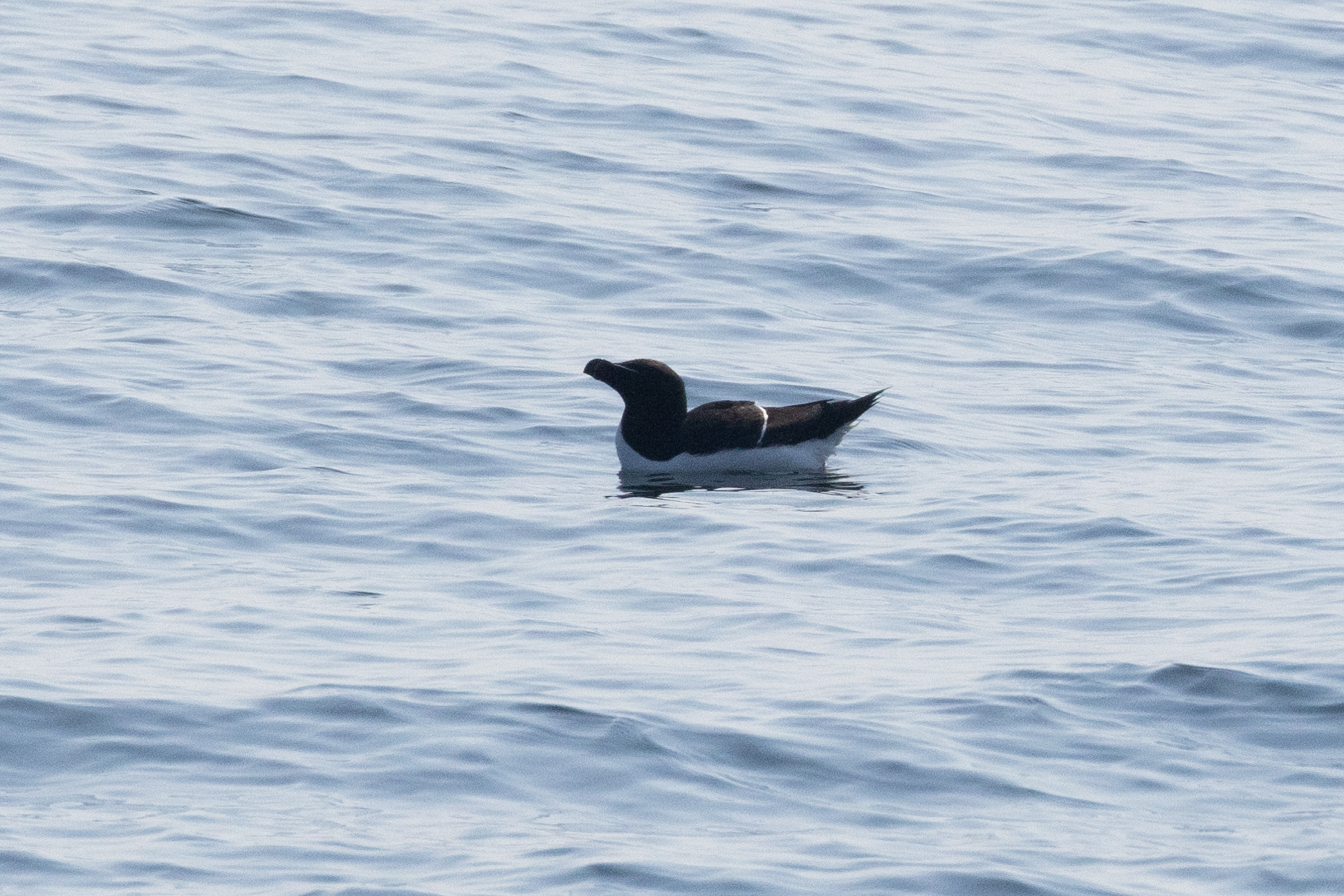
The amazingly calm conditions and unusually warmth worked in our favor, as many of the island’s Atlantic Puffins and Black Guillemots were in the water instead of loafing on the rocks, allowing us to drift closely to many of them. One of the island’s ephemeral Razorbills was spotted near the boat, giving us long and good looks as well.
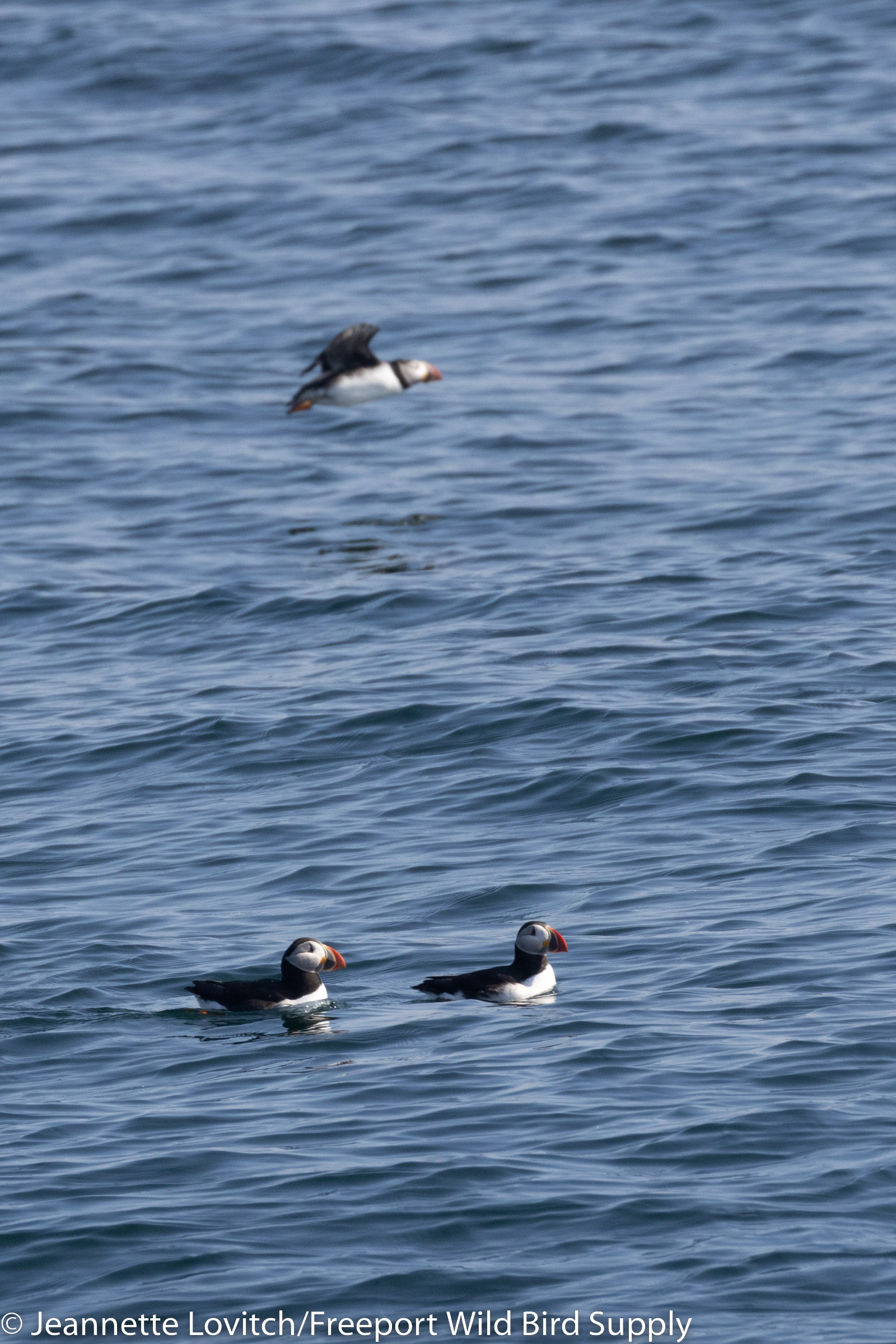
Razorbill.

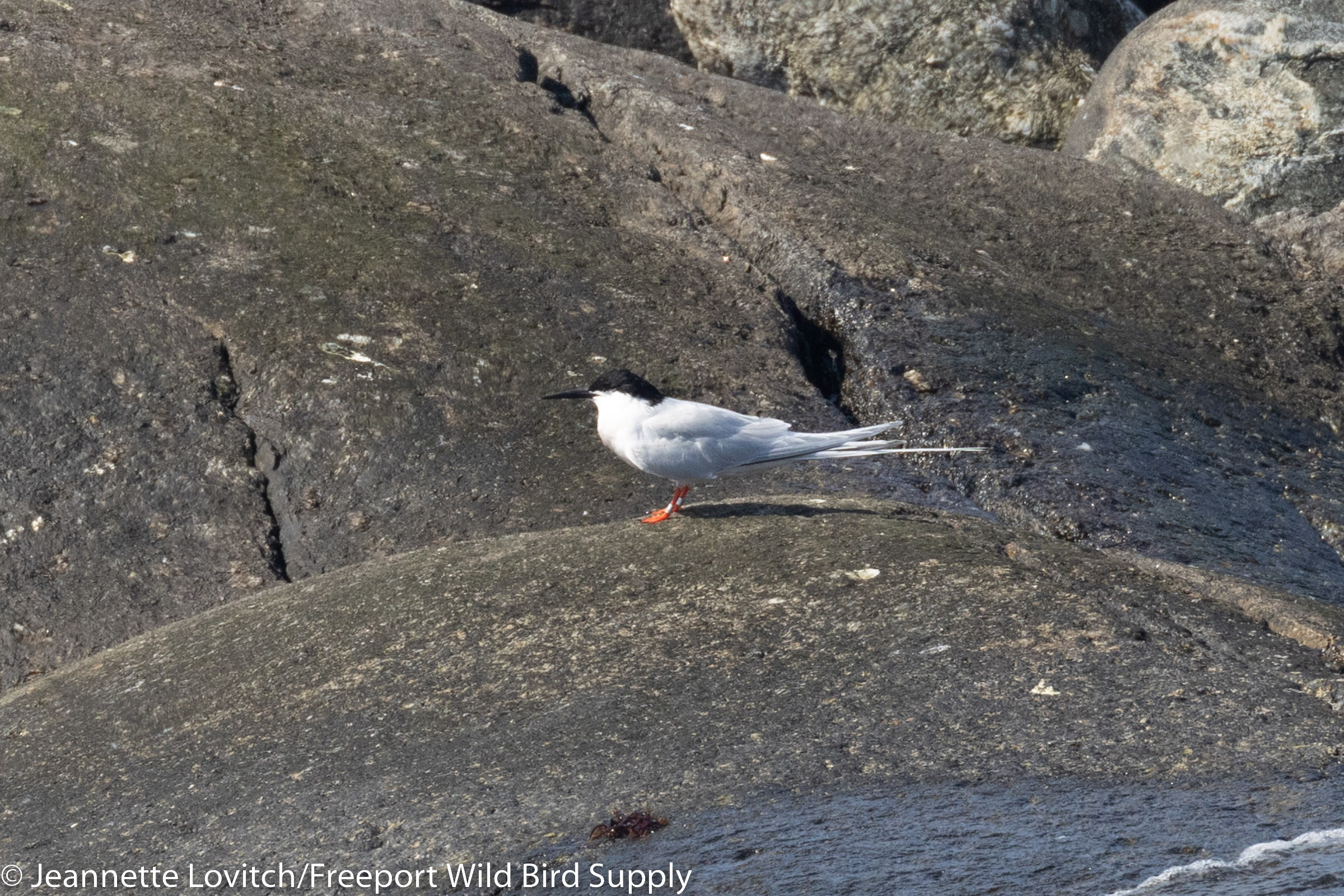
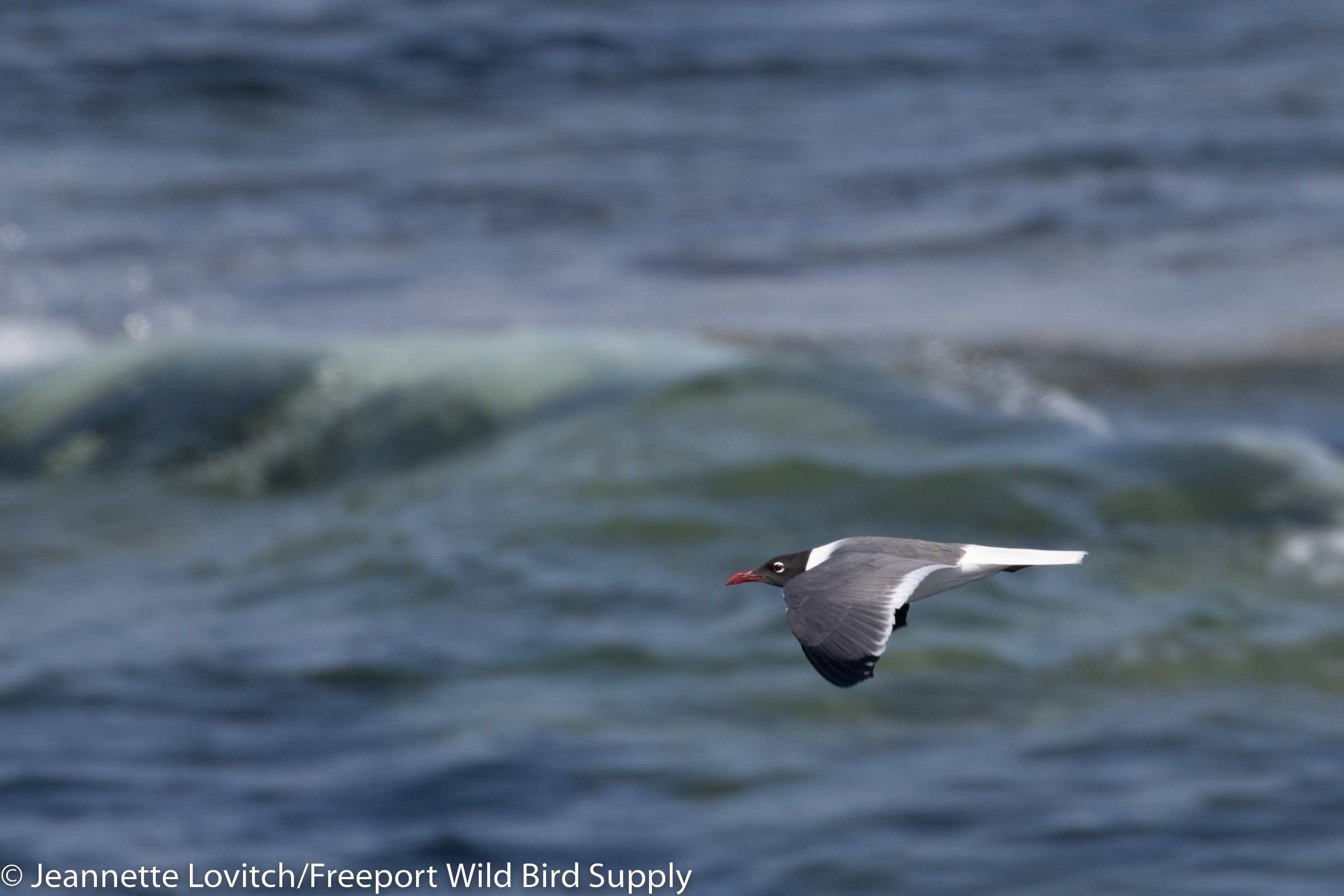
Of course there were the terns, and for a change, both Roseate and Arctic were easy to isolate for all to see. With the help of my spotters, and a cooperative pair of Roseates on an obvious rock, everyone saw each species well, as well as many hundreds of Common Terns of course.  And a thousand or so Laughing Gulls, too.
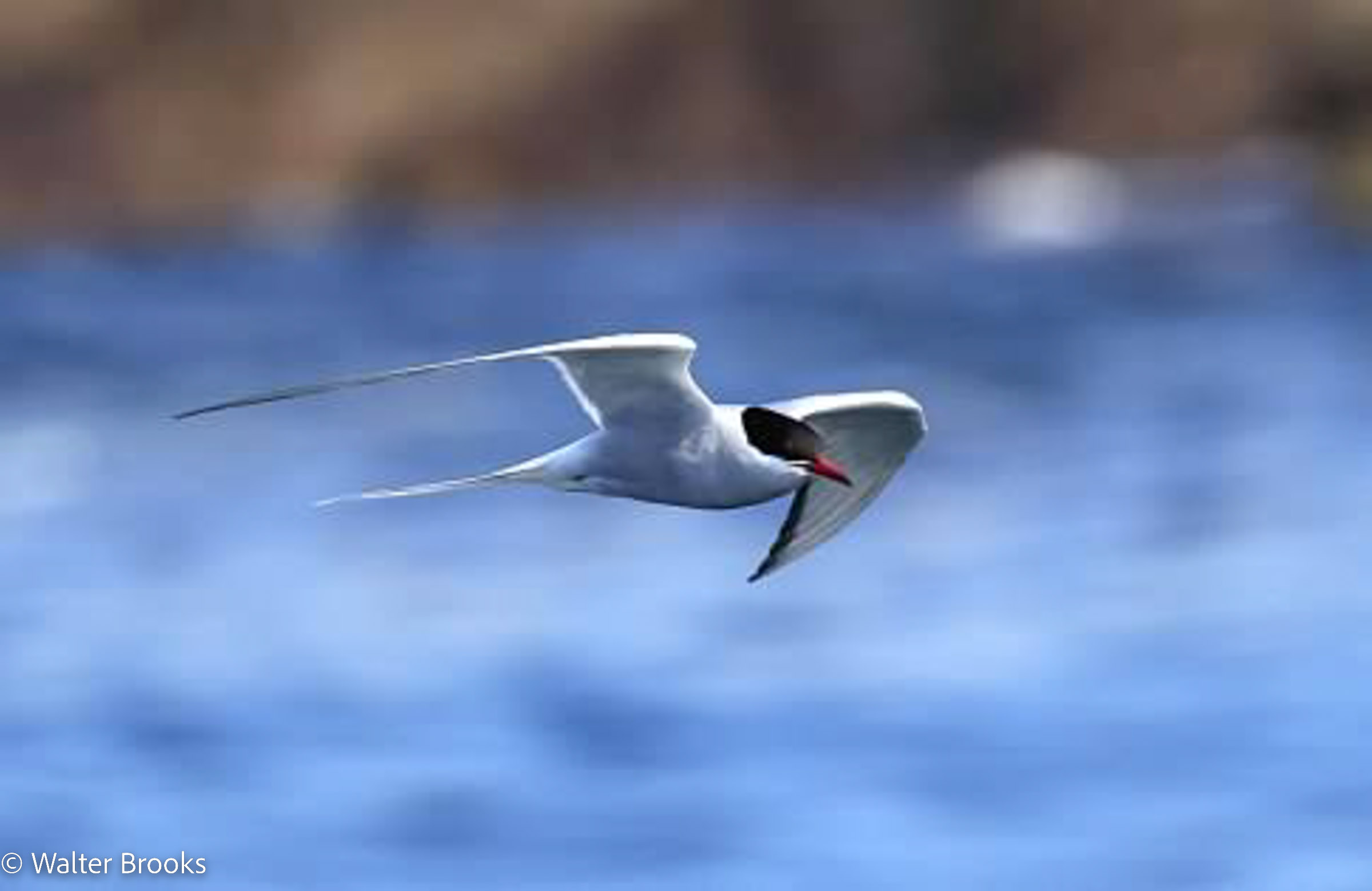
Arctic Tern.

Roseate Tern.

Laughing Gull
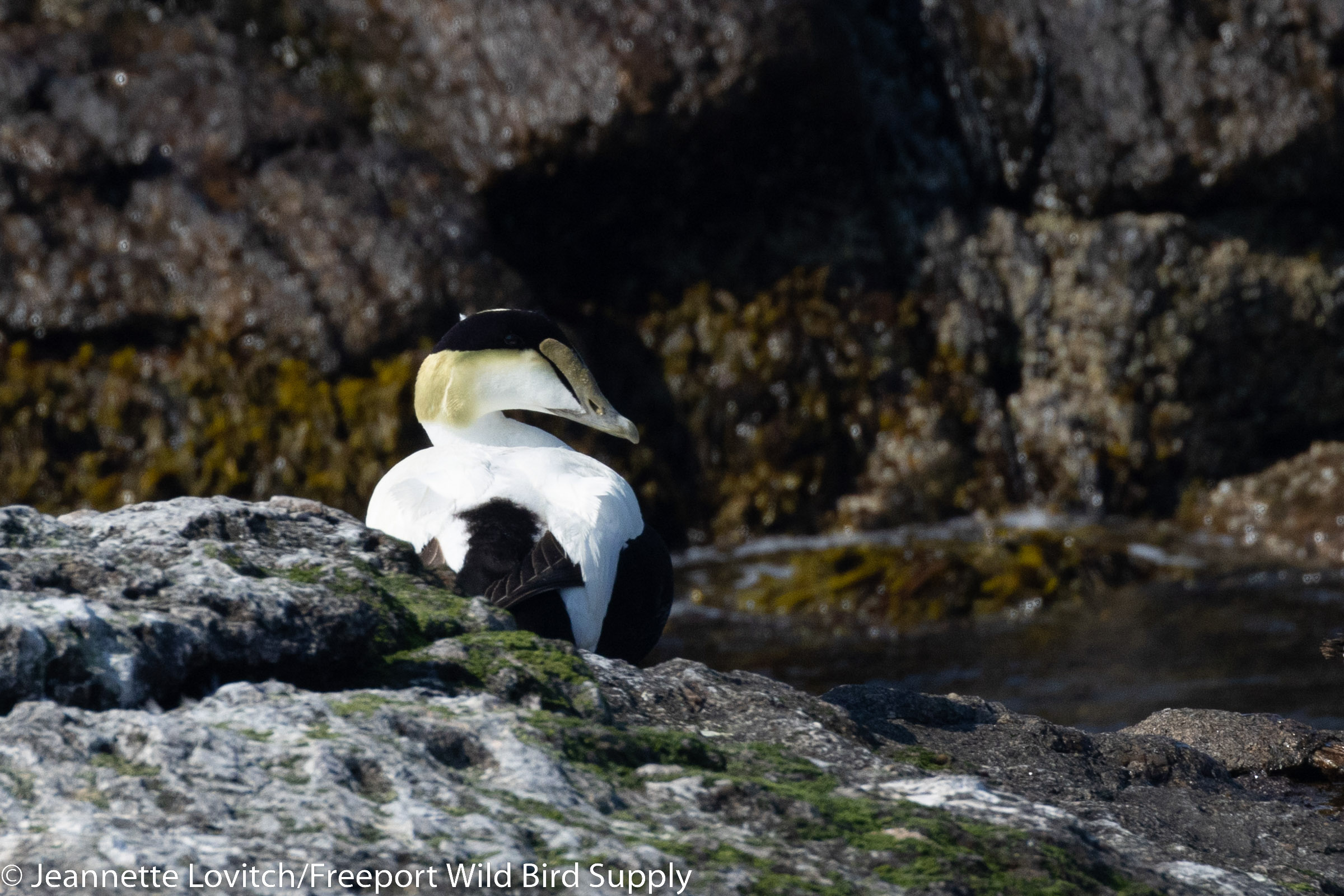
Common Eider.

Satisfied with our views of the island’s denizens, we turned offshore and followed the Arctic Terns to deeper waters. It wasn’t too long before we started seeing scattered Wilson’s Storm-Petrels, but we slammed on the breaks when I spotted a Common Murre on the water up ahead. Captain Steve was able to circle the bird for all to see and photograph before we continued on; the murre was most obliging.  It also made for the hoped-for 4-alcid day, which is always a challenge this far south.

The lack of swell allowed us to make good progress and afforded us the chance to check three offshore hotspots. A good number of Wilson’s Storm-Petrels and a few Northern Gannets were at Murray Hole, but we motored through it.

We laid down a mile-long chum slick at The Kettle, but only a few of the many Wilson’s Storm-Petrels came in to check it out. I think it was simply too calm today – the scent wasn’t drifting, and birds – especially any shearwaters out here – were just not taking flight to forage; it’s just too inefficient without any wind for them to bother. But a fly-by from a southbound Ruby-throated Hummingbird nearly 20 miles offshore was unexpected!
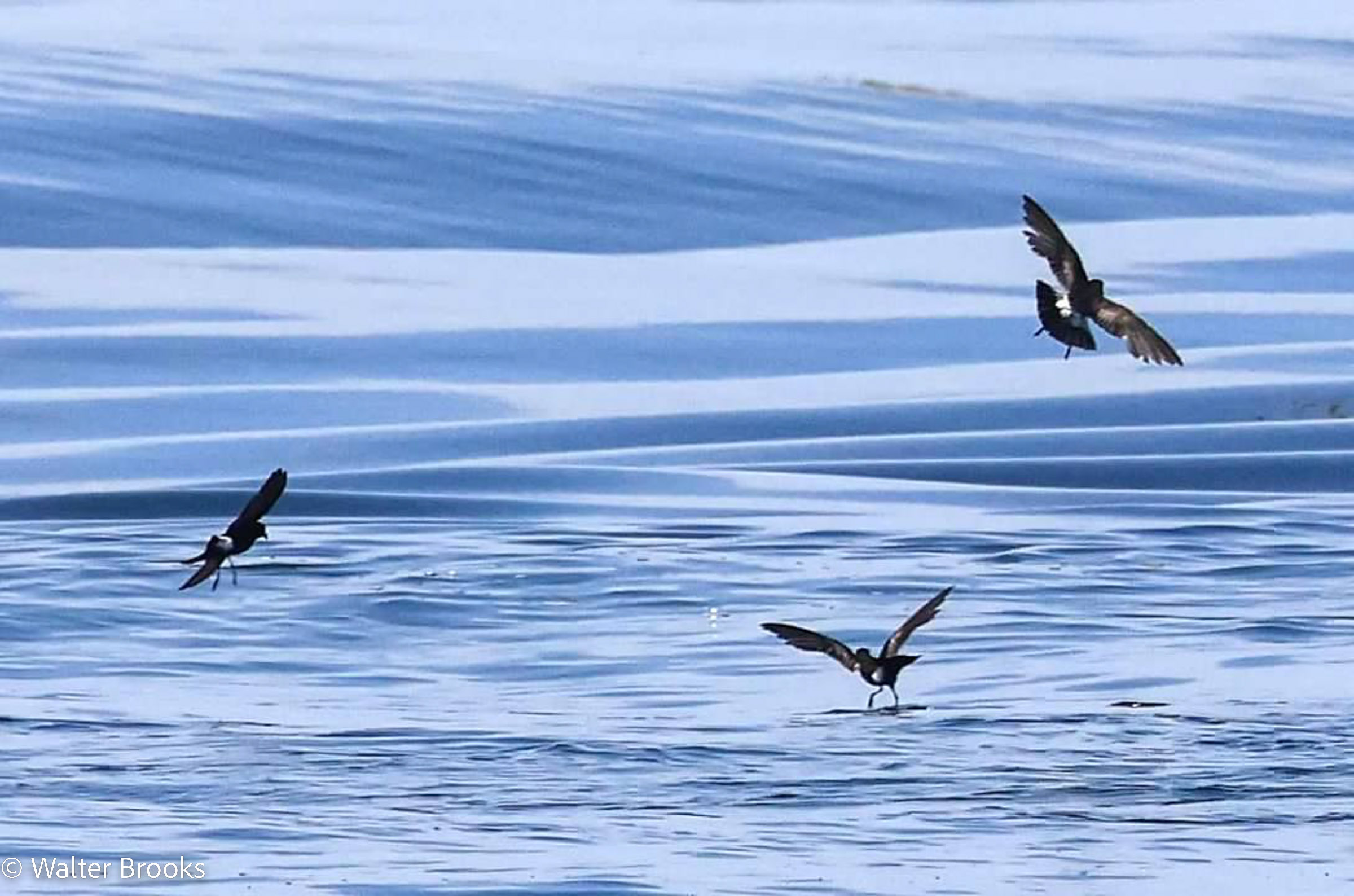
We continued to tally Wilson’s when we set up a second chum slick at Mistaken Ground, but once again, little was interested, and only a few Wilson’s and gannets were to be seen.

Despite our extended time with the charter, it was soon time to head back to port, but we kept our eyes peeled throughout the trip. On the way back, we had a flock of 12 Red-necked Phalaropes buzz by and eventually land on the water, but we were going too fast and behind schedule to be able to turn around in time. Later, we passed not one, but two Basking Sharks, which was a real treat.

Harbor Porpoise and Harbor Seals were seen now and again, but overall, the offshore waters were quite slow – especially with gulls. The few gulls around didn’t even seem interested in our popcorn and suet, either.

Robby contemplates the meaning of life…and chum.

Our tally of Wilson’s Storm-Petrels was decent enough, but sadly, this would be our only tubenose of the day. Northern Gannets were in low numbers, as if often the case in early June, and whatever shearwaters may have already arrived may simply have been sitting on the water somewhere waiting for a breeze. I also felt terrible that not everyone saw the phalaropes.

Nonetheless – thanks to a perfect visit at Eastern Egg Rock and a random Common Murre floating offshore – I would call the day a smashing success! And for $40, few complaints were audible. The weather helped, too.

Rich talks optics.

Thanks to Zeiss for making this idea of mine come to fruition, and thanks to Cap’n Fish’s for letting us charter the boat to make this all happen. And most importantly, thanks to everyone who signed up and helped us explore the Gulf of Maine at this woefully under-birded time of year. Every day is different offshore, and you never know what you will or will not see. Excitingly, I am pleased to announce that Rich said, “let’s do this again next year!”  Hope to see you aboard!

Here’s the complete trip list, from dock to offshore and back. Thanks to Noah for compiling this!

  • Canada Goose: 13
  • Mallard: 2
  • Common Eider: 65
  • Surf Scoter: 1
  • Rock Pigeon: 3
  • Ruby-throated Hummingbird: 1
  • RED-NECKED PHALAROPE: 12
  • Spotted Sandpiper; 3
  • COMMON MURRE: 1
  • RAZORBILL: 1
  • Black Guillemot: 114
  • Atlantic Puffin: 102
  • Laughing Gull: 1025
  • Ring-billed Gull: 2
  • Herring Gull: 38
  • Great Black-backed Gull: 11
  • Roseate Tern: 20
  • Common Tern: 504
  • Arctic Tern: 63
  • Common Loon: 8
  • Wilson’s Storm-Petrel: 350-400
  • Northern Gannet: 16
  • Double-crested Cormorant: 70
  • Osprey: 1
  • Bald Eagle: 2
  • Barn Swallow: 14
  • European Starling: 2
  • House Sparrow: 2
  • House Finch: 1
  • Savannah Sparrow: 2
  • Song Sparrow: 1
  • Yellow Warbler: 1

This Week’s Highlights, 5/26 to 6/2, 2023

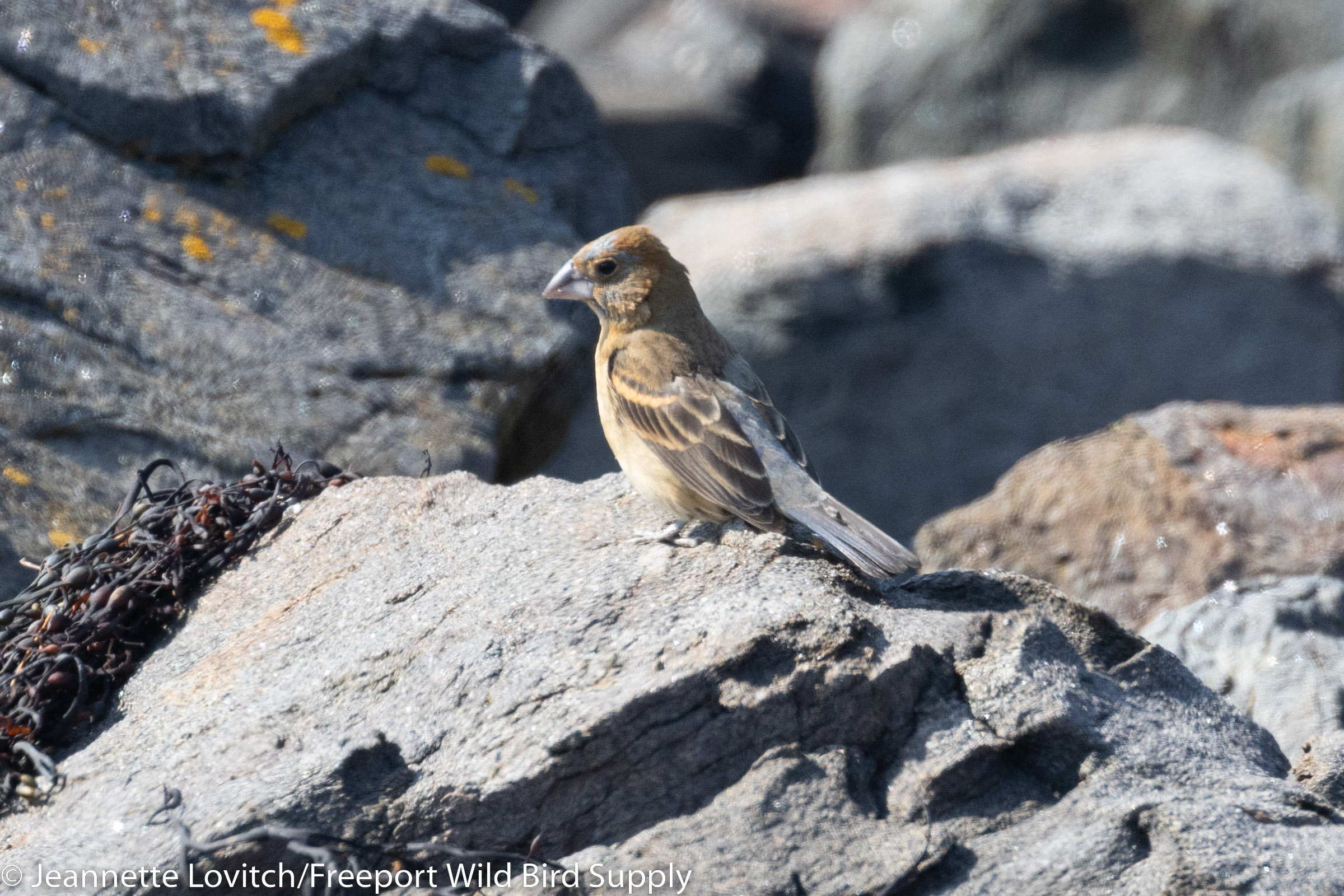
This first summer male Blue Grosbeak was present on Monhegan for at least a week, and unexpectedly, was flycatching for seaweed flies in shoreline rocks for most of the time, including the two days we looked at it with my Monhegan Spring Migration Weekend tour group.

With 5 days on Monhegan and one (half) day offshore, I enjoyed a lot of great birds this week. My observations of note over the past seven days included:

  • 1 Mourning Warbler, our property in Durham, 5/26 (Yard Bird #137!)
  • Monhegan Island with our Monhegan Spring Migration Weekend Tour group (full trip report and photos to come).

Daily:

  • Impressive numbers of Red Crossbills swirling around the island and tough to quantify, including many juveniles. High counts of largest flock(s) in the mid-20’s.  Three WHITE-WINGED CROSSBILLS were present each day at least through the end of the weekend. Rare for the island, a pair of HOUSE FINCHES appeared on the 27th and continued through the end of our stay.  Here are my group’s other daily highlights.

5/26:

  • 11 Bay-breasted Warblers (FOY)
  • 1 Cape May Warbler (FOY)
  • 1 female Evening Grosbeak
  • 1 Black-billed Cuckoo
  • 1 continuing ORCHARD ORIOLE
  • 1 Philadelphia Vireo (FOY)

5/27:

  • 1 continuing male DICKCISSEL
  • 1 continuing female/imm male SUMMER TANAGER
  • 1 female ORCHARD ORIOLE
  • 1 Olive-sided Flycatcher (FOY)

5/28:

  • 9 GLOSSY IBIS – circled the island early in the morning but did not land. My 225th Island Bird!
  • 1 probable immature male PURPLE MARTIN
  • 1 continuing 1st-year male BLUE GROSBEAK
  • 1 immature BROAD-WINGED HAWK
  • 1 continuing male DICKCISSEL

5/29:

  • 1 pair ORCHARD ORIOLES
  • 1 continuing SNOWY EGRET – Jeannette and I finally caught up with it for my 226th Island Bird!
  • 1 continuing 1st year male BLUE GROSBEAK
  • 5/30 (With Jeannette):
  • 1 continuing male ORCHARD ORIOLE
  • 1 Field Sparrow
  • Did not try to catch up with continuing rarities, although two quick checks did not turn up the Dickcissel or the Blue Grosbeak.
  • The Zeiss Pelagic with Cap’n Fish’s Cruises out of Boothbay Harbor, 6/2. This special mini-pelagic, sponsored by Zeiss Optics visited Eastern Egg Rock before heading 20 miles offshore. Trip report to come, but for now, the highlights:

1 Razorbill at Eastern Egg Rock

1 COMMON MURRE (between Eastern Egg Rock and Murray Hole)

350-400 total Wilson’s Storm-Petrels (FOY)

12 RED-NECKED PHALAROPES

  • TOURS AND EVENTS:

I’ll see you next week at the Rangely Birding Festival! Most (but not all) tours are sold out, but everyone can join me for the free and open to the public Birds on Tap! Event at Parkside and Main (beverages not included)!

This Week’s Highlights, 3/25-31,2023

Despite a few wintery days this week, spring is most definitely in the air. As I have finally seemed to have turned the corner with my dreadfully slow recovery, I am also getting out a lot more. Therefore, with more to report, and more changes week-to-week, I’ll try to get back into my old habit of weekly posts here.

Observations of note over the past seven days:

  • increasing number of blackbirds
  • first trickle of migrant sparrows
  • 1 SNOW GOOSE, our property in Durham, 3/27.
  • increasing number and diversity of waterfowl inland.
  • 1 Eastern Phoebe (FOY), Bradbury Mountain Hawkwatch, 3/31.
  • 1 Tree Swallow (FOY), Bradbury Mountain Hawkwatch, 3/31.

Despite only getting out into the field twice this week, I enjoyed some good birding. For now, my birding remains primarily feeder- and yard-watching, but this week, it was more evenly split between our feeders at home in Durham and here at the store in Freeport. Blackbird flocks are officially “in” and several species of sparrows are on the move.

 At home, Common Grackles and Red-winged Blackbirds are now present daily, in varying numbers (between 4 and 56 and between 3 and 26, respectively), with one or two Brown-headed Cowbirds on most days.  Similarly, at the store, small flocks of Common Grackles come and go, but 7 Red-winged Blackbirds are more consistent. One Brown-headed Cowbird made only one appearance here.

A Fox Sparrow that arrived last Friday departed on Tuesday night, and a second Song Sparrow arrived this week. Dark-eyed Juncos continue, with fewer by week’s end. However, a third White-throated Sparrow arrived on the 30th. Here at the store, four Song Sparrows continue, and 2 American Tree Sparrows arrived on the 26th– surprisingly our first two of the entire winter.

At both locations, breeding activity is heating up, too, with more territorial and courtship behaviors observed each day.

The yard highlight, however, was the Snow Goose – Yard Bird #125! -I spotted passing low over our yard on the 27th.  While I didn’t technically see it from bed, I did get out of bed – where I was doing some of my physical therapy exercises to look at a large group of geese passing overhead. You may not be surprised to know that we have a pair of binoculars in every room, which is a good thing, as I was able to pull out the lone Snow from a flock of about 75 Canadas.

Speaking of binoculars, I need to take a moment to plug my Zeiss SFL 8×40’s. I fell in love with them when they came out last year, and I was very thankful for them when my shoulder was in pain. They’re just so incredibly lightweight, but I have found minimal tradeoff in brightness, color, etc. Since I am still a one-armed birder, they have been absolutely critical for my ability to look at birds when out and about now. Great balance combined with the light weight just makes them perfect for holding steady with one hand. I do need to rebuild my stamina, however, as there has been a lot of atrophy of field birding muscles over the last 2+ months!

Anyway, back to waterfowl….another highlight this week was the arrival of Wood Ducks in our backyard. A pair have been frequenting a vernal pool we can see from the house for the last few days, and Jeannette spotted them sitting in the trees just off of our porch on the 29th.  Three more drakes are frequenting a pond across the street, where a pair of American Wigeon (my first of the spring) plopped in on the 30th).

Finally this week, I was able to get back up to the Bradbury Mountain Hawkwatch for a couple of hours on Friday. A few raptors were on the move (much less than we expected given the conditions), but I did pick up my first Eastern Phoebe and Tree Swallow of the year. Later that afternoon, another phoebe was staking out a territory around our house.

Trips and Tours Notes:

  • Due to Saturday’s weather forecast, we have postponed the evening’s Woodcocks Gone Wild program at Pineland Farm until Saturday, April 8th.

This Week’s Highlights, May 27-June 3, 2022

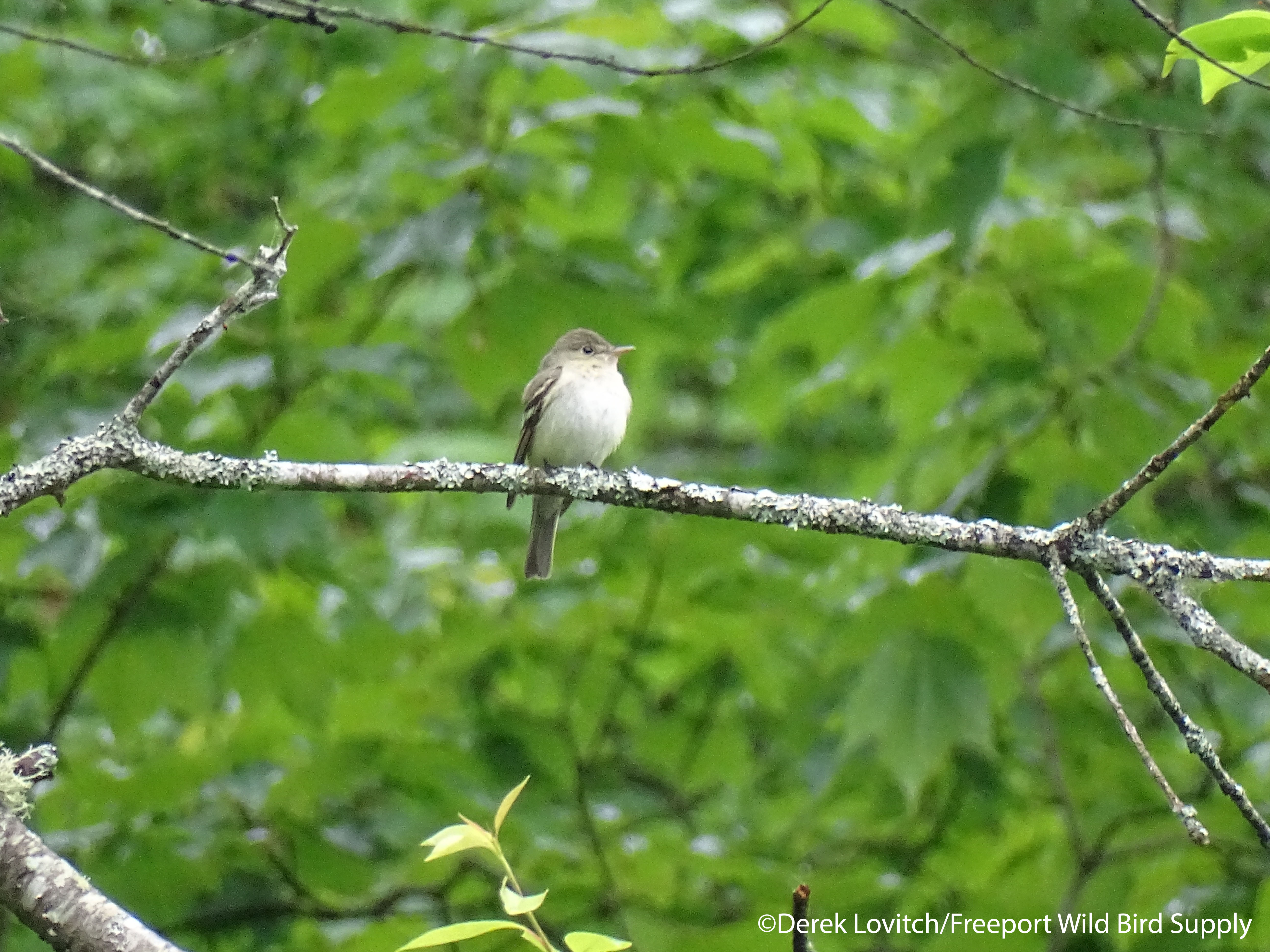
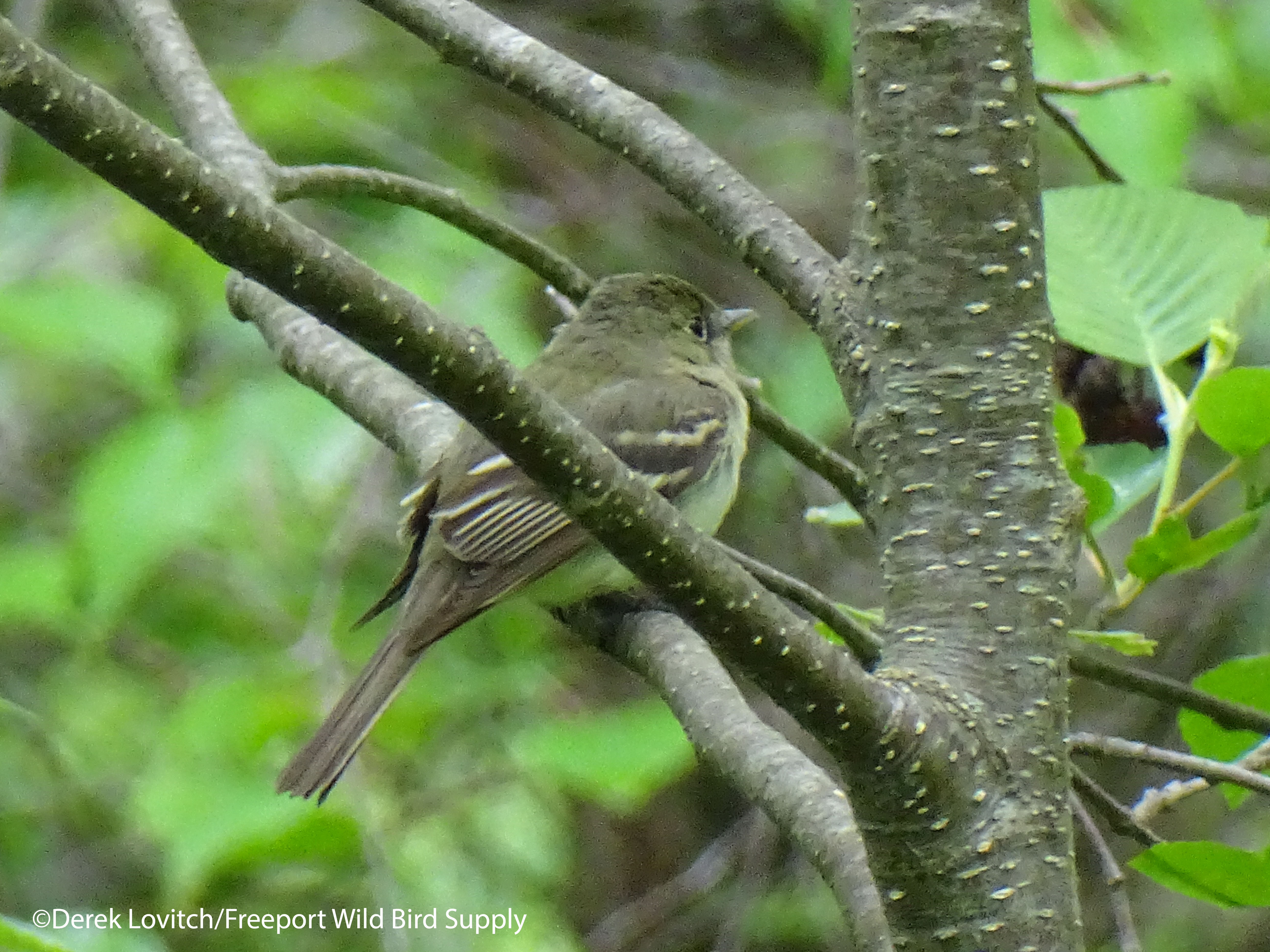
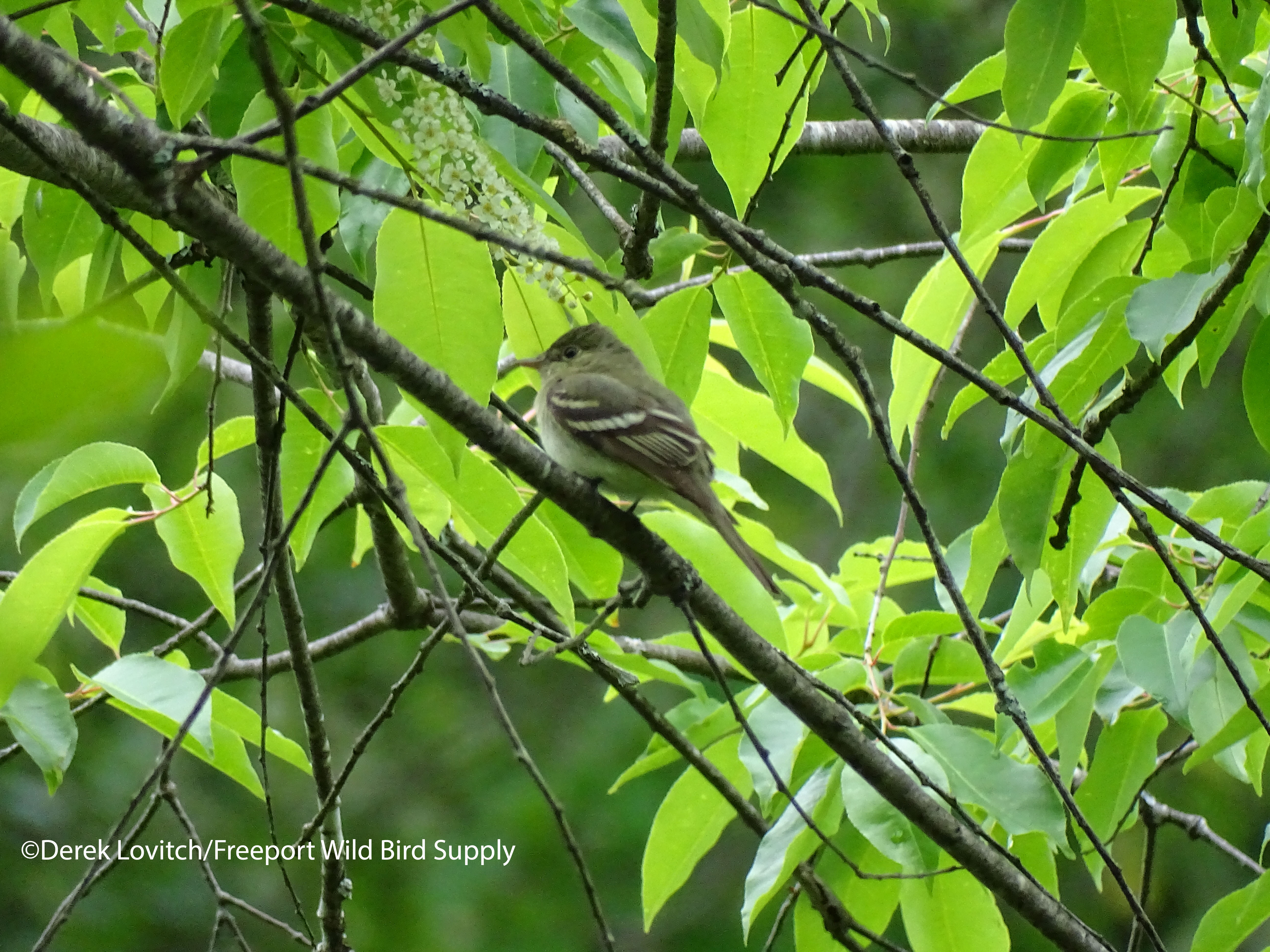
After trying to string one on Monhegan, an Acadian Flycatcher found me!  A friend heard it first as he joined me for a bird survey on private, posted property in Durham on 6/2.  This was an incredible record for Androscoggin County and really shocked me.  It continued at least as of the next morning.
This photo nicely shows the very long (for an Empid primary projection, the greenish tone to the upperparts, the complete eyering, and the large, wide and orange mandible. It took a while to see all of the pertinent details,
even though the song is so distinctive.
When we first saw it, the appearance of no green above and no yellow below through us for a loop, but once we got into the shade with it, those diagnostic tones were readily apparent.
  • My annual Monhegan Spring Migration Tour took place on 5/27 through 5/30, followed by another day on the island with Jeannette. It was very slow, and significant highlights were few. However, it was still, well, birding on Monhegan for five days, so I am not complaining. I’ll have a full tour report and checklist in the coming days.  Highlights included daily crippling views of Black-billed Cuckoo; a CLAY-COLORED SPARROW that we found on 5/30 but was seen by all on 5/31; 3 WILLETS that arrived from the open ocean south of Lobster Cove before landing in the harbor on 5/31; a good Atlantic Puffin commuting flight in the morning of 5/31, and an immature male ORCHARD ORIOLE each day.

Other non-Monhegan and non-flycatcher highlights this week included:

  • 2 RED-NECKED PHALAROPES, Hardy Boat from Monhegan to New Harbor, 5/31 (with Jeannette).
  • 1 LOUISIANA WATERTHRUSH, Mill Brook Preserve, Westbrook, 6/1.
  • 3 AMERICAN OYSTERCATCHERS, 1 Dunlin, 8 Ruddy Turnstones, 26 Black-bellied Plovers, 1 adult Little Blue Heron, etc, Pine Point, Scarborough, 6/1.

It’s June, so we are busy with events and tours here at the store and beyond:

  • Tomorrow is Zeiss Day at the store, with events including a whole range of products to try on our Saturday Morning Birdwalk, free optics cleaning, and a digiscoping demonstration. Check it out here.
  • Our first pelagic with our partners Cap’n Fish’s Cruises out of Boothbay Harbor will run on Monday, June 6th. It includes a visit to Eastern Egg Rock and chumming deeper offshore.  Info here.