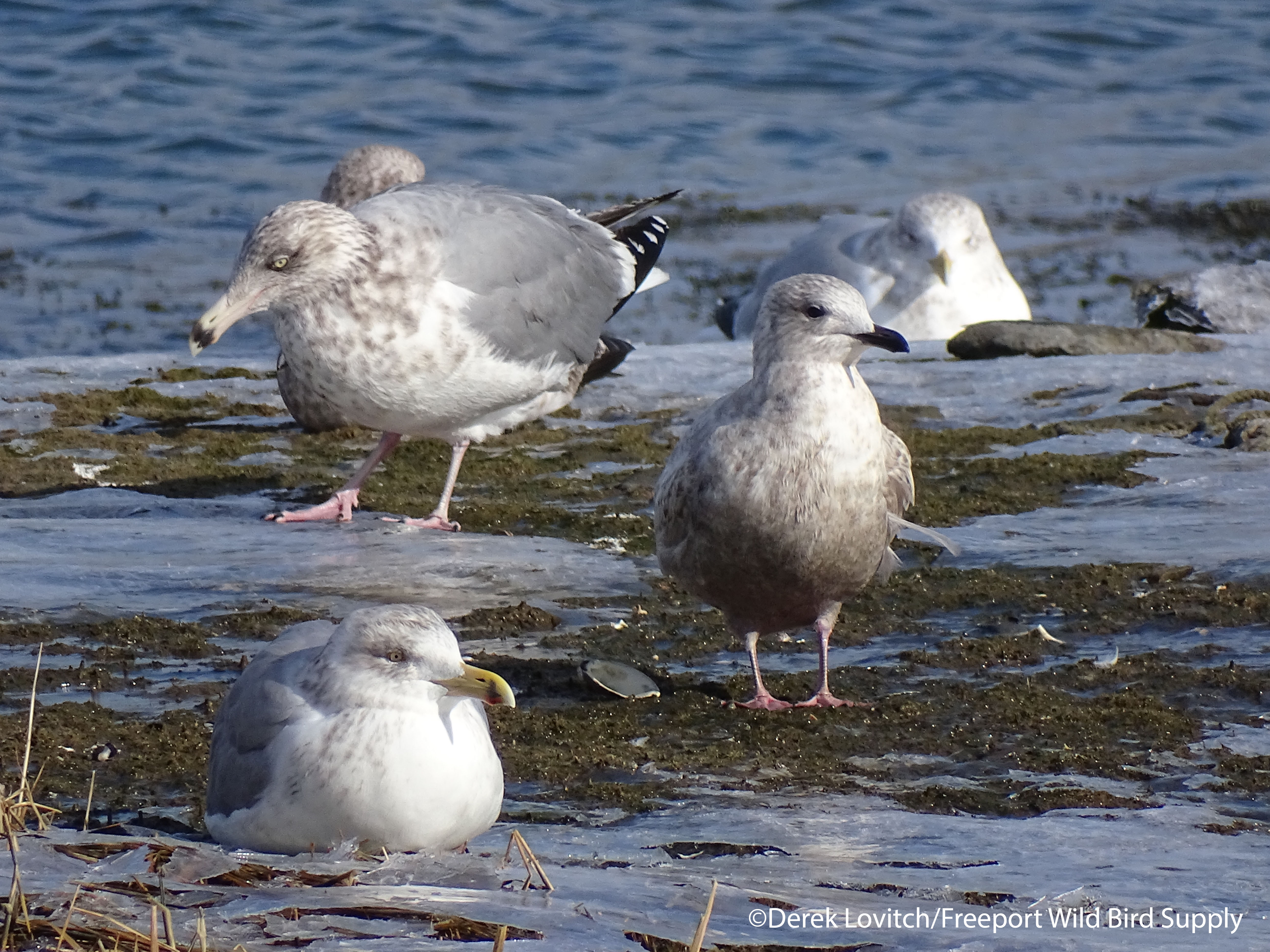
Need help identifying all of the exciting gulls at Mill Creek Cove this winter (such as this 1st winter Iceland Gull present on the 23rd)? Well, we have just the workshop coming up for you (see below)!
After being out of town for a week, we returned late on the 16th and got back to work. Sneaking in some morning birding on most days yielded a nice array of winter notables, without needing to venture too far afield. Here are my observations of note over the past 7 days.
For at least the second consecutive winter, an adult Red-shouldered Hawk has been frequenting the edges of Rte 136 in Durham, near the Freeport Town Line.
3 drake and 1 hen Barrow’s Goldeneye, Winslow Park, Freeport, 1/17 (with Saturday Morning Birdwalk group).
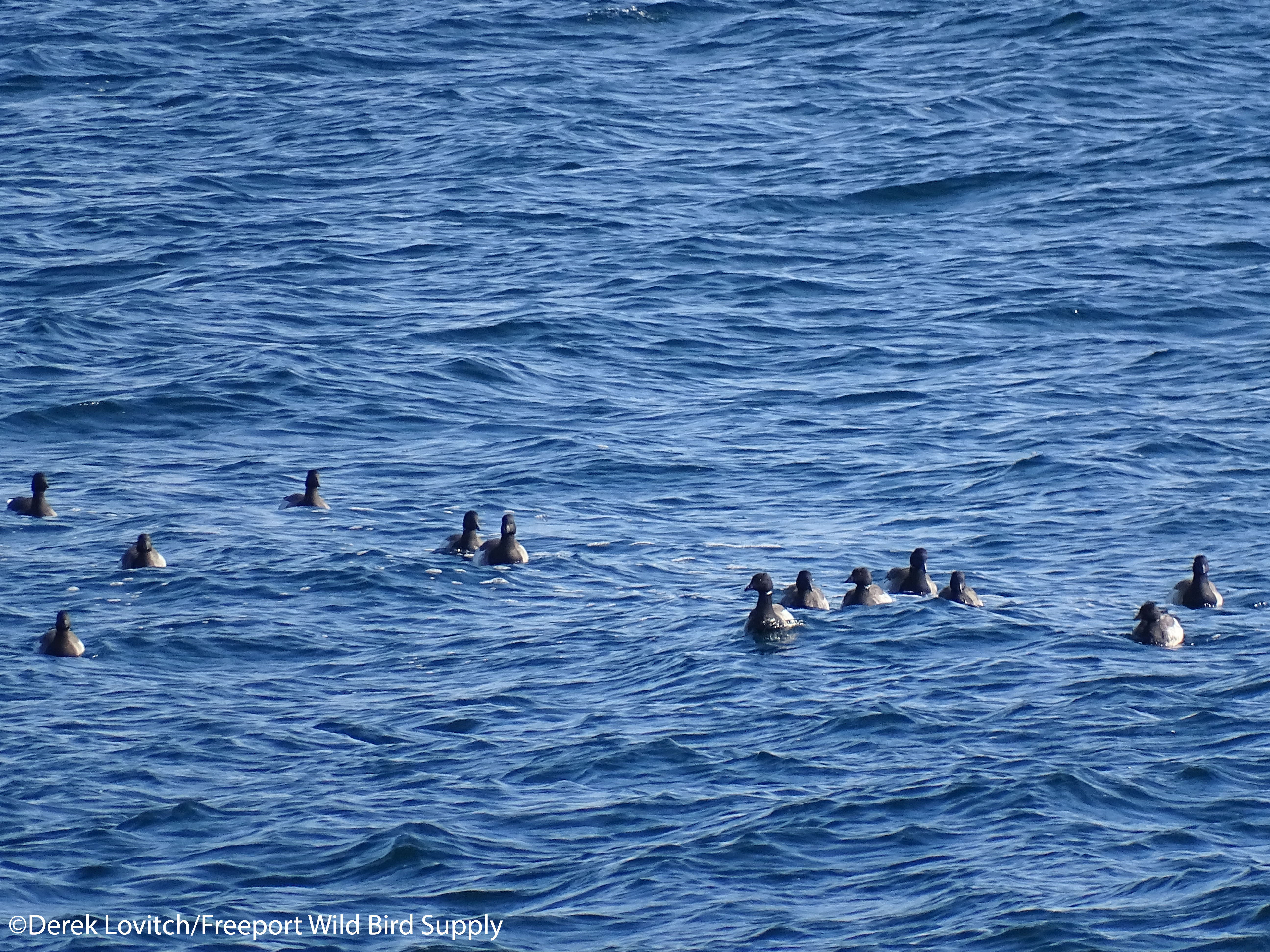
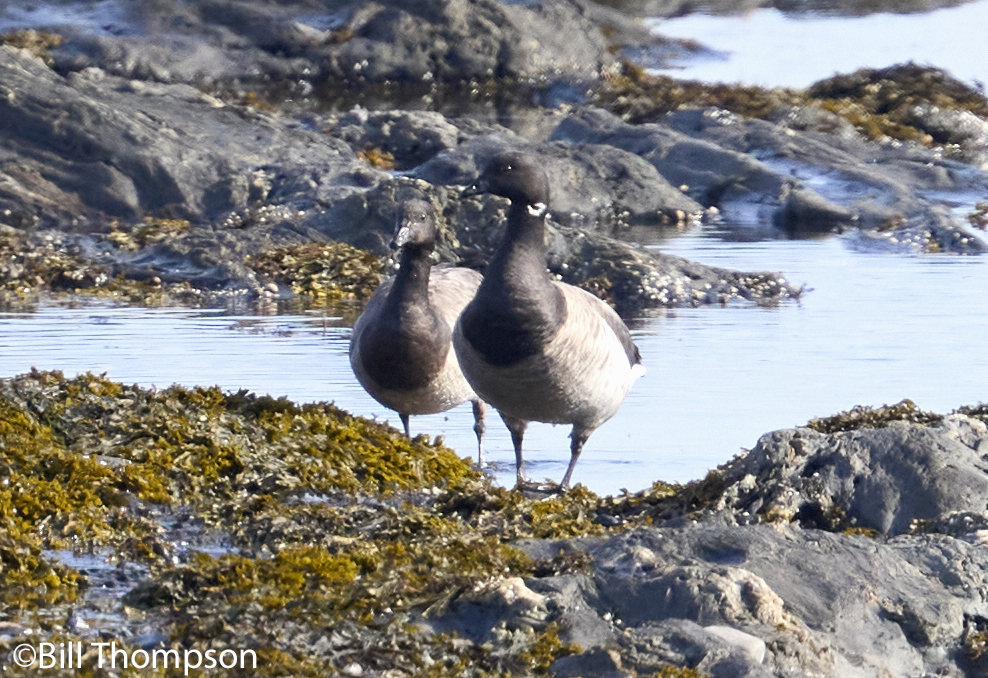
Like clockwork, Brant arrived in Cape Elizabeth in the 3rd week of January. I had 30 (FOY) at Kettle Cove, with another 24 (or part of the same group) at Dyer Point a short while later on 1/23.
Some of the 24 Brant off the rocks at Dyer Point on the 23rd.
This Week in Irruptives.
I encountered a few more Purple Finches here and there this week, mostly singletons. A lone Red Crossbill at Mt Apatite Park in Auburn on 1/21 (with Jeannette) was the first I have seen away from Red Spruce in a while, but one singing in flight at Village Crossings in Cape Elizabeth on the 23rd was a surprise. Meanwhile, EVENING GROSBEAKS continued to be scattered about, with 3 visiting our feeders in Durham on the 19th.
Upcoming Trips and Tours.
Gull Identification Workshop -THIS WEEKEND!
It’s not too late to join us for our Gull Identification Workshop! The classroom session will be held tomorrow, Saturday, 1/24, but the field trip has been postponed until Sunday, February 1st due to the dangerously cold weather expected. You can sign up for just the lecture portion.
In this workshop, we’ll hit a few of the prime viewing locations along Maine’s southern coast. But we won’t just be working on the checklist today. Instead, we’ll be focused on learning how to search for these birds – the how, when, and why – and how to identify them. We’ll learn about microhabitats, weather considerations, and seasonal timing to aid our search today and in the future. By visiting several seasonally-productive sites, we’ll compare similar species while taking time to savor the splashes of color offered by winter seaducks in an otherwise gray and white landscape.
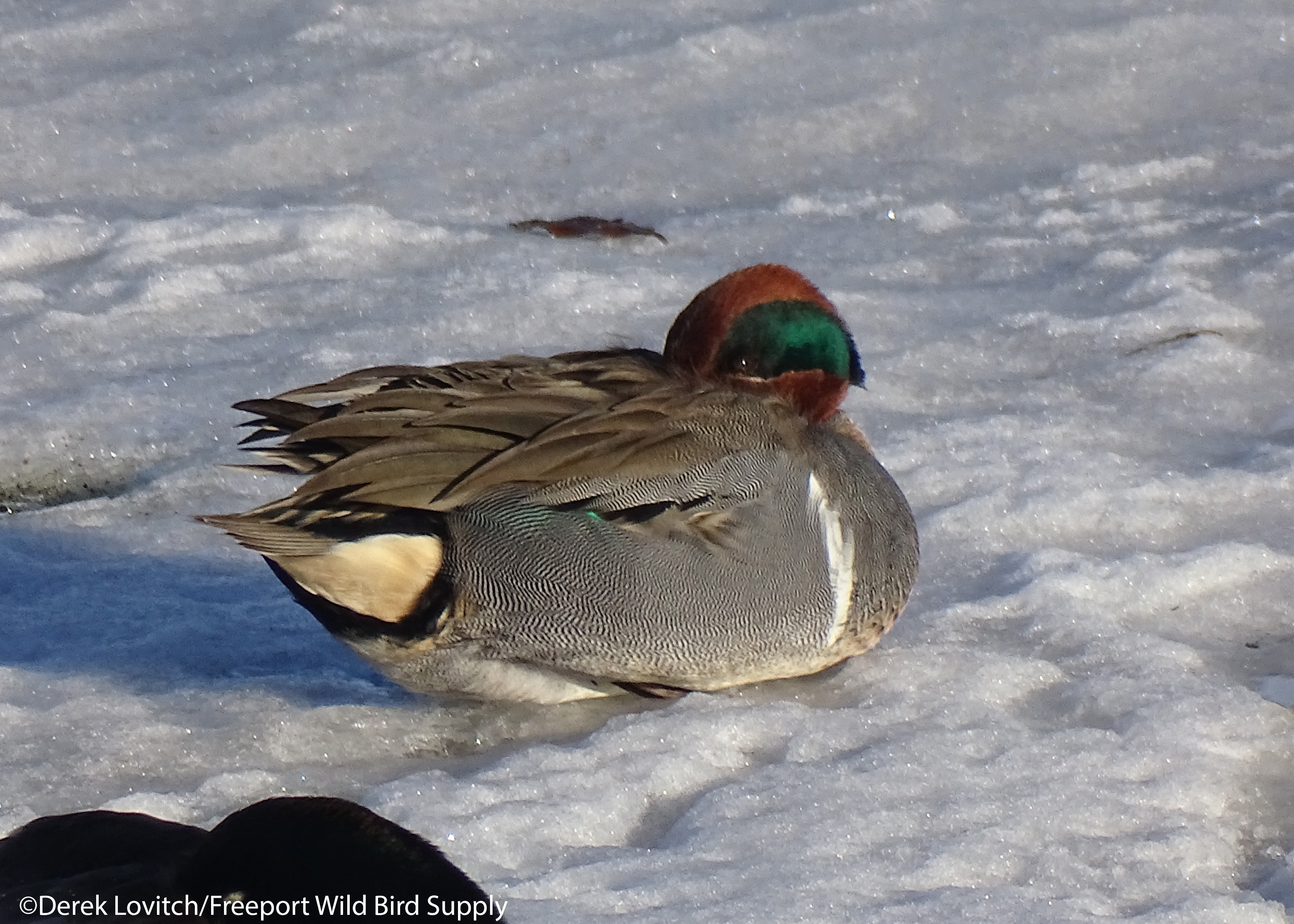
These tarrying drake Green-winged Teal were snoozing in the Mallard flock along the Auburn Riverwalk on the 16th (above) and at Mill Creek Cove in South Portland on the 18th (below). I don’t like to disturb birds, so I have lots of sleeping duck photos! I enjoy the calmness of it, and one can really take in the intricacies of the rest of the plumage that way.
A frigid start to the week yielded to a warming trend by week’s end. Will we see a “stirring of the pot” with the warm-up and upcoming storm system? My observations of note from the past seven days included concentrating waterfowl and a brutal, but productive day on the Southern York County CBC. Here are the highlights:
1 drake BARROW’S GOLDENEYE (first of season locally), Broad Cove Preserve, Cumberland, 12/13 (with Saturday Morning Birdwalk group).
Southern York County CBC, 12/15: Moody Sector with Jeannette:
2,168 individuals of 54 species, led by 440 Mallards, 272 Canada Geese, and 258 European Starlings. Landbirds – especially resident “yard birds” – and oceanfront waterbirds were insanely low, even given challenges of a bitter cold day with strong winds. Almost all landbirds besides starlings, Rock Pigeon, House Sparrow, and Song Sparrow were very low for us. Exceptions include a very high count of 23 Yellow-rumped Warblers (Ogunquit Beach dunes) and a total of 28 Horned Larks. Nonetheless, our roster of notable birds was above recent average, with highlights including:
_2_ ROUGH-LEGGED HAWKS (been a long time for us in this territory! Only 2nd time there was been more than on on this CBC!) one dark morph (probable immature) and 1 light morph immature, both seen soaring and hunting late in the afternoon from the north end of the Footbridge parking lot. Dark-morph spotted around 2:30pm, and seen again at about 3:30pm when the light morph appeared. We lost the dark morph, but the light bird eventually glided overhead and disappeared over the treeline, heading south.
1 KILLDEER, Ogunquit River Marsh from Bourne Ave
2 hen and 1 drake NORTHERN PINTAIL, Ogunquit Rivermouth
2+ Red Crossbills, flying over Bourne Ave.
1 Savannah Sparrow, Furbish Ave.
13 Sanderlings, Ogunquit Beach.
2+ Fish Crows, Anniversary Park, Auburn, and 2-3 along Auburn Riverwalk, 12/16 (see last week’s Highlights for a FICR discussion).
16 Snow Buntings, North River Road (in parking lot next to boat launch), Auburn, 12/16.
1 Swamp Sparrow, Florida Lake Park, Freeport, 12/17
1 Evening Grosbeak, here at the store, 12/17.
2 drake GADWALLS, 1 continuing pair Green-winged Teal, and 1 1st-cycle Iceland Gull, Mill Creek Cove, South Portland, 12/18 (photos above and below).
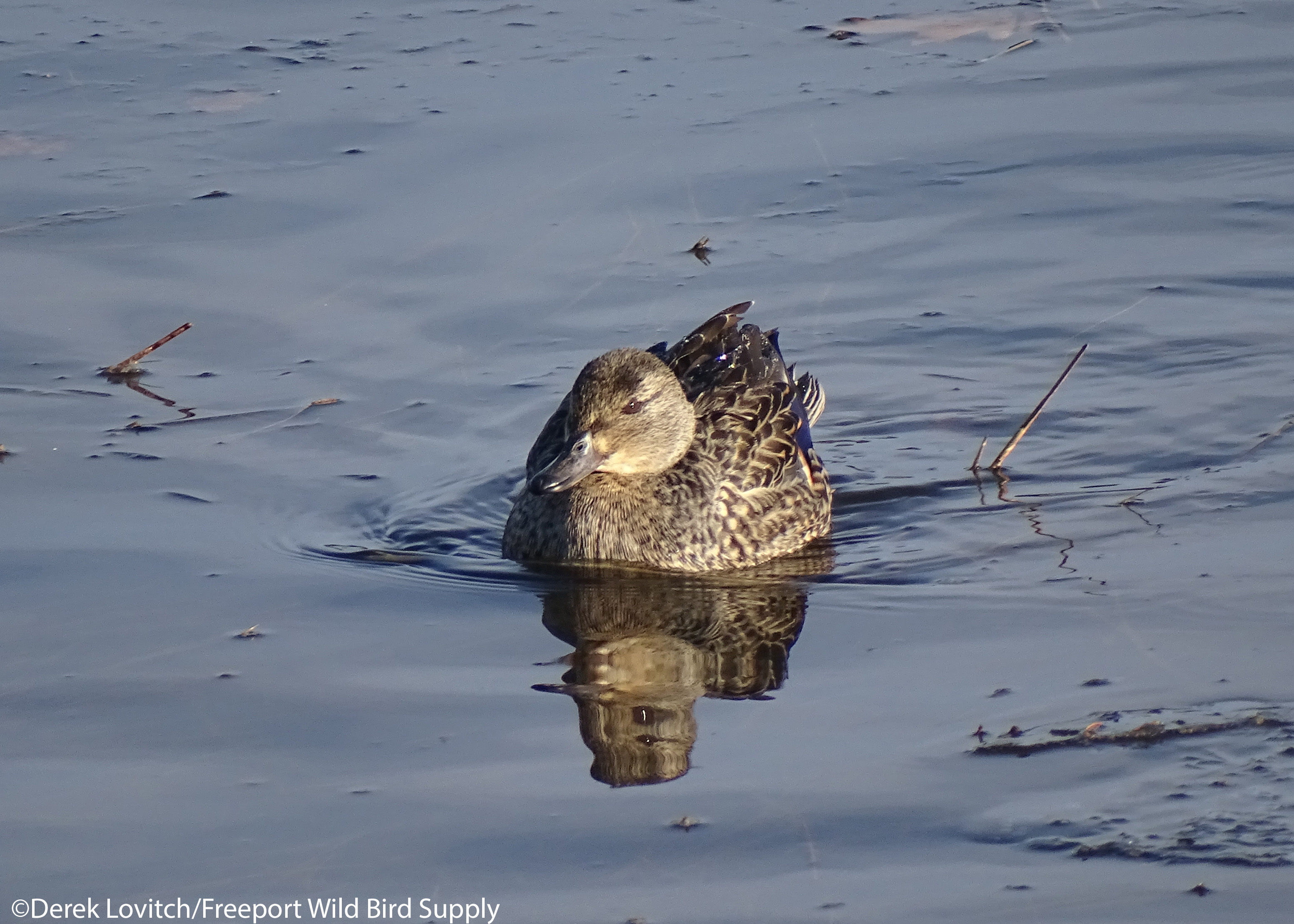
This hen Green-winged Teal, her plumage no less detailed and intricate than the male’s, was also dozing at Mill Creek Cove on the 18th. She woke up and took a swim though!
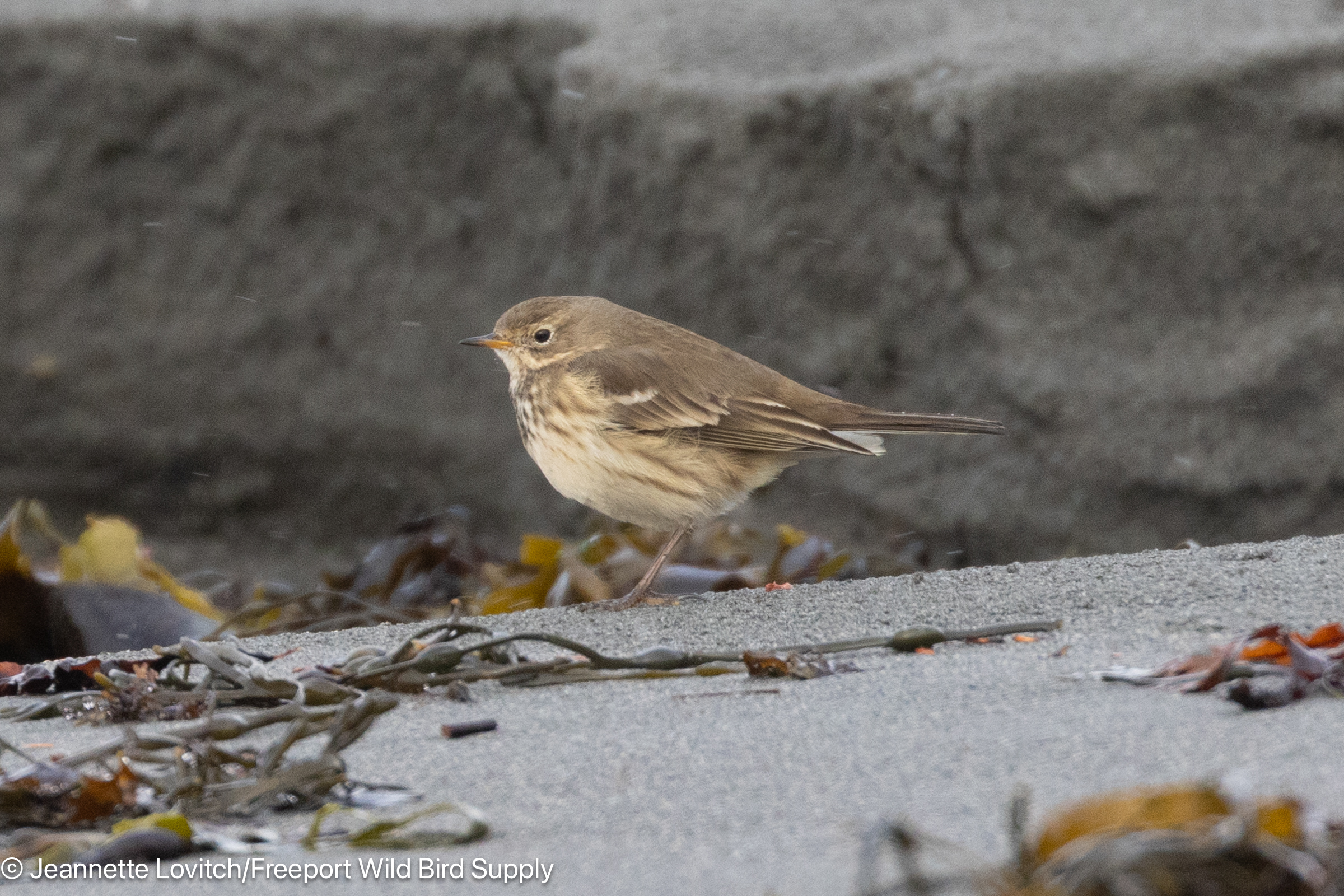
Six, somewhat-late American Pipits at Carrying Place Cove in Lubec were among the highlights of three days of dedicated rarity-searching in Washington County for our “weekend” this week. I was hoping for a wagtail though…or a Meadow Pipit.
I had a very busy week of birding, led by three days of searching for rarities in Washington County. Locally, my observations of note over the past eight days were as follows:
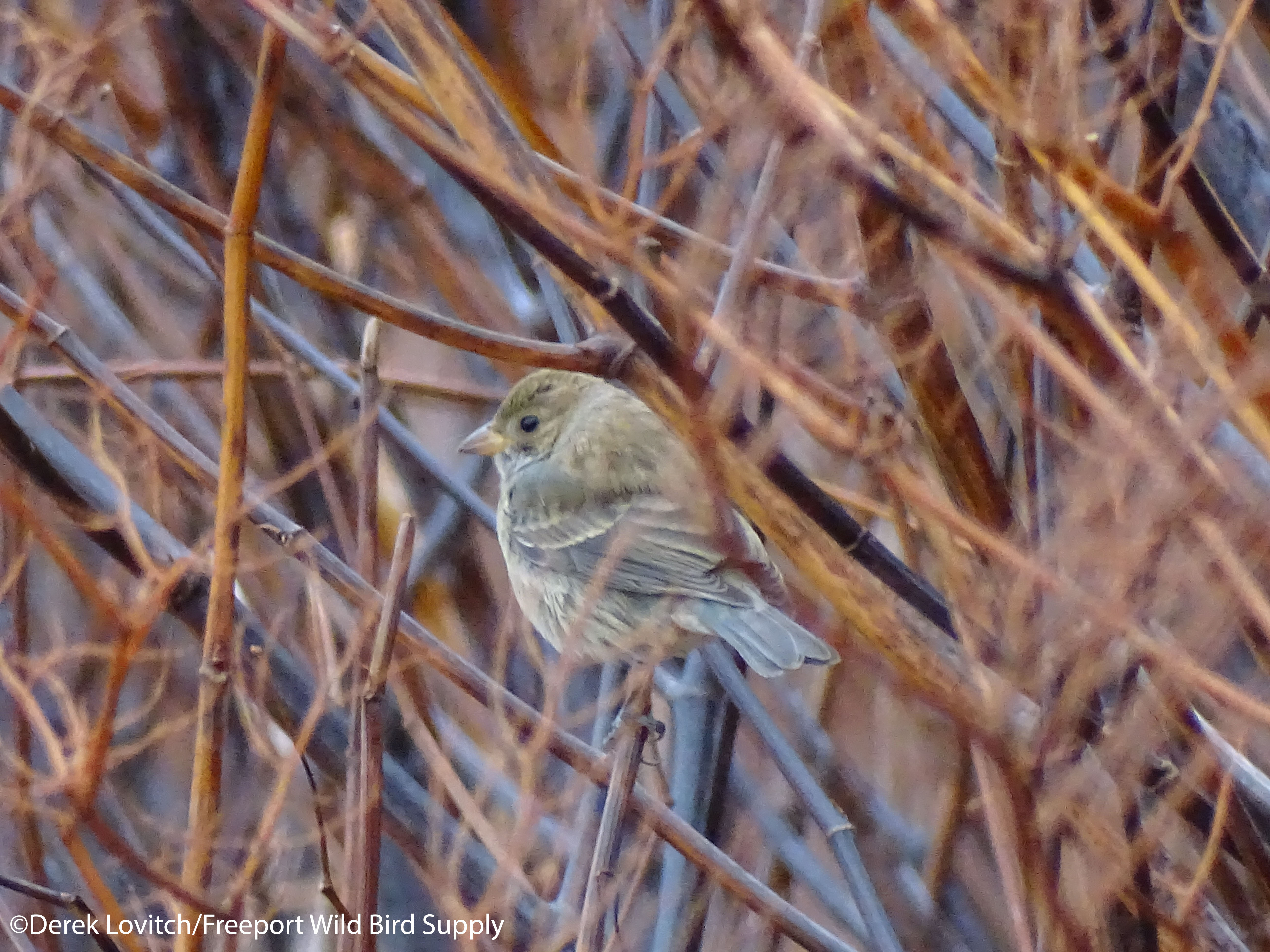
Scattered Red Crossbills continue in southern Maine, and Pine Siskins are increasing now.
1 Indigo Bunting, West Commercial Street, Portland, 11/13.
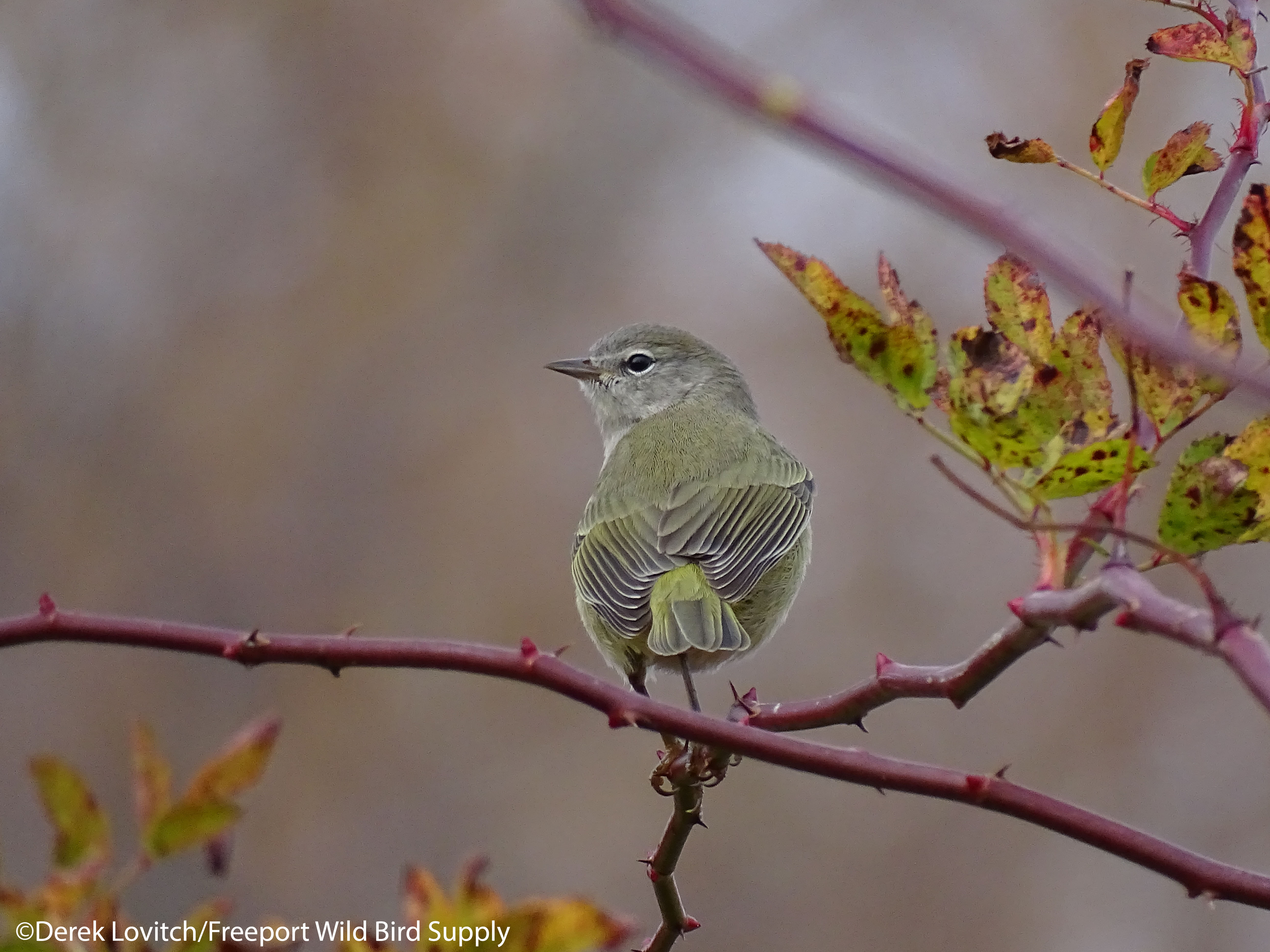
1 Orange-crowned Warbler (my 10th of the season!), South Portland Greenbelt Pathway, 11/13.
1 Rusty Blackbird, our property in Durham, 11/15.
1 NASHVILLE WARBLER and a variety of marginally late migrants such as 2 Hermit Thrushes and a Chipping Sparrow, etc, Bailey Island, Harpswell, 11/20.
Jeannette and I visited Washington County 11/16-18, with our priority being all of those little places we see in the summer that “looks good for rarities” in the late fall Rarity Season. So finally, we made it happen. Unfortunately, one day of rain, one day of snow, and two days of very strong winds made bird-finding rather challenging. We would have much preferred these clear and calm days of the second half of the week!
Our notable observations included:
3 continuing Gadwall, 18 American Wigeon, 8 Northern Pintail, 182 Green-winged Teal, etc, Sebasticook Lake, 11/16.
1 BARN SWALLOW, Roque Bluffs State Park, 11/16.
6 American Pipits, Carrying Place Cove, Lubec, 11/17 (photo above).
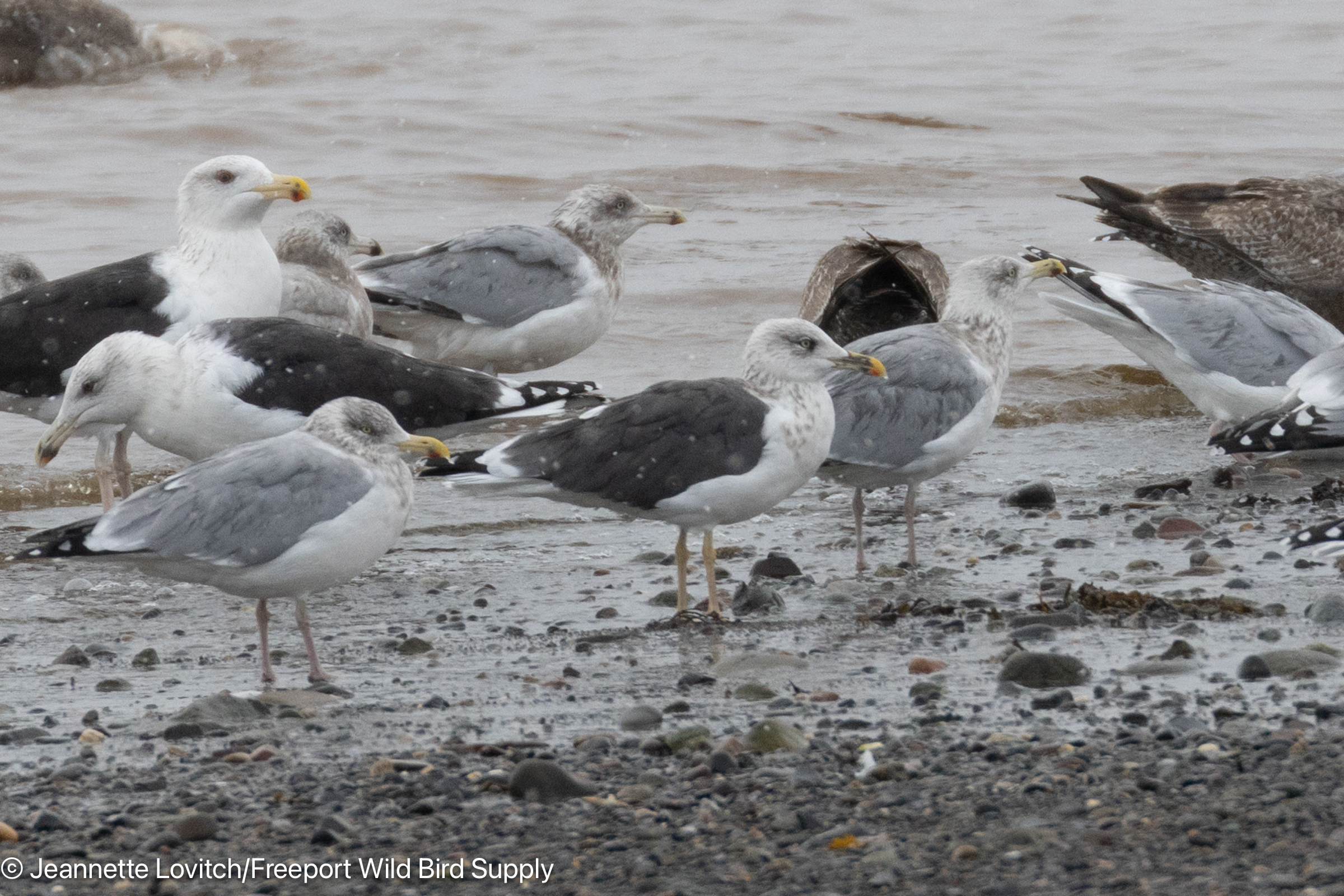
1 4th-cycle Lesser Black-backed Gull and 1 1st-cycle Iceland Gull, Mowry Beach, Lubec, 11/17.
1 1st-cycle Iceland Gull, Lubec village waterfront, 11/17.
1 ORANGE-CROWNED WARBLER, Old Farm Point Park, Lubec, 11/17.
4 Snow Buntings, Petit Manan NWR, 11/18.
1 1st-cycle Icleand Gull, Bangor Waterfront Park, 11/18.
Locally unexpected/rare: 1 Tufted Titmouse in a mixed species foraging flock at Hamilton Cove Preserve on 11/17 and two Red-bellied Woodpeckers in Lubec on 11/17 (“downtown” and Old Farm Point Park). Meanwhile, Red-breasted Nuthatches were exceptionally abundant, while both Black-capped Chickadee and Golden-crowned Kinglets seemed above average. Every mixed species foraging flock had plenty of each of the big three.
Finches: American Goldfinches were fairly widespread, and scattered small numbers of Purple Finches were around, but since finches are often detected via flight calls, the weather – especially the strong winds – did not make it easy to detect them. We also spent less time in Boreal habitats on this trip than most. So, other than those two, our finch observations were sadly limited to only 1 Evening Grosbeak and 5 Common Redpolls (FOF), Hamilton Cove Preserve, 11/17; 2 Red Crossbills and 2+ Pine Siskins, Machias River Preserve, Machias, 11/18.
Frugivores: American Robins were the only widespread frugivore so far, including an ample vismig on 11/17 with snow falling. 8 Cedar Waxwings and a distant flock of about 30 likely Bohemian Waxwings at Old Farm Point Park on 11/17. We were disappointed to not run into any Pine Grosbeaks.
Our collaboration with The Maine Brews Cruise enters its 11th season, with six exciting itineraries. These unique, relaxed birding and beer-ing adventures that you have come to love combine great local birding at seasonal hotspots with approachable opportunities to sample the delicious creations of some of our favorite Maine breweries. These events are a perfect introduction to birding and/or craft beer, and a great opportunity to enjoy our favorite pastimes with significant others, friends, and family that have interest in one topic, while your interest is primarily in the other (for now!). Educational, enjoyable, and eye-opening you won’t want to miss out our unique Birds on Tap series. In 2025, we’re excited to bring back more of these special birding and beer tours, perfectly blending nature exploration and craft beer tasting.
The six tours are as follows. After completion, tour reports will be posted here so this blog is your one-stop shopping for tour reports and upcoming itineraries.
1. Birds On Trip℠ – Roadtrip! Harlequins and Hops
Sunday, February 23rd, 2025:
After postponing our original date due to extreme cold, it was a full 30 degrees warmer today at start time! And while there was a chilly wind at a couple of stops, we also had some lovely calm and sunny conditions. As much as we hate to reschedule, this one worked, and therefore the day was already a success before we even departed for our birding destination!
We began at Dyer Point in Cape Elizabeth, where we found our highest concentration of seaducks on the day, including at least 20 Harlequin Ducks – the tour’s eponymous bird.
And what a stunner they were, with males in perfect light and some small groups pleasantly close to shore. Large numbers of Common Eider and Black Scoters were present, along with several other species, introducing us to winter waterfowl identification. And as a special treat, 4 uncommon and local Brant were foraging in a tidepool before us.
Most of the ducks were here today, and not at nearby Two Lights State Park, but there we saw another 8 Harlequin Ducks, discussed American Robin winter foraging ecology, and practiced our basic duck and gull identification before we headed to nearby Kettle Cove. There were not a lot of ducks here today, but we did get a surprise Merlin whipping through, perhaps the reason a Horned Lark was calling high overhead.
As a final stop, we checked Mill Creek Cove in South Portland for a very quick gull ID introduction to augment earlier conversation, compared Mallards and American Black Ducks (taking time to marvel at the beautiful drake Mallard!), soaked in a sunning drake Red-breasted Merganser, and enjoyed the sight of all of the gulls and ducks in the cove taking flight as our second Bald Eagle of the day soared overhead.
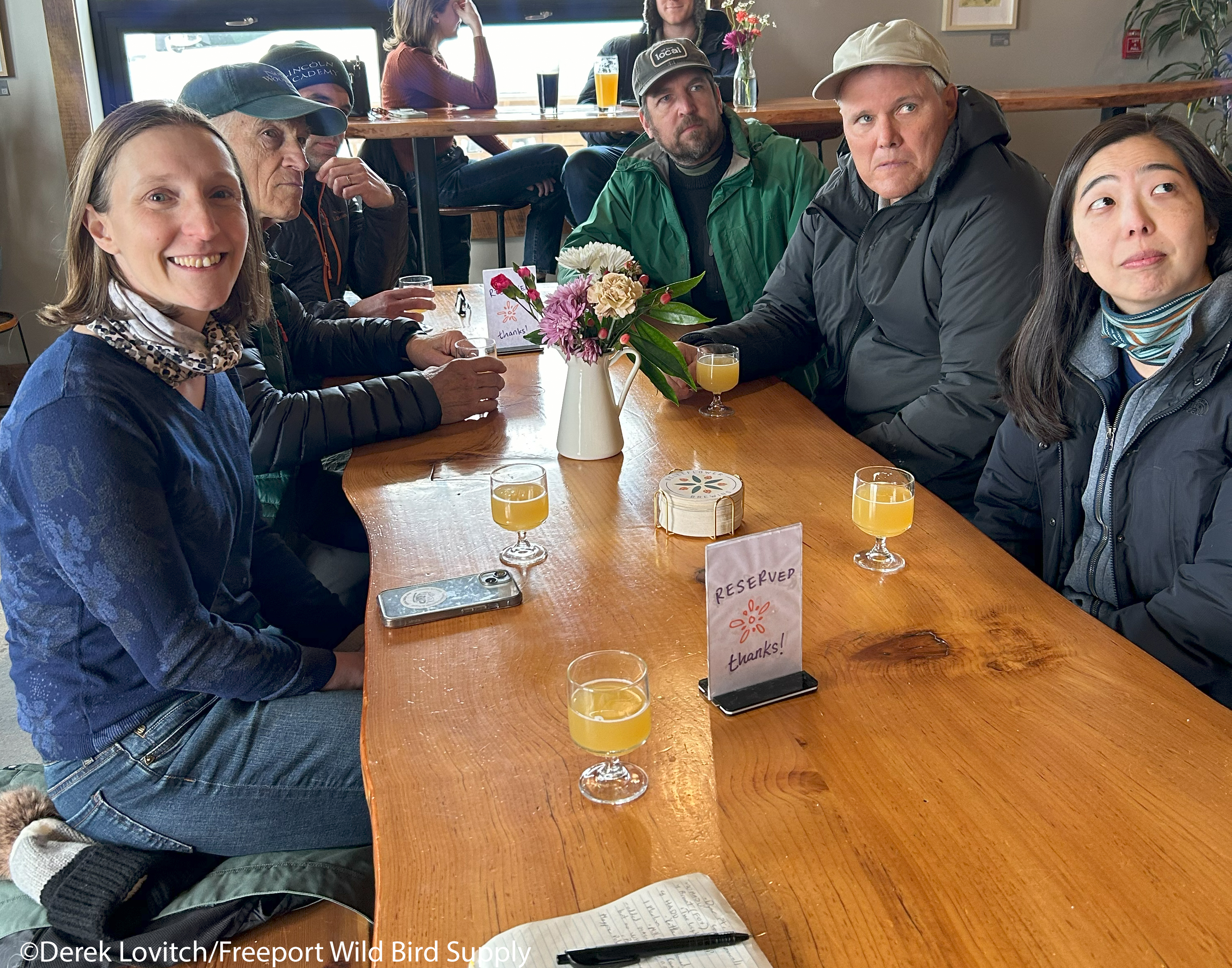
Part two of the tour began at Belleflower Brewing in Portland, one of my favorite Maine breweries. Keeping with the bird theme, we started by sampling their Magpie Pale Ale and then compared it to their Double-dry Hopped Finch & Thistle. Beginning with the recommended way of smelling and sipping a new beer, we discussed the basics of beer style, what the hell “double-dry hopping” means, the origins of the “New England” style, and then shifted gears with their brand new Just Like Home, a maple coffee brown ale. I thought the subtle maple sweetness was just right with a roasty coffee hint but the lighter body of a brown compared to a stout.
Crossing the Bayside neighborhood brought us to Argenta Brewing, one of Portland’s newest breweries. Exclusively brewing lagers, it was a nice contrast to our focus on ales at Belleflower. Starting with a generous half-pour of their Generic American Lager, we enjoyed the light, refreshing, “crushability” of a craft version of the popular lawnmower beer style. Craft beer truly is for everyone, and simple beers like Argenta’s Generic American Lager shows its not all about “hop-heads” and alcohol bombs.
We were given a choice for our next pour, and several folks tried the Mexican Lager to compare corn verses barley as the primary malt, while other tried everything from their hard seltzer to their Munich Dunkel- new to me, I found the mild roastiness and hint of sweetness on point for the style.
With a pleasant day (compared to the rest of the month), lots of beautiful and accessible wintering waterfowl – of course and especially including Harlequin Ducks – a few avian surprises, and newly-broadened palettes (I love it when folks say they really liked a beer in a style they didn’t think they liked), we kicked off the 11th year of the Birds on Tap – Roadtrip! the right way!
2. Birds On Tap℠ – Roadtrip! Warblers and Wort
Thursday, May 8, 2025.
While the rarest bird of the day came early, the rest of the trip was far from anticlimactic. Even better, it was the only warm and dry day of the week!
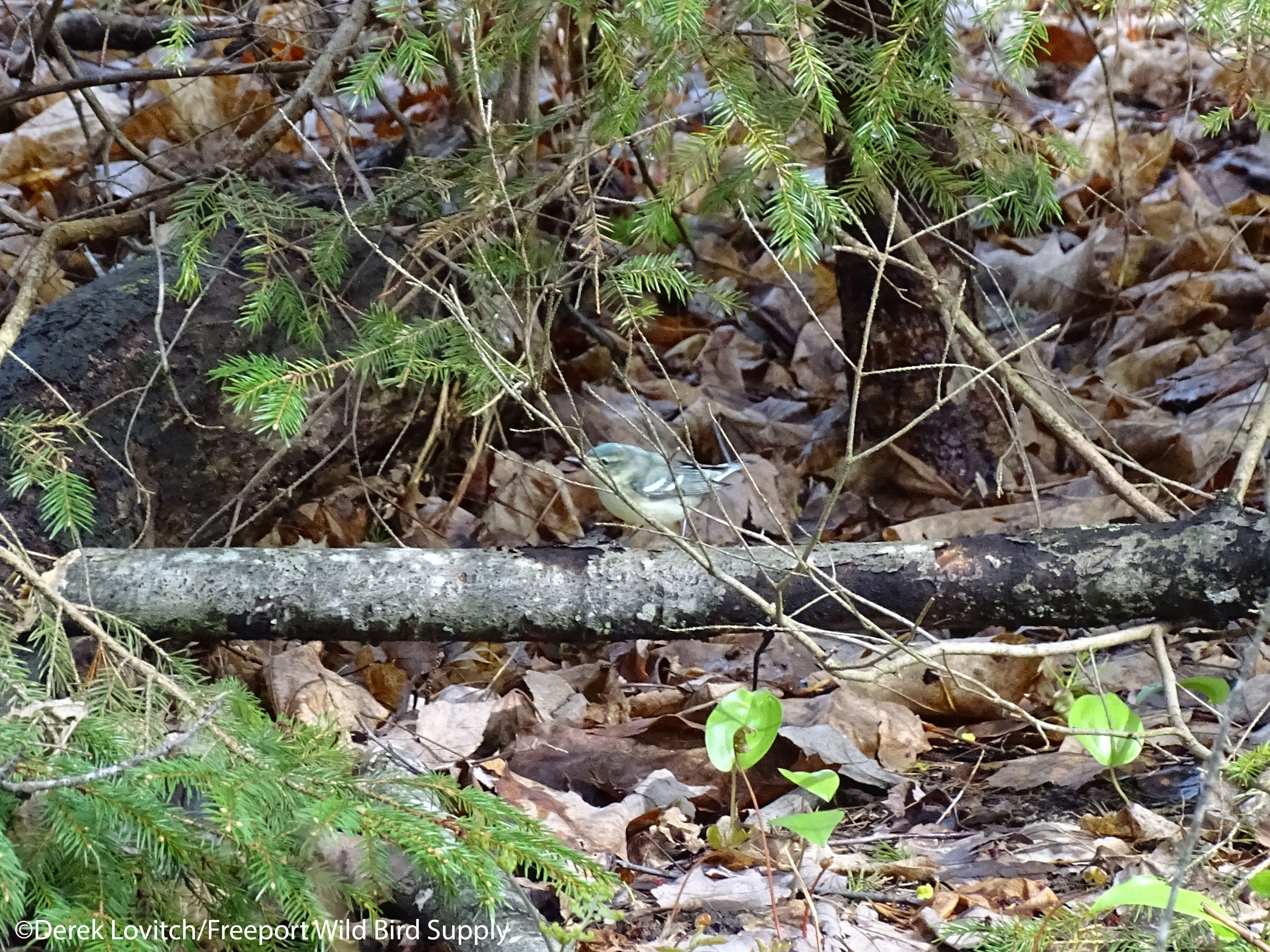
As planned, we began at Evergreen Cemetery, but our goal was set forth for us in the continuing presence of a very rare Cerulean Warbler. In fact, when I saw her a few days prior, it was the first Cerulean Warbler I have ever seen in Maine and at least a “state bird” for the several hundred folks who have seen it since. Even if you have never heard of a Cerulean Warbler, the excitement of the dozens of other birds present today was contagious. Luckily, we saw her not just once, but twice, without any concerted effort, and the second view was long and fantastic. Unfortunately, my sad attempt at a photo did not do it any justice.
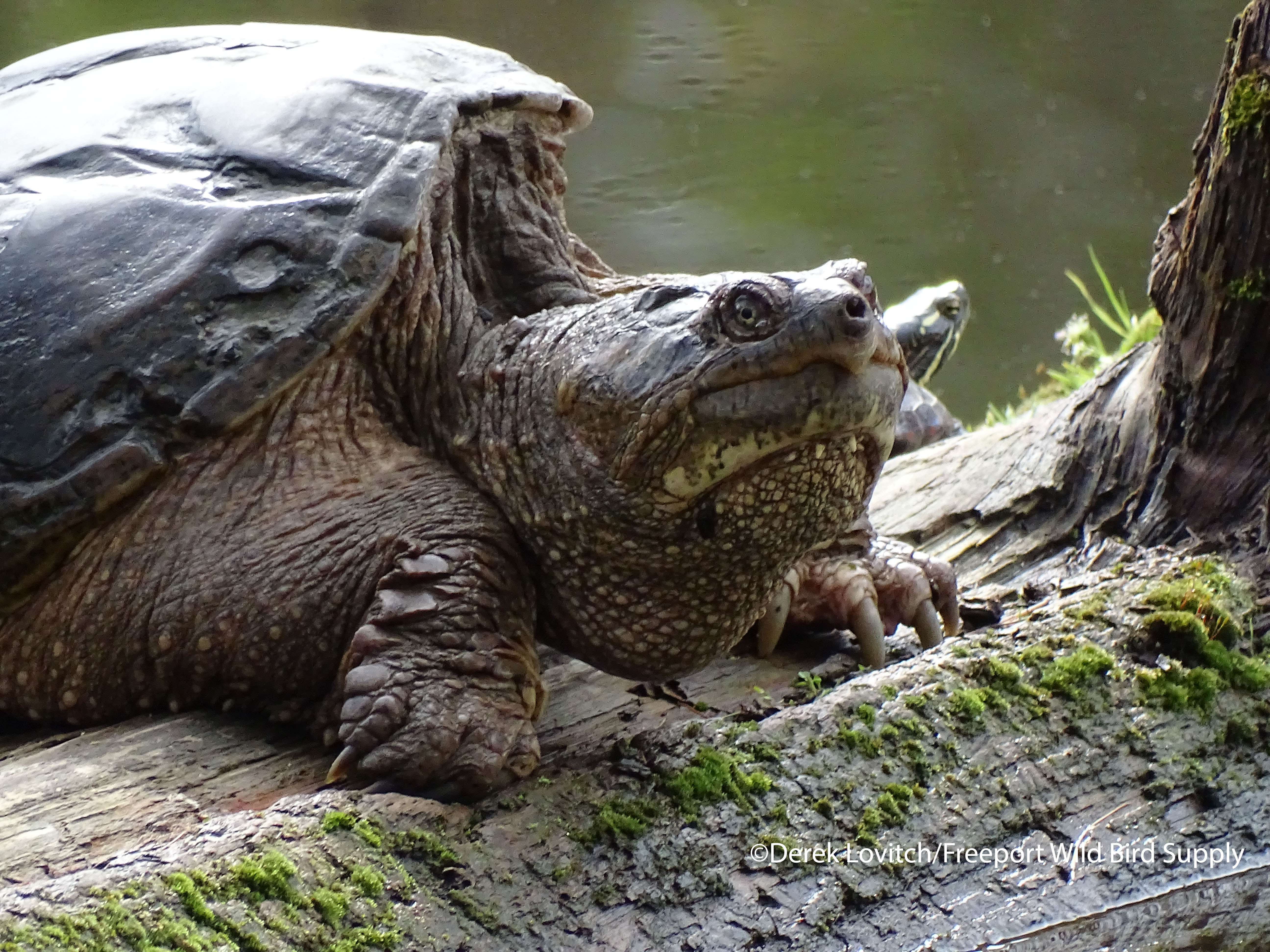
There were other birds, too! We heard Ovenbirds and Wood Thrushes, saw some close-up Black-and-white Warblers, found our first Wilson’s Warbler of the year, and enjoyed basking Painted and Snapping Turtles.
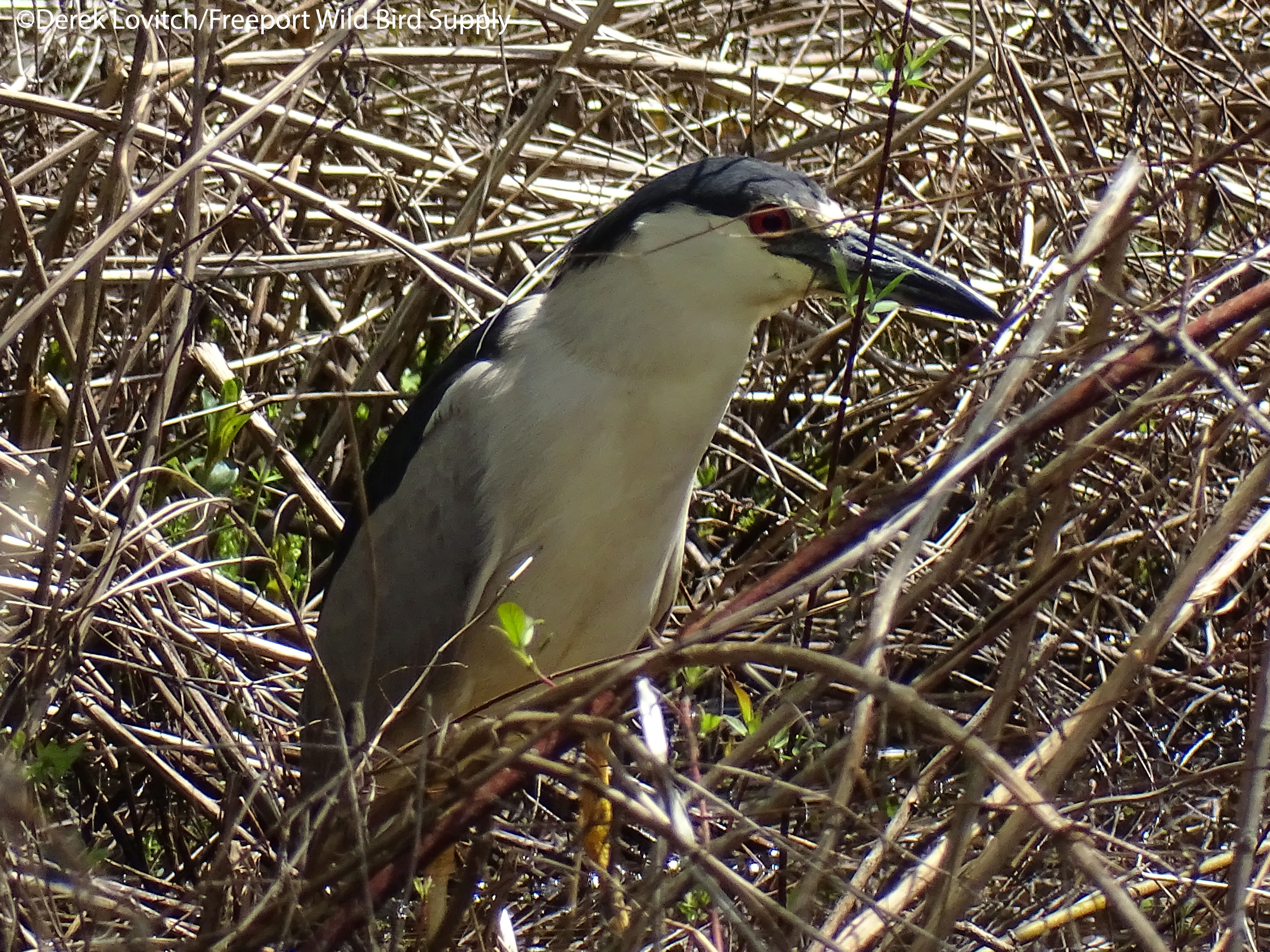
Other than the Cerulean excitement (do we have to rename this tour Cerulean and Cervezas!?), it was actually rather slow today for mid-May, so we relocated to Capisic Pond Park as the last of the fog burned off and the sun (remember that?) came out. Here, birds were easier to see, including stunners like Baltimore Orioles fighting over territories, and some really close and insanely cooperative Northern Parulas that fed right in front of our faces. A sharp eye yielded a Black-crowned Night-Heron as well.
After some productive and instructive birding, we headed back into town to visit Belleflower Brewing, one of my favorite Maine breweries. Keeping with the bird theme for a little longer, we began with their pale ale, Magpie, with its great citrus and resinous balance, followed by the more grapefruity Finch and Thistle. Belleflower treated us to a third sample, of our choice, and we covered a nice range of their offerings from a Vienna lager to a double-dry-hopped double IPA to savor as we discussed some beer history and mythology.
Next up was Definitive Brewing on the other side of town. With so many options, everyone was able to choose their two samples, and there are no shortages of choices here. I went with Robin (because bird names!) their Imperial Pastry Stout and Blueberry Waffles, a pastry sour. I saw lagers, an IPA, and several sours among the group, and this photo captured the rainbow of colors here, with my choices and those of two of the members of the group. Our birding had something for everyone: a rarity for the “life list” and cool behavior from some of our common and beautiful birds as we learned about the mind-blowing feat of migration. And between Belleflower and Definitive, there was most certainly something for every beer drinker!
3. Birds on Tap℠ – Road Trip! Shorebirds and Steins
Sunday, August 3rd: 9:00am – 3:00pm
The original BoT Roadtrip! Way back in 2015, our most popular tour returned to Scarborough Marsh at prime time for a good variety of migrant shorebirds. And we had absolutely gorgeous, perfect weather to do it!
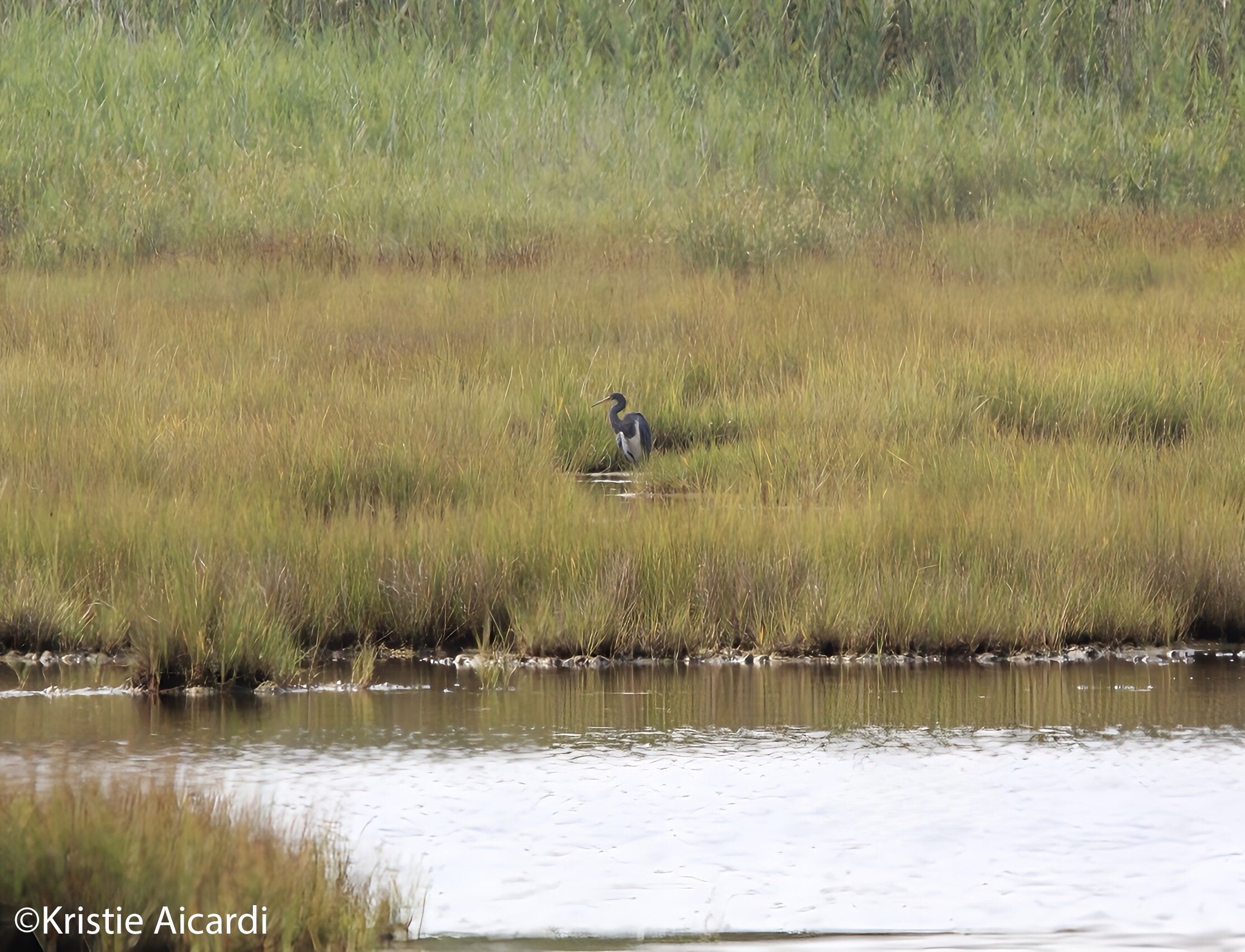
Beginning at the “Pelreco Marsh” high water levels limited our shorebird numbers a bit, but we were introduced to some of the basics of shorebird identification thanks to a flock of Short-billed Dowitchers and scattered Least Sandpipers. We spied a Saltmarsh Sparrow and talked about its fascinating ecology and peril, and were surprised by the arrival of a rare Tricolored Heron!
Relocating to Pine Point, we hit the tide perfectly, and soon, thousands of shorebirds were before us! The rapidly exposing mudflats steadily sucked in birds, with long-legged sandpipers appearing first, including 3 Whimbrel, with their massive curved bills, 8 Willets, and 3 Black-bellied Plovers. But as usual, it was the masses of the smallest shorebirds that stole the show, with an estimate of 2500+ Semipalmated Sandpipers and 225+ Semipalmated Plovers spread out before us. What looked like the first exposed sandbar was actually solid shorebirds! Learning the basics of sandpiper vs plover and moving on to sorting through the “peeps” for a White-rumped Sandpiper or two, we were introduced to the joys and challenges of shorebird identification, while mostly just enjoying the sight of so many birds! A few of us picked out a couple of Roseate Terns among Common Terns, and later, a mostly-adult-plumaged Bonaparte’s Gull was especially cooperative for photo-ops.
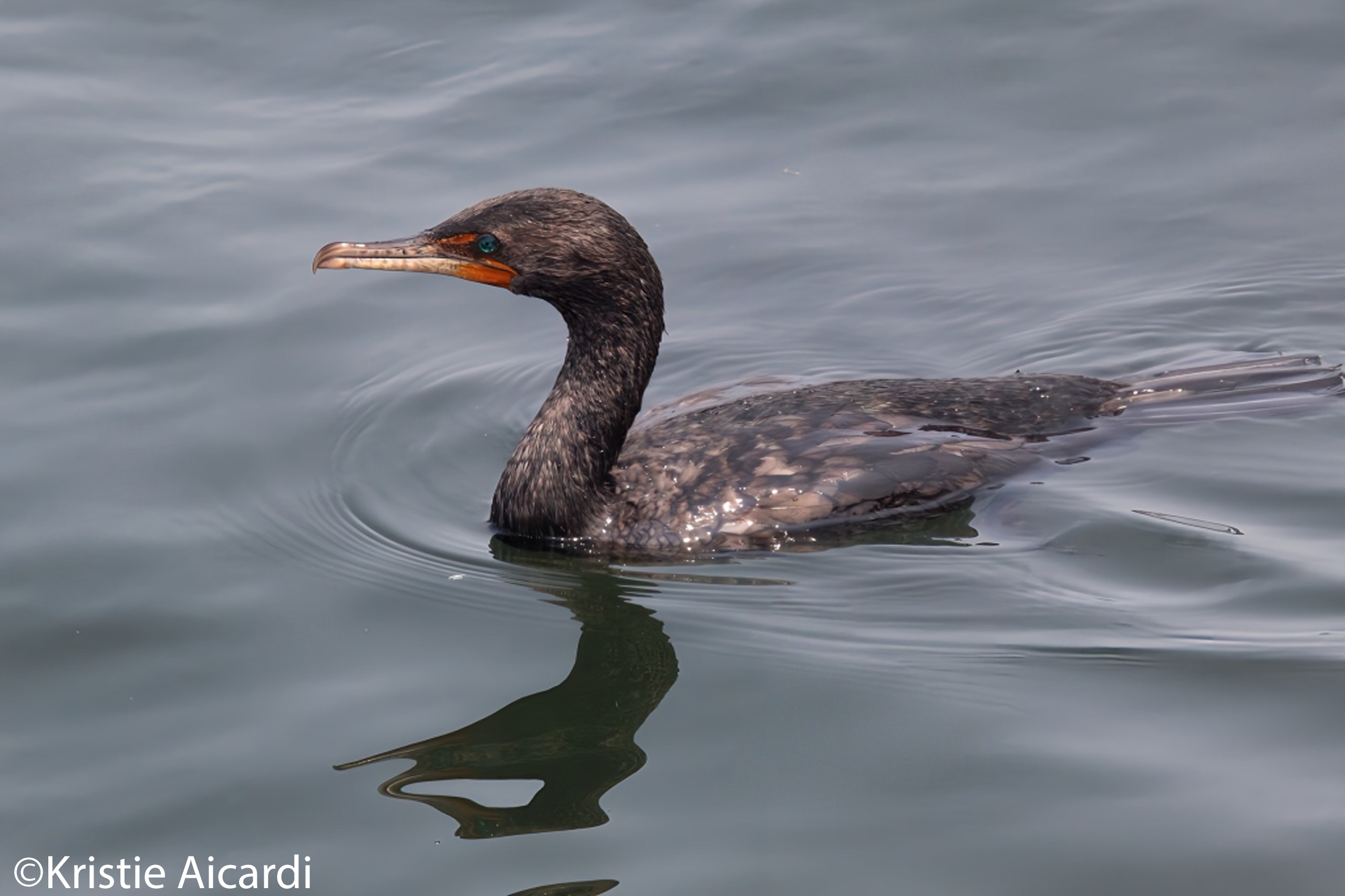
In the photo above, a Black-bellied Plover, Whimbrel, and Willet are in one field of view for comparative study, while I always insist on taking a moment to gawk at the eye of a Double-crested Cormorant.
Eric then led us to our first brewery, Modestman in South Portland. Originally founded in Keene, NH, owner/operator Ash Sheehan opened this second location closer to home here in SoPo. Tucked in a neighborhood down a side street off of Rte 1, someone on the tour who lived a mile and a half away didn’t even know it was there…there were all sorts of discoveries on this tour today, from rare herons to hidden gem breweries.
Coming in from the sun, we began with a refreshing and quenching light berliner Weiss sour, Black Reign with blackberry and boysenberry. Next up was It’s a Beautiful Thing, their flagship single-hope pale ale. Loaded with Citra hops, it blurs the line between a pale and an IPA, but it nicely progressed the palette and the ABV. When Life Gives You Lemons, loaded up with Citra and Simcoe was next up, providing a nice fruity/dank balance that Modestman is known for. I think this beer really nicely captured the essence of what people I know like most about their brews. Everyone got to choose their own last 4oz sample, and I went with Hard Rass Imperial Sour for a big and bold raspberry juice bomb.
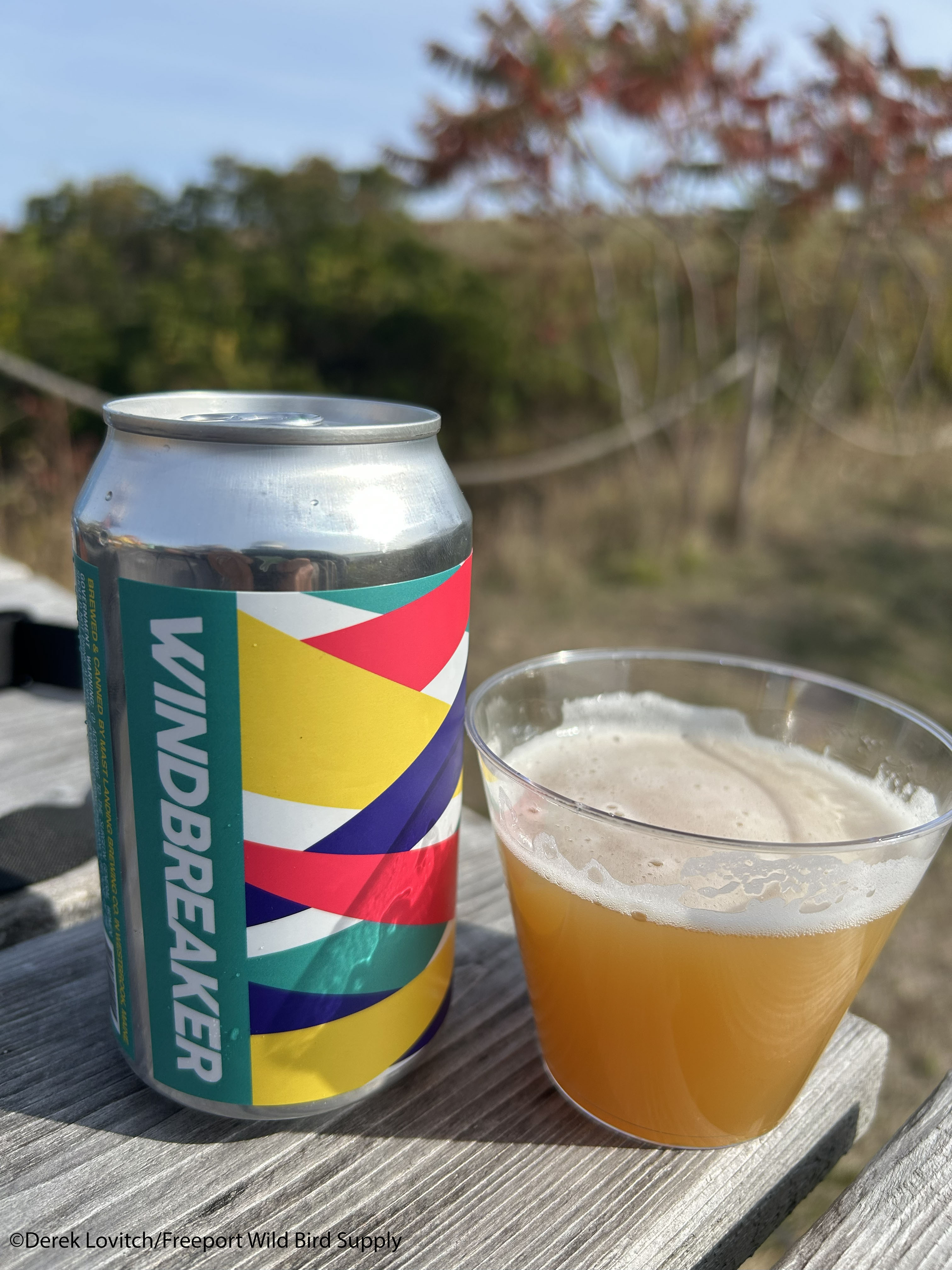
Our next destination was the latest tasting room for Westbrook-based Mast Landing, a short distance away on Cottage Street in South Portland. We continued to cover the basics of beer varieties here, starting with the clean and crushable Champ Lager. No visit to Mast Landing – especially a first visit for most of our crew today – is complete without trying their famous flagship Gunner’s Daughter peanut butter milk stout, and enjoying it on Nitro is always a special treat. Like a creamy liquid peanut butter cup (sans the allergens), Gunner’s Daughter deserves its accolades. Once again, our last sample was a personal choice, and since Mast Landing has something for everyone and I believe there were over 10 beers chosen among the 13 people (unfortunately, everyone but Eric, our trusty brewery guide and driver). Since it’s a Birds on Tap – Roadtrip, I for one had no choice but to go with a bird named beer. There are several here, but today I tried the 2025 incarnation of Song of the Swallow, which was laden with 5 varieties of hops for a really smooth and juicy final toast.
5. Birds on Tap – The Boat Trip! Rare Birds and Island Exploration.
Sunday, October 19th , 9:00am to 2:00pm
Here are some photo highlights from this annual favorite!
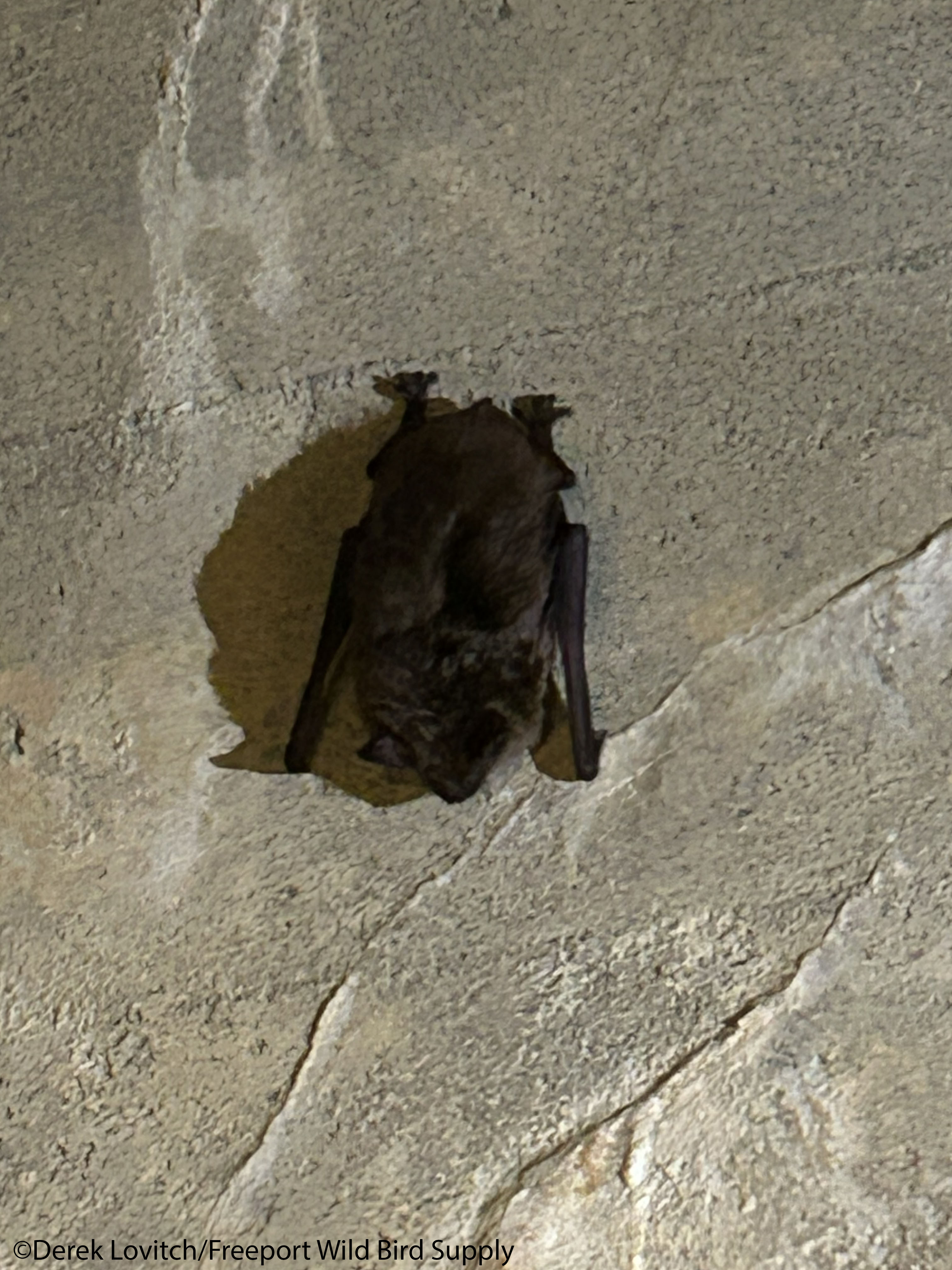
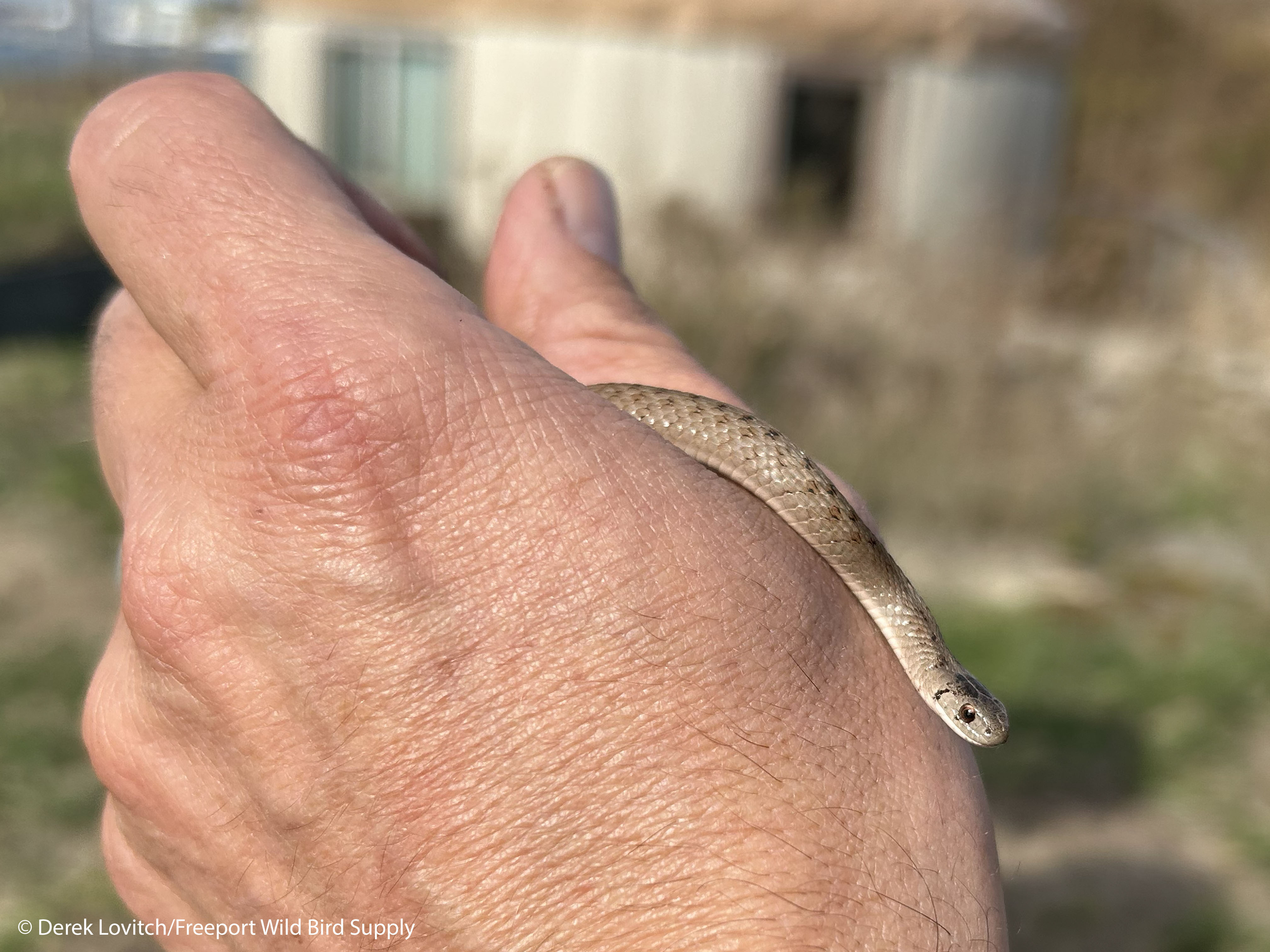
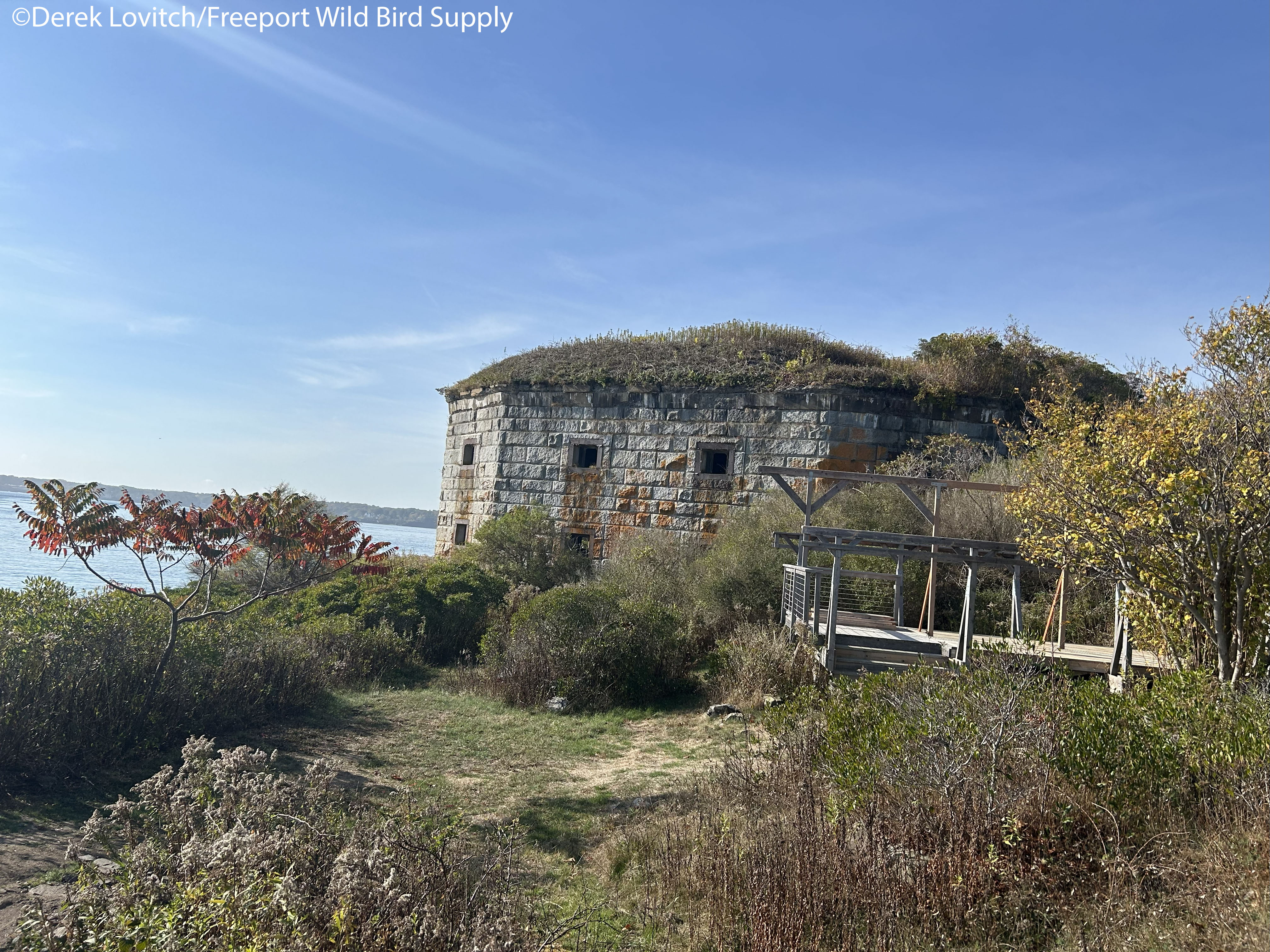
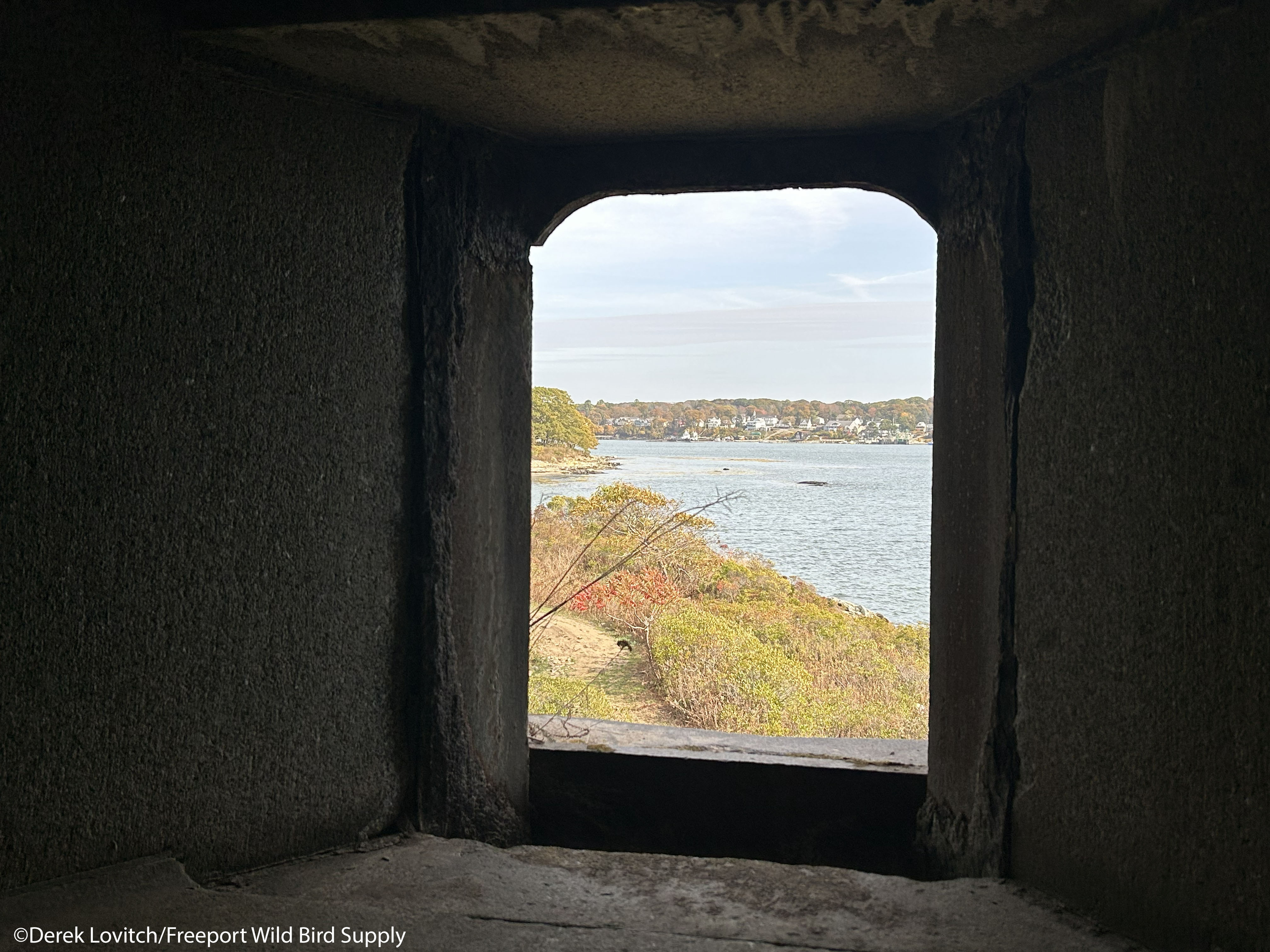
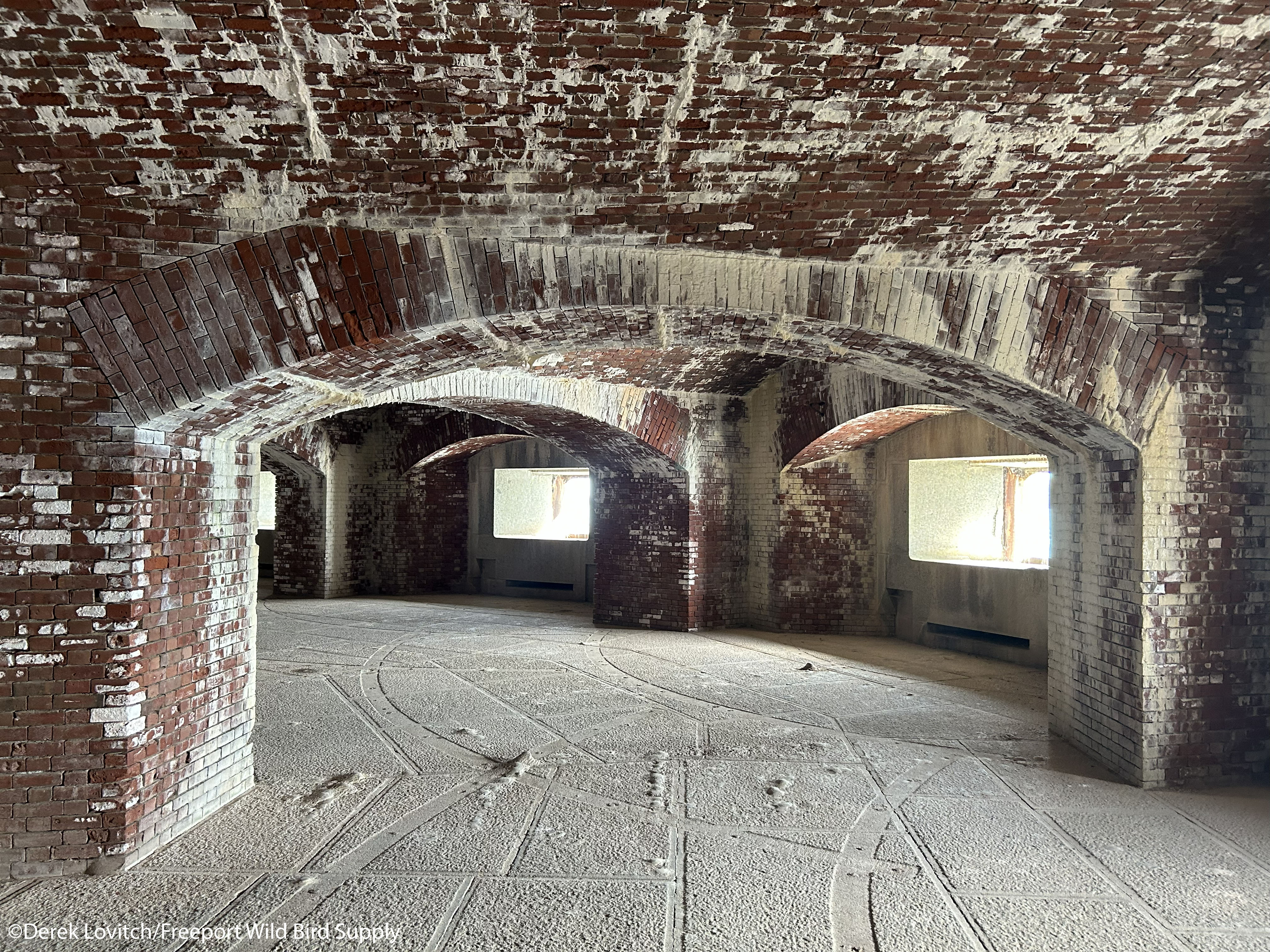
Big Brown BatDeKay’s Brown SnakeFort Gorges
6. Birds on Tap℠ – Road Trip! Rarity Roundup!
Sunday, November 9: 8:00am – 3:00pm
Our final Birds on Tap! tour of 2025 was our Roadtrip: “Rarity Roundup” on 11/9. Unlike most tours, where we know our destination – chosen to provide the best birding opportunities and highest rates of success possible – this trip didn’t have a destination until we were pulling out of the parking lot in Portland!
Designed to take advantage of the latest rare bird reports, our itinerary was to work our way south, either looking for rarities that had previously been reported, or finding our own by checking the seasonal vagrant hotspots. The southern coast of Maine is usually the best area for really rare birds this time of year, but I threw the plan out the window immediately and we turned northward.
I just couldn’t resist taking people to see a long-staying (since November 2nd!) MacGillivray’s Warbler (only the 7th ever in the state of Maine) in Yarmouth. I felt confident I could find it quickly, thanks to its constant vocalizations, we’d get a look and then we would move on to the next bird. I did not expect, however, to find it that quickly!
In fact, I heard it the very second we entered the trail. It was calling nearby and we slowly and quietly moved in position. We found it foraging low on the ground, in some perennials, only a handful of feet away. Now this skulky bird didn’t exactly sit out in the open, but over the next 15 minutes or so, we all had satisfying (or better) looks, until anxious birders (who had apparently been waiting too far down the trail for up to two hours!) overwhelmed us. We slowly moved away, following the bird’s call notes, eventually finding it again, and then watching as it flew about 2 feet from one of us where it disappeared into a dense thicket.
Wow! What a thrill!
I refreshed the rare bird alerts (and all the different places rare birds get reported these days) as we began our journey south, spending the time in the van working on a little game to practice our “status and distribution” knowledge during this exciting time of year for rare birds.
I didn’t want to ask folks to stand still in Scarborough Marsh for the rest of the morning to maybe hear a Clapper Rail call once, and there were no further reports of the Seaside Sparrow in Wells. So with each passing exit of the Turnpike, I decided to go all in in Kittery, beginning at Seapoint Beach. Yeah, there wasn’t much there, and nothing of note.
So the rest of our time was spent at the delightful Fort Foster, the host of so many vagrants over the years. We hoped the Cave Swallow from two days prior would reappear, or we would find something even better. Um, we did not.
In fact, it was pretty darn slow, at least in the brush and the woods. Offshore, waterbirds were building, and we had some good looks at Surf Scoters, for example. And overhead, there was an absolute massive Double-crested Cormorant migration going on. Numerous large flocks of several hundred were winging it south, in their usual “drunken v’s.”
We swung for the fences and combed Fort Foster, but alas, we were not heroes today: we found nothing rare. But it was fun to try!
And besides, not only did we get a “mega rarity” with the MacGillivray’s Warbler, we got another “mega” rarity when we arrived at Tributary Brewing. There, we found Mott The Lesser, their 10.5% ABV Imperial Stout, released twice a year, and only available at the brewery. And yesterday it was released, so this was quite the “twitch.” You think people drive far to see a MacGillivray’s Warbler!? Well, rare beers are no different. This year’s version was aged in red, white, and tawny port wine barrels and then a rare apple wood rye barrel for additional complexity.
Of course, we didn’t want to destroy our palates, and we were here to learn about a wide range of Tributary’s beers, so we began with their flagship Pale Ale and compared this West Coast American standard to Affluente, an Italian-style Pilsner, with Adriatic barley and a light dry hopping of lemon-forward hops. Moving on to their new Zwicklebier, an “immature” lager, which was more malt-forward thanks to 100% Maine grown and malted barley. Then we tried the Mott the Lesser. And it was good. And bottles were purchased.
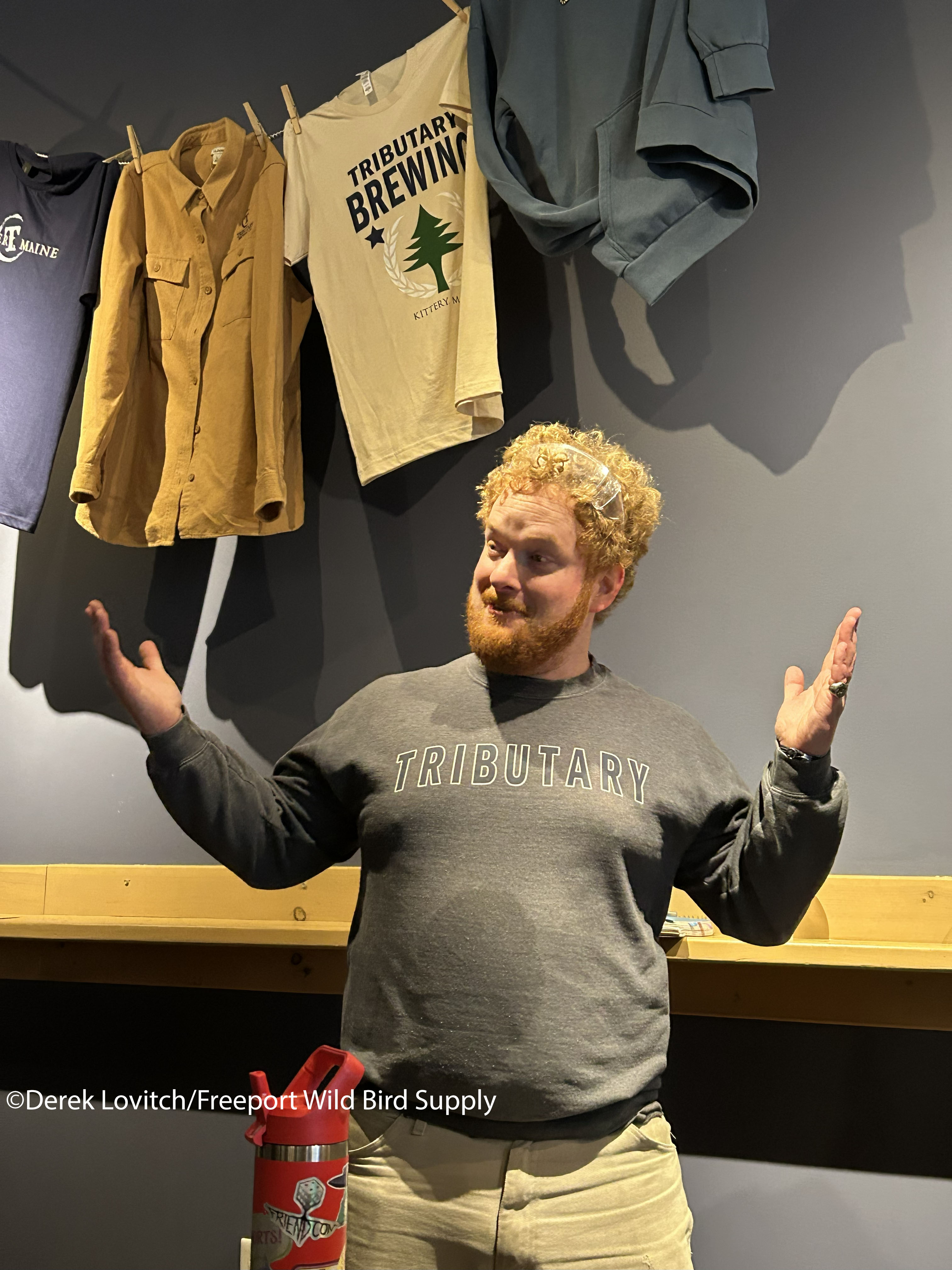
Our driver and beer guide Joe started us off with the basics of beer tasting and an overview of styles, but during our tasting, we were treated to a visit from head brewer and owner, Woody, who gave us the history of the brewery, started by his beer-legendary father, and guided us through the tasting. He discussed their commitments to Old World styles of beer and answered questions from the crowd.
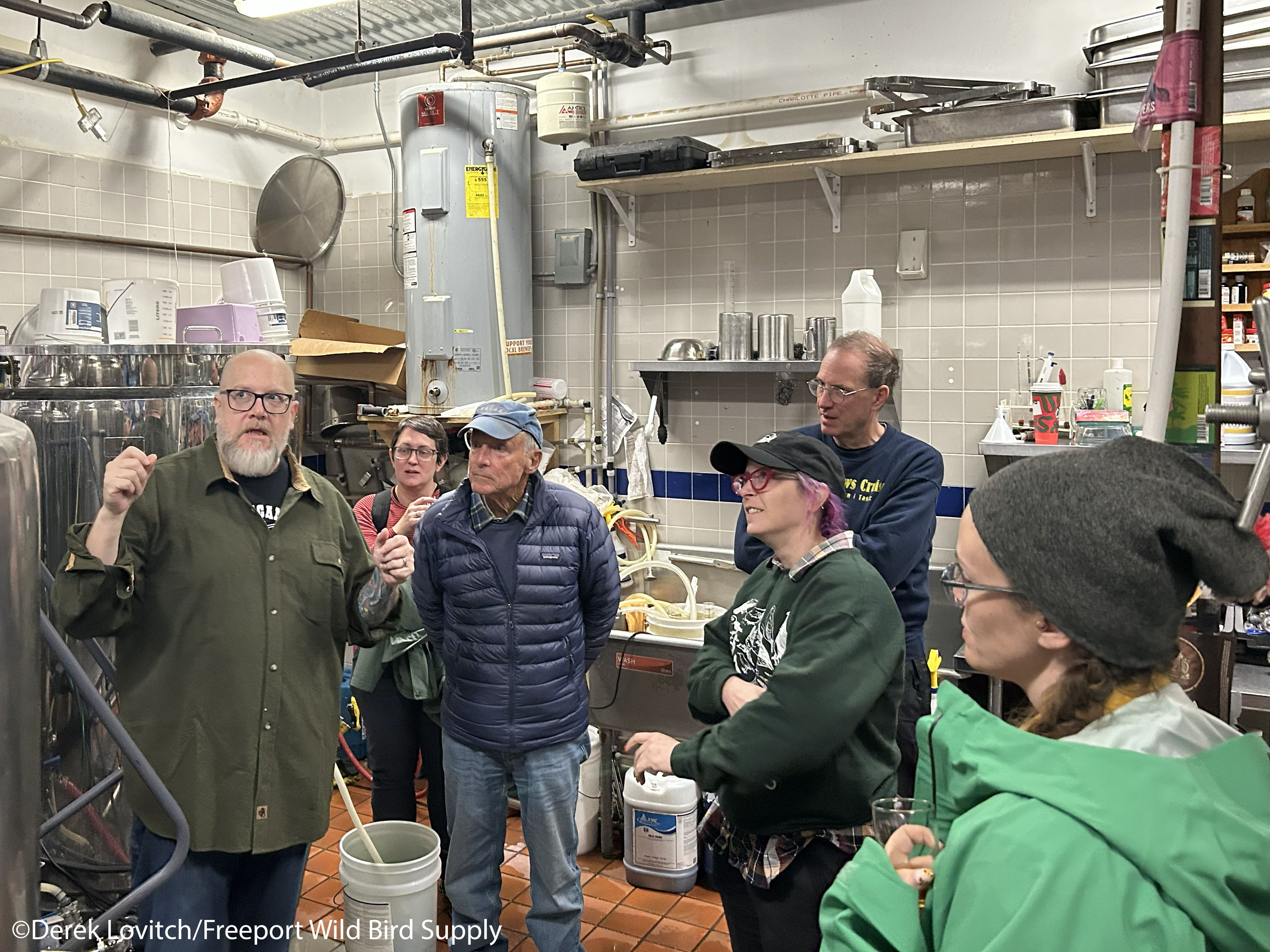
Not to be outdone, apparently, Woodland Farms just up the road also laid out the red carpet for us, with owner Pat not only guiding us through our tasting, but providing a tour of the brewery itself, from first boil to final packaging. Woodland Farms is becoming known for their wide variety of offerings, and it was amazing to see how they can pull so much off in this small space!
Their Flagship is Blinky, an IPA with a very complex dry hop bill. We then tried Rossa Matrimonial, their version of an Italian Pilsner, a dry beer made with red malts. We once again remained in the Old World with Tmavy Piro, which means “dark beer” in Czech. A dark lager, it offered the “crushability” of a lager, but with more malt flavors before the crisp lager finish. And finally, everyone got to choose a final sample, with most people choosing the Big Effin Porter, a robust 8.2% porter. I went with the masses and tried this, too, and enjoyed how rich it was without the thickness and weight of an imperial stout.
Woodland Farms is also becoming known for their non-alcoholic beers, a rapidly growing segment of the beer economy. Out back, we learned about the differences in making non-alcoholic beer that tastes good verses beer with alcohol, and especially, mass-produced NA beer that usually tastes like, well, not much. To demonstrate what NA beer means in 2025, we were treated to two bonus samples: the NA Dogwalker with an abundance of sticky, piney-resinous hops, and their NA Festbier, an easy-drinking seasonal malt-forward Oktober-fest style.
So from a mega rare bird and a mega rare beer, learning how to search for rare birds and how to make beer, and trying everything from non-alcoholic to a 10.5% imperial flavor-bomb, we most surely enjoyed an educational, enjoyable, and often enlightening day!
I usually miss at least one “Mega” rarity whenever I go away, so I was pretty pleased that this Common Gull – found on 10/31 by Evan Obercian at the Samoset in Rockland – stuck around until we returned. I was able to see it on 11/3. It took a while, but when it eventually spread its wing, the species/subspecific ID became certain. Separated by the abundant Ring-billed Gulls by the smaller size, slightly darker back, and thin bill, we can rule out the West Coast Short-billed Gull by the length of the bill and the wing pattern. Separation from Kamchatka Gull is more challenging, but it wasn’t particularly dark, the head was lightly flecked with brown, and there’s a relatively distinct bill band. According to Ayyash (2024), the shorter gray tongues on the outer primaries, the large P9 window that connects with the large P10 window, and little to no white at the end of the tongue on P8 all suggest Larus canus canus (and not Kamchatka Gull).
It’s November, and that means “Rarity Season” and unlike recent Novembers, Rarity Season is off to a roaring start. Here are my observations of note over the past 6 days. Below, see the trip report for our 7-day birding cruise that included time in Maine waters.
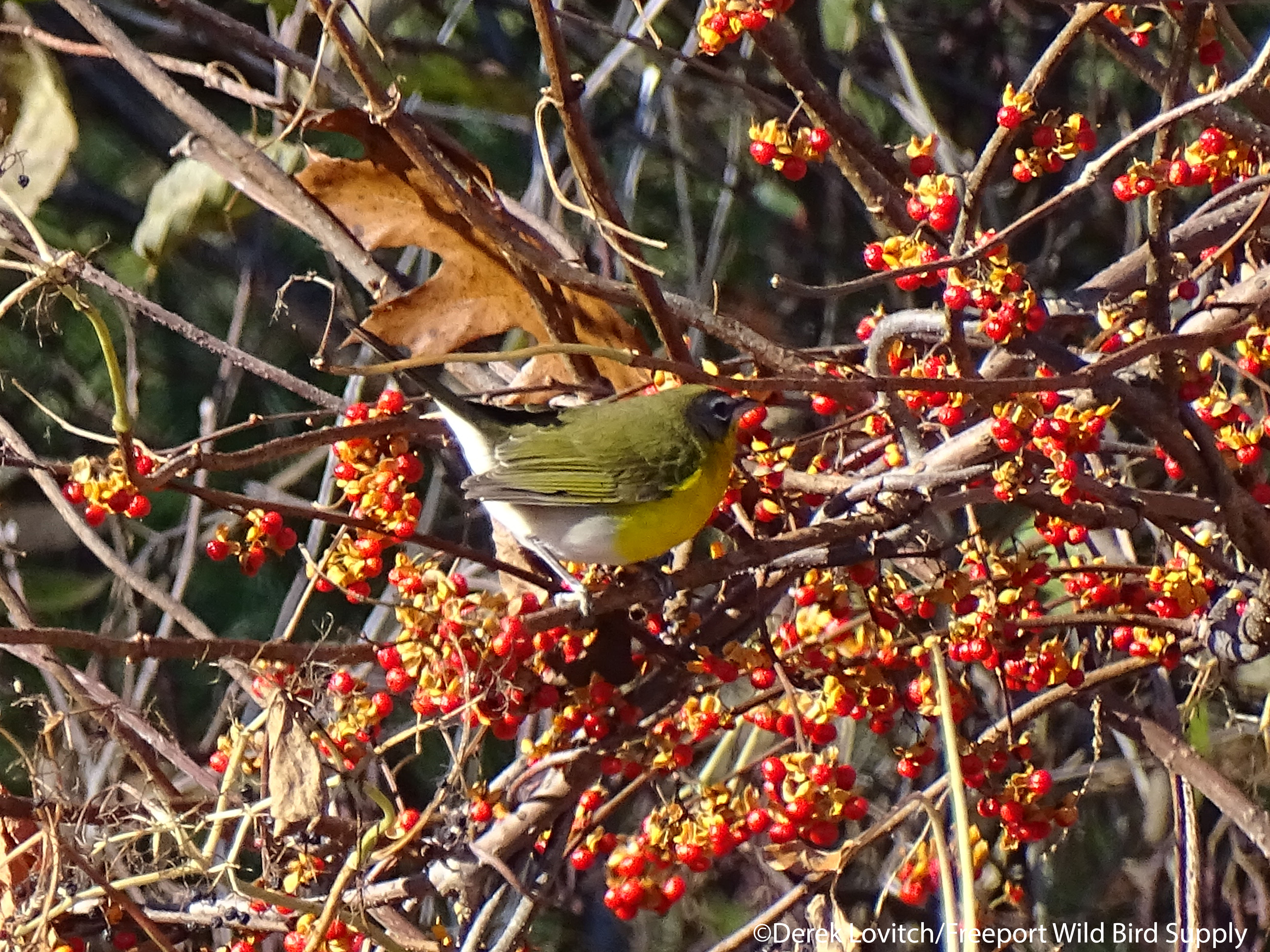
Although I chase even less frequently these days, I did make time to go see one of the two COMMON GULLS at the Samoset in Rockland on 11/3. Photos and discussion above. Additionally, I caught up with the YELLOW-BREASTED CHAT that was found there that day, although I blew the photos. A “Western” Palm Warbler, several American Pipits, and 4 Horned Larks were also present.
1 Pine Warbler, Bailey Island, Harpswell, 11/5 (with Jeannette).
1 RED-EYED VIREO and 6 American Tree Sparrows (FOF), Trout Brook Preserve, South Portland, 11/7.
Biddeford Pool environs, 11/8:
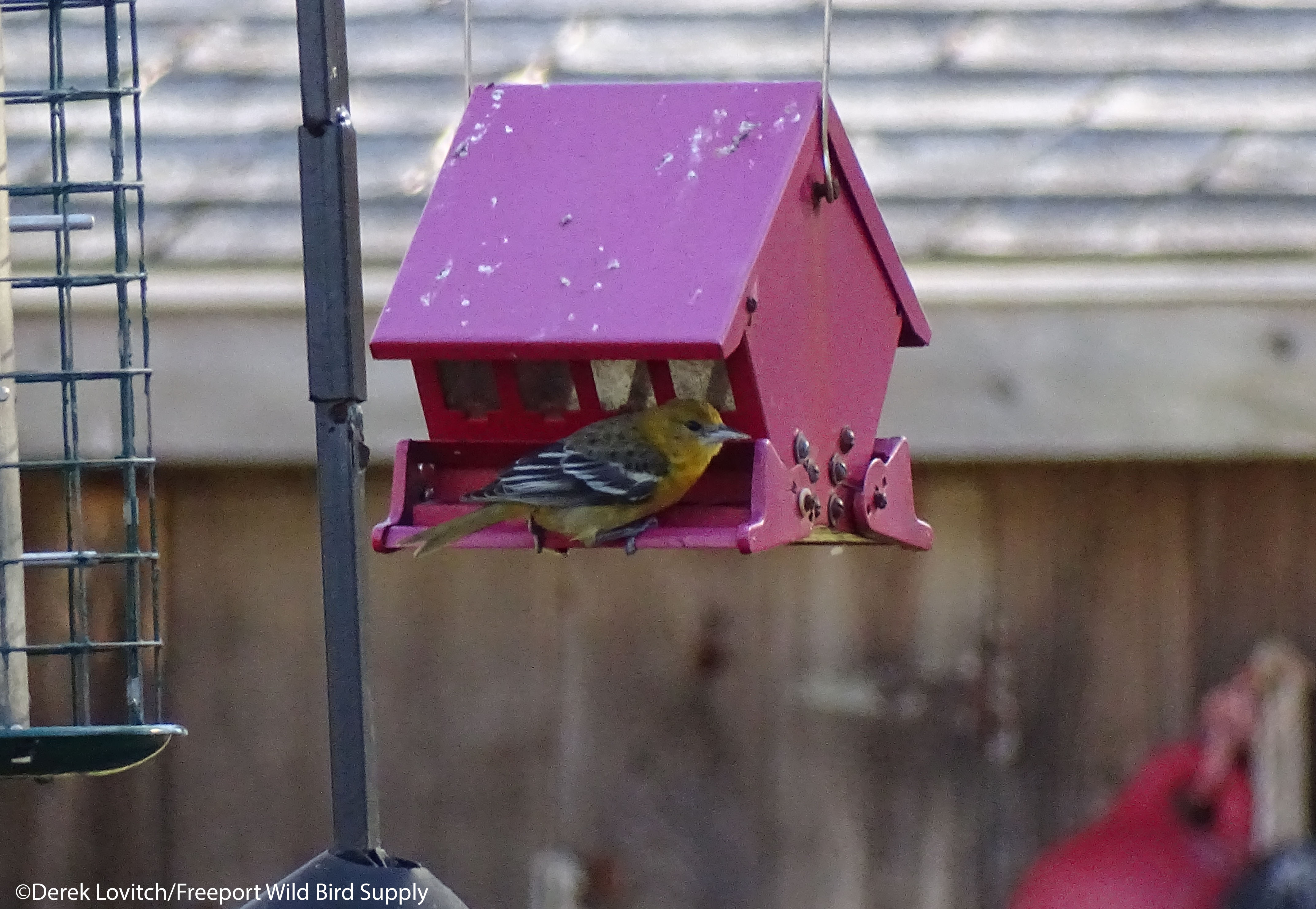
1 BALTIMORE ORIOLE
1 PRAIRIE WARBLER
1 “Ipswich” Savannah Sparrow
1 Rusty Blackbird
2 Lapland Longspurs
2 Greater Yellowlegs, 22 Black-bellied Plovers, and 26 Dunlin.
2 Northern Pintails
4 Hermit Thrushes and 1 Swamp Sparrow, etc.
Our Durham property is much quieter overall these days, but a few Red-winged Blackbirds have been around, a Ruby-crowned Kinglet was present 11/5-6, our first Pine Siskin of the season at home visited on 11/5 and increasing daily since, and Dark-eyed Junco numbers have continued to grow. At least one each of Swamp and Savannah Sparrow continue.
TRIP REPORT
Last week, Jeannette and I boarded a Princess Cruises ship in New York City to unofficially survey for rarities and things like Great Skua. The entire trip report is here, but our highlights from Maine specifically included:
1 RED-EYED VIREO, 2 Orange-crowned Warblers, 2 Field Sparrows, etc, Eastern Promenade, Portland, 10/29. Yes, we took a cruise only to go home!
Passerine FALLOUT, 10/30. Awoke to birds on deck before dawn. 16.5 nautical miles southeast of Mt. Desert Rock. 12 species of passerines, led by 8++ Yellow-rumped Warblers but also including 1 Rusty Blackbird, 1 “Ipswich” Savannah Sparrow, 1 Snow Bunting, and perhaps most surprisingly, 7 European Starlings. Another birder on board photographed a Pine Warbler.
Very little time was spent in daylight in Maine waters, unfortunately, but we did have a couple of Northern Fulmars in Maine waters very early on the 30th.
Two Black-crowned Night-Herons, including this one, were a nice find for a South Portland Big Day on the 21st. Unfortunately, we didn’t have enough good finds to make up for a slow morning at the favored migrant traps.
I had just a handful of observations of note over the past six days before I head out to Monhegan, including the following:
On Tuesday, John Lorenc and I did a South Portland-only “Big Day,” trying to see as many species as we could within the city’s boundaries. With limited migrants at Hinckley Park, we clawed our way to a decent tally of 94 species by day’s end with a lot of regular migrants being undetected. Highlights for the city and the date were limited to Long-tailed Duck, Black Scoter, Glossy Ibis, Black-crowned Night-Heron, White-throated Sparrow, and Red Crossbill. We unfortunately did not turn up any rarities. My personal FOY’s were limited to Swainson’s Thrush (1 each at Clark Pond Trails and Trout Brook Preserve) and Common Nighthawk (two over John and Terez’s yard at dusk for our last species of the day, followed by 4 over our yard in Durham when I returned home).
Two tours over the weekend and private guiding on Monday were likewise fairly slow for passage migrants, but there was a distinct increase in territorial birds with each passing day, as it seemed birds were dropping into their desired habitats and not migrant traps. A big overnight flight on 5/22-23 yielded more territorial birds, but surprisingly few passage migrants on the ground.
2 American Bitterns, surprisingly high over the yard in the evening on 5/22. Really threw me off at that altitude!
3 Greater Scaup, Wharton Point, Brunswick, 5/23.
Additional personal first-of-years this week also included:
1 briefly glimpsed MOURNING WARBLER, Capisic Pond Park, Portland, 5/19 (with Birds on Tap Roadtrip! Warblers and Wort! Tour group).
I haven’t been carrying my camera much, and with only one working arm still, my photography has not been very successful. But this Gray Catbird posed nicely for me at Hinckley Park on the 19th.
I had a very busy week of programming, with two tours and some private guiding. With limited free time in between, I made the most of it with some excellent morning outings. Highlights included lots of migrants and more new arrivals, as well as uncommon local breeding birds.
My observations of note over the past seven days included:
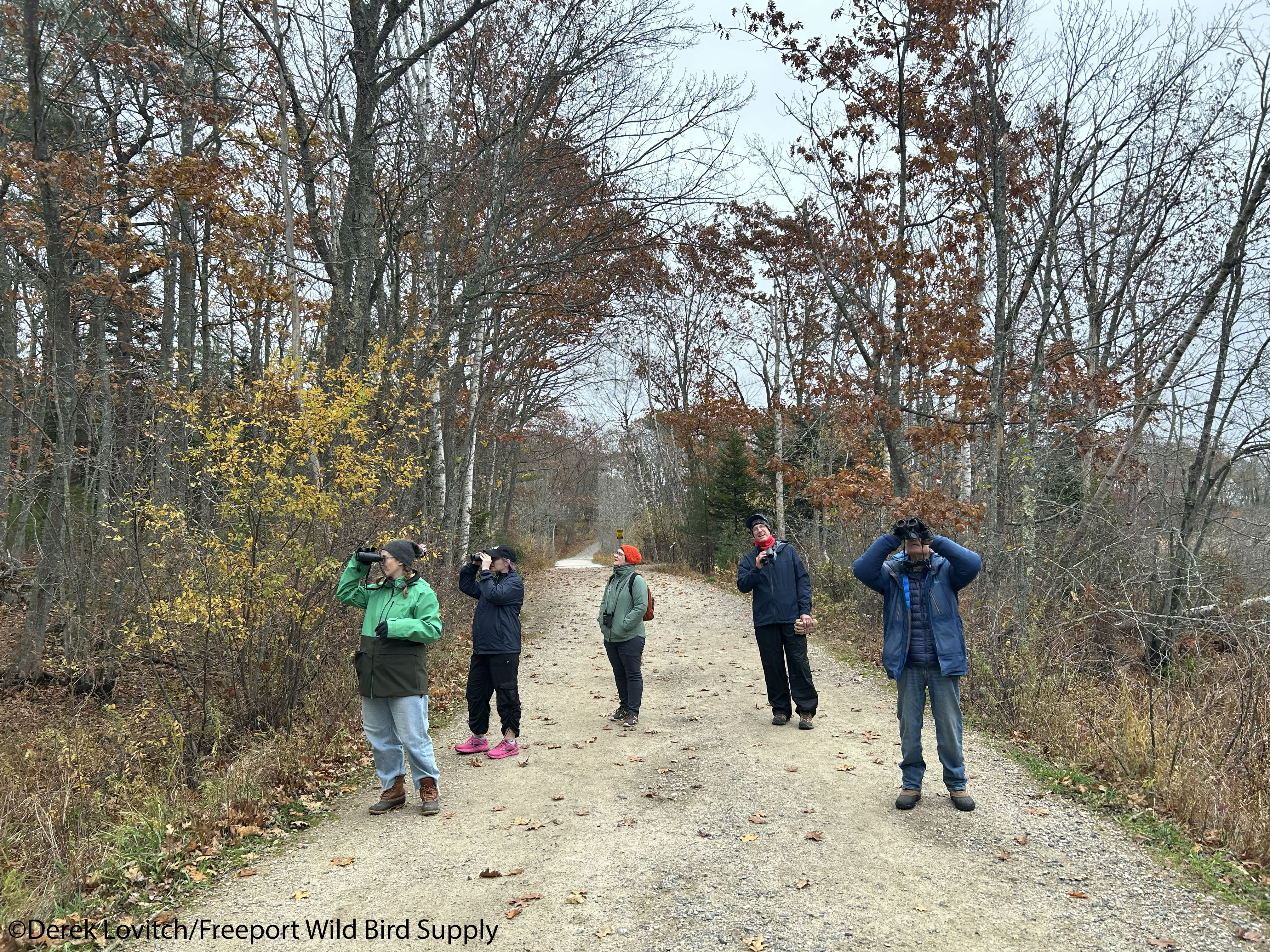
16 species of warblers led by 15+ American Redstarts and 10+ Black-and-white Warblers, Evergreen Cemetery, 5/14 (with Down East Adventures Spring Songbird Workshop tour group).
Unknown number in a small group of calling Red Crossbills, Evergreen Cemetery, 5/14 (with Down East Adventures Spring Songbird Workshop tour group).
1 pair SANDHILL CRANES, 3 YELLOW-THROATED VIREOS, 1 LOUISIANA WATERTHRUSH, and 1 BLUE-GRAY GNATCATCHER, Morgan Meadow WMA, 5/15 (with Jeannette. That was a great morning!)
30-40 Long-tailed Ducks, Stover’s Cove Preserve, Harpswell, 5/18 (with Harpswell Heritage Land Trust tour group).
19 species of warblers, led by 14 American Redstarts and 9 Black-and-white Warblers, but also including 5+ Tennessee Warblers, etc, Hinckley Park, South Portland, 5/19. My best warbler morning of the season so far.
4 Red Crossbills, Hinckley Park, 5/19.
My personal FOY’s this week once again included a mix of “they’ve been around for a while but I haven’t been in the habitat,” regular and on-time arrivals, a few species that have been slow to arrive given our abnormal spring weather pattern, and even an oddly early arrival or two.
4 Magnolia Warblers, Florida Lake Park, 5/13 (with Saturday Morning Birdwalk group).
1 YELLOW-BELLIED FLYCATCHER, Florida Lake Park, 5/13 (with Saturday Morning Birdwalk group. Exceptionally early; likely my earliest record by at least several days if not over a week).
1 Lincoln’s Sparrow, Florida Lake Park, 5/13 (with Saturday Morning Birdwalk group).
1 Blackburnian Warbler, Florida Lake Park, 5/13 (with Saturday Morning Birdwalk group).
3 Red-eyed Vireos, Evergreen Cemetery, 5/14 (with Down East Adventures Spring Songbird Workshop tour group).
2 Tennessee Warblers, Evergreen Cemetery, 5/14 (with Down East Adventures Spring Songbird Workshop tour group).
1 Cape May Warbler, Bradbury Mountain Spring Hawkwatch, 5/14.
1 House Wren, Hidden Pond Preserve, Freeport, 5/16 (with clients from Maine).
1 male Indigo Bunting, our feeders in Durham, 5/17.
10+ Bobolinks, Old Brunswick Road, Durham, 5/18.
8 Blackpoll Warblers, Hinckley Park, 5/19.
3 Swainson’s Thrushes, Hinckley Park, 5/19.
1 Black-billed Cuckoo, Hinckley Park, 5/19.
TOURS AND EVENTS:
We now have one spot open for all four days of our upcoming Monhegan Spring Migration tour, May 26-29th.
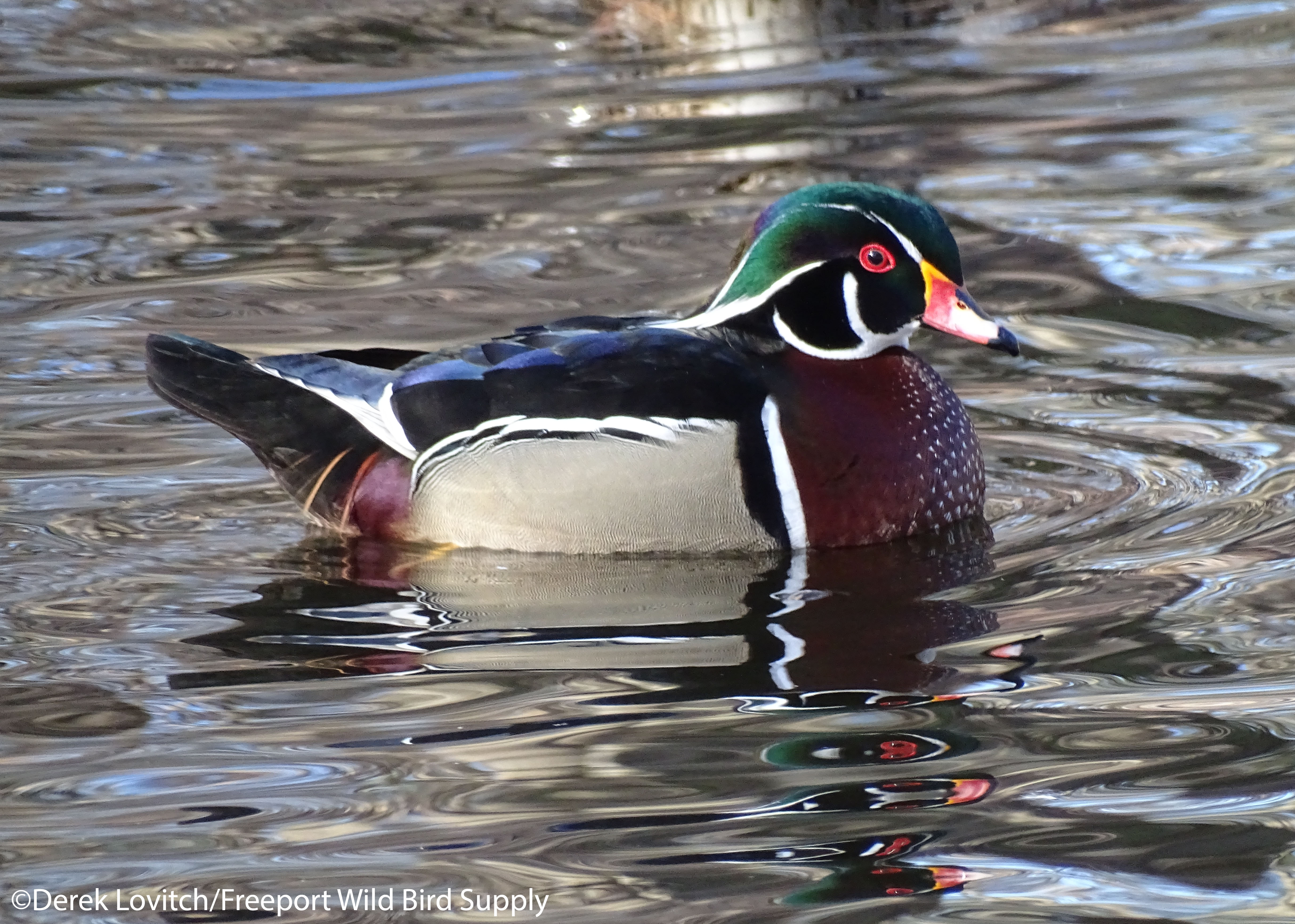
There are few better places to photograph Wood Ducks in Maine than Abbott’s Pond (aka the “York Duck Pond”) in York. A quick stop here on Friday with clients visiting from Texas afforded some great photo ops!
It was a busy – and exceptionally productive – birding week for me! The extensive list of highlights – including two full days of private guiding which cleaned up on most of our regular wintering species in southern Maine – were as follows:
7 BARROW’S GOLDENEYES, Winslow Park, Freeport, 2/26 (with Saturday Morning Birdwalk Group). Two days later, on 2/28, Allison Anholt, Cameron Cox, Jeannette, and I had an incredible EIGHT birds (4 pairs). This is my highest count here (or anywhere else in southern Maine) in nearly a decade. At least 6 were still present on 3/3 (with clients from Texas).
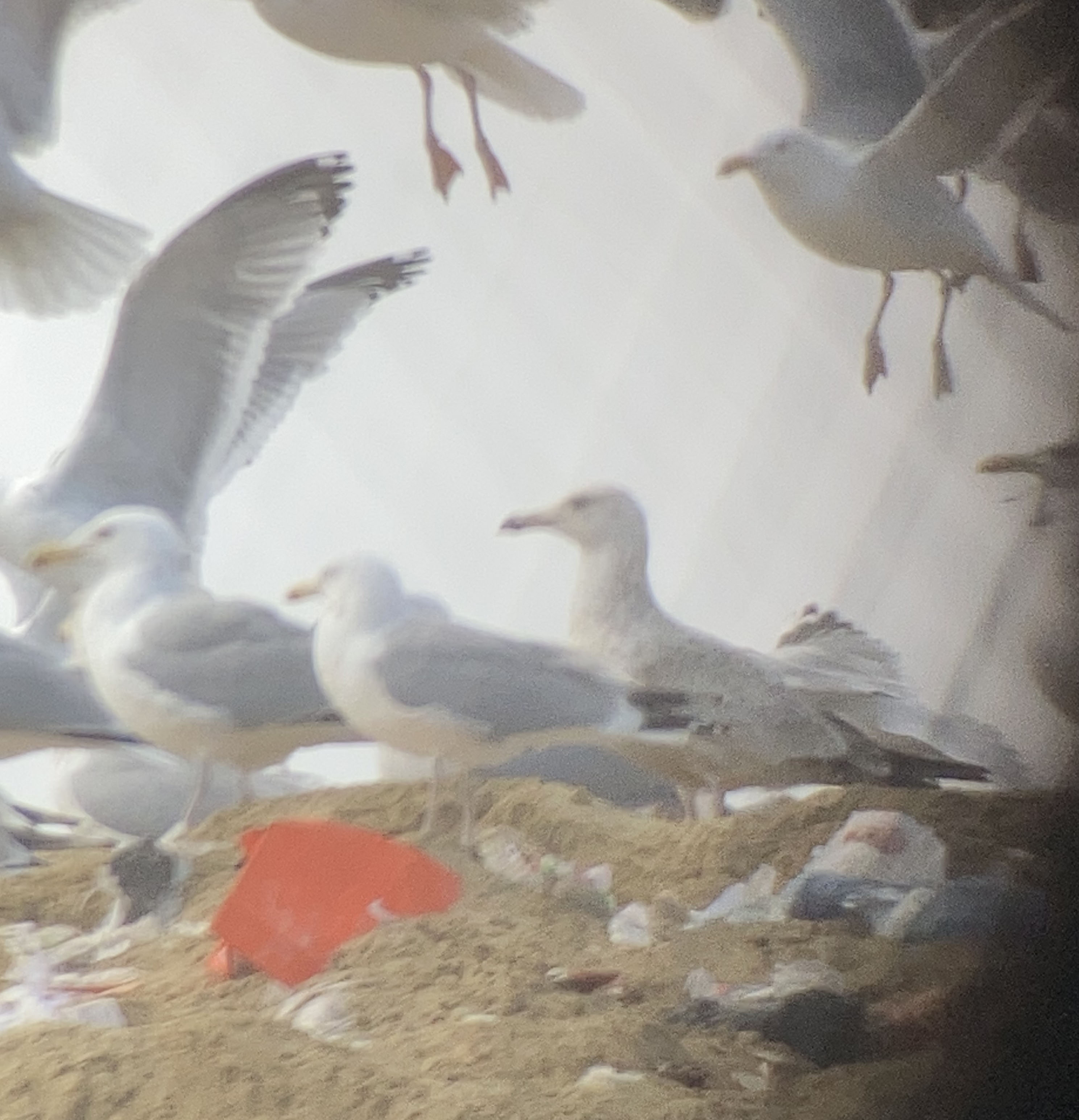
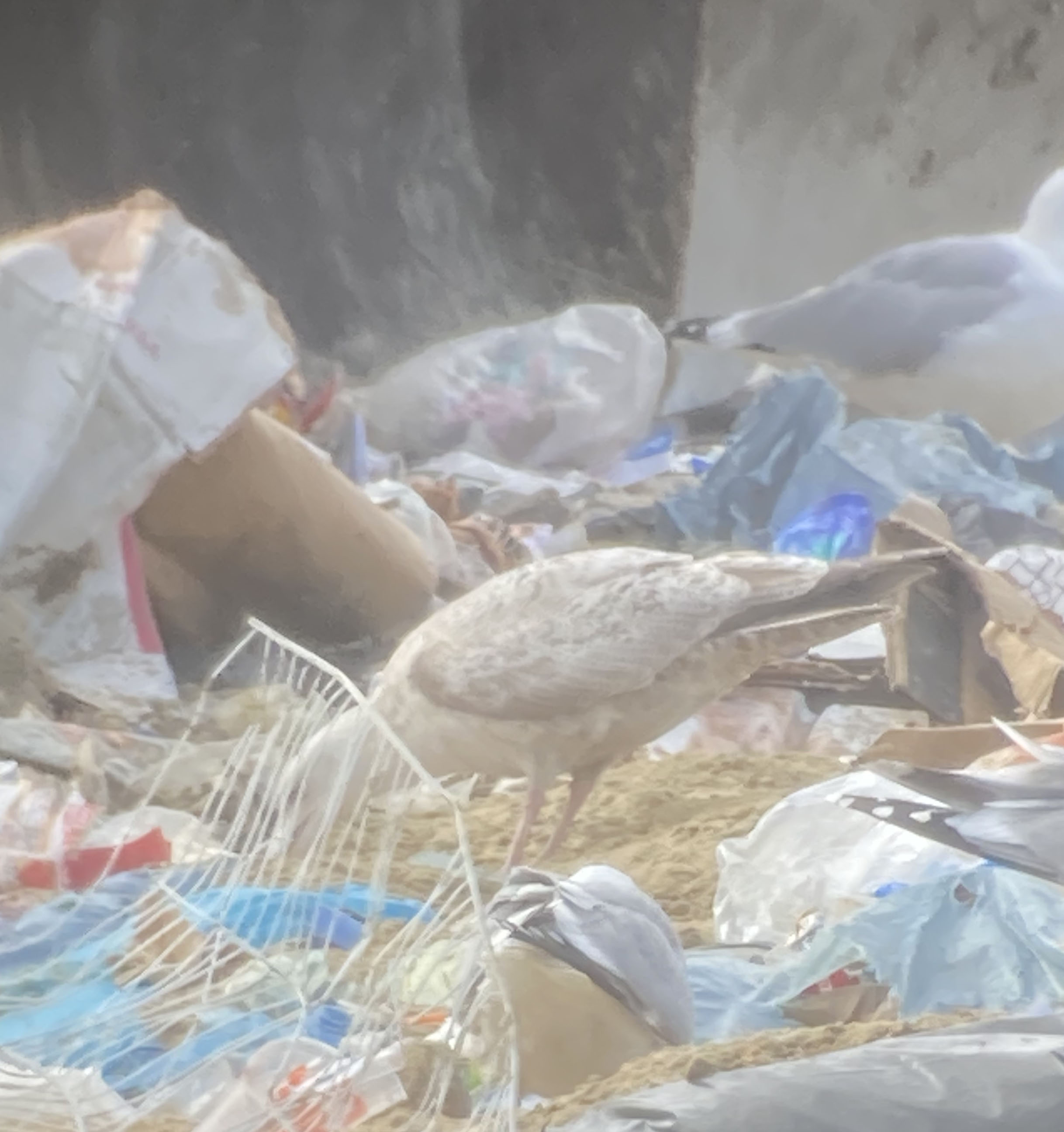
1 interesting, likely hybrid GLAUCOUS GULL X HERRING GULL, Bath Landfill, 3/1 (with Jeannette). Showing characteristics consistent of this fairly-regular hybrid pair, the much darker primaries suggest the possibility of a second-generation hybrid – perhaps a backcross with a Herring Gull. Discussion on this bird continues but this is the current consensus. Unfortunately, the phone-scoped photos were further challenged by photographing through the debris netting.
1 drake Northern Pintail, Falmouth Town Landing, 3/2.
1 2nd winter Iceland Gull, Mill Creek Cove, South Portland, 3/3 (with clients from Texas).
1 Killdeer (FOY), Fort Williams Park, Cape Elizabeth, 3/3 (with clients from Texas).
103 Common Nighthawks while driving between Pownal and Lewiston, 8/25 (with Jeannette).
50+ Common Nighthawks, over The Pub at Baxter, Lewiston, 8/25 (with Andy, Renee, and Anna Patterson and Jeannette).
Although I didn’t hit many prime spots for large numbers of shorebirds this week, a good variety – and lots of shorebirds at unusual places due to the rains of Tropical Storm Henri – produced the following high counts:
American Oystercatcher: 4 continuing (2 ad with 2 juv), Pine Point, Scarborough, 8/26.
Black-bellied Plover: 82, Pine Point, Scarborough, 8/26.
Killdeer: 68, Winding Brook Turf Farm, Lyman, 8/23 (with Nancy Houlihan, Pat Moynahan, and Jeannette).
LONG-BILLED DOWITCHER (FOY): 1 fairly early juvenile out of place at Wainright Field Rec Area, South Portland, 8/23. Video here: https://fb.watch/7CgydYWz1P/
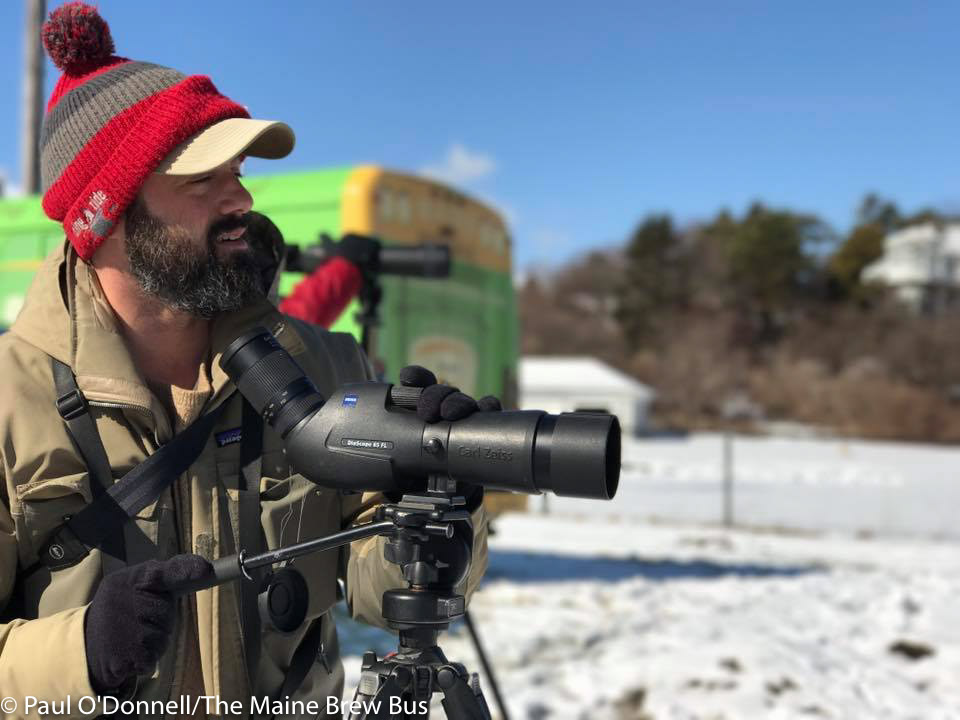
The first new “Birds on Tap – Roadtrip!” of 2018 with our partners, the Maine Brew Bus, was a resounding success. We enjoyed harlequins, hops, and so much more – including a much-hoped-for rarity. We even saw just about every single species suggested in the itinerary. And it was gorgeous out!
We had begrudgingly postponed the tour from the previous week due to the fear of ice in the morning and heavy rain and fog during the day. But the light winds, temperatures in the upper 30’s, and limited rain that the day actually featured made us wonder if we had lost the gamble. And when we woke up to 6-10” of snow (and not the 4-6 forecast!) on the morning of the 18th – and the resultant extra time clearing the driveway – I was definitely viewing the decision in hindsight.
However, the sun soon came out, the roads melted, and the temperature warmed to 40-degrees. A strengthening southerly wind was a little raw at one stop, but otherwise, it was impossible to beat the weather for a tour in February…and the fresh coating of fluffy snow only added to the aesthetically-pleasing scenery of the birding day. Furthermore, the coastal storm that spun through overnight was perfect for producing some nearshore pelagic alcids (members of the puffin family), which really got our hopes up for a life bird or two.
We began at Dyer Point in Cape Elizabeth where we soon spotted the namesake quarry of the tour: a dozen snazzy Harlequin Ducks. We were already half-way to our titled goal for the day, but of course, we were only getting started.
At nearby Two Lights State Park, we enjoyed several more Harlequin Ducks, lots of Common Eiders, Black and White-winged Scoters, and one Red-necked Grebe while we took in the breathtaking scenery.
And then it happened.
I spotted a Dovekie – one of the most sought-after winter specialties of the region. It was sitting on the water (had it just flown in?) with a group of eider just off the shoreline, and in perfect light. It was feeding, diving under for a minute or two at a time, but eventually, everyone got great looks through the scope, and lots of photographs were taken. Barely larger than a starling, this hardy little bird spends most of its life on the open ocean, and only comes to land to breed and nearshore in specific conditions in winter than include storm tracks, winds before and after, offshore food supplies, nearshore food supplies, and likely other unknown factors. It was a bird we only hoped for today, but a life bird for just about everyone in the group; this was a find that was soon to be celebrated!
A few Purple Sandpipers were spotted at nearby Kettle Cove as were Surf Scoters and several Common Loons, but with a southerly wind and choppy water building, I decided to make a turn inland and head for some sheltered waters. Finding that at Mill Creek Cove in South Portland, photogenic, stunning Red-breasted Mergansers stole the show, and a 1st-winter Iceland Gull was teased out of the flock.
A short, pleasant walk through Mill Creek Park yielded hundreds of Mallards (BoT veterans know how much I enjoy looking at, and talking about, large aggregations of Mallards!), and among them, the overwintering hen Wood Duck – a real rarity in winter! Although lacking the gaudy, over-the-top coloration of the drake, the subtlety-beautiful hen with her glossy bronze and green tertials and over-application of white mascara was enjoyed by all.
One last stop at the Portland fish pier, was another chance to see Iceland Gulls – actually, we saw 7 of them, including a darkly-marked adult – and offered the opportunity to get up close and personal with several of our spiffy wintering sea ducks, such as this handsome drake Long-tailed Duck.
The benefit of this winter itinerary is that there are countless birding locales to visit, with worthwhile stops given almost any weather (or travel) condition. Therefore, Paul had to rein me in – the birding was so good, I certainly wanted to keep going! – and with that, we departed, and I handed the proverbial microphone over to our esteemed beer guide for the day.
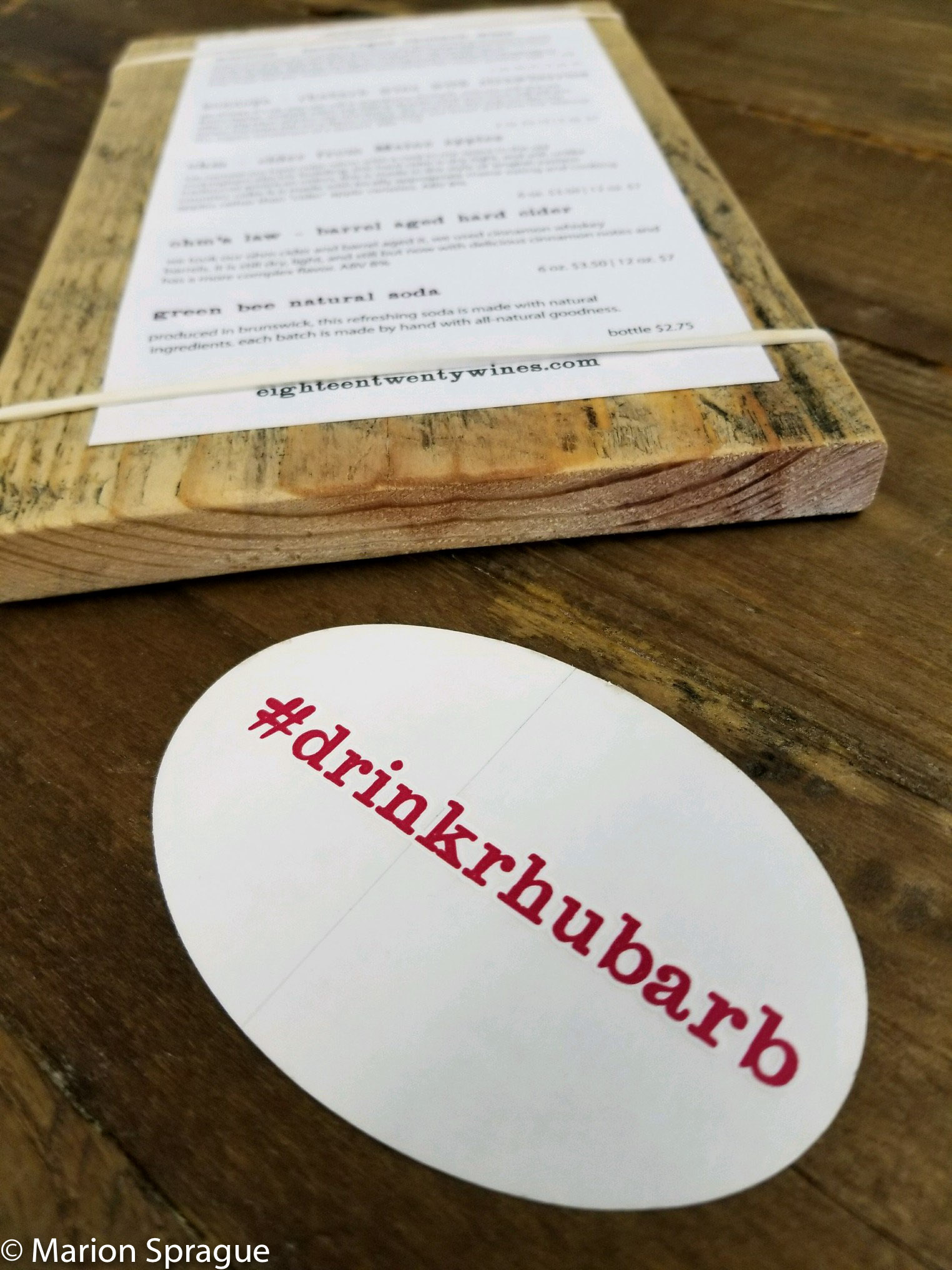
Paul took the lead and escorted us to eighteen twenty wines in Portland, our only winery visit on the 2018 BoT schedule. Making wine from Maine-grown rhubarb, and hard cider in small batches from Maine-grown apples, this was going to be a unique and educational experience. Maine became a state in 1820, and it was also the first year were rhubarb was found in the public market, we soon learned. A very traditional beverage, rhubarb wine was popular – especially for medicinal purposes – in the early 1800’s.
We were treated to two wines, and two ciders. The first wine was Wintrus, a rhubarb wine aged in cabernet barrels, which imparted notes of the cabernet and oak-y woodiness, adding a little complexity to this rather light wine that was perfectly positioned between dry and sweet. The strawberry-rhubarb Honeoye was next, with plenty of strawberry flavor, but only a little sweeter and nowhere near the expectations of an overly-sugared strawberry-rhubarb pie which is its inspiration.
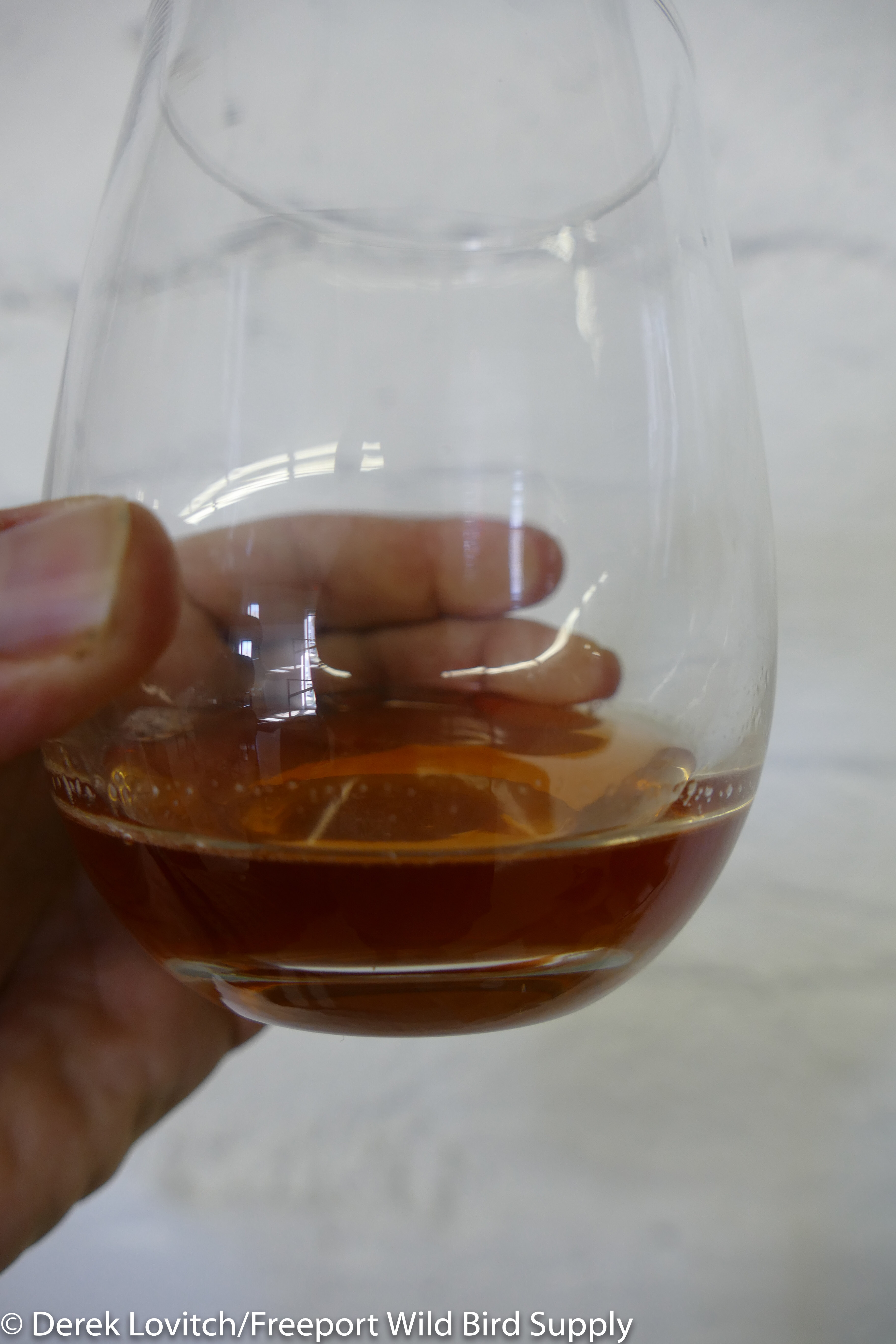
Ohm was our first cider, an “English Eastern Counties-style:” dry, light, and uncarbonated. This was soon followed by what turned out to be the crowd favorite, Ohm’s Law, the Ohm aged in cinnamon whiskey barrel. Reminiscent of an apple pie, but again, without the overt sweetness, and likely due to the lack of carbonation, finishing with a soft and smooth buttery flavor.
We also learned about the trials and tribulations of opening a new winery – especially given the legal definitions and the lack of grape vines in this “urban winery,” as well as future plans that include experimentation with the 60+ varieties of rhubarb.
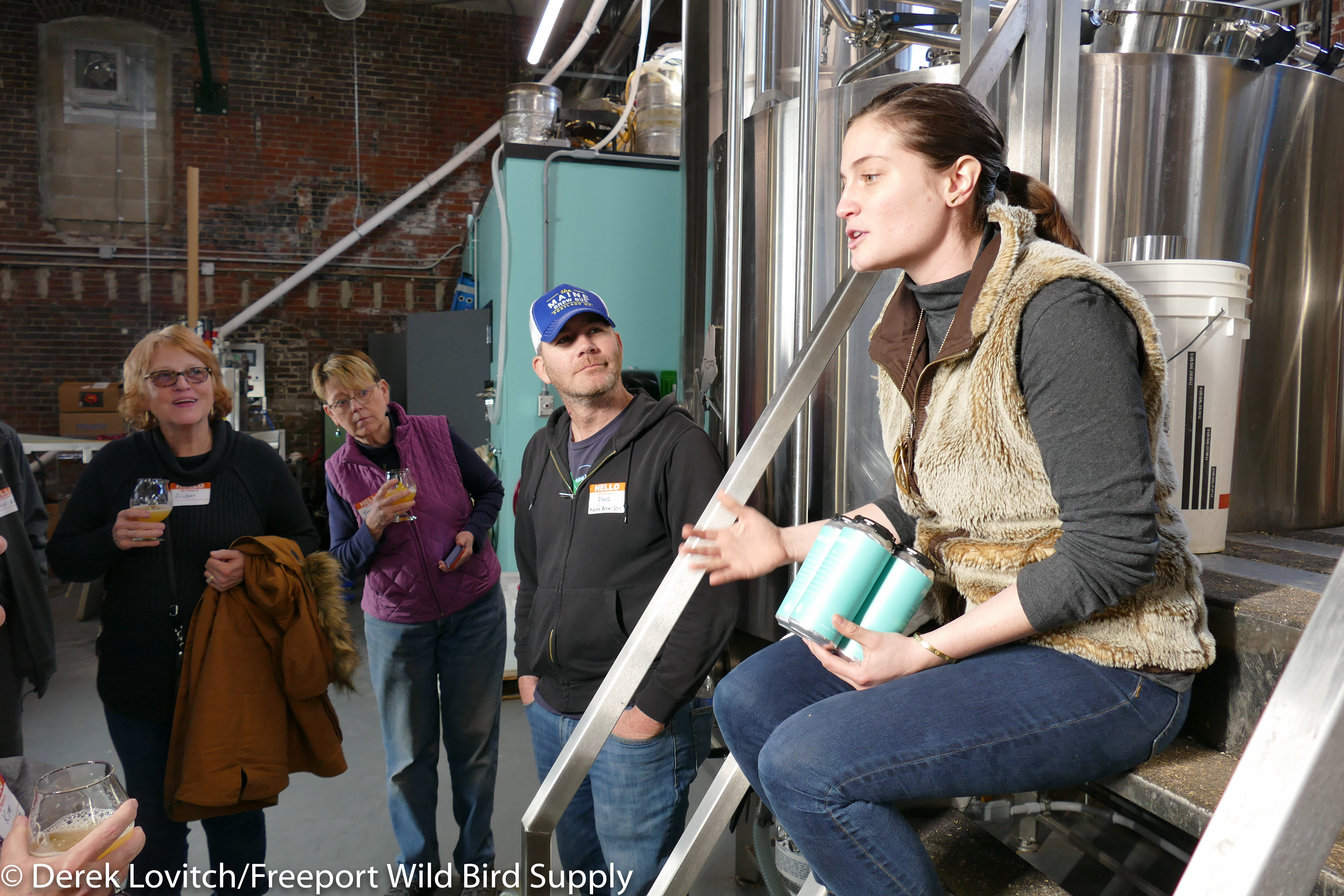
The long commute to the other side of the building (this itinerary was designed to reduce driving, just in case the roads were normal-February snotty) presented us with the second half of the tour’s title: the hops. And hops were abundant and well spoken for in the brews of Goodfire Brewing Co, the newest brewery in the burgeoning “Yeast Bayside” scene.
We were handed samples of one of their IPAs, Prime, which I’ll admit my bias – it has rapidly become one of my favorite beers. A citrusy juice-bomb, I was keen to have the group compare it to our second selection, Waves. Also a hazy, New England-style IPA, this beer features complex tropical fruit notes instead.
Earlier, Paul had inquired about what beers and other beverages people did and did not like, and quite a few people on the bus proclaimed themselves as “not IPA fans.” New England IPAs are not your bitter IPAs of old, and so I wanted to challenge people’s ideas of what an IPA is, and hopefully open some minds. I was therefore rather pleased when one of those self-proclaimed non-IPA fans proclaimed Prime as their favorite beverage of the day on the ride back home. Mission accomplished!
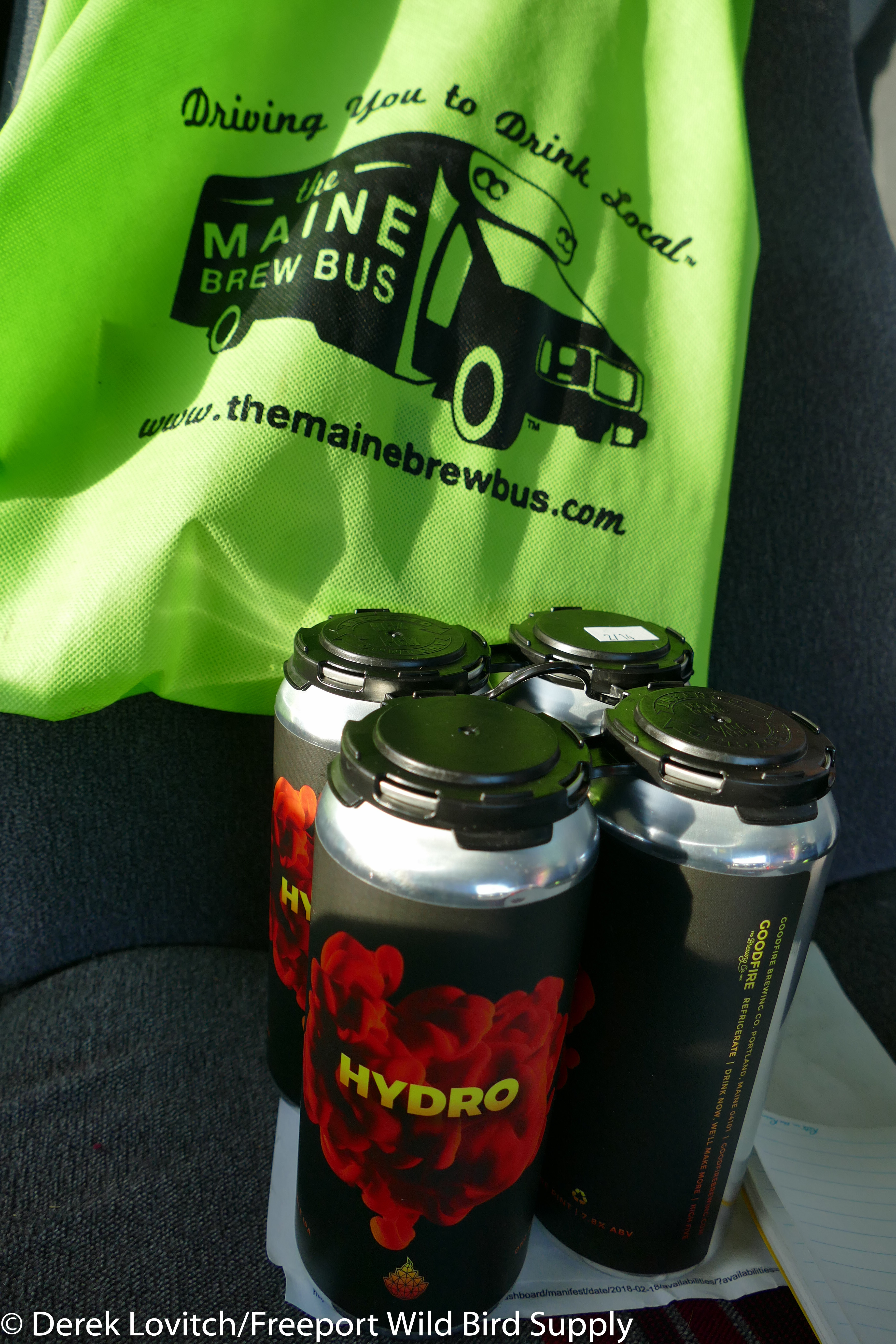
The final sample was a choice between the hoppy “table beer” saison, Tiny Wrist Circles, and the hot-off-the-presses Hydro, their latest Double IPA. I’ll give you one guess to what I had, and then went home with!
It was a quick and easy commute to our Portland meeting location, followed by a smooth and clear drive to Freeport for the rest of us. Conversation included Dovekie ecology, IPA diversity, and what an amazingly beautiful winter’s day we had just experienced. Something tells me Harlequins and Hops will be back!































 Maine Birding Field Notes