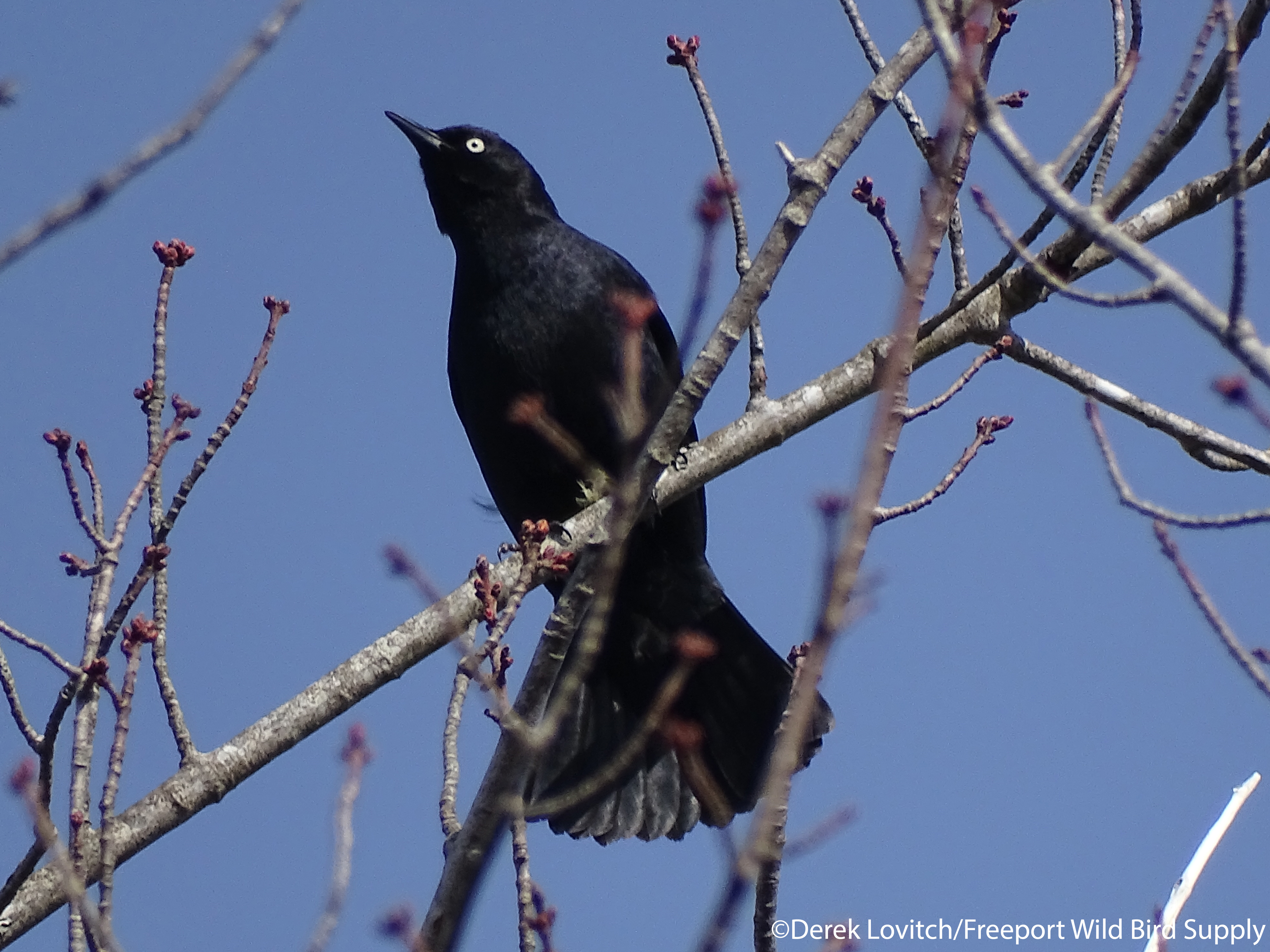
This Rusty Blackbird singing up a storm at Florida Lake Park on 4/2 has likely been present here since way back when I first saw it on 2/26! I don’t stop at Florida Lake very often this early in the season, but every time I have, he’s been in the same corner, often singing, making me think it’s the same individual. Even now, it’s on the early side for Rusties.
It was an up and down week of weather, to say the least, but slowly but surely spring migration was progressing. Considering fairly limited time in the field this week, I had a decent early season slate of observations of note and personal “first-of-years” over the past seven days:
Fox Sparrows at our feeders in Durham peaked at a goodly 6 on 3/30. 3 continue here at the store through week’s end.
1 continuing Rusty Blackbird (likely present here since 2/26; note and photo above), 1 Pied-billed Grebe (FOY), 2 Eastern Phoebes (FOY), and 1 Tree Swallow (FOY), Florida Lake Park, Freeport, 4/2.
One of two Eastern Phoebes at Florida Lake Park on the 2nd, this one seemed to be contemplating its life choices with yet another spring snowstorm on its way.
2 Rusty Blackbirds, our property in Durham, 4/3.
8 Double-crested Cormorants (FOY), Mailley Park, Bowdoinham, 4/3.
1 drake NORTHERN SHOVELER (FOY), Mouth of the Abby, Bowdoinham, 4/3.
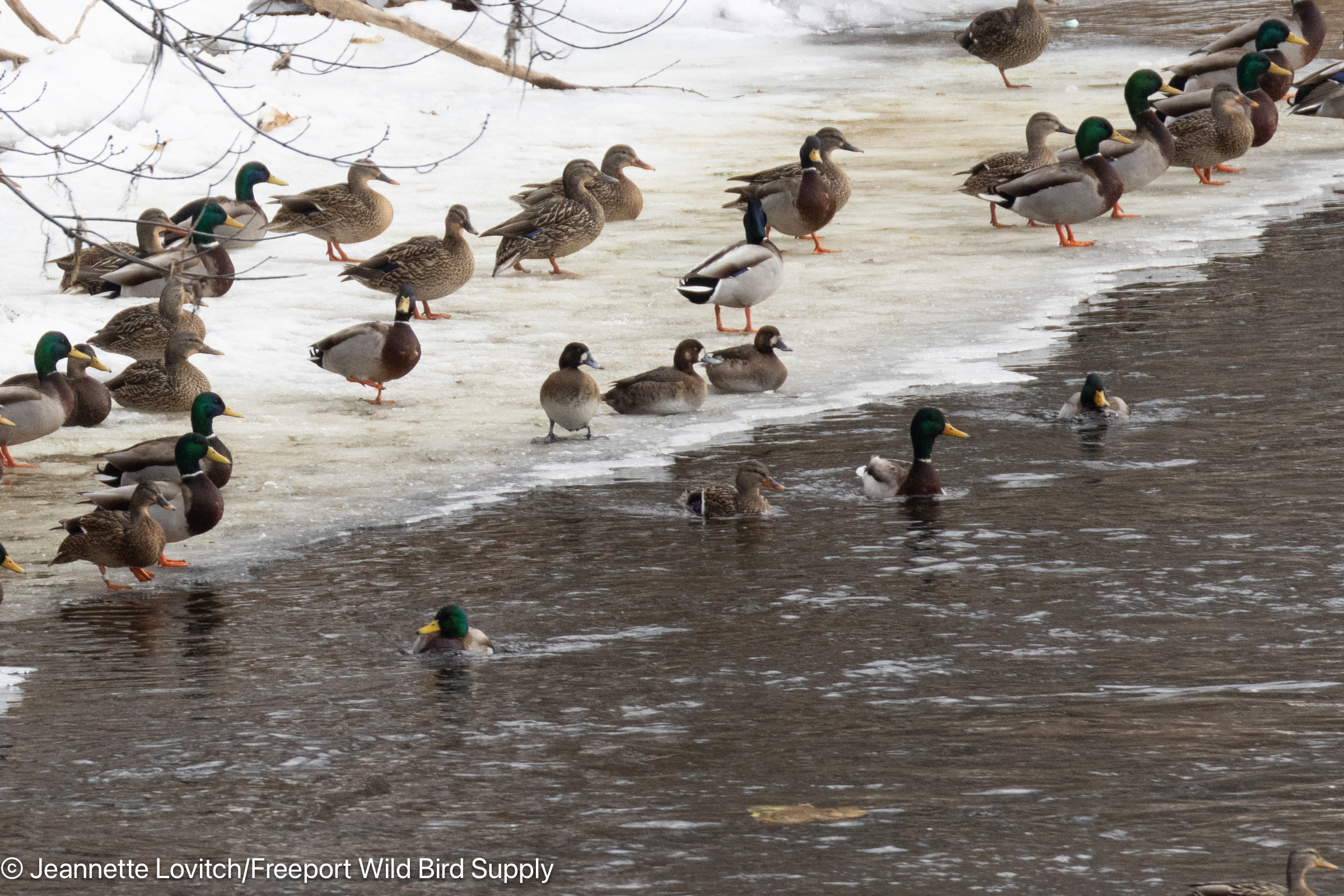
These three female Greater Scaup appeared with the Mallard flock off of the Bernard Lown Peace Bridge between Lewiston and Auburn last week, and continued through the 25th
I had an excellent week of late-winter birding this week, with a nice mix of overwintering birds and some new, spring-like arrivals. Towards week’s end, birdsong from our resident species increased dramatically, and winter concentrations of waterfowl are beginning to disperse. But – at the risk of sounding a little corny – I have to say, showing people their first ever Harlequin Duck is always a winter highlight for me! It was also nice to have a tour run, and not postponed or cancelled due to weather. My observations of note over the past seven days included the following:
The single Fox Sparrows continues here at the store, and our one at our Durham feeders reappeared in the snow on the 27th after being absent for a few days.
At least 2 Turkey Vultures continue in the Cumberland-Freeport corridor of I-295. Part of the local overwintering flock (up to 15 total roosting in Brunswick at the peak), the first northbound migrants of spring are now arriving. This appears to now be a year-round species along Maine’s southern coast, as birds have overwintered locally for the last three years.
1 Northern Shrike (FOY/3rd of winter), Bridge St, Newfield, 2/24 with Jeannette).
1 RUSTY BLACKBIRD and 1 Winter Wren, Florida Lake Park, Freeport, 2/24 (with Jeannette).
2 continuing drake Green-winged Teal and 3 continuing female Greater Scaup, Anniversary Park – Bernard Lown Peace Bridge area, Auburn-Lewiston, 2/25 (with Jeannette).
1 continuing hen AMERICAN WIGEON and 3 Barrow’s Goldeneyes (1 pair plus 1 immature male), Winslow Park, Freeport, 2/26.
Bradbury Mountain Spring Hawkwatch
We’re only two weeks away from the start of our 19th season! Free and open to the public, we welcome Zane Baker back for his record 7th season as Official Counter. 9-5 every day, weather permitting. More information and a link to counts can be found here.
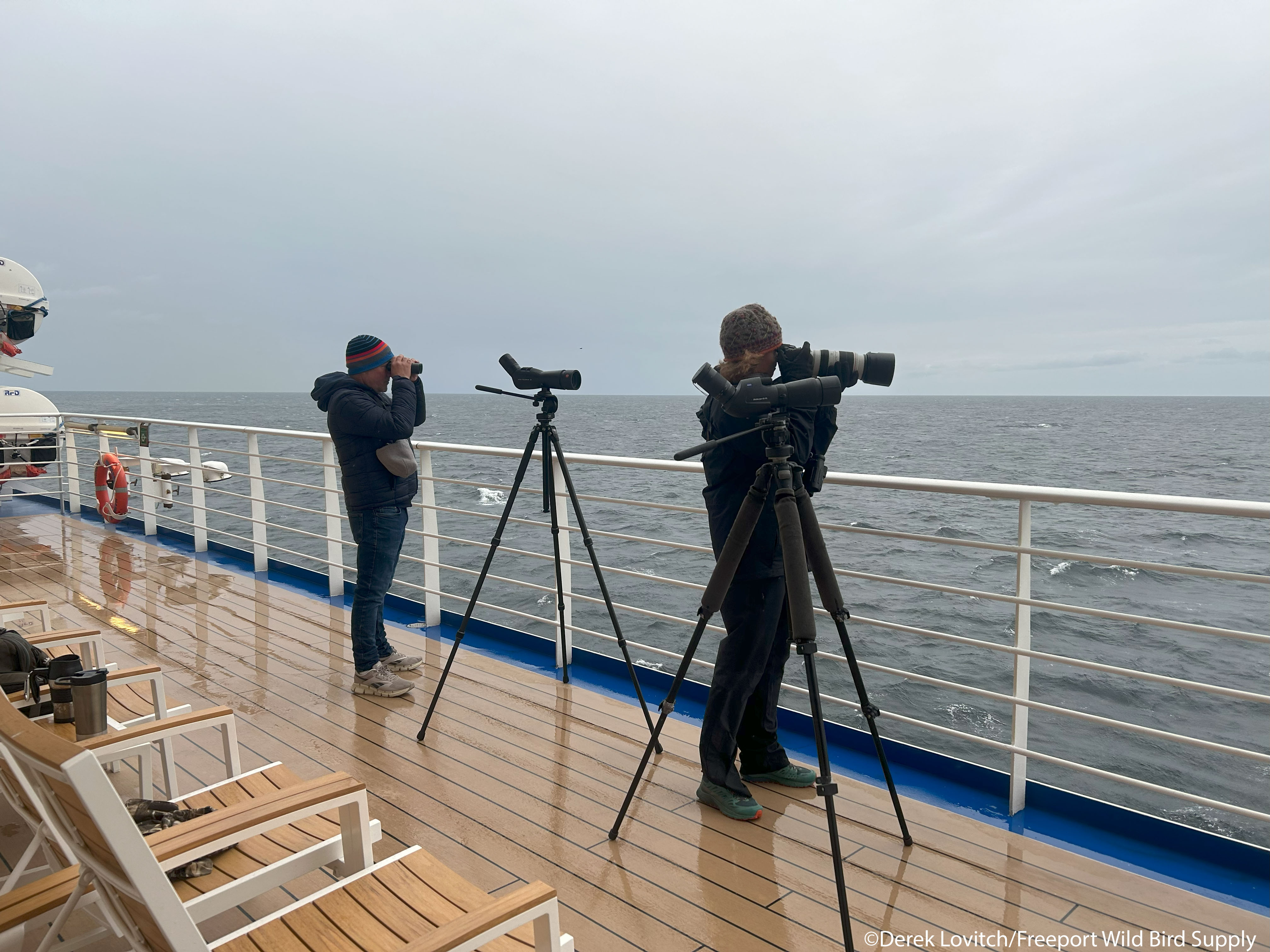
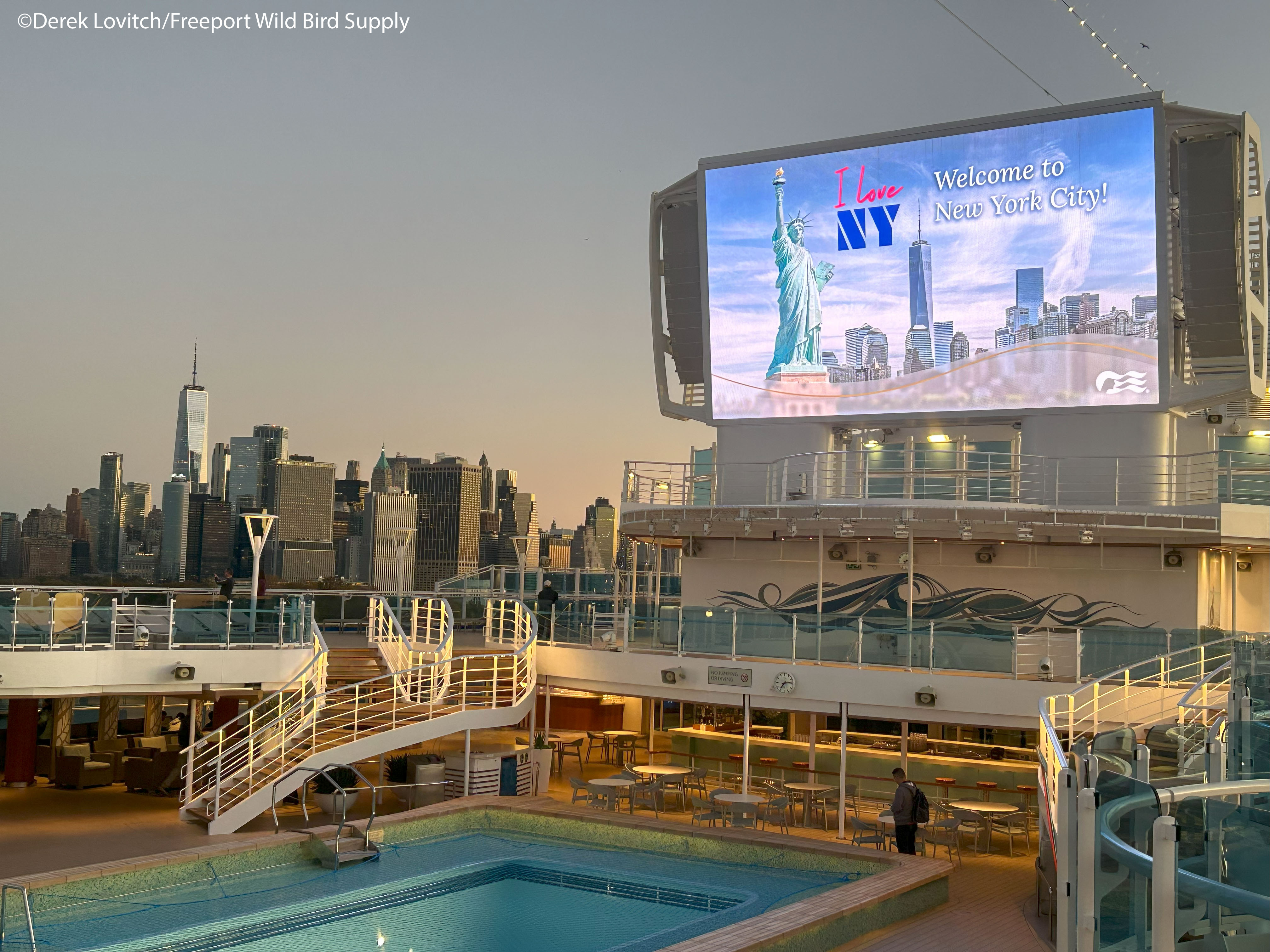
Cruise ships are big, stable platforms that allow for pelagic birding in comfort and with the use of spotting scopes!
In 2019, Jeannette and I took a cruise through the Gulf of Maine and northwestern Atlantic Ocean in the hopes of finding Great Skuas in particular. It was wildly successful, and if we could repeat this success, perhaps there would be a cruise-ship-based tour to offer. At least it would be more comfortable than last week’s attempt!
Therefore, on the evening of 10/26, Jeannette and I boarded Princess Cruises’s Enchanted Princess out of Brooklyn, New York. Our hope was to replicate the success of our 2019 trip. We were planning on a second scouting trip in the fall of 2020, but then COVID.
After finally feeling ready to consider a cruise again, we found the itinerary had changed, and we would need to spend seven days to get two full days offshore..we even needed to come back home first! But alas, we had pandemic-era credit that was going to expire, so off we went. Is this a reliable way to see Great Skuas in North America? Could I document a Barolo’s Shearwater this time?
We started our birding, however, at Brooklyn’s Greenwood Cemetery, home of this massive Monk Parakeet colony.
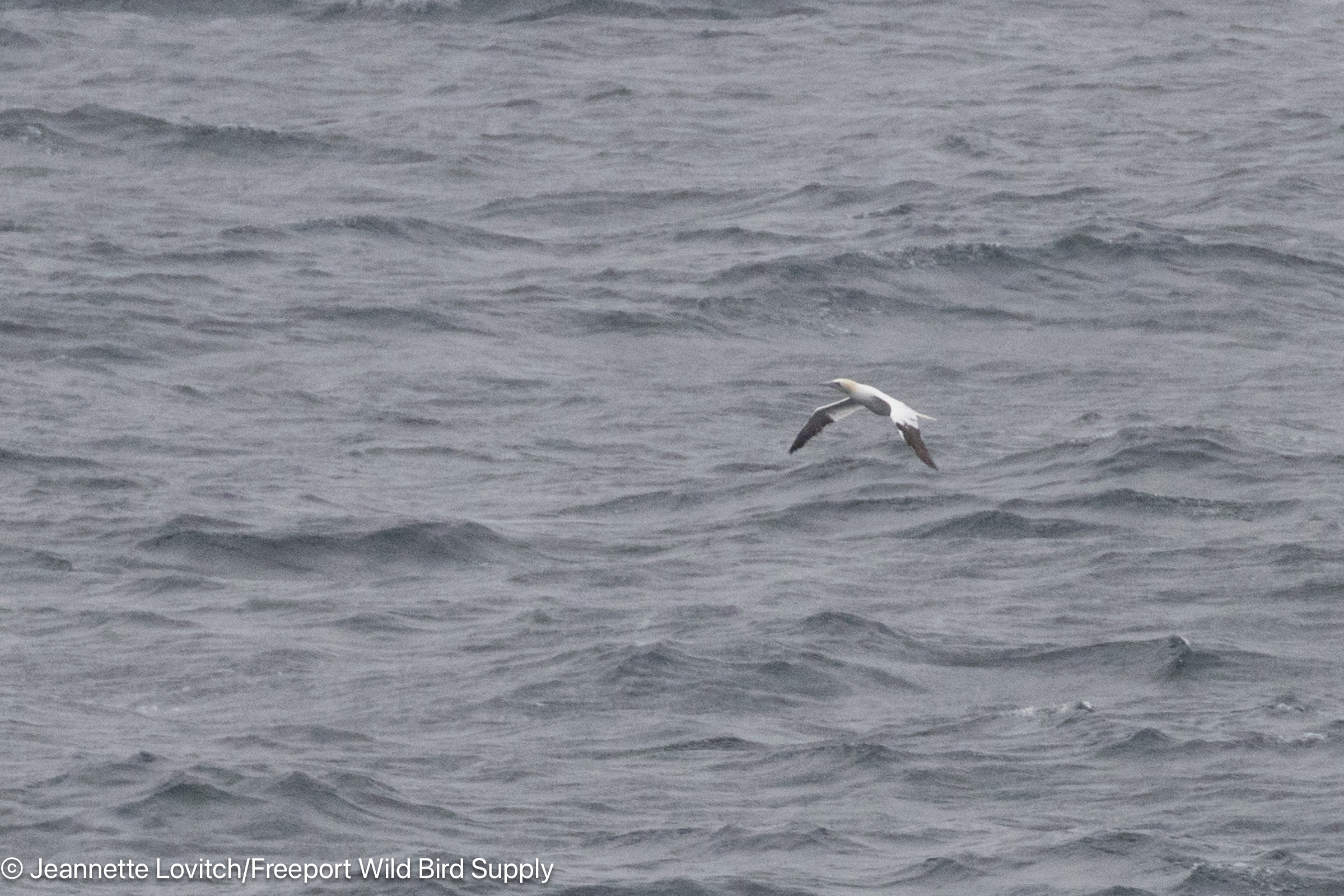
We departed New York Harbor with about an hour of usable daylight, picking up a single Cory’s Shearwater and plenty of Northern Gannets.
Screenshot
Arriving off Newport before dawn the next morning, we got the first shuttle to town, where our friends Bill and Jess picked us up for a lovely day of birding (Clay-colored Sparrow, Orange-crowned Warbler, late Nashville Warbler) before returning to the boat. About 45 minutes of deck time produced 8 Cory’s and a single Great Shearwater.
Newport arrivals. “Western” Palm Warbler at Sachuest NWR.
Unfortunately, this particular boat offered less-than-ideal viewing opportunities compared to our first trip, with the best deck space on Deck 7 (a great height) but way too aft. Even with our scopes on the steady platform, this was going to be a challenge.
Approaching Boston on the morning of 10/28, we checked the decks for passerines (none) before taking our place on Deck 7. There were a lot of Northern Gannets, 4-5 Cory’s Shearwaters close enough to identify as borealis, and a pod of Atlantic White-sided Dolphins. A Song Sparrow flew aboard just outside the outer harbor islands, but before that, our first real surprise of the trip: an American Woodcock appearing from the north and cruising alongside the length of the boat before disappearing. That’s not a “pelagic” we expected!
We birded Boston’s Greenway a bit, but returned to the boat well after dark. Sailing slowly overnight, we returned to Portland (the original itinerary had us visiting Bar Harbor), where a long, thorough check of the Eastern Promenade yielded two Orange-crowned Warblers and a very late Red-eyed Vireo.
Darkness reached us a tantalizingly-short distance to Cash’s Ledge, so we retired to rest up for the big day at sea tomorrow (finally!).
Waking up in Maine waters about 16.5 nautical miles southeast of Mt Desert Rock, I stepped outside well before first light at 6:05am. I immediately texted Noam, the other birder on board that we rapidly had become friends with, and I hustled Jeannette outside. With some drizzle arriving ahead of approaching light rain, we had ourselves a fallout!
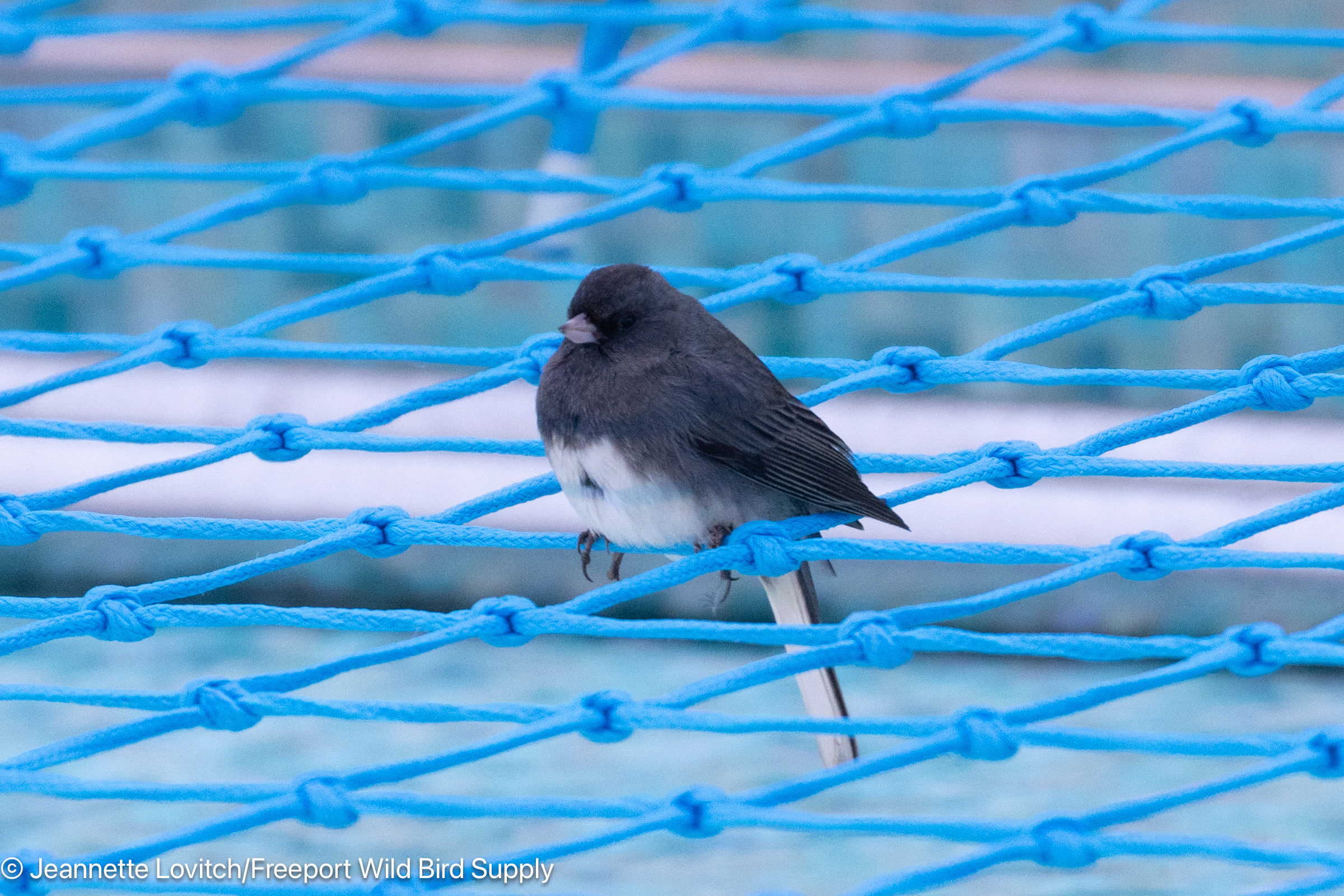
Unexpected considering there were little to no birds on the Maine radars overnight, and with a south wind through most of the night, I was surprised to immediately hear the flight calls of several Yellow-rumped Warblers. Sparrows were scattered about on the open decks. Noam and I had to usher a Rusty Blackbird out of a foyer, while Jeannette had to steer a Dark-eyed Junco down a hallway.
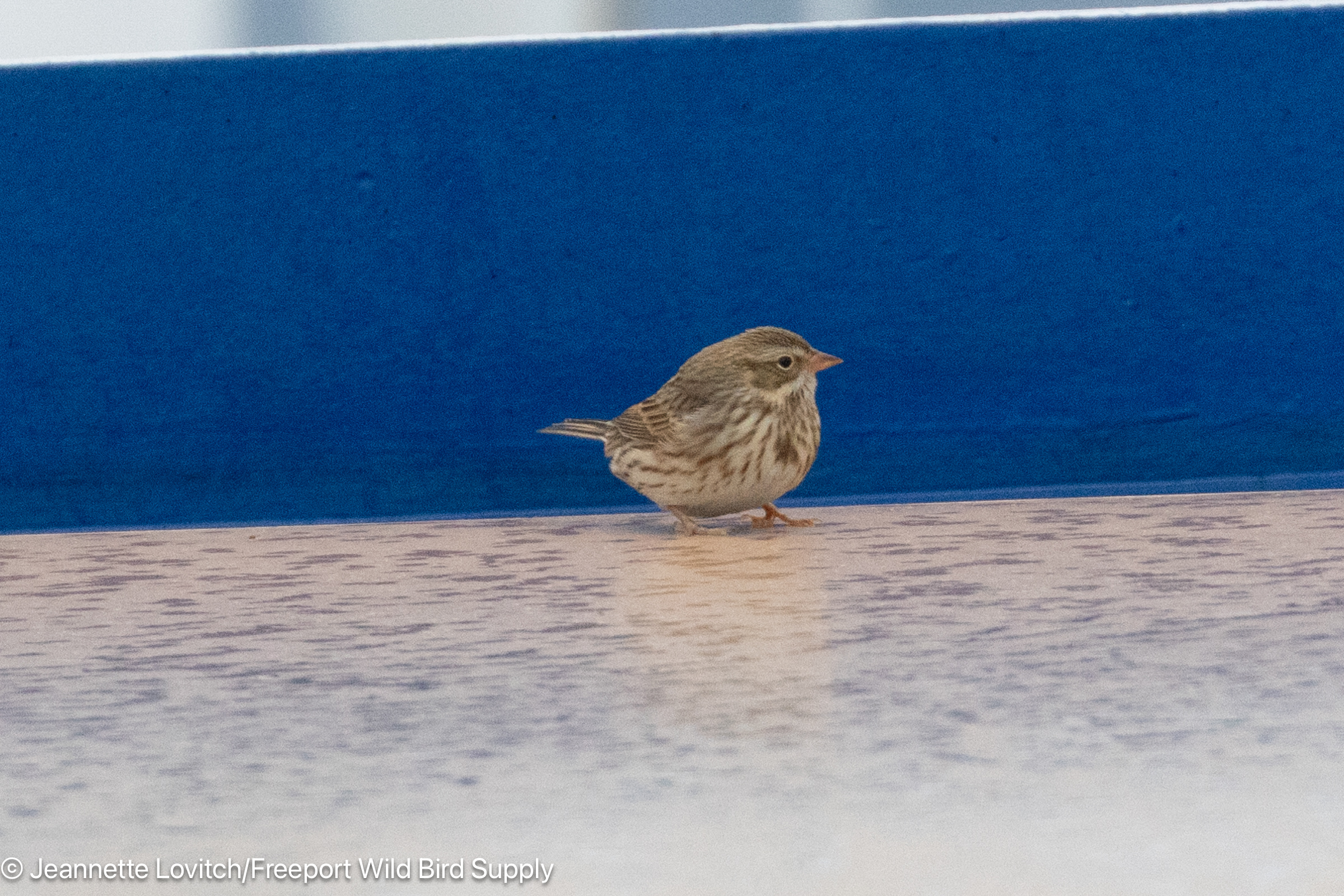
“Ipswich” Savannah Sparrow – that was an unexpected migrant, but makes sense considering we were southwest of Sable Island!
Clearly disoriented by the obnoxiously superfluous lighting of the ship, dozens of birds were around…often being flushed by now-awakening crew and passengers. Luckily, few birds seemed to be in dire straits – only one Yellow-rumped Warbler looked to me to be thoroughly exhausted, thankfully. In fact, most birds were leaving the boat as the sun rose and they were able to reorient themselves. While some birds seemed to arrive in the 15 or so minutes after sunrise, just about all passerines had departed the boat by 7:30 or so.
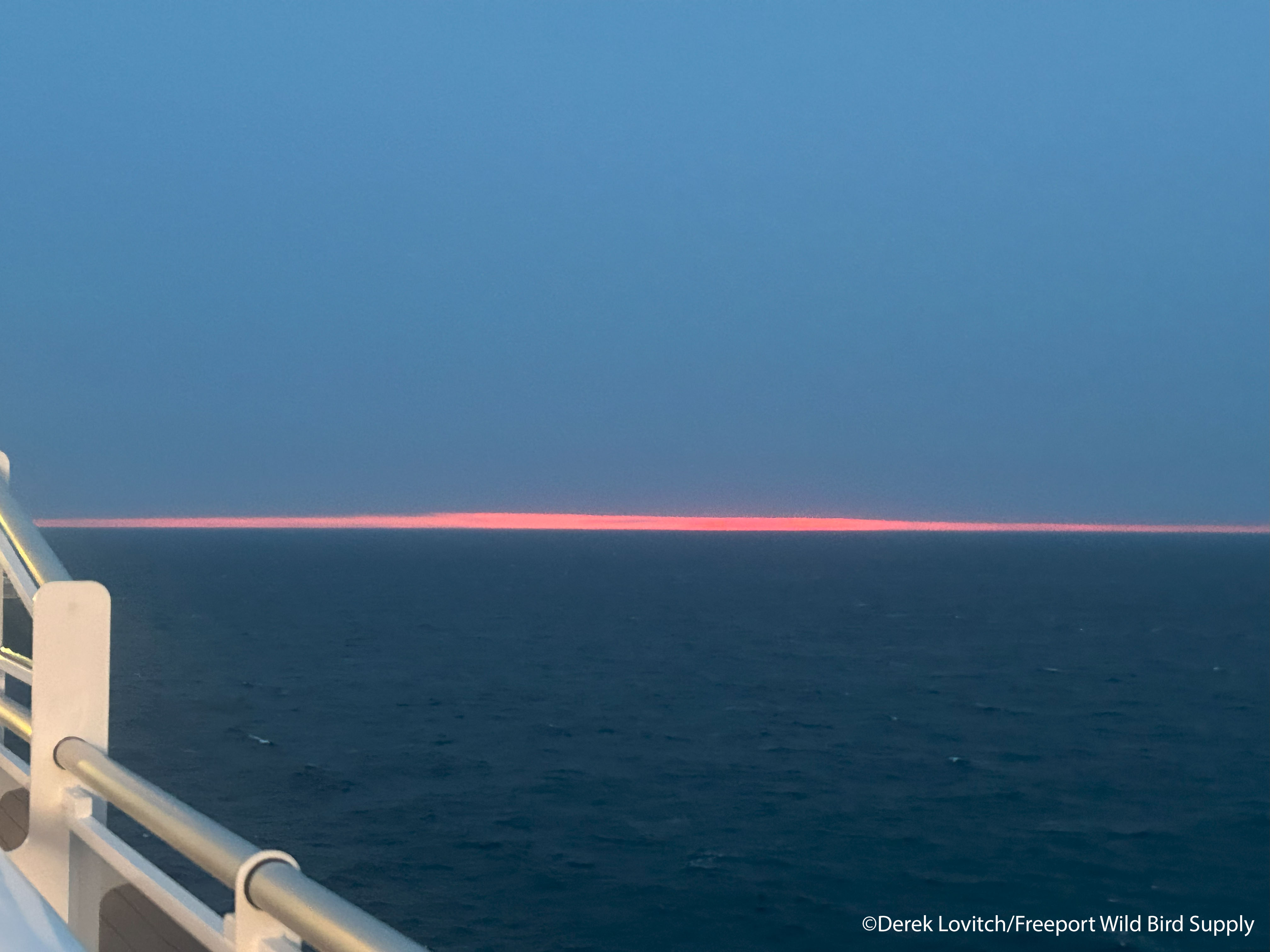
This photo, taken from off Eastern Point in Gloucester, MA the night before shows just how bright these ships are, and how disorienting they can be to birds.
With birds circling the boat before dawn, calling continuously, and others hiding in corners before being flushed to another corner, it was tough to count, but I estimated and counted a bare minimum of 8 Yellow-rumped Warblers, 8 American Robins (mostly overhead), 7 European Starlings (surprisingly), 6+ Dark-eyed Juncos, 2 Purple Finches, 2 fly-over American Pipits, 2 Savannah Sparrows, and one each of Palm Warbler, Snow Bunting, White-throated Sparrow, Cedar Waxwing, and Rusty Blackbird. Additionally, Noam photographed a Pine Warbler.
The three of us were in place on Deck 7 by 7:30, but the passerine show continued. A flock of 12 Red-winged Blackbirds flew by, while a flock of 14 American Robins joined by two more red-wings flew alongside the boat for several miles later in the morning before overtaking us and heading back to Nova Scotia.
Throughout the day, other passerines appeared and disappeared, some of which could easily have been sheltering out of sight somewhere inaccessible on the boat. These included a few more robins, 3+ Yellow-rumped Warblers, 2 Dark-eyed Juncos, and one each of Palm Warbler, Song Sparrow, Cedar Waxwing, Snow Bunting, American Pipit, and Lapland Longspur.
American PipitHarlequin Duck (L) with Black Scoters
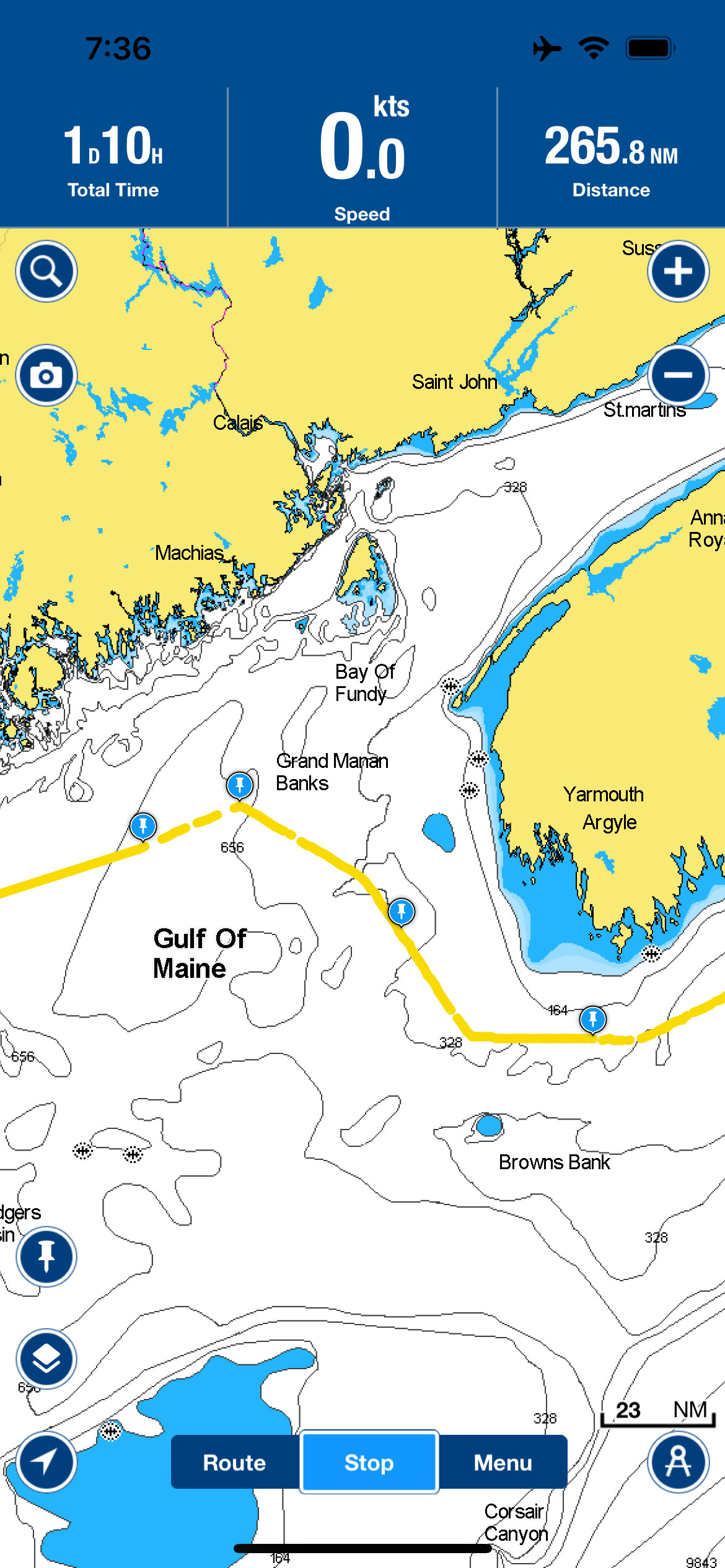
But this was a seabird trip, and so we remained vigilant over the water. While we only had a few minutes in Maine waters once we began our vigil, the rest of the day was productive overall, although the afternoon was quite slow. As we passed the southern tip of Nova Scotia (we even spotted Seal Island Light that we were lucky enough to visit with a group of birders about 20 years ago), we finally called it quits at 5:45 pm when cloud cover accelerated the falling of darkness.
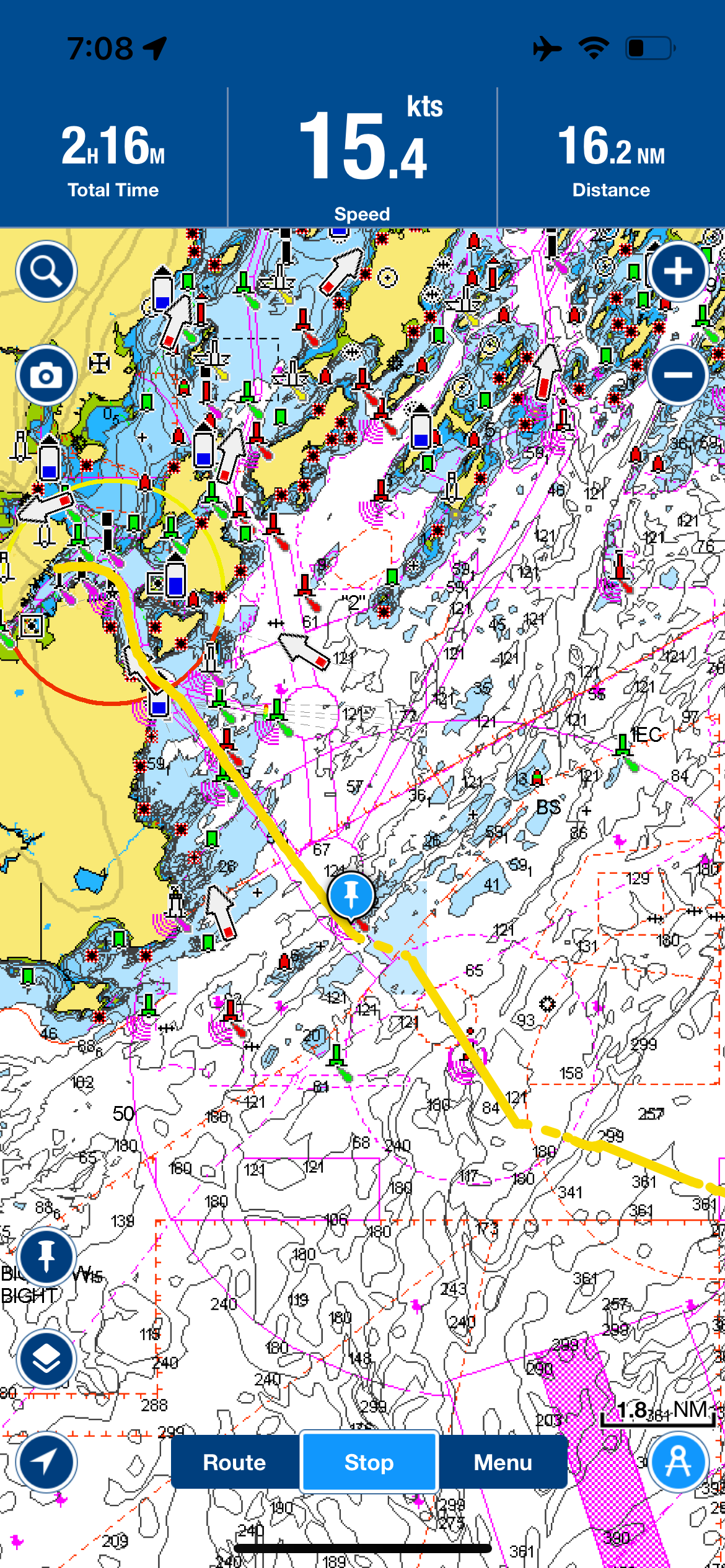
Here’s our route (left pin to right pin) for the day, thanks to the Navionics Boating app by Garmin.
From start to finish, our respectable – albeit not breathtaking – seabird tallies included oodles of Northern Gannets (including a steady southbound trickle almost all morning), and occasional southbound flocks of all three scoters and Common Eiders. Specific counts included:
47 Black-legged Kittiwakes
36 Razorbills
13 Northern Fulmars
10 Great Shearwaters
6 DOVEKIES (one flock landing off to the side of the boat)
3 ATLANTIC PUFFINS
3 American Black Ducks
3 unidentified large shearwaters
2 Harlequin Ducks
1 Greater Scaup
Great Shearwater
So all in all, not a bad day, but the passerines stole the show, and while Dovekie is one of the target birds of this trip, we didn’t see a skua…or even a jaeger, surprisingly.
The next day we awoke well within Halifax Harbor, but a sunrise passerine check yielded two birds: a White-throated Sparrow, and of all things, a rare Dickcissel!
Local friends Eric and Anne once again rescued us for a day of casual birding and good conversation, but the ship departed after dark; just more time to rest for our second full day at sea!
Halifax Public GardenNorthern Flicker
The morning of 11/1 found us between Downeast Maine and the northern corner of Georges Bank. The rest of the day would be in the same waters of our great success on our trip five years ago. After a passerine check which didn’t turn up anything (which meant nothing was disoriented by the ship overnight or desperate for a place to land come dawn, so this is never a bad thing), it was time to get to work in our usual spot.
Unfortunately, strong southwesterly winds and growing seas, with haze and light fog in the distance, made birding challenging. We worked hard though, but it was slow. We did have some excitement from two Dovekies that landed fairly close to the boat, and two Manx Shearwaters that, thanks to the lighting, I was absolutely sure were not Manx Shearwaters until we carefully reviews Noam’s photos later.
With glare and haze becoming problematic, we broke for an early lunch at 11:30, with the previous 4.5 hours of observation producing only the following, plus two Humpback Whales:
12 Northern Gannets
7 Great Shearwaters
6 Red Phalaropes
4 unidentified large shearwaters
2 DOVEKIES
2 Northern Fulmars
2 Manx Shearwater (after review)
2 Black-legged Kittiwakes
2 Lesser Black-backed Gulls
2 unidentified large alcids
1 unidentified small black-and-white shearwater.
Unfortunately, with increasing wind (that we were heading straight into) and seas growing up to 7-10 feet (barely noticeable on a ship this big though, thankfully!), the lower deck was closed off for safety. Later, even the upper decks were closed off due to the very high winds, which were now blowing nearly 30mph out of the southwest.
Screenshot
Luckily for Jeannette and I, we had scored a forward-facing room, and although we were high up on Deck 17, we could see forward. Haze and the angled window were problematic, but we could see birds close to the ship, and we could relax, remove layers, and even crack open a beer. This is pelagic birding in style!
From 1pm to 5pm, when we finally called it a day, the afternoon cabin-watch netted:
11 Great Shearwaters
9 Northern Gannets
5 Cory’s/Cory’s-type Shearwaters
3 unidentified phalaropes
2 Manx Shearwaters
Screenshot
And so our two days at seas concluded without a Great Skua, our primary target species for a future cruise..and perhaps a future tour. Alas, we’re only 1 for 2 in seeing skuas from the boat, and we would need a different class of ship (and, a shorter itinerary with more time at sea and less time in multiple ports) if we were to do this again. We’ll be keeping an eye out from other companies and other Princess ships to see if there’s a more skua-tactic itinerary in the future, but until then, our northeast Atlantic cruisin’ days may have come to a close.
Arriving in New York harbor before dawn, our last sunrise deck check yielded a single Dark-eyed Junco, Yellow-rumped Warbler, and White-throated Sparrow, bringing our more-productive passerine birding cruise to a close.
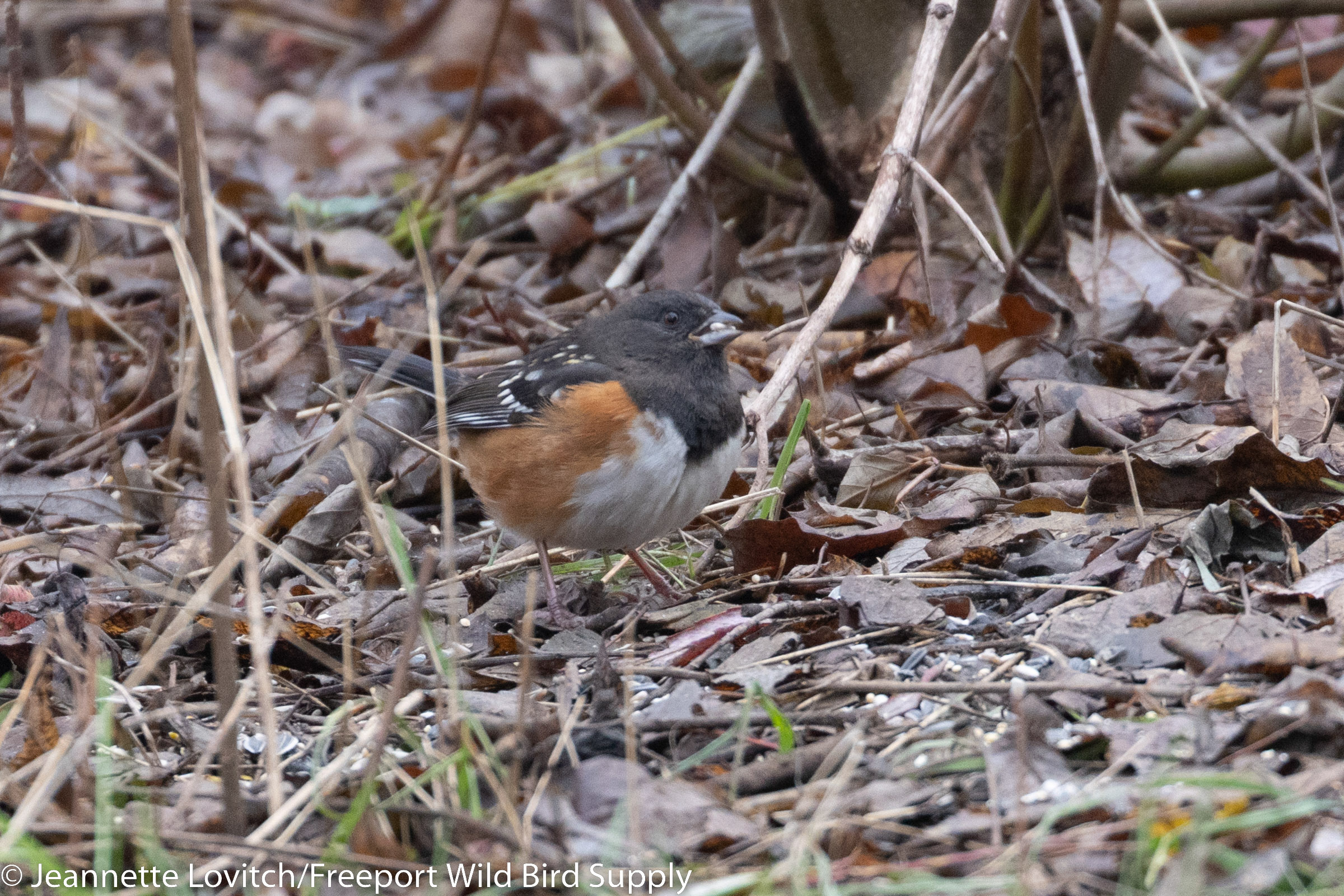
I finally went back this week, this time with Jeannette, to revisit the Spotted Towhee that I found at Kittery’s Fort Foster on 11/19. We were treated to two sessions of it feeding, both of which provided longer and better views than on the first day.
Early December is often a time with another pulse of rarities being detected as birds concentrate at fewer seasonally abundant food sources, like feeding stations, and concentrate along the coast and other migrant traps. At the very least, it’s a time for unusual “late,” “lingering,” or “pioneering” birds that brighten up a cold, gray winter’s day. This was often the case for me in my relatively limited birding over the past two weeks, with the following observations of note:
1 Gray Catbird and 1 Ruby-crowned Kinglet, Capisic Pond Park, Portland, 11/30.
Sabattus Pond, Sabattus, 12/1 (with Dan Nickerson): 380 distant scaup, 272 Common Mergansers, 238 Ruddy Ducks, 209 Mallards, 8 American Black Ducks, 8 Common Goldeneyes, 7 Buffleheads, 4 GREEN-WINGED TEAL, 3 Common Loons, 1 Belted Kingfisher, and 1 RUSTY BLACKBIRD.
1 Chipping Sparrow, King Road, Lisbon, 12/1 (with Dan Nickerson).
3 Ruby-crowned Kinglets and 2 Field Sparrows, Saco Riverwalk, Saco, 12/3.
1 Hermit Thrush and 1 Swamp Sparrow, Elphis Pond, Biddeford Pool, 12/3.
Southern York County Coast with Jeannette on 12/5:
1 continuing SPOTTED TOWHEE (photo above), 2 MARSH WRENS, and 1 Swamp Sparrow, Fort Foster, Kittery.
2 American Pipits and 1 Horned Lark, Seapoint Beach, Kittery.
1,000+ Black Scoters, The Nubble.
60 Sanderlings, Ogunquit Beach.
1 Ruby-crowned Kinglet, Auburn Riverwalk, 12/7.
1 drake BARROW’S GOLDENEYE (first of season), 74 Lesser Scaup, and 2 Greater Scaup, Lake Auburn, Auburn, 12/7.
1 Red Crossbill, over our property in Durham, 12/8.
Meanwhile, at our feeders in Durham, a nice uptick in sparrow activity including up to 14 Dark-eyed Juncos, 4 continuing White-throated and 1-2 continuing Song Sparrows, with our first American Tree Sparrow arriving on 11/22 before the store, and 15 Dark-eyed Juncos, only 1 White-throated Sparrow, and a return on 12/6 of an American Tree Sparrow after the storm. 40-50 American Goldfinches and 1-2 Purple Finches continue daily, but this week, we only had Pine Siskins in the woods and not at the feeders.
Since we’ve had a mix of “the birds are back!” and “there are still no birds at my feeders” at the store recently, a wrote a new blog talking about the season and the inconsistencies we are seeing with overall feeder activity, which is posted here.
The amazing birding and migration site – especially for fall “morning flights” – in the Mid-Coast is once again under direct threat. Birders need to help convince the state to find an alternative location for a massive new port and its infrastructure. Our most significant places of concentration for migratory birds need to be protected. Here isour Statement in Opposition to a New Port on Sears Island in Searsport.
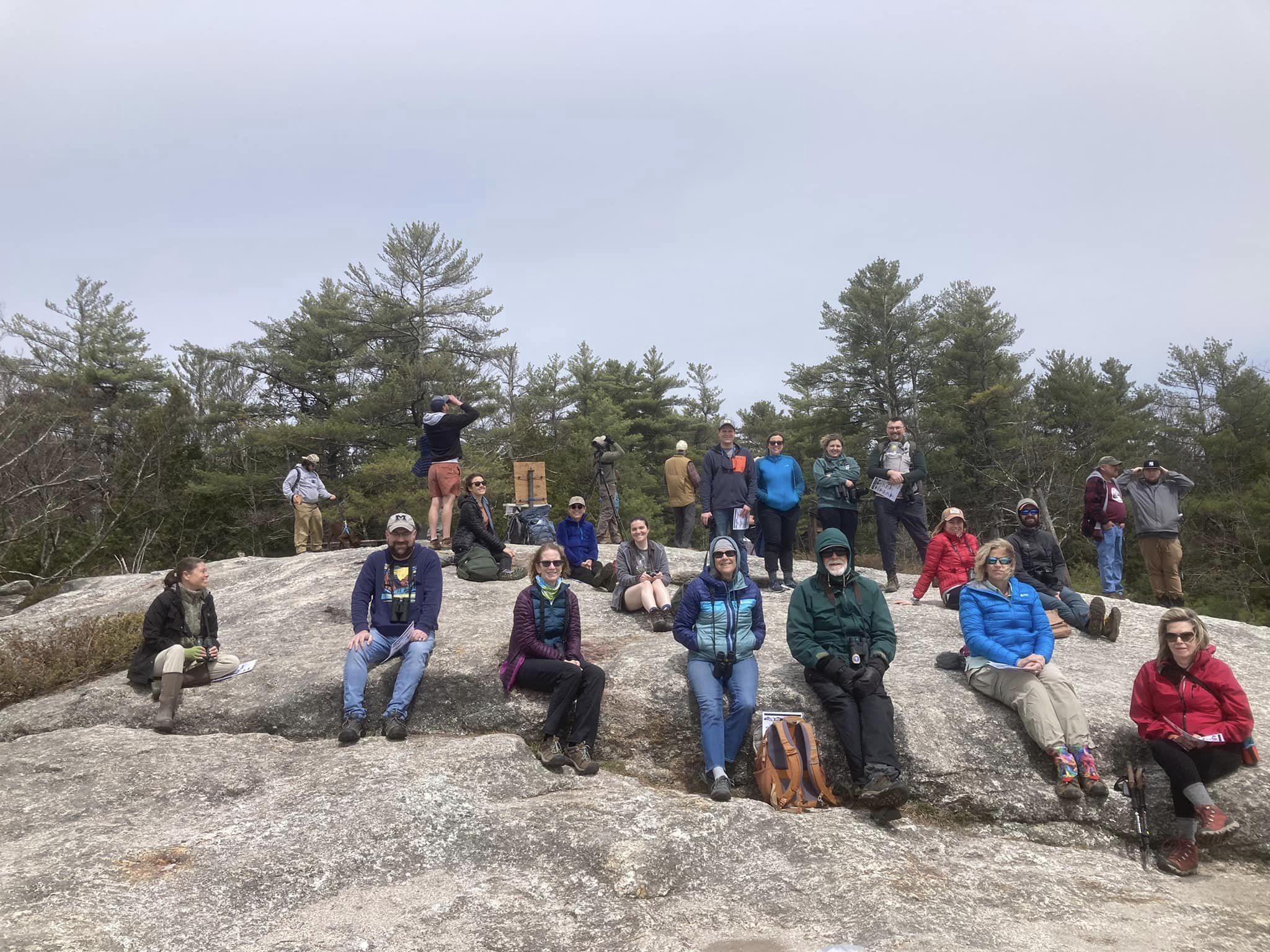
We enjoyed a great turnout of hawkwatchers and hawks for my hawkwatch workshop at Bradbury Mountain on the 29th as part of the 13th Annual Feathers over Freeport weekend of events.
In case you were wondering, the meteorological term for this week is “yuck.” However, despite the weather, some birds were pushing through. The storm also pushed a wreck of Red and Red-necked Phalaropes to the coast, and with reports of some very early arrivals and vagrant southern birds, there seems to be a rather widespread displacement/overshoot event caused by this massive and stubborn upper-level low rotating over the great lakes. I didn’t get out very much to help prove or disprove this, but I did have some decent birding this week. While migrants overall made very slow gains, I did have my best morning of spring so far this year…right in our yard!
My observations of note over the past seven days included:
1 Evening Grosbeak, Bowie Hill Road, Durham, 5/1 (with Jeannette).
3 Lesser Scaup, Sabattus Pond, 5/1.
6 species of warblers led by 50+ Yellow-rumped and 5-10 Palm, but also including 3 Pine, 2 Black-and-white (FOY), 1 Black-throated Green (FOY), and 1 Northern Parula (FOY), our property in Durham, 5/2. After corresponding with other local birders, I believe this was a localized, light fall-out caused by an isolated, dense fog bank that was centered around Lewiston-Auburn. Florida Lake Park, only about 9 miles away to the southeast, was nearly devoid of migrants for example (fide N. Gibb).
1 Red Crossbill, Littlefield Woods Preserve, Chebeague Island, 5/4 (with Chebeague & Cumberland Land Trust tour group).
7 Evening Grosbeaks, our feeders in Durham, 5/5.
My other personal FOY’s this week also included:
1 Greater Yellowlegs, Wharton Point, Brunswick, 4/30.
1 Black-bellied Plover, Wharton Point, Brunswick, 4/30.
1 RUSTY BLACKBIRD, our property in Durham, 5/2 through present.
6 Lesser Yellowlegs, Rte 136, Durham, 5/2
1 Least Sandpiper, Rte 136, Durham, 5/2
1 Baltimore Oriole, our feeders in Durham, 5/2 through present.
2 Gray Catbirds, feeders here at the store, 5/3 through present.
1 Rose-breasted Grosbeak, Chebeague Island, 5/4 (with Chebeague & Cumberland Land Trust tour group).
5 Laughing Gulls, Indian Point Preserve, 5/4 (with Chebeague & Cumberland Land Trust tour group).
3 Eastern Towhees, Indian Point Preserve, 5/4 (with Chebeague & Cumberland Land Trust tour group).
1 BLUE-GRAY GNATCATCHER, Indian Point Preserve, 5/4 (with Chebeague & Cumberland Land Trust tour group).
1 Great Egret, Cousin’s River Marsh, Yarmouth/Freeport, 5/4 (yeah, it’s been a while since I have been to Scarborough Marsh!)
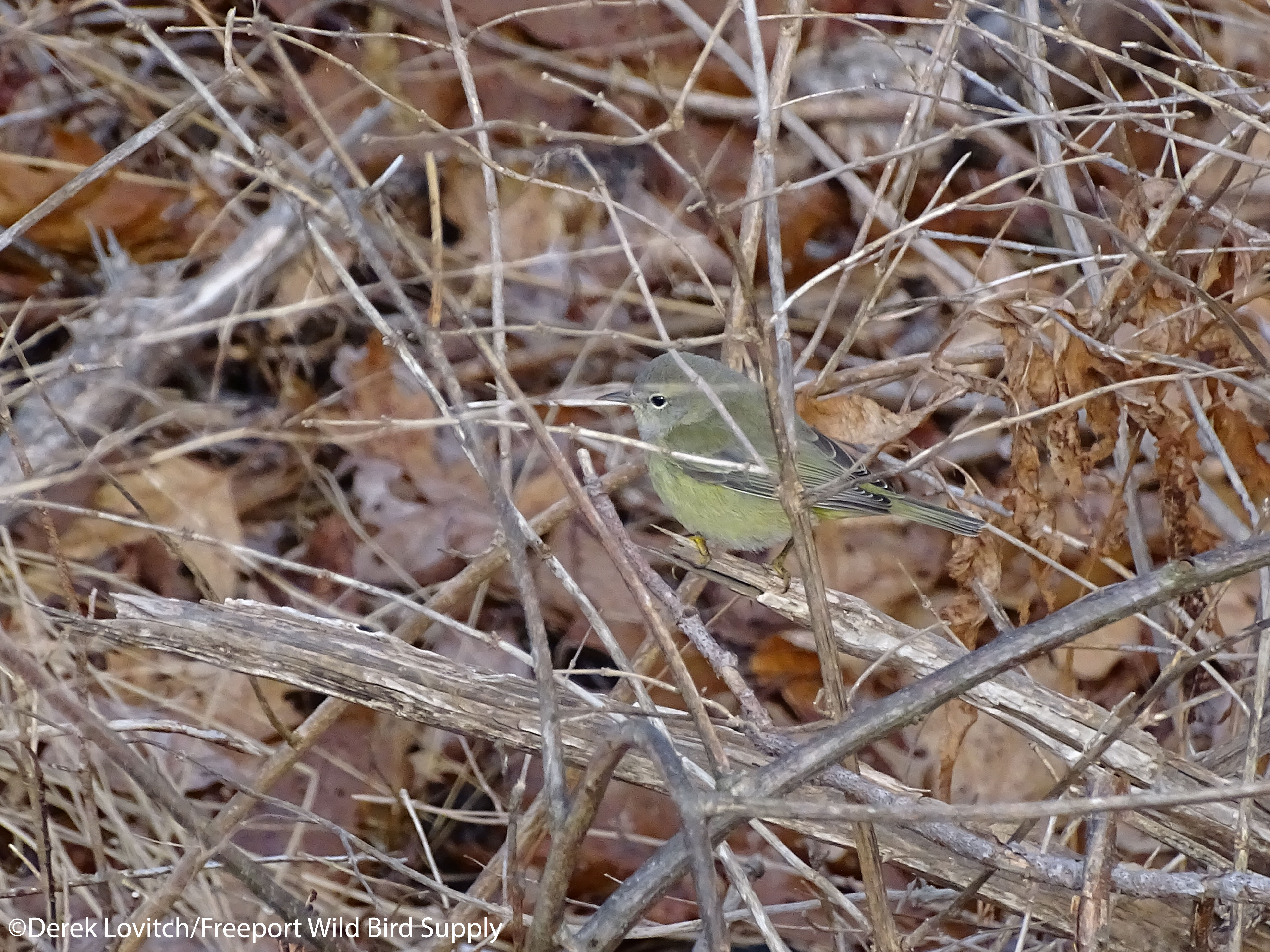
I found this rather cooperative, late Orange-crowned Warbler at Pond Cove in Cape Elizabeth – my 10th of the fall. Unfortunately, my camera was insisting it was the sticks I wanted a photo of, so this is the best I did.
Some of my highlights over the past seven days included the following. For the most part, my birds of note were decidedly more wintery than in the past weeks, although “late/lingering” oddities are making an appearance with the slow progression of the season and resultant concentration at seasonal hotspots.
1 Red Crossbill, private property in Freeport, 11/24 (with Saturday Morning Birdwalk group).
1 Hermit Thrush, private property in Freeport, 11/25.
I found this presumptive BLACK-HEADED X RING-BILLED GULL HYBRID along Greely Road in Cumberland during steady rain in the late morning of the 13th. It looks very similar to the individual of this hybrid pair that wintered on the Falmouth waterfront for at least two years, 2019-20, and 2020-21. Could it be the same bird with a little more black on the head due to the earlier date?
Rarity season is upon us, but most of my birding this week was in and around our yard. Not that that wasn’t extremely enjoyable though! A few forays afield did not produce those hoped-for November “Megas,” but I did see a few things of note over the past eight days including:
Evening Grosbeaks have been present daily at our feeders in Durham all week. 7 on 11/11 peaked at 32 on 11/12 (with Saturday Morning Birdwalk group).
1 Lapland Longspur (FOF), over our yard in Durham, 11/11.
1 PUTATIVE BLACK-HEADED X RING-BILLED GULL HYBIRD, Greely Road, Cumberland, 11/13. First distant observation in driving rain suggested a much, much darker head and mantle, but finally relocated closer to the road. Joined by Nick Lund and Reed and Laura Robinson.
Red Crossbills have been regular fly-overs in our Durham yard this week, but 10 were feeding on Eastern Hemlocks on 11/17.
After receiving photos of what appeared to be an all-dark Euphagus blackbird reported as being “glossy” at times- and without the bill visible – a few of us went out to get better looks in the freezing rain on the 22nd. It wasn’t until the bird showed up at a feeder and we were able to photograph it at close range that we confirmed it was just a truant, exceptionally dark-for-the-season Rusty Blackbird (note the very subtle rufous fringes on the head and breast and the thin, slightly downcurved bill).
Southern York County CBC, “Moody Sector” of Wells and Ogunquit, 12/20 (with Jeannette).
As usual, our incredibly productive territory produced a number of “good birds” and a decent 57 total species:
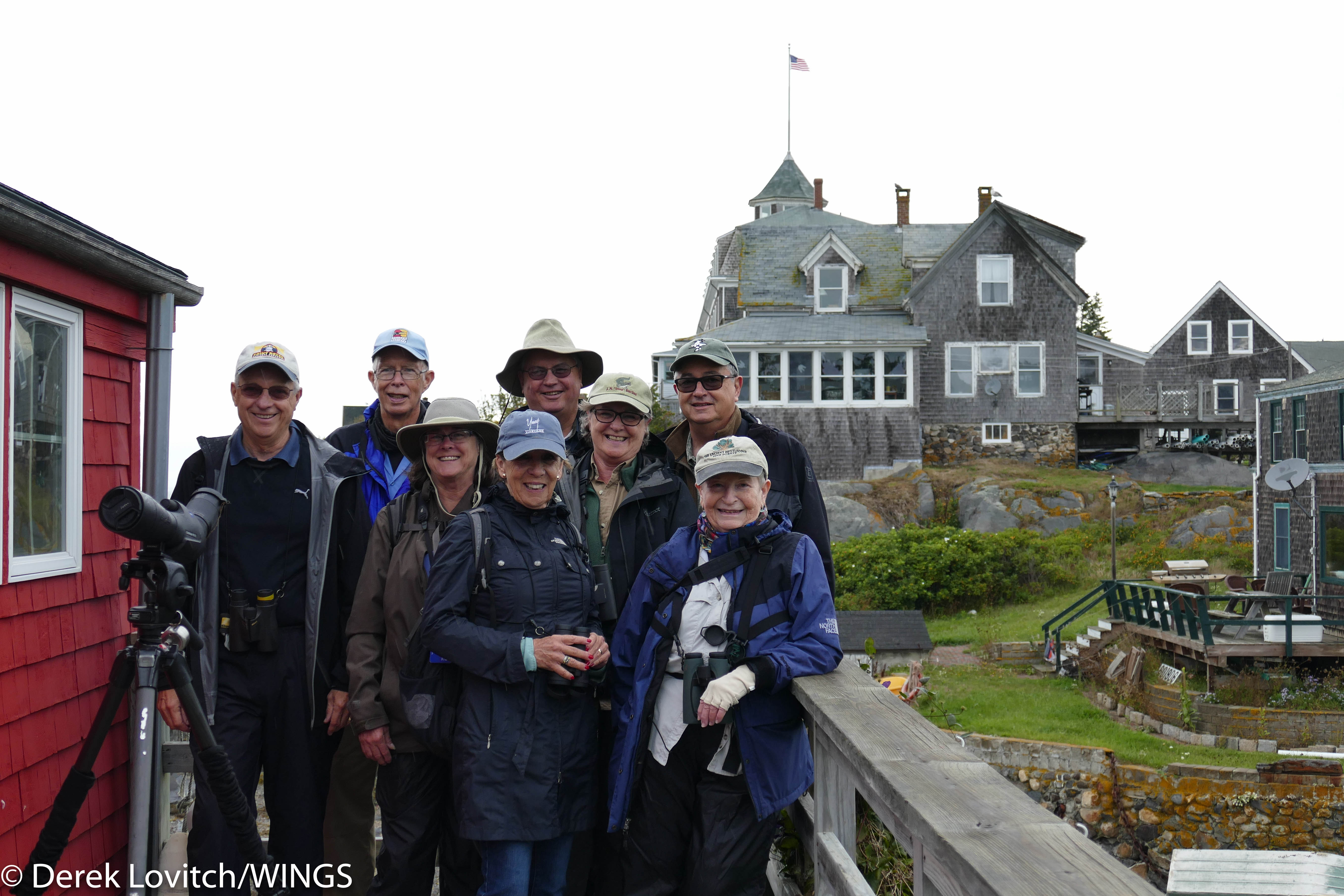
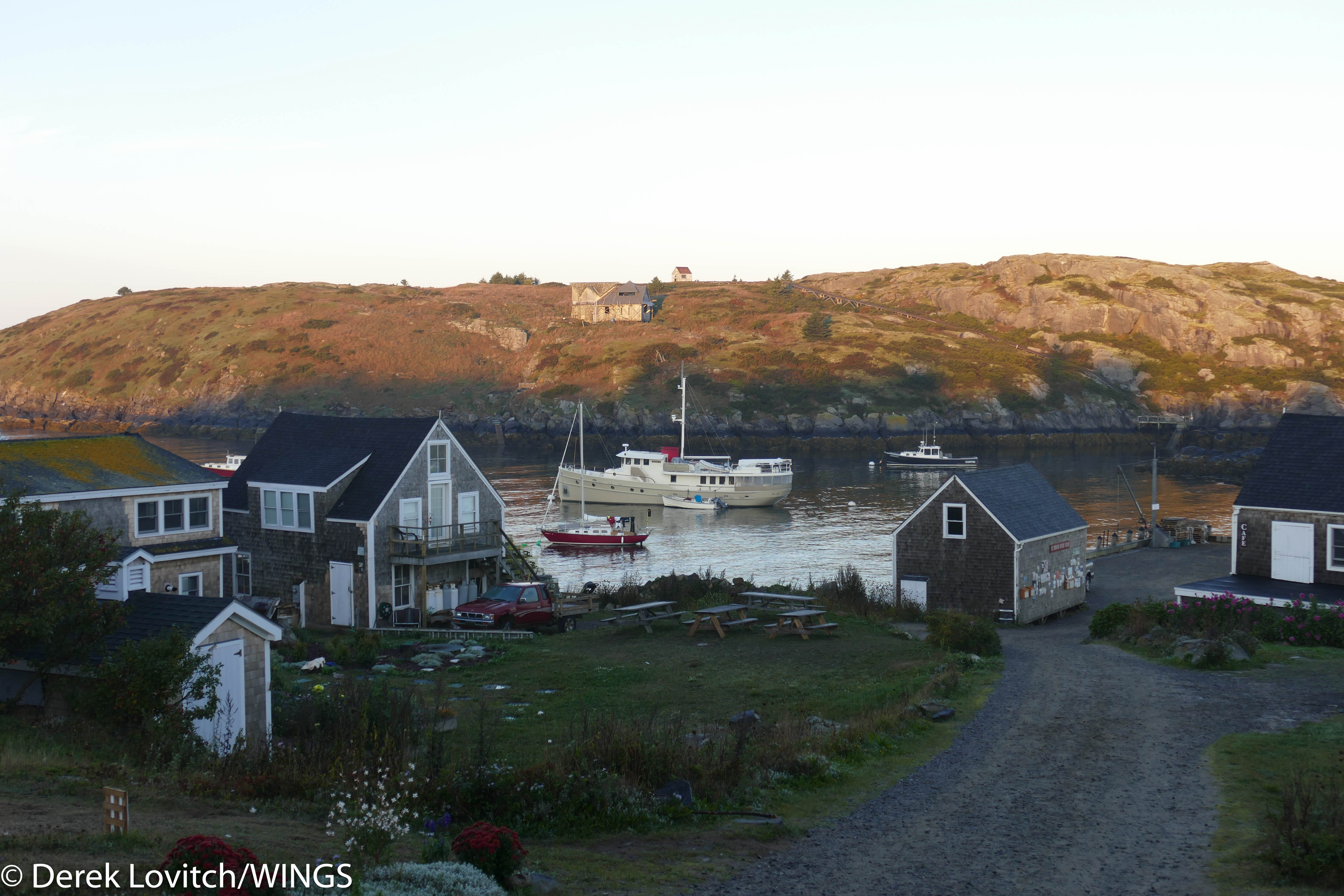
Every other year, I have the pleasure of spending a week on Monhegan Island in the fall with a tour group for WINGS. Unlike my annual weekend tour through the store, this allows us to fully experience multiple changes in the weather and the resultant changes in bird numbers and diversity.
This year’s tour, which took place from September 19-25, recorded 116 species (including 5 seen only from the ferry or while we were on the mainland), including 18 species of warblers. Both tallies were a little low, as the weather was often simply “too nice” for much of the week, and fewer birds found themselves on the island. But as usual, great looks at a wide variety of common birds, spiced up by a smattering of rarities, made for a wondrous week of birding.
Birds from any direction are possible at this migrant trap, and this week, we experienced visitors from the south (e.g. Orchard Oriole), west (e.g. Lark and Clay-colored Sparrows), and even the east (Cory’s and Great Shearwaters). While the allure of a “Mega” kept us searching, local rarities kept us entertained. From Peregrine Falcons overhead to a Sora at our feet, you never quite know what’s around the next corner. Even the “slow” days offered new birds, as our relaxed and casual pace simply allowed us the opportunity to enjoy whatever happened to be in front of us. And the overall weather and food was unbeatable – adding to the mystique of this truly special place.
While daily turnover in the island’s birdlife is expected during the peak of fall migration, a shift in the weather can yield a distinct change in the birds we see. Several clear and calm nights allowed migration to continue unimpeded, while a northwesterly wind on the night of the 22nd yielded numerous birds overhead in the morning – including our first big push of Yellow-rumped, Palm, and Blackpoll Warblers. However, no fallouts – the stuff Monhegan birding legends are made of – occurred this week as unseasonably warm and relatively pleasant weather continued. It might not have produced massive numbers of birds, but it sure made for comfortable birding!
A couple of nights of southwesterlies produced dreams of vagrants, and likely resulted in the arrival of several “southern” birds such as Orchard Oriole, Yellow-throated Vireo, and Blue-gray Gnatcatchers. In contrast, by week’s end, the first White-crowned Sparrows, Dark-eyed Juncos, and other late-season migrants from the north began to appear.
“Drift migrants/vagrants” such as Lark Sparrows and Clay-colored Sparrows, along with a number of Dickcissels, all normally found further west, were present and accounted for as usual out here. Lark and Clay-colored Sparrows
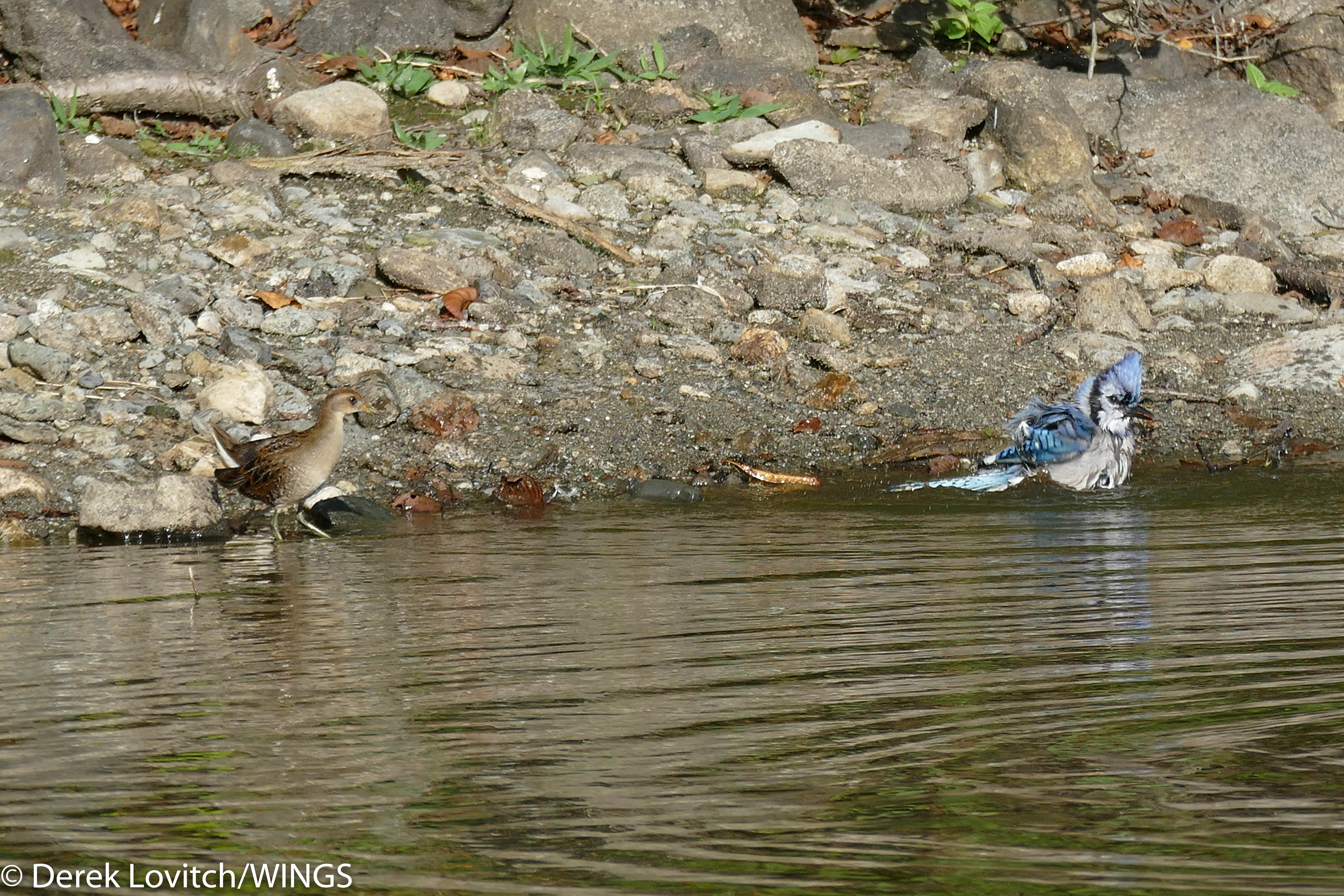
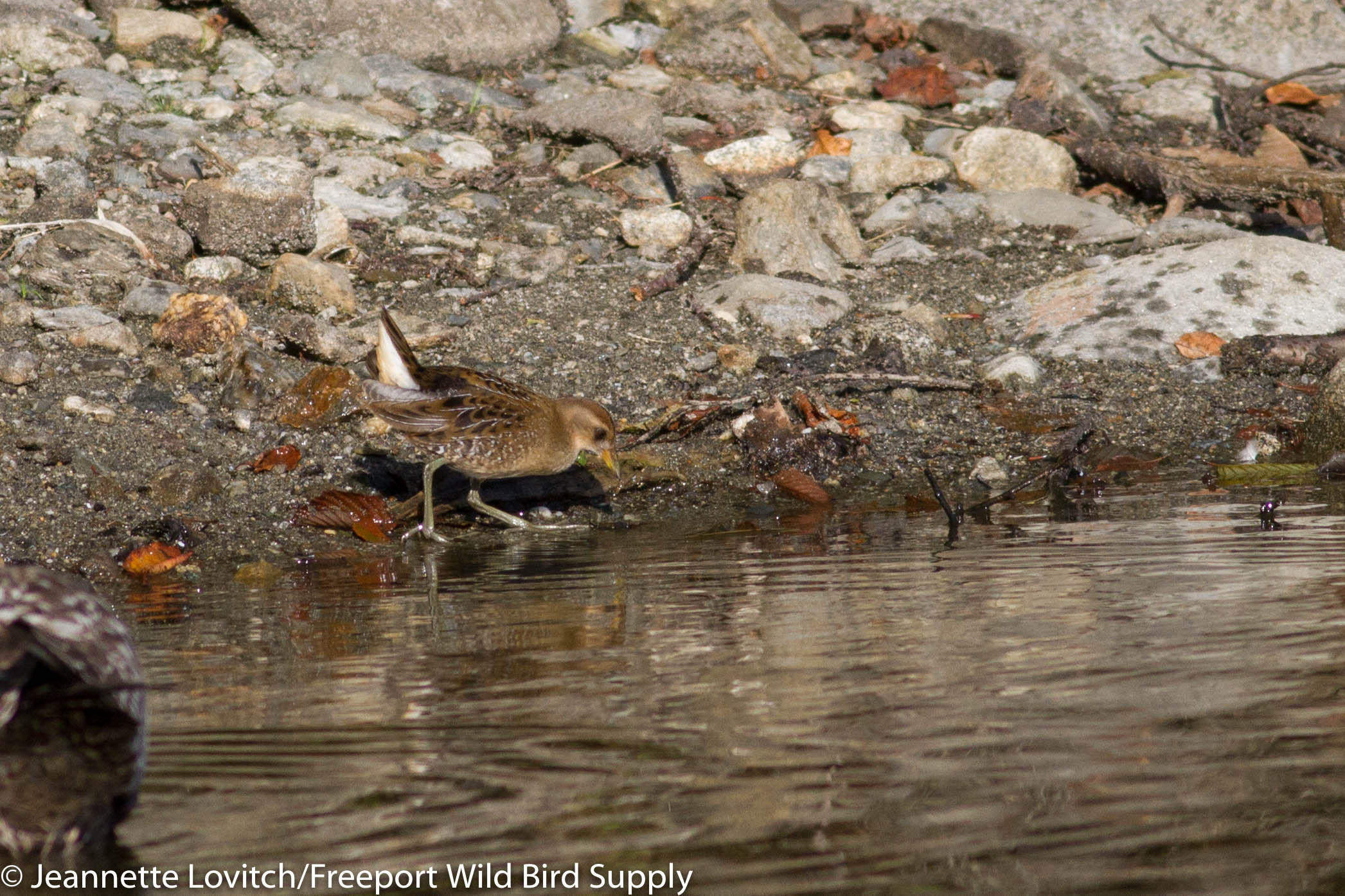
Two immature Yellow-crowned Night-Herons (perhaps part of a small scale northward irruption into the New England coast) stood guard in the early mornings at the Ice Pond. Later in the week, the world’s most confiding Sora appeared, spending one afternoon foraging in the open at the pond’s muddy edges – this year’s drought had reduced it to a mere muddy puddle. Sora and a Blue Jay
A Connecticut Warbler was one of our finds of the week, heard by all, seen by some on two occasions; an “exclusive” for our group. A late Olive-sided Flycatcher was another treat, as was the Black-billed Cuckoo that we caught up with thanks to the efforts (and game of charades) of friends – exemplifying the spirit of the Monhegan birding community shared by most.
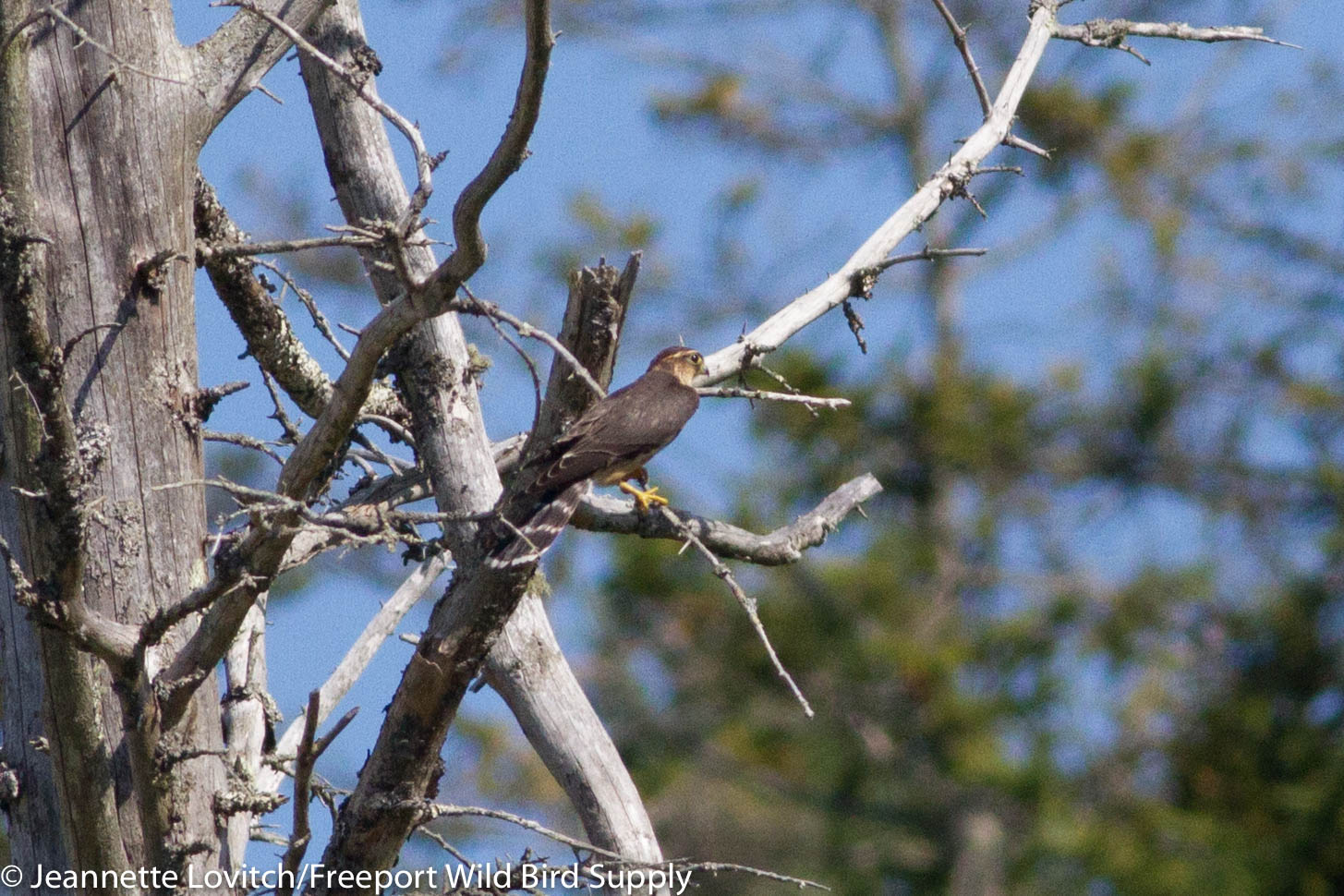
Calm winds and the season produced excellent seawatching conditions on the 21st, and from the high cliffs of White Head, we observed Cory’s Shearwaters (once a rarity this far north and east) and Great Shearwaters – with massive rafts of one or both just beyond the realm of identification– and a few Minke Whales. Always a highlight in the fall is the raptor passage, which most of the week was limited to numerous Merlins, scattered Sharp-shinned Hawks, and the occasional Peregrine Falcon, On our last day, a light northerly wind also ushered in a steady movement of Northern Harriers and Ospreys, along with another surge of falcons.
And then there was the food: exquisite fine dining at the Island Inn, the best pizza in Maine at the Novelty, and a candlelight lobster dinner – with lobsters brought in just for us! – at the rustic Trailing Yew, complete with a lobster ecology and human ecology lesson and step-by-step instructions. And that’s in addition to the limitless lobster scrambled eggs at breakfast every morning!
Highlights for our group each day were as follows, along with a brief synopsis of the overnight flight and the day’s weather.
Island:
– A few light showers, drizzle, and fog occasionally lifting on light and variable, and rather warm winds throughout the day. Calm and foggy at dusk.
– 1 female Orchard Oriole (new)
– 1 Lark Sparrow (continuing)
– 1 Clay-colored Sparrow (continuing)
– 1 Carolina Wren (continuing) Like everywhere in Maine this fall, Red-breasted Nuthatches were abundant. Ichneumon wasp sp on window screen.
9/20:
– Sunrise: 62F, dense fog, very light southeast. Light migration likely overnight, but hard to decipher on the radar due to fog. Fog coming and going throughout the day, warm and humid, very light southeast. Light south and fog at dusk.
Another relatively “slow” day, but these were the highlights:
– 1 CONNECTICUT WARBLER
– 2 juvenile Yellow-crowned Night-Herons
– 1 Blue-gray Gnatcatcher
– 1 Lark Sparrow
– 1 Clay-colored Sparrow
– 2 American Golden-Plovers
– 1 Cory’s Shearwater
– 1 Greater Shearwater
– 1 Carolina Wren
I tell people never to leave their binoculars behind when on Monhegan; you never know what you will see where. They also can come in handy for reading the fine print of menus! Lark Sparrow
9/21:
– Am: 62F, mostly clear, calm. Light to moderate migration overnight on lt SW to W, but again intensity obscured by fog. Moderate-good morning flight overhead at dawn, with lots of new birds around. Hot and calm! Clear and calm at dusk.
73 species on the day, including the world’s most cooperative Sora and some fantastic afternoon seawatching.
Highlights:
– 1 CONNECTICUT WARBLER
– 1 Yellow-crowned Night-Heron
– 3 Dickcissels
– 1 Clay-colored Sparrow
– 10 Cory’s and 12 Great Shearwaters plus 125 large shearwater sp.
– 2 Lesser Black-backed Gulls
– 1 Eastern Kingbird
– 1 Warbling Vireo
– 1 Sora
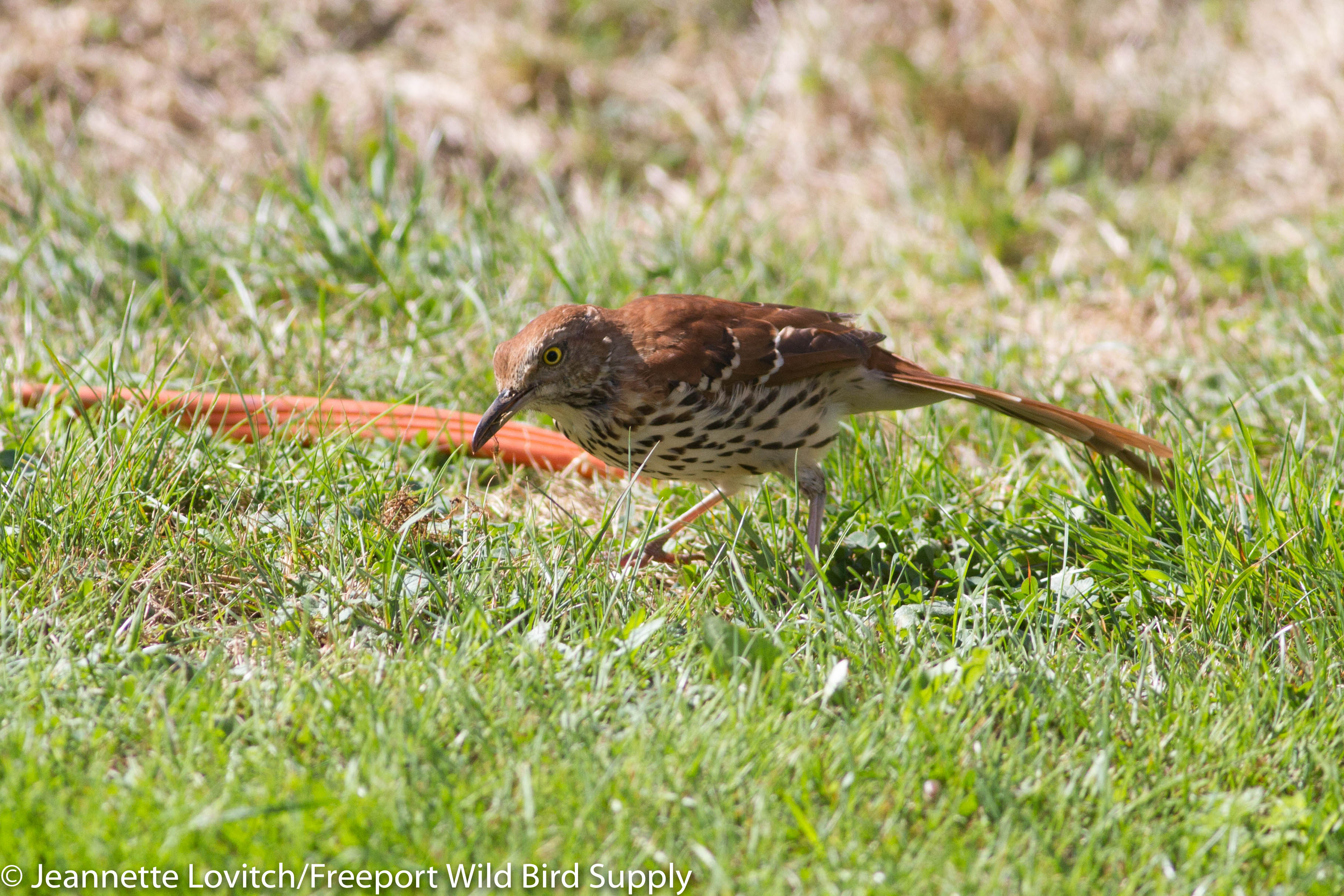
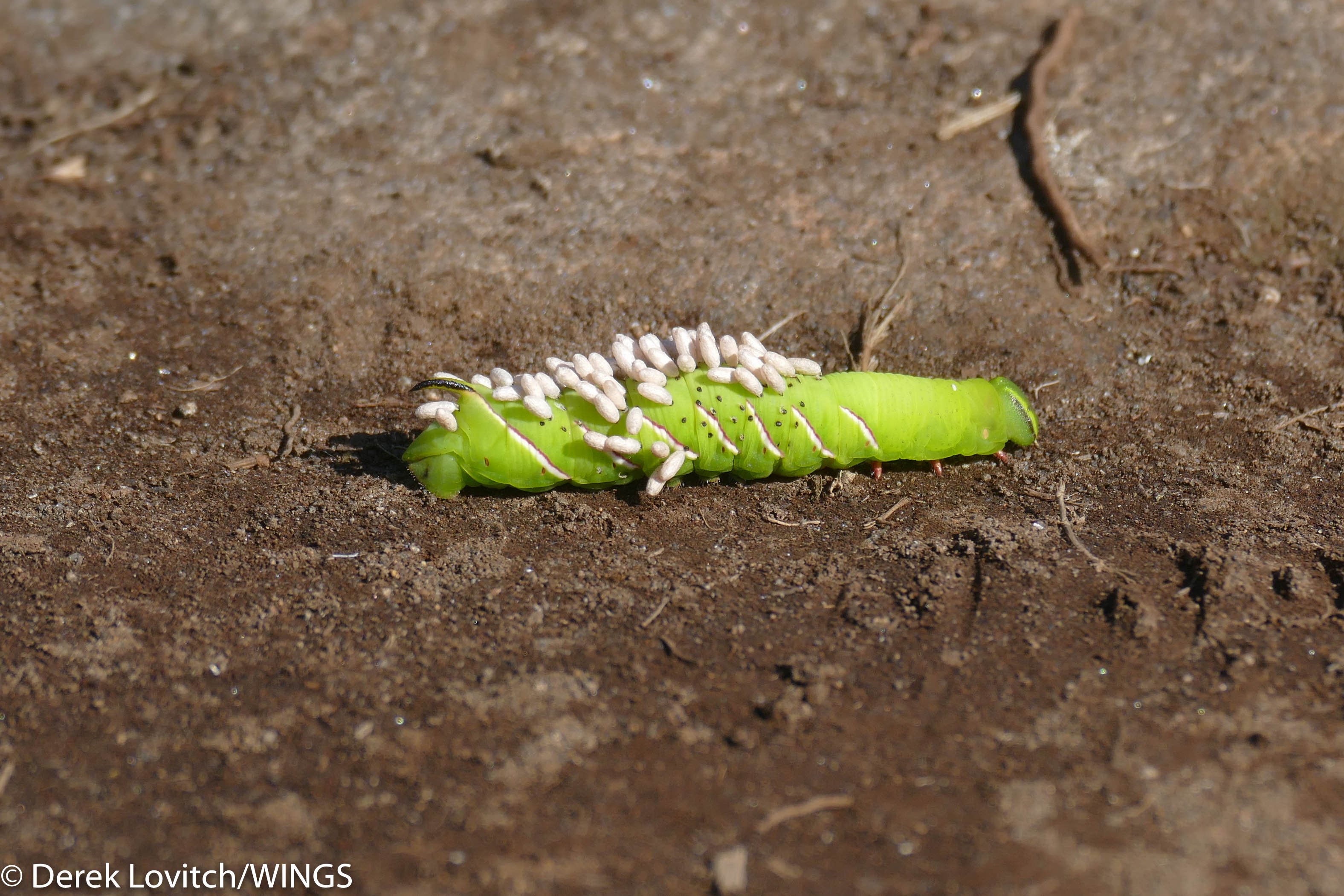
– 3 Minke Whales Brown Thrasher on the Trailing Yew lawn Sphinx moth caterpillar with parasitic wasp pupae Merlins were all around I’m not sure of this Rusty Blackbird left this particular group of yards for the rest of the week! Afternoon seawatching from Whitehead. Ending the afternoon with a Sora at the Ice “pond,”
9/22:
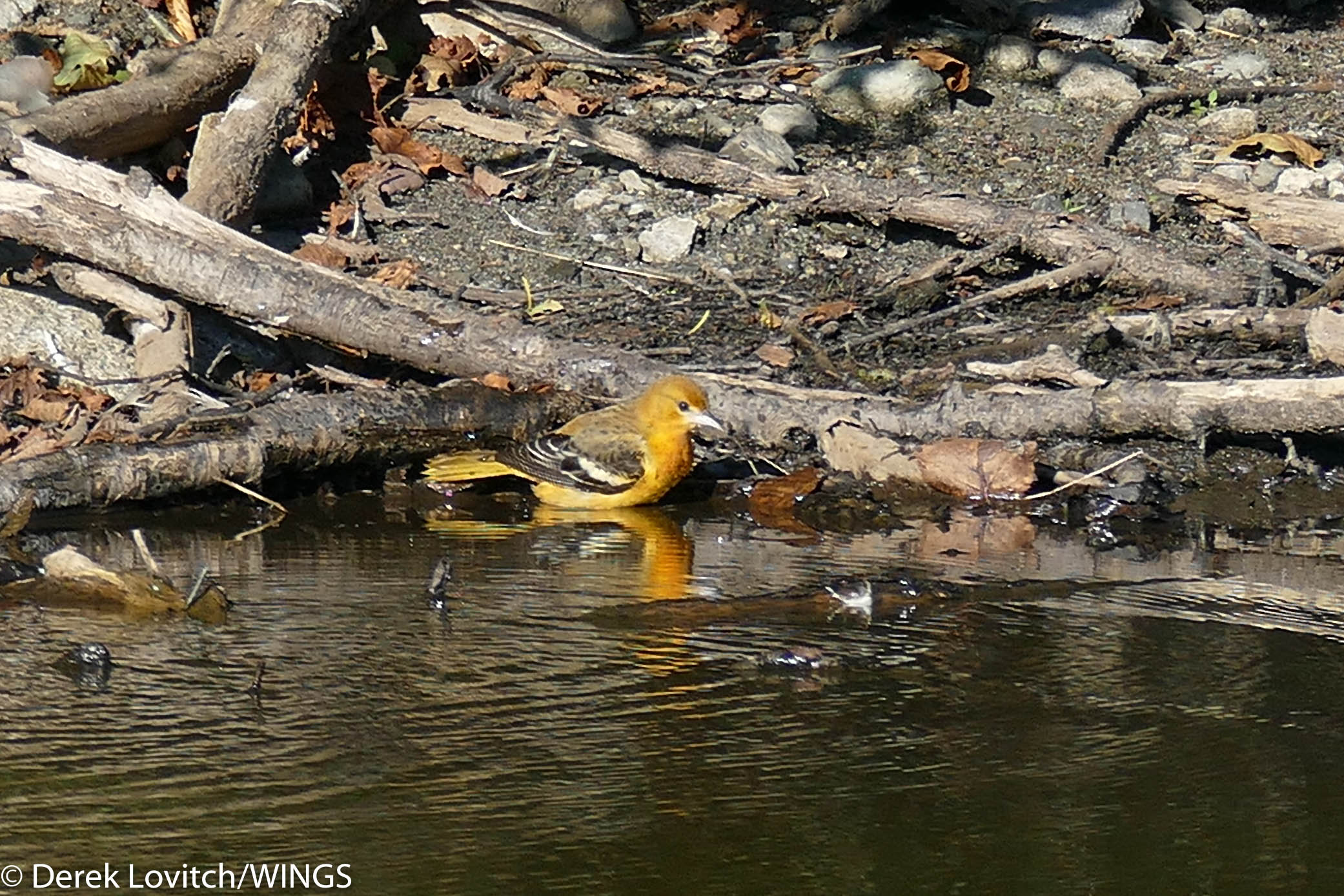
– AM: 59F, clear, very light NW. Light-moderate migration overnight on light SW to West to NW. Lots of birds overhead at sunrise (mostly Blackpoll, Yellow-rumped, and Palm Warblers), but less landing than expected as many birds kept going to the mainland. Relatively hot once again, with light and variable breeze. Clear and light South by dusk.
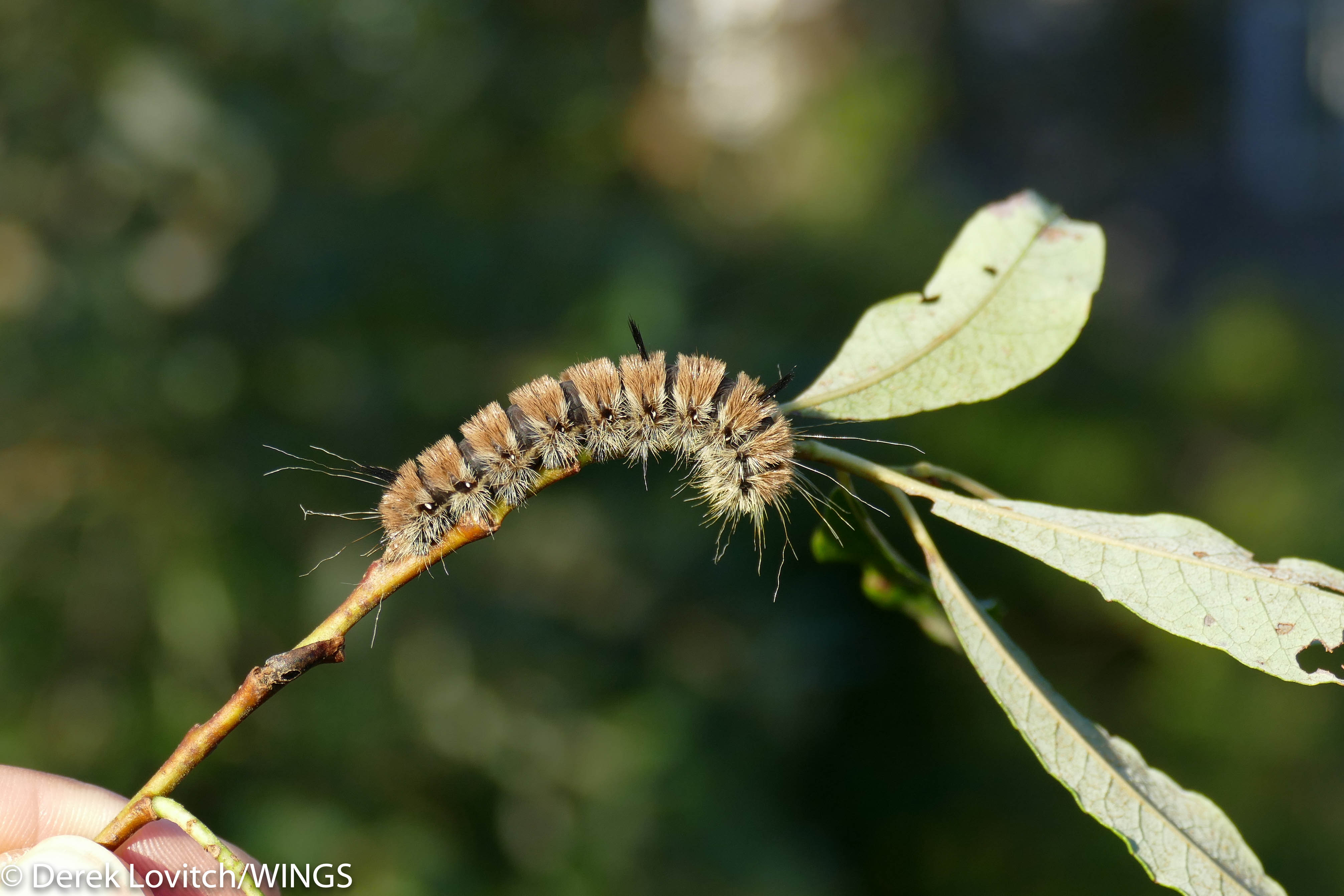
American Redstart Baltimore Oriole Unidentified caterpillar- some sort of tussock moth?
9/23:
– AM: 65F, cloudy, lt-mod SW. Little to no visible migration overnight on lt-mod SW and rain approaching from north with dropping cold front. Drizzle and some light rain ending by mid-morning. Overcast but warm on light west winds. Increasing north by dusk.
A slow day of birding on Monhegan is better than a good day of birding most anywhere else with NINE new species for the week today.
Highlights:
– 1 Black-billed Cuckoo
– 2 Dickcissels
– 2 Cory’s Shearwaters
– 1 White-crowned Sparrow (FOF)
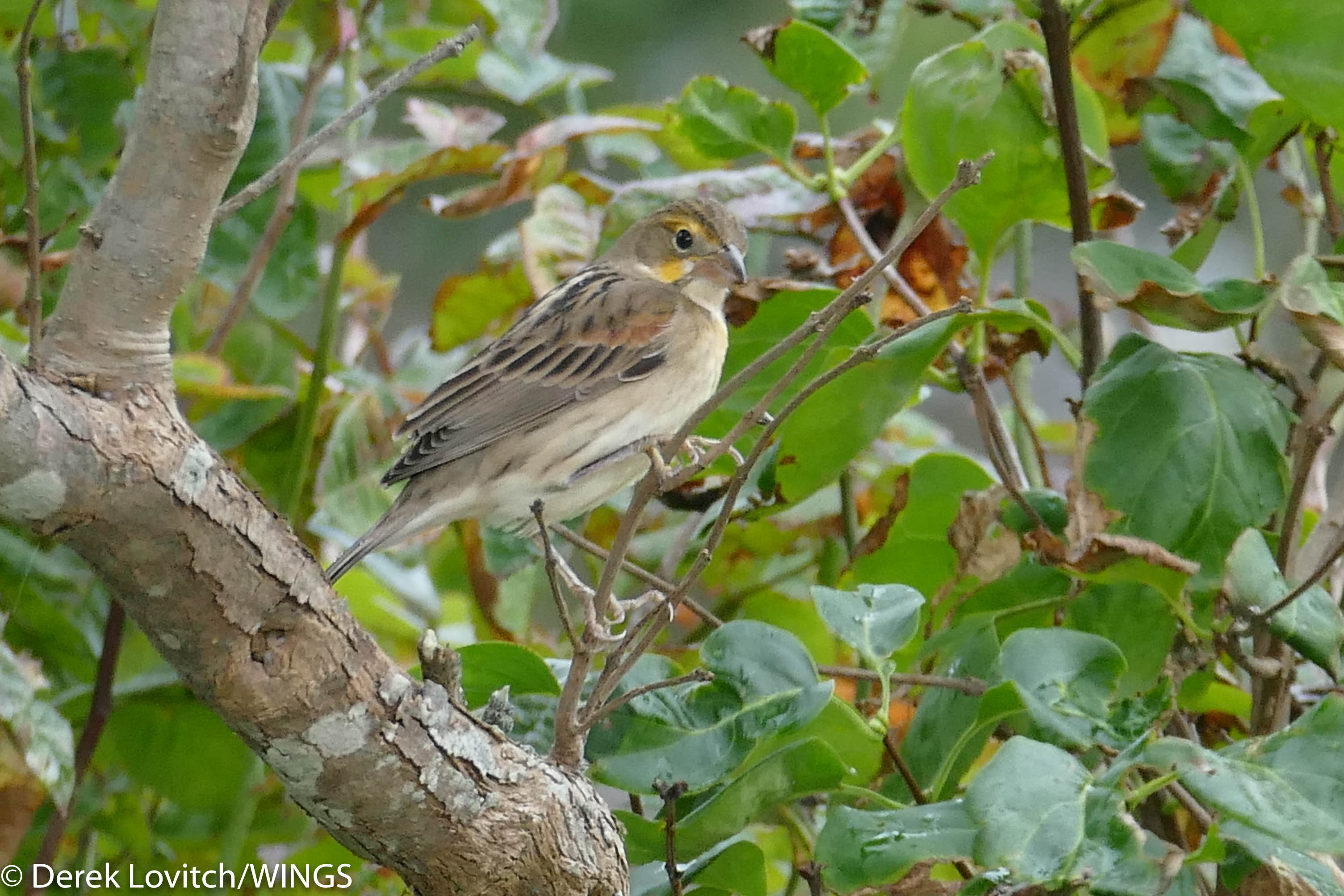
– pair of Pine Warblers were our 18th species of warbler on the week (a little low). Here comes the front! Dickcissel Special delivery!
9/24:
– 50F, mostly clear, light N. Huge flight overnight on radar on diminishing N, but very little overhead at dawn. Although new birds had definitely arrived, it was not the huge flight that was hoped for. Apparently, there were more birds arriving on the south end of the island today (we always started on the west-north-west side) as reorienting migrants were returning to the island, or likely departing from the island’s north end. Diminishing N wind became light and variable before NW began to increase in the late morning, producing a good hawk flight.
With the hopes a big flight dashed by the lack of a westerly wind component by morning, we had a very casual and relaxed pace for our last day with some hawk watching taking precedence. Quite a few new birds were around, including several new species for out week’s list: Northern Harrier, American Pipit, and a single Semipalmated Plover. Cape May Warblers were particularly conspicuous today (at least 5), and as always it is painful to say goodbye. Good thing I’ll be back next weekend with the store’s annual weekend!
Highlights:
– 2 American Pipits (FOF)
– 1 Dickcissel
Ferry back to Boothbay Harbor:
– 1 Yellow-bellied Sapsucker (about half way, heading towards the mainland)
– 2 White-winged Scoters
Cape May Warblers were conspicuous the last few days Boothbay Arrival
And now I’m off this afternoon for for three more days!




























 Maine Birding Field Notes