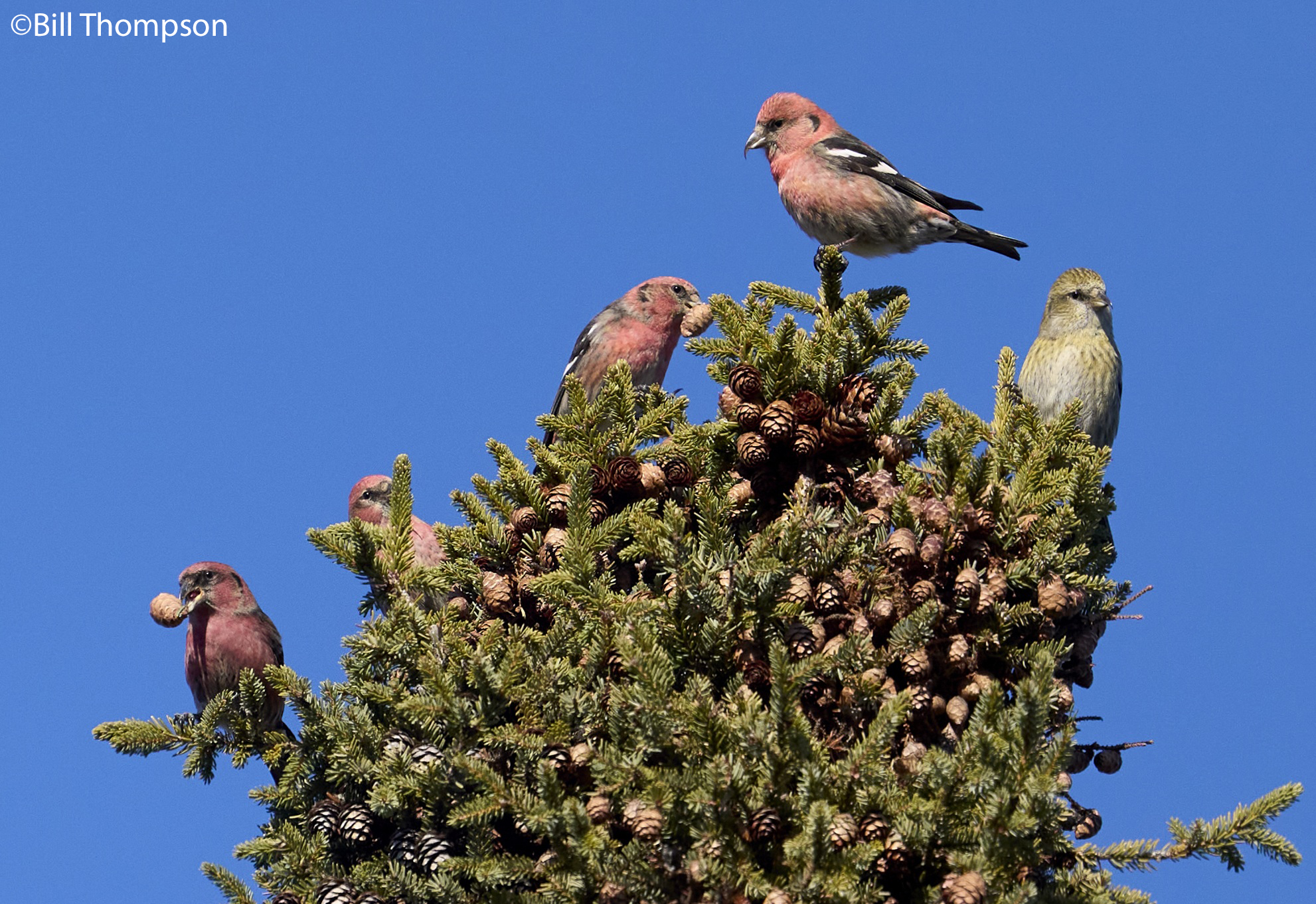
While a trek to the mountains on the 15th was not nearly as fruitful (pun intended) as we hoped, Bill Thompson and I were very surprised to find a flock of White-winged Crossbills – an irruptive species that has been virtually non-existent this winter in Maine – on South Shore Road in Rangeley.
I covered a better amount of ground this past week than I have been recently, even with relatively limited time in the field. I wanted more frugivores to show for it, but I did have a nice variety of seasonal highlights. Here are my observations of note over the past 10 days.
1 female “NORTHERN” COMMON EIDER (ssp BOREALIS), 1 drake Barrow’s Goldeneye, and 4 drake Greater Scaup, Winslow Park, Freeport, 2/14 (with Saturday Morning Birdwalk group).
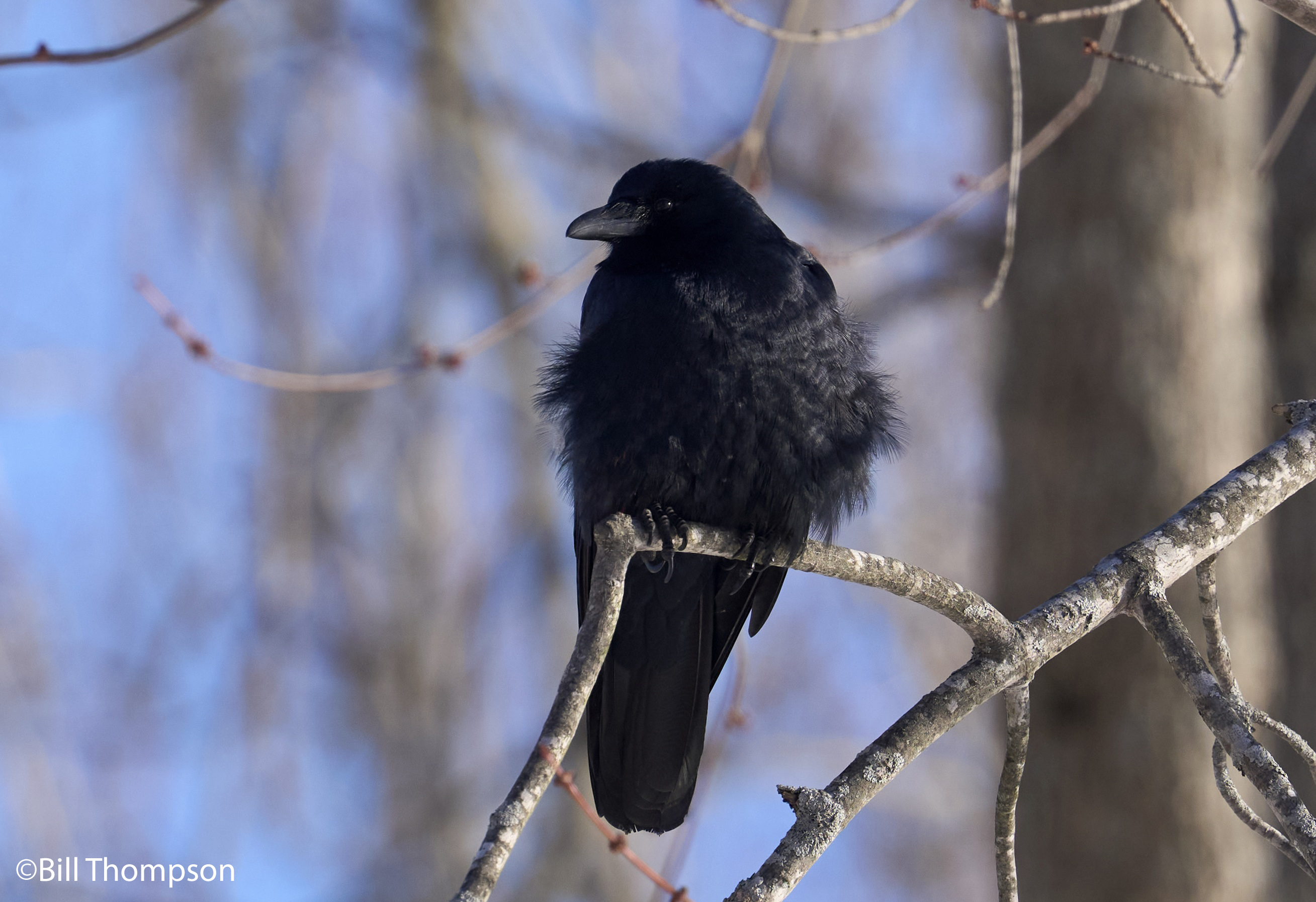
2+ continuing FISH CROWS, Auburn Riverwalk, 2/15 (with Bill Thompson).
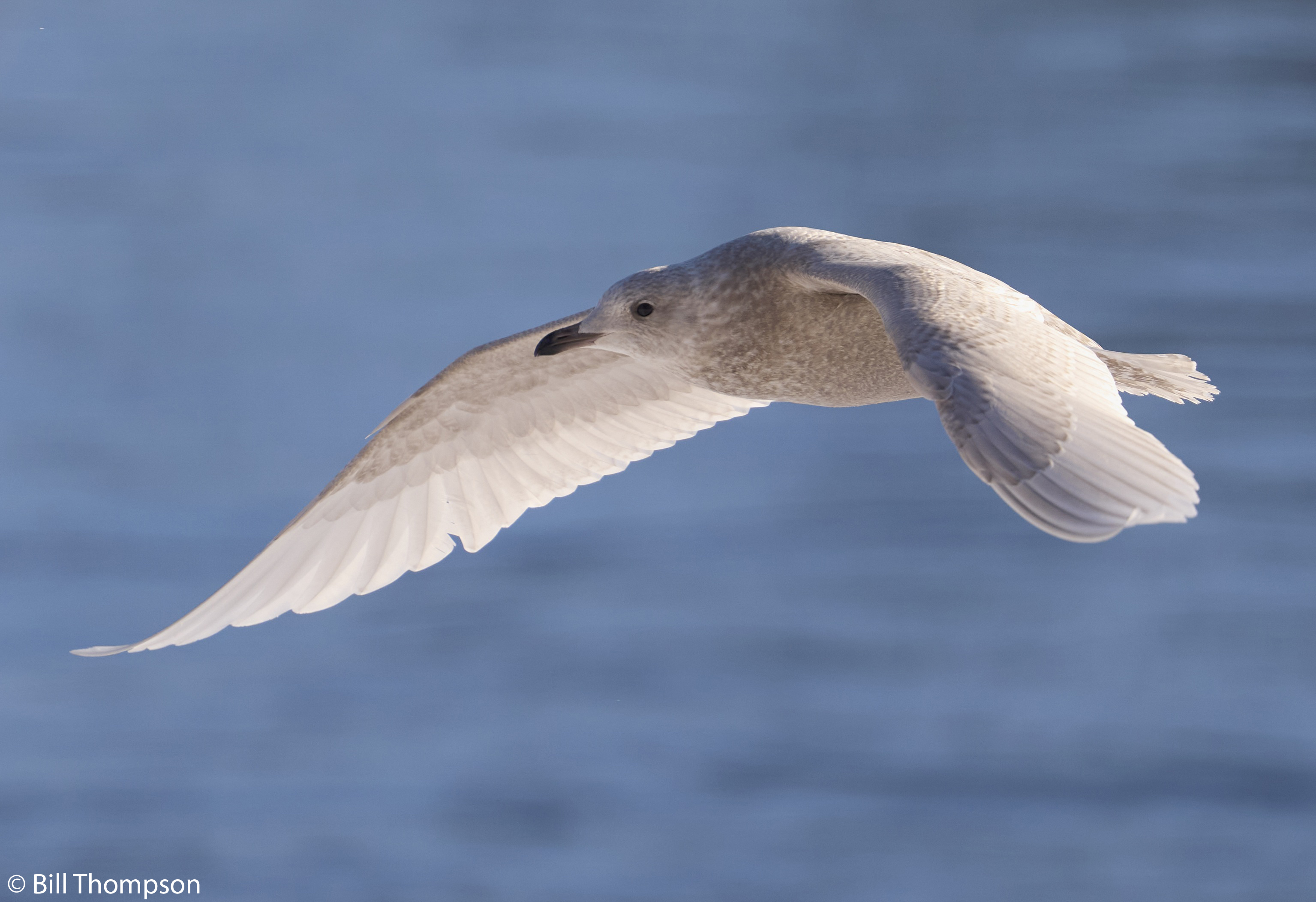
1 1ST-cycle Iceland Gull, Auburn Riverwalk, 2/15 (with Bill Thompson).
~20 Snow Buntings, moving between parking lots on Rte 4/2, Farmington, 2/15 (with Bill Thompson).
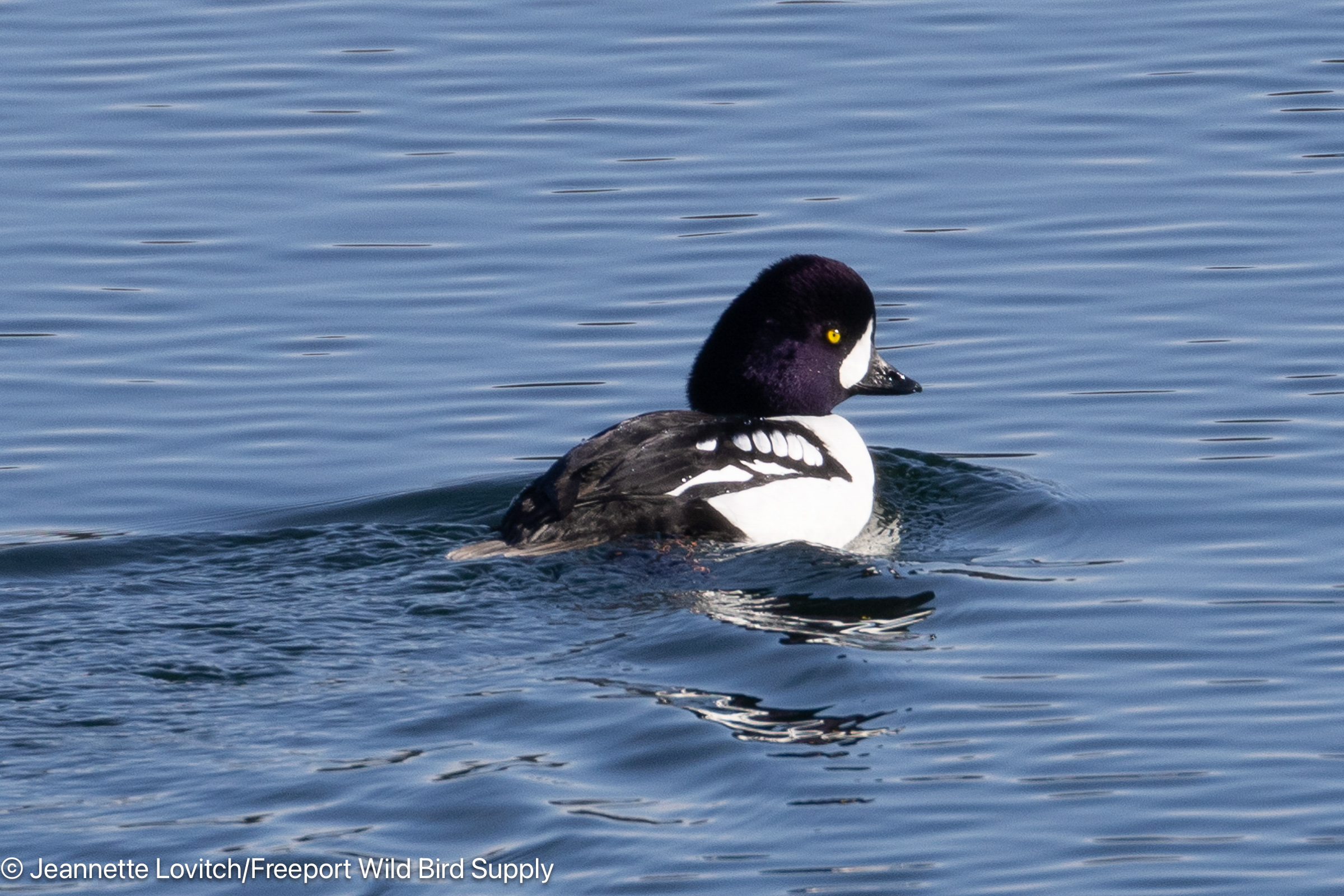
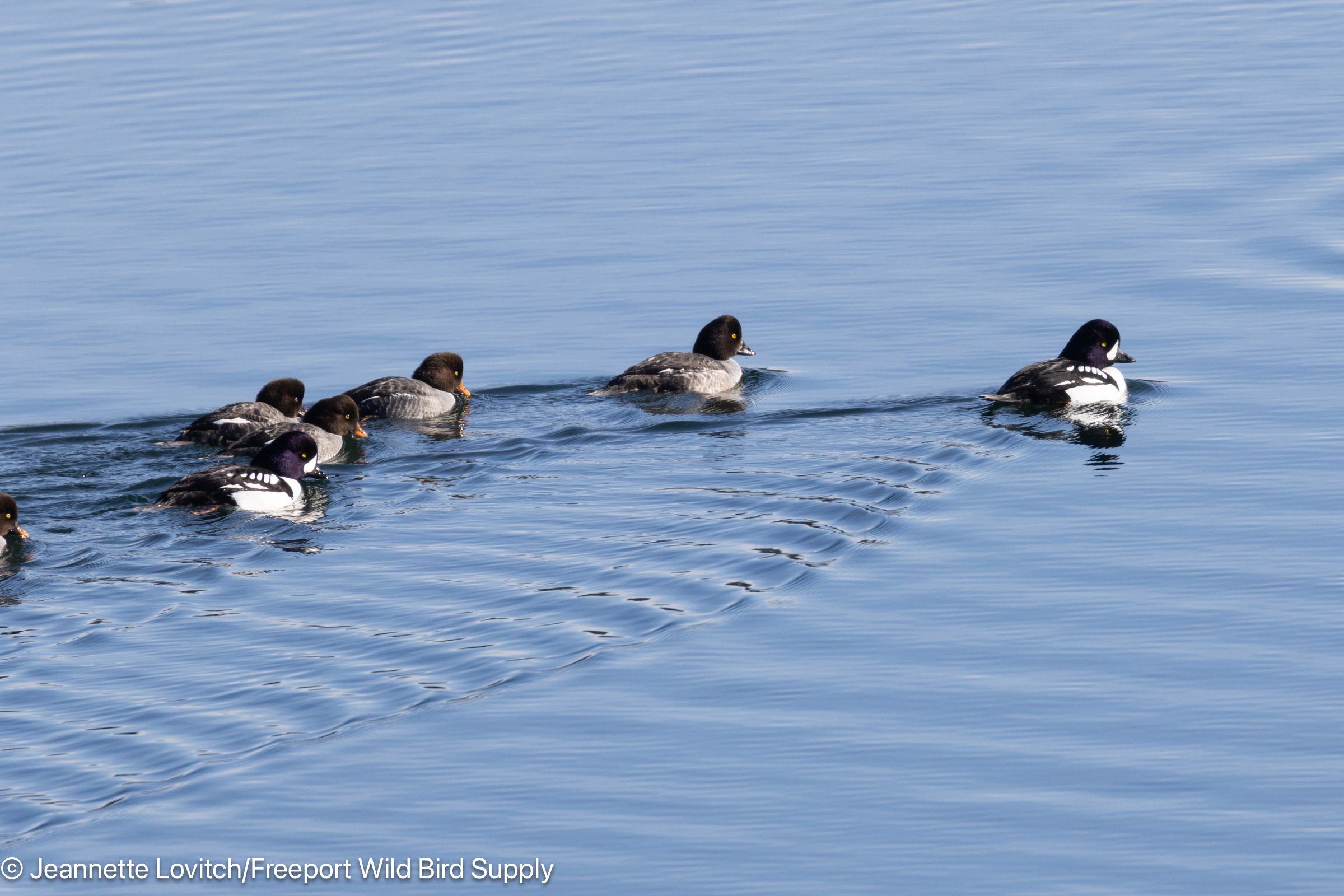
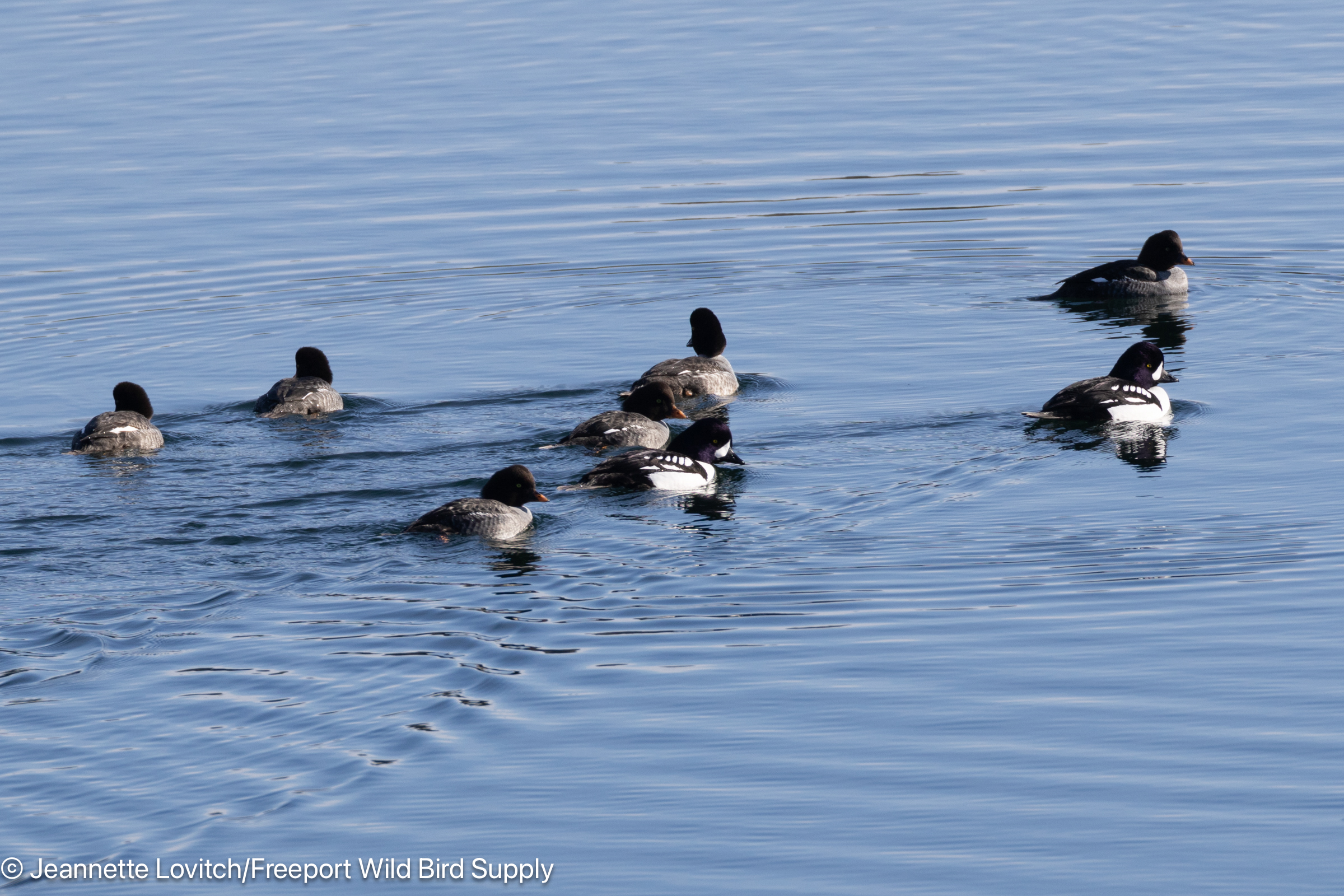
19 (10 drakes and 9 hens) BARROW’S GOLDENEYES, Gurnet Bridge, Harpswell, 2/16 (with Jeannette). This winter’s flock, which maxxed out at 26 individuals, is the largest flock in the state since about 2006. Even though we missed the peak, this was a very impressive flock and was delightful to see!
1 drake Barrow’s Goldeneye, Sandy Point Beach, Cousin’s Island, Yarmouth, 2/22.
1 pair Barrow’s Goldeneye, Cumberland Town Landing, 2/22.
At least one Turkey Vulture continues along the I-295 corridor between Cumberland and Freeport as of this week. Several scattered “TV’s” elsewhere in the area suggests the first trickle of their northbound migration.
One adult Red-shouldered Hawk continues along Rte 136 in Durham, near the Freeport Town Line.
This Week in Irruptives.
On the 15th, Bill Thompson and I birded from Auburn to Rangeley, mostly looking for irruptives. It was not the birdiest day, and the only frugivores we encountered (despite finding plenty of fruit) were a mere 4 Cedar Waxwings in Farmington. Most of our birding was in and around Rangeley, where we caught up with a flock of 28 Evening Grosbeaks at a downtown feeder, and “dipped” on a small group of Pine Grosbeaks. However, on South Shore Road, we encountered 14 WHITE-WINGED CROSSBILLS (see photo above) and a single Redpoll.
Elsewhere, Purple Finches were a little more widespread this week, although in lower numbers than last week. Jeannette and I had 3 Red Crossbills, including an apparent pair, at Long Reach Preserve in Harpswell on the 16th and one Redpoll flew over our property on the 22nd. Scattered Evening Grosbeaks in the area included one in our Durham yard on the 17th and again on the 23rd. Cedar Waxwings were also a little more numerous this week, although in small numbers (high count of 6 here at the store on the 18th).
Winter Feeder Birds Snapshot.
After beginning a “feeder watching blog” while stuck at home from shoulder surgery in the winter of 2023, I continue the tradition for the fourth year now, as I try to compare feeder activity between winters on our property in Durham, Maine, and then attempt to use it as a case-study for what the overall feeder bird activity is like in the area this winter. Here’s the 2026 Feeder Birds Snapshot. Since the “study,” we have seen a few more winter finches, and as of 2/13 are now up to 24 Dark-eyed Juncos, 11 American Tree Sparrows, and at least 45 American Goldfinches.
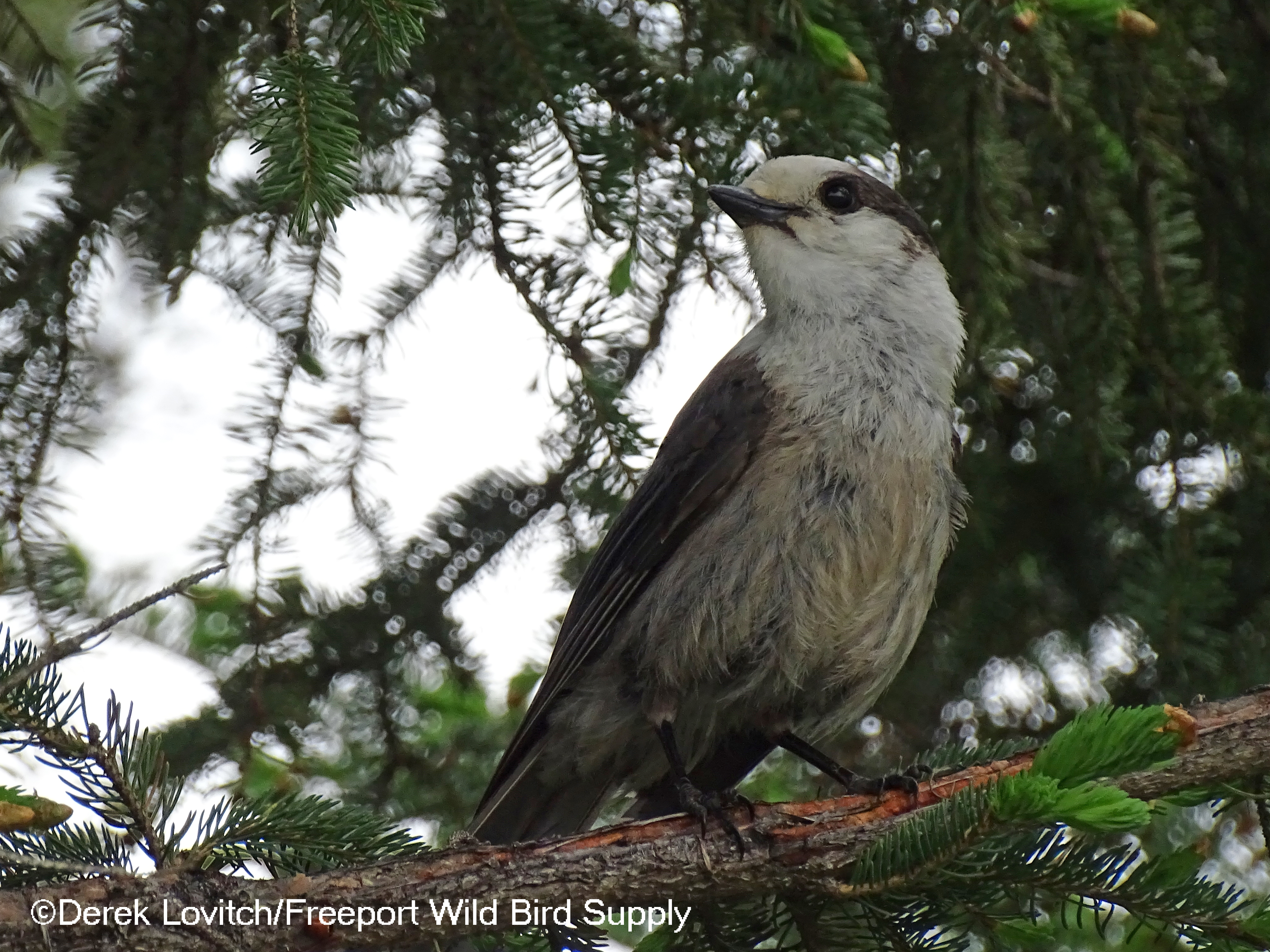
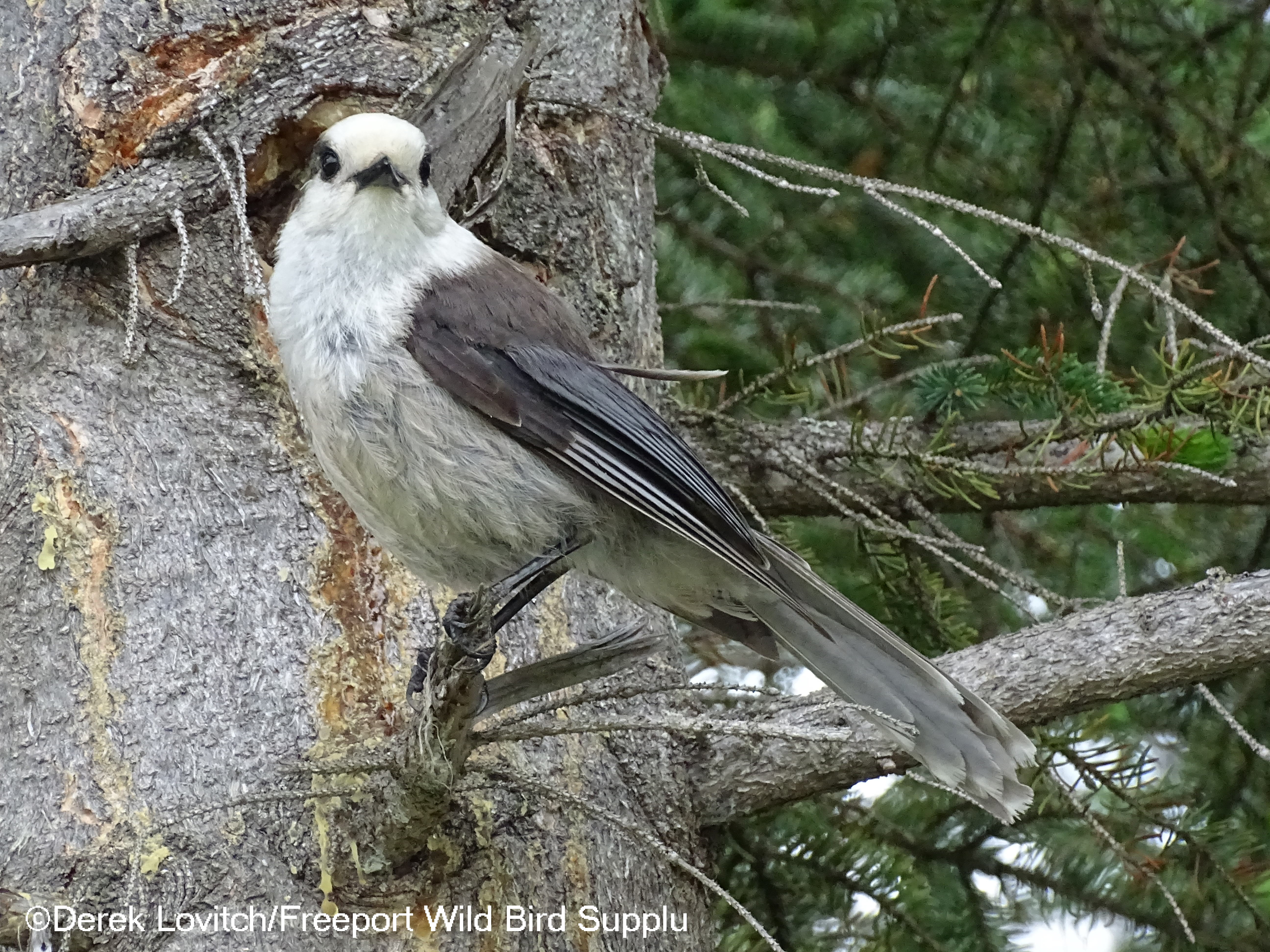
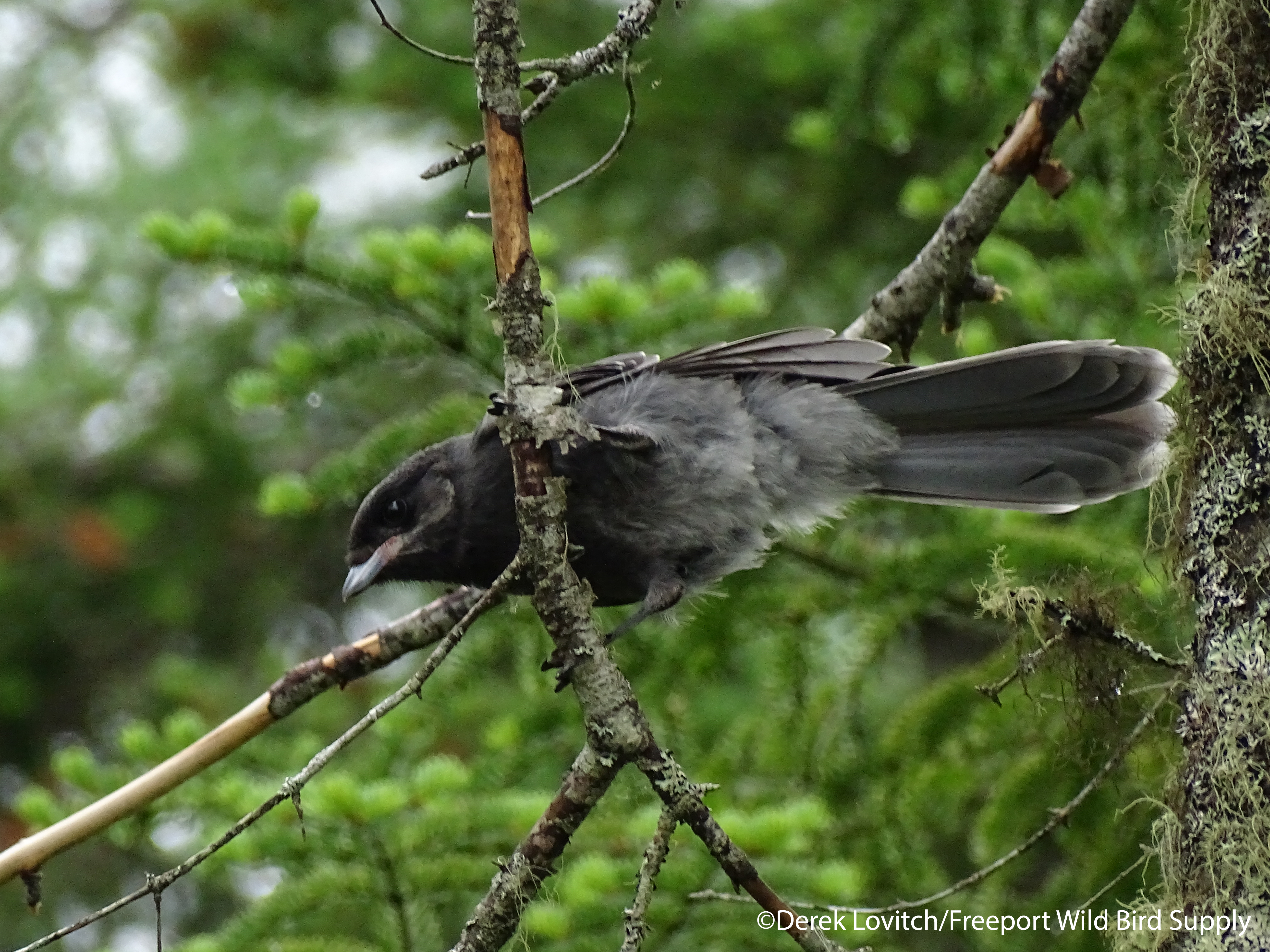
One of up to 6 Canada Jays encountered outside of Rangeley while leading tours for the Rangeley Birding Festival included this confiding adult, part of a family group of at least 4 on 6/6. In fact, I enjoyed Canada Jays in three states in less than a week’s time this week/weekend!
This time of year, most of my birding, both personally and especially professionally, is dedicated to finding, seeing, and enjoying the wide array of breeding species this state has to off. From Saltmarsh Sparrows and Roseate Terns here along the southern coast to Bicknell’s Thrushes and “boreal specialities” in the western Maine mountains (and northern New Hampshire), it has been another extremely busy guiding season for me. Meanwhile, while home, I have been conducting two local breeding bird surveys. While my “highlights” these days are seeing the “expected” species we all seek, I did encounter some unexpected observations and noteworthy counts over the past two weeks, but mostly, I thought I would share some of my photo highlights.
1 Dunlin, 4 Semipalmated Plovers, and 1 Least Sandpiper, Sanford Lagoons, 6/2 (with Jeannette).
Rangeley Birding Festival, 6/6-6/8: Two mornings of birding Redington Road (scouting 6/6, with tour group 6/7) yielded high counts of 2 territorial CAPE MAY WARBLERS (6/6+6/7), 6 CANADA JAYS (6/7), 1 pair of BOREAL CHICKADEES (6/6), 3 Red Crossbills (6/6), 2 Olive-sided Flycatchers (6/6), 1 American Bittern (6/7), 1 Black-billed Cuckoo (6/7), etc.
I was excited to find two Cape May Warbler territories outside of Rangeley on the 6th, and then find both males in the same place the next day with my Rangeley Birding Festival tour group.
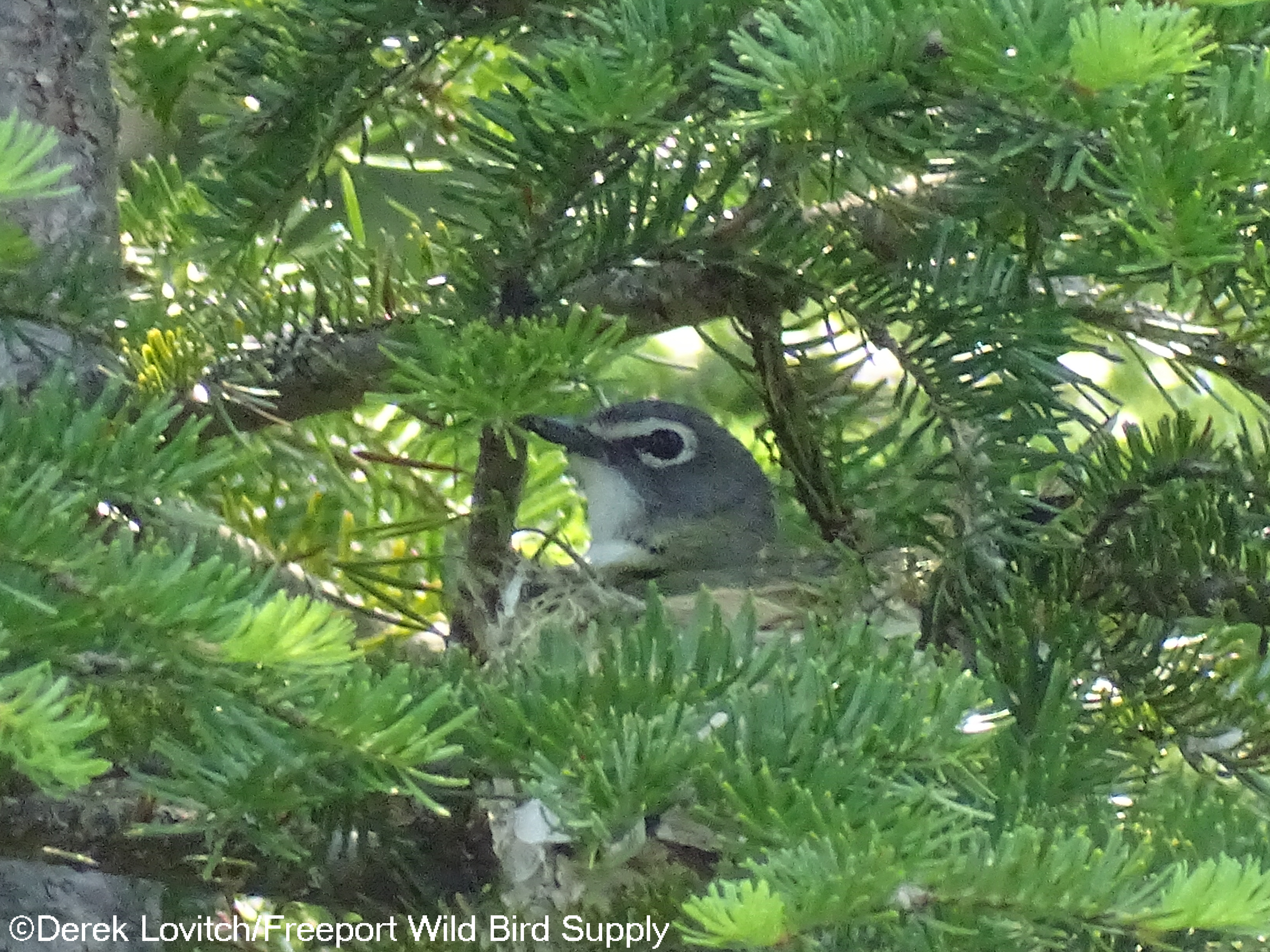
While leading a walk for the Rangeley Birding Festival at Hunter Cove Sanctuary, I found this low-level Blue-headed Vireo nest that was fascinating to observe.
2.5 day private tour in Vermont and Northern New Hampshire (I know, this is a non-Maine-birding-field-note!) yielded: Bicknell’s Thrush, Black-backed Woodpecker, Boreal Chickadee, Canada Jay, Fox Sparrow, and 22 species of warbler including Cape May, Bay-breasted, and Mourning.
As usual, I took few photos while guiding, but this Bay-breasted Warbler outside Errol, NH on the 10th (with clients) was too cooperative not to fire off a few shots!
Back home for a couple of days, it was off to my local bird surveys. This fledgling Barred Owl was in Freeport on the 12th, confirming breeding once again at one of my local patches.
Monhegan Spring Migration Weekend Trip Report.
The 2025 Monhegan Migration Spring Weekend was a shocking success. We went from having a weather forecast that made me worry if there would be any migrants to see at all, to an exceptional weekend that was by far the best Memorial Day weekend of birding out here in quite a few years. A total of 106 species were tallied in 5 days, including 91 together as a tour group, with a total of 22 species of warblers. Here’s the full trip report.
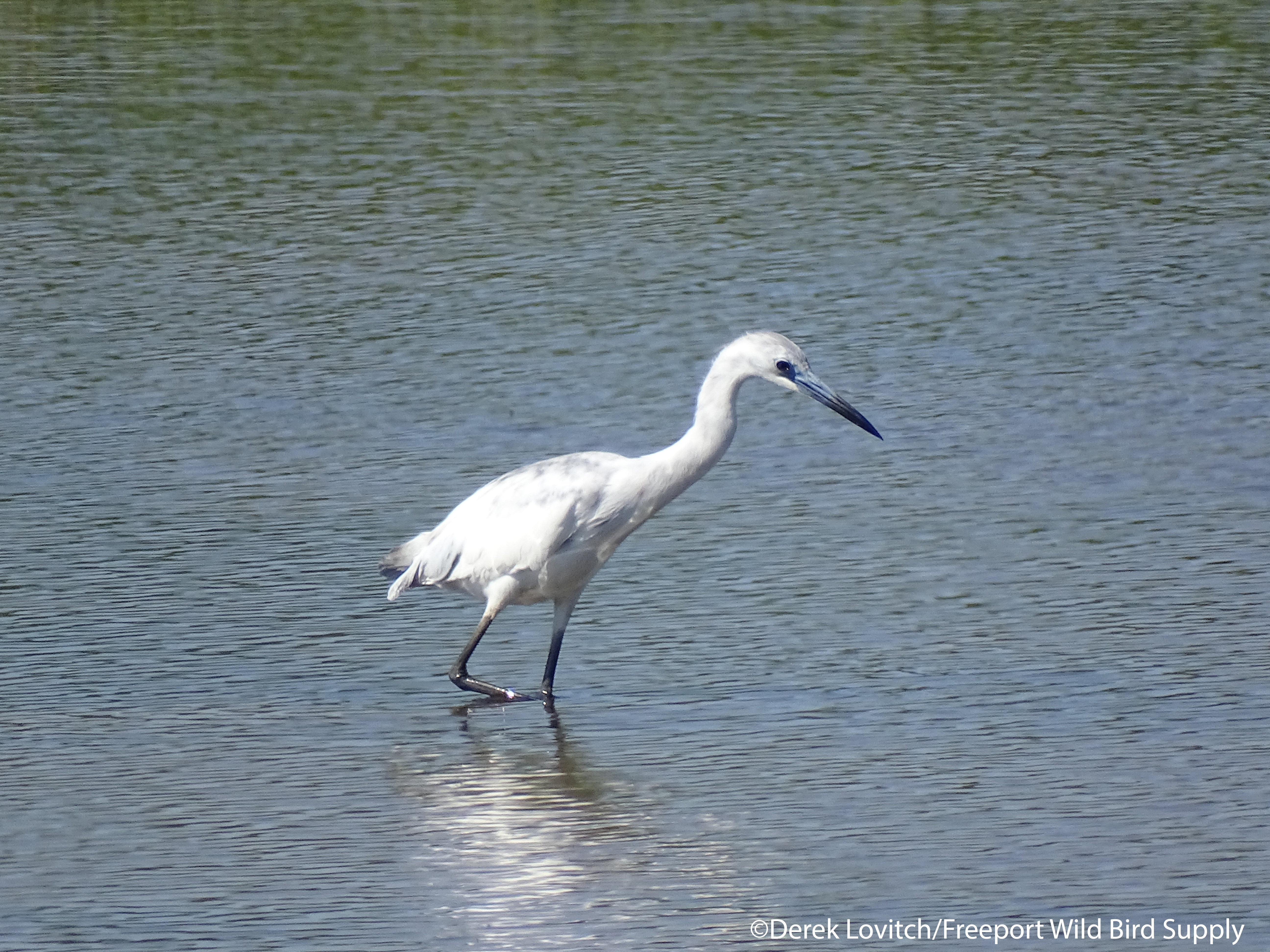
Little Blue Herons have declined in Maine, so it was nice to find my second of the year in an untraditional location. This 1st summer bird was in the marsh behind Seapoint Beach in Kittery on the 2nd.
Typical later migrants, such as Blackpoll and Magnolia Warblers, and a variety of flycatchers, were still moving in and through, especially during the first week of June. Then, my gears rapidly shifted to breeding birds on tours, events, surveys, and just general birding enjoyment. Quality time with boreal breeders in the Rangeley area and specialties such as Saltmarsh and Nelson’s Sparrows, Roseate Terns, etc here at the coast were the usual highlights of the first half of June, both personally and professionally.
In addition to the regular breeding birds we seek – again, both personally and professionally – it’s also a good time of year for unexpected birds in unexpected places, and just general good birding. Some of my additional, less expected observations of note over the past ten days included:
1 immature male and 1 female ORCHARD ORIOLE (FOY), and 1 late Red-throated Loon, Fort Foster, Kittery, 6/2.
1 1st summer LITTLE BLUE HERON, Seapoint Beach, Kittery, 6/2. Photo above.
A visit to the Kennebunk Plains on 6/4 with Jeannette yielded 2 singing CLAY-COLORED SPARROWS (one continuing male near “Clay-color Corner” and one about half-way between there and the main parking lot on the eastern loop trail). 2 UPLAND SANDPIPERS, 6 GRASSHOPPER SPARROWS, and at least 11 Red Crossbills were also detected.
1 pair Cape May Warbler, 1 Wilson’s Warbler, 1 Olive-sided Flycatcher, Palm Warblers, displaying Wilson’s Snipe, family of Canada Jays, etc, Dallas Plantation, 6/7 (with Matt Young).
Fun to be in the field with Matt Young for the Rangeley Birding Festival and hear him describe (and hopefully me learn!) Red Crossbill call notes. There weren’t many around, but we did encounter both Type 12’s and Type 4’s. Meanwhile, scattered birds continue to be widespread down here at the coast.
7 Turkey Vultures, over downtown Rangeley from porch of Parkside and Main, 6/7 (With Matt Young and Birds on Tap! event group for the Rangeley Birding Festival). Less than 10 years ago, a single was unheard of.
1 Semipalmated Plover, Eastern Road Trail, Scarborough Marsh, 6/11 (with clients from New Jersey).
Tours and Events:
Due to tours, there will not be a Saturday Morning Birdwalk on either 6/22 or 6/29.
Freeport Wild Bird Supply is very excited to partner with Down East Magazine’s Down East Adventures for our third year. In 2023, we are expanding our offerings to include two exclusive overnight trips, along with our popular ½- and whole-day targeted workshops. Focused on skill-builder rather than list-building, there will be plenty of “life birds,” but also more knowledge and education about birds, habitats, birding, and much more about the natural world.
The full list of upcoming tours can be found here. At the conclusion of each tour, I’ll post the trip report here.
Winter Waterbirds Workshop, January 15.
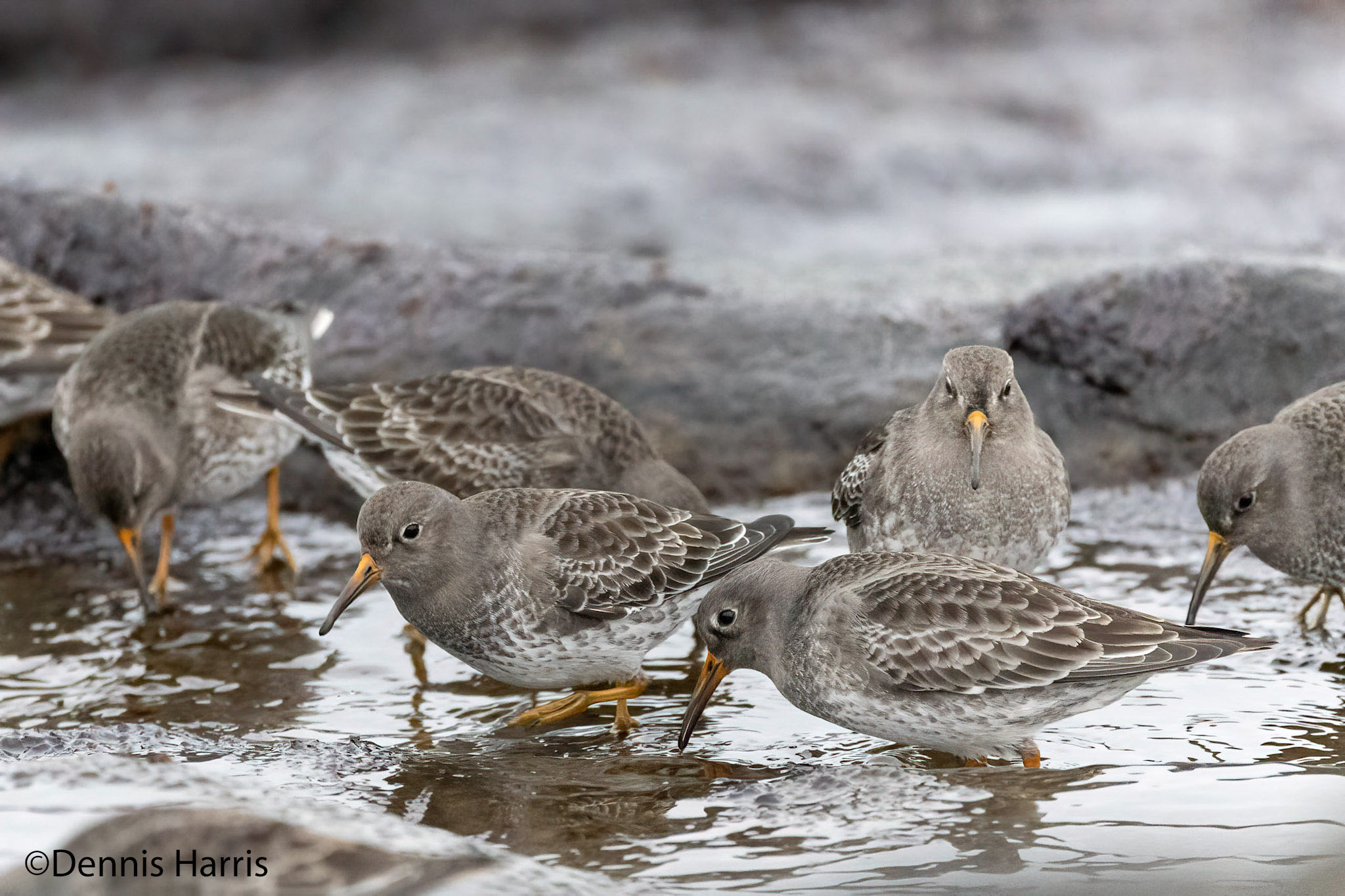
This Purple Sandpiper was about as cooperative as it gets for us at Sohier Park in York. Later, it was joined by its friends (photo below). This is really a lovely shorebird when viewed as well and as close as we experienced.
Extremely strong winds and very high seas presented a challenge as we sought out wintering waterbirds along the southern York County Coast. We worked hard to find sheltered water where we could observe birds well, but when we did find that secluded cove, peninsula lee, or rivermouth, we were treated to incredible looks at many of the birds we had hoped for.
We looked down on Red-breasted Mergansers at Perkin’s Cove, and you’ll never be closer to a Common Loon than we were at the Ogunquit Rivermouth. We checked a few more locations than I usually need to on this tour, but our most productive spot was the southern shoreline of Sohier Park at The Nubble. There, we were treated to close views of Black and White-winged Scoters, Harlequin Ducks, and a most-cooperative flock of Purple Sandpipers. We then ended the day at hidden Abbott’s Pond, where we enjoyed a break for the wind, close comparisons to study details between Mallards, American Black Ducks, and hybrids thereof.
Meanwhile, a group of 8 or so Black-legged Kittiwakes were feeding off of Short Sands Beach, and a stunning adult Iceland Gull passed by at The Nubble. Unfortunately, the seas were just a little too rough to find any alcids today, but we knew they were out there!
Spring Migrant Songbirds Workshop, May 14.
This stunning Blackburnian Warbler nicely demonstrated the value of blooming oak trees for seeing warblers in the middle of May.
Four hours later we had not left Evergreen Cemetery in Portland…a very good sign. There was just no need to move along, the birds kept coming to us. In the end we tallied a respectable 16 species of warblers, even though growing a list was not our goal. What made this workshop successful, however, was how well we saw just about all of the warblers and other songbird migrants throughout the morning.
Warblers were a highlight of course, including repeated quality time with favorites such as American Redstart and Black-and-white Warblers, the two most plentiful migrants this morning. We also enjoyed great looks at several Chestnut-sided Warblers, Magnolia Warblers, and Northern Parulas, with fantastic studies of Black-throated Blue Warbler, Black-throated Green Warbler, Yellow Warbler, and Wilson’s Warbler. We also saw two newly-arrived Tennessee Warblers which aren’t always easy to get looks at. There was a good amount of song this morning, so we had chances to listen and learn many of these species as well.
Shortly after hearing a Red-eyed Vireo and my describing it as “high up and often hard to see,” we found one in the lower branches of a nearby oak, and watched it sing, forage, and do all things vireo for almost 10 minutes! Likewise, after hearing distant Ovenbirds, we had two walking around right in front of us! Beginning with a view of a Veery on the ground in the open, we saw it again as the walk ended, only a few feet in front of us for another great view and chance to observe and study.
During the morning, we chatted about migration, habitat, and the process of building the necessary toolkit to build birding skills. Finishing the walk with a quick overview of some references (we had too many birds to leave much time for anything more), we recapped a very productive and instructive morning of spring birding.
Rangeley Birding Workshop, June 6-8.
Our first overnight tour together, the Rangeley Birding Workshop was based at Bald Mountain Camps in Oquossoc, nestled on the shore of Mooselookmeguntic Lake. Common Loons greeted us, but so did the rain. June of 2023 was one of the rainiest Junes on record in Maine, and we were very thankful for the wood stoves in each cabin!
Our first morning, 6/7, began at Hunter Cove Wildlife Sanctuary, with lots of singing Blackburnian Warblers. A large flock of Red Crossbills flew over, two Yellow-bellied Flycatchers were heard clearly and then glimpsed, and a variety of common warblers were detected. A confiding pair of Canada Jays was the highlight – as they often are – but even the common warblers were tough to see today, so we focused on practicing our birding by ear skills.
Enjoying our delicious boxed lunches at the Rangeley Waterfront Park, with more Common Loons offshore, we delved into an impromptu gull workshop, using each age class of Ring-billed Gull as an introduction to molt, feather topography, and identification. A 3rd-cycle Herring Gull kindly dropped in for comparison as well. In inclement weather, we take advantage of whatever learning opportunities the birds are willing to provide!
After lunch, we poked around the Mingo Spring Birding Loop, with good looks at the likes of Least Flycatcher, Alder Flycatcher, and Dark-eyed Juncos among others. But as rain returned, we called it a day and settled in to dry out in front of our stoves instead of an afternoon of lake-watching from the BMC property. And dinner was absolutely delicious!
Day 2 began with a brief walk around the BMC property (American Redstart, Ruby-throated Hummingbird, etc) followed by a foray over to the famous birding destination of Boy Scout Road, looking to build on the identification toolkit we worked on the previous day. We parked half the cars at one end and then walked the length of the road, birding along the way. But it was rather quiet here too – the ongoing story of June 2023. We did have some more Red Crossbills, a fantastic view -finally – of a Blackburnian Warbler, several Alder Flycatchers, and once again more Canada Jays. But this time, it was a family group of a pair with 2 juveniles in tow!
And then it began to rain. Again. A lot. But I give this group credit – they soldiered on! Of course the rain began in earnest when we were as far from either set of cars as possible, so there wasn’t really a choice, but still, spirits remained high and the birding continued. A pair of Hooded Mergansers, a singing Palm Warbler, and a Spotted Sandpiper were among the last birds of the outing, before the water had penetrated our clothing and it was time to call it a day and hope for better conditions next year!
Shorebirds Workshop, August 10.
The best way to learn shorebirds is to see them in their preferred habitats, feeding, moving, and mixing with other species, such as these Short-billed Dowitchers (a sandpiper) and Semipalmated Plovers here at Hill’s Beach in Biddeford.
An absolutely perfect day of summer weather (finally!) greeted us for this annual favorite outing. And the only thing better than the weather this day was the birding! Recent insane rainfalls have led to very high water in many of our favored high-tide, upper-marsh locales, so we focused on tidal habitats including beaches and mudflats, altering our usual routine from the start.
Beginning in Biddeford Pool, we introduced shorebirds with several Spotted Sandpipers along Ocean Avenue before jumping into the mixed species flock on Biddeford Pool Beach on the outgoing tide. There we estimated over 1,250 Semipalmated Sandpipers and 200 Semipalmated Plovers as we learned the basics of shorebird (sandpiper vs. plover) identification and began to work our way up to teasing out a couple of White-rumped Sandpipers and Ruddy Turnstones from the masses. 2 Killdeer in flight overhead were our only two of the day.
Kicking off our shoes to spend the rest of the morning on the sandflats of Hill’s Beach, we compared a Piping Plover to the many (400+) Semipalmated Plovers and 30 Black-bellied Plovers. A single juvenile Least Sandpiper was out of place on the beach, but offered a perfect opportunity to closely study the differences in shape, size, and overall structure to the 150 or so Semipalmated Sandpipers that were scattered about. 59 Short-billed Dowitchers gave us the chance to really observe shape and feeding styles, practicing identifying these birds both near and far.
Over at The Pool, a distant “Western” Willet joined 7 “Eastern” Willets, as we advanced into subspecific identification just briefly before stopping for lunch as the tide began to roll in.
The afternoon was spent at Scarborough Marsh, where our first two stops offered little (other than a calling Greater Yellowlegs to at least practice our shorebirding by ear) due to the very high water in the salt pannes from the recent rains. Pine Point more than made up for it on the rapidly incoming tide, however, with one heck of a shorebird show: 1500-2000 Semipalmated Sandpipers, 400-500 Semipalmated Plovers, a few more Short-billed Dowitchers and White-rumped Sandpipers, better looks at “Eastern” Willets, and the icing on the cake: a cooperative Whimbrel – our 13th species of shorebird for the day.
Practicing with our identification tool kit, we tested ourselves on finding the uncommon species among the masses, and took a moment or three to simply sit back and enjoy the show. Now that we know how approachable shorebird identification really is, we can more fully appreciate these most marvelous migrants!
Monhegan Birding Workshop, September 23-25.
Northern Gannets and two Green-winged Teal flying with 6 Surf Scoters from the ferry and an adult Lesser Black-backed Gull greeting us upon our arrival seemed like a great sign for what would be a bird- and fun-filled weekend on the Migration Mecca of Monhegan.
Unfortunately, it turned out to be one of the slowest (for both species and diversity) fall weekends I have ever experienced on the island. That being said, a big list wasn’t our goal. It was to learn birds – their ID, their migration ecology, and everything else that makes the island so special for birds and birders. And this is not tour guide spin: a slower day is better for that as we had ample opportunity to view almost everything we encountered, study them, discuss them, and luckily, what the island failed to provide in quantity, it certainly delivered in quality of observations.
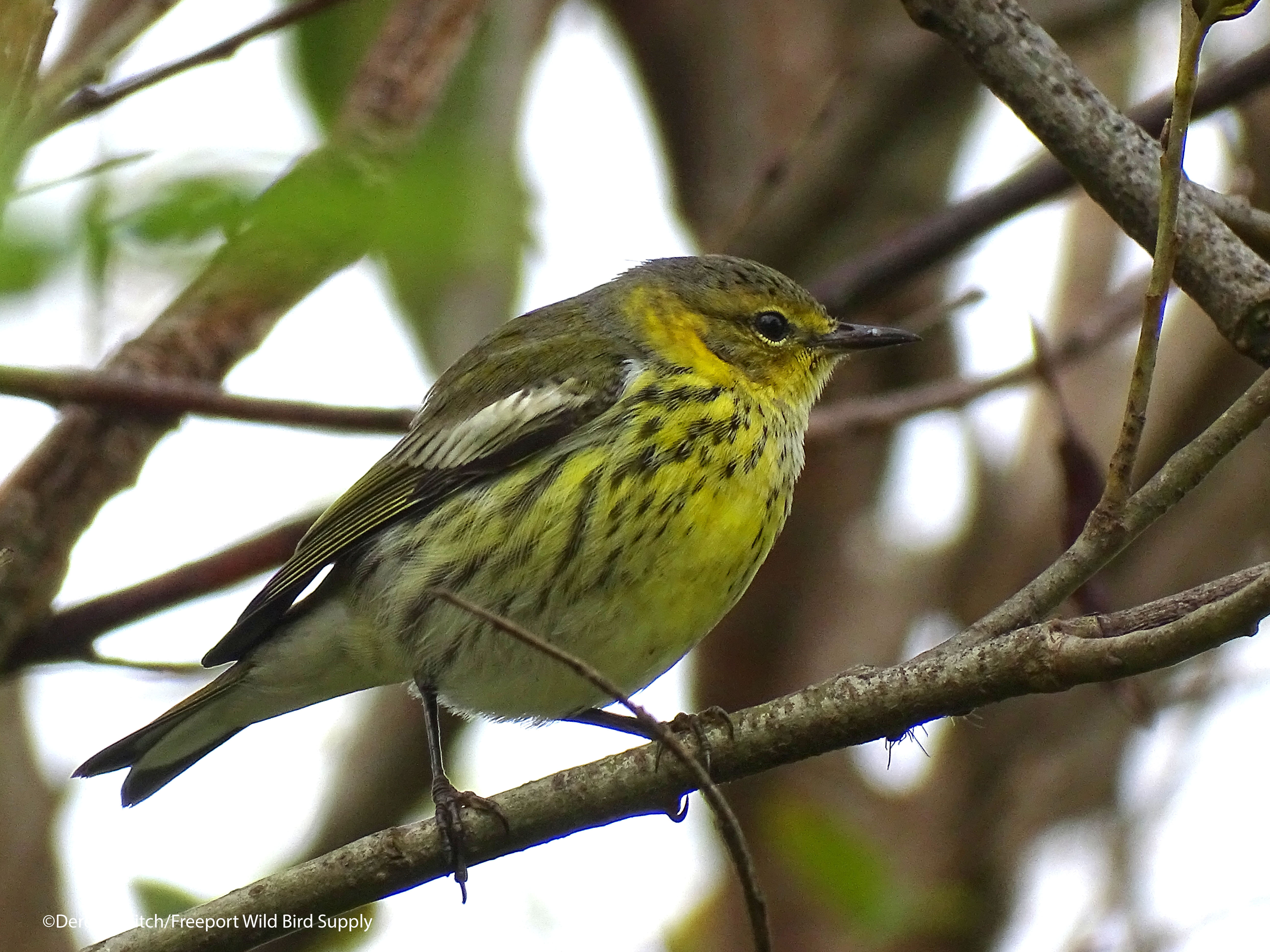
On each day, we would find pockets of warblers here and there, but we kept coming back to one particular willow and a nearby thicket that constantly hosted 4-5 Cape May Warblers (photo above), 4 Yellow Warblers, a Yellow-bellied Sapsucker, and a smattering of others. The Cape Mays put on a clinic: all four plumages from pale, 1st-fall female, to bright and spiffy adult male were on display.
Over the first day and a half, we took what the island offered, besides exceedingly pleasant weather! There was the hen Green-winged Teal feeding within three feet of us, fly-over Rusty Blackbirds in the morning, and Great Cormorants on the cliffs on an afternoon short hike to name a few highlights. The skies were punctuated by the occasional migrant Peregrine Falcon and the constantly-hunting Merlins.
Granted, we were really just looking at birds to fill the time between the incredible meals at the Monhegan House!
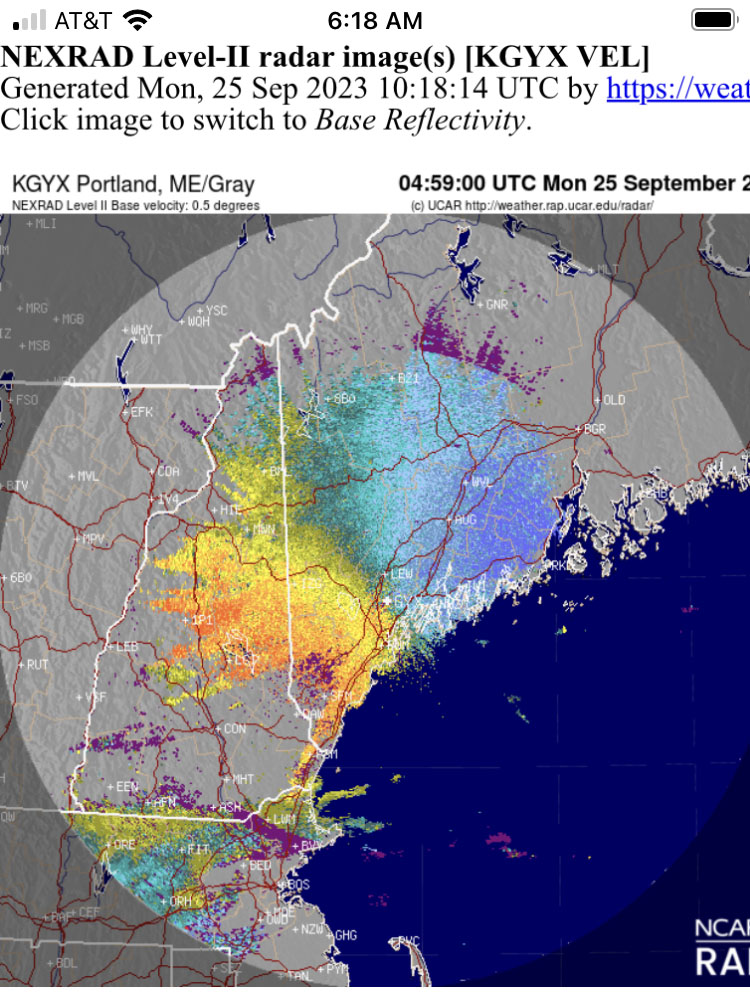
On our final morning, a good migration overnight produced a new arrival of birds for the “morning flight;” the concepts and nuances thereof were topics of regular discussion.
The group’s high spirits earned them a great morning, with a taste of what Monhegan birding has to offer. There were American Pipits and Yellow-rumped Warblers in Morning Flight, a flock of 10 truant Bobolinks circling around, an immature male Belted Kingfisher displaying to a very-uninterested female, more Cape May Warblers, and a surprising fly-by Wilson’s Snipe.
At one point we had four juvenile Sharp-shinned Hawks dogfighting, exemplifying the difference in sizes of male vs female raptors. And the workshopping continued with Great and Double-crested Cormorants side-by-side, migrant raptors including several Northern Harriers, and more species before breakfast than we had most of the previous weekend! Speaking of breakfasts, goodness, they were good as well.
We finished up with a gull workshop on the shoreline, opening eyes to just how easy most gulls are most of the time. The advanced course was the fly-by 1st winter Lesser Black-backed Gull amongst Herring Gulls on the ferry ride back! And yes, we looked at butterflies, too!
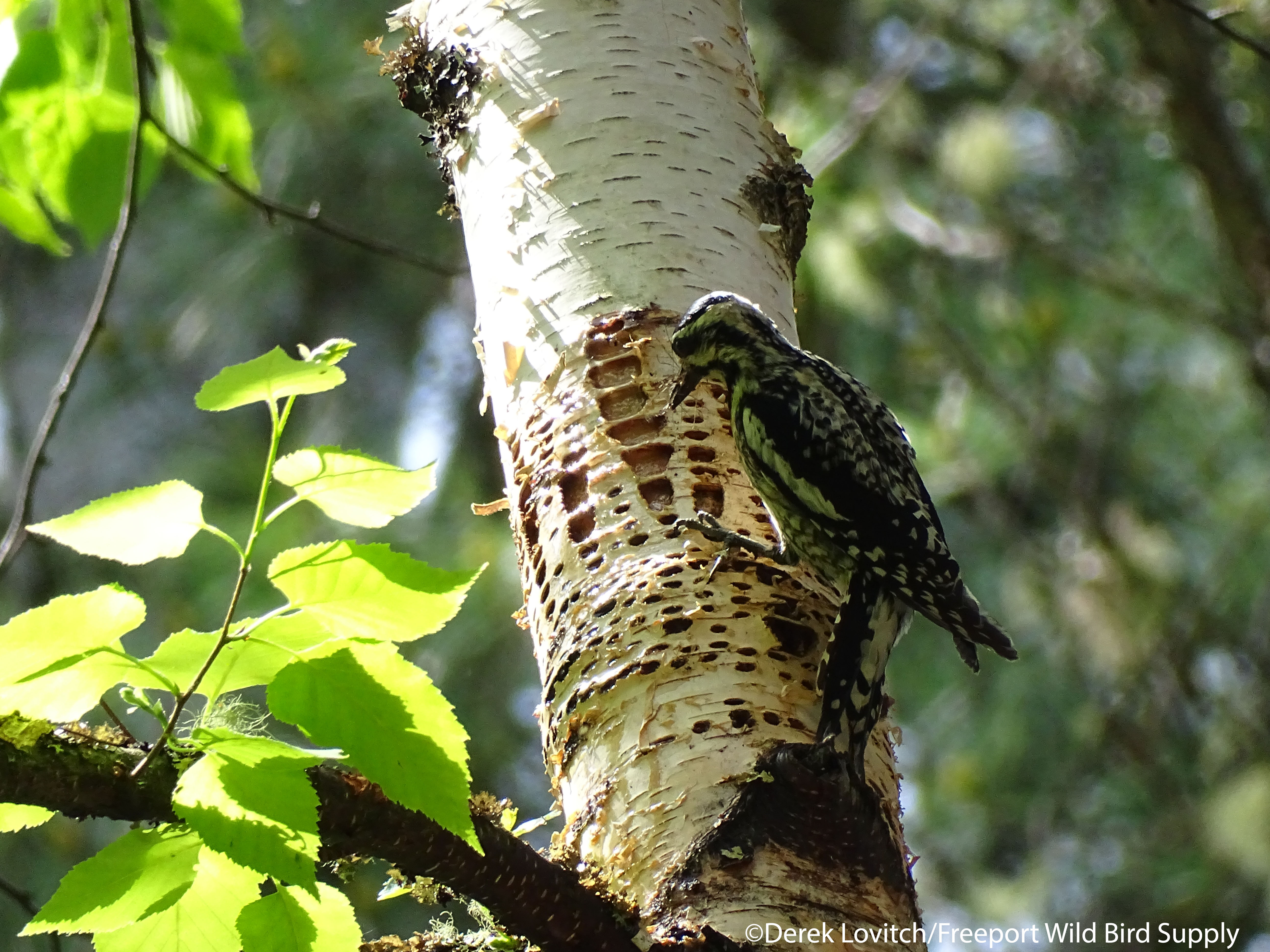
An amazing behavior to witness, this femaleYellow-bellied Sapsucker was collecting beak-fuls of insects (primarily crane flies, family Tipula spp.) and then dunking them in flowing sap before feeding nestlings. This is not a behavior I can remember having witnessed, and it was absolutely fascinating to watch. We observed this at the Hunter Cove Preserve in Rangeley on a walk for the Rangeley Birding Festival over the weekend (with Cameron Cox).
My observations of note over the past eight days included the following:
Rangeley Birding Festival, June 10-12. Cameron Cox and I led a total of four tours, and while none of them expected to find “boreal specialties,” our group did hear 2+ CANADA JAYS at Hunter Cove Preserve on 6/13. Otherwise, we mostly basked in the glow of Blackburnian Warblers and other area denizens, like the above Yellow-bellied Sapsucker.
Proposed* TRICOLORED HERON X SNOWY EGRET X LITTLE EGRET(S) in Scarborough Marsh, 6/16 (with Ted Floyd and Hannah Floyd). The saga continues! Although I have spent dreadfully little time in the marsh this summer, reviewing photographs has led me to consider that there are now two of this proposed three-way combination – one distinctly whiter (especially on the wings) than the other. On the 16th, we observed both birds distantly (darker bird off Eastern Road, whiter bird at Pelreco Marsh). In both cases they were very far and even phone-scoped photos were worthless due to heat shimmer. If you have great photos of birds from this year, I would love to see them!
*Hybrid combo as proposed in:
Lovitch, Derek J. 2022. Photo Salon: Hybrid Herons of Maine. North American Birds 72 (2): 28-40.
6-8 Semipalmated Sandpipers and 2 ad. Little Blue Herons, Pine Point, Scarborough, 6/16 (with Ted Floyd and Hannah Floyd).
On 6/16, I set out with visiting friends to study “sharp-tailed” sparrows. In one of those rare days, we saw and heard numerous Saltmarsh (here), Nelson’s, and hybrids thereof. If only every day is that easy for studying these birds! And all of our views came without any use of recordings or stepping into the marsh.
1 Louisiana Waterthrush, Morgan Meadow WMA, 6/15 (with Jeannette).
1 proposed TRICOLORED HERON X SNOWY EGRET X LITTLE EGRET hybrid, Pelreco Marsh, Scarborough Marsh, 6/16 (with clients from Colorado and Maine) and 6/17 (with clients from Minnesota).
1 AMERICAN OYSTERCATCHER, Pine Point, Scarborough, 6/16 (with clients from Colorado and Maine).
1 Lesser Yellowlegs and 4 Greater Yellowlegs, Eastern Road Trail, Scarborough Marsh, 6/17 (with clients from Minnesota).












 Maine Birding Field Notes