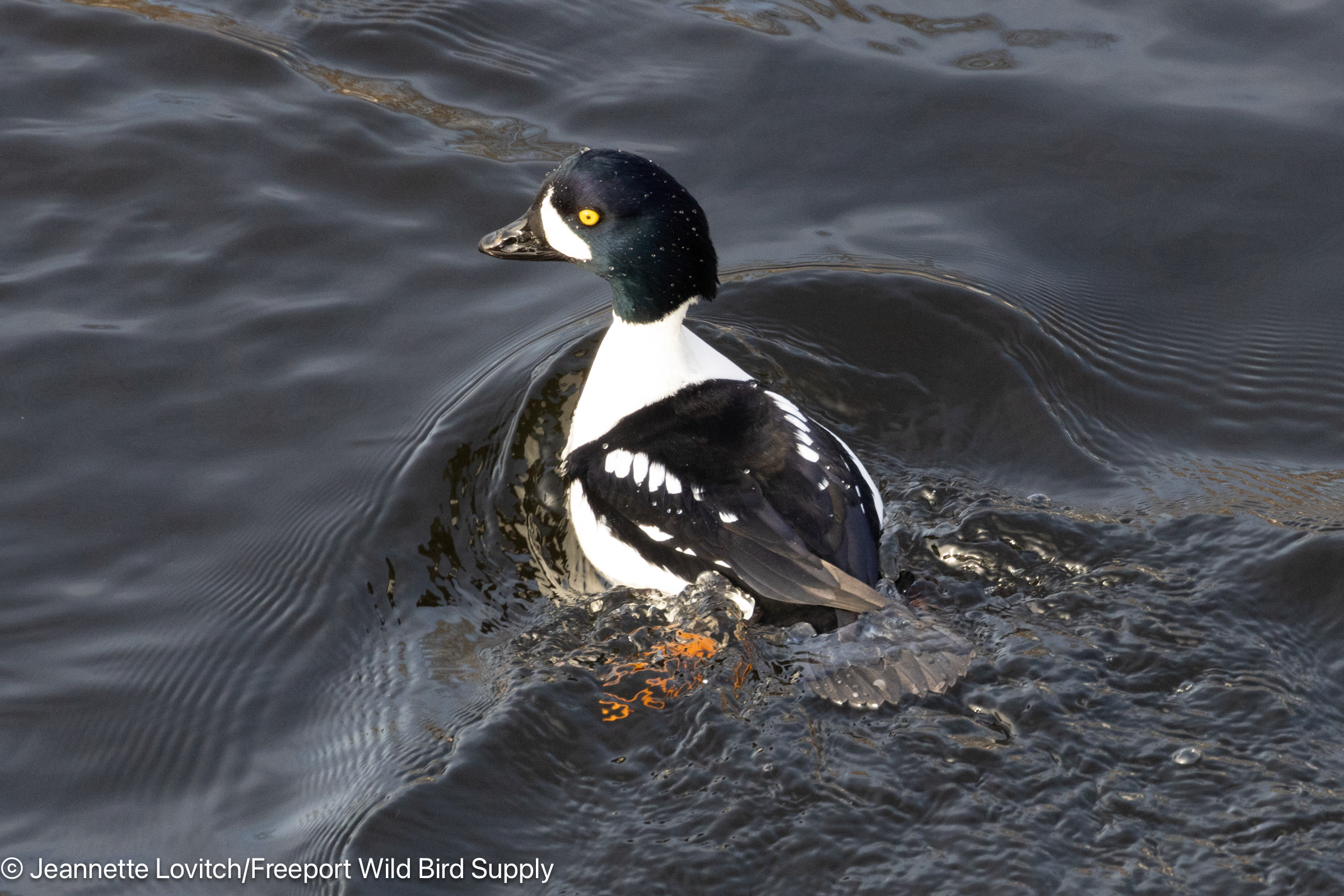
This drake Barrow’s Goldeneye was one of the foursome currently in the Androscoggin River between Auburn and Lewiston, most often in view from the Bernard Lown Peace Bridge. Jeannette paid them a visit on the 6th, where she found this one male just below the bridge.
Except for a delightful morning at Reid State Park, my birding outings were short and local, but I did enjoy catching up with local patches and their winter denizens, especially Barrow’s Goldeneyes. Here are my observations of note over the past seven days.
2 drake and 2 hen Barrow’s Goldeneyes, Winslow Park, Freeport, 1/4.
1 drake Barrow’s Goldeneyes, Sandy Point Beach, Cousin’s Island, Yarmouth, 1/6.
1 SNOWY OWL (FOS), 9-11 Red Crossbills, 58 Red-necked Grebes, 1 Savannah Sparrow (subspecies undetermined), 26 Sanderling, etc, Reid State Park, Georgetown, 1/8.
1 hen Barrow’s Goldeneye, Front Street Boat Launch, Bath, 1/8.
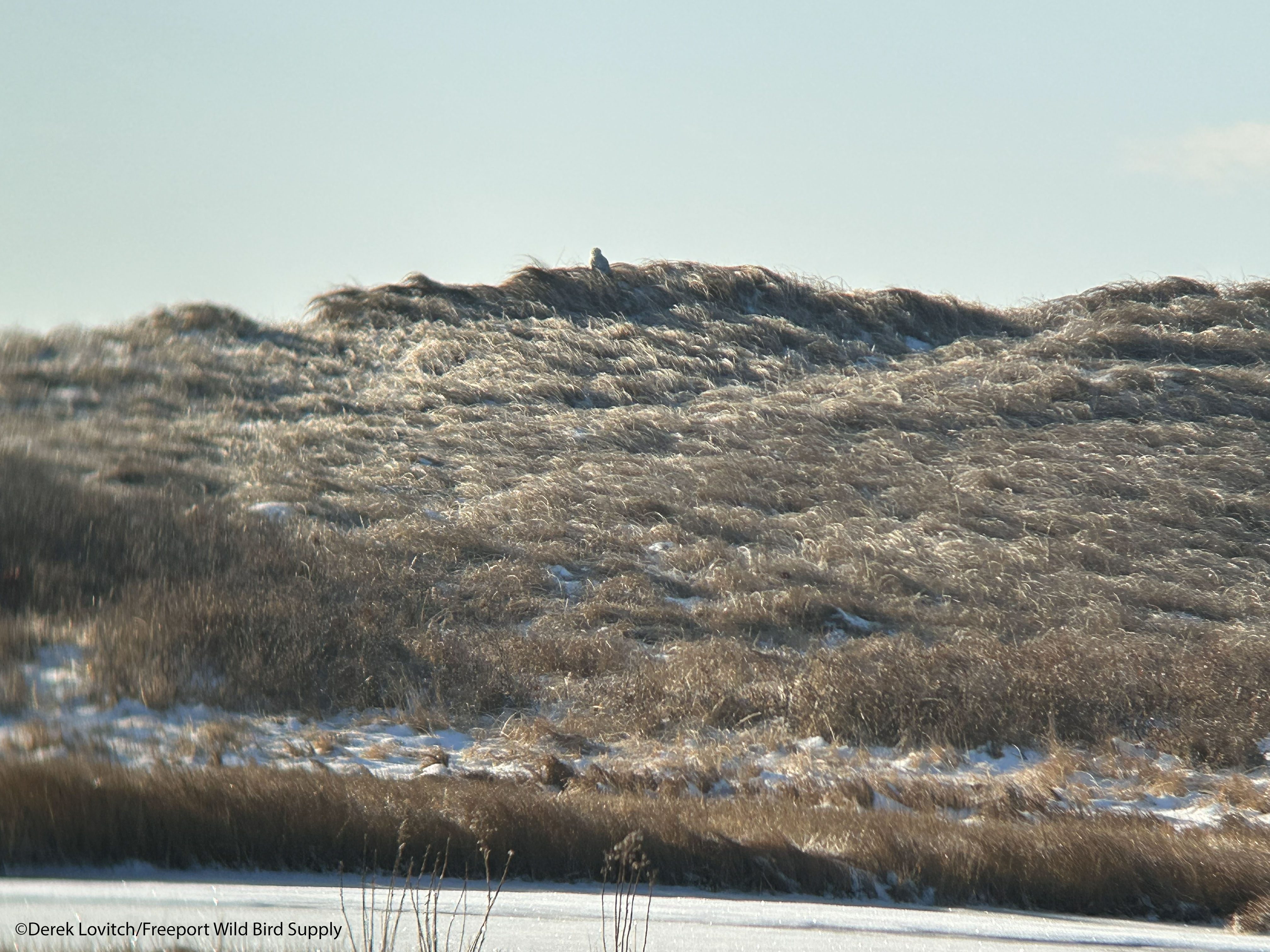
This is how I like my Snowy Owls…safe in the distance, backlit, poorly phone-binned, and otherwise unconcerned with my presence. Later, I spent 30 minutes observing it in the distance as it moved around, perhaps to get in position for hunting, or perhaps because it was getting too warm!
This Week in Irruptives.
American Goldfinches and Red-breasted Nuthatches remain very abundant. While a number of customers at the store have continued to report scattered small flocks of Evening Grosbeaks at feeding stations, I did not hear or see any yet again this week. In fact, my only irruptive in limited time birding was a single Pine Siskin at Florida Lake Park on the 7th, until I re-entered the Red Spruce zone at Reid State Park on the 8th. There, there were several Pine Siskins and at least 9-11 Red Crossbills – including two singing males suggestive of upcoming mid-winter breeding!
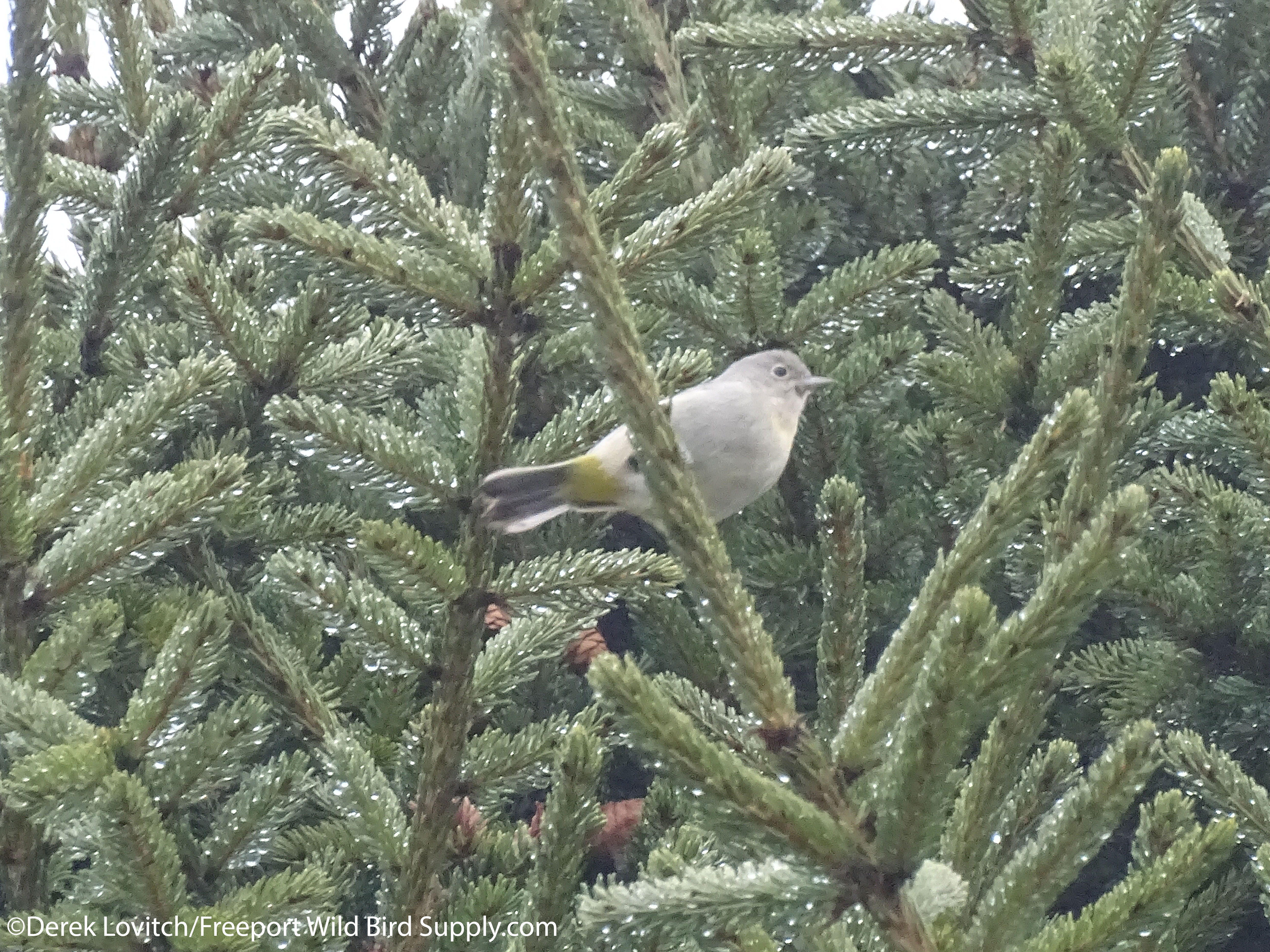
The state’s 4th or 5th Virginia’s Warbler – and the first away from Monhegan – was one of the rarest birds of the year in Maine, and it was even more special for me since I found it on Peak’s Island in November!
It’s once again time for my annual Predictions Blog, where I view into my crystal binoculars and attempt to forecast some of the “new” birds to grace the State of Maine – and then my own personal state list – in the coming year.
But first, let’s look back at last year’s predictions.
It was a great year for birding in Maine, with rarities at every season, especially during a truly epic November Rarity season. As a snapshot of just how many notable species were in the state in 2025, consider Noah Gibb and Stacey Huth’s Maine Big Year total of 332 species broke the old record by an astounding 10! Surprisingly, with such an eventful year for rarities in the state, no new species were added to the state’s list in 2025. With that, I’m going to keep Next 25 Species to be found in Maine list the same, but based on current trends and regional sightings, I am doing a little shuffling at the top to bump up Limpkin as the northward mini-irruptions of this tropical/sub-tropical bird continue.
1. Limpkin
2. Scopoli’s Shearwater
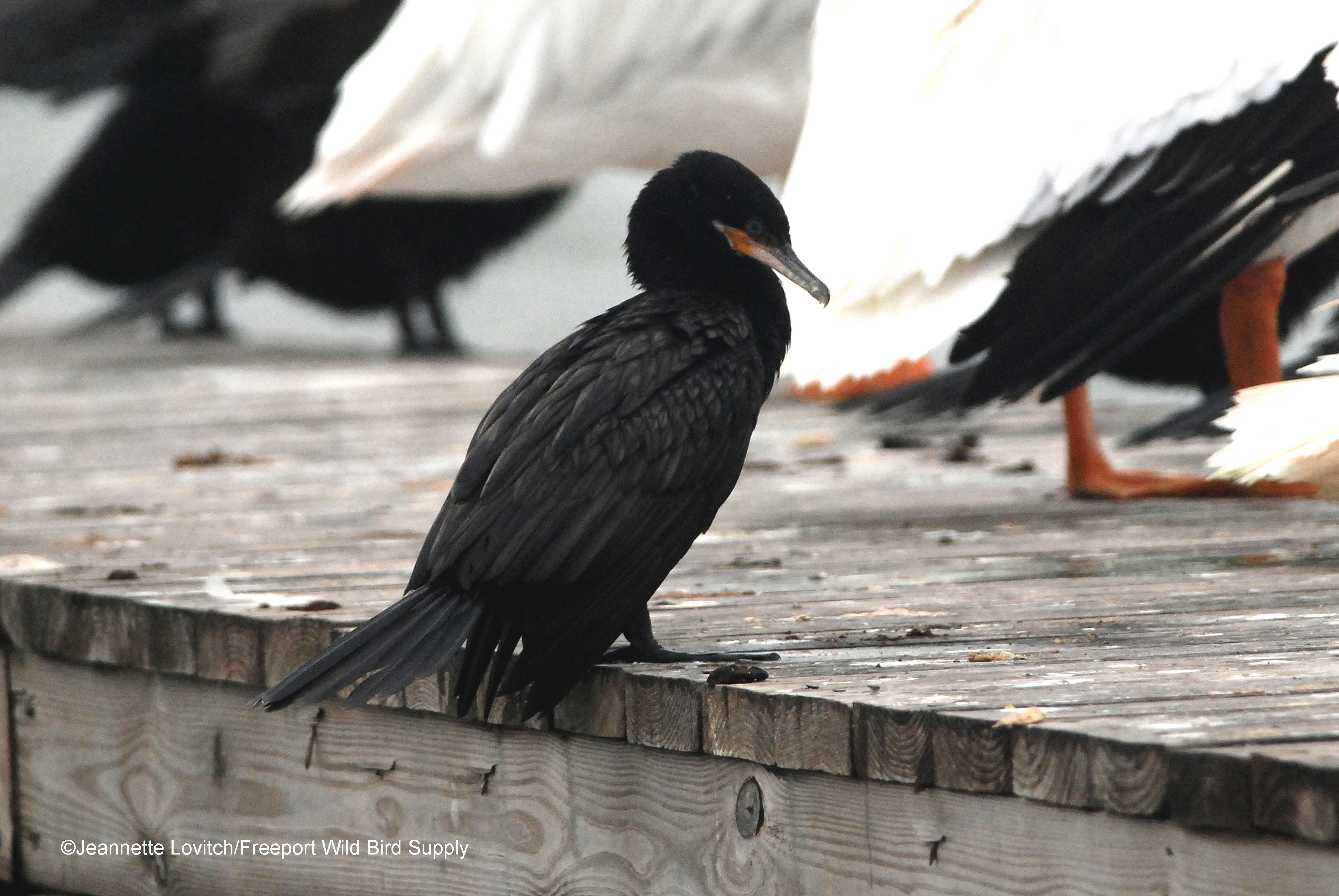
3. Neotropical Cormorant
4. European Herring Gull
5. Black-chinned Hummingbird
6. California Gull
7. Gray Heron
8. Bermuda Petrel
9. Graylag Goose
10. Little Stint
11. Audubon’s Shearwater
12. Common Shelduck
13. Anna’s Hummingbird
14. Heerman’s Gull
15. Common Ground-Dove
16. Allen’s Hummingbird
17. Spotted Redshank
18. Lewis’s Woodpecker
19. Ross’s Gull
20. Black-capped Petrel
21. Lesser Nighthawk
22. Dusky Flycatcher
23. Painted Redstart
24. Hooded Oriole
25. White Wagtail
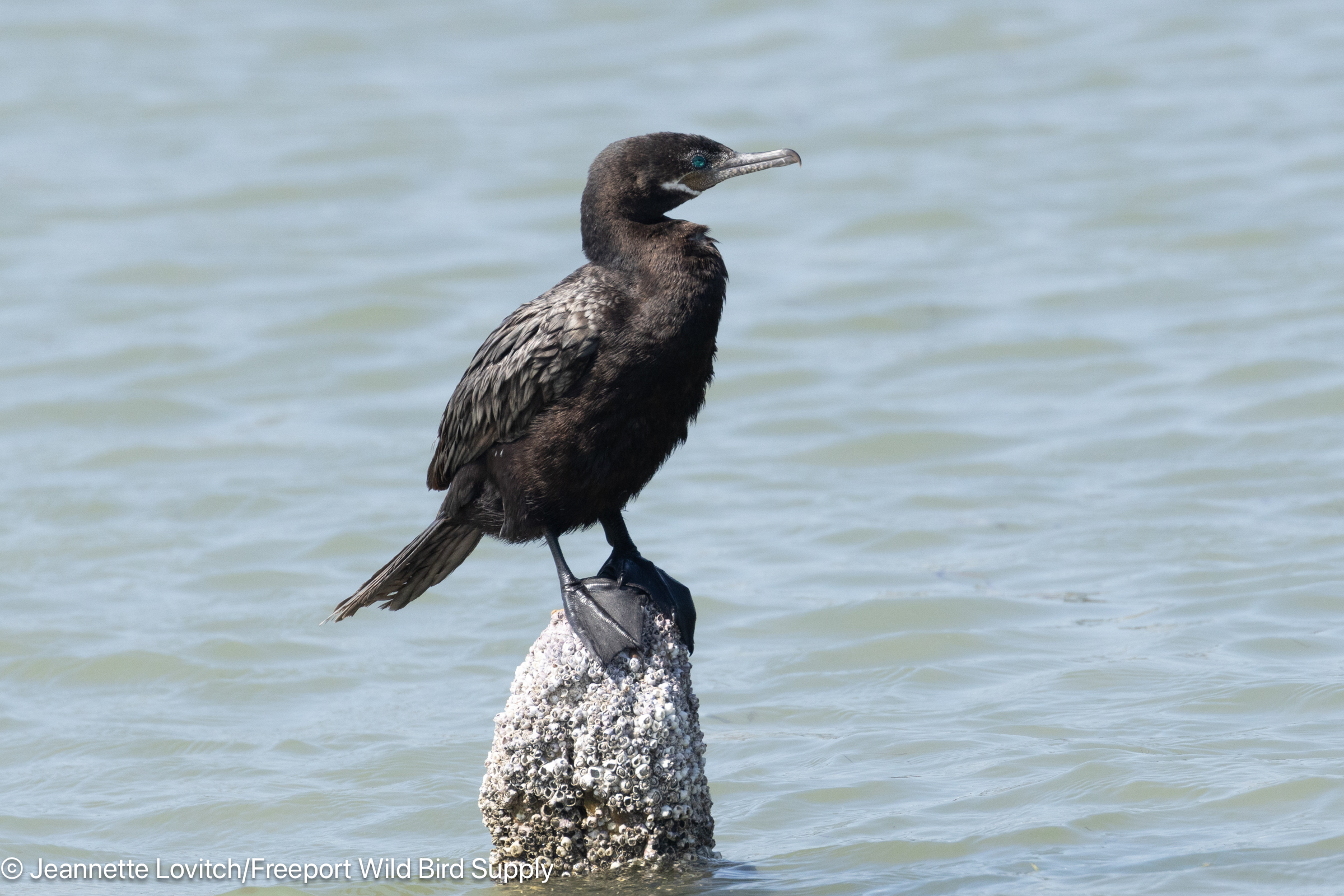
It’s only a matter of time for Maine to be visited by its first ever Neotropic Cormorant, but it’s another Neotropical species that took the stop slot this year!
As for me, there were so many great birds seen in Maine in 2025, and the birds I chased just scratched the surface of the litany of vagrants this past calendar year as once again, my birding involves fewer and fewer chases each year. The MacGillivray’s Warbler in Yarmouth in November was one of the highlights – including becoming the 255th All-time Saturday Morning Birdwalk bird!- and a Fork-tailed Flycatcher in the Kennebunk Plains in July.
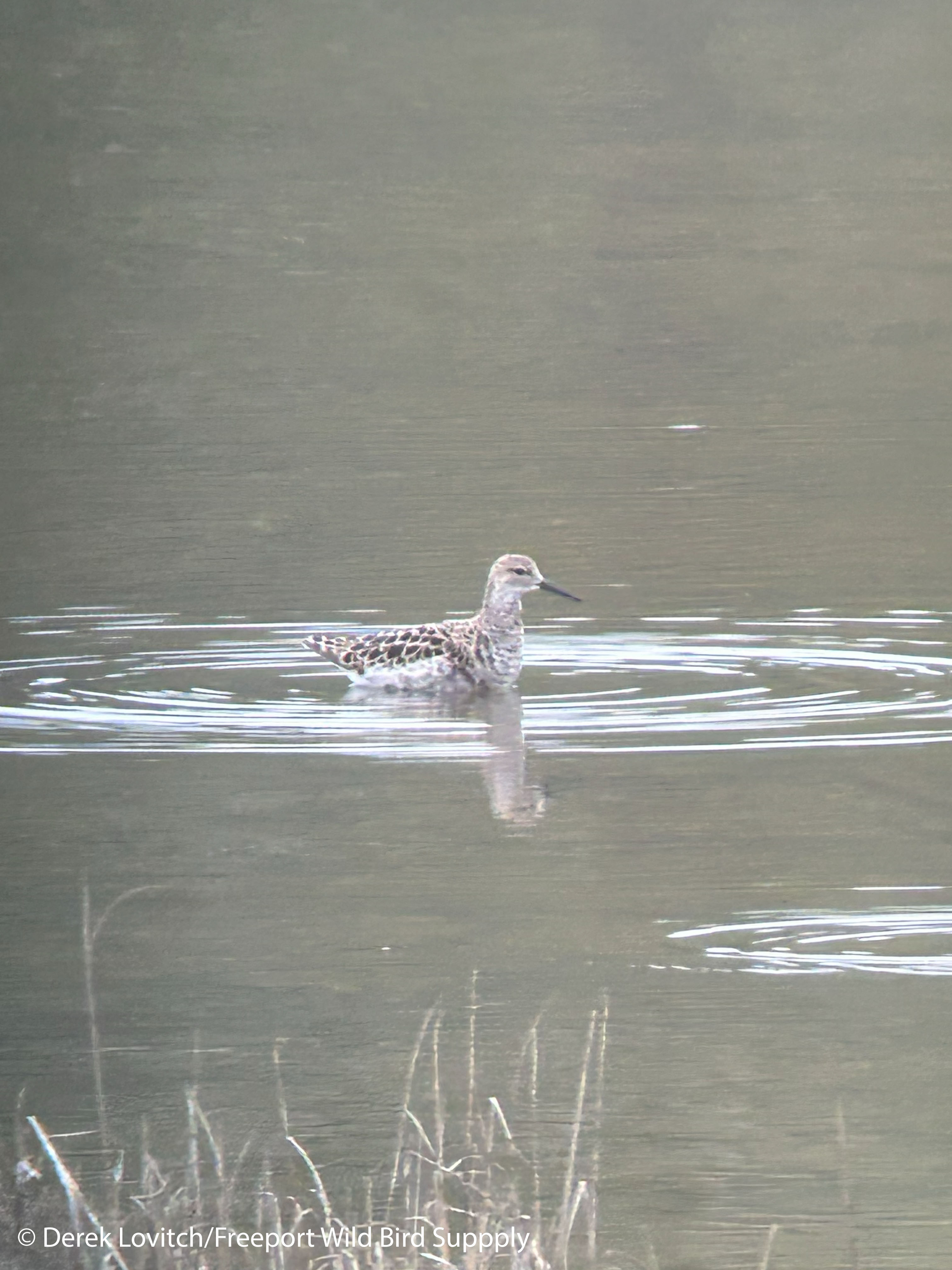
My first self-found rarity of the year was a Ruff at Walsh Preserve on 5/9…
..and Jeannette I chases the Northern Wheatear in Scarborough Marsh in September for a new ABA Area bird for her.
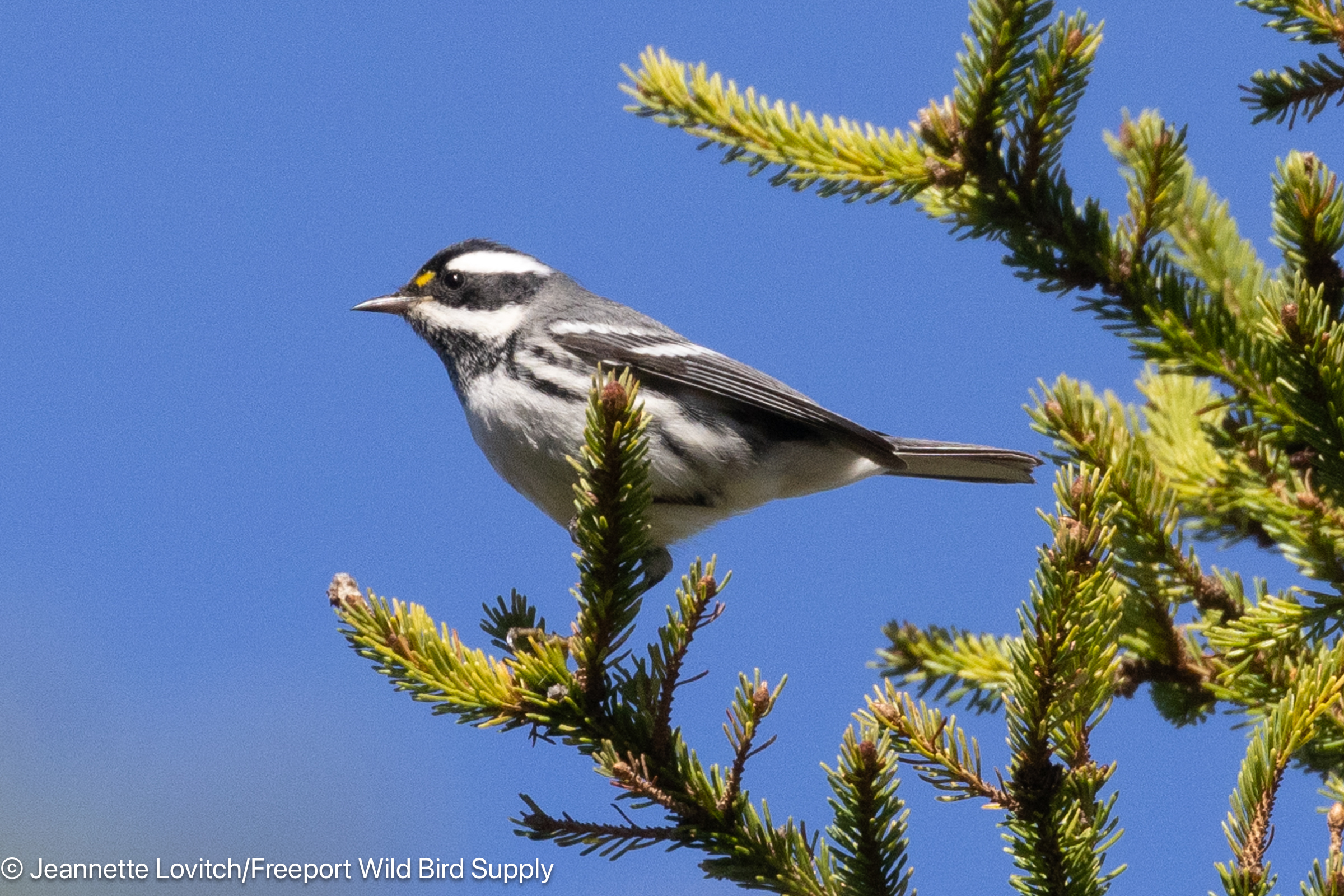
Black-throated Gray Warbler on Monhegan. A state bird for almost everyone, but “just” an exceptional “Island Bird” for me.
I even added two species to my State List in 2025, starting with an overdue Cerulean Warbler (#11) found by Doug Hitchcox in Evergreen Cemetery on 5/6. But nothing beats a “self-found” rarity, so finding a Virginia’s Warbler (#20) on Peak’s Island on 11/24 was even more special!
Of course, a few potential State Birds got away from me last year. However, all appeared to be one-day wonders, so it’s hard to complain: Crested Caracara in Scarborough Marsh on 4/30, a Franklin’s Gull (some day!) in The County on 5/21, an Anhinga over South Portland on 5/27, and an un-chaseable Ancient Murrelet at Matincus Rock on 6/19.
So, with those hits and misses, my updated list of the Top 25 Next State Birds for Me is now:
Franklin’s Gull (this is getting amusing/frustrating)
Neotropic Cormorant
Brown Pelican
California Gull
Brown Booby
Crested Caracara
Slaty-backed Gull
Boreal Owl
Calliope Hummingbird
Graylag Goose
Gull-billed Tern
Pacific Golden-Plover
Limpkin
Wood Stork
Black-chinned Hummingbird
Brewer’s Blackbird
Anhinga
Yellow Rail
Scopoli’s Shearwater
Western Wood-Pewee
Red-necked Stint
European Herring Gull
Gray Heron
Heerman’s Gull
Little Stint
Well there ya have it, let’s see what 2026 brings, at least when it comes to the birds in Maine.
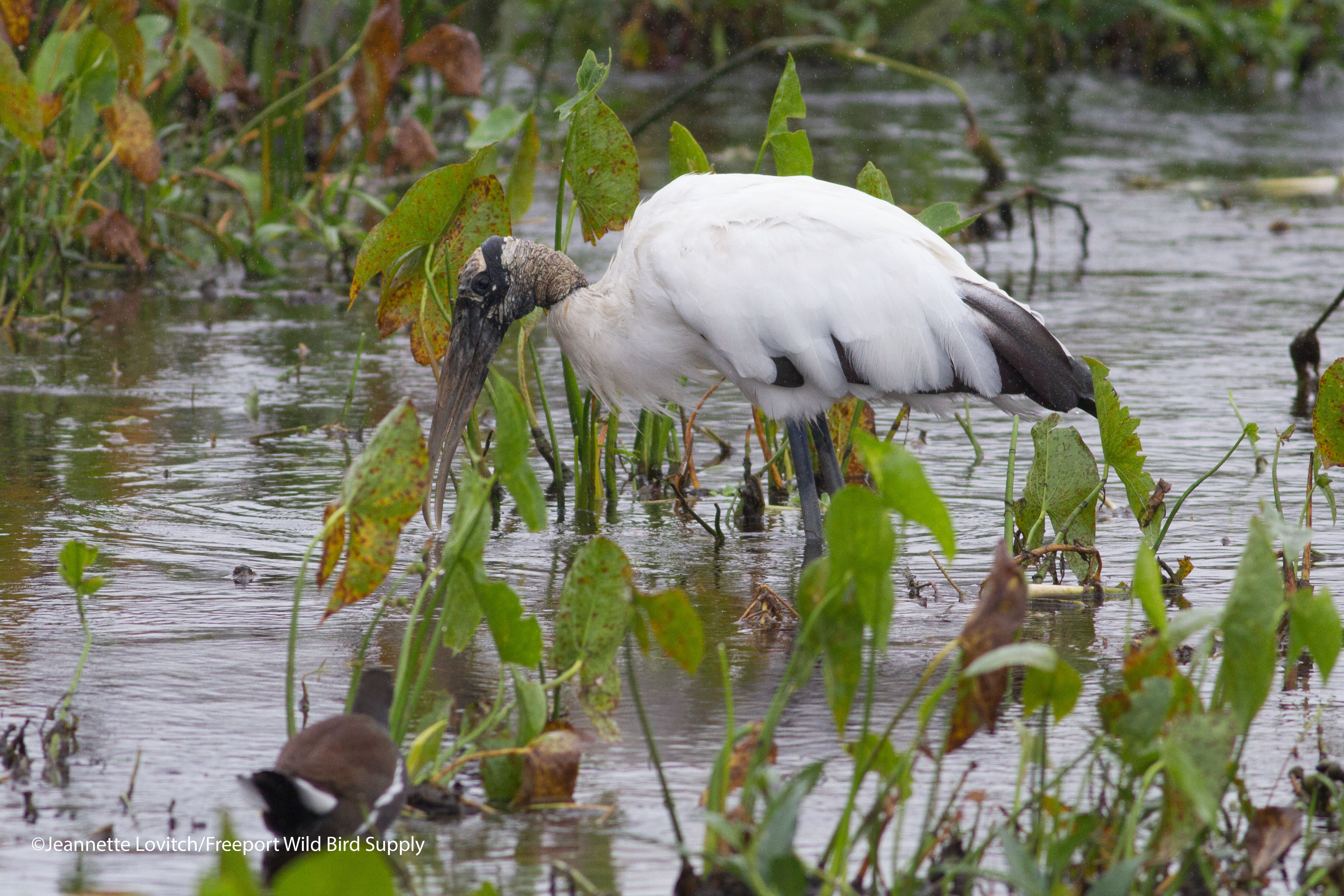
I think it’s about time for another Wood Stork to visit the state as well.
Although there was a previous state record, few if any of us were expecting to have the chance to see a Willow Ptarmigan ever again in Maine. Fewer of us expected to see one taking refuge on a lawn chair, as this one did in the Small Point area of Phippsburg in late August.
It’s once again time for my annual Predictions Blog, where I view into my crystal binoculars and attempt to forecast some of the “new” birds to grace the State of Maine – and then my own personal state list – in the coming year.
I was busy this year. Lots of birding tours here in New England, vacations to the Dominican Republic and the Gaspe of Quebec, a scouting trip through the Gulf of Maine, an even further diminished interest in “chasing” when I am actually home, and a lot more time spent casually birdwatching on our property – more and more my time is spent observing whatever is in front of me, instead of searching for rarities. I didn’t even spend much time at Sandy Point this fall, although weather had a lot to do with that.
There are several reasons for this change of motivation, but that’s a blog for another day. I did put in some concerted effort during a wild fall “rarity season,” but for the most part, my yard list in Durham was the only real priority. A Yellow-throated Vireo on the intriguing date of 7/21 was our 153rd species here since we purchased the property a little more than 4 years ago. Not a bad start! A Gray Catbird that showed up today, January 2nd, as I wrote this, is our first winter record (of course), and a good sign for productive yard birding in the new year!
Two species were added to Maine’s list this year, a Ferruginous Hawk at the Auburn Airport on July 14th and an Anhinga in Somerville for 6 days in July. I saw neither. Both times we were in Quebec. I think it’s a sign.
While Ferruginous Hawk was only marginally on my radar, Anhinga had been relegated to the Honorable Mentions list as northern reports have really dried up for a spell. I was wrong.
So, neither of the first state records were on my list, but I will do a little reshuffling to add two recent splits to the list: Scopoli’s Shearwater and European Herring Gull.
Scopoli’s Shearwater – recently split by most authorities from Cory’s Shearwater – likely has already occurred here. I saw at least one set of photos from this past summer that looked good to me, but the identification is a challenge, and we’re only learning how to identify them semi-reliably in the field (study up!). But I have little doubt that if we looked at every past photo of Cory’s Shearwater that has been taken in Maine, coupled with renewed scrutiny of the pattern on the underwing of the outer primaries of recent and future birds, that this will soon be confirmed in Maine.
Likewise, “American Herring Gull” (that’s our bird) and “European Herring Gull” are now separate species. European Herring Gull is another cryptic species that has also likely already occurred here, but it is another challenging, cutting-edge identification made more challenging by the extensive variation exhibited by our bird. Add to this Vega Gull from Asia, hybrids, and well…my Gull ID Workshop is open for registration (although I will not yet dive down the rabbit hole of American vs European Herring Gull…we’ll spend more time with Herring Gull vs “damn seagull.”
So here’s my list of the Next 25 Species to be found in Maine:
Scopoli’s Shearwater
Neotropical Cormorant
European Herring Gull
Black-chinned Hummingbird
California Gull
Limpkin
Gray Heron
Bermuda Petrel
Graylag Goose
Little Stint
Audubon’s Shearwater
Common Shelduck
Anna’s Hummingbird
Heerman’s Gull
Common Ground-Dove
Allen’s Hummingbird
Spotted Redshank
Lewis’s Woodpecker
Ross’s Gull
Black-capped Petrel
Lesser Nighthawk
Dusky Flycatcher
Painted Redstart
Hooded Oriole
White Wagtail
As for me in 2024, I did add four species to my personal State List: Willow Ptarmigan (not on list), Tropical Kingbird (Honorable Mention), American White Pelican (#2), and Common Gull (#24).
The most surprising was the second state record of Willow Ptarmigan that Jeannette and I were lucky enough to catch up with in a private backyard in Phippsburg on August 28th. After being seen on Cliff Island in early May, it miraculously appeared in Phippsburg in a yard of a home that the friend of a birder was house sitting for! Then it showed up in a nearby yard where limited access was granted. Jeannette and I were in the right place at the right time when news broke, and were among the first to try out the arrangements and see then bird. Unfortunately, a couple of days later, the ptarmigan likely fell victim to an owl.
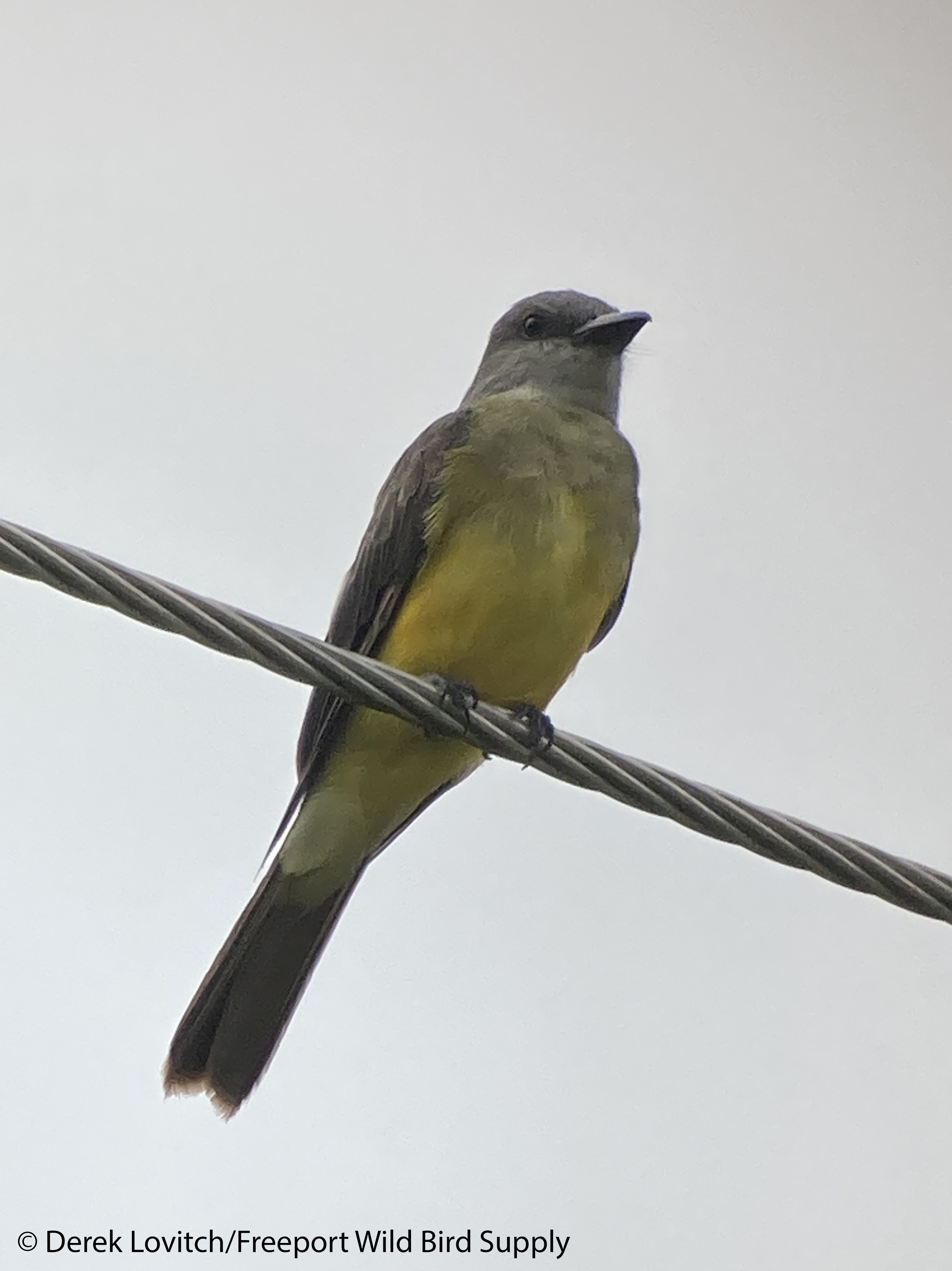
A Tropical Kingbird at the Skelton Dam Boat Launch in Dayton was found by a dog-walker and birdwatcher at the end of June, but news finally made it to the birding community in the middle of July, and I raced down to see it on the 18th. It has been on and off the Top 25 list for many years, but I’ve left it off for the last few. No complaints though, as the second modern, and third overall, state record was chaseable this time.
Later in the year, the birding community lost a great one with the passing of Davis Finch. Years ago, I would see Davis and Denny Abbott at a rarity, and they would be among the first people I would call when I found one (yup, we used to only call people to alert them to rarities!). Davis and I had a tradition where my final words as we were departing was always “See you at the ____” and pick a rarity. In fact, that might have even been the inspiration for this annual blog. This tradition became even more meaningful when I once left with “See you at the Ash-throated Flycatcher!” And a short time later, I found an Ash-throated Flycatcher (at the Saco Riverwalk, the second state record in November of 2006). Davis and Denny were the first to know, and I’ll never forget Davis saying “why the heck were you birding this dump?” as he offered congratulations on the find – a state bird for all (it has been cleaned up a lot since then and it has become a significant birding hotpsot). While there were plenty of other birds mentioned in between, for the last few years, it was always “see you at the Tropical Kingbird!” I heard someone say he was driven to Dayton to see the kingbird. I hope this is true…he really wanted that bird!
Moving on, I finally caught up with an American White Pelican on 8/26, conveniently close to home/work. Following a Saturday Morning Birdwalk, Kevin Harding and Brandon Baldwin stopped by Wharton Point in Brunswick on their respective ways home and found the pelican. They called the store (yup, phone calls still work), and I dropped what I was doing to head over. The bird was really far by the time I arrived, so Brandon and I walked down the Maquoit Bay Conservation Land trail for a closer look. A little while later, as other arrived, the pelican flew right over our heads for an incredible view!
And finally, after Common Gulls were found in Eastport in February and on Matinicus Rock in September, Evan Obercian found one much more conveniently located at the Samoset Resort in Rockland on Halloween. I was finally able to sneak away four long days later, getting to enjoy the bird on November 3rd.
Of course, I missed more than I saw, both with travel and a lessening interest in chasing. I missed a total of four Franklin’s Gulls (#1): Seapoint Beach in Kittery on 6/30, Hill’s Beach in Biddeford on 7/22, Sewall Beach on MDI on 9/14, and one in Wells on 9/15. I’ll catch up with these notorious one-day/hour wonders some day in Maine!
The aforementioned Anhinga and Ferruginous Hawks were not on my Top 25 list, nor was the Mountain Bluebird that was on Monhegan in early May – before twice-daily ferry service had begun. I did take a day trip with a friend for the heckuva it six days after it was last seen. There was also a Brown Booby (#6) that wasn’t chaseable on Seal Island in August, but had we not been in Quebec twice, it would have been a truly incredible birding year for me in Maine. Oh well, a weekend with friends and 100,000 Northern Gannets more than made up for it.
So with those hits and misses, my updated list of the Top 25 Next State Birds for Me is now:
Franklin’s Gull (will this finally be the year?)
Neotropic Cormorant
Brown Pelican
California Gull
Brown Booby
Crested Caracara
Slaty-backed Gull
Boreal Owl
Calliope Hummingbird
Graylag Goose
Cerulean Warbler
Gull-billed Tern
Pacific Golden-Plover
Limpkin
Wood Stork
Black-chinned Hummingbird
Brewer’s Blackbird
Yellow Rail
Scopoli’s Shearwater (undoubtably after further review of photos!)
Virginia’s Warbler
Western Wood-Pewee
Red-necked Stint
European Herring Gull
Gray Heron
Heerman’s Gull
Well there ya have it, let’s see what 2025 brings, at least when it comes to rare birds in Maine.
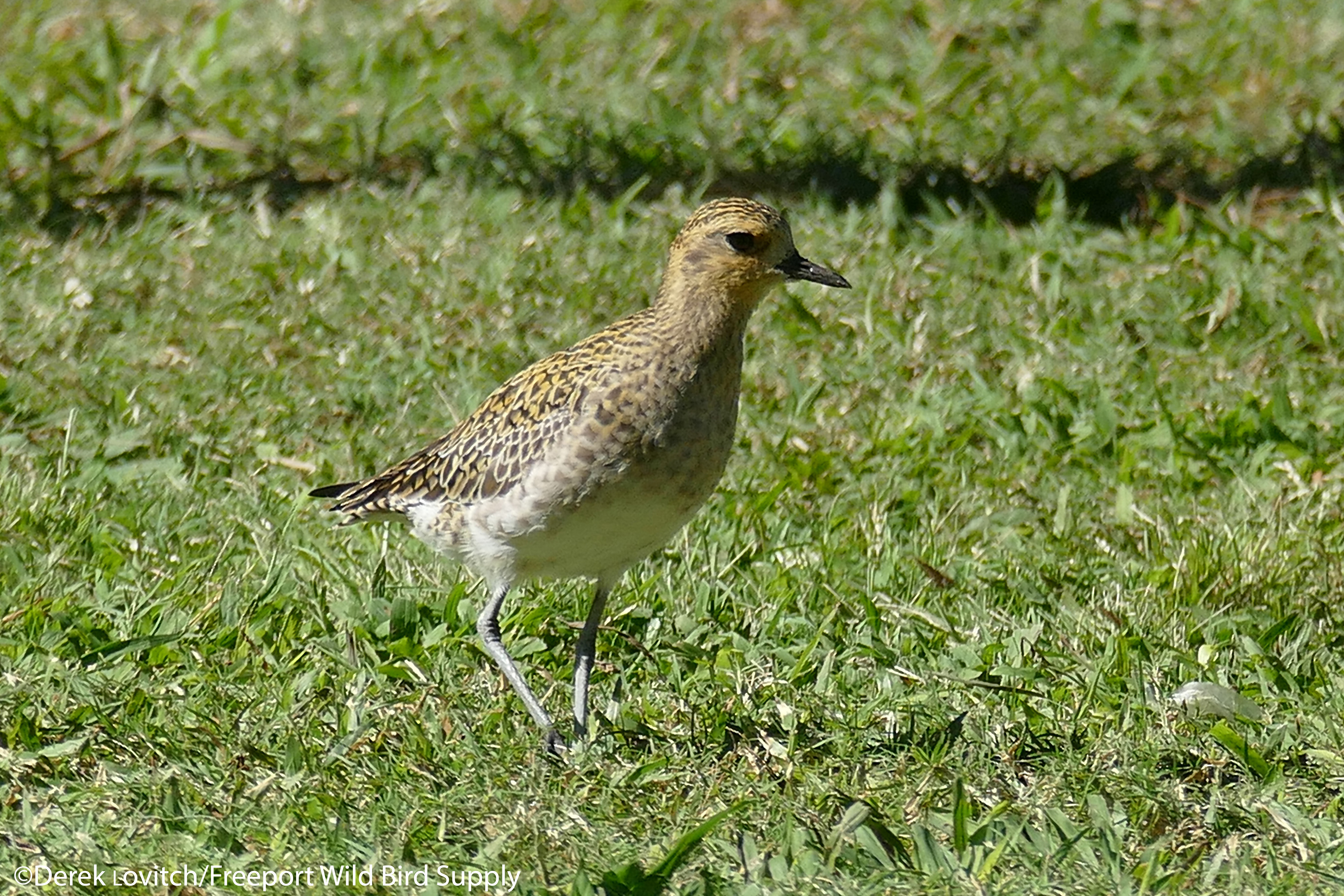
I think it’s about time for another Pacific Golden-Plover to show up here in Maine. This juvenile was photographed in Hawai’i.
The only thing sweeter than seeing a first state record is when you find it yourself! This Spotted Towhee that I found in November at Fort Foster in Kittery was #4 on my list of next birds for Maine.
It’s once again time for my annual Predictions Blog, where I view into my crystal binoculars and attempt to forecast some of the “new” birds to grace the State of Maine – and then my own personal state list – in the coming year.
It was another great year for “mega” rarities in Maine. Whether it’s more birders and better communication, a climate in crisis, neonicotinoid pesticides effecting navigation, and more – or likely, all of the above – more really strange birds are ending up in really strange places – Maine definitely included. Four new species showed up in Maine in 2023, plus a first state record whose photos surfaced from 2022. I also had another pretty good year, despite much reduced birding as I recovered from shoulder surgery and a series of setbacks thereafter coupled with a record-busy year for tours and private guiding.
Last winter, recovering from shoulder surgery, I spent a lot of time watching our feeding station, quantifying those ebbs and flows, and paying a lot of attention to behavior. From dominance hierarchies in junco flocks to a case of Sharp-shinned Hawk cannibalism, dedicated feeder-watching (in a house designed to maximize it!) was a great way to pass the time stuck indoors. I recounted many of my observations in blogs earlier this year, especially these two:
Once up and about, I found myself forgoing birding mornings afield – especially in the fall – to just enjoy migration through our property in Durham and build our rapidly expanding yard list. Having moved in last fall, it was exciting to see the seasons change. Fall migration was particularly productive, and I found myself not wanting to bird anywhere else before work. Some great yardbirds over the year included a Snow Goose on 3/27, three different Mourning Warblers (one each in May, June, and September), an American Bittern for the day on 8/28, and a Dickcissel on 9/1. The yard was already approaching 150 species by year’s end.
Furthermore, I put more effort than ever into birding Androscoggin County in general, and while I didn’t find any rarities in the county this year, I did spend lots of quality time at Sabattus Pond and in search of patches for future birding focus – I didn’t find any of those, either, but I did get to know my new home county a lot better. In other words, when I did get out birding this year, I put a lot more focus on staying close to home – this less carbon-intensive mode of birding is what I believe the future of birding is (eg the “5 Mile Radius” list, which is all the birds seen within a five mile radius of one’s home) anyway, and I plan on keeping this focus for 2024.
But back to the rarities. Let us start as usual with a look at last year’s prognostications and see how I did.
Of the five new species for Maine, three were in my Top 12. I found Maine’s first confirmed Spotted Towhee at Fort Foster in Kittery on November 19th (and continued obligingly through the end of the year). This long-overdue addition to the state’s list was #4 on my predictions list.
Right behind it at #5 was the Hammond’s Flycatcher found on Monhegan in October. I’ve felt flycatchers were going under-detected in Maine for a while, and therefore they have been prevalent on my predictions lists. Then, a photograph from Mount Desert Rock from August of 2022 was reanalyzed and showed a Western Flycatcher (as it is once again rightly called, with Pacific-sloped and Cordilleran finally “lumped” back together), which was #12 on my list.
That strange date for a vagrant flycatcher is rather remarkable, as was the other addition to the list from the MDI region when a Red-footed Booby was photographed in Lamoine in July of this year. This tropical sulid didn’t even make my honorable mention list.
And finally, just before the clock was about to strike twelve, a remarkable Hepatic Tanager was found in Stockton Springs! While it was on my radar due to several well out of range records, it did not qualify for my Honorable Mentions list. It was the icing on the cake to another exceptional year of birding in Maine.
With three birds from the 2023 List off the board, I’ll do some reshuffling. A possible Gray Heron was photographed in Scarborough Marsh on the Portland CBC in December, but the photos – although very suggestive – were inconclusive. A search the next day didn’t turn anything up, but I hope others remain on the lookout. Nonetheless, it was suggestive enough to bump Gray Heron up from my Honorable Mention list into the Top 25, that is for sure. Lewis’s Woodpecker, Dusky Flycatcher, and White Wagtail are making their debut in the rankings while I’ve dropped Black-tailed Gull out of the Top 25 as North American records seem to have dried up.
As we found out when we saw this Gray Heron while vacationing on Prince Edward Island in 2022, they are not always easy to pick out of a crowd, as we looked through a lot of Great Blue Herons during our search for this long-staying individual. Hopefully, our view in Maine will be a little better, like this one Jeannette photographed in Norway.
Neotropical Cormorant
Black-chinned Hummingbird
California Gull
Limpkin
Gray Heron
Bermuda Petrel
Graylag Goose
Little Stint
Audubon’s Shearwater
Common Shelduck
Anna’s Hummingbird
Heerman’s Gull
Common Ground-Dove
Allen’s Hummingbird
Spotted Redshank
Lewis’s Woodpecker
Ross’s Gull
Black-capped Petrel
Lesser Nighthawk
Elegant Tern
Dusky Flycatcher
Painted Redstart
Hooded Oriole
White Wagtail
Common Scoter
Personally, I added 5 new species to my own Maine State List this year, despite relatively limited birding and a less concentration on rarities in general. Three days after my shoulder surgery, however, Jeannette loaded me into the car and took me down to Timber Point in Biddeford for a Common Ringed-Plover, which was #10 on my predictions list. Can’t say it was my most comfortable twitch, however. Medication helped.
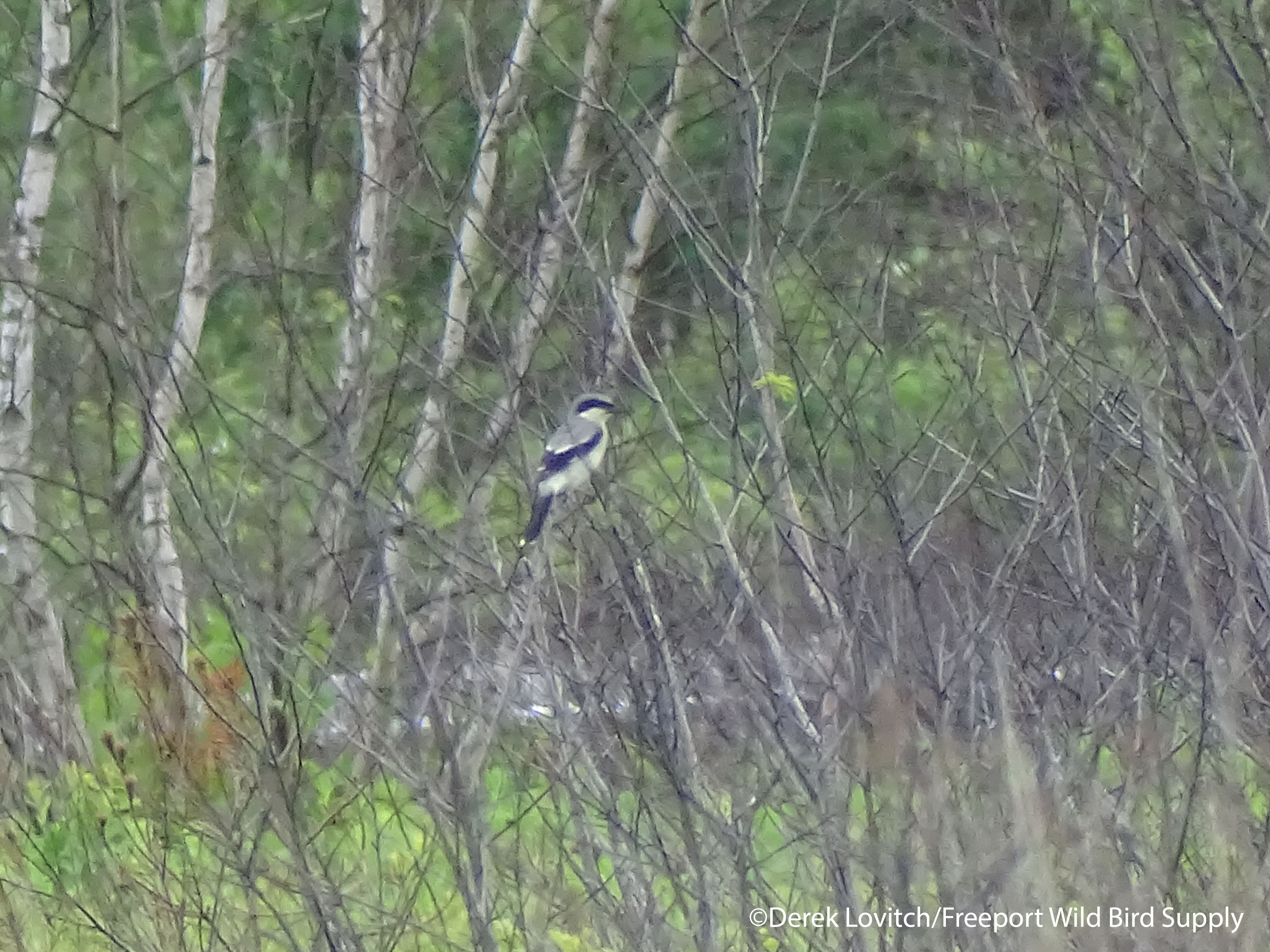
In June, I raced down with Jess Costa between tours to see the Loggerhead Shrike at the Kennebunk Plains, which was my 399th species in Maine (recently relegated to my honorable mentions lists as they have become increasingly rare anywhere out of their contracting range).
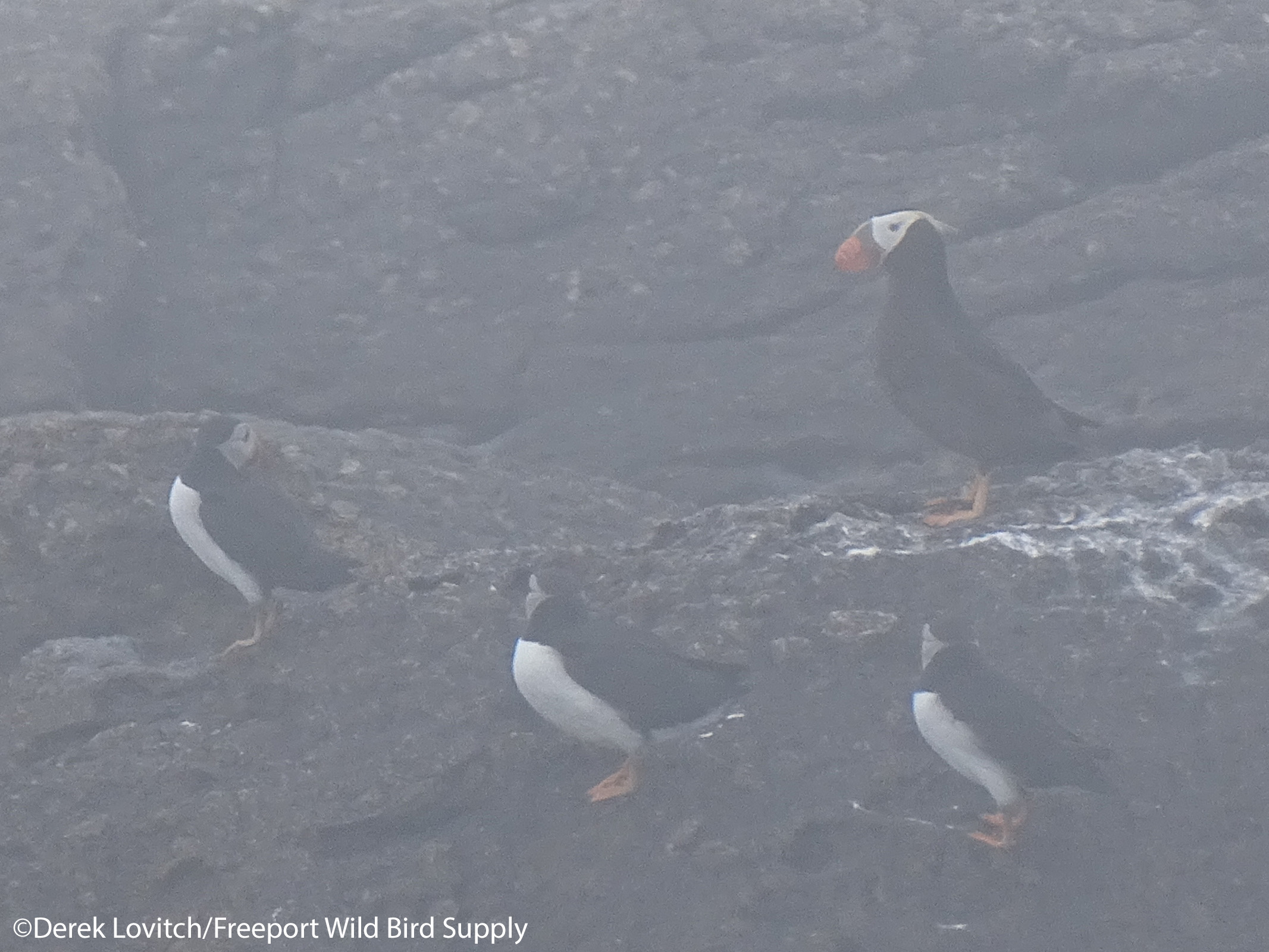
So for #400, I said it had to be “the Tufted Puffin or self-found” – I wasn’t going to chase anything else. With several sporadic sightings in June and July, and with numerous boat tours scheduled in July, I had high hopes. With an observation at Eastern Egg Rock on July 9th, and with a tour there scheduled the next afternoon with our partners Cap’n Fish’s Cruises, I was getting excited. And to hedge the bet, I hopped aboard their morning Eastern Egg Rock trip, and as we approached the island in the fog, a large, dark, puffin stood towering over the local residents! “TUFTED PUFFIN!!!” I exclaimed. No microphone was necessary. And this was #400.
With so few sightings – all being one-minute wonders – in the previous years, I hadn’t elevated this to my personal Top 25, but that’s OK – it was just as sweet.
A Purple Gallinule (honorable mention) in the North Maine Woods near Moosehead Lake in October was beyond my chasing range, but when another – or perhaps, the same bird – appeared at a small park in Kennebunk, I was on my way!
The absurdity of the locale and ease of viewing simply forced me to go back for another look a week later with Dan Nickerson…after dipping on a nearby Western Wood-Pewee as Luke Seitz struck again. Making that miss worse was the reason I didn’t chase it on its day of discovery: we were on lockdown during the manhunt after the tragic Lewiston mass shooting. My state list was just not a priority I will readily admit.
Of course, the aforementioned Spotted Towhee, which was #15 on my list was a welcome self-found addition.
And finally, Evan Obercian and I paid a visit to the Hepatic Tanager in Stockton Springs on New Year’s Eve, bringing 2023 to a close.
Of course, I missed a few rarities this year, too! Although I only “dipped” on one chase (the pewee), I was simply unavailable to chase anything else, such as the Kirtland’s Warbler (unlisted) on Seal Island in September (can’t get there from here!). And I just didn’t have the time to chase Hammond’s Flycatcher (#14) on Monhegan. Meanwhile, the Red-footed Booby (unlisted) was a one-day wonder, and of course I missed a couple of Franklin’s Gulls (#2) as usual. Notorious one-day wonders, there was one on September 24th passing Schoodic Point, and one on November 18th at Long Sands Beach. I was going to “end up” at Long Sands the next day at the same time and tide, but my birding outing began and ended with my towhee find at Fort Foster. This rare but regular transient is officially my nemesis in the state!
But the one that really stings was missing out on Crested Caracara once again. I was birding with clients in Spurwink Marsh in late May when a friend texted me that he had one (the one?) flying over his house…we were no more than 2-3 miles away! Thankfully, my clients were game for a little searching, so we spent some time looking before having to move on. The caracara then resurfaced a couple of other times in the Mid-Coast, near Belfast, but I was on Monhegan or with a tour group elsewhere. So close!
Last year, I also predicted that my #400 would come from my Top 25 list. But Tufted Puffin wasn’t on it, so I was wrong about that. Forgive me if I wasn’t upset, however.
I did some reshuffling (it’s just a matter of time before I finally find or catch up with a Franklin’s Gull, right? RIGHT!?), and therefore my forecast for my next 25 species on my personal Maine list reads as follows:
Franklin’s Gull
American White Pelican
Neotropic Cormorant
Brown Pelican
California Gull
Brown Booby
Crested Caracara
Slaty-backed Gull
Boreal Owl
Calliope Hummingbird
Graylag Goose
Cerulean Warbler
Gull-billed Tern
Pacific Golden-Plover
Limpkin
Wood Stork
Black-chinned Hummingbird
Brewer’s Blackbird
Yellow Rail
Virginia’s Warbler
Western Wood-Pewee
Virginia’s Warbler
Gray Heron
Common Gull
Heerman’s Gull
It’s about time for me to finally see a Franklin’s Gull in Maine.
But really, who knows what might show up these days? For example, I am sure that no one had Red-flanked Bluetail on their Next Birds in New Jersey list, but one showed up in a random inland neighborhood in early December. It continued through year’s end, and it was awfully nice of it to remain at least through December 26th, when we just happened to be in the area for Christmas. In fact, it was only 24 minutes away from my Mom’s house. A bonus Christmas gift!
Bring it on, 2024. But less injuries and other birding-limiting events, please. I also have a goal of finding a rarity in Androscoggin County away from Sabattus Pond or our property! Will it be on this list?
It took over a month, but I finally made time to look for the Townsend’s Solitaire in Wells on the 2nd. Quality time with it was a worthy consolation for just missing the Northern Lapwing in Arundel that departed this morning.
A few observations of note over the past three days before we head off on vacation included the following:
1 drake BARROW’S GOLDENEYE (first of season locally) and 19 DUNLIN, Winslow Park, Freeport, 12/31 (with Saturday Morning Birdwalk group).
40 continuing American Coots, 6 Ring-necked Ducks, 14 Lesser Scaup, 10 Greater Scaup, etc, Chickawaukie Pond, Rockland (with Paul Dioron, Kristen Lindquist, and Jeannette).
1 continuing Killdeer, Arundel Road, Kennebunkport, 1/2. I missed the Northern Lapwing by 28 minutes.
1 continuing TOWNSEND’S SOLITAIRE, Wells Reserve at Laudholm Farm, 1/2. After about 45 minutes, heard calling from marsh edge north of viewing platform on Laird-Norton Trail. Called as Eastern Bluebirds arrived, often chasing or at least following them. Followed them right through viewing platform and alighted in small tree only about 30 feet away. Unfortunately, it was backlit for photos, but great look. Vocal and conspicuous for 15-20 minutes until bluebirds flew out across marsh. Photo above.
And as the calendar changes, it’s time for my annual Predictions Blog where I attempt to forecast the next 25 birds to occur in Maine, and for my own list:
OK, so it was technically first seen in 2021, but Steller’s Sea Eagle was the bird of the year. Or was it? It’s suffice to say, however, that my only photos of it from 2022 were not my photos of the year! Here it is in Georgetown on February 18th.
It’s once again time for my annual Predictions Blog, where I view into my crystal binoculars and attempt to forecast some of the “new” birds to grace the State of Maine – and then my own personal state list – in the coming year.
Well, well, well, what a year of birding 2022 was here in Maine! Four new species were added to the all-time state list this season, and one of them was a complete shock. Let’s take a look at last year’s prognostications and see how I did.
Barolo Shearwater was added to the state list based on a 2021 photo by Doug Gochfeld from well offshore in the Northeast Channel, according to the Maine Bird Records Committee. That was #21 on my predictions list for Maine’s next birds.
A Masked Booby (on my honorable mentions list) at Mount Desert Rock in August was perhaps a sign of things to come – it or another may have been photographed off Monhegan in late September.
Also on my honorable mention list was Broad-tailed Hummingbird that graced a Freeport yard from November 5th through December 23rd. The details and the full story can be found on my blog, here. One could make the argument that this should have made the cut, as it has been long-overdue to be identified in New England.
Since the now-world-famous Steller’s Sea Eagle arrived at the tail end of 2021, it was not technically a new record in 2022. However, just about everyone saw it for the first time this year, and 2022 was definitely the year of the Steller’s Sea Eagle.
Shockingly, however, there was some debate about whether or not that was the bird, or even the raptor, of the year! Seriously. Since Steller’s Sea Eagle have bred on the continent and have been seen on several occasions in Alaska (and then “our bird” which was seen from Texas to Canada), one could argue that the raptor of the year was actually the Eurasian Marsh-Harrier that was discovered on North Haven on 8/25 and then found the next day at Weskeag Marsh in Thomaston (where it remained for less than 3 days). This was only the second record ever for the entire continent! The same bird resurfaced at the Troy Meadows in northern New Jersey in early November, but this is an incredible bird for North America. However, I would argue that the worldwide rarity of the Steller’s (only about 4,000 individuals) trumps the marsh-harrier, as it is quite common through much of the Old World. (These are the things birders like to argue about over pints of beer)
And no, the Eurasian Marsh-Harrier was most definitely not on my predictions list!
So with four new records only one of which was on my list, it’s obvious that predicting vagrancy is getting even more challenging. Climate change, land-use changes, rising and falling populations, perhaps even pesticide contamination or electromagnetic pollution is all conspiring to put odd birds in weird places. And, there are more birders looking, and much better communication.
While I would love to be “right” about my forecasts, we can now truly expect the unexpected, and one could argue almost any bird capable of flight (or long-distance swimming) could become Maine’s latest big twitch. But, if only for tradition’s sake, I’ll take a stab at my Next 25 Birds for Maine forecast:
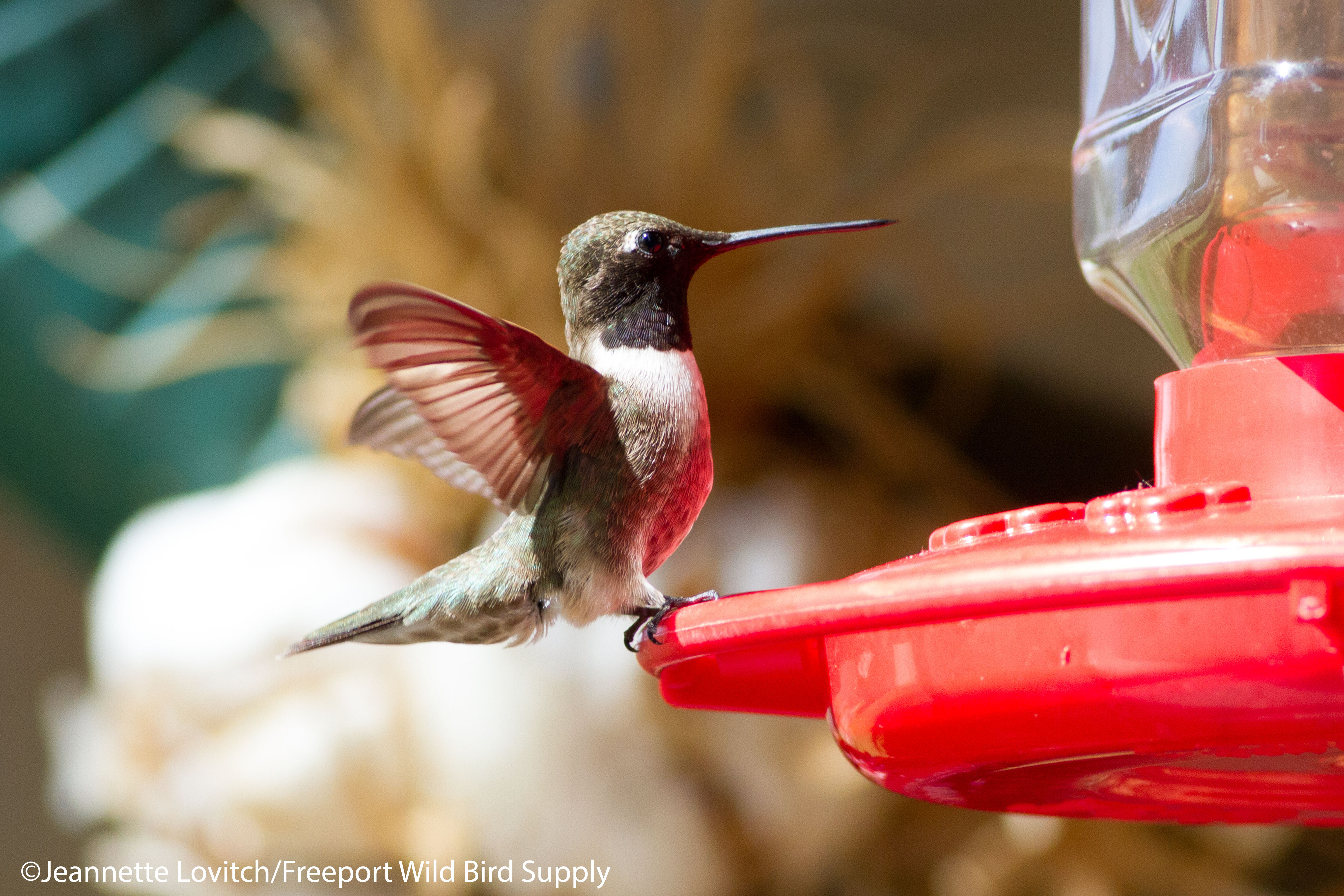
A Black-chinned Hummingbird is overdue for Maine, but unless it’s an adult male with his purple throat in good light, it’s likely going to take banding and measurements to identify (like this year’s Broad-tailed).
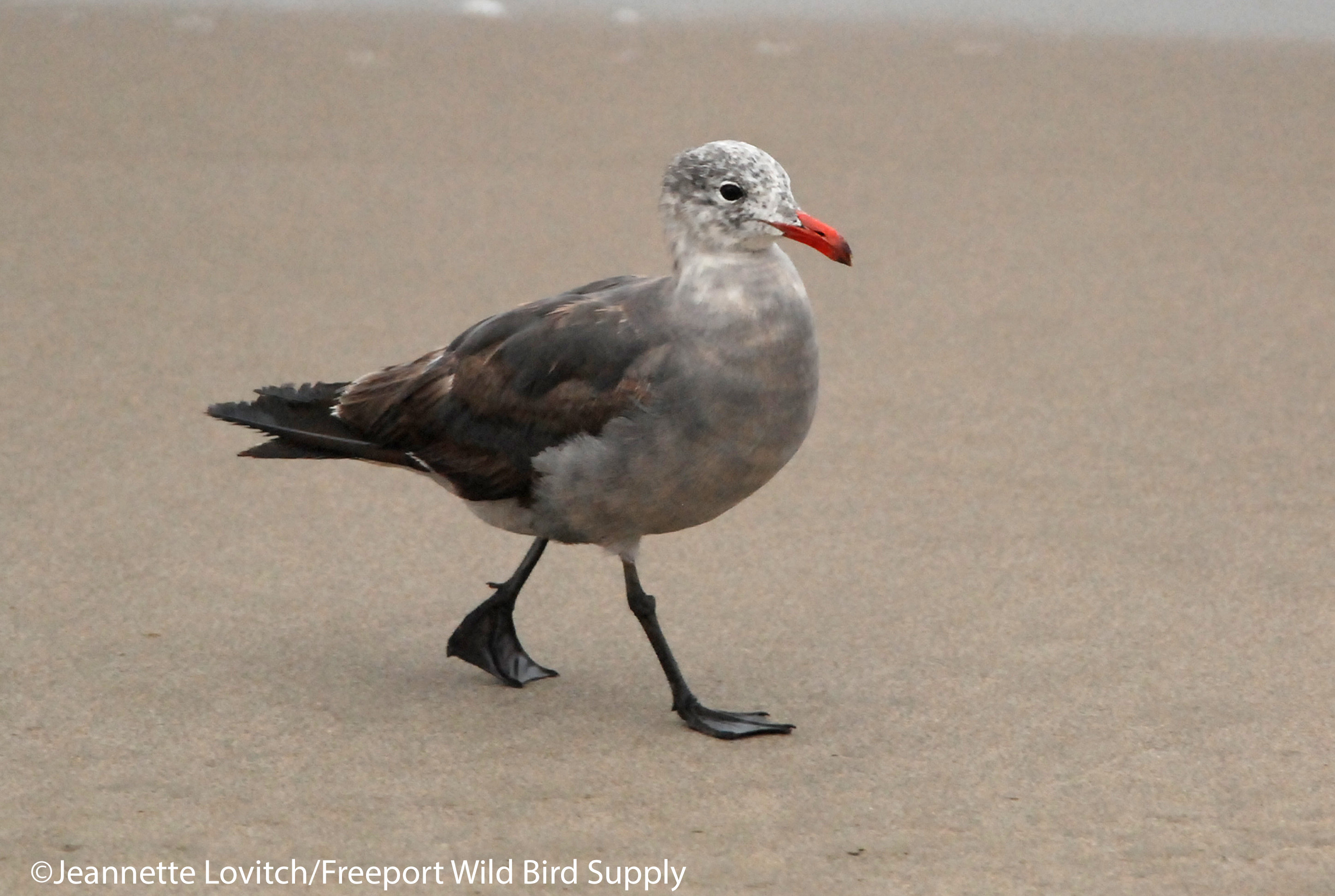
I’ve added Heerman’s Gull to the list thanks to a growing number of Eastern Seaboard records – most of which are likely the same individual moving up and down the coast, although it seems like a longshot to make it this far north. Limpkin also debuts after an incredible irruption in 2022 with extralimital records from as far north as Michigan and New York. Was this a one-off due to some drastic change in water or food levels in its limit range in Florida, or is this another sign of the “new normal” of tropical birds venturing northward? To make room, I’ve dropped Kelp Gull out of the Top 25 for now.
Heerman’s Gull, San Diego, CA, August 2011.
Personally, I added an incredible six birds to my own state list this year. I even predicted two of them: The flock of Black-bellied Whistling-Ducks in Camden that I twitched on 5/2 were #7 on my personal next list, while the flock of White Ibis in the Webhannet Marsh in Wells on 8/11 were #14 on my list.
Black-bellied Whistling Ducks.
The Sage Thrasher at Gilsland Farm was the first in line on my honorable mentions list, as it was long overdue for Maine to get it’s second. Likewise, the two Henslow’s Sparrows in Brunswick (7/6) and the now-famous Freeport Broad-tailed Hummingbird were both on my honorable mentions list, but had not cracked the top 25 just yet.
Sage Thrasher
Henslow’s Sparrow
Broad-tailed Hummingbird
Out of the blue was the aforementioned Eurasian Marsh-Harrier, which I happily got to see in Weskeag Marsh on 8/26. As Maine stakes its claim as the Raptor Rarity Capital of North America, I would not have wanted to miss this shocker.
As usual, I missed plenty of rarities too, although I was unable to chase many of them for various reasons (6 for 6 on chases this year is incredible…although it does help make up for all the times I did not see the Steller’s Sea Eagle!). American White Pelican (Grand Isle, 7/5; #1) and Franklin’s Gull (Sabattus Pond, 5/22; #3) are officially nemesis birds now. Other unchaseable potential state birds included Common Gull (Eastport, 2/17-23; honorable mention), Sandwich Tern (Mount Desert Rock, 7/6; honorable mention), and Western Wood-Pewee (banded at Riverpoint, Falmouth, 9/7; honorable mention).
As I approach the 400 species milestone, it’s not getting any easier, although I should hit the mark this year, based on current vagrancy trends! That’s my first prediction. As for what bird it will be, I believe it will be one of these 25. Although, nowadays, anything seems possible!
American White Pelican
Franklin’s Gull
Neotropic Cormorant
Brown Pelican
California Gull
Brown Booby
Slaty-backed Gull
Boreal Owl
Calliope Hummingbird
Common Ringed Plover
Graylag Goose
Cerulean Warbler
Gull-billed Tern
Hammond’s Flycatcher
Spotted Towhee
Pacific Golden-Plover
Wood Stork
Black-chinned Hummingbird
Brewer’s Blackbird
Yellow Rail
Ross’s Gull
Virginia’s Warbler
Common Shelduck
Common Gull
Heerman’s Gull
Brown Pelican records are increasing in the northeast. It’s just a matter of time for one to fly by me! San Diego, CA, August 2011.
This dapper drake American Wigeon at Brunswick’s historic Swinging Bridge on the 4th very well could have been the same bird that I found upriver in Durham three days prior, as the river was finally beginning to freeze over.
Happy New Year (List) everyone! My sightings of note over the past seven days were as follows. Unfortunately, they did not include the Steller’s Sea-Eagle on Saturday or Sunday (but last week, on Friday…wow, just wow. Still can’t really believe that happened!) but did include a few goodies while searching for where it may have ended up (before its re-discovery in Boothbay on Thursday).
1 drake American Wigeon, Rte 136, Durham, 1/1.
18 Greater Scaup, Simpson’s Point, Brunswick, 1/3 (with Jeannette).
1 adult GREAT BLACK-BACKED X HERRING GULL HYBRID, Bath Landfill, 1/4 (with Jeannette)
1 drake BARROW’S GOLDENEYE, Thorne Head Preserve, Bath, 1/4.
1 drake American Wigeon, Swinging Bridge, Brunswick, 1/4.
44 Greater Scaup, 38 distant unidentified scaup, 625+ American Black Ducks, 130+ Surf and White-winged Scoters, etc, Maquoit Bay Conservation Land, Brunswick, 1/6.
Here is our “West Freeport” territory tally from Sunday’s Freeport-Brunswick CBC:
– 5 American Black Ducks
– 30 Mallards
– 1 Hooded Merganser (2nd sector record)
– 1 Red-tailed Hawk
– 1 Ruffed Grouse
– 30 Wild Turkeys
– 12 Herring Gulls
– 26 Mourning Doves
– 4 Red-bellied Woodpeckers
– 28 Downy Woodpeckers
– 15 Hairy Woodpeckers
– 6 Pileated Woodpeckers (sector high count)
– 1 Northern Flicker (2nd sector record)
– 40 Blue Jays
– 104 American Crows
– 1 Common Raven
– 413 Black-capped Chickadees (2nd highest count)
– 90 Tufted Titmice (sector high count; old record of 44)
– 16 Red-breasted Nuthatches
– 45 White-breasted Nuthatches
– 1 Brown Creeper
– 11 Golden-crowned Kinglets
– 1 Carolina Wren
– 26 Eastern Bluebirds
– 1 American Robin
– 73 European Starlings (sector high count)
– 10 American Tree Sparrows
– 2 Song Sparrows
– 1 White-throated Sparrow
– 18 Dark-eyed Juncos
– 20 Northern Cardinals
– 20 House Finches
– 204 American Goldfinches (2nd highest count)
33 species (2nd highest for territory thanks to extensive open water this year).
8.5 hours: 22.4 miles by car; 18.5 miles by foot.
At the very least, it confirmed some of our preconceived notions: sparrows and frugivores are in short supply; winter finches and other irruptives are not around at all – but a huge pulse of goldfinches arrived late last week; and local resident breeding birds seemed to have done quite well this year.
And finally today, here is my annual blog prognosticating the Next 25 species to appear in Maine, and on my own list. Spoiler alert: I did not predict a Steller’s Sea-Eagle.
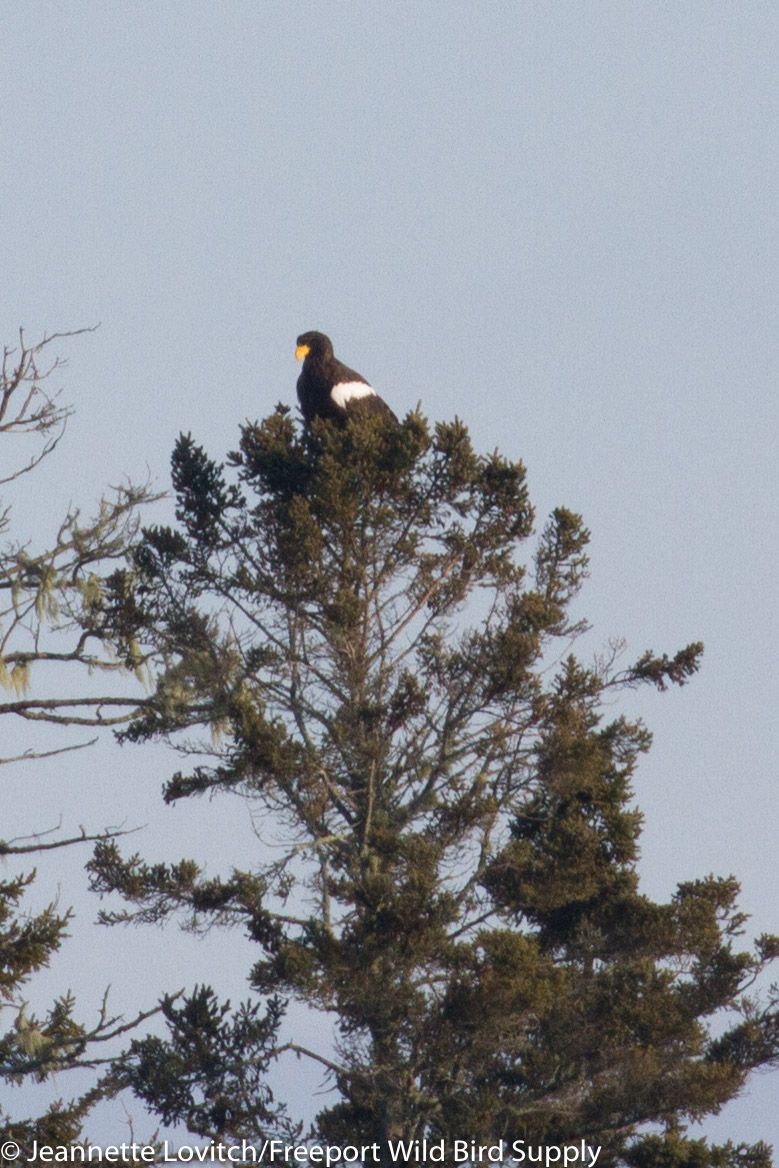
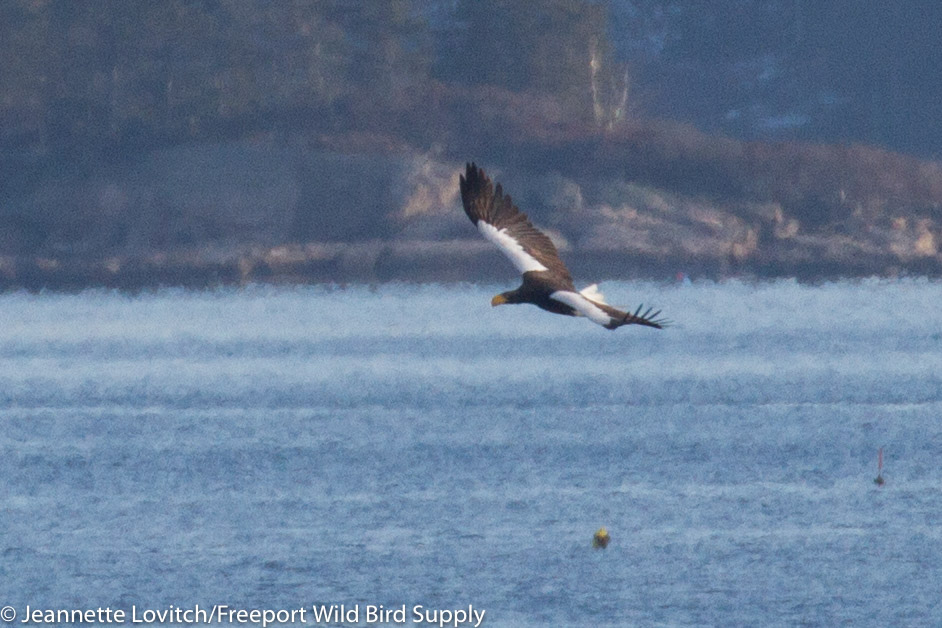
No one could have predicted the bird of the year, err..century..err, ever. This magnificent Steller’s Sea-Eagle spent four days in Georgetown right around the New Year.
It’s once again time for my annual Predictions Blog, where I view into my crystal binoculars and attempt to forecast some of the “new” birds to grace the State of Maine – and then my own personal state list – in the coming year.
I feel like I could have just recycled my blog from 2021. “…Worst Year Ever.” Ha. 2021 replied, “hold my beer!” That all being said, a complete summary would show the full picture, with all its ups and downs (and there were a lot of downs), but undoubtably with many happy moments contained within. That’s all beyond the scope of this blog. I’ll just stick to the birds.
Of course, nothing compares – or perhaps, ever will compare! – to the headliner of 2021: The Steller’s Sea-Eagle. No, this was not on my predictions list – or anyone else’s at the start of the year. That being said, following reports this summer in New Brunswick, November in Nova Scotia, and then December in Massachusetts, there is no doubt it would have been optimistically added to the list for 2022…had it not shown up in Georgetown on December 30th (or perhaps earlier). This mega-of-megas, one of the world’s most extraordinary birds, might render almost any other first state record pedestrian, or at least anticlimactic.
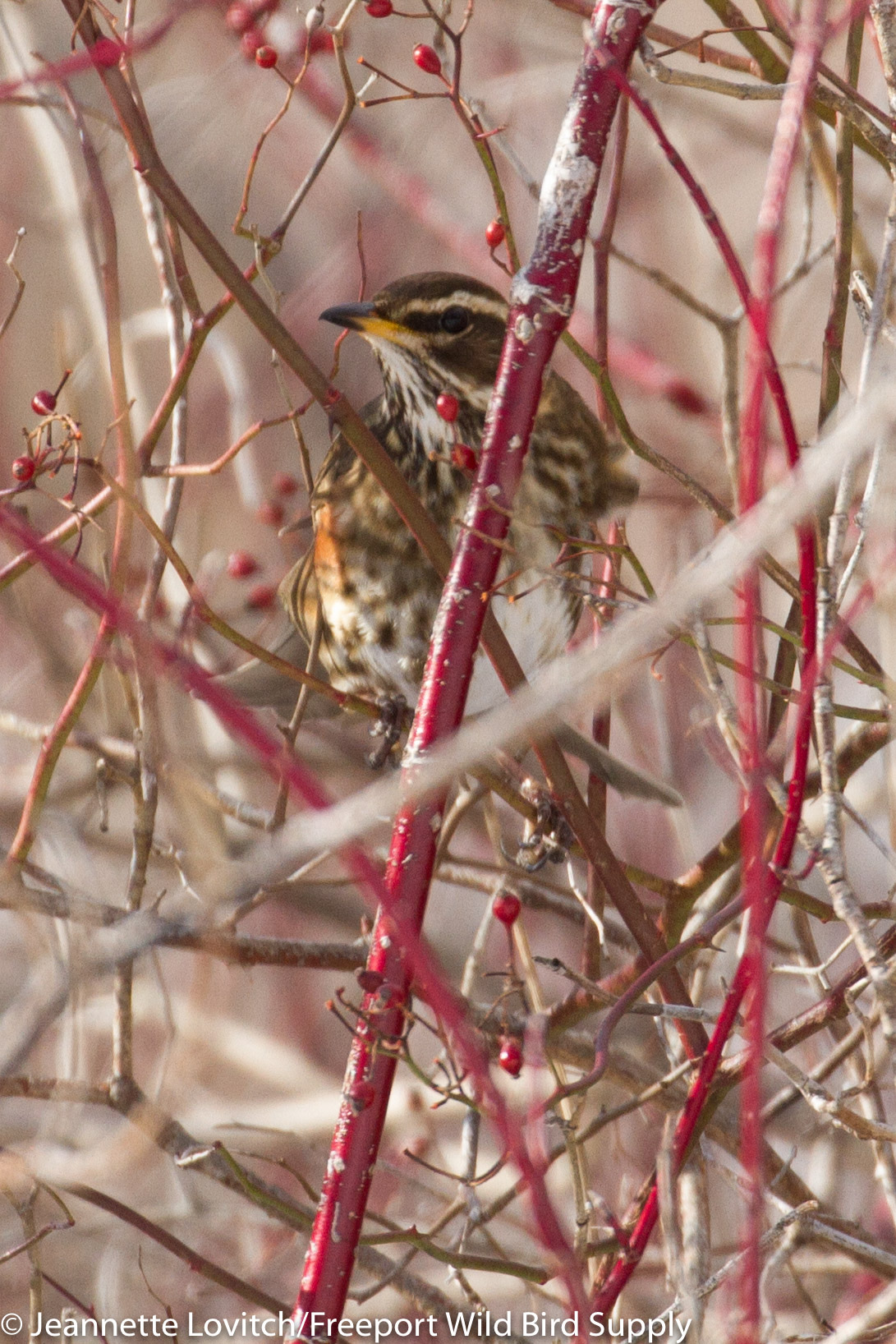
At the very least, it does overshadow the only other chaseable first Maine record for this year: Redwing, a European thrush. What was the “bird of the year” until three days remaining on the calendar, this bird delighted many hundreds of birders at Capisic Pond Park in Portland at the end of January 2021 – which seems like eons ago! The first state record, however, actually came earlier in the month, when a Redwing – perhaps the very same individual – was a one-day wonder on private property in Steuben. Lucky for all, the next one/sighting of it showed up on public property and stayed around for about three weeks. Redwing was #16 on my “Next 25 Species for Maine” list.
And finally, a Masked Booby surprised observers on Mount Desert Rock on August 9th. With increasing observations of tropical seabirds north of the Gulf Stream, this is less shocking than it would have been a few years ago.
Three first state records in one year is pretty good, and the quality of this year’s roster is impressive. How will 2022 compare?
Therefore, my list of next 25 species to occur in Maine receives just a few tweaks.
***EDIT, 3/31 – When a Trumpeter Swan arrived in Scarborough Marsh, it was noted as the 2nd State Record. I realized that the 2011 bird from Fortune’s Rock Beach in Biddeford was indeed added to the “official” state list. I had counted it on my own list (so no change below), but I never followed up on its status, apparently. With the rapidly expanding introduced populations in the Northeast, along with increasing amount of states “declaring” the bird “established,” I’m shocked it’s taken this long to get a second one. The predictions list has been updated accordingly.***
Personally, I was fortunate to add two birds to my own state list this year. And they were good ones!
The aforementioned Redwing got things started. It was not on my Top 25 list because I expected it to be a one-day wonder in some far-off place, never to be seen again. It was. But then it, or another bird – there were several Redwings in the Northeast part of the continent last winter – debuted at Capisic. That was fun.
Did I mention there was a Steller’s Sea-Eagle? That was my 391st species in Maine!
So neither of my state birds were on my Predictions list. I’ll be OK though, all things considered.
And, as usual, there were also a handful of potential state birds for me that I did not see. Franklin’s Gull appears to be on its way to becoming my nemesis, with another one this year: a one-day wonder at the Sanford Lagoons on 9/9. It was #3 on my list.
A Sandwich Tern at Mount Desert Rock on 7/6 was on my Honorable Mention list, as was Brown Booby, which has started to become regular north of Cape Cod. There was one off of Biddeford Pool on 7/8 ahead of Tropical Storm Elsa, followed by one on Mount Desert Rock August 2nd through 9th (not an easy place to chase!).
So a few tweaks to my list for my next additions to my personal state list are as follows:
1) American White Pelican
2) Neotropic Cormorant
3) Franklin’s Gull
4) Brown Pelican
5) Graylag Goose
6) California Gull
7) Black-bellied Whistling-Duck
8) Brown Booby
9) Slaty-backed Gull
10) Boreal Owl
11) Calliope Hummingbird
12) Common Ringed Plover
13) Cerulean Warbler
14) White Ibis
15) Gull-billed Tern
16) Hammond’s Flycatcher
17) Spotted Towhee
18) Pacific Golden-Plover
19) Wood Stork
20) Ross’s Gull
21) Black-chinned Hummingbird
22) Brewer’s Blackbird
23) Yellow Rail
24) Virginia’s Warbler
25) Common Shelduck
So let’s see what 2021 (edited: 2022) brings to the Maine birding world. A return to a sense of normalcy would be a nice start, however.
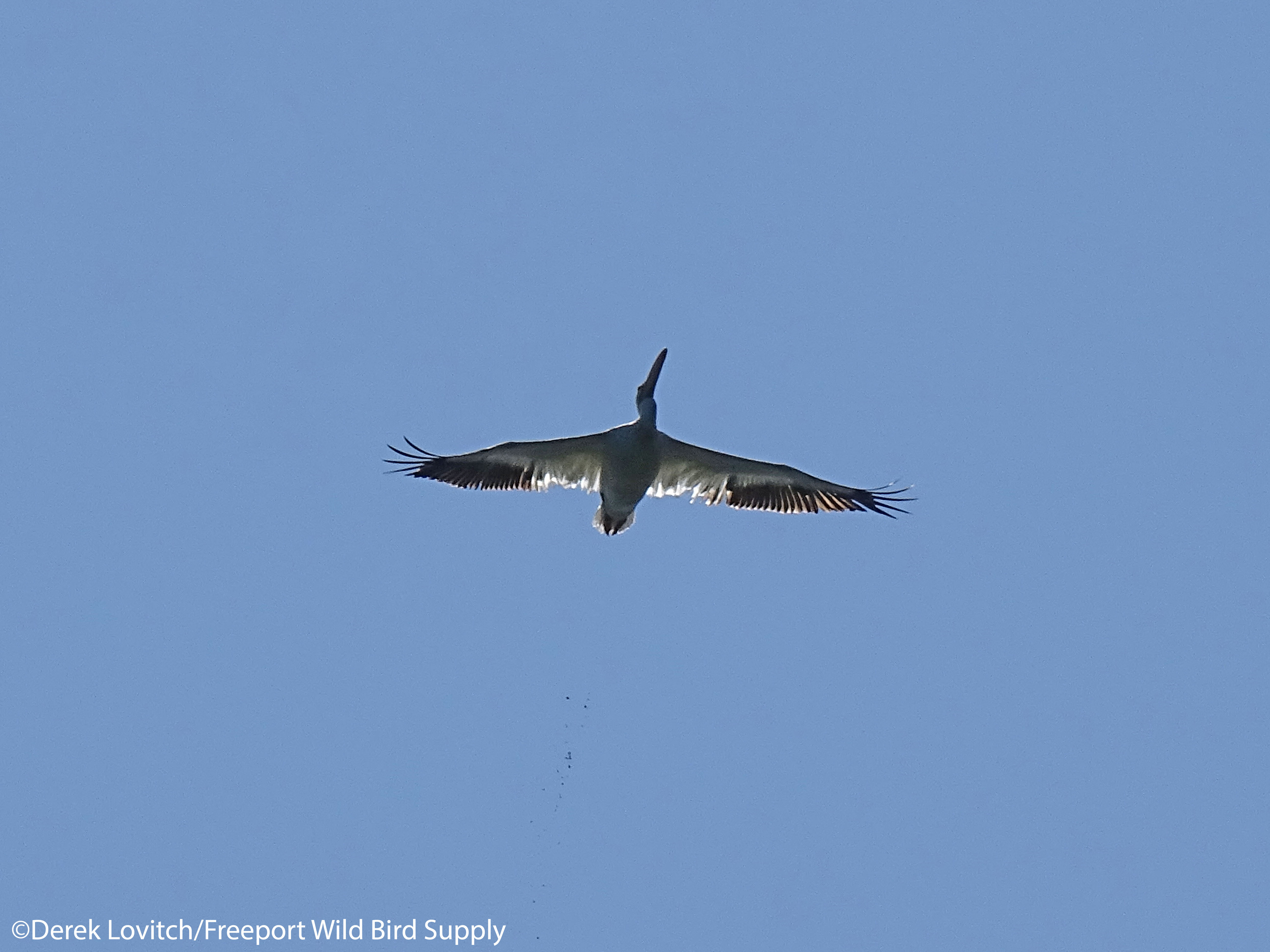
I am overdue to luck into an American White Pelican in the state!
It might “only” have been a second state record, but the Rock Wren that was discovered along Marginal Way near the Perkin’s Cove parking lot in Ogunquit in November was a state bird for everyone who enjoyed it during its long stay that continues right through today.
It’s once again time for my annual Predictions Blog, where I view into my crystal binoculars and attempt to forecast some of the “new” birds to grace the State of Maine – and then my own personal state list – in the coming year.
2020 was definitely a different year. “Worst year ever” was a common refrain by year’s end, but don’t tell that to 2021 which seems to be taking up the challenge so far. I’ve written this blog for over a decade now, but this was the first one written about, and during, a national crisis that was so deadly that many birders stayed home for much of the year. Before spring had arrived in Maine and the deadly COVID-19 pandemic had fully arrived in Maine, trips were cancelled, many folks stayed closer to home if venturing out at all, and many birders avoided crowded seasonal hotspots. I wrote about birding in a pandemic in this early spring blog, but a small silver lining to this tragedy was the huge growth in birding, especially in the backyard. I was even interviewed about this in the New York Times this summer.
By fall, the growth in birding and bird-feeding and the new online community connections made while stuck at home yielded even more opportunities to see amazing birds and add some really spectacular rarities to brand-new life lists. A massive incursion of birds from the western US was underway throughout the East this fall, and this resulted in some of the most incredible “mega” rarities, such as Rock Wren and Bullock’s Oriole. The first chaseable Rufous Hummingbird in many years was another real crowd-pleaser and was made accessible by gracious hosts.
Nonetheless, there were not any first state records detected this year. Therefore, my list of next 25 species to occur in Maine for 2021 remains unchanged:
Neotropical Cormorant
Graylag Goose
California Gull
Spotted Towhee
Hammond’s Flycatcher
Bermuda Petrel
Black-chinned Hummingbird
Common Shelduck
Trumpeter Swan (of wild, “countable” origin)
Audubon’s Shearwater – on “hypothetical” list, but I think the record is good).
Little Stint
Anna’s Hummingbird
“Western” Flycatcher (Pacific-slope/Cordilleran)
Common Ground-Dove
Allen’s Hummingbird
Redwing
Spotted Redshank
Painted Redstart
Ross’s Gull
Black-capped Petrel
Lesser Nighthawk
Elegant Tern
Kelp Gull
Black-tailed Gull
Common Scoter
Despite such a great year for rare birds in Maine, I actually only added two birds to my own state list however. But they were good ones! But first, let’s check in with last year’s prediction list to see how I did…at least for the birds, the rest of the year, no, I did not predict.
As usual, there were also a handful of potential state birds for me that I did not see. Common Ringed Plover (#12) on Seal Island in September and a Sooty Tern (Honorable Mention) on Matinicus Rock following Tropical Storm Isaias were obviously beyond my reach, obviously, a Franklin’s Gull (#5) in Lamoine on 11/5 did not linger, and a Yellow Rail (#22) was kept secret. The big miss however was the Golden-crowned Sparrow (Honorable Mention) in October at a feeder in Abbot that I just did not chase for a variety of reasons, including how busy the fall was at the store.
So a few tweaks to my list for my next additions to my personal state list are as follows:
American White Pelican
Neotropic Cormorant
Franklin’s Gull
Brown Pelican
Graylag Goose
California Gull
Black-bellied Whistling-Duck
Slaty-backed Gull
Boreal Owl
Calliope Hummingbird
Common Ringed Plover
Cerulean Warbler
White Ibis
Gull-billed Tern
Hammond’s Flycatcher
Spotted Towhee
Pacific Golden-Plover
Wood Stork
Ross’s Gull
Black-chinned Hummingbird
Brewer’s Blackbird
Yellow Rail
Loggerhead Shrike
Virginia’s Warbler
Common Shelduck
So let’s see what 2021 brings to the Maine birding world. A return to a sense of normalcy would be a nice start, however.
My favorite rarity photo of the year, however, was the Freeport Bullock’s Oriole feeding in front of the Maine state flag!
After missing Maine by just a few miles in 2018, it’s only a matter of time before we see the state’s first Neotropic Cormorant – a species that is rapidly expanding northward. Be sure to double-check a lone cormorant in a tiny pond or river!
As we put 2019 to bed and begin 2020, we have our eyes set on the birding future. As for the future of birding, well, that’s a blog for another day, but for now, what about the next “new birds” to be seen in Maine?
Yup, it’s once again time for my annual Predictions Blog, where I view into my crystal binoculars and attempt to forecast some of the “new” birds to grace the State of Maine – and then my own personal state list – in the coming year.
The epic 2018 was going to be hard to follow – in fact, who knows if we’ll ever see a year as exceptional for new birds like that. While an above-average five new species were added to Maine’s state list in 2018, the infamous Great Black Hawk is a headliner for the ages.
We came back to Earth in 2019, with only 1 or 2 new species for Maine. The first, was a Zone-tailed Hawk in Bridgeton on May the 4th. This was #18 on my predictions list for next new species to be found in Maine following several regional sightings over the past few years.
I say 1-2 because on October 30th, I found a Barolo’s Shearwater in Maine waters, just west of George’s Bank. The problem was it was a single-observer sight record and that’s hard for a functioning and respected rare birds records committee to accept as a first state record. So who knows what Maine’s will do.
Barolo’s Shearwater was on my honorable mention list, but I certainly did not expect to see it; I would have assumed it would have been photographed from a NOAA fisheries research ship in the summer in deeper waters near the continental shelf, or perhaps immediately following a hurricane.
With only 1-2 new species for Maine in 2018, I’ve only made a few minor changes to my forecast, including the debut of Black-capped Petrel. Therefore, my updated predictions for the next 25 species to occur in Maine for 2020 is now:
1) Neotropical Cormorant
2) Graylag Goose
3) California Gull
4) Spotted Towhee
5) Hammond’s Flycatcher
6) Bermuda Petrel
7) Black-chinned Hummingbird
8) Common Shelduck
9) Trumpeter Swan (of wild, “countable” origin)
10) Audubon’s Shearwater – on “hypothetical” list, but I think the record is good.
11) Little Stint
12) Anna’s Hummingbird
13) “Western” Flycatcher (Pacific-slope/Cordilleran)
14) Common Ground-Dove
15) Allen’s Hummingbird
16) Redwing
17) Spotted Redshank
18) Painted Redstart
19) Ross’s Gull
20) Black-capped Petrel
21) Lesser Nighthawk
22) Elegant Tern
23) Kelp Gull
24) Black-tailed Gull
25) Common Scoter
Personally, I added a respectable 5 species to my own Maine list this year as well, including my long-sought #1 (and #1 nemesis): Great Skua. We scored one in Maine waters on our cruise – the aforementioned cruise that resulted in the Barolo’s Shearwater. Whether you have respect for your state records committee or not, functioning ones are not the “list police” that tell you what you can and cannot count. After much review, study, and discussion, I am confident I saw a Barolo’s Shearwater, so I am putting it on my list. Since I don’t submit my list the the ABA, eBird, or anyone else, I get to make my own rules! But sorry folks, if you are playing the listing game, you have to play by the listing rules.
We were at a trade show in Portland when a Tundra Swan (#7 on my list) was spotted at Dunstan Landing in Scarborough Marsh, so we skipped out for a spell and successfully “twitched” it. It was a welcome break from being indoors all day, and it was an easy 15-minute chase.
Last, but definitely not least, was the Harris’s Sparrow at a feeder in Levant that I was lucky enough to see with friends on December 8th…my 385th species in Maine, but only on my list of honorable mentions. But I’ll call predicting 3 our of 5 new state birds a win!
Then, as always, there were the misses. American White Pelican (#5) is becoming a nemesis, with several brief sighting in Portland on May 16th, and another bird in Aroostook County in August. I worked hard for post-Hurricane Dorian rare terns in late September, but missed out on a Gull-billed Tern (#17) at Hill’s Beach on 9/28.
Not in my top 25, but no less disappointing to miss was Brown Booby that was spotted on and off, here and there, for perhaps much of the summer and a Tropical Kingbird in East Machias on 10/31. Much worse, however, was the dead Purple Gallinule found under the wires at Sandy Point on 10/19.
So with some big changes at the top, my updated list for my own next 25 species in Maine looks quite different.



















 Maine Birding Field Notes