This immature male Orchard Oriole was singing up a storm – when we wasn’t being chased by a territorial male Baltimore – at tiny, but often-productive – Lake Grove Park in Auburn on the 18th.
A sneaky good flight overnight Saturday into Sunday made for a tremendous day of birding: it took me over three hours to leave my yard! The rest of the week, however, was very slow by mid-May standards, with the exception of a very surprising morning At Fort Foster on Friday. My observations of note over the past six days before I head off to Monhegan with my tour group included the following:
17 species of warblers, led by 38+ American Redstarts and 16 Black-throated Green Warblers, our property in Durham, 5/18.
The 2025 Bradbury Mountain Spring Hawkwatch came to a close on Thursday. It did not exactly end with a bang, but we had a great flight for the this late in the season on Monday, including a good movement of immature Broad-winged Hawks and Merlins, such as this one. It, and everything else that has passed over or by the summit for the last two weeks has only added to our record-breaking season.
After last week’s rarity insanity, this was a tamer, more “normal” week for mid-May. While several great songbird flights occurred this week, concentrations were few, but there were “new” birds arriving most every day. Here are my observations of note over the past seven days.
Jeannette and I spent a few days last week again assisting Dr. Adrienne Leppold of Maine IF&W with a project to put radio transmitters on Wood Thrushes, a species that is declining dramatically throughout its range. This one was particularly feisty, especially for a thrush!
Although breeding season is in full swing locally, it’s already “fall” for a number of species. Swallows are aggregating and some are heading south, some early and failed nesters are already departing, and the first wave of southbound shorebirds have now arrived! My observations of note over the past seven days including the following:
Cuckoos became more vocally-conspicuous as they usually do this time of year along the coastal plain, including a daily Black-billed in our Durham yard and 2-3 Yellow-billed at Suckfish Brook Conservation area in Falmouth on 7/8 (with Jeannette).
1 fresh juvenile Ring-billed Gull, Auburn Riverwalk, Auburn, 7/5 (seems really early to have one so far away from a breeding lake).
1 female ORCHARD ORIOLE, Old Town House Park, North Yarmouth, 7/6 (with Saturday Morning Birdwalk group).
1 Least Sandpiper (first southbound shorebird migrant of fall!), Green Point WMA, 7/7.
2 AMERICAN OYSTERCATCHERS, Pine Point, Scarborough, 7/9.
9 Lesser Yellowlegs (first of fall), 4 Greater Yellowlegs, and a smattering of Least Sandpipers, Pelreco Marsh, Scarborough Marsh, 7/9.
Tours and Events:
Please join me in Jay on Thursday at 4pm as I give a presentation and answer questions about Birdwatching in Maine: The Complete Site Guide at the Jay-Niles Memorial Library. Free and open to the public.
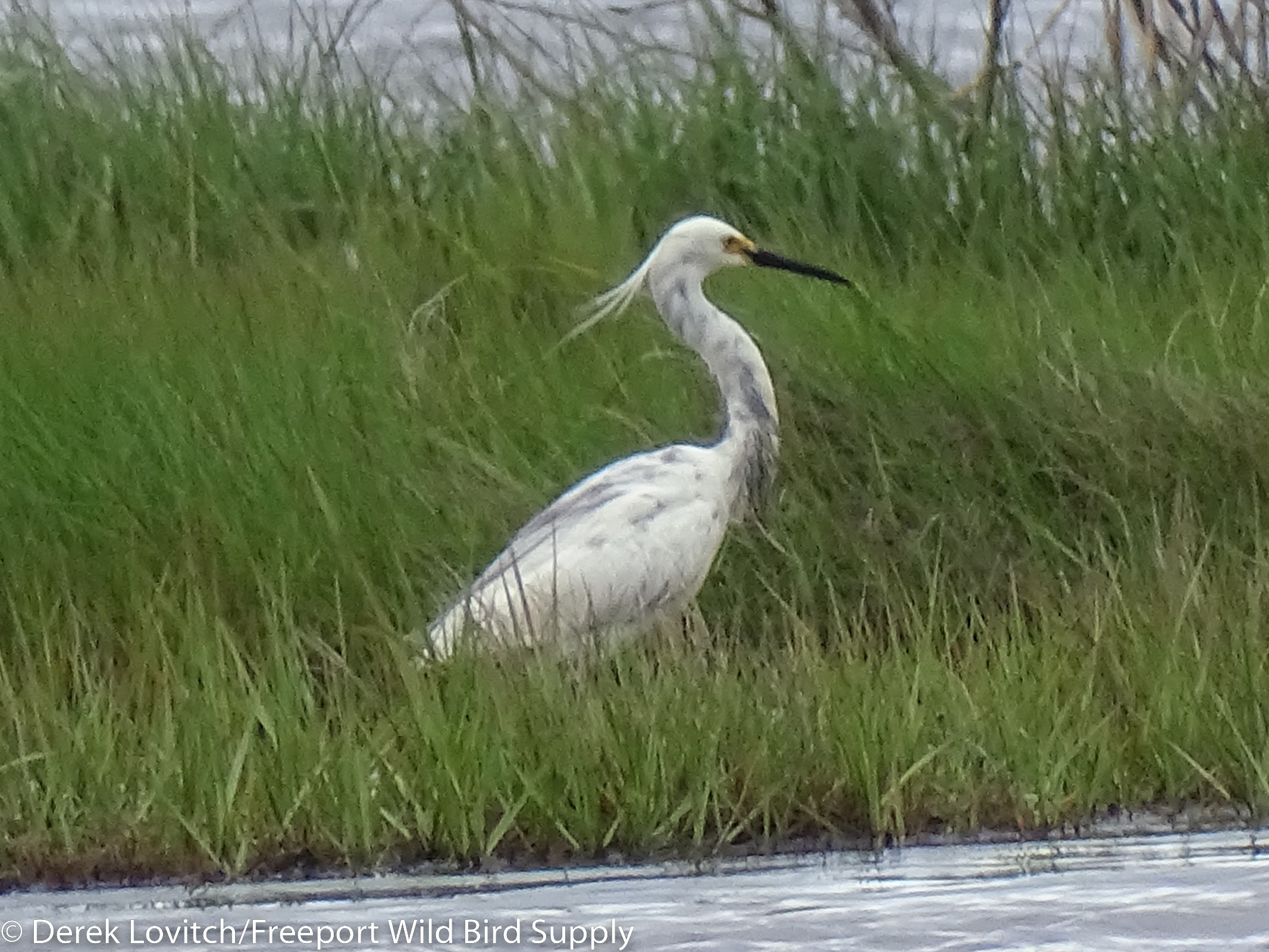
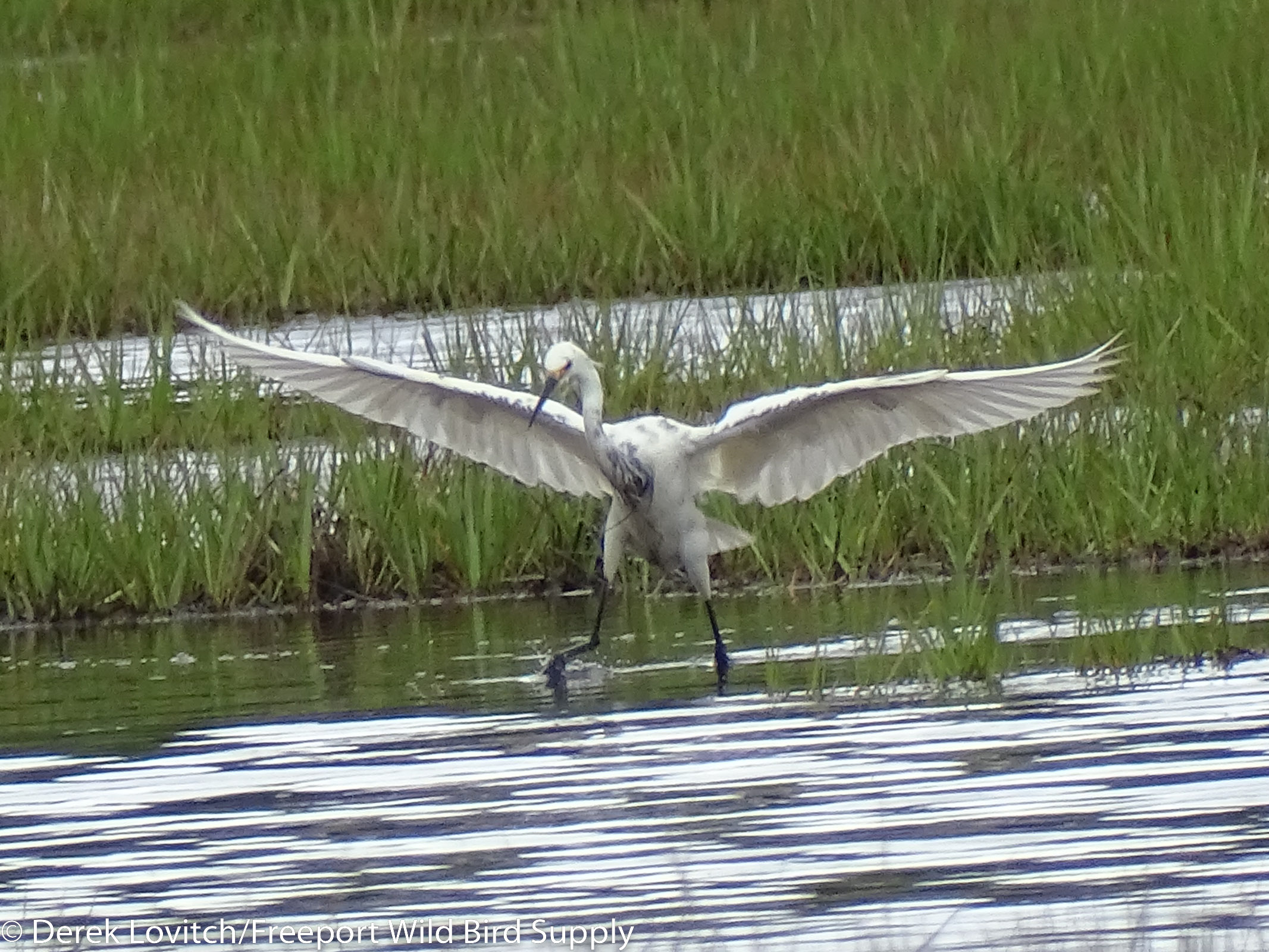
It’s always exciting to show a tour a one-of-a-kind bird that is found no where else in the world (that we know of!). And “Patches III” the proposed Tricolored Heron x Snowy Egret x Snowy Egret hybrid (I think…maybe) put on quite a show for us on the third day of the tour.
I just finished up a whirlwind 9-day tour with my good friend Scott Barnes for New Jersey Audubon. I’ll be sorting photos for a while and will post more later, but our unexpected observations of note while traveling around Maine (with about 24 hours in New Hampshire and a few hours in New Brunswick) besides all of our wonderful breeding birds, included the following:
1 continuing drake KING EIDER, 3 adult RED-NECKED GREBES (including a pair doing a little light courting), and an impressive 72 Black Scoters, Ocean Avenue, Biddeford Pool, 6/18.
1 pair ORCHARD ORIOLES and one late singing Wilson’s Warbler, Capisic Pond Park, 6/19.
1 pair Sandhill Cranes, Messalonskee Lake, 6/19.
1 Yellow-bellied Flycatcher, 1 Red-breasted Nuthatch, and 1 Indigo Bunting, Machias Seal Island, 6/20.
1 MANX SHEARWATER, between Machias Seal Island and Cutler Harbor, 6/20.
Scattered Red Crossbills around Washington County.
80+ Razorbills and 12 Surf Scoters, Quoddy Head State Park, 6/21.
1 family group of CANADA JAYS, Wesley Township, 6/22.
4 Black-bellied Plovers, Petit Manan NWR – Hollingsworth Trail, 6/22.
2 American Oystercatchers, Egg Rock, Frenchman Bay, 6/23 (with Bar Harbor Whale Watch Co).
2 American Oystercatchers and 2 Common Murres, Petit Manan Island, 6/23 (with Bar Harbor Whale Watch Company).
1 LEACH’S STORM-PETREL, 1 BLACK-LEGGED KITTIWAKE, 1 Sooty Shearwater (FOY), 25+ Great Shearwaters, etc, off Bar Harbor with Bar Harbor Whale Watch Co).
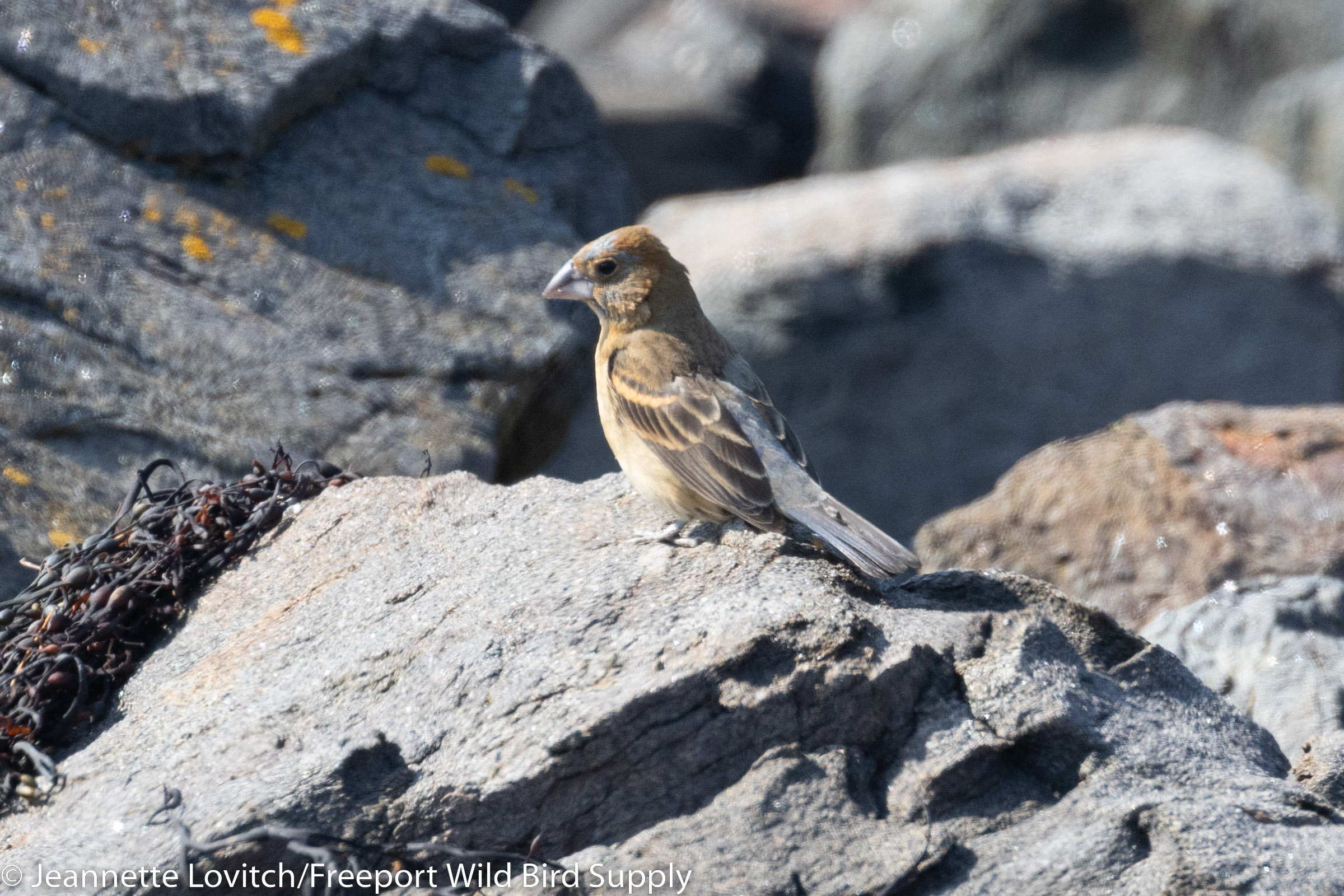
This first summer male Blue Grosbeak was present on Monhegan for at least a week, and unexpectedly, was flycatching for seaweed flies in shoreline rocks for most of the time, including the two days we looked at it with my Monhegan Spring Migration Weekend tour group.
With 5 days on Monhegan and one (half) day offshore, I enjoyed a lot of great birds this week. My observations of note over the past seven days included:
Monhegan Island with our Monhegan Spring Migration Weekend Tour group (full trip report and photos to come).
Daily:
Impressive numbers of Red Crossbills swirling around the island and tough to quantify, including many juveniles. High counts of largest flock(s) in the mid-20’s. Three WHITE-WINGED CROSSBILLS were present each day at least through the end of the weekend. Rare for the island, a pair of HOUSE FINCHES appeared on the 27th and continued through the end of our stay. Here are my group’s other daily highlights.
5/26:
11 Bay-breasted Warblers (FOY)
1 Cape May Warbler (FOY)
1 female Evening Grosbeak
1 Black-billed Cuckoo
1 continuing ORCHARD ORIOLE
1 Philadelphia Vireo (FOY)
5/27:
1 continuing male DICKCISSEL
1 continuing female/imm male SUMMER TANAGER
1 female ORCHARD ORIOLE
1 Olive-sided Flycatcher (FOY)
5/28:
9 GLOSSY IBIS – circled the island early in the morning but did not land. My 225th Island Bird!
1 probable immature male PURPLE MARTIN
1 continuing 1st-year male BLUE GROSBEAK
1 immature BROAD-WINGED HAWK
1 continuing male DICKCISSEL
5/29:
1 pair ORCHARD ORIOLES
1 continuing SNOWY EGRET – Jeannette and I finally caught up with it for my 226th Island Bird!
1 continuing 1st year male BLUE GROSBEAK
5/30 (With Jeannette):
1 continuing male ORCHARD ORIOLE
1 Field Sparrow
Did not try to catch up with continuing rarities, although two quick checks did not turn up the Dickcissel or the Blue Grosbeak.
The Zeiss Pelagic with Cap’n Fish’s Cruises out of Boothbay Harbor, 6/2. This special mini-pelagic, sponsored by Zeiss Optics visited Eastern Egg Rock before heading 20 miles offshore. Trip report to come, but for now, the highlights:
1 Razorbill at Eastern Egg Rock
1 COMMON MURRE (between Eastern Egg Rock and Murray Hole)
350-400 total Wilson’s Storm-Petrels (FOY)
12 RED-NECKED PHALAROPES
TOURS AND EVENTS:
I’ll see you next week at the Rangely Birding Festival! Most (but not all) tours are sold out, but everyone can join me for the free and open to the public Birds on Tap! Event at Parkside and Main (beverages not included)!
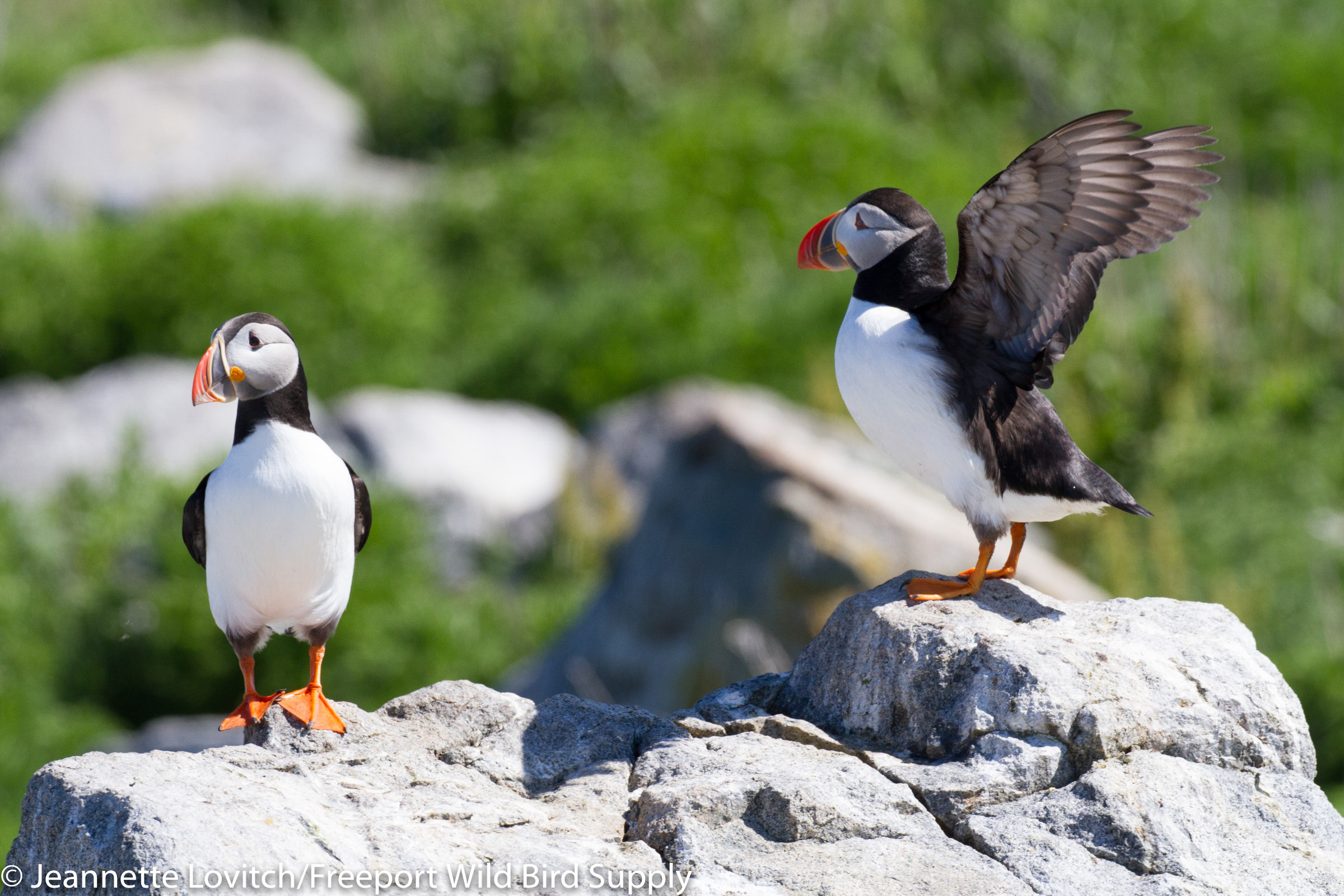
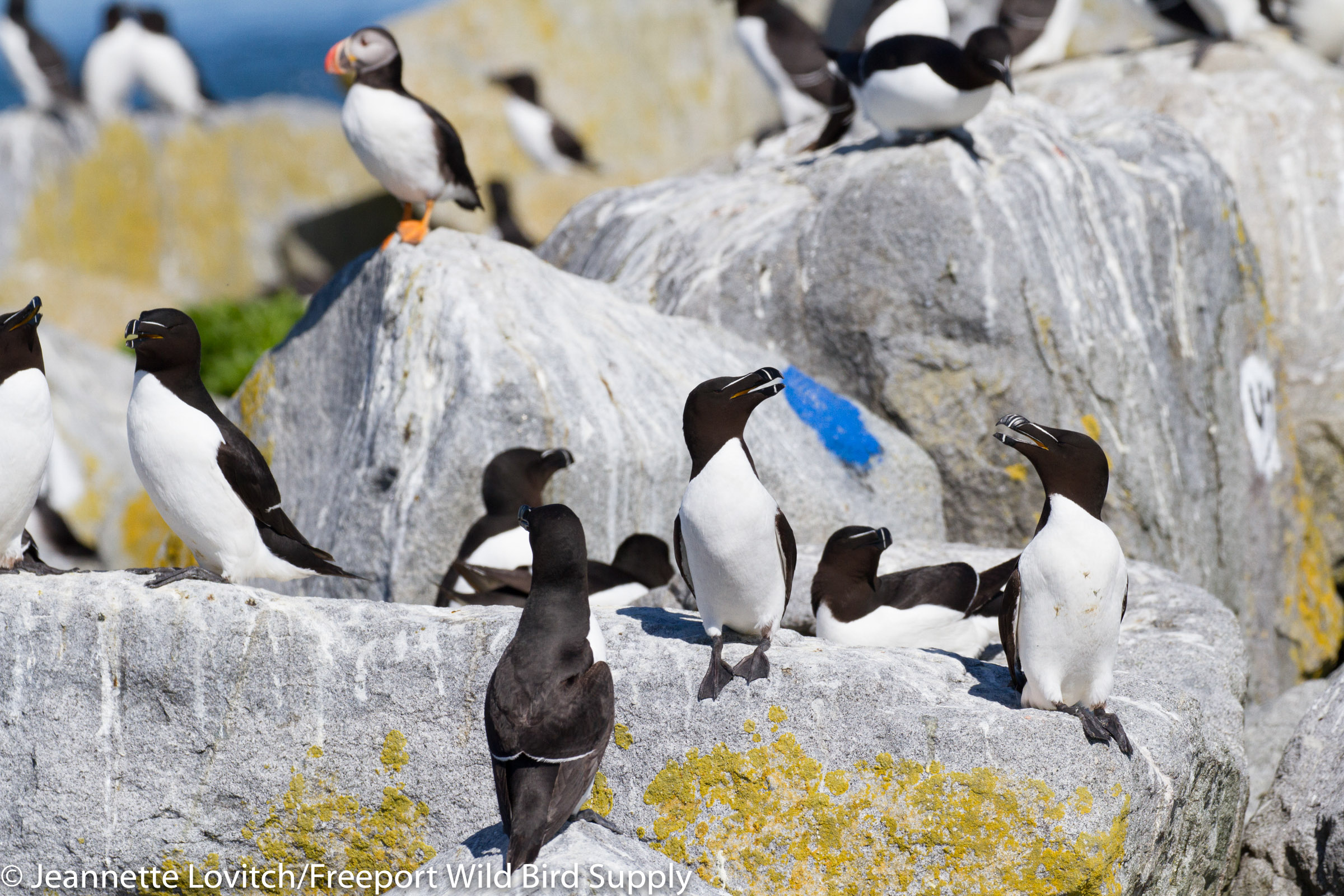
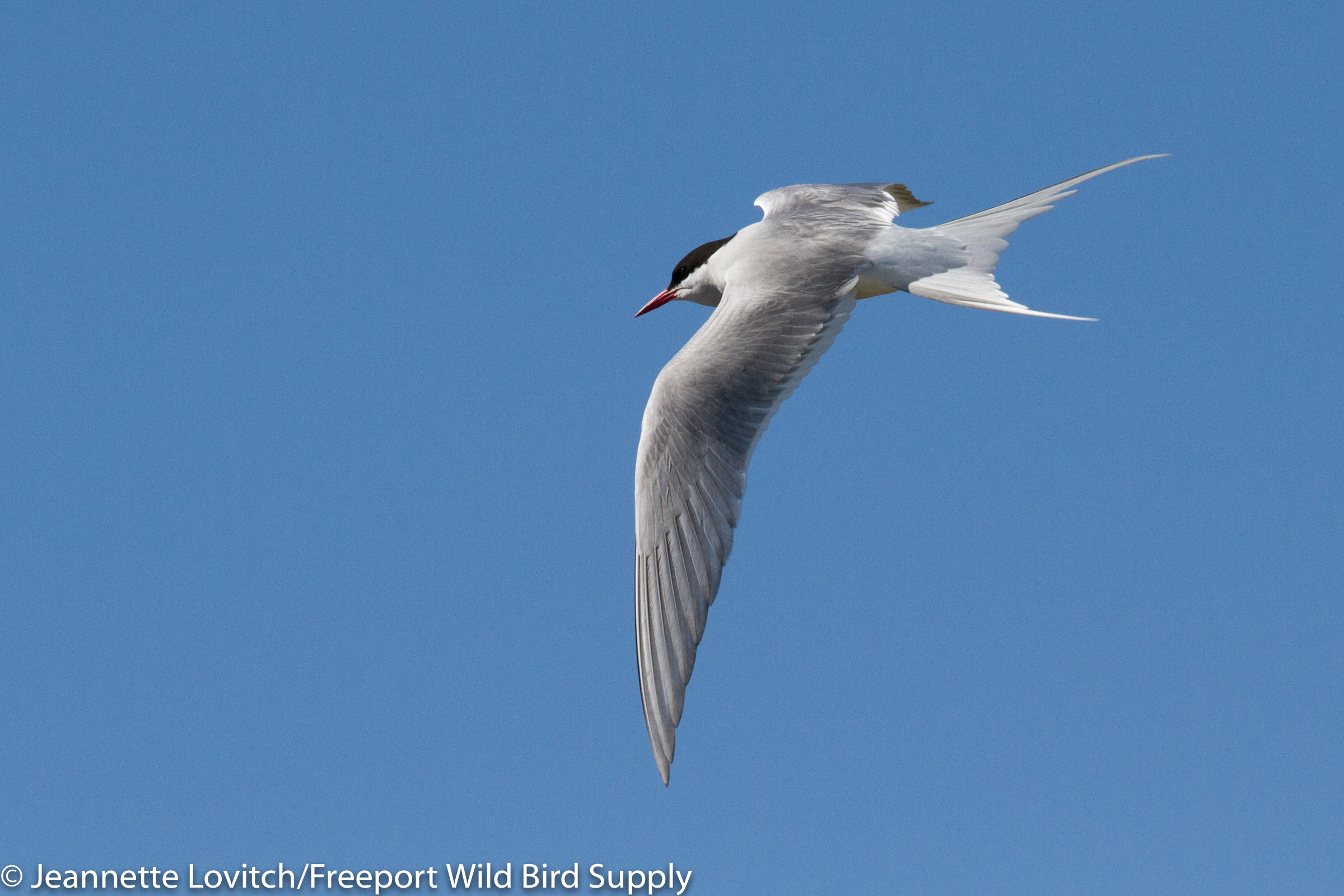
A displaying pair of Northern Gannets stole the show at Machias Seal Island on our visit there on 6/22.Atlantic Puffins, Machias Seal Island, 6/22.Razorbills, Machias Seal Island, 6/22.Arctic Tern, Machias Seal Island, 6/22.
I had a rather busy week, but not as busy with birding as I would have liked. Therefore, this mostly to share Jeannette’s photography from our visit to Machias Seal Island last week. However, a few observations of note over the past seven days included the following
1 female ORCHARD ORIOLE and 1 Blue-gray Gnatcatcher, Green Point WMA, 6/27 (with Jeannette).
1+ BOREAL CHICKADEE, East Royce Mountain, White Mountains National Forest, 6/26 (with Jeannette).
1-2 LITTLE EGRET X SNOWY EGRET hybrids, Falmouth, 6/30. One bird spotted from the Martin’s Point Bridge appeared to have at least one long, Little Egret-like plume. It was not close enough for photos, but the plume – as well as overall structure was distinctive. After flying upriver with the incoming tide, I found a hybrid at Gilsland Farm (photo below), but no head plumes are visible. Note the greenish-yellow lores (looked darker in the field than this poor, phone-scoped photo), very long and fine bill, and spindly neck. It’s slightly longer legs and overall slightly larger size was apparent when it joined a distant Snowy. However, did I imagine the plume in the earlier view? Did it fall off in transit? Or, are there actually two again this year?
This presumptive Little Egret x Snowy Egret Hybrid was along the Presumpscot River in Portland and Falmouth on the 30th. See notes above.
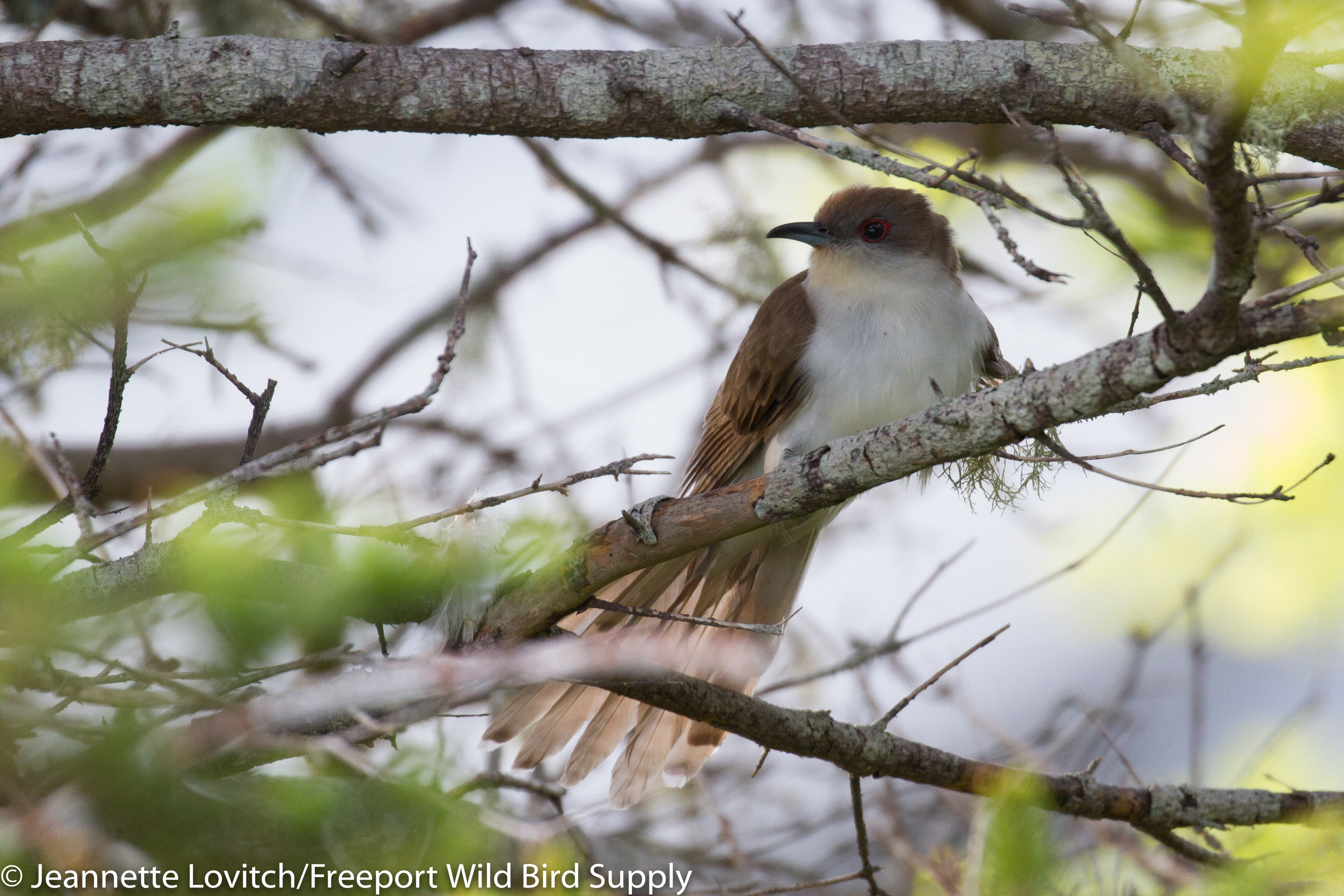
With so many great views of Black-billed Cuckoo(s) each day over the weekend, it was hard to argue against this being the bird of the trip. It was unusual how well, and how often, we saw this usually reclusive bird.
How about we just fast-forward to Sunday? Sunday was delightful.
After two quiet days, which I will eventually confess to, we had a bunch of birds. And no fog. And colorful birds in good light. The pre-breakfast loop was actually downright great, with a good variety of warblers. One copse of trees alone featured 3 Blackburnian Warblers, 4+ Blackpoll Warblers, 2 each of Yellow, Common Yellowthroat, Northern Parula, American Redstart, and 1 Magnolia Warbler
It was nice and birdy after breakfast as well, with more Blackburnian fun, a single Cape May Warbler, and a nice birdy walk through the woods (Winter Wren, Carolina Wren, and House Wren singing one after another) to Whitehead where we actually got to see the ocean – and a Great Cormorant for those visiting from afar. Bird activity and birdsong was pleasantly consistent throughout the day, and in most places we visited.
We caught up with a continuing immature male Orchard Oriole for all to see, and while perhaps one could argue it was still fairly slow for Monhegan by Memorial Day Weekend standards, it was a lot better than Friday and Saturday! In fact, the 59 species and 11 species of warblers was more than the first two days combined. A few of us who stayed out late even got to see an American Woodcock as it displayed over Horn Hill at dusk. It was a good day.
Blackpoll Warbler was definitely the migrant of the weekend. Besides being by far the most numerous passage migrant, they constantly offered crippling views throughout the tour. The male is above, and the female is below.This American Robin nesting in lobster traps was a delight to watch. The parents had to run a gauntlet of 5 or 7 traps to enter and exit the nest. It was a great demonstration of how lobster traps work.Laura shows off her handiwork. Hey, on a slow day, I’ll take all of the birds I can get!Northern ParulaImmature male Orchard Oriole
Friday got off to a rocky start. Really rocky actually, as in few people were even able to keep their breakfast down on the two ferry rides. Dense fog and near-zero visibility resulted in virtually no birds being seen, and well, let’s just not talk about these boat trips anymore…it was one of the worst I have ever experienced on the way to or from. Thankfully, I am not predisposed to feeling how many people felt upon arrival, but it was still a challenge to shake it off, and all of us were moving slowly by day’s end.
The sheltered waters of Deadman’s Cove were deceiving, but I think you get the idea!
Of course, it didn’t help that there were so few birds around! The huge wave of birds that arrived the previous weekend had cleared out, and nothing had arrived to take their place over the last few nights. With such strong winds, it was a challenge to find sheltered pockets, and when we did, we didn’t find many with many birds. Only Blackpoll Warblers were to be seen in numbers.
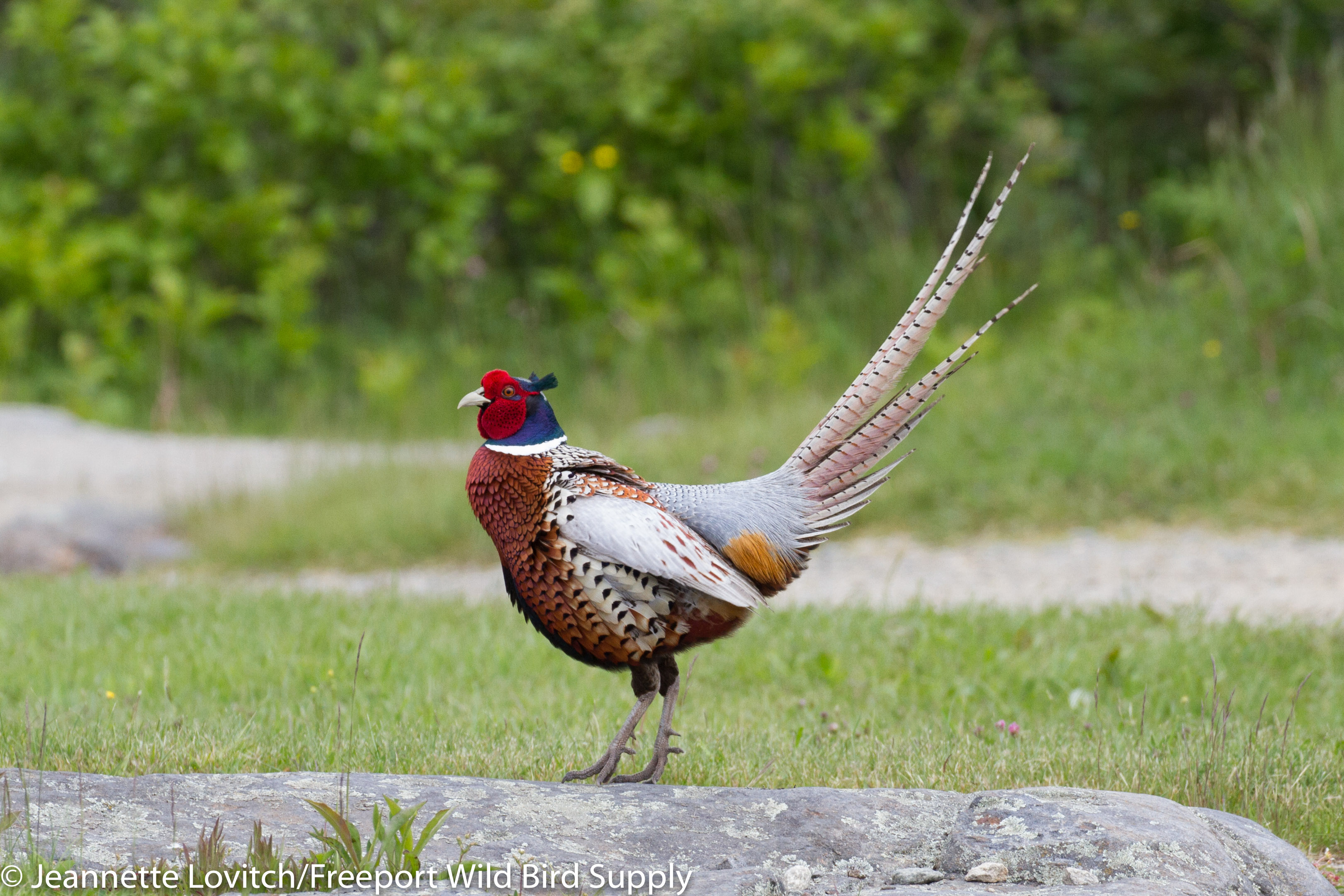
That being said, what we did see – especially the aforementioned Blackpolls and the continuing world’s most cooperative Black-billed Cuckoo(s) – we saw really well. A few of us even saw the Virginia Rail for a second. The dense fog also precluded scanning the water, so our checklist is even more pitiful for the day. Ring-necked Pheasants put on a show though, from confiding snazzy males to adorable little chicks.
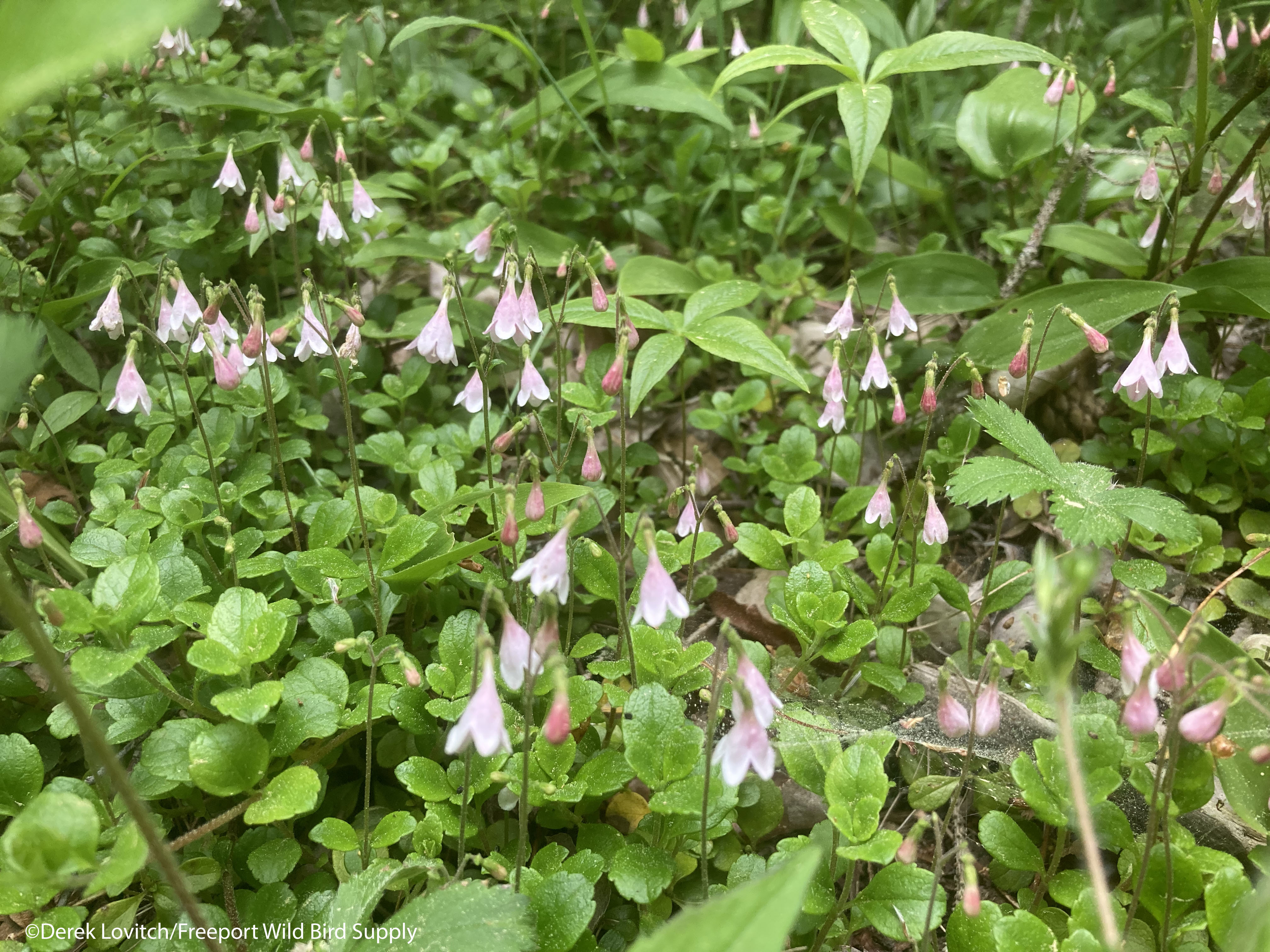
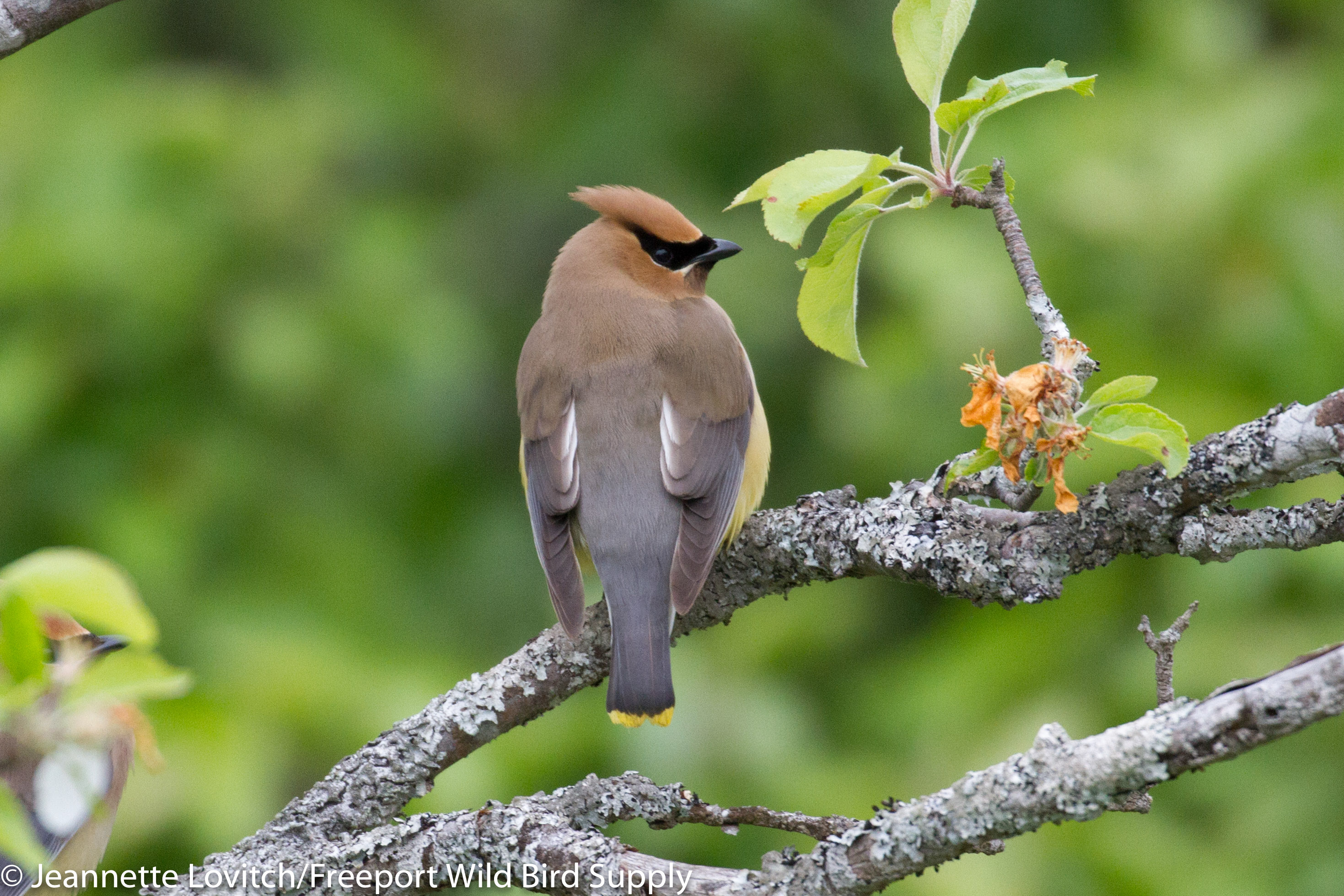
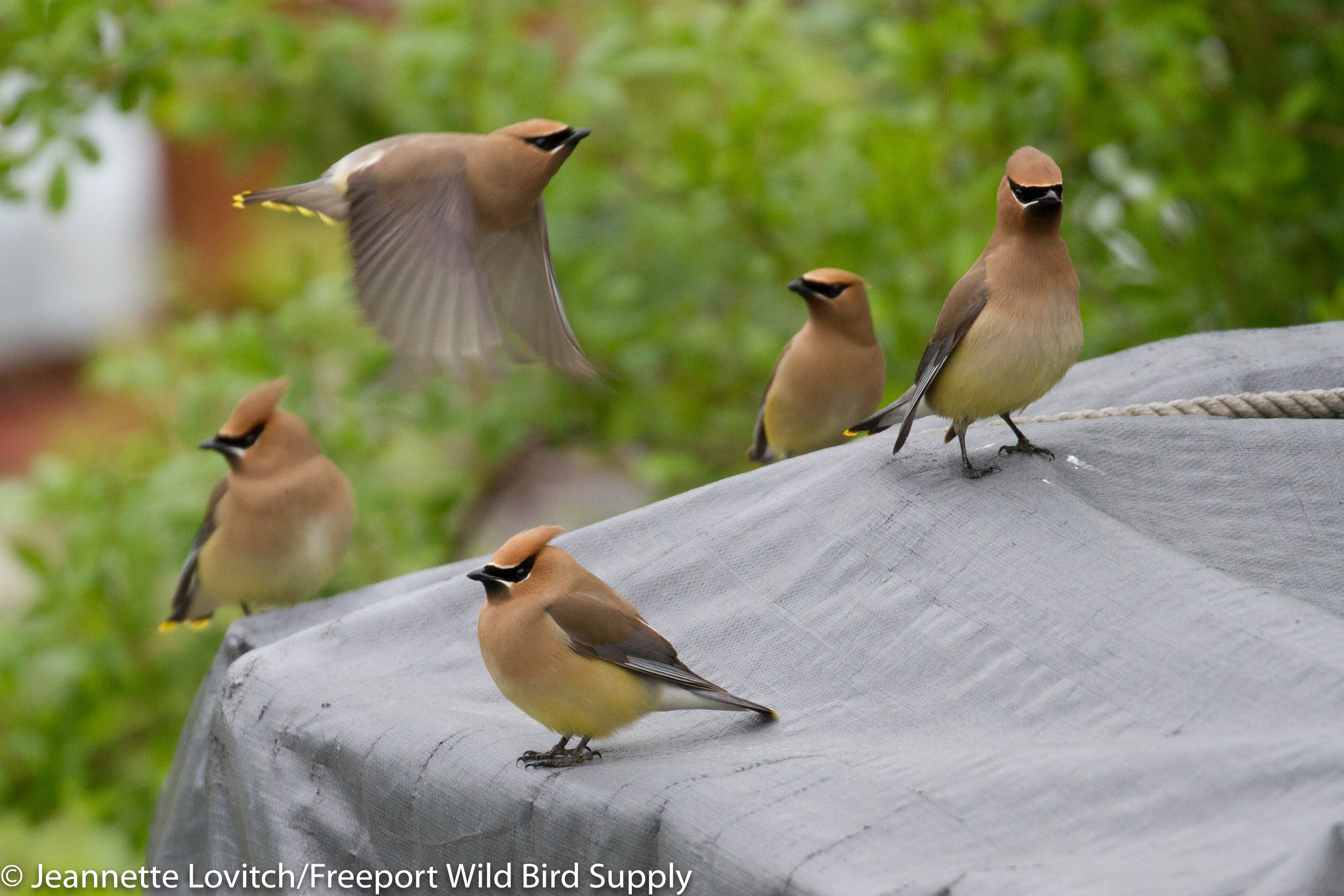
There was no shortage of Cedar Waxwings this weekend, with numbers growing in the final two days of our stay.We definitely took advantage of the lull in birding to do some botanizing, including taking the time to stop and smell the Twinflower (Linnea).What migrants were around, however, were often low, close, and confiding, such as this Red-eyed Vireo.
I had hopes for Saturday – it really couldn’t be any worse than Friday anyway! – based on the forecast. However, only a light flight was detected on the radar overnight, despite light southerly winds. It was mostly cloudy, but I couldn’t help to wonder if we were just running out of migrants.
Rain that could have resulted in a fallout of what little was airborne overnight didn’t arrive until after sunrise, but it only caused a 20-minute delay to the start of the day. That was it though, and certainly we were lucky that Saturday was not the washout that was predicted as of a few days prior. It was still slow, but once again, we had exceedingly great looks at everything that we did encounter, including more quality cuckoo time, a stunning male Indigo Bunting that was just glowing in the soft light, Blackpoll Warblers, Northern Parulas, American Redstarts, and more colorful splashes to brighten another gray day. And it wasn’t raining.
But it’s hard to sugarcoat just how slow it was – like Mid-June-kinda slow. Luckily, the fog lifted just long enough to see some waterbirds, and we took advantage of that for an impromptu gull workshop.
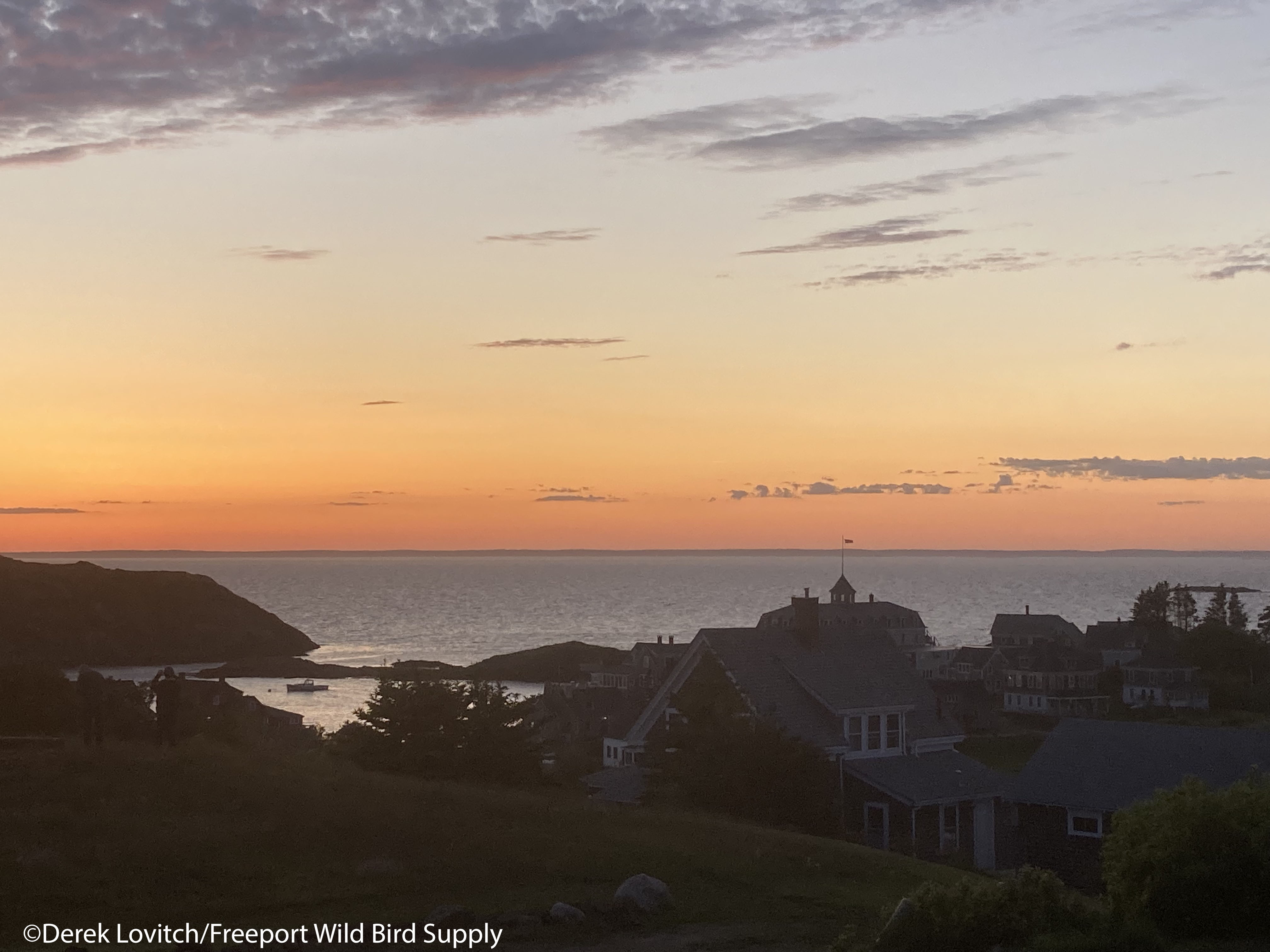
A tease. The fog returned shortly thereafter.It was news to me that Red-backed Salamanders were on the island. Upon finding that out, our Saturday afternoon walk in the woods featured a lot of log-rolling to sample. Apparently, they are rather widespread, as we found them throughout the spruce forest of the next few days.Sunsets on Monhegan are always memorable, but Saturday night’s was even more exciting as it meant an end to two days of solid fog.Tomorrow would be better, this scene promised. And it most certainly was!
A brief shower at dinnertime ushered in a cold front and skies began to clear at dusk, with the fog finally lifting. That led to the delightful Sunday I was talking about. And Monday wasn’t too shabby either, as we again started the day without fog, a very light wind, and evidence of some bird migration on the radar overnight. And, with the southwesterly flow continuing, we had even higher hopes for finding the “mega” that would make up for the so-far lackluster species list.
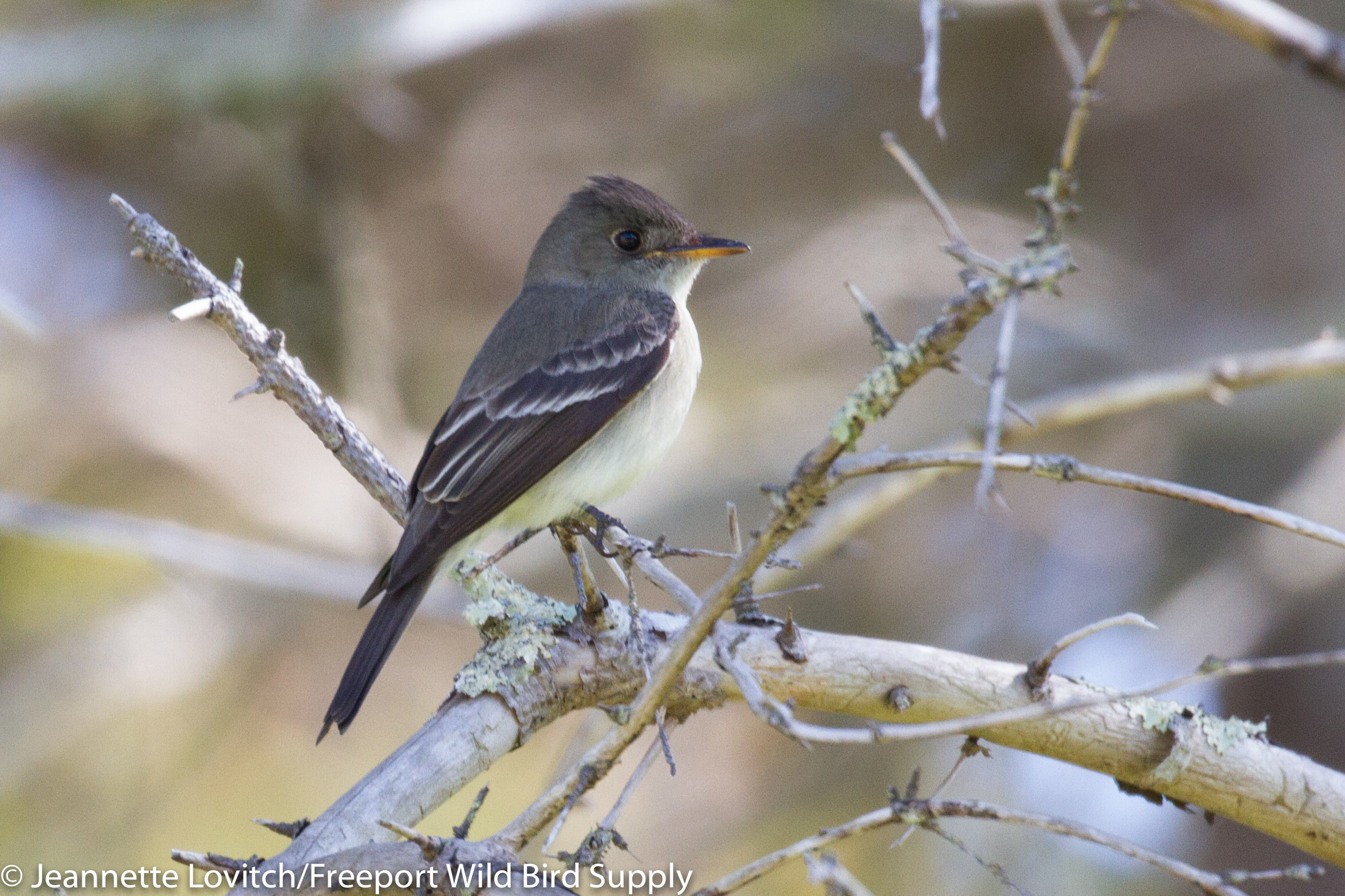
Starting the morning with a Black-billed Cuckoo sunning itself in a tree right in front of the Trailing Yew was a solid start, and there were more Eastern Wood-Pewees and a decent number of Blackpoll Warblers around. Again, a rather slow day by Monhegan standards, but we really had more great looks at everything we did see. Today’s magic tree was by the Ice Pond, with a pair of Blackburnian Warblers, a pair of Blackpoll Warblers, Yellow Warbler, Common Yellowthroat, and finally a Bay-breasted Warbler.
We also finally had some rarity excitement. First, a Spizella sparrow flushed in front of us and a very quick glimpse in the scope suggested a Clay-colored Sparrow, which is a great bird in the spring. But just to be sure, we searched for it, but to no avail. Luckily, its identity was confirmed the next morning went it put on a show in the exact same spot it didn’t want to return to today.
Later, a female Purple Martin made an appearance…OK, fine, I could not completely rule out a Gray-breasted Martin. I was trying.
The tour officially concluded in the afternoon, but Jeannette and I remained to enjoy a 24-hour vacation. Don’t worry, you didn’t “just miss” something, as all we had new in the afternoon was a Savannah Sparrow.
It’s already baby bird season!Cedar Waxwings were the most numerous passerine on the island – or at least, the most obvious, with a flock of 60 that grew to at least 150 by Tuesday afternoon. Common Yellowthroat.Eastern Kingbird
Also, don’t worry that you missed the day Monhegan legends are made of on Tuesday. You did not. It was still fairly slow, but we had a little uptick in diversity. The pulse of late-migrating flycatchers that I had expected finally arrived, there was a good Northern Gannet show off Lobster Cove in the morning, and a steady trickle of commuting Atlantic Puffins in a small sample of afternoon Lobster Cove seawatching.
Eastern Wood-Pewee
We picked up three Willets well offshore to the south from Lobster Cove in the morning, eventually following them into the harbor where they landed for a spell. As for that “probable” Clay-colored Sparrow that was nagging me all afternoon and night, well, I am thankful that it returned to the exact same spot as where we first glimpsed it. I received a text that it had been observed, photographed, and confirmed by others, and it obligingly remained long enough for us to catch back up with it.
Clay-colored Sparrow
Overall, there were many fewer warblers around on Tuesday, likely as many of the passage migrants had departed overnight. But it would have been nice if this diverse day with several quality birds and good seawatching fell during the official tour!
The 11 species we added after the group tour ended therefore were as follows:
Savannah Sparrow
White-winged Scoter
Surf Scoter
Atlantic Puffin
WILLET
Alder Flycatcher
Yellow-bellied Flycatcher
Bobolink
Pine Siskin
Hermit Thrush
Red-bellied Woodpecker (where were you hiding these past 4 days?)
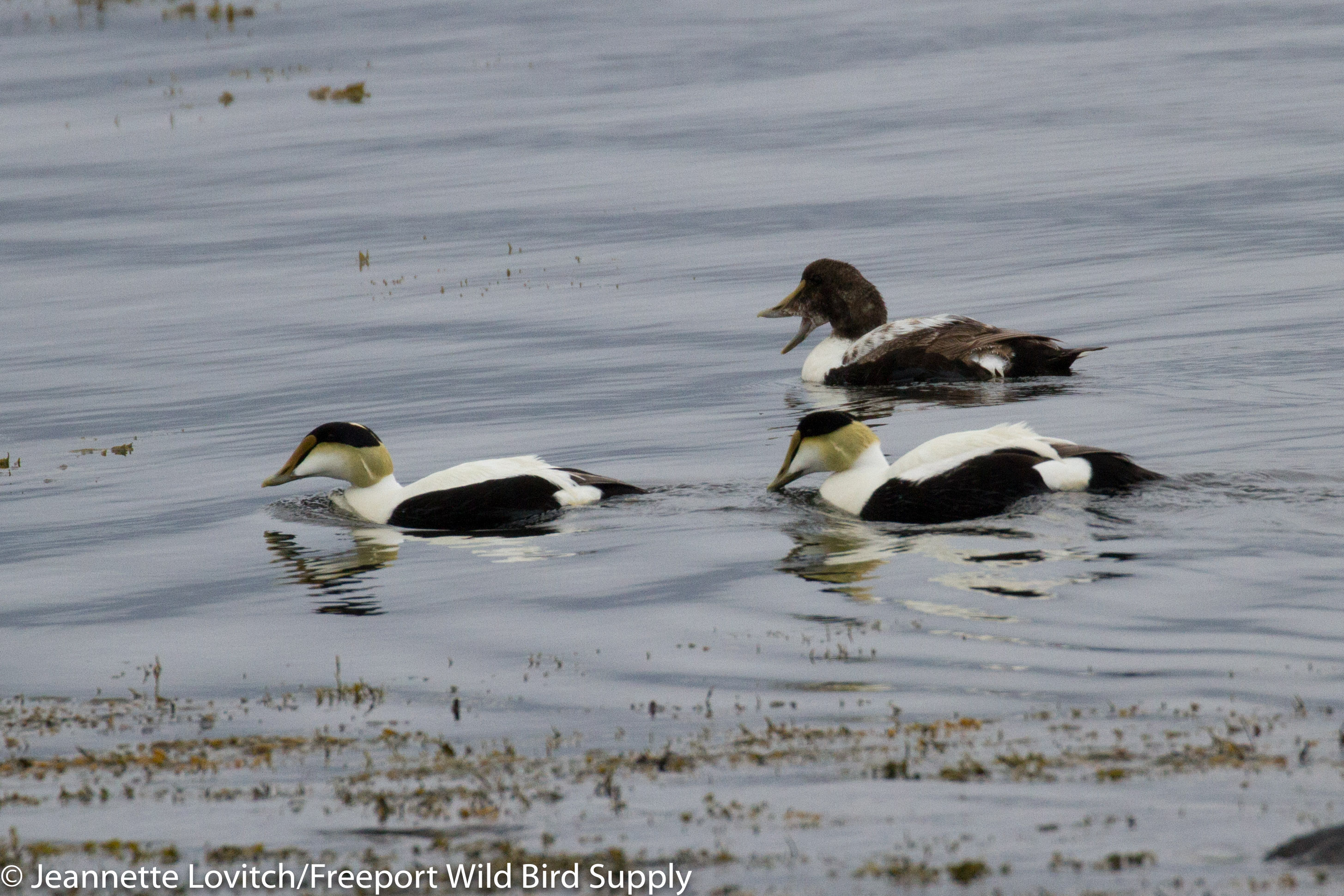
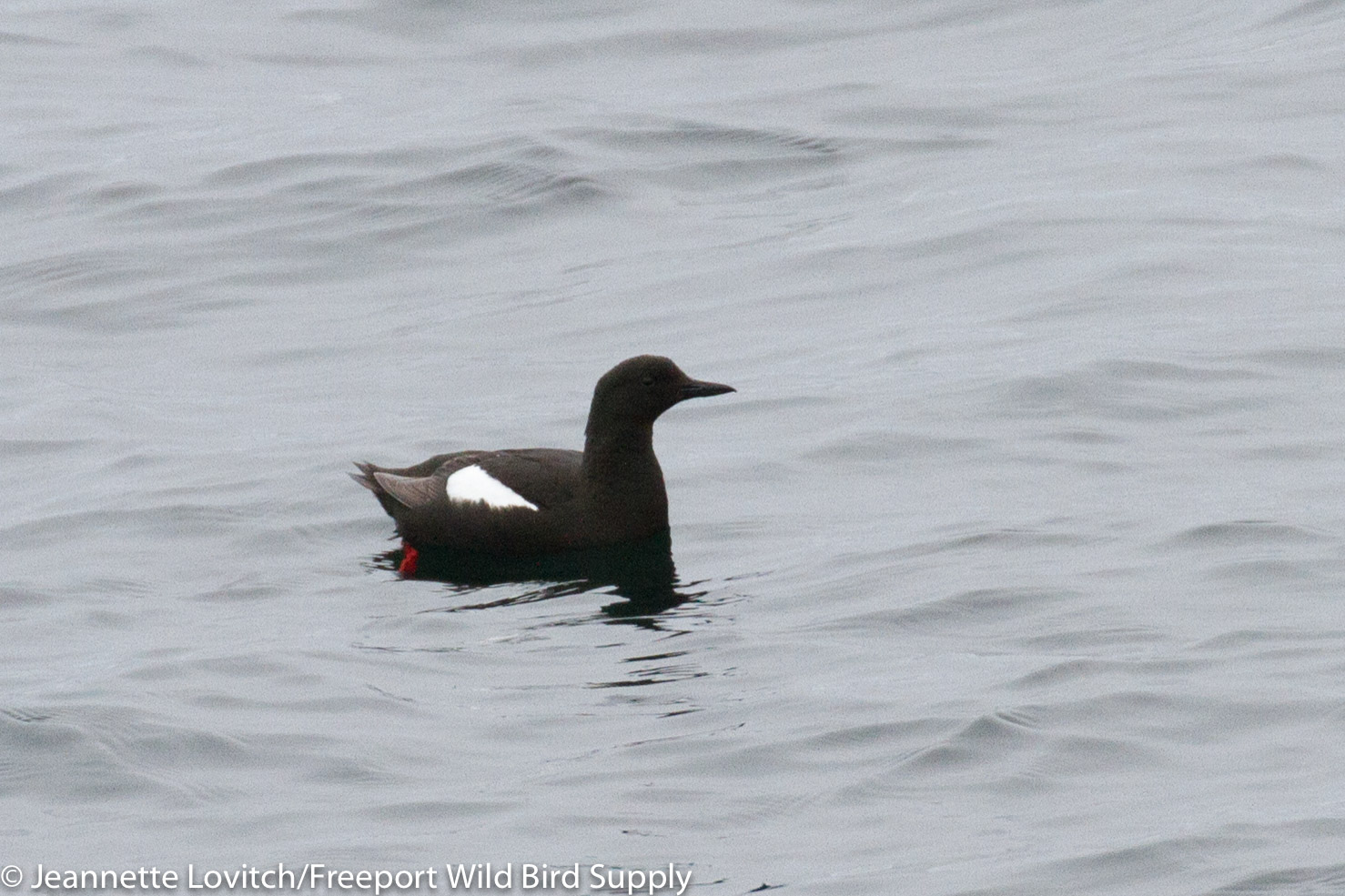
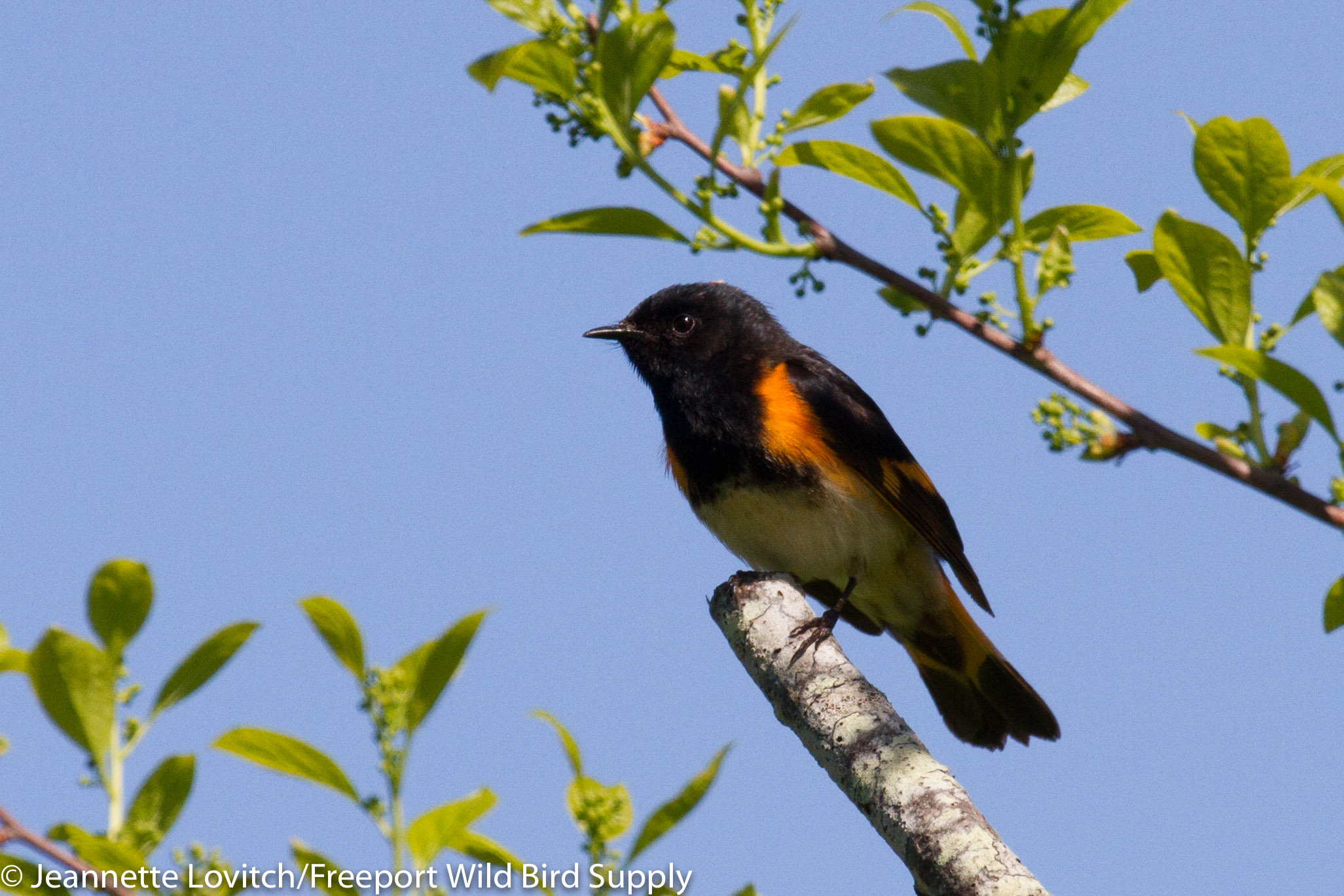
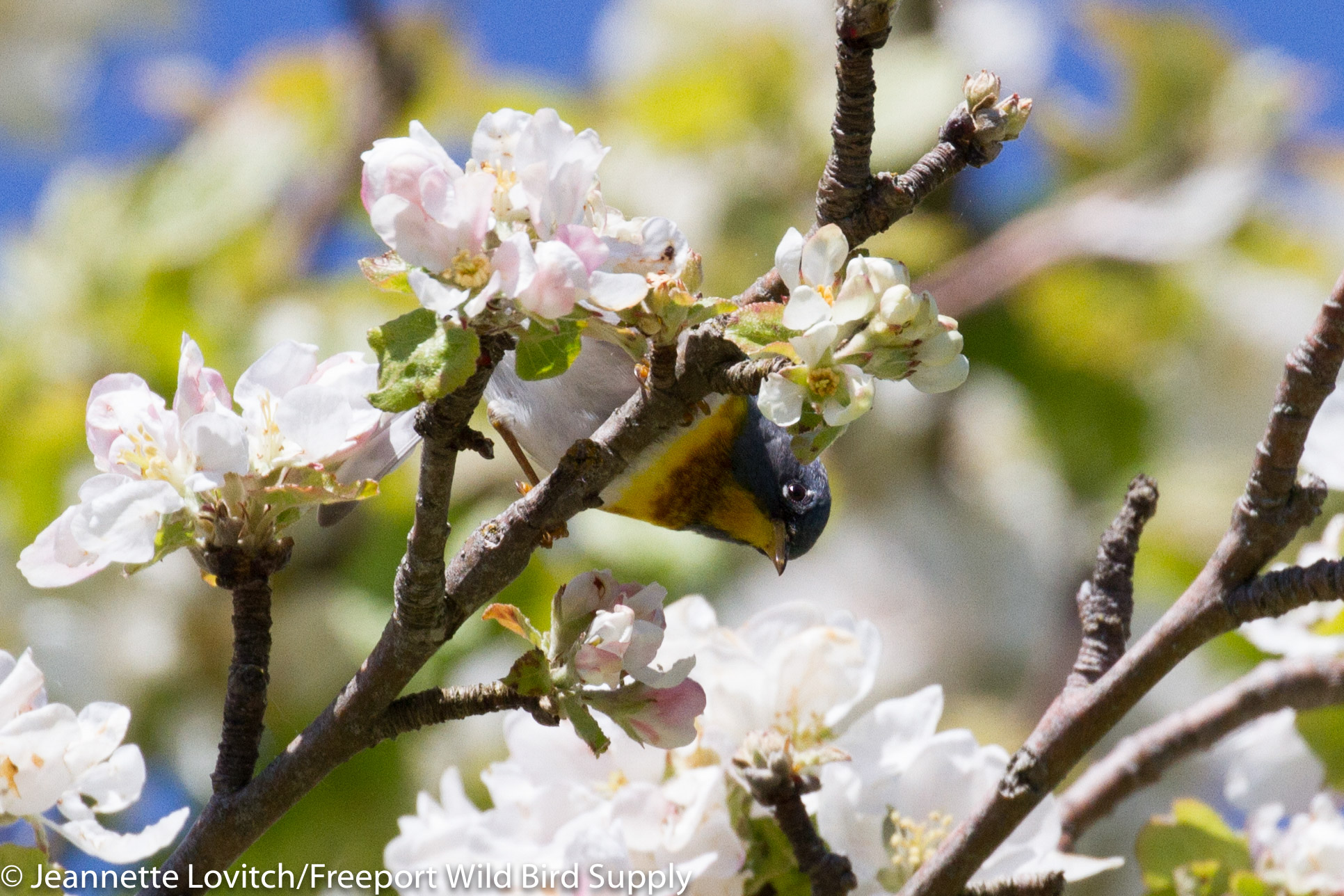
Common EidersBlack GuillemotAmerican RedstartNorthern ParulaRing-necked Pheasant. No need to work on primary projection beyond the tertial step to identify this one!
Furthermore, on the Hardy Boat back to New Harbor, we added 2 Red-necked Phalaropes (personal first-of-year) and a Razorbill. With those 13 species, we had a total of 88 species over the 5 days, with a couple of more “quality” birds and that would have produced a much more respectable tour list! But alas.
So yes, by Monhegan standards, it was a pretty slow weekend. In fact, the 75 species on Friday through Monday was a record low (by two) for this annual tour. 16 species of warblers wasn’t too bad (last year’s soaker only produced 10), and we had some great birds. We also had such good looks at so many things, especially those – like Black-billed Cuckoo – that just don’t give such great looks very often, let alone daily!
Here is the official trip list (not including the 13 additional species from Monday afternoon through Tuesday evening when we got off the boat in New Harbor):
This Sandhill Crane was more than a little shocking as it arrived on the island and flew right over several us eating lunch before landing on the shoreline. It was a most unexpected “island-bird” for me, and a real special treat for my client.
If I was going to top last week’s spectacular week of migration, it was going to require a visit to Monhegan. And Monhegan definitely delivered, even if the largest number of birds this week moved over the weekend, before I arrived on the island. Here are my observations of note over the past seven days.
17 species of warblers, led by 16 Common Yellowthroats and 9 American Redstarts, but also including 5 Bay-breasted Warblers, Florida Lake Park, Freeport, 5/21 (with Saturday Morning Birdwalk group).
1 Yellow-bellied Flycatcher (FOY), Florida Lake Park, 5/21 (with Saturday Morning Birdwalk group).
15 species of warblers, led by 11 Common Yellowthroats and 8 Yellow-rumped Warblers, Florida Lake Park, 5/22 (with clients from Maine).
10 Common Nighthawks (FOY), our yard in Pownal, 5/22.
~40 Short-billed Dowitchers, flying high over our Pownal yard on 5/22 (with Jeannette). Interestingly, the third record for our yard of high spring migrants.
Three days on Monhegan with a client from India on 5/23 through 5/25 yielded 91 species and 18 species of warblers. Monday was incredible, with lots of diversity, lots of quality, and just incredible looks at everything. Blackpoll Warblers were by far the dominant migrant each day, as expected. Here are our daily highlights:
5/23:
1 SANDHILL CRANE – I almost dropped my hand pie as this came cruising over the Trailing Yew, circled the meadow, and landed on the shoreline at a tidepool where observed by almost everyone on the island – birders and bird-curious alike. Photos above.
1 immature, I believe continuing, BROAD-WINGED HAWK.
1 Yellow-billed Cuckoo (FOY)
At least 4-5 Black-billed Cuckoos, including this incredible observation of such normally shy birds!
1 imm. male ORCHARD ORIOLE
1 EASTERN WHIP-POOR-WILL (FOY, and a self-found island bird from my bedroom!)
5/24:
1 continuing SANDHILL CRANE. In the meadow in early morning before reportedly being observed later flying toward the mainland.
1 imm. male Orchard Oriole
1 continuing EASTERN WHIP-POOR-WILL (with client, Kristen Lindquist, Bill Thompson, and Jess Bishop).
1 leucistic (and nearly pure-white but with normal bare parts) Herring Gull.
5/25:
1 female ORCHARD ORIOLE
1 Green Heron (FOY)
1 Wood Thrush
Our first pelagic with our partners Cap’n Fish’s Cruises out of Boothbay Harbor will run on Monday, June 6th. It includes a visit to Eastern Egg Rock and chumming deeper offshore. Info here: https://www.freeportwildbirdsupply.com/pelagics
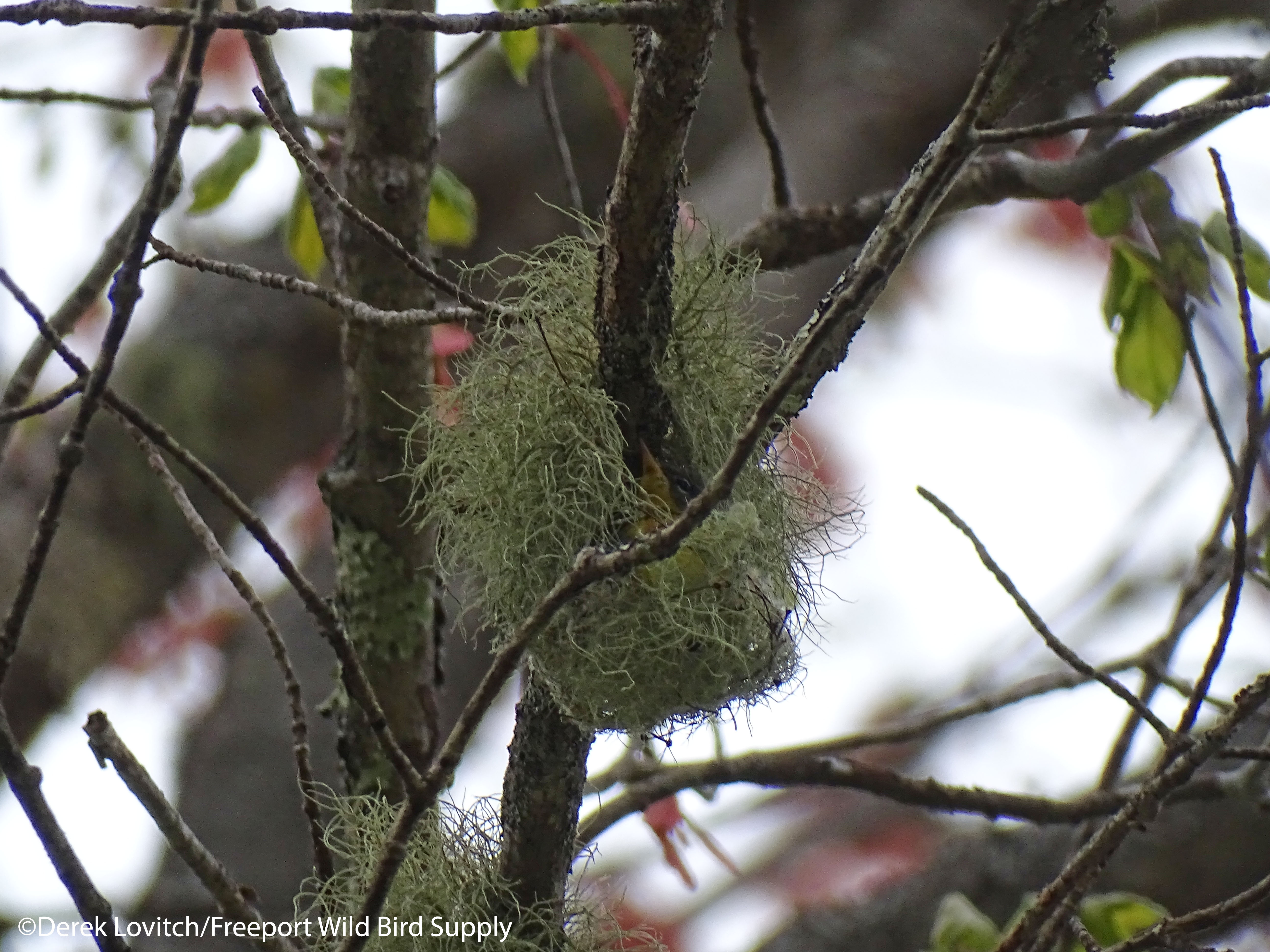
I found a Northern Parula building a nest at Florida Lake Park last week, and was enthralled with watching its progression.
Confidently identifying Gray-cheeked vs Bicknell’s Thrushes on migration is always a challenge, but this bird I found at Biddeford Pool was vocalizing incessantly. It even posed – as far as these reclusive migrants go – for some snapshots. I believe that this is my first confirmed Bicknell’s Thrush on the coastal plain of Maine during spring migration,
For much of this spring, I’ve been lamenting about a “slow” week of migration, or a “trickle” of migrants, etc. That was NOT the case this week, as the floodgates finally opened. In fact, it was an incredible week of birding. The northern limits of a huge fallout greeted me on Monday morning. And then there was Friday at Biddeford Pool. It was epic. Unforgettable.
My observations of note over the past eight days included:
1 Blue-gray Gnatcatcher, Evergreen Cemetery, Portland, 5/15 (with Down East Adventures Spring Songbird Workshop group).
20 species of warblers, including 1 continuing Louisiana Waterthrush and 6 Bay-breasted Warblers (FOY), and led by 25+ Northern Parulas and 20+ Black-and-white Warblers, Morgan Meadow WMA, 5/16 (with Jeannette). Incredible morning; definitely the best morning of spring to date. Interestingly, this appeared to be about the northern limits of what was a significant coastal fallout from at least Eastern Massachusetts into southern Maine.
17 species of warblers, led by 18 Common Yellowthroats and 17 American Redstarts, Florida Lake Park, Freeport, 5/17 (with client from Maine).
1 Ruby-crowned Kinglet (getting late), Florida Lake Park, 5/17 (with client from Maine).
16 species of warblers, led by 24 Yellow-rumped Warblers and 15 American Redstarts, Florida Lake Park, Freeport, 5/18 (with Jeannette). This was the first morning this season where there were more female than male passage migrants.
16 species of warblers, led by 24 Common Yellowthroats and 22 Yellow-rumped Warblers, Florida Lake Park, Freeport, 5/19.
Biddeford Pool, FALLOUT, 5/20! This was insane. I was optimistic about conditions based on the overnight wind forecast and morning fog, but there was virtually nothing on the radar overnight. I almost didn’t go. I never expected to find this. Birds were everywhere. Every tree had warblers. Swainson’s Thrushes and Lincoln’s Sparrows were hopping around manicured lawns. I can’t even begin to explain how amazing it was, but here are some of the highlights as I covered East Point, the neighborhood, and the Elphis Pond trails. All of my numbers are extremely conservative, as I attempted to judge the movement of birds between parallel streets, etc.
20 species of warblers led by 53 Common Yellowthroats, 44+ American Redstarts, 44 Yellow Warblers, and 43 Magnolia Warblers. I know these numbers are particularly low.
Thrushes! 43 Swainson’s Thrushes (FOY) and 8+ Veeries, but also…
1 BICKNELL’S THRUSH – shocking migrant vocalizing incessantly on path to East Point. Was still calling 3 hours later. Voice recordings and poor photo above. Rarely detected in migration away other than Nocturnal Flight Calls, this might have been my first ever confirmation in spring along Maine’s coast. Seems a little early, too. Photo above.
1 GRAY-CHEEKED THRUSH (FOY). My settings were off on the camera and the overall tone of this bird is not accurate! When I looked down at the camera to adjust, it dropped out of site. Called once.
1 SUMMER TANAGER, near Elphis Pond. Quick fly-by, and no red seen. Confident there was little or red on the upperparts. Not seen well enough to know if this was the bird that had been continuing in the area for a while or a different, possible female.
1 male ORCHARD ORIOLE, Elphis Pond. Often singing.
Amazing quantities of usually-uncommon migrants, such as: 15 Lincoln’s Sparrows, 15 Bay-breasted Warblers, and 11 Canada Warblers.
Other good tallies included 17 Black-throated Blue Warblers, 13 Least Flycatchers, and 4-6 Scarlet Tanagers.
Personal First-of-years also included 2 Cape May Warblers, 9 Tennessee Warblers, 3 Philadelphia Vireos, along with 2 Roseate Terns off Ocean Ave.
The bird that got away: an intriguing Empid that suggested Acadian in a brief view along Orcutt Ave. Could not relocate.
Meanwhile, my list of personal “first of years” this week before the Biddeford Pool fallout included the following:
4 American Redstarts, Essex Woods and Marsh, Bangor, 5/13.
2 Bobolinks, Essex Woods and Marsh, 5/13.
1 Virginia Rail, Essex Woods and Marsh, 5/13.
5 Wood Thrushes, Evergreen Cemetery, Portland, 5/15 (with Down East Adventures Spring Songbird Workshop group).
1 Scarlet Tanager, Evergreen Cemetery, 5/15 (with Down East Adventures Spring Songbird Workshop group).
3 Red-eyed Vireos, Evergreen Cemetery, 5/15 (with Down East Adventures Spring Songbird Workshop group).
1 Black-crowned Night-Heron, Evergreen Cemetery, 5/15 (with Down East Adventures Spring Songbird Workshop group).
1 Canada Warbler, Morgan Meadow WMA, 5/16 (with Jeannette).
1 OLIVE-SIDED FLYCATCHER (a little on the early side), Morgan Meadow WMA, 5/16 (with Jeannette).
4 Eastern Wood-Pewees, Morgan Meadow WMA, 5/16 (with Jeannette).
2 Blackpoll Warblers, Morgan Meadow WMA, 5/16 (with Jeannette).
6 Bay-breasted Warblers, Morgan Meadow WMA, 5/16 (with Jeannette).
1 Alder Flycatcher, Florida Lake Park, Freeport, 5/17 (with client from Maine).
20+ Semipalmated Sandpipers, Pelreco Marsh, 5/17 (with client from Maine)
This Black-and-white Warbler was among the multitudes of cooperative birds at Biddeford Pool on the 20th. But apparently, I didn’t take photos of any of the colorful ones! I was also having so much fun that for the most part, I forgot I even had a camera.
This distantly phone-scoped image doesn’t do this bird justice, but here is a Snowy Owl…observed in June…in Maine…while wearing a t-shirt. This was a treat for both me and my clients visiting from Arizona on 6/25 (see below).
My observations of note over the past eight days included the following:
1 immature male/ female pair of ORCHARD ORIOLES, Green Point WMA, 6/21 (with Jeannette). Clearly paired up but no breeding behaviors noted.
1 immature male ORCHARD ORIOLE, 1 Yellow-throated Vireo (probably my first here), and 1 Blue-gray Gnatcatcher, Fort Foster, Kittery, 6/22.
141 immature Bonaparte’s Gulls, Fort Foster, 6/22. The largest number of Bonies in the summer that I have seen in the south coast in a number of years.
1 Blue-gray Gnatcatcher, Seapoint Beach, Kittery, 6/22.
1 continuing SNOWY OWL, 6/25: Observed (with clients from AZ) from the Colony Beach parking lot in Kennebunkport, looking across the river to a house behind Gooch’s Beach, Kennebunk (new location; photos above).
1 out of place male American Kestrel, atop a cell phone tower in downtown Biddeford from Palace Diner, 6/25 (with clients from AZ).
1 continuing proposed TRICOLORED HERON X SNOWY EGRET X LITTLE EGRET HYBRID, Pelreco Marsh, Scarborough Marsh, 6/25 (with clients from AZ).
One of the highlights for me this week, however, was non-bird: 20+ Gray Seals feeding very close to Fort Popham in Phippsburg on 6/20 (with client from CT). While Harbor Seals are frequent here in the summer, I don’t recall seeing so many Grays inshore in this or other nearby areas.






















 Maine Birding Field Notes