Tag Archives: Nova Scotia

Gulf of Maine Pelagic Birding by Cruiseship, Oct-Nov 2024.

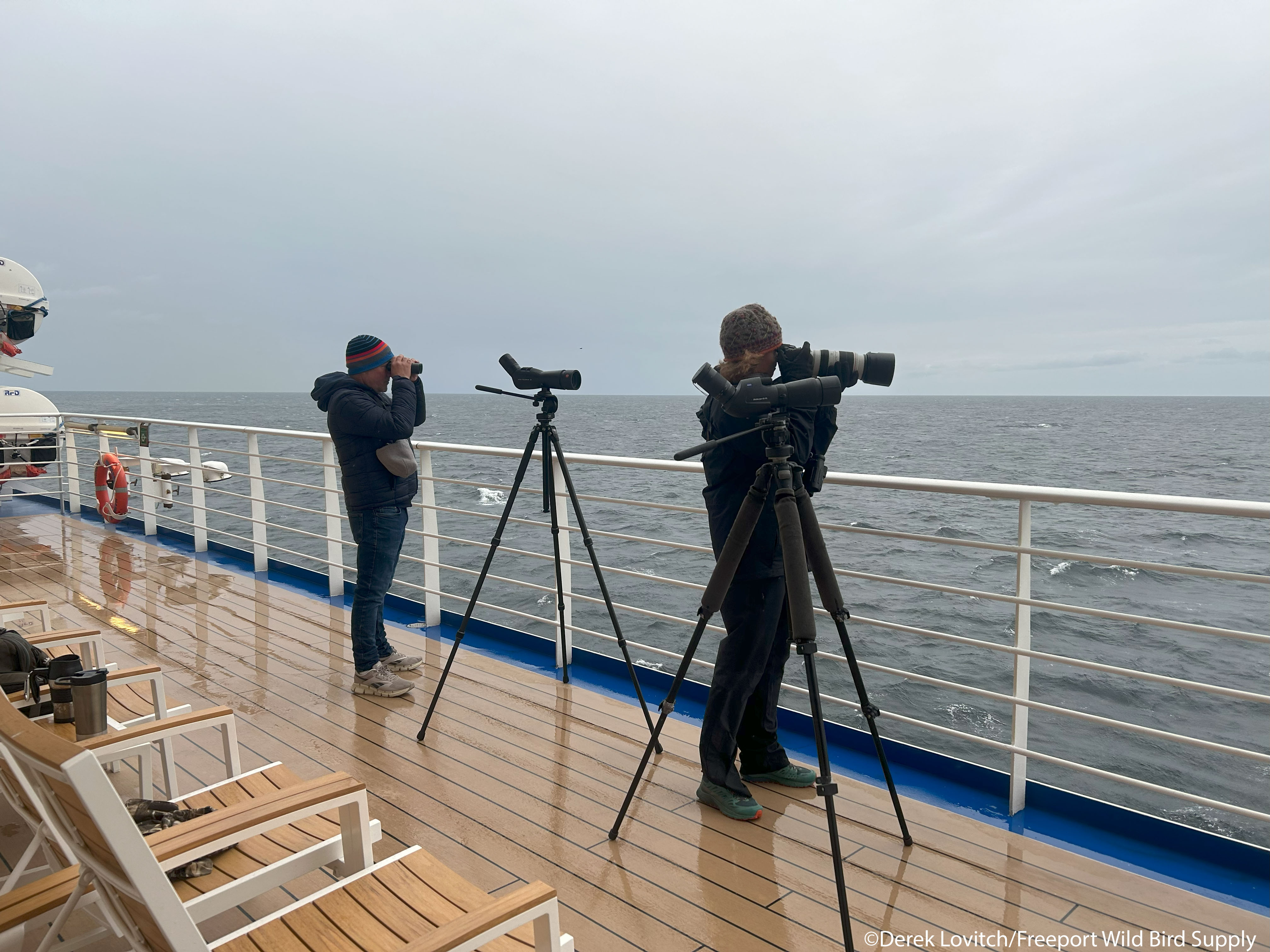
Cruise ships are big, stable platforms that allow for pelagic birding in comfort and with the use of spotting scopes!

In 2019, Jeannette and I took a cruise through the Gulf of Maine and northwestern Atlantic Ocean in the hopes of finding Great Skuas in particular. It was wildly successful, and if we could repeat this success, perhaps there would be a cruise-ship-based tour to offer. At least it would be more comfortable than last week’s attempt!

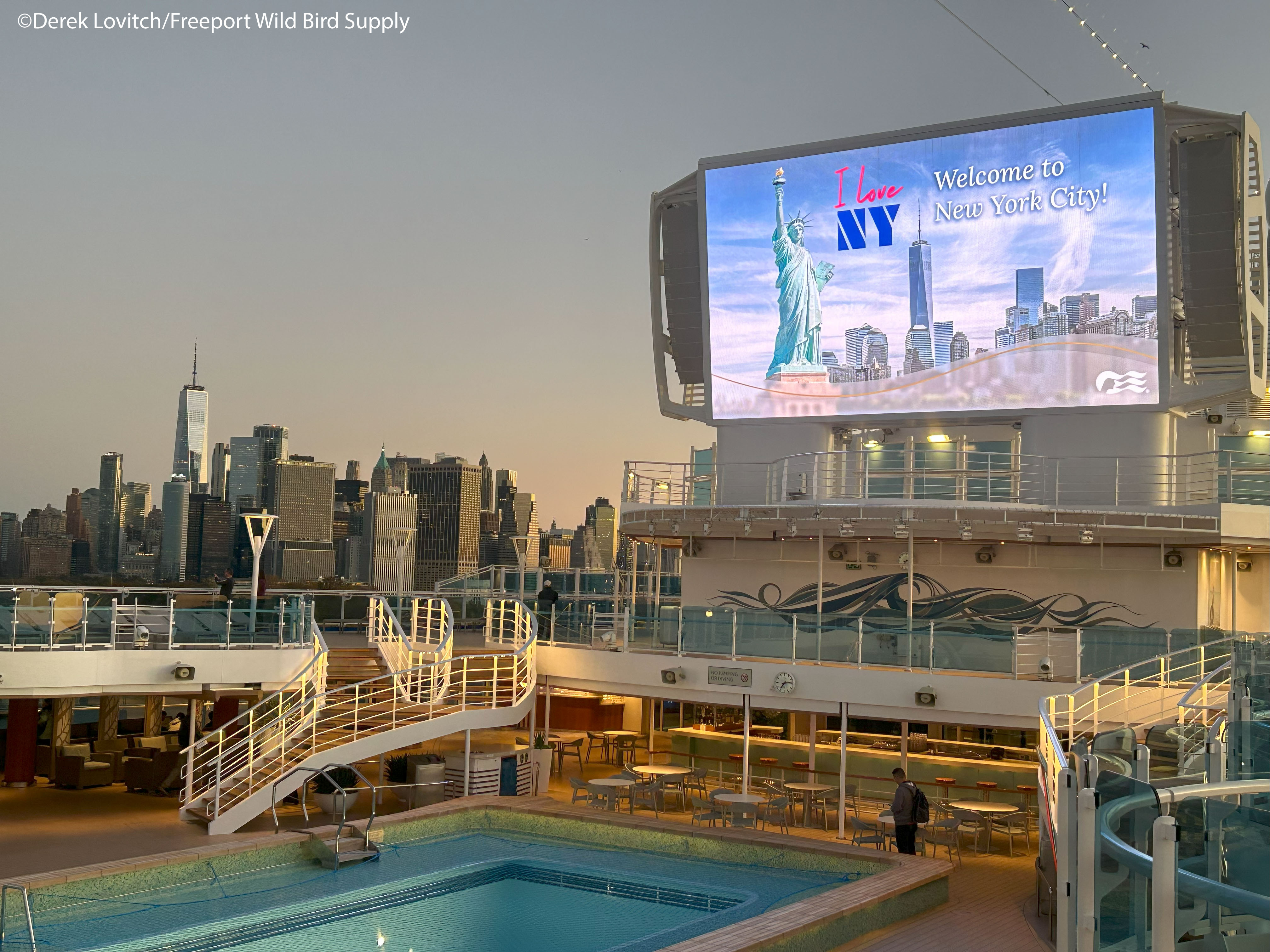
Therefore, on the evening of 10/26, Jeannette and I boarded Princess Cruises’s Enchanted Princess out of Brooklyn, New York. Our hope was to replicate the success of our 2019 trip. We were planning on a second scouting trip in the fall of 2020, but then COVID.

After finally feeling ready to consider a cruise again, we found the itinerary had changed, and we would need to spend seven days to get two full days offshore..we even needed to come back home first! But alas, we had pandemic-era credit that was going to expire, so off we went. Is this a reliable way to see Great Skuas in North America? Could I document a Barolo’s Shearwater this time?

We started our birding, however, at Brooklyn’s Greenwood Cemetery, home of this massive Monk Parakeet colony.

We departed New York Harbor with about an hour of usable daylight, picking up a single Cory’s Shearwater and plenty of Northern Gannets.

Screenshot

Arriving off Newport before dawn the next morning, we got the first shuttle to town, where our friends Bill and Jess picked us up for a lovely day of birding (Clay-colored Sparrow, Orange-crowned Warbler, late Nashville Warbler) before returning to the boat. About 45 minutes of deck time produced 8 Cory’s and a single Great Shearwater.

Newport arrivals.
“Western” Palm Warbler at Sachuest NWR.

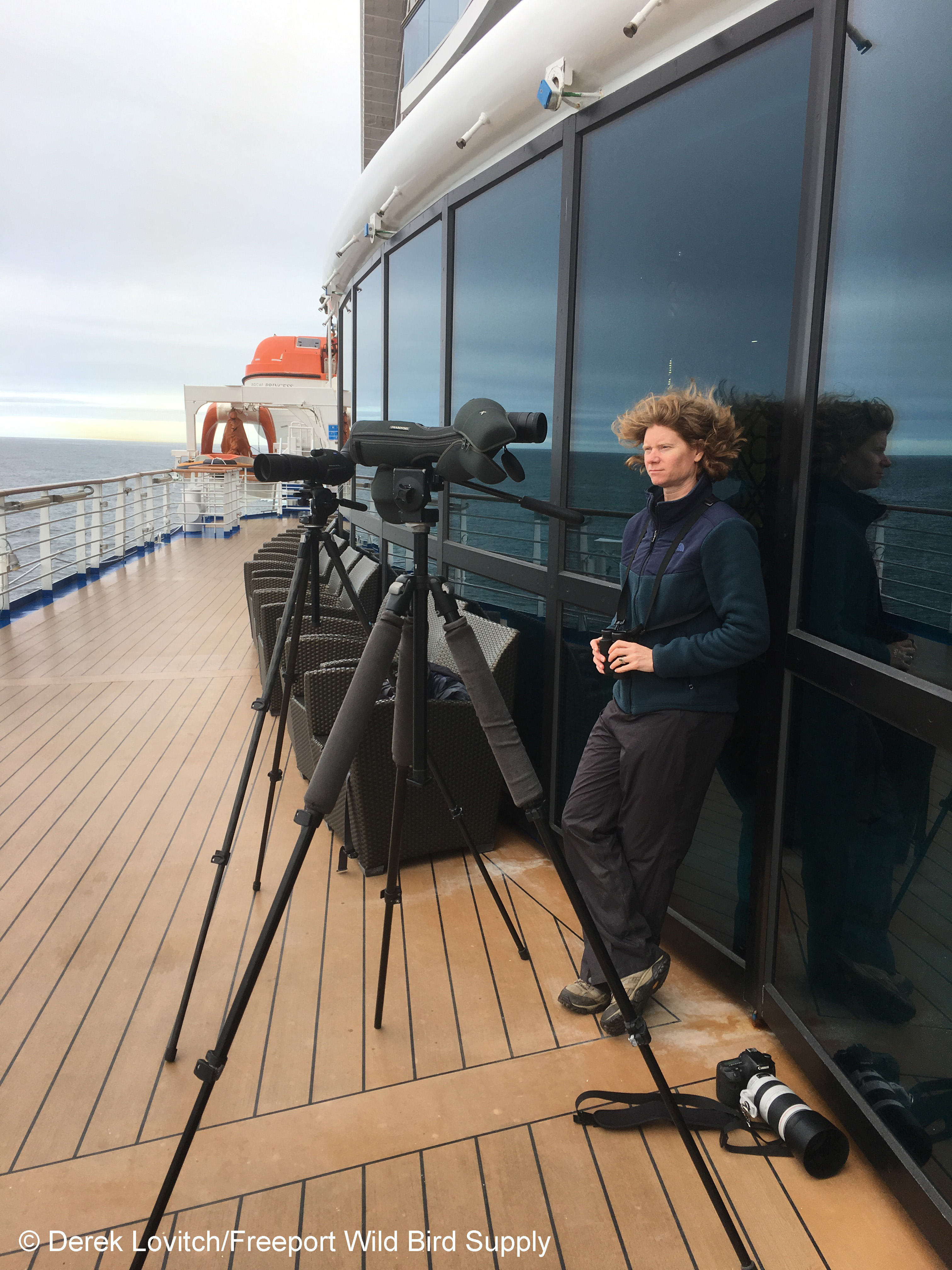
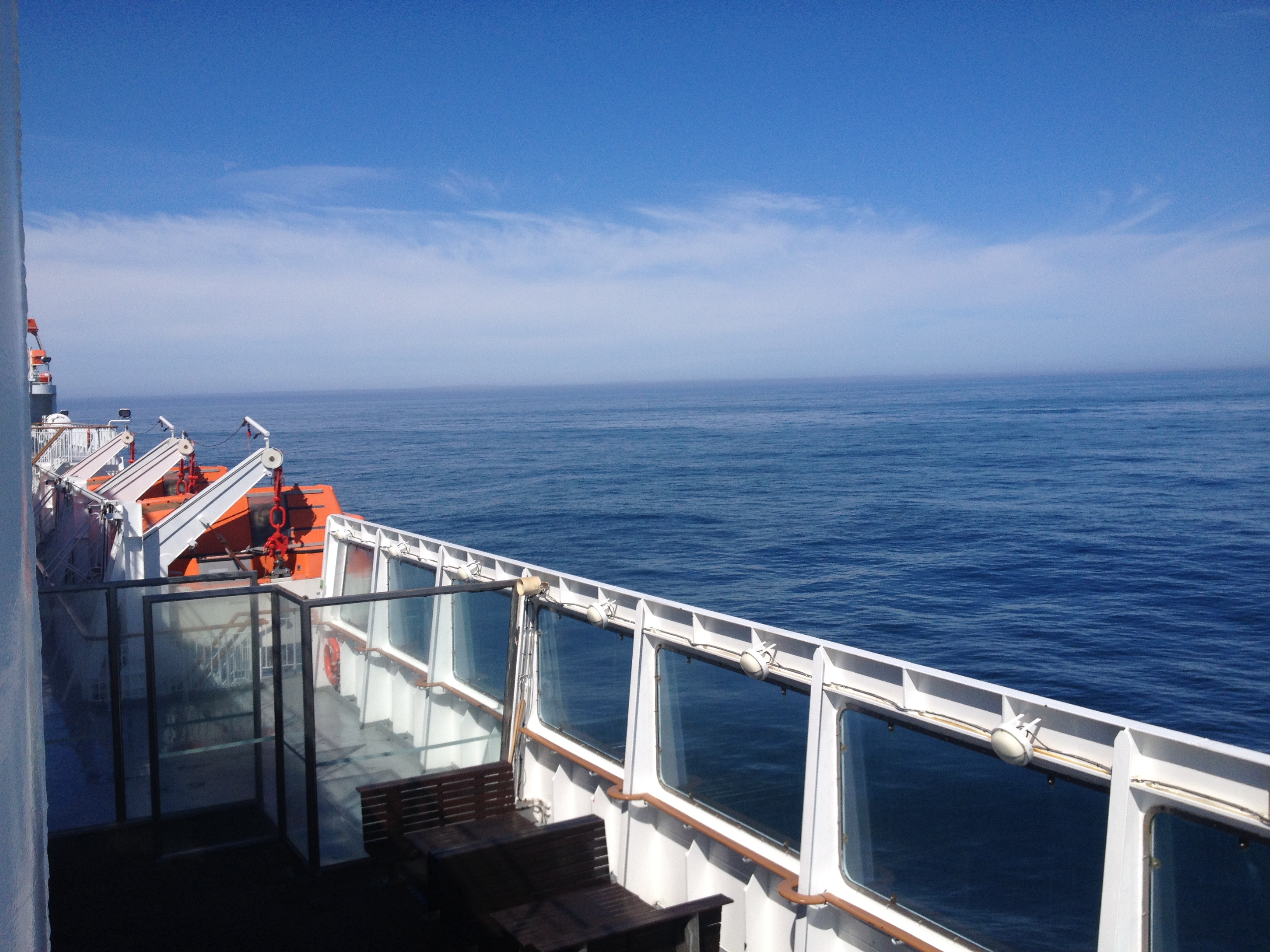
Unfortunately, this particular boat offered less-than-ideal viewing opportunities compared to our first trip, with the best deck space on Deck 7 (a great height) but way too aft. Even with our scopes on the steady platform, this was going to be a challenge.

Approaching Boston on the morning of 10/28, we checked the decks for passerines (none) before taking our place on Deck 7. There were a lot of Northern Gannets, 4-5 Cory’s Shearwaters close enough to identify as borealis, and a pod of Atlantic White-sided Dolphins. A Song Sparrow flew aboard just outside the outer harbor islands, but before that, our first real surprise of the trip: an American Woodcock appearing from the north and cruising alongside the length of the boat before disappearing. That’s not a “pelagic” we expected!

We birded Boston’s Greenway a bit, but returned to the boat well after dark. Sailing slowly overnight, we returned to Portland (the original itinerary had us visiting Bar Harbor), where a long, thorough check of the Eastern Promenade yielded two Orange-crowned Warblers and a very late Red-eyed Vireo.

Darkness reached us a tantalizingly-short distance to Cash’s Ledge, so we retired to rest up for the big day at sea tomorrow (finally!). 
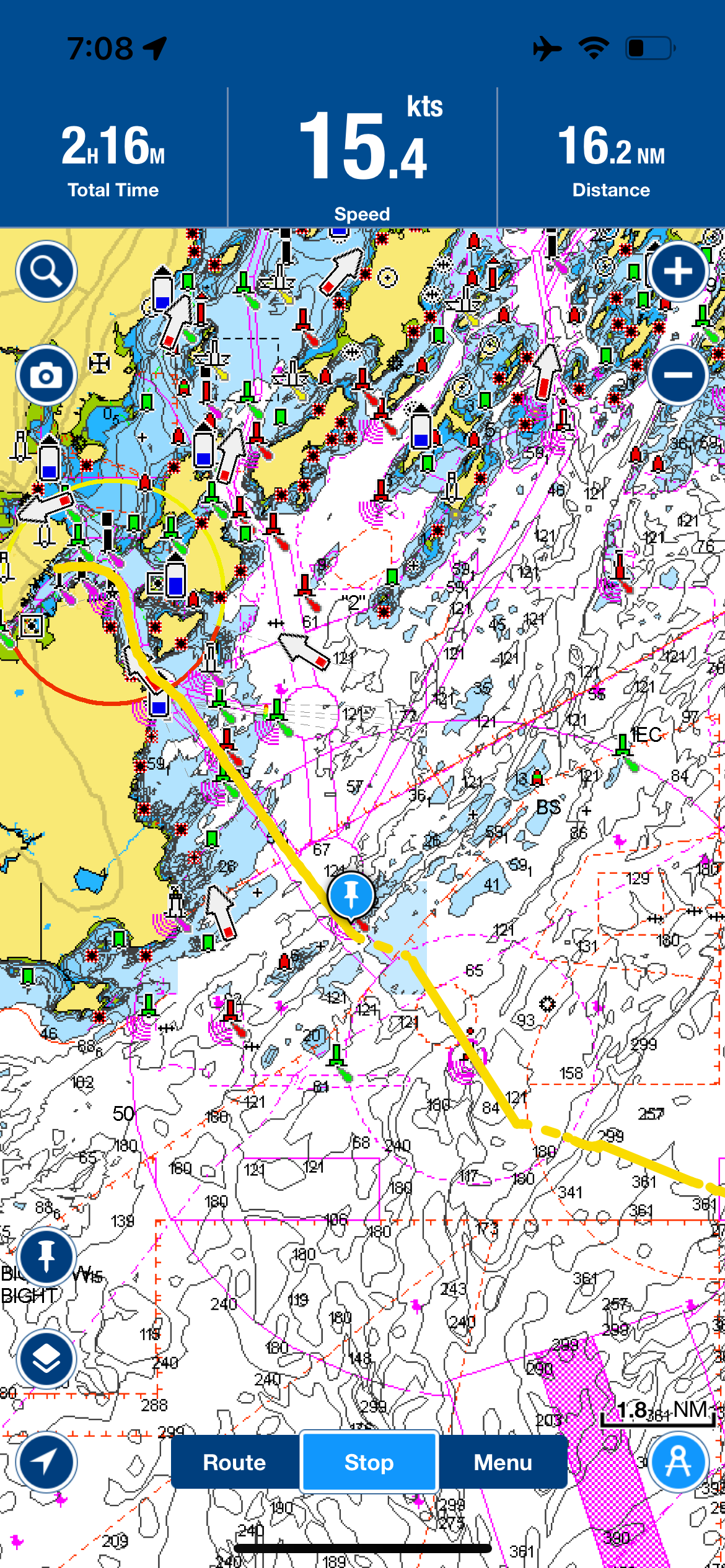
Waking up in Maine waters about 16.5 nautical miles southeast of Mt Desert Rock, I stepped outside well before first light at 6:05am. I immediately texted Noam, the other birder on board that we rapidly had become friends with, and I hustled Jeannette outside. With some drizzle arriving ahead of approaching light rain, we had ourselves a fallout!
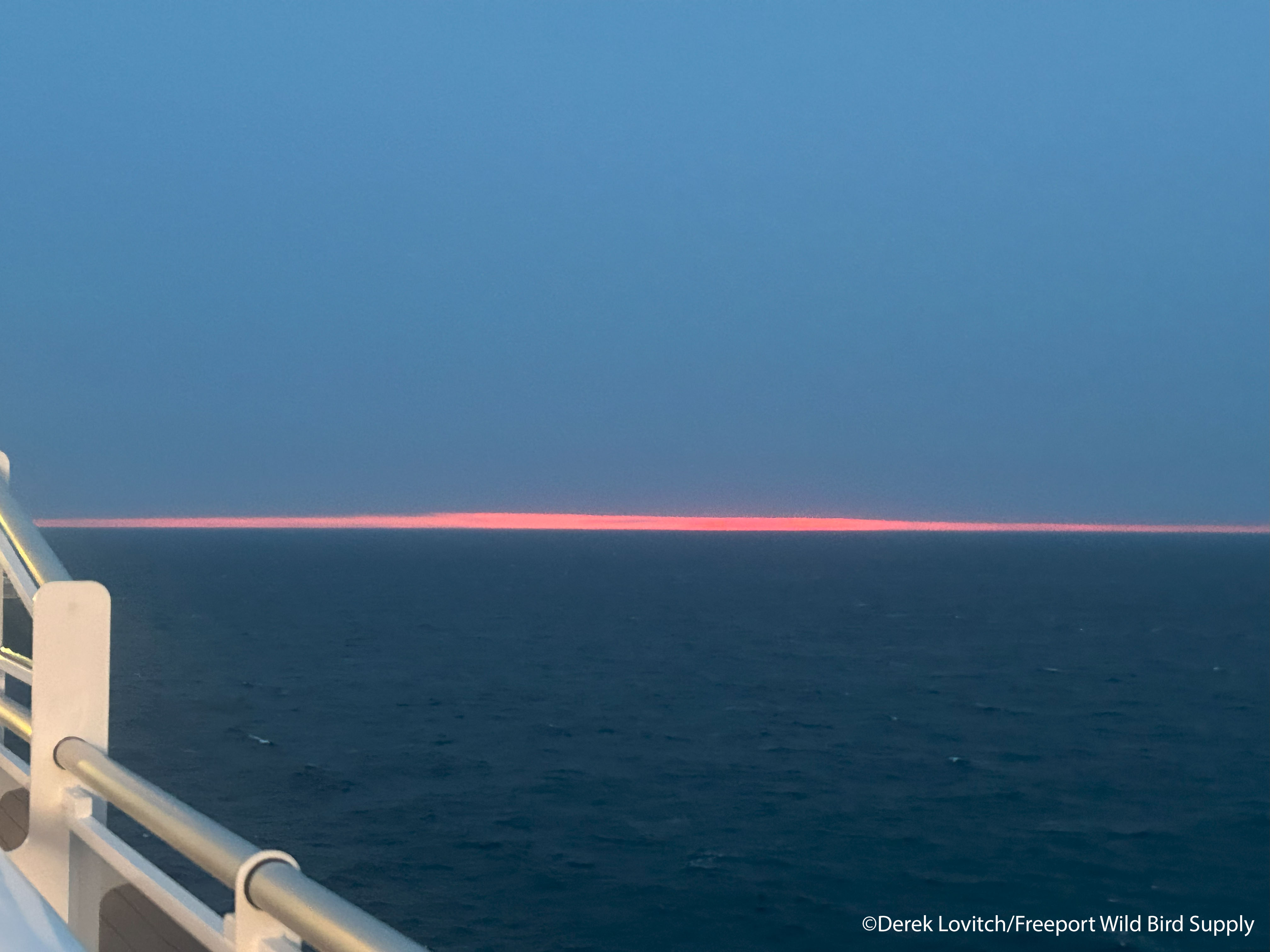
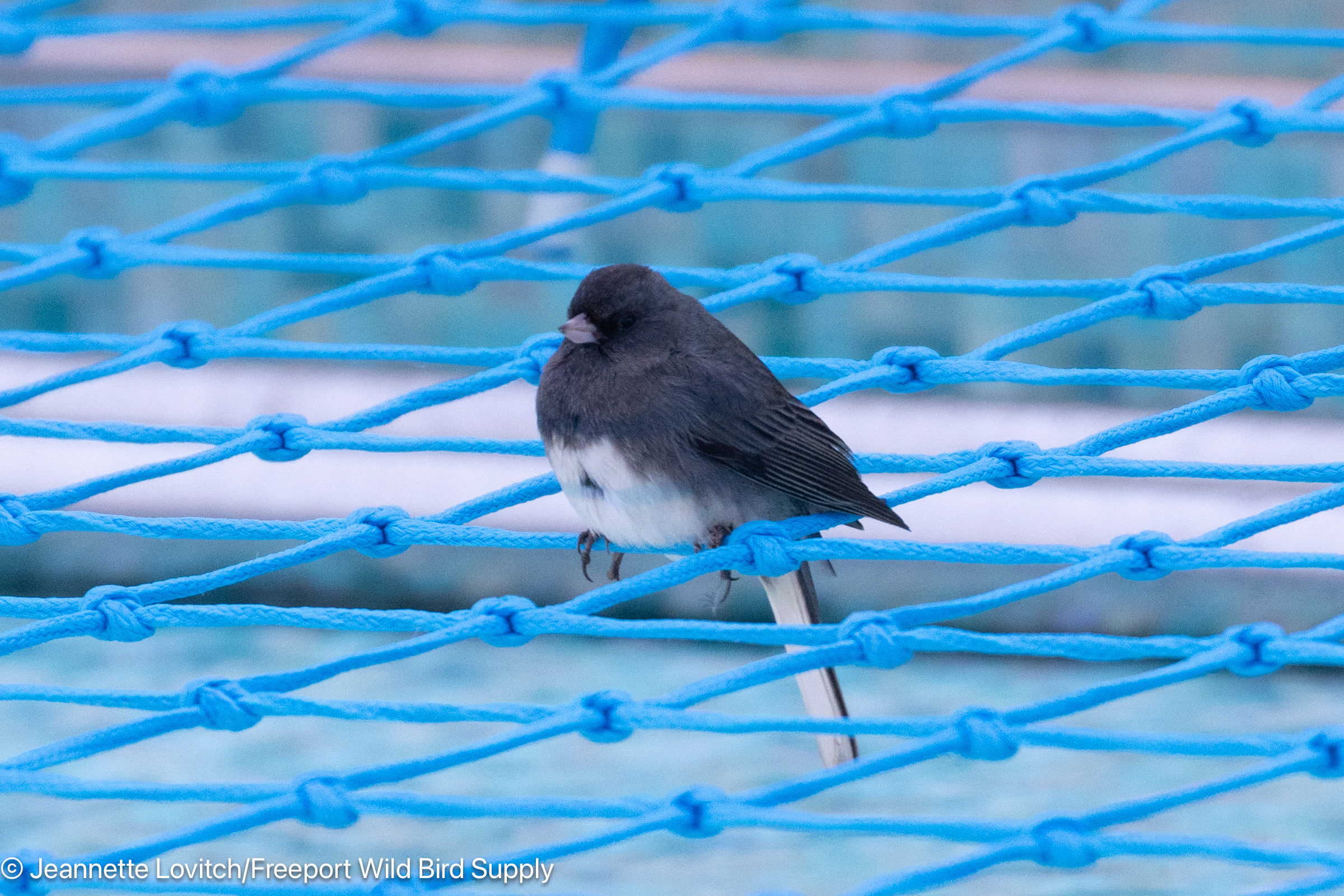
Unexpected considering there were little to no birds on the Maine radars overnight, and with a south wind through most of the night, I was surprised to immediately hear the flight calls of several Yellow-rumped Warblers. Sparrows were scattered about on the open decks. Noam and I had to usher a Rusty Blackbird out of a foyer, while Jeannette had to steer a Dark-eyed Junco down a hallway.
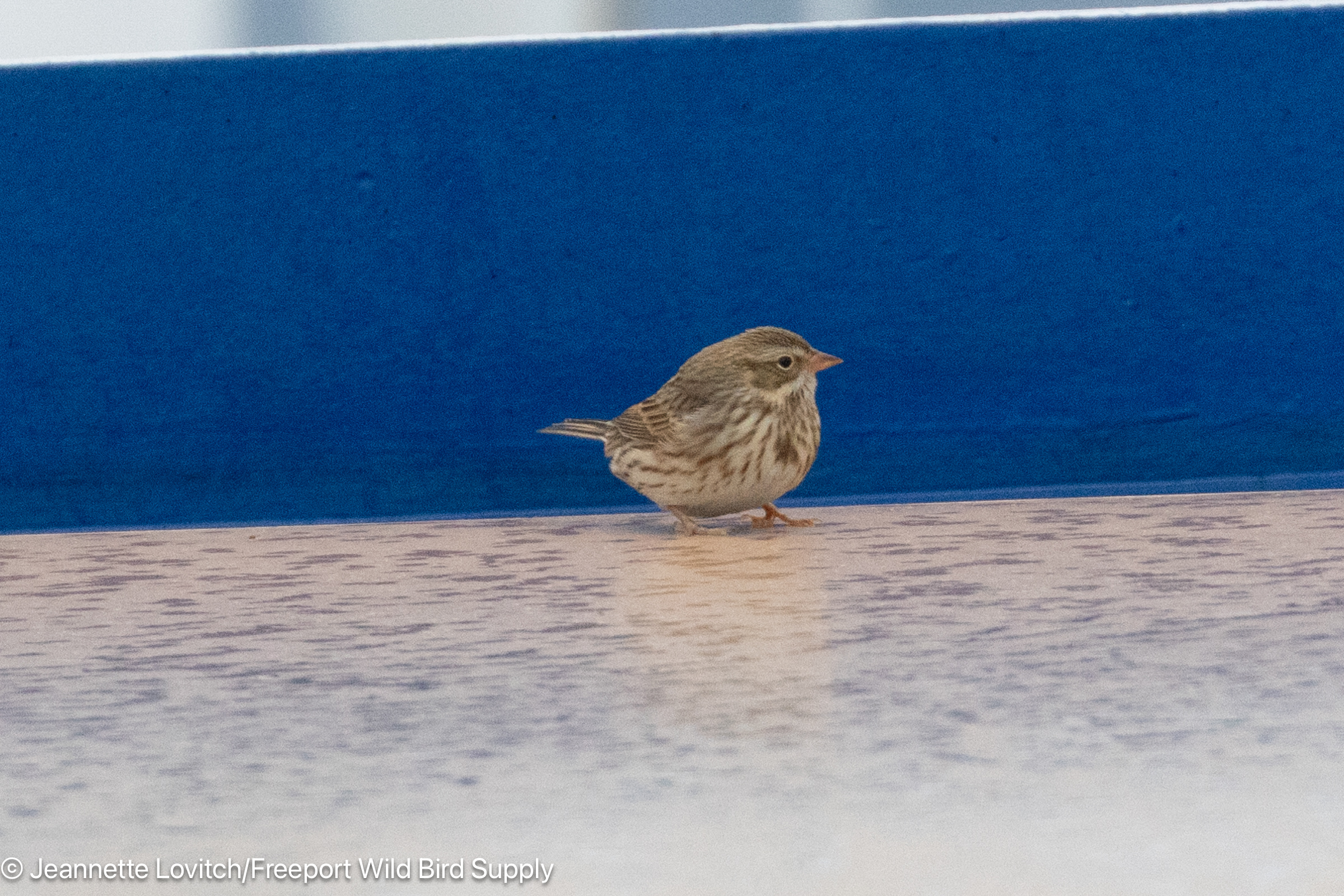
“Ipswich” Savannah Sparrow – that was an unexpected migrant, but makes sense considering we were southwest of Sable Island!

Clearly disoriented by the obnoxiously superfluous lighting of the ship, dozens of birds were around…often being flushed by now-awakening crew and passengers. Luckily, few birds seemed to be in dire straits – only one Yellow-rumped Warbler looked to me to be thoroughly exhausted, thankfully. In fact, most birds were leaving the boat as the sun rose and they were able to reorient themselves. While some birds seemed to arrive in the 15 or so minutes after sunrise, just about all passerines had departed the boat by 7:30 or so.

This photo, taken from off Eastern Point in Gloucester, MA the night before shows just how bright these ships are, and how disorienting they can be to birds.

With birds circling the boat before dawn, calling continuously, and others hiding in corners before being flushed to another corner, it was tough to count, but I estimated and counted a bare minimum of 8 Yellow-rumped Warblers, 8 American Robins (mostly overhead), 7 European Starlings (surprisingly), 6+ Dark-eyed Juncos, 2 Purple Finches, 2 fly-over American Pipits, 2 Savannah Sparrows, and one each of Palm Warbler, Snow Bunting, White-throated Sparrow, Cedar Waxwing, and Rusty Blackbird. Additionally, Noam photographed a Pine Warbler.

The three of us were in place on Deck 7 by 7:30, but the passerine show continued. A flock of 12 Red-winged Blackbirds flew by, while a flock of 14 American Robins joined by two more red-wings flew alongside the boat for several miles later in the morning before overtaking us and heading back to Nova Scotia.

Throughout the day, other passerines appeared and disappeared, some of which could easily have been sheltering out of sight somewhere inaccessible on the boat. These included a few more robins, 3+ Yellow-rumped Warblers, 2 Dark-eyed Juncos, and one each of Palm Warbler, Song Sparrow, Cedar Waxwing, Snow Bunting, American Pipit, and Lapland Longspur.

American Pipit
Harlequin Duck (L) with Black Scoters

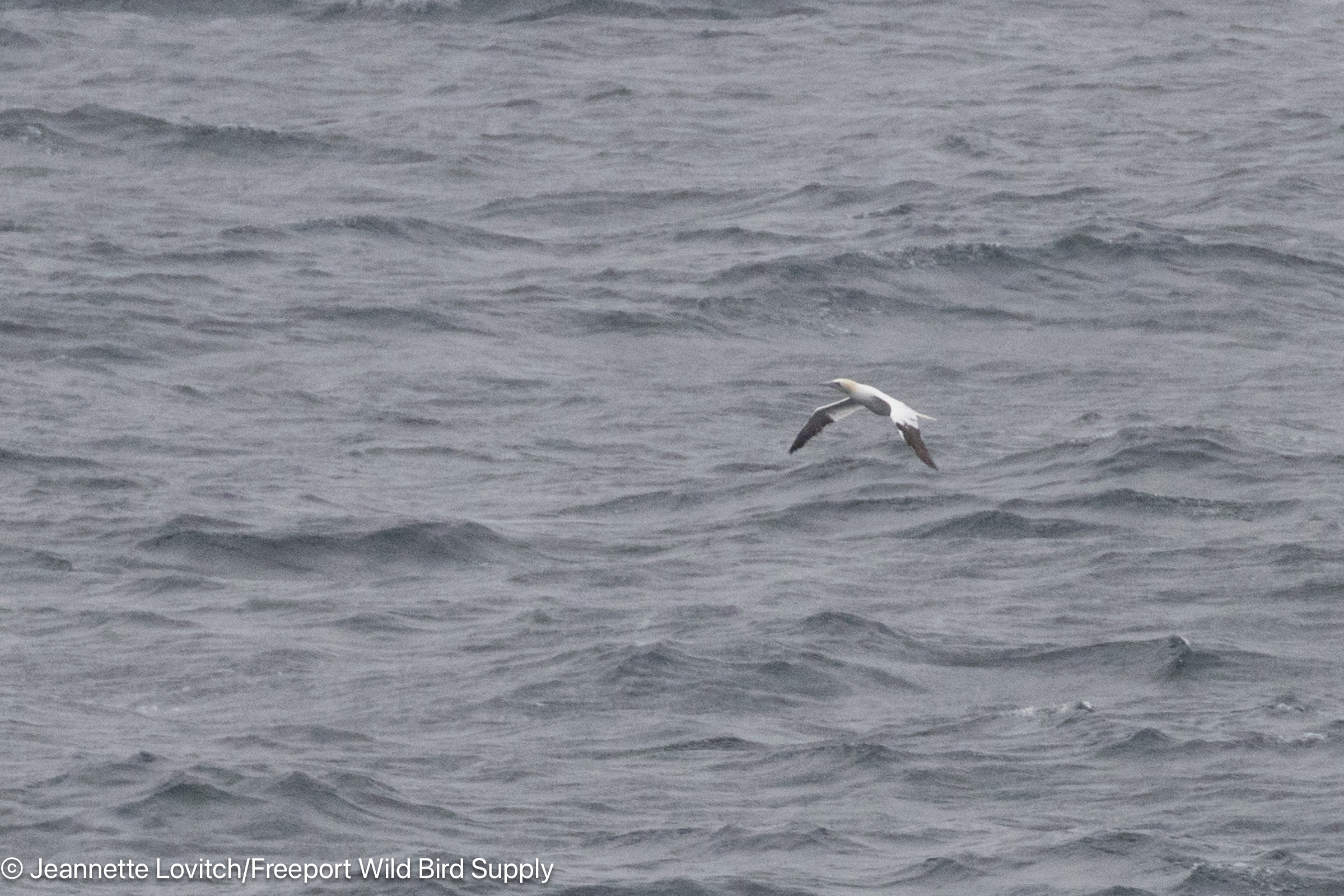
But this was a seabird trip, and so we remained vigilant over the water. While we only had a few minutes in Maine waters once we began our vigil, the rest of the day was productive overall, although the afternoon was quite slow. As we passed the southern tip of Nova Scotia (we even spotted Seal Island Light that we were lucky enough to visit with a group of birders about 20 years ago), we finally called it quits at 5:45 pm when cloud cover accelerated the falling of darkness.
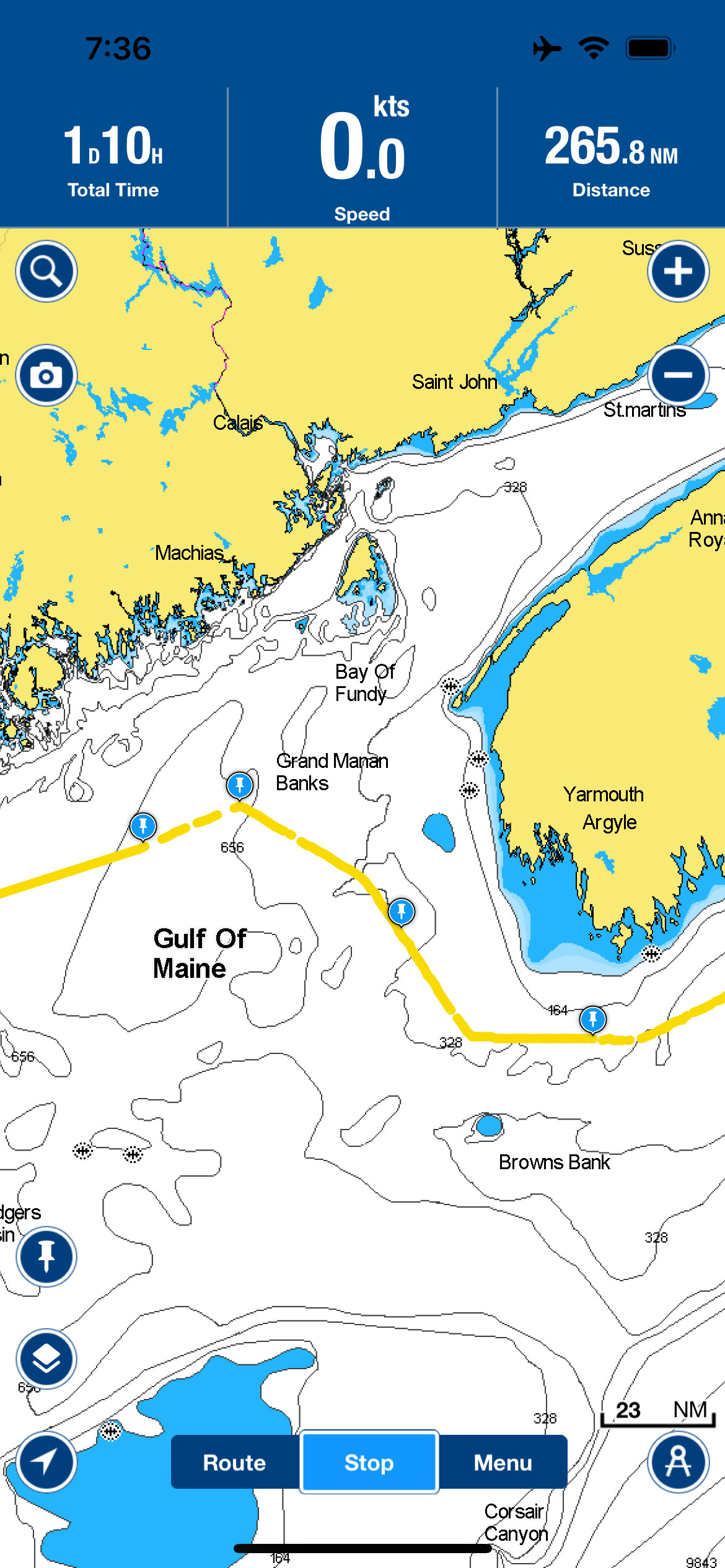
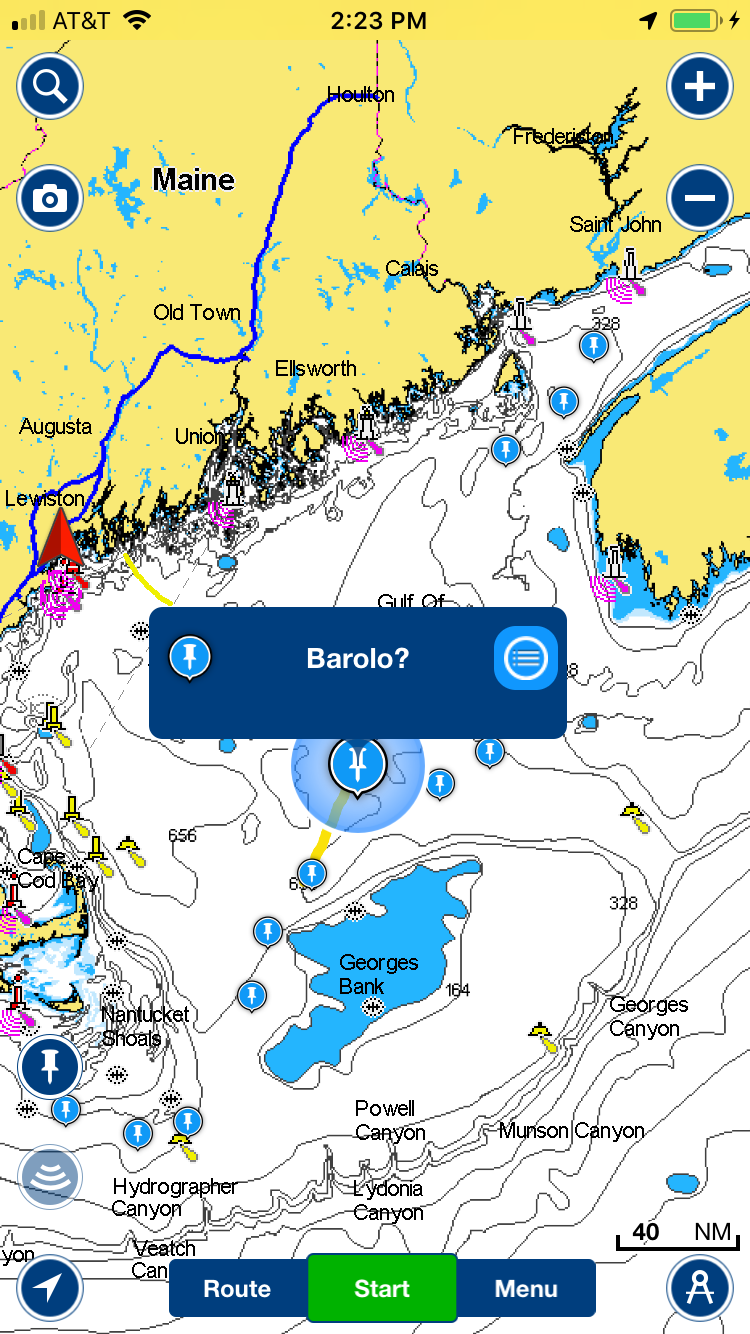
Here’s our route (left pin to right pin) for the day, thanks to the Navionics Boating app by Garmin.

From start to finish, our respectable – albeit not breathtaking – seabird tallies included oodles of Northern Gannets (including a steady southbound trickle almost all morning), and occasional southbound flocks of all three scoters and Common Eiders. Specific counts included:

  • 47 Black-legged Kittiwakes
  • 36 Razorbills
  • 13 Northern Fulmars
  • 10 Great Shearwaters
  • 6 DOVEKIES (one flock landing off to the side of the boat)
  • 3 ATLANTIC PUFFINS
  • 3 American Black Ducks
  • 3 unidentified large shearwaters
  • 2 Harlequin Ducks
  • 1 Greater Scaup
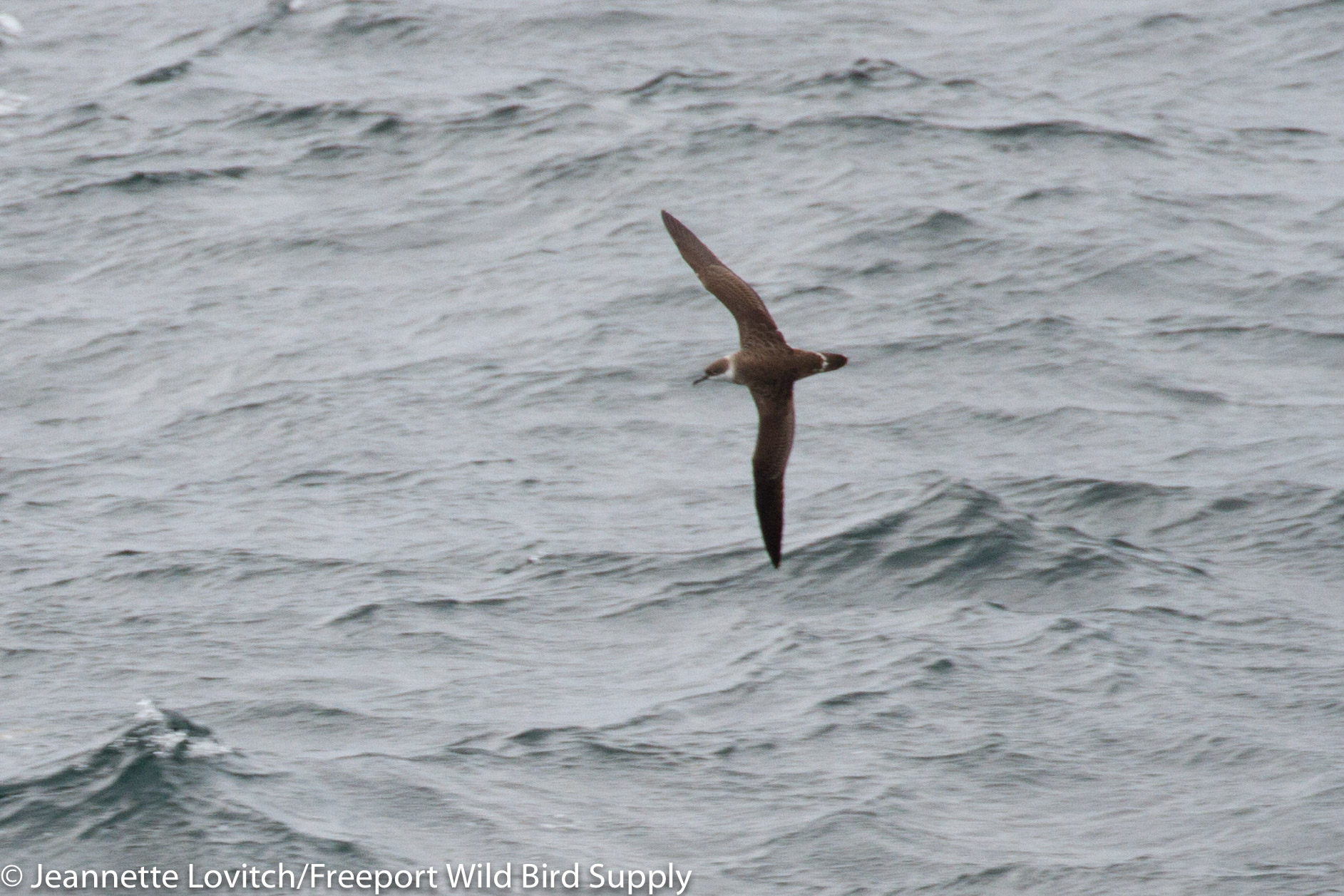
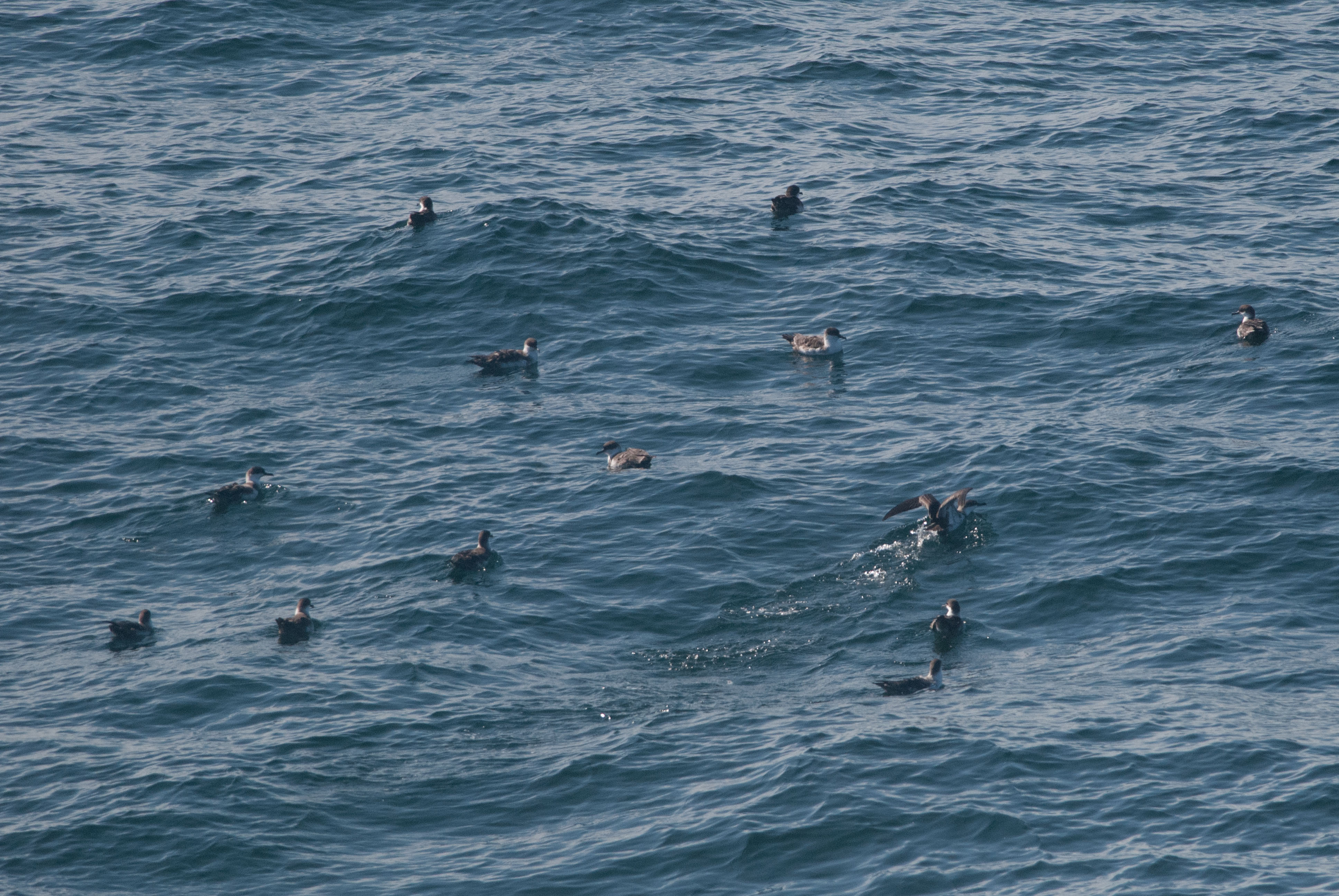
Great Shearwater

So all in all, not a bad day, but the passerines stole the show, and while Dovekie is one of the target birds of this trip, we didn’t see a skua…or even a jaeger, surprisingly.

The next day we awoke well within Halifax Harbor, but a sunrise passerine check yielded two birds: a White-throated Sparrow, and of all things, a rare Dickcissel!

Local friends Eric and Anne once again rescued us for a day of casual birding and good conversation, but the ship departed after dark; just more time to rest for our second full day at sea!

Halifax Public Garden
Northern Flicker

The morning of 11/1 found us between Downeast Maine and the northern corner of Georges Bank. The rest of the day would be in the same waters of our great success on our trip five years ago. After a passerine check which didn’t turn up anything (which meant nothing was disoriented by the ship overnight or desperate for a place to land come dawn, so this is never a bad thing), it was time to get to work in our usual spot.

Unfortunately, strong southwesterly winds and growing seas, with haze and light fog in the distance, made birding challenging. We worked hard though, but it was slow. We did have some excitement from two Dovekies that landed fairly close to the boat, and two Manx Shearwaters that, thanks to the lighting, I was absolutely sure were not Manx Shearwaters until we carefully reviews Noam’s photos later.

With glare and haze becoming problematic, we broke for an early lunch at 11:30, with the previous 4.5 hours of observation producing only the following, plus two Humpback Whales:

  • 12 Northern Gannets
  • 7 Great Shearwaters
  • 6 Red Phalaropes
  • 4 unidentified large shearwaters
  • 2 DOVEKIES
  • 2 Northern Fulmars
  • 2 Manx Shearwater (after review)
  • 2 Black-legged Kittiwakes
  • 2 Lesser Black-backed Gulls
  • 2 unidentified large alcids
  • 1 unidentified small black-and-white shearwater.

Unfortunately, with increasing wind (that we were heading straight into) and seas growing up to 7-10 feet (barely noticeable on a ship this big though, thankfully!), the lower deck was closed off for safety. Later, even the upper decks were closed off due to the very high winds, which were now blowing nearly 30mph out of the southwest.

Screenshot

Luckily for Jeannette and I, we had scored a forward-facing room, and although we were high up on Deck 17, we could see forward. Haze and the angled window were problematic, but we could see birds close to the ship, and we could relax, remove layers, and even crack open a beer. This is pelagic birding in style!

From 1pm to 5pm, when we finally called it a day, the afternoon cabin-watch netted:

  • 11 Great Shearwaters
  • 9 Northern Gannets
  • 5 Cory’s/Cory’s-type Shearwaters
  • 3 unidentified phalaropes
  • 2 Manx Shearwaters
Screenshot

And so our two days at seas concluded without a Great Skua, our primary target species for a future cruise..and perhaps a future tour. Alas, we’re only 1 for 2 in seeing skuas from the boat, and we would need a different class of ship (and, a shorter itinerary with more time at sea and less time in multiple ports) if we were to do this again. We’ll be keeping an eye out from other companies and other Princess ships to see if there’s a more skua-tactic itinerary in the future, but until then, our northeast Atlantic cruisin’ days may have come to a close.

Arriving in New York harbor before dawn, our last sunrise deck check yielded a single Dark-eyed Junco, Yellow-rumped Warbler, and White-throated Sparrow, bringing our more-productive passerine birding cruise to a close.
Hurricane Lee Birding in Maine FOMO – or not!

As Jeannette and I boarded our plane at the Portland Jetport on Thursday the 14th, I had a sinking feeling of future regret. While I was very much looking forward to attending my cousin’s wedding, seeing family, and spending some time in Philadelphia, I could not help but wonder if I was about to miss the birding event of a lifetime in Maine.

While concern about lives, property, and environmental damage of course reign supreme, birders can repress that as the “rarity fever” symptoms surge and dreams of vagrants and storm-tossed seabirds dance in our minds. As with any storm, safety comes first, but as soon as it’s reasonably safe to venture outside, birders hit the ground. Birders along the Gulf Coast and Florida are used to gearing up for this. We here in New England are not.

Hurricanes are rare this far north – at least for now – and few have been as big as Hurricane Lee. Lee was barreling straight for Downeast Maine as of Thursday morning, with a possible direct hit on Washington County or the Bay of Fundy.  Had I not had family obligations (family first! Although, yes, I did wonder for a second if I should claim COVID and run out of the airport) I would have been heading to Lubec this weekend without a doubt. I’ve never done a bonafide storm (bird) chase, and this would be the chance.

While an upper-level trough could still push Lee well to our east, it seemed clear we would be seeing some impacts here in Maine regardless.  Be that a strong northeasterly wind producing exceptional -but perhaps rarity-free seawatching – or first state records from a direct hit (White-faced Storm-Petrel anyone?), I would have liked to be in position to find out.

Instead, I’ll watch from afar as events unfold, and hope either 1) I have less regrets, or 2) a vagrant or two stick around until Tuesday! 

Several friends and I had been discussing the possible rarity potential of Hurricane Lee, and Luke Seitz immediately pointed out the similarity to the track of Hurricane Fiona that slammed into eastern Nova Scotia in September of 2023.

Making landfall in the early morning hours of September 23rd between Canso and Guysborough, Fiona caused unprecedented damage throughout a large portion of Atlantic Canada. It also yielded some unprecedented birding.

The summary of the storm’s windfall (pardon the pun) is summarized by this American Birding Association blog post.

But there are two particularly epic eBird checklists, here and here, that captured the moment.

Was this about to happen in Maine? Would I be missing it? Arrgh!

While birding at the John Heinz National Wildlife Refuge on the outskirts of Philly on Friday morning helped take my mind off of it, my thoughts were often wandering to my friends Downeast. First and foremost was their safety and well-being. A distant second, however, was the birding. By Saturday morning, when we took a walk around Independence National Historic Park, I waited for my phone to blow up.

And then…crickets.

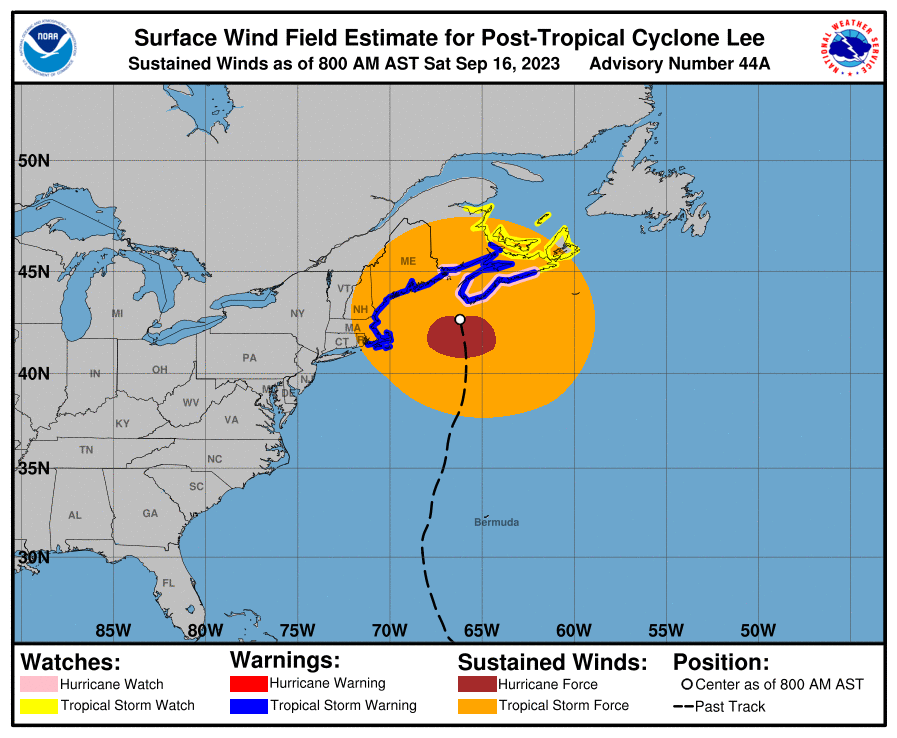
Before making landfall, Hurricane Lee had transitioned to a post-tropical cyclone over the Gulf of Maine. It also had shifted slightly east – making a direct hit on Nova Scotia now seem more likely. The storm was now absolutely massive in size, with tropical storm-force winds from New Hampshire to Cape Breton. A little wobble in the stormtrack in the late morning shifted the center of the storm into the Bay of Fundy, skimming Nova Scotia’s southwest coast.

But I heard nothing from back home, so I just couldn’t take it anymore and began checking in via text messages. Chris Barlett was stationed on the seawall at Eastport, where he spent “5 hours watching the ocean…during the worst weather on Saturday in hopes of seeing just one rare bird.  Torrential rain and 60mph gusts rocked my vehicle.  Dozens of Bonaparte’s gulls and up to 20 common terns flew against the wind and fed in the waves beside my truck, but no rarities joined the fray.  We lost power at home for about 12 hours. “

Luke and cohorts were heading east into New Brunswick. Evan Obercian was out checking for grounded shorebirds in the Mid-Coast. Nova Scotia birders were repositioning. I decided to drown my expected sorrows in cheese whiz.

With a strong northeasterly wind, seawatching along Maine’s southern coast was about average for the conditions. No rarities; just a few more pelagic species closer to shore than normal – although all within the expected birds for a good onshore blow. And while there were a few more shorebird reports inland than average, nothing was suggestive of a major grounding.

By Saturday afternoon, with the storm making its landfall Nova Scotia (officially on Long Island), a few reports started to make it in – but nothing of even a remotely tropical nature in Maine. In southern Maine and the mid-coast, winds were already whipping out of the northwest, ushering any seabirds further from shore. Seawatching was a bust. In other words, it was a non-event.

In New Brunswick, Luke reported “a few storm birds on the Saint John River in the afternoon and on Sunday Morning” but just the regular Bay of Fundy species and not in any unusual numbers, and rare bird reports from the province were non-existent.

It remained a non-event in Maine through Sunday morning. Here’s Chris’s report from Eastport: “I went back to the breakwater on Sunday morning and watched the sunrise as I scanned the waters between Campobello Island , NB and Eastport, Maine.  There weren’t many birds flying and low tide was around 7am (no rips), so I decided to launch my little skiff.  At 9am Doug Hitchcox and I took a cruise through choppy seas in Head Harbor Passage.  We found a few hundred Bonaparte’s gulls and a handful of common terns feeding in the tidal rips but, alas, no rarities.  I kept an eye out throughout the day for vagrant seabirds while I was cleaning up the yard and mowing the lawn.  Oh well, at least there wasn’t widespread damage!”  Seawatching elsewhere was similarly uneventful.

There weren’t even a lot of reports of concentrations of common birds during the storm. An exception was the group of 50+ Snowy Egrets seeking shelter in a small pond in Freeport.

In Nova Scotia, however, birders were finding a few things thanks to the more eastern arrival of the storm, including a couple of tropical Bridled and Sooty Terns (the expected and hoped-for low-hanging fruit of tropical waifs). A Least Tern and a Gull-billed Tern were intriguing, as Lee never skimmed a coastline where these birds would be expected to be picked up from. Leach’s Storm-Petrels were being reported from a number of locations, especially in the afternoon.

By Sunday morning, Nova Scotia birders were out in force, with seawatching being productive. “Tons” of seabirds were passing the Cape St. Mary’s lighthouse on the southwest coast of Nova Scotia according to one report, as birds were pushed up against the shoreline on that side (as opposed to Maine) by the strong westerly wind. A few Leach’s Storm-Petrels were being found, included one found grounded on a lawn in Bedford and one passing the Cape D’or lighthouse near the head of the Bay of Fundy.  While I did not do an exhaustive search, displaced tropical or even true pelagic birds remained very few and very far between.

Even as of Monday, Leach’s Storm-Petrels were still being reported from the shore in Nova Scotia. A Gull-billed Tern continued in Grand Pre.  So birds were definitely displaced by the storm, but they were mostly non-tropical in nature…and nothing like Fiona.

There were however, a lot of uncommon to rare passerines being reported in Nova Scotia since Sunday morning (such as a White-eyed Vireo and a Golden-winged Warbler), but without a careful analysis of radar images and broader-scale wind maps, I am unconvinced these birds were somehow entrained or displaced in the storm all the way from the open ocean south of Bermuda. Possible, for sure, but could it also have been nothing more than “detection bias” with some many birders out looking because of the hope for storm-blown vagrants? I’ll leave this debate for another time Furthermore, a little spate of “good” southern warblers on Monhegan could also be related, or it could just be Monhegan being Monhegan as usual. 9/28 edit: As reports of North American passerines (aka “Yanks”) continue to pour in from Great Britian, it seems clear that Lee displaced countless numbers of Neotropical migrant songbirds. Enough that it even made the NY Times! I retract my earlier skepticsm (I wasn’t alone at least!) in being wary of this, but presumably birds were displaced ahead of and around the massive storm after encountering it as they headed south while over the open Atlantic.

But back to seabirds…Sure, some hotspots were closed or inaccessible in southern Nova Scotia during the peak of the storm, and conditions often made viewing impossible as the storm came ashore, but there were just so few sightings of note anywhere, despite the massive size of the storm.  I heard little from Grand Manan, however, and observations during the storm from there would be most interesting.

While the storm was too far east to be of major consequence to Maine and New Brunswick, the lack of tropical birds in comparison to Fiona was remarkable.  While every storm is different, and we’re far from understanding exactly what makes for a great birding storm, a very detailed comparison of these two systems would be a worthy endeavor. 

Granted, it’s not over yet: a Brown Booby at Quaco Head in New Brunswick on the morning of the 18th could have been lingering from storm displacement, so maybe there are a few birds yet to be found. Also, the winds following the passage of the storm are perfect for producing Northern Wheatears in the following days and weeks after the storm (one was seen at Peggy’s Cove in Nova Scotia on the 17th), so you know I’ll be back looking…now that I am back in the state!

But in the meantime, I wanted to learn more about what happened with Lee. I reached out to my friend Meteorologist Mallory Brooke, in part to understand what happens when the tropical system undergoes its transformation to an extra-tropical, cold-core system, as happened with both Fiona and Lee: “When that (transition) happens, the core of intense wind spreads out rapidly; hence why a landfall in Nova Scotia was creating high wind in New Hampshire. In addition, the precipitation shield usually expands as well, but we didn’t see so much of that with Lee.” Lee had basically become a massive Nor’Easter.

I wondered if this transition was when we lost the entrained birds. Mallory suggested“…perhaps the timing to landfall made the difference – the transition took place very close to landfall for Lee whereas Fiona still had some distance to travel”   Was this the reason for the lack of tropical rarities?  Did they escape, or perhaps even perish as the eye collapsed and/or the core transition occurred? Would a close analysis, far beyond the scope of this blog, comparing the timing and location of the transition and the eye wall collapse between Lee and Fiona explain something? Was it time (or lack there of) spent in the Gulf Stream waters where the likes of White-faced Storm-Petrels reside?

While birds – especially strong-flying seabirds – are pushed ahead of a storm, especially by the strong winds in the northeast quadrant, we now know that birds riding the calm of the eye has a lot to do – if not more – with transporting birds far distances in tropical systems. The phenomenon, as well as some of the variables that could be at play in this case, are well-explained in this article.

In the case of Lee, the eyewall collapsed over the Gulf of Maine before landfall (at which point the eye structure had briefly returned)…perhaps if birders were in the middle of it (no thanks!) at the time we would know.

Regardless, it is interesting to speculate on what could have been. And I am sure others, especially in Nova Scotia will analyze the storm and its sightings in more detail. But it’s still worthwhile the exercise, if only to prepare for where to be when the next storm approaches. With more tropical storms expected in the Gulf of Maine due to climate change, we will have to be prepared to be in place for the next one (and I am out of cousins who are yet to be married).

So in the end, I wasn’t lamenting what I had missed. The “fear of missing out” was not realized. While I would have enjoyed the chase and collecting more “negative data,” I had no lingering regrets…except, perhaps, from all of the cheese whiz.

Thanks to Chris Bartlett, Mallory Brooke, and Luke Seitz for their assistance and insight while writing this essay.

Pelagic Birding by Cruiseship: NYC-NS-NB-NYC, Oct 2019.

Skua
Bonxie!
Jeannette and I took round trip a Princess Cruise from New York City October 26 (pm departure) through October 31st (early am arrival). It made ports of call in Halifax, Nova Scotia and Saint John, New Brunswick.  The full-day at seas between NYC and Halifax on 10/27 and from St John to NYC on 10/30 were the draws for us.  Cruise ships offer steady, stable and unreasonably comfortable deep-sea birding opportunities. Paul Lehman helped put the “repositioning cruise” itinerary on the West Coast on the birding radar and he, along with several others around the world, demonstrated the value of these floating behemoths for pelagic birding.
departing NYC
Verrazano

Our transit from NYC to Halifax was our best stretch, with seas a mere 2-3ft, partially cloudy skies, and unseasonably warm temperatures. We awoke to find ourselves at 49.9 nautical miles south-southeast of Nantucket.
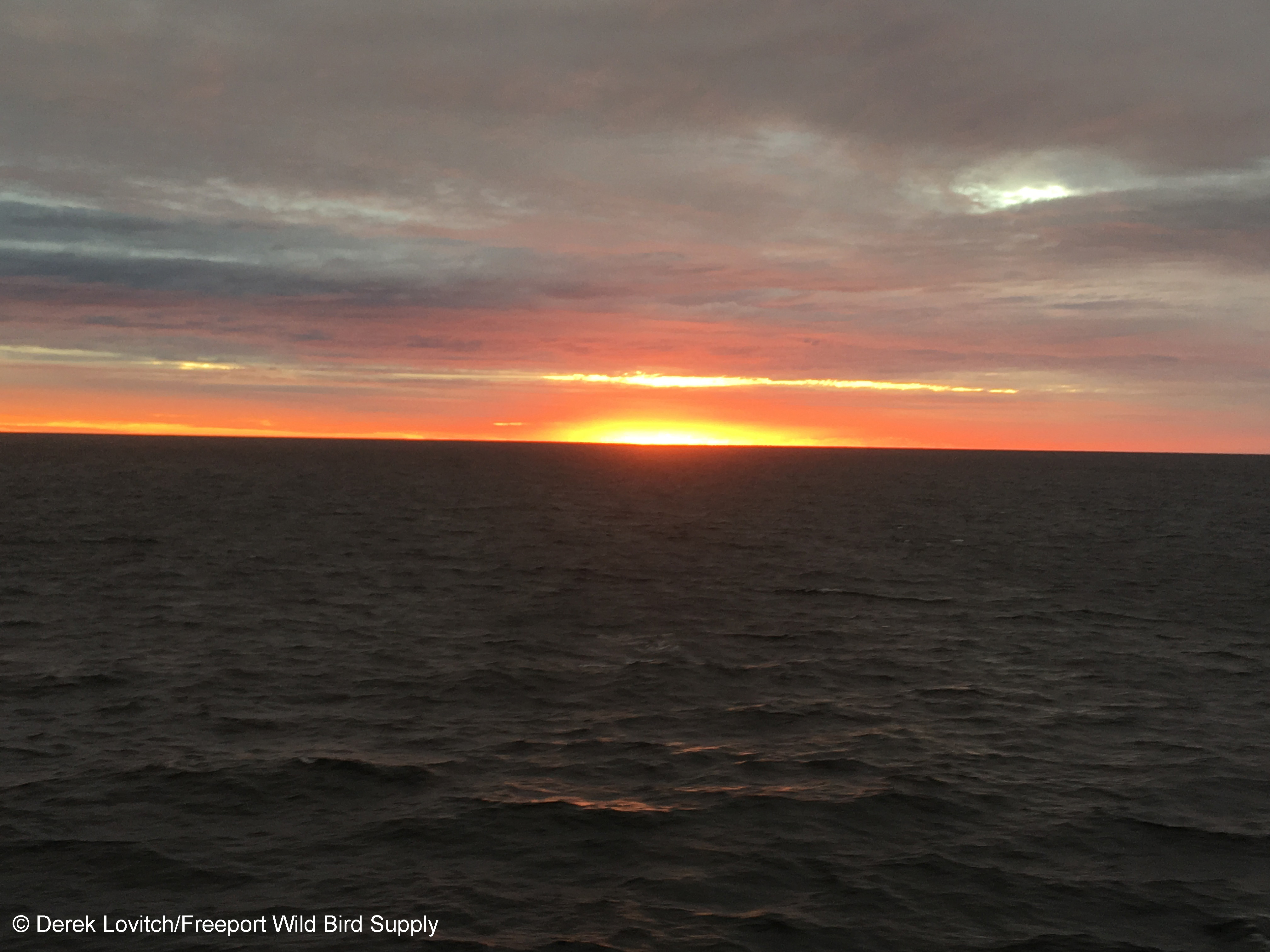
Sunrise, 10-27

After a surprisingly slow first 2 hours of the day, the action really got going and remained strong into the early afternoon. The day ended up yielding an impressive 5 Great Skuas and 6 unidentified skuas. A small dark storm-petrel – likely a very late Wilson’s – may have been the one that got away this day as we were unable to photograph it. A Manx Shearwater was well seen, along with 9 Cory’s Shearwaters and many of the expected species. A Song Sparrow arrived on the boat, first seen shortly after sunrise that morning.  A complete list is below, but all of our highlights were in Massachusetts waters.
GRSHGRSH2
Great Shearwaters
COSH
Cory’s Shearwater.

A 27-minute stretch in Maine waters (U.S. territorial waters with the closest point of land being 101nm to Mt Desert Rock) yielded little, and not my most-desired bird of the trip: a Great Skua in Maine waters, a bird that has become an unreasonable nemesis for me.  Nova Scotia waters were very slow, and an area of low pressure caught up to us, with rain becoming steadier and rapidly reducing visibility and light.
NOFU
Northern Fulmar
IMG_1181.PNG

On 10/28, we arrived in Halifax Harbor before sunrise, and our friends Eric and Anne Mills picked us up at the dock for a day of local birding. A continuing Yellow-throated Warbler at Point Pleasant Park and 2 Indigo Buntings at the old city dump were highlights, but like it has been in Maine, landbirds – especially in the woods, but also sparrowy-edges – were sparse.
old_city_dump
Point_Pleasant_Park

leaving_Halifax
The boat pulled away after sunset, but we were pleasantly surprised to awaken on 10/29 with a considerable distance of the Bay of Fundy left to transit. The boat was at a lower speed than usual, as we had to wait for high water in St. John Harbor. Beginning 17.3nm WSW of Brier Island, we enjoyed very productive birding through 11:00am as we were entering St. John Harbor.  Single American Robin, Horned Lark, Dark-eyed Junco, American Pipit, and Savannah Sparrow made morning passes around the boat, but the alcid show we had been waiting for had arrived: 58 Atlantic Puffins, 44 Razorbills, and 12 Common Murres (the majority of all were in New Brunswick waters). We were very excited to see a total of 5 Dovekies – a group of four followed by one lone bird in flight – all on the Nova Scotia side.  This was another one of the “target birds” we had identified for this itinerary.
IMG_1236

We arrived in Saint John at noon, and walked across the city to get to Rockwood Park. There were “no” birds in the woods here, either, so we visited a couple of breweries and had our best meal of the trip at the St. John Alehouse on our way back. It was not until almost midnight that the boat departed as the world’s highest tides had finally filled back in.
RockwoodPark1RockwoodPark2
St_John_dusk
Gulls commuting back from Rockwood Park with us.

The morning of October 30th has been circled on the proverbial calendar for a while, but there was quite a bit of apprehension about where we would find ourselves at dawn. I had my eyes on Maine waters – especially for my state Great Skua! – but also out of my own general birding interests of course.
Sunrise,10-30

Rolling over in bed at 5:30 EDT, I pulled up the Navionics Boating app and found our position to be 64.8nm ESE of Mt. Desert Rock, well within Maine-countable waters and with a current track that would keep us in these waters for some time. Breakfast was consumed rapidly, and we were on deck at 6:45, with just enough light to start looking for birds. Seas were still 2-3ft, with very light chop, and a little breeze. Skies were partly to mostly cloudy all morning. Conditions were once again unreasonably perfect.
me_sunrise

Great Shearwaters and Northern Fulmars were soon visible, and we picked up our first Red Phalaropes of the journey. Since Jeannette and I were the only birders on board, not surprisingly, we had been taking turns looking for passerines on the open decks and going on coffee and restroom runs. At about 8:00 or so, Jeannette went to the upper decks and returned about 30 minutes later to find me writing furiously. At 8:21EDT, I had a good bird, and I think it was a very, very good bird. Of course, she wasn’t there to see it, but as importantly for the task at hand, she was not there to try and document it while I studied it for as long as I can.

After watching it in the scope for a minute or two, I made the decision to go for the camera, despite the extreme distance of the bird. I paused for a moment at the idea of attempting a phone-scoping session, but I realized the unlikelihood of that being successful. I snapped a couple of pictures, realizing they were unlikely to be anywhere within the realm of realistically seeing “something” and went back to following the bird in the scope, hoping for it to turn or land, or at least stick around long enough for Jeannette to return.

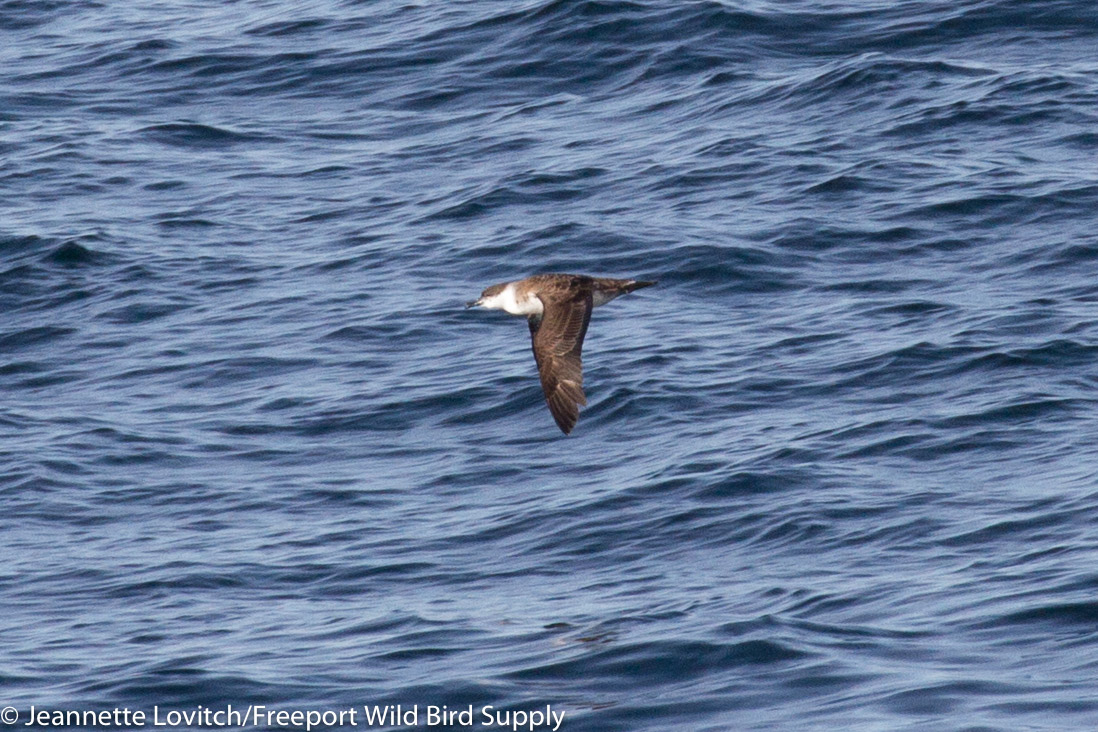
I have seen a lot of Manx Shearwaters, and ample numbers of Audubon’s Shearwaters. Instantaneously, it was obvious this was not a Manx, so I started scribbling notes. I had a feeling based on my studying before the trip, that I was looking at a Barolo’s Shearwater, a bird not yet recorded in Maine (but on my long list of likely new additions).

Here are my transcribed field notes, lightly edited only for decipherability (comments added later):

  • Coordinates: 42(d) 35.966”N, 67 (d) 56.02’W
  • small seabird spotted distance while J was on coffee/passerine run.
  • Blackish back and white undersides but extremely stiff and very shallow wingbeats noticed immediately.
  • Thought alcid, but wings too narrow and relatively long (compared to size of body)
  • (First) observed at approx 60-degree angle as it was angling slightly towards the bow, but rapidly getting further away.
  • White underwing clean and appeared to go right out to wingtips.
  • White face – could possibly make out eye – rose well up towards narrow-appearing crown. Even compensating for morning light, face was far too white and clean for Manx Shearwater, more like Audubon’s, but with even more white than that
  • Could not see undertail coverts (specifically), but white did appear to “continue” towards rear.
  • Small bill, almost imperceptible at distance.
  • No shearwatering, stayed level (low over water) with shallow, stiff wingbeats/
  • Did not see “saddlebags” or not (too far for such fine detail).
  • No molt visible.
  • Dwarfed by passing Great Shearwater
  • Flight considerably different from Manx, plus extensive white on face and extensively white and clean underwings. Very short wings, relatively.
  • White as “far as I could see to” wingtips and undertail.
  • Need to get out field guides to compare Barolo’s vs Audubon, but this looked smaller, pudgier body, whiter underneath, and wingbeats so stiff and shallow.
  • Cannot reconcile wingbeats/flight and extensive white face, undertail, (underwing), with anything but Barolo’s Shearwater.
  • (wishing I went for the camera sooner!)

As I was scribbling away, Jeannette returned, I took one sip of coffee, and went back to my notes. Shortly thereafter, she yelled “BONX-IIIIEEEEEE!”  And finally, at 8:37am, 82.2nm southeast of Matincus Rock, and only about 6-10nm closes than any point on Cape Cod, I had my Maine state Great Skua. Finally. Mission accomplished.
IMG_1292

But then, it was back to the shearwater. Plans were made to celebrate later (wait, why can’t I get a drink delivered to me outside?). I added to my notes, still before checking any references, summarizing my observation:

  • Manx quickly eliminated by short wings, very small size, and bright white face. Flight style quite different. This was closer to an alcid with super-shallow wingbeats.
  • Single bird, all alone, picked up in straight, powered flight.
  • Distance could have obscured internal underwing markings, but none noticed
  • White rose up face – even if compensating (for) sun “overexposure,” so high that when going away, appeared to have a very narrow dark crown. (I made an exceedingly poor drawing of the impression. It is not worth sharing).

I had Howell and Zufelt’s Oceanic Birds of the World and the Nat Geo field guide with me, so I consulted them, along with an online image search. I revisited those resources and looked longer online when we returned to our cabin later. After that, I added the following:

– (my bird) looked “normally” tapered/pointed wing(tip) and not at all rounded like Audubon’s.
– did not appear particularly long-tailed
– short bill; Audubon’s looks longer-billed.
– cold/cool water environs. No water temperature measurement on board boat, but well within Gulf of Maine at 689ft depth. No “warm water species” seen on entire trip.
– too small for Manx, as a Great Shearwater crossed in front of it (while I was viewing through the scope). 3-5 had been circling the ship (consistently).
IMG_1358

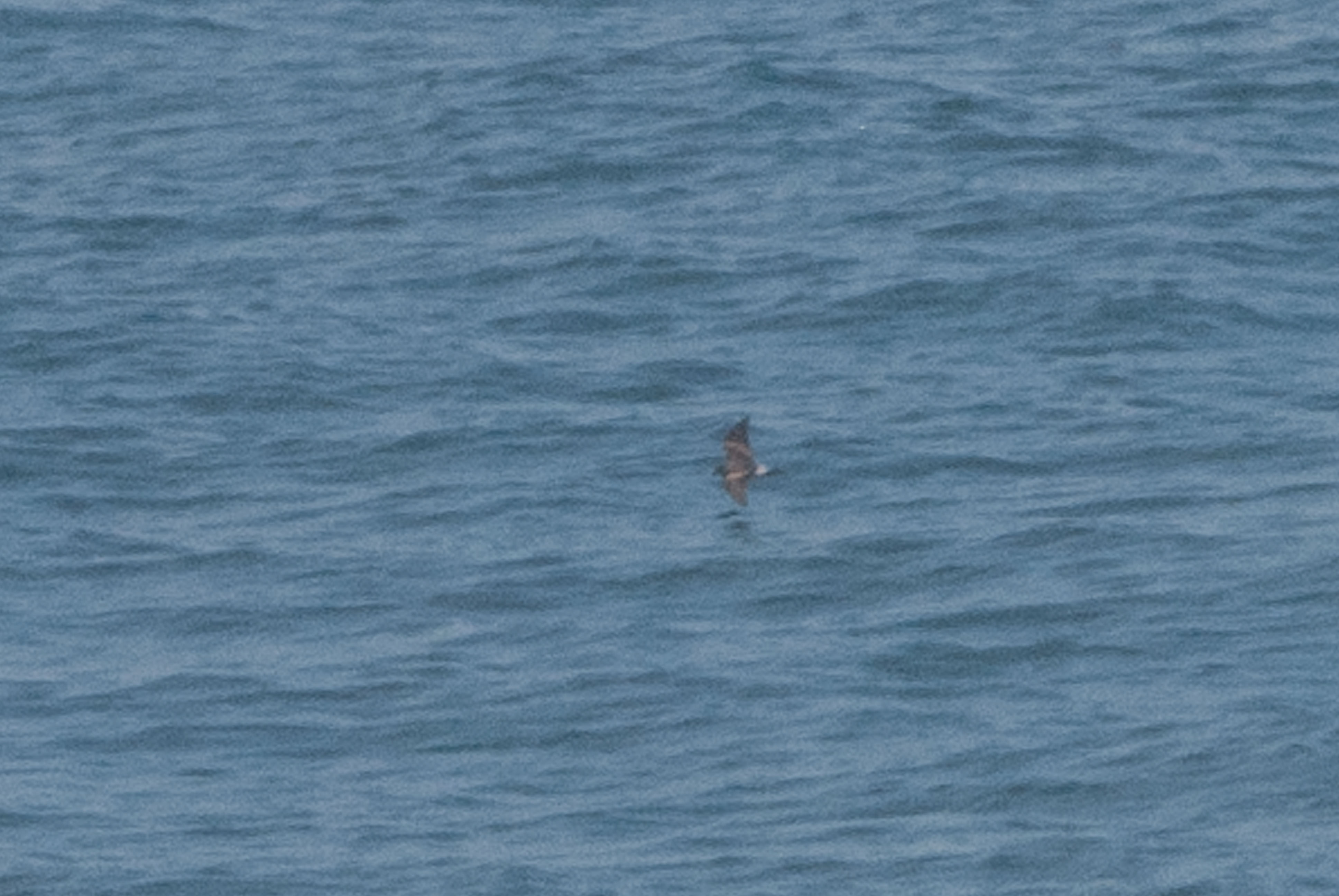
Oh, and my desperate attempt at a photograph I alluded to? Well, I think it was one of the Great Shearwaters (is that a hind collar behind a dark cap?), but it could also be a giant piece of sushi. I whiffed. And that does not make me happy, as even a crappy photo might have had some value.

Looking at those resources, photos online, and more resources upon our return home, I concluded that this bird was indeed a Barolo’s Shearwater. Whether “sight records” are “good enough” for First State Records, well, that’s a debate for another day…

But yeah, we had other birds that day too, with Great Shearwaters and Northern Fulmars leading the way, and lots of dolphins, including several small close pods of Short-beaked Common Dolphin.  We also had another skua in Massachussets waters that suggested South Polar to me, but it was just too far, and Jeannette was unable to get on it in the camera for closer study.
COSHandGRSH
Cory’s Shearwater with Great Shearwaters.
GRSHandGBBG
Great Shearwaters with Great Black-backed Gull

At 4:15, with nearly-lifeless waters – the same early morning dull stretch from day 1 that got us worried about whether this entire trip was a good idea or not, we called it quits and went inside. A beer and a top-deck jacuzzi were in order. Come dawn, we’d be back in port in Brooklyn, so maybe we’ll even have a second drink tonight!
J-Mo_on_deck

Yeah, this cruise ship pelagic birding has its perks! And you can expect us to offer this as a tour in the near future. Unfortunately, a change in ships on this route next year may hamper the birding access, so we’re going to figure this out before we promote the tour and the future of birding possibilities on this intriguing cruise route.

Here’s the breakdown of the birdlist:

10/27.
-On deck 6:30 EDT. Mostly cloudy, lt-mod SE, light-moderate chop and 1-1.5m swell.  49.9 nm SSE of Nantucket.

1) Massachusetts waters:
GREAT SKUA: 5 total (coordinates recorded for each).
UNIDENTIFIED SKUA: 6 (coordinates recorded for each)
Parasitic Jaeger: 4
Unidentified Jaeger: 9
Black-legged Kittiwake: 4
Herring Gull: x
Lesser Black-backed Gull: 1
Great Black-backed Gull: x
Northern Fulmar: 3
Cory’s Shearwater: 9
Great Shearwater: 259
Manx Shearwater: 1
UNIDENTIFIED STORM-PETREL – 1, Wilson’s-type most likely.
Northern Gannet: 186
Song Sparrow – 1 found on Lido Deck

Atlantic White-sided Dolphin pods: 1

2) Maine: 27 minutes.
Herring Gull: 1
Great Black-backed Gull: 1
Northern Fulmar: 2
Great Shearwater: 1
Northern Gannet: 1

3) Nova Scotia waters.
Black-legged Kittiwake: 1
Herring Gull: x
Great Black-backed Gull: x
Northern Fulmar: 2
Great Shearwater: 2
Mourning Dove: 1 – 81.4 nm SW of Seal Island. Reappeared and was stooped upon by PEFA.
Peregrine Falcon: 1- 83.8nm SW of Seal Island

Pilot Whales: 4-6
PEFA1PEFA2

10/29: Bay of Fundy.

  • On deck 7:54 ADT. 7.5nm W of Boar’s Head, Briar Island, NS..
  • Nova Scotia waters through about 9:30am EDT:

Common Eider: 13
White-winged Scoter: 2
DOVEKIE: 5
Razorbill: 3
Atlantic Puffin: 15
Pomarine Jaeger: 6
Unidentified jaeger: 3
Black-legged Kittiwake: 59
Herring Gull: x
Great Black-backed Gull: x
Red-throated Loon: 2
Northern Fulmar: 7
Sooty Shearwater: 2
Northern Gannet: 24
American Robin: 1 at dawn, flying parallel to boat.
Horned Lark: 1 flying with DEJU 9.4nm W of Centreville Harbor
American Pipit: 1
Savannah Sparrow: 1
Song Sparrow: continues on deck.
Dark-eyed Junco: 1 flying with HOLA 9.4nm W of Centreville Harbor
AMRO

New Brunswick waters (after about 9:30 EDT):
Common Eider: 186
Common Murre: 12
Razorbill: 41
Atlantic Puffin: 43
Large alcids sp: 9
Pomarine Jaeger: 1
Black-legged Kittiwake: 49
Herring Gull: x
Great Black-backed Gull: x
Northern Fulmar: 1
Northern Gannet: 8
Red-throated Loon: 14

Minke Whale: 1
Harbor Porpoise: x

10/30.
– On deck 6:45 EDT. Maine waters, 64.8nm ESE of Mount Desert Rock and 60nm W of Seal Island, NS, but in US territorial waters.  Seas 2-3ft, light chop, increasing breeze.

1) Maine Waters:
GREAT SKUA: 1 – 42  31.291’N, 67  58.735’W
Pomarine Jaeger: 1
Red Phalarope: 16
Atlantic Puffin: 1
Black-legged Kittiwake: 7
Herring Gull: x
Great Black-backed Gull: x
Northern Fulmar: 76
Great Shearwater: 74
BAROLO’S SHEARWATER: 1, See Above. (42.35988’N, -67.5602’W)
Northern Gannet: 1

  • Massachusetts waters:

Unidentified phalarope: 30
UNIDENTIFIED SKUA: 1 (probable South Polar)
Pomarine Jaeger: 2
Parasitic Jaeger: 2
Unidentified Jaeger: 4
Black-legged Kittiwake: 14
Herring Gull: x
Lesser Black-backed Gull: 1
Great Black-backed Gull: x
Northern Fulmar: 158
Cory’s Shearwater: 6
Sooty Shearwater: 1
Great Shearwater: 233
Northern Gannet: 77

Atlantic White-sided Dolphin pods: 3+
Short-beaked Common Dolphin Ponds: 3+
Unidentified dolphin pods: 4+

Common_Dolphin
Common_Dolphin2
Short-beaked Common Dolphin.

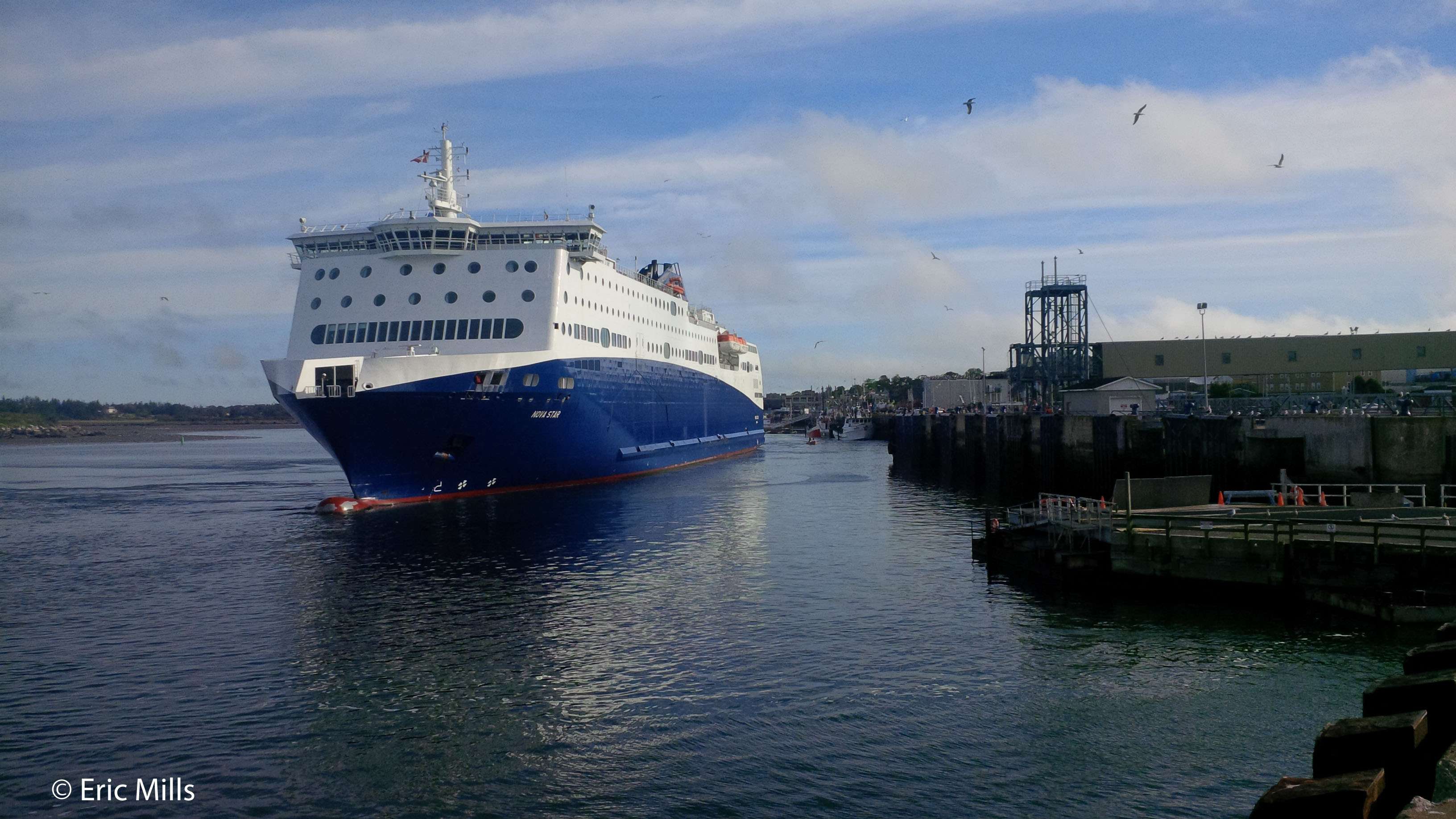
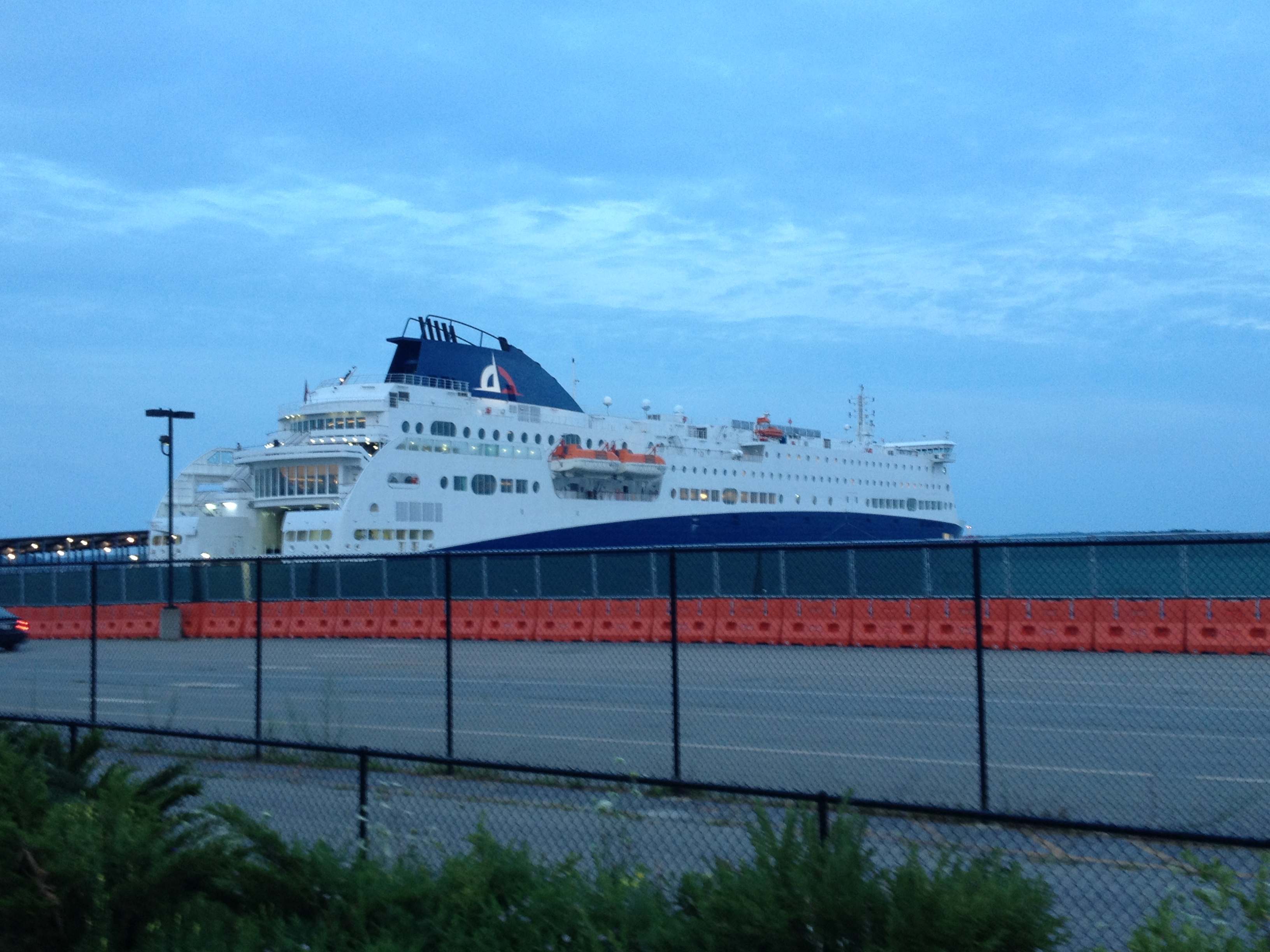
The Nova Star Ferry to Nova Scotia

I love birding Nova Scotia, but it’s been a few years since I was last there. This year, with the rebirth of ferry service from Portland, I knew it was time; there were no more excuses.

I finally got a chance to make the voyage this week, with two primary agendas: explore the birding potential of the Nova Star (and scout for the potential of making this a new weekend tour), and visit with my friend Eric Mills for a little southern Nova Scotia birding.

Ever since we lost the Scotia Prince, I have been hoping for a bird-able boat that traverses the Gulf of Maine. The short-lived, high-speed catamaran that replaced the Scotia Prince was of little value – it had almost no outdoor space whatsoever, and it moved far too fast.  With the return of ferry service, and this time with a ship that moved at a more reasonable speed for birding, I was optimistic for a new pelagic birding platform.

I waited until August to take my trip, as the warmer late-summer waters host more pelagics now (especially birds that arrive from their sub-Antarctic breeding grounds). Furthermore, the high cost of a trip on the Nova Star would not permit me to take many journeys this year, unfortunately (and will clearly be the biggest hurdle in running a tour that utilizes this boat), so I had to choose my dates wisely.
IMG_4084

Boarding at 8pm on Tuesday night for the 9pm departure, I settled into my spartan, but plenty comfortable, bunk.
IMG_4085

Next, I walked every corner of the boat in search of the best location for my birding. There’s no access to the top deck, the bow, or anywhere close to it on the sides. The only forward-view was the piano bar with occupied tables, and less than a desirable view to the sides. Really, the only places to view are outside decks on the stern. Not expecting a big ol’ cruise ship to attract many following birds, I was concerned about the birding potential. Quite concerned (especially at this price).

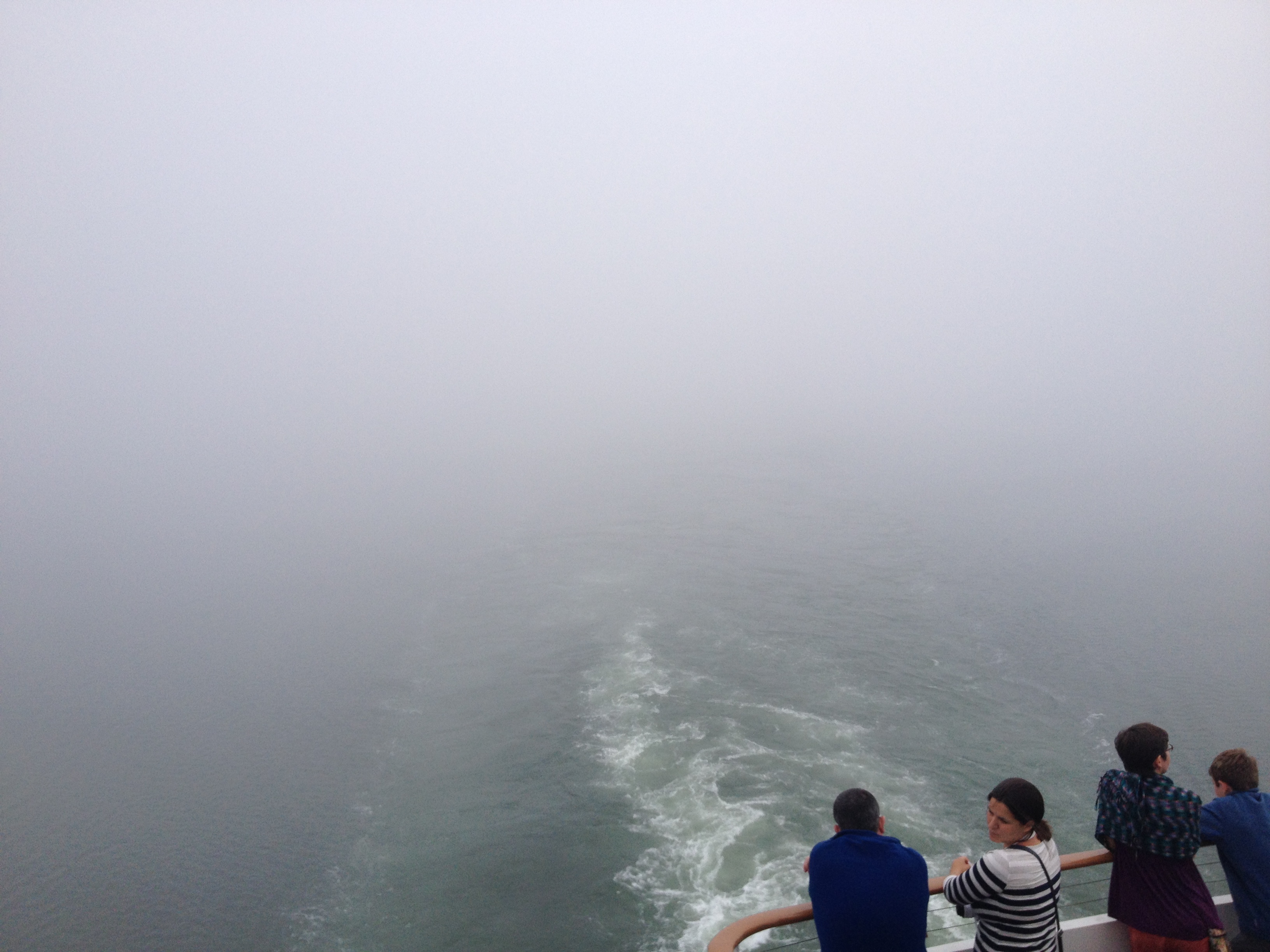
Come morning, the viewing locations were the least of my concerns, however. We were socked in with fog, too thick to see a thing.
IMG_4089

It wasn’t until we were about to enter Yarmouth Harbor that we finally exited the fog, but other than a single Northern Gannet, there would not be any seabirds for me this morning.
IMG_4090

IMG_4096

Entering the harbor, however, the sun was shining, gulls were busy with newly-arrived Herring trawlers, and the mudflats were lined with shorebirds.
Harbor1_edited-1

Harbor2_edited-2

IMG_4098

After disembarking (and I must say, having the relatively few walk-ons wait until every car had offloaded was just stupid; I get why we couldn’t walk down the deck with traffic, but had we been allowed to go first, we all would have been clearing customs before the first cars were being offloaded, but I digress), I met Eric, who I had not seen in four years; it had been way too long.  After the usually greetings and pleasantries, we of course immediately began birding.

The first order of business was Yarmouth Harbor, where I was evaluating the birding potential of a vehicle-free tour. Good shorebird habitat, with decent numbers of Black-bellied Plovers and Short-billed Dowitchers were close by, and we encountered perhaps the last two Laughing Gulls (rare but regular in Nova Scotia) from the fall-out of this species that was caused by Tropical Storm Arthur – the first addition to my Canada list on the trip. A couple of thickets and small parks hold potential for migrant landbirds.
IMG_4106

Moving on, we drove up and down the Yarmouth Bar (Nelson’s Sparrow, Peregrine Falcon, more shorebirds) and north to Mavillette Beach Provincial Park (more Nelson’s Sparrows). After dipping on two Black Skimmers that had also been lingering post-Arthur, we met up with local birder Ronnie D’Entremont for a shorebird survey at Cook’s Beach on Pinkney’s Point. Well, the survey was easy! All of the birds were jam-packed into one gravel spit due to very high tides. The estimation, however, was not easy, but we came up with about 1500 Semipalmated Plovers (a very impressive count), joined by about 750 Semipalmated Sandpipers, 100 Least Sandpipers, 51 Short-billed Dowitchers, 20 White-rumped Sandpipers, 17 Black-bellied Plovers, 2 Killdeer, and 1 Ruddy Turnstone.
DSC_0001_SEPL_group1_edited-1

What was particularly cool about the roosting Semipalmated Plovers was that once we rotated to the side of them, we saw how carefully lined up they were in little, linear depressions in the cobble beach.
DSC_0008_SEPL_row1_edited-1

One last check of Yarmouth Harbor – OK, there are three lingering Laughing Gulls, apparently – and then it was beer o’clock and dinner time at Rudder’s brewpub.

On Thursday, the birding hotspot (to say the least) of Cape (Sable) Island was our destination, and it surpassed all expectations!  Jeannette and I birded here in late September during our first visit to the province beyond Yarmouth 8 years ago, but here in August shorebird season. it was in its full glory.  First, we twitched a vagrant American Avocet that had been present for about a week, finding it within seconds of pulling over.
DSC_0015_AMAV_edited

While we missed peak shorebird density at Hawk Point by perhaps as much as an hour, one of the 4 pairs of American Oystercatchers in the entire province were visible, as were plenty of shorebirds, with a combined guesstimate of several thousand Short-billed Dowitchers, Black-bellied Plovers, Semipalmated Sandpipers and Plovers, with smaller numbers of Lesser and Greater Yellowlegs, Least and White-rumped Sandpipers, along with handfuls of Ruddy Turnstones, “Eastern” Willets, and Sanderlings. Only one Whimbrel, however, and no Hudsonian Godwits.  I was still impressed – especially if we had missed the peak – and thoroughly enjoyed the waves of shorebirds streaming overhead and out of the bays, heading towards their high-tide roosts on the sandy barrier island of Cape Sable.

Next up was South Side Beach at Daniel’s Head. Wow. Simply, wow. We knew there was a Buff-breasted Sandpiper here, and we knew a lot of shorebirds roost here at high tide, but we definitely did not know there would be this many birds!  The narrow strip of sand was coated with shorebirds – the best Eric has ever seen here, and we estimated around 10,000 total birds!  Semipalmated Sandpipers, Sanderlings, Least Sandpipers, and Semipalmated Plovers led the way, followed by goodly numbers of White-rumped Sandpipers, 3 Black-bellied Plovers, 2 “Eastern” Willets, and 1 Short-billed Dowitcher.
IMG_4112

IMG_4113_Shore_Shore_Beach

DSC_0030__South_Shore_Beach2_edited-1

DSC_0022_South_Shore_Beach1_edited-1

Oh yeah, the Buff-breasted Sandpiper was there, too.
DSC_0038_BBSA1_edited-1DSC_0081_BBSA-flight_edited-1

After lunch, we picked up another staked-out rarity in a juvenile Yellow-crowned Night-Heron, as my Canada list grew nicely. Back at South Shore Beach, we found very few shorebirds – another birder saw two harriers flush them out, so Eric and I considered ourselves incredibly lucky to have hit the beach at prime time. While we were there chatting, small numbers of bird began to return as the tide just barely began to recede.

The weather forecast for the day had been a concern, leading us to expect rain on and off throughout the day. But we lucked out, as the rain stayed away until around 2pm, at which time we were already working our way back to Yarmouth, with a detour to Lower West Pubnico.

My short trip was coming to an end on Friday morning, but the most important part – professionally anyway – was about to begin. Eric and I said our goodbyes (after a quick check of the harbor once more), promising it won’t be nearly as long this time until we see each other again, and I boarded my vessel for the return trip.  Unfortunately, the view in the harbor, and for quite some distance offshore, looked familiar.
IMG_4116

We departed at 10:00am ADT with nearly zero visibility.  A small hole in the fog just outside the harbor presented a Red Bat that circled the boat a few times before moving on.  It wasn’t for an hour and a half that the fog lifted enough to see much else, and a short-lived hole produced several Great Shearwaters and Northern Gannets: a frustrating tease as the fog closed back in.

We were in and out of dense fog for the next two hours, but whenever there was visibility, I was on deck, scanning the gentle (today!) seas. Great Shearwaters, Northern Gannets, a few Wilson’s Storm-Petrels, and two Atlantic Puffins were welcome, and then several Leach’s Storm-Petrels. I could only help but wonder what was out there as thick fog once again swallowed the boat, and I set off to find some lunch (the buffet was not very good, especially for a hefty $17…it felt like a mediocre college dining hall; breakfast was only marginally better).  Sitting at the window, doing my best to get the most out of my dollar, the fog started to clear, and views of Leach’s Storm-Petrels sent me scrambling for the deck at 1:10 EDT. I sat down again at 6:25 EDT.

When the fog cleared, the winds were light and the seas were fairly calm, and birds were everywhere. As it turned out, my scouting of birding locations worked out – the corners of Deck 9 provided a decent view from about 2:00 (using the bow of the boat as 12:00) on out. I couldn’t see what was crossing the bow, but I could pick birds up before and after. And, the height of boat gave me great visibility to see well away on either sides, where I spotted most of the action.
IMG_4117

Nonetheless, I would not have guessed that the birding would have been this good!  Shrouded in fog, I was beginning to think my money had been wasted. By the time we arrived in Portland, I was thinking about how I could bring a group aboard and when I could afford to take the trip again (a rather large hurdle, especially for a tour).

I swept all of the expected tubenoses (4 shearwaters and 2 storm-petrels), with the count of Leach’s Storm-Petrels most impressive. While most phalaropes were too far to ID, there were plenty of Red Phalaropes to be seen. Four Fin Whales, 9 Mola Mola (including a patch of five in close proximity), a pod of wake-riding Atlantic White-sided Dolphins, and a breaching Blue Shark were among the non-avian highlights.  At nearly the mid-point of the crossing, well south of Mt. Desert Island, a wayward Yellow Warbler came aboard.

When all was said and done, I had one of the better pelagic birding trips that I’ve had in Maine (list not including near-shore stuff on either end, plus Herring and Great Black-backed Gulls of course):
173 Great Shearwaters
167 Wilson’s Storm-Petrels
131 Northern Gannets
105 unidentified phalaropes
55 (!!!) Leach’s Storm-Petrels
10 unidentified storm-petrels
10 Laughing Gulls
7 unidentified terns
3 Cory’s Shearwaters
2 Sooty Shearwaters
2 unidentified jaegers
2 Atlantic Puffins
2 unidentified passerines
1 Manx Shearwater
1 Common Tern
1 Ruddy Turnstone
1 Yellow Warbler

While the height of boat preclude great photography opportunities, I did alright with “documentation” shots of Leach’s Storm-Petrels as they flew around, bounded like sea-worthy nighthawks.
DSC_0126_LESP1

DSC_0098_LESP2

Great Shearwaters, however, were a little more cooperative.
DSC_0148_GRSH1

Passing south of Matinicus Rock…

DSC_0136_Matinicus_Rock
DSC_0142_big_ass_schooner

…and Monhegan Island!
DSC_0163_Monhegan

So while the birding situation is not optimal, clearly the boat passes through some productive waters. I’m sure not every trip will hit this much activity (‘tis the nature of pelagic birding), but at least my concerns about the feasibility of birding (at least for a small group) from the Nova Star are alleviated. Fog and inclement weather will always be a concern; this is the Gulf of Maine after all.  As for a future weekend tour, I have a plan in mind. Let me give this some thought (and make some calls). But at the very least, suffice to say that birders traveling to and from Nova Scotia, or those just looking for a ride to sea, have another option now, albeit an exceptionally expensive one.