Tag Archives: Northern Parula

Excellent Morning Flight at Sandy Point, 9/16/2015

Over 2,000 migrants. 45 species, including 17 species of warblers. Yeah, it was a good morning to be at Sandy Point!

L1030171_CMWA,SandyPt,9-1-15_edited-1
Cape May Warbler, male.

I arrived, as usual, a few minutes before sunrise, but unlike most mornings, birds had already begun to cross. And once the sun crested the horizon, the floodgates open. OK, so it wasn’t “Warblergeddon” at Cape May, but it was fun for me and it was an excellent flight for here.

Well, mostly fun. A lot of birds were high, especially as the wind went calm. Big pockets of birds were just too high to identify. I did my best to just keep count. Birds were dropping into the trees on both sides of the road, others were zipping through underneath. As I focused on something in the elm, I am sure I missed birds overhead. It was tough to keep track, but I did my best.
L1030173_PRAW,SandyPoint_edited-1
Prairie Warbler, male.

By the time I departed at 9:30, the tally was the 7th highest I’ve had at Sandy Point (the 6th highest in September), and by far my best flight of the season to date. It also had some interesting birds, and I’ll analyze some of the numbers below.

6:16-9:30am.
61F, clear, West 6.3mph to calm.

940 Unidentified
403 Northern Parulas (3rd highest)
161 American Redstarts
155 Black-throated Green Warblers
61 Cedar Waxwings
55 Tree Swallows (record high)
34 Black-and-white Warbler (3rd highest)
30 Blackpoll Warblers
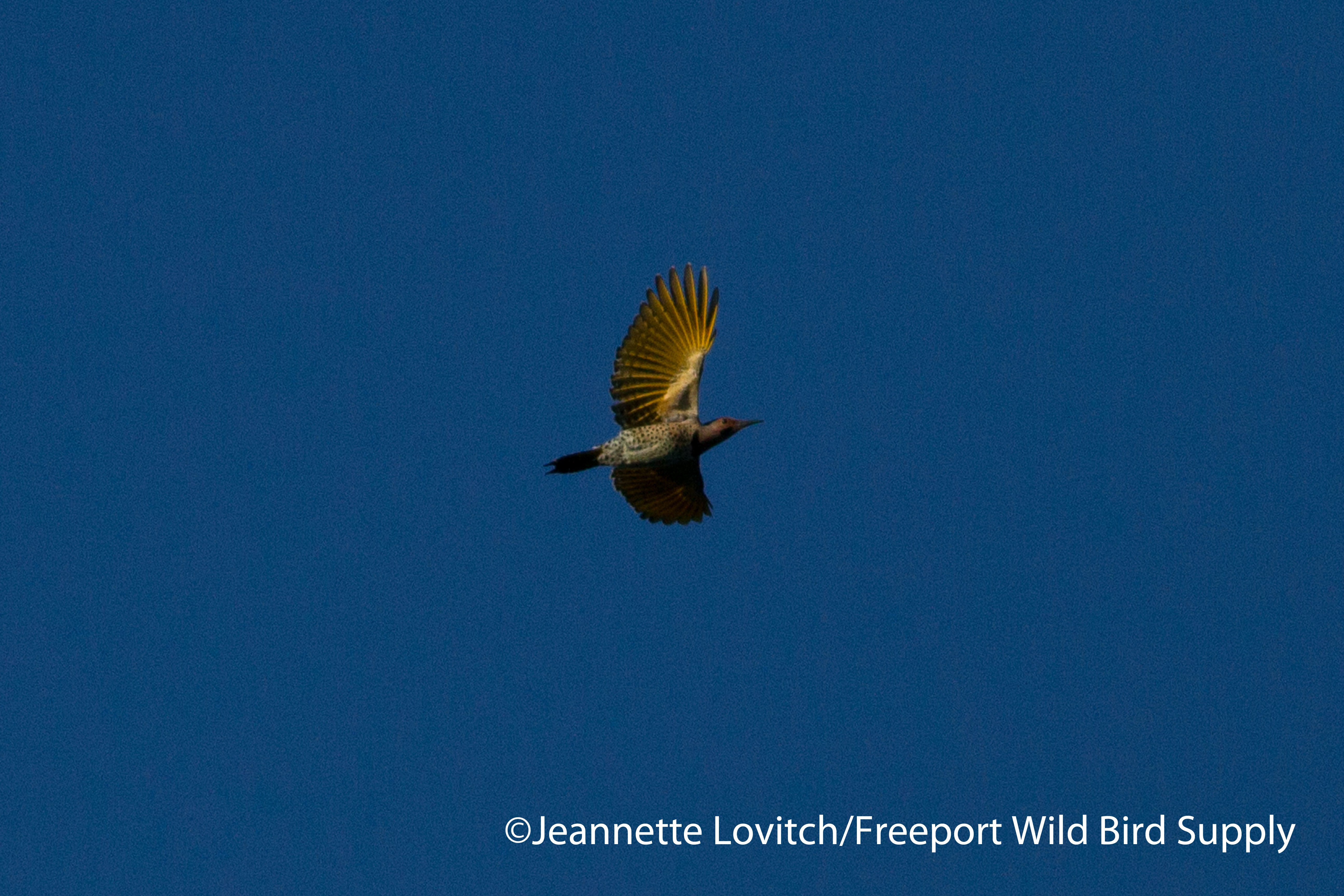
22 Northern Flickers
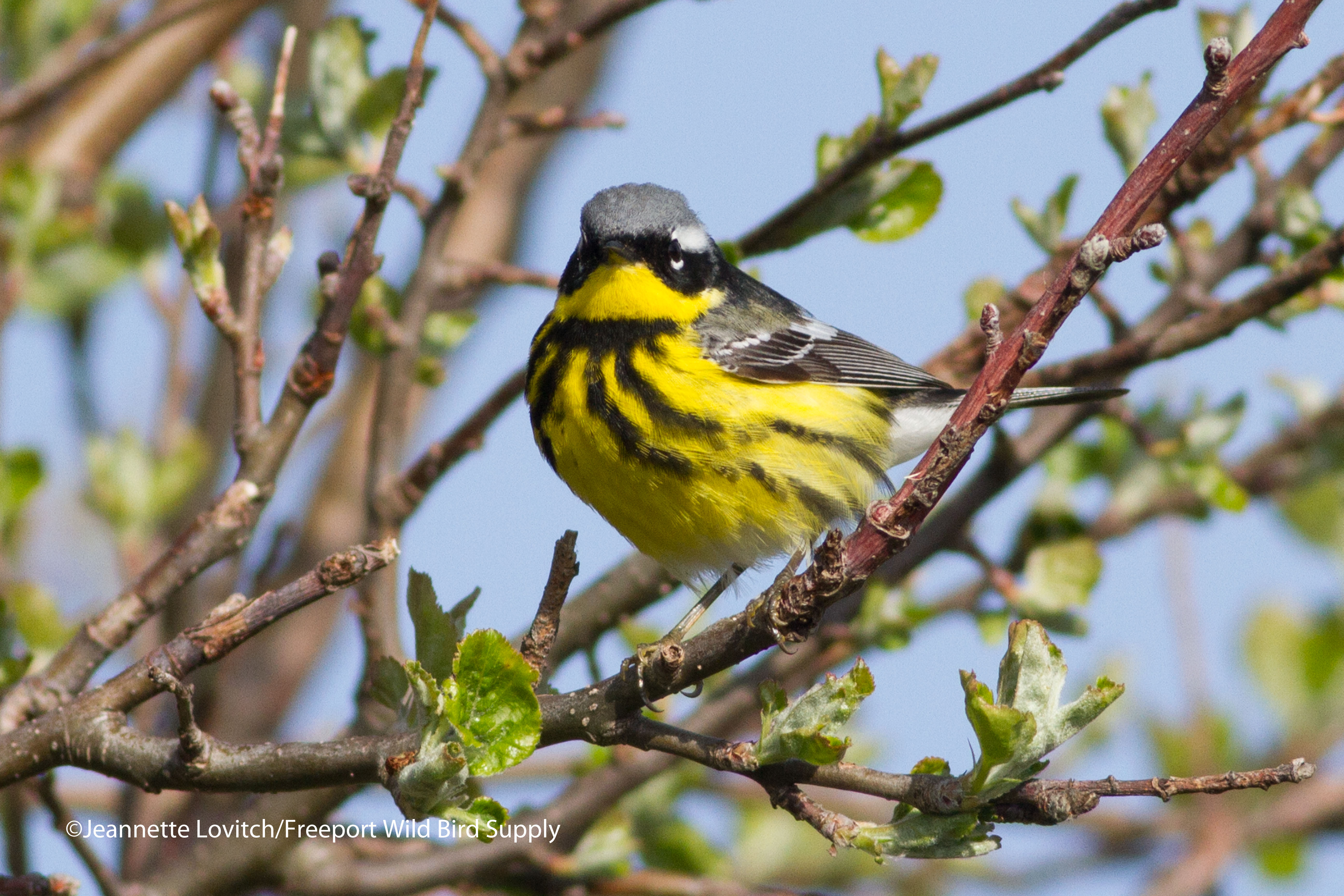
22 Magnolia Warblers
18 Yellow Warblers
16 American Goldfinches
13 Yellow-rumped Warblers
11 Red-eyed Vireos
11 Black-throated Blue Warblers
10 Chipping Sparrows
9 Blue Jays
9 Nashville Warblers
8 Ruby-crowned Kinglets
8 Tennessee Warblers (3rd highest)
8 Baltimore Orioles
6 Scarlet Tanagers
5 White-breasted Nuthatches (record high)
4 Purple Finches
3 Eastern Phoebes
3 Blue-headed Vireos
2 Black-capped Chickadees
2 Wilson’s Warblers
1 Osprey
1 American Kestrel
1 Downy Woodpecker
1 RED-BELLIED WOODPECKER
1 unidentified Empid
1 unidentified Vireo
1 Red-breasted Nuthatch
1 American Robin
1 Chestnut-sided Warbler
1 Cape May Warbler
1 Prairie Warbler
1 Bay-breasted Warbler
1 EASTERN TOWHEE (present in scrub; only 3 previous records here).
1 Savannah Sparrow
1 White-throated Sparrow
1 Rusty Blackbird (first of fall)
x Common Yellowthroat

Total = 2044
L1030179_BTBW,SandyPt,9-16-15_edited-1
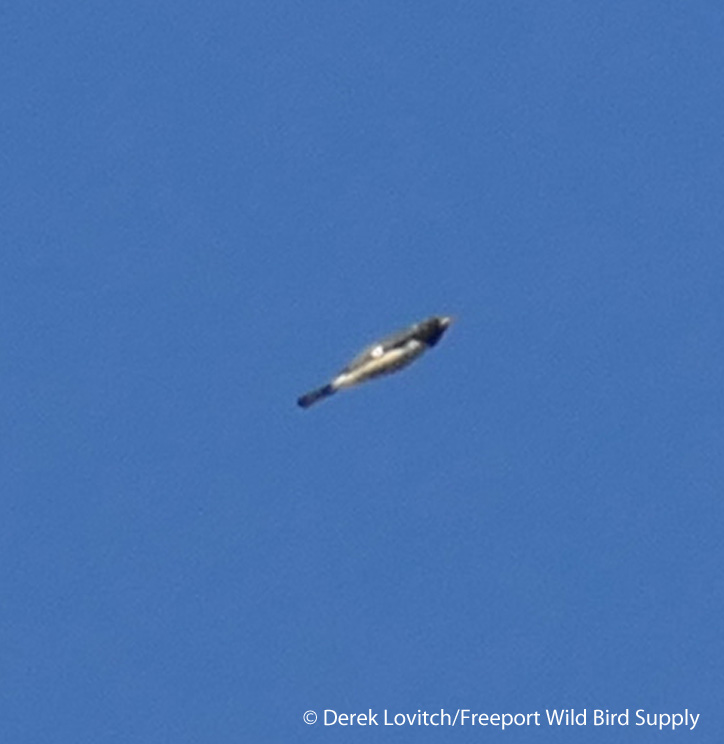
Black-throated Blue Warbler, male. Look at how the “pocket hankercheif” is blown out by the low sun angle.

Several counts were noteworthy, including the two record highs. Tree Swallows usually don’t bother crossing from the island to the mainland via Sandy Point, but more often continue on to the south, crossing the bay with little trouble. Plus, most swallows are probably moving through after I depart in the morning. These birds, mostly in one large and a couple of small groups, were funneling over the bridge along with the rest of the typical Morning Flight migrants. Meanwhile, the 5 White-breasted Nuthatches were noteworthy as I usually see no more than a couple all fall here. The previous record for a single morning was two.

As for the higher counts, I was surprised by how large of a percentage of identified migrants were American Redstarts compared to Blackpoll Warblers. However, I think this is an “identification bias.” Redstarts are the easiest warbler to ID for me in flight, and few pass through at almost any height without being identified. I doubt many of the overwhelming “unidentified” count were redstarts. However, I would wager that a sizeable percentage of them were Blackpoll Warblers. Based on the date and what I’m seeing in the woods these days, there should have been a lot more blackpolls. However, these strong fliers are often very high overhead on light winds, and my guess is that the diminishing westerly this morning was of little consequence for them, and that a lot of those little dots overhead were blackpolls.

Yesterday, I was lamenting not being at Sandy Point. The conditions were great in the morning, and the radar was quite good overnight. However, I was guiding in the Camden area, and at least a little morning flight (ca 100 birds) flew over and through Merryspring Nature Center Park in town. It was a tease to think what might have been going on at “my office” however.

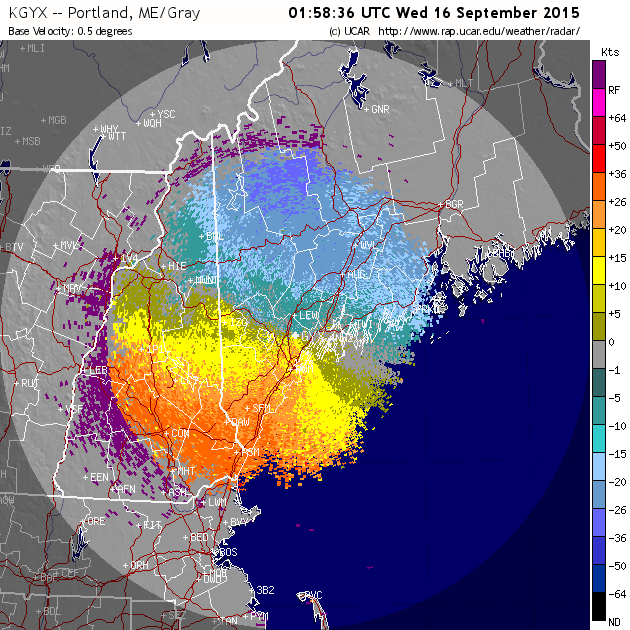
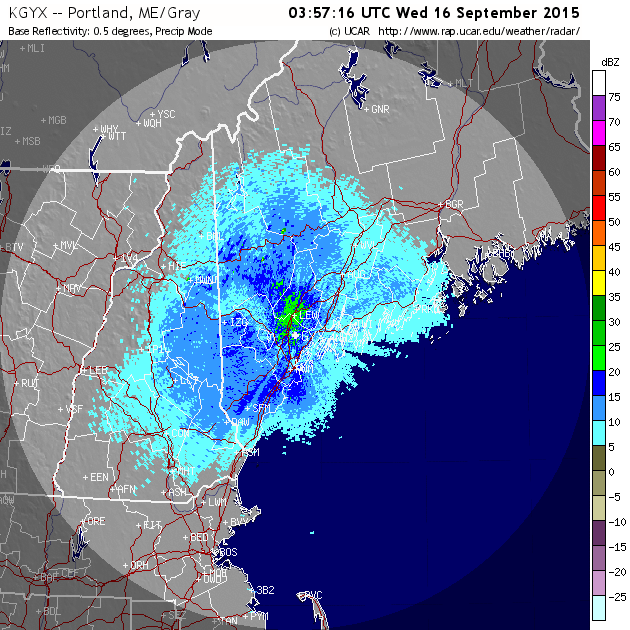
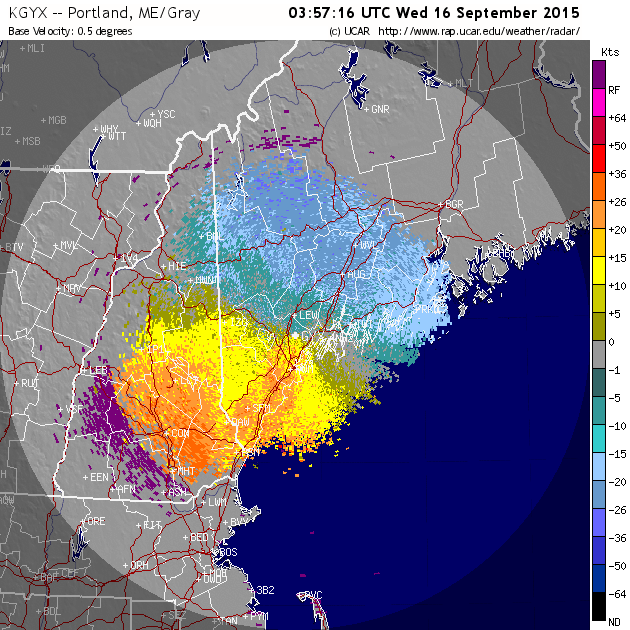
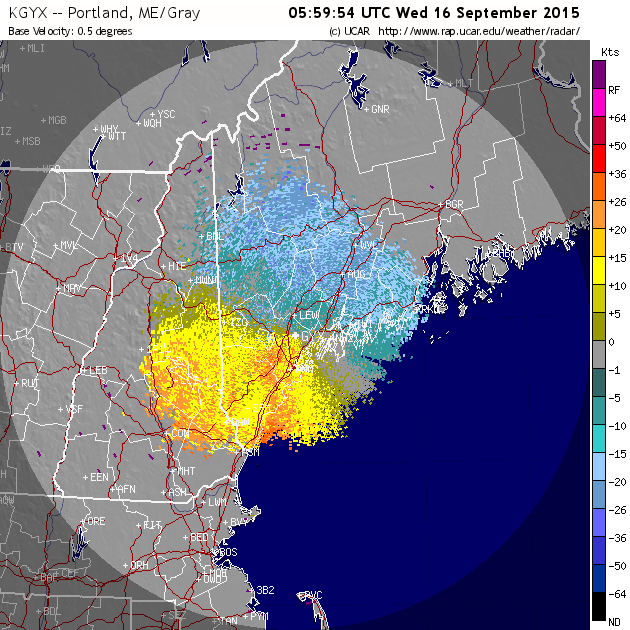
But last night’s radar was even better! Here are the very active 10pm, 12am, 2am, and 4am radar and velocity images from the overnight. See how much was offshore, even as of 4am?
10pm radar

10pm velocity

12am radar

12am velocity

2am radar

2am velocity

4am radar

4am velocity

And come dawn, the winds aloft were perfect for a good Morning Flight at Sandy Point.
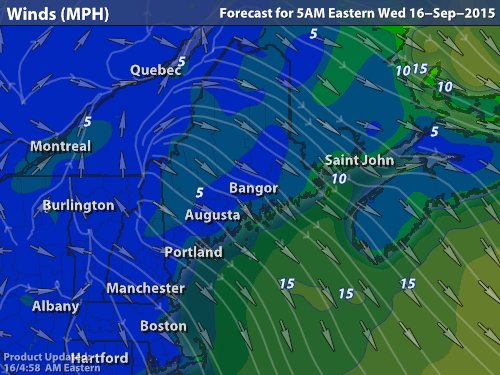
5am wind map

In other words, that’s what produced 2,000 birds at Sandy Point, and with a busy schedule this fall, I was quite pleased to catch one of the big ones.
Monhegan Island, May 18-20, 2015.

Hooded Warbler, Yellow-crowned Night-Heron, Summer Tanager, Grasshopper Sparrow, 19 species of warblers and 89 species? All in 48 hours? It must be Monhegan!

Jeannette and I escaped for a quick trip to Monhegan Island this week. It was all-too-brief as usual, but we’re always happy for whatever short visit we can muster. With the early season ferry schedule still in effect, we couldn’t arrive until noon on Monday, and departed at 12:30 on Wednesday. That only gave us 48 hours of birding.

IMG_1020_edited-2
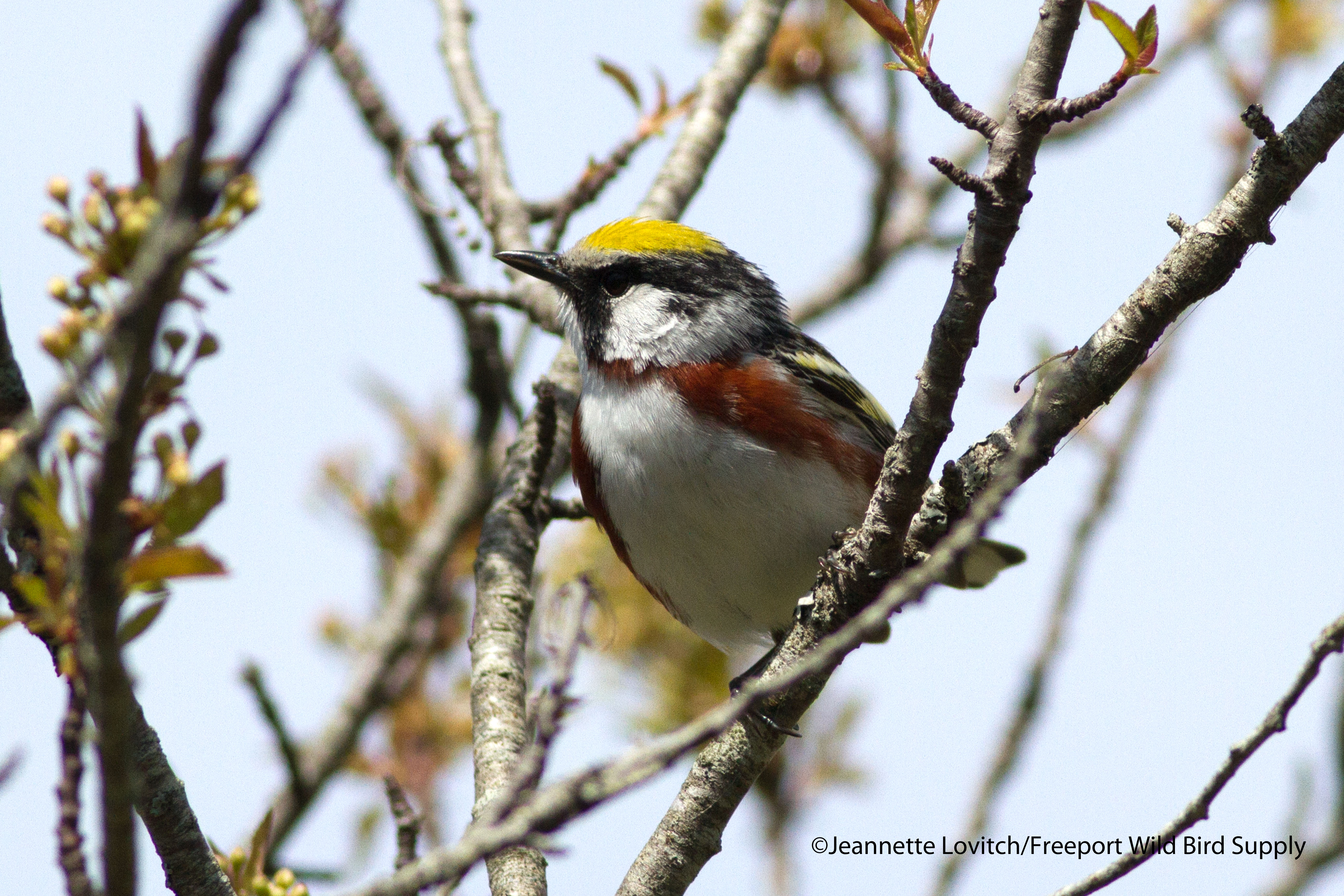
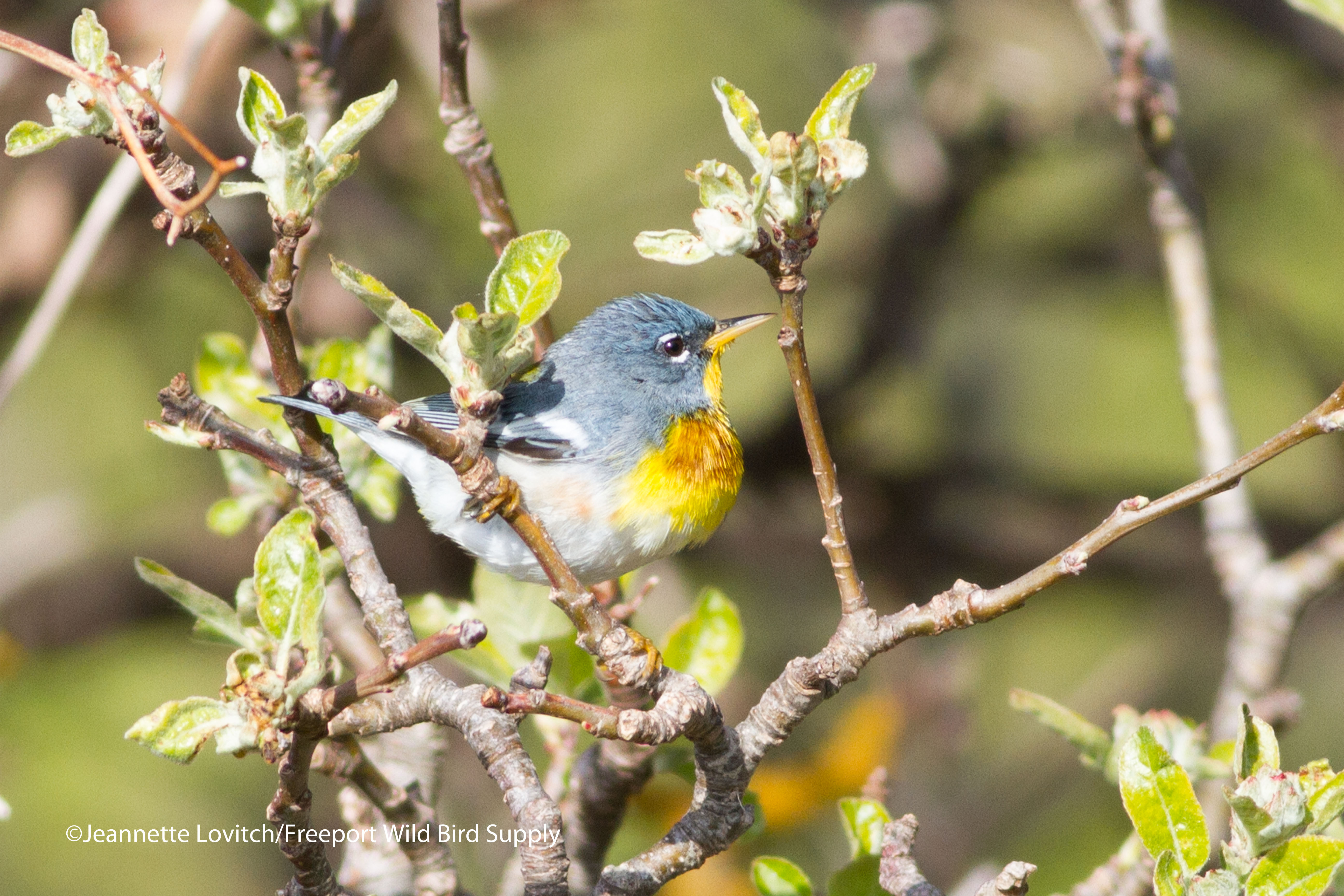
Northern Parulas were common and conspicuous – and looking mighty fine! – throughout the visit.

A strong flight overnight Sunday into Monday ushered in some new migrants to the island, but also ushered out several of the rarities that had been present over the weekend. Luckily, a few goodies lingered, including the adult Yellow-crowned Night-Heron that was seen almost all day for all three days of our visit in a corner of the Ice Pond. Our best discovery of the trip was a Grasshopper Sparrow that we kicked up near the microwave tower. Unfortunately, it was not seen again by us or anyone else.

The remnants of the good morning were present – it was decidedly birdy and we managed 16 species of warblers and 65 total species of birds before dinner…and with the pleasant surprise of finding Monhegan Brewing open, we may have spent a little afternoon time there instead of beating the bush.

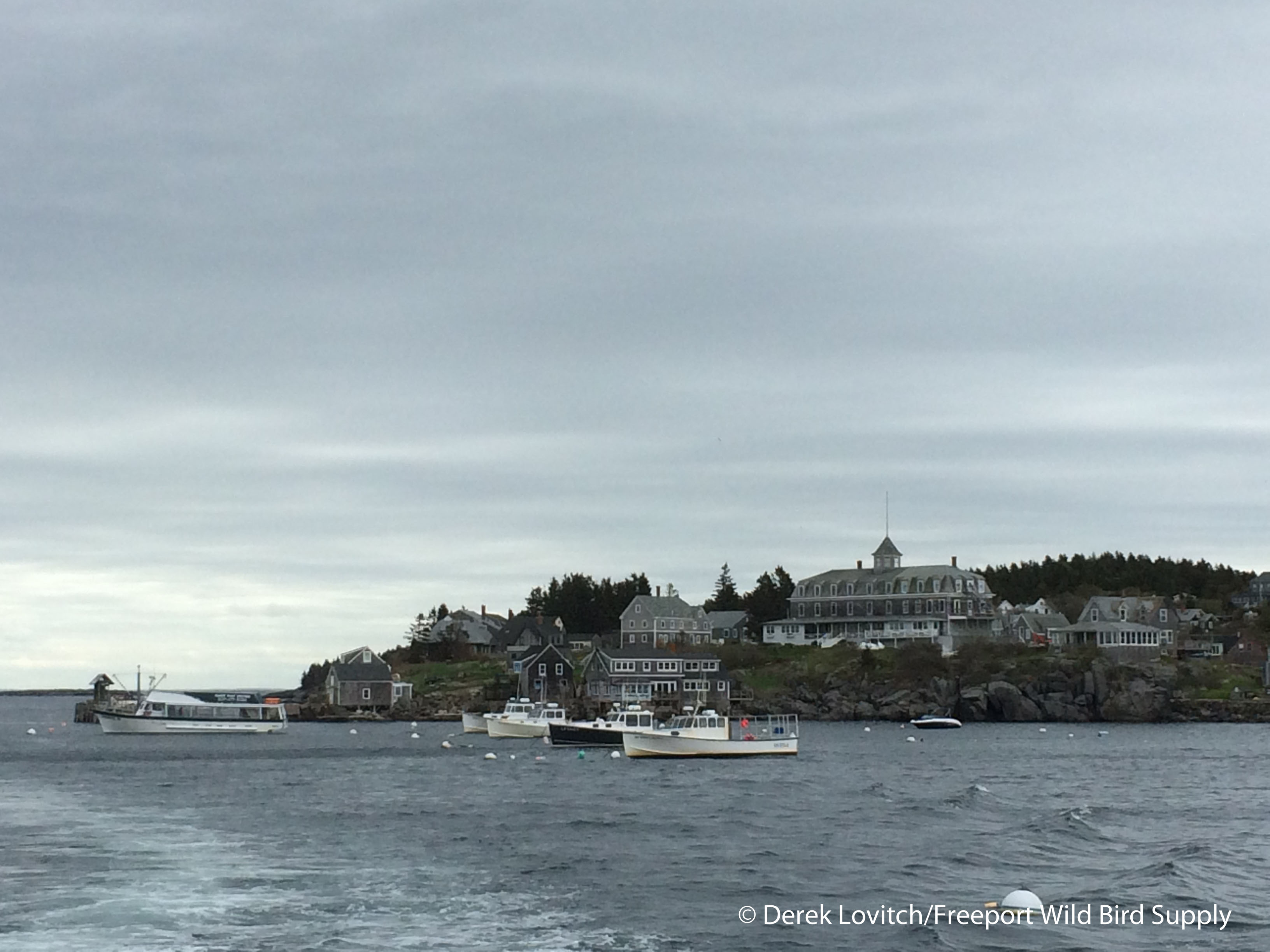
Monhegan_Brewing,5-18-15_edited-1
FOY.

IMG_1030_edited-2
Magnolia Warbler was our most common warbler on Day 1.

Come nightfall, birds took the air on light southerly winds. However, after midnight, there were very few
birds on the radar near the coast, suggesting many more birds would have departed than arrived. And that certainly was the case!

It was a quiet morning, and in the dense fog, birds were few and far between. The Yellow-crowned Night-Heron was present and accounted for however. Then, in the afternoon, Jeannette and I (mostly) circumnavigated the island – a hike I haven’t done in a while, so that was a nice change of pace. The only Cape May Warbler we saw in the three days was during the hike, in one of quite a few small mixed-species foraging flocks that we encountered on the island’s east side.
Hiking_East_Side,5-19-15_edited-1

We also came upon a tired and wet Scarlet Tanager (I can’t believe I didn’t bring mealworms on this trip!), which was slowly working the rocks for seaweed flies. It was finding several, and after watching it for about 15 minutes, we can tell it was getting a little more strength.

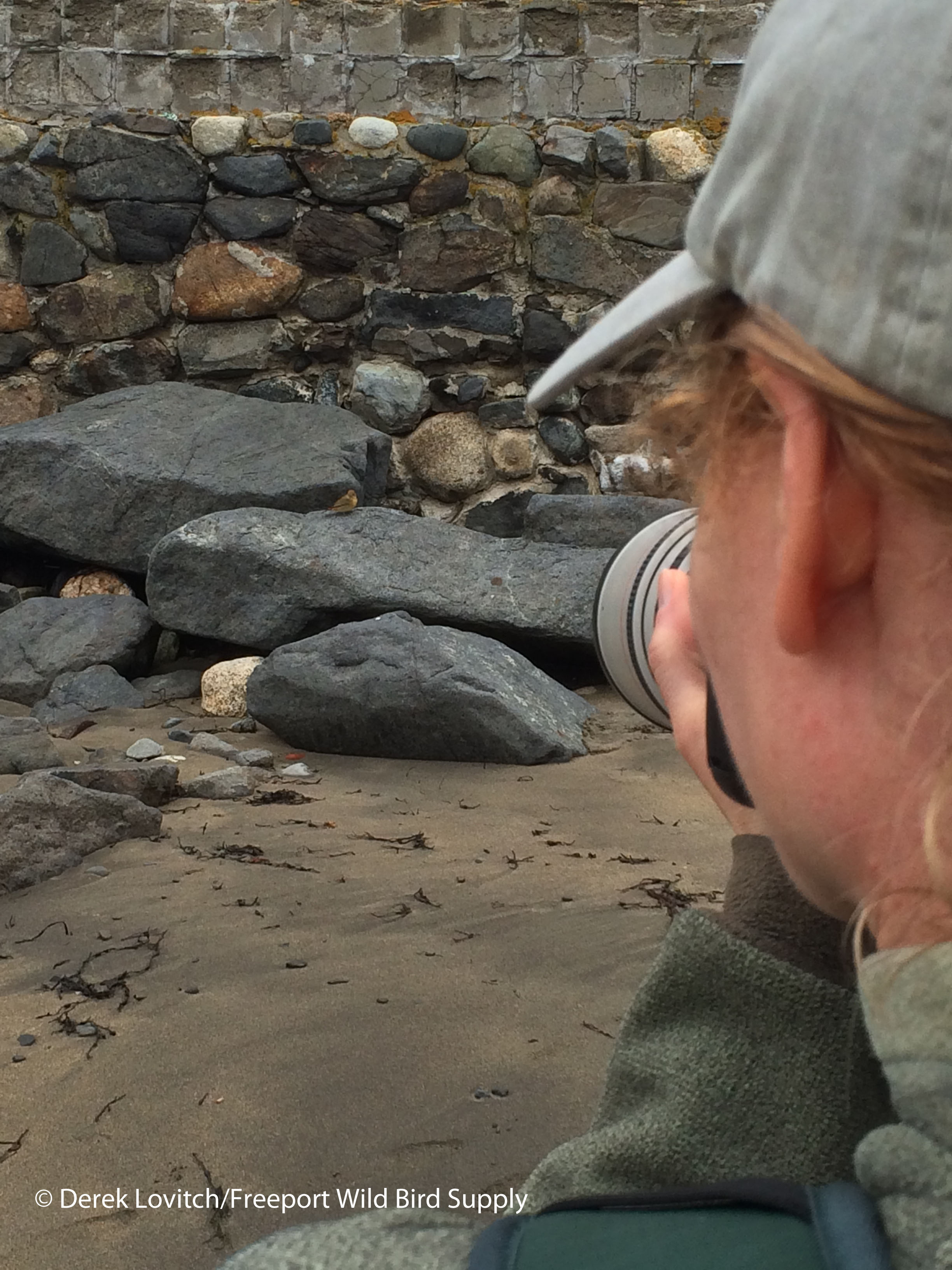
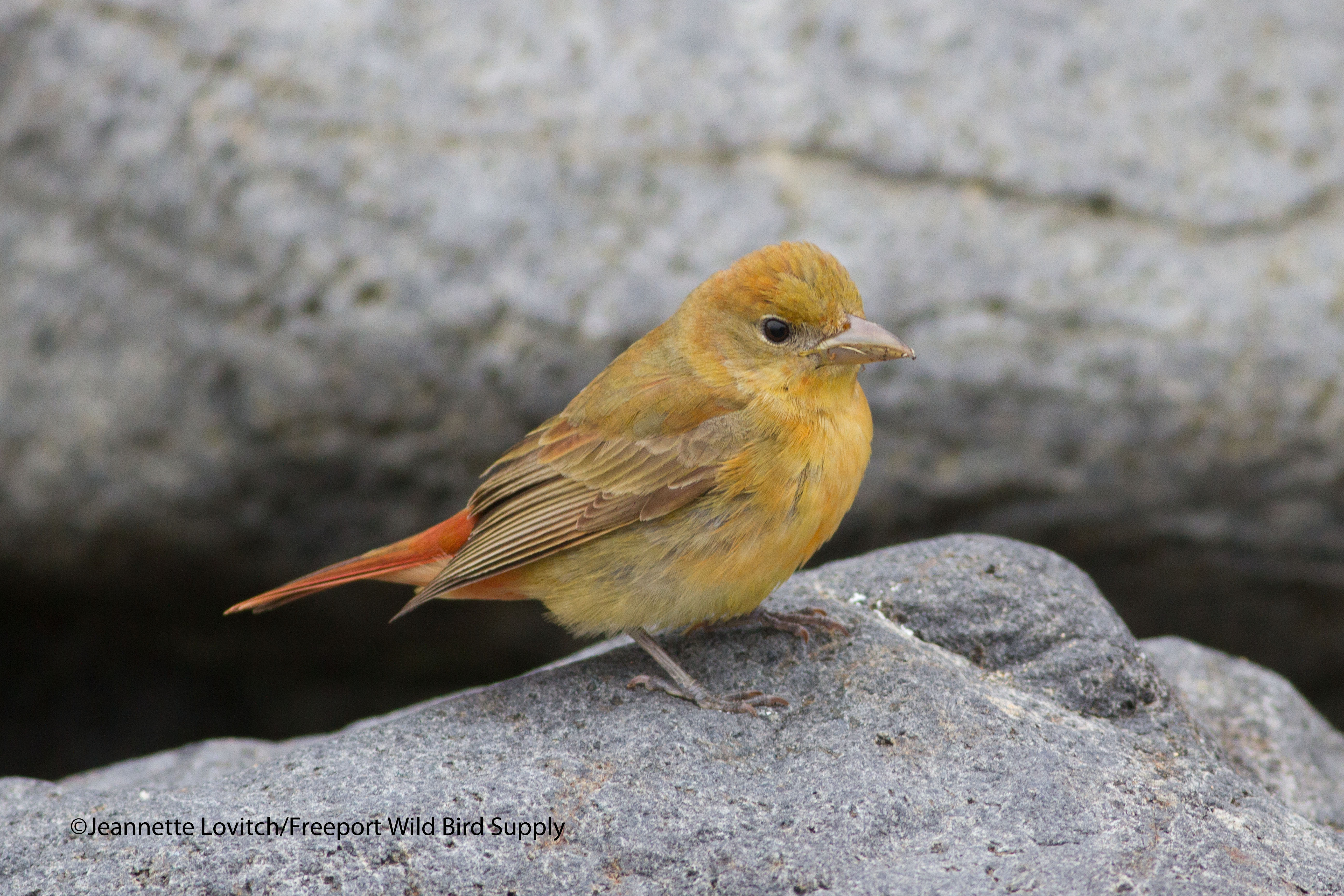
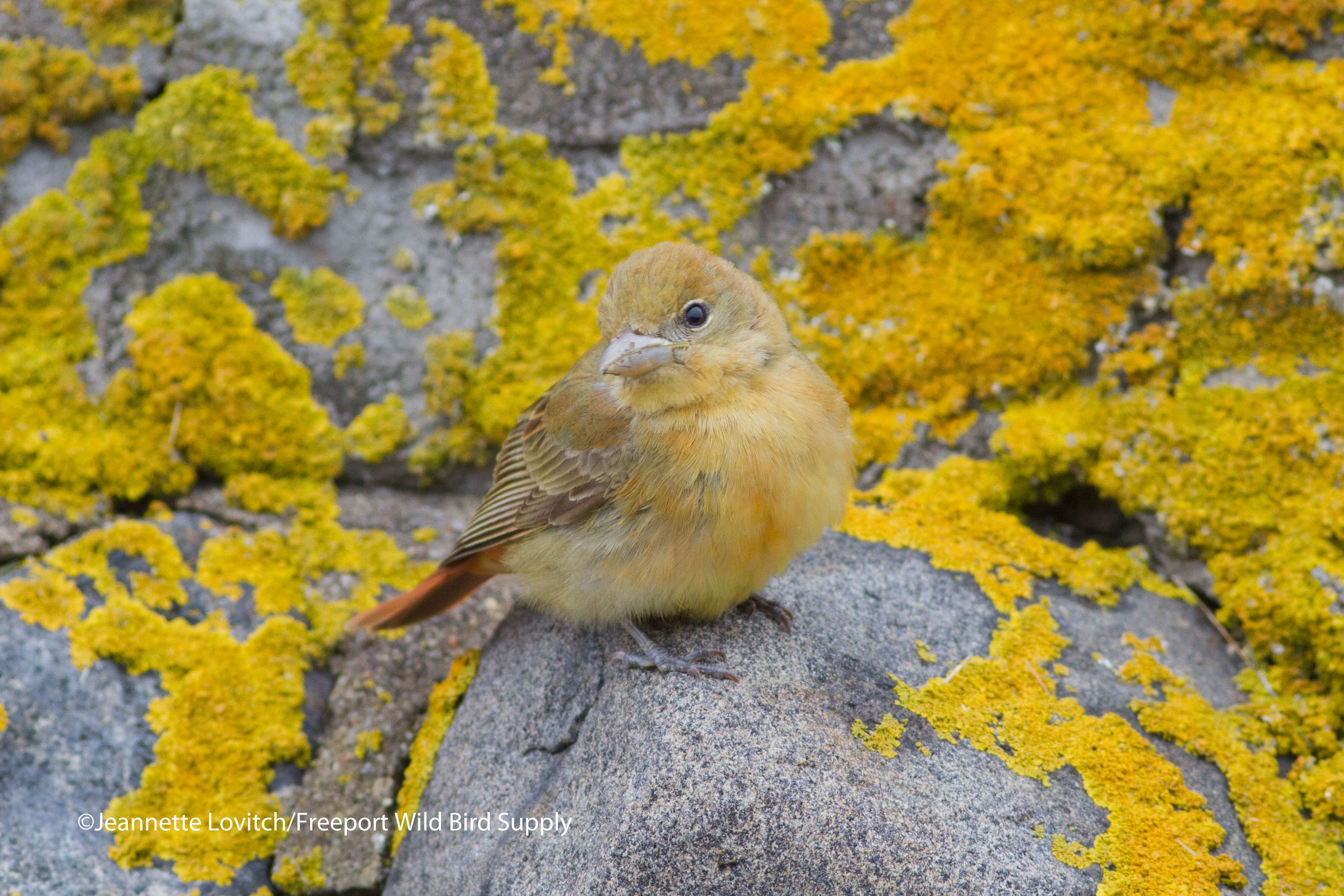
Upon our return to town, we were alerted to the re-sighting of the weekend’s Summer Tanager, flycatching on Swim Beach. To say it posed for pictures would be an understatement.
J_SUTA,Monhegan,5-19-15_edited-1

IMG_1068_edited-2

IMG_1082_edited-2

Overall, it was a slow day of birding by Monhegan standards (55 species including 13 species of warblers), but a slow day of birding on Monhegan is a great day of birding most anywhere else!

Although we awoke to more dense fog on Wednesday (5/20), our last day on the island, there were soon peaks of sun overhead, and a lot of new birds were to be seen. A moderate flight overnight on light southwest winds then saw birds drift offshore a little more as the winds shifted to the west after midnight. This brought an array of new arrivals to the island, although nothing in exceptionally large quantities, but our trip list grew steadily.

Our morning began with a nice flight of Northern Gannets off Lobster Cove and ended with 17 total species of warblers. Personal first-of-years included the gannets, 1 American Pipit at Lobster Cove, and a singing Willow Flycatcher.  The Summer Tanager continued, and the Yellow-crowned Night-Heron was still standing guard.

And finally, we ran into the one rarity that we had not yet caught up with – a female Hooded Warbler that had been present since the weekend. In true MonhegZen birding style, after being told we “just missed it” several times, I played a hunch and gave one little thicket a quick check before we headed up to the Trailing Yew to grab our carry-on bags.

And sure enough, there she was!
IMG_1180_edited-2

While both a Wood Thrush and Snowy Egret that were seen on Tuesday would have been “Island Birds” for me, we managed to see all of three of the continuing rarities, plus finding our own in the Grasshopper Sparrow (a very good bird out here).

In other words, it was a great – albeit quick – trip. I look forward to returning no later than our MonhegZen Fall Migration Weekend, if not sooner.  And for the record, Monhegan Brewing’s new Flyway IPA – named for the birds and birders that descend on the island each spring and fall – is fantastic!

Sasha_and_Chaco,5-19-15_edited-1
The trip was also way too short for Sasha. Not only did she not get any lifers, but her little island romance with Chaco came to an all-too soon end.

Our full trip list was as follows:

Mallard: 6, 8, 10.
Mallard x American Black Duck hybrid: 0,0,2
Common Eider: x,x,x
Ring-necked Pheasant: 3,5,4.
Red-throated Loon: 0,0,1.
Common Loon: 2, 0,0.
Northern Gannet: 0,0,73
Double-crested Cormorant: x,x,x
Great Cormorant: 0,0,1.
Great Blue Heron: 0,0,1.
YELLOW-CROWNED NIGHT-HERON: 1,1,1.
Osprey: 0,0,1.
Merlin: 1,1 or 2, 1
Sora: 1,1,1 (calling incessantly all day long all three days!)
Greater Yellowlegs: 2,1,0
Spotted Sandpiper: 0,0,2
Laughing Gull: 0,0,4.
Herring Gull: x,x,x.
Great Black-backed Gull: x,x,x
Black Guillemot: x,x,x.
Mourning Dove: 6,6,6.
Ruby-throated Hummingbird: 0,1,2.
RED-BELLIED WOODPECKER: 1,1,0.
HAIRY WOODPECKER: 1,0,1.
Northern Flicker: 1,1,0.
Eastern Wood-Pewee: 1,0,3.
Alder Flycatcher: 0,0,2.
Willow Flycatcher: 0,0,1.
Least Flycatcher: 2,2,20.
Eastern Phoebe: 2,0,2.
Eastern Kingbird: 6,1,3.
Warbling Vireo: 0,0,2.
Red-eyed Vireo: 0,1,6.
Blue Jay: 4,5,5.
American Crow: x,x,x.
Common Raven: 2,2,2.
Tree Swallow: 10,6,8.
Cliff Swallow: 1,0,0
Barn Swallow: 2,0,2.
Black-capped Chickadee: x,x,x.
Red-breasted Nuthatch: 2,2,2.
Winter Wren: 0,1,1.
Golden-crowned Kinglet: 0,8,2.
Swainson’s Thrush: 0,1,1.
American Robin: x,x,x.
Gray Catbird: #,#,#
Brown Thrasher: 3,2,2.
European Starling: x,4,6.
American Pipit: 0,0,1.
Cedar Waxwing: 0,0,15.
Nashville Warbler: 0,0,2.
Northern Parula: 10,20,25.
Yellow Warbler: 10,10,20.
Chestnut-sided Warbler: 1,1,8.
Magnolia Warbler: 15,30,40.
Black-throated Blue Warbler: 5,3,2.
Yellow-rumped Warbler: 10,15,12.
Black-throated Green Warbler: 3,15,18.
CAPE MAY WARBLER: 0,1,0.
Blackburnian Warbler: 1,0,0.
Blackpoll Warbler: 2,2,10.
Black-and-white Warbler: 6,10,15.
American Redstart: 2,3,25.
Ovenbird: 1,0,1.
Northern Waterthrush: 3,1,2.
Common Yellowthroat: #,#,#.
HOODED WARBLER: 0,0,1.
Wilson’s Warbler: 2,0,6.
Canada Warbler: 1,0,3.
SUMMER TANAGER: 0,1,1.
Scarlet Tanager: 0,1,0.
Eastern Towhee: 0,0,2.
Chipping Sparrow: 2,1,0.
Savannah Sparrow: 3,2,2.
GRASSHOPPER SPARROW: 1,0,0.
Song Sparrow: x,x,x
Lincoln’s Sparrow: 1,0,0.
Swamp Sparrow: 4,2,3.
White-throated Sparro: 15,10,10.
White-crowned Sparrow: 1,6,7.
Northern Cardinal: 4,6,6.
Rose-breasted Grosbeak: 4,5,5.
Indigo Bunting: 0,0,1.
Bobolink: 6,4,3.
Red-winged Blackbird: 4,4,8.
Common Grackle: x,x,x.
Baltimore Oriole: 2,1,4.
Pine Siskin: 0,0,1.
Purple Finch: 1,0,0.
American Goldfinch: 8,4,6.

Day totals: 65, 56,77

But most conspicuous in their complete absences was the lack of Carolina Wrens. The island usually has the densest population of this “southern” species anywhere in the state (although one neighborhood in Wells might rival it), but we did not have a single bird the entire trip! Same for everyone else we talked to. Apparently, the unusually harsh, long, and snowy (especially for out here) winter took its toll – as it is wont to do on Carolina Wrens pushing the northern limits of their range.

IMG_1175_edited-2
Chestnut-sided Warblers were one of many species that were more frequently encountered this morning that in the previous two days.

Departing_Monhegan,5-20-15_edited-1

Huge Morning Flight at Sandy Point!

My last blog entry ended with a little bit of foreshadowing, did it not? But before we get to Sandy Point this morning, let us take a moment to review the radar images from the weekend for comparison.

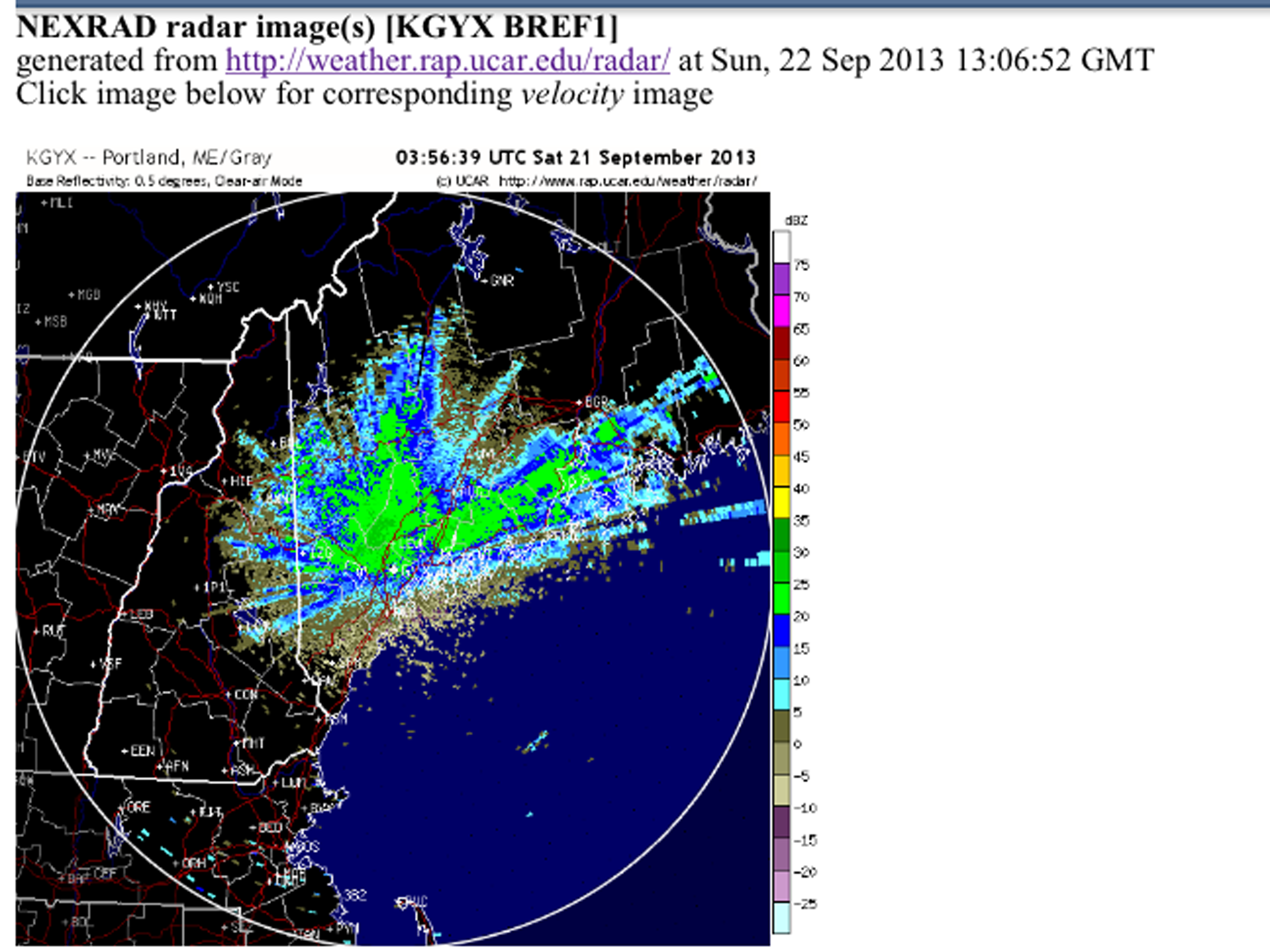
This is the 12:00am image from Sunday.  This is what “no migration” looks like on the radar.  You can also see the rain approaching from the west.
12am radar, 9-22-13

Now this is the midnight image from Saturday.  This is what “I have no idea what’s going on” looks like on the radar.  While anything from some weird warping of the radar beams from changes in air temperature to a simple malfunction could result in this, what it is NOT is a lot of birds.  It’s too irregular…and bird’s don’t “explode” in narrow bands!
IMG_1575_edited-1 IMG_1576_edited-1

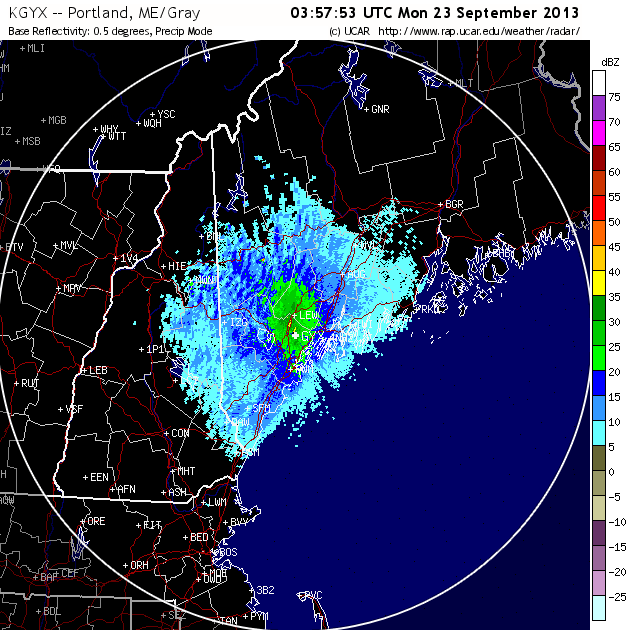
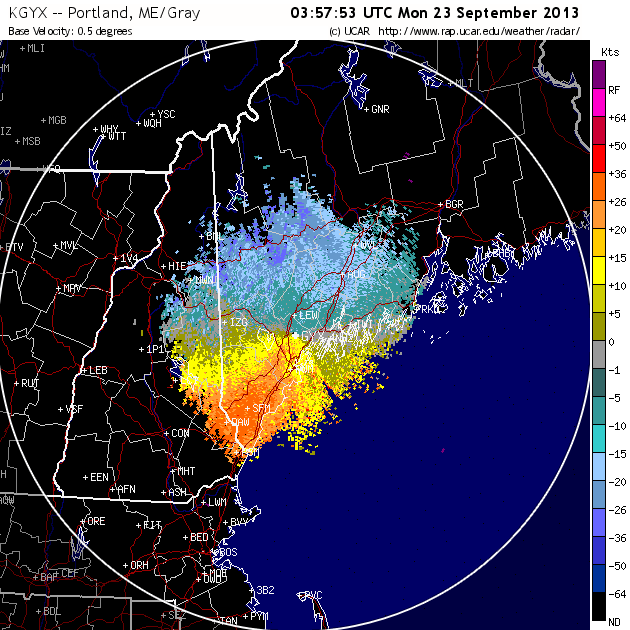
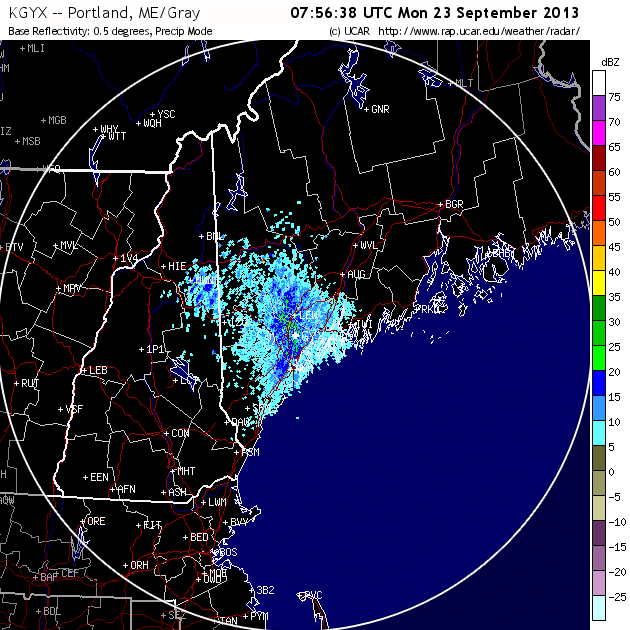
So, compare those to what “a whole boatload” of birds looks like.  Here are the 10pm, 12am, 2am, and 4am base reflectivity and velocity images from last night.

10pm radar, 9-22-13 10pm velocity, 9-22-13

12 am radar, 9-23-13 12 am velocity, 9-23-13

2am radar, 9-23-132am velocity, 9-23-13

4am radar, 9-23-134am velocity,9-23-13

Yeah, it would have been nice to be on Monhegan this morning.  But I was in my other sanctuary – my office at Sandy Point.  And this is what happened:

6:28 – 10:05am.
43F, increasing W to NW, clear.

1338 Unidentifed (*2nd highest)
416 Northern Parulas (* Seriously, how are there any more parulas to come through!  This is the second highest count of all time, and now all three of the highest tallies are from this year!)
281 Northern Flickers
179 Black-throated Green Warblers (*2nd highest)
163 Blackpoll Warblers
91 Yellow-rumped Warblers
43 Black-and-white Warblers (*record high)
39 Red-eyed Vireos
35 American Redstarts
29 Blue Jays
29 Ruby-crowned Kinglets
23 Yellow Warblers
22 Blue-headed Vireos
21 Scarlet Tanagers (*record high)
21 Dark-eyed Juncos
19 Cedar Waxwings
18 Magnolia Warblers
17 Nashville Warblers (*record high)
17 American Goldfinches
13 Black-throated Blue Warblers
12 Eastern Phoebes (* ties high)
11 Swainson’s Thrushes
9 Palm Warblers
6 Rusty Blackbirds
5 American Robins
4 Unidentified vireos
4 Chestnut-sided Warblers
4 White-throated Sparrows
3 Least Flycatchers
3 Cape May Warblers
3 Bay-breasted Warblers
2 Common Loons
2 Broad-winged Hawks
2 TUFTED TITMICE (rarely seen crossing)
2 Unidentified thrushes
2 Golden-crowned Kinglets
2 Blackburnian Warblers
2 Common Yellowthroats
1 Osprey
1 American Kestrels
1 Yellow-bellied Sapsucker
1 Eastern Wood-Pewee
1 Common Raven
1 Philadelphia Vireos
1 Veery
1 Tennessee Warbler
1 CONNECTICUT WARBLER (My third of the season here; it’s the fall of the CONWs in Maine!)
1 Northern Waterthrushes
1 Rose-breasted Grosbeak
1 DICKCISSEL (third of the season here)
1 Baltimore Oriole

Total = 2, 905 (4th highest tally all time for me)

DSC_0016_REVIonAlternate-leafedDogwood,Sandy Point, 9-23-13DSC_0026_SWTH_onWinterberry2,Sandy Point,9-23-13
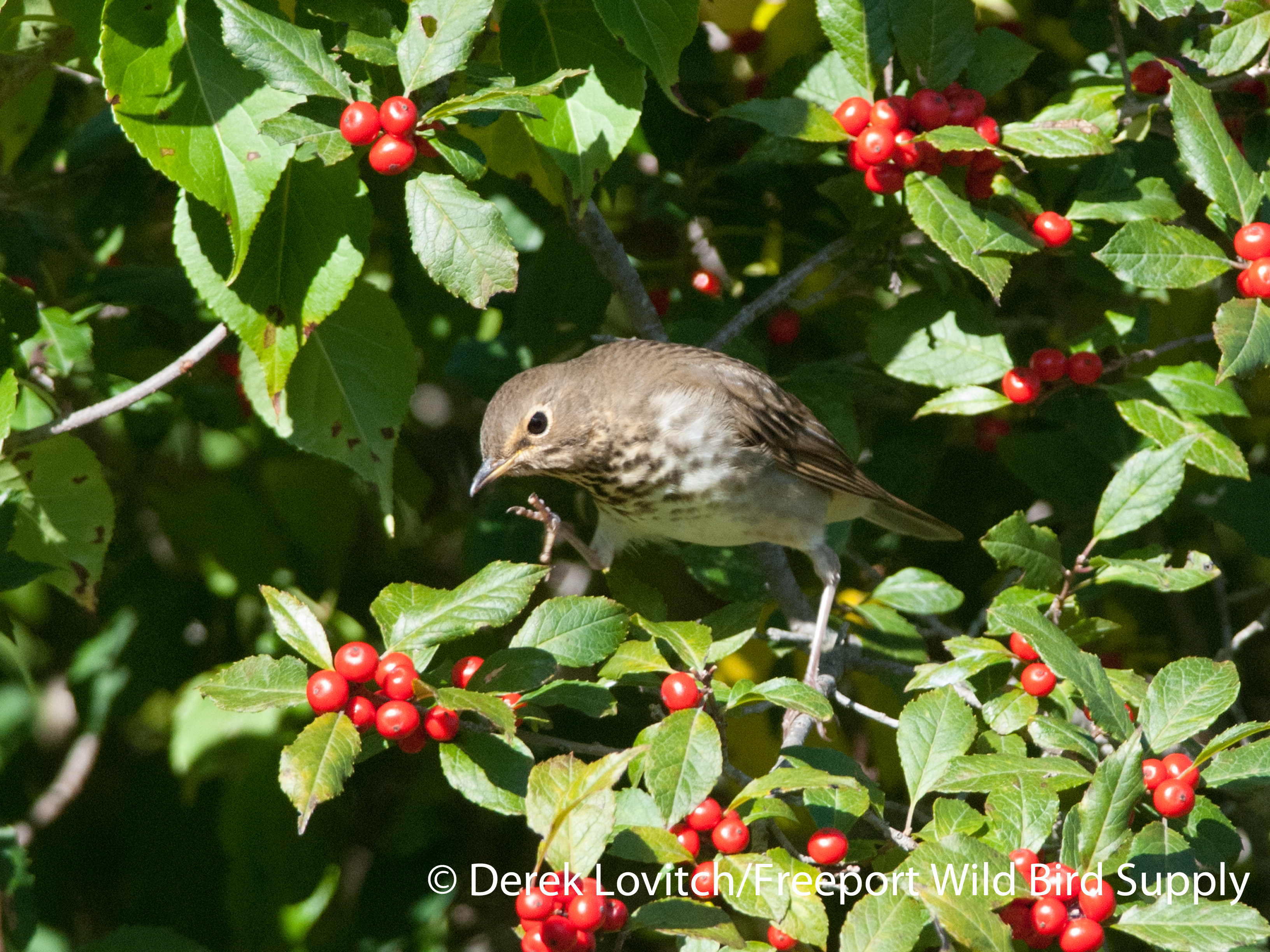
Some of the migrants pause long enough at Sandy Point to do a little snacking.  Here’s a Red-eyed Vireo eating Alternate-leafed Dogwood fruits, and a Swainson’s Thrush stepping out into the sun to dine on Winterberries.

DSC_0034_WISN,GreelyRoad,9-23-13_edited-1
A little post-Sandy Point birding yielded two Wilson’s Snipe trying to stay hidden along the edge of a puddle along Greely Road in Cumberland.

And tonight looks just as good…perhaps even a little better with a more northwesterly flow.  See ya at the bridge at sunrise!
wind forecast, 9-23-13

Two Fun Mornings at Sandy Point

_MG_9884_edited-2

With a busy tour and travel schedule once again this fall (every year I say I will schedule fewer things in my favorite season to bird in Maine!), my time at Sandy Point is at a premium.  Since it takes certain conditions to make birding here worthwhile, I get quite excited when conditions line up for a good flight.

I was very anxious to arrive at “my office” on Tuesday morning.  Moderate northerly winds overnight turned to the northwest, resulting in an exceptional flight over and through SandyPointBeach come dawn.  Here is the morning’s scorecard:

-6:23-10:45am.
-37F, Clear, Light northwest, increasing.
-Jenny Howard and Jeannette Lovitch assisting with the count.

1195 Unidentified
984 Northern Flickers (*2nd highest count)
703 Northern Parula (*New high count; old record only 234!)
391 Cedar Waxwings (*New high count)
153 American Redstarts
152 Blackpoll Warblers
145 Black-throated Green Warblers (*2nd highest count).
101 Broad-winged Hawks (*New high count)
35 Yellow Warblers
28 Black-and-white Warblers
23 Yellow-rumped Warblers
21 Red-eyed Vireos
19 Magnolia Warblers
17 Swainson’s Thrushes (*ties high count)
16 Eastern Phoebes (*New high count)
12 Nashville Warblers
11 American Goldfinches
9 American Robins
9 Rose-breasted Grosbeaks (*New high count)
7 Palm Warblers
7 Scarlet Tanagers
6 Common Loons
6 White-throated Sparrows (in bushes; no crossings)
5 Tennessee Warblers
5 Common Yellowthroats (in bushes; no crossings as usual)
4 Cooper’s Hawks (*New high count)
4 Unidentified vireos
4 Blue Jays
3 Ospreys
3 Least Flycatchers
3 Unidentified empids
3 Philadelphia Vireos
3 Chestnut-sided Warblers
3 Blackburnian Warblers
3 Bay-breasted Warblers
3 Black-throated Blue Warblers
3 Chipping Sparrows
3 Rusty Blackbirds (first of season)
2 Sharp-shinned Hawks
2 American Kestrels
2 Bald Eagles
2 Ruby-throated Hummingbirds
2 Golden-crowned Kinglets
2 Ruby-crowned Kinglets
2 Cape May Warblers
2 European Starlings (first time I have “deemed them migrating”)
2 Dark-eyed Juncos
1 Red-tailed Hawk
1 Northern Harrier
1 Unidentified small falcon
1 Eastern Wood-Pewee
1 “Traill’s” Flycatcher
1 Blue-headed Vireo
1 Red-breasted Nuthatch
1 NORTHERN MOCKINGBIRD (6 false-starts before apparently crossing)
1 Pine Warbler
1 CONNECTICUT WARBLER (3rd of the season as Tom Johnson and Jenny Howard had one here on 9/15 as well)
1 Northern Waterthrush
1 Red-winged Blackbird
1 Purple Finch
1 Monarch butterfly

Total= 4,134 (*2nd highest count of all time!)

Simply put: wow!  That was one heck of a flight.  In fact, it was downright overwhelming at times – flocks of flickers, waves of warblers, packs of waxwings.  It was almost too much to count, and thankfully, Jenny Howard agreed (OK, so maybe I didn’t exactly ask, but beg) to tally flickers for the busiest part of the morning for me. That helped a whole lot.

After a flood like yesterday morning, I am not disappointed by the slow, but steady trickle through the point this morning.  It was a more manageable number to count, with quite a few birds lower than yesterday, and often only a few at a time; it was easier to sort through.

Here’s this morning’s scorecard, then, we’ll compare the different flights as viewed on the radar.
– 6:21-9:05
– 41F, Clear, Calm becoming very light west.

265 Northern Parulas (*2nd highest count)
202 Unidentified
54 Black-throated Green Warblers
45 Northern Flickers
32 Cedar Waxwings
32 American Redstarts
26 Yellow-rumped Warblers
17 Yellow Warblers
14 American Robins
14 Blackpoll Warblers
13 Blue Jays
10 Red-eyed Vireos
7 Nashville Warblers
6 Eastern Phoebes
6 Black-and-white Warblers
4 Ruby-crowned Kinglets
4 Tennessee Warblers
4 Palm Warblers
4 Wilson’s Warblers
4 Chipping Sparrows
3 Common Loons
3 American Kestrels
3 Blue-headed Vireos
3 Chestnut-sided Warblers
3 Common Yellowthroats
2 Unidentified empids
2 Ruby-throated Hummingbirds
2 Swainson’s Thrushes
2 Black-throated Blue Warblers
2 Magnolia Warblers
2 Rose-breasted Grosbeaks
2 Baltimore Orioles
2 American Goldfinches
1 Peregrine Falcon
1 Solitary Sandpiper
1 Least Flycatcher
1 “Traill’s” Flycatcher
1 Unidentified flycatcher
1 Philadelphia Vireo
1 Unidentified vireo
1 White-breasted Nuthatch
1 Prairie Warbler
1 Scarlet Tanager
1 Purple Finch

Total: 801

I’ll admit, I wasn’t expecting it to be quite this good.  And despite really only a “good” flight, parulas had their second highest tally – I didn’t think there would be any left after yesterday’s flight!  And yes, this more manageable flight was more “enjoyable,” if considerably less awe-inspiring.

So, what made me have lower expectations for today?  Let’s go to the radar!

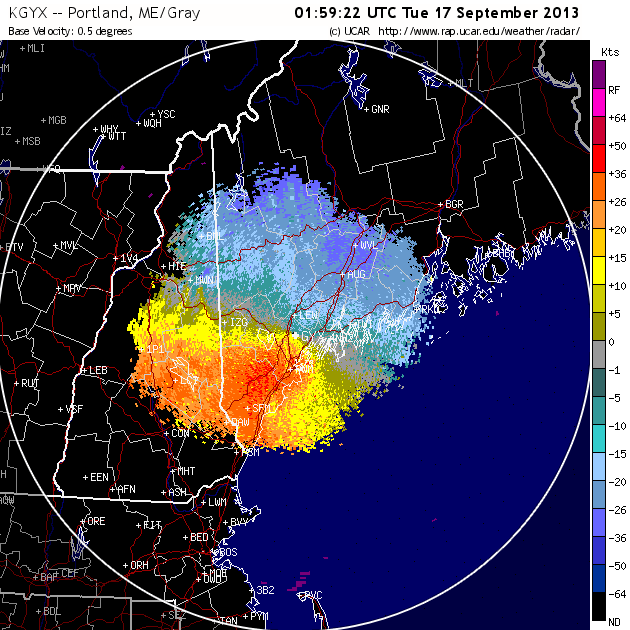
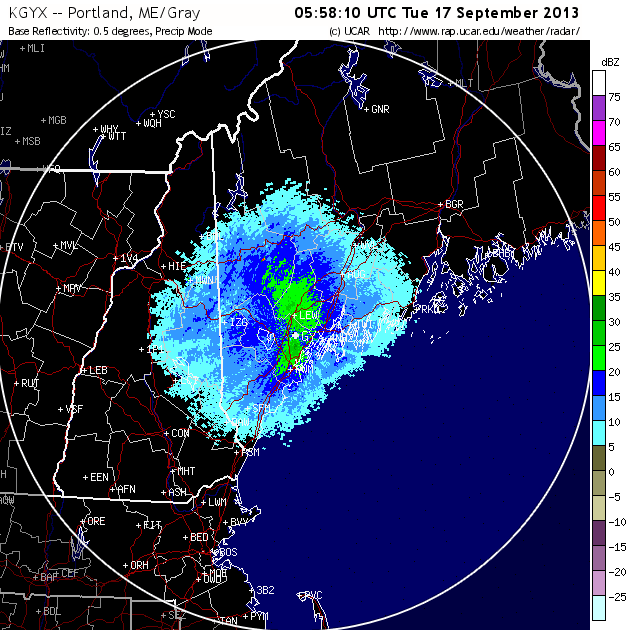
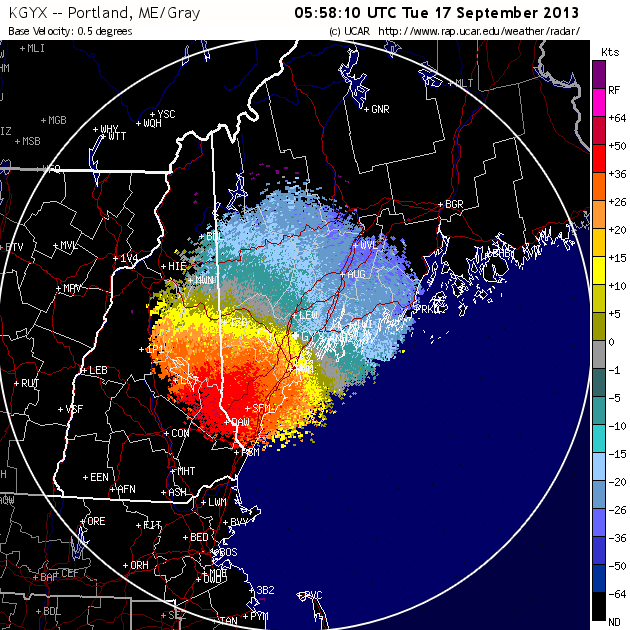
First, the massive flight overnight Monday into Tuesday that led to all of the records yesterday.  I have included the 10pm, 12am, 2am, and 4am radar and velocity images:
a b c d e f g h

Combined, these images show a very strong flight all night long, with a lot of birds offshore come twilight, and likely a lot of birds arriving at the coast come dawn.  Looking at that image when I went to bed, and when I awoke, coupled with the light northwesterly winds all night left no doubt that things would be hopping at Sandy Point.  And, as we now know, there most certainly was. If you see a radar image that looks like this – go birding in the morning!

In fact, it was a good day all-around for migrants, and everywhere we looked up yesterday, raptors were on the move.

winds, 110am,9-17-13

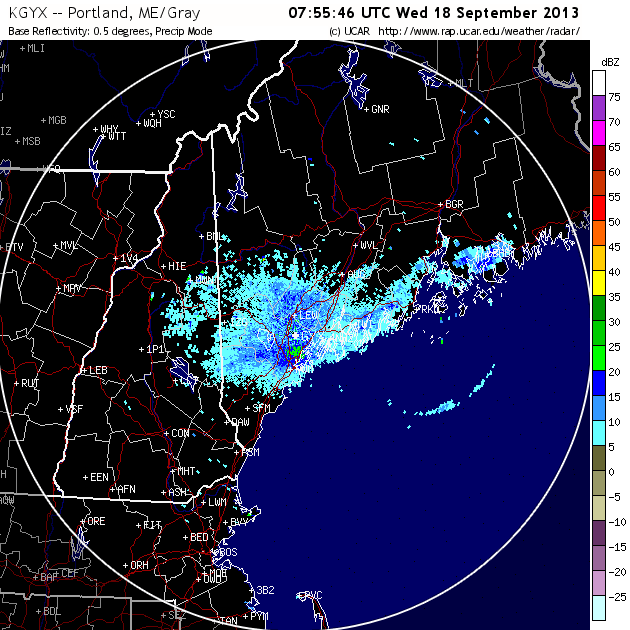
Now, let’s take a look a the radar and velocity images from 10pm, 12am, 2am, and 4am last night:
i j k l m n o p

As night fell Tuesday night, clear and mostly calm conditions let birds take to the air once again – but not nearly as many as the night before. Notice how much smaller the area of return is, and how much less dense? Meanwhile, the velocity image was much less distinctly fast-moving, north-to-south as the previous night (of course, with little to no wind, the ground speed of the birds would be less anyway) – a little more ambiguous than the night before.  Furthermore, with a forecast for westerly winds (not as good as northwesterly), and the chance that they would become southwesterly by dawn, I did consider skipping Sandy Point this morning, but with the rest of the week looking even less productive, I knew I had to give it a go.

And, obviously, I am glad that I did.  But upon returning to the store, and checking those above radar images once again, I find it a bit odd that the radar image (small in diameter, but very dense) did not translate to a more distinct velocity image.  Perhaps there was a lot of slow-moving stuff up there (insects, pollen, dust, etc) that clouded the motion of the birds.  Either way, it was a good night for flying, and if it’s a good night for flying, it’s a good morning to be at Sandy Point!