Tag Archives: Northern Flicker

Gulf of Maine Pelagic Birding by Cruiseship, Oct-Nov 2024.

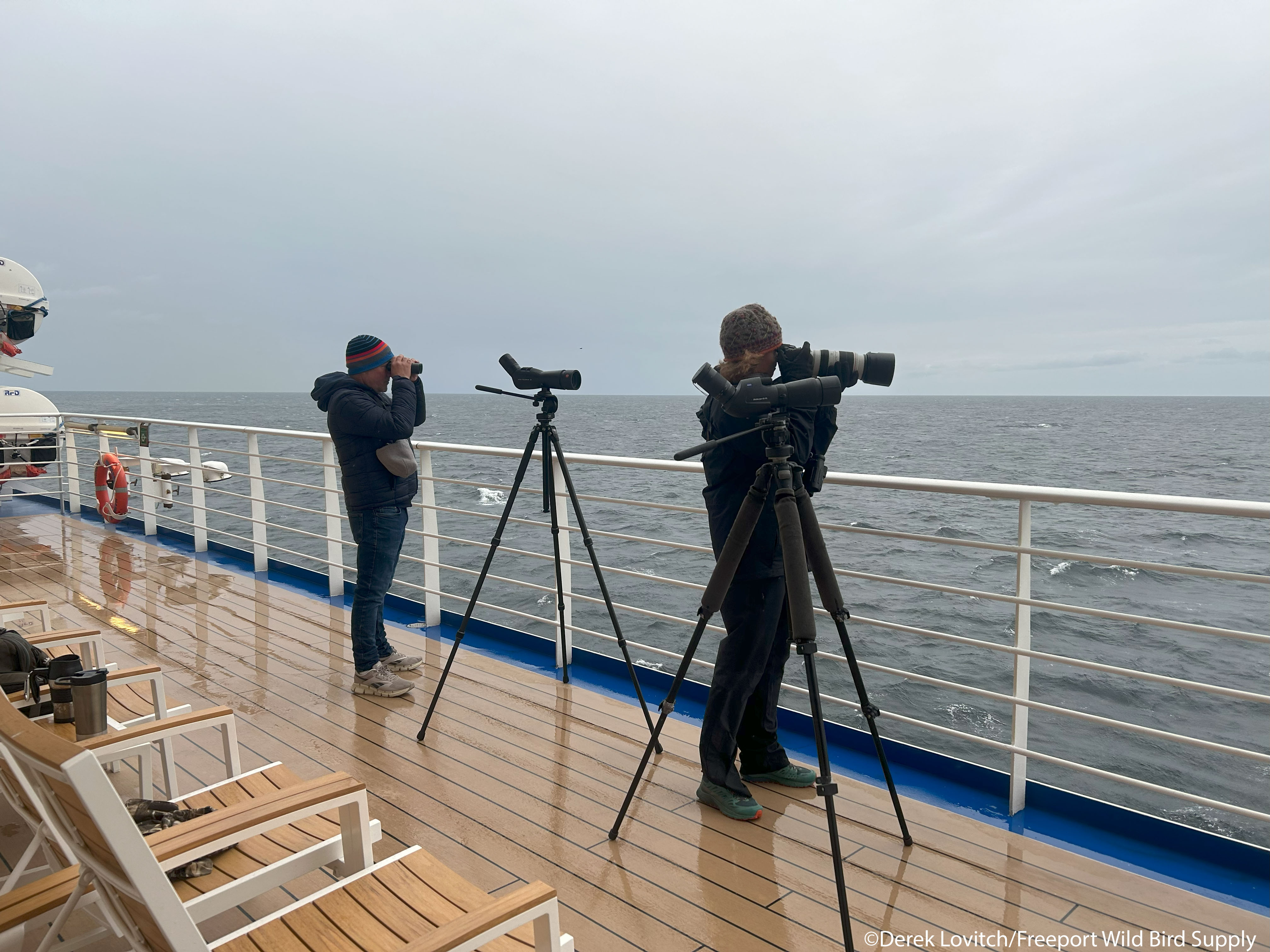
Cruise ships are big, stable platforms that allow for pelagic birding in comfort and with the use of spotting scopes!

In 2019, Jeannette and I took a cruise through the Gulf of Maine and northwestern Atlantic Ocean in the hopes of finding Great Skuas in particular. It was wildly successful, and if we could repeat this success, perhaps there would be a cruise-ship-based tour to offer. At least it would be more comfortable than last week’s attempt!

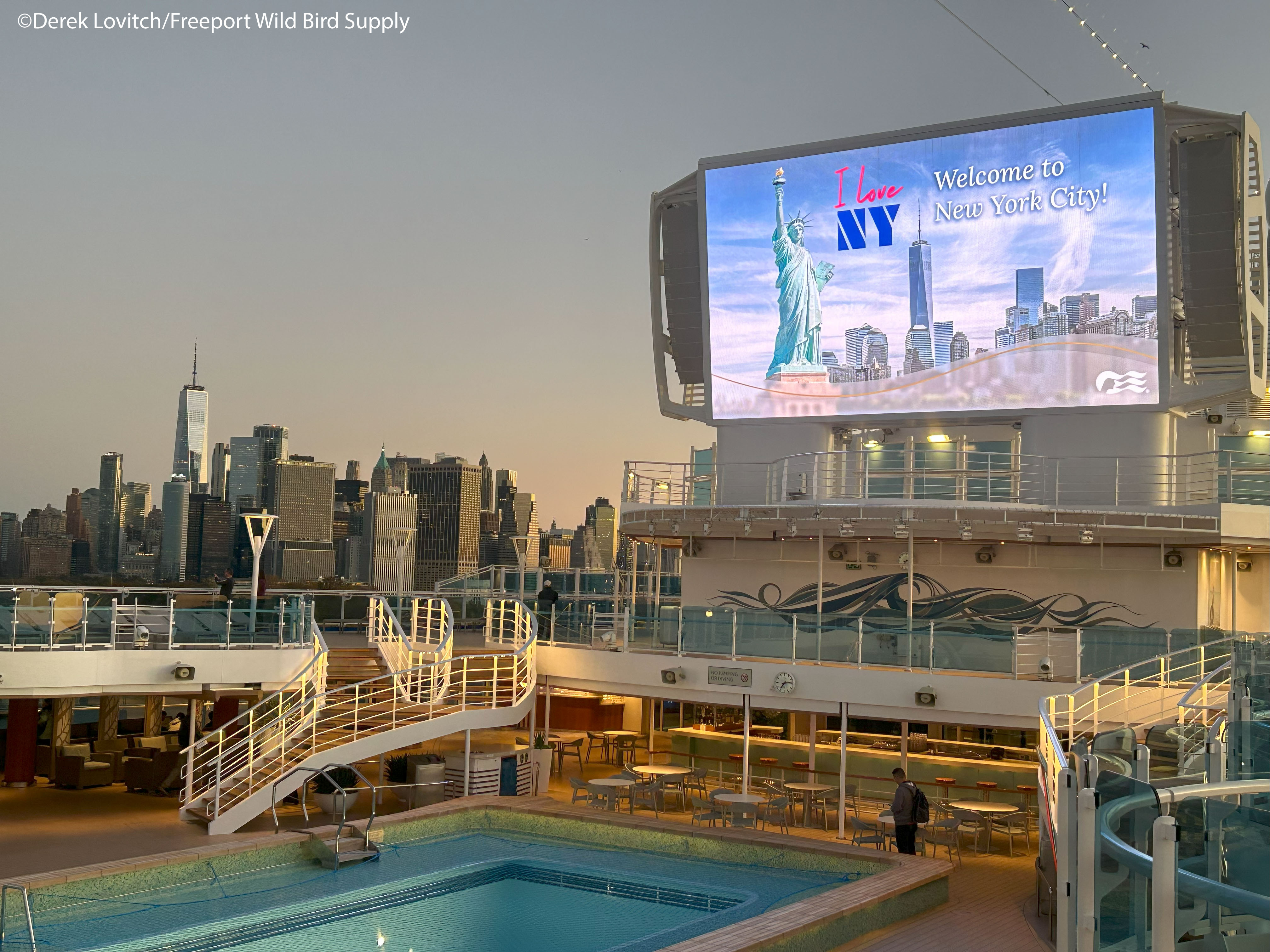
Therefore, on the evening of 10/26, Jeannette and I boarded Princess Cruises’s Enchanted Princess out of Brooklyn, New York. Our hope was to replicate the success of our 2019 trip. We were planning on a second scouting trip in the fall of 2020, but then COVID.

After finally feeling ready to consider a cruise again, we found the itinerary had changed, and we would need to spend seven days to get two full days offshore..we even needed to come back home first! But alas, we had pandemic-era credit that was going to expire, so off we went. Is this a reliable way to see Great Skuas in North America? Could I document a Barolo’s Shearwater this time?

We started our birding, however, at Brooklyn’s Greenwood Cemetery, home of this massive Monk Parakeet colony.

We departed New York Harbor with about an hour of usable daylight, picking up a single Cory’s Shearwater and plenty of Northern Gannets.

Screenshot

Arriving off Newport before dawn the next morning, we got the first shuttle to town, where our friends Bill and Jess picked us up for a lovely day of birding (Clay-colored Sparrow, Orange-crowned Warbler, late Nashville Warbler) before returning to the boat. About 45 minutes of deck time produced 8 Cory’s and a single Great Shearwater.

Newport arrivals.
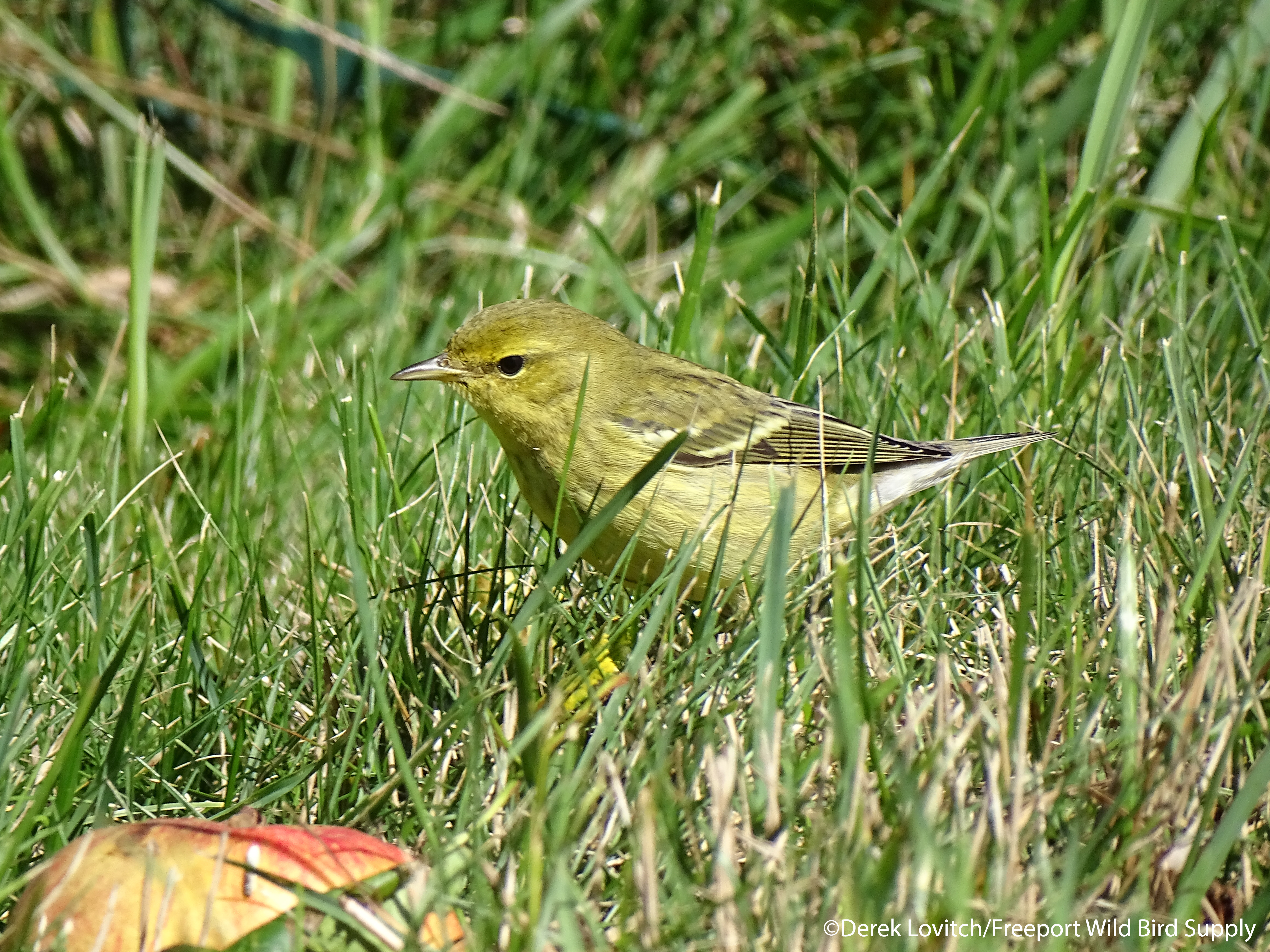
“Western” Palm Warbler at Sachuest NWR.

Unfortunately, this particular boat offered less-than-ideal viewing opportunities compared to our first trip, with the best deck space on Deck 7 (a great height) but way too aft. Even with our scopes on the steady platform, this was going to be a challenge.

Approaching Boston on the morning of 10/28, we checked the decks for passerines (none) before taking our place on Deck 7. There were a lot of Northern Gannets, 4-5 Cory’s Shearwaters close enough to identify as borealis, and a pod of Atlantic White-sided Dolphins. A Song Sparrow flew aboard just outside the outer harbor islands, but before that, our first real surprise of the trip: an American Woodcock appearing from the north and cruising alongside the length of the boat before disappearing. That’s not a “pelagic” we expected!

We birded Boston’s Greenway a bit, but returned to the boat well after dark. Sailing slowly overnight, we returned to Portland (the original itinerary had us visiting Bar Harbor), where a long, thorough check of the Eastern Promenade yielded two Orange-crowned Warblers and a very late Red-eyed Vireo.

Darkness reached us a tantalizingly-short distance to Cash’s Ledge, so we retired to rest up for the big day at sea tomorrow (finally!). 
Waking up in Maine waters about 16.5 nautical miles southeast of Mt Desert Rock, I stepped outside well before first light at 6:05am. I immediately texted Noam, the other birder on board that we rapidly had become friends with, and I hustled Jeannette outside. With some drizzle arriving ahead of approaching light rain, we had ourselves a fallout!
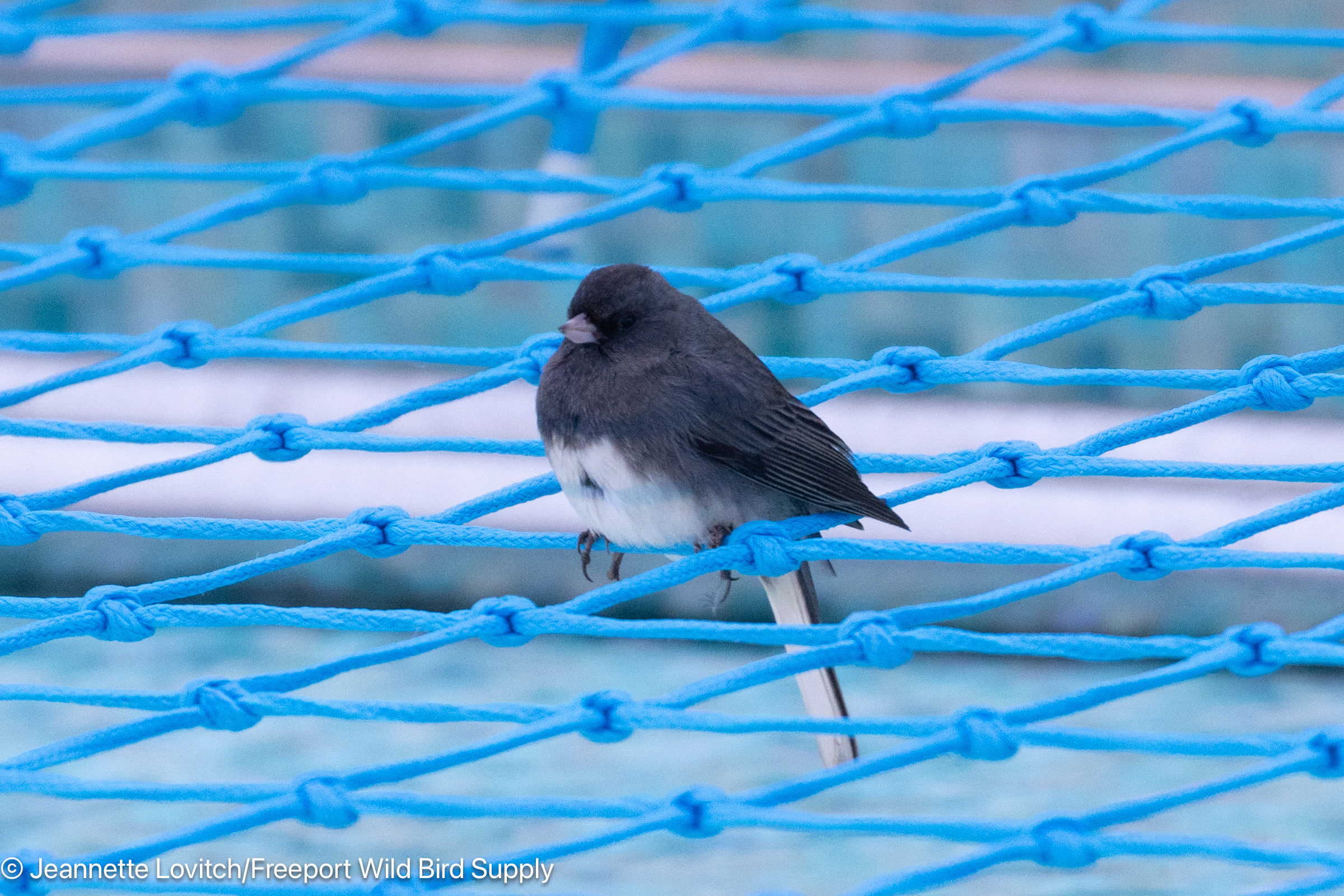
Unexpected considering there were little to no birds on the Maine radars overnight, and with a south wind through most of the night, I was surprised to immediately hear the flight calls of several Yellow-rumped Warblers. Sparrows were scattered about on the open decks. Noam and I had to usher a Rusty Blackbird out of a foyer, while Jeannette had to steer a Dark-eyed Junco down a hallway.
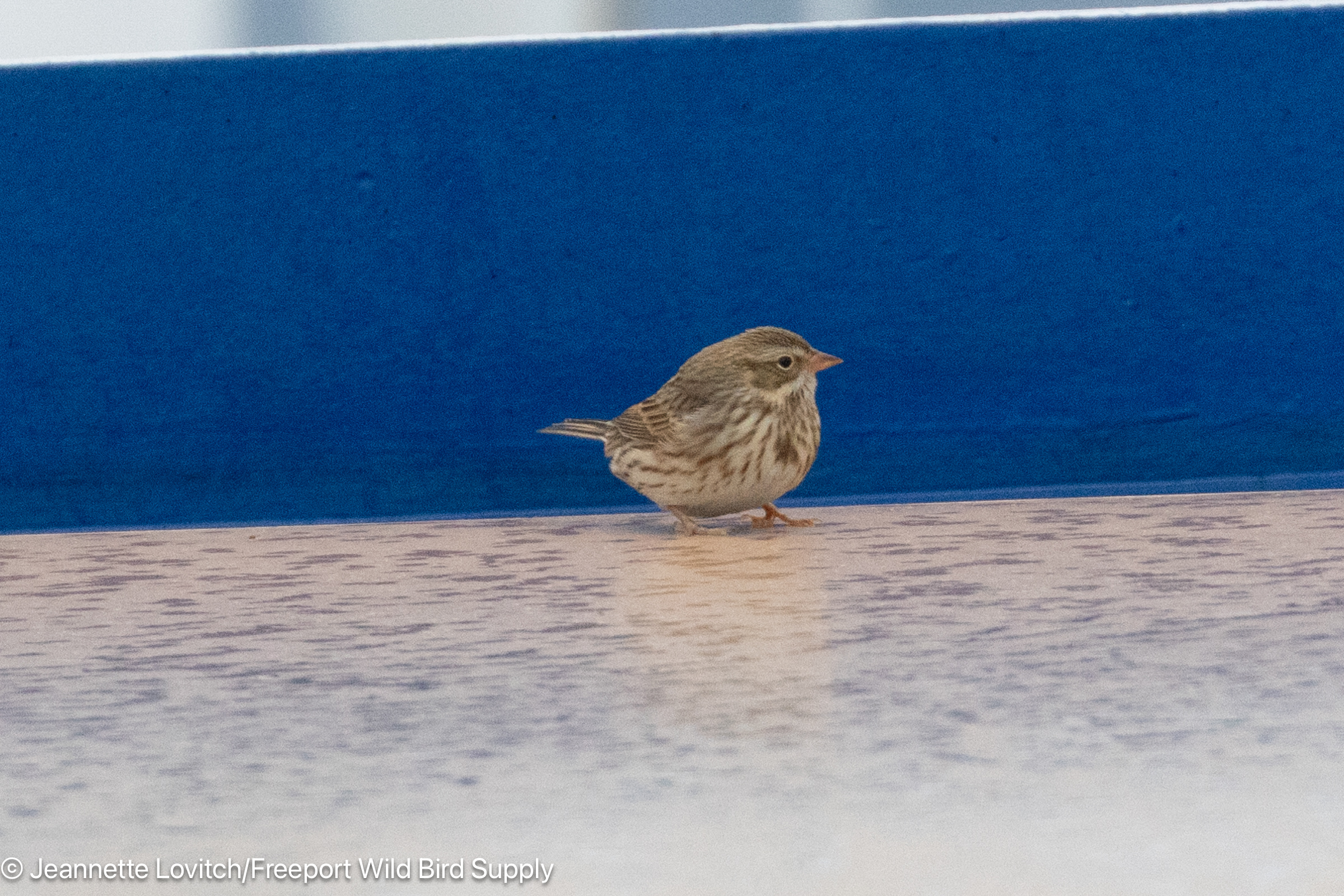
“Ipswich” Savannah Sparrow – that was an unexpected migrant, but makes sense considering we were southwest of Sable Island!

Clearly disoriented by the obnoxiously superfluous lighting of the ship, dozens of birds were around…often being flushed by now-awakening crew and passengers. Luckily, few birds seemed to be in dire straits – only one Yellow-rumped Warbler looked to me to be thoroughly exhausted, thankfully. In fact, most birds were leaving the boat as the sun rose and they were able to reorient themselves. While some birds seemed to arrive in the 15 or so minutes after sunrise, just about all passerines had departed the boat by 7:30 or so.

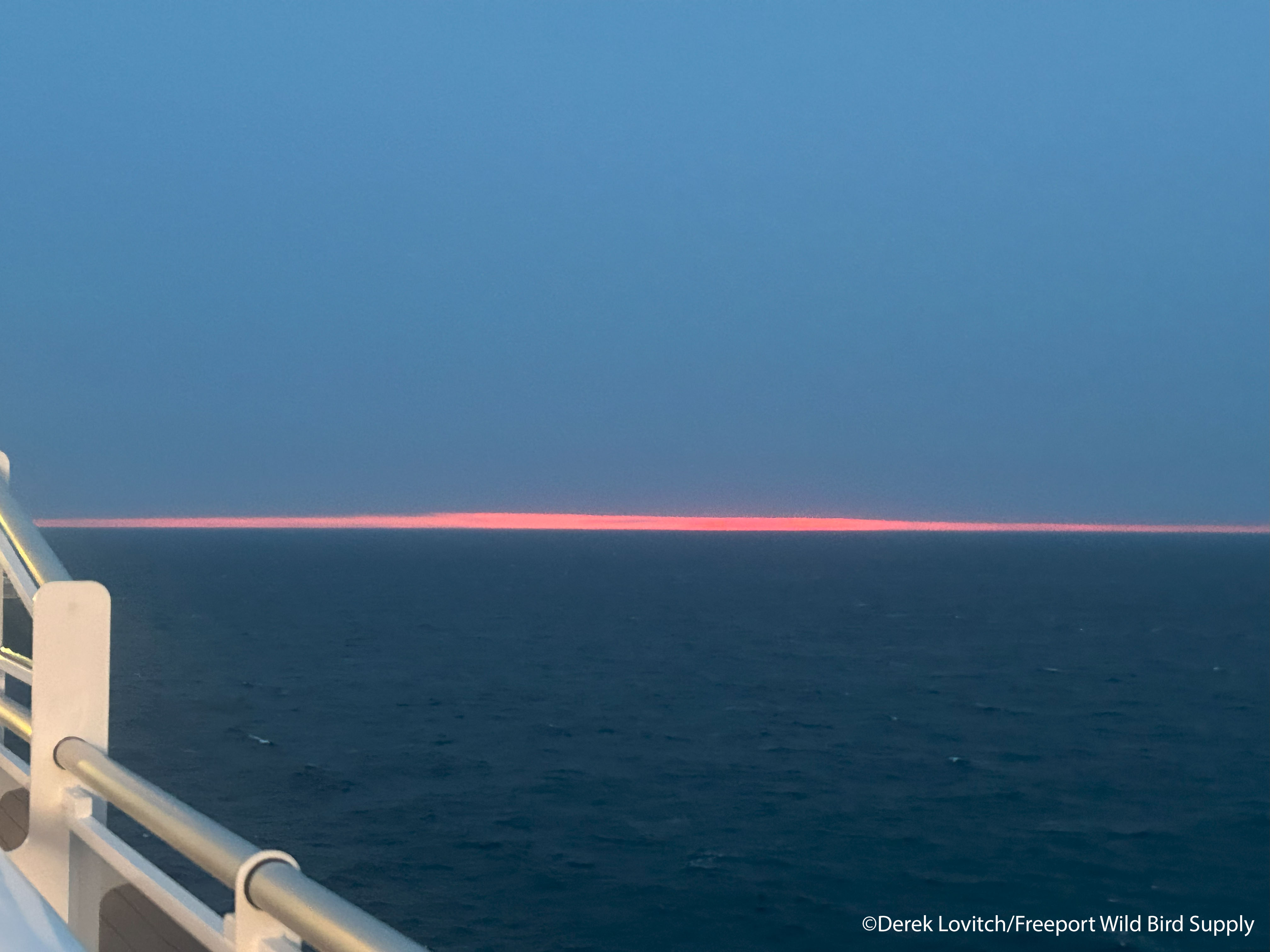
This photo, taken from off Eastern Point in Gloucester, MA the night before shows just how bright these ships are, and how disorienting they can be to birds.

With birds circling the boat before dawn, calling continuously, and others hiding in corners before being flushed to another corner, it was tough to count, but I estimated and counted a bare minimum of 8 Yellow-rumped Warblers, 8 American Robins (mostly overhead), 7 European Starlings (surprisingly), 6+ Dark-eyed Juncos, 2 Purple Finches, 2 fly-over American Pipits, 2 Savannah Sparrows, and one each of Palm Warbler, Snow Bunting, White-throated Sparrow, Cedar Waxwing, and Rusty Blackbird. Additionally, Noam photographed a Pine Warbler.

The three of us were in place on Deck 7 by 7:30, but the passerine show continued. A flock of 12 Red-winged Blackbirds flew by, while a flock of 14 American Robins joined by two more red-wings flew alongside the boat for several miles later in the morning before overtaking us and heading back to Nova Scotia.

Throughout the day, other passerines appeared and disappeared, some of which could easily have been sheltering out of sight somewhere inaccessible on the boat. These included a few more robins, 3+ Yellow-rumped Warblers, 2 Dark-eyed Juncos, and one each of Palm Warbler, Song Sparrow, Cedar Waxwing, Snow Bunting, American Pipit, and Lapland Longspur.

American Pipit
Harlequin Duck (L) with Black Scoters

But this was a seabird trip, and so we remained vigilant over the water. While we only had a few minutes in Maine waters once we began our vigil, the rest of the day was productive overall, although the afternoon was quite slow. As we passed the southern tip of Nova Scotia (we even spotted Seal Island Light that we were lucky enough to visit with a group of birders about 20 years ago), we finally called it quits at 5:45 pm when cloud cover accelerated the falling of darkness.
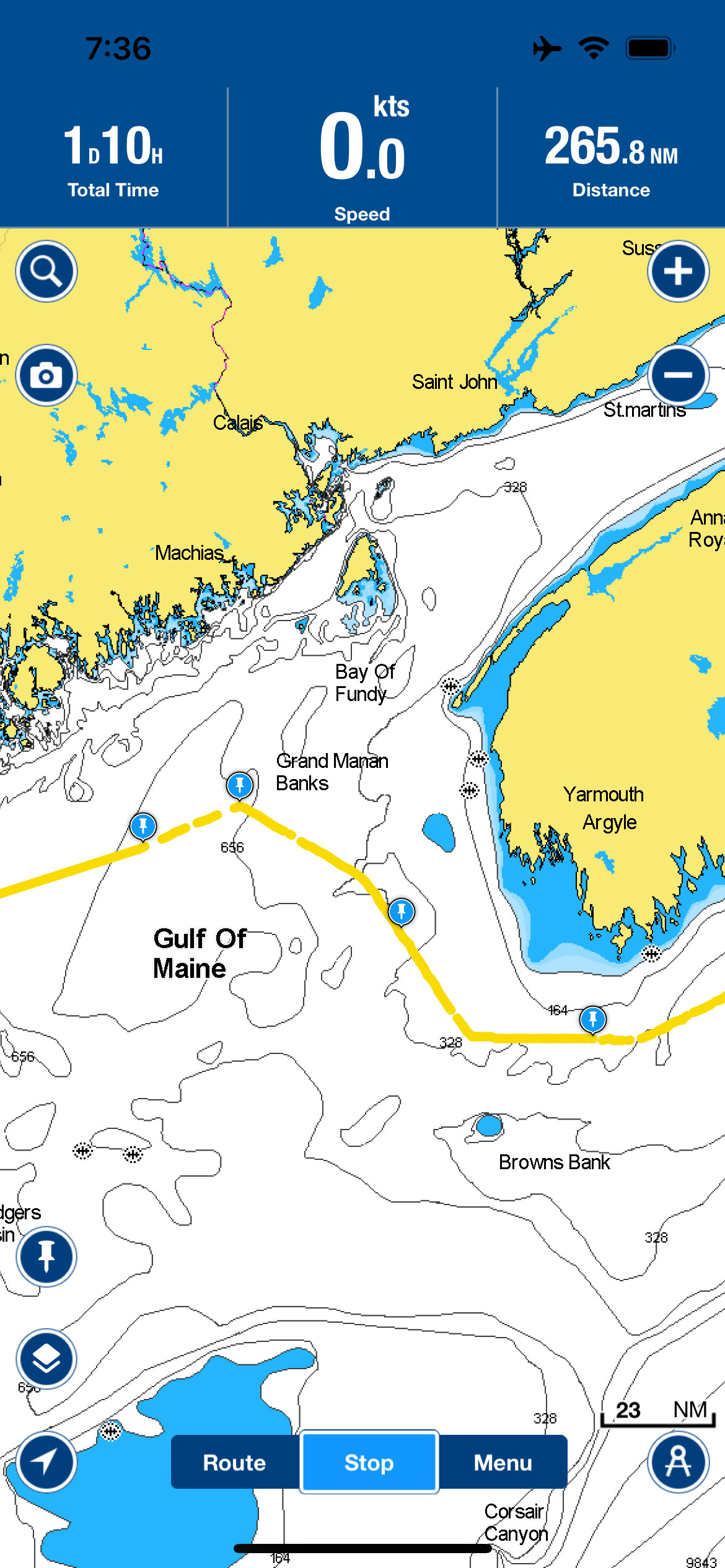
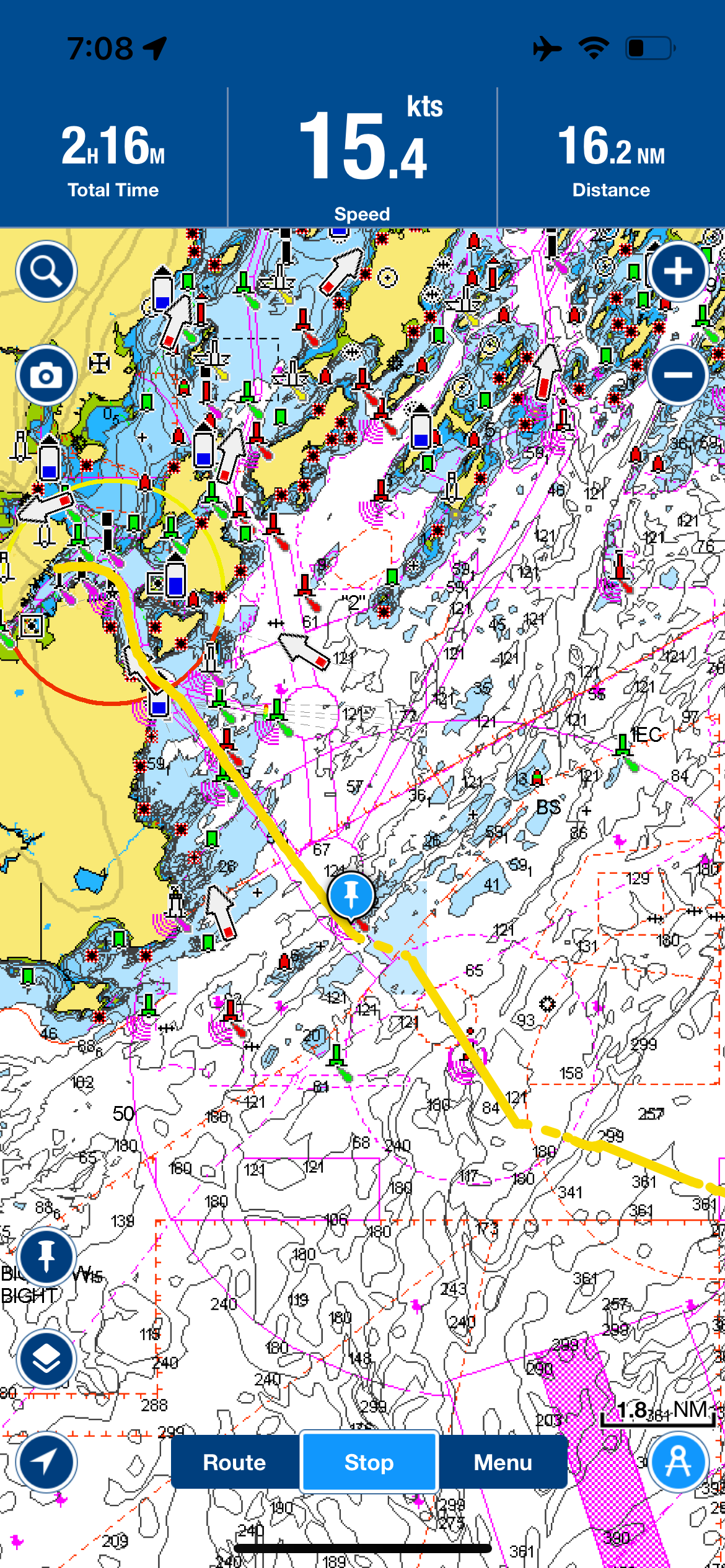
Here’s our route (left pin to right pin) for the day, thanks to the Navionics Boating app by Garmin.

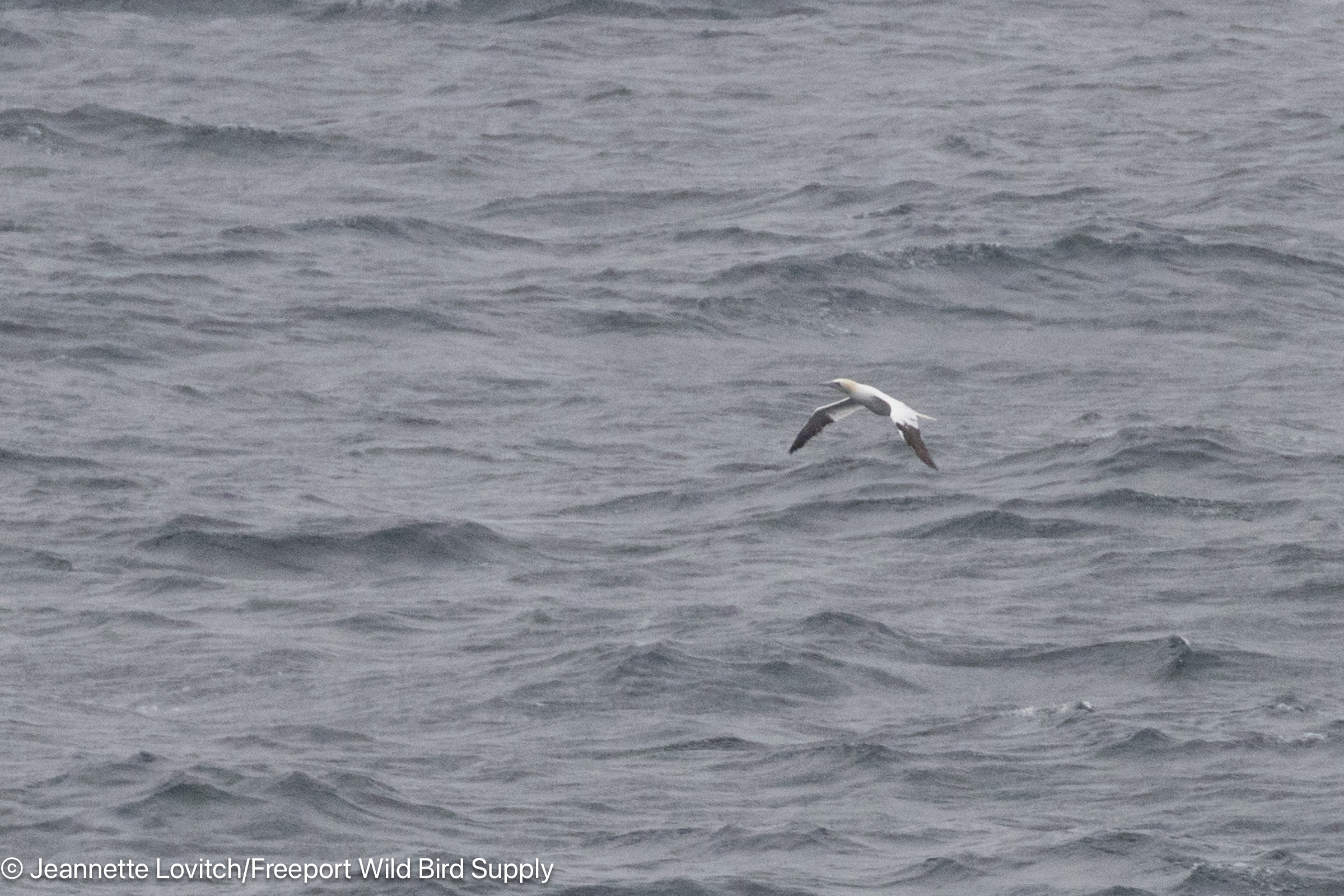
From start to finish, our respectable – albeit not breathtaking – seabird tallies included oodles of Northern Gannets (including a steady southbound trickle almost all morning), and occasional southbound flocks of all three scoters and Common Eiders. Specific counts included:

  • 47 Black-legged Kittiwakes
  • 36 Razorbills
  • 13 Northern Fulmars
  • 10 Great Shearwaters
  • 6 DOVEKIES (one flock landing off to the side of the boat)
  • 3 ATLANTIC PUFFINS
  • 3 American Black Ducks
  • 3 unidentified large shearwaters
  • 2 Harlequin Ducks
  • 1 Greater Scaup
Great Shearwater

So all in all, not a bad day, but the passerines stole the show, and while Dovekie is one of the target birds of this trip, we didn’t see a skua…or even a jaeger, surprisingly.

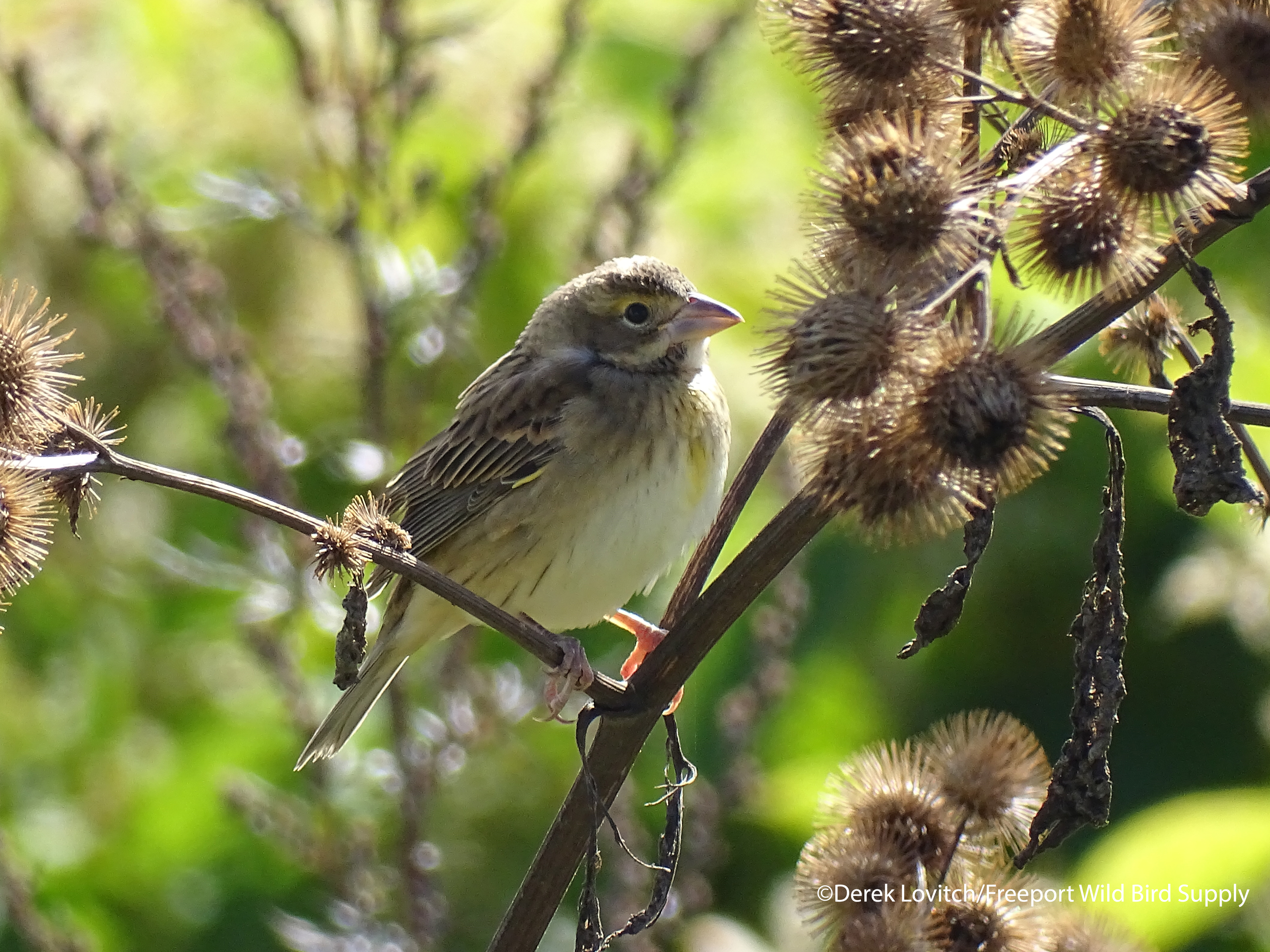
The next day we awoke well within Halifax Harbor, but a sunrise passerine check yielded two birds: a White-throated Sparrow, and of all things, a rare Dickcissel!

Local friends Eric and Anne once again rescued us for a day of casual birding and good conversation, but the ship departed after dark; just more time to rest for our second full day at sea!

Halifax Public Garden
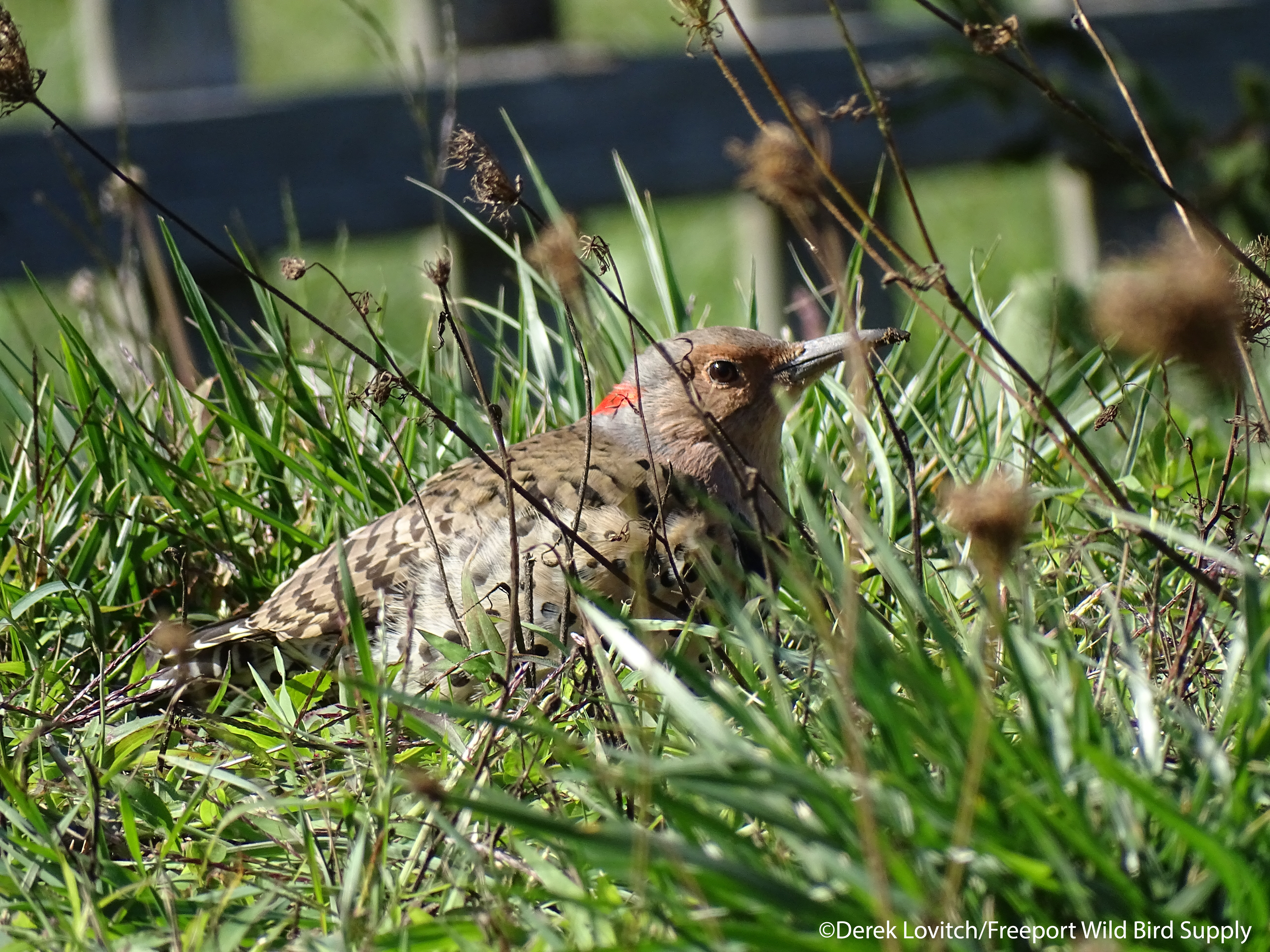
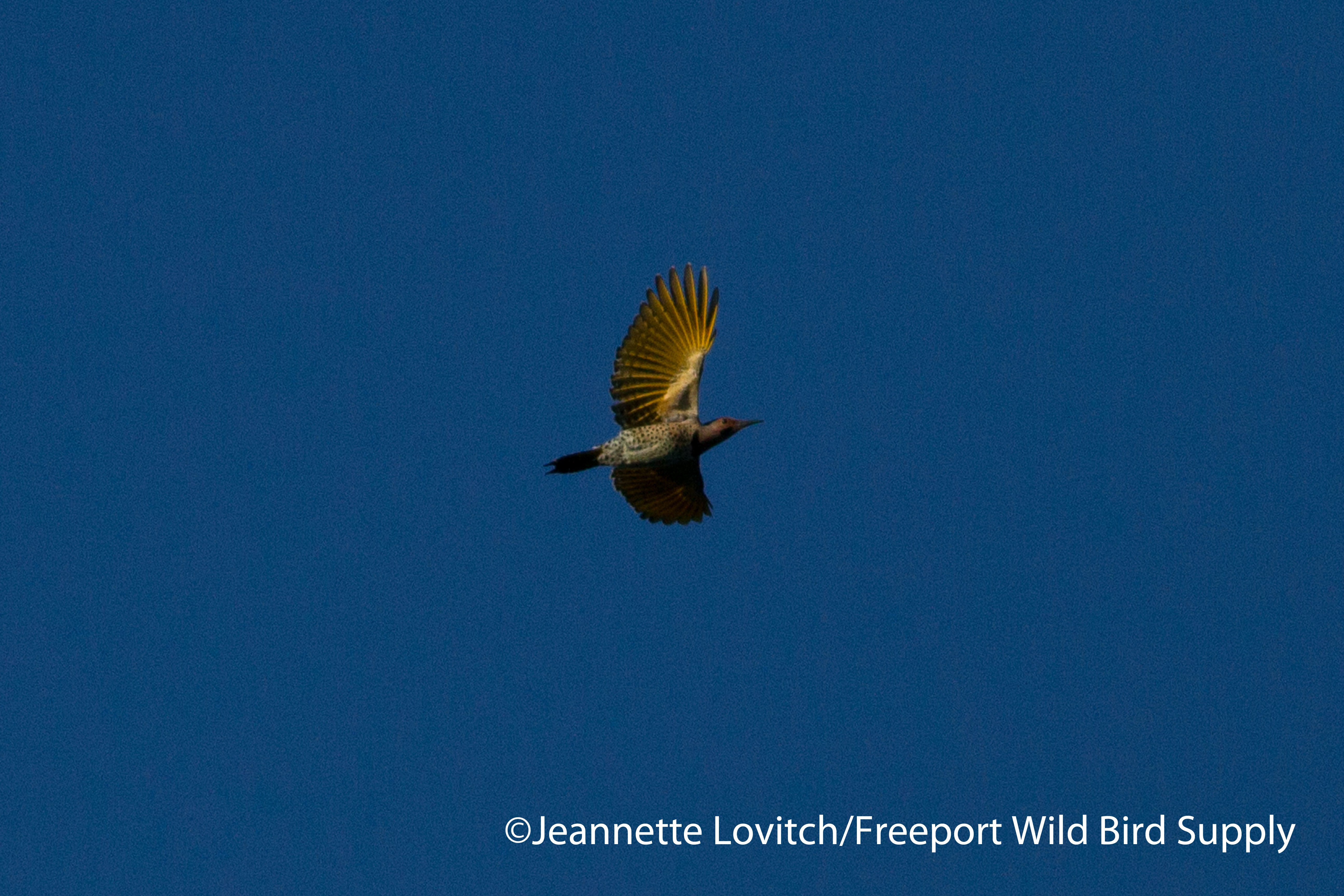
Northern Flicker

The morning of 11/1 found us between Downeast Maine and the northern corner of Georges Bank. The rest of the day would be in the same waters of our great success on our trip five years ago. After a passerine check which didn’t turn up anything (which meant nothing was disoriented by the ship overnight or desperate for a place to land come dawn, so this is never a bad thing), it was time to get to work in our usual spot.

Unfortunately, strong southwesterly winds and growing seas, with haze and light fog in the distance, made birding challenging. We worked hard though, but it was slow. We did have some excitement from two Dovekies that landed fairly close to the boat, and two Manx Shearwaters that, thanks to the lighting, I was absolutely sure were not Manx Shearwaters until we carefully reviews Noam’s photos later.

With glare and haze becoming problematic, we broke for an early lunch at 11:30, with the previous 4.5 hours of observation producing only the following, plus two Humpback Whales:

  • 12 Northern Gannets
  • 7 Great Shearwaters
  • 6 Red Phalaropes
  • 4 unidentified large shearwaters
  • 2 DOVEKIES
  • 2 Northern Fulmars
  • 2 Manx Shearwater (after review)
  • 2 Black-legged Kittiwakes
  • 2 Lesser Black-backed Gulls
  • 2 unidentified large alcids
  • 1 unidentified small black-and-white shearwater.

Unfortunately, with increasing wind (that we were heading straight into) and seas growing up to 7-10 feet (barely noticeable on a ship this big though, thankfully!), the lower deck was closed off for safety. Later, even the upper decks were closed off due to the very high winds, which were now blowing nearly 30mph out of the southwest.

Screenshot

Luckily for Jeannette and I, we had scored a forward-facing room, and although we were high up on Deck 17, we could see forward. Haze and the angled window were problematic, but we could see birds close to the ship, and we could relax, remove layers, and even crack open a beer. This is pelagic birding in style!

From 1pm to 5pm, when we finally called it a day, the afternoon cabin-watch netted:

  • 11 Great Shearwaters
  • 9 Northern Gannets
  • 5 Cory’s/Cory’s-type Shearwaters
  • 3 unidentified phalaropes
  • 2 Manx Shearwaters
Screenshot

And so our two days at seas concluded without a Great Skua, our primary target species for a future cruise..and perhaps a future tour. Alas, we’re only 1 for 2 in seeing skuas from the boat, and we would need a different class of ship (and, a shorter itinerary with more time at sea and less time in multiple ports) if we were to do this again. We’ll be keeping an eye out from other companies and other Princess ships to see if there’s a more skua-tactic itinerary in the future, but until then, our northeast Atlantic cruisin’ days may have come to a close.

Arriving in New York harbor before dawn, our last sunrise deck check yielded a single Dark-eyed Junco, Yellow-rumped Warbler, and White-throated Sparrow, bringing our more-productive passerine birding cruise to a close.
Recent Highlights, 2/8 – 2/14/2024

This Northern Hawk-Owl has been present for a while in Piscataquis County where it has been seen by many. Jeannette finally took a ride up to see it on the 12th, making our “weekend” out of it.

I enjoyed a great week of birding, both locally and with a trip to north-central Maine. Winter irruptives  and the first migrants of spring were among my many highlights over the last seven days.

  • 1 Hermit Thrush, North River Road, Auburn, 2/8.
  • 1 continuing female Red-breasted Merganser, Lincoln St Waterfront Park, Lewiston, 2/8.
  • 5 Northern Pintails (FOY), Flying Point Preserve, Georgetown, 2/9.
  • 1 hen COMMON EIDER SSP. BOREALIS and 1 pair BARROW’S GOLDENEYES, Winslow Park, Freeport, 2/10 (with Saturday Morning Birdwalk group).
  • 1 continuing NORTHERN HAWK-OWL and 1 Northern Shrike, Piscataquis County, 2/12 (with Jeannette). Photo above.
  • 1 Northern Shrike, County Road, Milford, 2/13 (with Jeannette).
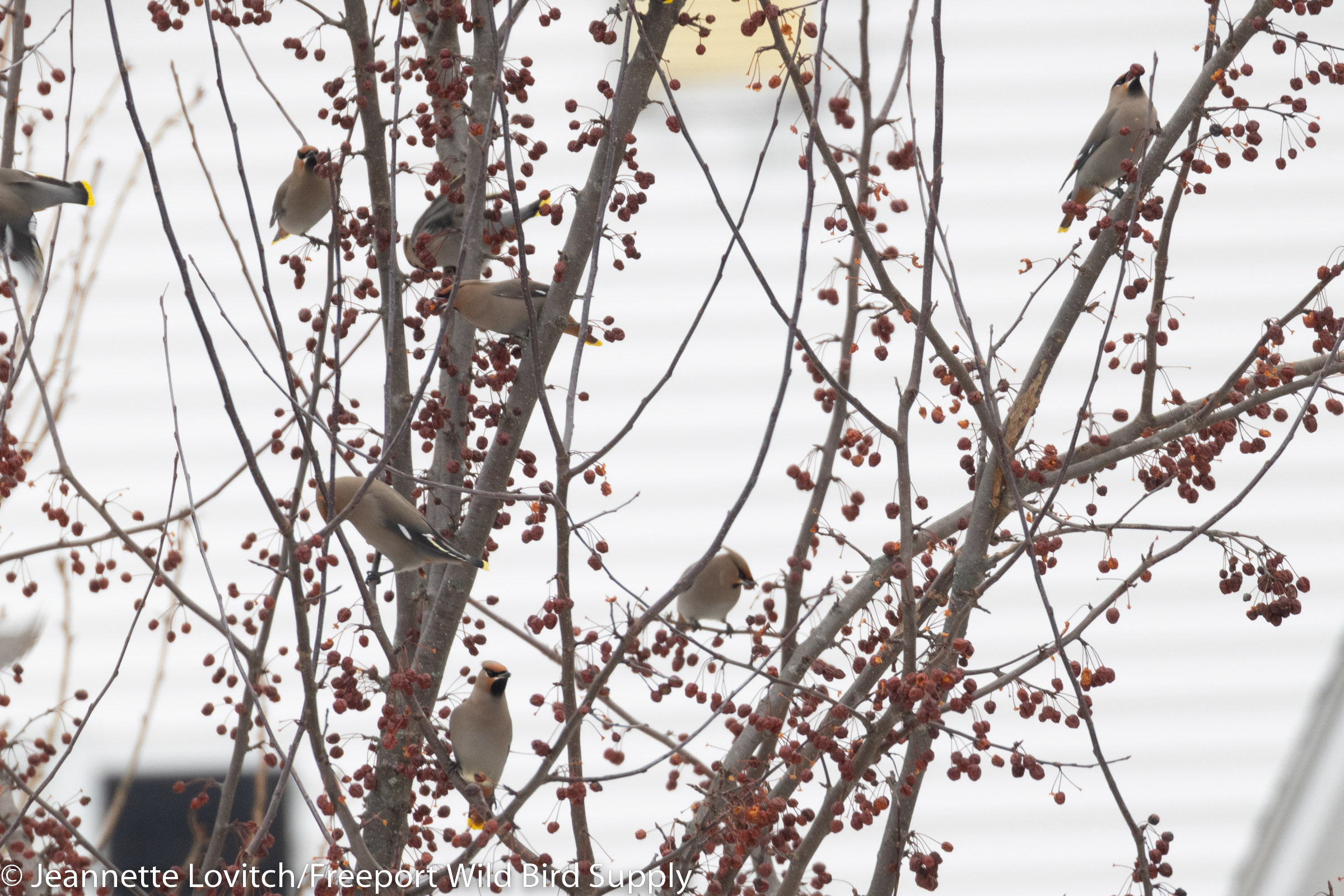
  • 100+ BOHEMIAN WAXWINGS (FOY), downtown Old Town, 2/13 (with Jeannette).
  • 140 BOHEMIAN WAXWINGS and 1 NORTHERN FLICKER (great winter bird away from the coast!), Riverside Park, Veazie, 2/13. Waxwings relocated on Thompson Road where we enjoyed an immersive photo session!
  • 1 Northern Shrike, Gustafson Rd, Clinton, 2/13 (with Jeannette).
  • 1 male Red-winged Blackbird (first of spring), here at the store on 2/14. Arrived on 2/12 – one of our earliest records here.
  • Scattered Turkey Vultures and increasing reports of prospecting migrant flocks suggests I will forgo Turkey Vultures on the highlights list for the next 9-10 months already!

TOURS AND EVENTS:

Please join me on Thursday, February 29th at Maine Beer Company to celebrate the release of the completely revised 2nd Edition of Birdwatching in Maine: The Complete Site Guide! 

Monhegan Fall Migration Weekend, Sept 2022.

This Cape May Warbler was one of many birds that escaped the strong winds by finding large flies eating rotting apples that littered the ground all over the island.

I arrived on the island on Thursday (9/22). Be happy that the tour didn’t start this day. It rained. A Lot. However, I was greeted by 6 Lesser Black-backed Gulls on Smuttynose Island upon my arrival: 5 adults and 1 juvenile.  It turned out to be one of the highest counts ever on the island. That would also turn out to be my birding highlight of the day, as a short jaunt in the afternoon only yielded one species that I would not end up seeing with the group: a juvenile Ring-billed Gull, which is actually a very uncommon bird out here.

The sunset, however, was worth the trip, and the clearing skies foretold some good birding to come.

Overnight, a moderate migration on clearing skies brought many new birds to the island. The group met at 9:00, and we picked up the rest of the day’s participants as their ferry arrived. It was very windy today, but all day long, whenever we found a pocket of shelter, we found birds. It was mostly Yellow-rumped and Blackpoll Warblers, as expected for the date, but there was a decent smattering of diversity. 

Between the winds and the raptors, birds were keeping low though! But speaking of raptors – wow, the falcon show!  It was incredible. There is absolutely no way of knowing how many Peregrine Falcons and Merlins we saw today, with birds whipping by overhead. Some were hunting, and likely circling the island to do so, but it’s also possible that there was a steady flow of birds moving south, only pausing to wink at the island. It was impossible to quantify, but it was a whole lot of fun to watch!

Merlin.
Immature Peregrine Falcon
Northern Flickers had to stay low and out of sight to survive the day.

We enjoyed quality time with Cedar Waxwings, Monarch butterflies, and enjoyed some gorgeous Question Mark butterflies as well.  White-crowned Sparrows were rather conspicuous, and we had a good lesson in duck identification with Mallards, an American Black Duck, and a hybrid thereof all side-by-side.

Black-throated Green Warbler on post-cider-making apple mash.

Wind was whipping all night long and continued to gust well over 20mph as of sunrise. With a high-pressure system building in, and powerful Hurricane Fiona passing well to our east, the wind would just not let up. Several ferries were cancelled, and if you happened to be in the room that a screen door was slamming up against all night (ahem), then maybe you were not as rested as you would have liked.

The Gray NEXRAD radar was down, but the Caribou station showed a moderate flight of birds overnight with marginally lighter winds over the mainland. A light morning flight – mostly strong-flying Blackpoll Warblers – didn’t portend a lot of birds had arrived, but pockets of White-throated Sparrows and Yellow-rumped Warblers in places where they weren’t yesterday suggested otherwise.  In fact, there were a bunch of birds around, and it was a very productive morning!

We visited with two cooperative Dickcissels that have been around for days, caught up with the lingering Lark Sparrow, and were among the lucky ones who caught up with an early Orange-crowned Warbler.   All before lunch.

Dickcissels.
Lark Sparrow

And while the wind continued to gust, and uncountable falcons continued to wreak havoc, anytime we found a corner of shelter, we found birds – and often lots of them!  White-throated Sparrows littered the woods, and because of the wind, many birds were insanely easy to see.

One of the highlights were warblers on the ground – hatches of large flies were feasting on rotting apples below laden trees, and with no flying insects able to survive a foot into the air today, we spent a lot of time looking DOWN at warblers.

Blackpoll Warblers
Cape May Warbler.
We also made it over to the cliffs to see what may have been in the island’s lee.
Female Green-winged Teal
Scarlet Tanager
We saved this Gartner Snake from a cat’s mouth on our way to not seeing a Red-headed Woodpecker that was playing hard to get for us.

Finally, as dusk fell, the winds subsided. Unfortunately, by early nightfall, the winds were already a little more westerly than we would have liked. Come Sunday morning, a surprisingly light morning flight, dominated by Yellow-rumped Warblers almost exclusively, reflected the lack of the northerly component overnight.  Birds seemed to be in lower quantities overall – a lot of Blackpoll Warblers had apparently departed – and with calm conditions (so, so welcome), there were fewer concentrations of birds. 

Throughout the day, it was relatively slow by Monhegan standards, but we just kept adding new species to the triplist, and basking in repeated stellar views. The two Dickcissels were in their usual place throughout the day, a juvenile Lesser Black-backed Gull continued, and later in the morning we found a Marsh Wren – very uncommon out here.

Marsh Wren

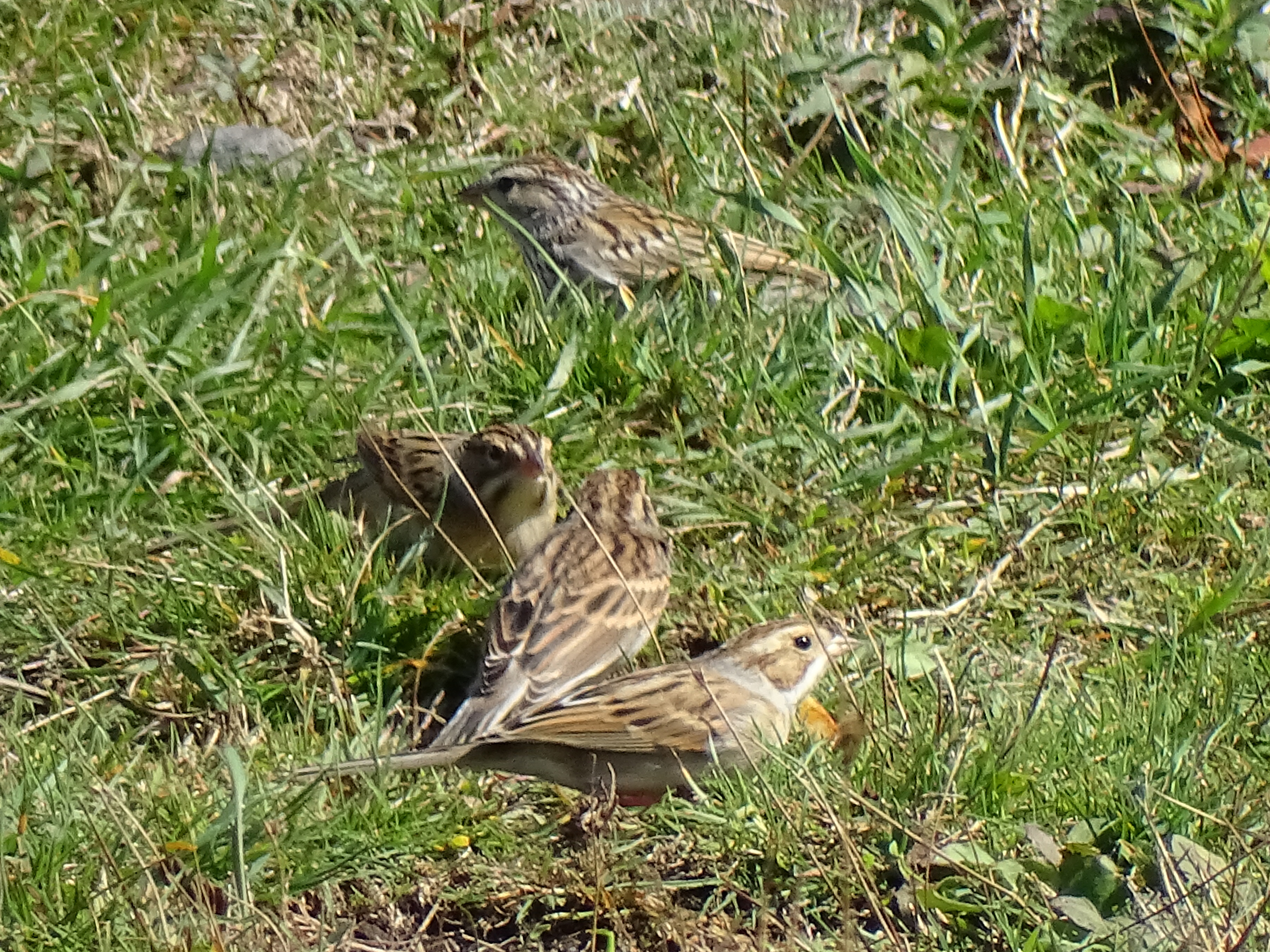
In the afternoon, we had a splendid sparrow session. We had our longest looks yet at the Lark Sparrow, but after a report of one Clay-colored Sparrow at the same spot, we arrived to find three!  A Lincoln’s Sparrow even came out into the open to join the Song, Chipping, White-throated, White-crowned, and Savannah Sparrows, making for an impressive total of 7 species of sparrows from one spot!  Of course, the comparative experience makes all the difference in learning these species – as most look so very different from each other. Well, most of them did, anyway!  A solid 76 species were tallied by day’s end.

Clay-colored Sparrow with juvenile Chipping Sparrow
Lark Sparrow
Blackpoll Warbler.

The last day of the tour was Monday the 26th, and our time was winding down. So were the number of non-Yellow-rumped Warblers. Some light showers overnight may have put a few birds down, but winds were southwesterly thereafter, and the Caribou radar (the Gray station was still down) showed little movement.  The morning flight was therefore virtually non-existent.

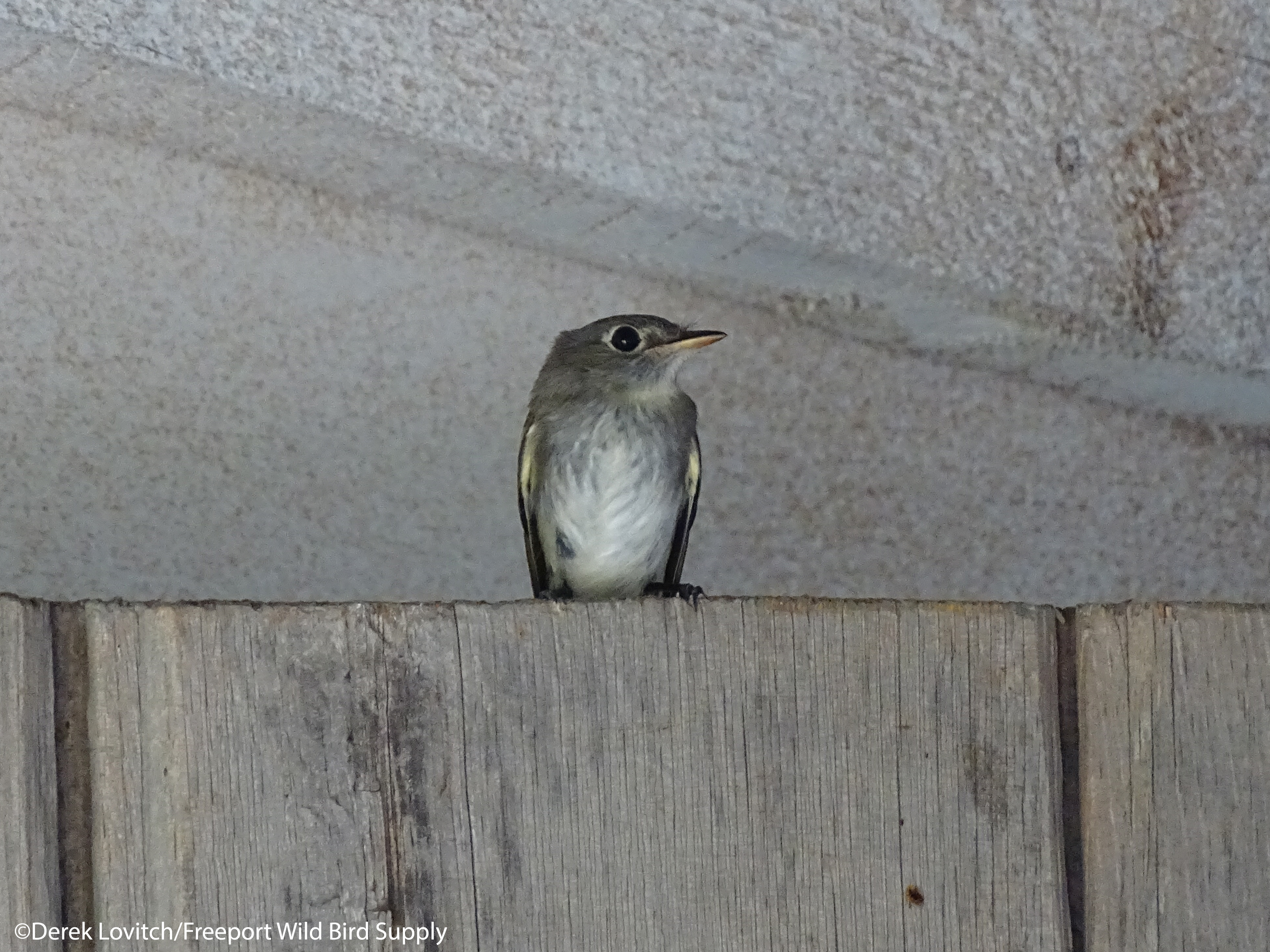
We found an Indigo Bunting, and later, an Alder Flycatcher confused and disoriented, stuck in the ice cutting display building of the Monhegan Museum.  Three Clay-colored Sparrows were still present; we had good looks at two of them at the school and had another session comparing them to the variety of ages of Chipping Sparrows they were cajoling around with. The Lark Sparrow also performed nicely for us again.

Alder Flycatcher in the museum’s ice-cutting shed. It eventually figured out the lighting and got itself out.
Clay-colored Sparrow
Two of the three Clay-colored Sparrows, here, with a Chipping Sparrow in the middle.

It felt very slow, especially in the afternoon, when we took time to enjoy Fringed Gentian and repeatedly “dip” on a Red-headed Woodpecker that most everyone except us had eventually seen. Yet interestingly, we kept finding new species for our day’s list, and by the time the tour ended in time to catch the 4:30 ferry to Port Clyde, we had accumulated our highest species total of the weekend – a goodly 81.

The apparent abundance of some species – such as White-breasted Nuthatch, which we conservatively estimated included the presence of 4-6 pairs despite apparent omnipresence and Blackpoll Warblers on the ground – continued to impress as well.

Blackpoll Warbler.

With today’s new additions along with Laughing Gulls on our ferry ride back, our total trip listed amounted to 95 species! So despite the strong winds that howled for the first two days of the tour, and unfavorable southerly winds for the last day and a half, our 95 species was exactly average for the 11 years we have run the trip on this same weekend. 16 species of warblers was a mere one species below average. Taking our challenging weather into consideration, I would absolutely call this a win! Plus, we were on Monhegan, so all is well, as an average day/weekend on Monhegan sure beats the same anywhere else – for so many reasons.

* denotes ferry ride only           

23-Sep  24-Sep  25-Sep  26-Sep

Canada Goose 8 18 19 8
Wood Duck 0 1 1 1
American Black Duck 2 2 1 1
Mallard 15 24 24 24
Mallard x American Black Duck Hybrid 1 1 1 1
Green-winged Teal 0 1 2 1
Common Eider x x x x
Ring-necked Pheasant 20 12 12 8
Mourning Dove 20 15 18 18
Ruby-throated Hummingbird 2 2 1 0
Semipalmated Plover 0 0 1 0
Killdeer 0 0 1 0
Solitary Sandpiper 1 1 1 0
Black Guillemot 2 6 2 6
Laughing Gull 0 0 0 2*
Herring Gull x x x x
LESSER BLACK-BACKED GULL 2 0 1 1
Great Black-backed Gull x x x x
Common Loon 0 0 0 1
Northern Gannet 10 10 8 20
Double-crested Cormorant x x x x
Great Cormorant 0 0 0 3
Northern Harrier 0 0 1 0
Osprey 4 4 2 2
Bald Eagle 1 0 1 2
Sharp-shinned Hawk 1 0 2 2
Belted Kingfisher 1 1 0 0
Yellow-bellied Sapsucker 1 12 10 20
Downy Woodpecker 2 2 2 2
Northern Flicker 30 40 20 30
American Kestrel 1 2 3 4
Merlin 8 15 10 10
Peregrine Falcon 10 10 5 5
Eastern Wood-Pewee 0 1 0 1
Alder Flycatcher 1 0 0 1
“Traill’s” Flycatcher 0 0 0 1
Least Flycatcher 1 1 0 0
Eastern Phoebe 6 4 4 6
Red-eyed Vireo 10 10 6 8
Blue Jay 8 6 18 12
American Crow 6 4 4 4
Common Raven 1 2 2 2
Black-capped Chickadee x x x x
Golden-crowned Kinglet 0 0 4 4
Ruby-crowned Kinglet 1 2 6 6
Cedar Waxwing 50 2 38 38
Red-breasted Nuthatch 15 10 6 10
White-breasted Nuthatch 4 6 4 4
Brown Creeper 0 0 1 1
House Wren 0 0 1 2
Carolina Wren 3 3 4 4
MARSH WREN 0 0 1 0
Gray Catbird 6 8 6 10
Brown Thrasher 1 0 0 0
European Starling 18 18 18 18
Veery 0 0 1 0
Swainson’s Thrush 1 6 3 4
American Robin 4 4 8 12
American Pipit 1 1 1 0
Purple Finch 14 8 4 4
LARK SPARROW 0 1 1 1
American Goldfinch 8 10 14 14
Chipping Sparrow 0 10 15 15
CLAY-COLORED SPARROW 0 0 3 3
Dark-eyed Junco 2 10 6 10
White-crowned Sparrow 2 4 8 8
White-throated Sparrow 26 150 50 50
Savannah Sparrow 1 4 3 4
Song Sparrow 20 30 20 20
Lincoln’s Sparrow 0 0 2 2
Swamp Sparrow 0 0 1 2
Baltimore Oriole 2 2 6 6
Red-winged Blackbird 0 1 1 1
Bobolink 0 0 1 0
Rusty Blackbird 0 0 6 0
Common Grackle 12 24 24 24
Black-and-white Warbler 1 1 0 0
Tennessee Warbler 0 15 3 3
ORANGE-CROWNED WARBLER 0 1 0 0
Nashville Warbler 0 4 1 1
American Redstart 0 2 0 2
Common Yellowthroat 8 10 4 10
Cape May Warbler 5 10 6 6
Northern Parula 1 7 4 2
Magnolia Warbler 2 0 0 0
Yellow Warbler 5 3 2 2
Chestnut-sided Warbler 0 0 0 1
Blackpoll Warbler 50 75 20 15
Palm Warbler 2 4 10 6
PINE WARBLER 0 2 0 0
Yellow-rumped Warbler 70 50 50 75
Black-throated Green Warbler 5 3 0 1
Scarlet Tanager 0 2 2 2
Northern Cardinal 6 8 8 10
Rose-breasted Grosbeak 0 0 1 3
Indigo Bunting 1 0 0 1
DICKCISSEL 2 2 1 1

Day Total 67 71 80 81
Warbler day total 10 14 9 12

4-Day Tour total= 95
Plus on my own before the tour =2 (Ring-billed Gull and Tree Swallow)
Total warblers = 16

Blackpoll Warblers were the “migrant of the weekend” with unforgettable views and quality time each day.

Sandy Point Morning Flight, 9/29/2022

There are some Morning Flights at Sandy Point that deserve their own blog. This was one of those. (I also haven’t finished my Monhegan Tour report blog yet, either).

Let’s start with the 1:00am reflectivity and velocity images from the Gray NEXRAD station. I was very happy that the station was back online in time for this incredible large flight. In fact, it was one of the densest flights I have seen in the area, and you can see how much biomass was offshore.
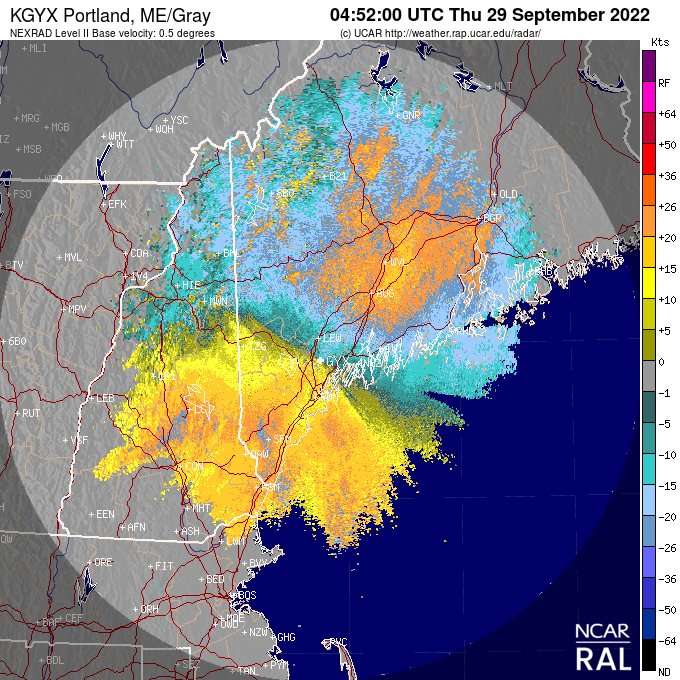
For an explanation of just what this means, see the “Birding at Night” chapter in my first book, How to be a Better Birder. Furthermore, see previous Sandy Point posts on the topic – you can use the search box in the upper right-hand corner of this blog page, and search “Sandy Point” or “Morning Flight.”

That got my pretty darn excited for the morning. And, well, it was a lot of fun! OK, mostly…at times I was overwhelmed and early on, I just felt beat! For the first 30 minutes, I often just clicked waves of “unidentified” as I tried to keep pace. Luckily, after the massive early rush, the flight became more manageable, although bursts of activity were barely quantifiable.

20 species of warblers, a very rare Blue Grosbeak, and my 195th all-time Sandy Point birds: 2 Little Blue Herons! It was quite a day.

Thanks to Evan Obercian, I learned a ton and had some great species tallies. I have no doubt that some of the records set (e.g. 2nd-highest tally for Cape May Warbler) came from his exceptional auditory skills – some of those birds would have just went unidentified or not even detected by me! Of course, the more eyes (and ears) the better, and Reed Robinson and Weston Barker – splitting time on the “flicker clicker” and pointing out birds landing below – helped immensely as well. Assistance was critical today.

When Evan and I finally departed for desperately needed bagels and coffee at 11:45, there were still a few birds on the move. With some raptors in the air, I am sure that if we didn’t leave then, I would be there all day. I wish I could have been, because this morning was simply awesome. Here’s the scoreboard:

  • 6:36 to 11:45am
  • With Evan Obercian, Reed Robinson, and Weston Barker.
  • 50F, mostly clear, WNW 4.5-5.1 to NW 13.3-16.1
  • 2,389 unidentified
  • 1,036 Yellow-rumped Warblers (*2nd highest)
  • 449 Northern Parulas
  • 374 Ruby-crowned Kinglets (*3rd highest)
  • 286 Yellow-bellied Sapsuckers (*new record)
  • 251 Northern Flickers
  • 155 Blackpoll Warblers
  • 138 Eastern Phoebes (*new record. Previous high of 26! And this was very conservative as many were swirling, too. But at times, steady pulses of 2-6 were clearly crossing)>
  • 105 Black-throated Green Warblers
  • 93 American Robins
  • 75 White-throated Sparrows
  • 71 Black-and-white Warblers (*new record)
  • 65 Red-eyed Vireos (*new record)
  • 64 Red-breasted Nuthatches (*new record)
  • 58 Magnolia Warblers
  • 57 Cedar Waxwings
  • 44 Blue Jays
  • 41 Dark-eyed Juncos
  • 33 American Goldfinches
  • 31 Blue-headed Vireos (*2nd highest)
  • 26 American Redstarts
  • 25 Cape May Warblers (*2nd highest)
  • 25 Black-throated Blue Warblers
  • 25 Purple Finches
  • 23 Chipping Sparrows
  • 22 Rusty Blackbirds
  • 22 Nashville Warbler (*2nd highest)
  • 22 Broad-winged Hawks
  • 18 Tennessee Warblers (*3rd highest)
  • 18 Golden-crowned Kinglets
  • 16 Palm Warblers
  • 12 Scarlet Tanagers
  • 9 Yellow Warblers
  • 8 Savannah Sparrows
  • 7 Swainson’s Thrushes
  • 7 American Kestrels
  • 7 Turkey Vultures
  • 6 White-breasted Nuthatches (*tied highest)
  • 5 Baltimore Orioles
  • 4 Ospreys
  • 4 Philadelphia Vireos
  • 4 Bay-breasted Warblers
  • 4 Black-capped Chickadees
  • 3 Brown Creepers
  • 2 Rose-breasted Grosbeaks
  • 2 Chestnut-sided Warblers
  • 2 Orange-crowned/Tennessee Warbler
  • 2 Red-winged Blackbirds
  • 2 Eastern Wood-Pewees
  • 2 Sharp-shinned Hawks
  • 2 juvenile LITTLE BLUE HERONS (**high fly-overs. My first record for Sandy Point and Patch Bird #195.)
  • 2 Lincoln’s Sparrows
  • 2 White-crowned Sparrows
  • 1 Pine Warbler
  • 1 Least Flycatcher
  • 1 Northern Harrier
  • 1 Tufted Titmouse (did not cross after a few false starts)
  • 1 Red-bellied Woodpecker (crossed after three false starts)
  • 1 Common Loon
  • 1 Eastern Bluebird
  • 1 Hairy Woodpecker (crossed after 8 false starts)
  • 1 BLUE GROSBEAK (**My 3rd-ever at Sandy Point. Spotted by Evan, photographed by Weston Barker; photo below).
  • 1 Common Grackle
  • 1 Wilson’s Warbler
  • 1 Red-tailed Hawk
  • 1 American Pipit
  • 1 Blackburnian Warbler
  • 1 unidentified Empid
  • 1 Downy Woodpecker (did not cross after 2 false starts)
  • 1 Swamp Sparrow
  • 1 Hermit Thrush
  • 1 Ovenbird (in the woods; warbler #20!)
  • X Common Yellowthroat (I don’t try and count them in the brush here, but there were a lot around this morning and many more than there have been. None even attempted a crossing as usual).

***Total = 6,183 (2nd highest all time!)***

Huge Morning Flight at Sandy Point!

My last blog entry ended with a little bit of foreshadowing, did it not? But before we get to Sandy Point this morning, let us take a moment to review the radar images from the weekend for comparison.

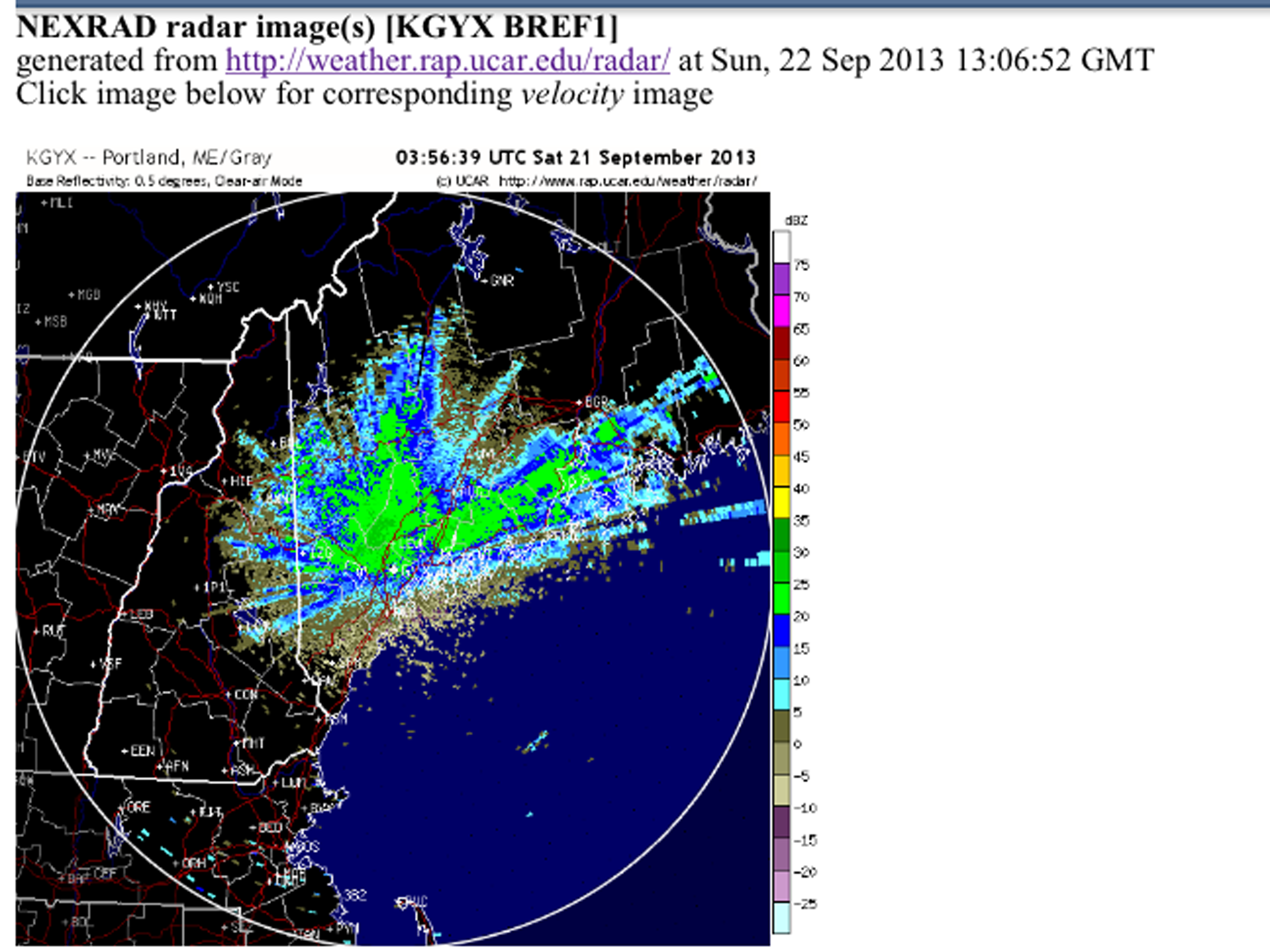
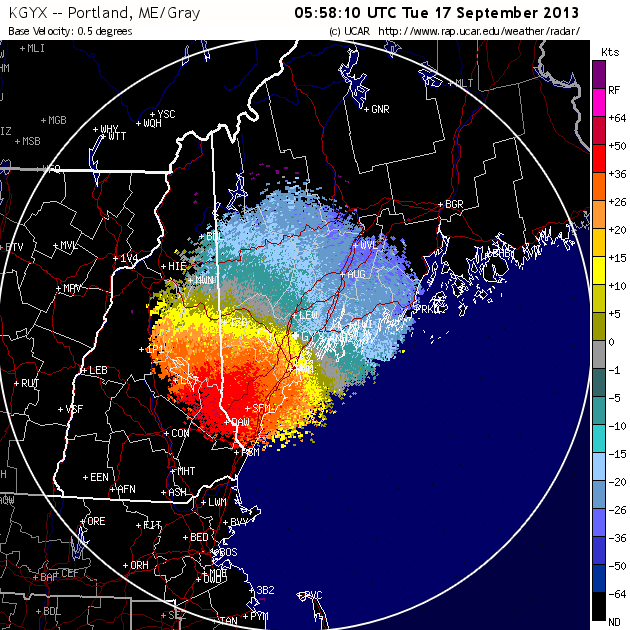
This is the 12:00am image from Sunday.  This is what “no migration” looks like on the radar.  You can also see the rain approaching from the west.
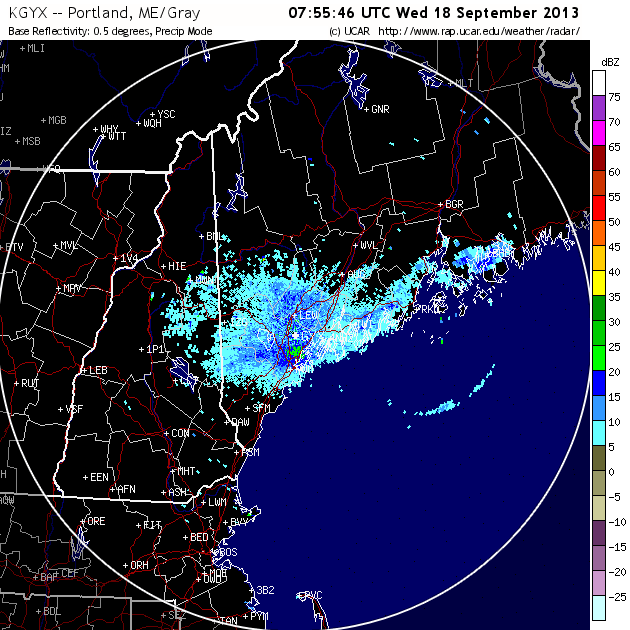
12am radar, 9-22-13

Now this is the midnight image from Saturday.  This is what “I have no idea what’s going on” looks like on the radar.  While anything from some weird warping of the radar beams from changes in air temperature to a simple malfunction could result in this, what it is NOT is a lot of birds.  It’s too irregular…and bird’s don’t “explode” in narrow bands!
IMG_1575_edited-1 IMG_1576_edited-1

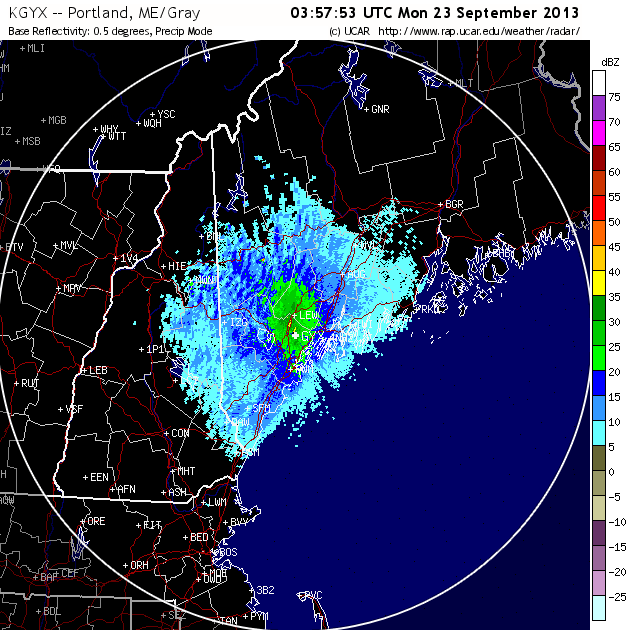
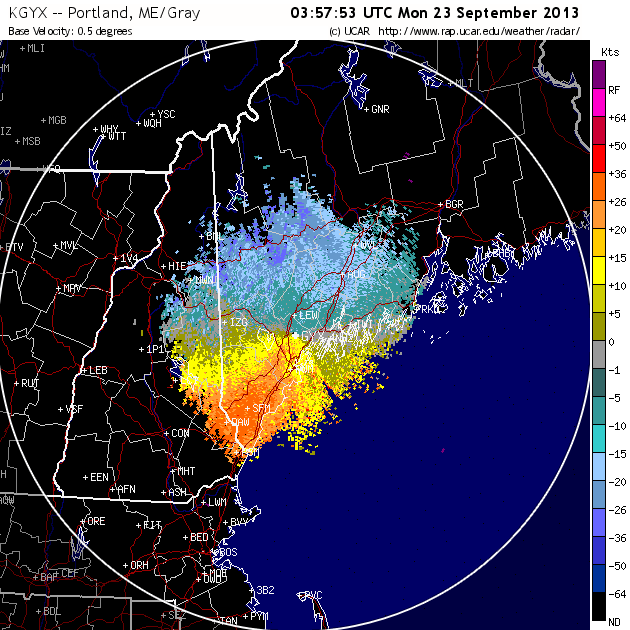
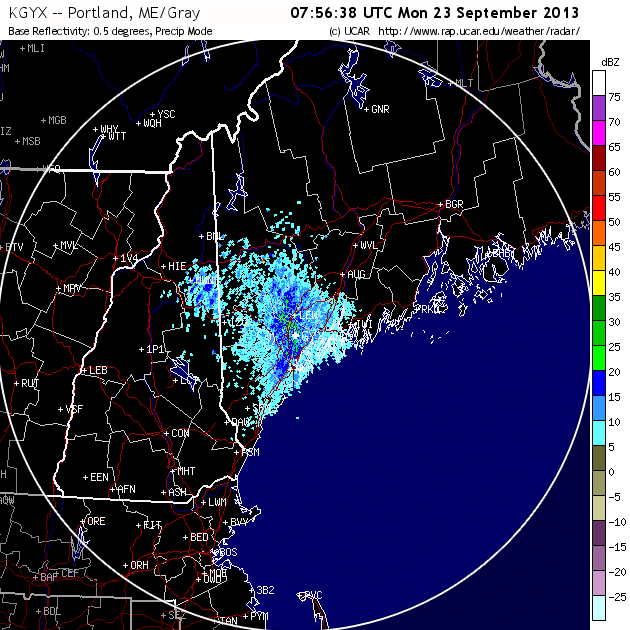
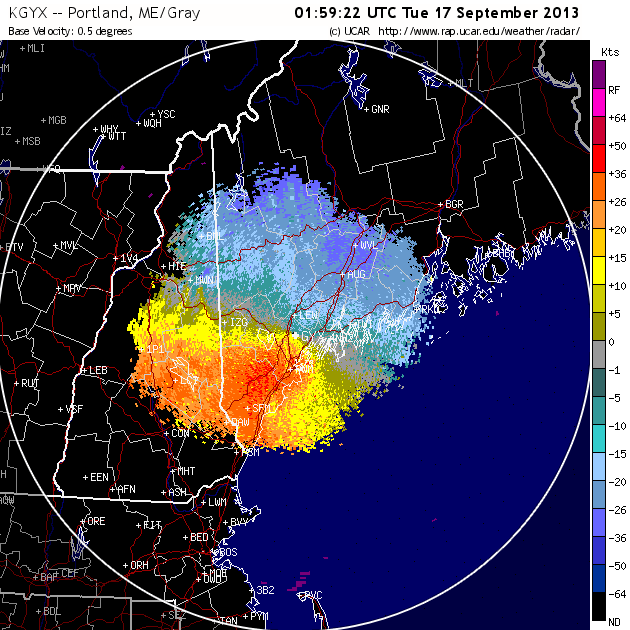
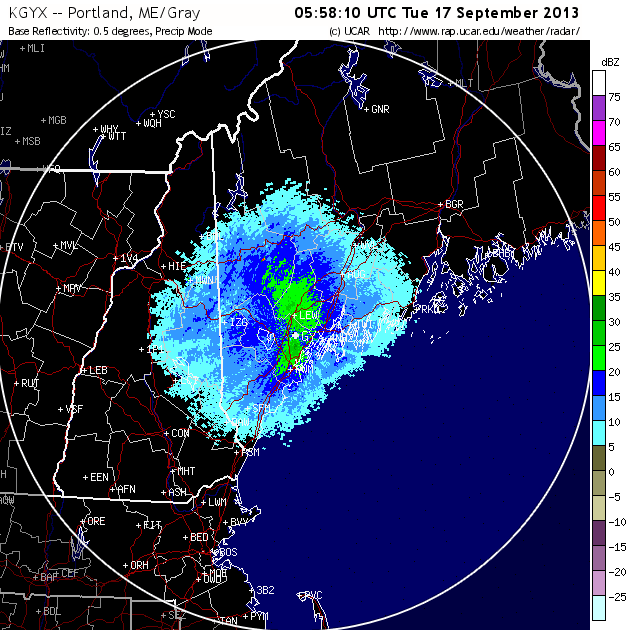
So, compare those to what “a whole boatload” of birds looks like.  Here are the 10pm, 12am, 2am, and 4am base reflectivity and velocity images from last night.

10pm radar, 9-22-13 10pm velocity, 9-22-13

12 am radar, 9-23-13 12 am velocity, 9-23-13

2am radar, 9-23-132am velocity, 9-23-13

4am radar, 9-23-134am velocity,9-23-13

Yeah, it would have been nice to be on Monhegan this morning.  But I was in my other sanctuary – my office at Sandy Point.  And this is what happened:

6:28 – 10:05am.
43F, increasing W to NW, clear.

1338 Unidentifed (*2nd highest)
416 Northern Parulas (* Seriously, how are there any more parulas to come through!  This is the second highest count of all time, and now all three of the highest tallies are from this year!)
281 Northern Flickers
179 Black-throated Green Warblers (*2nd highest)
163 Blackpoll Warblers
91 Yellow-rumped Warblers
43 Black-and-white Warblers (*record high)
39 Red-eyed Vireos
35 American Redstarts
29 Blue Jays
29 Ruby-crowned Kinglets
23 Yellow Warblers
22 Blue-headed Vireos
21 Scarlet Tanagers (*record high)
21 Dark-eyed Juncos
19 Cedar Waxwings
18 Magnolia Warblers
17 Nashville Warblers (*record high)
17 American Goldfinches
13 Black-throated Blue Warblers
12 Eastern Phoebes (* ties high)
11 Swainson’s Thrushes
9 Palm Warblers
6 Rusty Blackbirds
5 American Robins
4 Unidentified vireos
4 Chestnut-sided Warblers
4 White-throated Sparrows
3 Least Flycatchers
3 Cape May Warblers
3 Bay-breasted Warblers
2 Common Loons
2 Broad-winged Hawks
2 TUFTED TITMICE (rarely seen crossing)
2 Unidentified thrushes
2 Golden-crowned Kinglets
2 Blackburnian Warblers
2 Common Yellowthroats
1 Osprey
1 American Kestrels
1 Yellow-bellied Sapsucker
1 Eastern Wood-Pewee
1 Common Raven
1 Philadelphia Vireos
1 Veery
1 Tennessee Warbler
1 CONNECTICUT WARBLER (My third of the season here; it’s the fall of the CONWs in Maine!)
1 Northern Waterthrushes
1 Rose-breasted Grosbeak
1 DICKCISSEL (third of the season here)
1 Baltimore Oriole

Total = 2, 905 (4th highest tally all time for me)

DSC_0016_REVIonAlternate-leafedDogwood,Sandy Point, 9-23-13DSC_0026_SWTH_onWinterberry2,Sandy Point,9-23-13
Some of the migrants pause long enough at Sandy Point to do a little snacking.  Here’s a Red-eyed Vireo eating Alternate-leafed Dogwood fruits, and a Swainson’s Thrush stepping out into the sun to dine on Winterberries.

DSC_0034_WISN,GreelyRoad,9-23-13_edited-1
A little post-Sandy Point birding yielded two Wilson’s Snipe trying to stay hidden along the edge of a puddle along Greely Road in Cumberland.

And tonight looks just as good…perhaps even a little better with a more northwesterly flow.  See ya at the bridge at sunrise!
wind forecast, 9-23-13

Two Fun Mornings at Sandy Point

_MG_9884_edited-2

With a busy tour and travel schedule once again this fall (every year I say I will schedule fewer things in my favorite season to bird in Maine!), my time at Sandy Point is at a premium.  Since it takes certain conditions to make birding here worthwhile, I get quite excited when conditions line up for a good flight.

I was very anxious to arrive at “my office” on Tuesday morning.  Moderate northerly winds overnight turned to the northwest, resulting in an exceptional flight over and through SandyPointBeach come dawn.  Here is the morning’s scorecard:

-6:23-10:45am.
-37F, Clear, Light northwest, increasing.
-Jenny Howard and Jeannette Lovitch assisting with the count.

1195 Unidentified
984 Northern Flickers (*2nd highest count)
703 Northern Parula (*New high count; old record only 234!)
391 Cedar Waxwings (*New high count)
153 American Redstarts
152 Blackpoll Warblers
145 Black-throated Green Warblers (*2nd highest count).
101 Broad-winged Hawks (*New high count)
35 Yellow Warblers
28 Black-and-white Warblers
23 Yellow-rumped Warblers
21 Red-eyed Vireos
19 Magnolia Warblers
17 Swainson’s Thrushes (*ties high count)
16 Eastern Phoebes (*New high count)
12 Nashville Warblers
11 American Goldfinches
9 American Robins
9 Rose-breasted Grosbeaks (*New high count)
7 Palm Warblers
7 Scarlet Tanagers
6 Common Loons
6 White-throated Sparrows (in bushes; no crossings)
5 Tennessee Warblers
5 Common Yellowthroats (in bushes; no crossings as usual)
4 Cooper’s Hawks (*New high count)
4 Unidentified vireos
4 Blue Jays
3 Ospreys
3 Least Flycatchers
3 Unidentified empids
3 Philadelphia Vireos
3 Chestnut-sided Warblers
3 Blackburnian Warblers
3 Bay-breasted Warblers
3 Black-throated Blue Warblers
3 Chipping Sparrows
3 Rusty Blackbirds (first of season)
2 Sharp-shinned Hawks
2 American Kestrels
2 Bald Eagles
2 Ruby-throated Hummingbirds
2 Golden-crowned Kinglets
2 Ruby-crowned Kinglets
2 Cape May Warblers
2 European Starlings (first time I have “deemed them migrating”)
2 Dark-eyed Juncos
1 Red-tailed Hawk
1 Northern Harrier
1 Unidentified small falcon
1 Eastern Wood-Pewee
1 “Traill’s” Flycatcher
1 Blue-headed Vireo
1 Red-breasted Nuthatch
1 NORTHERN MOCKINGBIRD (6 false-starts before apparently crossing)
1 Pine Warbler
1 CONNECTICUT WARBLER (3rd of the season as Tom Johnson and Jenny Howard had one here on 9/15 as well)
1 Northern Waterthrush
1 Red-winged Blackbird
1 Purple Finch
1 Monarch butterfly

Total= 4,134 (*2nd highest count of all time!)

Simply put: wow!  That was one heck of a flight.  In fact, it was downright overwhelming at times – flocks of flickers, waves of warblers, packs of waxwings.  It was almost too much to count, and thankfully, Jenny Howard agreed (OK, so maybe I didn’t exactly ask, but beg) to tally flickers for the busiest part of the morning for me. That helped a whole lot.

After a flood like yesterday morning, I am not disappointed by the slow, but steady trickle through the point this morning.  It was a more manageable number to count, with quite a few birds lower than yesterday, and often only a few at a time; it was easier to sort through.

Here’s this morning’s scorecard, then, we’ll compare the different flights as viewed on the radar.
– 6:21-9:05
– 41F, Clear, Calm becoming very light west.

265 Northern Parulas (*2nd highest count)
202 Unidentified
54 Black-throated Green Warblers
45 Northern Flickers
32 Cedar Waxwings
32 American Redstarts
26 Yellow-rumped Warblers
17 Yellow Warblers
14 American Robins
14 Blackpoll Warblers
13 Blue Jays
10 Red-eyed Vireos
7 Nashville Warblers
6 Eastern Phoebes
6 Black-and-white Warblers
4 Ruby-crowned Kinglets
4 Tennessee Warblers
4 Palm Warblers
4 Wilson’s Warblers
4 Chipping Sparrows
3 Common Loons
3 American Kestrels
3 Blue-headed Vireos
3 Chestnut-sided Warblers
3 Common Yellowthroats
2 Unidentified empids
2 Ruby-throated Hummingbirds
2 Swainson’s Thrushes
2 Black-throated Blue Warblers
2 Magnolia Warblers
2 Rose-breasted Grosbeaks
2 Baltimore Orioles
2 American Goldfinches
1 Peregrine Falcon
1 Solitary Sandpiper
1 Least Flycatcher
1 “Traill’s” Flycatcher
1 Unidentified flycatcher
1 Philadelphia Vireo
1 Unidentified vireo
1 White-breasted Nuthatch
1 Prairie Warbler
1 Scarlet Tanager
1 Purple Finch

Total: 801

I’ll admit, I wasn’t expecting it to be quite this good.  And despite really only a “good” flight, parulas had their second highest tally – I didn’t think there would be any left after yesterday’s flight!  And yes, this more manageable flight was more “enjoyable,” if considerably less awe-inspiring.

So, what made me have lower expectations for today?  Let’s go to the radar!

First, the massive flight overnight Monday into Tuesday that led to all of the records yesterday.  I have included the 10pm, 12am, 2am, and 4am radar and velocity images:
a b c d e f g h

Combined, these images show a very strong flight all night long, with a lot of birds offshore come twilight, and likely a lot of birds arriving at the coast come dawn.  Looking at that image when I went to bed, and when I awoke, coupled with the light northwesterly winds all night left no doubt that things would be hopping at Sandy Point.  And, as we now know, there most certainly was. If you see a radar image that looks like this – go birding in the morning!

In fact, it was a good day all-around for migrants, and everywhere we looked up yesterday, raptors were on the move.

winds, 110am,9-17-13

Now, let’s take a look a the radar and velocity images from 10pm, 12am, 2am, and 4am last night:
i j k l m n o p

As night fell Tuesday night, clear and mostly calm conditions let birds take to the air once again – but not nearly as many as the night before. Notice how much smaller the area of return is, and how much less dense? Meanwhile, the velocity image was much less distinctly fast-moving, north-to-south as the previous night (of course, with little to no wind, the ground speed of the birds would be less anyway) – a little more ambiguous than the night before.  Furthermore, with a forecast for westerly winds (not as good as northwesterly), and the chance that they would become southwesterly by dawn, I did consider skipping Sandy Point this morning, but with the rest of the week looking even less productive, I knew I had to give it a go.

And, obviously, I am glad that I did.  But upon returning to the store, and checking those above radar images once again, I find it a bit odd that the radar image (small in diameter, but very dense) did not translate to a more distinct velocity image.  Perhaps there was a lot of slow-moving stuff up there (insects, pollen, dust, etc) that clouded the motion of the birds.  Either way, it was a good night for flying, and if it’s a good night for flying, it’s a good morning to be at Sandy Point!