Tag Archives: migration

2014 MonhegZen Spring Migration Birding Weekend.

Ahh, Monhegan Island.

If only I could bird there every day for a full spring (or fall; I won’t be picky). But for now, I will relish my weekends there, and last weekend was our MonhegZen Migration Spring Birding Weekend…and the island did not disappoint.

So while we always expect the unexpected, we most definitely were not expecting this one.
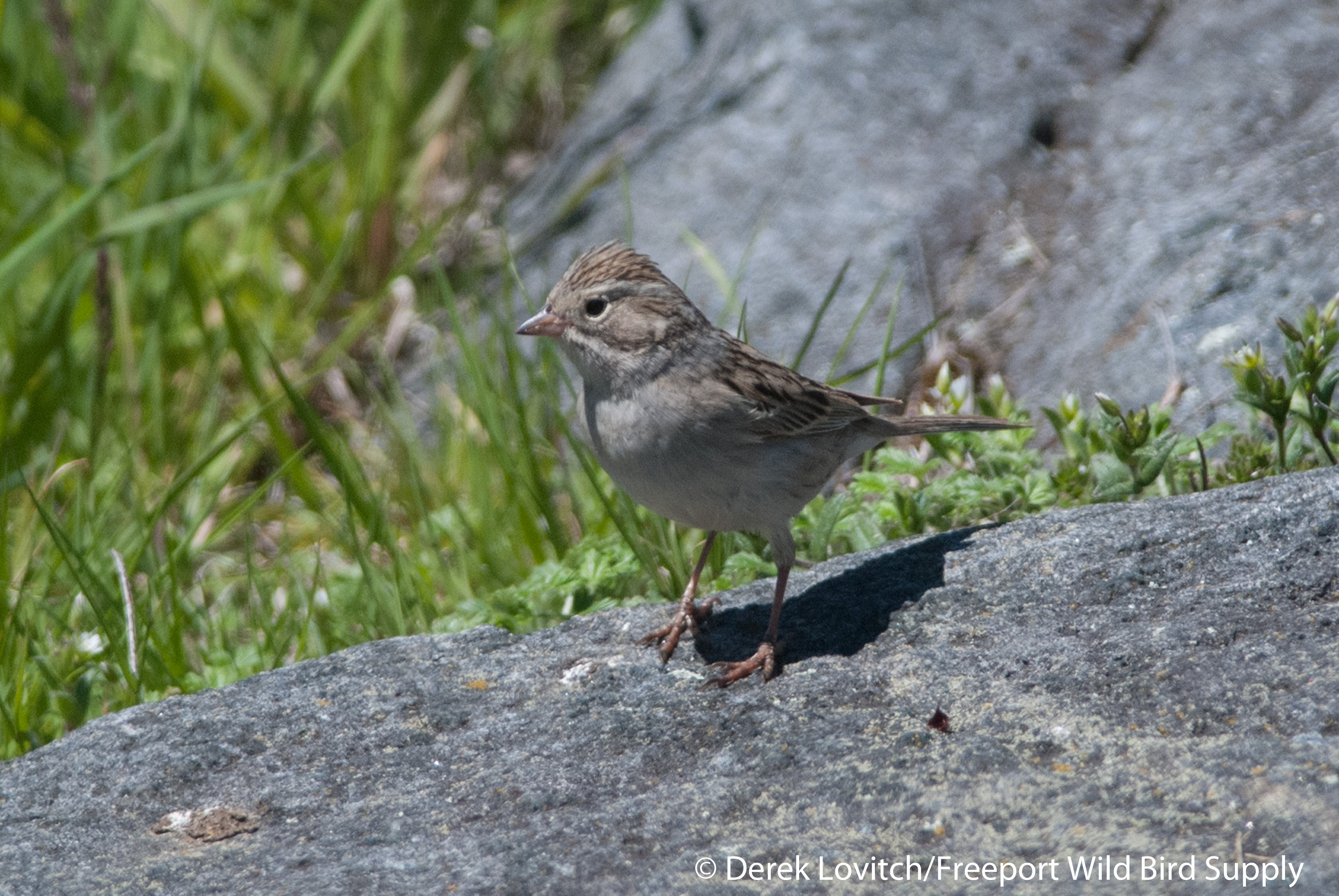
DSC_0124_BRSP1,Monhegan,5-25-14_edited-1 (Click on the photos for a larger image).

This first state record Brewer’s Sparrow was definitely not high on anyone’s list of next birds for Monhegan, or Maine (certainly not mine!). But more on the sparrow later.

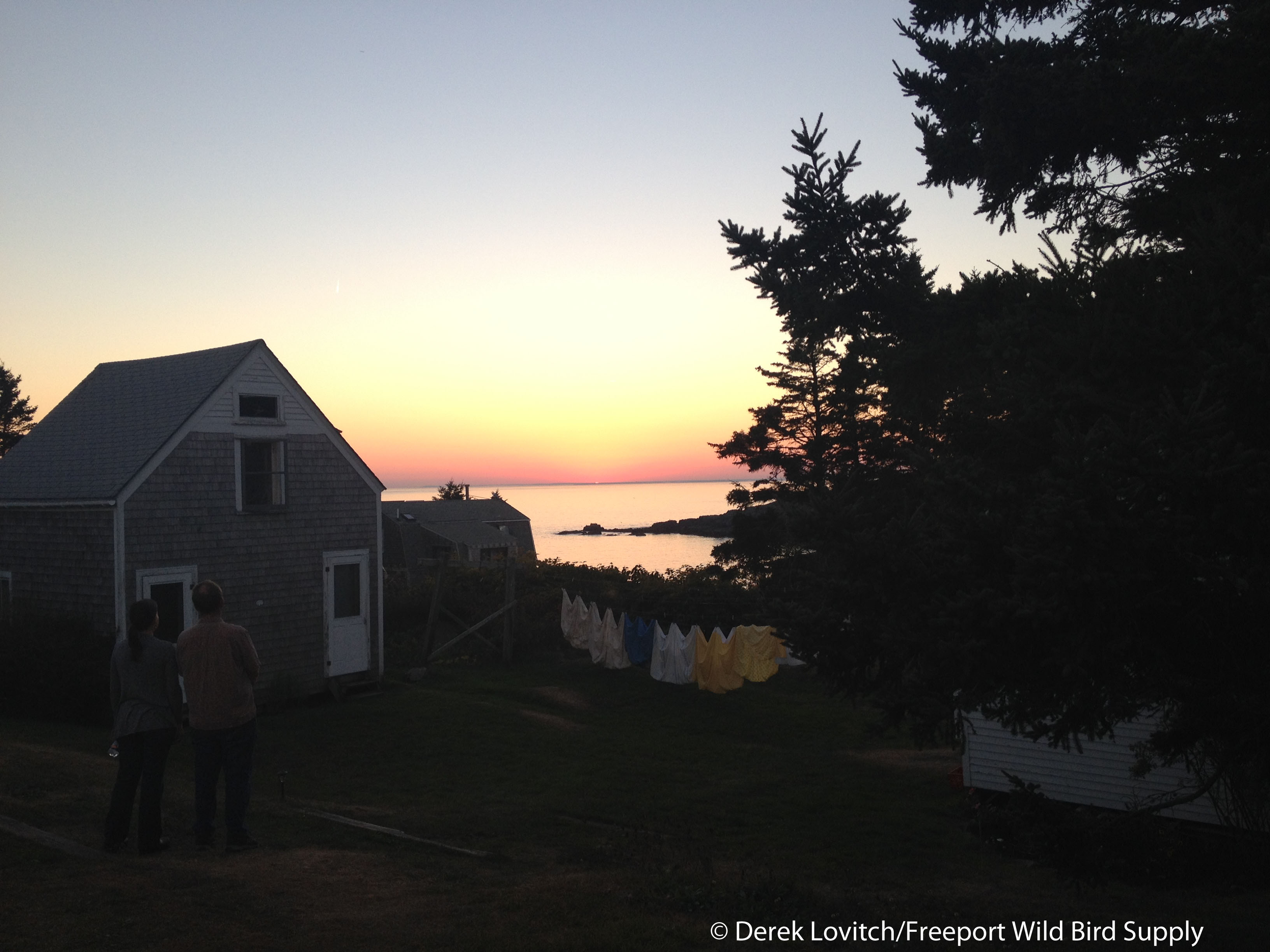
Half of the group arrived with me on the Hardy Boat out of New Harbor on Friday morning, greeted by a veil of fog.

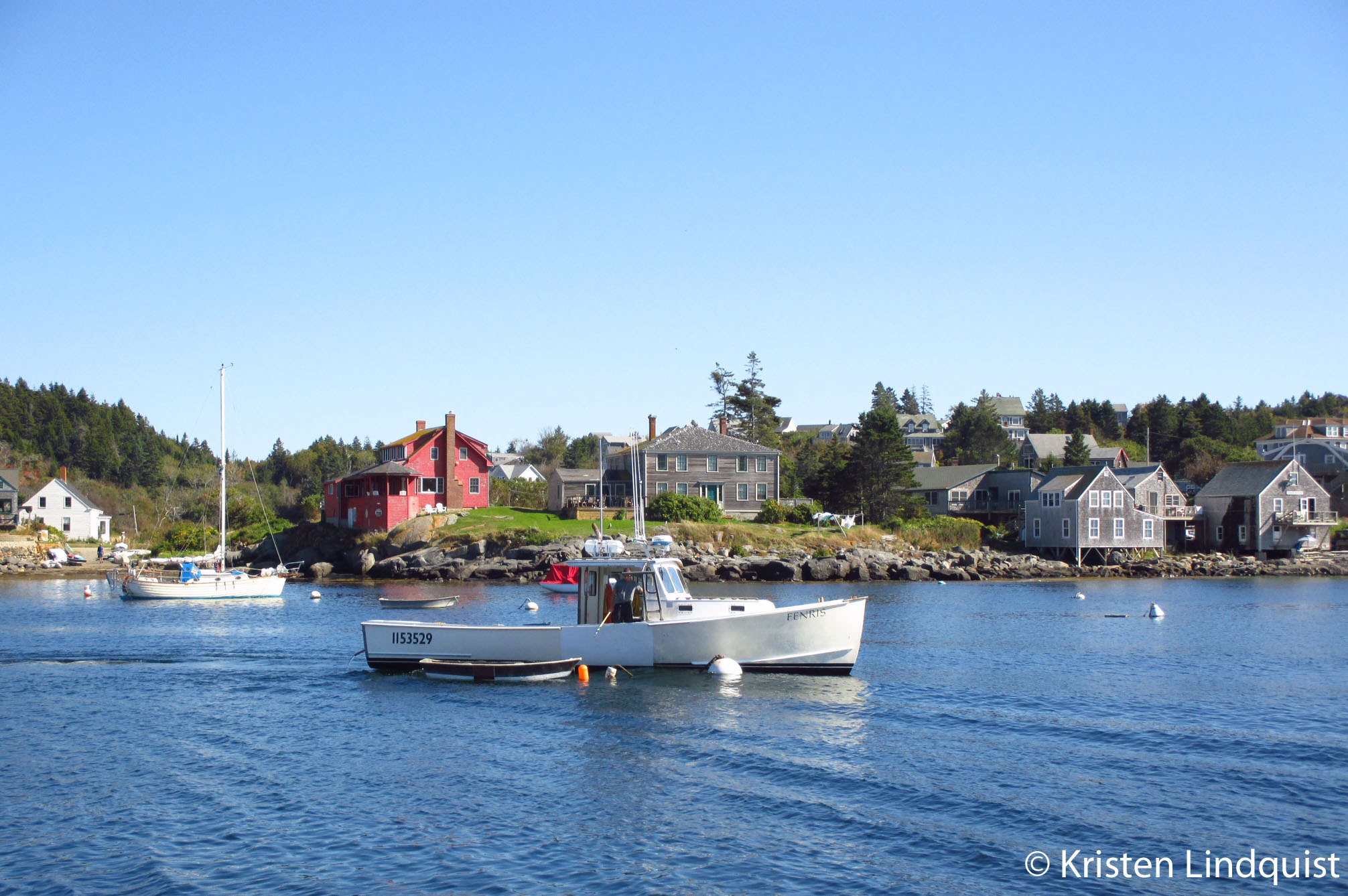
Arrival on Monhegan, 5-23-14
While the shroud of mist offered a lovely scene, it did put a damper on the birding for a little while (excuse the pun), but soon it cleared, and as the ceiling rose, so did the bird activity. In fact, this was the start of a fine weekend of weather – OK, it was rather chilly; extra blankets were dispersed for the night – but other than a few brief, very light showers, our Gore-Tex remained tucked away. We’ll call that a win.

Just about the first bird that we glassed upon our arrival was an immature male Orchard Oriole.  That’s the way we like to start a MonhegZen Birding Weekend!

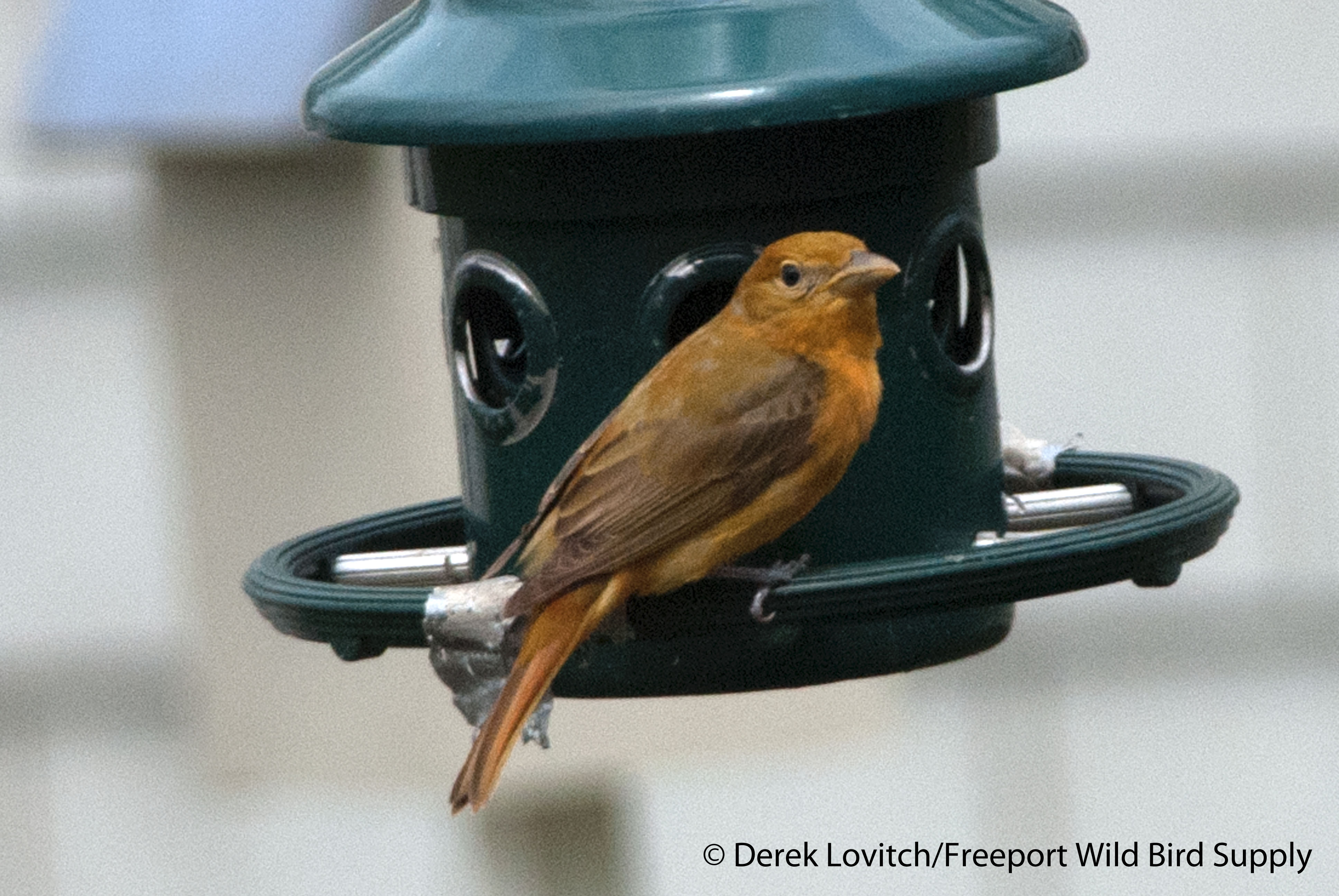
The rest of Day 1 was highlighted by re-finding one of two immature male Summer Tanagers that had been frequenting the island lately. Friends picked up some seed on their way down (yes, the guy that owns a birdseed store and has several tons of seed on hand forgot to bring seed and had to have someone slum it at a hardware store. Gasp!), and we restocked the stash that kept the tanager visible for all through the weekend.
DSC_0017_SUTA,Monhegan,5-23-14_edited-1

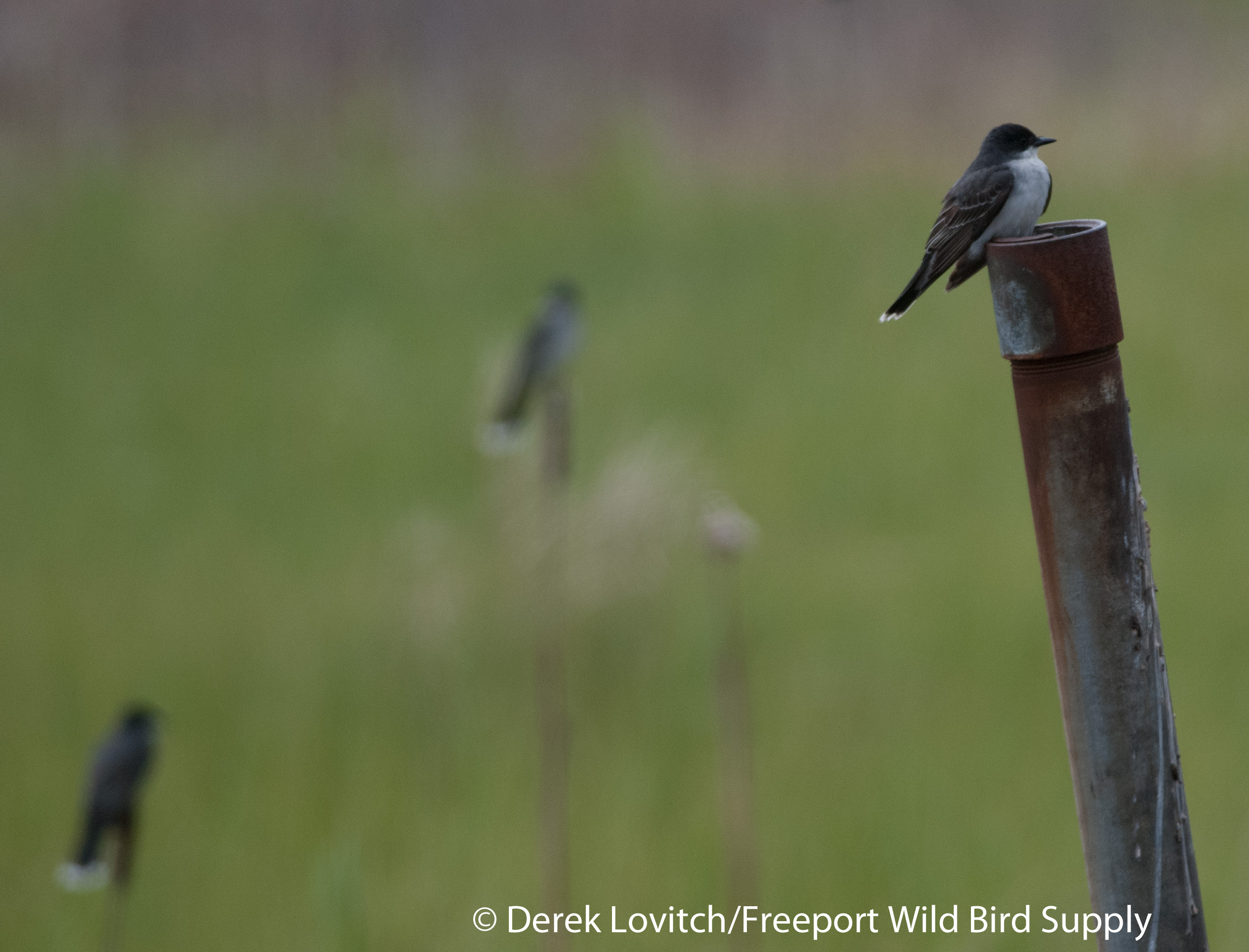
The tanager was our first “good” bird of the trip, but most of us agreed that the kingbird show near the pumphouse was the highlight of the first day. Indeed, it was a highlight for the entire weekend.  Sheltered from a persistent, but raw and cold, easterly wind, the back corner of the town marsh was just about the only place with flying insects out and about. Therefore, flycatchers had piled up here, led by 21 Eastern Kingbirds (growing to 25 by Saturday afternoon, before diminishing on Sunday and Monday).
DSC_0051_2EAKI,Monhegan,5-24-14, edited-1 DSC_0030_3EAKI,Monhegan,5-24-14_edited-1

Other flycatchers were present here, including a couple of cooperative Eastern Wood-Pewees, and several Least Flycatchers.
DSC_0047_LEFL1,Monhegan,5-24-14_edited-1

Little to no migration was visible on the radar overnight Friday into Saturday, and the lack of reorienting birds overhead after sunrise on Saturday morning confirmed the minimal movement overnight.  Although I awoke to a singing Mourning Warbler out my window, we never did catch up with one over the weekend.

But over the course of the day (as our group grew in size), we beat the bush and slowly but surely built up our species total. The Summer Tanager, the immature male Orchard Oriole, a very entertaining Peregrine Falcon over Manana, and 16 species of warblers were the day’s headliners. But yeah, by Monhegan standards, this was a slow day.

Sunday was not.

A light to moderate migration clearly produced some turnover, and plenty of new birds.  Some warblers were reorienting over the Trailing Yew after sunrise – always a good sign – and our walk to Lobster Cove was much slower in pace than on Saturday. A singing Field Sparrow, a calling Common Nighthawk, and a streaking Gray-cheeked/Bicknell’s Thrush were among the species that we added to our tally.

Then the text came through.

When describing our itinerary – or lack thereof – for the coming days upon our arrival, I talked about how chasing birds (dropping everything and running across the island) is often a futile exercise here, and instead we would work our way towards good birds, keeping our eyes open for them – and enjoying everything in our path. I joked that “but if I need it for my island list, all bets are off.”

First state records?  Fuhgettaboutit. Off we went. And I make no apologies…luckily, the coffee pot was on the way. I might not have gotten away with it otherwise.

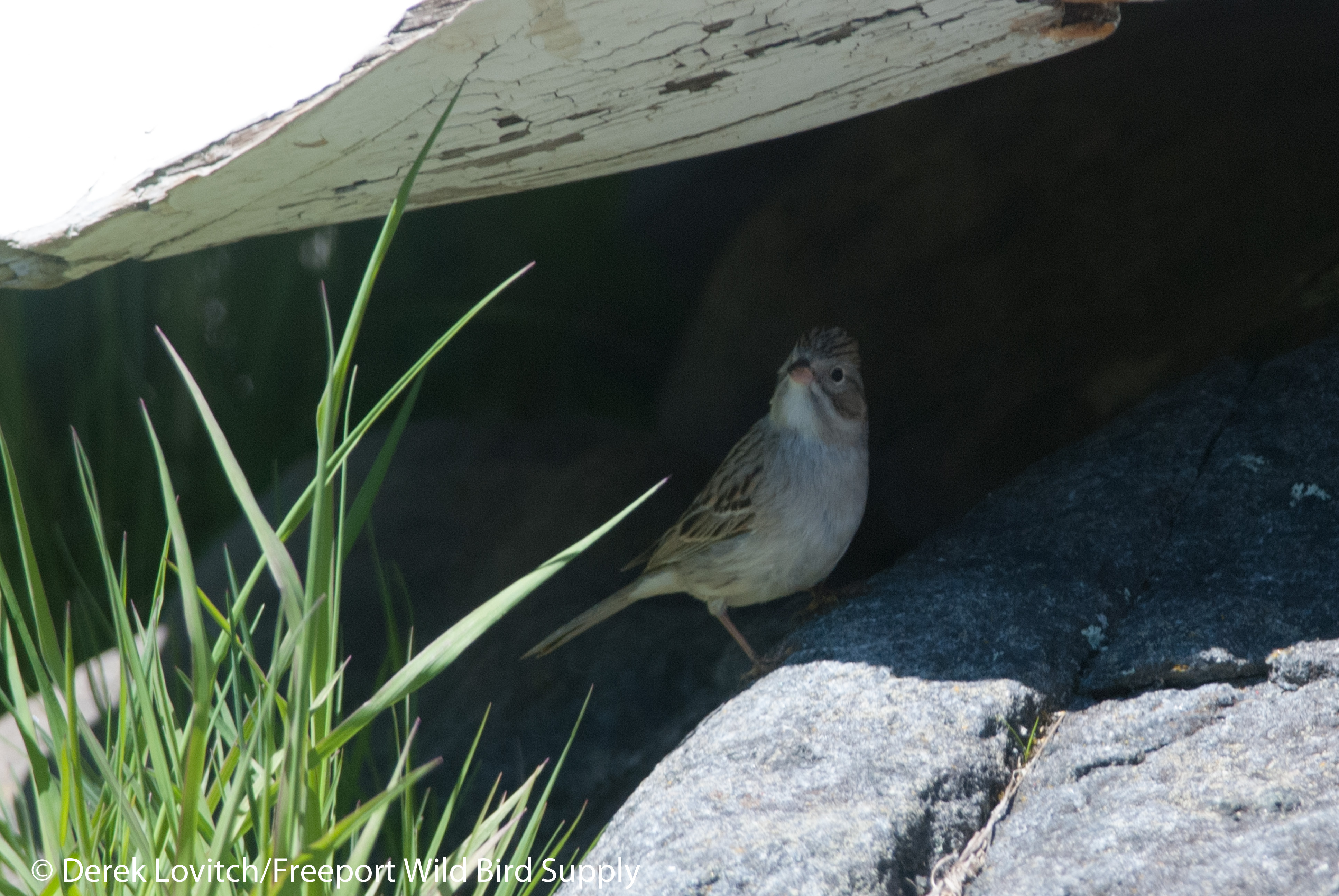
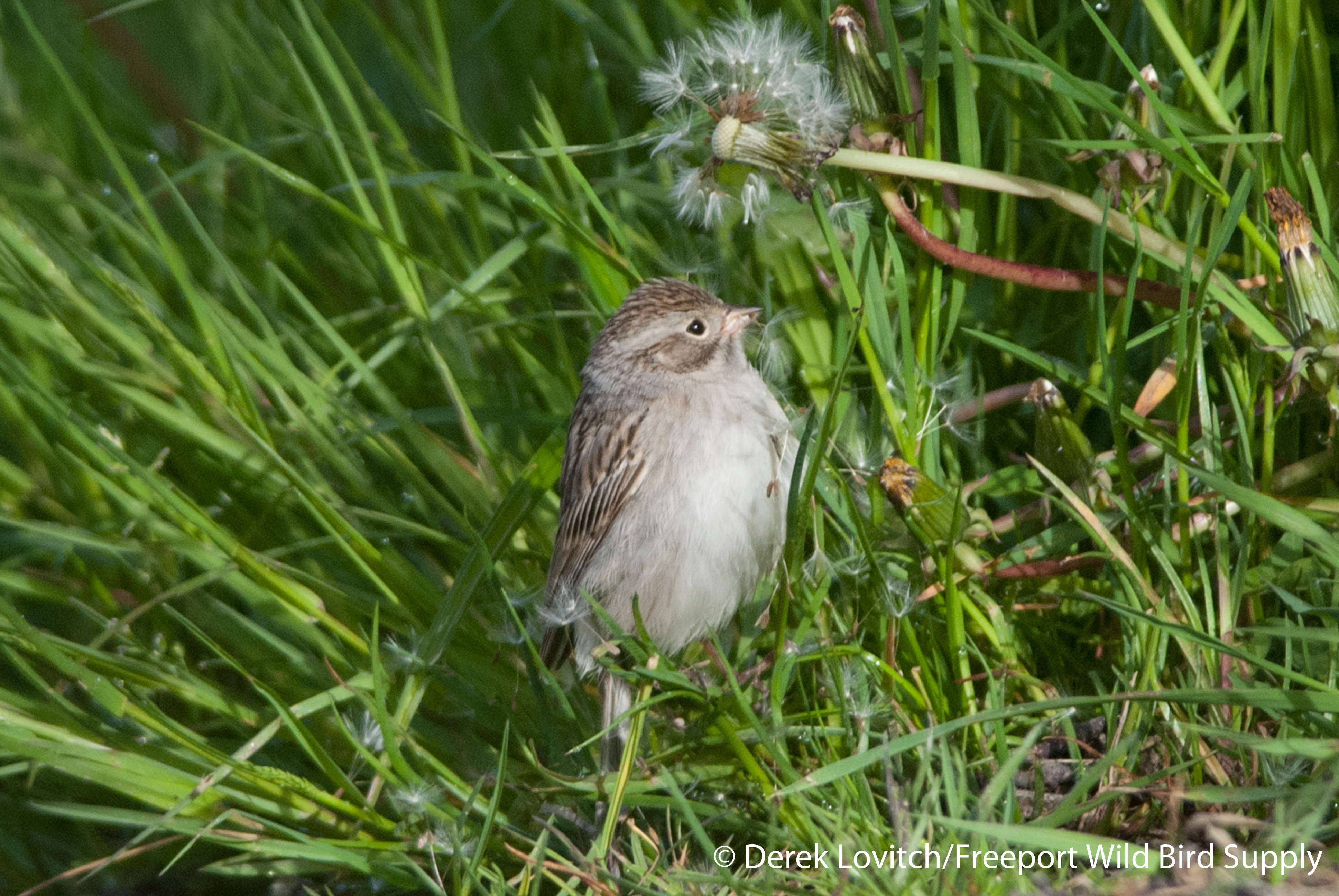
So yeah, “Maine’s International Birder of Mystery” discovered a Brewer’s Sparrow.  First found at the edge of the road at its terminus at the Ice Pond, it soon made its way into a nearby yard. Dandelion seeds were its quarry.

DSC_0120_BRSP3,Monhegan,5-25-14_edited-1

  DSC_0131_BRSP7,Monhegan,5-25-14_edited-1  DSC_0116_BRSP6,Monhegan,5-25-14_edited-1  DSC_0075_BRSP5,Monhegan,5-25-14_edited-1  DSC_0069_BRSP2,Monhegan,5-25-14_edited-1

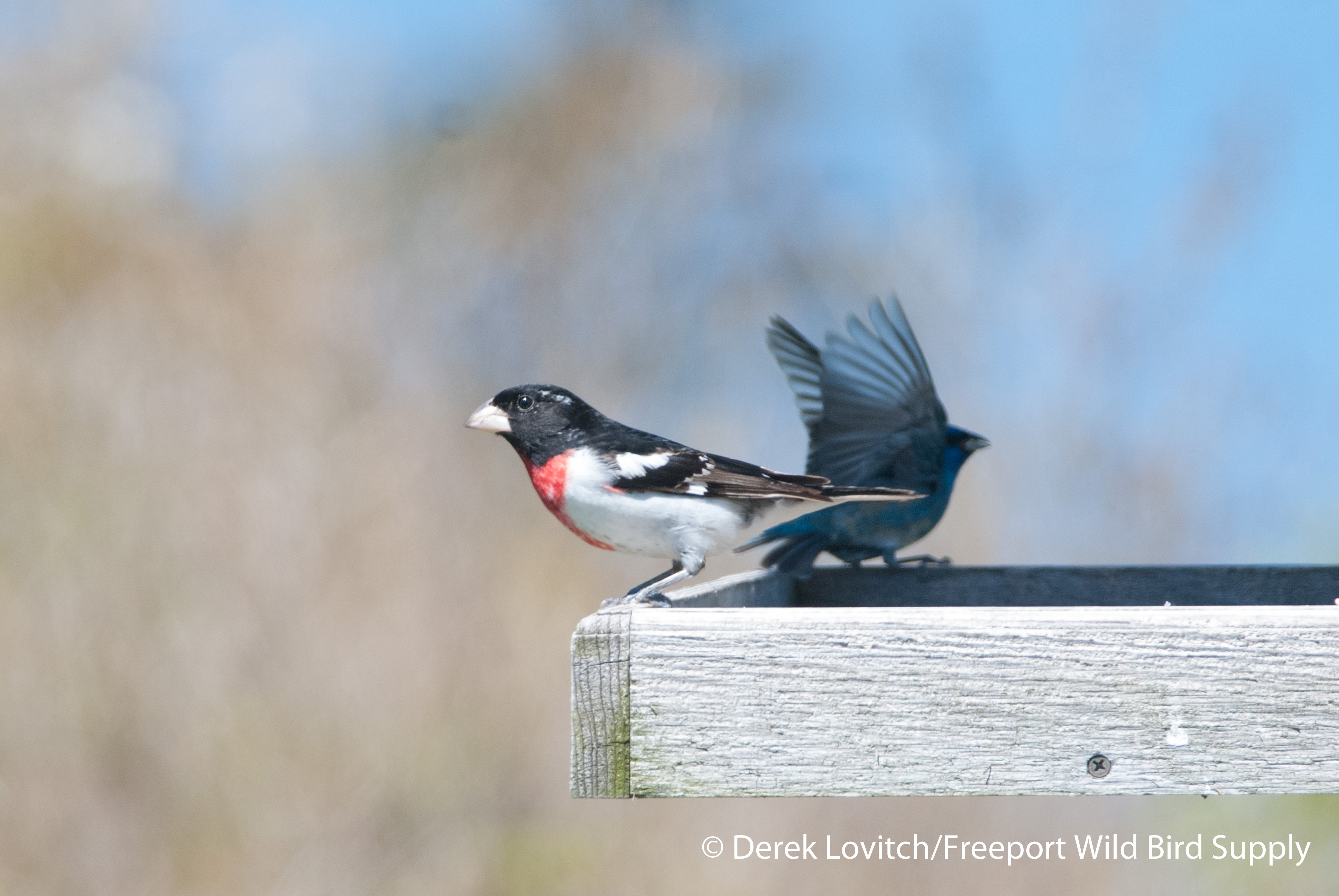
There were other birds to look at too. While I scrutinized the extent of streaking on the nape and crown of the sparrow and took way too many photos, the more sane of the group enjoyed a splash of color at the nearby feeders – at least 3 Rose-breasted Grosbeaks and an Indigo Bunting.
DSC_0100_RBGRandINBU,Monhegan,5-25-14_edited-1

Elsewhere, a Clay-colored Sparrow on one of my other seed stashes, several great views of Philadelphia Vireos, the continuing Summer Tanager, a second Orchard Oriole (an adult male) and a variety of warblers were the other highlights.

All weekend long we had been enjoying lots of warblers, but somehow we only amassed 19 species (we missed singles of Nashville and Prairie seen by others). But of those that we did see, most of them we saw stunningly well. Magnolia, American Redstart, Yellow, and Common Yellowthroat dominated each day, but we had a bunch of Northern Parulas and Chestnut-sided on Sunday as well.  And the views of Canada Warblers and one particular Northern Waterthrush will be tough to beat.

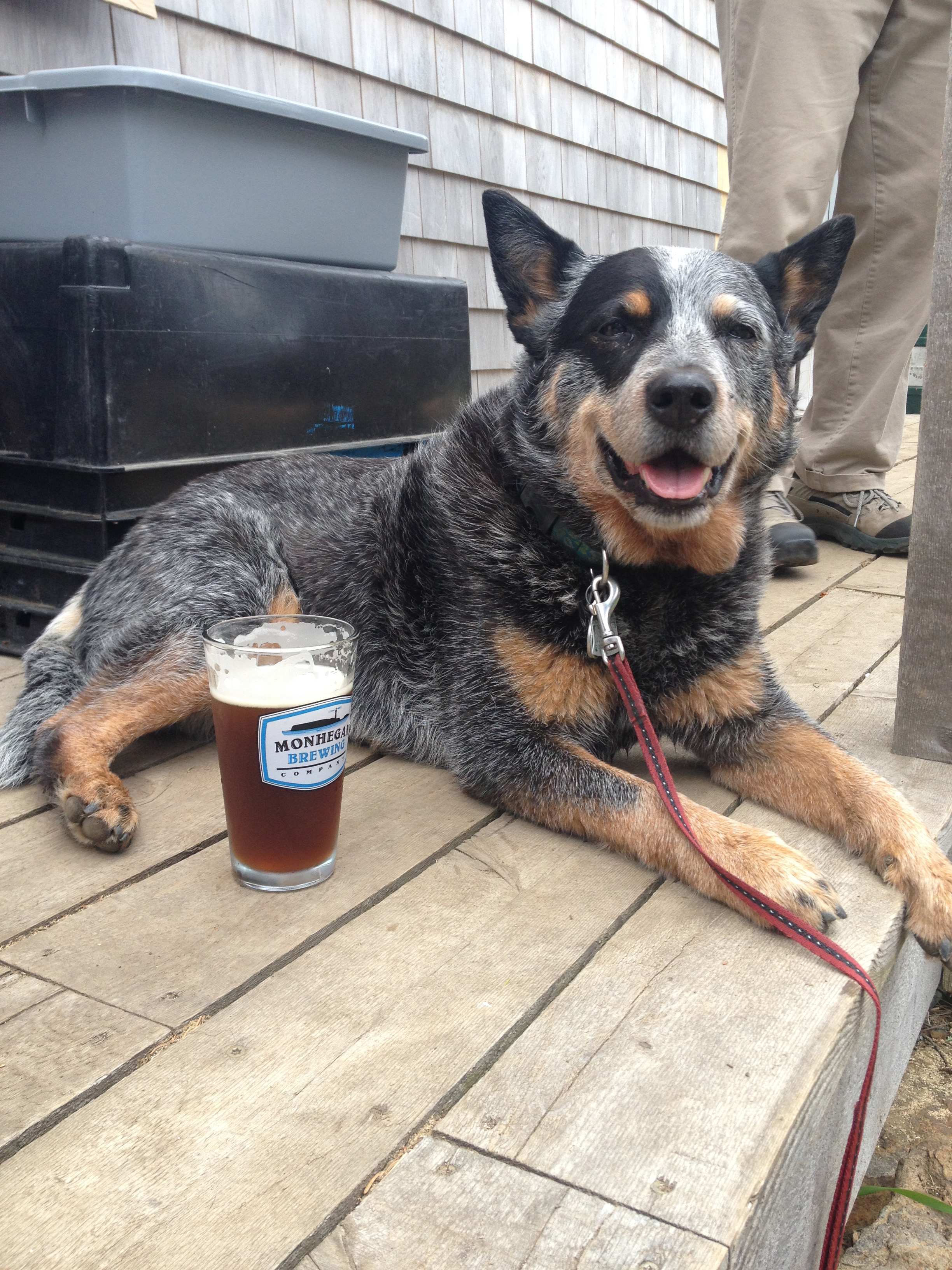
Like each of our first two days on the island, Sunday’s tour came to an end at the Monhegan Brewing Company. On Sunday night, the Brewer’s Sparrow was celebrated, and ideas for a “Brewer’s Brew” or something like that was hatched.

The group had accumulated 89 species (including the aforementioned 19 species of warblers), which was actually well below average for my MonhegZen Spring Birding Weekends.  But at least for me, I had one day left to add to the total, as I extended my stay for another night.

A very strong flight overnight suggested that this was a good call, but I was surprised by how many fewer birds were around on Monday morning than on Sunday. Especially when surrounded by fog – as we were overnight and into the morning – I have found that on really strong flights with favorable conditions, birds probably fly over the island. Perhaps the shroud of fog prevented them from even knowing there was an island below.

However, nearly three hours after sunrise, the winds shifted to the southwest, the ceiling lifted, and all of the sudden, there were warblers in the air. Had they been silently creeping around the forests, waiting for some clearing to reorient to the mainland?  Or, were these birds that were overhead, lost above the fog, looking for a place to finally land?

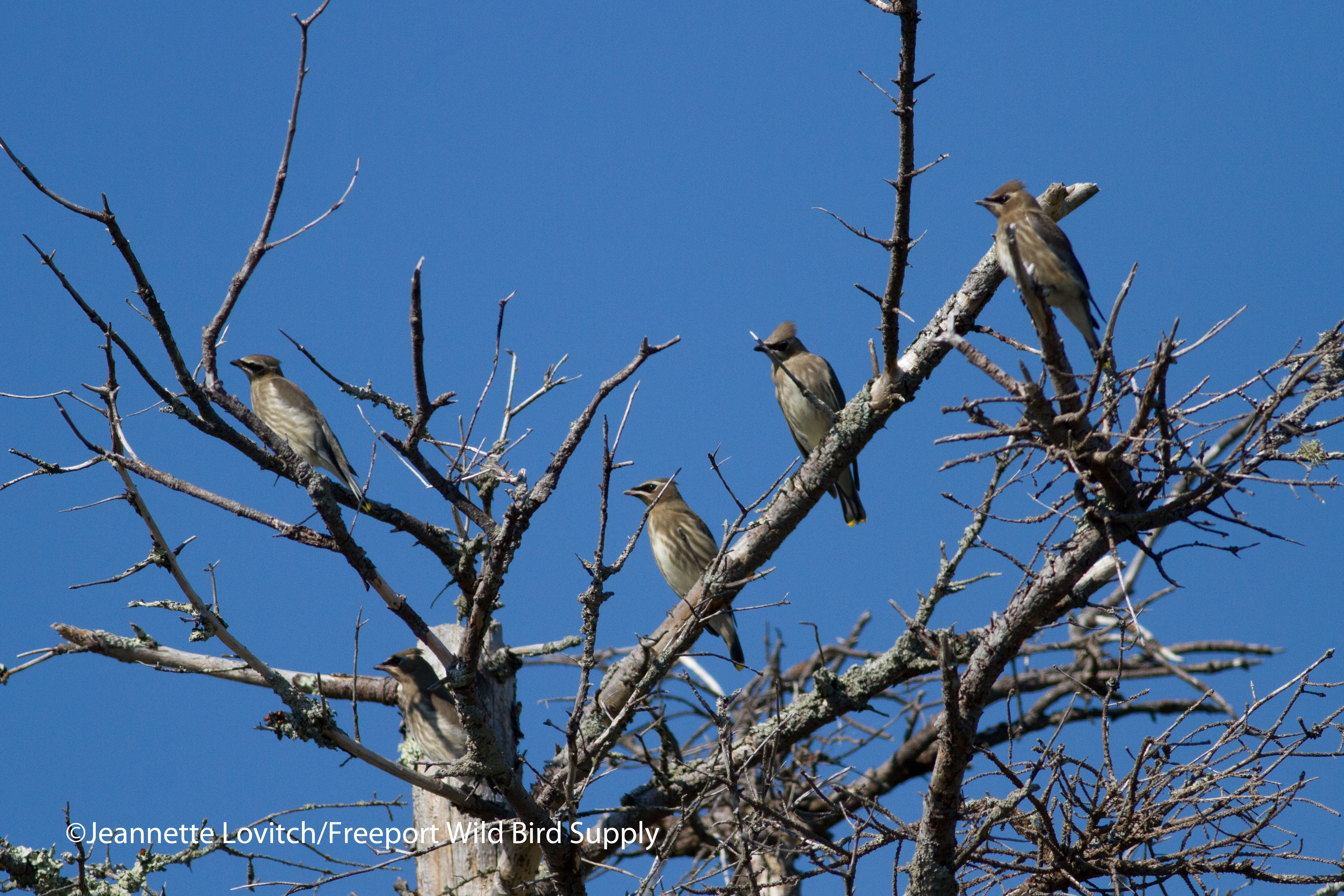
Hard to say, but for a couple of hours, the birding was quite good. Blackpoll Warblers had increased dramatically, and I had more Bay-breasted and Tennessee Warblers than the previous days, and the Cedar Waxwing flock increased dramatically.

Jeannette and Sasha (finally making her first trip here at the age of 14) arrived, and our friends Paul and Kristen joined us for the next couple of hours.  Blackpoll and Bay-breasted Warblers continued to put on a good show, as did the Brewer’s Sparrow.  More importantly for Jeannette, she was able to successfully twitch all three things she was after today: Hardy Boat cinnamon rolls, Novelty pizza, and Monhegan Brewing.  Yeah, she looked at the sparrow, too.

While Sasha was unable to successfully add Brewer’s Sparrow to her list, she did carefully study plumage variation in Herring and Great Black-backed Gulls. 
Sasha_watching_gulls,Monhegan,5-26-14

She also joined us at the brewery for one final pint.
Sasha_atMonheganBrewery,5-26-14

When many of us present for the weekend’s excitement boarded the boat at 3:15, I was sorry to go, as usual. I eked out 94 species when all was said and done (still below average for a spring weekend out here) including 19 species of warblers (I almost never miss hitting 20 here). While the overall list might have been a little low, the quality of views of most species was hard to beat. The overall quality of the bird list wasn’t too shabby, either. A first state record doesn’t hurt.

The following is my checklist for the group for Friday through Sunday. Monday’s total included birds seen with Jeannette, Paul, and Kristen. The included numbers for each day are conservative estimates or counts of the number of individuals of each species we saw and/or heard on the island (not including the ferry rides).

Species: Friday, May 23rd/Saturday May 24th/Sunday, May 25th/Monday, May 26th.

American Black Duck: 1/0/0/0
Mallard: 15/21/10/10
Black Scoter: 0/0/0/2
Common Eider: x/x/x/x
Red-breasted Merganser: 0/0/0/1
Ring-necked Pheasant: 3/4/5/4
Common Loon: 4/6/6/4
Northern Gannet: 5/6/6/12
Double-crested Cormorant: x/x/x/x
Great Blue Heron: 0/3/0/0
Osprey: 1/3/1/0
Sharp-shinned Hawk: 0/0/0/1
Peregrine Falcon: 0/1/0/0
Merlin: 1/0/0/0
Virginia Rail: 1/1/1/1
Laughing Gull: 5/12/4/2
Herring Gull: x/x/x/x
Great Black-backed Gull: x/x/x/x
Black Guillemot: x/x/x/x
RAZORBILL: 0/1/0/0
Mourning Dove: 6/6/8/4
Common Nighthawk: 0/0/1/0 (FOY)
Chimney Swift: 1/1/2/0
Ruby-throated Hummingbird: 2/4/4/3
Downy Woodpecker: 2/0/0/0
Northern Flicker: 1/0/2/2
Eastern Wood-Pewee: 2/2/2/3
Yellow-bellied Flycatcher: 0/1/2/2
Alder Flycatcher: 0/0/0/3 (FOY)
“Traill’s” Flycatcher: 0/0/0/5
Least Flycatcher: 3/1/6/6
Eastern Phoebe: 1/0/0/0
Eastern Kingbird: 27/25/14/15
Blue-headed Vireo: 0/0/0/1
Philadelphia Vireo: 0/0/2/4
Red-eyed Vireo: 2/2/12/20
Blue Jay: 8/12/8/8
American Crow: x/x/x/x
Common Raven: 2/2/2/2
Tree Swallow: 8/5/6/6
Bank Swallow: 2/2/2/0
Cliff Swallow: 0/0/1/0
Barn Swallow: 2/2/1/2
Black-capped Chickadee: x/x/x/x
Red-breasted Nuthatch: 0/1/2/3
Carolina Wren: 4/8/6/6
Winter Wren: 0/0/1/0
Golden-crowned Kinglet: 0/2/2/4
Ruby-crowned Kinglet: 0/0/0/1 (late)
Veery: 1/1/1/0
GRAY-CHEEKED/BICKNELL’S THRUSH: 0/0/1/0
Swainson’s Thrush: 0/0/1/0
Hermit Thrush: 0/0/1/0
American Robin: 10/10/8/6
Gray Catbird: x/x/x/x
Brown Thrasher: 0/1/1/0
European Starling: 6/4/8/6
Cedar Waxwing: 3/4/18/60
Tennessee Warbler: 0/2/0/4
Northern Parula: 3/12/30/15
Yellow Warbler: 25/25/35/30
Chesnut-sided Warbler: 6/5/20/10
Magnolia Warbler: 25/20/25/20
Black-throated Blue Warbler: 6/8/8/4
Yellow-rumped Warbler: 6/8/0/0
Black-throated Green Warbler: 10/15/15/15
Blackburnian Warbler: 2/0/2/3
Bay-breasted Warbler: 0/1/0/8 (FOY)
Blackpoll Warbler: 4/3/10/50
Black-and-white Warbler: 5/5/10/5
American Redstart: 10/15/35/30
Ovenbird: 0/0/2/0
Northern Waterthrush: 0/3/3/3
MOURNING WARBLER: 0/1/0/0 (FOY)
Common Yellowthroat: 35/35/30/30
Wilson’s Warbler: 4/0/5/1
Canada Warbler: 2/4/4/2
SUMMER TANAGER: 1/1/1/0
Chipping Sparrow: 10/10/6/8
CLAY-COLORED SPARROW: 0/0/1/0
BREWER’S SPARROW!!!!: 0/0/1/1
Field Sparrow: 0/0/1/1
Savannah Sparrow: 1/1/3/1
Song Sparrow: x/x/x/x
Swamp Sparrow: 1/2/2/1
White-throated Sparrow: 1/0/10/10
Northern Cardinal: 6/8/8/6
Rose-breasted Grosbeak: 0/0/4/3
Indigo Bunting: 1/3/4/2
Bobolink: 8/6/4/4
Red-winged Blackbird: x/x/x/x
Common Grackle: 10/15/15/10
ORCHARD ORIOLE: 1/1/2/1
Baltimore Oriole: 0/1/3/4

American Goldfinch: 6/12/8/6

A Great May Week of Birding in Review, and Some Predictions for More Feathery Fun.

DSC_0027_SUTA,Georgetown1,5-6-14

Simply put, it has been a helluva week of birding in Maine!  Strong flights of migrants occurred on 5 of the last 7 nights, producing a whole lot of new arrivals throughout the region. And then there were rarities, but we’ll get to that shortly.
As for regularly-occurring migrants, birds are arriving right about on time now. By week’s end, some of the latest arriving warblers, like Blackpoll have begun to trickle in, while the early migrants like Yellow-rumped and Palm have thinned out considerably. Some locally-breeding Pine Warblers are rarely singing now, as breeding season for them is well underway.

Almost anywhere you went this week, 12 or more species of warblers was possible.  I enjoyed 15 species at Florida Lake on Monday and 17 species at Evergreen Cemetery on Thursday, for example. The third week of May is when the coveted 20-species morning total is most likely around here, so you know I will be gunning for that in the coming days.

I added Lincoln’s Sparrow, Lesser Yellowlegs, White-crowned Sparrow (#126, 127, and 128 respectively) to my Bradbury Mountain patch lists this week, and a Lincoln’s Sparrow was the first in our Pownal yard (#116) on Sunday. Meanwhile, a spiffy male Orchard Oriole was the 114th species at our store, a one-day wonder at our feeders on the 10th.  So it’s been a great week for patch listing as well!

And Scarborough Marsh was just awesome on Tuesday morning, when Katrina and I had unbelievable numbers (for spring) off of Eastern Road, including 1500+ Tree Swallows, 500+ Least Sandpipers, 400+ Barn Swallows, ~125 Greater and ~100 Lesser Yellowlegs, 75-100 Bank Swallows, 6++ Semipalmated and 2++ White-rumped Sandpipers (both FOY), 2 adult Dunlin, and the continuing Tricolored Heron. Nothing rare per se, but the biomass of birdage was impressive, and was definitely the highlight of the week.

Following the “Mega” rarity Northern Wheatear that was last seen last Saturday in Scarborough Marsh, rarity news has been decidedly southern in nature. Although small numbers of “overshooting” southern vagrants are typical in Maine every spring, the number of White-eyed Vireos (I caught up with one at Capisic Pond Park on Thursday with my friend Lois), Summer Tanagers (I saw one in Georgetown last week with Katrina; see above), and Blue-gray Gnatcatchers (they’re everywhere!) is most impressive. Then there was a Painted Bunting on Monhegan this week, a Swallow-tailed Kite at the Bradbury Mountain Hawkwatch on 5/7, and a Mississippi Kite also at The Brad as the grand finale on the 15th.  The widespread smattering of Orchard Orioles is a little more typical.

This pattern of southerly vagrants is not caused by birds being “blown” here in a simple sense, but instead we believe it is caused by southerly winds facilitating their arrival beyond their normal range – perhaps by causing a bird to travel much further (in relation to the ground) in each night’s flight thanks to a favorable tailwind. Perhaps others were entrained by strong winds off the South Atlantic Bight and were pushed northwards until they made landfall in the Northeast (I wonder if the Boston Fork-tailed Flycatcher arrived this way?).

Less fitting of any particular pattern is the remarkable adult Black-headed Grosbeak that was on Monhegan this week – at the SAME FEEDER as the Painted Bunting, 2 Summer Tanagers, a Lark Sparrow, and a Dickcissel. <expletive deleted> And, not to be overshadowed, a dapper male Ruff was found in Bangor.

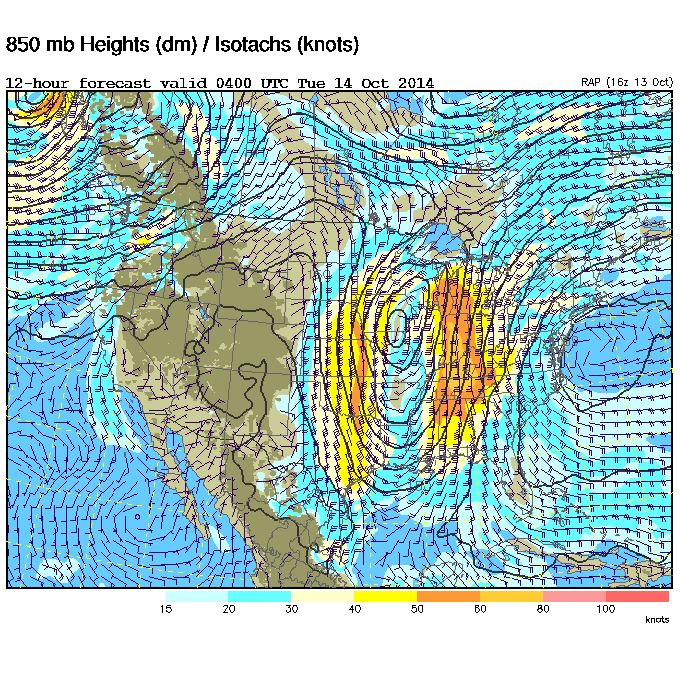
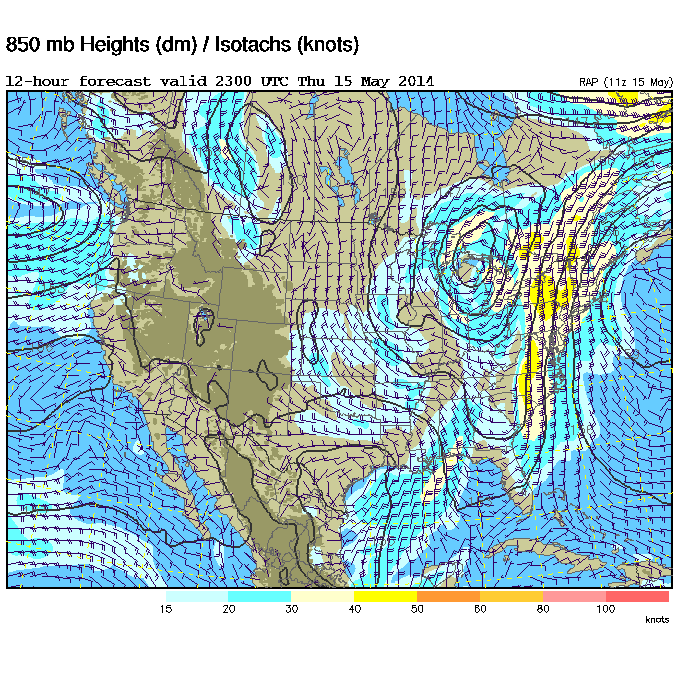
With a deep southerly flow continuing, and some very unsettled weather coming for the weekend, I think things will be getting quite interesting in the coming days. (I don’t want to know how many “Island Birds” Kristen Lindquist will pick up over me on Monhegan this weekend!).  Check out this wind map from the 15th, showing a very strong southerly flow originating all of the way from Florida and the Caribbean.
wind map, 5-15-14

For those of us not on Monhegan this weekend, I sure hope you’ll be birding hard – not despite the weather, but because of the inclement weather. At the very least, keep an eye on those feeders. Both here at the store and at home, we’re stocked up with mealworms, jelly, oranges, insect suet, and nut blocks. Not only will the cool, wet weather limit natural food sources, but the slow progression of the season continues to put a lot of important food sources well behind the birds’ required schedules.
For example, apples and cherries are only now starting to bloom. Early-arriving nectavores and insectivores flock to these (and other early-season bloomers like Shadbush, azalea, and quince) for both nectar and the insects attracted to that nectar. The lack of a lot of flowers so far this season has pushed many orioles (including some Orchards in addition to the regular Baltimores), Gray Catbirds, and Scarlet (and some Summers) Tanagers to feeding stations in above-average numbers.  I expect that trend to continue through the middle of next week, as a stubborn upper-level low remains locked overhead producing unsettled weather.

So keep an eye out the window, get outside, and find some good birds!  And regardless of rarities, it’s just a great time to be birding!

Three Days of Migration Watching in May -Day and Night.

In my blog last Wednesday, I made some prognostications about what we might expect for birds in the coming days. Let’s see how I did so far.

Rain began to fall Wednesday evening, and continued, heavy at times, through Thursday morning. With a persistent easterly wind, overnight migration was non-existent. In the rain on Thursday morning, Katrina and I checked out Florida Lake Park, but found only about 20 Yellow-rumped and 10 Palm warblers – fewer than in recent days. The local River Otter pair, however, put on a great show. Nothing new under the feeders at home (or at the store), either.

Afterwards, I took a spin through the local farms and fields, but found nothing out of the ordinary; it’s too early for most shorebirds anyway. Admittedly, however, I had vagrants on my mind (and still do! As usual). Although the southerly winds conducive to southern overshoots (as I discussed in the aforementioned blog) had yet to kick in, the deep easterly flow that we have been ensconced within could offer up its own surprises. With reports of the “largest incursion of Icelandic/European birds to Newfoundland in recent memory,” including amazing tallies of European Golden-Plovers, 9 Black-tailed Godwits, North America’s 4th (or so) Common Redhank…yeah, the “Rarity Fever” in me can’t help but kick up. Perhaps something will ride one of those Iceland-Portland cargo ships that are in service these days!

Light rain continued through Thursday morning, diminishing to drizzle and fog until the afternoon, when a shift to westerly winds began to clear things out. Overnight, light and variable winds suggested a good migration should occur, but the radar wasn’t showing more than a light flight.
1am radar, 5-2-14  1am velocity, 5-2-14

However, it was foggy for much of the night, and fog can obscure the image of birds on the radar, especially if they are flying low. “Birding by radar” is not infallible, and I had a feeling it might have been a little misleading this morning. A steady trickle of Yellow-rumped Warblers moving over the yard at dawn confirmed this. The weather was just too-not-terrible for there not to be a lot of birds on the go.

So off to Florida Lake I went.  And, for a change this spring, I was not disappointed.  100+ Yellow-rumped Warblers, 20+ Palm Warblers, my first Northern Waterthrush and Black-throated Green Warbler (finally!) of the year, a singing migrant Greater Yellowlegs, and much, much more. I caught the lingering pair of Green-winged Teal copulating; are they going to breed here? Ring-necked Ducks had increased to 16 and there is still a pair of Common Mergansers here.

As the fog burned off, the sun shone brightly, and heat began to rise in swirling thermals, hawks took to the skies on the light westerly wind. I had to pull myself away from the hawkwatch kicking and screaming at 12:30, but by then we had eclipsed (at 10:35) our all-time record count of 4,474 birds when a Merlin streaked by. 388 Broad-winged Hawks and 22 Sharp-shinned Hawks were included in the total of 429 migrant raptors when I departed.

Last night’s passerine migration – yup, the fog on the radar definitely obscured the intensity of the flight! – was still evident well past noon, as Yellow-rumped Warblers were still on the go, reorienting inland after last night’s flight. Well over 200 had passed the summit by the time I departed, as did my first two Chimney Swifts and Eastern Kingbirds (also 2) of the year. And by day’s end, 705 raptors led by 583 Broad-wings were tallied, adding to our record totals. Around 4:00pm, our 5000th raptor had passed – a milestone we never thought we would reach.

Come nightfall, the radar was active once again.  Here are the 1am reflectivity and velocity images for example:
1am radar, 5-3-141am velocity, 5-3-14

Notice the dark greens in the center of the return, but overall the rather narrow diameter of the image?  My guess is that mostly overcast skies and a light westerly winds, perhaps including some turbulence from the passing cold front, kept birds low once again.  But, without fog around, it was certain that this was birds – confirmed by the distance SW-NE pattern of the velocity image, and its speed. I think it was actually a lot of birds.

And come morning, Yellow-rumped Warblers were overhead as I stood on the back porch at dawn, and the Saturday Morning Birdwalk group and I headed over to Florida Lake.  Yeah, it was good.  Very good.

In the past few days, we’ve also finally had the first couple of reports of Ruby-throated Hummingbirds and Baltimore Orioles, so that those have just begun to arrive.  As I mentioned the other day, food is in short supply for these backyard favorites, so feeders are going to be important for the first arrivals.

But no vagrants from the south, or East …yet!

Biddeford Pool Snowy Owl and Weather Discussion

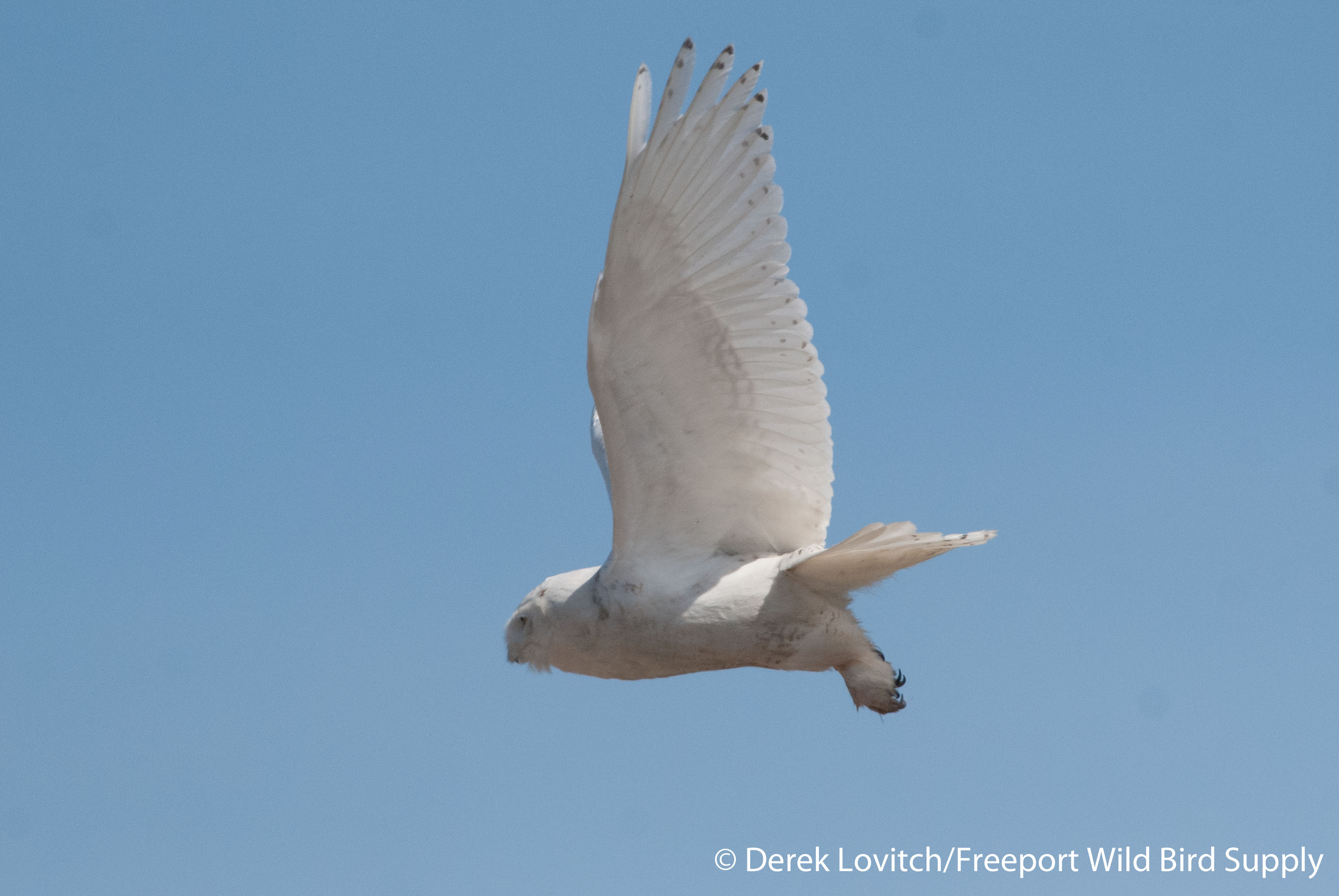
This was the birding highlight of Tuesday morning’s visit with Katrina to Biddeford Pool.
DSC_0005_SNOW1,Bidd Pool, 4-29-14_edited-1 DSC_0016_SNOW2,BiddPool,4-29-14_edited-1 DSC_0023_SNOW3,BiddPool,4-29-14_edited-1

The first photo was taken shortly after our arrival to The Pool, while the second two -with much more pleasant skies – was taken as we departed around noon.  Although its plumage is much more faded and worn now, it is likely that this is the same Snowy that has spent the winter near the western end of mile stretch.  Today, it was hunting voles once again on the incoming tide from one of its favorite rooftop perches.

While this was my latest Snowy in Maine, it is far from unprecedented following a massive irruption year. But seeing a Snowy Owl a mere two days away from May is still special; it could be a lifetime before we see an irruption of this magnitude again.

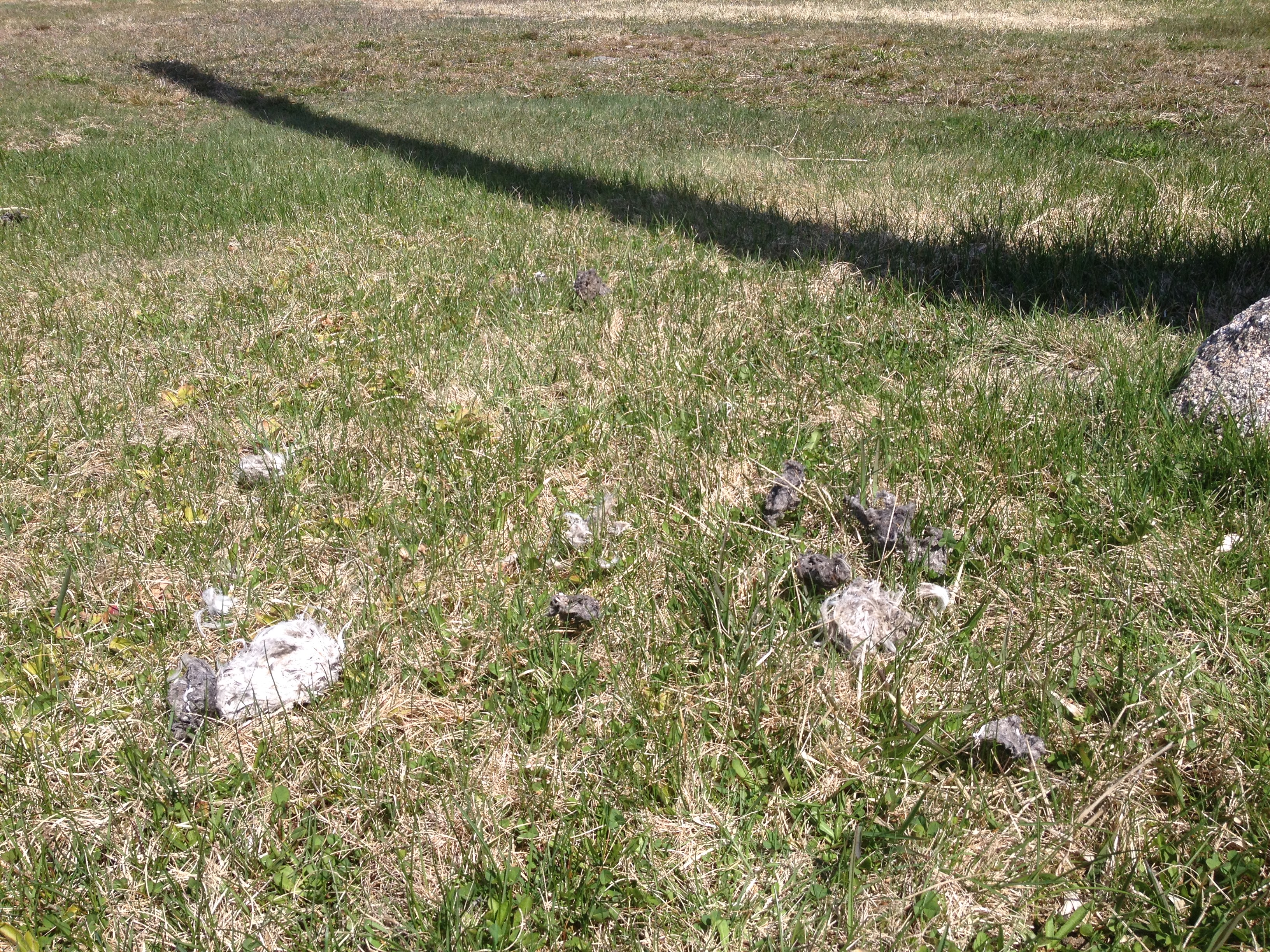
A little further down the road, where the second of the Mile Stretch Snowies overwintered, we found a pile of pellets below one of that bird’s favorite perches. Most were full of small mammal fur and bones, and the skulls were all of voles. One pellet, however, was pure thick, downy feathers – probably from a duck.
IMG_3465

But with migration still at a virtual standstill, the rest of the day’s highlights were rather few and far between; very few migrants were around. A pair of Blue-gray Gnatcatchers around the beach parking lot was a nice, and I had my first House Wren of the year in the neighborhood, and my first Laughing Gull off of East Point. 1-3 Black-crowned Night-Herons were also my personal “FOY’s,” but they have probably been present here for at least a couple of weeks now.

IMG_3449
The seas and skies sure looked like winter today, and the raw winds and low temperatures – and Snowy Owl! – sure made it seem more like early March than late April!

But yeah, migration has been kinda slow.  Although, interestingly enough, the House Wren and Laughing Gull were right on time for me, most of the usual late April arrivals (Black-throated Green Warbler, Northern Waterthrush, Black-and-white Warbler, etc) are nowhere to be seen, and really, have I only heard one Blue-headed Vireo so far this season?

We all know spring has been running late this year, and I would say bird migration is now about 7-10 days behind schedule (catching up from the 2-3 weeks behind schedule of early April).  Recently, our onshore winds (not conducive to facilitating migration for birds heading north) in this stubborn blocking pattern (a pattern that has seemingly become more and more regular recently) have not helped matters.  Here, for example, is the wind map from Sunday, showing the low pressure system just south of Nova Scotia that was pumping in those onshore winds since late last week.
wind map, 4-27-14

But take a look at today’s wind forecast…
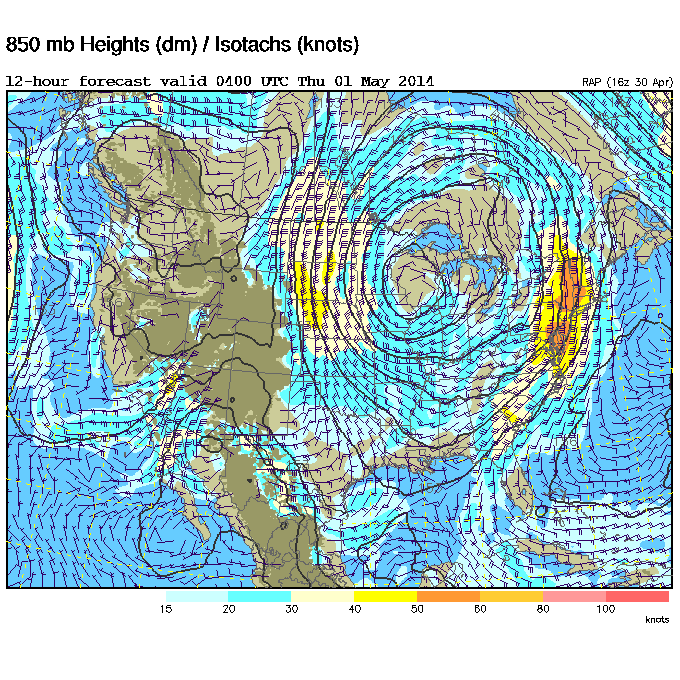
wind map, 4-30-14

Here we see the massive low pressure system marching across the Great Plains. But now, on the leading edge of it, we see a deep southerly flow, originating all of the way from the Gulf Coast.  This southerly flow is expected to last for at least the next 48 hours.

Although the weather will remain unsettled – and we’re about to get a pretty good soaking tonight and tomorrow – through at least the weekend, I would expect quite a few migrants to begin to trickle in over the next few days. Simply put, some birds are running low on time to wait!  And, as evidenced by the 73 and 110 raptors tallied passing The Brad over the last two days, respectively, despite easterly winds, it is clear that some birds simply have to make some progress, and will do so when conditions are at least somewhat favorable (or, at least not completely unfavorable).

Furthermore, these deep southerly flows at this time of year can facilitate the arrival of annual spring “overshoots” from the south (see Chapter 4 of my book, How to Be a Better Birder for a full explanation of this phenomenon). When I see weather patterns such as this, I begin to think about things such as Summer Tanagers, Blue Grosbeaks, and Hooded Warblers!

At least potential food sources (insects emerging from ponds; insects attracted to blooming trees) are getting a little chance to catch up before the bulk of migrant birds arrive.  This phenology, or timing, of the plant and insect cycle is critical for migrant birds that need to refuel and/or then fuel up for the next leg of their journey. “Weird” weather such as this doesn’t bother birds as much as it bothers us, but it becomes a real problem when the weather results in the lack of specific food sources.

I haven’t seen much in the way of nectar-producing flowers yet – but Ruby-throated Hummingbirds and Baltimore Orioles often begin to arrive in the first week of May. This is going to be one of those seasons where well-stocked feeding stations are critically important to migrants, especially those that need insects and nectar.  Our hummingbird and oriole feeders are out and ready for business, and our feeder is stocked with insect-laden suet blocks (check out our “Photos from Friends of the Store” gallery on our Facebook Page to see what one particular feeding station in Brunswick has been seeing eating insect suet) and live mealworms.  It lies in wait for the first hummers, orioles, or any other migrants in need of assistance…oh yeah, any vagrants from the south, too!

Common Teal to Northern Lapwing; American Woodcocks to Wood Ducks: 5 Great Days of Spring Birding!

Well, that was a helluva good five days of birding! And, I covered a heckuva lot of ground in the process. Yes, spring – and spring birding – is finally upon us.

After checking local hotspots on Thursday morning (lots of Killdeer and my first Eastern Phoebes), I began my trek eastwards after lunch. I was giving a presentation and book signing at the Maine Coastal Islands NWR headquarters in Rockland, thanks to an invite from the Friends of Maine Seabird Islands. On the way, I hit a handful of water overlooks, with the only birds of note being my FOY Fish Crows in downtown Brunswick and FOY Double-crested Cormorant in Damariscotta Harbor.

But then I arrived at Weskeag Marsh, and that was most productive. Highlighted by two drake “Eurasian” Green-winged (aka “Common”) Teal, a nice diversity of waterfowl also included two pairs of American Wigeon and a pair of Northern Pintail. I flushed two American Woodcocks and four Fox Sparrows from the short trail that leads to the viewing blind. Afterwards, I found a single 2nd-Cycle Glaucous Gull with four 1st-cycle Iceland Gulls still at Owl’s Head Harbor.

Here’s a poorly phone-scoped image of one of the Common Teal, showing the bold horiztonal white bar across the wing and the lack of a vertical white bar on the side of the chest.
COTE,WeskeagMarsh,4-5-14

Spending the night with friends, I then met up with staff from the Coastal Mountains Land Trust for a walk around their Beech Hill Preserve to discuss and offer suggestions as to augment and improve bird habitat there. A spiffy male Northern Harrier and a Northern Shrike (my 11th of the season!) were me rewards.

I then took the (very) long way home, checking farm fields on my way to the Hatch Hill Landfill in Augusta. Although 900-1000 gulls were present at the dump – a nice number for here – all but 5 were Herring Gulls (plus three Great Black-backed and 2 Ring-billed). At least 10 Bald Eagles were still present however.

Working my way down the Kennebec, I checked the mouth of the Abagadasset River in Bowdoinham, which I found to still be frozen. Nearby Brown’s Point, however, had open water, and duck numbers were clearly building, including 44 Ring-necked Ducls and 50+ Green-winged Teal. Back at the store soon thereafter, I found our Song Sparrow numbers had grown from four to 12 overnight.

As the rain and drizzle ended on Saturday morning, the birdwalk group convened, and we headed inland (for the first time since December!) to work the “Greater Yarmouth Goose Fields.” Highlighted by two Cackling Geese that were first located on Thursday (a couple of hours after I checked the fields in the fog, dammit!) and yet another Northern Shrike (our third week in a row with a shrike on the birdwalk!), this very productive outing is fully covered on our website, here – as are all of our birdwalk outings.
IMG_3244_CACG,GreelyRd,Cumberland,4-5-14One of the two Cackling Geese, phone-scoped through the fog.

Normally, the birdwalk’s return to the store is the end of my birding on Saturday, but not this week. Soon, Kristen Lindquist, Barb Brenneman, and I raced off to Jordan Farm in Cape Elizabeth to twitch a real “mega,” the stunning Northern Lapwing! Discovered Friday evening, the bird was enjoyed by many throughout the day on Saturday, but it was not seen again on Sunday despite much searching. This is the 4th record of lapwing in Maine, and the third in just three years! I consider myself exceedingly fortunate to have seen the last two. My distantly-phone-scoped photos of the Cape Elizabeth bird hardly do this stunner justice.
IMG_3262_NOLA1,JordanFarm,4-5-14  IMG_3264_NOLA2,JordanFarm,4-5-14

Yet even still my birding day was far from over, as Saturday night was our annual “Woodcocks Gone Wild at Pineland Farms” dusk trip. Keeping an eye on the weather (the rain had cleared, but increasing winds were a concern), Jeannette and I wondered if we should postpone the outing. Moments after we decided to give the go-ahead in the afternoon, the winds began to gust – a lot. Then, at about 5pm, they died. When our walk got underway at 6:30, there was a little breeze once again, but it was not enough to keep the woodcocks from going wild! In fact, it’s possible that a little wind kept the birds’ display a little lower – especially the first handful of flights – which resulted in quite possibly the best show we’ve ever had here! At least 7 males were displaying, including one repeatedly right over our heads – and at least two more silent birds were observed flying by. Add to this lots of American Robins and a Northern Shrike before the sun set, and the group was treated to a wonderful spring evening performance!

Next up was Androscoggin County on Sunday with my friend Phil McCormack. While our primary target was a pancake breakfast at Jillison’s Farm in Sabattus, we were also hoping for a Redhead that was discovered on the outlet stream at Sabattus Pond a few days ago. Well, the pancake chase (the more important one!) was successful, but the Redhead chase was not. However, a very good day of birding was enjoyed nonetheless.

Scattered ducks on the river including Ring-necked Ducks and Common Mergansers, a couple of pockets of Tree Swallows, and other assorted species were trumped by two flooded fields along Rte 136 in Durham. With ponds and marshes still frozen, ducks are stacking up at more ephemeral – but unfrozen – habitats.  Thousands of ducks and geese were present, mostly Canada Geese, Mallards, and American Black Ducks.  However, between the two fields, we tallied an unbelievable 273 Wood Ducks (probably about quadruple my previous high count in the state). Two immature Snow Geese were my first of the year, and very rare away from the coastal marshes in the spring. 18 Green-winged Teal, 12 Ring-necked Ducks, 10 Northern Pintail, and two pairs of American Wigeon were also among the masses.
IMG_3271_WODUs2,Durham,4-6-14  IMG_3282_WODUs1,Durham,4-6-14_edited-1

Although these phone-scoped photos hardly do the scene justice, they should at least give you a taste of what things looked like.

After brunch, we birded the west side of the Androscoggin River (more Ring-necked Ducks and Common Mergansers, etc) before spending our last hour of our birding (half) day at Bradbury Mountain.  Our disappointment over missing an unprecedented 9 Sandhill Cranes was alleviated when #10 was spotted, along with my first two Ospreys of the year.

After four days of extensive birding, my Monday agenda at the store was lengthy, but the weather in the morning was just too good to pass up!  A spin of the local waterfowl hotspots was fruitful.  The Goose Fields yielded the two continuing Cackling Geese along Greely Road, along with my first American Kestrels of the year, and my FOY Wilson’s Snipe, also along Greely.

No luck finding a lingering Barrow’s Goldeneye in the Harraseeket River, but at Wharton Point, a group of 7 Northern Shovelers was one of the largest flocks of this species I have seen in Maine. My first Greater Yellowlegs of the year was also present, as were 60+ Green-winged Teal, 16 Ring-necked Ducks, about 30 distant scaup, 8 American Wigeons, and 1 Northern Pintail among several hundred American Black Ducks.

Two joyous hours at the Brad were full of raptors: 127 birds had past the watch when I departed at noon, including 4 Osprey. Red-tailed and Red-shouldered Hawks continue to add to their all-time record tallies. Hundreds of Canada Geese were sorted through, hoping for a rarity, while other migrants included Tree Swallows, American Black Ducks, Common Mergansers, and Great Blue Herons.

Furthermore, signs of a good flight last night included the return of Golden-crowned Kinglets to the area – after we were virtually devoid of them this winter, and an increase in Red-breasted Nuthatches (relatively few and far between this winter as well), Song-Sparrows, and at the store, a Fox Sparrow – a bird we don’t get here every spring due to our open habitat.

So long story short, it’s been a great few days of birding!  But now, I should probably get some work done!

A (Very) Early Spring Week in Review

Our Saturday Morning Birdwalk surveyed the waterfront in Freeport and Yarmouth.  On Sunday, Kristen Lindquist and I enjoyed an epic white-winged gull show in Portland, before working our way around the Cape Elizabeth shoreline.  Then, on Monday, we birded from Biddeford Pool through Scarborough Marsh with Snowy and Great Horned owls, Rough-legged Hawk, and Ruddy Turnstones among the many highlights.

Further south, Jeannette and I covered Kittery through Wells, as is our tradition on the first Tuesday in March.  Another exceptionally productive day was enjoyed, including two more Snowy Owls and a Common Eider of the northern subspecies, borealis.

Wednesday was spent dealing with various car issues and seed delivery, so birding was limited to the woods near our house, and the feeders of course.  Same for Friday, where at Hedgehog Mountain Park, a mere 7 species was actually the most that I have detected in a couple of months there.  In between, I was back in Portland and Westbrook on Thursday, and although the Westbrook riverfront was a disappointing, the continuing white-winged gull show in Old Port more than made up for it.

While “new arrivals” were few and far between this week as bitter cold continues, there were definitely signs of the season.  Waterfowl are obviously on the move: Brant, Canada Geese, Mallards, and American Black Ducks are returning in numbers, while the concentrations of seaducks, especially all three scoters, was greatly reduced as these birds have begun to disperse – if not actually migrating north.

For the first week of March, I recorded very few “first-of-years” this week: Great Horned Owl, Yellow-rumped Warbler, and Fox Sparrows.  Of those, only the sparrow is likely a true migrant; the owl is a resident, and the warbler likely wintered locally.  American Robins were definitely on the move, however, with several flocks noted moving northbound (at least at the given time), and American Tree Sparrows also seem to be on the go.

New reports of Snowy Owls – especially inland – likely included northbound migrants.  While all three of the individuals that I saw this week seemed to be birds that were continuing in a specific area for several weeks or more now, the fact that Kristen and I only saw one bird in a very thorough search at Biddeford Pool (four had been present for a couple of months now) suggests birds are already departing. Northern Shrikes – such as the one that briefly visited the yard here at the store on Thursday (our second of the season) are also likely migrating right now.

In the woods there is a different story, however, as even the local residents are a little less active vocally right now than we would expect.  I have yet to hear a Brown Creeper sing – although I am seeing them on regular basis – and Golden-crowned Kinglets remain very few and far between.  And other than goldfinches and resident House Finches, finches remain virtually non-existent.

But all of this is about to change, and my guess is that it will change rather rapidly.  In fact, with the winds turning south today, I wouldn’t be surprised if a few Turkey Vulture and Red-winged Blackbird reports trickle in this weekend.  And once the snow really begins to melt (especially to our south), expect those floodgates to really open!  (Any day now…any day now…)

IMG_4781_edited-3

IMG_4769_edited-2

Snowy Owl, The Cliff House, York, 3/4/14. As you have seen on this blog, our store’s Facebook and Flickr pages, etc, most of our Snowy Owl photos this winter have been of relaxed birds, often with their eyes closed.  Few have been “perfect” shots, whether in lighting or resolution.  And we’re proud of that!  To us, the birds ALWAYS comes first, and we pride ourselves in minimizing any chance at disturbance.  Unfortunately, this bird was sitting close to the parking lot and we spooked it before we knew it was present.  A pair of crows likely also affected the bird’s immediate response.  As it flew away from both us and the crows, Jeannette snapped some photos, as the bird first flew straight out to sea – thereby ditching the crows – before returning to land a short distance away.  We backed off and left it alone.  With a lot of unethical and selfish behavior occurring – as always – around charismatic owls around the country, we support the idea that the circumstances of photos be explained when it shows a behavior that may have been modified by our presence or behavior.

Scarborough through South Portland: Signs of Spring!

I decided to blog about my birding outing today, if only to give people a little hope that spring is around the corner. As temperatures plummet once again this week, perhaps the knowledge that spring migration has actually begun will provide a little comfort…and warmth.

Phil McCormack and I birded from Scarborough Marsh into South Portland today, enjoying a very spring-like day (highs in the mid-40’s) and some great birding. A few “new arrivals” and continuing wintering species combined for a respectably tally of 54 species without trying – and with ending our birding at 1:30.

We began on the Eastern Road Trail. Within mere seconds of saying to Phil, “I expect some early migrant waterfowl like pintail and Gadwall today,” three drake Northern Pintails came cruising by. I love the look of pintails in flight; they’re so elegant.  The long tail, thin neck, and long, relatively narrow wings suggest a miniature loon, and they have one spiffy pattern. The sense of spring really kicked in when a Killdeer sounded off and came cruising in to an exposed muddy bank – my first of the spring, and a bit on the early side considering the abundant snow cover.

A pair of Gadwall (first of the year – although they were actually southbound) flew over Pine Point, as did at least one Snow Bunting.  Twenty-eight Common Loons were in the channel, while over on Western Beach, the dredging operation was pumping sand onto the beach, collecting a nice concentration of gulls.  Sifting through them yielded two 1st-winter Iceland and 1 1st-winter Glaucous Gull.  American Robins – overwintering birds, not northbound spring migrants – were widespread today, with a high count of 50-75 around Seavey’s Landing.

Rounding the north side of the marsh, we checked a couple of neighborhoods for frugivores, before arriving at Kettle Cove.  At Two Lights State Park, a raft of 150 Black Scoter loafed offshore, with 18 Harlequin Ducks in the surf.  A Porcupine at the edge of the parking lot was the star of the show, however.
DSC_0031_Porcupine1a,TwoLightsSP,2-23-14

Ten more Harlequin Ducks and a Northern Shrike (an immature; my 6th of the winter) at Dyer Point were signs of the continuing winter, but a Black Guillemot in full breeding plumage was suggestive of the advancing season.

Moving into South  Portland, a Red-bellied Woodpecker was among the usual denizens at Trout Brook Preserve, but Mill Creek and Mill Creek Cove were hopping!  286 Mallards and a growing legion of American Black Ducks were joined by a single drake Green-winged Teal, our third “FOY” of the day!  Meanwhile, the gull turnover in the cove eventually amounted to eight 1st-winter Iceland Gulls and two or three 1st-winter Glaucous Gulls.

But perhaps our last stop provided the “bird of the day:”
lunch…the fried chicken and waffle from Hot Suppa!

Rarity Season Ain’t Over Yet..and Fun Store News and Contest Stuff

“It ain’t over ‘til it’s over” – Yogi Berra

Before we get to my birding of recent days, a couple of quick orders of business. First of all, tonight is our “After Hours Sale” here at the store.  This is our biggest sale of the year.  From 6:00 to 8:00 tonight only, everything in the store (with the usual exception of seed, optics, and sale items) is 25% OFF!  And we’ll have treats, coffee, and other refreshments to fuel your shopping

Then rest up and be sure to join us on Saturday morning for our usual Saturday Morning Birdwalk (meets at the store at 8:00am for a carpool to a local park.  We’ll return for coffee and feeder-watching between 10 and 10:30).  While I would, of course, love to see you all year long, you don’t want to miss tomorrow (or any of the next 17 weeks) as it’s the start of the Fifth Annual “SnowBird(er) Contest,” where we’ll award points to birdwalk participants based on how cold it is.  The top three birders at the end of March will receive some great prizes!

GRAND PRIZE: MAINE BIRDS by RALPH PALMER!
The classic tome from 1948 is still a valuable reference for students of the birds of Maine. This excellent condition copy is valued at over $75. It’s great for comparing status and distribution from then to now, and for collectors of birding books.

2ND PRIZE: BACKYARD BIRDHOUSE from Coveside Conservation in Casco. Perfect for everything from House Wrens to White-breasted Nuthatches, this house is perfect for any yard and made from New England White Pine.

3RD PRIZE: $25 GIFT CERTIFICATE to EDNA & LUCY’S in Pownal – Enjoy a great sandwich, award-winning donuts, and more. Perfect for your next trip up to the Bradbury Mtn. Hawkwatch!

Visit our website for more information and how the game is played. 

OK, back to birding….

In my blog a few weeks ago in which I summarized the Rarity Season through the middle of November, I suggested that it was unlikely that many rare passerines will turn up away from feeding stations.  However, the possibility of strays “concentrat(ing) along the coast as they seek out more favorable microclimates or seasonal food sources,” still seemed like a cause for hope.  And sure enough, yesterday, I found female Hooded Warbler in the Biddeford Pool neighborhood – a wicked good December bird anywhere in the US!

Unseasonable rarities like this really fascinate me.  How did it get here?  Had it flown the wrong way during the usual period of Hooded Warbler migration and only now was detected as it moved towards the coast to escape the recent cold?  How long has it been present – maybe it’s been in these thickets for months and only now did someone walk by the right place at the right time? (Based on how thoroughly I, and a few others, work this area in November, I find this scenario a little less likely)  Or perhaps, it was a mirror-migrant afterall that flew north instead of south from its usual range in the Southeastern US.  Instead of ending up in Central America, it ended up somewhere in the interior of southern New England.  Then, the recent cold “encouraged” the bird to move on.  But “mis-wired” somehow, it just kept flying the wrong way.  I always wonder why so many birders assume that once birds have made a mistake (i.e. flown north instead of south), they’ll magically figure things out and do the “right” thing the next time.  Of course, who really knows?  But it’s a fun thing to ponder (well, it is to me anyway).

Of course, I was only down at the Pool to look for Snowy Owls.  In that same blog, I wondered if we were seeing the first signs of an irruption.  My goodness, were we ever, and so far, it is HUGE!  There have been dozens up and down the Maine coast.  Jeannette had an amazing TEN in and around Biddeford Pool on Tuesday.  Not only are they widespread, but they are in unusual concentrations.  I “only” found four yesterday, but some of my time was spent walking a mile back for the camera (it was raining and my shoulder was aching when I departed the car) and then not refinding the warbler.
DSC_0157_SNOW,Hatties,12-5-13

This particular bird, that Jeannette also photographed on Tuesday, has made a temporary home for itself in the marsh behind Hattie’s.

While it is unlikely that this density of Snowy Owls will continue, we’ll certainly enjoy it while we can.  Some will head further south, and unfortunately, no small number will succumb to starvation (the reason they’re here in the first place – and with up to 80% of raptors dying in their first winter, it’s no surprise that most of these birds will not make it back to the tundra).  I also wonder if these recent very high tides (astronomical high tide plus a deep low pressure system well offshore) will flood the marshes too much.  In such cases, many rodents (especially voles) will drown as they run out of high ground.  That’s a natural occurrence, but if there are few voles in the marshes, that will be a lot less food for hungry owls.

Meanwhile, in that aforementioned blog I also postulated about the potential of finally getting a good goose in the “Greater Yarmouth Goose Fields,” despite the late date.  Finally!  Although my high count of Canada Geese was only 434 birds (on Wednesday), they were punctuated by an adult Greater White-fronted Goose, in the field off of Cross and Winn Road in Cumberland – the first rarity of the season in the fields.  My stubborn perseverance finally paid off.  Today, I improved upon my photos, and I posted a couple here.

I also had a Gray Catbird at Biddeford Pool yesterday, along with the Hermit Thrush that Jeannette found on Tuesday.  I also had a Winter Wren near the store while walking Sasha on Wednesday afternoon and a Northern Flicker fly over the highway in South Portland yesterday. So there are still some “lingering” migrants around.  Meanwhile, with another increase in seaducks offshore (250+ Black Scoters off of East   Point for example), things are picking up along the coast.

Oh yeah, and there are Snowy Owls everywhere!  In other words, go birding…well, after you visit us at the store, that is!

Sabattus Pond Season-in-Review

Sabattus Pond was frozen on Monday morning, as I expected, thanks to this recent bout of unseasonably cold weather.  While 35 Mallards, 3 Hooded Mergansers, 2 American Black Ducks, and 1 Mallard x black duck hybrid were present in the outlet stream, this likely brings my Sabattus birding season to a close.

But it is just after Sabattus’s freeze-up that LakeAuburn is its most productive.  Today, 117 Canada Geese, 58 Greater Scaup, 46 Lesser Scaup, 41 Ruddy Ducks, 22 Common Goldeneyes, 8 Hooded Mergansers, 1 Bufflehead, and 1 continuing hen Black Scoter were tallied in a less-than-exhaustive search of the large lake.  The Black Scoter is a great bird inland, and she’s been present for at least five weeks now.  Meanwhile, among the Canada Geese, there was this funky mutt – apparently a hybrid with some sort of domestic thing.
CANGhybrid1,LakeAuburn,12-2-13

CANGhybrid2,LakeAuburn,12-2-13

Between visiting the two lakes, I scoured Upper Street in Turner for Snowy Owls (none) or other raptors (just one Red-tailed Hawk), but I did happen upon a small flock of 35 Horned Larks that contained two Lapland Longspurs.  They were feeding at the edge of Pearl Road, taking advantage of where the plow had scraped the sides of ice and snow.  I got this lucky shot of one of the Lapland Longspurs in flight with the Horned Larks.  Unfortunately, the light mist and heavy cloud cover prevented a really great shot.
DSC_0154_LALOwithHOLA,Turner,12-2-13

But back to waterfowl…

Sabattus Pond is one of my favorite birding locations from mid-October through freeze-up.  The diversity of ducks is rarely matched in this part of Maine, and the proximity and ability to study birds (such as Lesser vs. Greater Scaup) is unsurpassed.  Each fall I tell myself I needed to visit Sabattus more often, so this fall I committed to visiting once a week, beginning on 10/30 – I would have started a little earlier in the month, but the weather at the time had been so warm that waterfowl were not yet arriving en masse prior to the end of the month.

I tallied all waterbirds (except for Herring and Ring-billed gulls) on each visit.  I was curious to document the ebbs and flows of respective species throughout a full season here.  I also hoped to find some rarities of course.

Here’s my weekly tally (on 10/30 I birded with Cameron Cox, and on 11/21, Dan Nickerson):

10/30    11/7    11/14   11/21   12/2
Canada Goose                        2          0          0          0          0
American Black Duck          14        53        63        24         2
Mallard                                154      301     254      255       35
Mallard x black duck              2          4          8          6          1
NORTHERN PINTAIL               1          1          0          1          0 (same bird)
Green-winged Teal                 0          0          1          0          0
Greater Scaup                       15        22        27        20         0
Lesser Scaup                       133      185      204      174        0
WHITE-WINGED SCOTER        0          0          0          1         0
Bufflehead                              12          9          5          8         0
Common Goldeneye               2        29          4          2         0
Hooded Merganser               11        17        15        19        0
Red-breasted Merganser        7          1          0          0        0
Common Merganser                0         3          7      224        0
Ruddy Duck                           470     531      541      273        0
Common Loon                          2          4          9          3        0
Horned Grebe                           1          0          0          0        0
RED-NECKED GREBE                0          0          1          0         0
Great Blue Heron                     0          0          0          3         0
Great Black-backed Gull          0          0          0          1         0
American Coot                          0          0          1          0         0
Belted Kingfisher                      0          0          0          2         0

Other highlights at Sabattus included a Peregrine Falcon and 40 Snow Buntings on 11/7 and 3 White-rumped and 3 Pectoral sandpipers on 11/14 (both late and noteworthy inland).

Overall, it was probably only an average season at Sabattus.  The only week I missed was last week, due to my schedule and Thanksgiving, which is unfortunate, as the pre-ice-up week would have provided some interesting data.  There were no fallouts, and only a few unexpected (or at least, expected to be seen rarely) birds (in caps above).   The Ruddy Duck numbers were well above average, but a lot of other things – especially the scaup – were average or below my high counts of recent years.  And why don’t coots visit here much anymore? And really, not a single Ring-necked Duck!? Nevertheless I find it very rewarding to regularly check one location, so I thoroughly enjoyed my extra effort this year.

On each visit, I also visited LakeAuburn, which is a much different body of water (deeper, sandier, and apparently without the invasive Chinese Mystery Snail that provides the sustenance for most of the birds on Sabattus).  Note, however, that as the numbers of ducks decrease on Sabattus, they begin to increase on LakeAuburn – the last lake to freeze in the region.

11/7     11/14   11/21   12/2

Canada Goose                        0          0          0      117
American Black Duck             1          0          0          0
Mallard                                     3          6          0          0
Greater Scaup                         0          0        38        58
Lesser Scaup                           8          0        31        46
SURF SCOTER                          1          0          1          0 (probably same bird)
BLACK SCOTER                       1          0           1          1 (probably same bird)
Bufflehead                              0          2           0          1
Common Goldeneye             0          5         21        22
Hooded Merganser               0        14           5          8
Common Merganser             0          3           0          0
Ruddy Duck                           20         2           0        41
Common Loon                        7         9           1          4
Horned Grebe                         1          0          0          1
RED-NECKED GREBE              0          1          0          0

I can’t help but wonder if some of the birds on the lake on Monday would return to Sabattus if a warm spell opens the pond back up, and if it does, I am sure birds from points north might drop in as well as they are frozen out of lakes and rivers.  In other words, the duck-watching season on Sabattus may not be over yet, but I think I will be turning my attention elsewhere unless it warms up dramatically.

Meanwhile, on all of my visits to the two lakes, I added at least a few other stops in between in the hopes of finally finding a really “good” bird in Androscoggin County (away from Sabattus, that is).  Uh…nope.  My only real highlights away from the two lakes were the two Lapland Longspurs on Monday.  My rarity drought in AndroscogginCounty might continue, but the waterbird watching is certainly exceptional.

By the way, in a series of spring visits, I have found very, very few ducks on Sabattus Pond, for reasons unknown.  Therefore, other than my annual check on Maine Maple Sunday, I’ll have to anxiously await next October!

Rarity Season-to-date in Review

I hope you didn’t think that my lack of blogging of late equated to a lack of birding!  Quite the contrary, actually – it is Rarity Season afterall!  I’ve just been posting more frequent, shorter updates on our store’s Facebook page (you can scroll through the timeline here to see recent posts), especially since I have found myself a bit over-extended with a variety of other projects at the moment – I’ve been working late most nights recently to make up for my morning birding gallivanting.

In fact, I have been birding even harder than usual – if you can believe that!  Spurred on by extraordinary late October finds of an “Audubon’s” Yellow-rumped Warbler at Fort Foster and a Bell’s Vireo (a state bird for me!) on Bailey Island, I found myself somehow even more motivated to beat the bush through the first half of November.  In addition to the 10th Annual South Coastal Maine Rarity Roundup that I organize every year, I worked hard at various traditional hotspots, favorite late fall patches, and various attempts to think “outside the box,” such as walking the 4.5 miles into work today to check a handful of swales and thickets en route (not very productive, except for the exercise, for the record)

While Audubon’s Warbler and Bell’s Vireo are going to be tough to beat – the early-rarity-season bar was set awfully high! – I have had some outstanding birding in November, even if there has yet to be another “Mega.”  Personal highlights in the first half of November include a very nice variety of lingering (pioneering?) warblers, a Yellow-breasted Chat, multiple Orange-crowned Warblers (I’ve had four this season to date), huge numbers of Ruddy Ducks on Sabattus Pond, and overall just really good birding with good diversity.

Elsewhere around the state, current highlights include a Northern Hawk-Owl in Lincoln – not a vagrant in the “Rarity Season” sort of way, but exciting nonetheless!  And perhaps that, along with an early Snowy Owl report from Biddeford Pool, portends a decent owl irruption this winter?  There certainly won’t be any winter finches around this year.).  Other birders have detected a variety of late warblers around the state (wow, November Chestnut-sided in Falmouth!), and lots of lingering shorebirds – especially in Scarborough Marsh.  But as far as the first half of November usually goes, there have been no truly exceptional birds.  Looking around the region, we see goodies such as a Calliope Hummingbird in New Hampshire, A Black-chinned Hummingbird in Connecticut, and the usual fun array of rarities in Massachusetts (Scissor-tailed Flycatcher, Yellow-headed Blackbirds, Western Tanager, American Avocet, etc).  However, it is an ultra-spiffy adult Ross’s Gull near Montreal that is the real headliner of the fall in the Northeast so far (and yes, I am being tempted to chase this, I have to admit).

So there are some good birds around the region, and no doubt there are some good birds still to find in Maine.  Other than a couple of days, it has been fairly temperate to mild all fall, and I can’t help but wonder if birds that arrived in the state through various vagrancy mechanisms (see Chapter 7 of my book, How to Be a Better Birder) have yet to concentrate along the coast as they seek out more favorable microclimates or seasonal food sources.  Also, as the season progresses, more rarities turn up at feeding stations as natural food supplies diminish.  December rarities, for example, are often discovered at feeders.  Two tardy Chipping Sparrows are at our store’s feeders as I type this, by the way; I’m hoping they pick up a clay-colored cousin.  A lot of folks are reporting very busy feeders right now, which is a good sign, especially considering the lack of irruptive finches.

The last few days have seen a nice southwesterly flow aloft.  Look at Friday’s wind map, for example:
wind map,11-15-13

That extensive southwesterly flow early in the month would have surely deposited stuff like Cave Swallows in New England, but I wonder if that window has already closed.  A couple of Caves in Connecticut as recently as the 9th gives me some hope, however.  Contrast that map with the more zonal flow that we have seen for much of the month, such as on 11/10:
wind map,11-10-13

Although few birds are “blown” out of range, certain winds facilitate the arrival of more vagrants in certain areas than others.  And southwesterly winds in late fall are definitely the desired winds here in Maine.  With a fairly complex weather system on its way – including some really severe storms in the Midwest – I remain hopeful for some more out-of-range treats.  Interesting weather does have the tendency to produce some interesting birding, even without facilitating the arrival of rarities.
surface map, 11-17-13

At the very least, behind this system, we should see a return to colder, seasonable weather (as opposed to the 50’s of the last two days for example), and this should help push birds to feeders, warmer coastal and urban areas, etc.  Also, hopefully it will bring some snowfall to points north, as this year’s Goose Rarity Season has been lackluster, especially in the Greater Yarmouth Goose Fields.  A Greater White-fronted Goose that has been in Scarborough for a couple of weeks, and another in Berwick earlier in the month, along with a couple of Cackling Goose reports have been the only geese-of-note in southern Maine.  While “The County” saw single Barnacle and Pink-footed Goose in October, I have not had a single “good” goose in the fields of North Yarmouth, Cumberland, and Falmouth all season.  A Bean (!!!) Goose, Barnacle, and Pink-footed all in Nova   Scotia right now give me plenty of hope, and last year, things really didn’t pick up locally until mid-November anyway.  I will continue my thrice-weekly circuit.

So the short version of this is: go birding!  There are rarities out there to be discovered.