Tag Archives: Maine

The Decline of Barrow’s Goldeneyes in Freeport and Beyond.

I like Barrow’s Goldeneyes! And I like getting to see them every winter, and sometimes in numbers…and only a few miles away from home. But I wish I could see more of them.

DSC_0536_edited-2

Unfortunately, with each passing year, I am seeing fewer and fewer. My local Barrow’s Goldeneye (BAGO) “patch” is the Lower Harraseeket River here in South Freeport. A couple of miles of river between Winslow Park and Bartol Island hosts the southernmost wintering flock on the East Coast…or at least what nowadays passes for a flock.

One of just a handful of locales in the state that regularly hosts more than one or two birds, this once-impressive flock has declined dramatically in the past ten years that I have been watching them. Scanning the river once a week, from early December through the middle of April from a variety of locations (Sand Beach, the Town Wharf, the Harraseeket Yacht Club, Winslow Park, and/or Wolfe’s Neck Woods State Park) I have kept track of arrival and departure dates, and perhaps most importantly, overall numbers.

“High counts” are the maximum number of birds seen at one time in a given time period. While some individuals come and go over the course of the winter, it seems to me that the seasonal high count is a reasonable way of estimating the local population (as keeping track of individual birds is impossible). And my high counts for each of the last nine winters show an alarming pattern:

2004-2005: 23
2005-2006: 15
2006-2007: 10
2007-2008: 2
2008-2009: 9
2009-2010: 2
2010-2011: 6
2011-2012: 3
2012-2013: 2

It has become readily obvious that the less ice there is, the fewer Barrow’s concentrate in the Lower Harraseeket. A deep channel and strong tide combine to keep at least a stretch of the gut at the mouth of the river (between Winslow and tiny Pound of Tea Island) open in the coldest winters. Back in 2004-2005, the river was almost completely frozen, and the narrow strip of open water was so thick with ducks, especially Common Eiders, that it looked as if you could almost walk across the river on their backs!

We also know that the climate, and the temperature of Casco Bay, is getting warmer (yes, that is fact, and yes, this year’s cold winter/spring weather does nothing to disprove this – note that “climate” and “weather” are actually different words that describe different things!). Therefore, I optimistically wondered if the apparent decline in the population of BAGO was nothing more than a lack of ice-caused concentration. The less ice, the fewer BAGO I see.

Therefore, when about 90-95% of the Harraseeket froze this winter (the most extensive coverage since 2004-2005) and ducks concentrated in numbers not seen since then, I was cautiously optimistic that BAGO number would spike:

2013-2014: 5

Not the spike I was hoping for. I searched long and hard to find BAGO elsewhere in the vicinity, but I did not see any (the closest was an overwintering bird in South Portland that has returned to the Fore River for the last two or three years now). That’s a 78% decline from the 2004-2005 high.

Unfortunately, Christmas Bird Counts occur too early in the winter to adequately gauge seasonal high counts of BAGO, although the graph does reflect a decrease in the past ten years (the long-term data set is clouded by low birds-per-party-hour totals as a whole, along with misconceptions about identification in the past).

But this decline is not just apparent in the Harraseeket. Birders have detected a decline in all other known wintering concentrations, especially in Belfast Bay. They are now longer seen on most visits in mid-winter there and it’s been a long time since I have seen a report from Bucksport. However, according to the 1996 A Birder’s Guide to Maine, *1 aggregations of 15+ birds are “regular features in most winters” at these two sites.

In other words, at least in Maine, the decline is real. And it’s time for the Department of Inland Fish and Wildlife to do something about it. No more half-assed, non-action policies that bow to the hunting lobby. No more “please tell us if you shoot one and then say you’re sorry and it will be OK” (with only a disincentive to do so) state policy. *2

In 2009 IF&W listed the Barrow’s Goldeneye as “Threatened.” …And has done almost nothing since, other than set up surveys that are conducted every four years. Oh, and they hung up some posters at boat launches asking people to not shoot them (might as well put a target on them, in my mind).

Let me be clear, there is no evidence to suggest that hunting is causing a decline in BAGO. I think much larger factors are at play. There’s acidification and warming of the ponds and lakes in their limited and narrow eastern Quebec breeding range to changes in winter food sources. Forestry practices could be reducing the availability of suitable nesting cavities as well. There’s lead ingestion and heavy metal bioaccumulation. Then there’s reduced ice in most winters in their primary wintering areas of the St. Lawrence estuary (thereby reducing how many birds come further south) to competition with other native and non-native species (BAGO eat small mollusks, especially mussels – could invasive Green Crabs be impacting the food supply for ducks here, too?). In other words, there are a lot of possible proximate and ultimate causes to the species’ decline. But if hunters shoot one or two (by accident, of course) of the remaining 5, well then the decline becomes even quicker. Even repeated disturbance from concentrated hunting pressure on other species could be impacting where the birds tarry, where they feed, and how much energy they waste fleeing boats and shots.

I am not opposed to waterfowl hunting. But I am opposed to hunting that impacts an endangered species (see, for example: Conservation and Management/Effects of Human Activity in the Birds of North America entry referenced below). The closure of a handful of tiny areas will affect very few hunters, and with more than 99% of the state still available to them, this rates as a minor inconvenience at most. However, this fraction of a percent of water closed to hunting could protect a significant majority of the wintering population – or at least what’s left of it. At the very least, this could buy us some time to find out what the root of the problem is.

I like Barrow’s Goldeneye, and if you do too, it’s time to pressure IF&W and politicians to act. Otherwise, there is a very legitimate chance that this bird will no longer be a part of Maine’s winter avifauna.

Notes:

*1 = Pierson, Elizabeth C., Jan Erik Pierson, and Peter D. Vickery. A Birder’s Guide to Maine. 1996. Down East Books: Camden, ME.

*2 = https://www.maine.gov/ifw/hunting_trapping/hunting/alert_waterfowl_hunters.htm

For more information on the status of BAGO in Maine, see:
https://www.maine.gov/ifw/pdfs/species_planning/birds/barrowsgoldeneye/speciesassessment.pdf

Additional Reference:
Eadie, John M., Jean-Pierre L. Savard and Mark L. Mallory. 2000. Barrow’s Goldeneye (Bucephala islandica), The Birds of North America Online (A. Poole, Ed.). Ithaca: Cornell Lab of Ornithology; Retrieved from the Birds of North America Online: http://bna.birds.cornell.edu.bnaproxy.birds.cornell.edu/bna/species/548 doi:10.2173/bna.548

“The Westbrook Gull” Returns for Year 4…and Remains Unidentified. I think. Maybe.

As you well know by now, I enjoy looking at gulls.  I especially enjoy looking at white-winged gulls in winter here in Maine.  From the seemingly-endless range of variation of first-winter “Kumlien’s” Iceland Gulls to the stately elegance and dominating demeanor of adult Glaucous Gulls, I can’t get enough.  And there’s one particular white-winged gull that I have studied more than all of the others.

For the fourth year in a row, a relatively-small white-winged gull has spent the winter at Riverbank Park in Westbrook.  This has afforded me the opportunity to study the bird’s progression, and to one day, hopefully, identify it!  Yup, after four winters, I am still not certain as to what it is!  And that is both fun and frustrating.

First of all, I have no doubts that the bird is indeed the same individual – despite the lack of a band or any sort of unique marking – due to the bird’s behavior and overall very pale plumage each year.  While other “Kumlien’s” Iceland Gulls occasionally visit the river here, most of the birds just head up to the base of the falls for a bath with the other gulls, and then head back down the river.  Once in a while, another Iceland Gull will spend some time at Riverbank, but they don’t tend to linger long.  The bird’s behavior is also more than suggestive – not only does it sit in the same three spots (including a church steeple that rarely has any other gull) whenever it is near the park, but it is the only white-winged gull that is almost always present and comes down to feed on handouts with the contingent of Ring-billed Gulls.  The chance that a similarly-super-pale bird would do exactly the same things for four years in a row at a place that usually doesn’t have any other white-winged gulls seems rather far-fetched.  It also tends to show up at about the same time – early to mid-January each year.  I think it is safe to assume that this is the same bird.

Therefore, what we now have is a record of the bird over four years of life, showing the plumage progression of each year.  Now, I never recommend using only one photo to describe a given bird (in this case, in a given year), especially with gulls, as gray scale in particular changes so much with lighting (and how badly I butchered the ISO) among other factors ranging from time of the season to how recently the bird ate.  Therefore<a href=”http://www.facebook.com/media/set/?set=a.350344068328887.95540.198877036808925&type=3“>, I recommend taking a look at the photo gallery on our store’s Facebook page here.

But for sake of conversation, let me simply include one photo from each of the past three winters.
2010-11:
ICGU1, Riverbank Park, Westbrook, 3-14_edited-1

2011-12:
ICGU, Riverbank Park2, 1-19-12_edited-1

2012-13:
1,3-6-13 copy

And now, it has returned, in full-adult plumage.  Here are a series of photos that I took at Riverbank on Monday (1/27):
DSC_0014_WestbrookICGU1,ad,1-27-14_edited-1

DSC_0020_WestbrookICGU-ad3,1-27-14

DSC_0029_WestbrookICGU-ad11-flight2,1-27-14

DSC_0027_WestbrookICGU-ad9-flight1,1-27-14

DSC_0023_WestbrookICGU-ad7-withRBGU,1-27-14

In that aforementioned Facebook gallery, I included some of the thought process that I have had about exactly how old this bird is, and what subspecies of Iceland Gull that it might be.   From an identification perspective, now that is in “adult” plumage, the exact age is moot – all adult plumages look the same, with minor differences between winter (especially streaking on the head and neck) and summer (white head and more vivid bare part coloration).  It is safe to say that this bird is “at least” 4 years old, and now it is in the plumage that should allow us to more-safely identify it to subspecies.  In theory.

But before we delve into the Iceland Gull subspecies question, I think it is worth taking a moment to be sure it is in fact, and Iceland Gull.  The case has been made that this bird could be a runt Glaucous Gull (or one of the very small subspecies) or even an Iceland x Glaucous Gull hybrid.

The basis for the argument has revolved around the exceedingly pale plumage, the bird’s rather bulky size and shape, its dominance over even larger Herring Gulls, and especially the length of the wing.  Here, I blew up a photo from Monday of the primaries.  I extensively manipulated it to try and bring out the detail of the edges of each feather – so ignore the color.
DSC_0017_WestbrookICGU-ad4 - manipulated primaries,1-27-14

Iceland Gulls are usually readily identifiable by their longer wings.  Those wings extend well beyond the tail, and usually at least 4 primaries are visible beyond the tail.  Olsen and Larson reference this projection as being “equivalent (to) the bill length or longer.”  It’s not a perfect photo above, but I definitely don’t see four primaries beyond the tail, and the primary projection does not look as long as the bill in any of the photos.  In fact, this “unusually short-winged impression” was consistent in every year that we have seen the bird.  Take a look at the photo gallery over the years – you never see a “long-winged” Iceland Gull with four primaries extending beyond the tail.
DSC_0036_WestbrookICGU-ad8-on_church,1-27-14_edited-1

Another clue for Iceland vs. Glaucous is the relatively short legs of Iceland: the tibia (upper part) is usually mostly covered by body feathers, while on Glaucous, the tibia is more exposed – at least when the bird is alert.  To me, this bird sometimes looks short-legged, with little exposed tibia, which is in line with Iceland Gull, but other times looks oddly long-legged, in line with Glaucous (see above and additional photos).  This is a fairly subjective (like so many other gull ID characteristics) point, and one that I am not putting much weight in either way.

DSC_0010_WestbrookICGU-ad2,1-27-14

On the Westbrook bird, the forehead usually appears gently rounded, and the eye looks fairly big on the head – as it should on an Iceland Gull.  However, other photos show a very sloping forehead – this feature changes significantly with posture and “attitude,’ but I must say that I have never seen a Glaucous Gull that appeared truly “round-headed.”

While the bill is not dainty, it is not as formidable as Glaucous usually looks, and it shows little in the way of a gonydeal angle.  Howell and Dunn state that Glaucous’s “bill base often has slightly expanded culmen that creates distinctive shape (especially males), with a depth at the base greater than the depth at the gonydeal expansion.”  I don’t see that on this bird.  In fact, their description for Iceland Gull of “relatively short and slender, parallel edged with a shallow to moderate gonydeal expansion,” seems to match this bird much better, although it’s not the most slender, nor the shortest, bill that I have seen on Iceland Gulls.
HEADDSC_0016_WestbrookICGU-ad6-head shot,1-27-14

The fleshy orbital ring is pink on this bird at the moment.  Howell and Dunn describe Glaucous Gull as having an orange orbital ring, “Kumlien’s” Gull as having it “purplish-pink,” with the nominate Iceland showing a “pink to reddish.”

Of these characteristics, the only thing that suggests that this is not anything other than a pure Iceland Gull of one or the other subspecies is what appears – and has consistently appeared over the years – to be a short wing.  Personally, I have a hard time relying on any one single field mark to rule a species in or out, but I can’t completely ignore how short this wing is.

So assuming for a second that this is indeed an Iceland Gull, it comes down to which subspecies it is: the nominate glaucoides or kumieni.  I’m not going to get into the taxonomic debate here, so I will discuss this based on the current most-widely-used taxonomy that includes two subspecies of Iceland Gull: the nominate glaucoides that breeds in Greenland and winters mostly in Iceland and Northern Europe, while kumlieni breeds on Baffin Island and adjacent areas of northeastern Canada, and winters largely in the Northeastern US and Atlantic Canada.  Birds that seem perfect for glaucoides are regularly seen in Newfoundland and Nova Scotia, but in the Northeast US, the conventional wisdom suggests that glaucoides is very rare, and some argue that most if not all birds that appear to be glaucoides are actually just the pale extremes of kumlieni.

The extensively pure white wingtips, very pale gray mantle, and very white appearance as a youngster are all points in favor of glaucoides.  However, most features overlap with kumlieni.  What’s troubling is that the Westbrook bird never appears as small and dainty as a textbook glaucoides; sometimes described as “cuter” with a big eye, more rounded head, and small size than most kumlieni.  This bird is more along the lines of a big kumlieni, which few plumage characteristics at any age have been overly consistent with.

If I saw this bird for the first time this week, I think I would call it a “probable glaucoides” and move on.  But I have spent so much time with this bird over the years (“You are a little obsessed with this bird,” Jeannette just said.) that I prefer to still answer “I don’t know,” that I stubbornly want to keep pondering this bird.  Its appearance in preceding years and those short wings continue to bother me, even though my gut tells me that this is just an Iceland Gull.

Essentially, the problem with this gull for each of the last four years is that it’s never been seen (to my knowledge) side-by-side with another white-winged gull.  We’re therefore left with conjecture, comparing this bird to Herring and Ring-billed Gulls.  What we really need is photos of this bird next to another Iceland-type gull.  A direct comparison would do wonders for figuring this thing out for sure.  Or a DNA test.

Short of that, this is, essentially, only an exercise.  I don’t think anything can be said definitively.  Hopefully, by spring, this bird’s bare part coloration (orbital ring and the bill in particular) will develop a little further, which may shed further light on the birds’ identity.  More importantly, I – and others – will be trying to get more photos of the bird and especially photos of the bird with other Iceland Gulls.  Until then, I will continue to ponder, enjoy, study, and yes, be frustrated by “The Westbrook Gull.”

Now for those who are truly gluttons for punishment, I will be discussing this bird as part of my upcoming Gull Identification Workshop for York County Audubon on February 8th and 9th.  But don’t worry, we’re not going to spend too much time with the unidentifiable…I promise.  Instead, we’ll spend most of our time learning that MOST gulls are actually fairly easy to identify.  I believe the Westbrook Gull is the exciting and challenging exception to the rule.  And once you are comfortable identifying just about every gull just about every time, you’ll be ready to accept and excel such challenges.  I hope you will join me for this workshop.  For more information, and a link to register, visit the Tours, Events, Workshops, and Programs page of our website.

References:
Howell, Steve N.G. and Jon Dunn.  2007.  The Reference Guide to Gulls of the Americas.  Houghton Mifflin Company: New York and Boston.

Olsen, Klaus Malling and Hans Larsson.  2004.  Gulls of North America, Europe, and Asia.  Princeton University Press: Princeton and Oxford.

2014 Maine State List Predictions

About this time each year on my blog, I make two lists of predictions for the coming year in Maine birding.  The first is my (somewhat-educated) guesses of the next 25 birds to be added to Maine’s state list.  The second is my predictions of the next 25 birds that I will add to my own personal state list.

But first, let’s recap 2013.  This past year, only one new species was added to the Maine list (although there was a report of a Rock Wren in Washington County this fall; I know little of the details): Eurasian Collared-Dove that appeared at a Falmouth feeder on 5/28.  This was my #1-ranked bird for each of the last two years.  I was hardly going out on a limb with this one, as this bird continues to rapidly colonize North America.  While reports in New England continue to be sparse, we can only foresee these becoming much more regular and eventually colonizing much of Maine.

For 2014, I added Neotropical Cormorant to the list, based on the expanding population in the interior of the continent and increasing vagrancy to distant corners of the continent.  I also replaced Bermuda Petrel with Barolo Shearwater.  Recently split from Little Shearwater, this pelagic waif has been detected near the mouth of the Gulf of Maine.  It seems it’s only a matter of time before a research vessel or even a whale-watch trip (especially following a tropical system) finds one within Maine waters.  I also shuffled around a few species based on increasing populations and/or trends in vagrancy.

So here goes my Top 25 Next Species for Maine list:
1)   California Gull
2)   Ross’s Gull
3)   Graylag Goose
4)   Roseate Spoonbill
5)   Little Stint
6)   Fieldfare
7)   Hammond’s Flycatcher
8)   Black-chinned Hummingbird
9)   Spotted Towhee
10)  Audubon’s Shearwater (on “hypothetical” list)
11)  Neotropic Cormorant
12)  Black-tailed Gull
13)  Anna’s Hummingbird
14)  Redwing
15)  Allen’s Hummingbird
16)  Barolo Shearwater
17)  Long-billed Murrelet
18)  Common Ground-Dove
19)  Western Wood-Pewee (my gut still tells me a bird I found on Monhegan last fall was actually this species, but a good voice recording is going to be necessary to confirm identification).
20)  Spotted Redshank
21)  Yellow-legged Gull
22)  Brown-chested Martin
23)  Bermuda Petrel
24)  Gray Flycatcher
25)  Common Scoter

As for me personally, 2013 was a productive year.  I added eight birds to my state list (with last year’s rankings):
a) Hoary Redpoll (#2), Bowdoinham feeder, 2/4.
b) Northern Lapwing (honorable mention), Range Hill Road, Poland, 5/6.
c) Acadian Flycatcher (#22), FortFoster, 5/21.
d) Mew Gull (#21), Thomaston, 8/8.
e) Black-necked Stilt (honorable mention), Eastern Road, Scarborough Marsh, 6/23.
f) Kentucky Warbler (#12), East Point, Biddeford Pool, 9/9.
g) Bell’s Vireo (#23), Bailey Island, Harpswell, 10/23.
h) Hermit Warbler (honorable mention), Harpswell feeder, 12/12.

Of those, only the Acadian Flycatcher and Bell’s Vireo were “self-found,” which is always the more fulfilling way to add to one’s state list.  I’ll have to do better with this in 2014.  Unfortunately, it brings my self-found list down to 88.7% of my total state list (363).

I also “dipped” on the St. George American White Pelican in September, waiting until it was no longer being seen before going to look for it.  I chased enough in 2013, but I could have chased much more.  In fact, I never made the effort, was away, or just didn’t get lucky enough for some other potential state birds (American Three-toed Woodpecker, the collared-dove, Great Skua, Yellow-headed Blackbird, and Bullock’s Oriole all immediately come to mind).

There are lots of options for birds to add to my own list in the coming year(s), so narrowing it down to 25 and ranking them is really just a guessing game.  Of course previous records and trends are taken into account.
1) Slaty-backed Gull
2) American Three-toed Woodpecker
3) Great Skua
4) Eurasian Collared-Dove
5) Gyrfalcon
6) Graylag Goose
7) Say’s Phoebe
8) American White Pelican
9) Western Grebe
10)  Boreal Owl
11)  Fork-tailed Flycatcher
12)  Tundra Swan
13)  Yellow Rail
14)  Ivory Gull
15)  Franklin’s Gull
16)  Sabine’s Gull
17)  Black-bellied Whistling-Duck
18)  California Gull
19)  Calliope Hummingbird
20)  Ross’s Gull
21)  Roseate Spoonbill
22)  Sage Thrasher
23)  Hammond’s Flycatcher
24)  Yellow-headed Blackbird
25)  Loggerhead Shrike

So there ya have it.  Now, let’s go birding and see what 2014 will bring!

A HERMIT WARBLER in Harpswell – BELATED.

DSC_0033_HEWA1,12-12-13_edited-1

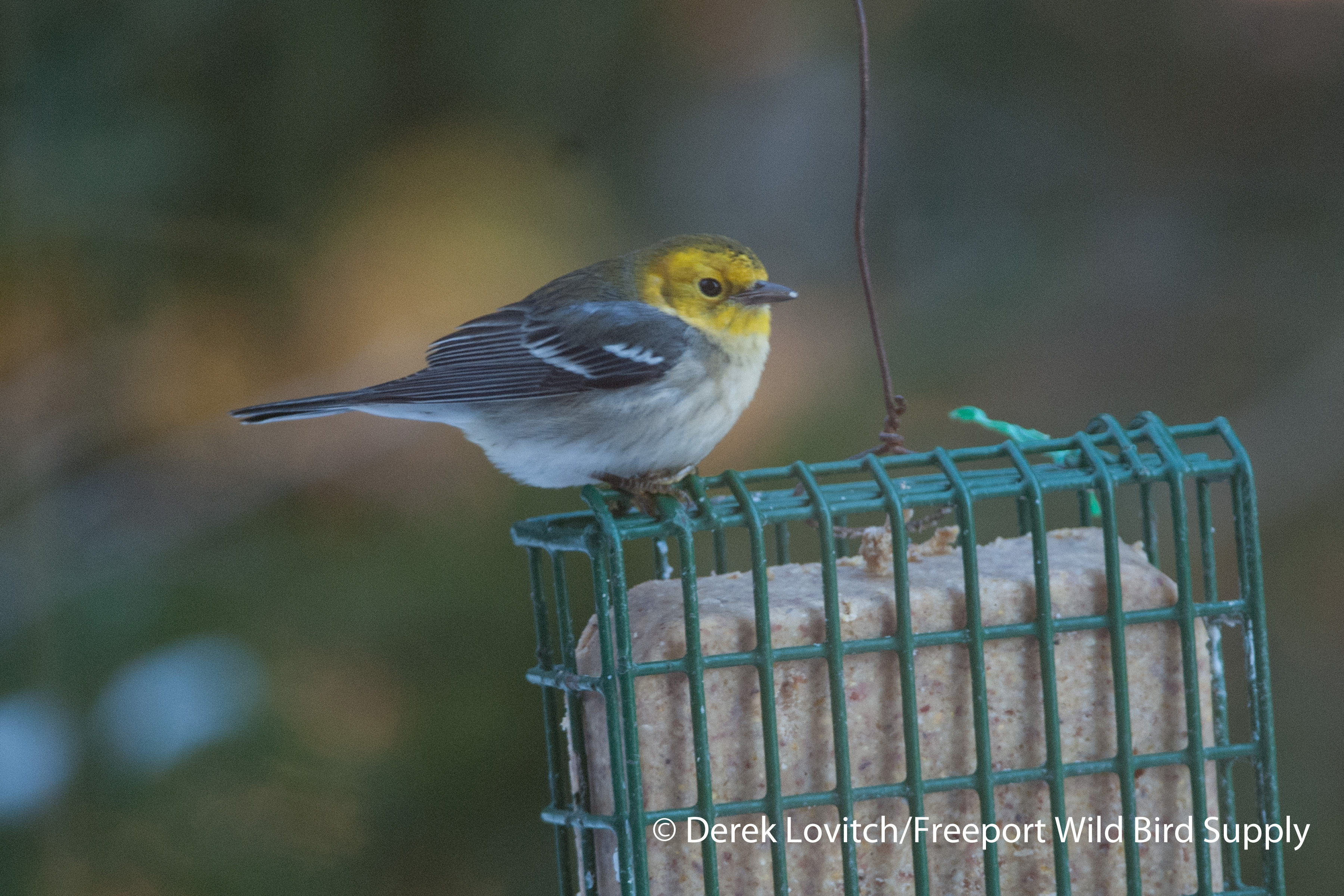
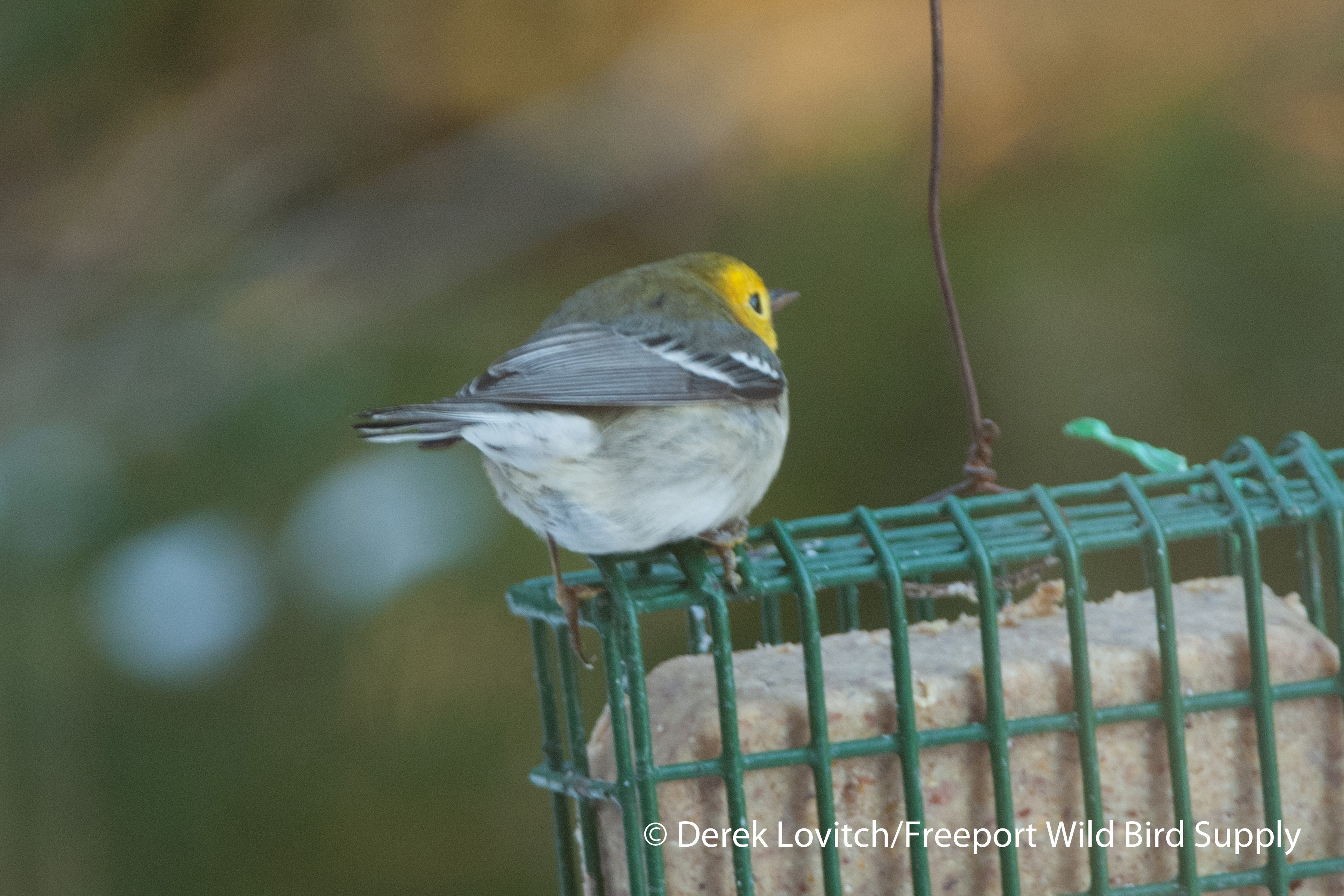
A warbler arrived at a Cundy’s Harbor, Harpswell feeding station on November 18th.  Any non-Yellow-rumped Warbler is exciting in Maine by the end of November, but most turn out to be Pine Warblers – a rare but regular “half-hardy” that often winters outside of its usual winter range, and often takes advantage of feeders to do so.  This particular bird was identified as a Black-throated Green Warbler – an outstanding late-November record but not one without precedence.  Intriguingly, on the first day, it appeared with a second warbler that may have been a Black-throated Blue Warbler, but that bird was not seen again.  However, on December 11th, the homeowner brought in an iPhone snapshot of their visitor to the store to confirm the identification.  Distant and blurry through a window, the bright yellow face and black beady eye immediately stood out. “Um, can I come over?” I inquired.

I arrived at 6:55 the next morning, as the bird was regularly being seen just after 7.  And sure enough, it showed up at 7:02!  It remained for just a few minutes, eating hulled sunflower seeds at the feeders with a small band of Black-capped Chickadees. And as I surmised, this was definitely a Hermit Warbler – only the second-ever to be seen in Maine!

The light was low, and the feeders were still in the long, early-morning shadows, so my photos were pretty poor.  I asked to stay a little longer, and after a brief visit at 7:35, the bird returned and fed extensively between 7:55 and 8:03, in which time I was able to photograph the bird extensively.
DSC_0040_HEWA2,12-12-13_edited-1  DSC_0037_HEWA4,12-12-13_edited-1

DSC_0060_HEWA5,12-12-13_edited-1  DSC_0052_HEWA6,12-12-13_edited-1

The bright yellow face was readily apparent, which sets off the seemingly-large dark, beady eye.  There’s a very limited amount of dusky green on the auriculars, and the greenish crown tapers to a “widow’s peak” on the forehead.  The back is greenish-gray and the gray wings are set off by two bold whitish wingbars and pale-fringed secondaries.  The throat was almost wholly yellow, except for a small white chin and a couple of dusky smudges.

I aged this bird as an immature female due to the overall relatively drab colors and lack of black almost anywhere in the plumage.  However, I was not familiar with this plumage in the field, and some photos online and in some books concerned me a bit, so I sent a couple of the photos to a friend in California for confirmation.  He forwarded them to Kimball Garrett, the Ornithological Collections Manager for the Natural History Museum of Los Angeles County, and the co-author of Warblers in the Peterson field guide series.

His response was straightforward, it was an immature female, born this past summer: “I certainly wouldn’t have called it anything other than a female Hermit Warbler.  The yellow across the uppermost throat is fine for female Hermits (shown to various degrees in all 3 of our skins of HY [hatch year] females).  I would worry about prominent streaks on the flanks and undertail coverts, but I really see almost nothing there (and what there is could be explained by darker feather shafts that sometimes lend the impression of streaks).”

This is truly a remarkable record.  The first state record, found by Scott Surner on MonheganIsland between September 29th and October 1st was seen by only a handful of birders – not including yours truly despite my presence on the island at the time, and eventually much effort, but that’s a long story for another day.  Breeding in the mountains of the Pacific Coast from the Olympic Peninsula of Washington south through the Sierra Nevada range to about south-central California, Hermit Warblers normally winter in southwestern Mexico through the mountains of Central America down to Nicaragua.

Therefore, for this bird to arrive in Maine it likely had to fly 90-degrees in the wrong direction.  While “180-degree misorientation” in which birds fly north when they “should” be flying south (for example) is a fairly well-established pattern that results in far-flung vagrancy, 90-degree misorientaton appears to be even rarer.  In other words, this bird was not “blown here,” (although it could certainly have been facilitated in its arrival by a strong storm or persistent westerly winds) but was somehow “miswired” to fly in a very wrong direction.  Although it is fun to ponder (at least for me!), how and why vagrants arrive in certain places, we obviously can’t know for sure what mechanism(s) delivered this bird to a feeder along the shore in Harpswell, Maine.

As I enjoyed this bird, and a wealth of other activity at the feeders, the homeowners and I discussed the significance of this sighting.  Of course, I broached the topic of “visitation,” as many birders would love the opportunity to see this bird as well.  I was exceptionally grateful for the chance to see this fantastic bird, and I knew other birders would be grateful as well.

Sometimes, rare birds at feeders are “easy” to share, such as when they are at a feeder visible from a road with ample parking nearby.  For a variety of reasons, some birds simply cannot be made public.  After much discussion, it was decided that this bird would not be publicized.  A small, private dead-end dirt road with virtually no parking, close neighbors, and no visibility from the road made this a challenge.  Simply put, you had to be in the kitchen…and with life schedules and all of the above considerations, it was, unfortunately, in the best interest of the homeowners to keep this bird under wraps even though everyone regretted this conclusion.

The bird was seen regularly through the 13th of December, but after the homeowners were out of town for the weekend, they came back on the 16th and have not seen the bird again.  A heated birdbath and live mealworms were deployed upon their return, but the bird is nowhere to be found.  Seeing that it has now moved on, I post this blog to document this “Mega” rarity for the permanent record, as per my agreement with the lucky homeowners who were graced by this special visitor from the “other” coast.

Cape Neddick through Wells – Snowy Owl!

Jeannette and I birded from Cape Neddick through Wells on Tuesday, seeing a really pleasant variety of birds in the process in the calm before the storm. Delayed by a snowy start and somewhat slick roads (OK, not slick if didn’t drive like it was a dry race car track – 7 cars were off the road between Freeport and York, however) that backed up traffic (“Hey, there’s a car in the ditch, let me look!”), we didn’t reach the Nubble neighborhood until almost 9:00, but by then the snow had ended, the ceiling lifted a bit, and a very light wind made for decent  – albeit a bit raw – birding conditions.  Although we didn’t have anything earth-shattering, we did have a fair number of “good birds.”

Without a day off together in December (the store is open seven days a week from Thanksgiving to Christmas), our annual late November run through our usual route is the last time we focus on thickets and migrant traps in the hopes for lingering migrants and rare passerines.  Next time, waterbirds will be more of a focus.  And the limited number of non-resident passerines that we detected today (other than Dark-eyed Junco, White-throated Sparrows, American Tree Sparrows, and a scattered few Yellow-rumped Warblers) confirms that – as did the impressive, and growing, quantity of waterbirds.

Three Carolina Wrens was the highlight of a thorough check of the Nubble neighborhood thickets, although we did have a group of about 40 Snow Buntings fly over.  45 Black Scoters, 13 Purple Sandpipers, 8 Great Cormorants, 6 Harlequin Ducks, etc at The Nubble were a sign of things to come along the shoreline.

Passerines were few and far between along Marginal Way and the adjacent neighborhood, but great numbers of waterfowl along the shoreline more than made up for it.  As with everywhere we looked at the ocean today, all three scoters were present in numbers, including a close and talkative group of about 100 Black Scoters.  Lots of Long-tailed Ducks, Common Eiders, and a total of 20 or 21 Harlequin Ducks were also present, along with a half-dozen Purple Sandpipers.

OgunquitBeach was a hotspot today, with a flock of 75-100 Sanderlings being joined by 32 Dunlin.  200+ Mallards and a handful of American Black Ducks were in the river, and a Belted Kingfisher hunted from its shore.  One of the surprises of the day was two Ruby-crowned Kinglets actively foraging in four Dwarf Alberta Spruces in planters in front of the motel.  A Winter Wren at Beach Plum Farm was a very good bird for this late in the season (they’re the “All but in winter wren” in Maine), and we had two Peregrine Falcons and an immature Northern Harrier in and around Harbor Road and Community Park in Wells.

We checked WellsHarbor and the jetties from a couple of vantage points (wouldn’t this be a perfect place to find a Ross’s Gull!?) and then scanned the offshore rock ledges still above water on the incoming tide from the parking lot at the end of Mile Road.   Six more Dunlin were within the scattered flock of 75+ Purple Sandpipers, and there were a lot of the expected waterbirds, including 6+ Red-throated Loons and at least four Red-necked Grebes.

All day long we were scanning the marshes and shoreline rocks in the hopes of seeing a Snowy Owl.  There have been a rash of reports in the past 7-10 days, as it looks like an irruption is underway.  I have not heard any reports of lemming and vole populations on the tundra, but a southward push of Snowies means there are either too few rodents (a natural cyclical crash, especially in lemmings) or too many owls (good breeding productivity thanks to a boom year in lemmings).  Either way, there are a lot of hungry owls around Maine right now.  It was surprising that based on the recent uptick in reports, we did not see one all day…until our very last stop with the light rapidly fading.  One immature female-type (extremely heavily barred throughout the body, other than the face) was standing guard on the last of the rocking ledges that I scanned.  Any day with a Snowy Owl is a good day in my book!

Please remember that these birds are not down this far south by choice!  The birds are here because they are hungry, or even starving (one emaciated bird was found dead at Prout’s Neck the other day, for example).  While this charismatic and captivating species is sought by birders, photographers, and almost everyone else, we must be mindful of the dire straights that many of these birds are in.  Too often we have heard stories of birds harassed, flushed repeatedly, or otherwise bothered by supposed fans.  In the case of a Snowy Owl perched on a rock 100 yards or more offshore, there is little harm that can come from gawking at them from land.  But when they are in the marsh, in the dunes, out in a field, on a building, etc, how about we remain just as respectful to these magnificent creatures and admire them from a safe distance.  Besides, the birds’ natural behaviors will be more fascinating than watching it fly away from you.  No, you really don’t need to see the bird a little better, or get a photo a little closer . . . admire them from a distance and let’s not make life any more difficult for these birds – or ruin it for other birders!

Rarity Season-to-date in Review

I hope you didn’t think that my lack of blogging of late equated to a lack of birding!  Quite the contrary, actually – it is Rarity Season afterall!  I’ve just been posting more frequent, shorter updates on our store’s Facebook page (you can scroll through the timeline here to see recent posts), especially since I have found myself a bit over-extended with a variety of other projects at the moment – I’ve been working late most nights recently to make up for my morning birding gallivanting.

In fact, I have been birding even harder than usual – if you can believe that!  Spurred on by extraordinary late October finds of an “Audubon’s” Yellow-rumped Warbler at Fort Foster and a Bell’s Vireo (a state bird for me!) on Bailey Island, I found myself somehow even more motivated to beat the bush through the first half of November.  In addition to the 10th Annual South Coastal Maine Rarity Roundup that I organize every year, I worked hard at various traditional hotspots, favorite late fall patches, and various attempts to think “outside the box,” such as walking the 4.5 miles into work today to check a handful of swales and thickets en route (not very productive, except for the exercise, for the record)

While Audubon’s Warbler and Bell’s Vireo are going to be tough to beat – the early-rarity-season bar was set awfully high! – I have had some outstanding birding in November, even if there has yet to be another “Mega.”  Personal highlights in the first half of November include a very nice variety of lingering (pioneering?) warblers, a Yellow-breasted Chat, multiple Orange-crowned Warblers (I’ve had four this season to date), huge numbers of Ruddy Ducks on Sabattus Pond, and overall just really good birding with good diversity.

Elsewhere around the state, current highlights include a Northern Hawk-Owl in Lincoln – not a vagrant in the “Rarity Season” sort of way, but exciting nonetheless!  And perhaps that, along with an early Snowy Owl report from Biddeford Pool, portends a decent owl irruption this winter?  There certainly won’t be any winter finches around this year.).  Other birders have detected a variety of late warblers around the state (wow, November Chestnut-sided in Falmouth!), and lots of lingering shorebirds – especially in Scarborough Marsh.  But as far as the first half of November usually goes, there have been no truly exceptional birds.  Looking around the region, we see goodies such as a Calliope Hummingbird in New Hampshire, A Black-chinned Hummingbird in Connecticut, and the usual fun array of rarities in Massachusetts (Scissor-tailed Flycatcher, Yellow-headed Blackbirds, Western Tanager, American Avocet, etc).  However, it is an ultra-spiffy adult Ross’s Gull near Montreal that is the real headliner of the fall in the Northeast so far (and yes, I am being tempted to chase this, I have to admit).

So there are some good birds around the region, and no doubt there are some good birds still to find in Maine.  Other than a couple of days, it has been fairly temperate to mild all fall, and I can’t help but wonder if birds that arrived in the state through various vagrancy mechanisms (see Chapter 7 of my book, How to Be a Better Birder) have yet to concentrate along the coast as they seek out more favorable microclimates or seasonal food sources.  Also, as the season progresses, more rarities turn up at feeding stations as natural food supplies diminish.  December rarities, for example, are often discovered at feeders.  Two tardy Chipping Sparrows are at our store’s feeders as I type this, by the way; I’m hoping they pick up a clay-colored cousin.  A lot of folks are reporting very busy feeders right now, which is a good sign, especially considering the lack of irruptive finches.

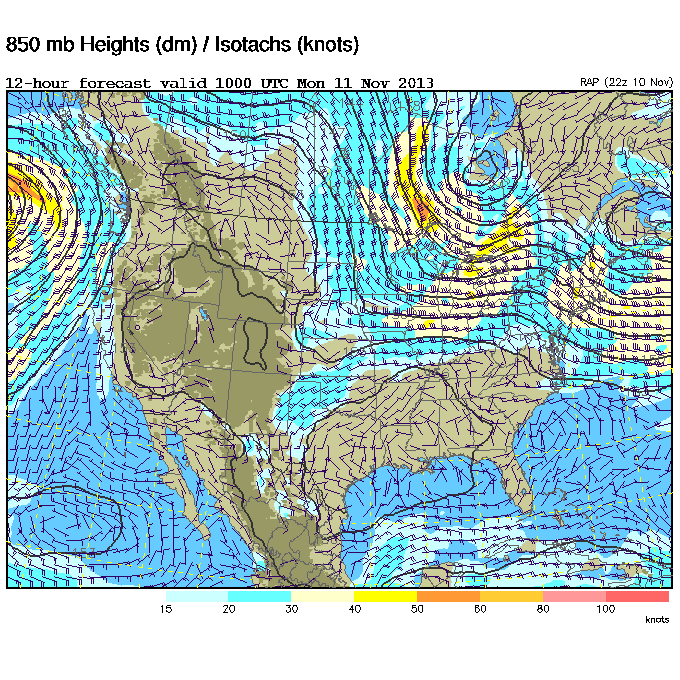
The last few days have seen a nice southwesterly flow aloft.  Look at Friday’s wind map, for example:
wind map,11-15-13

That extensive southwesterly flow early in the month would have surely deposited stuff like Cave Swallows in New England, but I wonder if that window has already closed.  A couple of Caves in Connecticut as recently as the 9th gives me some hope, however.  Contrast that map with the more zonal flow that we have seen for much of the month, such as on 11/10:
wind map,11-10-13

Although few birds are “blown” out of range, certain winds facilitate the arrival of more vagrants in certain areas than others.  And southwesterly winds in late fall are definitely the desired winds here in Maine.  With a fairly complex weather system on its way – including some really severe storms in the Midwest – I remain hopeful for some more out-of-range treats.  Interesting weather does have the tendency to produce some interesting birding, even without facilitating the arrival of rarities.
surface map, 11-17-13

At the very least, behind this system, we should see a return to colder, seasonable weather (as opposed to the 50’s of the last two days for example), and this should help push birds to feeders, warmer coastal and urban areas, etc.  Also, hopefully it will bring some snowfall to points north, as this year’s Goose Rarity Season has been lackluster, especially in the Greater Yarmouth Goose Fields.  A Greater White-fronted Goose that has been in Scarborough for a couple of weeks, and another in Berwick earlier in the month, along with a couple of Cackling Goose reports have been the only geese-of-note in southern Maine.  While “The County” saw single Barnacle and Pink-footed Goose in October, I have not had a single “good” goose in the fields of North Yarmouth, Cumberland, and Falmouth all season.  A Bean (!!!) Goose, Barnacle, and Pink-footed all in Nova   Scotia right now give me plenty of hope, and last year, things really didn’t pick up locally until mid-November anyway.  I will continue my thrice-weekly circuit.

So the short version of this is: go birding!  There are rarities out there to be discovered.

Black Skimmer at Sandy Point!

Well, I sure wasn’t expecting this on my Sandy Point Patch List!
DSC_0021_BLSK1,SandyPoint,10-4-13
Black Skimmer, SandyPoint #180!

An otherwise slow morning flight (more on that shortly) was interrupted by an odd call emanating from upriver of the bridge. “Hmm, sounds like a Black Skimmer, I thought.”  Uh, wait…but alas, there it was!  It alighted on what was left of a small sandbar with a couple of gulls, and as that sandbar became inundated, it took to the wing again and began to forage.  I lost sight of it as it moved up the bay, but a little pocket of Palm Warblers moving through distracted me.

Looking at the radar last night, the flight seemed strong, but the Morning Flight was decidedly slow.  Here are the 1am radar and velocity images for example:
1am radar, 10-4-13 1am velocity, 10-4-13

A couple of things are noticeable.  For one there’s the fairly narrow diameter of the flight reflection which would suggest a low flight (the radar beams well out from the tower are above the height of birds; the “angle of elevation).  This definitely happens when birds, such as sparrows – and they’re definitely on the move right now – which tend to fly relatively low dominate the flight.  So perhaps a lot of the flight last night was of the sparrow variety.

However, the velocity image suggests the north to south motion was rather slow.  Perhaps it was just because it was so calm and slower-flying migrants were in the air and therefore were making less progress (ground speed).  Or maybe there’s a lot of dust and bugs up there; it has been warm and dry after all.

Regardless of the explanation, or lack thereof, the flight was slow.  But did I mention I had a Black Skimmer?

– 6:38-8:20
– 46F, partly cloudy, calm.

41 Yellow-rumped Warblers
31 Palm Warblers
31 Unidentified
24 Ruby-crowned Kinglets
13 Blackpoll Warblers
12 Northern Parulas
10 Green-winged Teal
9 Golden-crowned Kinglets
6 Blue Jays
6 Black-throated Green Warblers
5 Dark-eyed Juncos
4 American Robins
4 Nashville Warblers
4 Black-throated Blue Warblers
4 Chipping Sparrows
4 White-throated Sparrows
3 Common Loons
2 Blue-headed Vireos
1 Great Blue Heron
1 Osprey
1 BLACK SKIMMER
1 Northern Flicker
1 Red-eyed Vireo
1 White-breasted Nuthatch
1 American Pipit
1 Cedar Waxwing
1 Magnolia Warbler
1 Common Yellowthroat
1 Savannah Sparrow
1 DICKCISSEL (5th of season here)
1 American Goldfinch

Total = 226

Afterwards, I decided to check on my “lots of sparrows moving last night” hypothesis, so I visited Old Town House Park.  There were an ample amount of sparrows (30+ Song, 20+ Swamp, a small number of White-throated, 2 Lincoln’s, 1 Savannah, and 1 White-crowned), but not enough to conclude much about the composition of last night’s flight, or lack there of.  But it was pleasantly birdy, with a nice sprinkling of other migrants, including 11 Eastern Bluebirds, 2 Pine Warblers, and the first Purple Finch that I have had in a couple of weeks.

Meanwhile, in the goose fields, things have not yet begun to heat up.  While there may be some bona fide migrants around, my tally of 283 Canada Geese today fits right there within the 200-300 that have been present since late August, when the local resident birds began to flock up post-breeding.  This will change soon.

MonhegZEN Birding Fall Migration Weekend, 9/26-30/13

This past weekend was my annual “MonhegZEN Migration Weekend.”  A small group – absolutely no more than eight people per day – joins me on a per diem basis to enjoy the wonder of fall migration at this offshore hotspot.  While the 105 total species was right about my Fall Weekend average, it did include 20 species of warblers, and a variety of the usual fall-on-Monhegan cast of characters.  And a few “good” birds as always.

But before I get into the daily rundown, let me post a quiz.  Here are the 1am radar and velocity images from each of the four nights preceeding each of my four days on the island.  Can you guess which days had the most birds?
9-27-13 1am ref 9-27-13 1am vel 9-28-13 1am ref 9-28-13 1am vel 9-29-13 1am ref 9-29-13 1am vel 9-30-13 1am ref 9-30-13 1am vel

If you said the first two had more birds than the second two, you would be absolutely right!  And yes, Saturday (Day 2) was definitely the best day for migrants on the island.  And yes, Monday (Day 4) was very, very slow.  The radar certainly suggested it, and our birding over the course of each day definitively ground-thruthed it.

IMG_1587Leaving Port Clyde, 9/26.

After the good flight on Thurday night into Friday morning, I arrived with part of my group from Port Clyde on the 7am ferry, dropping us on the island just before 8.  The birding was still going strong.  In fact, it took us almost an hour and a half just to walk to the end of Dock Road (about ¼ mile)!  At least six Cape May Warblers in one cluster of spruces, Rusty Blackbirds were overhead (including one just as our boat docked, a nice welcome to the island), and then a buzz-by from a Cooper’s Hawk.

Common on the mainland, Coops are rather rare this far offshore, and I don’t see them on the island every fall, so this was a real treat – and an “Island Bird” for a friend I was exchanging info with.  A short while later we caught up with the last individual of what was once 5 Broad-winged Hawks that drifted to the island – only my second-ever out here.   A Yellow-billed Cuckoo, a continuing Lark Sparrow, Clay-colored Sparrow, and Dickcissel – yup, most of the usual fall Monhegan “trash birds!”
a -DSC_0007_LASP1,Monhegan,9-28-13Lark and White-throated Sparrows

b -DICK1,Monhegan,9-27-13Very pale juvenile Dickcissel

c -CCSP,Monhegan,9-27-13Clay-colored Sparrow.

Honestly however, the bird of the day – from an island rarity perspective – was probably House Sparrow.  Seriously.   A male that apparently landed on the Hardy Boat half way to the island a few days prior had taken up residence here.  Were a female to show up – almost certainly in similar fashion – then we could have an issue <insert ominous foreshadowing music here>.

The morning flight was hot and heavy on Saturday morning.  In fact, there was so much overhead that we barely left the grounds of the Trailing Yew before breakfast.  All we could do was stand around, look up, and marvel at the wonders of migration.  Hundreds of Yellow-rumped Warblers, 10’s of Palm Warblers, oodles of Golden-crowned and Ruby-crowned Kinglets…2-3 Blue-gray Gnatcatchers, another Dickcissel or two, and a fly-by Blue Grosbeak (the first on the island this fall?) – it would have been overwhelming to quantify, but luckily, when I am away from SandyPoint, I am not nearly as compulsive.  Phew.

d -DSC_0020_BGGN1,Monhegan,9-28-13e -DSC_0016_BGGN_jumping,Monhegan,9-28-13
This Blue-gray Gnatcatcher visited us while we were dining on Novelty pizza.

ea -DSC_0092_BRCR,Monhegan,9-29-13Brown Creepers were common, and unusually photogenic, throughout the day.

Good birding continued throughout the day.  We confirmed a Nelson’s Sparrow in the marsh at Lobster Cove and found a Marsh Wren.  We tallied 17 species of warblers over the course of the day. It was warm.  It was calm.  It was simply perfect!

But we all agreed that the highlight was the afternoon on White Head.  A light southeasterly breeze produced a light updraft off of the cliffs, and Peregrine Falcons were taking full advantage.  Some birds were swirling around, doing little more than what could be described only as “playing” in the wind.  Some birds were undoubtably passage migrants getting a quick lift from the rising warm air.  We know there were at least six Peregrines, as we had a bona-fide kettle of six swirling together at one point.  Normally, the hawkcounter in me swings into action.  But alas, this is MonhegZEN birding, so I just sat back and enjoyed the show.
eb -DSC_0104_PEFA1,Monhegan, 9-28-13f -DSC_0105_PEFA2,Monhegan,9-28-13

g -DSC_0124_PEFA3,Monhegan,9-28-13j -DSC_0053_OSPR1,Monhegan,9-26-13me_with_group_Monhegan,9-28-13,K.Lindquist (Photo (c) K. Lindquist).
Sea- and Hawk-watching from White Head. Lots of eye-to-eye Peregrine Falcons, an Opsrey, and a distant Minke Whale or two.

A shroud of fog enveloped the island on Sunday morning, but there weren’t too many birds overhead to be obscured by it.  Although there were few birds overhead or moving around once the fog lifted, there was still an ample supply of Yellow-rumped Warblers and Golden-crowned Kinglets.   We happened upon a Prairie Warbler, and added a few other species to our trip list, such as two Ruby-throated Hummingbirds, and – finally – Ring-necked Pheasants (how did I go two days without hearing or seeing a pheasant here?).  Lark Sparrow, Yellow-billed Cuckoo, Rusty Blackbird, Least Flycatcher (finally, after three days I had an Empid to try and string!)…the list goes on.  But overall, birding was decidedly slower than the previous two days (note what constitutes a slow day on Monhegan!), and rather warm.
IMG_1591IMG_1600IMG_1597
While the birding was slow, we took time to enjoy the scenery in the fog.

Remember when I said that all that male House Sparrow needed was a female to arrive?  Uh-oh.
h -HOSPpair,Monhegan,9-29-13

I am unsure how long it’s been – if ever? – since two House Sparrows were on the island.  While only die-hard island-listers appreciated these birds as much as I did (I remain captivated by the way birds – all birds – find their way to islands and what their lives are like once they get there ), the members of my group that have birded here before at least understood the significance, and potential colonization consequences of this sighting.

Luckily, we had other intrigue to talk about as well.  The spruces along Dock Road were happenin’ again today, but one warbler in particular occupied us for a while.  I first called it a Blackburnian, and then I back-tracked…a lot.  It was so impressively pale, and feeding above us, some of the most diagnostic features were not visible.  We spent about a half hour with this bird, which eventually obliged us as it fed in the lowest boughs of the tree.  We worked it carefully and thoroughly, taking the opportunity to really learn from this individual.  It took a while, but I was finally convinced it was a Blackburnian in large part due to the very pale but distinct “braces” on the back, and what we would (via camera-screen “instant replay”) finally confirm as a small, pale orange central forehead stripe.
i -DSC_0142_ultra-paleBLBW1,Monhegan,9-28-13l -DSC_0134_ultra-paleBLBW2,Monhegan,9-28-13m -DSC_0155_ultra-paleBLBW3,Monhegan,9-28-13

The orange feet seem odd to me, and the dark auriculars appeared much more contrasting on these photos than we interpreted it in the field.  This was a good “learning and teaching bird,” and therefore this was one of my favorite birds of the trip.

IMG_1624_Monhegan_Brewery
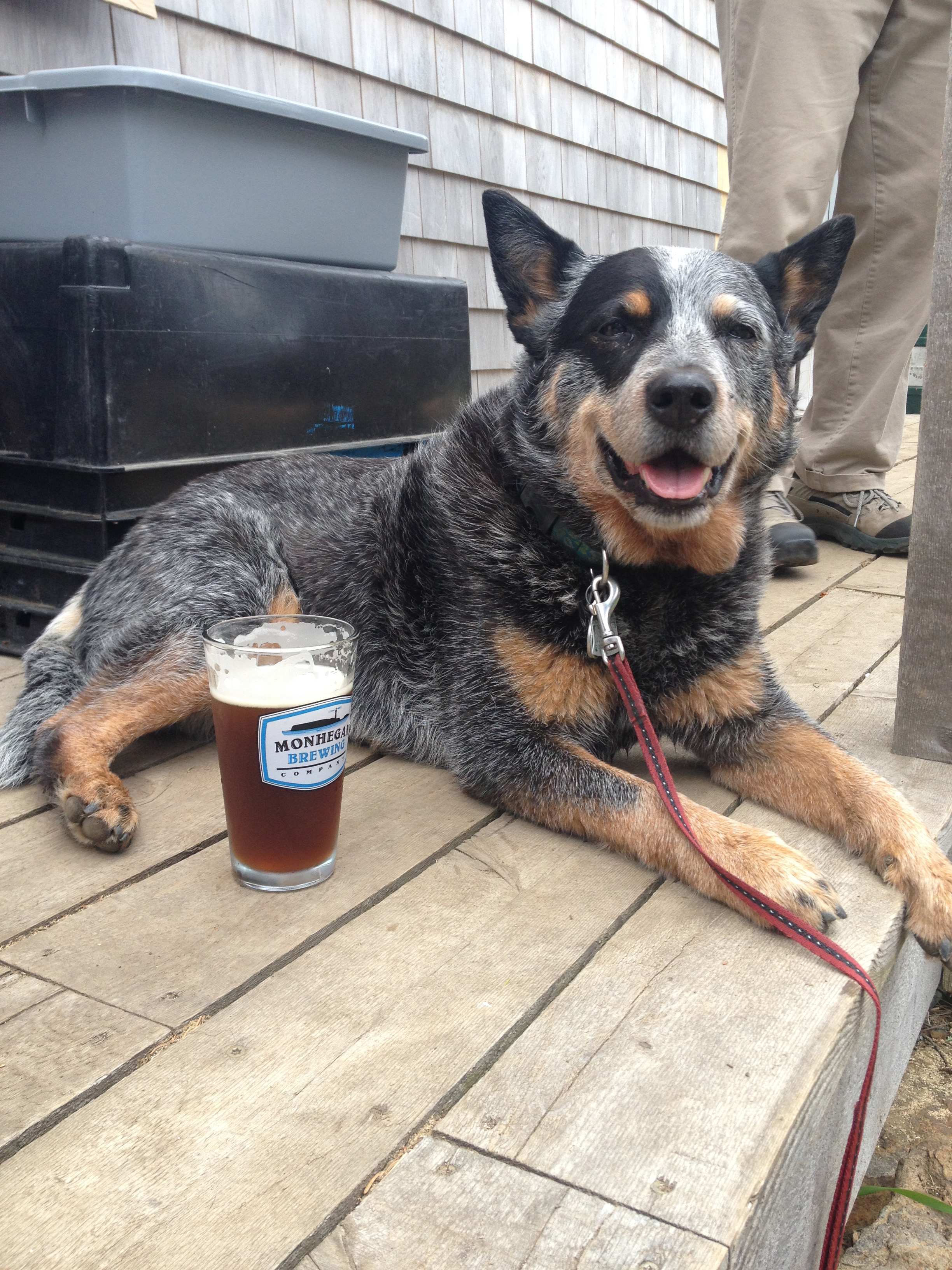
I visited the Monhegan Brewing Company a couple of times for good beer and conversation.  And we know good business can be conducted over a beer.  In fact, during my last beer there on Sunday evening, I struck a deal with Sue to buy the sunflower heads from the Island Farm.  They’re currently drying at our house, but they’ll soon be for sale here at the store.  The money will go to help the Island Farm in their pursuit to provide a sustainable source of produce for the island.  The gardens are also great birding!
IMG_1614me,Sue,andSunflowers,K_Lindquist

Very few birds were on the move Sunday night, and with almost nothing visible on the radar, I didn’t exactly pop out of bed in the morning.  I did get out for a little while before breakfast, however, and once again the morning flight – or lack thereof – proved what the radar suggested.  My tour had come to an end, but I elected to stay out for the day to bird with my friend Kristen.  We both just wished there were a few more birds to see!

n -DSC_0167_YRWA1,Monhegan,9-30-13n -DSC_0168_YRWA2,Monhegan,9-30-13
Although I like the photo on the left of the Yellow-rumped Warbler atop a Red Spruce, as you can see on the right, I excel at photographs of fuzzy twigs.

IMG_1603 A most impressive Fringed Gentian.

We worked the bush hard, checking all sorts of seldom-searched nooks and crannies.  Some of our totals for the day were higher than previous days simply because we covered more ground.  The Clay-colored and Lark Sparrows continued, as did the two Green-winged Teal in the town marsh.  A spiffy Chestnut-sided Warbler was my 20th species of warbler for the weekend, and we added a few more waterbirds to the list by dedicating some time to sea-watching and scanning the gulls in the harbor.

Unfortunately, most of the afternoon – following one last pizza – was spent keeping an eye on our watches and watching our time rapidly tick away.  At least we weren’t nursing a concern about leaving hot and heavy birding – it was slow, very slow, today, and that did make our departure a little less unwelcome.  A little; it’s never easy to leave this magical place.
IMG_1627IMG_1632
Trap Day!

Here’s my weekend’s checklist, with estimates or counts of each species per day (not including ferry):

Mallard: 12, 12, 12, 12
American Black Duck: 1, 1, 1, 5
Green-winged Teal: 1, 1, 2, 2,
Common Eider: x, x, x, x
Surf Scoter: 0, 0, 0, 4
Ring-necked Pheasant: 0, 0, 3, 2
Common Loon: 3, 2, 1, 1
Red-necked Grebe: 0, 1, 0, 0
Great Cormorant: 1, 5, 1, 7
Double-crested Cormorant: x,x,x,x
Northern Gannet: 0, 125, 8, 30
Great Blue Heron: 1, 1, 1, 0
Osprey: 0, 2, 0, 0
Bald Eagle: 2, 2, 2, 2
Northern Harrier: 1, 1, 0, 0,
Sharp-shinned Hawk: 6, 5, 5, 4
COOPER’S HAWK: 1,0,0,0
BROAD-WINGED HAWK: 1,0,0,0
American Kestrel: 2, 2, 1, 1
Merlin: 15, 8, 4, 3
Peregrine Falcon: 8, 12, 1, 1
Semipalmated Plover: 2, 0, 1, 0
Laughing Gull: 0, 0, 0, 2
Ring-billed Gull: 0, 0, 0, 1
Herring Gull: x,x,x,x
LESSER BLACK-BACKED GULL: 0, 0, 0, 2
Great Black-backed Gull: x,x,x,x
Black Guillemot: 10, 20, 10, 15
Mourning Dove: 3, 3, 3, 3
YELLOW-BILLED CUCKOO: 1, 0, 1, 0
Ruby-throated Hummingbird: 0, 0, 2, 2
Belted Kingfisher: 1, 0, 1, 1
RED-BELLIED WOODPECKER: 1, 0, 0, 0
Yellow-bellied Sapsucker: 25, 50, 25, 20
Downy Woodpecker: 0, 1, 1, 1
Northern Flicker: 20, 15, 25, 20
Eastern Wood-Pewee: 0, 1, 0, 0
Least Flycatcher: 0, 0, 1, 0
Eastern Phoebe: 8, 5, 3, 1
Red-eyed Vireo: 30, 20, 18, 12
Blue-headed Vireo: 12, 20, 25, 6
Blue Jay: 6, 10, 8, 8
Common Raven: 2,2,2,2
American Crow: x,x,x,x
Black-capped Chickadee: 20, 15, 15, 20
Red-breasted Nuthatch: 6, 15, 10, 8
Brown Creeper: 15, 35, 20, 3
Carolina Wren: 5, 8, 10, 12
House Wren: 0, 1, 1, 0
Winter Wren: 1, 1, 1, 1
Marsh Wren: 0, 1, 1, 1
Golden-crowned Kinglet: 15, 75, 50, 35
Ruby-crowned Kinglet: 25, 40, 25, 15
BLUE-GRAY GNATCATCHER: 1, 2-3, 2, 0
American Robin: 0, 1, 0, 0
Gray Catbird: 6, 8, 10, 18
Northern Mockingbird: 1, 1, 0, 0
Brown Thrasher: 2, 1, 1, 0
European Starling: 8, 10, 12, 14
American Pipit: 2, 2, 1, 0
Cedar Waxwing: 40, 60, 40, 40
Tennessee Warbler: 0, 1, 0, 0,
Nashville Warbler: 5, 3, 6, 1
Northern Parula: 1, 0, 2, 2
Yellow Warbler: 2, 6, 7, 0
Chestnut-sided Warbler: 0, 0, 0, 1
Magnolia Warbler: 6, 5, 2, 0
Cape May Warbler: 9, 3, 0, 0
Black-throated Blue Warbler: 0, 8, 6, 1
Yellow-rumped Warbler: 300, 400, 300, 175
Black-throated Green Warbler: 0, 4, 2, 1
Blackburnian Warbler: 0, 0, 1, 0
PRAIRIE WARBLER: 0, 0, 1, 0
Palm Warbler: 30, 100, 30, 15
Bay-breasted Warbler: 0, 2, 0, 0
Blackpoll Warbler: 1, 20, 1, 3
Black-and-white Warbler: 25, 30, 15, 2
American Redstart: 2, 1, 2, 0
Northern Waterthrush: 0, 1, 1, 0
Common Yellowthroat: 10, 15, 10, 18
Wilson’s Warbler: 3, 4, 1, 0
Scarlet Tanager: 1, 0, 0, 0
Chipping Sparrow: 4, 6, 6, 5
CLAY-COLORED SPARROW: 1, 0, 1, 1-2
LARK SPARROW: 1, 1, 1, 1
Savannah Sparrow: 2, 15, 12, 10
NELSON’S SPARROW (spp. subvirgatus): 0, 1, 0, 0
Song Sparrow: 15, 15, 20, 25
Lincoln’s Sparrow: 0, 2, 2, 2
Swamp Sparrow: 2, 30, 20, 15
White-throated Sparrow: 25, 50, 60, 30
White-crowned Sparrow: 1, 5, 4, 2
Dark-eyed Junco: 3, 10, 6, 8
Northern Cardinal: 8, 6, 5, 8
Rose-breasted Grosbeak: 0, 0, 0, 1
BLUE GROSBEAK: 0, 1, 0, 0
Indigo Bunting: 0, 1, 0, 0
DICKCISSEL: 0, 2, 0, 0
Rusty Blackbird: 4, 9, 1, 0
Common Grackle: 1, 3, 4, 4
Baltimore Oriole: 1, 2, 2, 0
American Goldfinch: 12, 10, 10, 8
HOUSE SPARROW: 1, 1, 2, 0

Total species: 64, 83, 79, 66 (Total =105)

Mammals:
Minke Whale
Gray Seal
Harbor Seal
Harbor Porpoise
Muskrat
Brown Rat

IMG_1629

Yet Another Great Morning Flight at Sandy Point!

k -DSC_0024_PIWO,SandyPoint,9-26-13
I do love it when the big ones fly by, especially on mornings like this.  They’re easier to identify and tally…especially when they are Pileated Woodpeckers!

It’s also nice when more birds pause in the trees at the point, allowing for identification as a “sample” of what’s going overhead.  It’s especially nice when they land in front of my face…like this Philadelphia Vireo did.  If only there weren’t a few twigs between us!
i -DSC_0008_PHVI,SandyPoint,9-26-13

I usually leave the bridge before raptors begin to get going, but today, I was treated to an early-morning Peregrine Falcon flight.  A couple of the birds didn’t even blink and eye and kept going.  Others terrorized migrant flickers.
j -DSC_0017_PEFA,SandyPoint,9-26-13

Normally, I start off with the overnight radar analysis to describe why there were (or were not) so many birds come morning.  But today, let’s cut to the chase and get right to the numbers:

6:32-10:10am
43F, light NW, mostly cloudy, slowly clearing.

1662 Unidentified (*2nd highest)
441 Yellow-rumped Warblers (*2nd highest)
263 Northern Parulas (how are there still so many parulas!?)
193 Black-throated Green Warblers  (*2nd highest)
188 Ruby-crowned Kinglets (*2nd highest)
150 Northern Flickers
56 Golden-crowned Kinglets
52 Magnolia Warblers (*2nd highest)
46 Black-throated Blue Warblers (*new record; old = 13!)
44 Cedar Waxwings
44 Dark-eyed Juncos
41 Black-and-white Warblers (*2nd highest)
31 Red-eyed Vireos
29 Blue-headed Vireos (2nd highest)
27 Blackpoll Warblers
26 Eastern Phoebes (*new record)
26 Nashville Warblers (*new record)
23 Palm Warblers
22 Yellow-bellied Sapsuckers
15 American Robins
15 American Goldfinches
14 Blue Jays
12 Scarlet Tanagers
12 Rusty Blackbirds
9 White-throated Sparrows
8 Eastern Bluebirds (*new record)
7 Philadelphia Vireos
7 Chipping Sparrows
6 Peregrine Falcons (*new record)
6 Unidentified vireos
6 Brown Creepers
5 Yellow Warblers
4 Tufted Titmice (*new record)
4 Rose-breasted Grosbeaks
3 Black-capped Chickadees
3 Tennessee Warblers
2 Sharp-shinned Hawks
2 Cape May Warblers
2 Wilson’s Warblers
1 Red-breasted Merganser (first of fall)
1 Common Loon
1 American Kestrel
1 Merlin
1 Mourning Dove
1 PILEATED WOODPECKER (my third crossing ever; crossed after 4 false-starts)
1 RED-BELLIED WOODPECKER (crossed after 3 false-starts)
1 Warbling Vireo
1 Red-breasted Nuthatch
1 White-breasted Nuthatch
1 Swainson’s Thrush
1 Bay-breasted Warbler
1 Common Yellowthroat
1 Swamp Sparrow
1 Lincoln’s Sparrow
1 DICKCISSEL (4th of season)
1 Red-winged Blackbird

Total= 3523 (*third highest total)

So there you have it.  Wow.  <Insert various superlatives and/or swear words>   I just wish I could have whittled down that unidentified total a little bit more – who knows how many single-species records I might have set?

There were two reasons the unidentified tally was so high.  One is that early-morning cloud cover once again reduced many of the birds to silhouettes.  Secondly, the intensity of the first two hours of the flight was really exceptional.  On multiple occasions, I could do nothing more than step back look up, smile, and click off a cloud of unidentified warblers – no point of even lifting the binoculars.  Bunches of birds high overhead; I’d follow one bird into the Magic Elm, and 20 would shoot out.  Birds were sneaking below me.   It was, at times, a bit overwhelming!  But it was also exceedingly fun; I like the challenge, and since my interest lies in quantifying the flight as much as identifying the composition of it, the high unidentified tally only bothers me a little…OK, maybe a little more than a little, but anyway…

I couldn’t resist taking a few photos, such as the Philadelphia Vireo landing in front of me, or the majestic Pileated Woodpecker cruising by.  16 species of warblers, a bunch of new records and near-records, and some “good” birds.  Yeah, that’s a good flight.  But I actually think my highlight was one little female American Redstart.  She dropped in from high overhead, straight down into the regenerating cherry that stands directly in front of me (and perfectly blocks the sun from my eyes for the first hour of the day) – the one the Philly V was in – and hopped her way to the near edge.  She looked at me, and cocked her head to look at the camera lens that was lying down next to me.  I am guessing she saw her reflection.  She looked at me, chirped in a gentle contact call – not the harsh alarm call or even the sharp flight call – and then hopped back into the brush.  We had a moment.  I enjoyed that.

OK, back to business…the radar.  Save these images for future reference.  This is what “GO BIRDING IN THE MORNING!!!” looks like.  Here are the 10pm, 12am, 2am, and 4am radar and velocity images for example <insert “boom” sound>:
a-10pm radar, 9-26-13 b -10pm velocity, 9-26-13 c -12am radar, 9-27-13 d -12am velocity, 9-27-13 e -2am radar, 9-26-13 f -2am velocity, 9-26-13 g -4am radar, 9-26-13 h -4am velocity, 9-26-13

Even at 6:00am, with light more than peaking into the eastern sky, birds were still on the move.  If I had not expected to go to SandyPoint for sunrise this morning, and I had seen this image, I would have flown out the door.
6am radar, 9-26-13 6am velocity, 9-26-13

When there are this many birds in the air so close to sunrise, there are going to be a lot of birds taking part in the “morning redetermined migration” come dawn, along with crepuscular migrants that are moving in the early light.  The radar provided all of the suggestions of a big flight.  And, with a light northwesterly breeze, many more birds were low and in the trees than on the westerly breezes of the last few mornings.  Here’s the wind map, showing that low moving off of the Maritimes, ushering in a north to northwesterly flow behind it – as I postulated on my blog yesterday.
wind map, 9-25-13

While I am rarely even at Sandy Point for four days in a row, it is exceedingly rare that the fourth day would be so busy.  But I think that upper level low finally pulling out of the way re-opened the floodgates.  And it looks like tomorrow should be good as well, continuing a most impressive string of good flight nights.  But I will give my neck a break tomorrow from staring straight up and spinning back and forth at Sandy Point.  Instead, I’ll just have to see what the flight will be like with my tour on Monhegan Island.  Yeah, I know, tough life.

Huge Morning Flight at Sandy Point!

My last blog entry ended with a little bit of foreshadowing, did it not? But before we get to Sandy Point this morning, let us take a moment to review the radar images from the weekend for comparison.

This is the 12:00am image from Sunday.  This is what “no migration” looks like on the radar.  You can also see the rain approaching from the west.
12am radar, 9-22-13

Now this is the midnight image from Saturday.  This is what “I have no idea what’s going on” looks like on the radar.  While anything from some weird warping of the radar beams from changes in air temperature to a simple malfunction could result in this, what it is NOT is a lot of birds.  It’s too irregular…and bird’s don’t “explode” in narrow bands!
IMG_1575_edited-1 IMG_1576_edited-1

So, compare those to what “a whole boatload” of birds looks like.  Here are the 10pm, 12am, 2am, and 4am base reflectivity and velocity images from last night.

10pm radar, 9-22-13 10pm velocity, 9-22-13

12 am radar, 9-23-13 12 am velocity, 9-23-13

2am radar, 9-23-132am velocity, 9-23-13

4am radar, 9-23-134am velocity,9-23-13

Yeah, it would have been nice to be on Monhegan this morning.  But I was in my other sanctuary – my office at Sandy Point.  And this is what happened:

6:28 – 10:05am.
43F, increasing W to NW, clear.

1338 Unidentifed (*2nd highest)
416 Northern Parulas (* Seriously, how are there any more parulas to come through!  This is the second highest count of all time, and now all three of the highest tallies are from this year!)
281 Northern Flickers
179 Black-throated Green Warblers (*2nd highest)
163 Blackpoll Warblers
91 Yellow-rumped Warblers
43 Black-and-white Warblers (*record high)
39 Red-eyed Vireos
35 American Redstarts
29 Blue Jays
29 Ruby-crowned Kinglets
23 Yellow Warblers
22 Blue-headed Vireos
21 Scarlet Tanagers (*record high)
21 Dark-eyed Juncos
19 Cedar Waxwings
18 Magnolia Warblers
17 Nashville Warblers (*record high)
17 American Goldfinches
13 Black-throated Blue Warblers
12 Eastern Phoebes (* ties high)
11 Swainson’s Thrushes
9 Palm Warblers
6 Rusty Blackbirds
5 American Robins
4 Unidentified vireos
4 Chestnut-sided Warblers
4 White-throated Sparrows
3 Least Flycatchers
3 Cape May Warblers
3 Bay-breasted Warblers
2 Common Loons
2 Broad-winged Hawks
2 TUFTED TITMICE (rarely seen crossing)
2 Unidentified thrushes
2 Golden-crowned Kinglets
2 Blackburnian Warblers
2 Common Yellowthroats
1 Osprey
1 American Kestrels
1 Yellow-bellied Sapsucker
1 Eastern Wood-Pewee
1 Common Raven
1 Philadelphia Vireos
1 Veery
1 Tennessee Warbler
1 CONNECTICUT WARBLER (My third of the season here; it’s the fall of the CONWs in Maine!)
1 Northern Waterthrushes
1 Rose-breasted Grosbeak
1 DICKCISSEL (third of the season here)
1 Baltimore Oriole

Total = 2, 905 (4th highest tally all time for me)

DSC_0016_REVIonAlternate-leafedDogwood,Sandy Point, 9-23-13DSC_0026_SWTH_onWinterberry2,Sandy Point,9-23-13
Some of the migrants pause long enough at Sandy Point to do a little snacking.  Here’s a Red-eyed Vireo eating Alternate-leafed Dogwood fruits, and a Swainson’s Thrush stepping out into the sun to dine on Winterberries.

DSC_0034_WISN,GreelyRoad,9-23-13_edited-1
A little post-Sandy Point birding yielded two Wilson’s Snipe trying to stay hidden along the edge of a puddle along Greely Road in Cumberland.

And tonight looks just as good…perhaps even a little better with a more northwesterly flow.  See ya at the bridge at sunrise!
wind forecast, 9-23-13