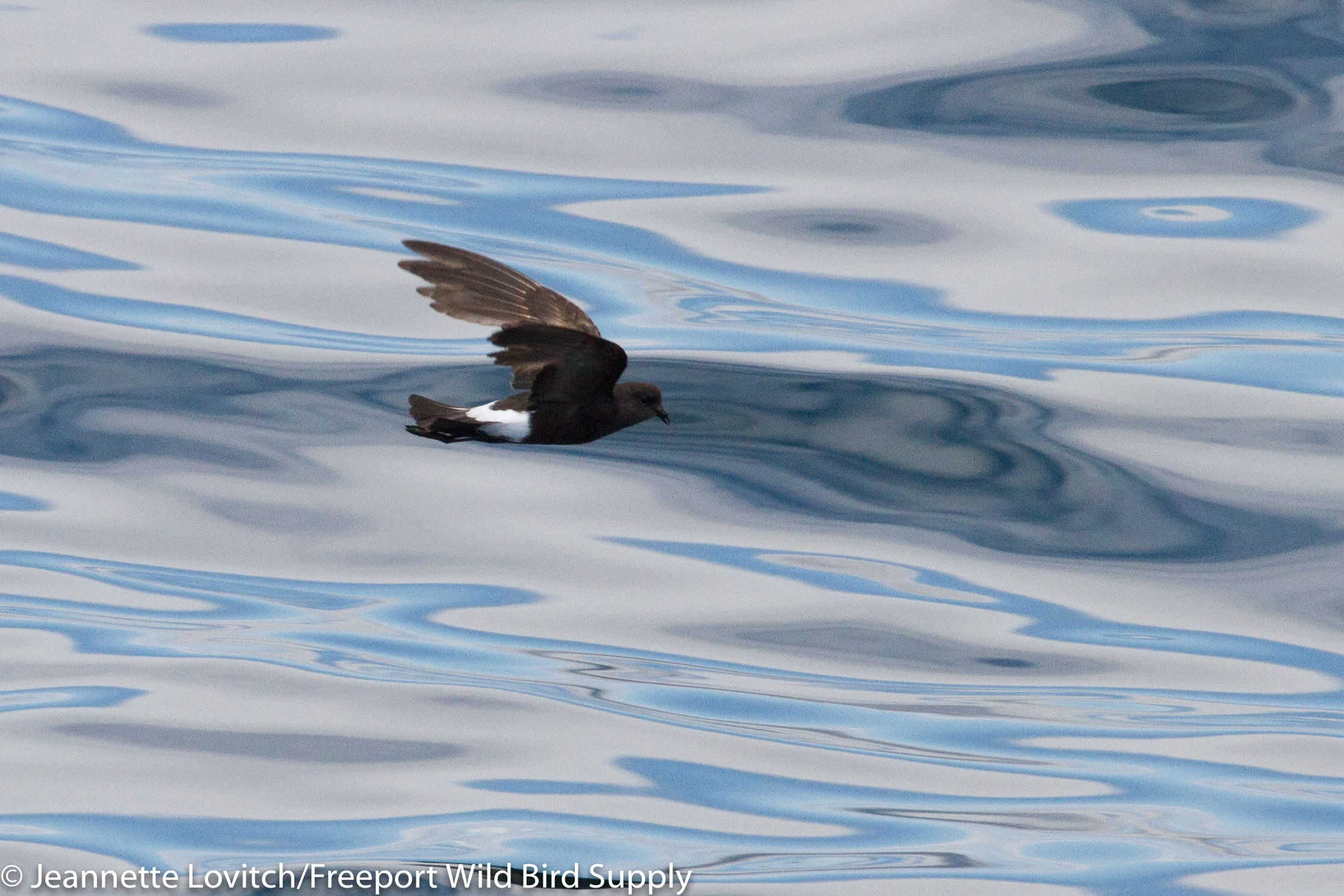
Boothbay Mini-Pelagic with our partners, Cap’n Fish’s, Dan Nickerson, and Jeannette on 6/6.
7 Razorbills among the puffins and terns at Eastern Egg Rock.
Unbelievable estimate of 2600 Wilson’s Storm-Petrels offshore. Massive early-season numbers continue in the Gulf of Maine from Massachusetts at least to the Mid-coast of Maine.
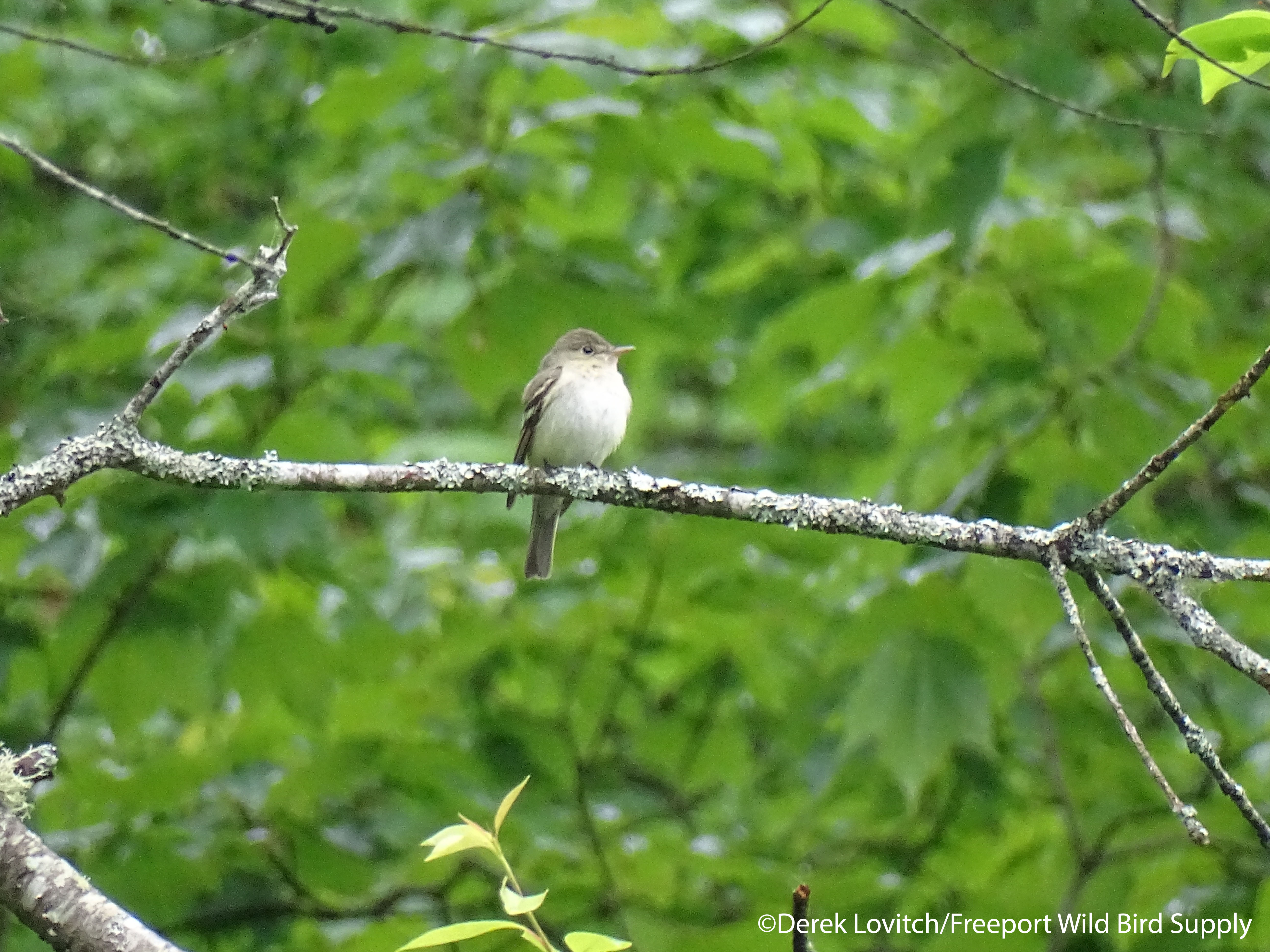
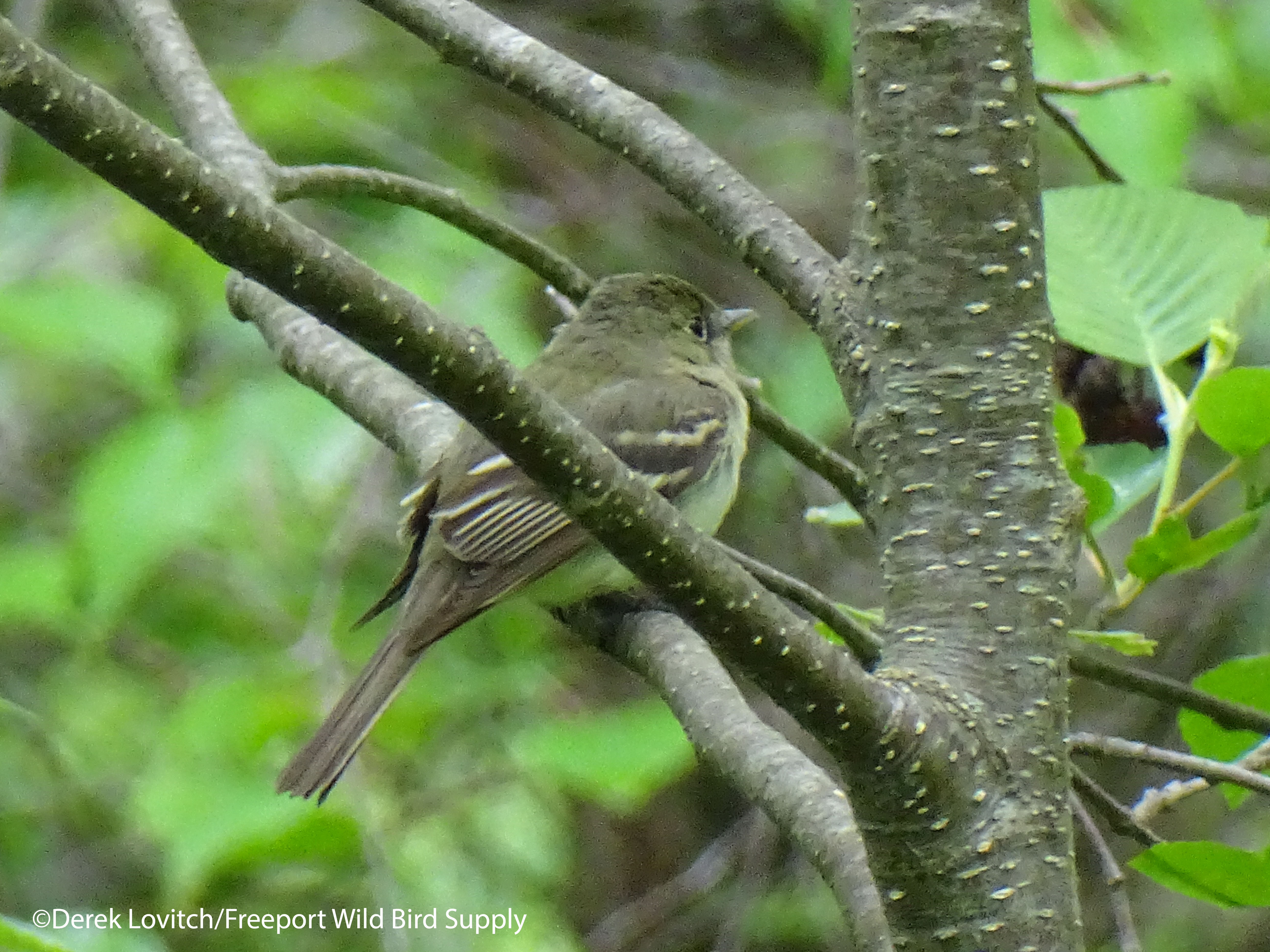
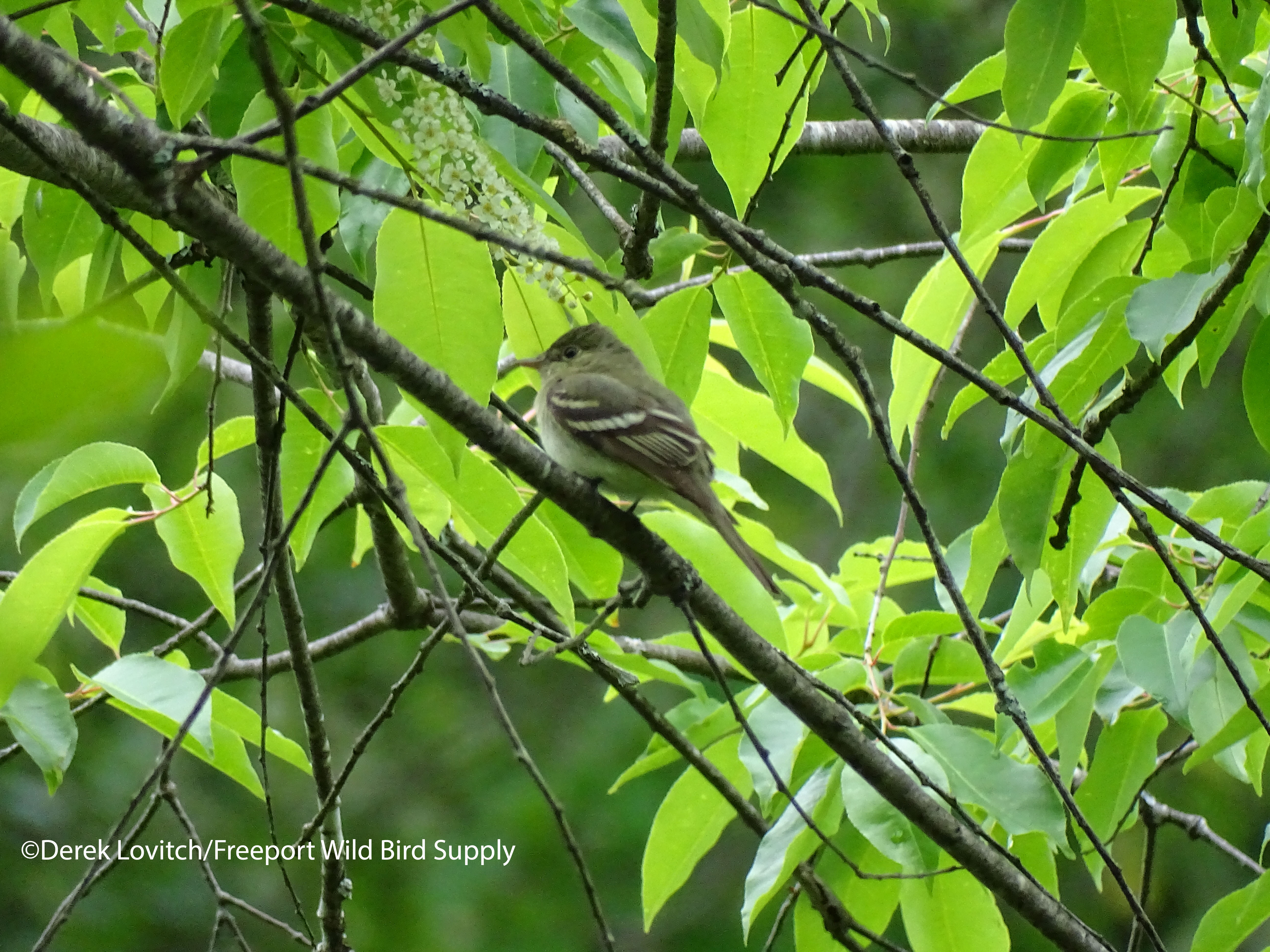
After trying to string one on Monhegan, an Acadian Flycatcher found me! A friend heard it first as he joined me for a bird survey on private, posted property in Durham on 6/2. This was an incredible record for Androscoggin County and really shocked me. It continued at least as of the next morning.This photo nicely shows the very long (for an Empid primary projection, the greenish tone to the upperparts, the complete eyering, and the large, wide and orange mandible. It took a while to see all of the pertinent details, even though the song is so distinctive. When we first saw it, the appearance of no green above and no yellow below through us for a loop, but once we got into the shade with it, those diagnostic tones were readily apparent.
My annual Monhegan Spring Migration Tour took place on 5/27 through 5/30, followed by another day on the island with Jeannette. It was very slow, and significant highlights were few. However, it was still, well, birding on Monhegan for five days, so I am not complaining. I’ll have a full tour report and checklist in the coming days. Highlights included daily crippling views of Black-billed Cuckoo; a CLAY-COLORED SPARROW that we found on 5/30 but was seen by all on 5/31; 3 WILLETS that arrived from the open ocean south of Lobster Cove before landing in the harbor on 5/31; a good Atlantic Puffin commuting flight in the morning of 5/31, and an immature male ORCHARD ORIOLE each day.
Other non-Monhegan and non-flycatcher highlights this week included:
2 RED-NECKED PHALAROPES, Hardy Boat from Monhegan to New Harbor, 5/31 (with Jeannette).
3 AMERICAN OYSTERCATCHERS, 1 Dunlin, 8 Ruddy Turnstones, 26 Black-bellied Plovers, 1 adult Little Blue Heron, etc, Pine Point, Scarborough, 6/1.
It’s June, so we are busy with events and tours here at the store and beyond:
Tomorrow is Zeiss Day at the store, with events including a whole range of products to try on our Saturday Morning Birdwalk, free optics cleaning, and a digiscoping demonstration. Check it out here.
Our first pelagic with our partners Cap’n Fish’s Cruises out of Boothbay Harbor will run on Monday, June 6th. It includes a visit to Eastern Egg Rock and chumming deeper offshore. Info here.
Confidently identifying Gray-cheeked vs Bicknell’s Thrushes on migration is always a challenge, but this bird I found at Biddeford Pool was vocalizing incessantly. It even posed – as far as these reclusive migrants go – for some snapshots. I believe that this is my first confirmed Bicknell’s Thrush on the coastal plain of Maine during spring migration,
For much of this spring, I’ve been lamenting about a “slow” week of migration, or a “trickle” of migrants, etc. That was NOT the case this week, as the floodgates finally opened. In fact, it was an incredible week of birding. The northern limits of a huge fallout greeted me on Monday morning. And then there was Friday at Biddeford Pool. It was epic. Unforgettable.
My observations of note over the past eight days included:
1 Blue-gray Gnatcatcher, Evergreen Cemetery, Portland, 5/15 (with Down East Adventures Spring Songbird Workshop group).
20 species of warblers, including 1 continuing Louisiana Waterthrush and 6 Bay-breasted Warblers (FOY), and led by 25+ Northern Parulas and 20+ Black-and-white Warblers, Morgan Meadow WMA, 5/16 (with Jeannette). Incredible morning; definitely the best morning of spring to date. Interestingly, this appeared to be about the northern limits of what was a significant coastal fallout from at least Eastern Massachusetts into southern Maine.
17 species of warblers, led by 18 Common Yellowthroats and 17 American Redstarts, Florida Lake Park, Freeport, 5/17 (with client from Maine).
1 Ruby-crowned Kinglet (getting late), Florida Lake Park, 5/17 (with client from Maine).
16 species of warblers, led by 24 Yellow-rumped Warblers and 15 American Redstarts, Florida Lake Park, Freeport, 5/18 (with Jeannette). This was the first morning this season where there were more female than male passage migrants.
16 species of warblers, led by 24 Common Yellowthroats and 22 Yellow-rumped Warblers, Florida Lake Park, Freeport, 5/19.
Biddeford Pool, FALLOUT, 5/20! This was insane. I was optimistic about conditions based on the overnight wind forecast and morning fog, but there was virtually nothing on the radar overnight. I almost didn’t go. I never expected to find this. Birds were everywhere. Every tree had warblers. Swainson’s Thrushes and Lincoln’s Sparrows were hopping around manicured lawns. I can’t even begin to explain how amazing it was, but here are some of the highlights as I covered East Point, the neighborhood, and the Elphis Pond trails. All of my numbers are extremely conservative, as I attempted to judge the movement of birds between parallel streets, etc.
20 species of warblers led by 53 Common Yellowthroats, 44+ American Redstarts, 44 Yellow Warblers, and 43 Magnolia Warblers. I know these numbers are particularly low.
Thrushes! 43 Swainson’s Thrushes (FOY) and 8+ Veeries, but also…
1 BICKNELL’S THRUSH – shocking migrant vocalizing incessantly on path to East Point. Was still calling 3 hours later. Voice recordings and poor photo above. Rarely detected in migration away other than Nocturnal Flight Calls, this might have been my first ever confirmation in spring along Maine’s coast. Seems a little early, too. Photo above.
1 GRAY-CHEEKED THRUSH (FOY). My settings were off on the camera and the overall tone of this bird is not accurate! When I looked down at the camera to adjust, it dropped out of site. Called once.
1 SUMMER TANAGER, near Elphis Pond. Quick fly-by, and no red seen. Confident there was little or red on the upperparts. Not seen well enough to know if this was the bird that had been continuing in the area for a while or a different, possible female.
1 male ORCHARD ORIOLE, Elphis Pond. Often singing.
Amazing quantities of usually-uncommon migrants, such as: 15 Lincoln’s Sparrows, 15 Bay-breasted Warblers, and 11 Canada Warblers.
Other good tallies included 17 Black-throated Blue Warblers, 13 Least Flycatchers, and 4-6 Scarlet Tanagers.
Personal First-of-years also included 2 Cape May Warblers, 9 Tennessee Warblers, 3 Philadelphia Vireos, along with 2 Roseate Terns off Ocean Ave.
The bird that got away: an intriguing Empid that suggested Acadian in a brief view along Orcutt Ave. Could not relocate.
Meanwhile, my list of personal “first of years” this week before the Biddeford Pool fallout included the following:
4 American Redstarts, Essex Woods and Marsh, Bangor, 5/13.
2 Bobolinks, Essex Woods and Marsh, 5/13.
1 Virginia Rail, Essex Woods and Marsh, 5/13.
5 Wood Thrushes, Evergreen Cemetery, Portland, 5/15 (with Down East Adventures Spring Songbird Workshop group).
1 Scarlet Tanager, Evergreen Cemetery, 5/15 (with Down East Adventures Spring Songbird Workshop group).
3 Red-eyed Vireos, Evergreen Cemetery, 5/15 (with Down East Adventures Spring Songbird Workshop group).
1 Black-crowned Night-Heron, Evergreen Cemetery, 5/15 (with Down East Adventures Spring Songbird Workshop group).
1 Canada Warbler, Morgan Meadow WMA, 5/16 (with Jeannette).
1 OLIVE-SIDED FLYCATCHER (a little on the early side), Morgan Meadow WMA, 5/16 (with Jeannette).
4 Eastern Wood-Pewees, Morgan Meadow WMA, 5/16 (with Jeannette).
2 Blackpoll Warblers, Morgan Meadow WMA, 5/16 (with Jeannette).
6 Bay-breasted Warblers, Morgan Meadow WMA, 5/16 (with Jeannette).
1 Alder Flycatcher, Florida Lake Park, Freeport, 5/17 (with client from Maine).
20+ Semipalmated Sandpipers, Pelreco Marsh, 5/17 (with client from Maine)
This Black-and-white Warbler was among the multitudes of cooperative birds at Biddeford Pool on the 20th. But apparently, I didn’t take photos of any of the colorful ones! I was also having so much fun that for the most part, I forgot I even had a camera.
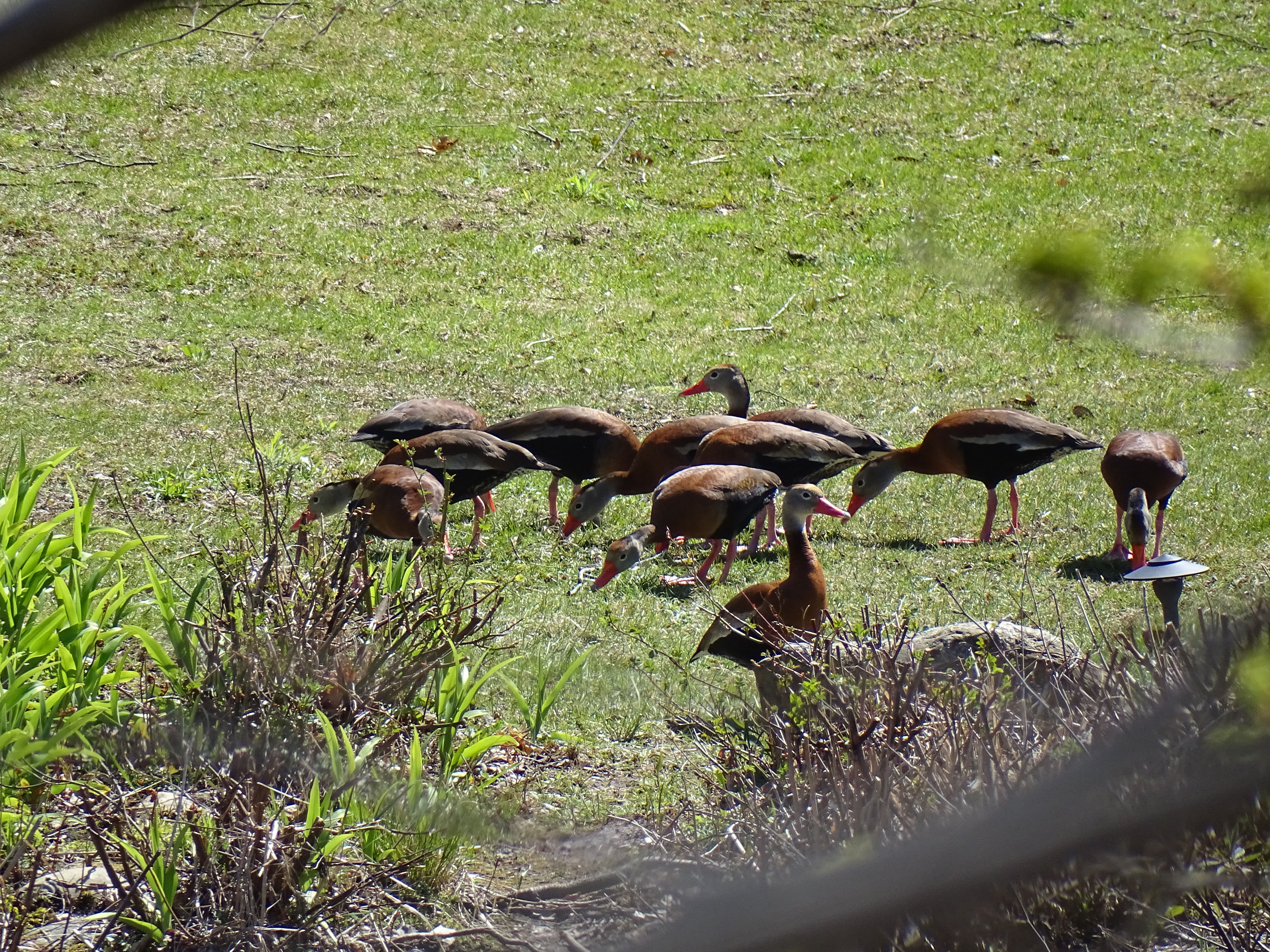
Maine’s 4th ever observation of Black-bellied Whistling-Ducks have graced downtown Camden for over a week now.
It was a slow start to the week with just a trickle of migrants arriving from the weekend through the storm system on Wednesday. However, a successful twitch, and a couple of light flights overnight made for a great week of spring birding. Of course, there was also another successful Feathers Over Freeport: A Birdwatching Weekend on Saturday and Sunday. Even though they didn’t produce any birds of note, it was a wonderful weekend full of birdwatching highlights. Photos will be posted soon, while the summary of our morning birdwalks is posted here.
My observations of note over the past seven days included:
1 SANDHILL CRANE (Finally, my FOY after missing a bunch of them at the watch this year), Bradbury Mountain Hawkwatch, 5/1.
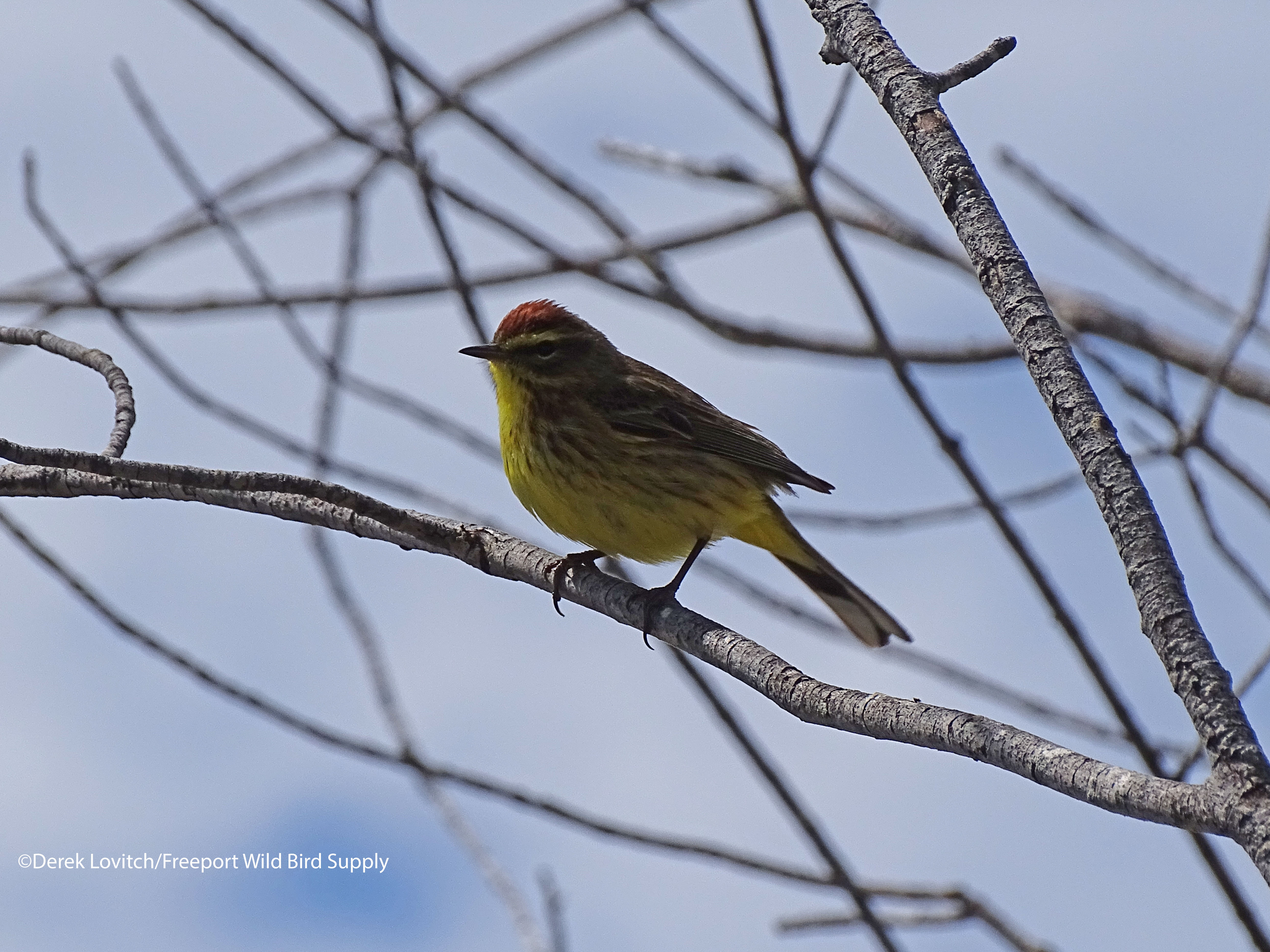
Palm Warblers were on the move this week, although concentrations remain low.
Persistent winds from unfavorable directions precluded a big push of migrants this week, but the season is slowly progressing. There were a couple of decent nights of migration this week, on Sunday and Monday nights. My observations of note over the past seven days included:
1 Blue-gray Gnatcatcher (FOY), our yard in Pownal, 4/23.
1 Blue-gray Gnatcatcher, Cape Elizabeth Greenbelt Trail, 4/25 (with Jeannette).
Unlike last week, my birding was more limited this week, and coupled with less-than-conducive weather for migrants on most days, my observations of note were few.
~50 Palm Warblers, ~25 Yellow-rumped Warblers, and 2 Pine Warblers, Florida Lake, Freeport, 4/16 (with Saturday Morning Birdwalk group).
1 Fish Crow, Florida Lake Park, Freeport, 4/20 (my 168th species here!)
And my list of personal “first of years” and other new arrivals also showed the reduced time in the field and only one good night of migration this week:
Jeannette and I escaped for a long weekend in Cape Cod, Friday through Monday. We were mostly looking for North Atlantic Right Whales, but of course we did some birding too! Jeannette’s whale and bird photos from the weekend are posted in this short blog about our trip:
Meanwhile, back in Maine, the strong northwesterly winds slowed the pace of migration. However, by week’s end, I had some time do a little local birding, producing the following highlights:
My personal highlights over the past six were as follows. Not surprisingly, it was mostly first-of-year new arrivals. The new bird for my Bradbury Mountain list, however, was definitely more of a surprise!
3 male and 1 female NORTHERN SHOVELERS (FOY), 100+ Greater and 10+ Lesser Scaup, 1 drake American Wigeon, 1 Bonaparte’s Gull (FOY), etc, Wharton Point, Brunswick, 3/19 (with Saturday Morning Birdwalk group).
4 Horned Larks and 1 American Wigeon, Highland Road, Brunswick, 3/19 (with Saturday Morning Birdwalk group).
2 Eastern Meadowlarks (FOY) and 5 Brown-headed Cowbirds (FOY), Chesley Hill Road, Durham, 3/20.
1 Great Blue Heron (FOS), Cousin’s River Marsh, 3/20.
4 American Kestrels (FOY), Bradbury Mountain Hawkwatch, 3/20.
1 adult LESSER BLACK-BACKED GULL, fly-by at the Bradbury Mountain Hawkwatch, 3/20 (with Zane Baker). This was my 142nd all-time Bradbury Mountain State Park species!
20 Ring-necked Ducks (FOY), 2 American Wigeon, etc, Mouth of the Abagadasset River, Bowdoinham, 3/21 (with Jeannette).
6 Fish Crows (FOY), Maine Mall Road, 3/22.
6 Brant, Kettle Cove, Cape Elizabeth, 3/22.
7+ American Woodcocks, Pownal, 3/23 (with Jeannette).
And finally, our spring tour season gets kicked off next Saturday with our annual “Woodcocks Gone Wild!” See the Tours page of our website for more info.
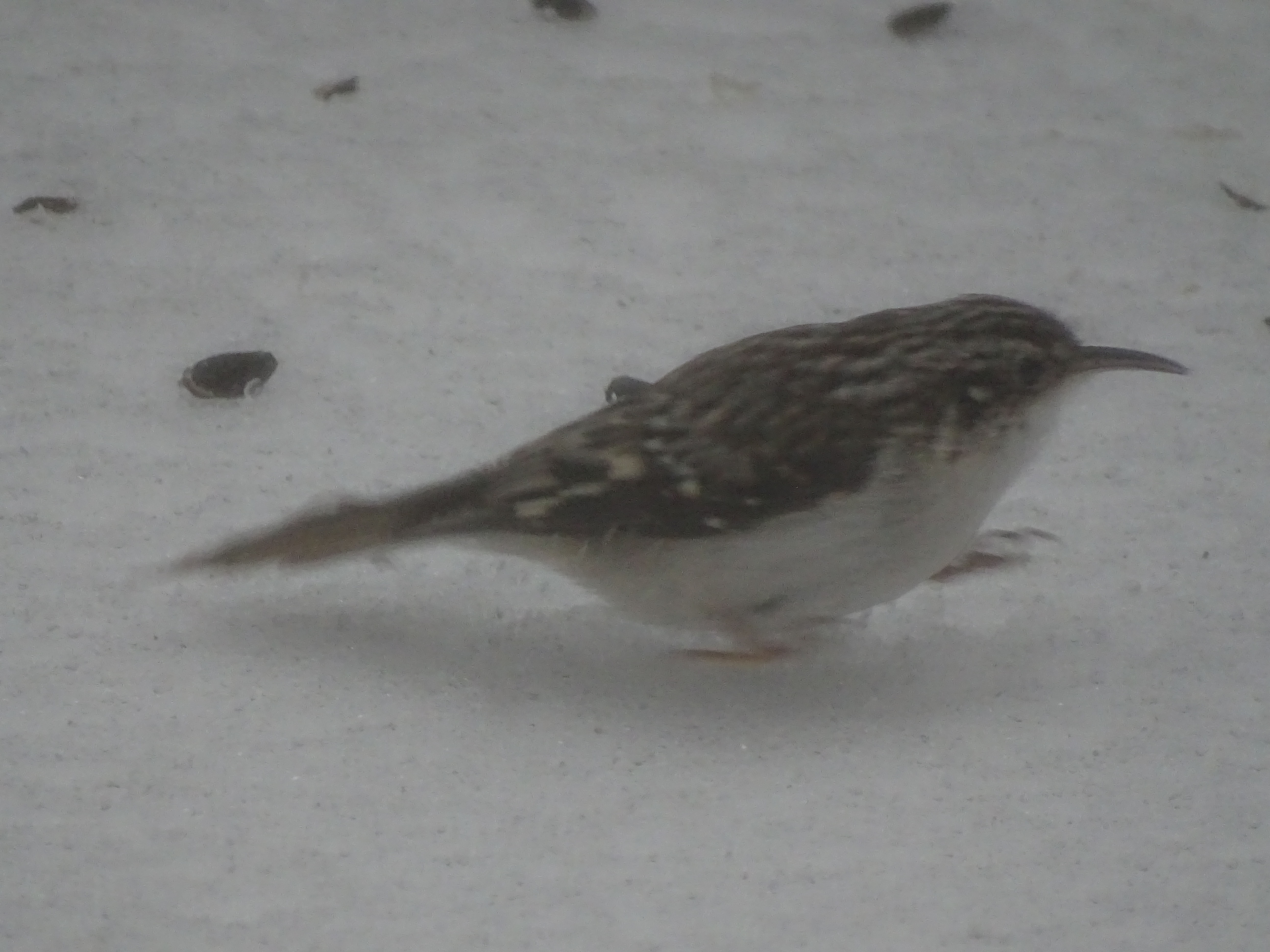
While not the rarest bird this week, I have been thoroughly entertained by this Brown Creeper who has taken to picking up bits of seed from under a feeder at our home in Pownal. The horizontal position makes the bird look so different! Sorry for the lousy photos though…they were taken through a screen during the ice/snow storm on 2/4.
The Blizzard of 2022 provided some great opportunities for cross-country skiing and snowshoeing locally for the first time this winter, so I took full advantage of that, even if it did further limit my dedicated birding during this busy week plus. Interestingly, my most “serious” birding was a half day (post-snowblowing and shoveling) on Sunday searching Portland through Cape Elizabeth for storm-related birds, but that effort turned up nothing at all of note! Here are my observations of note over the past 9 days:
5 WHITE-WINGED CROSSBILLS, 2 COMMON REDPOLLS (FOY), 6 Pine Siskins (FOY), and 1 Purple Finch, Long Falls Dam Road area of Carrying Place Township, 1/31 (with Jeannette).
The Androscoggin River between the downtowns of Lewiston and Auburn remain a surprisingly productive mid-winter hotspot. On 2/1, Jeannette and I discovered an incredible (especially for the interior of Maine) five species of dabblers from the Auburn Riverwalk! Amongst the Mallards and a couple of American Black Ducks, there were single female GREEN-WINGED TEAL, AMERICAN WIGEON, and NORTHERN PINTAIL. Making this even more interesting is the fact that it’s usually the drakes that we find overwintering in Maine. Additionally, the drake RING-NECKED DUCK continues, and we had a single 1st-winter Iceland Gull. Two Bufflehead and 5 Hooded Mergansers joined the usual Common Goldeneyes and Common Mergansers for a goodly inland total of 10 species of waterfowl. A unusually conspicuous Beaver continues to amuse here as well.
3 drake and 1 hen BARROW’S GOLDENEYES and 8 Dunlin (FOW here), Winslow Park, Freeport, 2/13.
My article – a 13-page photo salon – on the Hybrid Herons of Scarborough Marsh (Patches!) has finally been published in the most recent issue of North American Birds. In it, I lay out the theory that at least 5 different individuals have been seen in Scarborough Marsh since I first found an odd juvenile heron in July of 2012 that we now believe is a hybrid between a Snowy Egret and a Tricolored Heron.
I made the case that the two current birds are backcrosses, one with a Snowy Egret (SNEG X TRHE X SNEG) and the other with a Little Egret (SNEG X TRHE X LIEG). I’ll be watching them carefully for the potential of a developing hybrid swarm.
Unfortunately, at this time, the journal is only available online to members of the ABA. However, digital e-memberships (with access to all of the ABA publications) are only $30 a year, and you can purchase issues of the magazine directly from the ABA by emailing info@aba.org. Also, if you wanted to take a peek at the article, I do have a couple of extra copies here at the store for you to peruse.
Believe it or not, a hybrid heron is much rarer than a Steller’s Sea-Eagle, at least from a world perspective…in fact, it’s possible these birds are one of a kind!