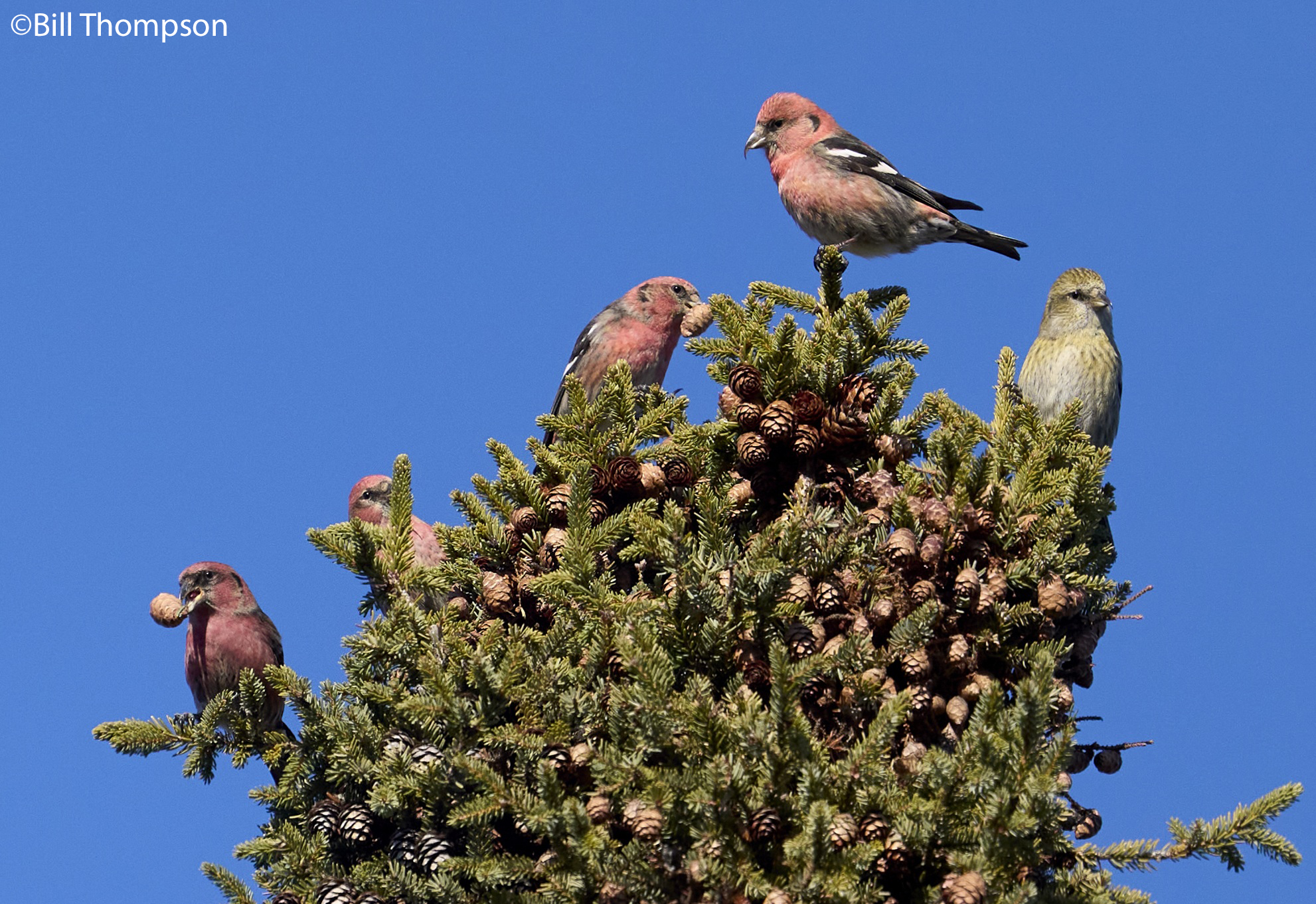
While a trek to the mountains on the 15th was not nearly as fruitful (pun intended) as we hoped, Bill Thompson and I were very surprised to find a flock of White-winged Crossbills – an irruptive species that has been virtually non-existent this winter in Maine – on South Shore Road in Rangeley.
I covered a better amount of ground this past week than I have been recently, even with relatively limited time in the field. I wanted more frugivores to show for it, but I did have a nice variety of seasonal highlights. Here are my observations of note over the past 10 days.
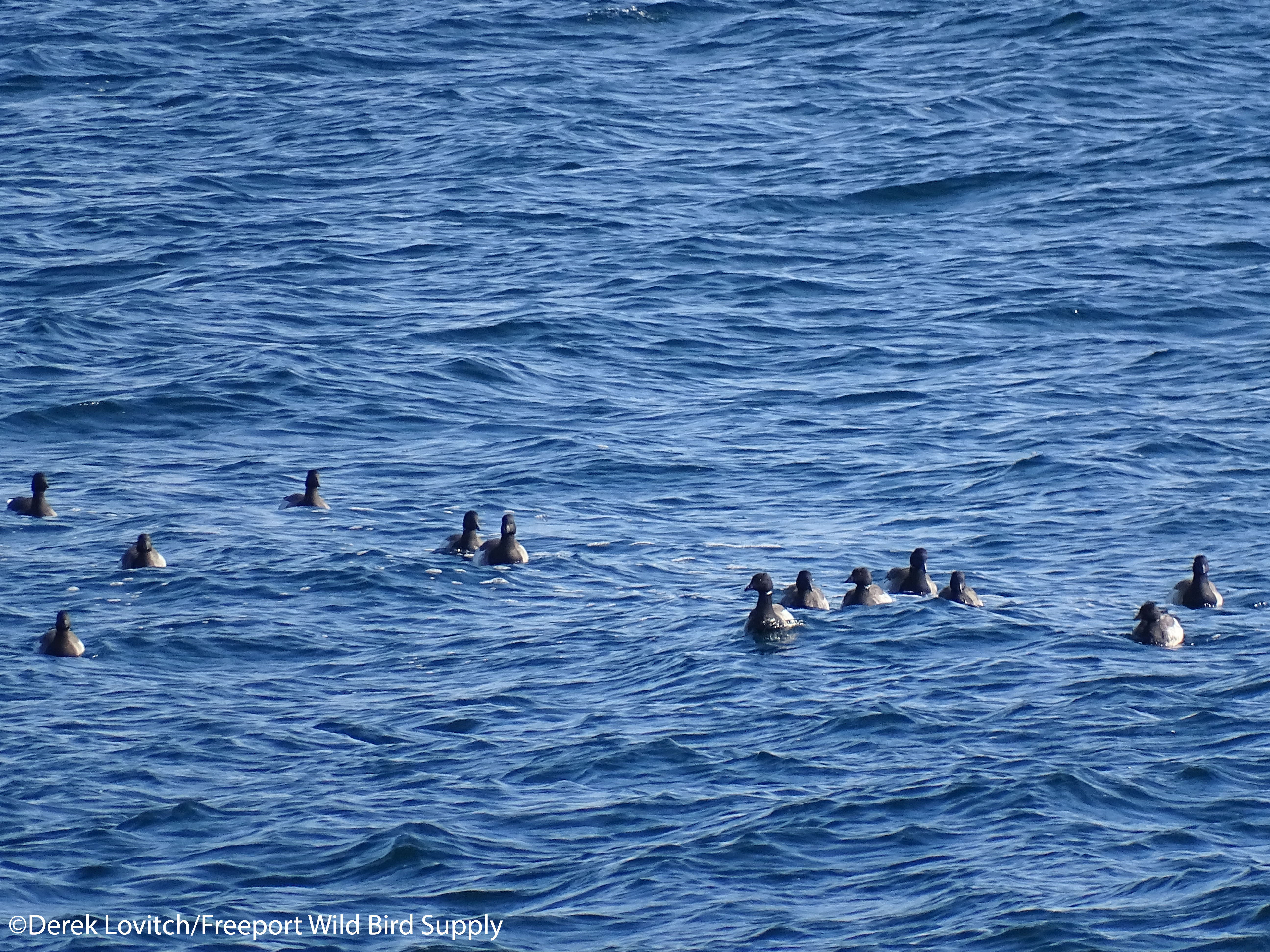
1 female “NORTHERN” COMMON EIDER (ssp BOREALIS), 1 drake Barrow’s Goldeneye, and 4 drake Greater Scaup, Winslow Park, Freeport, 2/14 (with Saturday Morning Birdwalk group).
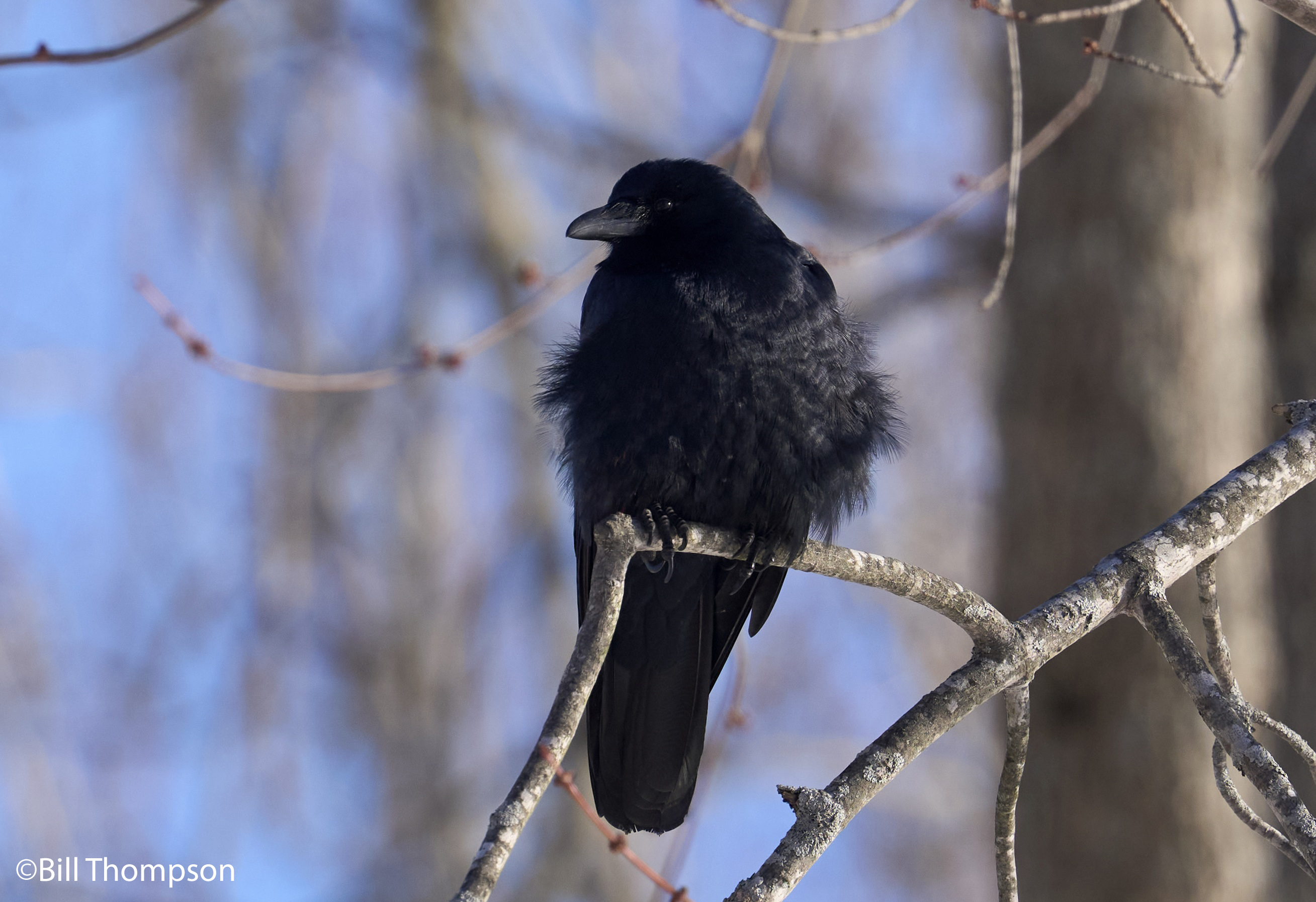
2+ continuing FISH CROWS, Auburn Riverwalk, 2/15 (with Bill Thompson).
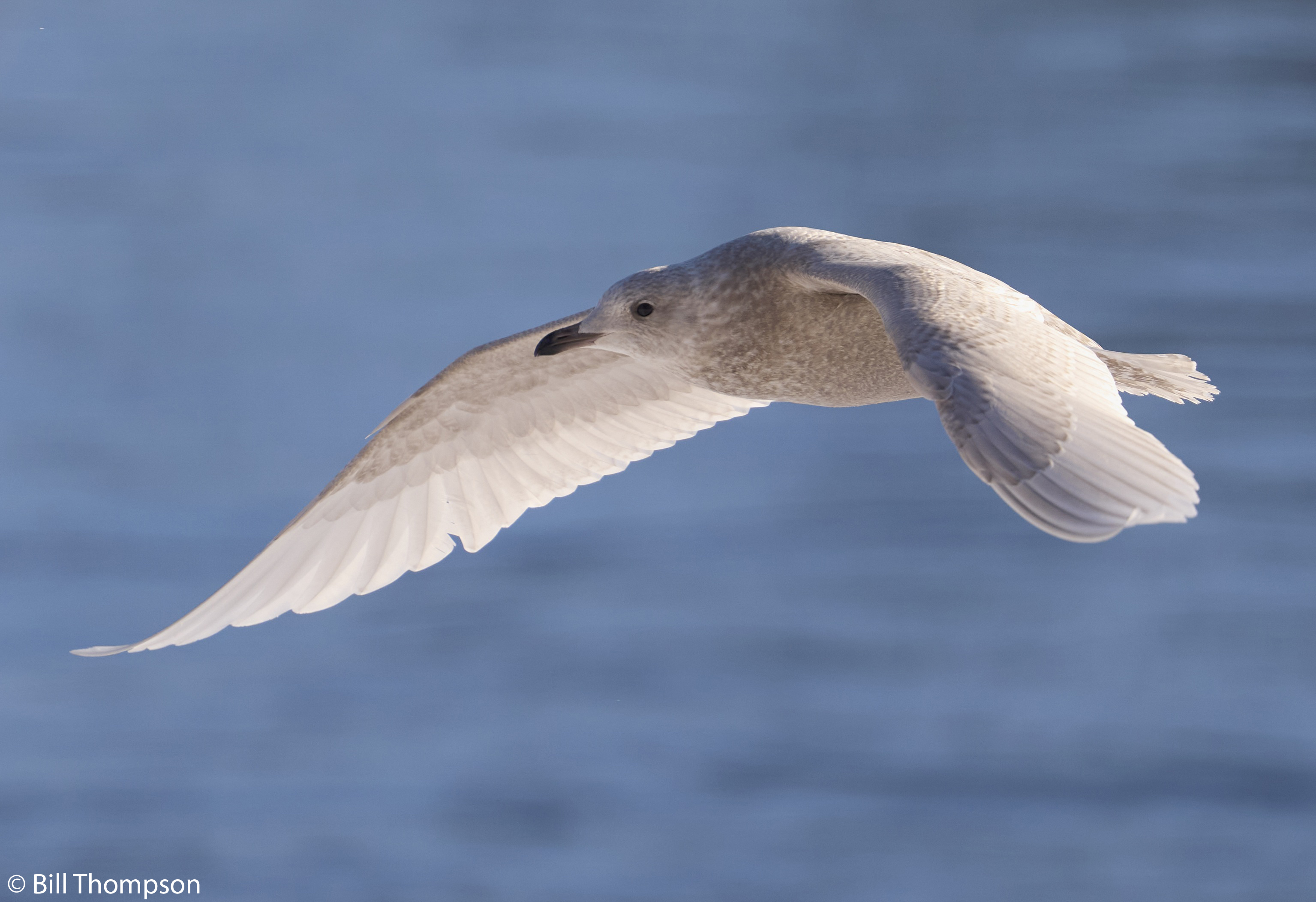
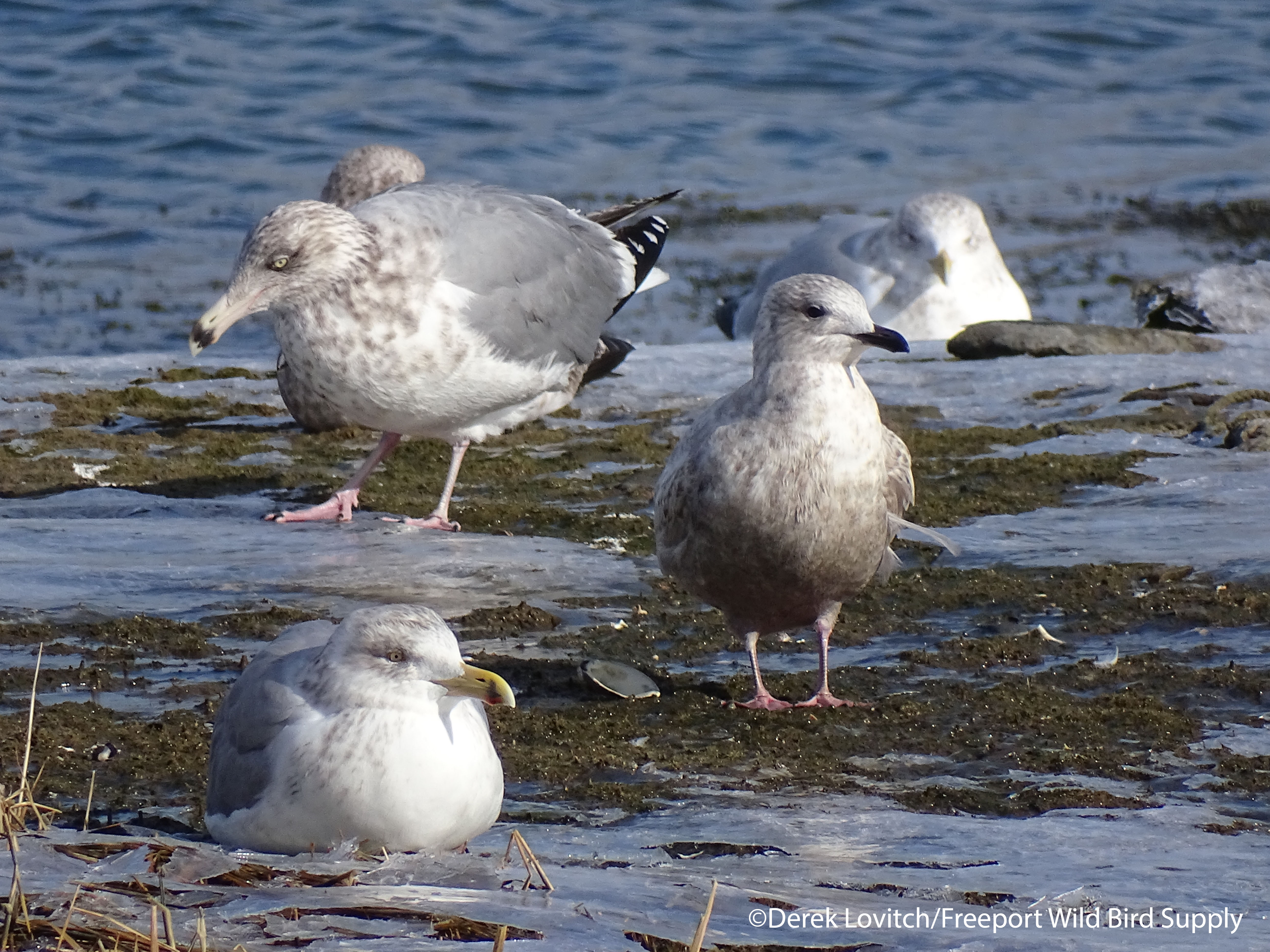
1 1ST-cycle Iceland Gull, Auburn Riverwalk, 2/15 (with Bill Thompson).
~20 Snow Buntings, moving between parking lots on Rte 4/2, Farmington, 2/15 (with Bill Thompson).
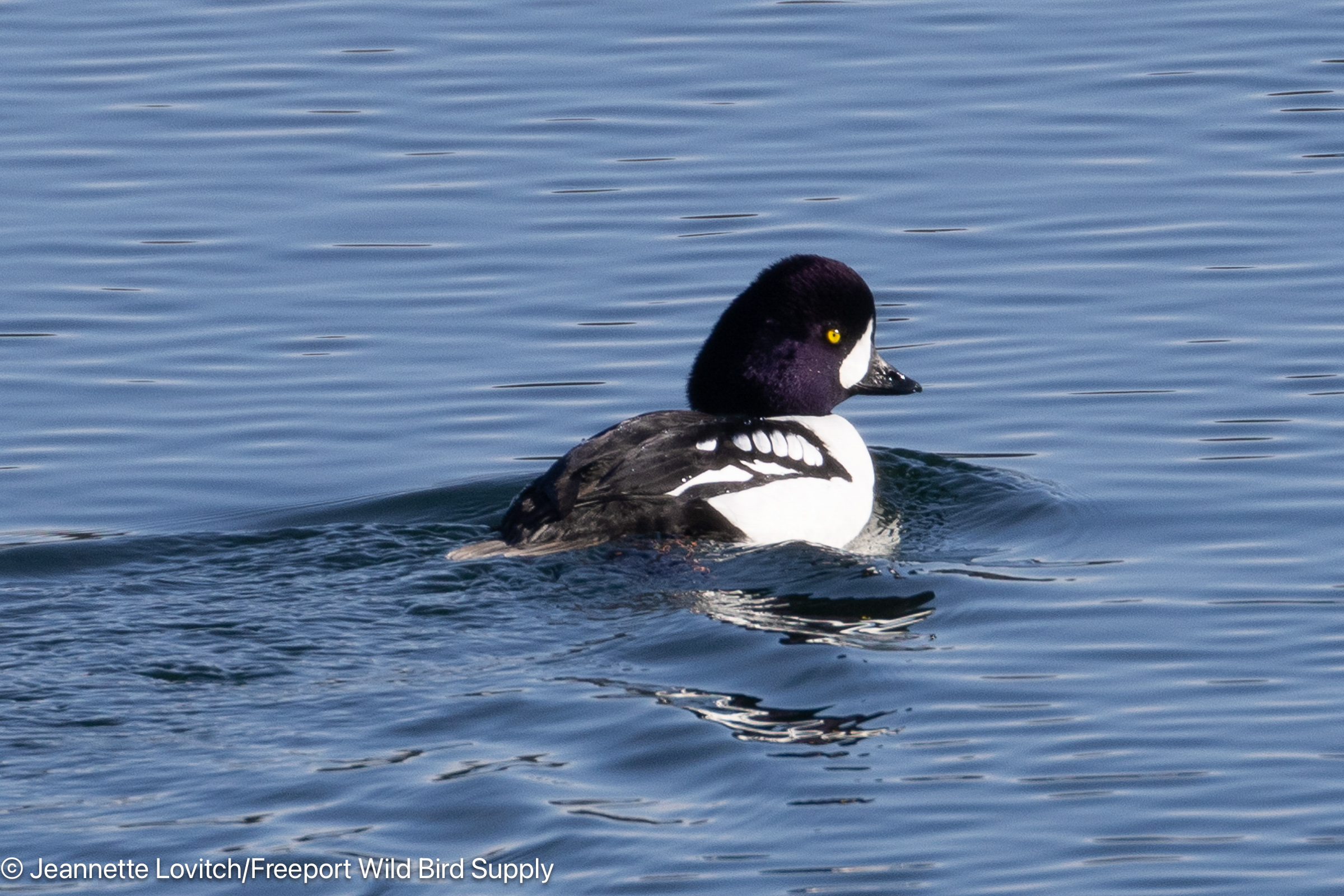
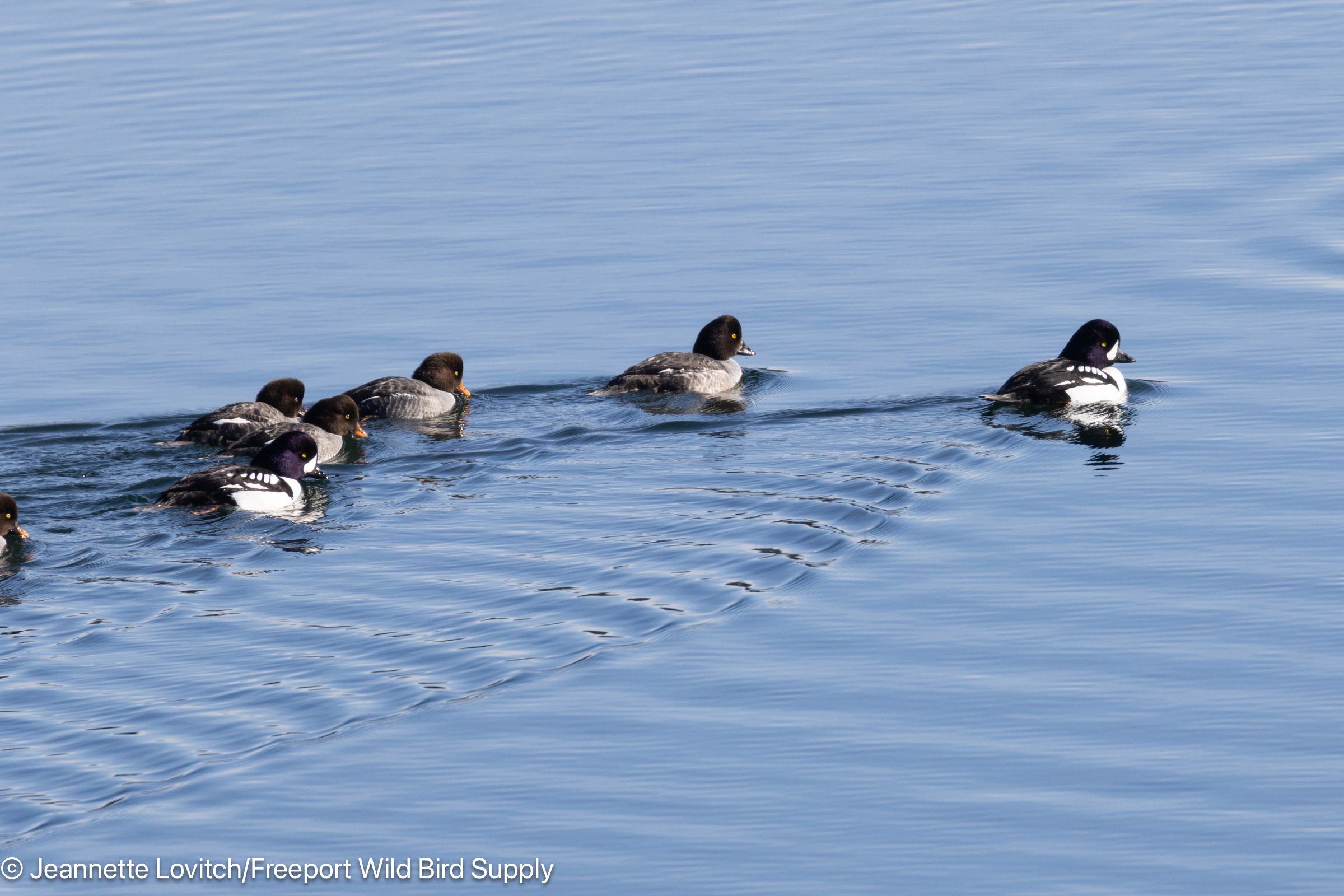
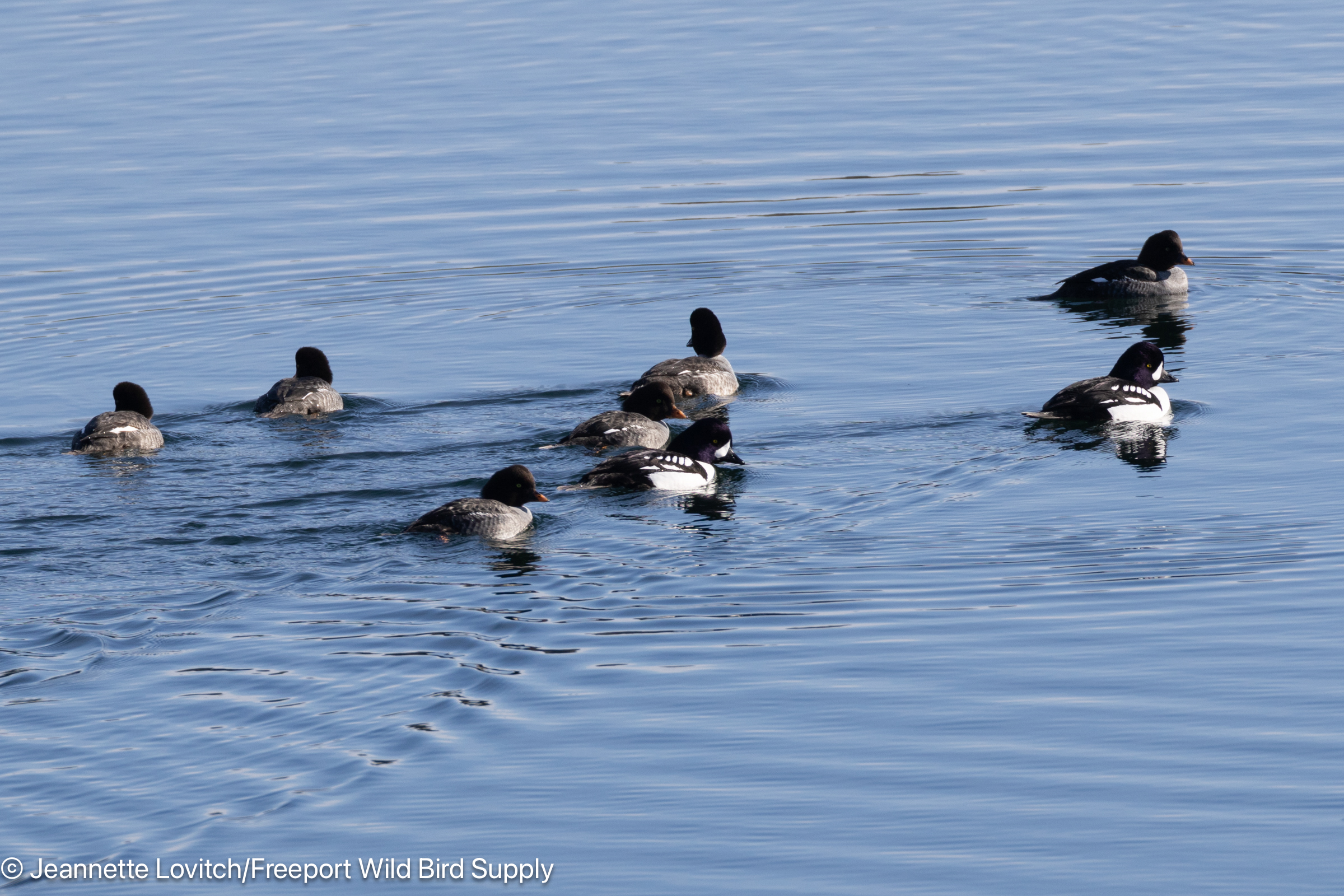
19 (10 drakes and 9 hens) BARROW’S GOLDENEYES, Gurnet Bridge, Harpswell, 2/16 (with Jeannette). This winter’s flock, which maxxed out at 26 individuals, is the largest flock in the state since about 2006. Even though we missed the peak, this was a very impressive flock and was delightful to see!
1 drake Barrow’s Goldeneye, Sandy Point Beach, Cousin’s Island, Yarmouth, 2/22.
1 pair Barrow’s Goldeneye, Cumberland Town Landing, 2/22.
At least one Turkey Vulture continues along the I-295 corridor between Cumberland and Freeport as of this week. Several scattered “TV’s” elsewhere in the area suggests the first trickle of their northbound migration.
One adult Red-shouldered Hawk continues along Rte 136 in Durham, near the Freeport Town Line.
This Week in Irruptives.
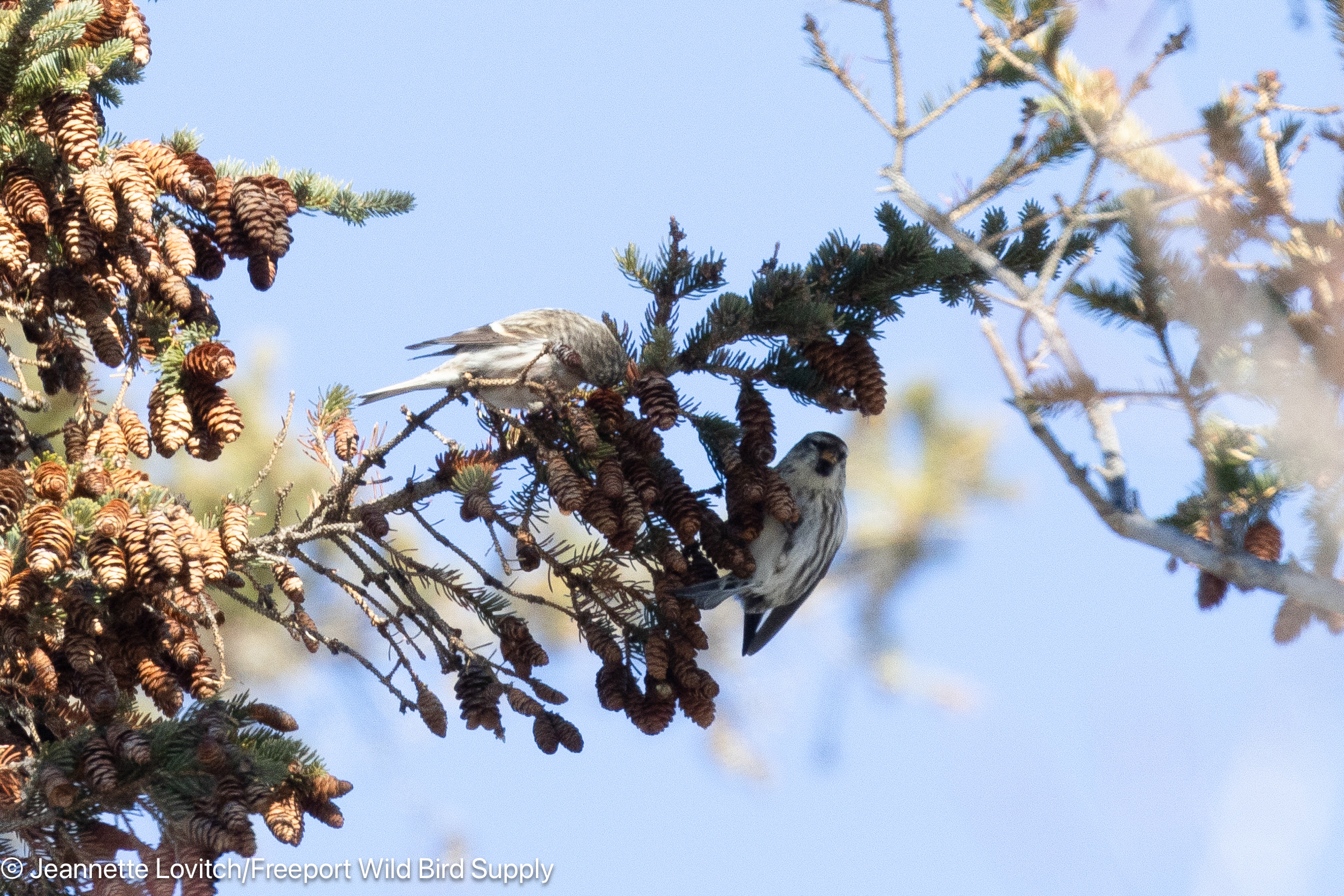
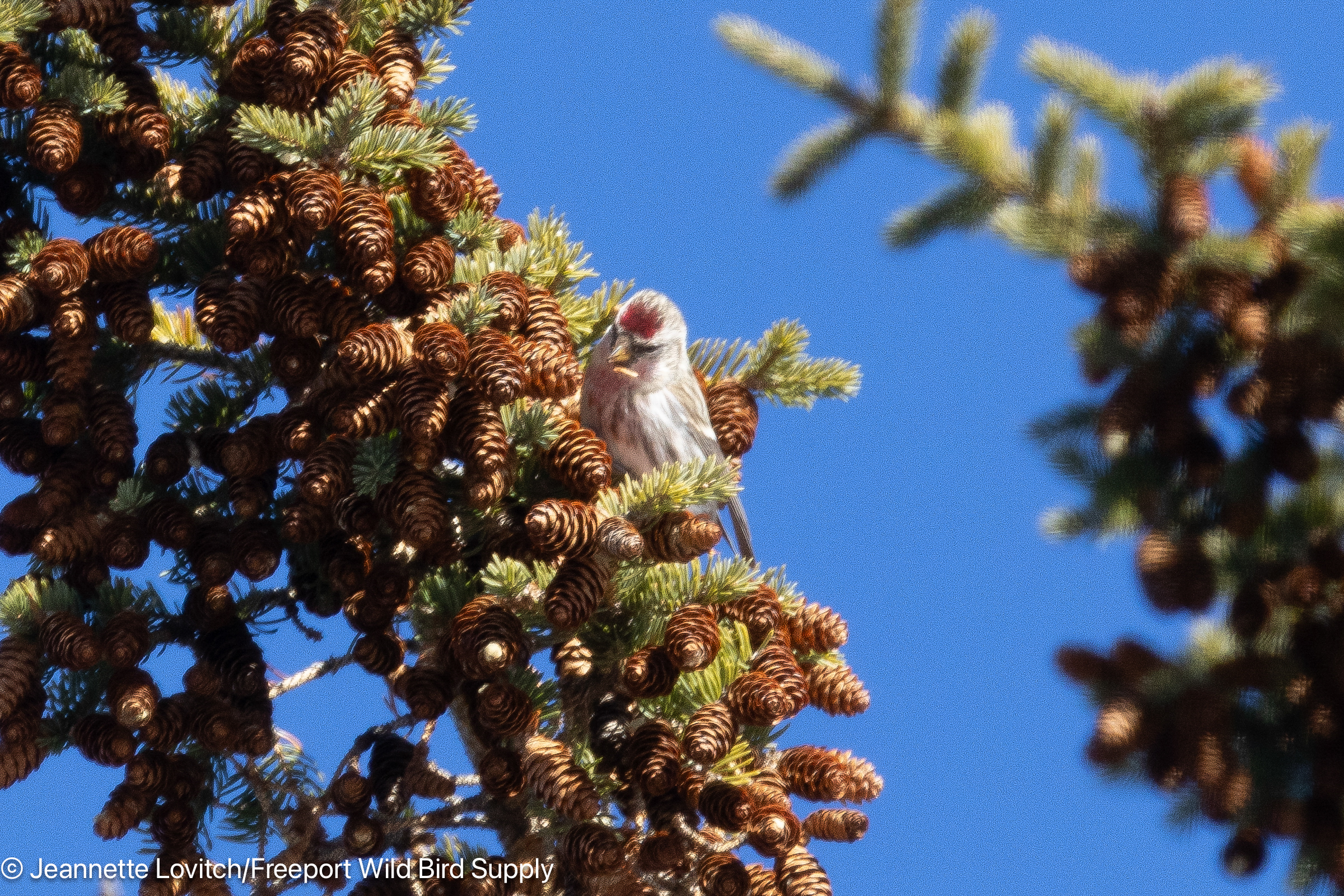
On the 15th, Bill Thompson and I birded from Auburn to Rangeley, mostly looking for irruptives. It was not the birdiest day, and the only frugivores we encountered (despite finding plenty of fruit) were a mere 4 Cedar Waxwings in Farmington. Most of our birding was in and around Rangeley, where we caught up with a flock of 28 Evening Grosbeaks at a downtown feeder, and “dipped” on a small group of Pine Grosbeaks. However, on South Shore Road, we encountered 14 WHITE-WINGED CROSSBILLS (see photo above) and a single Redpoll.
Elsewhere, Purple Finches were a little more widespread this week, although in lower numbers than last week. Jeannette and I had 3 Red Crossbills, including an apparent pair, at Long Reach Preserve in Harpswell on the 16th and one Redpoll flew over our property on the 22nd. Scattered Evening Grosbeaks in the area included one in our Durham yard on the 17th and again on the 23rd. Cedar Waxwings were also a little more numerous this week, although in small numbers (high count of 6 here at the store on the 18th).
Winter Feeder Birds Snapshot.
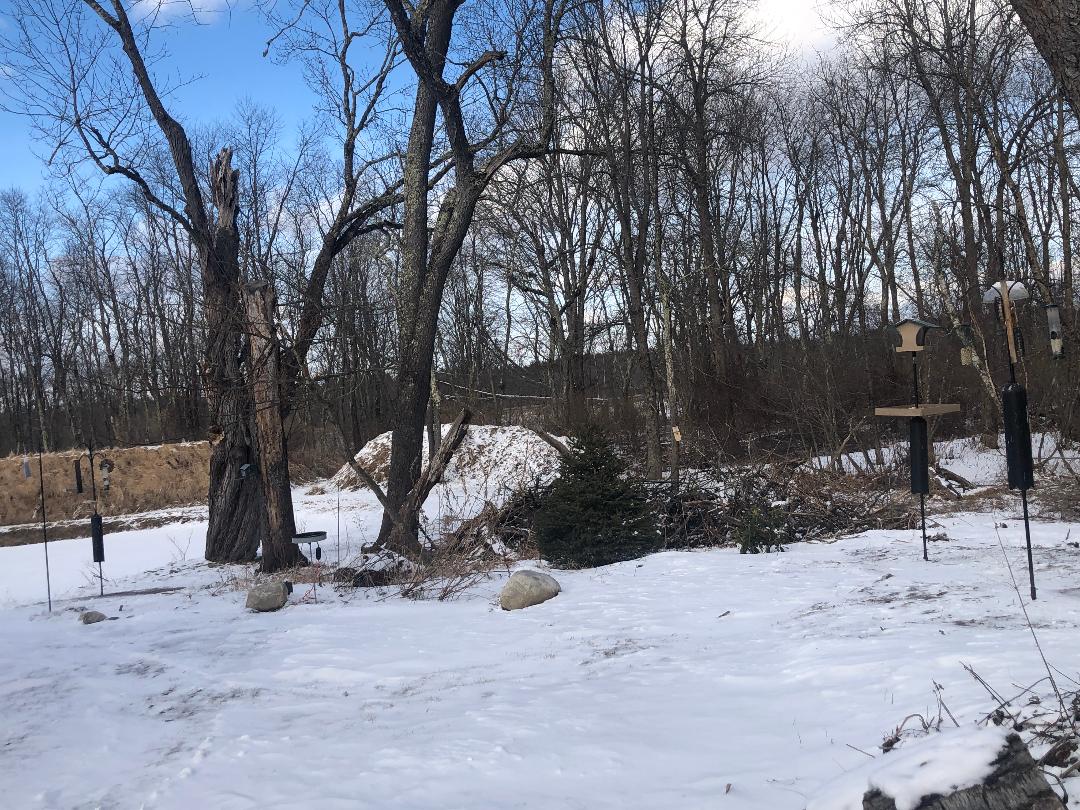
After beginning a “feeder watching blog” while stuck at home from shoulder surgery in the winter of 2023, I continue the tradition for the fourth year now, as I try to compare feeder activity between winters on our property in Durham, Maine, and then attempt to use it as a case-study for what the overall feeder bird activity is like in the area this winter. Here’s the 2026 Feeder Birds Snapshot. Since the “study,” we have seen a few more winter finches, and as of 2/13 are now up to 24 Dark-eyed Juncos, 11 American Tree Sparrows, and at least 45 American Goldfinches.
Redpolls were our most numerous finch during a day of birding Long Falls Dam Road in Somerset County this week.
With three tours in 4 days, never reaching 20-degrees last week through this weekend, my face needed a couple of days break! I took one. And then, on the “warmest” day of the week, Jeannette and I drove north to spend the day in the field. Here are my observations of note over the past seven days.
1 hen “NORTHERN” COMMON EIDER (ssp borealis) and 1 drake Barrow’s Goldeneye, Winslow Park, Freeport, 1/31 (with Saturday Morning Birdwalk group).
1 continuing 1st-cycle Glaucous Gull and 4-5 1st-cycle Iceland Gulls, Old Port, Portland, 2/1 (with Gull Identification Workshop tour group).
1 pair Lesser Scaup with 4 Greater Scaup, along with 24 Brant, Kettle Cove, Cape Elizabeth, 2/1 (with Gull Identification Workshop tour group).
1 drake Barrow’s Goldeneye is back at the Bernard Lown Peace Bridge in Lewiston-Auburn as of the 6th.
2 Fish Crows, Auburn Riverwalk, 2/6.
At least one Turkey Vultures continues along the I-295 corridor between Cumberland and Freeport as of this week.
Feeder-watching at home in Durham has been the name of the game on most mornings this week. The excitement came on the 5th, when an immature Cooper’s Hawk took a run at something. Everything flushed. Then, a Barred Owl came gliding in and either landed on the Cooper’s Hawk or immediately next to it. The Cooper’s Hawk flew away, the Barred Owl looked around in snow for a moment before flying into tree.
Was this attempted kleptoparasitism (stealing food) instead of a predation attempt? A Barred Owl has been regularly sunning itself in a spot that would provide a good sightline to where this occurred, so it was probably seeing a potential opportunity for brunch. I am just unsure what opportunity it saw.
This Week in Irruptives.
Here in Greater Freeport, a few more Purple Finches have been around and we had a single Red Crossbill in our yard on the 2nd. Scattered Evening Grosbeak reports continue as well.
Meanwhile, Jeannette and I headed north to Long Falls Dam Road in Somerset County on the 3rd. Birding for most of the day, focusing on irruptives, we tallied:
43 “Common” Redpolls – scattered small flocks (largest was 12) all day. Not including the 1 roadkill.
8 Evening Grosbeaks – two small groups at feeders in North New Portland.
6 Red Crossbills – gritting on Back Road.
2 Pine Grosbeaks -flyovers at North Bowtown Road
Only 4 American Goldfinches and 1 Purple Finch
Well above average numbers of Red-breasted Nuthatches but only average – or slightly below – numbers of Black-capped Chickadees.
Red Spruce cones were abundant, Black Spruce was patchy, and there was plenty of alder and birch, but no cones of White Spruce, White Pine, or Balsam Fir.
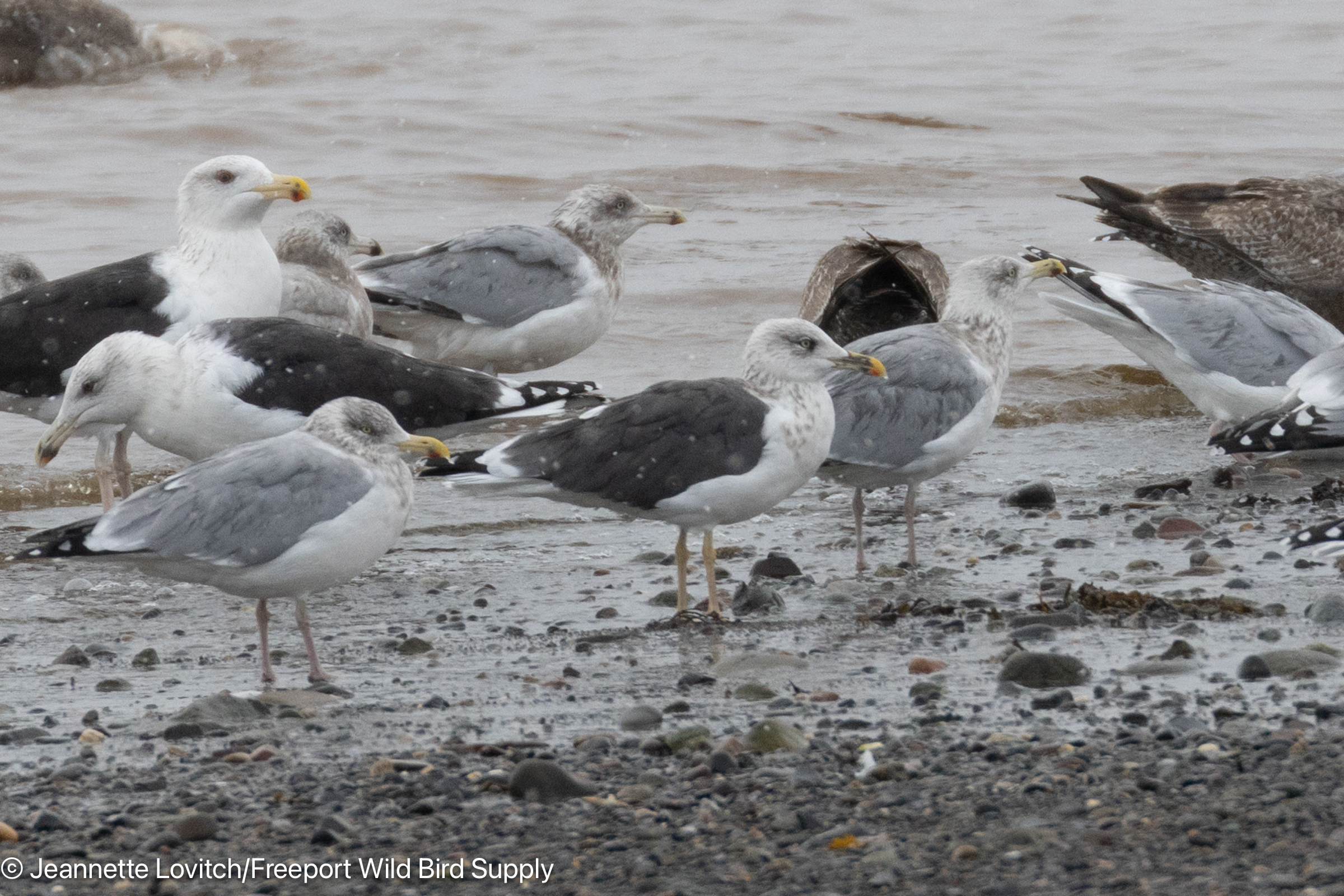
Need help identifying all of the exciting gulls at Mill Creek Cove this winter (such as this 1st winter Iceland Gull present on the 23rd)? Well, we have just the workshop coming up for you (see below)!
After being out of town for a week, we returned late on the 16th and got back to work. Sneaking in some morning birding on most days yielded a nice array of winter notables, without needing to venture too far afield. Here are my observations of note over the past 7 days.
For at least the second consecutive winter, an adult Red-shouldered Hawk has been frequenting the edges of Rte 136 in Durham, near the Freeport Town Line.
3 drake and 1 hen Barrow’s Goldeneye, Winslow Park, Freeport, 1/17 (with Saturday Morning Birdwalk group).
Like clockwork, Brant arrived in Cape Elizabeth in the 3rd week of January. I had 30 (FOY) at Kettle Cove, with another 24 (or part of the same group) at Dyer Point a short while later on 1/23.
Some of the 24 Brant off the rocks at Dyer Point on the 23rd.
This Week in Irruptives.
I encountered a few more Purple Finches here and there this week, mostly singletons. A lone Red Crossbill at Mt Apatite Park in Auburn on 1/21 (with Jeannette) was the first I have seen away from Red Spruce in a while, but one singing in flight at Village Crossings in Cape Elizabeth on the 23rd was a surprise. Meanwhile, EVENING GROSBEAKS continued to be scattered about, with 3 visiting our feeders in Durham on the 19th.
Upcoming Trips and Tours.
Gull Identification Workshop -THIS WEEKEND!
It’s not too late to join us for our Gull Identification Workshop! The classroom session will be held tomorrow, Saturday, 1/24, but the field trip has been postponed until Sunday, February 1st due to the dangerously cold weather expected. You can sign up for just the lecture portion.
In this workshop, we’ll hit a few of the prime viewing locations along Maine’s southern coast. But we won’t just be working on the checklist today. Instead, we’ll be focused on learning how to search for these birds – the how, when, and why – and how to identify them. We’ll learn about microhabitats, weather considerations, and seasonal timing to aid our search today and in the future. By visiting several seasonally-productive sites, we’ll compare similar species while taking time to savor the splashes of color offered by winter seaducks in an otherwise gray and white landscape.
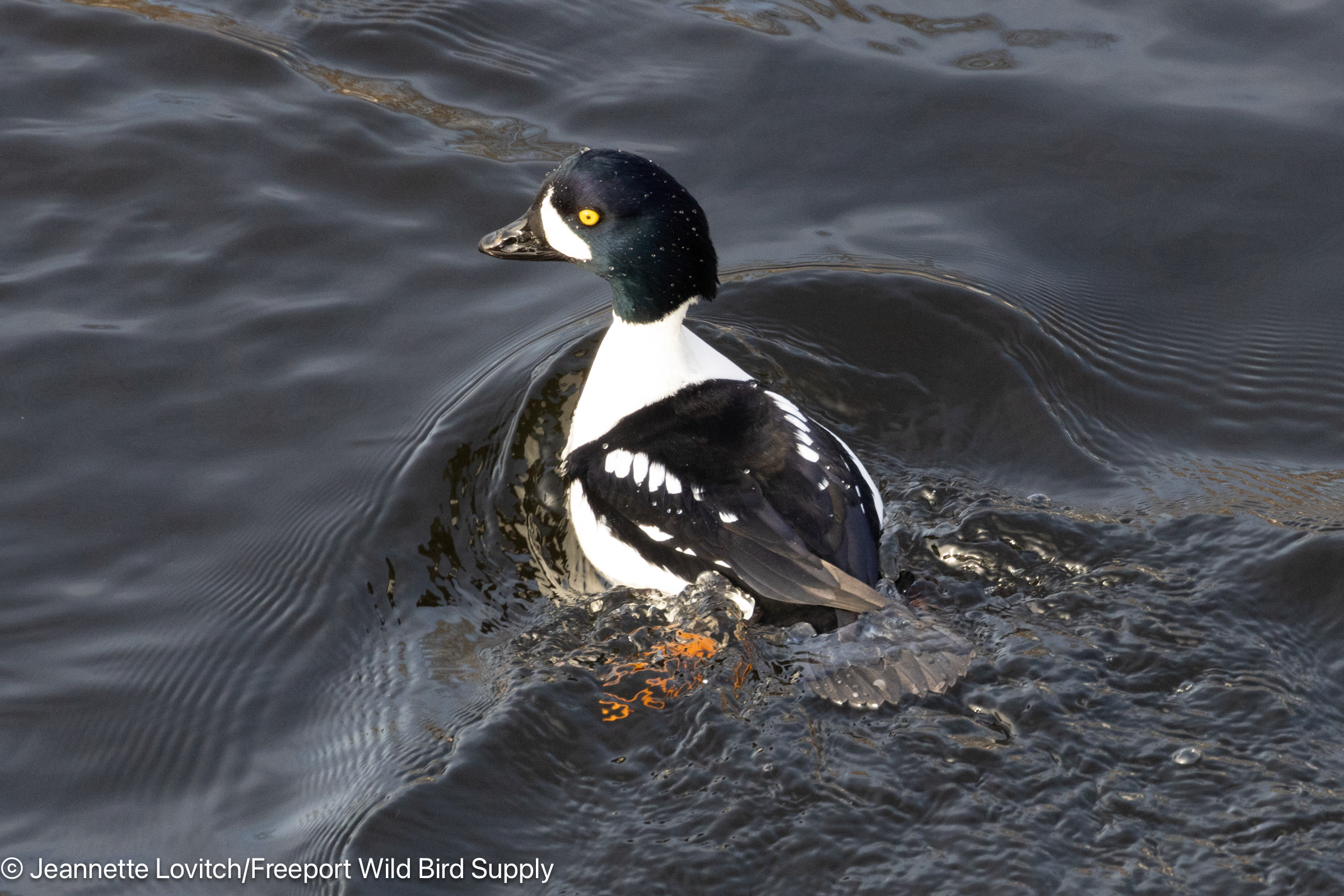
This drake Barrow’s Goldeneye was one of the foursome currently in the Androscoggin River between Auburn and Lewiston, most often in view from the Bernard Lown Peace Bridge. Jeannette paid them a visit on the 6th, where she found this one male just below the bridge.
Except for a delightful morning at Reid State Park, my birding outings were short and local, but I did enjoy catching up with local patches and their winter denizens, especially Barrow’s Goldeneyes. Here are my observations of note over the past seven days.
2 drake and 2 hen Barrow’s Goldeneyes, Winslow Park, Freeport, 1/4.
1 drake Barrow’s Goldeneyes, Sandy Point Beach, Cousin’s Island, Yarmouth, 1/6.
1 SNOWY OWL (FOS), 9-11 Red Crossbills, 58 Red-necked Grebes, 1 Savannah Sparrow (subspecies undetermined), 26 Sanderling, etc, Reid State Park, Georgetown, 1/8.
1 hen Barrow’s Goldeneye, Front Street Boat Launch, Bath, 1/8.
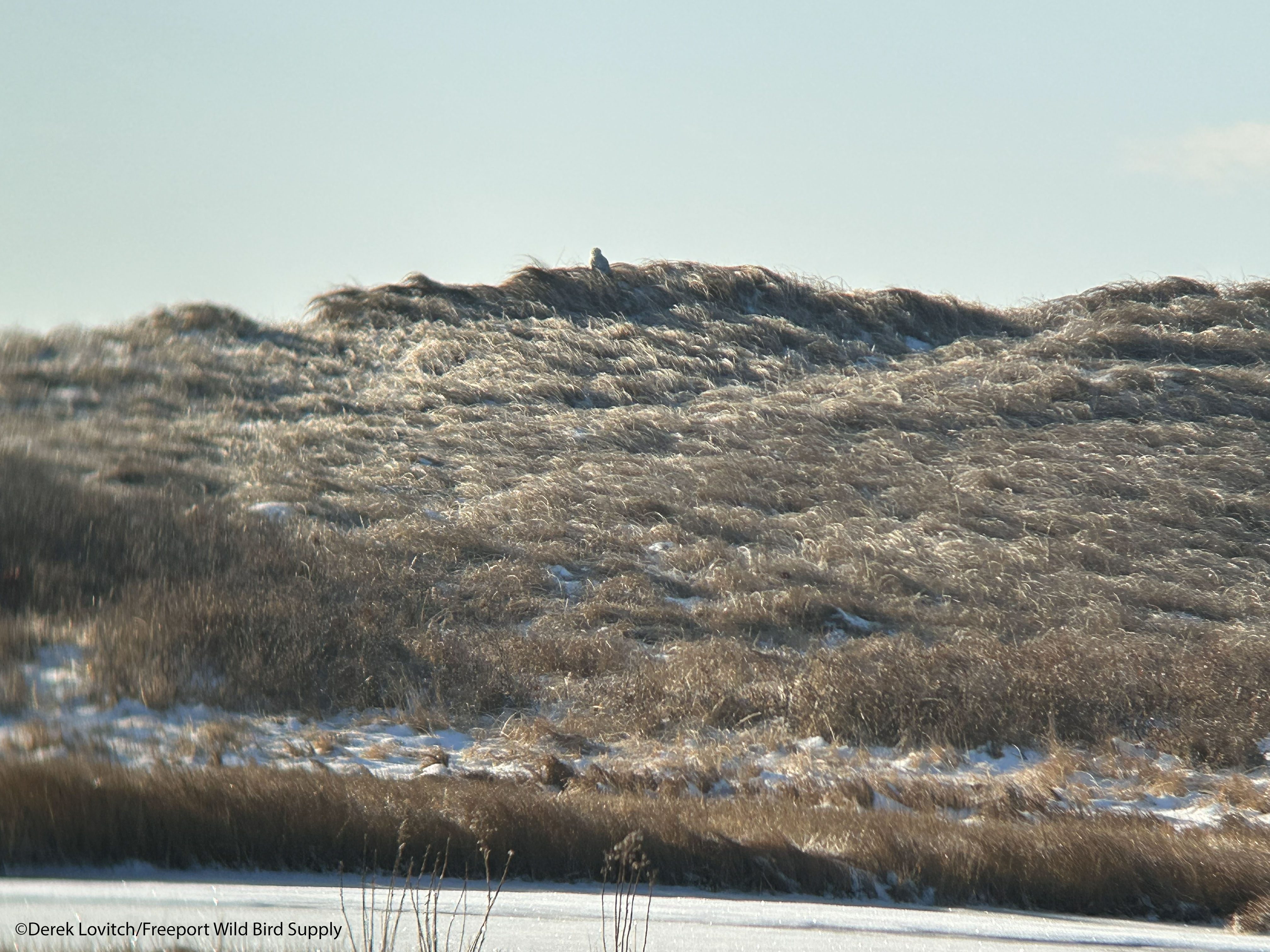
This is how I like my Snowy Owls…safe in the distance, backlit, poorly phone-binned, and otherwise unconcerned with my presence. Later, I spent 30 minutes observing it in the distance as it moved around, perhaps to get in position for hunting, or perhaps because it was getting too warm!
This Week in Irruptives.
American Goldfinches and Red-breasted Nuthatches remain very abundant. While a number of customers at the store have continued to report scattered small flocks of Evening Grosbeaks at feeding stations, I did not hear or see any yet again this week. In fact, my only irruptive in limited time birding was a single Pine Siskin at Florida Lake Park on the 7th, until I re-entered the Red Spruce zone at Reid State Park on the 8th. There, there were several Pine Siskins and at least 9-11 Red Crossbills – including two singing males suggestive of upcoming mid-winter breeding!
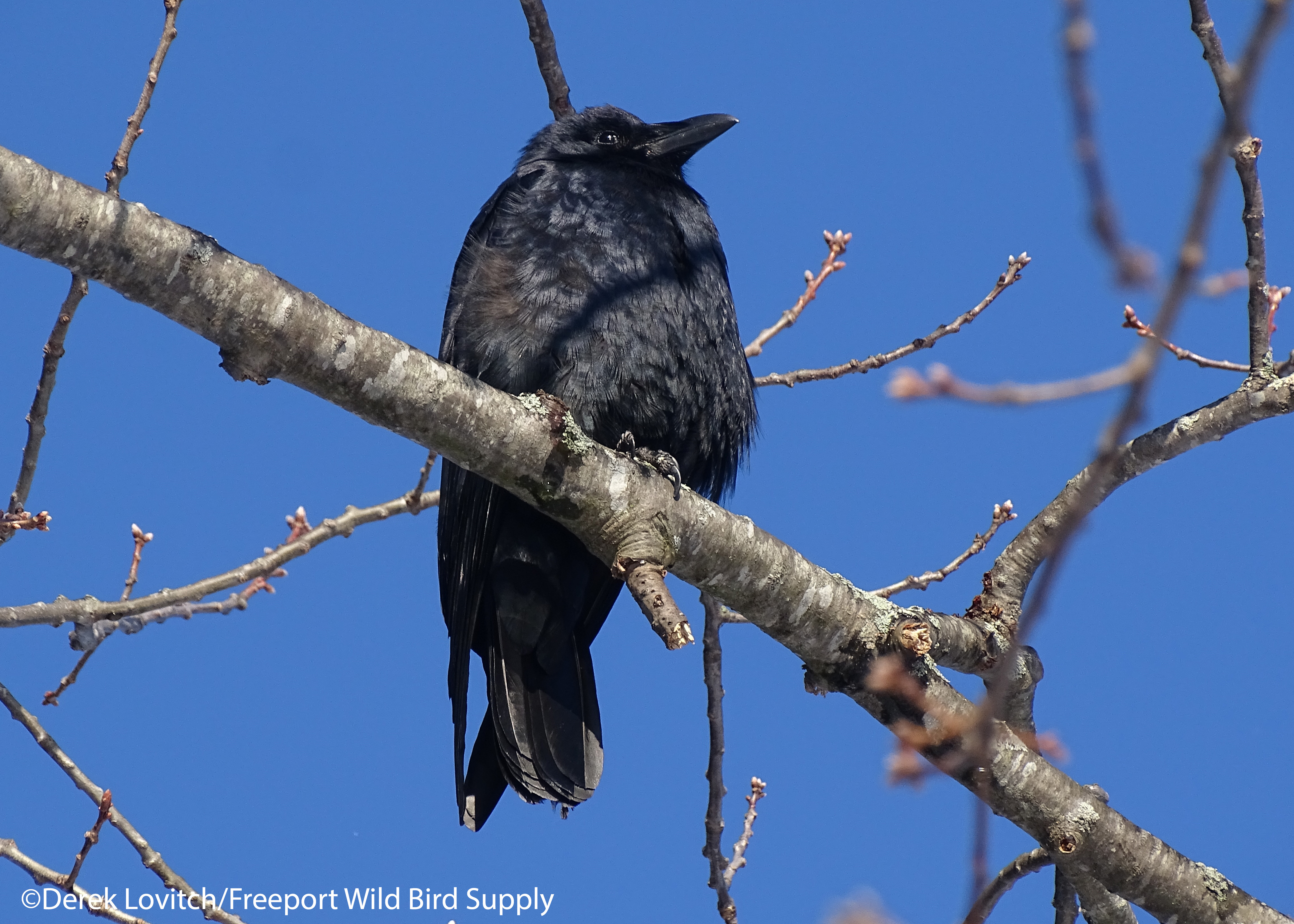
One of likely at least 7 Fish Crows that I encountered along the Auburn Riverwalk posed nicely for me on a chilly morning on the 11th. How many Fish Crows are now in the neighborhood, and how many might overwinter? I guess I’ll try and find out!
Because it wasn’t wintery enough already in Southern Maine, I drove north for my annual early-December Greater Bangor birding visit, which is always a good way to gauge the coming winter’s food resources and irruption status, for better and for worse! Here are all of my observations of note over the past seven days:
1 American Woodcock, Winslow Park, Freeport, 12/6 (with Saturday Morning Birdwalk group).
Three days, mostly in Penobscot County, didn’t produce nearly as many irruptives as I had hoped. In fact, all finches other than American Goldfinch were scarce. I encountered a few flocks of American Robins, but few other frugivores so far, despite widespread ample crabapple and other fruit crops. Visiting the same spots as I do every year, plus a few additional locations gave me some idea of food recent and current species compositions. Recent bitter cold rapidly froze up many seasonal hotspots were locked in, but my total of 42 species was nowhere near my lowest tally over the years from this route! My highlights included the following:
1 drake Ring-necked Duck, Fisherman’s Park, Brewer, 12/7.
2 continuing Fish Crows and 3-4 first-cycle Iceland Gulls, Bangor Waterfront Park, 12/7.
1 WHITE-WINGED CROSSBILL (FOS), 1 AMERICAN GOSHAWK, and 11 PINE GROSBEAKS (FOY), Stud Mill Road, 12/8.
1 Yellow-bellied Sapsucker, Littlefield Gardens, University of Maine – Orono, 12/8.
1 hen Barrow’s Goldeneyes (FOS), Shawmut Dam from River Road, Benton, 12/9.
6-7+ FISH CROWS in Auburn, 12/11. A small colony of Fish Crows have been frequenting Auburn (and sometimes across the river in Lewiston) for several years now. Two may have overwintered here last year, although I stopped seeing them mid-winter around Anniversary Park and the Auburn/Lewiston riverfront where I tend to bird at that time of year. This winter, at least 2 have been reliable at Anniversary Park, with one eating ash seeds across the Little Androscoggin, and another calling to it from the nearby neighborhood. Then, at least 2 more began calling from further up the Little Andy. All four were audible when I left, and then I walked the Auburn Riverwalk. There, two more were feeding contently in the Bradford/Callory Pears at the Hilton Garden Inn. Walking back south, I encountered another contently-feeding bird eating ash seeds near the pedestrian bridge. Crows can fly faster than I walk, but there was not a perceptible movement or flow of either the Fish or the abundant American Crows at the time. It’s possible there were only 4, but my guess is there were 7 individuals encountered today. I’ll be keeping my ears open all winter to see if they stick around! Of course, with many thousands of American Crows coalescing to roost here it can be a needle in a haystack to find them and see if they are setting up a resident population (most of Maine’s Fish Crows are migratory, but it seems that outlier colonies – like here and Bangor – seem less likely to migrate. A couple of few individuals of the larger Brunswick colony also seem to stick around now. Will it be long before Fish Crows are a widespread, year-round resident of the state? Photo of one of them above.
2 Red Crossbills in Bradbury Mountain State Park, 12/12, were my only Reds anywhere in the state this week.
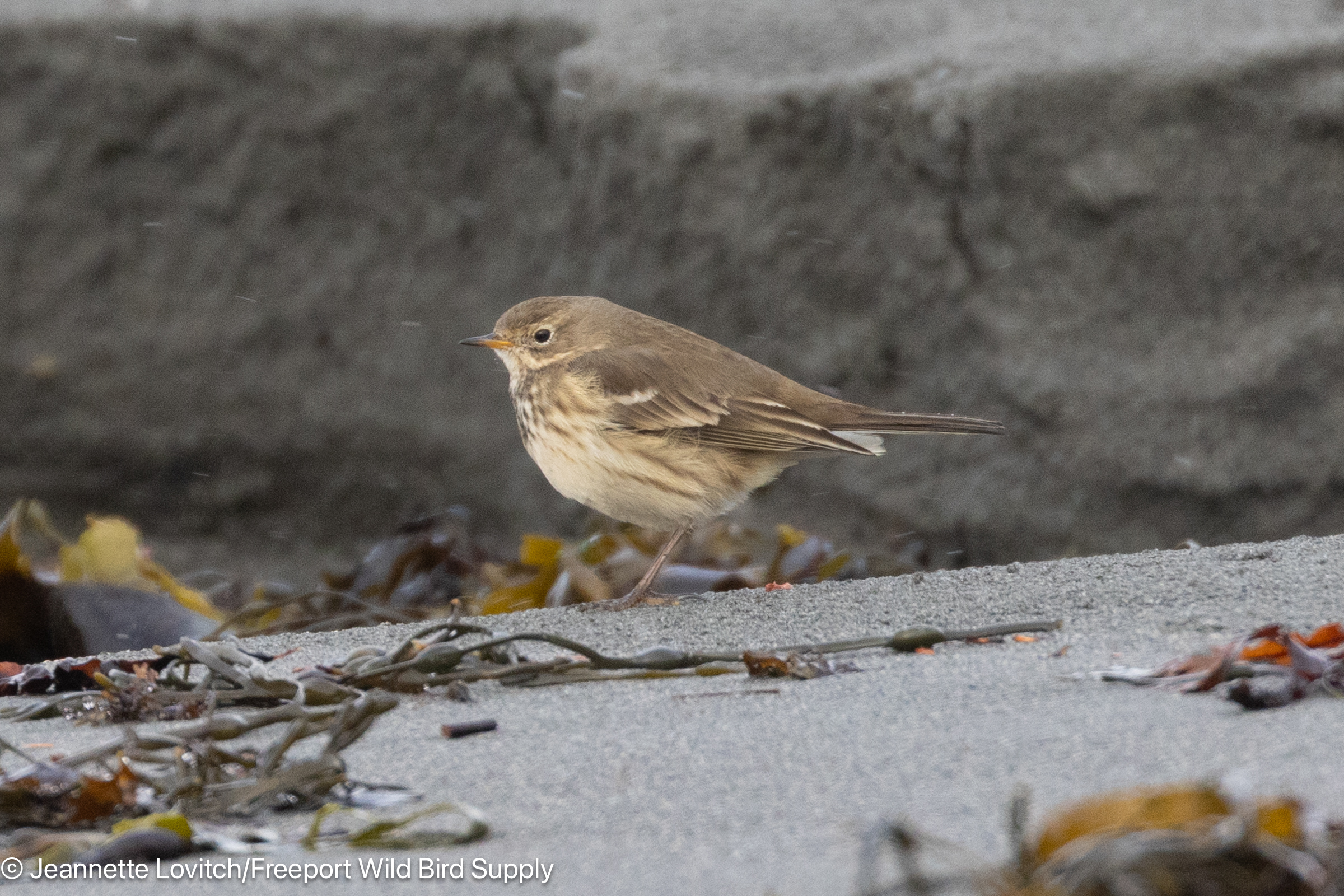
Six, somewhat-late American Pipits at Carrying Place Cove in Lubec were among the highlights of three days of dedicated rarity-searching in Washington County for our “weekend” this week. I was hoping for a wagtail though…or a Meadow Pipit.
I had a very busy week of birding, led by three days of searching for rarities in Washington County. Locally, my observations of note over the past eight days were as follows:
Scattered Red Crossbills continue in southern Maine, and Pine Siskins are increasing now.
1 Indigo Bunting, West Commercial Street, Portland, 11/13.
1 Orange-crowned Warbler (my 10th of the season!), South Portland Greenbelt Pathway, 11/13.
1 Rusty Blackbird, our property in Durham, 11/15.
1 NASHVILLE WARBLER and a variety of marginally late migrants such as 2 Hermit Thrushes and a Chipping Sparrow, etc, Bailey Island, Harpswell, 11/20.
Jeannette and I visited Washington County 11/16-18, with our priority being all of those little places we see in the summer that “looks good for rarities” in the late fall Rarity Season. So finally, we made it happen. Unfortunately, one day of rain, one day of snow, and two days of very strong winds made bird-finding rather challenging. We would have much preferred these clear and calm days of the second half of the week!
Our notable observations included:
3 continuing Gadwall, 18 American Wigeon, 8 Northern Pintail, 182 Green-winged Teal, etc, Sebasticook Lake, 11/16.
1 BARN SWALLOW, Roque Bluffs State Park, 11/16.
6 American Pipits, Carrying Place Cove, Lubec, 11/17 (photo above).
1 4th-cycle Lesser Black-backed Gull and 1 1st-cycle Iceland Gull, Mowry Beach, Lubec, 11/17.
1 1st-cycle Iceland Gull, Lubec village waterfront, 11/17.
1 ORANGE-CROWNED WARBLER, Old Farm Point Park, Lubec, 11/17.
4 Snow Buntings, Petit Manan NWR, 11/18.
1 1st-cycle Icleand Gull, Bangor Waterfront Park, 11/18.
Locally unexpected/rare: 1 Tufted Titmouse in a mixed species foraging flock at Hamilton Cove Preserve on 11/17 and two Red-bellied Woodpeckers in Lubec on 11/17 (“downtown” and Old Farm Point Park). Meanwhile, Red-breasted Nuthatches were exceptionally abundant, while both Black-capped Chickadee and Golden-crowned Kinglets seemed above average. Every mixed species foraging flock had plenty of each of the big three.
Finches: American Goldfinches were fairly widespread, and scattered small numbers of Purple Finches were around, but since finches are often detected via flight calls, the weather – especially the strong winds – did not make it easy to detect them. We also spent less time in Boreal habitats on this trip than most. So, other than those two, our finch observations were sadly limited to only 1 Evening Grosbeak and 5 Common Redpolls (FOF), Hamilton Cove Preserve, 11/17; 2 Red Crossbills and 2+ Pine Siskins, Machias River Preserve, Machias, 11/18.
Frugivores: American Robins were the only widespread frugivore so far, including an ample vismig on 11/17 with snow falling. 8 Cedar Waxwings and a distant flock of about 30 likely Bohemian Waxwings at Old Farm Point Park on 11/17. We were disappointed to not run into any Pine Grosbeaks.
Using our Durham yard as a case study, I wanted to check to see if there were indeed fewer birds this winter than last year, as some (but no longer a majority) of folks have continued to mention to us at the store.
Stuck at home last winter while recovering from shoulder surgery, our feeding station provided my primary source of entertainment. I occupied my time with mugs of tea and enjoying the activity, and occupied my mind with figuring our exact counts, keeping tallies, and watching behavior closely. I wrote about my counts and observations in a pair of blogs, the first one is here, and the second one is here.
This past fall, everyone saw a very slow fall at feeders in Maine, and throughout the East, as discussed here. That was changing for a lot of people – but not all, by December, which I talked about in this follow-up blog.
In January, a series of strong storms, unseasonable heavy rain and flooding, a few cold spells, and eventually, by month’s end, solid snowcover helped change the narrative. Winter food resources were being consumed, ground-feeders were being forced out of the woods, finches were moving about, and so on. Furthermore, I believe that those strong storms knocked a lot of cones – especially those of Eastern White Pine – to the ground where they were subsequently consumed and/or buried.
At least here at our feeders in Durham, a slow start to the winter was a thing of the past, as we were filling almost all of our feeders daily by the end of January. Some impressive tallies included over 70 American Goldfinches and over 50 Dark-eyed Juncos at the end of the month.
American Goldfinches have been absolutely ravaging Nyjer at our home this winter. Fresh Nyjer makes all of the difference!
While some factors remain true from the fall – an abundance of natural food overall, relatively limited snowcover, low movement of irruptive species, etc – clearly most people were reporting to the store that things were “back to normal” or “tons of birds all of the sudden,” and so on. Our seed sales more than doubled by the end of January from what they were at the beginning of the month (by overall poundage).
Just how “normal” have things returned to, and what anomalies are out there? While our home in Durham is only two years old, and we’re a long way away from baseline data or long-term averages, we can at least compare February of 2024 to February of 2023. And since I had nothing better to do last winter, I already had some data to compare to.
So, for the last 10 days (not including the two that we were out of town for), I have once again returned to the window for dedicated sessions of feeder-watching and counting. Like last year, I used the standard methodology of using “high counts” (maximum number of individuals seen at any one time, unless they were readily identifiable as being different), and I was sure to count for at least one hour a day each day.
February 5 – February 15 (minus 2/12 and 2/13).
Species
Average per day 2023
Average per day 2024
Difference
Wild Turkey
0.2
0
-0.2
Mourning Dove
13.5
26.5
+13
Sharp-shinned Hawk
0.4
0.2
-0.2
American Goshawk
0
0.1
+0.1
Red-bellied Woodpecker
1
1
Same
Downy Woodpecker
2.4
2.9
+.5
Hairy Woodpecker
2
2
Same
Pileated Woodpecker
1
0.1
-0.9
Blue Jay
7.8
3.0
-4.8
American Crow
0.7
0
-0.7
Black-capped Chickadee
7.4
2.9
-4.5
Tufted Titmouse
4
3
-1
White-breasted Nuthatch
2
1.4
-0.6
Red-breasted Nuthatch
0.7
0
-0.7
Brown Creeper
0.4
0
-0.4
Carolina Wren
0.9
1
+0.1
European Starling
1.1
2.7
+1.6
Eastern Bluebird
4.4
3
-1.1
House Finch
2.1
0
-2.1
Purple Finch
0.5
0.3
-0.2
Pine Siskin
0
0.2
+0.2
American Goldfinch
26.6
46.8
+20.2
American Tree Sparrow
8.0
4.2
-3.8
Dark-eyed Junco
16.6
30.3
+13.7
White-throated Sparrow
2
2.3
+0.3
Song Sparrow
0
0.9
+0.9
Northern Cardinal
5.2
3.8
-1.4
Total individuals/day
110.9
138.6
+27.7
*Addendum: I guess I should have continued the study for a few more days! By 2/17, we had a whopping 72 Dark-eyed Juncos and an increase to 13 American Tree Sparrows, and by the next day, the American Goldfinch flock returned to well over 60 birds!*
Every year is different, and every yard is different. Controlling here for time and place, we can make some comparisons however. It was much colder in this period last year, with an average morning low of 19.6. This year, the average morning low for the ten days was 23.9 and there is a lot less snow on the ground, even after the fresh inch and a half Friday morning; there were three light snowfall events during the “study period” last year.
Clearly, there are plenty of birds at our feeders at least! And, contrary to conventional wisdom, we actually have more birds overall than last year! The dearth of feeder birds from the fall is no longer true for us. Similar conclusions can be reached from comparing data on our feeder birds at the store, and from conversations with friends and customers. Therefore, I believe the overall pattern fits what many are observing throughout the area.
As discussed in the aforementioned feeder blogs from the fall, Black-capped Chickadees are in low numbers. I saw 4.5 fewer per day at the feeders than last year. This goes with the idea that our local residents were not augmented by irruptives from points north, but also suggests that they did not have a great breeding season. Same for Red-breasted Nuthatch and Blue Jays.
But native sparrows are in larger numbers than last year, especially Dark-eyed Juncos (and elsewhere, like our store, significantly more White-throated Sparrows with a new winter record of 24 on 2/16). My guess is because the mild fall, abundant seeds from a productive growing season, and benign start to the winter kept those around to be pushed to feeders as the season wore on.
And yes, there are indeed a lot of goldfinches around! But very few other finches – at least at feeders. I am not sure where these European Starlings came from, however, and I’m not overly pleased by it!
Raptors are another part of the equation. This time last year, we had more consistent presence from two different Sharp-shinned Hawks. This winter, we only recently confirmed the presence of a single Sharp-shinned Hawk (seen on 2/15 and 2/16, but she likely took a Mourning Dove on the 14th). There was also an all-too brief fly-through of an immature American Goshawk on the 6th. Also this winter, a Red-tailed Hawk has been more frequent around the feeding station, but its focus is primarily the squirrels and voles. So we’ve had enough native predator presence both years that it shouldn’t be a huge factor in comparing feeder counts.
There you have it. 2024 does not have fewer birds at feeders compared to the same period in 2023, at least not in our yard as a single case study. With continued improvement of our yard’s habitat (most of which was put on hold this year due to my shoulder issues) planned, we would hopefully be increasing our yard’s carrying capacity, as feeders remain only a supplement and a relatively small percentage of a bird’s diet, even in the depths of winter.
Next winter, we also might not find a single Eastern White Pine cone in the entire state, and a lot fewer Red Oak acorns and Balsam Fir cones. And if that’s true to our north, perhaps this will increase the amount of irruptives around the area. But we’ll see! And maybe I’ll repeat this exercise next year, if I can force myself to sit still long enough!
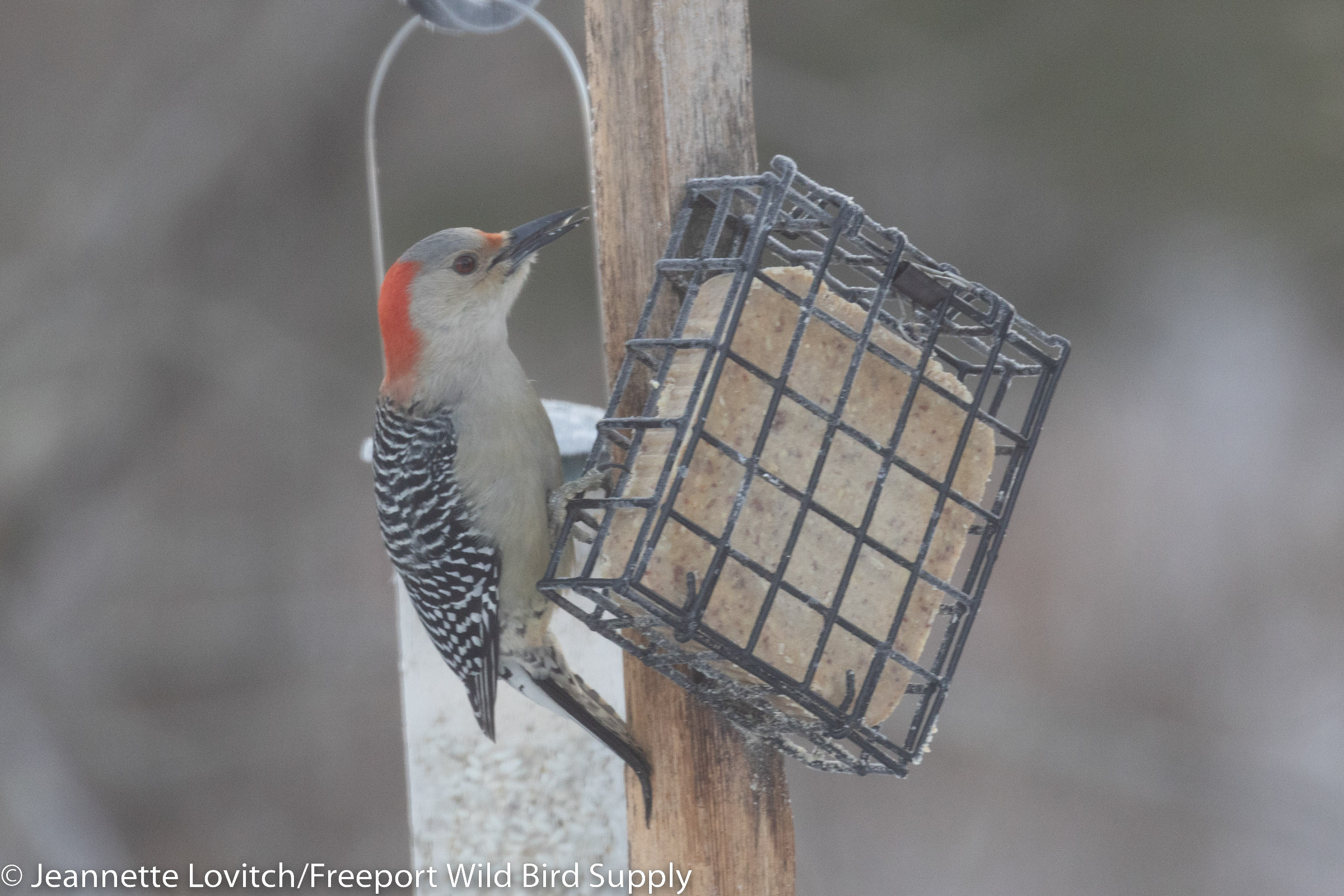
Last winter, we had a male Red-bellied Woodpecker nearly every day, while this winter it has only been this female. We hope they find each other!
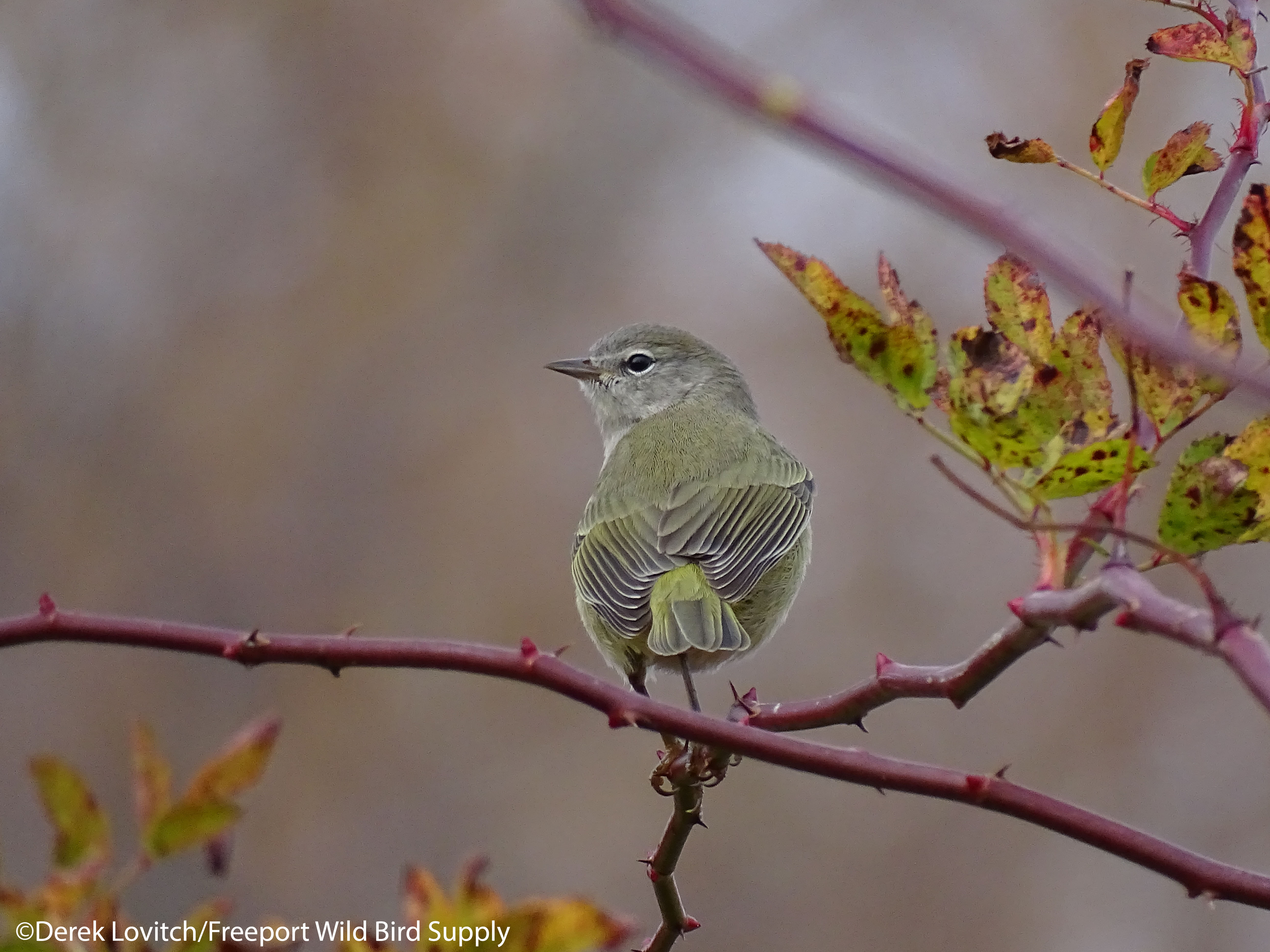
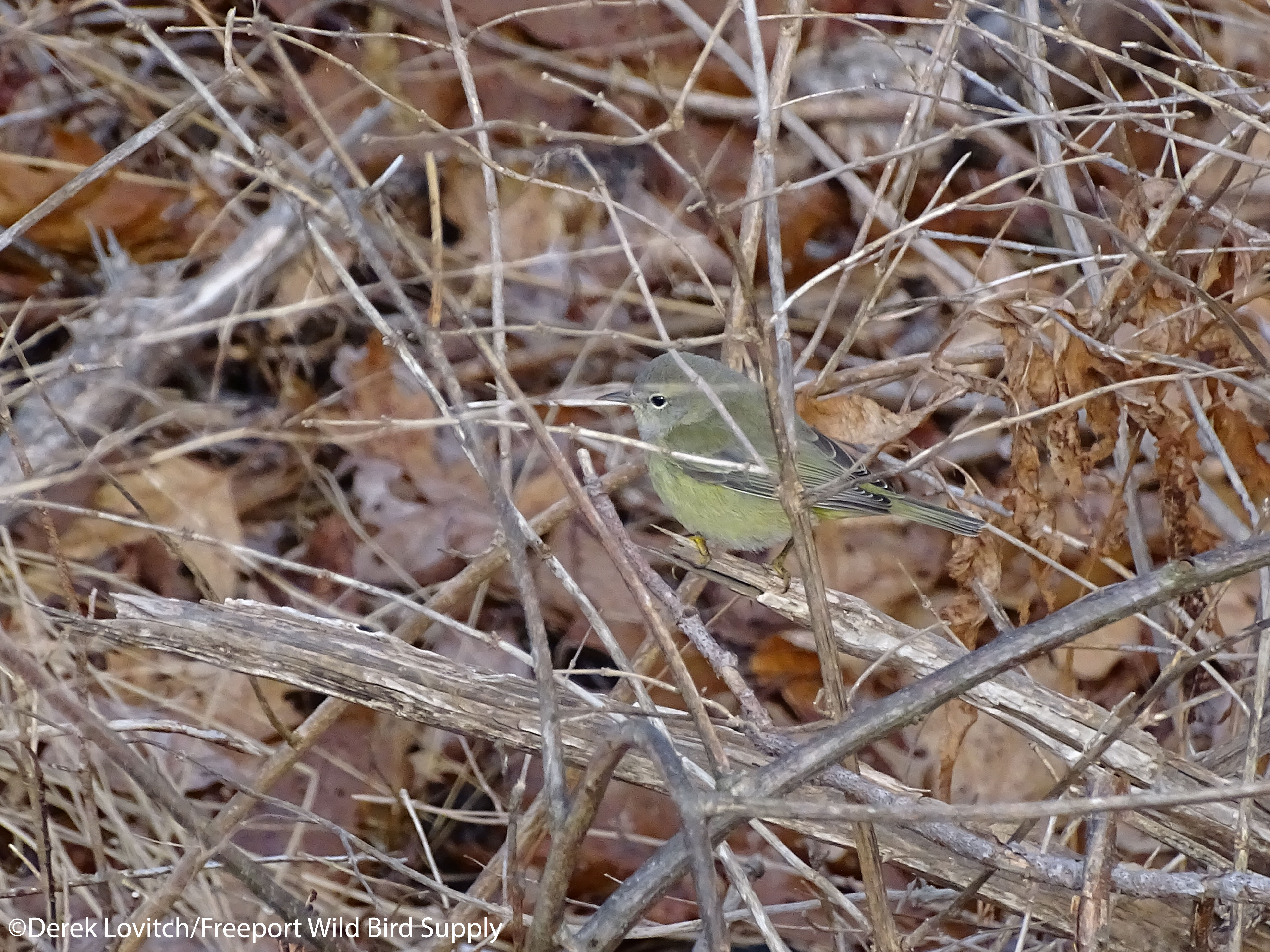
I found this rather cooperative, late Orange-crowned Warbler at Pond Cove in Cape Elizabeth – my 10th of the fall. Unfortunately, my camera was insisting it was the sticks I wanted a photo of, so this is the best I did.
Some of my highlights over the past seven days included the following. For the most part, my birds of note were decidedly more wintery than in the past weeks, although “late/lingering” oddities are making an appearance with the slow progression of the season and resultant concentration at seasonal hotspots.
1 Red Crossbill, private property in Freeport, 11/24 (with Saturday Morning Birdwalk group).
1 Hermit Thrush, private property in Freeport, 11/25.
On Sunday, Jeannette and spent the day participating in the annual Brunswick-Freeport Christmas Bird Count. For 14 out of the past 16 years, we have covered the “West Freeport” territory, which includes all of Freeport west of I295, with a corner of Yarmouth, a sliver of Pownal, and a notch of Durham.
As I have written about before, this suburban and exurban route covers a lot of ground. We walk miles upon miles of backroads, and we sample the public open spaces of Hedgehog Mountain Park, Florida Lake Park, and Hidden Pond Preserve. Our only waterfront is the Cousin’s River marsh complex, which was mostly open today – as were almost all flowing streams, woodland drainages, and the outlet channel at Florida Lake. This was the most open water we have had in some time.
The weather was fantastic: after a chilly start, bright sunshine and virtually no wind made for a pleasant, temperate day, and aided detection. The lovely morning even led to singing from some of our resident species, especially White-breasted Nuthatch, and territorial drumming by Hairy Woodpeckers.
By doing this route consistently year in and year out, Jeannette and I can use it to compare winter seasons. We like to compare the tallies to test our preconceived notions of the season, and we can even use it as a sample to gauge seed sales at the store for the coming months! 2019 was a good example of that.
Yesterday, we did confirm several recent trends and hypotheses that we have seen so far this winter. Native sparrows including Dark-eyed Juncos are very low, woodpeckers are above average, and “winter finches” have really cleared out. Even Pine Grosbeaks are now diminishing, but the bulk of other nomadic species have either moved through (Pine Siskin; Evening Grosbeak) or are just not around in large numbers (Common Redpoll).
Meanwhile, the very mild fall and early winter has helped “half-hardies,” like our first sector records of Hermit Thrush and – finally a – Carolina Wren survive. The minimal snow cover and mild temperatures usually keeps a lot of ground-feeding sparrows around through the winter, but this is not the case this year – low “weed” seed crops due to our summer-long drought continues to be my hypothesis.
Fruit crops, especially crabapples, are being rapidly depleted as Pine Grosbeaks and American Robins have moved through en masse of late. It will be slim pickings for Bohemian Waxwings if they arrive.
But perhaps most relevant was the fantastic numbers of birds that make up our “mixed-species foraging flocks.” I was surprised to tally only our average number of Black-capped Chickadees (310 compared to an average of 307.9), but Tufted Titmouse, Red-breasted Nuthatch, White-breasted Nuthatch, and Downy Woodpeckers were well above average (see below). Blue Jays were a little above average (but that number fluctuates widely based on acorn crops), as were Northern Cardinals. Cardinals, Red-bellied Woodpeckers, and especially Eastern Bluebirds reflected their continuing steady increase as wintering species in the region.
These are also many of the most common and conspicuous visitors to feeding stations, and our survey correlated with what we have been hearing at the store all season. We also noted that neighborhoods with well-stocked feeders had far more birds than wooded parks, neighborhoods with few or no feeders, or other less developed stretches. Clearly, feeders and their supplemental food are important to our resident birds this year. And our bird seed sales, even after the massive finch flight of the fall has moved on, reflect that as well.
But yeah, our first-ever Hermit Thrush, Carolina Wren, and Pine Siskins, plus our first Ruffed Grouse in 11 years, and yeah, Pine Grosbeaks, were all nice, too!
Here is our full, annotated checklist:
Begin: 7:19am. 20F, clear, calm.
End: 3:45pm. 30F (high of 31F), mostly cloudy, calm.
Party Miles/foot: 22.5
Party Miles/car: 23.5
American Black Duck: 2
Mallard: 2
Ruffed Grouse: 1
Wild Turkey: 0
Rock Pigeon: 20
Mourning Dove: 46
Herring Gull: 11
Cooper’s Hawk: 2
Red-tailed Hawk: 3 (*tied highest count)
Red-bellied Woodpecker: 3
Downy Woodpecker: 30
Hairy Woodpecker: 13
Pileated Woodpecker: 5
Blue Jay: 94
American Crow: 115 (*new record high)
Common Raven: 2
Black-capped Chickadee: 310
Tufted Titmouse: 53
Red-breasted Nuthatch: 28
White-breasted Nuthatch: 47 (* 2nd highest)
Brown Creeper: 3
Carolina Wren: 1 (*1st sector record, finally!)
Golden-crowned Kinglet: 3
Eastern Bluebird: 31 (* New record high count…old record was 10!)



 Maine Birding Field Notes