Bill Thompson and I birded from Bowdoinham through Gardiner on Tuesday, seeking migrant waterfowl and especially Bohemian Waxwings. We hit paydirt while working the side roads in downtown Gardiner, finding a flock of 110 (with 1-2 Cedars) feeding on multiflora rose behind a parking lot on Summer Street. They were, how shall we say, cooperative. A couple of short phone videos of our experience can be seen here.Of course, the next day, 30-40 were right outside the store!
Last week I was lamenting that I have not had enough Bohemian Waxwing time this winter. Happily, that changed this week! My BOWA-laden observations of note over the past seven days included:
1 Fish Crow, Cumberland Town Landing, 3/21 (with Saturday Morning Birdwalk group).
Portland Explorer (formerly Maine Brew Bus) and Freeport Wild Bird Supply are excited to continue our collaboration for 3 very special outings in 2026.
These unique, relaxed birding and beer-ing adventures that you have come to love combine great local birding at seasonal hotspots with visits to sample the delicious creations of some of our favorite local breweries. These tours are a perfect introduction to birding and/or craft beer, and a great opportunity to travel with significant others, friends, and family that have interest in one topic, while your interest is primarily in the other (for now!). Seasonal birding hotspots and great local beer – a perfect combination, and we’ll even do all of the driving!
This brand-new itinerary takes us to the Bradbury Mountain Spring Hawkwatch at Bradbury Mountain State Park in Pownal in the peak of northbound raptor migration. Now in its 20th year, this research project by Freeport Wild Bird Supply tallies an average of 4,180 migrating birds of prey each spring from the summit!
After a gentle 1-mile climb through the woods, looking and listening for migrant and resident songbirds, we’ll arrive at the summit and join the project’s Official Counter. Derek will discuss the history and methodology of the project, as the counter points out migrating raptors. Derek will lead us through the basics of hawk identification to give us a hawkwatch primer, and then if the migration action allows, we’ll sit back and enjoy the show until it is time to depart (the walk down is a steep ¼ of a mile on a wide, well-worn trail with rocks and roots and some steps; hiking sticks are suggested if you use them). This is the only Hawkwatch Workshop program that FWBS will be offering this year, so this is a tour you won’t want to miss!
After about 3 hours of birding, we will be transported to two of our great local producers to sample their offerings and learn their styles. Our brewery destinations are subject to change, but the current plan is to visit Maine Beer Company and Goodfire Brewing.
Seasonal hotspots. Local expertise. Small-group experiences.
For the 12th season, Portland Explorer and Freeport Wild Bird Supply are teaming up to offer Maine’s most unique guided birding tours — combining peak birding hotspots, expert instruction, comfortable transportation, and in select outings, visits to some of our favorite local breweries.
Whether you’re a seasoned birder, just getting started, or traveling with someone whose main interest might be craft beer until they become a avid birder, these relaxed and educational outings offer something special.
This blog will be updated with trip reports after each tour, so check back in to see what you missed and to sign up for upcoming outings!
The 2026 Birds on Tap – Roadtrip Series!
Our collaboration with Portland Explorer (formerly The Maine Brew Bus) enters its 12th season, with three exciting itineraries. These unique, relaxed birding and beer-ing adventures that you have come to love combine great local birding at seasonal hotspots with approachable opportunities to sample the delicious creations of some of our favorite Maine breweries. These events are a perfect introduction to birding and/or craft beer, and a great opportunity to enjoy our favorite pastimes with significant others, friends, and family that have interest in one topic, while your interest is primarily in the other (for now!). Educational, enjoyable, and eye-opening you won’t want to miss out our unique Birds on Tap series, including a brand new outing for 2026.
The three tours are as follows. After completion, tour reports will be posted here so this blog is your one-stop shopping for tour reports and upcoming itineraries.
Birds on Tap -Roadtrip: Hawks and Hops!
Sunday, April 19, 2026: 9:00am – 3:00pm
Portland Explorer (formerly Maine Brew Bus) and Freeport Wild Bird Supply Freeport Wild Bird Supply are excited to continue our collaboration for 3 very special outings in 2026.
These unique, relaxed birding and beer-ing adventures that you have come to love combine great local birding at seasonal hotspots with visits to sample the delicious creations of some of our favorite local breweries. These tours are a perfect introduction to birding and/or craft beer, and a great opportunity to travel with significant others, friends, and family that have interest in one topic, while your interest is primarily in the other (for now!). Seasonal birding hotspots and great local beer – a perfect combination, and we’ll even do all of the driving!
This brand-new itinerary takes us to the Bradbury Mountain Spring Hawkwatch at Bradbury Mountain State Park in Pownal in the peak of northbound raptor migration. Now in its 20th year, this research project by Freeport Wild Bird Supply tallies an average of 4,180 migrating birds of prey each spring from the summit!
After a gentle 1-mile climb through the woods, looking and listening for migrant and resident songbirds, we’ll arrive at the summit and join the project’s Official Counter. Derek will discuss the history and methodology of the project, as the counter points out migrating raptors. Derek will lead us through the basics of hawk identification to give us a hawkwatch primer, and then if the migration action allows, we’ll sit back and enjoy the show until it is time to depart (the walk down is a steep ¼ of a mile on a wide, well-worn trail with rocks and roots and some steps; hiking sticks are suggested if you use them). This is the only Hawkwatch Workshop program that FWBS will be offering this year, so this is a tour you won’t want to miss!
After about 3 hours of birding, we will be transported to two of our great local producers to sample their offerings and learn their styles. Our brewery destinations are subject to change, but the current plan is to visit Maine Beer Company and Goodfire Brewing
Maine Beer Company was founded with a deep commitment to quality, community, and sustainability, Maine Beer Company has become one of the most respected craft breweries in the country. Known for their clean, hop-forward ales like Lunch and Dinner, they focus on balance, drinkability, and precision. Their Freeport brewery is a beautiful, modern space built with environmental responsibility in mind, including solar power and energy-efficient design.
Goodfire Brewing in Freeport offers a fresh, creative take on modern craft beer. Known for expressive New England–style IPAs, crisp lagers, and thoughtfully crafted seasonal releases, Goodfire focuses on vibrant flavors and small-batch innovation. Their welcoming taproom atmosphere reflects their community-driven spirit, this stop highlights the artistry and evolution of Maine’s contemporary brewing scene.
The samples are included in the tour price, and Portland Explorer will supply a light snack (TBD) and water. Bring binoculars. We also recommend bringing a lunch or additional snack if you so desire. Be sure to bring layers as it is often windier and cooler at the exposed summit than down below and trails may be muddy so wear appropriate footwear.
We’ll be doing all of the driving, so you can relax. And to make it even easier, we have two pick-up times and locations for this trip:
9:00am – Marginal Way Park & Ride (opposite the intersection with Diamond St, just east of Franklin Ave), Portland.
(Please arrive 15 minutes prior to your departure time at either location, and please let us know where you will be meeting us)
We’ll return to these locations to drop you off at 2:40pm (Freeport) and 3:00pm (Portland).
This tour is limited to 12 participants, so sign up soon! This is a one-of-a-kind tour, and we think one you won’t want to miss!
Birds On Tap℠ – Warblers and Wort
Sunday, May 10, 2026: 8:00am – 2:00pm
During last year’s tour, we tracked down this mega-rare Cerulean Warbler!
Portland Explorer (formerly Maine Brew Bus) and Freeport Wild Bird Supply are excited to continue our collaboration for 3 very special outings in 2026.
These unique, relaxed birding and beer-ing adventures that you have come to love combine great local birding at seasonal hotspots with visits to sample the delicious creations of some of our favorite local breweries. These tours are a perfect introduction to birding and/or craft beer, and a great opportunity to travel with significant others, friends, and family that have interest in one topic, while your interest is primarily in the other (for now!). Seasonal birding hotspots and great local beer – a perfect combination, and we’ll even do all of the driving!
We’re bringing back the “Mother’s Day Special” in 2026, with a return to Portland on one of our most popular itineraries. May means warbler migration, and the destination for Warblers and Wort will hit two of Maine’s most famous springtime migrant traps, Portland’s Evergreen Cemetery and nearby Capisic Pond Park. Two oases in the urban jungle, featuring water sources and a mix of various habitats, help concentrate migrant birds that found themselves in or over the city come sunrise. After migrating all night, tired travelers look for refuge: food, water, and shelter, and urban greenspaces are absolutely critical for refueling.
Warbler diversity will rapidly be increasing, over 15 species possible by the middle of May, depending on the progression of the season. Other species, such as sparrows, raptors, and other Neotropical Migrants such as orioles and tanagers are also on the move, increasing our chances of seeing a diversity of species. If the cemetery’s apples and cherries are blooming, we may be in for quite a treat as these are absolute magnets for hungry migrants. Meanwhile, most trees have yet to fully leaf out, making them easier to spot!
It’s sometimes hard to leave Evergreen on a busy spring morning, but if we do, it will be for the very short trip over to Capisic Pond Park, where we’ll continue to seek migrants of all shapes and sizes.
After about 3 hours of birding, we will be transported to two of our great local producers to sample their offerings and learn their styles. Our brewery destinations are subject to change, but the current plan is to visit Foundation and Rising Tide Brewing Company.
Foundation Brewing Company is known for its clean, focused approach to craft beer, with a strong reputation for hop-forward ales and thoughtfully balanced lagers. Their lineup often showcases precision and consistency, with beers that highlight both modern techniques and traditional brewing fundamentals. A visit to Foundation offers an opportunity to explore how attention to detail and quality ingredients come together to create approachable yet expressive beers that reflect Portland’s thriving craft scene.
Rising Tide Brewing Company has been a cornerstone of Portland’s craft beer community since its early growth years. With a diverse portfolio that ranges from crisp, easy-drinking favorites to bold, hop-driven offerings and seasonal specialties, Rising Tide emphasizes accessibility and craftsmanship. Their beers often reflect a balance between innovation and tradition, making them a great representation of the evolution of Maine’s brewing culture.
The samples are included in the tour price, and Portland Explorer will supply a light snack (TBD) and water. Bring binoculars. We also recommend bringing a lunch or additional snack if you so desire. Light-colored, long-sleeve shirt and pants are highly recommended to reduce the nuisances of biting insects and trails may be muddy so wear appropriate footwear.
We’ll be doing all of the driving, so you can relax. This tour will have one pickup location:
8:00am – Marginal Way Park & Ride (opposite the intersection with Diamond St, just east of Franklin Ave), Portland.
(Please arrive 15 minutes prior to your departure time.)
We’ll return to these locations to drop you off at 2:00pm.
This tour is limited to 12 participants, so sign up soon! This is a one-of-a-kind tour, and we think one you won’t want to miss!
For a taste of what’s in store, here’s the trip report from our very exciting outing in 2025.
Portland Explorer (formerly Maine Brew Bus) and Freeport Wild Bird Supply are excited to continue our collaboration for 3 very special outings in 2026.
These unique, relaxed birding and beer-ing adventures that you have come to love combine great local birding at seasonal hotspots with visits to sample the delicious creations of some of our favorite local breweries. These tours are a perfect introduction to birding and/or craft beer, and a great opportunity to travel with significant others, friends, and family that have interest in one topic, while your interest is primarily in the other (for now!). Seasonal birding hotspots and great local beer – a perfect combination, and we’ll even do all of the driving!
The original BoT Roadtrip! Way back in 2015, our most popular tour returns to Scarborough Marsh at prime time for a good variety of migrant shorebirds. We’ll learn how to identify our common species, and search for the rare. Up to 20 species of shorebirds are possible! We’ll practice identifying our “peeps” (Least, Semipalmated, and White-rumped Sandpipers) and attempt to tease out a rare Western or even a Baird’s among the masses. We’ll look for local breeding American Oystercatchers and Willets, while searching for migrants such as Red Knots on their way from the high Arctic to the southern tip of Argentina.
And not to worry, we’ll take a look at everything else, such as Common, Roseate, and Least Terns; herons and egrets, and who knows what else? We may even get a chance to see Nelson’s and Saltmarsh Sparrows depending on time, wind, and tide.
After about 3 hours of birding, we will be transported to two of our great local producers to sample their offerings and learn their styles. Our brewery destinations are subject to change, but the current plan is to visit Nonesuch River Brewing and the Allagash Bungalow.
Nonesuch River Brewing blends classic brewing traditions with a creative, food-friendly approach. Known for producing a wide range of styles—from hop-forward IPAs to smooth stouts and refined lagers—the brewery emphasizes balance, drinkability, and quality ingredients. With a strong culinary influence behind their brand, their beers are crafted to complement a variety of tastes, showcasing both technical precision and thoughtful flavor development. A visit highlights the versatility and craftsmanship that define Maine’s modern brewing landscape.
Allagash Brewing Company is internationally recognized for its Belgian-inspired beers and commitment to craftsmanship. The Allagash Bungalow offers an inviting setting to explore a rotating selection of their beers, which may include their iconic witbier, barrel-aged specialties, or experimental small-batch releases. Rooted in tradition but continually innovating, Allagash represents one of Maine’s most influential breweries, known for its focus on fermentation, balance, and refined complexity.
The samples are included in the tour price, and Portland Explorer will supply a light snack (TBA) and water. Bring binoculars and a spotting scope if you have one. We also recommend bringing a lunch or additional snack if you so desire. Sunscreen, a light jacket in case the wind turns onshore, and sturdy comfortable walking shoes are also recommended – we will be out in the sun for the duration of the birding portion of the tour.
We’ll be doing all of the driving, so you can relax. There will be one pickup location for this tour:
9:00am – Marginal Way Park & Ride (opposite the intersection with Diamond St, just east of Franklin Ave), Portland.
(Please arrive 15 minutes prior to your departure time).
This tour is limited to 12 participants, so sign up soon! This is a one-of-a-kind tour, and we think one you won’t want to miss!
For a taste of what’s in store, here’s the trip report from our very exciting outing in 2025.
Our collaboration with Portland Explorer (formerly The Maine Brew Bus) enters its 12th season, and our collaboration continues with a new series of joint history and birding tours. These unique, relaxed birding and history adventures combine great local birding at seasonal hotspots with educational journeys through some of our local history. Join two experts in their field on this brand new collaboration! (Sorry, no beer tastings here!)
The three tours are as follows. After completion, tour reports will be posted here so this blog is your one-stop shopping for tour reports and upcoming itineraries.
Forts and Feathers: House Island!
Sunday, October 18: 9:00am – 2:00pm
As our collaboration with Portland Explorer enters its 12th season, we’re mixing things up with a brand new series of joint history and birding tours. These unique, relaxed birding and history adventures combine great local birding at seasonal hotspots with educational journeys through some of our local history. Join two experts in their field on this brand new collaboration! (Sorry, no beer tastings here!)
But this time we’re leaving the van in the garage, and hitting the water! That’s right, we’re taking a cruise, and we’re returning to the private House Island in Porland Harbor!
During our previous outings in which we became the first birding groups ever on the island, we found oodles of Yellow-rumped Warblers, other migrants, and learned about the island’s ecology. But we were also captivated by Captain Pete, who guided us through the historic fort, sharing a wealth of historical knowledge and fascinating stories.
Once again, we’ve been granted special permission to come ashore and scour the island here in the peak of fall migration. We’ll follow well-maintained trails through the island’s mosaic of open habitats, scrub, and young woods. These are great habitats to search for a variety of migrants, and perhaps even a rarity!
Returning in October, rarities will once again be on our mind. While rare birds are rare, we are still going to expect the unexpected. But more likely are regular migrants of the season such as Yellow-rumped Warblers, a variety of sparrows, and a growing diversity of waterbirds. At the very least, we’ll have resident waterbirds and several species of gulls to sort through.
As we motor back across the harbor, we’ll continue to familiarize ourselves with some of the common waterbirds, such as Common Eiders, Common Loons, and perhaps some lingering Ospreys and others from the summer, all while enjoying a local craft beverage produced in the city of Portland. While the exact plan is subject to change, we’ll be sure to come up with a plan to adequately celebrate our discoveries – or the one that got away!
Portland Explorer will supply a light snack and everyone is welcome to a free drink (alcoholic or non during the boat ride back). Bring binoculars. We also recommend bringing a lunch or additional snack if you so desire. Sturdy comfortable walking shoes are also recommended, as are a variety of layers as it can be quite chilly on the water by the end of October.
For a taste of what’s in store, here’s the trip report from our very exciting outing in 2025 (but note we will not be offering the beer tasting component in 2026).
*Please arrive 15 minutes prior to your departure time.*
We’ll return to Portland Beer Hub at 2:00pm
This tour is limited to 12 participants, so sign up soon! This is a one-of-a-kind tour, and we think one you won’t want to miss! To conveniently pay online, click on the “Book Now” link here.
Forts and Feathers: The Beaks of Peaks!
Sunday, November 1st (weather date 11/8): 9:00am – 3:00pm.
This “Mega” rare Virginia’s Warbler was Maine’s 5th ever, and found by Derek on Peak’s Island on the weekend we’ll be returning this year…just in time to find the next rarity!
As our collaboration with Portland Explorer enters its 12th season, we’re mixing things up with a brand new series of joint history and birding tours. These unique, relaxed birding and history adventures combine great local birding at seasonal hotspots with educational journeys through some of our local history. Join two experts in their field on this brand new collaboration! (Sorry, no beer tastings here!)
But this time we’re leaving the van in the garage and hit the water once again! We’re going to hop aboard the Casco Bay Ferry Lines for the short, 20-minute trip across Portland Harbor to Peak’s Island.
Once there, we’ll plan on walking 3-4 easy miles (paved or dirt roads and a few narrow trails including one with irregular boards over wet areas) to cover the prime birding hotspots of the island, including the thickets that were made famous last year when Derek discovered Maine’s 5th-ever Virginia’s Warbler (and first away from Monhegan). We’ll make our way along the shoreline, looking at resident and recently-arrived migrant waterbirds, but checking various nooks and crannies that can hold unexpected vagrants.
We’ll make our way to the famous Battery Steele – famous for its access, it’s impressive graffiti, and yes, its birding. Here, a complex of wetlands and scrubby areas combine to attract and hold a wide range of avian species, often including some that are usually long gone from Maine by now. We’ll then explore the open-access fort and even get to experience total darkness!
Birding will continue as we traverse the island to return to town. There will be an opportunity to purchase a delicious lunch, or bring your own, and we’ll relax for a spell as we await our ferry departure.
Portland Explorer will supply a light snack and water. Bring binoculars and a flashlight. We also recommend bringing lunch or additional snack if you so desire. Sturdy comfortable walking shoes are also recommended, as are a variety of layers as it can be quite chilly on the water by the end of October.
*Please arrive 15 minutes prior to your departure time.*
We’ll return to Portland Beer Hub at 3:00pm
This tour is limited to 15 participants, so sign up soon! This is a one-of-a-kind tour, and we think one you won’t want to miss!
Forts and Feathers: Fort Williams and Portland Head Light!
Sunday, November 29: 8:00am to 1:00pm
It’s a perfect time of year to find late migrants such as Orange-crowned Warblers in the scrubby habitats of the park.
As our collaboration with Portland Explorer enters its 12th season, we’re mixing things up with a brand new series of joint history and birding tours. These unique, relaxed birding and history adventures combine great local birding at seasonal hotspots with educational journeys through some of our local history. Join two experts in their field on this brand new collaboration! (Sorry, no beer tastings here!).
With arriving winter waterbirds – from Great Cormorants to all three species of scoters – and truant migrants (and sometimes, even rarities!) – late November is a great time to hit the coast of Maine for productive birding. On this tour, we’ll take the Portland Explorer van over to Cape Elizabeth to bird the cliffs and uplands of Fort Williams Park.
But that’s not all! We’ll also be diving into the history of the Fort and the world-famous Portland Head Lighthouse. At Fort Williams Park, we’ll explore a scenic coastal landscape rich with history and sweeping views of Casco Bay. The park features historic military structures, open green space, and dramatic rocky shoreline—offering a glimpse into Maine’s past alongside some of its most iconic ocean vistas.
Just beyond the fort grounds stands Portland Head Light, Maine’s oldest lighthouse. Perched on the cliffs overlooking the Atlantic, it has guided mariners for more than two centuries and remains one of the most recognizable landmarks on the New England coast.
We’ll be doing all of the driving, so you can relax. There will be one pickup location for this tour:
8:00am – Marginal Way Park & Ride (opposite the intersection with Diamond St, just east of Franklin Ave), Portland.
(Please arrive 15 minutes prior to your departure time).
This tour is limited to 12 participants, so sign up soon! This is a one-of-a-kind tour, and we think one you won’t want to miss! To conveniently pay online, click on the “Book Now” link here.
Portland Explorer and Freeport Wild Bird Supply are teaming up to offer a very special, very exclusive road trip outing in 2026.
Early November is a fantastic time of year in Maine for vagrants – birds normally seen in far-off places. Due to a combination of weather patterns, changing seasonal food resources, falling temperatures, and other factors – some of which are not completely understood – birds that may have ended up in Maine by “accident” begin to concentrate at the coast in “migrant traps” and “hotspots.” In other words, this is the time of year to expect the unexpected.
A traditional “Rarity Roundup” involves teams of birders heading out on a given day during rarity prime time, looking for species that are not supposed to be around. And in honor of that tradition, that’s exactly what we are going to do on this unique tour. We may “chase” a rarity (go to see something that has already been found, aka “twitch”) or we might choose a destination known for rare birds in an attempt to find one of our own. Or perhaps, we’ll do both!
Anything in southern Maine is fair game, and we might not even know where we will head until we are on the bus and the latest rare bird alert is received. For those who love adding a bird to your Life or State List, and/or basking in the thrill of discovery, well then this is the tour for you! In between seeing great birds, we’ll discuss the complex factors that are involved in delivering rarities to an area, and how we go about finding them.
For example, last year, our Birds on Tap – Roadtrip: Rarity Roundup traveled to Yarmouth to see one of the few MacGillivray’s Warblers ever recorded in the state, then ventured all of the way to Kittery to try and find our own vagrant and the famous Fort Foster Park. For a taste of what’s in store, here’s the trip report from our very exciting outing in 2025 (but note we will not be offering the beer tasting component in 2026).
Portland Explorer will supply a light snack (TBA) and water. Bring binoculars and a spotting scope if you have one. We also recommend bringing a lunch or additional snack if you so desire. Sunscreen, an extra layer or two, and sturdy comfortable walking shoes are also recommended as we will want to be comfortable during both a long drive or a standing vigil outside.
We’ll be doing all of the driving, so you can relax. There will be one pickup location for this van tour.
8:00 am – Marginal Way Park & Ride (opposite the intersection with Diamond St, just east of Franklin Ave), Portland.
(Please arrive 15 minutes prior to your departure time)
This tour is limited to 12 participants, so sign up soon! This is a one-of-a-kind tour, and we think one you won’t want to miss!
Freeport Wild Bird Supply is proud to once again partner with Down East Magazine’s Down East Adventures for the sixth year of offering exclusive birding workshops focused on gaining greater knowledge and field skills in a focused group of seasonally accessible birds. Focused on skill-builder rather than list-building, there will be plenty of “life birds,” but also more knowledge and education about birds, habitats, birding, and much more about the natural world. We are honored to be their provider for a series of unique and exclusive birdwatching endeavors. In 2026, we will once again offer four exclusive outings.
As usual, Harlequin Ducks were the stars of the show.
First and foremost, I must commend everyone in the group for being such troopers today! Brutally cold temperatures and a barely broken trail to start the day, with a frigid day barely warming into the low 20’s. But everyone was prepared, everyone was ready to bird, and we all learned a lot.
Between astronomical low tides, days of offshore winds, and recent bitter cold, we encountered many fewer waterbirds overall than expected at this season. We did see some of the stars of the winter show well, such as Harlequin Ducks – always the crowd favorite! – and Great Cormorants. At two sites, we worked our way through learning the various seaducks, while at two other sites we studied dabbling ducks. A short gull workshop was also included. We even finished with another family of waterfowl when a hen Greater Scaup landed in Perkin’s Cove when we returned at the end of the day.
It was nice of this hen Greater Scaup to join us for one last species to learn about.
The Ogunquit Rivermouth was one of the most productive destinations today, with an unexpected 4 Northern Pintails pioneering amongst hundreds of Mallards and American Black Ducks, Canada Geese, and really close views of White-winged Scoter, Bufflehead, Common Goldeneye, and Common Loon, plus a Belted Kingfisher – one of our “honorary waterbirds.” Elsewhere, Black Scoters were the dominant species, with large rafts witnessed at multiple locations.
What is this mess? Impossible to identify, you say? Well, with a little comparative experience, we learned just how quickly we can identify this 2nd cycle Herring Gull.
As rewarding and educational the birding was, I think most people will end up remembering more about the domestic duck roundup attempt that we witnessed at Abbott’s Pond. We were there to study Mallards, American Black Ducks, and hybrids thereof, learning the differences and nuances in plumage of some of our most commonly seen waterfowl. We did that, and then sat back and enjoyed the show as the pond’s caretakers were bringing some “dumped” domestic hybrids to a better home.
We put special emphasis on learning female ducks as well, especially when in direct comparison to the respective distinctive males and other hens around them. We also took time to appreciate the gorgeous intricacies of their plumage, such as on this female Mallard.
2. Spring Migrant Songbird Workshop
May 17, 2026.
(See Northern Parula photo at the header above. Yes, that was enjoyed on our 2025 tour!)
This half-day workshop will focus on the migrant songbirds, especially warblers, that are passing through Maine’s most famous migrant trap, Portland’s Evergreen Cemetery. At the peak of warbler migration, we’ll learn how to identify these charismatic birds, and we’ll discuss their mind-boggling migration and what they’re up to in Maine.
Whether it’s the kind of migration day that legends are made of or a slow day (every day of migration is different), we’ll take advantage of whatever species are present to truly get to know them. Sure, we’ll work on “the list,” but our focus will be on preparing for your next birding outing, giving you the tools to identify birds on your own, maximize your time in the field by predicting where and when to be birding based on NEXRAD radar, geography, habitat, and much more. Of course, if there are too many warblers around, we might just have to simply enjoy them!
We’ll meet at the main entrance on Stevens Ave. to Evergreen Cemetery at 7 a.m. (or as soon as the front gate is opened), near the first building on the right. From there, we’ll caravan to the best birding location, returning to the entrance around 11. If the birding is slow, we’ll relocate in the mid-morning to another nearby park.
To get an idea of what you may see, read the 2022 , 2023,2024 and 2025 trip reports.
A side-by-side comparison of “Eastern” vs “Western” Willets was one of the highlights of the 2025 shorebirds workshop.
With more than 35 species of shorebirds (a diverse group including plovers and sandpipers) regularly appearing in Maine, this workshop is designed to appreciate the diversity and beauty of this fascinating family.
We will hit some of the marshes, beaches, and rocky roosts that shorebirds prefer at the peak of their migration. The ebbs and flows of the season, daily and recent weather, and other factors could produce more than 20 species of shorebirds in our time together. Our focus will be in comparative experience, learning how to recognize each species both near and far. Starting with the basics, such as plover vs. sandpiper, we’ll work our way up to the identification quandaries such as the “peeps” and the yellowlegs. We will provide you with a “toolkit” to approach shorebird identification on your own, using a combination of habitat, shape, size, structure, behavior, and plumage to identify this wonderfully diverse and attractive group of birds. Migration, conservation, and natural history will also be discussed.
We’ll meet at the public Park & Ride lot between Sea Dog Brewery and Cabela’s, off Payne Road at exit 42 of the Maine Turnpike, at 8 a.m. (please arrive 15 minutes early so we can depart on time) to carpool to the day’s birding destinations, based on tides, weather, and especially the birds themselves! We’ll return by 4 p.m., with an hour break for lunch (not included), likely at a place with multiple nearby options
For an idea of what to expect, see the trip report from our 2025, 2024, 2023 and 2020 outings.
Join Derek Lovitch for three days of birding at Maine’s famous Migration Mecca. As the summer crowds dwindle, the island becomes a birders’ paradise, with birding opportunities around every corner. This tour will spend three days sampling what the island has to offer during the peak of migration, from warblers to hawks to sparrows to the unexpected. Weather (and sometimes, lack thereof) will dictate how much we do or do not see, but every day is different out there. We’ll learn that fall warblers are rarely if ever “confusing” and why migrants – and vagrants from any direction – drop by this offshore migrant trap.
While finding and seeing birds will be the priority, we will also do a bit of informal workshopping in the afternoons to learn more about the mechanisms and marvels of bird migration. Day one will begin at the dock for the Hardy Boat in New Harbor. We’ll keep an eye out for birds from the top deck of the boat as we make the hour-long crossing to the island. Upon our arrival, we’ll hit the ground running to make the most out of our first morning at this special place. Once we’re on land, we’ll be on foot for the next 2 days, with several walks throughout the day. We’ll mostly be on dirt roads with some steep sections, but we’ll also traverse some narrow trails full of roots and rocks. Expect to spend time on “unimproved surfaces.” You will set a new personal record on your step-counter – especially when the bird we most want to see gets discovered on the opposite end of the island just before mealtime!
On the first day, after we check in lunch will be on your own, with a variety of options scattered about the town. After a break, we’ll head back out later in the afternoon for some more birding, before assembling again for an evening “cocktail hour” (BYOB; also available on the island) and our migration workshop where we’ll discuss the birds of the day, how and why we saw (and didn’t see) what we did, and more (when time and energy levels permit). The next two mornings we’ll once again maximize our time on the island. Following a short walk shortly after sunrise, we’ll enjoy the famous Monhegan House breakfast before birding for the remainder of the morning. Once again, we’ll break for lunch before reconvening for some afternoon birding: on the second day until we prepare for our evening “cocktail hour and migration review, and on the third day, right up until it’s time to head to the ferry.
For 2026, we’ll be staying at the venerable Island Inn. More details will soon follow. Stay tuned!
See Derek’s blog entry to see how the 2025, 2024, and 2023 trips went.
Confirmed by in-hand measurements and very detailed photographs, this adult female Rufous Hummingbird graced a Bath yard from October 31st to December 26th, 2025.
On Halloween, Sue and Bill Barker had quite a treat in their Bath yard: a hummingbird!
Each year, we put out a call on our email and print newsletter to keep your hummingbird feeders up as long as freezing temperatures permit, and to call us if you see a hummingbird after October 1st (and especially after October 7th). Among other outstanding records, this resulted in New England’s first Broad-tailed Hummingbird in 2022.
This year, we have received five hummingbird reports since October 7th, with the previous four including photos and/or video that were good enough to identify as Ruby-throated. Or, at least, rule out everything but that and the state’s first Black-chinned Hummingbird (we’re waiting!). Given the date of the 10/31 report, the statistics suggest that it’s more likely to be something else, so I asked for some photos.
Sue took some photos through her window and screen, and they suggested a warmth in overall color to the bird that would be on the extreme end of Ruby-throated Hummingbird. Sue invited me over for a look, and after waiting for about 45 minutes in the early afternoon on November 2nd, the bird appeared and soon flashed the reddish-brown in the tail indicative of a hummingbird in the genus Selasphorous.
My photos are not very good (mediocre camera in shadow and low afternoon winter light), but they clearly show a Selasphorous hummingbird.
After discussing the situation with the homeowners, it was clear that, unfortunately, this was not a location that could be made public. It sucks, but there was no way to share this widely. Small, dead-end road, partially shared driveway, proximity to the house and the neighbor’s house, and all of the other circumstances that can lead to well, things going wrong when masses appear. We’ve had this happen often enough to guard against it, and privacy and homeowners’ rights always come first in our book (it’s partly why we are trusted with these special birds!). I did wander around and see if there was enough parking nearby to place a hummingbird feeder in a much less intrusive location (like we did with the aforementioned Broad-tailed) but that wasn’t practical or feasible in this case. I am sorry.
But needing to know more, and learn the bird’s identification, the decision was made to allow a very small number of visitors to contact the homeowner and arrange a time to view the bird and obtain additional photographs. I reached out to Scott Weidensaul, and arrangements began to be made to have it captured, banded, measured (and released).
Of course, I dispatched Bill Thompson immediately! And as usual, he “crushed” it!
Highly suggestive – and perhaps all but conclusive, short of in-hand measurements – of an adult female Rufous Hummingbird based on the observations and photographs by several of us, and especially with a close analysis of the tail feathers in particular (critical for these non-adult male Selasphorous), Scott attempted to band it. Unfortunately, the first effort was not successful.
The bird continued to visit, more frequently and reliably as the days got shorter and colder. On 11/11, Jeannette and I visited the yard and were treated to three visits in a mere 30 minutes. While Jeannette worked on getting additional photos, I observed the bird’s behavior and feeding pattern in case we needed to get creative with the next banding attempt. I saw where she came from, fed in the backyard, then perched in a sunny bush with a good view of the front feeder, before feeding longer at that front yard feeder. And then repeat the pattern, as hummingbirds are wont to do.
Then, on 11/14, Scott Weidensaul successfully trapped and studied the hummingbird in the hand, taking measurements and confirming our identification of adult female Rufous Hummingbird. This would be the 15th or 16th accepted record of Rufous Hummingbird in Maine according to the Maine Bird Records Committee. However, “unreviewed” reports likely include identifiable individuals, and I stand by my identification of this bird in our Pownal yard in 2021 as a Rufous Hummingbird, despite the lack of measurements in the hand (she departed before banding could be arranged).
And here’s the official banding report from Scott:
Band number: J73404 (the J code stands for 5100-, which won’t fit on the band). Species: Rufous hummingbird Age: After hatching year (adult, at least two years old) Sex: F Wing: 44.15mm Tail: 26mm Culmen (bill): 19.92mm
Bill grooving: 0 (typical for an adult) Gorget feathers: 20+ Weight: 3.5 grams Fat (0-5 scale): 3 Width of R5: 3.69mm R2: moderate nippling
Scott then said, “All of her measurements are in line for a female rufous vs. and Allen’s. Her wing, tail and culmen measurements are all good for RUHU but beyond the upper limit for ALHU, which would lack the slight notch or nipple on R2. All in all she seemed to be in great shape and was quiet and cooperative in the hand.”
__________________________
Rufous vs Allen’s Hummingbirds, in non-adult male plumages are one of the most challenging identifications in all of North American birds, and so all the stops were pulled out here to confirm it’s identification. This blog will be submitted to the Maine Bird Records Committee for its review as well to add to “the record.”
When Jeannette and I first opened the store way back in 2004 (!), we were surprised to find out how persistent the myth of “take down your hummingbird feeders by Labor Day or they won’t migrate” was. It’s simply untrue. Instead, we encouraged people to keep them up much, much later, as it’s the latest migrants that need the help of supplemental food the most, especially after the first hard frost that knocks out most if not all of local flowers, such as the late blooming native, Orange-spotted Jewelweed. We also knew that there had to be more records of rare hummingbirds occurring in Maine, so we encouraged people to keep their feeders out, their eyes open, and to give us a call.
Meanwhile, a frequent question we receive is “what happens to these really late hummingbirds?”
It’s a great question! And with banding, we are beginning to find out! For example, a lot of these birds are departing the northeast on favorable winds after strong cold snaps but in good condition (fat score in particular). That suggests birds are doing the right thing and leaving when they need to.
With an increasing number of banded Rufous Hummingbirds – and other species – overwintering in the southeastern US, and returning in subsequent years, we know that not all of these vagrants are evolutionary dead ends. In fact, perhaps just the opposite – the survivors who are adapting to a changing world and a changing climate.
Thanks to our loyal customers and observers, this is the 3rd Rufous Hummingbird that has come to light through us, along with one other Rufous/Allen’s, and of course, the famous Broad-tailed. And countless truant Ruby-throated Hummingbirds have been aided (and we have confirmed at dozens of late Ruby-throats, averaging about 5 direct reports of late hummingbirds after October 7th each year since 2014) along the way.
Sue and Bill’s Rufous hummingbird turned out to be just as tough as so many vagrant hummingbirds in the Northeast prove to be. Sue reports, “Our little friend made it through all that snow and the low temps, but I think by last Friday she had had it and took off. She was real active in the morning, (we saw her frequently), and was doing a lot of feeding. Then she was gone.”
Thanks to Sue’s diligent care, and the deployment of a heated hummingbird feeder – the same one that sustained the Broad-tailed as it was donated to the cause by its host! – the Rufous was afforded every opportunity to fuel up, continue to molt and build strength, and depart when she was ready.
This perfectly fits the pattern and behavior of “lingering” vagrant hummingbirds. Scott added “That sounds like absolutely classic departure behavior…My hope is that one of my many colleagues down on the Gulf Coast will recapture her this winter, read that band number and let us connect the dots. No guarantees, obviously, but it happens more often than you’d think… And Derek and I will be waiting to perhaps hear from you again next fall that she’s back, because *that* happens even more often than later, distant encounters.”
While I personally had planned to get back over there for some updated photos to see if her molt has progressed at all, I didn’t make the time before she finally departed. I am OK with that! I join Sue, Bill, and Scott in wishing her on her way!
Swamp Sparrows have been common and conspicuous on our Durham property, and elsewhere this week. I feel this, like most sparrows, is an underappreciated beauty!
My observations of note over a very productive and exciting eight days of birding included the following:
Highlights from our Durham property this week included near-daily American Woodcocks and Rusty Blackbirds, and a nice little arrival of more Swamp Sparrows and Purple Finches in particular on 10/21.
Sandy Point Morning Flight, 10/15.
A very light flight passed over and through Sandy Point Beach, Cousin’s Island, Yarmouth this morning.
6:55-8:30 (with Bill Thompson).
48F, mostly cloudy to partly cloudy, NW 1.7-2.5mph diminishing to calm.
51 American Robins
33 Yellow-rumped Warblers
28 Dark-eyed Juncos
17 American Goldfinches
16 Ruby-crowned Kinglets
8 Eastern Bluebirds
7 White-throated Sparrows
6 Chipping Sparrows
5 Palm Warblers
4 Hermit Thrushes
4 Golden-crowned Kinglets
3 Blue-headed Vireos
3 Purple Finches
3 Swamp Sparrows
2 Pine Siskins
2 Rusty Blackbirds
2 Tufted Titmice (4 false-starts and counting)
1 Red-breasted Nuthatch
1 Blackpoll Warbler
1 White-breasted Nuthatch
1 Downy Woodpecker (2+ false-starts)
1 House Finch
1 American Pipit
1 Northern Flicker
1 Magnolia Warbler
1 unidentified
Total = 203
1 continuing CACKLING GOOSE, Thornhurst Farm, North Yarmouth, 10/15 (with Bill Thompson).
1 Least Sandpiper, 1 White-rumped Sandpipers, and 2 Pectoral Sandpipers, Walsh Preserve, Freeport, 10/15 (with Bill Thompson).
Sandy Point Morning Flight, 10/16.
An excellent flight passed over and through Sandy Point Beach, Cousin’s Island, Yarmouth this morning.
6:55 to 10:40am.
44F, Mostly cloudy, NW 4.3 – 9.0 increasing to 15.1 – 19.7mph with higher gusts.
2186 American Robins (*NEW RECORD! – just barely).
1776 Yellow-rumped Warblers
167 unidentified
127 Dark-eyed Juncos (One was quite likely not a Slate-colored, but my photos of it are not useful)
61 Common Grackles
48 Cedar Waxwings
43 Canada Geese
31 Chipping Sparrows
21 Ruby-crowned Kinglets
19 Rusty Blackbirds
18 White-throated Sparrows
13 Northern Flickers
11 Golden-crowned Kinglets
11 Purple Finches
9 Pine Siskins
7 Palm Warblers
4 Blue-headed Vireos
4 unidentified finches
4 Hermit Thrushes
4 Song Sparrows (crossed together at 8:29. This is only my second or third observation of SOSP engaging in Morning Flight after sunrise here; plenty more in and around the parking lot as usual)
3 Merlins
3 Common Loons
3 Turkey Vultures
2 Red-winged Blackbirds
2 White-crowned Sparrows
2 Eastern Phoebes
1 Northern Parula
1 Blackpoll Warbler
1 Brown Creeper
1 Peregrine Falcon
1 Yellow-bellied Sapsucker
1 Cooper’s Hawk
1 American Goldfinch
1 Red-shouldered Hawk
1 Cape May Warbler
1 Red-breasted Nuthatch
1 Sharp-shinned Hawk
1 Tennessee Warbler (from Bill Thompson’s photo review)
1 Black-throated Blue Warbler (from Bill Thompson’s photo review).
Total = 4,592
Notables from a delightfully birdy morning on Bailey Island, Harpswell on 10/17 included a decent, and relaxingly unquantified, morning flight mostly of Yellow-rumped Warblers; 1 ORANGE-CROWNED WARBLER, and 1 Cape May Warbler among the migrants found here and there around the island.
1 DICKCISSEL, feeders here at the store, 10/19, continuing through at least 10/21. Was this the same bird seen on 10/4 and then again on 10/13-14?
4 continuing FORSTER’S TERNS, Pine Point, Scarborough, 10/20 (with clients from California and Massachusetts).
2 “Ipswich” Savannah Sparrows, Eastern Road Trail, Scarborough Marsh, 10/20 (with clients from California and Massachusetts).
Our Last Tour of 2025 still has some space remaining!
Birds on Tap℠ – Roadtrip! Rarity Roundup
November 9, 2025; 8:00am – 3:00pm
Cost – $125
Portland Explorer (formerly Maine Brews Cruise) and Freeport Wild Bird Supply are excited to continue our collaboration for six very special outings in 2025.
These unique, relaxed birding and beer-ing adventures that you have come to love combine great local birding at seasonal hotspots with visits to sample the delicious creations of some of our favorite local breweries. These tours are a perfect introduction to birding and/or craft beer, and a great opportunity to travel with significant others, friends, and family that have interest in one topic, while your interest is primarily in the other (for now!). Seasonal birding hotspots and great local beer – a perfect combination, and we’ll even do all of the driving!
Early November is a fantastic time of year in Maine for vagrants – birds normally seen in far-off places. Due to a combination of weather patterns, changing seasonal food resources, falling temperatures, and other factors – some of which are not completely understood – birds that may have ended up in Maine by “accident” begin to concentrate at the coast in “migrant traps” and “hotspots.” In other words, this is the time of year to expect the unexpected.
A traditional “Rarity Roundup” involves teams of birders heading out on a given day during rarity prime time, looking for species that are not supposed to be around. And in honor of that tradition, that’s exactly what we are going to do on this unique tour. We may “chase” a rarity (go to see something that has already been found, aka “twitch”) or we might choose a destination known for rare birds in an attempt to find one of our own. Or perhaps, we’ll do both!
Anything between Portland and Kittery is fair game, and we might not even know where we will head until we are on the bus and the latest rare bird alert is received. For those who love adding a bird to your Life or State List, and/or basking in the thrill of discovery, well then this is the tour for you! In between seeing great birds, we’ll discuss the complex factors that are involved in delivering rarities to an area, and how we go about finding them.
After about 3-4 hours of birding, depending on drive time, we will be transported to two of our great local producers to sample their offerings and learn their styles.
Considering most people would have been happy with a single Northern Fulmar, our tally of at least 18 was fantastic…but the photo opportunities of this winter visitor could not be beat, including of this much less common dark morph.
Fall pelagics in the Gulf of Maine are notoriously hit or miss. Suffice to say, our Half-Day Pelagic out of Boothbay Harbor on 10/5, with our partner, Cap’n Fish’s Cruises, was most definitely a hit!
And not just because of the ridiculously pleasant weather! The birding was great, the marine mammals were fantastic, and I don’t think a single person was seasick! What a difference a year makes.
We departed the harbor at 9:00am, with clear and calm skies, less than a foot of swell offshore, and high hopes (I had a productive scouting trip on a whale watch two days prior). But even with the always-lofty expectations of pelagic trips, we would not be disappointed this day.
Black Guillemots are always a nice way to begin and end all of our local pelagic trips since they are usually only seen in inshore waters.
Perhaps the one complaint I had was that we didn’t get all that far offshore! In fact, our furthest point was only about 20 miles south-southwest of Monhegan. There was just too much to look at, and every time we were about to head further offshore, something else of note appeared.
We started picking up a few seabirds, including our first of what would be a remarkable total of mostly juvenile Atlantic Puffins, the first of our sought-after Northern Fulmars, scattered Red-necked Phalaropes (mostly), along with a few Great Shearwaters, all around Murray Hole, but we hit paydirt right around the edge of the incoming shipping channel to Portland.
Great Shearwaters and Northern Fulmars were constant companions in our deeper water time.All of the photographed phalaropes so far that we encountered were Red-necked Phalaropes, so the checklist has been adjusted accordingly, even though we believe we had some Reds over the course of the trip.
There, in about 500-600 feet of water (but otherwise “in the middle of nowhere”), our chum slick of fish oil and pork fat (generously donated by Durham’s Old Crow Ranch!) worked its magic. Will Broussard, with both the honor and burden of his first time as Chummer, was the hero, bringing Northern Fulmars and Great Shearwaters in for close looks.]
Passerines would appear on occasion, a total of somewhere between 4 and 8 White-throated Sparrows, including one that rode right back to port with us in the cabin. A male Purple Finch took a break on the boat, resting and preening on our radar, as a female did later. Passerines are always a fun addition to a pelagic birding experience.
Less fun, perhaps, but most amazing and insightful, however, was watching a Peregrine Falcon chasing a passerine, driving it into the water, and then, unable to snatch it off the surface, moved on, leaving an Ovenbird helpless on the ocean’s surface, likely becoming waterlogged and hypothermic. It was impossible for us not to, so we attempted a water rescue, with the crew putting in a valiant effort to save the hapless warbler. Unfortunately, it perished, but we had to try!
This might be one of the most incredible photos of non-pelagics ever taken on a pelagic. Awesome work, Bill!
Repeated sightings of Atlantic Puffins continued to surprise us, and we spent some time with two different Fin Whales, including getting to see one doing a little lunge-feeding. While we looked at whales, birds were all around us, thanks to the chum, so we had something for everyone.
A big and bright-billed adult Atlantic Puffin.Both of our Razorbills were hanging out with juvenile puffins.
While this was of course a birding tour, we made sure to enjoy the marine mammals we encountered, along with a Blue Shark, but the highlight for most everyone was the incredible and awesome experience we had with a small pod of 25-30 Common Dolphins. Amid all of our seabird activity, the pod approached us in the glass-calm warblers. Captain Nate added a little speed to build up a wake, and the dolphins had come to play. They rode the bow, did some surfing, and otherwise created constant “oohs and aahs.” The photos don’t quite do it justice…it was really a special experience, a life mammal for most of the crew, and one of the best dolphin encounters I have experienced in the Gulf of Maine.
Puffins and fulmars, Fin Whales and dolphins, and all on just the most ridiculous weather possible for a fall pelagic in Maine! We’ll see you on board next year!
I want to thank Captain Nate for his skilled maneuvering of the boat – even more remarkable as this was his first pelagic, too! Naturalist Trinity shared the narration duties with me, taking over for local landmarks and non-feathered marine life, and Valentin and Joe took care of everyone at the galley – and did the work of our attempted Ovenbird rescue. Thanks to my team, chummer Will Broussard, and our checklist-keeper Noah Gibb. And a special thanks to Tabor and Seamus at Cap’n Fish’s for working with me to make this memorable trip a reality.
Subadult Northern Gannet
Here’s the complete trip list, including birds seen while docked before departure marled with an *. We know counts of several species, such as Common Eider and Herring Gull are likely extremely low, but we chose to be conservative with our Northern Fulmar and Great Shearwater tallies as we covered a relatively small area during our deeper-water time, and the chumming kept birds with us, and perhaps, coming back for more.
267 Common Eider
89 Surf Scoter
3 White-winged Scoter
36 Black Scoter
25 Rock Pigeon*
54 Red-necked Phalaropes
21 unidentified phalaropes
1 Pomarine Jaeger
28 ATLANTIC PUFFINS
15 Black Guillemots
2 Razorbills
1 Black-legged Kittiwake (only spotted from photos later, unfortunately)
We were surprised to find a tarrying American Oystercatcher still hanging out on Upper Green Island (where we documented them breeding once again this summer) during our Birds of Casco Bay Boat Tour on the 6th.
My tour report from Monhegan, 9/26-9/30, including lots of rarity photos can now be viewed here. Sorry for the delay here, especially for those waiting for the trip list.
Then, my observations of note over the last seven days included the following:
Highlights from our Durham property this period included a Tennessee Warbler on 10/2, 1 Rusty Blackbird on 10/3, and 4 American Woodcocks on 10/7.
Sandy Point Morning Flight, 10/1.
North to north-east winds are usually not very productive for the Morning Flight at Sandy Point, but the radar images showed a huge flight overnight, so I decided to give it a try. Good thing I did! A northwesterly component inland must have “stacked” birds up against the coast, where they were then influenced by the increasing northeasterly component offshore, producing a better than expected push across the channel. The more I observe the flight here, the more I have to learn! In the end, an unexpectedly good flight passed over and through Sandy Point Beach, Cousin’s Island, Yarmouth, this morning.
6:38-10:00am
46F, Clear, N 8.2-10.4 increasing to NNE 13.3-16.9mph.
238 Cedar Waxwings
222 Yellow-rumped Warblers
73 Blue Jays
64 unidentified
39 Black-throated Green Warblers
35 Dark-eyed Juncos
34 Canada Geese
33 Northern Parulas
28 Yellow-bellied Sapsuckers
27 Palm Warblers
26 Savannah Sparrows
23 Blackpoll Warblers
16 White-throated Sparrow (3 may have crossed at first light)
14 Northern Flickers
12 American Robins
10 Golden-crowned Kinglets
9 Ruby-crowned Kinglets
9 Chipping Sparrows
6 Nashville Warblers
6 Rusty Blackbirds
6 American Goldfinches
5 Magnolia Warblers
3 Scarlet Tanagers
2 Common Loons
2 Ospreys
2 Cape May Warblers
2 Tufted Titmice (5+ false starts)
2 Hermit Thrushes
1 Pine Warbler
1 Downy Woodpecker
1 American Pipit
1 Baltimore Oriole
1 Red-breasted Nuthatch
1 Sharp-shinned Hawk
1 Brown Creeper
1 Merlin
1 Blue-headed Vireo
1 Swamp Sparrow
1 Cooper’s Hawk
T= 959
2 Monarchs
Whale Watch with Cap’n Fish’s Cruises out of Boothbay Harbor on 10/3: 15 NORTHERN FULMAR, 13 Great Shearwaters, 1 Cory’s Shearwater, 3 Red Phalaropes, 1 Lesser Black-backed Gull, etc.
1 DICKCISSEL, garden here at the store, 10/4 (with m.obs).
Freeport Wild Bird Supply/Cap’n Fish’s Cruises ½ Day Pelagic out of Boothbay Harbor on 10/5 was incredible. Highlights included 18 Northern Fulmar, 29 Atlantic Puffins, 1 Pomarine Jaeger, 55 Great Shearwaters, 2 Razorbills, 54+ Red-necked Phalaropes, 3 Red Phalaropes, 4 Lesser Black-backed Gulls, a Peregrine Falcon driving an Ovenbird into the ocean, and a playful pod of Common Dolphins. Full trip report with photos soon.
1 AMERICAN OYSTERCATCHER (Upper Green Island; photo above), 125+ Laughing Gulls, 126 Black-bellied Plovers, 3 Long-tailed Ducks, etc, Casco Bay, 10/6, via Birds of Casco Bay boat tour with Seacoast Tours (Photo above).
These unique, relaxed birding and beer-ing adventures that you have come to love combine great local birding at seasonal hotspots with visits to sample the delicious creations of some of our favorite local breweries. These tours are a perfect introduction to birding and/or craft beer, and a great opportunity to travel with significant others, friends, and family that have interest in one topic, while your interest is primarily in the other (for now!). But this time we’re leaving the van in the garage, and hitting the water! That’s right, we’re taking a cruise, and we’re returning to the private House Island in Porland Harbor twice in 2025.
During last year’s wildly successful outing in which we became the first birding group ever on the island, we found oodles of Yellow-rumped Wabrlers, an uncommon Field Sparrow, and other migrants. But we were truly captivated by Captain Pete, who guided us through the historic fort, sharing a wealth of historical knowledge and fascinating stories. The beer was pretty darn good too, as we sampled the history of Maine’s craft beer scene.
Building on that success, we’re visiting the private House Island in Portland Harbor twice in 2025. We’ve been granted special permission to come ashore and scour the island here in the peak of fall migration. We’ll follow well-maintained trails through the island’s mosaic of open habitats, scrub, and young woods. These are great habitats to search for a variety of migrants, and perhaps even a rarity!
Returning in late October, once again rarities will be on our mind. While rare birds are rare, we are still going to expect the unexpected. But more likely are regular migrants of the season such as Yellow-rumped Warblers, a variety of sparrows, and a growing diversity of waterbirds. At the very least, we’ll have resident waterbirds and several species of gulls to sort through. We are having daydreams of a rare flycatcher!
As we motor back across the harbor, we’ll continue to familiarize ourselves with some of the common waterbirds, such as Common Eiders, Common Loons, and the vanguard of our winter diving ducks while enjoying a local craft beverage produced in the city of Portland. While the exact plan is subject to change, we’ll be sure to come up with a plan to adequately celebrate our discoveries – or the one that got away!
This Northern Wheatear graced Scarborough Marsh from 9/15 through 9/17. For some reason, there are only about 4 records in the last ten years, as this spiffy and charismatic bird has become even more rare in the state, or perhaps, just more rarely detected. Jeannette and I caught up with it here on the 16th although it didn’t want to come to close to the trail for us that afternoon.
My observations of note over the last seven days included two light Morning Flights at Sandy Point and a rarity chase.
Birding our property in Durham this week was once again very productive. Several Lincoln’s Sparrows were in the yard on the 16th and 17th, and the first White-throated Sparrows appeared at the feeders on the 17th. Other highlights include a continuing juvenile Red-shouldered Hawk; a vole- and frog-stalking Great Blue Heron all week; a tarrying immature male Ruby-throated Hummingbird from 9/17 through the 19th; several Lincoln’s Sparrows daily; a Brown Thrasher and Scarlet Tanager on 9/18; and a really nice variety of warblers.
A light flight over and through Sandy Point Beach, Cousin’s Island, Yarmouth on 9/15 (with apologies for all of this superfluous spacing…I’m trying to figure this out!)
6:19-8:50am
55F, mostly clear, NNW 5.3-6.6 to N 6.5-7.2mph
103 Northern Parulas
29 Unidentified
8 Red-eyed Vireos
8 Blue Jays
7 American Redstarts
6 Black-throated Green Warblers
4 Yellow Warblers
4 White-throated Sparrows
3 Purple Finches
3 Red-breasted Nuthatches
3 Blackpoll Warblers
2 Ruby-crowned Kinglets
2 Palm Warblers
2 American Goldfinches
2 Blue-headed Vireos
2 American Robins
1 Magnolia Warbler
1 Indigo Bunting
1 Common Loon
1 Merlin
1 Osprey
1 Savannah Sparrow
1 Baltimore Oriole
1 Cape May Warbler
1 Prairie Warbler
1 Eastern Phoebe
1 Northern Waterthrush
1 American Pipit
1 Nashville Warbler
1 Peregrine Falcon
1 Yellow-rumped Warbler
1 Bay-breasted Warbler
1 Northern Flicker
X Common Yellowthroats
Total = 205
This Savannah Sparrow appeared to be contemplating walking across the bridge instead of taking to the air yet again.
1 continuing NORTHERN WHEATEAR, Eastern Road Trail, Scarborough Marsh, 9/16 (with Jeannette). Present since the morning of the 15th, we successfully visited the bird on the afternoon of the second day of its stay. Photo above.
A light but rewarding flight passed over and through Sandy Point Beach, Cousin’s Island, Yarmouth on 9/19.
6:24-9:24am (with Bill Thompson)
55F, mostly clear. NW 4.3-5.2 increasing to 5.1-11.0mph.
99 Northern Parulas
44 unidentified
32 Blackpoll Warblers
18 Black-throated Green Warblers
14 White-throated Sparrows
8 Red-breasted Nuthatch
6 Magnolia Warblers
6 Blue Jays
6 Red-eyed Vireos
4 American Redstarts
4 Purple Finches
4 American Goldfinches
2 Chipping Sparrows
2 Baltimore Orioles
2 Cedar Waxwings
1 American Pipit
1 Palm Warbler
1 Blue-headed Vireo
1 American Kestrel
1 Merlin
1 Red-bellied Woodpecker (four “false starts”)
1 CONNECTICUT WARBLER (photo below)
1 Yellow-rumped Warbler
1 Ruby-throated Hummingbird
1 Scarlet Tanager
1 Nashville Warbler
1 Tufted Titmouse (5 “false starts”)
1 Bay-breasted Warbler
Total = 266
Connecticut Warblers are essentially annual at Sandy Point, but I never get a photo off and am often reticent to pull the trigger on the call without a really good look. Luckily, Bill Thompson joined me in “my office” this morning and was at the ready for the large yellowish warbler with long wings barreling towards us. This stellar photo shows the diagnostic complete eyering, pale throat, and long yellow undertail coverts of this robust warbler.
1 dead DICKCISSEL, killed by unprotected windows at the Smith Center at Wolfe’s Neck Center for Agriculture and the Environment. More info here.
Join me on Monhegan during the height of migration for 1-4 days searching the island for regular visitors, rarities, and vagrants. If you haven’t experienced Maine’s Migration Mecca, now is the time! And if you’re like many of our regular travelers, you know you can’t wait to get back.
This is a casual outing, with boat and hotel reservations, as well as meals, on your own. Also, you can come and go as you please, based on whatever boat and departure times and locations suit you best. Sign up for 1,2, 3, or 4 days, we will give you the time and place to meet us on the island based on when you arrive. In the eleven years we have run this trip on this weekend, we have averaged 95 species, including 17 species of warblers!
Join us on a special cruise dedicated to off-shore birding: a collaboration with Cap’n Fish’s Cruises offering half-day “mini-pelagics!” We’ll seek out the rare and common seabirds that occur in our nearshore waters, but we will always have the hope for something unexpected. Derek will team up with the boat’s expert naturalists to spot, identify, and point out pelagic seabirds. Chumming efforts will provide opportunities to attract the birds in for better photo ops and viewing. While we’ll stop to look at any whales and whatever other interesting sea life we encounter along the way, it is the feathered wildlife we’re searching for, and will be focused on.
This annual fall excursion gives a chance at some very sought after pelagic species, such as Great and South Polar Skua. More likely species include Northern Fulmar; Black-legged Kittiwake; Pomarine and Parasitic Jaeger; shearwaters – Great, Sooty, Cory’s, and possibly even Manx; Leach’s Storm-Petrel; Razorbill and Atlantic Puffin; Red and Red-necked Phalaropes, and much more. With the later departure date this year, we hope for more jaegers and a better chance at Great Skua, along with the chance at more early-arriving alcids.
Each of our four October trips have been very different, with each year providing some unexpected highlights. Once again, we will be chumming at at least one hotspot, and we’ll have an additional spotter who will keep dedicated eBird lists for those who so desire and want it shared with them.
These unique, relaxed birding and beer-ing adventures that you have come to love combine great local birding at seasonal hotspots with visits to sample the delicious creations of some of our favorite local breweries. These tours are a perfect introduction to birding and/or craft beer, and a great opportunity to travel with significant others, friends, and family that have interest in one topic, while your interest is primarily in the other (for now!). But this time we’re leaving the van in the garage, and hitting the water! That’s right, we’re taking a cruise, and we’re returning to the private House Island in Porland Harbor twice in 2025.
During last year’s wildly successful outing in which we became the first birding group ever on the island, we found oodles of Yellow-rumped Wabrlers, an uncommon Field Sparrow, and other migrants. But we were truly captivated by Captain Pete, who guided us through the historic fort, sharing a wealth of historical knowledge and fascinating stories. The beer was pretty darn good too, as we sampled the history of Maine’s craft beer scene.
Building on that success, we’re visiting the private House Island in Portland Harbor twice in 2025. We’ve been granted special permission to come ashore and scour the island here in the peak of fall migration. We’ll follow well-maintained trails through the island’s mosaic of open habitats, scrub, and young woods. These are great habitats to search for a variety of migrants, and perhaps even a rarity!
Returning in late October, once again rarities will be on our mind. While rare birds are rare, we are still going to expect the unexpected. But more likely are regular migrants of the season such as Yellow-rumped Warblers, a variety of sparrows, and a growing diversity of waterbirds. At the very least, we’ll have resident waterbirds and several species of gulls to sort through. We are having daydreams of a rare flycatcher!
As we motor back across the harbor, we’ll continue to familiarize ourselves with some of the common waterbirds, such as Common Eiders, Common Loons, and the vanguard of our winter diving ducks while enjoying a local craft beverage produced in the city of Portland. While the exact plan is subject to change, we’ll be sure to come up with a plan to adequately celebrate our discoveries – or the one that got away!
The 2025 Bradbury Mountain Spring Hawkwatch came to a close on Thursday. It did not exactly end with a bang, but we had a great flight for the this late in the season on Monday, including a good movement of immature Broad-winged Hawks and Merlins, such as this one. It, and everything else that has passed over or by the summit for the last two weeks has only added to our record-breaking season.
After last week’s rarity insanity, this was a tamer, more “normal” week for mid-May. While several great songbird flights occurred this week, concentrations were few, but there were “new” birds arriving most every day. Here are my observations of note over the past seven days.
Freeport Wild Bird Supply is very excited to partner with Down East Magazine’s Down East Adventures for the fifth year of offering exclusive birding workshops focused on gaining greater knowledge and field skills in a focused group of seasonally accessible birds. Focused on skill-builder rather than list-building, there will be plenty of “life birds,” but also more knowledge and education about birds, habitats, birding, and much more about the natural world. We are honored to be their provider for a series of unique and exclusive birdwatching endeavors. In 2025, we will have four outings once again.
February 9, 2025; 9:00am – 4:00pm Cancelled due to multiple snowstorms!
Winter is a wonderful time for birding in Maine – at least when you are dressed appropriately! Colorful seaducks that breed in the high Arctic grace our shorelines – including all three scoter species and dapper Long-tailed Ducks, along with everyone’s favorite: striking Harlequin Ducks. Purple Sandpipers and Great Cormorants replace our summertime shoreline denizens. And if the winds are right, very sought-after alcids – including Dovekies and Thick-billed Murres – join our regular Black Guillemots and Razorbills. Black-legged Kittiwakes, Northern Gannets, and “white-winged” gulls add to the mix. In this workshop, we’ll hit a few of the prime viewing locations along Maine’s southern coast. But we won’t just be working on the checklist today. Instead, we’ll be focused on learning how to search for these birds – the how, when, and why – and how to identify them. We’ll learn about microhabitats, weather considerations, and seasonal timing to aid our search today and in the future. By visiting several seasonally-productive sites, we’ll compare similar species while taking time to savor the splashes of color offered by winter seaducks in an otherwise gray and white landscape.
To get an idea of what you may see when the tour returns in the winter of 2026, see the 2024 and 2023 trip reports.
This Northern Parula was one of many ultra-cooperative warblers today. This was one of 10 parulas in a single cluster of willows on the shoreline of Capsic Pond Park during our 20205 workshop.
Spirits seemed low when we met in such dense fog, but I was even more excited to explore the environs of Portland migrant traps, beginning with Evergreen Cemetery. After a slow start, with few warblers overhead in the Morning Flight, we encountered several very productive pockets of activity, including a great diversity of warblers. Many were down low, too, with just fantastic looks at species such as Yellow, Black-throated Blue Warbler, Nashville, and Black-and-white Warblers, along with great looks at Veeries and Least Flycatchers. A “herd” of about 75-100 White-throated Sparrows marched through the forest understory, and we stalked a Black-crowned Night-Heron and spotted a Merlin among many other species today.
Evergreen was good, but nearby Capisic Pond Park was just great! While there were fewer warblers in both quantity and diversity, the cool, drippy morning conditions kept everyone even lower here. We began with 10 Northern Parulas at eye level all around us in a blooming willow (photo above), had great looks at a Prairie Warbler, listened to Northern Waterthrushes, and marveled at Baltimore Orioles.
We then discussed the overnight migration and how the radar images suggested what we would see and not see today, and how the “poor” weather produced such great birding. In the end, we tallied a very respectable-for-the-date 15 species of warblers! Although the list was not the priority as usual in these workshops, it’s hard not to get excited about the diversity of warblers now arriving. While Northern Parula was our most abundant warbler today, the total warbler list – in very rough order of abundance- also included Black-and-white,Yellow-rumped, Black-throated Blue, Ovenbird, Magnolia, Chesnut-sided, Yellow, Nashville, Common Yellowthroat, Black-throated Green, American Redstart, Northern Waterthrush, Pine, and the aforementioned Prairie. More importantly, perhaps, we worked on building our skills of recognizing each species and family so that our birding will be better and more successful on our own next time.
3. Shorebird Workshop
August 18, 2025; 8:00am – 4:00pm
This juvenile Piping Plover was one of 12 species of shorebirds we had the chance to really study on our Shorebird Workshop tour.
Could we have had more of a perfect day? Temperatures topping out in the mid-70’s, a light breeze in the afternoon, and clear skies – considering the rain of early summer and the recent extreme heat, we could not have asked for better. And then we saw thousands of shorebirds!
With more than 35 species of shorebirds regularly appearing in Maine, this workshop was designed to appreciate the diversity and beauty of this fascinating family. We hit some of the marshes, beaches, and rocky roosts that shorebirds prefer at the peak of their migration. We focused on comparative experience, learning how to recognize each species both near and far. Starting with the basics, such as plover vs. sandpiper, we’ll work our way up to the identification quandaries such as the “peeps” and lone yellowlegs. We worked through species by species as we developed a “toolkit” to approach shorebird identification on your own, using a combination of habitat, shape, size, structure, behavior, and plumage to identify this wonderfully diverse and attractive group of birds.
By day’s end we tallied a decent 12 (and a half!) species of shorebirds, a little short of our unofficial goal of 15. We did see a couple of rarities but were also dogged by Peregrine Falcons and Para-gliders causing birds to disperse and/or take cover. But we had plenty of chances to study a nice array of species, often side-by side.
Beginning at Biddeford Pool Beach, we started with the basics and enjoyed watching Ruddy Turnstones bulldoze their way into the wrack line and picking out White-rumped Sandpipers from a mass of Semipalmated Sandpipers. A Baird’s Sandpiper at Great Pond was one of our most notable birds of the day, and not where we expected it.
At Hill’s Beach, there was a lot of disturbance today, but we had some good opportunities to study Piping vs Semipalmated Plovers, Sanderlings, spiffy Short-billed Dowitchers, and more. We then shifted to the Pool, where we studied silhouettes and practiced distant shorebird using mostly general impression of size and shape. It was here that we had our largest numbers of the day, with an estimate of 1600 Semipalmated Sandpipers, 300 Semipalmated Plovers, and 163 Black-bellied Plovers leading the way.
Near or far, good light or bad, the general impression of size and shape, behavior, and more can be applied to identify shorebirds more readily than little nuances in some color or pattern.
After our lunch break, we returned north to Scarborough Marsh, where I would usually start the workshop, but with very low water in the upper salt pannes due to the drought, we shifted the itinerary. But the incoming tide at Pine Point did not disappoint! We had some close studies of more Short-billed Dowitchers and better views of Black-bellied Plovers, and about 1200 Semipalmated Sandpipers were present. However, as they moved close and concentrated, a Peregrine Falcon came tearing in, flushing most of the birds. Then, it made a sudden burst of speed and a hard turn and before we knew it, there was one less Semipalmated Plover on the mudflat. While it was poor timing for our shorebirds workshop (let alone for that one particular plover!), it was an awesome show (well, for us anyway) and one that will not soon be forgotten.
Some birds finally returned to the mudflat, when a large (for the date) flock of Willets flew in, making their usual grand entrance. We were able to put our advanced shorebirds ID skills to work with the bigger, lankier, grayer one that we soon identified as a rare in Maine “Western” subspecies of Willet. It might have been beyond today’s goals, but it was a great lesson in using comparative tools.
A couple of upper marsh stops finally gave us a good, close comparison between Least and Semipalmated Sandpipers, and a Lesser Yellowlegs that was close enough to study and enjoy, bringing a productive and successful day to a close.
4. Monhegan Birding Workshop
September 12-14, 2025
Our final Downeast Adventures birding workshop tour of 2025 spent 3 delightful days on Monhegan Island. Weather, geography, habitat, and migration ecology all combine to produce some remarkable birding opportunities at this special place. And even when it’s “slow” by lofty Monhegan standards, lots of learning experiences and workshopping opportunities would be at hand, often right out the front door of our hotel. Oh yeah, the food is sooo good, too!
As per the plan, we hit the ground running shortly after our arrival on the island. It took us an hour and 45 minutes to walk the ½ mile or so to our hotel as we encountered quite a few migrants, especially at my favorite starting spot along Wharf Road. We jumped head-first into aging and sexing fall warblers thanks to 3 different plumages exemplified by a trio of Cape May Warblers. American Redstarts, Northern Parulas, Yellow Warbler, and more introduced us to what birding Monhegan in the fall is all about.
By the time we reconvened after a lunch break, the insanely gorgeous weather with bright sun and very little breeze encouraged birds to take to the shadows. A sky constantly abuzz with Merlins didn’t help either, although we enjoyed it. While passerine activity had slowed dramatically, we enjoyed a light hawk migration with a couple of Northern Harriers and a few American Kestrels, while the Merlins and 1-2 Sharp-shinned Hawks further diminished the activity in the trees and shrubs. We took the time to visit the east side of the island, sample the different habitat types of the island, and discuss food plants for birds and native insects. The butterfly, dragonfly, and insect-watching was excellent on this unseasonably warm afternoon, and we worked on learning the connection between birding and bird habitat.
On Saturday morning, we learned why there were so many birds around Friday morning, but few in the air at sunrise. But there were definitely “new” birds around, suggesting at least a light arrival of birds overnight had occurred, including two vociferous Dickcissels. I made the decision to try and track down a Blue Grosbeak that had just been reported, but unfortunately, it did not wait for us. We did have an immature male Orchard Oriole, however, which was a treat, and we spent more time studying Cape May Warbler plumages.
On such gorgeous days, a lot of newly-arrived migrants simply depart the island as part of their morning redetermined migration flights (yes, we discussed this more thoroughly among many topics of avian and general ecology discussed throughout the weekend). In fact, the second half of our morning was very slow, but we did enjoy a couple of adult Lesser Black-backed Gulls and we kicked up a very uncommon Marsh Wren. But warblers were few, and Merlins remained a’plenty. Red-breasted Nuthatches were very abundant however – demonstrating what an irruption looks like, and Ruby-throated Hummingbirds were unusually widespread for the date.
We filled the time between birds looking at all other walks of life. American Dagger Moths caterpillars were particularly plentiful.
The afternoon was spent with a couple of impromptu workshops, such as an introduction to gull identification as I attempted to enlighten the group about how manageable it is to understand the basics of this group of fascinating species. The avian highlight, however, was the thrilling chase of a Solitary Sandpiper by two Merlins right over our heads! The Merlins would gain some height, dive, and close the distance, only for the sandpiper to take another evasive maneuver. The sandpiper tried to gain elevation to stay above the diving Merlins, but they were getting closer! Then, the sandpiper made one quick turn, ascended, and took off to the north, leaving the hungry Merlins to mosey back down to the treeline to see if the marsh had something much slower to offer. We bid the sandpiper farewell and good luck as we thanked the Merlins for a most entertaining performance!
It was another very light migration overnight Saturday into Sunday, but unlike the previous day, we hit a wonderful early-morning wave. One sunny edge captivated us until it was time to hustle back for breakfast: Several American Redstarts, Red-breasted Nuthatches, Black-capped Chickadees, Common Yellowthroats, and Norther Parulas had joined together, punctuated by repeated views of a most cooperative Least Flycatcher. Every time we tried to move long, a new species appeared. A fly-over Greater Yellowlegs. A flycatching Eastern Wood-Pewee. And finally, a Brown Thrasher that popped out right in front of us.
I was thrilled to have this sample of “what Monhegan can be like” at this season for those who fought the urge to stay in bed. Post-breakfast was once again much slower, but we hit a few pockets of birds, as well a finding a Mourning Warbler which is always fun – and challenging – in fall migration. We watched and listened to territorial Carolina Wrens in a double-duet song battle, encountered a flock of 4-6 Red-eyed Vireos working on Fall Webworms, and spent more quality time with the island’s once-again-ubiquitous Ring-necked Pheasants. And of course, we made time to sample the stunning Acadian Forest habitat of the island’s interior and to take in the view from the lighthouse.
Another delicious lunch and then a slow meander to the ferry brought our visit to a close. On the ferry ride back, a few more Northern Gannets were seen, and plans to return to this extraordinary island were already in the works!
(2026 Birding Tours with Down East Adventures will be posted soon!)
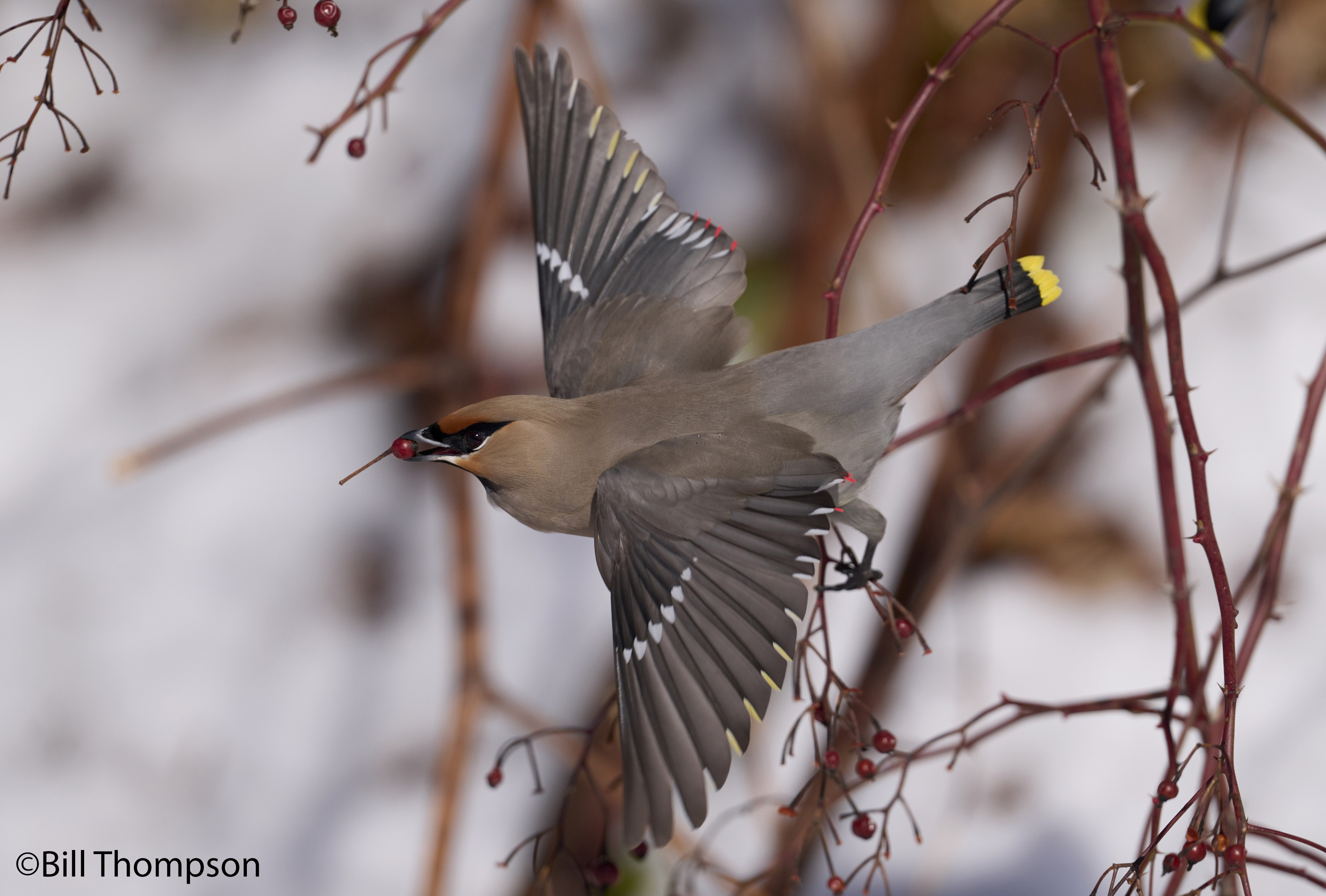
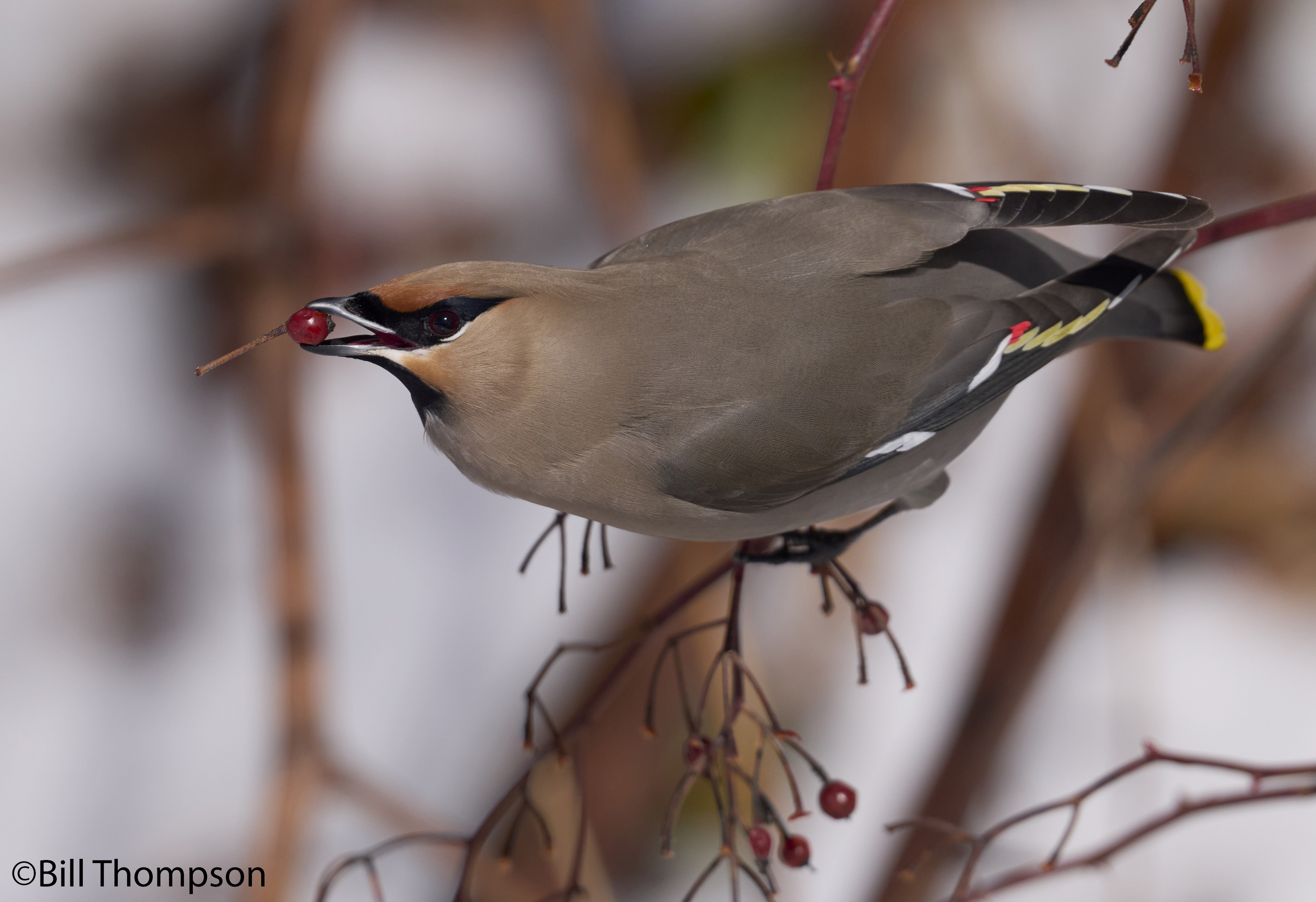
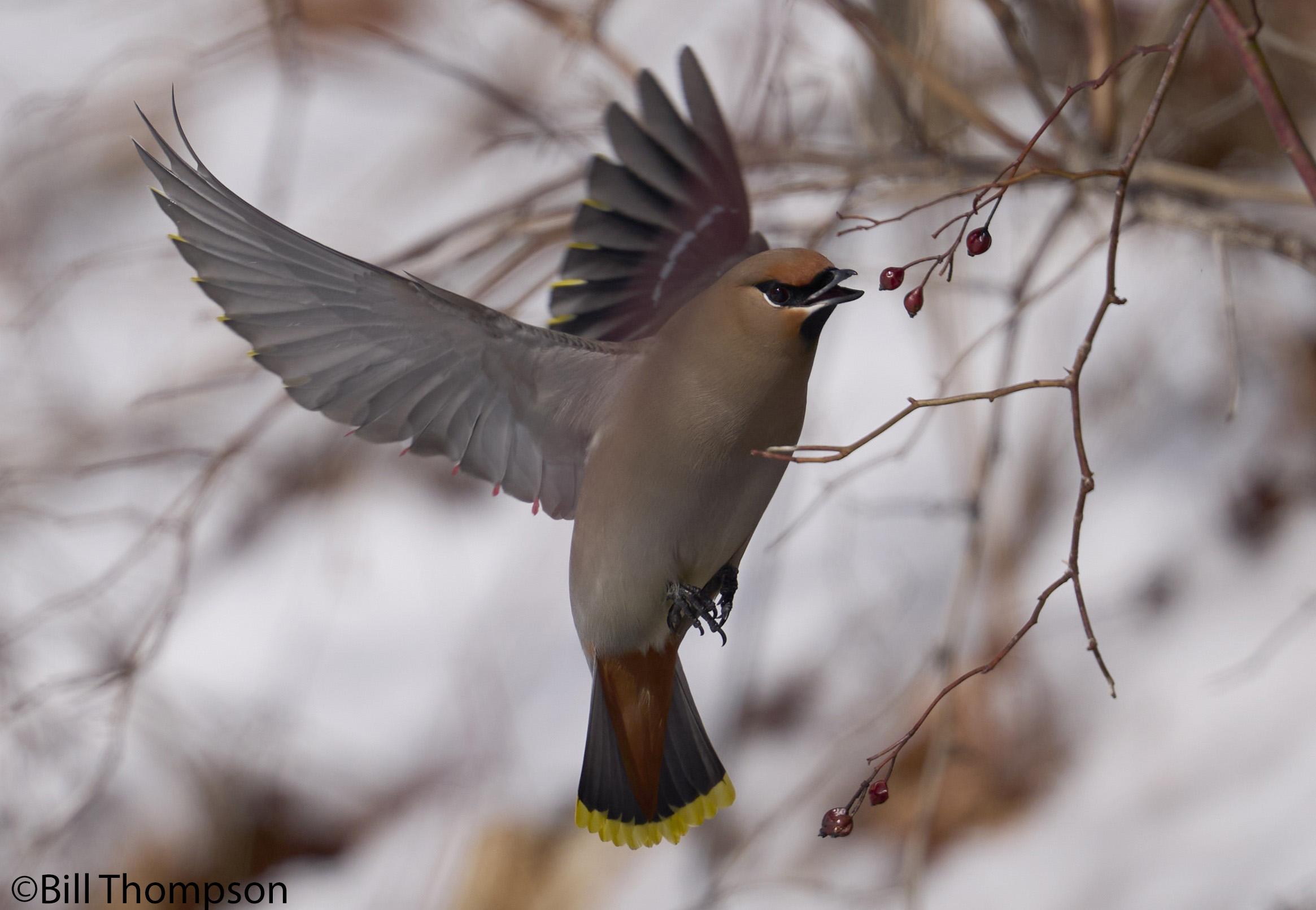
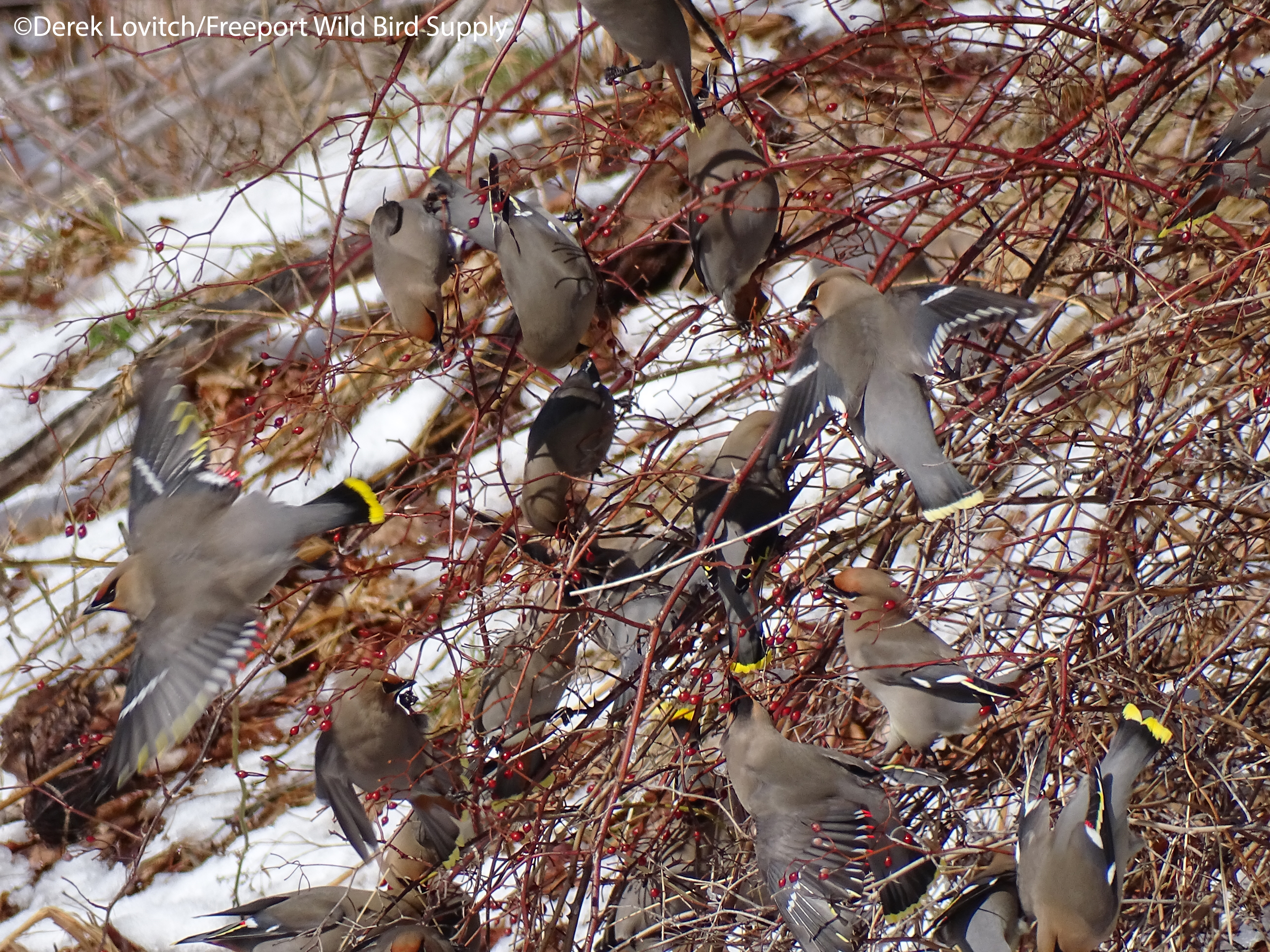
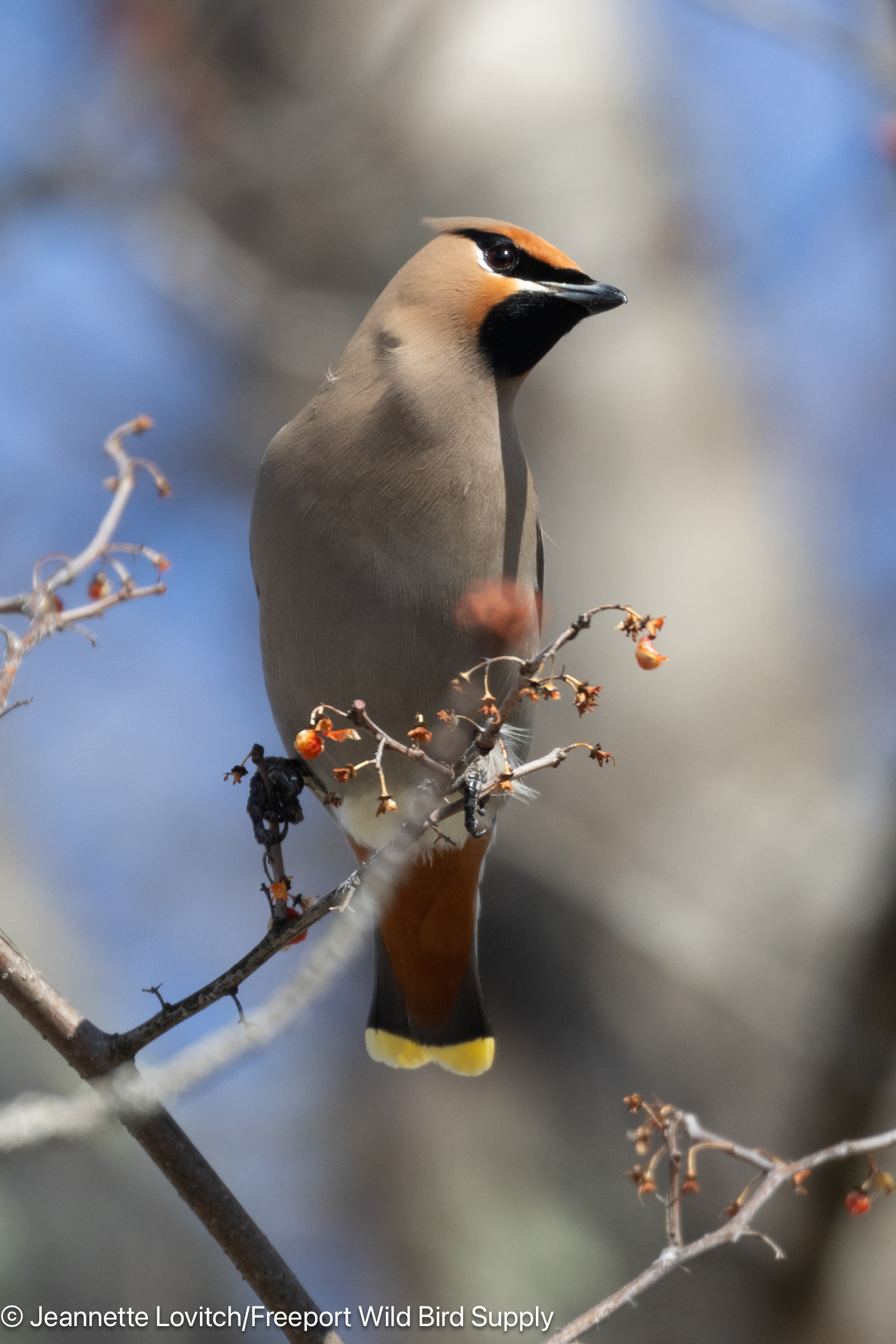
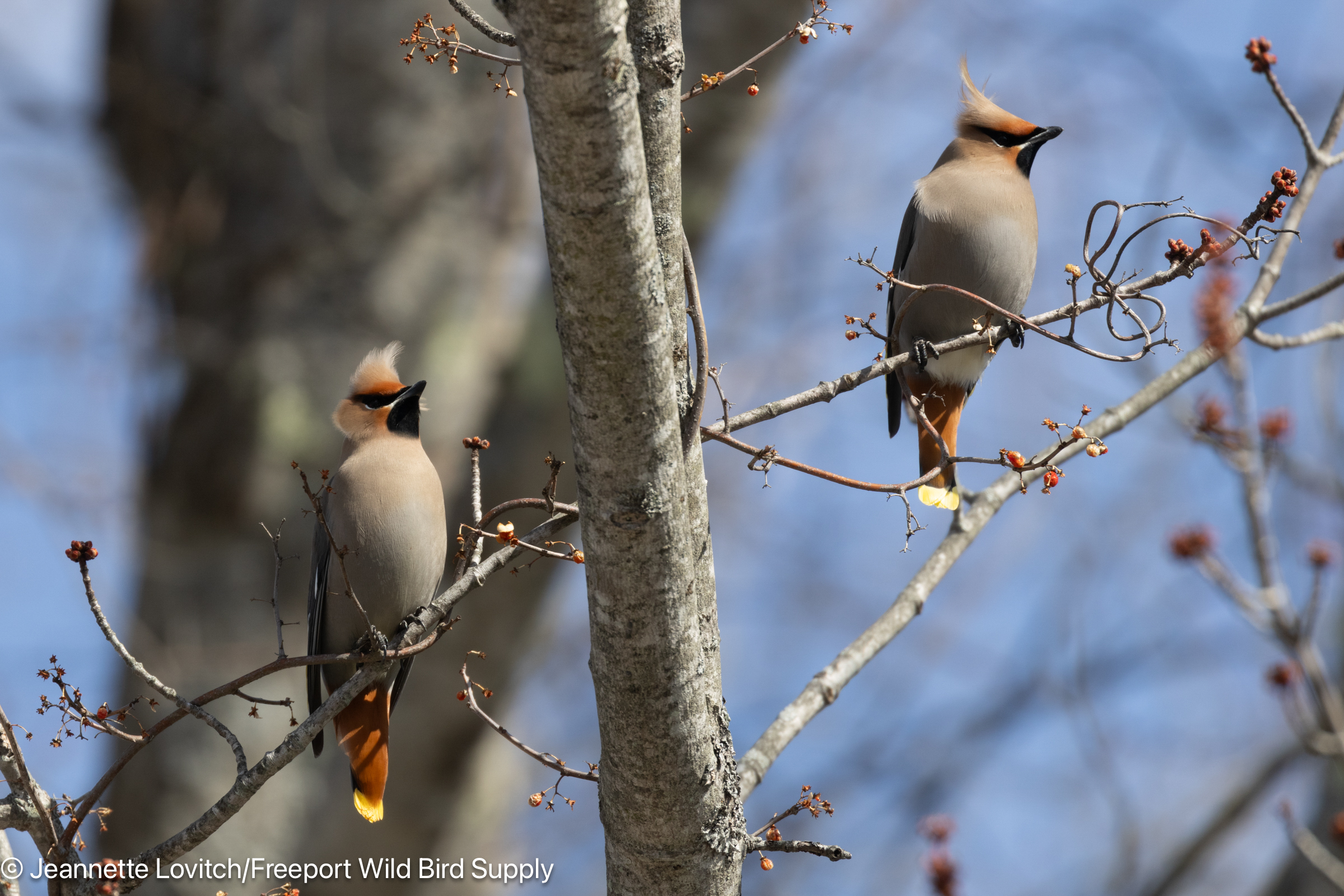
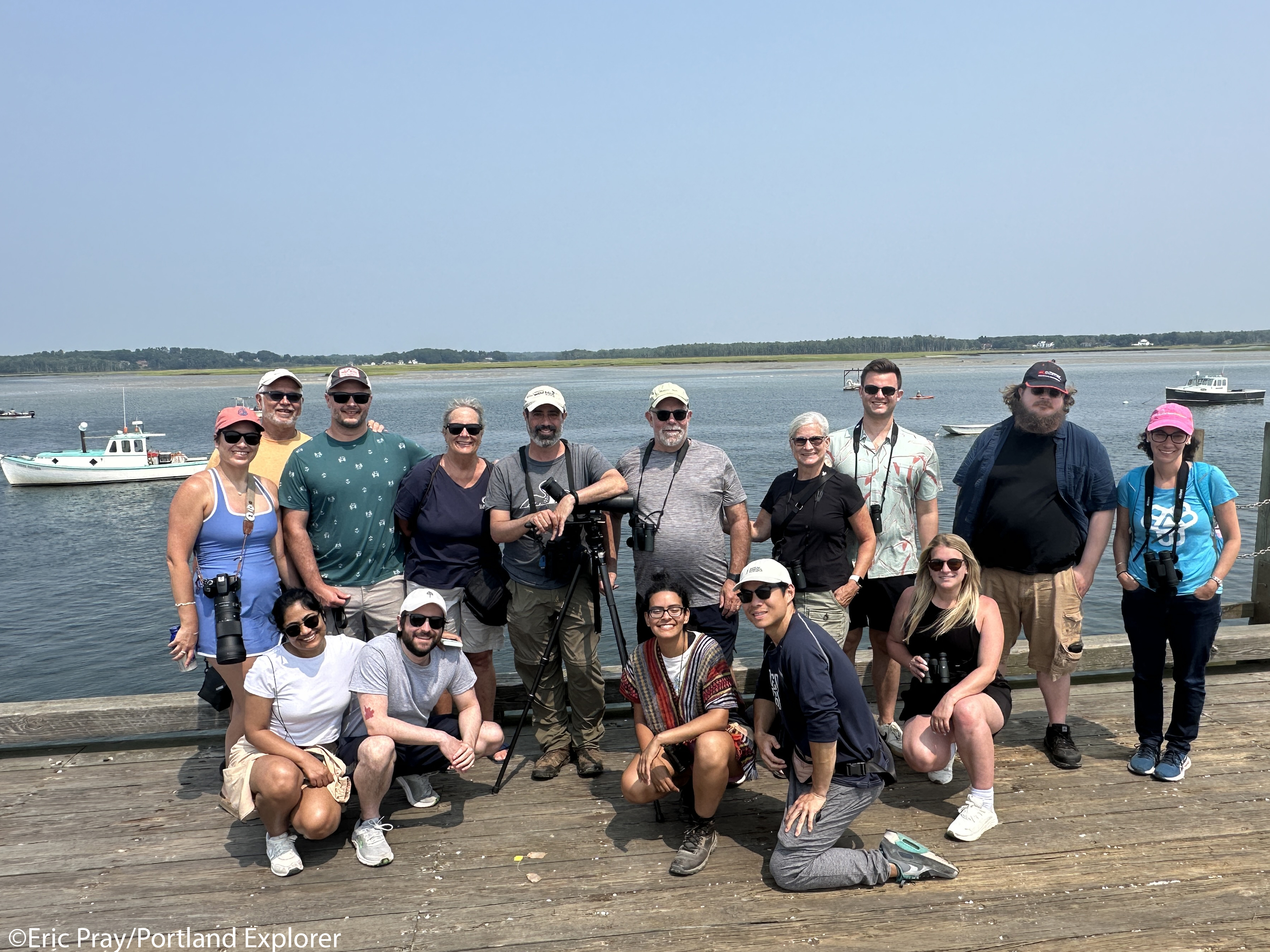


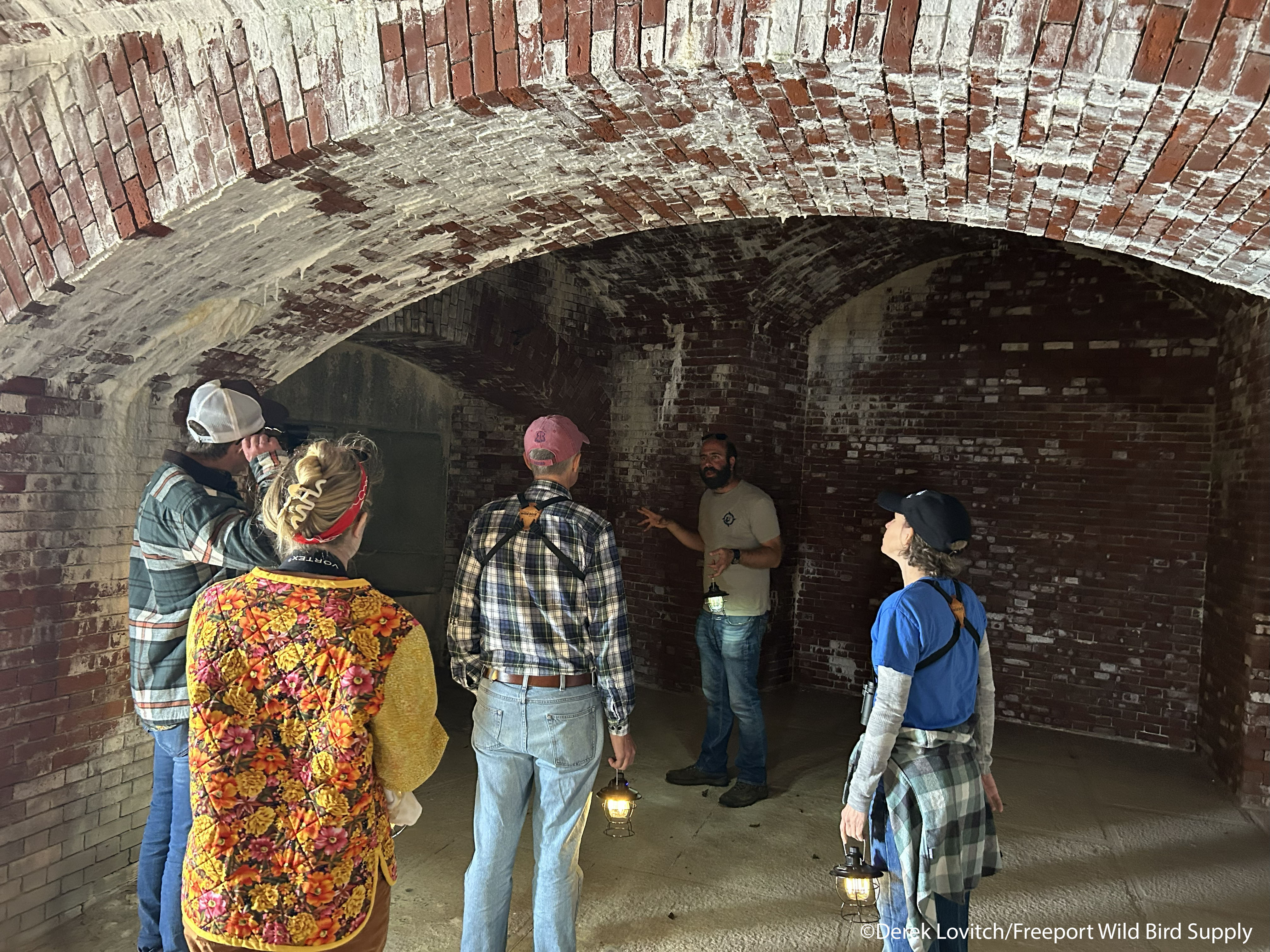
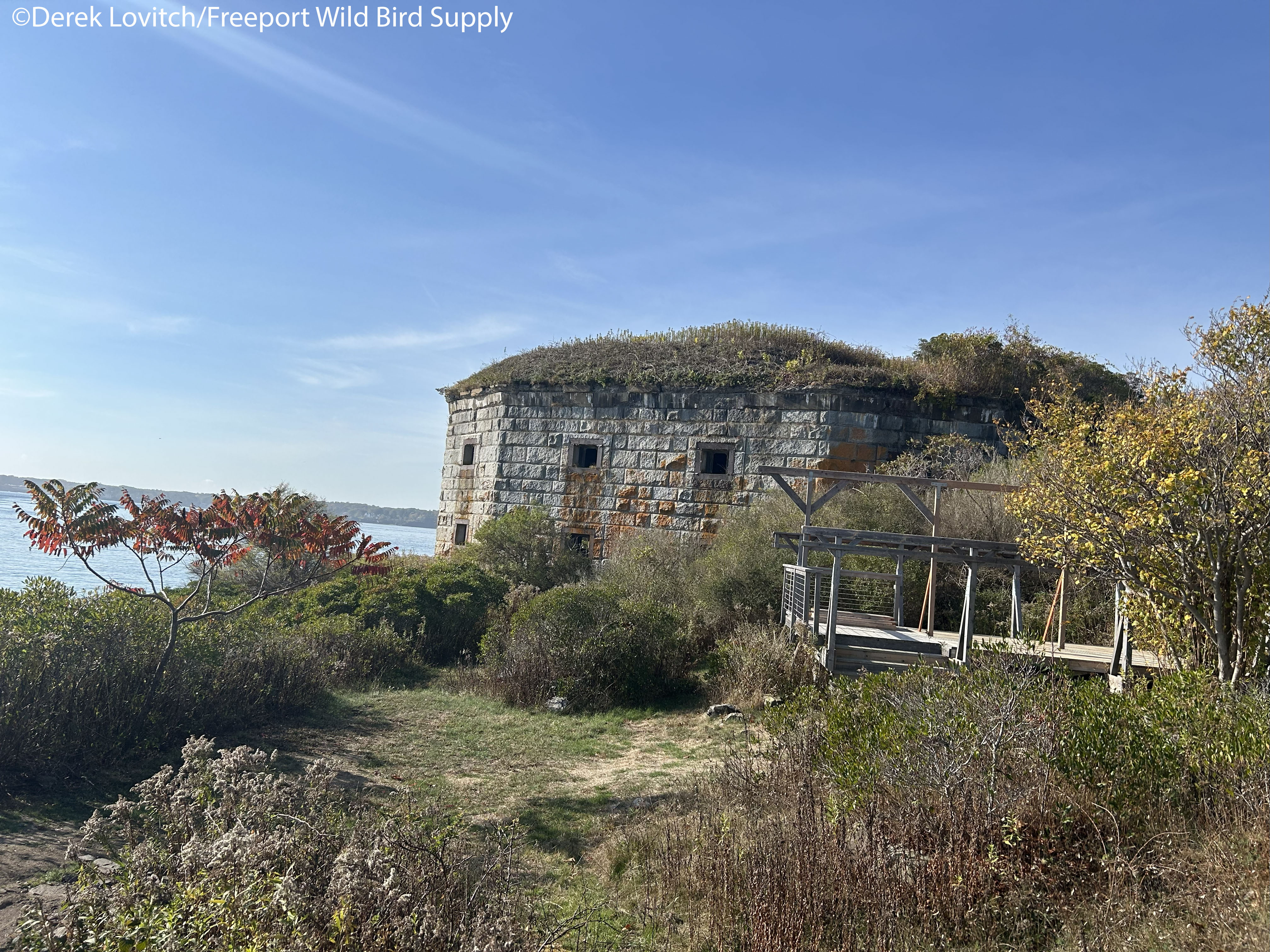
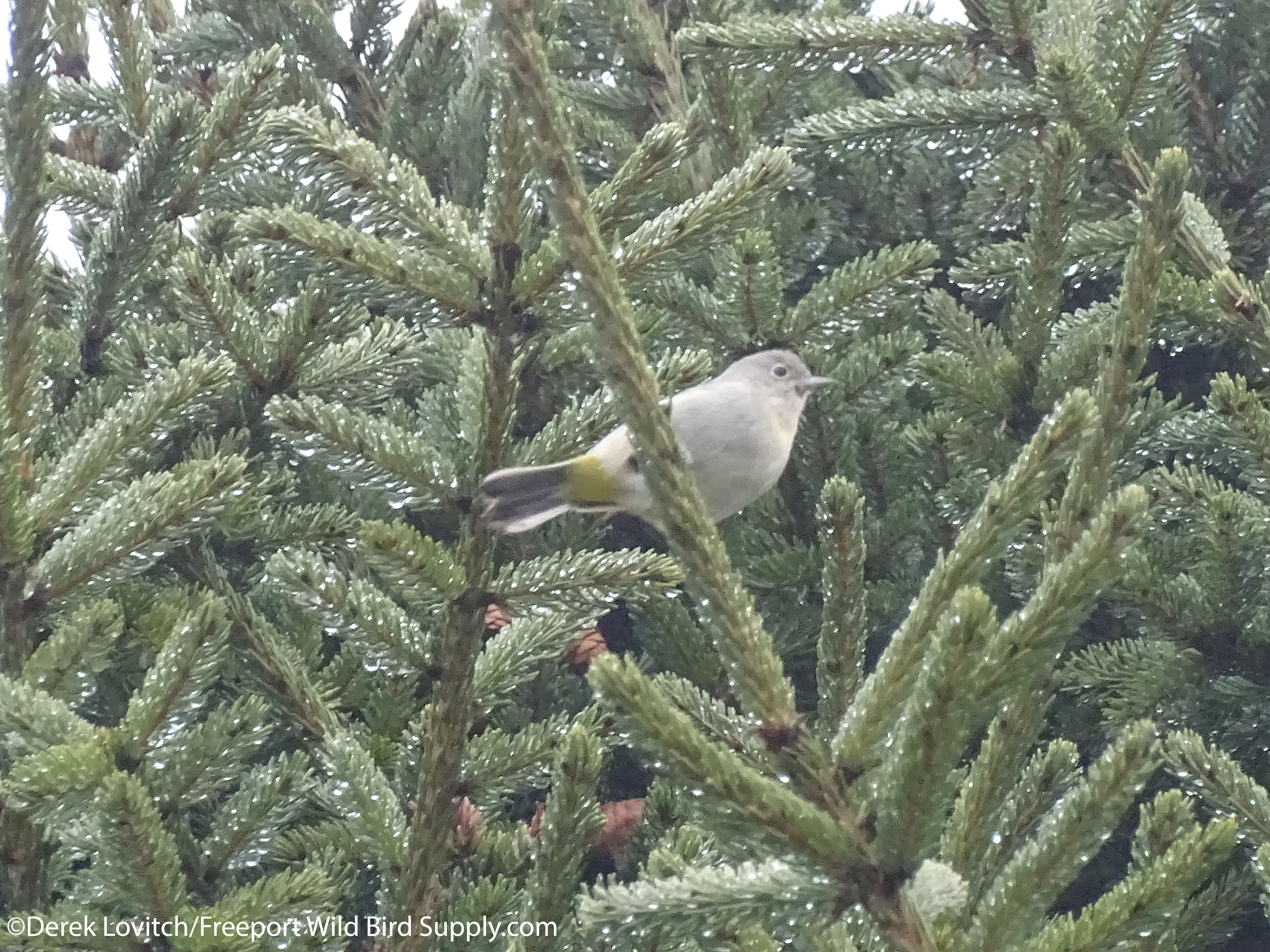

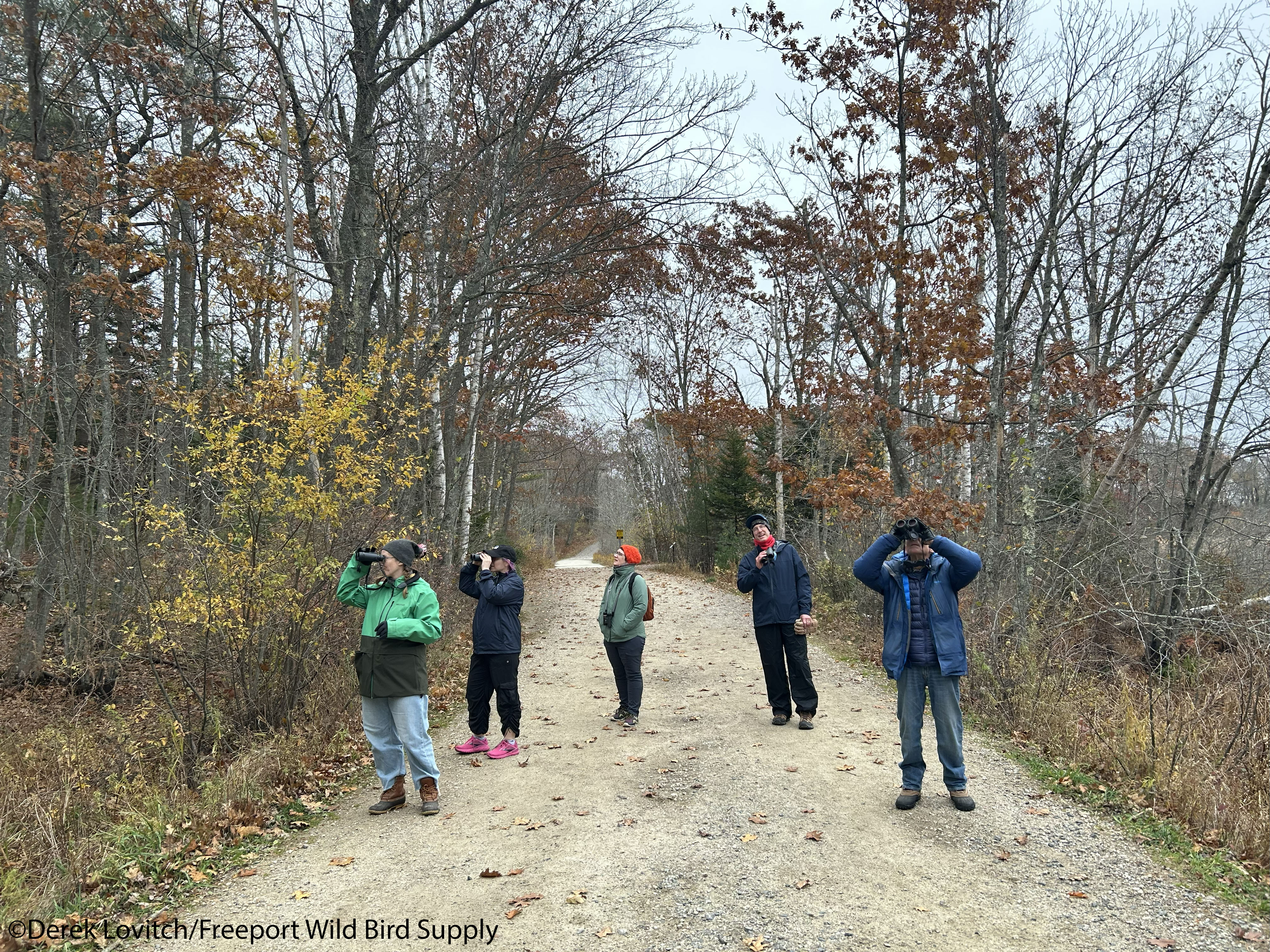
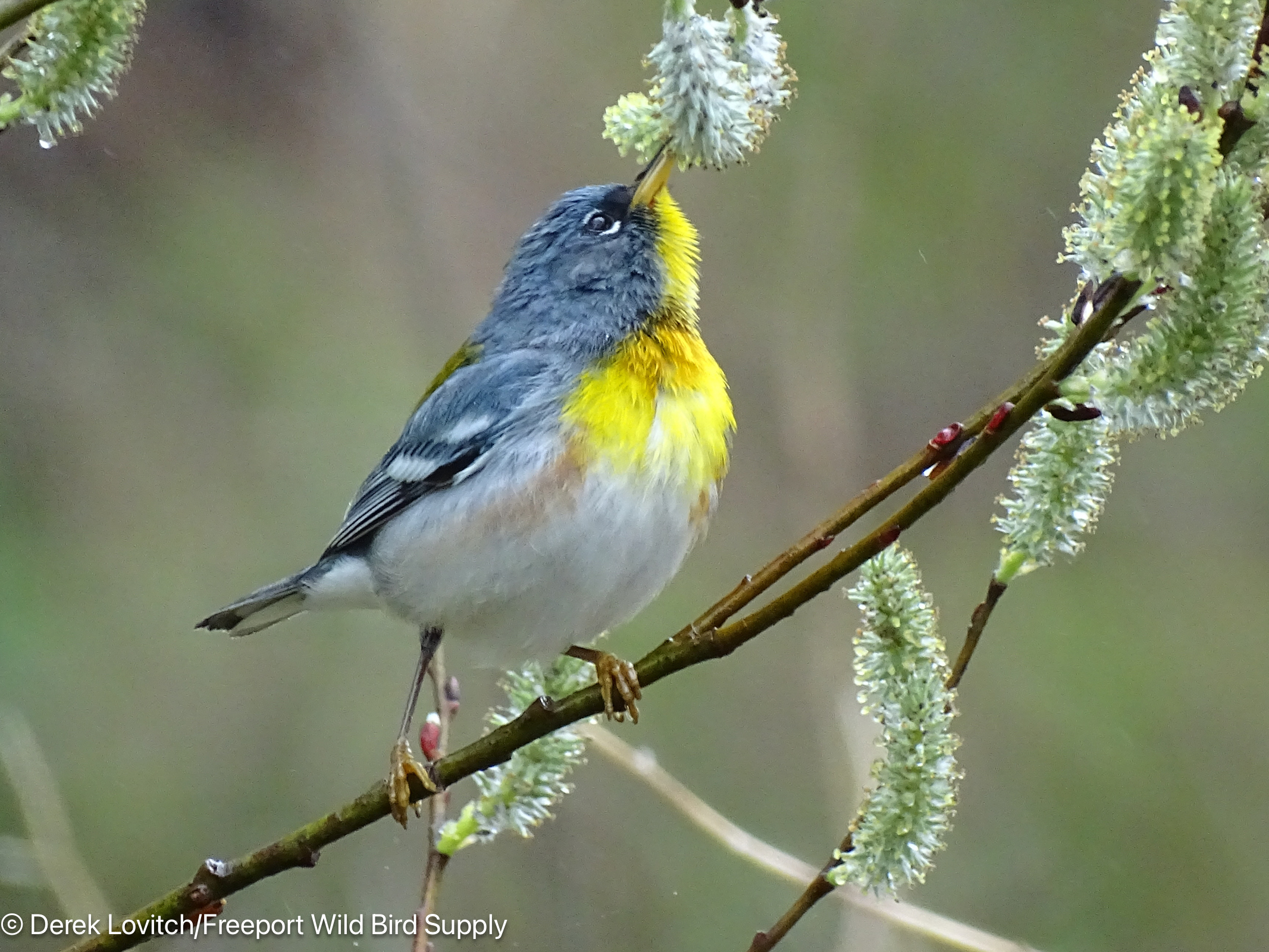
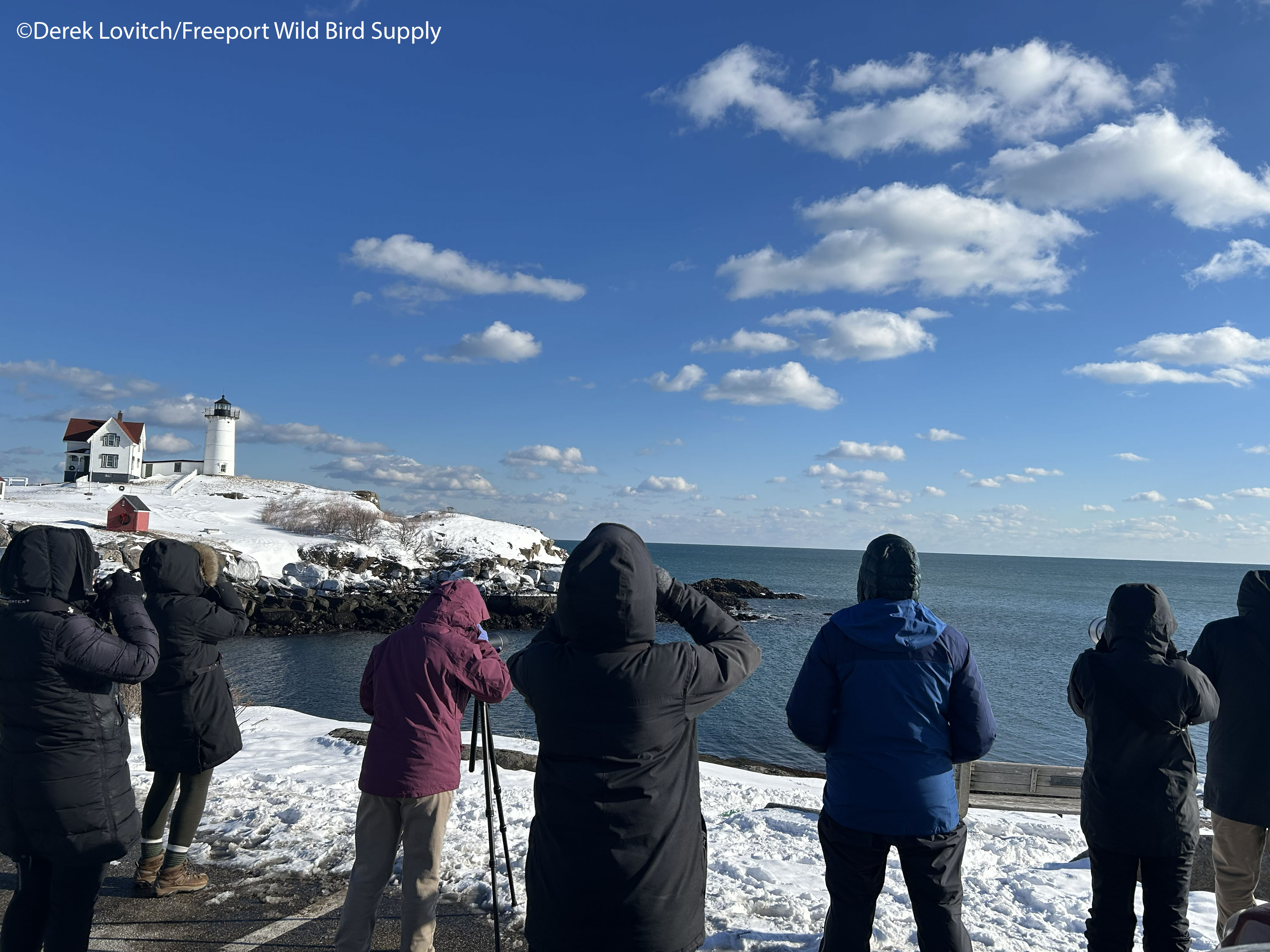
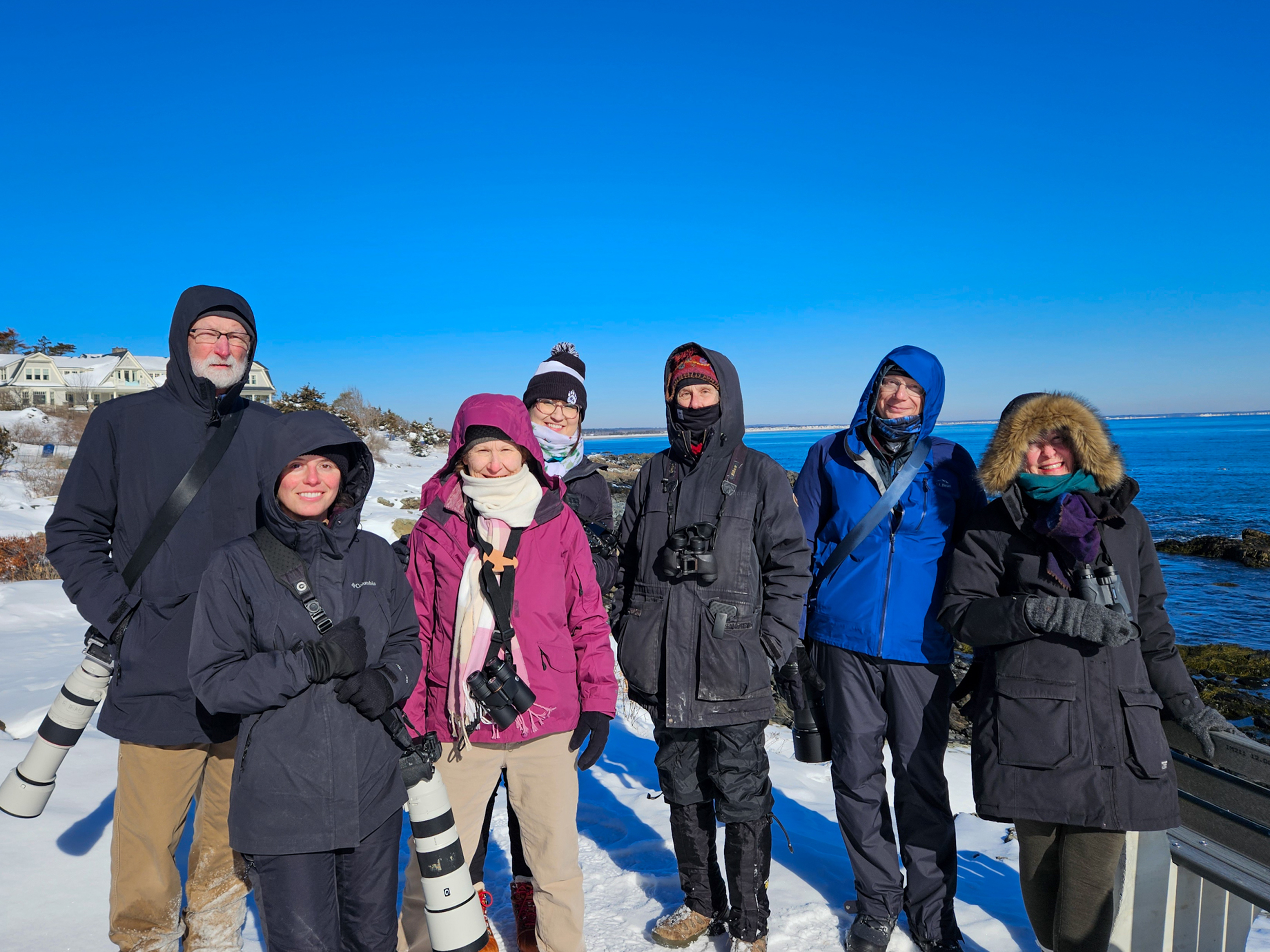
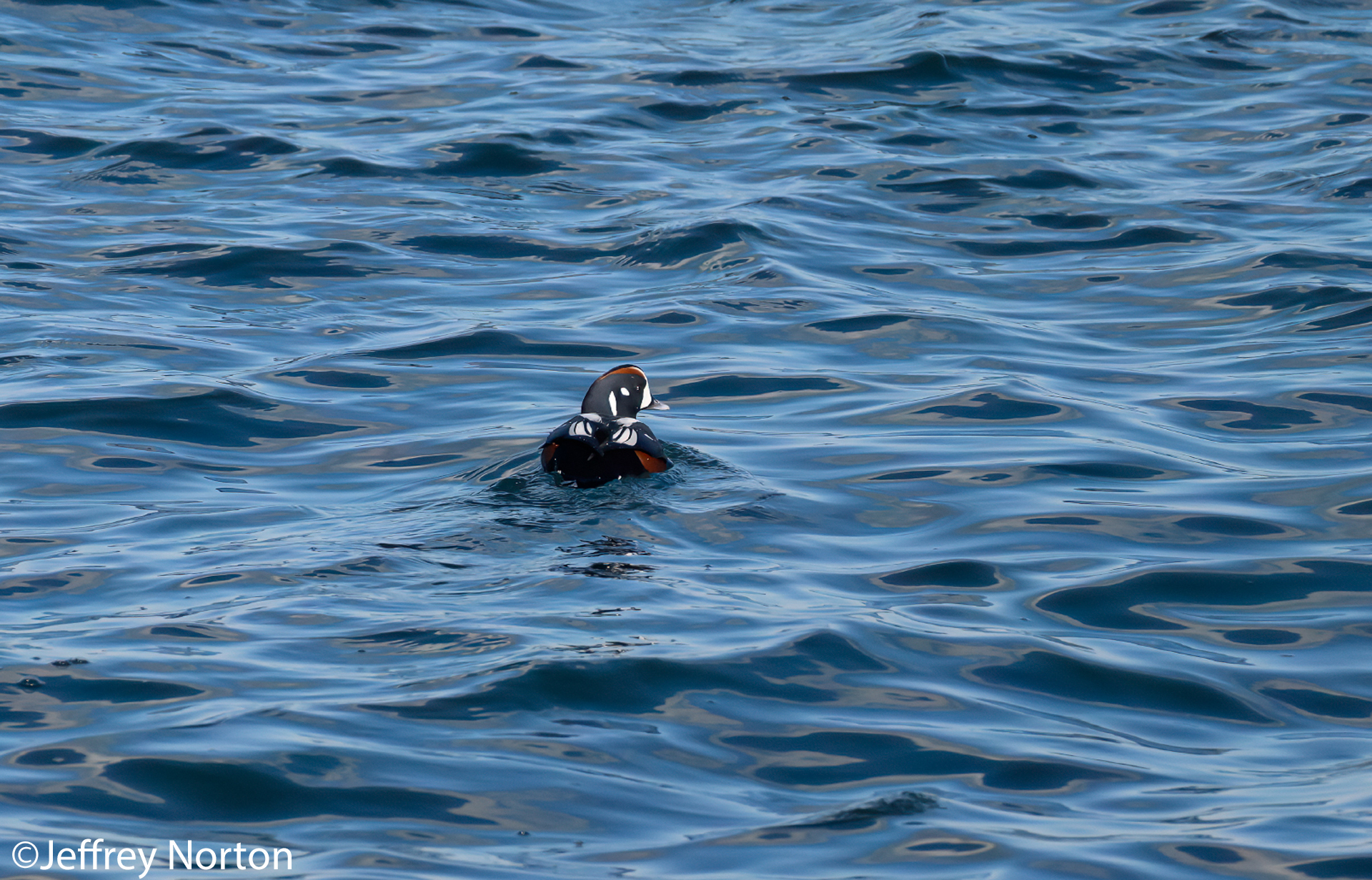
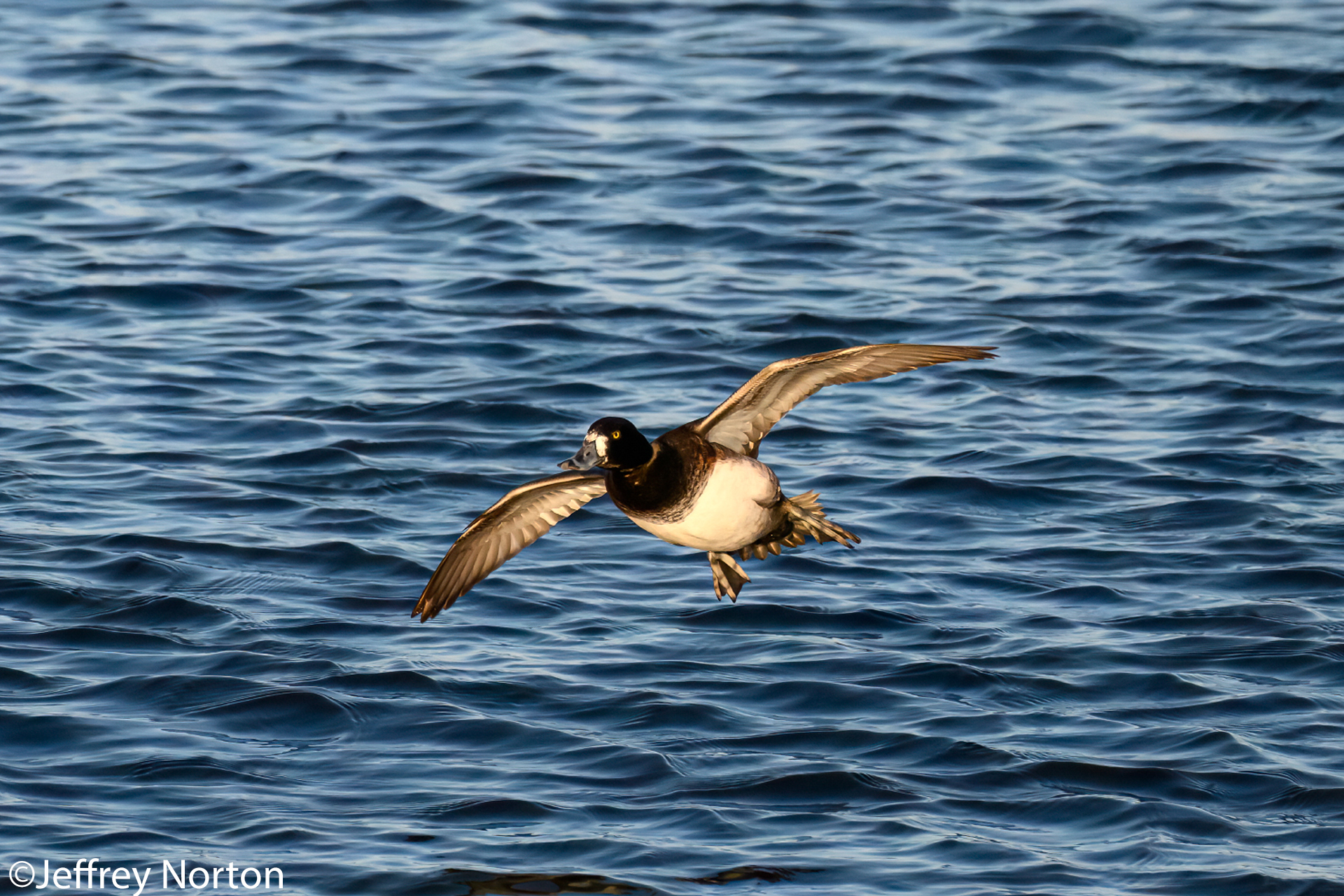
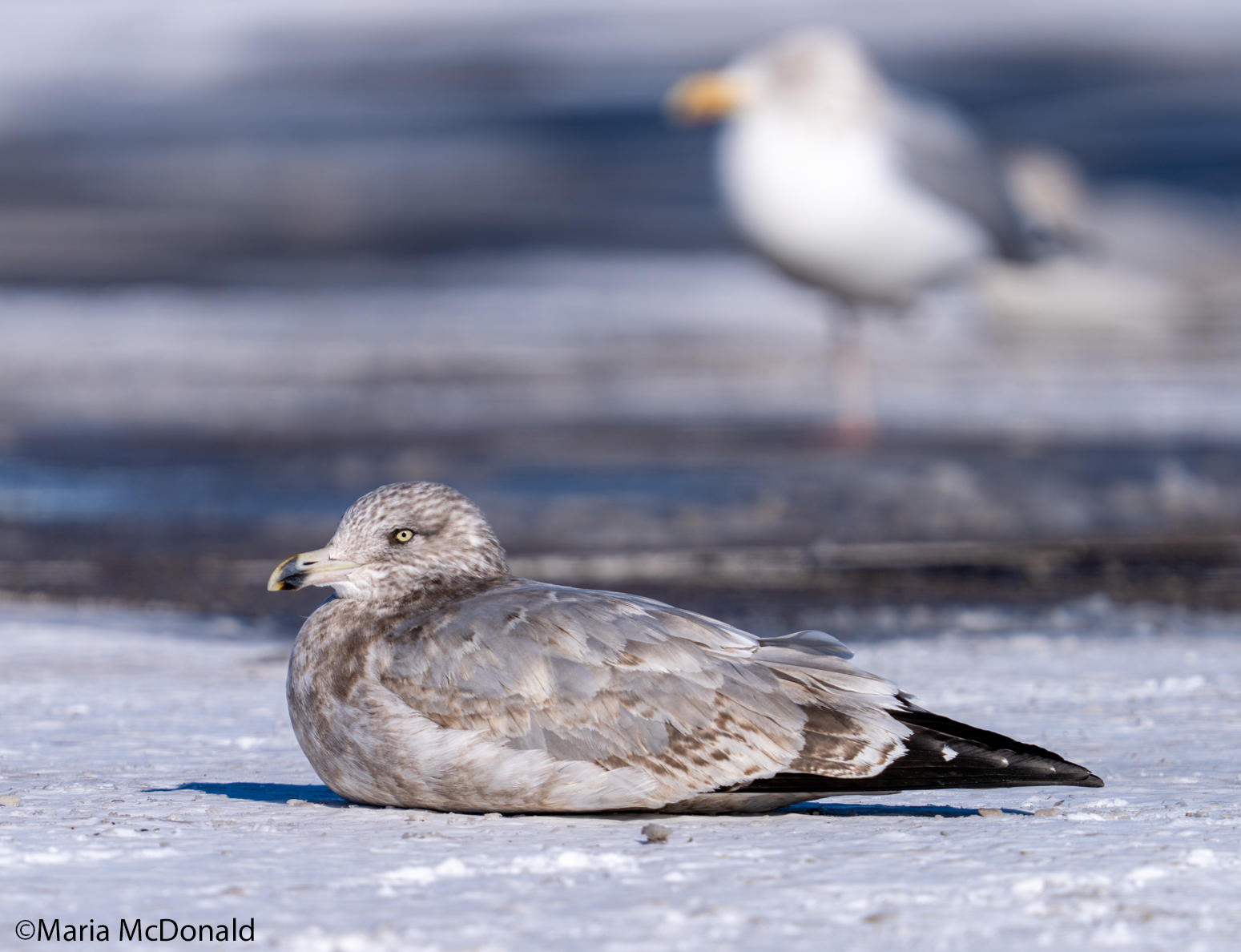
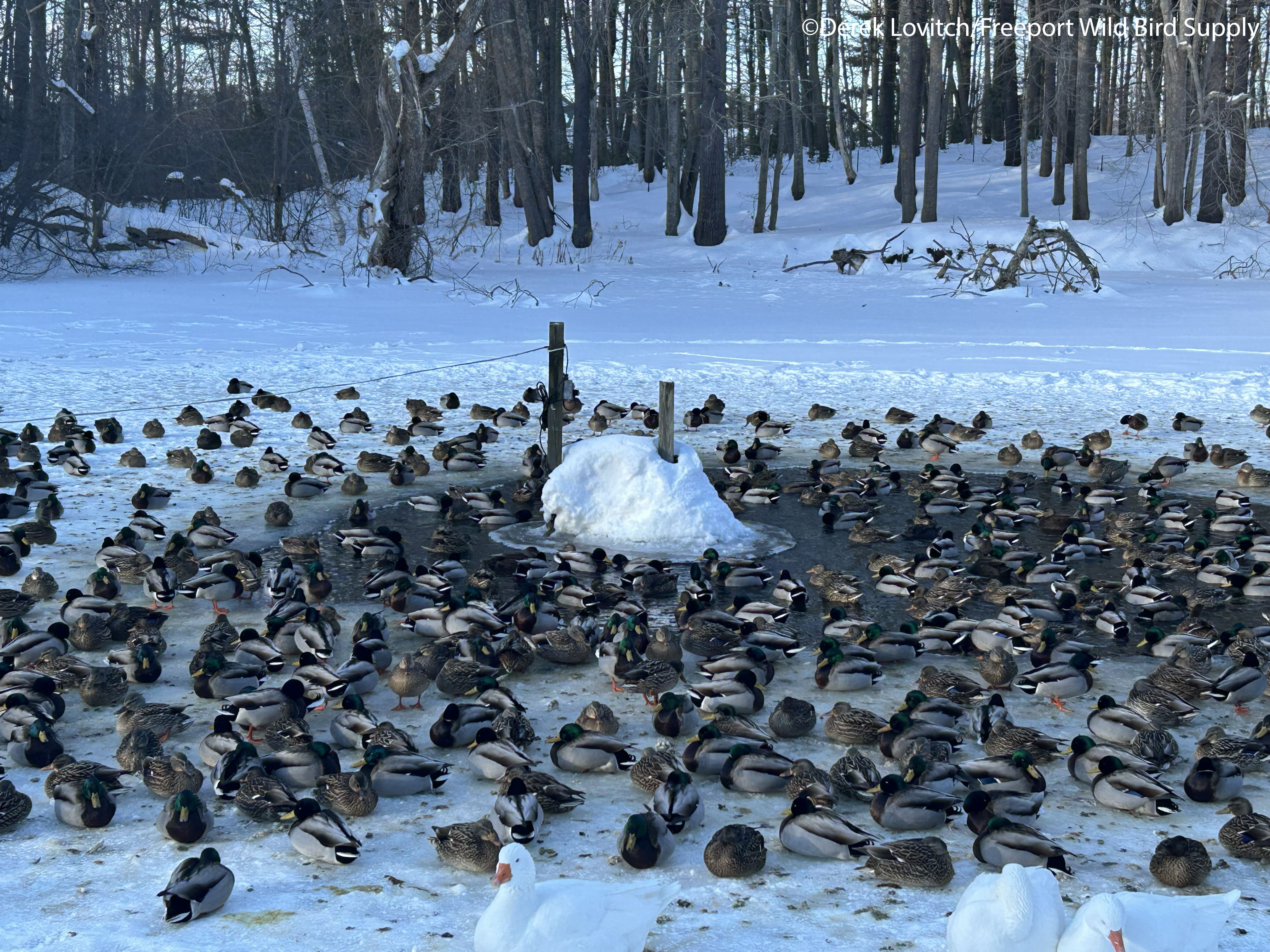
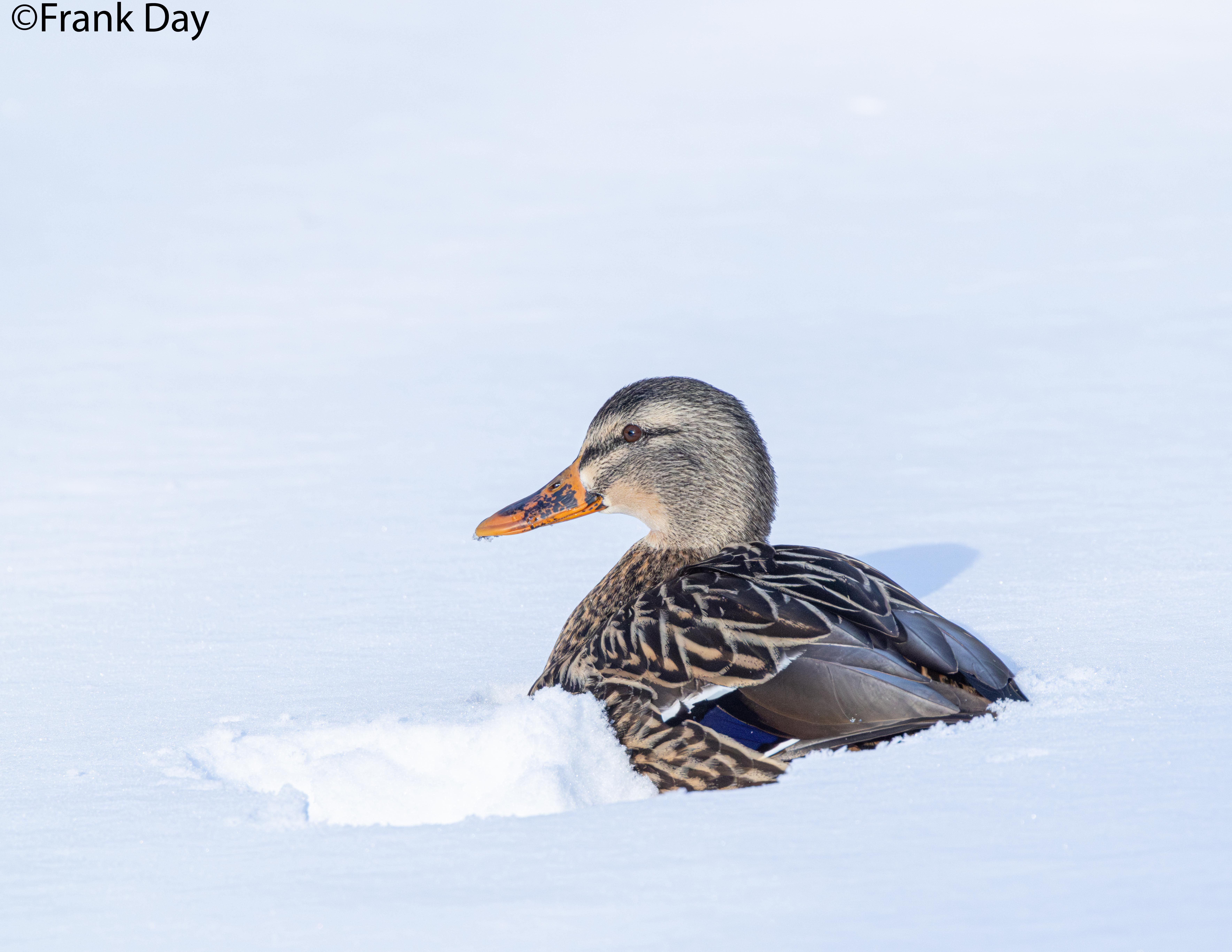
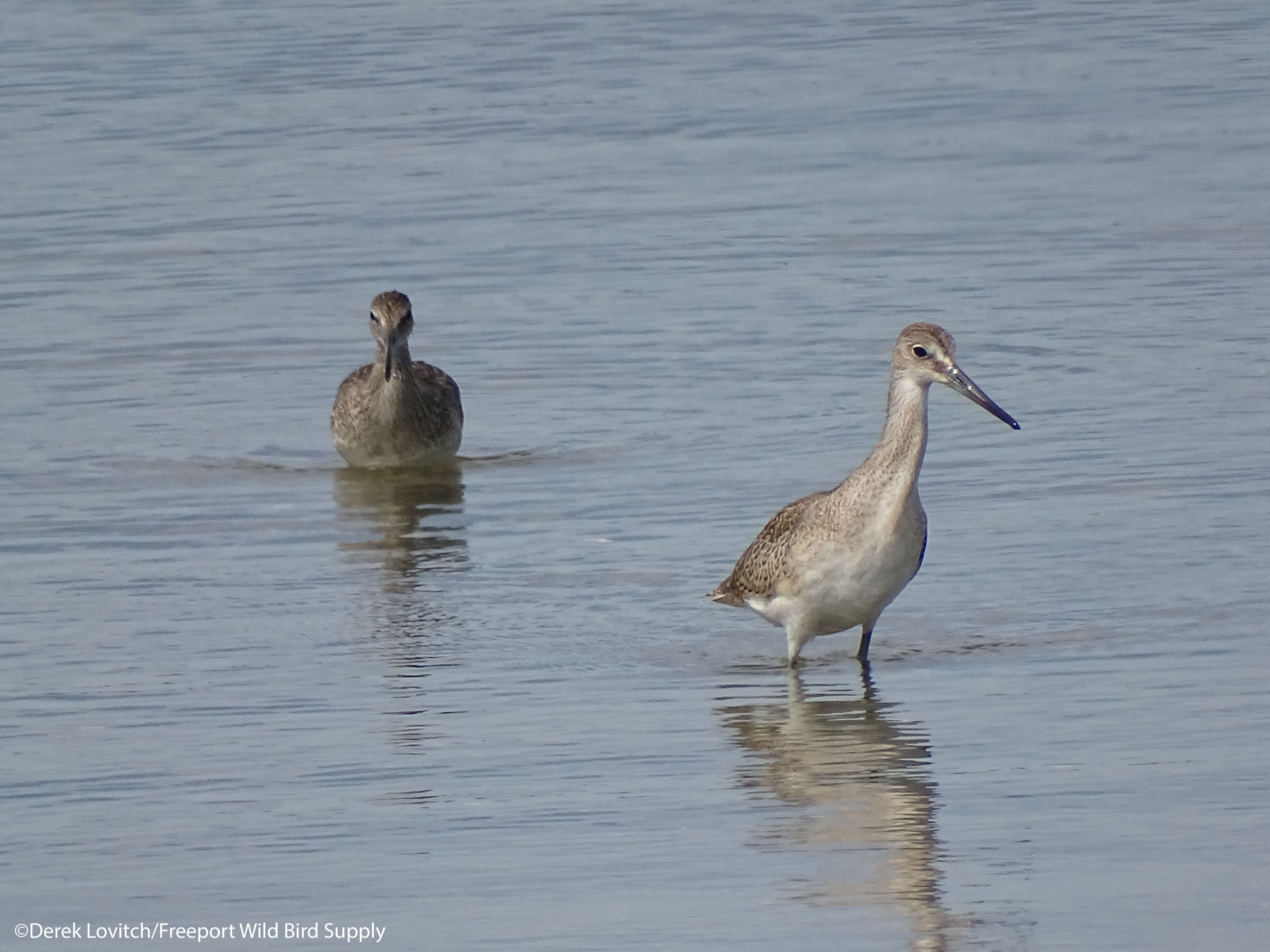
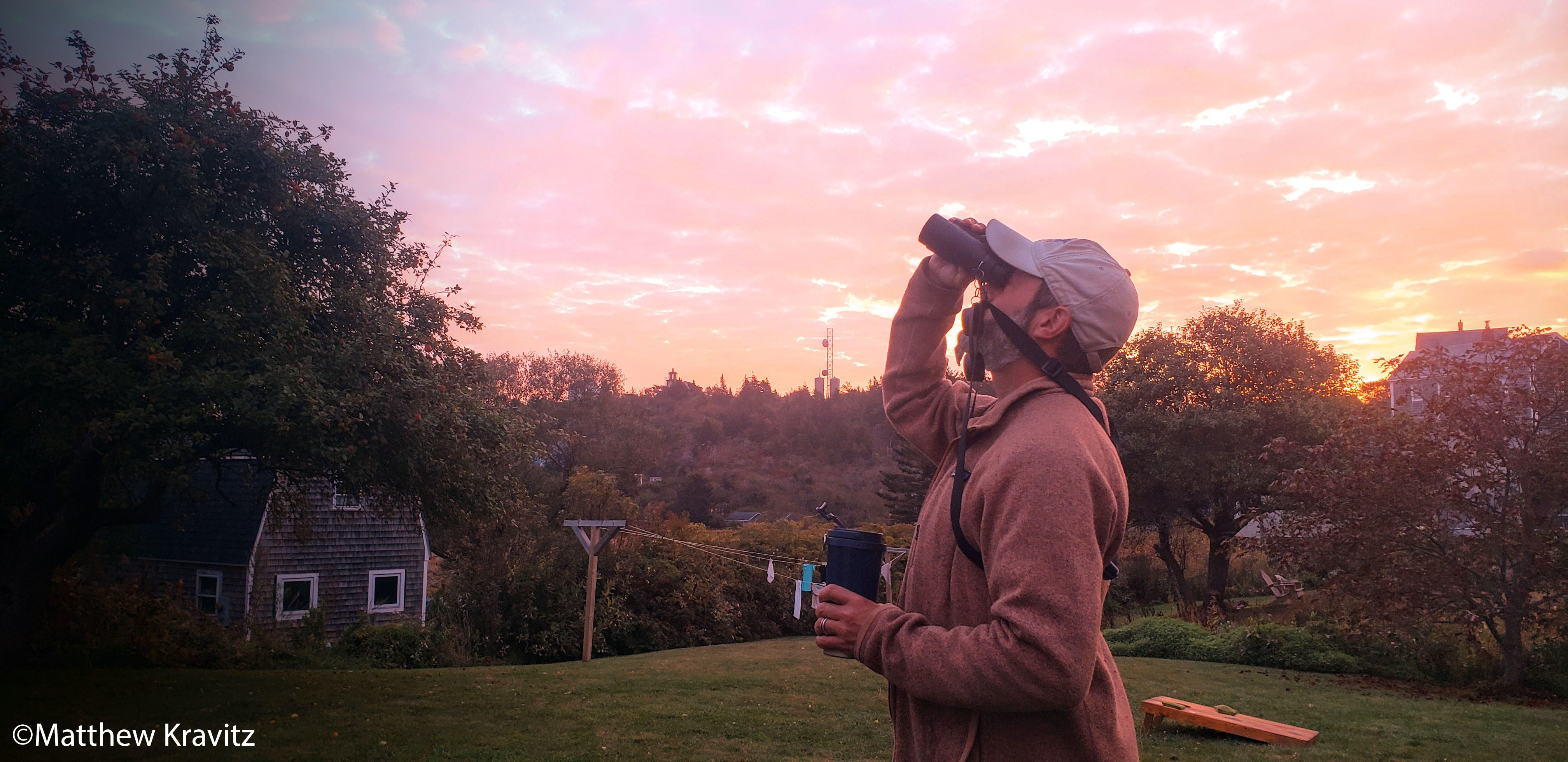
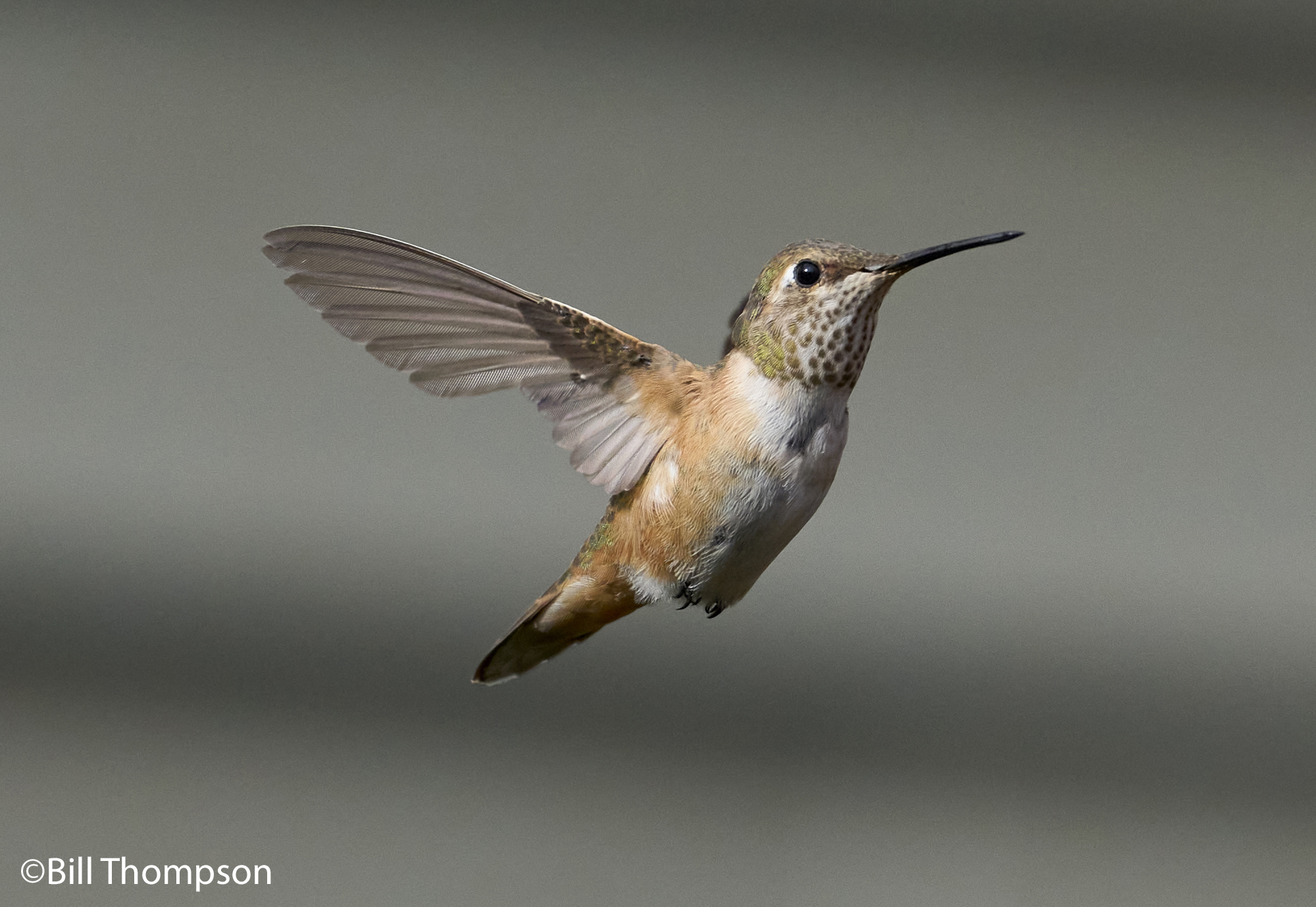
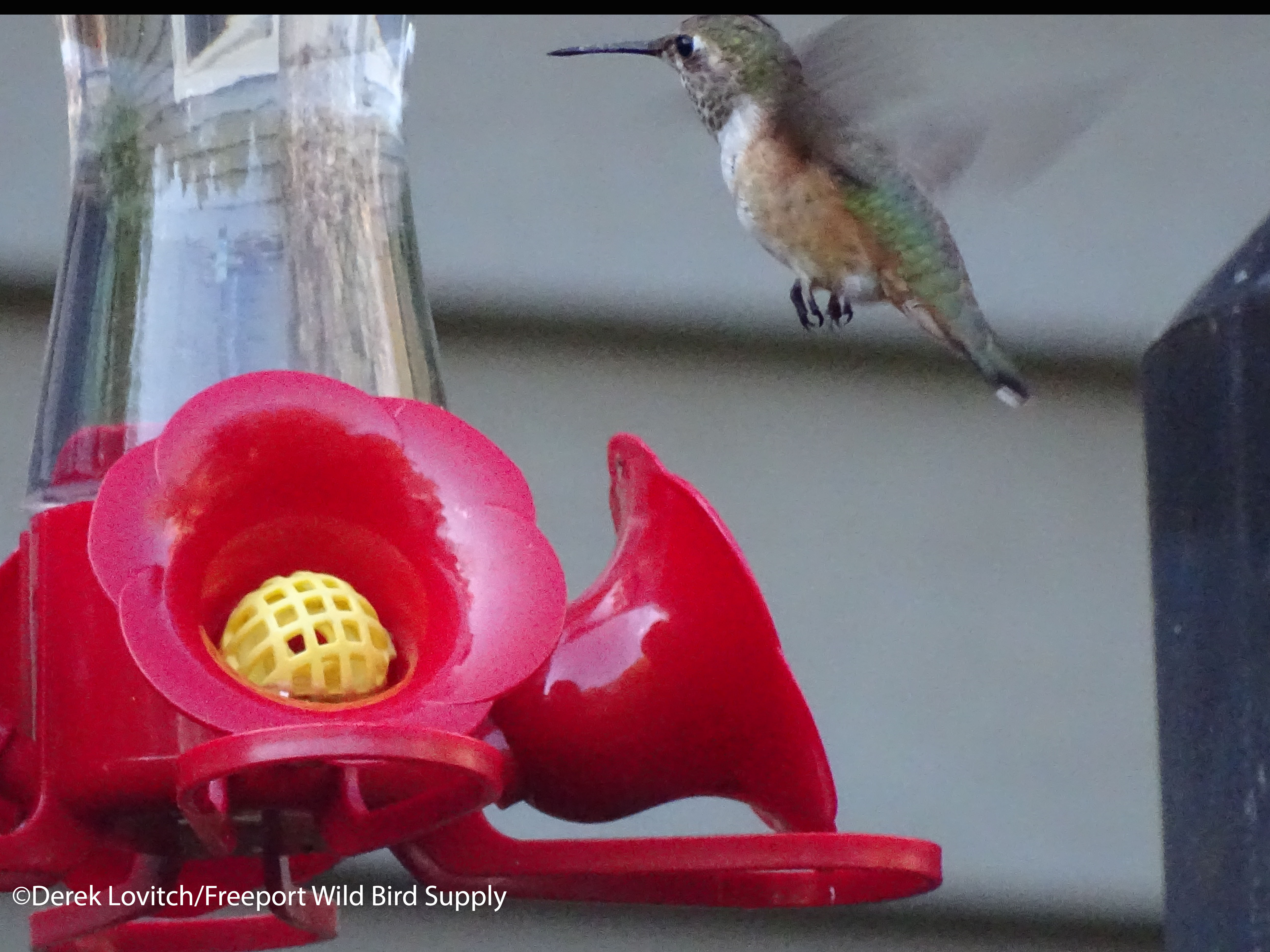
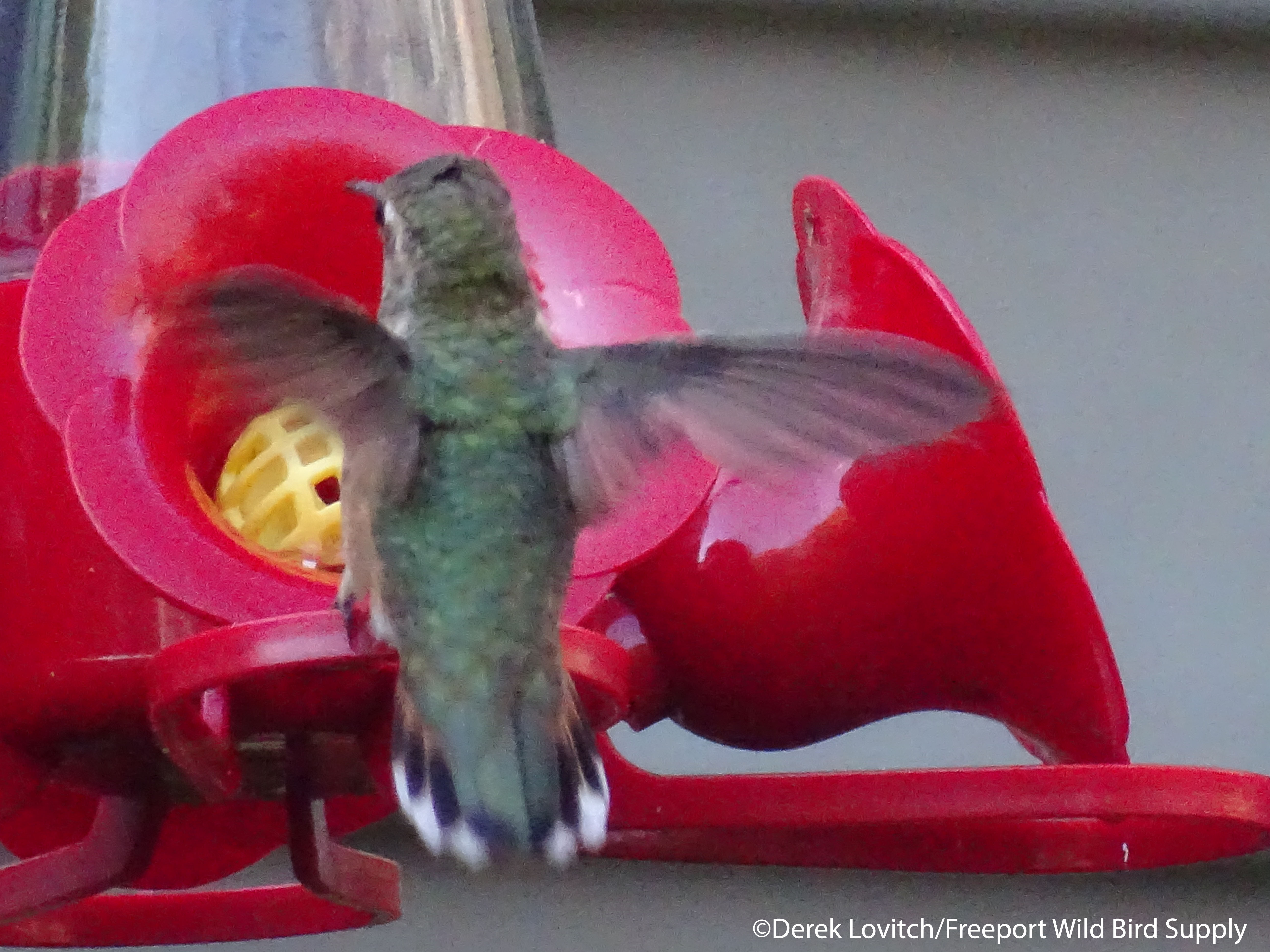
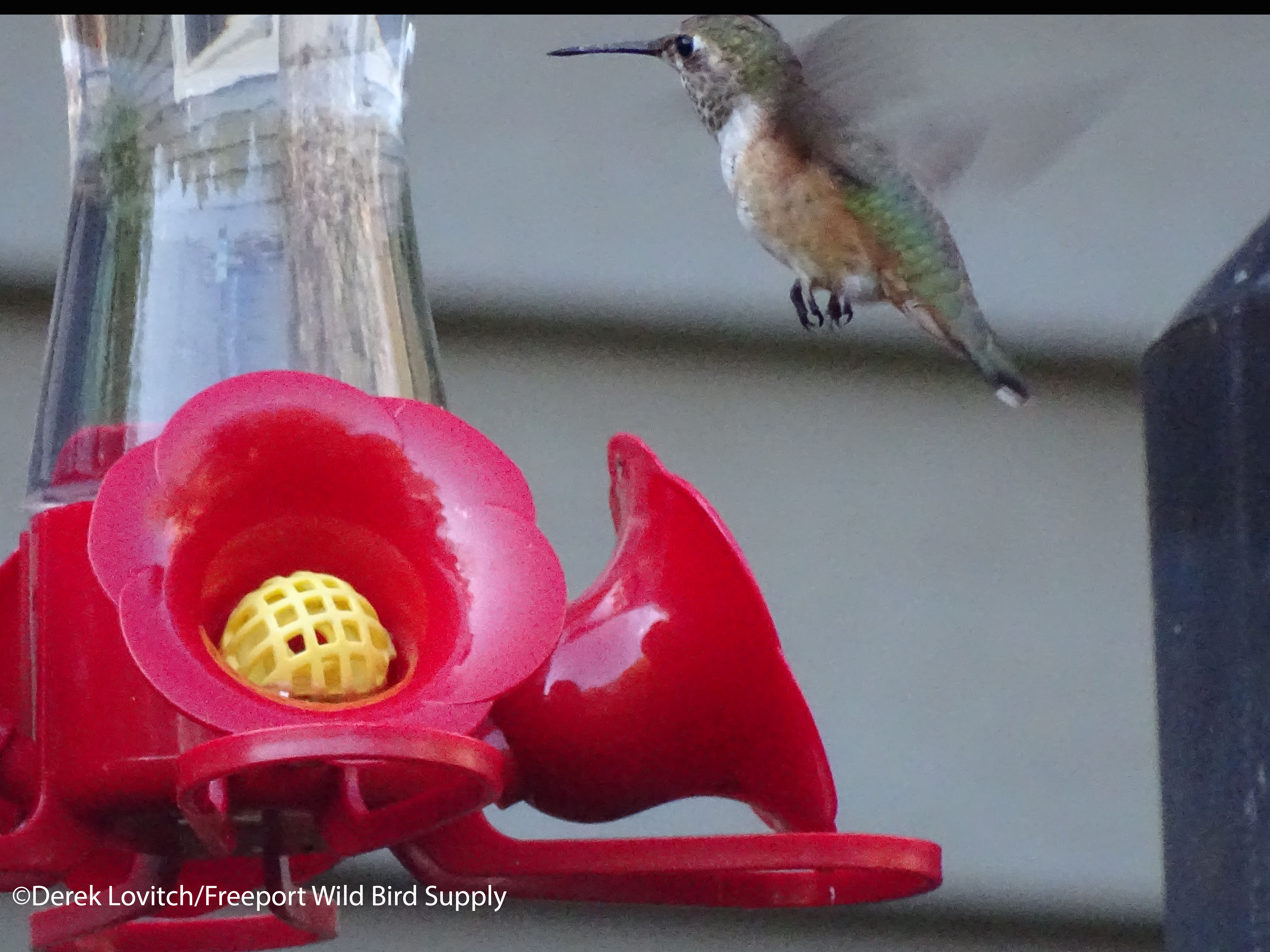
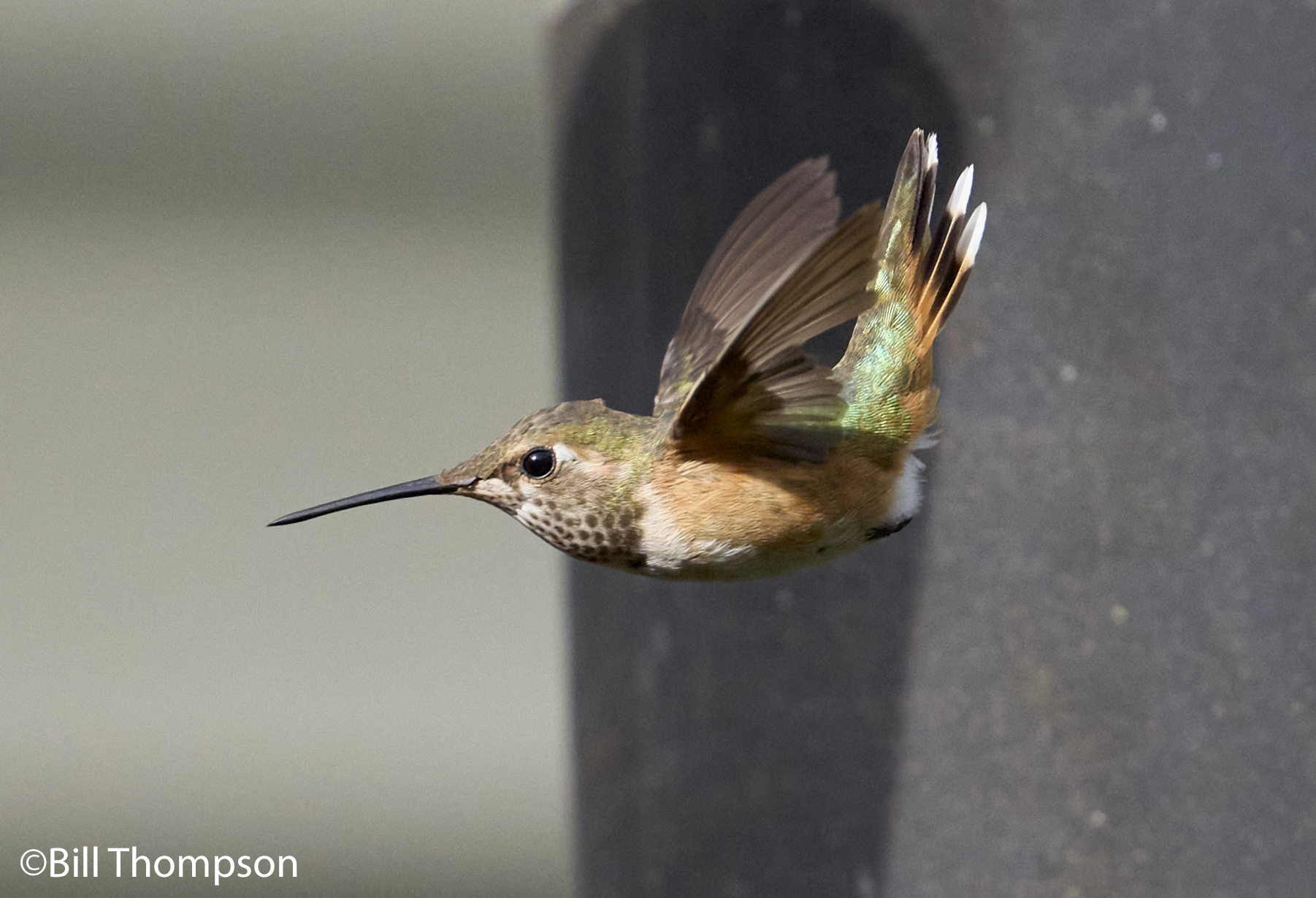
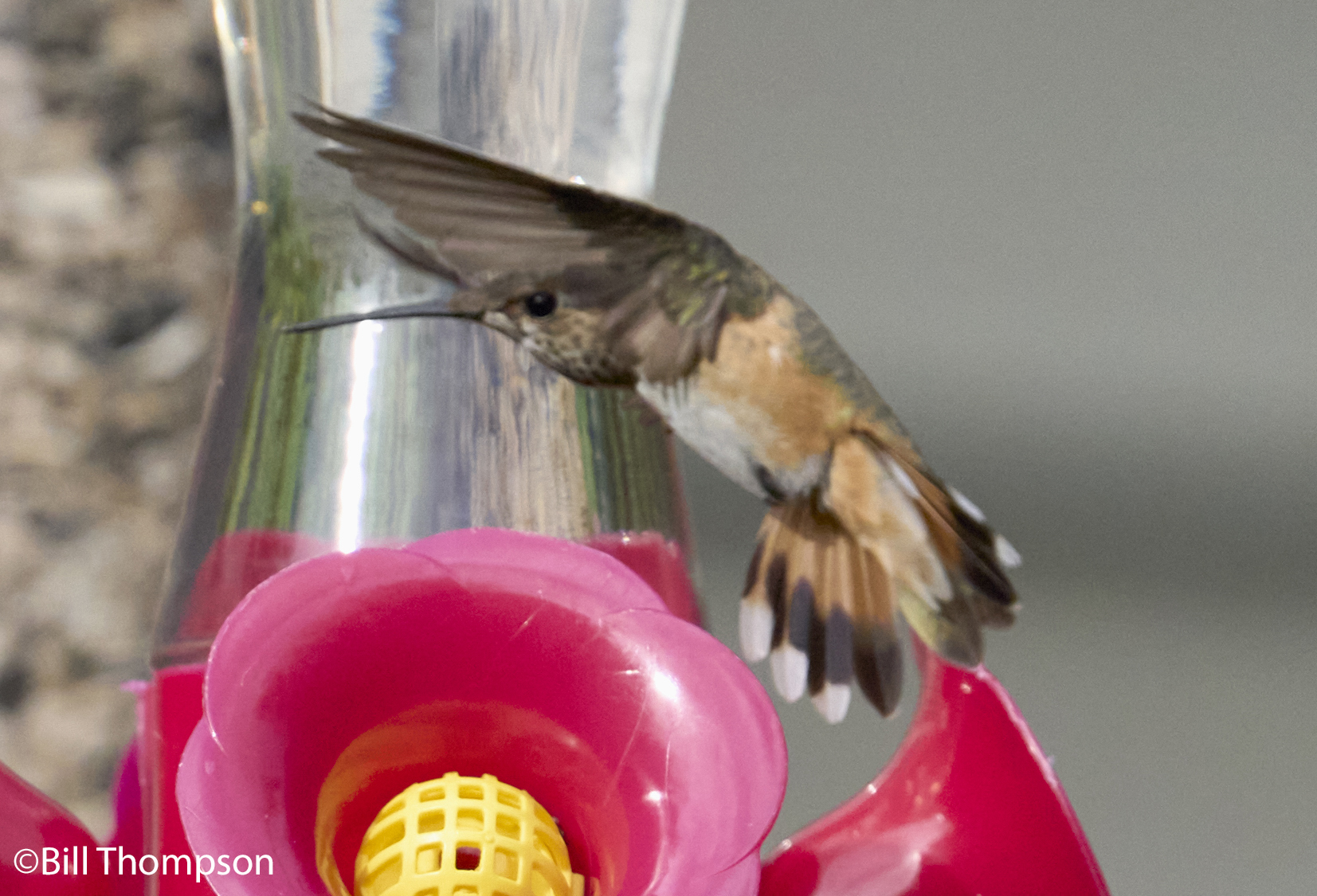
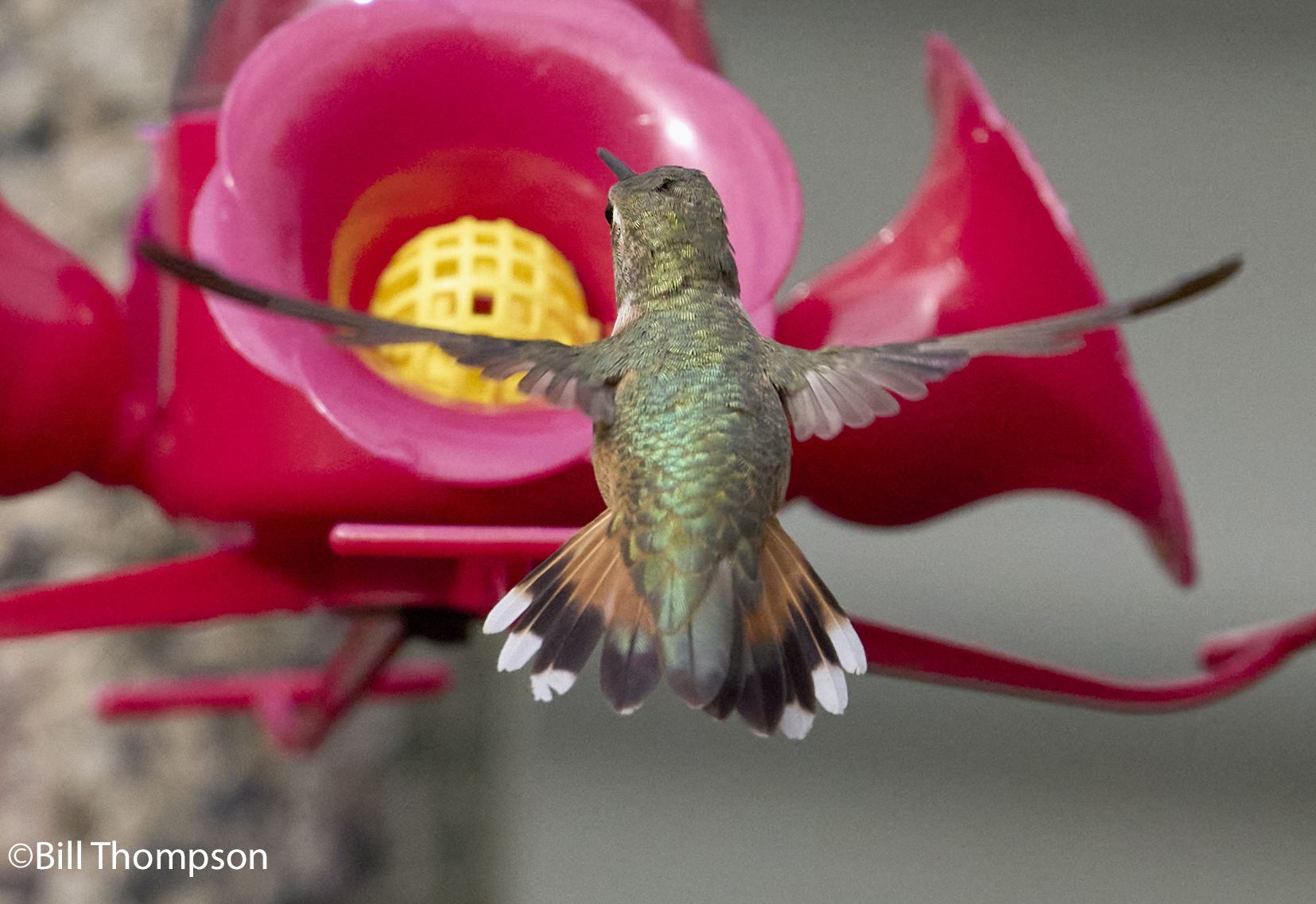

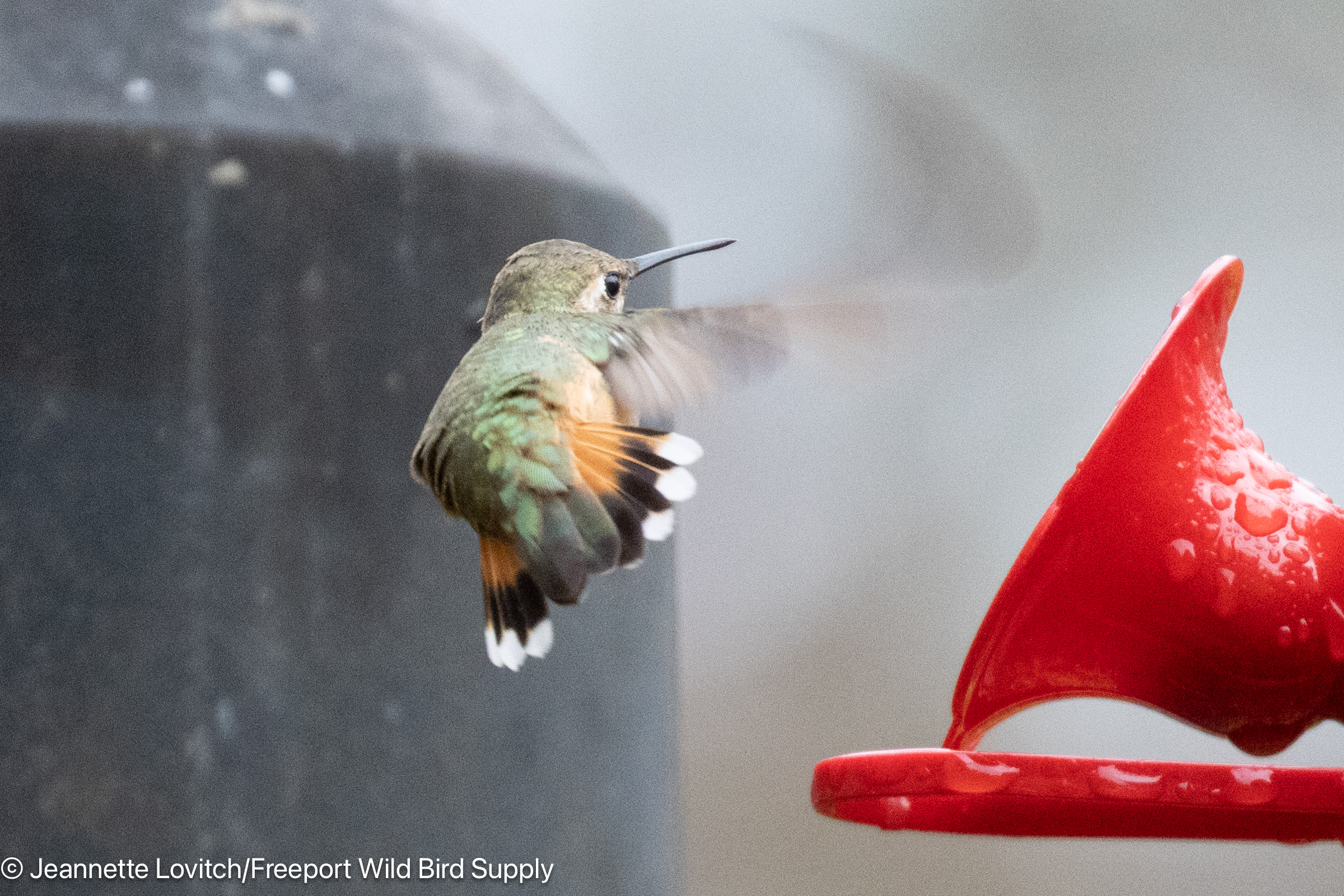
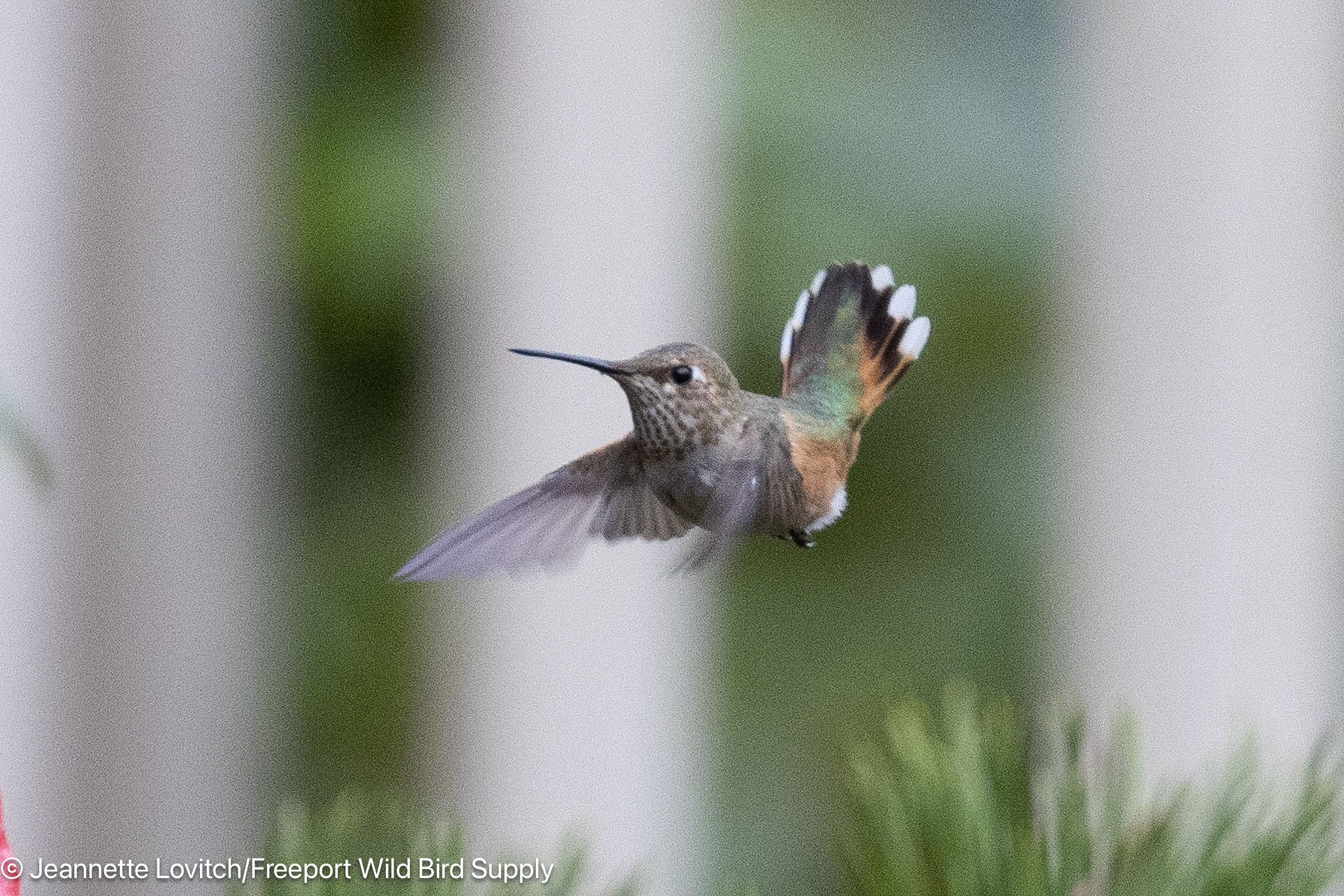
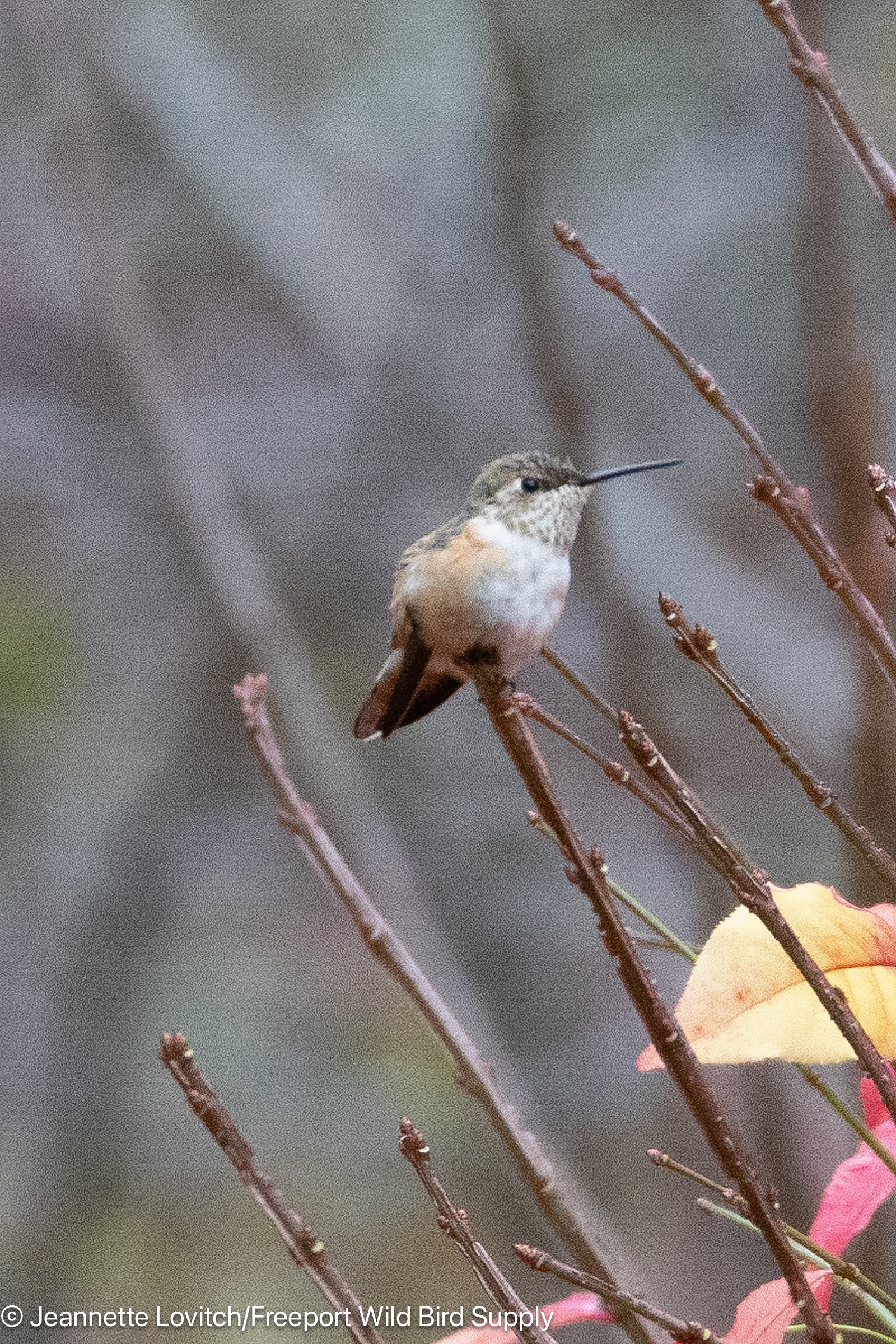
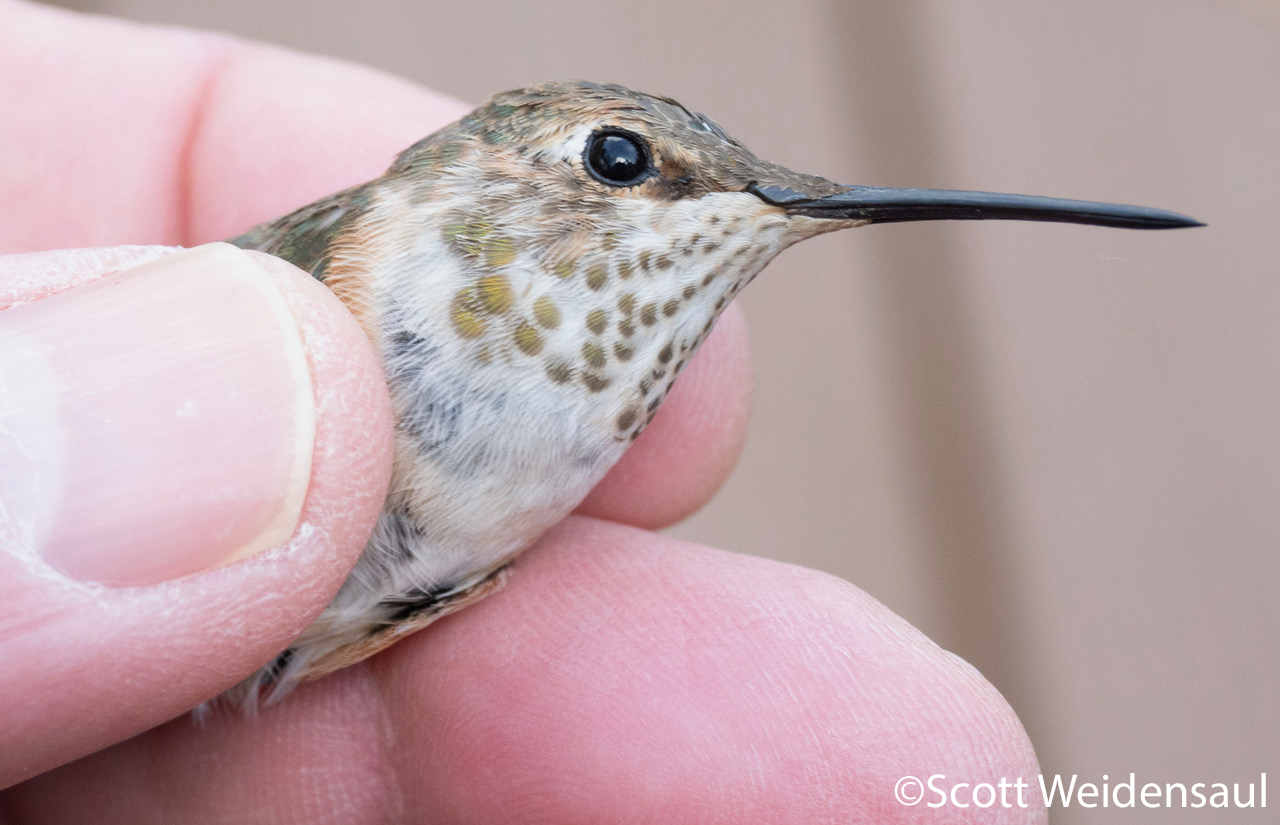
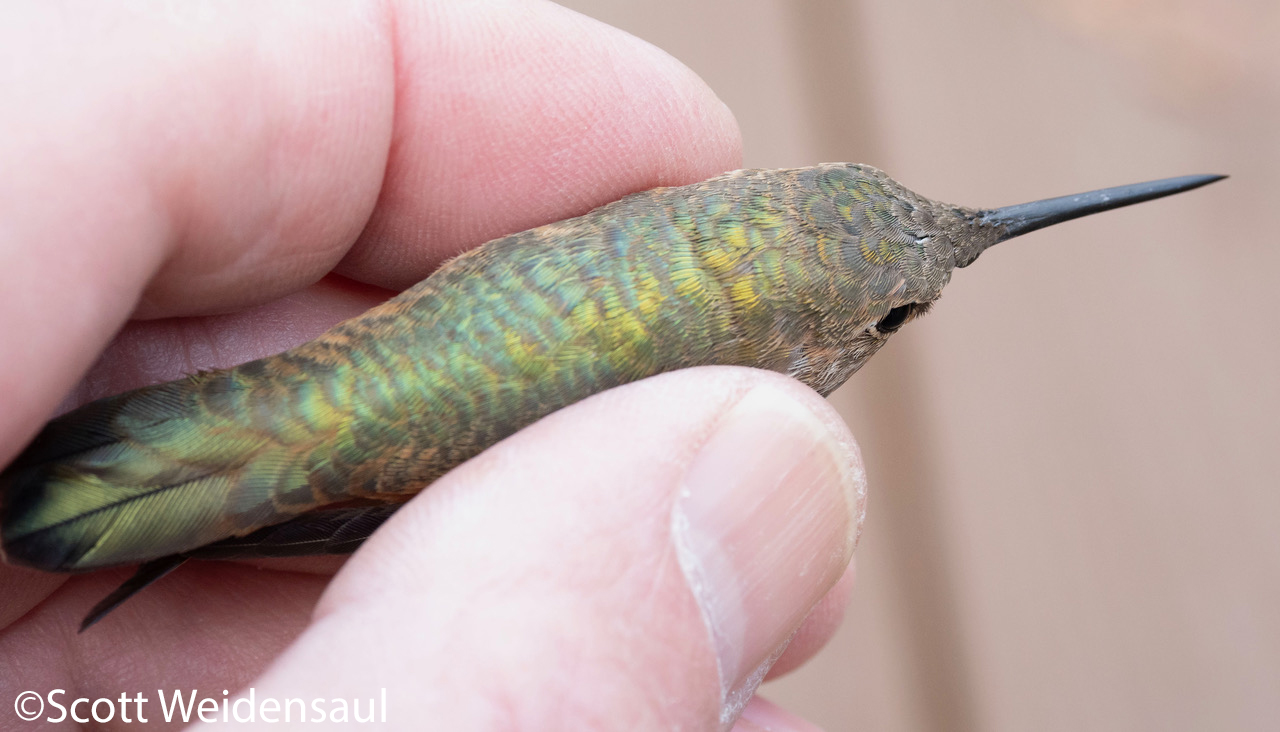

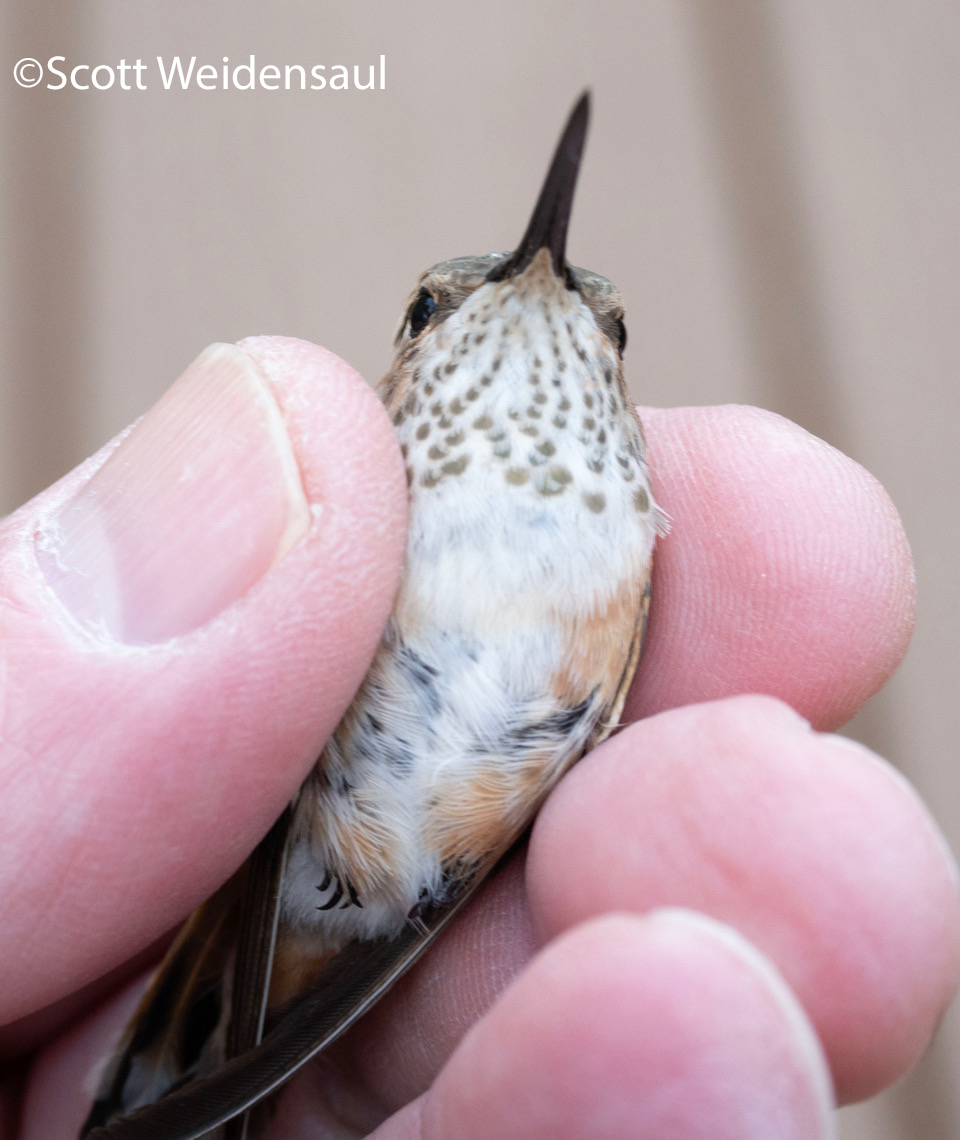
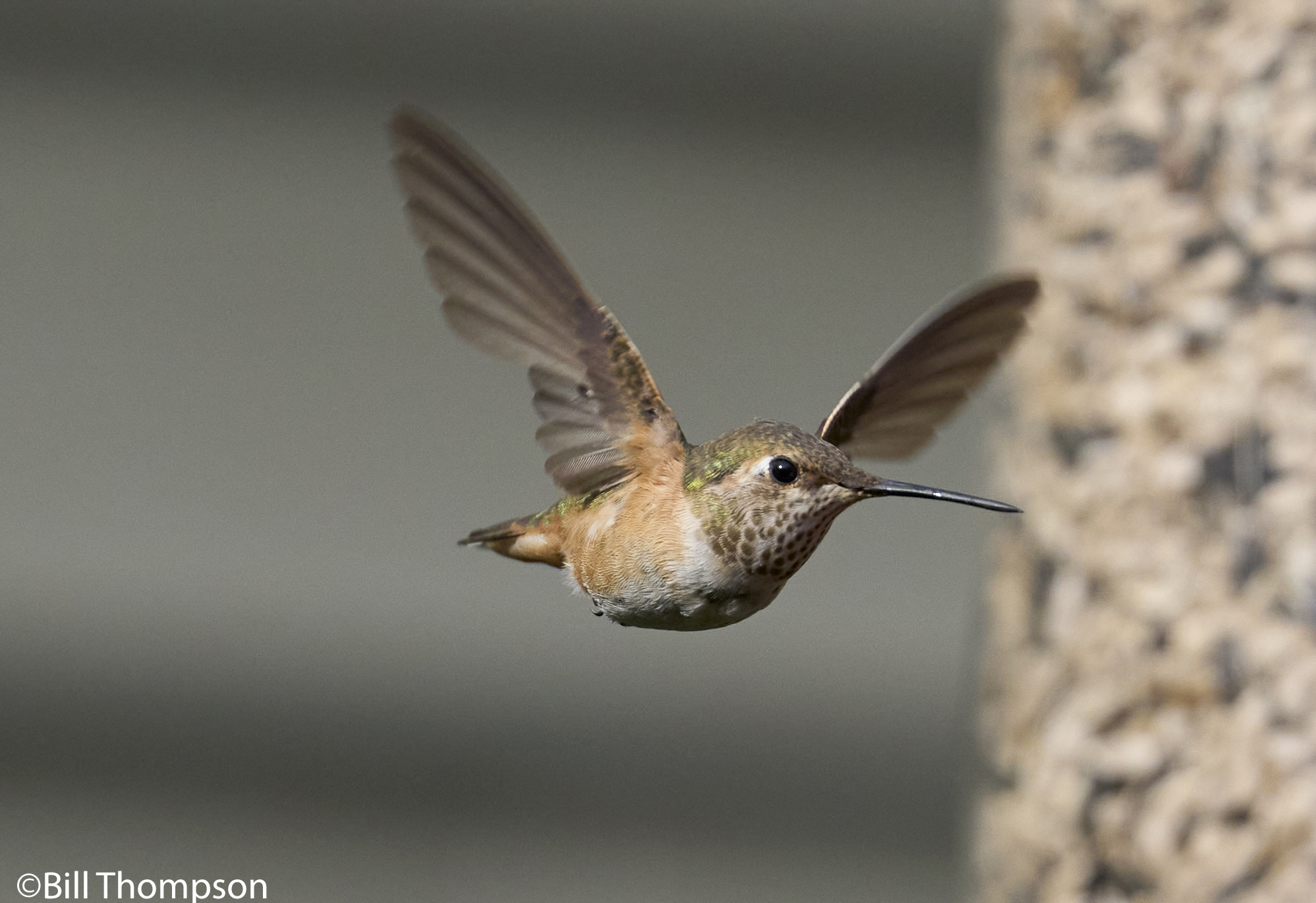


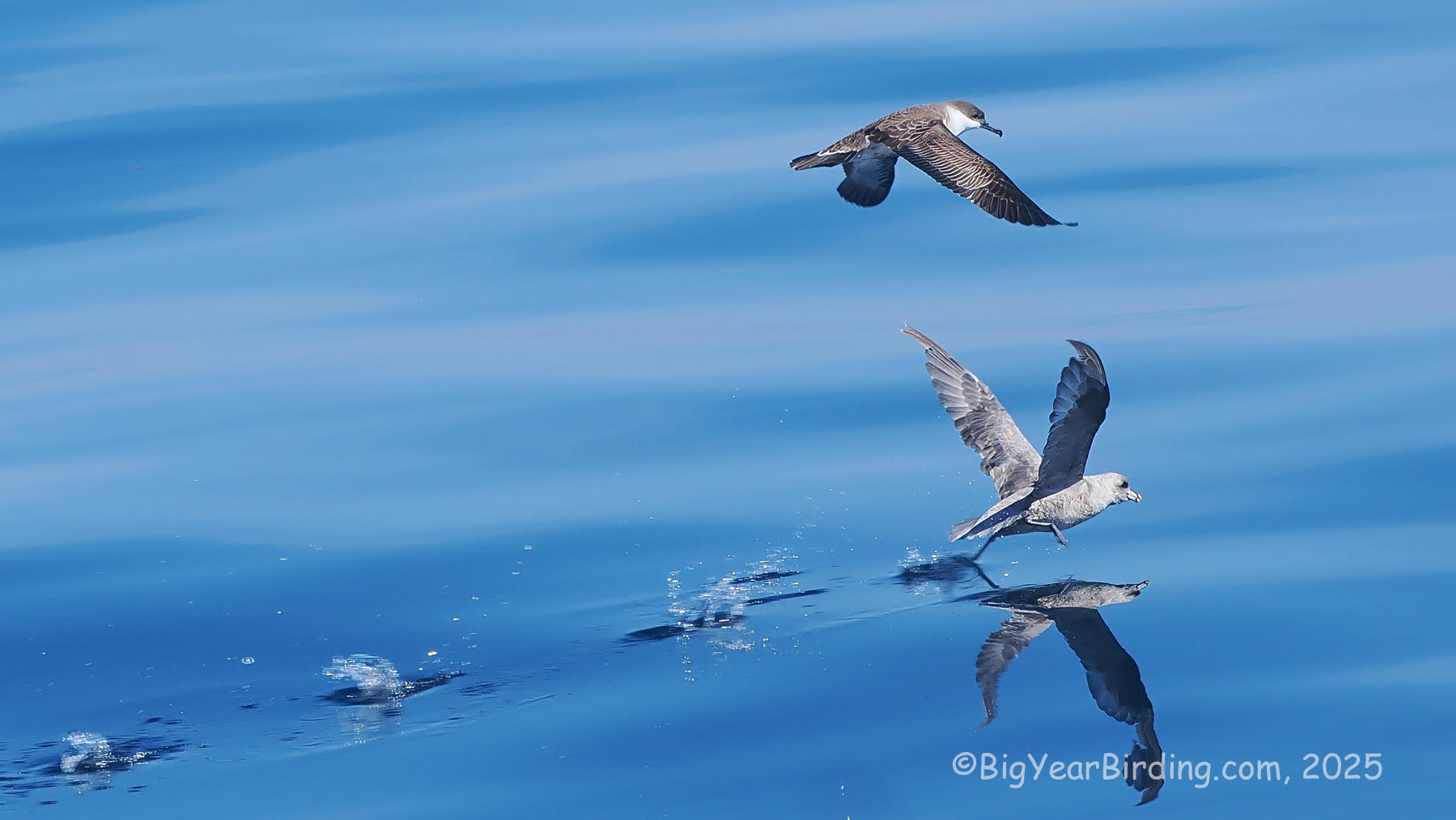
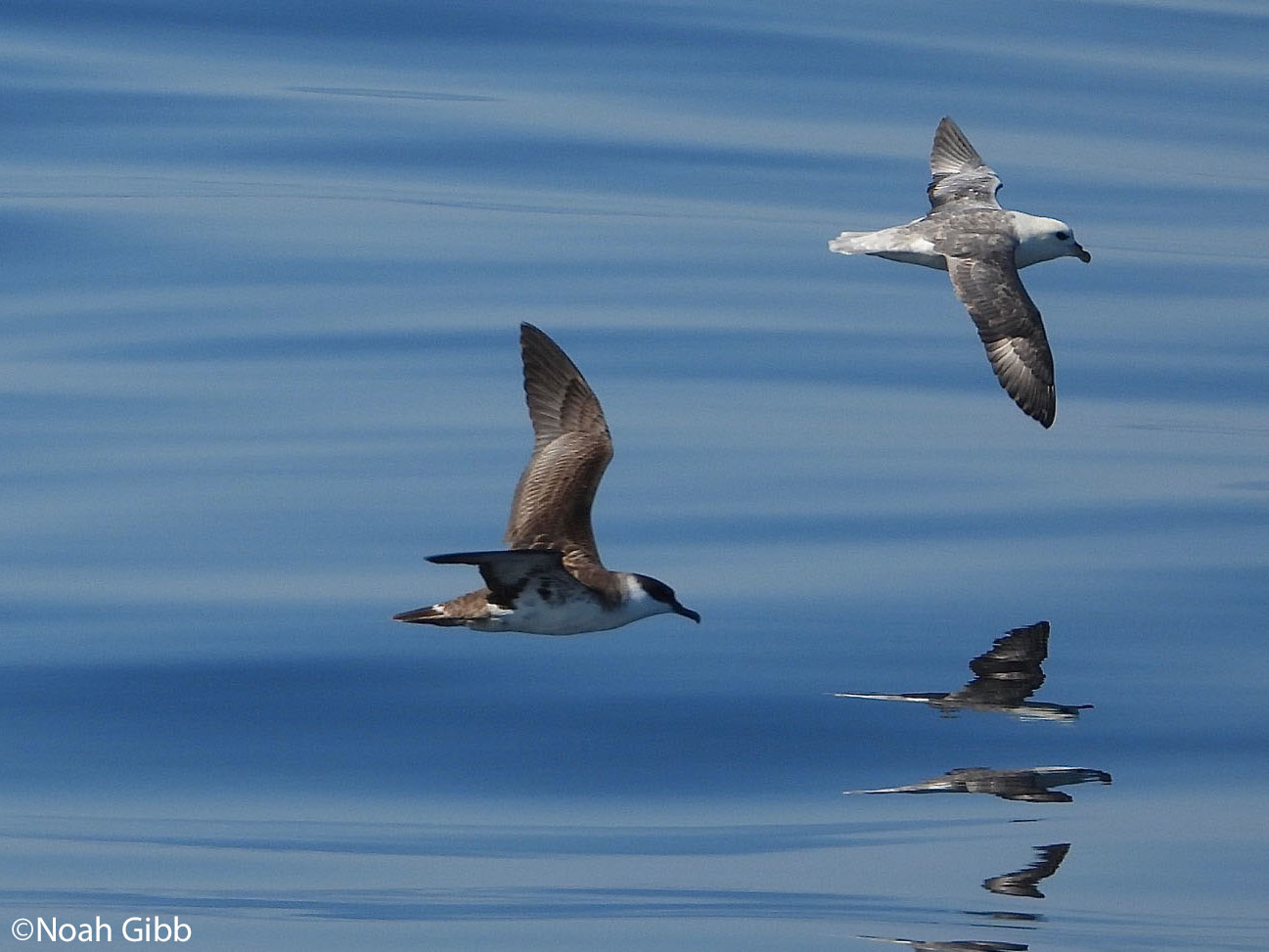
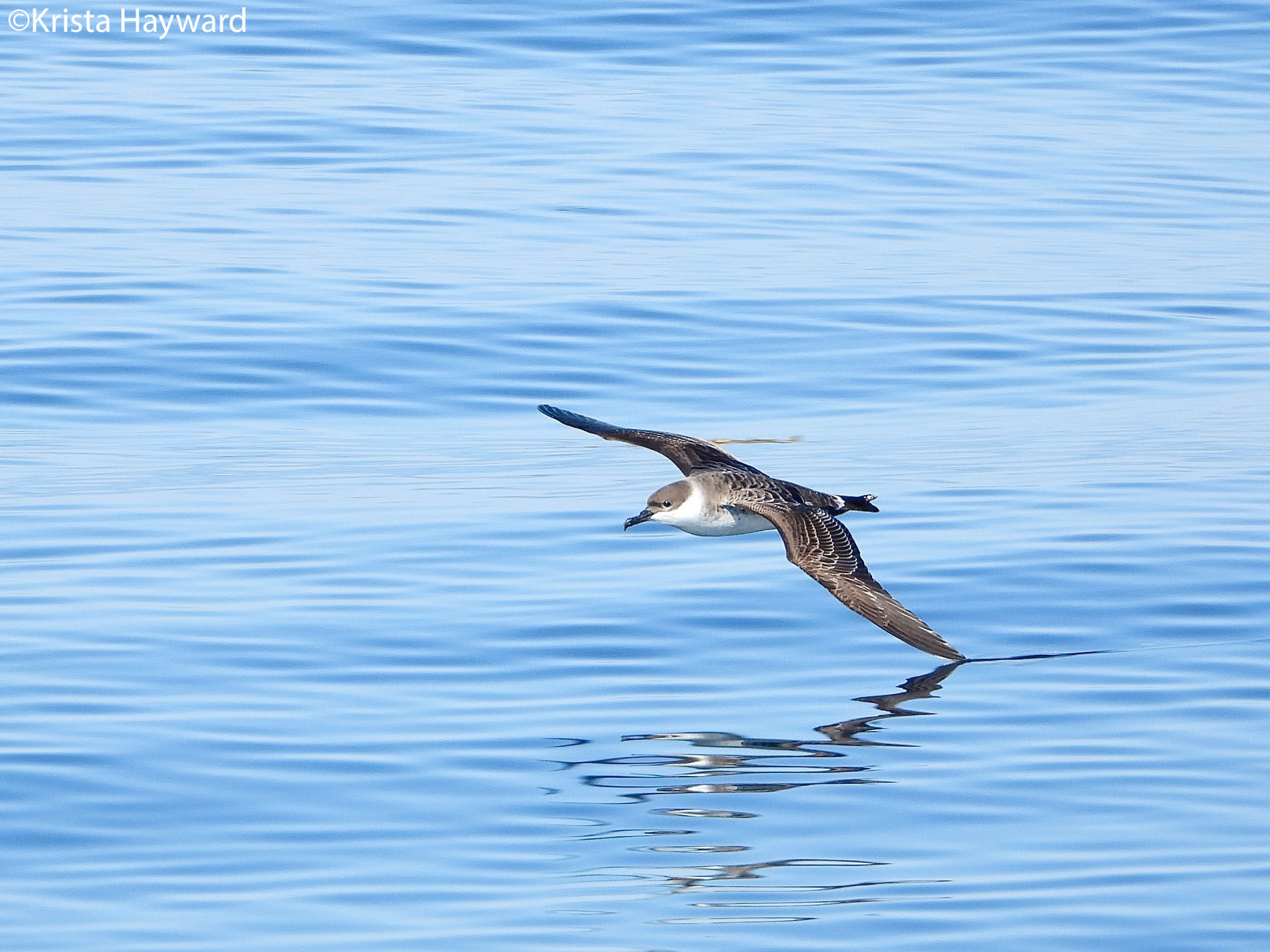

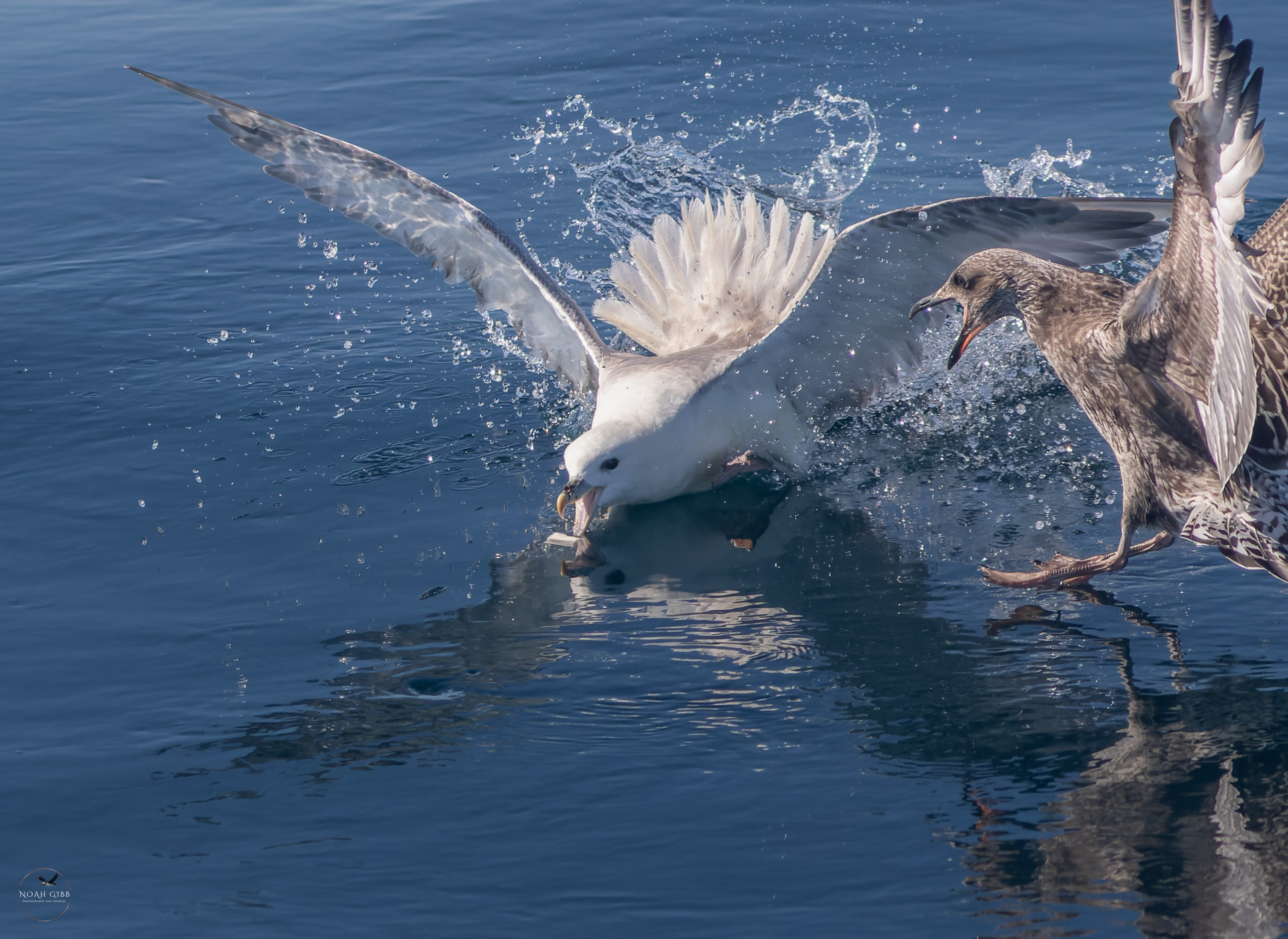
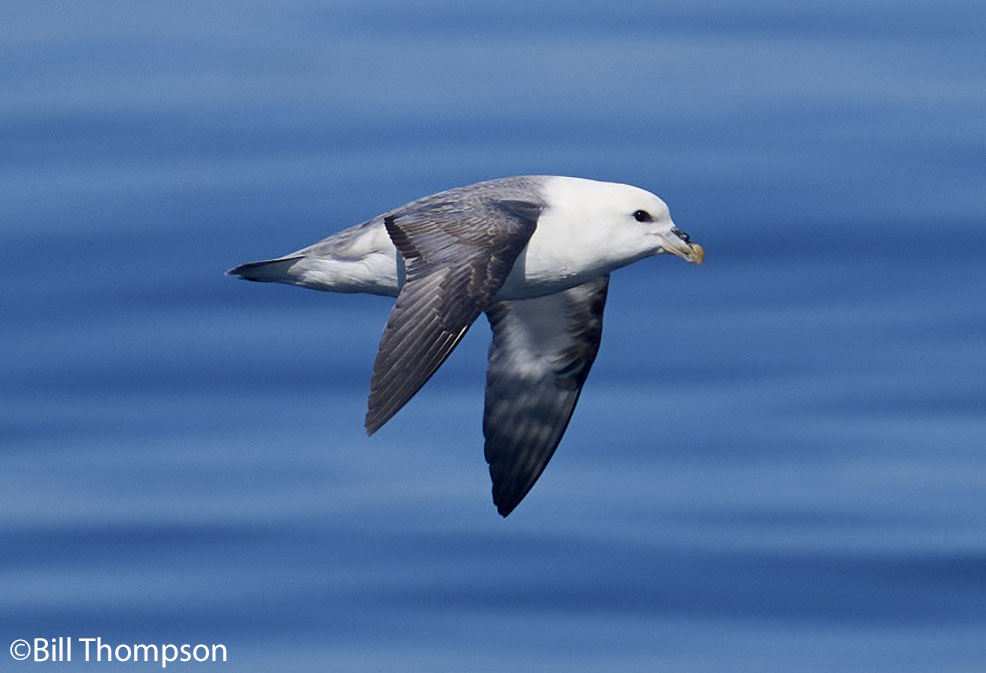


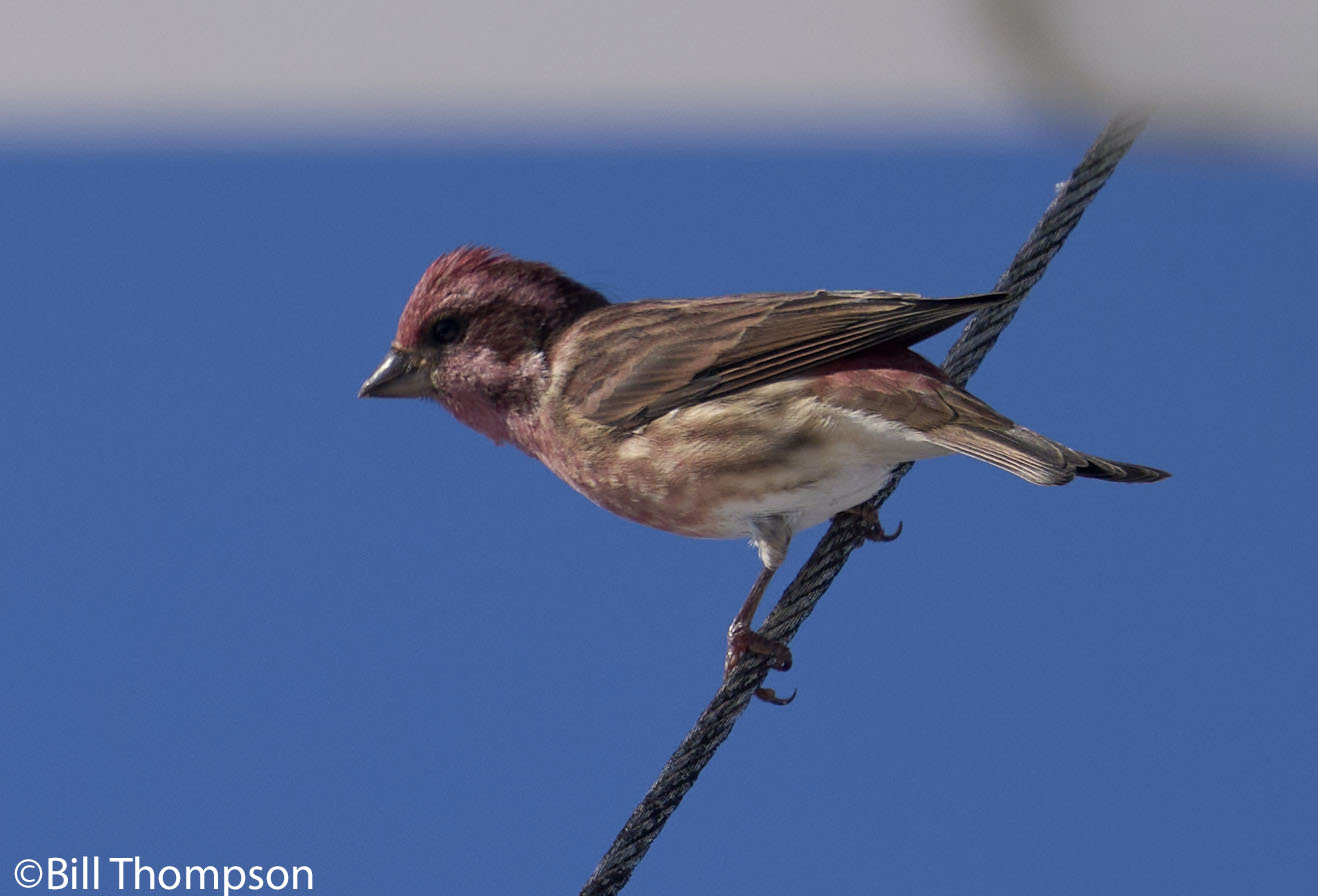

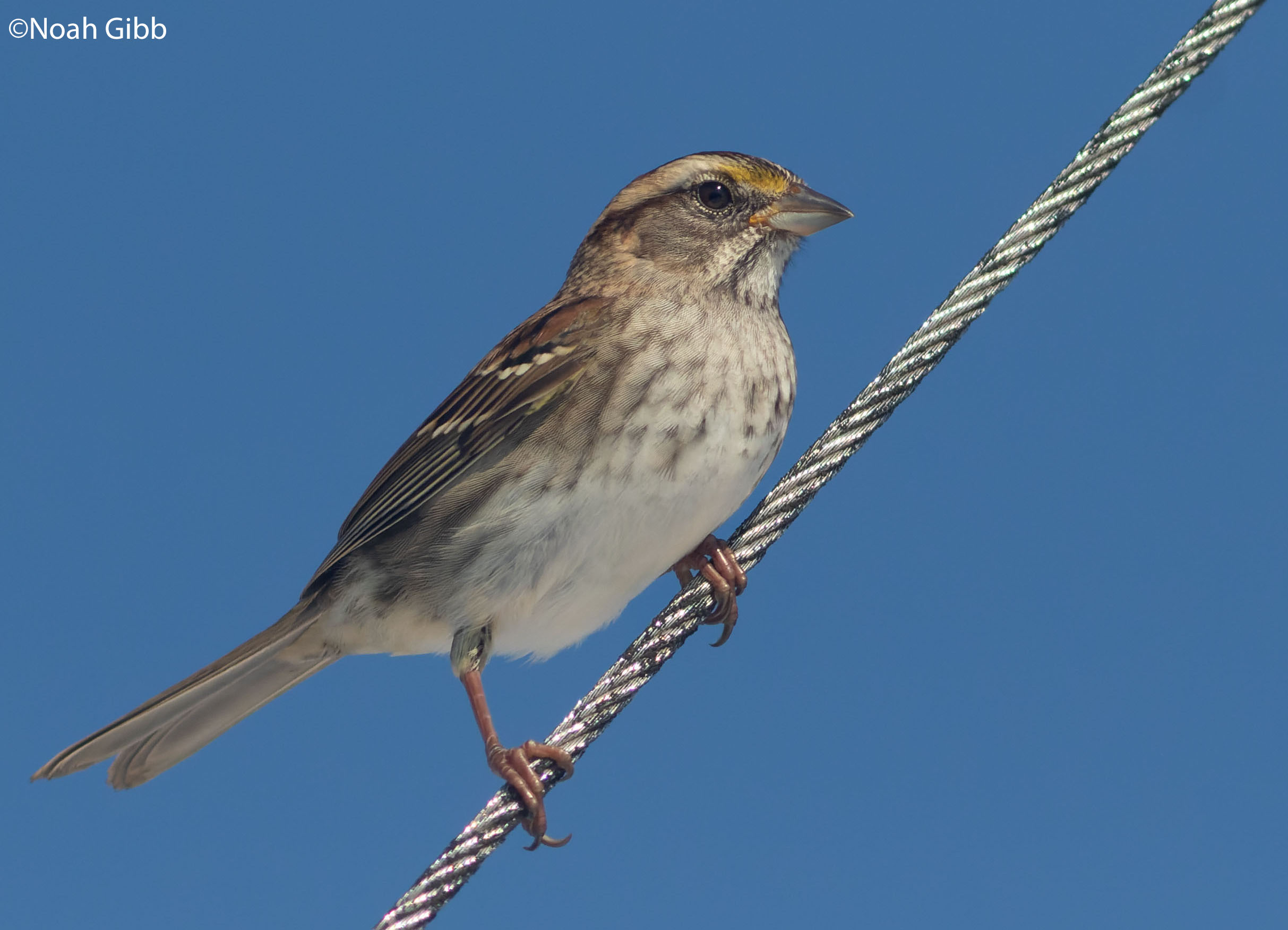


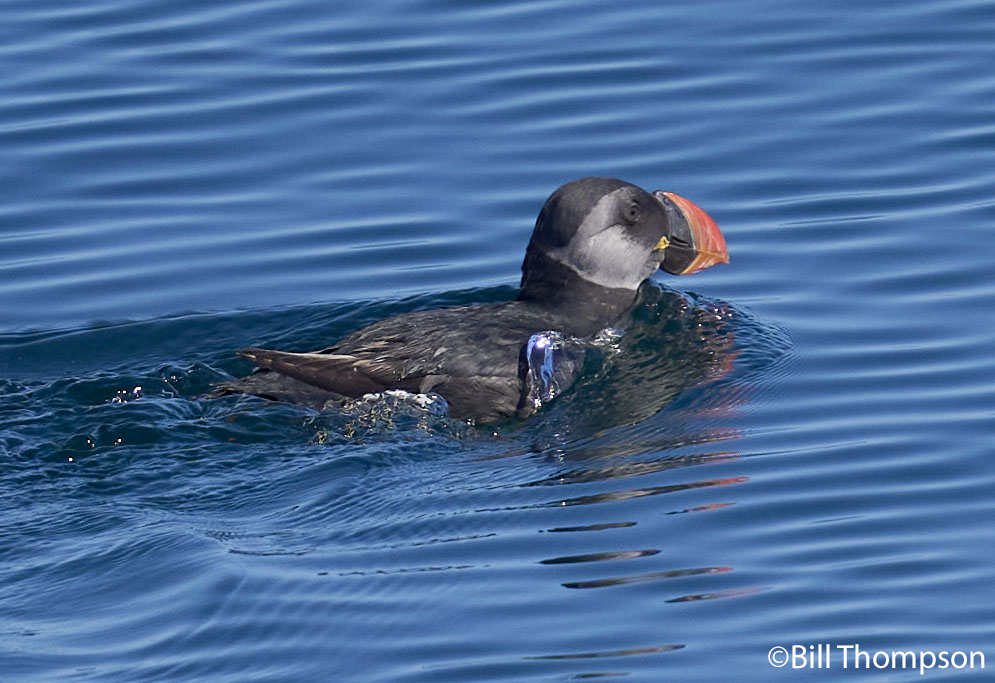


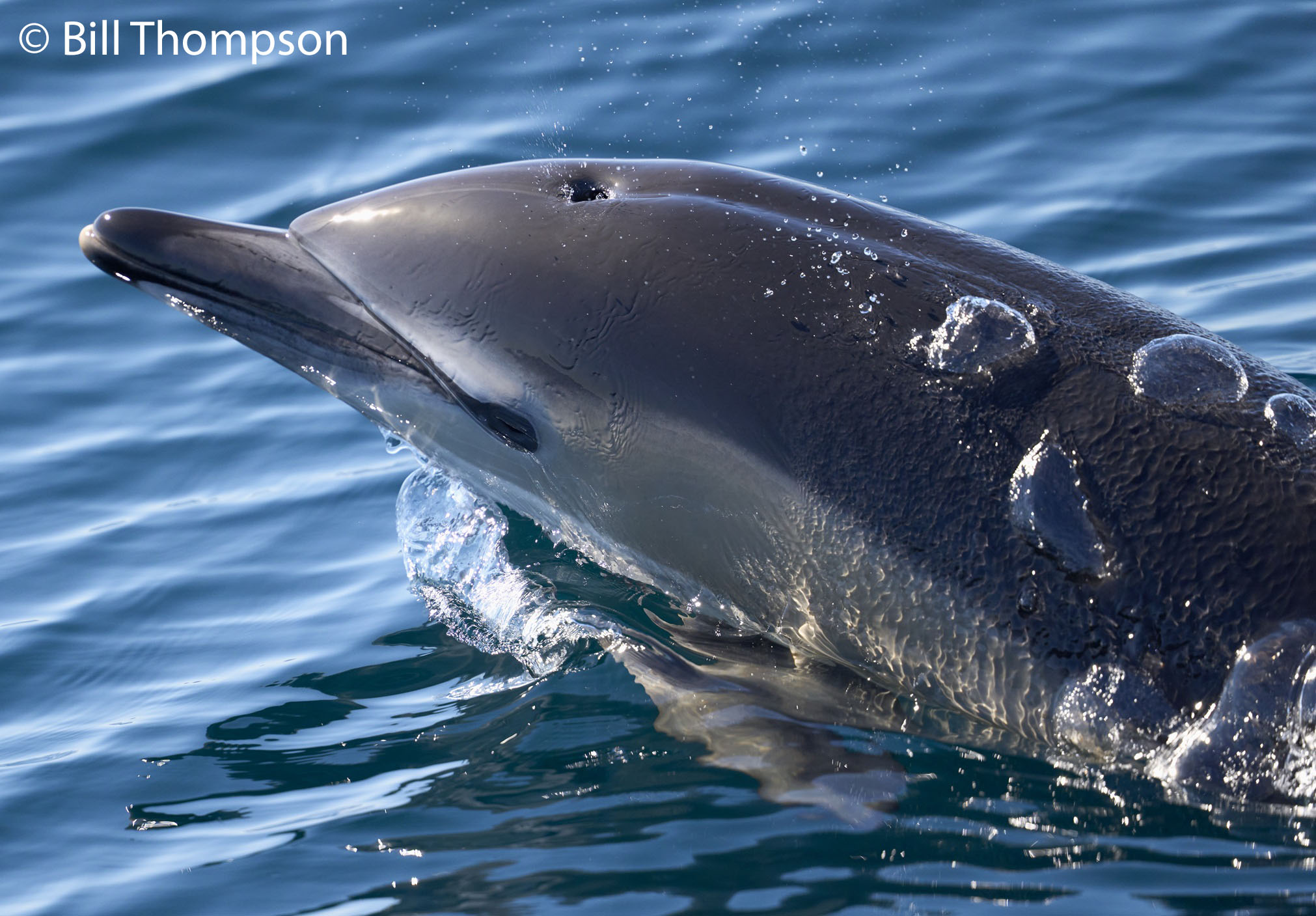
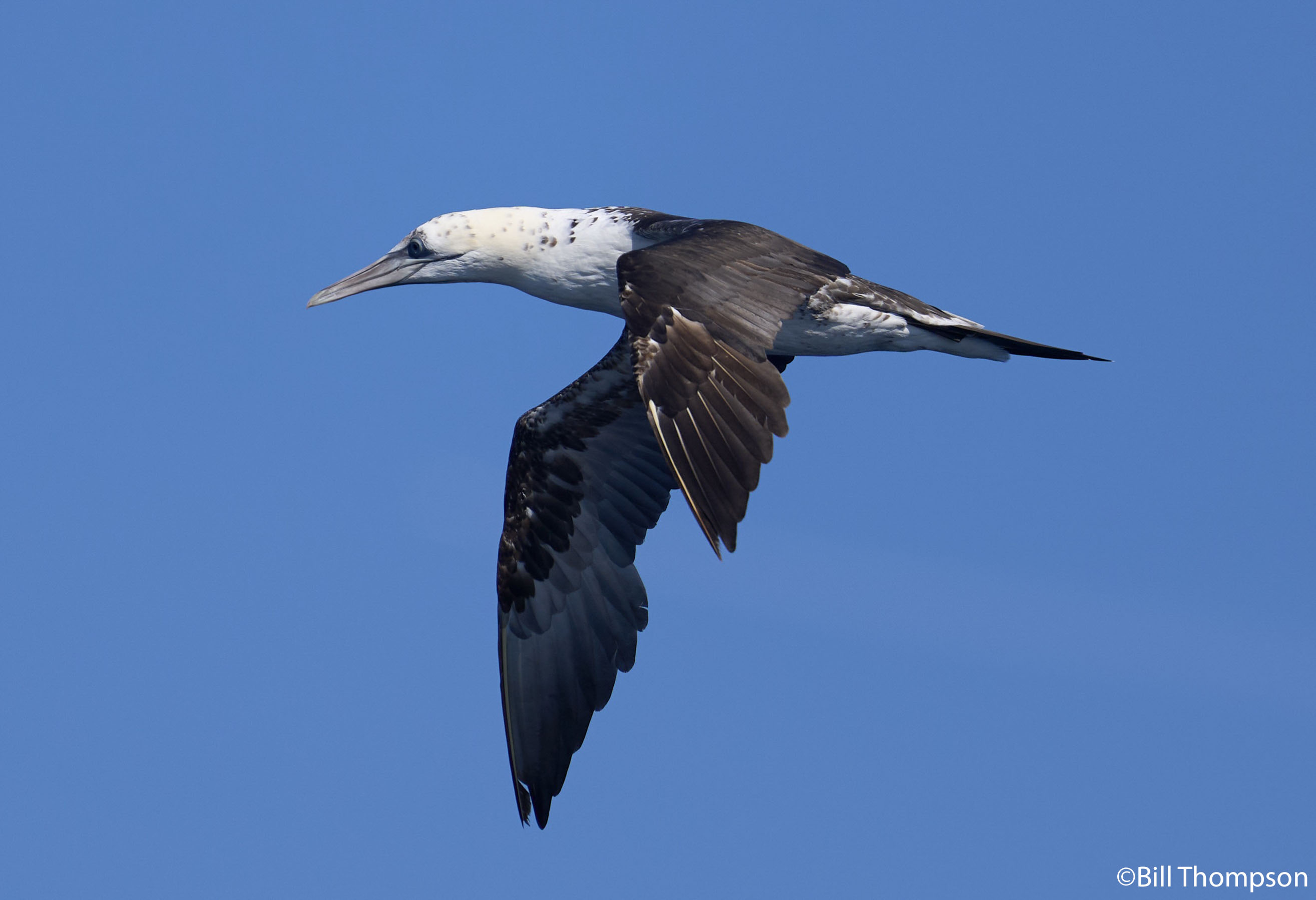
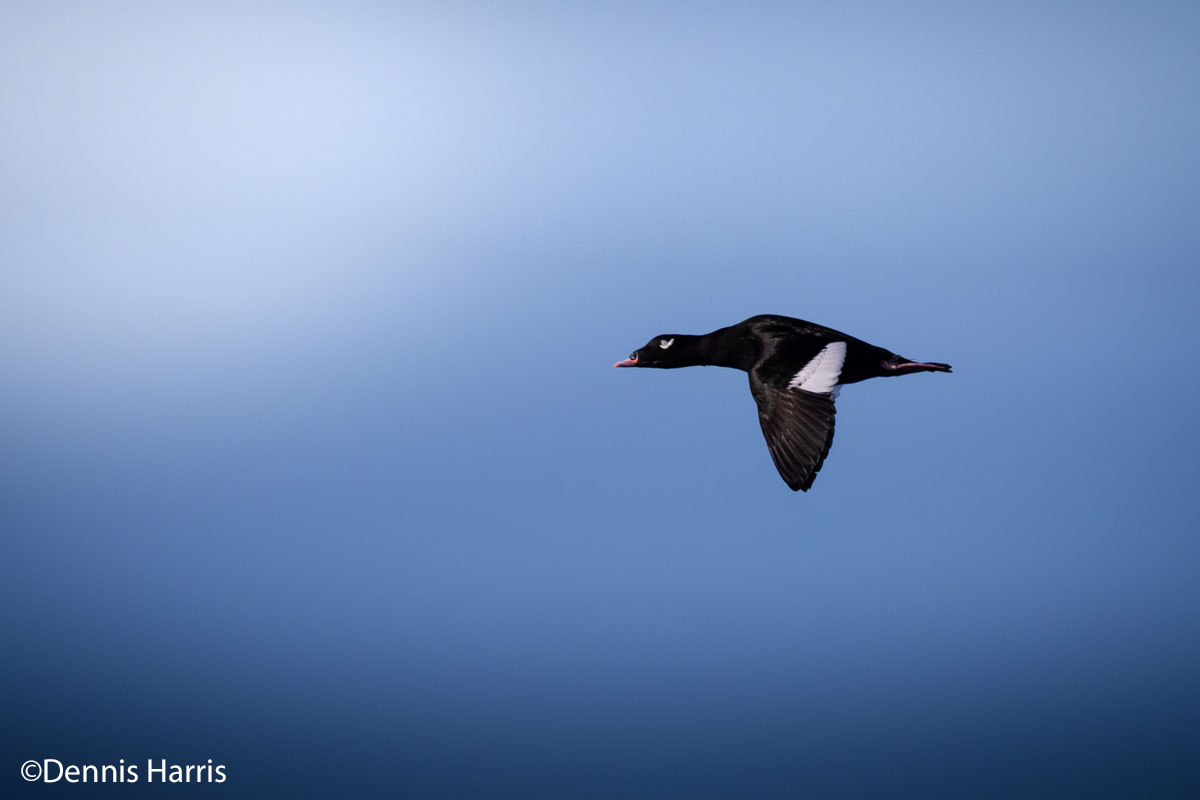

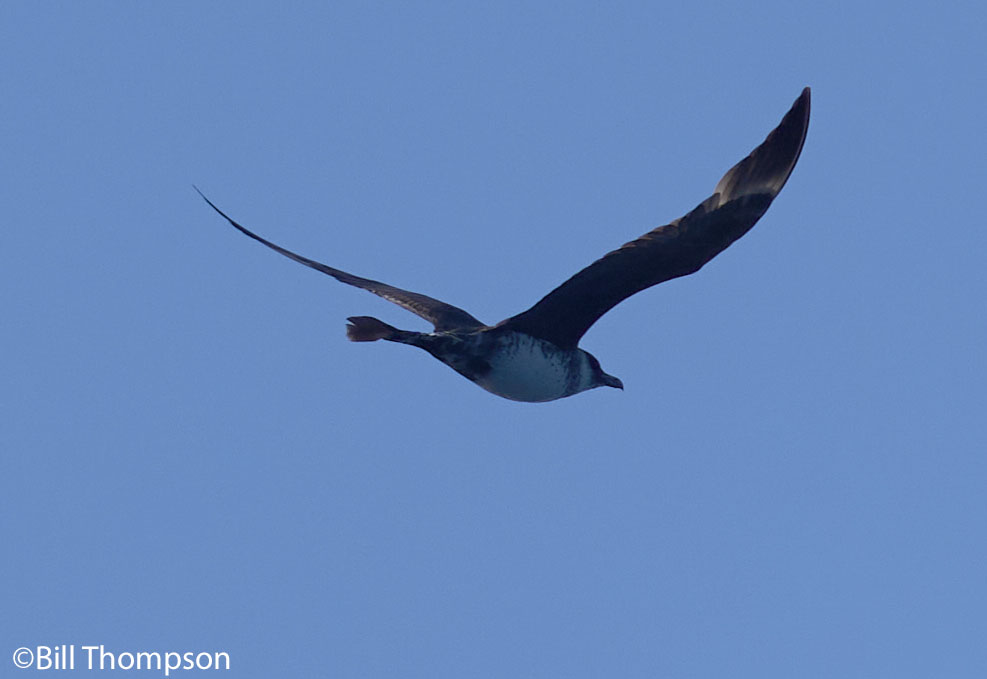


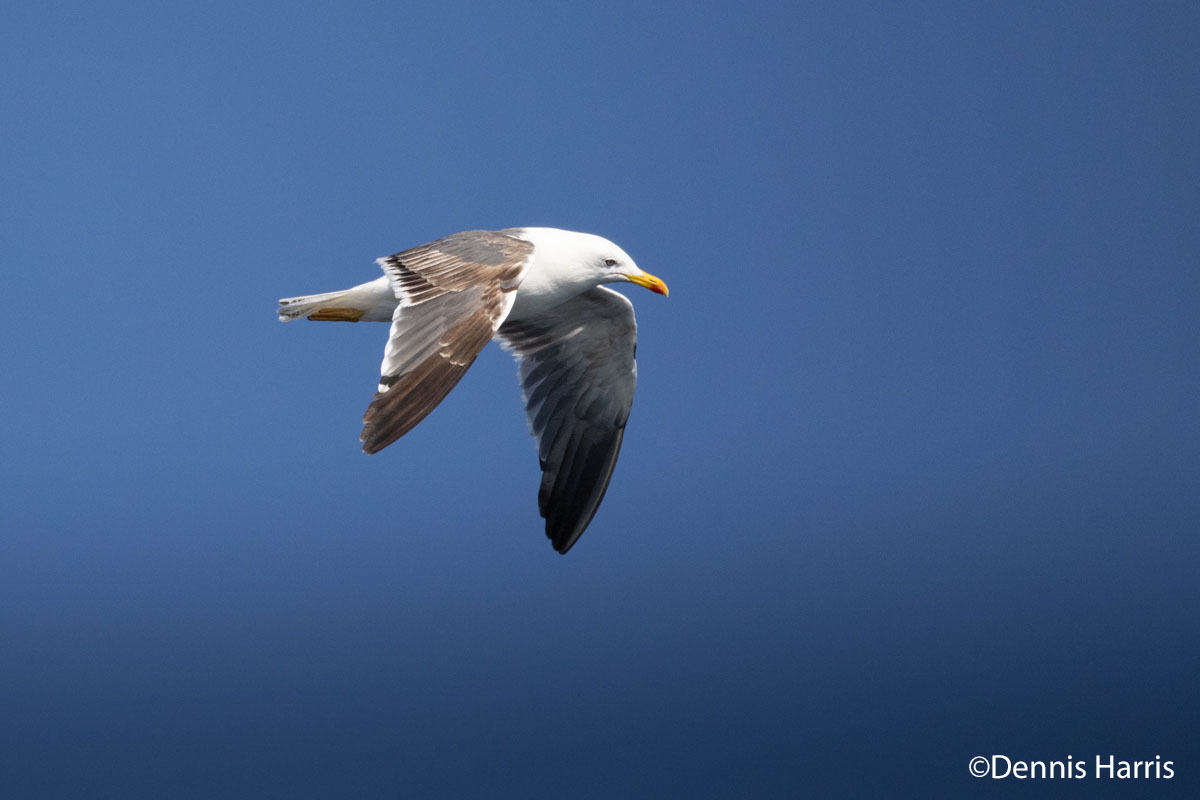

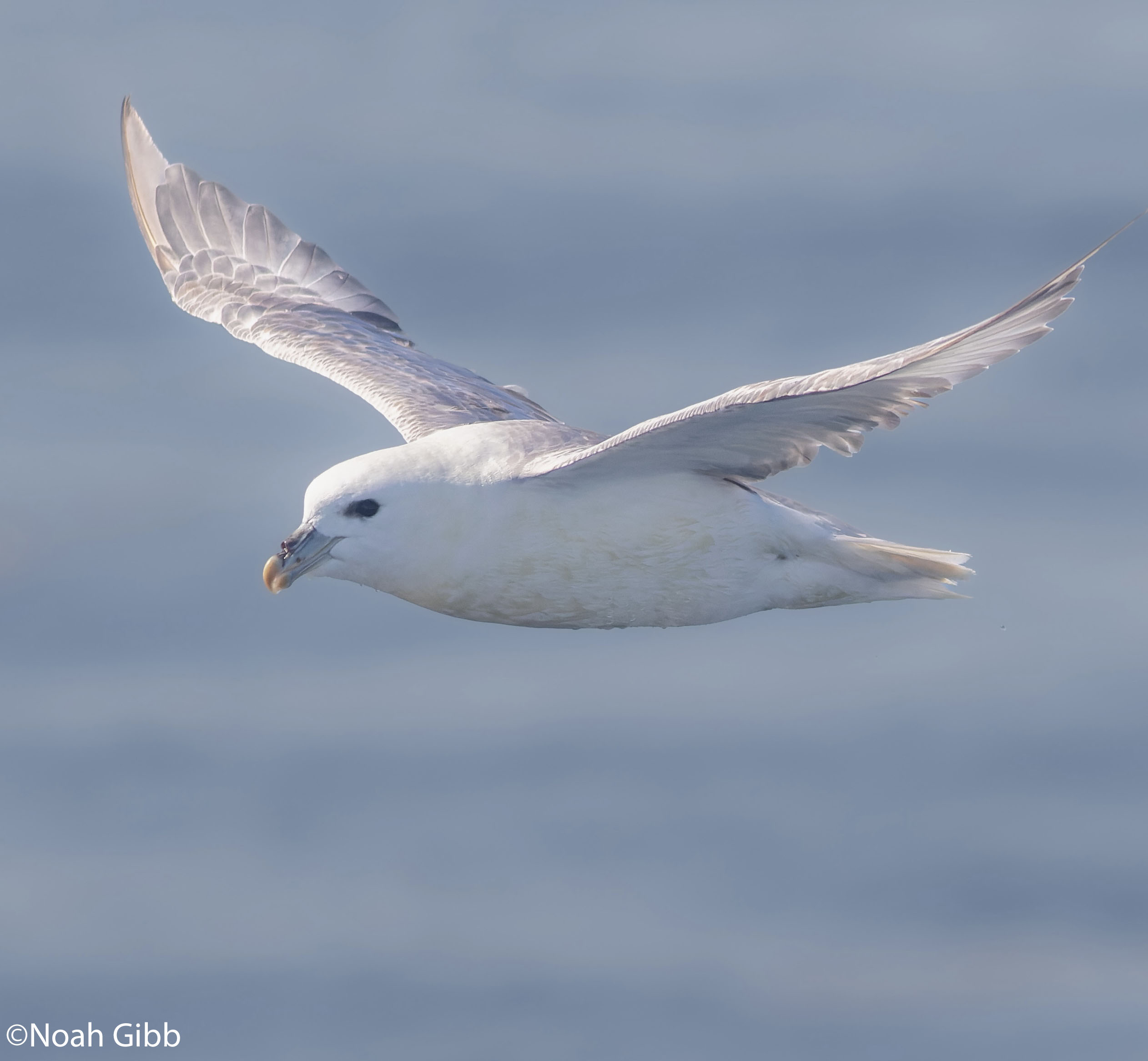

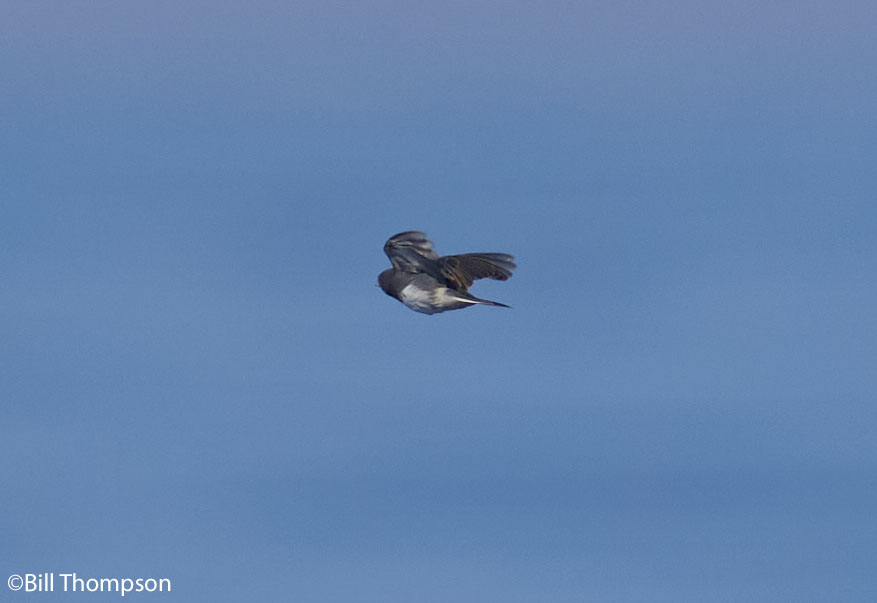


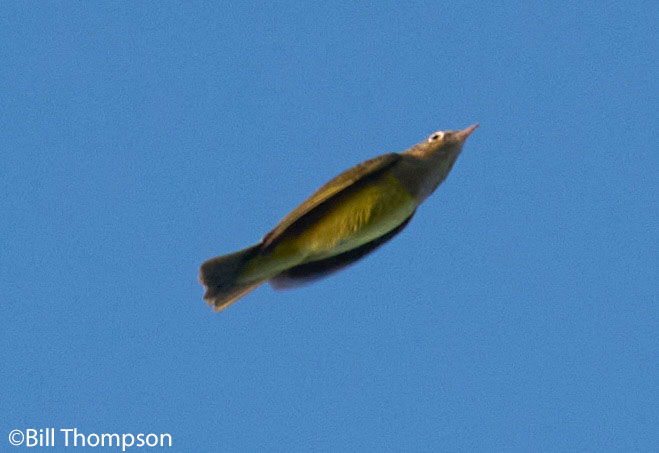
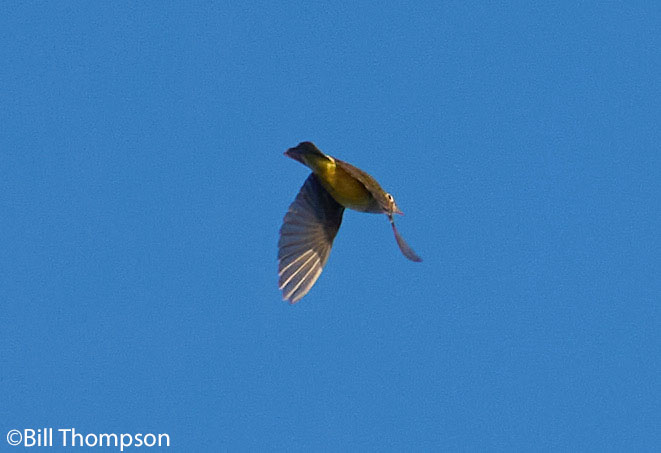
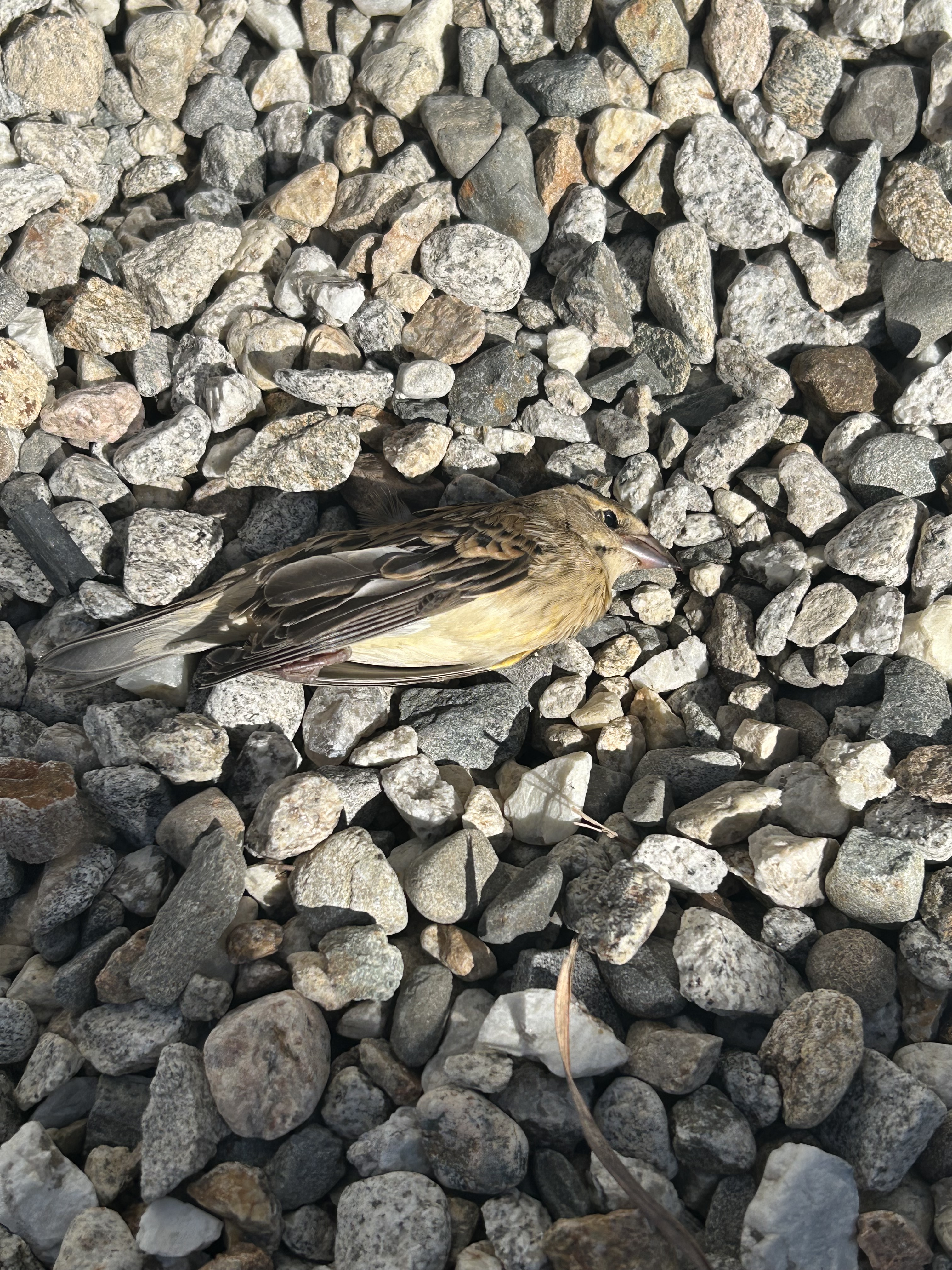


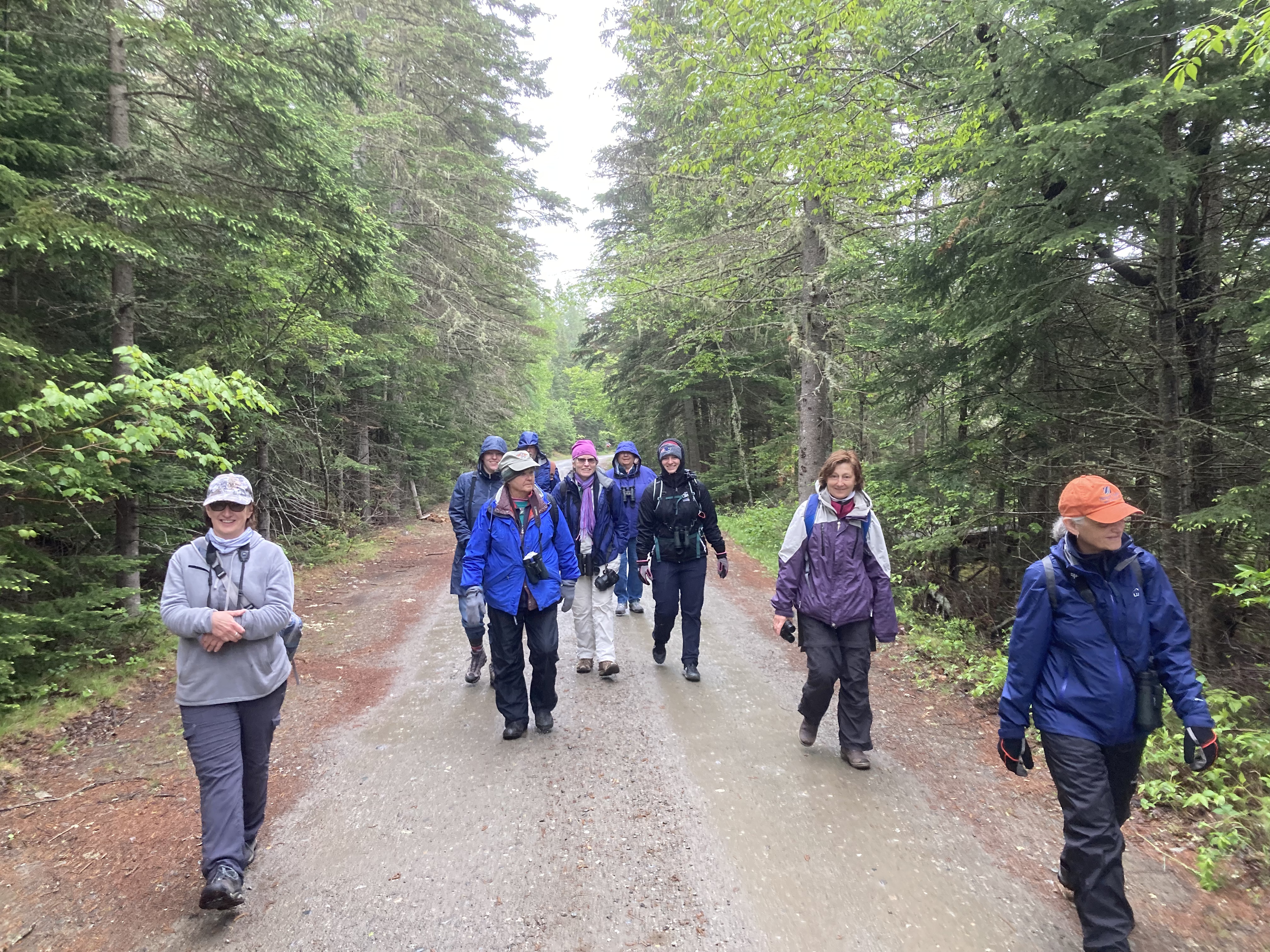


 Maine Birding Field Notes